A dresser may fit against the bedroom wall and still block the route past the bed as soon as a drawer opens. These 10 bedroom dresser ideas help you choose the right footprint, assign space to the clothes you actually wear, and keep the top useful.
Start with your usual walk from the door to the closet. If the layout already works, you may only need to change the contents of a drawer, the placement of a mirror, or the finish of a set of pulls.
1. Fit a Wide, Shallow Dresser Along the Walkway
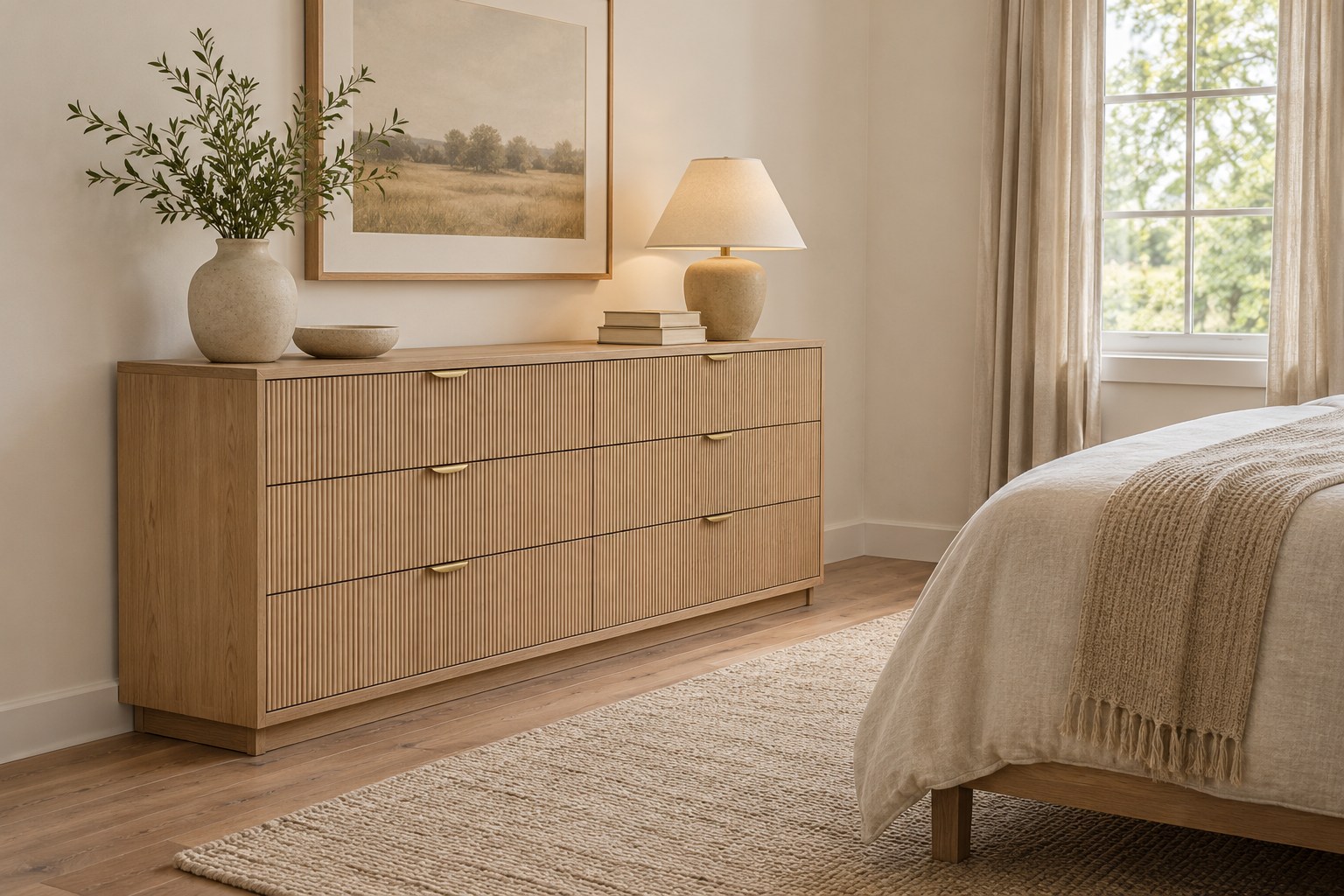
The floor space a dresser occupies changes every time you open a drawer. Along a wide bedroom wall, a shallower dresser can give you several usable drawers without reaching as far into the path from the bed to the door. Start with the wall length, then measure out from the baseboard and mark the edge of the dresser on the floor.
Find out how far the drawers extend. Stand where you would sort laundry and check whether you can open a drawer, bend comfortably, and move away. Check the room door and closet doors while you are there. Where the route tightens near the bed, a wider dresser with less depth can make more sense than a narrower piece that projects farther.
Measure your largest usual stack of folded clothes before committing to a shallow drawer. Secure the dresser to the wall with its anti-tip hardware following the manufacturer’s instructions. A textured front can give the piece presence while leaving the floor beside it open.
The HOMCOM natural wood fluted six-drawer dresser is 53.9 inches wide and 15.7 inches deep before the drawers open. Measure its open position as well, then anchor the dresser as the manufacturer directs.
Explore HOMCOM natural wood fluted six-drawer dresser (paid link)
2. Choose a Tall Chest for One Narrow Wall
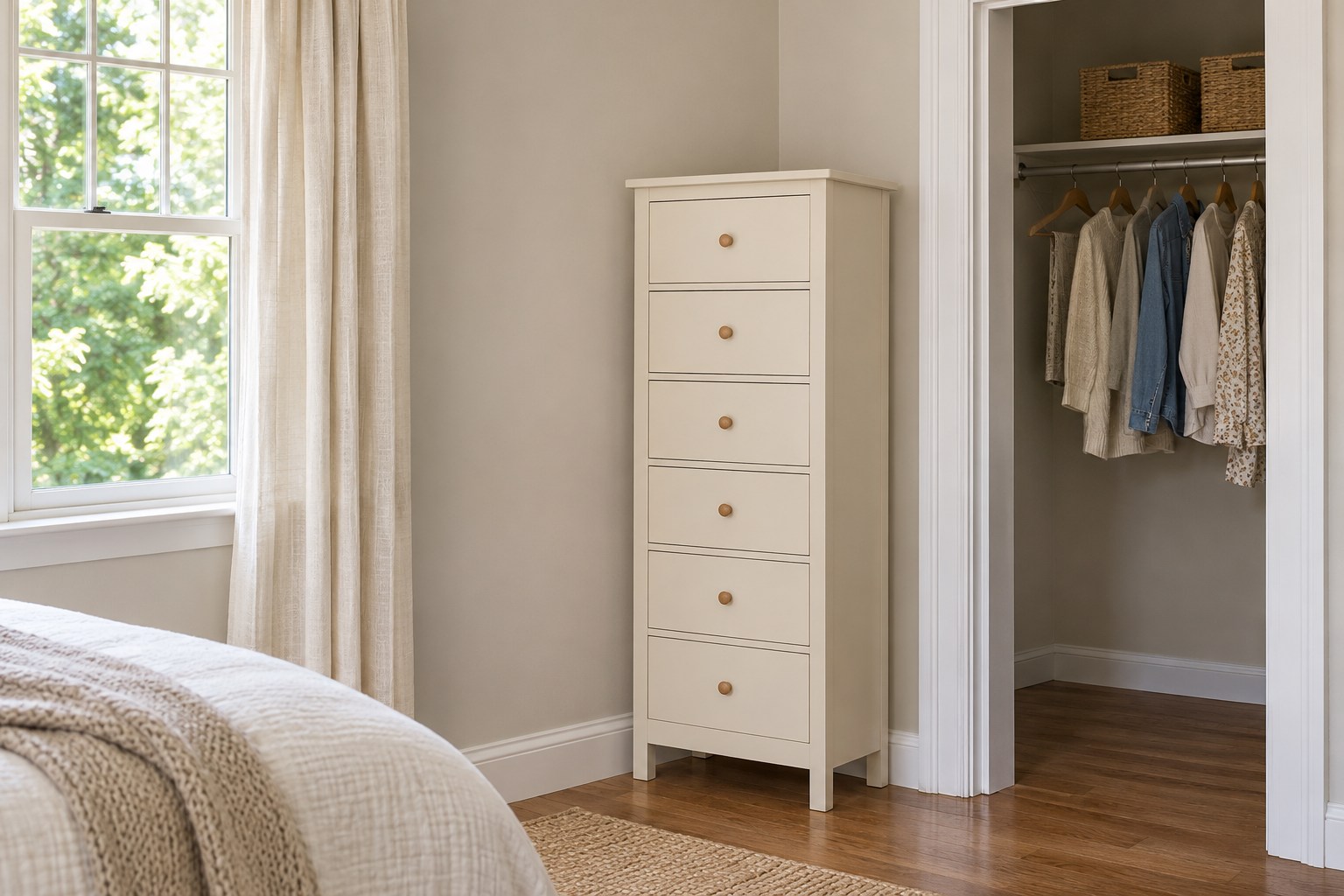
A narrow stretch of wall beside a closet can hold a useful chest, provided you still have a place to stand in front of it. Draw the chest’s width and height with painter’s tape on the wall. That makes it easier to judge whether the piece will crowd the door trim or make the corner feel boxed in.
Check the highest drawer from your normal standing position. If it is difficult to see inside, use that drawer for light items that are easy to recognize by touch, such as rolled scarves. Give the middle drawers to everyday clothing and keep the top surface clear of anything you would have to reach up to lift.
Set the chest on an appropriate level floor and secure it according to its instructions. A plain front and a finish close to the wall color can make its height feel less abrupt.
3. Plan Each Drawer Around What You Fold
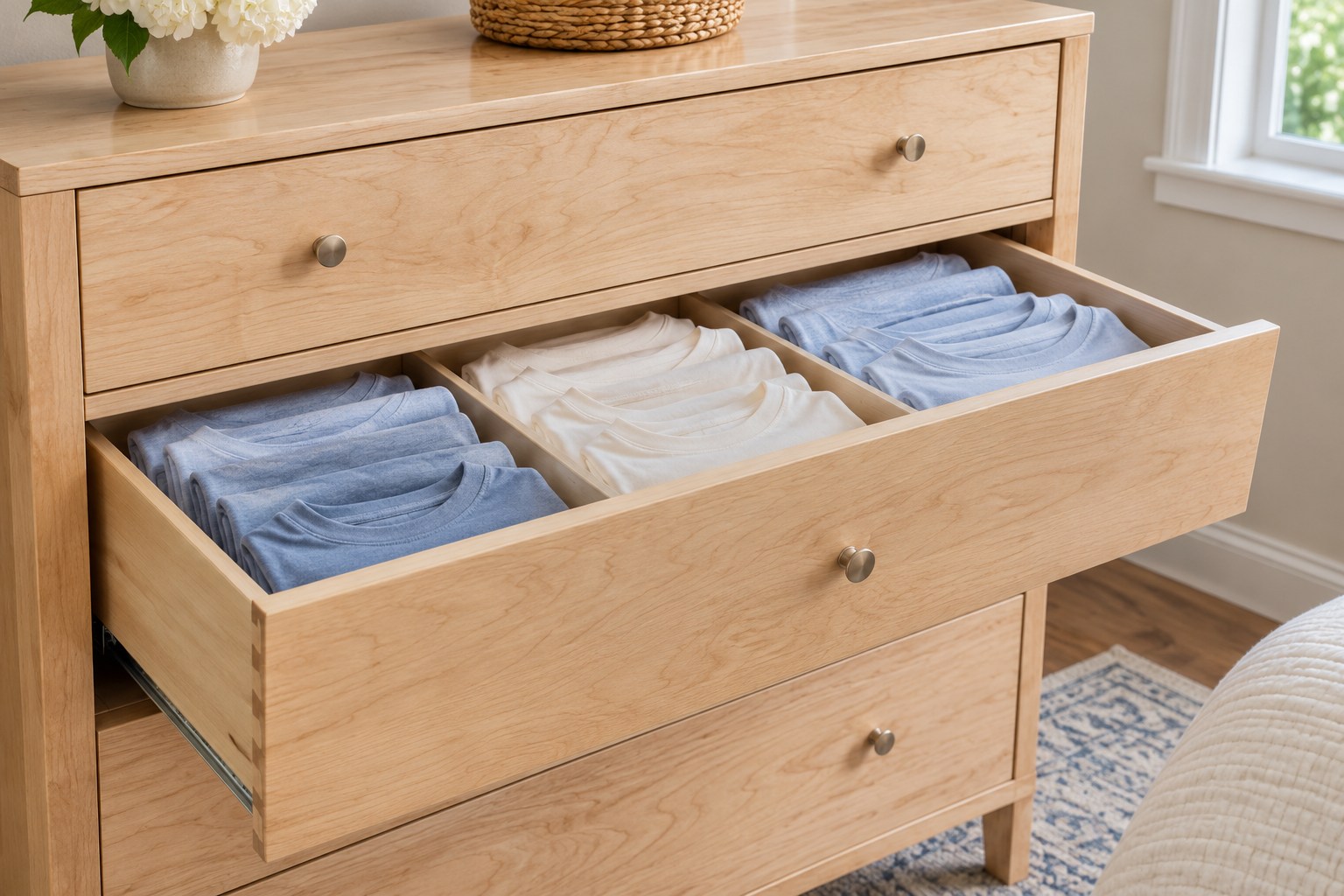
A drawer looks deep on the outside when much of that measurement belongs to the cabinet and hardware. Before comparing dressers, take the inside measurements of a drawer you use now. Fold your widest everyday item and see which direction it fits. If you buy organizers, allow for their walls as well as the clothes inside them.
Shallow drawers work well for things you want to see at a glance, such as socks or T-shirts folded upright. A deeper drawer may work better for loose sweaters that do not stay upright in a row. If a stack keeps falling forward, try a low divider at the end of the row instead of squeezing in another item.
Run the system for a week with boxes you already have. These bedroom storage ideas can help you decide what belongs in the dresser and what is easier to keep elsewhere.
4. Check the Drawers Before Buying a Vintage Dresser
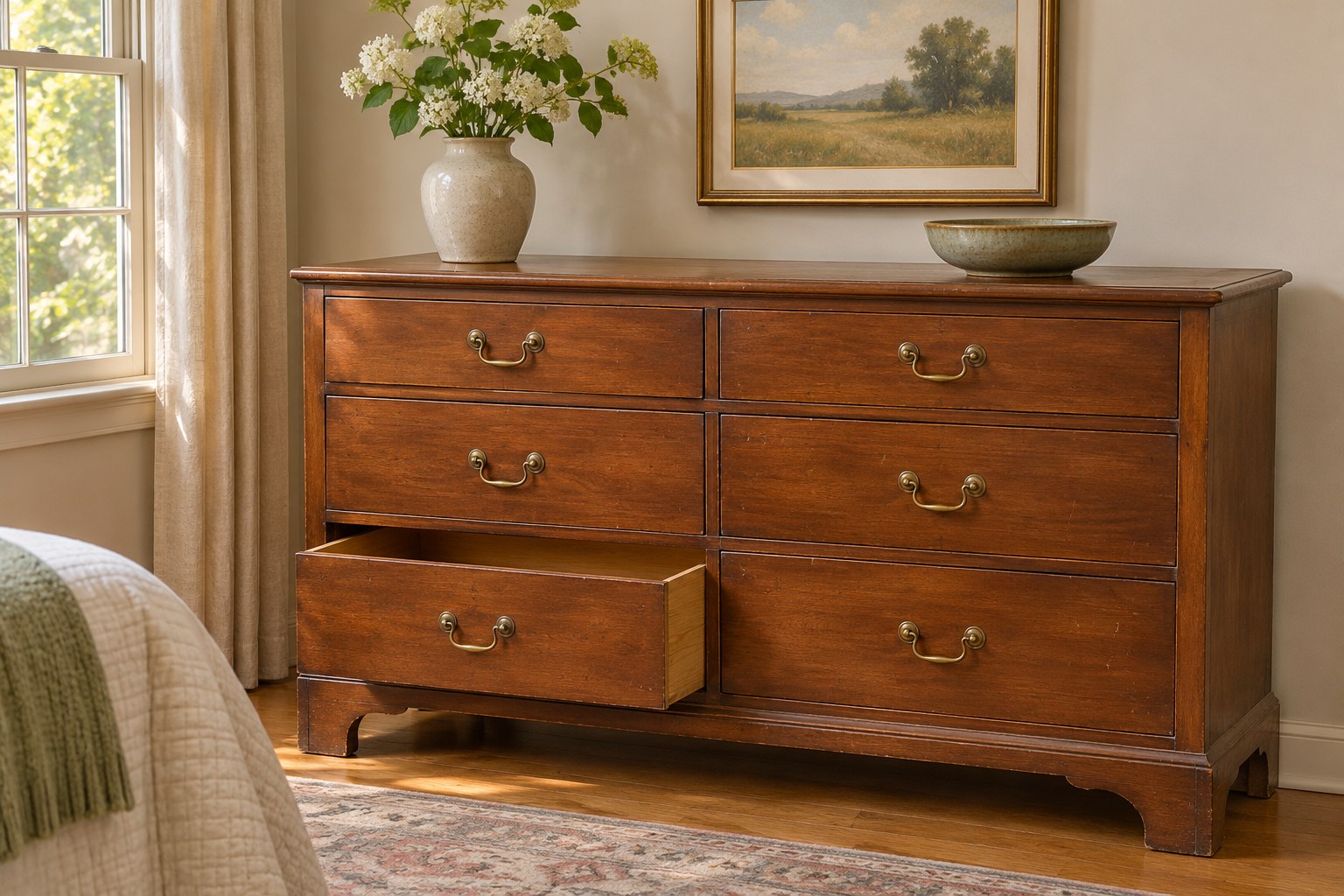
A secondhand dresser can bring warmth into a room with plain new furniture. Start by using it. See whether each drawer opens without lifting or wrestling the front. Look for a damaged bottom, loose joints, missing stops, or a cabinet that rocks. Check the inside for persistent odors before deciding to store clean clothes in it.
Decide which wear you can live with. A nick in a handle may be charming, while a drawer that sticks every morning will change how often you use the piece. Ask the seller to leave any replacement hardware and mounting information with the dresser. If the cabinet needs structural repair, factor that into the choice before taking it home.
A modest display lets the old wood do the work. Try one low ceramic bowl for daily items and a framed print that can pick up the darker wood tone.
5. Match New Pulls to the Existing Holes
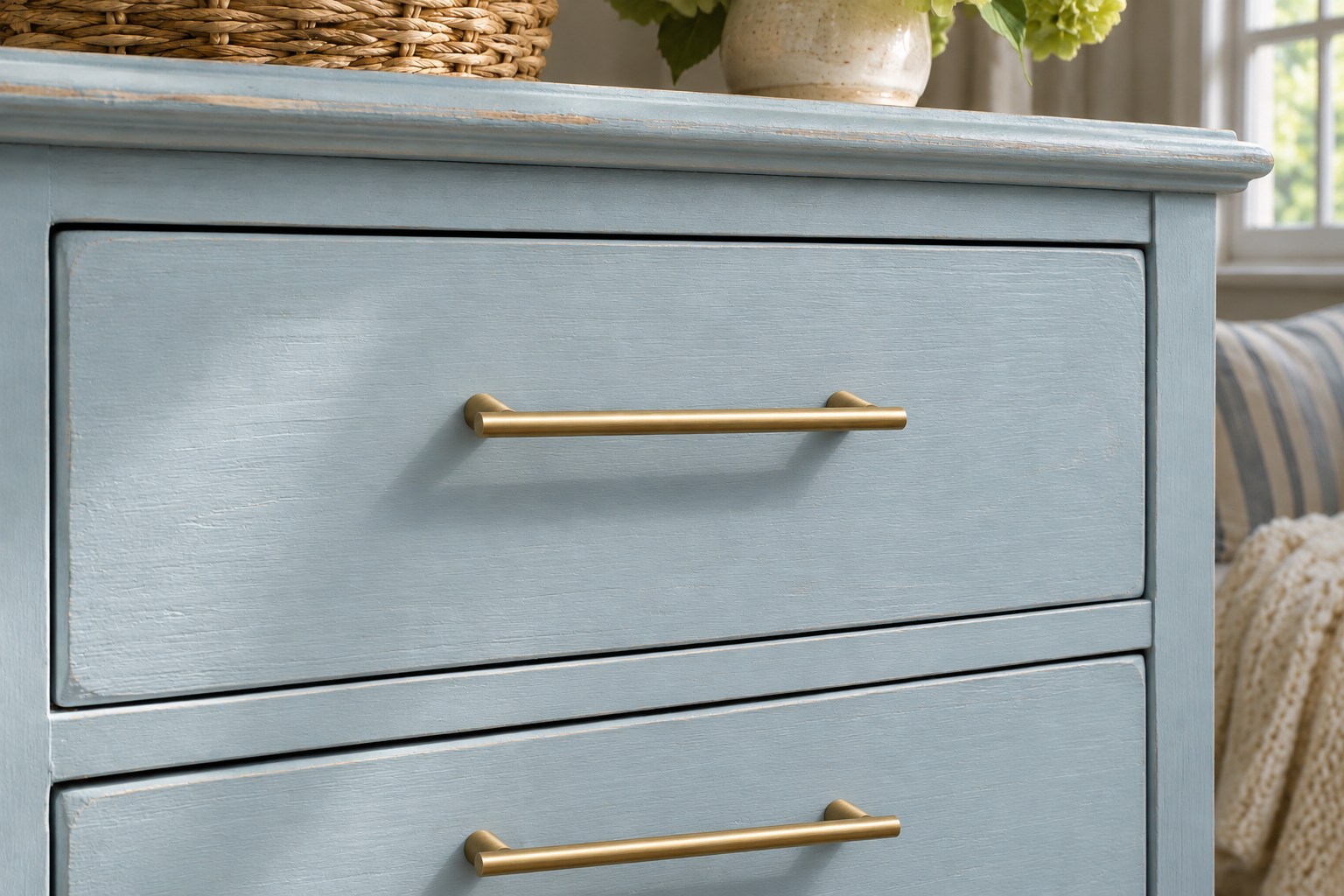
A change of handles can make a plain dresser feel closer to the rest of the room. Remove one old pull and measure from the center of one screw hole to the center of the other. Use that distance when shopping. Compare the new pull’s projection with the original so it stays comfortable to use in a narrow aisle.
Try one before replacing the set. Your fingers should reach behind it easily, including on the lowest drawer. Check that the screws suit the drawer-front thickness and that the pull sits flat against the material. For a drawer with a raised panel or curved face, the contact area matters as much as the hole spacing.
Look at the new finish beside the dresser with a lamp on. A softer brass, nickel, or wood pull can repeat a material elsewhere in the bedroom without making the furniture feel like part of a matching set.
6. Place the Dresser Under a Mirror You Can Use
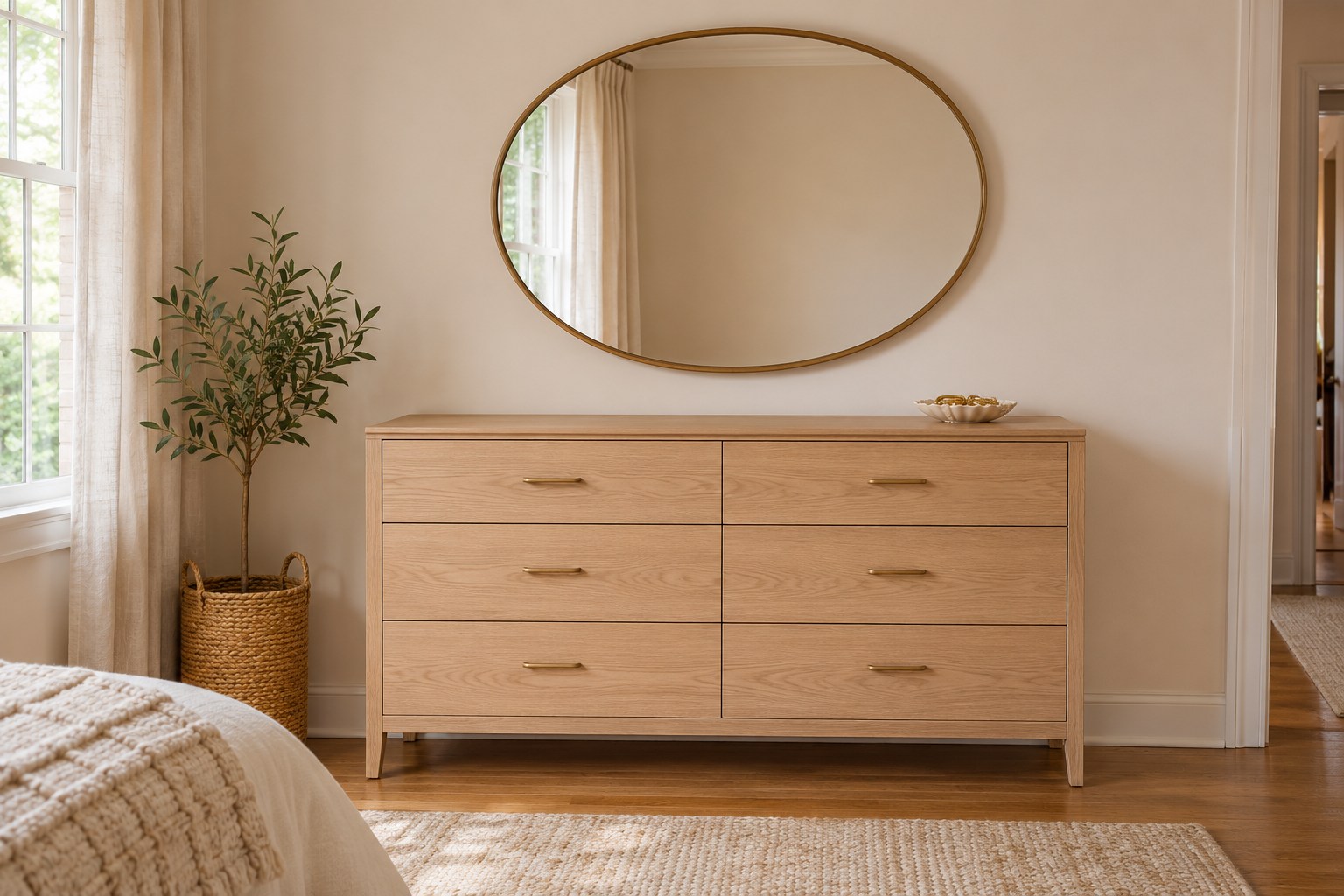
Put the mirror where you can check your outfit without walking around the bed. Before hanging it, mark the proposed outline and see whether your reflection will be useful from a comfortable standing distance. The top of a dresser is also a natural place to collect the few things you take off at night, such as a watch or a pair of earrings.
Leave the center of the surface open so a jewelry dish or small tray does not block the view. If the dresser stands opposite a bright window, see how the reflection feels in daylight and again after sunset. A lamp to one side can soften an otherwise dark corner.
Choose mounting hardware for the mirror and the wall, and follow the maker’s instructions. Our bedroom mirror ideas compare other shapes and placements if an over-dresser mirror would sit too high.
7. Let a Compact Dresser Serve as a Bedside Table
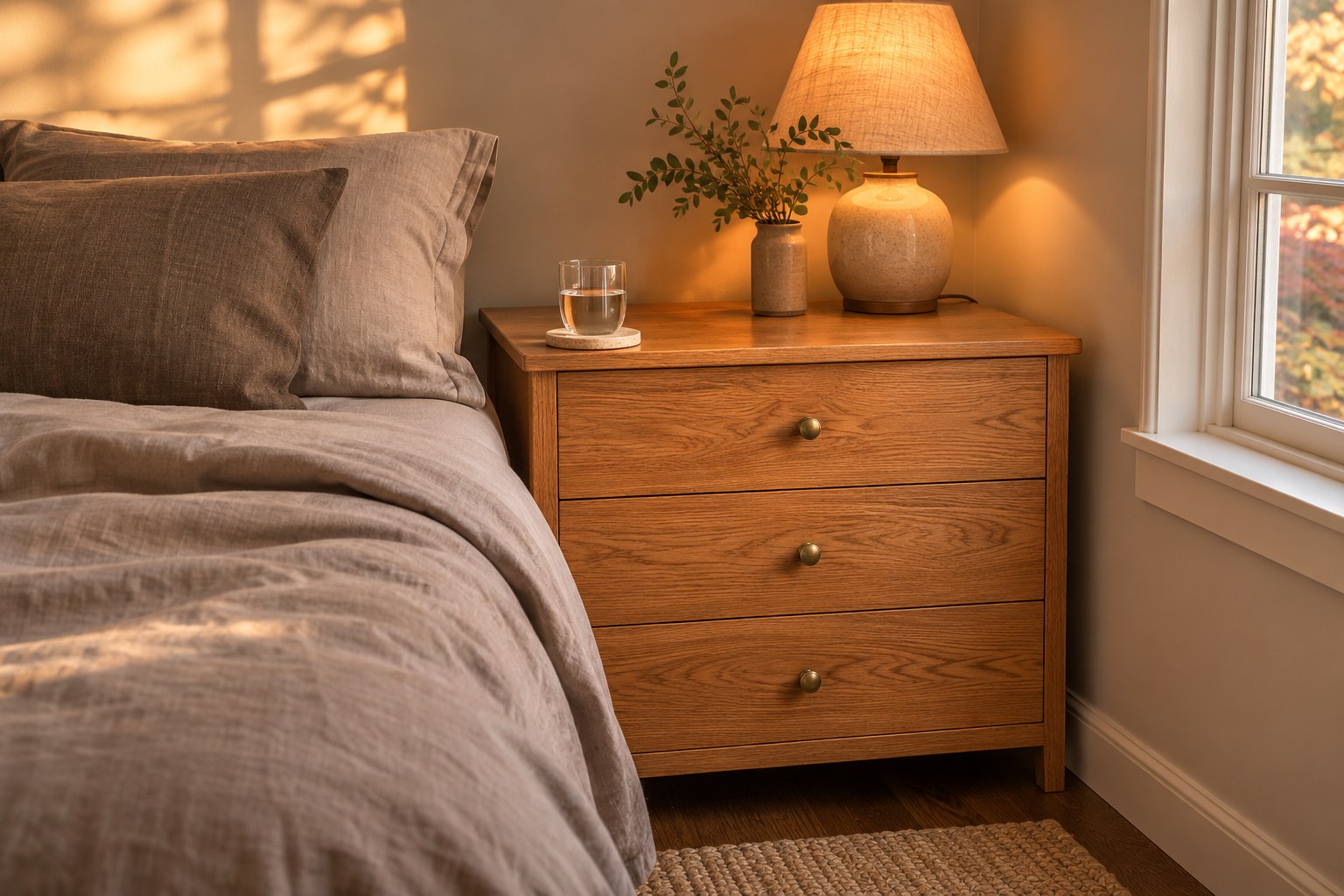
A small dresser can take the place of a nightstand when you need more closed storage beside the bed. Compare its top with the mattress height. Then sit where you would reach for a glass or turn off a lamp and make sure the reach feels easy. If the bed has a pullout drawer or trundle, include that movement in the layout.
Keep the closest part of the surface open for things you grab from bed. A lamp can sit at the far corner if its switch stays within reach. Use the nearest drawer for the book, charger, or sleep mask you use most often and give the other drawers a separate job.
Bring cords out at the back and keep them clear of drawer slides. The benefit of this setup is one useful footprint for both clothes and bedside items.
8. Use a Lower Drawer for the Next Bedding Change
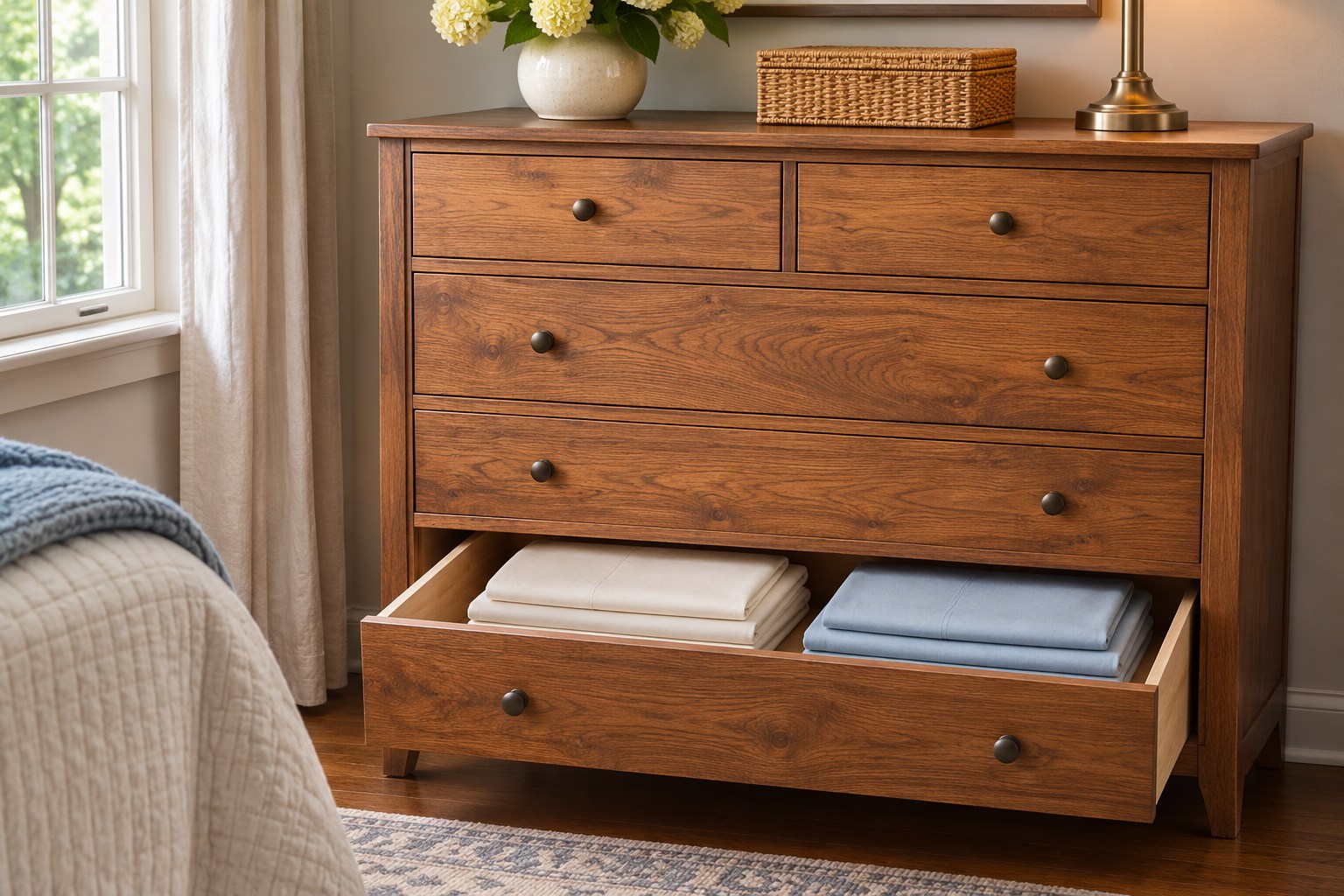
A spare set of sheets tends to migrate when there is no obvious place to put it. Dedicate one lower drawer to the set for this bed. Fold the fitted sheet, flat sheet, and matching pillowcases together, or tuck the bundle into one of its pillowcases so the whole set comes out in one trip.
Check that the folded bundle clears the drawer opening without having to press on it. Keep heavier items low and stay within the dresser’s load limits. A thick comforter may be easier to keep in a closet. Use the drawer for the smaller pieces you can lift without catching them on the hardware.
If you keep two sets in rotation, arrange them side by side so neither is buried. The same approach works for guest bedding when you label the size on a small removable tag inside the drawer.
9. Give Each Person a Column of Drawers
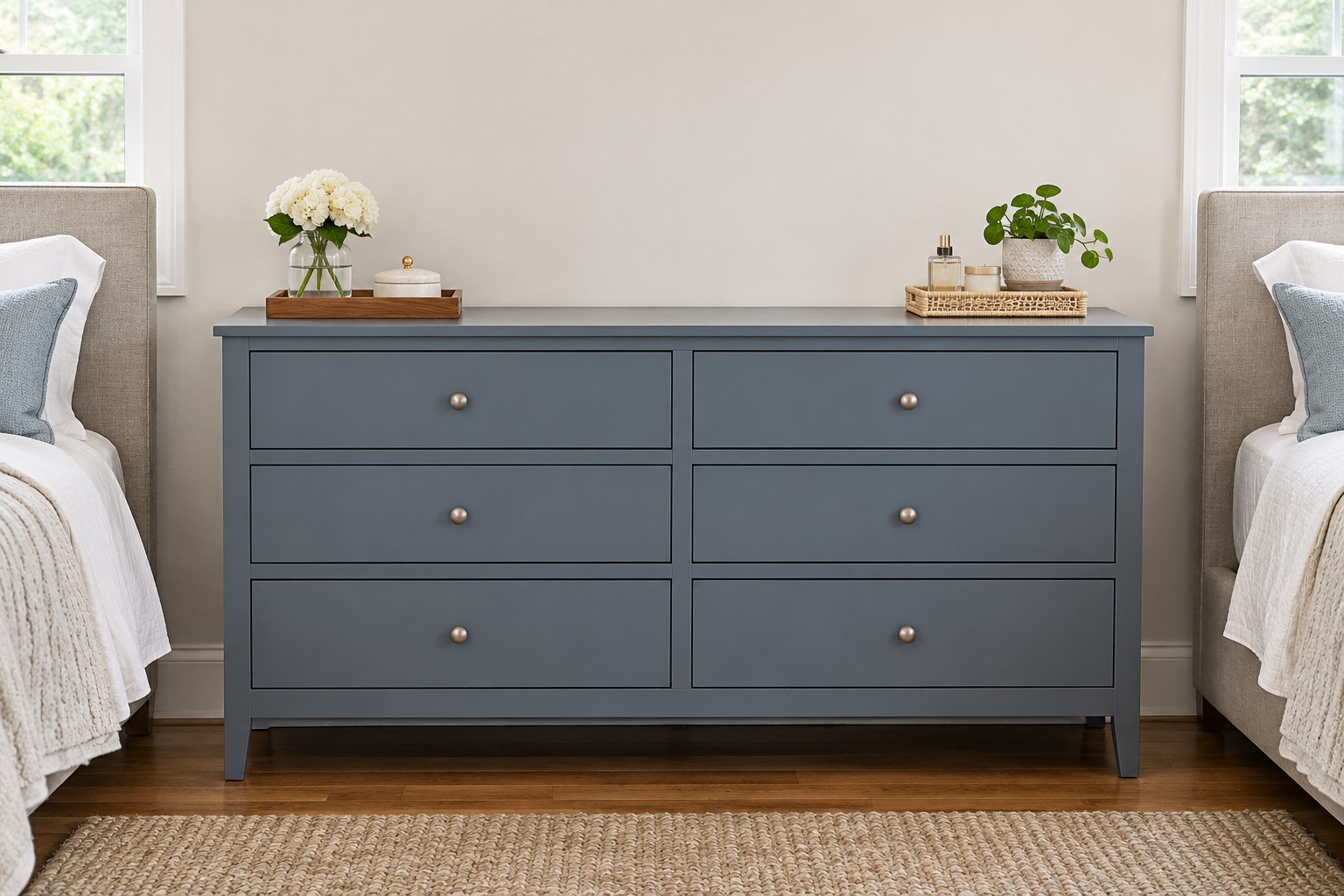
A shared dresser is easier to keep organized when each person can tell which part is theirs. A double dresser with side-by-side drawers creates a natural division. If one person needs more space, allocate the overflow according to what is being stored, such as an extra drawer for work clothes, rather than insisting on an even split.
Start with the drawers each person can reach most comfortably. Keep the daily clothes there and place seasonal pieces toward the bottom. Where you have a single vertical stack, assign a small group of drawers to each person instead of alternating every other one.
Keep the top from becoming a second sorting system. Give each person one small removable tray for personal items if it helps, then leave open room to fold a shirt. Check after a laundry day to see where the categories break down.
10. Repeat One Room Color on the Dresser Top
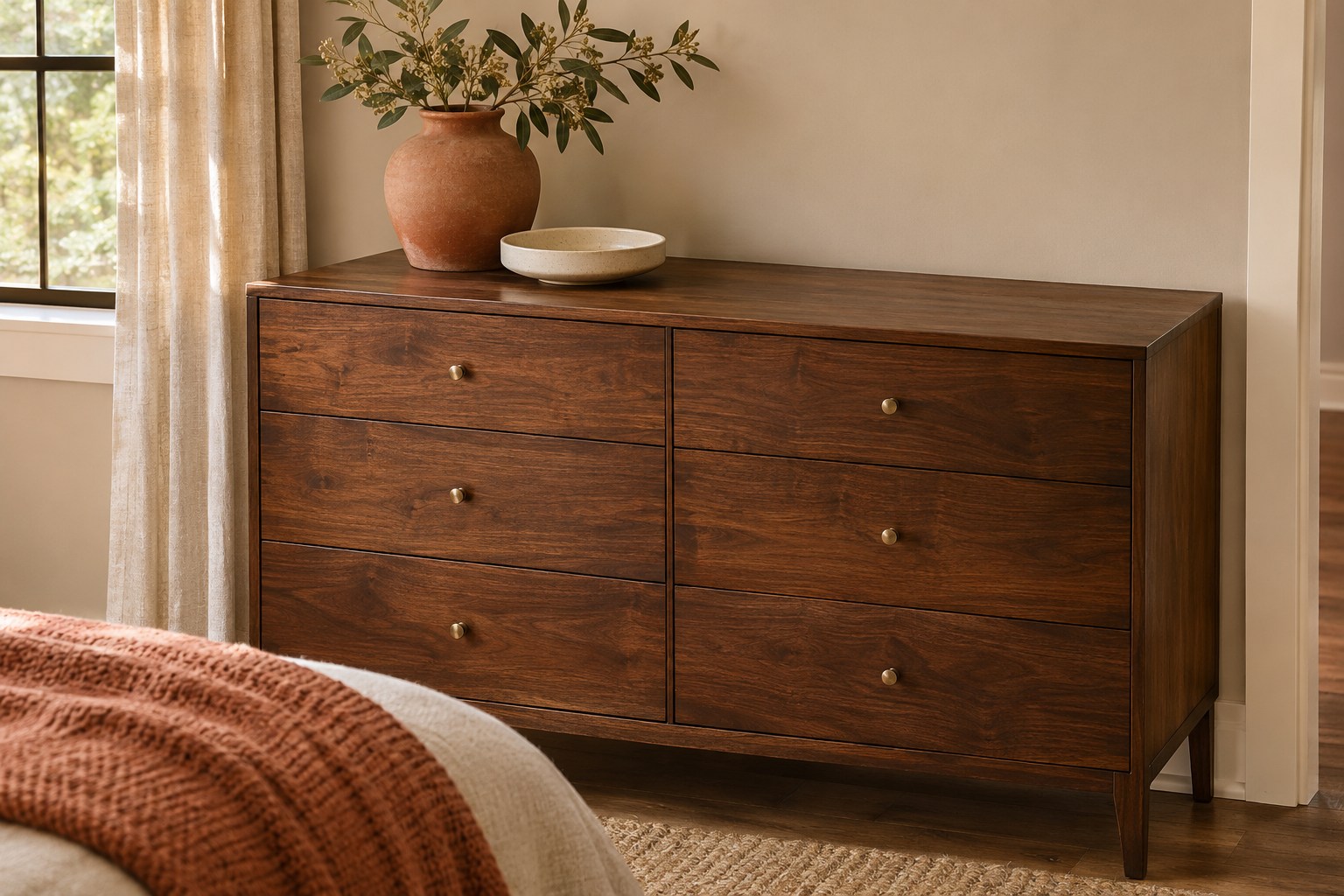
The dresser can feel connected to the rest of the bedroom with one well-chosen color. Pull a shade from the bedding, rug, or curtains, then repeat it in a lamp base, a small vessel, or the frame of a print. A quiet room can take a stronger accent. Where the bedding is patterned, repeating a quieter color often feels calmer.
Give the display a home at one end of the dresser and keep the other end open. One taller piece and one low object are usually enough to show the relationship. This also leaves a surface where you can set down a laundry basket long enough to put clothes away.
Look at the arrangement in morning light and again with the bedroom lamp on. If the color loses its appeal under the lamp, move the accent closer to the window or try a slightly warmer version.
Start with the dresser problem you run into most often. Measure the open drawers if the room feels tight, or change what lives in them if you are always looking for the same thing. Once the dresser works for the way you get dressed, a lamp, mirror, or repeated color can give it a place in the rest of the room.
Discover more from HomeTrendora
Subscribe to get the latest posts sent to your email.