The best place for a kitchen runner is often where you already spend the most time on your feet. Sometimes that means the long aisle between the range and the sink. In another kitchen, a short rug in front of the chopping board makes more sense. Start by opening the dishwasher and the deepest drawers and watching where everyone takes the corner. These 14 kitchen runner rug ideas give you ways to use those everyday movements to choose a size, a place, and a pattern that belongs in the room.
1. Center a Flatweave in a Narrow Galley
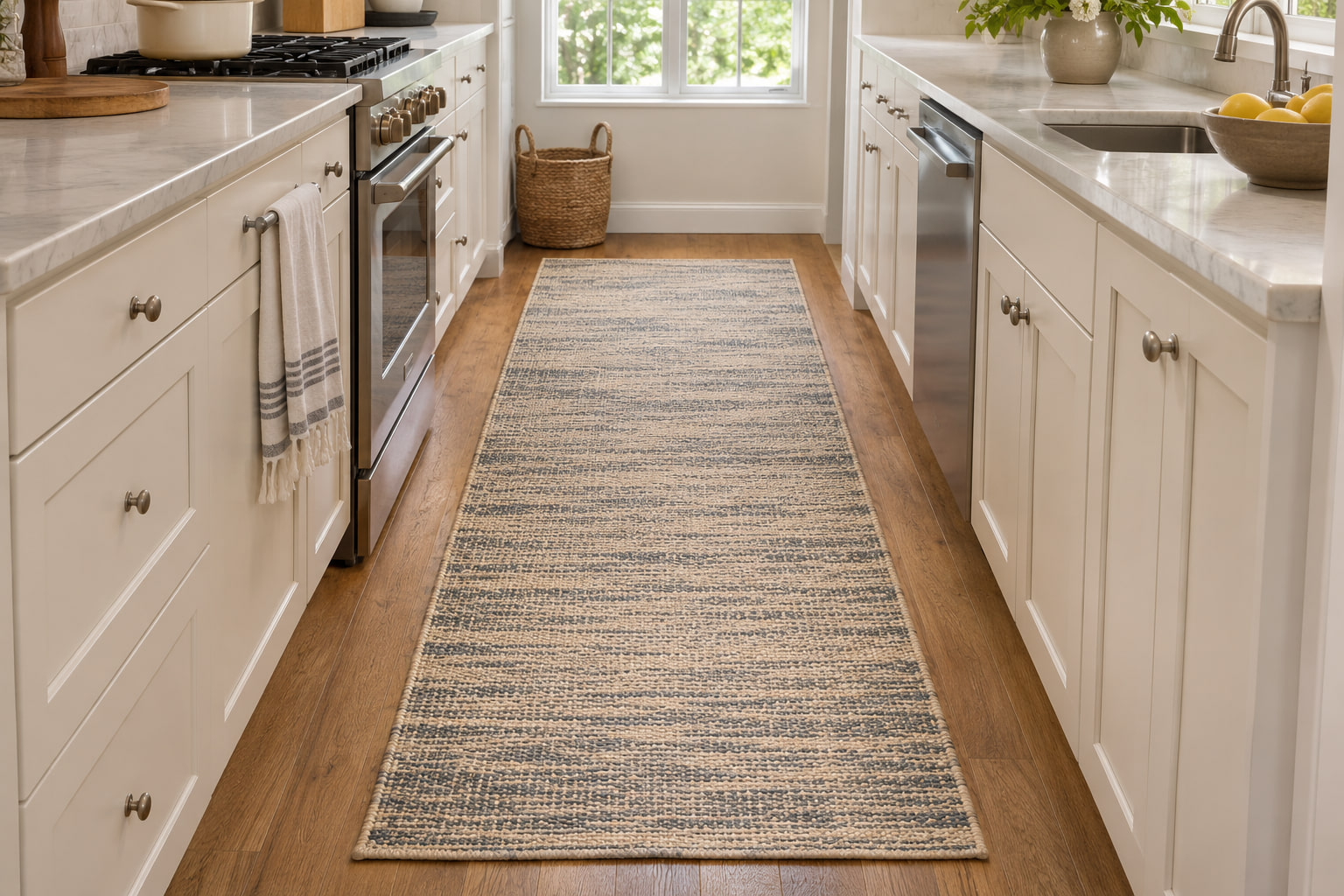
Stand at the narrow end of the galley and look down both cabinet runs. Measure the floor between them at its tightest point, including any fixed projection such as the base of a tall cabinet. Mark the width of the runner with removable painter’s tape if your flooring permits it. Two visible bands of floor will frame the rug and keep the cabinet runs legible.
Look for a flatwoven rug whose edge lies cleanly on the floor. Check it from both ends of the galley. A centered runner looks most settled when the border reads as a continuous line, even if one cabinet front steps back slightly.
2. Put the Runner on the Working Side of the Island
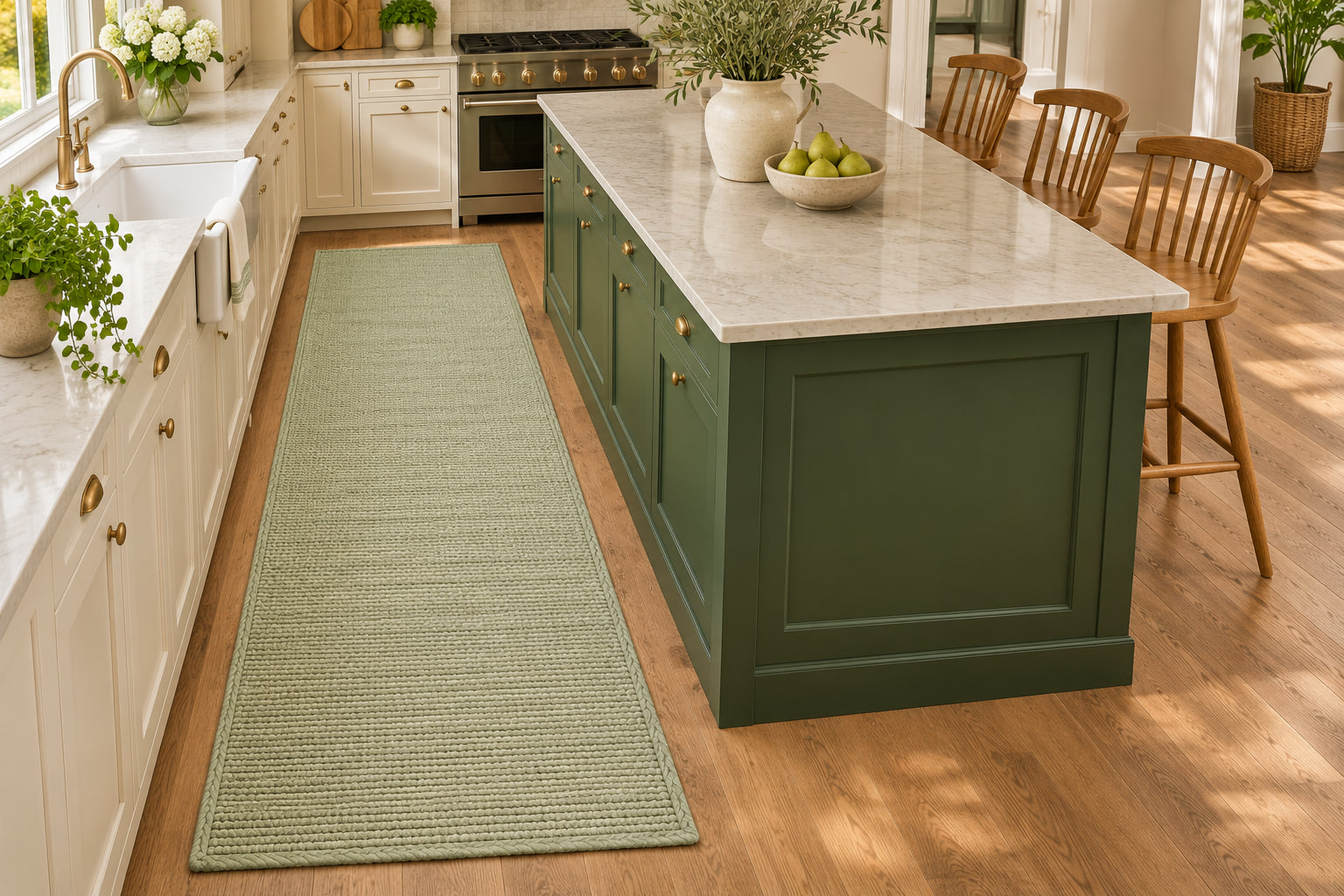
Walk around your island as if you were making lunch. The stretch you use to carry ingredients from the counter to the sink is a better guide than the side most visible from the living room. Place the runner parallel to that work surface, with the bare floor left open at the stools.
Keep the last part of the island clear where the two paths meet. From the end, you should be able to see the whole turn in one glance. A narrow woven pattern that picks up the island paint can tie the runner to the furniture without needing a matching rug on the other side.
3. Stop Before the Dishwasher Door
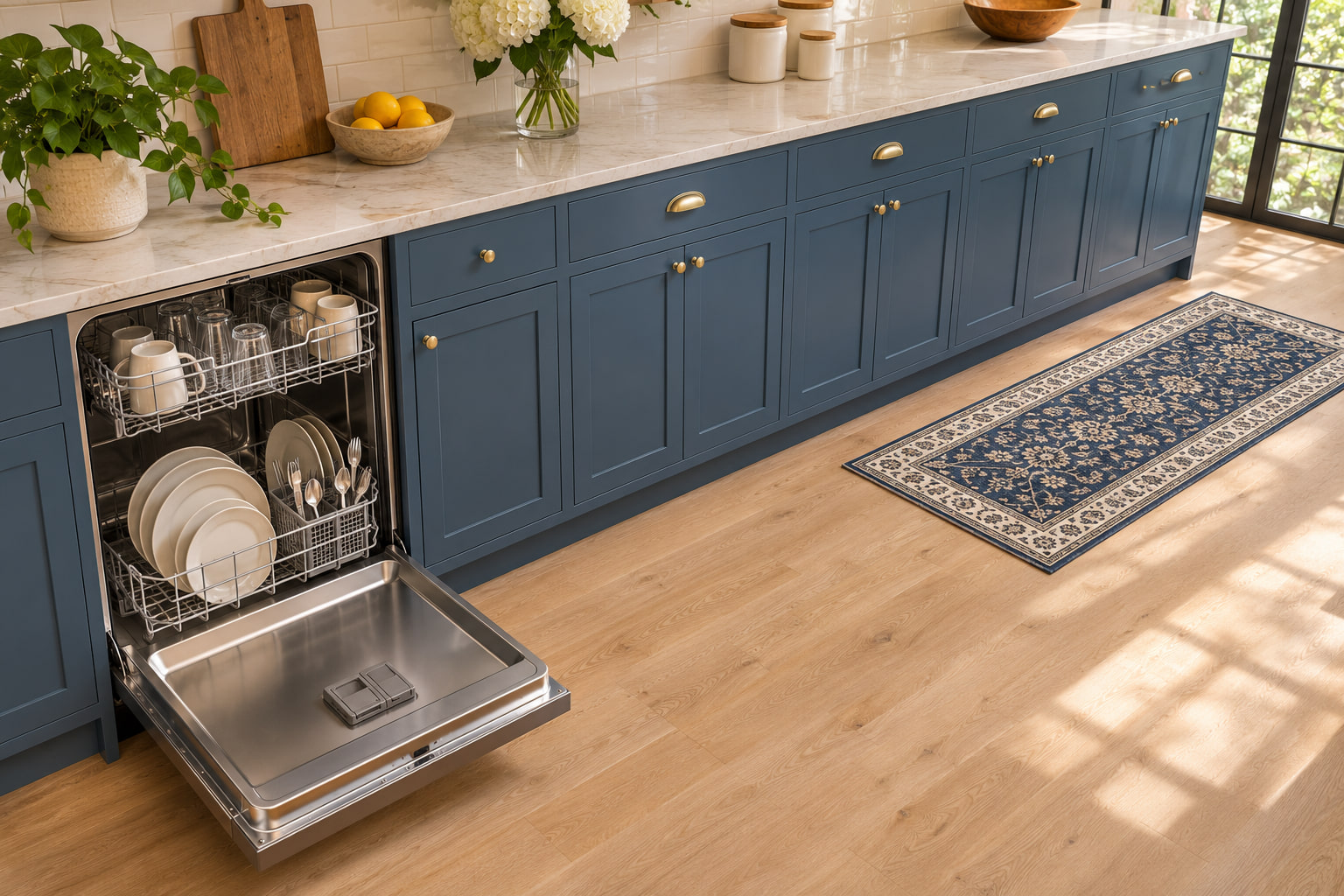
Open the dishwasher all the way and pull out the lower rack before you settle on a rug length. Look at where you actually stand to load it, including the spot from which you step around the open door. If the proposed rug ends in the middle of that movement, move the end farther along the cabinets and check again.
Measure from that new stopping point toward the far end of the counter. A shorter rug can still cover the place you stand most often, while the appliance zone stays open. Check a nearby refrigerator or oven door separately if it shares the aisle.
4. Run One Rug Along the Long Leg of an L
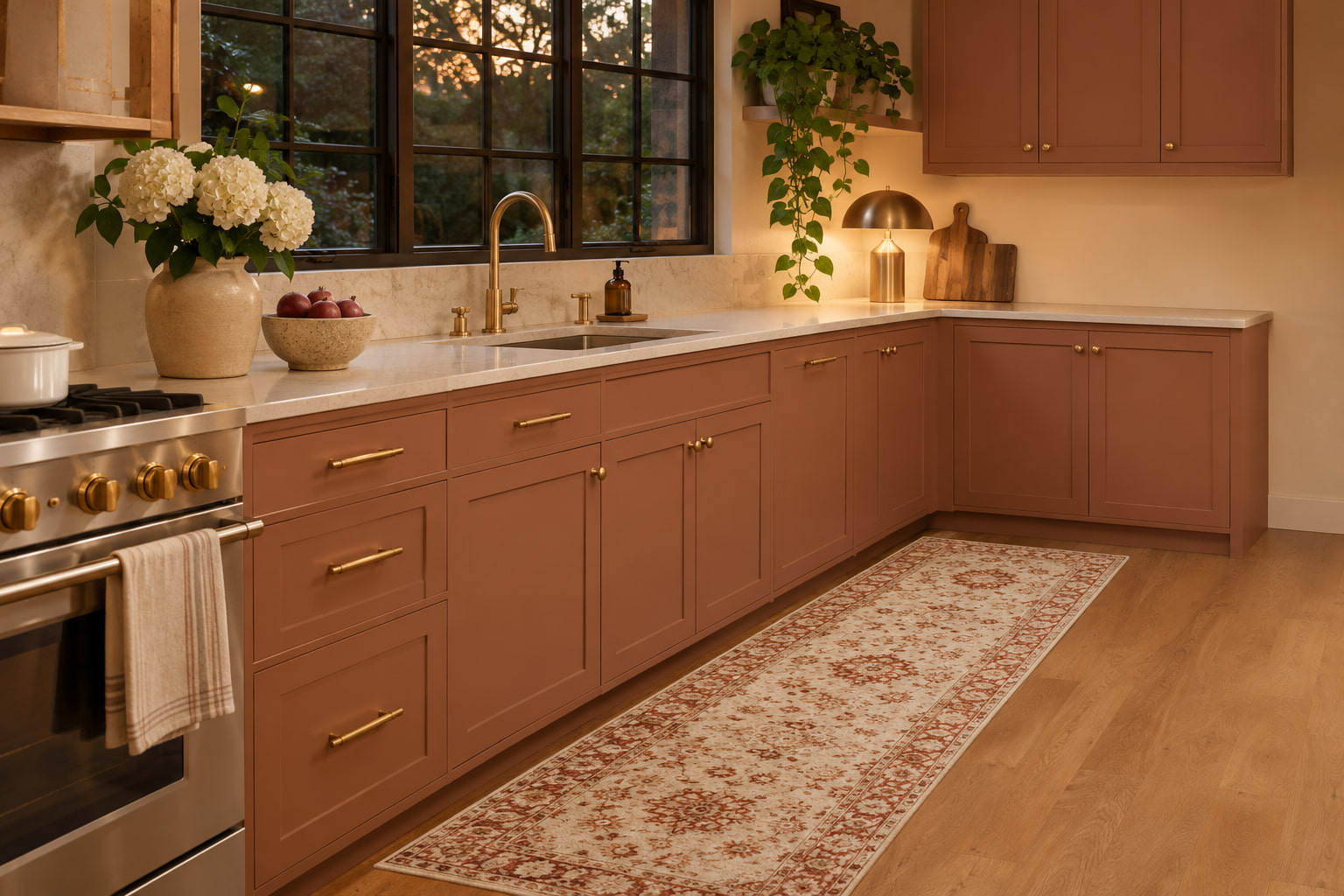
Choose the longer unbroken cabinet run as the visual spine of an L-shaped kitchen. Set the rug along that stretch and let the short return show its flooring. A plain corner makes the layout easier to read and gives you room to pivot with a bowl or a sheet pan in your hands.
If the longer side contains only tall cabinets and the short side is where you work, switch the placement. The useful test is whether the rug sits under your regular steps. Two separate runners meeting at the bend can make an otherwise simple floor look chopped up.
5. Leave Breathing Room Along a One-Wall Kitchen
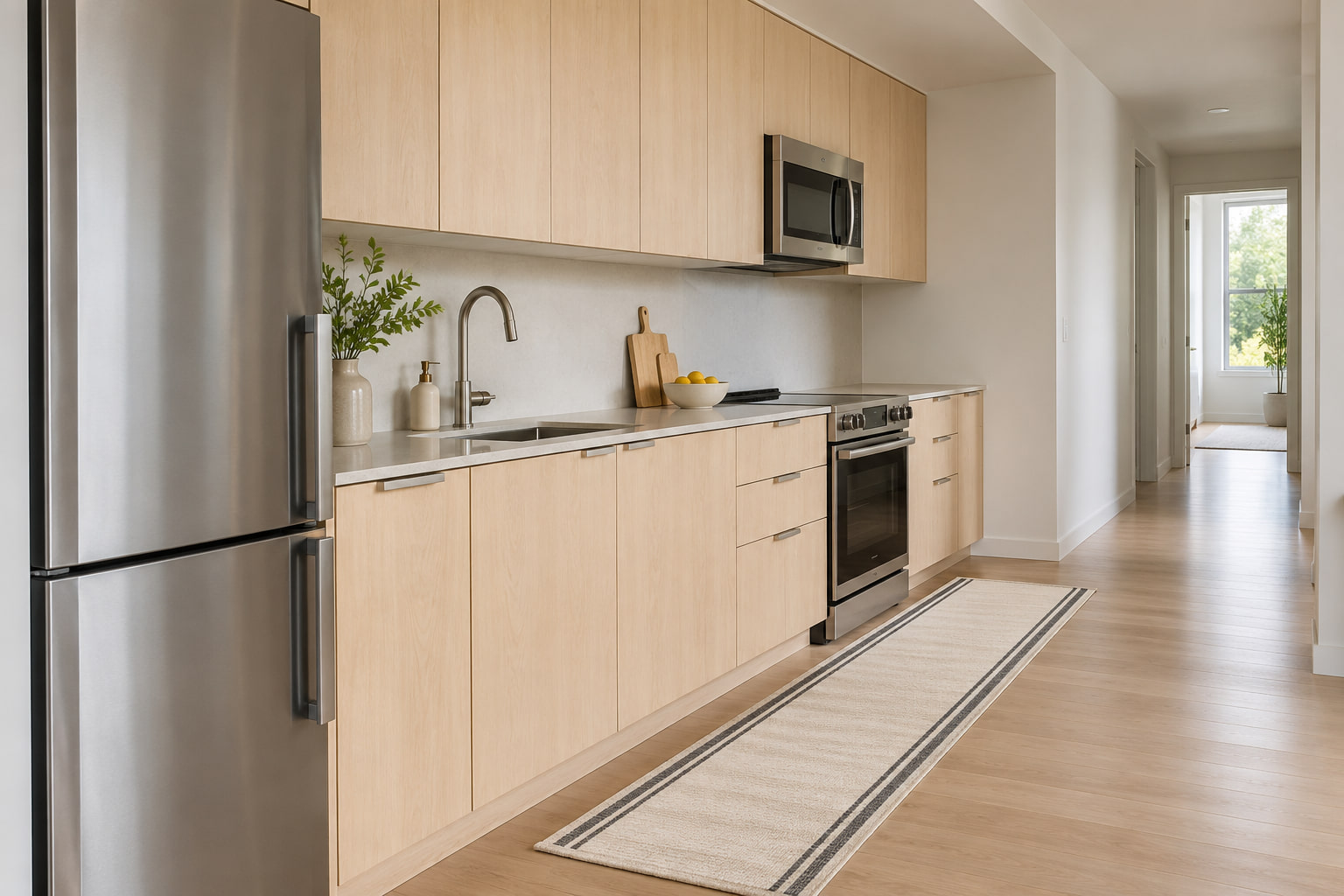
A single-wall kitchen often shares the same floor with the entry or the main room. A runner can mark the stretch where you work without adding a visual barrier. Align one long edge with the cabinet fronts and leave a narrow strip of visible flooring at the toe kicks.
Use the opposite side of the runner to judge the everyday passage. Walk the route from the kitchen to the next room and check it while a drawer is open. If the rug feels as if it owns the whole walkway, choose a narrower width or place it over just the sink and prep stretch.
6. Use the Edge to Define an Open-Plan Kitchen
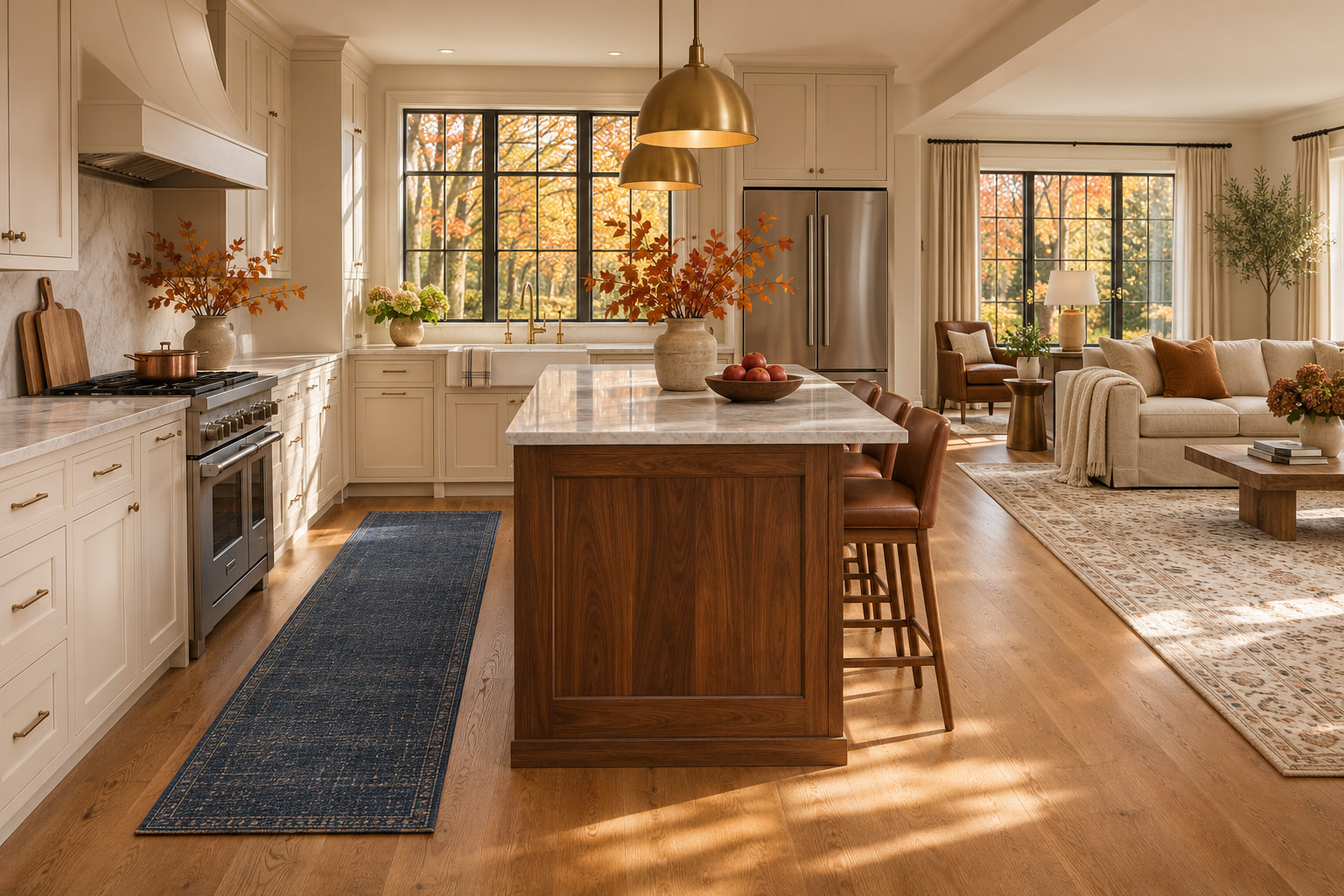
In an open layout, let the kitchen runner and the living room rug give each area its own boundary. Finish the kitchen runner while it still reads as part of the work aisle, then leave a visible stretch of bare flooring before the other rug begins. The break matters more than lining up both rug edges from across the room.
Borrow one quiet color to connect them. A kitchen runner with a denim-blue field can pick up the blue threads in a cream living room rug. Vary the scale of the patterns so they can be seen together without competing.
7. Try a Washable Medallion on a Long Work Run
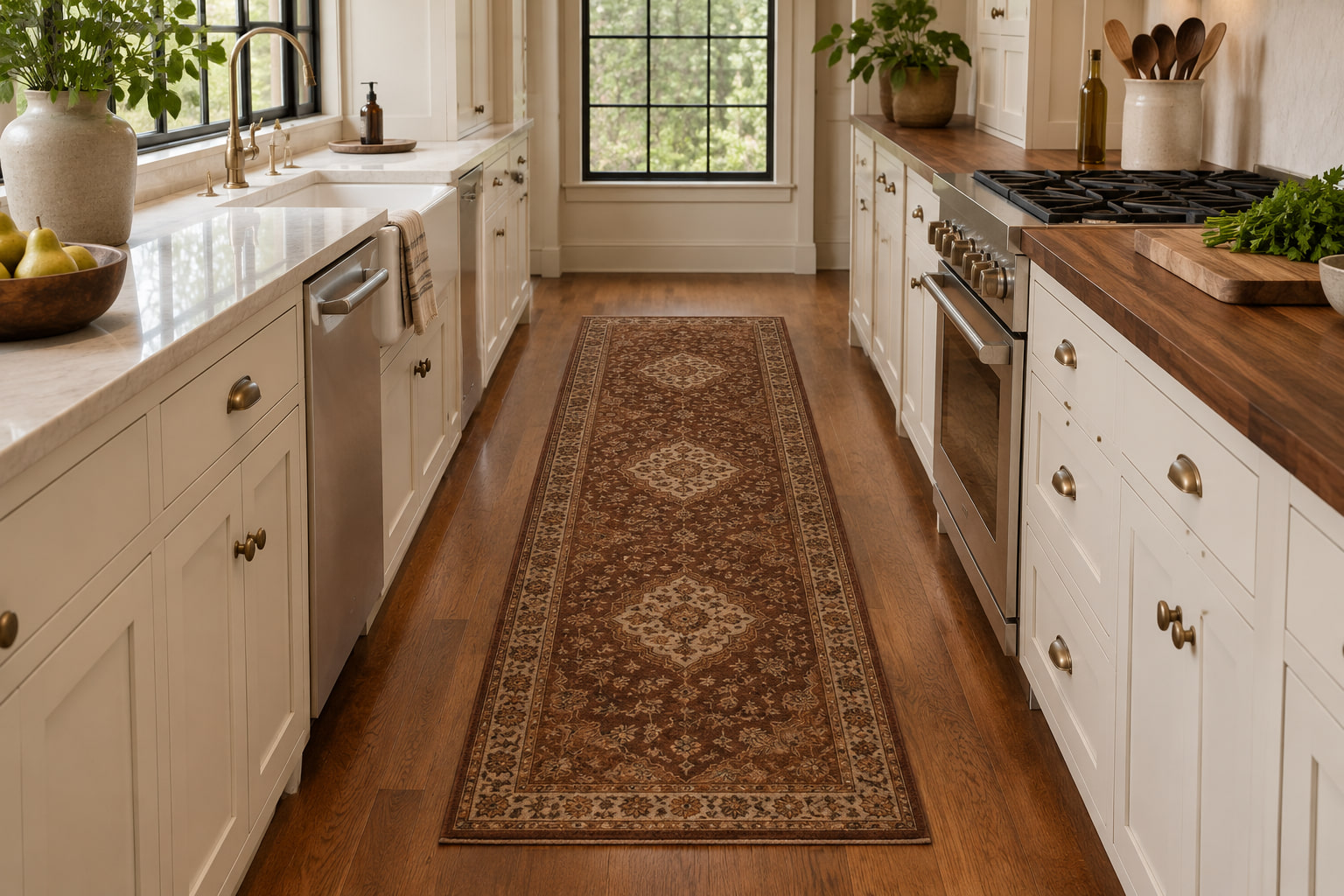
A chestnut medallion pattern brings a warmer note to a long, plain run of cabinets. Look for a low-pile version with a quiet border that carries the pattern down the aisle. Measure the uninterrupted floor from end to end and decide where you want the bare floor to begin before choosing a runner length.
If you plan to machine-wash it, read the care instructions for the size you’re considering. A long rug needs to fit your machine without being crammed into the drum. Check the drying directions, too, and let the runner dry fully before returning it to the floor. Check the backing against your flooring’s care guide.
For a similar look on a long cabinet run, the Rugshop Lisbon washable medallion runner on Amazon comes in brown in a 2 × 10 foot size with a low polyester pile. Check that your machine can fit the rug before washing it.
8. Give the Prep Counter Its Own Short Runner
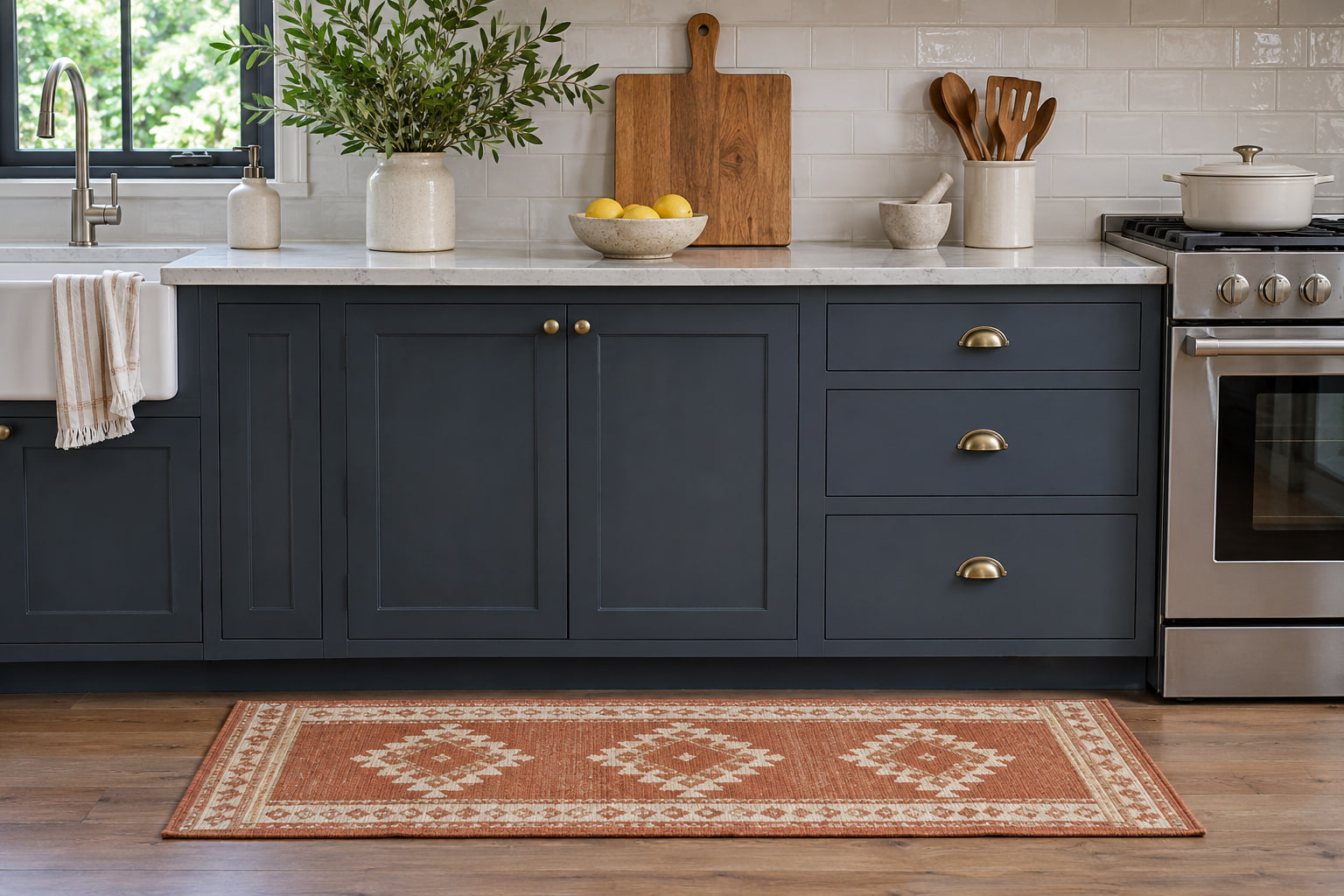
Notice where the cutting board lands when you cook. If most prep happens between a set of drawers and the end of the counter, measure that station and try a short runner underneath it. The smaller shape gives that stretch of cabinetry a clear purpose even when the rest of the floor stays bare.
Leave enough clear floor at the ends to approach the counter naturally from either side. Set the rug back far enough for your toes to reach the cabinet recess comfortably, then open the drawers you use for bowls and utensils. A compact runner earns its place when the station still feels easy to use.
9. Match the Pad to the Floor and Rug Backing
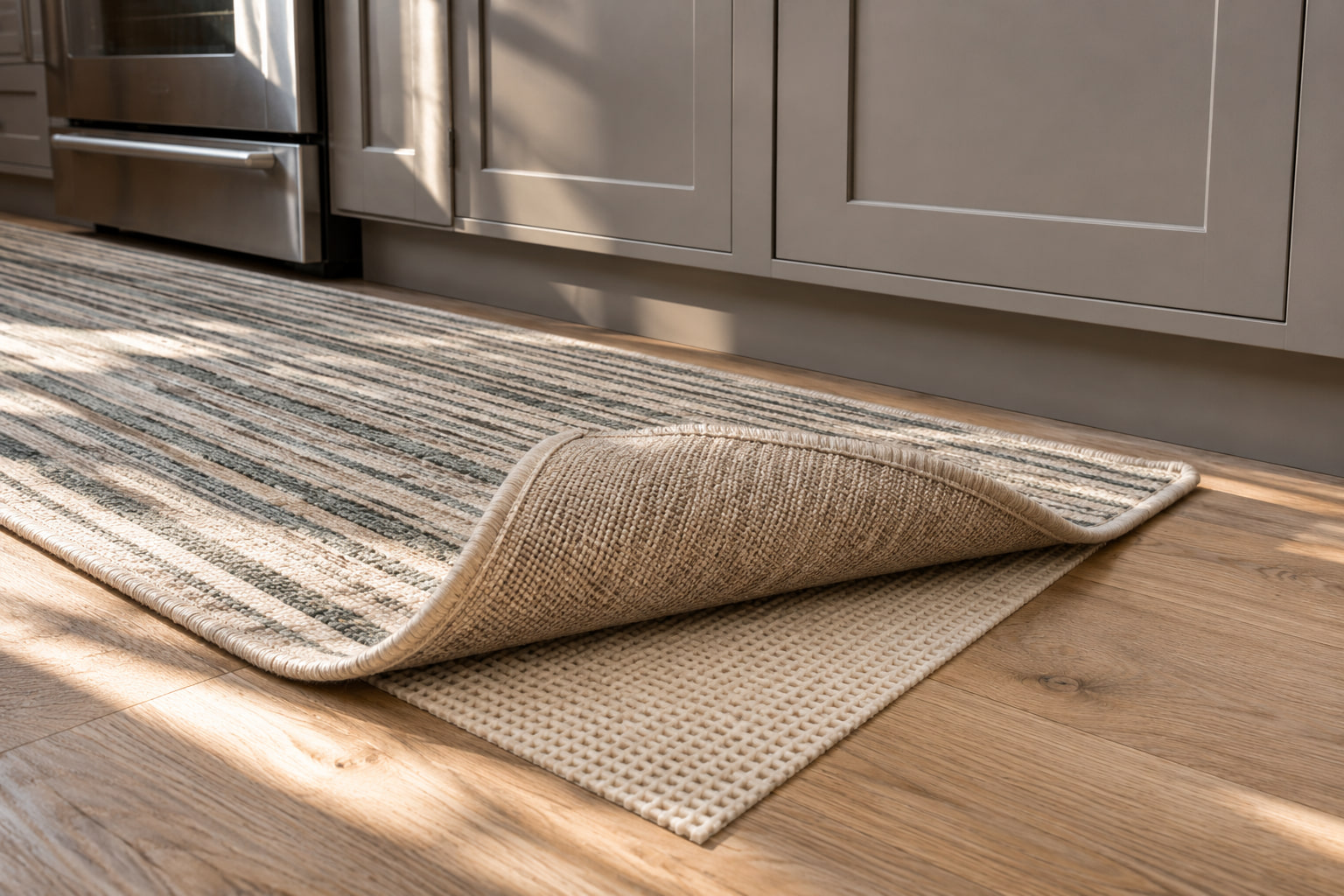
Check your floor manufacturer’s care guide before picking a pad or a runner with its own backing. Some hardwood finishes have specific restrictions on solid, rubber, latex, or rough backing materials. A pad labeled for one surface may be the wrong choice for another, so compare the guidance for your actual floor with the rug’s instructions.
If both the rug and flooring manufacturers allow rubber-backed pads, the ⅛-inch RUGPADUSA felt-and-rubber pad (sponsored) is an option for a shorter runner
10. Turn the Eye With the Direction of a Stripe
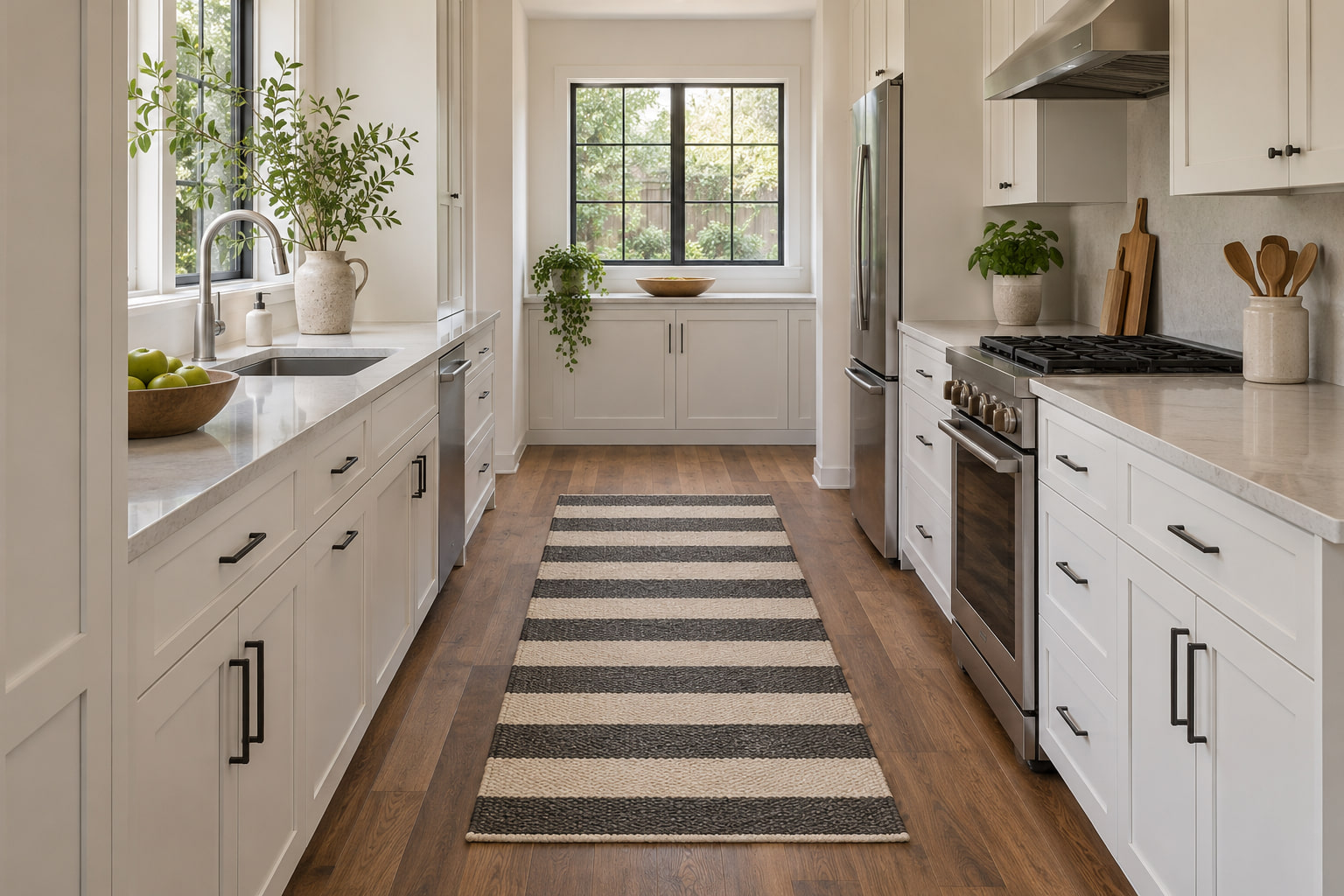
Look at the direction of your floorboards before you choose a striped runner. Narrow bands crossing the width of a rug draw attention to the sides of a long galley. A pair of stripes running the length works with the sightline when you want to lead the eye toward a window or breakfast nook.
Start with colors you already see underfoot. Oatmeal and charcoal can read clearly over medium walnut, while a softer tonal stripe suits a floor with a busy grain. View a sample from the end of the room. That is where the direction of the pattern makes the biggest difference.
11. Keep a Natural Flatweave in the Dry Pantry Aisle
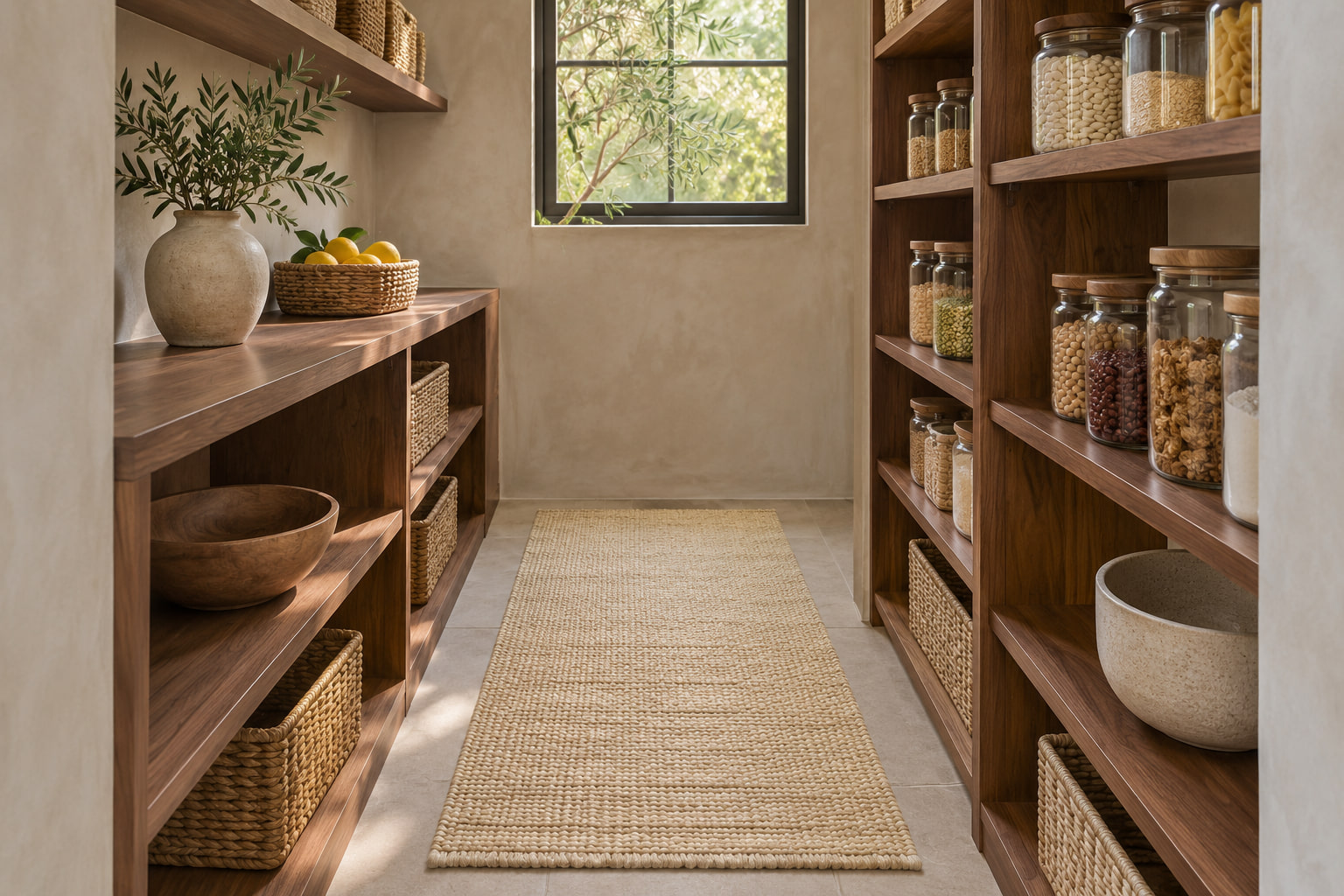
A walk-through pantry with dry shelves is a good place to try an undyed wool flatweave or a straw-colored woven look. Leave an exposed edge of floor beside the shelves so the fiber texture reads as its own layer. Its woven surface has room to stand out next to walnut shelves, glass jars and plain plaster walls.
Read the rug’s care label and check that the backing suits the floor, especially if the weave feels rough on the underside. Keep the runner in the dry section and choose another material if the pantry includes a sink or catches frequent drips from the adjoining prep area.
12. Soften the Sink Zone With a Low Cushioned Runner
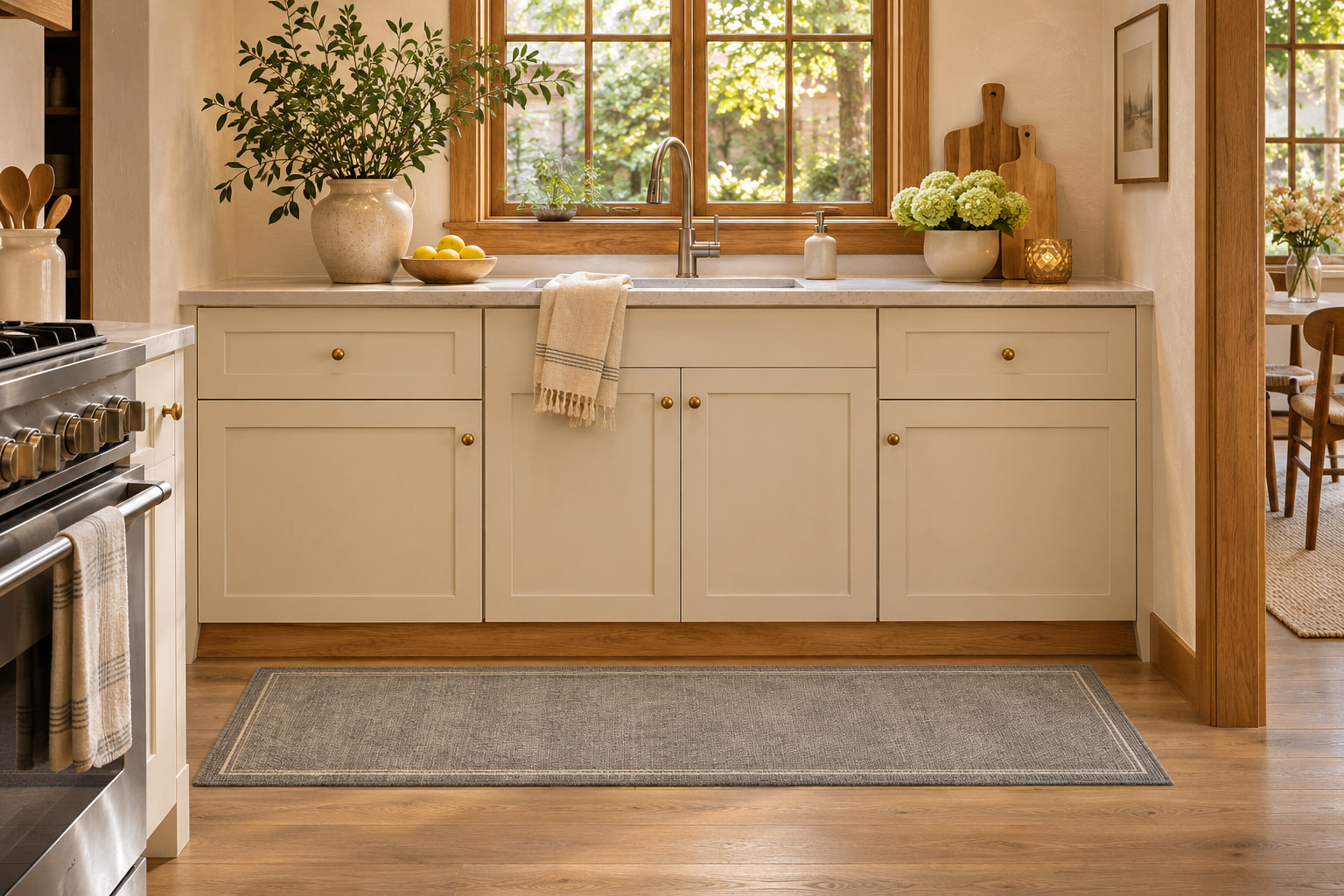
A small sink nook is a place where a little give underfoot can make the routine more comfortable. Choose a short, low cushioned runner whose edge sits flat and whose surface you can care for as directed. Position it where you stand to wash up and leave the route past the sink on bare floor.
Test the full assembly with the doors beside it, especially if the dishwasher opens into the same nook. A thin mat is the more useful choice if a cushioned rug catches or lifts at the edge. Check that the manufacturer allows its backing on the flooring you have.
13. Let a Graphic Runner Set the Kitchen Palette
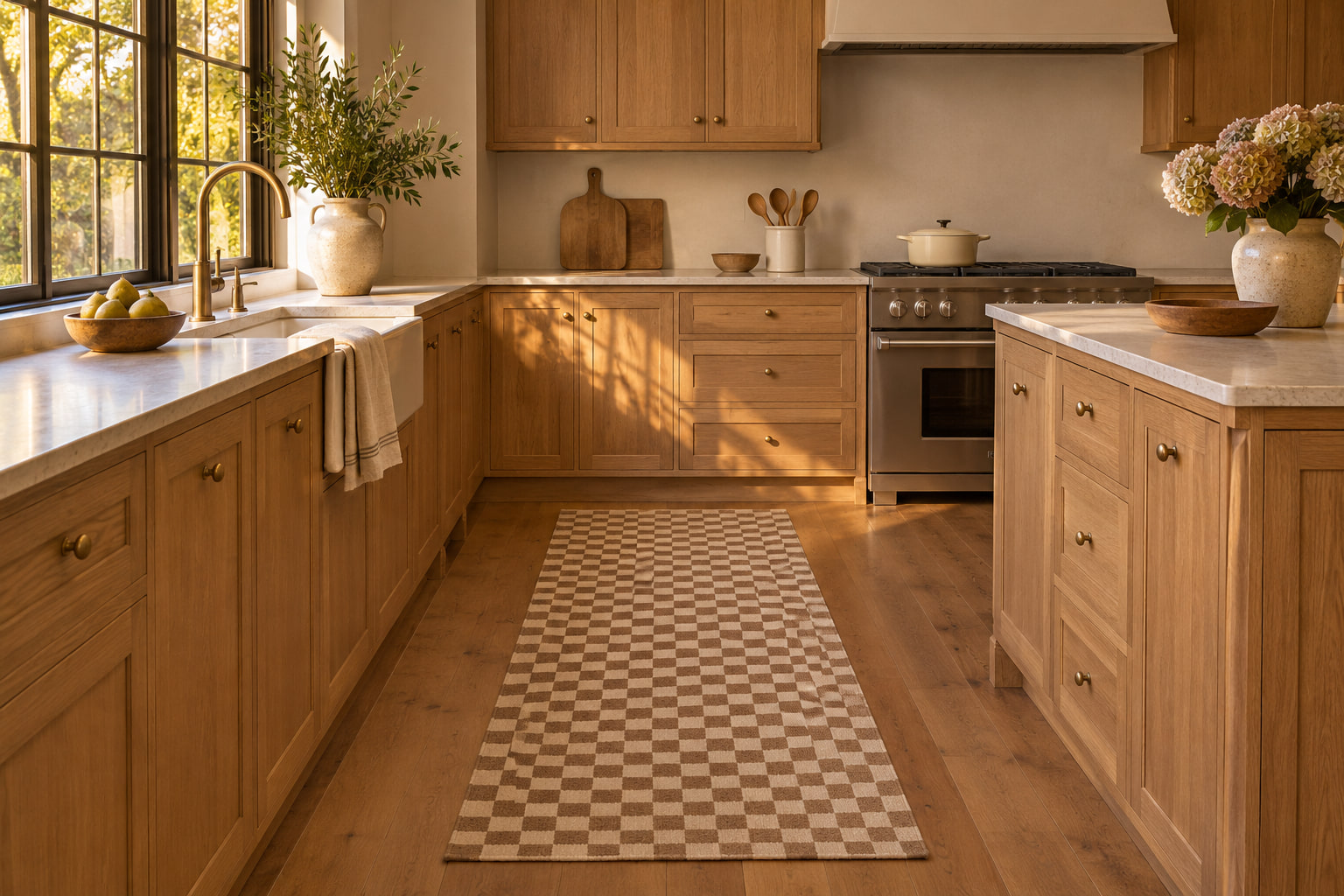
When the cabinet fronts and backsplash are quiet, a graphic runner can set the whole color direction. In a cool gray kitchen, try an ivory-and-ink repeat that echoes a cooler finish already in the room. For warm oak, look for oatmeal and umber so the pattern relates to the grain and reads as part of the kitchen.
Take a swatch home and compare it to the cabinet toe kick in daylight and under your kitchen lights. You may find one color reads considerably warmer in the evening. Keep the other fabrics subdued so the runner becomes the clearest pattern in the room.
14. End the Runner Before the Breakfast Chairs
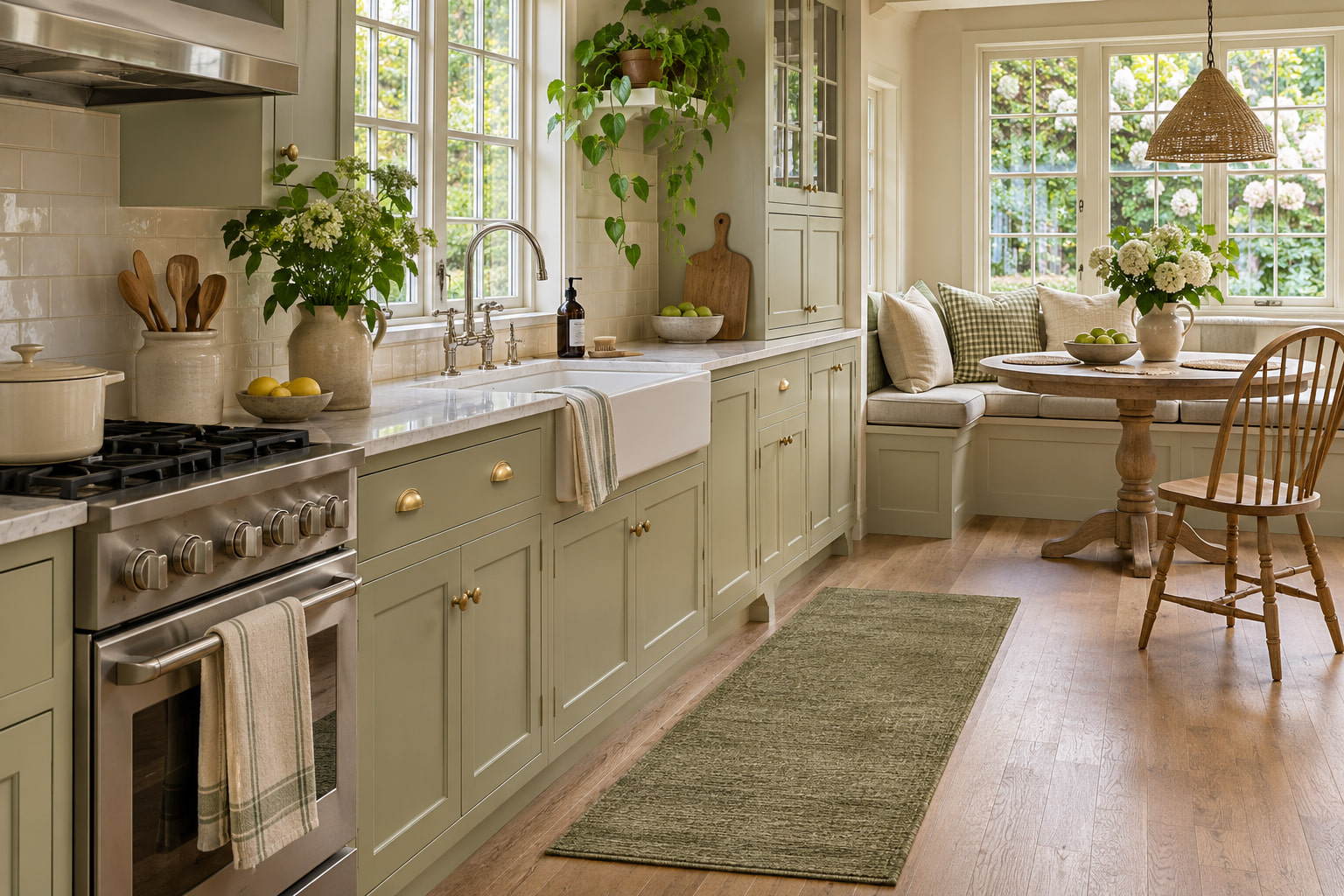
Pull a breakfast chair out as far as you would when you sit down, then mark the closest point its feet reach. Set the end of the kitchen runner short of that path. The chairs can move over one continuous surface and a little bare floor makes it clear where the work aisle ends.
If the table has its own rug, plan that footprint around all the chairs before fitting the kitchen runner. That order gives you a visible break between textiles and lets each piece do a distinct job. Our kitchen and dining room layout ideas show ways the two spaces can meet in a shared room.
Tape out the footprint, then spend a few minutes moving through the kitchen as you normally do. Open the doors, pull up a chair, and take the corner around the island. Once that rectangle feels right, you can decide whether you want the rug to echo the floor, warm up the cabinetry, or carry the boldest pattern in the room.
Discover more from HomeTrendora
Subscribe to get the latest posts sent to your email.