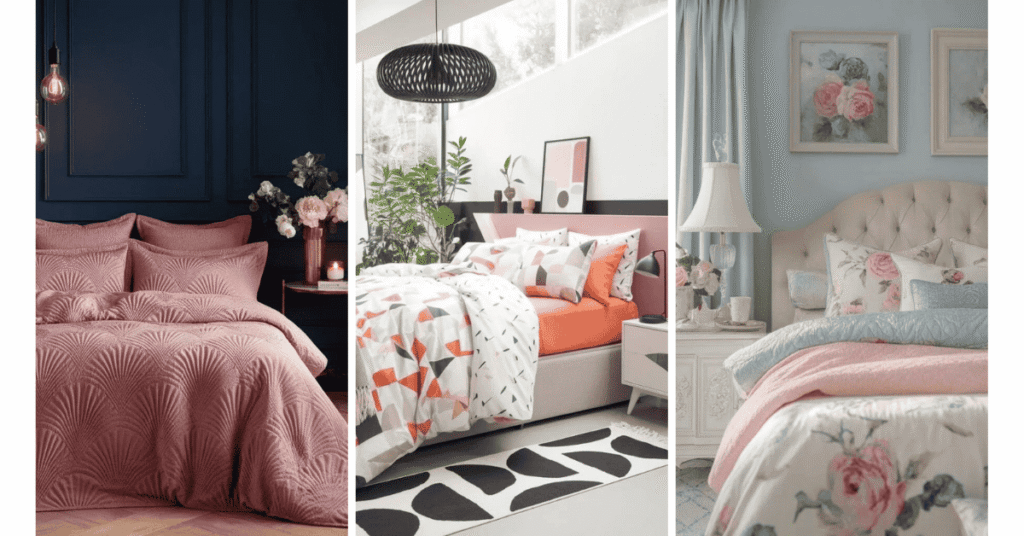
A dark bedroom can lose its shapes when the walls, furniture, and textiles all merge into the same shadow. These dark feminine bedroom ideas help you decide where to keep depth, where to add a soft edge, and how to leave the room comfortable to use.
The 16 ideas below work through separate decisions about the bed, dressing area, storage, pattern, and light. Choose the part that feels unresolved in your own room before adding more decoration. Sample paint and textiles in the actual space during the day and evening; a screen image cannot show exactly how a commercial color will look at home.
1. Put a Pale Curved Headboard Against Deep Plum

Give the bed a readable outline with a pale upholstered headboard against a deep plum wall. The curve can be broad and simple, allowing the contrast to carry the idea. Check the headboard’s full width against bedside furniture and the wall before choosing a tall or winged design.
Keep the bed linen close to the upholstery tone at first, then add one deeper layer near the foot. This leaves a substantial light shape against the dark background without requiring a white wall. Use restrained bedside pieces and leave enough space around their lamps for the headboard’s outline to remain visible.
A well-proportioned upholstered bed, quiet metal details, and a clear furniture arrangement can make the room feel considered. Test the plum beside the actual fabric; a warm cream and a cool pale gray will create different relationships with the same wall sample.
2. Give a Dark Dressing Desk a Soft-Shaped Seat
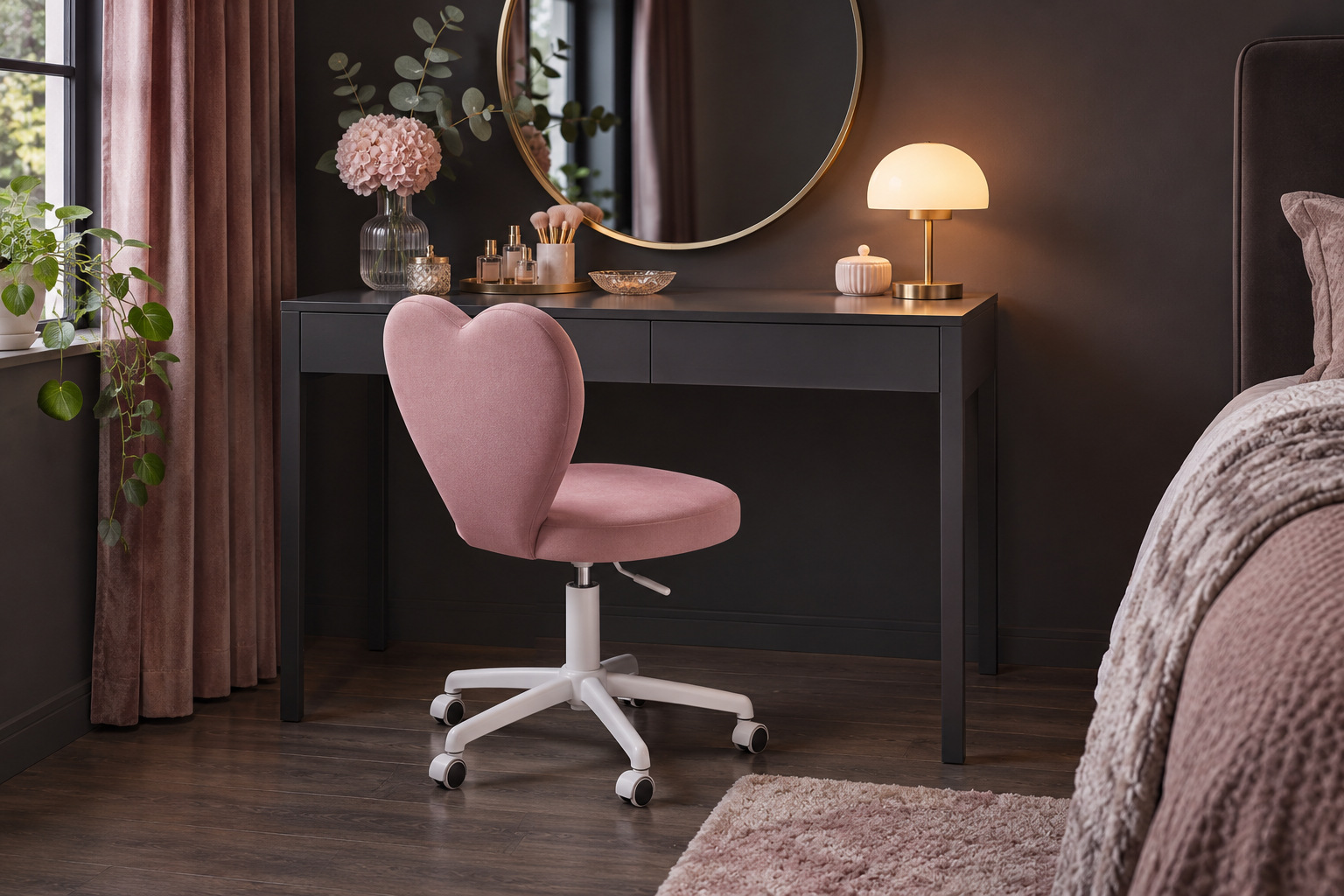
A dark dressing desk can feel less severe with one shaped upholstered seat tucked in front of it. Try a rounded or heart-shaped back in a muted pink, keeping the desk itself simple. The curve becomes a deliberate detail rather than another pattern to coordinate.
Measure the opening beneath the desk, including drawer depth, before choosing the chair. Check seat height, knee room, and the space needed to pull back or turn. A rolling chair also needs a suitable floor and a clear route; it should not wedge between the bed and the dressing surface.
Keep the immediate setting edited: a useful mirror, one lamp, and a small tray are enough. Repeat the chair color lightly in a textile elsewhere if you want the corner connected to the bed. Give the seat a real daily role rather than using it as an extra surface for clothes.
For a similar soft-shaped dressing seat, this pink heart-back chair has a padded seat, adjustable height and a white swivel caster base. Check the seat dimensions, knee clearance and floor compatibility before ordering, and leave room to pull back and turn.
Explore the heart-shaped dressing chair (paid link)
3. Place a Mirror Where It Reflects Something Useful
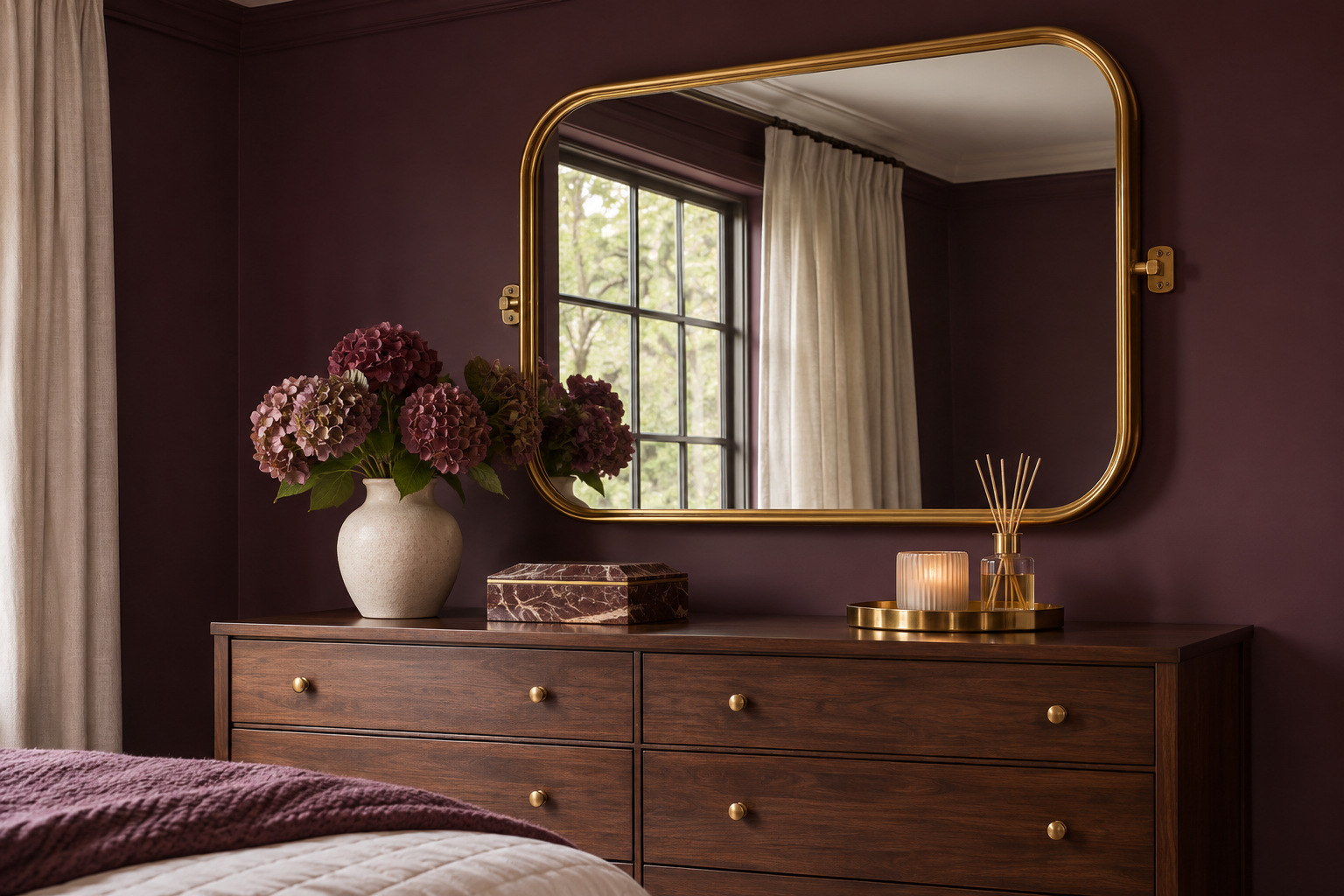
Look at the reflection before deciding that a mirror belongs above a dresser. Hold a paper outline in the intended position, then check the view from the doorway and the bed. Reflecting a window, a quiet wall, or a composed corner can be more useful than doubling a busy open wardrobe.
Choose a frame with enough presence to read against the dark wall. A restrained warm metal edge or a shaped timber surround can provide definition without needing several smaller mirrors nearby. Match the mounting hardware to the mirror’s weight and wall construction.
Leave the dresser top clear enough for the reflected view to stay calm. A mirror does not need to face directly toward the bed to work as a dressing aid. Adjust the position to the room’s real use and light rather than copying a symmetrical arrangement that does not fit.
4. Use Tonal Botanicals on One Wall
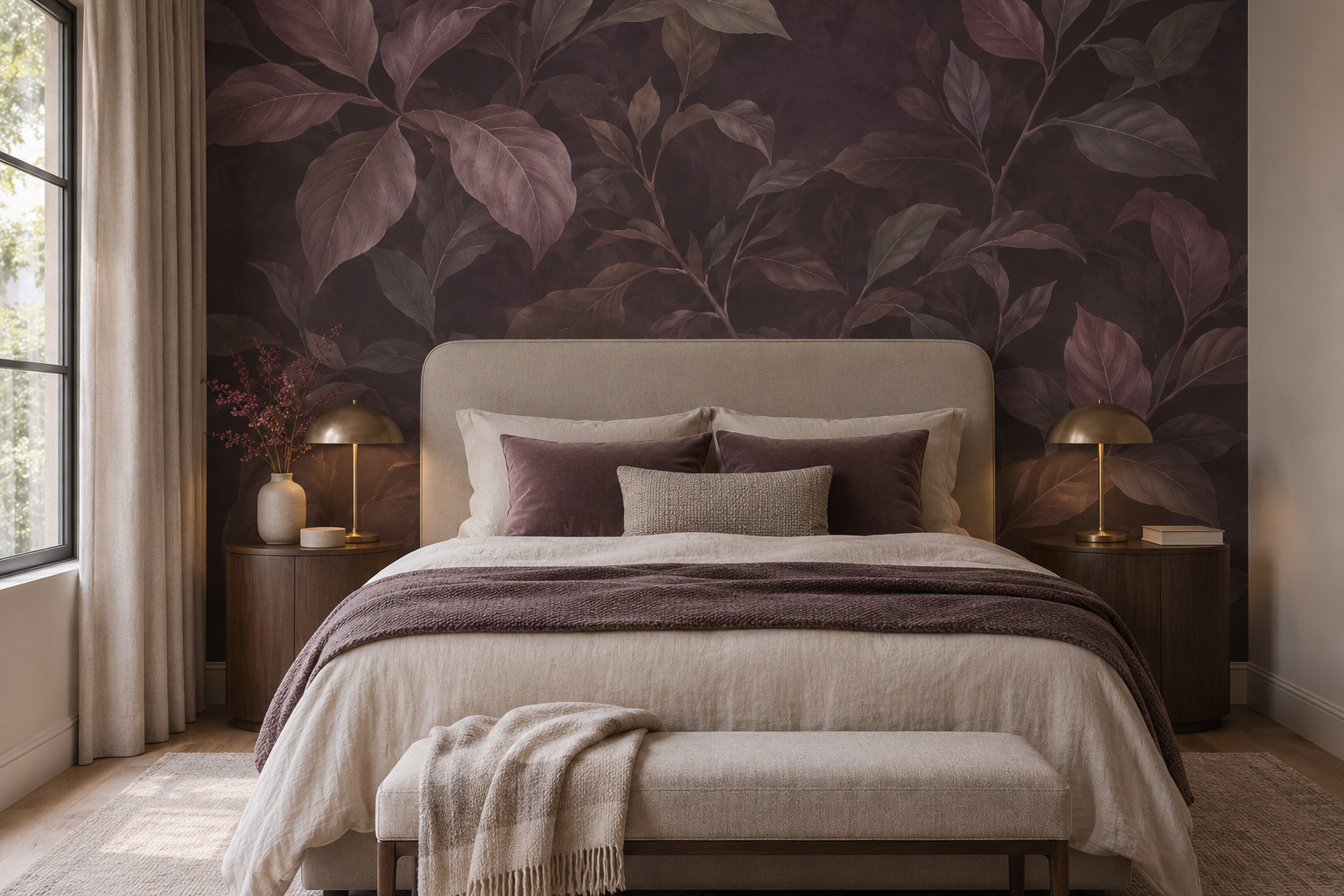
A botanical wallpaper can introduce movement while keeping the room dark. Look for a pattern whose background and leaves sit within a related tonal range, then study an actual sample at the distance from the bed. A design that looks subtle close up may form a strong repeated stripe across the whole wall.
Choose a clear stopping point, such as the headboard wall or a defined dressing recess. Keep nearby textiles quieter so the pattern remains readable. Check how the repeat meets corners, switches, and the edge of a wardrobe before calculating the material needed.
Follow the wallpaper manufacturer’s preparation and installation guidance for the actual wall. If you want a broader mix of feminine details before committing to a dark patterned plane, these modern feminine bedroom ideas offer other ways to shape the room’s furniture and accents.
5. Outline Dark Bedding With a Muted Blush Edge
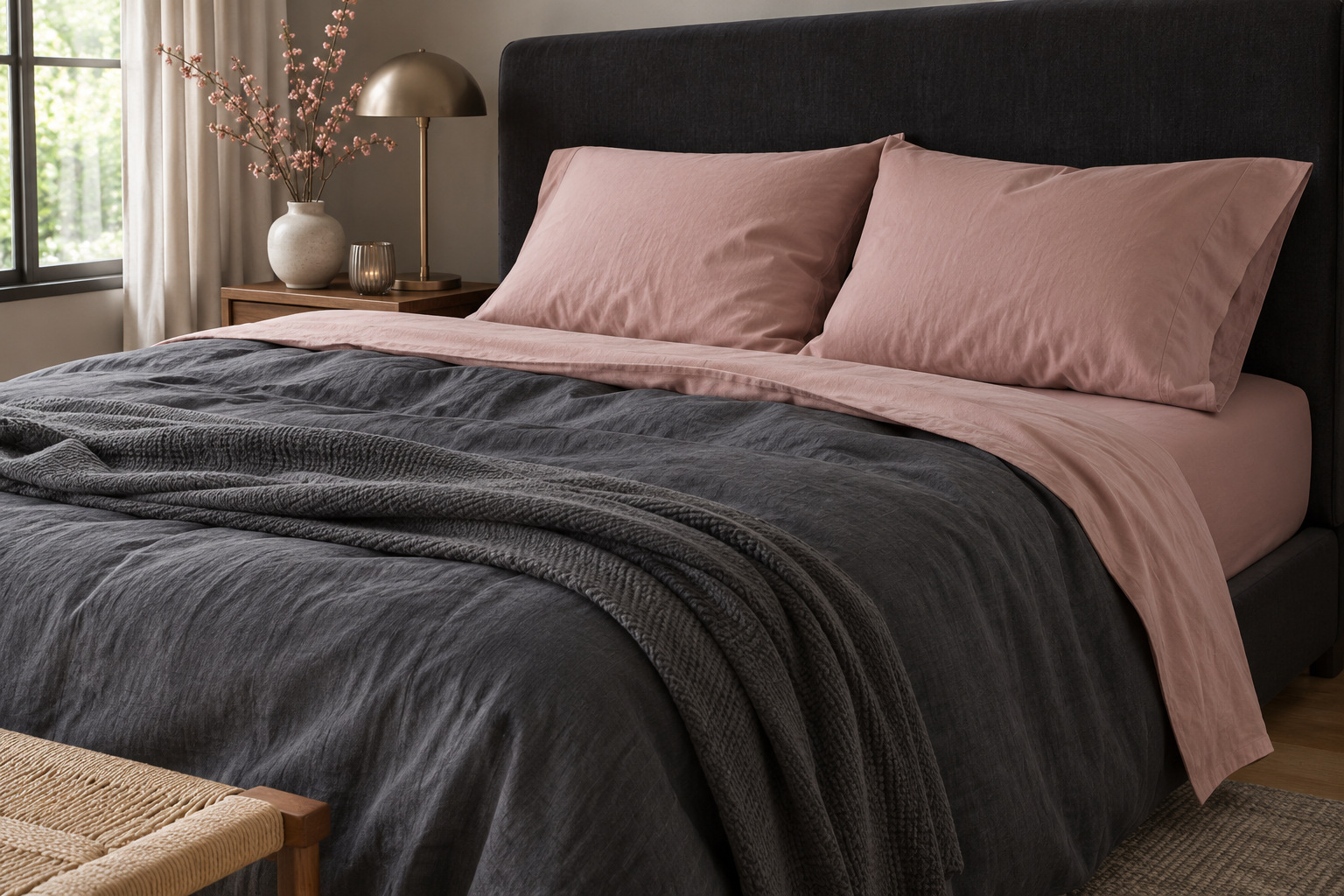
Use a small amount of blush where it helps distinguish one bed layer from another. A folded sheet edge, a narrow quilt border, or a plain pillowcase can separate dark bedding from a dark headboard. Keep the color near the part you want to read clearly.
Lay out the bedding you already own before buying more. Look at the bed in normal daylight, then under the lamps you use in the evening. If the layers become one dark block, adjust their value or texture instead of adding a large pile of unrelated cushions.
Muted blush can feel soft beside charcoal, plum, or espresso, but the actual undertones matter. Keep the rest of the bed practical to make and sleep in. The aim is a visible edge, so a single folded layer may do more than several extra decorative pieces.
6. Let Wardrobe Doors Join the Dark Wall
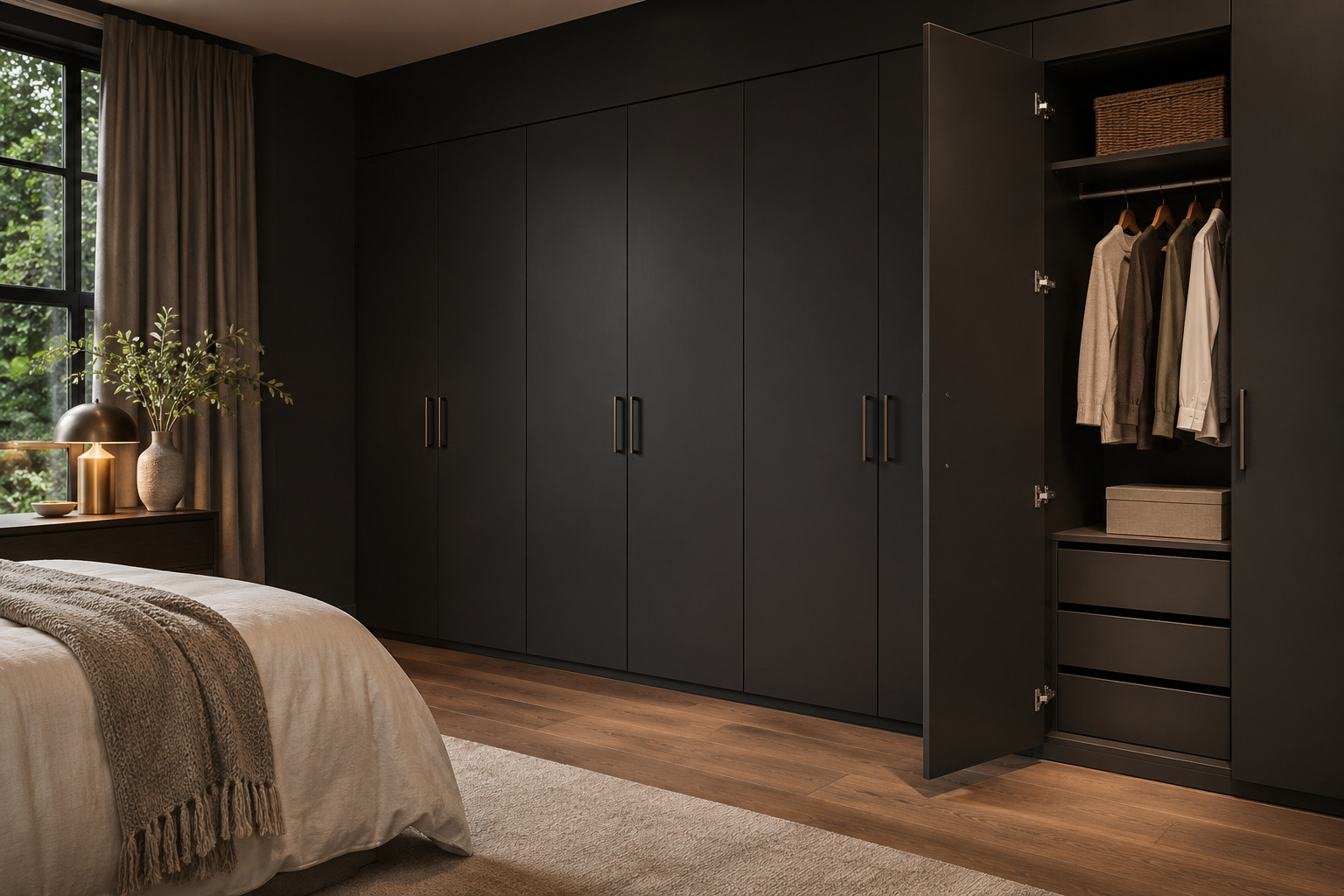
When a large wardrobe dominates the room, consider giving its doors and the adjoining wall closely related dark tones. This can create a more continuous background while the handles and door gaps remain legible. Test the finishes together; different materials may reflect the same color differently.
Keep the opening action clear. A dark handle should still be easy to locate, and swinging doors need their full clearance beside the bed. Check the view with the doors open as well as closed so the design works during ordinary use.
If changing the finish, follow product instructions for the wardrobe’s actual surface and obtain any permission needed. You can also choose a compatible freestanding unit without painting. Let the bed or one artwork provide the stronger contrast rather than making every storage front a separate focal point.
7. Build a Natural Corner Around Walnut and Linen
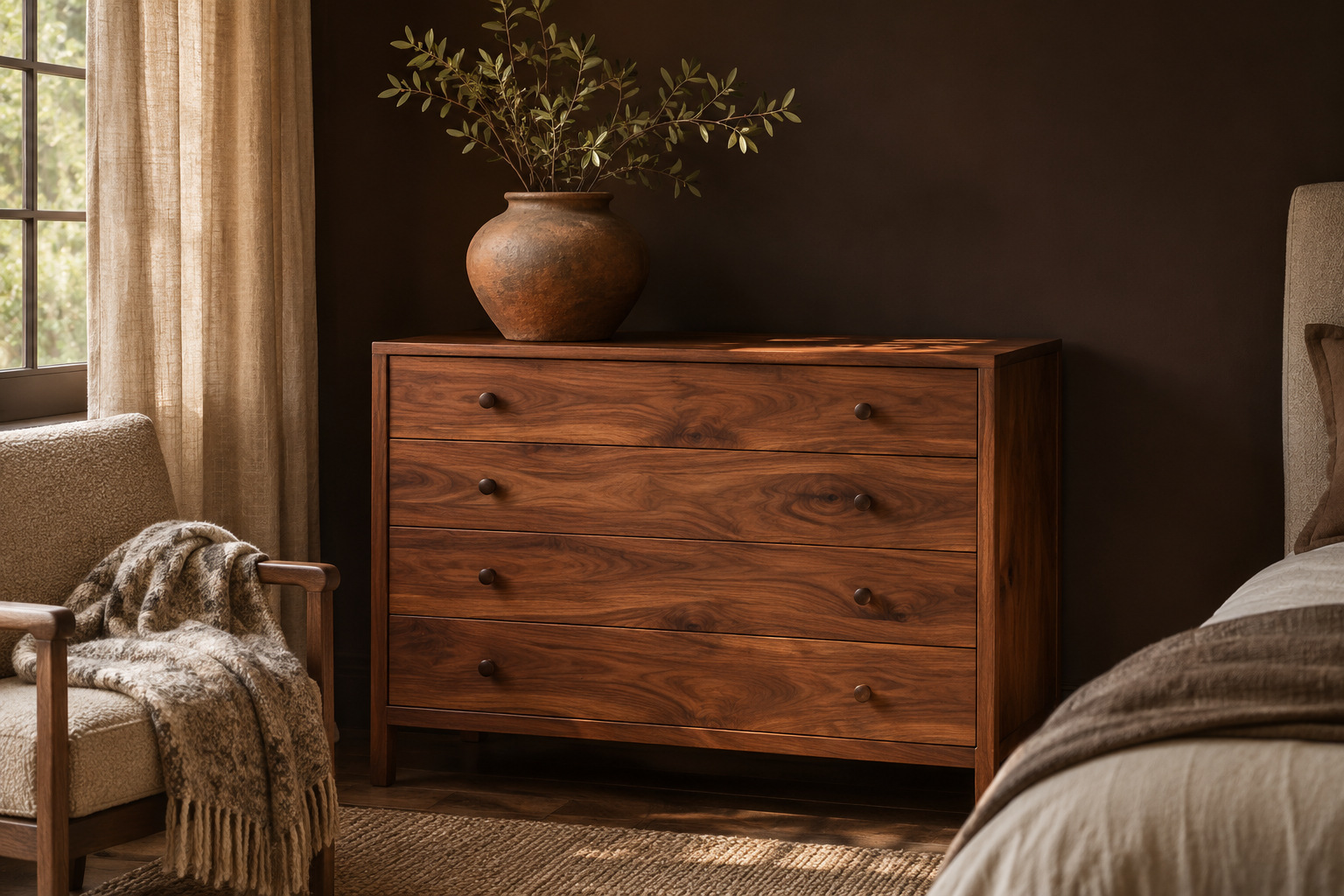
Deep color can sit comfortably with a natural material scheme. Start with a walnut or walnut-finished chest whose visible grain you enjoy, then place plain linen and a tactile wool textile nearby. Check product labels for the actual materials; wood-effect finish and solid timber have different constructions and care needs.
Let a warm espresso wall connect the darker tones while a plain linen curtain brings a lighter woven surface into the corner. Keep the chest top useful with one broad ceramic vessel and space for everyday items. The wood, weave, and clay should carry the composition.
Repeat those materials near the bed through a simple timber bedside piece or an unpatterned throw. Avoid adding many botanical props just to signal a natural style. A restrained group of actual materials can give the room depth while remaining distinct from a glossy metallic dressing area.
8. Keep Light Visible Beneath Pleated Shades
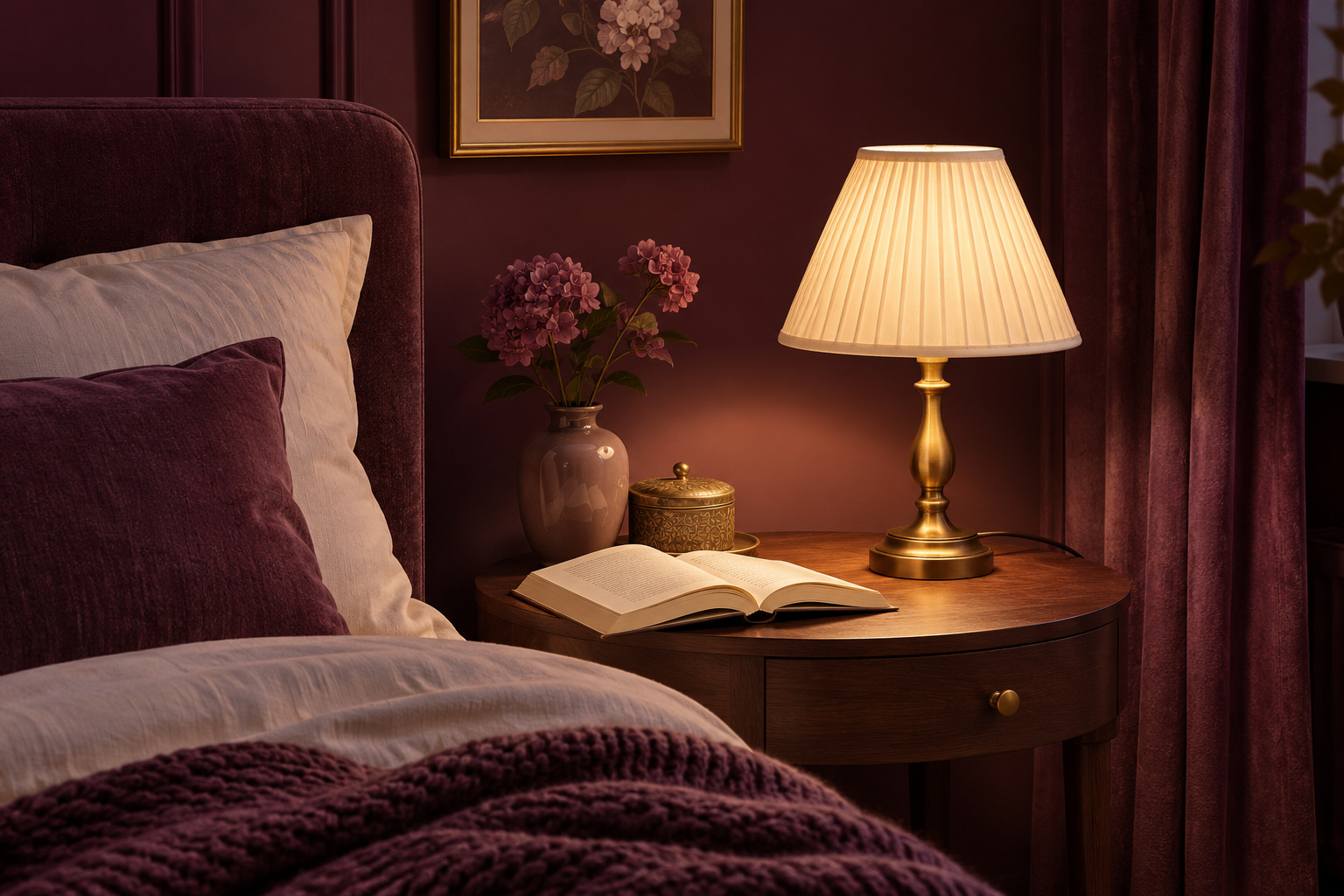
A pleated shade can add a soft edge to a dark bedside, but check how the lamp works from the pillow. The shade should conceal uncomfortable direct glare while still allowing useful light where you read or reach for objects. The right height depends on the bed, lamp, shade, and seated position together.
Use a bulb and shade compatible with the fixture, following its maximum rating and clearance requirements. Keep the lamp stable, with its cord outside the route around the bed. A small table crowded with books and a large lamp may need a different arrangement.
Choose a plain shade with visible folds and let the light define the neighboring wall. You do not need identical lamps if the two sides have different furniture constraints; their scale and level of visual quiet can still relate. Test the evening result before adding more reflective accessories.
9. Expose a Little Floor Beneath the Bed
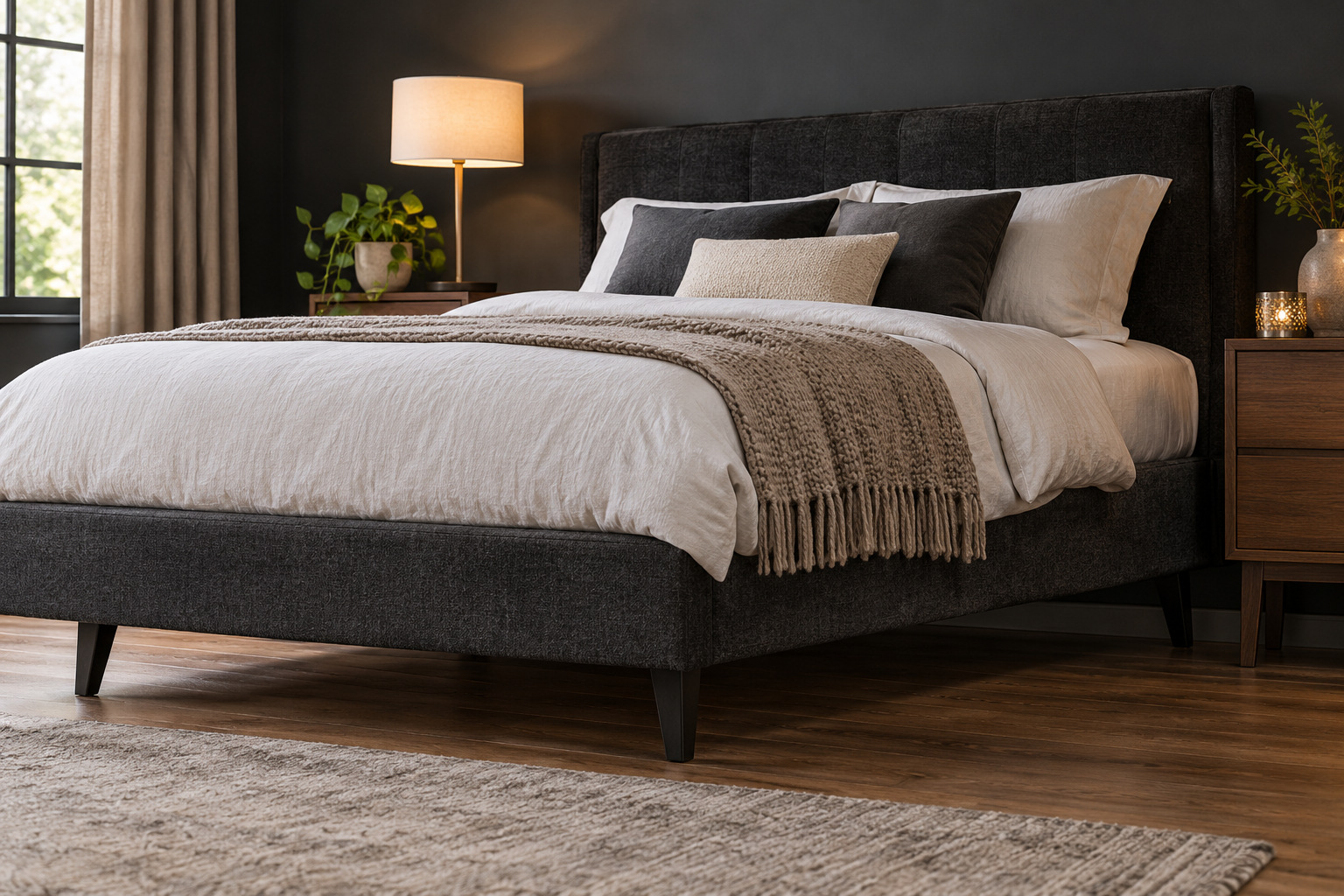
A raised bed frame can let a strip of floor remain visible beneath a substantial dark bed. Check the support and assembly requirements of the actual frame, including the mattress and base it is designed to hold. The visual gap should come from a proper furniture design rather than improvised extra risers.
Keep the visible underside reasonably clear so the opening still reads as a gap. If you need storage, choose compatible containers that fit without blocking the frame’s intended supports or access. An exposed row of unrelated bags will change the effect.
Look at the bed from the doorway before choosing a deep skirt or oversized drape. A little visible floor can separate the bed from a dark rug and nearby wardrobe. The useful decision is how the furniture meets the floor, rather than assuming that every small bedroom needs all its furniture lifted.
10. Layer Window Privacy Without a Heavy Pelmet
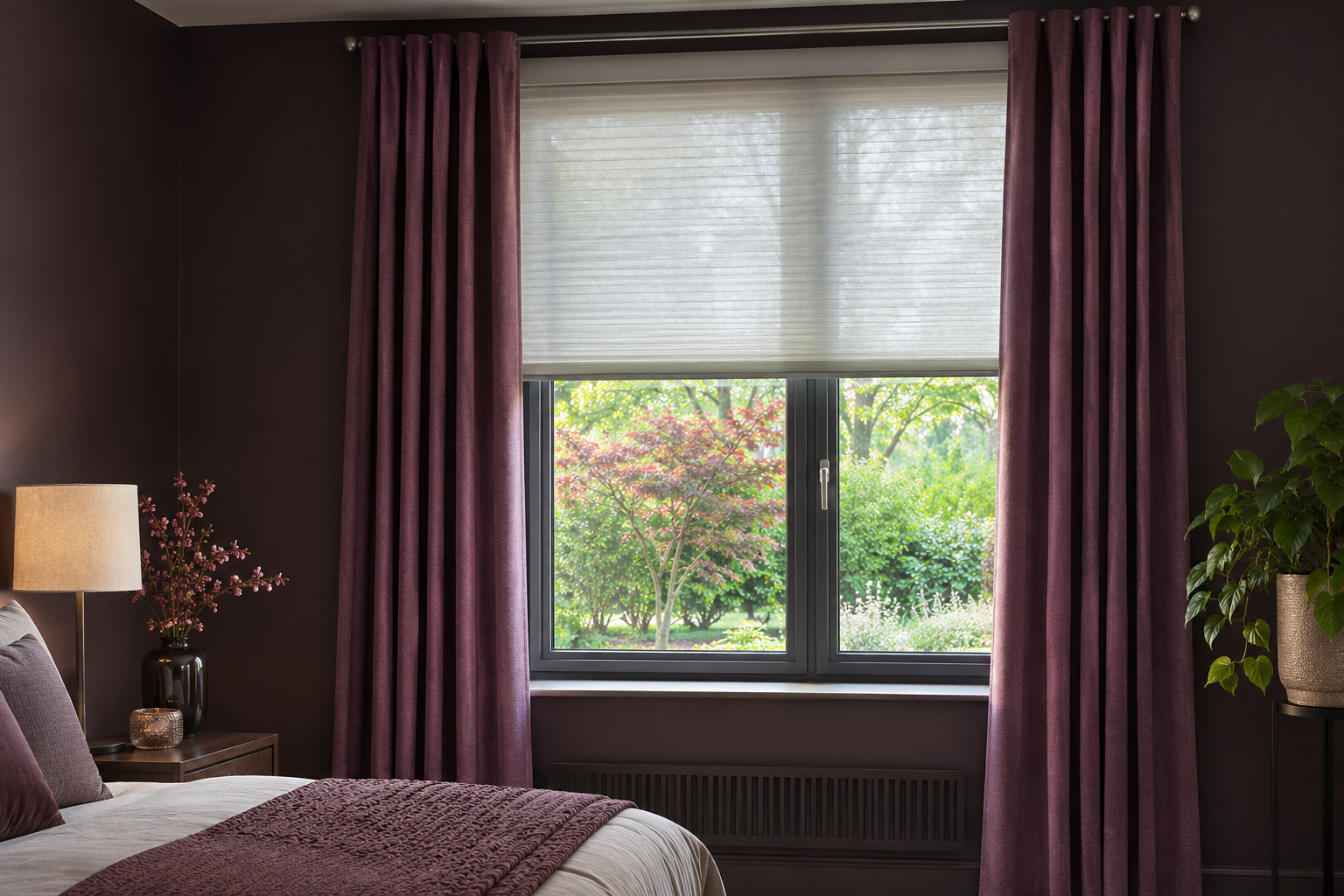
Use a practical inner privacy layer and a separate outer curtain when the window needs both daytime coverage and a softer frame. Choose each treatment for the actual window and follow its mounting and operating instructions. A cordless option can keep the arrangement visually simpler where appropriate.
Check how much glass is covered when the outer curtains are open. A dark room benefits from preserving the daylight it already has; a bulky stack of fabric can obscure more of the window than expected. Leave clearance for handles, vents, and any nearby heat source.
Keep the top line plain rather than adding another heavy fabric pelmet. A muted plum or charcoal outer textile can relate to the wall, with the inner layer providing the lighter edge. Look at the combination from outside as well if privacy is part of the decision.
11. Use a Faded Rug to Separate Dark Furniture
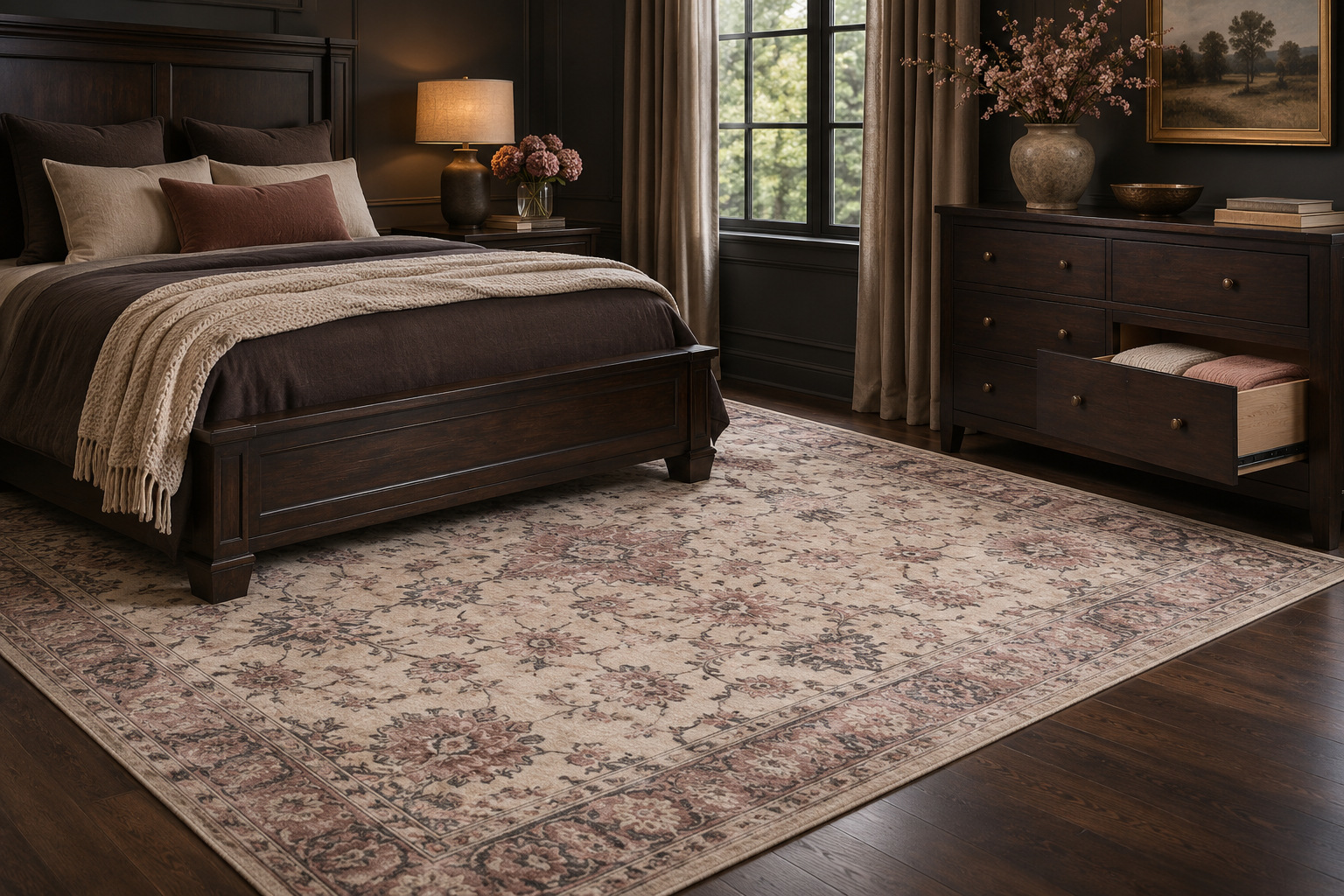
A faded-pattern rug can keep a dark bed and dark chest from visually joining across the floor. Choose a background that is lighter than the furniture, with softened colors that connect to the room. The pattern can be detailed while its contrast remains restrained.
Mark the intended rug edges before buying. Check the floor area where feet land, the drawer and door clearances, and the route around the bed. Follow the rug and underlay makers’ guidance for the floor type and keeping edges secure.
Let a little of the rug remain visible on the sides that matter in your layout. Hiding almost all of it under the bed may leave the room unchanged from the doorway. Use the rug to define the sleeping area, then keep other floor textiles limited enough to preserve a clear route.
12. Frame Plain Walls With Restrained Panel Molding
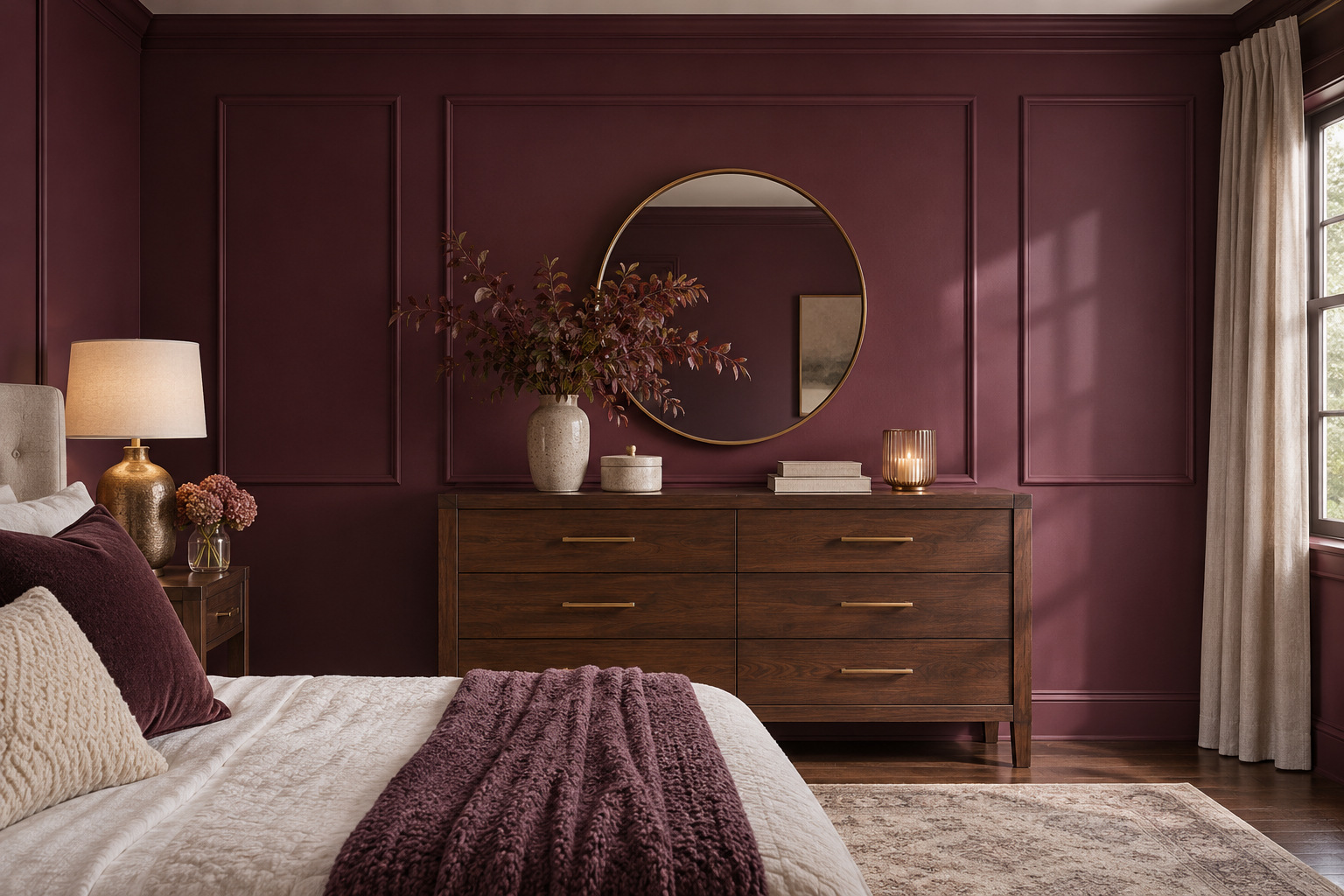
Simple applied molding can give a dark wall structure without adding a busy pattern. Plan the rectangles around the furniture that will stay in the room, marking their outlines first. Check the relationship to outlets, switches, curtain hardware, and the headboard before attaching anything.
Use materials and fixing methods suitable for the wall, following the product’s directions. Keep the profile modest if the room already has a shaped bed or patterned rug. Painting the trim and wall in a related tone lets the relief make the detail rather than a bright outline around every panel.
This is a specific room upgrade, so finish the construction and coating properly before hanging art. Do not add molding to cover an unresolved wall problem. A clear broad panel above a dresser can be enough when the rest of the room already has strong furniture shapes.
13. Keep the Dressing Surface Quiet With Drawer Inserts
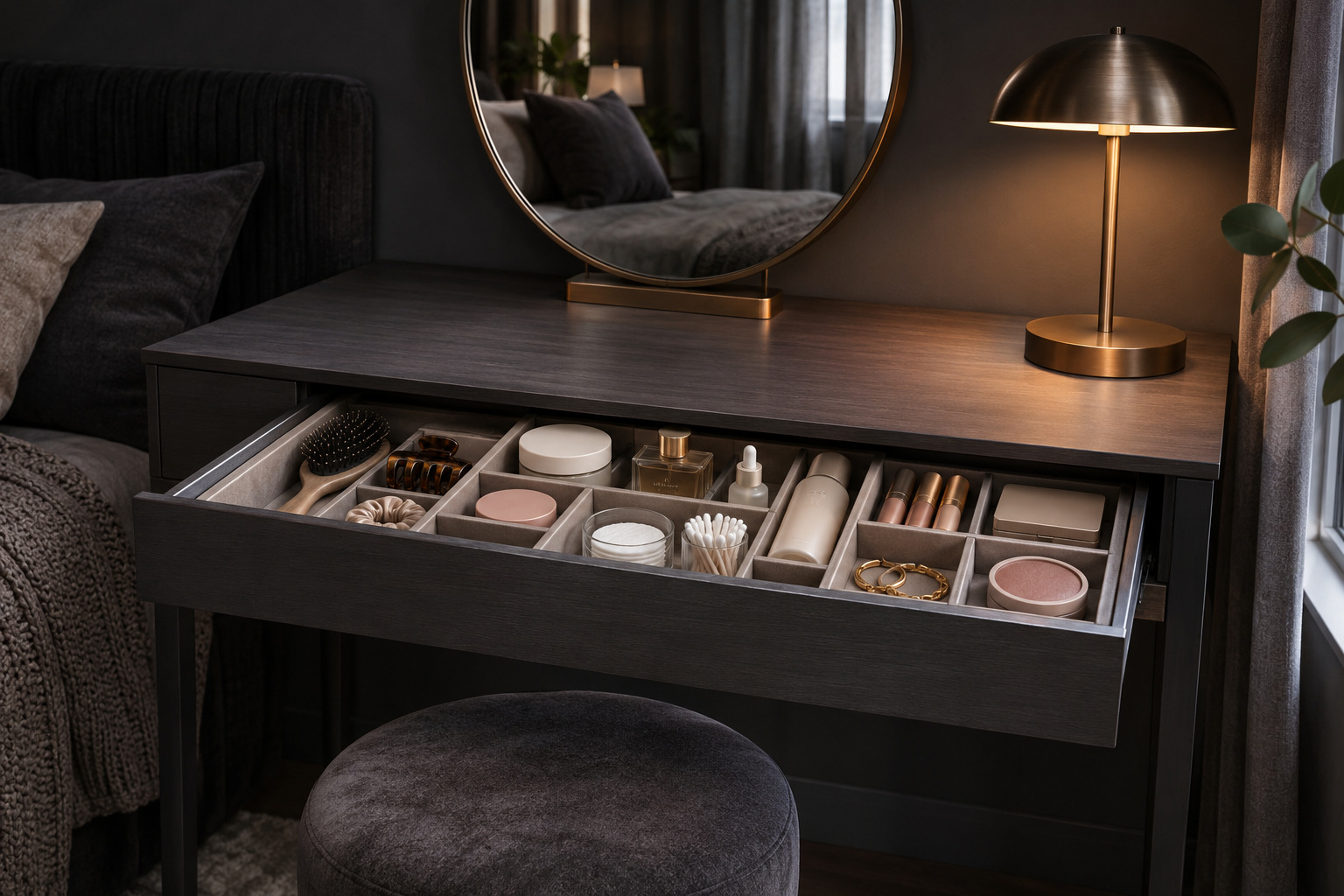
Give the small objects used at the dressing table a place inside its drawers. Lay them out by routine before choosing removable inserts, then measure the usable drawer interior. A tray that fits the outside dimensions may still catch on the sides, runners, or underside of the desk.
Keep frequently used items in reachable compartments and allow room to lift them out. Store products according to their labels, with lids and packaging intact where needed. A decorative surface tray can hold a small daily group while the rest stays organized below.
This supports a dark room because the dressing area remains readable: one mirror, one useful light, and a clear working surface. If you want more furniture and accent combinations around that foundation, these elegant feminine bedroom ideas explore a wider range of romantic room details.
14. Choose One Large Artwork With a Dark Ground
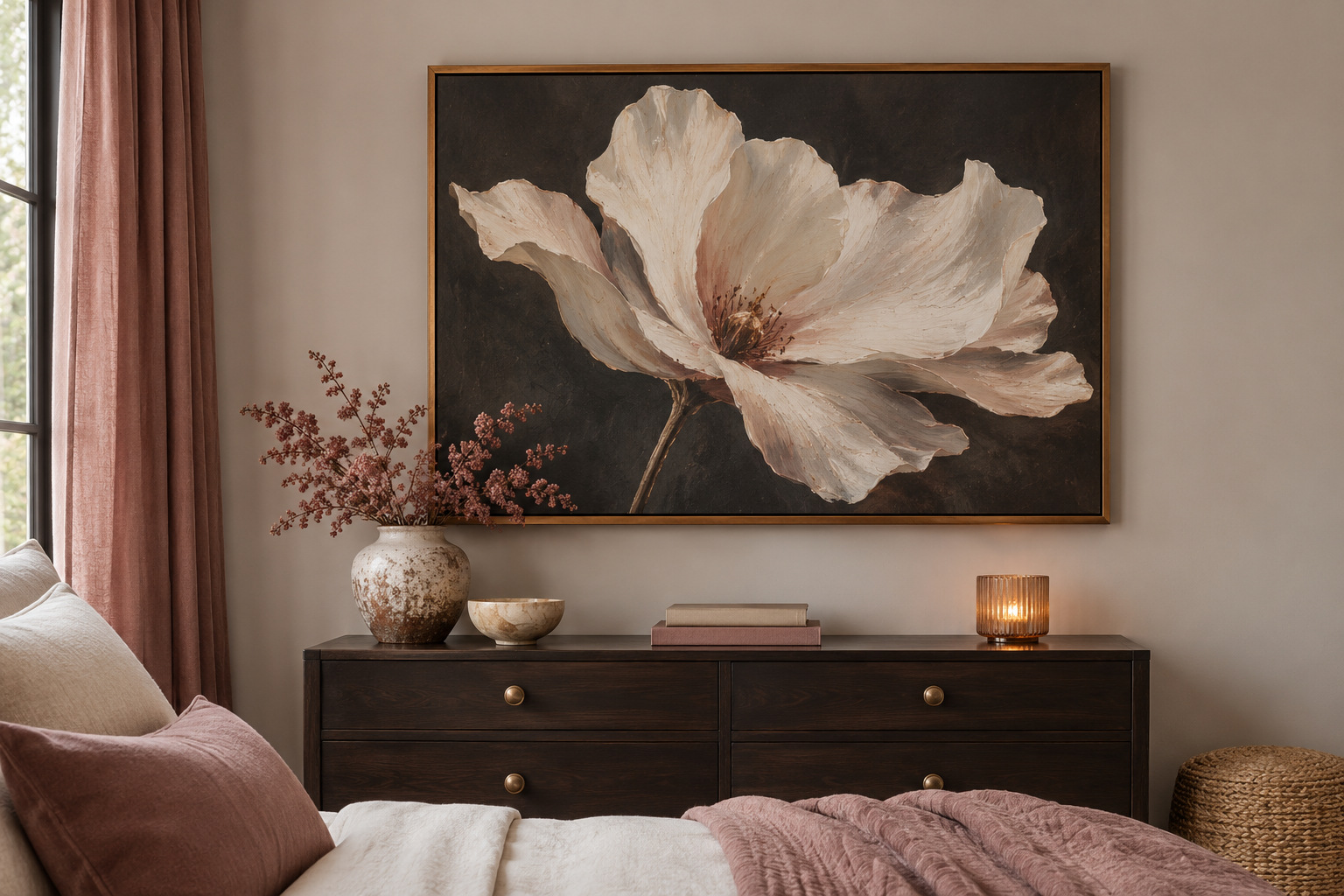
A single artwork with a dark background can feel connected to the wall while a pale figure, flower, or abstract shape provides a focal point. Choose a piece you own or an original or properly licensed print. Check its actual size against the furniture below rather than relying on an online room mockup.
Try a paper outline on the wall and view it from the doorway. Keep enough space around the frame to distinguish it from curtain edges and neighboring furniture. Use fixings appropriate to the artwork’s weight and location, particularly near the bed.
Let one color from the image appear quietly in a textile or small vessel if it helps the room connect. Avoid turning every color in the artwork into another accessory purchase. The large dark ground can do the visual joining while the frame supplies a clear boundary.
15. Give a Dark Ceiling a Deliberate Boundary
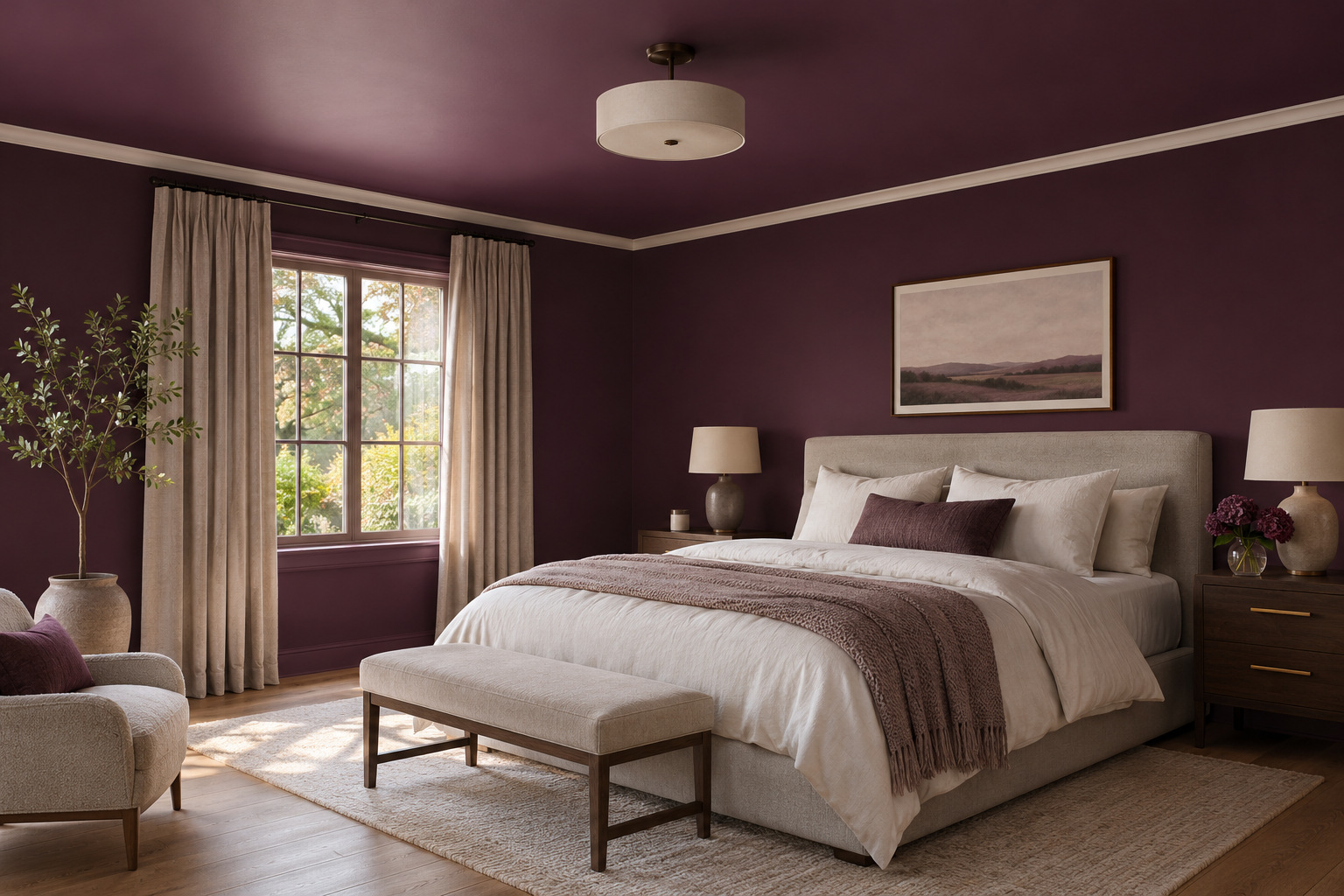
If you want a dark ceiling, decide where that color will stop before choosing the paint. It can meet the wall directly or end at an existing cornice, depending on the architecture. Test the ceiling and wall samples together under daylight and the fixtures you will keep.
A lighter cornice can mark the room’s upper edge, while a closely related wall and ceiling can make the junction quieter. Look at the full set of surfaces together, including the floor and bed, so the ceiling does not become an isolated color swatch overhead.
Use a coating suitable for the surface and follow its application directions. Consider access and appropriate professional help for overhead work. Keep other details edited while assessing the effect; the ceiling is already a substantial design decision without adding another strong pattern to every wall.
16. Make a Bedside Shelf Work in a Narrow Gap
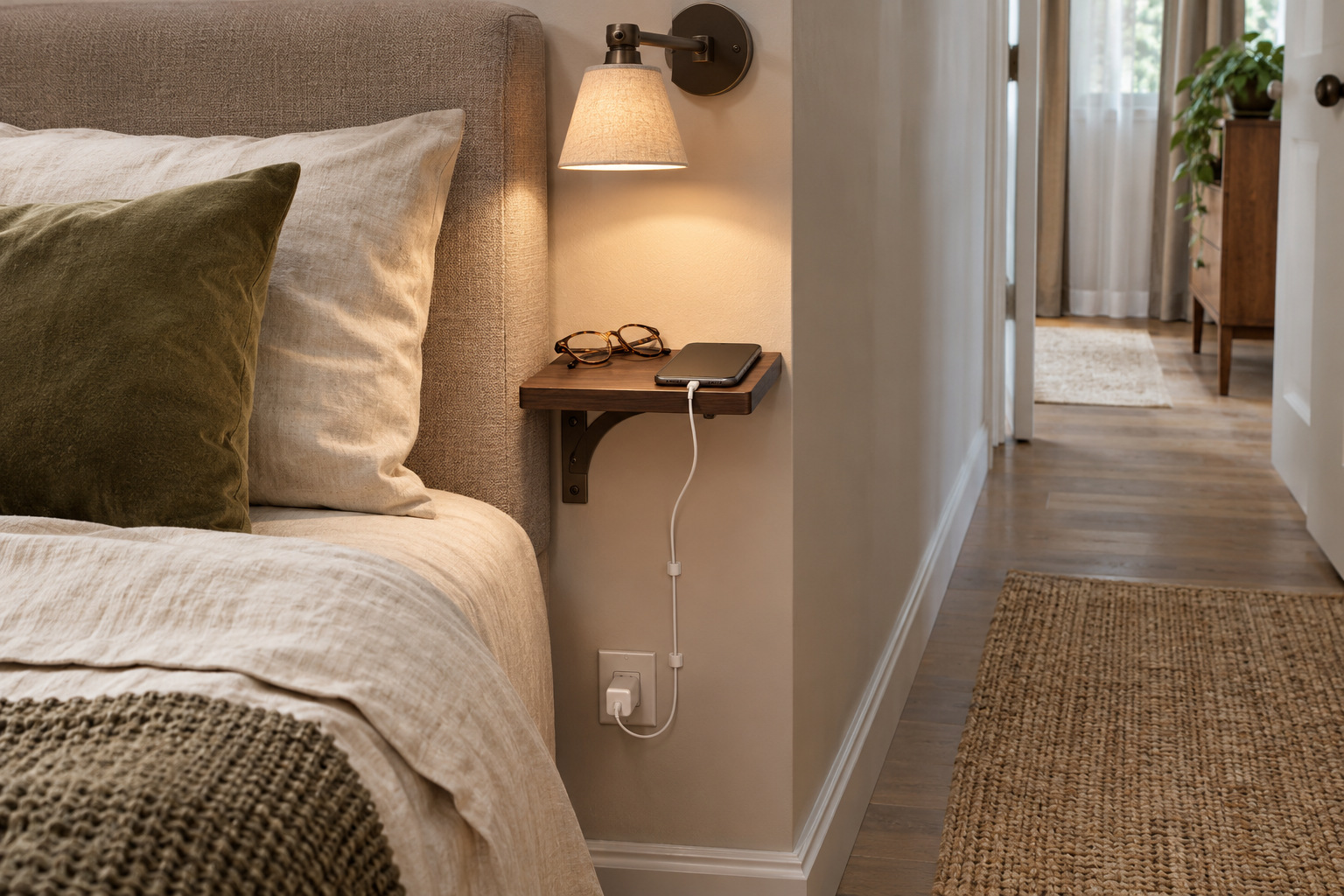
Where a deep bedside cabinet blocks access, a properly mounted shallow wall shelf may give a phone, glasses, and a small light an adequate place. Measure the gap with the bed made, including bedding that drapes over the side. Check the shelf’s load rating and mounting requirements for the actual wall.
Choose a size that holds the items without projecting into the route. Keep charging leads managed and accessible rather than stretched across the bed or passage. A compatible wall light can free the small surface, with installation handled as required.
Let the shelf finish relate to the wall or bed frame and use its edge as a small readable line. This is a compact furniture decision with a real payoff: the bedside remains useful and the route stays clear. If the needed objects will not fit, revise the arrangement instead of styling an impractically tiny ledge.
Start with the area that disappears or feels awkward in the room, then give it a clearer edge, a better material relationship, or a more useful arrangement. Deep color can remain the backdrop while the bed, light, and storage each have a distinct role. Add the romantic detail where it strengthens that composition and leave enough room for everyday use.
Discover more from HomeTrendora
Subscribe to get the latest posts sent to your email.