A warm neutral dining room starts with the way its pieces relate: the cream beside the wood, the chair against the wall, and the light that reaches the table after sunset. Beige alone cannot make those decisions. A room can have a quiet palette and still offer plenty to notice, from the curve of a chair back to the weave of a curtain.
These 20 ideas focus on everyday dining spaces, including compact rooms and dining areas within a larger home. Choose the change that addresses what feels unfinished in yours. You can keep a favorite table, work around existing flooring, and build a more considered room a few choices at a time.
1. Choose a Cream Wall Color Beside Your Actual Wood
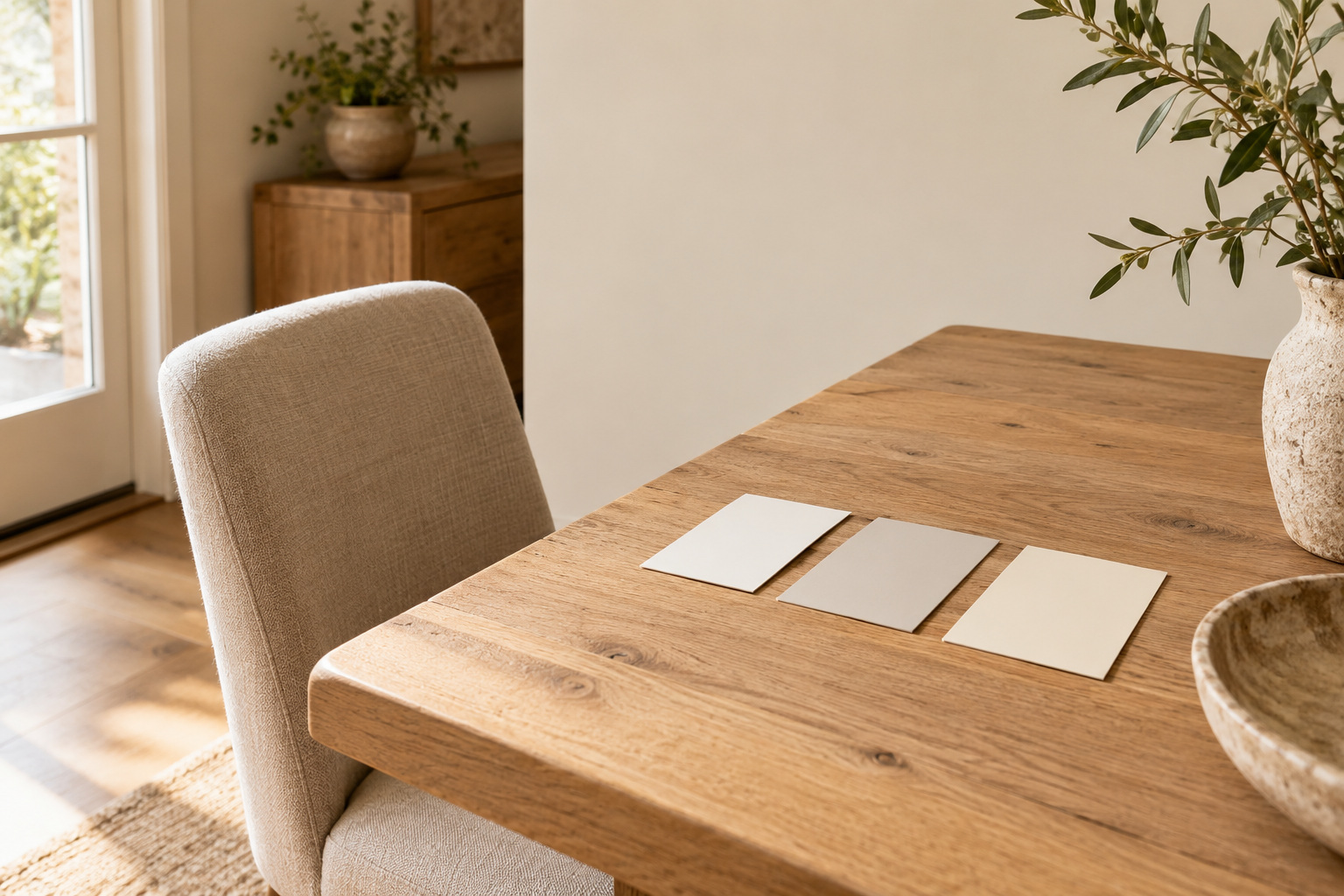
Hold a few cream and warm off-white samples next to the table, flooring, and any wood trim you plan to keep. Look at the combination during the day and under the lights you use for dinner. A sample that seems quiet on its own may look yellow, pink, or gray beside another finish. Choose the relationship you like in the room rather than the name on a color card.
Carry a little of that wall tone into the chair fabric or a ceramic serving bowl. The repetition gives the room a clear starting point while the wood provides variation. If repainting is not part of the plan, reverse the process: use the existing wall as your reference when choosing linens and upholstery. No exact paint color is required to make the palette work.
2. Give a Pale Table a Darker Outline

A light wood table can disappear against pale flooring and cream walls. Give it a distinct outline with tobacco-brown chair frames or a dark bronze pendant. The contrast does not need to spread across the whole room. One darker element at table height can make the furniture arrangement easier to read.
Keep the dark finish consistent in character rather than trying to match every piece exactly. A brown chair frame and a softly aged bronze light can sit comfortably together because both bring depth to the pale background. Leave the tabletop mostly open so its grain remains part of the composition. This is a useful direction when the room feels washed out but you still want a gentle overall palette.
3. Use Linen Curtains as a Soft Vertical Layer
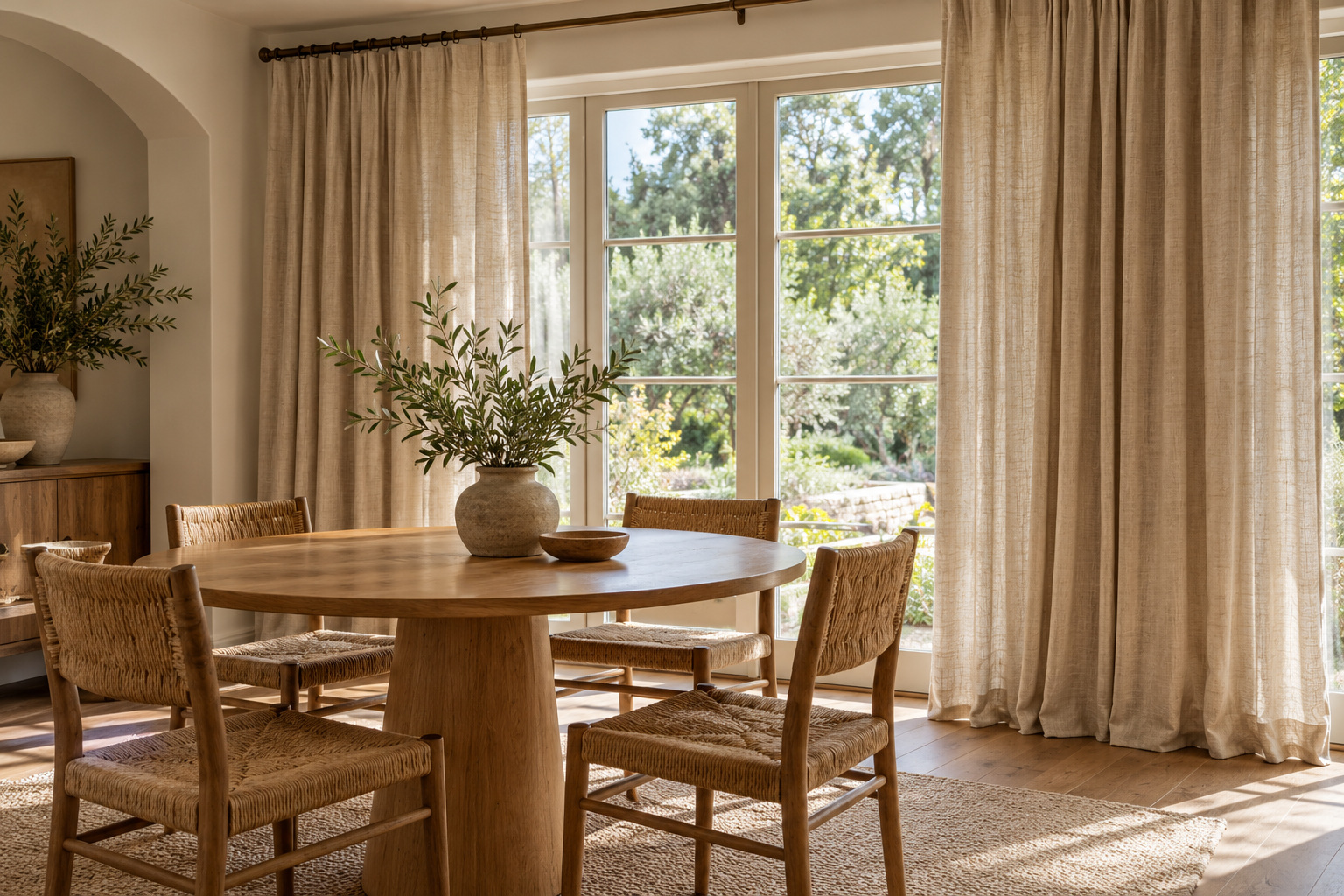
When a dining room has a wood table, hard flooring, and painted walls, the window is an opportunity to introduce a softer surface. Plain linen or a linen-look fabric adds visible weave without asking the room to take on another pattern. Choose a warm oatmeal, flax, or chalk shade that belongs with the wall and chair fabric.
Let the curtain panels frame the window instead of covering the daylight the room needs. Check where they sit when the nearest chair is pulled out; fabric should not become part of the seating area. A simple dark rod can repeat the pendant finish, while a pale rod can blend into the wall. Either choice works when it feels intentional alongside the other details.
4. Make the Seats the Tactile Part of the Room

If your table has a smooth surface, choose chairs that bring a different texture to the meal. Oatmeal upholstery, a woven back, or a softly rounded seat can give a neutral dining room a more welcoming character. You do not need a throw on every chair to suggest comfort; the seat itself can do that work.
Before choosing new chairs, sit in the ones you already own and decide what is actually missing. A removable seat pad may be enough for a wood chair you enjoy using. Keep ties and loose fabric away from the floor, and choose care instructions that suit your household. Repeating one upholstery tone across different chair shapes can also help a collected set feel connected.
5. Let a Closed Sideboard Hold the Busy Details
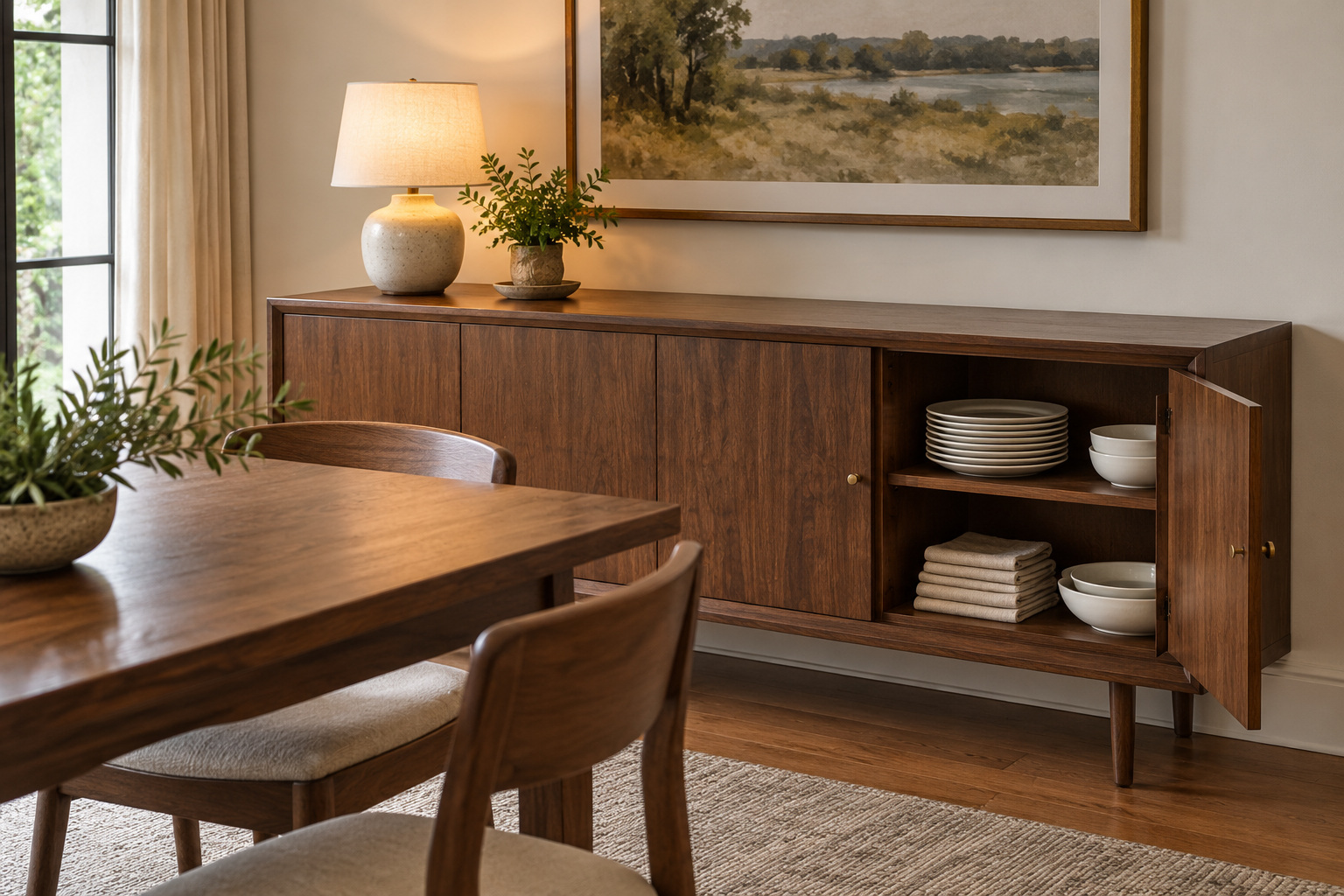
A neutral room often looks calmer when the things used for hosting have a home close to the table. Use a closed sideboard for folded napkins, serving dishes, and spare glassware. Arrange the interior around what you reach for, then keep the top available for setting down a platter during a meal.
A low wood cabinet can provide the room with a substantial horizontal line without competing with the table. Style one end with a lamp and a single bowl, leaving the rest open. If you already have a cabinet, begin by clearing and reorganizing it before replacing it. The useful change is having serving pieces nearby and a surface you can actually use, not simply adding another piece of furniture.
6. Center the Pendant on the Table Arrangement
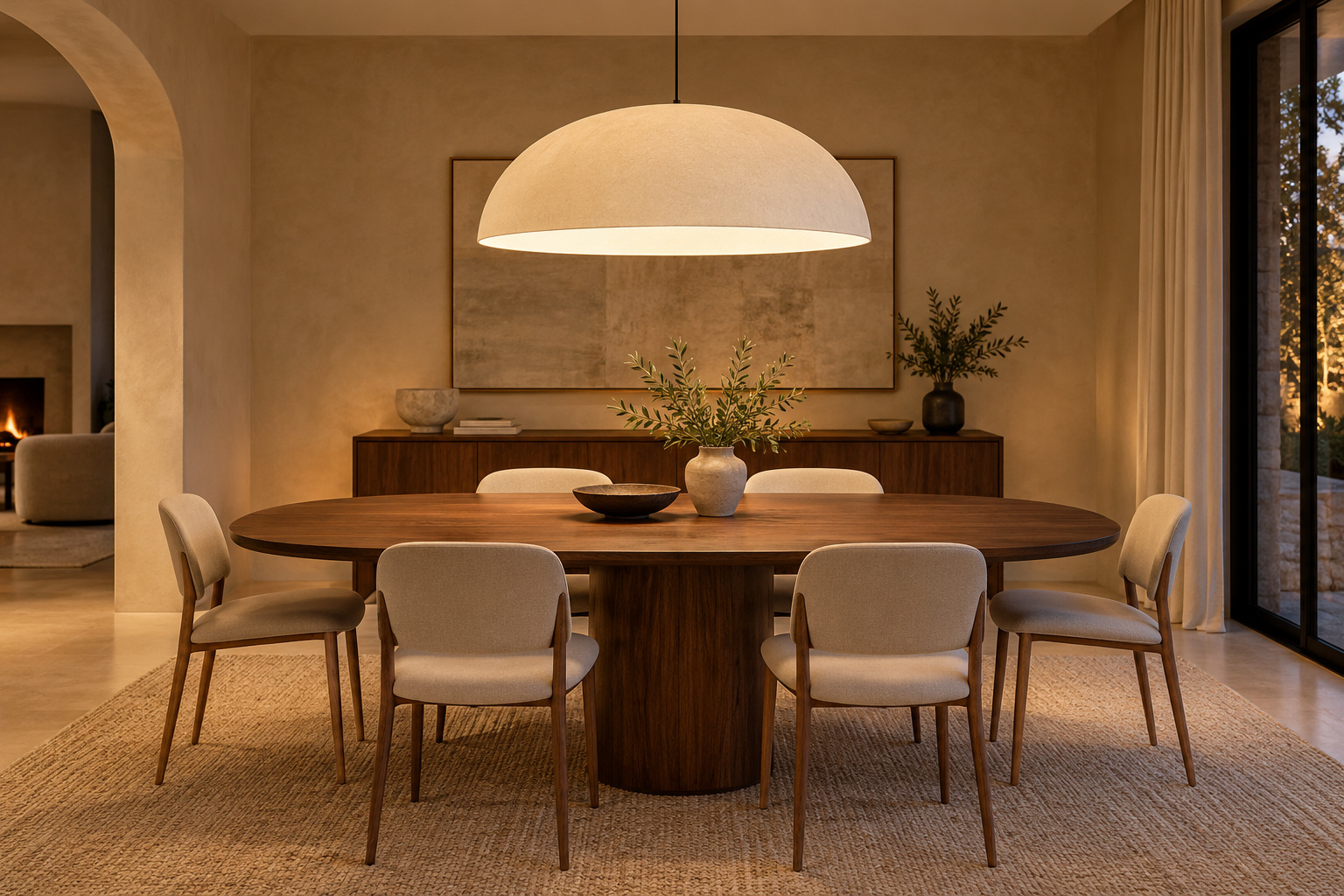
Look at the dining area as a complete arrangement before judging the light. A pendant may line up with the middle of the ceiling while feeling off-center above the furniture. Start by placing the table where people can sit and move comfortably, then consider how the light relates to that final position.
Choose a shade whose shape suits the tabletop: a broad rounded form can echo an oval table, while a simple linear fixture can relate to a long rectangle. View it from the doorway as well as from a seat. If the existing electrical point needs moving, make that part of a properly planned installation. You can still improve the composition now by simplifying the tabletop and balancing the surrounding furniture.
7. Pair a Compact Oval Table With Chairs That Tuck In
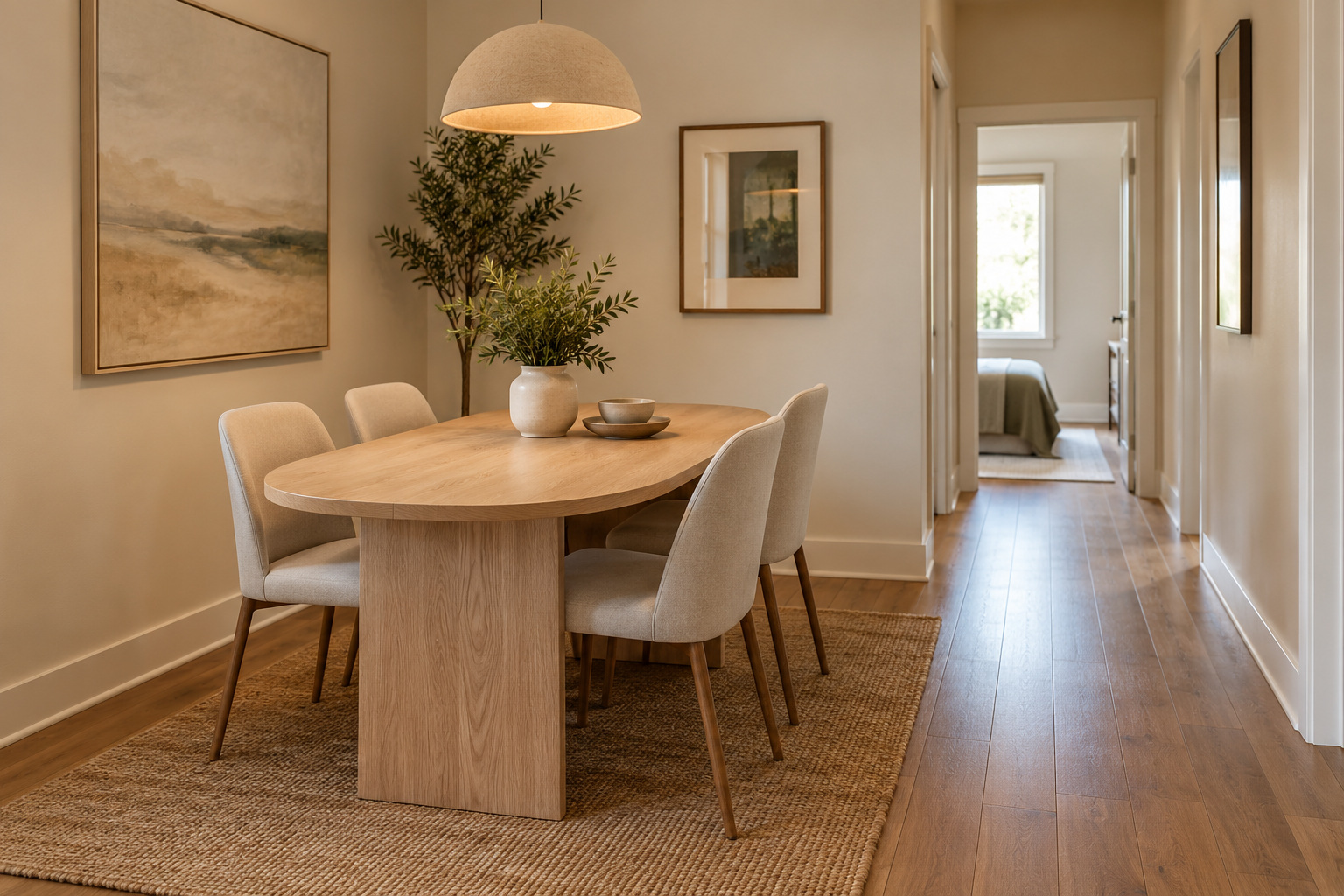
In a compact dining area, the useful question is how the furniture behaves when someone gets up. An oval or rounded table may suit your room, but check the complete arrangement with chairs pulled out and the nearby door open. Tape or paper outlines can help you compare a proposed footprint before bringing in furniture.
Choose chairs that tuck beneath the table without their arms catching the edge. Keep a sideboard out of the main route, or use storage in the adjoining room if another cabinet would crowd the space. Pale wood and a quiet wall color can keep the visual composition simple, but the real improvement comes from a layout that lets people reach their seats. For more layout options, explore our small dining area ideas.
8. Anchor the Wall With One Generous Tonal Artwork

A large piece of art can give a quiet room a clear focal point without introducing a loud new color. Look for a composition with cream, sand, muted brown, and a little charcoal. Those changes in value give the eye something to follow even when the palette stays neutral.
Relate the frame to a finish already in the room, such as the table wood or the dark chair legs. Center the artwork on the wall arrangement it belongs to, which may be the sideboard rather than the whole wall. Check the view from a seated position before settling on its height. One piece with room around it can feel more deliberate than several small pictures scattered to fill a gap.
9. Mix Finishes While Keeping the Tabletop Edited

A neutral dining room can have a refined finish without a crowded centerpiece. Place a matte ceramic bowl on the wood table and bring in a restrained metal detail through the pendant or a pair of serving utensils. The variation between matte, grain, and a little shine gives the room depth.
Keep the shapes strong enough to read individually. A broad shallow bowl often needs less company than a collection of tiny vessels. If you love stone, use it where its pattern can be seen rather than surrounding it with other competing textures. The result depends on proportion and editing, not a claim about how much anything costs. Put the centerpiece aside when the table needs to hold a family-style meal.
10. Refresh the Room Through the Pieces You Touch
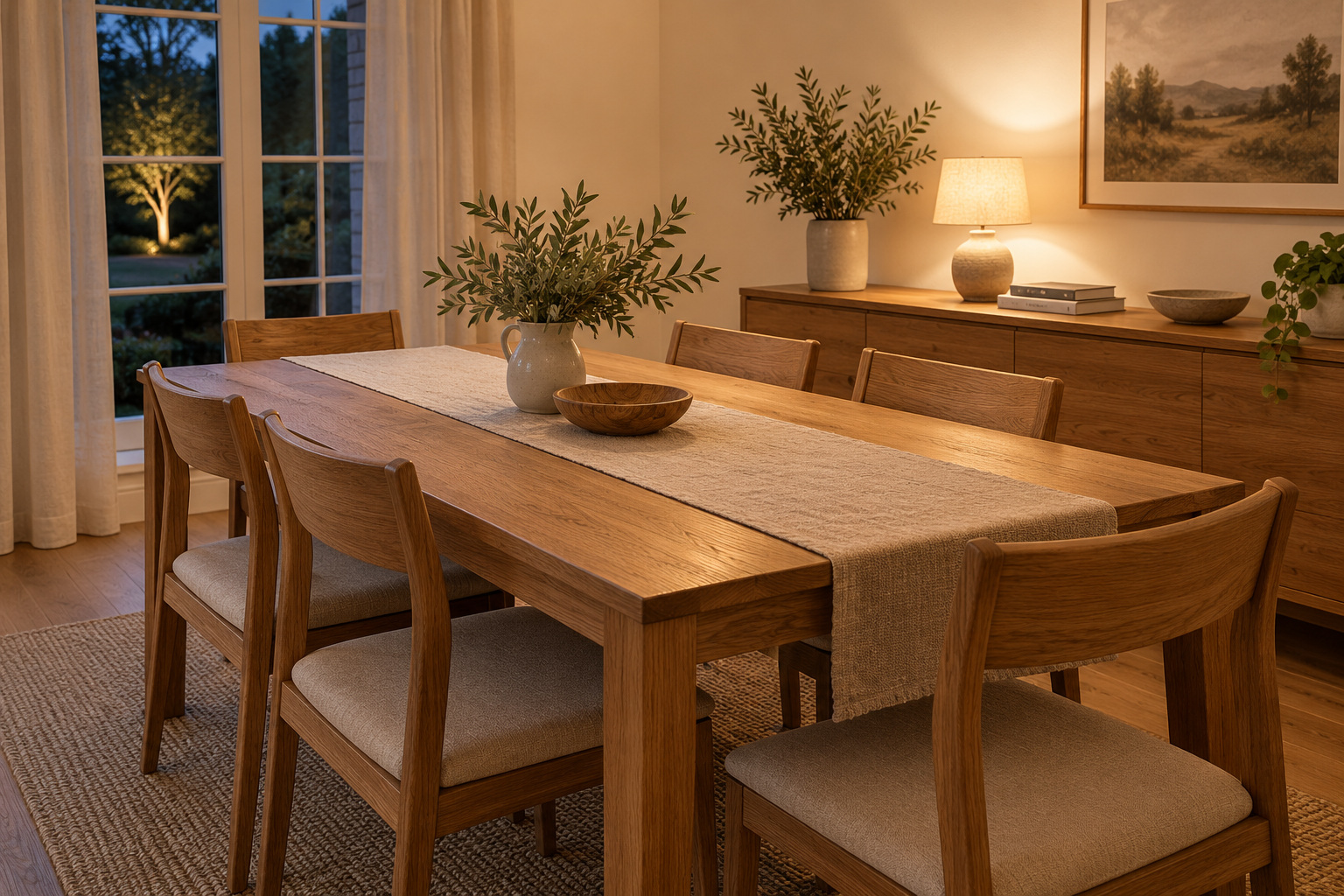
When the main furniture works, start a refresh with the elements that meet everyday life: the runner, chair pads, and the light beside the serving area. Replace a busy runner with a plain textured one that connects the wall and wood tones. Remove the decorative objects you keep moving at mealtimes.
Then look at the room after dark. A small lamp on the sideboard can add another pool of light alongside the pendant, provided its placement works with the available outlet. Keep the cord neatly out of the route through the room. This kind of update lets you adjust the atmosphere around a table you already own, with changes you can see and use each day.
11. Choose a Rug Around the Pulled-Out Chairs
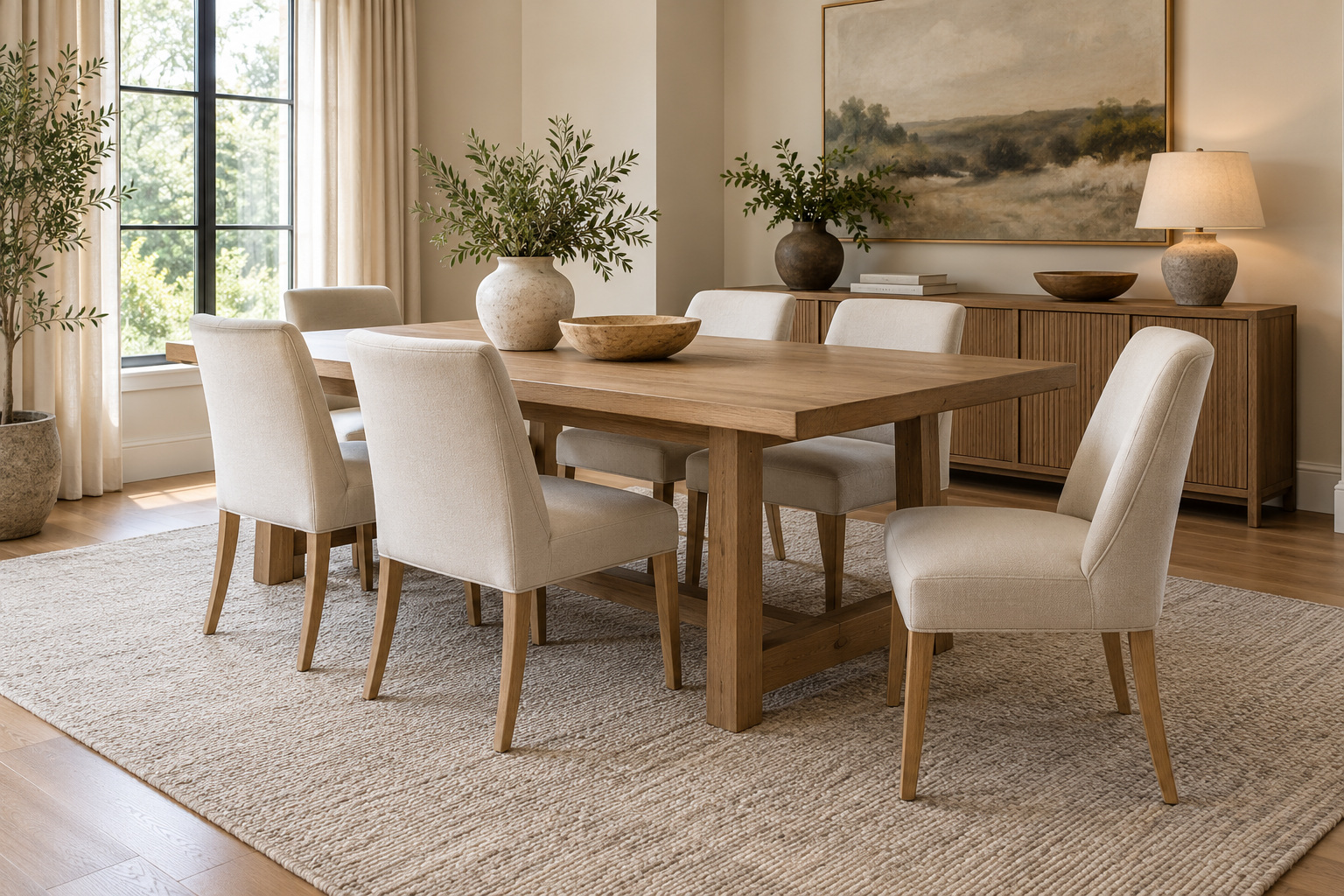
A dining rug needs to work with the chairs in use, not just with the table at rest. Pull each chair out as someone would when standing up, then judge the rug footprint around that arrangement. The rear legs should not repeatedly catch at an edge as the chair moves between sitting and standing positions.
Choose a texture that suits chair movement and the cleaning your household needs. A quiet oatmeal or warm gray can connect the flooring to cream upholstery without adding another strong pattern. Test a proposed size with a temporary outline before buying, and check the nearest door as well. A smaller rug is not an improvement if it makes an everyday movement awkward.
12. Make a Window Banquette Part of the Palette
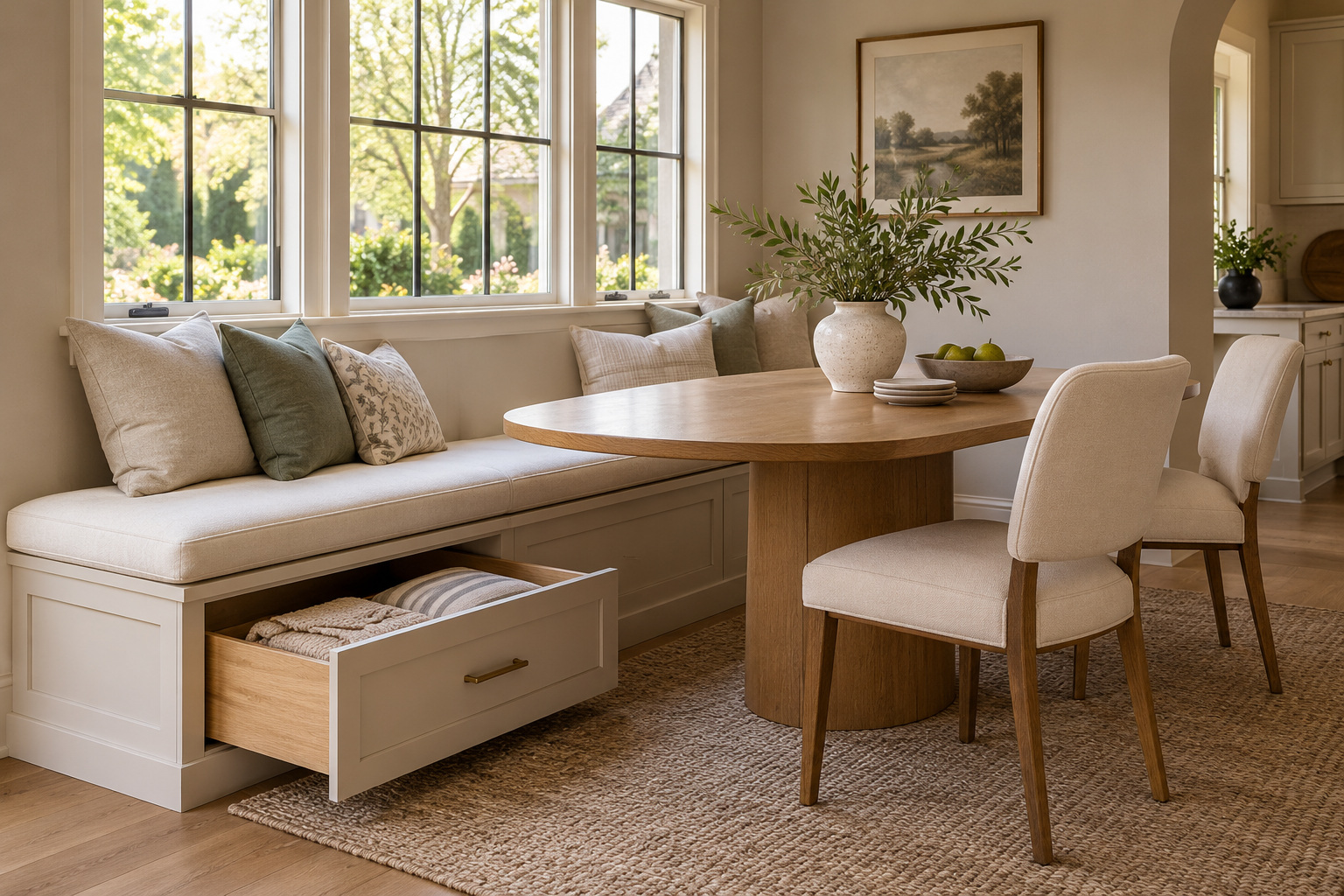
A window banquette can make the dining corner feel like part of the room’s architecture. Use an ivory seat cushion to connect with the curtains, then let the wood base relate to the table. An oval tabletop can soften the arrangement, while the actual dimensions need to allow people to sit down and get out comfortably.
If the banquette has storage drawers, plan the table position so those drawers remain usable. Keep cushions simple to lift when access is needed, and leave heating, ventilation, and window controls clear. This is a place to decide seating and storage together rather than treat the bench as a backdrop. Use a suitable existing seat or plan a new installation around the room’s real conditions.
13. Give Plain Walls Depth With Simple Paneling
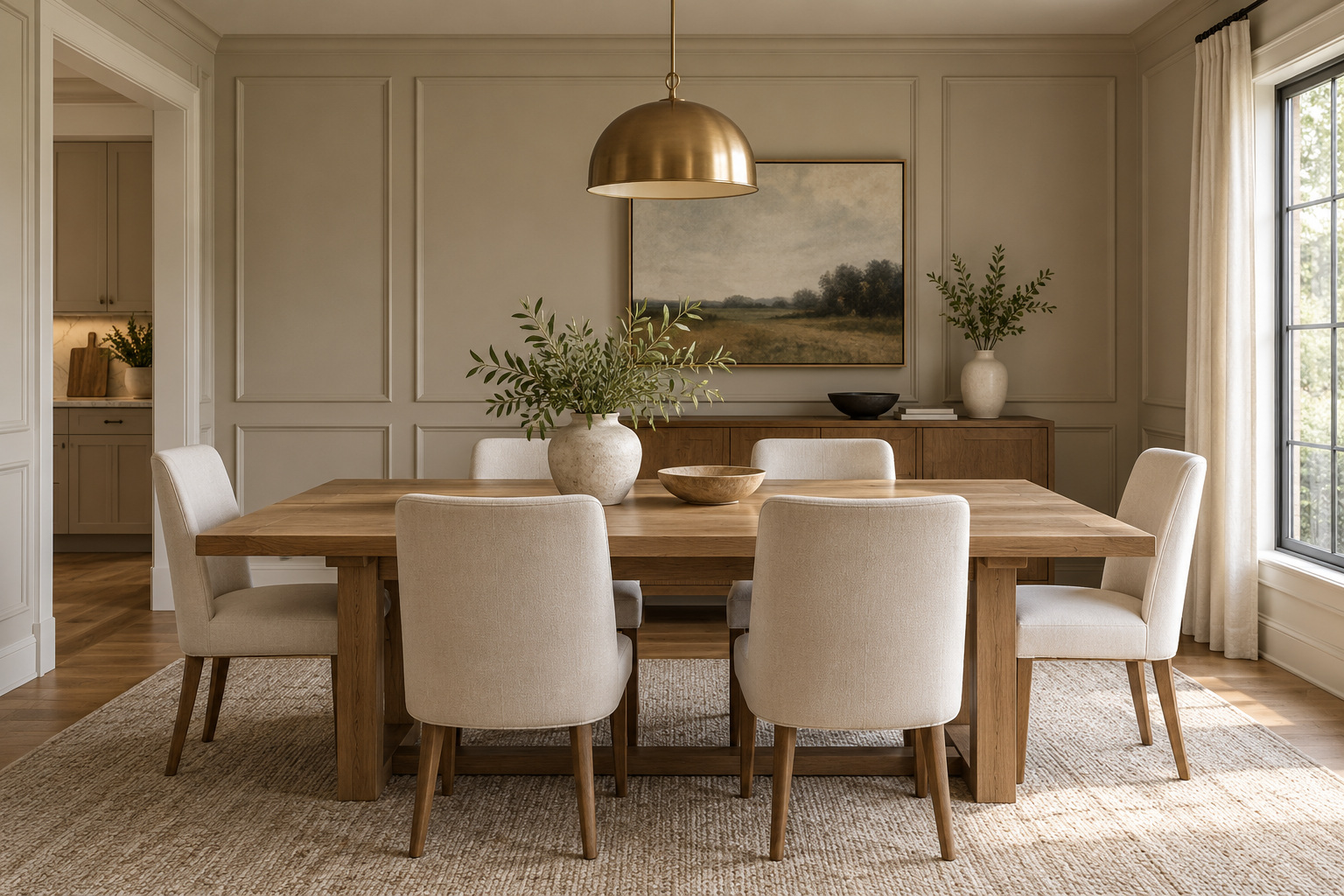
Simple wall paneling adds a change of plane to a neutral room without requiring a busy print. A shallow rectangular pattern in soft taupe can frame the table arrangement and give plain cream chairs a more defined background. Choose the panel layout around the furniture and wall openings, leaving the room’s existing proportions readable.
Before adding trim, map the pattern and consider outlets, switches, corners, and any fixed furniture. Keep the finish consistent so the shadows provide the interest rather than several competing paint colors. This can also be an idea for a future room update; it does not require replacing a good dining table. The strongest effect comes from a coherent wall rhythm that belongs to the space.
14. Place a Mirror Where It Reflects Daylight
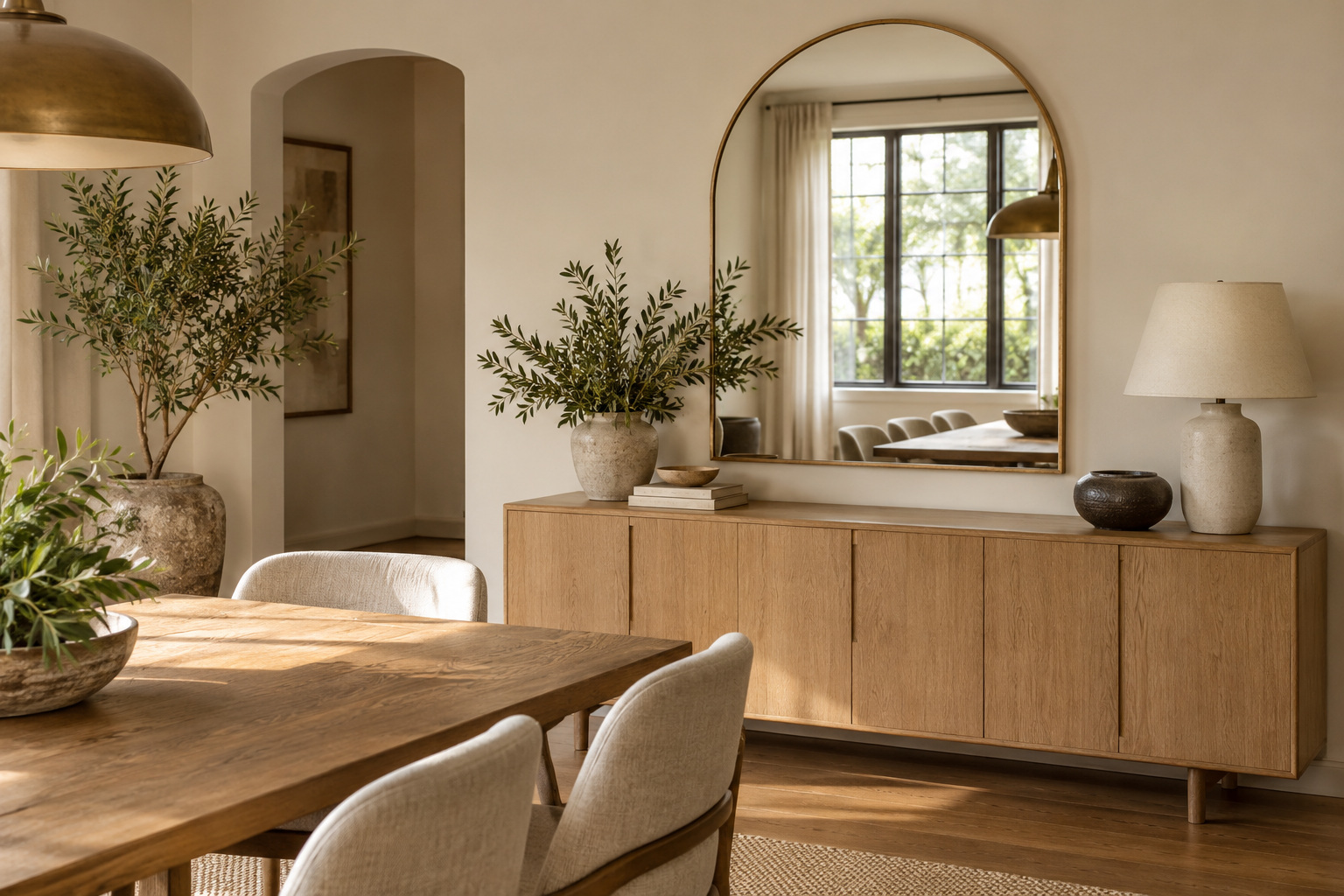
A mirror can give a dining room another view of the daylight already reaching it. Look at what the mirror will reflect before choosing its position: a window and the table may be appealing, while a busy doorway or storage pile may be less useful. An arched shape introduces a curve above the horizontal line of a sideboard.
Choose a frame that connects with a finish in the room and use suitable fixings for its weight and the wall. Check the reflection from seated height as well as the entrance. Keep the sideboard arrangement below it modest so reflected objects do not multiply a crowded display. The mirror works best when its reflected view is part of the composition, rather than a last attempt to fill an empty wall.
15. Display Glassware in a Quiet Open Hutch
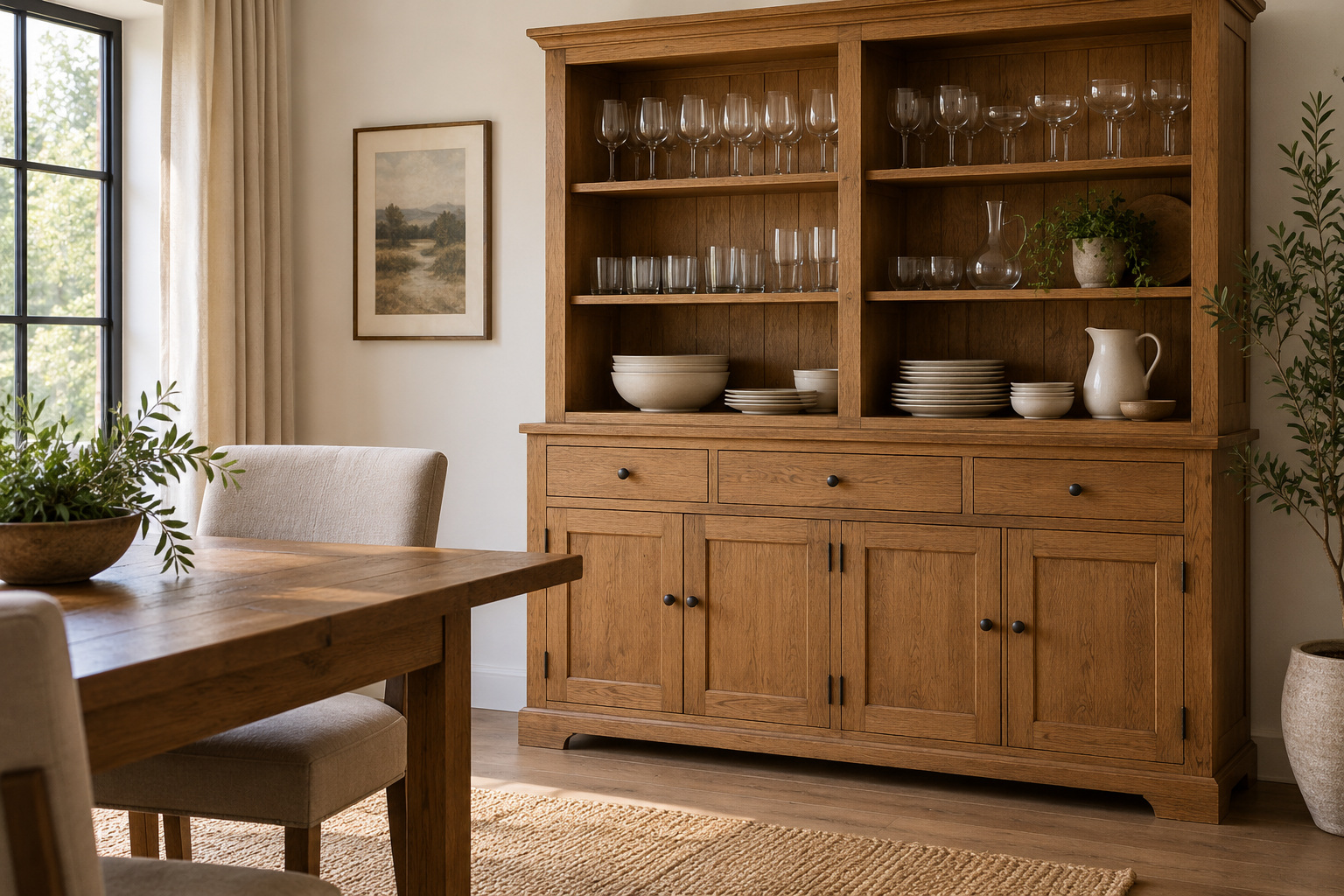
An open hutch can give glassware a deliberate home near the dining table. Arrange glasses in a few clear groups on the upper shelves, then place everyday cream dishes below. The contrast between transparent glass and solid ceramics adds variety while the cabinet’s wood keeps the palette connected.
Keep the pieces you use most within comfortable reach and leave enough space to remove one without moving the whole row. An edited display is easier to maintain than a shelf filled to its edge. If the hutch already holds family pieces, begin by regrouping them rather than buying new accessories. This storage idea suits a room where the contents themselves are worth seeing; closed cupboards remain useful for the less orderly serving supplies.
16. Use a Dining Bench on One Long Side
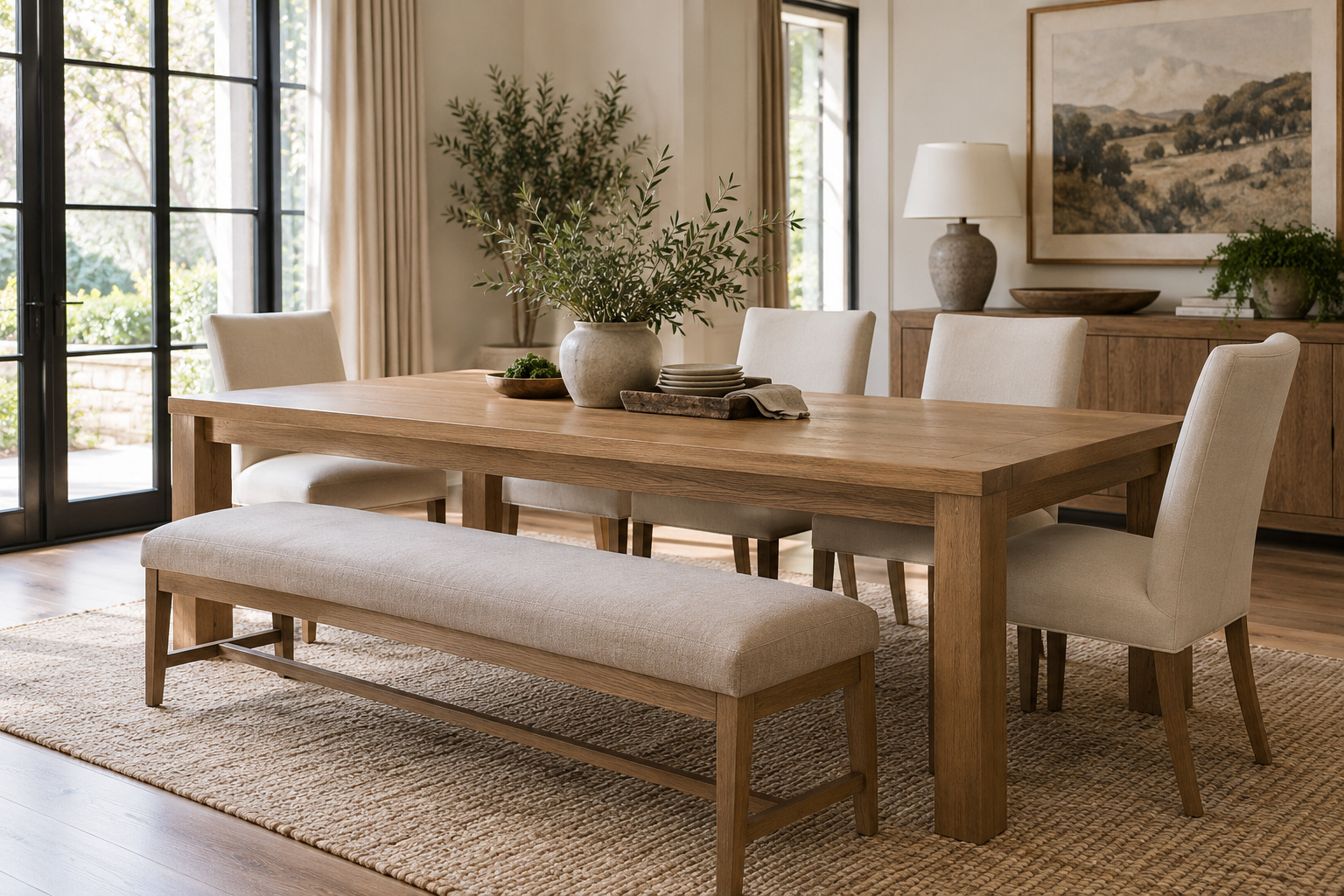
A movable bench along one long side of the table changes the seating outline without building anything into the wall. Choose upholstery that relates to the chairs opposite, such as oatmeal fabric with pale wood legs. Keep the ends of the table open enough for people to approach the bench without squeezing around another seat.
Check the bench’s height and how it fits beneath the tabletop before committing to the arrangement. Consider who will use it: getting in and out may feel different from using an individual chair. Keep the seat free of decorative cushions during meals and choose care instructions suited to dining. A bench is useful when its shape suits the table and household, rather than simply because it looks less formal.
17. Separate an Open Dining Area With an Airy Screen
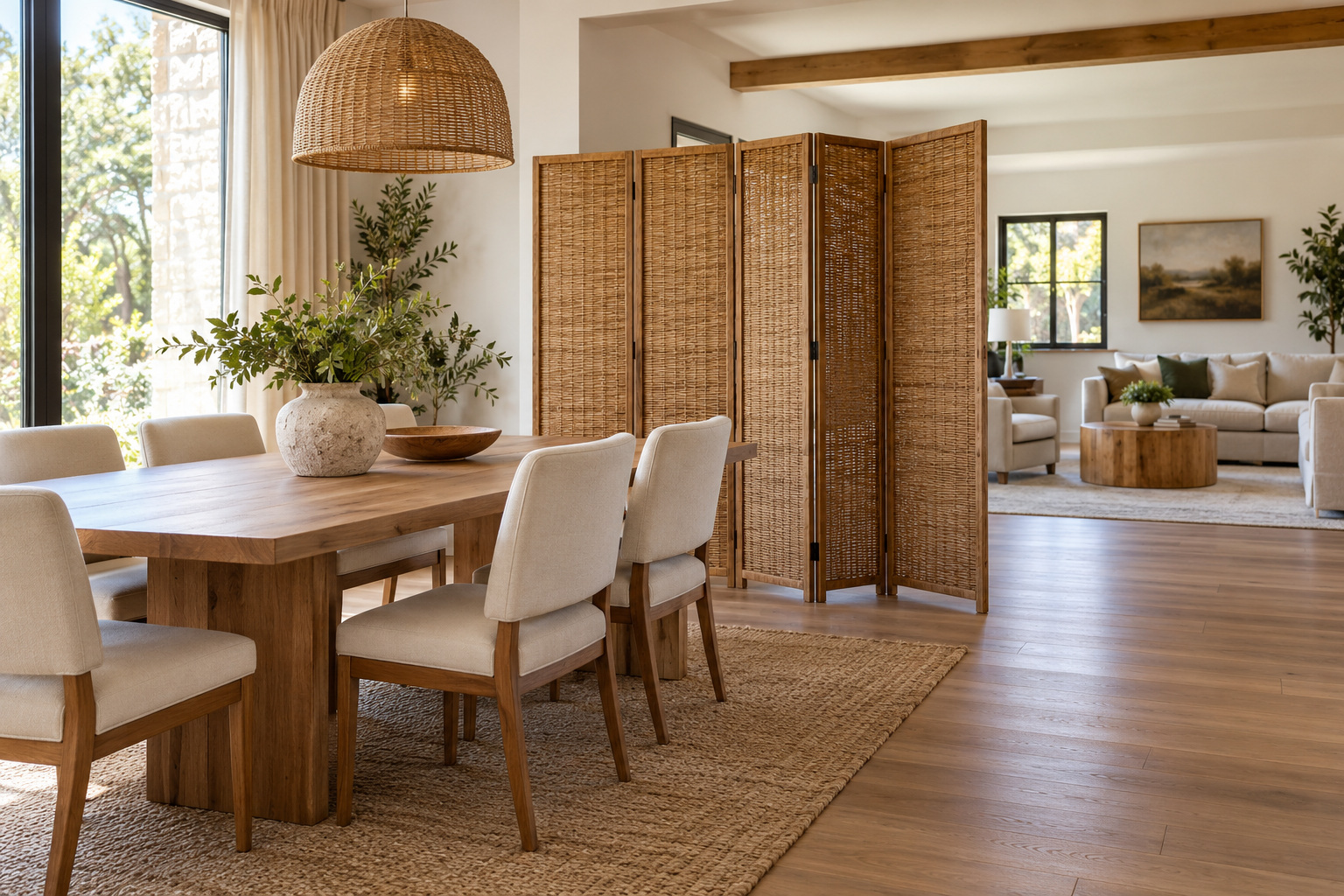
In an open room, a folding screen can give the dining area a visible edge while leaving it connected to the rest of the home. A woven design adds texture and lets the outline feel lighter than a full cabinet. Place it behind the dining arrangement where it separates a view, not where people need to walk.
Open the screen according to its instructions and check that it is stable in the actual household setting. Keep it away from chair backs, doors, and circulation routes. A pale wood frame and natural weave can connect with an oak table and linen curtains. Use only as much screen as the view needs; the aim is to define the area without building an obstacle around it.
18. Arrange Ivory Plates as a Deliberate Wall Group

A group of ivory plates can bring shape to a dining wall while staying within a warm neutral palette. Use a few related pieces with different rims or subtle size changes, and arrange them as one composition above a sideboard. The shallow relief and small shadows give the wall interest even when the ceramics share a color.
Lay out the group first and use hangers suited to each plate and the wall. Check the whole arrangement from the doorway instead of judging one plate at a time. Keep the furniture top below it fairly quiet so the wall group remains clear. This is an opportunity to display pieces you enjoy, not a reason to fill every available patch of wall with dishes.
19. Plan an Extendable Table for Everyday and Hosting
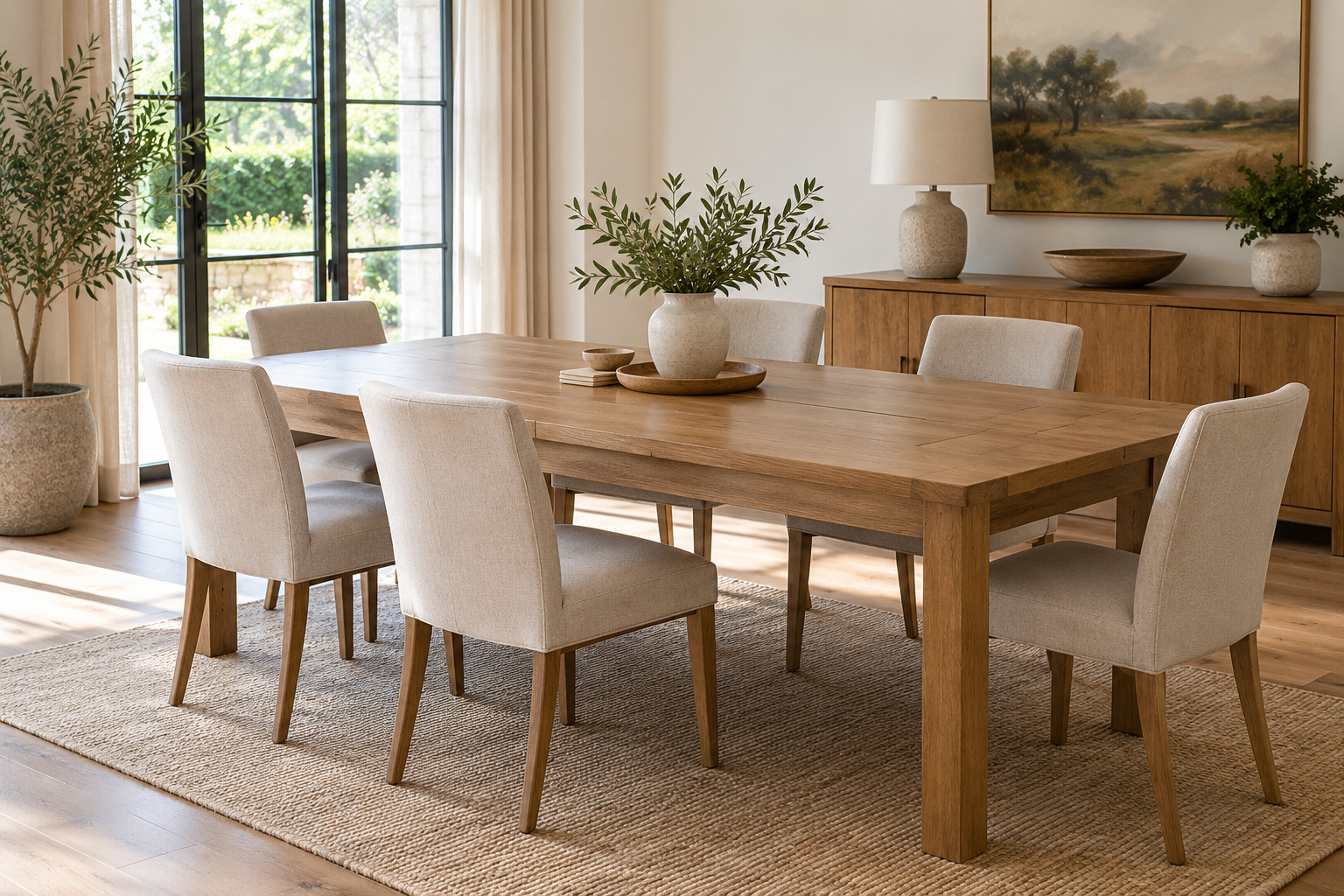
An extendable table can give everyday dining and occasional hosting different arrangements. Judge the table in both positions before choosing it, including where the extra chairs will go and how people will move around the longer top. A warm oak finish can keep the expanded table connected to the room rather than make the extension feel like an afterthought.
Think about the leaf storage and the effort involved in changing the table, following the mechanism’s instructions. Keep everyday styling light enough to clear when it is time to extend. The room should still work with the larger arrangement; extra seats are not useful if they block the doorway or serving furniture. Choose for the meals you regularly host, not just the maximum number on a product description.
20. Let One Tall Plant Balance an Empty Corner
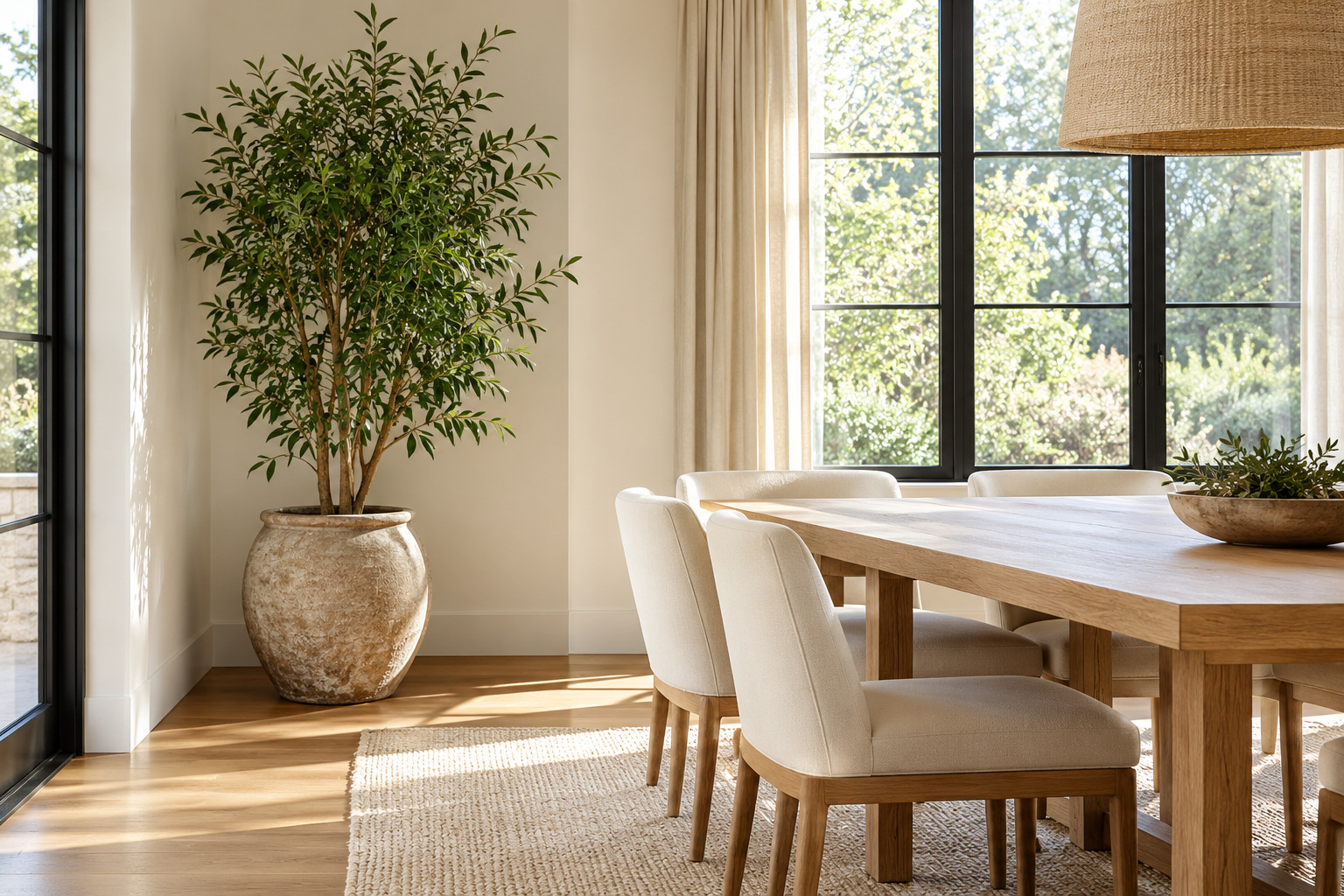
A single tall plant can balance a dining corner that feels empty beside low furniture. Choose its position according to the available light and the plant’s needs, then check the mature spread against chairs and curtains. A textured clay pot can connect the greenery to warm wood and cream fabric without introducing a new decorative theme.
Use a suitable container arrangement that protects the flooring, and keep watering access straightforward. The leaves should remain outside the route to the table rather than brushing someone every time they sit down. If the corner is unsuitable for a living plant, leave it open or choose another room element instead. One well-placed leafy shape is enough to make the vertical space feel considered.
Start with the part of the room you see most often: the wall behind the table, the chairs you sit in, or the light you use at dinner. Let that decision guide the next one. A warm neutral dining room feels settled when its colors connect, its textures vary, and the table remains ready for an ordinary meal.
Discover more from HomeTrendora
Subscribe to get the latest posts sent to your email.