Designing a small bathroom presents a unique challenge, requiring a smart approach to make the most of limited square footage. The right layout is crucial for transforming a cramped space into a functional and visually appealing retreat. By carefully considering the placement of fixtures like the toilet, sink, and shower, you can maximize every inch, creating a sense of openness and flow. These layout ideas explore various configurations, from classic arrangements to innovative solutions, demonstrating that even the smallest bathrooms can be both practical and stylish. Thoughtful planning can unlock hidden potential, ensuring your bathroom feels comfortable and organized, not confined.
1. The Classic Three-in-a-Row Layout

A timeless and efficient solution for rectangular bathrooms is the three-in-a-row layout. This design places the sink, toilet, and shower or tub along one long wall. By consolidating all plumbing to a single wall, you can significantly reduce construction costs and complexity. This arrangement leaves the opposite wall free, creating a clear, unobstructed walkway that makes the room feel longer and more spacious than it is. To enhance this effect, consider using a floating vanity and a wall-mounted toilet, which expose more floor space and contribute to a lighter, more open atmosphere. This layout is a go-to for its simplicity and effectiveness.
2. Corner Shower and Diagonal Layout

To break free from a boxy feel, consider installing a corner shower. This frees up valuable central floor space that a traditional rectangular shower would occupy. Placing a neo-angle or rounded shower enclosure in a corner allows for more flexible placement of the toilet and sink, often on adjacent walls. This diagonal orientation creates a more dynamic flow and can make a square-shaped bathroom feel larger and less conventional. It’s an excellent strategy for maximizing functionality in tight quarters, providing a comfortable showering experience without dominating the room’s limited footprint, while opening up unique design possibilities for the remaining area.
3. Wet Room Layout

For the ultimate space-saving solution, a wet room layout eliminates the need for a separate shower enclosure. In this design, the entire bathroom floor is waterproofed and gently sloped towards a drain, allowing the shower to be open to the rest of the room. This creates a seamless, barrier-free space that feels incredibly open and is also highly accessible. A simple glass panel can be installed to protect the vanity and toilet from direct spray without visually dividing the room. This minimalist approach is perfect for exceptionally small or unusually shaped bathrooms, offering a sleek, modern aesthetic and maximizing every available inch of space.
4. Wall-Mounted Fixtures Layout

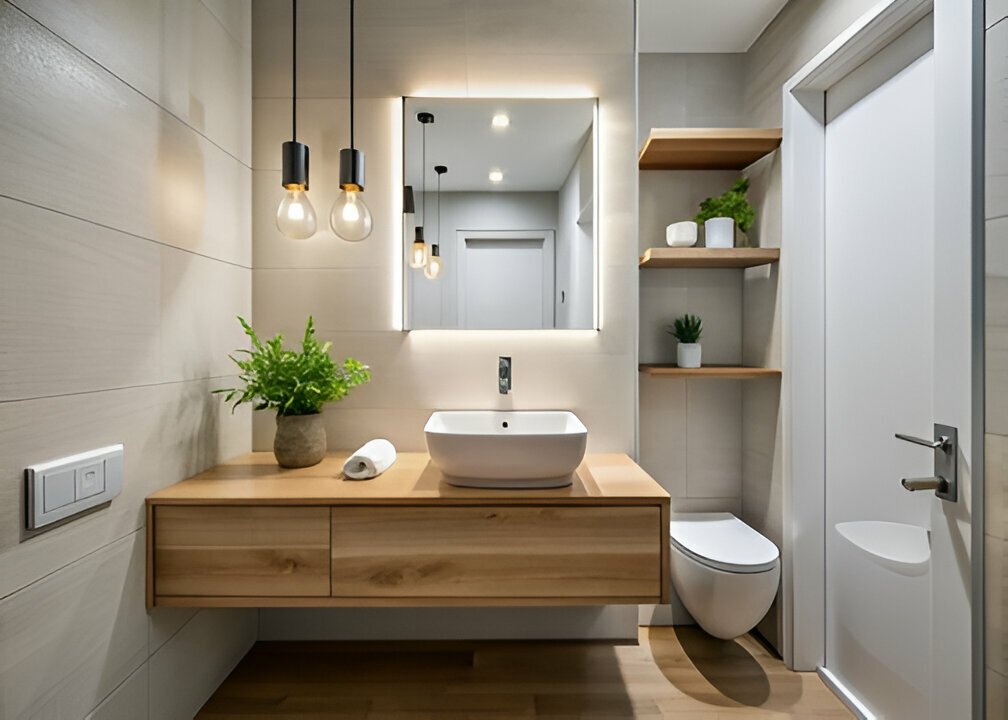
One of the best ways to create the illusion of space is to lift everything off the floor. A layout centered around wall-mounted fixtures, including a floating vanity and a wall-hung toilet, is a game-changer for small bathrooms. By exposing the flooring underneath, the room instantly appears larger and less cluttered. This approach not only enhances the sense of space but also makes cleaning the floor significantly easier. This modern design works exceptionally well in narrow bathrooms, as it reduces the physical footprint of the essential fixtures, creating a more streamlined and airy environment that feels both sophisticated and practical.
5. Galley Bathroom Layout

A galley layout is ideal for long, narrow bathrooms, often found in apartments or as en-suites. This design places fixtures on two parallel walls, with a central walkway in between. Typically, the sink and toilet are positioned on one side, while the shower or a narrow bathtub is on the other. This configuration balances the room’s proportions and ensures efficient use of the elongated space. To prevent a corridor-like feel, use a glass shower door to maintain visual openness and choose a slim-profile vanity. This practical arrangement keeps everything within easy reach while maintaining a clear and functional path through the center.
6. Tub and Shower Combination Layout

For those who want the luxury of a bathtub in a compact space, the tub-and-shower combination is a classic for a reason. This layout typically places the combo unit along the shortest wall at the far end of the bathroom. This anchors the room and frees up the longer walls for the toilet and vanity. It’s a highly efficient use of space, providing both bathing and showering options without requiring the footprint of separate fixtures. Using a clear glass door or a simple shower curtain can help maintain a sense of openness. This versatile design remains popular because it delivers maximum functionality in minimal square footage.
7. Pocket Door Entry Layout

The door swing can be a major space-waster in a small bathroom. A layout that incorporates a pocket door instantly reclaims valuable wall and floor area that would otherwise be needed for the door’s arc. By sliding neatly into the wall, a pocket door frees up space for better fixture placement or additional storage, like shallow shelves or a towel rack. This seemingly small change can completely transform the functionality of a tiny bathroom, allowing for a more logical and less cramped arrangement of the sink, toilet, and shower. It’s a smart, seamless solution for maximizing usability in tight spaces.
8. Separate Toilet Compartment Layout

In slightly larger “small” bathrooms, creating a separate water closet or toilet compartment offers a significant boost in privacy and functionality. This layout places the toilet in its own small enclosure, often with a separate door or even a pocket door. This allows two people to use the bathroom simultaneously—one at the vanity or shower and another in the private toilet area. This design is especially beneficial for shared family bathrooms or primary en-suites. Even a partial wall or a frosted glass divider can create the desired separation without completely closing off the space, adding a touch of luxury and practicality.
9. Minimalist Pedestal Sink Layout

When floor space is the absolute top priority, a minimalist layout featuring a pedestal sink is an excellent choice. Unlike a bulky vanity, a pedestal sink has a very small footprint, freeing up visual and physical space around it. This makes the room feel more open and less crowded. This layout typically pairs the pedestal sink with a toilet and a compact shower stall. While it sacrifices under-sink storage, the trade-off is a much airier feel. You can compensate for storage with wall-mounted medicine cabinets, open shelving above the toilet, or a recessed niche in the shower.
10. Narrow Trough Sink Layout

For very narrow or galley-style bathrooms, a long, slim trough sink can be a stylish and practical solution. This type of sink provides ample washing space without protruding too far into the room, preserving a clear walkway. A wall-mounted trough sink enhances this effect by keeping the floor clear. This layout allows for the toilet and shower to be placed further down the line, maintaining an efficient flow. Often featuring two faucets, a trough sink can also accommodate more than one person at a time, making it a great option for a busy household’s compact bathroom, blending modern aesthetics with smart functionality.
11. Custom Built-In Storage Layout

An intelligent layout for a small bathroom integrates storage directly into the architecture. This involves designing the space around custom built-in elements like recessed medicine cabinets, shower niches, and floor-to-ceiling shelving. By building storage into the walls, you avoid adding bulky furniture that eats up precious floor space. A layout could feature a vanity with a toilet right beside it, with a tall, narrow cabinet built into the wall between or next to them. This approach creates a clean, uncluttered look while ensuring that every essential has its place, making the bathroom feel organized and intentionally designed.
12. Centered Freestanding Tub Layout

For a touch of luxury in a small but well-proportioned bathroom, a layout with a centered freestanding tub can be a stunning focal point. This design works best when the tub is placed against the back wall, directly in the line of sight from the doorway. To make this work, you must opt for a smaller-scale tub designed for compact spaces. The toilet and a slim vanity can then be placed on one of the side walls. While it may seem counterintuitive, a beautifully shaped tub with space around it can make a room feel more curated and spa-like, drawing the eye and creating a sense of indulgence.
13. Curbless Shower Layout

Similar to a wet room, a layout with a curbless shower creates a seamless transition from the main bathroom floor into the shower area. This design eliminates the visual and physical barrier of a shower curb, which can make a small bathroom feel chopped up. The continuous flooring creates an unbroken line that enhances the sense of space and openness. This layout is not only aesthetically pleasing and modern but also universally accessible, making it a safe option for all ages. Paired with a simple glass panel, a curbless shower offers the benefits of an open design while containing most of the water spray.
14. Split-Level Layout

In bathrooms with unusual dimensions or existing structural elements, a split-level layout can turn a challenge into a feature. This involves creating a raised platform for the shower or bathtub. Elevating one part of the bathroom defines different functional zones without needing walls. For example, a raised wet area for the shower can contain water effectively and add architectural interest. The steps leading up to the platform can also create a sense of procession and luxury. This unconventional layout is a creative way to work with plumbing constraints or awkward room shapes, adding depth and character to a small space.
15. The Compact Square Layout

For bathrooms that are nearly square, a compact layout that places fixtures in three of the four corners is highly efficient. You might have a corner shower in one corner, a toilet in the opposite diagonal corner, and a small vanity in a third. This leaves the fourth corner and the central area open, creating a surprisingly spacious feel and easy movement. This arrangement prevents any one wall from feeling too crowded and makes the most of the room’s balanced dimensions. Using a rounded shower and a corner sink can further enhance the space-saving benefits of this practical and well-distributed layout.
16. Alcove Bathtub Layout

An alcove bathtub layout is a classic for a reason, perfectly suiting small, rectangular bathrooms. This design fits a standard bathtub snugly between three walls, maximizing every inch of width. The shower is integrated over the tub, creating a two-in-one fixture that saves significant space. With the tub positioned at one end of the room, the remaining area is free for the toilet and vanity, which can be placed along one of the longer walls. This arrangement is highly practical, cost-effective for plumbing, and offers the comfort of a full-size bath even in a compact footprint, making it a reliable choice for family homes.
17. Mirrored Wall Layout

To dramatically expand the sense of space, design a layout that incorporates a large, wall-to-wall mirror. Placing the mirror along the longest wall, typically behind the vanity and toilet, can visually double the size of the room. This trick reflects light and the space itself, creating an illusion of depth and openness. The layout itself can be simple, such as a standard three-in-a-row configuration, but the impact of the mirrored wall elevates it entirely. This strategy is particularly effective in narrow or windowless bathrooms, as it brightens the area and tricks the eye into perceiving a much larger environment.
18. Floating Vanity and Toilet Layout

A layout focused on floating fixtures creates a modern, airy feel in any small bathroom. By mounting the vanity and toilet directly to the wall, the floor beneath remains clear and visible. This continuous flooring makes the room appear larger and more open. This design also has practical benefits, making it much easier to clean the floor without obstacles. A floating vanity and toilet layout works especially well in contemporary or minimalist designs, offering clean lines and a clutter-free aesthetic. It’s a sophisticated approach that cleverly manipulates visual perception to enhance the feeling of space in a compact area.
19. Open-Concept Adjoining Bedroom Layout

For a primary suite, an open-concept layout that partially merges the bathroom and bedroom can create a luxurious, expansive feel. This design often removes the traditional door and wall, using a half-wall, a piece of furniture like a dresser, or a glass partition to create a subtle division. The vanity area might be completely open to the bedroom, while the toilet and shower are enclosed for privacy. This approach allows light and space to flow freely between the two areas, making both rooms feel larger. It’s a bold, contemporary choice that transforms a small en-suite into a high-end, integrated living space.
20. Under-Eaves Attic Bathroom Layout

Transforming an attic into a bathroom requires a layout that cleverly works around sloped ceilings and low-clearance areas. Place the bathtub or toilet under the lowest part of the eaves, as these fixtures require less vertical height. The shower and vanity, which require standing room, should be positioned where the ceiling is highest. A skylight can be installed in the sloped ceiling to flood the space with natural light, making it feel bright and airy despite its constraints. This thoughtful placement turns an awkward space into a charming and functional bathroom, maximizing usability while embracing the unique character of the attic architecture.
Conclusion:
Ultimately, the best small bathroom layout is one that harmonizes functionality with your personal style. By embracing creative solutions like wall-mounted fixtures, corner installations, and smart storage, you can overcome the limitations of a small footprint. Whether you opt for a classic three-in-a-row design, a space-saving wet room, or a layout featuring a pocket door, thoughtful planning is key. These ideas demonstrate that size does not have to compromise style or comfort. A well-designed small bathroom can feel open, organized, and perfectly suited to your daily needs.