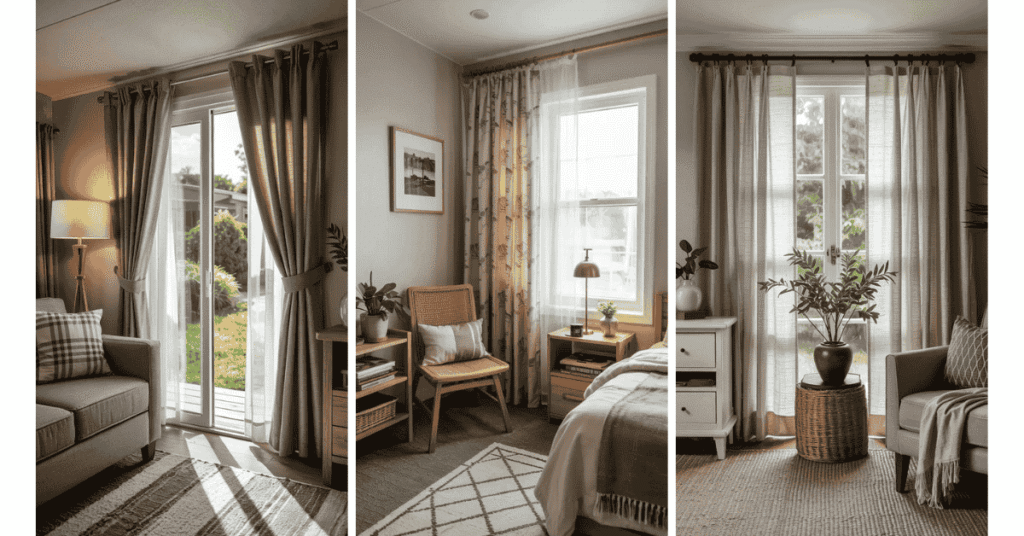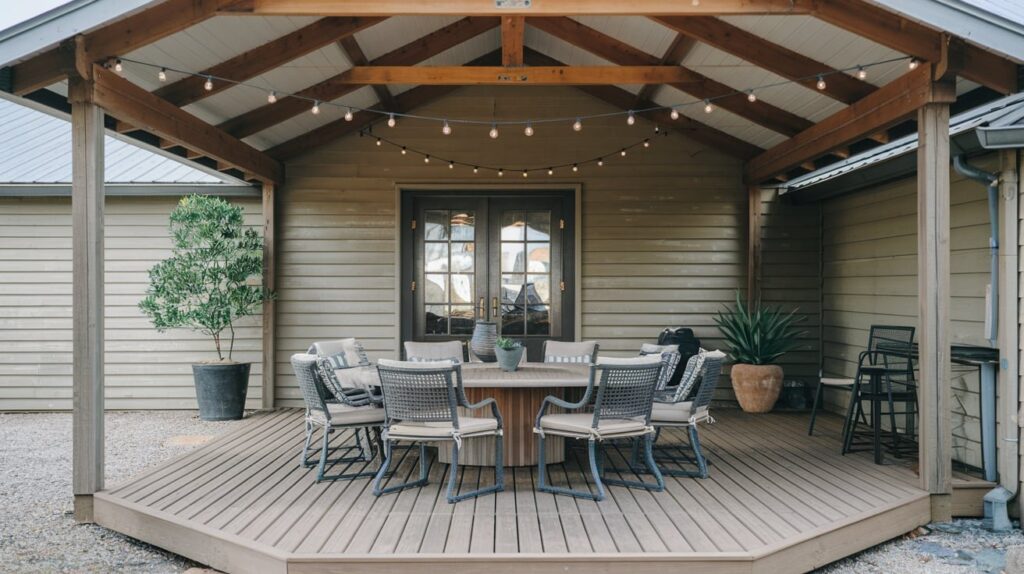
When the sofa, rug, and paint each looked good on their own but feel disconnected in the room, choosing another accent can make the problem harder to see. These 15 aesthetic home decor ideas help you decide which finish to repeat, where the room needs space, and what is worth changing.
Start with the things you want to keep. Use their scale, colors, and everyday role to guide the next choice, whether it’s a paint sample or one good lamp.
1. Choose a Warm Neutral Beside the Floor
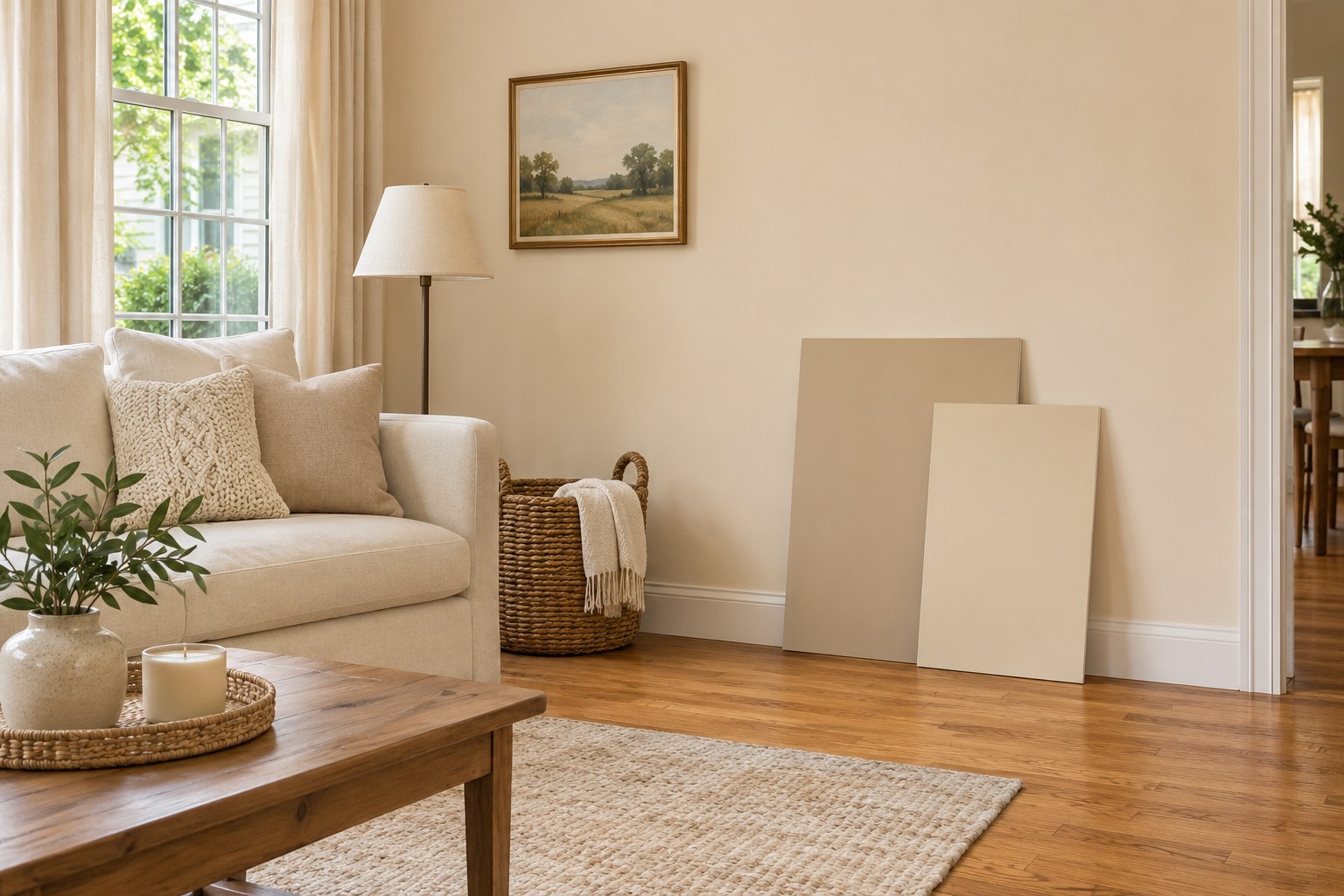
Set two large paint samples vertically where the wall meets the floor. A cream with a little yellow can work beside honey oak, while a warmer gray may feel calmer beside stone tile. Check both in direct daylight and at the hour when you normally switch on the lamp. Look for the shade that makes the floor and trim feel like they belong together.
If you’re choosing a color for several rooms, carry one sample into each. See how it changes beside the furniture you intend to keep. These whole-house paint color ideas give you other colors to compare with your own finishes.
2. Let the Main Wood Tone Come From a Piece You Own
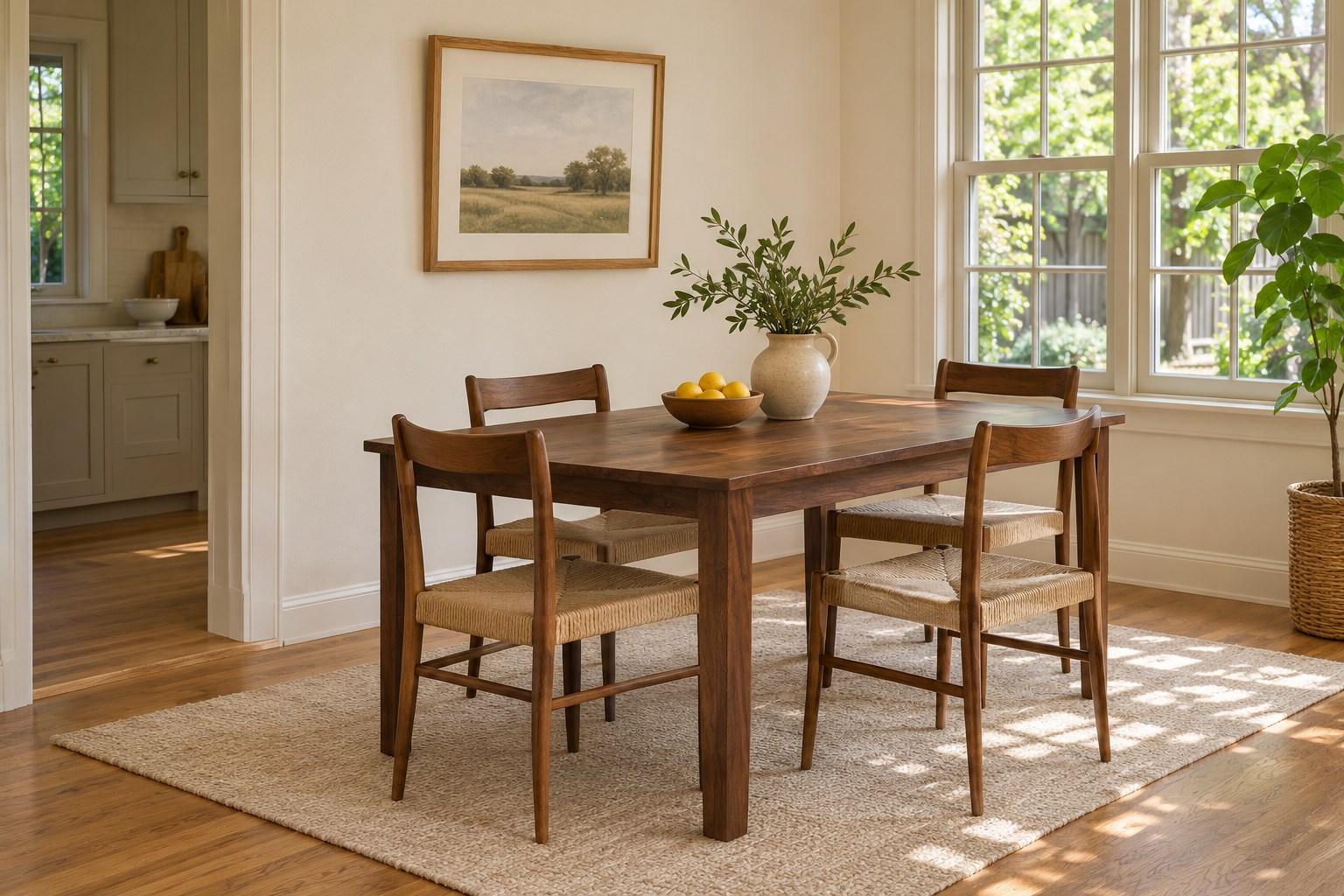
Pick the wood surface you see most often, such as the oak floor, walnut dining table, or pine sideboard. Let that finish guide the next addition. A second wood can look intentional if it is clearly lighter or darker and shares some warmth with the first. Place the sample next to the existing piece before choosing it.
Leave space between areas of different grain so both can be seen. In a room with oak flooring, that might mean putting a walnut table on a pale rug or bringing oak back in one frame. Avoid adding a third strong grain to the same view until you can see what the first two do.
3. Let Linen and Wool Meet in One Seat
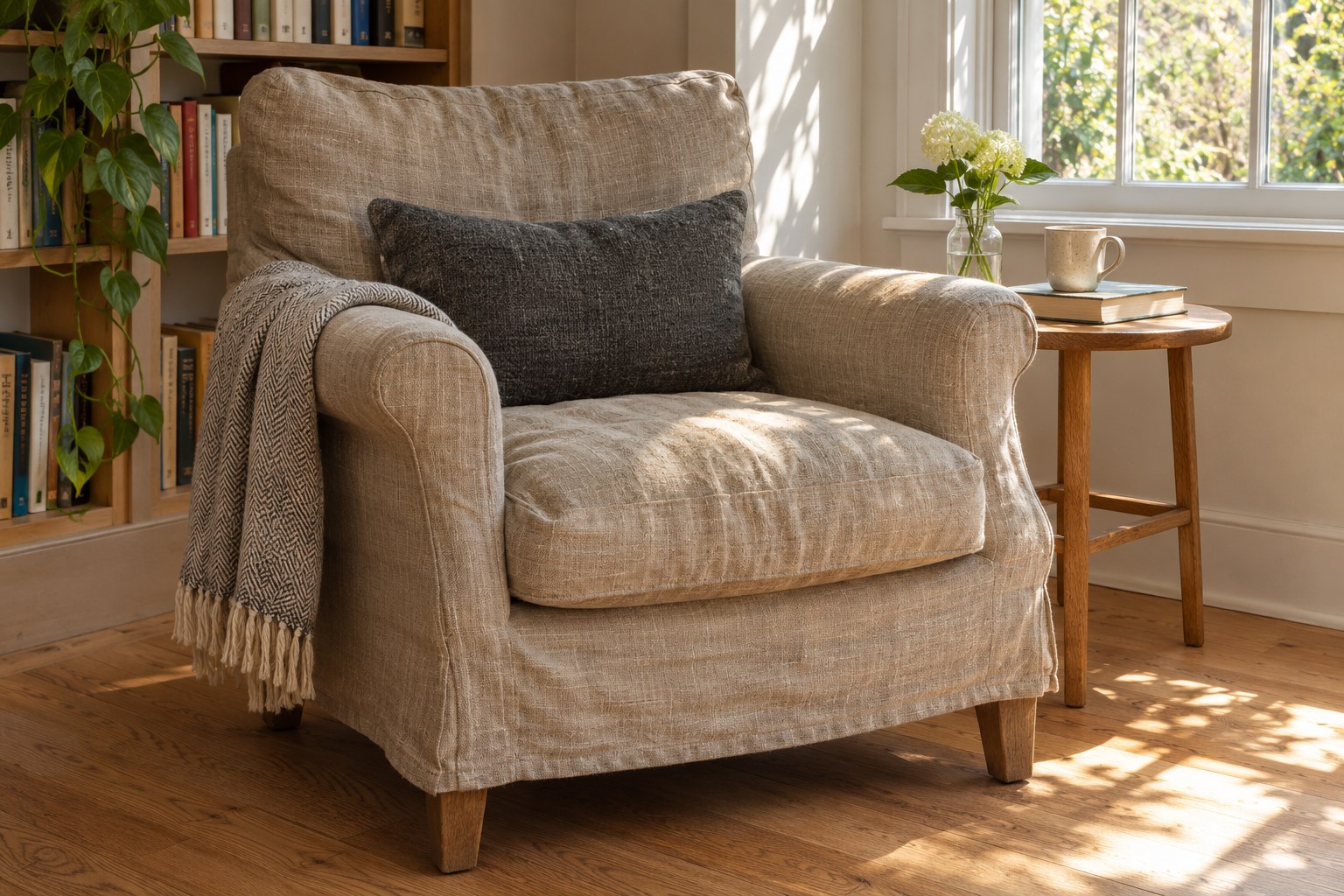
Choose the linen piece you will use often, then pair it with wool or another more textured fabric at the same seat. A flax slipcover can give a wool cushion enough quiet background to show its weave. Look at the fabrics from across the room. Similar shades may appear to match up close and separate once the light falls across them.
Check the care label and use a fabric suited to that seat. Washable covers can make more sense in a room shared with pets or children. Leave the fabric flat enough for someone to sit without moving a pile of cushions.
4. Make an Existing Arch Easier to See
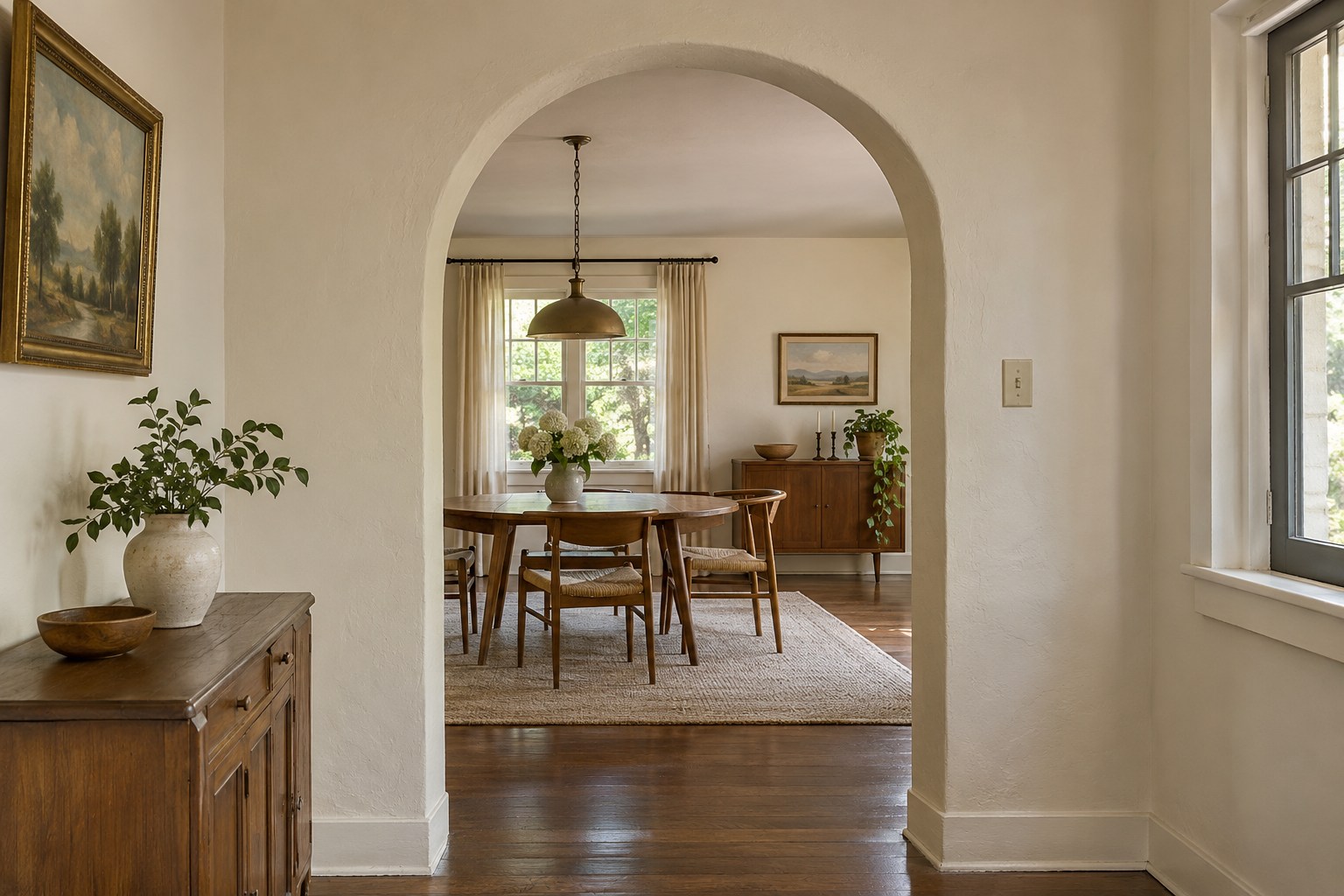
Look at the opening from the room you enter most often. If the curve disappears behind a tall cabinet, move the cabinet or lower the things on top. Match the casing to the wall if you want the opening to feel quiet. A small difference in sheen may show the shape without adding another color.
If your opening is square, look for a curve elsewhere before taking on a renovation. A rounded chair back can carry the same line at a smaller scale. Keep a doorway clear and use a clear view into the next room as part of the arrangement.
5. Light the Task Before You Pick the Shade
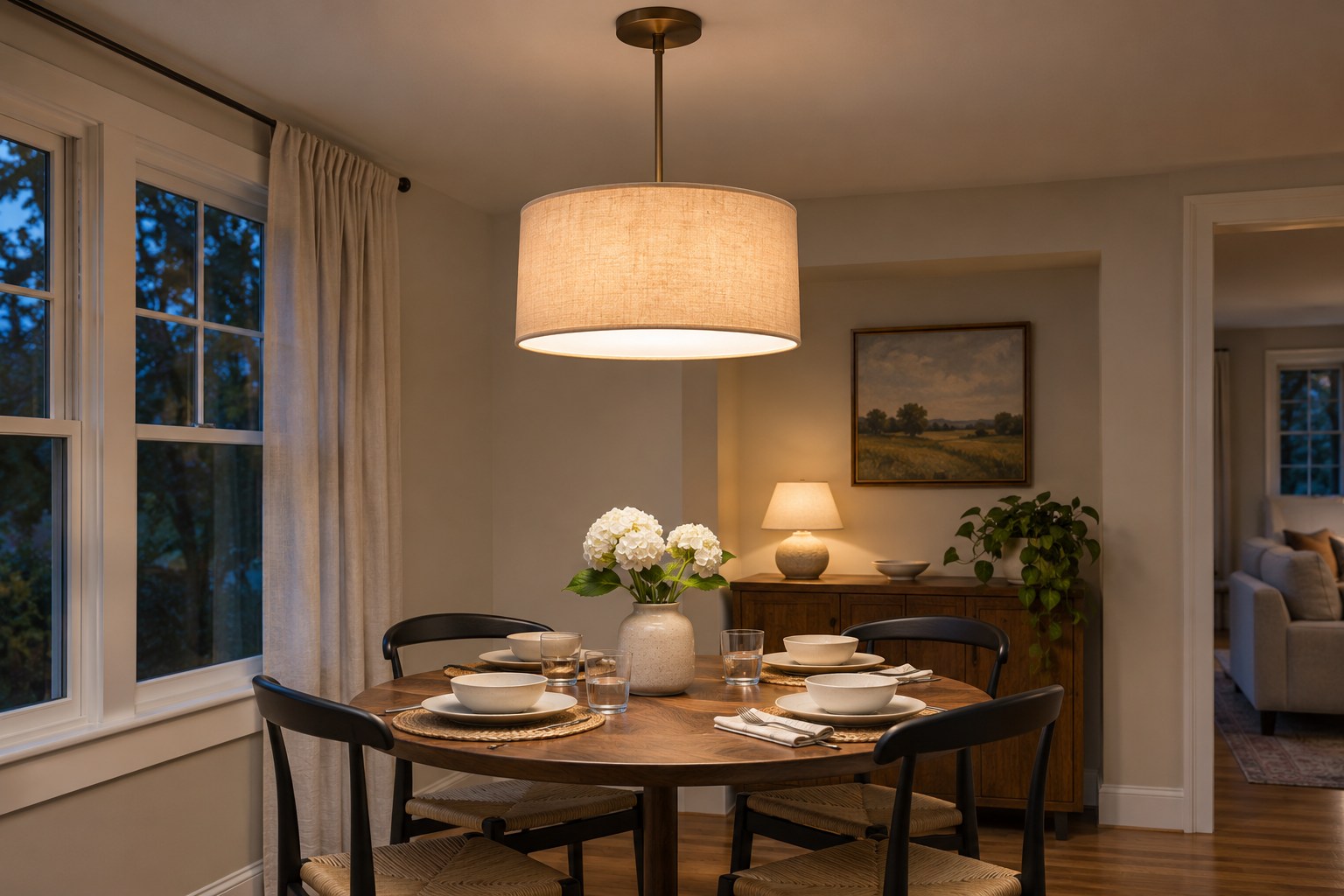
Start where someone reads, eats, or sorts mail. Bring in a portable lamp you own and see where the light falls in each position. A broader shade can brighten a tabletop while a more directed lamp suits a reading chair. Notice whether the source glares when you’re seated.
Once the position works, look at the shape from the doorway. A plain fabric shade can bring warmth to a room with hard surfaces. In a low room, use a fixture with an appropriate profile and keep the route through the room comfortable. Follow the fixture’s installation instructions or ask an electrician about hardwired work.
6. Use a Vintage Piece Where Its Wear Makes Sense
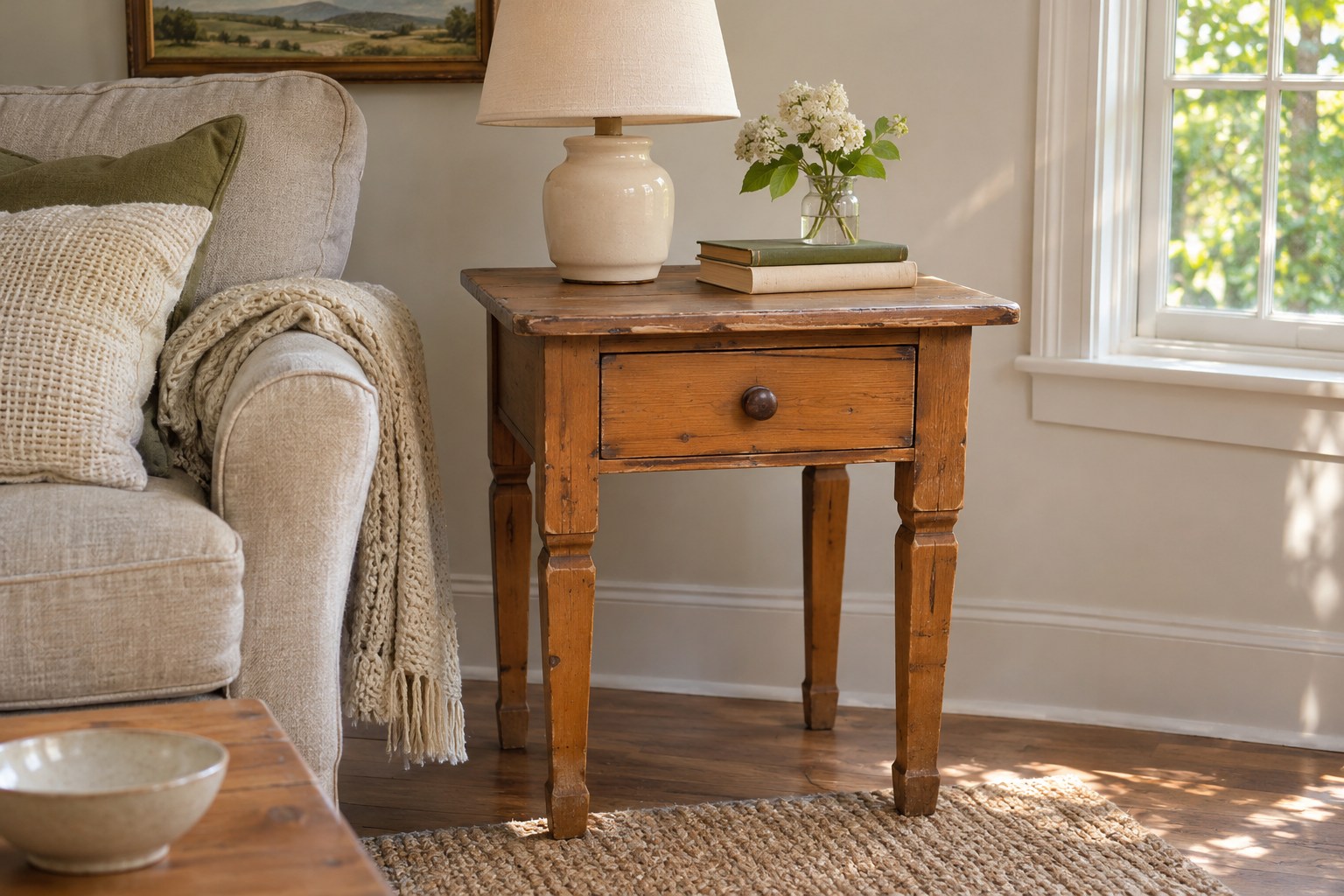
A table with a worn edge can suit a room where you set down books or keys. Check that the legs are stable, the drawer works, and the old finish suits what will be placed on it. Bring a tape measure when shopping secondhand and leave room to move the piece into the room.
Give the piece a plain neighbor so its small differences show. A simple modern lamp beside an old tabletop can make the worn grain easier to see. If the piece needs extensive repairs before it can do the job, keep looking for a form that fits your routine as well as the room.
7. Set a Plant Where You Can Care for It
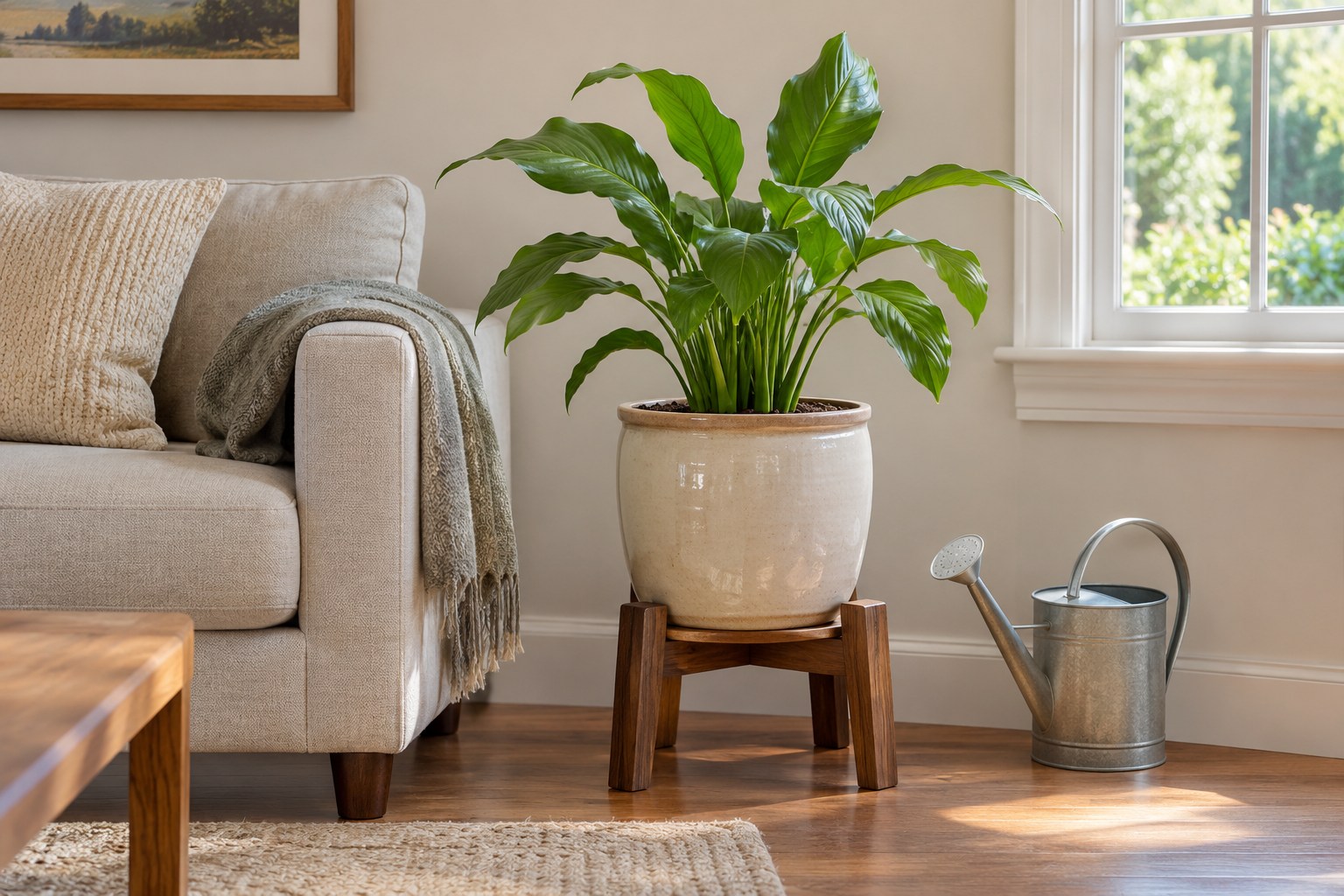
Pick a spot that receives the light your plant needs and that you can get to with a watering can. A plant near the end of a sofa can soften the outline of the room, provided the leaves stay clear of the route and nearby doors. Use a stable surface and keep moisture off the finish.
Look at the shape from the doorway. One well-placed plant can be enough if the window already frames a tree. If you are fitting greenery around a seldom-used spot, these empty corner decor ideas can help you decide what belongs next to it.
8. Leave a Quiet Gap on the Bookcase
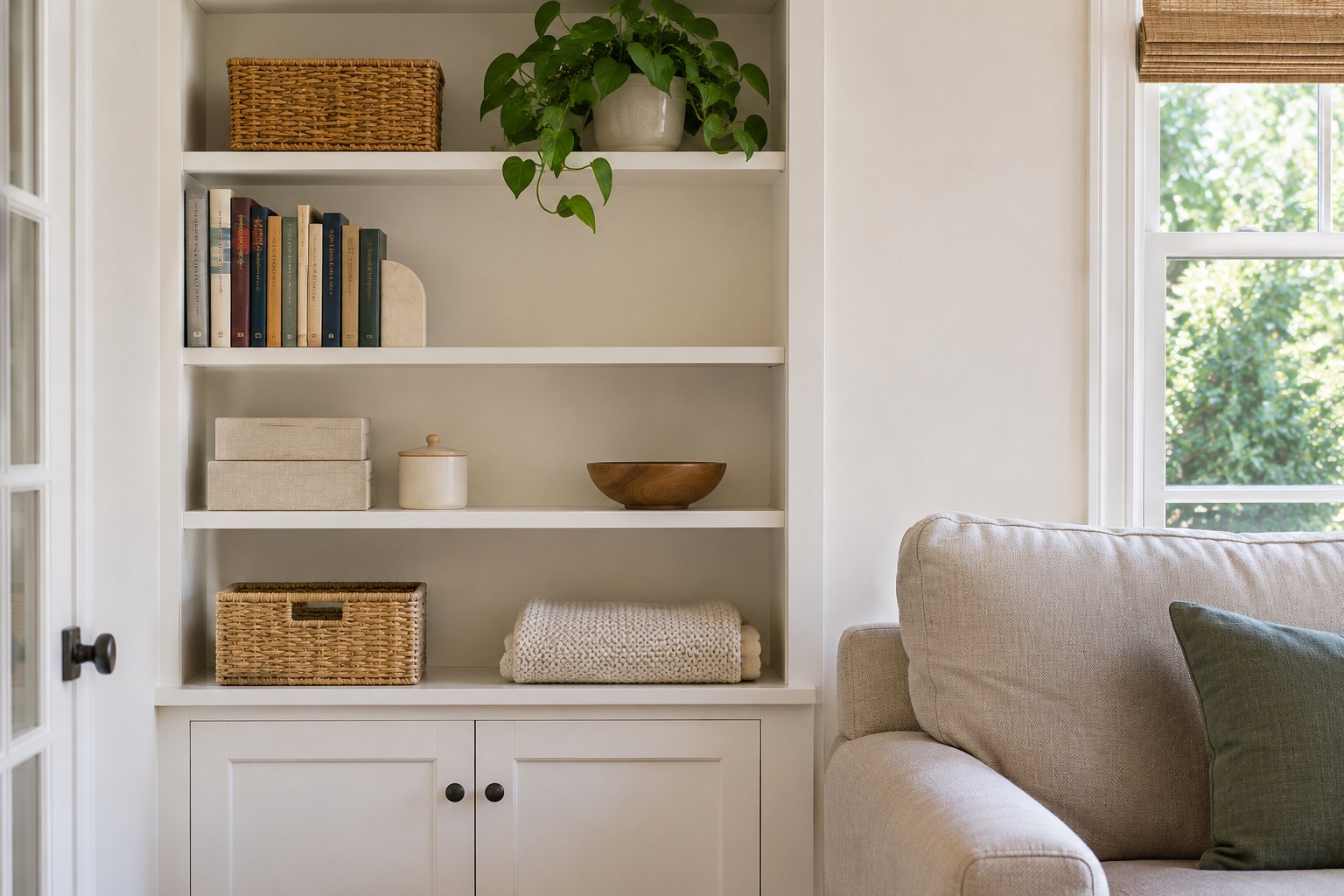
Pull a few pieces off a bookcase and look at it from the main seat. Make one clear gap near the part of the room you look toward most often. Put back the books you use and try arranging the objects with a little space between them. Give taller pieces a shelf that leaves room to lift them out.
If the room is small, start with a gap on one shelf and keep other shelves available for storage. A single pale bookend can finish a short row. Our living room shelf ideas show more ways to put useful and decorative pieces together.
9. Hang Art Where the Frame Meets the Furniture
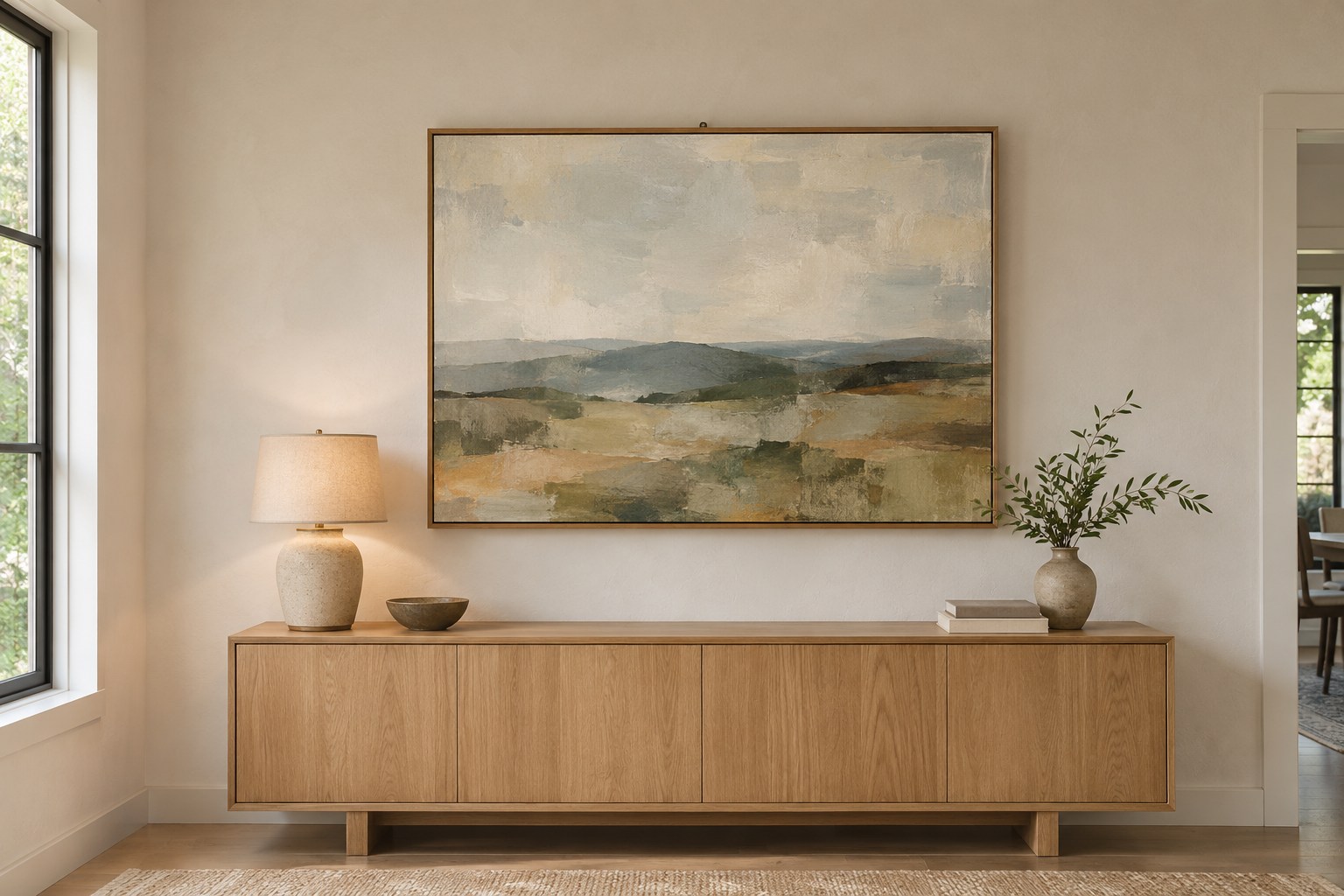
Choose a piece of art you want to live with and test how its frame relates to the furniture nearby. Cut paper to the frame’s size and place it on the wall. A narrow frame above a broad sideboard may need a lamp on one side to tie the group together. A larger print might be enough by itself.
Look at the result from the doorway and from the seat you use most. Move the paper up or down before making holes. Choose mounting hardware according to the frame and wall. Let the artwork supply one shade you can pick up in a textile later.
10. Try One Curved Seat Against Straight Lines
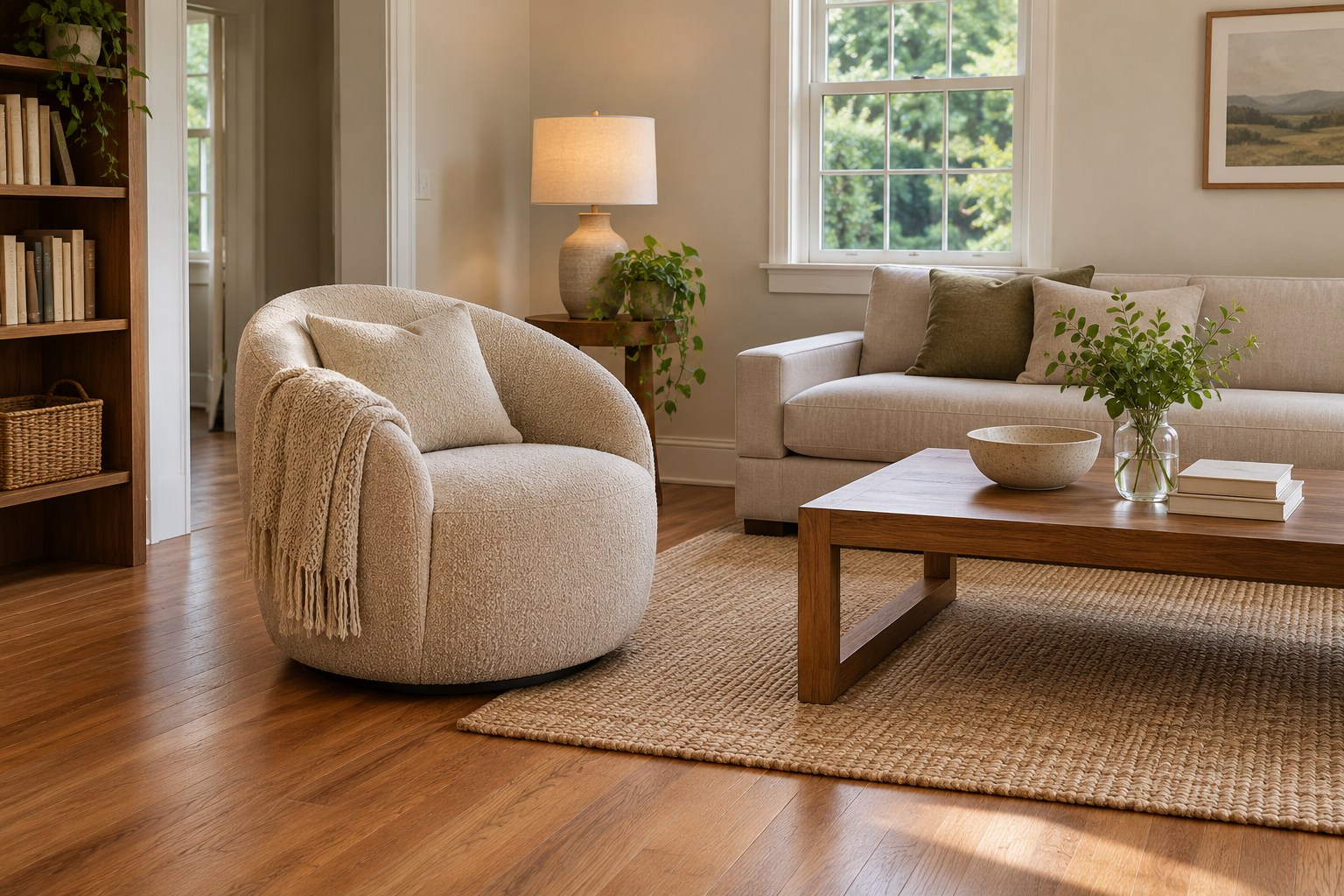
If the room already has a square coffee table and a straight sofa, try one rounded chair. Mark the chair’s full footprint, including where the back curves away from the seat. Check the path around it and see whether you can reach the table without leaning far forward.
Keep one straight edge nearby, such as the side of a cabinet, so the curve stays visible. Compare the seating depth and height with the chair you use now. A shape can soften a room visually, and a comfortable seat gives you a reason to keep it there.
11. Give a Console One Sculptural Ceramic Shape
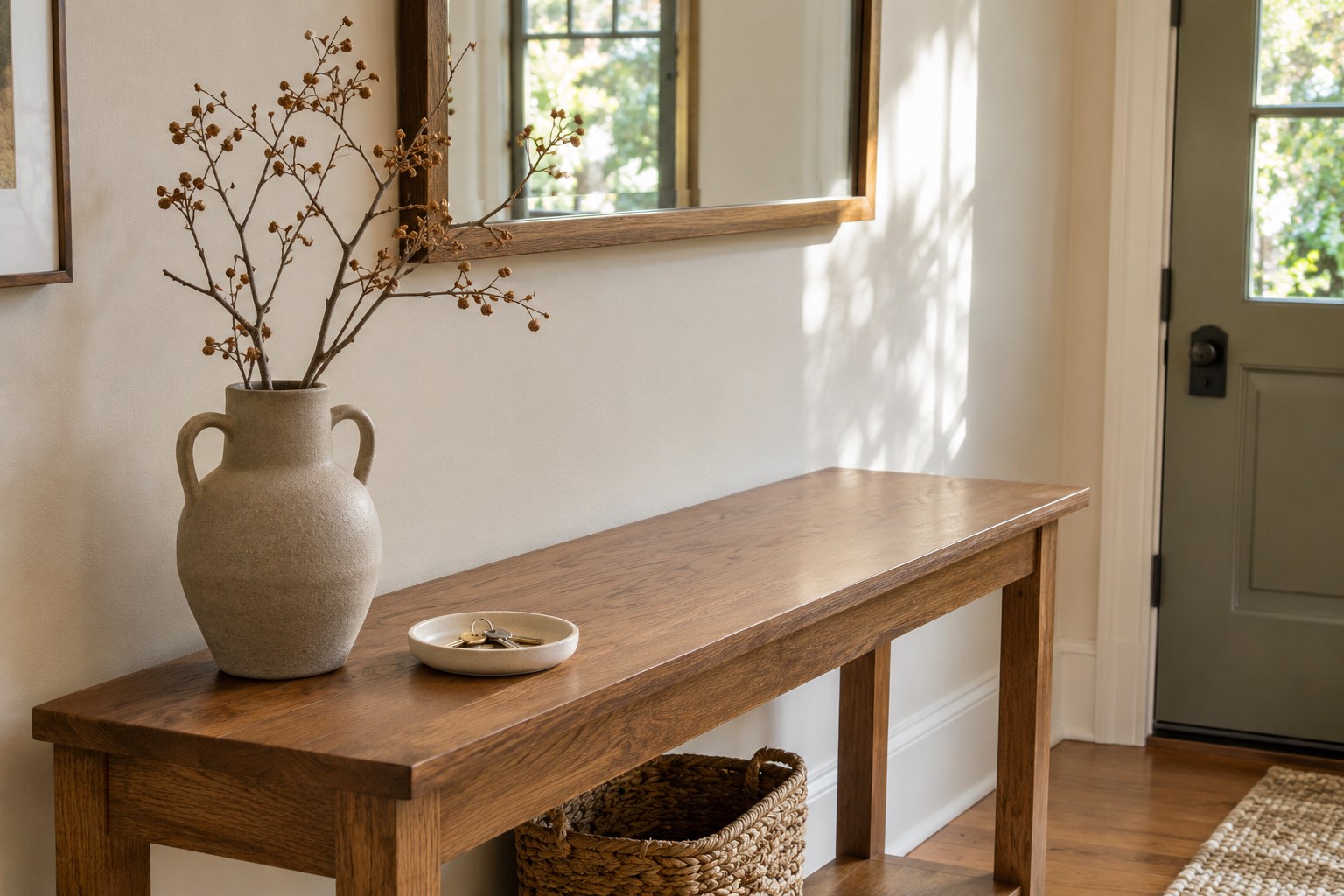
Start with a stable vase that reads clearly against the wall and leaves room to set down keys or a bag. A handled form adds an outline you can see from the end of the hallway. Try one short grouping of branches, with the weight centered over the base. You can also leave the vase empty if the shape is enough on its own.
Leave it back from the edge and test that the console has room for the things you set down daily. A small tray beside the vase can collect them. Check the vessel’s care instructions before adding water, and use dried stems when you prefer to leave it dry.
For a console that also collects mail, the Mitt&Ditt handled ceramic vase can sit at one end. Check its overall width, including the handles, before deciding where to place it.
See details for Mitt&Ditt handled ceramic vase (paid link)
12. Try a Moody Color in a Room You Use After Dark
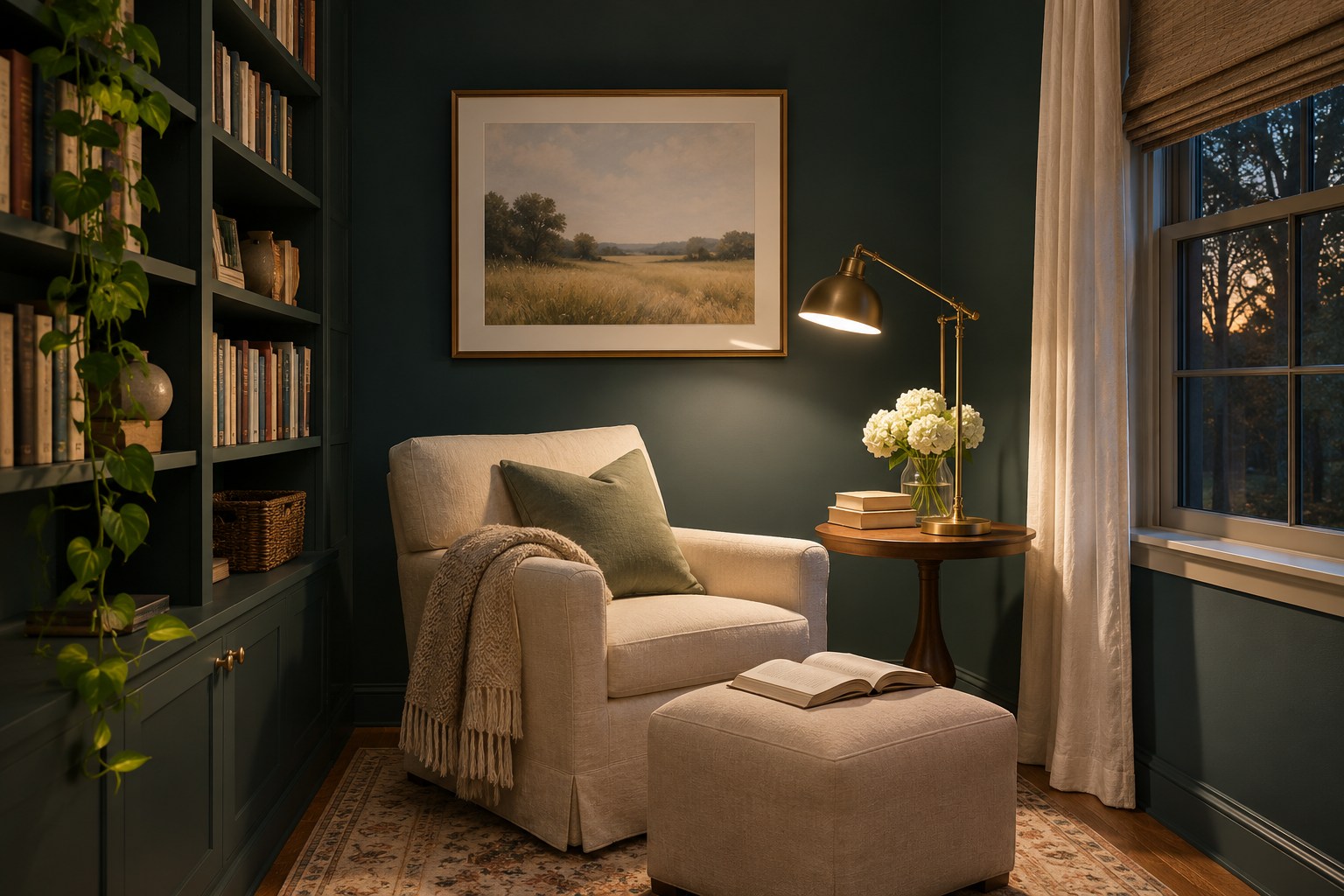
Choose the place where you want a deeper color most, such as a snug reading room or dining nook. Put a sample near the lamp and another in the shadow farthest from it. Watch how both look from the next room. In a room that gets little daylight, a deep blue-green can feel steady under the lamp while an undertone you dislike can become more obvious.
Test it with pale upholstery or art you already own. Keep a separate light for reading or work if the wall color absorbs more light than before. A little relief from a pale textile can keep the objects easy to see.
13. Refinish a Surface You Still Like
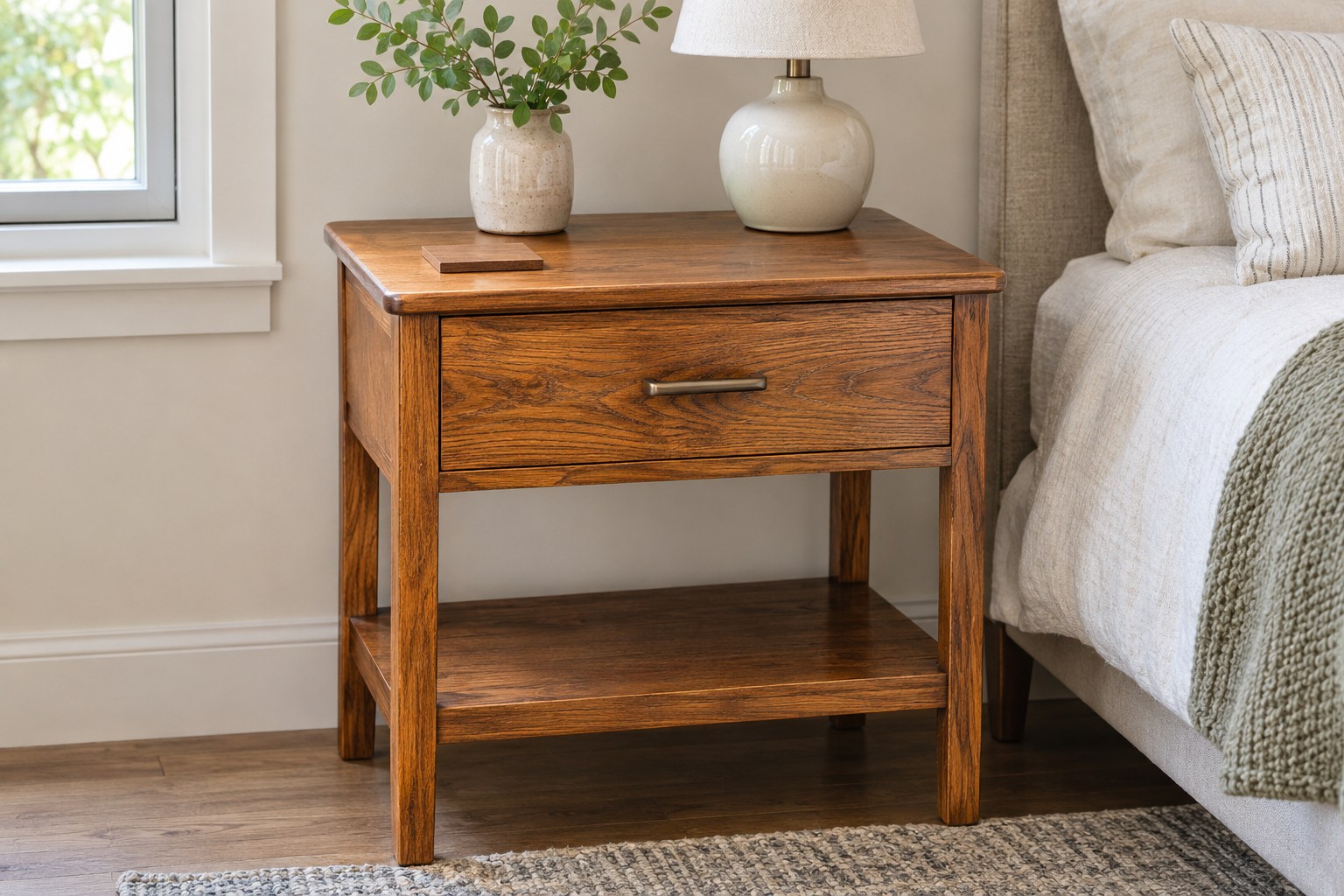
Look at the furniture you would keep if the color or handle changed. An old nightstand with a useful size can earn a second life if its drawers and joints still work. Test a finish on a hidden spot and follow directions for the material. For a piece with an unknown older finish, ask a refinishing professional before removing it.
Change one detail at a time. A clean surface or one replacement pull may be enough. Hold the new finish beside the furniture that will stay. The benefit comes from keeping a piece that still fits and making it easier to live with.
14. Set the Rug Edge Where the Group Begins
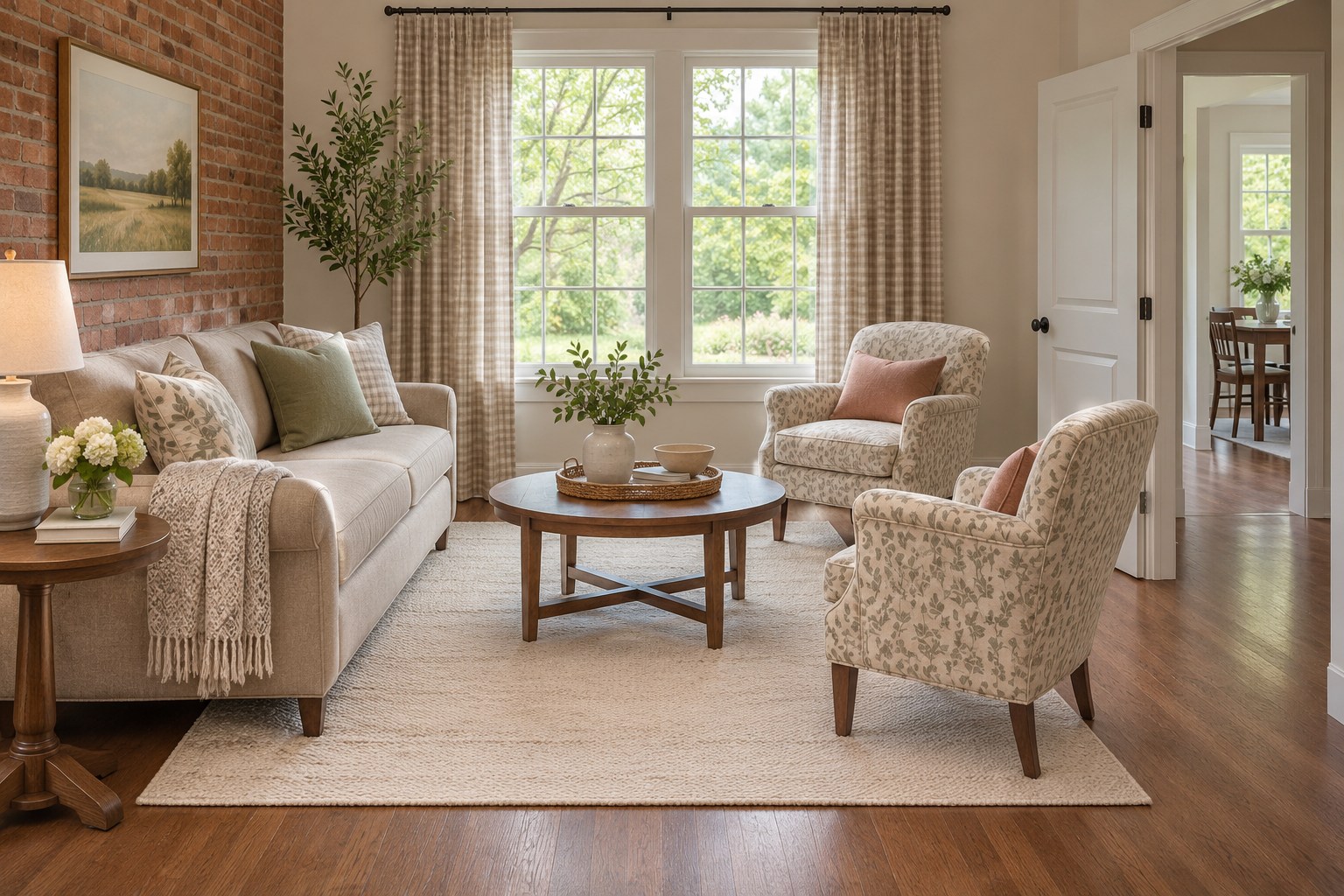
Arrange the seats for conversation and mark where their legs land before looking at rug sizes. A rug can link a sofa and chair when the edge sits under their front legs. Test the edges near any doors and check that the chairs you use most still move easily.
Try a small pattern that picks up one color from the seating or the floor. View the sample from the other room as well as up close. A pattern you only notice when you’re seated can add detail without taking over the doorway view. Choose any pad according to the rug and floor makers’ directions.
15. Change the Accent That Can Leave in One Trip
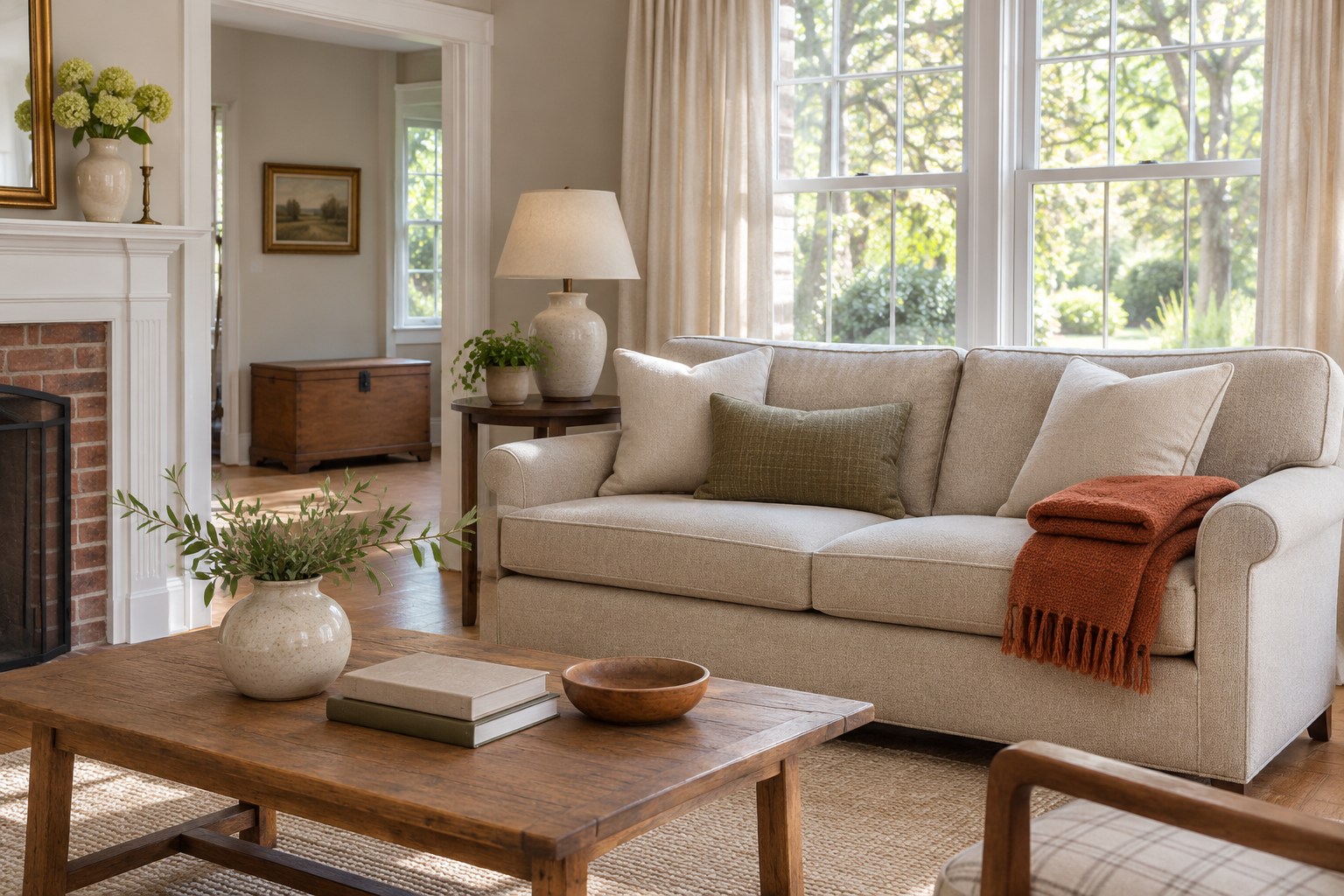
When you want a seasonal change, start with the piece you could carry out of the room in one trip. A cushion cover, low branch arrangement, or blanket can change the color you see at the doorway. Set it beside what is staying and keep the swap small enough that it does not require new furniture or paint.
Find a place to store the old piece before bringing in the new one. If the room works with the accent removed, you have room to try something different next year. Keep the large surfaces and useful furniture doing the same work.
Stand where you enter the room and look at the largest surfaces first. Choose one change that supports both what you see and how you use the space. Give it time to settle before bringing in another finish, shape, or color.
Discover more from HomeTrendora
Subscribe to get the latest posts sent to your email.