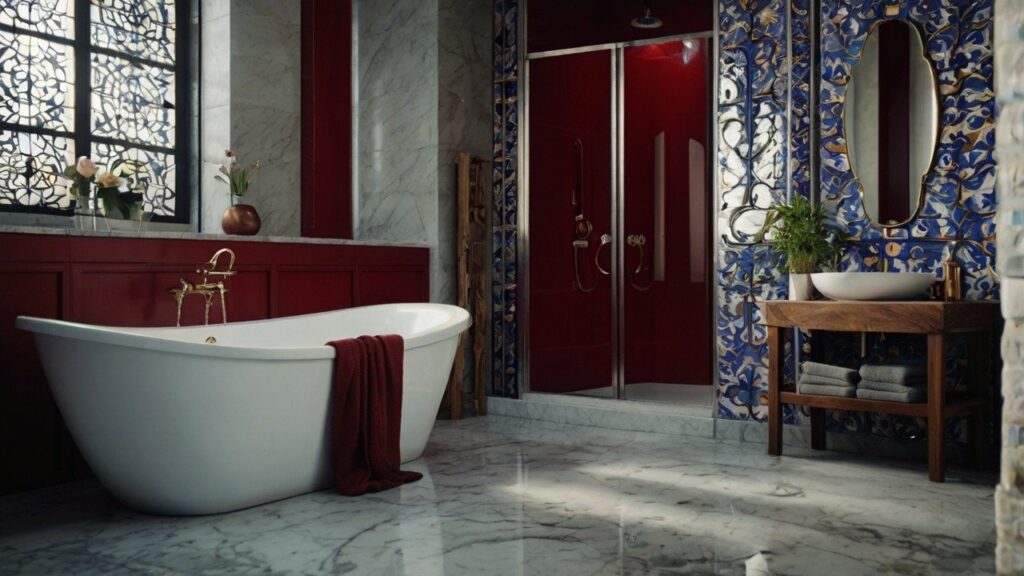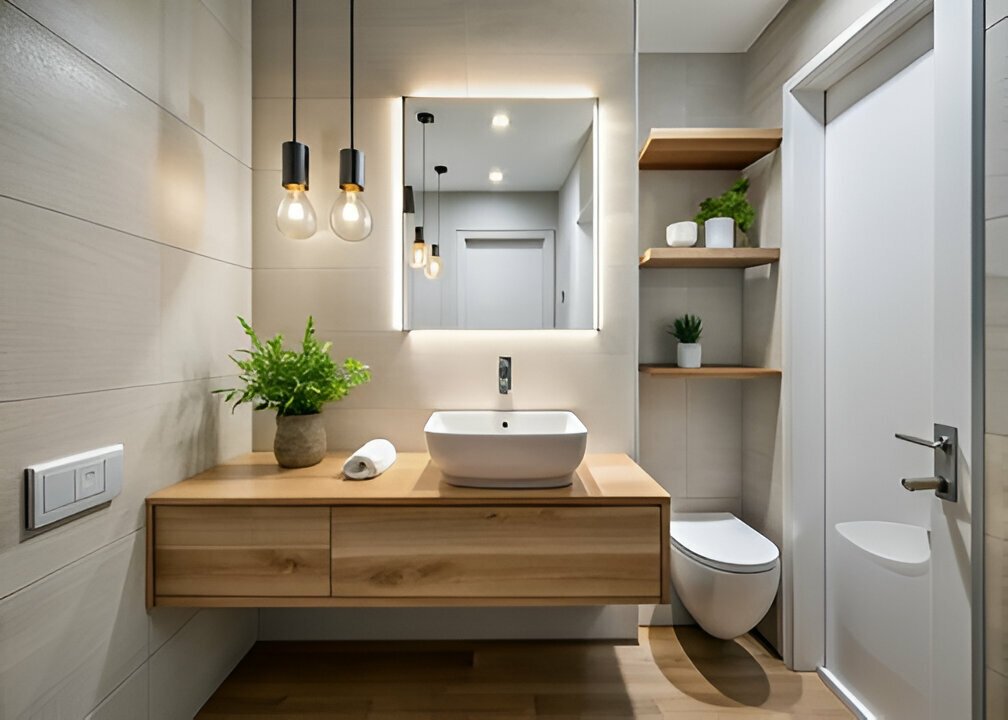
The bathroom window that catches the first bit of morning sun can also put the vanity in full view of the house next door. Before choosing a treatment, check the window from the sidewalk, a shared path, or another spot people actually use. Repeat the check with the bathroom light on after dark. You may only need to cover the lower sash, or you may find that an uphill neighbor can see through the top, too. These 13 bathroom window privacy ideas give you options for both situations, from a change you can take with you to glazing worth planning into a remodel.
1. Hang a Café Curtain Across the Lower Sash
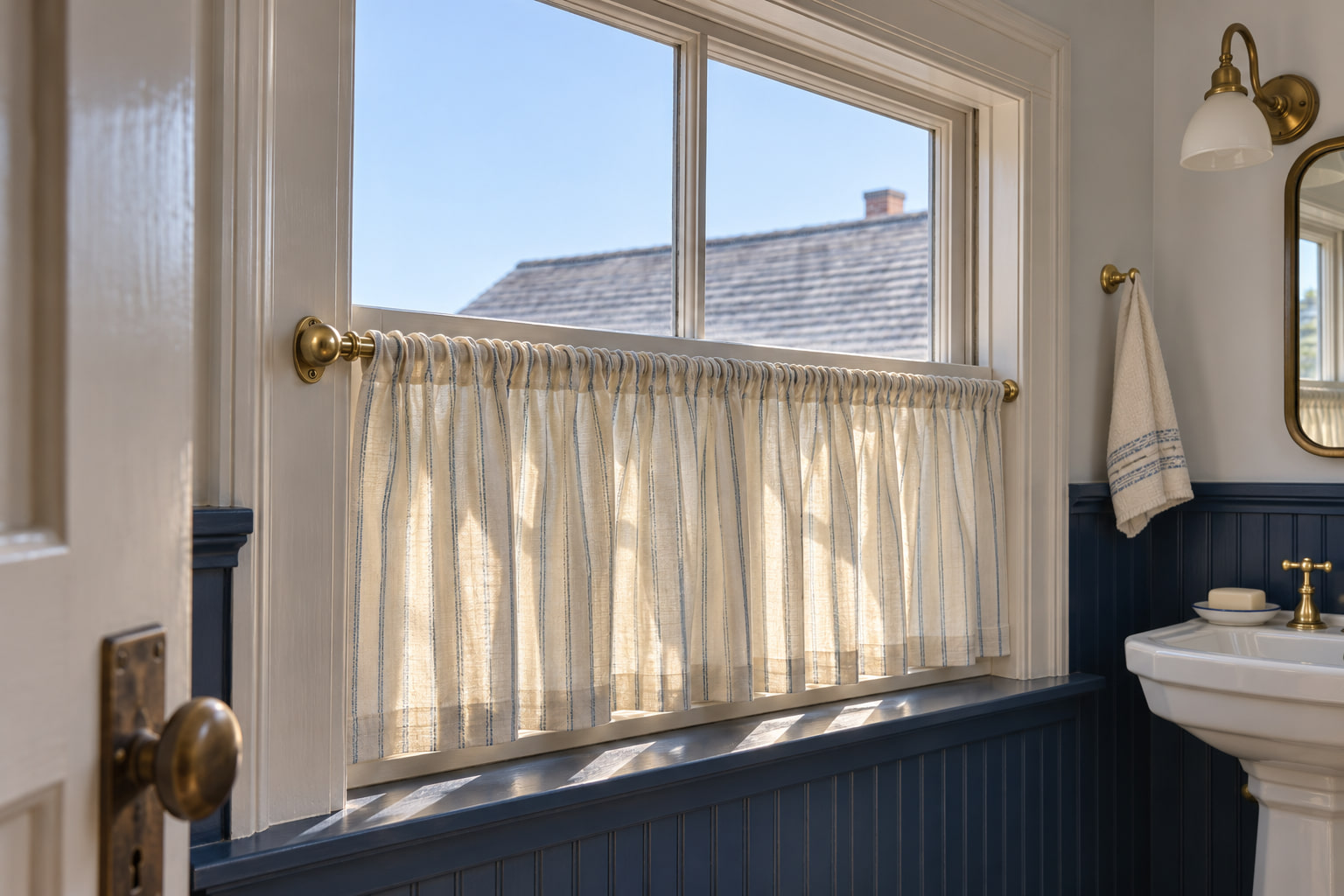
A gathered café curtain suits a dry bathroom where the view in comes from below. Position a small rod so the top of the curtain sits above the sightline you identified outdoors. On a divided window, the meeting rail gives the rod a natural place to land if that height provides enough coverage. Pick washable cloth with enough body to obscure a silhouette and enough fullness to cover the edges. A cream panel with a narrow gathered header looks especially at home beside glazed tile and aged brass. Keep the hem clear of the sill and out of the splash path.
f the inside of the frame measures 24 to 36 inches across at that height, an Amazon Basics bronze tension rod (sponsored) lets you hang a lightweight café curtain without drilling
2. Frost the Whole Pane with Removable Film
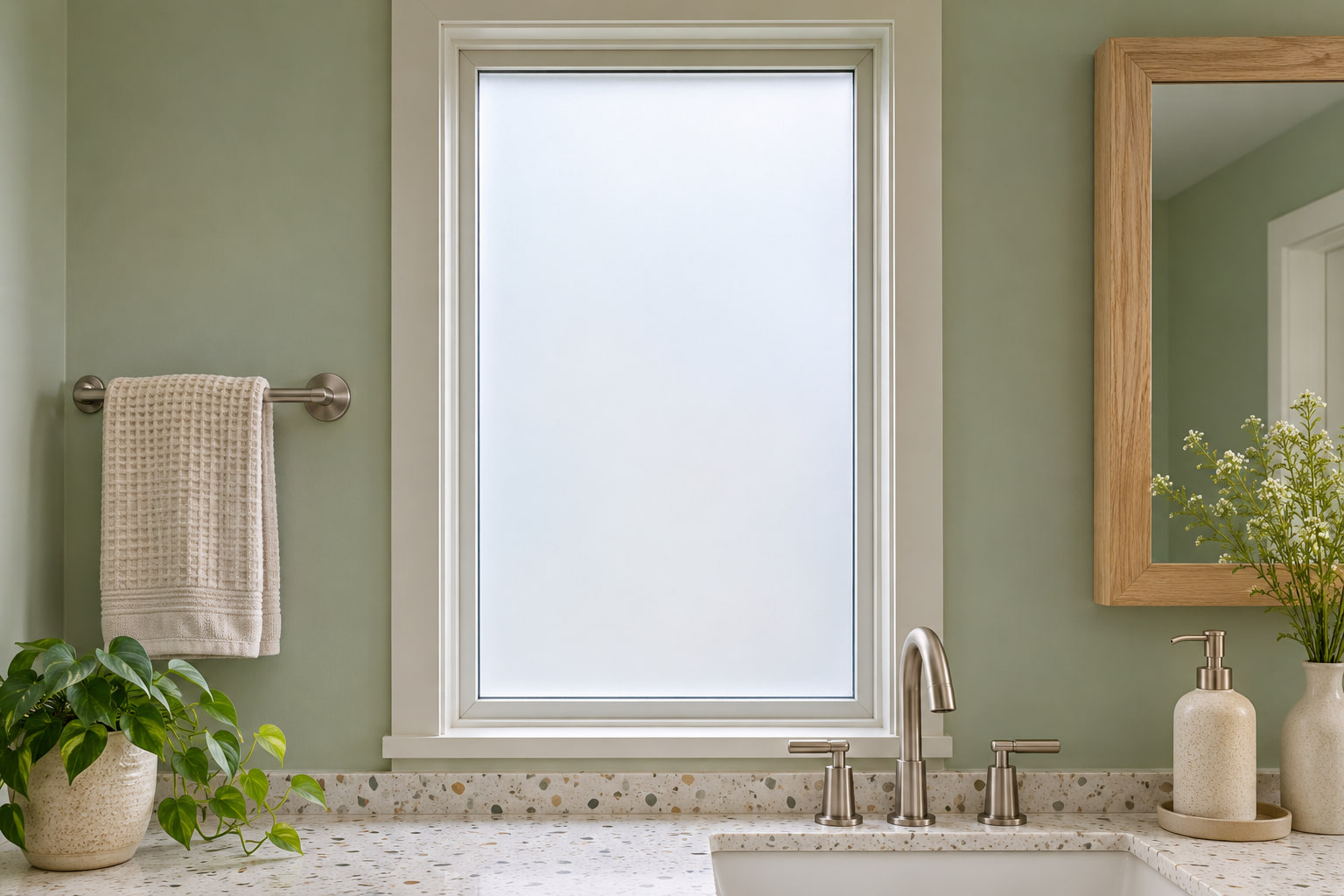
Static-cling frosted film turns a smooth clear pane into an even field of light. It works well when the whole window faces a neighboring wall and the view matters less than a bright room. Measure the glass within the frame, check that the film is suitable for your glazing, and apply it according to the manufacturer’s instructions. With divided lights, cut and fit each pane separately for a clean edge. Check the result after dark with the room lights on, especially if the window sits close to the shower or vanity.
For a similar look on a compatible smooth pane, the rabbitgoo frosted window film on Amazon uses removable static cling and comes in a Pure finish that lets daylight through.
3. Open a Top-Down Shade Toward the Sky
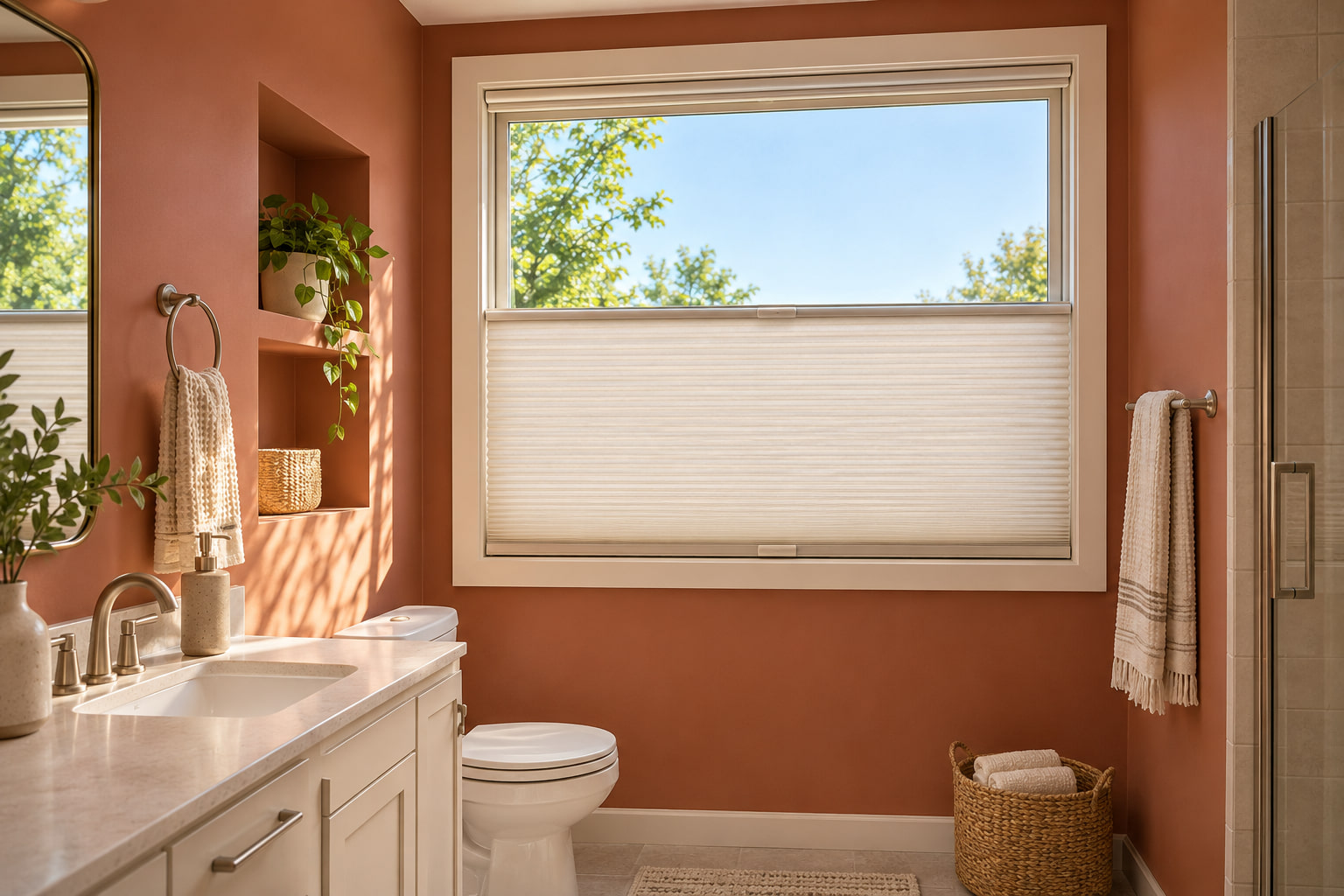
A cordless top-down shade gives you an adjustable opening where a fixed café curtain would leave the wrong part of the window exposed. Lower the top rail just enough to show sky while the shade still covers the view from the sidewalk. This is particularly useful when the same bathroom feels secluded in the morning and exposed once the house lights come on. Ask for an opacity swatch and hold it in front of the actual window. A shade that looks dense on a showroom table can look much lighter when backlit.
4. Angle Faux-Wood Blinds Toward the Ceiling
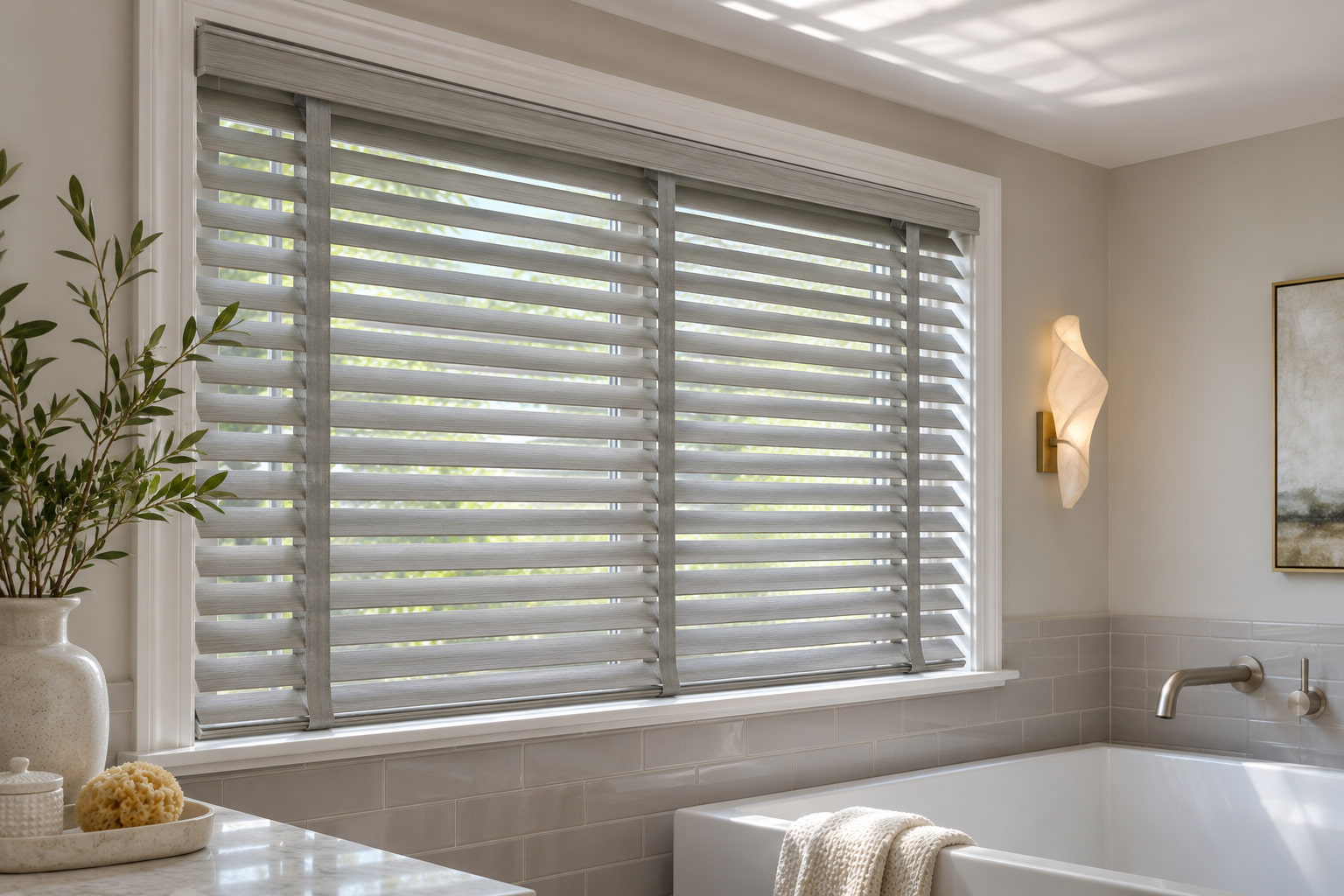
In a bathroom that sees regular steam, choose faux-wood blinds that the manufacturer rates for the location. Their slats can change the direction of incoming light while the blind stays lowered. Start by tilting the slats toward the ceiling, then test that angle from outside, since the grade of the ground and the height of the window determine what someone can see. A soft gray slat picks up the shadows in gray grout or veined stone. Choose a cordless control and leave enough room around the window handle to reach it easily.
5. Split the View with Tier-on-Tier Shutters
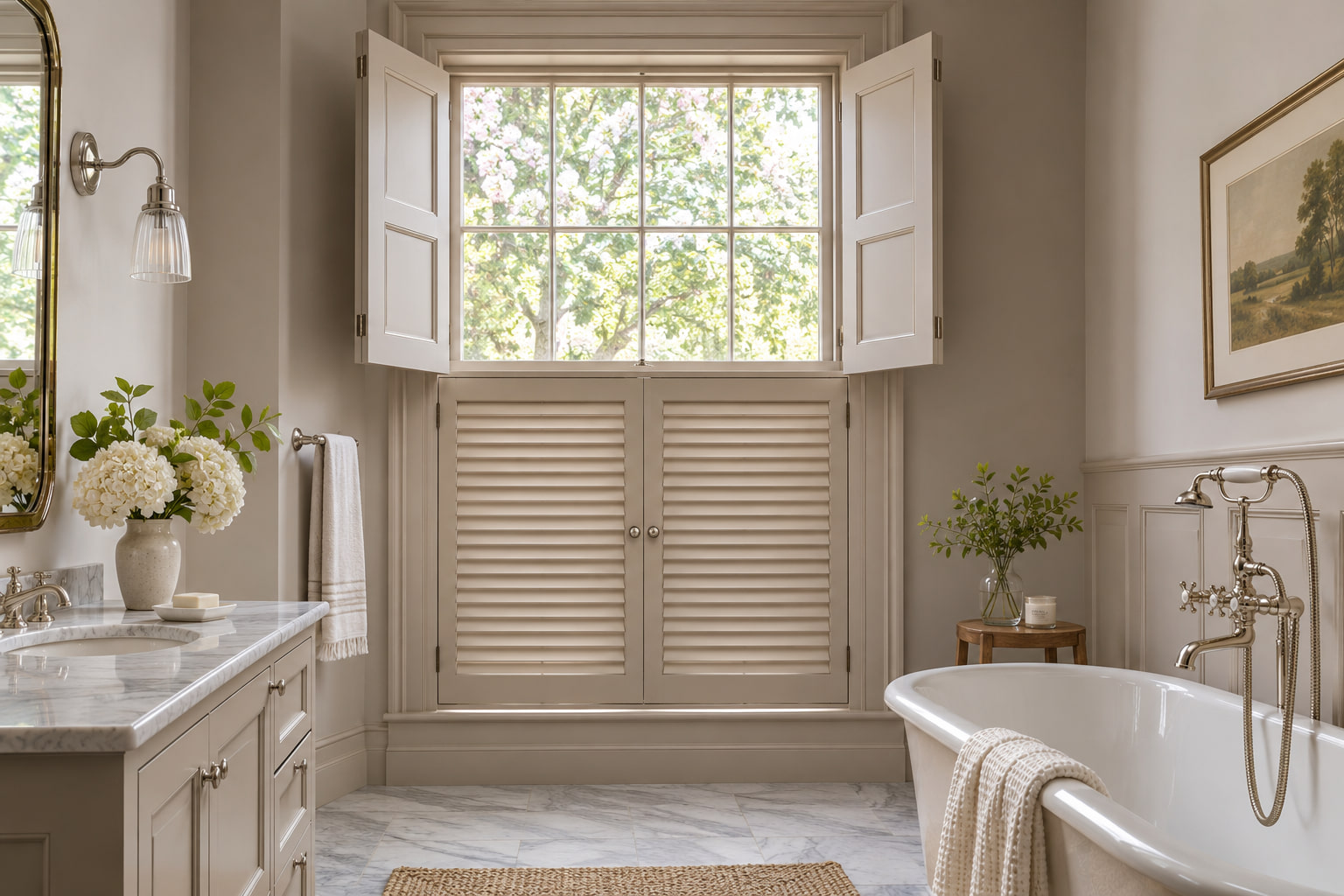
On a tall bathroom sash, fit independently opening shutter panels so the lower pair can stay shut while the upper pair swings back. The separate tiers let the tall window keep its proportions, especially when the horizontal join follows an existing meeting rail. Match the shutter finish to the trim for the look of fitted millwork, or use a warm mushroom tone next to pale marble and polished nickel. Check the full swing against the wall, faucet, towel hook, and any nearby mirror. For a humid location, choose a material the shutter maker approves for it.
6. Line a Woven Roman Shade in a Dry Alcove
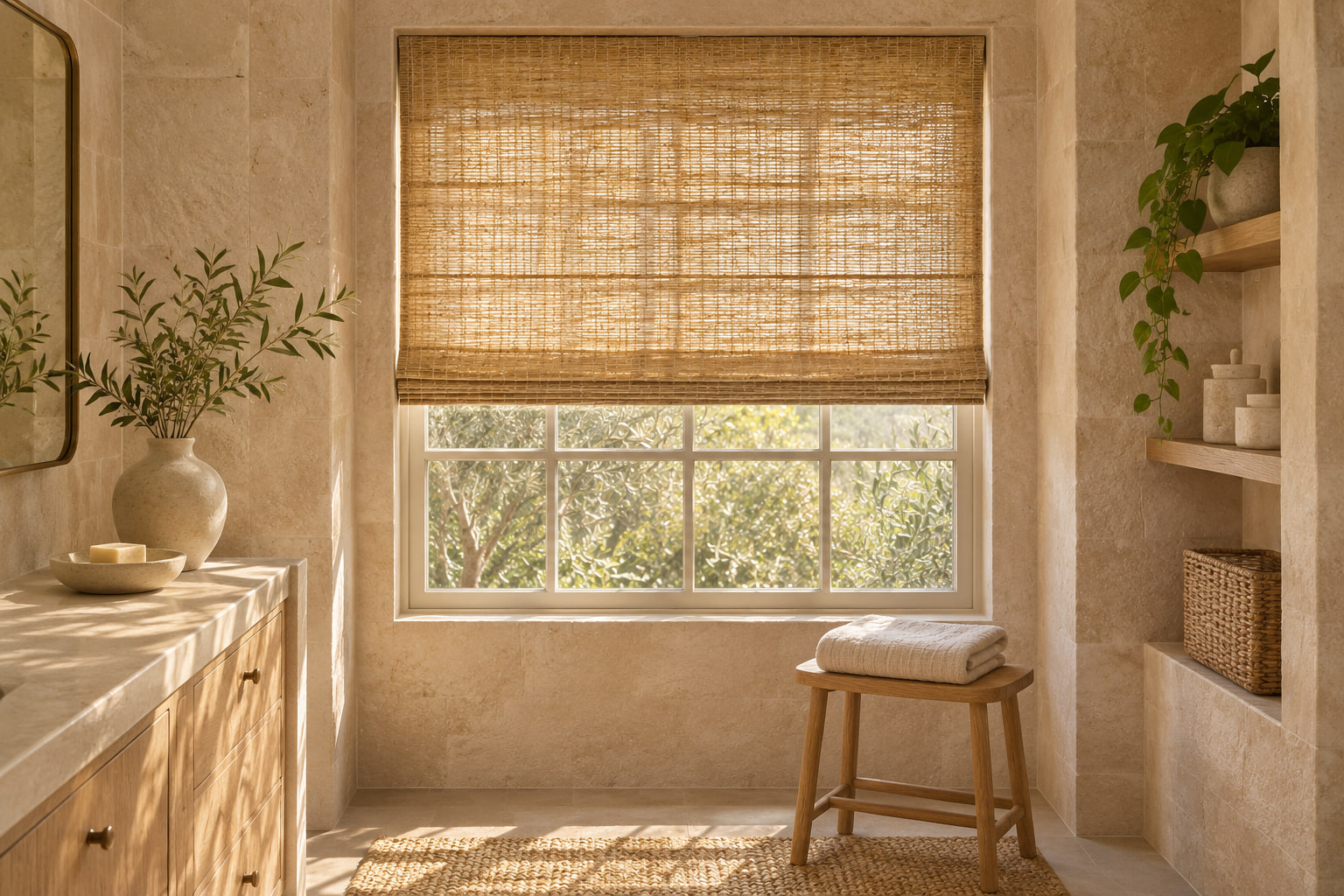
A woven reed or grass Roman shade can make a dry vanity alcove feel softer, especially next to a honed stone counter and oak cabinetry. The open weave supplies texture, so choose its liner for the degree of privacy you need. Request a sample of the weave and liner together and look at it with daylight behind it. A flat-fold shade has a tidy profile when raised. Keep woven shades in a well-ventilated area away from direct spray, and check the manufacturer’s care instructions before ordering.
7. Choose a Roller Shade for a Deep Window Reveal
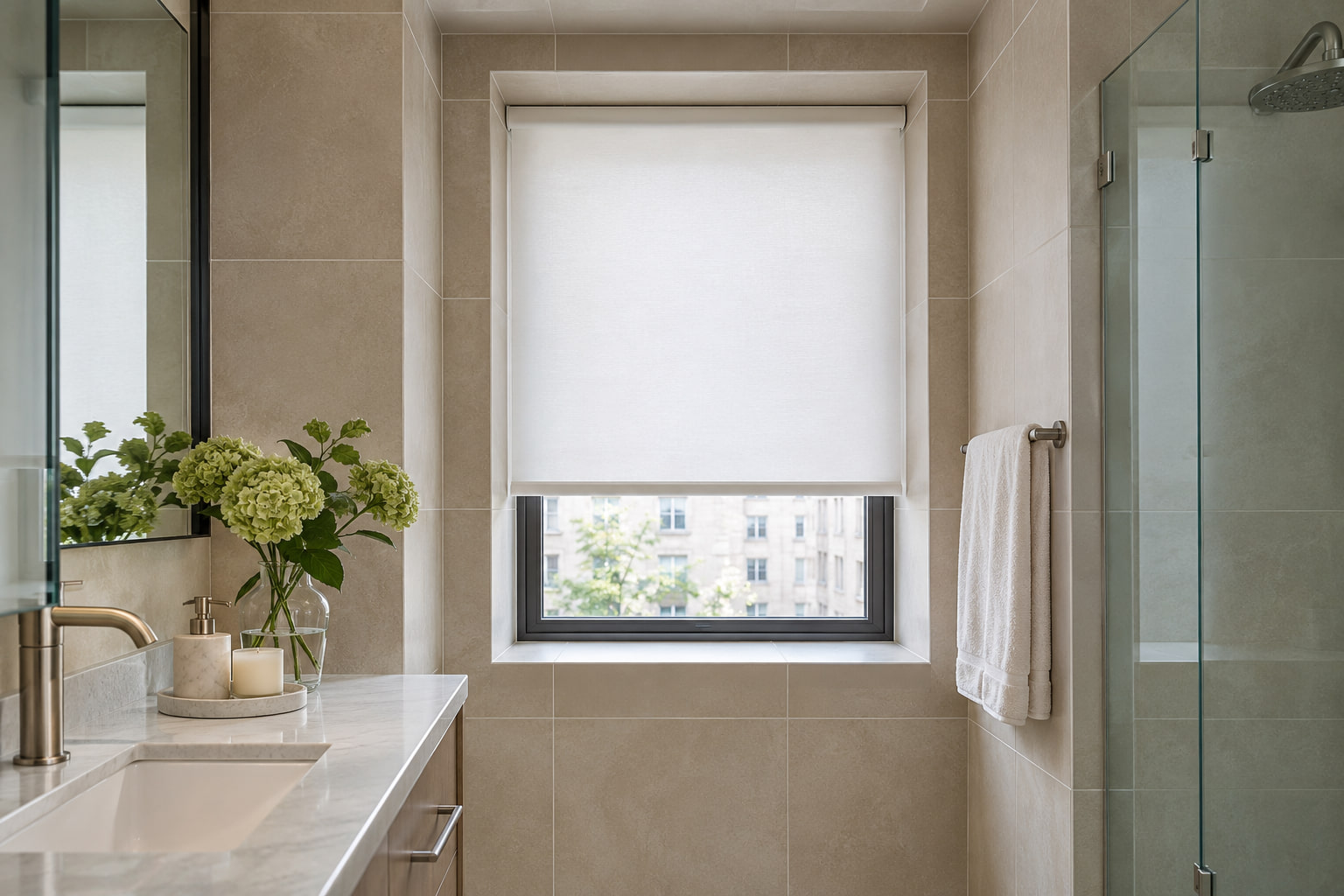
In a narrow bathroom, a roller that fits within the reveal keeps fabric and hardware out of the space in front of the vanity. Measure the usable depth from the trim to the first obstruction and allow room for the roll, mounting brackets, and any sash handle. For a window next to a regularly used sink, choose a moisture-rated material with care instructions you can follow. A pale light-filtering fabric can keep the room bright, while the depth of the reveal makes the hardware read as part of the window.
8. Put Reeded Glass in the Lower Sash
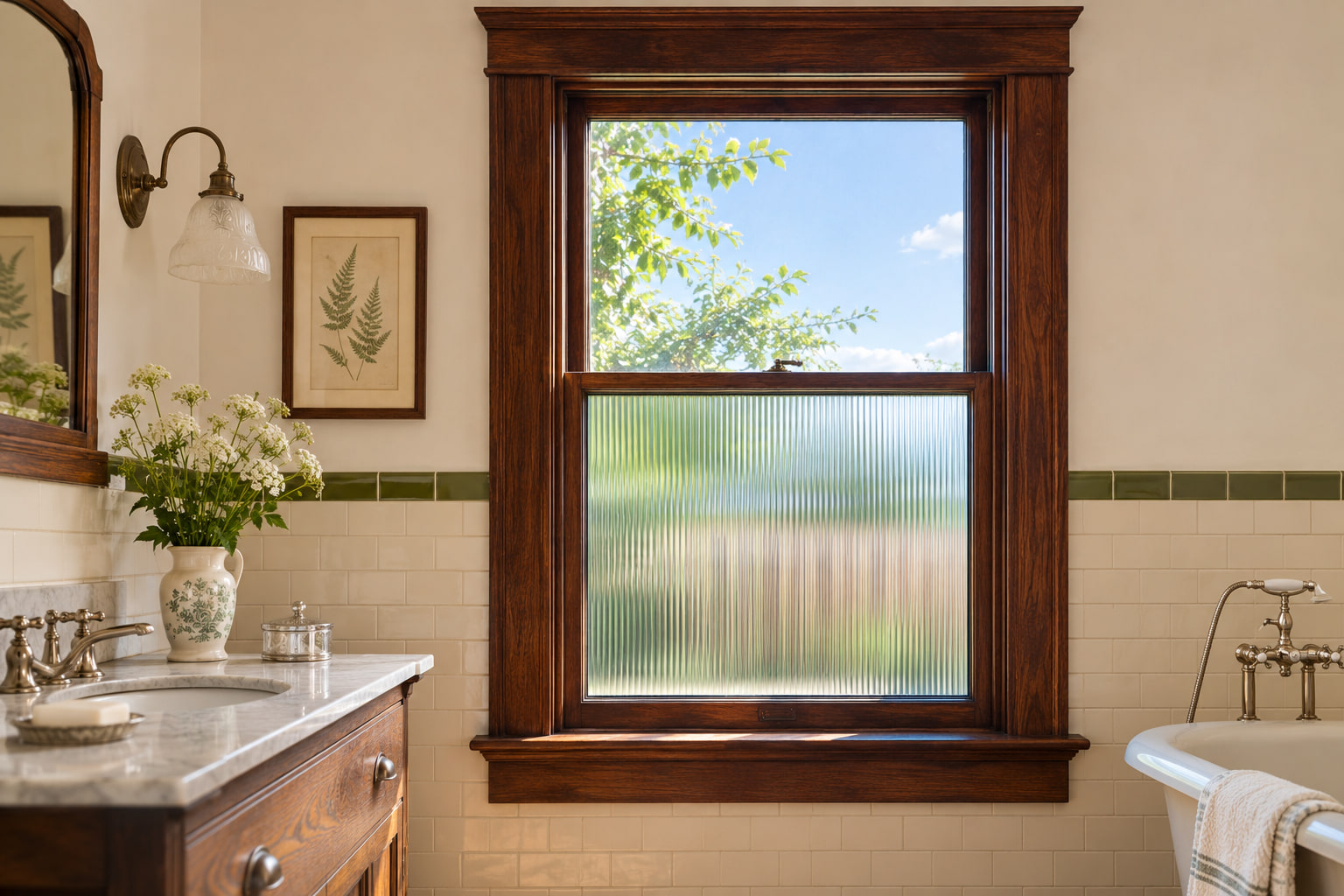
When a window already needs new glazing, ask whether the lower sash can be reglazed with reeded or obscure glass while the upper sash stays clear. Vertical reeds add a gentle linear pattern and preserve an open view of the sky above. Compare the pattern against an actual sample with an object held close behind it. Some textures blur a distant fence while still showing a person close to the pane. A glazier can explain suitable privacy grades and confirm what the existing sash and installation location can accept.
9. Fit a Fixed Panel Between Two Sash Rods
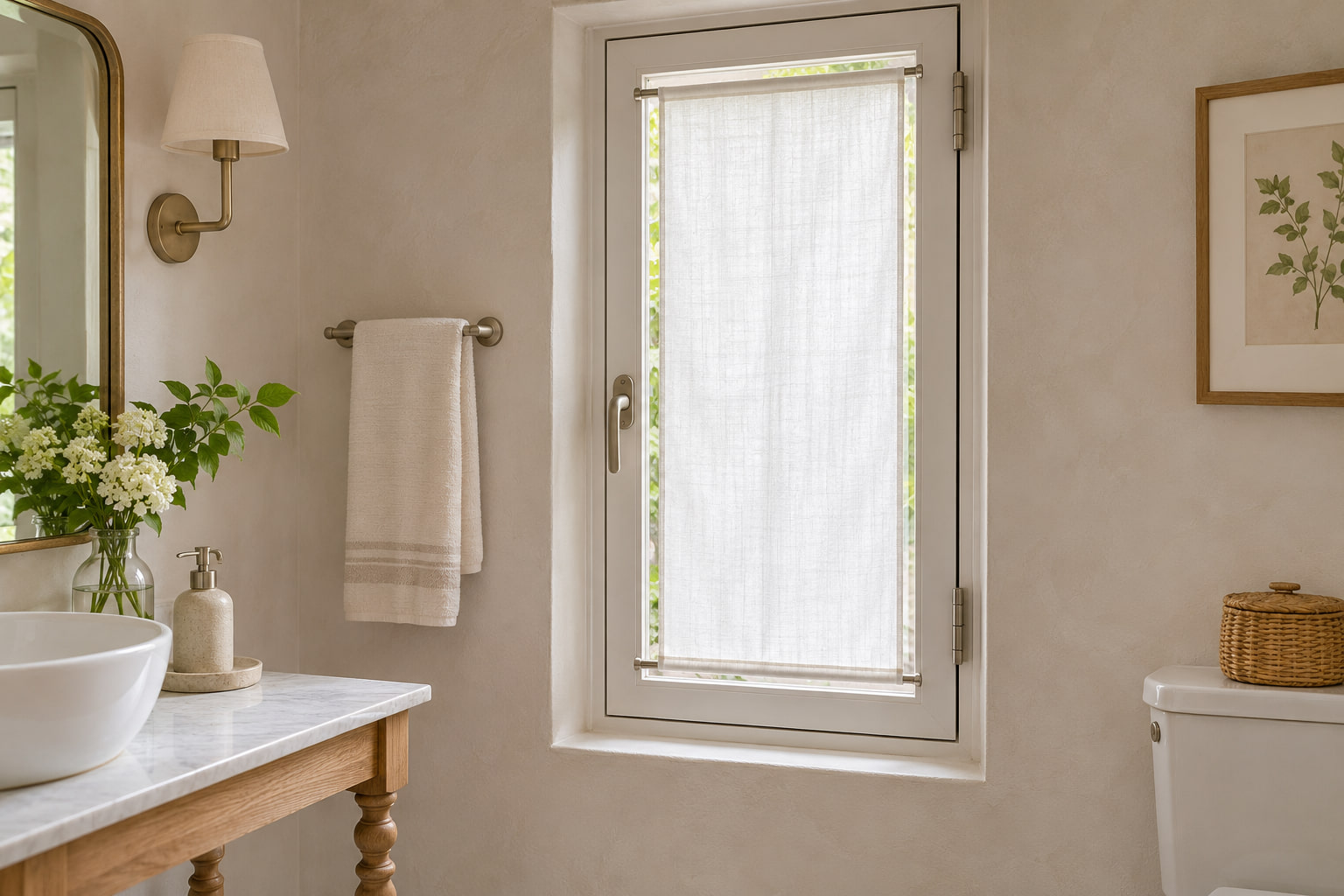
For a dry powder-room casement that swings inward, mount a tailored panel to the moving sash itself using compatible hardware. A second rod along the bottom holds the fabric in place when the window opens. Leave room around the handle, and confirm that the panel and rods clear the jamb and let the sash close fully. Use lined fabric if the window faces a close neighbor. A flat linen-look panel gives the room softness and a quiet shape, a good pairing with turned vanity legs or simple plaster walls.
10. Turn a Decorative Film Into a Color Accent
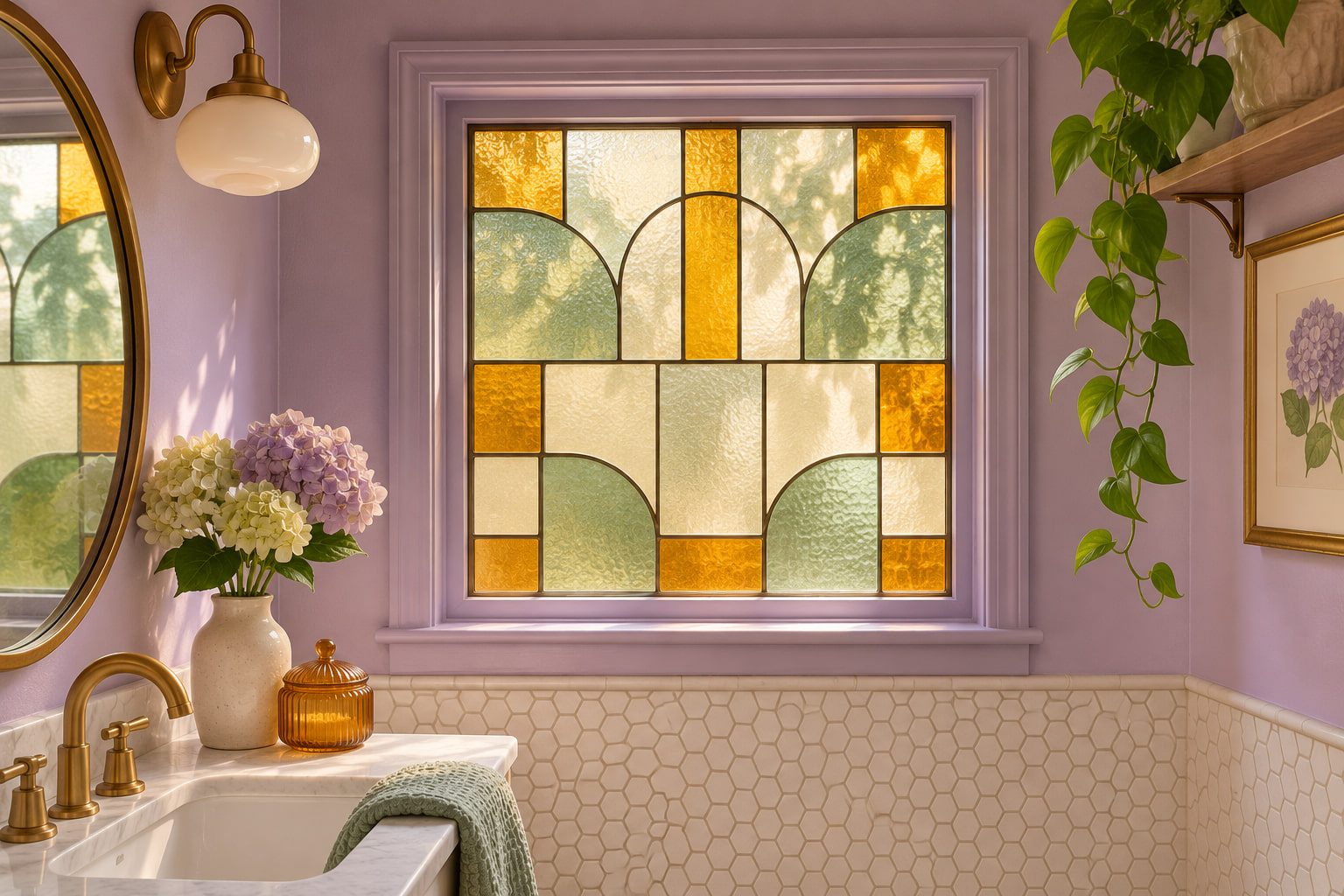
A small powder-room window can carry a color that would feel too bold on a whole wall. Try a frosted pattern with a limited palette, such as amber and sage, and repeat just one hue in the trim or a nearby wall sample. Hold the pattern against the window first to see how the transmitted color changes throughout the day. If the design has clear gaps or offers only partial screening, use it where sightlines are already protected or pair it with a separate shade for evenings. Keep adjacent finishes quiet so the pattern can carry the room.
11. Set an Offset Screen Outside the Window
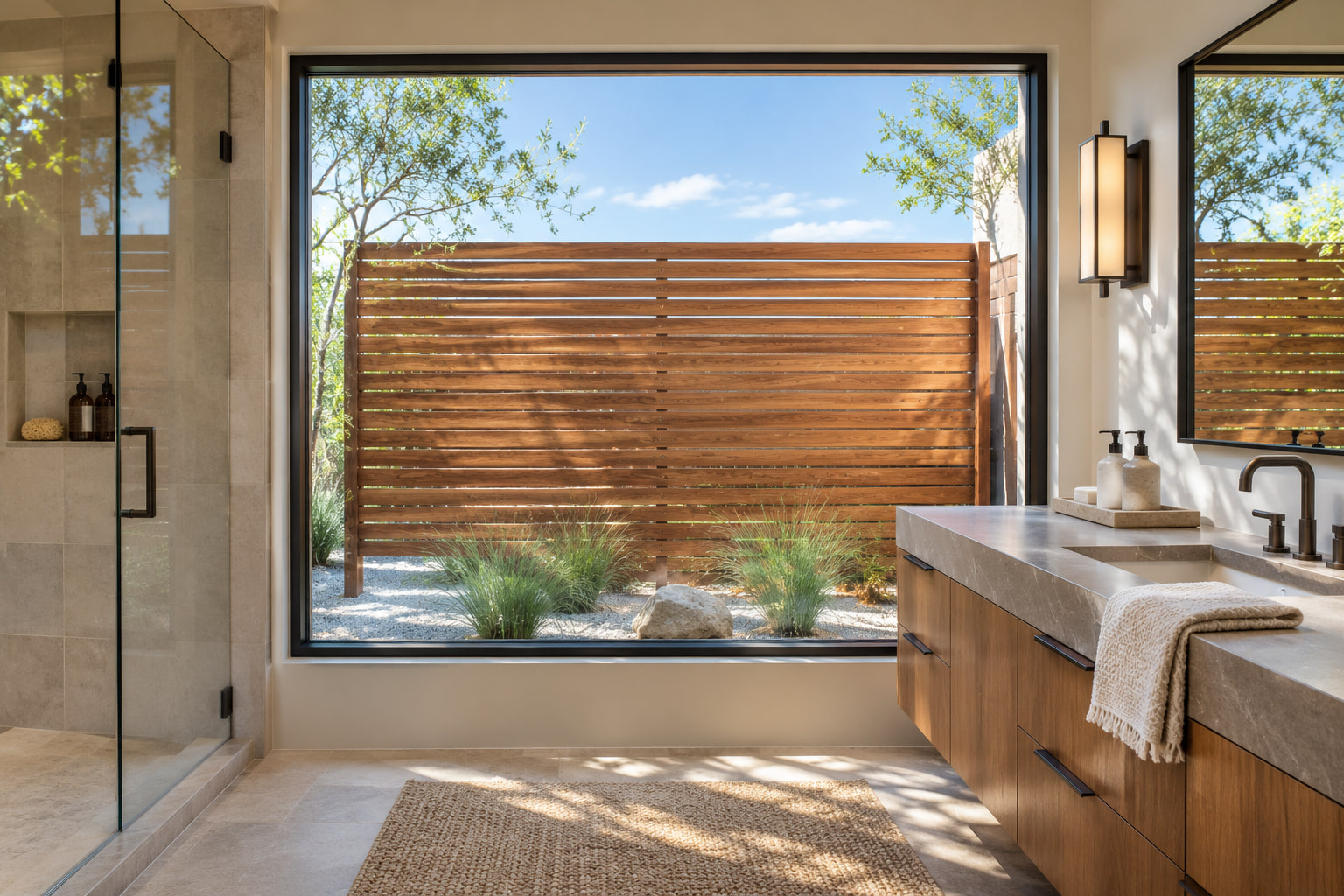
If the window looks directly onto a narrow side yard, a freestanding screen can intercept the view outside and leave the glass clear. Mock up its position with a temporary board or sheet and check the view from both sides. Set it far enough from the house to retain a strip of sky and access for window cleaning. Angle or offset the screen if people approach from the side, then check the result again after dark. A permanent screen belongs clear of any required opening, and its placement should follow applicable property and installation rules.
12. Borrow Daylight Through a Glass Block Panel
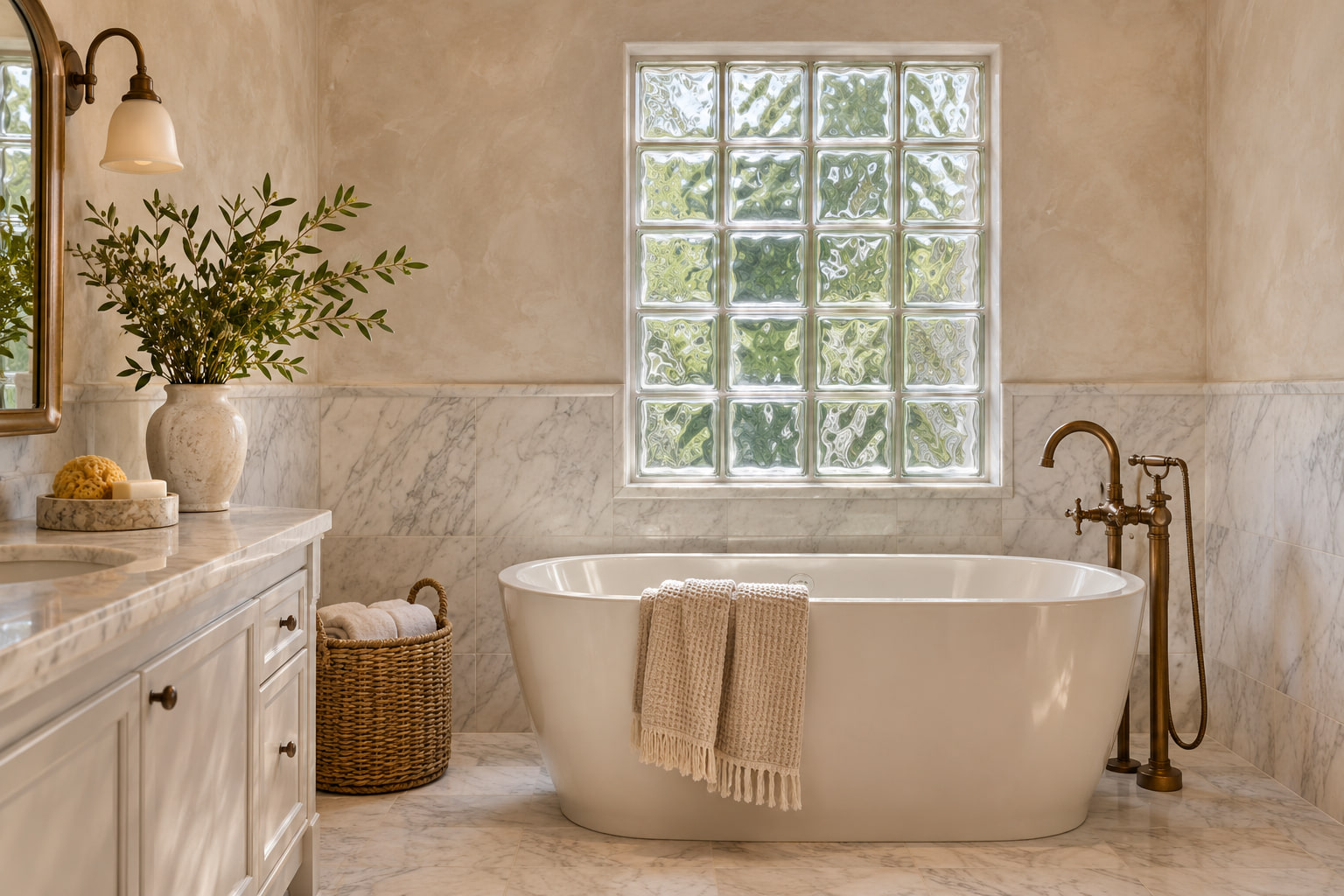
A panel of wavy glass block can bring diffuse daylight into a bathroom where a clear view outside would be intrusive. In a remodel, compare block patterns for how much detail they reveal, and decide whether a small panel near the tub will give enough light for the room. A fixed glass-block assembly serves a different purpose from an opening window. If the current window is needed for ventilation or another required opening, have your contractor plan for that function before removing it.
13. Move the Opening Above the Main Sightline
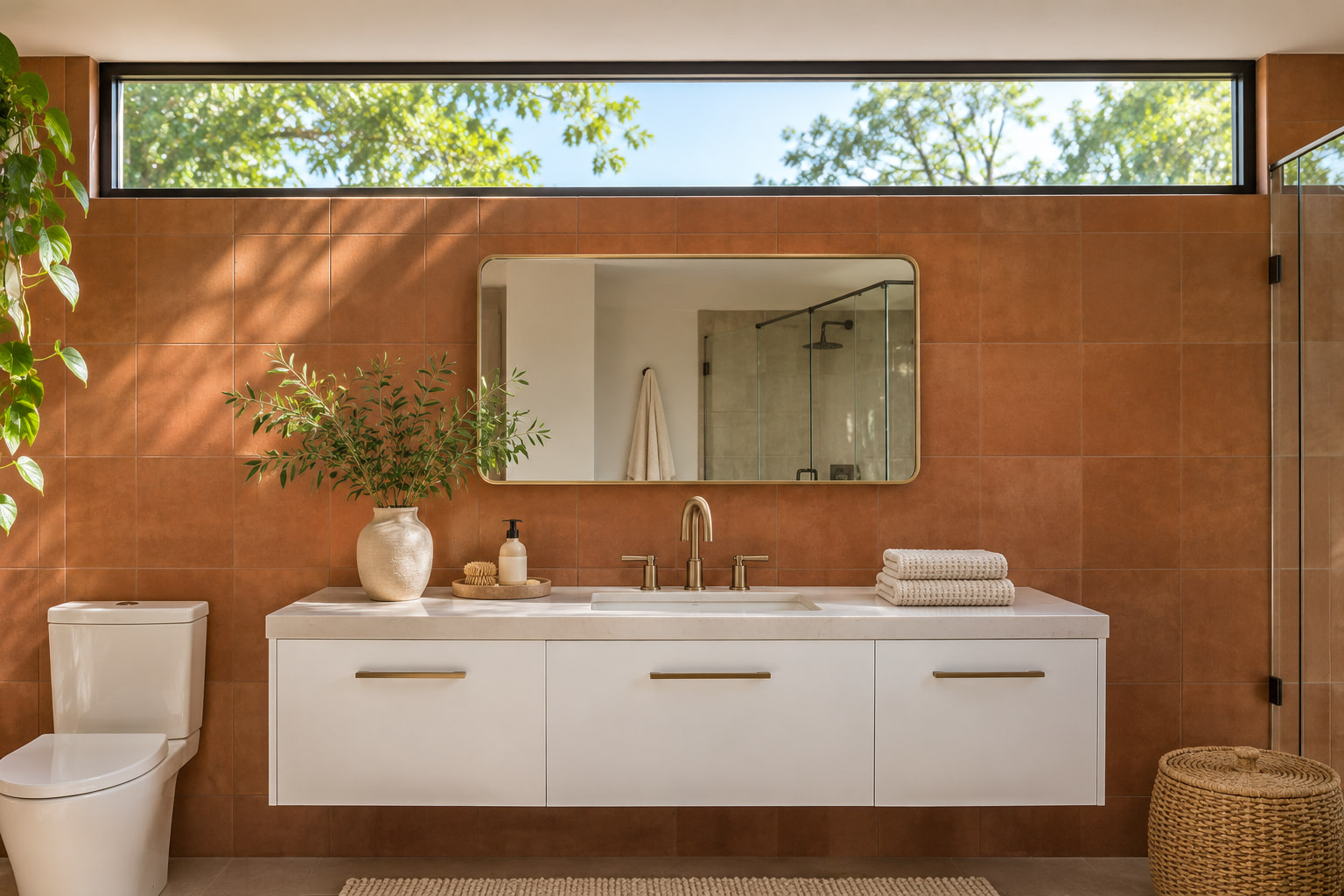
A high horizontal window takes advantage of a view that is useful to the room, such as sky and treetops. Consider it when exterior wall work is already part of a remodel. Placing the opening above the main sightline also leaves a clear stretch of wall for a mirror, backsplash, or tile. Stand in the room with the proposed height marked and check it against nearby steps, balconies, or upper-story windows. If you want it to open, discuss a practical way to operate it before setting the height.
Match the treatment to the view you actually need to screen. A lower panel can be enough for a sidewalk-facing window, while full-pane frosting or a lined shade can suit a closer neighbor. Before buying fabric or ordering glass, make one last check after sunset. A few minutes at the window can save you from choosing a treatment that gives away more than you intended.
Our small bathroom decor ideas cover mirrors and lighting if you want to carry that brighter feel through the rest of the room.
Discover more from HomeTrendora
Subscribe to get the latest posts sent to your email.