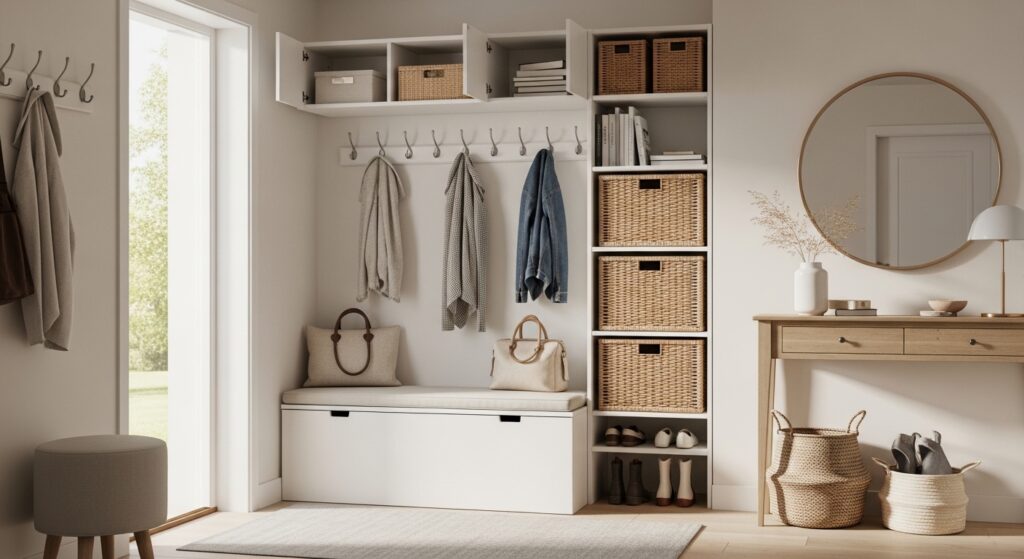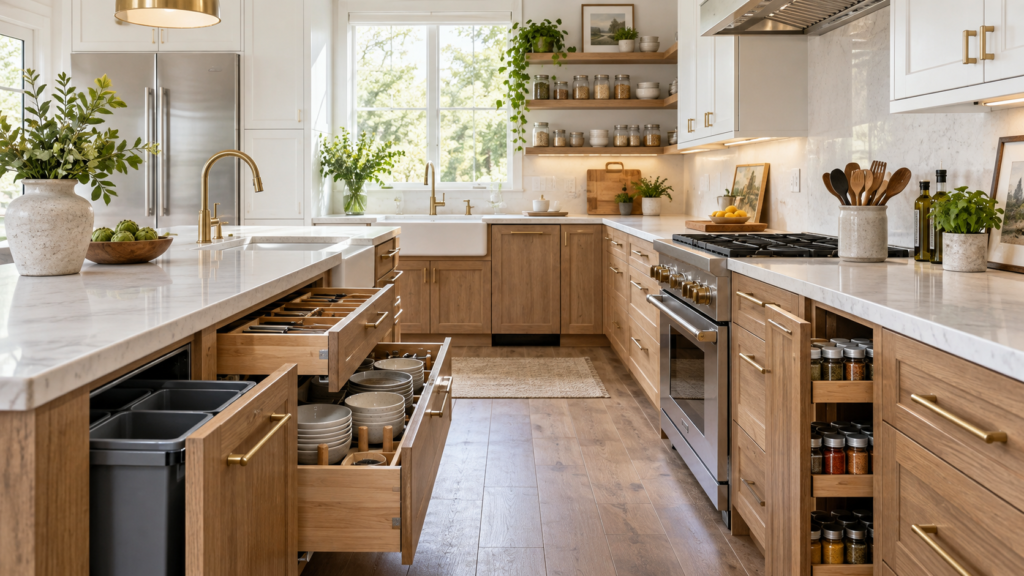
When keys, bags, and shoes pile up together, even a tidy entryway can come undone as soon as two people get home. These 13 smart entryway storage ideas help you decide which things need a spot by the door and where to put them so mornings take fewer steps.
Look at the entrance you actually use, even if it is a side door. Start with what the household carries in and out each day. A shallow drawer, a smaller shoe tray, or a single empty cubby may solve the problem you see before you need another piece of furniture.
1. Sort What Lands by the Door Into Daily and Occasional Uses
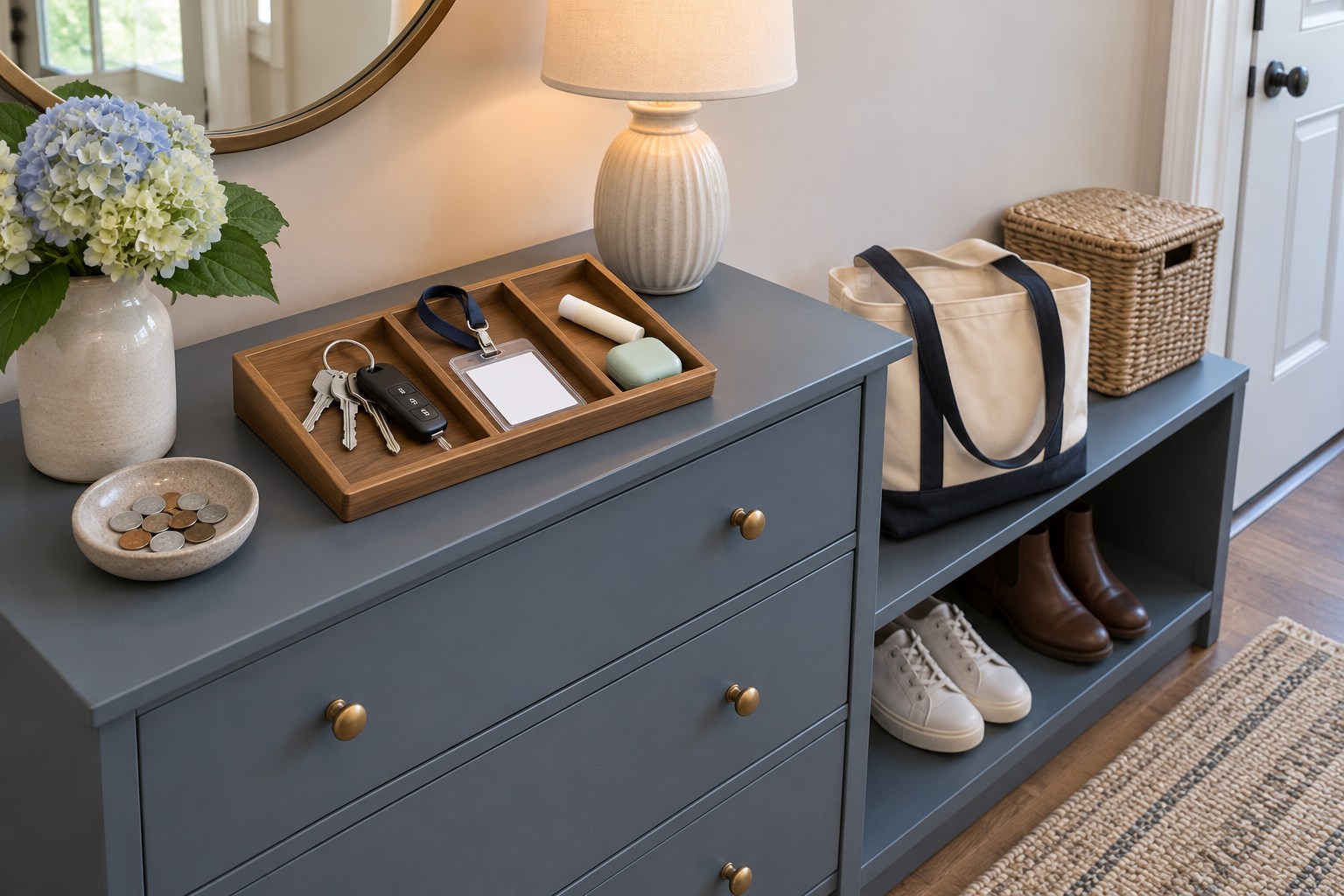
For a day or two, notice which things land near the door and when they come back out. Put daily keys, footwear, and any pass or badge you carry together on an open surface while you plan the setup. Move spare totes and equipment for another season to a second pile. The size of the daily pile tells you how much space actually needs to stay near the door.
Keep the items you carry together in the same part of the entry. A work badge can sit where you pick up your bag, and a reusable shopping tote can wait with your market shoes. Store the occasional pile where you can still find it by type, such as travel, sports, or weather.
HOMETRENDORA PLANNING BUNDLE
Check the fit before you buy.
A promising idea still needs to fit your room. Use the book’s measured examples, fillable room planner and budget tracker to compare options, check walking space and work out the full cost before ordering.
160-page PDF + fillable room planner + Excel budget tracker
Bonuses included with your eBook purchase.
GRAB 10% DISCOUNT
Coupon code: HOMETRENDORA10
Use this code at Payhip checkout.
2. Measure for a Shallow Flip-Drawer Shoe Cabinet
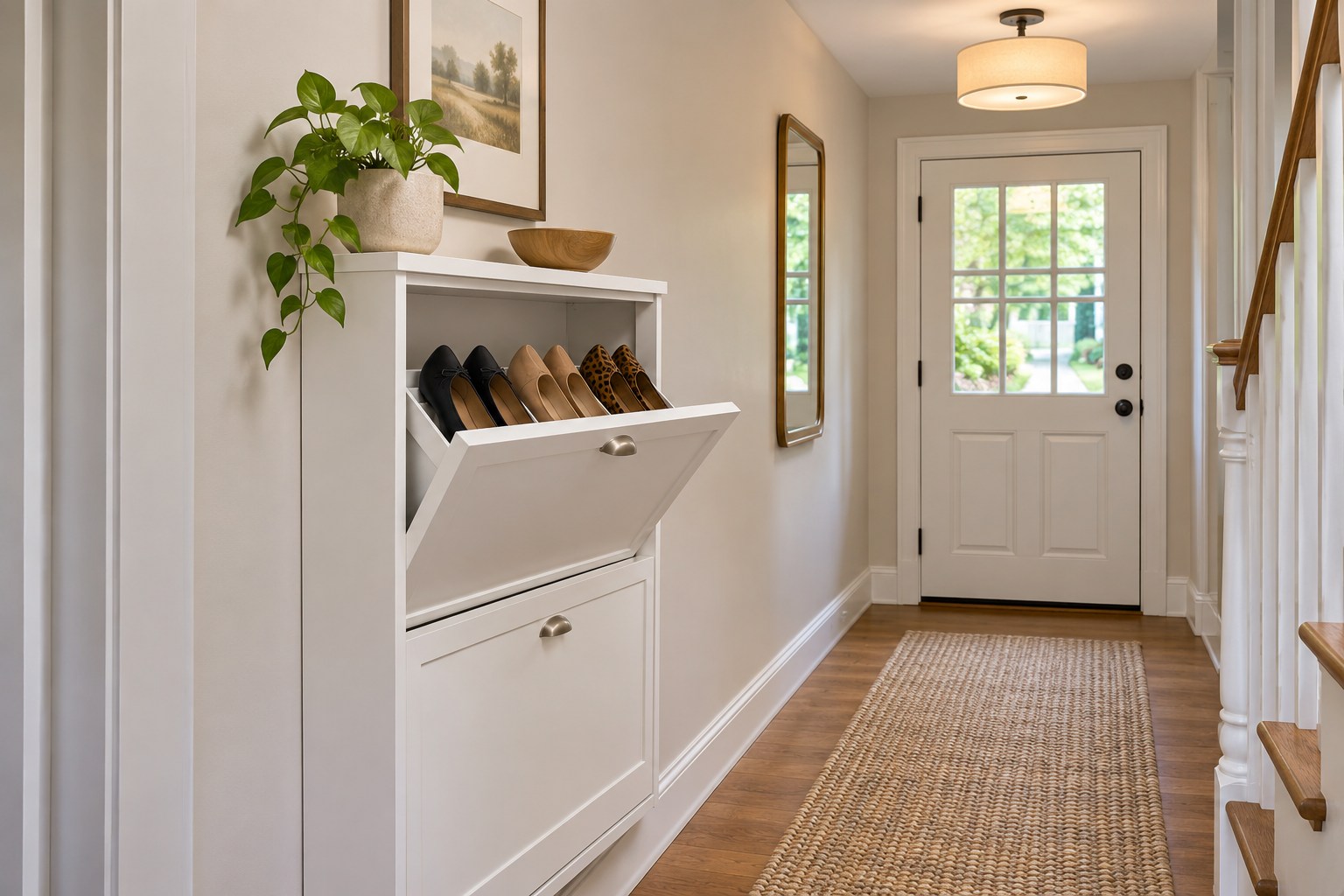
Before buying a flip-drawer cabinet, mark its closed depth on the floor and measure again with the compartment open. Stand where you would remove a pair. If you are forced into the door swing or someone cannot pass, test the cabinet on another wall. Check the interior depth using your longest pair and bring the thickness of any baseboard into your measurements.
Divide the drawers by when shoes get used. Everyday flats can go on top, with a pair you need less often below. Leave tall or damp footwear elsewhere if it will not fit or should dry first. Use the supplied anti-tip system and follow the maker’s instructions for the wall.
Measure the white HOMCOM slim shoe cabinet against the wall and the space the front drawers need to tilt out. Install the supplied wall restraint according to the maker’s directions.
Explore white HOMCOM slim shoe cabinet (paid link)
3. Separate Outdoor Shoes at the Point You Change Them
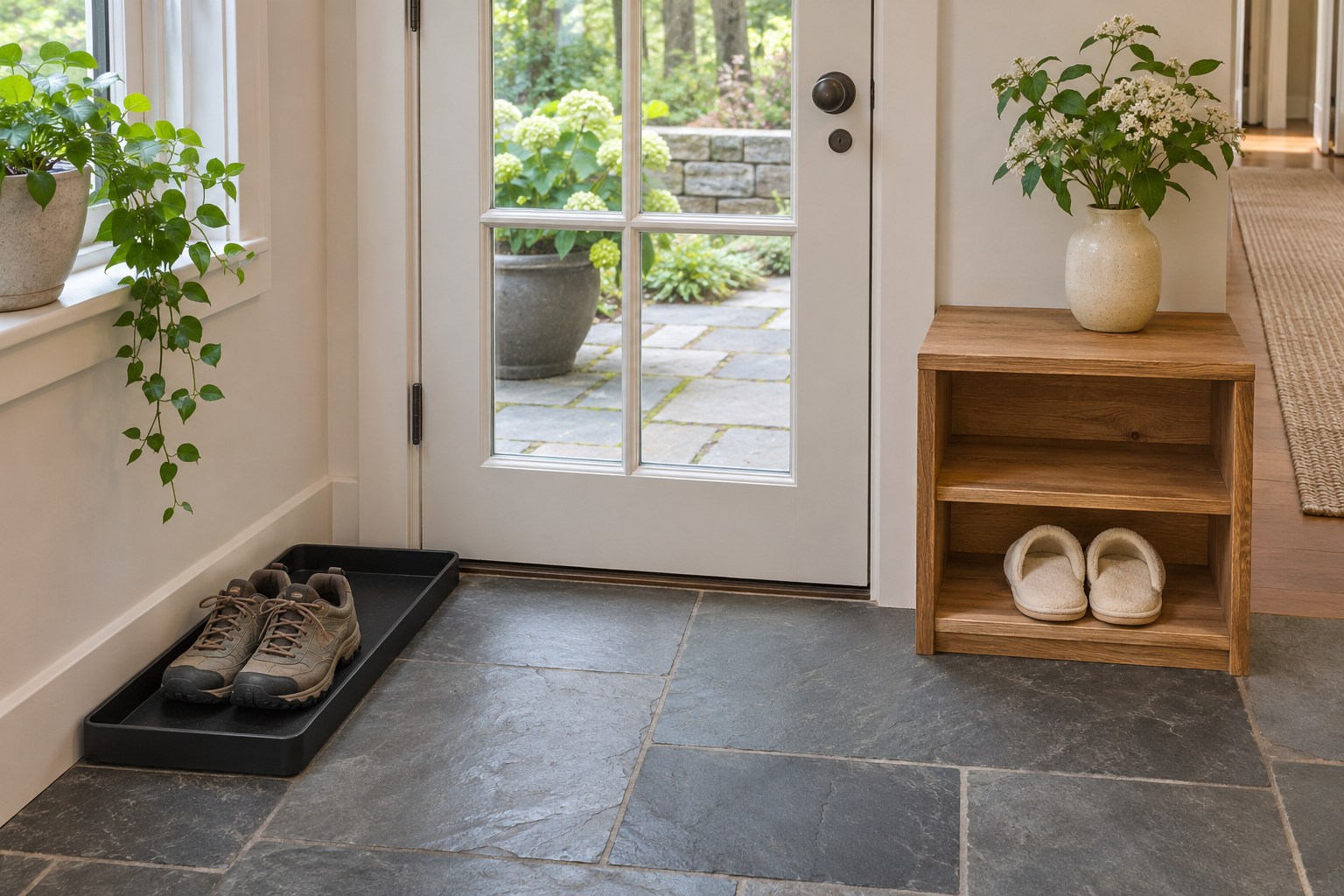
Find where you actually stop to take your shoes off. If you usually step over the rug before changing, bring a low, flat tray closer to that spot. Try it off to one side where you can stand comfortably and take off both shoes without stepping back into the door swing. A tray that holds one row is often easier to use than a deep pile of pairs.
Keep a nearby space for clean indoor shoes if the household changes pairs on the way in. Leave enough separation that dirty soles do not drip onto the clean pairs. Empty and dry the tray when needed. If shoes still collect on the rug, move the tray a little before adding more storage.
4. Give Your Commute a Single Grab-and-Go Spot
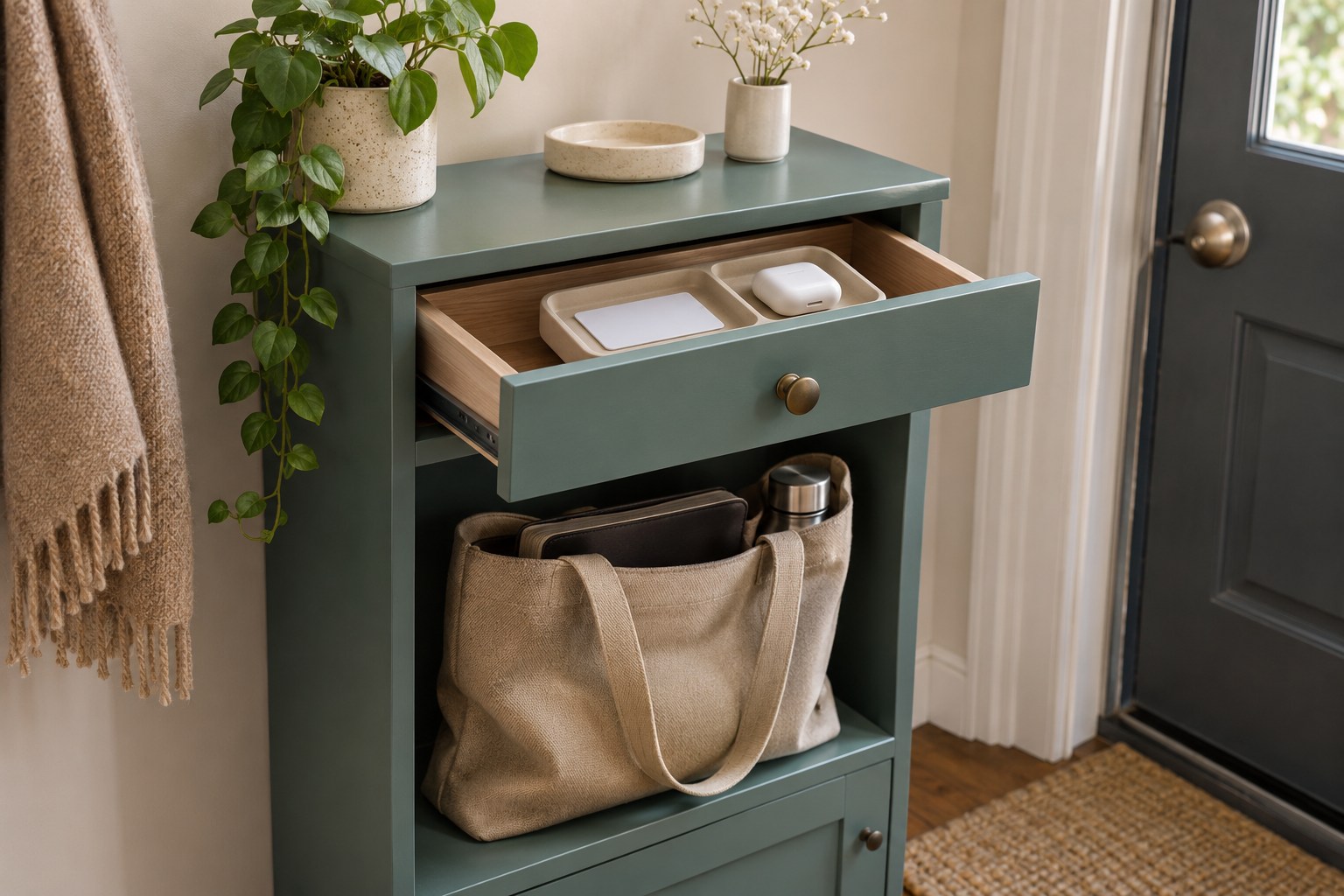
Put the things you need for work or transit where you already pause before leaving. A narrow top drawer can hold a pass and earbuds, while a shallow compartment under it takes the bag. Give the drawer an open section large enough for the items you use together. If you use a tote that changes from day to day, keep the badge in a tray that always stays in the entry.
Try the setup on a busy morning. You should be able to pick up everything in the order you use it. Keep any pouch for occasional cables or other extras farther back. These entryway furniture ideas can help if you need a piece with a smaller footprint.
5. Organize Shared Keys by What They Open
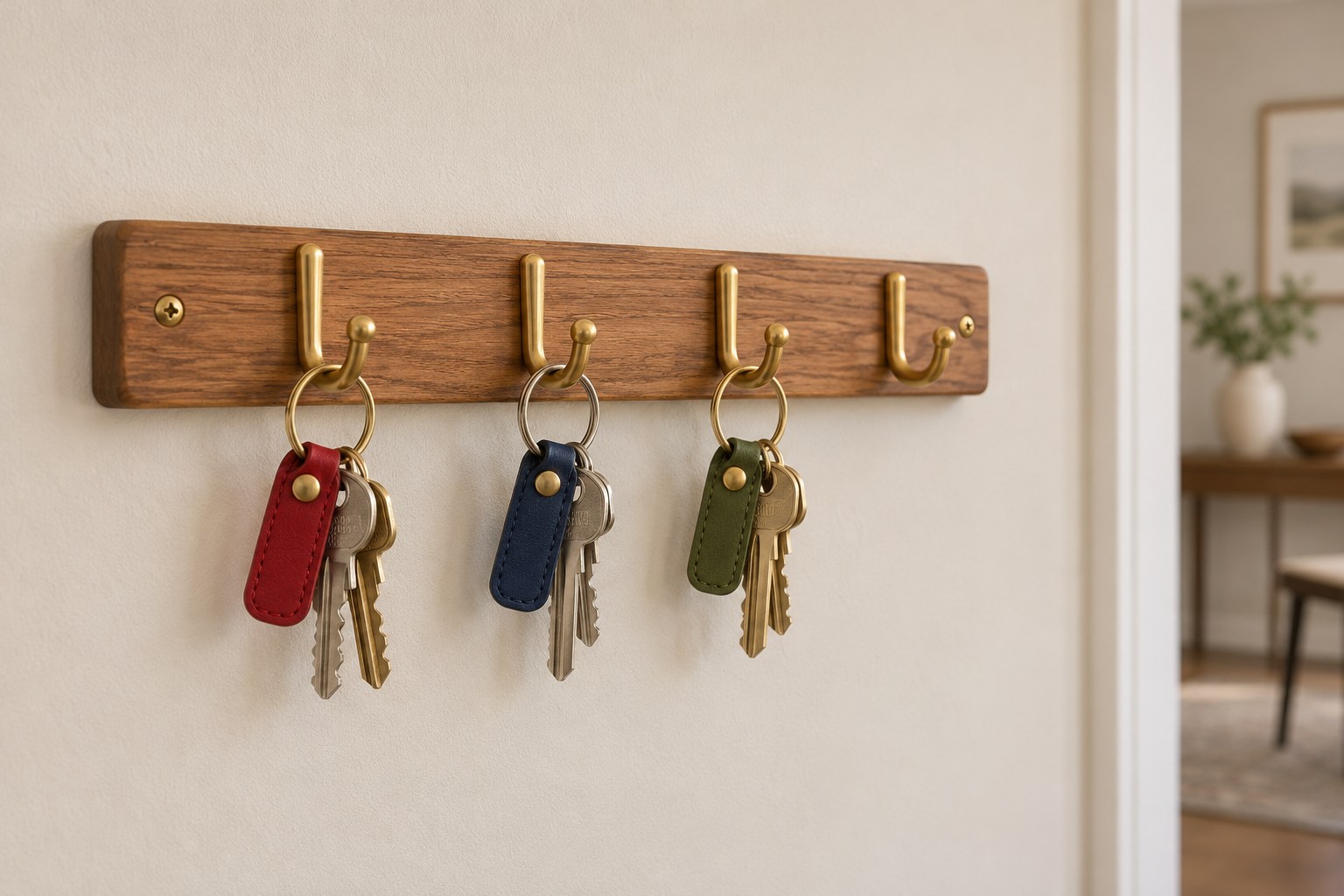
Give frequently used keys a single row of hooks or a divided dish. Group them by the car, door, or lock they serve. Use color or shape when people would rather identify a key without reading a label. Keep spare copies in a separate secure place so the everyday group stays small and the keys are easy to distinguish.
Try the holder in the spot where the household already reaches after coming in. A shallow dish can work if several keys are regularly borrowed, but a hook makes it easier to see which one is out. Keep keys away from a position where they can be reached or seen easily from outside.
6. Use Color to Make Family Cubby Spaces Easy to Read
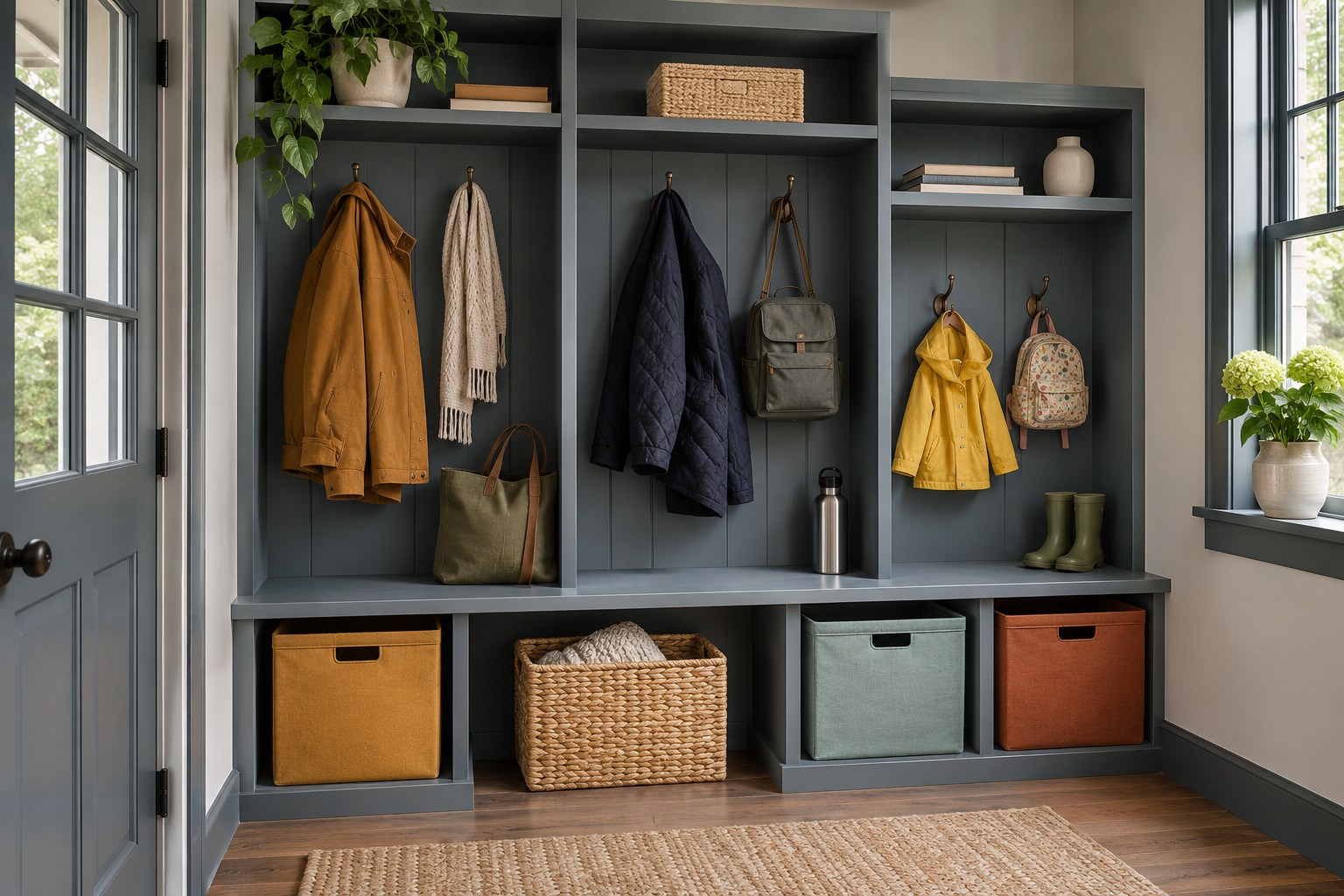
If two or more people use the same cubby, try setting out one washable bin per person. Give each bin a color or shape they can recognize easily and put it where that person can reach without shifting another bin. Leave each cubby open enough to see when it is almost full. Add a separate spot for a shared object that would otherwise move among the bins.
Size the bins for what needs to fit most days. Gloves or a lunch bag may need a different depth from a work tote. Let each person empty their bin at an agreed time. These IKEA mudroom ideas show other combinations of individual and shared storage.
7. Keep Guest Coats Out of the Household Queue
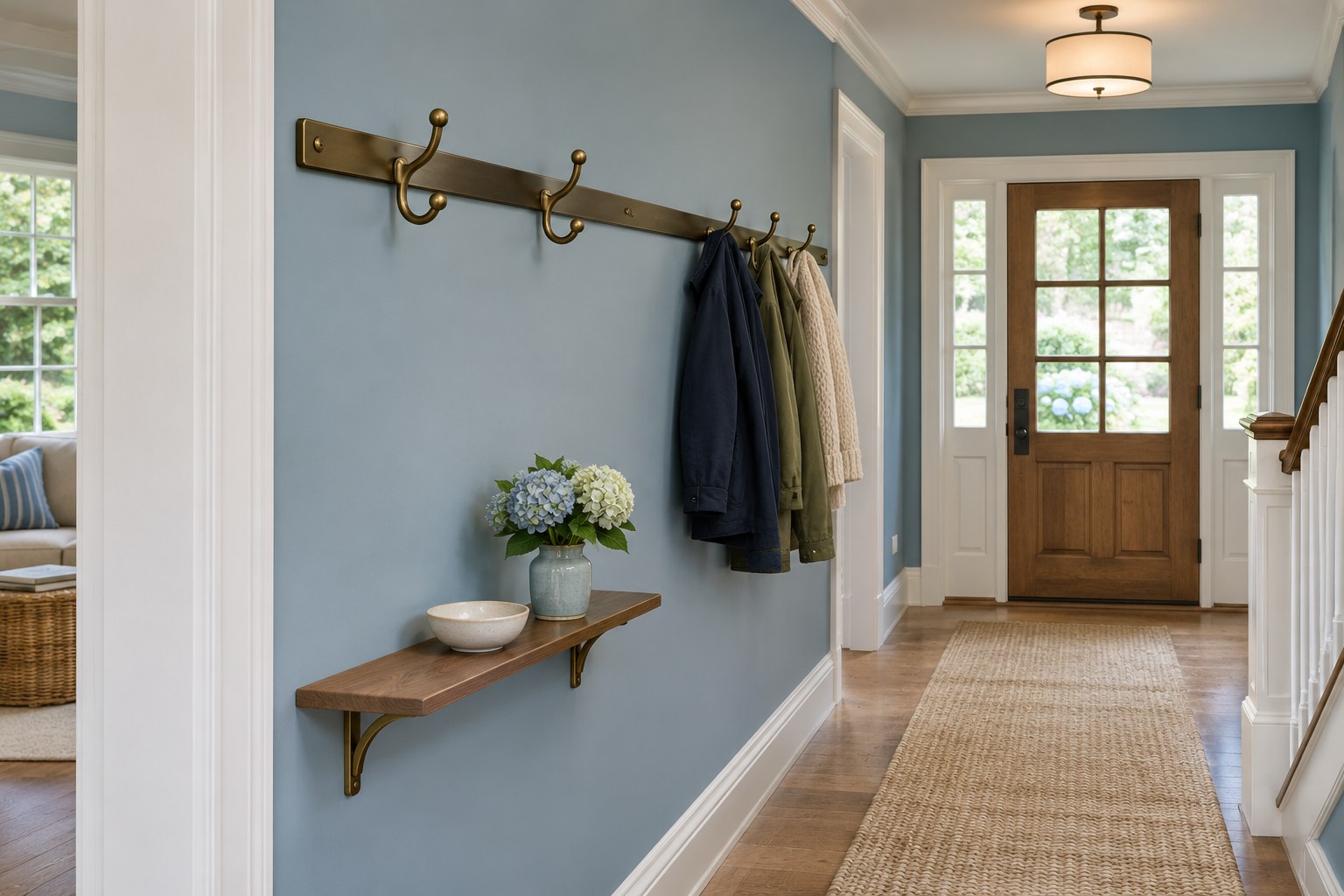
Decide where a visitor’s coat will go on an ordinary day. Two empty hooks at the end of a rail or a short space in a closet can make it easier for guests to settle in without moving your family’s things. Put the guest space where people can find it naturally. Check that a full-length coat will clear the floor and can hang without brushing an opened door.
Leave that space visibly empty on days you expect people. When there is no room at the main entrance, give visitors a clear place at the next convenient spot rather than adding a stand in the route. One flat shelf or small basket nearby can hold a scarf or hat that would slip off a hook.
8. Keep Mail on a Two-Step Path
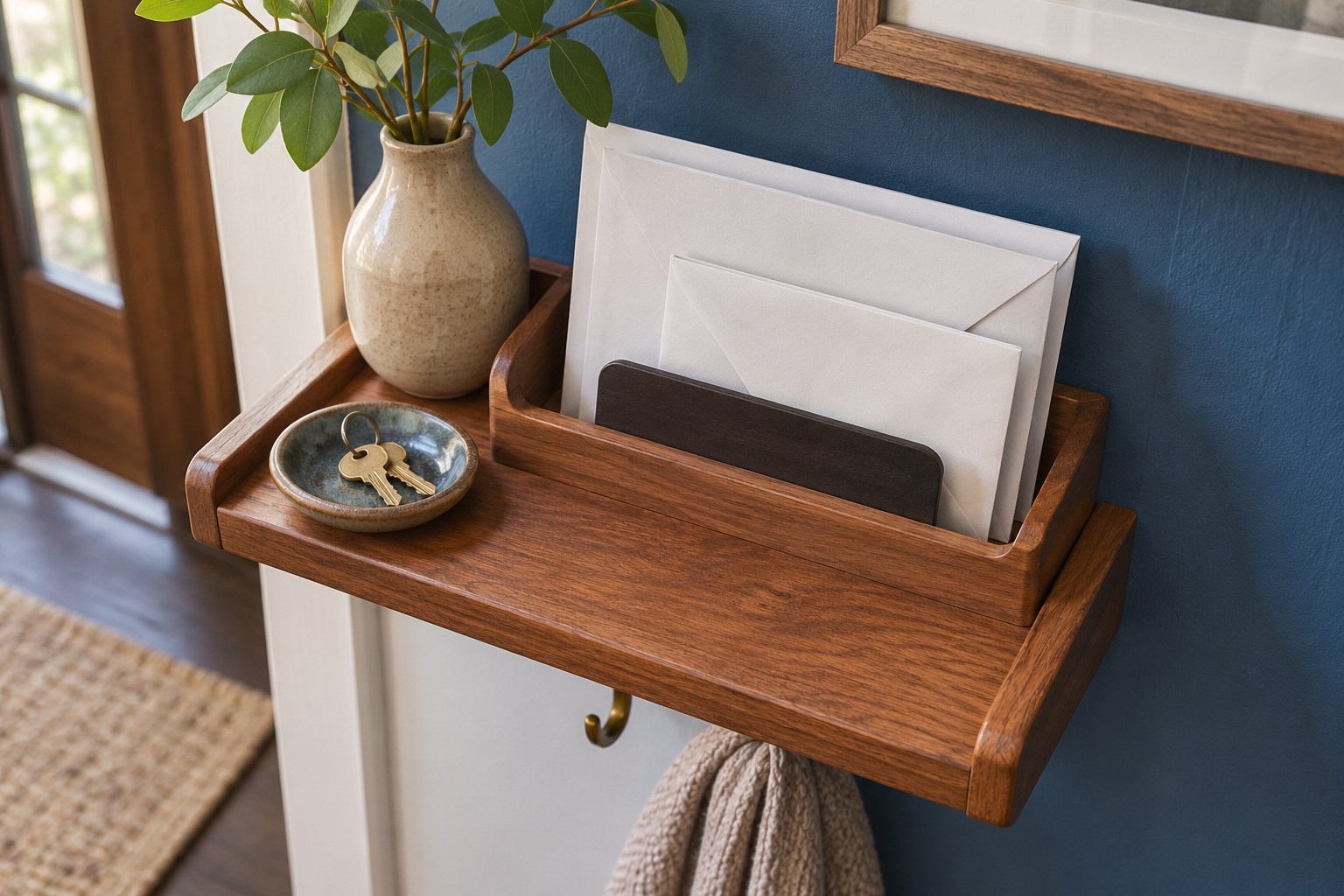
Choose a place for incoming papers where you can empty your hands and still reach the front door. Use one slim tray or upright sorter for papers that need a decision. When you look through the tray, take payment slips or forms to the place where you handle them, and move recycling or filing to its own spot.
Choose a tray depth that suits the usual envelopes. A tall stack can hide the papers at the bottom, so a narrow holder with one clear deadline marker may be easier to review. Try setting aside a short time for the sort and empty it before it fills. Keep anything with personal details out of view of visitors.
9. Group Small Items by the Trip They Go On
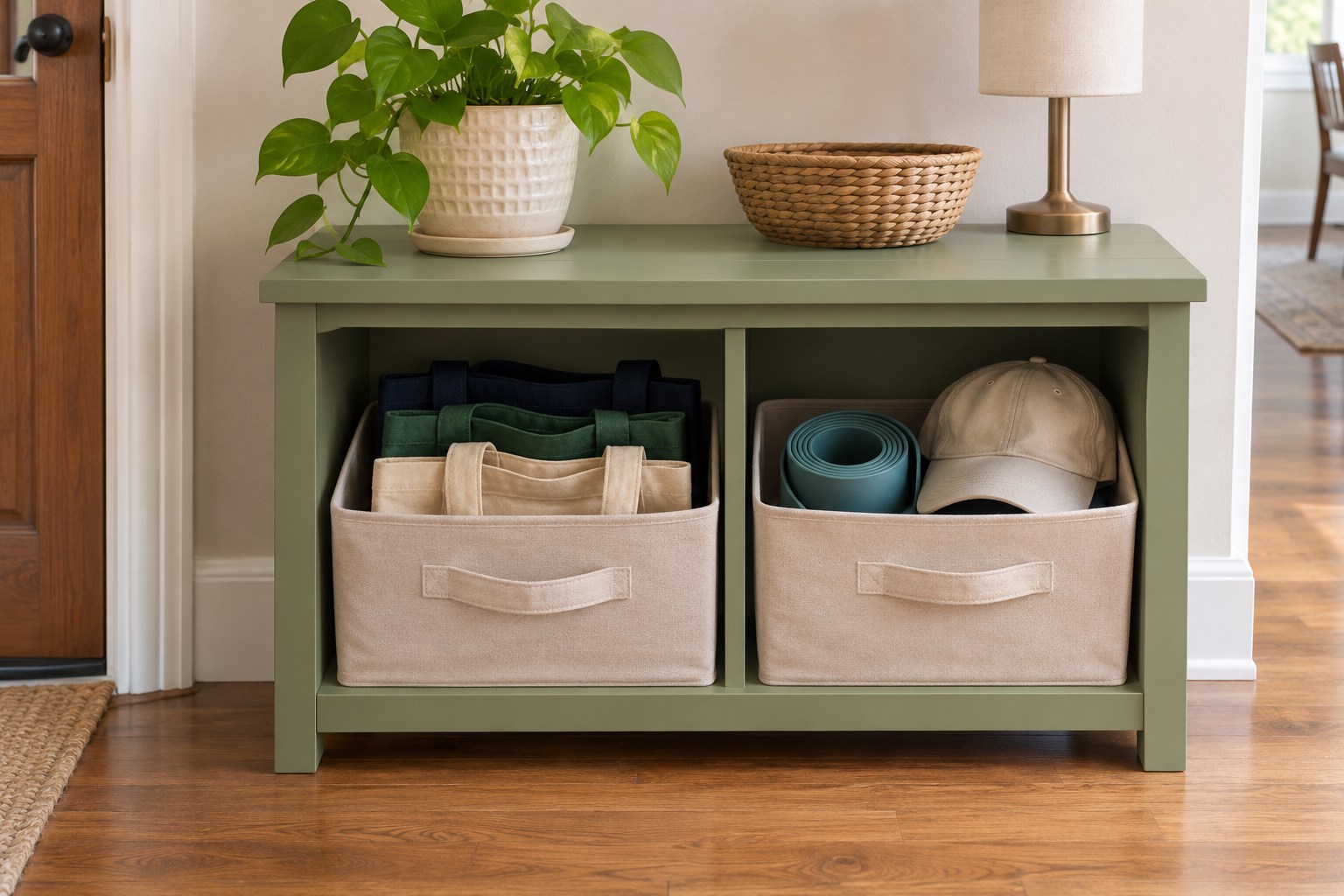
A pair of small bins can save time if the entry holds things for different kinds of outings. One can keep a foldable shopping bag and reusable produce sacks together. Another can hold lightweight sports accessories or the small equipment you take on a neighborhood walk. Put the one you use most where you can reach it from the door.
Leave larger equipment in a place suited to its size. Give damp gear a chance to dry before it goes into a closed bin. At the end of a trip, return the pieces to their bin together so they are ready next time. Choose a bin you can lift easily if you often take the whole group to the car.
10. Protect One Corner From Seasonal Overflow
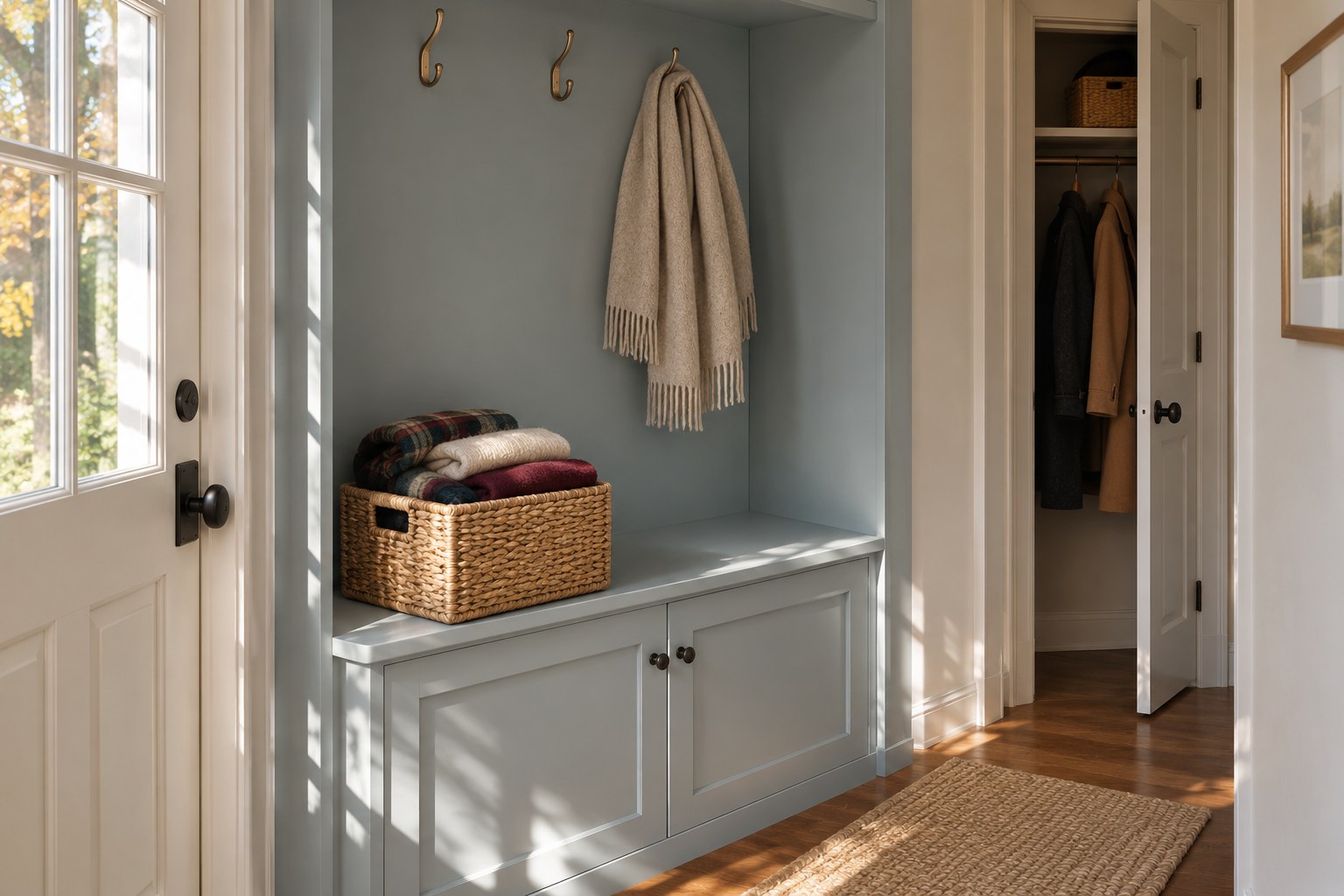
Pick one place for things whose usefulness changes with the weather. In a narrow entry, a single bin or an adjustable shelf can hold scarves in cold months and caps in summer. Choose what to put there based on the current forecast and the household’s habits. Leave enough room for a second pair of gloves or an umbrella when the weather changes.
Move old-season gear out before adding the next set. Wash or dry anything that needs it and put it together so you can bring the right pieces back quickly. If coats still spill into the hall, these entryway storage ideas show ways to make more room at the point of use.
11. Set the Most-Used Bags Up to Stand on Their Own
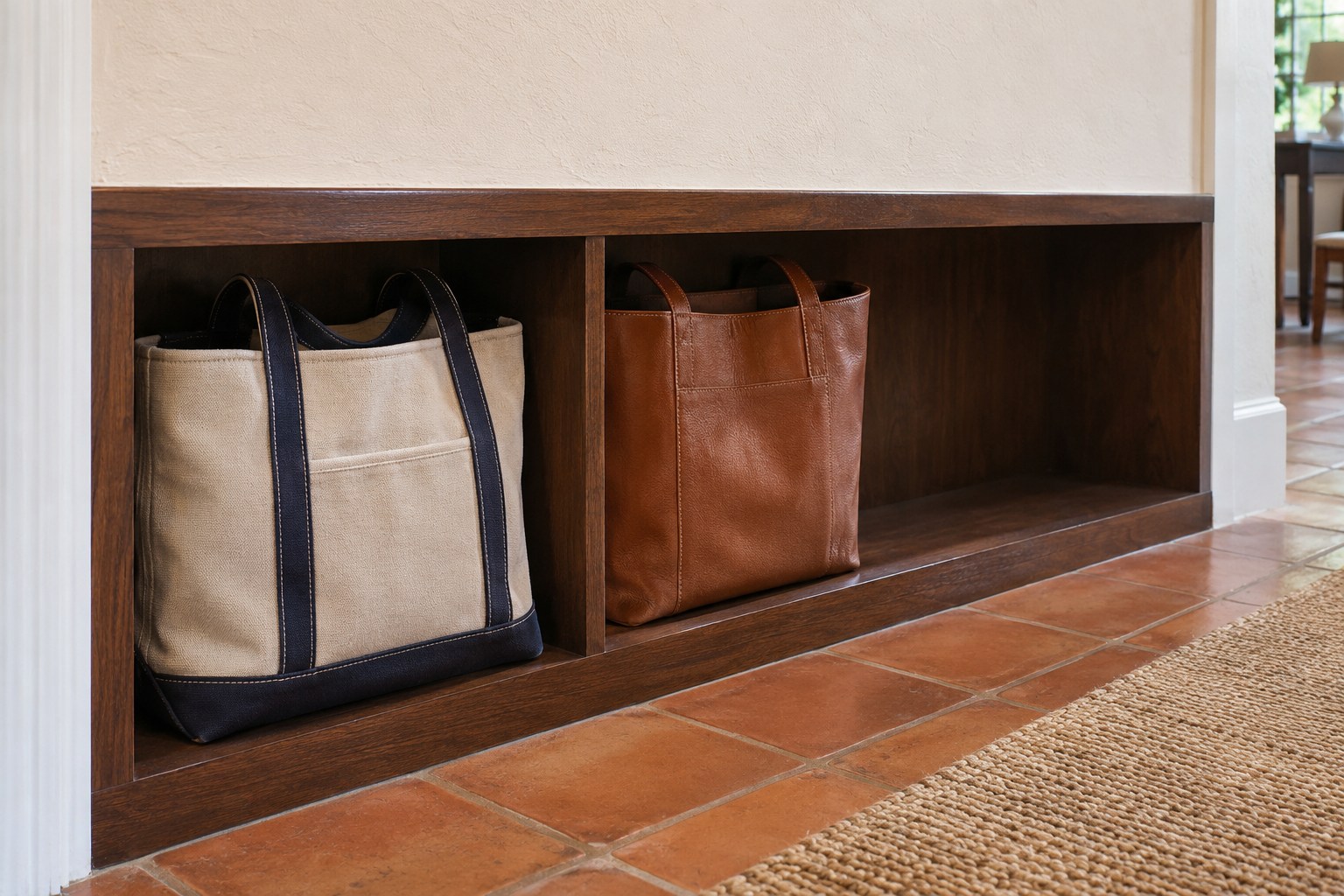
Look at the bags that fall over whenever you set them down. An open cube or a short shelf with a side panel can support a soft tote without asking you to hang it by a thin handle. Measure a bag with its normal load, including any straps that flare out. Leave enough space to lift it without knocking something else down.
Put the cube far enough from the main route that a dangling strap stays inside. Move any infrequently used bags to a closet, and use a second low shelf only if there are two bags in use most days. On a shared shelf, keeping one simple divider between bags can be enough to make them easy to pick up.
12. Leave an Open Slot for an Exception to the Routine
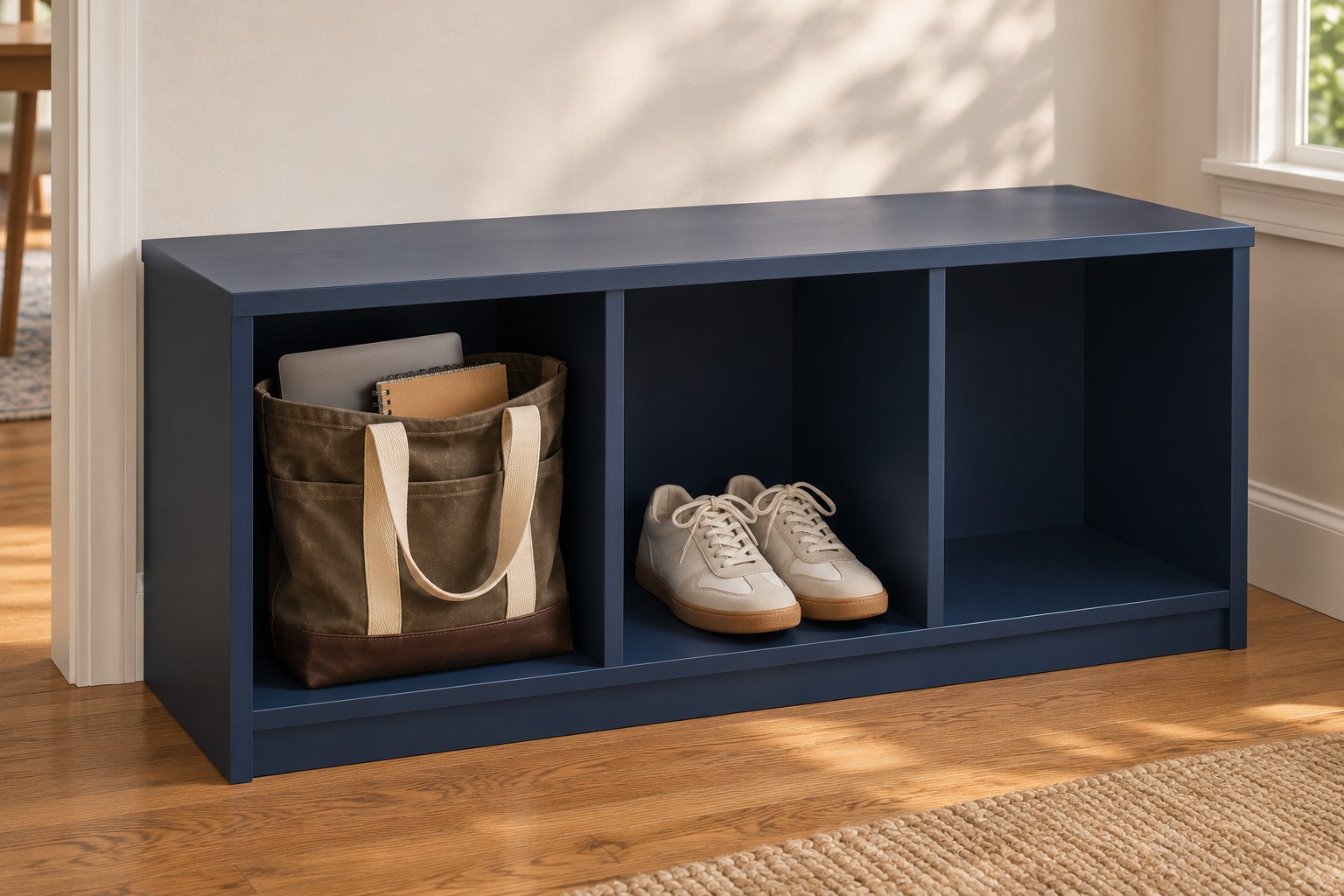
An entry system that is full on a good day has nowhere to put a helmet, a guest’s bag, or a new pair of shoes. Keep one small slot open for the things that show up unexpectedly. A clear end of a shelf or one low cubby can handle an occasional item while leaving the daily storage easy to reach.
Choose a slot large enough for the usual exceptions in your home. It may need a high opening for a helmet or only a little surface for something you carry out later. Clear the slot when the immediate need passes. If it fills with the same kind of thing every week, give that item its own spot.
13. Test the Arrangement During a Busy Arrival
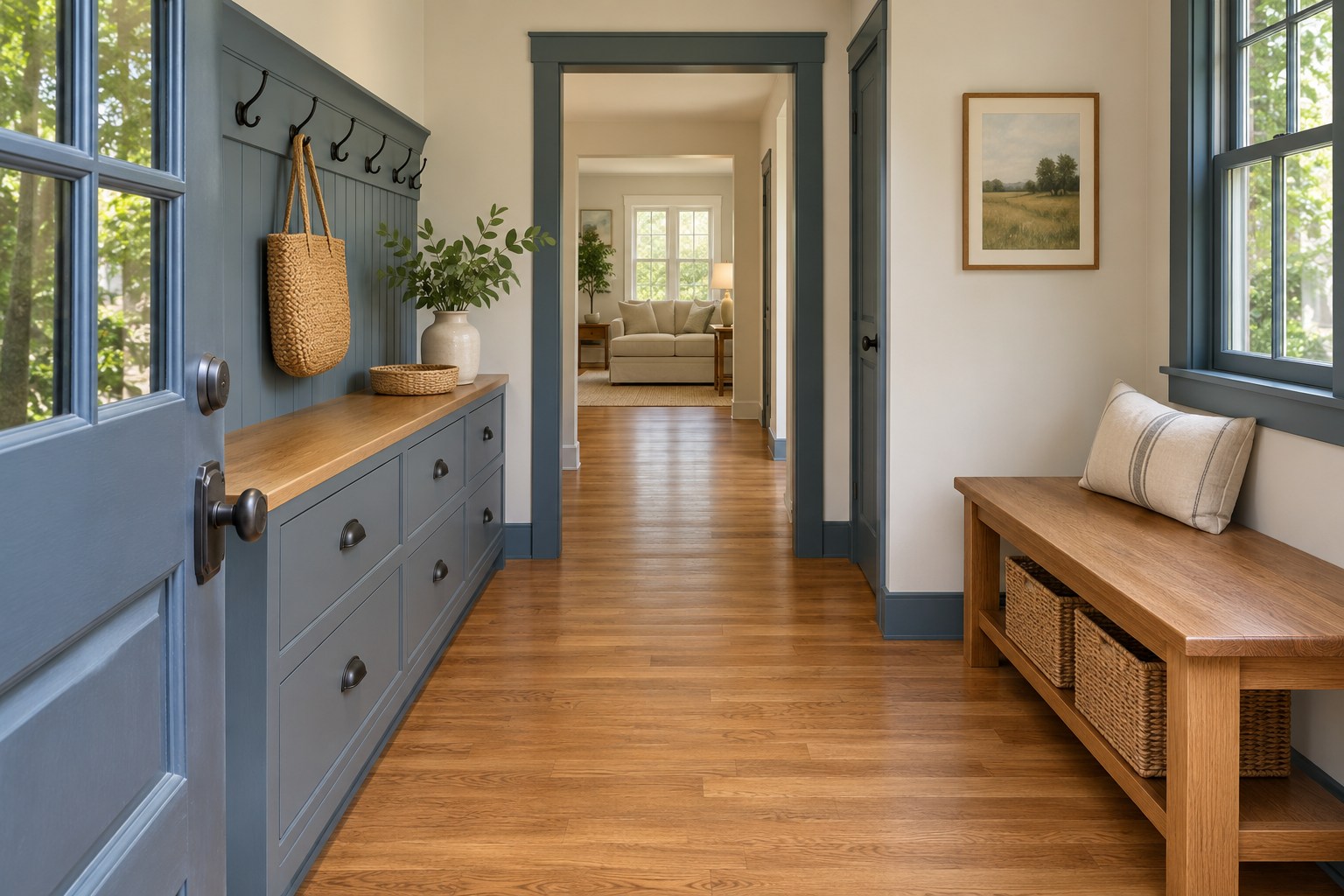
Use the finished setup while you arrive with a bag in each hand. See which storage you can reach before setting things down and whether the next person has room to come in. Check the door at its full normal opening and notice any bag handles or drawer fronts that enter the route. Change the position of the piece that makes you stop or turn.
Try the same path at the busiest time another day. If a few items still collect in one place, ask which routine they belong to. Move the most-used storage closer or take away something that gets in its way. Small adjustments based on what happens at the door can do more than filling another shelf.
Make one change to the arrival routine and see where everything lands for a few days. Keep the storage that makes it easier to come in, get ready, and leave, then adjust the next spot that keeps slowing you down.
Discover more from HomeTrendora
Subscribe to get the latest posts sent to your email.