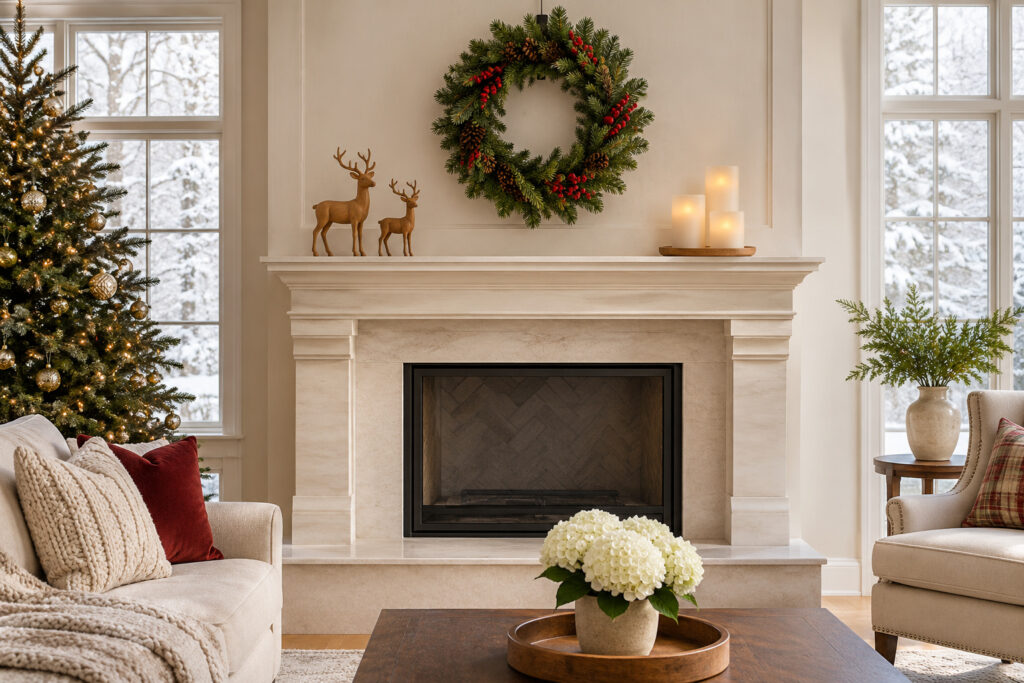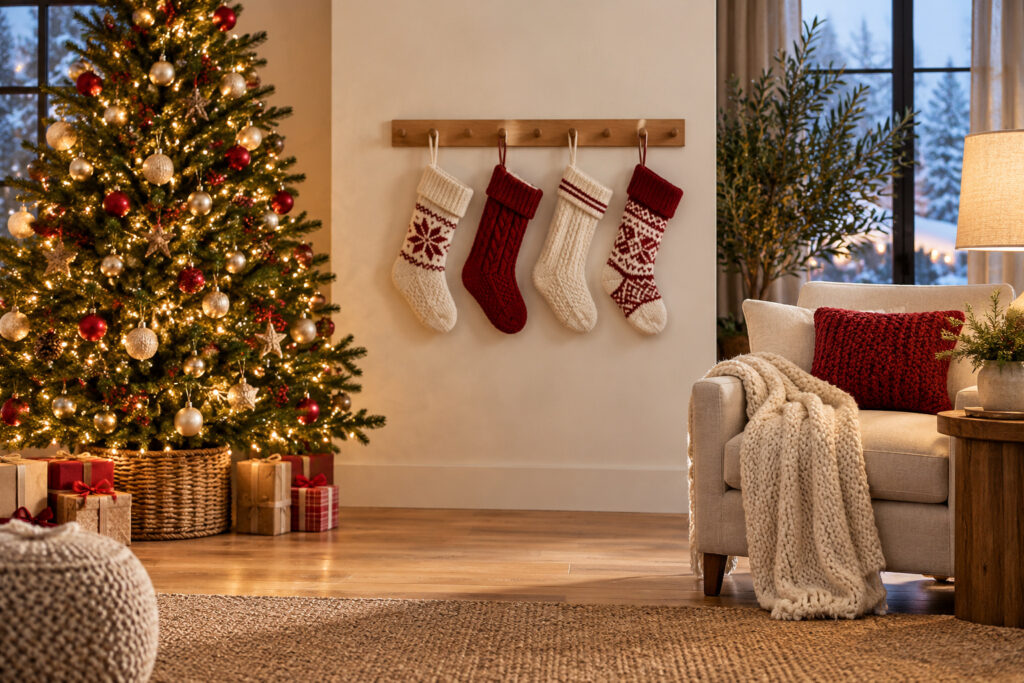
A mantel garland has two outlines: the shelf it follows and the greenery that reaches beyond it. Start by deciding which outline should be most noticeable. A shallow shelf may need a tidy line along its top, while a deep decorative surround can carry a fuller arrangement without losing its shape.
These Christmas mantel garland ideas help you choose that arrangement before adding more ornaments. Measure your shelf, wall space and intended drops before buying greenery. For a working fireplace, follow its manufacturer’s clearance requirements for every combustible material, including artificial greenery, ribbon and wiring. If an arrangement would enter that clearance area, use it only on an unused decorative fireplace or choose another location. Never assume LED lights make a garland safe near heat.
1. Keep the Garland on Top of a Shallow Shelf
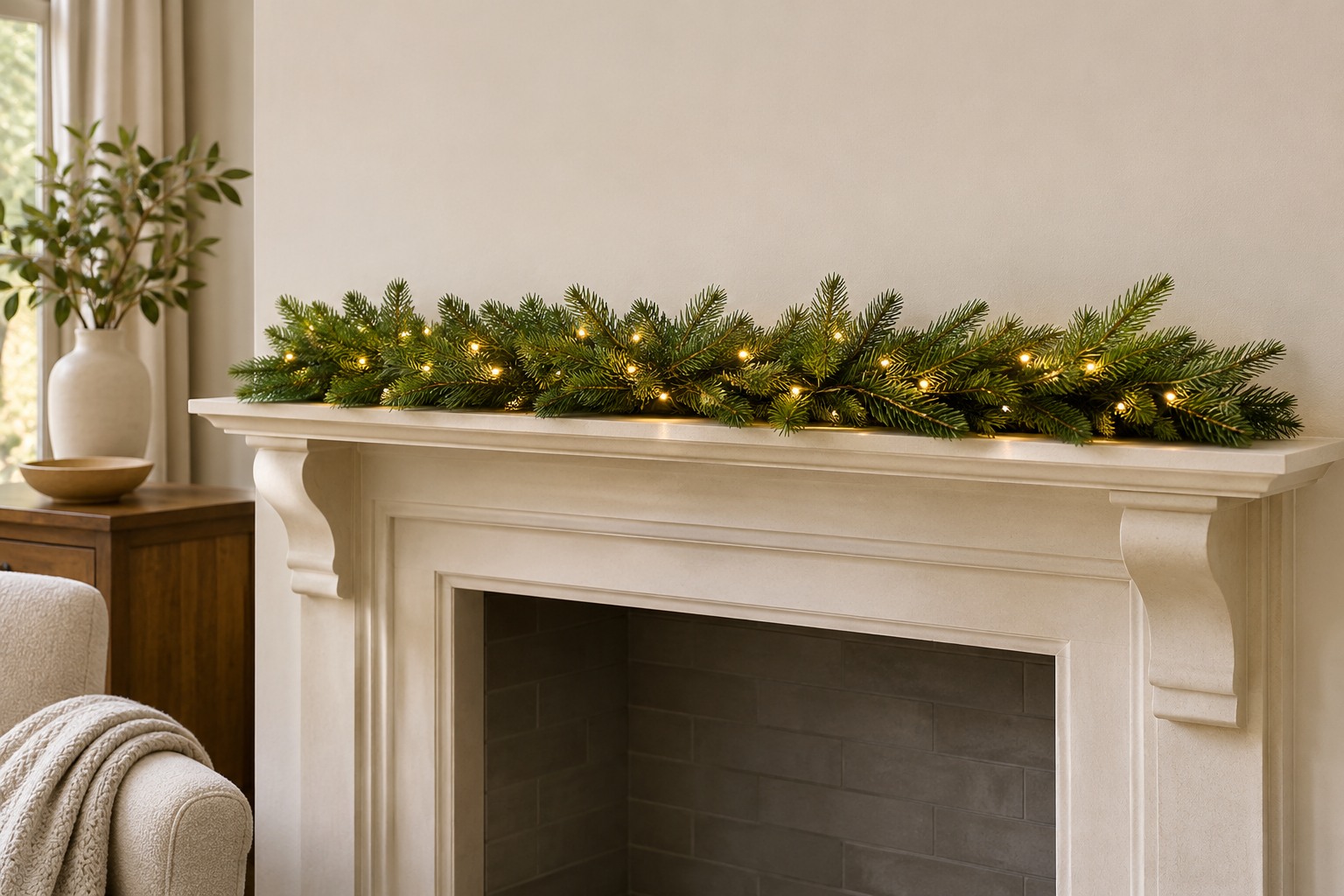
Lay the garland along the shelf rather than allowing most of its weight to hang over the front. Turn the branches outward to disguise the central spine, keeping the back edge clear of anything that must remain accessible. A narrow ledge looks more deliberate when its actual depth determines the greenery’s shape.
Check the fit with the garland unlit and undecorated. Measure its full length along the route you want it to follow; a nine-foot strand does not automatically leave nine feet of usable horizontal coverage once you introduce bends. Use supports suitable for the surface and the loaded arrangement, following both products’ instructions. Keep the arrangement stable before adding ribbon or baubles.
2. Give an Even Garland Three Short Velvet Bows
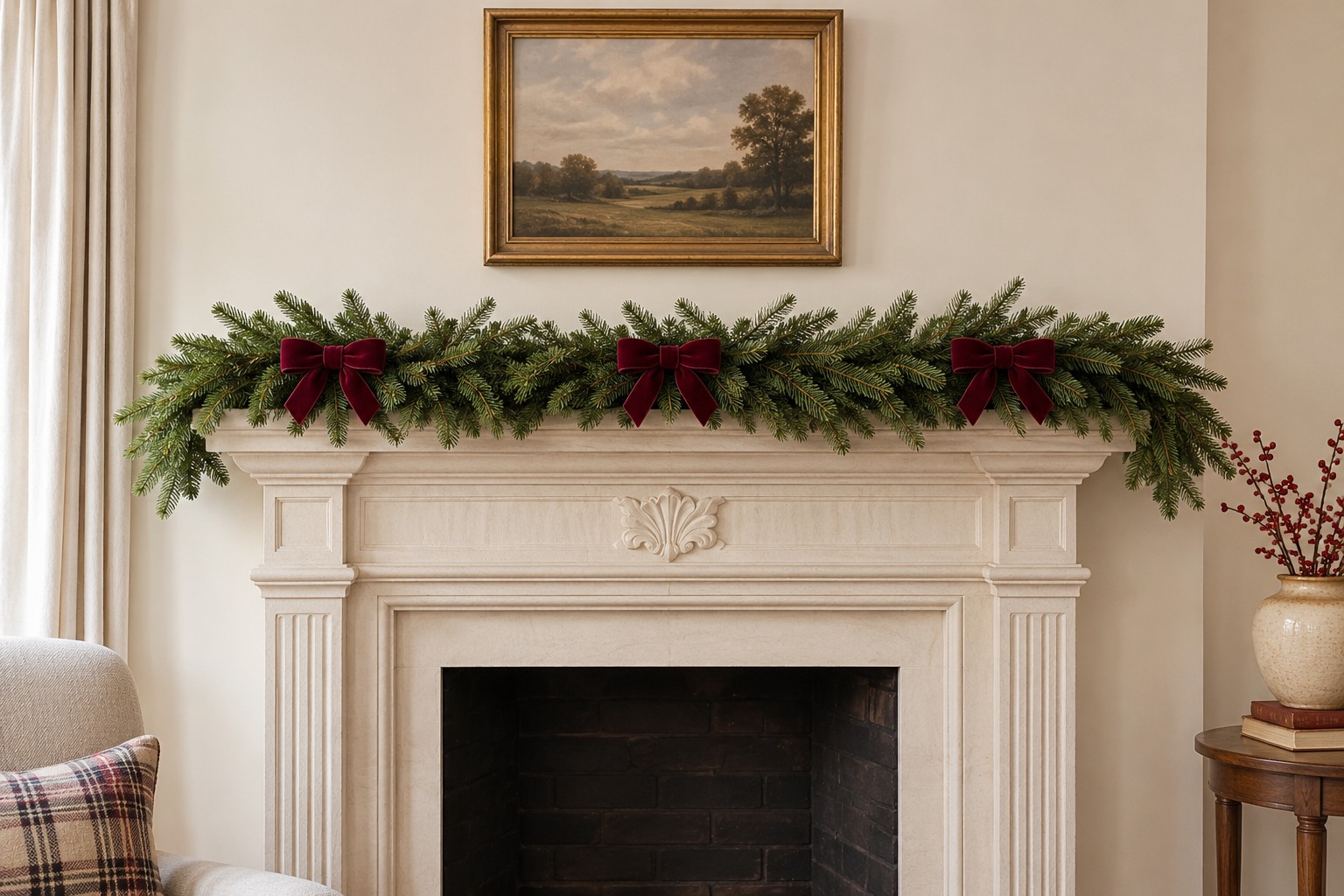
Space three small velvet bows across an otherwise even line of fir. Put one near the middle and place the others far enough toward the ends to read as a rhythm. Short tails keep the bow shape visible without making a second curtain beneath the greenery.
Choose ribbon wide enough to show against the needles but supple enough to tie at this scale. Shape each bow before fastening it to a sturdy part of the arrangement; do not rely on loose branch tips to carry its weight. Stand across the room and adjust the intervals by eye. On a short mantel, two bows may make more sense than forcing the same number into a smaller space.
3. Balance a One-Sided Garland With a Tall Frame
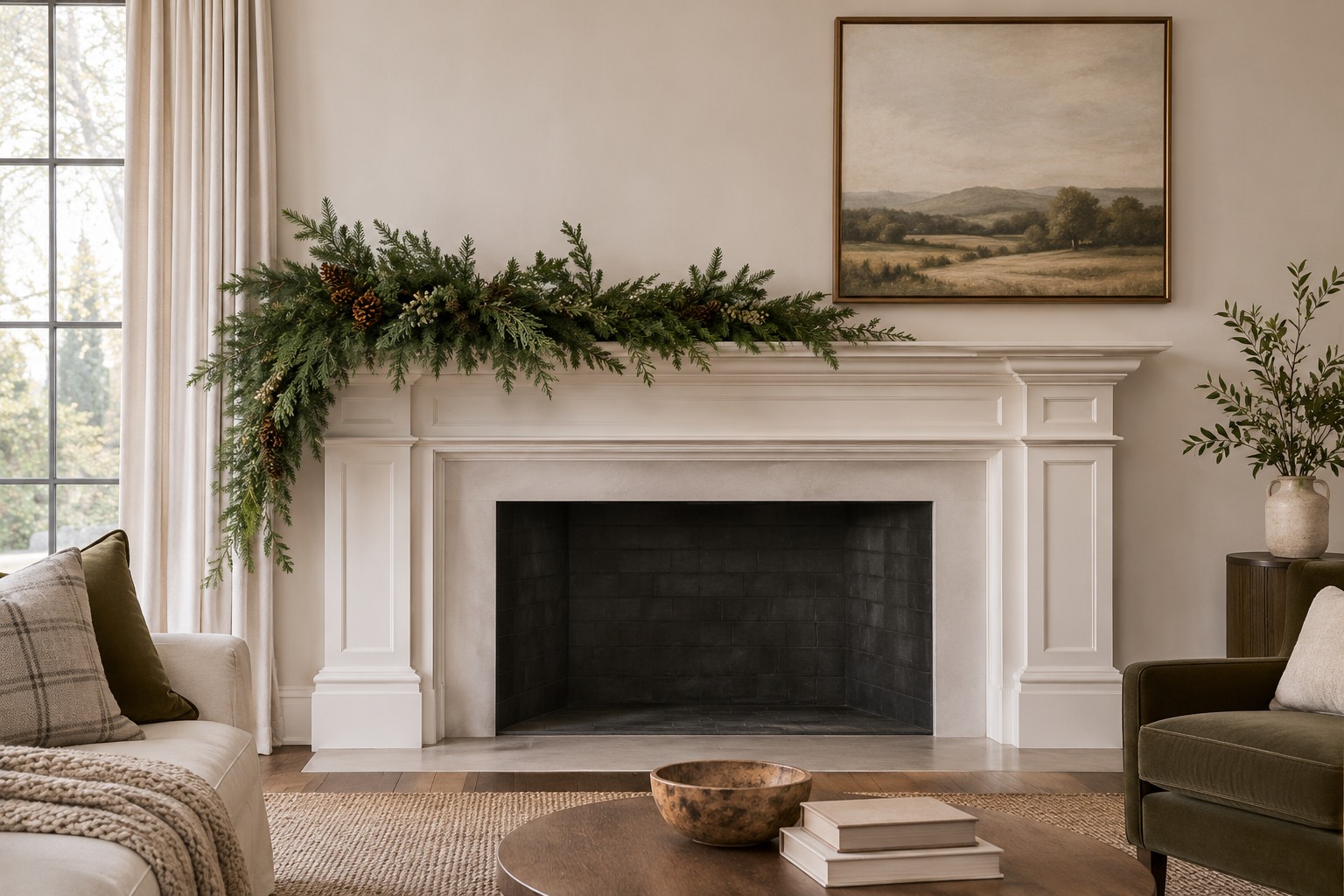
On an unused decorative surround, let a fuller garland gather toward one end and balance that visual weight with a tall frame above the opposite part of the shelf. Keep the frame’s subject simple enough that the greenery remains readable. The balance comes from height against fullness rather than matching objects on both sides.
Secure artwork appropriately to its wall or support; branches are not a brace for a leaning frame. Start with the frame’s final position, then shape the garland around the remaining space. Check the result from the doorway as well as straight ahead. If the longer side makes the whole arrangement appear to slide off the shelf, shorten its extension or reduce its density.
4. Use Two Equal Short Drops for a Symmetrical Wall
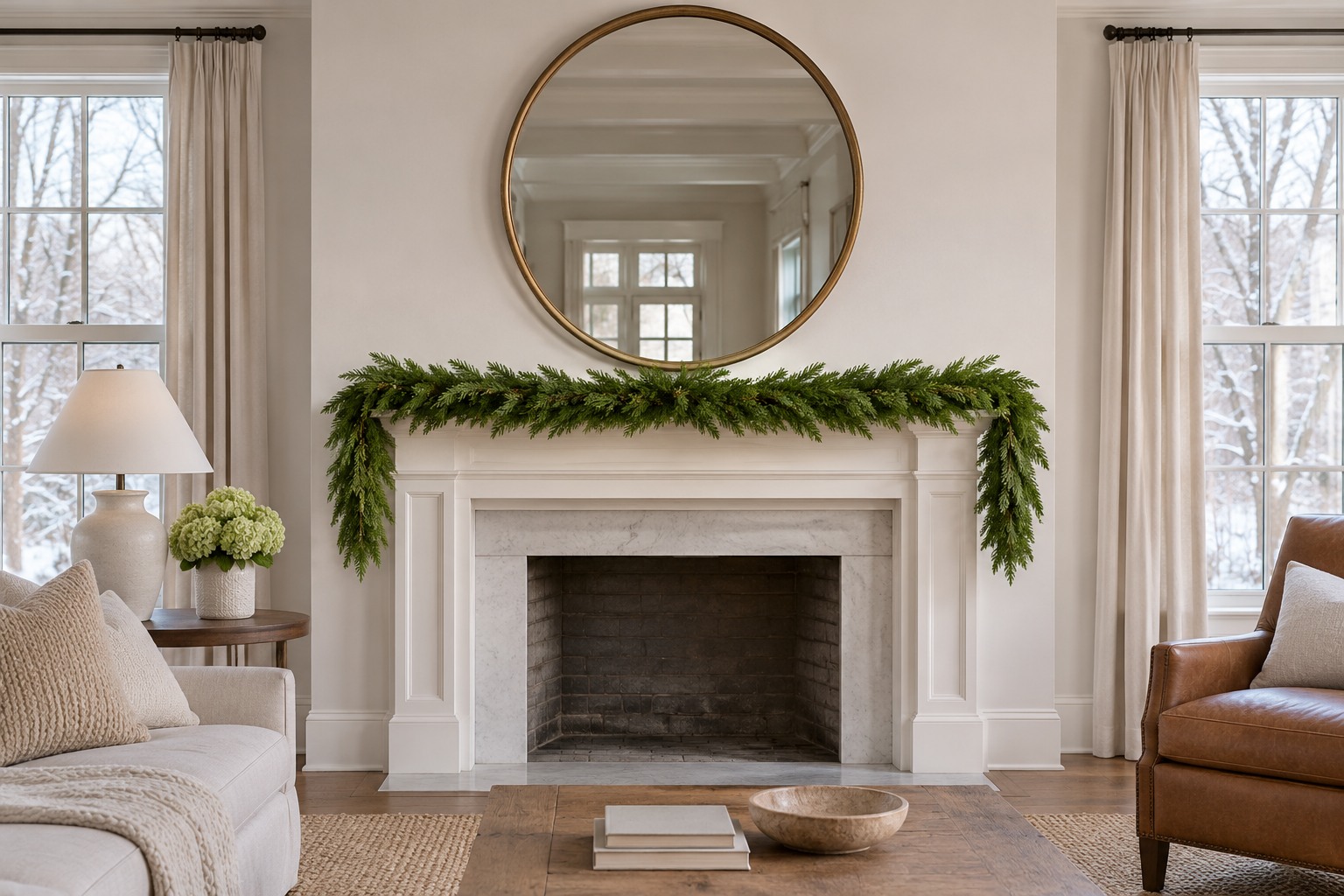
A centered mirror or paneling can suit two matching garland ends. On an unused decorative fireplace, measure both short drops from the shelf’s corners and allow a small, relaxed change of direction at each turn. Keep the middle relatively level so the wall’s symmetry stays apparent.
Equal lengths do not always look equal when one side contains more branches. Shape the greenery on each end after securing the main span, comparing both volume and length. Do not extend a drop simply to hide an awkward attachment. For a functioning fireplace, retain only a layout entirely outside its specified clearances, even if that means keeping both ends on top of the shelf.
5. Leave a Deliberate Gap Beneath the Main Artwork
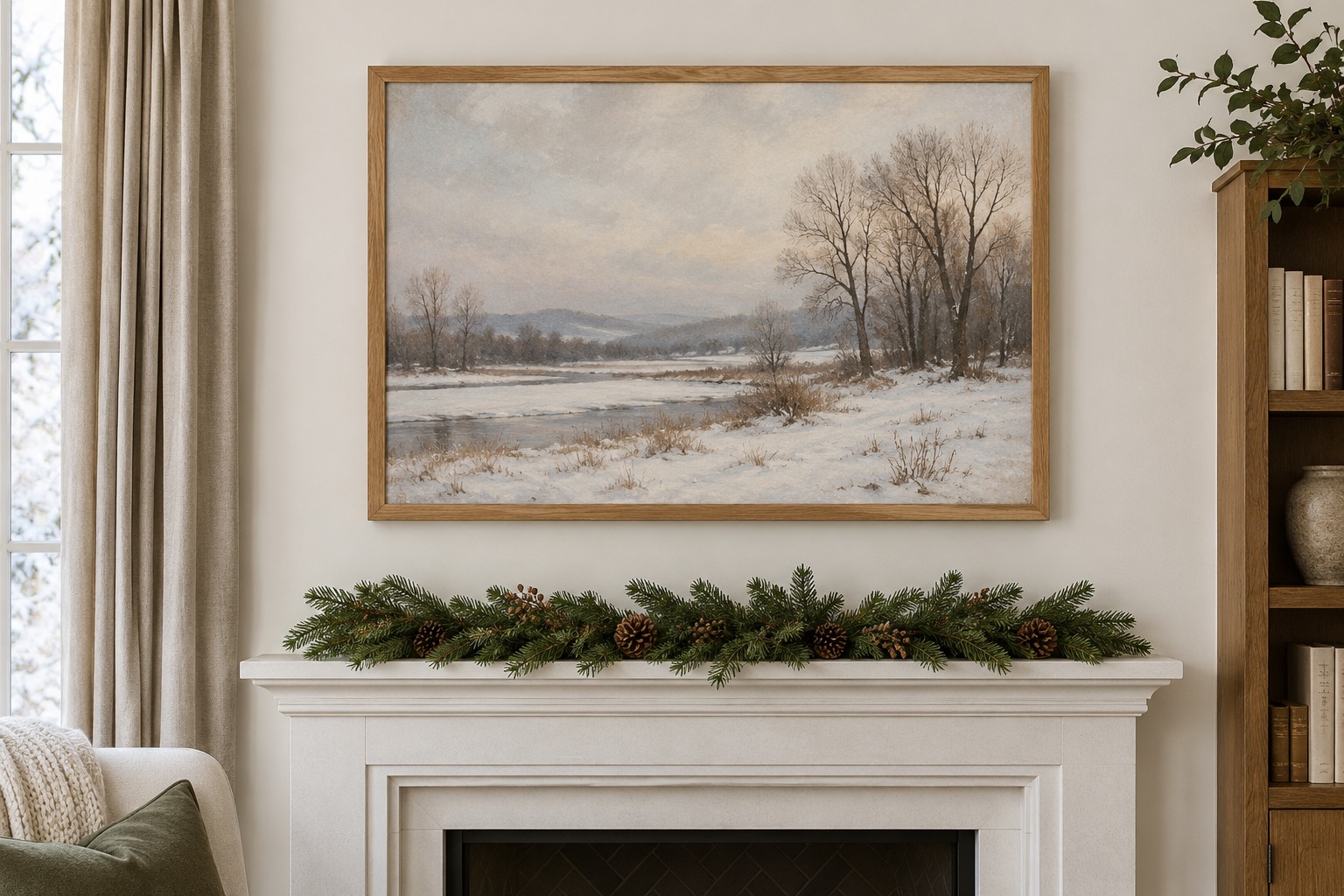
Let the artwork keep a clean lower edge by holding the tallest garland branches below it. That open strip of wall helps separate a busy painted scene from the needles. It also makes a smaller picture feel chosen rather than partly swallowed by seasonal decoration.
Place the artwork first and view it from the usual seating position. Shape the greenery downward or to the side where it starts to cover a significant part of the frame. Avoid packing extra ornaments into the gap afterward. If the mantel and wall offer too little room for both elements, compare these Christmas mantel ideas without garland before buying a thicker strand.
6. Layer Fine Cedar Over a Fir Base
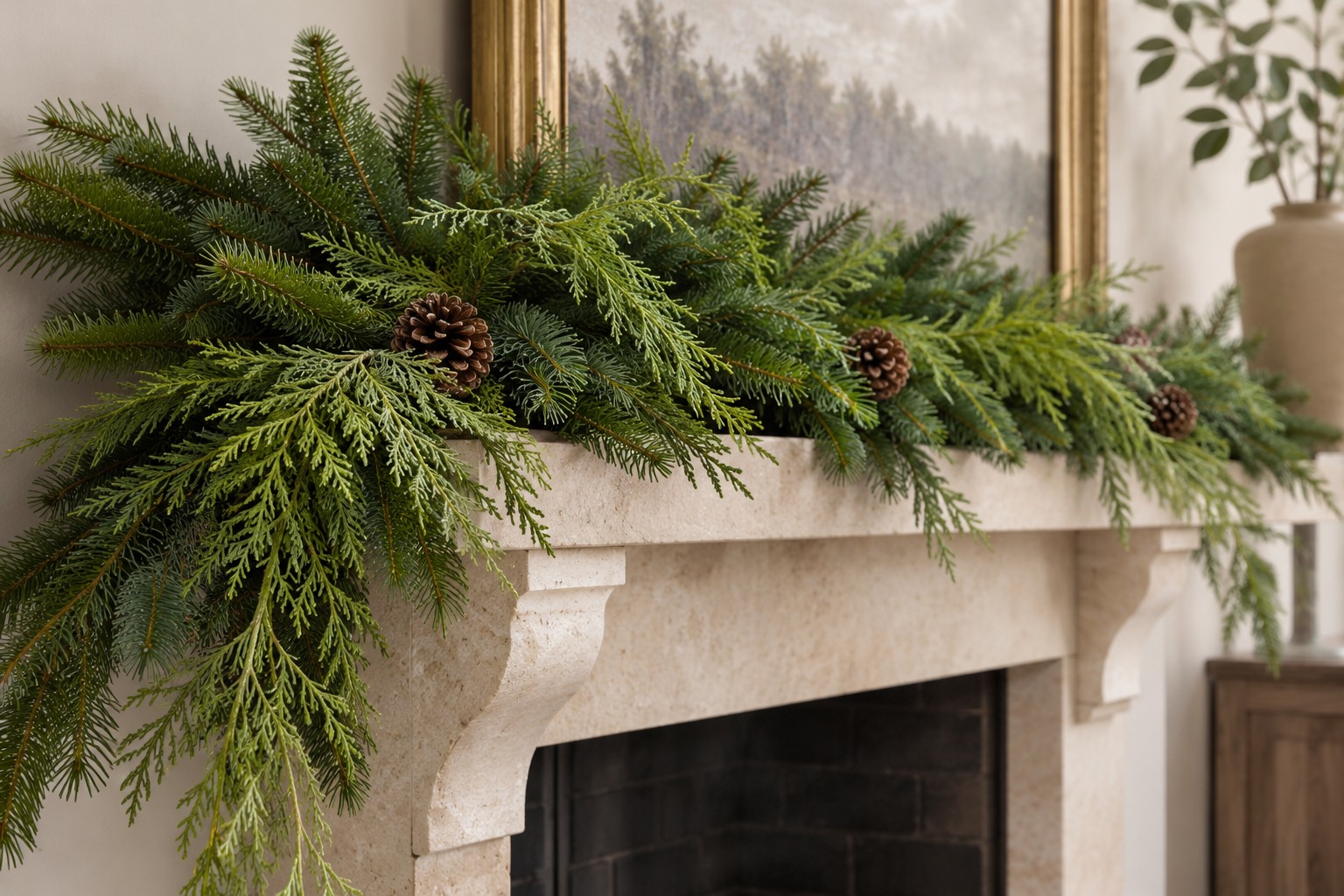
Use a firm fir garland for the main shape, then introduce a few fine cedar-like sprays along its outer edge. The broad base provides coverage while the smaller branching tips soften its boundary. Keep both materials visible so the second texture changes the arrangement rather than disappearing inside it.
Lay out the sprays before attaching them, turning their stems in the same broad direction as the base. Fasten them according to the materials’ instructions and tuck cut ends away from reach. Adding a second material increases both weight and depth, so recheck the supports afterward. If using fresh greenery, monitor its condition and follow suitable care guidance; drying foliage still needs to stay away from heat.
7. Keep a Single Soft Pine Silhouette Visible
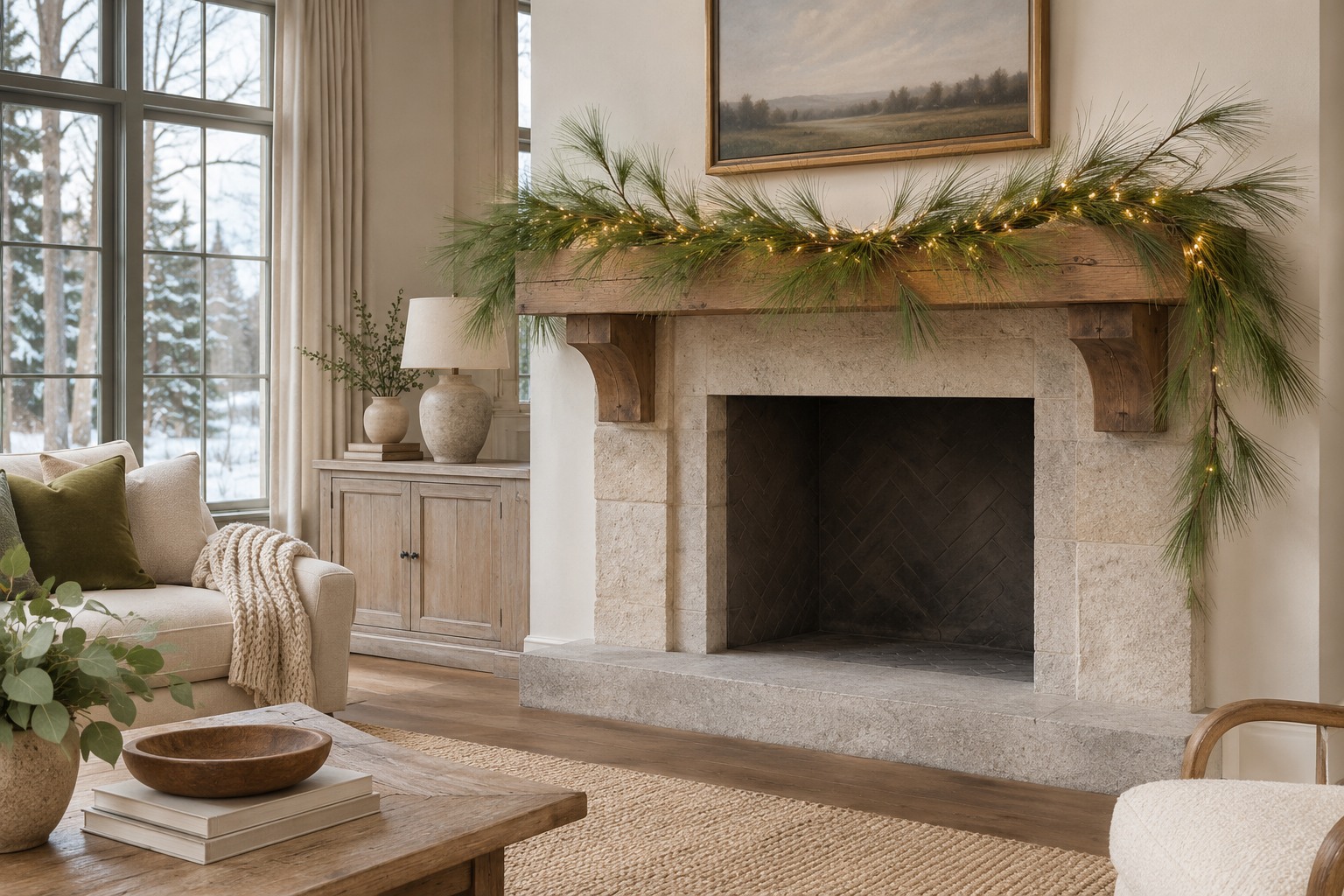
Choose a pine-style garland with long needles and let those needles supply the decoration. Gently open compressed branches and vary their angle, leaving small spaces where the shelf can still be seen. The aim is a recognizable pine outline rather than a solid green cylinder.
Add any lights close to the supporting spine so wire does not bridge the airy outer tips. A single plain ribbon can be enough if the room needs a color connection. Avoid filling every opening with ornaments, which would remove the very quality you selected the pine for. This approach works especially well where a patterned wall or detailed mirror already contributes plenty of visual information above the shelf.
8. Thread Broad Magnolia Leaves Through Dark Greenery
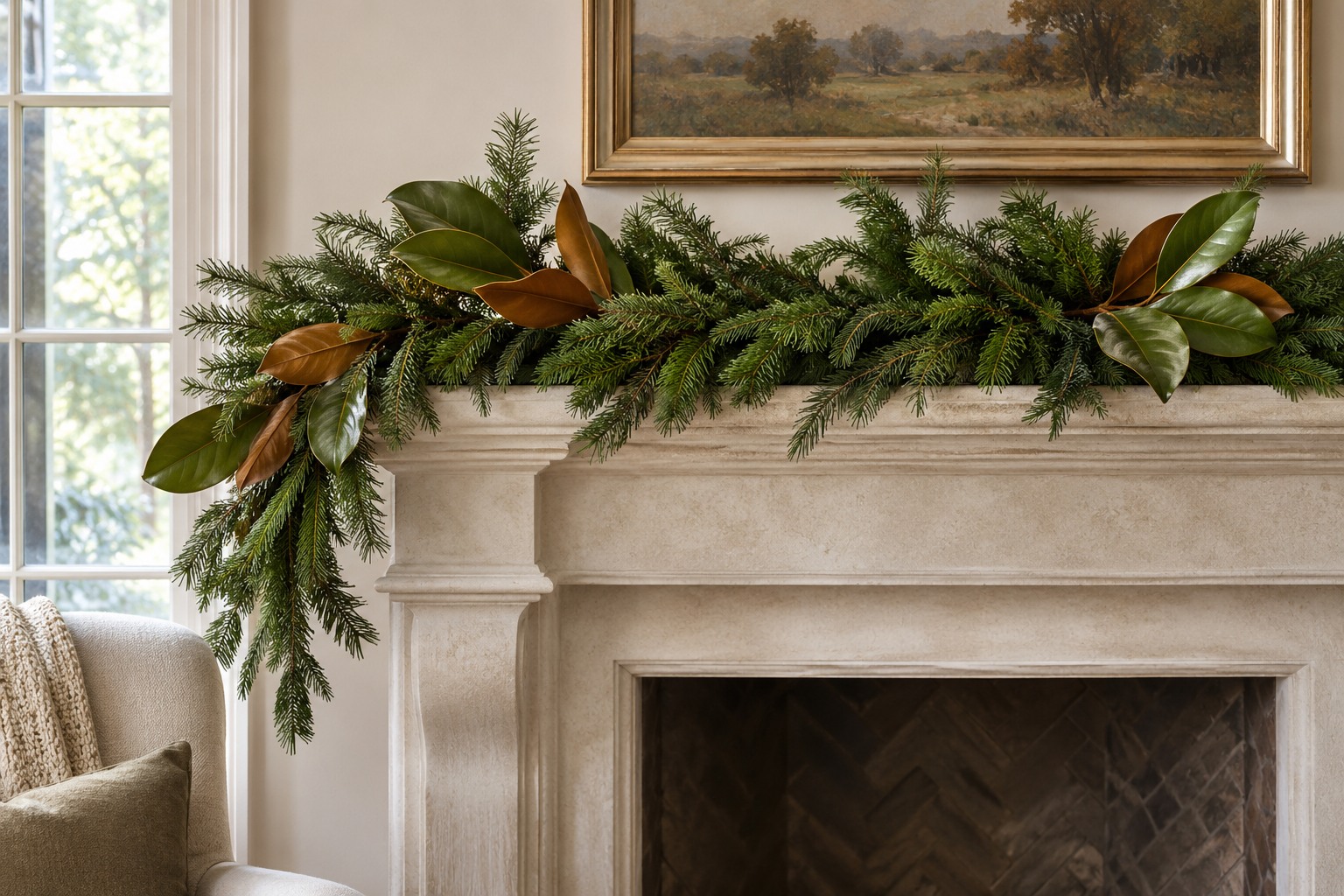
Broad magnolia-style leaves introduce a smooth surface among fine needles. Place small groups along the front and upper edge, varying their orientation so some show their lighter or brown undersides. A few broad shapes can change how a dark garland reads without covering its original structure.
Choose stems whose scale suits the shelf. Very large leaves can project farther into the room than expected and hide the mantel’s corners. Lay them in position before securing anything, checking the view from below. Keep their supporting stems within the greenery and remove any that pull a section forward. Repeat the leaf color elsewhere only if the room needs that connection; the garland can be the sole mixed-greenery feature.
9. Use Eucalyptus for a Looser Gray-Green Edge
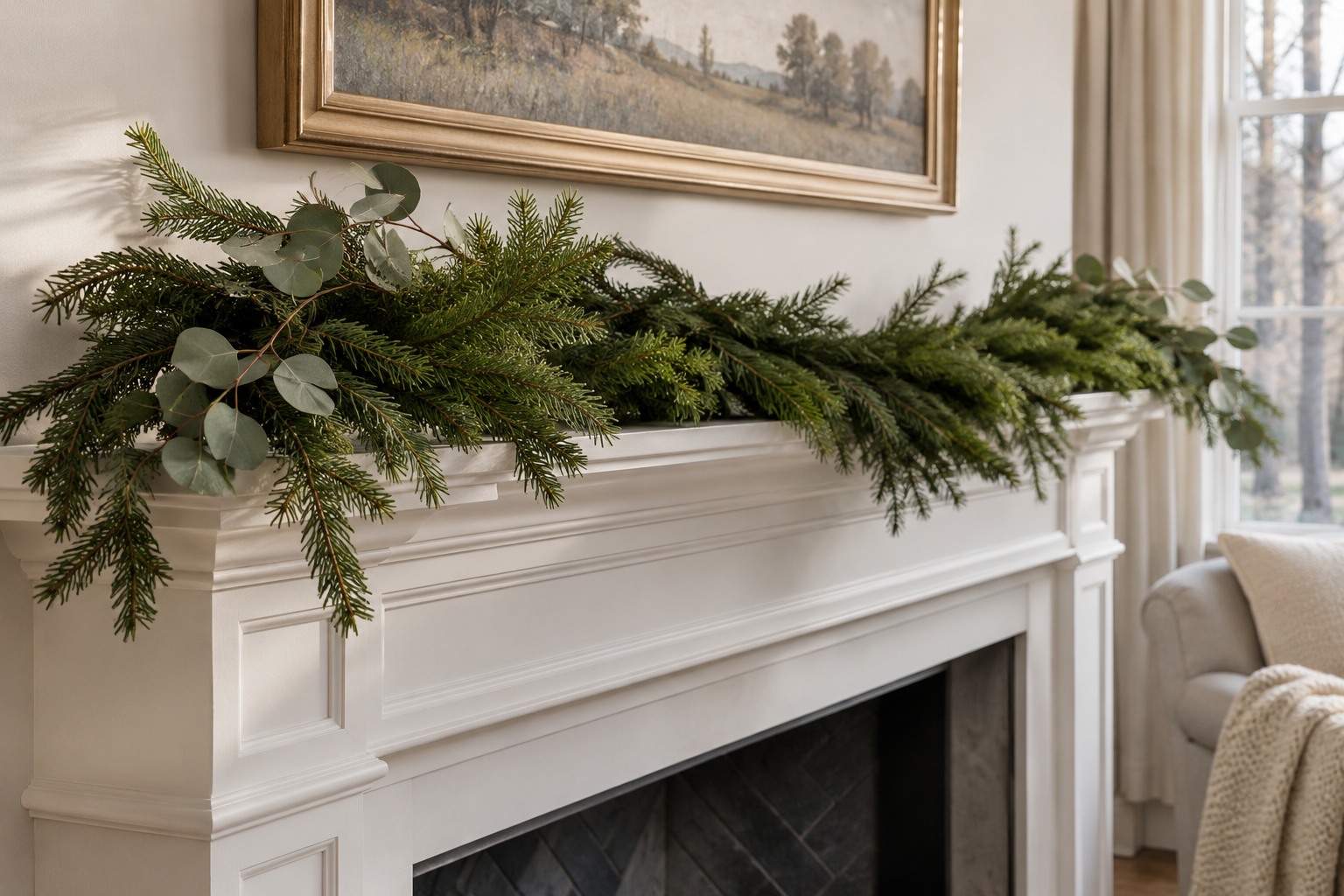
A few eucalyptus-style stems can loosen a compact fir base and bring a cooler green into a warm room. Concentrate them toward the outer edge, allowing the round leaves to show individually against the darker needles. Keep their direction consistent with the garland’s overall route.
Use less than you initially lay out, then check whether the fir still forms a continuous base. Too many projecting stems can make a narrow mantel appear untidy from the side. If you choose fresh material, account for its changing condition instead of expecting it to hold the same silhouette for weeks. Treat all greenery as combustible and keep it clear of heat regardless of whether its leaves are real or artificial.
10. Build Depth With Pinecones Instead of Extra Ornaments
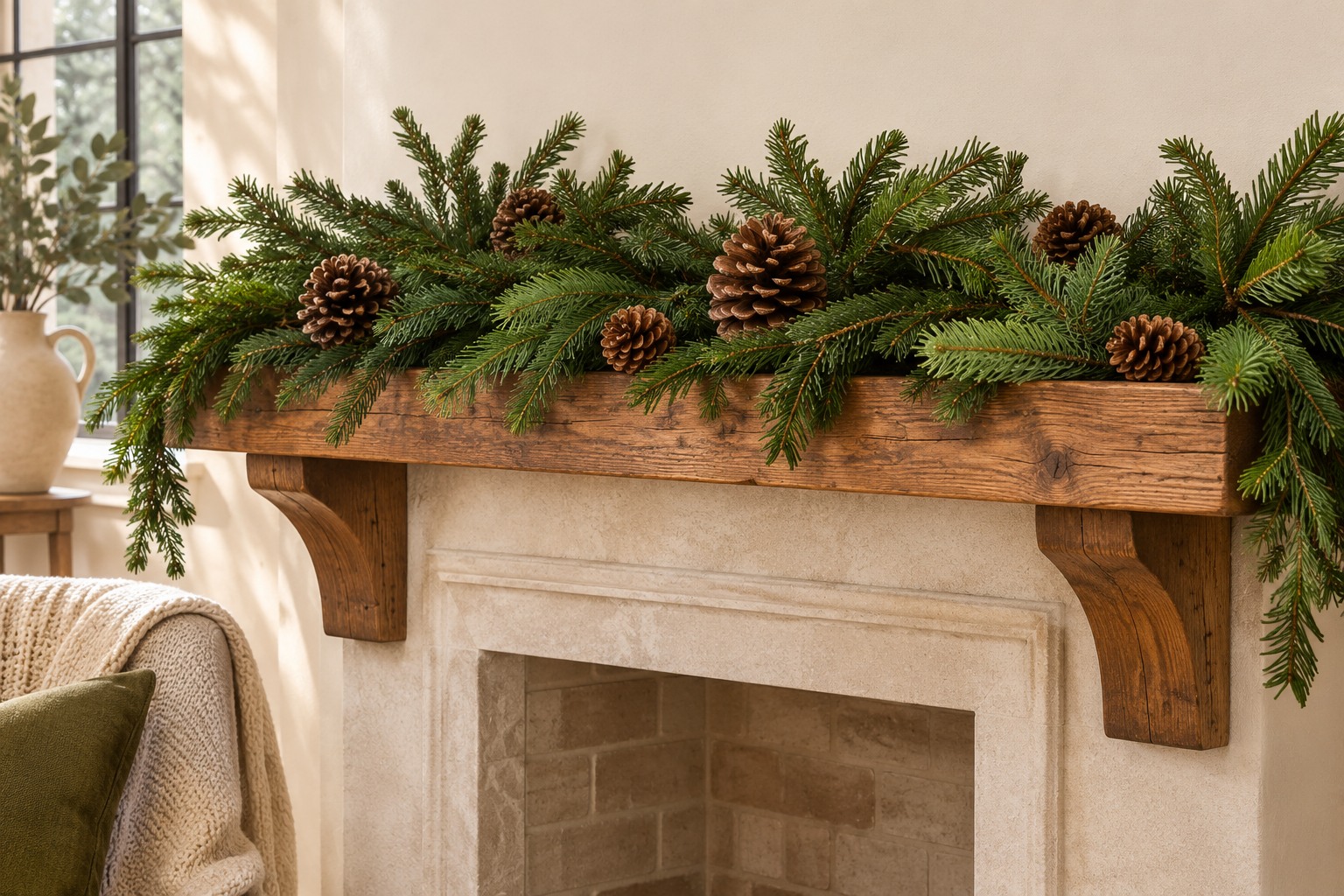
Pinecones add a stronger outline while staying close to the greenery’s natural colors. Nestle a few at different depths rather than lining them along the front like buttons. Let some needles overlap their lower edges so the pieces appear part of the arrangement.
Use cones appropriate to the scale of the branches and attach them securely with a method intended for your materials. Do not rest heavy cones loosely on a sloping garland. Step back before adding another: the dark gaps between cones help each one remain visible. On a rustic wood mantel, choose cones with a slightly different tone from the shelf so the whole arrangement does not merge into one brown band.
11. Cluster Red Berries at Two Joining Points
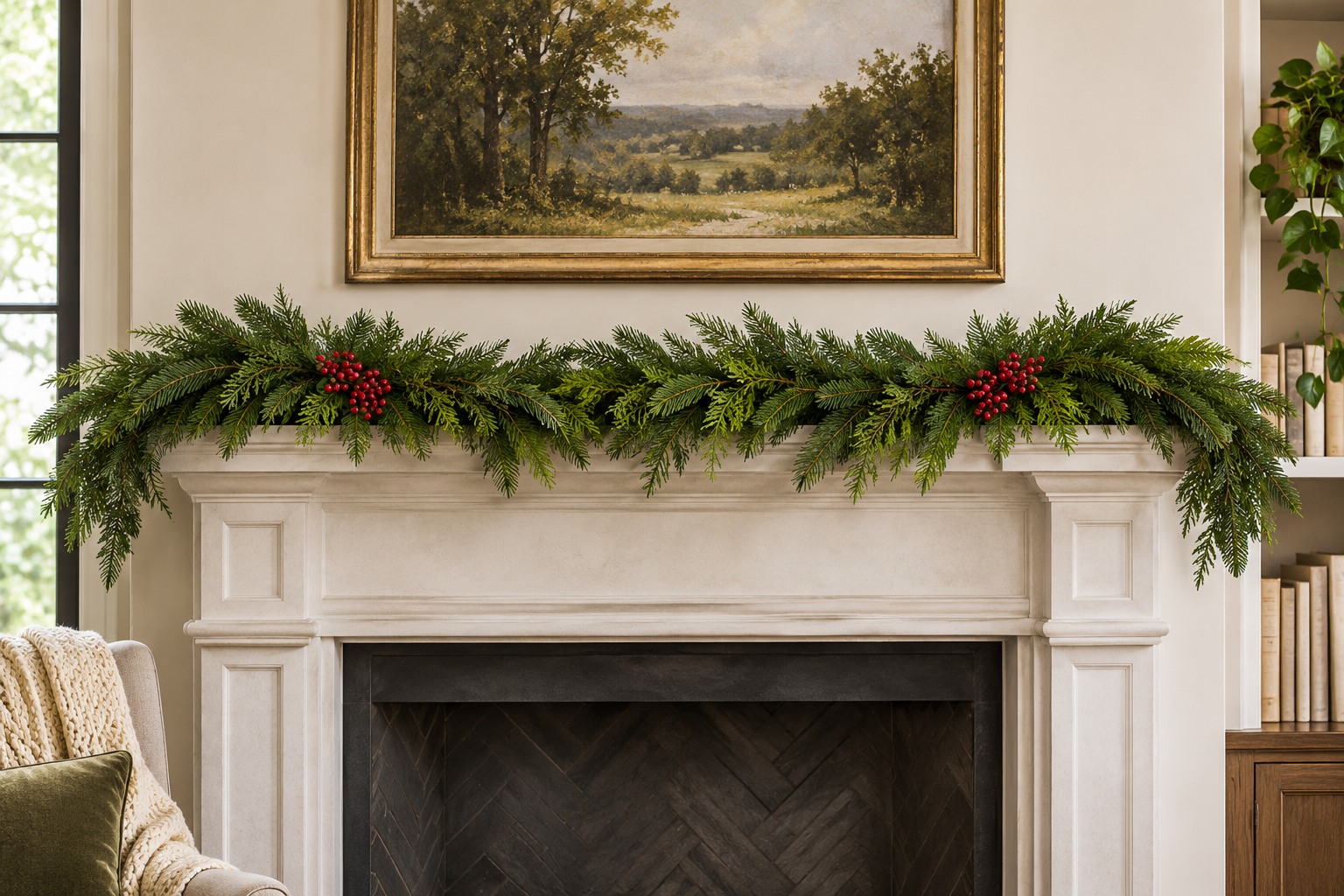
Where two lengths of garland meet, use small berry clusters to make the join look intentional. Place a second cluster farther along the arrangement so the first does not resemble a repair. Keep the connecting stems concealed within the fir rather than stretched visibly across its front.
Choose clusters with secure berries and avoid loose small decorations where children or pets could reach them. Berry stems should decorate a supported join, not hold two garlands together. Once everything is attached, switch off the lights and check whether the joins still read cleanly. A few bright red points can provide plenty of contrast against dark greenery, so you may not need a separate red ribbon or additional red baubles.
12. Tie Muted Brass Bells Into One Small Group
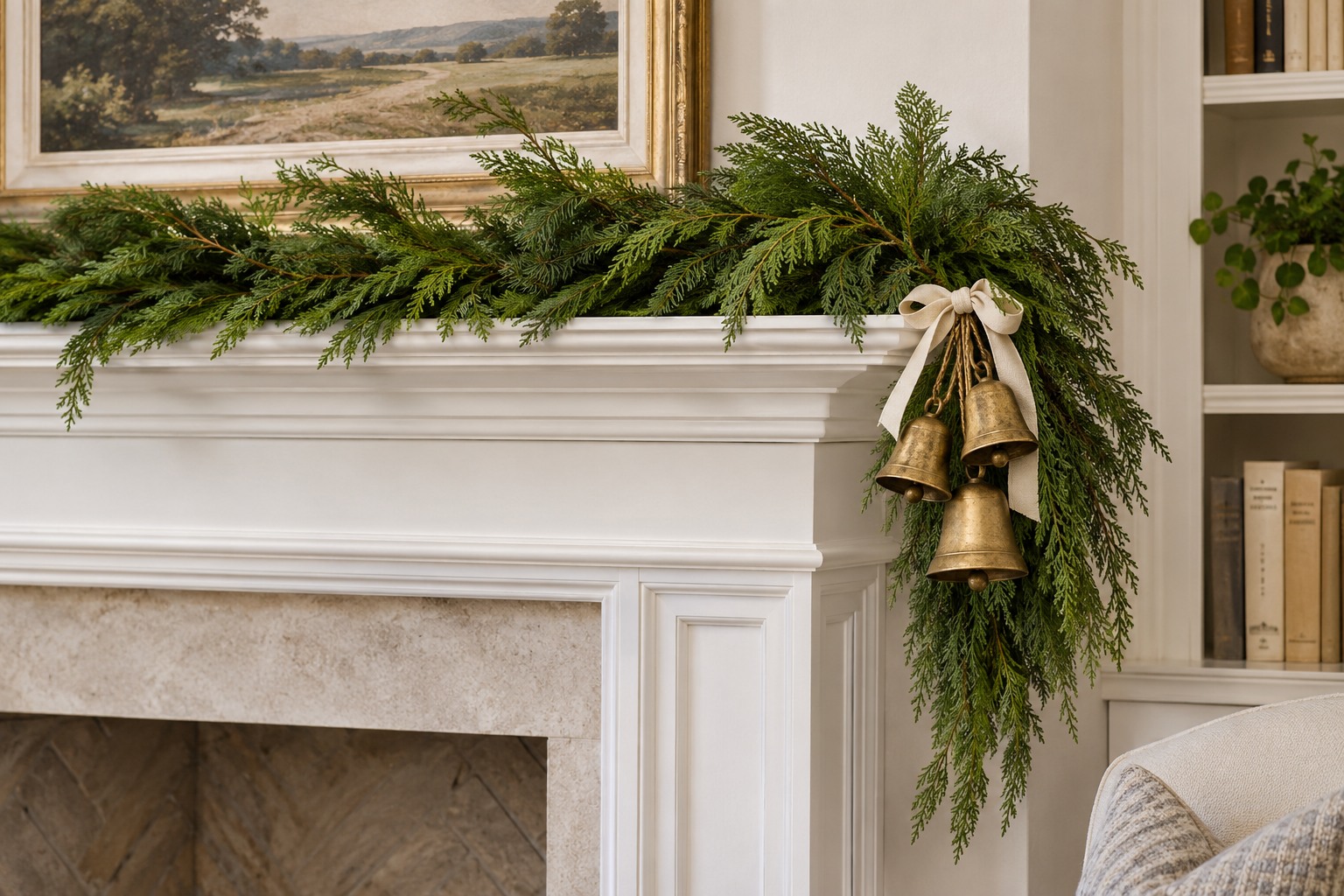
Gather a few decorative brass-colored bells into one compact group near an end or a slight change in the garland’s direction. A matte or aged-looking finish gives a warmer highlight than several reflective ornaments scattered across the whole shelf. Keep the grouping small enough that its supporting ribbon stays secondary.
Confirm that the attachment and shelf supports can carry the added weight. Decorative bells should not hang where they will be knocked by someone passing or pulled by a child. Try the cluster in position before committing to an arrangement of other ornaments. If it already supplies the focal point, leave the neighboring stretch of greenery plain so the group has room to read.
13. Repeat the Tree Ribbon in the Mantel Garland
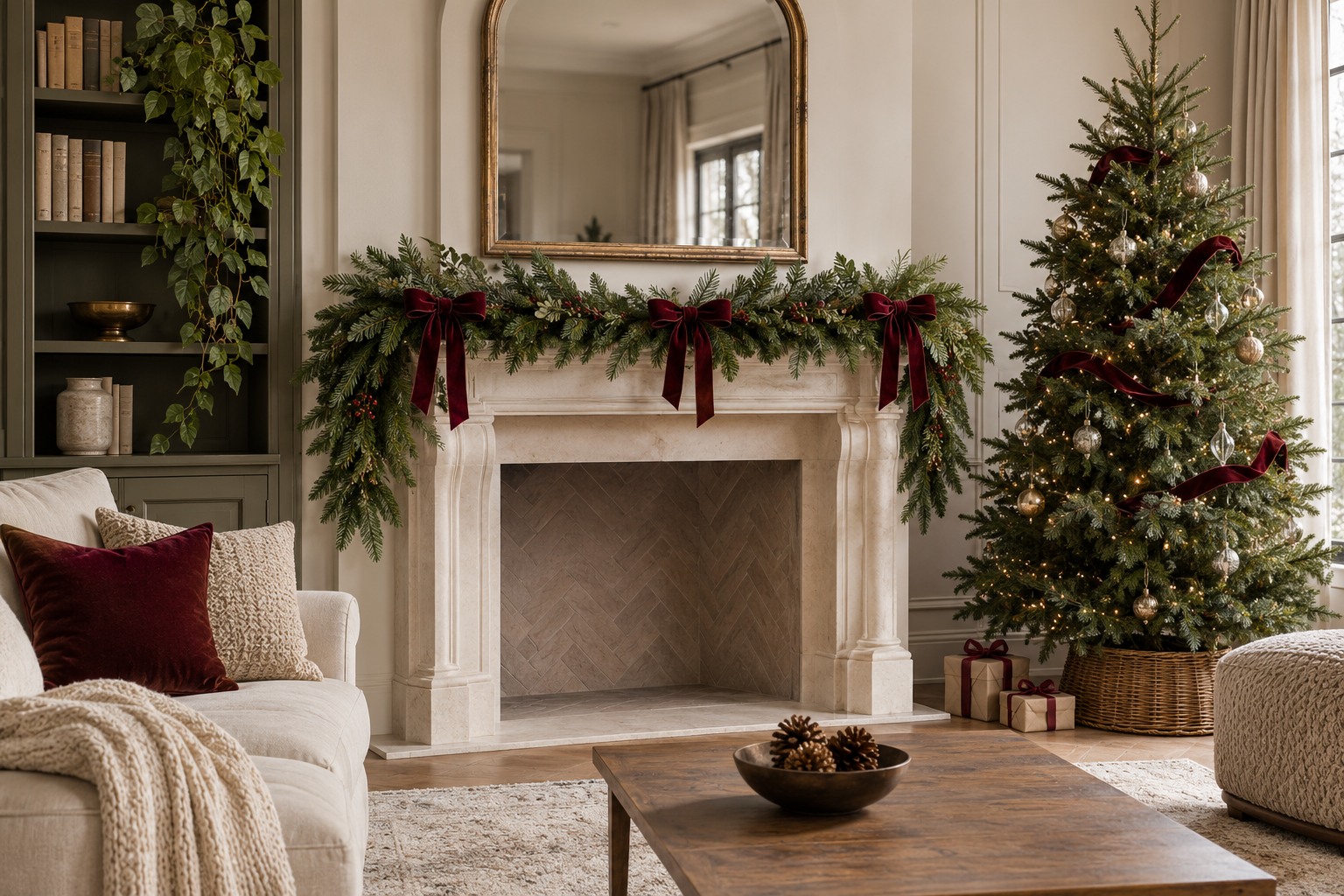
Take one ribbon already used on the Christmas tree and repeat it in a smaller quantity along the mantel. The shared material connects the two displays without making them identical. A loose tree cascade might become three short bows on the shelf, or a tree bow might become a single restrained tuck.
Check the tree and mantel together from the room’s entrance. If both displays occupy the same sightline, use the mantel version more sparingly so neither competes for attention. For the separate decision of how to place ribbon through branches, these Christmas tree ribbon ideas explain tucks and cascades. Keep all mantel ribbon within a safe arrangement suited to your fireplace.
14. Weave a Narrow Plaid Ribbon Through the Greenery
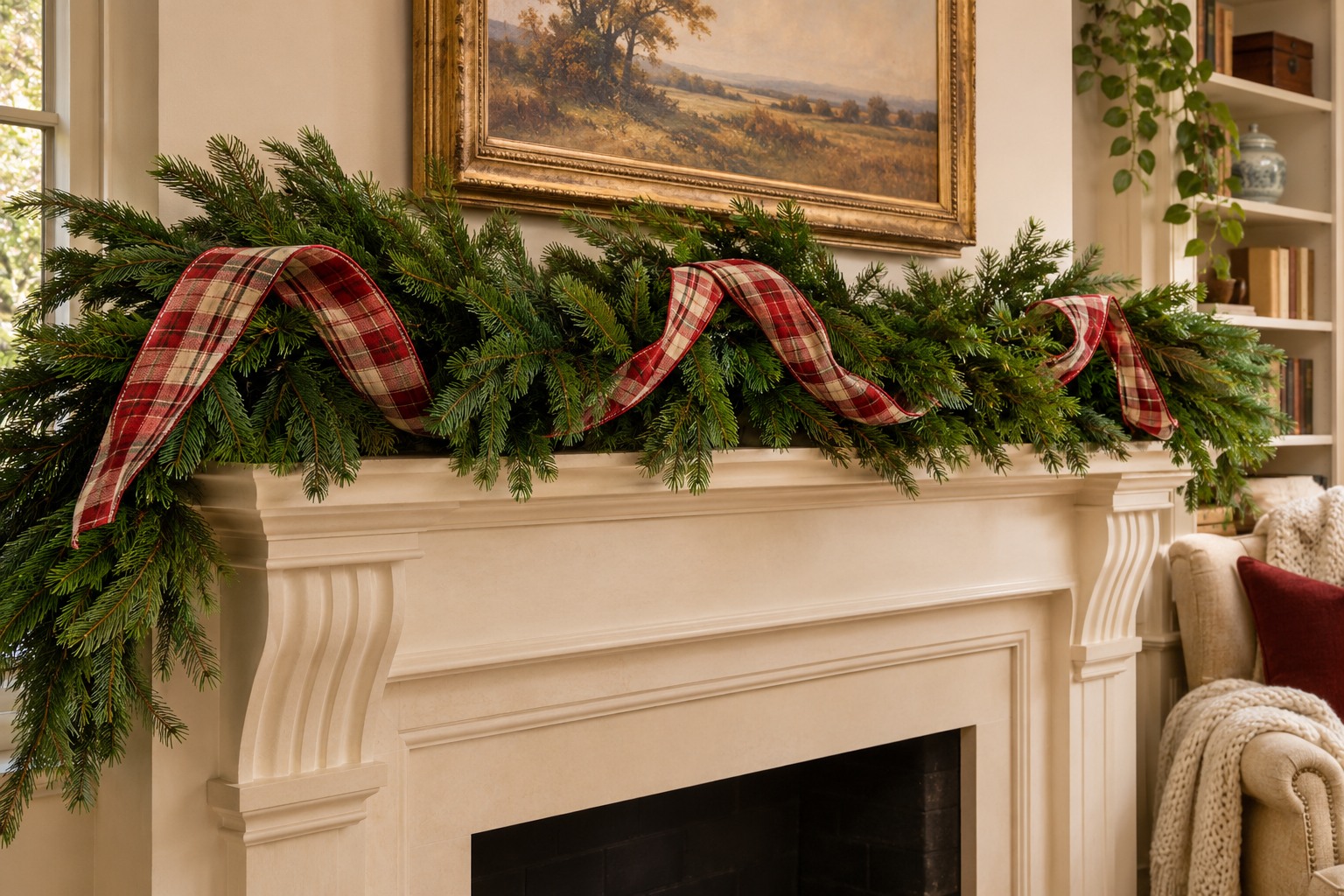
A narrow plaid ribbon can create small flashes of pattern between branches. Make a few relaxed loops on the shelf and tuck the ribbon back into the garland at intervals. Keep the pattern visible where it crosses the front, rather than winding it tightly around the whole strand.
Use a plaid whose colors already belong in the room or your holiday palette. Several competing checks can become difficult to read beside a patterned rug. Pinch and position a test length before cutting the roll, allowing extra for each tuck. Secure the ribbon independently of delicate needle tips and keep any wire ends covered. Stop when the pattern is easy to find from across the room, not when every green space has been crossed.
15. Use Large Bows to Mark the Ends
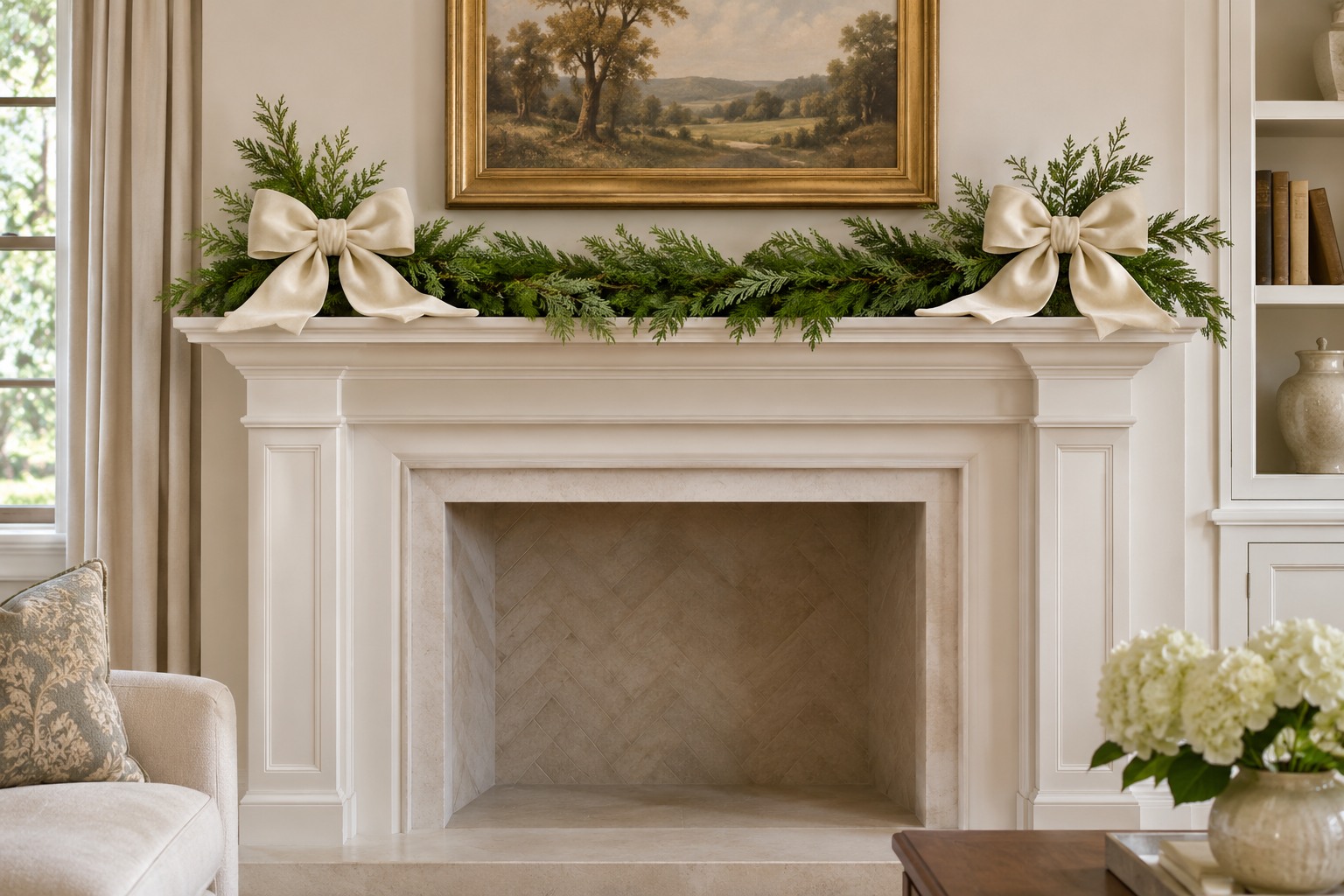
Two generous bows can give a long mantel a clear beginning and ending. Position them where the garland turns or stops, with enough room for the loops to hold their shape. A substantial bow needs a relatively quiet section of greenery around it to avoid becoming another dense knot.
Make both bows before attaching either, comparing their size and visual weight. The loops can be similar without being rigidly identical. Keep tails short or contained on the shelf when hanging ribbon would conflict with the fireplace’s safe area. If the wall has an off-center feature, a single bow may work better than a forced pair; use the actual architecture to decide how much symmetry the arrangement needs.
16. Put Unbreakable Baubles in Small Repeated Clusters
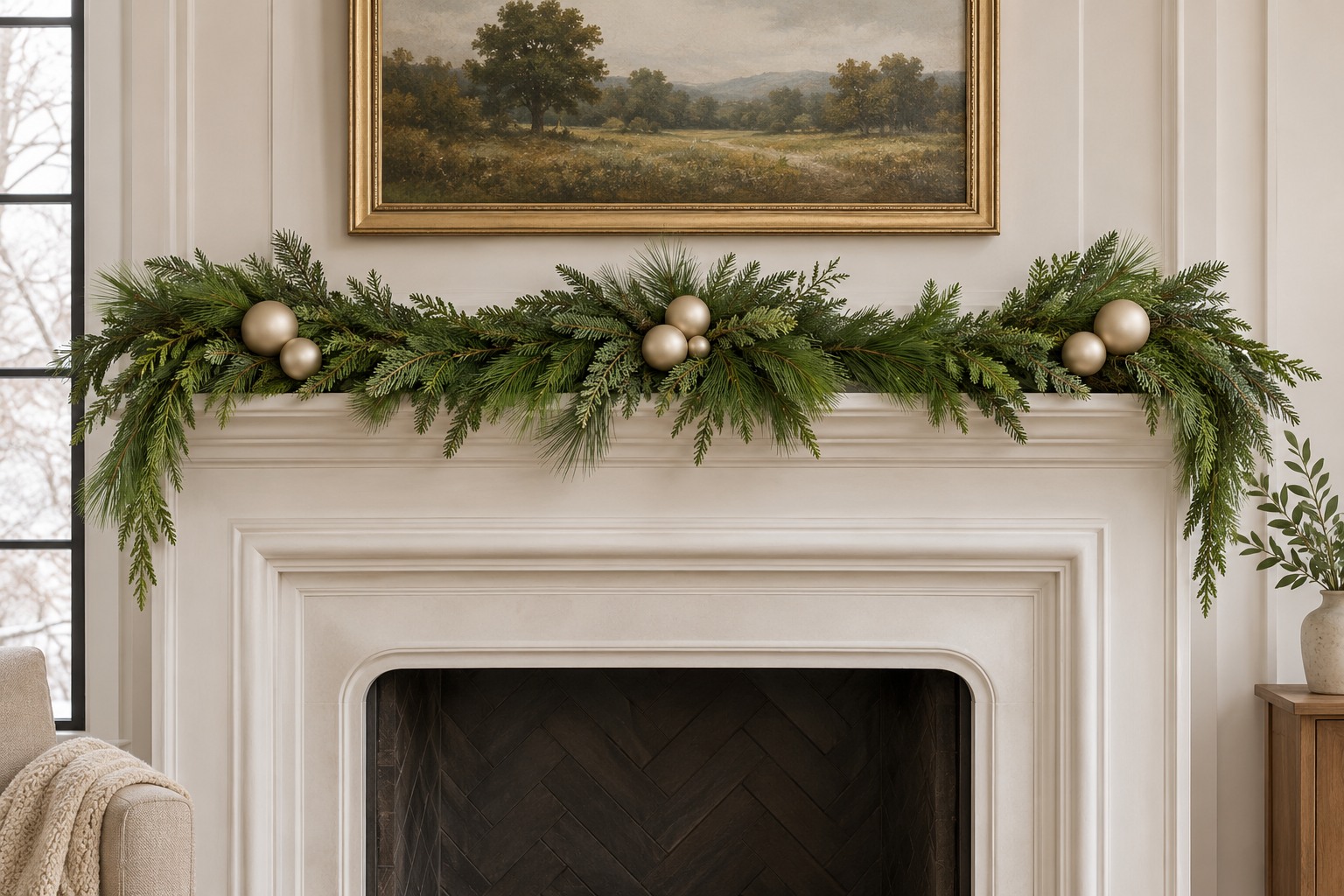
Group two or three small unbreakable baubles together, then repeat the group farther along the garland. The clusters create clearer points of interest than evenly spaced individual balls. Use one finish or a close color family so the grouping, rather than variety, does the work.
Attach each piece securely to an appropriate part of the garland. Unbreakable does not mean safe to leave loose or within reach of small children. Check the arrangement from below, where a shiny ball may reflect its attachment or reveal an empty patch behind it. If the garland already contains lights and mixed foliage, keep the baubles modest; repeated clusters can quickly make a shallow shelf feel crowded.
17. Make a Pale Garland Read Against a Dark Wall
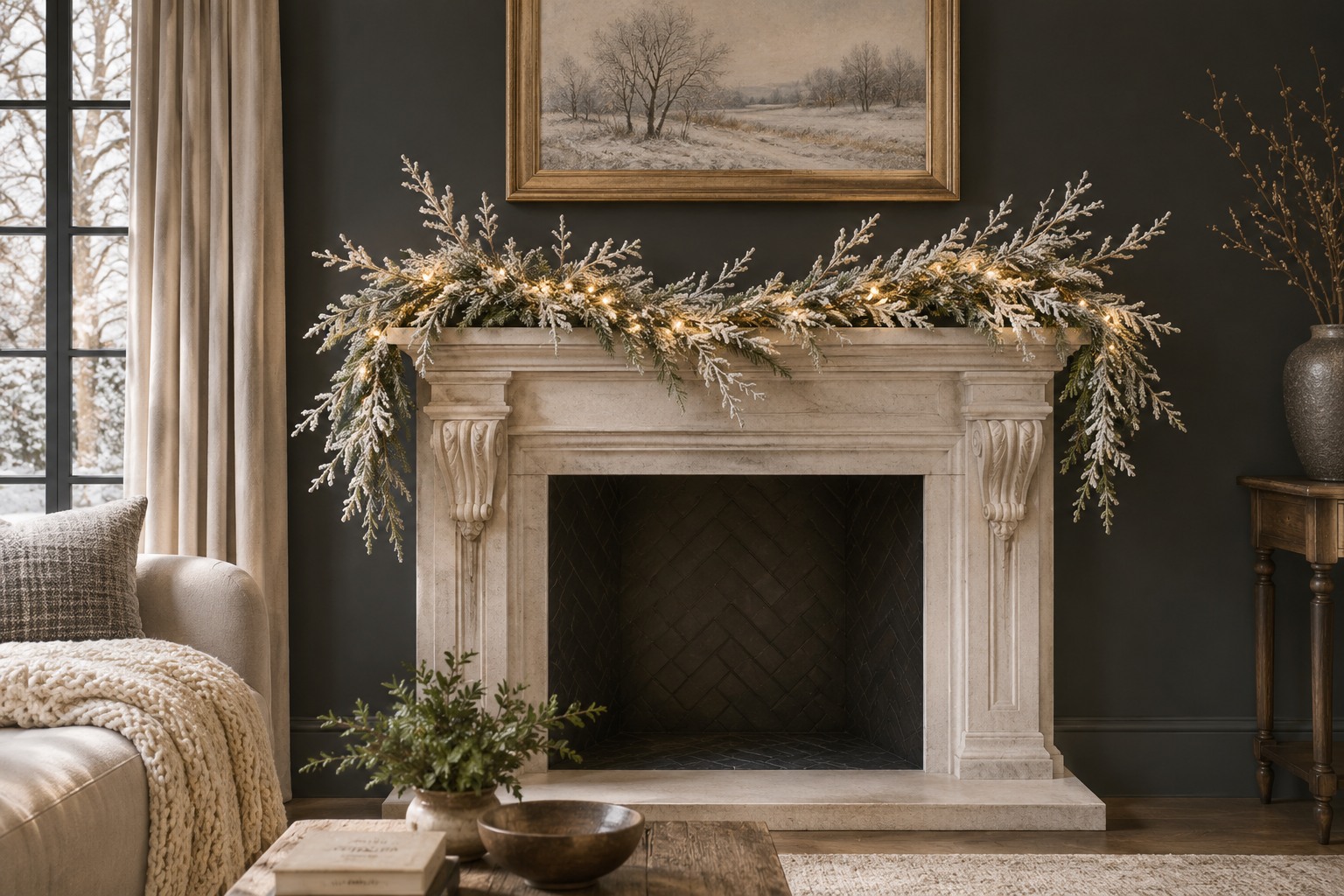
Frosted or pale greenery stands out clearly against charcoal, deep blue or dark green paint. Give the garland a simple shape so the contrast can describe its branches. A narrow line of warm lights can add depth without turning the whole arrangement into a bright white band.
Check whether loose flocking or glitter could transfer to the shelf before placing it directly on a delicate finish. Follow the product’s care directions and use suitable protection where needed. Look at the arrangement in daylight as well as with its lights on; excessive pale ornaments may disappear into the foliage. One darker ribbon can anchor the center if the contrast feels too uniform, but the dark wall may already provide all the definition required.
18. Set Dark Greenery Against Warm Wood
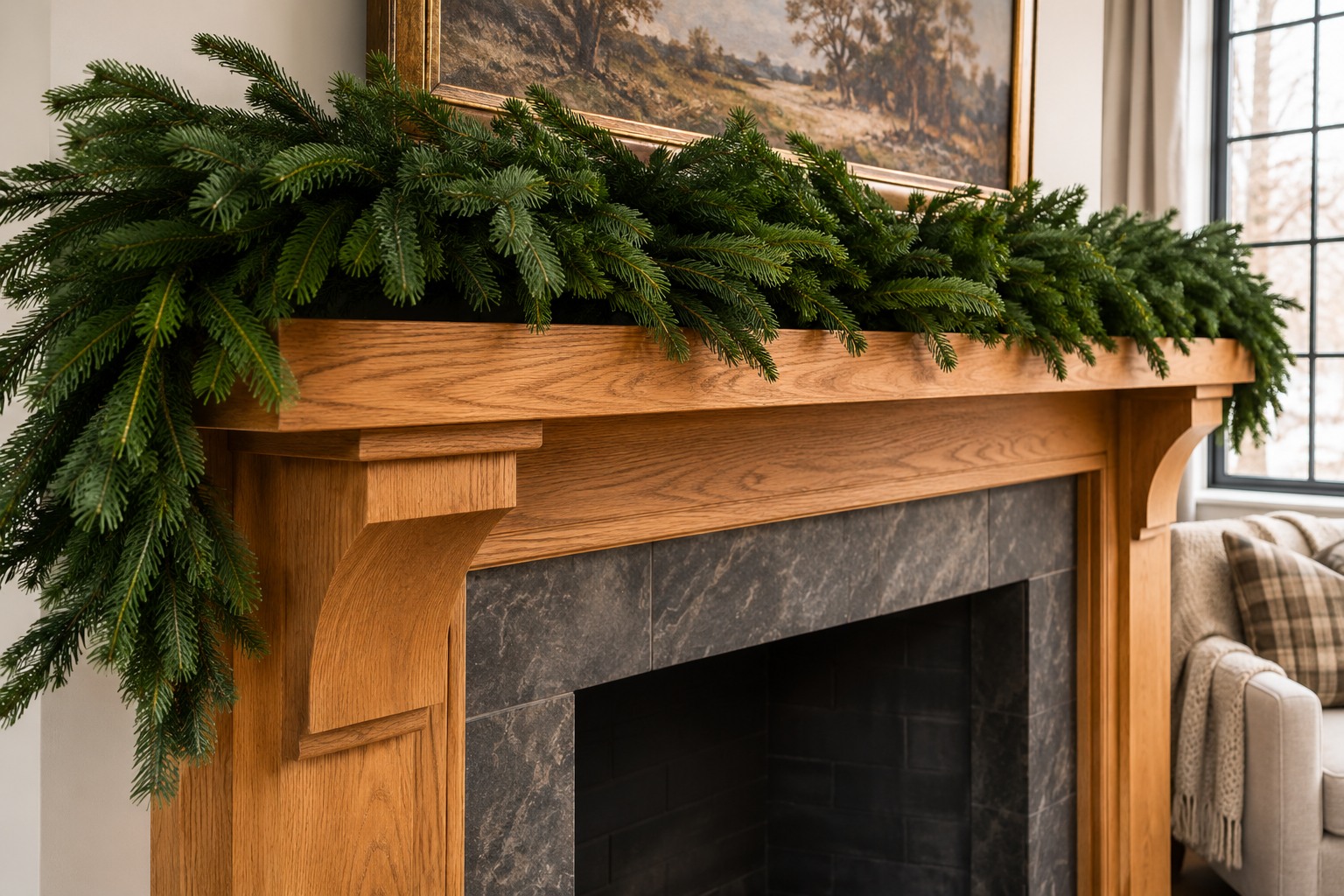
On a warm wood mantel, deep green branches can create a strong edge without additional color. Arrange the greenery so a visible strip of wood remains beneath or in front of it. That small amount of exposed surface helps the shelf retain its character.
Protect the finish from moisture, sap, abrasive stems and unsuitable adhesives using methods appropriate to the actual material. A garland should not require damage to a good wood surface to remain stable. Choose small accents in cream, aged metal or the wood’s own warm tones if the room needs more detail. Before adding them, view the shelf from the seating area: the contrast between wood and green may already be the strongest part of the display.
19. Give a Stone Surround a Cleaner Garland Outline
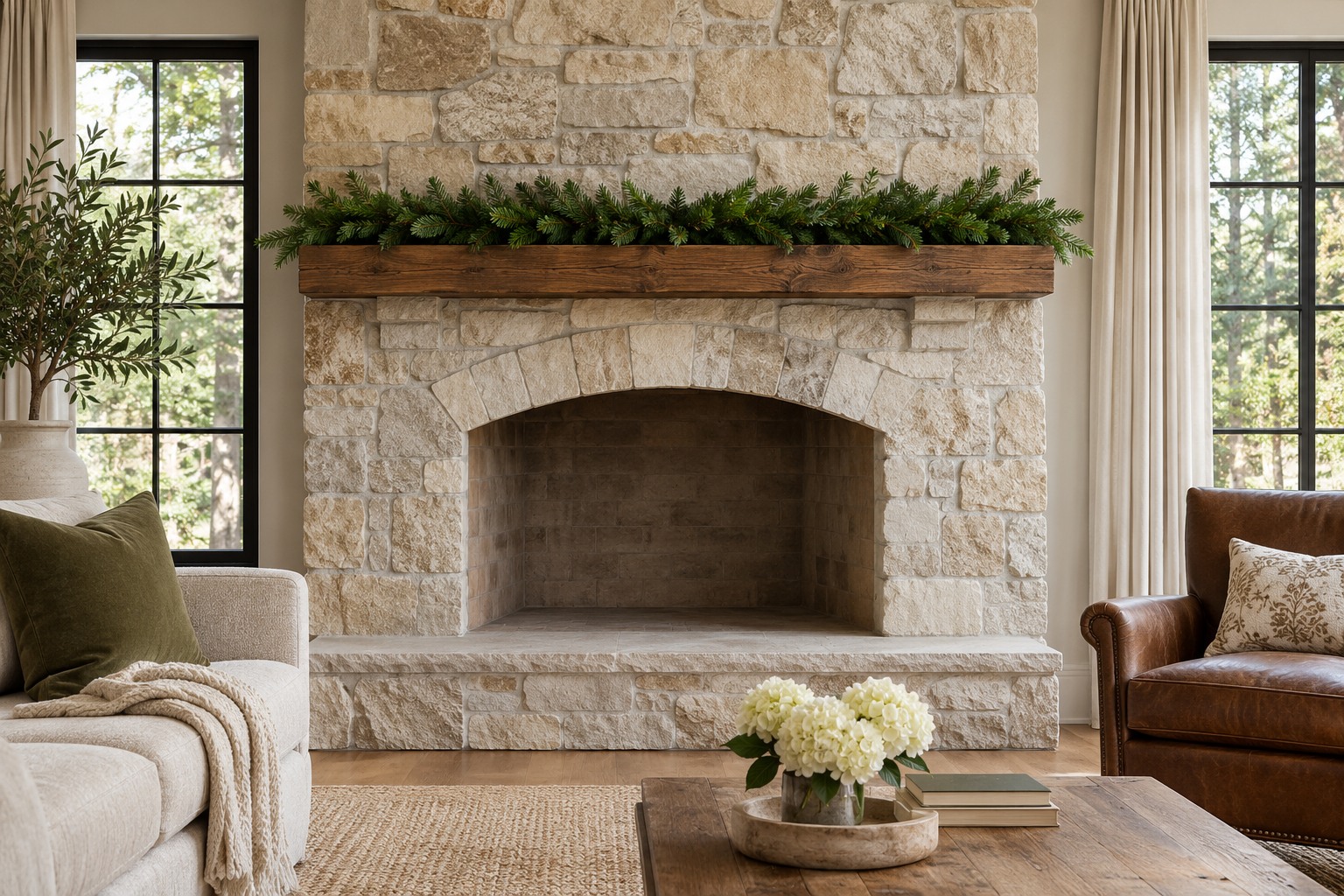
A textured stone surround already has an irregular surface, so a clean garland shape can help keep the fireplace legible. Use a relatively even thickness along the shelf and limit the number of projecting stems. Let the stone’s variation remain visible below the greenery.
Choose supports compatible with the particular mantel and stone; rough masonry does not automatically provide a reliable gripping surface. Do not improvise adhesive attachments that are unsuitable for its finish or temperature. If the whole room needs arranging around a substantial surround, these living room fireplace ideas address seating and the broader layout. Keep this seasonal layer subordinate to the architecture and its safety requirements.
20. Leave the Television and Its Ventilation Clear
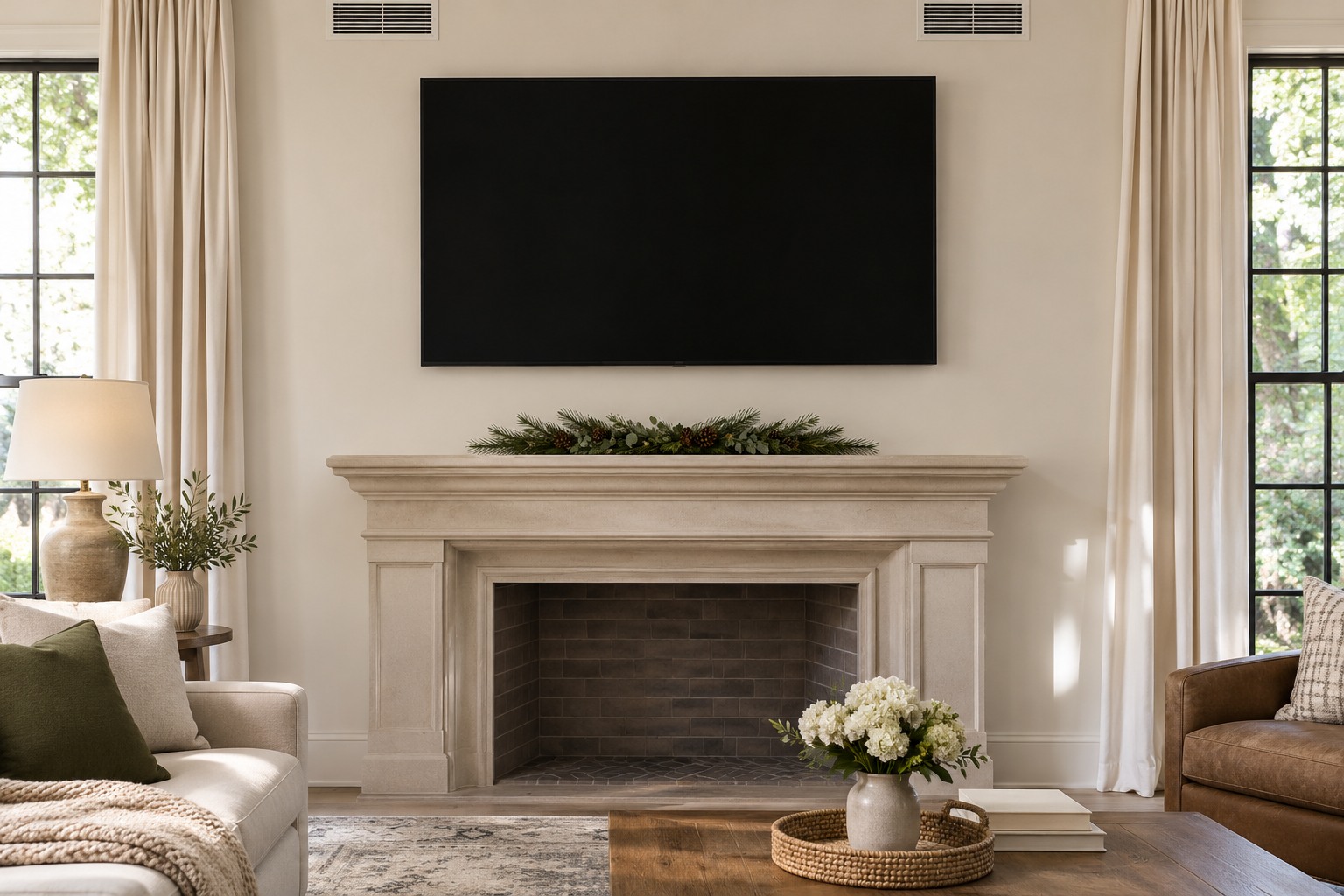
Where a television sits above the mantel, keep greenery, lights and ornaments away from the screen, its controls and its ventilation paths. Check the equipment and fireplace instructions together rather than assuming the gap between them is usable decorating space. A low arrangement can work only if that actual space permits it.
View the display with the television both on and off. Bright LEDs reflected in a dark screen can be distracting even when branches are not physically in the way. Avoid wrapping wire around mounts or hiding controls behind foliage. If safe ventilation and heat clearances leave little room, move the garland to a separate console rather than compressing it into a narrow gap.
21. Center a Small Wreath Above a Low Garland
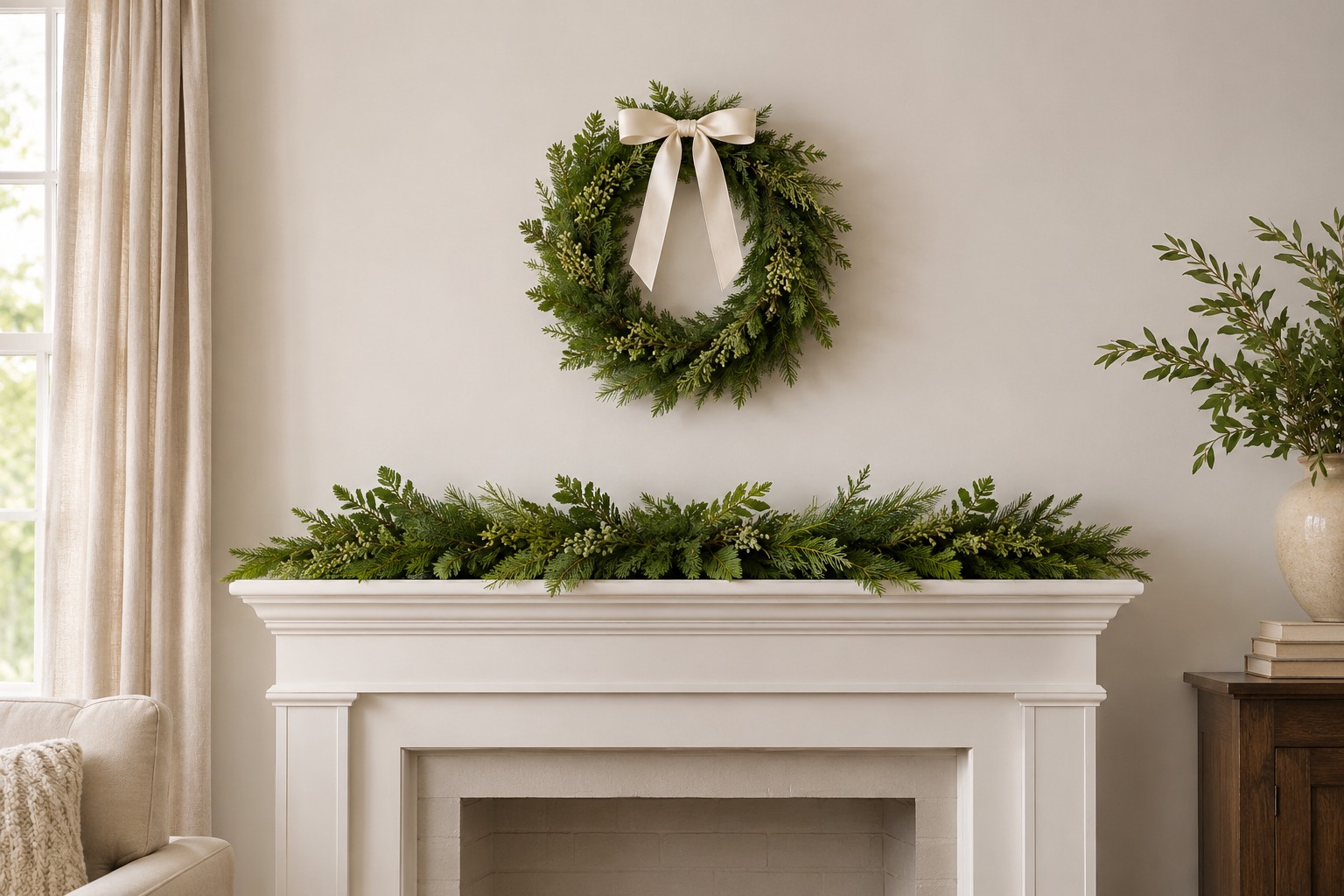
A small wreath can act as the wall’s focal point while the garland stays low and horizontal. Choose related greenery so the two elements feel connected, but leave a clear area of wall between them. That separation keeps the display from looking like one heavy mass.
Secure the wreath independently to a suitable wall fixing; do not suspend it from the garland. Place it according to the wall composition, which may differ from the exact midpoint of the shelf. Check the arrangement from the main doorway, especially where the mantel is partly hidden by furniture. If the wreath includes a bow, repeat its color sparingly below or leave the garland undecorated to avoid competing focal points.
22. Use Battery Micro Lights With Accessible Controls
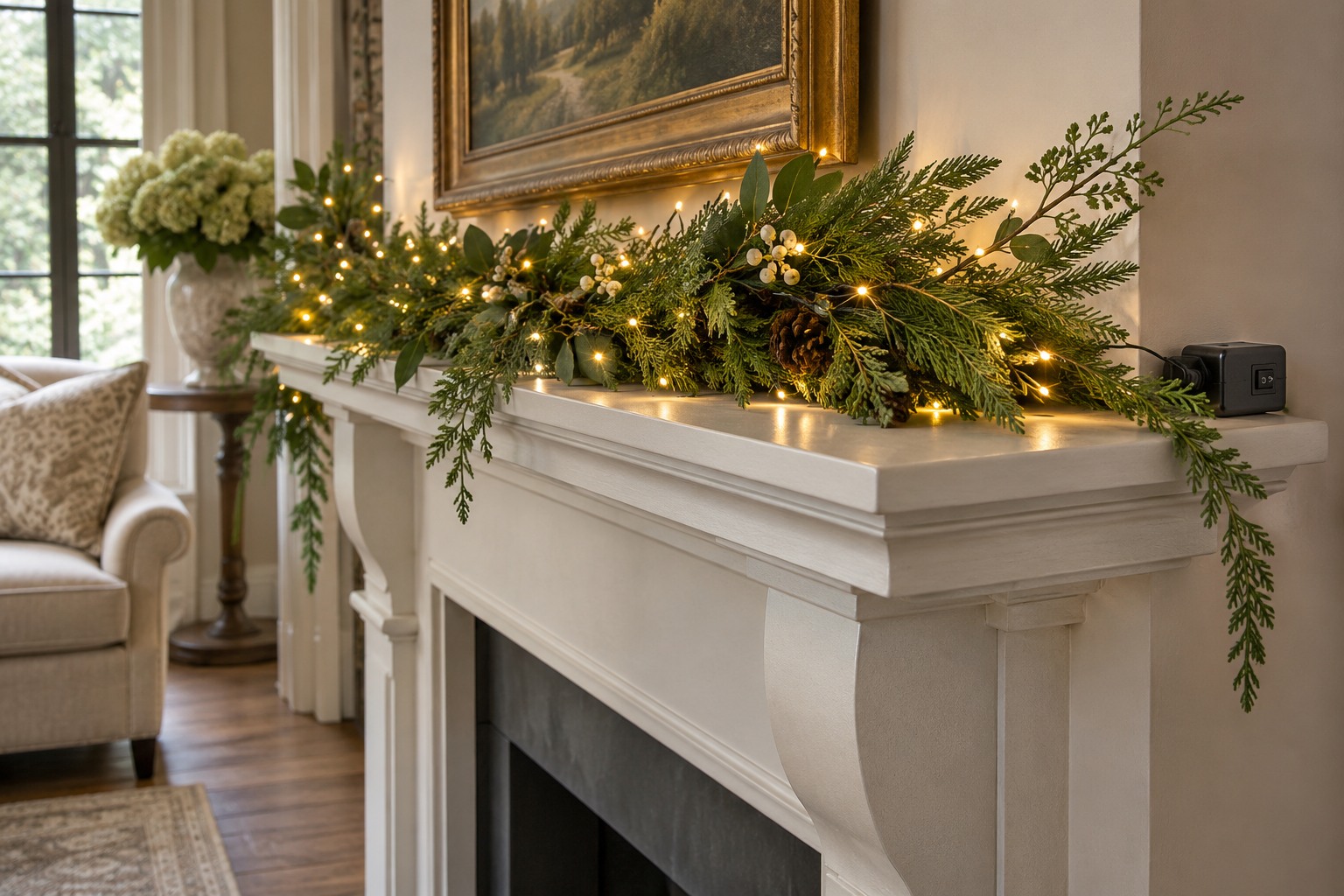
Battery lights can remove the need for a cord running down the surround, but their battery box still needs a planned position. Choose a spot where the controls can be reached without tugging on the garland. Keep the box and wire within the conditions specified by the light manufacturer.
Test the entire light strand before placing it among the branches. If your garland already has integrated lights, decide whether it needs anything more before adding a second system. Keep battery compartments secured and inaccessible to children, and follow the stated battery and timer instructions. Do not conceal a box inside tightly packed material or treat a battery-powered decoration as suitable for fireplace heat.
23. Let One End Turn Onto a Deep Side Return
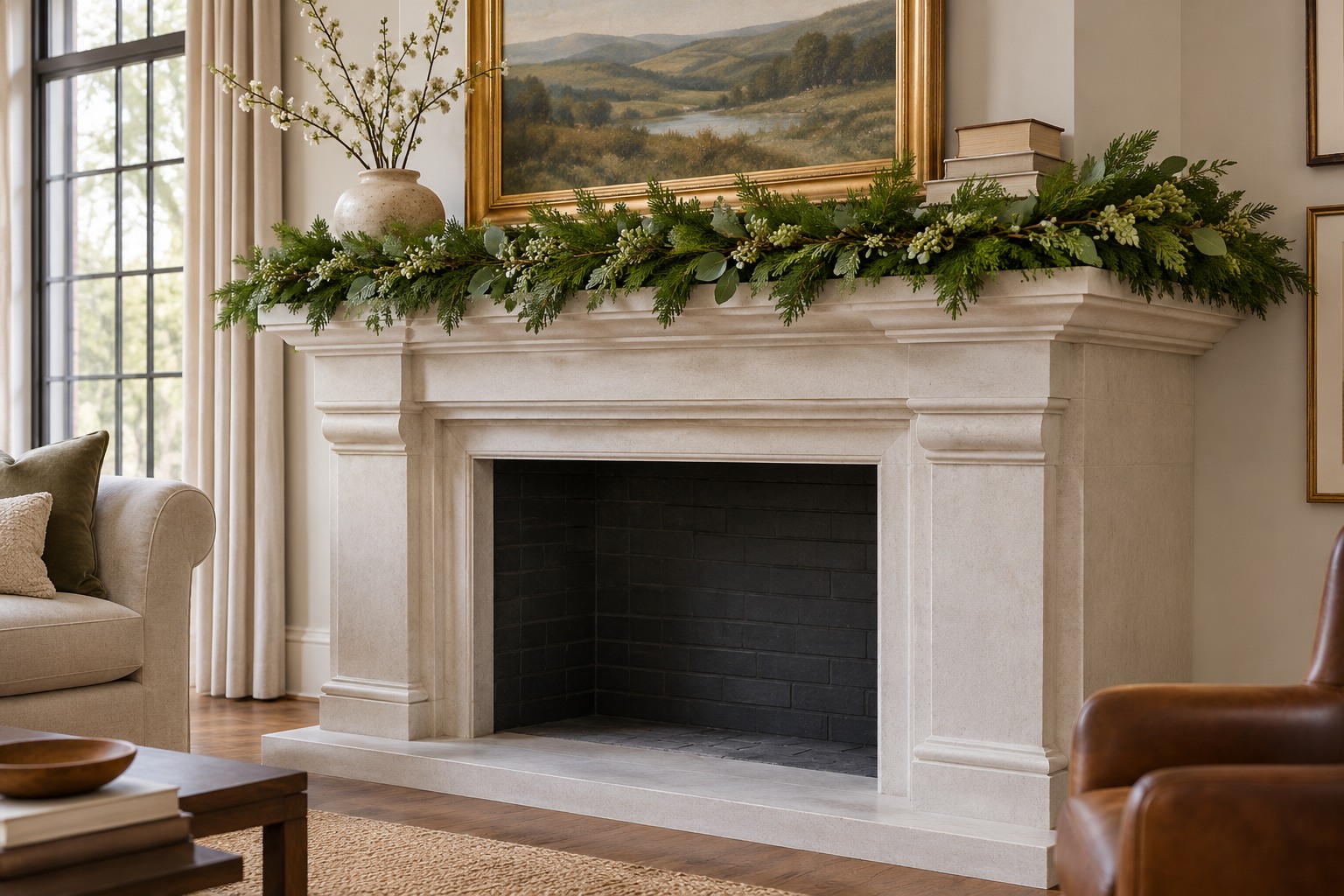
A deep decorative mantel can have a useful return at one side. Turn a short garland end across that surface rather than dropping it toward the hearth. The change in direction gives the arrangement depth when seen from the doorway and can suit a fireplace approached at an angle.
Check that the return is genuinely wide enough to support the greenery without an unstable overhang. Use the same careful attachment planning as on the front span. Keep the main section visible so the arrangement does not appear to disappear around a corner. This is a shape decision for a suitable shelf, not a reason to put branches beside a hot appliance or inside any required clearance area.
24. Keep the Hearth Empty Beneath a Fuller Shelf
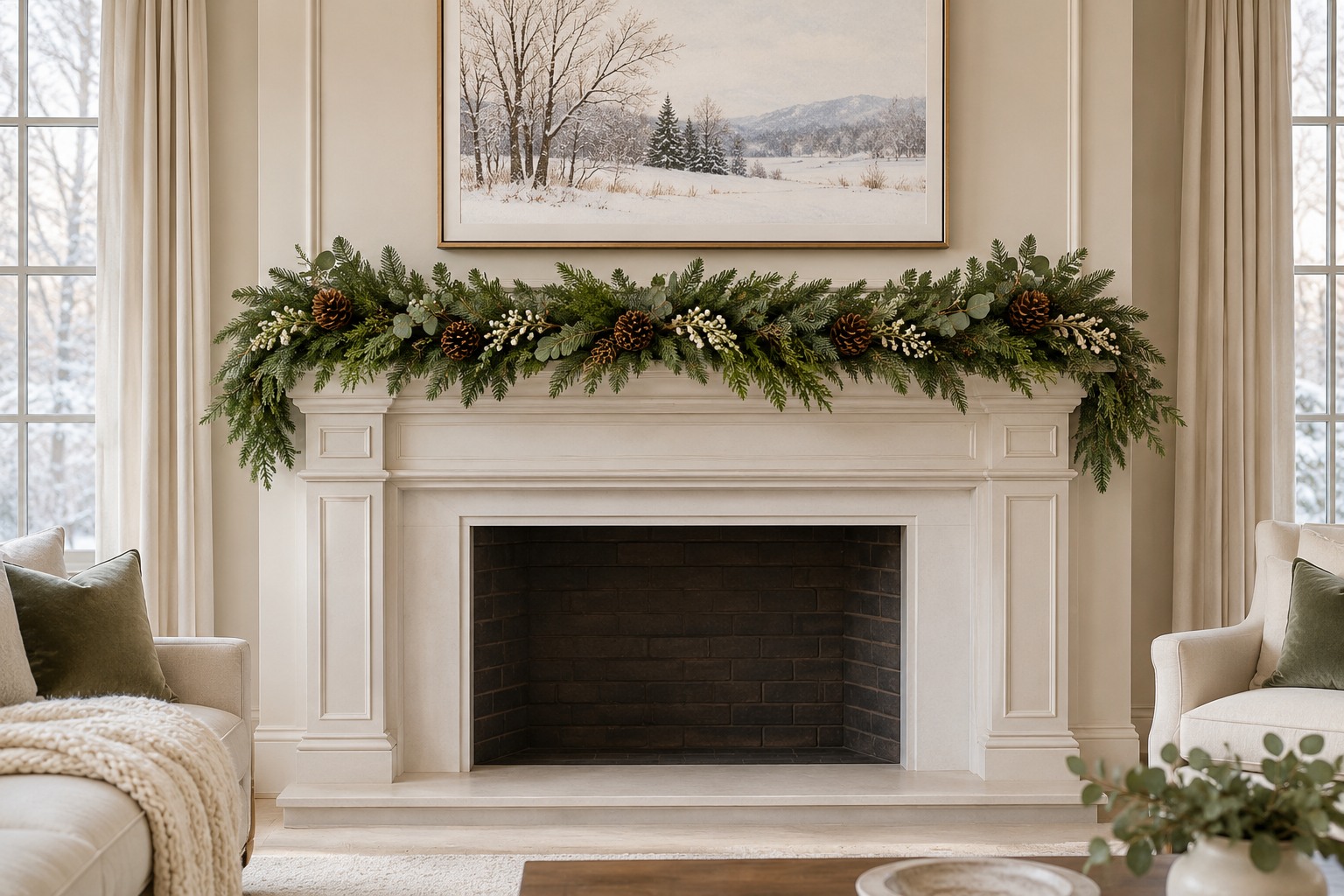
When the garland is the main feature, an uncluttered hearth can give the eye somewhere to rest. Resist filling the floor below with another collection simply because it is available. The contrast between a full shelf and a clear base can make the greenery feel more intentional.
On a working fireplace, the hearth and surrounding space must remain arranged according to its operating instructions, not a seasonal photograph. On an unused decorative surround, keep the opening and walking route clear enough that the composition still feels comfortable in the room. Step back after finishing the shelf and remove one item elsewhere if the overall scene feels crowded.
Choose the shape first, then the foliage and finally the smallest accents. A garland that suits the shelf, leaves important objects visible and stays stable will usually need fewer finishing pieces than one assembled ornament by ornament. Keep the final arrangement appropriate to how the fireplace is actually used throughout the season.
Discover more from HomeTrendora
Subscribe to get the latest posts sent to your email.