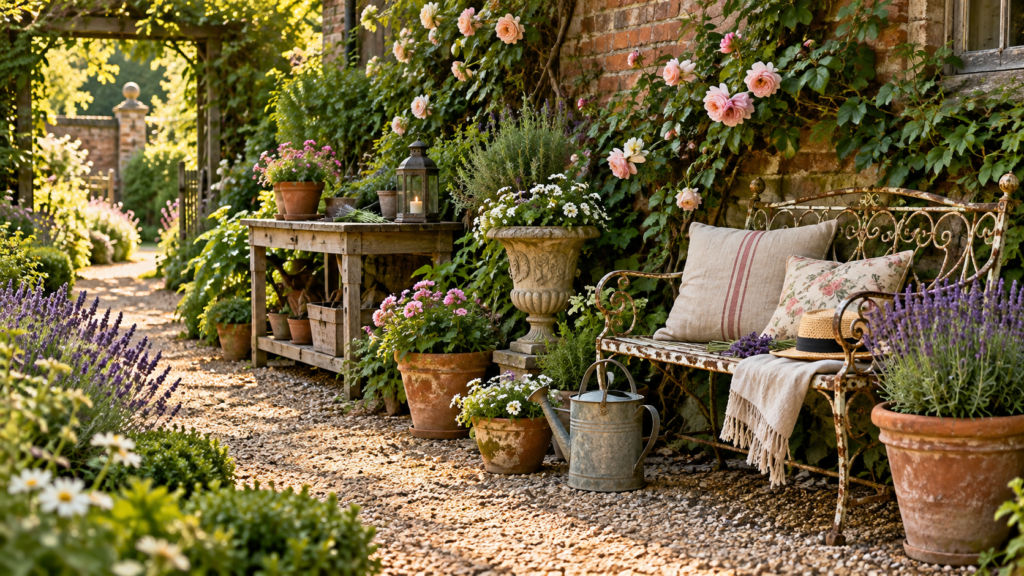
A bedroom can feel light and orderly while still showing what you like. The Stockholm room look being searched for brings those qualities together: pale bedding, useful furniture and a few confident details, from a narrow stripe to a small patterned cushion. It is an adaptable decorating direction, rather than a rule for how everyone in Stockholm lives.
Start with your existing bed, storage and route through the room. These Stockholm room ideas work best when each change solves something visible: a cluttered bedside, an empty wall or a bed that needs one clearer contrast. Choose a small palette, keep the practical furniture useful and let the more personal pieces arrive gradually. You do not need to replace everything to get a collected result.
1. Start With Cream Bedding and One Clear Contrast
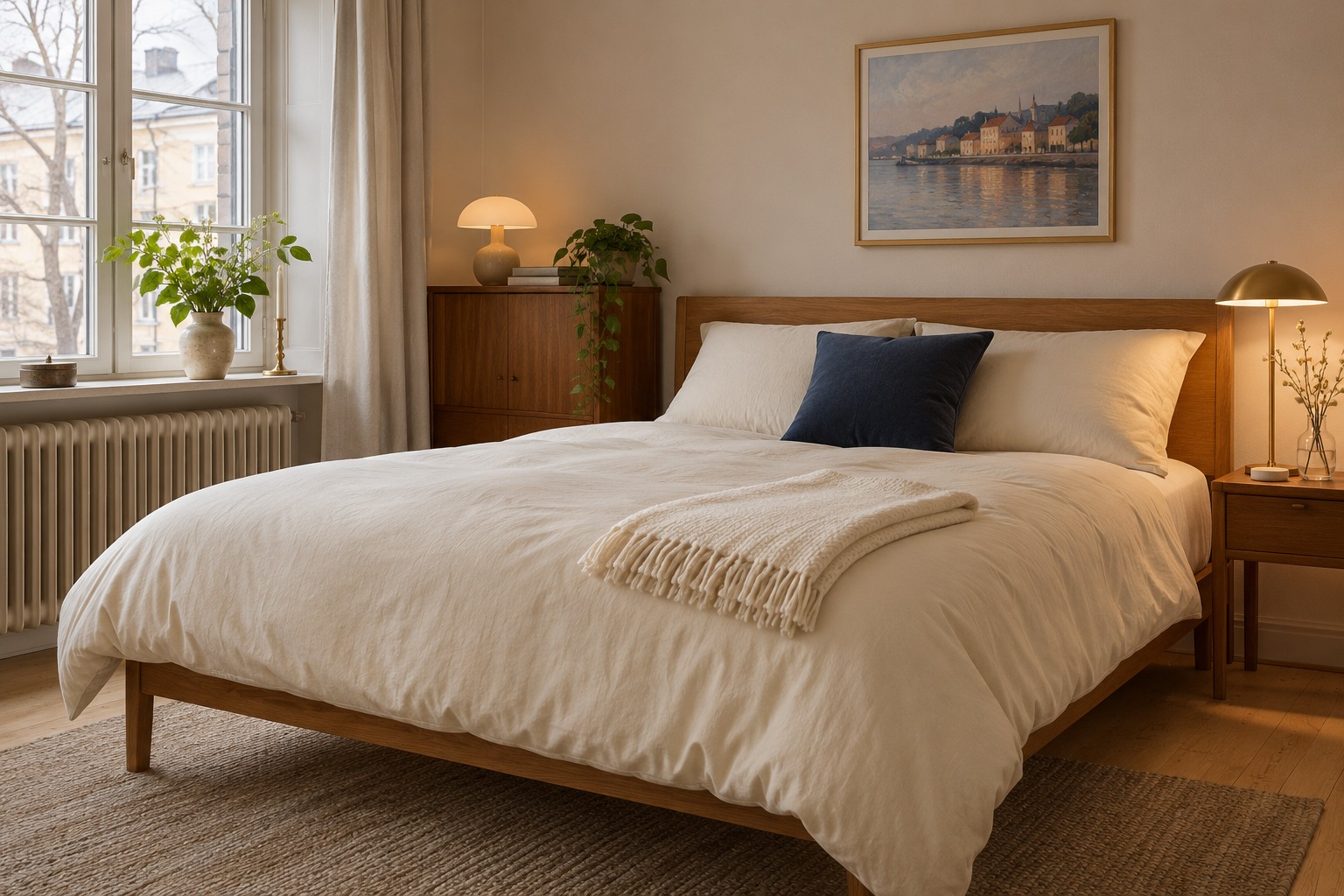
Cream bedding provides a softer starting point than a large expanse of bright white. Choose a tone that works with the bed frame and the room’s daylight, then add one clear contrast: a dark cushion, a blue stripe or a muted red throw. Leave enough plain fabric visible for that detail to stand out.
Build the bed around the layers you actually use. A single folded throw near the foot often supplies enough color without several decorative pillows to remove every night. Check the combination from the bedroom doorway, where small differences in cream may disappear. If the bedding and wall merge too completely, introduce contrast through a pillowcase or a darker frame rather than buying an entirely new set.
2. Put Bedside Clutter Behind a Plain White Drawer
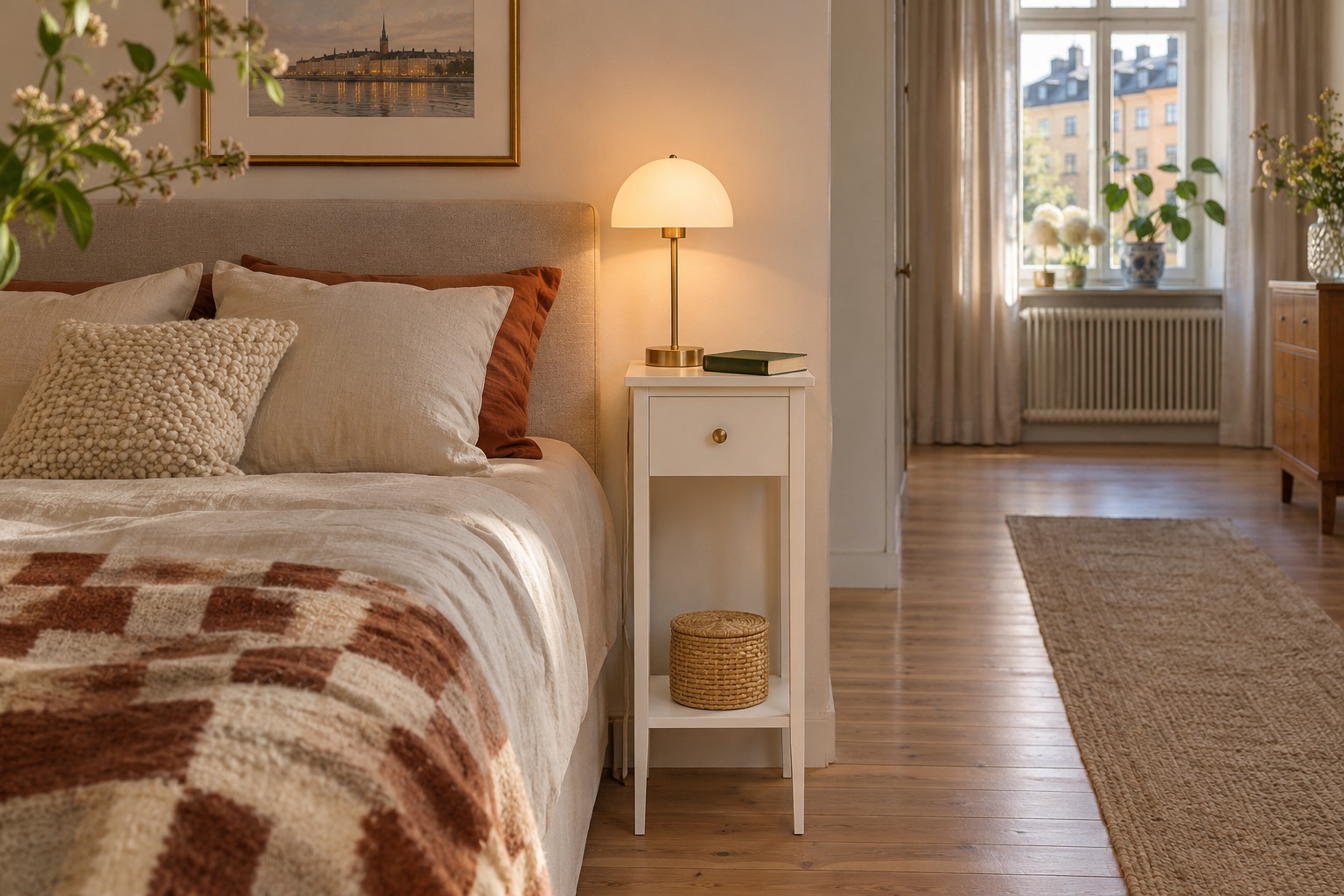
A small white table with a drawer can give the bed a clear edge while hiding chargers, hand cream and other everyday items. Keep the top for the few things you reach for in the dark. Use the lower shelf sparingly so the closed drawer does not simply move the clutter into another visible pile.
Compare the table’s height with the top of your mattress before choosing it. A narrow footprint can be helpful beside a door or wardrobe, but a tall table may feel awkward next to a low bed. Measure the drawer’s usable interior as well as the outer dimensions. Position the lamp and charging lead so you can open the drawer without moving everything on the tabletop.
3. Choose a Warm Wood Piece to Keep the Room Grounded
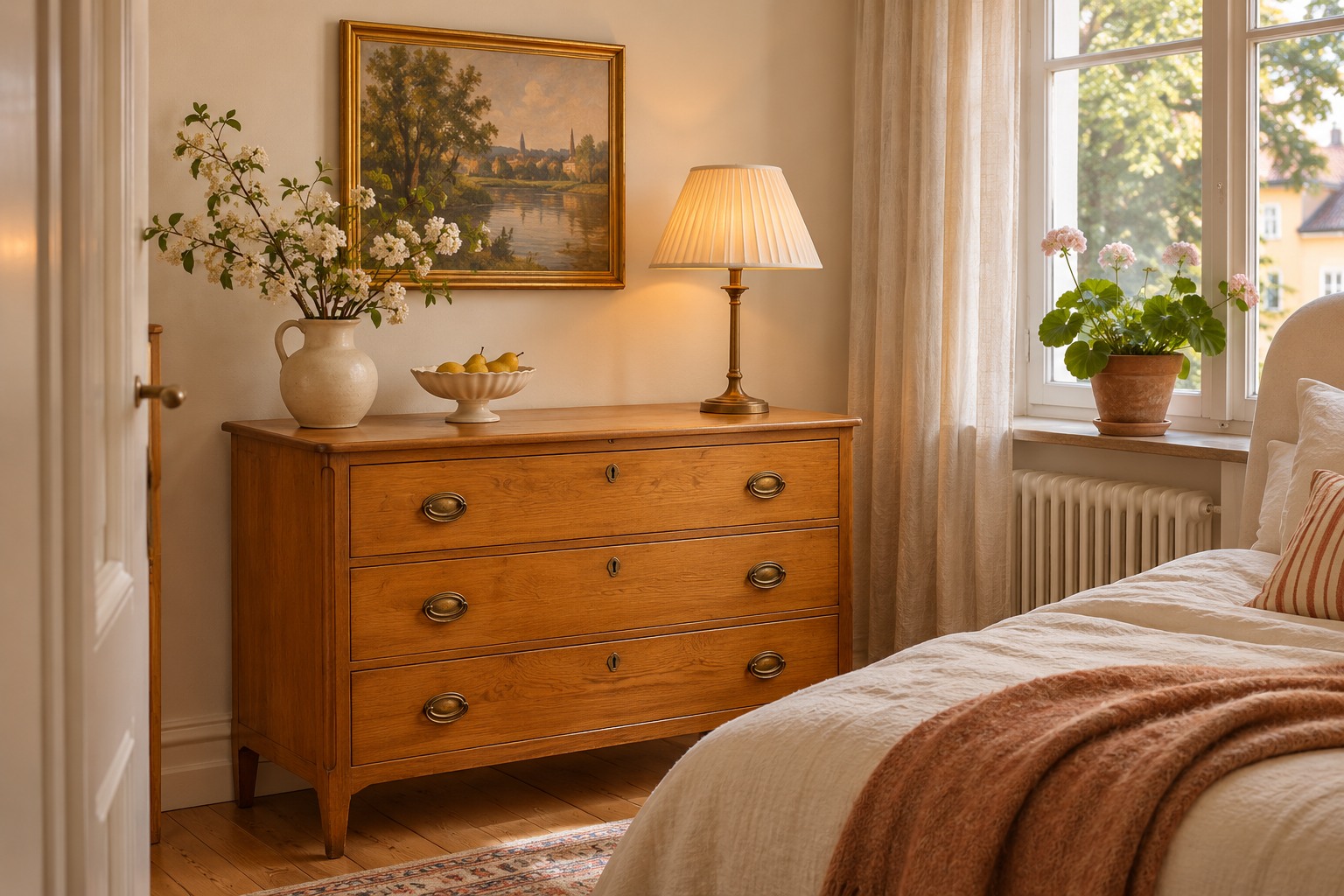
One warm wood piece can give a pale bedroom more depth. Work with an existing dresser, bed frame or small desk before adding another finish. Look for a wood tone that sits comfortably beside the floor, allowing enough difference that the furniture’s outline remains visible.
A collected room does not require every piece to match. Relate two different woods through a shared warm undertone or repeat a similar shape elsewhere. Keep a large wood surface visible rather than covering it completely with trays and accessories. If the furniture is already visually substantial, use lighter bedding and a quieter wall around it so the room keeps the airy quality you wanted in the first place.
4. Use a Narrow Stripe as the Main Bed Pattern
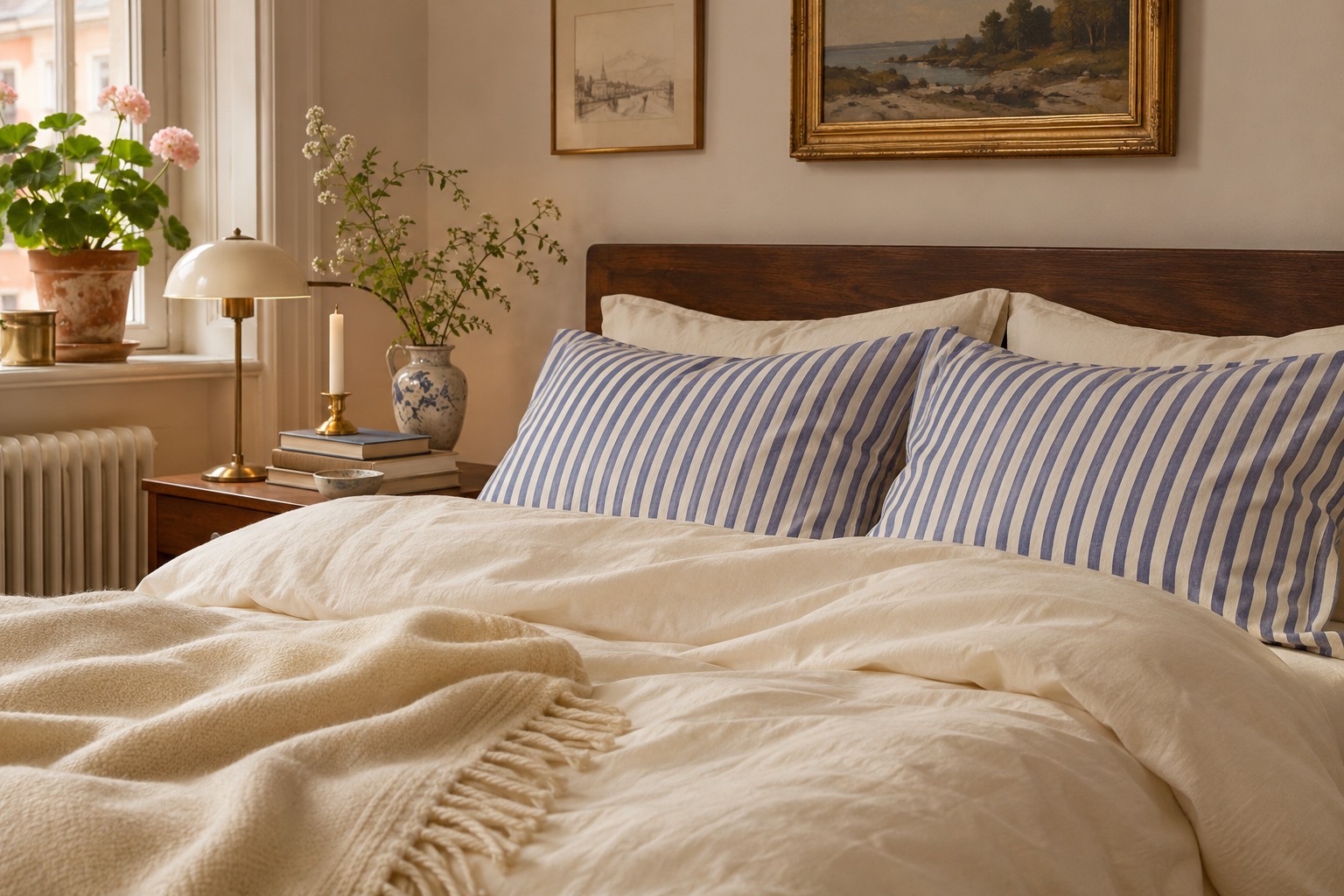
A narrow stripe brings a clear pattern into the bed without filling the room with motifs. Try striped pillowcases against a plain duvet or a striped cover beneath a solid throw. Keep the stripes in two colors that already appear in the room so the pattern feels connected to its surroundings.
Consider the stripe’s scale from across the room. Very fine lines can merge into a single tone, while a broader stripe becomes a stronger graphic element. Start with one patterned layer and check whether the rest of the bed still needs anything more. A small repeat is especially useful beside an older carved frame, where several larger patterns could compete with the furniture’s own detail.
5. Add a Small Leopard-Print Accent Rather Than a Theme
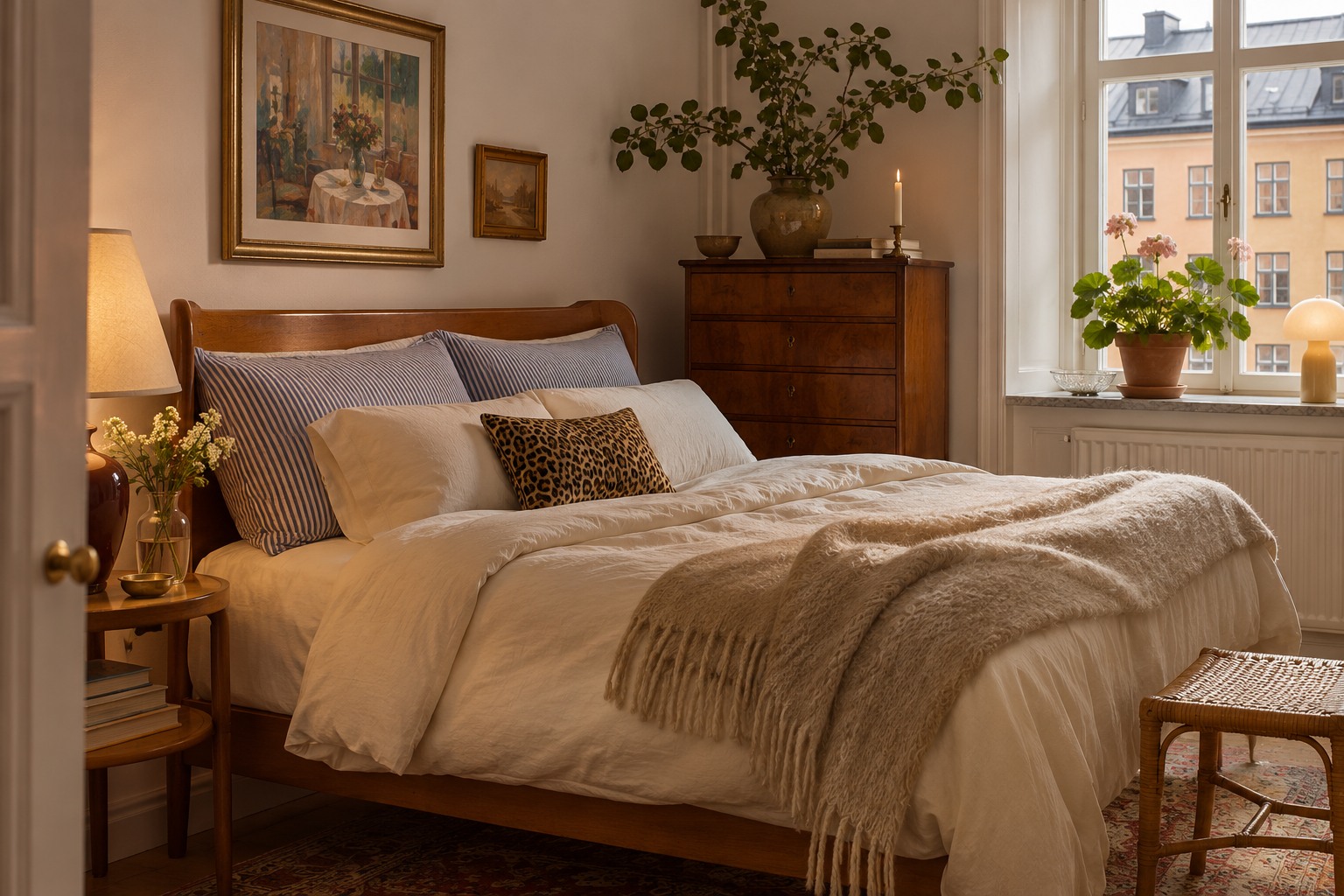
A small leopard-print cushion can introduce a more playful note among cream bedding and warm wood. Treat its brown, black and tan as part of the room’s palette. Keeping the print to one modest piece allows it to feel like a personal choice rather than the start of a themed bedroom.
Choose a size that can sit comfortably beside your sleeping pillows. Look at the print in the room’s actual light; some fabrics have a much warmer or sharper contrast than they appear to online. If the bed already carries a bold stripe, separate the two patterns with a visible area of plain bedding. You can remove the accent easily if the combination feels too busy.
6. Bring a Muted Red Detail Into a Pale Room
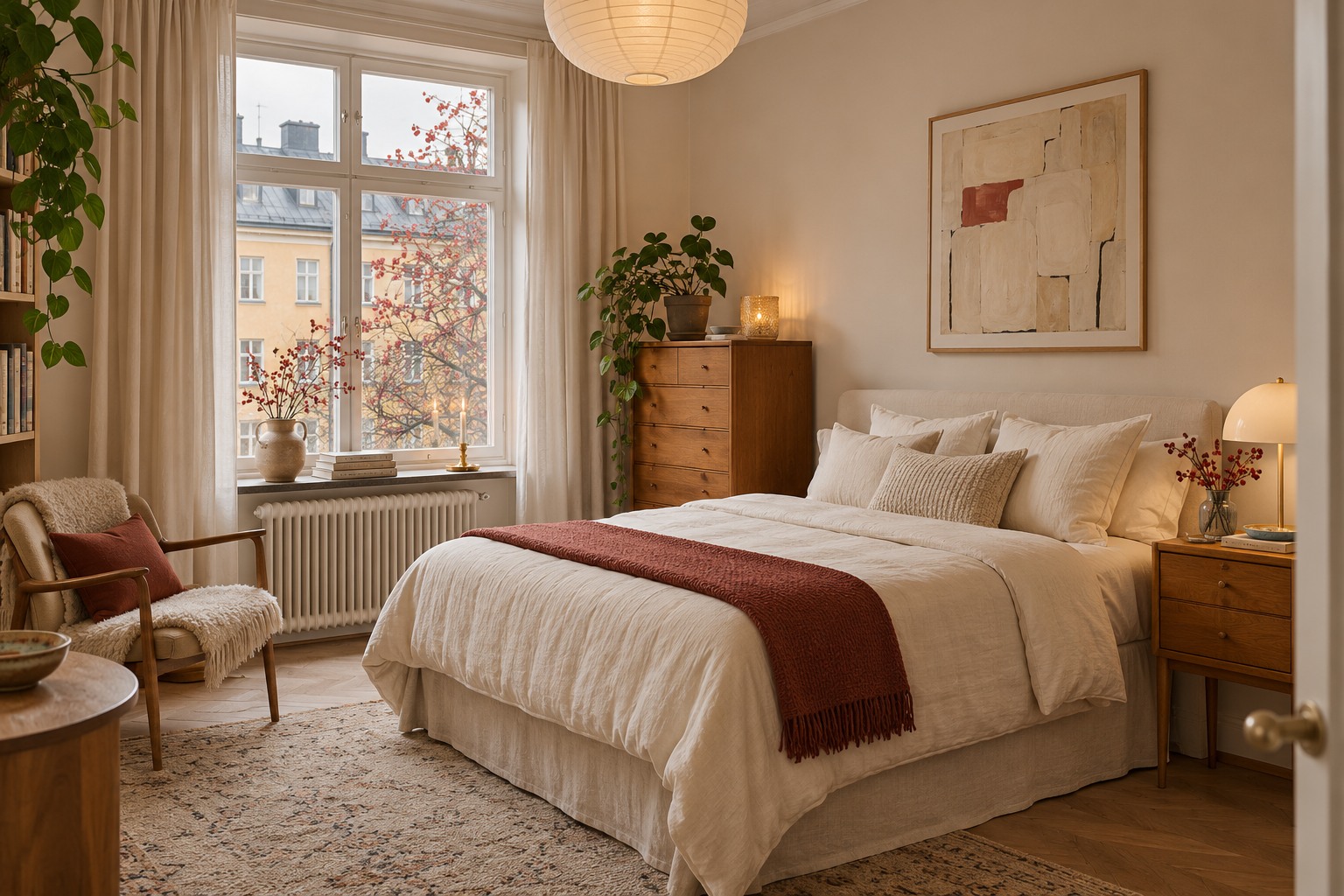
Muted red can make a pale bedroom feel more individual without changing its main surfaces. Use it in a cushion edge, a small throw or a framed print, then repeat it once in a quieter detail. A dusty brick or softened burgundy often sits comfortably beside cream and wood.
Check the color against the room’s existing warm tones. Red can appear much more prominent after sunset, particularly under warm lamps. Start with a textile you can move before committing to paint or upholstery. If a large red throw overwhelms the bed, fold it into a narrower band at the foot. The useful question is whether the color adds a clear point of interest while leaving the rest of the room comfortable to look at.
7. Let Powder Blue Cool a Warm Neutral Base
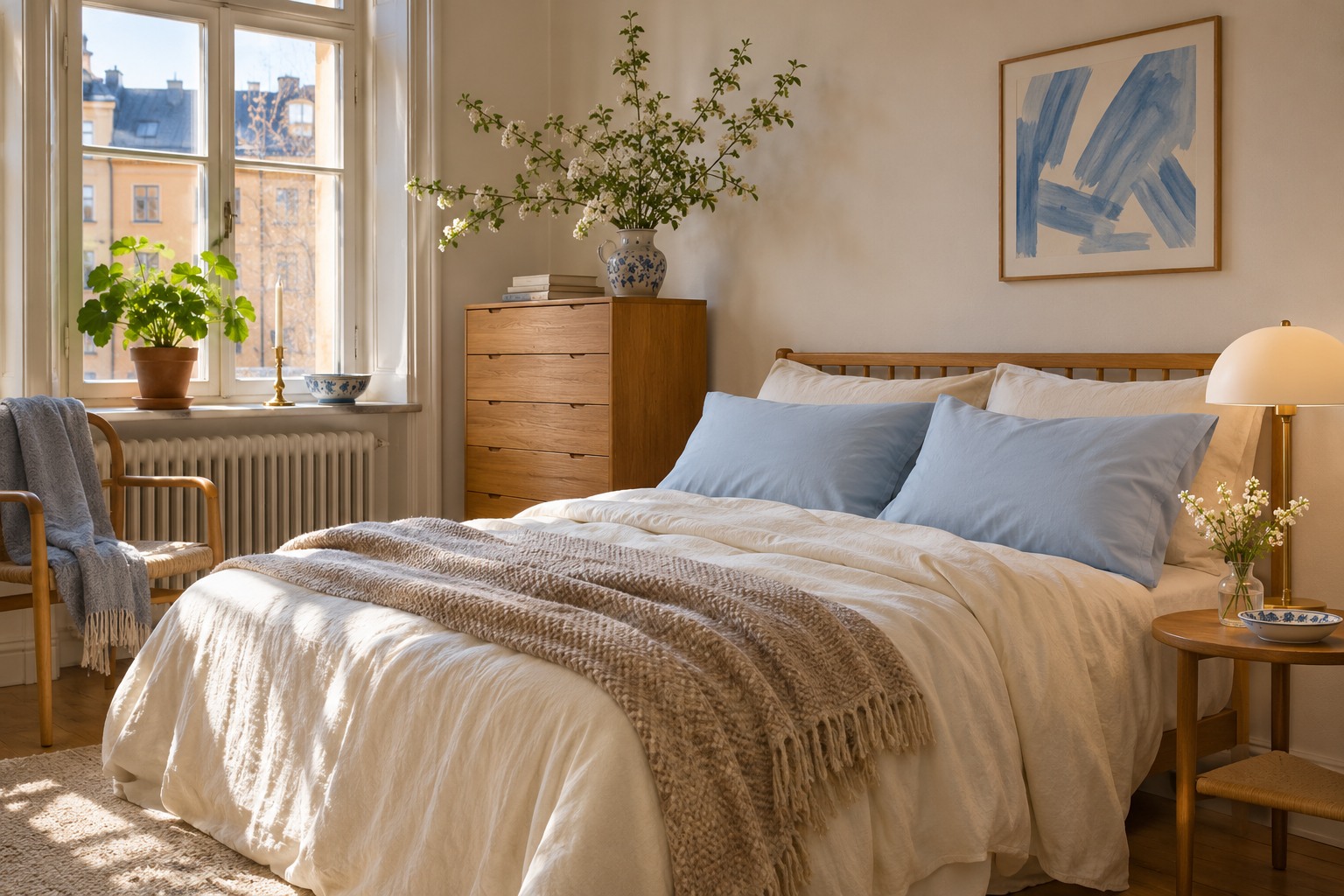
Powder blue gives a cream-and-wood bedroom a cooler counterpoint. Try it through a pillowcase, a lampshade or one quiet picture rather than introducing several unrelated blue objects. The contrast can make warm wood look richer while keeping the bed light.
Compare the blue with the wall and duvet in daylight. A greenish blue may behave differently from a grayish one beside the same cream fabric. Repeat the chosen tone in a small area if it looks isolated, but do not buy a matching set simply to make it belong. When the room already has cool light, keep the blue accent modest and use texture in the bedding to maintain a softer overall effect.
8. Use Blush in a Single Touchable Layer
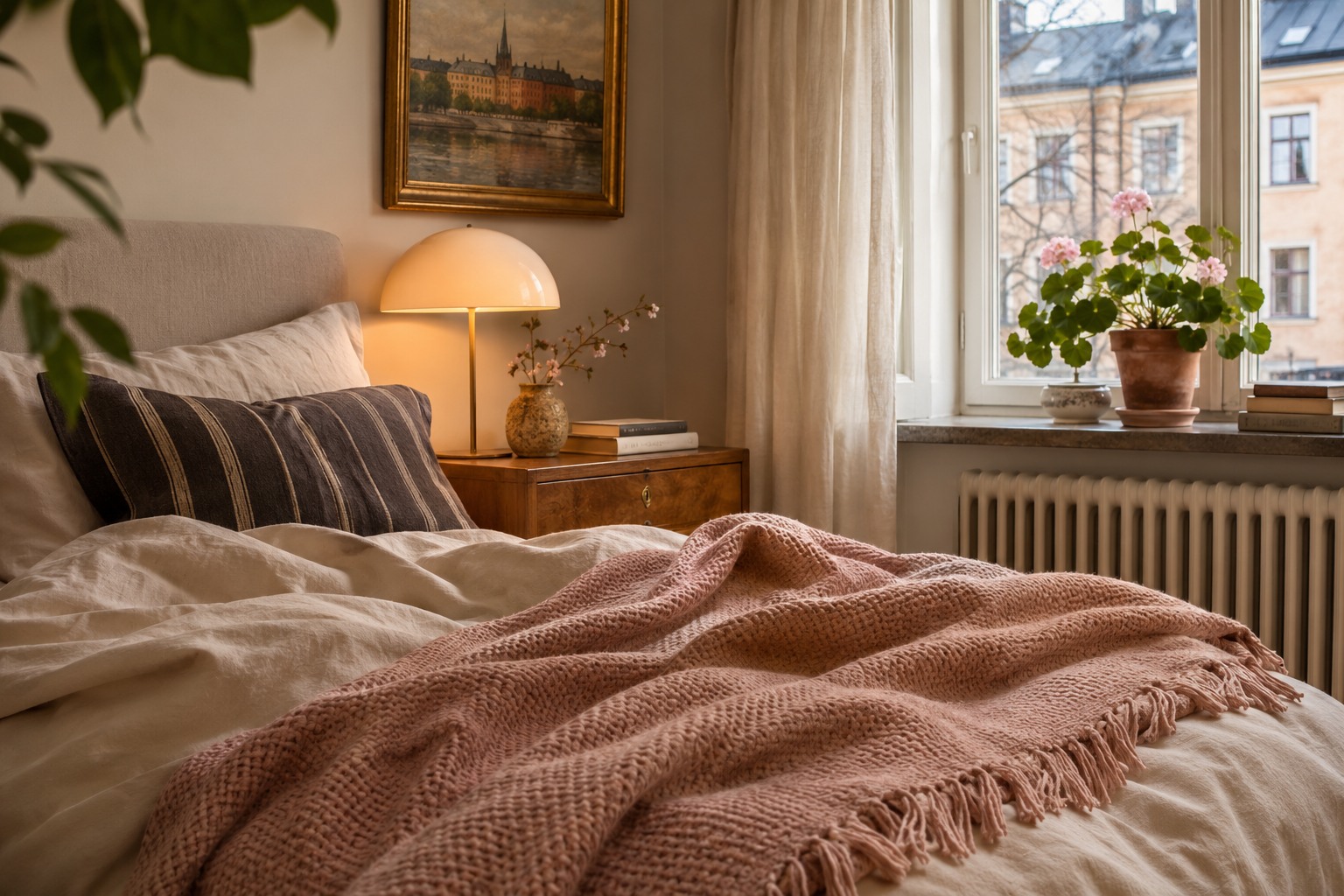
A blush throw or cushion can soften a more graphic combination of stripes, dark frames and plain bedding. Choose a fabric whose texture adds something the bed does not already have, such as a lightly woven throw beside smooth cotton. Keep the color limited to one useful layer at first.
Lay the fabric next to the actual duvet before deciding whether it works. Some blush tones lean peach, while others look cooler or more muted. A small tonal difference can change how the whole bed feels. Avoid hiding the new layer under several other cushions; if the color is worth including, leave enough of it visible. The result should still be easy to use at bedtime.
9. Build a Gallery From Prints You Actually Like
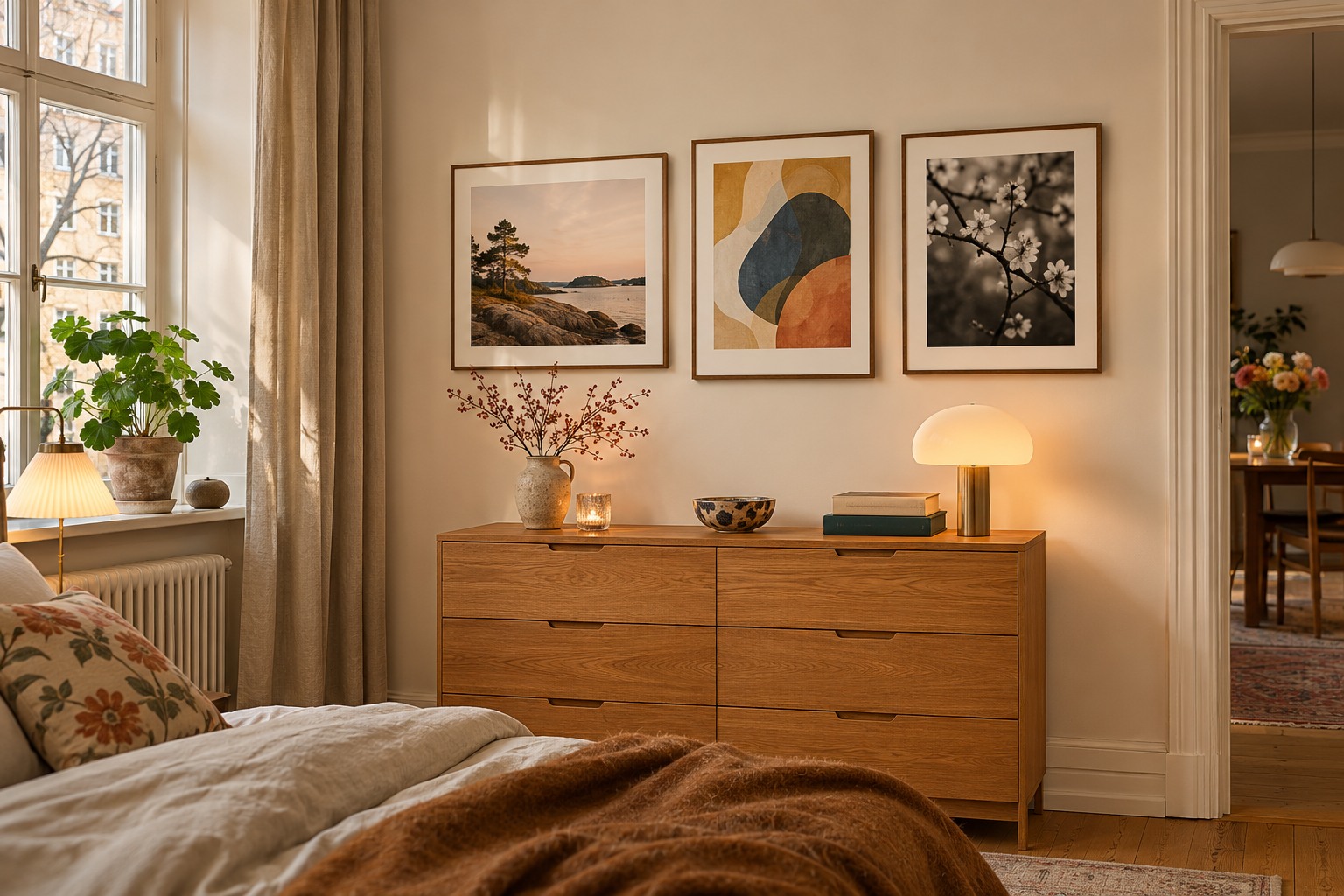
Choose a small group of prints for their subject and color rather than buying an entire gallery just to fill a wall. A landscape, an abstract piece and a personal photograph can sit together when one color or framing detail gives them a connection. Decide which image should carry the most attention before arranging the others.
Test the group on the floor or with paper templates. Start near the furniture it belongs to, such as the dresser or desk, rather than centering it automatically on the whole wall. Use secure fixings suited to the wall and frame weight, especially around a bed. Leave room to change a print later so the arrangement can develop with your interests.
10. Leave a Margin Around the Bedroom Gallery
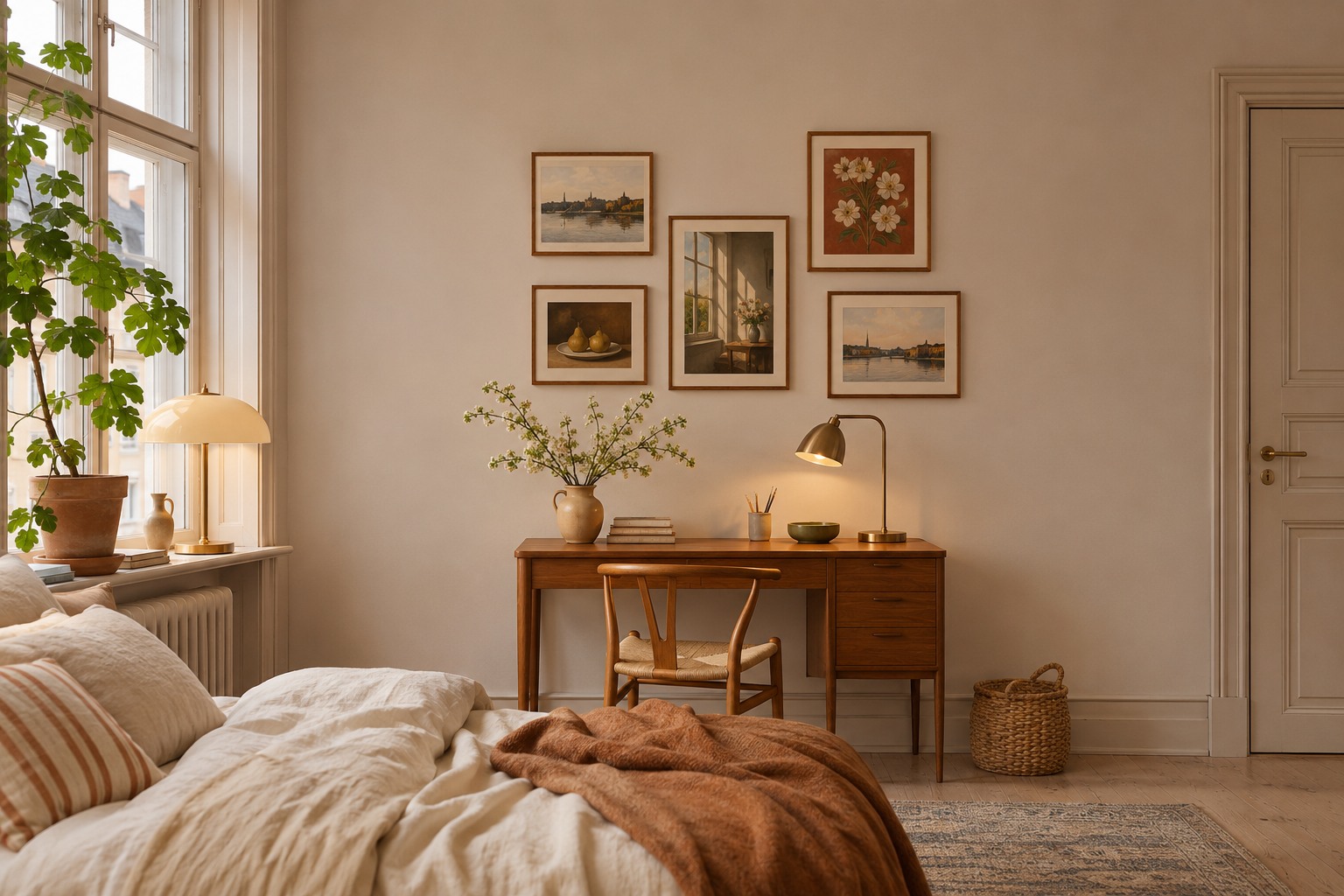
A gallery needs a clear boundary as much as it needs interesting pictures. Leave some uninterrupted wall between the frames and the ceiling, door trim or neighboring furniture. That margin helps the collection read as one deliberate arrangement rather than a group that kept expanding until it reached an obstacle.
View the gallery from bed as well as the doorway. A frame that seems well placed while standing may crowd a lamp or headboard from a lower viewpoint. Remove one smaller piece if the group starts to feel restless. The empty wall is part of the composition, so resist filling every gap with another object. In a compact bedroom, a smaller clear group can have more presence than a dense wall of frames.
11. Mix Frame Finishes Through One Repeated Detail
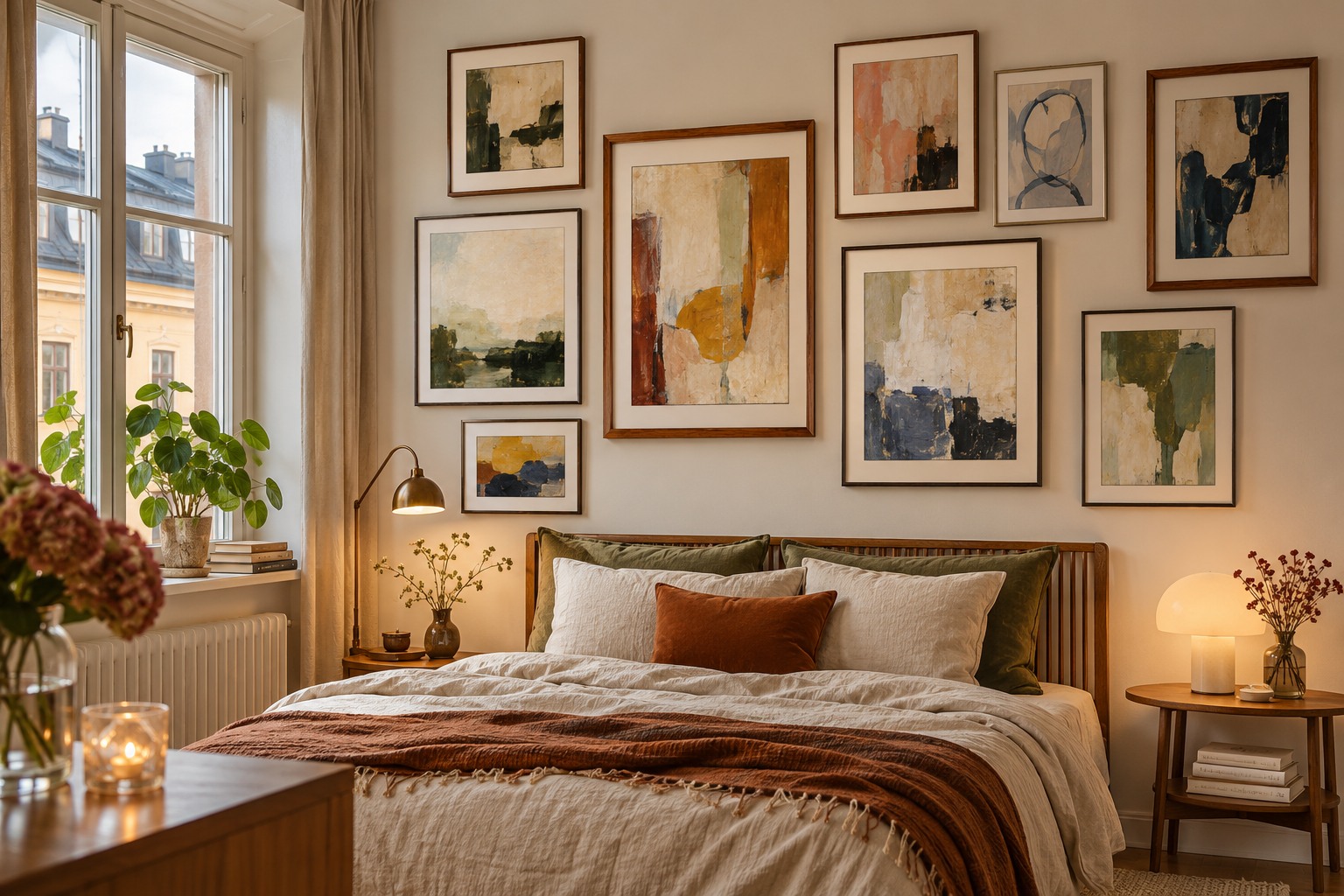
Different frames can work together if they share something specific. Repeat a dark inner edge, a cream mat or a similar narrow profile across a mixture of wood and metal finishes. That repeated detail gives the collection a relationship without making every frame identical.
Place the frames together before hanging them. A heavy ornate piece may need more space around it than several slim frames. Keep the strongest finish in more than one location only if the group needs that connection; a single older frame can also serve as the focal point. Check reflections from the window and lamps so the pictures remain visible at the times you use the room.
12. Give a Full-Length Mirror an Anchored Place
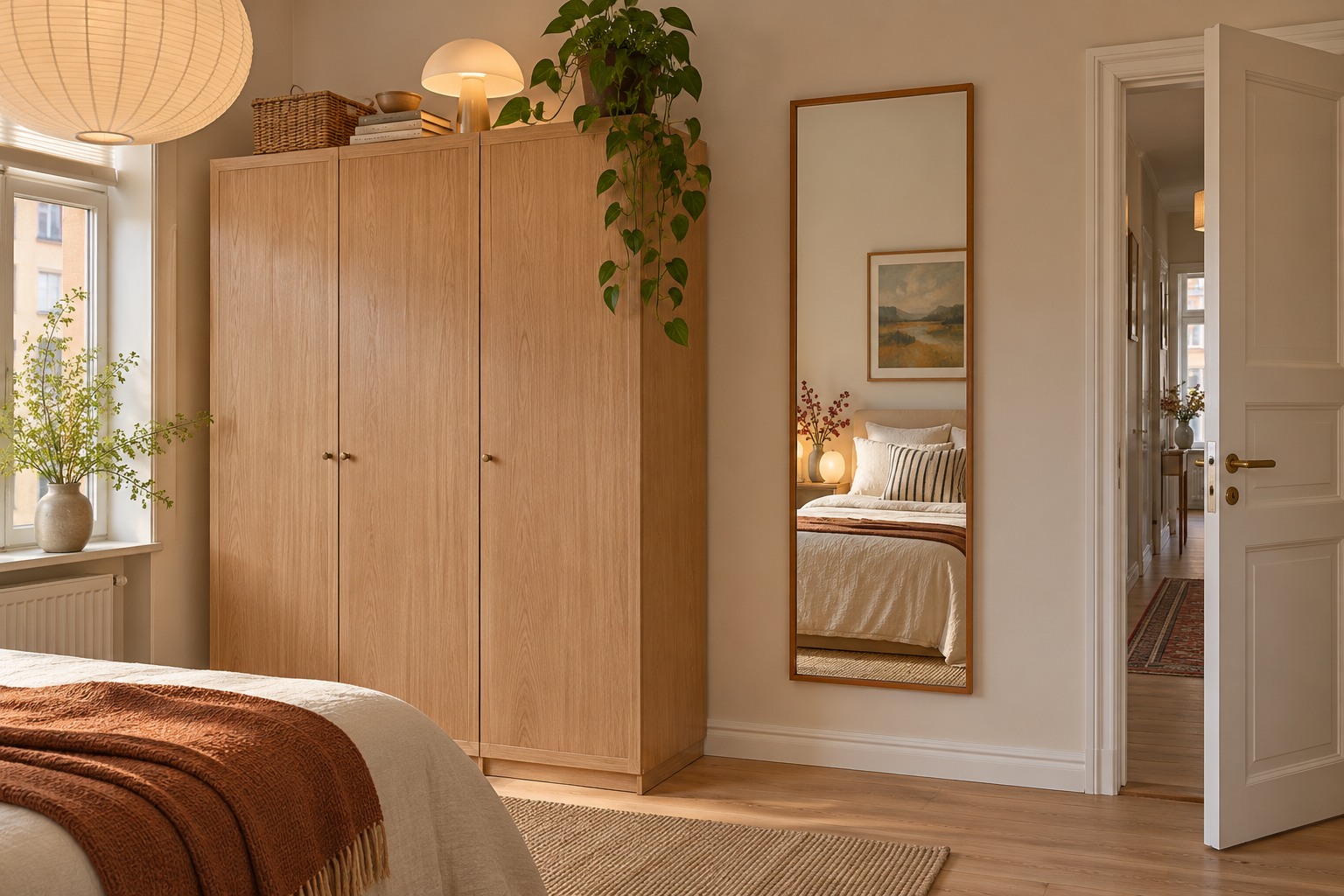
A full-length mirror is useful when it has a clear place to stand and enough room in front for dressing. Position it where it reflects a quieter view, such as bedding or a simple wall, rather than the fullest storage shelf. A warm wood or narrow metal frame can relate it to the rest of the room.
Follow the mirror manufacturer’s fixing or anti-tip instructions, even if the styling looks casually leaned. Check the route past its lower corners and make sure the wardrobe door can still open. Avoid choosing the location solely because it makes a photograph brighter. The reflection should be useful during an ordinary morning, without blocking access to a socket, curtain or drawer.
13. Pair a Shaded Lamp With a Focused Reading Light
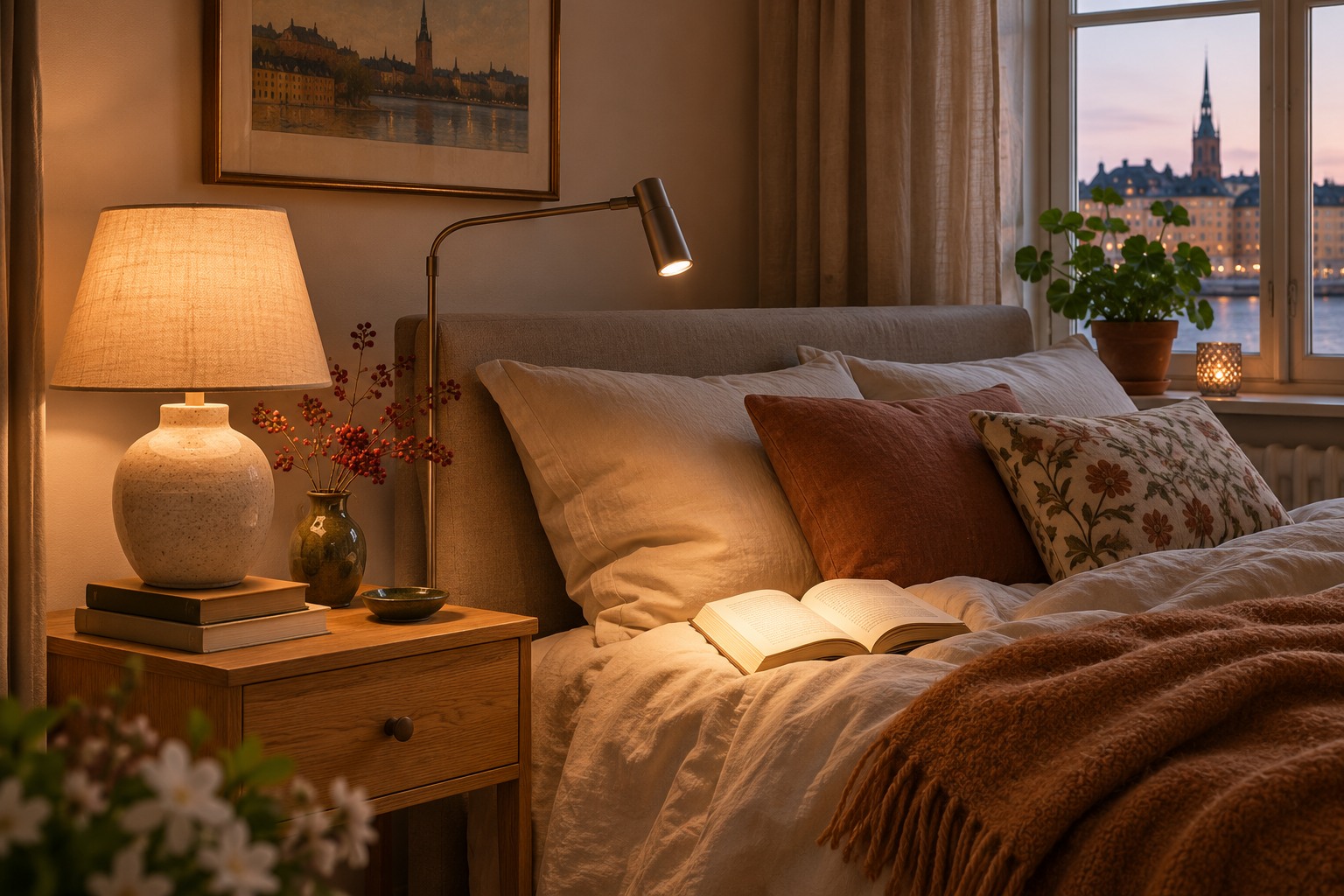
A shaded lamp can supply the bedroom’s softer evening light, while a separate reading light directs light where it is needed. Giving them different jobs prevents one overly bright bedside lamp from having to illuminate the whole room. Choose shapes that relate through a finish or a simple repeated curve.
Try the reading light while sitting in your usual position. Its beam should reach the page without shining directly into your eyes or a partner’s side of the bed. Keep cords clear of drawers and walking routes. Before adding another decorative lamp, check whether the existing ceiling light and one shaded source already provide enough general light for dressing and moving safely through the room.
14. Choose Curtain Length Around the Window and Heater
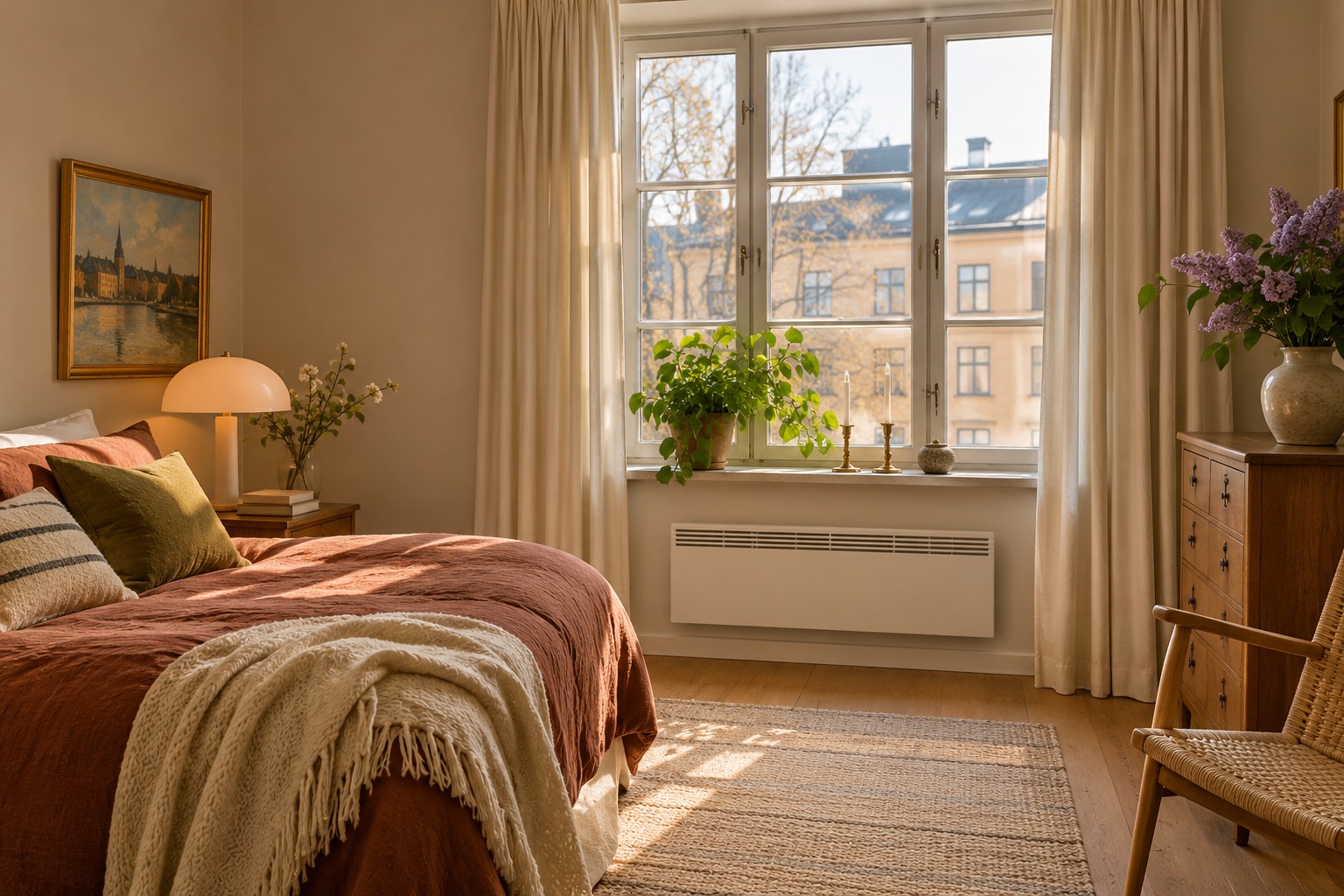
Curtains should suit the actual window, furniture and heating equipment. A long soft panel can make a wall feel more continuous, but it should not cover a heater, obstruct ventilation or bunch behind a dresser. Follow the heating equipment’s clearance requirements when choosing the panel’s route and length.
Measure from the installed rod or track rather than estimating from the window alone. Check how the panels sit when open and whether their stack blocks useful daylight. For a larger fabric backdrop, these bedroom curtain wall ideas address that separate treatment. In this room, choose the simplest arrangement that gives privacy and softens the window without making the furniture harder to use.
15. Let One Soft Rug Meet the Side of the Bed
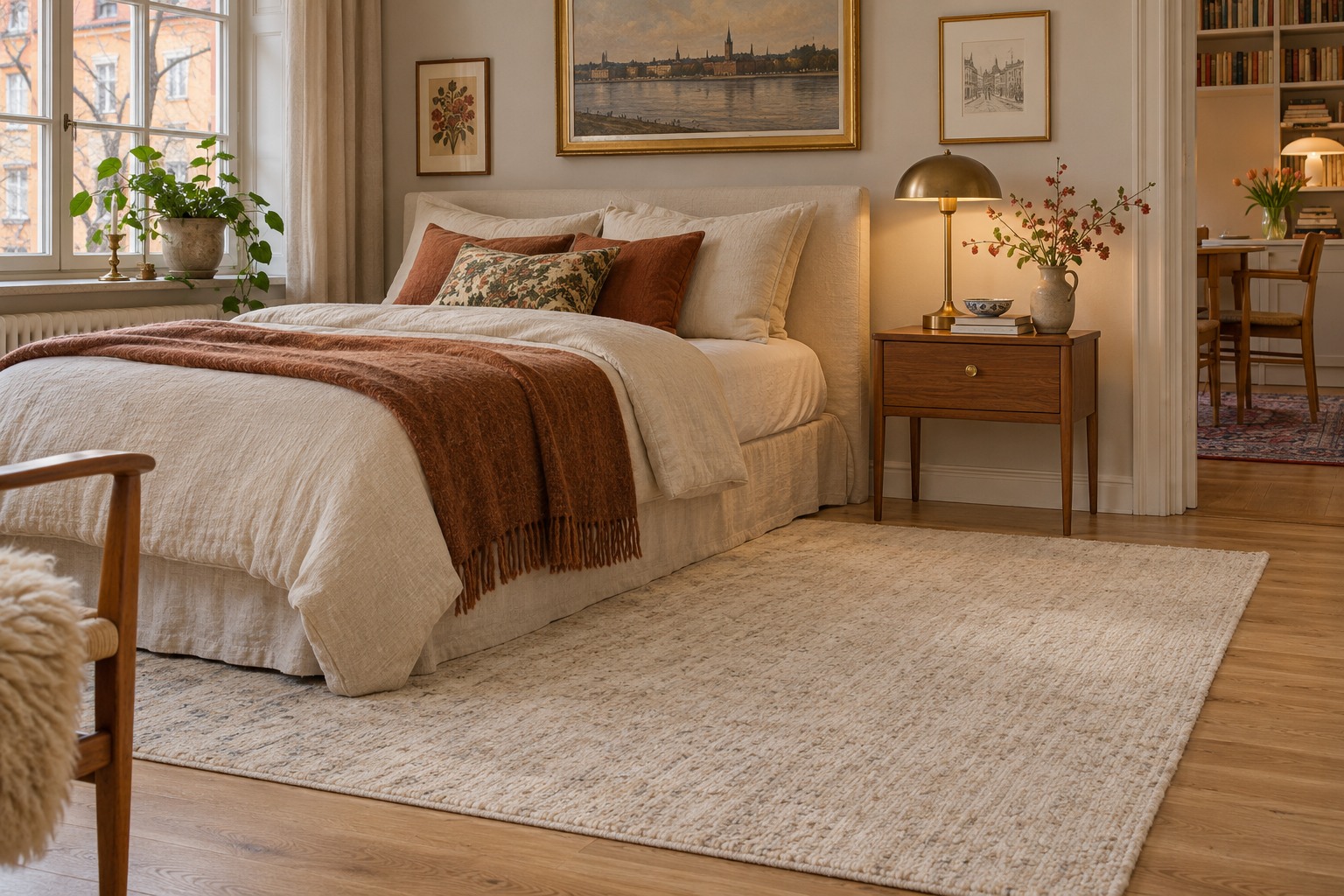
A soft rug can give your feet a comfortable place to land and introduce a texture the bedding does not supply. Position it around the actual route out of bed rather than centering it only for symmetry. Leave door swings and drawers clear, and use a suitable nonslip backing for the floor.
Check the rug with the bed and nearby furniture in their final positions. A small rug that repeatedly slides under a nightstand may be less useful than a slightly larger piece with a more stable placement. Keep its pattern quiet if the bed already has stripes or a printed accent. Choose a material you can care for in that location, especially where shoes or a frequently used dressing area meet the rug.
16. Use a Small Bench Where the Route Allows It
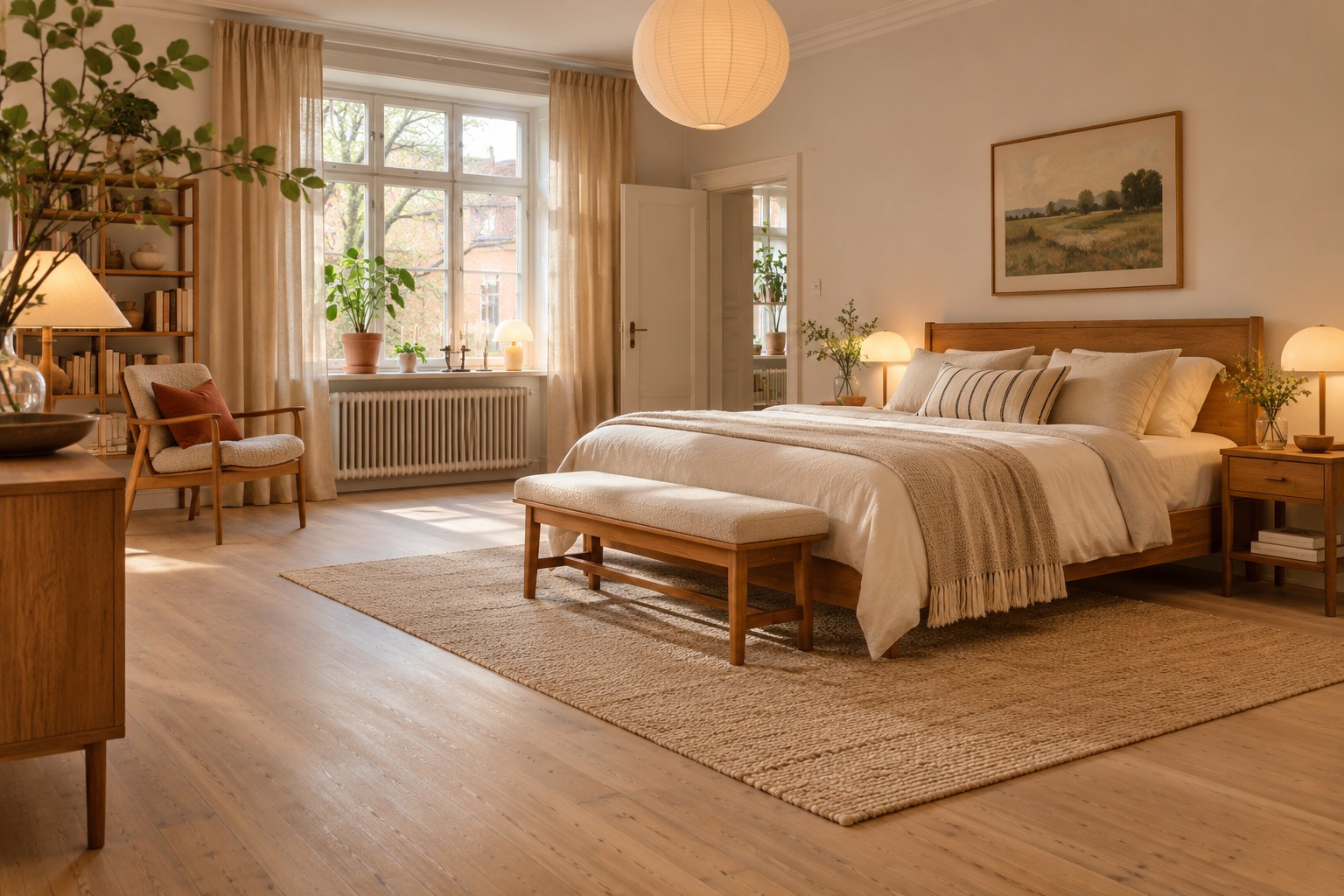
A small bench at the foot of the bed can provide a place to sit while dressing or set down tomorrow’s clothes. Choose one whose depth leaves a comfortable route around the bed. A narrow upholstered seat can soften a wood frame, while a simple wood bench can ground a pale upholstered bed.
Mark out the footprint before buying and walk through the room with the wardrobe and door open. The bench should not become an obstacle you have to sidestep every morning. Keep it to one useful purpose rather than allowing it to collect everything without a home. If there is not enough room at the foot, place a compact seat elsewhere or leave this piece out.
17. Turn a Narrow Desk Into a Separate Work Zone
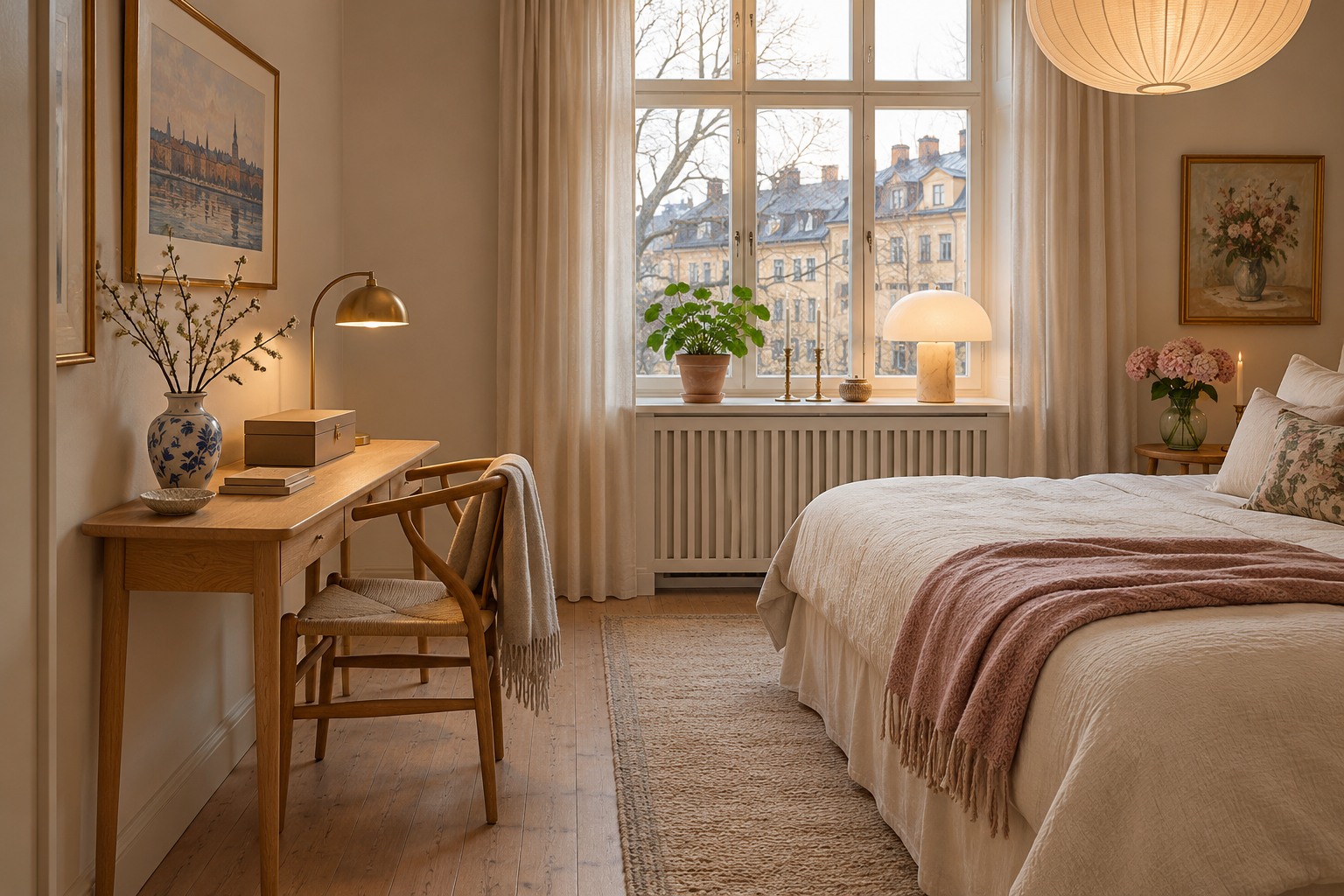
A narrow desk can belong in a bedroom without making the bed feel like part of an office. Give the desk its own clear surface, task light and storage for work items. Use a nearby frame or wall color to relate it to the bedroom, while keeping the practical setup contained within its area.
Check the chair’s pulled-out position, not just the desk’s footprint. Allow access to drawers and a clear route past the seated position. At the end of work, put papers and small equipment into a dedicated drawer or box rather than moving them onto the bed. That simple boundary makes a mixed-use room easier to reset without needing a larger desk or more decorative objects.
18. Make a Vanity Useful With a Clear Landing Surface
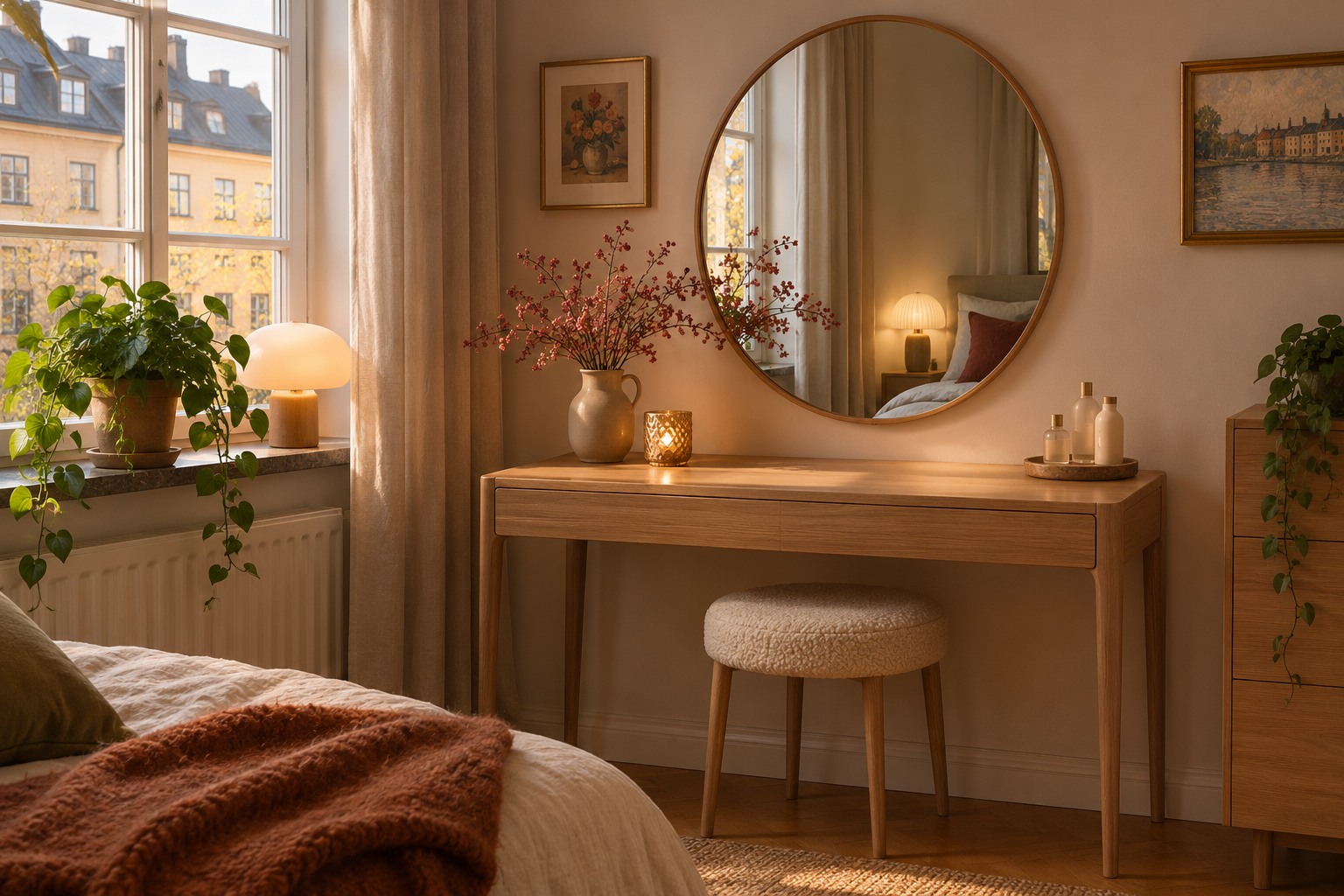
A vanity works best when the mirror, light and everyday products each have a defined place. Keep the center of the surface clear enough to set something down while getting ready. A small tray can hold the items you use daily, with backups stored out of sight.
Choose a stool or chair that tucks away without catching on handles or cords. Check the mirror at seated height and try the lighting before adding extra accessories. The vanity can share the room’s wood, white or metal finish without matching every other piece. If it also serves as a desk, use a removable tray so changing its job takes one movement rather than a complete rearrangement.
19. Keep a Dresser Top to Three Different Jobs
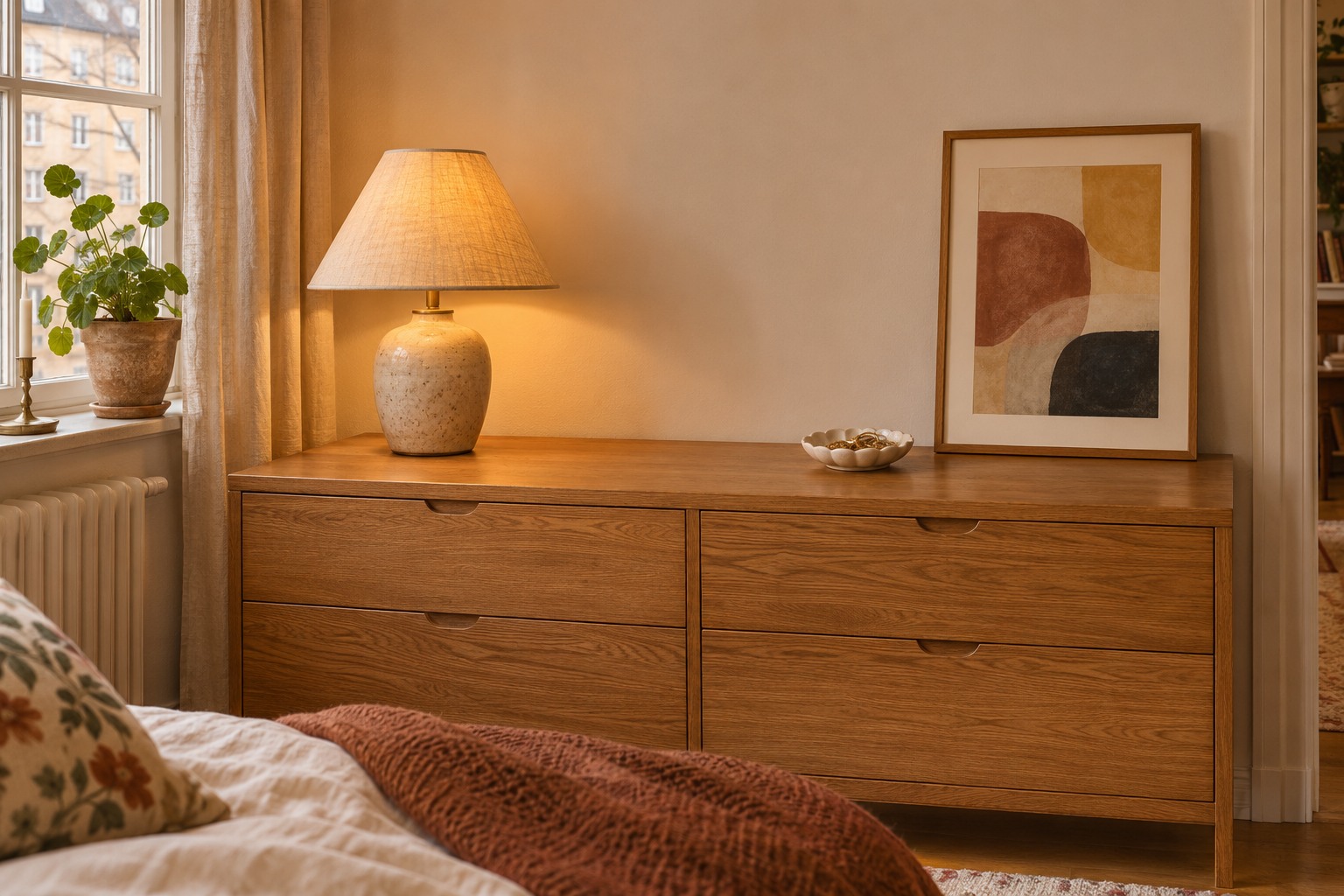
Give the dresser top a few clear functions: a light, a small landing place and one decorative feature, for example. Those jobs might be carried by a shaded lamp, a dish for jewelry and a framed print. They do not need to become three equally sized objects arranged in a row.
Leave a useful stretch of the top visible and make sure the drawers open without disturbing anything. If a mirror sits above the dresser, check what it doubles in reflection before adding more pieces. Put daily items in the easiest place to reach and keep purely decorative details toward the less-used side. The arrangement should make the dresser easier to live with, not just easier to photograph.
20. Use Closed Boxes on the Shelf You See From Bed
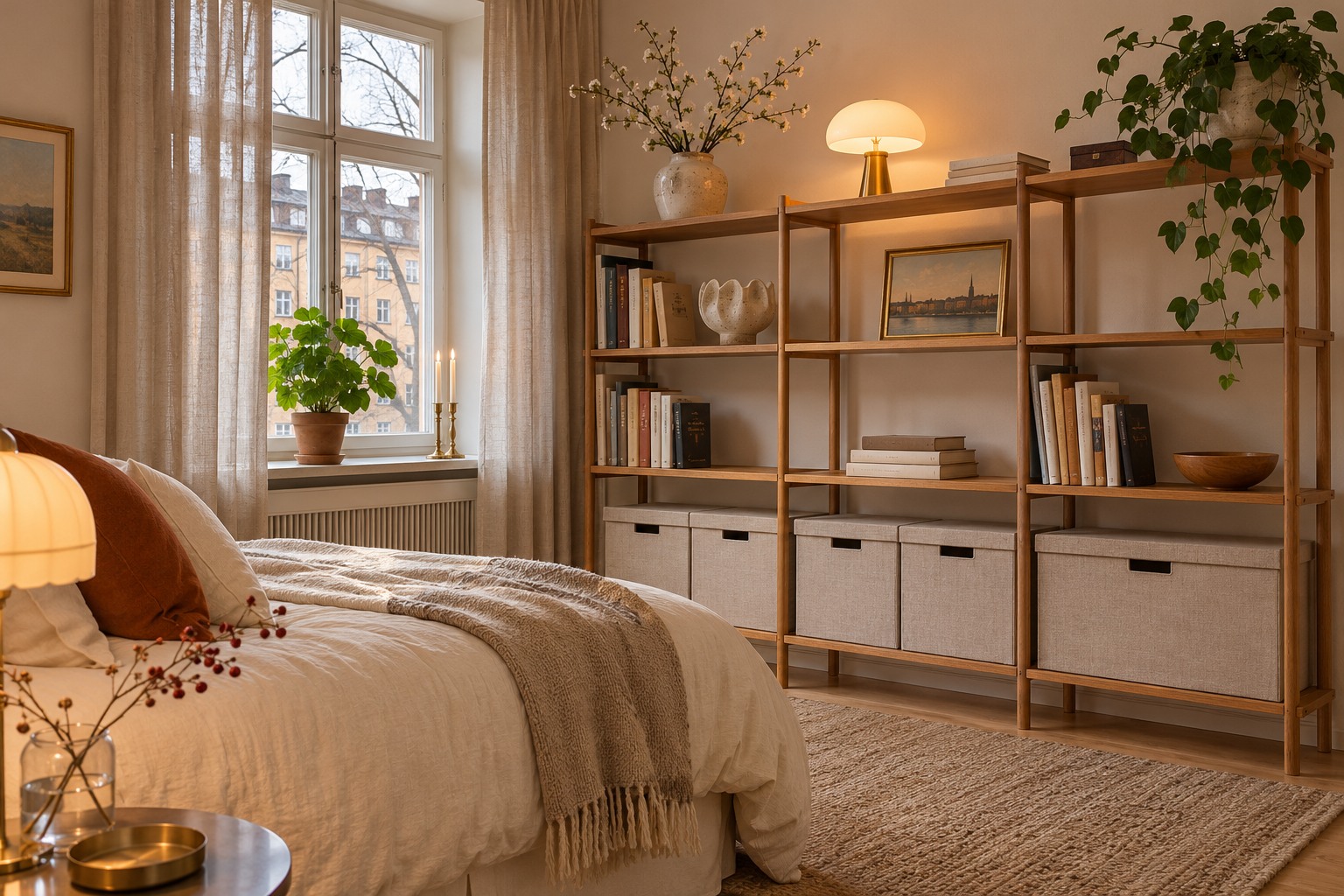
A shelf opposite the bed can look quieter when the smallest mixed items are grouped into closed boxes. Choose boxes sized for what they hold rather than buying a matching set first. Leave a few books or a personal object visible so the shelf still belongs to you.
Measure shelf depth and usable height before selecting storage. Boxes should lift out without scraping the shelf above, and their weight should stay within the furniture’s stated limits. Keep frequently used things in the easiest compartment to reach. Repeat a box material or color if the whole shelf needs more order, but allow enough variation that it does not become a wall of identical containers without any clear purpose.
21. Give a Rental Wall One Reversible Color Detail
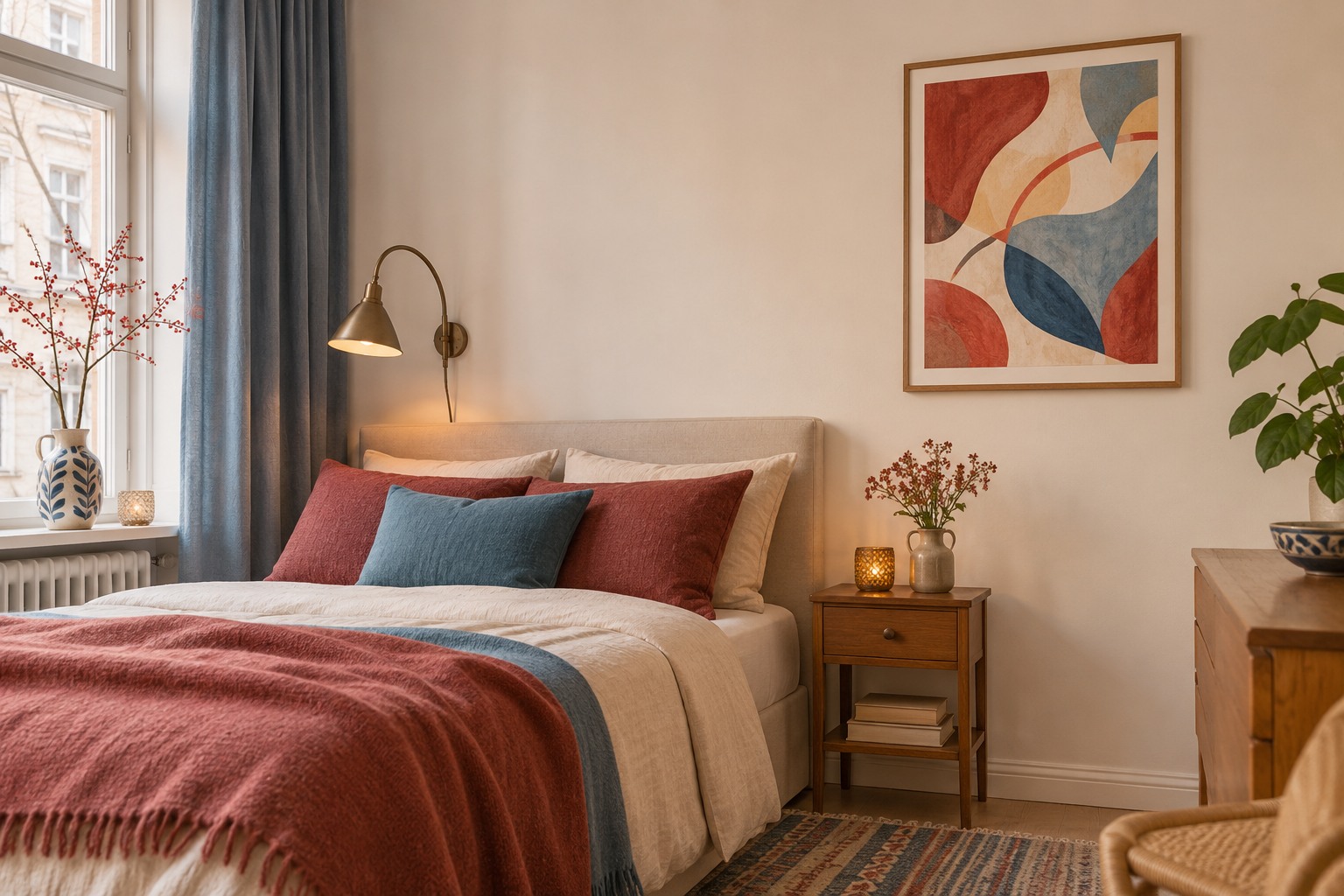
A removable fabric hanging or a lightweight framed print can bring color into a rental bedroom without repainting it. Choose one area that needs a focal point rather than covering several walls at once. The piece can repeat the bed’s muted red, blue or warm cream.
Check the tenancy rules and use fixings appropriate to the actual surface and item weight. A removable product can still affect delicate paint, so follow its directions and test where appropriate. Avoid placing an unsecured hanging above the bed. If the wall cannot take a suitable attachment, let a framed piece stand securely on furniture in a position intended for that use, or bring the color in through bedding instead.
22. Paint a Small Bed Wall With a Warm Muted Tone
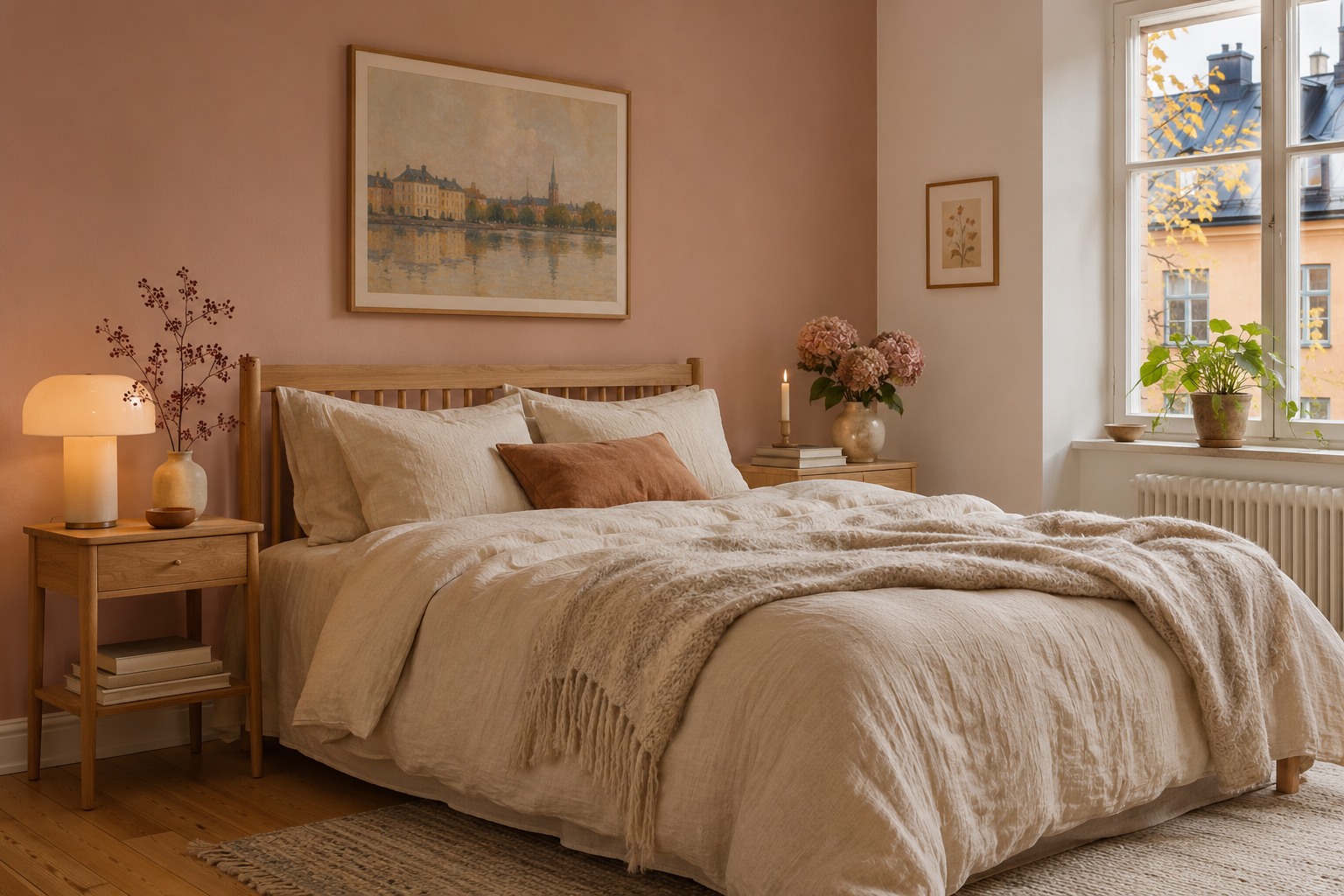
A painted bed wall can give a simple frame a clearer place in the room. Try a warm muted tone that works with the existing floor and bedding, such as a soft clay or a subdued pink-beige. Keep adjacent surfaces quieter so the bed wall remains the main color decision.
Look at a sample in daylight and under the lamps you use at night. Do not choose the final paint from a screen alone. For a different softer palette, these sage green and cream bedroom ideas explore how those colors work together. Here, keep the wall color tied to your actual textiles rather than adding a new tone that needs several more purchases to belong.
23. Repeat Chrome Beside a Softer Textile
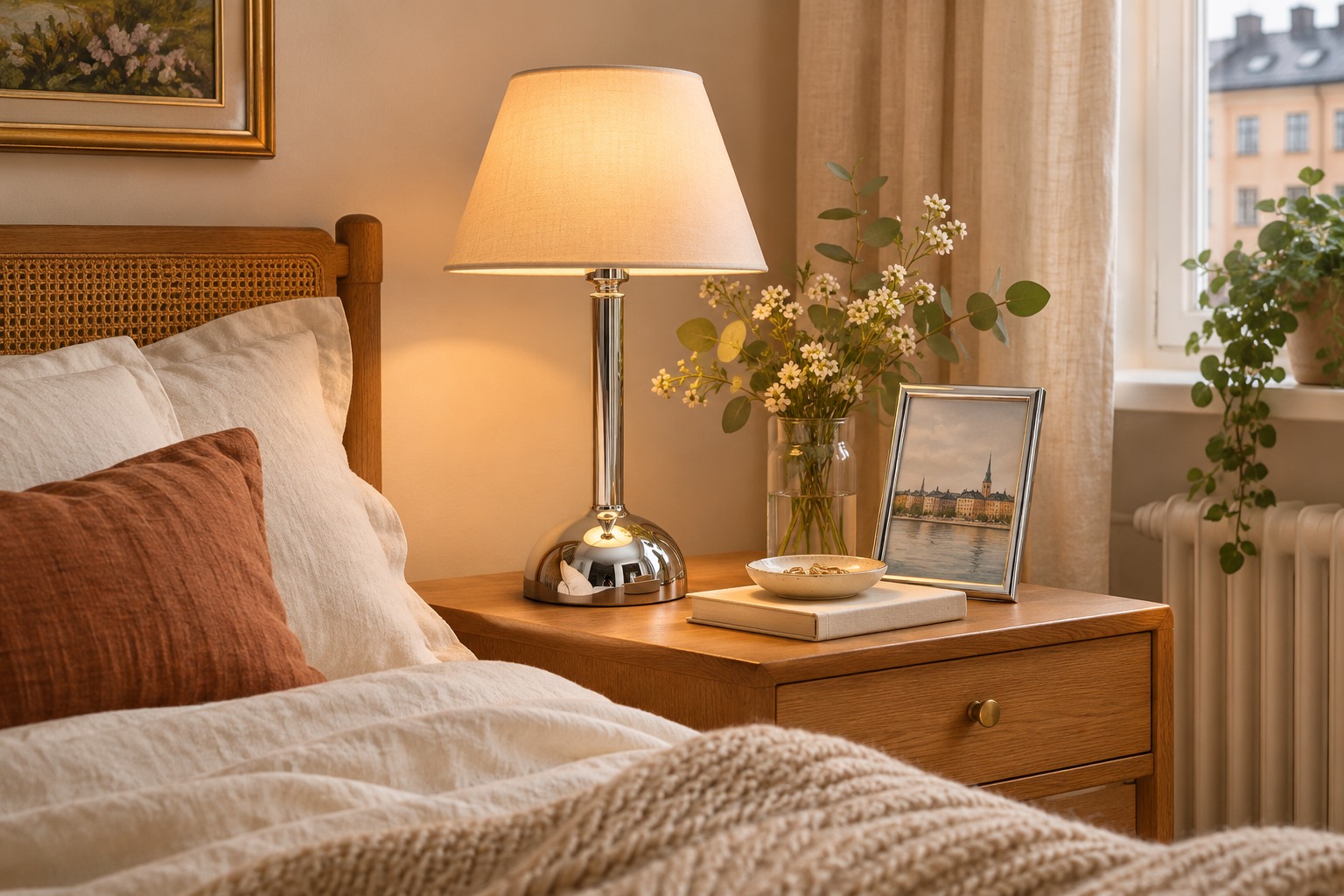
A small chrome detail can sharpen a bedroom built around cotton, warm wood and cream. Try a lamp base or a narrow mirror frame rather than replacing several furniture pieces. The reflective surface gives the softer materials a clear contrast.
Check what the metal reflects at night. A polished lamp can catch a bright bulb or window in a way that feels different from its daytime appearance. Repeat the finish once if it looks isolated, perhaps through a small handle or frame, then leave other materials matte. The combination works through difference, so there is no need to add enough reflective pieces that the room loses its warmer textures.
24. Let an Older Bed Frame Set the Character
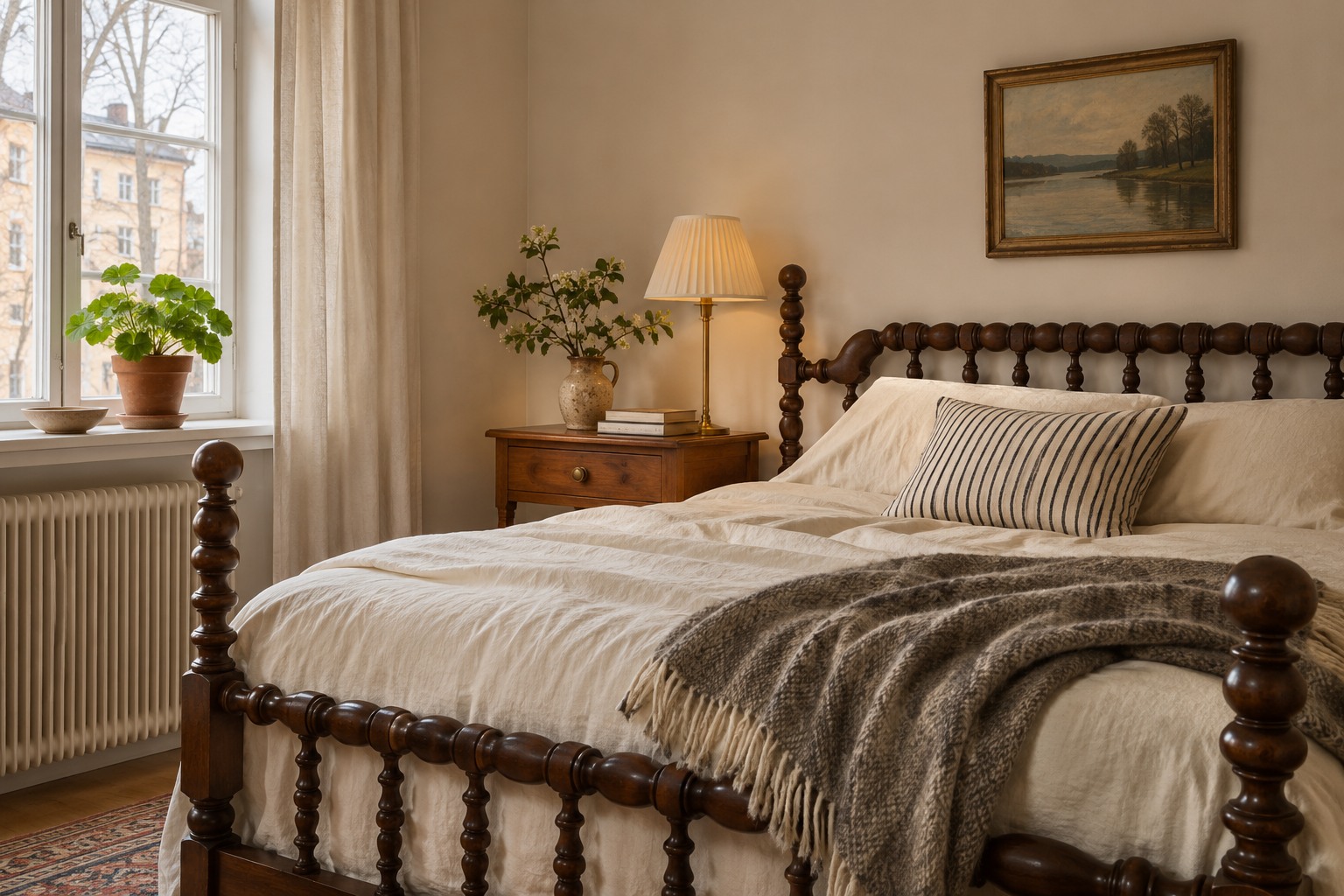
An older bed frame can supply the room’s strongest detail, whether it has curved wood, dark metal or simple turned posts. Start with bedding that leaves part of that construction visible. A quiet cream duvet and one narrow stripe can bring the frame into a lighter room without disguising it.
Check the frame’s condition and follow suitable maintenance guidance before decorating around it. Avoid adding trim or treatments that damage a finish you may want to preserve. Choose nearby furniture for useful proportions first, then connect it through a color or material. When the bed already has a distinctive silhouette, the gallery, lamps and cushions can take a more restrained role.
25. Make Mismatched Nightstands Feel Related
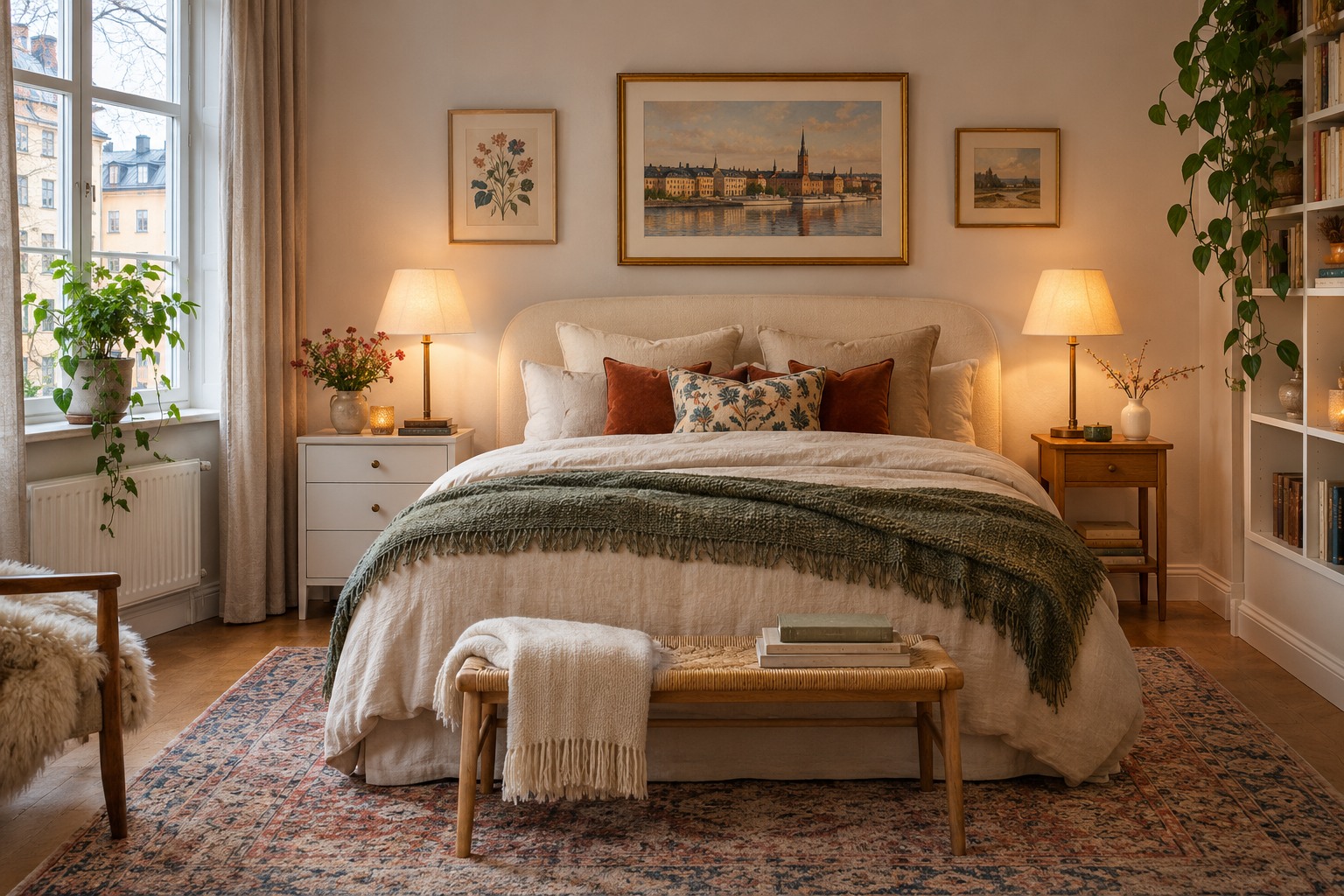
Two different nightstands can work when their useful surfaces sit comfortably beside the bed and one repeated detail connects them. Use similar lamps, related trays or a shared white-and-wood palette. They do not have to carry identical objects if each person uses the bedside differently.
Compare heights, drawer access and the routes around both sides of the bed. A visually balanced pair is not helpful if one blocks a wardrobe. For other furniture options, these nightstand alternatives explore different ways to hold bedside essentials. In this room, keep at least one practical point of connection so the mismatch feels considered rather than accidental.
26. Fit the Look Around a Single Bed
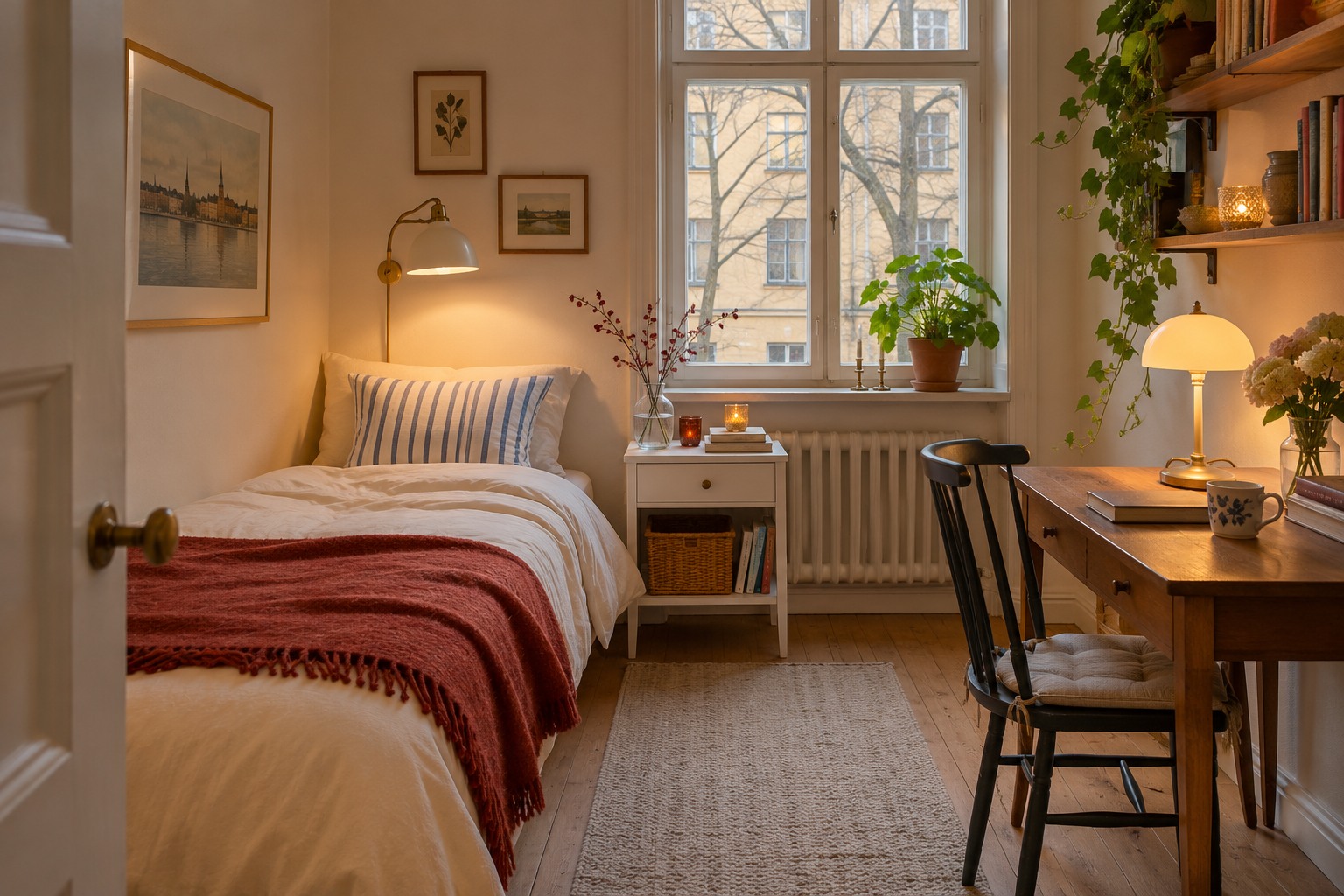
A single bed can carry the same cream, stripe and warm wood combination in a smaller footprint. Choose one useful bedside surface and one clear wall feature instead of shrinking every element of a larger room. A striped pillowcase and a small colored throw may supply all the pattern the bed needs.
Place the bed according to access, window and storage requirements, not just the wall that looks most symmetrical. Check how easily you can change the bedding and reach the bedside light. Keep a larger visible area of floor if the room also contains a desk. The style should make the small room more personal without filling every available corner with an imitation of a larger bedroom’s furniture.
27. Keep a Shared Bedroom Personal on Each Side

A shared bedroom can use one calm bedding base while allowing each side its own useful details. Similar lamp heights or a repeated frame color can hold the composition together. Personal prints, books and a small textile accent can then differ without making the room feel divided into competing schemes.
Talk through the practical needs first: reading light, charging, storage and an unobstructed way out of bed. Do not choose identical nightstands if their interiors do not suit both people. Keep the shared center of the bed relatively simple so the smaller differences have room to show. A collected room feels more convincing when the people who use it can actually keep their everyday things nearby.
28. Check the Room in Its Evening Light
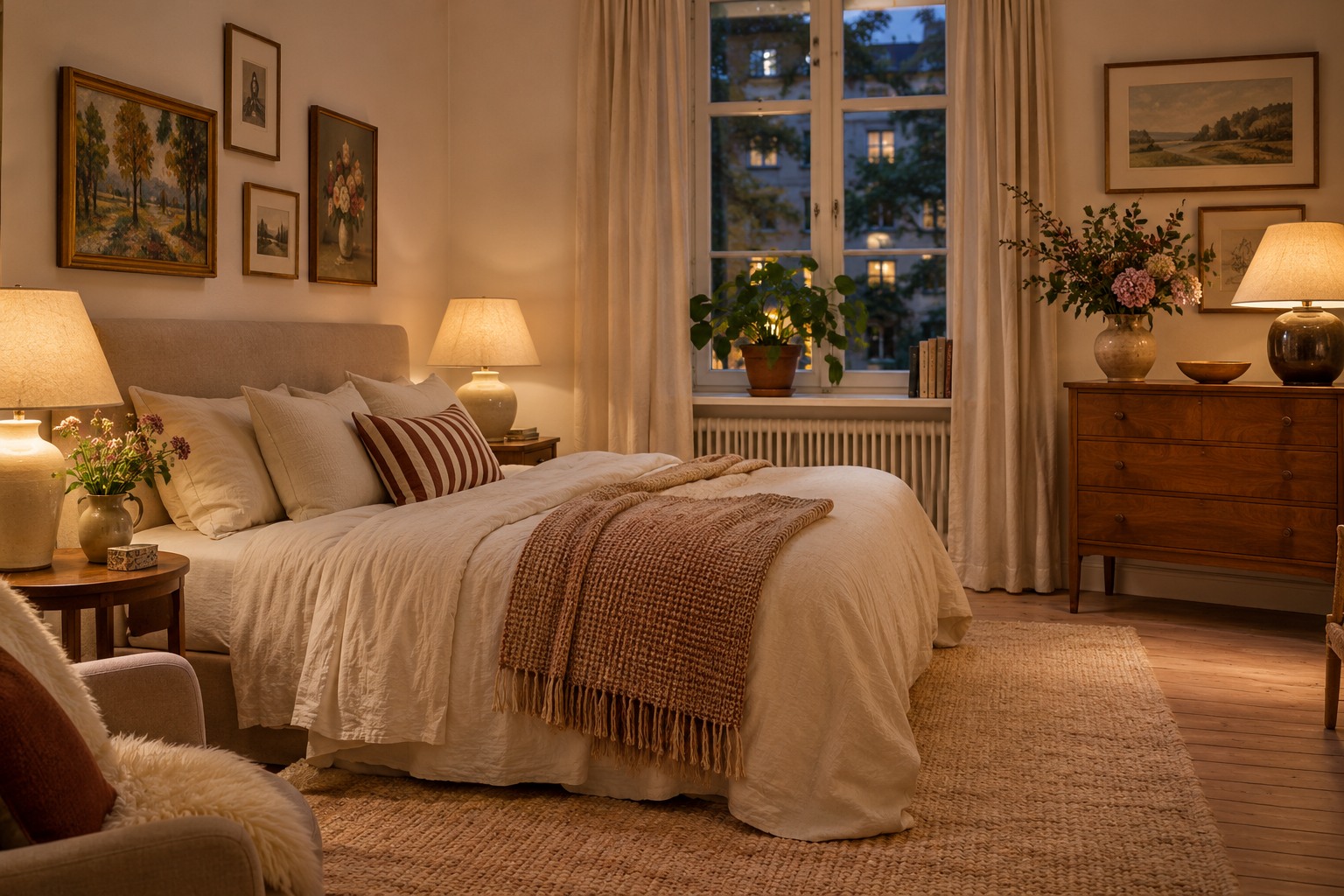
Make the final decorating decisions at the time you use the bedroom most. Switch on the shaded lamps, sit on the bed and look toward the gallery, storage and window. A color that looked pale at noon may feel much stronger under the evening lighting.
Move one small piece at a time rather than changing the whole arrangement. A reflective frame may need a different angle, a cushion may look better on a chair, or a shelf may need one fewer object. Keep enough general light for moving around safely, with more focused light where you read or dress. The room is finished when its details still work after the daylight photograph is over.
Choose the pieces that make the bedroom feel useful and recognizable as yours. A plain drawer, a good lamp and one pattern you enjoy can do more than a full set of coordinated accessories. Build from that small working combination, then add only the details the room still needs.
Discover more from HomeTrendora
Subscribe to get the latest posts sent to your email.