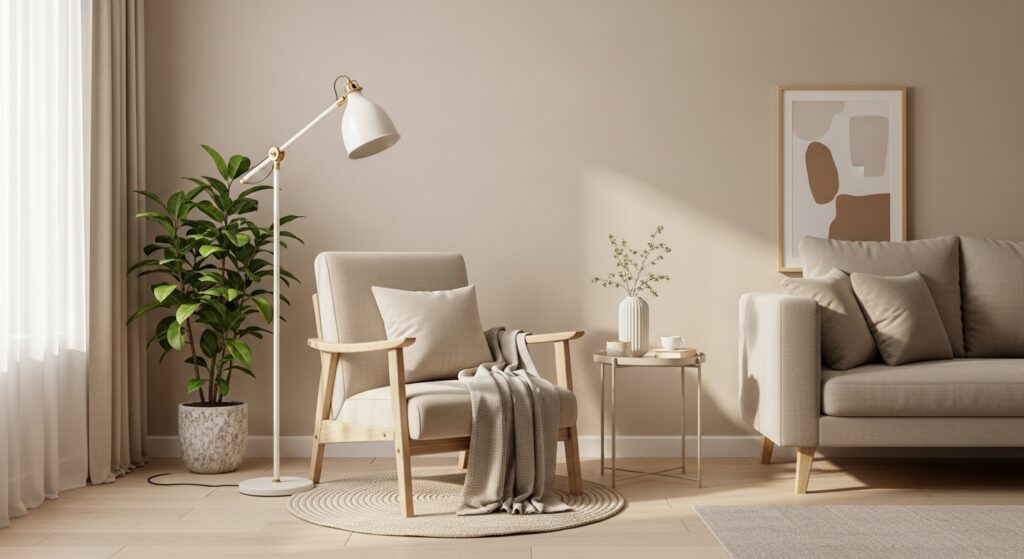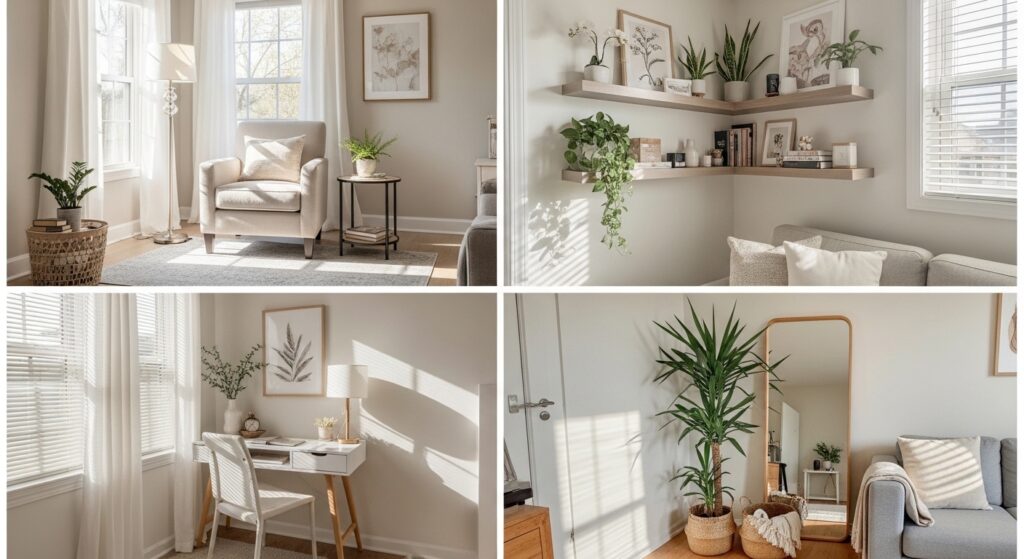
A quiet room starts with a place you can comfortably use, not a list of objects to buy. You may want an upright chair for reading, a supported floor seat for a few still minutes or a small area that folds away when the room needs another job. Decide on that everyday use before choosing the colors and accessories.
These zen room ideas use the term as a familiar search for a calm home space. They focus on layout, light, storage and a manageable routine rather than promising health benefits or recreating a religious setting. Work with your own comfort and mobility, keep routes clear and let the corner remain simple enough to reset after use.
1. Choose the Sitting Position Before the Decorations
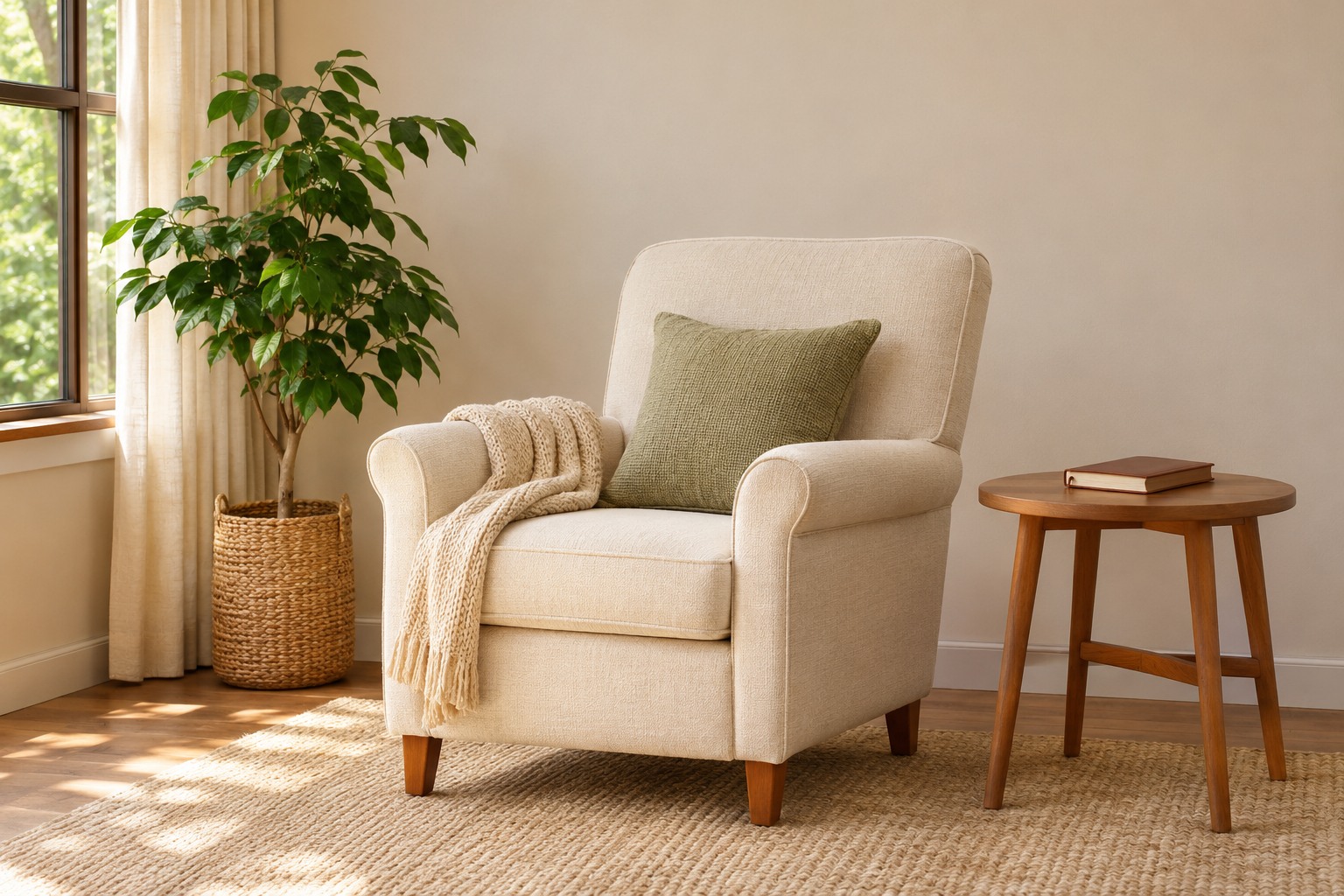
Try the corner in the position you expect to use most. Sit in an existing chair or on a suitable supported seat and notice where your feet, arms and back want to rest. Look around at that lower height before deciding where a lamp, small table or picture should go.
Choose a position that feels comfortable to enter and leave without using unstable furniture for support. You do not need to sit on the floor to make a quiet space. If floor sitting is awkward, build the corner around an upright chair instead. Keep the first arrangement small: one comfortable seat and a clear place for the thing you want to do there will tell you more than a full collection of decorative accessories.
2. Try a Supported Floor Seat Beside an Open Wall
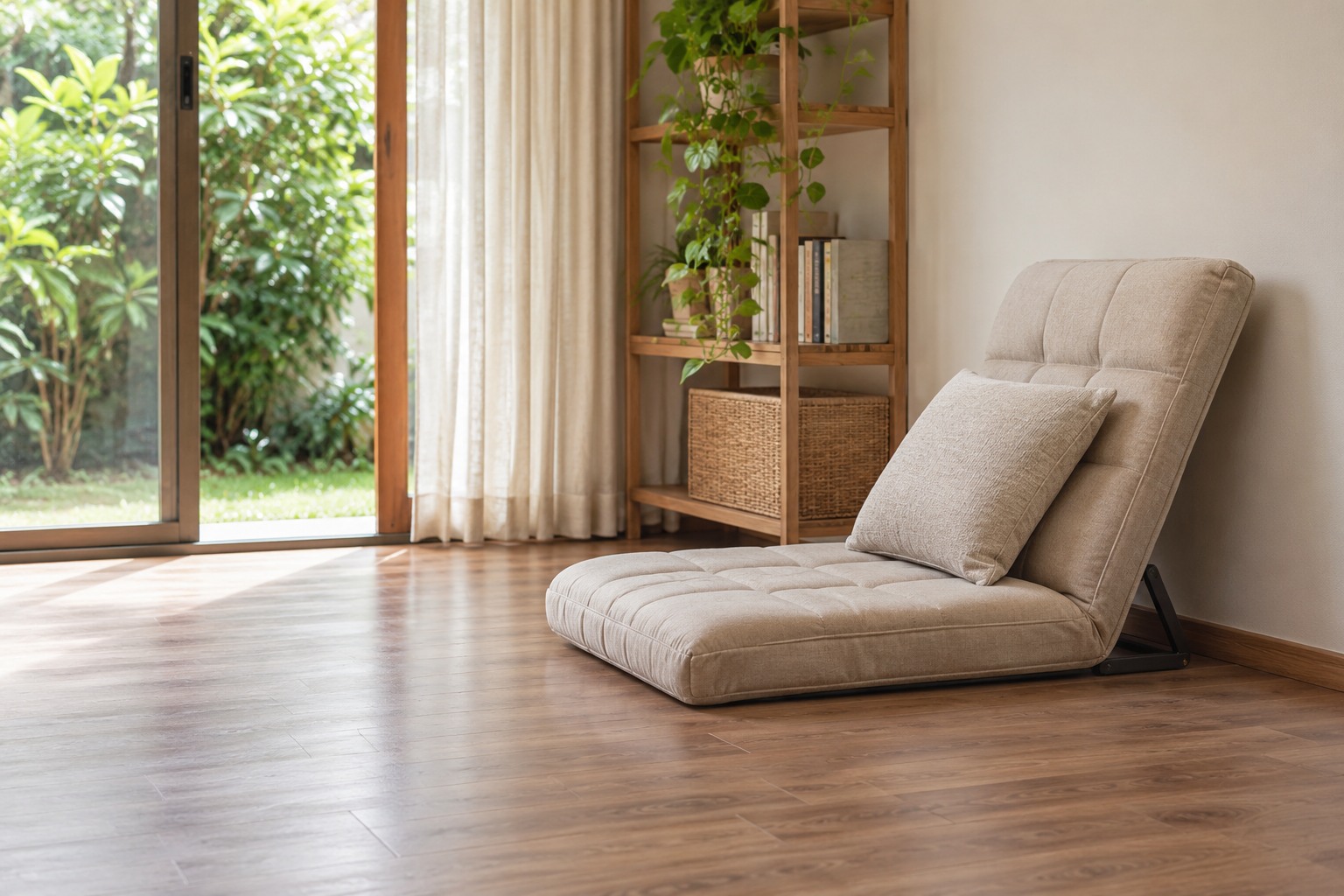
A padded floor seat with a back can define a low sitting area without adding a full armchair. Place it beside an open wall so it has a quieter background and enough space for the backrest’s permitted movement. Keep the area in front clear rather than immediately filling it with a low table.
Measure the seat in every configuration you intend to use. A folding chair can take substantially more floor space when extended, and its low height may not suit everyone. Follow the maker’s instructions for adjustment and support, and choose it only if getting down to and up from that height is comfortable for you. Store blankets and small items to one side so they cannot catch beneath its moving parts.
3. Use an Upright Chair When Floor Sitting Does Not Suit You
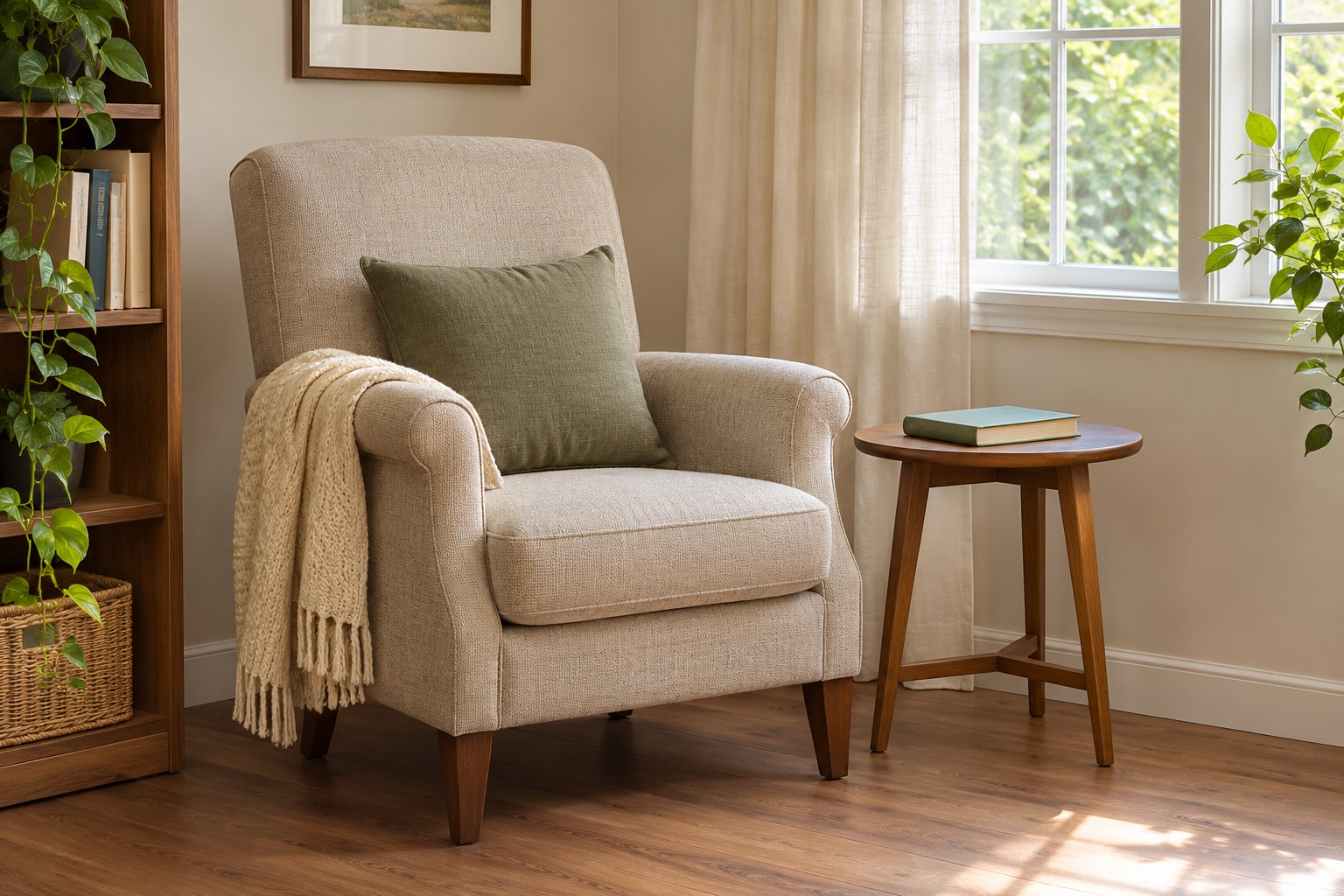
An upright chair can provide the same clear pause in the room with an easier seating height. Choose a seat that lets you settle without perching on its front edge, with a back and arm arrangement that suits how you sit. Let comfort determine the shape before choosing the upholstery color.
Check the space with the chair occupied and any footrest in use. The corner needs a route around that real footprint, not just around the empty chair. A compact side table may be useful for a book, while a tray at an awkward reach can be more distracting than helpful. For more reading-focused layouts, these small-space reading nook ideas offer different ways to arrange a comfortable seat.
4. Mark a Fold-Away Floor Area With One Mat
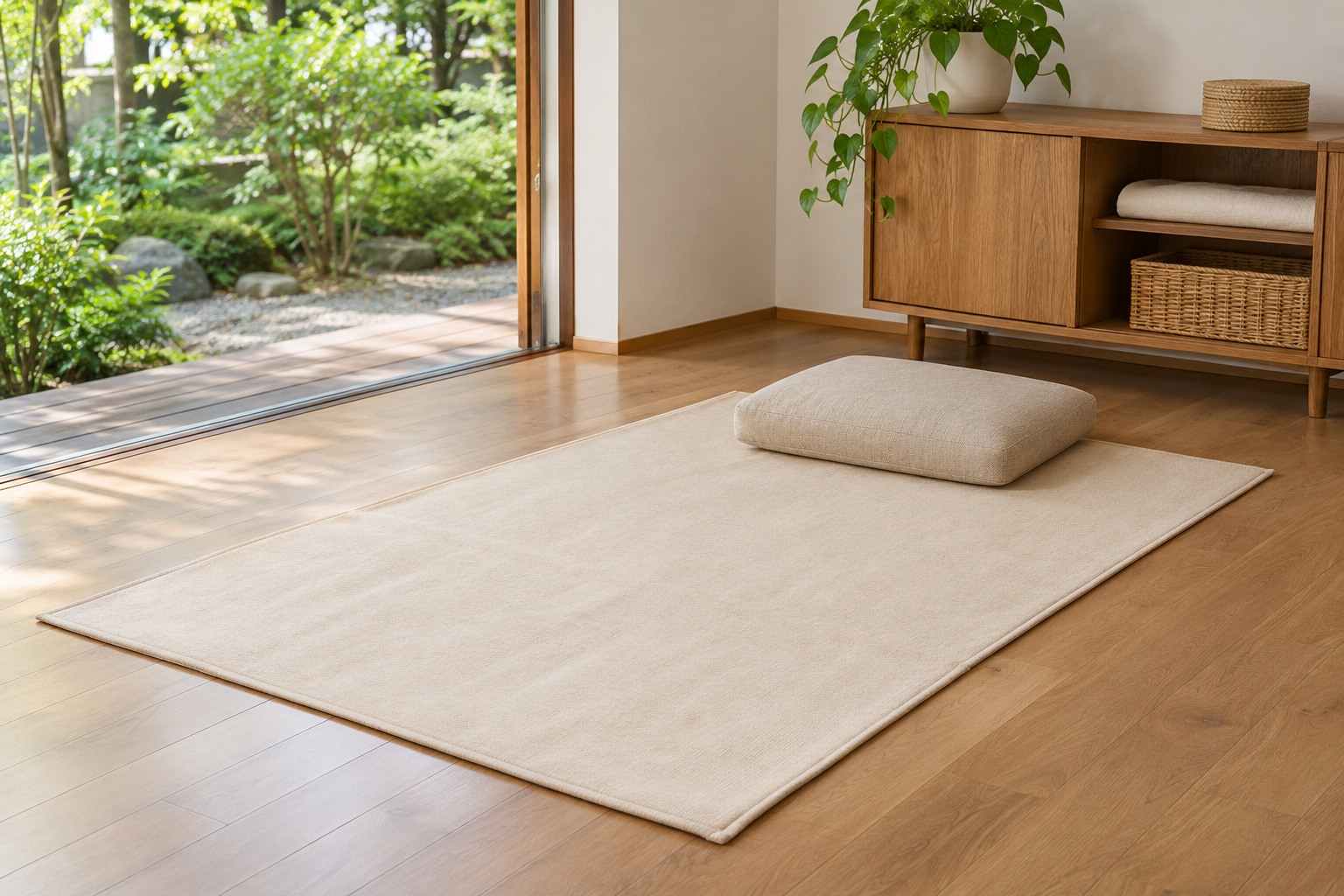
One plain mat can show where a temporary sitting area belongs without leaving several furniture pieces in the room. Choose a material and backing suited to the floor, with edges that lie flat. Set it down where doors, drawers and household traffic will not cross the space while it is in use.
Try the arrangement before deciding on its final size. You should be able to move into your preferred position without resting partly on the edge or reaching into a busy route. Fold or roll the mat according to its care instructions after use and give it a specific storage place. A setup that takes one easy movement to clear is more useful in a shared room than an elaborate corner everyone has to step around.
5. Leave a Clear Way to Sit Down and Stand Up
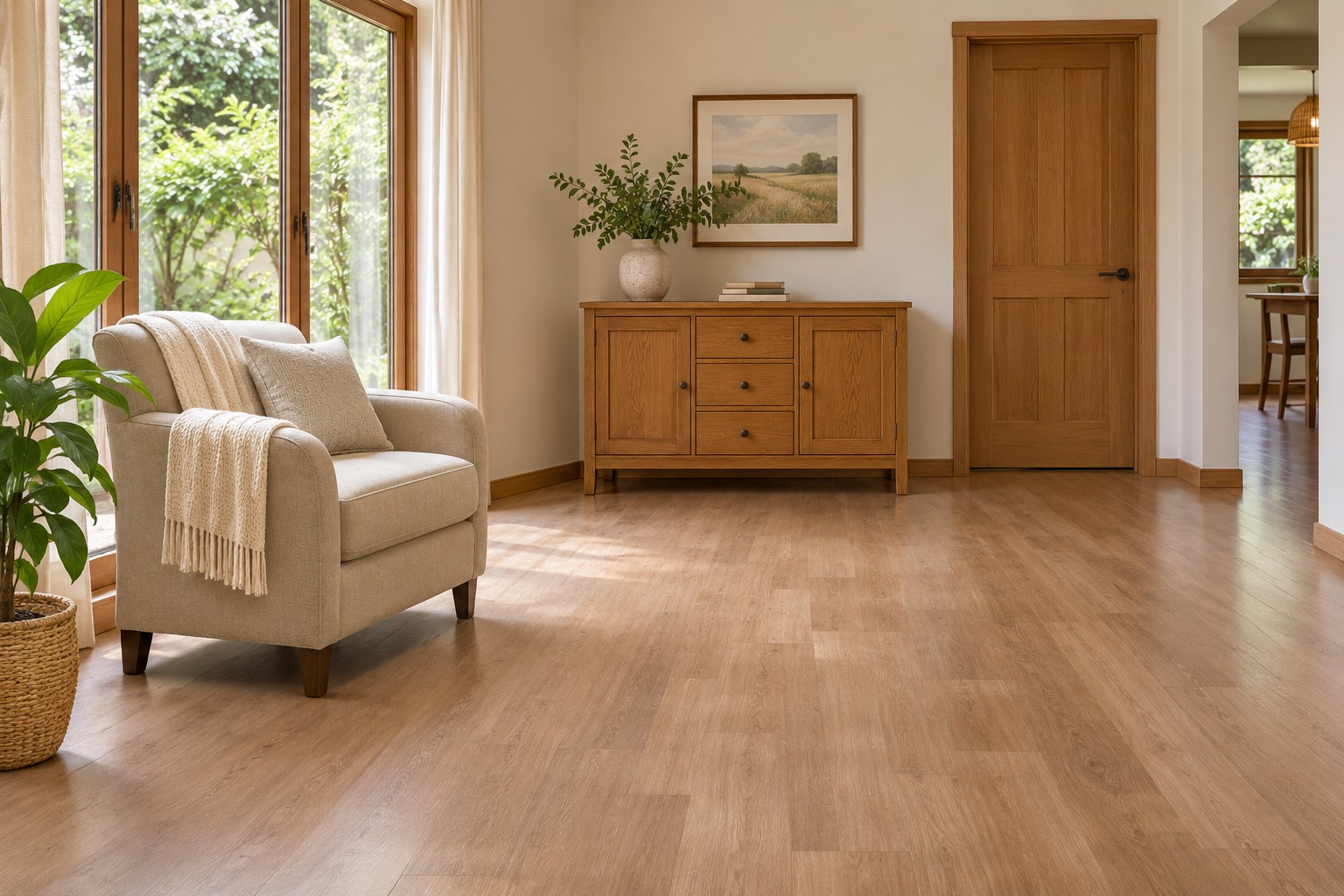
Approach the seat from the route you will use during an ordinary day. Remove small stools, trailing throws and decorative objects from that path. A corner can look spacious from the front yet become awkward when you have to turn beside a cabinet to sit down.
Check the route with doors and drawers open, then with the seat in its usual position. Keep frequently moved items out of the space needed to stand up. If you need stable support, choose seating and an arrangement appropriate to that requirement rather than assuming a low table can act as a handhold. The clear route is part of the finished design, so do not fill it later just because an empty patch of floor looks available.
6. Give the Seat a Quiet View Across the Room
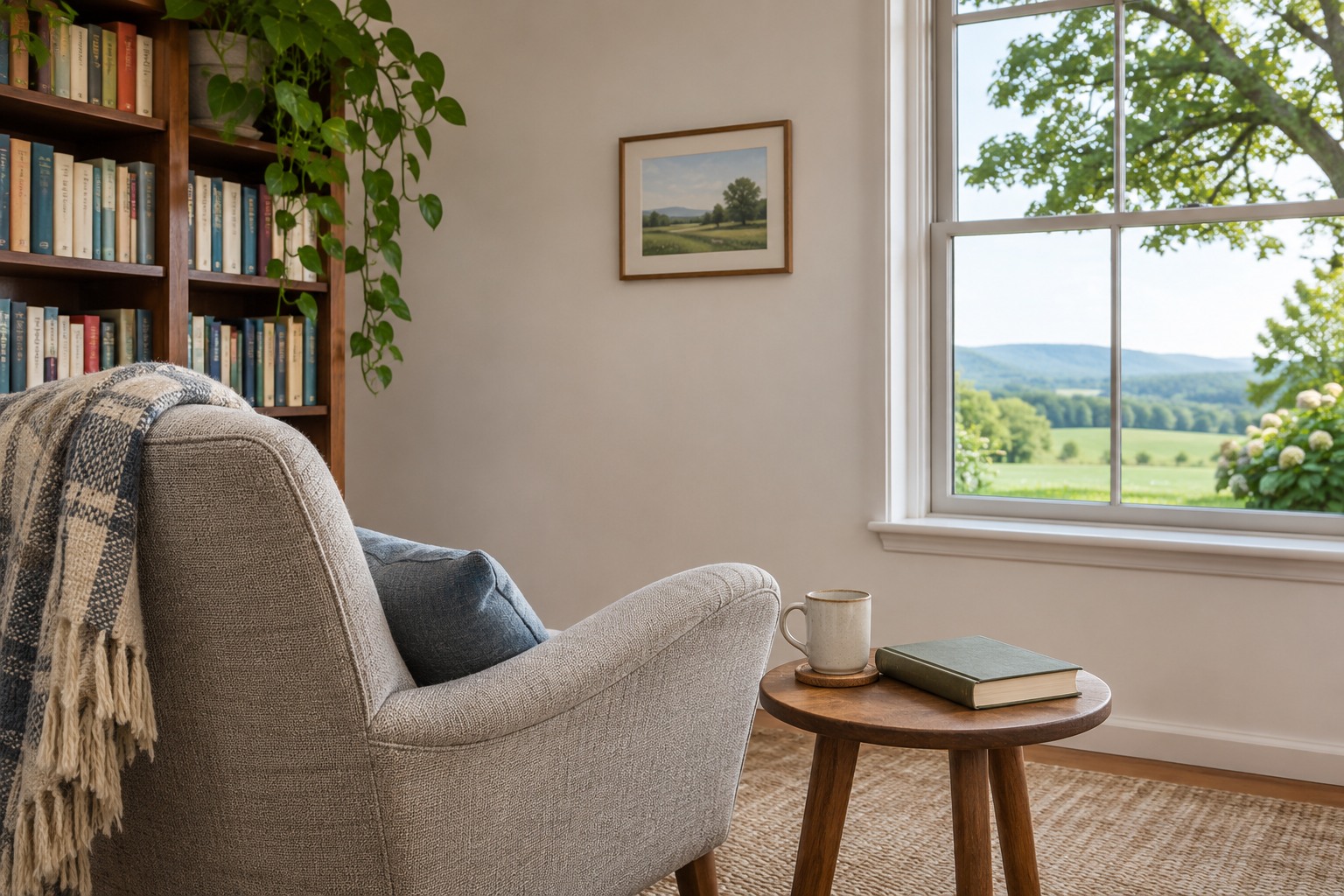
Look from the seat toward the part of the room that will be in front of you. A blank wall, a window or a simple piece of furniture may be easier to settle beside than an overflowing shelf or work screen. Turn the seat slightly if that gives you a better view without moving the whole room.
Check the new angle’s practical effects. It should not block a walkway or put a lamp directly in your eyes. You do not need to remove every visible household item; choose one area to simplify within the seat’s main sightline. A room can remain lived in while the corner has a clearer view, especially when the most mixed storage sits behind or beside the seat.
7. Soften Side Light Without Blocking the Window
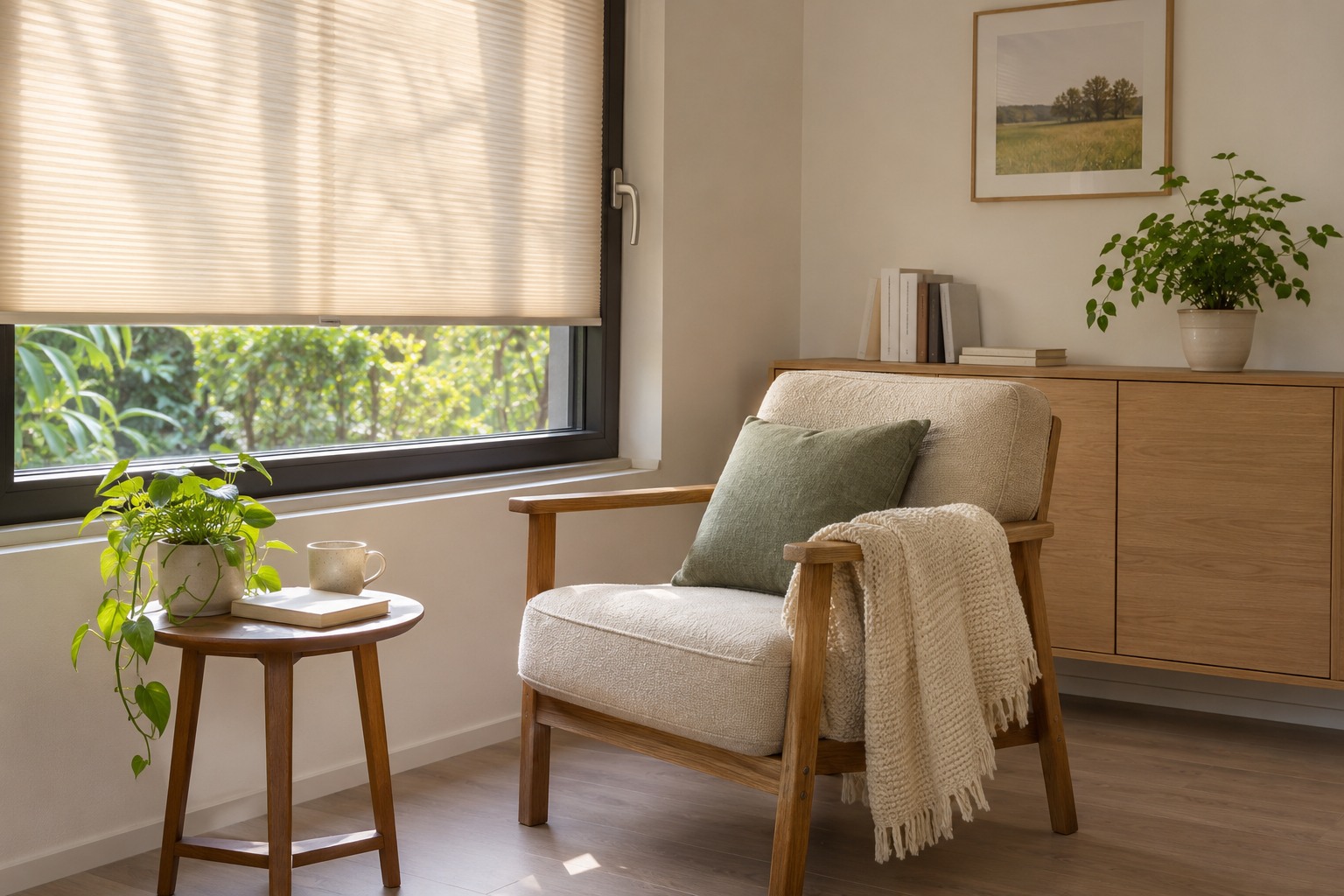
Side daylight can make a small seating area feel open, but direct glare may be uncomfortable at certain hours. Try a suitable curtain or blind that softens the light while leaving the window usable. Check the fabric in the actual corner rather than assuming every pale panel filters light in the same way.
Keep window hardware, exits and ventilation accessible. Curtains should also stay clear of heating equipment according to its instructions. Position the seat so you can adjust the covering without leaning over furniture or moving the whole setup. If glare arrives only briefly, a small change in seat angle may solve the problem more simply than adding another layer across the whole wall.
8. Put a Shaded Evening Lamp Outside the Floor Area
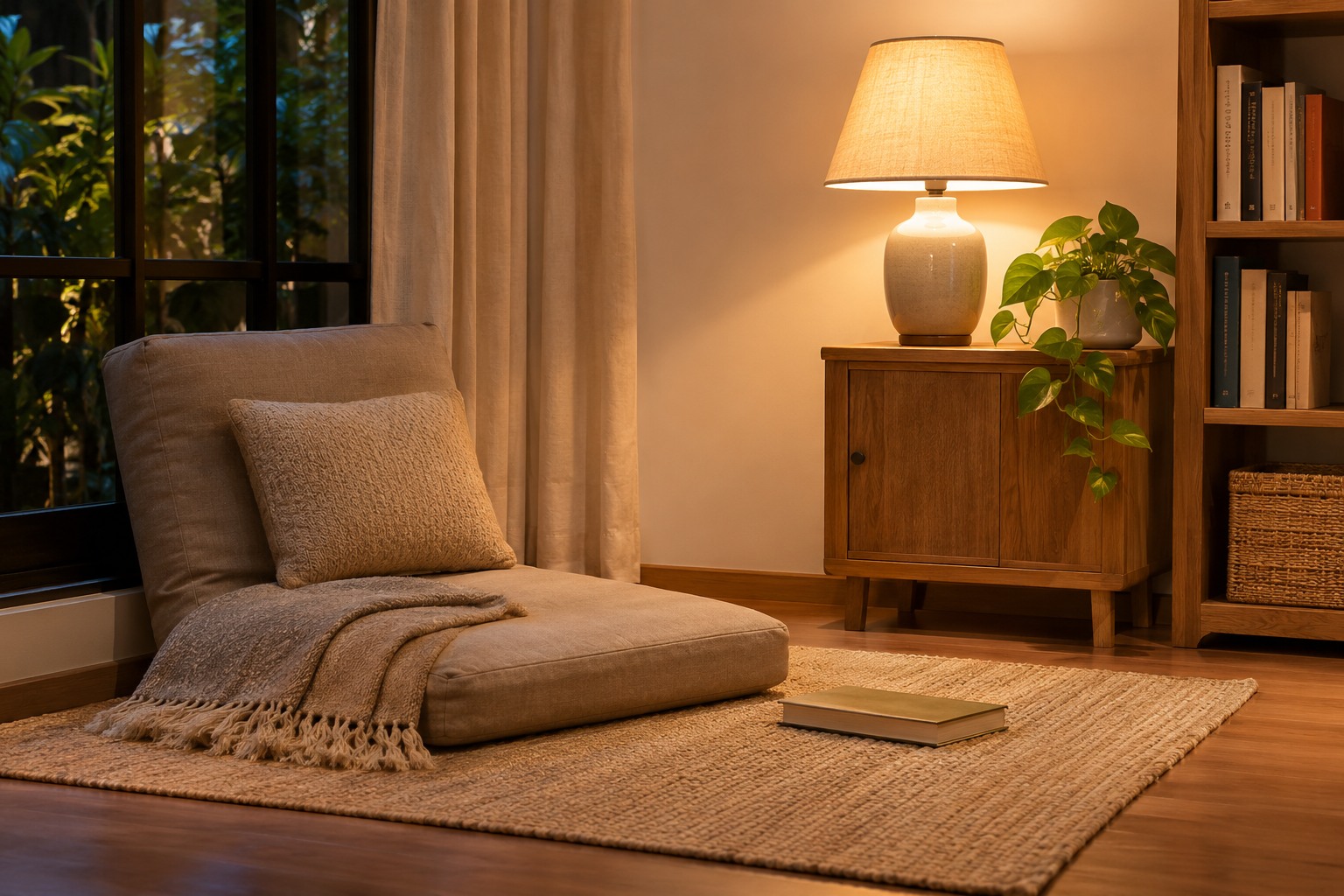
A shaded lamp beside the sitting area can provide softer evening light while keeping the mat or floor seat clear. Place it on a stable surface or choose a floor lamp with a base that does not project into the route. Check the bulb and shade combination against the lamp’s specifications.
Try the light from your actual seated position. A lamp that looks gentle while standing may expose a bright bulb when viewed from near the floor. Keep the cord away from the approach to the seat and from moving backrests. Leave enough general room light for safe movement; a quiet corner does not need to become so dark that finding a book or standing up is awkward.
9. Keep a Blanket Within Reach of the Seat
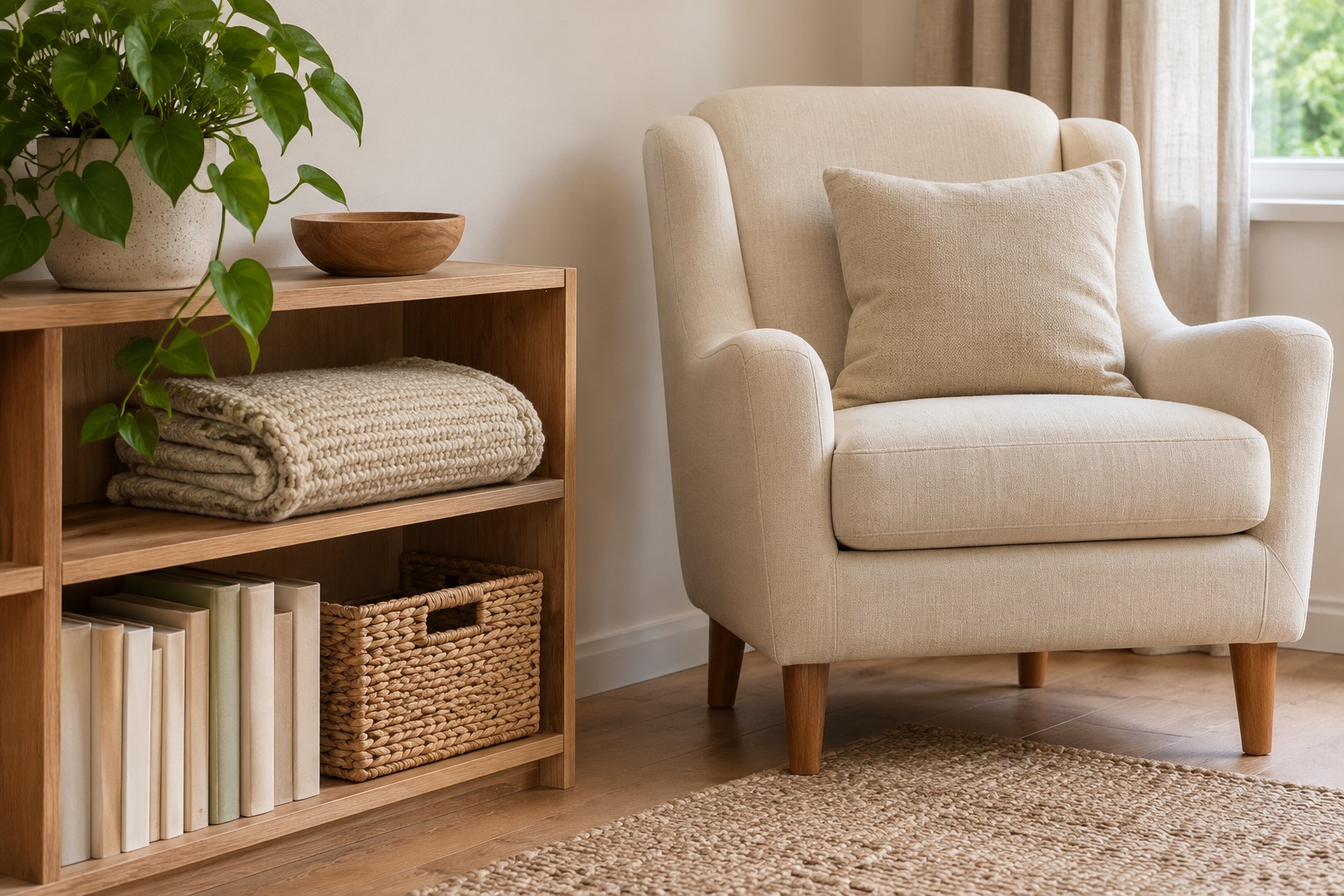
A folded blanket can make the corner useful when the room feels cooler, provided it has an easy place to rest. Put it on a nearby low shelf, over a chair arm that can carry it or in a suitable basket outside the walking route. Choose a fabric whose weight feels comfortable rather than merely decorative.
Sit down and check whether you can reach it without twisting awkwardly. Keep long fringes and loose folds away from adjustment mechanisms or places where someone might step. If the blanket is used every evening, give it a storage position that makes a quick fold enough. For broader seasonal texture ideas, these winter home decor ideas cover the rest of the home.
10. Store the Small Setup in One Low Closed Cabinet
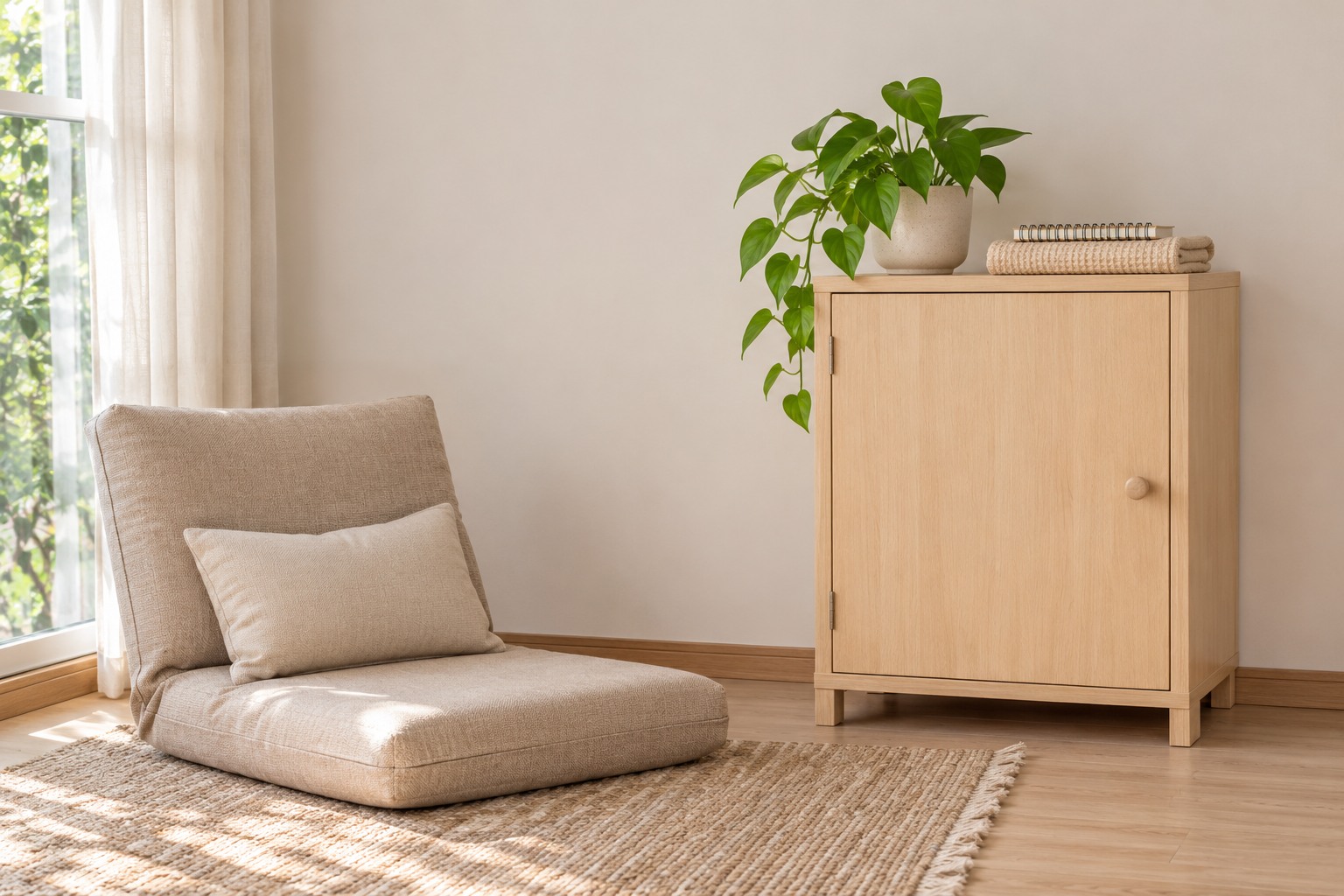
A low closed cabinet can hold the corner’s modest supplies: a folded textile, notebook or other quiet activity items. Size the storage around those things instead of choosing a cabinet first and looking for objects to fill it. Closed doors help mixed small items stay out of the main view from the seat.
Measure the door swing and leave enough space to reach the contents comfortably. Follow the furniture’s fixing and load instructions, including any anti-tip requirements. Keep heavier pieces low and avoid treating the cabinet as an extra seat unless it is designed for that use. A single well-placed storage piece can make resetting the corner easier without surrounding it with baskets and shelves.
11. Use a Short Return Wall to Shelter the Corner
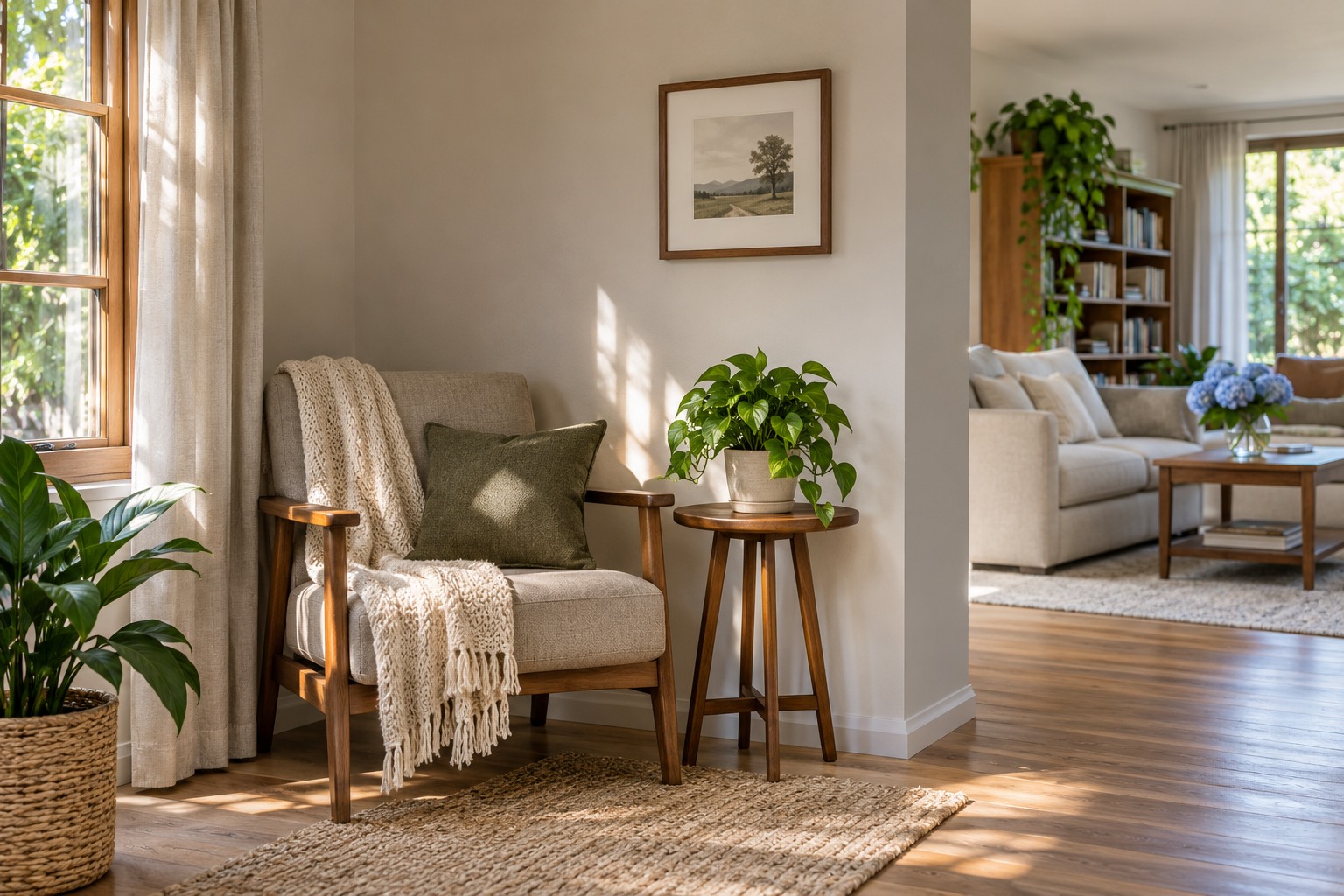
A short return wall can separate a seat visually from the rest of a larger room. Place the seat where the wall forms a quiet side boundary, while keeping the opening toward the room easy to use. A restrained picture or small textile on that wall may be enough to identify the area.
Check the corner’s daylight and the route past the wall before bringing in furniture. A sheltered position should not become a cramped one. Keep switches, sockets and vents accessible, and avoid wedging the seat so tightly that its back cannot sit as intended. The existing architecture may already provide the sense of separation you want, allowing you to leave additional screens or partitions out of the plan.
12. Place a Stable Folding Screen at the Busy Edge
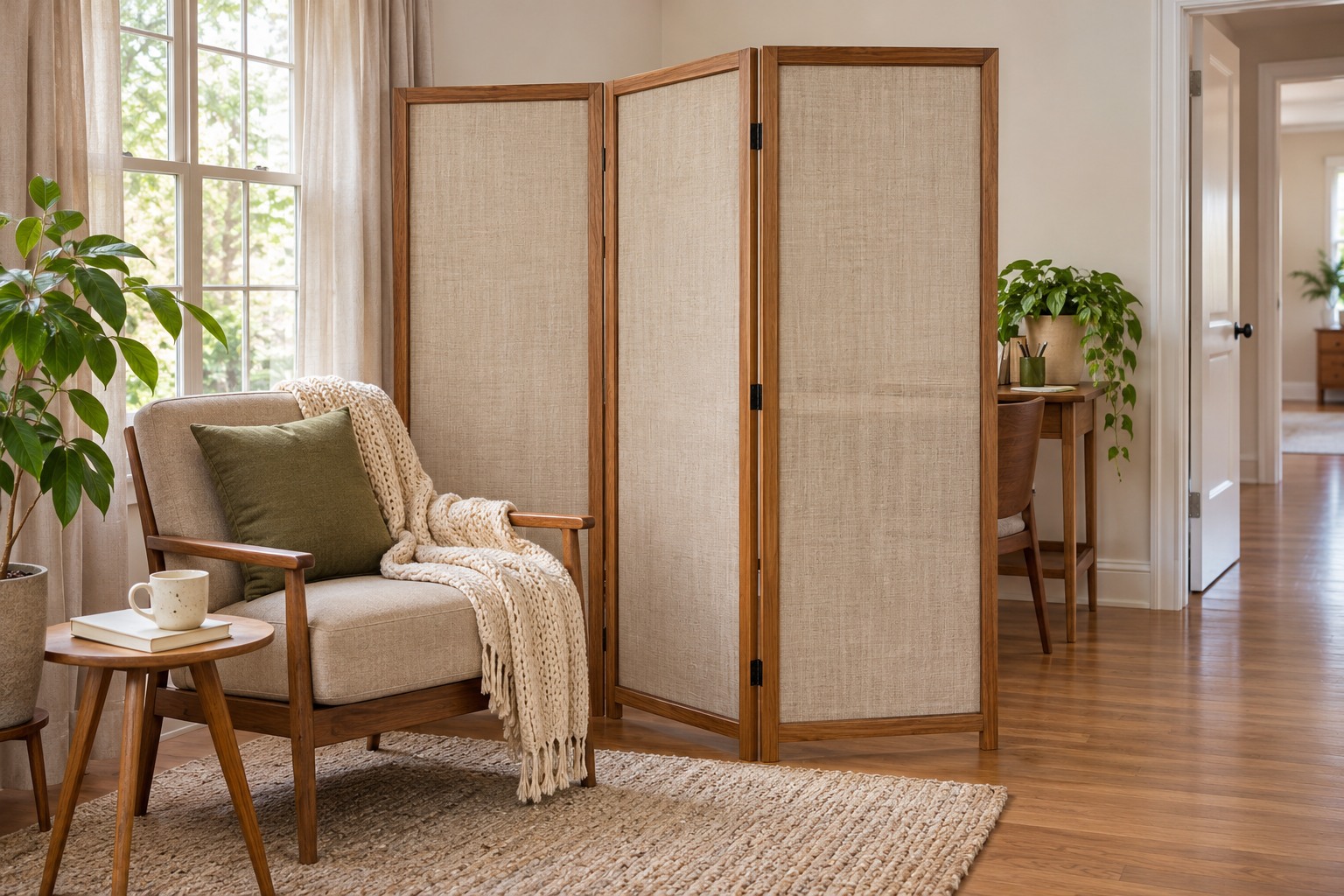
A folding screen can hide a distracting view from the seat without dividing the whole room permanently. Place it at the busy edge, such as the side facing a desk, and follow its setup instructions for stable placement. Leave the entrance to the sitting area clear and easy to see.
Check the screen with normal household movement nearby. A lightweight panel can be knocked if it sits in a route or opens too flat. Keep it away from heat and do not use it to conceal unsafe cords or obstruct exits. Choose a material that provides the visual separation you need, but do not assume a decorative screen will block household noise. Its main job here is to simplify the view.
13. Separate the Space From a Work Desk at Day’s End
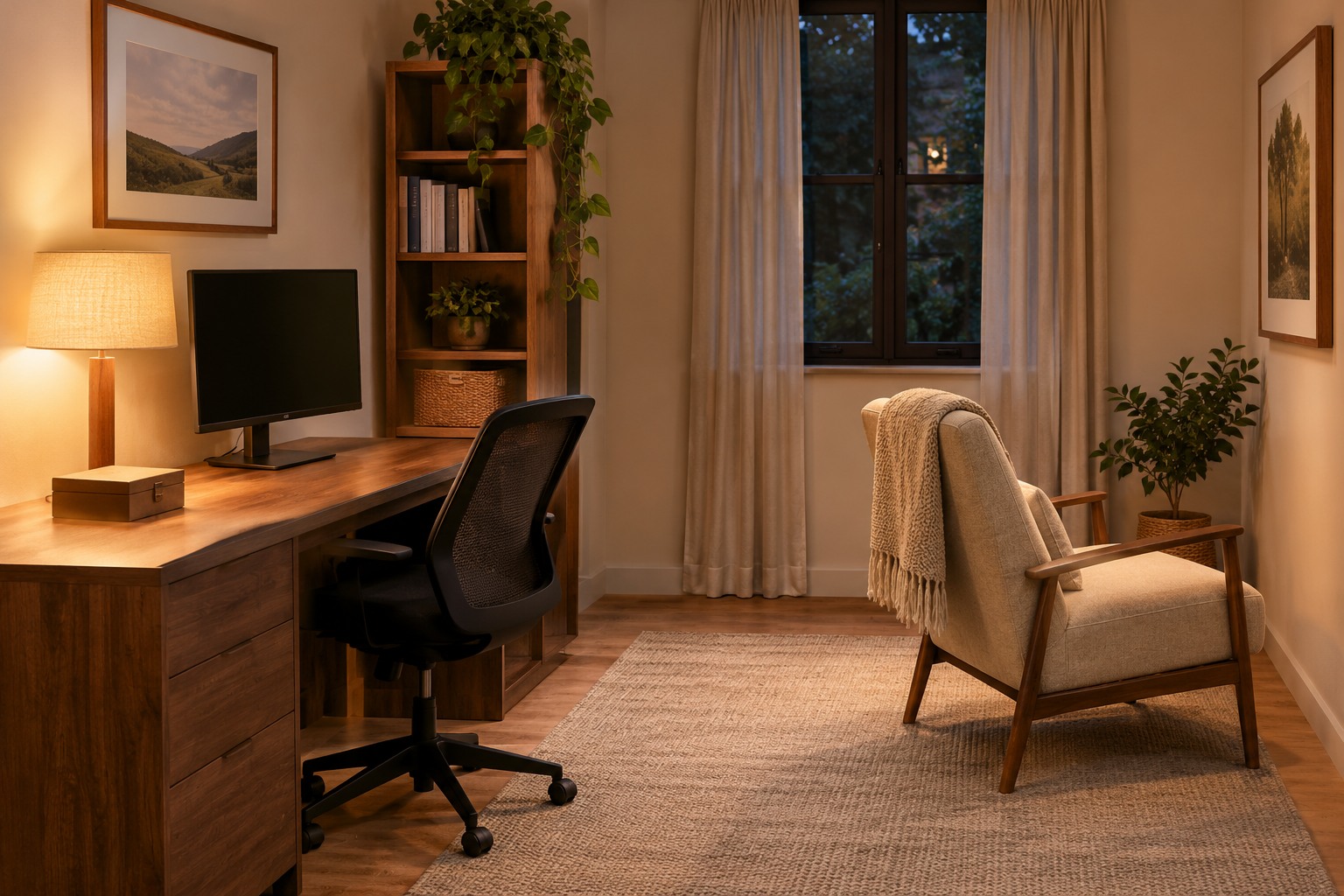
When a quiet corner shares a room with a desk, make the change of use visible through a small reset. Put work materials into their designated storage, turn off an unused screen and move the desk chair back into place. Then bring out the one item you want for the corner, such as a book or notebook.
Choose storage close enough that this takes little effort. Moving a pile from the desk onto the seat merely transfers the problem. If the desk remains in the main sightline, angle the seat toward another wall or use an appropriate screen. The room can keep both jobs, with a clear transition that does not require buying a second set of furniture.
14. Make a Guest Bedroom Corner Easy to Reset
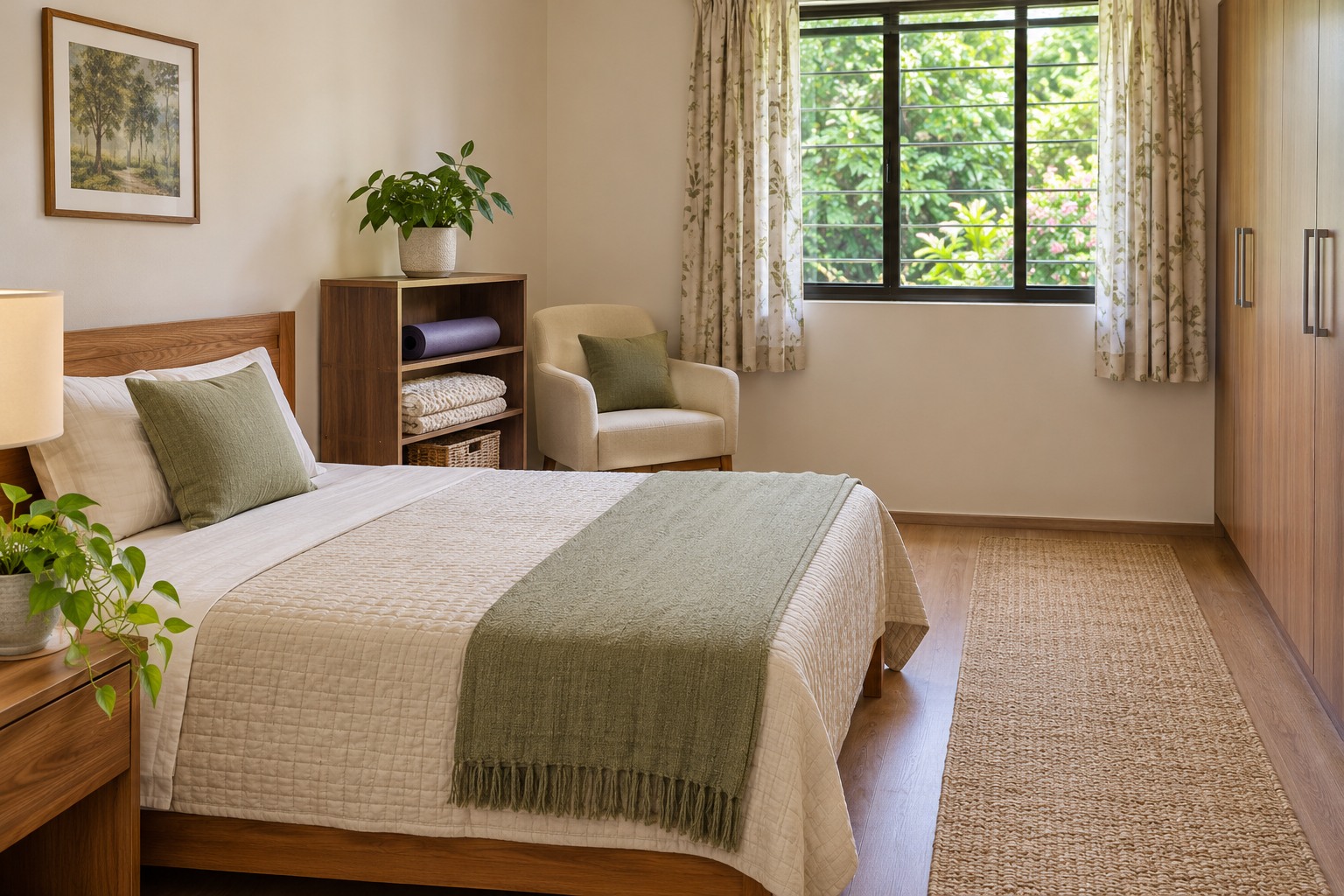
A guest bedroom can hold a quiet sitting area between visits if the setup can be cleared without a major rearrangement. Use a compact seat or a fold-away arrangement and reserve a real storage space for its accessories. Keep the guest’s path to the bed, wardrobe and window open.
Try the guest layout before settling on the everyday one. Where will the mat or floor seat go when someone needs the room, and can you move it comfortably? Avoid covering the spare bed with the corner’s supplies. A few pieces that store together can make the room flexible, while a heavily decorated permanent nook may prevent it from serving either purpose well.
15. Use an Alcove Without Filling Its Full Depth
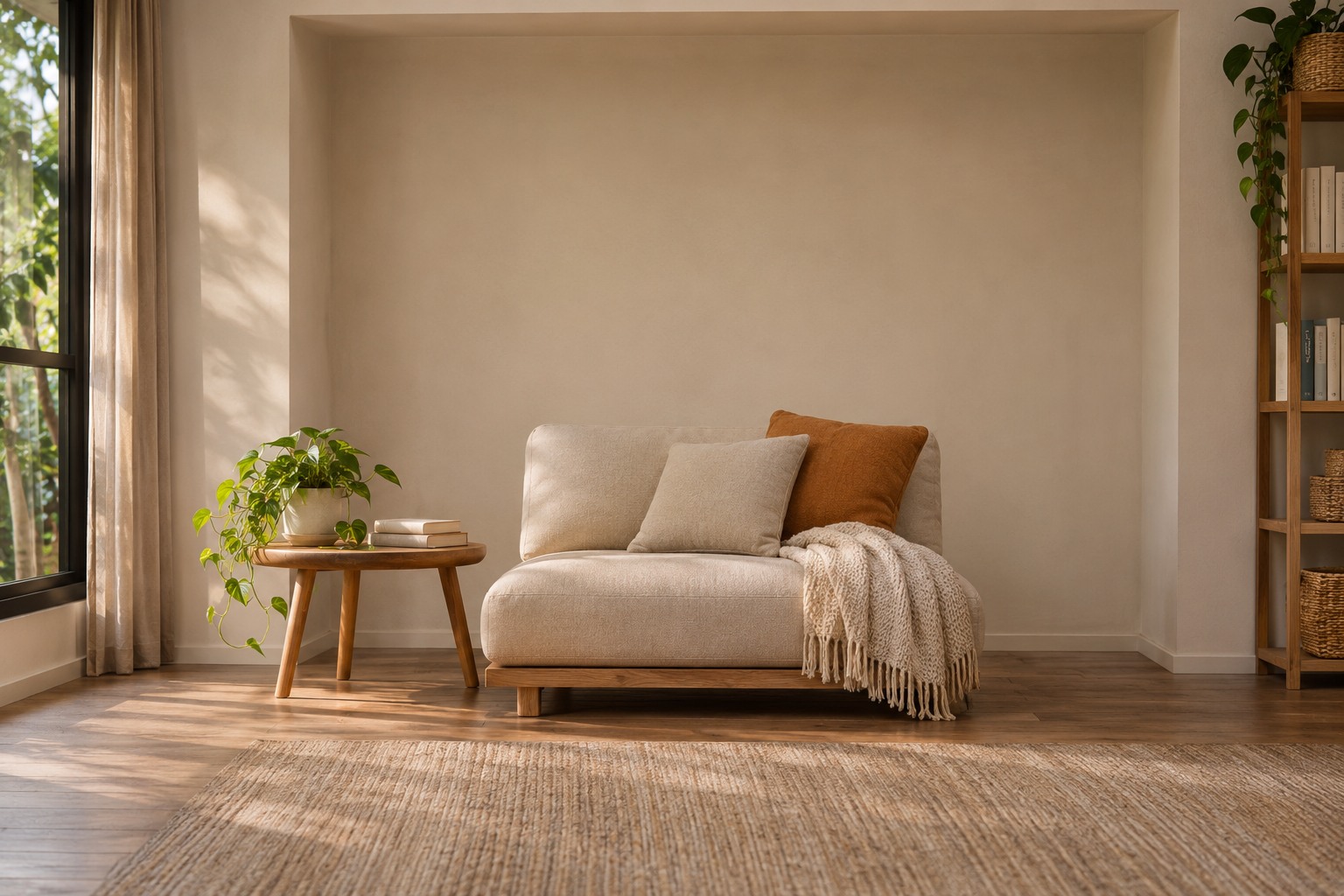
An alcove can make a small sitting area feel defined, but you do not have to push the seat to its deepest point. Bring it forward enough that the backrest fits comfortably and the view opens toward the room. Leave the remaining space as a quiet background rather than filling it automatically with tall plants or shelves.
Measure the usable width at floor level and around any projecting trim. Check lighting from the seated position, since the deepest part may be darker than the room appears while standing. Keep airflow, access panels and any built-in equipment unobstructed. The alcove should help the seat belong in the room while still allowing you to enter and leave it without squeezing past decorative pieces.
16. Let Natural Wood Supply the Main Texture
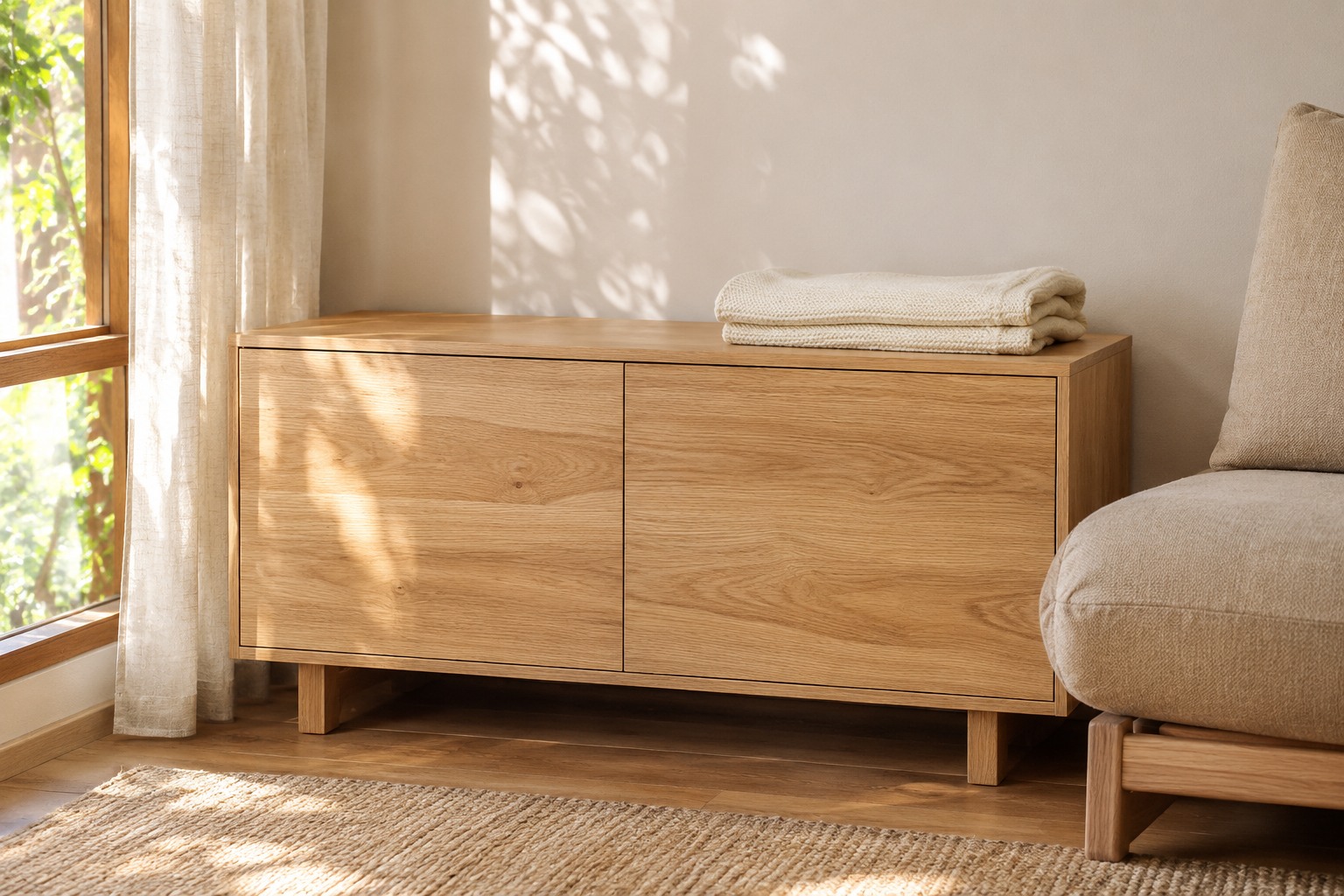
A plain wood floor, low cabinet or small side table can provide enough texture for a restrained corner. Keep a useful area of the grain visible and pair it with one soft textile. The material can carry interest without requiring several small ornaments around the seat.
Work with the wood already in the room where possible. Two different tones can sit together if they share a warm or cooler direction, but a small corner rarely needs several new finishes at once. If you want to extend the material approach through a whole interior, these modern Japanese interior ideas explore a broader design direction. The sitting corner itself can remain much simpler.
17. Choose One Wall Color in the Light You Will Use
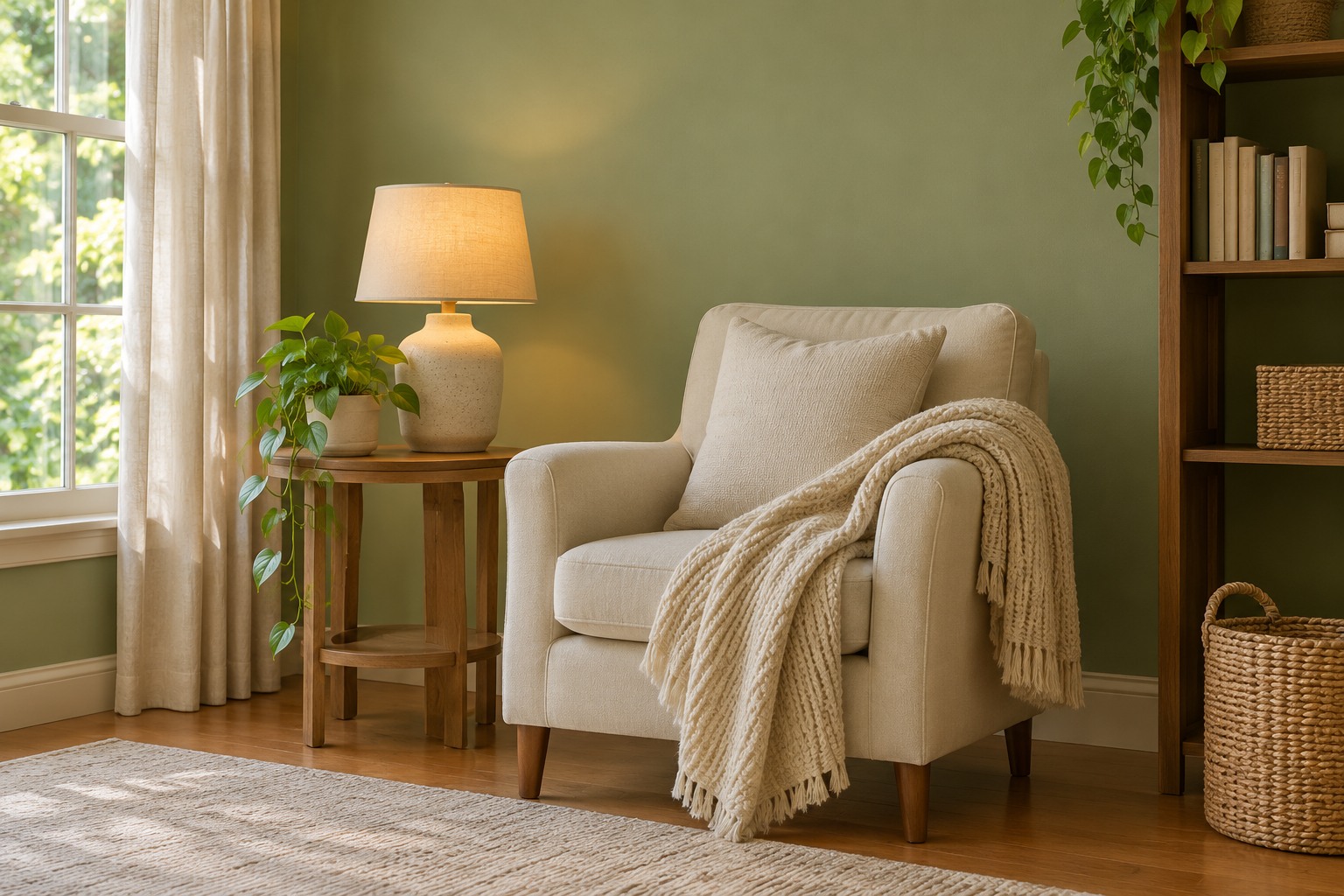
A wall color should feel comfortable in the corner’s actual light. Try a sample near the seat and look at it in daylight and with the evening lamp on. A soft warm neutral or a muted green may work, but the room’s existing floor and upholstery should guide the choice.
Start with the wall that forms the seat’s main background rather than painting every surface automatically. Check the sample from the seated position and beside your chosen blanket or cushion. If the existing wall already works, you can bring a small amount of color through fabric instead. The point is to make the area feel settled without creating another large decision the room did not need.
18. Set a Small Personal Object at Seated Eye Level
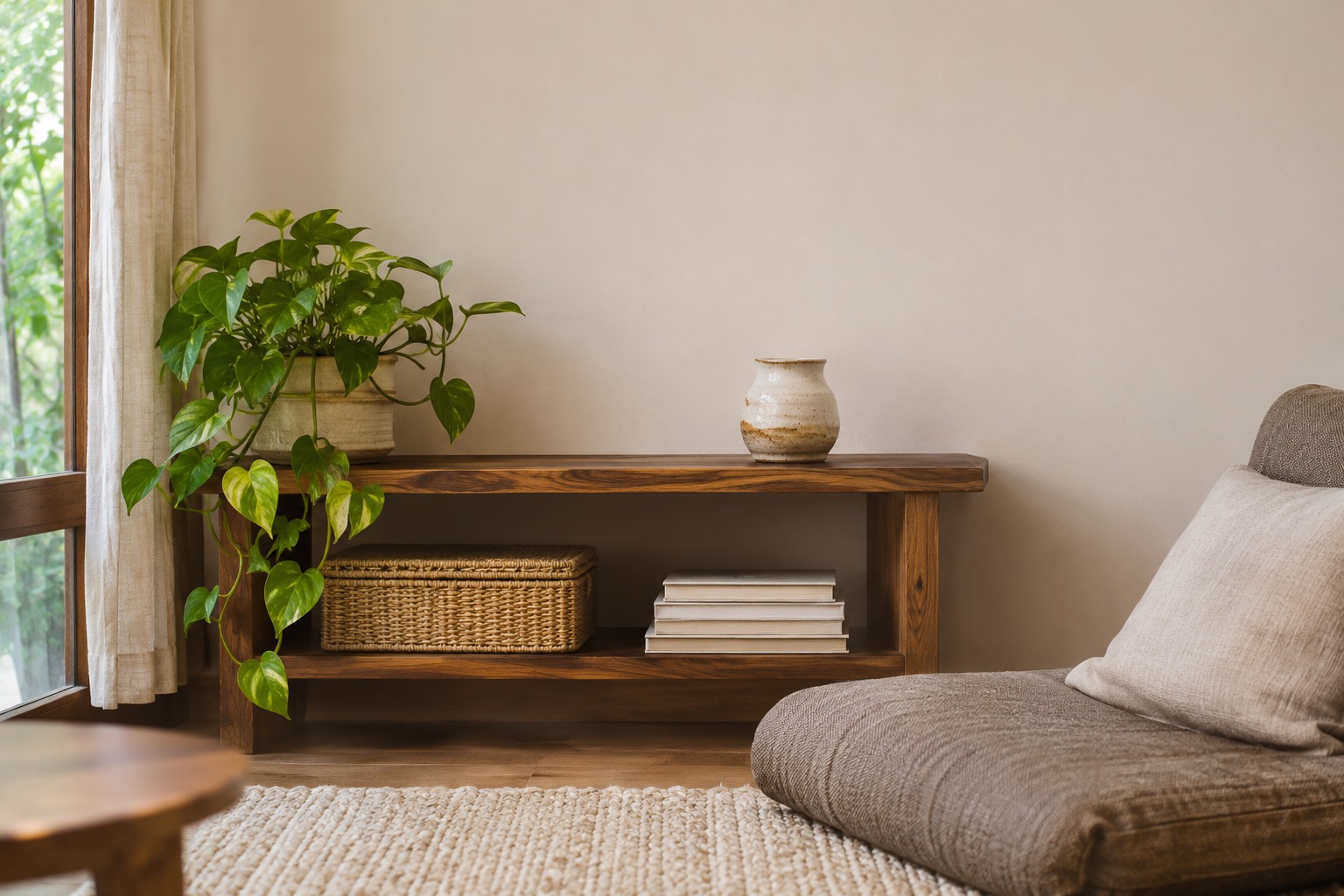
One personal object can give the corner meaning without becoming a collection. Choose something you enjoy looking at, such as a small handmade vessel or a framed picture, and place it on an appropriate stable surface within the seated view. Let the surrounding space remain plain enough that the object can be noticed.
Keep it out of the movement area and secure it as appropriate to the household. Avoid using a fragile object where a blanket, knee or moving chair back could knock it. Its height does not need to match an exact decorating formula; try the position while seated. If it is difficult to see without leaning or turning, move it to a more natural place or choose a different piece.
19. Keep a Single Plant Outside the Movement Area
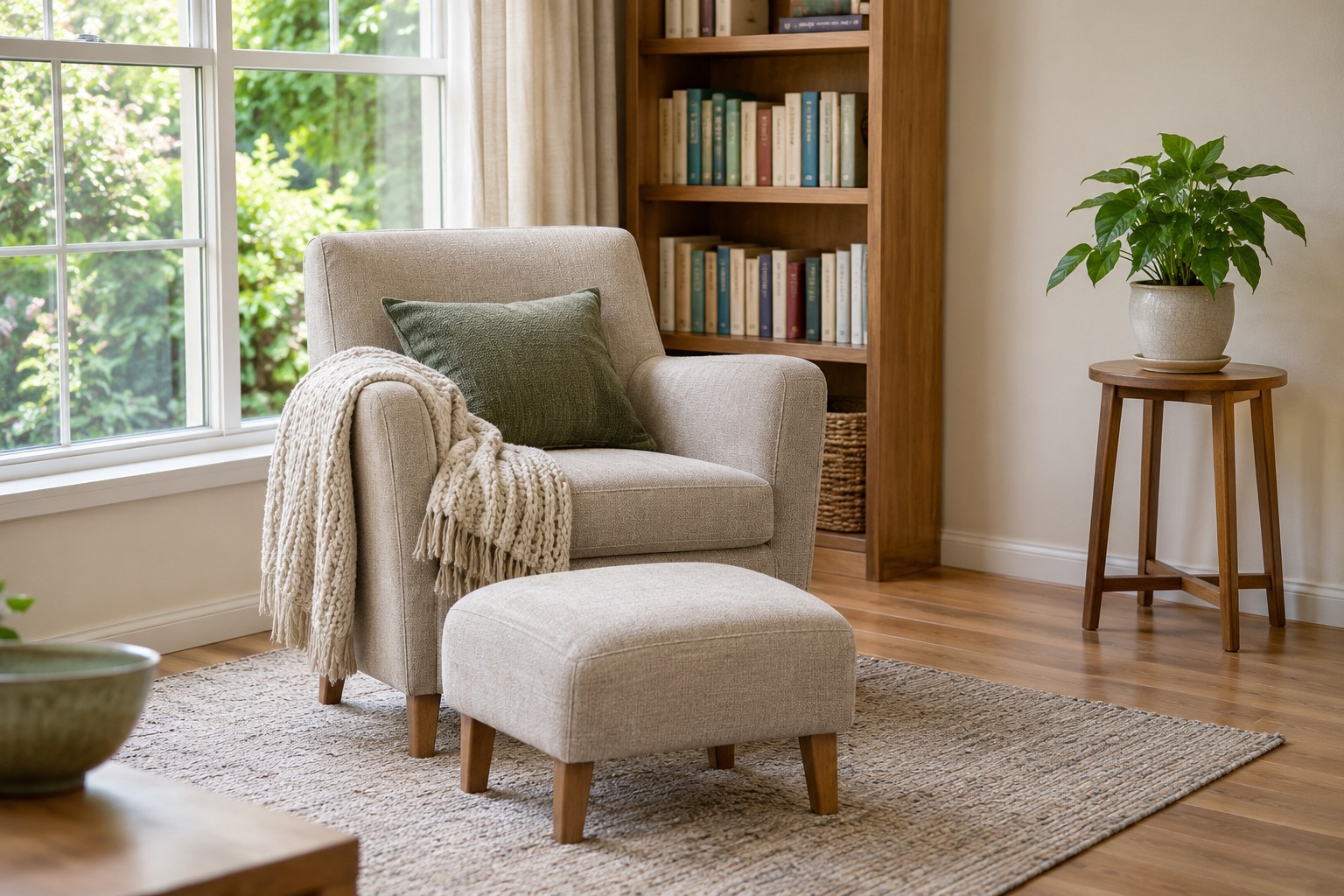
One plant can introduce a living shape while leaving the floor around the seat clear. Choose a species suited to the available light and your household, including any pet or child considerations. Put its container on a stable surface with suitable protection for the floor or furniture beneath.
Check the plant’s mature spread, not only its current pot size. Leaves should not brush the seated area or hang into the route where you stand up. Keep watering easy enough that the plant can be cared for without moving the whole corner. A plant is optional; if the position lacks suitable light or the care routine does not fit, the space can remain complete with wood and textiles alone.
20. Give a Quiet Activity Its Own Low Tray
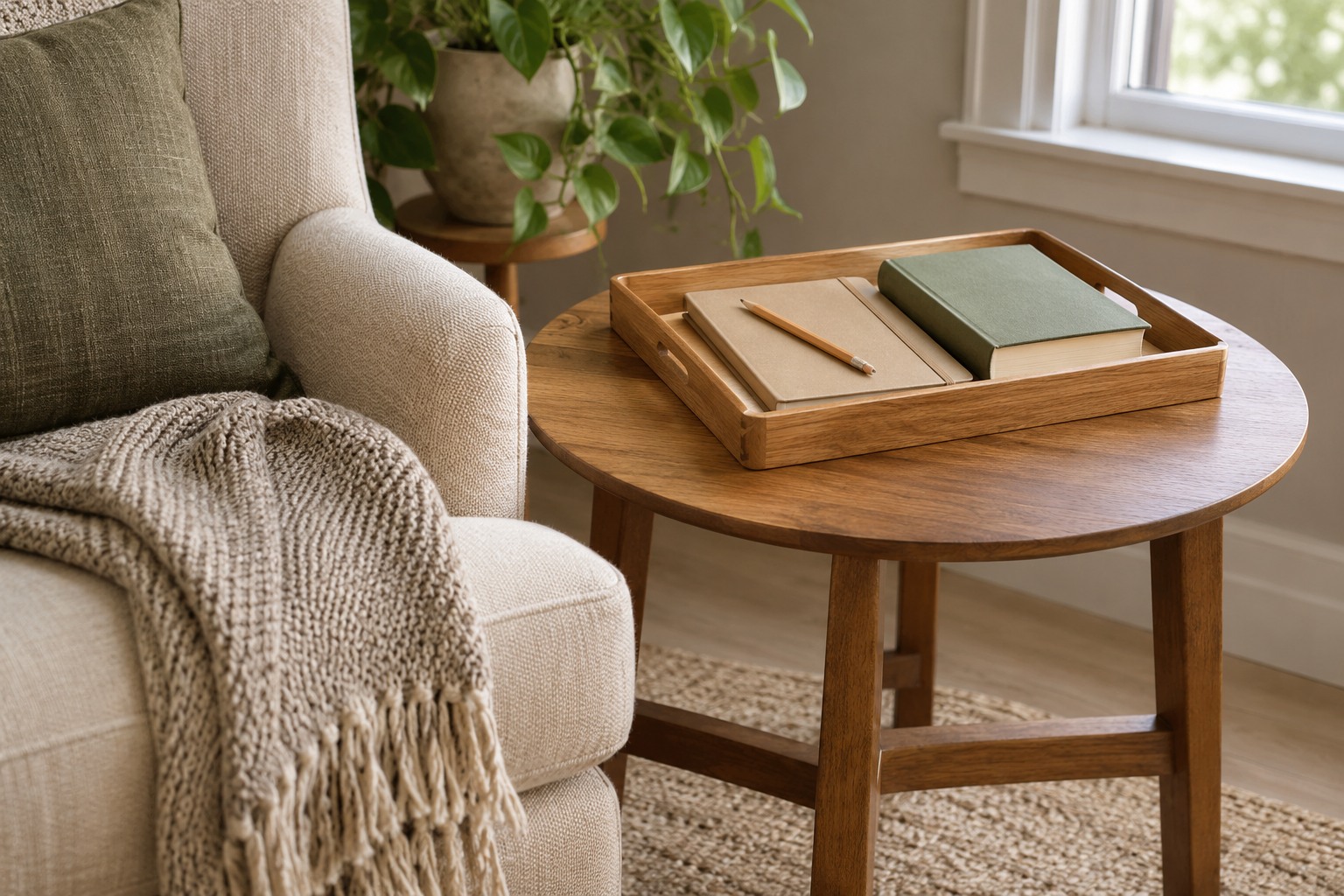
A tray can gather a notebook, pencil and one book so the corner is ready for a specific quiet activity. Place it on a stable surface at a comfortable reach, outside the space your feet or legs need. Choose the activity first, then a tray large enough for its small set of supplies.
Avoid loading it with objects that have no role in that activity. If the tray moves between rooms, keep the weight manageable and the contents secure. A tray resting on the floor is easy to overlook, so do not put it in the route to the seat. When the activity is finished, return the whole group to its storage place instead of leaving several loose pieces around the room.
21. Keep Shared-Room Storage Outside the Seat’s View
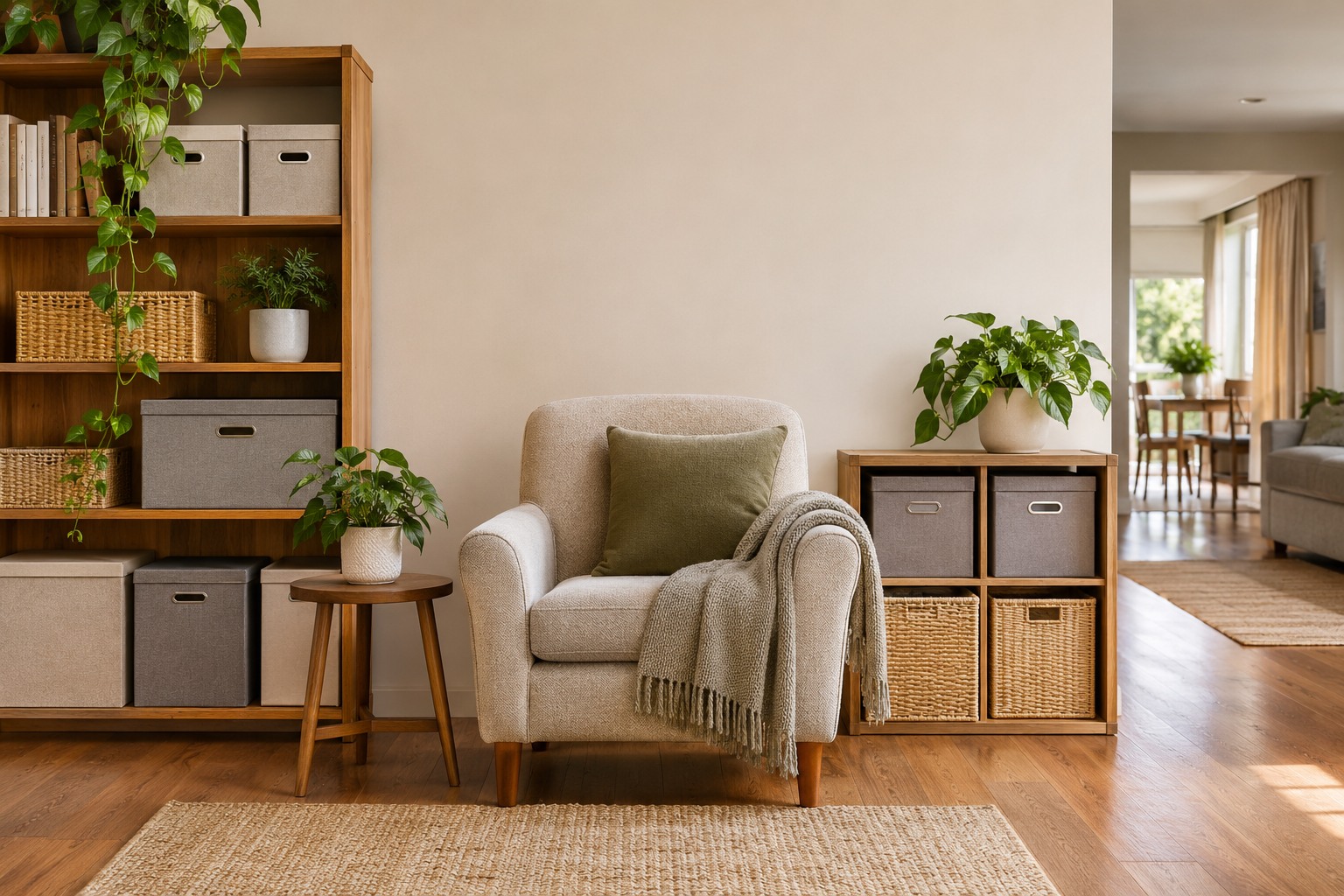
In a shared room, moving all household storage may be unrealistic. Start with the shelf or cabinet most visible from the seat and make its contents easier to read. Group small mixed items into suitable closed storage and leave the most frequently used things accessible to the rest of the household.
Do not hide items so thoroughly that someone has to dismantle the quiet area to find them. A small turn of the seat may reduce the view of a busy shelf more effectively than a new storage system. Keep household routes and shared functions working first. A useful corner can coexist with family life when its visual boundary is clear and its furniture does not monopolize the room.
22. Finish With a Simple End-of-Day Reset
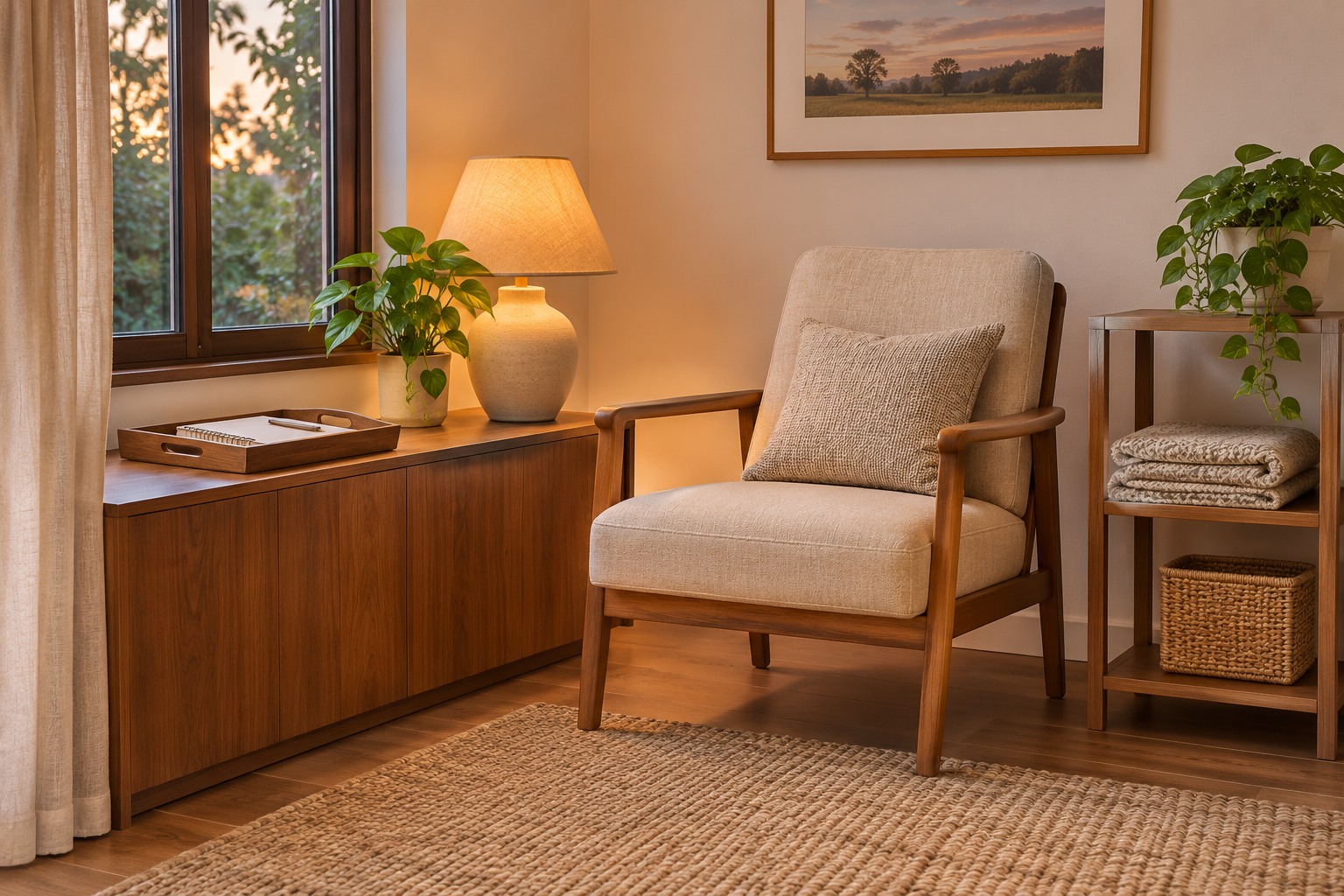
Decide what the corner should look like when it is ready to use again. Fold the blanket, return the activity tray and put any temporary seat or mat in its intended position. Keep the routine short enough that you can do it without treating the room as another project.
After a few uses, notice what repeatedly gets in the way. A lamp switch may be too far back, a storage door may need more room or a decorative object may be moved every time you sit down. Adjust those small details before adding anything else. The best final arrangement is one you can comfortably return to, with the seat, light and practical supplies already where they belong.
Begin with the seat and the route around it. Once those work, add only the light, textile and storage that support how you want to use the space. A small corner can feel complete when it is comfortable, easy to clear and ready for an ordinary quiet moment.
Discover more from HomeTrendora
Subscribe to get the latest posts sent to your email.