An unused living-room corner can solve a small problem you notice every day. It might be the dark patch beside the sofa, the toys that end up under the coffee table, or the laptop you move before dinner. Start with one job and check how much floor space you need to do it.
These 22 living-room corner ideas show where to put a seat, work surface, light, or storage without getting in the way of the rest of the room. Try the footprint with furniture or cardboard you already have before you buy anything.
1. Turn the Bright Corner Into a Reading Seat
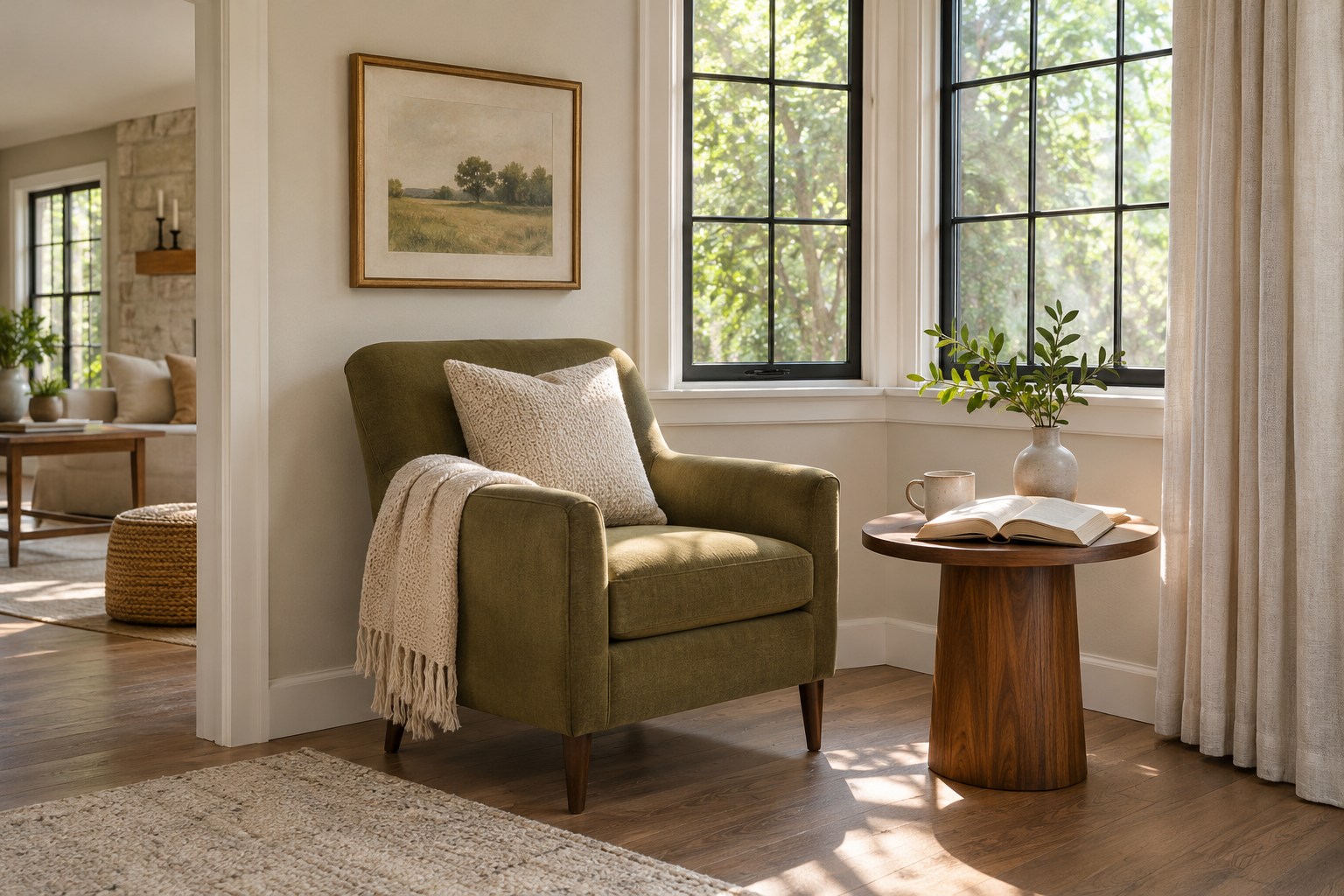
A window corner makes a good reading spot when the light falls across the page and the seat is easy to reach. Angle the chair so the window sits off one shoulder. Sit there for a few minutes at the time you normally read. Direct sun may feel pleasant at breakfast and be too bright by late afternoon.
Put a small table where your hand naturally lands with a cup or book. Leave room to draw the curtains and get up without stepping around the table. If you like a more traditional chair and table pairing, these English cottage living room ideas show how it can fit in a smaller room.
2. Use a Floor Lamp Where the Sofa Leaves a Dark Patch
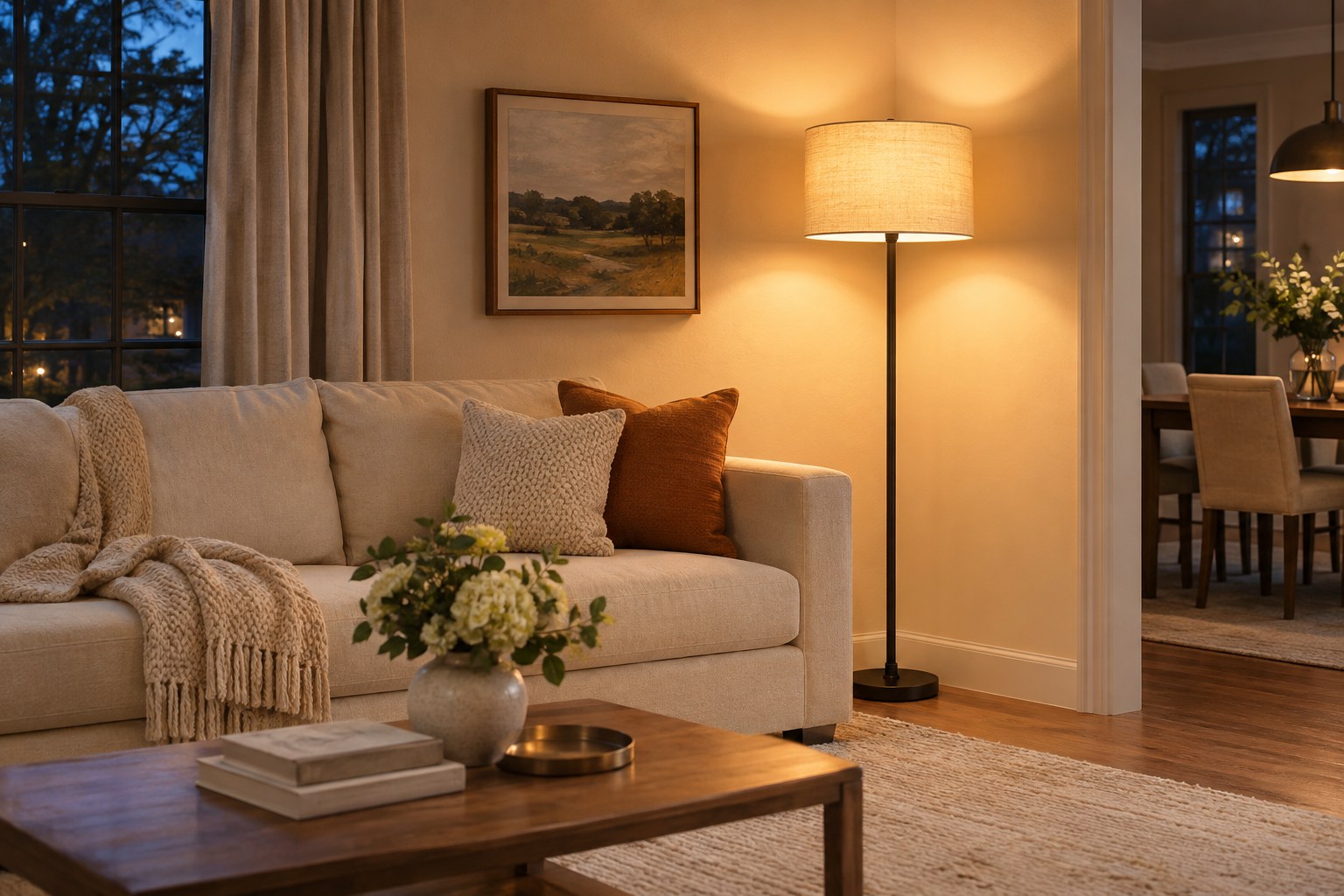
Stand where you enter the room after dark and see which wall goes quiet when the ceiling light is off. A shaded floor lamp in that corner can light the wall and make the seating group easier to see. Test a lamp you already own before choosing how tall or wide the shade needs to be.
Sit on the sofa and check whether you see the bare bulb. Try a different angle if it bothers you. Keep the base in the furniture footprint and run the cord where it cannot be pinched or crossed by feet. Use the bulb type and wattage allowed by the fixture.
3. Group Plants Where You Can Reach All the Pots
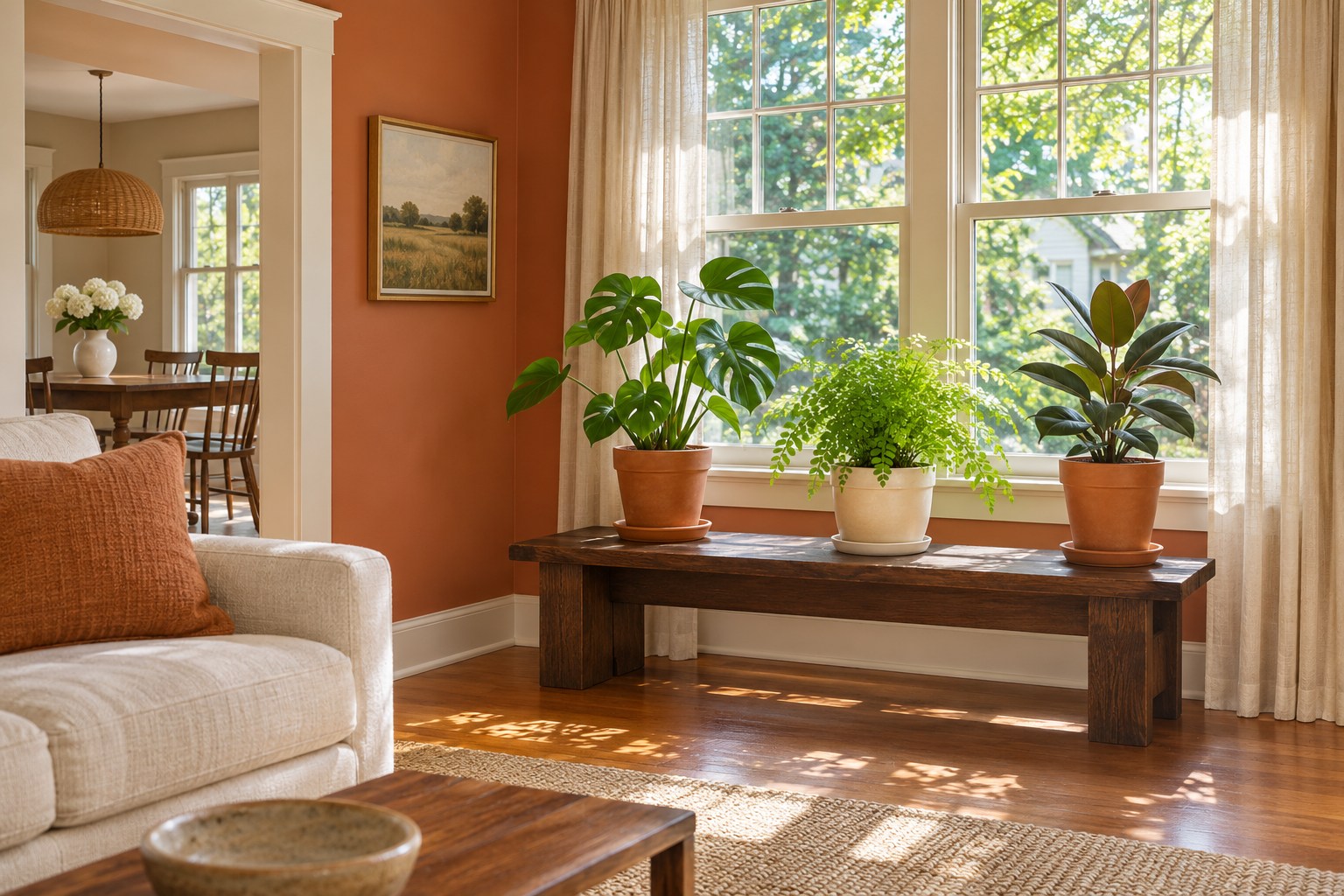
Choose plants for the actual light at the window. A group with similar light needs is easier to look after in one place. Set the pots on a low, stable bench or stand so you can reach the back without leaning over the front plants. Leave enough room to see the soil and lift a pot out.
Check the floor and sill on watering day. Use saucers or take pots to the sink so water stays off the floor and furniture. If a plant needs more light or becomes hard to reach, give it a separate spot instead of crowding the entire group closer to the glass.
4. Hang One Artwork at the End of a Sightline
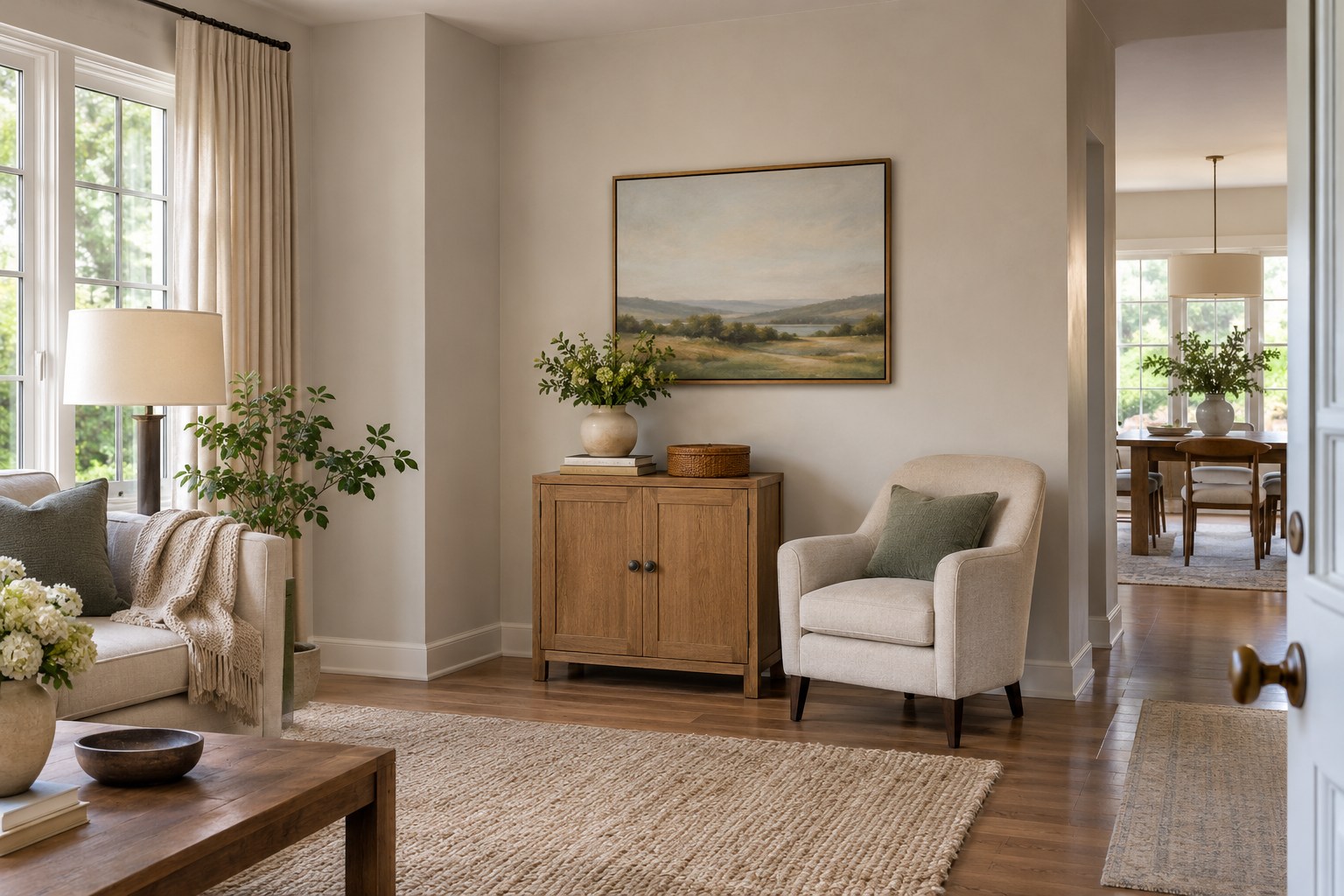
Stand in the doorway or sit on the sofa and pick the short wall you see most clearly. One framed piece can give that view somewhere to end. Start with a paper template and move it until the picture feels related to the nearby chair or cabinet. Leave the floor open if the corner sits beside a walkway.
Check the picture again at night. A bright reflection from a lamp can erase the details you liked. Try a slight change in placement or a frame with less reflective glazing. These living room gallery wall ideas can help if the wall has room for more than one frame.
5. Fit a Desk Where You Can Pull the Chair Out
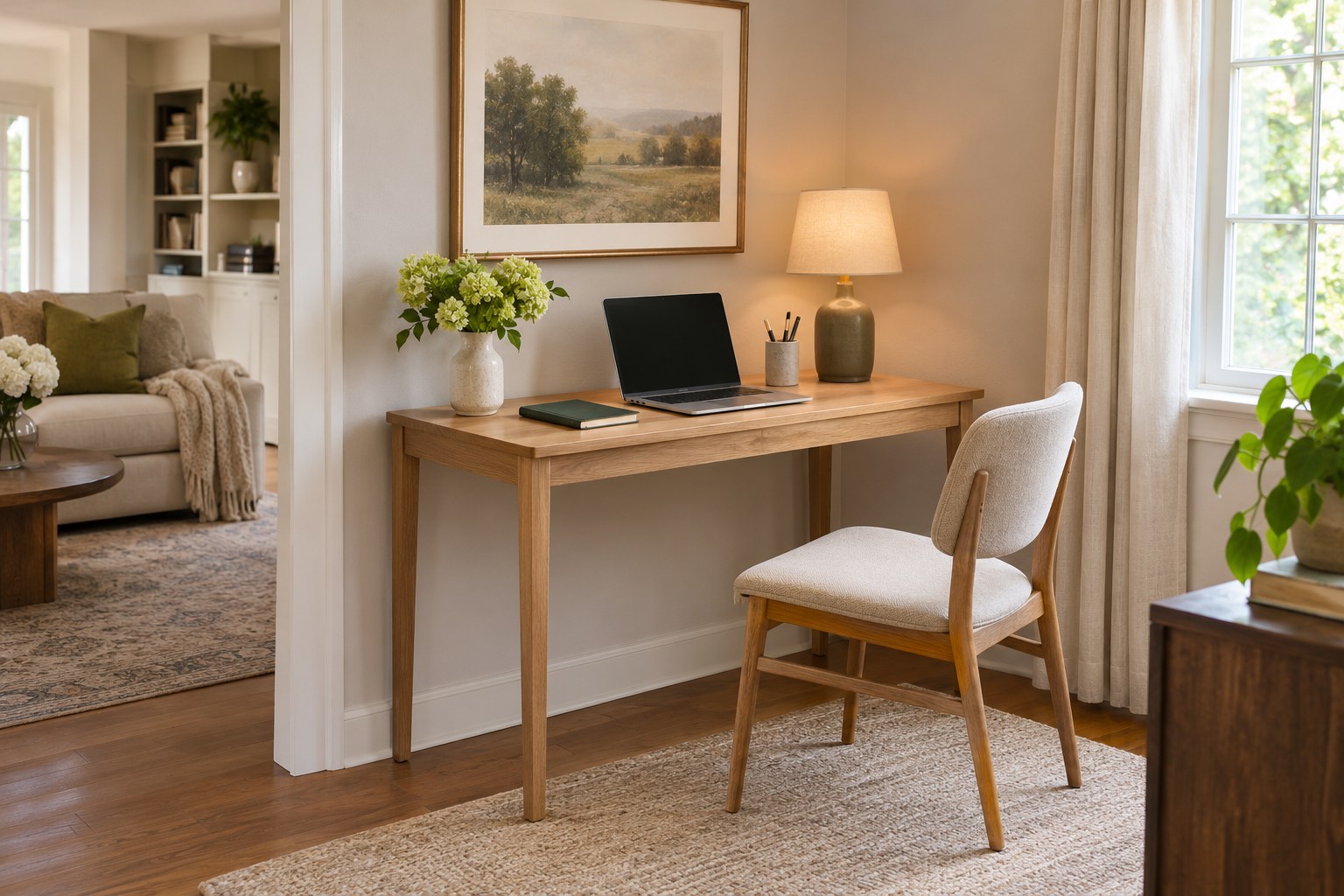
A desk can fit the wall and still leave too little space for the chair. Mark the desk footprint on the floor, then pull an actual chair into the working position. Check whether someone can pass while you are seated. A shallow desk works well for a laptop or notebook if there is enough room for your hands and knees.
Look at the window from the chair. Side light may be easier to work with than a window directly behind the screen. Plan where your charger and supplies will sit, and keep cables out of the route before you choose the permanent desk position.
6. Close Up Paperwork in a Secretary Desk
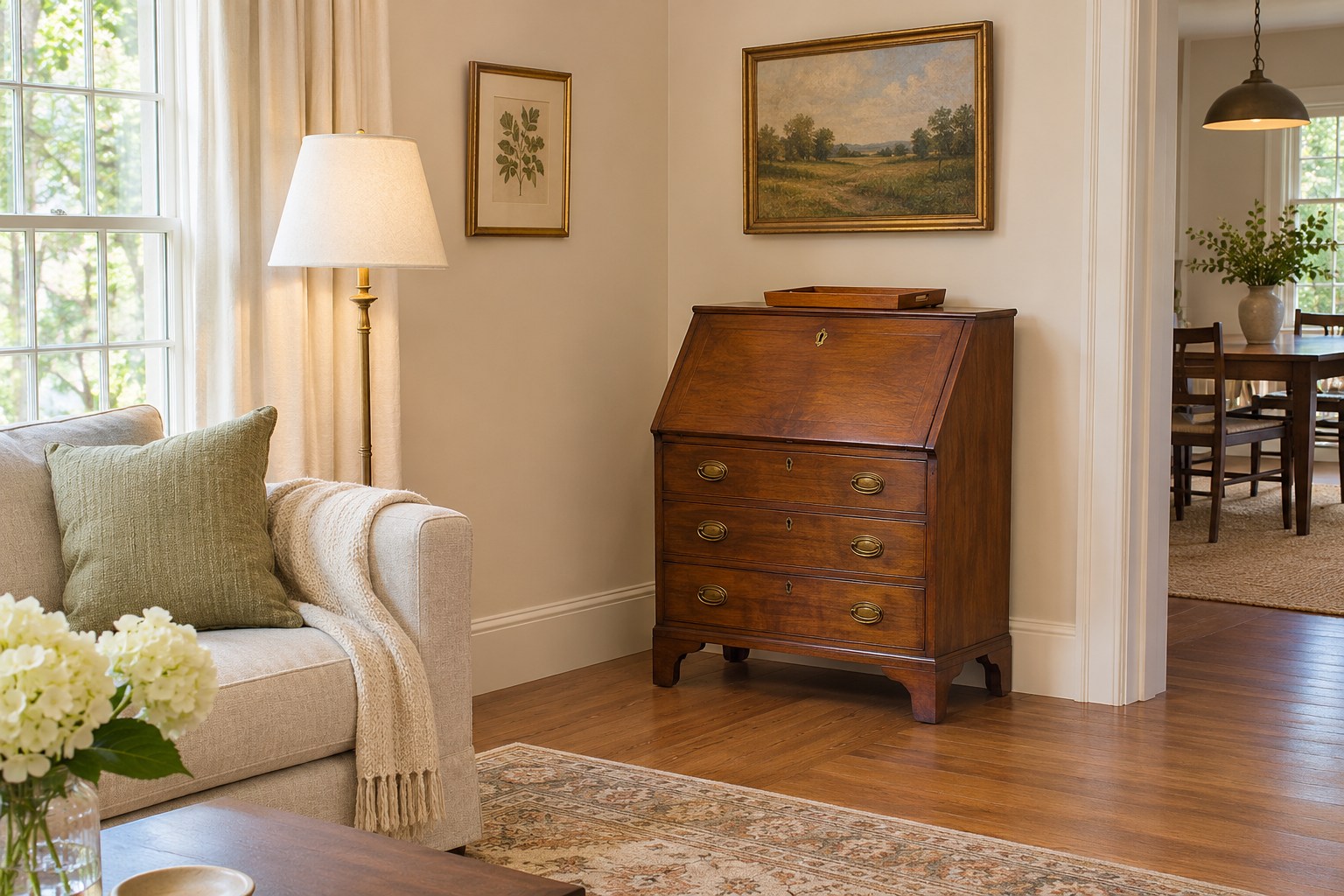
A drop-front secretary desk can close over papers when the room goes back to evening use. Stand where the front would open and check whether the chair can move away far enough to get past it. Try leaving the front open for one work session to see how it affects the rest of the room.
Measure the objects you want to leave inside and compare them with the closed depth. Put the items you need every day in the easiest compartment. If you work on a large monitor, a simple open desk with a separate place for papers may fit the equipment better. Follow the cabinet maker’s support and anchoring directions.
7. Give Records a Low Listening Station
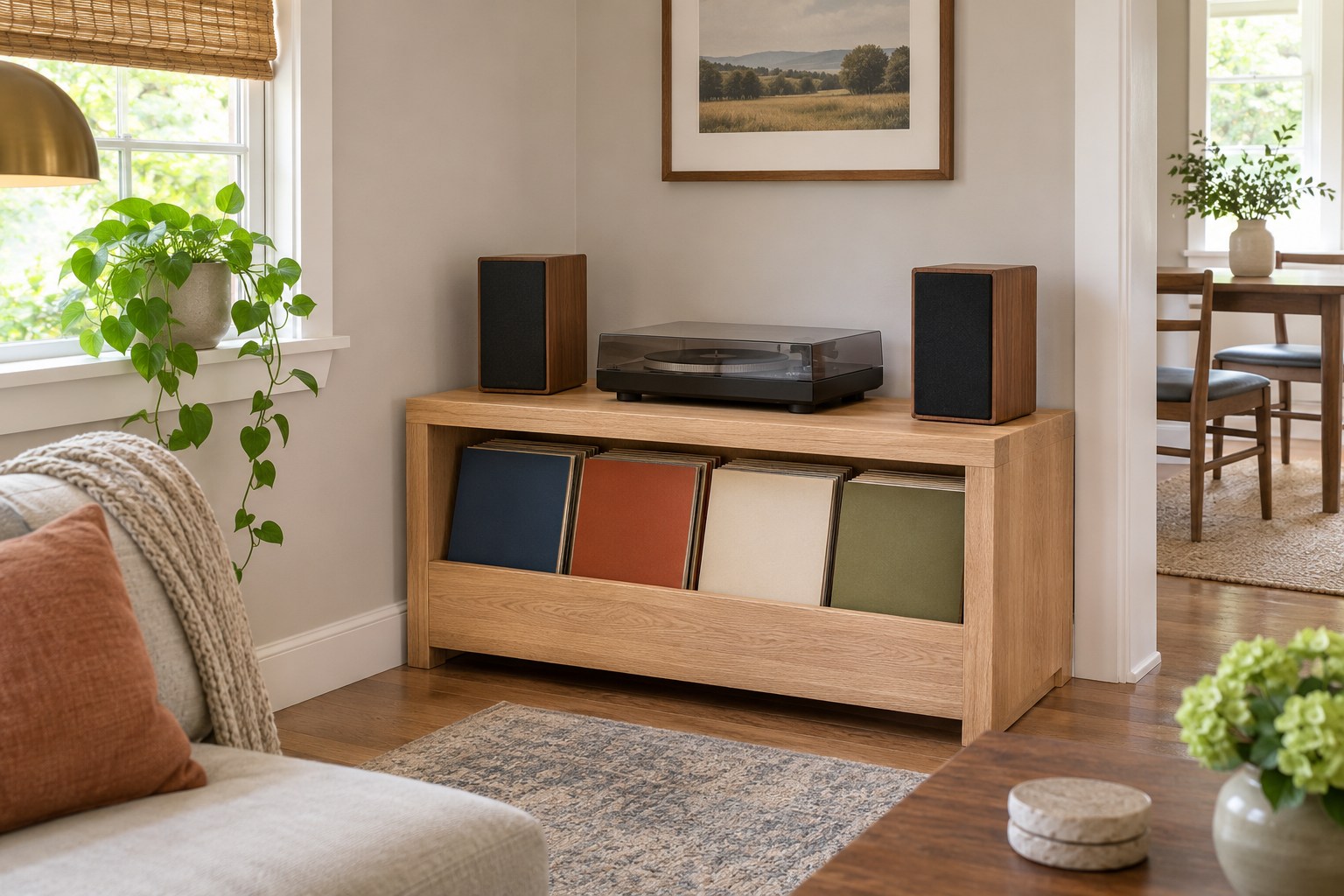
Put the albums you play most in a low bin where you can see and lift the sleeves while standing or sitting. Store the records upright with enough support to keep them from leaning heavily. Check the inside height, depth, and opening of the bin against your largest jacket or outer sleeve. The overall width of the furniture tells you little about the usable space for a record.
Give the player a stable, level surface with enough room to open its lid. Compare the player and speaker instructions before deciding whether they can share the same surface. Keep the controls easy to reach and the cords off the walkway.
The Crosley natural wood record crate gives jacketed records an upright place below the player. Its outside footprint is 18 inches wide and about 13⅝ inches deep. Check your widest jacket or outer sleeve before choosing it.
Explore Crosley natural wood record crate (paid link)
8. Give a Drinks Cart a Place to Park
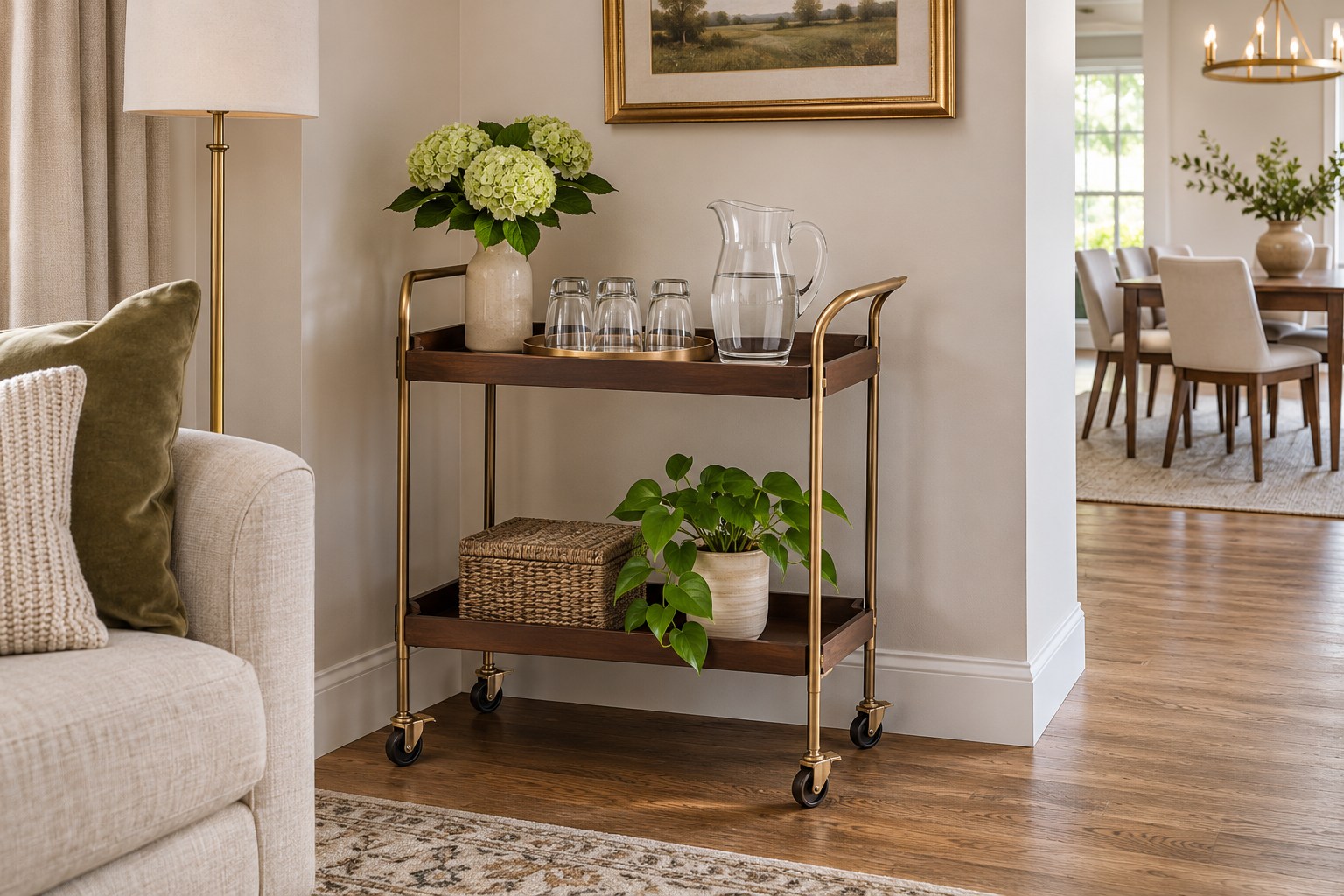
A small cart can hold water, glasses, or coffee service when the coffee table is already doing something else. Park it along one wall where the top is easy to reach and the cart can stay clear of the turn into the room. Set down a tray before deciding how many glasses to leave on it.
If you want to roll the cart to the dining area, try that route with the shelves empty first. Notice floor transitions and the tightest turn. Use the cart’s wheel locks where provided when it is parked and keep breakable items out of reach where young children play.
9. Put Toy Storage Where Play Already Happens
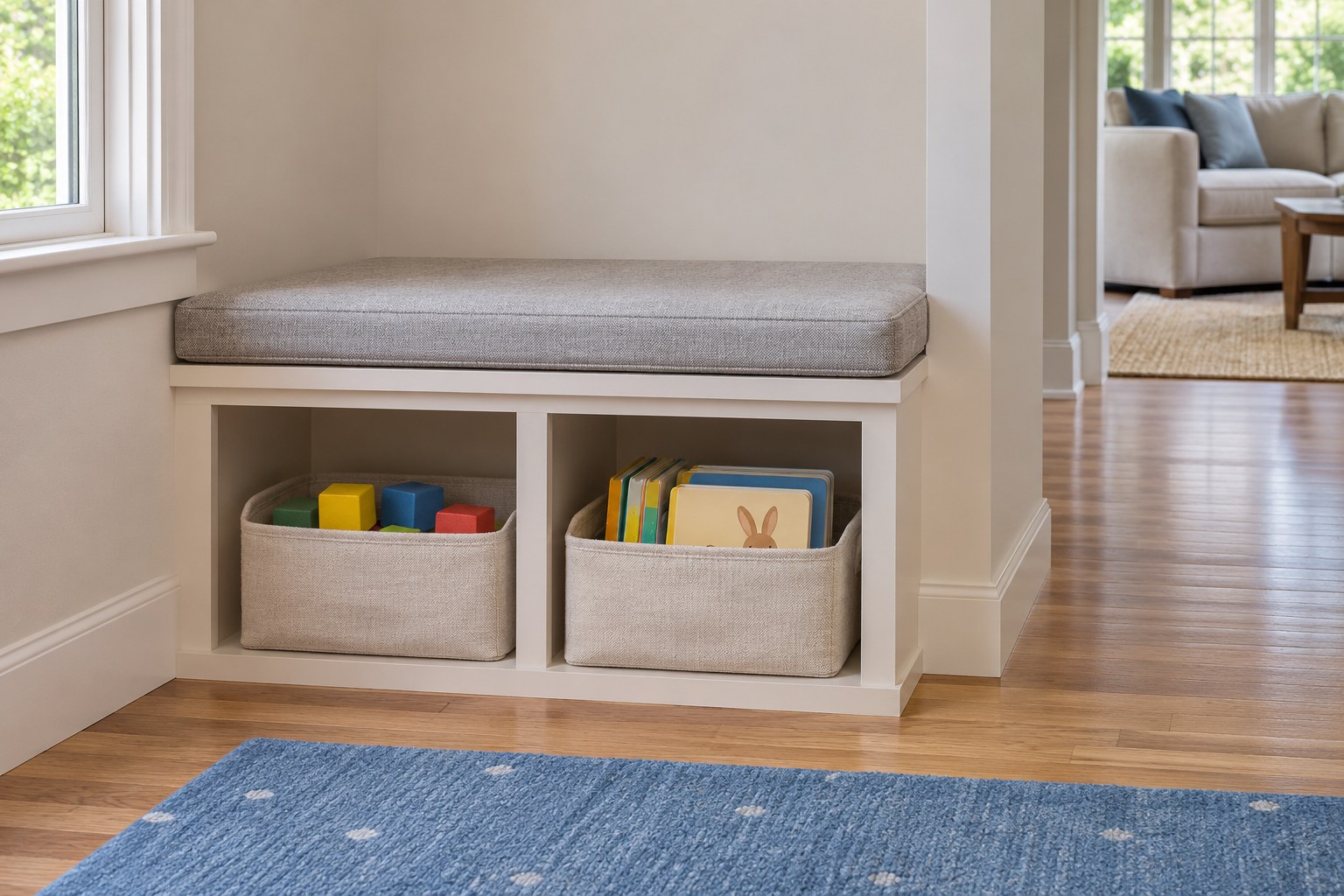
Put toy bins where the floor play already happens. Two light bins are often easier to use than one deep basket. Give books or puzzles their own spot so pieces are easy to find. Choose bins children can see into and reach from the floor without needing to climb.
Watch the room at the end of one ordinary day. Move the bins if toys pile up on the other side of the sofa. Keep the walking edge clear, and secure shelves or furniture that could tip following the manufacturer’s anchoring instructions. A simple storage spot works best when children can reach it during cleanup.
10. Keep a Clear Patch of Floor for a Stretch
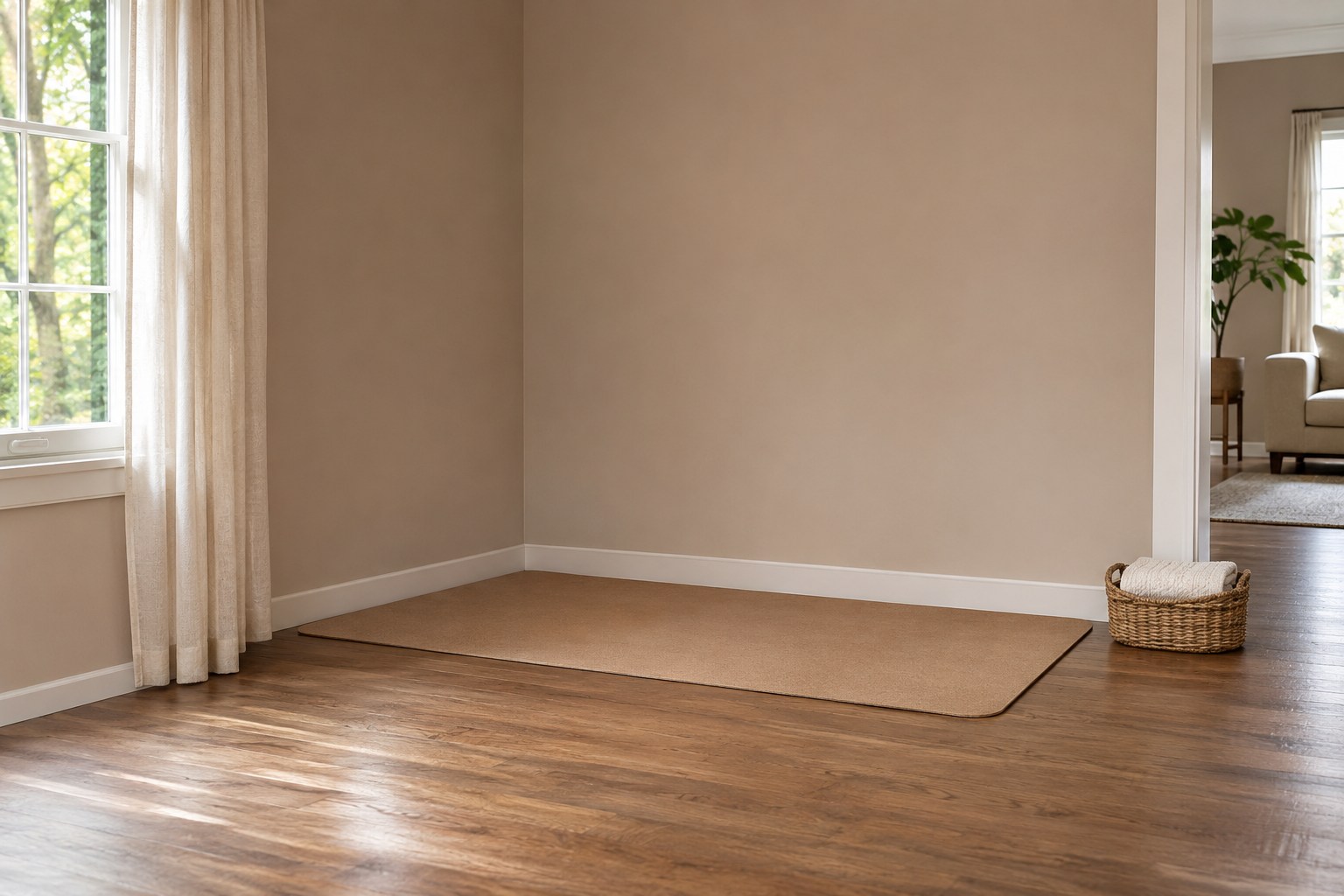
A corner can stay empty enough for a short stretch session. Put a mat down at the angle you expect to use it, then check the room beyond its edges. You want space to reach out, get up, and open nearby doors without contacting furniture or low hardware.
Choose a flat surface where the mat stays in place, and roll it away after use if the corner is near a path. A small basket beyond the mat can hold a towel or band. Store the gear so you can set up again without moving the sofa or covering the route.
11. Use a Closed Case for a Collection You Want to See
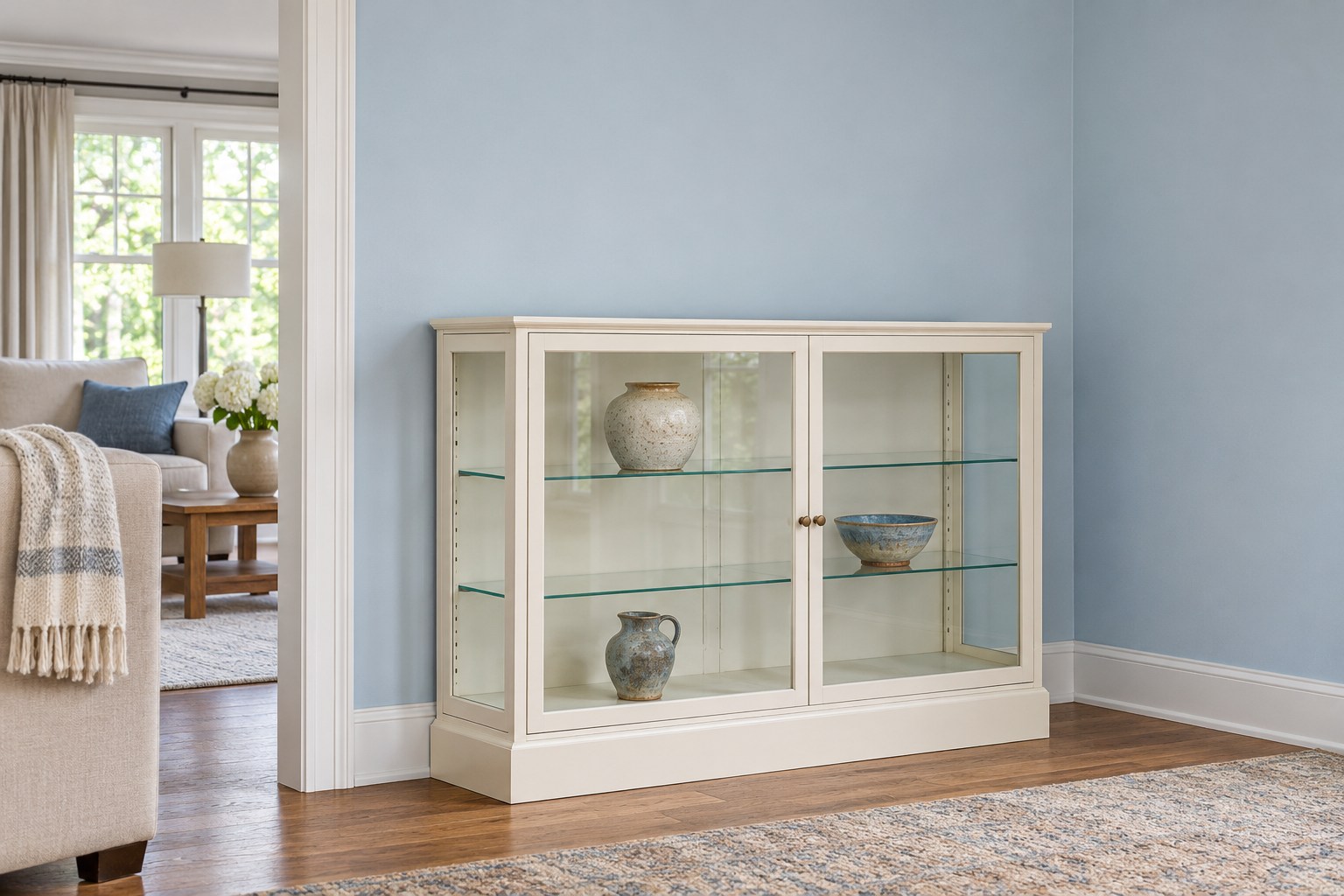
A shallow glass-front case gives ceramics, models, or keepsakes a place where you can see them. Measure the tallest and widest pieces and allow room to lift each one off a shelf. Try just a few items in the first arrangement so you can see the shapes from the seat opposite.
Check where the doors open and how the window reflects in the glass. A case in the right corner should still be accessible when a chair is in use. Follow the cabinet’s installation and anchoring instructions. If the pieces are small, a lower cabinet can keep the top of the wall open.
12. Give the Bay Window a Bench With Dry Storage
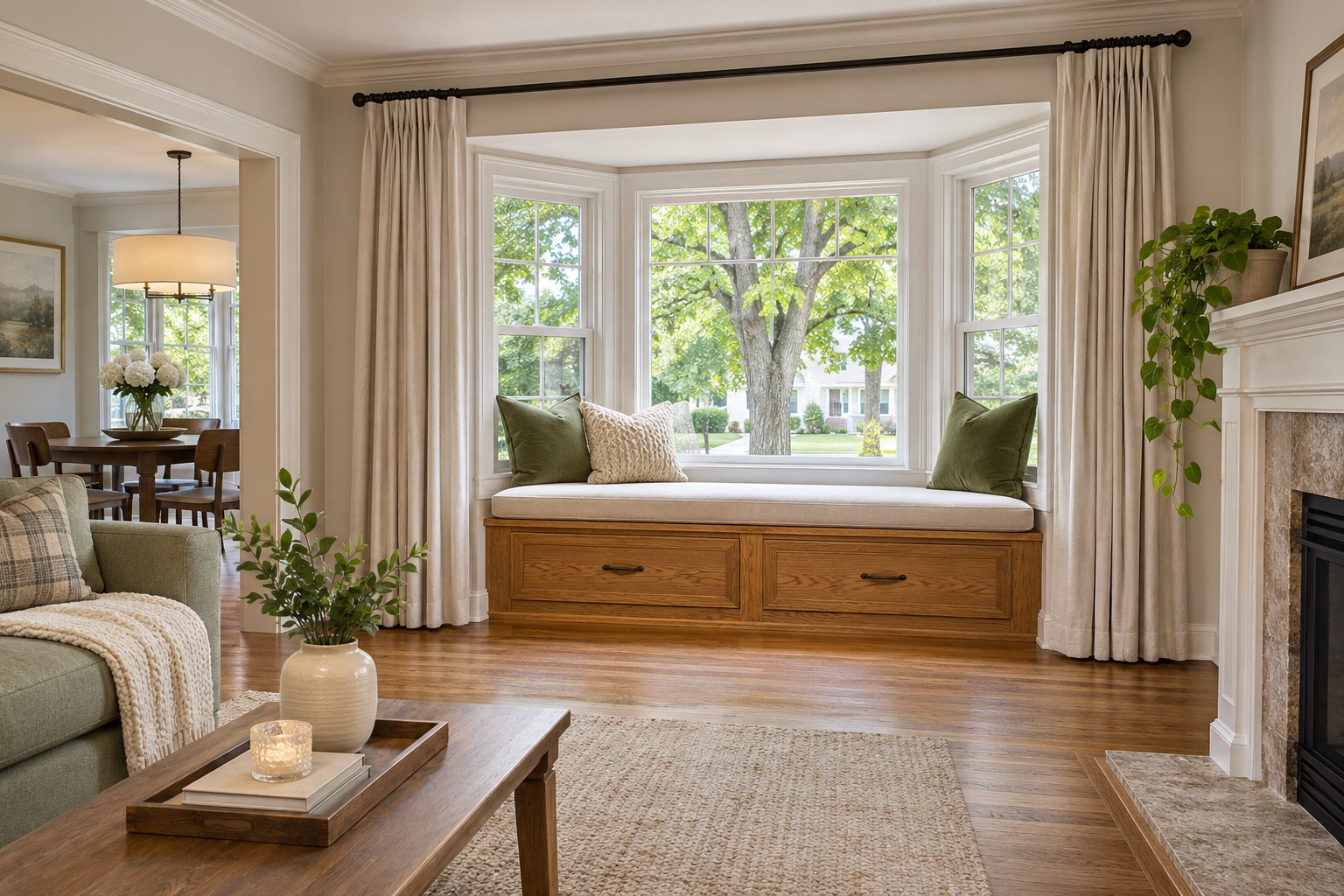
A bay window can hold a bench without taking up the middle of the room. Set a temporary chair there and see where you would put your feet, reach the latch, and pull the curtains. If the corner feels comfortable, ask a carpenter about a bench with shallow drawers for blankets or spare cushions.
Check for a radiator, floor register, or other equipment before building across the bay. Keep those functions available in the plan. Mark how far the drawers would open and see whether someone can walk past while you get something out. Choose dry storage that can be reached without shifting a table.
13. Set the Pet Bed Away From the Busy Route
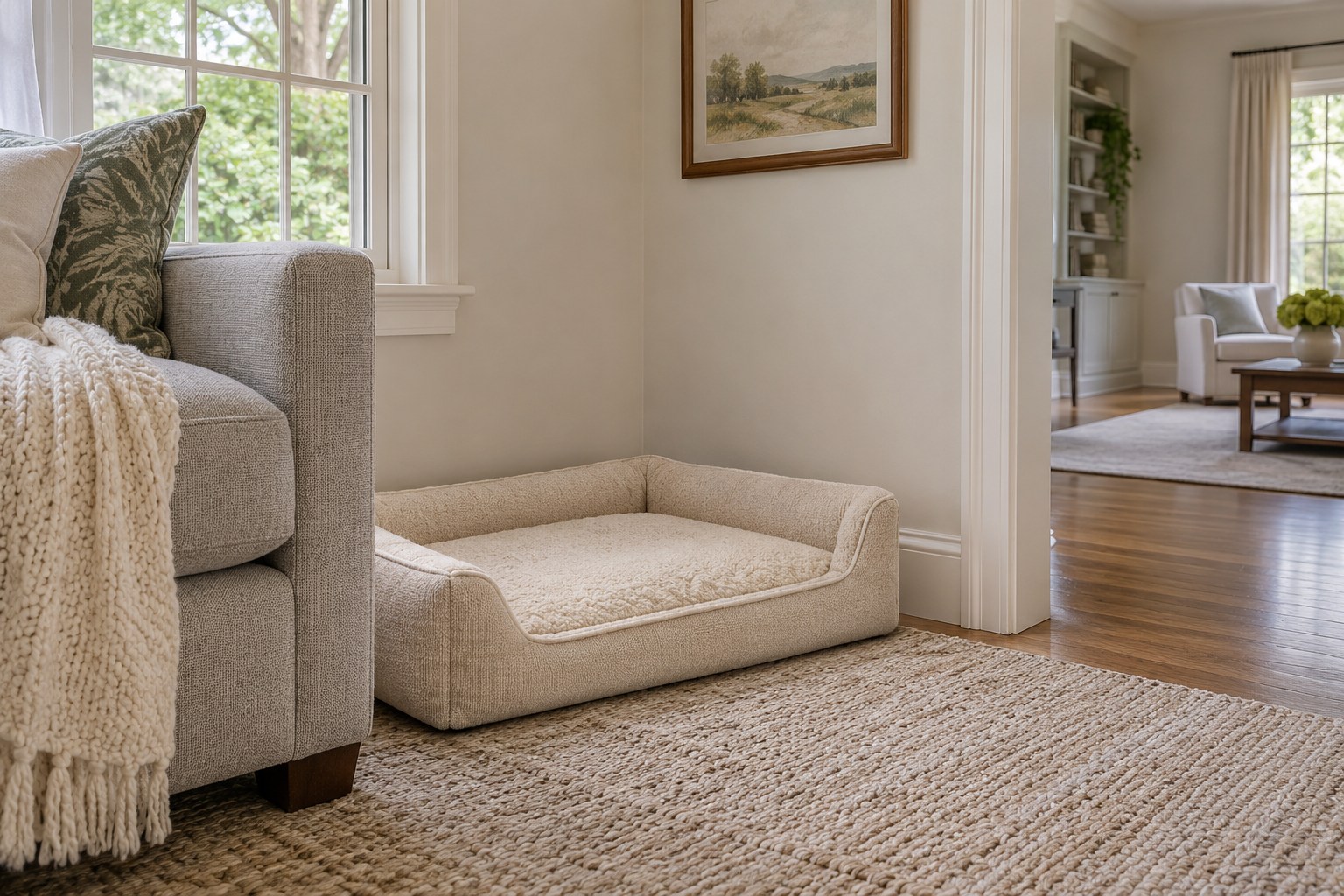
Watch where your pet settles when people are home. A bed beside a sofa arm can feel sheltered and stay close enough to the family. Leave a clear way in and out and check the spot for direct heat or a cold draft. Make sure the bed does not sit in the route to a door.
Choose a cover and surface you can clean and a bed you can pick up easily. Try the location for a few days before you add anything around it. If the bed keeps being moved to let people pass, try the other end of the sofa or the quieter side of the room.
14. Try an Ottoman That Can Sit Beside the Chair
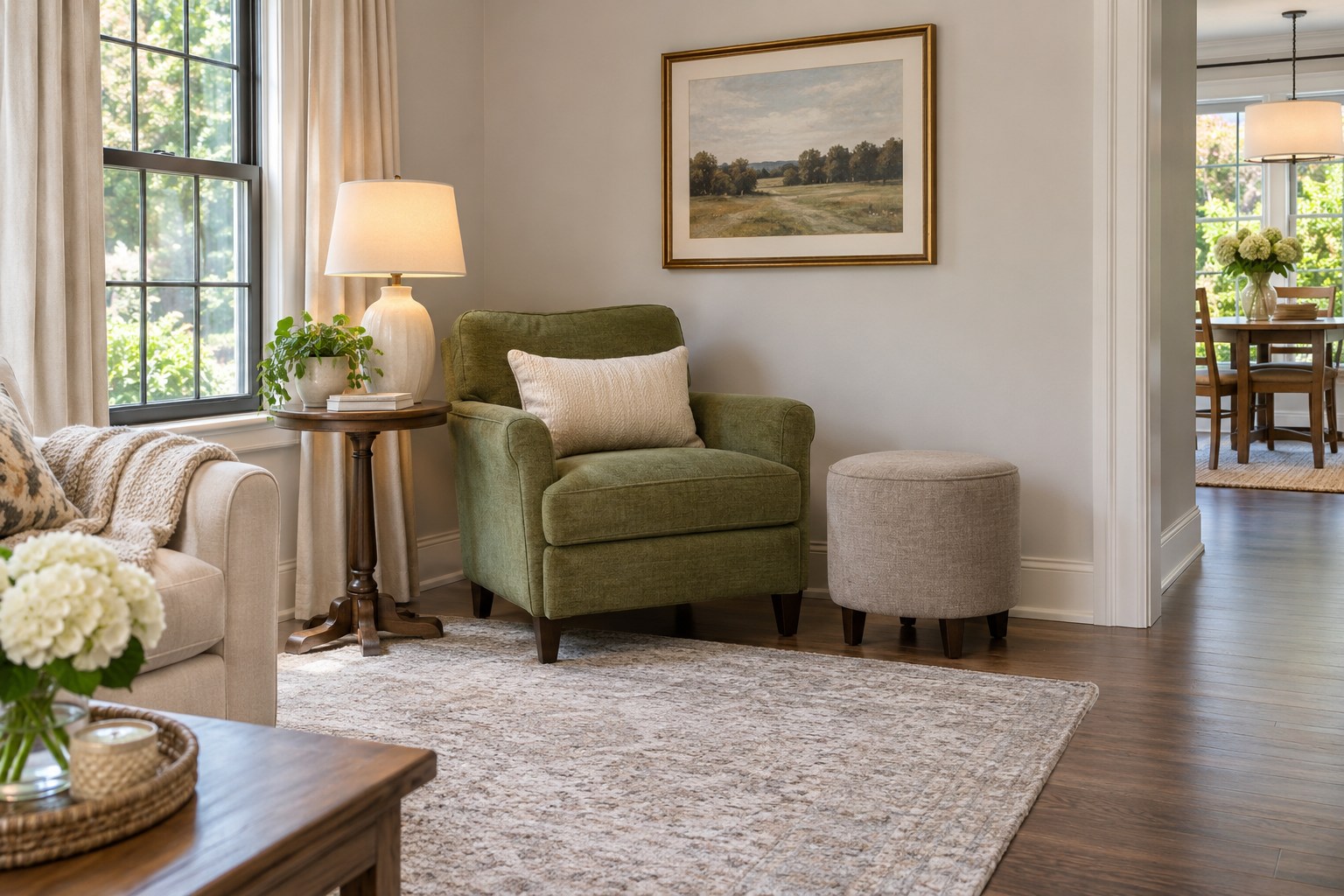
An ottoman gives a corner chair a second position for reading or resting. Mock up its size in front of the seat and sit down. Then move the mockup beside the chair and walk the normal route across the room. A small round shape can leave an easier turn in a tight spot.
Look for an ottoman you can comfortably move without lifting it over the rug edge or the chair legs. Store it where it will be easy to pull out again. These multifunctional furniture ideas for small apartments have other pieces you can compare if the corner needs a second job.
15. Check What a Corner Mirror Will Reflect
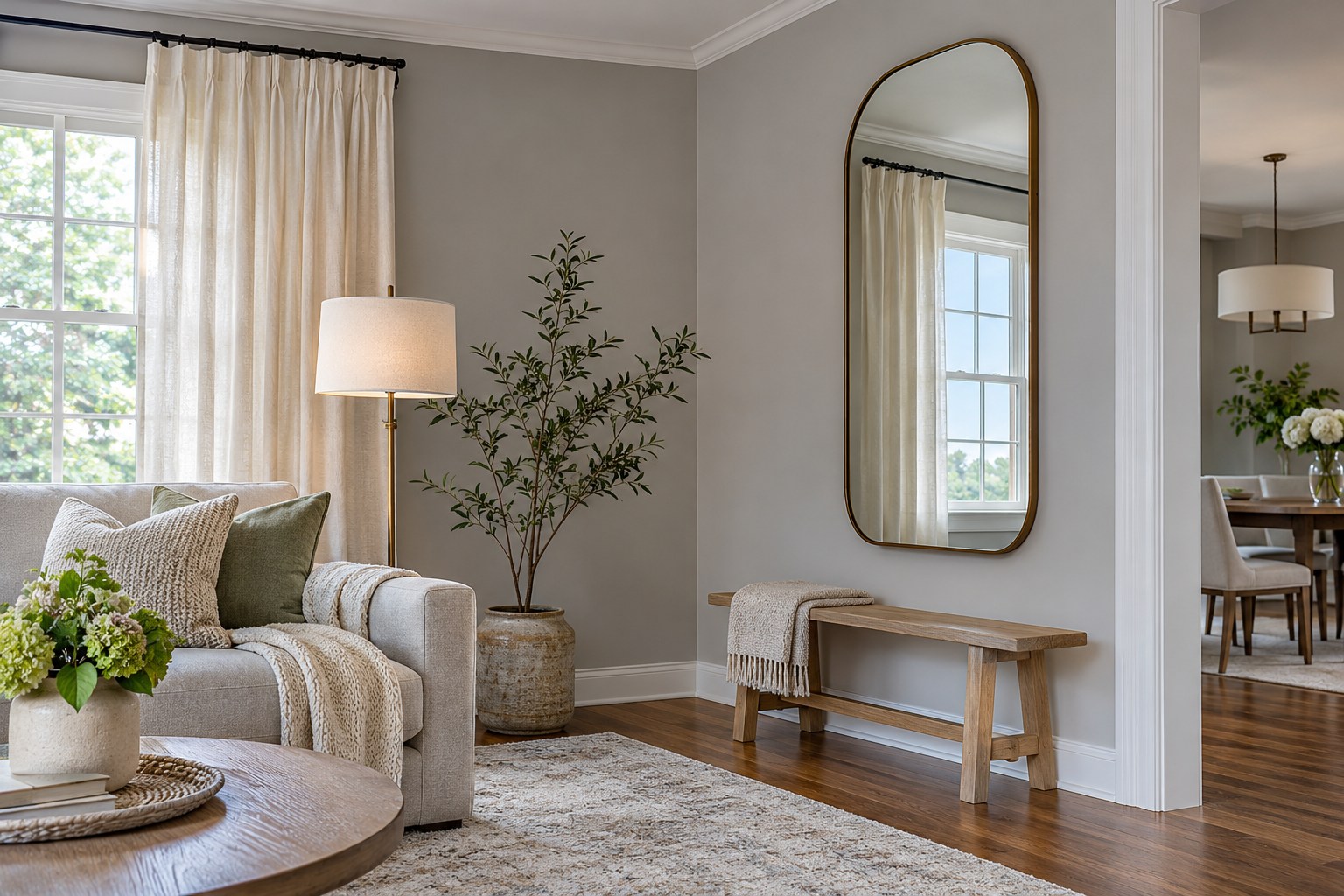
A mirror on the short wall of a corner can pick up a window or a pleasant part of the room. Hold a small mirror there at the proposed height and look from the sofa, the doorway, and the route past the corner. You may prefer the view from one spot and see the television or a lamp from another.
Check the reflection again in the evening. A mirror that looks soft by day can catch a bright bulb after sunset. Adjust the position before you buy or mount the larger piece. Use mounting hardware suitable for the wall and mirror weight, or have the installer choose it.
16. Set Up an Instrument Where You Can Sit and Play
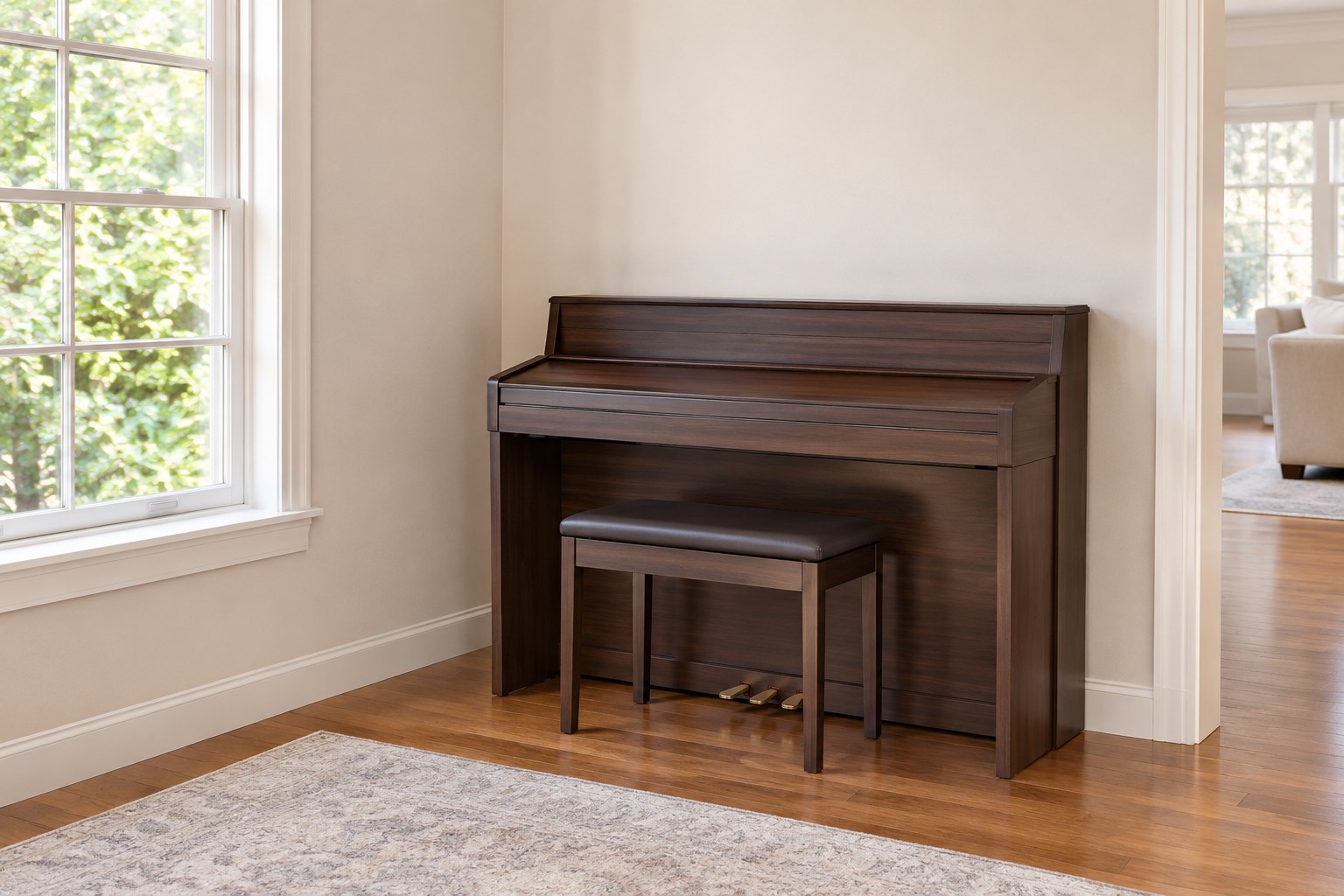
A small keyboard, guitar, or practice stand can fit a living-room corner if the seat also fits. Try the actual instrument and chair together before setting up a permanent spot. Check elbow room, how you sit down, and where you can put the instrument away between sessions.
Keep the instrument clear of doors and heavy foot traffic. If it uses power, choose a reachable outlet and keep the cable out of the walk path. Try the corner at the time you normally practice and see whether it works for other people using the seating area.
17. Use a Low Bookcase That Leaves the Window Open
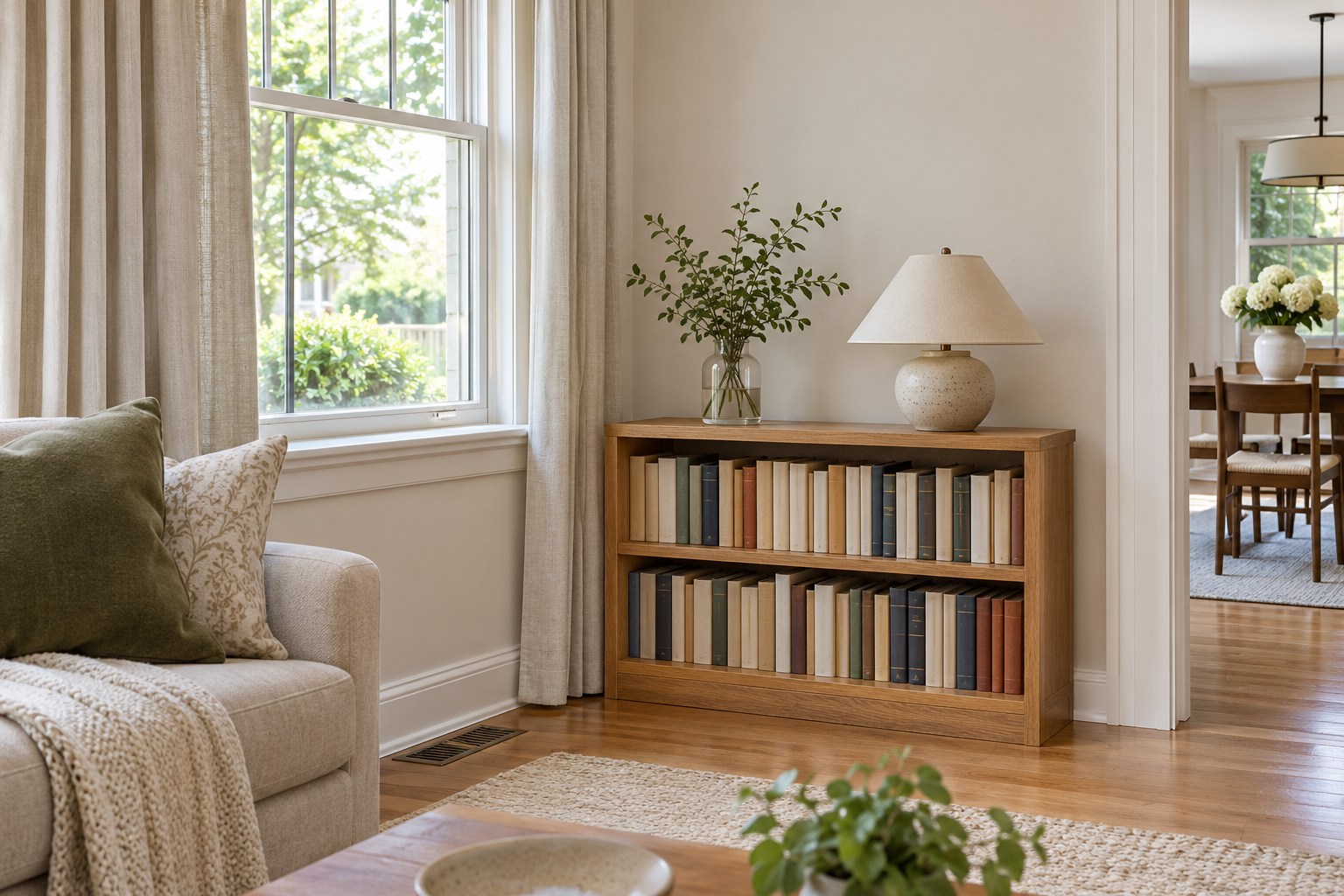
A low bookcase can use the wall beneath a window and keep the glass visible. Measure the sill height and check how the curtains fall. Choose a depth you can walk past easily and leave room to open the window. Give the lower shelf to heavier books and keep everyday reading within reach of the chair.
Secure the bookcase according to its instructions. Before filling the top, look across the room to see how much of the window and wall still feels open. These living room shelf decorating ideas can help you arrange the smaller objects around the books.
18. Leave a Puzzle or Project Set Up on a Small Table
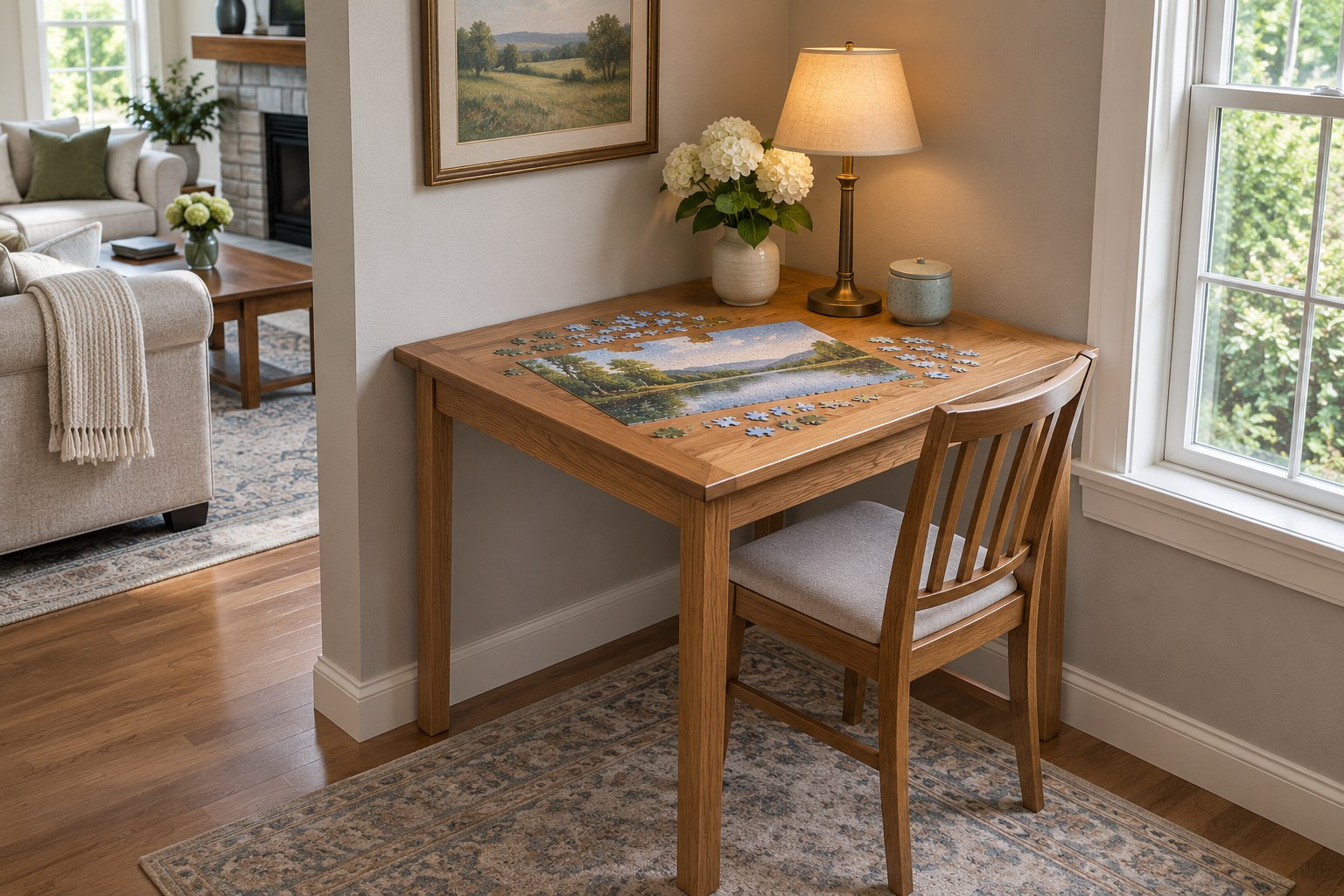
A small project table saves you from clearing a puzzle or craft off the dining table every evening. Set a sample board on the worktop and check whether you can reach all the way across from the chair. Side daylight helps with fine detail. Give the table room for a light if you work there after dark.
Plan where the chair tucks in and where supplies can go when you pause. A shallow box beneath the table can hold the pieces you are using. Keep the corner clear of the main route, especially if the project needs to stay out while people use the room.
19. Give One Sculptural Piece Room Around It
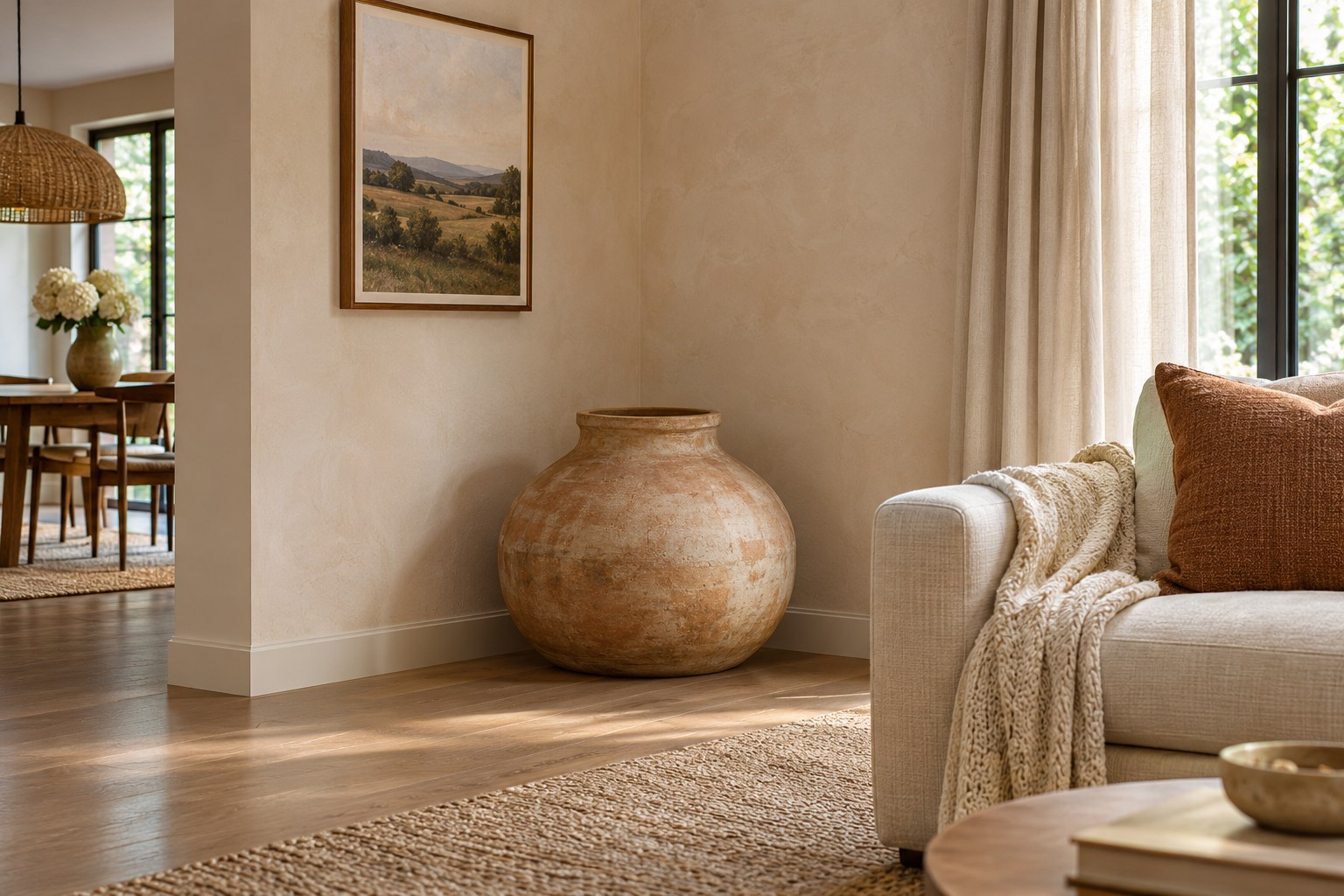
A single sculptural object can fill a corner visually with very little furniture. Try a broad, stable vessel against the wall and look at its outline from the entrance. Leave room around it so the shape reads clearly. A quiet clay finish may be enough if the room already has a patterned rug or several framed pieces.
Keep it back from the spot where people turn. Choose a piece that will stay stable on the actual floor and place breakable objects away from children or pets. If the corner feels crowded even with one piece, try a wall-mounted picture and recover the floor space.
20. Make a Charging Spot Without Cords Across the Floor
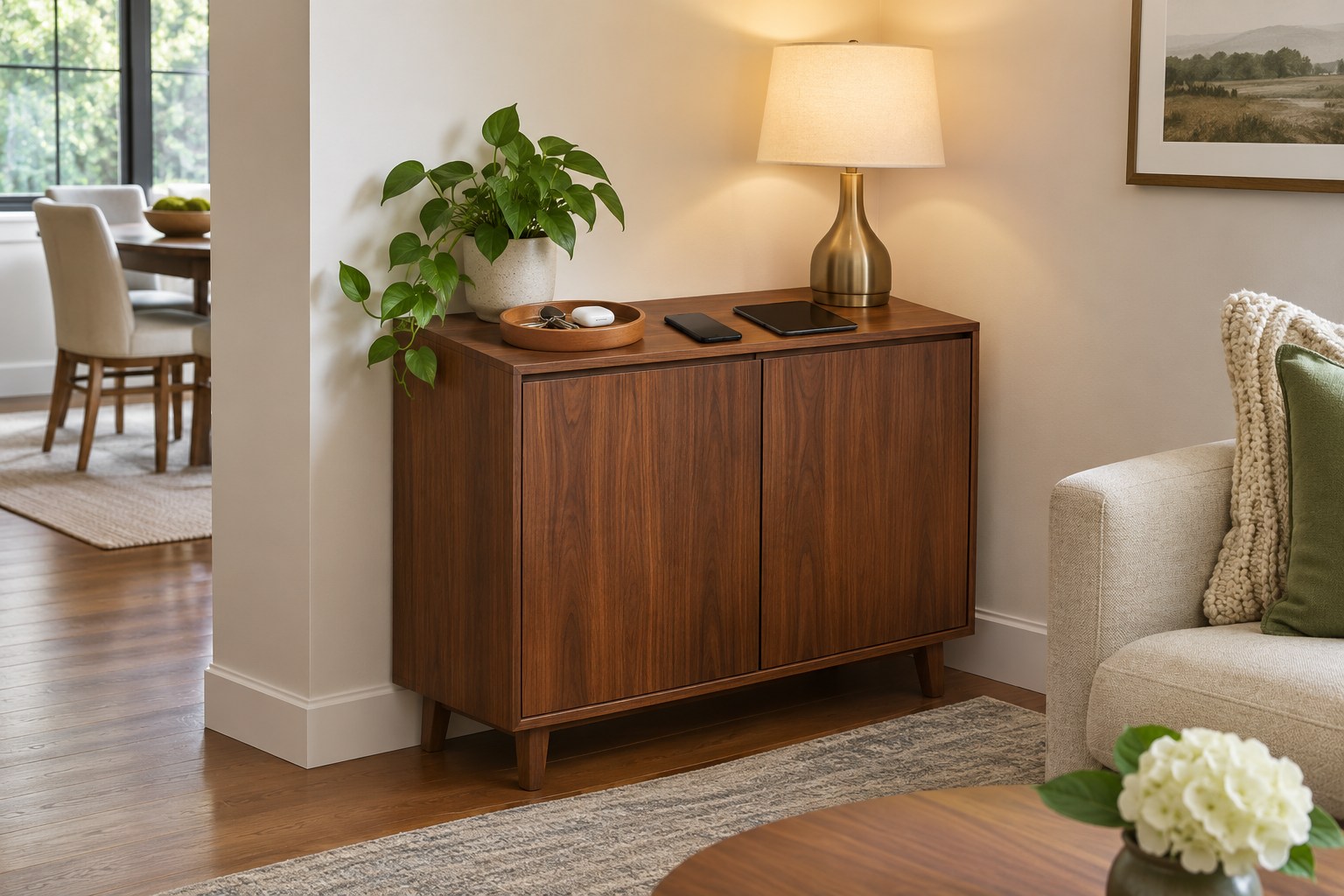
Pick a spot near an outlet where the devices can lie flat and stay easy to reach. Give a shallow tray one job, such as holding the phone and headphones that belong in the living room. Keep the cable short enough for that spot and arrange it so it cannot be pinched behind furniture.
Follow the device and charger instructions, including how much air space they need. Keep cords above rugs and out of doorways. If the only outlet would mean running a cord across the room, use a different corner or ask a qualified electrician about a suitable outlet location.
21. Keep a Spare Chair Easy to Pull Into Conversation
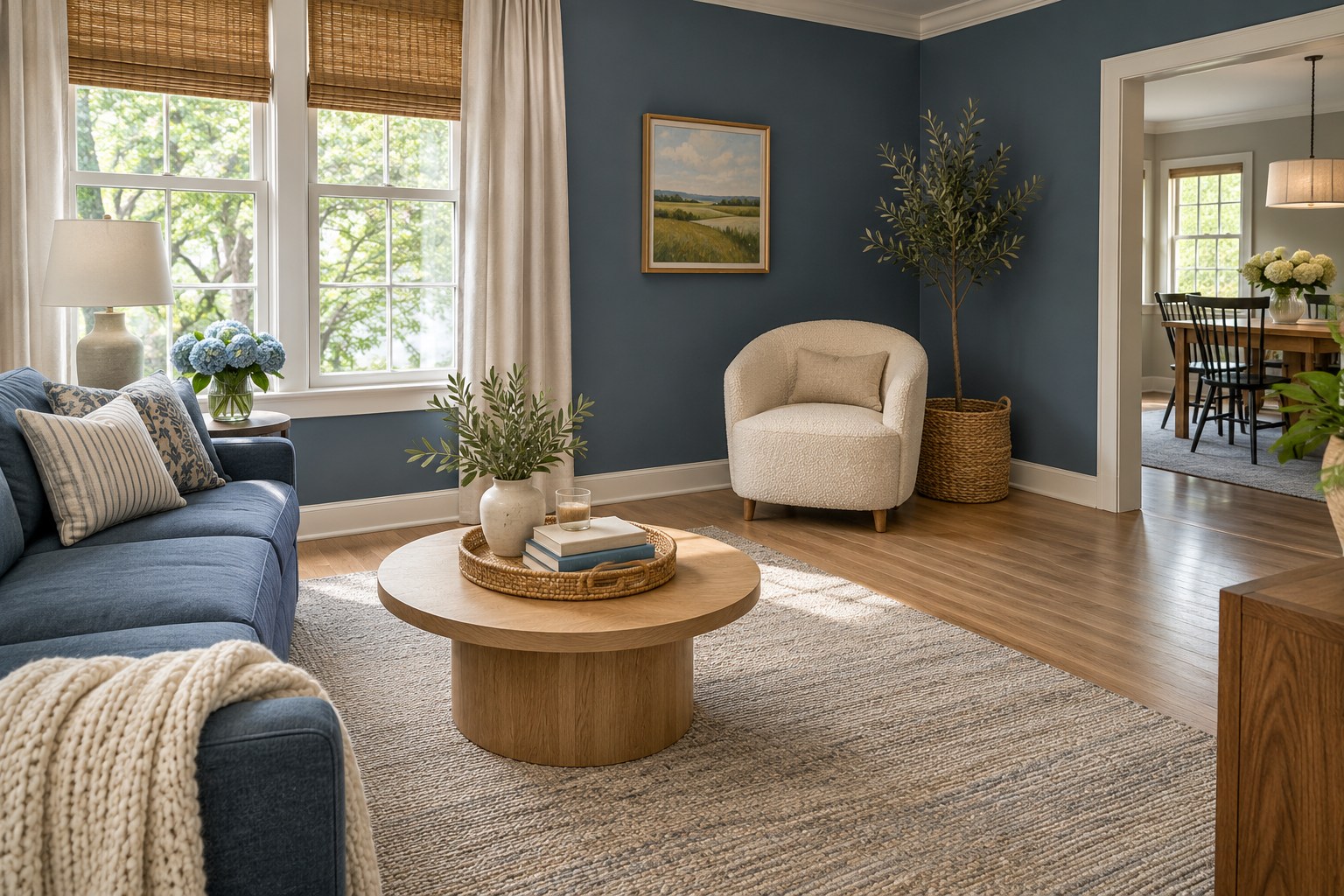
Park a lightweight chair in a corner that already faces the seating group. Pull it closer when someone comes over and tuck it back when you need more room. Try both positions before deciding on the chair’s size. A modest chair with a comfortable back often fits where a wide lounge chair would take up the whole corner.
Check that the chair can move without catching a rug edge. Leave a small gap for your hand to grasp it and keep the route open while it is parked. Once the chair is in use, everyone should still be able to reach the table or get out of the room.
22. Leave the Corner Clear When It Carries the Walkway
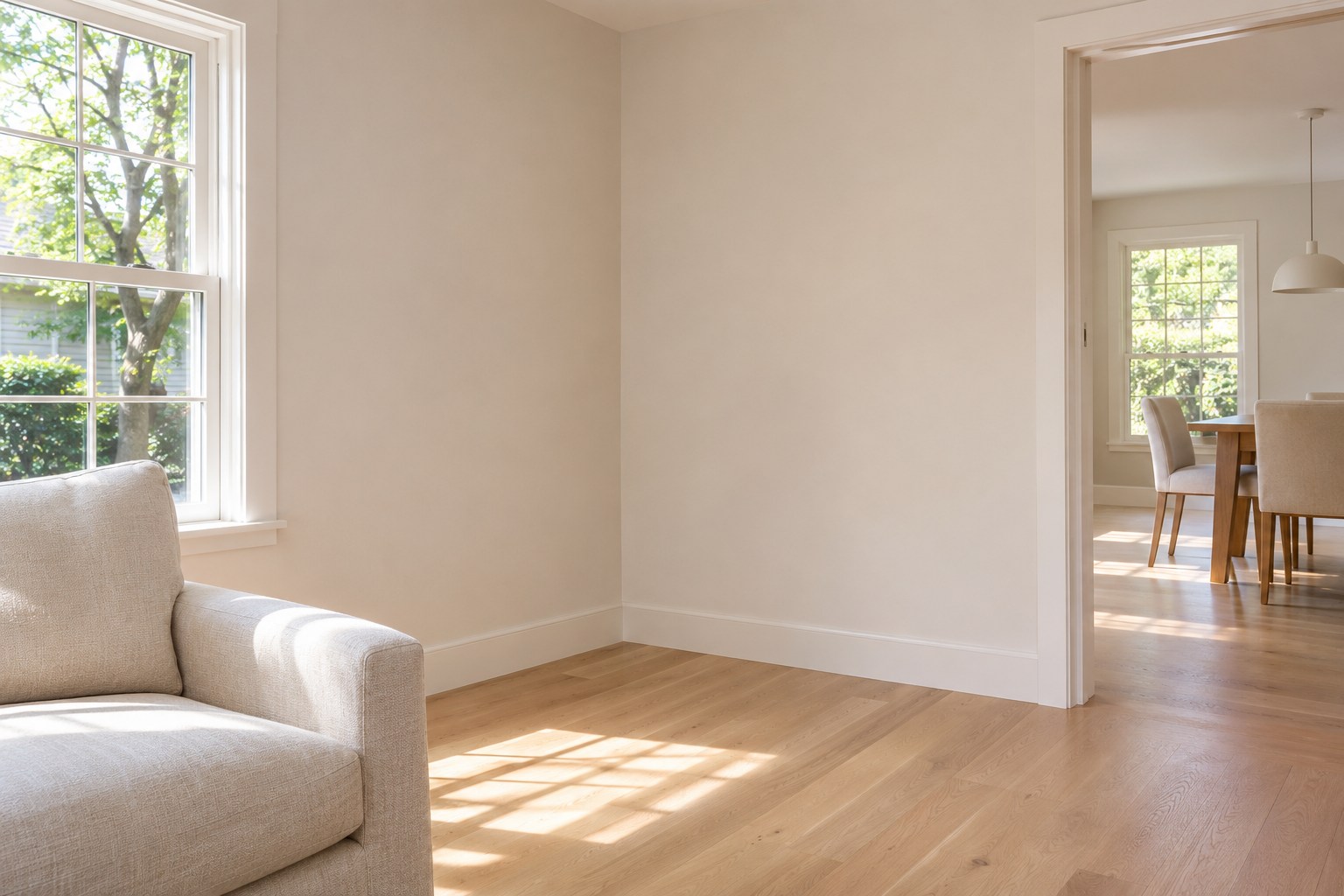
Some corners earn their place by staying clear. Walk the turn from the doorway to the sofa with a tray or laundry basket in your hands. If you pass close to the wall, keep that floor space available. Look at the corner with nearby doors and drawers open as well.
If the wall feels plain, try a small picture that sits entirely outside the turn. Leave the floor open for a week and see how the room feels in daily use. These small living room layouts can help if several corners compete with the same main route.
Use the corner for one thing you will actually do there. Check how you get to it, what you can reach once you arrive, and whether the rest of the room still works while it is in use. Then add the smallest piece that does the job.
Discover more from HomeTrendora
Subscribe to get the latest posts sent to your email.