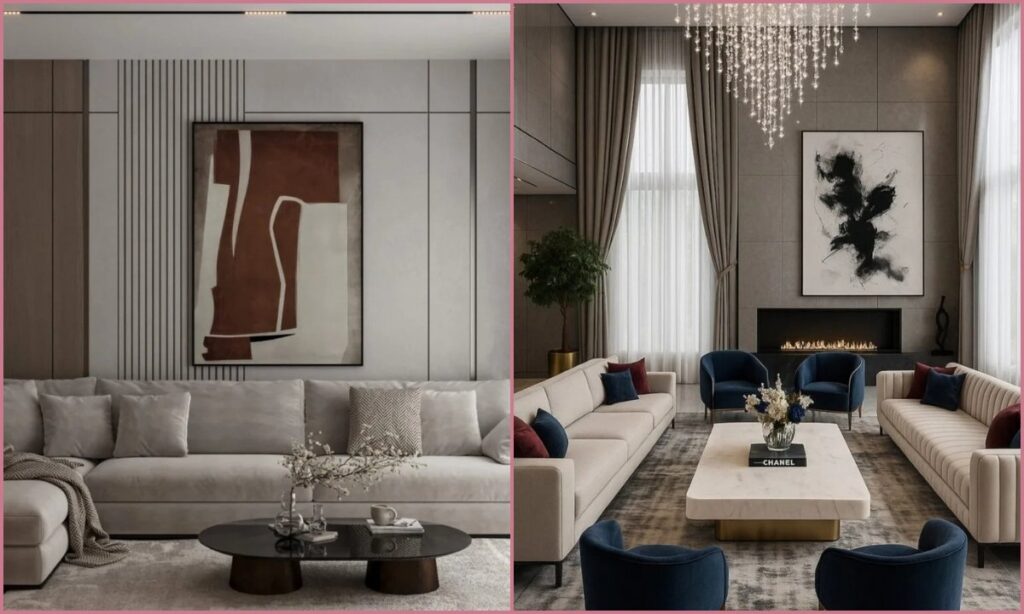
A living room feels elegant when you can see what each piece contributes. Crystal can catch the light above the seating, a clear tabletop can reveal the work in its base, and a plush fabric can change how a familiar sofa feels after dark. Start with one change you’ll notice from the doorway or from your favorite seat.
These 20 luxury living room ideas cover color, lighting, furniture, and smaller accents. Each gives you something to test in the room you already have, including where to leave space for daily use.
1. Place One Faceted Accent Where It Can Catch the Light
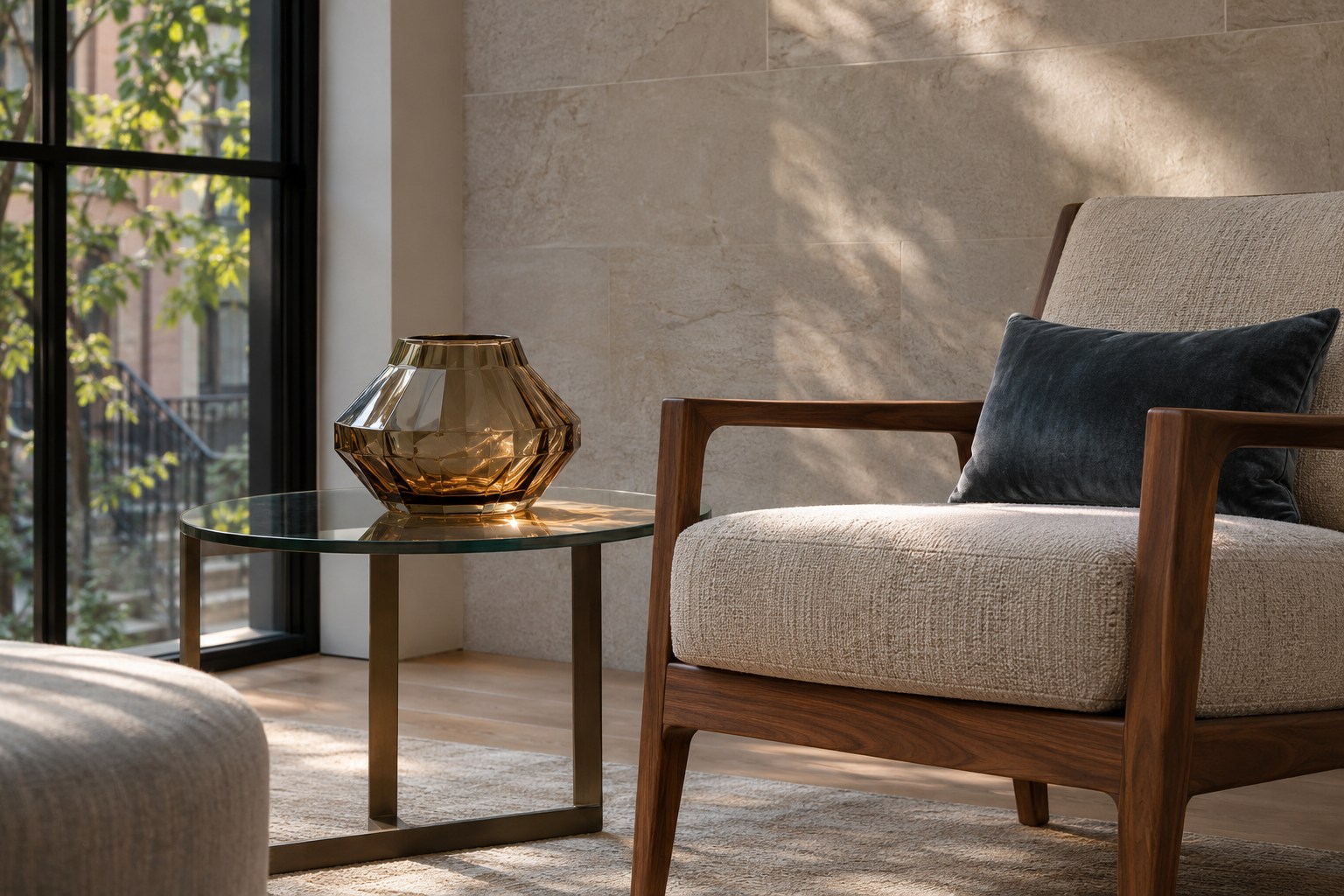
A faceted lamp, a cut-glass vase, or a small angular sculpture can give a room with rounded seating a sharper outline. Set a single piece at the end of a sofa or on a side table, where light from a window or lamp can pick up the edges. A matte ceramic vase works well on a glass top because its outline stays visible against the reflections.
Use the shape a second time on the other side of the room to make the arrangement feel deliberate. A triangular sculpture can pick up the angles in an abstract print, or a hexagonal lamp base can echo a detail in the rug. Clear some space around each piece and check it from the sofa. Each outline should be easy to see.
2. Let a Crystal Chandelier Set the Scale
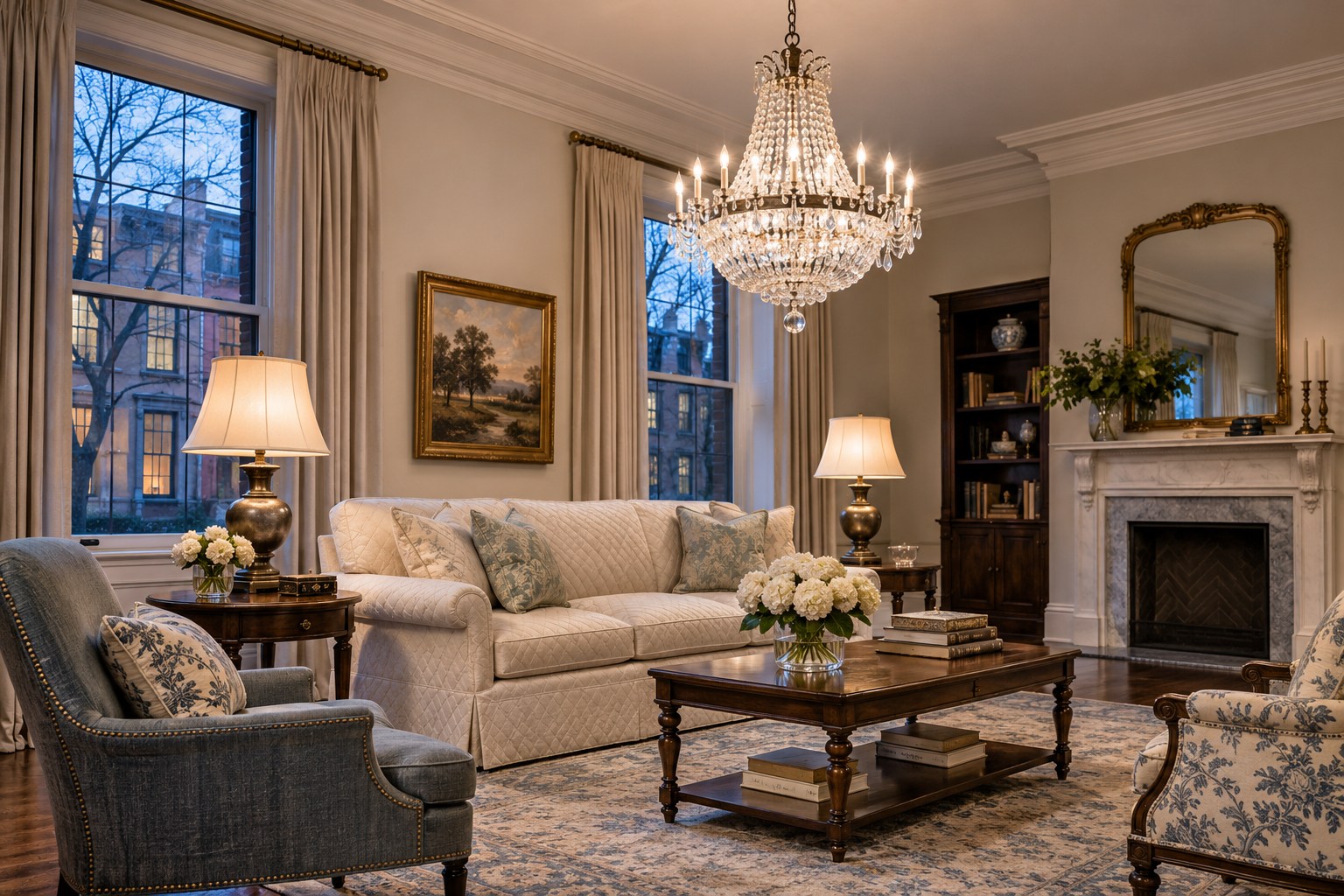
A crystal chandelier can give the seating area a center, especially when the living room opens onto another space. Line it up with the coffee table or the main furniture grouping and look at the placement from the doorway as well as from the sofa. An open frame gives you a view through the crystal, which helps keep a window or artwork visible behind it.
Check the fixture’s full hanging height, including the canopy and stem, before ordering. Its lowest point needs to clear the paths people use through the room and around the seating. Give a licensed electrician the fixture weight and manufacturer’s mounting instructions so they can verify the ceiling support. If you plan to dim the chandelier, check bulb and dimmer compatibility at the same time.
3. Use a Marble-Look Rug to Ground the Seating
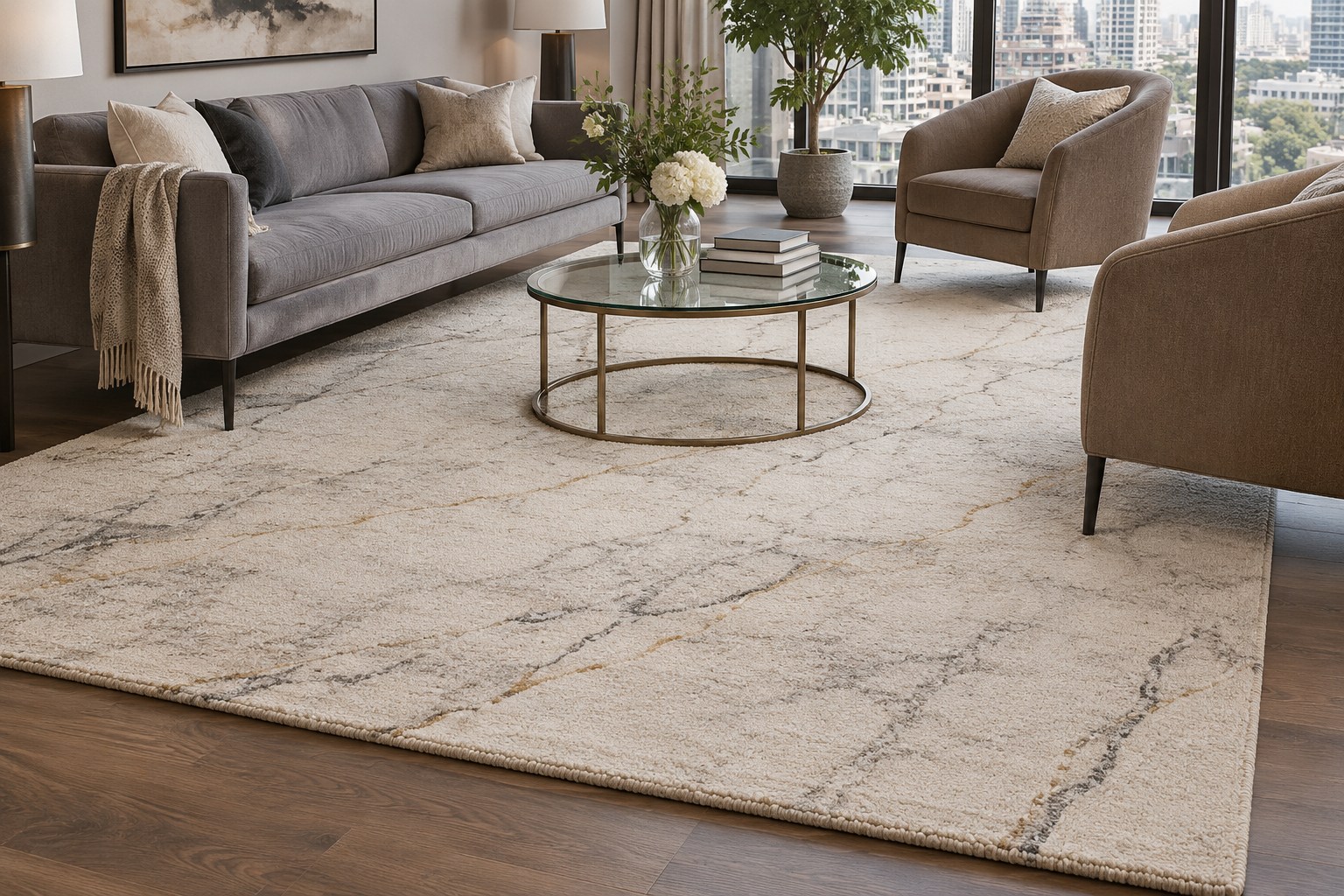
A marble-look area rug brings the movement of veined stone to a room that needs a soft surface underfoot. Start with an ivory or pale gray ground and follow one vein color into the rest of the room. Warm taupe or gold-toned streaks can connect with brass details, while cooler gray veins sit naturally beside a gray sofa and clear glass coffee table.
Tape out the rug’s footprint before buying. In a typical seating group, bringing the front legs of the sofa and chairs onto the rug makes the pattern feel like part of the whole arrangement. Try a sample in daylight and under your evening lamps. If the veining reads clearly in both, keep nearby pillows and upholstery mostly solid so the lines have room to show.
4. Pair Deep Blue Upholstery With Aged Gold
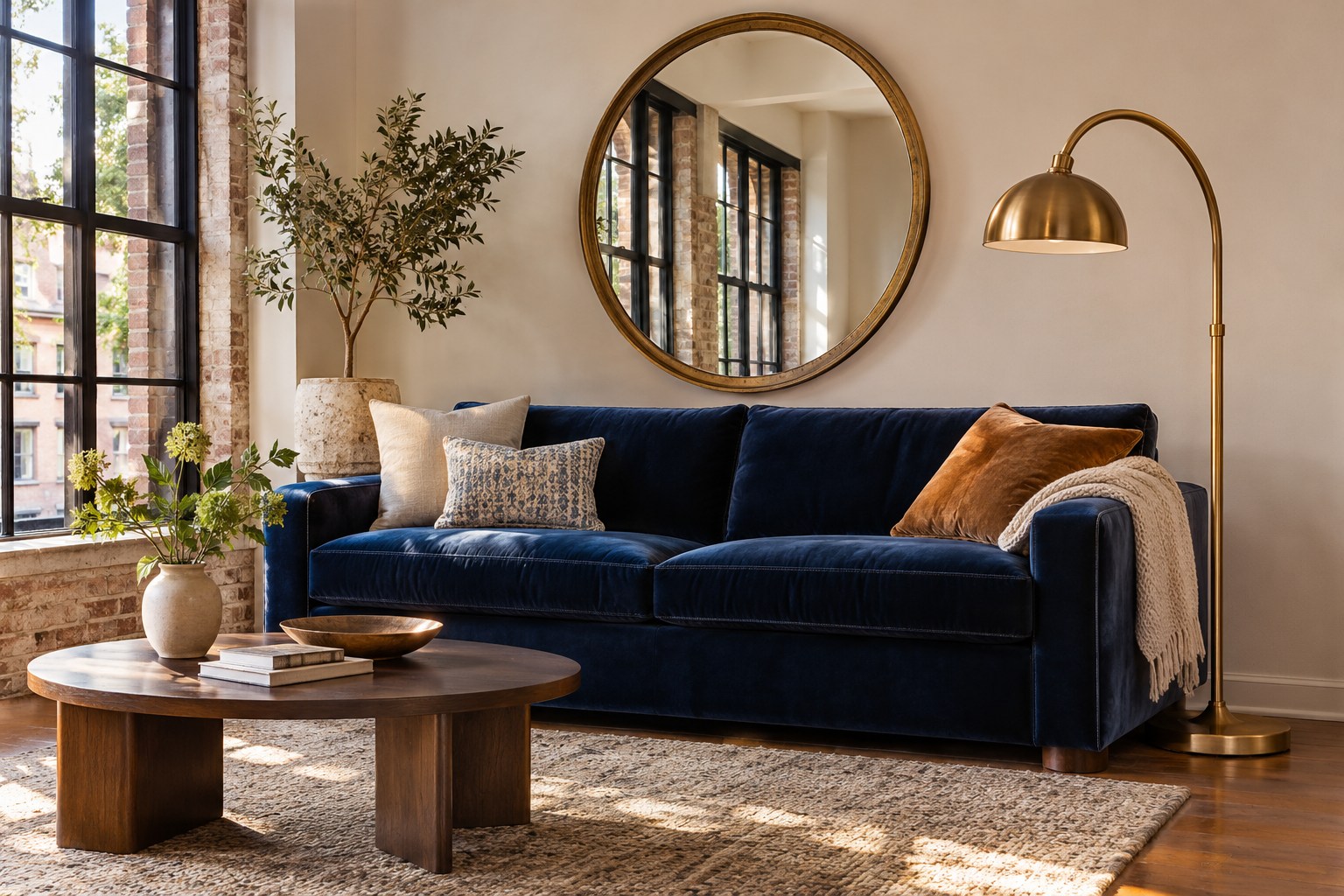
Deep blue velvet works as the largest color in a blue-and-gold room. Let the sofa carry the navy and choose one or two gold-toned pieces that are large enough to read from across the room. An antique brass mirror above a pale console and a warm metal lamp by the sofa give the blue a softer contrast than a cluster of small shiny objects.
Use a little cream or warm gray around the blue to keep the darker fabric readable in the evening. Pale curtains can frame the sofa, and an ivory pillow can bring out the velvet’s nap. Before adding another metal finish, put the mirror, lamp, and a fabric sample together under the room’s lighting. Look for a shared warmth across the finishes.
5. Set Out a Reflective Silver Christmas Tray
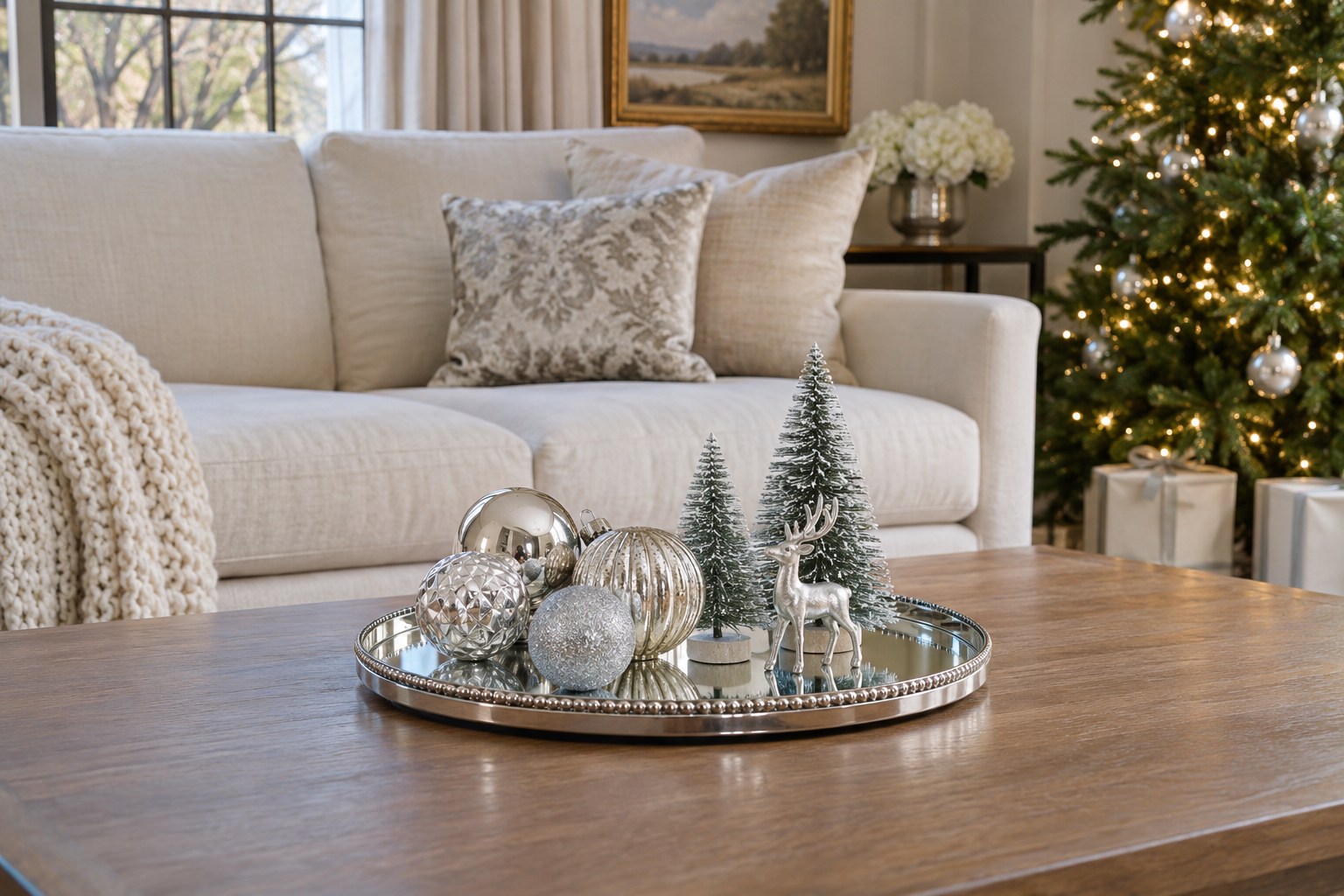
A round reflective tray makes a compact Christmas display that can move when you need the coffee table. Start with a silver tray and arrange a small reindeer figure beside two miniature trees of different heights. Tuck a few silver and clear ornaments at their bases and turn the reindeer slightly toward the main seat so its outline reads against the greenery.
Keep the tallest tree toward the back from your usual view, and check that the display stays below the sightline between seats. A sprig of evergreen gives the silver a darker background, while a few open patches of tray let the finishes reflect light. Leave room beside the tray for mugs, and use a tray with a raised edge if you want to move the display as a group. For more ways to leave space for drinks, see these Christmas coffee table ideas.
If you need a base, the 12.2-inch Okuna Outpost round mirrored tray gives the silver ornaments and miniature trees a defined footprint.
See the mirrored tray on Amazon (paid link)
As an Amazon Associate I earn from qualifying purchases.
6. Warm Up Dark Blue Seating With Faux Fur
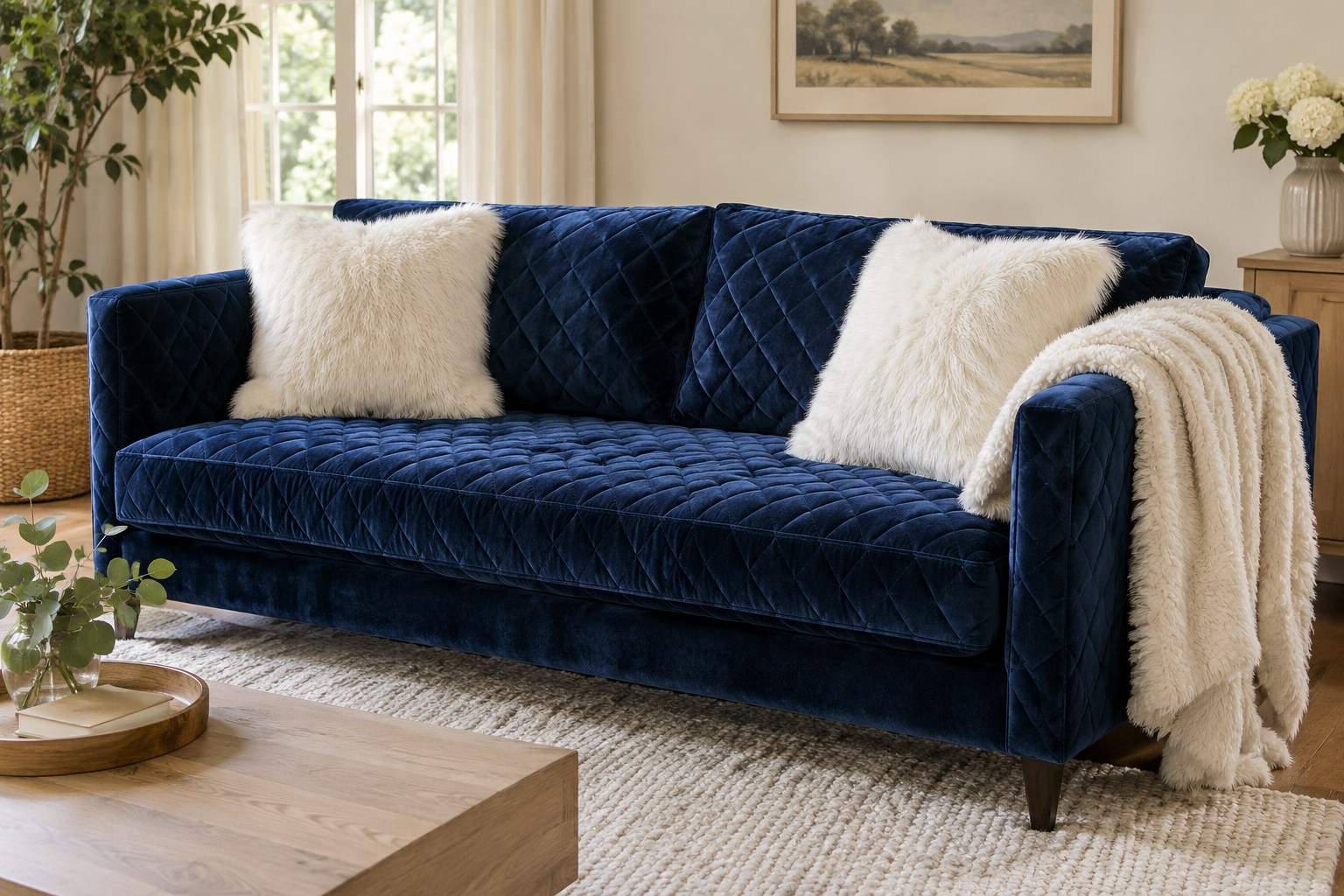
White faux fur can soften the color of a dark blue sofa and make the seating look inviting in the evening. Place a pair of white faux-fur pillows where you can see some navy around them. Drape a cream throw over one arm with the end folded onto the seat, then use a soft ivory rug to repeat the light color at floor level.
Vary the texture across the three pieces. A short, dense pile on the pillows can sit against a smoother throw, and a lower-pile rug can give the coffee table a more stable footing. Check the care labels before buying and choose removable pillow covers if the sofa gets heavy use. If the throw trails into a walkway, fold it once more over the arm.
7. Show Off a Geometric Base Under Round Glass
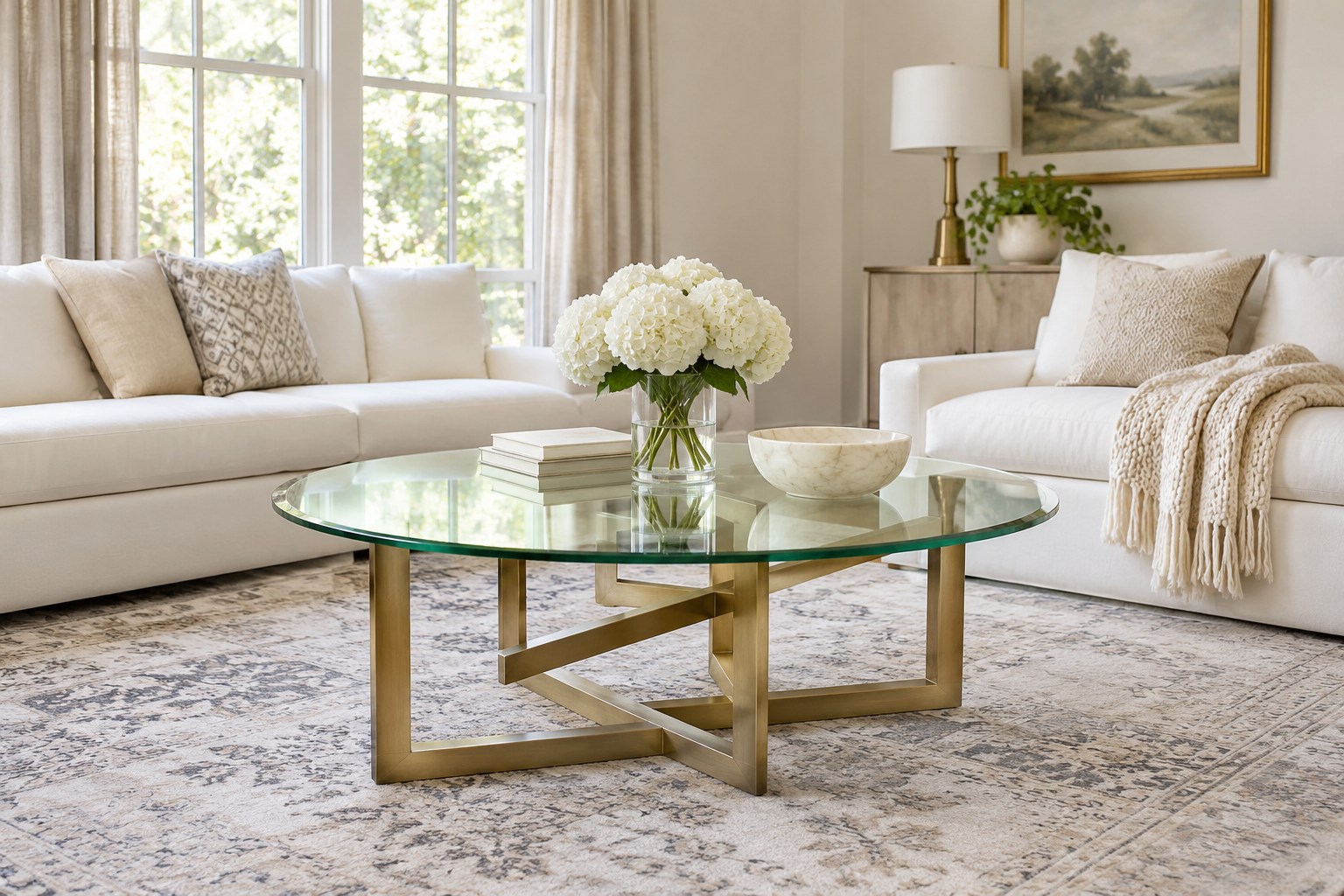
A round glass coffee table can show off a geometric brass base from several seats at once. Look at the base from sofa height before choosing a shape. An open cage of angled bars lets the rug show through and gives you a view of the metal from the doorway. Tape the full diameter on the floor, then walk around it and sit down with a mug to check reach and clearance.
Choose a complete table with a manufacturer-specified tempered glass top and the supports designed for it. Follow the stated load and care instructions and take the table out of use if the glass chips or cracks. A single low bowl or small stack of books leaves enough clear glass to see the base beneath it. A patterned rug and white upholstery put the outline of a brass base in focus.
8. Frame the TV With a Matched Pair of Sconces
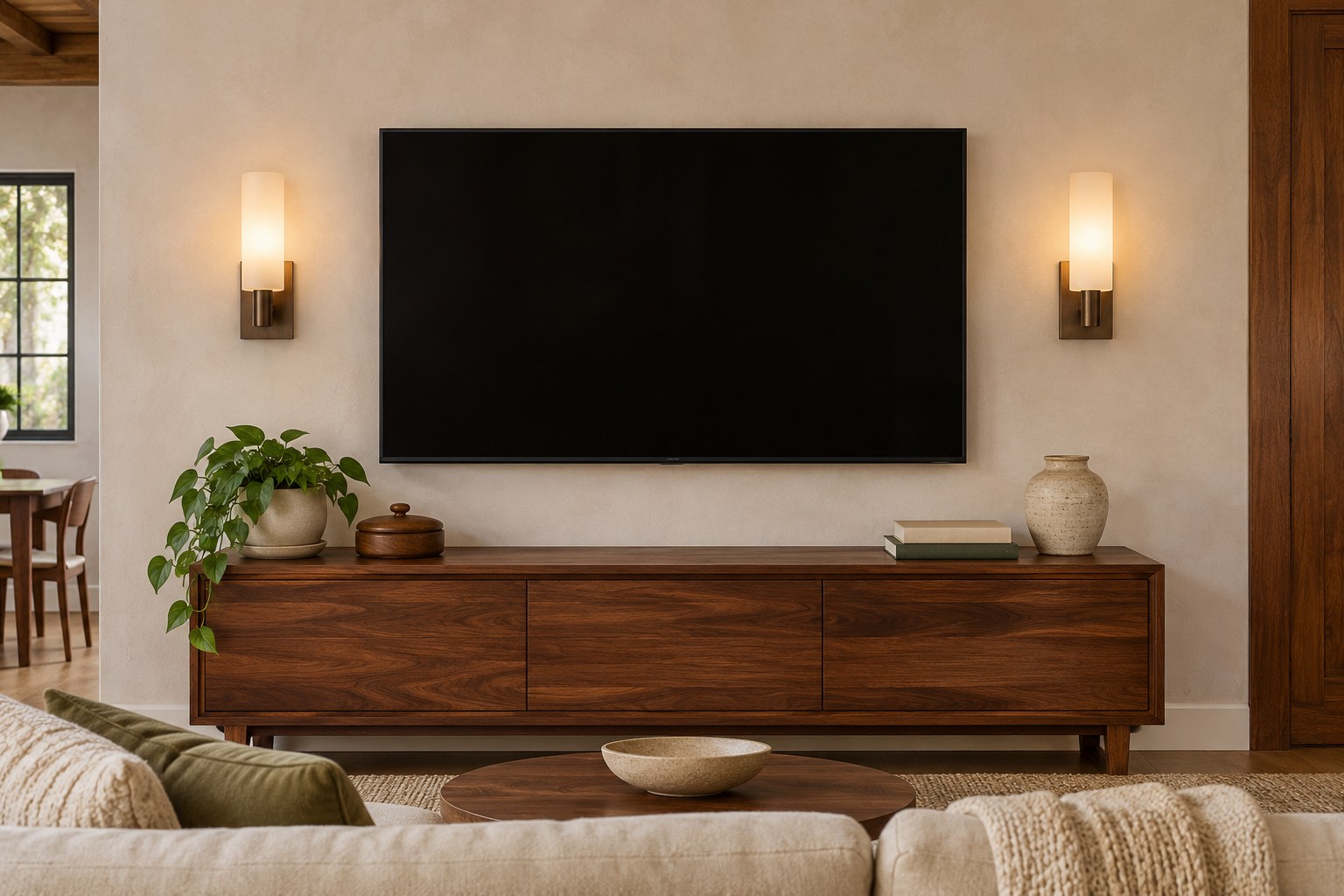
A pair of wall sconces can turn the television wall into a composed part of the living room. Begin with the width of the console, then sketch the screen and both fixtures on the wall with painter’s tape. Leave a comfortable margin between the sconces and the edge of the screen. From each end of the sofa, check that the spacing reads as balanced and that the fixtures leave room for any cabinet doors nearby.
Choose shades that soften the light and hide the bulb from seated view. A pair of narrow opal shades works with a low, dark console and keeps the wall visually quiet when the television is off. Review the fixture manufacturer’s mounting instructions and the television manual before settling on placement. If the wall also needs storage, compare these TV wall layouts for small living rooms.
9. Mix Brushed Silver and Gold at Different Heights
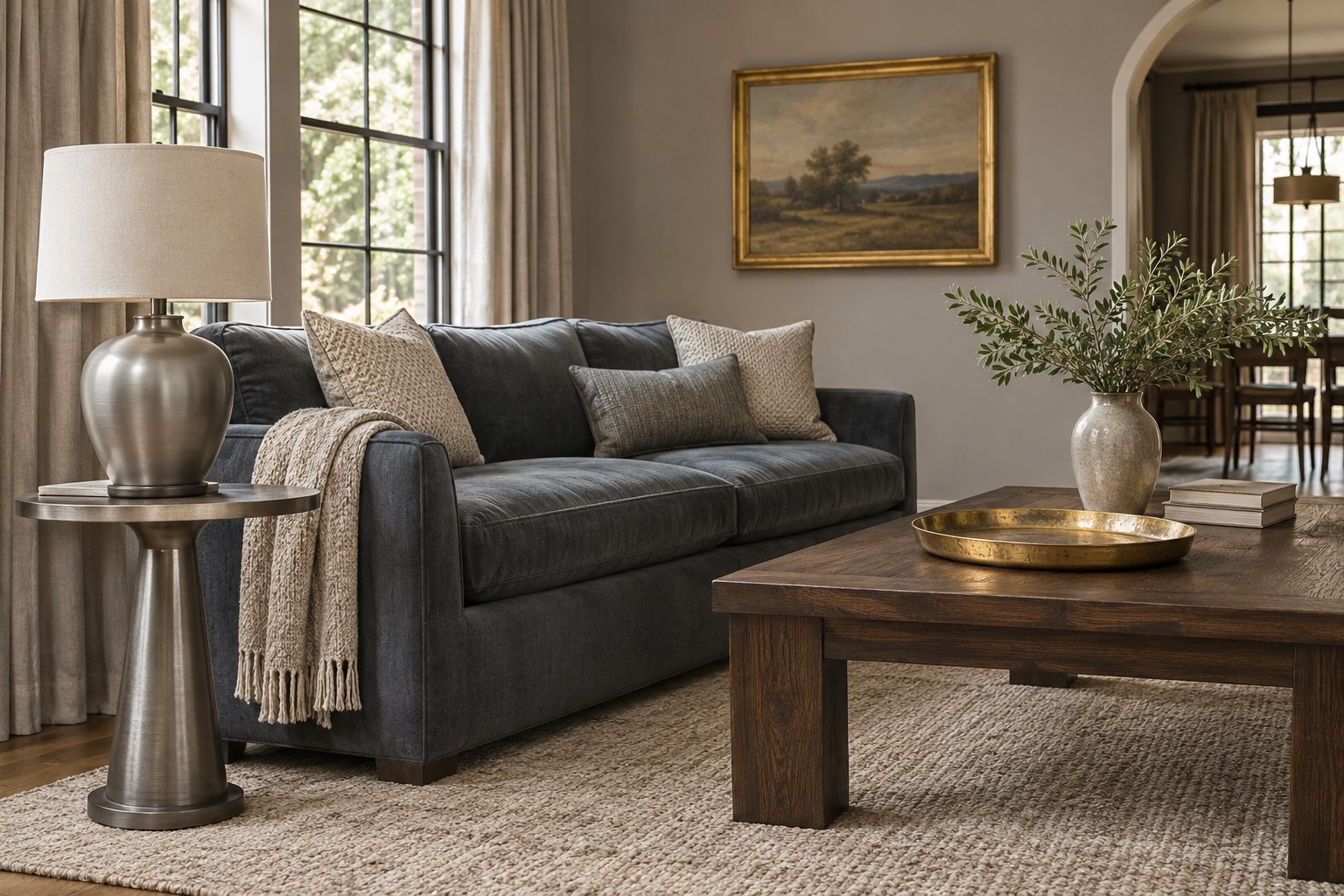
Start with the brushed silver already in the room, such as the legs on a coffee table or the finish on a cabinet pull. Bring in warm gold at a different height, where the two metals can stand apart. A muted brass floor lamp beside a gray sofa and a small silver bowl on the table give each finish room to register. A smoky glass vase or a linen shade can sit between them visually.
Repeat the smaller metal accent once elsewhere in the seating area. A slender brass frame on the opposite wall is enough to connect with the lamp. Lay out finish samples on the sofa fabric and look at them in daylight and with the lamps on before choosing the final combination.
10. Layer Texture Across White, Beige, and Light Gray
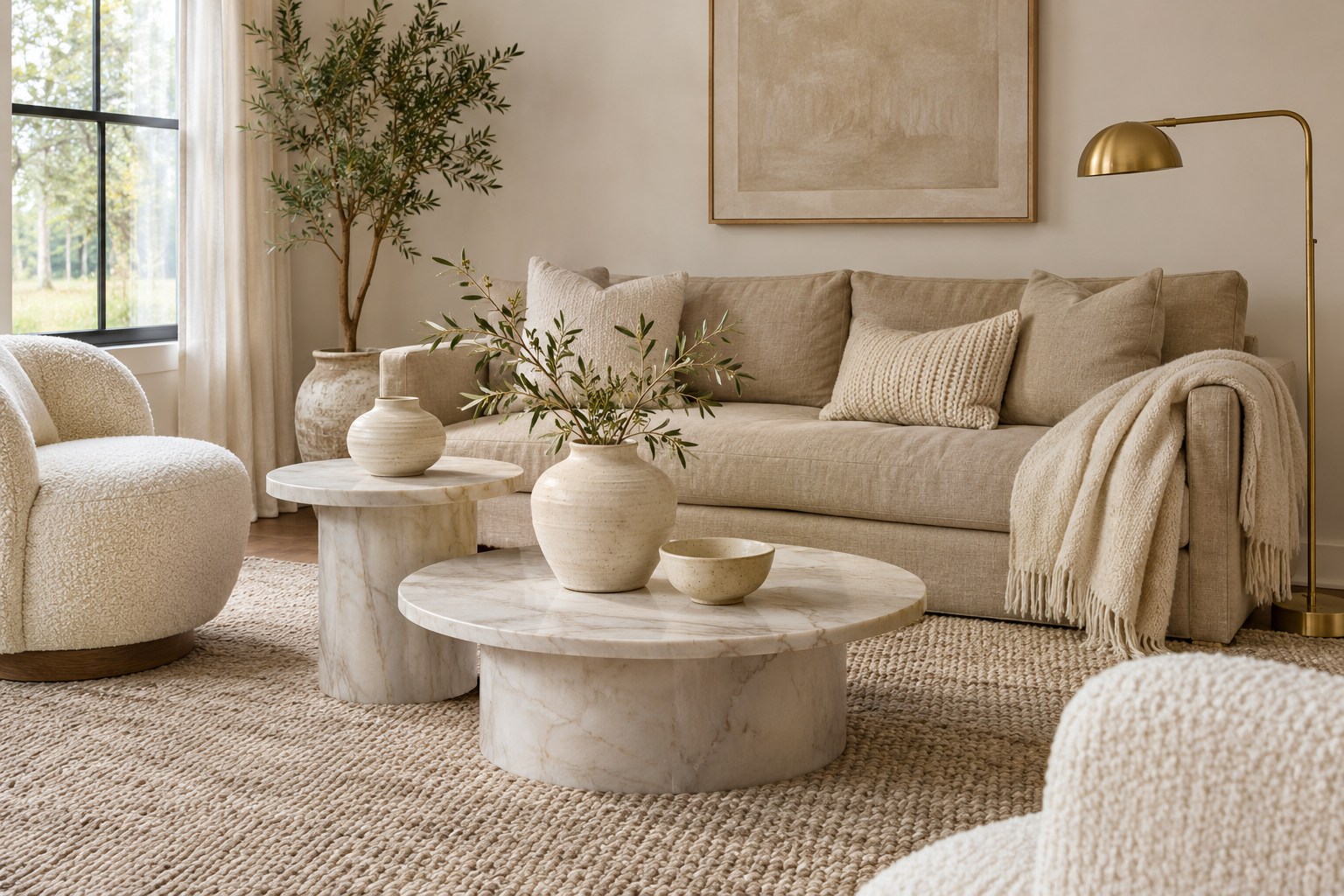
Build a white and beige living room around the texture of the largest pieces. A warm white sofa in a nubby weave and a pair of sand-colored chairs create enough variation to carry the seating group. Set them over a tactile rug with a low, uneven-looking pattern. Use a beige or taupe edge for definition where the rug meets a pale floor, and try upholstery swatches together beside the window.
A light marble coffee table and a smaller marble side table introduce a smooth surface and natural veining. Leave some of the stone visible, then group two cream ceramics on the larger table. One glazed vessel and one matte bowl will catch the light differently. Finish the sofa with a single flax or oatmeal pillow. A light-gray throw and a warm-gold lamp soften the change from pale stone to fabric. See how organic modern living rooms use similar materials.
11. Use Pale Geometric Wallpaper on One Wall
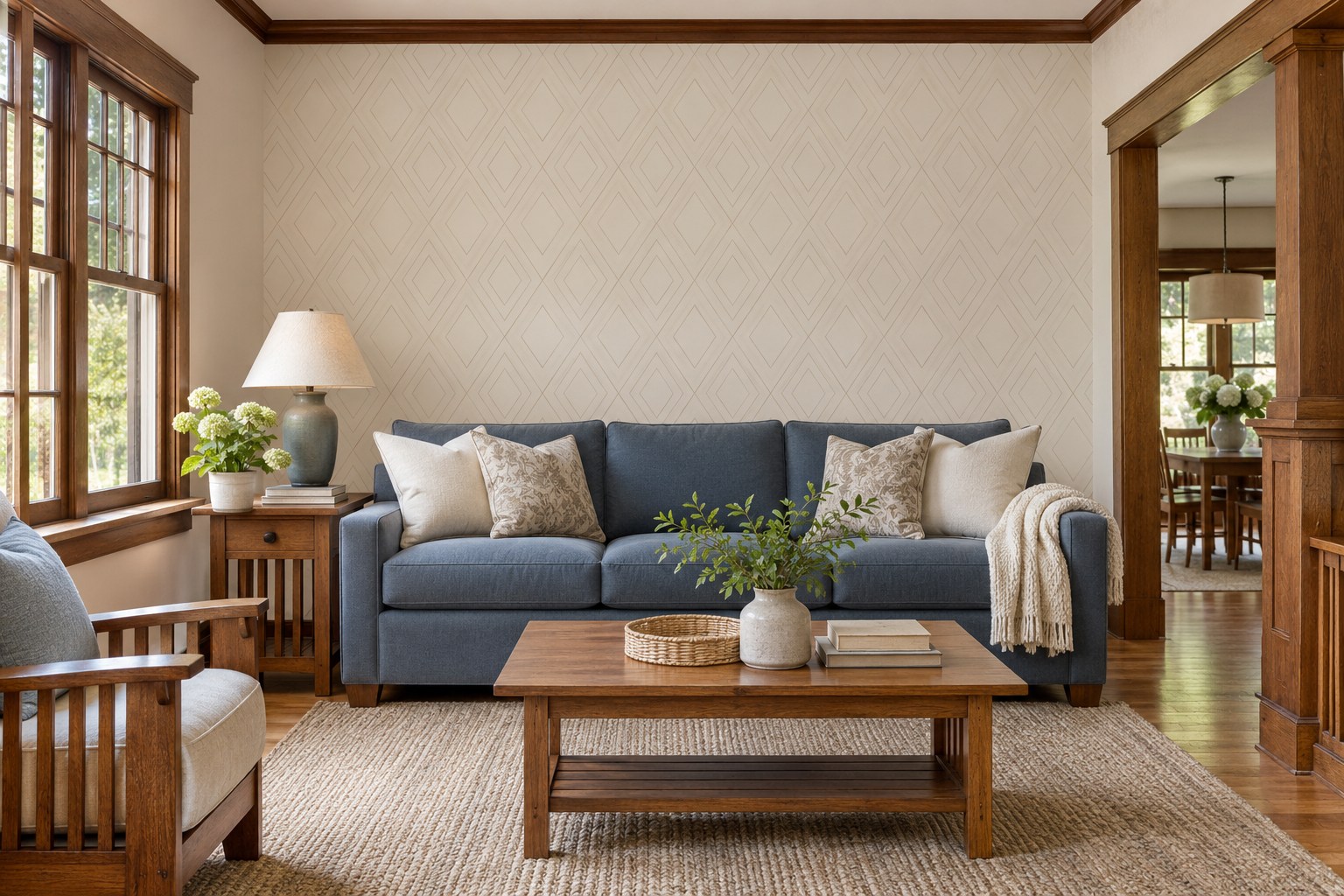
Look for a pale geometric wallpaper with gentle shifts in tone, such as parchment lines over a warm ivory ground. A quiet diamond or softened lattice can give the sofa wall depth, especially when the rest of the room has large blocks of plain fabric. Tape up a generous sample and view it from the doorway. You want the pattern to be visible at that distance and easy to sit beside for an evening.
Run the wallpaper across one complete wall and use a trim color drawn from its background. Set a solid navy sofa or a pair of charcoal chairs against it. Choose a rug with a broader pattern and leave a little breathing room around frames so the wall design stays legible.
12. Style a Square Glass Coffee Table in One Corner
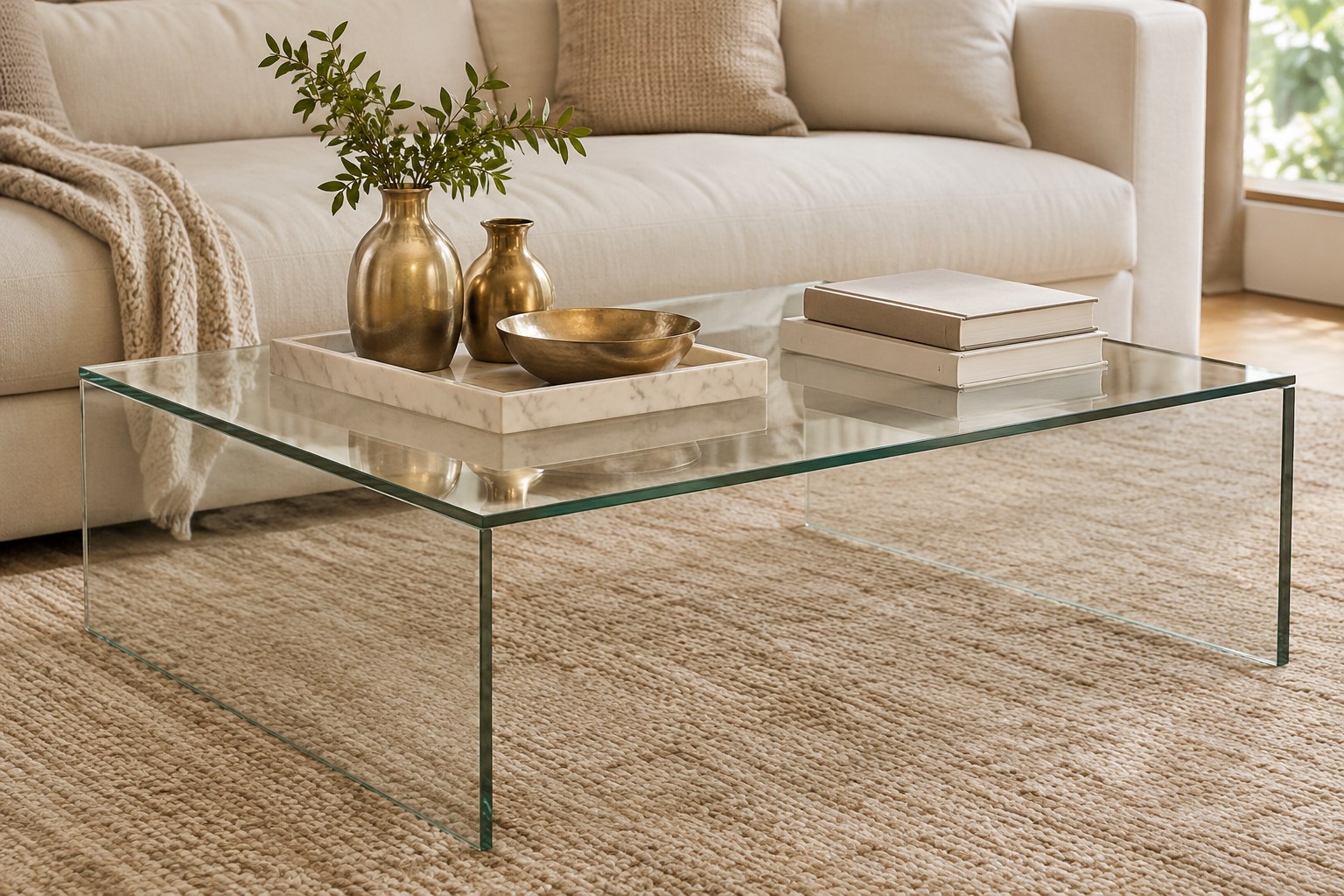
Style a square glass coffee table by treating its top as four quarters. Set a low marble tray in one quarter and place a small gold-toned vase with a metallic bowl on it. A second vase of a different height can sit beside the tray if the two forms still read clearly from the sofa. Add a short stack of books at the opposite corner and line up their edges with the table frame.
Keep the two remaining quarters open for cups, a remote, or a board game. Look through the glass before adding anything else. The rug pattern and the table’s base already contribute to the view, so a clear top can be part of the arrangement. Choose accessories with stable bases and check the table manufacturer’s care guidance.
13. Give a White Sculpture Room on the Mantel
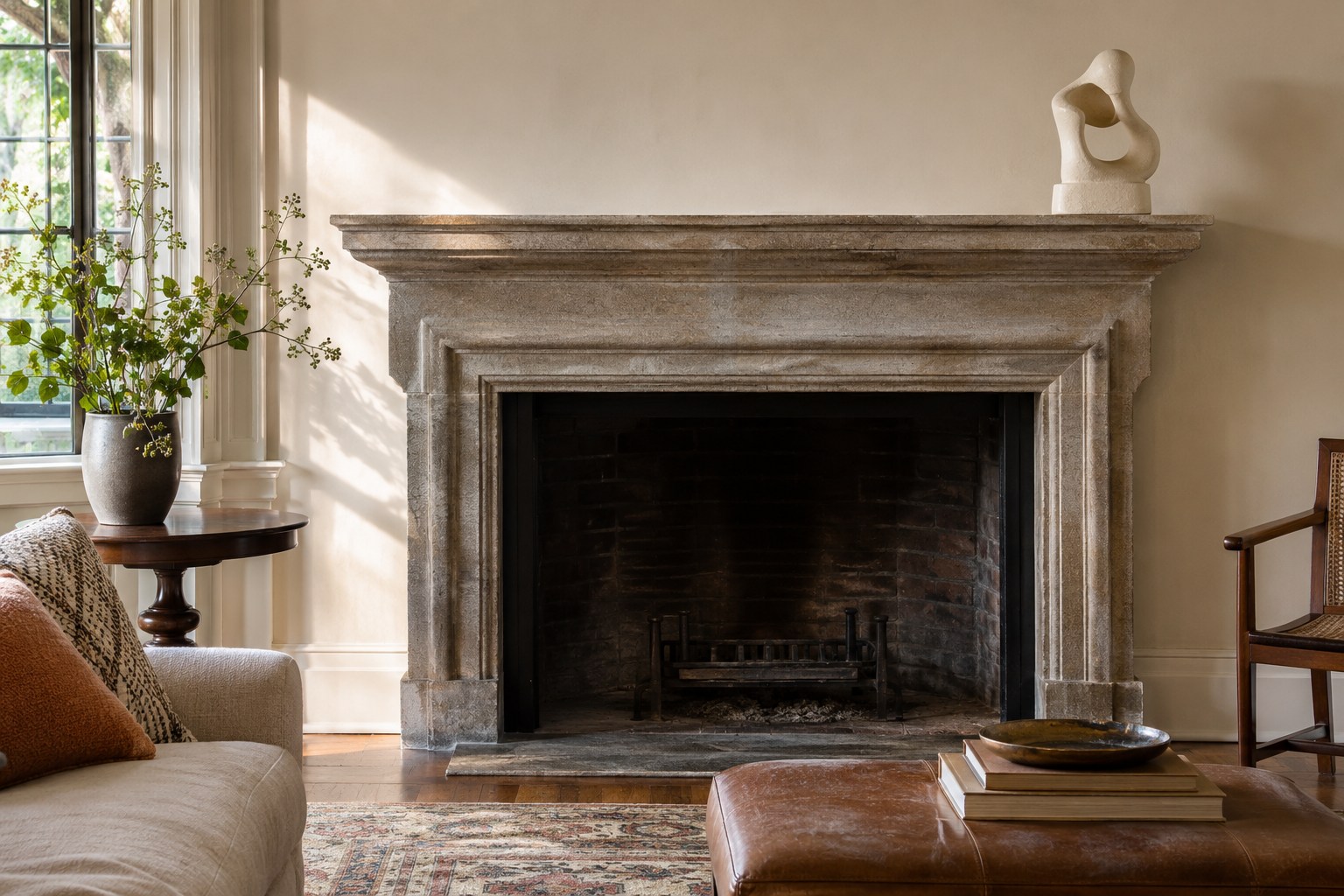
A single white sculpture can give a mantel a focal point that reads from across the room. Try a matte ceramic figure, a carved-looking knot, or a low plaster form with an outline you can recognize from the sofa. A muted wall behind it, such as putty or pale stone, keeps the silhouette visible. Use a piece that sits comfortably on the mantel and leaves open space around it.
Place the object slightly to one side of a large frame and step back to check the gap. If the frame and the sculpture compete for attention, try a smaller frame or move it to the next wall. A shallow white dish at the far end can echo the finish without crowding the main piece.
14. Repeat Black Accents in a Bright Room
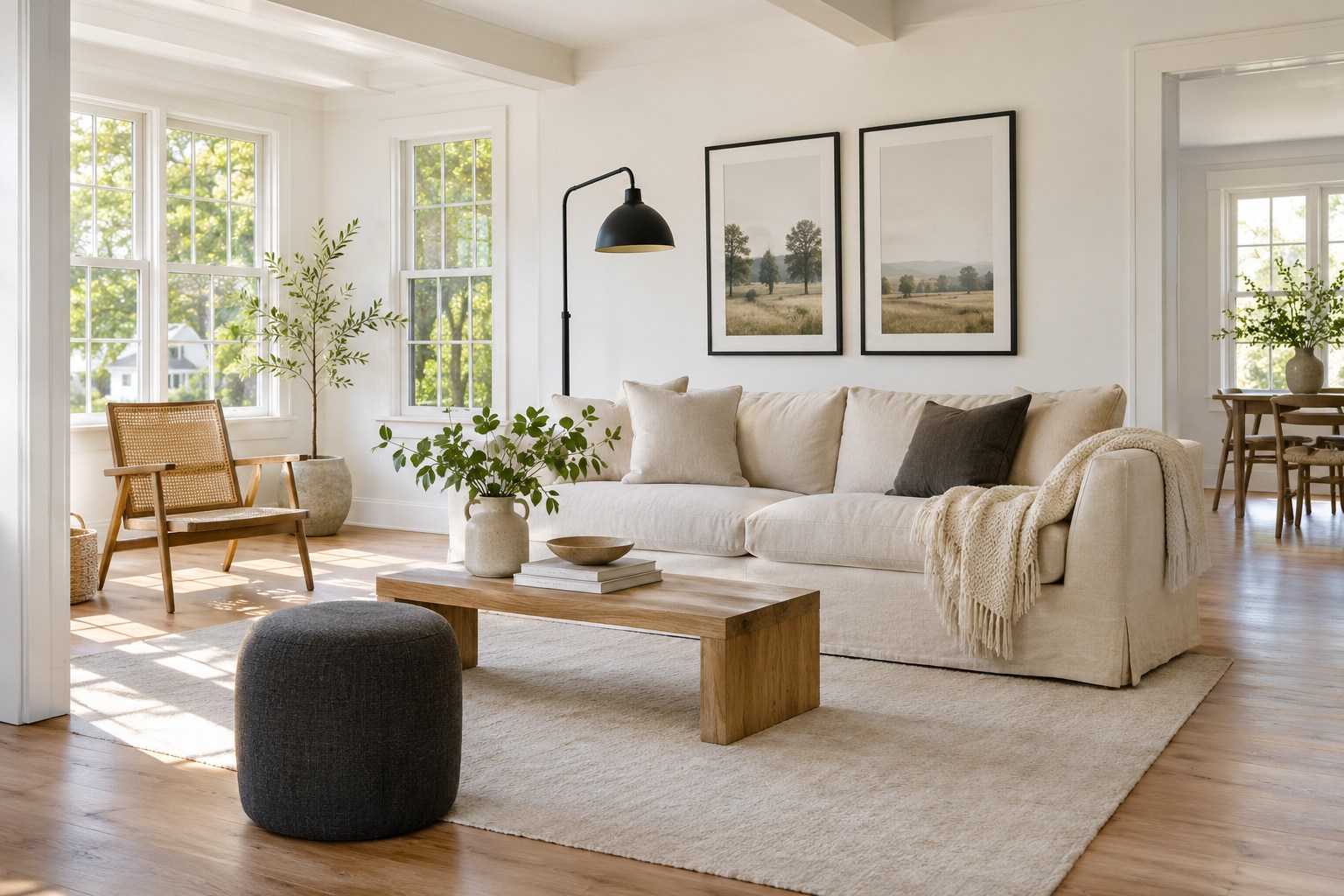
Black details can give a bright living room a crisp outline while leaving the pale walls and seating visible. Begin with pieces that have a little substance, like a black wood side table, a broad picture frame, or a low upholstered ottoman. Spread them between the two sides of the room and check the view from the entrance. Each dark accent should have enough surrounding light fabric or wall space to show its shape.
A matte black frame and a textured black pillow give the color two distinct surfaces. Add a walnut or aged brass detail nearby if the palette feels cool, then look again in the evening. Black trim can read more strongly under a table lamp than it does in daytime.
15. Use Deep Purple Walls With a Gold-Toned Sofa
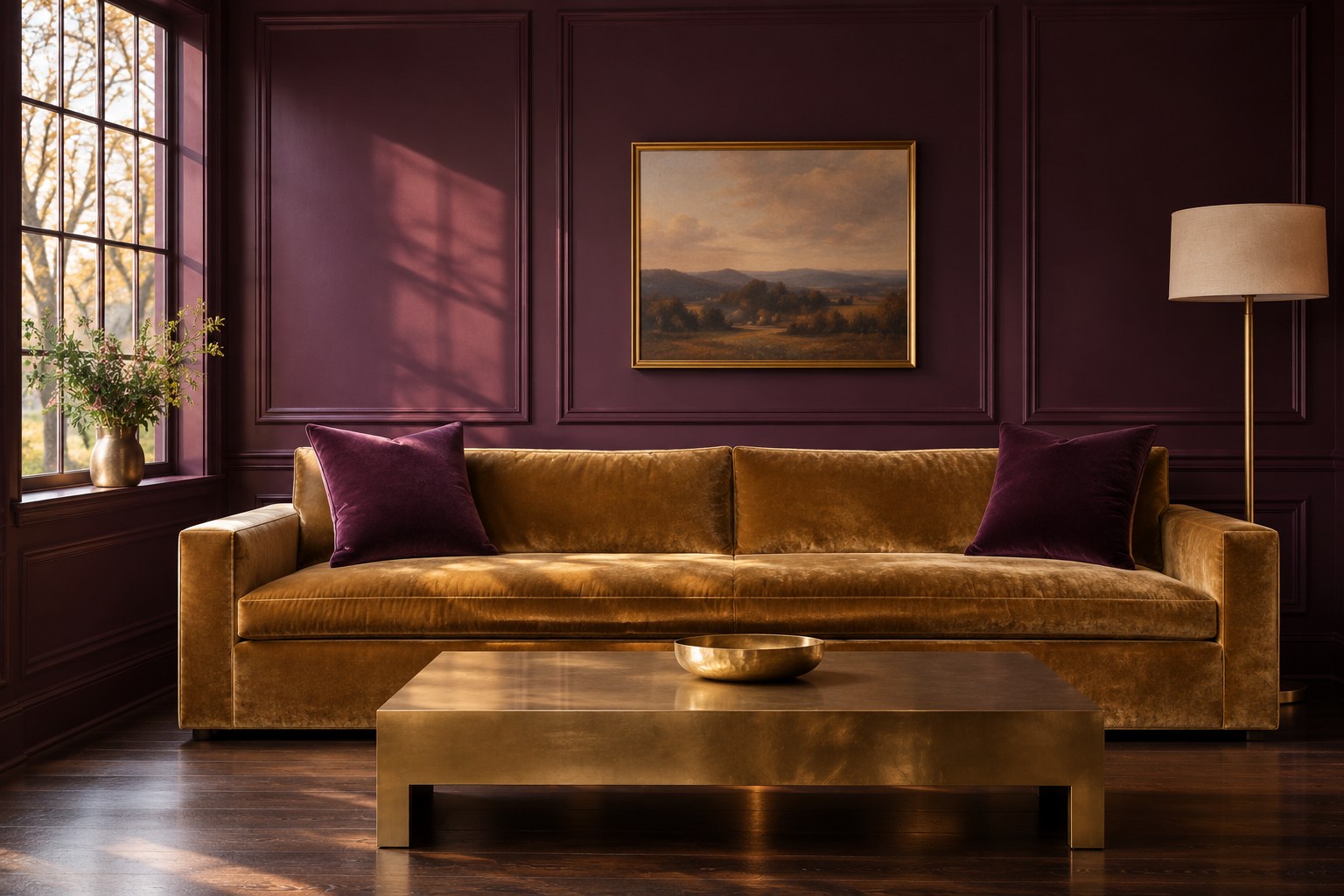
Paint the walls a deep plum with a brown undertone and center a gold-toned sofa on the longest stretch of wall. Muted ocher velvet gives the sofa the warmth of aged gold and feels soft against the darker paint. Match two purple pillows to the wall, then set a small gold table at one end of the sofa. A pale stone top or a light rug can give the eye a place to rest.
Try a large swatch of plum where the wall meets the sofa and check it after the lamps come on. A color that looks warm in sunlight can read nearly black at night. Leave some wall visible around the sofa so the plum, gold, and upholstery each have room to show.
16. Choose Metallic Lamps for Evening Light
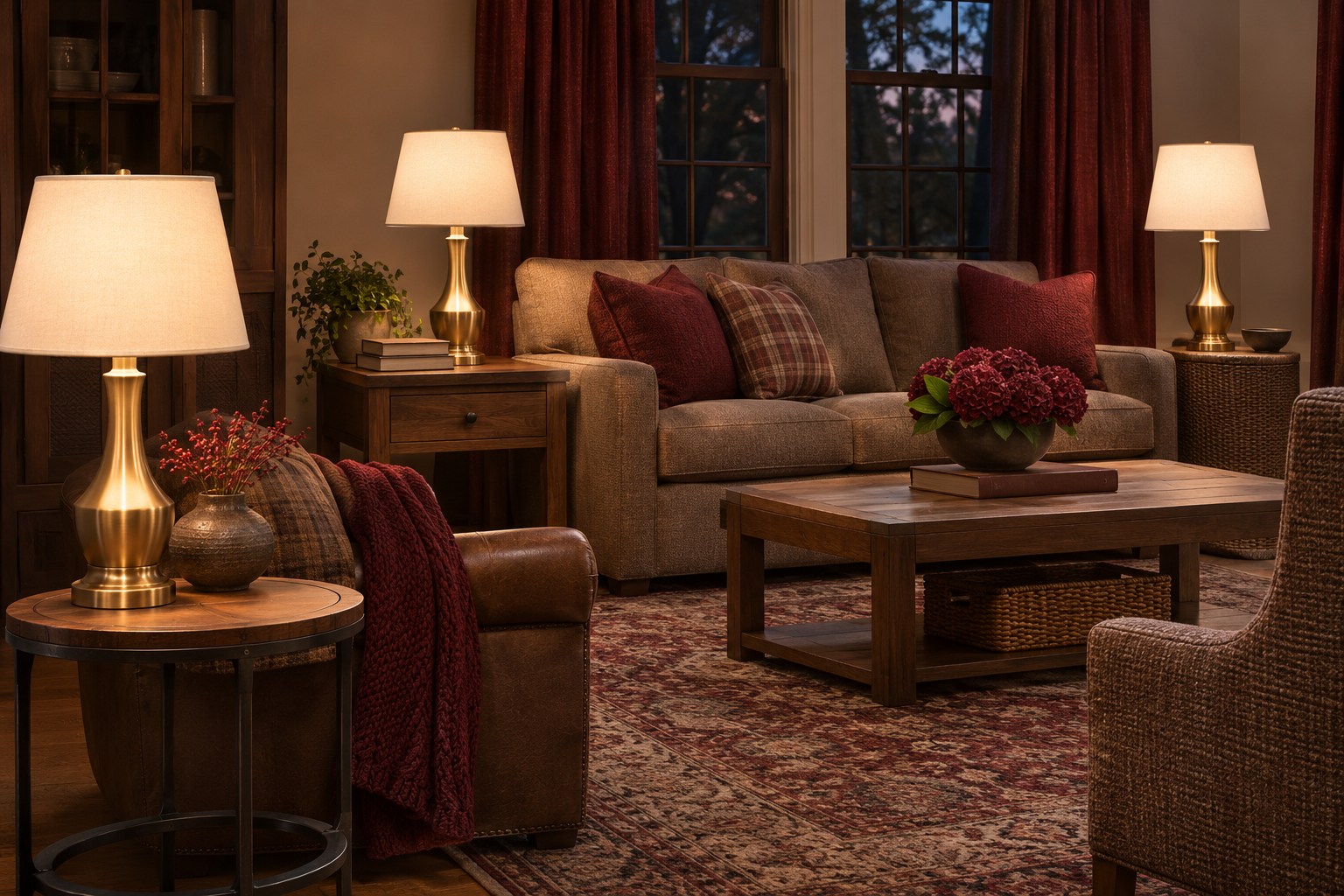
Set a metallic table lamp next to the seat where someone is most likely to read. A brushed brass base and an ivory fabric shade bring a soft gleam to walnut, oak, and painted side tables. For a wider seating group, give a second lamp the same finish and a similar shade shape. Place it near the far end of the group so each lamp serves a chair or a stretch of sofa.
Sit in both spots before settling on the tables. A comfortable setup puts the bulb out of your direct line of sight and leaves room for a mug beside the base. Try the lamps on their own after dark to see how the finish looks when it catches the light.
17. Hang One Abstract Painting Above the Sofa
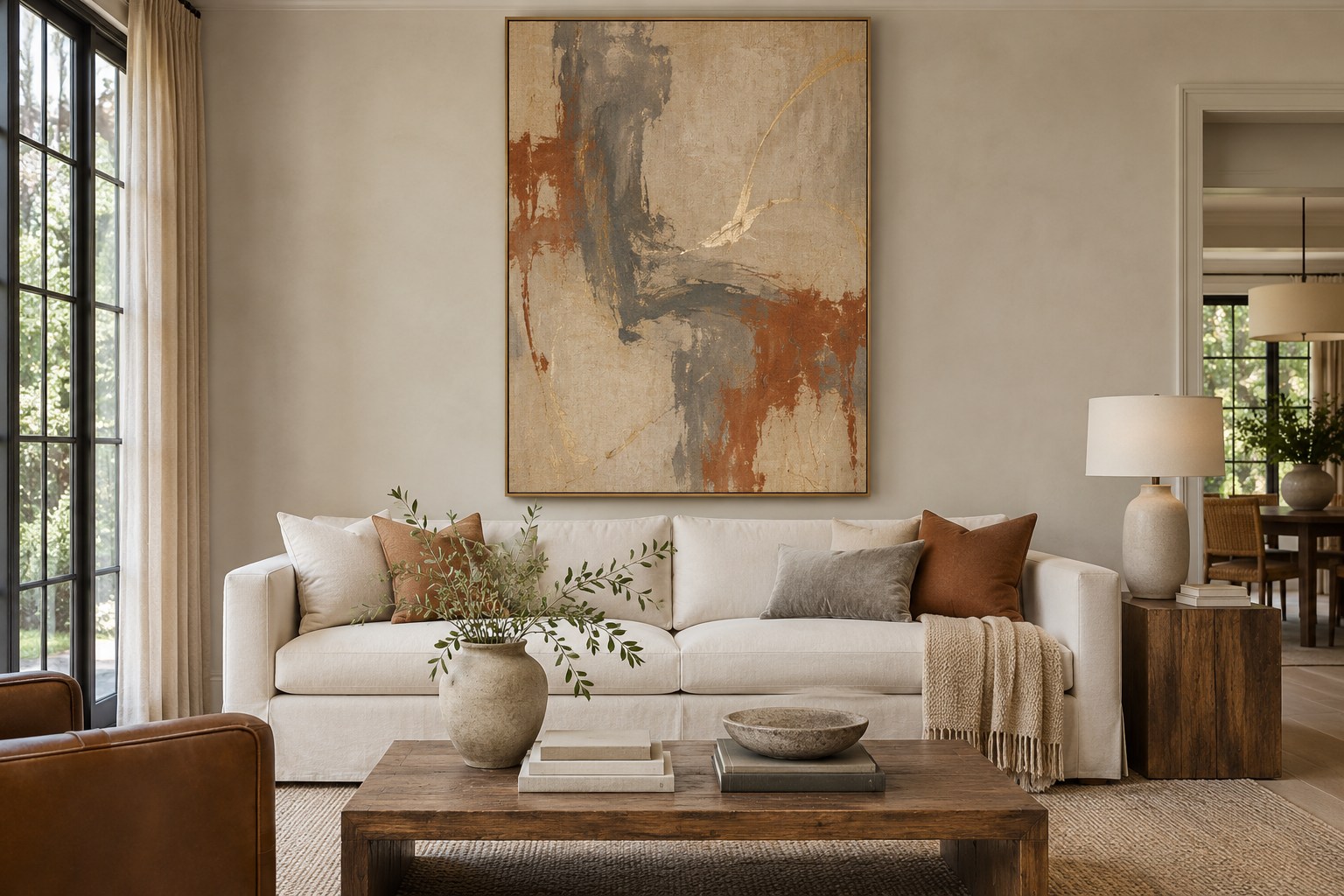
Choose one large abstract painting for the wall behind the sofa. Start by picking up a color that already appears in the room, such as a soft tobacco brown from a chair or a chalky blue from a rug. Then look for one surprising color in the art. It can stay unique to the painting and give the room a focal point people notice from the doorway.
Mock up the outline with paper and look at it from the entrance and from the opposite seat. The frame should read as part of the seating area without crowding the sofa. A thin dark frame can give pale artwork definition against a light wall. Use hanging hardware suited to the wall and the frame’s weight. For a wall that calls for several smaller pieces, start with these living room gallery wall layouts.
18. Group Gold Vases in Varied Shapes
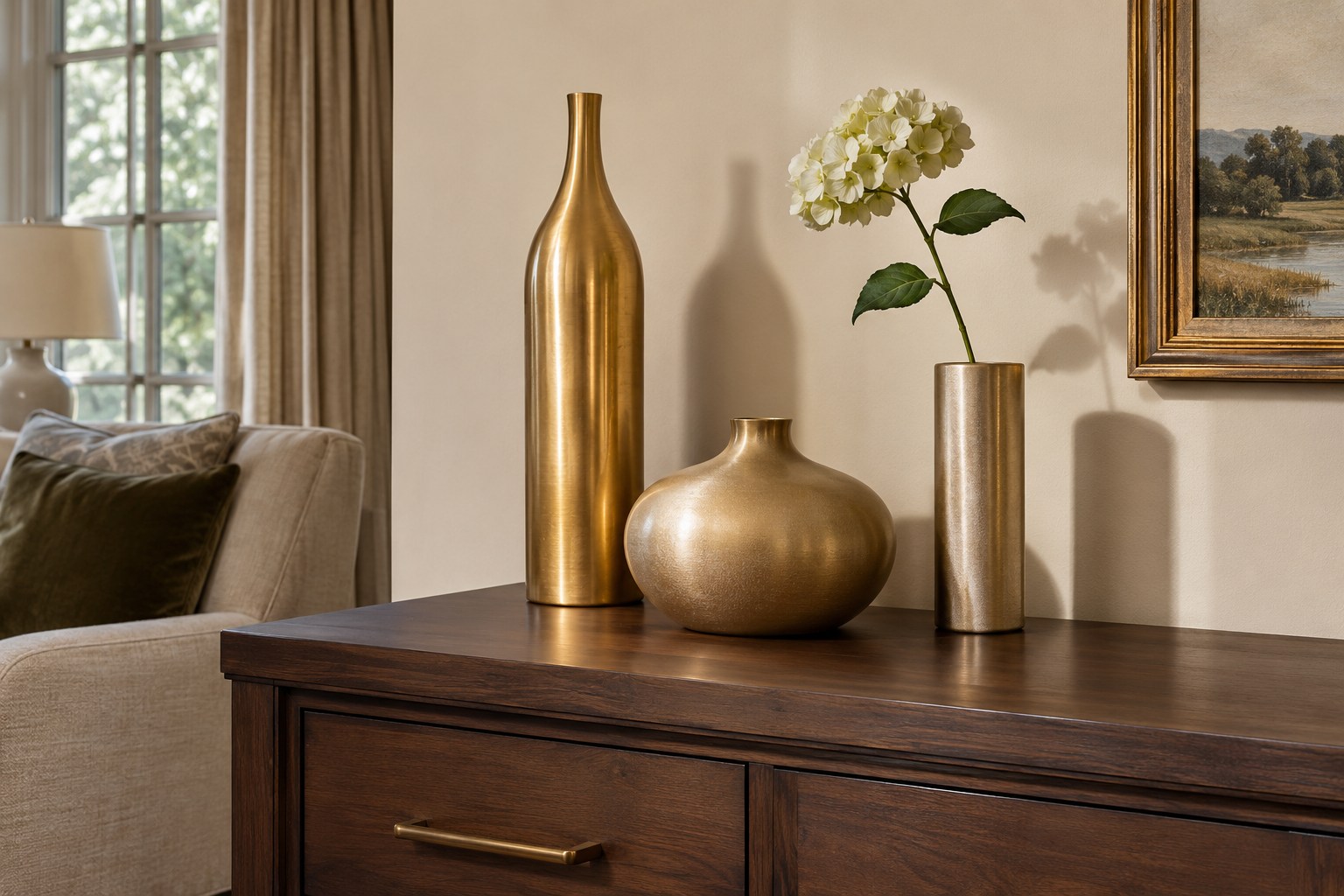
Group two or three gold vases on a console or at one end of a long mantel. Choose one shape with shoulders, one slim cylinder, and, if there is room, a low rounded piece. A satin or antiqued finish lets the silhouettes stand out. Set the tallest vase slightly behind the others and look at the group from the seat you use most. You should still be able to see where each shape begins and ends.
Leave one or two vases empty so the metal can carry some of the arrangement. A single tall branch or a few stems in the remaining vase is plenty. Give the group a stable surface with room to set down keys or reach anything you use daily.
19. Build a Monochrome Room With Different Finishes
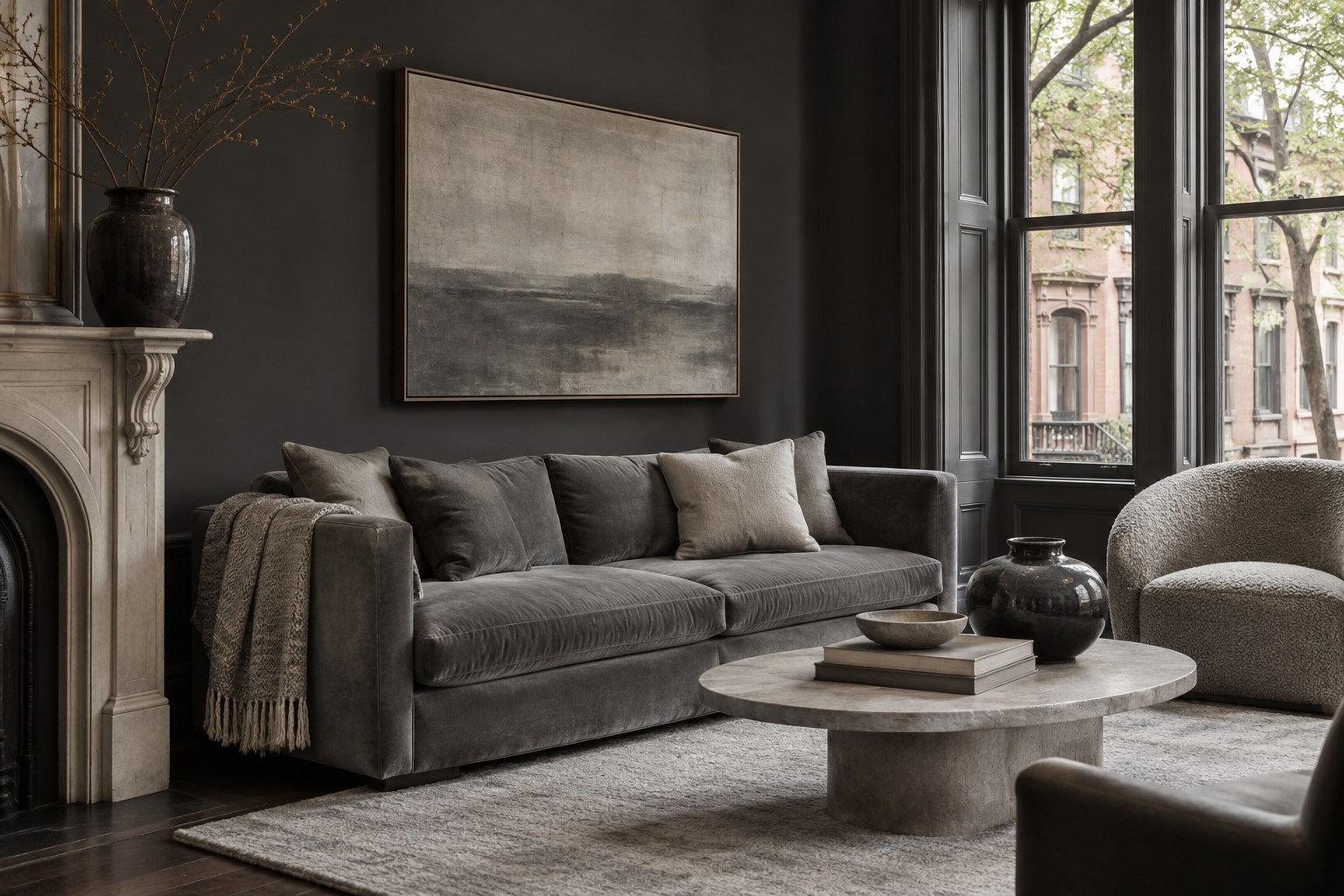
Build a monochrome living room from several tones of one color family. A gray scheme might start with a charcoal sofa, a medium-gray wool rug, and a pale stone side table. The spread from dark to light helps the furniture read clearly across the room. Texture adds a second layer of variation. Try a nubby pillow on smooth upholstery and a finely woven throw on the arm.
Lay the fabric and finish samples together in daylight, then check them under the lamps. Blue-gray and brown-gray can pull in different directions once they sit side by side. Pick the undertone you prefer for the biggest surface, usually the sofa or rug, and use its lighter and darker relatives to connect the smaller pieces.
20. Use Muted Pink as a Soft Neutral
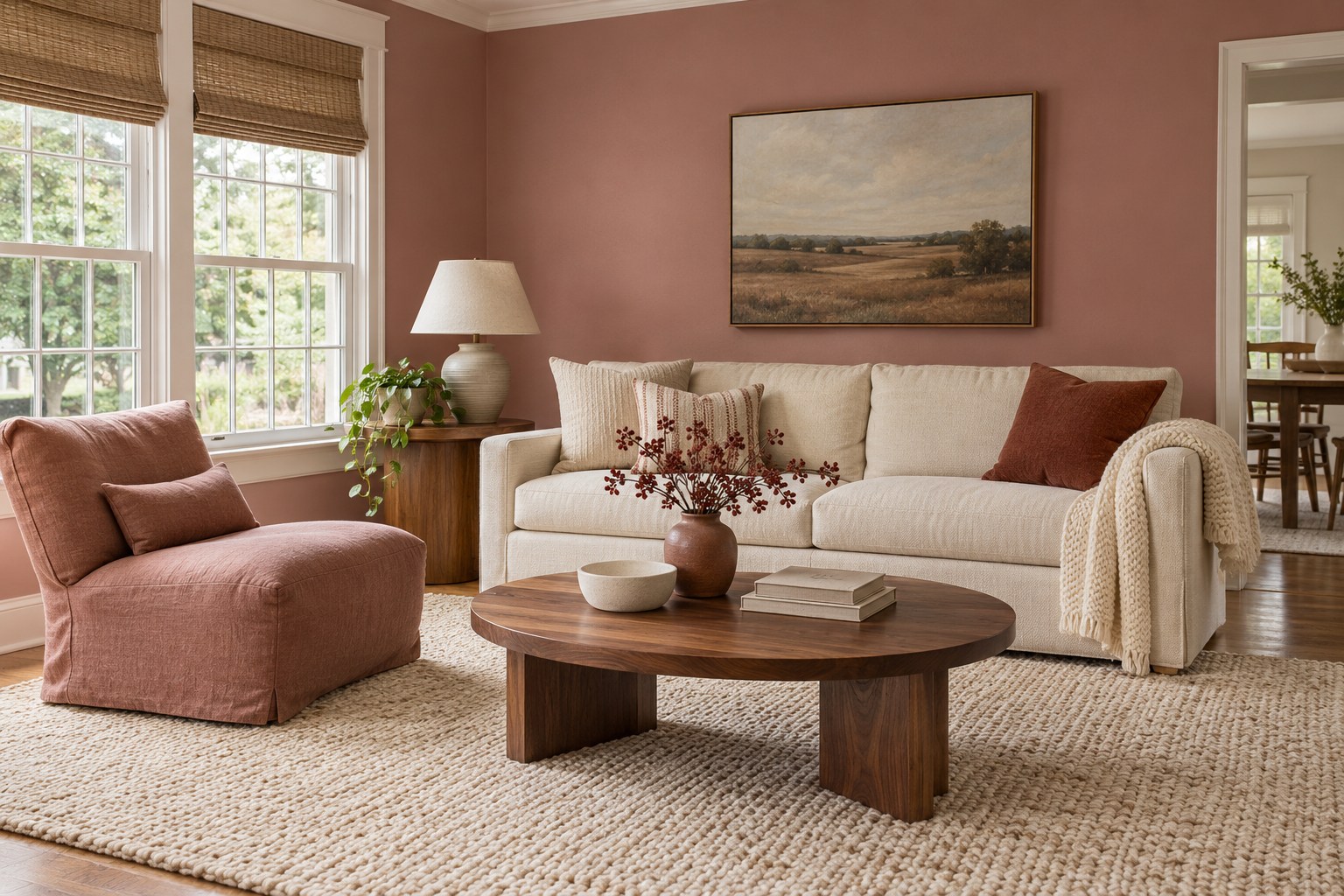
Bring in muted pink through a chair, a velvet pillow, or a dusty-rose ottoman. Start with a shade that has some brown or gray in it so it sits easily with walnut, cream upholstery, or a pale plaster wall. If the room already has a strong pattern, choose a solid fabric with a visible weave. The color adds warmth and lets the existing pattern keep its place.
Set the pink piece where you can see it from the entrance, then repeat a quieter echo across the room. A pinkish band in a rug or a rosy note in a painting is enough. Leave an open stretch of cream, wood, or stone between the two so both accents feel deliberate.
Start with the detail that solves a problem you already notice. If the room feels flat at night, try a lamp where you actually sit. If the finishes compete in daylight, set two or three material samples together before you buy anything. A paper outline on the floor or wall can tell you whether the idea will fit.
Recheck the layout once you’ve added the focal piece. Leave a comfortable path past the seats and keep a usable spot for a drink or a book. For a room where every seat and walkway matters, try these small living room layout ideas.
Discover more from HomeTrendora
Subscribe to get the latest posts sent to your email.