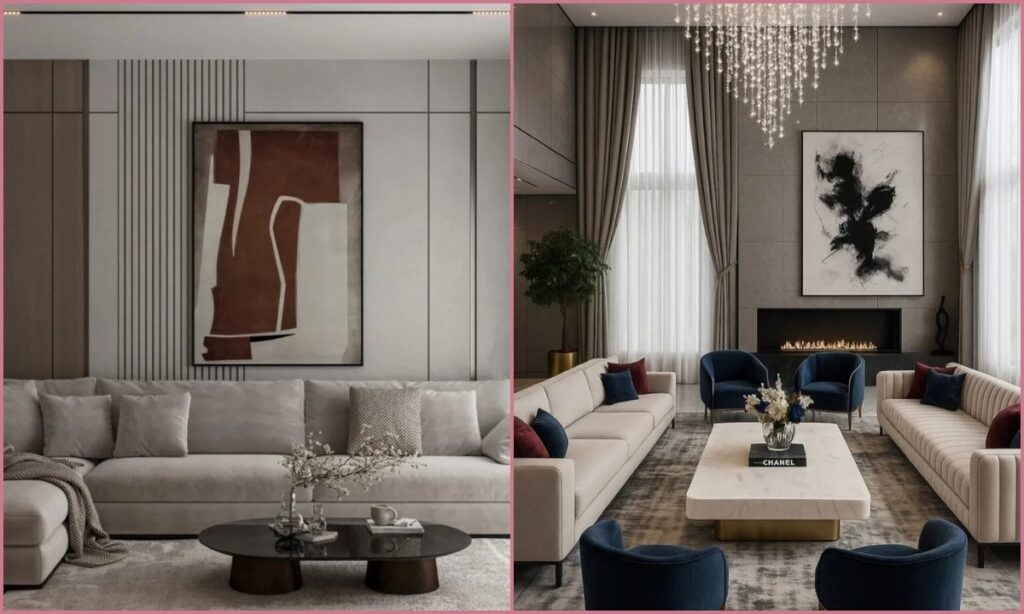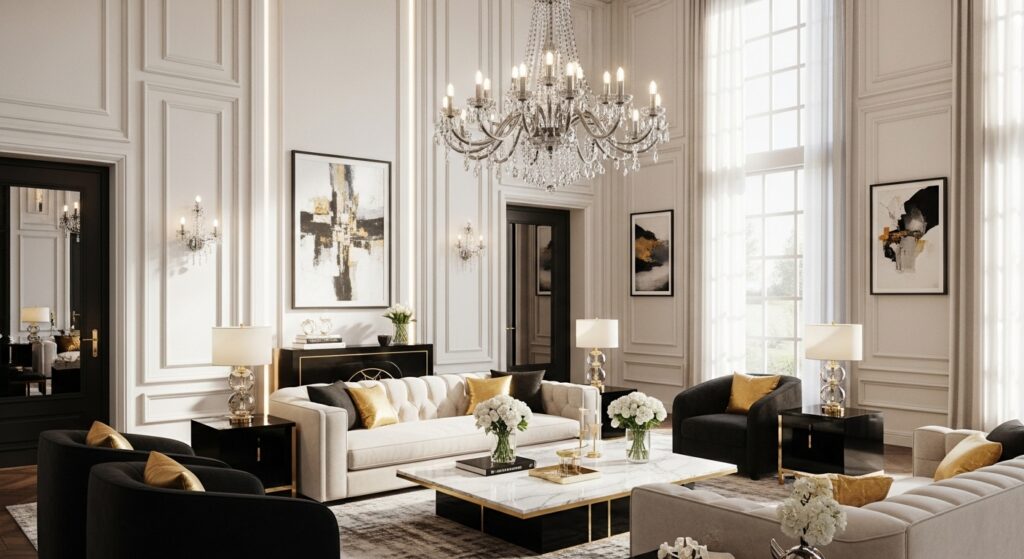
The best small living room TV wall ideas do more than decorate around a screen. They protect floor space, organize devices, reduce visual clutter, and make the television feel proportionate to the room. A compact wall does not need a massive custom media unit to look finished; it needs the right balance of scale, storage, and breathing room.
Start with the way the room actually works. Note the viewing path, furniture position, outlets, devices, ventilation needs, and any doors or windows that limit the wall. Then choose one main job for the TV area: saving floor space, adding storage, hiding cords, balancing an awkward position, or creating a quieter focal point. The following 20 ideas solve those problems in distinct ways, including renter-friendly and built-in alternatives
A Quick Planning Checklist for a Small TV Wall
Measure the usable wall, the television, and the depth of every cabinet before buying anything. A console that looks slim online can still interrupt a tight walkway. Allow access around media equipment, keep ventilation openings clear, and plan how remotes and doors will function from the seating area.
Confirm that the mount, fasteners, and wall structure are compatible with the television and follow the manufacturers’ instructions. Electrical or in-wall cable work should comply with local requirements and be handled by a qualified professional when needed. Anchor freestanding storage according to its instructions, especially in homes with children. If a fireplace is involved, follow the television, fireplace, and mantel manufacturers’ clearance and heat guidance instead of relying on a decorative photo
1. Float a Slim Console to Open the Floor
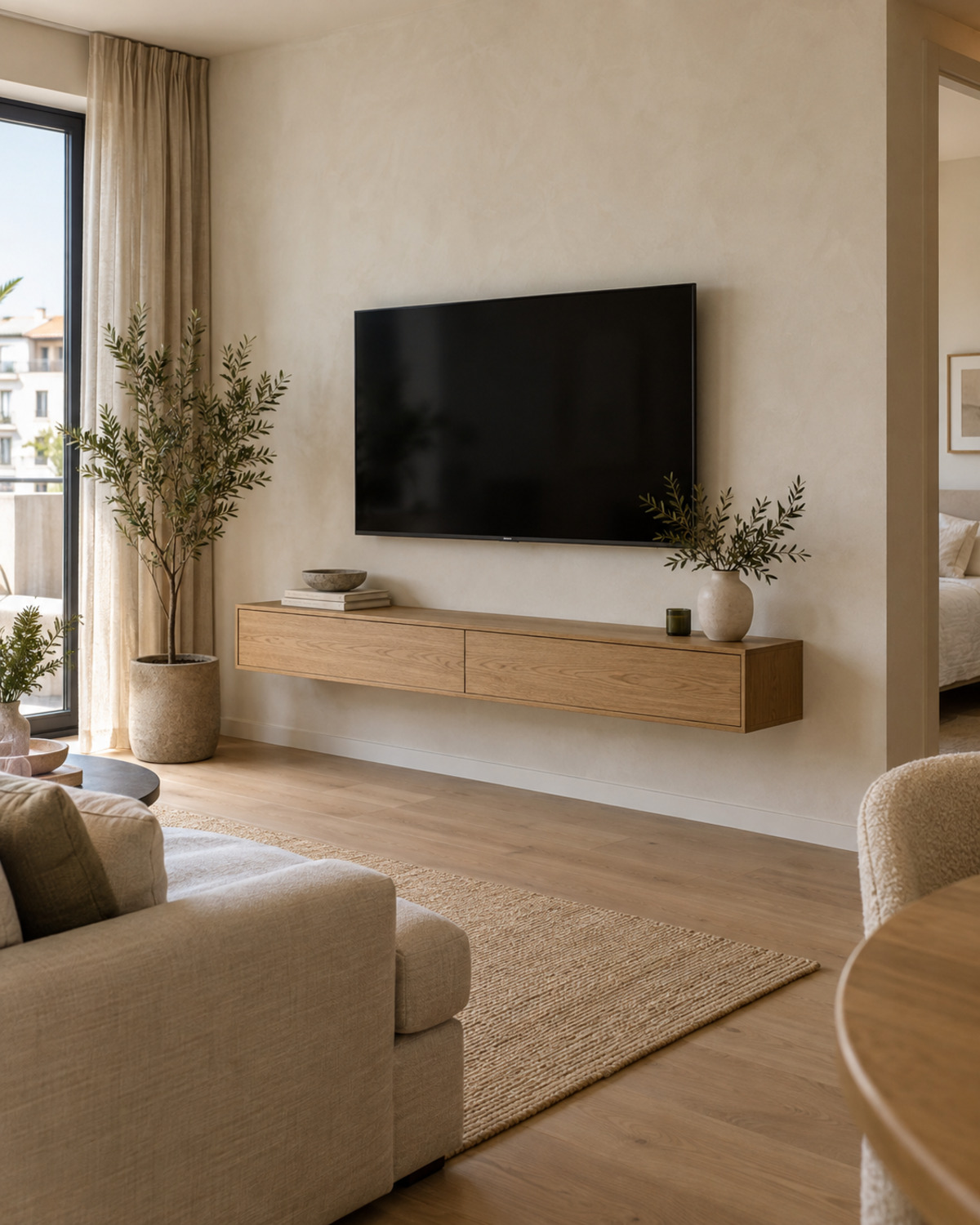
A floating TV console keeps the floor visible, which helps a small living room feel less crowded. Choose a shallow unit with drawers or drop-down doors so remotes, controllers, and charging cables disappear when they are not in use. Warm oak, walnut, or a wall-matched painted finish can soften the dark rectangle of the screen.
Keep the composition wider than the television without stretching it across the entire wall. A small gap between the console and the floor provides visual lift while still leaving enough height for useful storage. Before mounting, check how the wall construction, cable route, and cabinet weight affect installation.
2. Build a Shallow Wall-to-Wall Storage Run
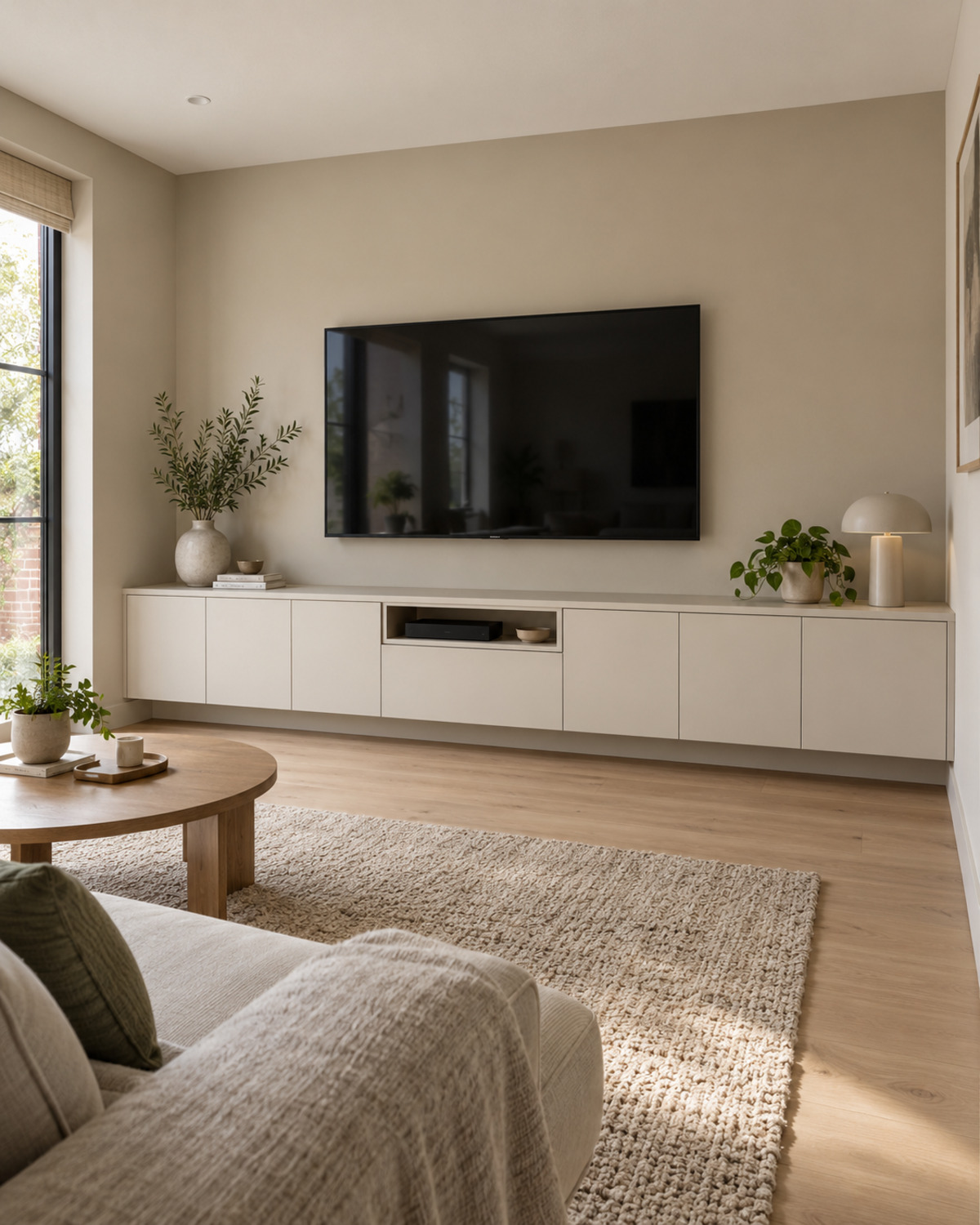
When storage is the priority, a continuous row of shallow cabinets can make better use of a narrow wall than one deep media cabinet. Closed doors hide everyday clutter, while the uninterrupted top creates a calm horizontal line beneath the television. Painting the cabinets and wall the same warm neutral gives the arrangement a built-in character.
Limit the depth to what the equipment truly requires and protect the room’s main walking path. Use removable interior shelves where devices need different heights, and keep ventilation and cable access practical rather than sealing everything into a decorative box.
3. Use a Freestanding Media Unit in a Rental
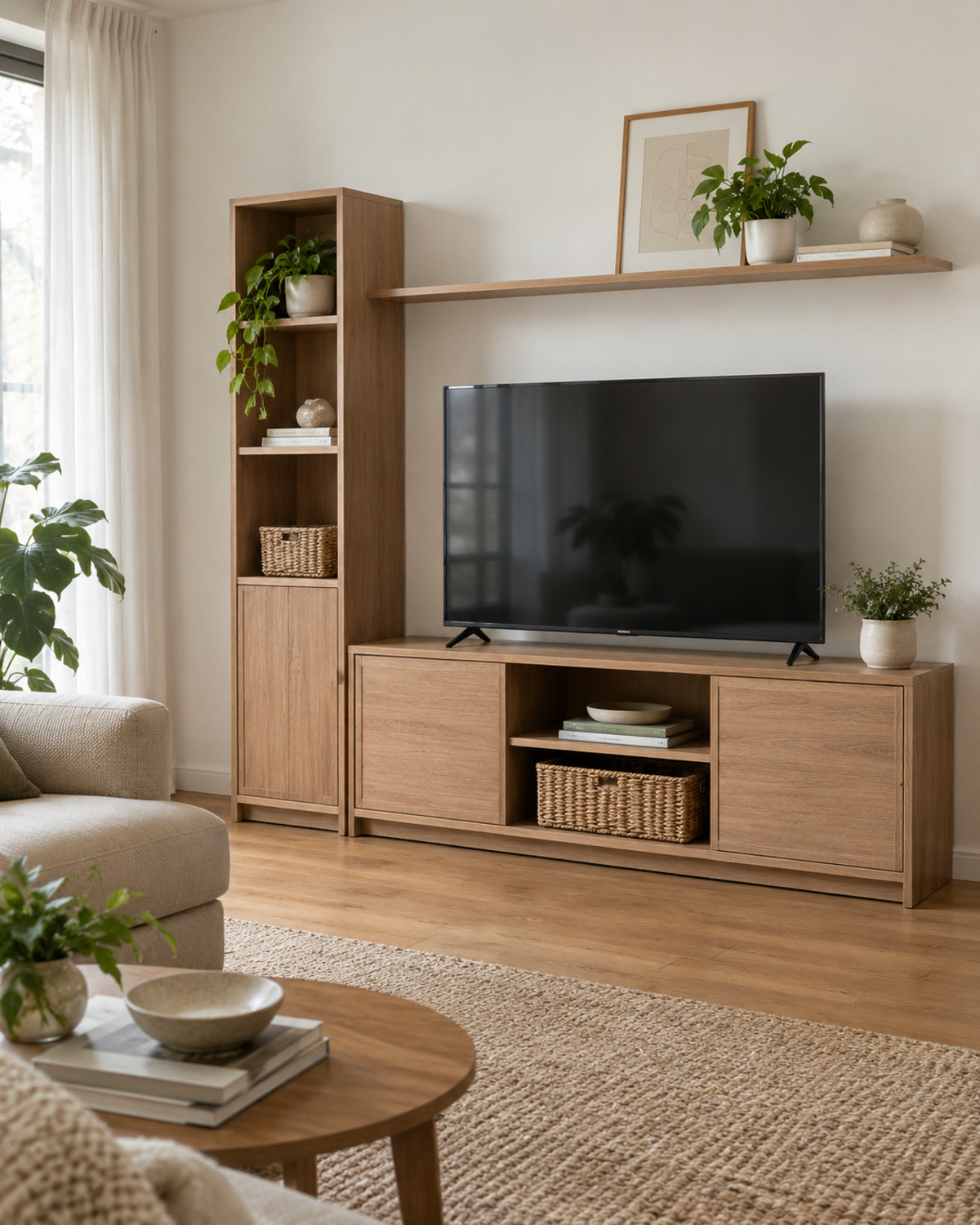
A well-proportioned freestanding media unit can create a built-in impression without permanent cabinetry. Look for one piece that combines a low console, a tall side cabinet, and one open shelf. Repeating the same finish across those elements makes the unit read as architecture rather than a collection of unrelated furniture.
This is a useful renter-friendly approach because the major visual structure can move with you. Confirm lease rules before mounting anything, use the furniture and television exactly as their manufacturers direct, and secure tip-prone pieces appropriately. Baskets and closed doors can conceal smaller items without drilling additional shelves into the wall.
4. Balance an Off-Center TV With One Tall Shelf
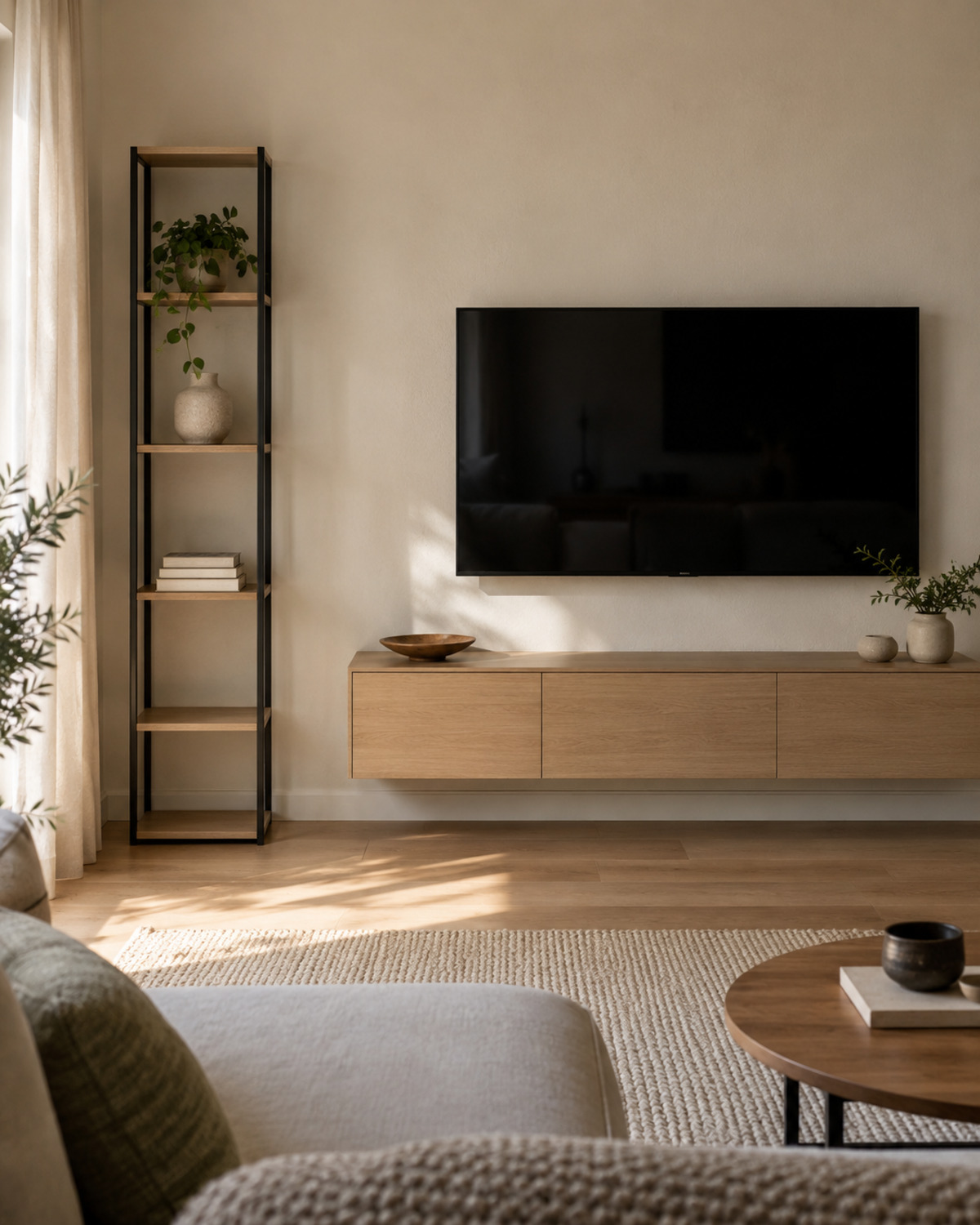
An off-center television does not need to be disguised with false symmetry. Place a tall, narrow shelf or cabinet on the open side and let the television occupy the remaining visual field. The difference in height creates a deliberate asymmetrical composition while also adding useful storage.
Repeat one material—such as black metal, pale oak, or warm white—across the shelf and console so the pieces feel connected. Leave some shelves partially empty. Negative space prevents the balancing element from becoming heavier than the screen it is meant to support.
5. Frame the Screen With Closed Cabinets
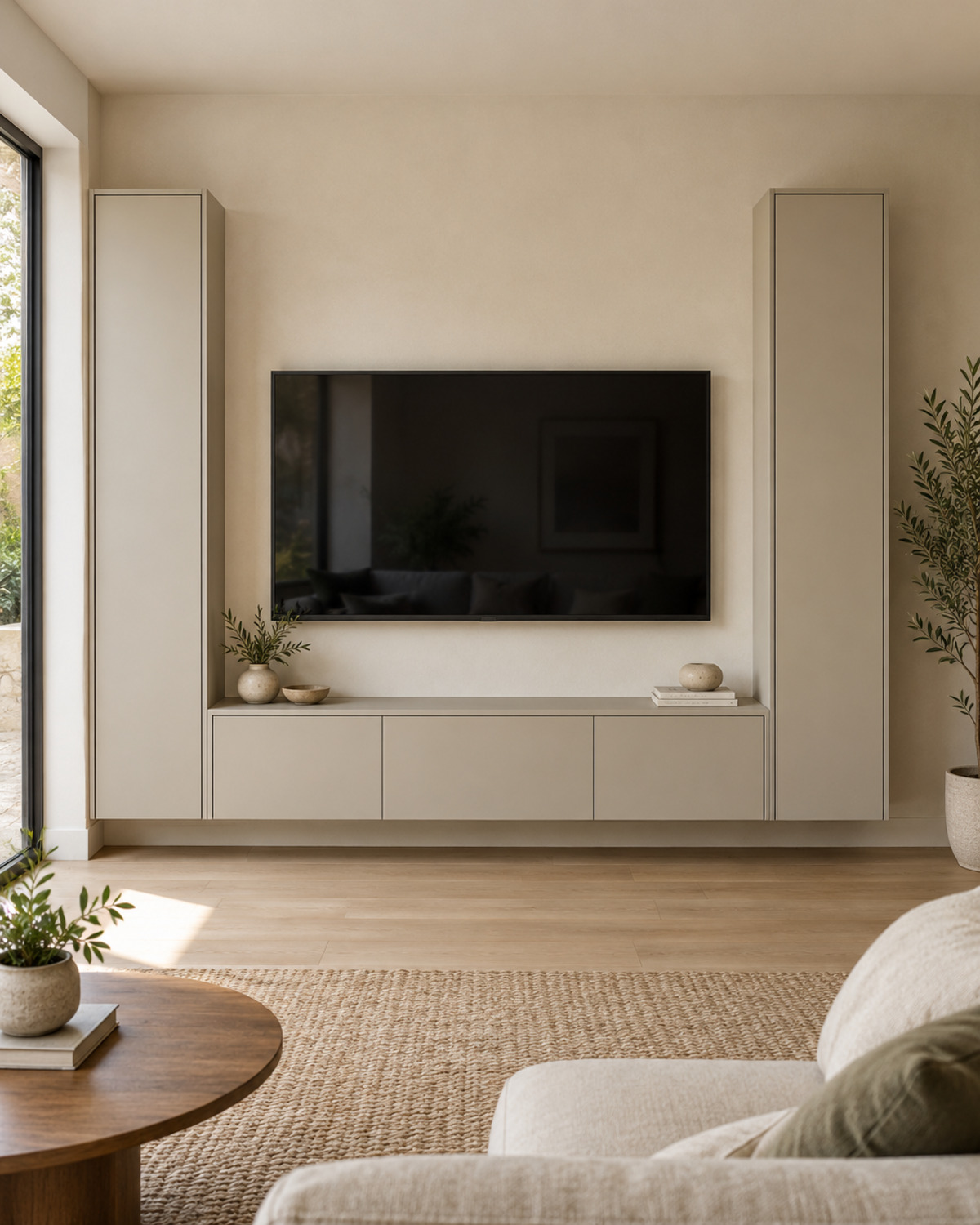
Closed cabinets on both sides of a television provide storage without exposing a busy wall of books, devices, and cords. In a small room, use narrow towers or shallow wall-hung boxes instead of full-depth wardrobes. A matching low cabinet can connect the composition and create a convincing built-in outline.
Avoid squeezing the television into a tight opening. Leave enough space for the screen, equipment access, ventilation, and future replacement. Simple slab fronts usually look calmer than detailed doors when several cabinets share one compact wall.
6. Blend the TV Into a Charcoal Accent Wall
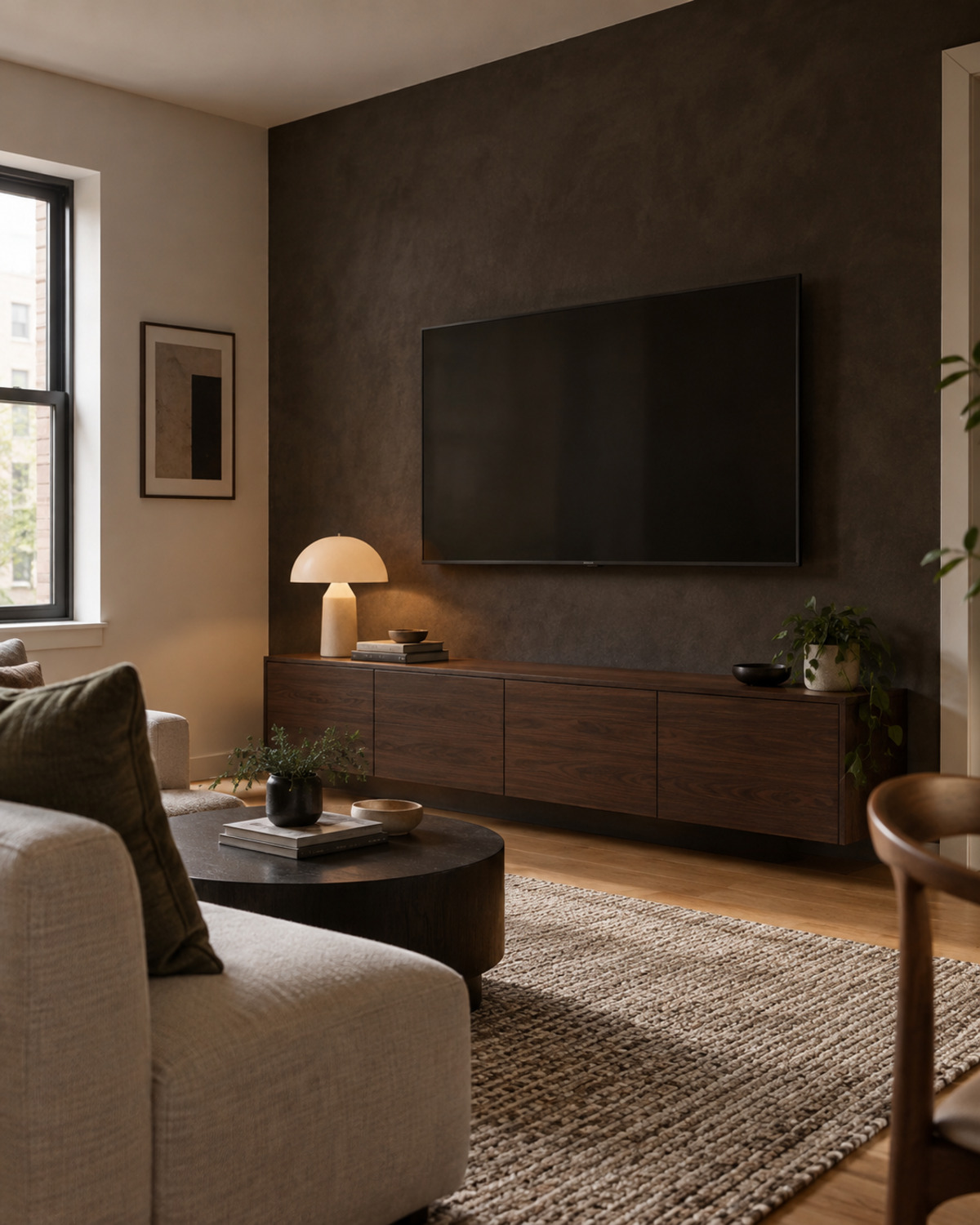
A deep charcoal, soft black, or smoky brown wall reduces the contrast between a switched-off television and its background. The screen feels quieter, and a slim wood console can provide warmth without adding another dominant color. This works particularly well in a room with good daylight and pale surrounding walls.
Test the paint in the actual space before covering the wall, because dark colors react strongly to changing light. Keep adjacent art restrained and use practical room lighting so the feature wall feels intentional rather than gloomy.
7. Add One Narrow Wood-Slat Panel
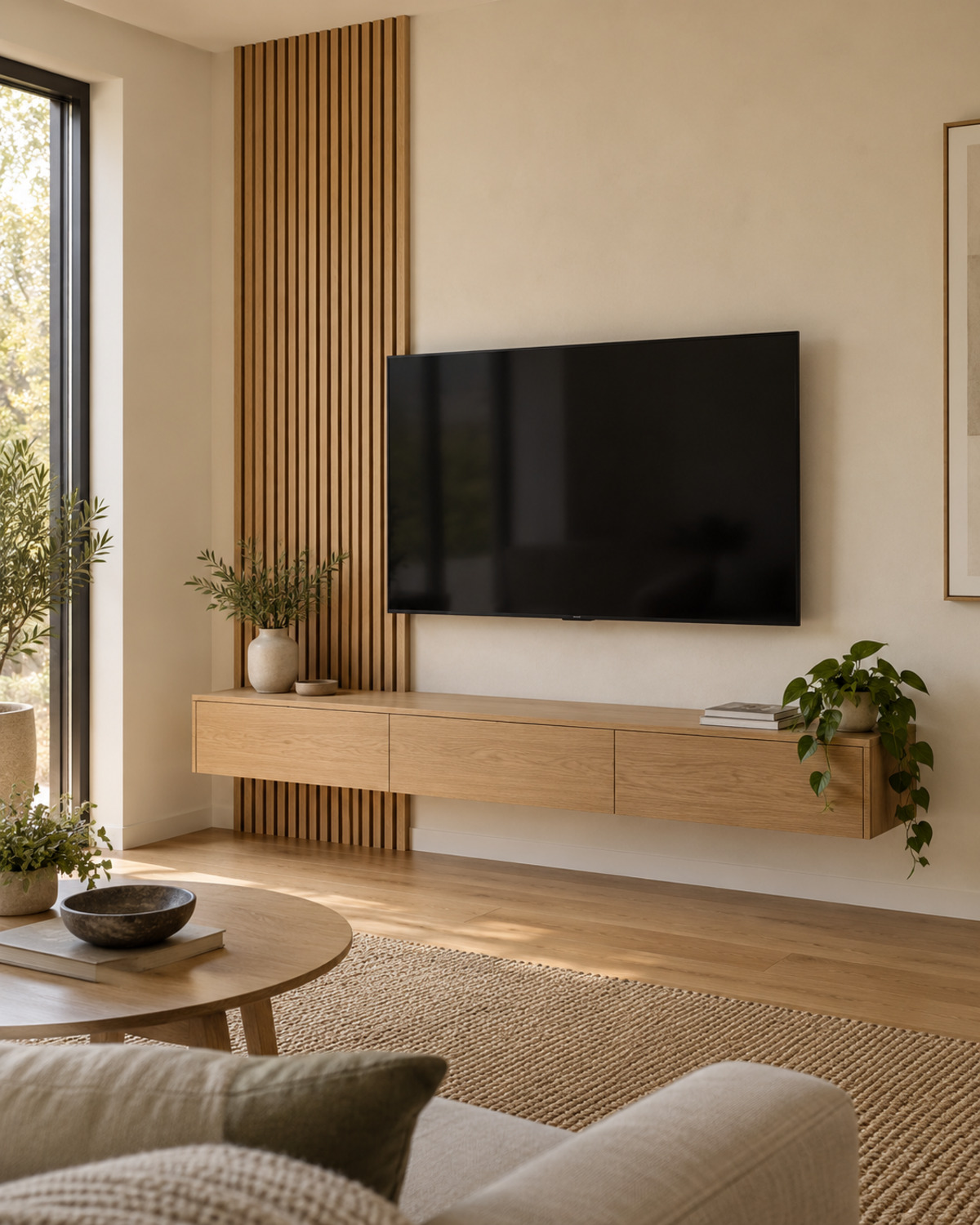
Instead of filling the entire wall with slats, use one narrow vertical panel behind or beside the television. The texture adds height and warmth while preserving quiet plaster around it. A slim floating console in the same wood tone can make the two elements feel custom-made.
Choose a panel width that relates to the television rather than the total room width. If the slats are purely decorative, do not assume they can support a mount; the television still needs an installation compatible with the actual wall structure and product instructions.
8. Turn an Awkward Corner Into a TV Zone
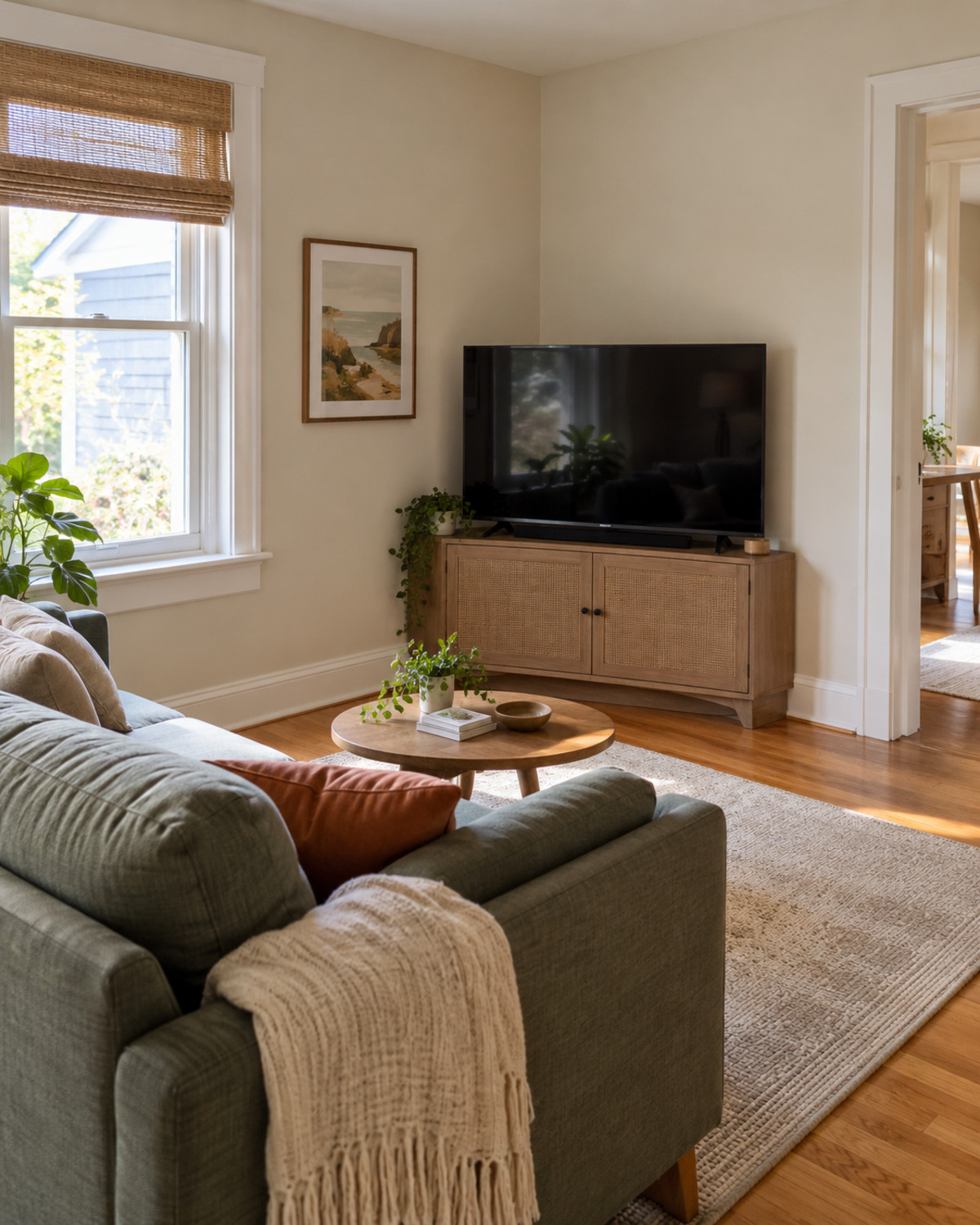
A corner can be the least disruptive TV location when windows, doors, or a fireplace occupy the main walls. Use a compact corner console or a low cabinet that visually turns with the room rather than a large diagonal unit. A small wall light or one framed print can connect the corner to the rest of the living area.
Check the viewing angle from the main seat before committing. The goal is a comfortable sightline that does not force every other piece of furniture into an awkward diagonal. For more planning help, map the entire small living room layout before choosing the screen position.
9. Choose a Low Console for a Narrow Room
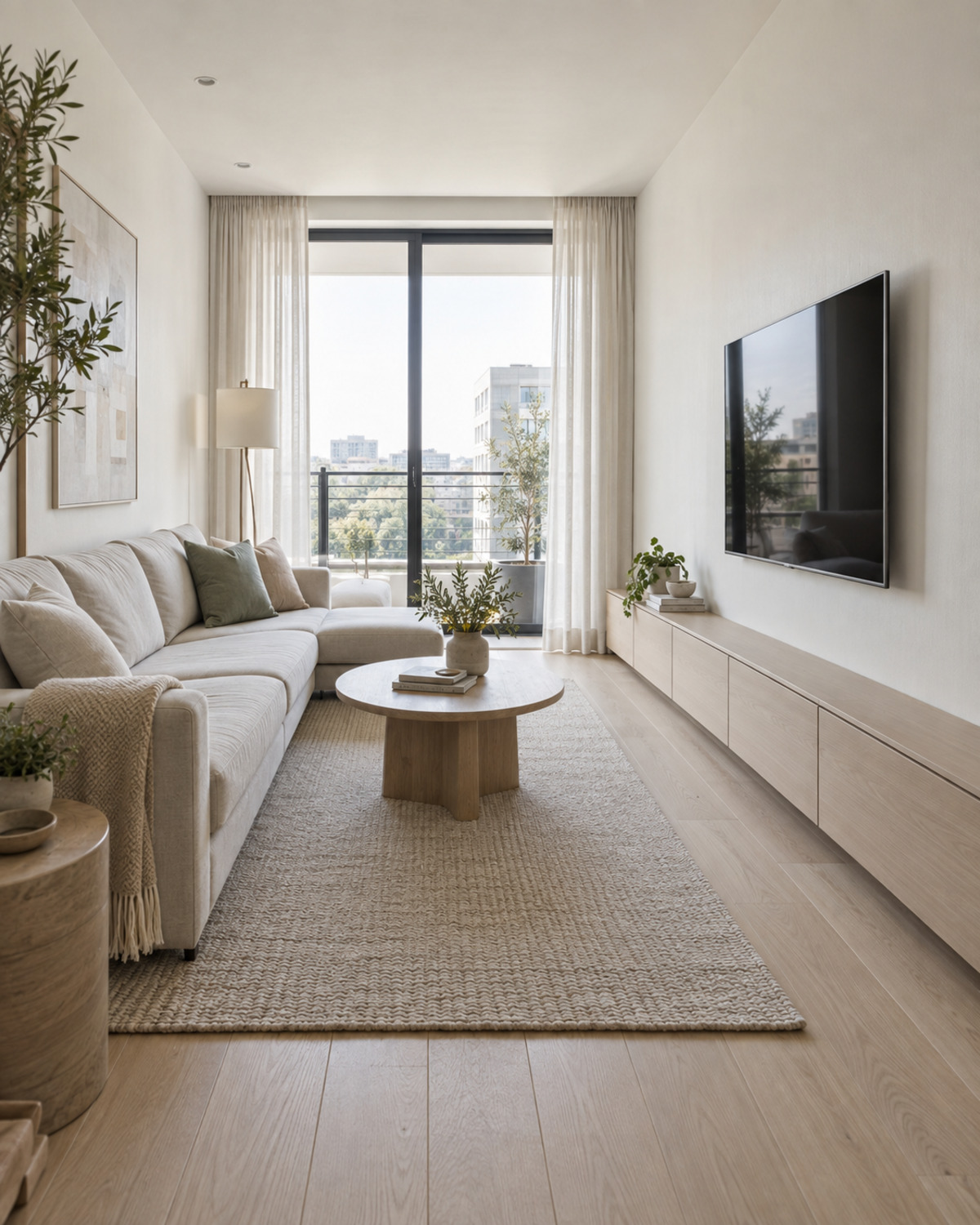
A long, low console emphasizes width instead of height, helping a narrow living room feel less boxed in. Select a model with sliding or handle-free doors so open hardware does not project into the walkway. Legs can make the piece look lighter, while a wall-hung version leaves the most floor visible.
Keep styling low and sparse. A shallow bowl, two books, or one small plant is enough; tall objects placed in front of the screen create distraction and make a carefully scaled wall look cluttered.
10. Hide Cords in a Paintable Surface Raceway
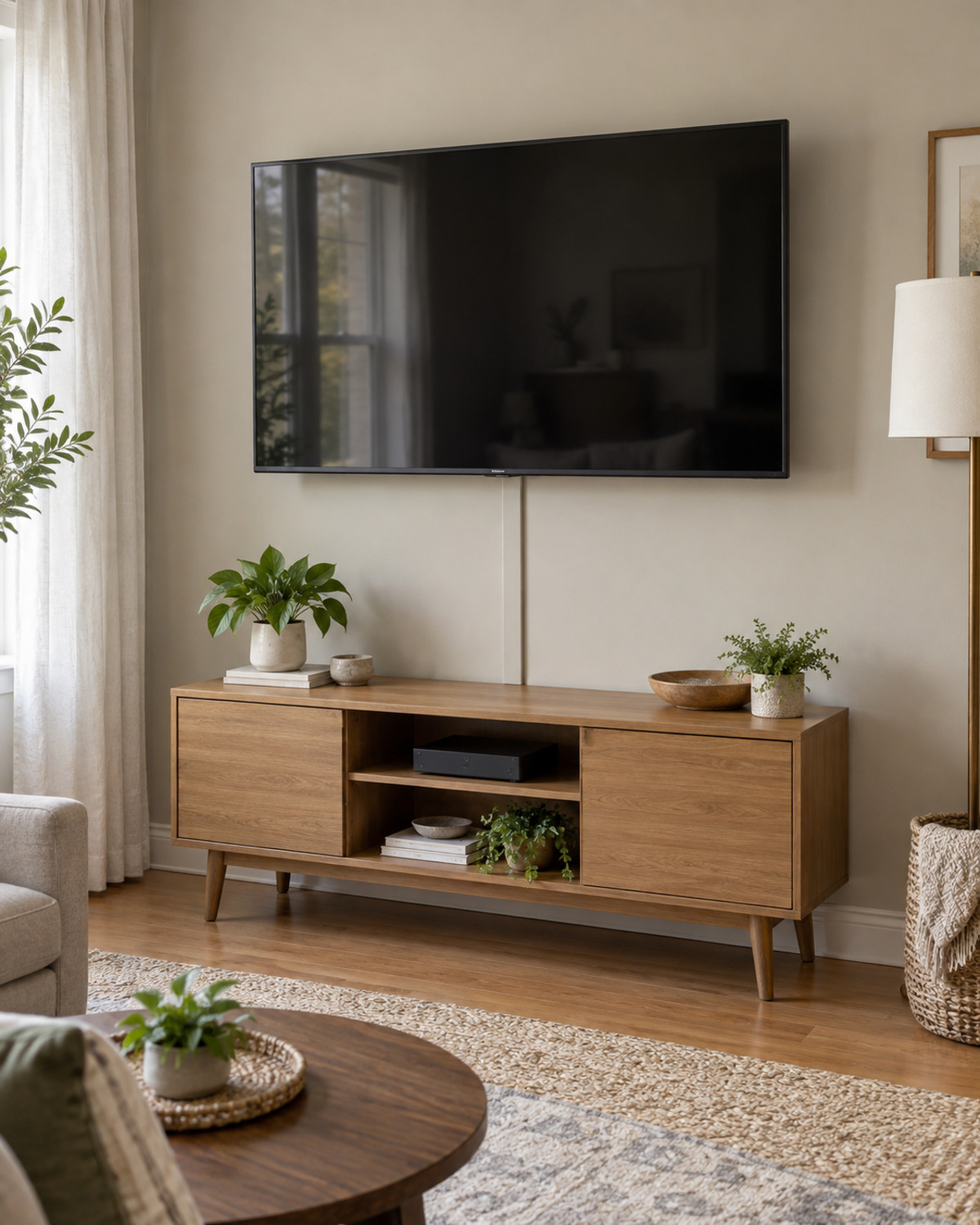
A paintable surface-mounted cable raceway can organize visible cords without opening the wall, making it practical for some rentals and finished rooms. Run it in the cleanest direct path and paint it to match the wall so it recedes. A compact cable box inside the console can gather excess cord length and power adapters.
Use only products suitable for the specific cables and location, and follow product instructions. Do not place ordinary power cords inside a wall or improvise electrical work. Renters should obtain permission before attaching a raceway or mounting a television.
11. Style the Wall With Slim Picture Ledges
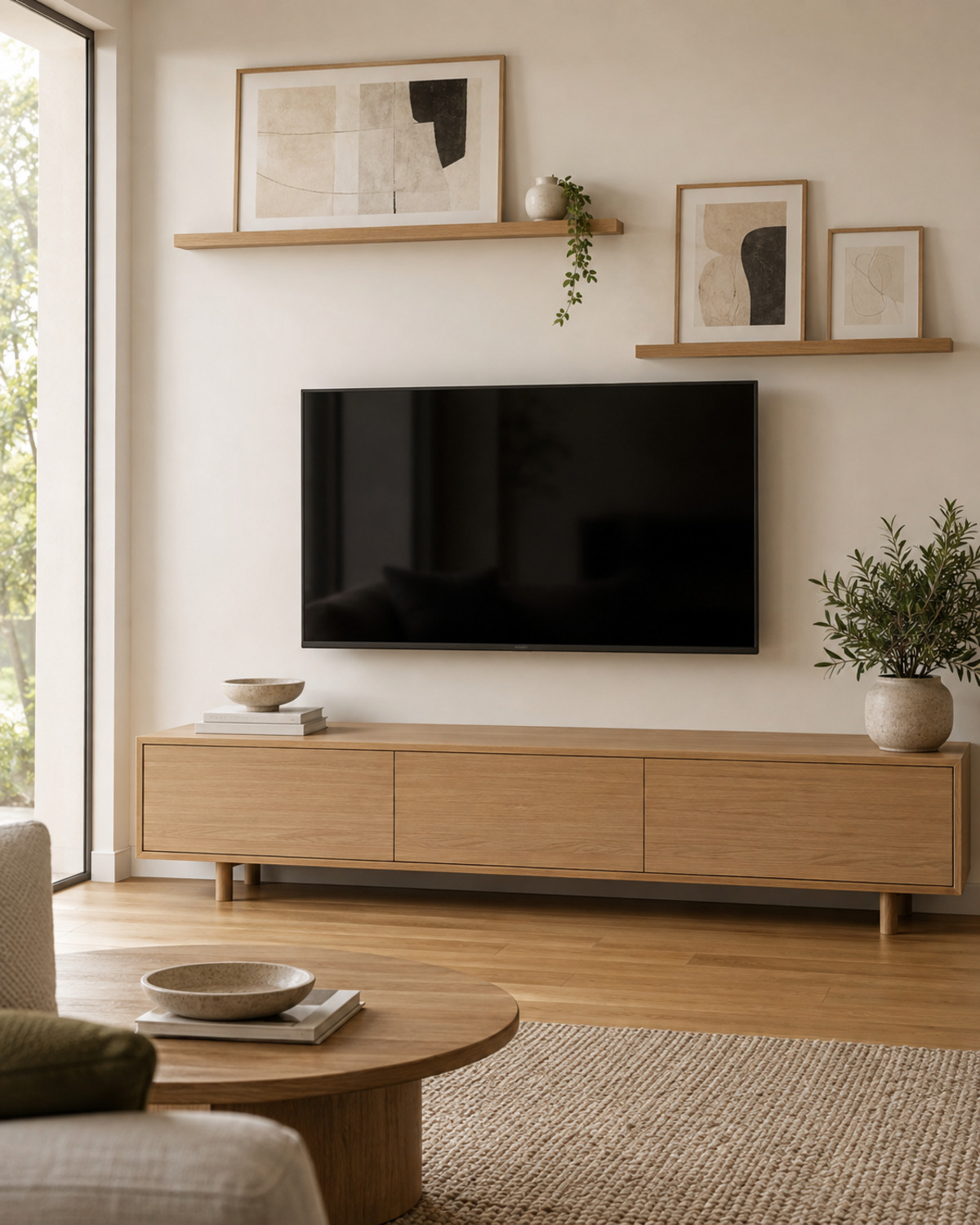
Picture ledges add a flexible decorative layer while projecting less than standard bookshelves. Place one ledge above and slightly to the side of the television rather than boxing the screen in. Overlap a few frames in varied sizes, then repeat one color from the room to create continuity.
Keep objects away from ventilation openings and choose mounting methods appropriate for the wall and load. In a rental, a freestanding display shelf can provide a similar layered effect if wall attachments are restricted. These floating shelf decor ideas can help you edit the arrangement without overfilling it.
12. Work Around a Window With Asymmetrical Storage
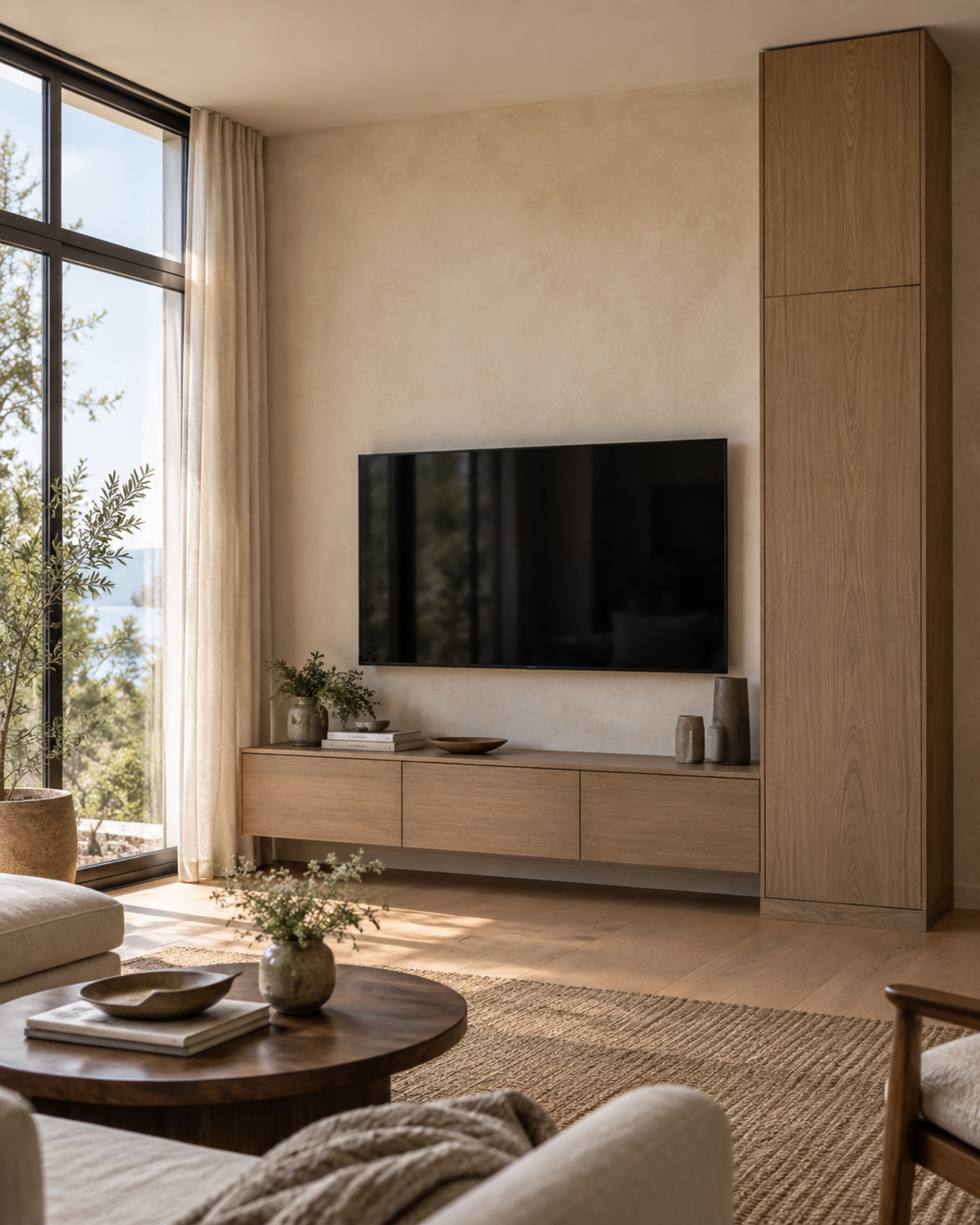
A television beside a window often looks accidental because the available wall is not symmetrical. Use a low cabinet beneath the screen and one tall cabinet on the outer side, leaving the window edge open. The stepped arrangement visually anchors the TV without blocking daylight or forcing matching towers into unequal spaces.
Match the cabinet color to the wall for a quieter result, and use window treatments that can control glare when necessary. Measure door swing, curtain stack, and device access before choosing cabinet widths.
13. Let a Frame-Style TV Join an Art Grouping
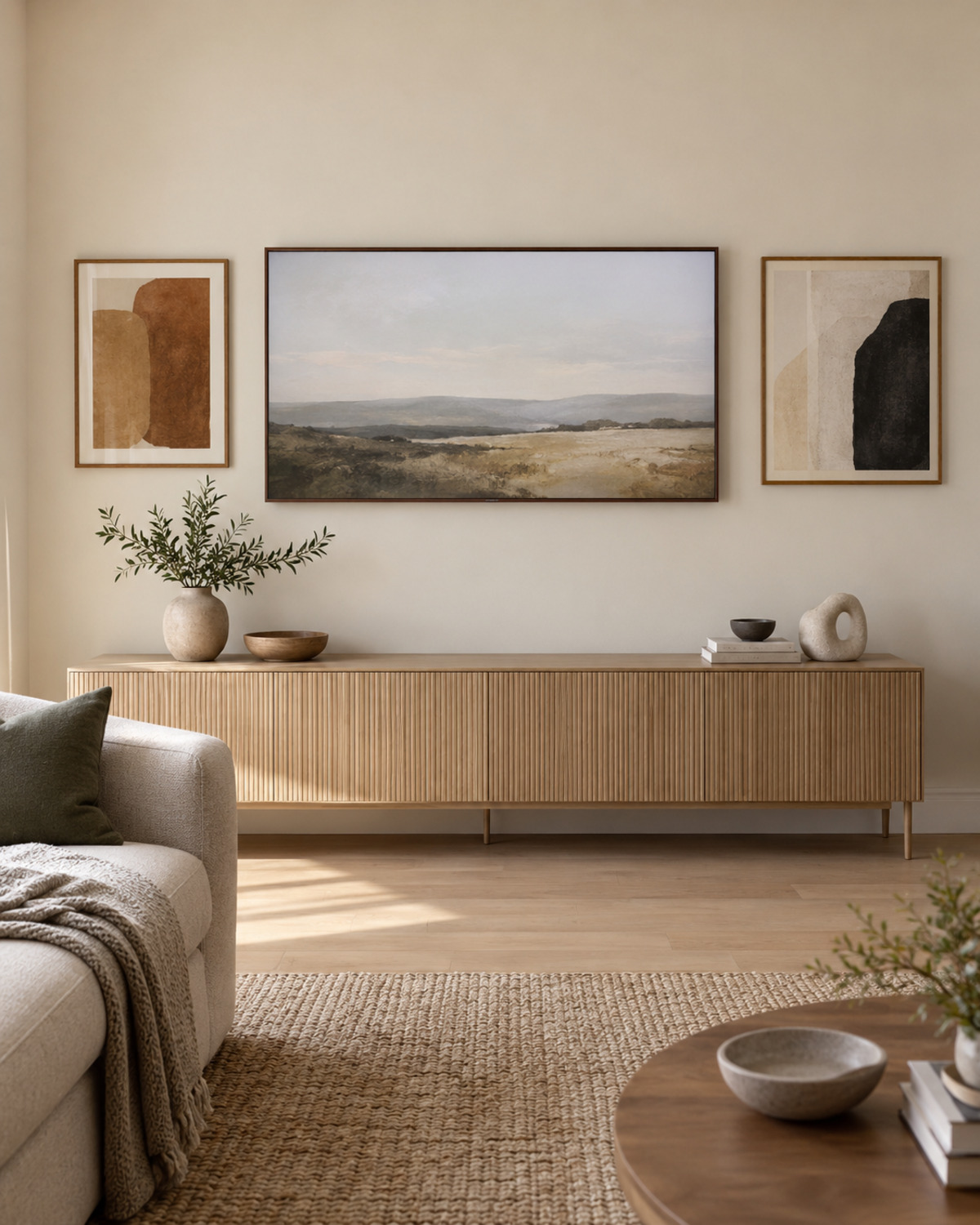
A frame-style television can feel more integrated when it joins a restrained group of art instead of pretending to disappear. Use two or three nearby pieces with related tones and generous spacing. Align one edge of the grouping with the console to give the loose arrangement an underlying structure.
Avoid surrounding the screen with many tiny frames. In a compact room, fewer substantial pieces look calmer and remain legible from across the space. When the television is in use, the wall should still support comfortable viewing rather than compete for attention.
14. Add a Floating Drawer Unit for Devices
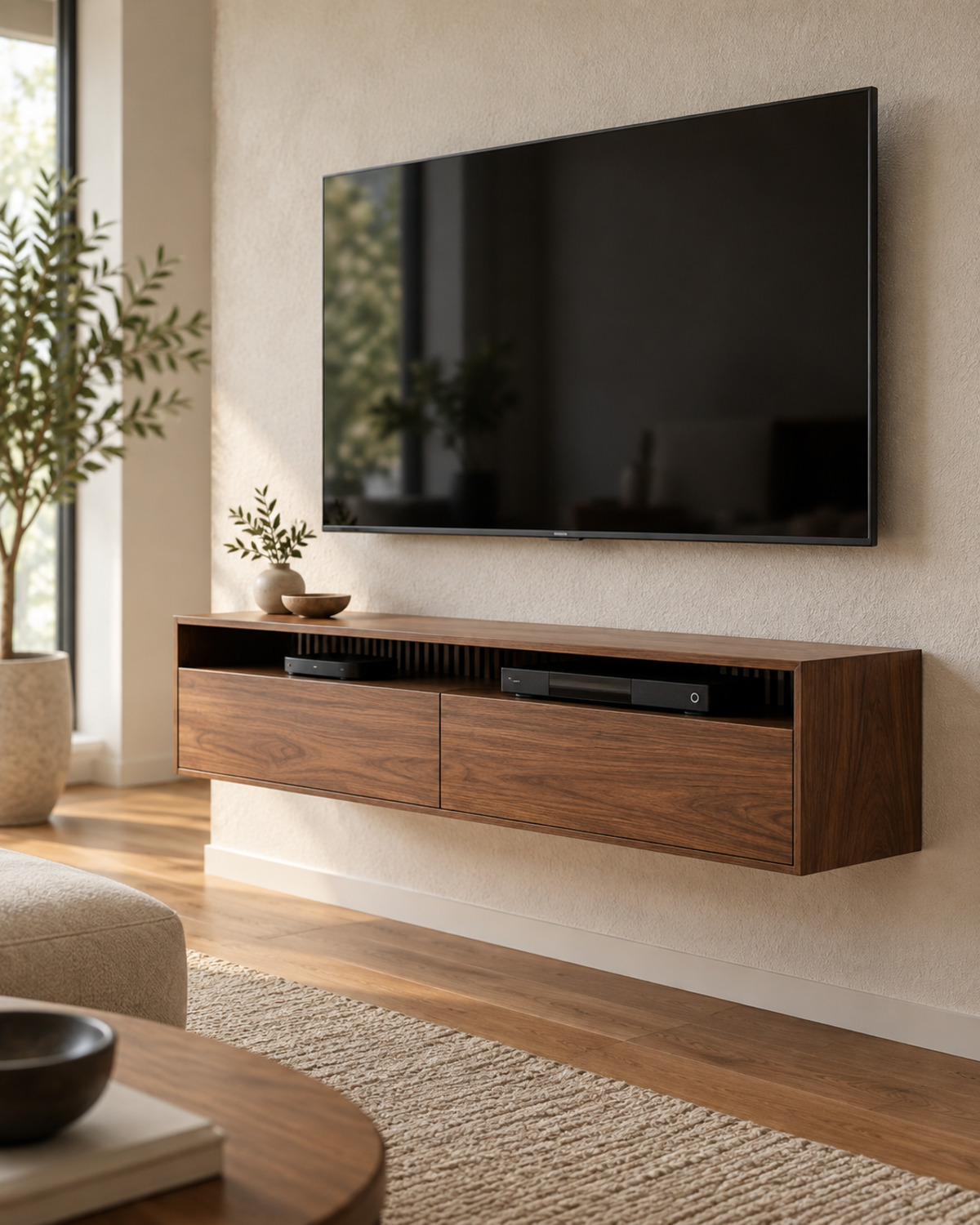
If you need only a little storage, a floating drawer unit may be enough. One or two wide drawers can hold remotes, game controllers, chargers, and manuals without the visual weight of a full cabinet. A ventilated compartment can house compatible equipment while keeping the top nearly clear.
Plan the interior before installation so cords, plugs, and devices can be reached. Confirm ventilation requirements for every component and avoid packing heat-producing equipment into an unventilated drawer.
15. Create an Asymmetrical Shelf Composition
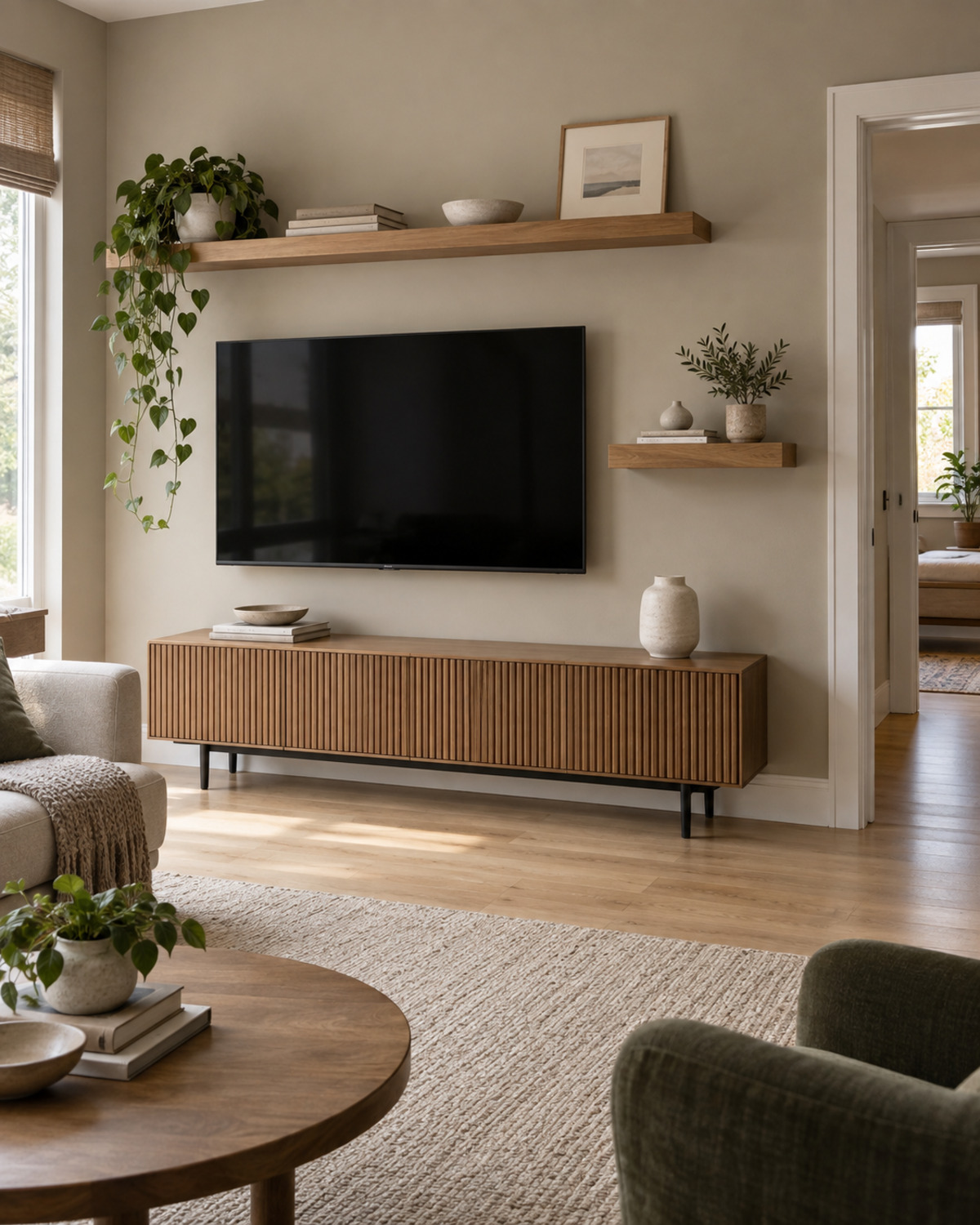
Asymmetrical shelves can balance a television that cannot sit in the exact center of the wall. Place one longer shelf above the screen and a shorter shelf on the open side, using their shared finish to connect the pieces. The uneven lengths make the placement appear designed rather than compromised.
Limit the display to objects with clear silhouettes, such as a ceramic vessel, a trailing plant, and several books. Too many small accessories turn a useful correction into visual noise. Keep shelves and objects clear of the television’s ventilation and movement requirements.
16. Build a Removable Back Panel on a Console
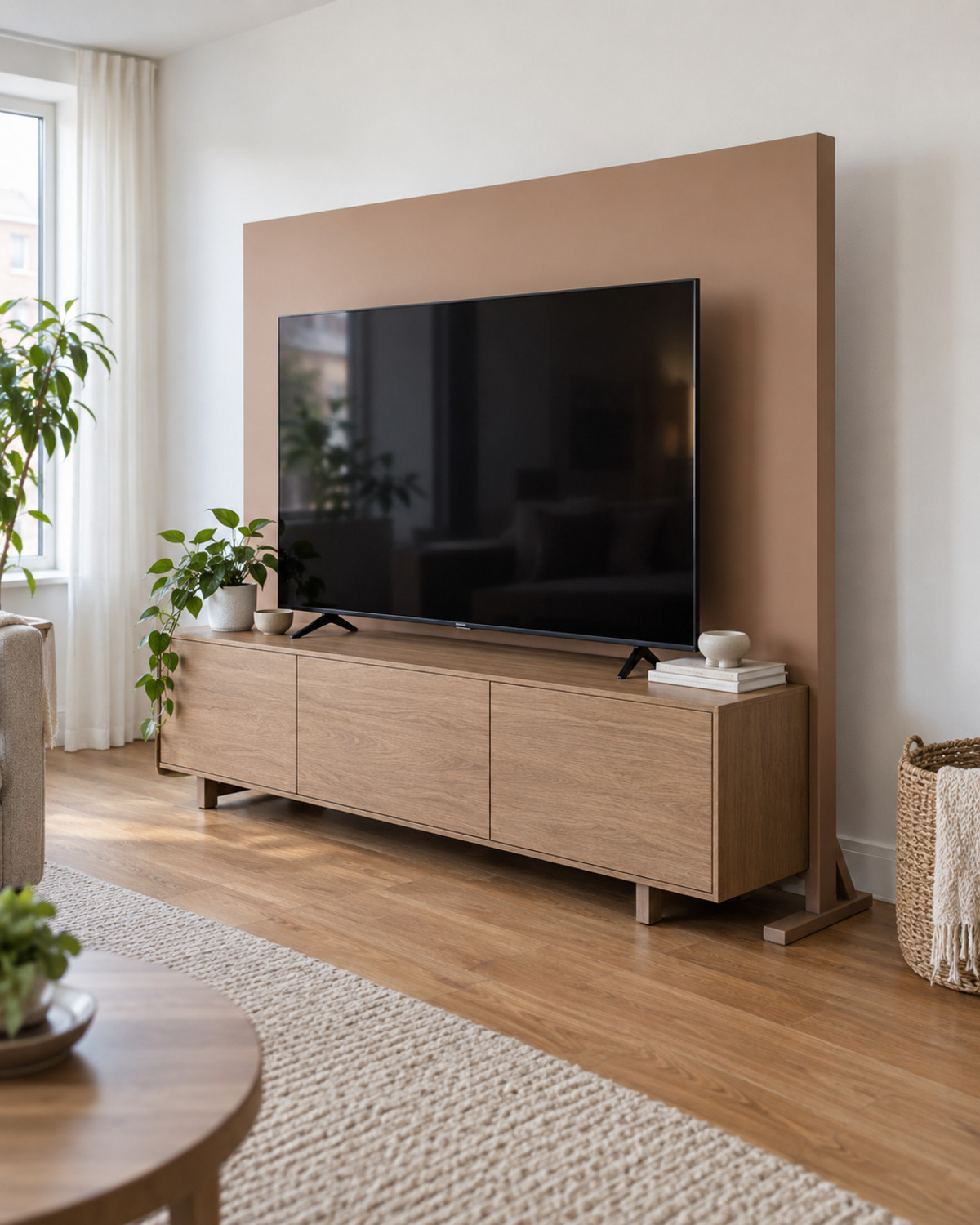
A removable decorative back panel attached to a compatible freestanding console can create the look of a finished media wall without constructing permanent cabinetry. Use a simple painted panel or a restrained wood finish, then route visible low-voltage cords along the rear according to product guidance.
Treat the panel and console as furniture, not as a substitute for a structurally suitable TV mount. The complete assembly must remain stable, safely secured where required, and compatible with the television’s mounting system. This is a renter-aware concept, but lease permission and manufacturer instructions still apply.
17. Add Soft Backlighting Without Exposed Strips
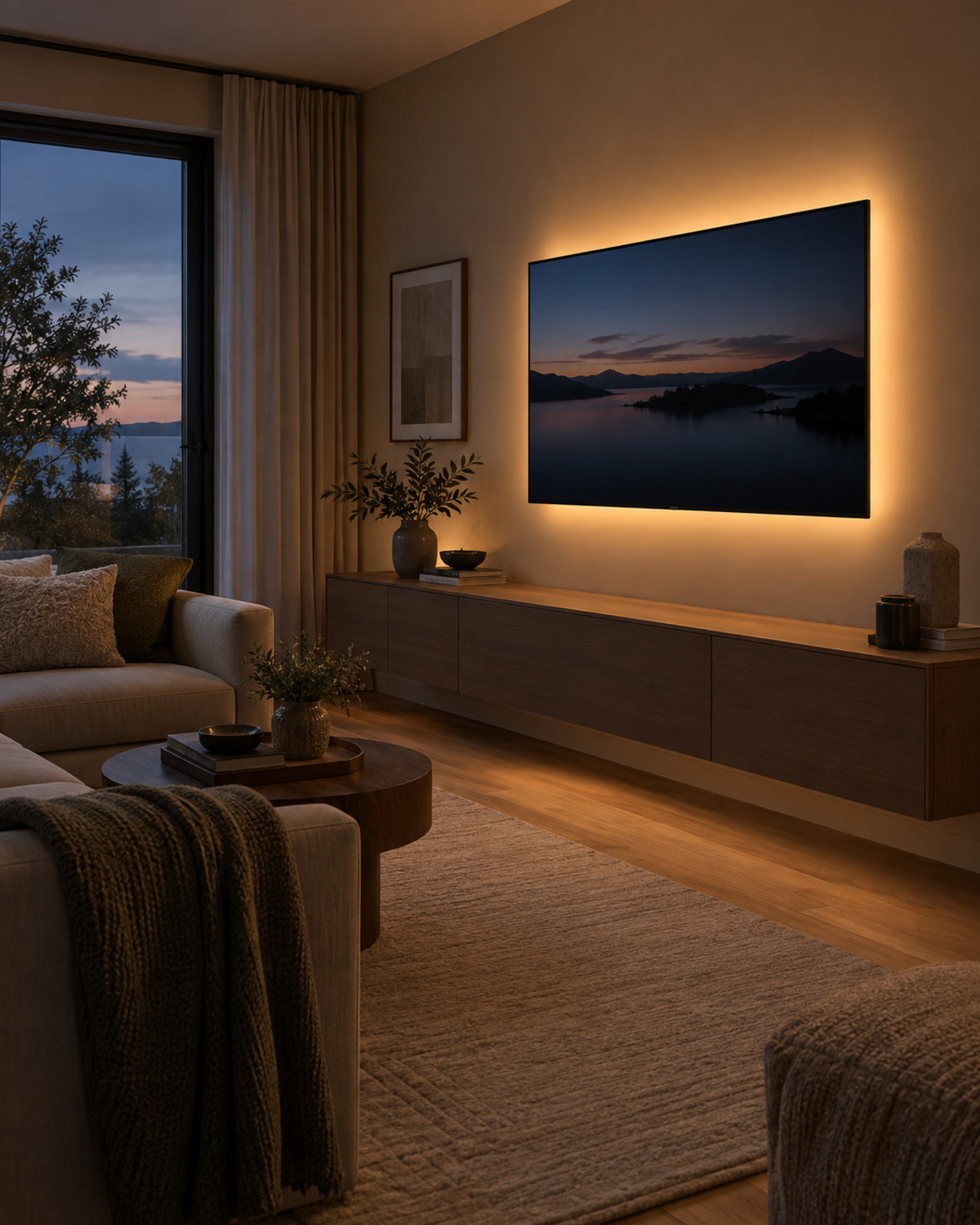
Subtle backlighting can soften the contrast between a bright screen and a dark room while giving a simple wall a finished evening look. Conceal the light source behind the television or a purpose-built panel so individual diodes are not visible. Choose a warm, restrained output instead of a saturated multicolor glow if you want the room to feel calm.
Keep power supplies accessible and use lighting products as directed. The effect should support the room, not become its loudest feature. During the day, the wall should still look complete without the lights switched on.
18. Keep a Fireplace-and-TV Wall Visually Light
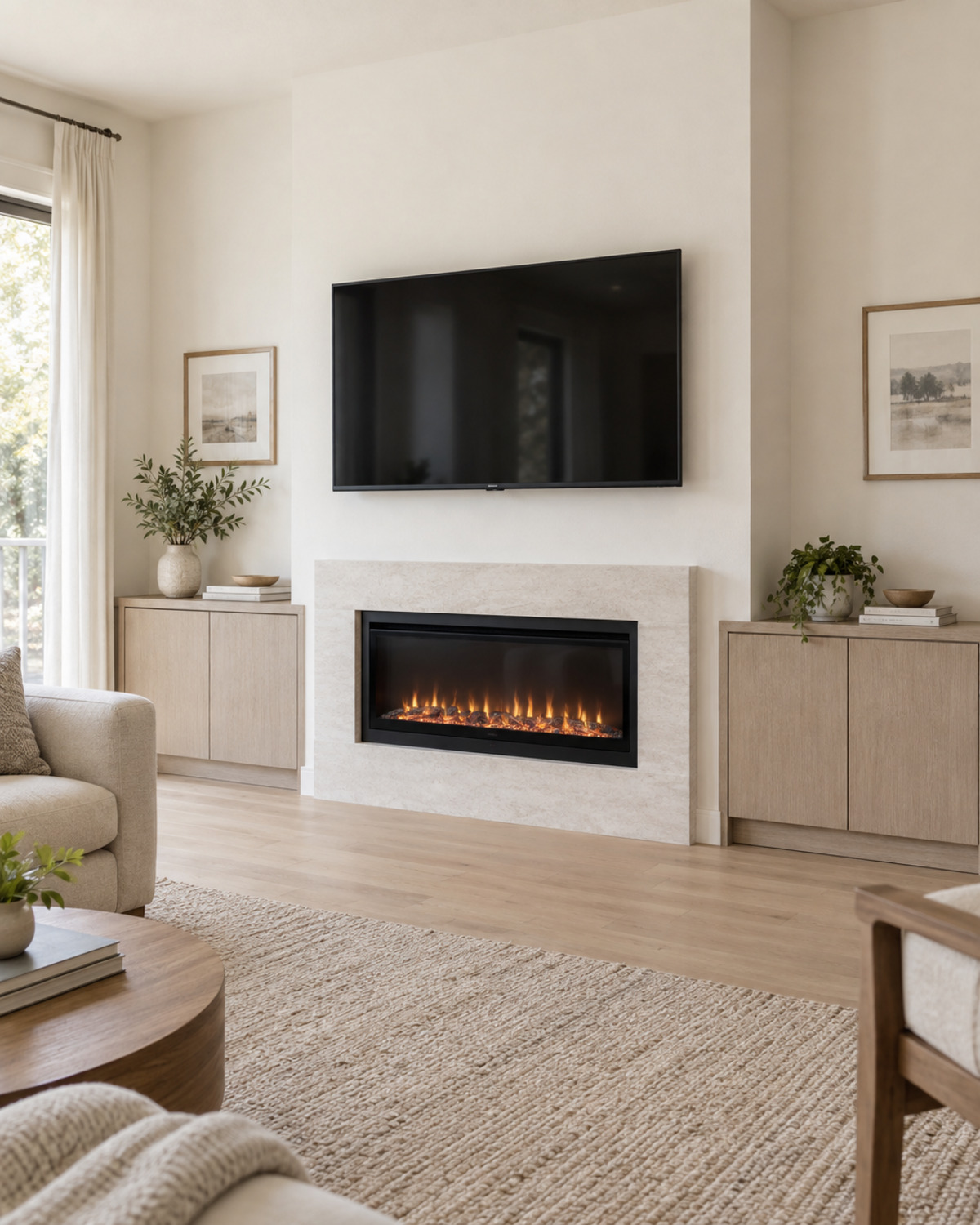
When a television and fireplace must share a compact wall, avoid surrounding both with bulky cabinetry. A simple mantel, shallow base storage, and one consistent wall finish can reduce visual competition. Closed doors below or beside the focal area keep accessories and equipment from adding another layer of clutter.
Do not select the position from appearance alone. Heat, clearances, mounting height, wall construction, and equipment access must follow the fireplace, mantel, television, and mount manufacturers’ instructions. Obtain qualified professional guidance when the conditions are uncertain.
19. Combine a Small Desk and TV Wall
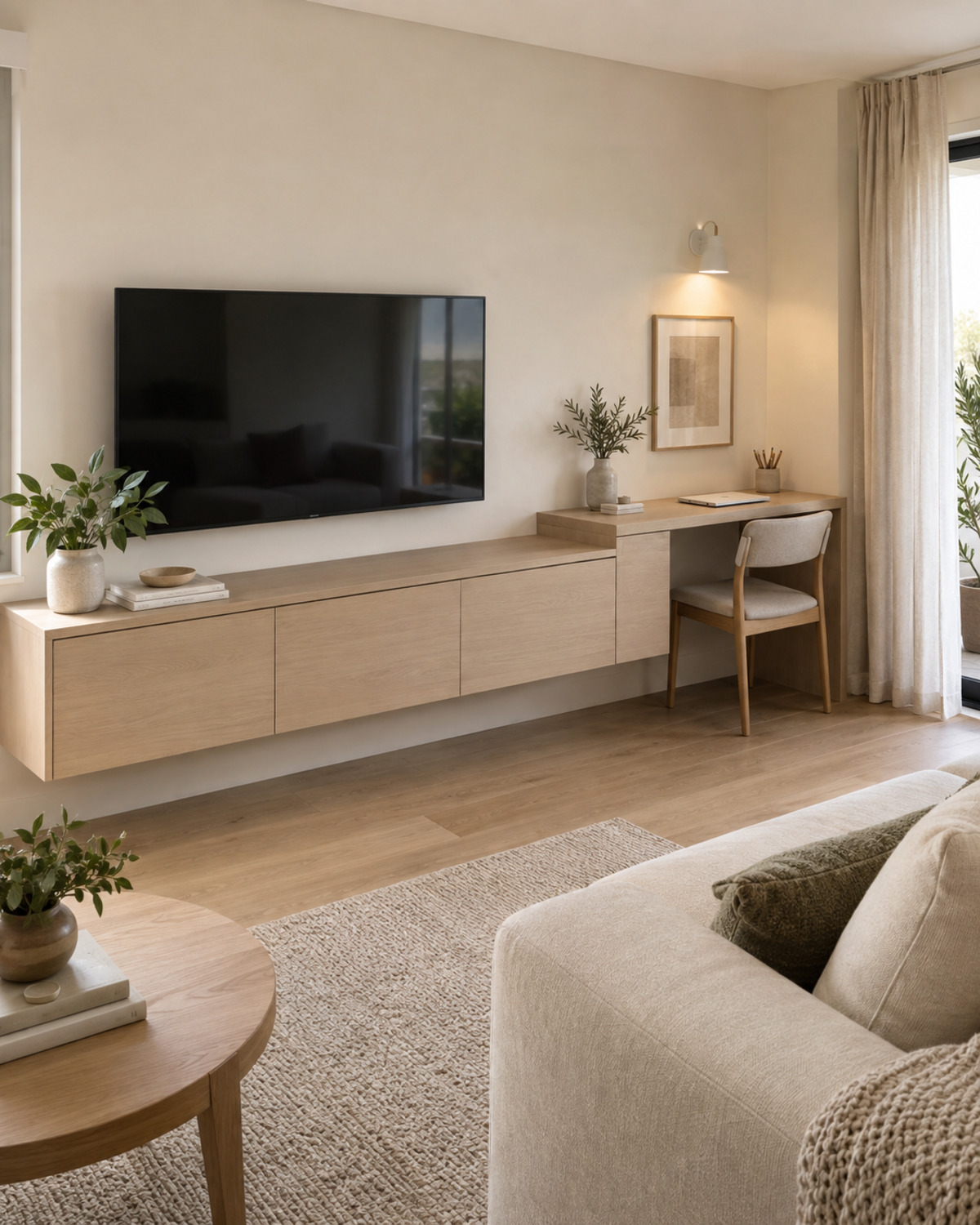
In a studio or compact apartment, one wall may need to support both work and entertainment. Extend a low TV console into a shallow desk, keeping the materials and drawer fronts consistent so the two functions read as one clean line. A slim chair that tucks fully underneath protects circulation space.
Place the desk section to the side rather than directly below the screen. Closed storage can separate office supplies from media equipment, and one wall light above the desk gives the work zone its own identity without adding a floor lamp.
20. Plan a True Same-Room TV Wall Makeover
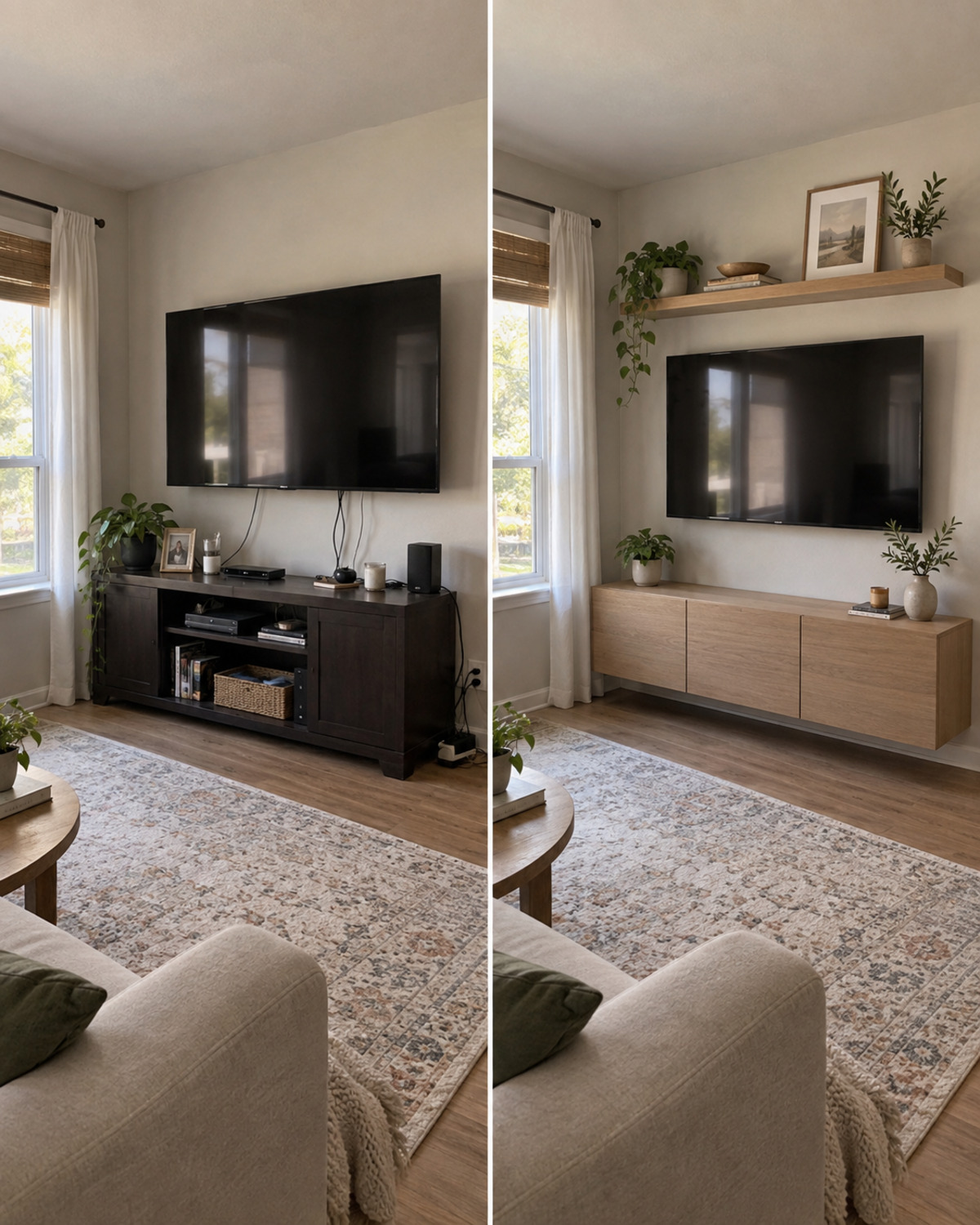
A convincing before-and-after keeps the same room, camera position, television, and circulation path, then improves only the layers that matter. Replace an oversized floor unit with shallow closed storage, organize the cords, add one balancing shelf, and repeat a warm material. The finished wall looks custom because the proportions and clutter are corrected, not because every surface is rebuilt.
Take a straight-on photograph before planning. It reveals whether the screen is visually unbalanced, the console is too deep, or small accessories are creating noise. For the clearest transformation, change a focused group of elements and preserve enough of the original room for the improvement to remain believable.
How to Make a Small TV Wall Look Built-In
Repeat one finish across the base unit and any upper storage, align important edges, and reduce unnecessary gaps. A wall-matched cabinet color creates the quietest effect, while wood introduces warmth and can visually connect the media wall to a coffee table or flooring. Handle-free doors and concealed cable routes strengthen the impression of one integrated composition.
Do not confuse “built-in” with “filled wall.” Small rooms benefit from negative space. Leave visible wall around the television, avoid stacking shelves to the ceiling unless storage truly requires it, and keep the surrounding living room visually quiet.
Common Small TV Wall Mistakes
The most common mistake is choosing the deepest possible console, then discovering that it narrows the walkway. Another is centering the television on the wall while ignoring the seating position. Repeated decorative objects, exposed device cables, poor equipment ventilation, and shelves crowded too close to the screen also make the wall feel smaller.
Finally, do not copy a fireplace media wall, slat installation, or floating cabinet without checking whether it suits your wall structure and equipment. Use inspiration to establish the composition, then adapt the construction to the room and follow product instructions. Browse more living room design ideas for materials and palettes that can connect the TV area to the rest of the space.
Frequently Asked Questions
How do you decorate around a TV in a small living room?
Choose one organizing element—a slim console, a narrow shelf, closed cabinets, or a darker wall—and leave breathing room around it. Repeat one material or color, limit small accessories, and make sure the arrangement supports the seating position rather than centering everything on the wall by default.
What should go under a wall-mounted TV?
A floating console, shallow closed cabinet, low freestanding unit, or compact drawer can provide visual balance and storage. Select the depth according to the walkway and equipment, keep ventilation clear, and plan cord access before installation.
Can a media wall work in a small room?
Yes, if it remains shallow and solves a practical problem. A compact media wall should improve storage, cable control, or awkward placement without covering every inch. Closed fronts, consistent finishes, and visible wall space help it feel calm.
How can renters improve a TV wall?
Use a freestanding media unit, an appropriately secured console with a decorative back panel, baskets, surface cable management, or a restrained display shelf. Confirm lease restrictions and product instructions before attaching anything to the wall.
How do you hide TV cords safely?
Use a listed surface cable-management product suitable for the cable type and location, or hire a qualified professional for compliant in-wall work. Do not place ordinary power cords inside a wall or block ventilation around equipment.
Final Thoughts
The strongest small living room TV wall ideas begin with a real constraint and solve it cleanly. A floating console can return visible floor, shallow cabinets can add storage, asymmetry can correct an awkward wall, and a freestanding unit can give renters a polished alternative to permanent built-ins. Keep the scale light, the cord plan practical, and the surrounding decoration edited. The screen will feel integrated because the whole wall works—not because it is hidden beneath more decor