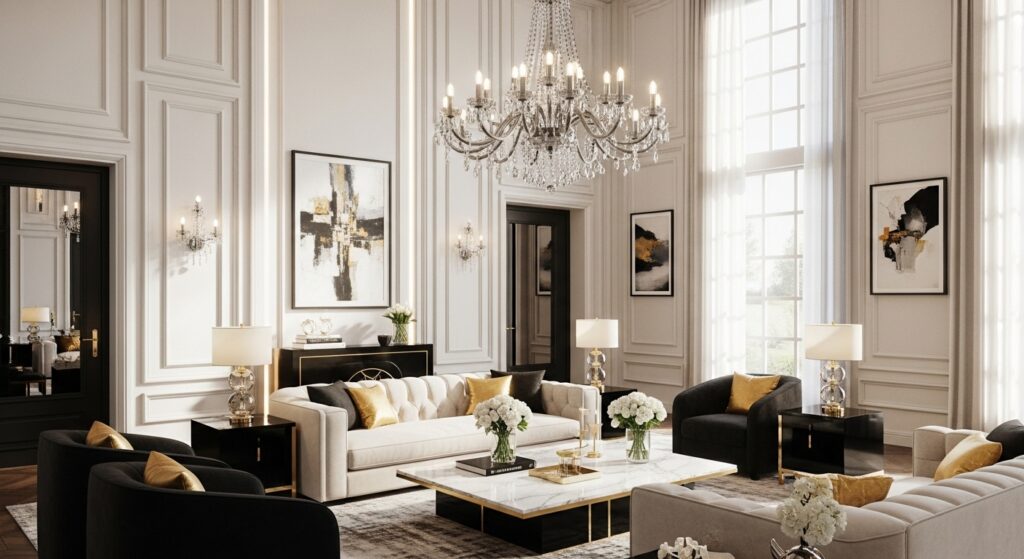
A modern living room can have a beautiful sofa and an expensive light yet still feel unfinished when the seats, finishes, and fixtures pull in different directions. These 22 ideas help you decide which feature should lead, where to spend on a material, and how to make the room work when you actually sit down.
Start with a view you see often, such as the one from the hall or the sofa. Try the room in daylight and after dark. A fireplace, a soft curve, or one length of wall can tell you which detail deserves the strongest material or light.
1. Use the Fireplace Centerline to Arrange the Seats
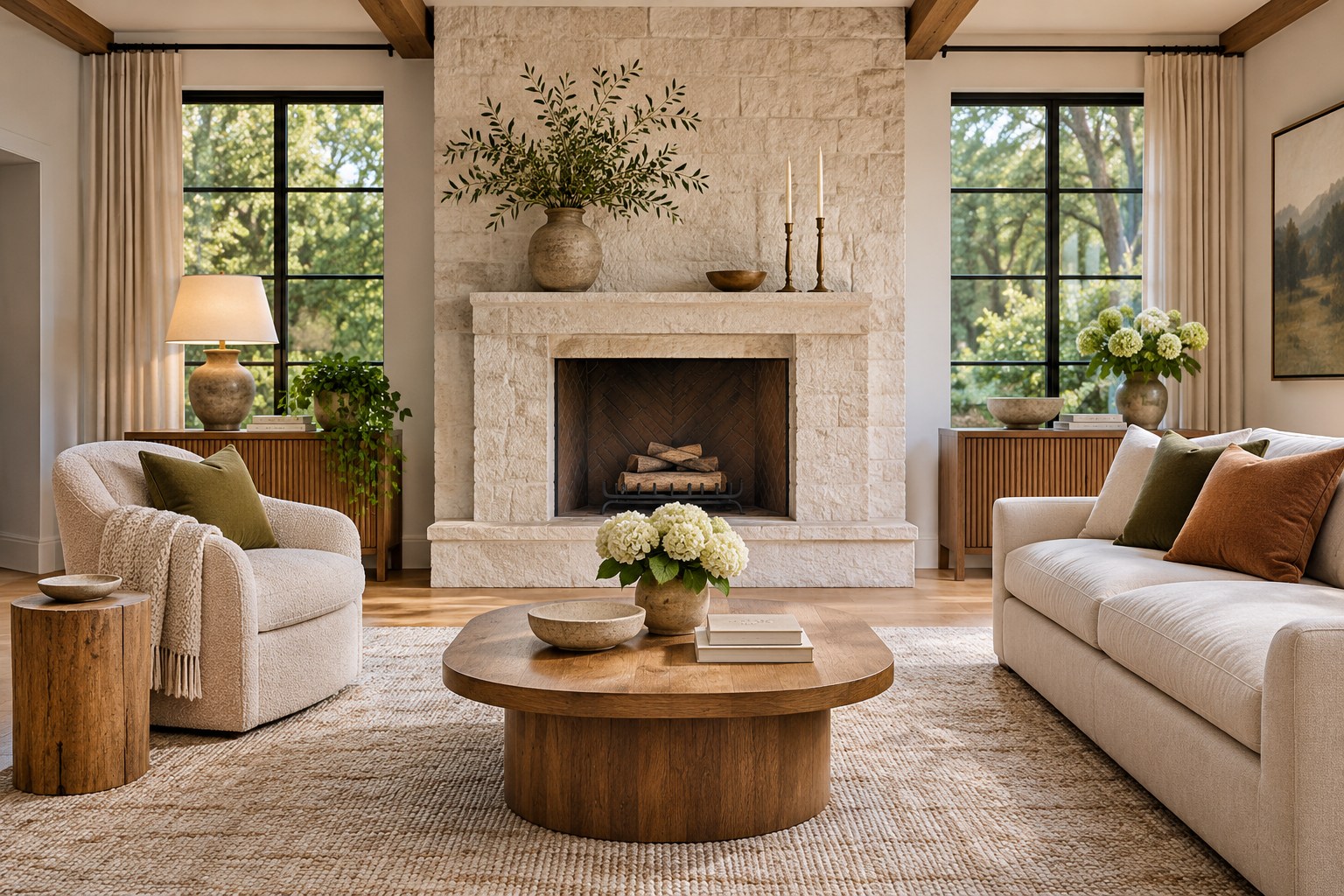
If the fireplace already anchors the room, extend its centerline onto the floor with a short piece of painter’s tape. Try placing the coffee table along that line and turn the main seats just enough to see the fireplace and each other. A chair can sit farther forward if the sofa needs to shift away from a doorway.
Stand at the entry to check the relationship, then sit in each chair. From the doorway the arrangement should feel settled. From a seat it should feel sociable. Observe the fireplace manufacturer’s clearances and leave the route past the group open. A small change to chair angles can improve both views.
2. Make a Deep Sofa Look Tailored
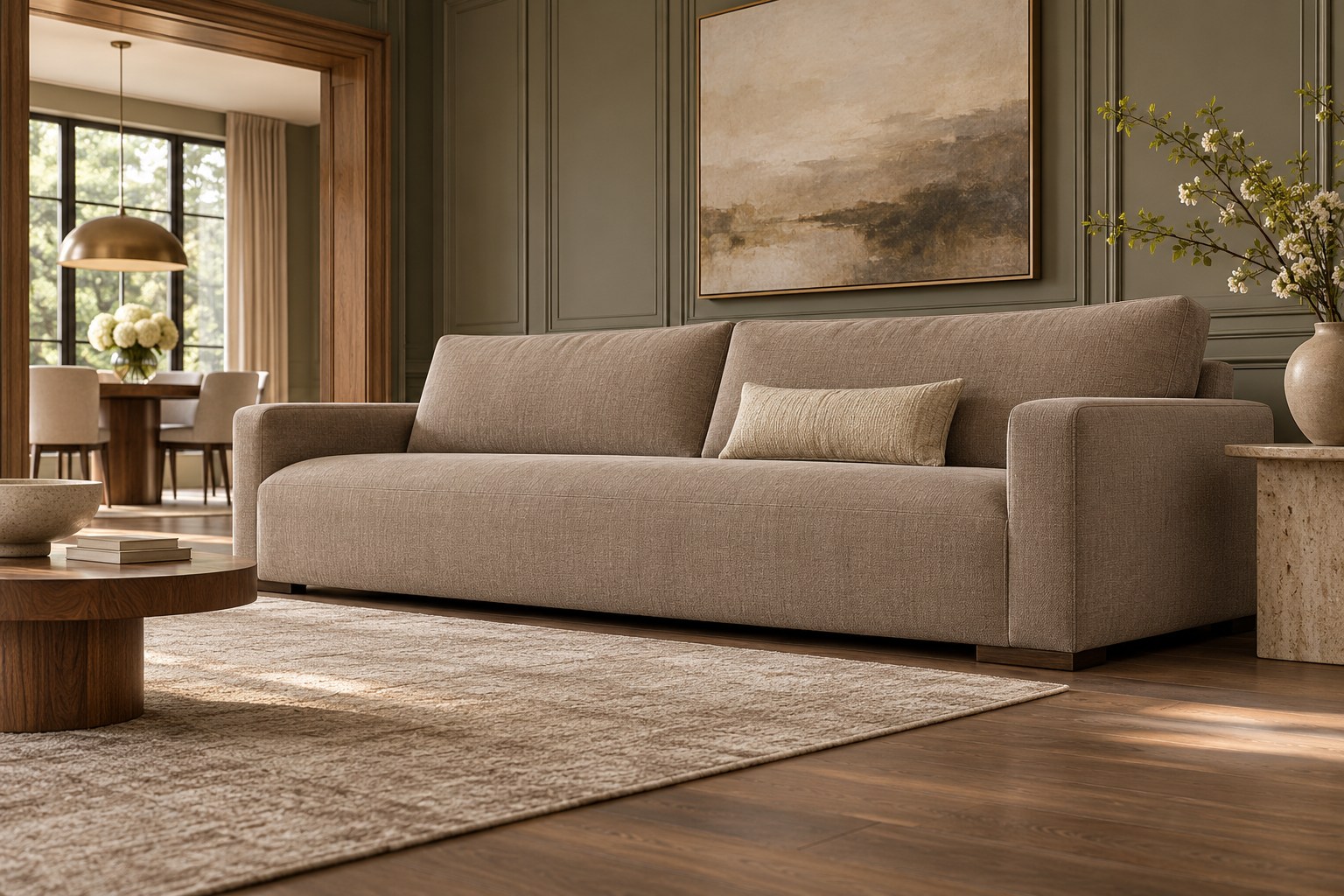
Look at a deep sofa from both ends before choosing the fabric or cushions. A continuous seat and a straight front edge can give broad upholstery a clear outline. A divided seat makes individual places easier to see. Sit all the way back and check whether your feet still rest comfortably or you need a firm lumbar cushion.
The fabric can carry the detail. Try a close weave that catches light along the arm or a fine stripe that follows the sofa’s length. Compare those effects on a large sample, especially at the seam. If you prefer a stronger motif, the patterned sofa living room ideas show how to let it lead the rest of the room.
3. Use a Curved Chair to Open a Tight Approach
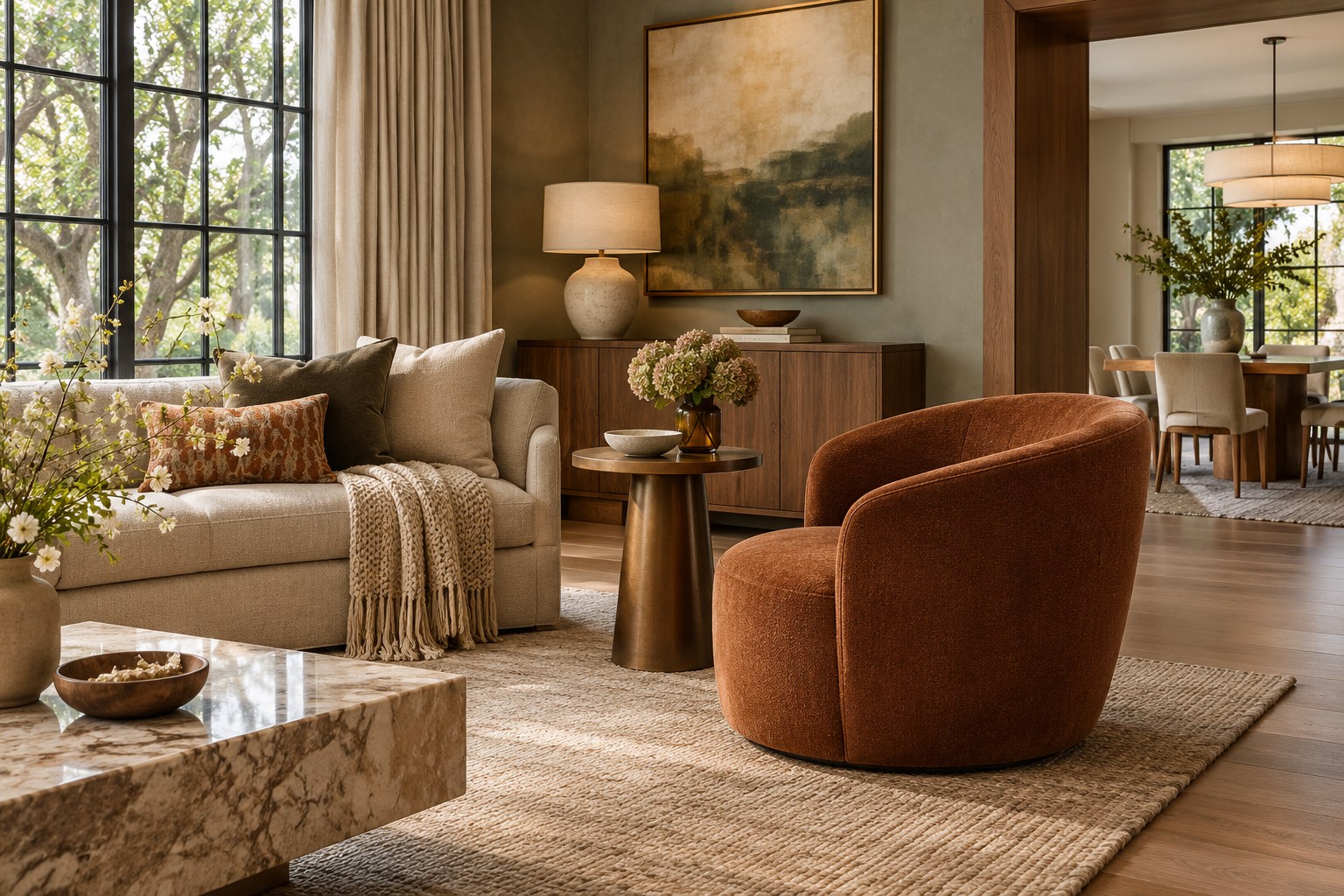
A rounded chair can soften the approach to a seat at the edge of a group. Measure its widest point and mark where the base sits before ordering. Angle it toward the sofa and walk past its outer curve with a bag. A generous curve is useful when it opens the space where people turn into the room.
Sit in the chair and see where you would put a drink. If a table has to sit in the approach, choose a smaller one or move it inside the group. For a swivel chair, check the full circle it needs. Keep the moving seat clear of nearby trim, curtains, and tables.
4. Float One Seat to Define an Open Plan
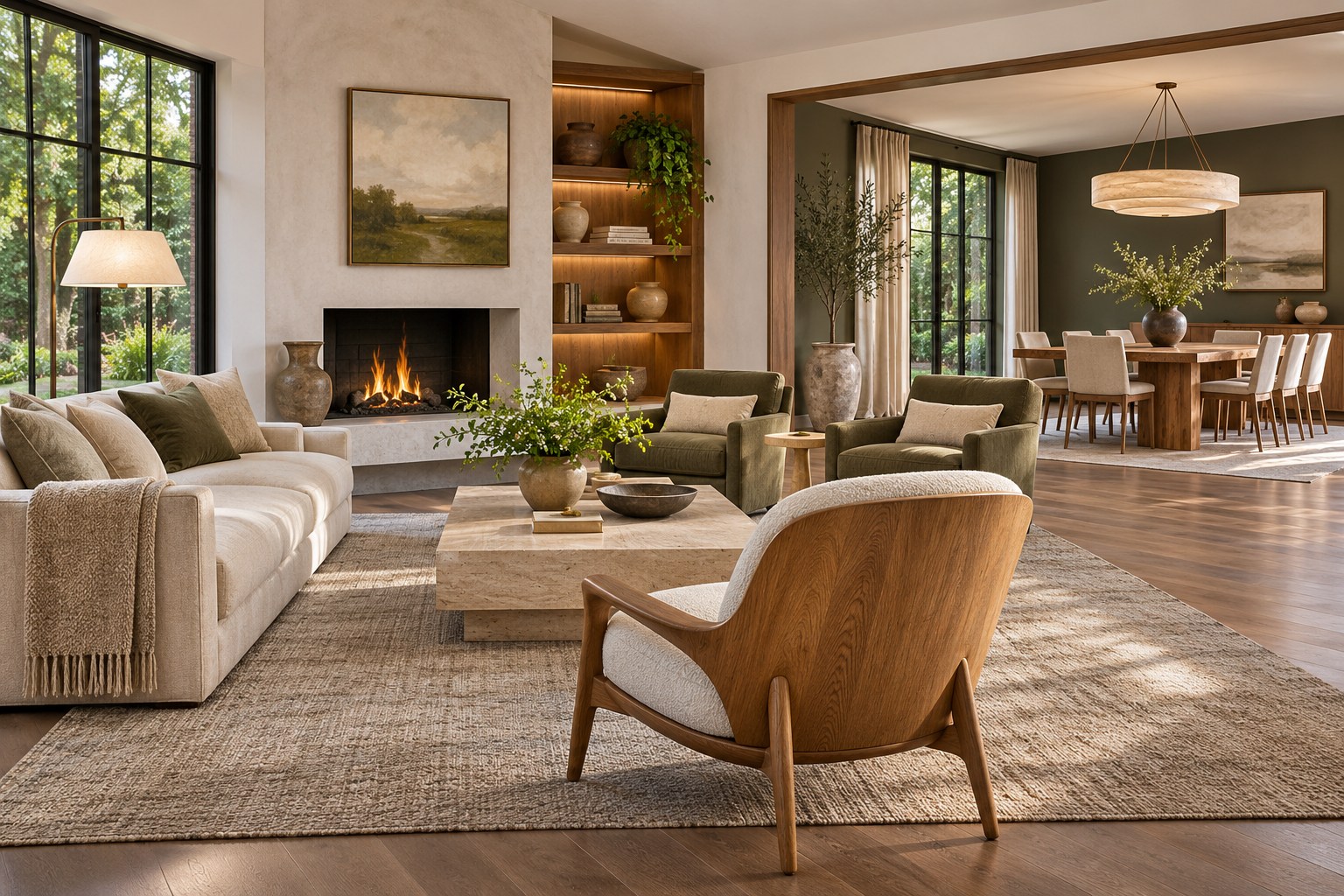
In a living room that shares floor space with a dining area, test one chair facing into the living group with its back toward the dining table. A chair with a carefully finished back can define the seating area while letting you see through to the windows. Leave enough room to pull the nearest dining chair out fully.
Check the view from both sides of the room. If the floating seat makes the dining side feel pinched, rotate it so its narrowest part faces the main route. A rug can support the layout by making the seating group easy to read even with the route kept open.
5. Read Stone Veining Across the Whole Table
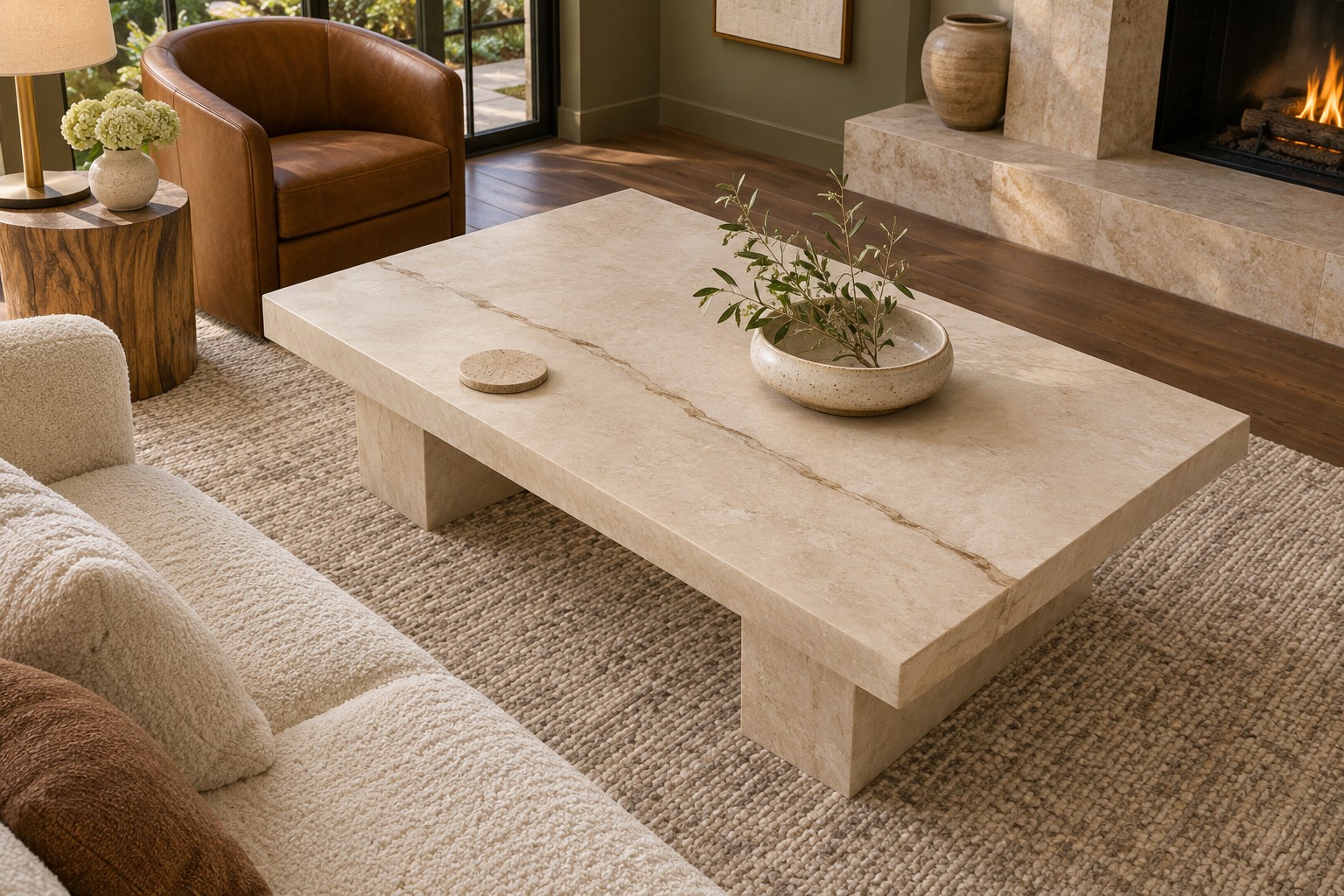
A small stone sample tells you about color and finish. For a table with bold veining, also ask to see the whole top or a slab image. Turn it to see how the strongest vein leads the eye from the sofa. A clear shape makes the stone easier to read when two or three everyday objects sit on it.
Ask how the material handles rings, spills, and cleaning. Try a coaster or tray on a sample to see whether it distracts from the pattern. Measure the weight and size against the delivery route and the intended floor before choosing a large piece. A smaller stone side table can give one seat the same material detail.
6. Pair a Pale Stone Surface With Dark Open Grain
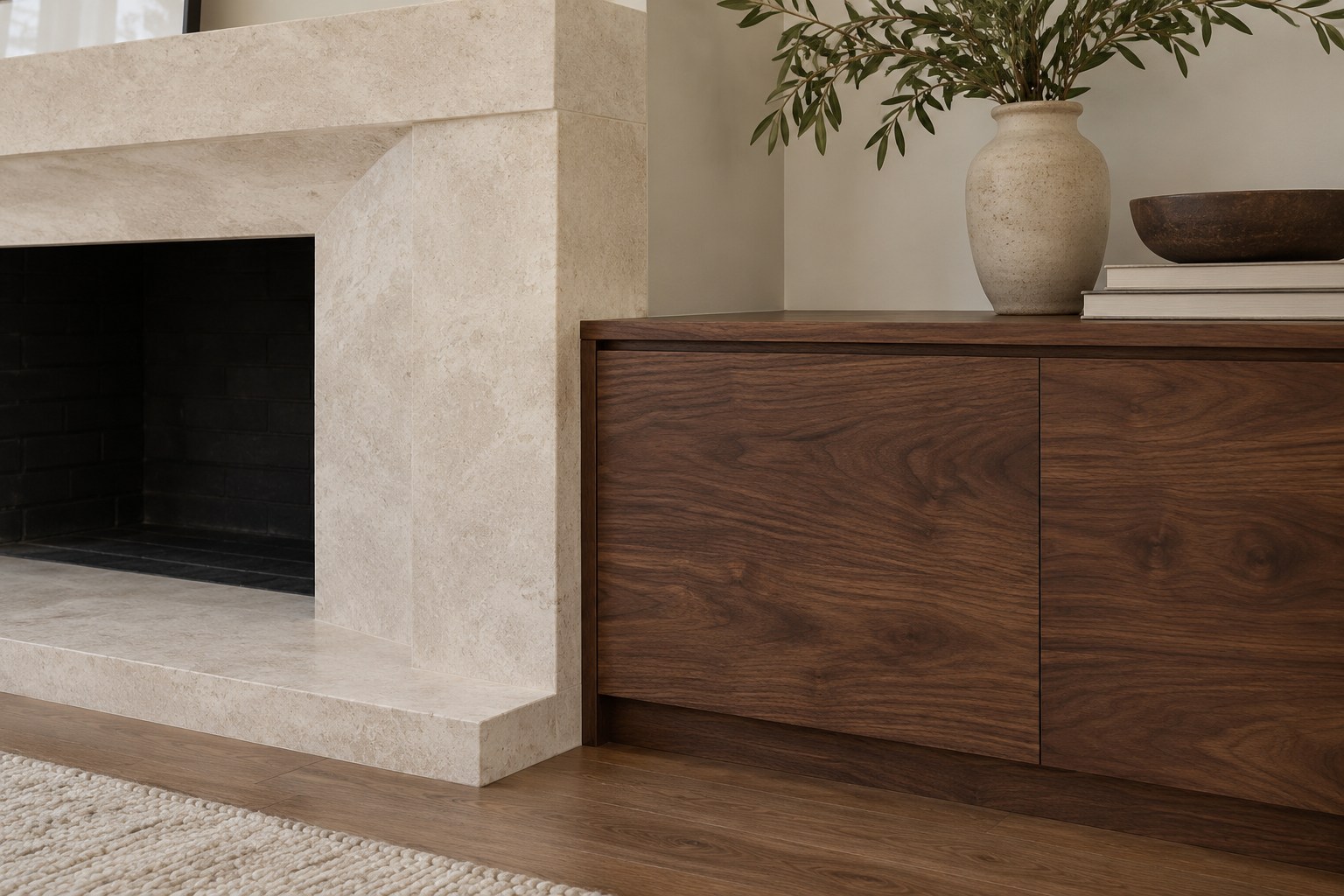
Set samples of stone and wood alongside each other where they will be installed. A matte cream stone may look warmer next to a dark walnut cabinet than it does against white walls. Pick the stone color that still feels related to the flooring when the cabinet is in shade.
If both finishes have an active pattern, make one of them a smaller area. A quiet, open-grained cabinet can frame a strongly figured stone, or an almost plain stone can soften pronounced wood grain. Ask for full-size finish examples before buying a large piece. See where the joint line lands and how the edges meet when you view the pair from across the room.
7. Run Wood Slats Across a Single Architectural Bay
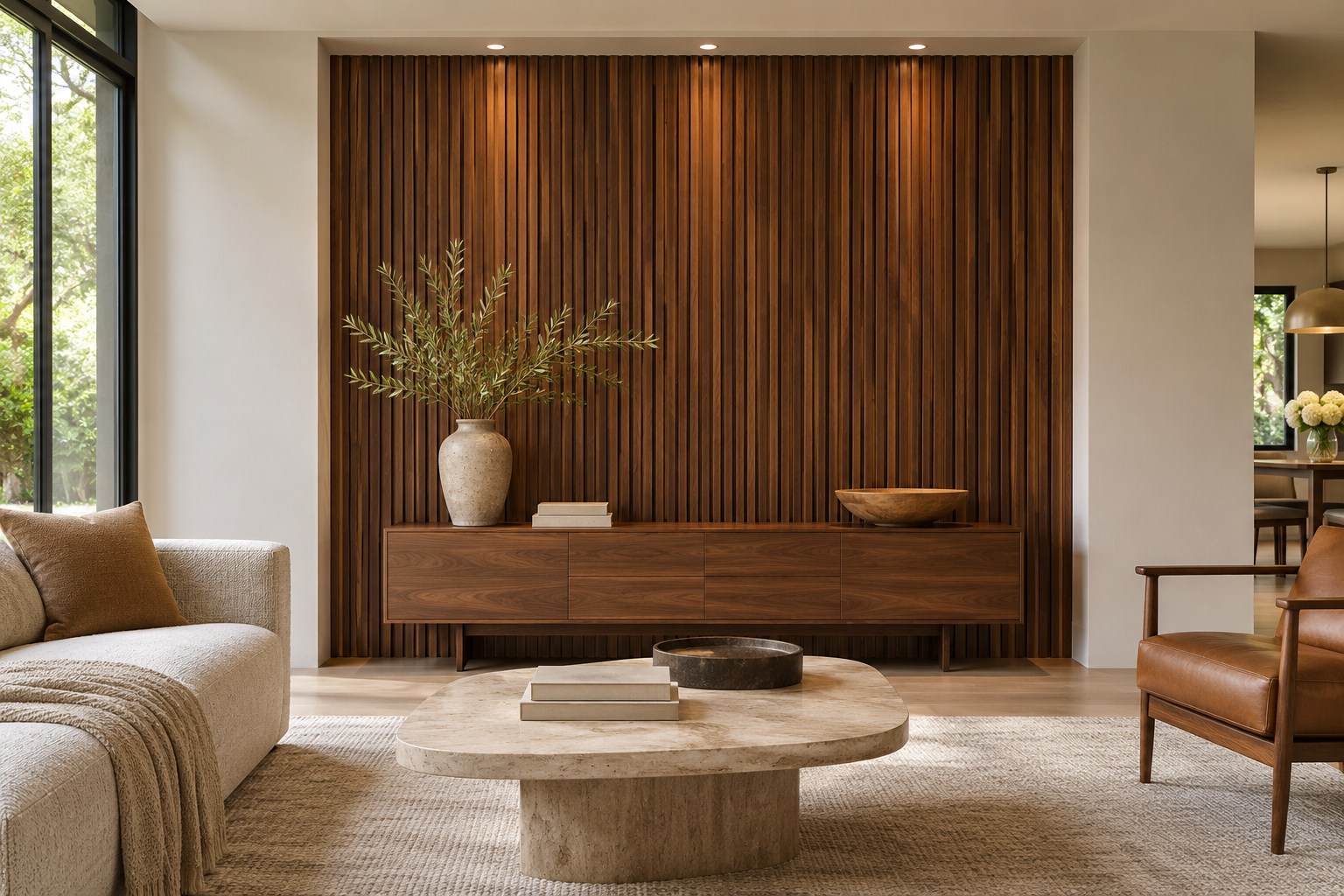
If a niche or return already divides the wall, treat that area as the natural boundary for wood slats. Mark the width in the room and see where the first and last slat land. Similar-looking edges on both sides give the panel a deliberate finish, especially if the neighboring wall stays plain.
Check whether the slats would interfere with outlets, switches, or access panels. Ask the installer how they will finish the outer edge and secure the panel to your wall. If you only need a small area of ribbed texture, use a piece of slatted furniture in the niche and keep the wall available for later changes.
8. Bring an Arch Into One Existing Recess
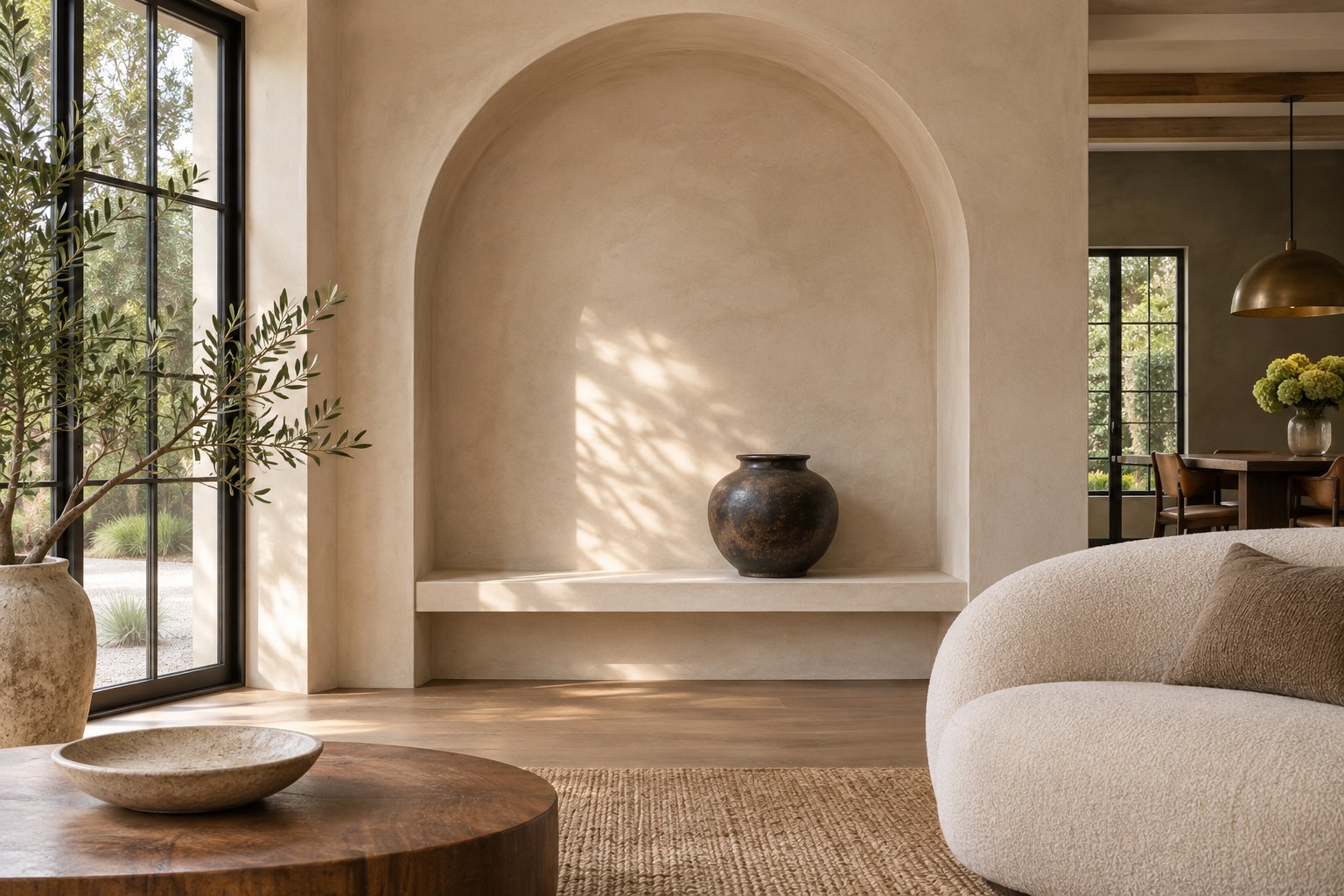
An arched opening can make a rectangular niche feel more connected to the rest of a room with curved furniture or rounded lighting. Mock up the shape in paper and check how much usable shelf space the curve leaves. A shallower arch works when you want room for a tall object but still want the softer line.
Give the sides and back a related finish so the shape stays clear from an angle. Ask a qualified contractor about permanent changes to a wall or framing. If you want to keep the existing structure, try a tall arched frame or a piece of furniture with a curved top inside the recess and check the fit before mounting it.
9. Let Curtain Panels Extend Beyond the Glass
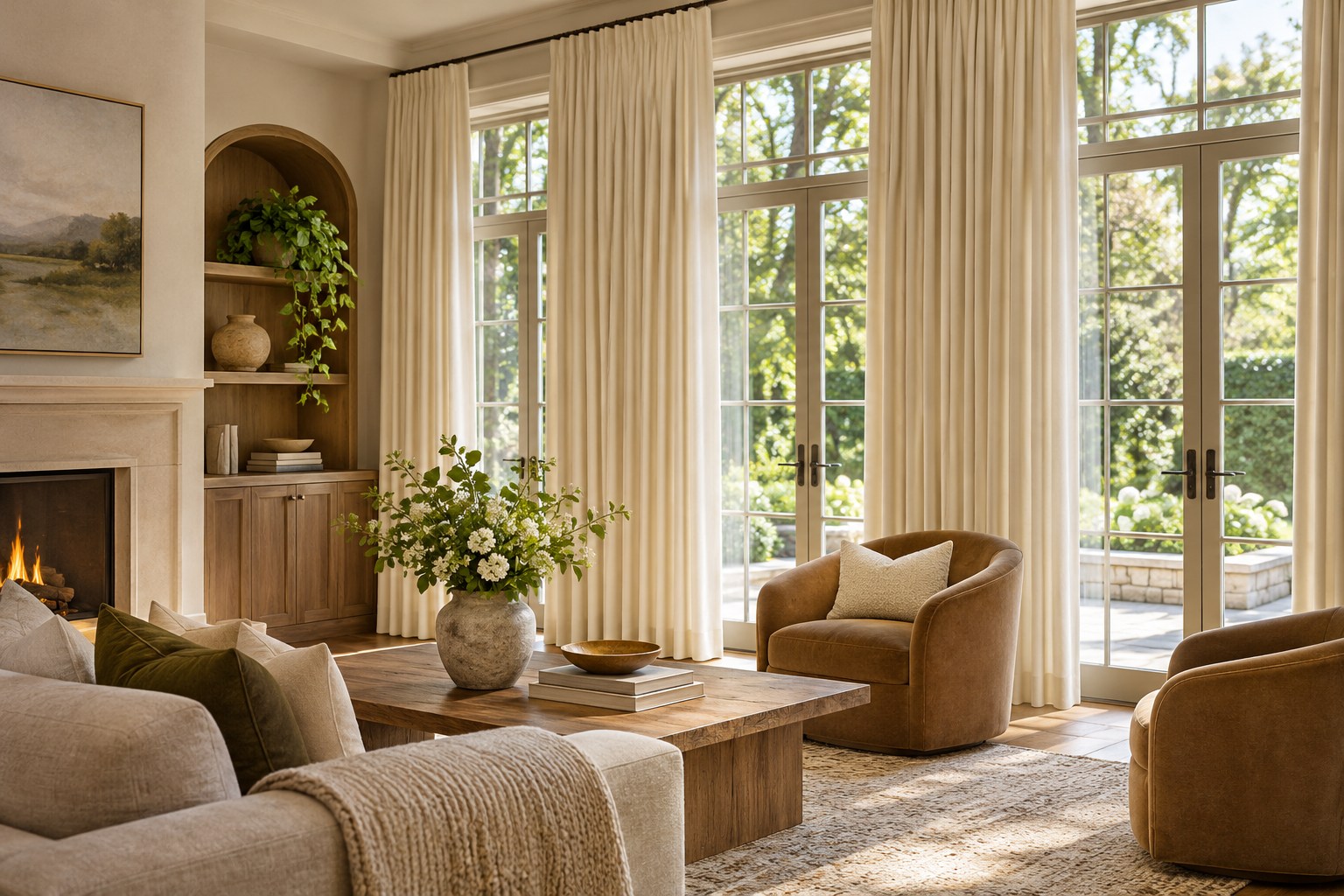
Measure the room available beside each window, including any return wall or cabinet. A curtain that can stack mostly beyond the glass preserves more daylight when open. Place an existing fabric panel at the proposed height to compare how it hangs above the frame. Check for obstacles such as handles, trim, or a deep sill.
Leave room to operate the windows and keep required exits accessible. Check how the fabric behaves over the flooring and whether it clears heaters and registers as required. If a long span needs more support, have the rail or rod installed using hardware suited to the wall and the full fabric weight.
10. Draw a Quiet Line Around the Ceiling
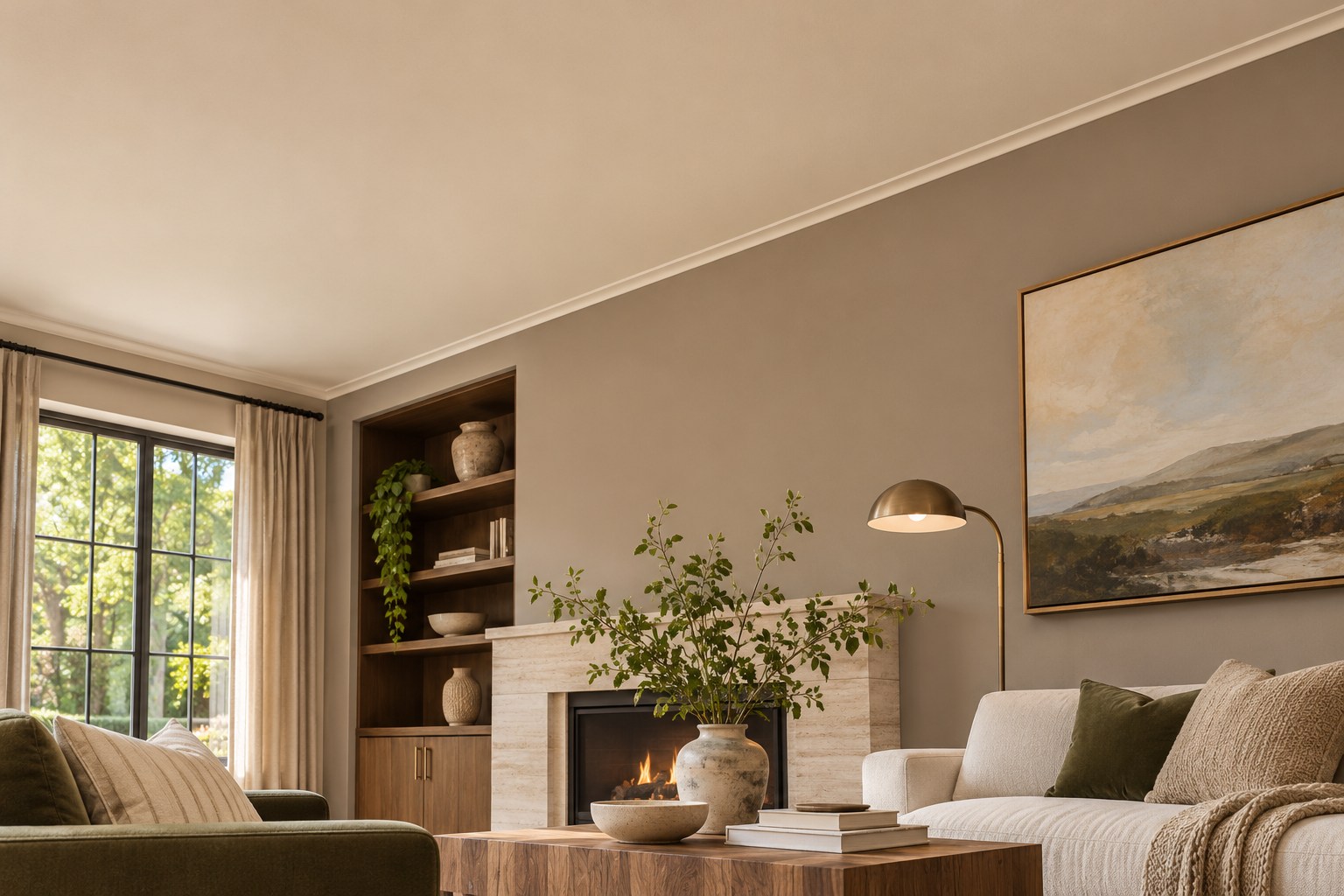
Look at the existing ceiling line before adding detail. A simple shallow molding can make the wall and ceiling meet more clearly, especially with a warm neutral room. Tape a short sample at the junction and look at it from the sofa. The profile may appear heavier once you repeat it on four sides.
Where a bulkhead or beam interrupts the line, decide whether the detail will stop or turn. Try the finish against both surfaces in daylight and at night. A close shade keeps the profile subtle, while a small change in sheen can make the edge legible. Ask a professional about suitable attachment where the substrate is uncertain.
11. Use Matte Plaster Texture Where Light Can Reach It
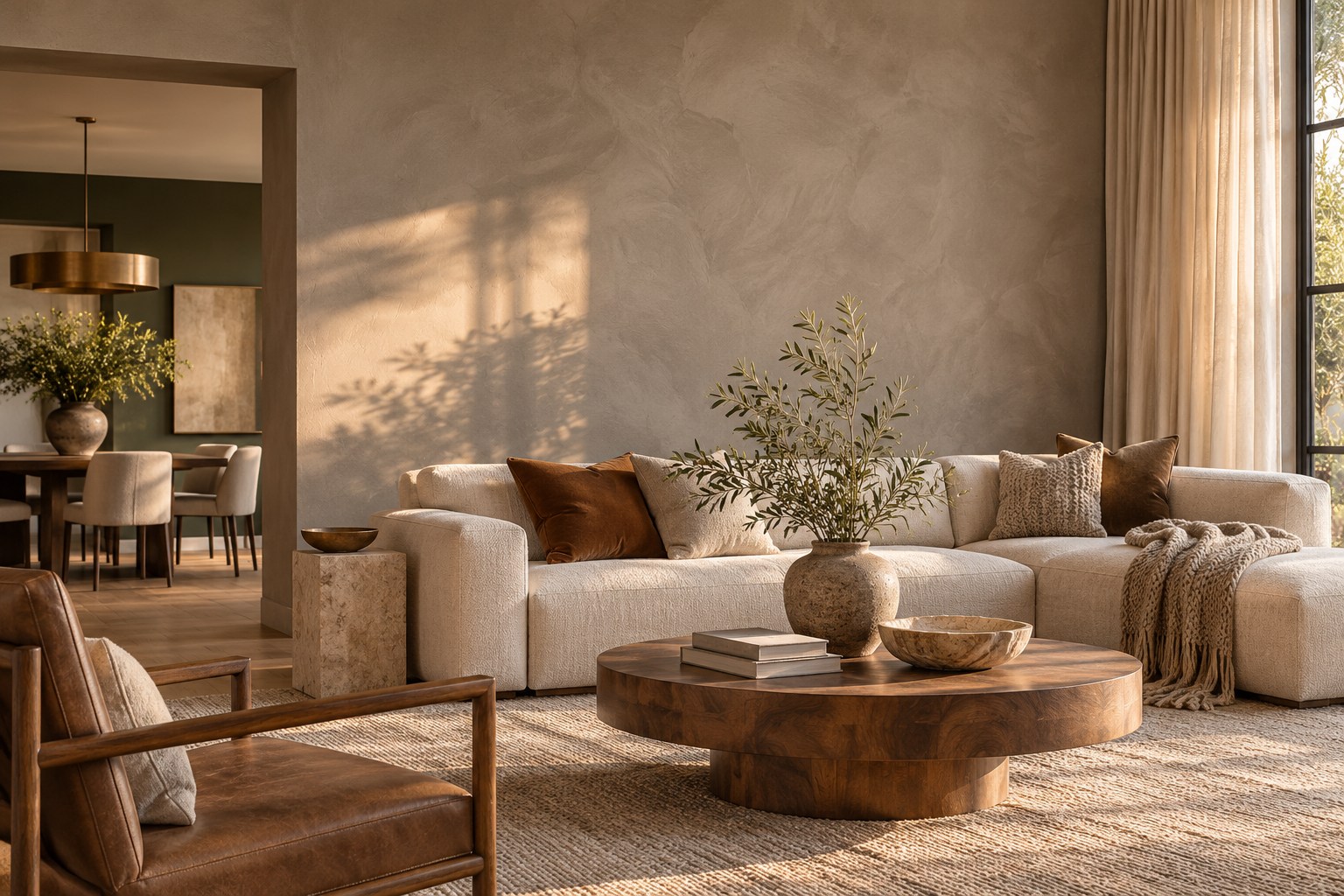
Try a large finish board on a wall that gets sidelight. An evenly colored plaster or plaster-look finish can gain depth from the small ridges you see when light moves across it. Look at the sample in morning and evening light. If the marks are strong enough to read as stripes from the sofa, ask to see a softer finish.
Compare the sample next to a curtain and an upholstery fabric. The wall can have a distinct texture even if they are close in color. Ask about preparation, touch-ups, and cleaning before you use the finish near a busy path. Keep a sample labeled with the finish and color for later repair.
12. Give a Dark Feature Wall a Useful Edge
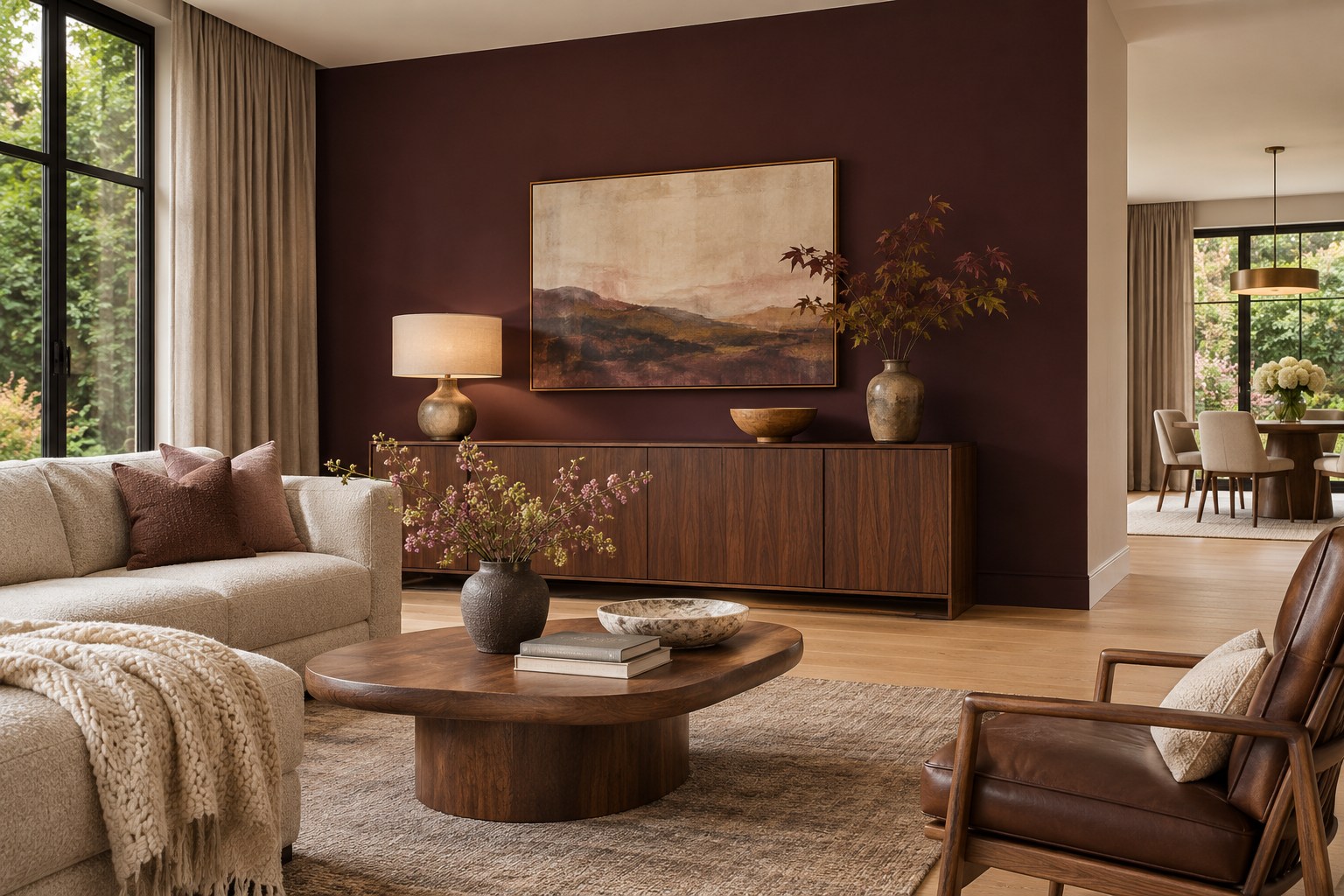
Pick a dark wall that already has a reason to end where it does. A corner, wall return, or full-width built-in gives the color a clean stopping point. Hold a large sample beside the flooring and any wood that touches it. The same color can make walnut look warmer and pale flooring look cooler.
Watch the sample with the main lights and then with one side lamp on. If a paint color loses the warmth you wanted, compare two shades across a larger area before committing. These burgundy living room ideas show ways to carry a related accent to the rest of the room.
13. Put a Shaded Brass Lamp Beside the Sofa
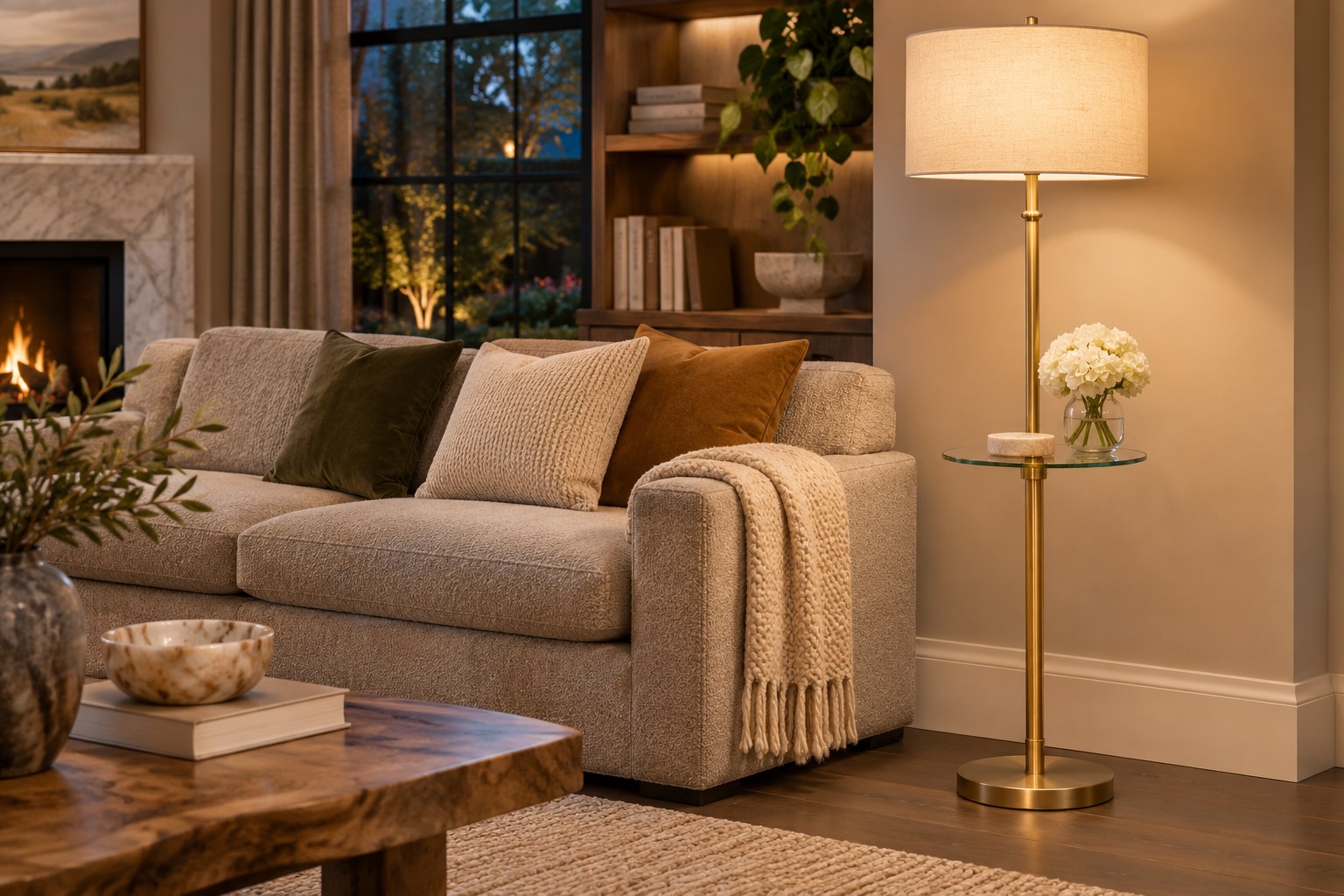
A brass floor lamp with a fabric shade can bring reading light to one seat and repeat a warm metal finish already in the room. Sit on the sofa and use an existing lamp to compare shade heights. Keep a clear view past the shade to the next seat and see where the light lands on a book.
If the lamp has an attached shelf, measure its usable space and check the maker’s load and care instructions. Give the base a stable position and keep the cord clear of foot traffic. Look at the brass in the room’s normal light. Brushed metal nearby can work with a warmer lamp if both finishes read clearly.
The JONATHAN Y Cora brass floor lamp combines a fabric shade and a small glass shelf. Check whether you can reach the switch from your seat and route the cord along the wall.
See details for JONATHAN Y Cora brass floor lamp (paid link)
14. Give the Ceiling Fixture a Group to Light
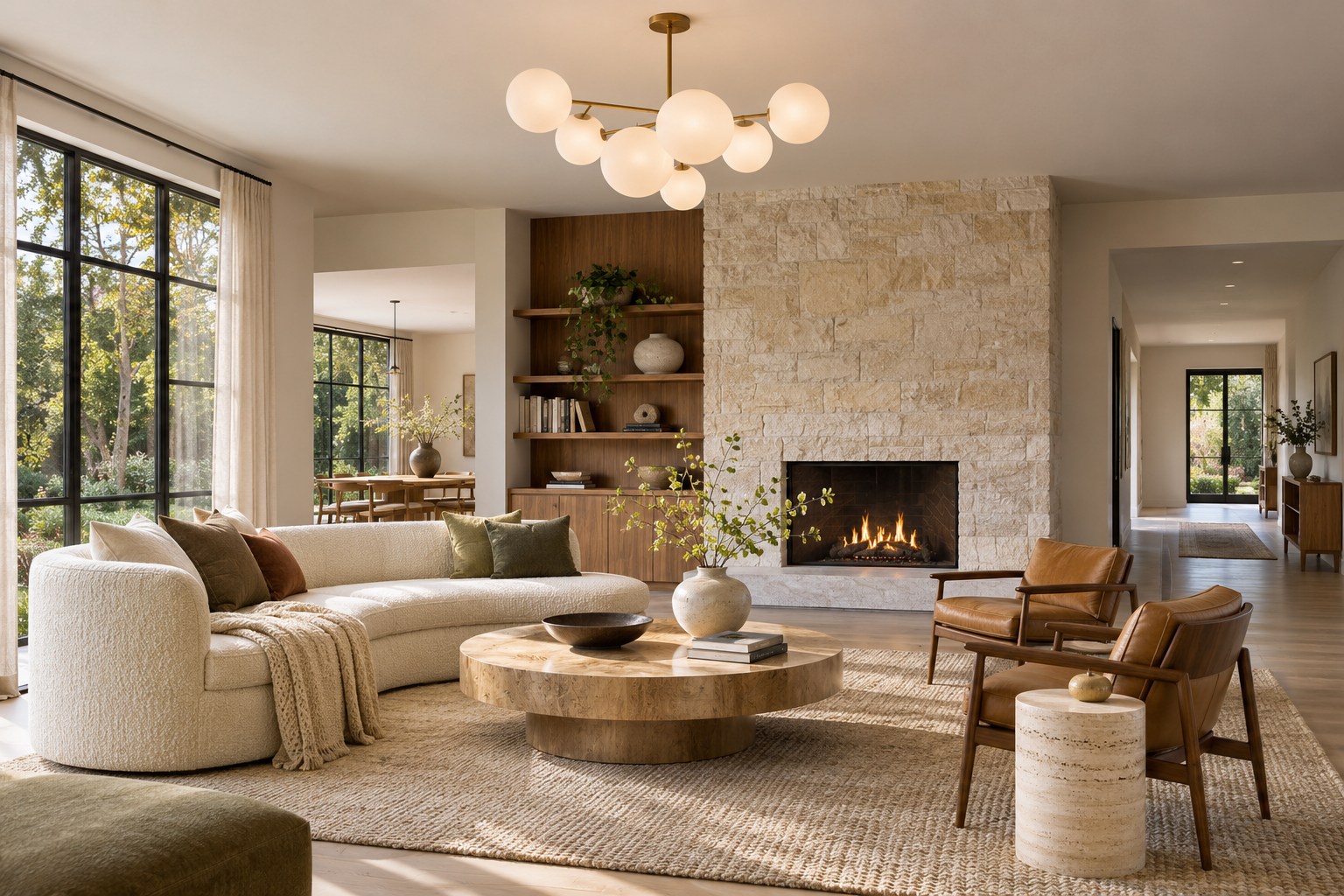
An overhead fixture looks connected to the furniture when its center relates to the place people sit. Mark the proposed center and compare it with the coffee table and fireplace. In a long room with one off-center junction box, a fixture with a wider silhouette may feel settled once you shift a chair or table slightly.
Check standing views and the route across the room. Keep the fixture high enough for safe movement and look for a shape that leaves faces and artwork visible from the sofa. Ask a qualified electrician to confirm mounting, support, and controls before buying. Try lamps separately at night so you can tell how often you will use the overhead light.
15. Light a Recess From an Edge You Cannot See
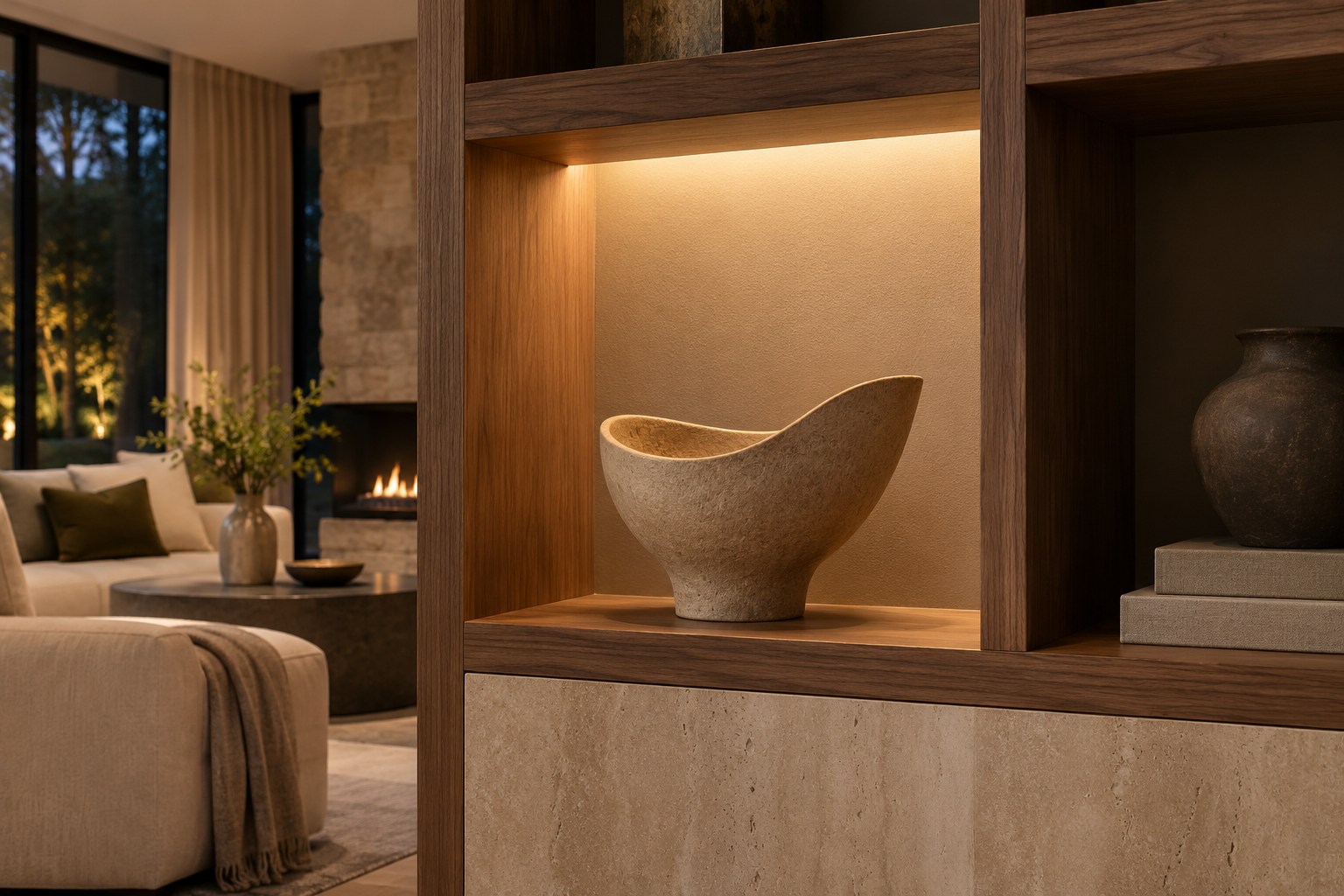
Use a small test light to see whether the back or the sides of a recess have the texture you want to show. Sit down and look up at the shelf. A source concealed from that angle can make the niche glow without putting a bright point in your view. A washable matte surface can help soften the effect.
Give the light and its components room and access according to the manufacturer. Ask an installer about wiring and maintenance if it is built in. Try lighting one recess first, then judge the whole wall in the evening. One well-lit shelf may look stronger than a row of equally bright boxes.
16. Use Velvet Where You Can See the Nap
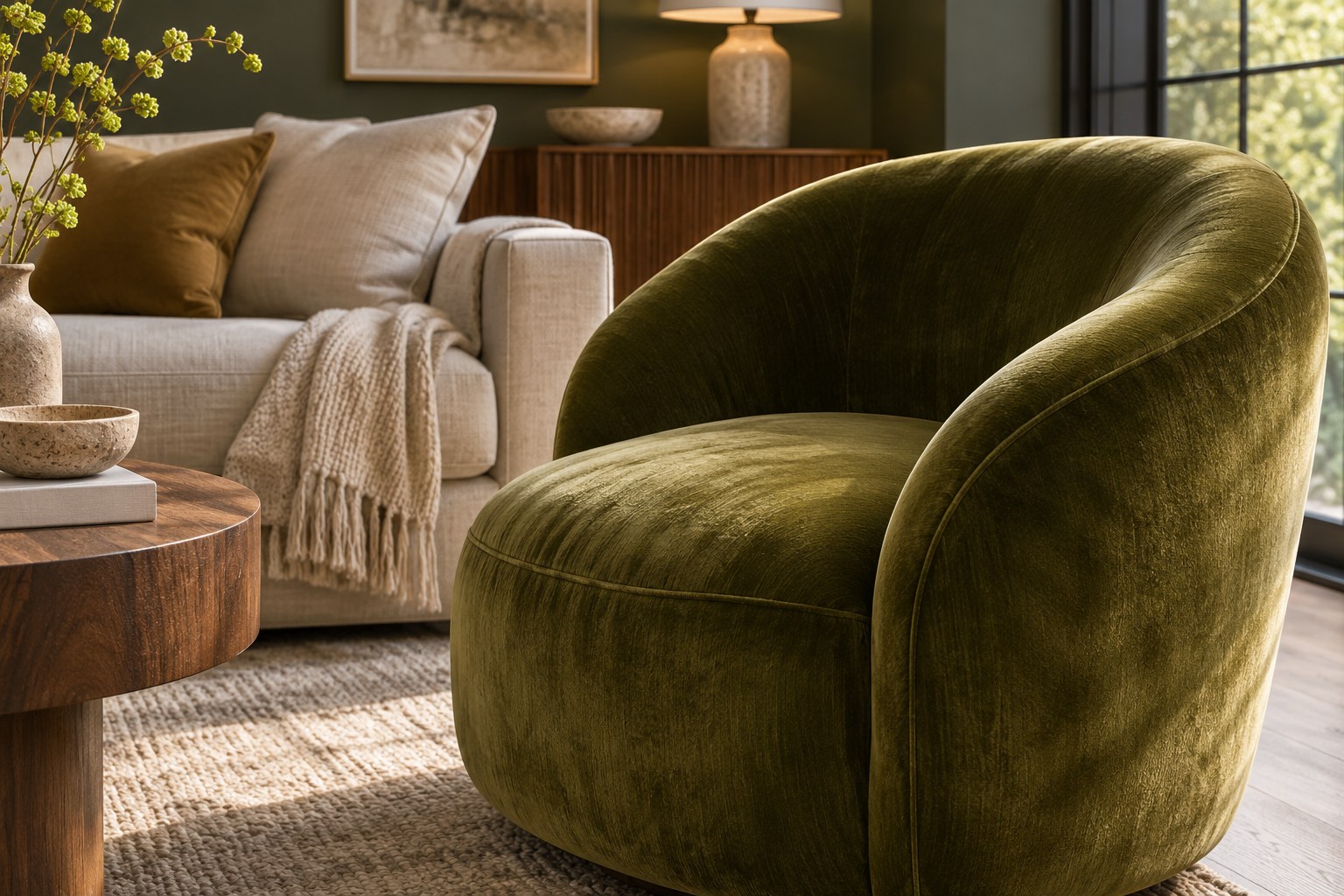
Turn a velvet sample in the light before settling on the color. The nap can shift from muted to rich as the direction changes, especially on a cushion or curved back. Put the sample beside your main upholstery and choose the view you want from the door and the sofa.
Test a few positions in your usual lighting. A chair by a window shows the surface during the day, while a cushion beside a lamp brings the detail out at night. Ask about care and how the fabric handles pressure marks. Start with a removable cover if the seat sees heavy daily use.
17. Bring Warm Leather Into One Seat
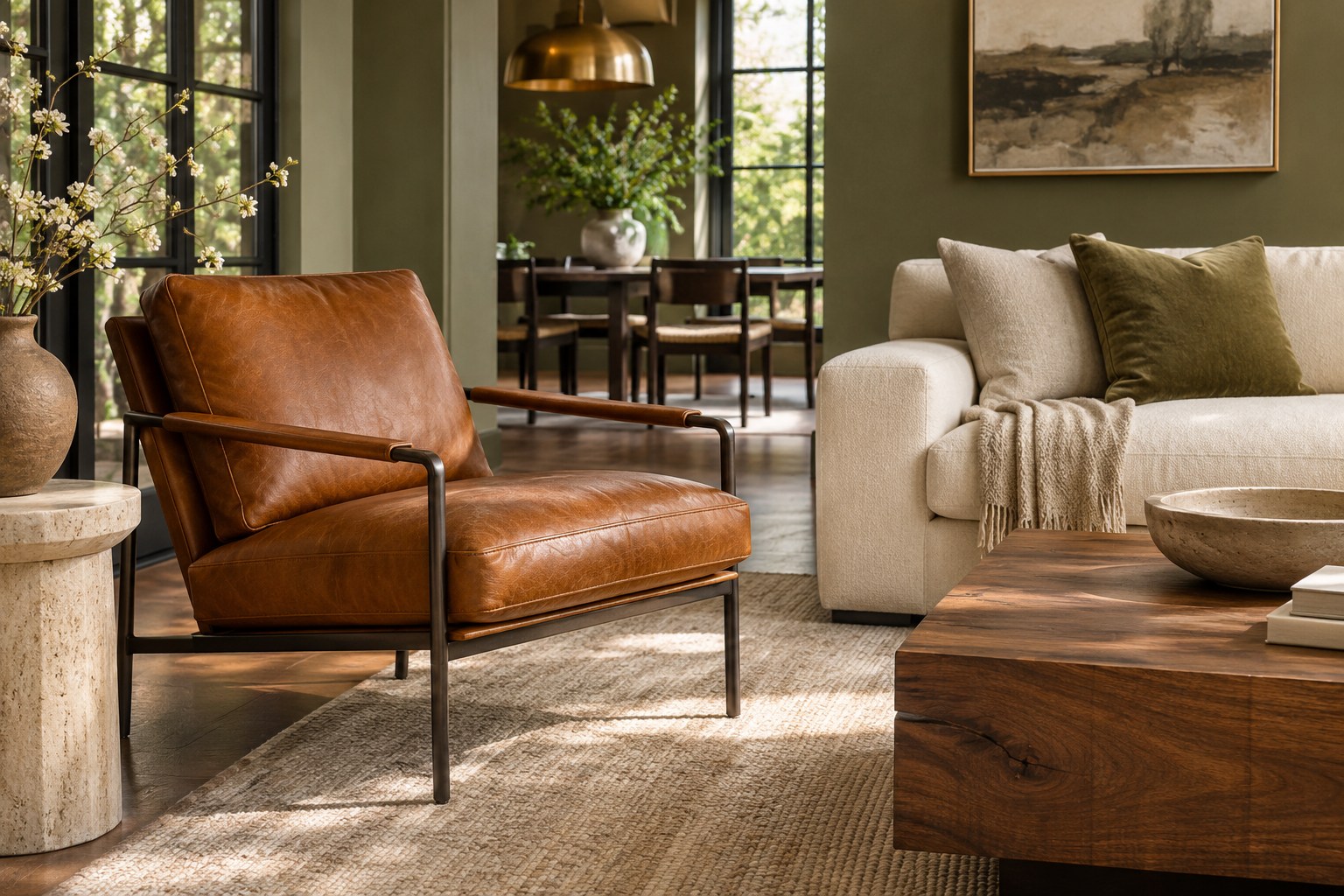
A leather chair can break up a group of upholstered seats without making the room feel busy. Put a leather swatch next to the sofa fabric and the floor. If all three have similar warmth, compare their depth so the new chair will still have a distinct outline.
Sit in a floor model long enough to feel the back and seat. Ask how the leather will change with sunlight and ordinary wear, then choose a position that suits the finish. If your room is narrow, a visible frame under the seat can keep the chair’s side from looking as solid as a second sofa.
18. Use an Older Piece to Add a Different Surface
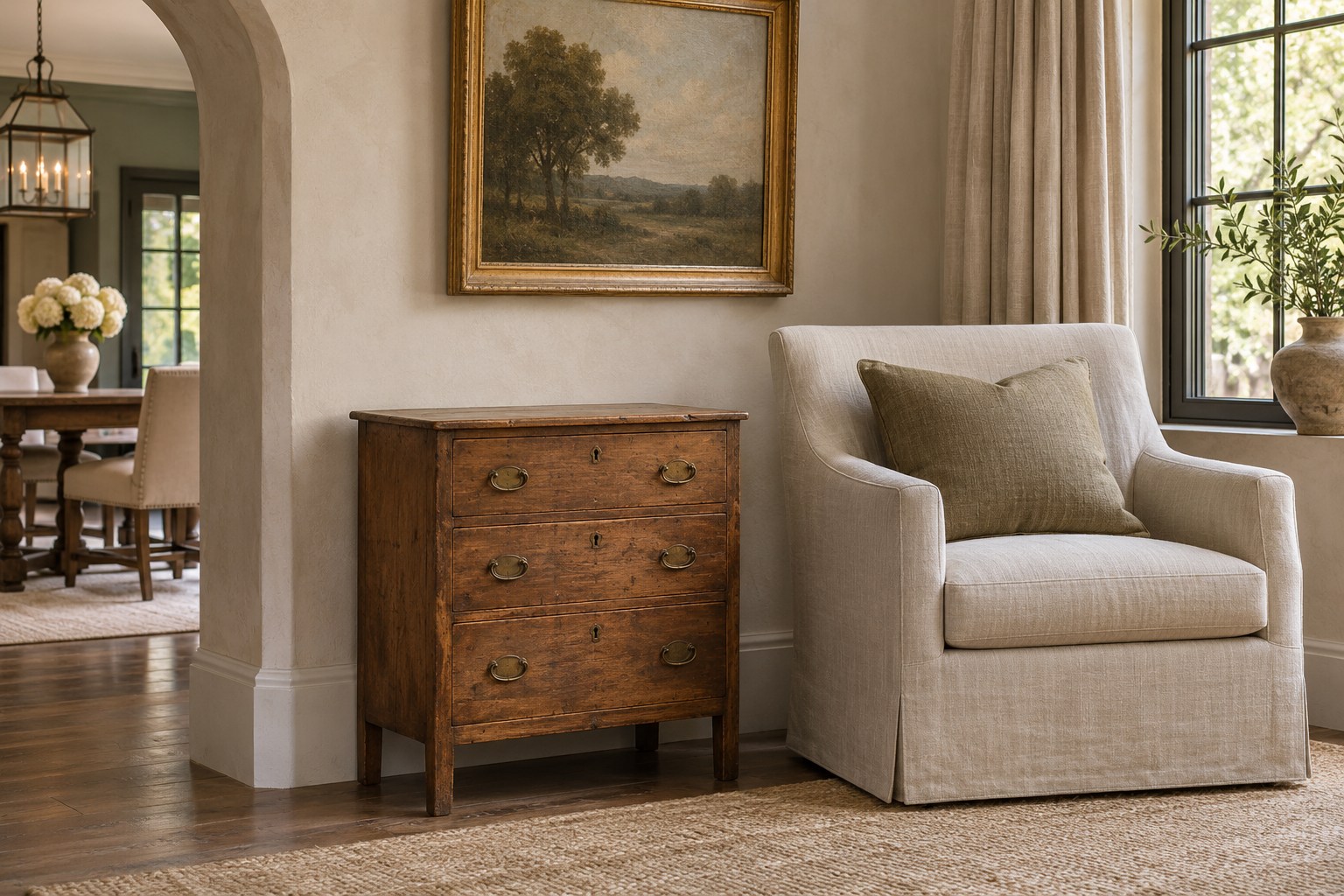
Place one vintage object where its finish can stand out. A dark lacquer cabinet beside modern linen, or a worn wood side table beside a clean-lined chair, brings in a surface you can recognize from across the room. Check its scale with the piece it sits next to, especially if it will take the place of a table you use daily.
Look for stability and a sound surface before using a vintage table for drinks or a lamp. Protect finishes as needed. Leave a bit of clear space around the piece so its handles, legs, or grain are visible. A small object on the right table may be enough if you have nowhere to put a larger one.
19. Make a Matched Pair Work From Both Seats
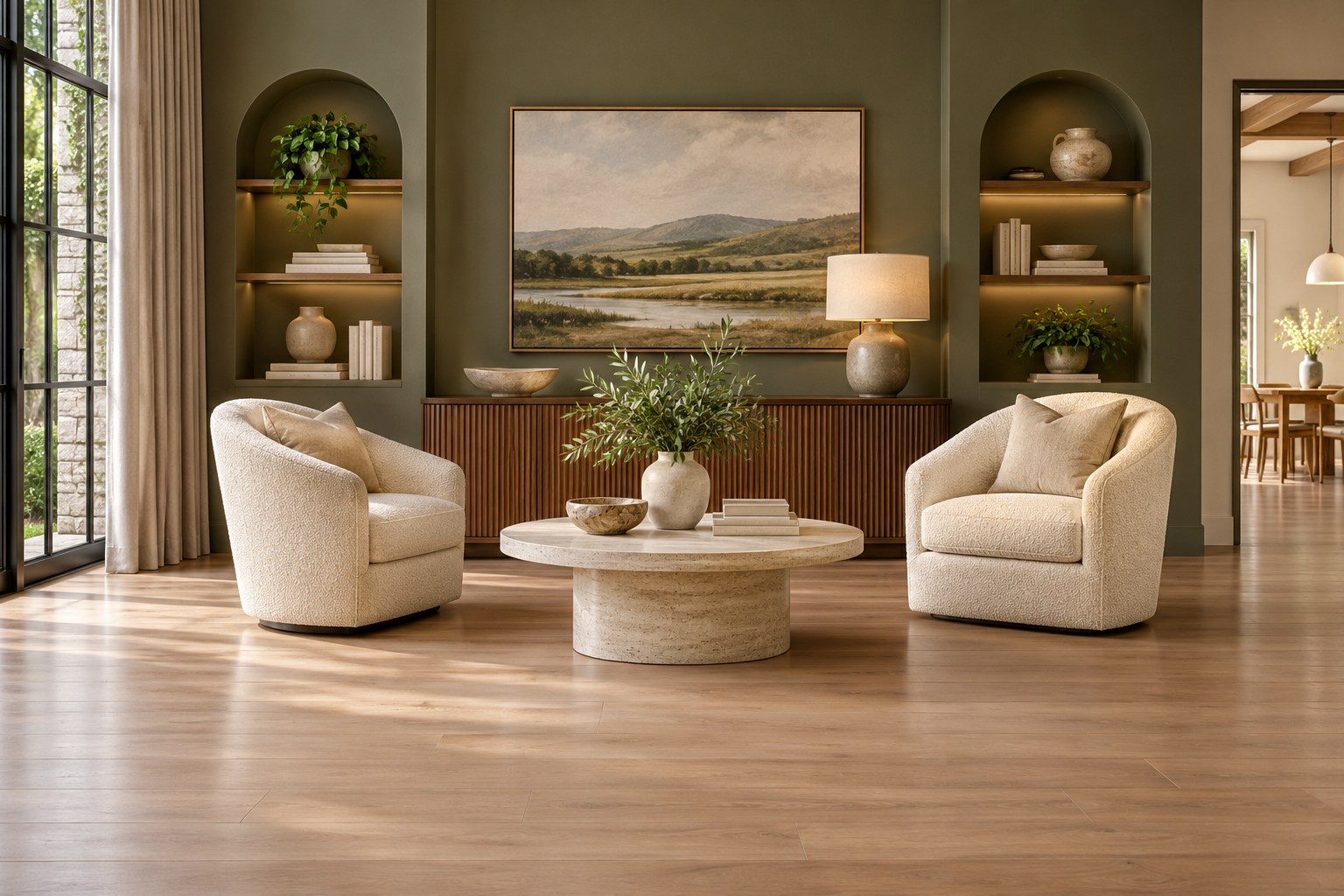
Two chairs or tables can bring balance to a long wall, but the pair should still work for the people who use it. Set the pieces in place and check which one gets used first. If one chair loses its view or catches the curtains, turn it slightly and see whether the room still feels balanced.
Repeat the parts you want to see from the doorway, such as the height of two lamps or the tone of two frames. Leave enough space for both switches or tabletop surfaces to be reached. A pair can look composed even if one side holds a book and the other gives someone a place for a mug.
20. Group Art Around One Strong Color
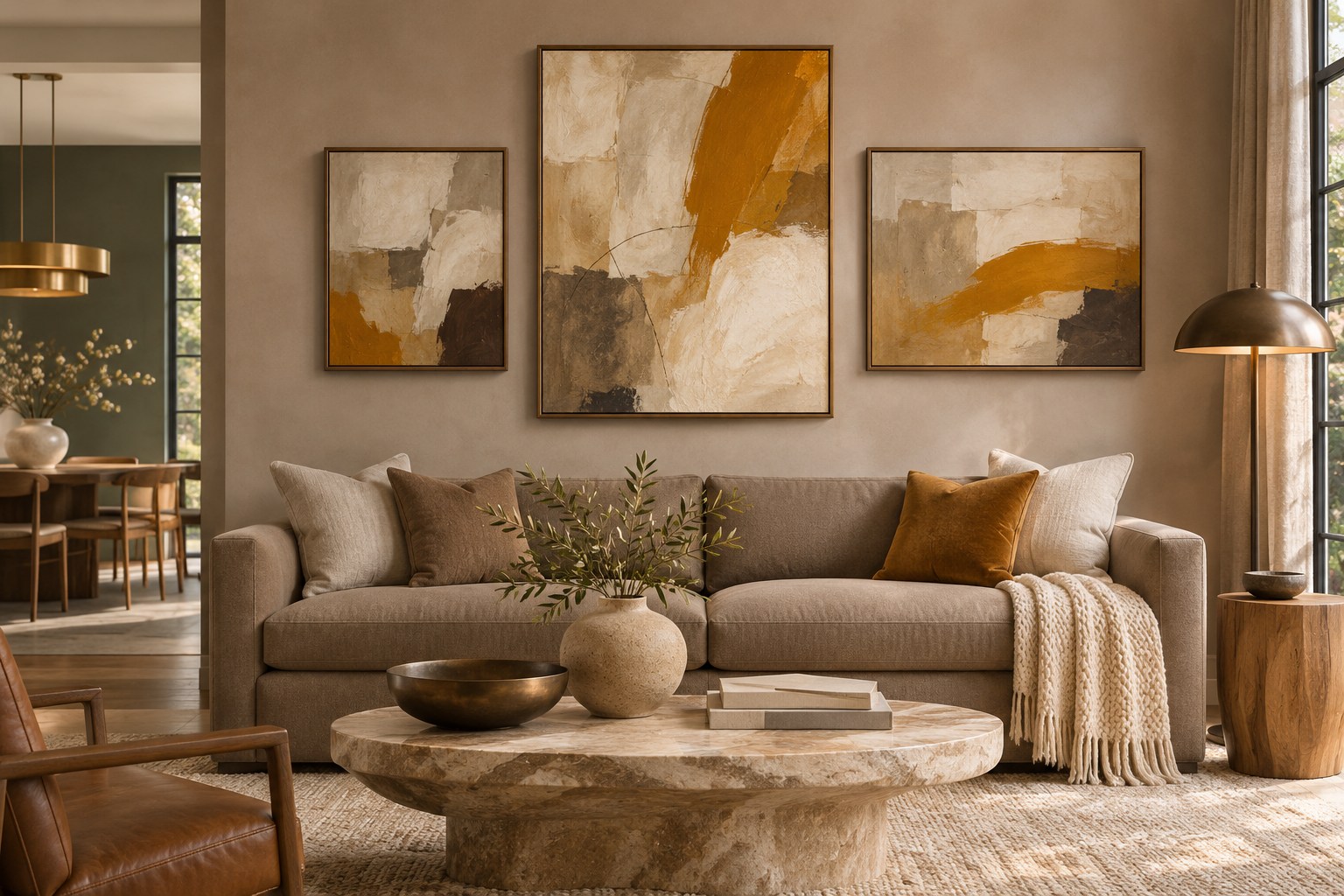
Pick a color that is already present in the room, then see if two or three pieces of art carry it in different amounts. Put the strongest one where you want the eye to land. A related frame finish or mat can help smaller pieces sit beside it without making the wall feel scattered.
Use paper templates to move the group up or down before hanging it. Take a photo from the room entrance and sit in the main chair to check the spacing. Use hardware suitable for each frame and wall. If you want to mix more shapes, browse these living room gallery wall ideas for ways to map the arrangement.
21. Keep a Low Table Clear Enough to See Across
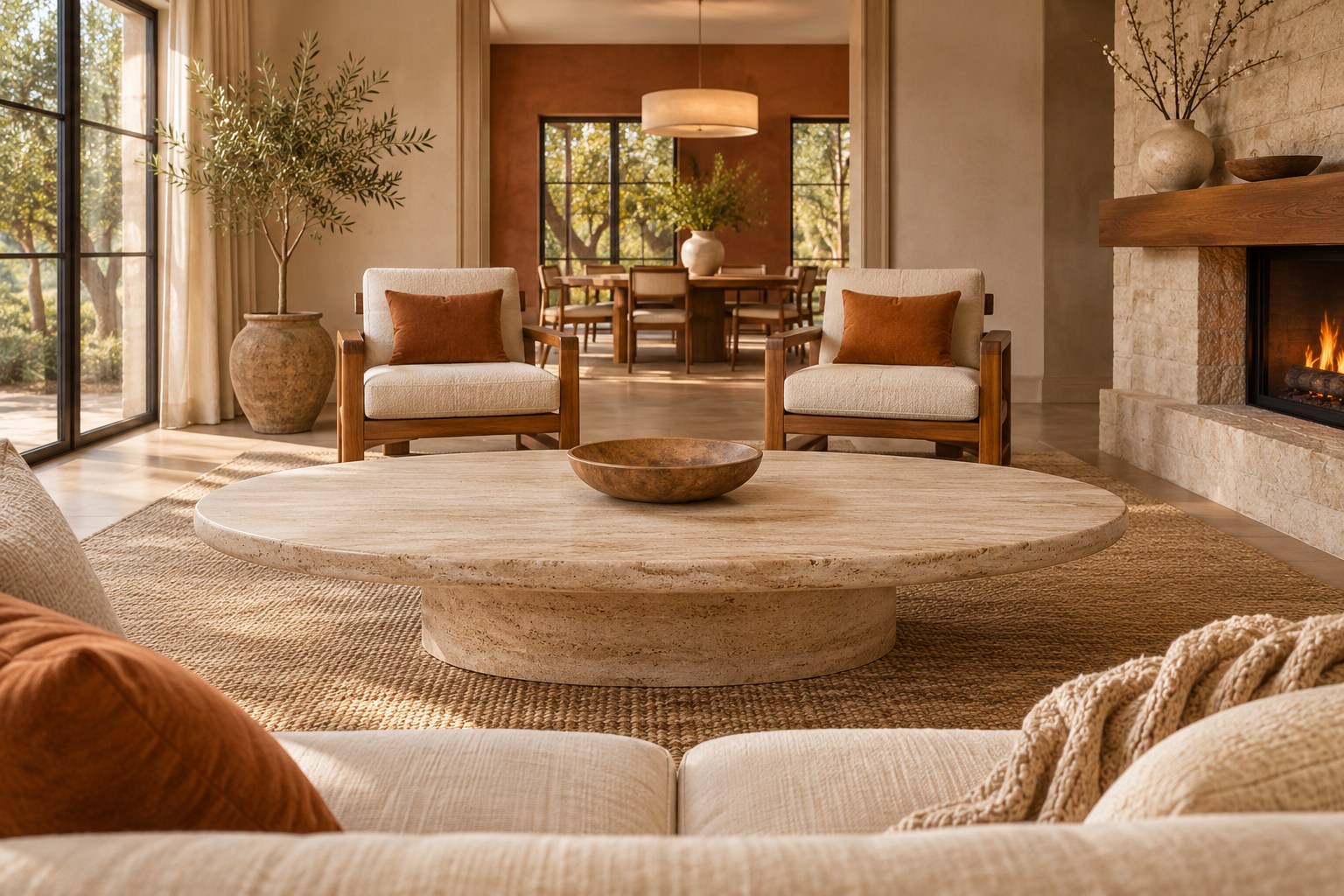
Use the seats to judge what can sit on a table between them. From the lowest seat, look at where a vase or sculpture cuts across the view. Place taller objects at the edge of the grouping or on a wall-side console, where they can be seen without hiding the person opposite you.
Try a shallow bowl or tray on the table and leave enough room for the things you use when people visit. If the table is oval or curved, use the open edge nearest the chairs for drinks. The shape and surface of a well-chosen table can carry the center of the room on their own.
22. Test the Whole Room After Dark
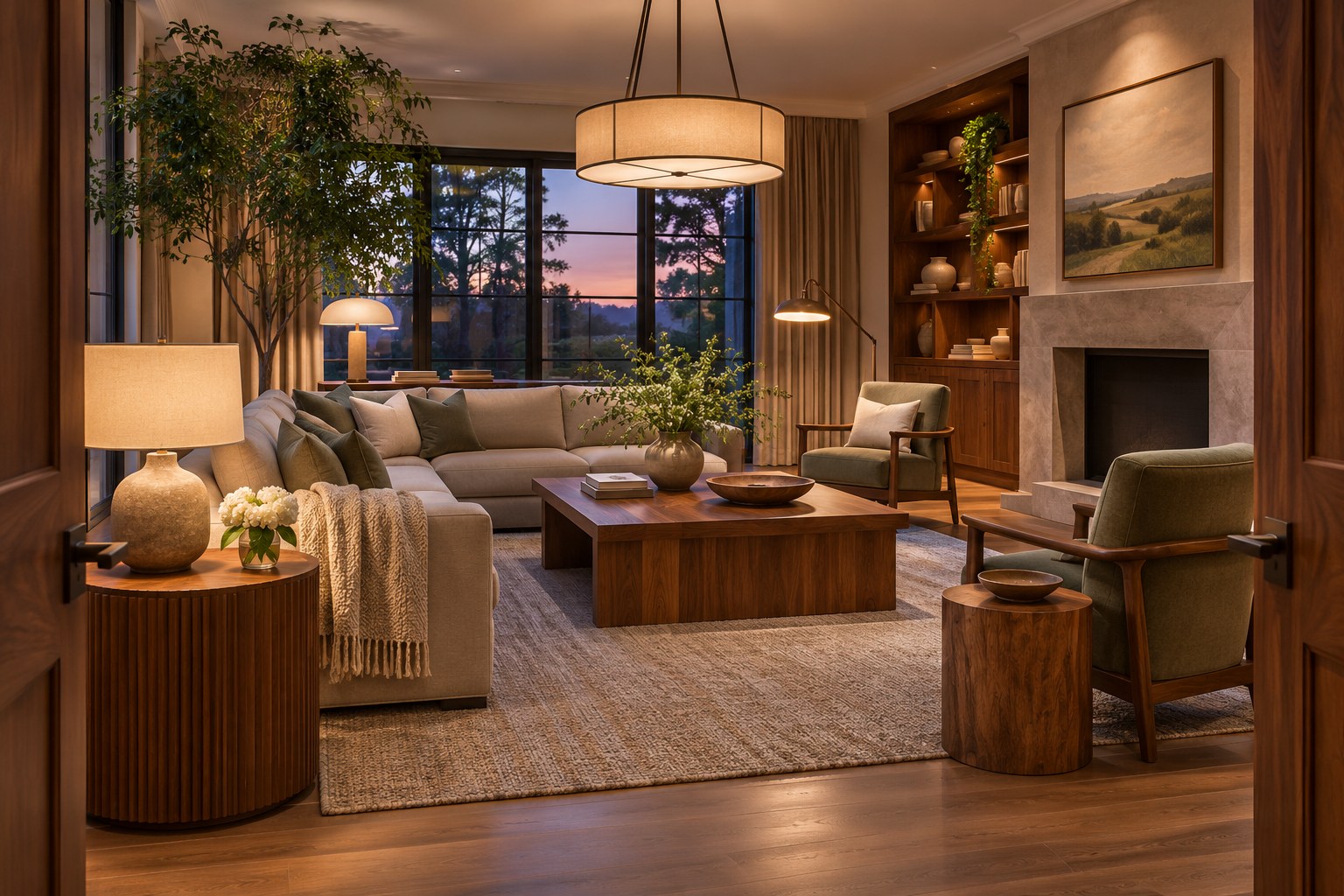
Take an evening photo from the doorway with the lights on the way you actually use them. Look for a corner that seems to disappear, a finish that gets too shiny, or a dark sofa that loses its outline. Try turning off one overhead light and switching on a lamp to see which surfaces begin to show.
Sit in every regular seat and check the lighting for reading, conversation, and moving through the room. If the spaces that need more light also need outlets or controls, have a qualified electrician check the options. Keep a note of where the room feels best. It will help you choose which finishes or fixtures deserve the next part of the budget.
Choose the view and the hour when you most want the room to feel right. Test an arrangement and a few samples in that spot before ordering. The right change should make the room easier to use as well as give you something worth looking at.
Discover more from HomeTrendora
Subscribe to get the latest posts sent to your email.