A patterned sofa can give a living room an immediate point of view. Stripes can make a simple shape feel graphic, a botanical can connect the seating with wood and softer colors, and a woven motif can add detail to an otherwise quiet room. The surrounding choices decide whether that pattern feels settled or busy.
These 18 patterned sofa living room ideas focus on scale, material, and the relationship between upholstery and the rest of the room. View a generous fabric sample in your own light, consider how the motif crosses cushions and seams, and check the upholstery’s care and suitability for everyday use. A pattern is a design choice; it does not replace a comfortable sofa or a workable furniture layout.
1. Let a Wide Stripe Set the Room’s Direction
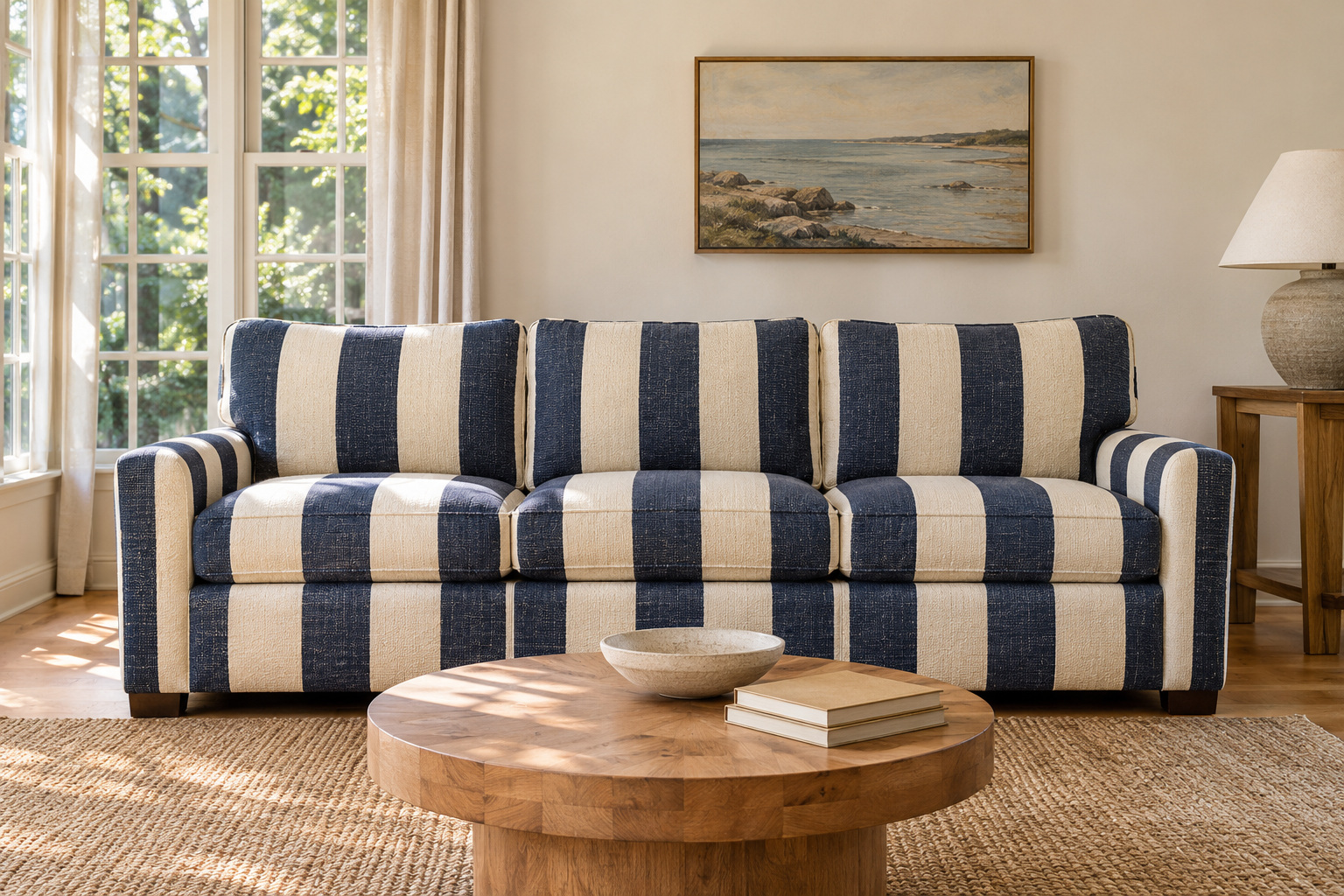
A wide stripe gives a straightforward sofa a strong graphic rhythm. Choose two colors with enough contrast to make the stripe readable from across the room, such as indigo and warm ivory. Keep the sofa shape fairly simple so the bands remain the main detail instead of competing with elaborate arms and trim.
Use the stripe to organize the surrounding choices rather than repeating it everywhere. A plain woven rug and a rounded coffee table can soften its regular lines. Look at a full-size fabric sample draped over a cushion shape, since the stripe will change direction across the seat, back, and arms. Thoughtful alignment at the seams can make the finished upholstery feel much more composed.
2. Give a Large Floral a Quiet Wall
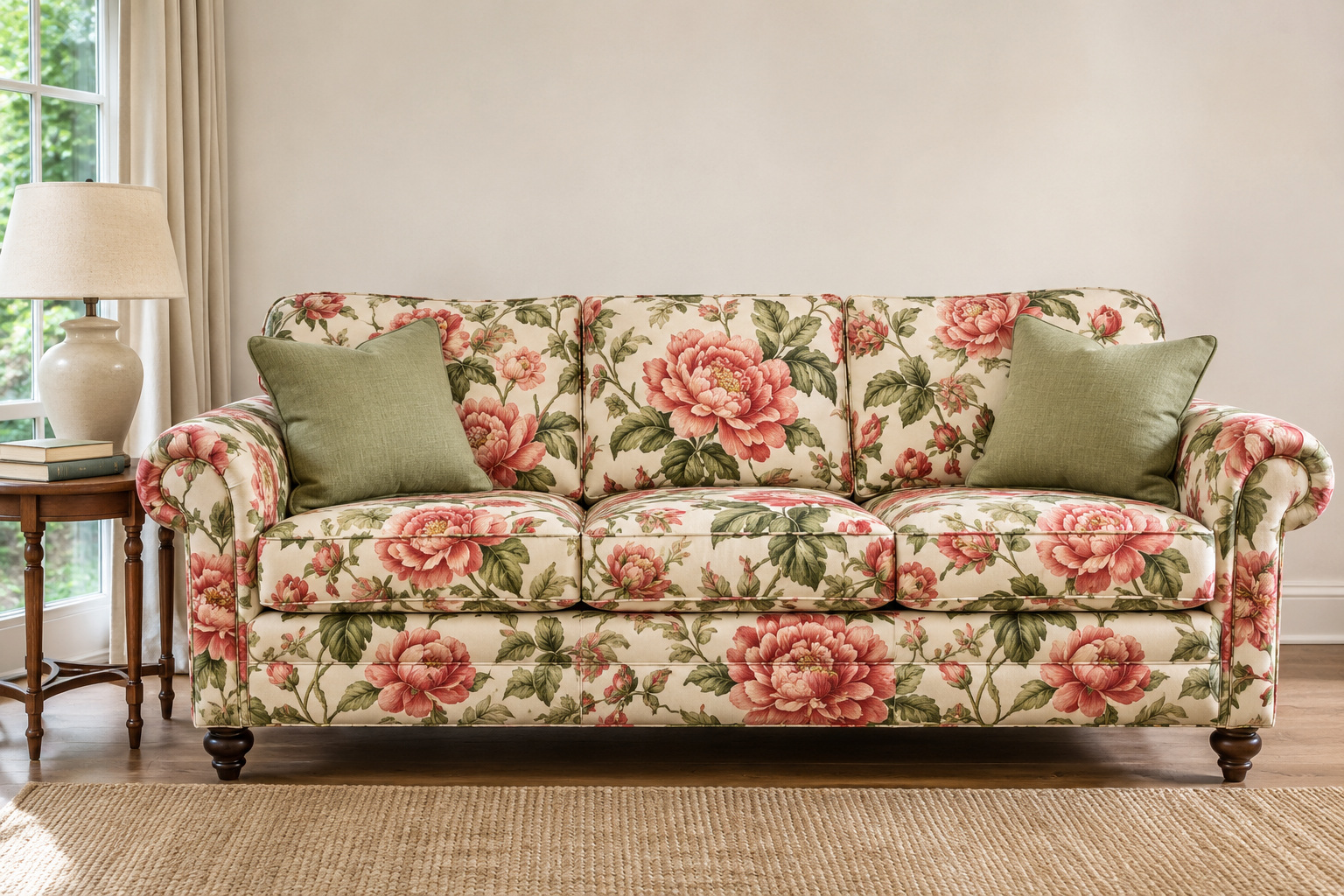
A large floral can feel generous rather than fussy when the wall behind it stays quiet. Let a few distinct flower and leaf colors appear across the sofa, with a plain warm white or pale neutral wall giving the print space. The contrast helps the upholstery read as one large surface.
Avoid immediately surrounding the sofa with another dense arrangement of patterned art, cushions, and curtains. One or two plain cushions can pick up a quieter color from the fabric. Check how much of the floral repeat fits across a single seat or back cushion; a very large motif may be divided by several seams. A sample that shows the full repeat is more useful than a tiny cutting of one flower.
3. Pair a Small Check With an Open-Weave Rug
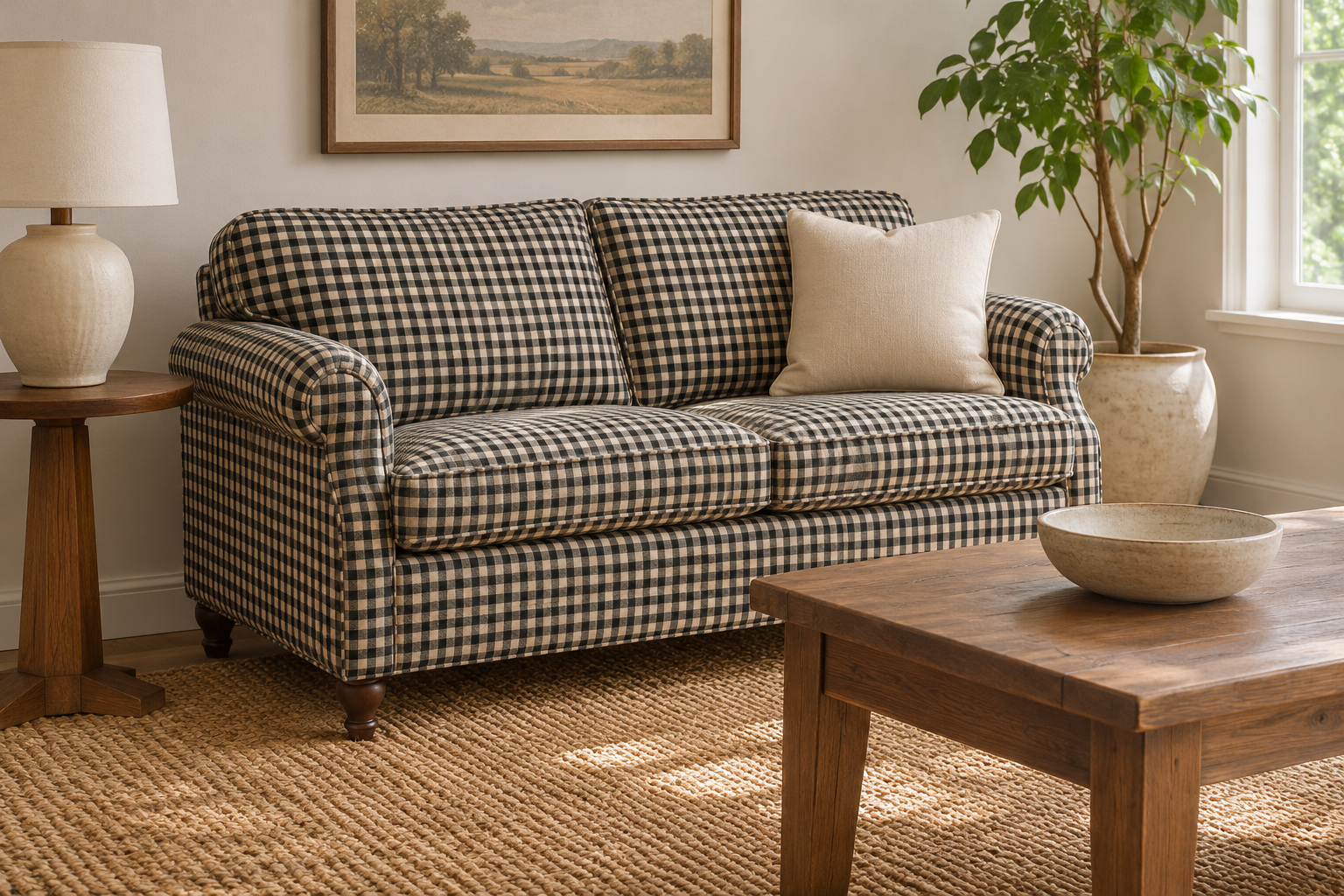
A small check has a regular rhythm that can sit comfortably beside a visibly textured, open-weave rug. The sofa supplies the repeated grid, while the rug gives the floor a looser material surface. Keep the rug’s color simple so the difference comes from texture rather than another strong pattern.
View the combination from the doorway as well as close up. A fine check can read almost solid at a distance, then become more distinct beside a smooth table or plain cushion. Choose a rug construction suited to the room and the people using it, and check how furniture sits on the weave. A warm wood table can connect the two surfaces without introducing another busy motif.
4. Use a Tonal Botanical Beside Natural Wood
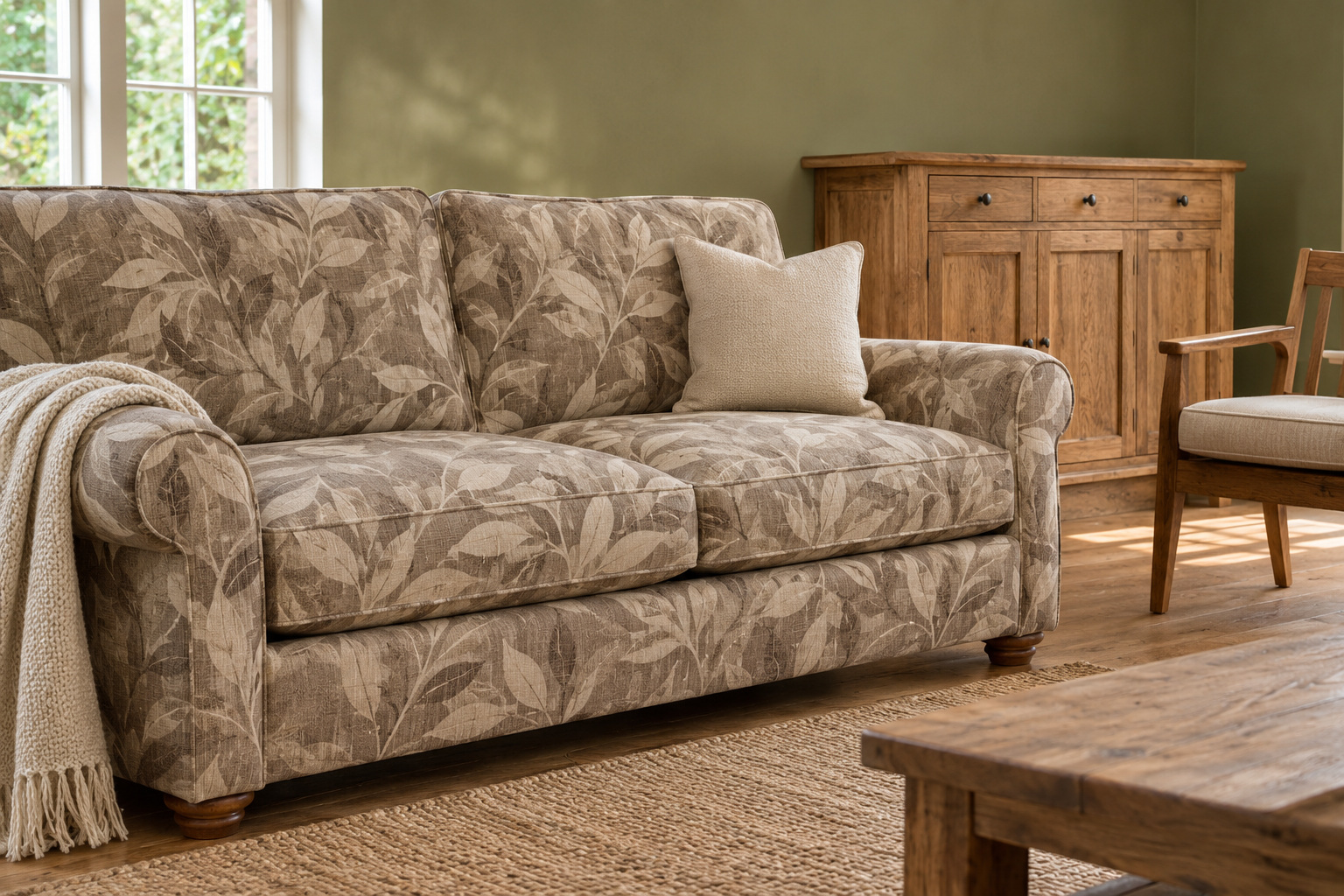
A tonal botanical can add pattern without making the sofa the room’s brightest object. Choose leaves or stems in close shades, such as taupe and oatmeal, then place the sofa near natural wood with visible grain. The two materials share a quiet range of color while offering different kinds of detail.
Keep at least one neighboring surface plain so the eye has somewhere to rest. A simple wall and an unpatterned cushion can be enough. Look for a botanical scale that remains clear through the upholstery folds instead of dissolving into a muddy texture. Wood furniture with a straightforward outline helps the fabric feel natural and considered without turning every part of the room into a rustic theme.
5. Keep Geometric Upholstery on a Simple Sofa Shape
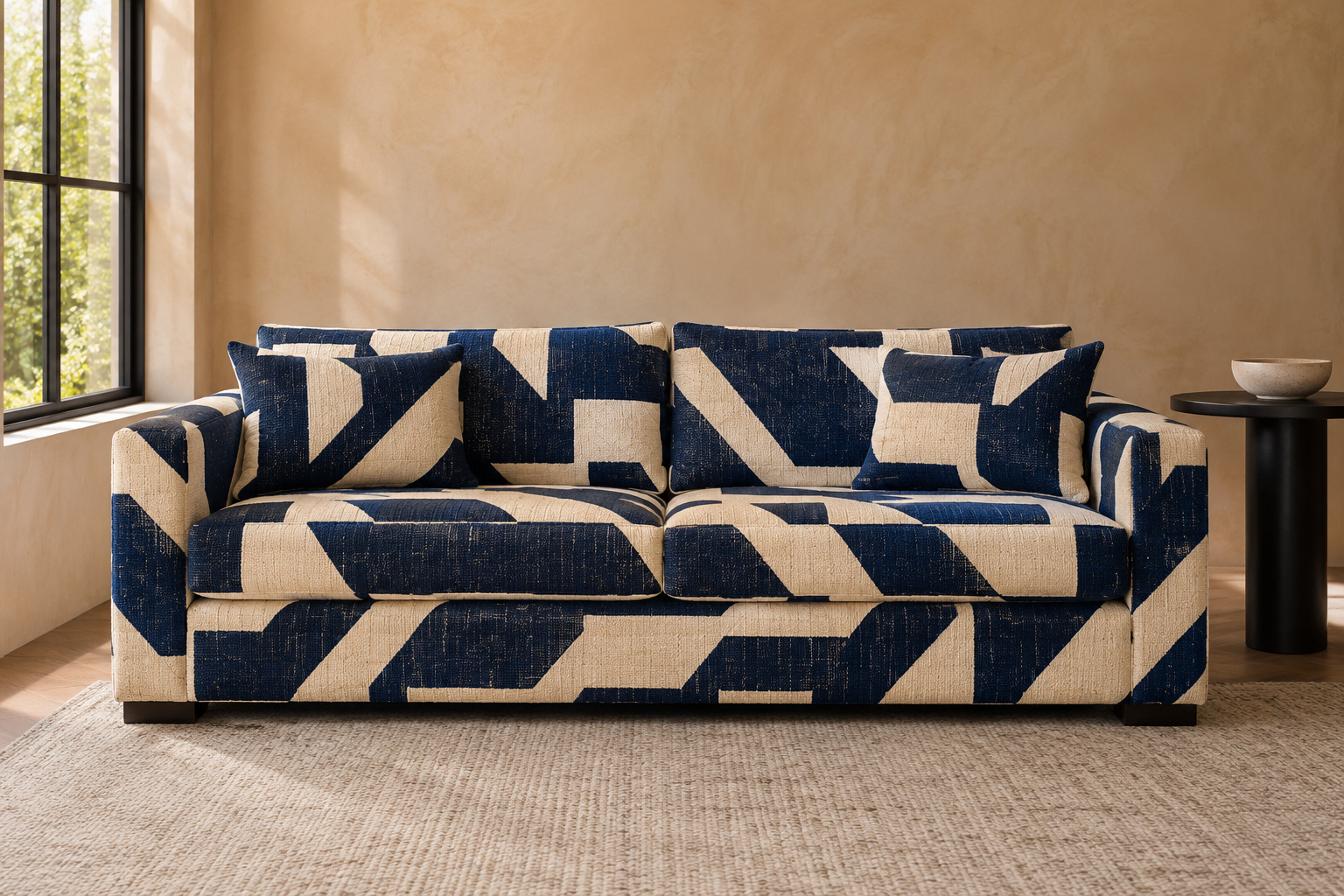
A clear geometric can do much of the decorating on a sofa with a simple outline. Straight arms, a restrained base, and broad cushions give the motif a readable surface. An ink-and-cream angular pattern can look especially deliberate when the furniture around it has similarly clean shapes.
Check the pattern at the seams before committing to upholstery. Lines that meet awkwardly at a corner can make even a quiet room feel unsettled. Keep nearby furniture forms simple, but allow one softer material, such as a wool rug or a plain textured cushion, to prevent the room from feeling rigid. The geometric should remain easy to recognize rather than being buried beneath a stack of competing cushions.
6. Repeat One Sofa Color in the Curtains
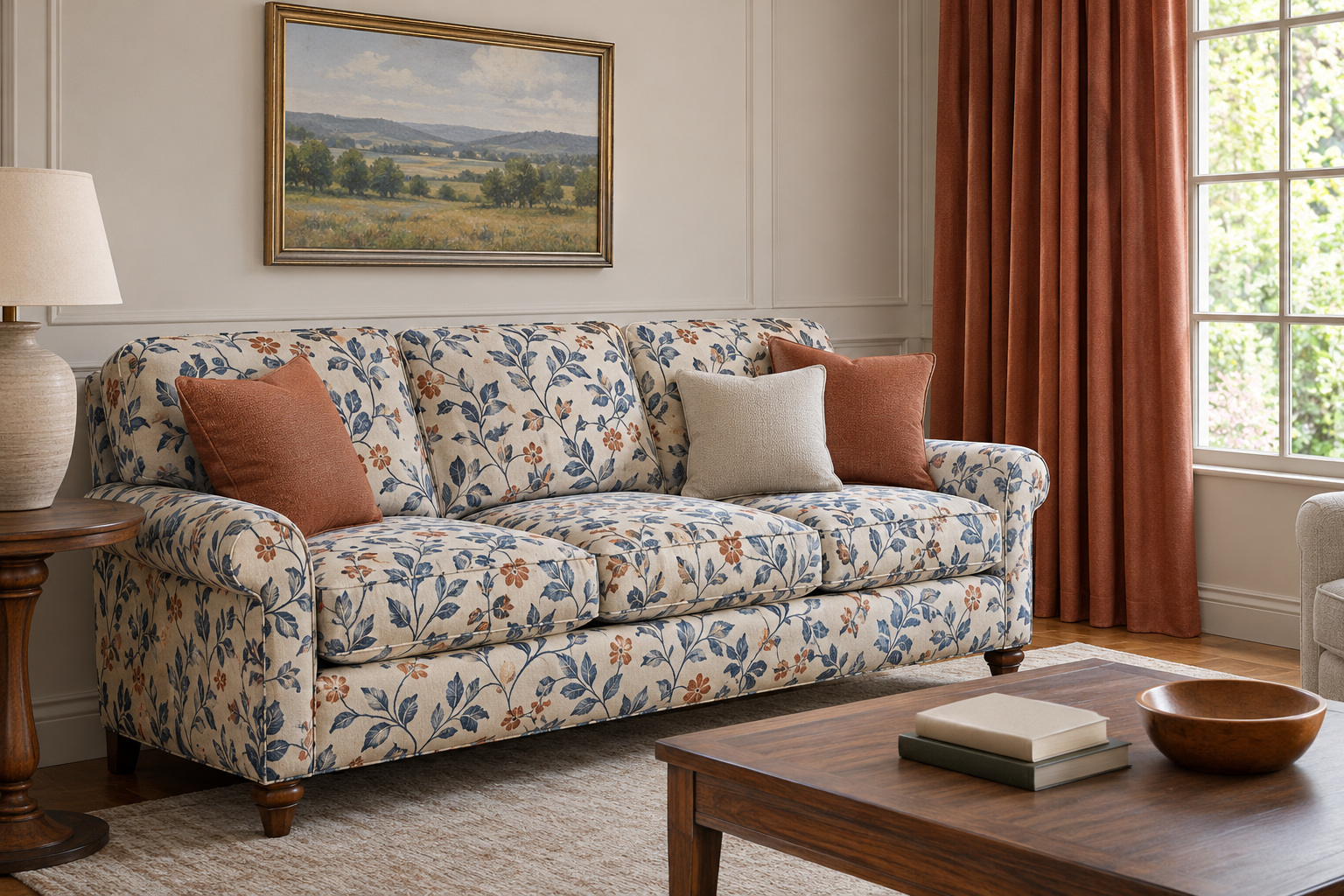
Plain curtains can connect a patterned sofa to the rest of the room by repeating one color from the upholstery. Choose a secondary color in the print rather than automatically matching its strongest one. A muted rust curtain beside a sofa with blue leaves and small rust flowers can make the palette feel more complete.
Compare the curtain and upholstery samples in the light near the window. Different fibers and folds will change how the color appears, so a related tone is often more comfortable than chasing an exact match. Keep the curtain itself plain and choose a rug that does not add another large print. The connection should be visible across the room without turning the window into a second patterned focal point.
7. Place a Patterned Loveseat in a Reading Corner
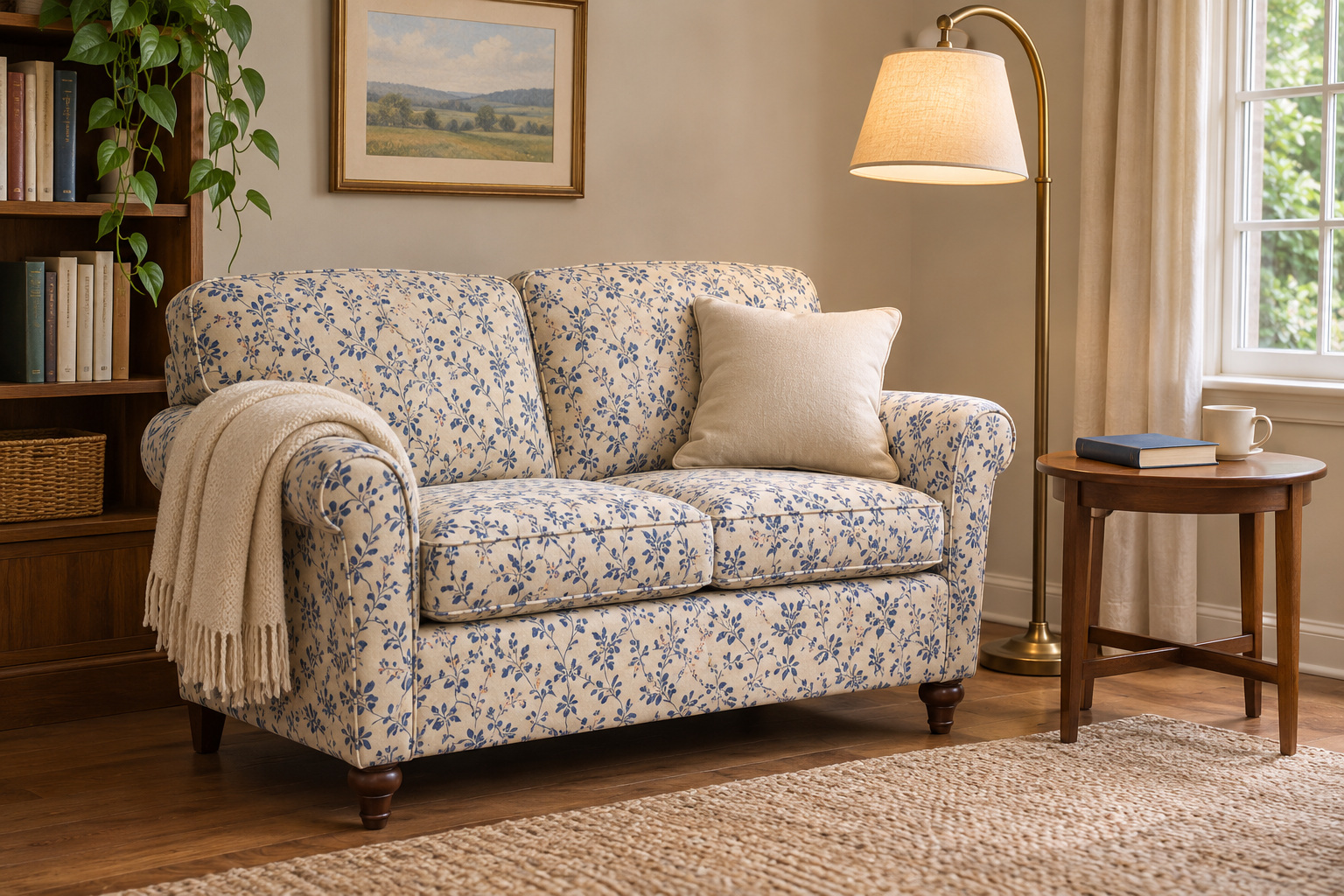
A patterned loveseat can give a reading corner its own character without changing all the room’s seating. Choose a scale that makes sense on the smaller piece: a modest botanical or loose stripe can remain legible across two cushions. Add a light you can use comfortably and a side table within reach.
Keep enough space to approach the seat and set down a book or cup. A plain cushion and a soft throw can make the corner inviting without hiding most of the upholstery. If the main sofa elsewhere is plain, the loveseat can introduce the room’s most distinctive pattern. Judge the two pieces together so their colors relate even though their fabrics do not match.
8. Mix a Large Sofa Print With Smaller Cushion Patterns
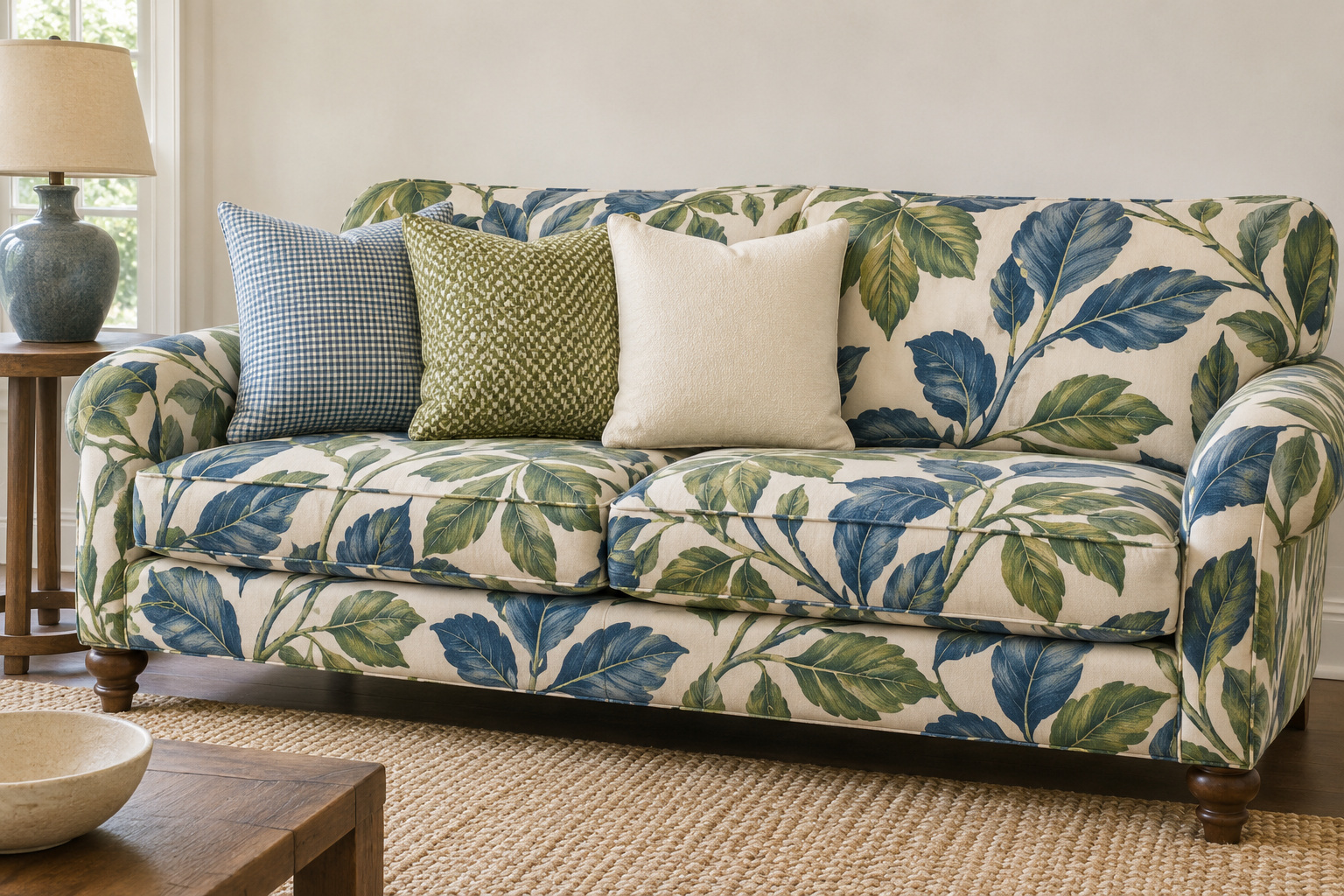
A large upholstery print can share a sofa with smaller cushion patterns when the difference in scale is clear. Pair a generous leaf motif with a fine check or tiny woven mark, keeping the colors related. One plain cushion can separate the patterns and prevent the seat from becoming a continuous field of detail.
Start with fewer cushions than you think you need and view the arrangement from the normal sitting distance. The sofa’s own print should still be visible across the back and seat. Avoid choosing several patterns that all have the same scale and contrast; they tend to compete for equal attention. Change one cushion at a time until the combination feels balanced rather than adding an entire coordinated set at once.
9. Pair a Patterned Sofa With Plain Matching Armchairs
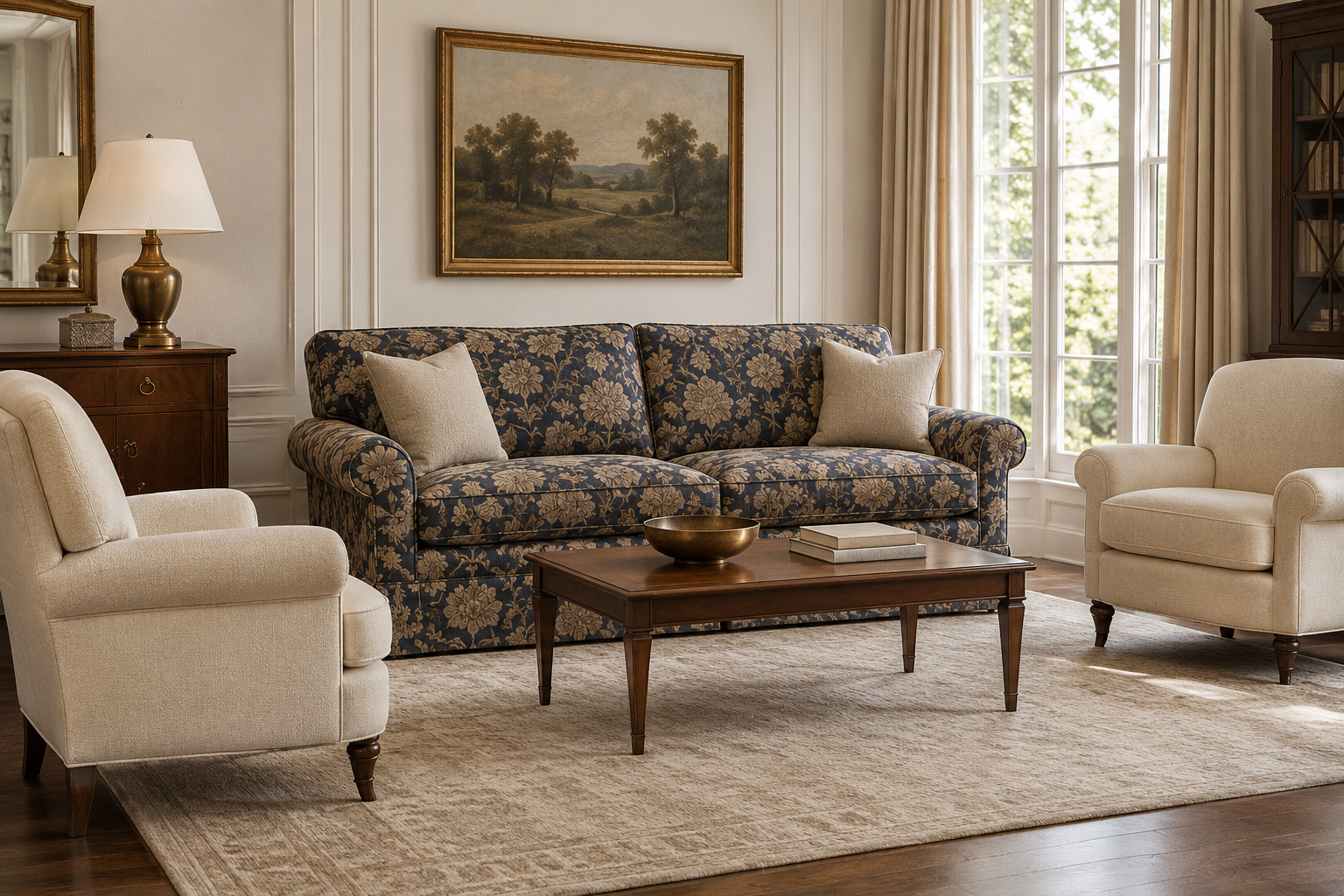
Two plain armchairs can give a patterned sofa a calm, more formal setting. Use the chairs as a pair in the seating arrangement, with a color drawn from the sofa’s quieter background. The repeated chair shape establishes order while the sofa supplies the detailed surface.
Check the visual weight of the pieces as well as their color. A delicate printed sofa may look lost beside two oversized chairs, while a broad sofa needs companions with enough presence. Keep the table and rug restrained so the seating relationship stays clear. Matching the chairs to each other is enough; they do not need to share the sofa’s upholstery or every detail of its frame.
10. Choose a Dark Ground for a Lamplit Room
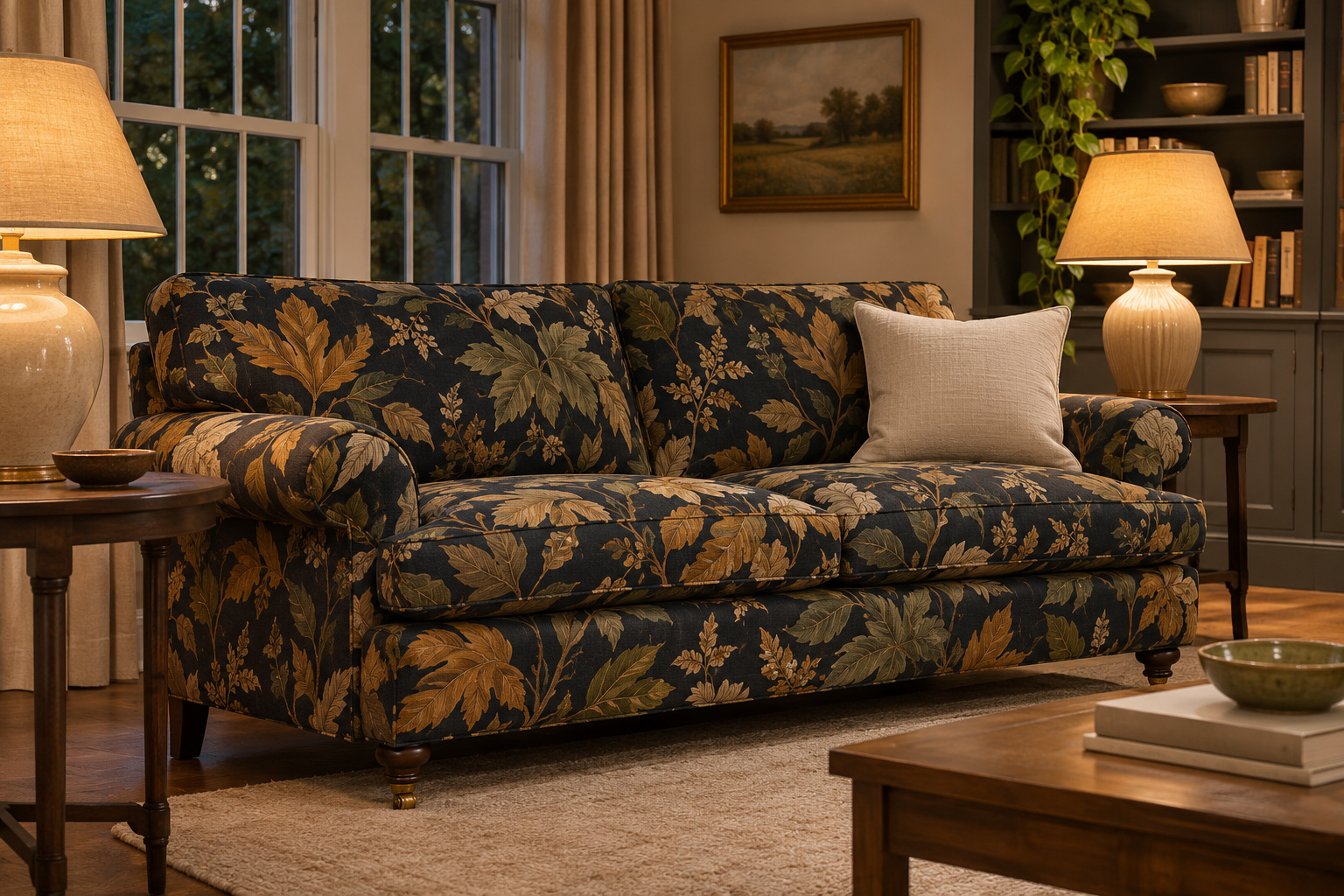
A print on a dark ground can feel rich in a living room used mostly in the evening. An inky background with muted ochre or green details gives the upholstery depth, while warm lamps reveal different parts of the motif. Keep a few lighter surfaces nearby so the sofa’s outline remains distinct.
Look at the actual fabric with the lamps you use, rather than choosing from a brightly lit shop image alone. A dark print may become quieter at night or show more contrast than expected. Plain curtains, a pale cushion, or a lighter rug can help balance it. The lighting should still work for reading and moving through the room; the patterned sofa adds atmosphere without needing the whole space to be dim.
11. Set a Soft Abstract Print Against Plaster-Look Walls
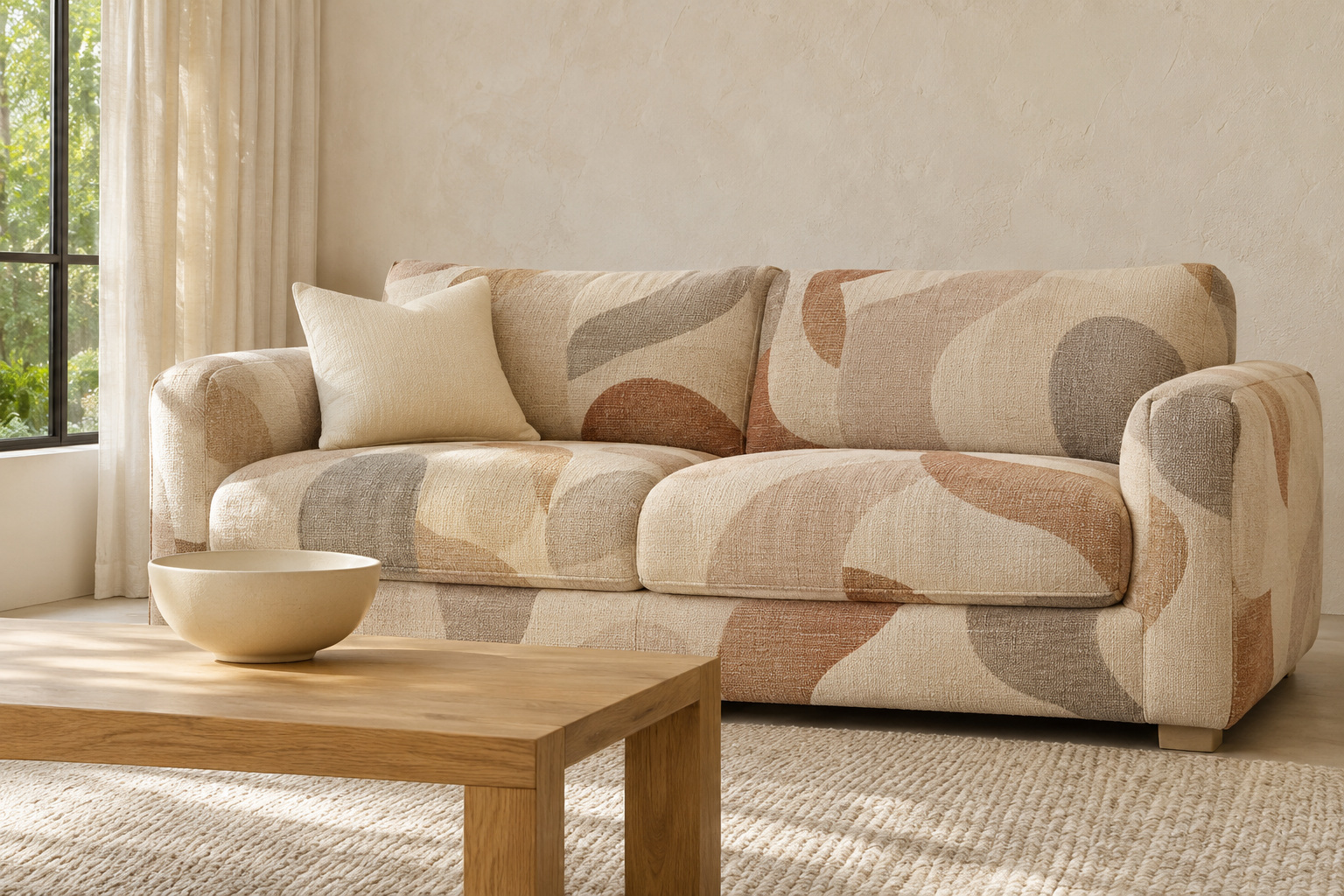
A soft abstract upholstery print can sit comfortably beside a wall with subtle plaster-like variation. Choose rounded or loose marks rather than a sharp grid, and keep the colors close enough that the sofa still reads as a coherent piece. The wall supplies a broad, quiet texture around the smaller fabric movements.
Avoid making every surface equally mottled. A plain wood table or a simple solid cushion can give the room a more definite shape. Test the fabric against the wall finish in more than one light, since both surfaces may change appearance as shadows move. A sofa with a restrained outline will let the relationship between print and wall remain the focus.
12. Use a Border Detail to Sharpen Loose Upholstery
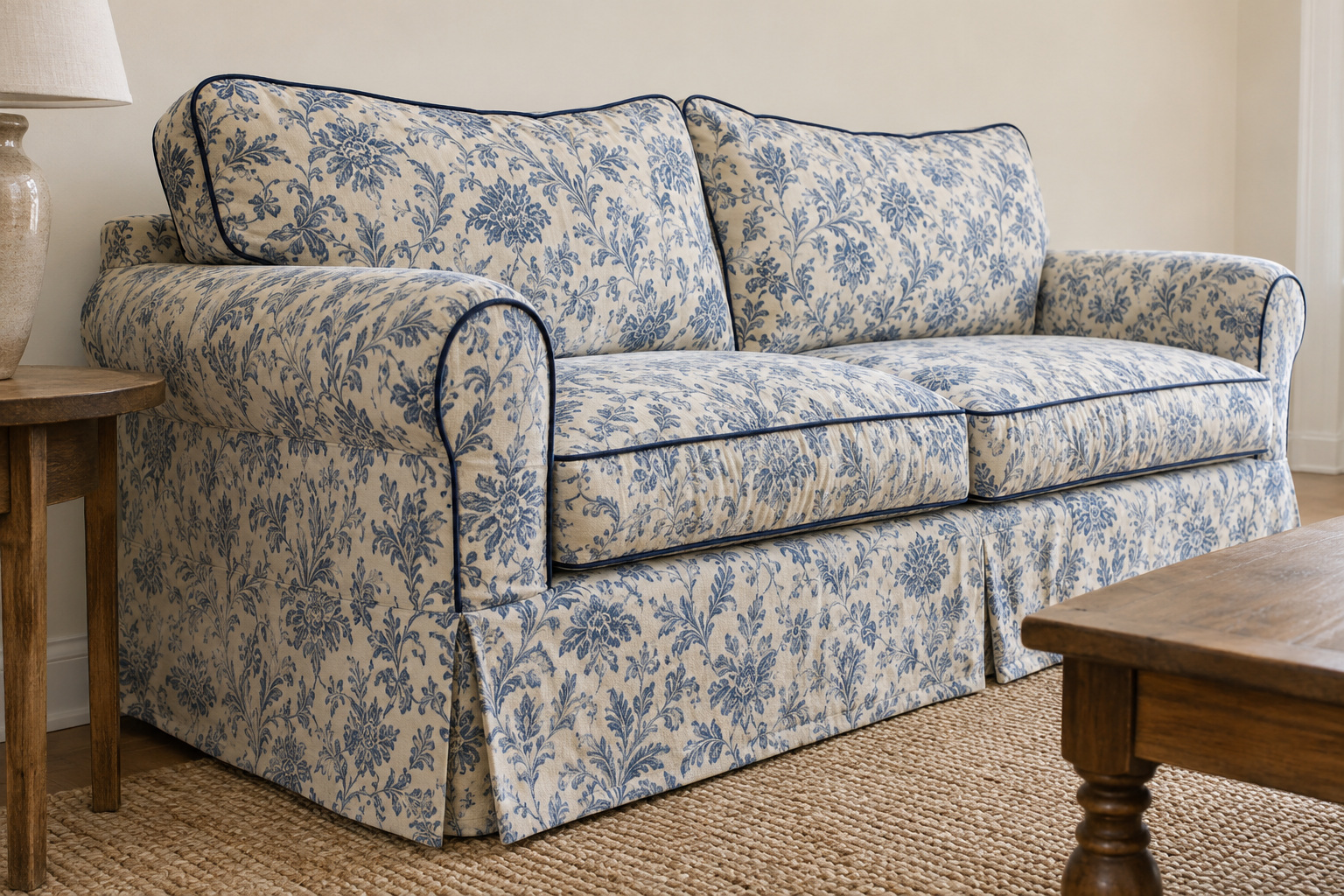
A narrow border or piping detail can give loose-looking patterned upholstery a clearer edge. A deeper tone around the cushion seams and arms helps define the sofa’s shape without replacing the relaxed fabric character. Keep the trim related to a color already present in the pattern.
Look at the border across the whole sofa, not only on a sample cushion. Too much contrast can turn every seam into the main feature. If updating existing upholstery, ask an upholsterer which details suit its construction and fabric; adding trim is not equally straightforward on every cover. Plain neighboring textiles let the outlined sofa remain the room’s considered detail while preserving a comfortable, unforced appearance.
13. Let a Woven Motif Carry a Warm Neutral Room
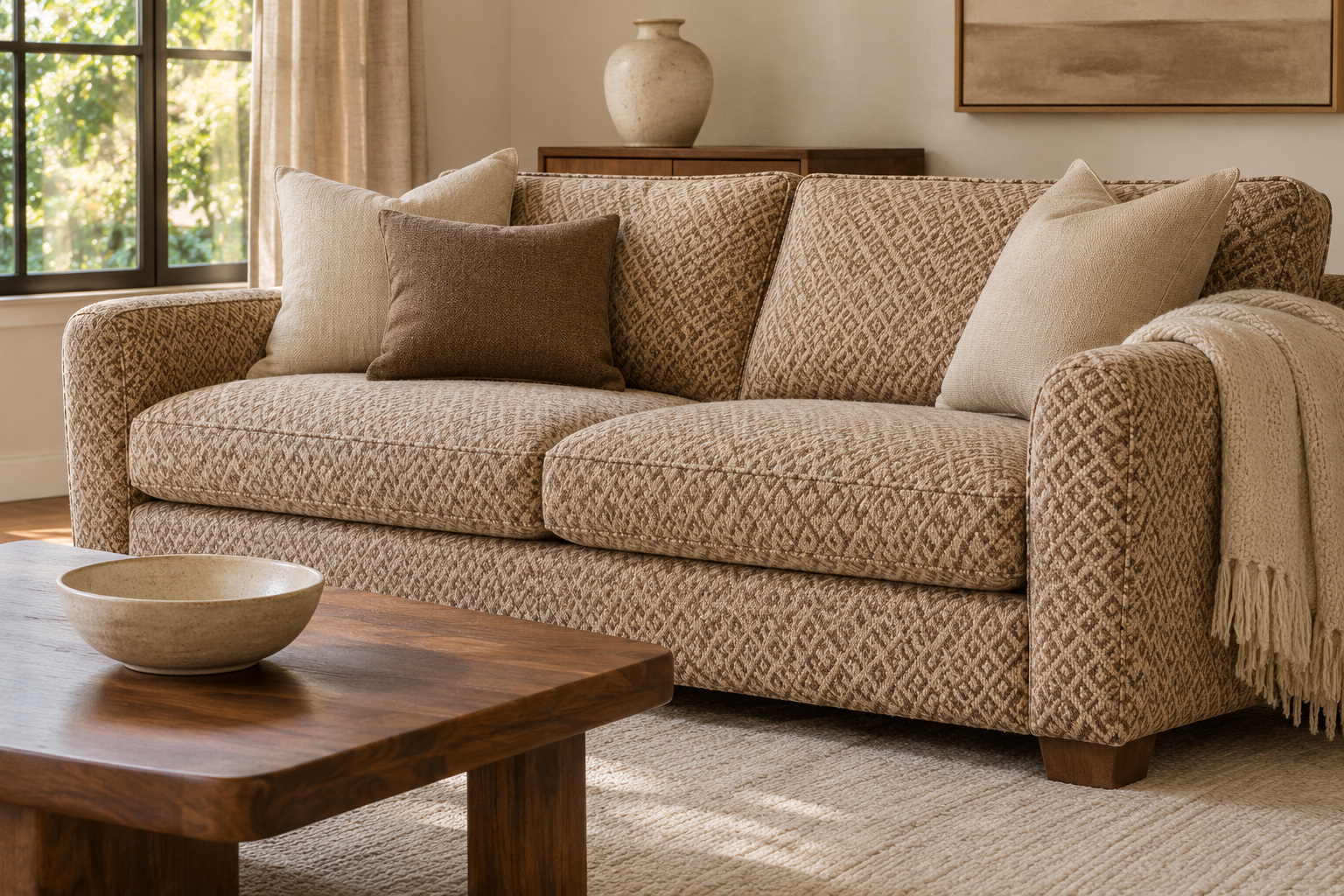
A woven motif can add detail to a warm neutral living room through the structure of the cloth. Look for a small diamond, broken stripe, or other restrained repeat in related earthy tones. The sofa then has a distinct surface even when the overall room stays within cream, sand, and brown.
Pair the upholstery with natural wood, a plain rug, and a few ceramic surfaces so the materials feel varied. Avoid assuming that a textured-looking fabric is automatically more durable or easier to clean; check the actual upholstery specifications and care guidance. A generous sample will show how the woven pattern behaves around a fold. Keep the cushion arrangement simple enough to leave that texture visible.
14. Use Solid Back Cushions to Break Up a Busy Seat
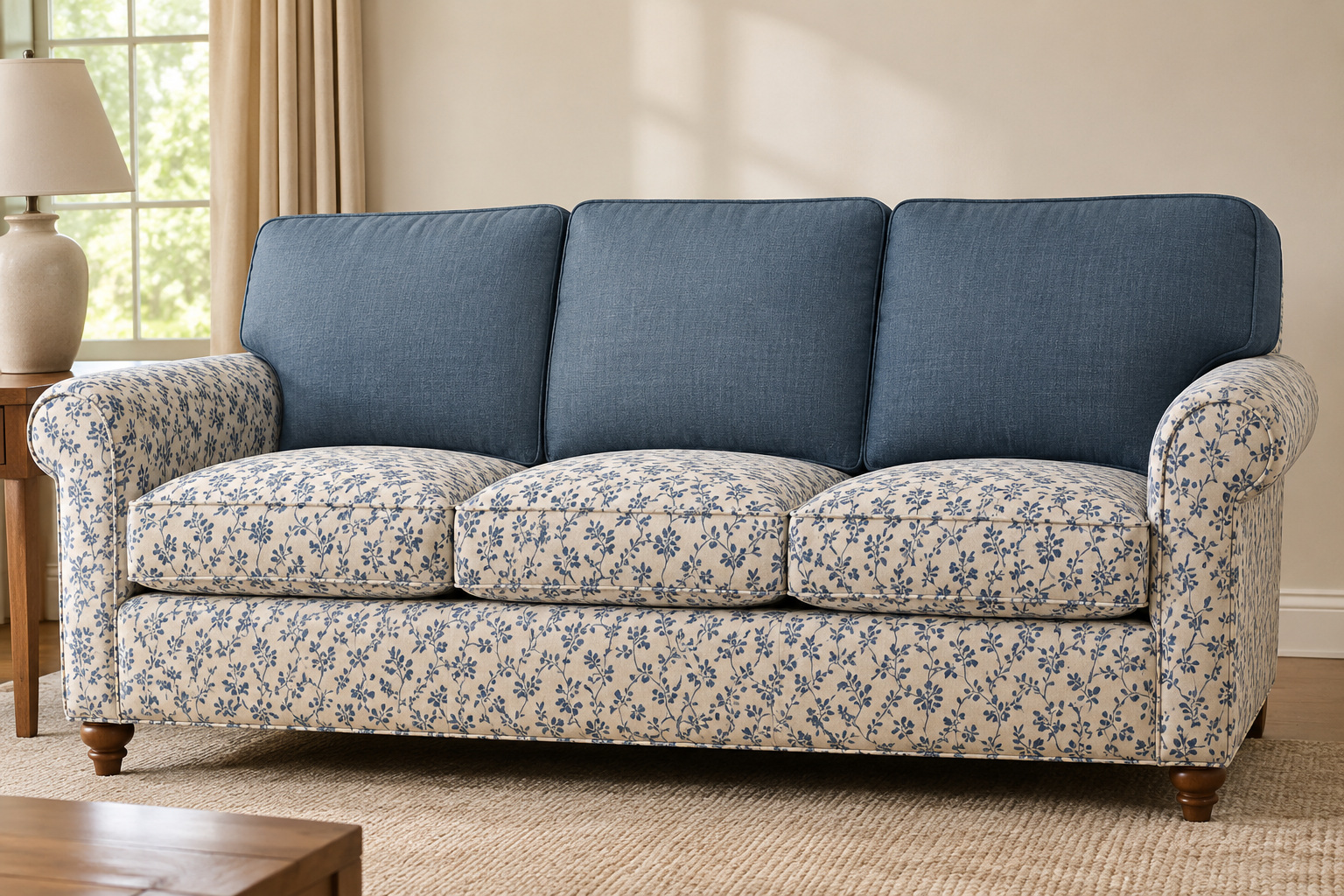
A sofa can combine a patterned seat and frame with solid back cushions when its design and upholstery construction allow. The solid surface gives the eye a break at the largest upright area, while the patterned lower part still carries the room’s character. Choose the solid color from the print so the two fabrics feel intentional.
This is best planned as a considered upholstery combination rather than a collection of unrelated replacement cushions. Check fabric suitability, cushion fit, and care requirements together. A busy blue-and-cream print can pair with plain blue back cushions, with the rest of the room kept relatively quiet. Make sure the arrangement remains comfortable and supportive before treating the color division as the final design decision.
15. Give a Patterned Sectional a Clear Furniture Layout
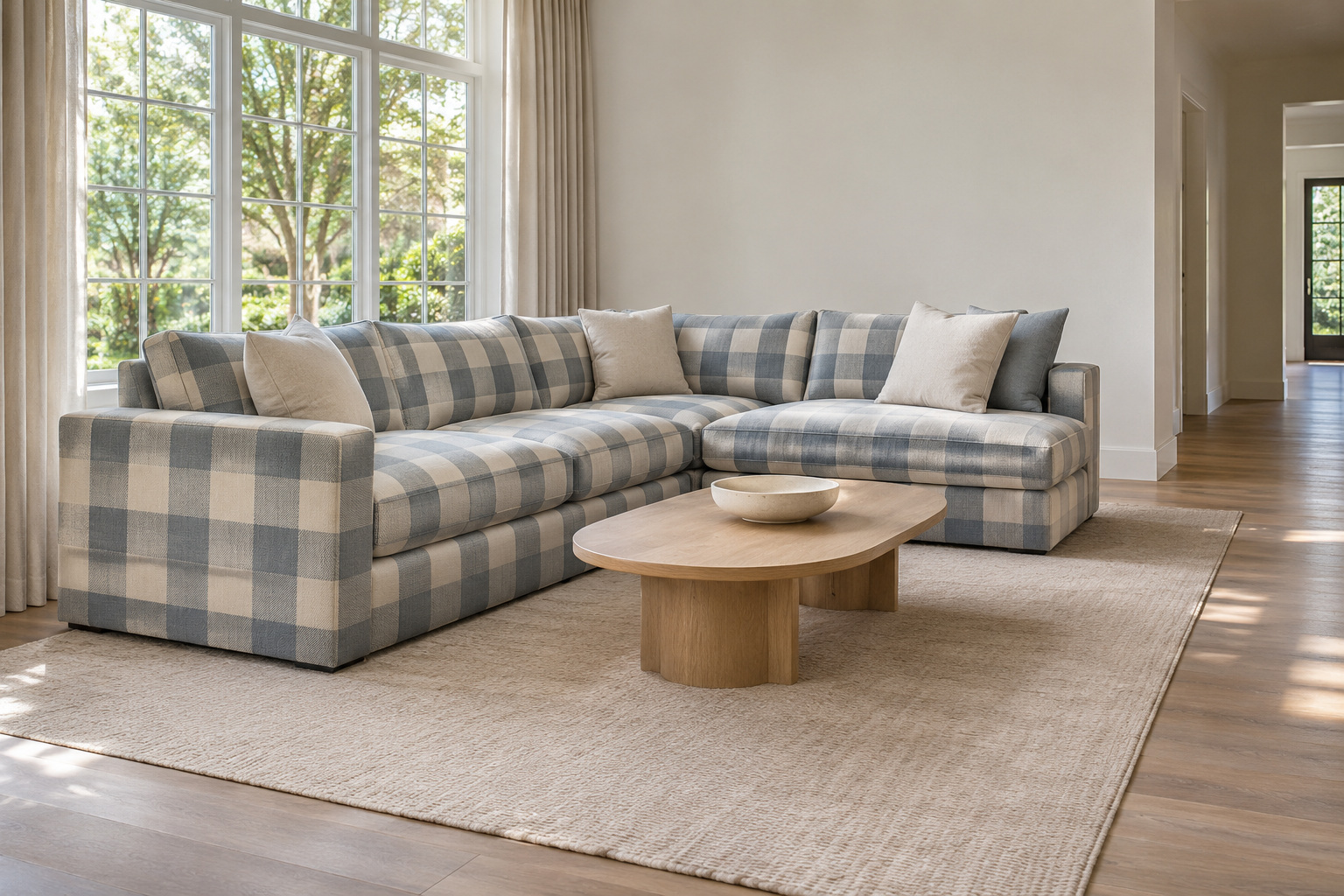
A patterned sectional occupies a large area, so its furniture layout needs to be especially clear. Let the sectional define the sitting zone, then choose a coffee table that leaves a comfortable route around the open side. A broad check or restrained geometric can remain readable across the larger upholstery surface.
Plan the walking paths before adding side tables or extra chairs. The chaise end should not force everyone to squeeze past the table, and the room still needs an obvious approach to the seating. Keep the rug plain and the smaller furniture visually light so the sectional does not become part of a crowded collection. Pattern works best here when the layout already makes the large piece feel settled.
16. Pair a Traditional Print With a Modern Coffee Table
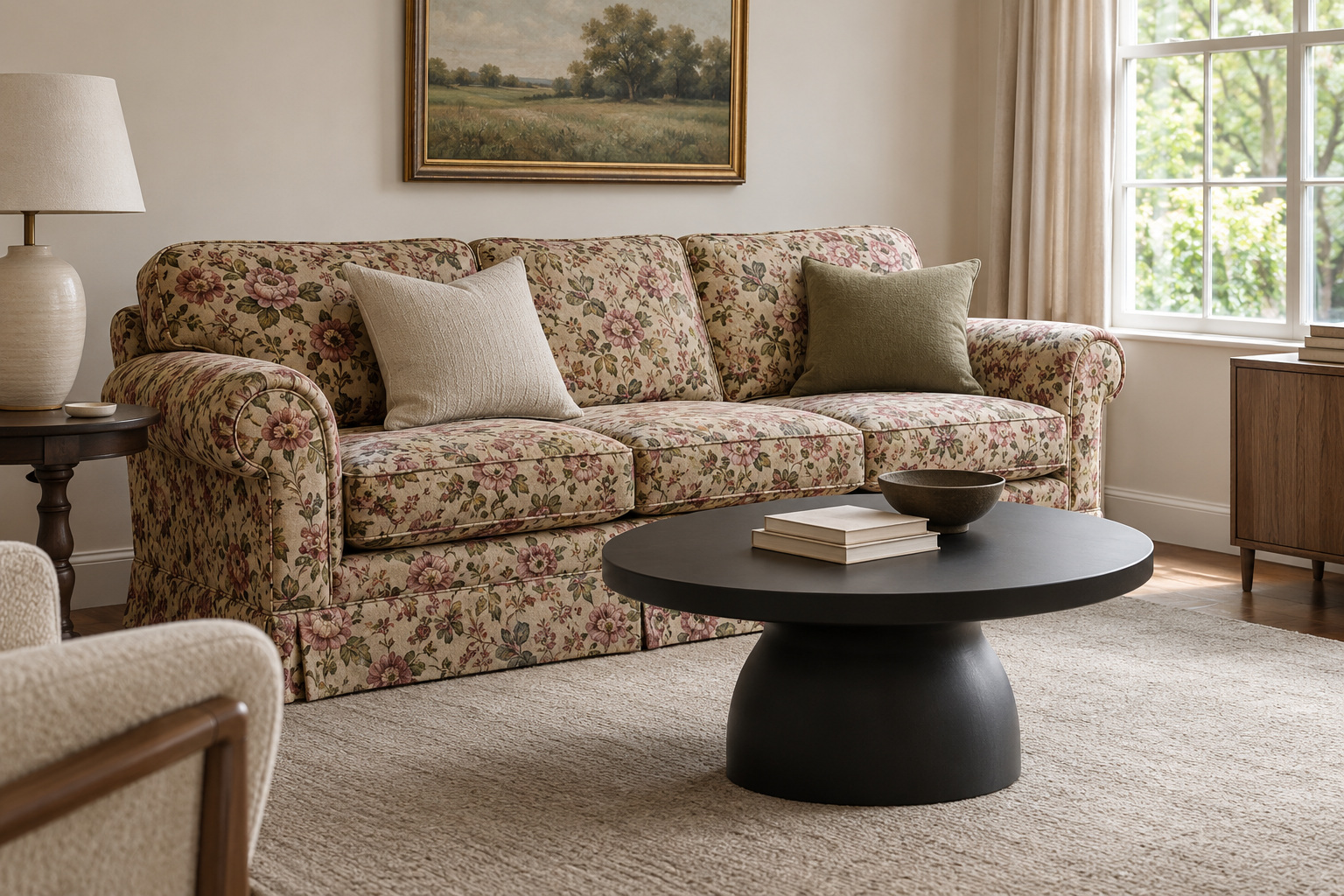
A modern coffee table can give a traditional printed sofa a fresh setting. Keep the upholstery’s familiar floral or small repeated motif, then introduce a table with a simple sculptural shape. A dark round table can provide a clear contrast beside a softer, more detailed sofa.
Choose the table for the way you use the seat as well as for its outline. Check reach, usable surface, and the route around it so the update improves the room in practice. If the sofa is an existing piece you still enjoy, changing the table may be enough to shift the composition. A plain rug and restrained side furniture help the old and new forms share the room without needing more competing statements.
17. Connect the Upholstery to a Deliberate Wall Palette
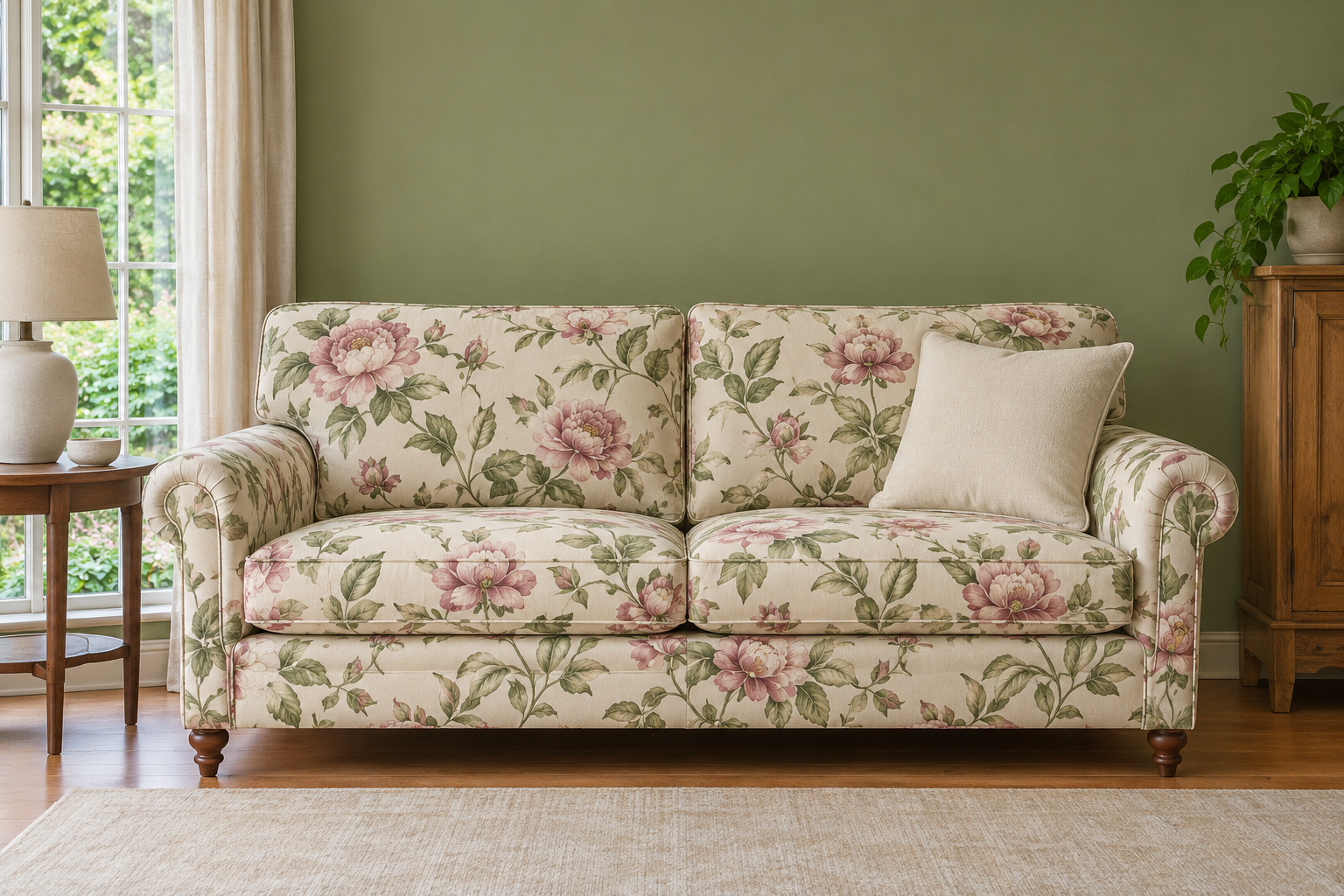
A wall color chosen from the upholstery can make a patterned sofa feel rooted in the room. Select a quieter part of the print, then test a related paint rather than matching the loudest flower or stripe automatically. A soft moss wall can connect with green leaves in a floral sofa while leaving the cream ground visible.
Place a generous fabric sample against a painted sample area and check them in daylight and evening light. Keep the wall a plain color so the relationship remains legible. Repeating a small accent in one cushion or lamp base can complete the palette, but it does not need to appear on every object. The wall should support the upholstery’s colors while still making the room comfortable to live in.
18. Keep a Bold Sofa as the Only Large Pattern
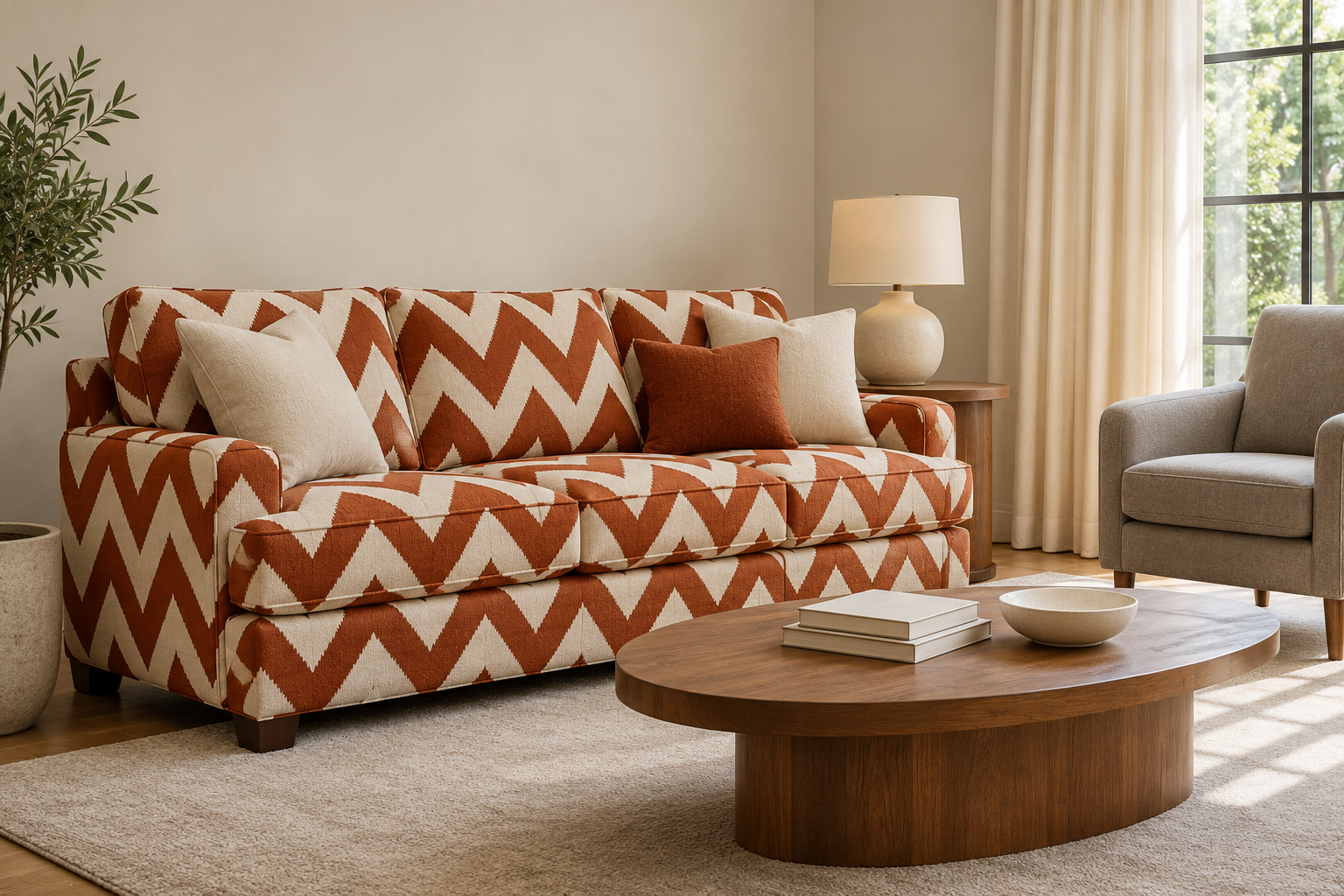
A bold sofa can be enough pattern for the whole room. Give it plain curtains, a quiet rug, and mostly solid neighboring upholstery so the main print is easy to enjoy. A large rust-and-cream zigzag or another strong graphic needs little extra detail to establish the living room’s personality.
Keep the plain surfaces varied through material rather than adding more prints: linen curtains, a wool rug, and a smooth wood table can each contribute something different. A small solid cushion may relate to the sofa, but leave most of its fabric visible. This is a useful approach when you love one confident pattern and want the rest of the room to give it room to breathe.
Begin with the sofa pattern you want to see every day, then give each surrounding element a clear job. One may repeat a color, another may soften the geometry, and a plain surface may simply leave space around the print. A patterned sofa feels most comfortable when its scale, upholstery, and furniture layout work as well as its appearance.
If the shape of your seating is also part of the decision, explore our ways to style a curved sofa alongside these upholstery and room-palette ideas.
Discover more from HomeTrendora
Subscribe to get the latest posts sent to your email.