The dining table often gets all the attention at Christmas, but the walls can carry much of the festive atmosphere. A winter picture, a considered wreath, or a few sculptural stars can make the room feel ready for guests while the table keeps the space it needs for plates and serving dishes.
These 11 Christmas dining room wall decor ideas begin with the furniture and architecture already in the room. Choose one main wall treatment, look at it from a seated position, and keep enough space around it for the shape to read. Use fixings suited to the wall, the decoration, and its actual weight; holiday styling should not cover switches or interfere with doors and furniture.
1. Swap One Large Artwork for a Winter Landscape
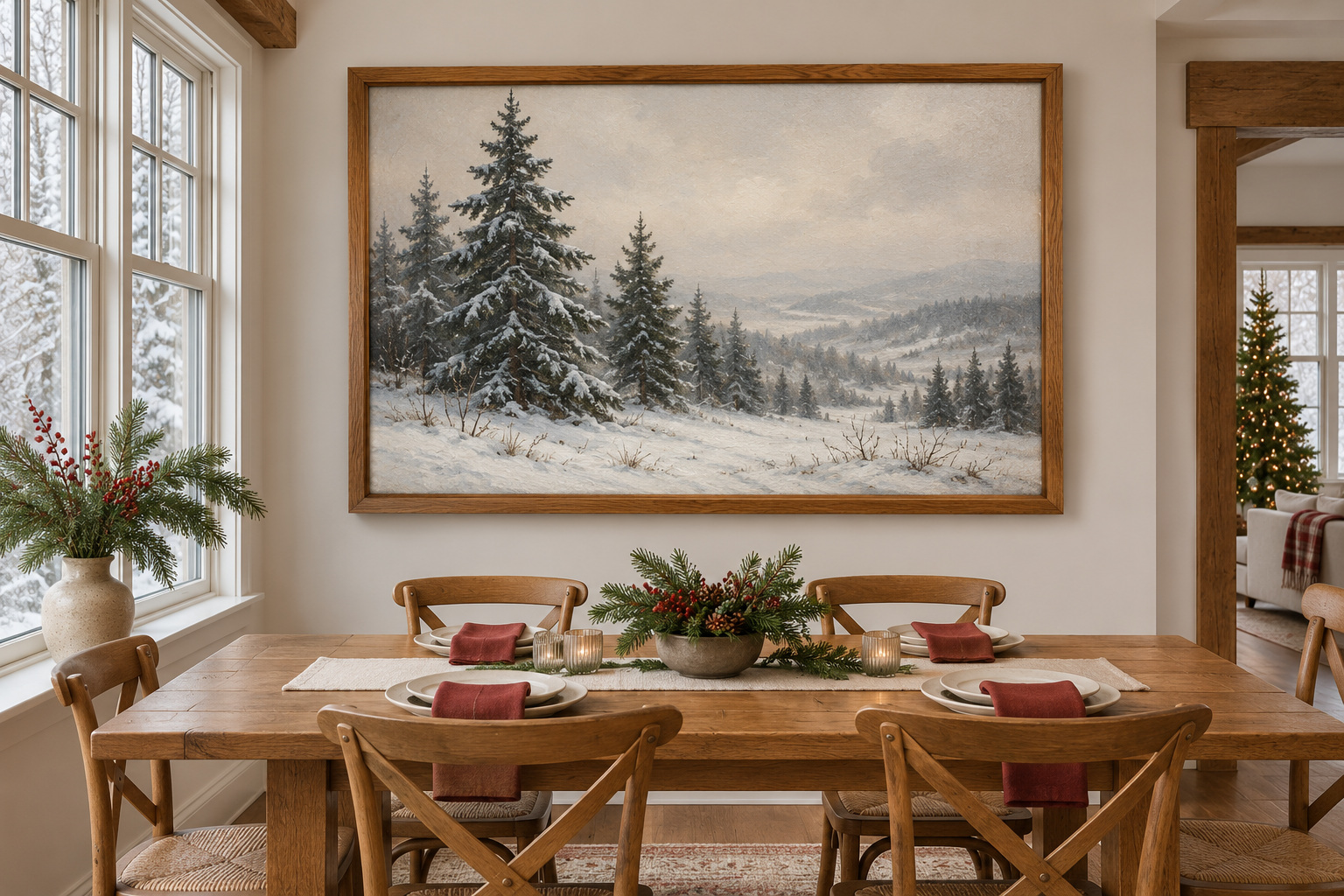
Replacing one large artwork can change the dining room’s mood more clearly than adding several small ornaments. Choose a winter landscape with a strong, simple composition, such as dark fir trees against pale snow. The existing picture position gives the seasonal piece a defined home rather than creating another cluster on the wall.
Relate the frame to the dining furniture: warm wood can connect with an oak table, while a restrained dark frame can echo painted chairs. Keep any red or green table linen modest so the artwork remains the main seasonal backdrop. Check the replacement frame’s hanging requirements instead of assuming the previous hook suits it. When the room already has a large picture, this single exchange may be all the wall decoration it needs.
2. Center a Wreath Above a Low Sideboard
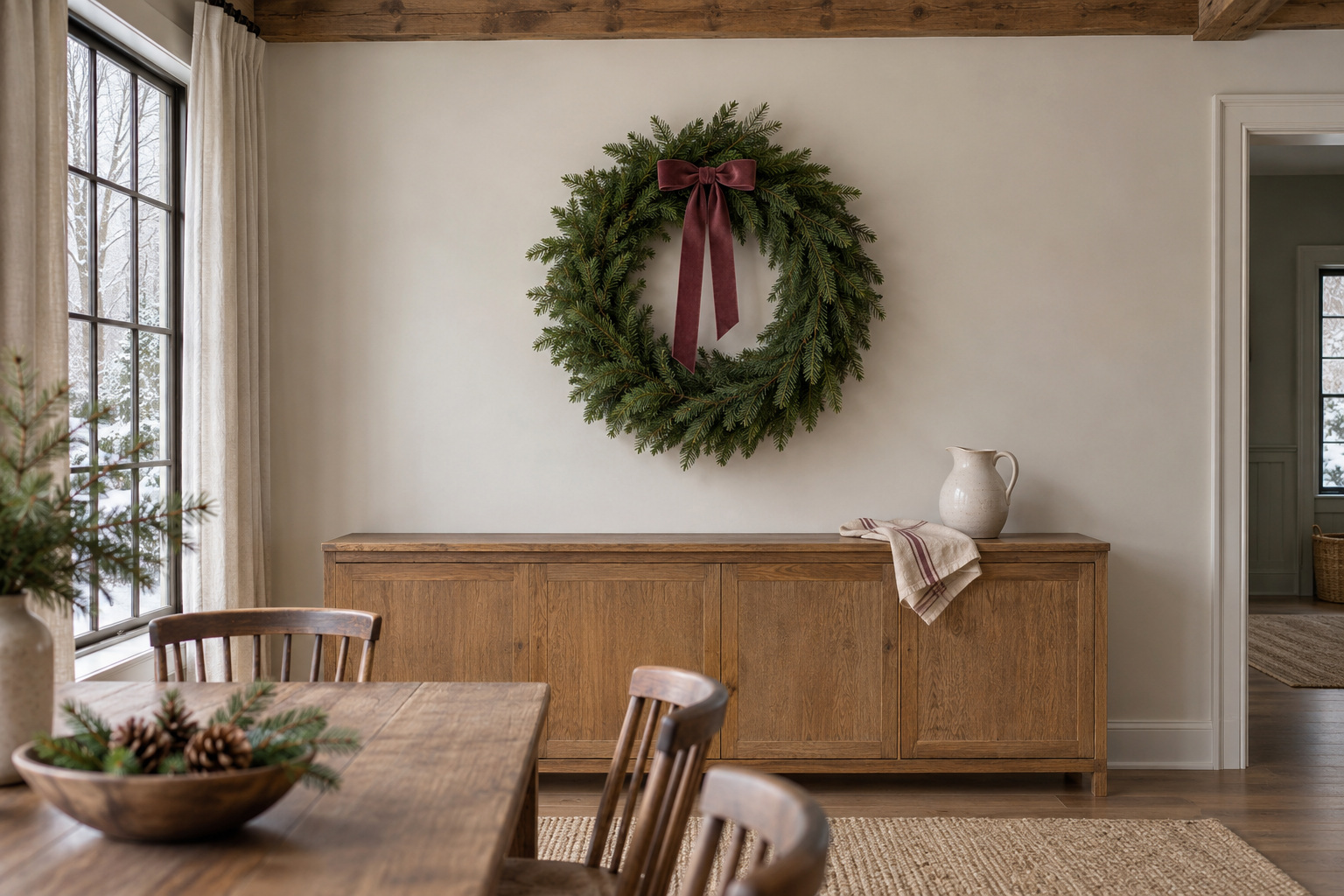
A single wreath above a low sideboard can create a clear focal point away from the dining table. Center it on the furniture rather than on an unrelated stretch of wall, leaving enough space between the wreath and objects on the serving surface. A plain evergreen ring with a soft ribbon is easy to read from the doorway.
Use the sideboard as a visual base, with a small group at one end and usable space across the rest. Match the wreath’s scale to the wall area so it feels neither squeezed against the ceiling nor lost above a broad cabinet. Keep its support independent of delicate furniture trim. The arrangement works especially well when guests see the sideboard behind or beside the table as they enter the room.
3. Make a Row of Plate Hangers a Christmas Display
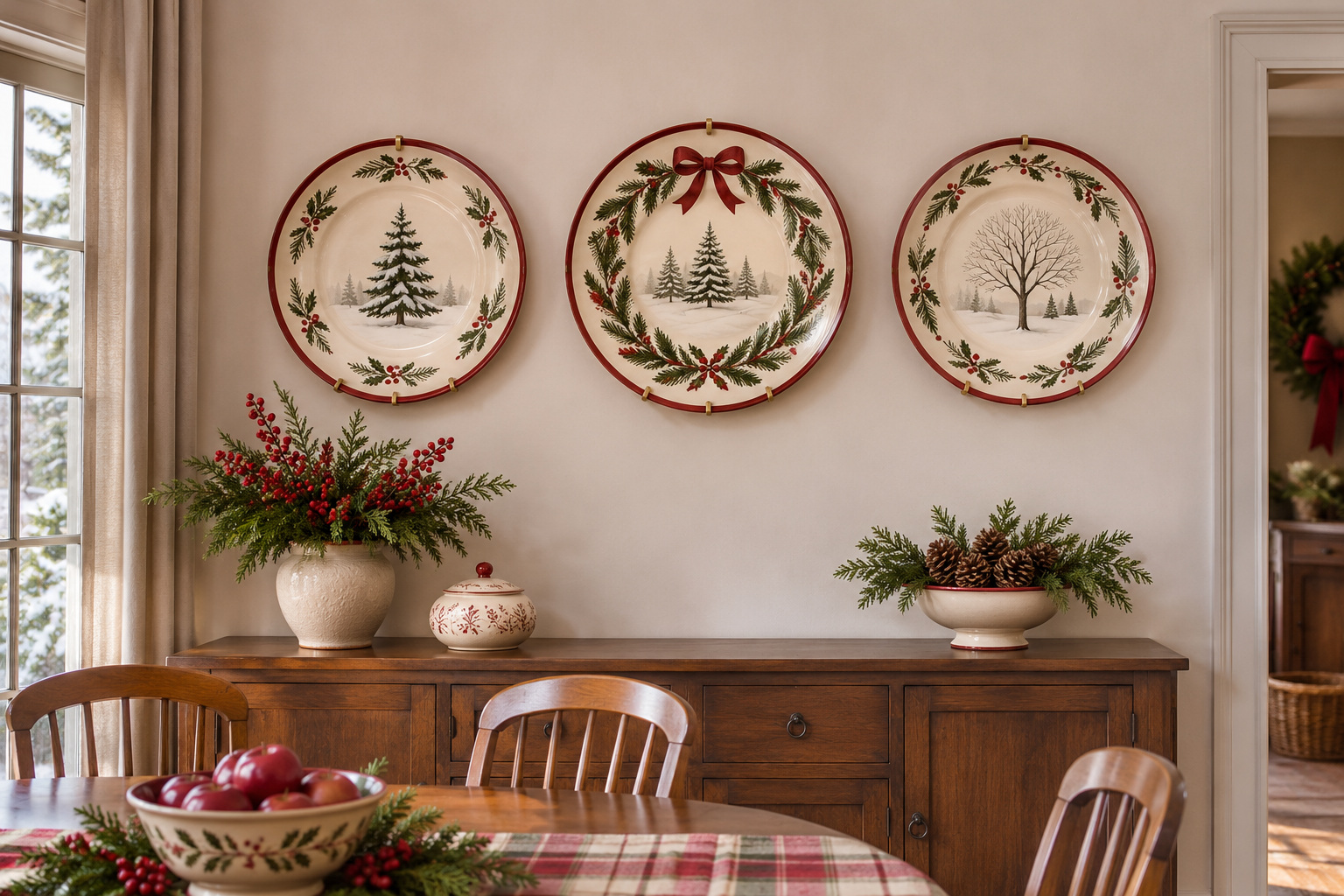
A small row of wall-hung plates can bring Christmas color into a dining room without another garland. Choose a few plates with a related detail, such as a red border, a green leaf motif, or a quiet winter illustration. Keep them separated so each outline remains visible against the wall.
Use hangers intended for the specific plate size and weight, and check that the wall fixings are suitable. Arrange paper templates first to judge spacing above a sideboard or another low piece of furniture. Three plates can be enough for a narrow area; more are useful only when the wall genuinely needs them. Keep nearby framed art quiet, allowing the ceramic shapes to become the seasonal display.
4. Hang Paper Stars at Staggered Heights on a Blank Wall
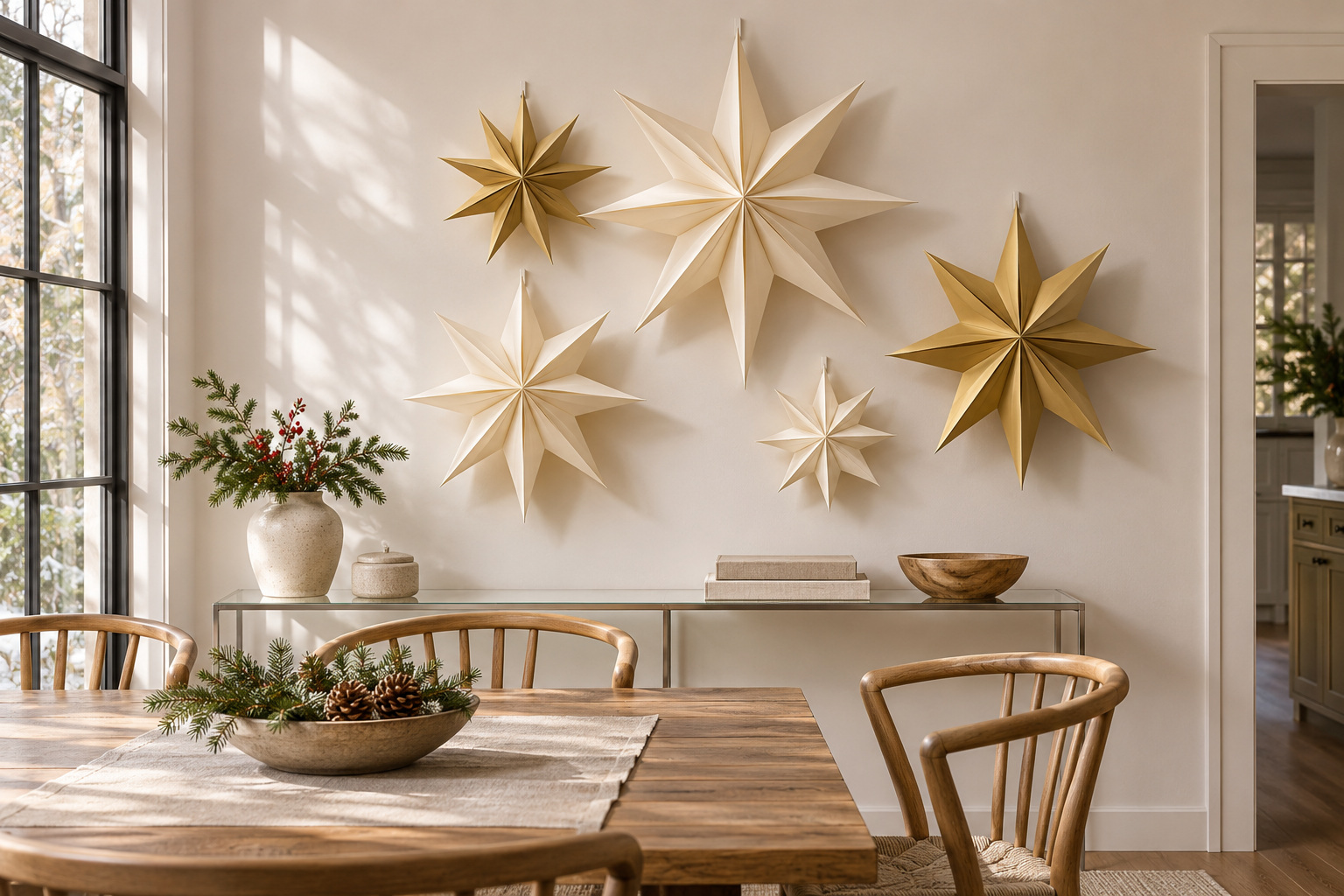
Three-dimensional paper stars can give a blank dining wall shape and shadow. Hang a small group at staggered heights, with one larger star and a few smaller companions. A mix of warm white and muted gold can look festive without needing a dense arrangement across the whole room.
Keep the stars on suitable independent supports and well clear of lamps, heat, and food preparation. Their depth is part of the appeal, so choose a position where they will not brush chair backs or people walking behind the table. Look at the group from a seated position before fixing the final heights. The gaps between the stars help each folded form read more clearly than a tightly packed cluster.
5. Give a Mirror One Asymmetrical Evergreen Corner
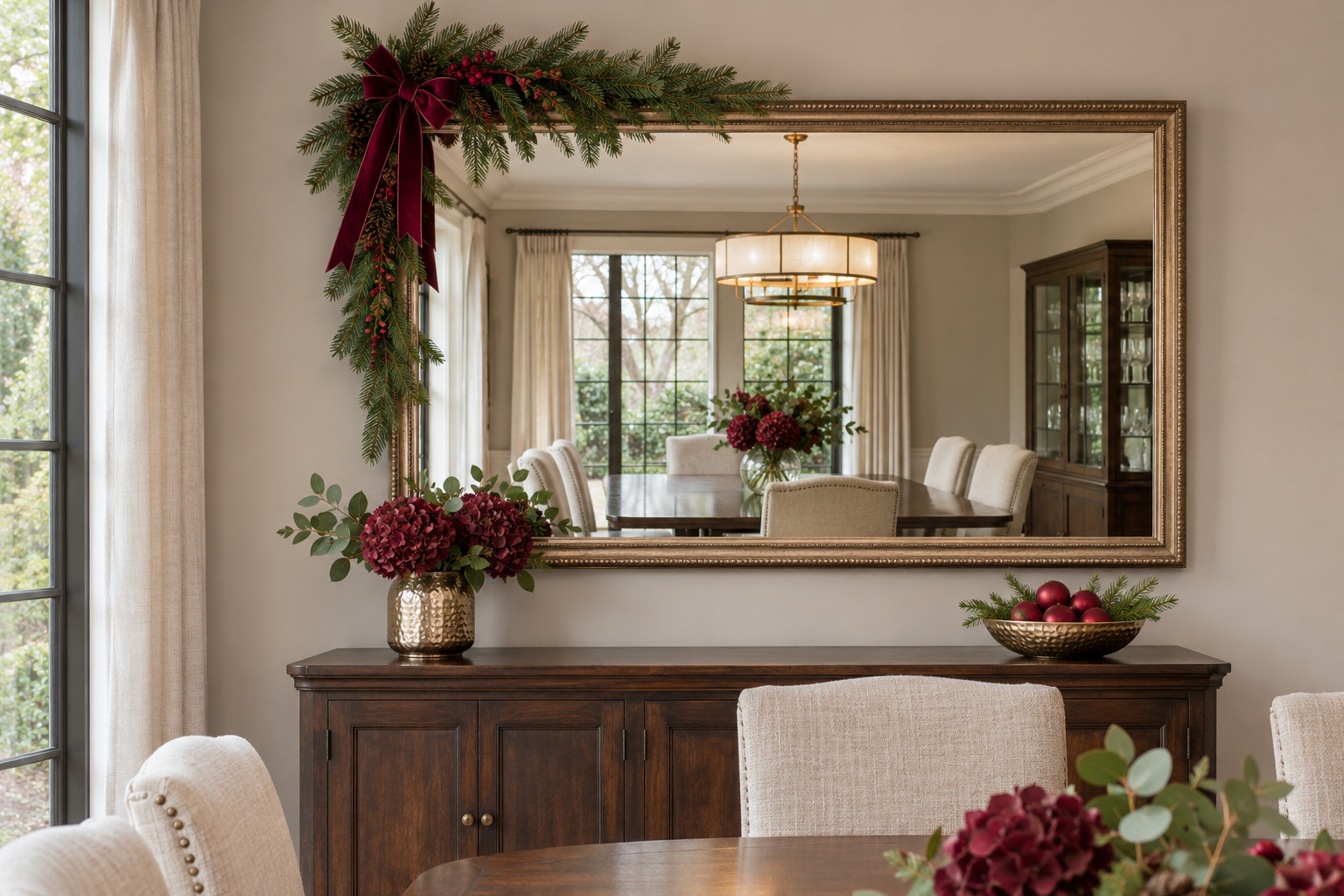
A dining room mirror can gain a Christmas detail without losing most of its reflective surface. Place a modest evergreen arrangement at one upper outer corner, letting a short length follow the side of the frame. One ribbon or a few small ornaments can finish that corner while the rest remains clear.
Choose a support method compatible with the mirror and wall; a fragile frame should not carry an improvised load. Check the reflection from the table so the greenery does not hide the view that makes the mirror useful. Keep the shape compact enough to avoid nearby sconces. An asymmetrical corner works best when the serving surface below stays calm, allowing the reflected room and the greenery to share attention.
6. Use a Pair of Narrow Frames Beside a China Cabinet
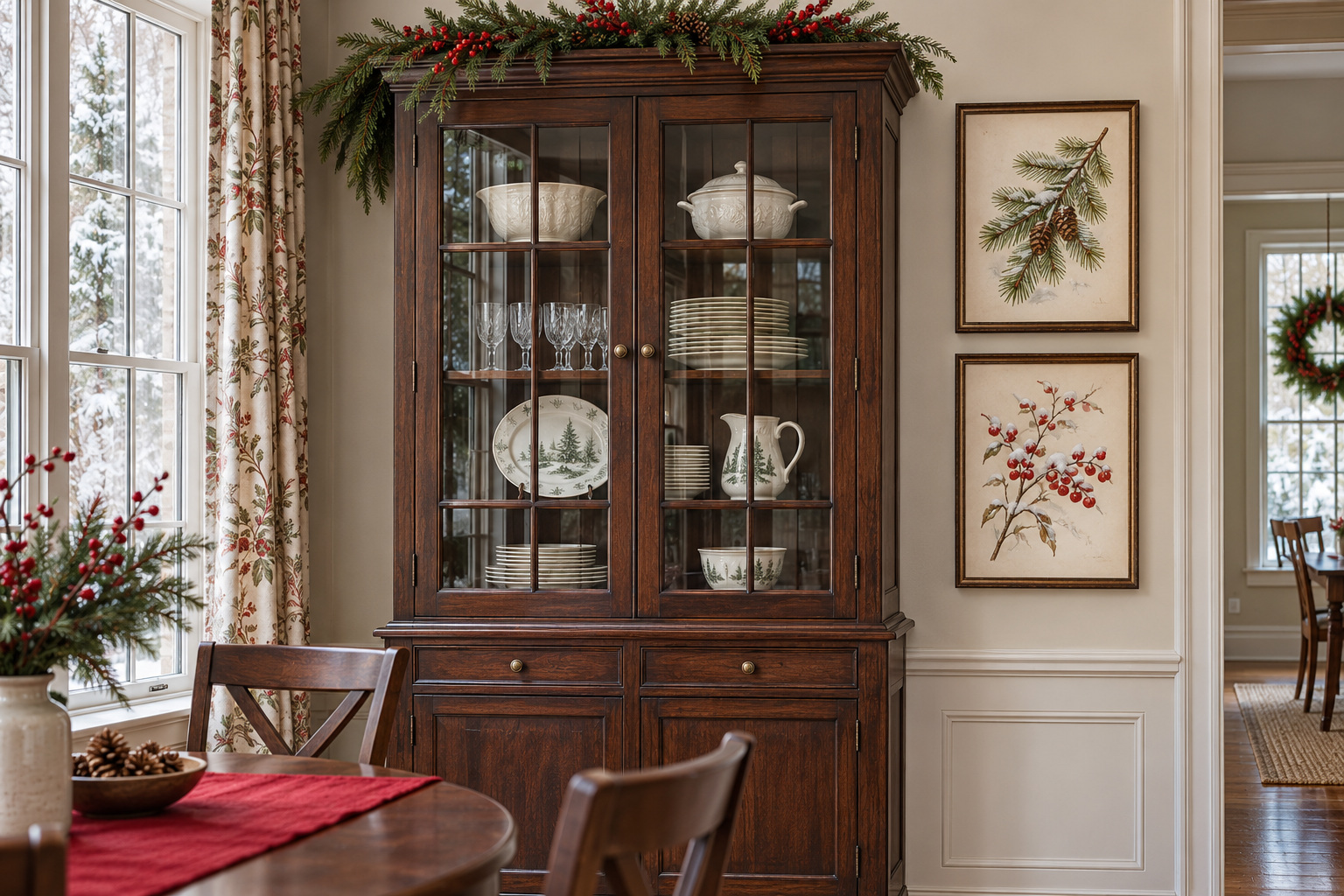
Two narrow seasonal pictures can balance the tall outline of a china cabinet. Hang them as a vertical pair beside the cabinet, keeping their outer widths similar and their frames related to the furniture. Simple winter branches or berry studies can bring Christmas character without competing with the dishes behind the glass.
Let the pair occupy one defined wall strip instead of spreading more small pictures around the room. Test the arrangement with paper templates and check that cabinet doors open freely. A quieter picture background is useful when the cabinet contents already contain pattern. Repeat just one color from the prints in the room’s textiles, leaving the furniture and the frames to supply the rest of the structure.
7. Hang a Small Tapestry Above a Dining Bench
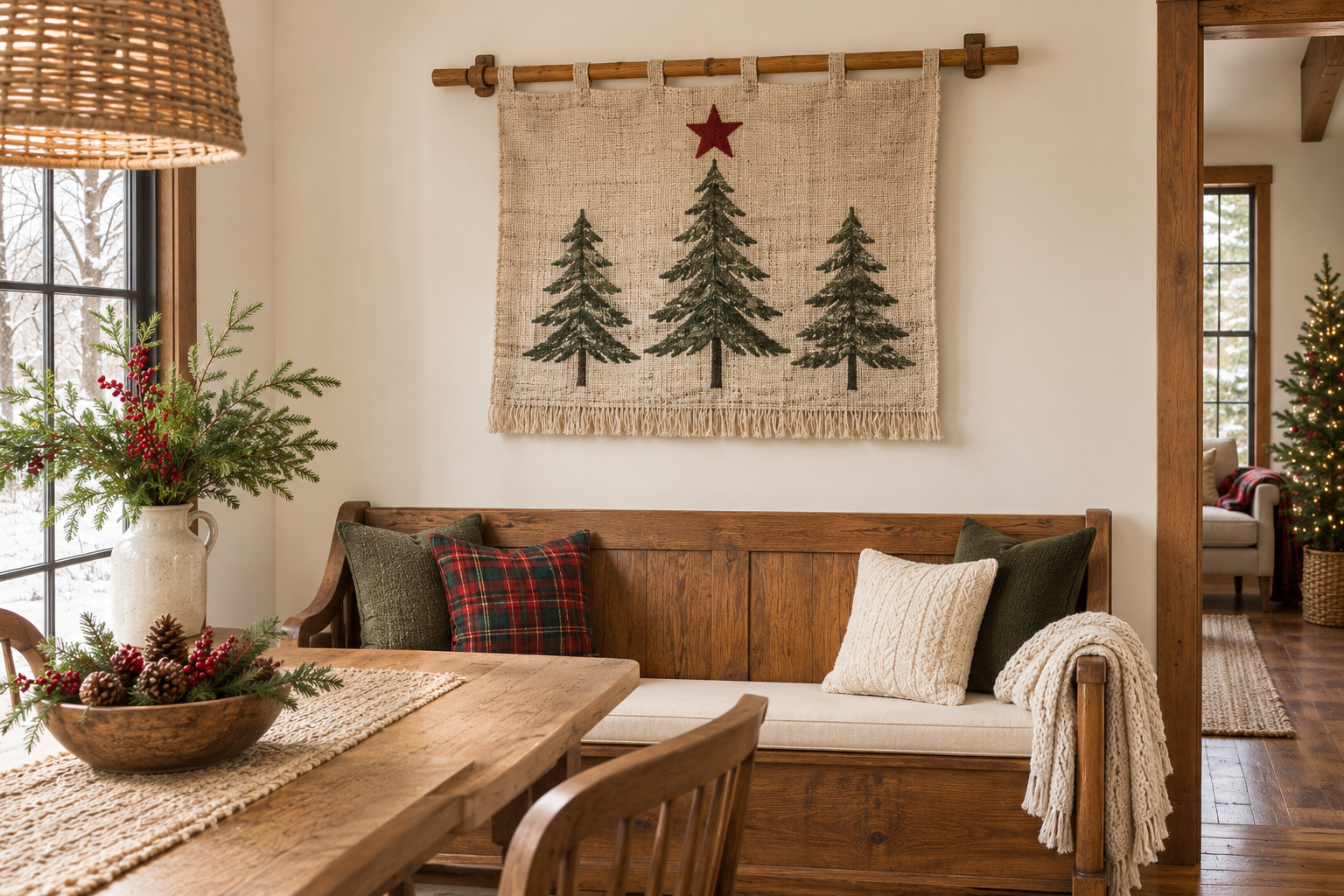
A small textile wall hanging can warm the area above a dining bench. Choose a clear woven or stitched motif, such as a simple line of fir trees or a restrained star pattern, and keep the hanging within the bench’s visual width. The cloth brings a softer surface to a room dominated by timber and ceramics.
Use an appropriate hanging system that supports the textile evenly, and keep the lower edge above seated heads. A plain bench cushion can pick up one color without repeating the whole pattern. The wall hanging should remain easy to see, so avoid surrounding it with several wreaths or frames. This approach suits a comfortable dining corner where a glossy or oversized artwork would feel too formal.
8. Use Existing Picture Molding for Ribbon-Hung Ornaments
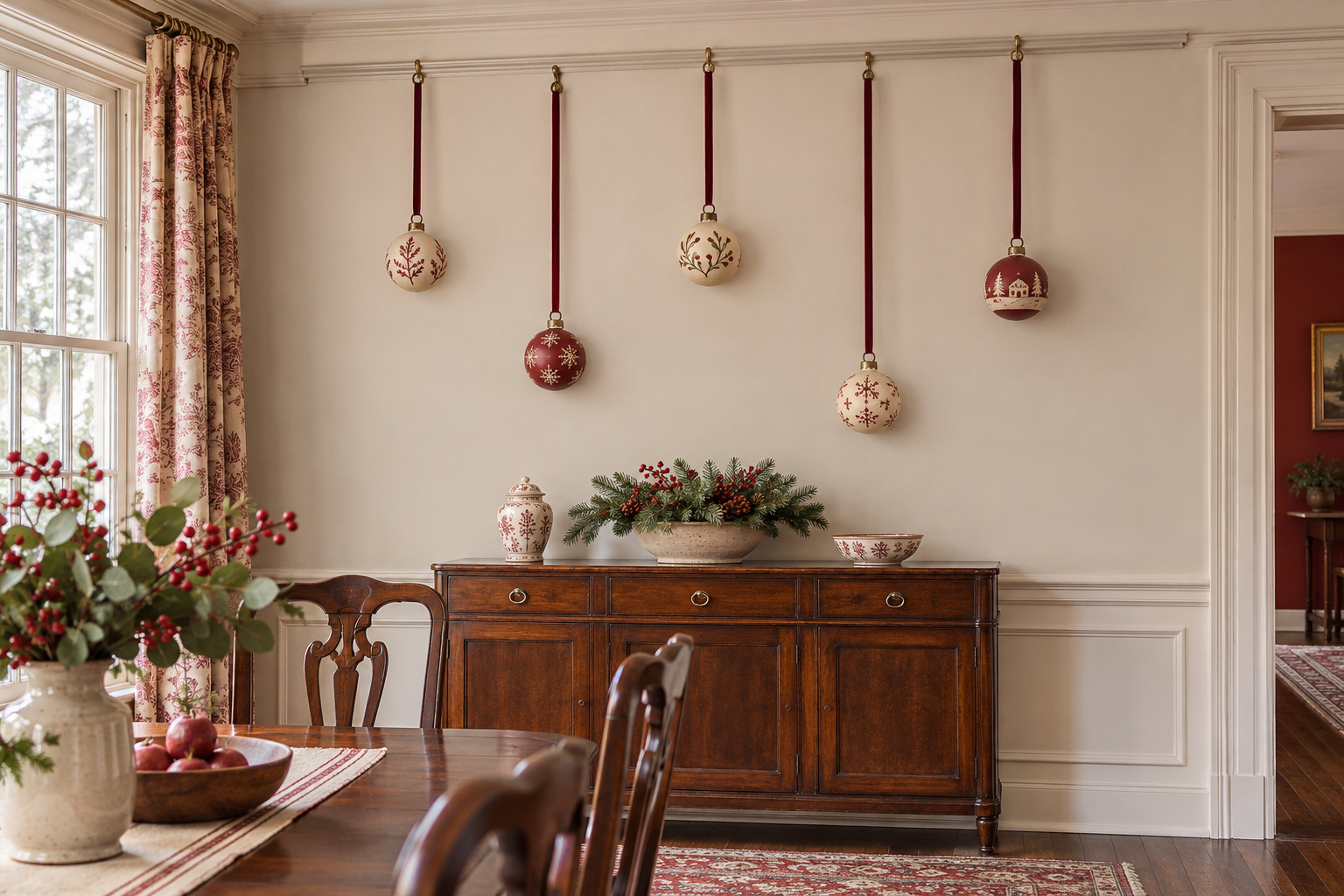
A suitable existing picture-hanging rail can provide a starting line for a few ribbon-hung ornaments. Use compatible hooks and small decorations within the rail system’s guidance, varying the ribbon lengths so the ornaments form a gentle rhythm. Keep the group over a low sideboard or another defined wall area.
Check that the molding is an actual hanging system rather than decorative trim assumed to carry weight. Choose lightweight, shatter-resistant ornaments and keep them out of reach of small children. Plain velvet or woven ribbon can give the display enough color without adding a garland to the same rail. Leave the wall visible between the strands, and keep the lowest decoration well above objects on the surface below.
9. Turn a Painted Panel Into a Wreath Backdrop
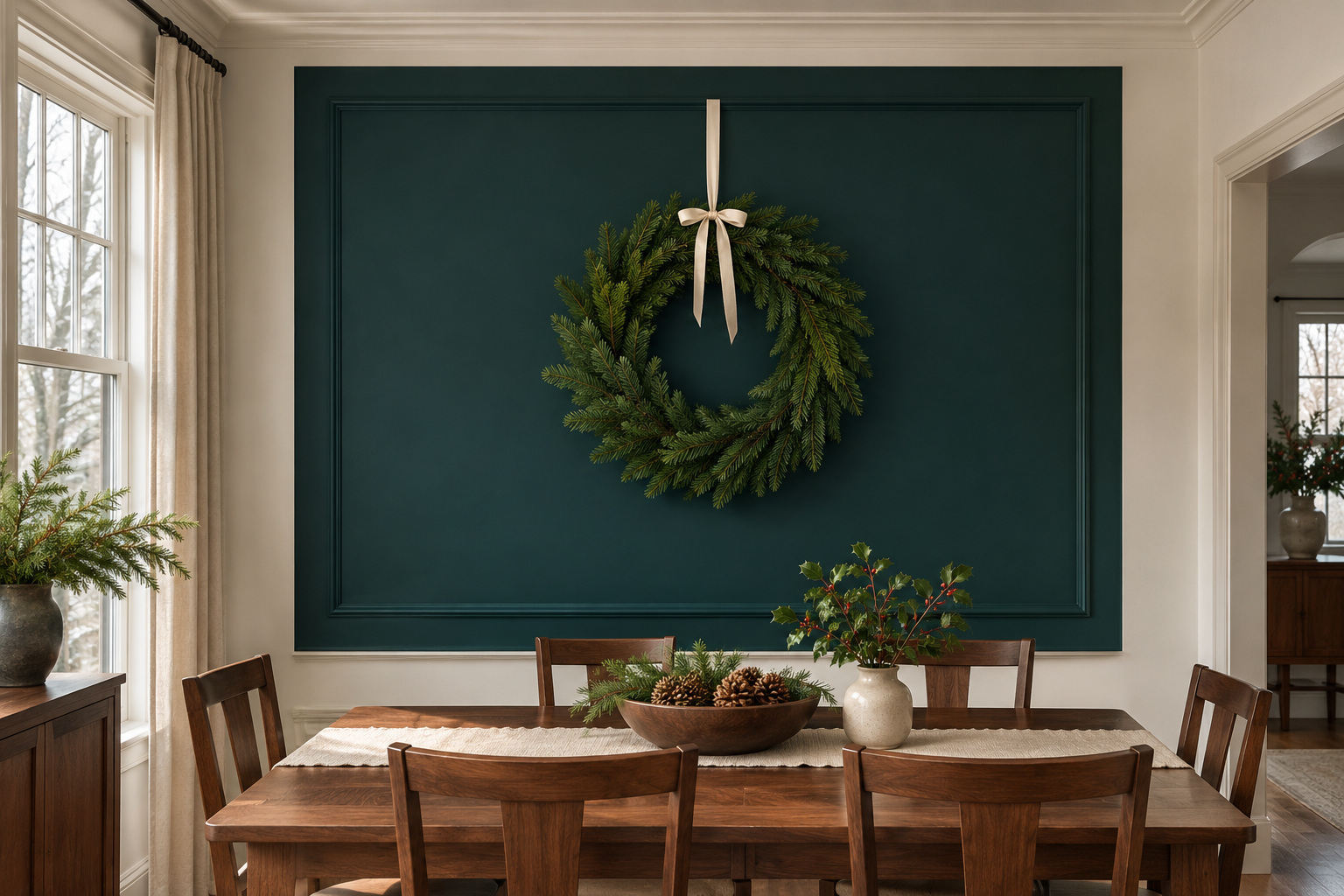
A painted wall panel can give one wreath a deliberate background. Choose a color that contrasts with the foliage while relating to the dining furniture, such as a deep blue-green panel around a plain evergreen ring. The rectangular painted area supplies structure, and the wreath provides the softer circle within it.
Test the paint beside the wreath in both daylight and the light used for dinner. Keep a visible margin around the ring so the panel does not look like a tight border drawn around it. Use a finish suited to the wall and allow it to cure as directed before installing the decoration. With this much emphasis on one wall area, the dining table can remain simply dressed.
10. Group Wooden Tree Shapes Above a Breakfast Table
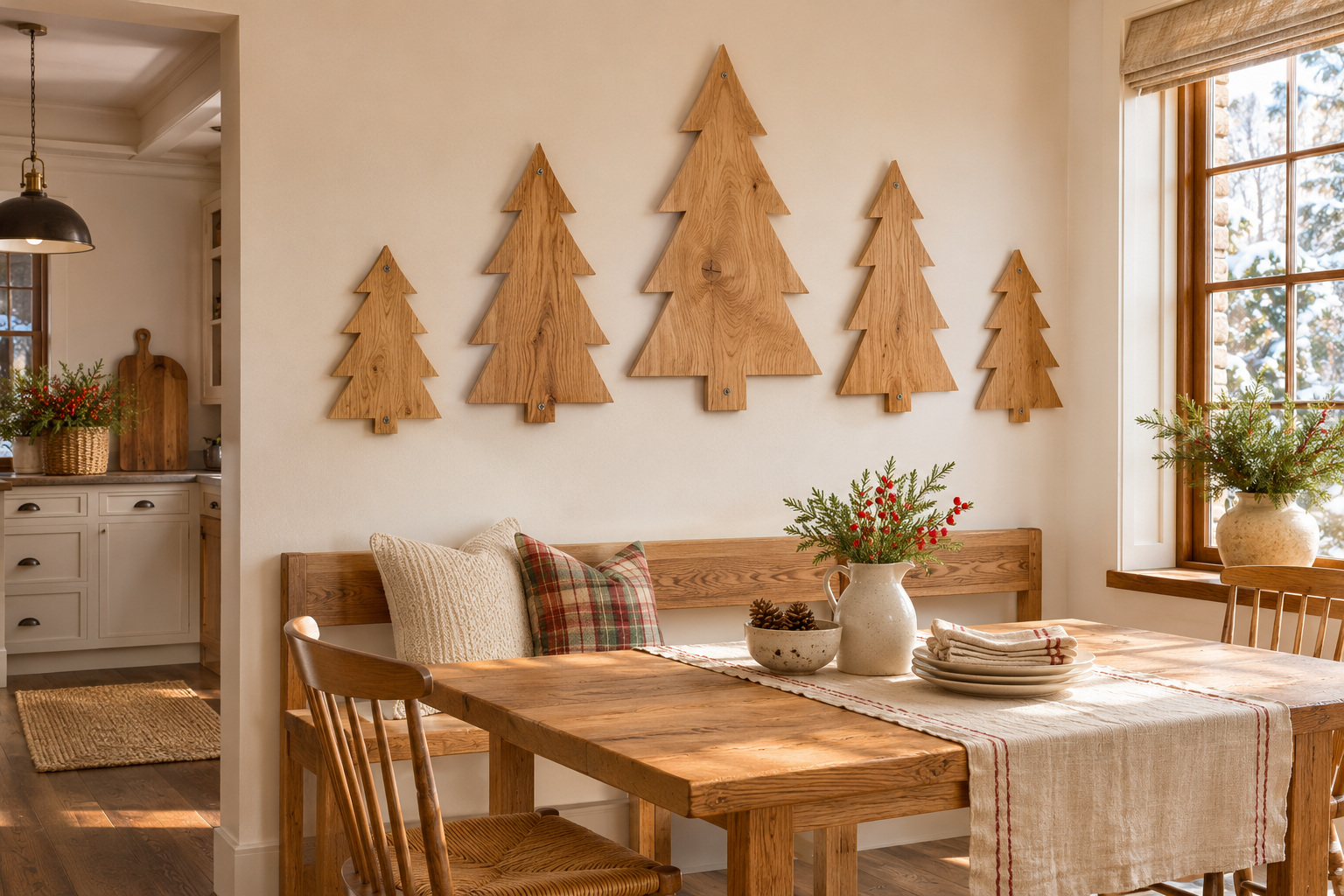
A small group of wooden tree shapes can give a breakfast-area wall a natural Christmas detail. Choose simple silhouettes with visible grain and vary the heights rather than adding a different finish to every tree. Arrange them over the table’s visual center while keeping them well above the seated area.
Use lightweight decorations intended for wall display and suitable fixings for the surface. Three or five shapes can create a loose woodland outline without covering the whole wall. A plain table, a simple bench, and one soft textile keep the corner welcoming. Because the tree shapes are already the main seasonal motif, there is little need for more objects on the breakfast table itself.
11. Create a Formal Pair of Wreaths Across Two Wall Panels
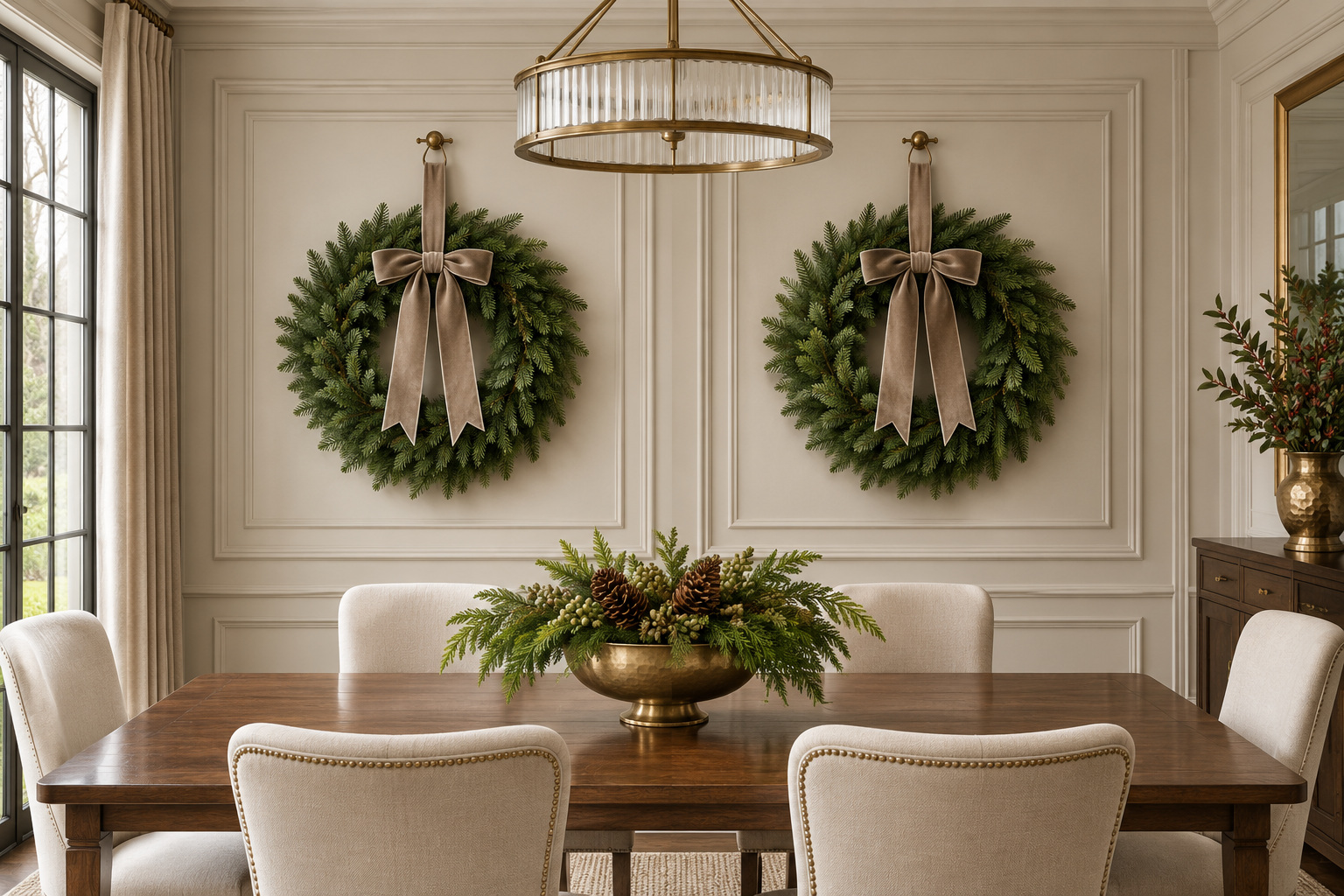
Two wreaths can bring calm symmetry to a formal dining room when the architecture already provides a pair of wall panels. Choose rings of similar size and foliage, then hang one within each panel at the same visual height. Matching ribbon lengths help the two circles read as one considered treatment.
Check the pair from the table and from the doorway. The panels may differ slightly, so an arrangement that looks balanced in the room matters more than blindly copying a measurement. Keep the center wall area or furniture composition simple enough for the pair to remain clear. Soft upholstered chairs, a wood table, and restrained metallic details can support the formal mood without adding another competing wall feature.
Choose the wall that already relates most clearly to the dining furniture, then give it one seasonal idea with enough room to show. Whether you use art, cloth, wood, or foliage, the backdrop should still look settled when you sit down to eat. A considered wall treatment can make the room feel festive while leaving the table ready for the meal.
For a room palette that works beyond the holiday season, explore our warm neutral dining room ideas and build the Christmas wall treatment around the furniture you already enjoy.
Discover more from HomeTrendora
Subscribe to get the latest posts sent to your email.