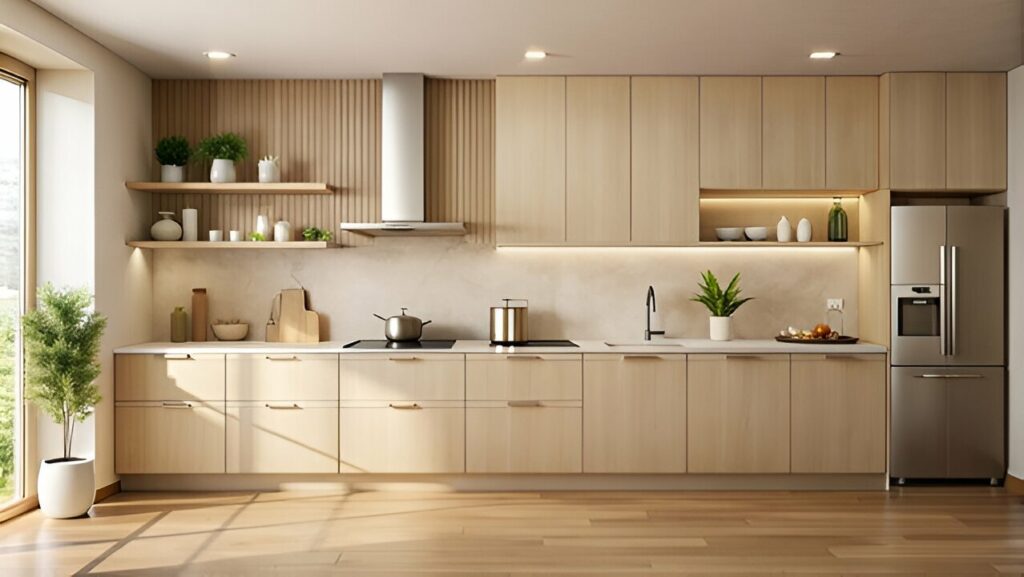
A plate rack can make a kitchen feel both more useful and more personal. Everyday dishes become visible, a favorite platter gains a proper home, and the rack itself can add the warmth of wood or a considered painted detail. The right design depends on how often you use the dishes and how you want to reach them.
These 17 kitchen plate rack ideas distinguish upright storage from face-out display. Measure the largest plate, the rack’s usable depth, and the space needed to lift a dish free. Choose a purpose-made support appropriate for the actual crockery, follow the maker’s mounting and load guidance, and use the rack for clean, dry dishes unless it is specifically designed for draining.
1. Build a Slotted Rack Into an Upper Cabinet
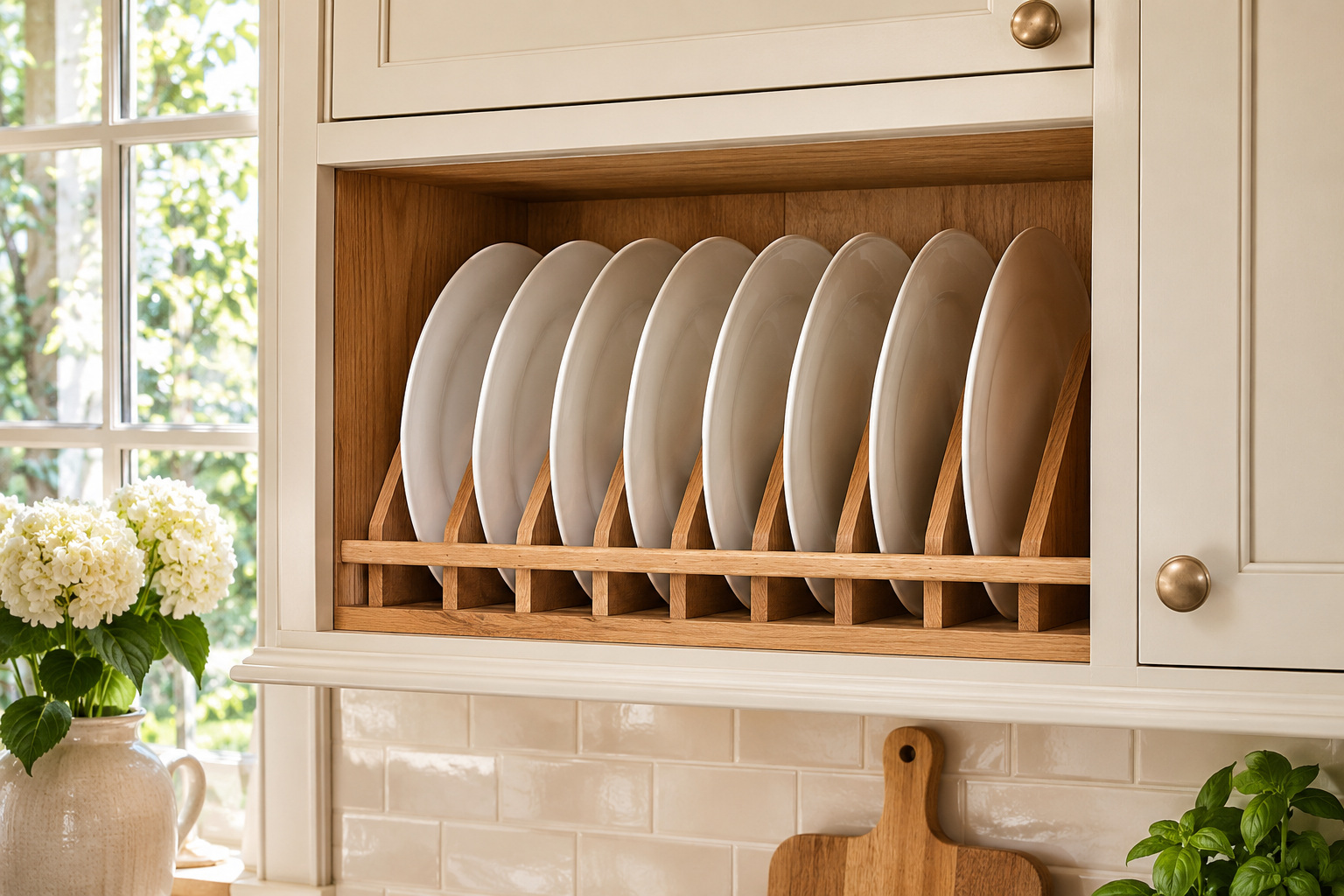
An upper cabinet can contain a dedicated slotted insert that keeps plates upright rather than stacked. Each dish needs a supported base and enough separation to slide in and out without striking its neighbor. The result is especially useful for a small group of plates you use every day.
Check the cabinet’s interior height as well as its depth. A plate that fits while resting in the rack may still need more room to lift over a retaining edge. Use an insert made for the cabinet and the dish sizes, and keep the most frequently used plates within comfortable reach. An open front makes the rack part of the kitchen’s appearance; a suitable existing door can keep it visually quieter.
2. Use a Shallow Face-Out Rack on a Spare Wall
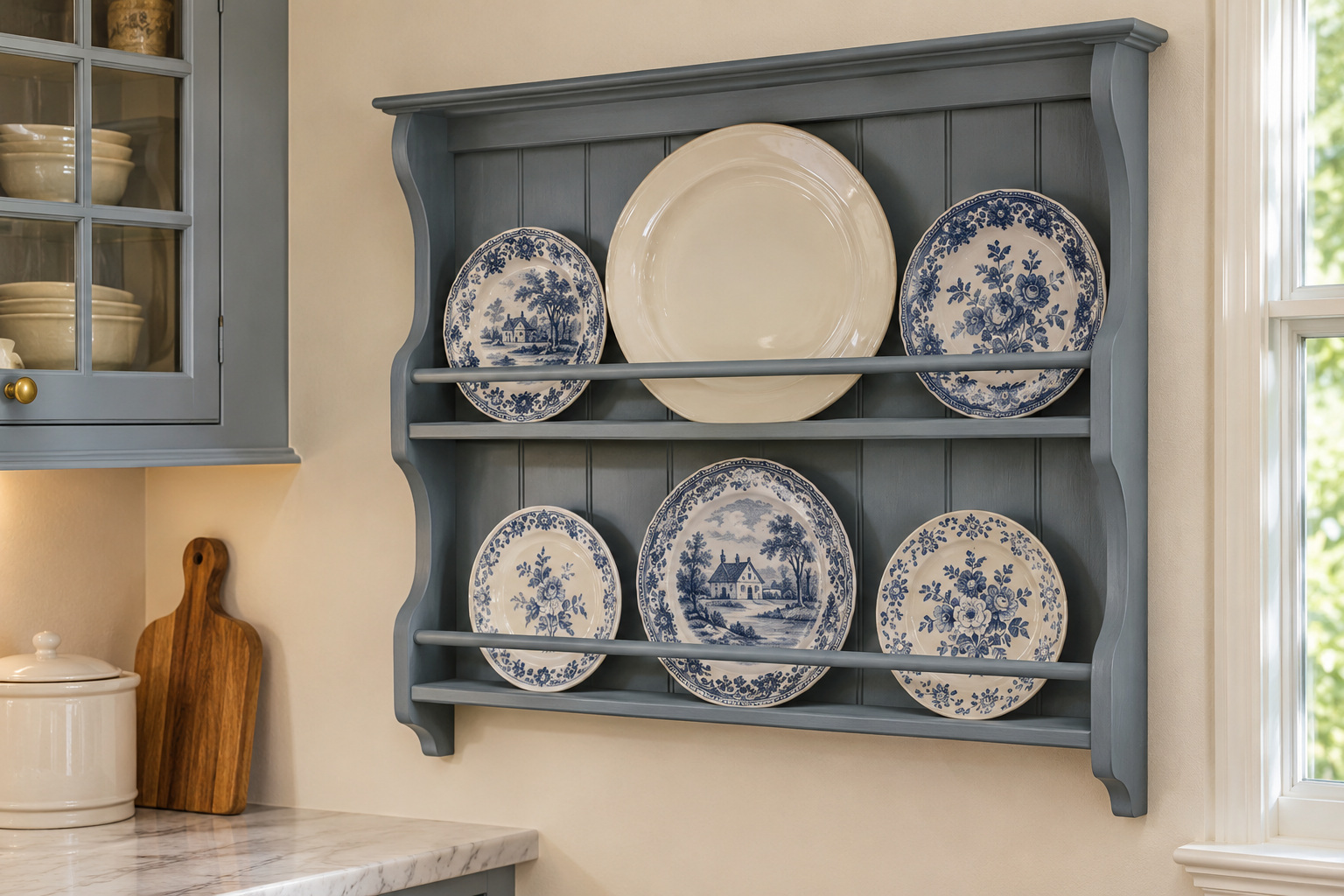
A shallow face-out rack turns a spare kitchen wall into an orderly display for plates. Look for a design with supported ledges and retaining rails intended for crockery, rather than treating an ordinary narrow picture shelf as interchangeable. Plate fronts remain visible, so a few related colors or patterns can establish the composition.
Keep the arrangement modest and follow the rack’s dish-size and load limits. Leave enough space above each plate to remove it without hitting the row above. A mix of a large plain plate and smaller patterned pieces can feel more relaxed than identical rows. Place the rack where shoulders, door handles, and moving furniture cannot catch its projecting edges.
3. Place Daily Plates Beside the Dishwasher
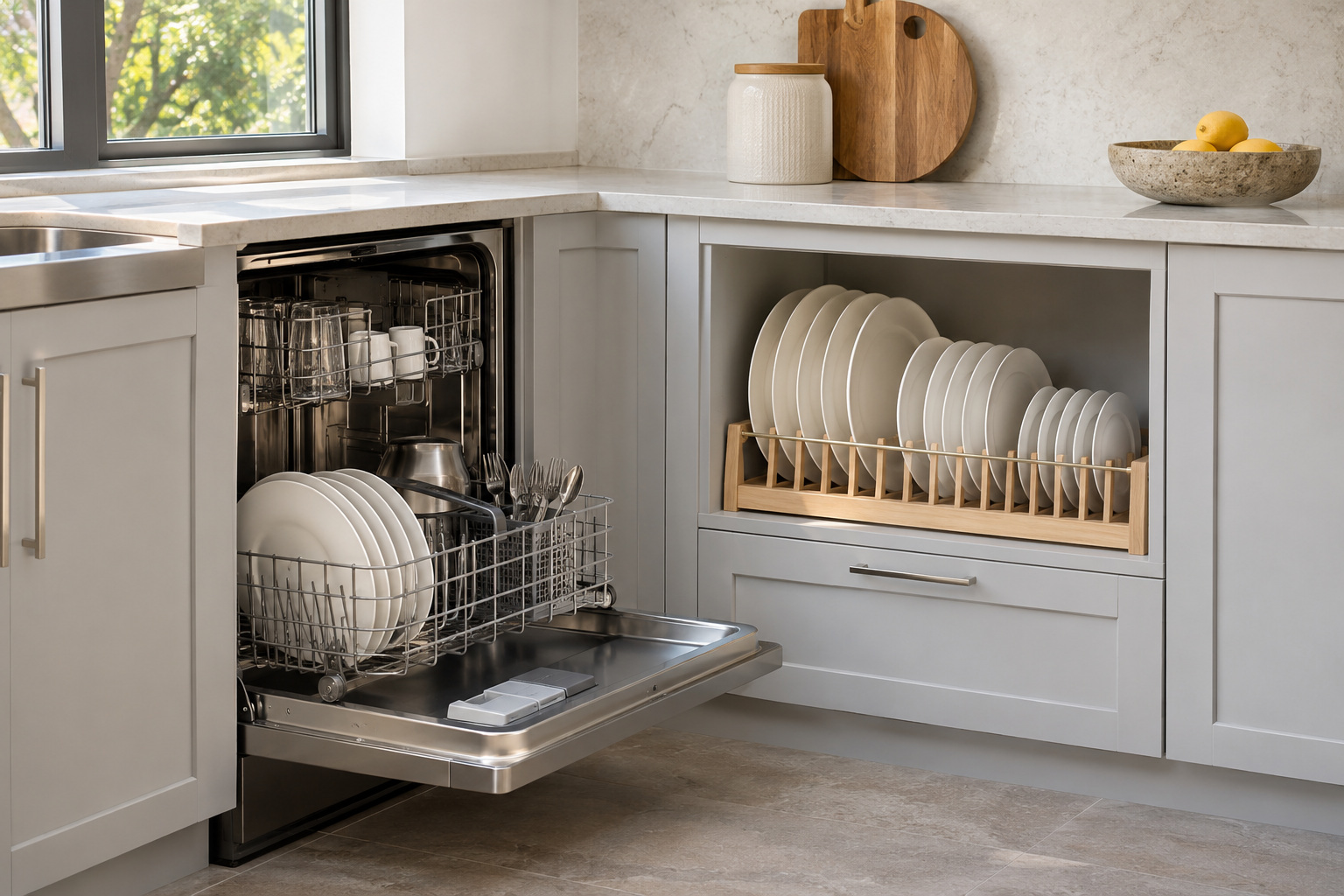
A plate rack near the dishwasher can shorten the route from unloading to putting dishes away. Choose a position you can reach while the dishwasher door is open, with room to stand and turn comfortably. A low open cabinet with a proper upright plate insert may work better than a display mounted high on the wall.
Test the movement before changing the cabinetry. Open the dishwasher fully and imagine lifting a small group of dry plates into the proposed rack. The door should not trap you against another cabinet, and the rack should remain clear of splashes. Store only the number of plates the rack is designed to hold, leaving the slots easy to identify and the dishes easy to grasp.
4. Give Platters Their Own Wider Compartments
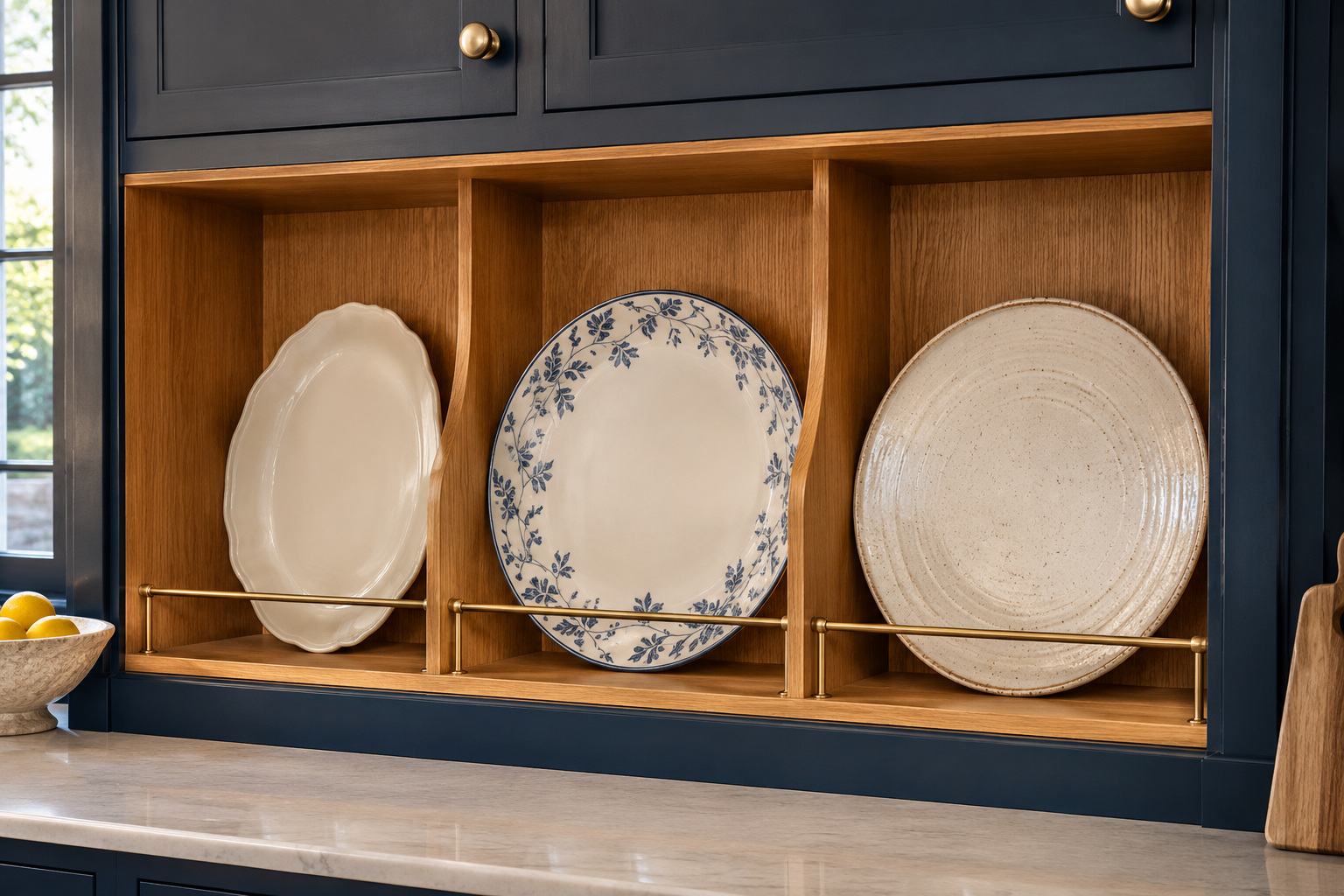
Serving platters need a different kind of space from everyday dinner plates. Their greater width and varied outlines can make closely spaced slots awkward. Give them purpose-made wider compartments with a supported base and suitable restraint, so each platter has a defined position without leaning on the next one.
Measure handles and raised edges as well as the flat center of the platter. Leave room to grip the piece from its strongest practical point and lift it clear. A lower or mid-height rack is often easier to use for larger pieces than a high display. Keep the number of platters limited to those you can place and remove comfortably; an empty compartment is preferable to a tight fit.
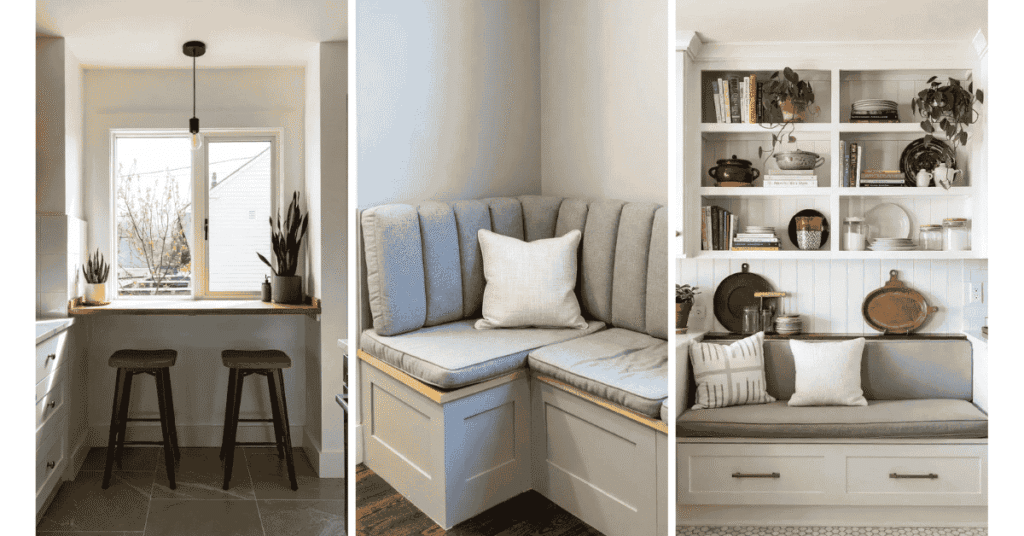
5. Fit a Narrow Rack Beside a Breakfast Nook
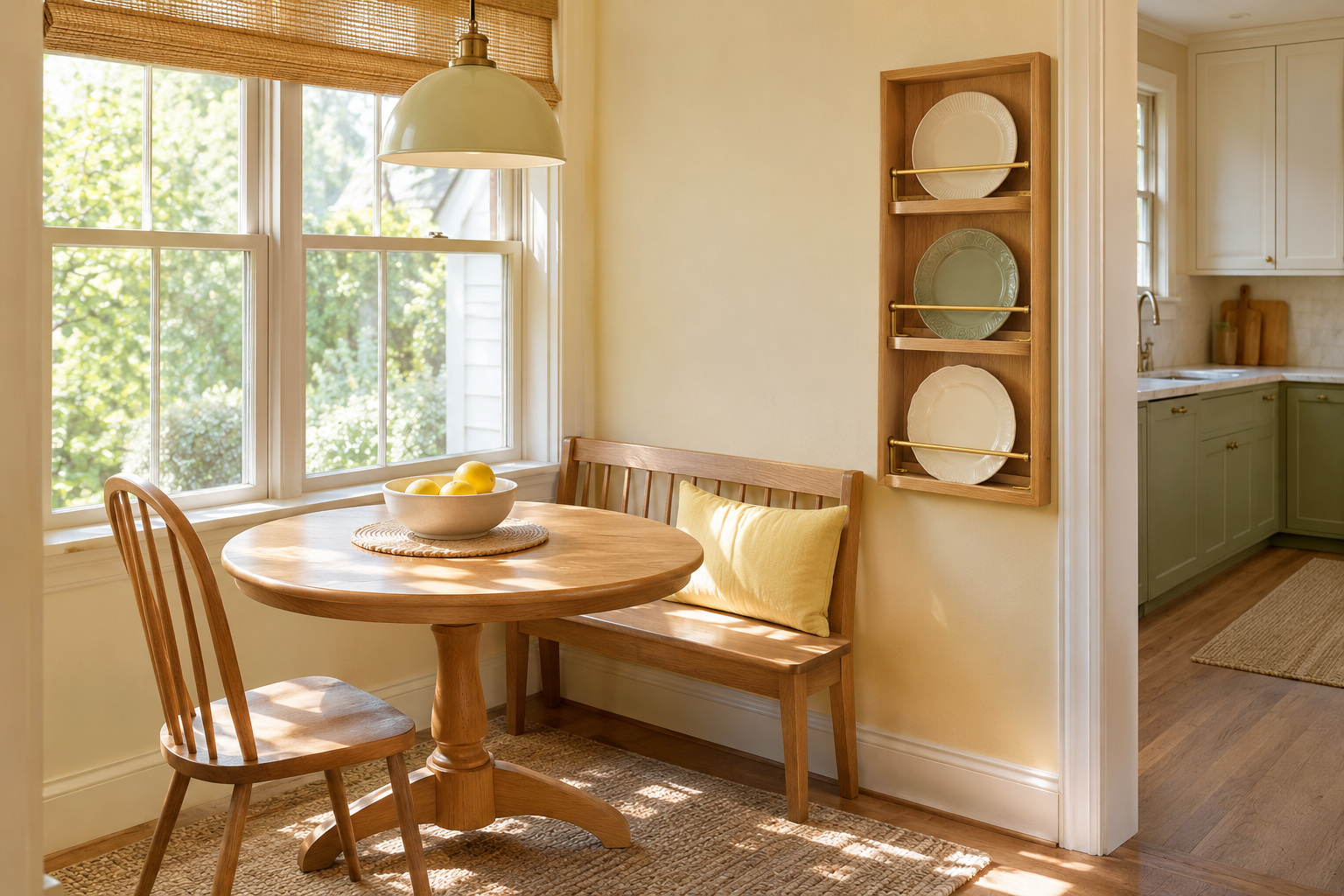
A narrow plate rack beside a breakfast nook can connect the dining corner with the kitchen’s everyday dishes. Use a small face-out design on a wall beside the seating, where the plates can be reached without leaning over someone at the table. A few simple breakfast plates are enough to establish its role.
Check how chairs and people move around the nook before choosing the rack’s depth. It should not project into a shoulder-level route or sit where a chair back will strike it. Repeat a color from the bench cushion or table linen in one plate, leaving the remaining dishes plain. The rack then feels like a useful part of the nook rather than a separate wall collection.
6. Use a Countertop Plate Stand Inside a Cupboard
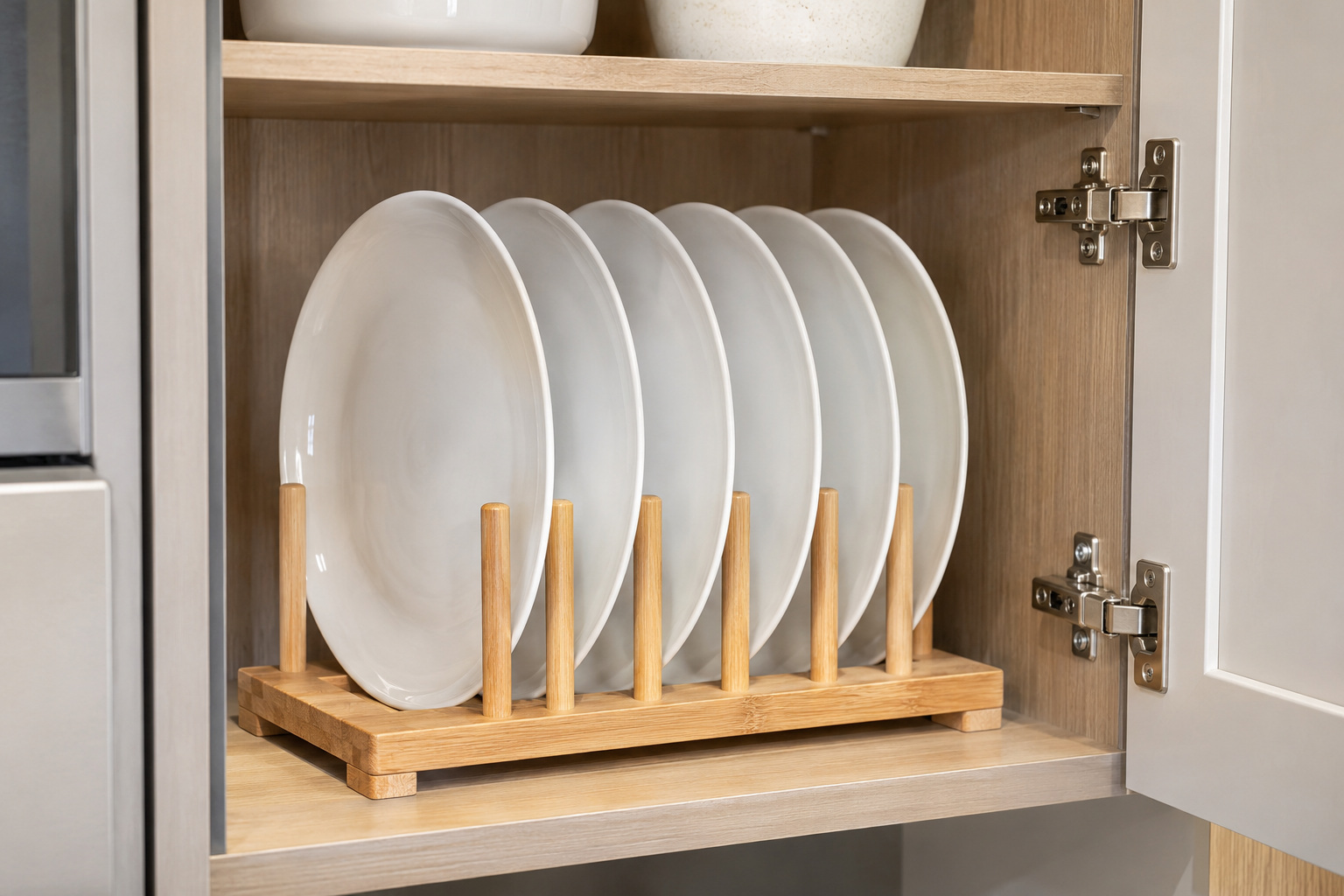
A freestanding plate stand can organize an existing cupboard without changing the cabinet front. Choose one intended to hold plates upright, and check that it sits flat on the shelf with its full base supported. The stand creates individual positions for dishes that would otherwise be stacked together.
Try the stand with the actual cupboard door closed as well as open. Hinges, a projecting rim, or the plate’s upper edge can reduce usable space. Use a stable model suitable for the plate size, and avoid overfilling it simply because another slot appears available. Keep it separate from a drying rack unless the cupboard installation is specifically intended for that purpose; enclosed storage is best used for dishes that are already dry.
7. Combine Upright Plates With a Separate Bowl Shelf
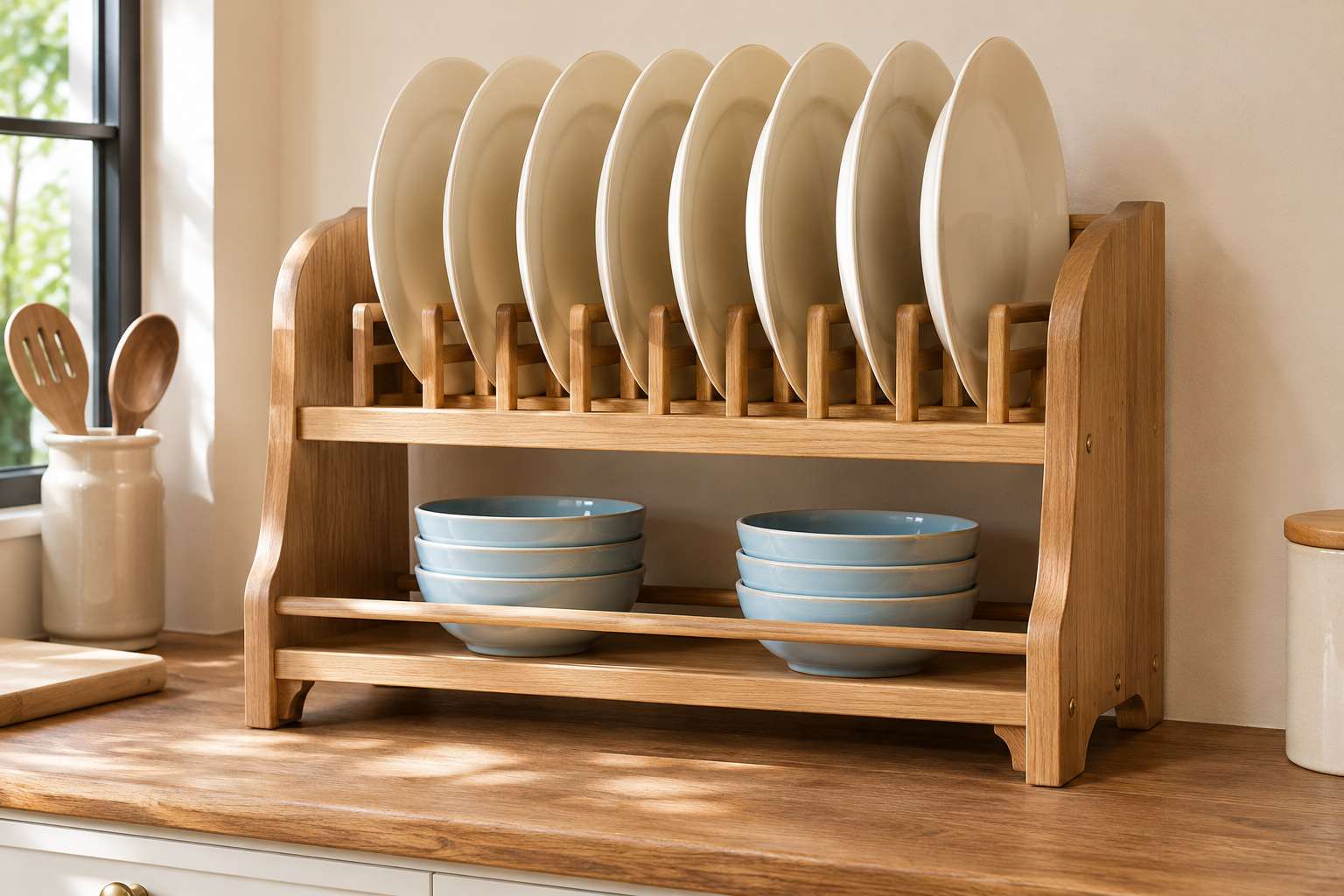
A rack can serve plates and bowls if each has its own appropriate support. Upright plates might occupy a divided section above, while a deeper shelf below holds a modest stack of bowls. The separation keeps the bowls from being pushed into slots intended for flatter dishes.
Choose the arrangement around the crockery you actually use. Deep bowls need usable shelf depth and a stable stack, while plates need room to lift out individually. Keep both groups within the rack’s stated limits. A shared color palette, such as cream plates with soft blue bowls, makes the two zones look connected without mixing their storage functions. Leave the shelf edges clear so you can see where each group belongs.
8. Paint the Rack the Same Color as the Wall
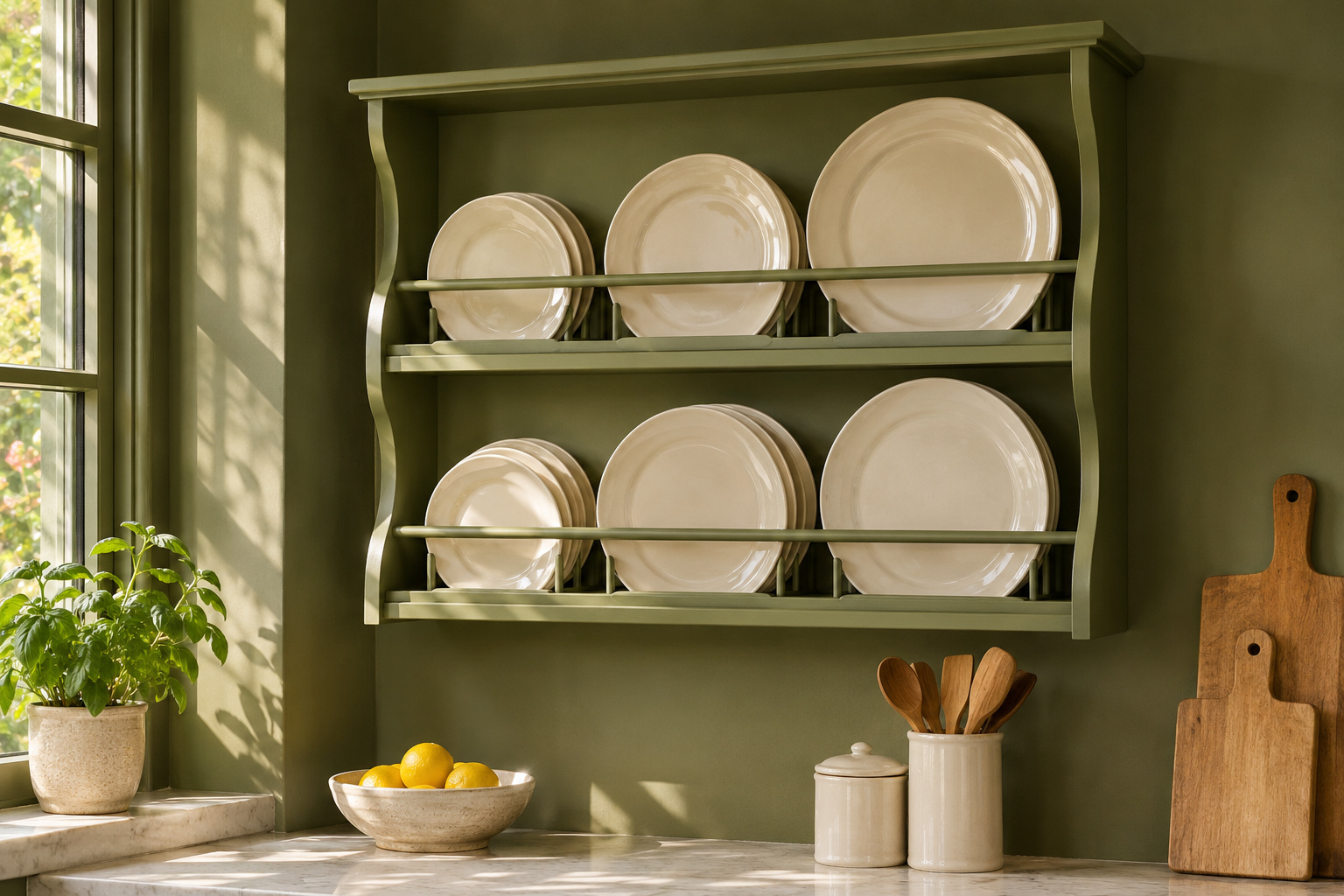
Painting a rack in a color close to the wall can make the crockery the main feature. A muted green rack against a related green wall lets pale plates stand out while the support sits quietly in the background. The effect depends on matching the visual tone, not necessarily using the same coating on different materials.
Choose finishes suited to the wall and the rack, and follow preparation and curing instructions before returning dishes. Keep plate colors fairly restrained if you want the calmest result. A shallow display design works well for this approach because its horizontal rails become subtle lines within the painted area. Test the color relationship beside the actual dishes; bright white china can make a muted paint appear deeper.
9. Make an Oak Rack the Warm Element in a White Kitchen
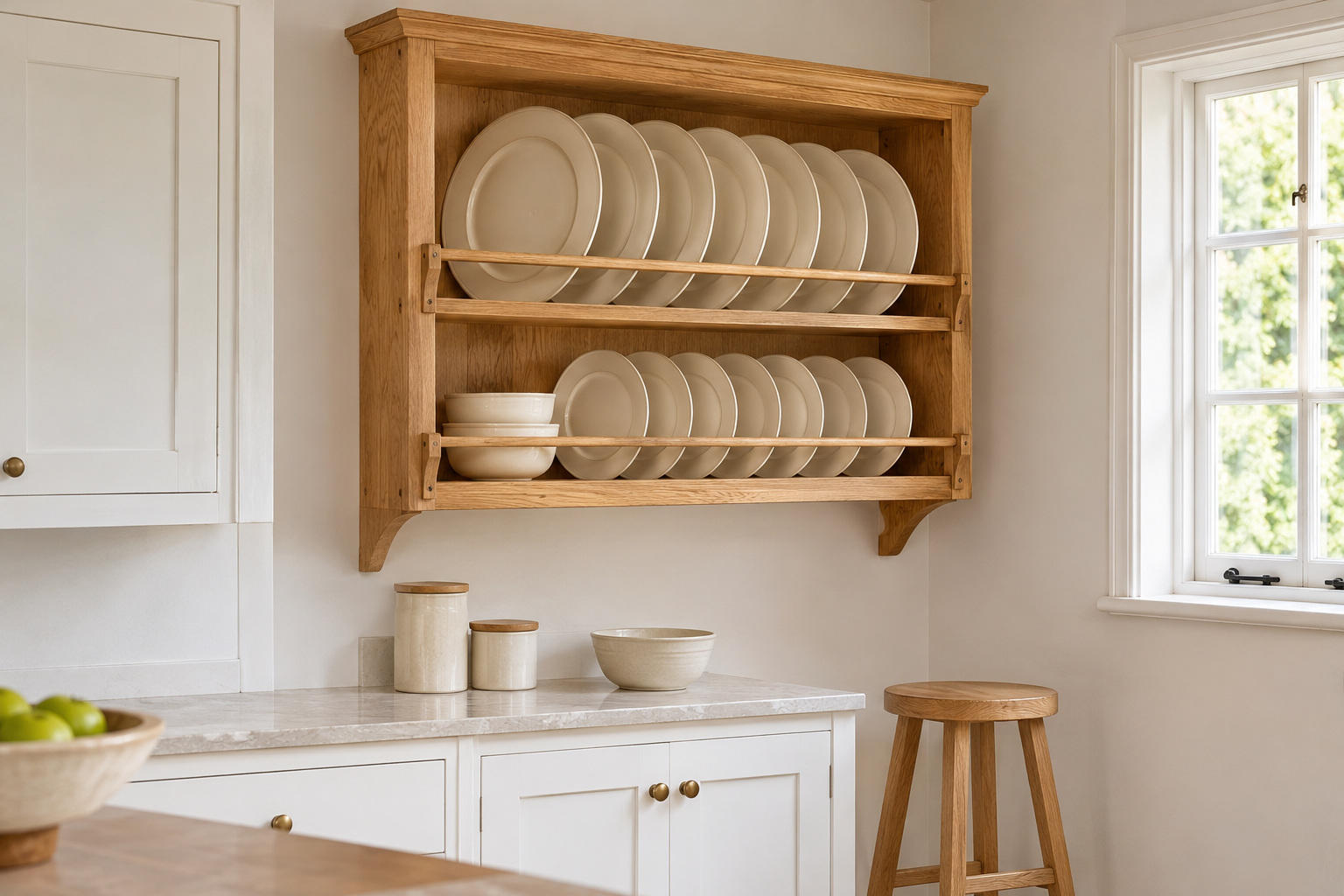
An oak plate rack can provide a concentrated warm detail in a white kitchen. Let the grain remain visible and pair it with simple cream or white dishes so the material has room to show. The rack can connect with a cutting board, stool, or another modest timber element already in the room.
Choose a finish appropriate to the rack’s intended use and the maker’s care guidance. Avoid placing unprotected wood where it will receive routine splashes or cooking grease. A clearly framed rack with visible supports feels like a deliberate piece of furniture, especially against plain white cabinetry. Keep surrounding open shelves restrained so the oak does not have to compete with a second large collection of kitchen objects.
10. Use a Glazed Cupboard With an Internal Plate Divider
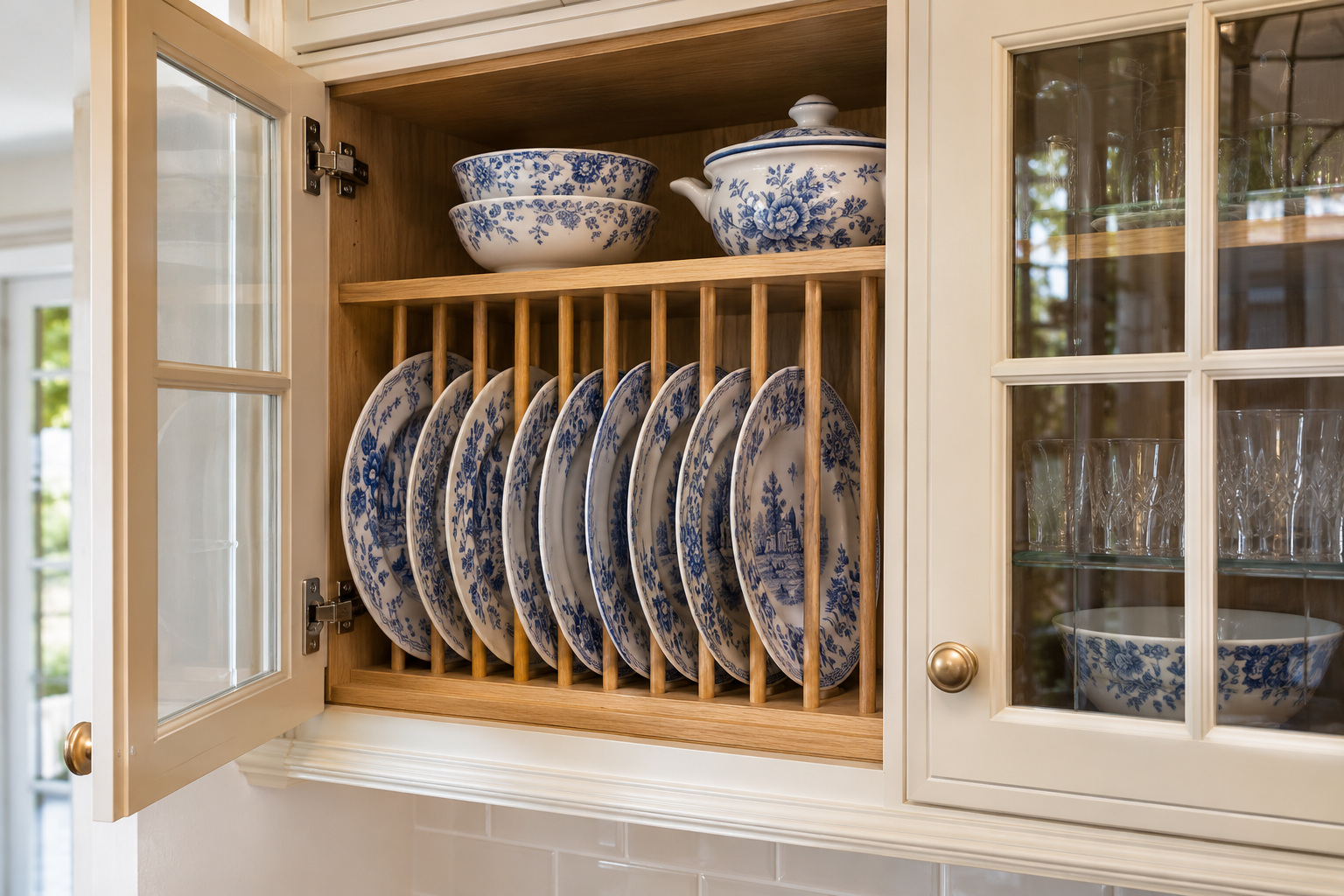
A glazed cupboard can show the outline of a plate collection while keeping it behind a door. Use a compatible internal divider to hold selected plates upright, with enough depth for the door to close without touching the rims. Plain glass and a simple frame make the storage easy to understand from outside.
Check reflections as well as practical access when arranging the dishes. A small group of related plates often reads more clearly than every shelf filled to its edge. The divider still needs to support the dishes properly; glass does not replace a retaining rail or a suitable base. Keep larger or heavier pieces in a position you can reach comfortably, and test the door and each plate’s removal path before considering the arrangement finished.
11. Put a Small Rack at the End of a Cabinet Run
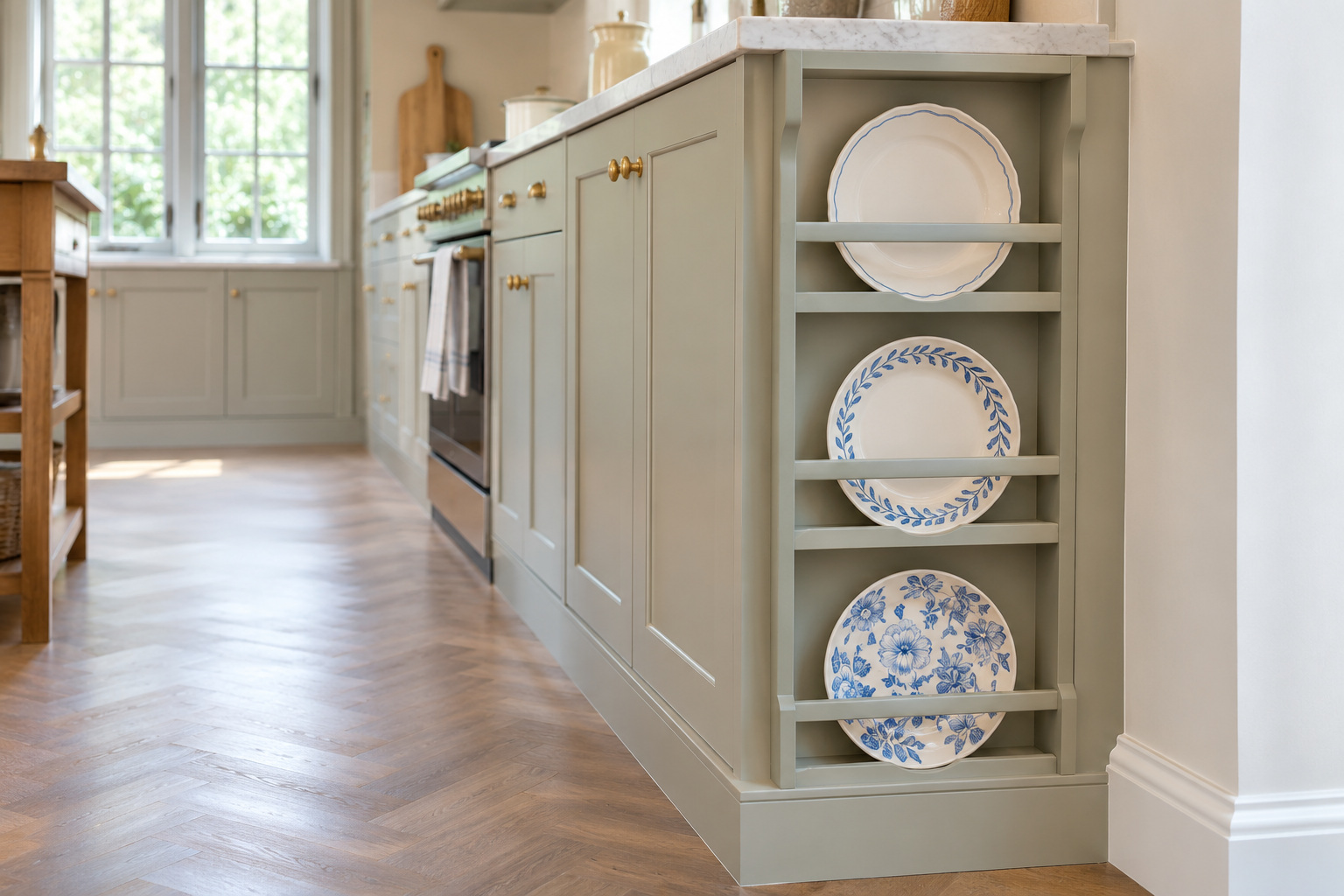
The end of a cabinet run can sometimes hold a small, shallow plate rack where a full cupboard would be too bulky. Use a purpose-made design sized to the actual end panel, with its edges contained within the available space. A few small daily plates can make that overlooked surface useful.
Check the route beside the cabinet carefully. Plates and rails should not narrow a doorway or create a projecting corner where someone turns into the kitchen. The end panel and fixing method also need to be suitable for the loaded rack. Keep the contents modest rather than trying to store the whole dinner set in a narrow position. A painted rack that relates to the cabinetry will help the addition feel integrated.
12. Give a Baking Station a Rack for Pie Dishes
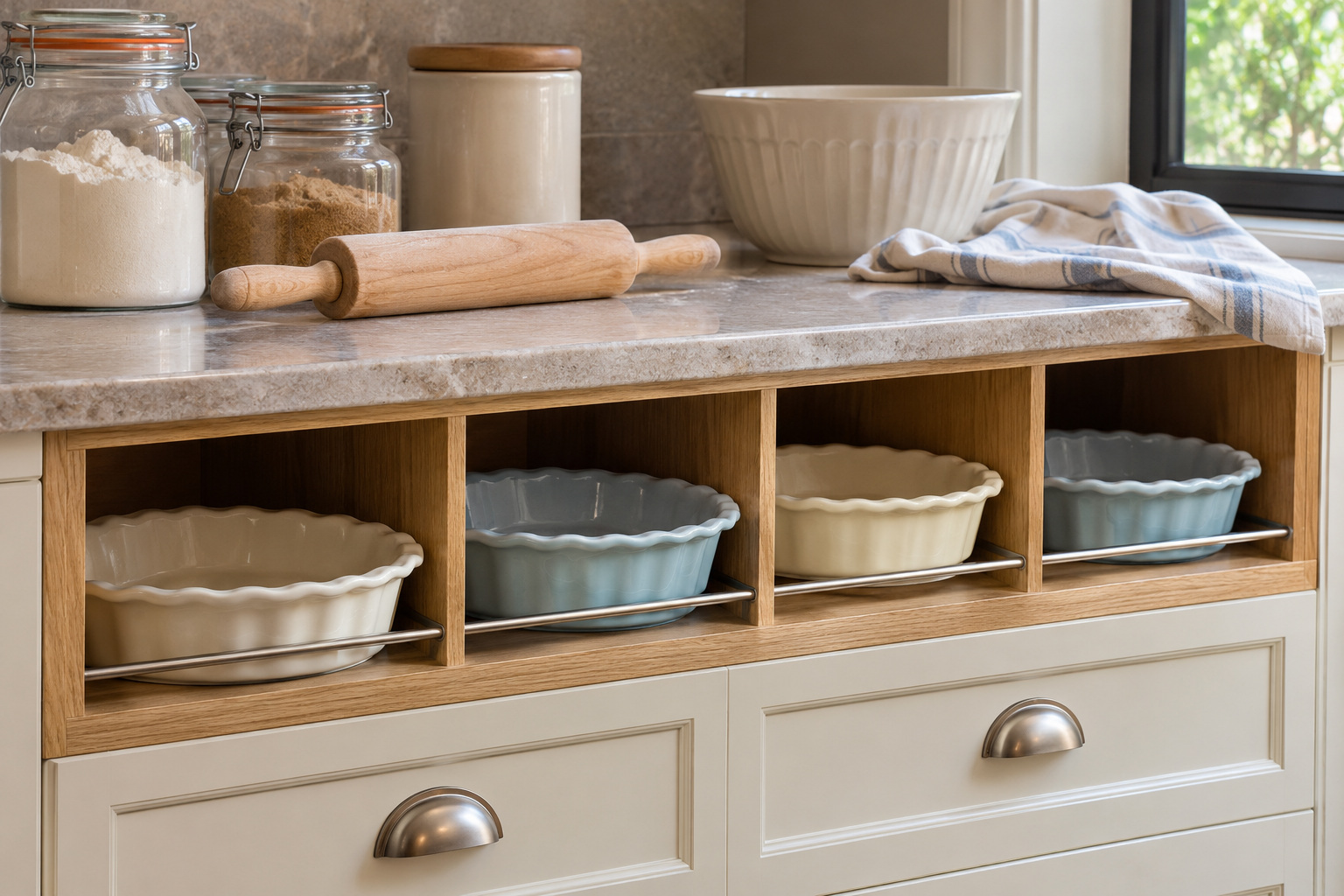
A baking station can benefit from compartments sized for pie dishes and other shallow baking ceramics. These pieces often need wider spacing than dinner plates, with a supported base that accommodates a thicker rim. Keep the rack close to the work surface where you prepare pastry, rather than treating the dishes as distant decoration.
Measure the deepest piece before choosing the compartment size. A rack meant for flat plates may not suit a flared pie dish, even when its diameter seems right. Store only clean, cool, dry dishes, and keep frequently used pieces in the easiest position to grasp. A wood-framed open bay can make the baking area feel organized while keeping the counter available for rolling and mixing.
13. Use a Plate Ledge Above a Sideboard in the Kitchen
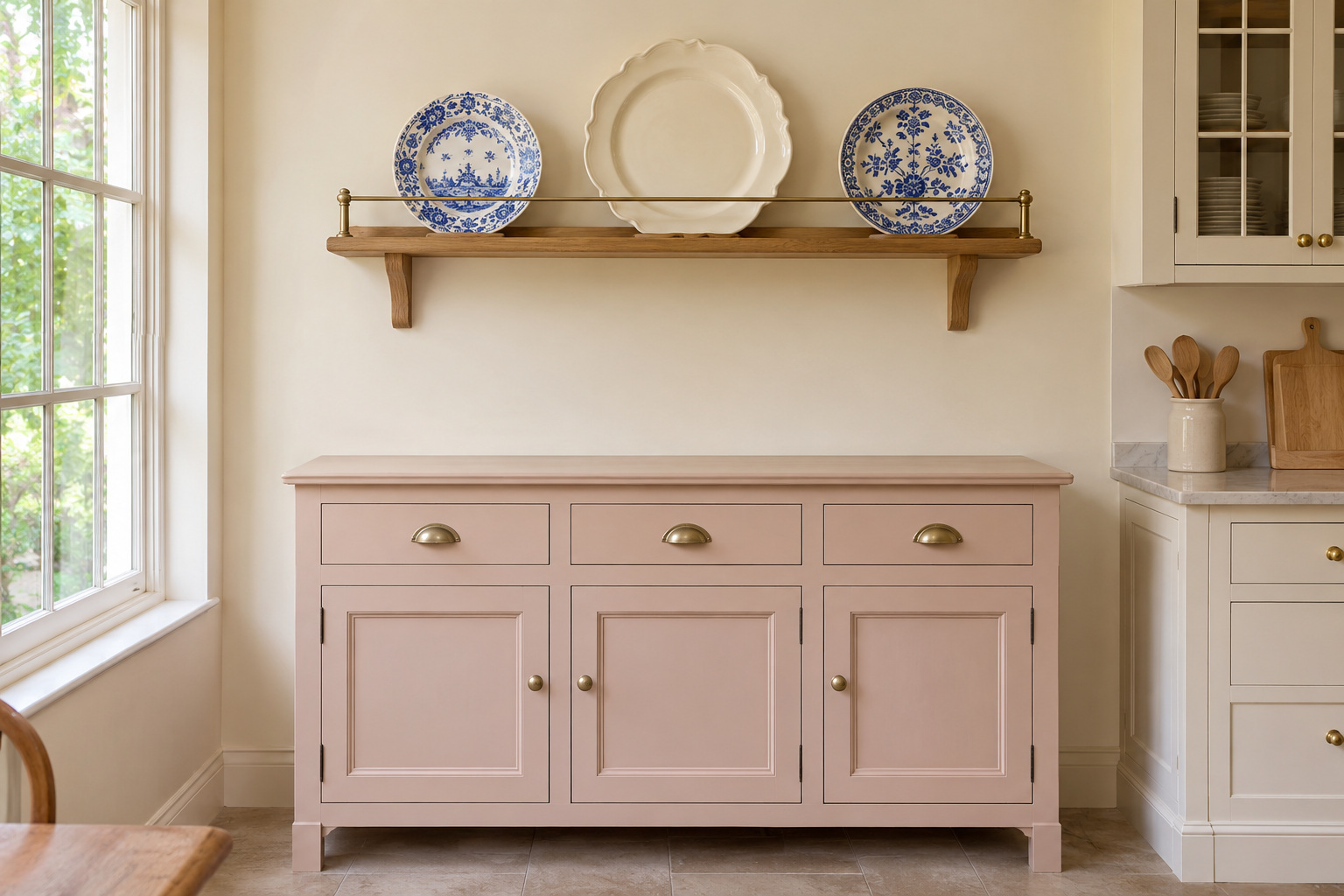
A dedicated plate ledge above a kitchen sideboard can give favorite dishes a place outside the main cooking zone. Choose a crockery display ledge with suitable support and restraint, then arrange a small number of plates face-out. The sideboard below supplies a clear visual base for the display.
Keep the ledge high enough that items on the sideboard do not bump the plates, while still allowing comfortable access. Check that the wall and fixings suit the loaded design. A large plain plate with one or two patterned companions often gives a clearer composition than a continuous overlapping row. Leave useful surface on the sideboard for everyday tasks instead of building a second display immediately beneath the first.
14. Add a Dedicated Rack to an Island End
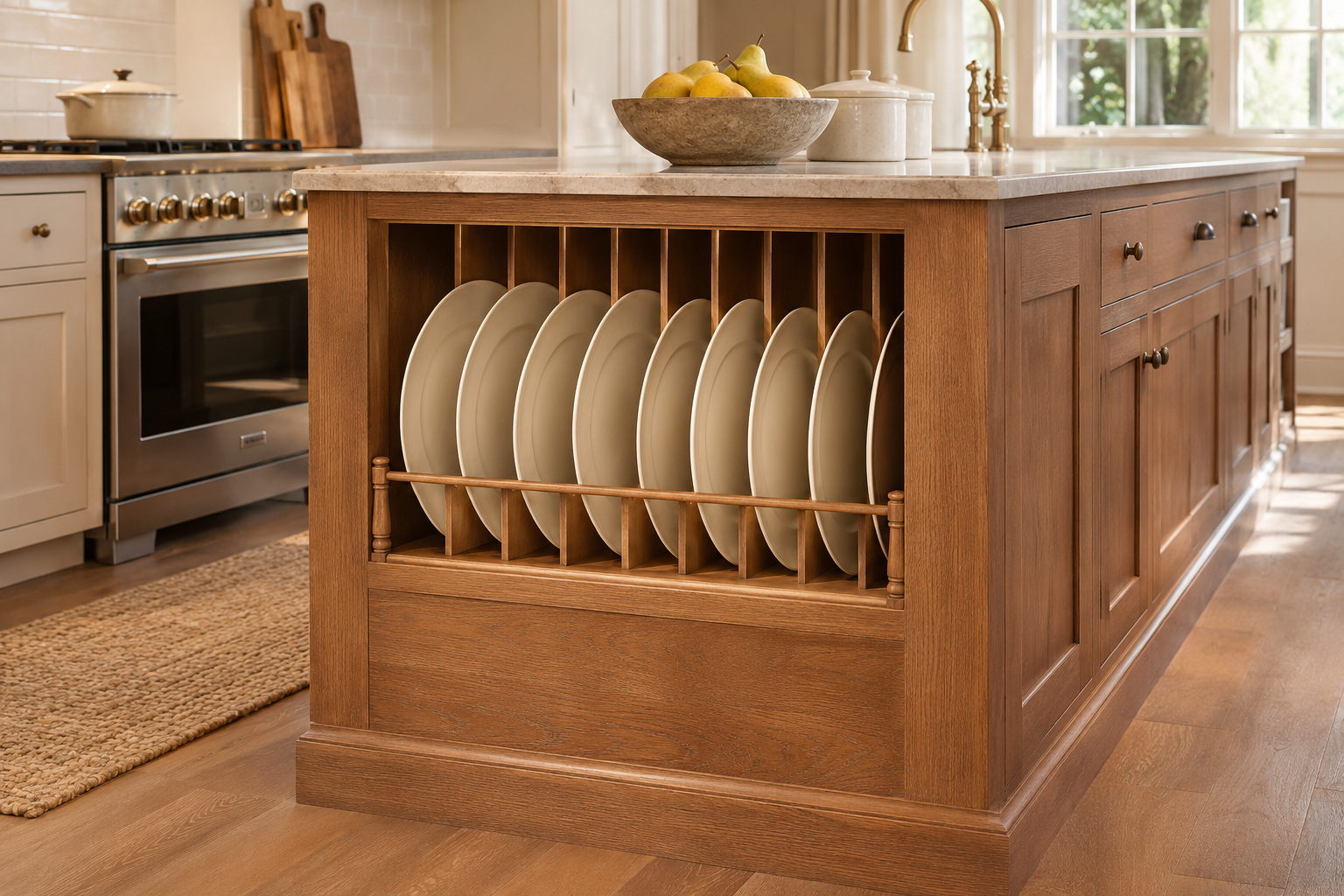
An island end can contain a recessed plate rack when its construction and layout allow. A purpose-made insert keeps the dishes within the furniture’s outer line, rather than adding a projecting stand to a busy circulation route. Upright plates can then be reached from the dining side of the kitchen.
Plan this as a cabinetry decision, not a hole cut into any available panel. The island’s structure, services, usable depth, and support all need checking by the appropriate maker or installer. Keep the plates clear of seating knees and walking routes. A modest divided bay with a retaining edge is easier to understand and use than a tightly packed open cavity, particularly when the island serves several everyday jobs.
15. Divide Everyday and Special-Occasion Crockery
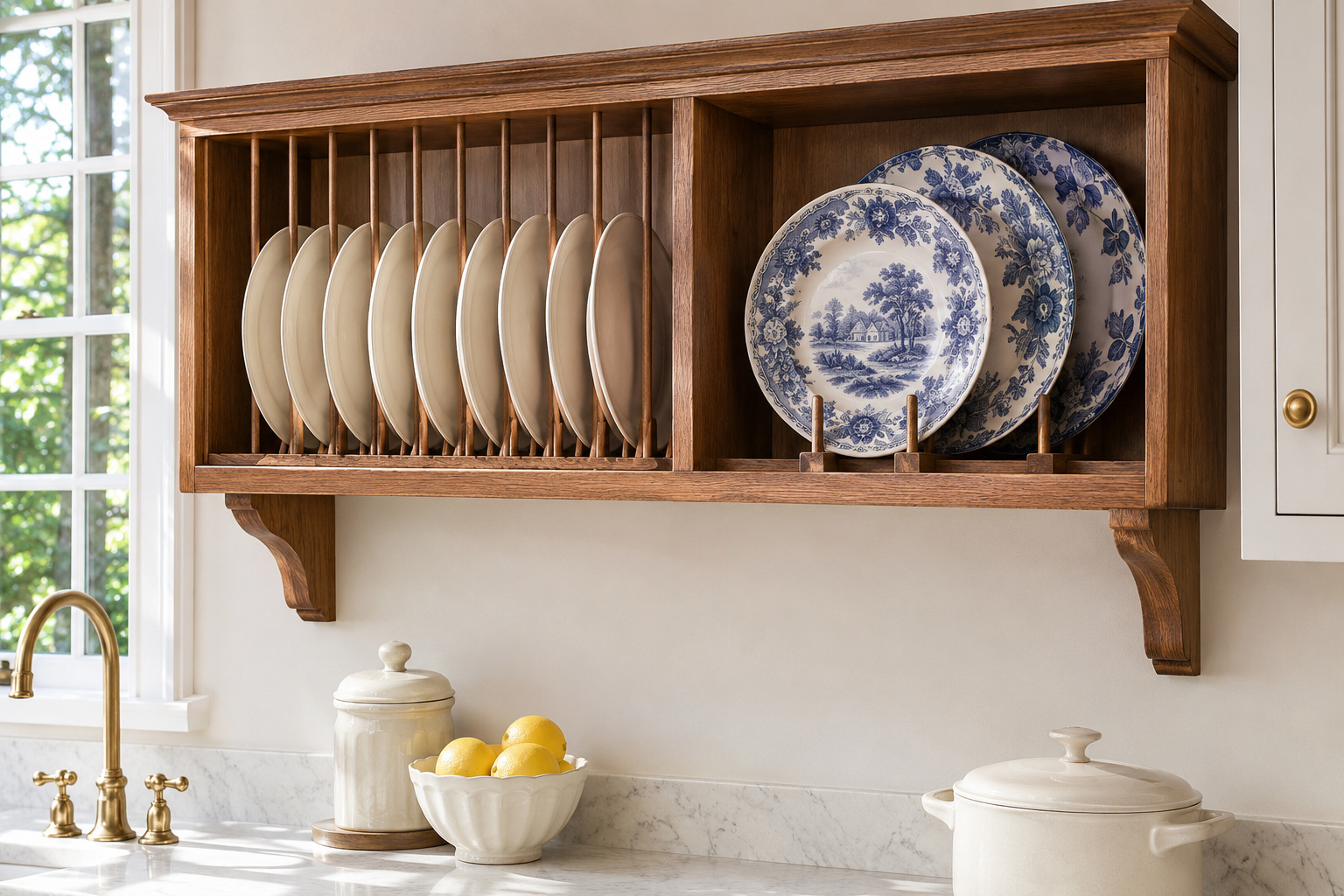
A two-part rack can separate everyday dishes from pieces you bring out less often. Give the daily plates the most comfortable reach position, and reserve the other section for the smaller special-occasion group. The division makes it easier to put dishes away without mixing two different routines.
Let the layout do the sorting rather than adding labels to every slot. Plain daily plates can sit in one clearly bounded bay, with patterned serving pieces in another. Check that each section suits its actual contents and that less frequent use does not mean an awkward or unsafe lifting position. Keep a little unused space so returning one plate does not require rearranging the rest of the collection.
16. Make a Freestanding Hutch the Plate Station
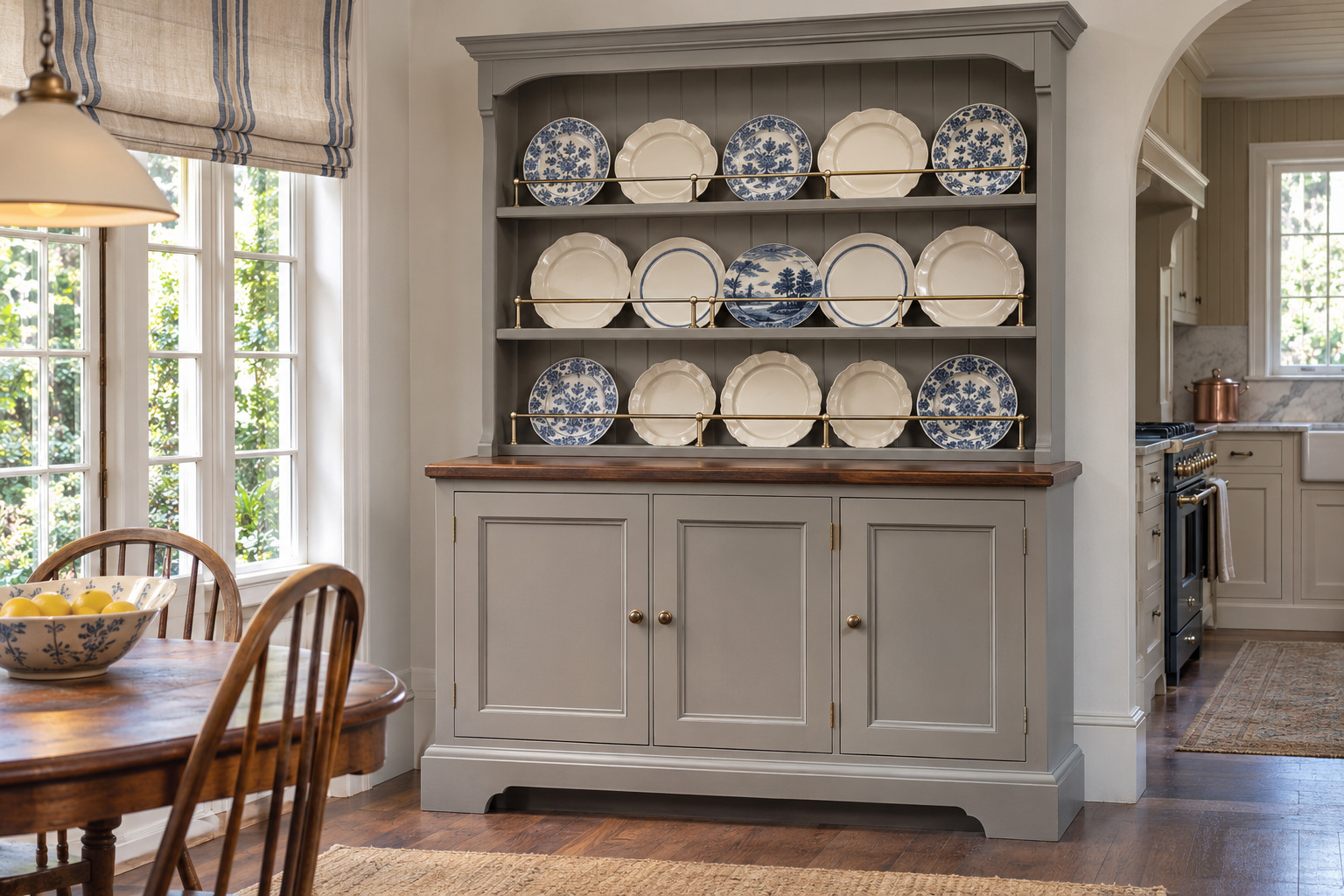
A freestanding hutch can gather plates in one place without making the main kitchen wall carry the whole display. Choose a piece with dedicated plate supports in the upper section and useful enclosed storage below. Its furniture-like outline can suit a kitchen that opens into a breakfast or dining area.
Check the hutch’s stability and follow the maker’s guidance for securing it. Place daily crockery where it can be reached comfortably, leaving the topmost area for lighter display pieces only if the furniture is designed for them. A limited set of dishes will look more settled than a hutch filled with unrelated objects. Keep the serving ledge useful so the piece works as a plate station throughout the week.
17. Choose a Rack With a Useful Towel Rail Below
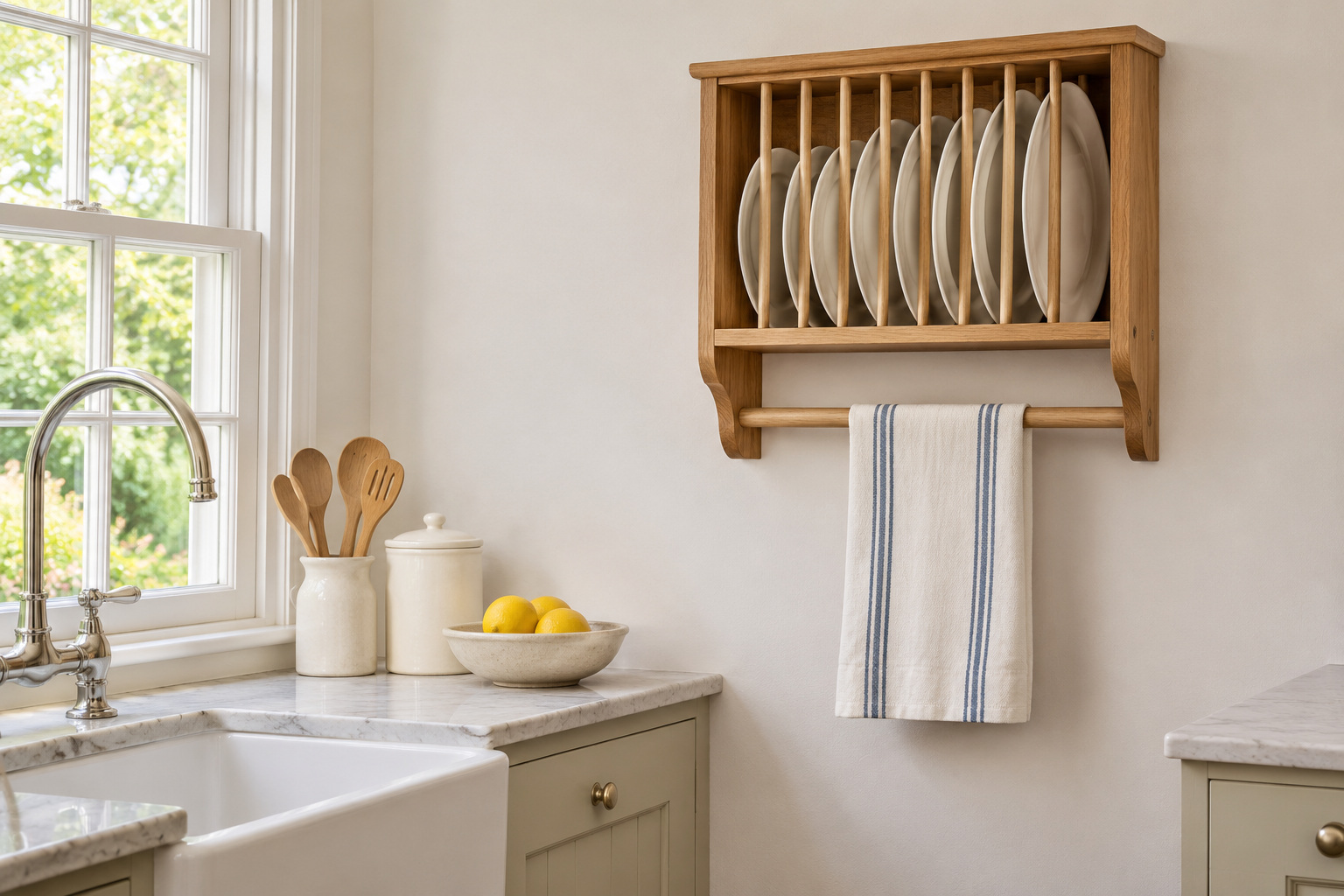
Some plate racks include a separate towel rail beneath the dish section. This can make a small rack more useful if the towel hangs clear of the plates and the counter below. Choose a design intended for both functions rather than improvising a rail from part of the plate support.
Check the towel’s full hanging length and leave enough space for air to move around it. Avoid a position where the cloth brushes dishes, food preparation, or a heat source. A plain striped towel can add a soft line below simple crockery, but keep the rail’s load within the maker’s instructions. The best version lets you remove a plate or take the towel without disturbing the other part of the rack.
Choose the rack around the dishes and the movement of the kitchen. A display ledge, a slotted cabinet insert, and a platter compartment solve different problems, even when they share the same wood or paint color. Once the support, reach, and removal space work, the plates themselves can bring much of the room’s character.
For the rest of the room, explore our kitchen ideas with smart storage and plan the plate rack alongside the way you use counters, drawers, and cupboards.
Discover more from HomeTrendora
Subscribe to get the latest posts sent to your email.