Pinecones have enough shape to carry a Christmas display without a thick layer of glitter or artificial snow. Their open scales catch the light, their brown tones sit comfortably with wood and linen, and a few well-chosen cones can give a plain corner a clear seasonal focus.
These 16 pinecone Christmas decor ideas use that texture in different ways, from a door wreath to a small display under glass. Start with clean, dry decorative cones suited to indoor use, and choose pieces that hold their shape. Keep the arrangements away from heat and open flames, and use suitable supports for anything hung on a wall or door.
1. Make a Pinecone Ring the Main Door Decoration
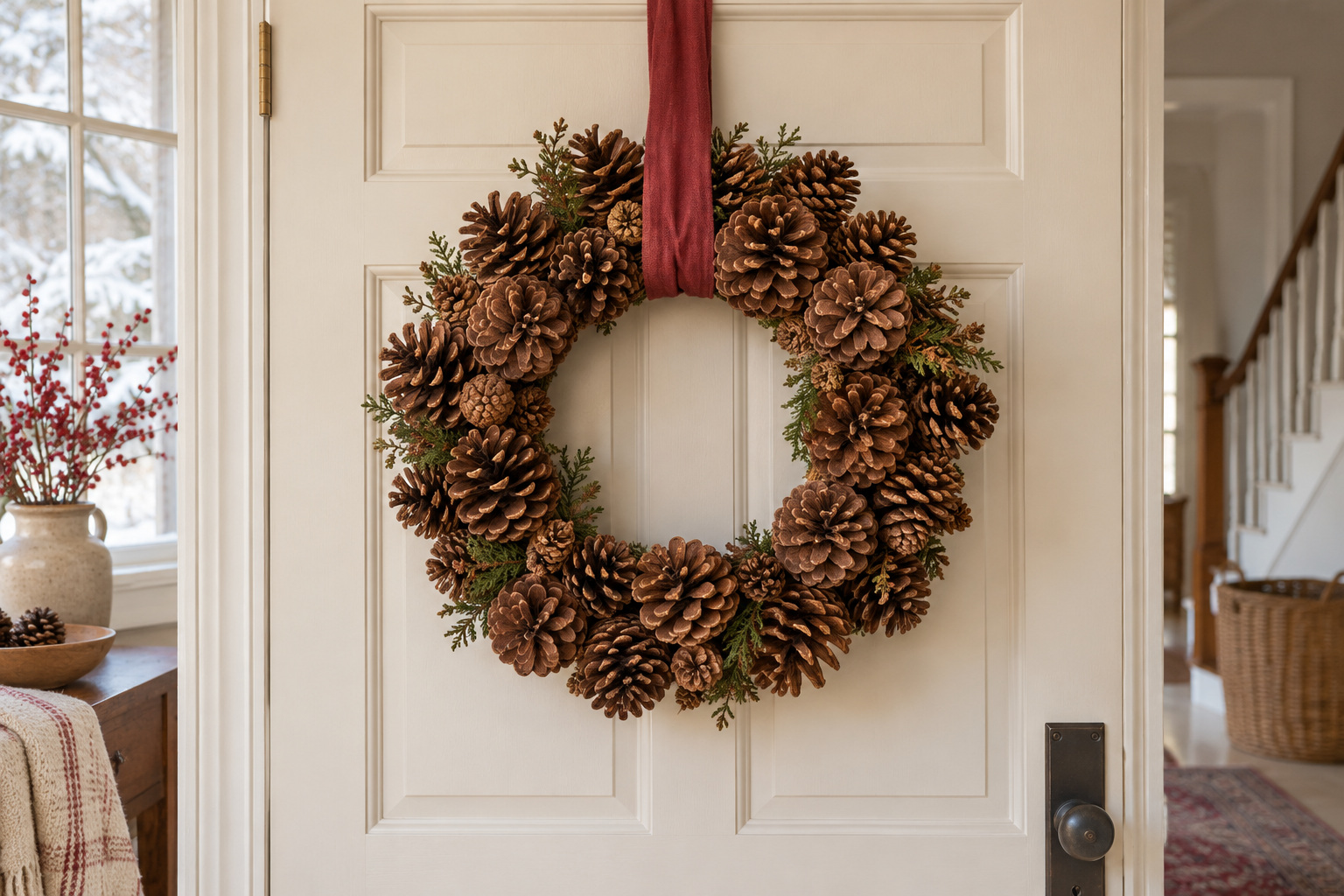
A ring made mainly from pinecones gives a door a strong outline without relying on a full evergreen wreath. Choose cones of broadly similar size for the outer rhythm, with smaller pieces filling visible gaps. A plain red or flax-colored ribbon gives the ring a clear hanging point and an unmistakable Christmas finish.
A ready-made decorative cone wreath is a straightforward option if you prefer styling to construction. If making one, use a suitable wreath base and secure each piece according to the materials and joining method you choose. Check the finished weight against the hanger’s instructions, and test the door’s full movement. Keep the wreath’s depth modest enough that it does not bump the frame or nearby wall.
2. Hang a Graduated Pinecone Cluster on a Wall Hook
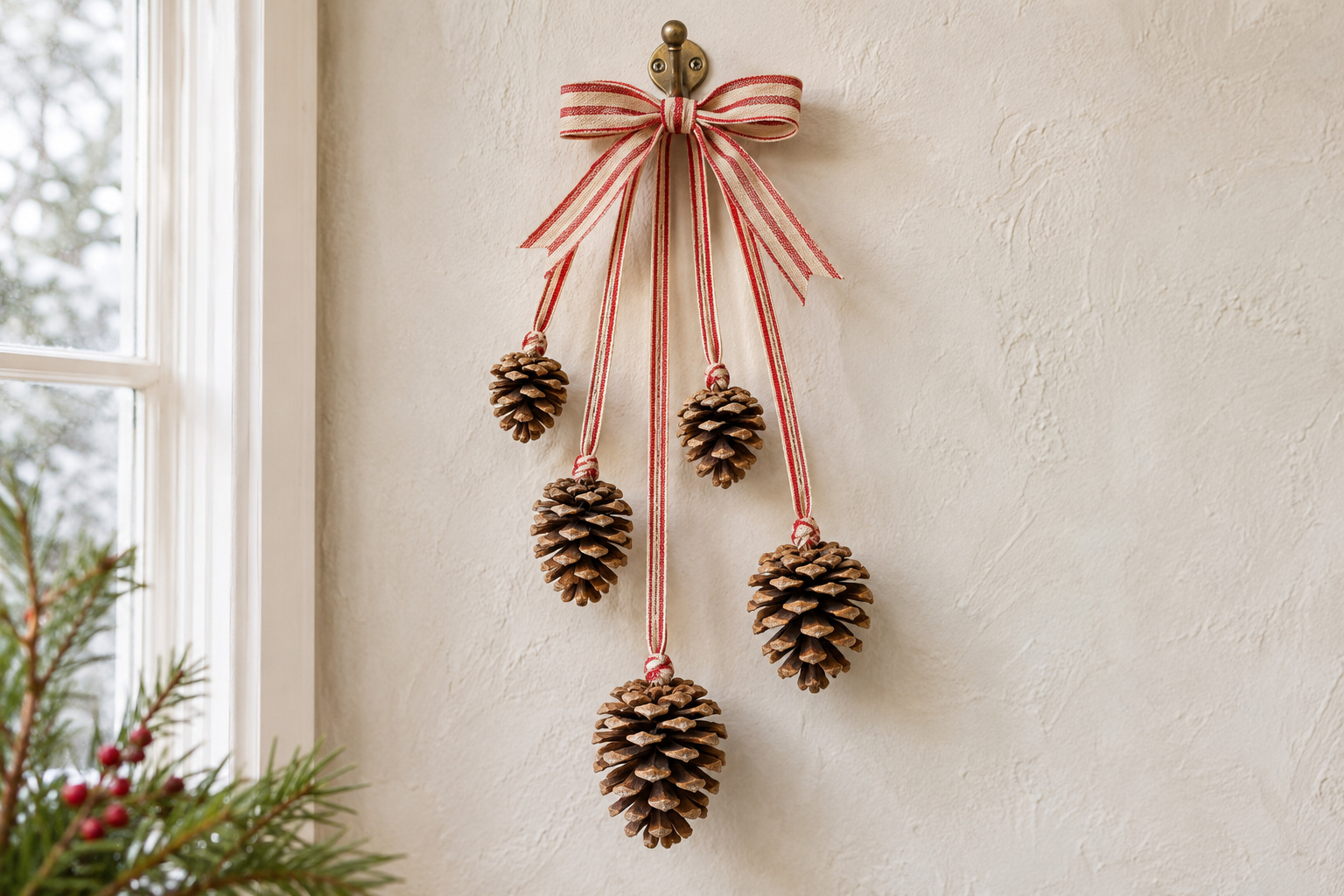
A small hanging cluster lets the shape of each cone remain visible. Suspend three or five cones on separate lengths of ribbon, with the lowest one slightly longer than its neighbors. A broad bow at the top gathers the strands into one composition rather than a loose tangle.
Use a decorative wall hook and secure ties appropriate to the cones; do not rely on a brittle scale to carry the weight. Keep the cluster against a clear wall where it will not brush coats or passing shoulders. A narrow red-and-cream stripe makes the ribbon part of the Christmas detail, while plain linen keeps the result quieter. Leave enough space between the cones to read their different lengths.
3. Give a Plain Garland a Measured Pinecone Rhythm
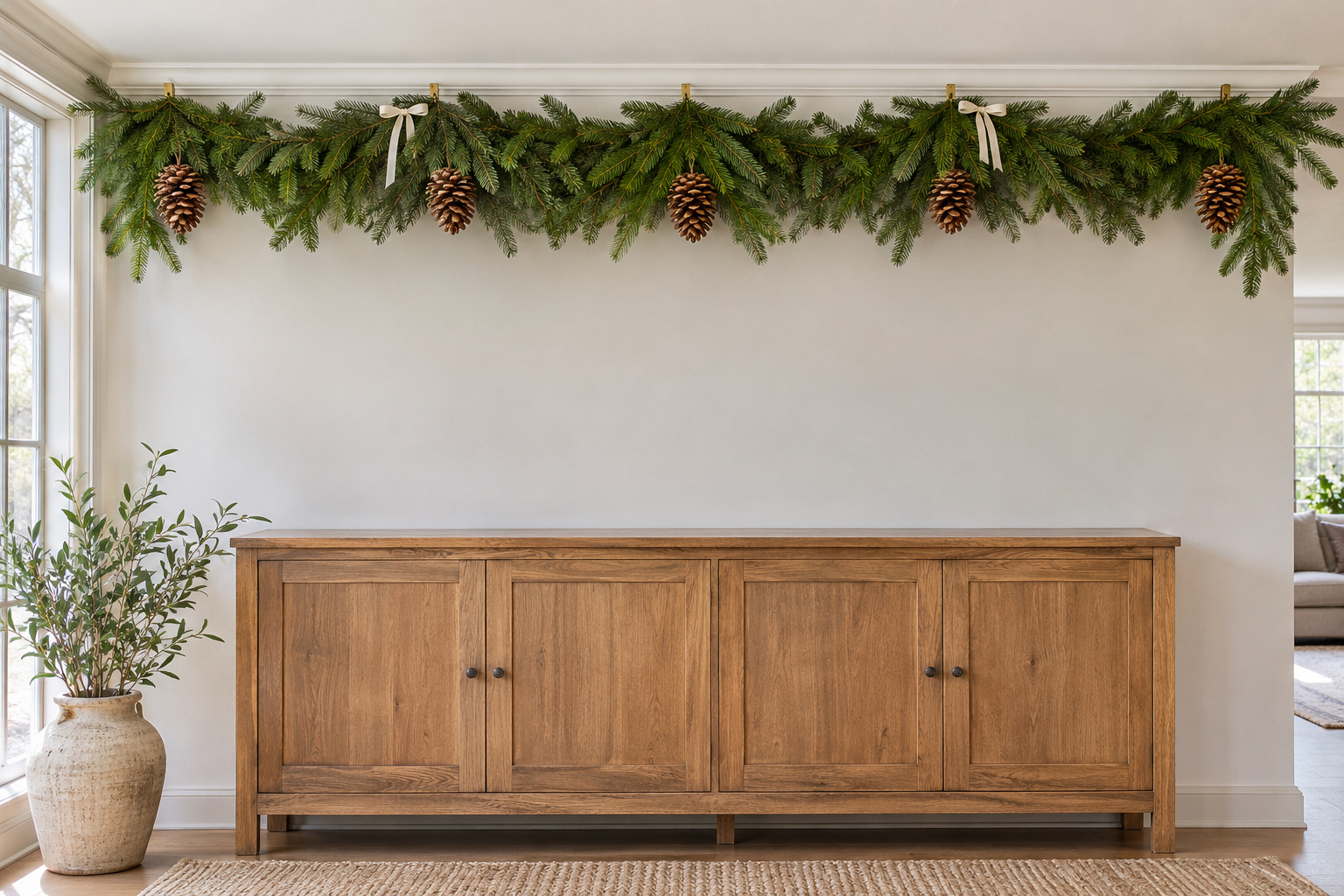
A plain evergreen garland gains definition when pinecones appear at deliberate intervals. Choose a small number of visible cones and repeat their spacing along the garland, turning some slightly so the scales catch the light. The greenery becomes a background for the brown forms rather than swallowing them.
Try this on a supported console backdrop or another suitable decorative edge where the whole line is easy to see. Use secure fastenings that suit the garland and support, and keep the arrangement away from heat. A few short ribbon ties can mark the same repeated points, but avoid adding another ornament to every gap. The measured spacing is what makes a simple material look considered.
4. Set Individual Cones in Small Ceramic Cups
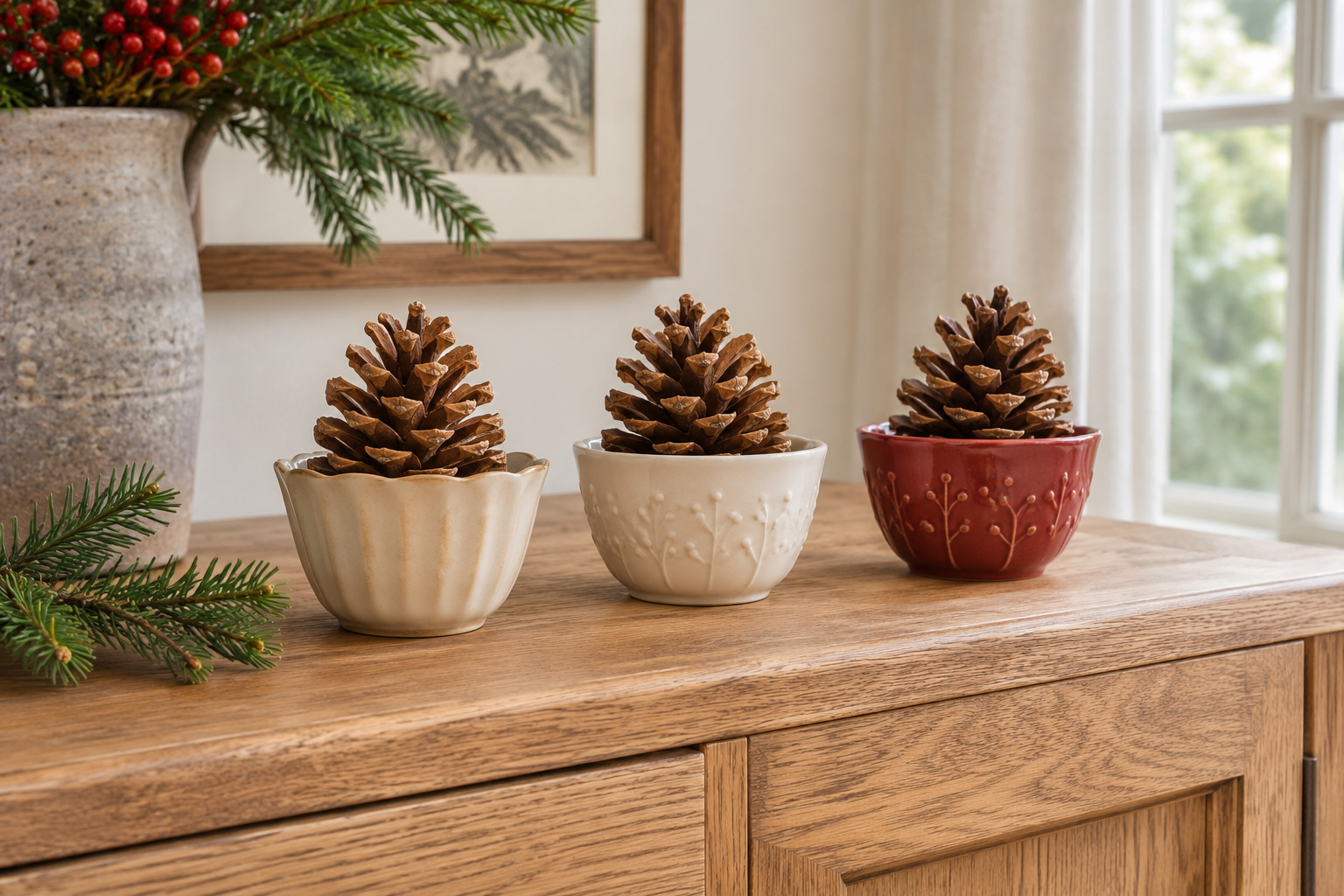
A row of small ceramic cups can turn individual pinecones into a miniature display. Rest one cone upright in each cup, choosing a mouth narrow enough to support its lower shape without forcing it in. The ceramic bases give otherwise irregular cones a steady visual rhythm.
Keep the cups together on a sideboard or shelf, with a little space between them. Three cream cups with brown cones can feel quiet and natural; a single red cup among them adds a small Christmas accent. Use decorative vessels kept separate from food service, and avoid packing the cones with loose material that will spill when moved. Their scales supply enough texture on their own.
5. Build a Pinecone Border Around a Winter Print
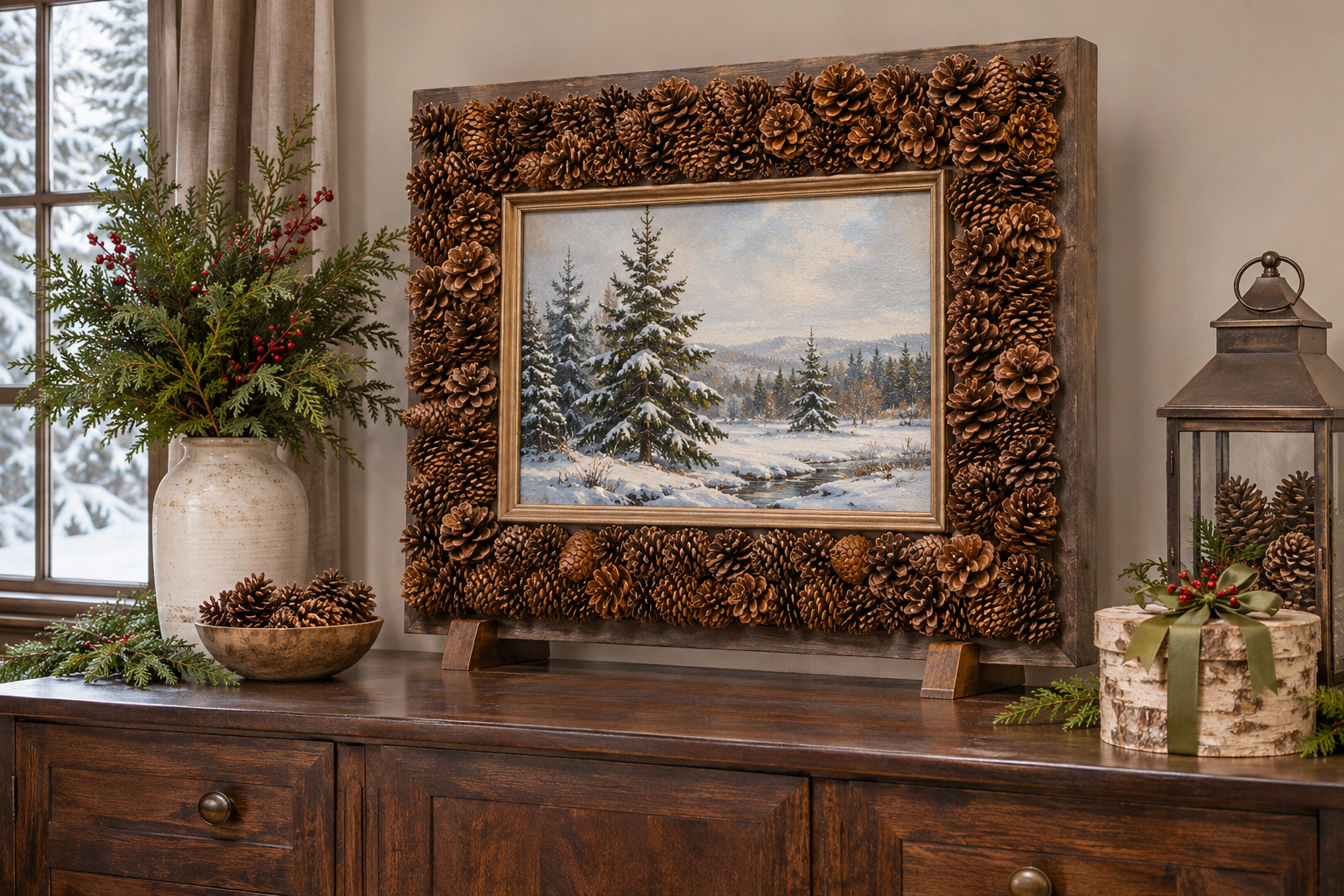
A pinecone-covered outer border can make a simple winter print feel more substantial. Keep the cones on a separate decorative backing around the frame so the artwork remains clear and the original frame does not have to support an improvised weight. Smaller cones usually produce a more even outline than a mix of very large pieces.
Let the print stay simple: a snowy tree or a quiet woodland scene will sit comfortably inside the textured edge. Arrange the border flat before securing anything so you can see whether the corners are too heavy. Use a stable freestanding display or suitable wall mounting for the completed assembly. The cone border is already the main decoration, so nearby objects can remain low and plain.
6. Suspend a Few Cones From a Bare Branch
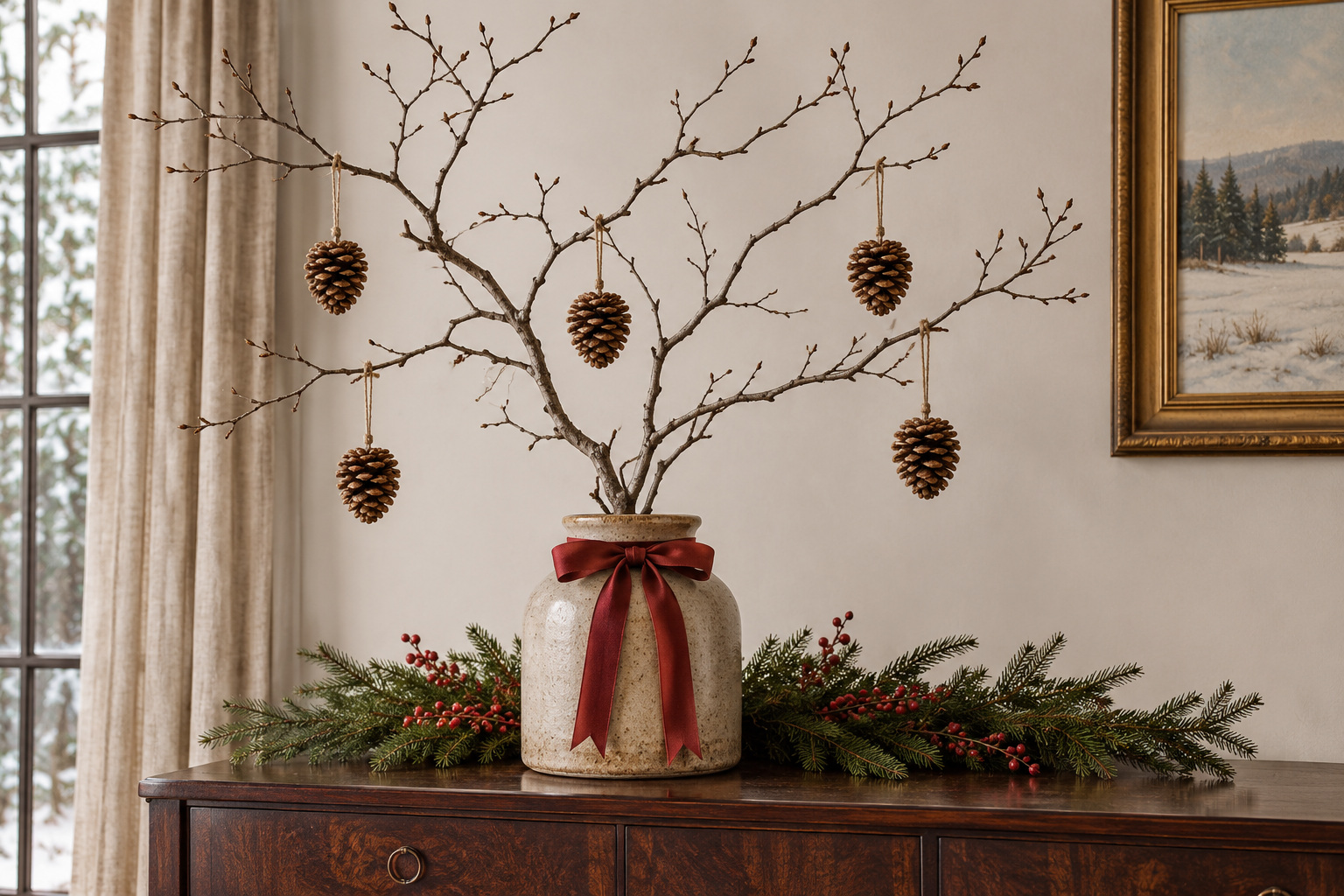
A bare branch gives hanging cones an open, sculptural setting. Place a modest branch securely in a stable vessel, then hang a few lightweight cones from its stronger twigs. Short, similar-colored ties keep the arrangement connected even when the branch shape is irregular.
Balance the composition before adding more cones. A branch does not need an ornament on every tip, and an empty stretch can help the decorated section stand out. Keep the vessel away from the furniture edge and choose a scale that cannot tip easily when someone passes. A red ribbon tied around the vessel can supply the Christmas color while the branch and cones keep their natural finish.
7. Arrange Upright Cones as a Tiny Woodland
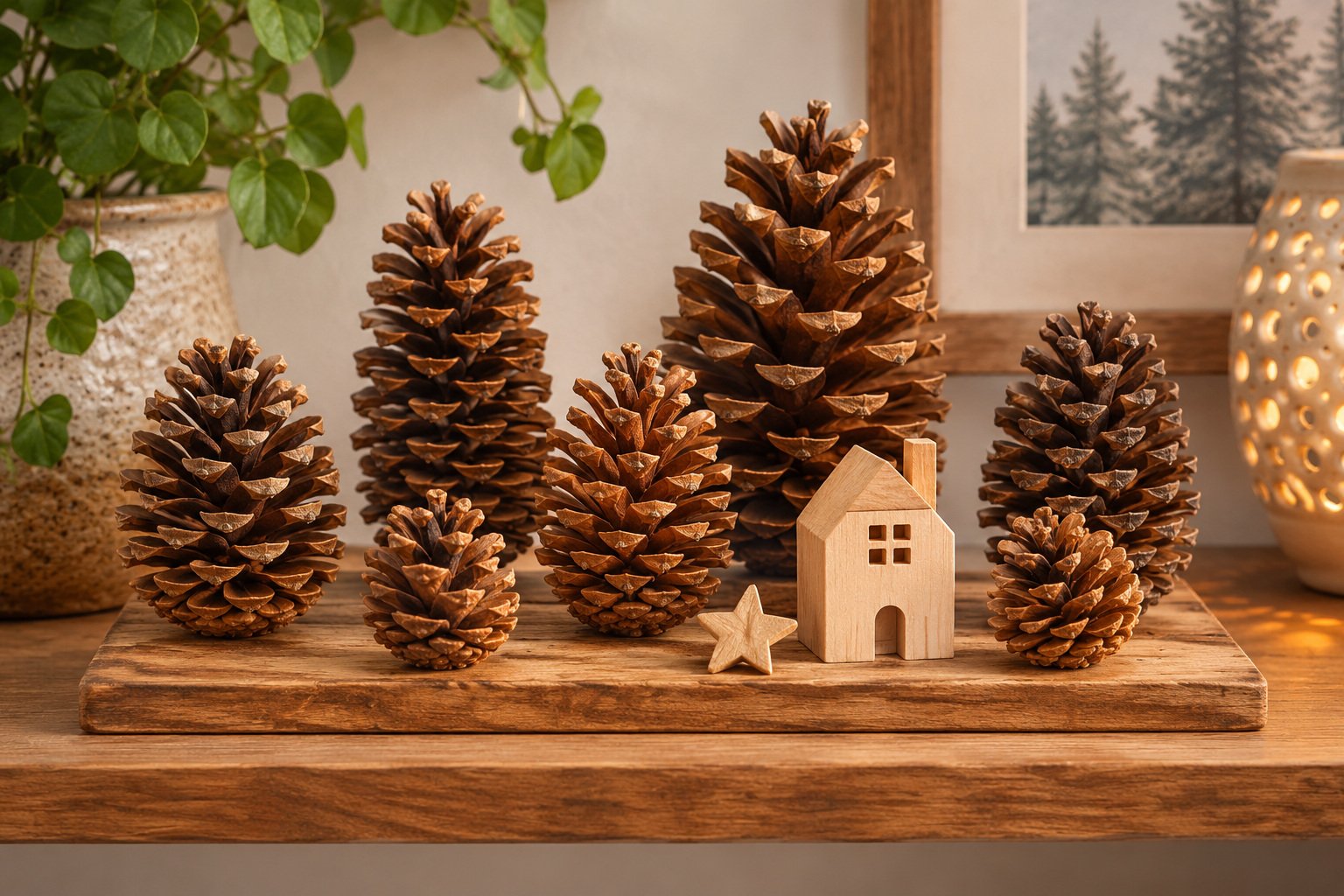
Several upright cones can suggest a tiny woodland when grouped at different heights. Choose pieces with broad bases that stand reliably, or use discreet purpose-made decorative stands. Place the tallest toward the back and allow gaps so their silhouettes read as individual trees.
A flat wood board makes a useful boundary for the scene. Add one small wooden house or a simple star, keeping the surrounding surface clear rather than scattering artificial snow across it. This display works well where you can see the cones near eye level. Test each piece for stability before settling the arrangement, and use fewer cones if their outlines begin to merge into one dense mound.
8. Add a Cone-and-Ribbon Tie to a Dining Chair
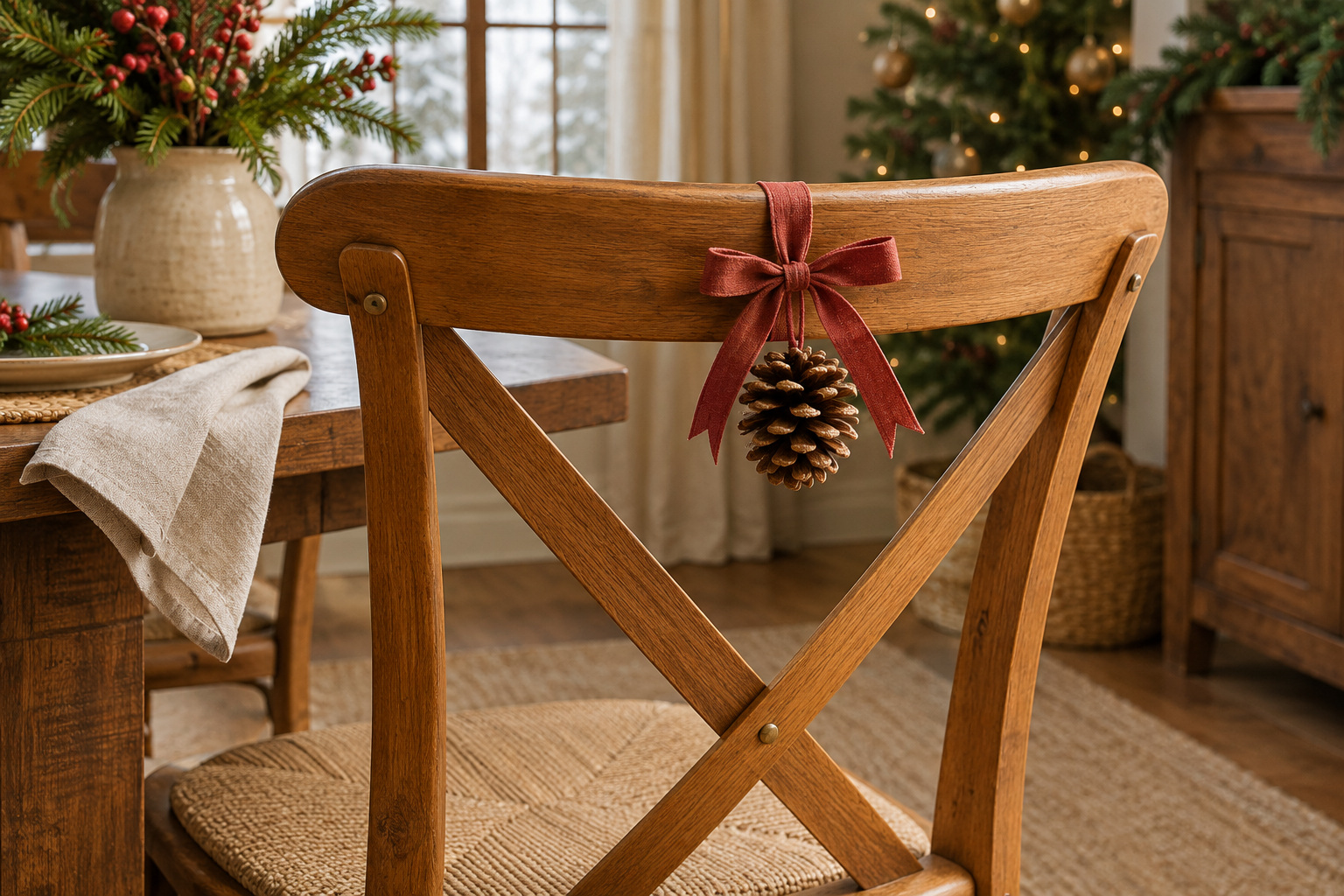
A single pinecone tied to the outside back of a dining chair can connect the seating to a natural Christmas scheme. Keep the arrangement small, with one cone and a short ribbon rather than a bulky cluster. The detail is most effective on a chair back with a clear place for a removable tie.
Place it where it will not press against the person sitting down or catch their clothing. Check the chair’s movement and the route behind it before decorating the full set. A warm red ribbon can relate to napkins or nearby wall art without adding objects to the table. If the chair has no suitable tying point, leave it plain rather than attaching decoration to a delicate finish.
9. Style a Pinecone Trough on a Deep Windowsill
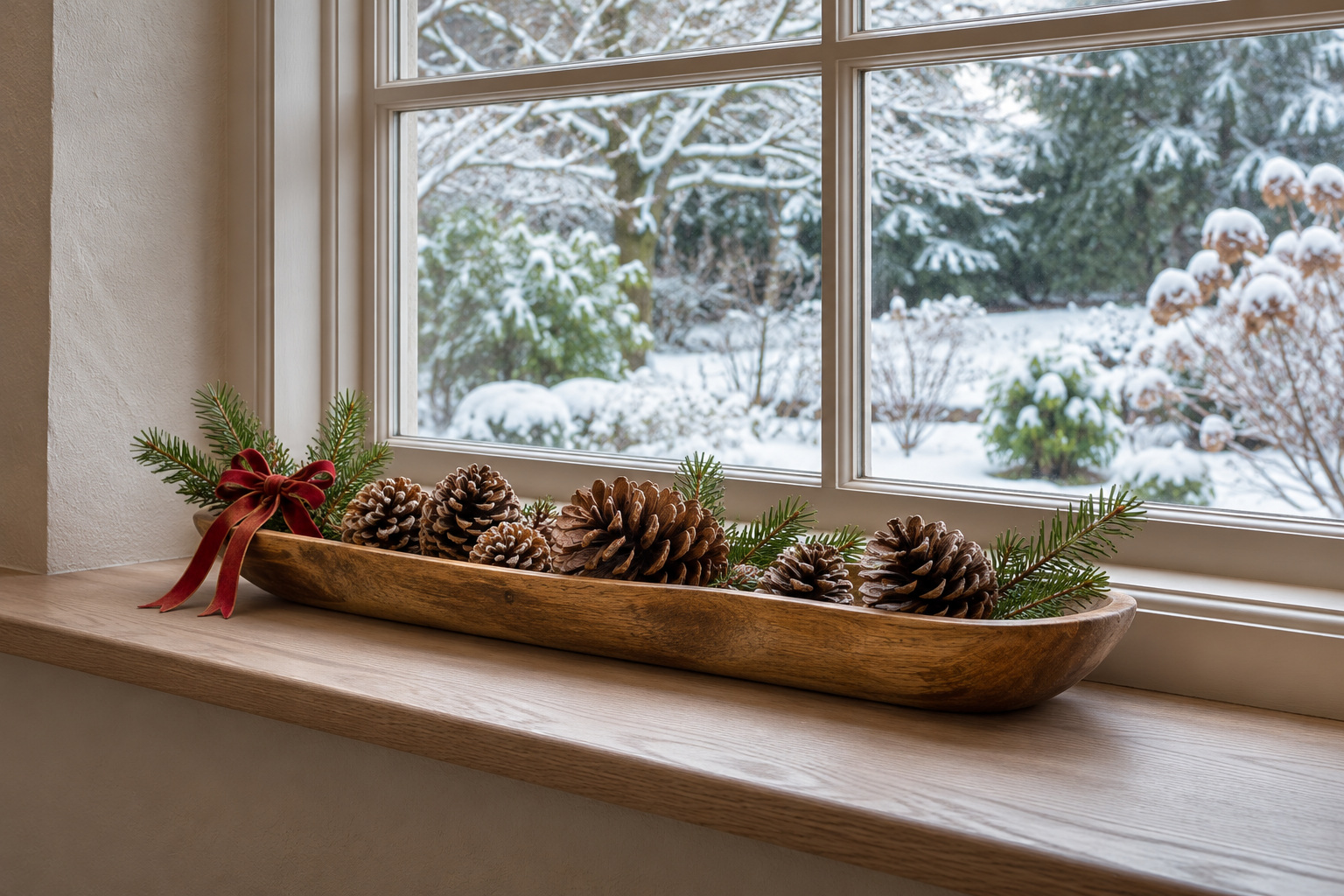
A shallow wood trough can give a deep windowsill a contained Christmas display. Set cones in a loose line with their tips facing different directions, then add only enough evergreen to connect them. The low container keeps the arrangement readable against the window without creating a tall obstruction.
Use this only where the sill has enough depth and the window can still operate as intended. Keep the trough away from condensation and any radiator or other heat source beneath. A small red ribbon tied around one end can be enough color. The appeal comes from daylight moving across the scales, so do not bury the cones beneath foliage or fill the surrounding sill with more objects.
10. Place a Cone Wreath Against a Dark Wall
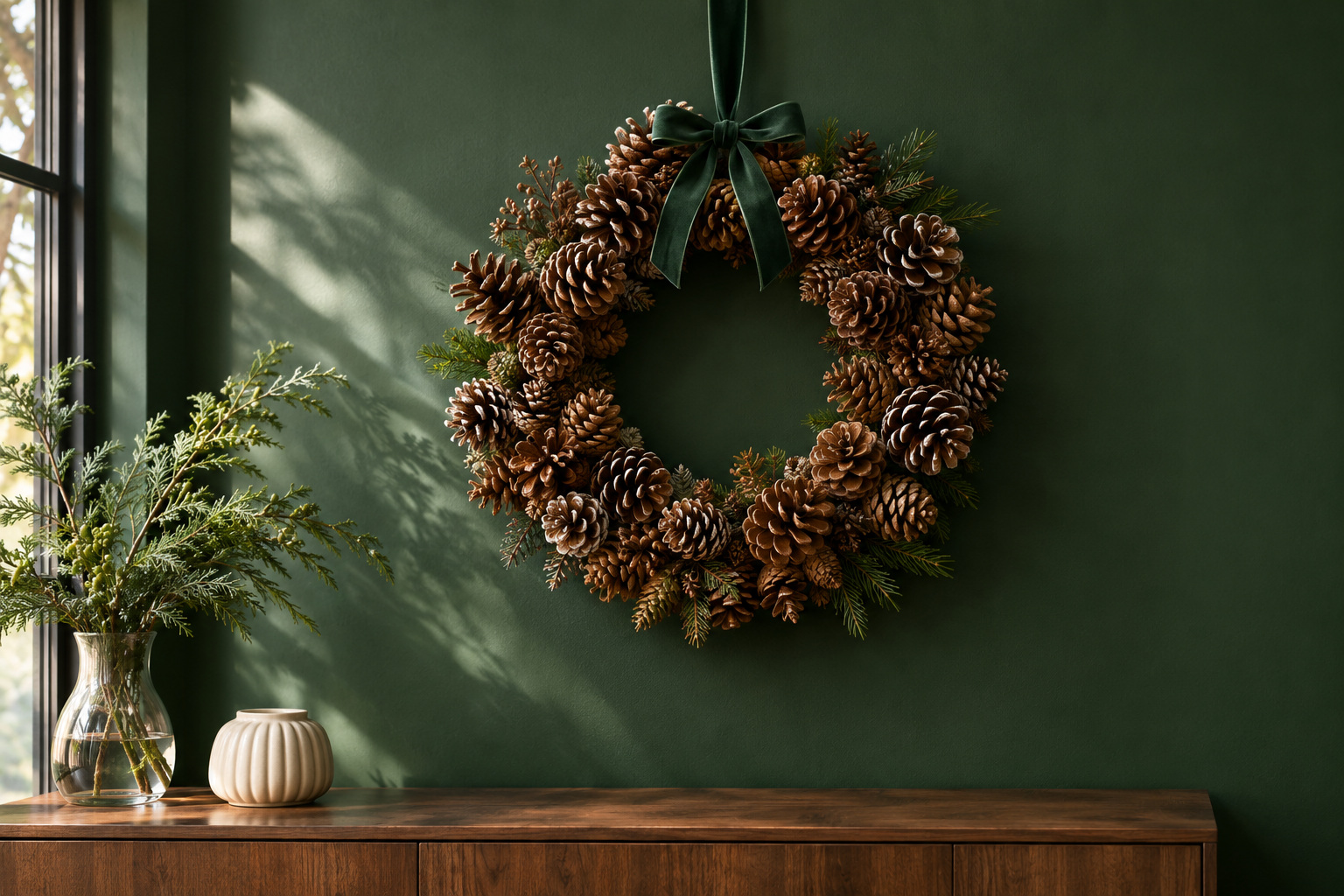
A brown cone wreath can look surprisingly distinct against a dark green or charcoal wall. The wall gives the lighter edges of the scales a clear background, making the wreath’s texture the focal point. Hang it with a restrained ribbon that relates to the wall rather than introducing another strong color.
Choose the wall area as carefully as the wreath. Above a low cabinet, the ring can sit within an uncluttered rectangle of paint, with one small object below to balance the composition. Check the contrast in the room’s evening light before committing to the position. This treatment depends on the relationship between wall and material, so extra glitter or artificial frost is not necessary.
11. Make a Tall Glass Vessel a Study in Texture
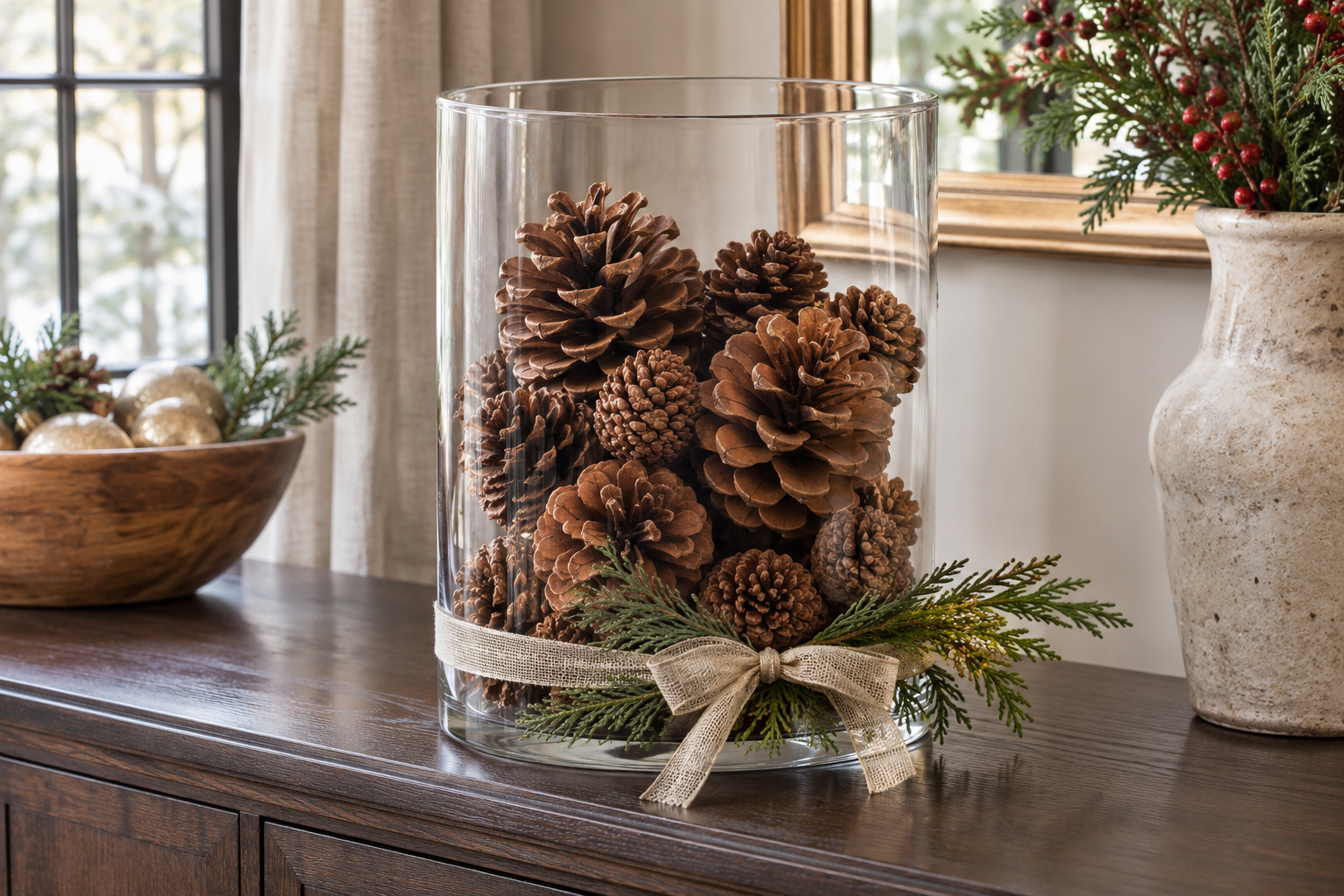
A tall clear vessel can hold a loose stack of cones while showing their shapes through the sides. Use an opening wide enough to place and remove the cones without forcing them, and stop before the display reaches the rim. The glass gives the irregular forms a clean outer boundary.
Try mixing two cone sizes while keeping their natural brown colors. Turn a few outward so the scale pattern is easy to see, then leave the top slightly uneven. Set the vessel on a stable surface away from the edge. A simple evergreen tie around the outside can make the Christmas connection, but the container should remain transparent enough for the contents to be the main feature.
12. Give Wrapped Display Boxes a Pinecone Finish

A pinecone can give a simple ribbon tie a more tactile finish on a wrapped decorative box. Tie a small cone at the intersection of two ribbon lengths, keeping the paper plain enough that the texture stands out. Brown kraft paper, cream cotton ribbon, and natural scales make an easy material combination.
Use empty display boxes when the arrangement is intended to stay in place through the season. The cone is decorative and may be awkward for gifts that need to travel or be stacked. Make sure the tie holds the cone securely without crushing its scales, and keep the boxes in a contained corner. Two or three different box sizes provide enough variation without turning the floor into a pile.
13. Use a Short Pinecone Strand on a Cabinet End
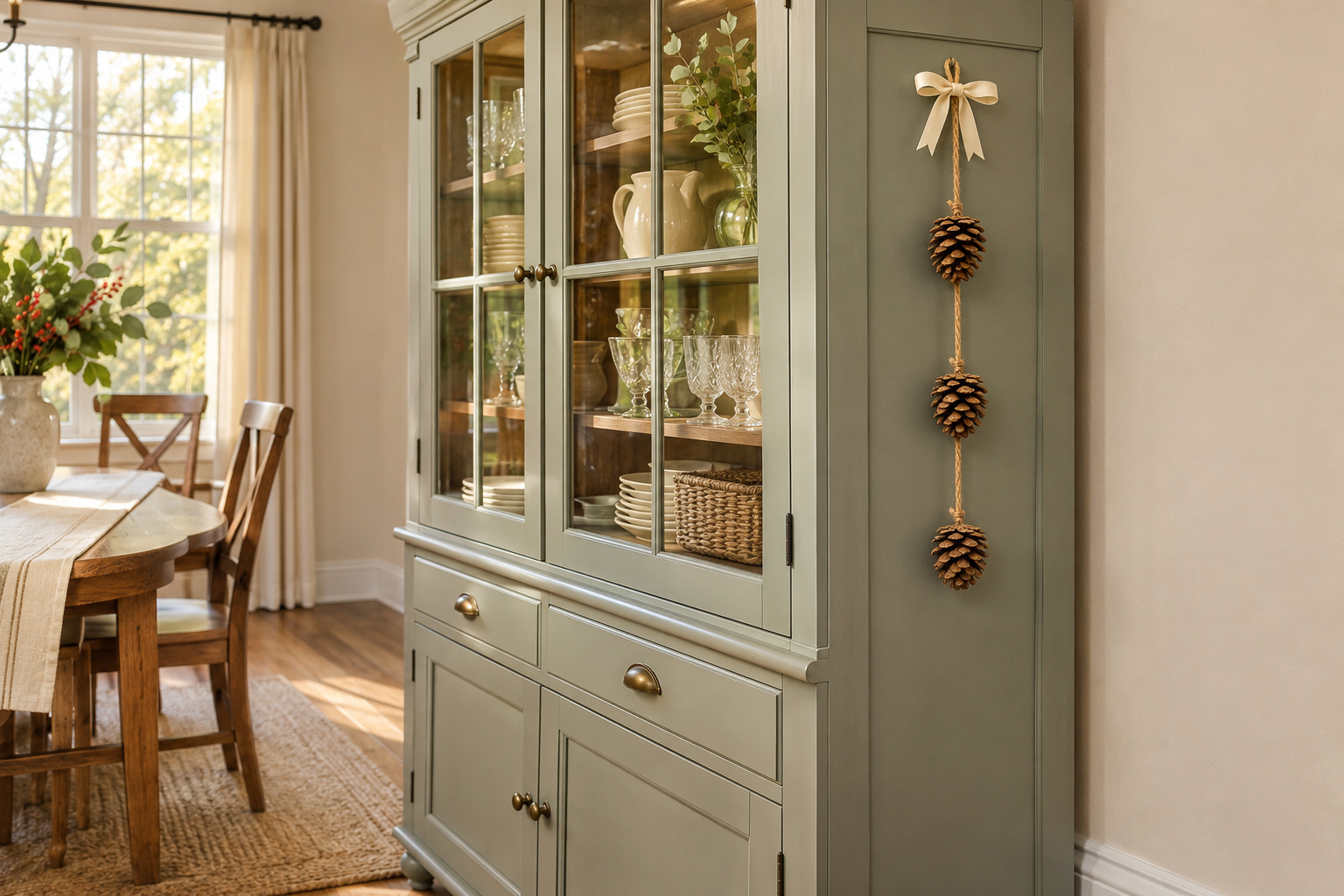
A narrow cabinet end can carry a short vertical strand of cones where a wider wreath would feel crowded. Space three cones along a strong decorative cord, with small knots or secure ties keeping them separate. A short ribbon at the top finishes the line without hiding the cabinet itself.
Choose a non-working side panel away from heat, wet work, and moving doors. Check the attachment against the panel finish, and make sure the strand cannot swing into a walkway. This is a small accent for a defined surface, not a full garland that needs to wrap around the furniture. Keep the cone size modest so the strand reads as a deliberate vertical detail.
14. Place an Oversized Cone Beneath a Glass Cloche
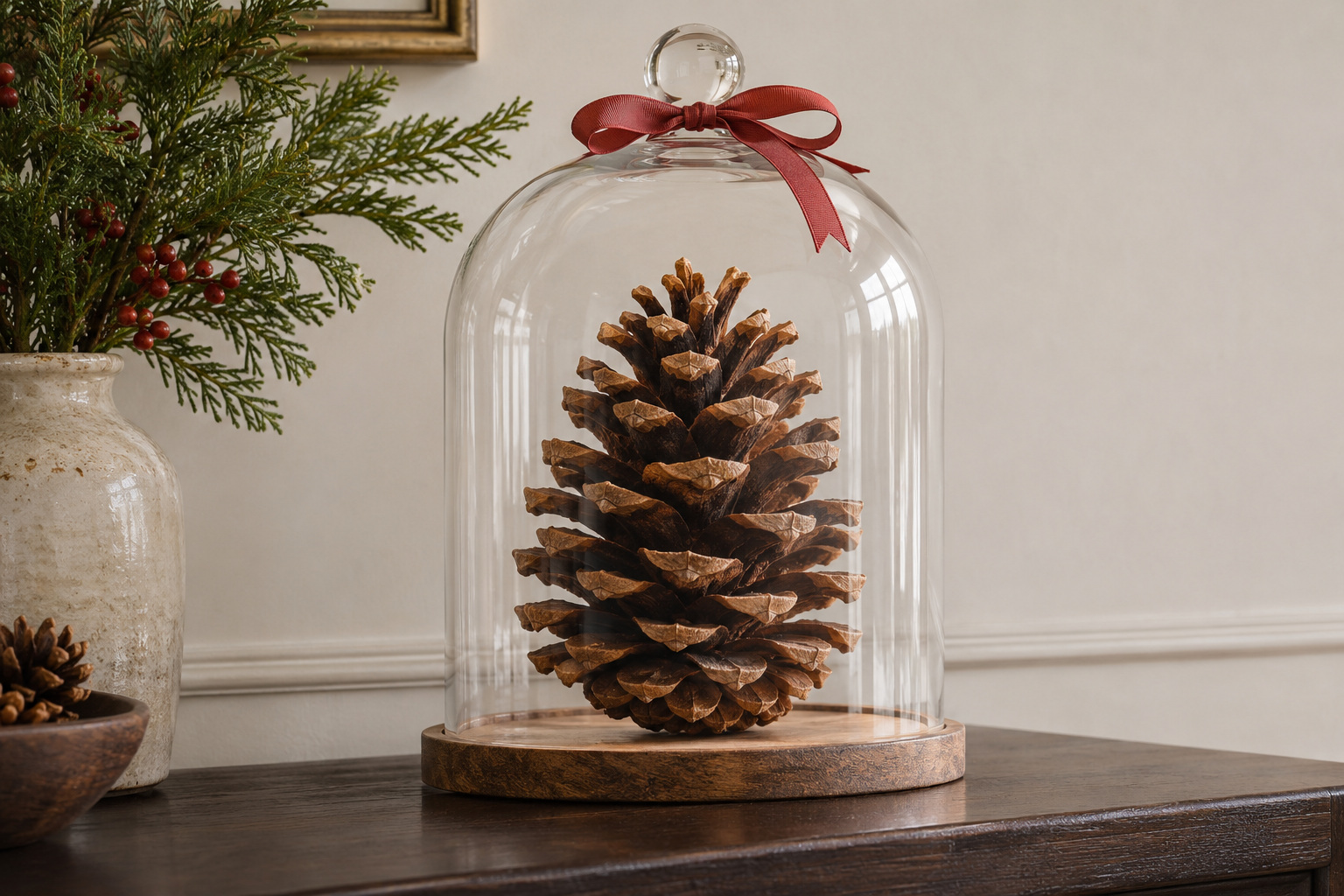
One oversized cone can become a complete display beneath a glass cloche. Choose a dome with generous clearance around the cone so its outline remains visible from the side. A plain wood base provides a quiet contrast to the reflective glass and layered scales.
Use a cone that stands securely, and place it inside only when it is clean and fully dry. There is no need to add loose filler, lights, or artificial snow around the base. A narrow red ribbon on the cloche handle or beside the base can supply the seasonal note. This treatment works best on a calm surface where the single large form can hold attention.
15. Combine Cones and Copper-Toned Ornaments in a Wooden Crate
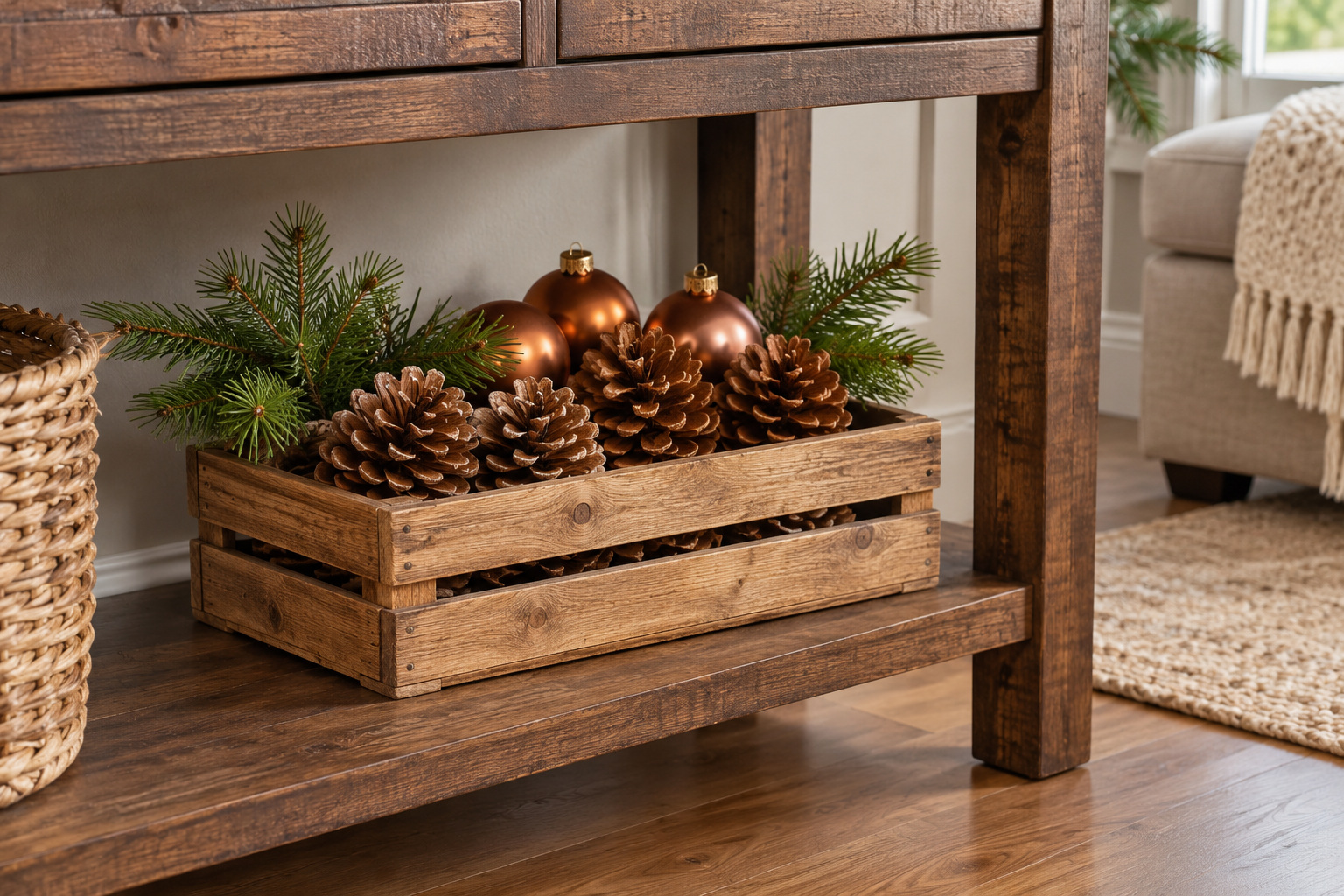
A small wooden crate can bring cones and copper-toned ornaments together without making a formal centerpiece. Arrange the cones toward the front, with a few shatter-resistant decorative ornaments tucked behind them. The warm metallic color echoes the brown scales while adding a clear Christmas detail.
Keep the mix shallow enough that you can still see the crate’s construction and individual contents. Place it on a sturdy lower console shelf or another stable display surface rather than in a walking route. Use only a little greenery if the crate needs a softer edge. The crate is the boundary, so resist scattering more cones and ornaments around its feet.
16. Line a Narrow Picture Ledge With Alternating Cones and Trees
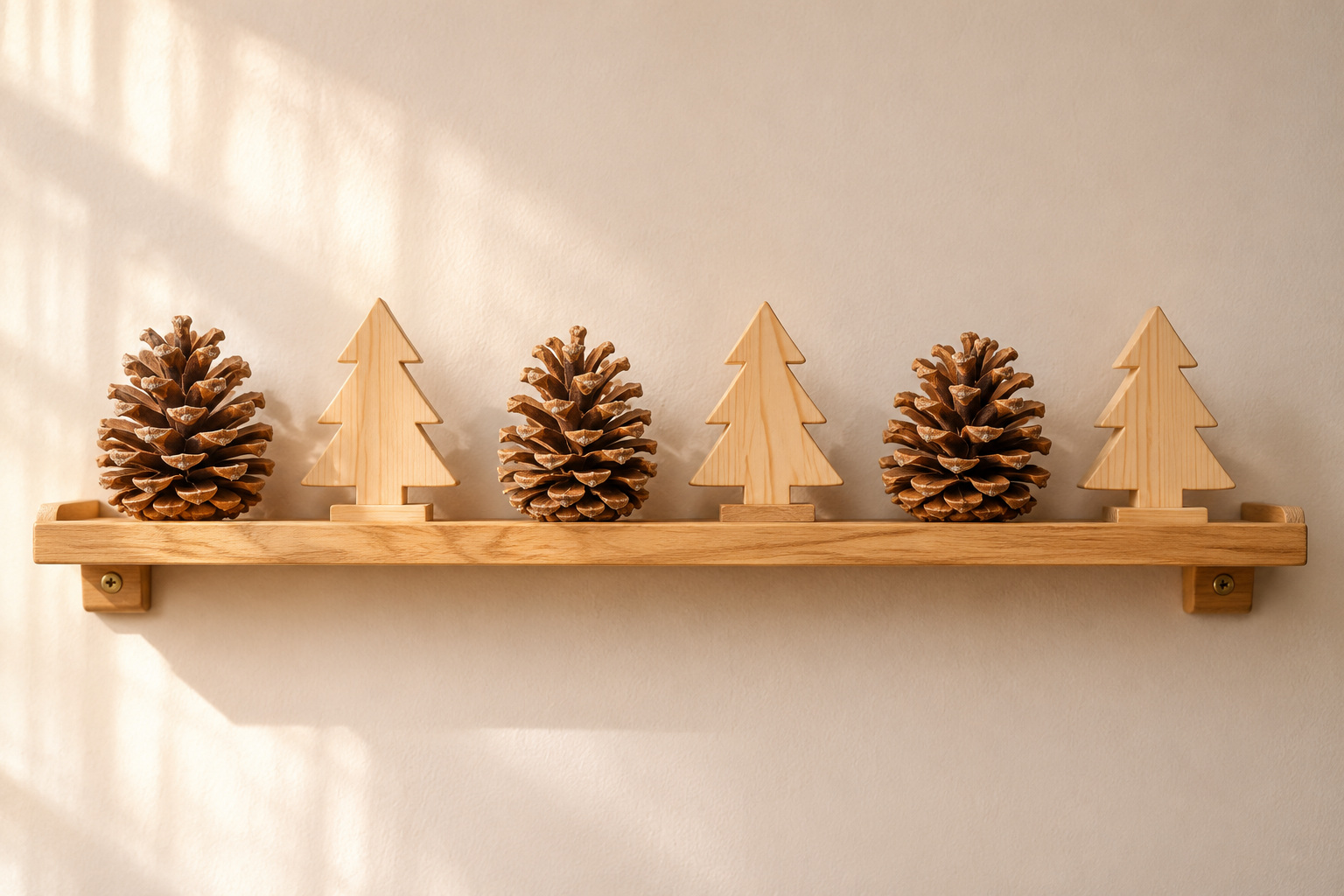
A narrow picture ledge can hold a simple sequence of upright cones and small wooden tree shapes. Alternate the two forms with enough room to see their different outlines. Keeping the objects within a similar range of heights makes the sequence feel composed rather than collected at random.
Check that every object sits fully within the ledge’s usable depth and any retaining lip. Use stable pieces and follow the ledge’s load guidance; irregular cones may need a suitable decorative stand. A pale wall helps the brown wood and cone shapes read clearly. Leave the ledge mostly free of other items so the alternating rhythm remains the point of the display.
Natural pinecones look most intentional when the display has a clear boundary: a ring, a vessel, a branch, or a small stretch of ledge. Choose one arrangement that suits the room, keep the scales visible, and let a little greenery or ribbon establish the Christmas mood. The material already brings plenty of detail.
For a separate arrangement on the dining table itself, explore our Christmas table centerpiece ideas and choose a scale that leaves room for serving.
Discover more from HomeTrendora
Subscribe to get the latest posts sent to your email.