A sink skirt changes the balance of a bathroom: hard tile, porcelain, and metal gain a soft surface, and an open washstand can feel more like a piece of furniture. The most useful versions also open easily, finish above the floor, and come off when they need washing.
These 14 bathroom sink skirt ideas explore different shapes, openings, and fabric choices rather than treating every basin the same way. Measure the actual support line, plumbing, and usable space before choosing a design. Use a removable attachment suited to the fixture and its finish, follow the fabric’s care instructions, and keep access to valves and plumbing unobstructed. A skirt conceals a view; it does not provide secure storage.
1. Use Two Flat Panels Beneath a Wall-Hung Sink
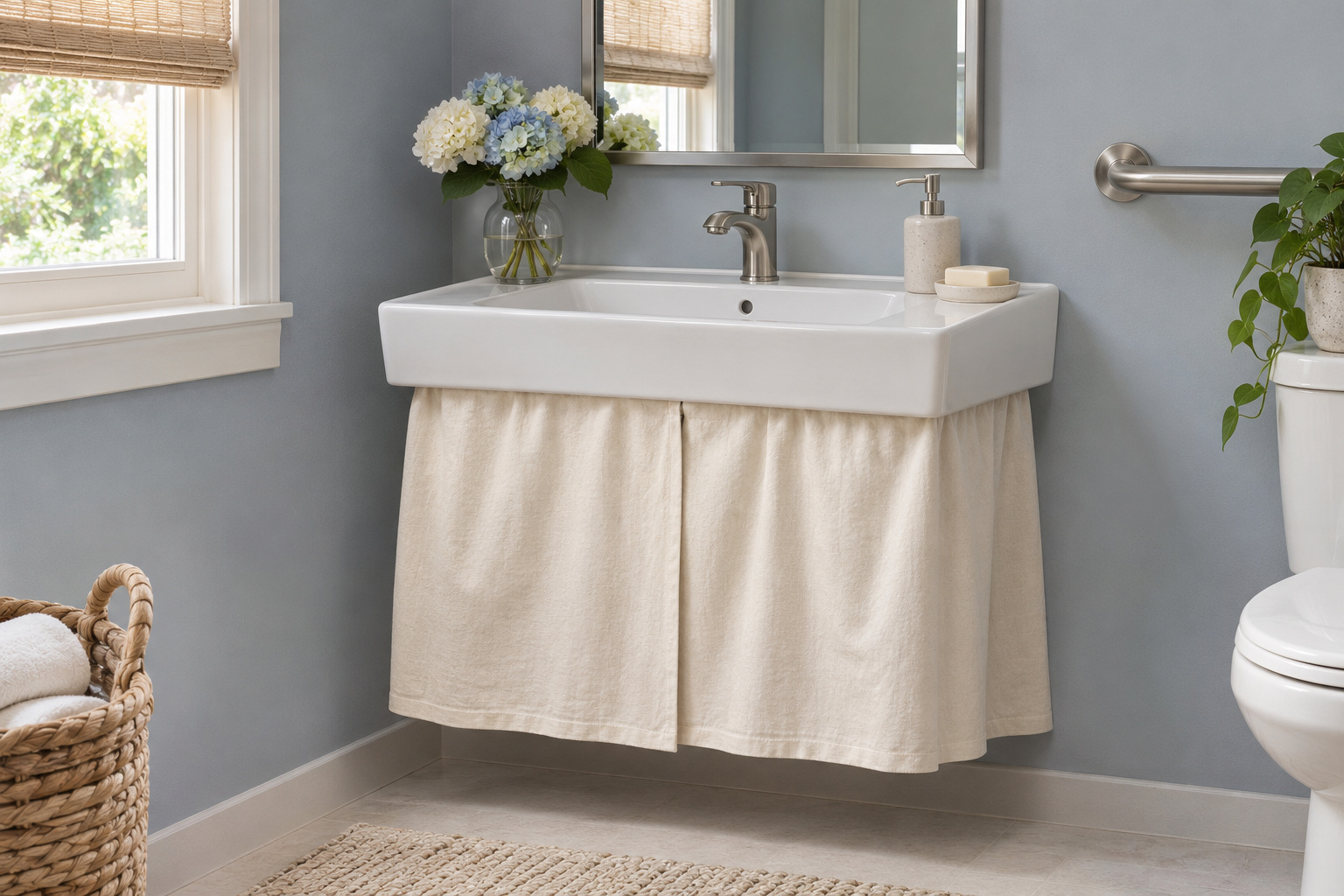
Two nearly flat panels give a wall-hung sink a tidy, furniture-like front. Let them meet or slightly overlap at the center so you can move either panel aside without taking down the whole skirt. A plain cotton in a warm white or light oatmeal keeps attention on the basin’s shape.
Plan the support around the actual fixture rather than its widest visible edge. Some basins have no suitable attachment surface, so a separate purpose-made support may be necessary. Finish the panels clear of the floor and check that they cannot catch under your feet. This tailored option needs little fullness, making it a good starting point when a narrow bathroom already has several strong lines.
2. Wrap a Rounded Pedestal With Soft Gathers
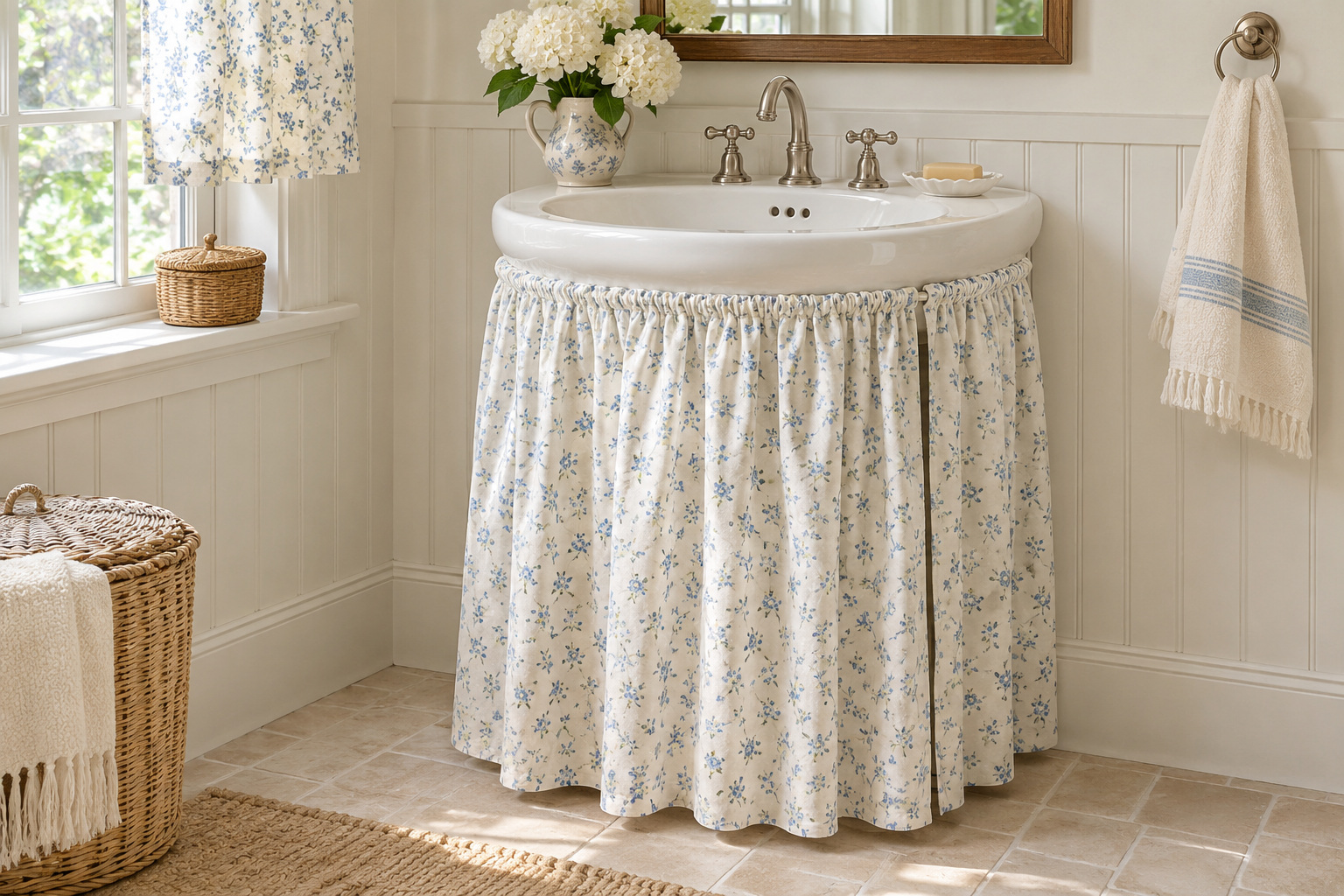
A softly gathered skirt can follow the curve of a rounded pedestal basin more naturally than a sharply pleated panel. Spread the gathers evenly around the front and sides, and place the opening where you can reach it comfortably. A small floral on a light ground makes the folds visible without looking heavy.
Check what actually fits behind the fabric. A pedestal occupies much of that space, so the skirt may be a decorative treatment rather than a storage solution. Keep the cloth away from any damp area and allow it to hang freely around the base. Make a paper or spare-fabric pattern first to understand how the curved top edge changes the fall of the finished skirt.
3. Give a Narrow Vanity a Single Box Pleat
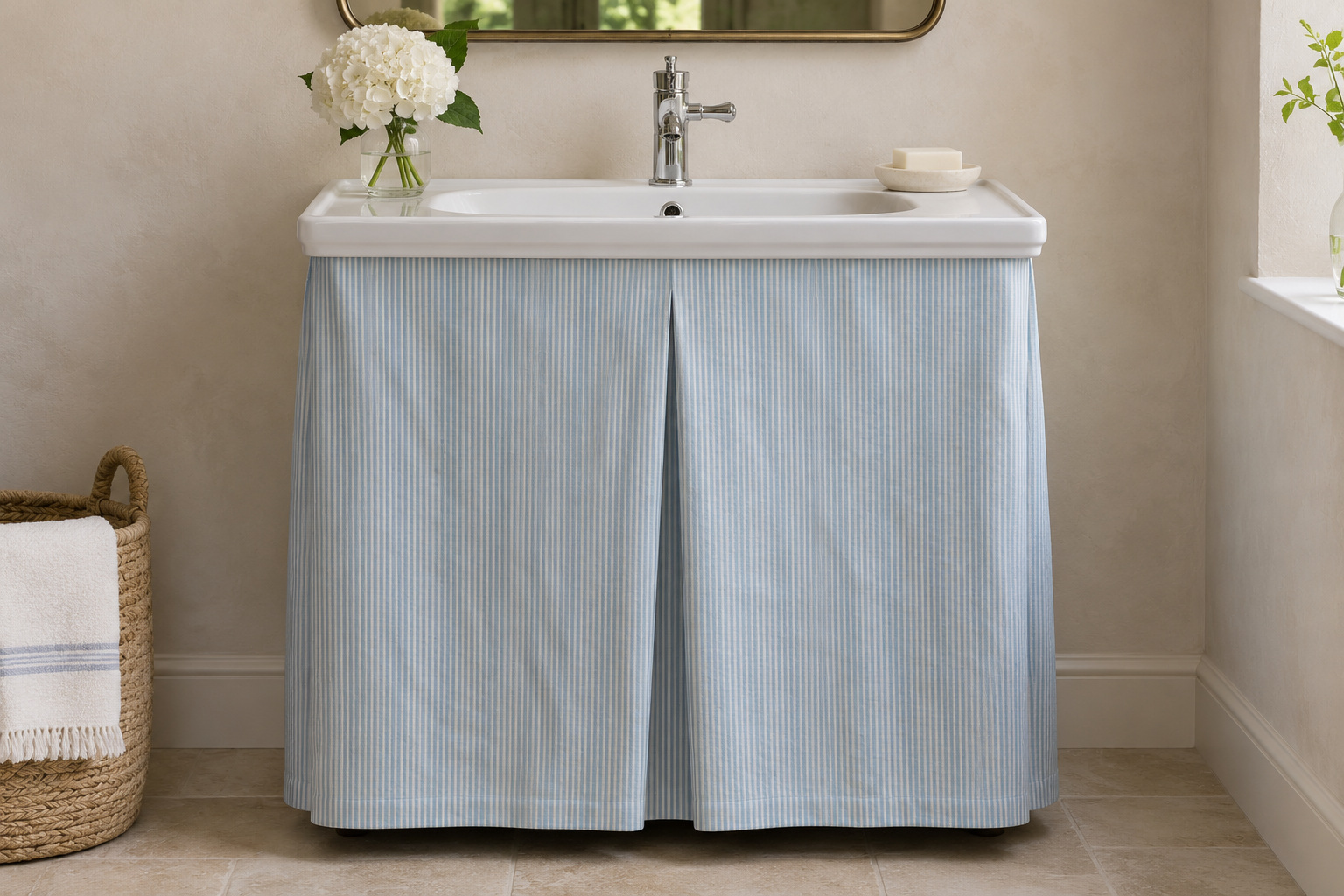
One centered box pleat can give a narrow open vanity a composed front. The broad flat areas on either side feel closer to a cabinet panel, while the pleat allows a little movement. A fine blue stripe adds direction without requiring more seams or decorative trim.
Work out how the pleat opens before sewing it in place. A fixed pleat may look crisp but be awkward if you frequently reach behind it; a concealed center opening can preserve the shape while improving access. Keep the fabric light enough to move easily. This approach suits a simple rectangular support where the top edge can remain level and the skirt does not interfere with a drawer or adjacent door.
4. Pair a Small Check With Plain Tile
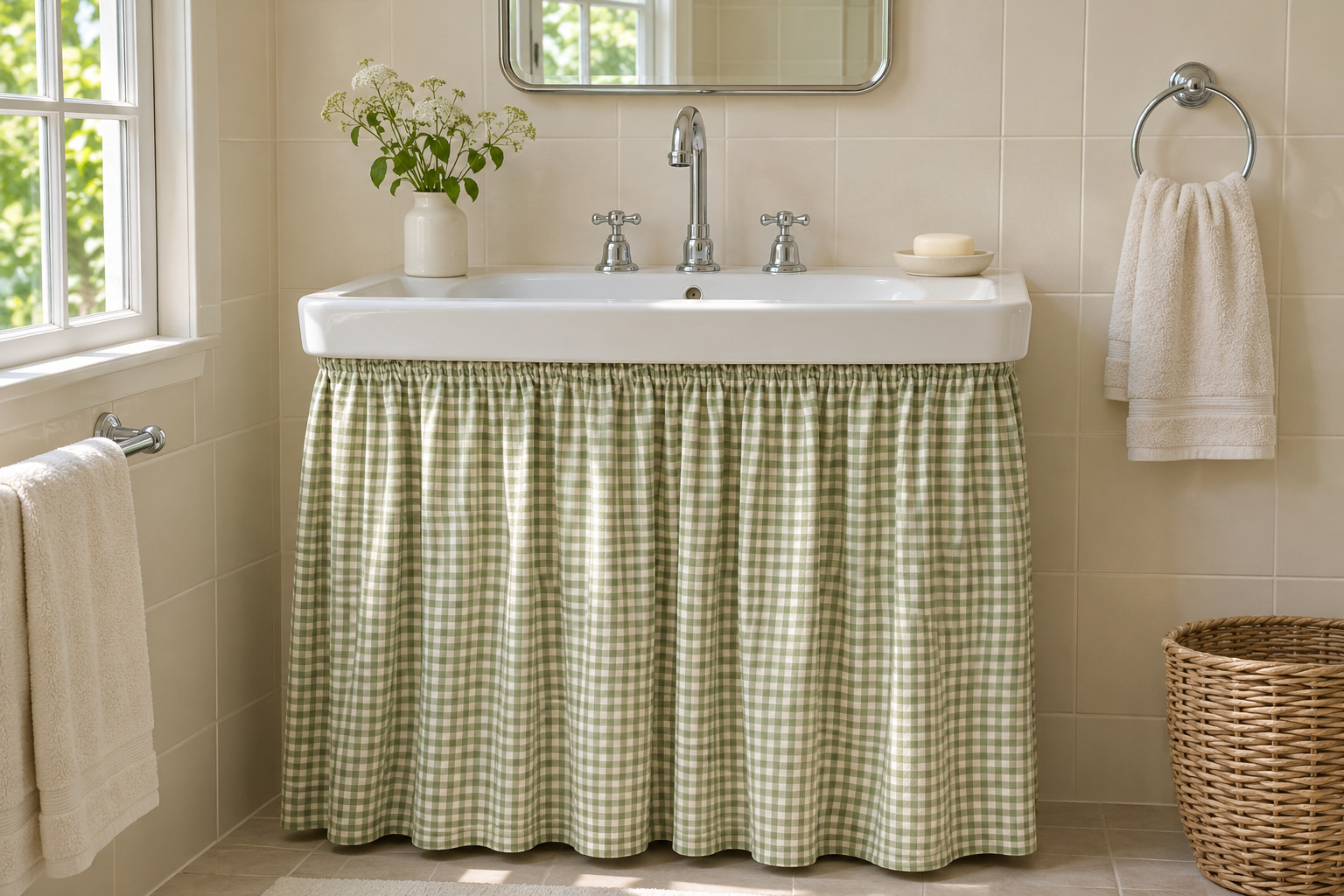
A small checked skirt can bring pattern into a bathroom with plain tile. Keep the tile color close to the fabric’s lighter square so the check feels connected to the room. The repeated grid gives a modest sink enough visual interest without adding a patterned wall as well.
Choose the scale from a sample held at the sink, not from a close-up fabric photograph. A very fine check may read almost solid from the doorway, while a larger one becomes the main feature. Keep the panel shape simple and let the pattern do the decorating. Plain towels and a restrained mirror frame give the checks room to show without turning every surface into another competing grid.
5. Repeat a Botanical Color in the Wall Paint
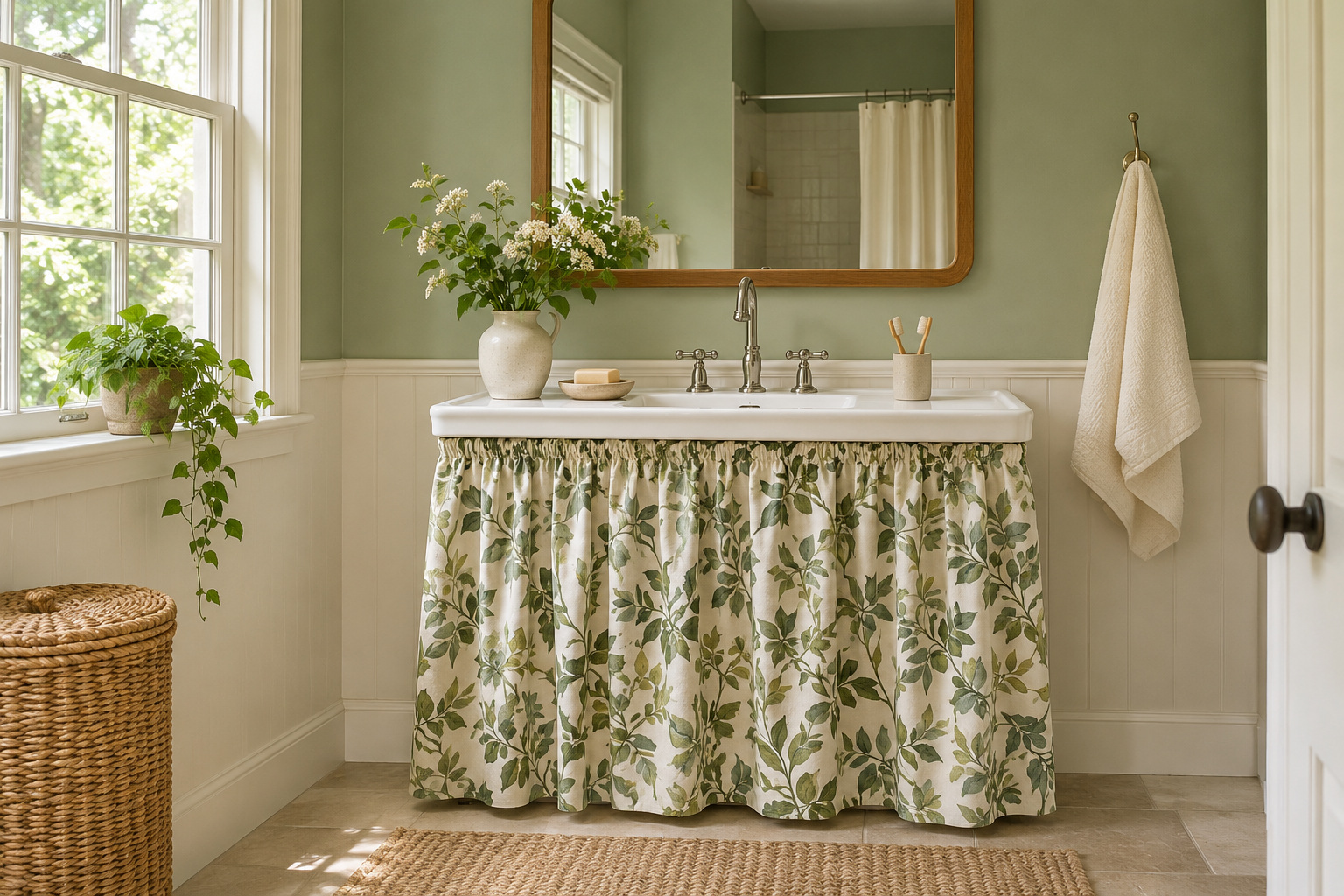
A botanical fabric can suggest a wall color without needing an exact match. Choose one quieter leaf or background tone, then test a related paint on the wall beside the sink. A muted green wall can make a green-and-cream botanical skirt feel settled rather than isolated.
Look at the sample in daylight and with the bathroom lights on. Fabric folds introduce shadows, so the wall will not appear identical even when the colors are close. Keep other large textiles plain to give the print a clear role. This is a useful way to connect a skirt to the whole bathroom instead of leaving the basin as the only decorated corner.
6. Keep an Open Shelf Behind a Split Skirt
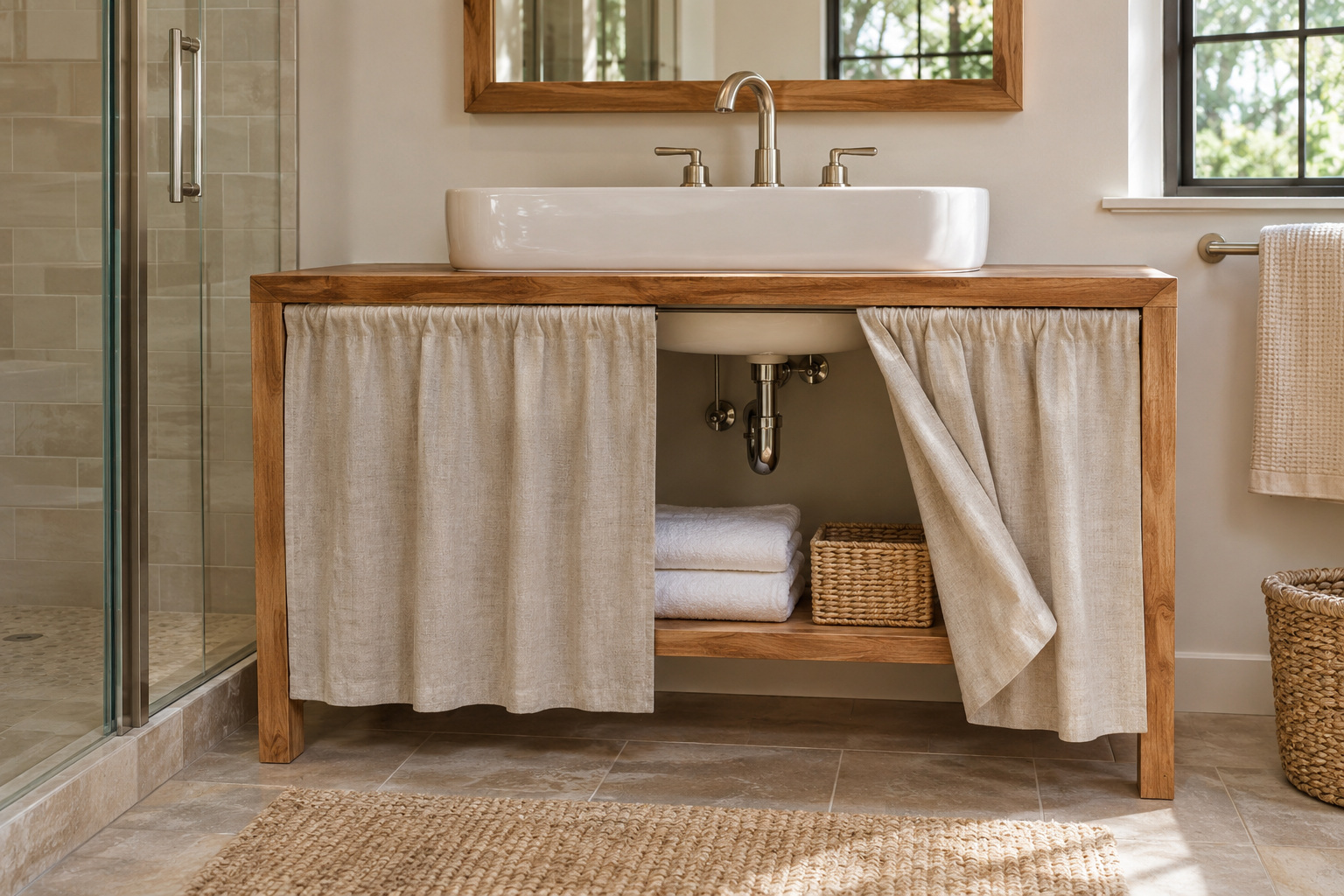
A skirt can cover an existing open shelf while preserving straightforward access. Use two panels with a generous center opening, and position a small basket or folded spare towels where they can slide out without rubbing against pipes. The shelf provides the storage; the cloth simply makes its front quieter.
Check that the entire space can still be inspected and cleaned. Do not pack items tightly around valves or use the fabric to hide a leak. A modest overlap keeps the panels together when closed, while separate removable sections make washing easier. Before finalizing the hem, pull out the largest item you plan to keep on the shelf and make sure the skirt does not snag on it.
7. Leave Turned Washstand Legs Visible
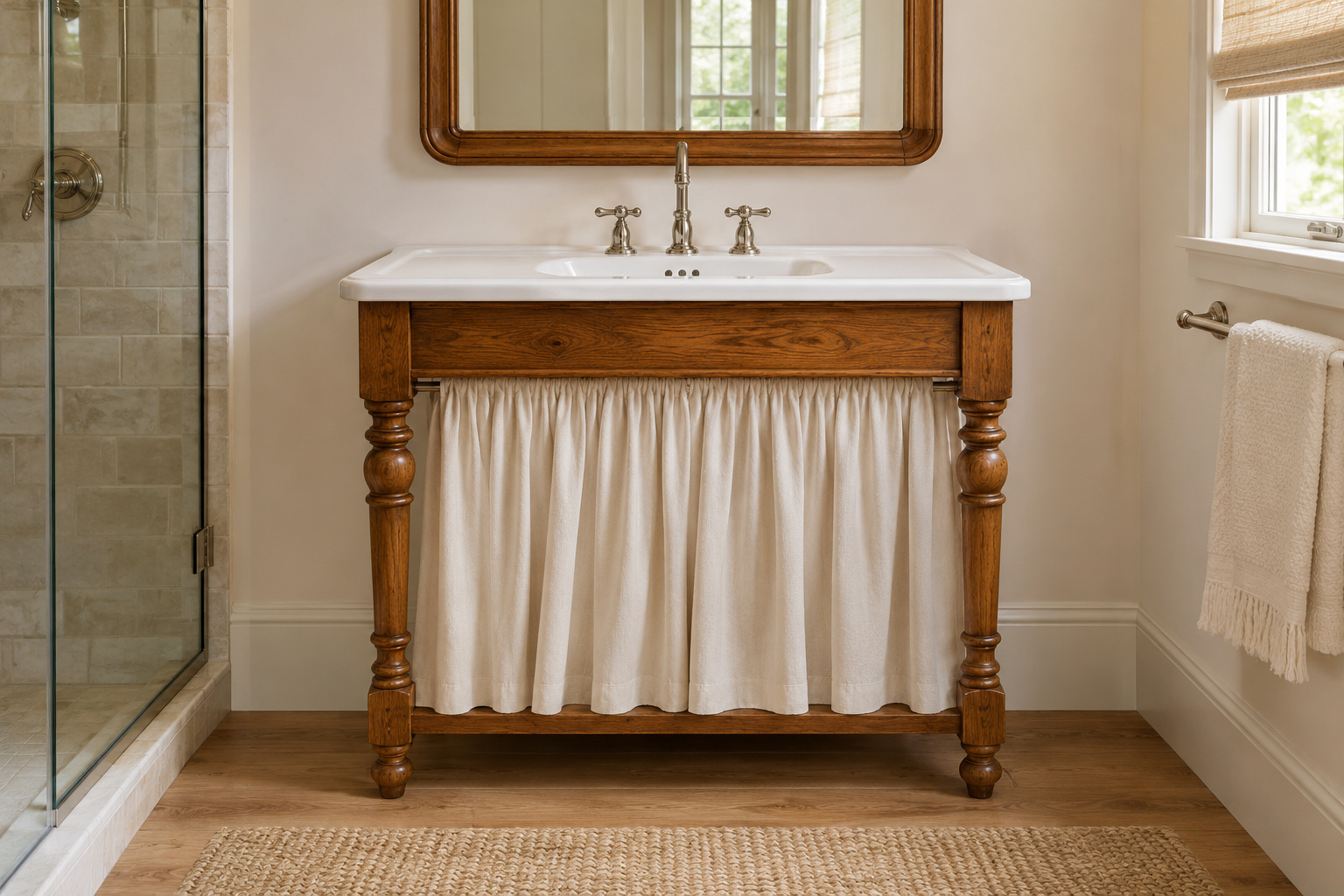
If a washstand has attractive turned legs, a skirt does not need to cover the whole piece. Set a panel within the front opening so the legs remain visible at the corners. The combination keeps the furniture’s shape while giving the area under the basin a softer center.
Choose a top edge and length that follow the actual frame, not a curtain shape floating across it. A small gathered heading can work inside a timber apron, provided the support and finish are suitable. Leave enough room for the fabric to move without wrapping around the legs. This partial treatment is especially convincing when the wood already connects with the mirror or another small piece of bathroom furniture.
8. Make a Contrasting Band Define the Hem
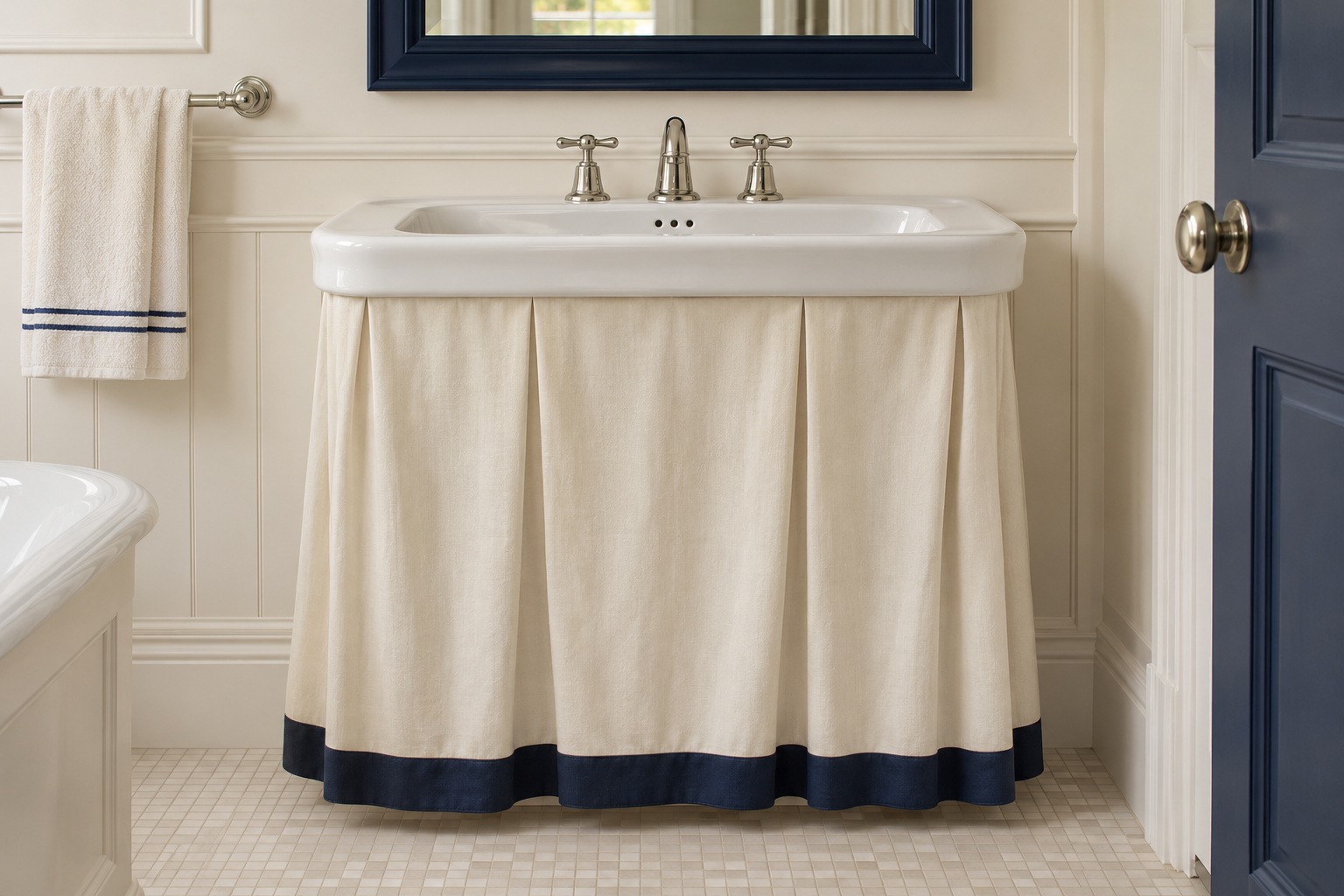
A contrasting lower band can give a plain skirt a clear ending. Try cream fabric with a muted navy band, keeping the join straight so it reads as an intentional border. The horizontal line works particularly well on a simple flat or lightly pleated front.
Check that the main fabric and border have compatible care requirements before combining them. Different shrinkage can distort a neat hem after washing. Hold a sample of the band against the room’s other dark details, such as a mirror edge, rather than adding more matching trim everywhere. The band is a decorative finish, so it should remain above the floor instead of becoming a strip that drags through routine splashes.
9. Choose a Quiet Linen Texture With Stone
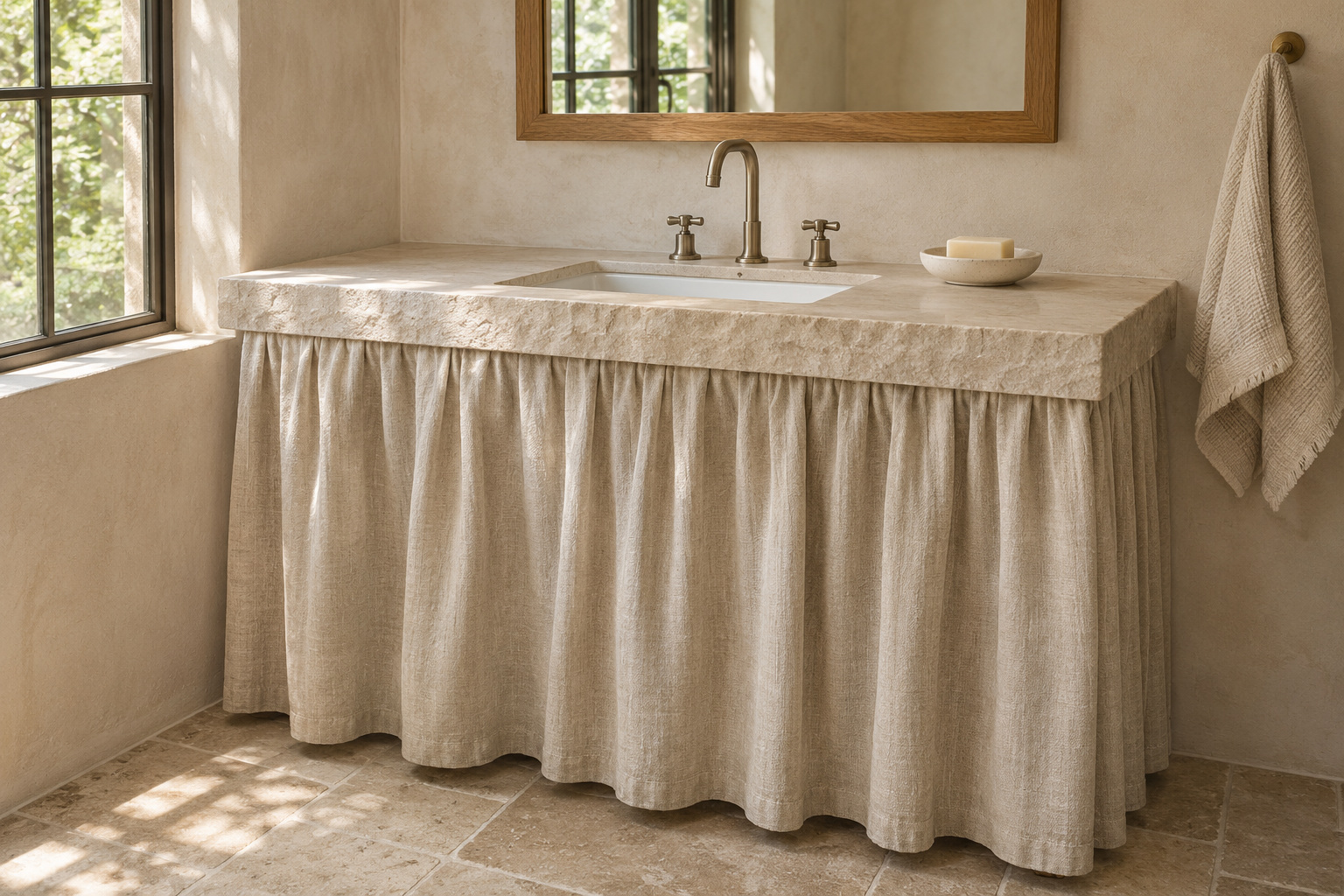
In a bathroom with a stone counter or stone-look surface, a quiet linen texture can soften the room without introducing a new pattern. Choose an oatmeal or warm gray that relates to the surface’s quieter tones. Loose-looking folds will feel natural beside an irregular stone grain.
Use a washable fabric with care requirements you can maintain; the appearance of linen does not guarantee that every textile suits a bathroom. Keep the sink’s splash area clear and remove the skirt promptly if it becomes wet. A simple removable heading is more useful here than elaborate trim. Let stone, cloth, and a small amount of wood supply the room’s character, with bottles and accessories kept to a modest group.
10. Use a Shallow Valance Above Tailored Panels
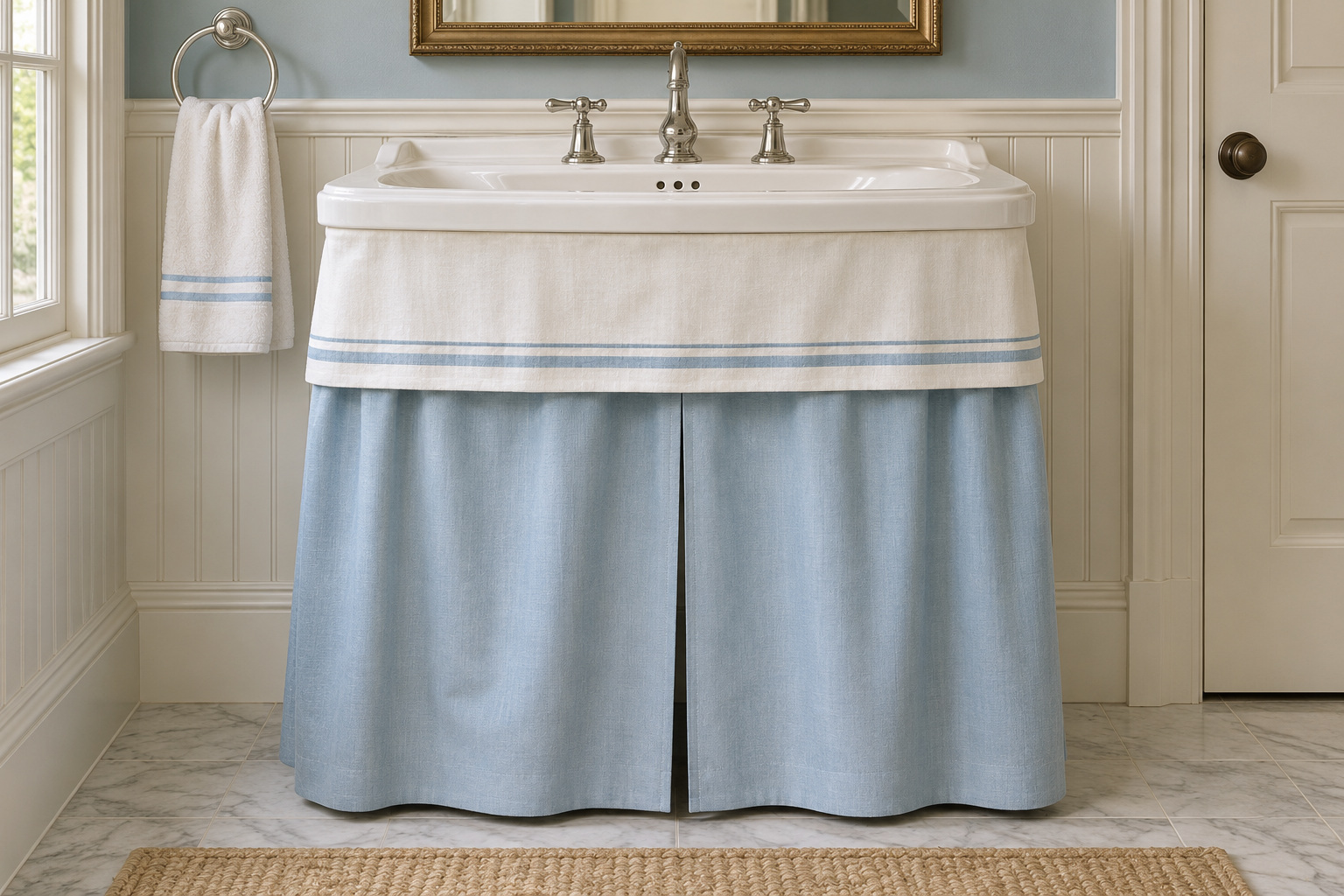
A shallow valance can cover the upper attachment line while two tailored panels do the opening below. Keep the valance short enough that the panels remain the main surface. A plain or narrowly striped cloth gives this layered construction a neat, slightly traditional character.
Make sure the top layer does not trap the moving panels. Test the opening with the valance in position, especially if the sink has a projecting rim or the frame is shallow. Removable pieces are easier to wash and refit than a permanently layered assembly. Because the top already adds detail, avoid extra bows, heavy fringe, or another border along the lower edge.
11. Let One Side Panel Conceal a Spare-Roll Basket
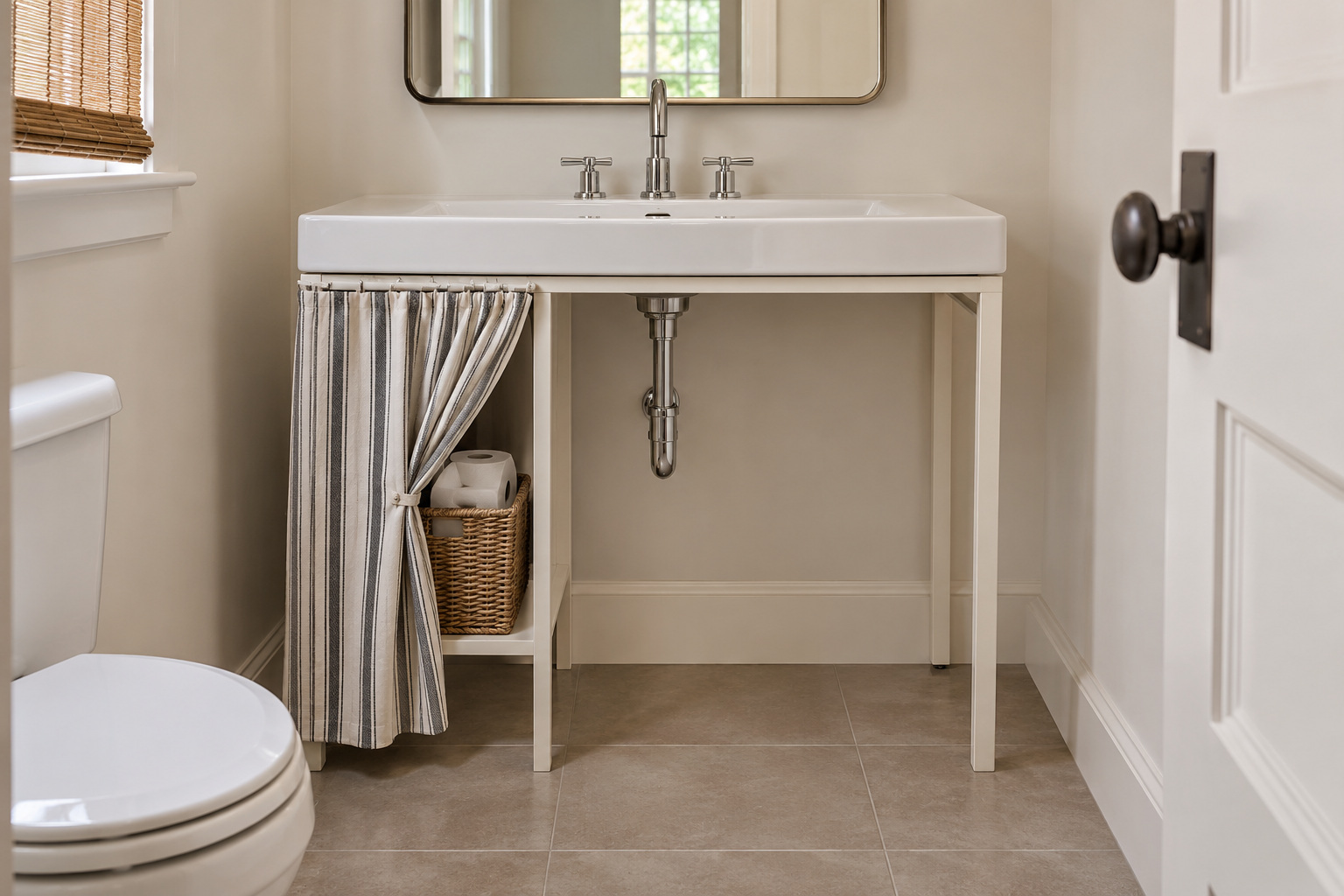
Sometimes only one corner under a sink needs screening. A narrow side panel can conceal a basket of spare toilet rolls while leaving the main knee or floor space open. Keep the basket on a dry shelf or another suitable raised support, with room to lift it out from the side.
Measure the actual contents before choosing the panel width. Fabric does not create extra depth, and a projecting basket will make the skirt bulge. A light check or stripe can help the small panel look intentional beside a plain basin. This is a modest storage treatment for a few dry supplies, not a reason to fill every opening beneath the sink.
12. Echo a Window Shade Without Matching Every Textile
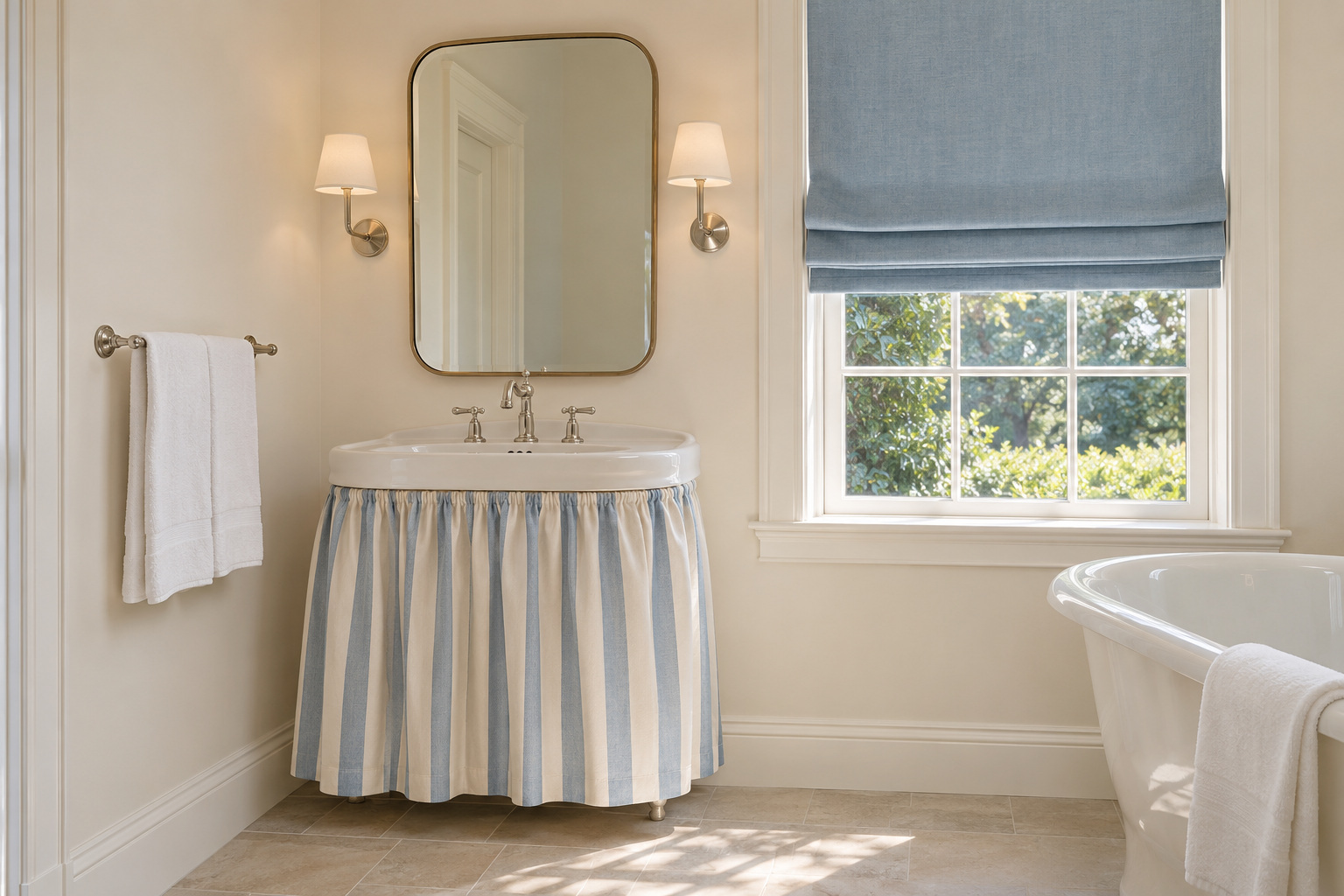
A sink skirt and a window shade can share a color while using different patterns. For example, a soft blue striped skirt can sit near a plain blue shade, with the wall and towels providing a quieter background. The connection is visible without making the bathroom feel like a fabric set.
Judge the two textiles together in the room because window light changes how their colors appear. Keep the shade suited to its location and the skirt clear of water. If the window fabric is already highly patterned, reverse the balance and make the sink skirt plain. The aim is a simple relationship across the room, not an obligation to repeat every stripe, trim, and fold.
13. Try a Removable Skirt on a Simple Basin
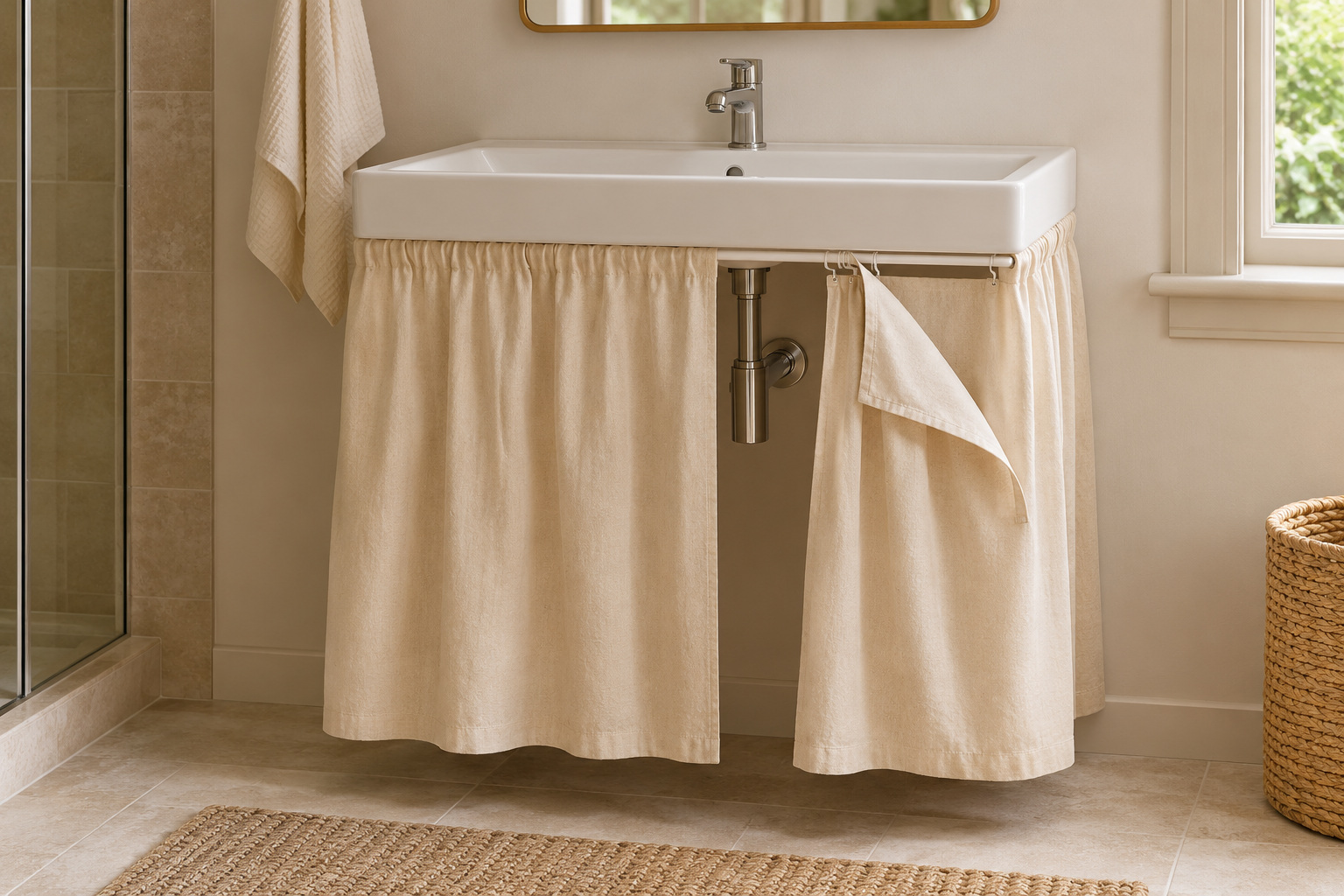
A removable skirt can refresh a plain basin without replacing the fixture. Start by checking whether the basin or its support has a suitable place for a manufacturer-approved attachment system. Some finishes and curved surfaces will not accept the same method, so test compatibility rather than assuming an adhesive will release cleanly.
Make the skirt easy to detach for laundering and plumbing access. A spare set of panels can be useful if this is the bathroom you use every day. Choose a straightforward fabric and opening for the first version; a complicated trim will not improve a poor fit. If there is no appropriate support, keep the basin unskirted or use a separate compatible frame rather than altering the fixture.
14. Keep a Small Bathroom Calm With Tonal Stripes
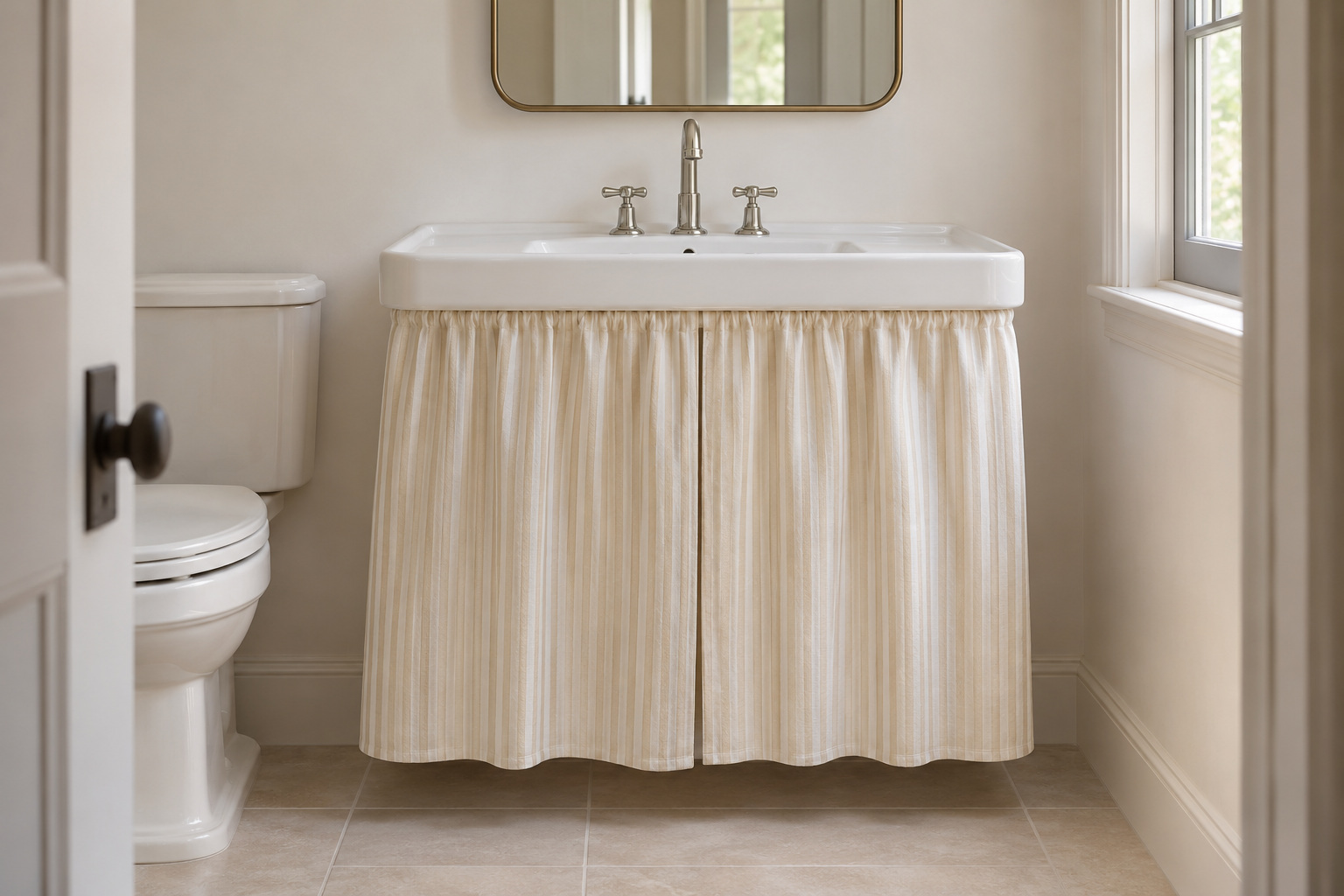
Tonal stripes can give a small bathroom texture without a strong color change. Use two close shades, such as warm white and pale sand, and keep the stripe running vertically through simple panels. From the doorway, the skirt reads as a soft surface; closer up, its pattern becomes clearer.
Keep the surrounding palette similarly restrained so the stripes do not have to compete with a busy floor and wall. Align the main stripe direction at the panel meeting point, but do not chase perfect continuity through every fold. A clean opening and a dry, clear hem matter more. This is a good finish for a bathroom where the basin already sits close to the door and a bolder print would dominate the view.
The right sink skirt starts with the shape and use of the basin. Decide where it will open, how it will come off, and how much space truly exists behind it before choosing a print. Once those details work, a plain panel, a small check, or a softly gathered botanical can bring a surprising amount of warmth to the bathroom.
If your basin has usable storage space behind the fabric, our under bathroom sink storage ideas can help you plan the shelf or containers before fitting the skirt.
Discover more from HomeTrendora
Subscribe to get the latest posts sent to your email.