A paper chain brings movement and a little informality to Christmas decorating. Its linked loops can make a doorway feel festive, turn a quiet wall into a feature, or give a small corner the presence of a much larger display. The paper, scale, and route matter more than making the longest chain possible.
For these 13 paper chain Christmas decor ideas, start with a short test length. Try it in the intended position before making the rest, using paper that holds a neat loop and a joining method suited to the material. Treat chains as lightweight decorations: keep them away from heat, flames, moisture, and places where people need an unobstructed handhold or walking route.
1. Frame a Doorway With Two Gentle Swags
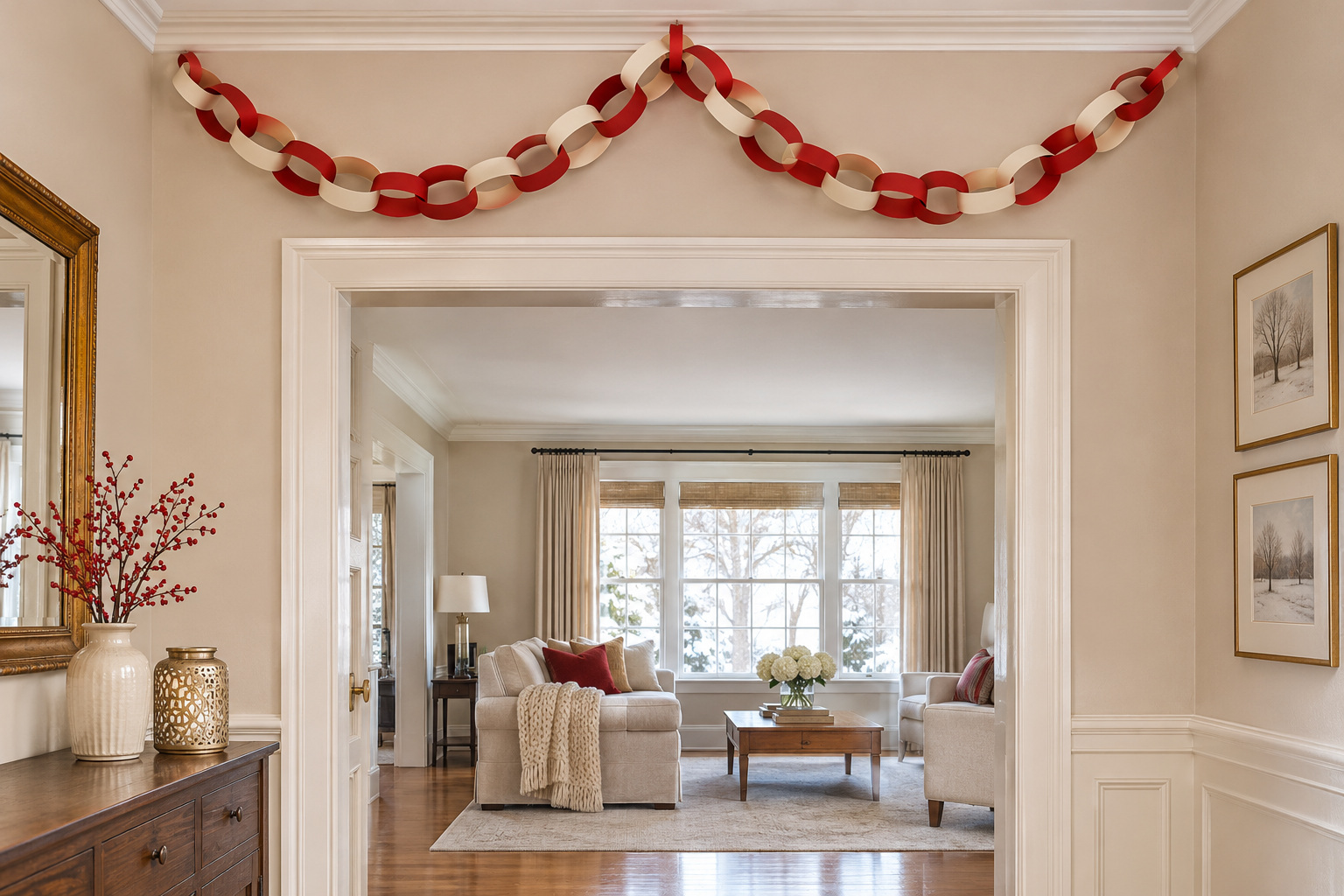
Two shallow swags can emphasize a doorway without filling the opening. Place suitable supports on the wall above the casing, then hang a chain from each side toward a higher central point. Keep the lowest loops above the route through the doorway and clear of the moving door.
An alternating red-and-ivory chain is easy to read against a plain wall. Make a small sample first to judge whether the loops need to be wider or narrower for the room. The doorway supplies the frame, so there is no need to add another garland around it. Step through the opening and open the door fully before deciding the arrangement is finished.
2. Make One Oversized Chain the Wall Feature
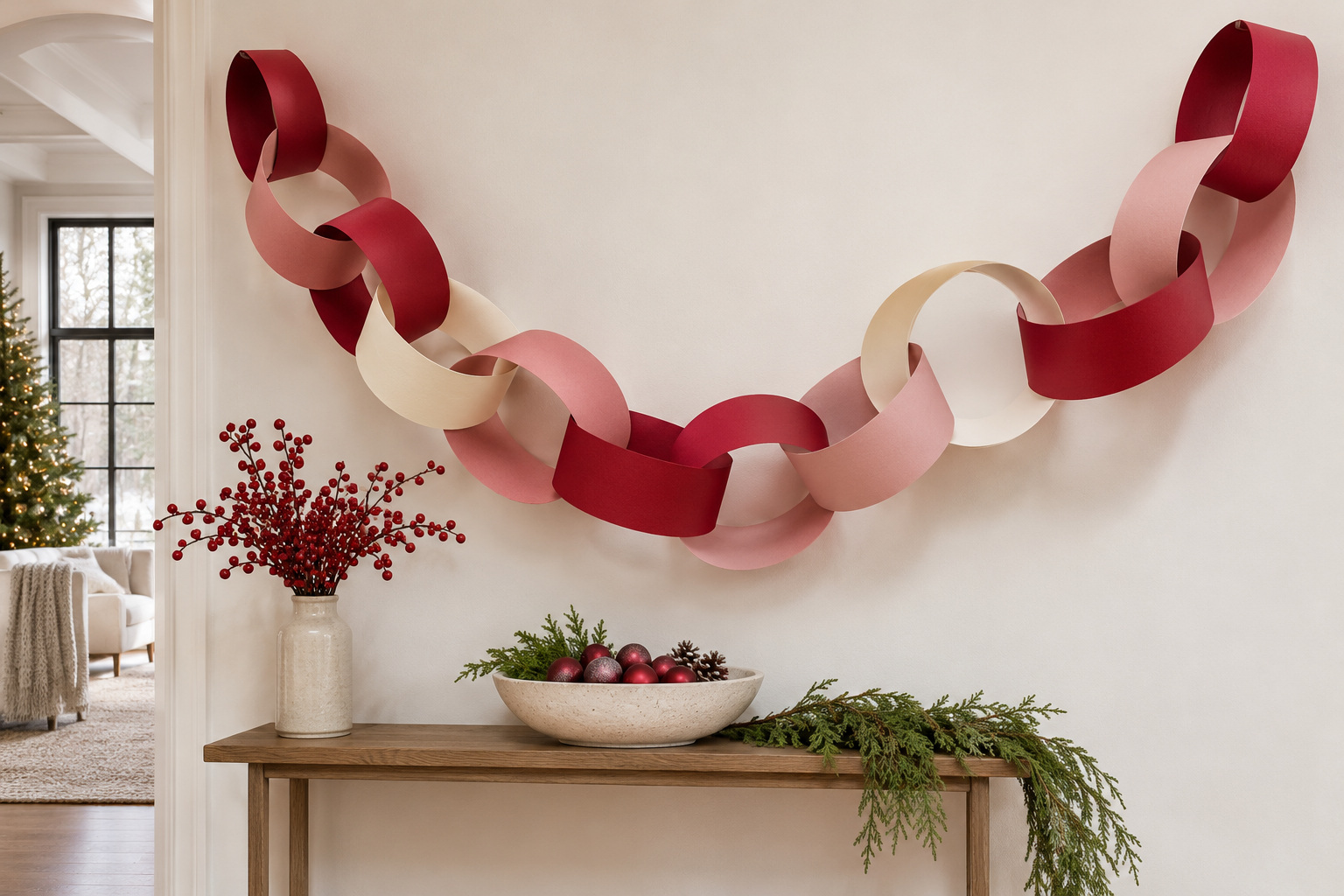
A chain with generously sized loops can work as a single sculptural line on a blank wall. Use a short run rather than a dense curtain, and let it fall in one loose curve above a small console. The enlarged paper links make the construction itself the decoration.
Choose two related colors, such as cranberry and soft rose, with one ivory link appearing at intervals. Keep neighboring objects low and simple so the outline remains visible. Because the loops project from the wall, this works best above furniture that already keeps the walking route away from the display. Suitable light-duty fixings still need to match the surface and the actual chain weight.
3. Give a Bookcase a Chain With Repeating Color Blocks
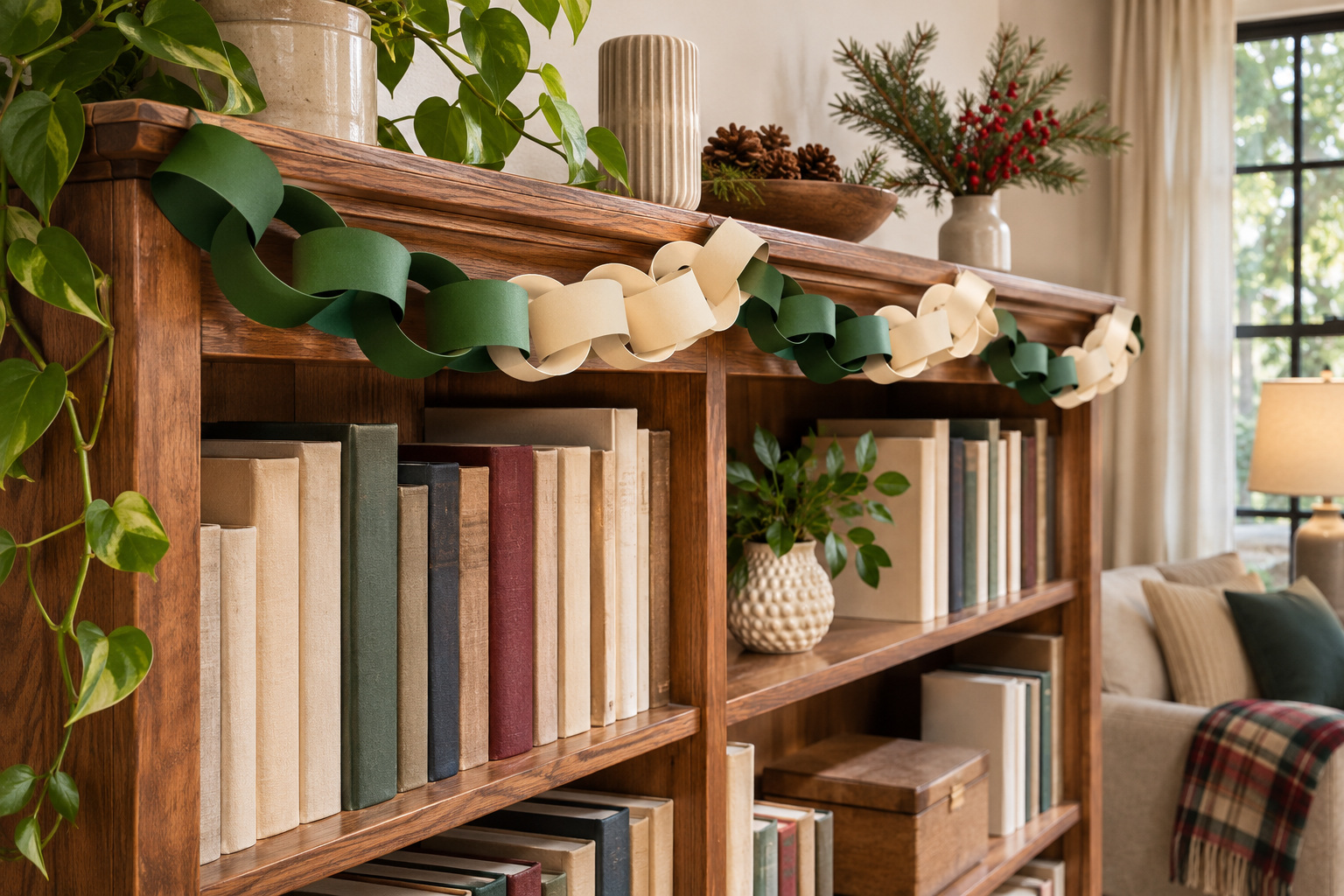
A bookcase can carry a chain across its upper outer edge while the shelves continue to hold books. Build the chain in short color blocks instead of alternating every loop: a section of dark green, a section of cream, then another green section. The grouped colors read more calmly beside patterned book spines.
Keep the chain outside the area where you reach for books, and avoid looping it around shelf contents. A plain bookcase gives the paper rhythm room to show; a very busy shelving unit may need a shorter chain or a quieter palette. Let the chain finish near the furniture edges rather than trailing down into the lower shelves.
4. Loop a Fine Chain Around an Unlit Decorative Tree
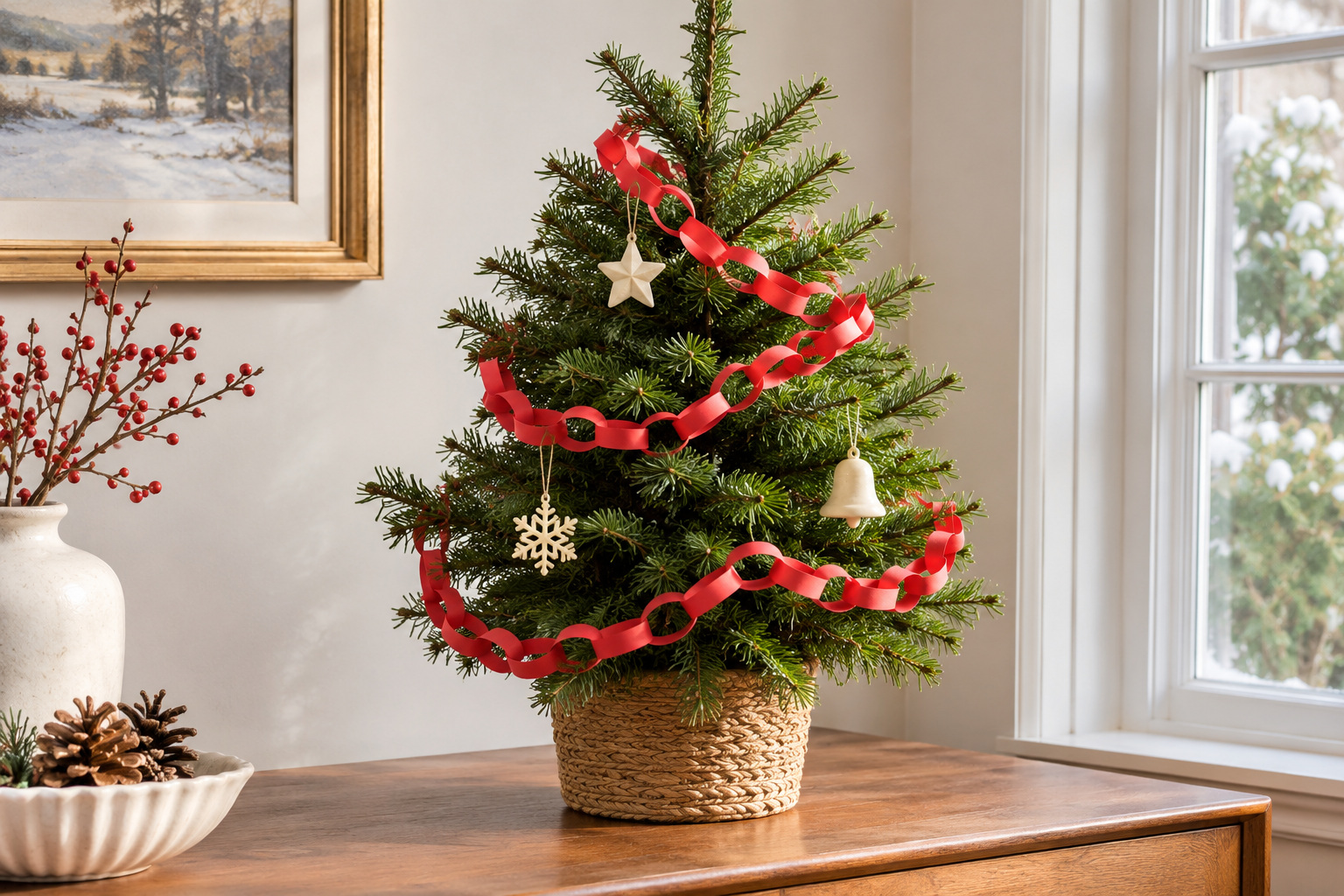
A fine chain can stand in for a conventional garland on a small decorative tree without electrical lights. Make the loops from narrow paper strips, then place the chain in a few open curves so the branches remain visible. Plain red paper gives a simple green tree a cheerful graphic detail.
Use a stable tree intended for decorative display and support the chain gently on its branches. Skip heavy ornaments that would compete with the lightweight loops. An unlit tree also lets the shape and color do the work without another cable or light source. Check the arrangement from the usual viewing height, especially if the tree sits on a raised cabinet.
5. Hang a Shallow Chain Above a Breakfast Banquette
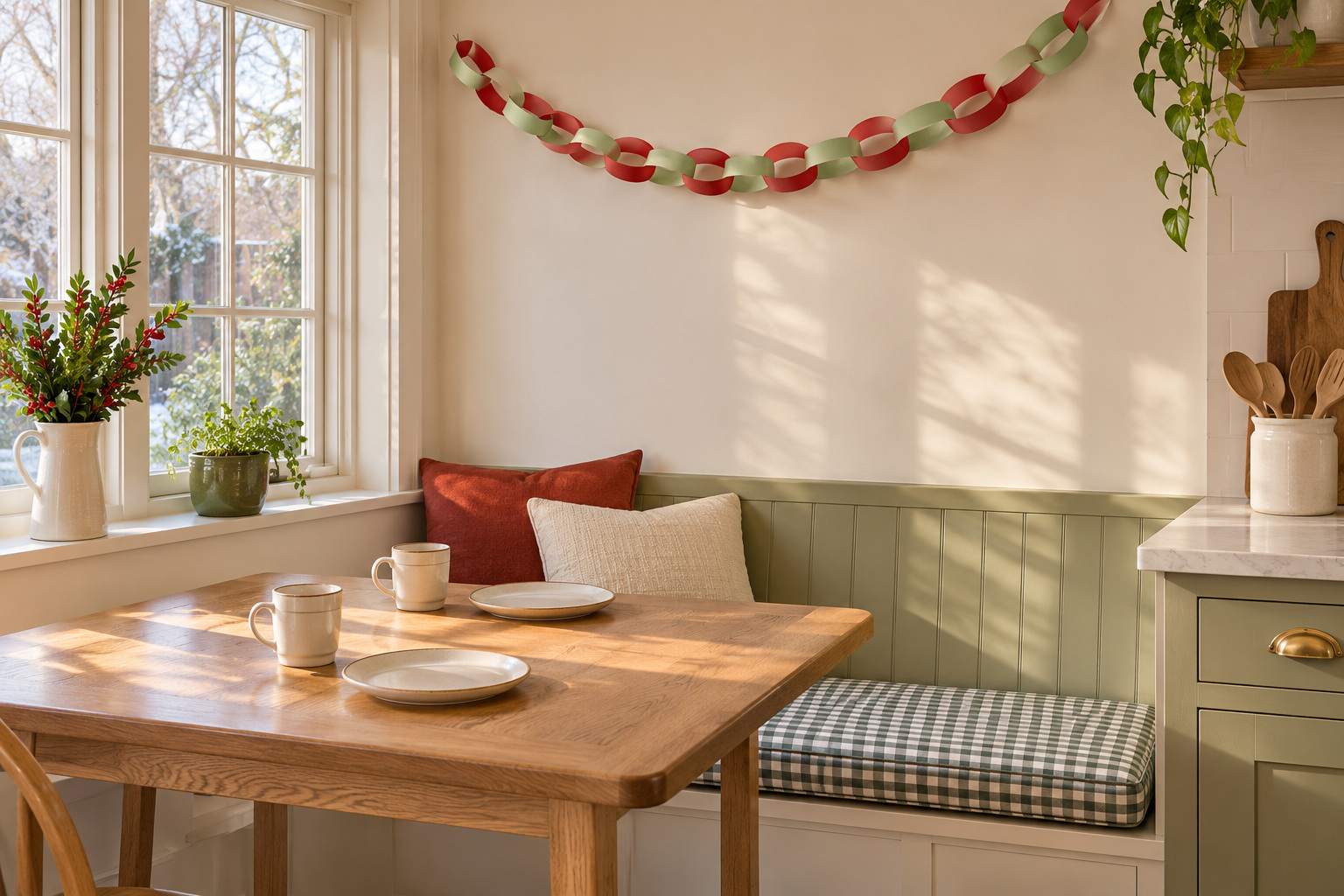
In a breakfast nook, a short chain can decorate the wall above the banquette while leaving the dining surface available for meals. Use the width of the seating as the visual boundary, with a shallow curve that stays well above seated heads. Keep the chain away from the window’s opening path if the nook sits beside one.
A red-and-pale-green combination can connect with a checked seat cushion without repeating the same pattern. The idea works because the decoration occupies the wall rather than the tabletop. Keep cups, plates, and the everyday table arrangement simple. Choose an attachment suitable for the wall finish, and make sure the display remains out of reach of small children who might pull on it.
6. Drape a Chain Across a Freestanding Wardrobe
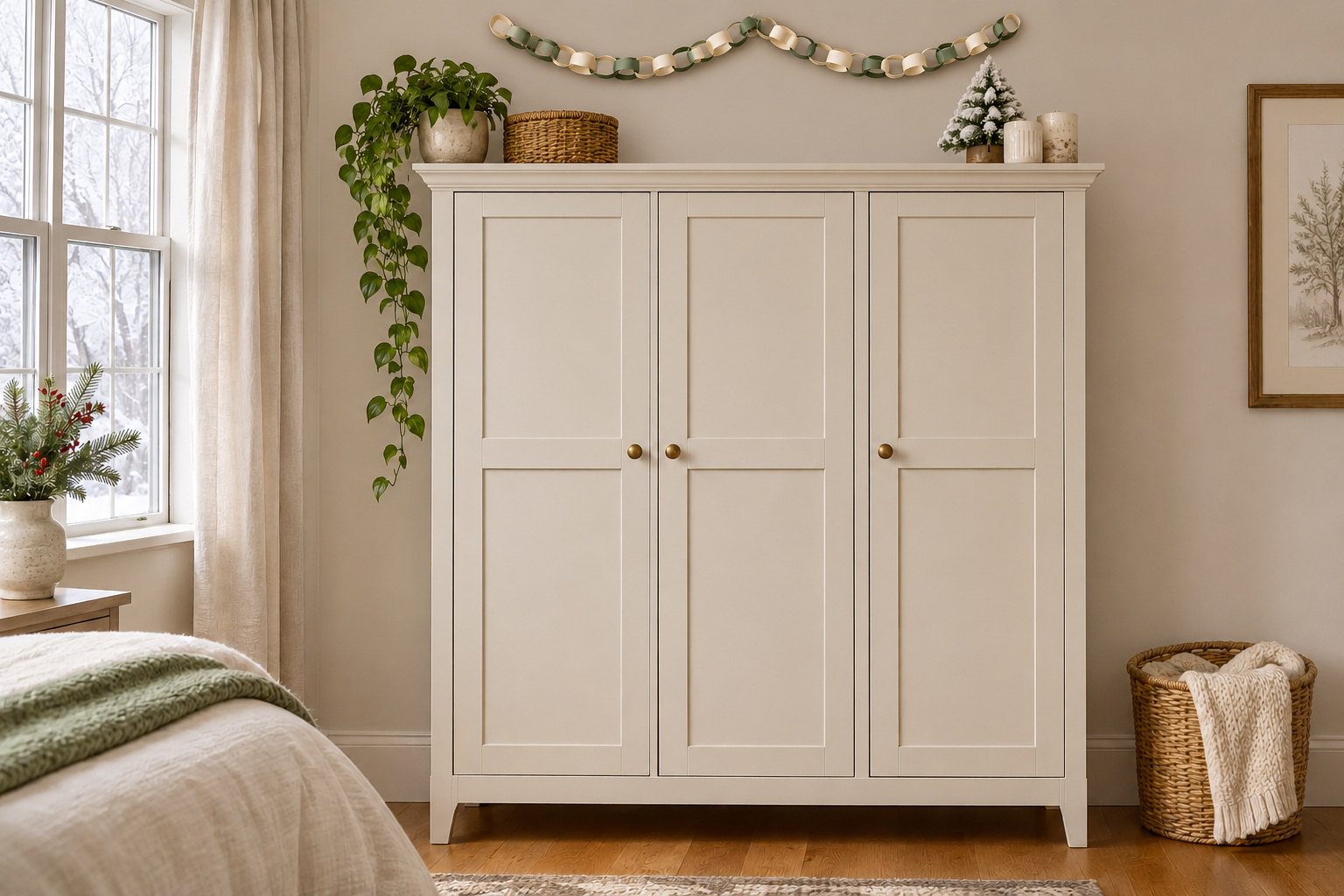
The top of a freestanding wardrobe can give a bedroom chain a clear architectural line. Hang a short length across suitable supports above the door tops, with the curve staying clear of the doors as they move. A cream-and-soft-green chain can sit quietly against painted furniture.
Keep the rest of the bedroom textiles simple enough for the linked shape to remain the Christmas detail. There is no need to run chains over the bed or around lights. Check the full height and swing of every door before choosing the final chain length. If the wardrobe has no suitable position or finish for supports, use a nearby wall location instead of forcing the decoration onto the furniture.
7. Build a Small Wall Tree From Horizontal Chains
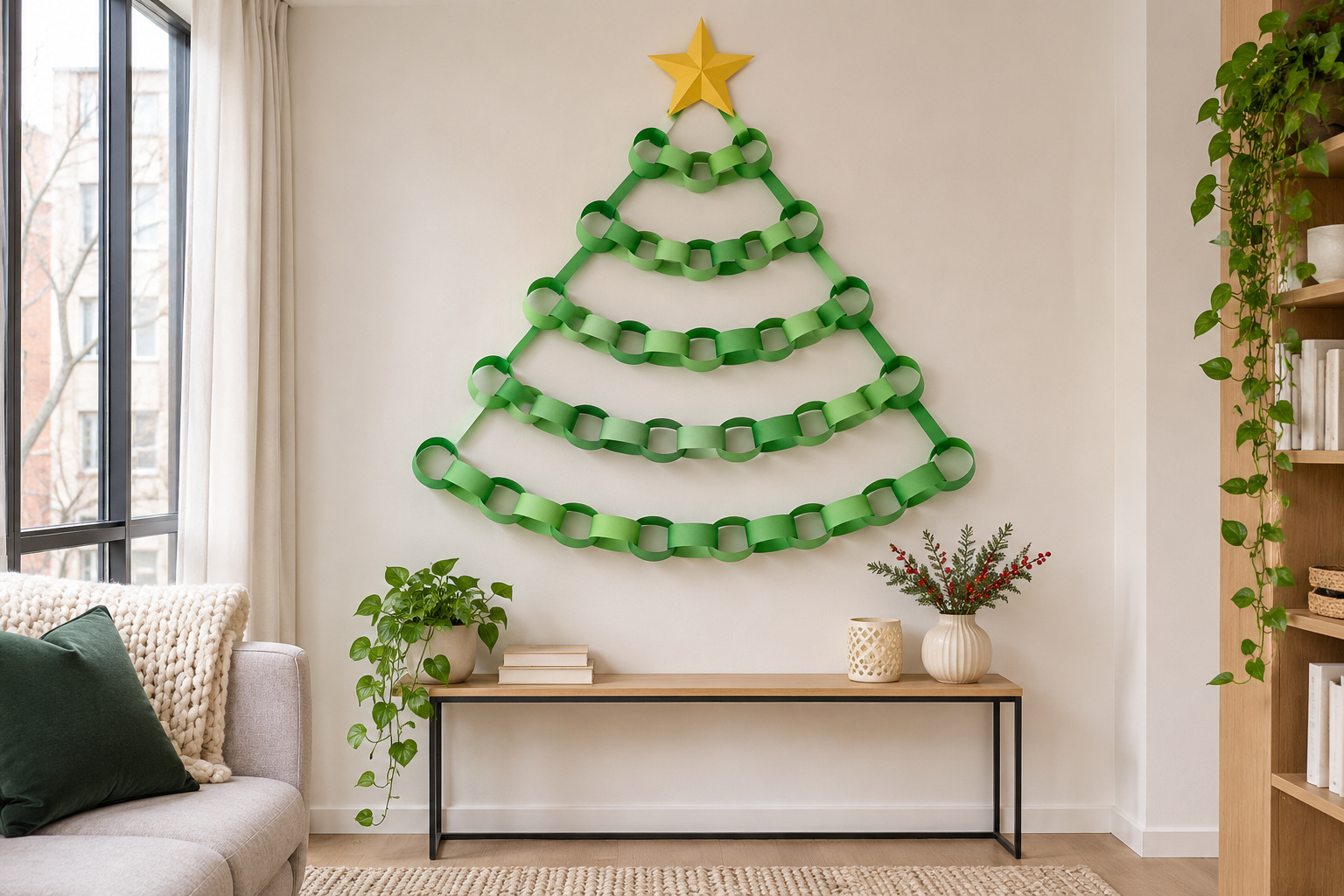
Several short chains can suggest a Christmas tree on a wall. Arrange them in horizontal rows that become wider toward the bottom, keeping gaps between the rows so the overall triangle is easy to see. A simple paper star at the top completes the silhouette without requiring a floor-standing tree.
Keep the lowest chain above any furniture or everyday reach zone beneath it. This is a useful option for a compact room where floor space already has a job. Use a consistent loop size and a restrained palette, such as green with occasional ivory links, so the changing row lengths establish the shape. Plan and test the support positions before attaching the full display.
8. Use a Long Chain as a Sideboard Backdrop
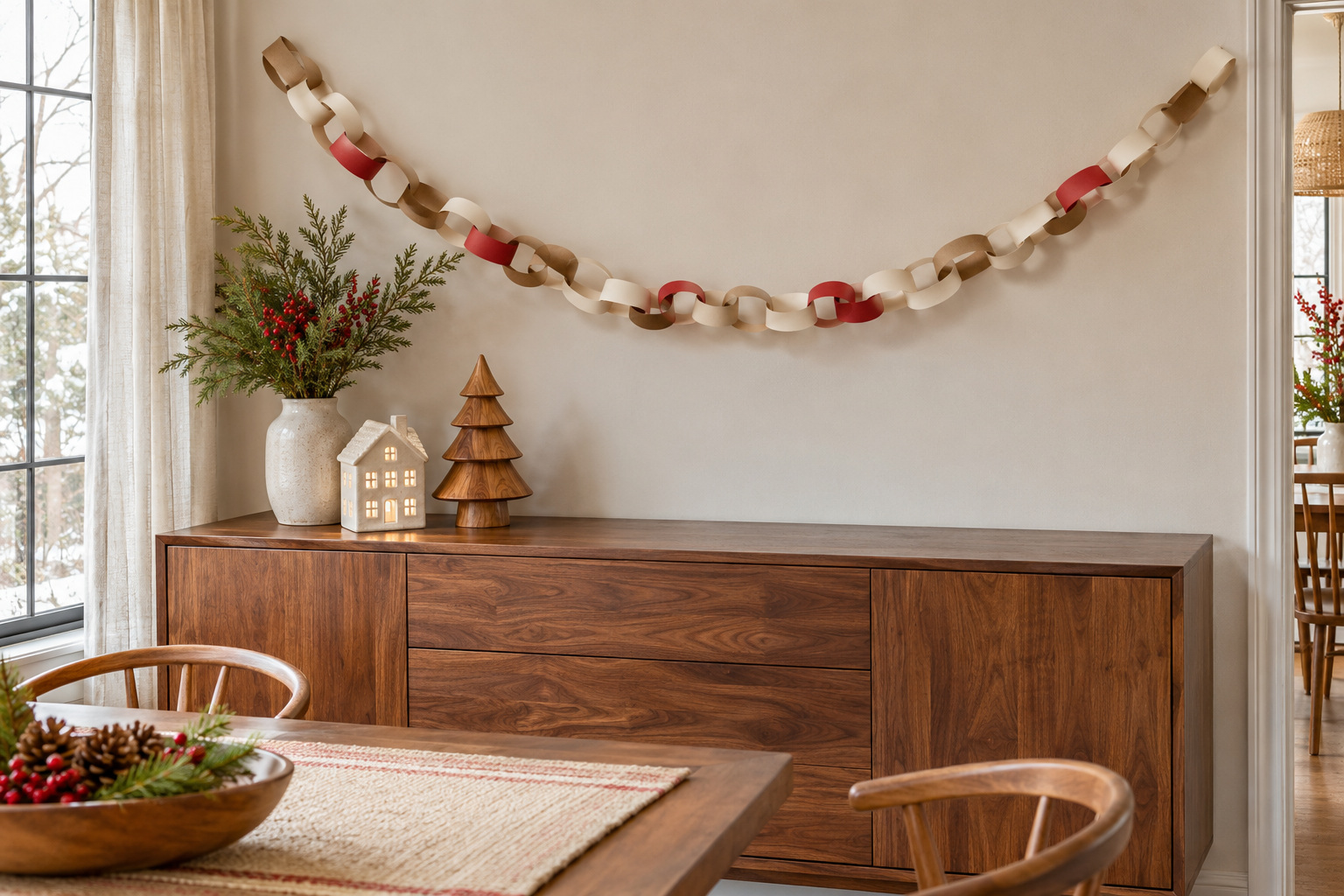
A sideboard display can feel more complete when the wall behind it has a single line of decoration. Hang a long paper chain in one shallow sweep above the furniture, then keep the objects below lower than that line. A ceramic house or a small wooden tree is enough to connect the two layers.
Choose a chain color that is visible against the wall but relates to the sideboard materials. Warm cream and brown paper can suit a timber piece, with a few red links supplying the Christmas accent. Keep the serving surface usable rather than filling it to meet the chain. The wall decoration should frame the furniture, not encourage an extra row of small ornaments.
9. Make a Flat Gift-Display Panel With Paper Loops
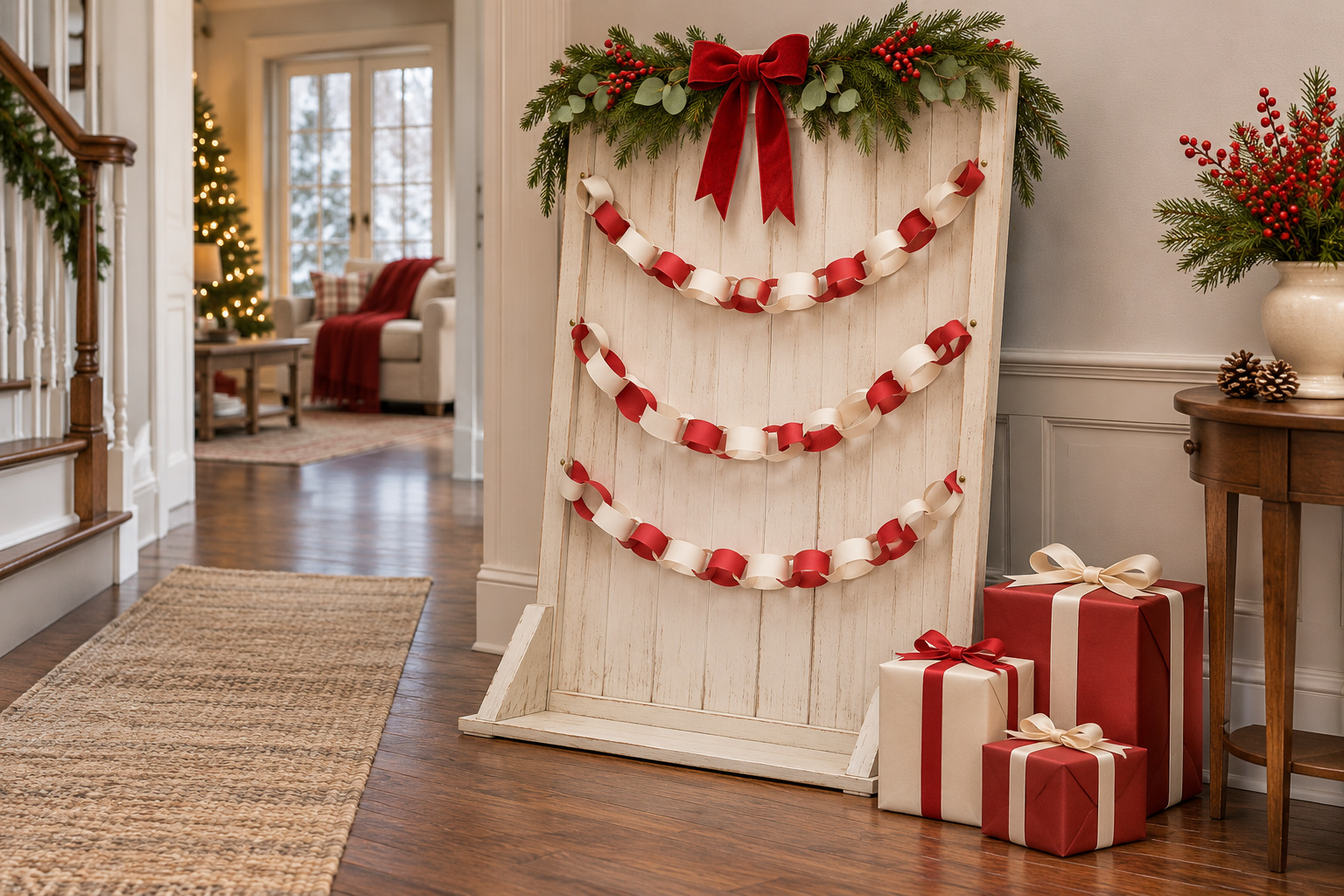
A freestanding display panel offers a bounded place for a paper-chain pattern. Arrange short chains across a lightweight decorative board supported according to its instructions, then place a few empty wrapped display boxes on the floor beside it. The paper loops become a backdrop rather than wrapping that needs to survive handling.
Repeat one color from the gift paper in the chain, leaving the rest of the panel visible. Keep the arrangement in a corner that does not narrow a doorway or escape route. This is a decorative composition, so it can use empty boxes and a modest scale. Real gifts can stay elsewhere until they are needed, which keeps the display easier to maintain.
10. Let a Chain Follow a Stair Wall Rather Than the Handrail
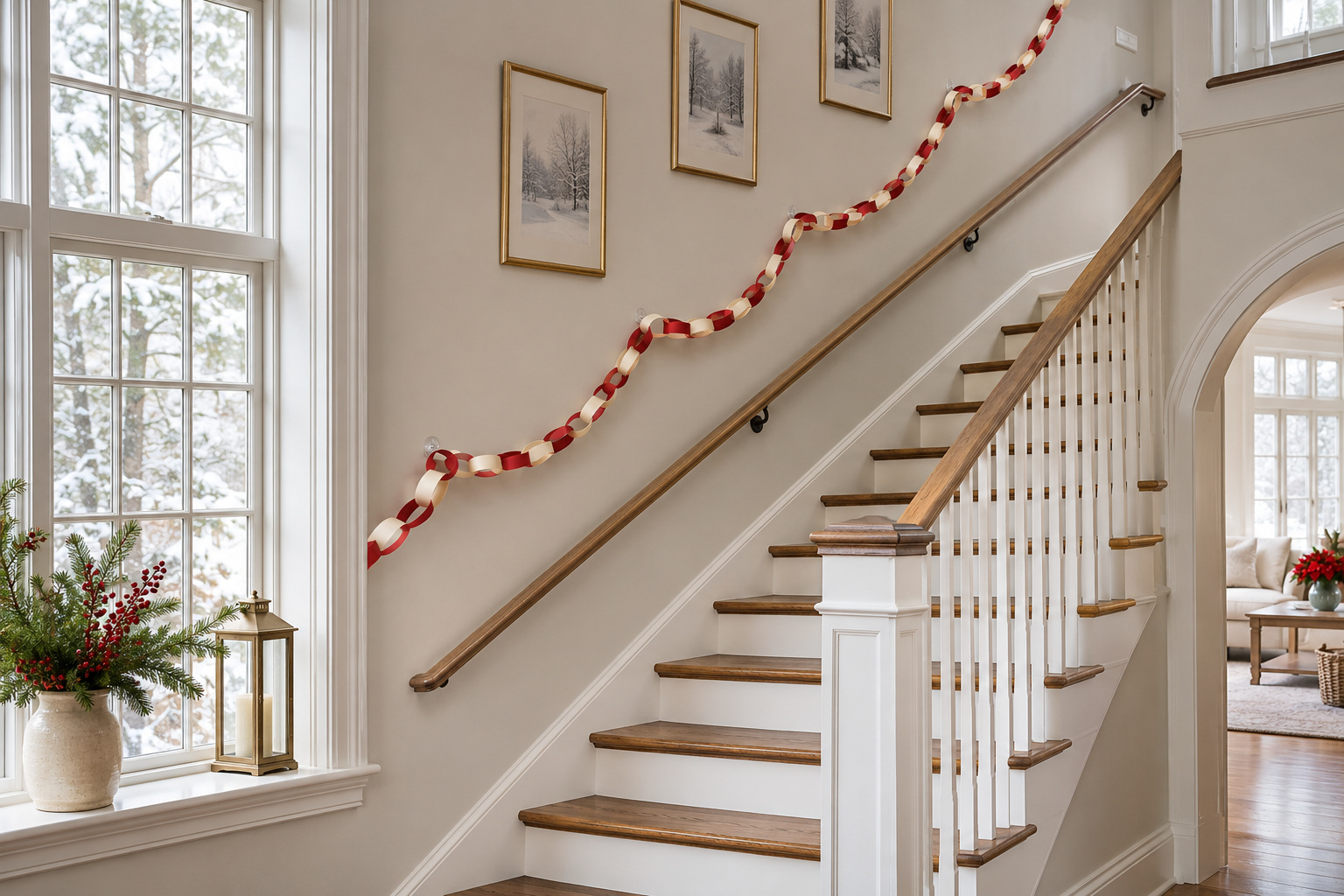
A chain can follow the diagonal of a staircase on the wall while leaving the handrail free. Use a few suitable wall supports to create a gentle rising line, keeping the loops close to the wall and out of the stair’s usable width. The slope supplies movement without needing a second decoration on the rail.
Choose paper colors that stand out from the wall and relate to the nearby hallway. Make the display from a position where you can work safely, and use a different location if reaching the supports would be awkward. Test the route up and down the stairs afterward. Nothing should project into the path, cover switches, or distract from a clear handhold.
11. Frame an Existing Holiday Print Without Covering It
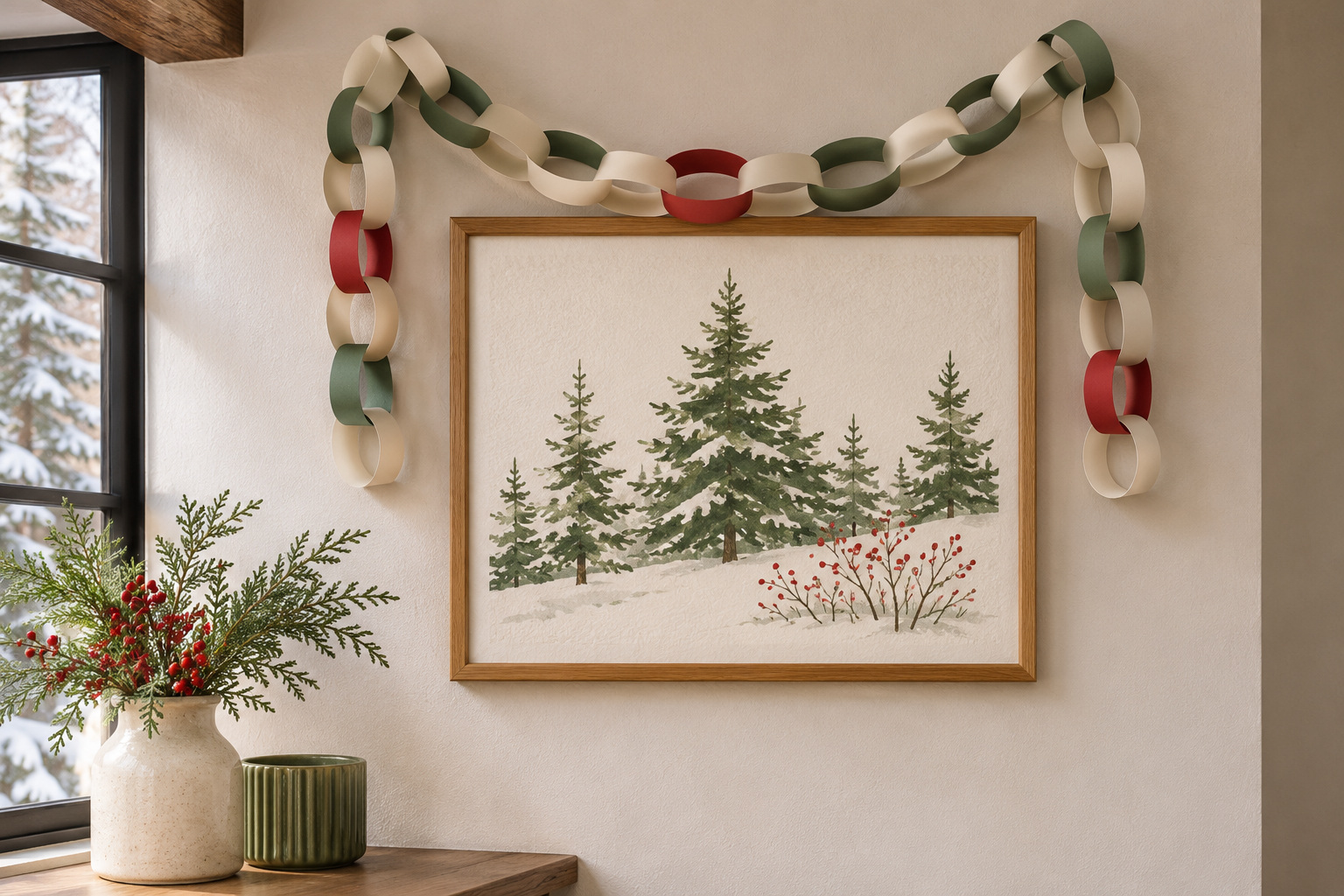
A paper chain can give an existing holiday print a wider frame on the wall. Hang a short length above the picture with its lowest curve staying outside the artwork, rather than draping the paper directly over the image. The print remains readable, and the loops supply a different texture around it.
A plain paper chain is a good partner for detailed artwork. If the picture has a strong red accent, repeat a little of that red and keep the remaining links cream or muted green. Avoid attaching the chain to a fragile frame. Use independent supports appropriate for the wall and keep the chain light enough for the intended fixing system.
12. Hang Short Chains From a Display Rail
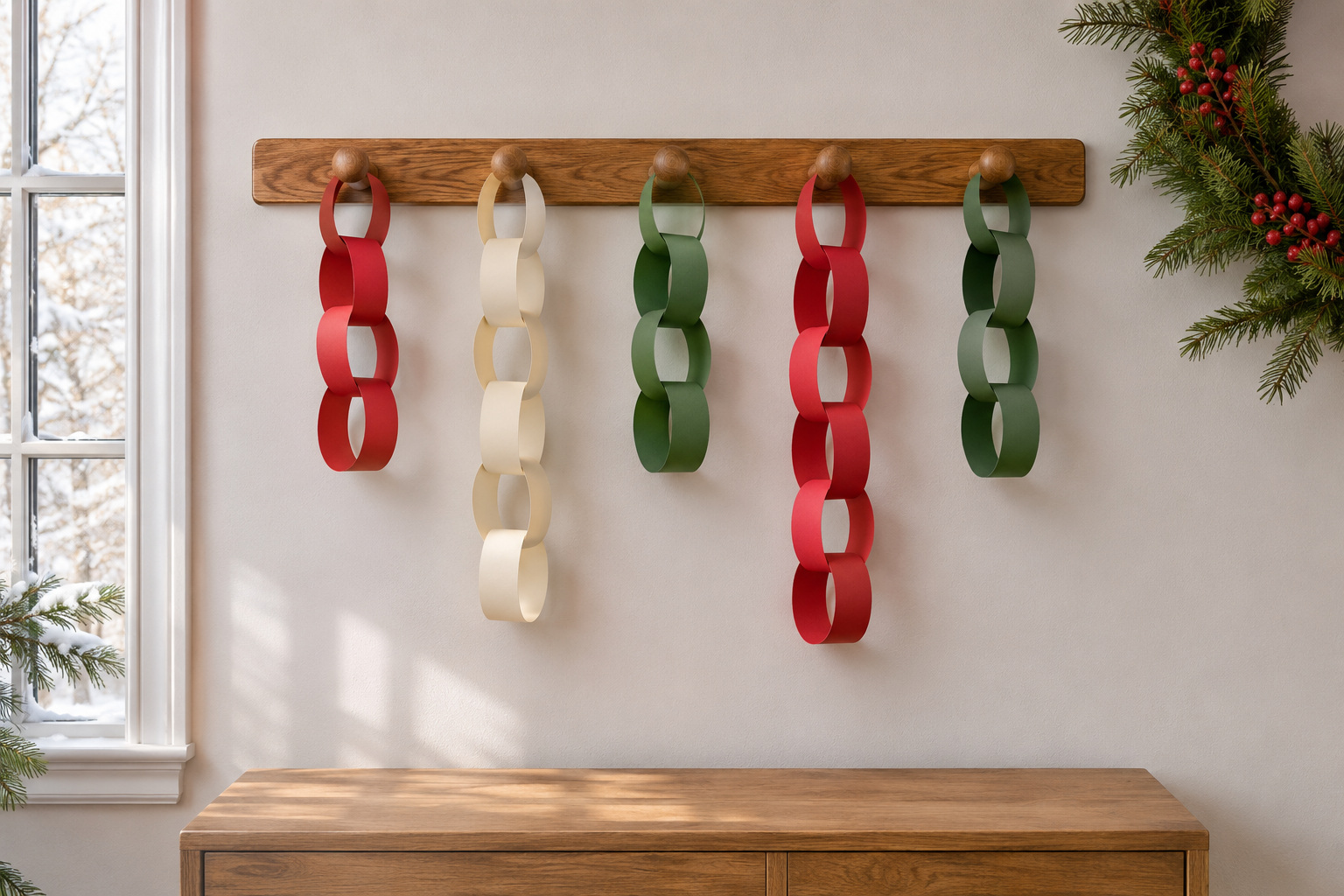
An existing wall display rail can hold several short chains vertically, creating a loose fringe of linked shapes. Keep their lengths deliberately varied, with enough space between them to see each strand. This is a good way to use a rail that already serves decorative objects rather than everyday coats or kitchen tools.
Choose a small palette and repeat it in a predictable order, such as red, ivory, and green strands. Keep the lowest loops clear of furniture and reachable items beneath. The rail gives the arrangement a firm horizontal start, while the chains introduce movement. Do not crowd the same rail with more ornaments; the space between the strands is part of the pattern.
13. Pair Matte and Metallic Links in an Evening Sitting Area
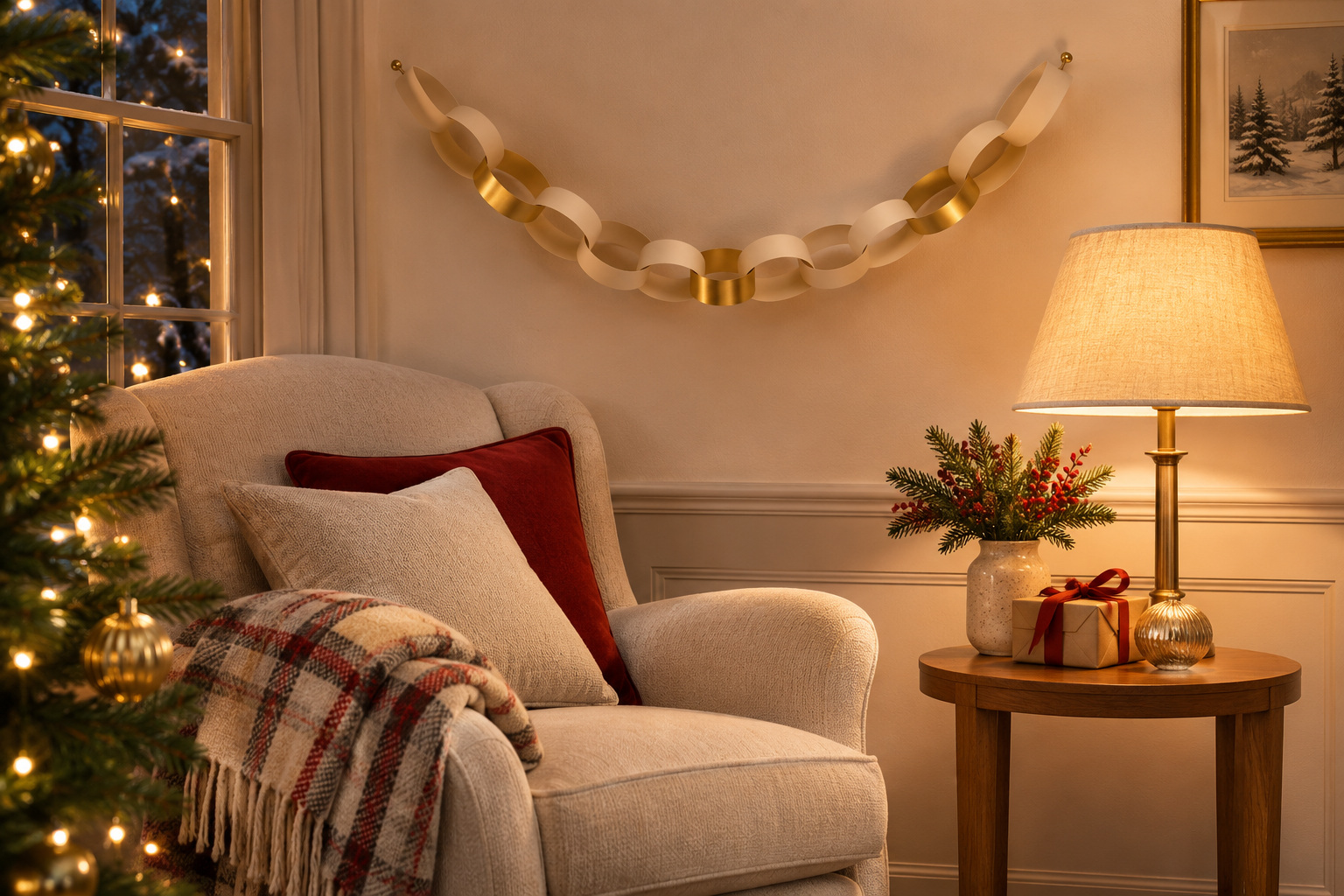
Matte and metallic paper can make a short chain look different as the room’s lamps come on. Use mostly matte cream links with a few warm gold-colored links, then hang the chain on a wall near a comfortable sitting area. Keep it separate from the lamp itself and any electrical fitting.
A soft upholstered chair, a folded blanket, and a reachable side table make the corner welcoming before the chain is added. The paper brings a small Christmas detail to that existing comfort. Keep the metallic finish limited so it catches the lamplight without becoming a glittering curtain. A short chain is enough when the contrast between surfaces is doing the decorating.
A short test chain will tell you a great deal about the final display: whether the paper holds its shape, whether the color reads from across the room, and whether the loops suit the available space. Choose the location first, then make only the length it needs. Paper chains feel most convincing when their simple construction remains visible and the room still works comfortably around them.
For other ways to decorate around a compact layout, explore our apartment Christmas decor ideas alongside the wall and doorway arrangements here.
Discover more from HomeTrendora
Subscribe to get the latest posts sent to your email.