A room can have velvet, gold accents, and a chandelier yet still feel crowded instead of luxurious. These 10 glam room ideas help you choose which feature should lead, then arrange the lighting, furniture, and soft finishes around it.
Use the ideas in a living room, bedroom corner, or dedicated dressing space according to what happens there every day. Start with one useful focal point and build slowly; the space around each piece is part of the finished look.
1. Give the Room One Rich Upholstered Focal Point
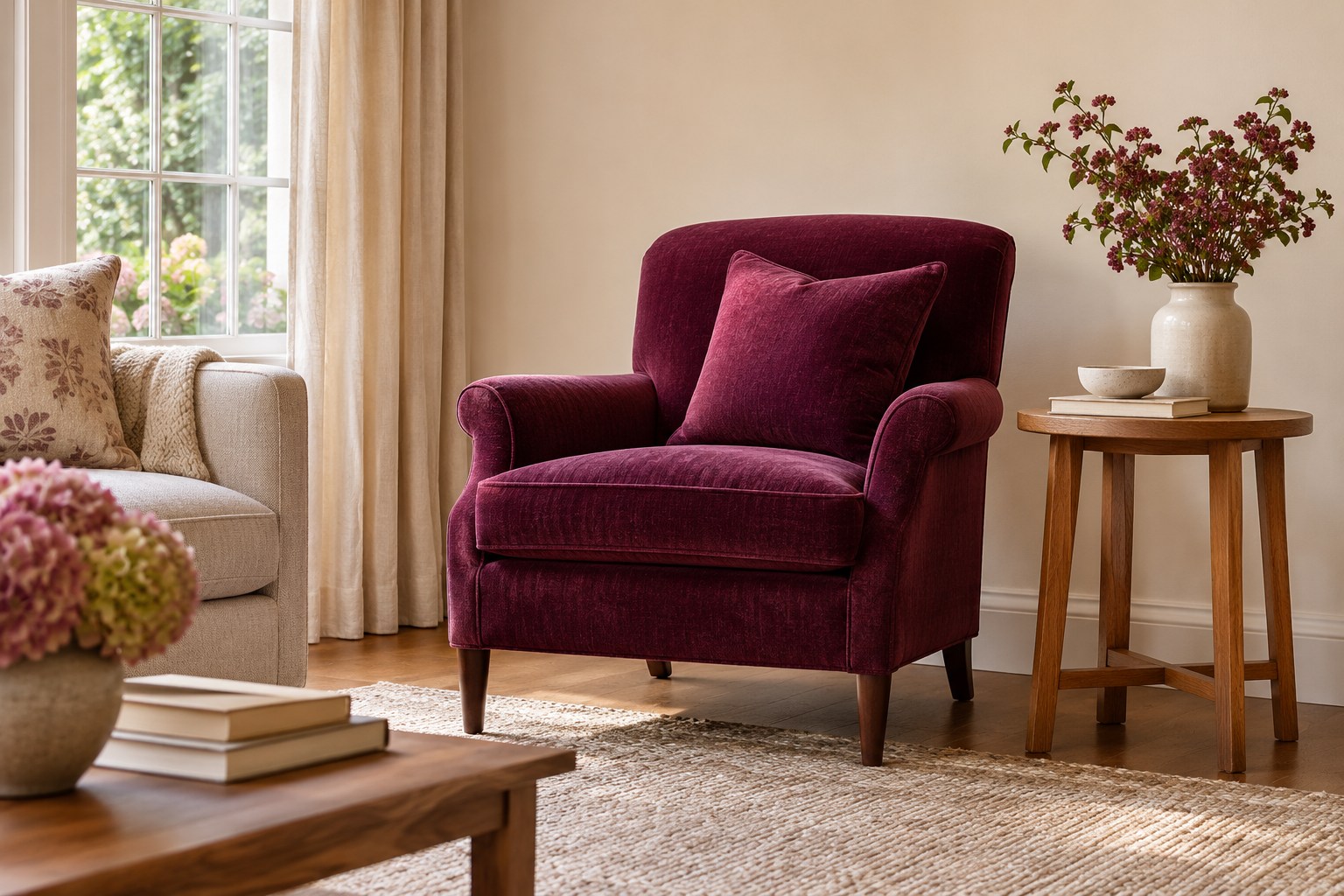
Begin with the seat you actually use: the sofa, a dressing chair, or a bedroom reading chair. A rich fabric can give that piece more presence without requiring every surface around it to shine. Deep plum, muted emerald, and warm rose each create a different mood, so compare a generous fabric sample with the floor and wall before choosing a color.
Let the upholstery carry the strongest color and keep the nearest large surfaces quieter. A plain cream wall behind a plum chair makes the chair’s shape easier to see; patterned wallpaper, a busy rug, and bright pillows all competing beside it can hide the effect. Look at the fabric from several directions because its pile may change how light or dark it appears.
Comfort and care still matter. Check the seat depth, the fabric’s cleaning instructions, and the route around the furniture. If replacing a large piece is unnecessary, try one substantial cushion or a small upholstered stool first. The useful test is whether the room feels more considered when that single material is added.
2. Use a Mirror to Frame a Good View
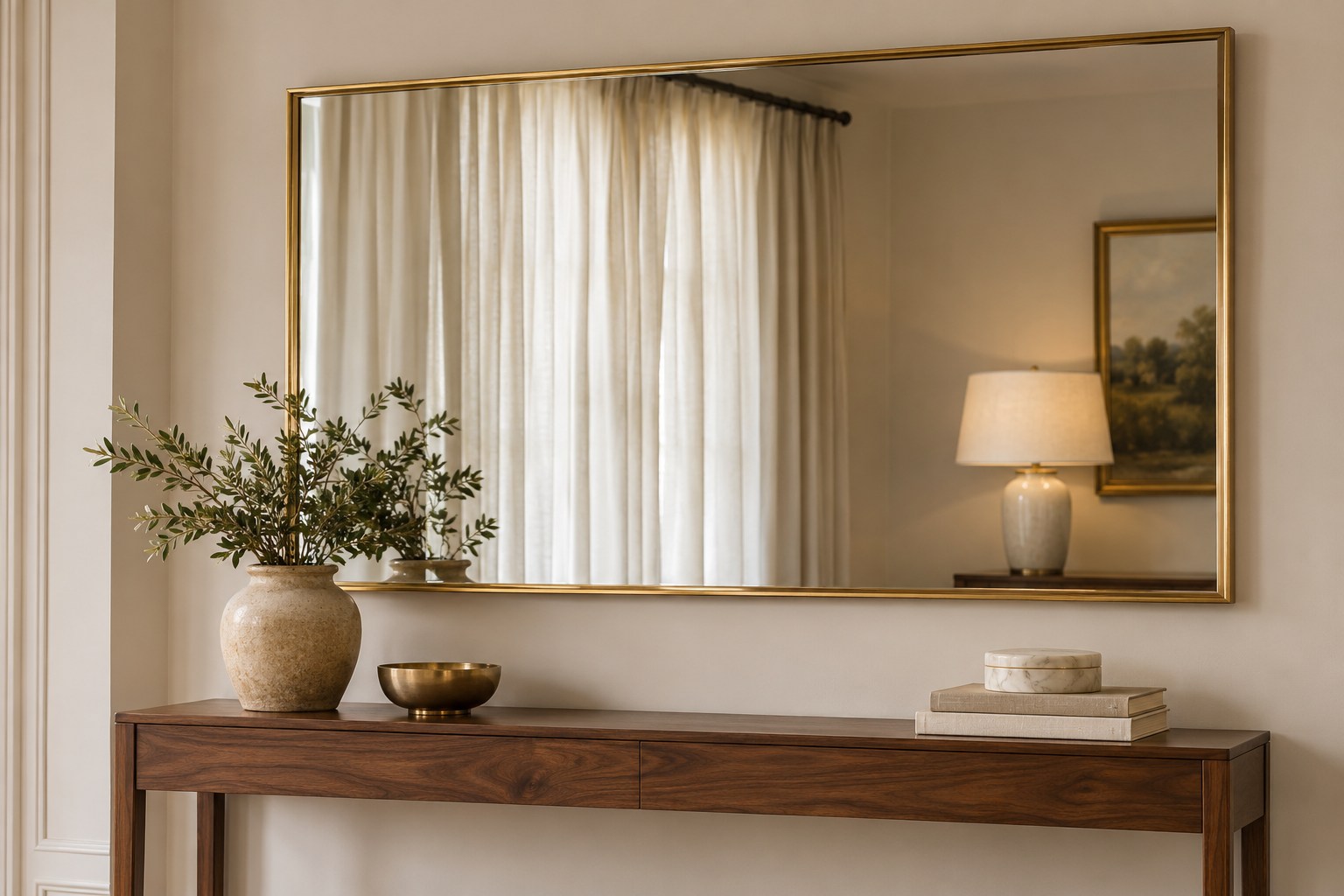
A large mirror brings more to a glam room when its reflection is worth looking at. Before choosing the frame, hold a temporary mirror or use the proposed position to study what will appear in it. A lamp, a curtain, or a calm section of the room can become part of the composition. A reflection of overflowing shelves or an awkward doorway usually adds visual work instead.
Choose the frame for the wall’s scale. A thin warm-metal edge can suit a compact vanity, while a more substantial frame may balance a wide console. Leave a visible margin around it so the wall still participates in the arrangement. Several little mirrors can work together, but one properly sized mirror often gives a small room a clearer focal point.
Match the mounting hardware to the mirror and wall, following the maker’s instructions. Keep it out of door swings and away from positions where reflected light becomes uncomfortable. These bedroom mirror ideas offer other ways to connect the reflection with a useful daily position.
3. Let One Light Fixture Supply the Sparkle
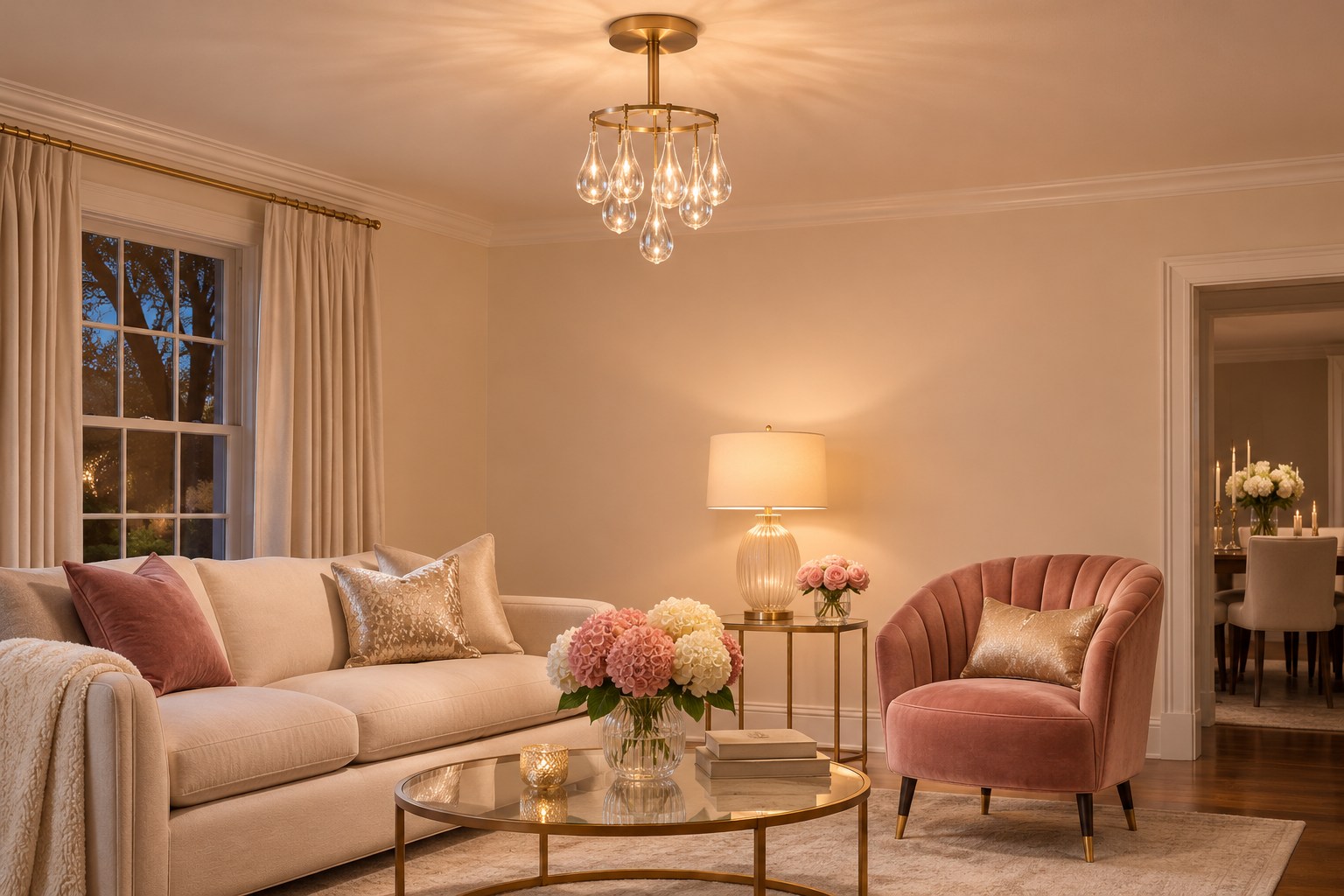
A decorative light can give a room a clear center without turning every accessory into a statement. Choose its position first: above a seating group, near the dressing area, or at the center of the ceiling. Then compare its visual weight with the furniture below. An airy fixture with a few glass elements can feel quite different from a dense crystal chandelier of similar width.
Keep the surrounding finishes restrained enough for the fixture to read. If the ceiling light is intricate, use simple lampshades and quieter artwork nearby. Layer it with a practical reading or task light so the decorative fixture does not have to perform every lighting job. Check the effect from the doorway and from the chair where you spend time.
Have a qualified professional verify the electrical installation, support, and appropriate clearances. Select bulbs and controls compatible with the fixture, and consider glare as well as brightness. The best evening effect is a few comfortable pools of light, with the sparkle adding detail rather than making the whole room harsh.
4. Repeat a Warm Metal in Three Small Places
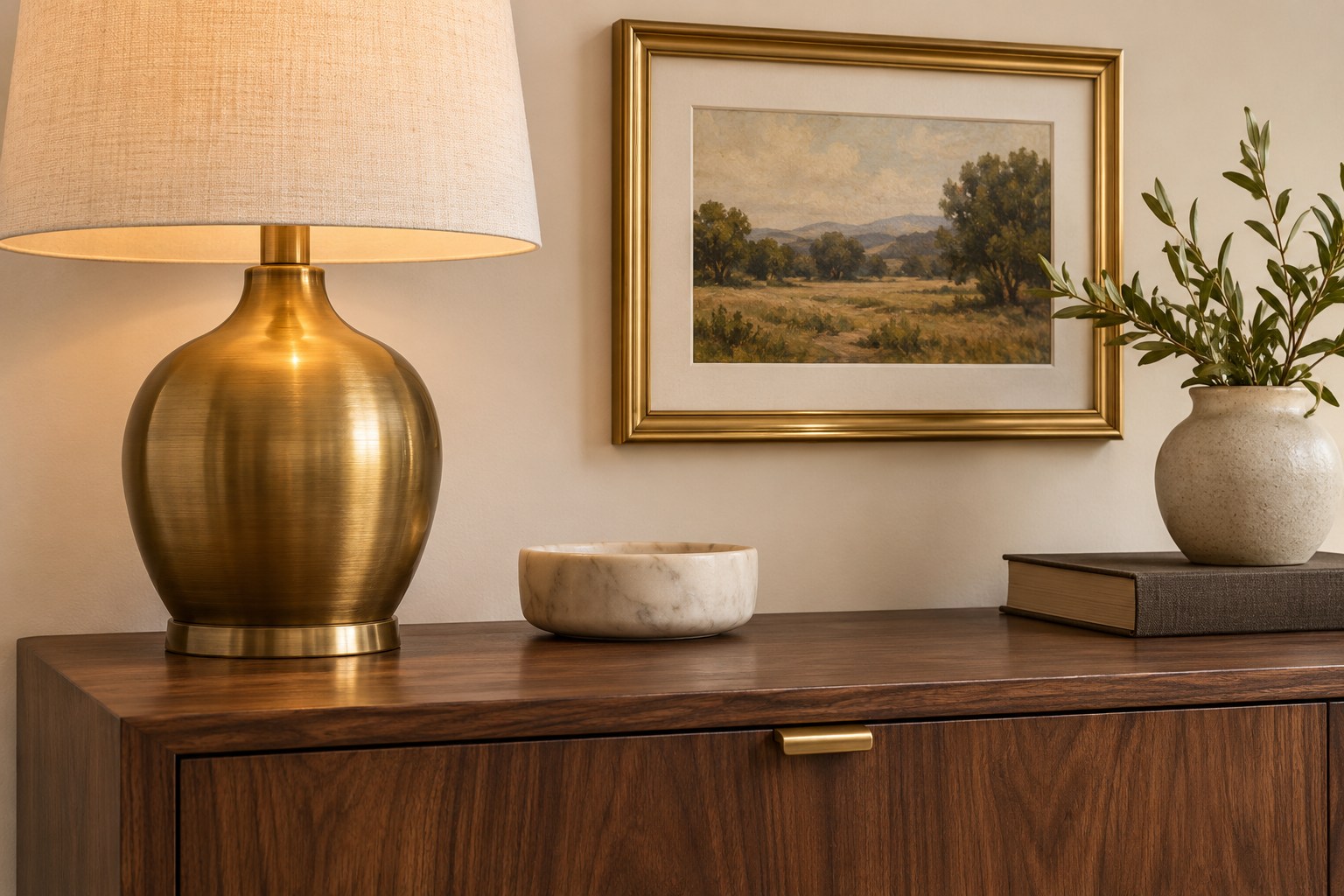
A metal finish is easier to control when it appears as a repeated detail rather than a full set of mirrored furniture. Try a warm brass tone on a lamp base, a picture frame, and a cabinet pull. The pieces can differ in shape while the repeated finish gives the eye something familiar to follow around the room.
Compare the actual samples in the room’s lighting. Finishes called gold, brass, or champagne can vary considerably, and a highly polished surface may look brighter than a brushed one. They do not have to match perfectly, but their warmth and level of shine should feel deliberate. Keep existing functional hardware if it works; small accessories can establish the connection without replacing everything.
Add a matte material beside the metal so its edge remains visible. Linen, painted wood, or a softly textured wall gives a reflective piece something to contrast with. If the room begins to feel busy, remove one shiny object before adding another. A few repeated details can provide the finished look you were trying to achieve with a larger collection.
5. Make the Dressing Table Work Before Styling It
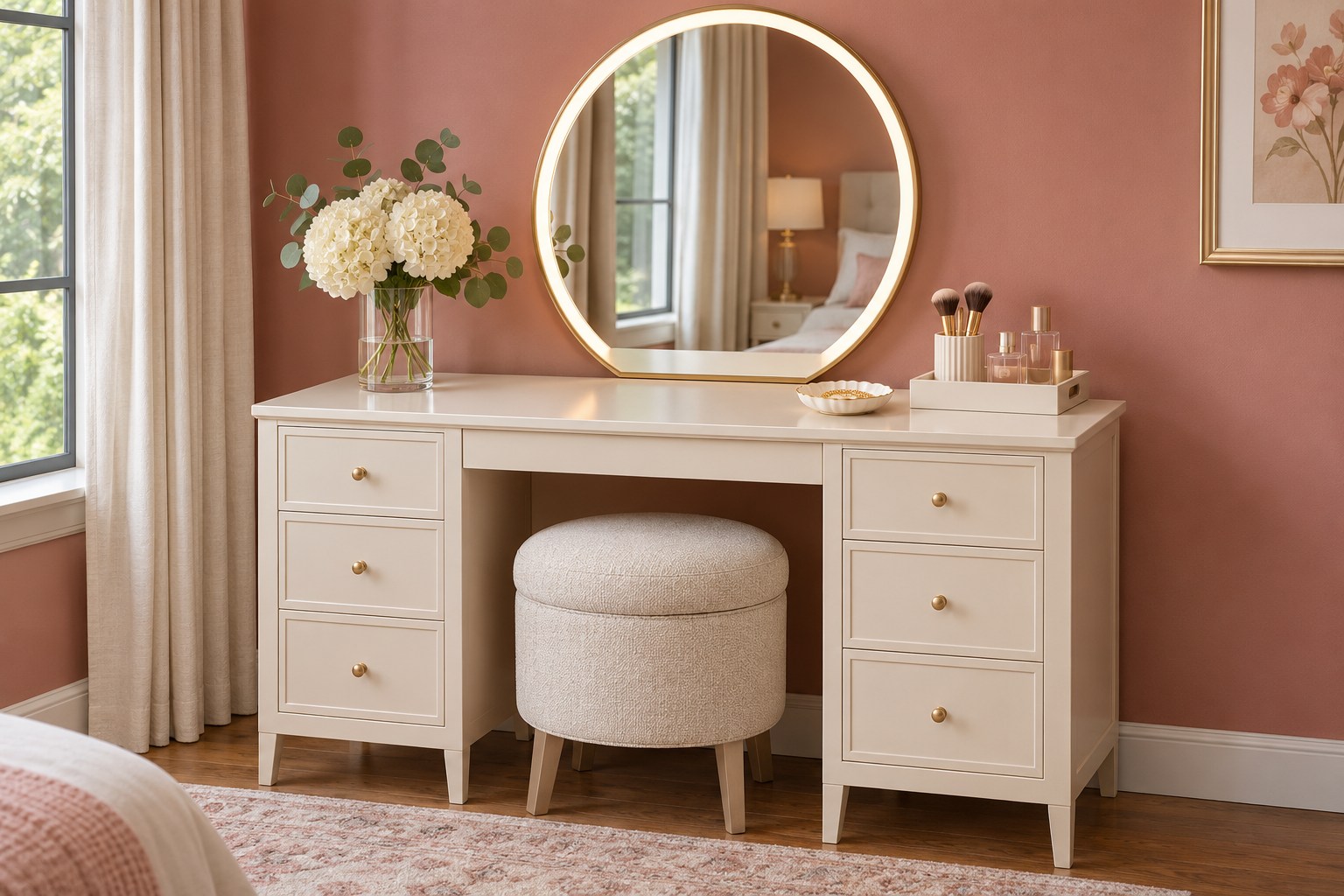
A beautiful dressing table should leave room for the way you get ready. Begin with a chair or stool that fits beneath it, a mirror at a useful height, and a clear place for the items you use each morning. Keep frequently used products in one drawer or a removable tray rather than spreading them across the entire surface.
Look at the light on your face from the seated position. A decorative lamp can add atmosphere, but it may not provide suitable task lighting by itself. Position a compatible mirror light or other appropriate lighting so it is comfortable to use, and avoid a setup dominated by glare from a window directly behind you. Keep cords controlled and away from moving drawers.
Finish with one personal object: a small vase, a framed photograph, or a dish for jewelry. The empty surface around it is part of the design. If the room is tight, these small vanity ideas can help compare compact arrangements before you buy furniture.
6. Build a Soft Landing Zone With a Restrained Rug
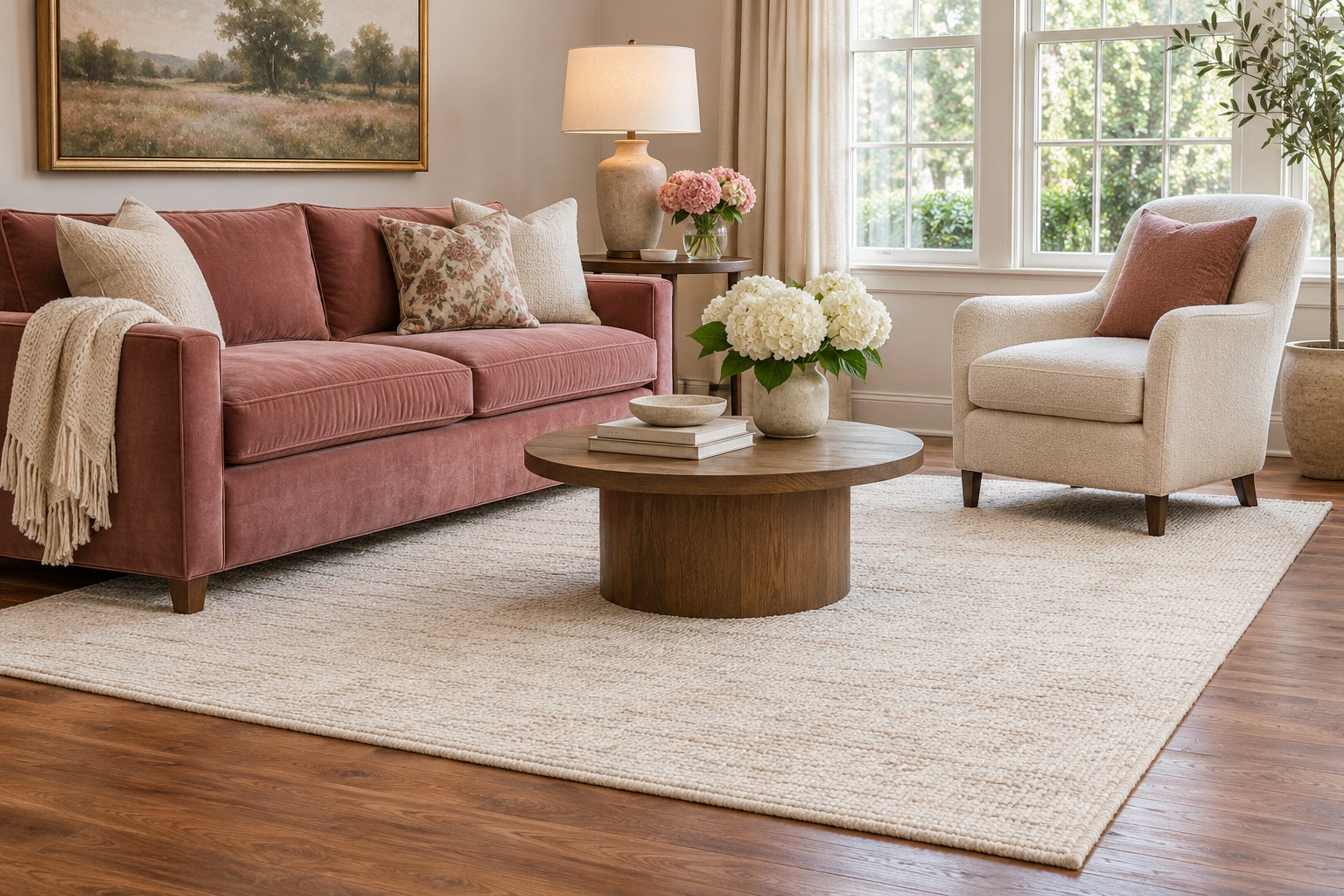
A soft rug can make polished furniture feel more welcoming, but its shape and position matter as much as its texture. In a seating area, choose a size that relates to the chairs and sofa rather than leaving a tiny isolated patch in the middle. Beside a dressing table, check the chair’s movement and the way you step in and out.
Try a quiet ivory, warm gray, or muted taupe when the upholstery already carries a strong color. A subtle pattern can hide visual wear while still leaving the room calm. If you like a plush texture, consider where it will be walked on and how easily the furniture needs to move. A deep pile may be less convenient beneath a rolling chair than a lower, denser surface.
Read the care directions and choose a backing or separate pad compatible with both the rug and the floor. Check door clearance and keep the edges flat. The rug should make the useful part of the room more comfortable, without introducing a trip point or a cleaning routine you do not want.
7. Give Curtains a Clean, Generous Line
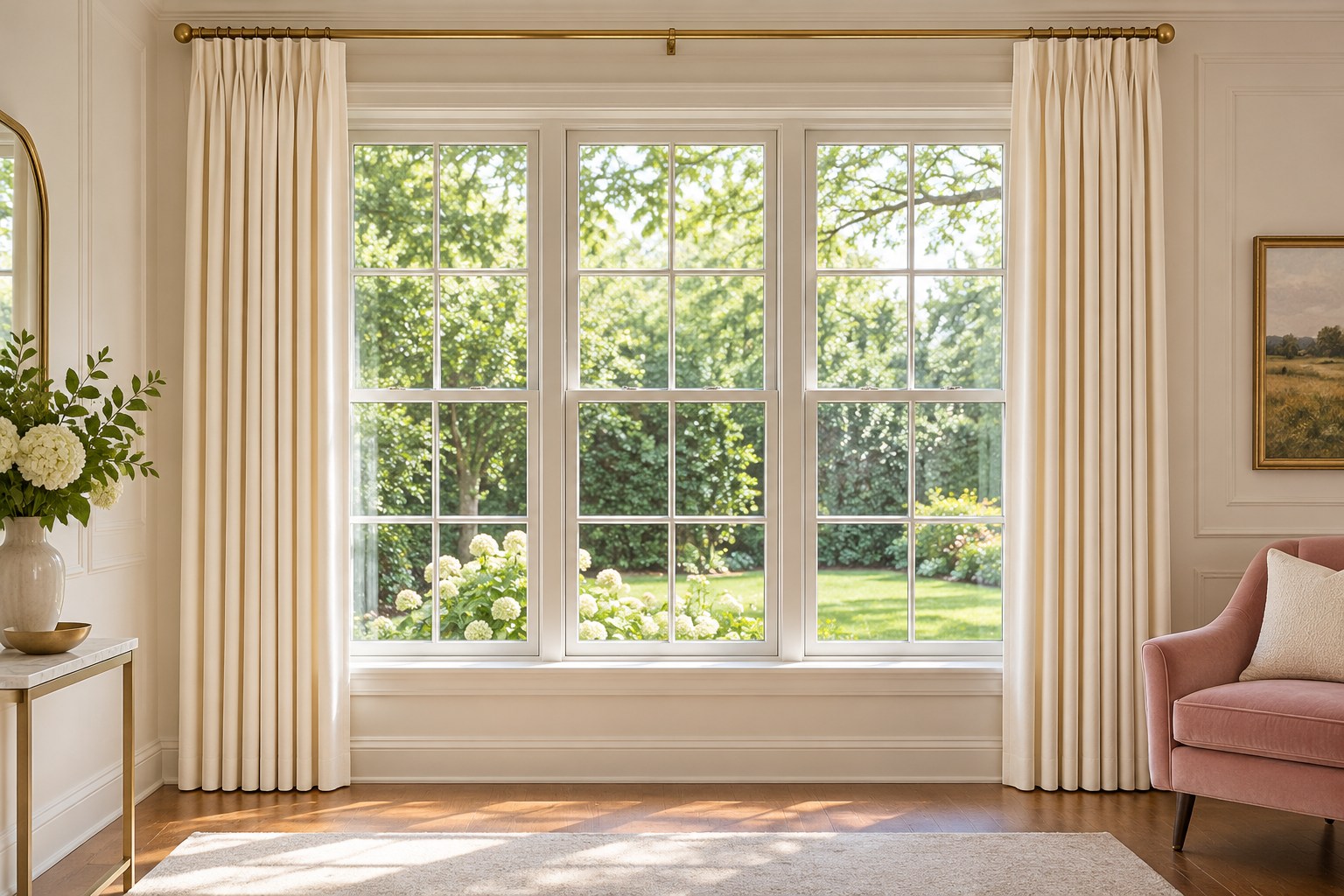
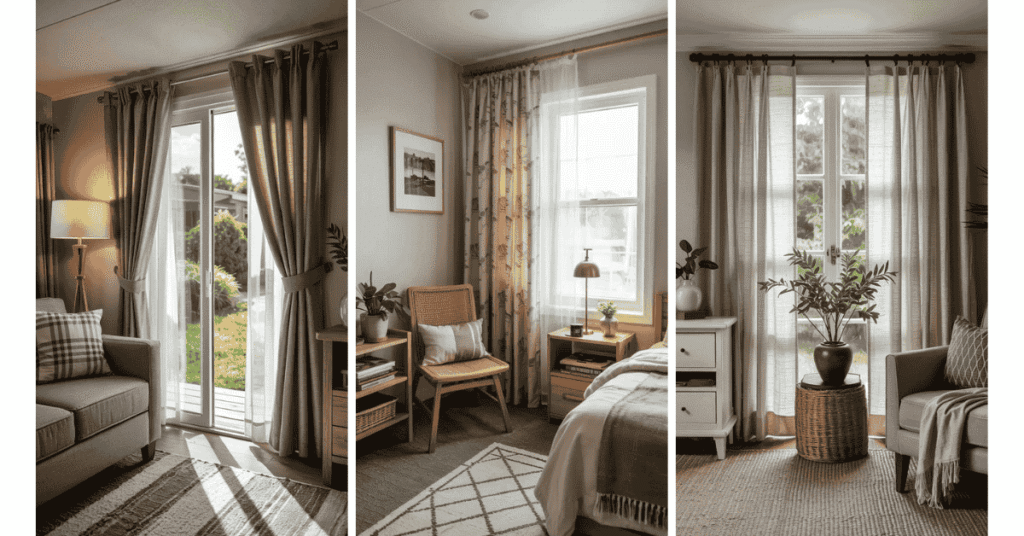
Curtains can add the softness a glam room needs around reflective pieces. Choose a fabric with enough body to fall neatly, then plan the rod and panel widths around the window’s actual operation. The curtains should be able to open without covering the useful glass or catching on nearby furniture.
Look at the fabric beside the wall during the day and with lamps on. A pale warm fabric can make a dark room gentler, while a deeper tone can frame a bright window. Keep the pattern simple if the room already has a statement chair or decorative light. The folds provide texture even when the fabric is plain.
Measure the finished length carefully and choose a hem that suits the household’s routine. A clean floor-length line is often easier to live with than fabric piled on the floor. Keep heaters, vents, and other equipment clear according to their requirements. A well-fitted curtain looks intentional because it works with the window, not because it uses the most fabric.
8. Use a Deep Wall Color Behind a Quiet Arrangement
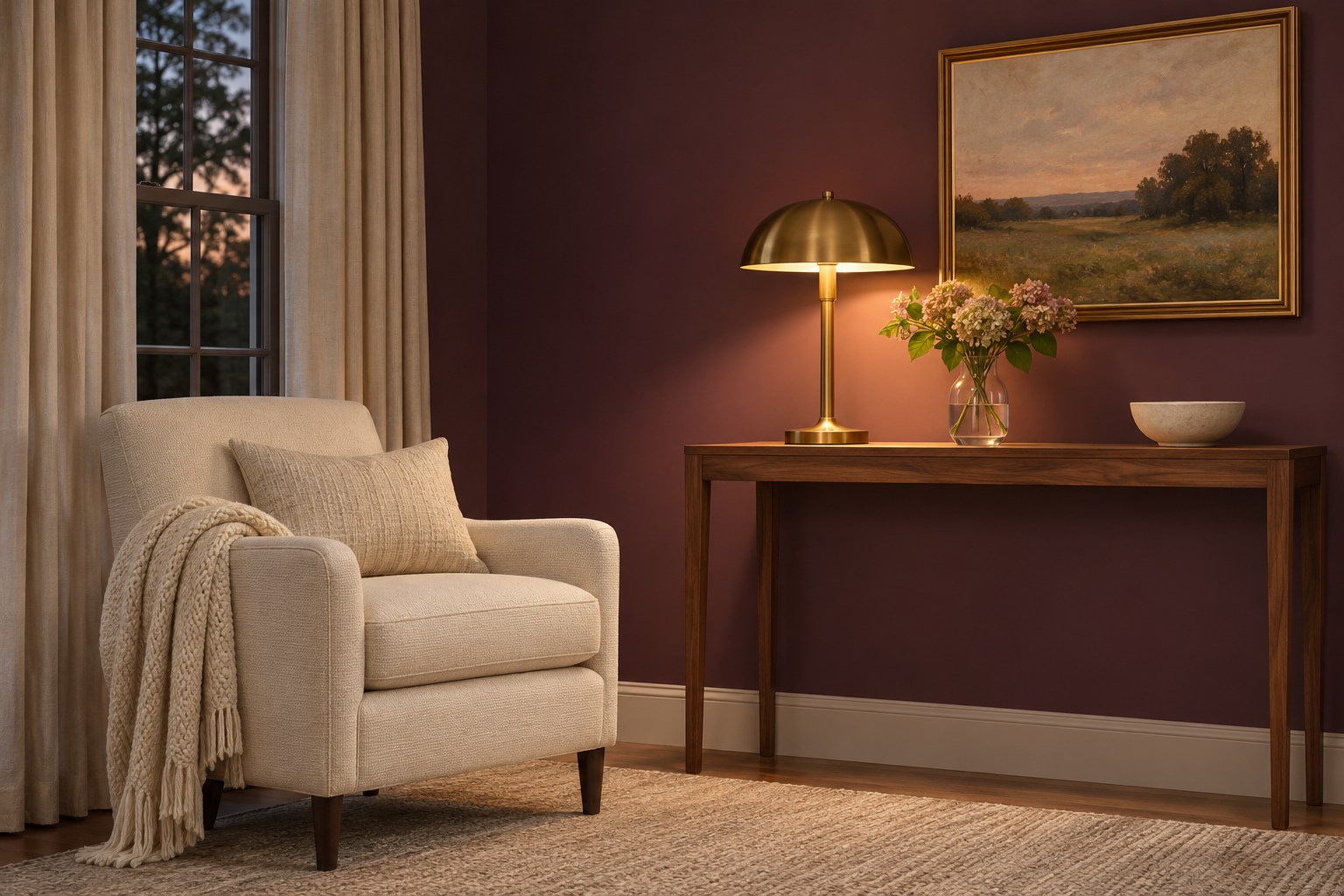
A deep wall color can create a glamorous backdrop when the objects in front of it have clear shapes. Try a muted aubergine, smoky blue, or dark olive behind a cream chair or pale console. The contrast makes the furniture’s outline easier to read and can give an ordinary corner more presence.
Test a large sample on the intended wall and its return. Check it with the existing floor, upholstery, and lamps, since the same color can look quite different across the day. Decide whether the trim will blend with the wall or remain a visible outline. Neither choice is automatically better; the room’s architecture and the amount of contrast you want should guide it.
Keep the display in front of the color simple. One lamp and a framed piece may be enough. If you prefer a more enveloping treatment, our color drenching ideas explore how related surfaces can be treated together. Choose the paint system for each surface rather than assuming one finish belongs everywhere.
9. Display Accessories in a Small, Edited Group
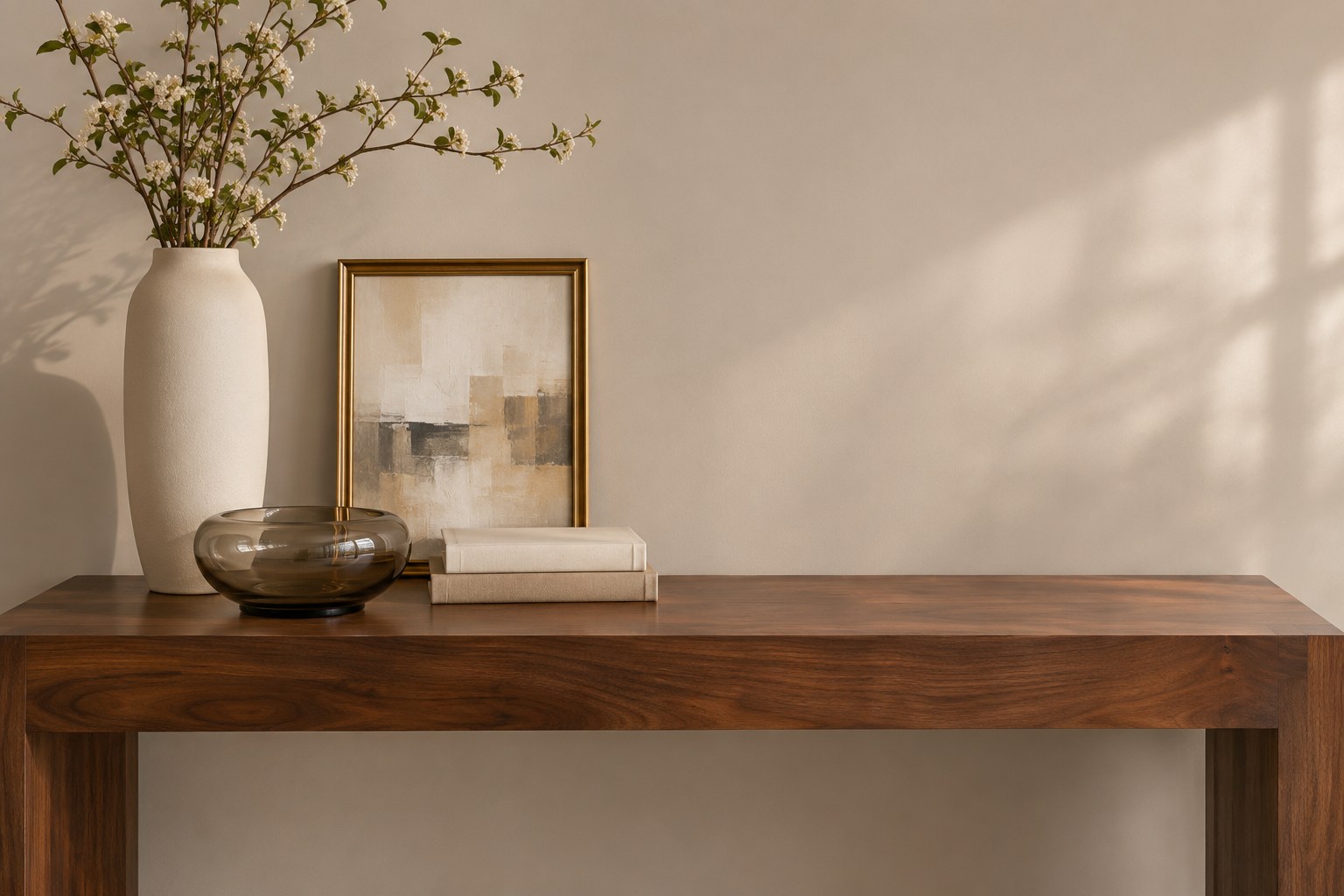
A glam display is easier to appreciate when each object has space around it. Choose a small group with different heights: perhaps a tall ceramic vase, a low bowl, and a framed image. Repeat one color or material so the pieces belong together, then leave part of the shelf or console completely clear.
Use books you own and enjoy, placing them where they remain easy to take down. Avoid building a fragile tower just to create height. A tray can gather small daily items, but it should fit the furniture and lift away for cleaning. Keep anything frequently handled near the front, with decorative pieces farther back where they are less likely to be knocked.
View the arrangement from the doorway and the usual seat. If every item seems equally prominent, remove one and reassess. You can rotate pieces over time instead of displaying the whole collection at once. The room gains a personal character from the choices you make, while the open space keeps those choices legible.
Set a Mitt&Ditt handled ceramic vase behind a low bowl if the vase sits fully on the console. Leave enough space around the handles to lift it for cleaning.
See details for Mitt&Ditt handled ceramic vase (paid link)
10. Make One Large Artwork the Final Decision
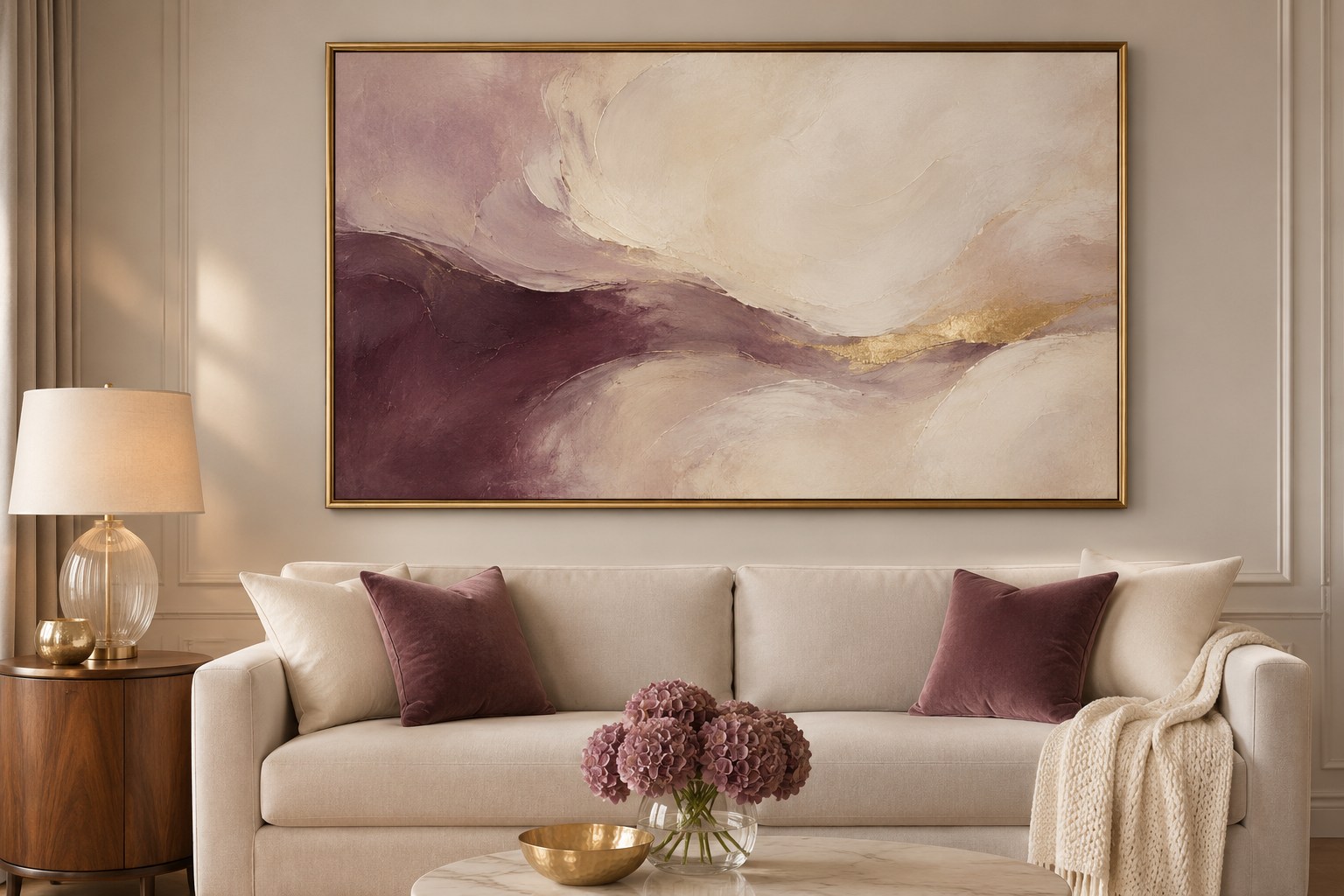
A large artwork can bring the room’s colors together without adding more furniture or small accessories. Choose it after the main upholstery and wall color are settled, then look for a composition that relates to one or two of those tones. An abstract with a quiet background can add movement without competing with a decorative mirror or light.
Use a paper outline to test the size above the sofa, console, or dressing table. Leave enough room around the frame for the wall to show, and check the view from the main entrance. Two related pieces can work as a pair, but avoid filling the remaining wall merely because it is empty. The room needs some quieter areas between its strongest features.
Choose secure mounting appropriate to the piece and the wall. Keep the art clear of opening doors and other moving objects. Finish by sitting in the room with the usual lights on: if the artwork, fabric, and lighting each have a clear role, the space can feel luxurious without needing another decorative layer.
Choose the element you want to notice first, then give the surrounding pieces quieter jobs. Test the seating, reflections, curtain movement, and lighting before adding more accessories. A glam room feels complete when its rich materials remain comfortable to live with and its strongest details have room to stand out.
Discover more from HomeTrendora
Subscribe to get the latest posts sent to your email.