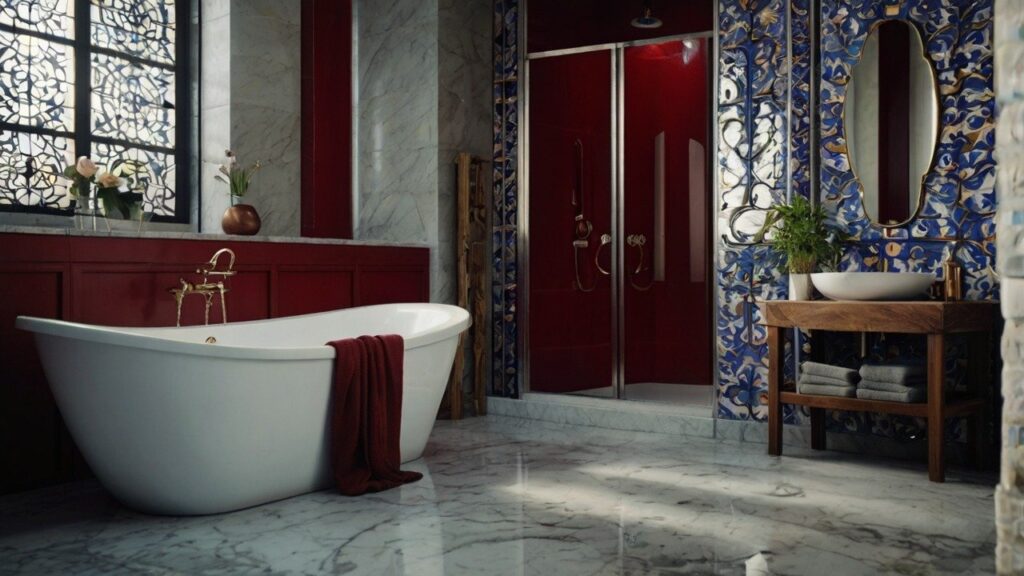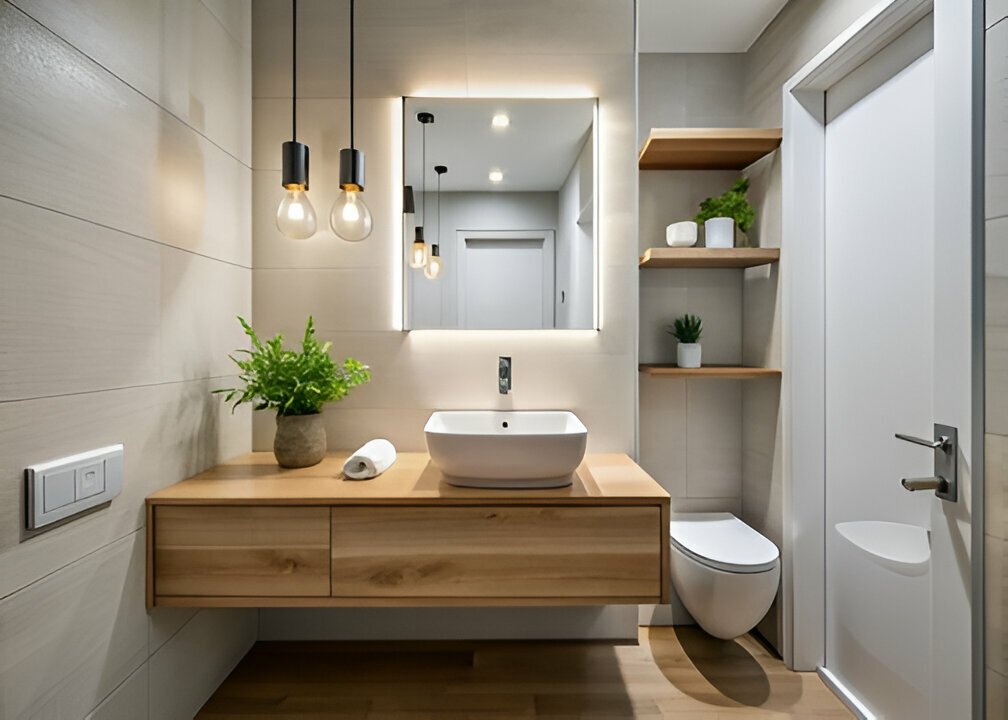
Modern Art Deco bathroom ideas are moving beyond predictable black tile and shiny gold hardware. The freshest rooms still use strong geometry, polished metals, saturated color, and glamorous stone, but they balance those statements with quieter surfaces and cleaner lines. The result feels expressive rather than themed.
That renewed confidence has a current Pinterest connection, too. Pinterest’s 2026 Neo Deco forecast highlights crisp chevrons, fan arches, chrome, brass, and growing interest in red marble bathrooms. You do not need to rebuild an entire room to use the look, though. A mirror, light fixture, tile border, or color change can create the same structured glamour at a smaller scale.
These 20 ideas range from simple styling updates to full remodel concepts, with options for compact bathrooms, powder rooms, rentals, and more luxurious spaces
1. Frame the Vanity With Burgundy Marble
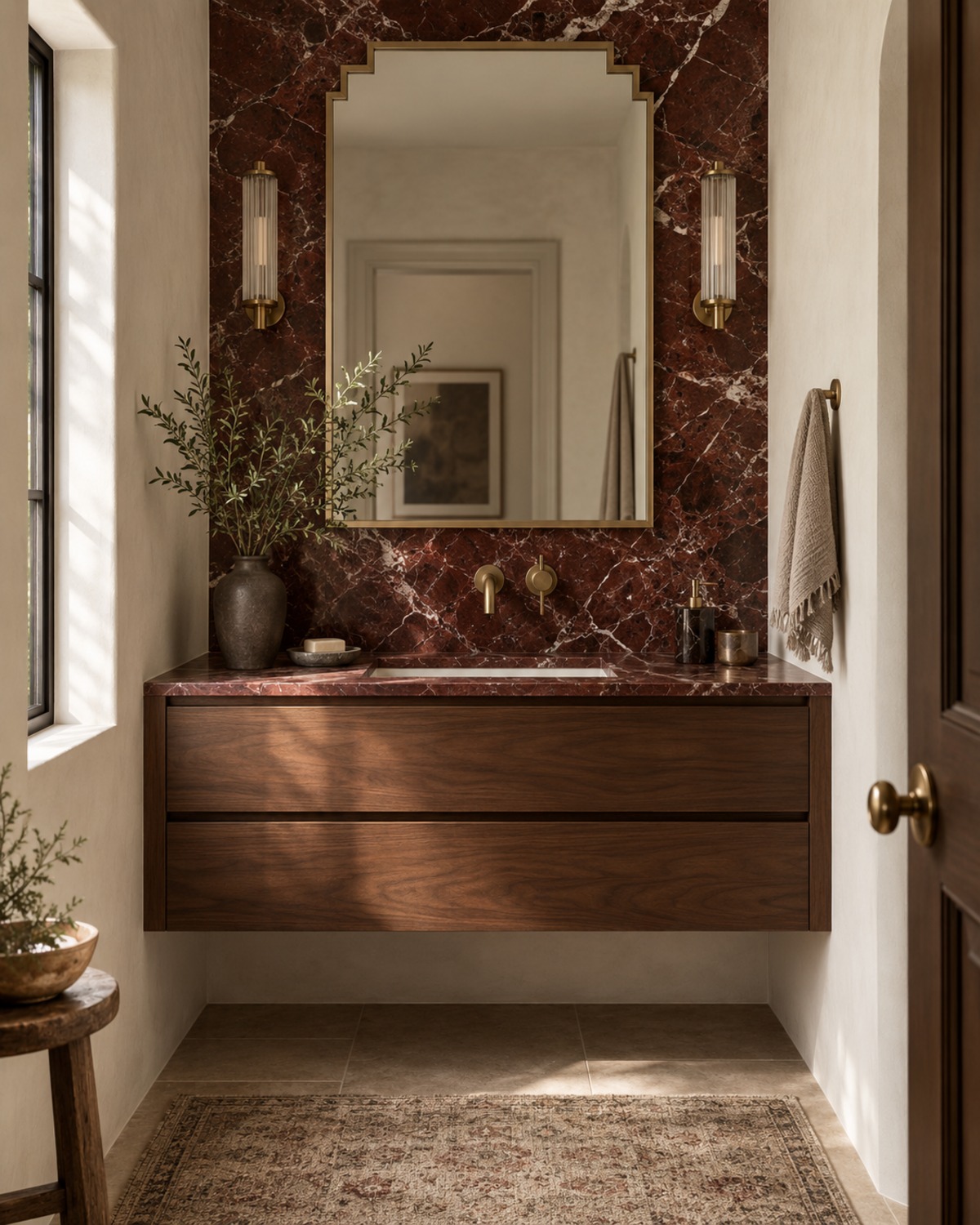
Burgundy or red-veined marble makes an unforgettable focal point when it is limited to the vanity wall or backsplash. Pair it with a simple walnut cabinet and warm brass fixtures so the stone remains the star. Cream walls and an unpatterned floor keep the palette from becoming heavy.
For a lower-commitment version, use a richly veined stone tray, a framed marble-print artwork, or a compact backsplash rather than covering every surface. Natural stone varies in porosity and care requirements, so confirm sealing and cleaning instructions with the supplier before installation.
2. Use a Stepped Mirror as the Main Motif
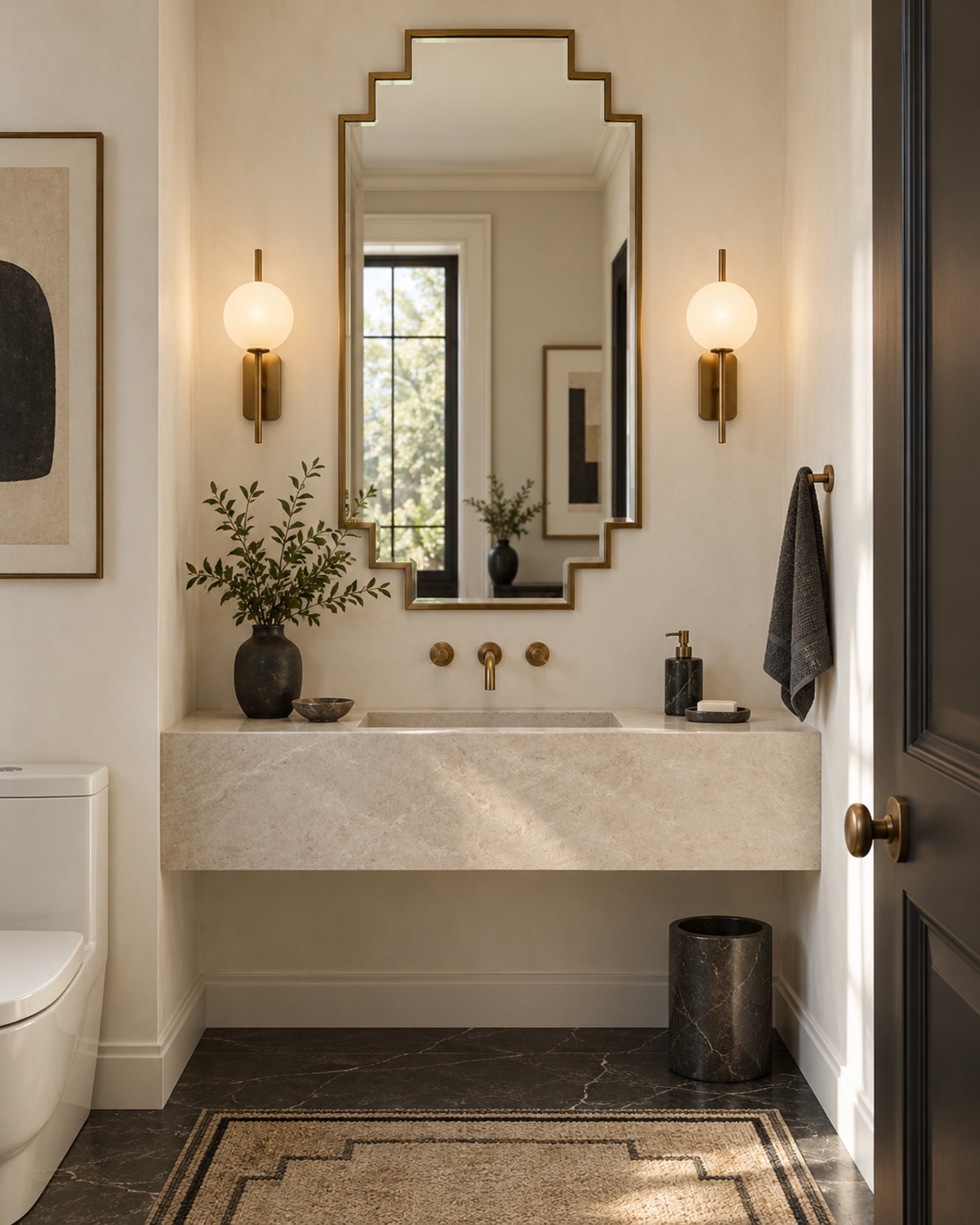
A mirror with a stepped, fan-shaped, or softly notched silhouette can establish the style without changing the tile. It works especially well over a plain floating vanity because the outline remains easy to see.
Repeat the shape only once—perhaps in a cabinet pull or sconce backplate. Too many matching motifs can make the bathroom feel like a set. In a narrow room, a tall stepped mirror also draws the eye upward while preserving useful reflection area.
3. Add a Black-and-White Checkerboard Floor
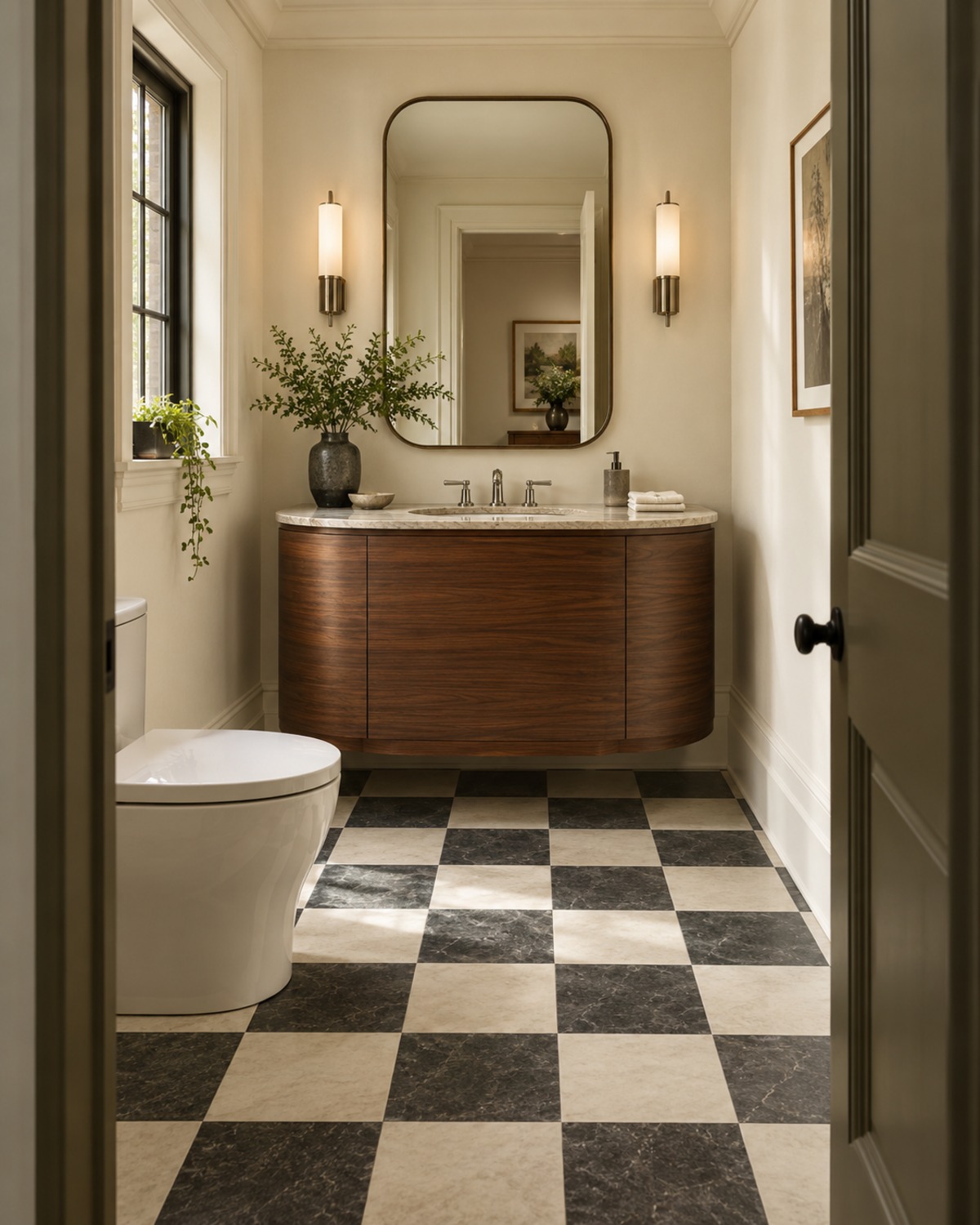
A checkerboard floor brings instant rhythm to an otherwise simple bathroom. Smaller squares suit a compact powder room, while larger tiles create a calmer effect in a wider space. An ivory-and-charcoal combination usually feels softer than stark optic white and pitch black.
Keep the wall tile or paint quiet, then bring in one warm material—oak, walnut, or aged brass—to prevent the room from feeling cold. Select bathroom-appropriate flooring based on the manufacturer’s intended use and slip-performance information, not appearance alone.
4. Pair Emerald Tile With Aged Brass
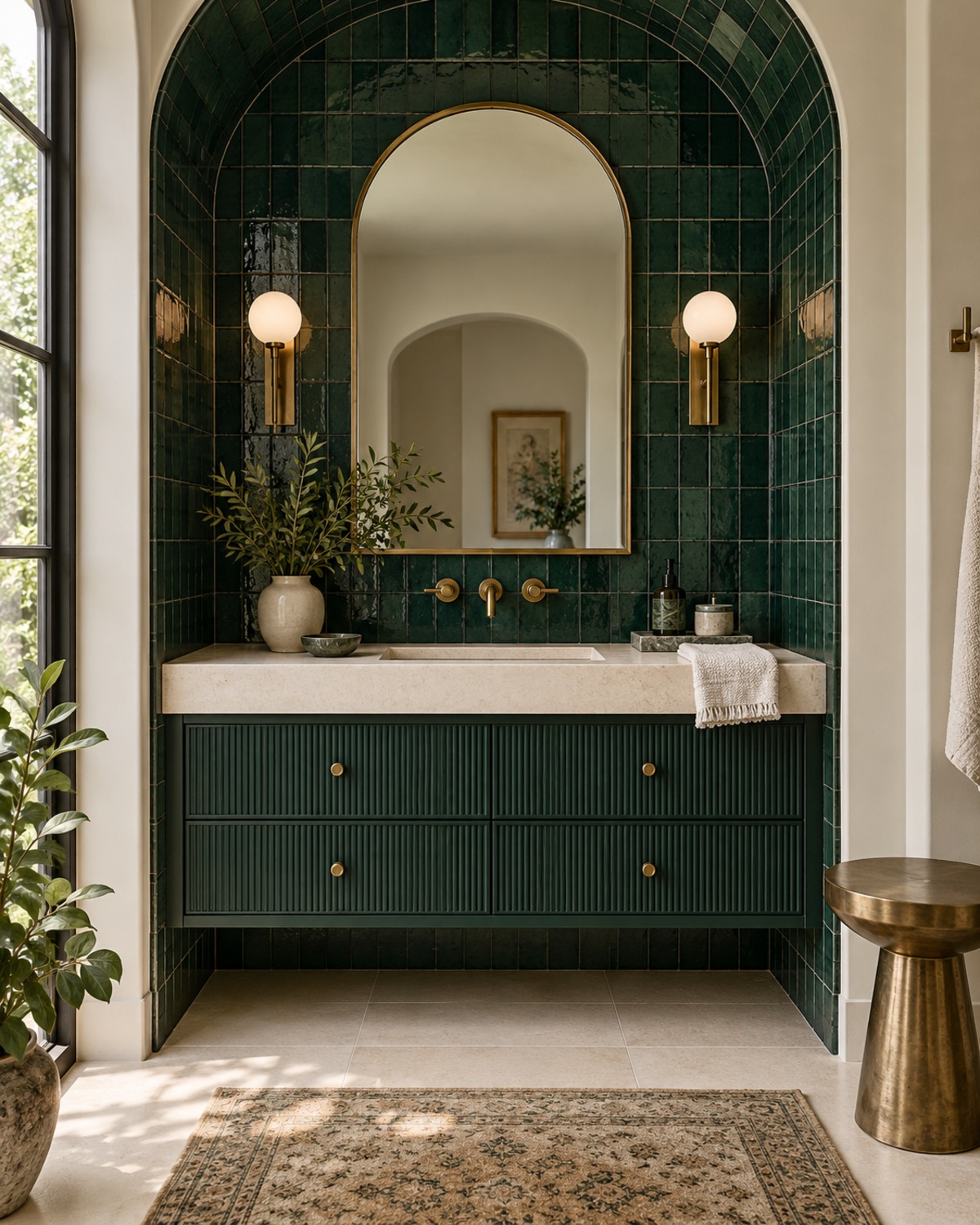
Deep green tile and aged brass create a jewel-box effect, particularly in a powder room or shower niche. Choose a tile with subtle tonal variation so light can move across the surface. A slim brass mirror frame and two small sconces are enough to finish the composition.
If a full green wall feels too intense, tile the lower third or use the color behind the vanity only. Warm white walls above it will preserve brightness and give the strong materials room to breathe.
5. Soften Geometry With a Fluted Walnut Vanity
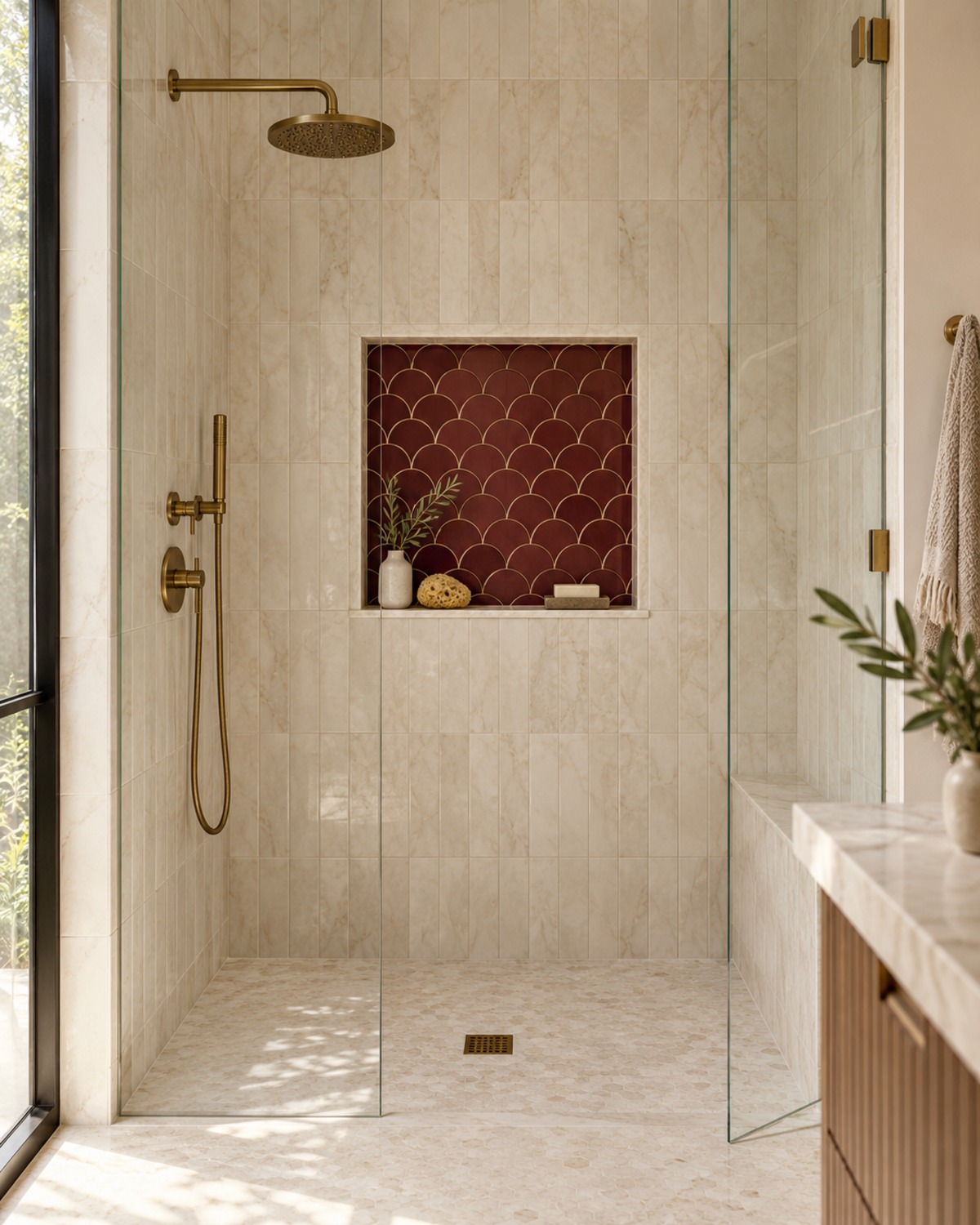
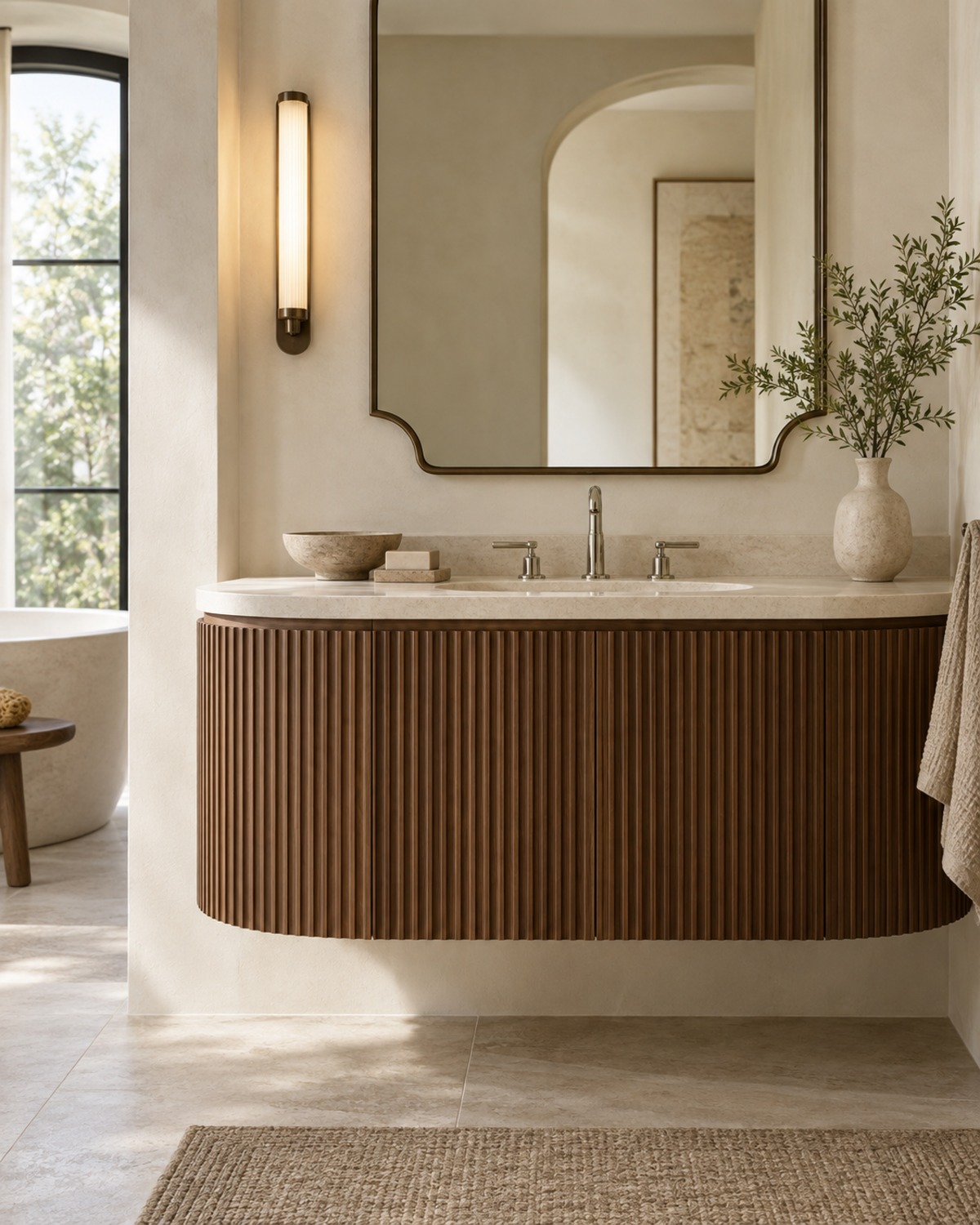
Vertical fluting adds controlled pattern without relying on a printed motif. In walnut, it also contributes warmth and helps a modern Art Deco bathroom feel residential rather than theatrical. A pale stone top and rounded basin balance the repeated vertical lines.
This idea works particularly well when the floor and walls are simple. Fluted surfaces collect more dust and moisture than flat fronts, so use a bathroom-suitable finish and leave enough access for routine cleaning.
6. Create a Fan-Tile Shower Niche
Instead of covering the entire shower in a statement pattern, use fan or scallop tile inside the niche. The small area gives the motif visual importance without overwhelming the enclosure. Choose grout close to the tile color for a refined look, or a slightly contrasting grout when you want the geometry to read more clearly.
Carry one niche color into the towels or vanity accessories. That small repetition ties the shower to the room while keeping the design controlled.
7. Try a Cream-and-Chrome Neo Deco Palette
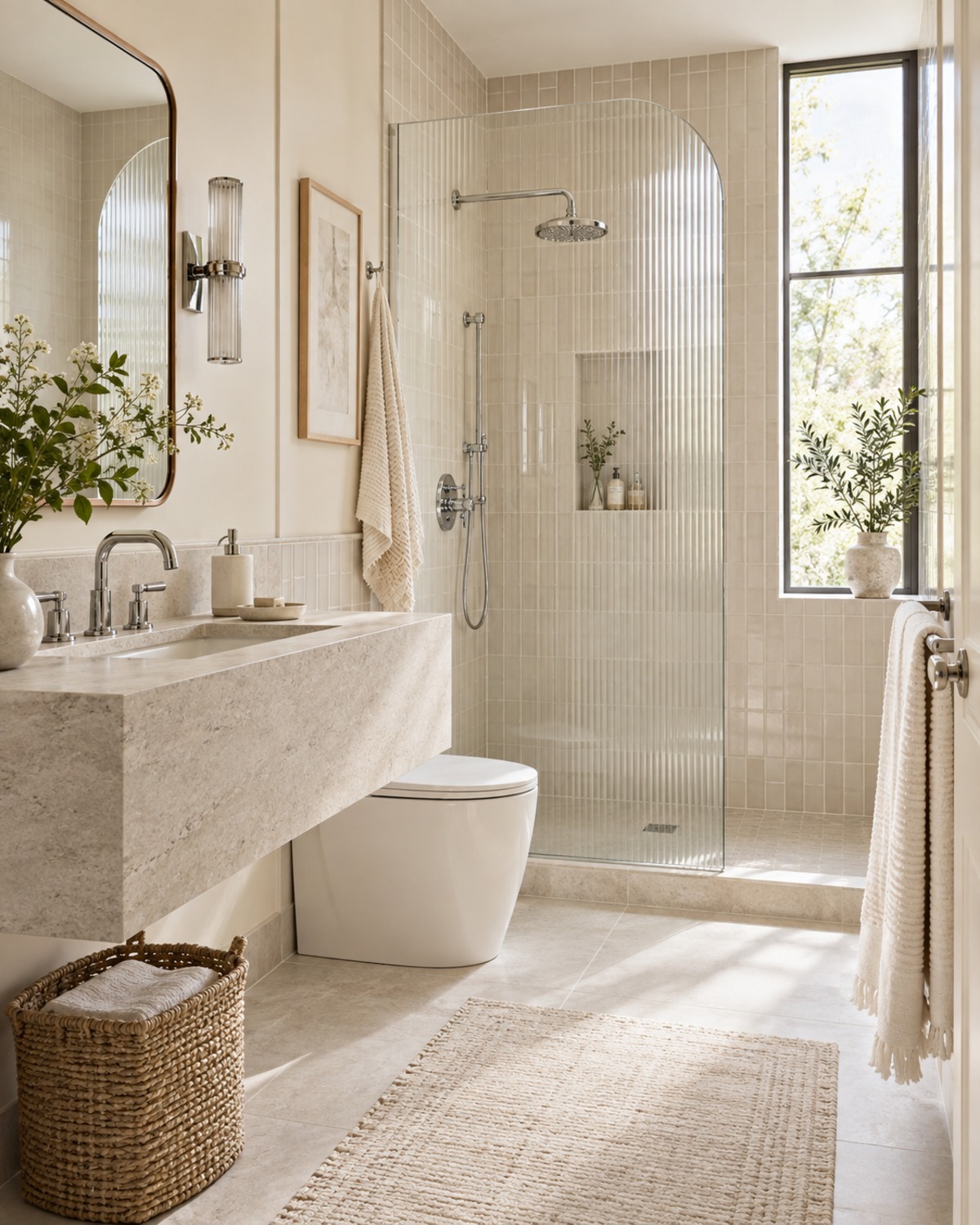
Art Deco does not have to be dark. Layer warm cream tile, polished chrome, clear ribbed glass, and a pale stone counter for a lighter interpretation. Chrome creates the crisp reflective edge associated with the style, while the restrained palette feels clean and current.
Use one sculptural form—such as a curved faucet, globe light, or rounded stool—to keep the neutral room from becoming generic. This is a useful direction for small bathrooms that need glamour without absorbing too much light.
8. Build Contrast With Black Tile and Brass Lines
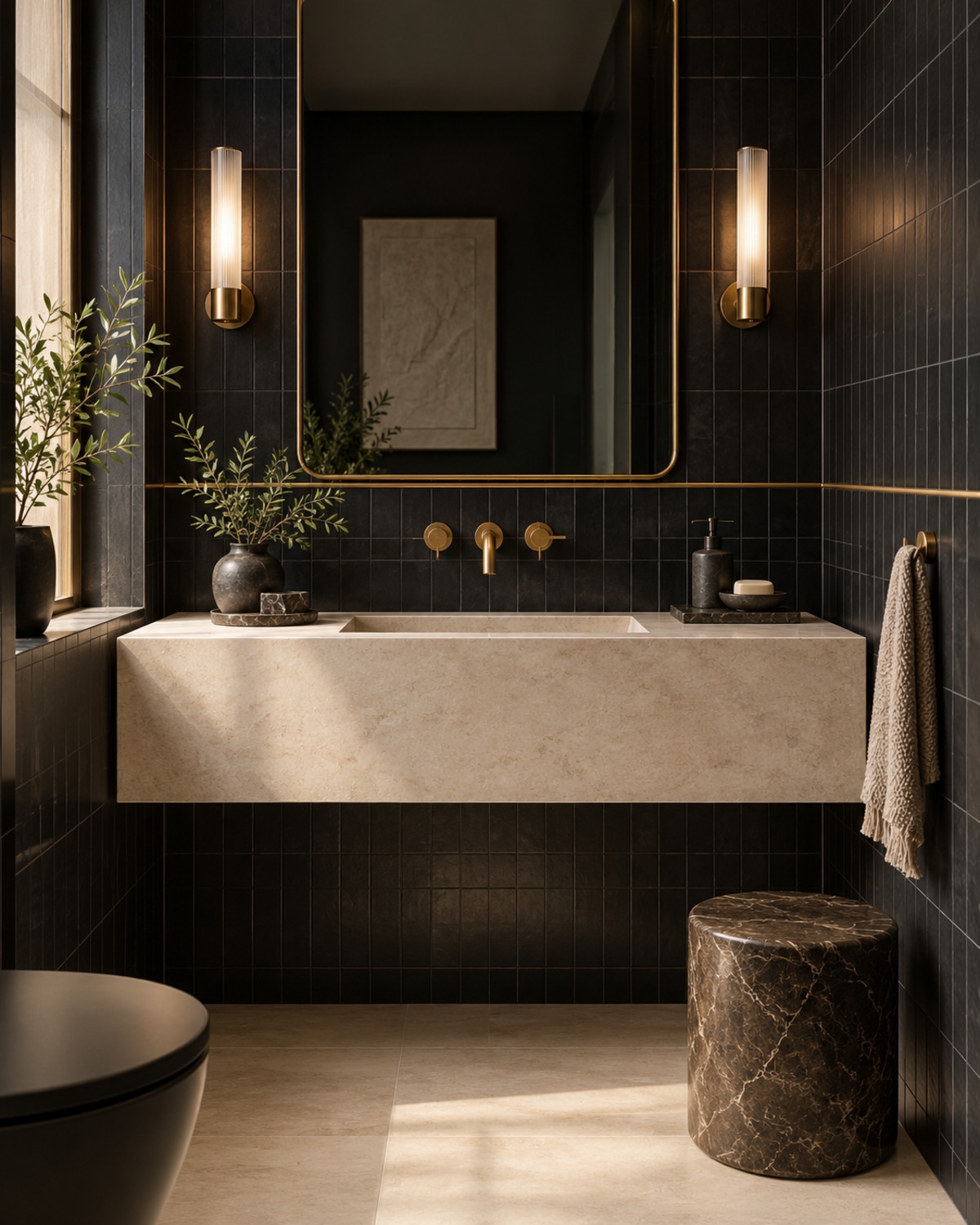
Matte black or charcoal tile makes thin brass details look deliberate: a narrow mirror frame, faucet, shower trim, or linear sconce. The key is negative space. Avoid filling every surface with black, metallic accents, and pattern at once.
In a compact room, confine the dark tile to the vanity wall and use a pale floor. If natural light is limited, layer practical ambient and task lighting rather than depending on one decorative fixture. You can find more ways to layer practical and flattering bathroom lighting before selecting a statement sconce.
9. Use Ribbed Glass for a Sculptural Shower Screen
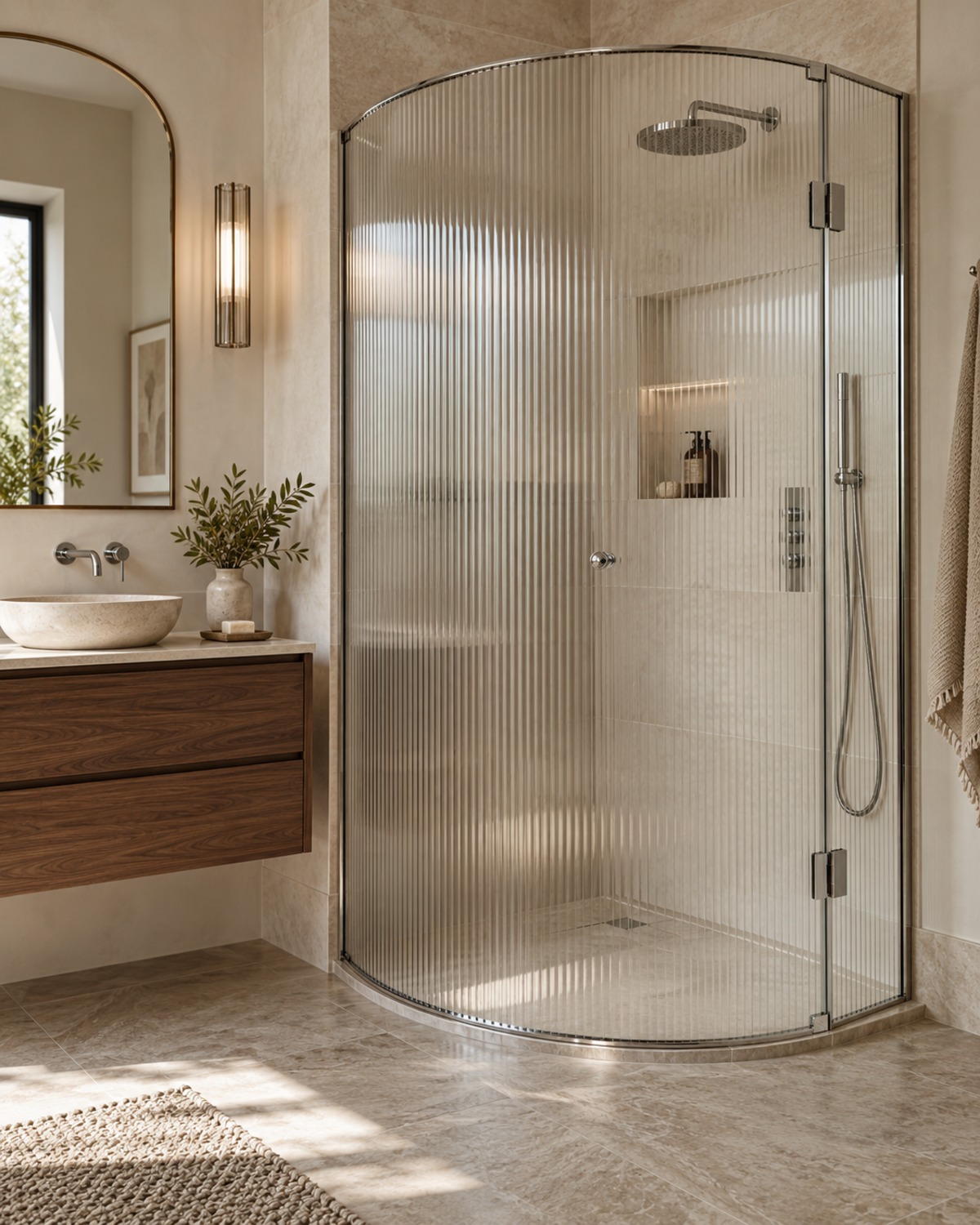
Ribbed or fluted glass filters the view through a shower enclosure and introduces texture without a printed pattern. A gently curved panel feels especially aligned with Neo Deco’s mix of geometry and softer silhouettes.
Keep the surrounding tile simple so the glass texture remains visible. Confirm the enclosure, hardware, and glass specification with a qualified installer; decorative inspiration should not replace product or installation requirements.
10. Make a Small Powder Room a Jewel Box
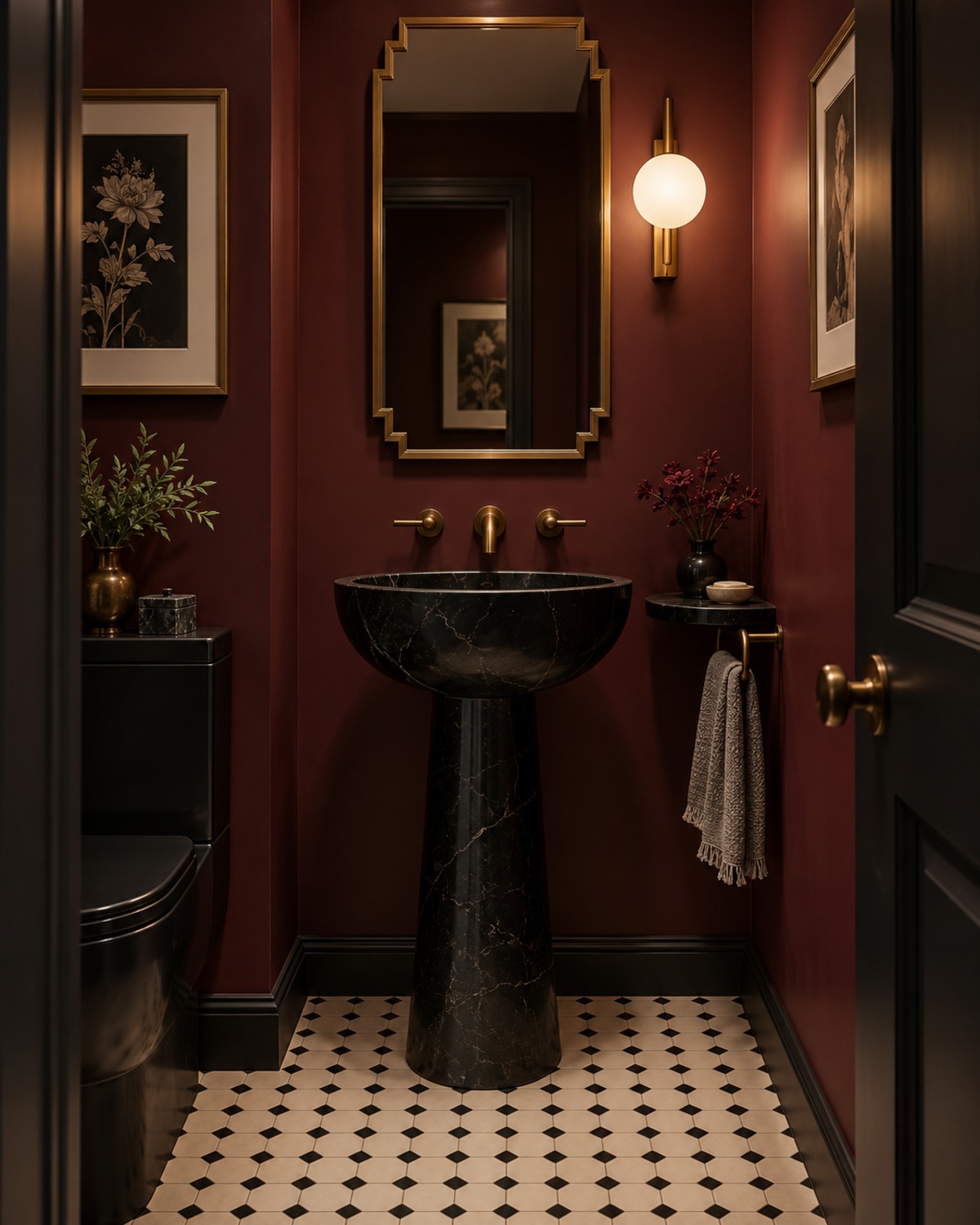
A powder room can handle concentrated drama because visitors experience it in short intervals. Try burgundy walls, a compact black pedestal sink, a brass-framed mirror, and a single opal-glass sconce. The limited footprint makes a few expressive choices feel intentional.
Preserve practical clearances and avoid bulky floor decor. If the room feels cramped before finishes are selected, plan the small bathroom layout first so the style does not interfere with movement or storage.
11. Introduce Geometry With a Mosaic Border
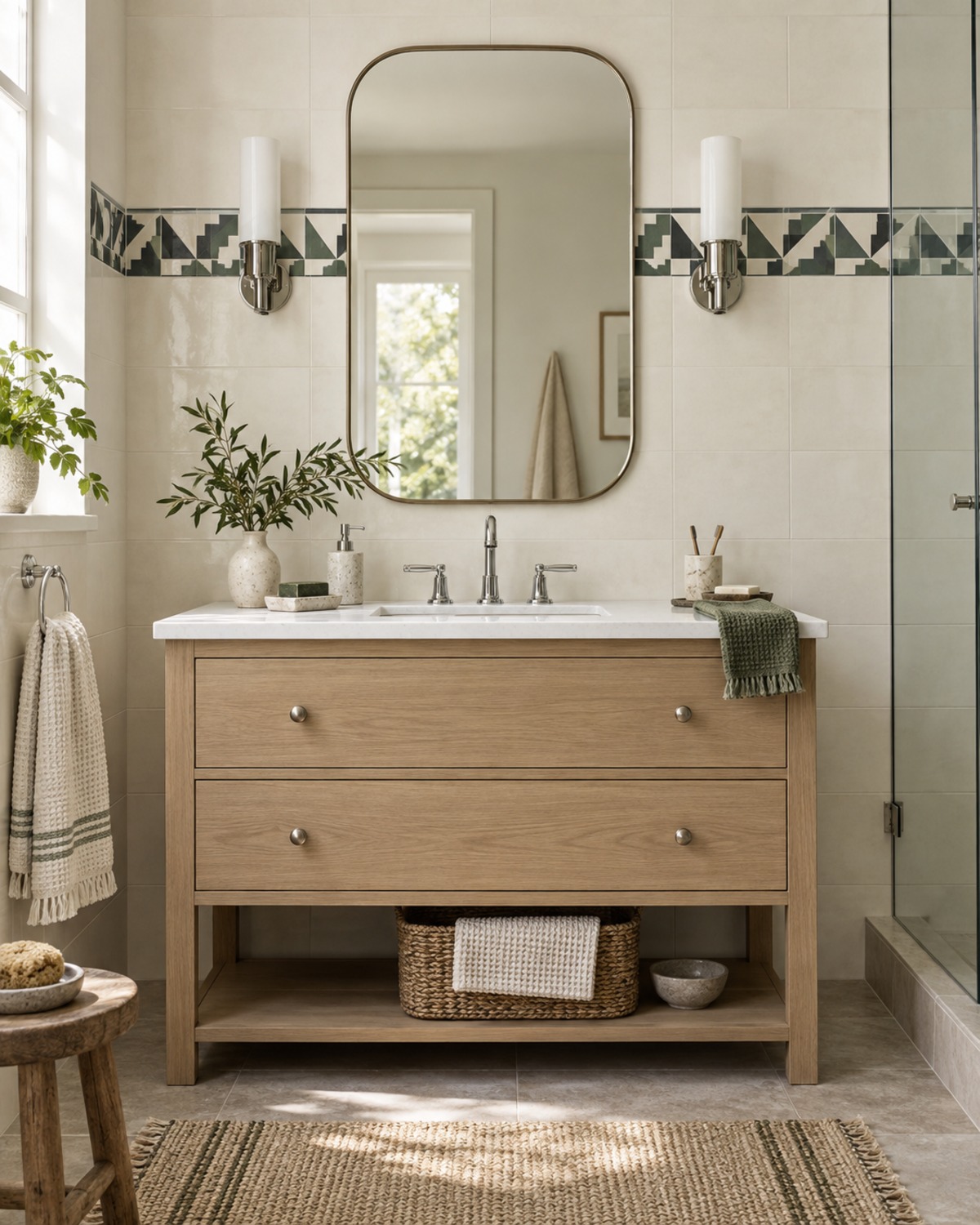
A narrow mosaic border can give plain field tile an Art Deco cadence without the cost or visual weight of a fully patterned wall. Place it at the vanity backsplash, around a mirror, or as one horizontal line inside the shower.
Use colors already present in the room—perhaps cream, charcoal, and muted green—rather than adding an unrelated palette. A crisp border looks strongest when it aligns cleanly with surrounding edges and fixtures.
12. Choose a Curved Pedestal Sink
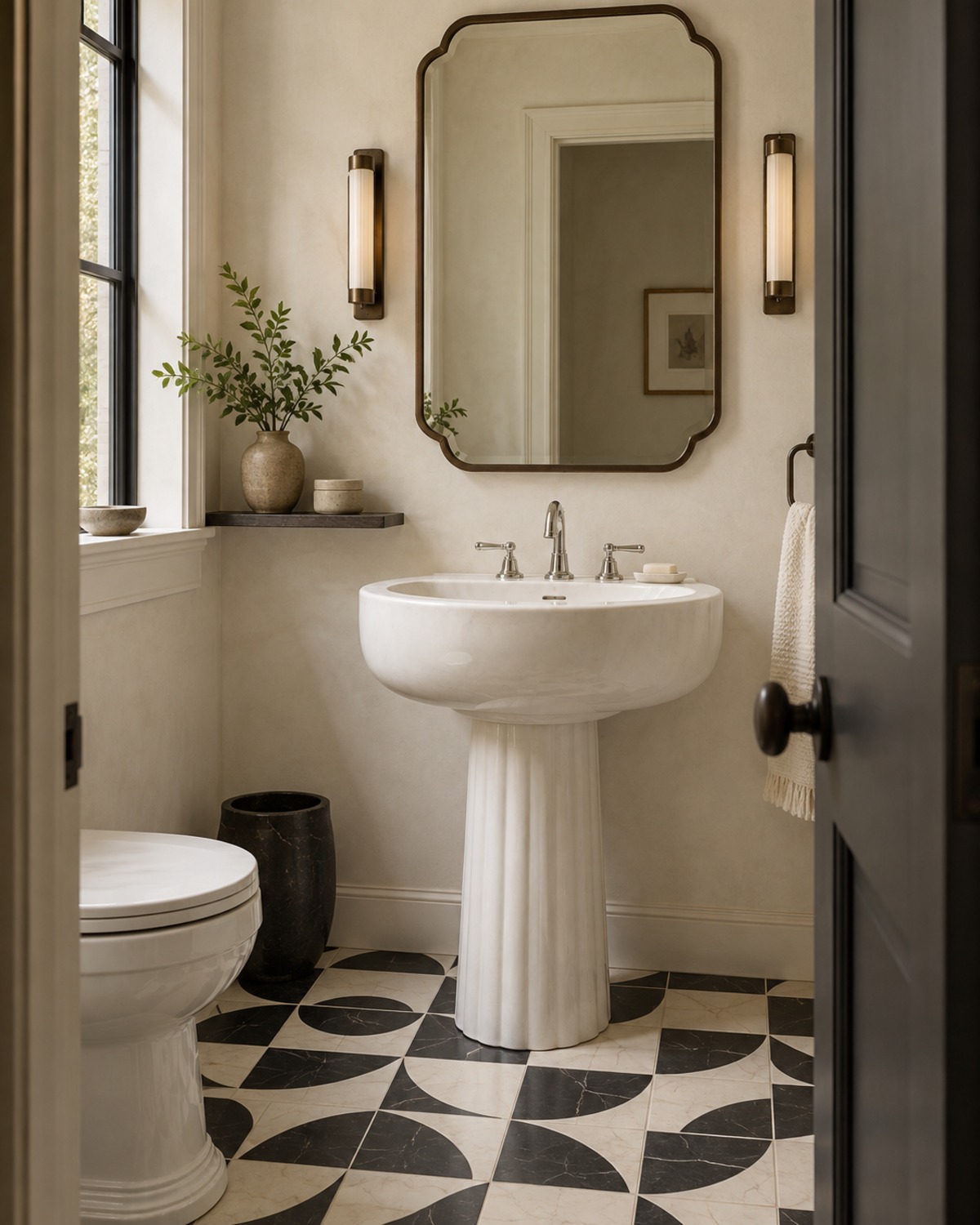
A rounded pedestal sink creates an elegant counterpoint to straight tile lines and stepped mirrors. It is especially effective in a small bathroom where a large vanity would feel visually dense.
Because pedestal sinks offer little concealed storage, plan a recessed cabinet, slim wall shelf, or nearby basket before removing an existing vanity. Style should not create a daily clutter problem. For visible surfaces, borrow a few ideas to keep the bathroom counter organized.
13. Add Geometric Wallpaper in a Dry Powder Room
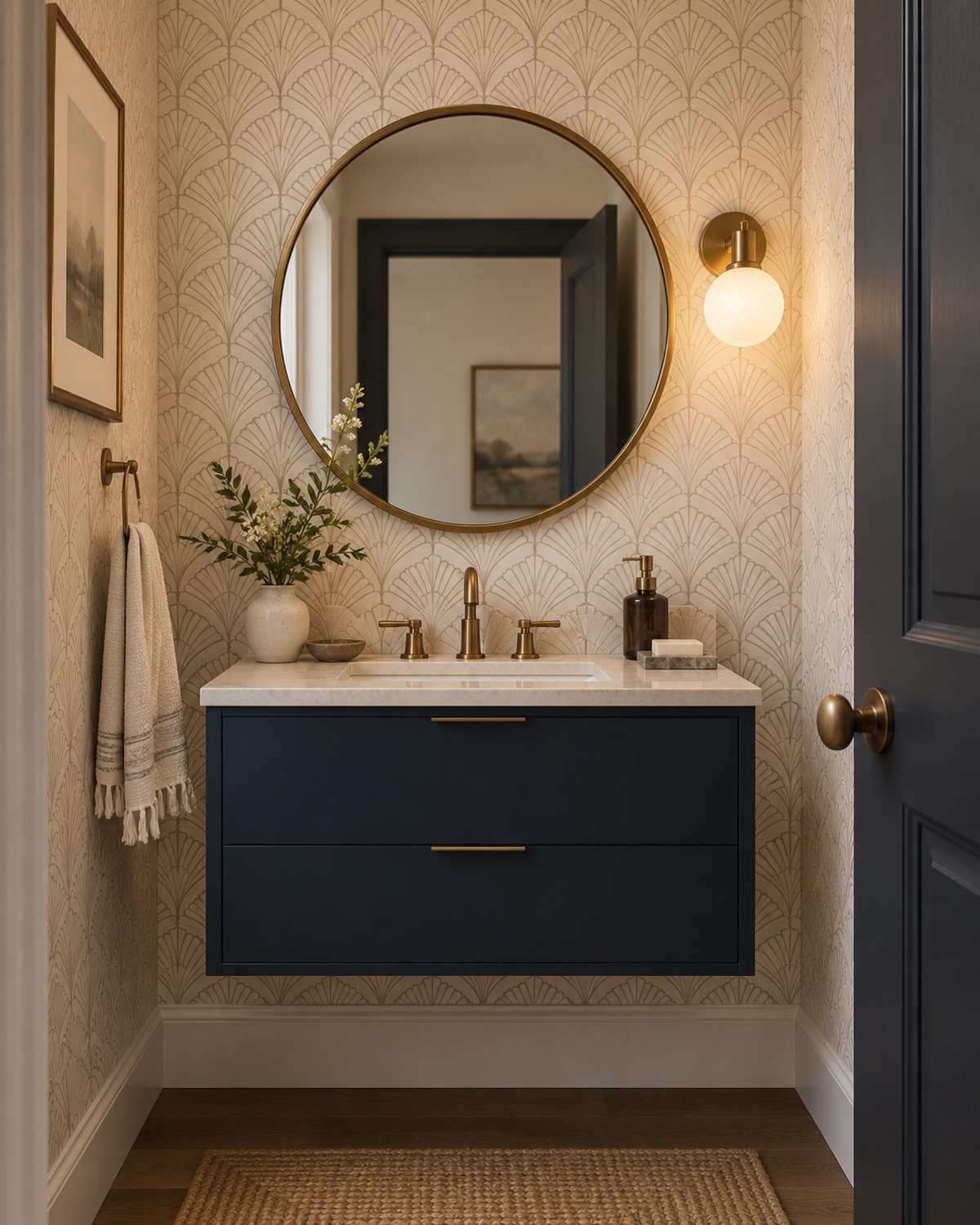
Removable or traditional wallpaper can deliver the pattern of an Art Deco bathroom without permanent tile work. A fine fan, arch, or line pattern usually feels more sophisticated than an oversized novelty print. Pair it with a solid-color vanity so the room has a clear visual anchor.
Use wallcovering only where the manufacturer approves the moisture conditions, and prepare the wall as directed. Renters should also verify that a removable product is compatible with the existing paint finish before covering a large area.
14. Combine a Lacquered Vanity With Quiet Stone
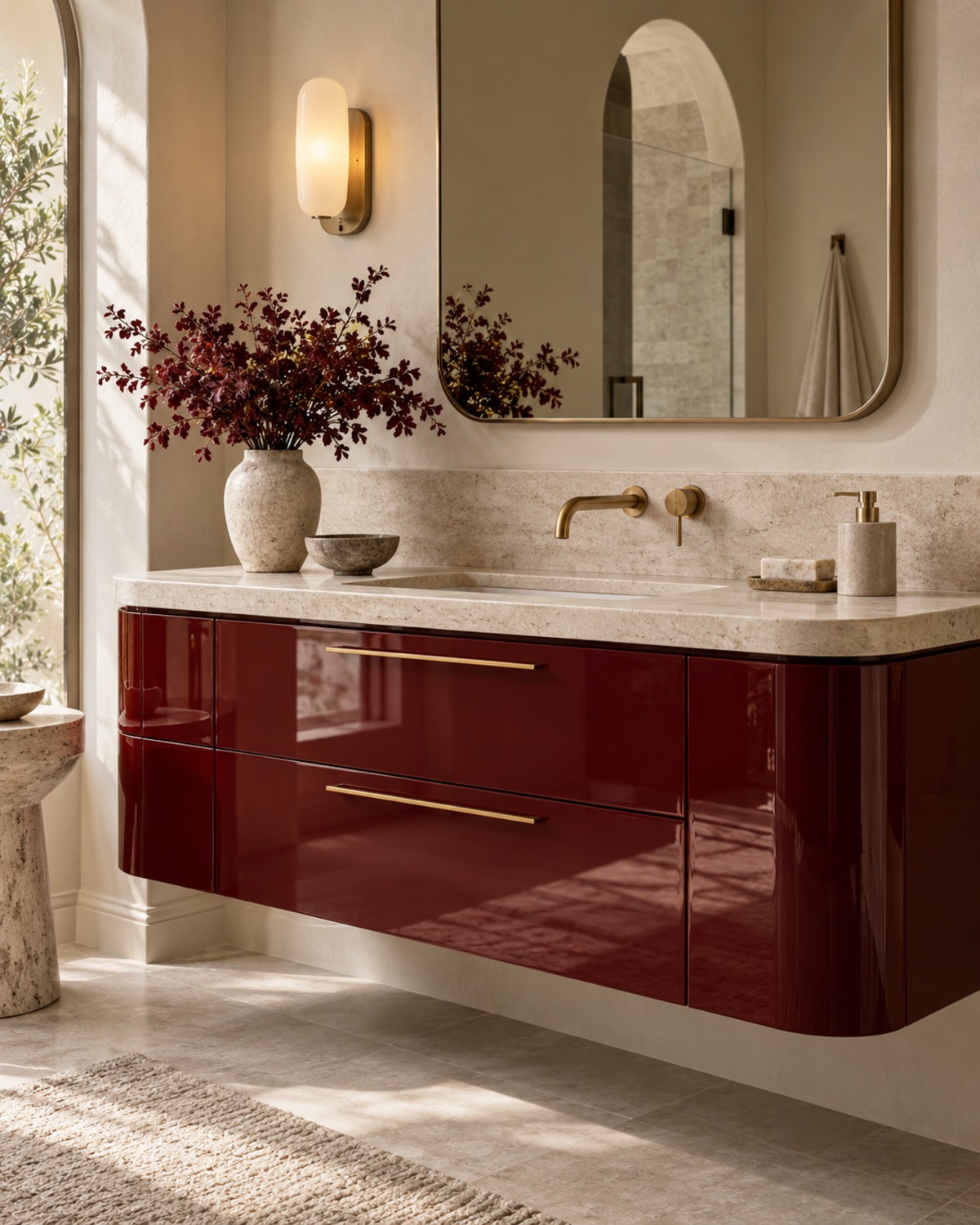
A glossy navy, oxblood, or deep green vanity can supply color and shine while the rest of the room stays composed. Top it with pale, lightly veined stone and use simple metal pulls. The lacquered surface becomes the expressive element; it does not need a competing statement floor.
This approach is practical when you want a noticeable transformation without moving plumbing. A professionally refinished or replaced vanity front can change the room’s identity while preserving the layout.
15. Balance an Off-Center Vanity With Asymmetrical Lighting
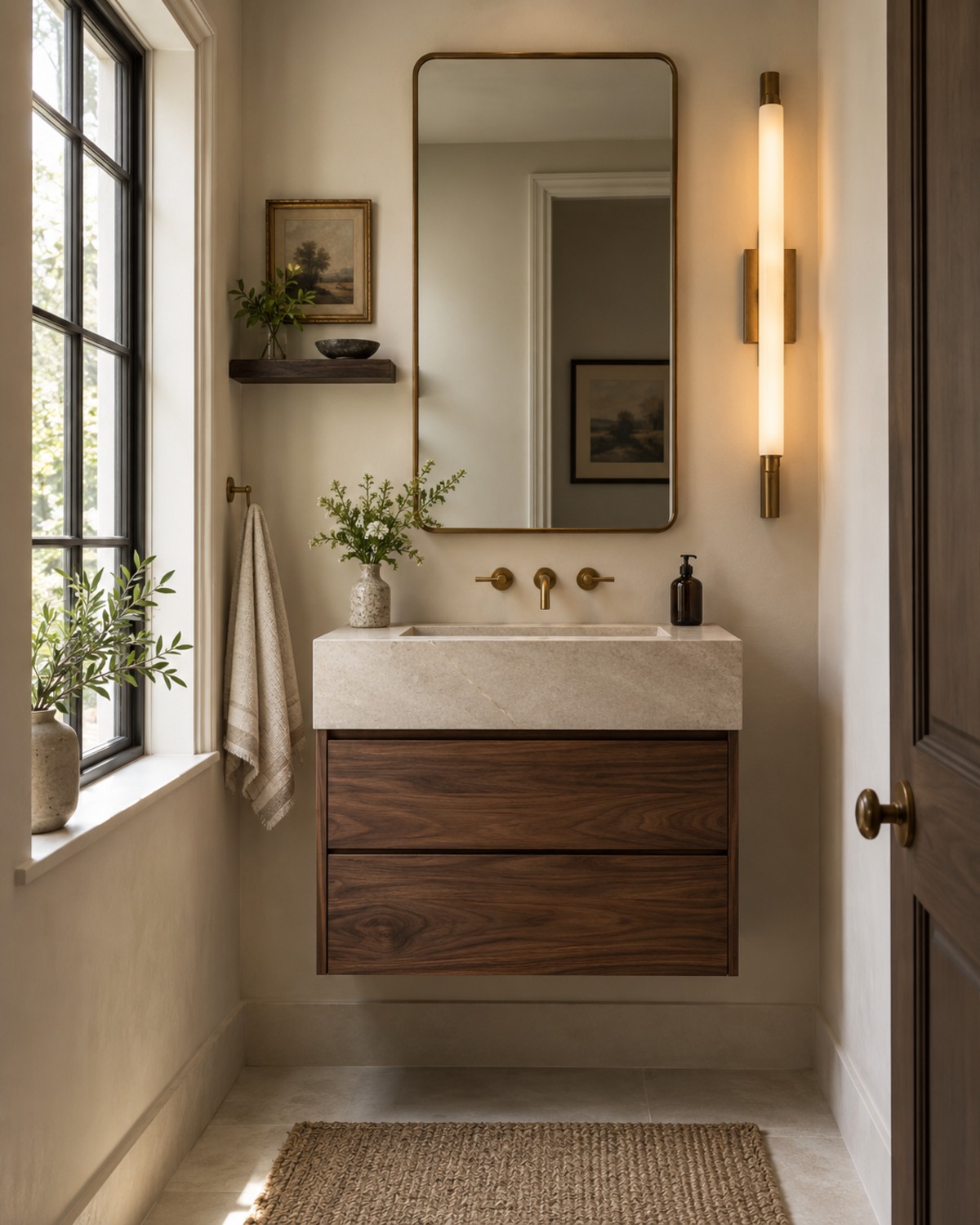
Not every bathroom has a perfectly centered vanity wall. Rather than forcing false symmetry, place a vertical sconce on the open side and use a mirror that aligns with the basin. A small shelf or artwork can balance the opposite edge.
The asymmetry feels modern, while the polished metal, geometric outlines, and strong color retain an Art Deco character. This is a useful solution in narrow bathrooms where doors, windows, or plumbing dictate the placement.
16. Create a Renter-Friendly Art Deco Layer
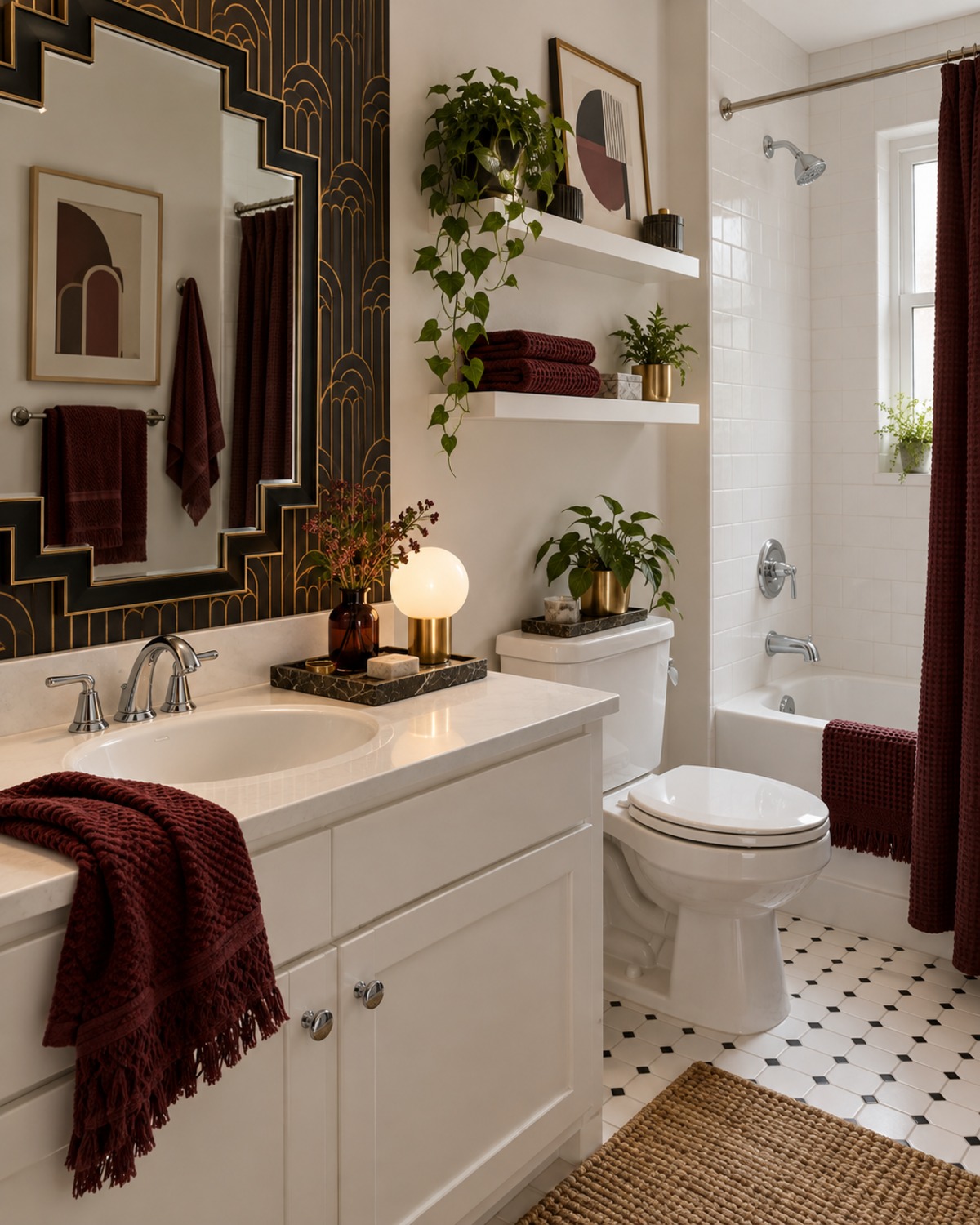
Build the look from reversible elements: a stepped-frame mirror hung with an appropriate removable system, a graphic shower curtain, jewel-tone towels, a marble-pattern tray, and matching countertop containers. Keep the palette to three main colors so the collection reads as one design.
Before applying any adhesive product, confirm surface compatibility and lease restrictions. If the bathroom is very small, choose just one patterned textile and one reflective accent. More compact-room ideas are available in these small bathroom decor ideas that make the room feel larger.
17. Use Twin Mirrors for a Tailored Double Vanity
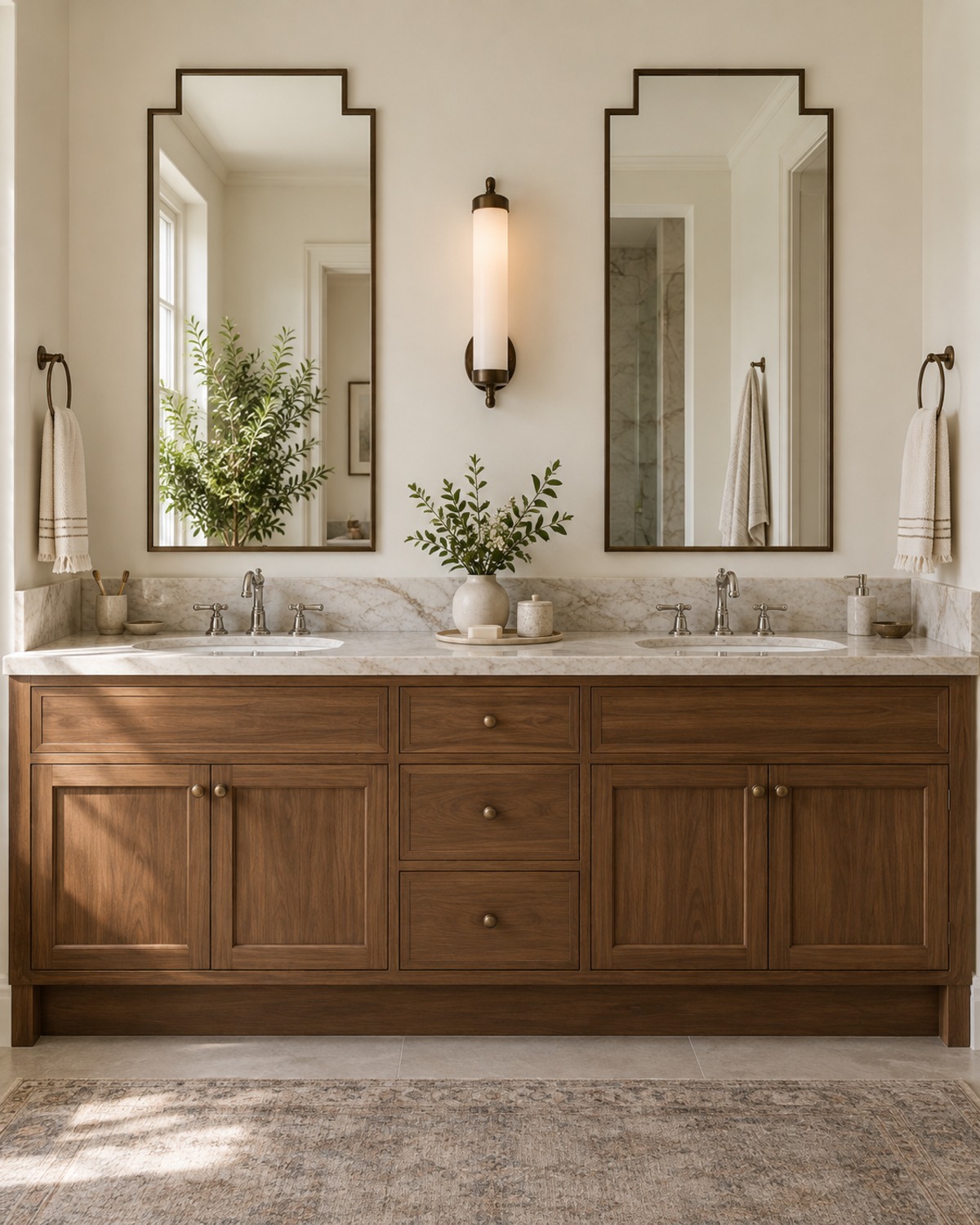
Two tall mirrors give a double vanity a strong architectural rhythm. Place one centered over each basin, then add a narrow sconce between them or a pair at the outer edges. Matching shapes create order, while a veined stone backsplash supplies movement.
Avoid squeezing oversized mirrors into the available wall. A slim border of visible wall around each one helps the repetition read clearly and makes the arrangement feel considered.
18. Warm a Monochrome Bathroom With Wood
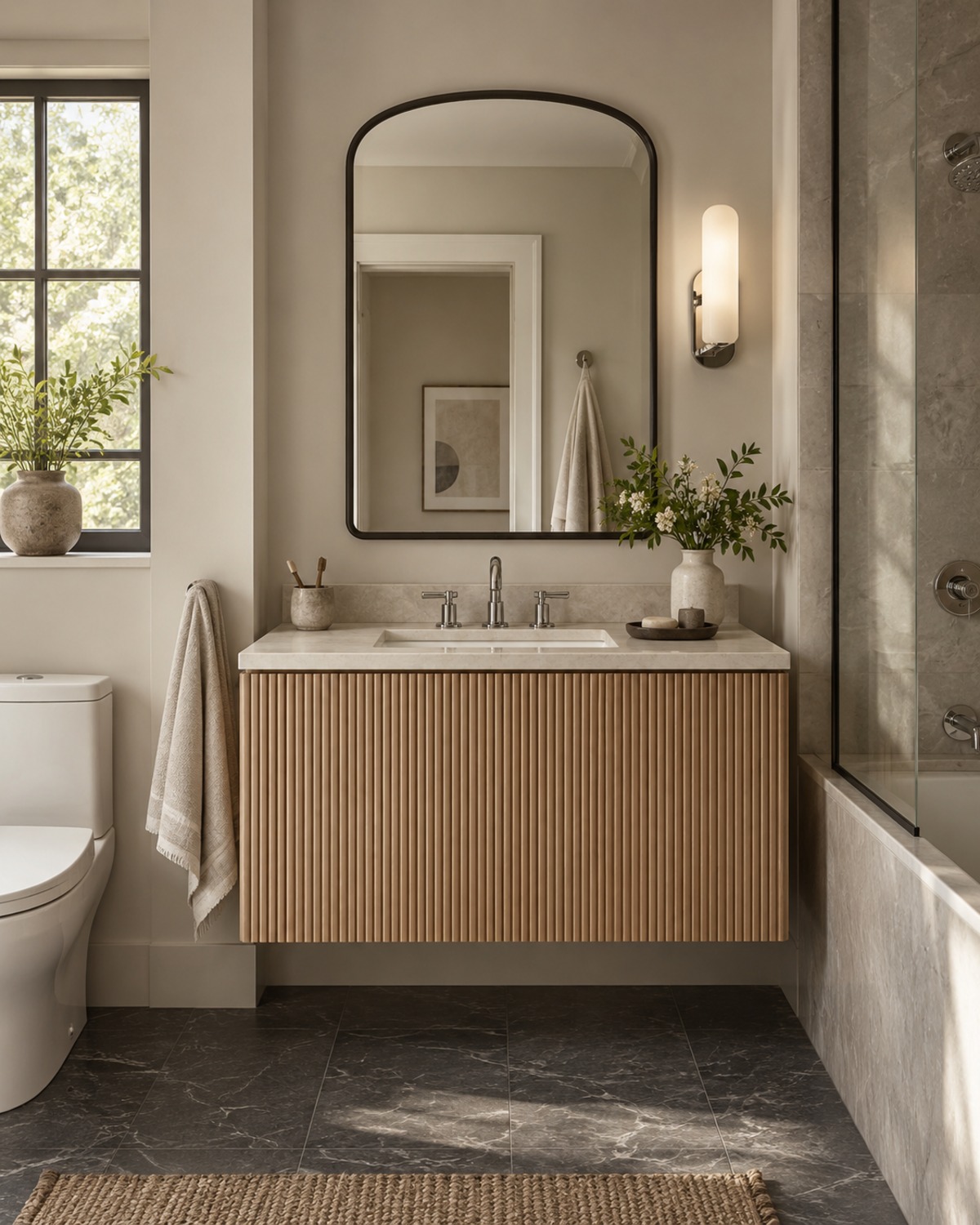
A monochrome palette of ivory, taupe, and charcoal can still feel Art Deco when the shapes are structured. Add a reeded oak cabinet, a curved dark mirror, and small chrome details. The wood keeps the room approachable and gives the eye relief from hard surfaces.
This is one of the easiest ways to make the style work in an everyday family bathroom. It also provides a calm base for replacing towels or art later without redesigning the whole room.
19. Turn Lighting Into Bathroom Jewelry
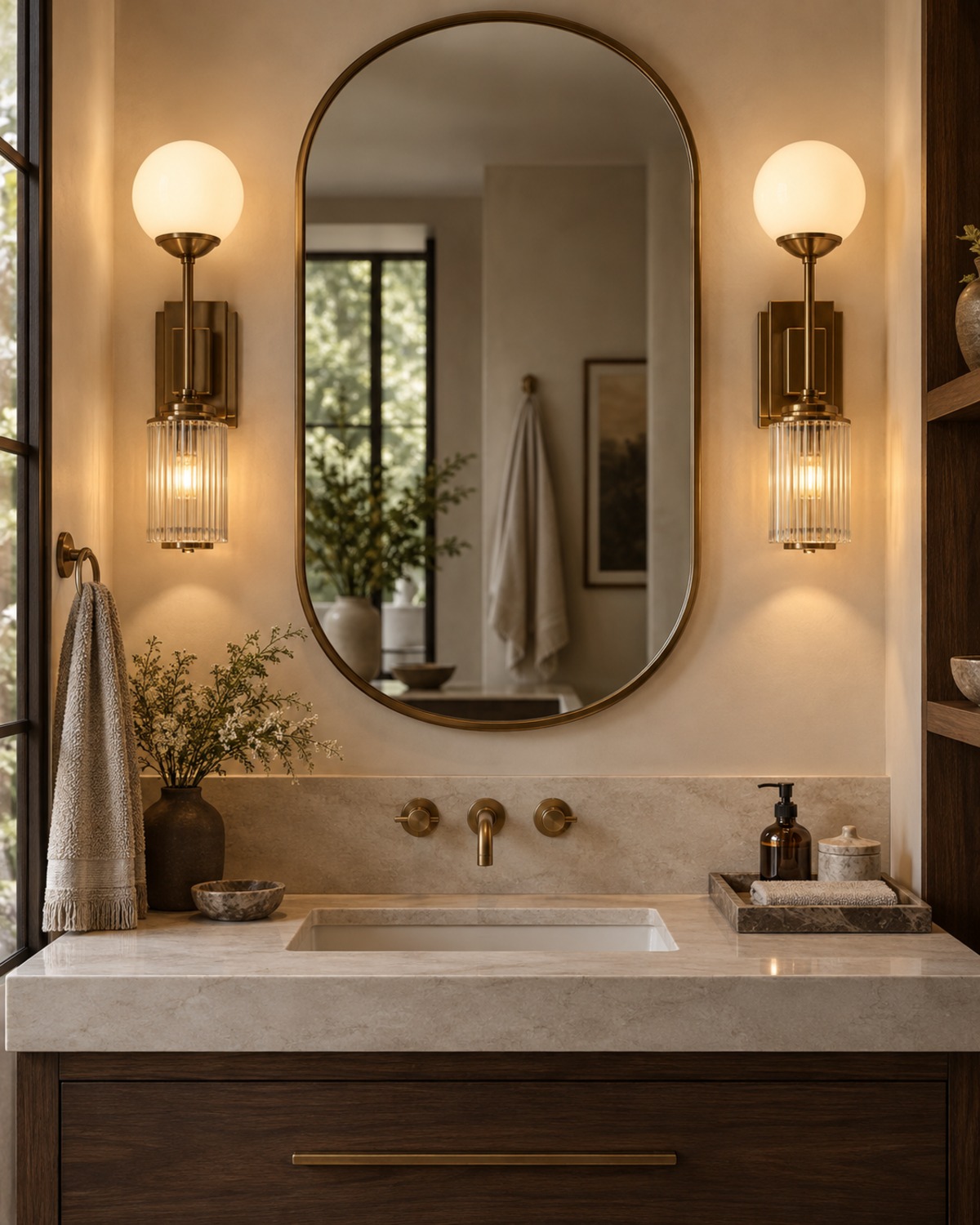
Opal globes, ribbed-glass shades, stepped backplates, and slim metal stems can act like jewelry around a simple mirror. Choose a fixture proportionate to the vanity rather than the most decorative option available. The light still needs to support grooming and navigation, not only supply atmosphere.
Use products listed for their intended bathroom location and have hardwired work completed according to local requirements. A decorative fixture is successful only when the room remains functional and safely illuminated.
20. Plan a True Same-Room Before and After
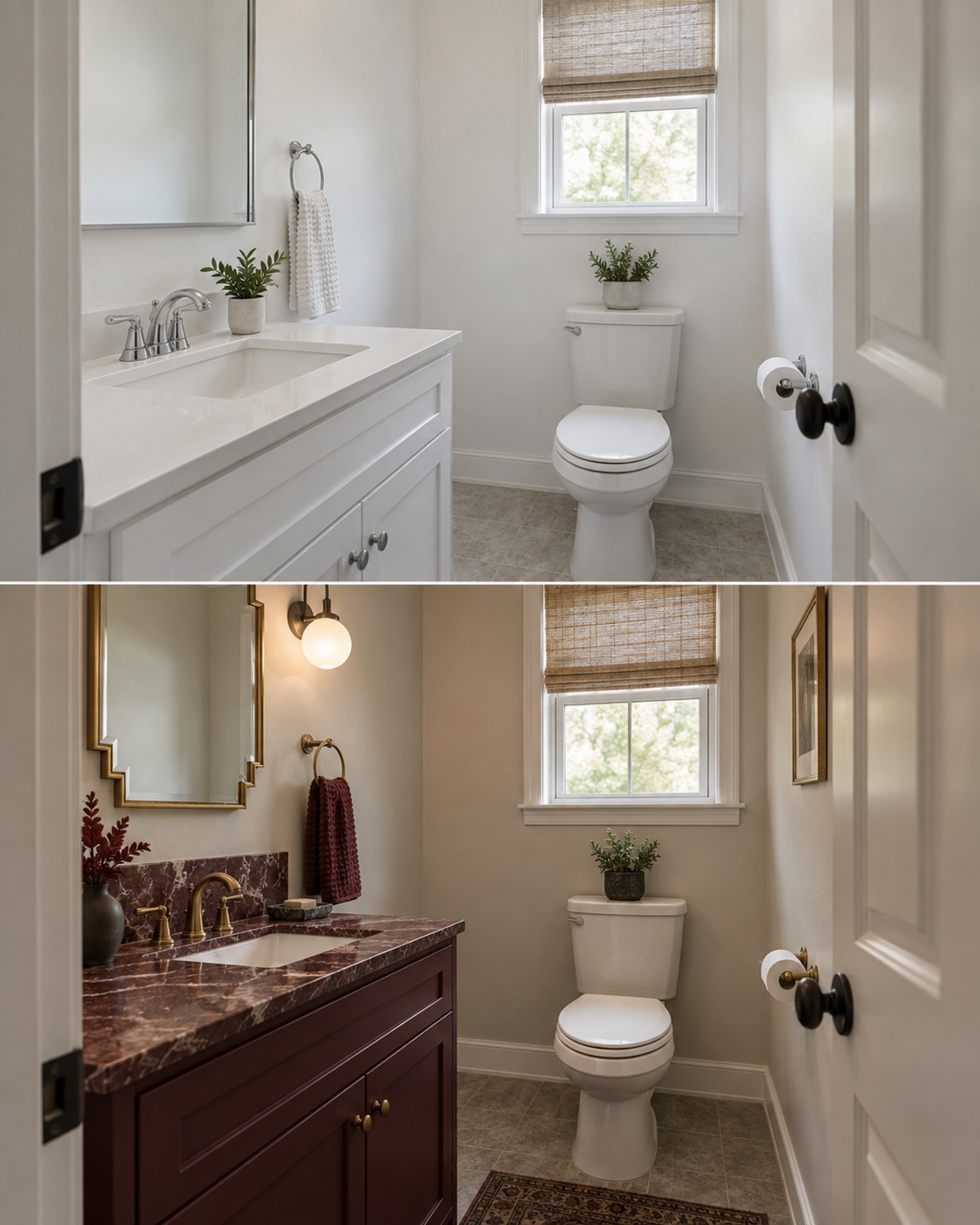
For the clearest transformation, keep the room layout and camera viewpoint consistent, then change a focused set of layers. A believable update might replace a builder-basic mirror with a stepped frame, change plain hardware to aged brass, paint the vanity oxblood, add a compact backsplash, and introduce one globe sconce.
The “after” works because each change supports the same visual language—not because every surface becomes expensive. Photographing the same view before and after also makes it easier to evaluate whether the room gained hierarchy, storage, and light instead of merely gaining more decor.
How to Keep Modern Art Deco From Feeling Overdone
Use a simple three-part formula: one pattern, one reflective finish, and one saturated or high-contrast color. The rest of the room can be warm white, stone, or wood. This creates a focal point while leaving enough quiet surface for the eye to rest.
Mix metal finishes only with a plan. One finish should dominate, while a second appears in one or two deliberate details. Keep repeated shapes equally disciplined: a fan mirror does not require fan tile, fan wallpaper, and fan cabinet hardware in the same room.
Finally, design for the bathroom you actually use. Provide closed storage for daily products, choose cleanable surfaces, and preserve adequate light around the mirror. For another richly layered direction, explore these luxury Turkish bathroom decor ideas and compare how pattern, metal, and craftsmanship create a different mood.
Frequently Asked Questions?
………………………………………………………………………………..
What colors work in a modern Art Deco bathroom?
Black, ivory, burgundy, emerald, navy, warm brown, and muted blush can all work. Start with one dominant neutral, add one saturated color, and use brass or chrome as a controlled accent rather than a blanket finish.
Can Art Deco work in a small bathroom?
Yes. Concentrate the style in one high-impact feature, such as a shaped mirror, vanity color, niche tile, or graphic floor. Keeping the other surfaces simple prevents a compact room from feeling visually crowded.
How can I get the look without remodeling?
Change reversible layers first: mirror, towels, shower curtain, countertop accessories, art, and removable wallcovering approved for the room’s conditions. Replacing hardware or lighting creates a larger shift but may require landlord approval or professional installation.
Do all metal finishes need to match?
No, but the mix should look deliberate. Let one finish appear on the major fixtures, then use a second finish in one smaller category, such as the mirror frame or lighting. Repeating each finish at least once creates continuity.
Final Thoughts
The strongest modern Art Deco bathroom ideas use contrast with restraint. Begin with the element you want people to notice first—stone, tile, color, mirror, or lighting—then build a quieter supporting palette around it. Whether the project is a renter-friendly refresh or a full renovation, that clear hierarchy is what makes Neo Deco glamour feel current, useful, and personal.