Small objects often carry the biggest stories: a ceramic found on a trip, a miniature inherited from family, or a tiny piece of art that was too charming to leave behind. The challenge is displaying those pieces without turning a shelf into a crowded holding area.
The best trinket shelf ideas begin with the collection itself. Shallow objects need a different structure than deep figurines, fragile pieces benefit from protection, and a growing collection needs room to change. The 18 systems below pair practical display choices with spacing, grouping, and maintenance guidance so your collection can become part of the room instead of visual background noise.
1. Give Tiny Pieces a Vintage Divided Cubby
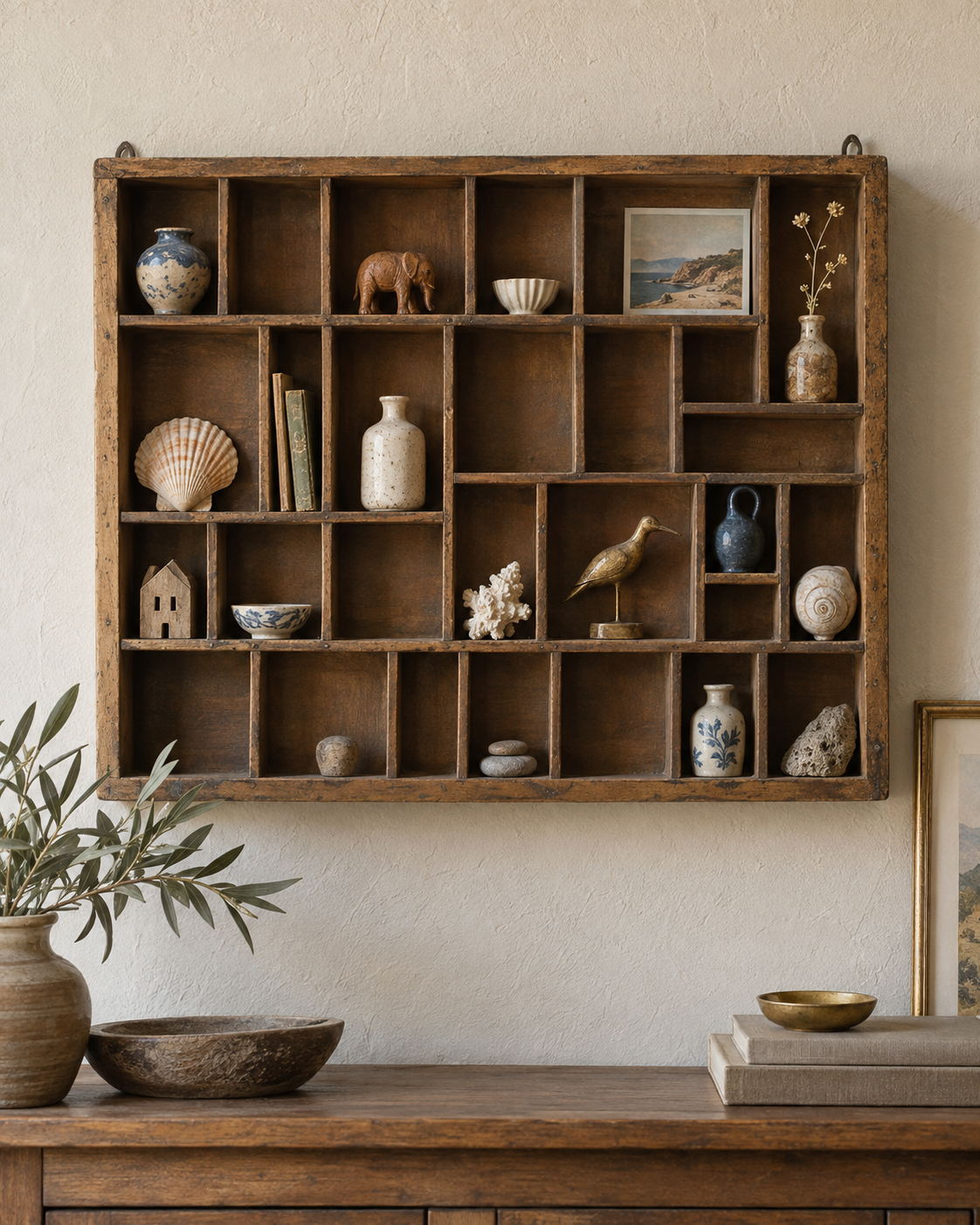
A divided wooden cubby gives each miniature its own frame, which makes a varied collection feel organized immediately. It works especially well for tiny ceramics, thimbles, shells, carved animals, small travel keepsakes, or other objects that disappear on a deep bookshelf. Choose compartments with a mix of heights so the overall display has rhythm without losing order.
Keep one or two openings empty and avoid placing several objects in every square. A worn wood finish adds warmth, but a painted cubby can look cleaner in a contemporary room. For a cohesive result, repeat one subtle trait—such as cream pottery, aged brass, or soft blue accents—across several compartments.
2. Line Up Flat Keepsakes on Slim Picture Ledges
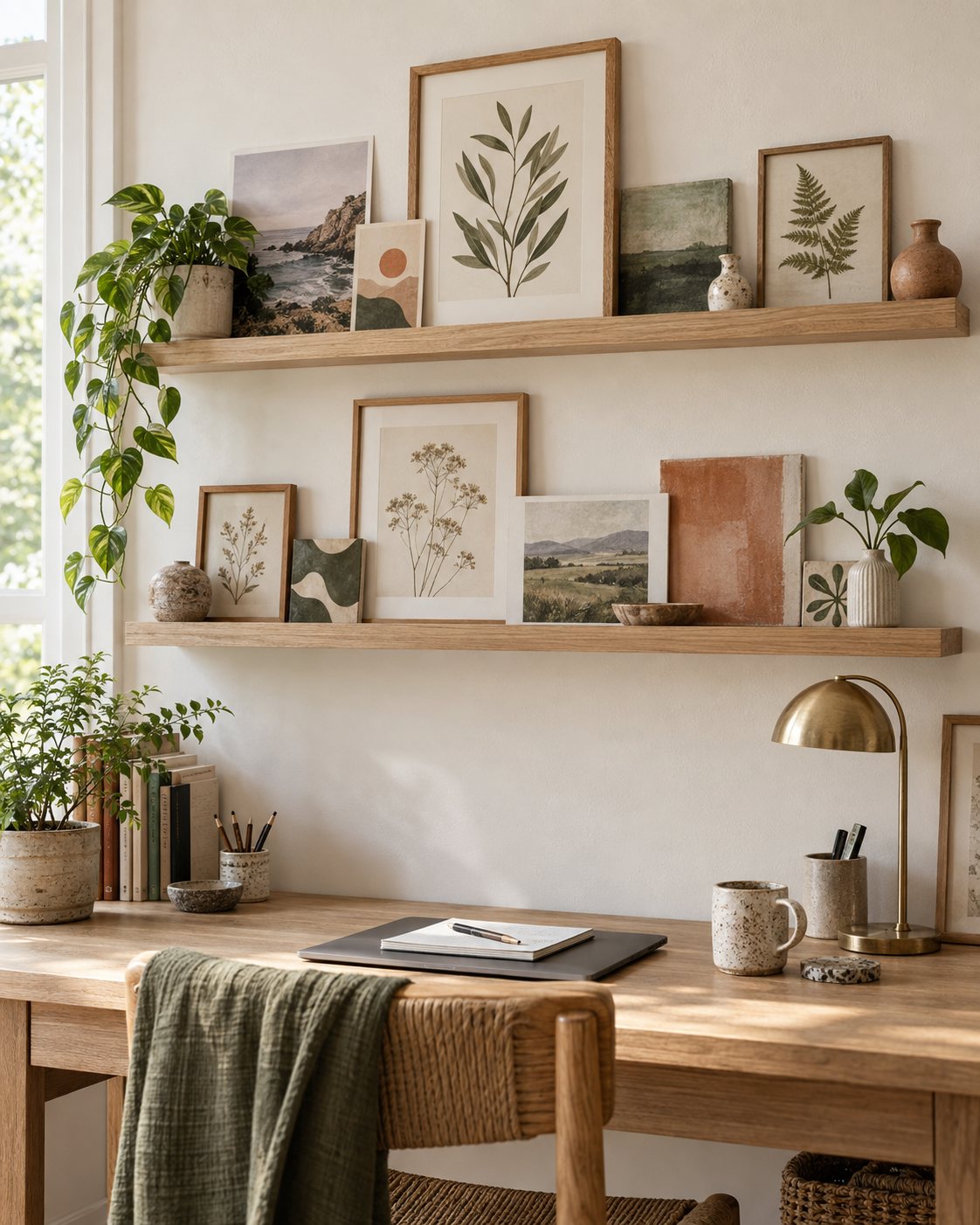
Picture ledges are useful when most of the collection is shallow: postcards, small framed prints, pressed botanicals, decorative tiles, or miniature canvases. Their front lip keeps layered pieces in place while allowing the arrangement to change without rehanging every item. Two short ledges often look more deliberate than one extra-long shelf.
Overlap frames lightly, but keep the most detailed pieces visible. Place the tallest item off-center, then step down toward each end. A few tiny objects can sit in front, provided they do not hide the art. This method is especially practical above a desk or narrow console where a deep shelf would project too far into the room.
3. Protect Delicate Pieces in a Glass Shadow Box
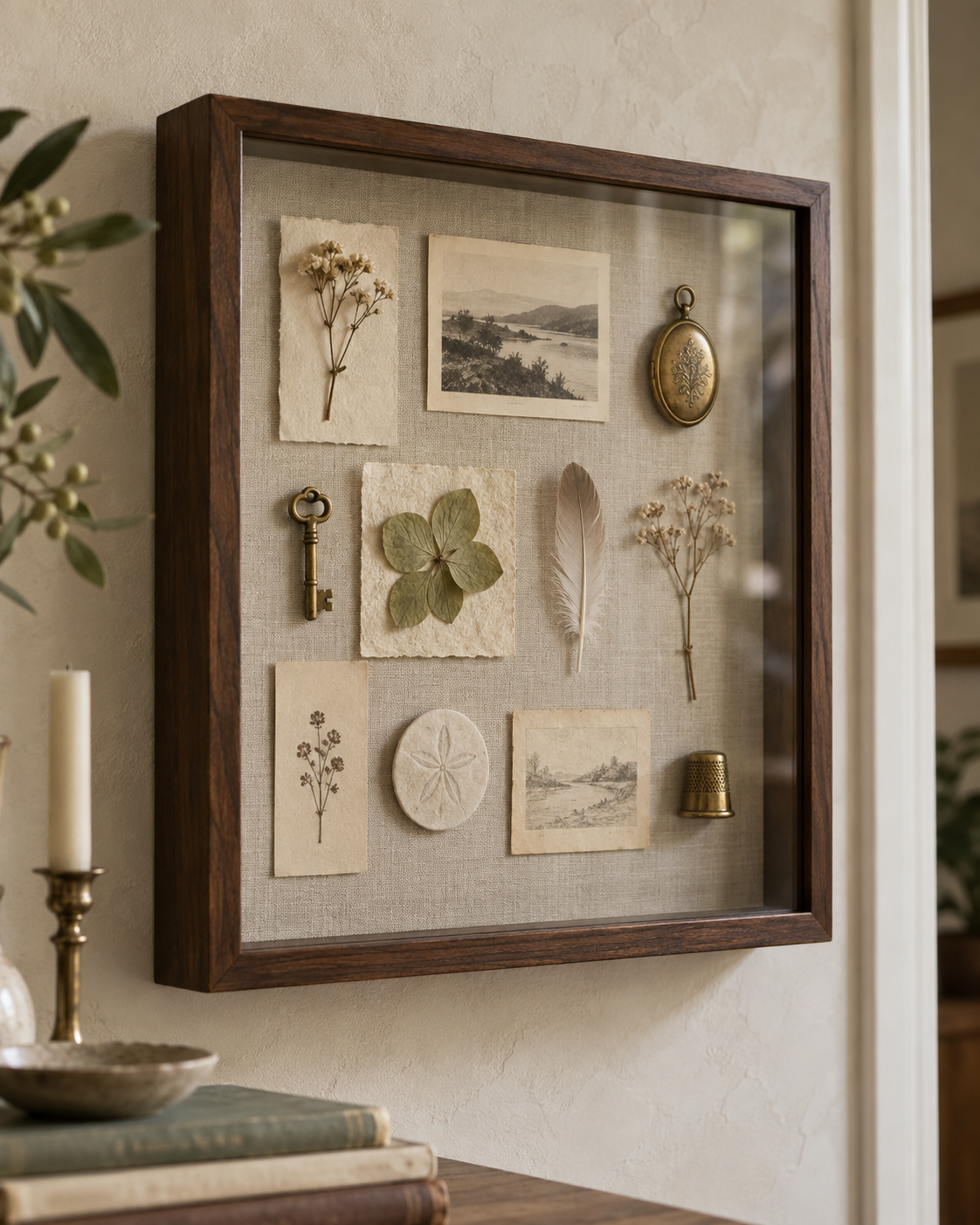
A deep shadow box turns a fragile micro-collection into a single wall piece. Use it for lightweight miniatures, small natural specimens, delicate paper objects, or sentimental items that should not be handled often. A glass or acrylic front helps limit dust while the backing creates a calm visual field behind the collection.
Arrange the pieces on a loose grid rather than forcing perfect symmetry. Leave a border around the grouping and vary the spacing slightly to preserve a collected feel. Choose acid-free mounting materials for valuable paper items, and avoid permanent adhesives on anything irreplaceable. If you are unsure how to mount a valuable object safely, consult a professional framer.
4. Create Clear Sightlines With Acrylic Risers
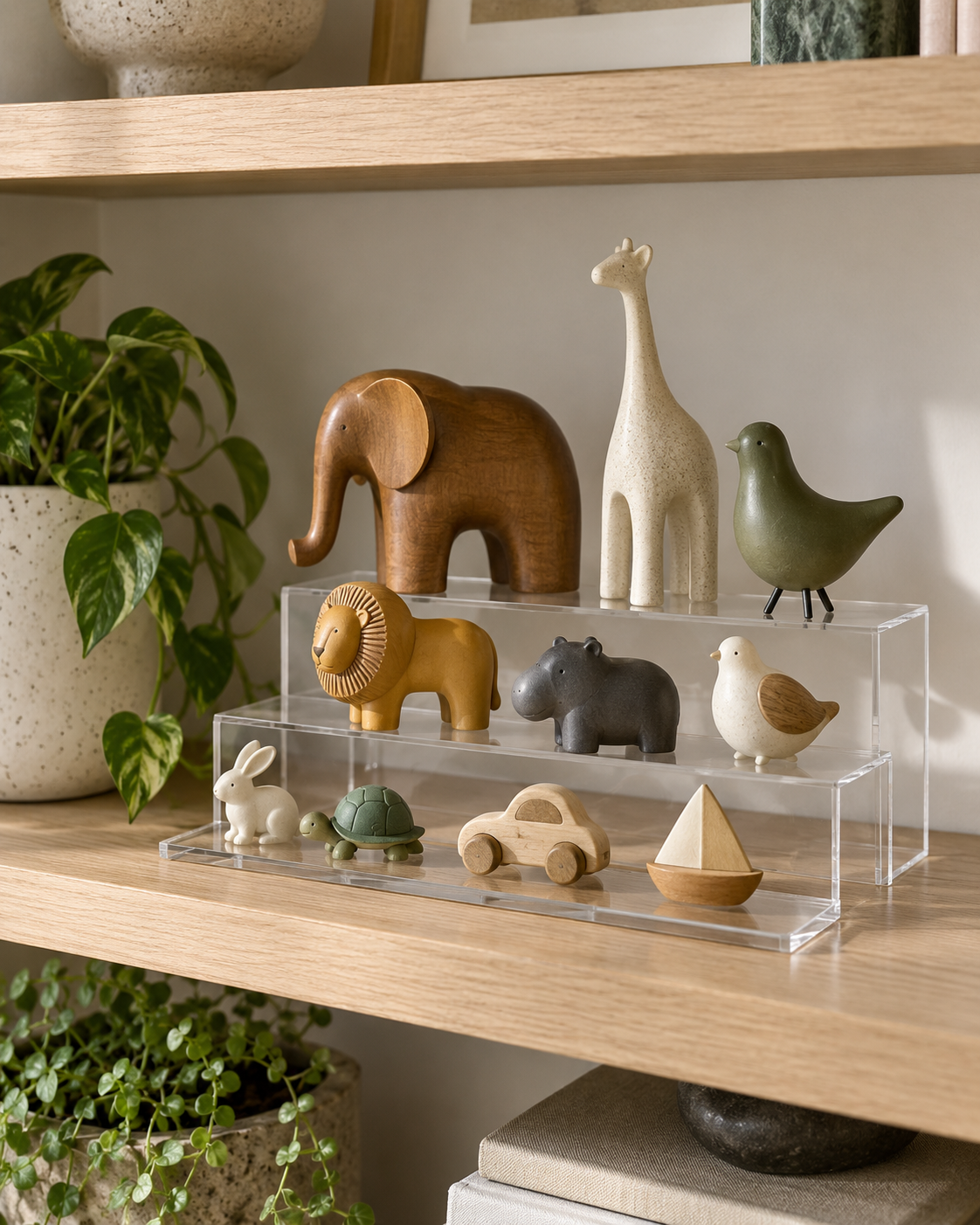
When every figure sits at the same level, the front row hides the back. Clear acrylic risers solve that problem without adding another strong material to the palette. They are a good match for small figures, miniature vehicles, perfume miniatures, or any group whose outlines deserve to remain visible.
Use two or three levels rather than building a steep staircase. Keep the largest pieces on the back tier and the smallest near the front, then leave a little space between silhouettes. If the objects are colorful, choose a quiet shelf backing so the collection remains the focal point. Clear risers also make it easier to wipe the shelf without rearranging every piece.
5. Turn an Awkward Corner Into a Collection Zone
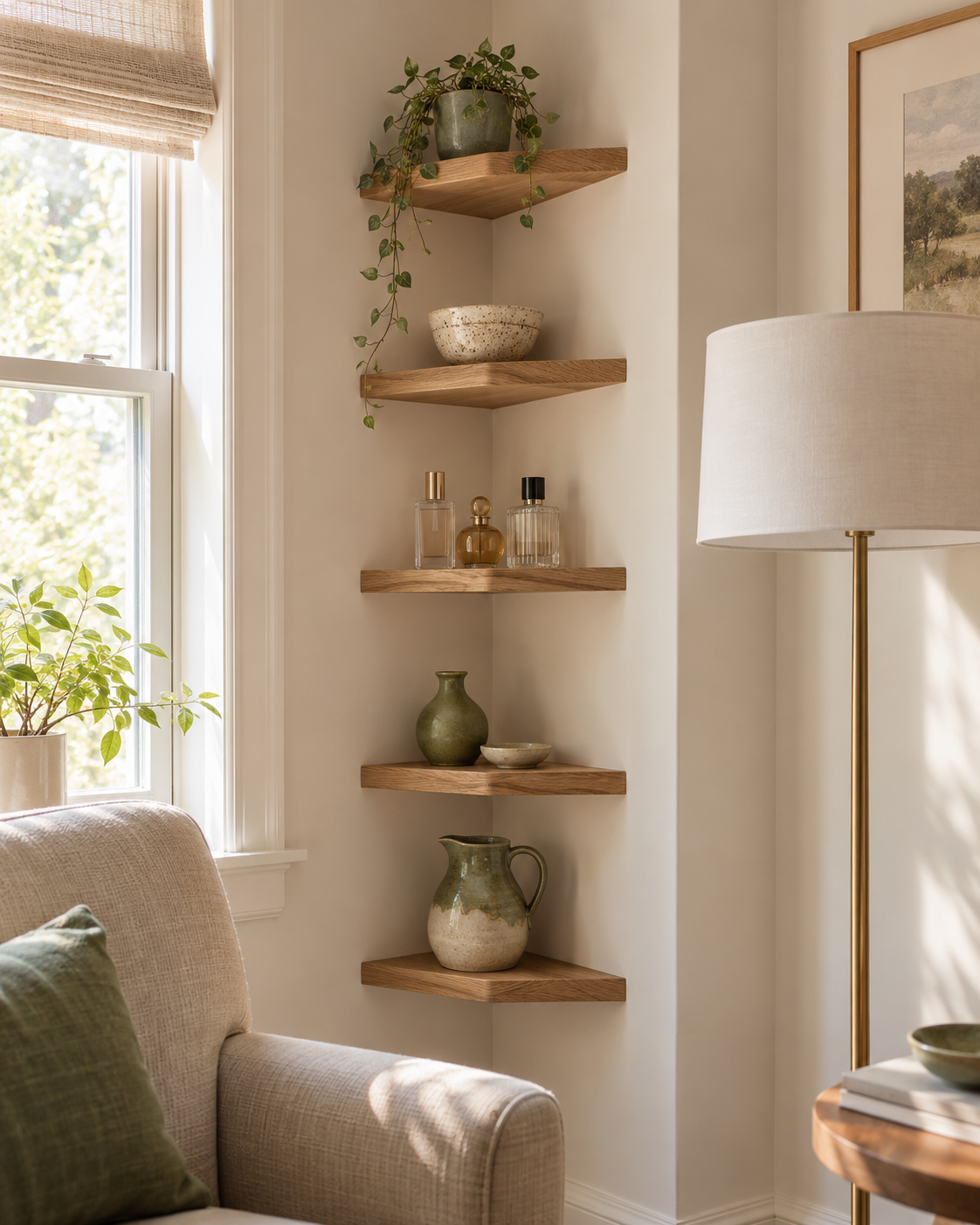
A small corner shelf can turn unused vertical space into a compact display without taking over the main wall. This structure suits lightweight ceramics, small planters, perfume bottles, or objects collected in sets of three to five. Triangular shelves feel built for the architecture rather than added as an afterthought.
Keep the collection narrow and vertical. Place the visually heaviest piece on a lower shelf, repeat one color upward, and avoid filling every level. A nearby chair or lamp can connect the display to the room, but the shelf should remain simple enough that the corner still feels open. For more ways to use difficult areas, see these modern living room corner ideas.
6. Separate Categories With Modular Wall Boxes
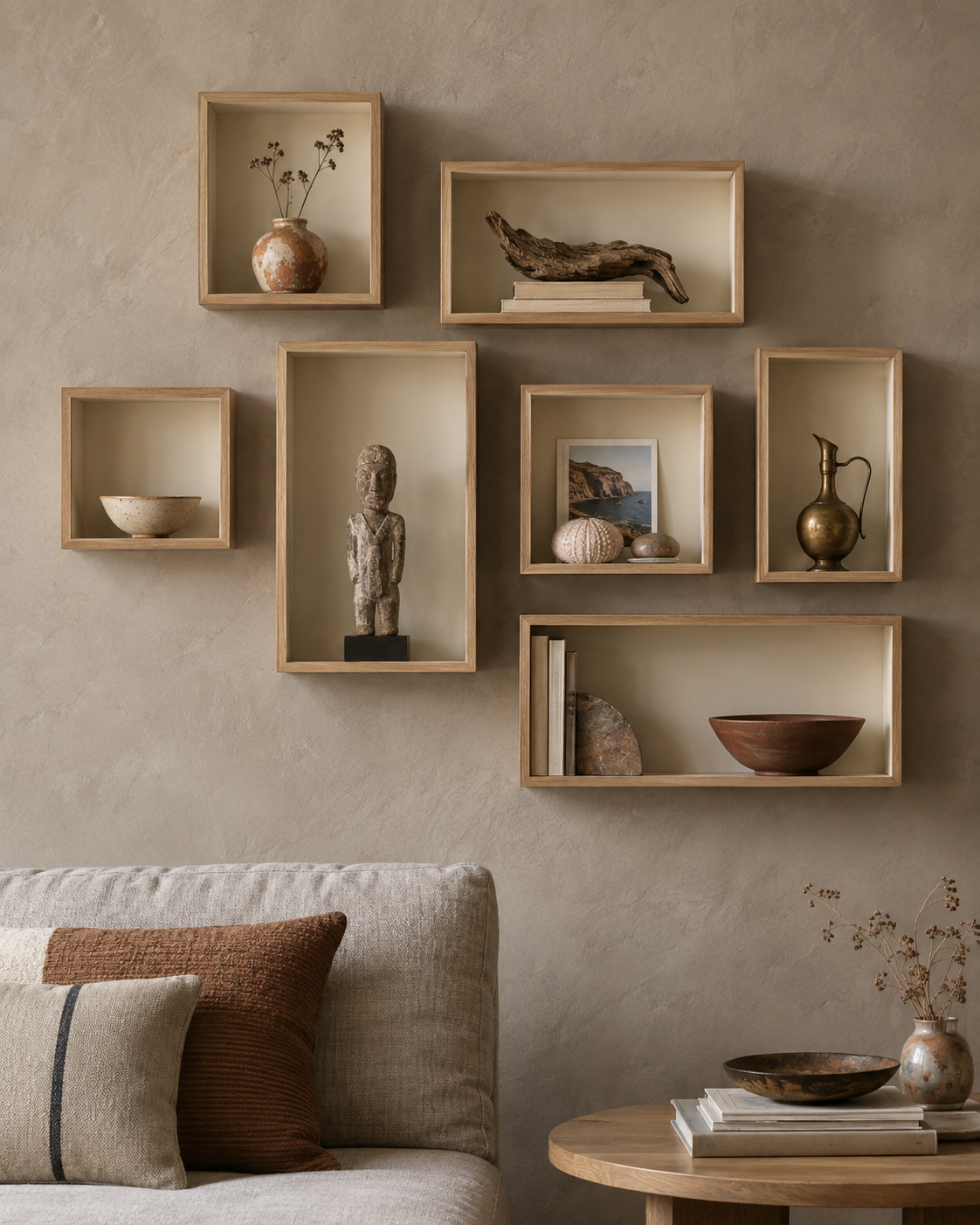
Modular wall boxes are useful when one collection contains several related categories. Give each box a purpose—small pottery in one, travel objects in another, and metal pieces in a third—so the wall reads as a composition instead of a mixed pile. Boxes of two or three sizes create more flexibility than identical cubes.
Before installing, arrange paper templates on the wall and check the composition from across the room. Keep the gaps between boxes consistent, and limit each box to a small group with a clear focal item. Because the boxes themselves are graphic, use a restrained finish and avoid adding unrelated wall art between them.
7. Use a Glass-Front Curio Cabinet for Fragile Heirlooms
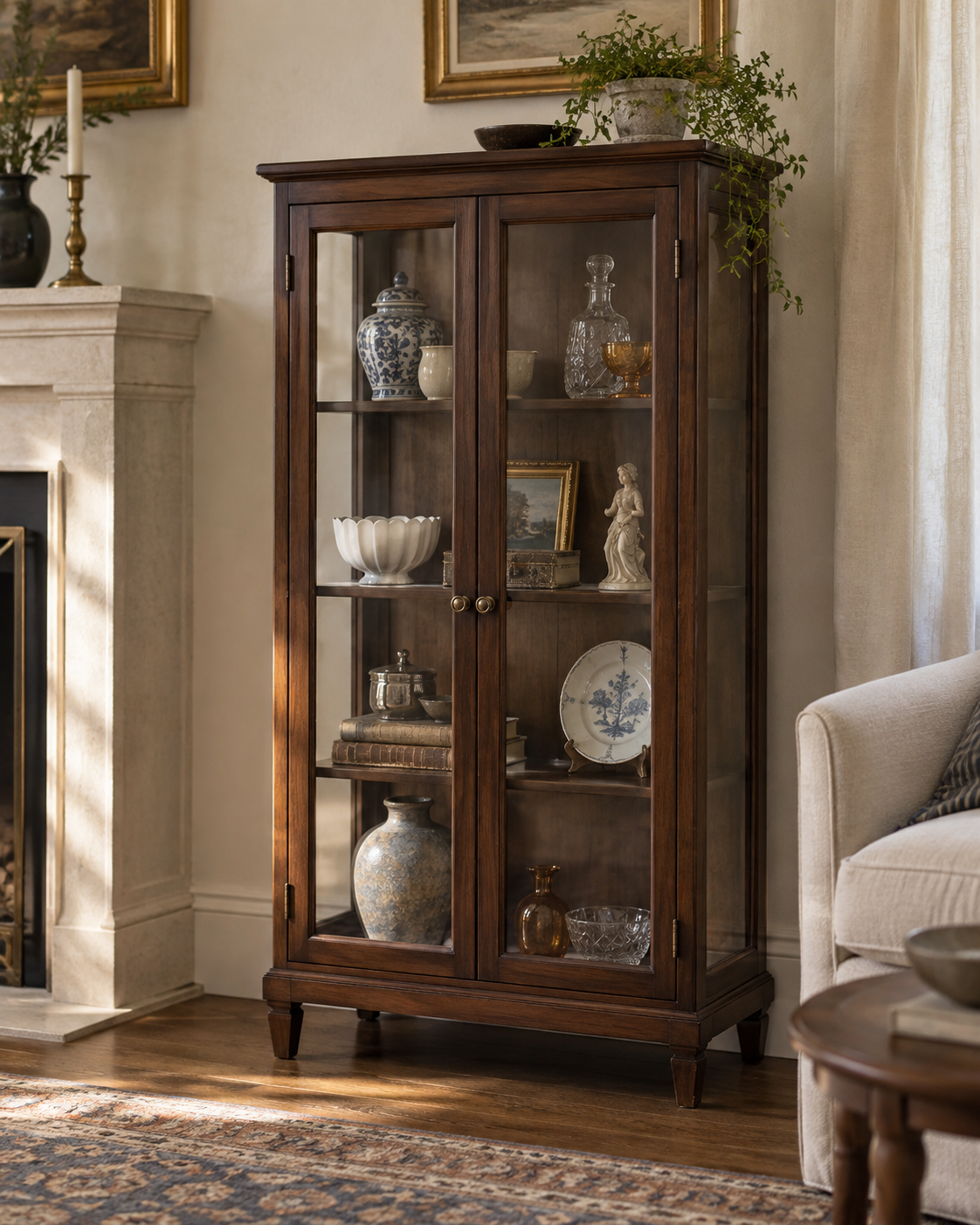
A glass-front curio cabinet is the strongest choice when the collection is fragile, valuable, or especially vulnerable to dust. Small porcelain pieces, heirloom glass, vintage ornaments, and delicate sculptures gain protection while remaining visible. A compact wall-mounted cabinet saves floor space; a freestanding cabinet offers more capacity.
Choose a cabinet only slightly larger than the current collection so the objects do not float in an oversized case. Group pieces in threes or fives, leave clear gaps between groups, and put heavier items on lower shelves. If you use a tall freestanding cabinet, follow its installation instructions and secure it properly, particularly in a home with children or pets.
8. Add a Narrow Freestanding Display Tower
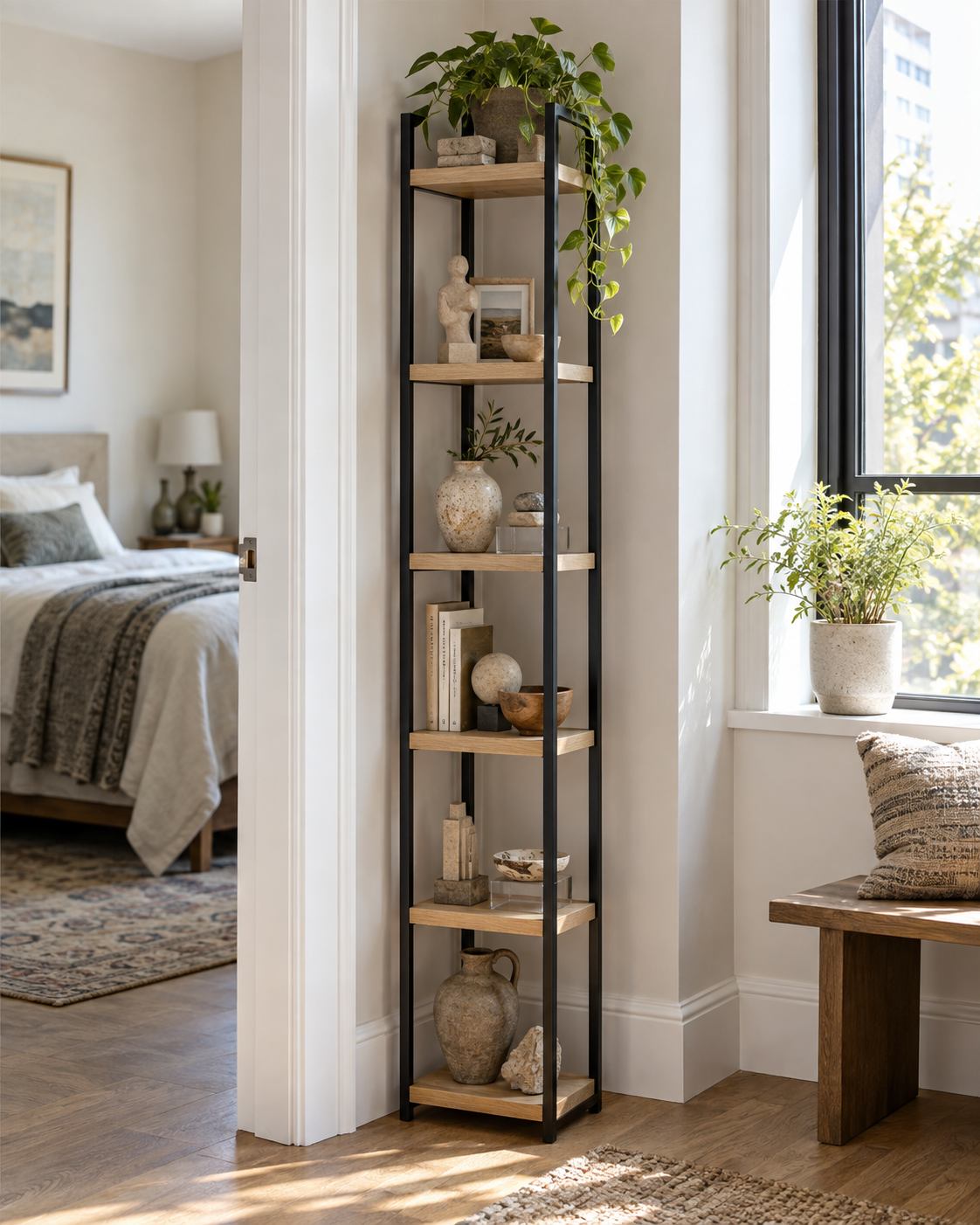
A slim display tower can hold a surprising number of small objects while using very little floor area. It works well beside a desk, between two windows, or in the narrow strip beside a doorway. Choose a shallow unit so the room still has comfortable circulation and the pieces do not become lost at the back.
Assign one shelf to each subcategory, then vary the density from level to level. A fuller shelf looks better next to a quieter one than six equally packed rows. Use a few small risers to bring short objects forward, and secure the unit according to the manufacturer’s instructions. This is a strong option for renters who cannot install a large collection wall.
9. Build a Recessed Niche Look Without Remodeling
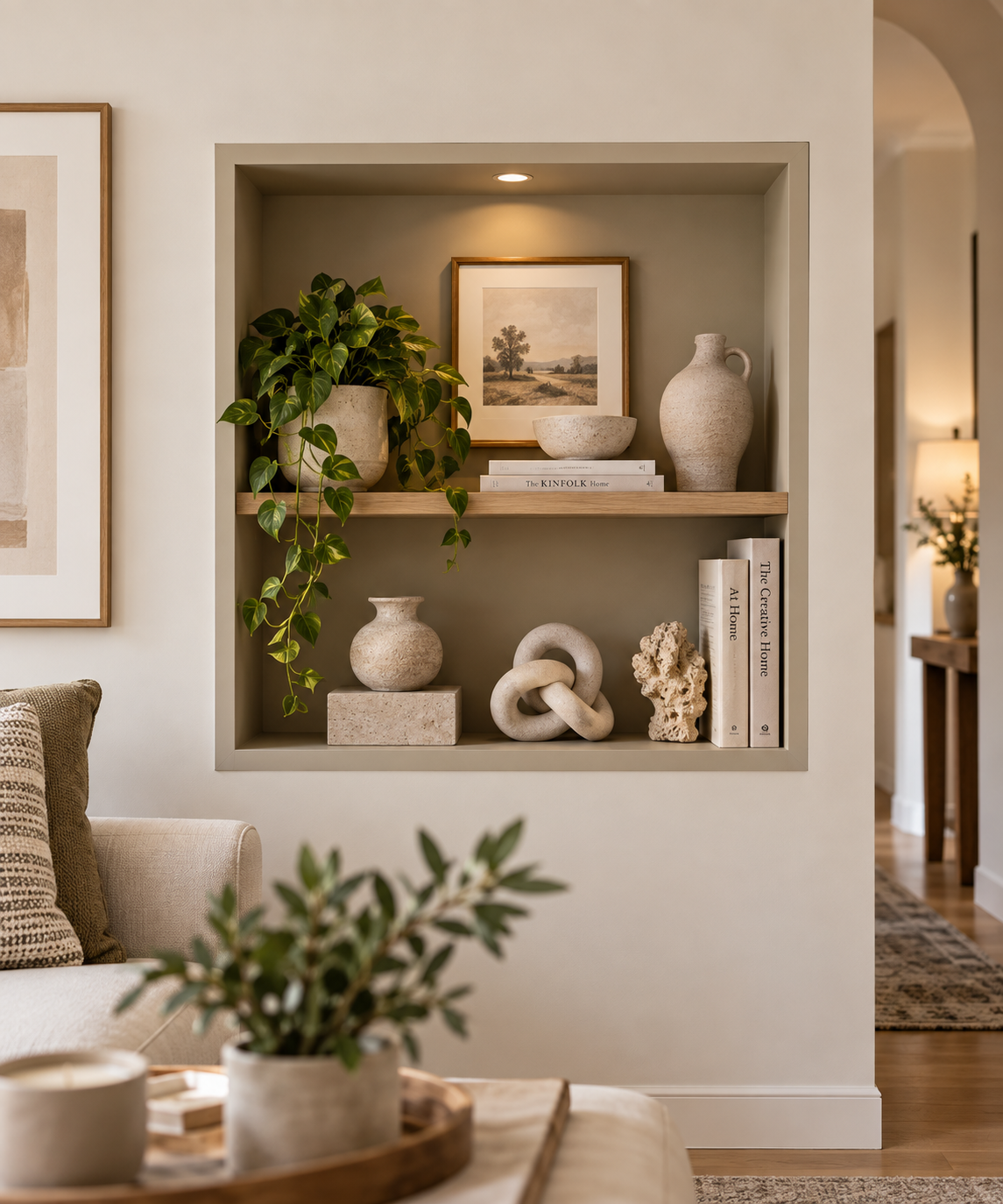
A true wall niche looks architectural, but a shallow display box painted the same color as the wall can create a similar effect with far less work. This approach suits a small, edited collection that deserves a permanent focal point: sculptural ceramics, carved objects, shells, or keepsakes with similar tones.
Center the box at art height and leave a generous border around the objects. Paint the inside one shade darker for depth, or keep it tone-on-tone for a quieter effect. Limit the display to five or seven pieces and use one low plinth if a short object needs elevation. The result should read as one deliberate installation, not another storage shelf.
10. Reserve One Bookcase Shelf for a Focused Collection
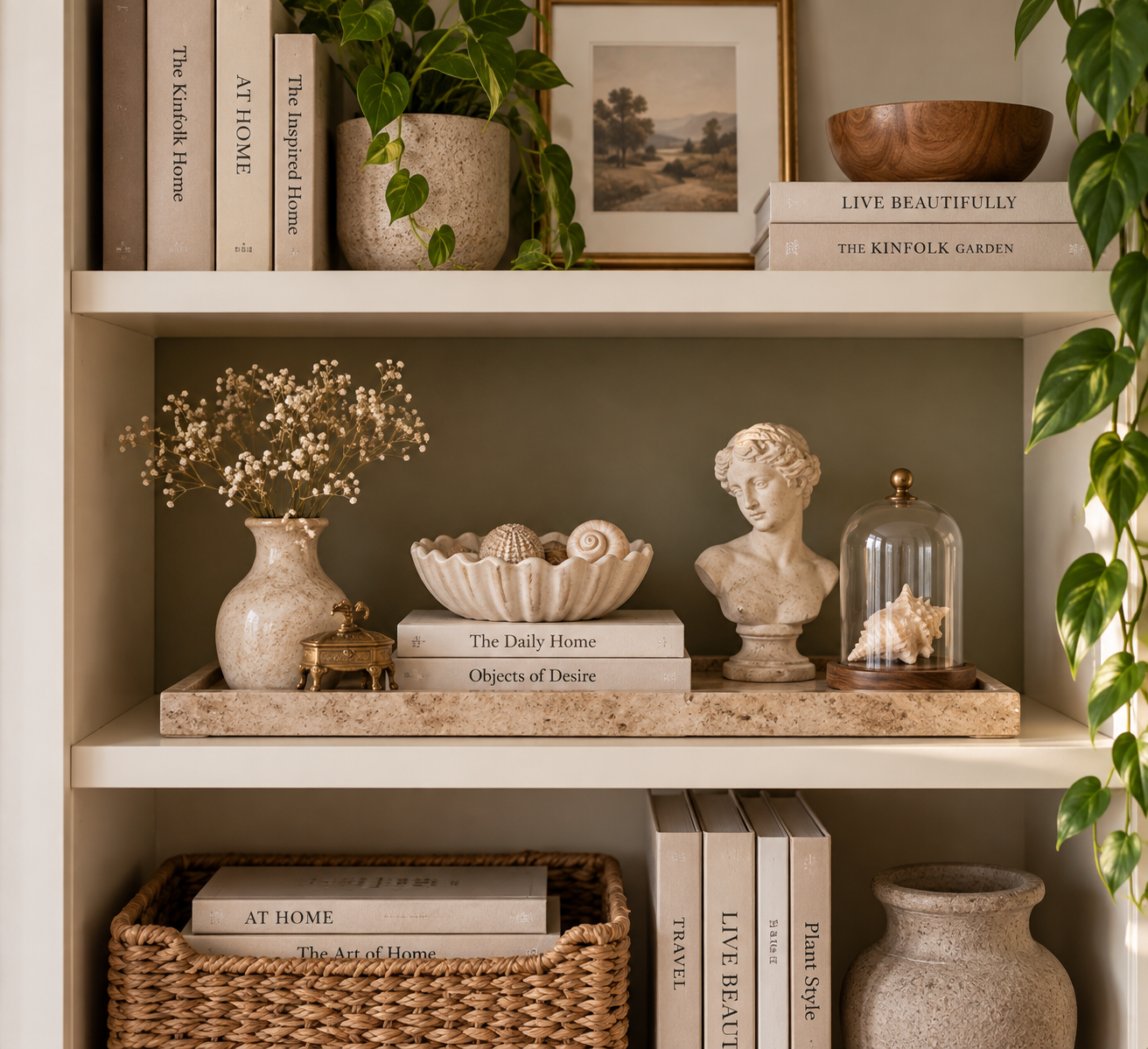
You do not need dedicated furniture to make a collection feel important. Clear one shelf in an existing bookcase and treat it as a contained display zone. This works for readers who want their trinkets to share a room with books without spreading across every available surface.
Use a tray, low riser, or contrasting backing panel to establish the collection’s boundary. Keep neighboring shelves calmer so the eye knows where to land. A short stack of books can lift one object, but avoid surrounding every trinket with filler. If the shelf already contains a collection, it does not also need plants, candles, frames, and storage baskets.
11. Unify Mixed Trinkets With a Color Story
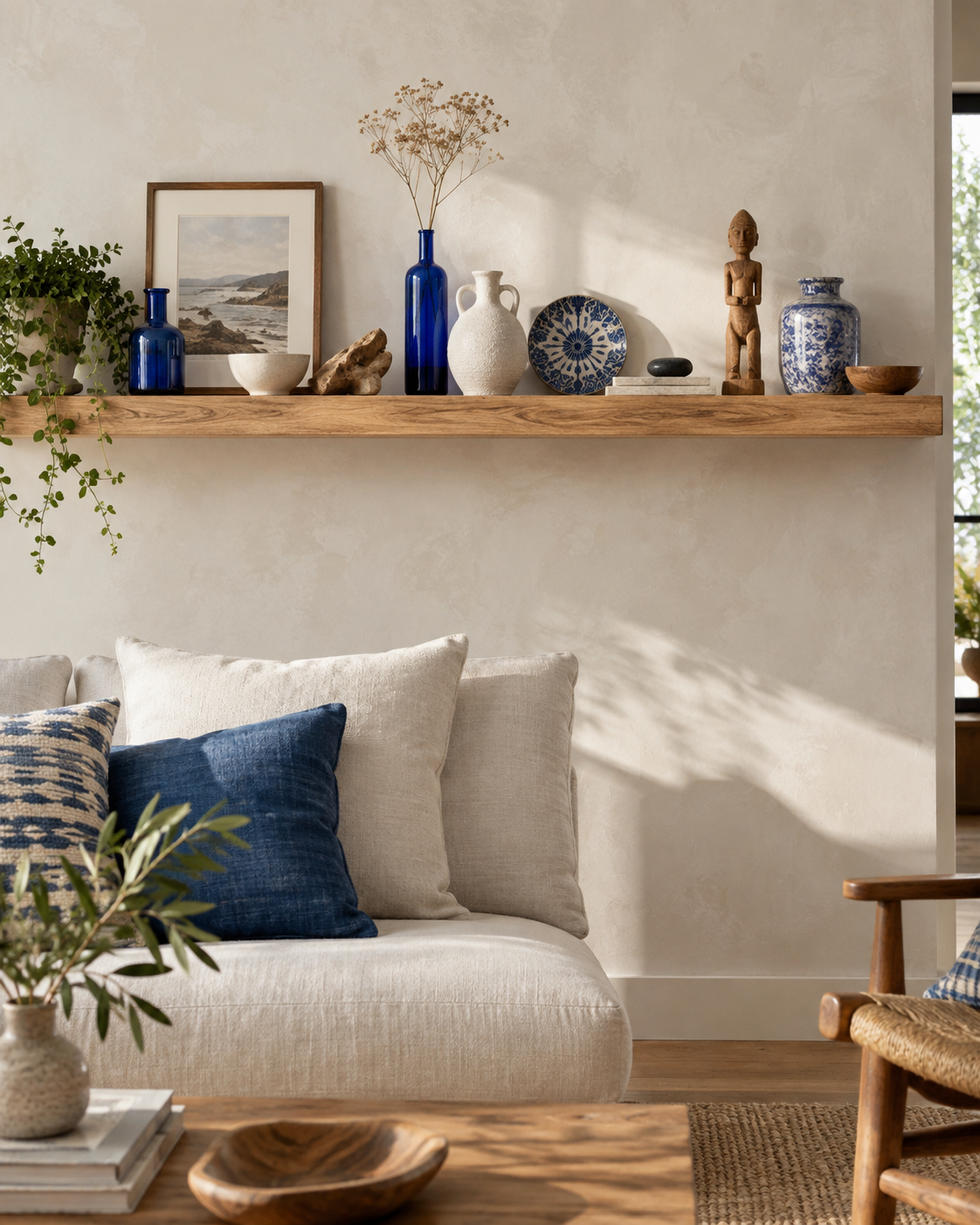
If the collection includes many styles and materials, color can create the connection that shape cannot. Choose two dominant colors plus one quiet neutral, then display the pieces that fit that story together. For example, cobalt, warm white, and natural wood can make unrelated glass, pottery, and travel objects feel like one intentional group.
Distribute the strongest color across the shelf rather than clustering it at one end. Let the neutral pieces create pauses between brighter objects. Store the outliers for another rotation instead of forcing them into the arrangement. This editing method is especially helpful when the collection has grown gradually and was never purchased as a set.
12. Stagger Shelves for Objects of Different Heights
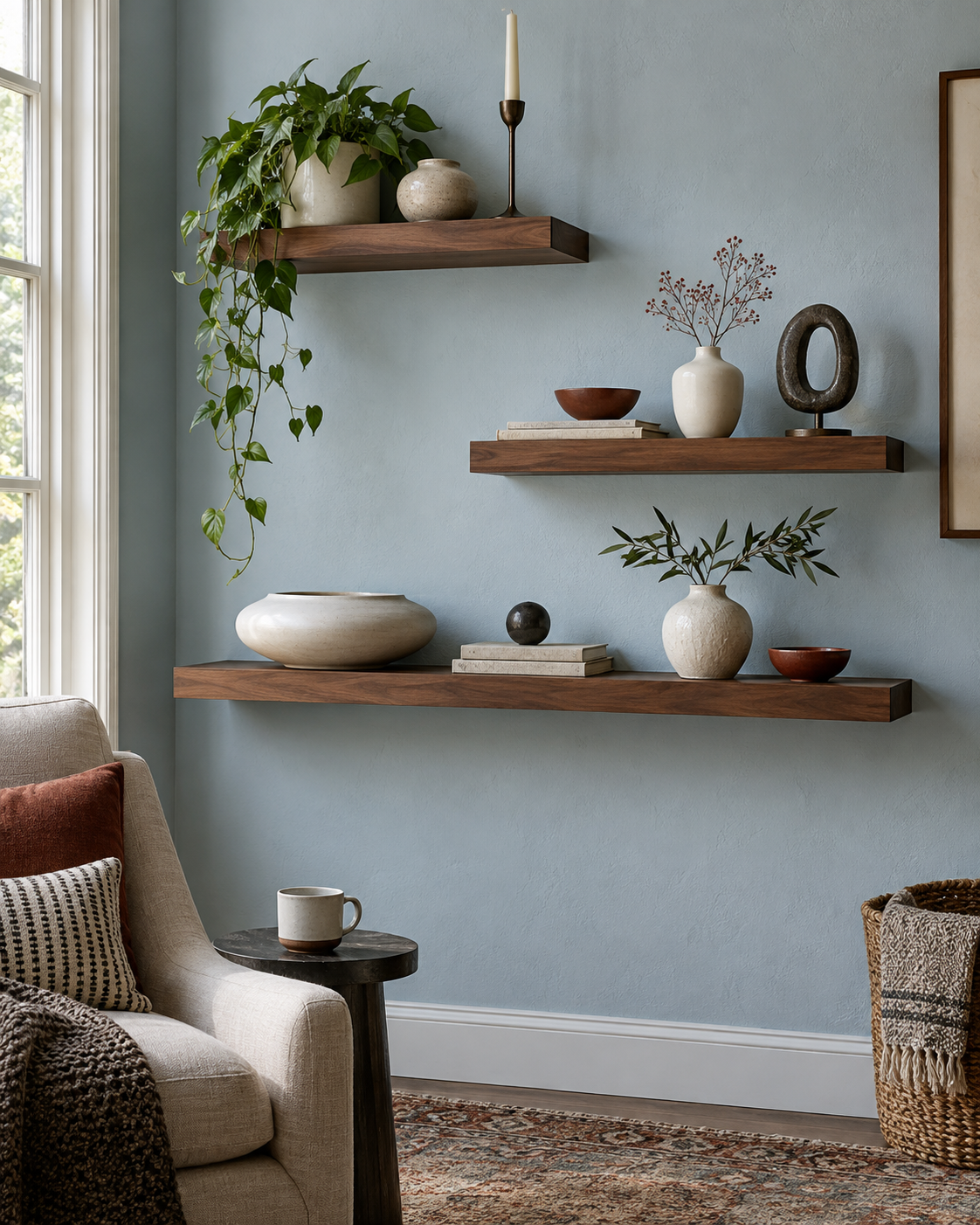
Collections rarely arrive in one standard size. Staggered shelves let tall and short objects occupy separate zones instead of forcing everything into a single horizontal line. Use this system for mixed ceramics, small sculptures, candleholders, or objects gathered over many years.
Place the widest object on the longest shelf and the tallest object where it has generous clearance. Offset shorter shelves above and to one side, then repeat a material or color between levels to connect them. Sketch the arrangement with painter’s tape before drilling so the empty gaps feel balanced from across the room.
13. Add Gentle Lighting to Glass, Metal, or Mineral Collections
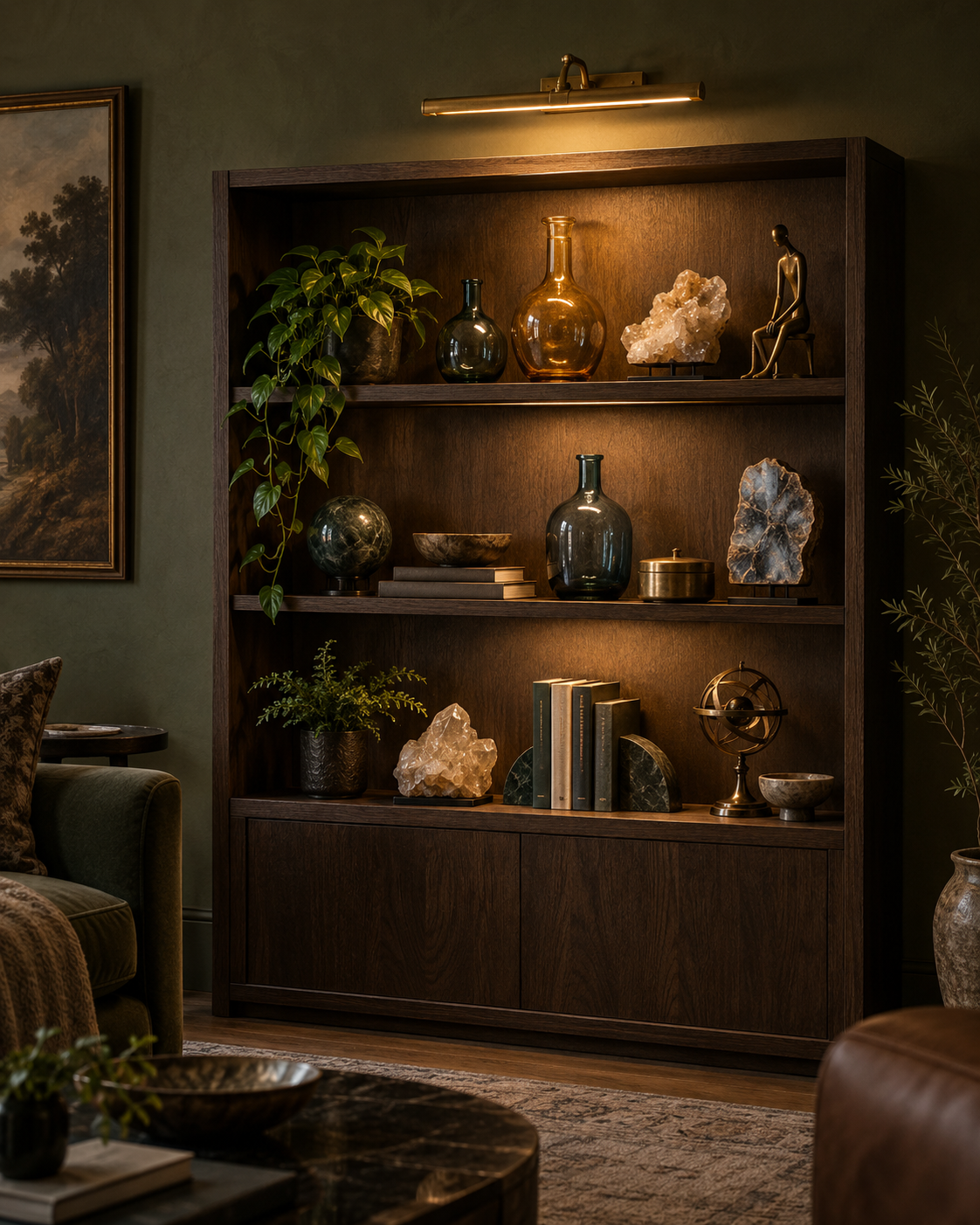
Reflective and translucent pieces come alive when the shelf has its own light source. A small picture light above the display or a concealed warm LED strip can reveal the edges of colored glass, polished stones, metal miniatures, and translucent objects. The goal is a gentle glow, not bright retail lighting.
Keep the color temperature consistent with the rest of the room and hide cords where possible. Battery-powered lighting can simplify a small installation, while hardwired work should be handled according to the product instructions and local requirements. Test the light at night before fixing its final position; glare on glass doors can obscure the collection instead of improving it.
14. Frame Flat Collectibles as a Graphic Grid
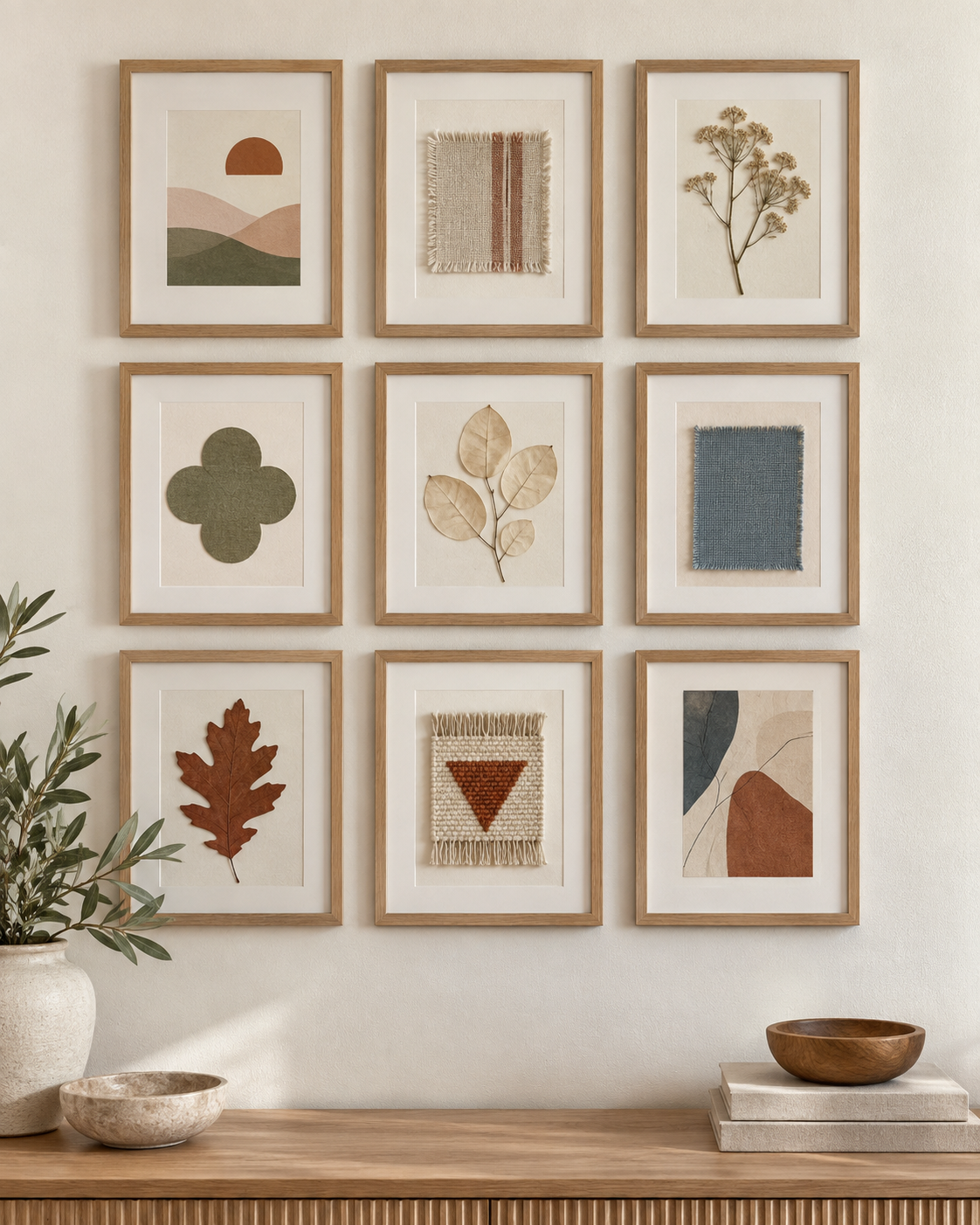
Some collections belong on the wall rather than on a horizontal shelf. Small postcards, fabric swatches, decorative cards, patches, pressed leaves, or paper keepsakes can become a graphic grid when framed in matching shallow frames. This approach protects delicate items and turns many tiny pieces into one larger visual statement.
Use consistent frame sizes and mat colors, but allow the objects themselves to vary. A grid feels calm when the outer edges align and the gaps remain even. Use archival materials for valuable paper, and never cut or glue an irreplaceable item merely to make it fit. Scan fragile originals and display copies if light exposure is a concern.
15. Hang Charms and Keychains From a Rail-and-Ledge System
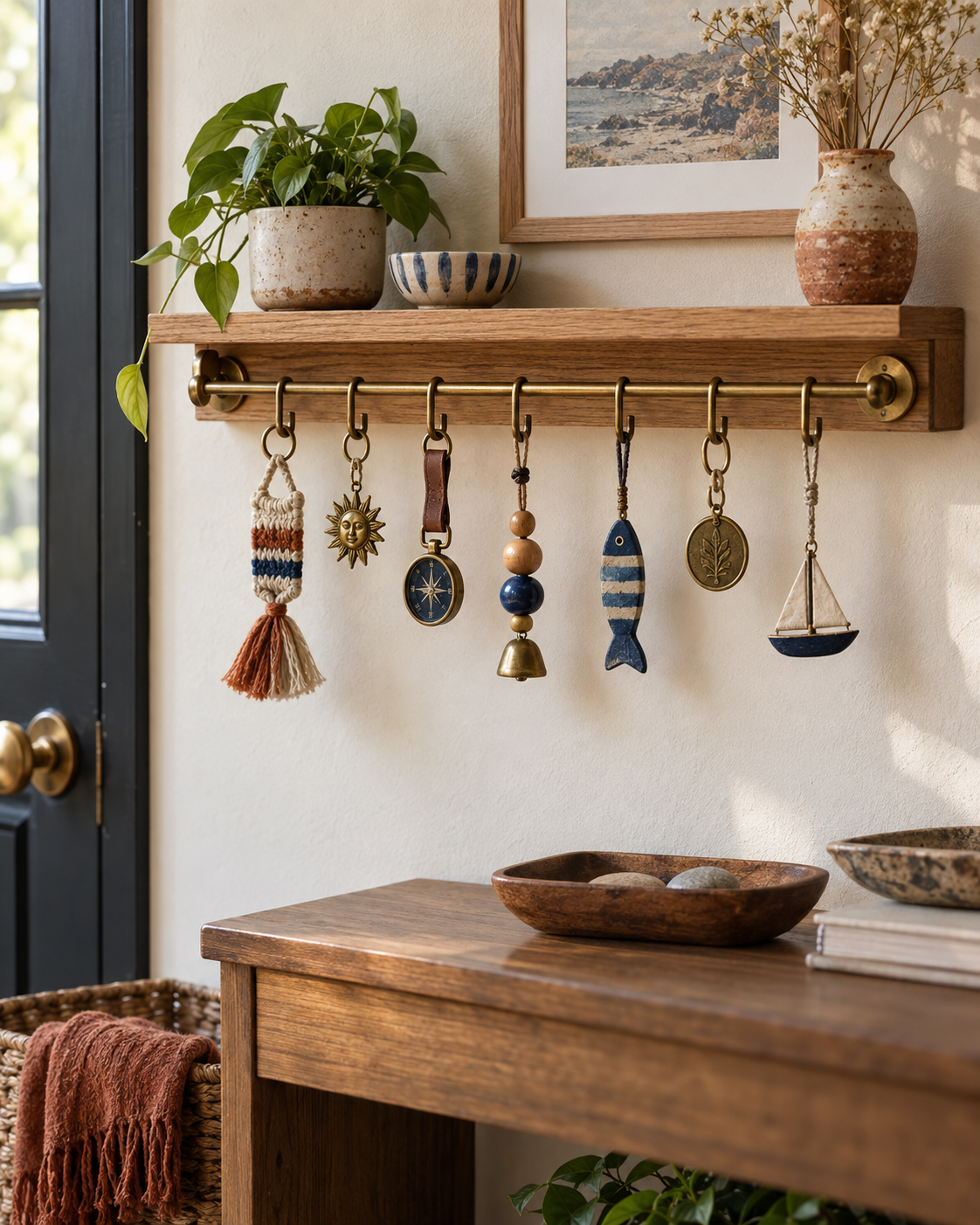
A slim rail with small hooks gives hanging collectibles space to be seen instead of tangling in a drawer. Use it for unbranded keychains, charms, medals, small ornaments, or lightweight souvenirs. A narrow ledge above the rail can hold two or three objects that connect to the same color or travel story.
Leave a gap between hanging pieces so individual silhouettes remain clear. Organize by color, material, or place rather than by size alone, and keep the longest item near one side to avoid a rigid row. Install the rail with hardware suitable for the wall and expected load. In a home with young children, position small items and cords safely out of reach.
16. Make a Rental-Friendly Tabletop Tiered Display
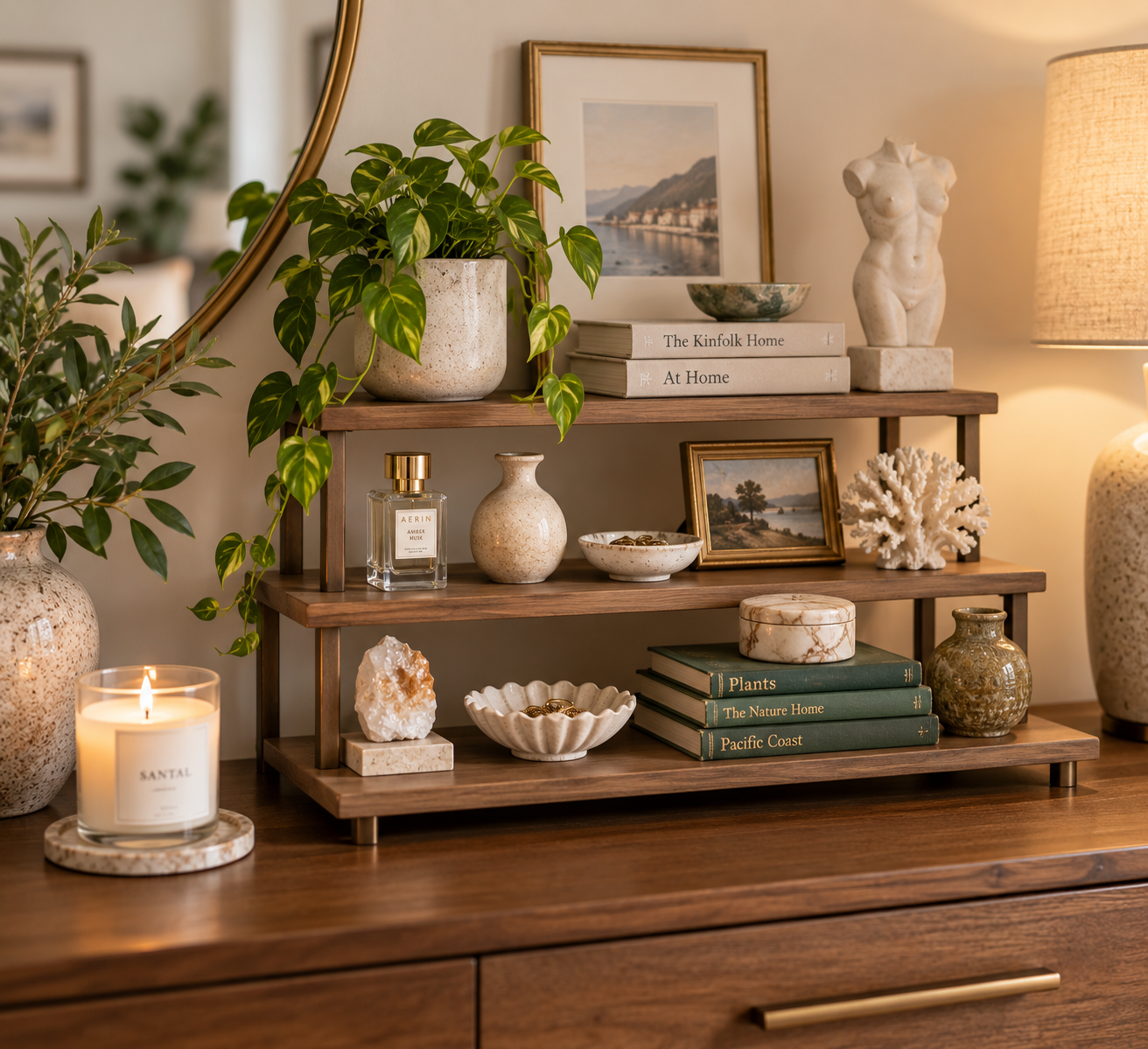
When drilling is not an option, build the collection upward on a dresser, console, or desk with a compact tiered stand. This works for small ceramics, perfume miniatures, stones, tiny sculptures, or objects that you like to rearrange often. A wood or matte metal riser looks more like furniture than temporary storage.
Keep the stand comfortably within the depth of the surface and leave functional space around it. Put taller pieces at the back, shorter ones at the front, and use removable museum putty only when it is appropriate for the object and surface. Because the display is easy to move, it can also be relocated before cleaning or when the room needs a quieter look.
17. Rotate a Small Capsule Collection by Season or Mood
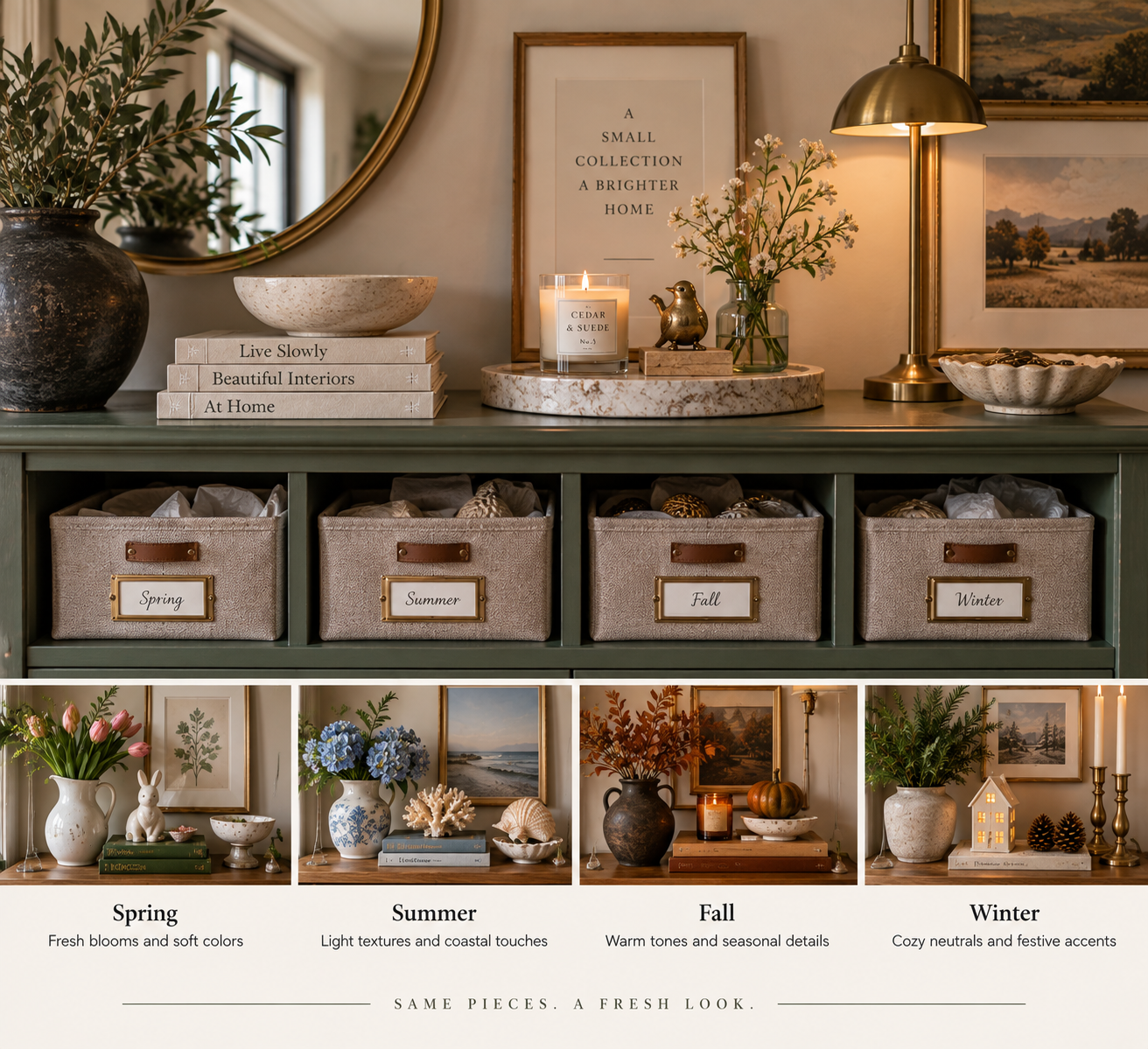
Displaying less does not mean owning less. Select a capsule of eight to twelve pieces for the shelf and store the remainder in divided, labeled containers. Change the edit every month, season, or whenever the room needs a fresh color story. Rotation protects the shelf from overcrowding and lets familiar objects feel interesting again.
Photograph each arrangement before packing it away so a favorite grouping is easy to rebuild. Keep a few neutral anchor pieces on the shelf, then swap the smaller accents around them. This system works especially well for collections that continue to grow, because the display remains controlled even when the stored inventory expands.
18. Choose Adjustable Track Shelving for a Growing Collection
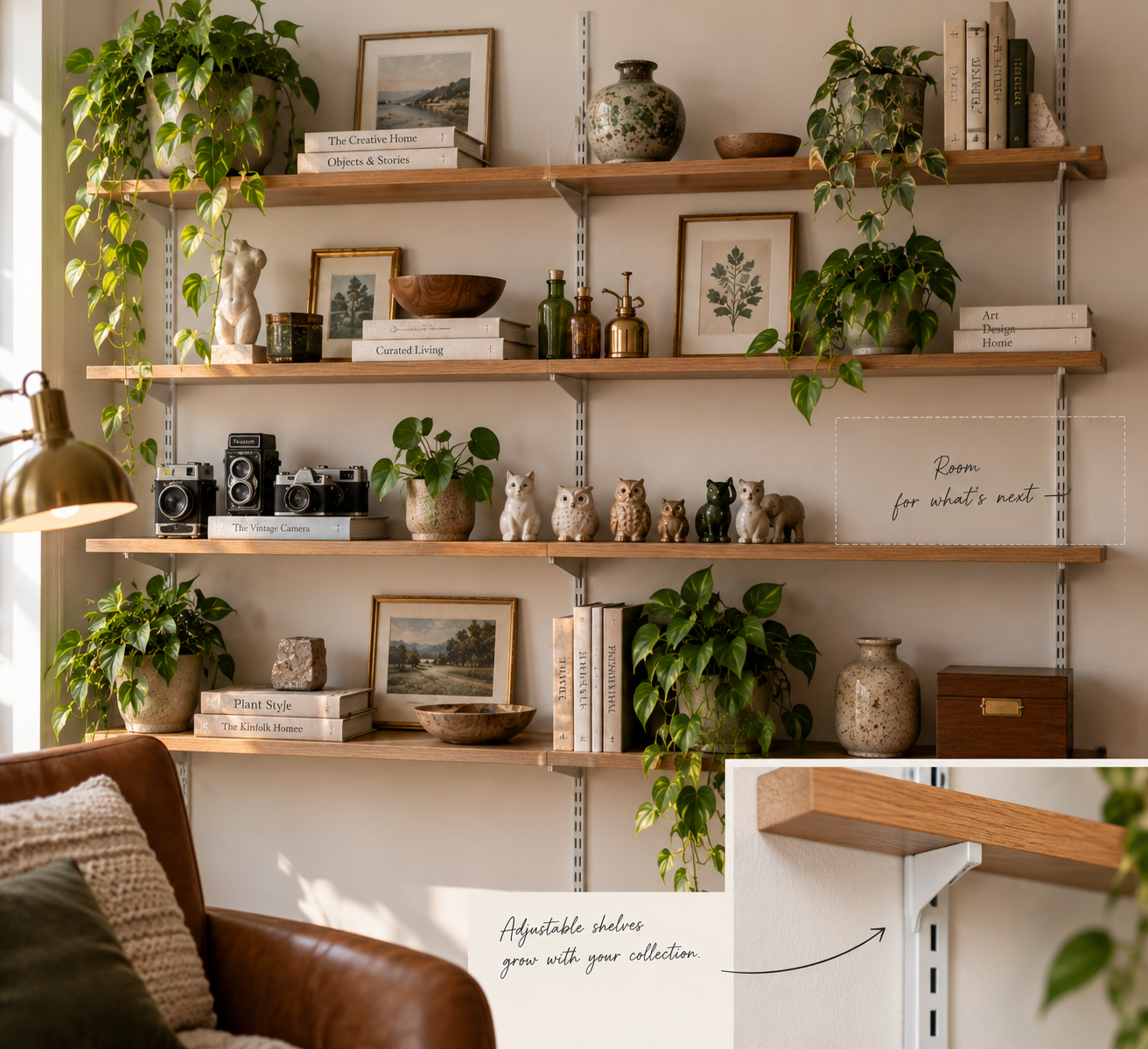
An expanding collection needs a display that can change with it. Adjustable track shelving lets you move shelf heights, add another level, or create more clearance for an unexpected larger find. It suits mixed collections, studio spaces, and anyone who wants flexibility without replacing the whole setup later.
Keep the rails and brackets in a finish that blends with the wall, then use shelves of one material for visual consistency. Leave at least one section partly open for growth. Reassess the display when that space fills rather than compressing more items into every gap. Follow the system’s load, mounting, and spacing instructions, and choose professional installation if you are uncertain about the wall or hardware.
A Simple Formula for Curated, Not Crowded
↓
Whatever display structure you choose, begin with one clear organizing principle. It might be a shared color, material, origin, or object type. Choose one hero piece, support it with a few smaller objects, and leave enough open shelf for every silhouette to register. Repeating one color three times across the arrangement can connect mismatched finds without making the display look overly coordinated.
Check the shelf from across the room and in a phone photo. If one area becomes a dark, indistinct mass, remove a piece or increase the spacing. Dust the shelf in sections rather than lifting the entire collection at once, and use a rotation box for objects that no longer fit the current edit. The aim is not a perfect showroom. It is a personal collection with enough structure to tell its story clearly.
Final Thoughts:
The most successful trinket shelf ideas do not rely on owning matching objects or buying a brand-new cabinet. They give a collection boundaries, visibility, and a visual relationship to the room around it. A vintage cubby may be perfect for tiny ceramics, while a picture ledge, shadow box, tiered stand, or adjustable system may solve an entirely different display problem.
Start with the pieces you care about most, choose the structure that fits their real dimensions, and resist the urge to show everything at once. With a thoughtful edit and a little breathing room, small collections can feel personal, polished, and completely intentional.