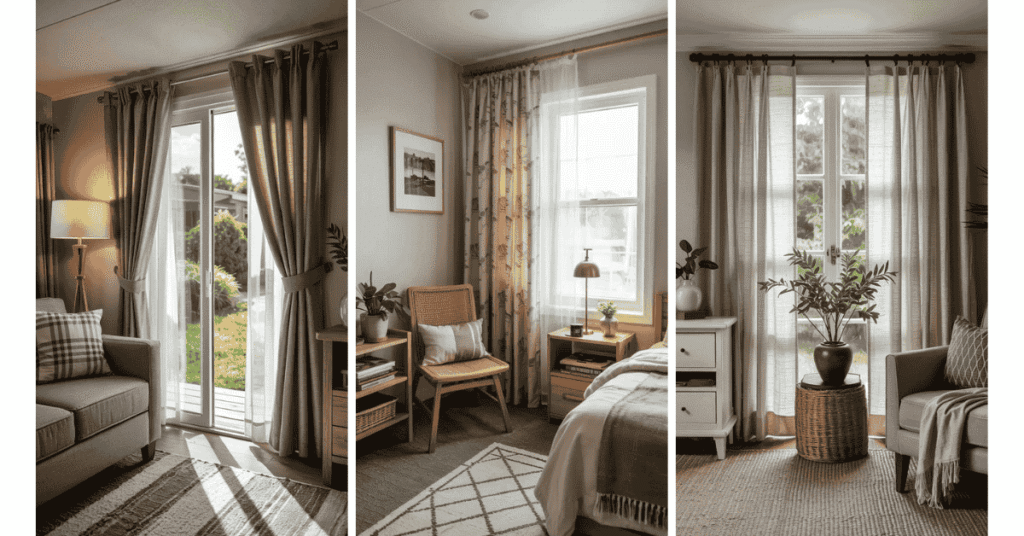
When the patterns, baskets, and pillows all draw attention at once, it can be hard to find a clear spot to sit or set something down. These 30 modern boho decor ideas help you choose where to add texture, which pieces to keep in view, and how to make the room work with them.
Begin with one part of the room you use every day. Let the finish or fabric you already like guide the next change, then see how it looks in the room’s usual light.
1. Make a Small Patterned Rug the Center of the Seating Group
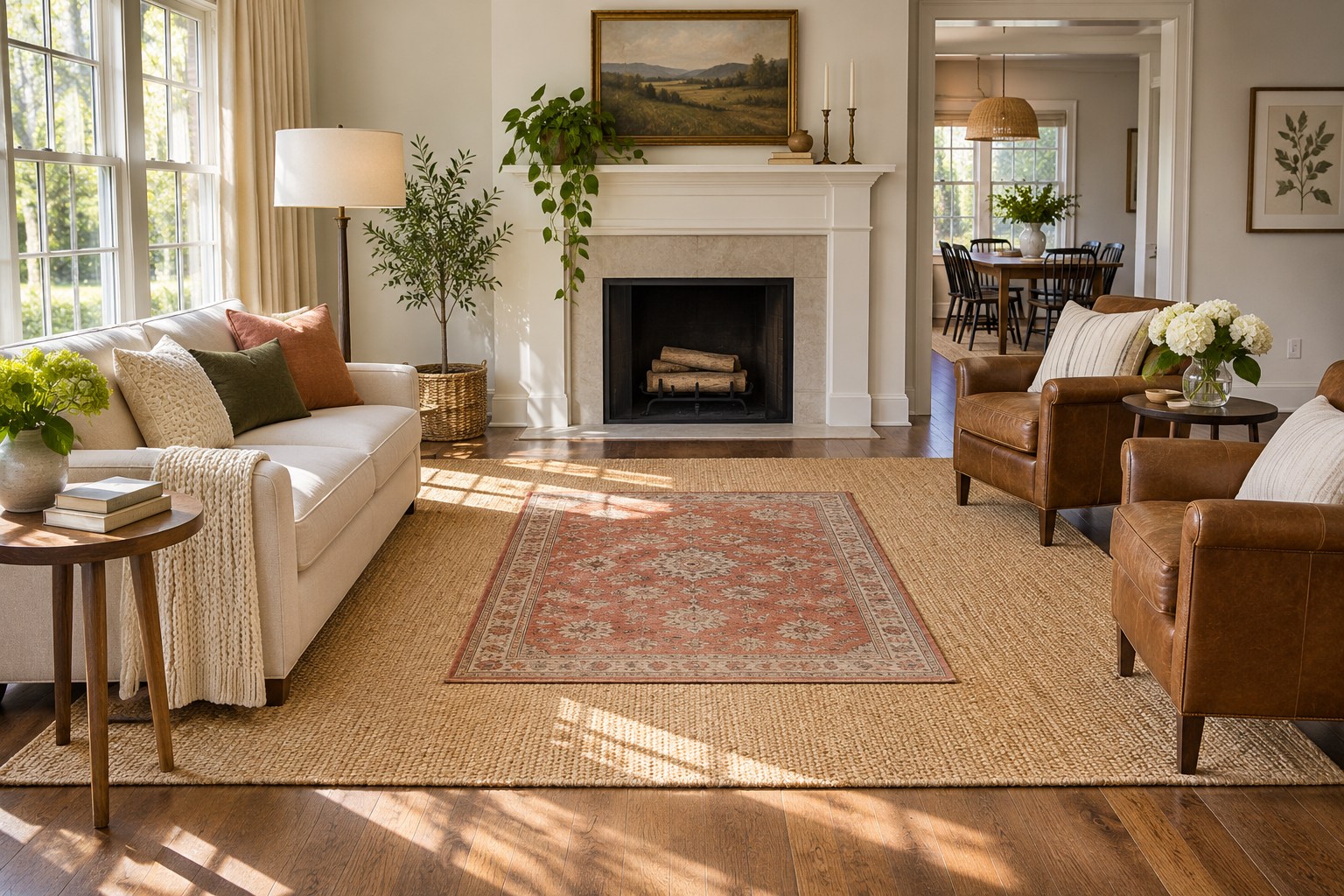
Start with a rug you like and see how much of its pattern stays visible once the table is in place. If the rug is small, it can work as an accent on a larger base where the materials and floor allow layering. Position the seams away from the route people use most.
Try the arrangement before ordering another rug. Check that the edges sit flat and any doors can open freely. Choose any rug pad according to both floor and rug instructions. One larger patterned rug is the simpler option when a second edge would land in the walkway.
2. Bring the Floor’s Wood Tone Up to Eye Level
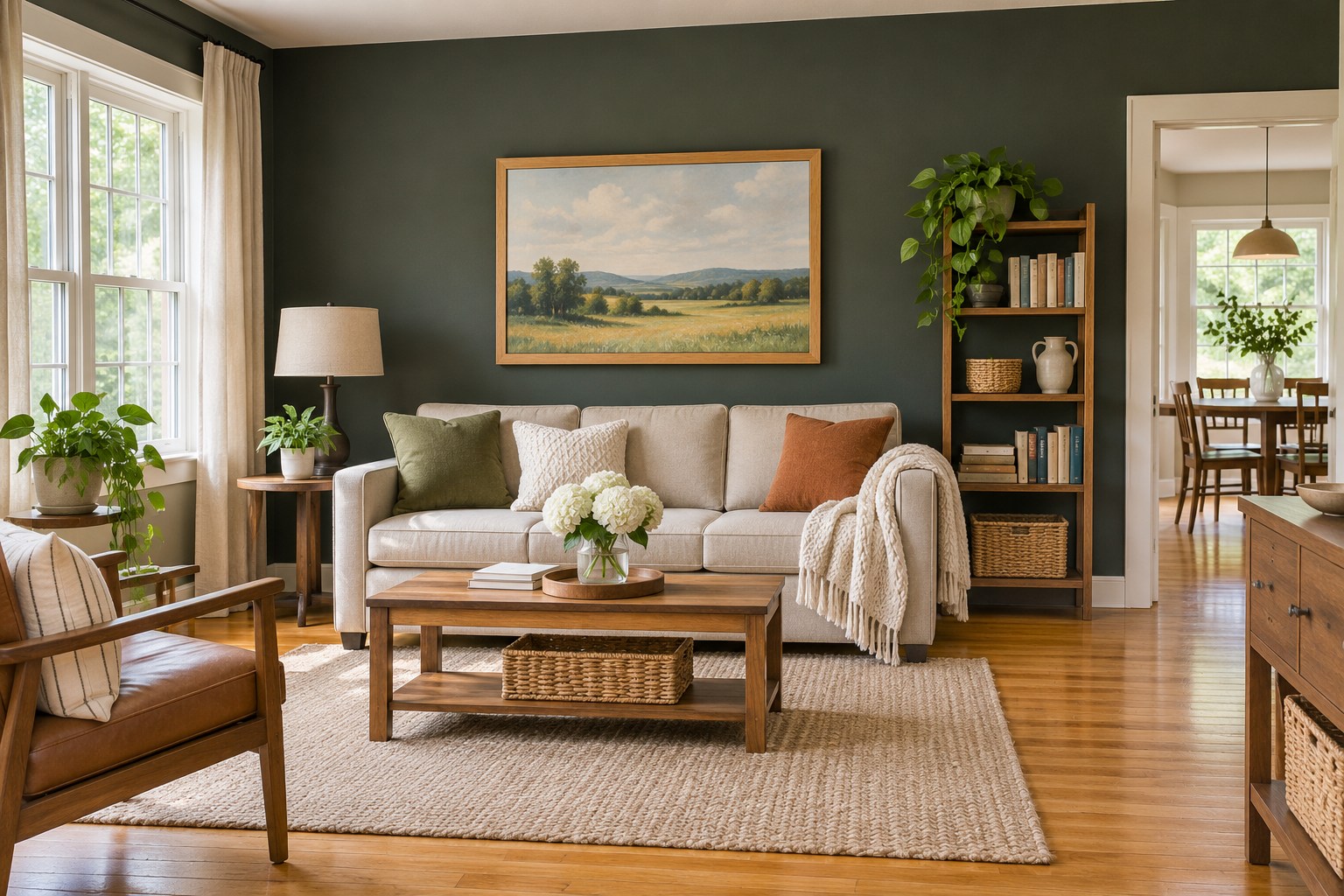
Look at the floor from across the room and identify one color in its grain. A slim frame or shelf in a related finish brings that color higher without adding more wood furniture. Test the sample against the wall where you plan to place it. A finish that appears golden in the store may look more orange in your room.
Repeat the color once and leave some wall around it. If you already have a different wood in the sofa legs, keep its finish visible. A small echo is enough to make two levels of the room feel connected.
3. Give a Sofa One Firm Pillow and One Soft One
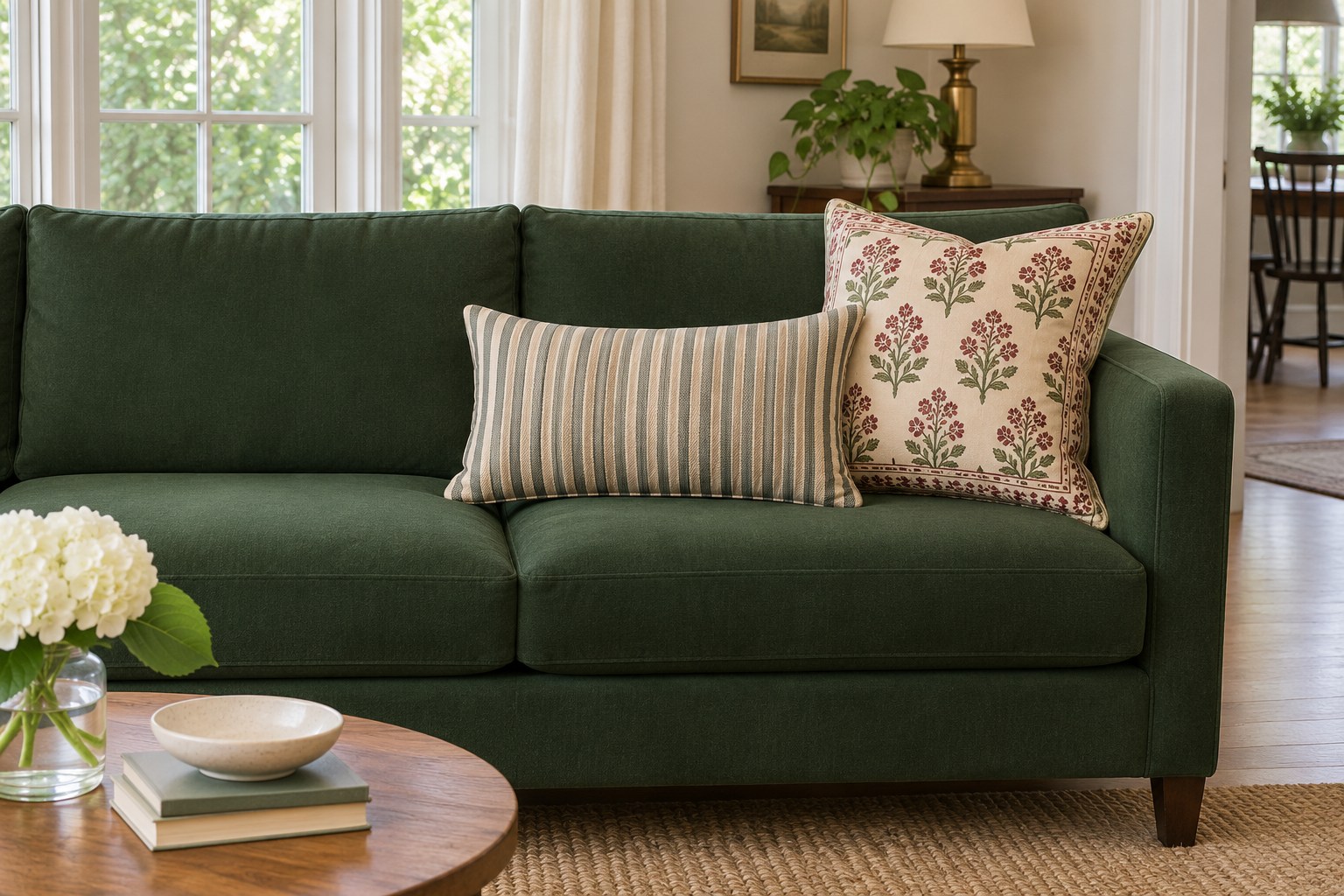
Try the combination while sitting on the sofa. A firmer lumbar pillow can support your back and a softer pillow can move to the arm when you stretch out. Start with covers you can take off and check whether the colors still work when each pillow changes position.
If both fabrics carry a pattern, make one quieter. A small stitch or narrow stripe can sit beside a larger floral. Keep a spot for the pillows when someone needs the whole seat. A nearby basket makes sense if you can reach it without moving the table.
4. Try a Narrow Macramé Panel Between Two Openings
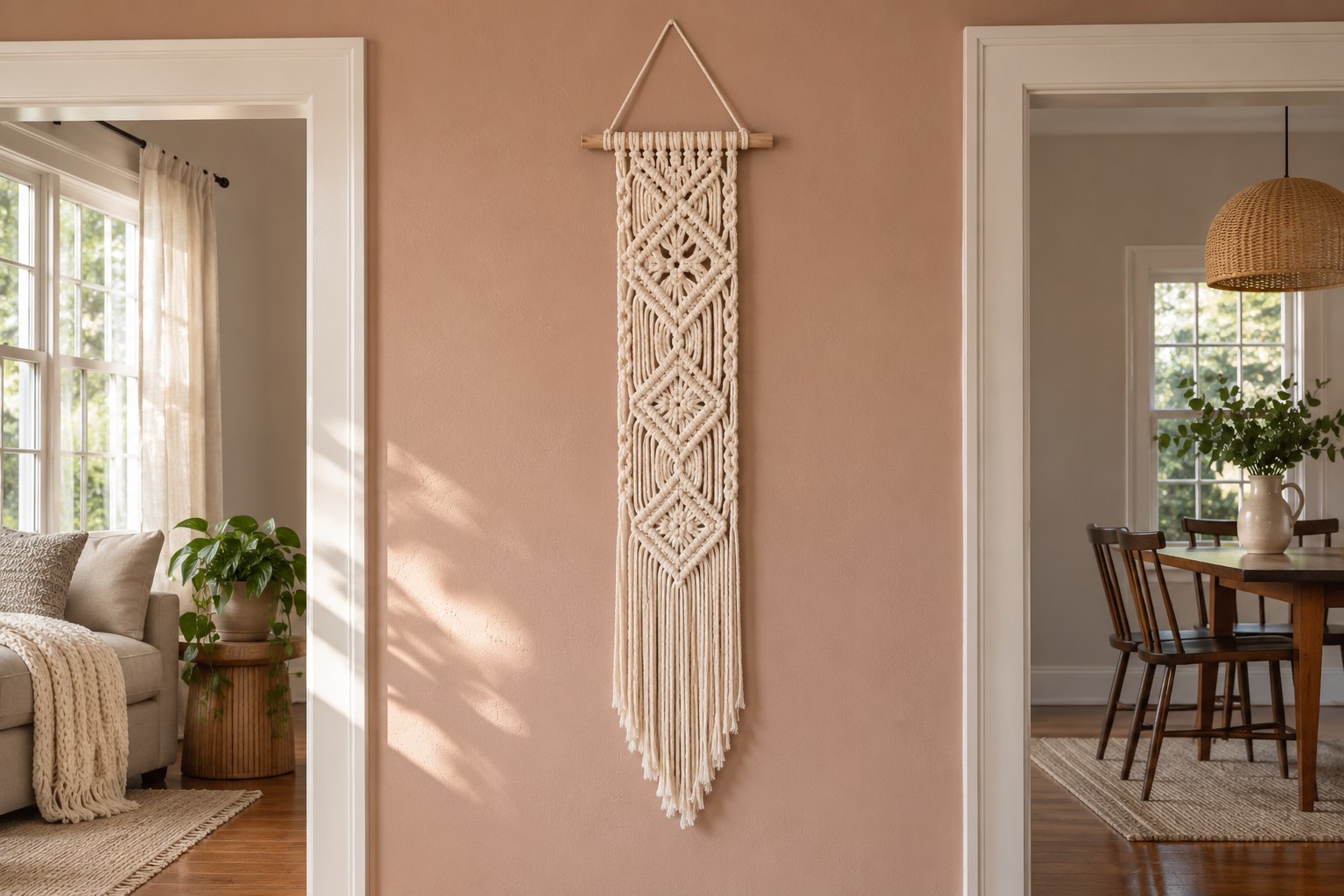
Find a wall segment wide enough to show the whole panel with a small margin on each side. A narrow woven piece can give the wall between two doors a purpose. Try a paper shape first and stand in the adjoining rooms to see where the fringe ends.
Keep the hanging clear of knobs and movement, and use the maker’s mounting directions. In a spot where the fringe would brush against coats, choose a flat woven artwork. An off-white panel can add texture to a small wall without requiring a large contrast in color.
5. Let the Largest Pattern Pick the Supporting Colors
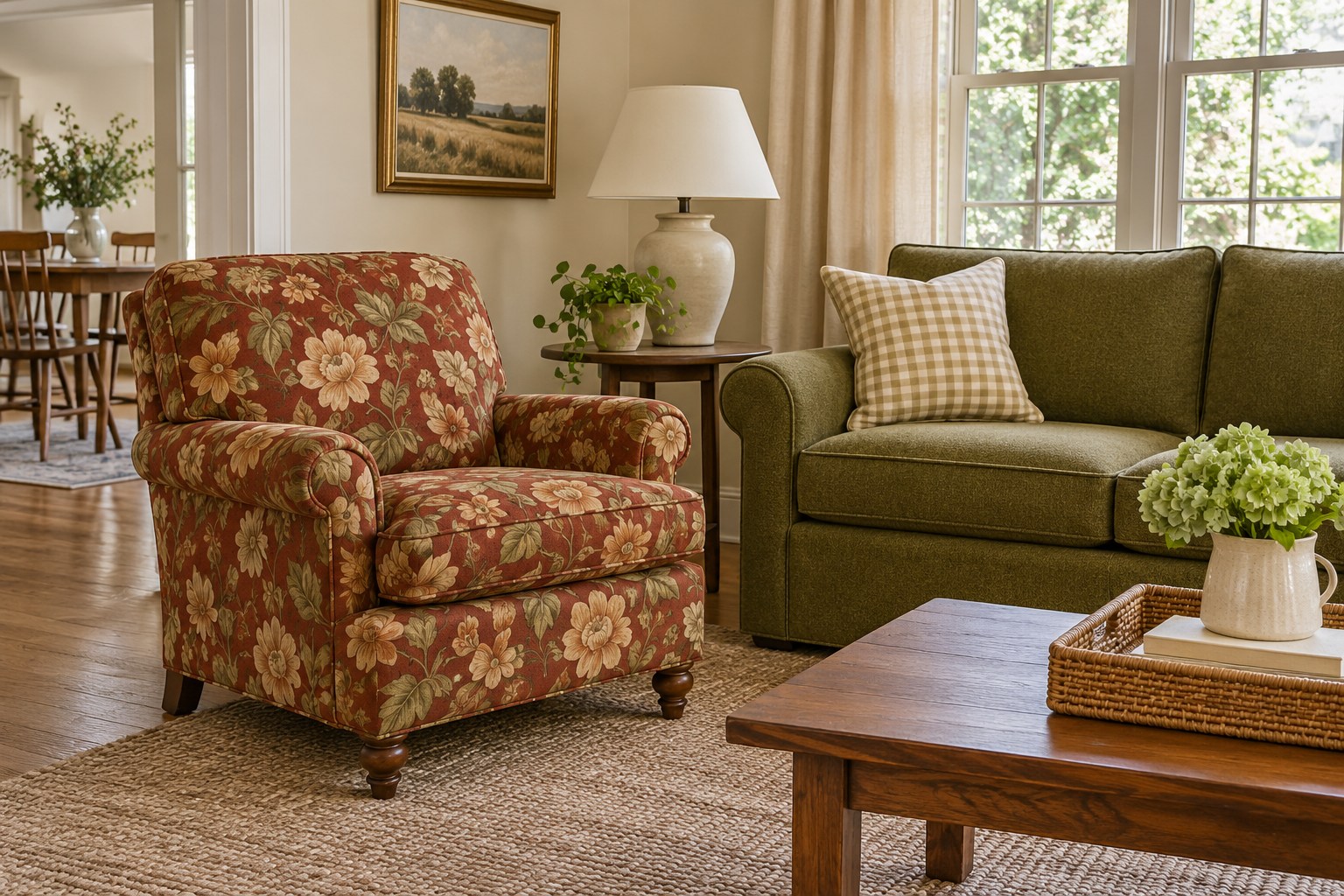
Set the boldest patterned piece beside the other fabrics you’re considering. Pull one middle tone from it for a solid textile and use the lightest shade for a small-scale pattern. A tiny check that shares a shade with a large floral can feel related even when the shapes are different.
Look at the three fabrics from the entrance. If the supporting pattern calls attention away from the main one, shift it to a less prominent surface or use a solid. The combination should still feel clear when someone moves a cushion or folds the blanket.
6. Sample Clay and Olive Under the Light You Use
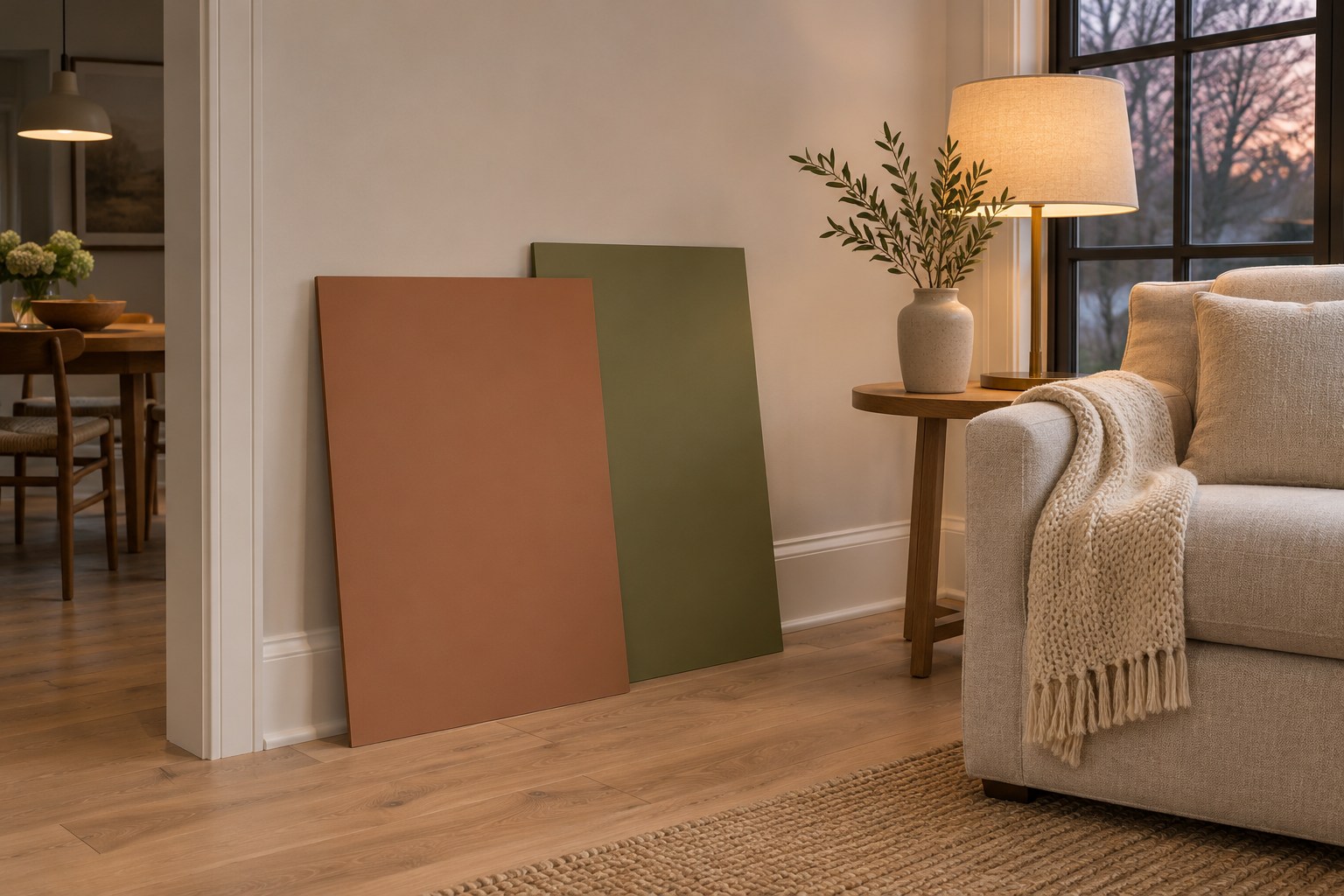
Take a clay, olive, or soft ocher sample to the surface where it would go. Put it beside a large fixed finish such as the floor or counter and view it under the evening lamp. A warm color can look quite different next to red oak than it does on a paper card.
Use the shade you enjoy in the room’s least flattering light. Paint a movable sample board if you are choosing a wall color. Compare your samples with our guide to paint colors for the whole house if the new color will be visible from another room.
7. Group Plants by the Way You Water Them
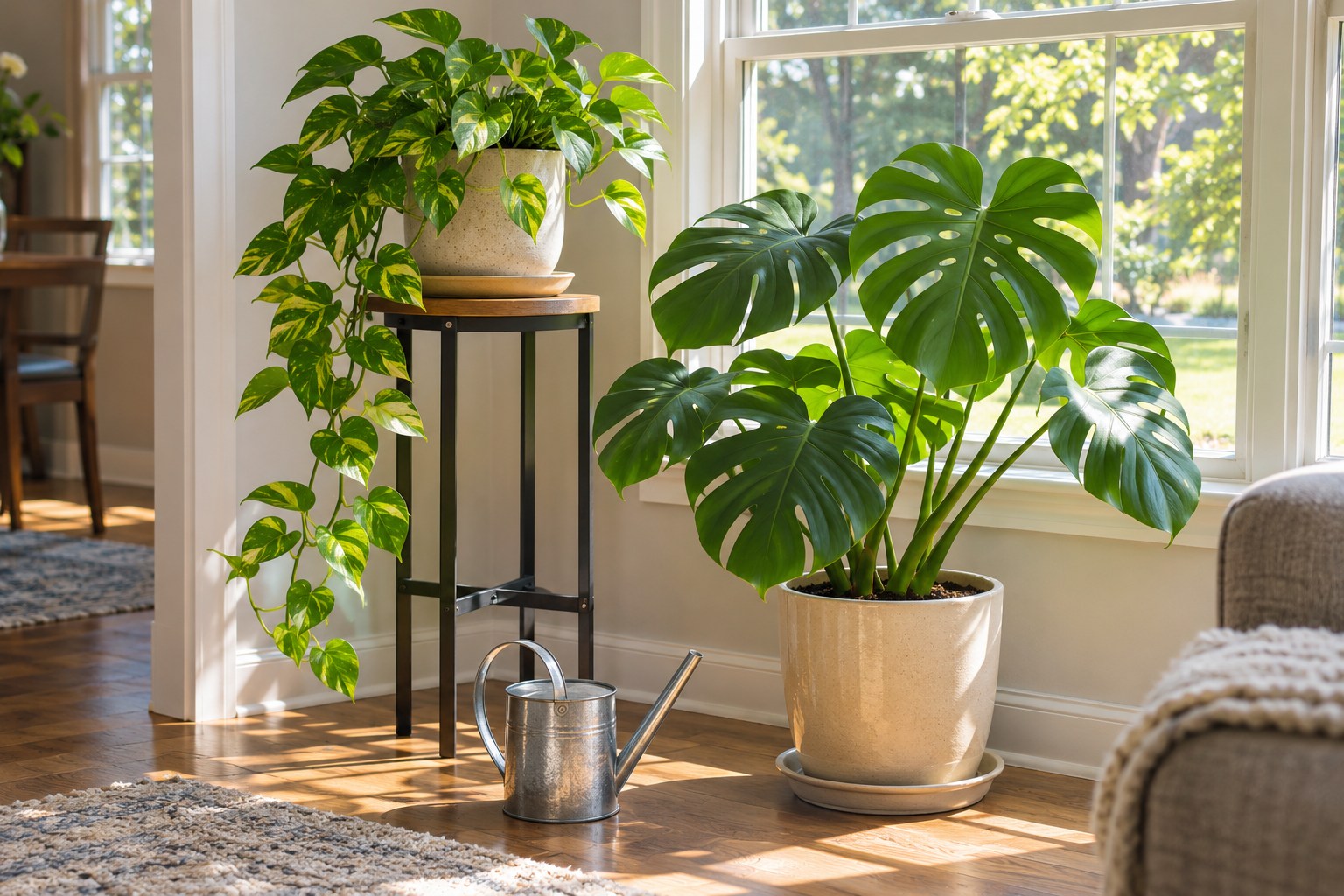
Give plants with similar light needs a shared spot that you can reach. Put one on a sturdy raised stand to show its shape, then keep the other low enough to lift. Check what happens when you water each plant and use containers that keep water off wood or fabric.
Leave air and light around the leaves so the shapes stay separate. If the grouping closes the path to a window, move the smaller pot farther into the room only if it will still get the light it needs. A smaller group can be easier to keep healthy.
8. Keep the Low Coffee Table Within a Comfortable Reach
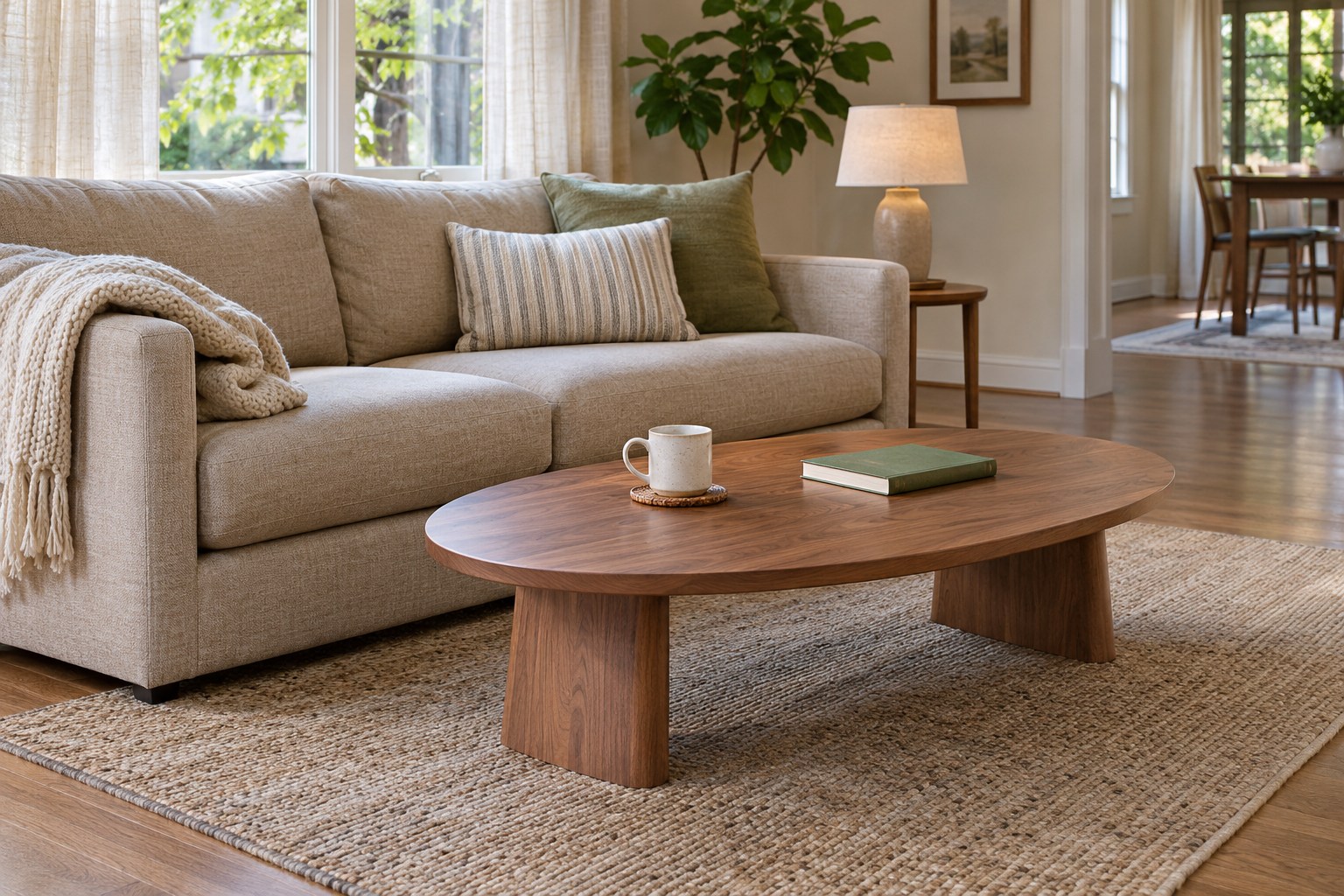
Sit on the sofa and try setting a mug down at the proposed table height. Some low tables look inviting from the doorway but make a simple reach awkward. Check the distance with a table or box you already own and confirm that people can pass when another person is seated.
Choose a stable base and keep the table’s shape compatible with the path. A round edge can be helpful near an active corner, while an oval leaves more surface beside a longer sofa. Leave some top space clear for drinks and books that come and go.
9. Bring Woven Texture to an Everyday Catchall
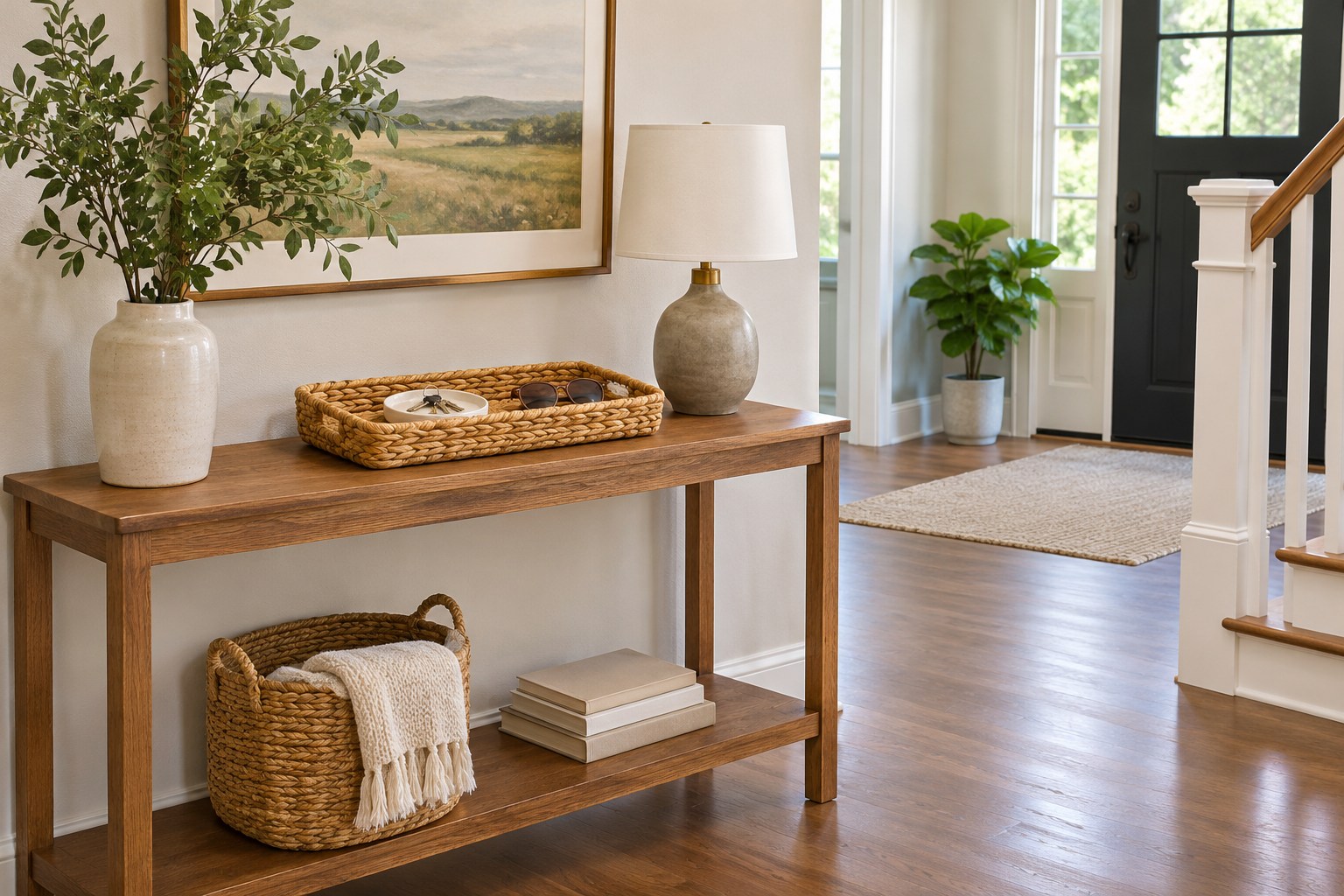
Put a shallow woven basket on the dry part of an entry console for keys, sunglasses, or other small items you bring in each day. A low rim leaves the contents visible. Try one near the side you already use and see whether you can set down a bag without moving the basket.
Measure the console’s usable depth and leave enough space to lift or slide the basket forward. A small smooth dish inside can keep keys from catching in the weave. These entryway storage ideas can help with the larger things that should live elsewhere.
If two people share the console, the shallow StorageWorks water hyacinth baskets can give each person a place for the small things they carry out.
See details for shallow StorageWorks water hyacinth baskets (paid link)
10. Let the Warm Lamp Light the Work Surface
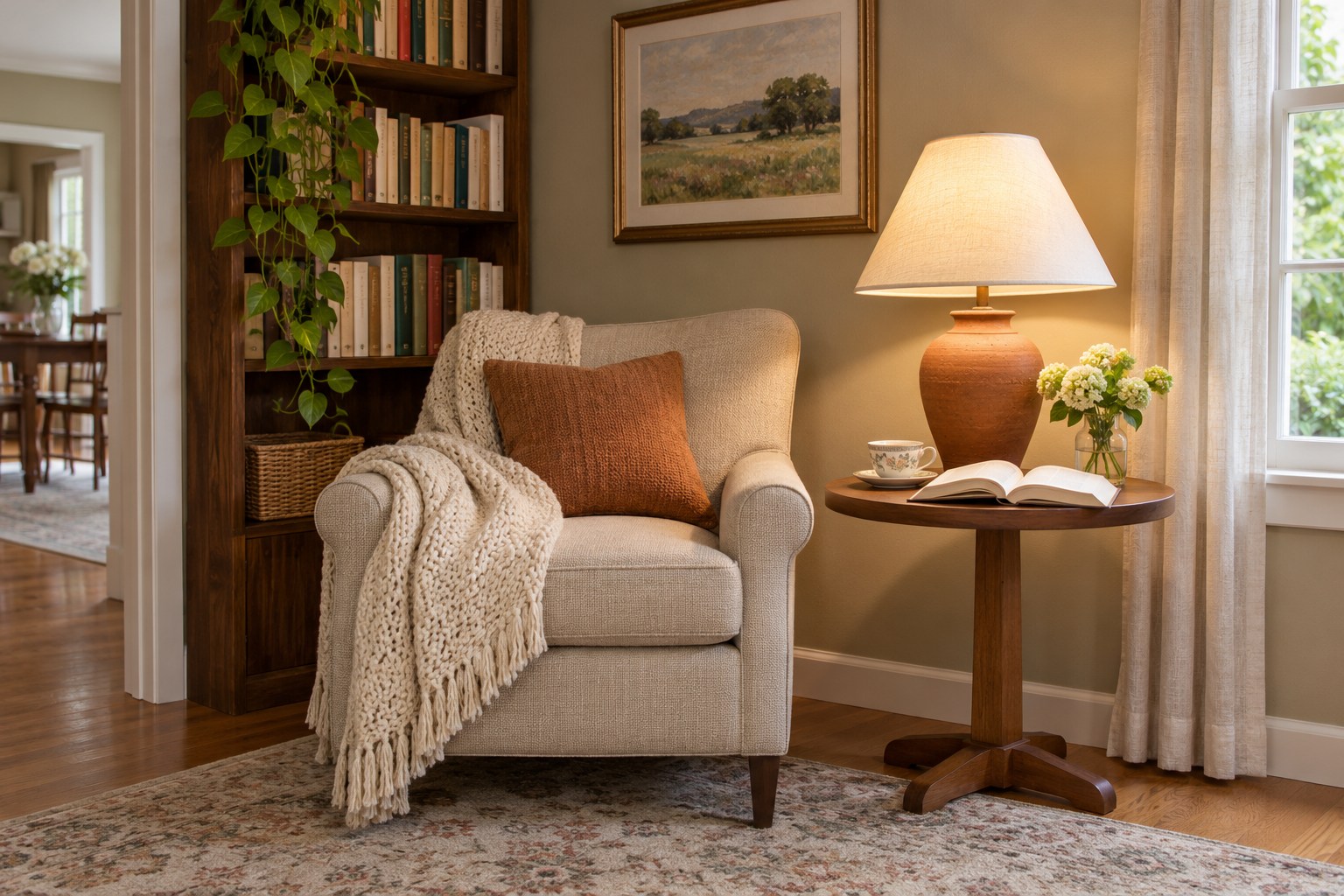
Place the lamp where you can open a book or set down a cup in its light. An earthy shade or warm finish can add character to a simple room, but the light should still land where you need it. Try the lamp with the rest of the room lit the way it normally is after dark.
Keep cords out of the route and use the bulb recommended for the lamp. If a shade gives a pleasing glow but leaves the chair too dim, move the lamp or try a more open shade suitable for the fixture. Give the light a useful job every evening.
11. Give a Personal Piece of Art a Simple Surround
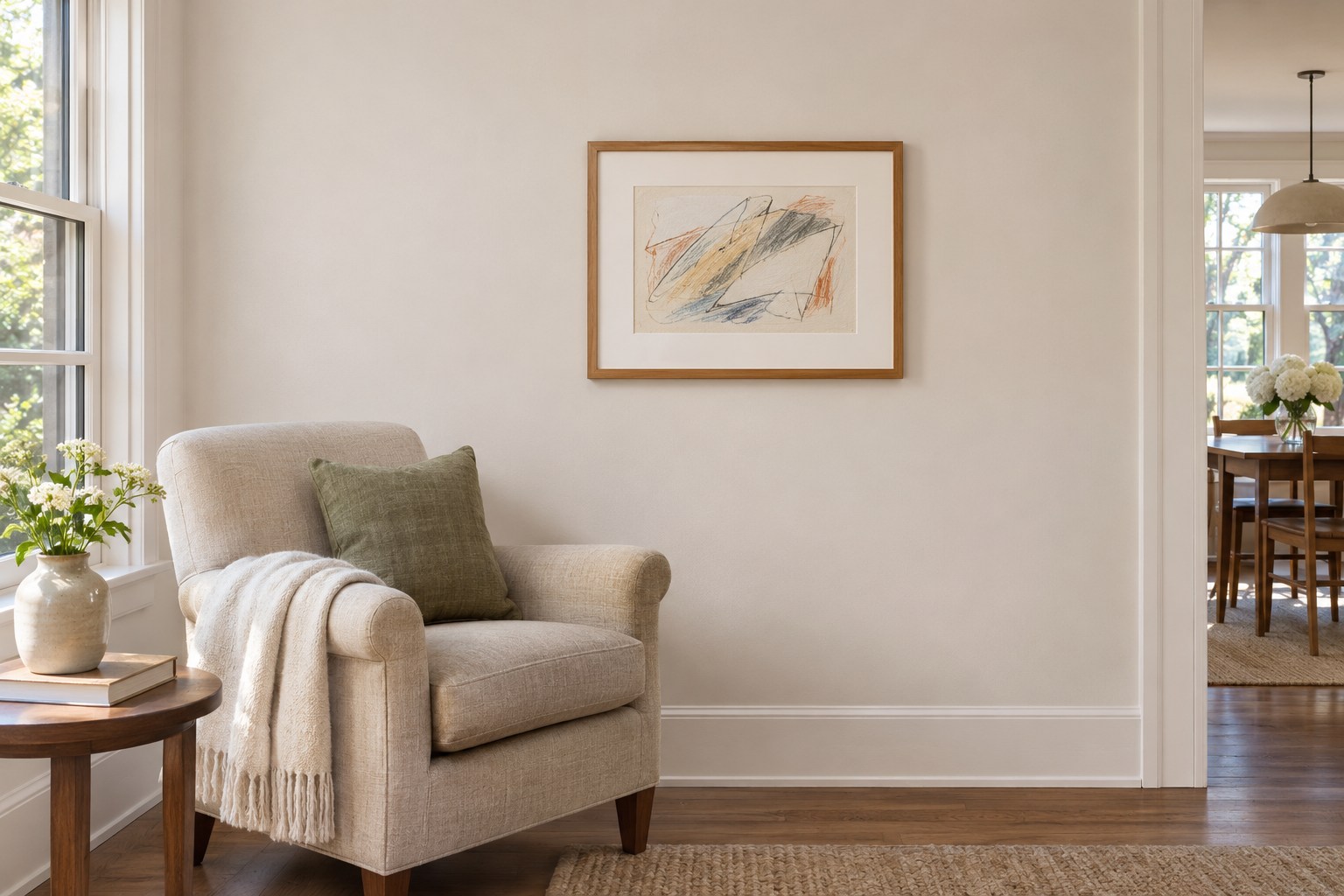
Choose one piece that you want to see when you enter the room. A small hand-drawn picture, family photograph, or print from a trip can supply a color to repeat elsewhere. Lay the picture on a table and try a plain mat or frame that gives the image room around its edge.
Use paper to test the placement before mounting it. Give the art a spot where the light lets you see its details. If it feels too small above a wide sofa, move it to a closer view such as the wall beside a chair.
12. Build a Small Gallery Around One Frame Edge
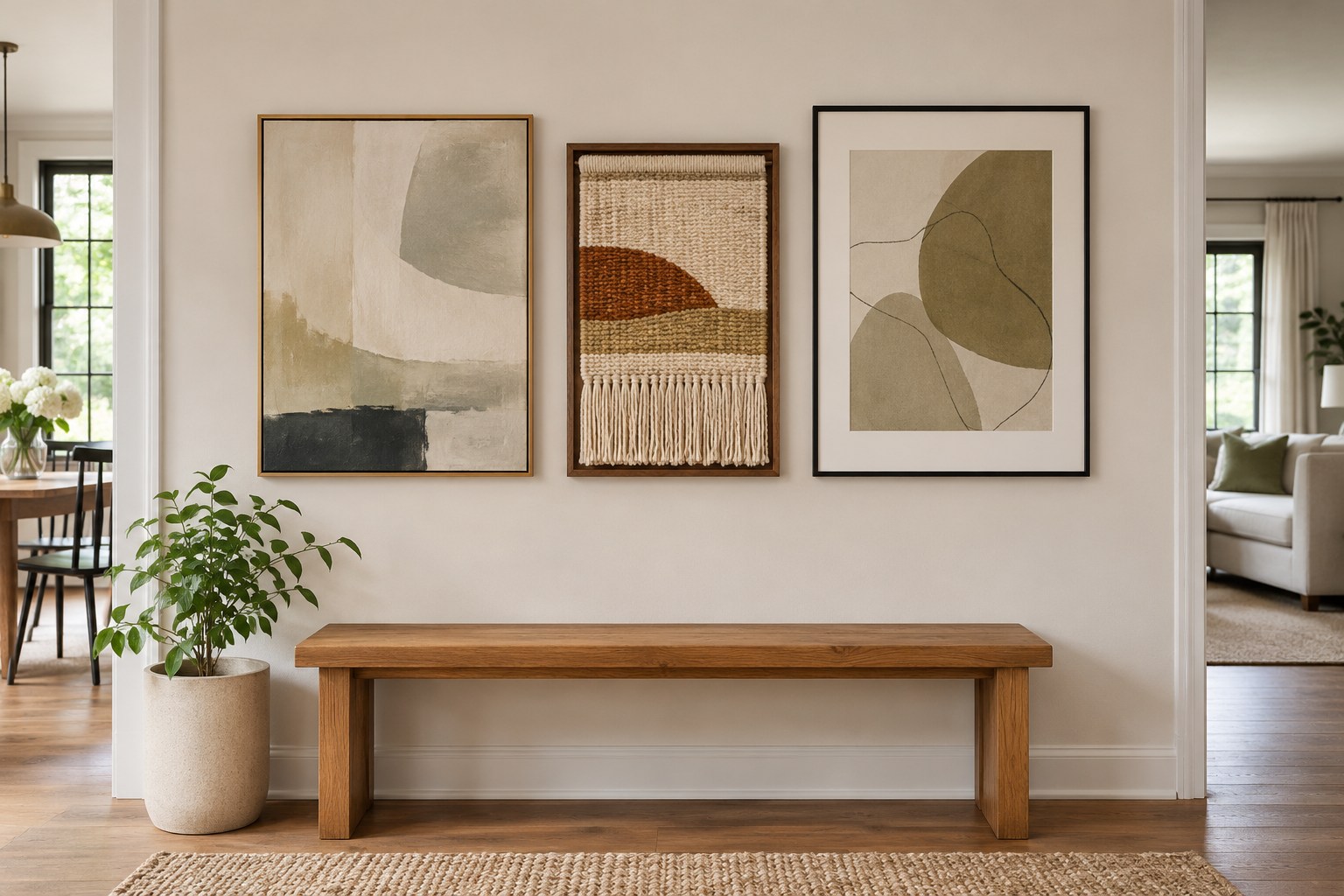
Lay the frames on the floor and pick one edge to line up. This could be the bottom of two frames above a bench, or one side of a frame and a narrow textile. Keep the other edges free so the arrangement can hold a mix of sizes. Use templates to check the spacing on the wall.
Let one frame carry more contrast than the others. A shared wood or paper color can relate the group without making everything match. Mount each item according to its size, weight, and the wall’s requirements.
13. Fold a Textured Cover Across One End of the Bed
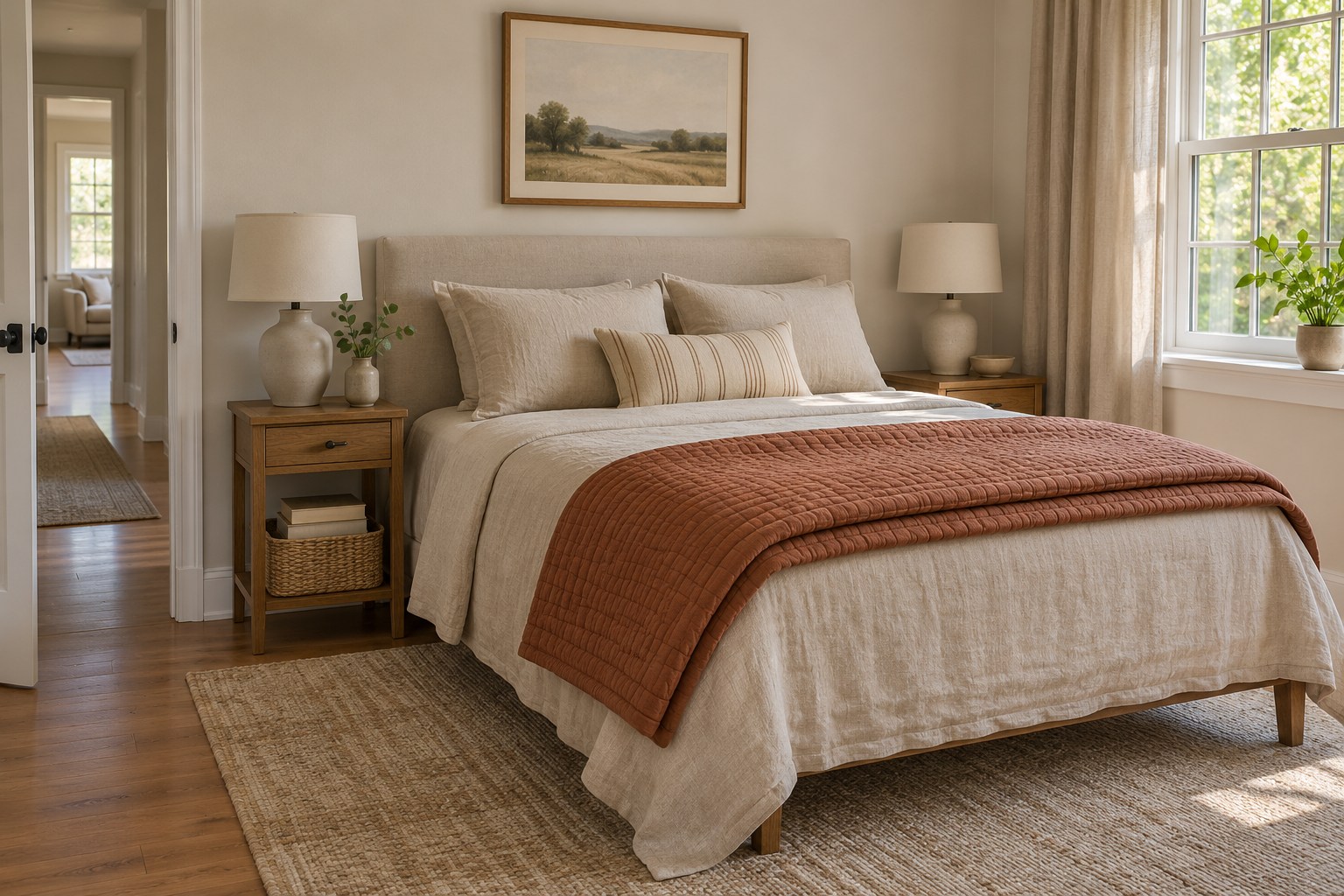
Choose a blanket or coverlet that brings a different weave to the bedding. A soft stitched cotton over a plain duvet can show texture at the foot without changing how you make the whole bed. Try folding it to a size you can move without dragging it across the floor.
Use a fabric you’ll be able to wash or care for. If a throw is purely decorative and comes off every night, give it a place to go. A small storage spot or a chair that you use can keep the end of the bed easy to remake.
14. Put a Secondhand Stool Where You Need a Small Surface
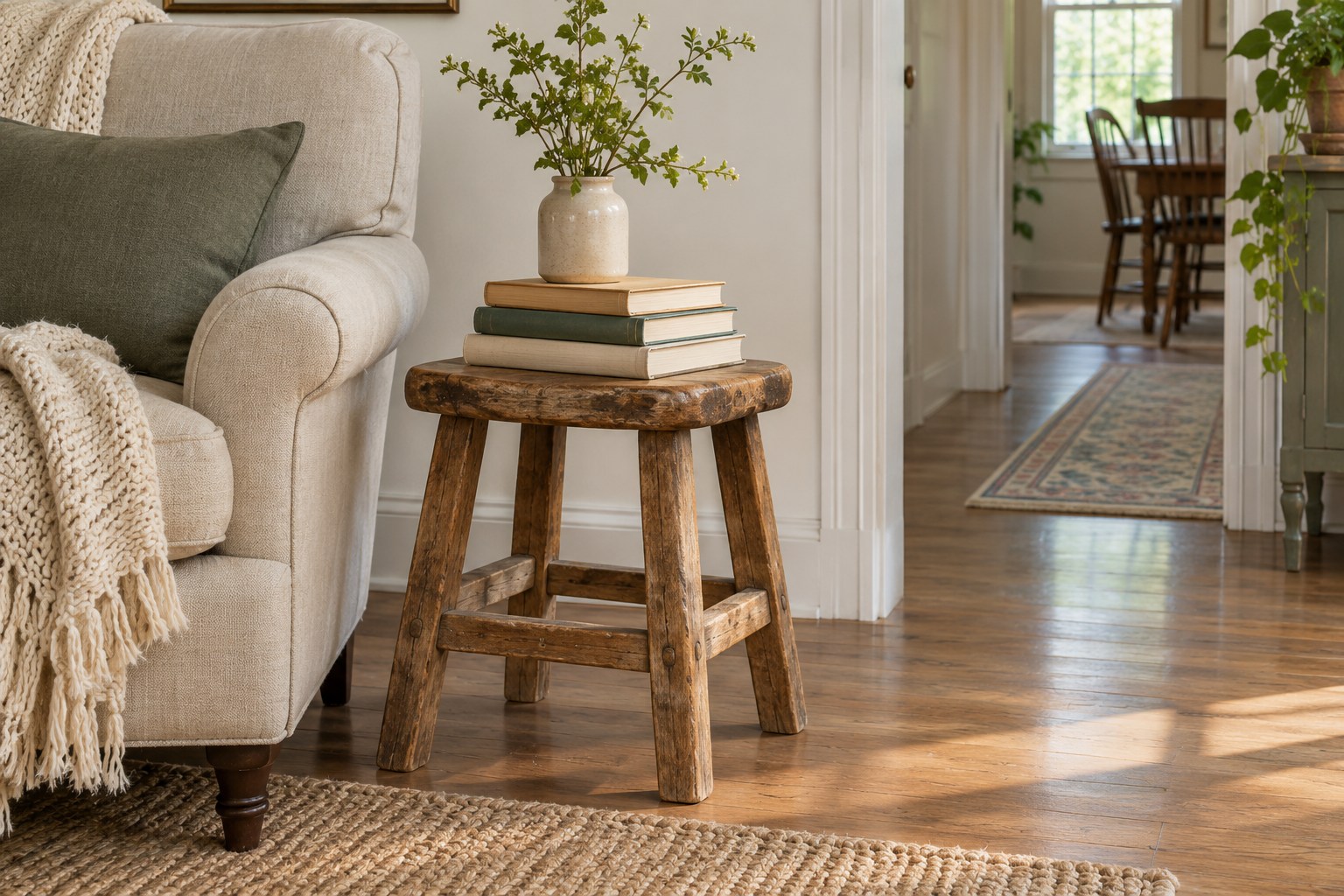
Look for a sturdy secondhand stool that can hold the things you set next to a seat. A worn wood finish can be attractive if the top is stable and has enough room for a book. Inspect the joints and the level of the seat before buying. Skip a wobbly stool or have it repaired by someone who understands the construction.
Set it where it doesn’t close the path or crowd a door. The small piece can add age to a room with newer furniture and can move elsewhere later if you choose a larger side table.
15. Keep the Books You Read Within Arm’s Reach
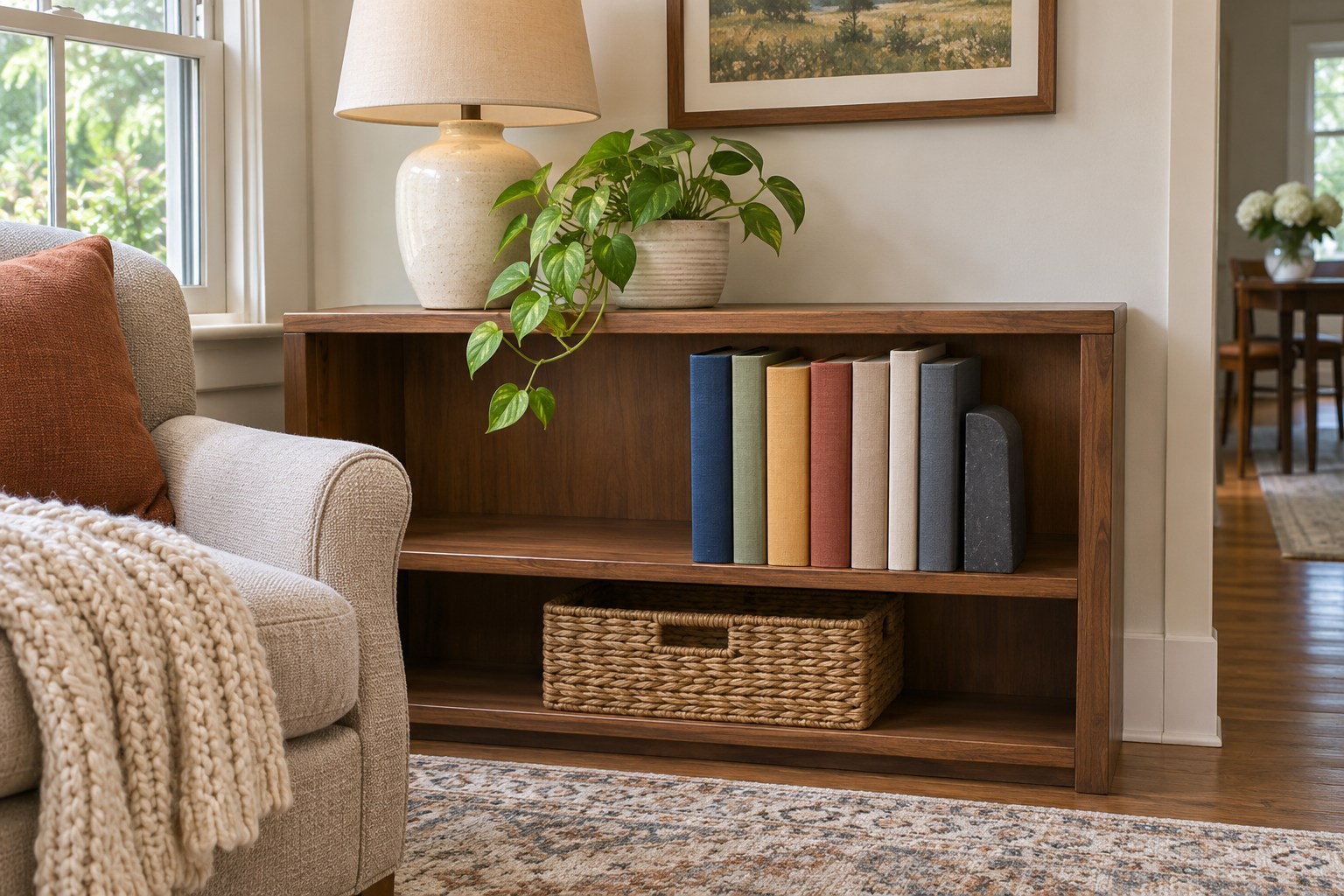
Arrange a short row of books on a shelf near the place you read. Add a bookend so you can pull out a title without disturbing the others. Let the different heights form an edge of their own. If you prefer a small horizontal stack, keep the books you reach for most often on top.
Use the rest of the shelf for a lamp or small object only if there is still room to use the books. These living room shelf ideas offer more ways to arrange a shelf that changes over time.
16. Use a Pale Wall to Show Warm Materials
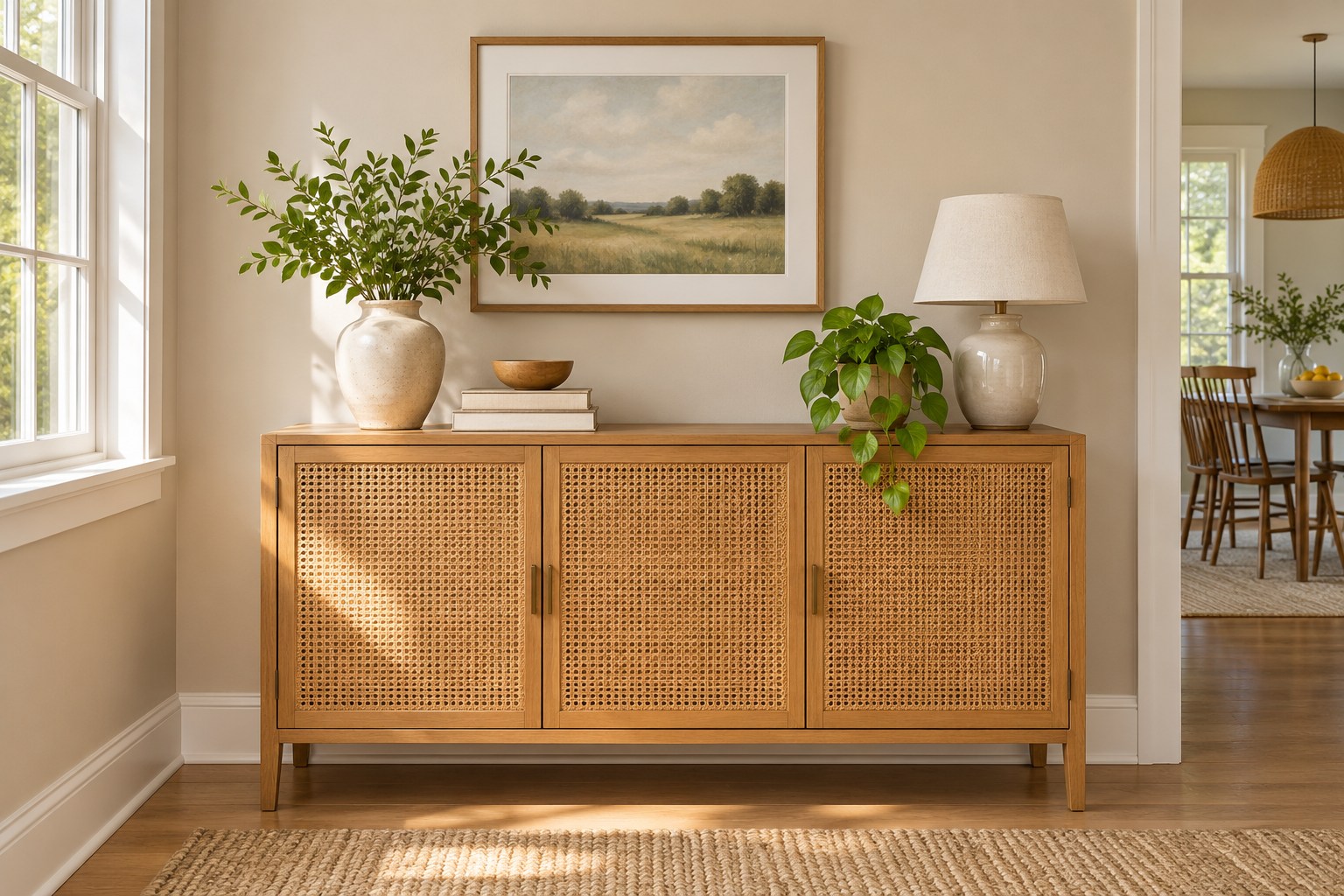
Pick the largest woven or wood piece you want to show clearly. Put two pale paint samples behind it and look at them from the main seat. A wall that nearly matches the material will quiet its outline. A shade with a little more contrast can make the grain or weave easier to see.
Compare the options in daylight and after you turn on the lights. Keep the trim in the comparison as well. A neutral that works with the material on the wall may look different next to a glossy white door.
17. Give a Textile With a Known Maker Room to Show
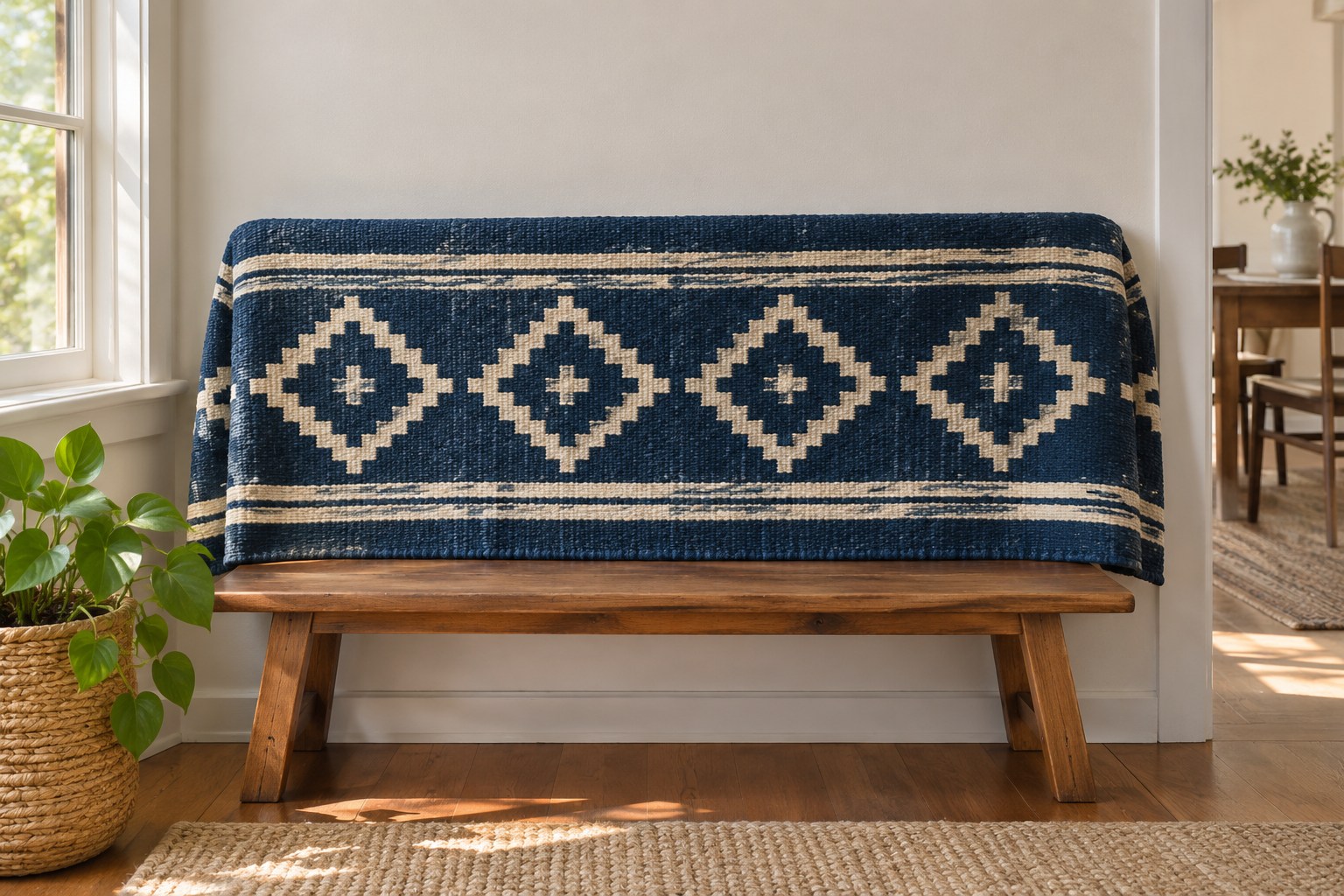
Start with a piece whose pattern or material means something to you. If you are buying, ask who made it, where it was woven, and how to care for it. Look at the complete repeat before deciding whether you want it as a cushion, flat hanging, or runner. Avoid folding a large design so far that its main details disappear.
Use a plain surface around it and share the maker’s name when someone asks. A single well-placed textile can bring a strong color and a visible sense of craft to a quiet room.
18. Choose a Hand-Formed Bowl That Sits Level
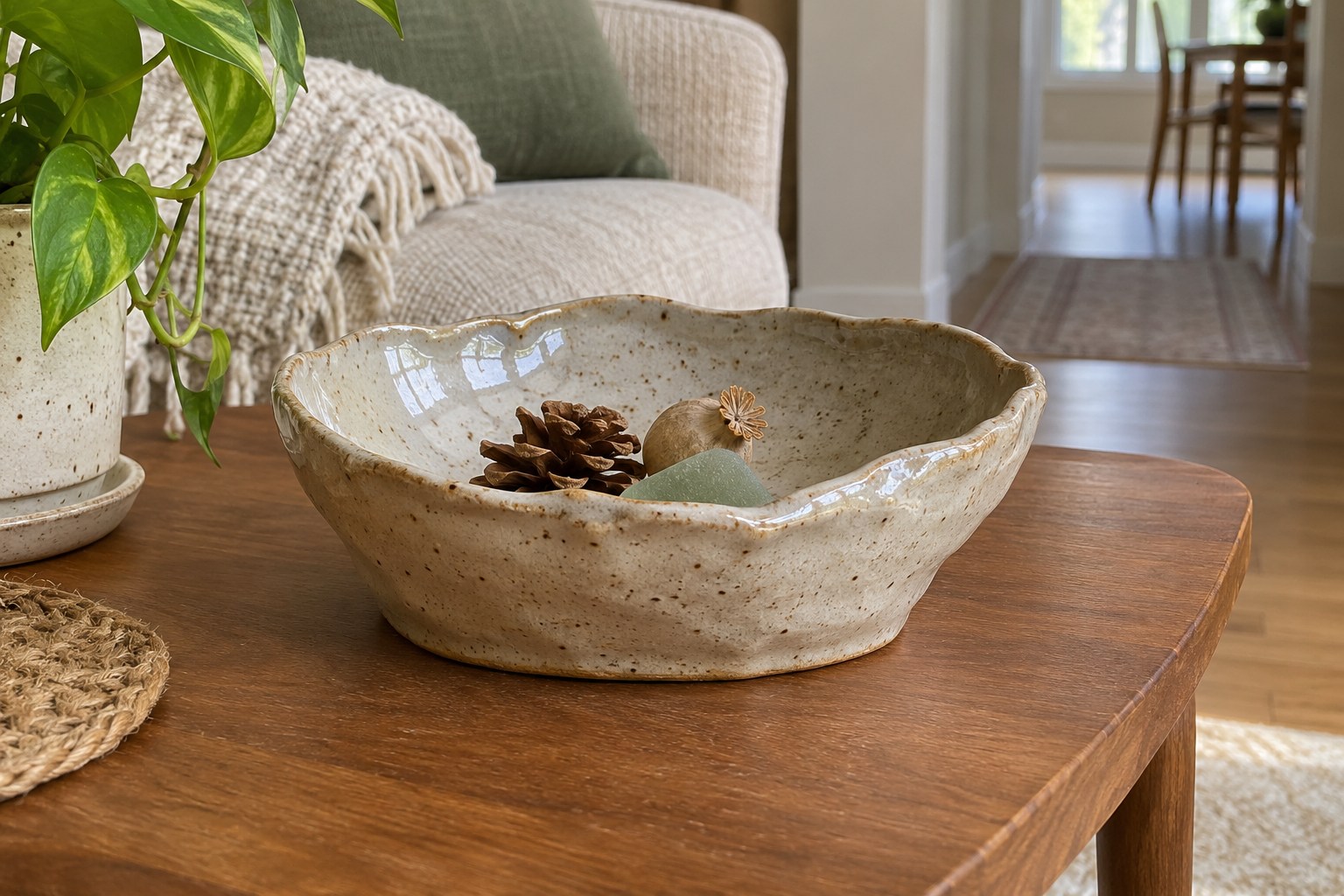
An irregular rim can show how a bowl was shaped by hand. Set it on the surface where it will live and check that the base is steady. Use it for small dry objects if it has enough room to pick them out easily. Follow the maker’s guidance if you want the bowl to hold food or water.
Put the bowl on a plain surface where its edge stays visible. A linen mat or a wood top can bring out a slight variation in glaze. Let the imperfections in shape be the detail you notice.
19. Make an Open Shelf Easy to Reset
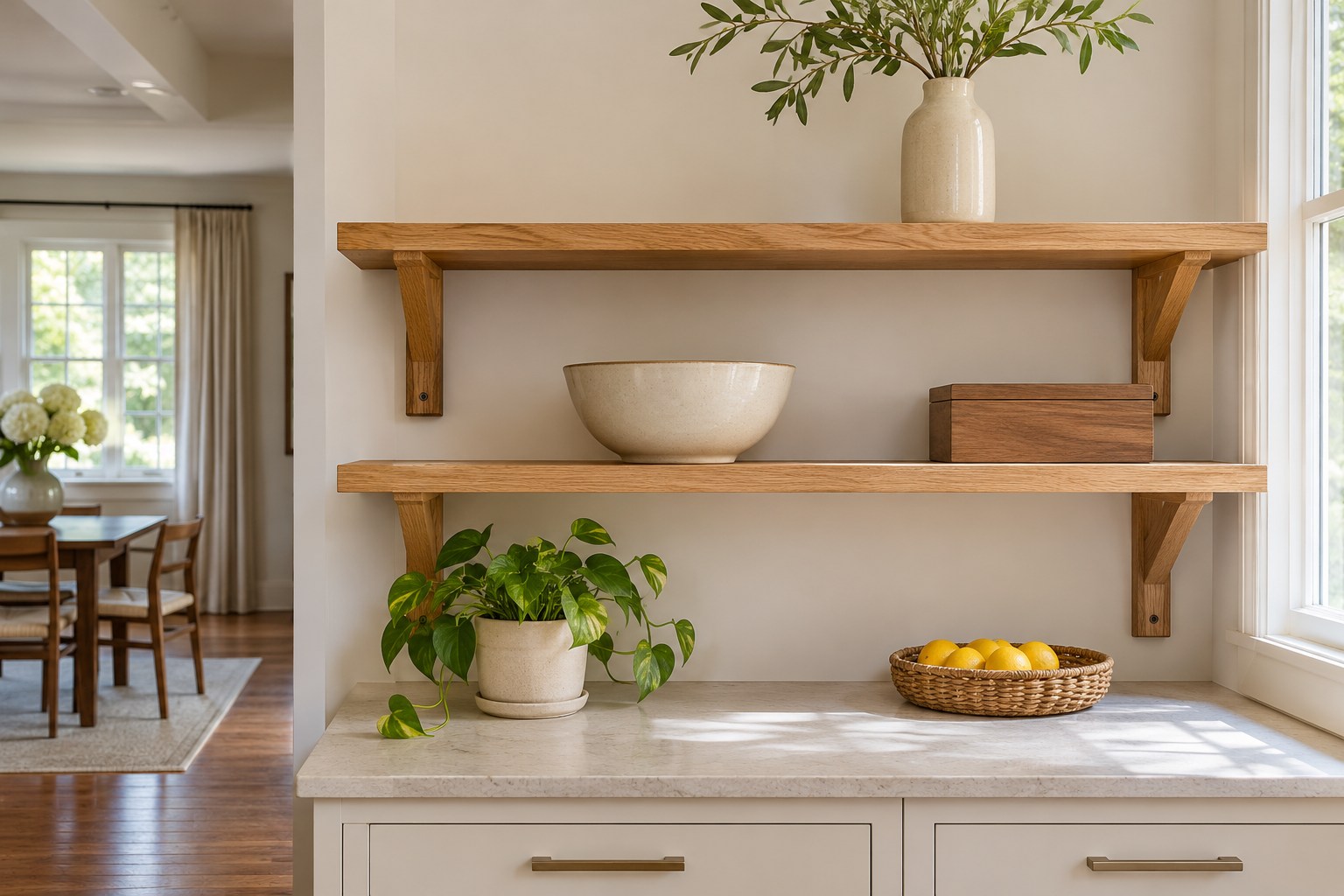
Choose one thing the shelf needs to hold every day. Place it where you can lift it out and return it with one hand. Then leave a short gap before adding a taller object or a few books. This gives the shelf room to change as everyday items move through it.
Store the pieces that belong together in a sturdy box lower down if you do not need to see all of them. Keep a clear view of the piece with the strongest texture. A shelf can look settled even when an object is missing for the afternoon.
20. Use a Warm-Framed Mirror to Catch Side Light
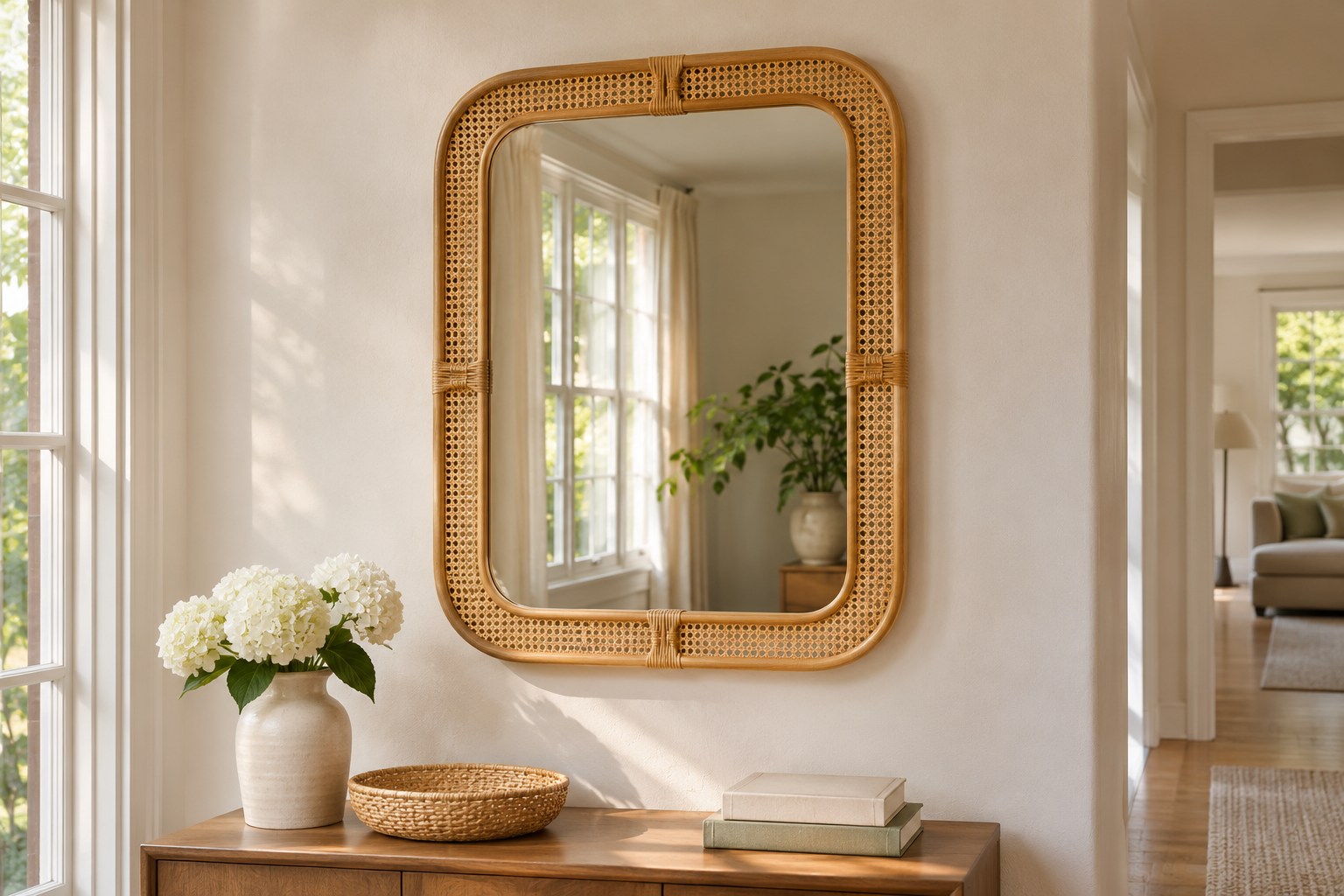
A cane or warm wood frame adds texture to a wall that already receives good daylight. Try the position with a handheld mirror to see what you would catch. A reflection of a side window or a quiet wall can make the corner feel open. Avoid a spot that throws glare toward the sofa.
Check that the full-size frame clears nearby doors and furniture. Follow its mounting instructions and choose a fixing suited to the wall. The mirror should be easy to wipe and should not need to be moved for daily use.
21. Put a Floor Cushion Where It Can Tuck Away
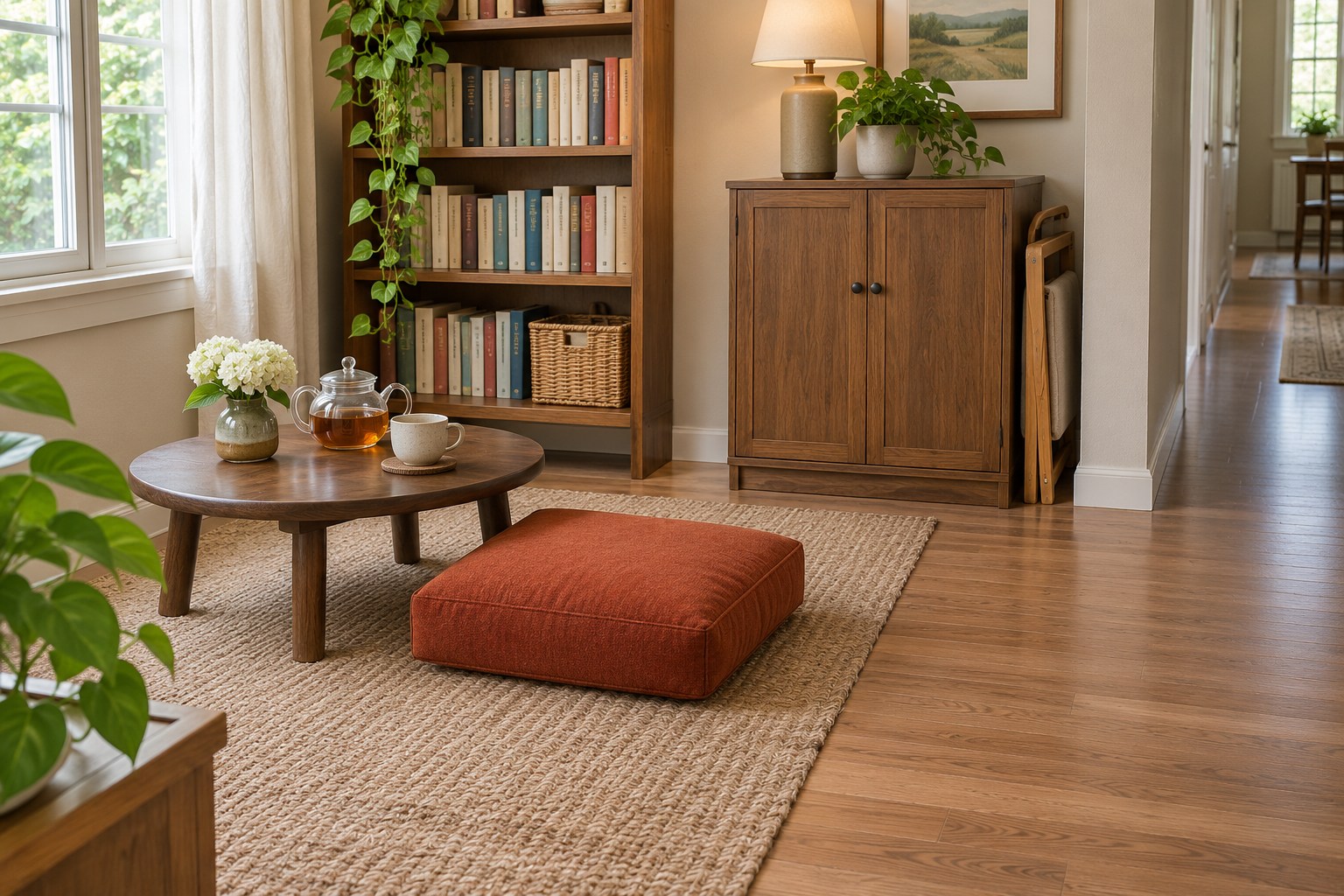
Use one firm floor cushion in a low seating corner if people in your home like to sit there. Try the height against the nearby table and give it room to move clear when you stand up. A washable cover is useful if the cushion spends time on the floor.
Plan where it goes between uses. An open spot beside a cabinet may be enough if the cushion can slide away without crossing the route. If people prefer a chair, keep the textile as a seat cushion or let it go to a room where it will get used.
22. Put Soft Candlelight on a Steady Surface
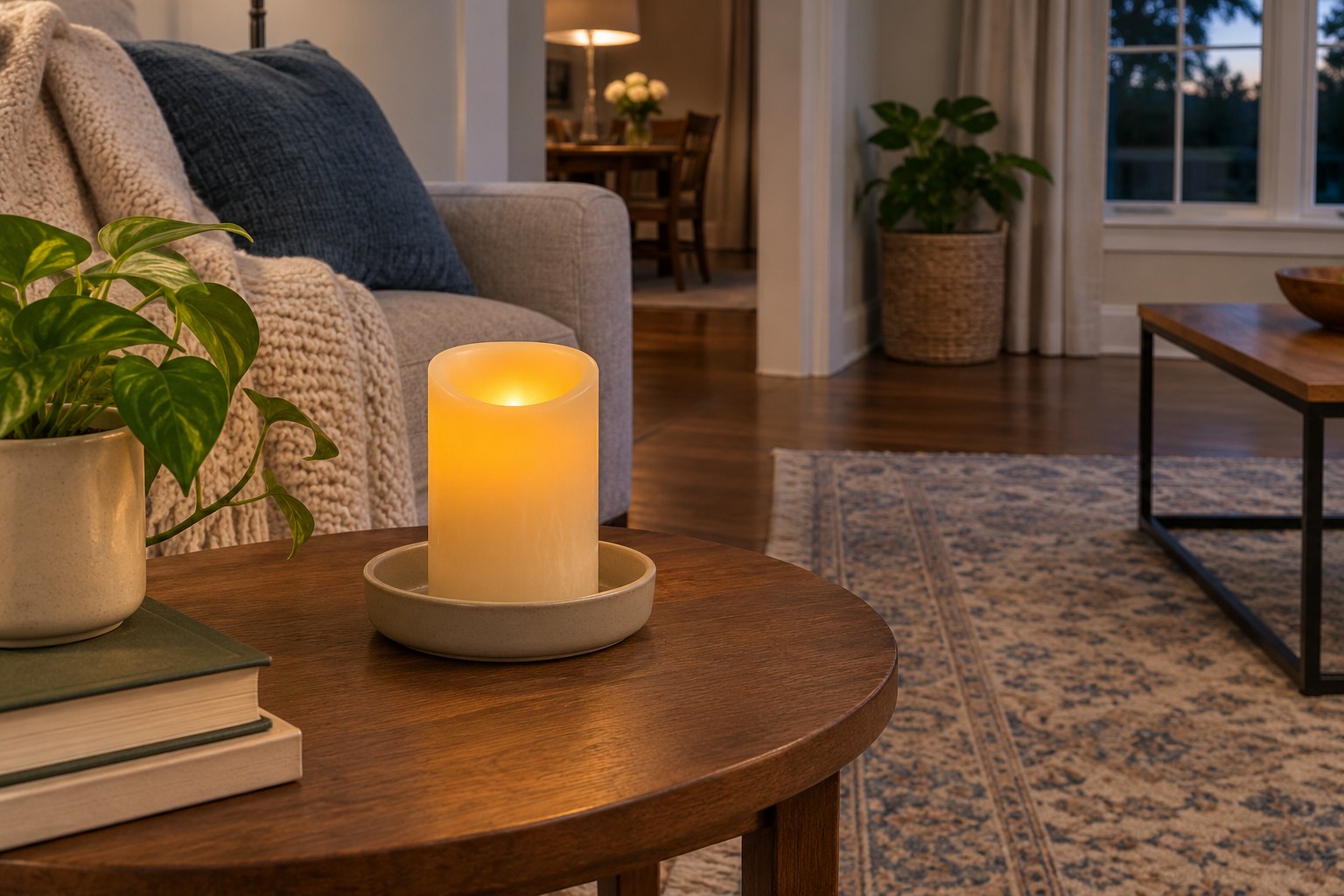
Try a battery-operated candle in a ceramic holder on a stable surface. Look at the glow from the seat you use after dark. A low glow can bring out a textured wall or bowl even with the reading lamp on. Choose a location away from the edge where it will not have to move when someone sets down a glass.
Use a size that fits the holder and follow the product’s directions. A small group looks best if the light sources remain easy to reach. A single candle is enough where a shelf already holds books or other objects.
23. Choose a Curtain Fabric You Can Open Every Day
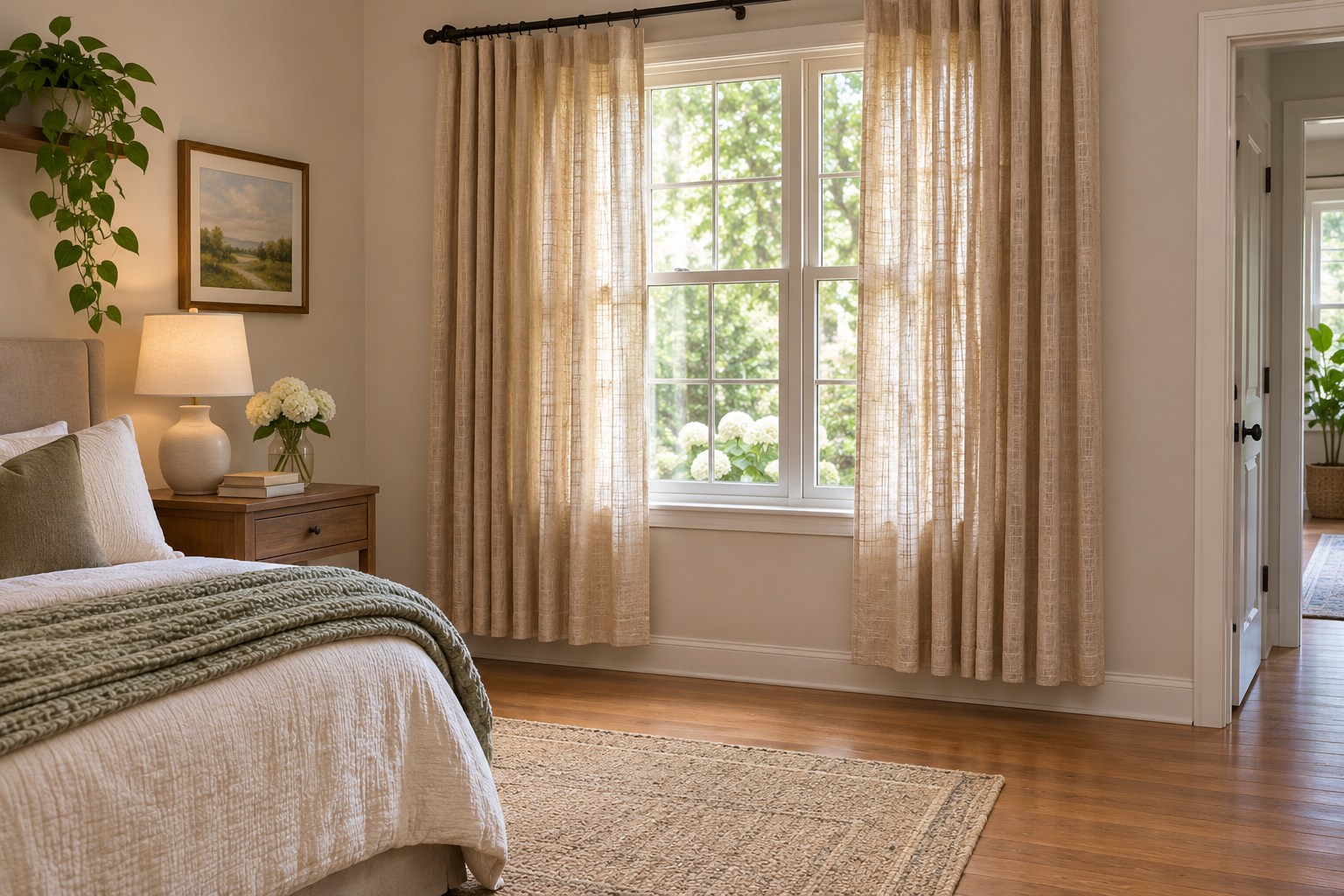
Choose a fabric with enough body to hang neatly and light enough to move with one hand. A textured linen blend can give a plain room more depth when you see it against the window. Check how much daylight passes through before deciding whether the curtain also needs a shade for privacy.
Allow enough room for fabric to gather beside the glass. Keep the hem clear of heaters and out of the walking path. If your bedroom has a difficult window, these modern bedroom curtain ideas can help you choose how the layers should move.
24. Let One Metal Finish Appear on the Pieces You Touch
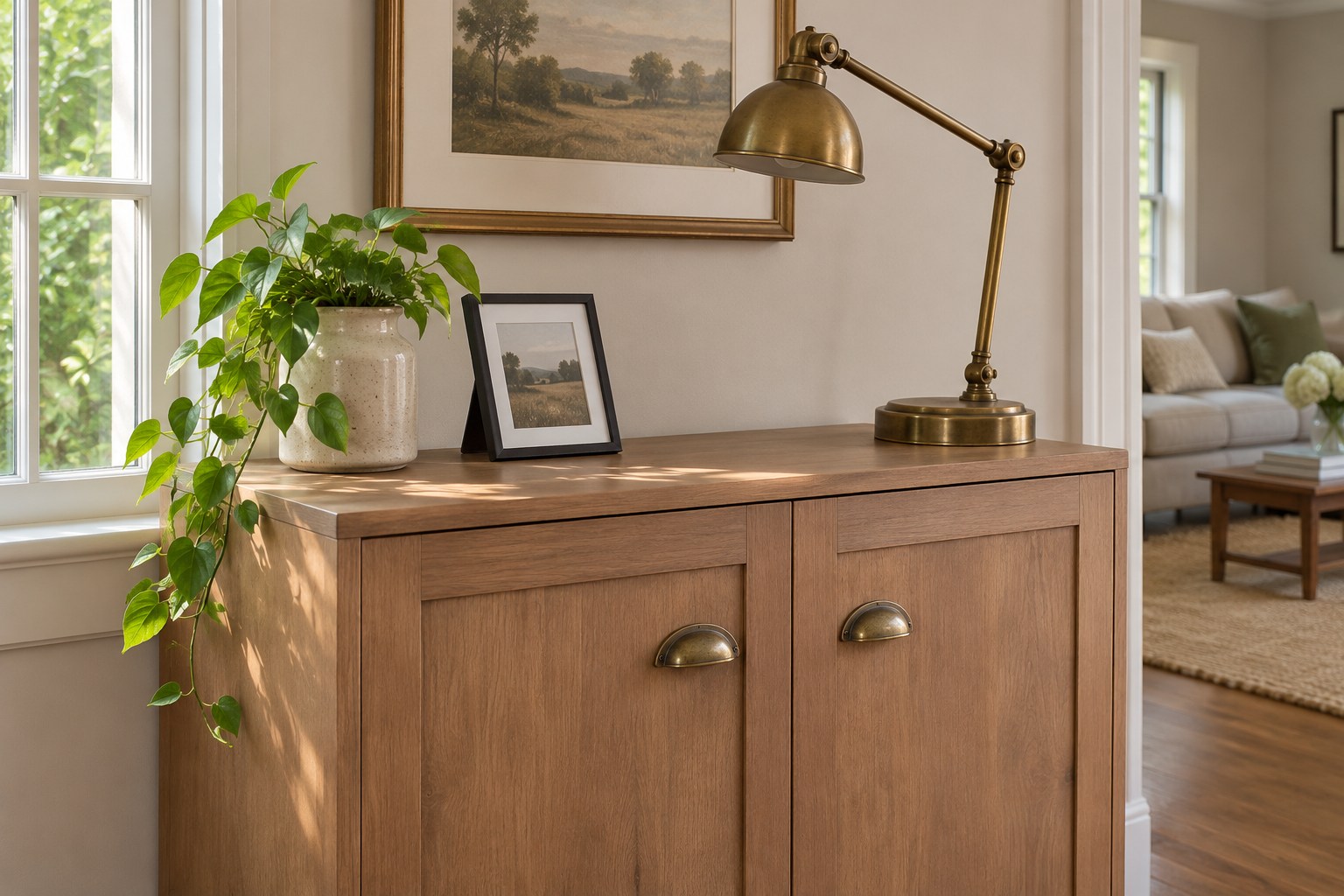
Start with a handle, switch plate, or lamp arm you use often. Bring in the same metal tone once more on a nearby piece if you want the room to feel connected. Aged brass can repeat at the lamp and on a small cabinet pull while a dark metal frame provides a quieter outline.
Compare finishes in the room before buying. A polished metal can look brighter beside matte wood than it does in the shop. Keep pieces that work and make the repetition in just one or two places where people naturally look.
25. Use a Flat Textile on a Wall You See From Across the Room
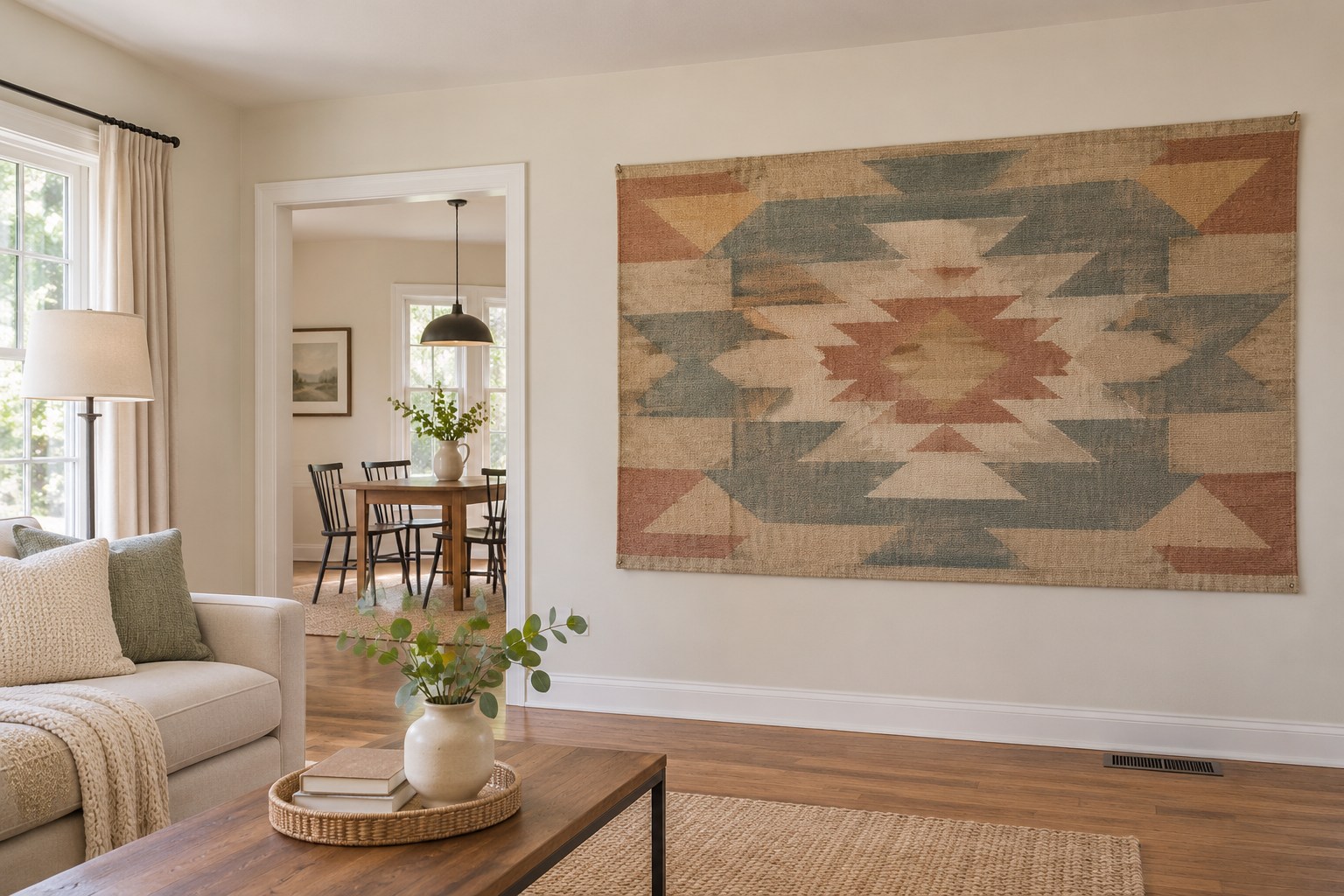
Choose a textile broad enough to show its pattern from the far side of the room. A flat woven piece can bring color to a plain wall without hanging out into the route. Hold it against the wall in daylight and look again from the seat you use after dark.
Choose a display method that supports the textile without stretching its shape. Follow the maker’s directions, and keep it clear of heat and routine contact. Let it take the place of several smaller decorations if you want a calmer view.
26. Display Handmade Pieces With Space Around the Edges
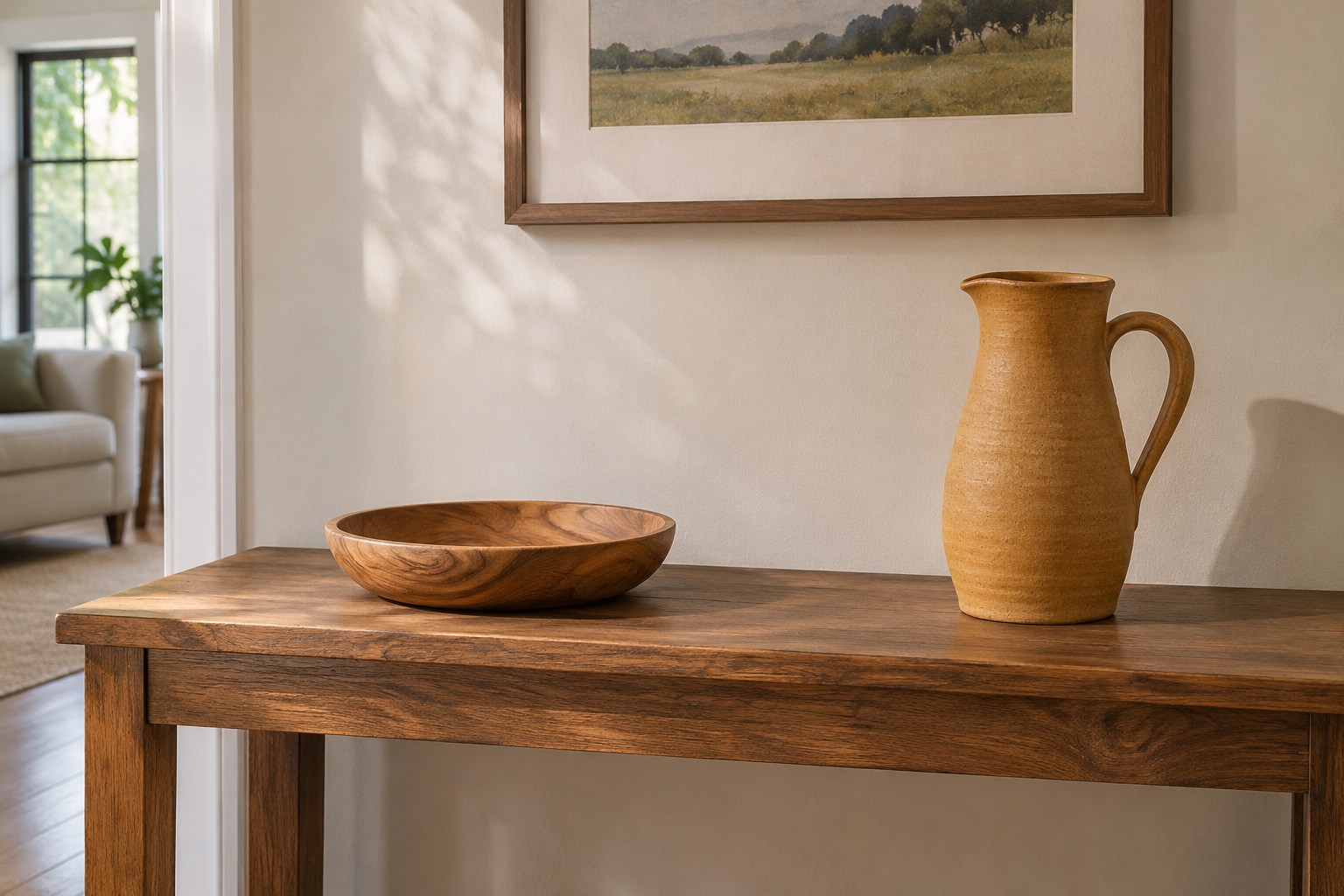
Choose two pieces you can tell apart by shape, such as a low carved dish and a taller clay pitcher. Place them on a level dry surface with some empty space between them. Look at the silhouettes from the usual approach. If they overlap, move the taller piece away until both outlines are clear.
Let one repeat a material already in the room. This can be the grain of a cabinet or a speckle in a lamp base. Use the pieces in the way their makers intended and keep a clear spot for setting down everyday objects.
27. Give a Scented Element Its Own Small Spot
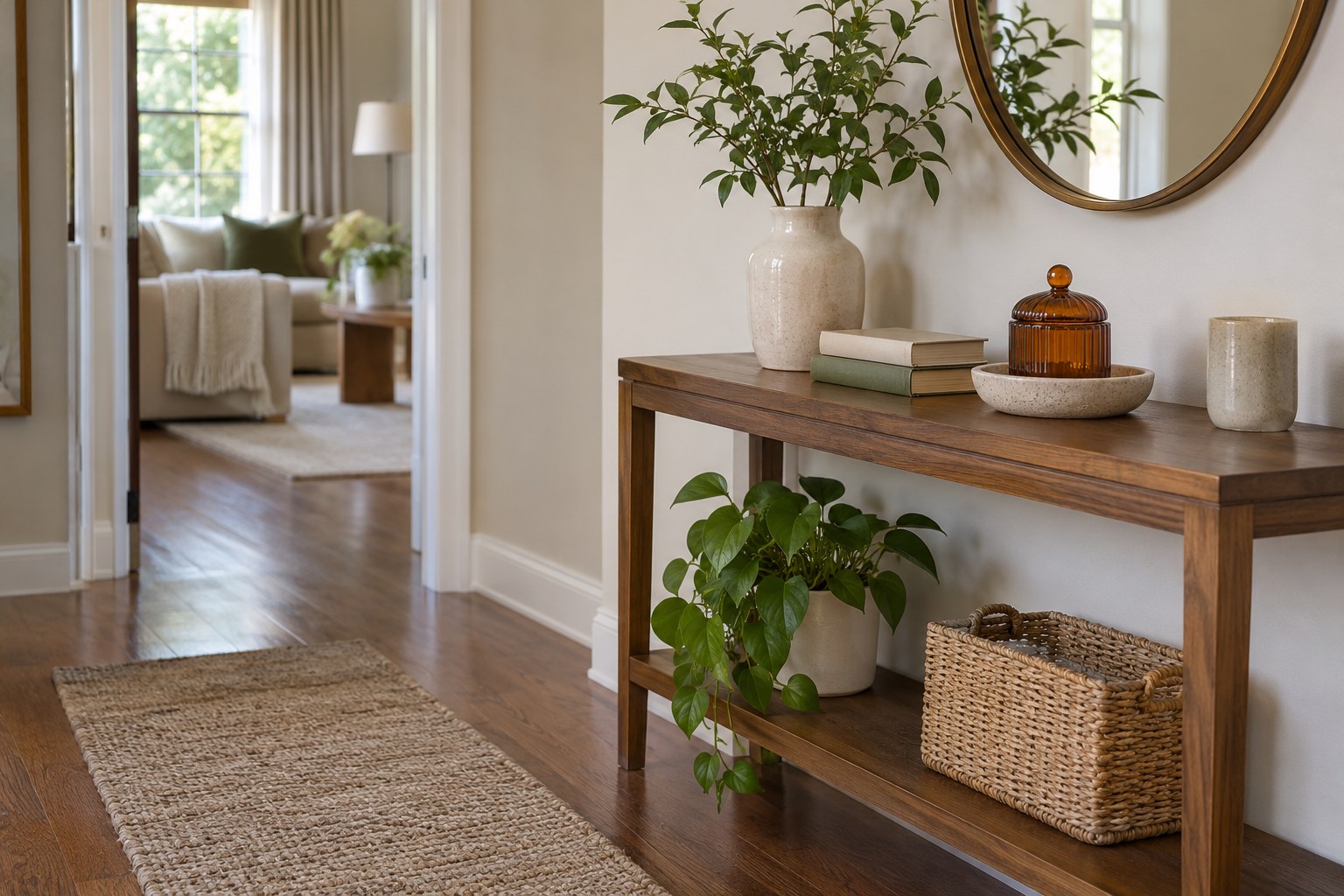
If your household likes fragrance, choose a single place to use it and check how it carries through the room. A closed scented item that you open briefly is easier to put away when the smell is stronger than you want. Keep containers out of reach of children and pets and follow the product’s directions.
Choose something you can remove without affecting the arrangement. A small ceramic dish can look the same with an unscented piece of wood or a few plain stones in it. In a shared room, give people room to choose whether they want fragrance at all.
28. Use a Small Table That Can Change Seats
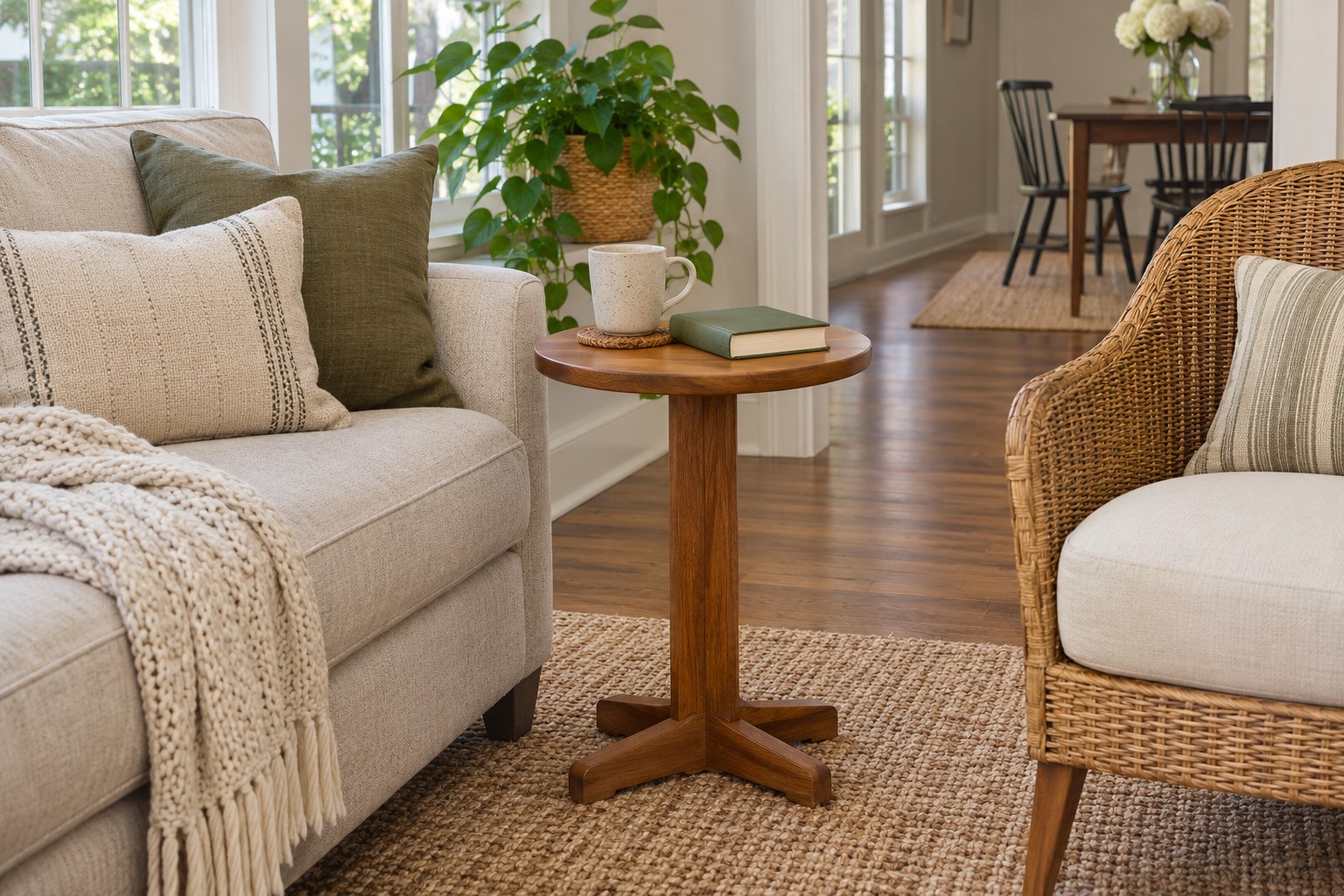
Set one compact table near the chair where you use it most. Try picking it up empty and moving it to the other side of the room. You should be able to clear the path quickly when you have company. A stable shape with enough room for a mug and a book is often all you need.
Choose the finish for the room where the table will spend most of its time. If it moves between two spots, check both heights and widths. Put the more permanent pieces in positions where they can stay while the small table moves.
29. Tie Unlike Chairs Together With the Same Fabric
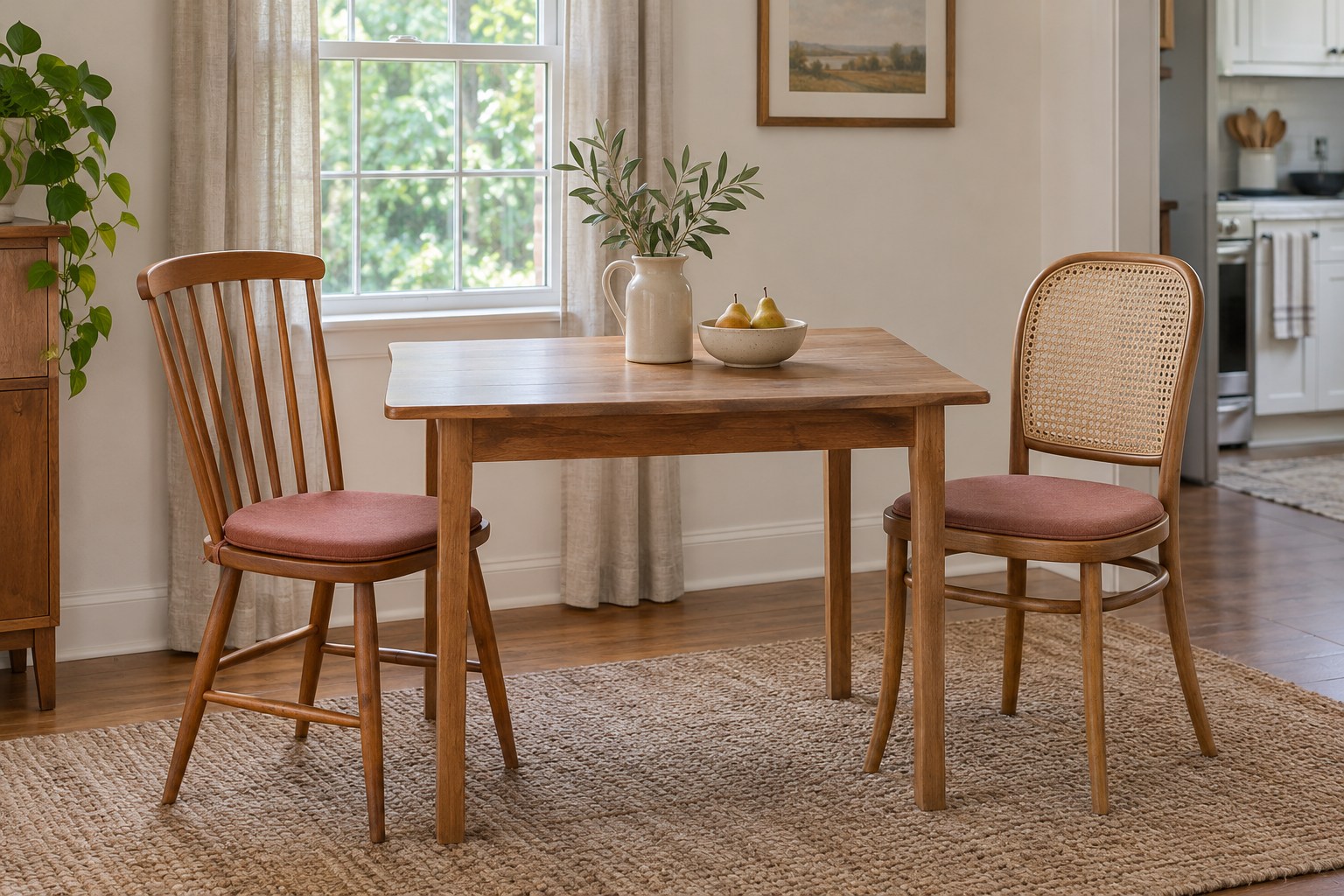
If you own two different chairs, look for one thing that can relate them without changing their shape. Two small pads in the same washable fabric can be enough. Check the fit on both seats and choose pads or covers intended to stay in place.
Let the chair frames keep their own finishes. A light woven seat next to a warm wood chair can look considered when the textile carries one shared color. Use that color only where it helps the two pieces feel like a group.
30. Keep a Detail With a Story Where You Use the Room
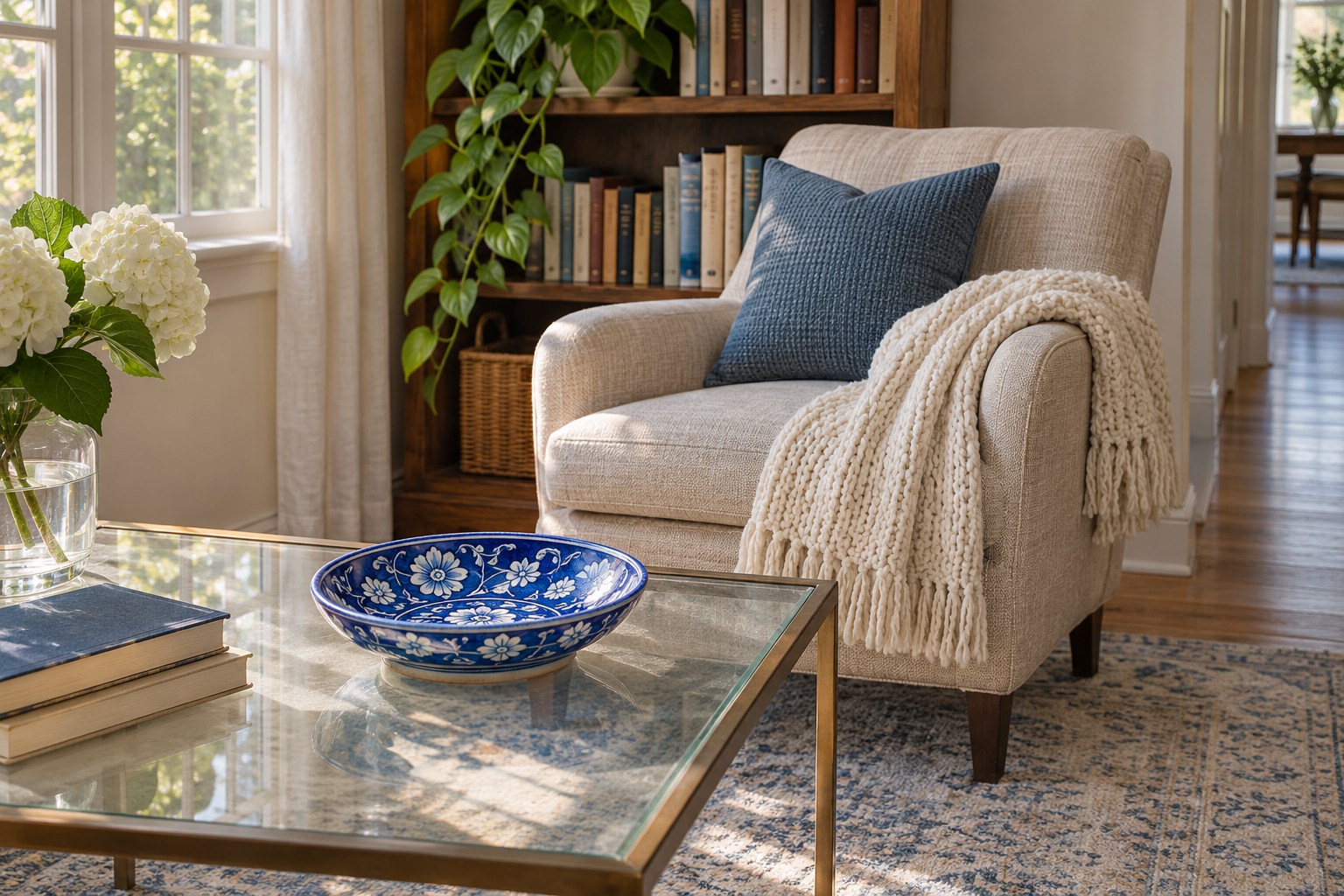
Choose a small object you would keep through a move. A bowl made by a friend or a framed fragment of fabric can sit near a place you pause every day. Check that it has enough room around it and that you can clean or reach behind it easily.
Move it if the only available surface is busy. The detail may be easier to enjoy next to a reading chair than on a crowded mantel. Let its color or texture guide the next small choice once you see how it lives in the room.
Start with one decision, such as where a favorite textile can show or which small table belongs by the sofa. Give every addition room to work. The pieces you reach for and the details you enjoy seeing can carry the room through changes in color and season.
Discover more from HomeTrendora
Subscribe to get the latest posts sent to your email.