
A blank wall behind a bed can feel unfinished even after the bedding is right. A curtain wall changes that large surface with fabric, folds, and a softer outline around the furniture. It can span the bed wall, define an alcove, or cover a closet opening while leaving it usable.
The first decision is the boundary: where the cloth starts, stops, and opens. Measure that actual area before choosing panels. Use hardware and fixings rated for the fabric and the wall or ceiling substrate, and keep heaters, vents, outlets, and required access clear. These bedroom curtain wall ideas focus on making the fabric part of the room’s architecture.
1. Cover the Bed Wall With a Continuous Soft Backdrop

Run a consistent line of opaque panels across the wall behind the bed, with the headboard and bedside furniture fully in front. Soft white fabric can make a plain room feel more complete while leaving the bedding free to change color. Let the repeated folds supply the detail rather than adding artwork over the cloth.
Start by measuring the intended hanging position and finished drop. Ready-made panels may work on a wall-mounted pole below the ceiling; they are not automatically long enough for a ceiling-height installation. Calculate the panel count using the heading’s recommended fullness, so the fabric still has folds when closed. Check the space the gathered panels and support brackets will take before moving the bed back.
Ready-made lined panels can supply an opaque white backdrop if their finished length suits your measured hanging position. This pair has two 52-inch-wide panels; allow extra width for folds, and check how many pairs your wall actually needs.
Compare the lined curtain panels (paid link)
2. Give a Plain Headboard a Tall Fabric Frame

If a full wall feels excessive, give the headboard its own fabric frame. Extend a pair of panels beyond the bed’s sides and hang them high enough to make a deliberate rectangle behind it. Leave an even strip of painted wall visible at either end so the treatment looks intentionally bounded.
Choose cloth with enough opacity to read as a background against the wall you already have. A simple cream headboard against muted olive fabric creates a different relationship from pale fabric behind dark wood. Test the combination with the actual bed linen. Keep hardware visible and simple if you are using a pole, rather than trying to disguise an unfinished installation.
3. Use One Opening in the Curtain Line for a Real Window

When a window sits behind or beside the bed, plan an opening in the fabric line that corresponds to it. Separate panels should pull back far enough for the window’s normal use and cleaning. A clear opening can reveal the window by day while the rest of the wall retains its soft background.
Mark the open and closed positions before ordering. Check handles, the headboard, and the space needed for the curtain stack; do not cover an opening that must remain accessible. For window-specific choices such as privacy layers and headings, see our modern bedroom curtain ideas. Here, the main design decision is how that working window fits into the larger fabric wall.
4. Stop the Fabric at an Architectural Return

Use a wall return, chimney breast, or clear change of plane as the end of the curtain treatment. A fabric panel confined to one recess can feel more settled than cloth that stops at an arbitrary point across a flat wall.
Measure the recess at several positions and check that the support system fits within the intended area. The hardware must attach to suitable structure, not simply to a decorative edge. For a room refresh, keep the rest of the wall painted so the fabric has a clear boundary. If the installation is later removed, the fixing points still need proper repair; a reversible design does not mean it leaves no marks.
5. Make a Deep Velvet Wall Read Through Broad Folds

Deep plum, olive, or midnight-blue velvet can make the bed wall feel rich without another pattern. Use broad, regular folds and a simple upholstered headboard so the changing light on the fabric remains visible. Restrained bedside tables give this larger surface room to carry the composition.
Check a fabric sample in both directions because velvet’s pile changes how it catches light. Confirm the weight of the complete treatment when selecting hardware and supports. Avoid assuming a thin decorative pole can carry multiple heavy panels. A pale headboard and a limited accent color can keep the room readable even when most of the fabric is dark.
6. Choose Linen Texture Beside an Open-Grain Bed

Textured flax-colored cloth and an open-grain wood bed make a quiet pairing. Let the curtain wall stay close to the wall’s warm neutral tone while the wood supplies the stronger grain and edge. Cotton bedding and one woven cushion can continue that material focus without making every surface identical.
Check the actual fiber content rather than judging it from a linen-look photograph. If you want natural linen, confirm that on the product label; blends and polyester imitations behave differently. Follow the specified care routine, and decide whether the expected creasing suits you. A sample held beside your bed frame is more useful than a screen image for judging the relationship.
7. Use a Contrast Edge to Outline the Bed Zone

A narrow contrasting leading edge can make two fabric panels read like a frame around the bed. Try warm cream cloth with a muted blue border, or pale gray with a deeper charcoal band. Keep the rest of the panel plain so the vertical edges do the work.
Choose ready-made bordered panels or ask a suitable workroom about adding trim compatible with the fabric’s weight and care needs. Hold a full-height ribbon or temporary fabric strip in position before committing to its width. The two edges should look intentional from the doorway and from the bed, rather than disappearing behind the headboard or falling into an awkward off-center gap.
8. Give a Narrow Room a Shallow, Measured Treatment

In a narrow bedroom, check the side view of the treatment before committing to a full fabric wall. The track or pole, gathered heading, fabric folds, and headboard all need space. Mark their actual projection from the wall, then move through the bedside route and open any nearby drawers.
A shallow bedside shelf can keep a book and glasses reachable without placing a deep table in that same gap. Put it fully in front of the cloth and keep its stored items clear of the moving panels. Test the shelf depth with the bed and curtain line together. The useful result is an accessible bedside arrangement, not a promised increase in the room’s floor area.
9. Return a Short Length Along the Side of an Alcove

A bed alcove can feel more complete when the fabric turns a short distance onto one adjoining wall. The return gives the backdrop an edge you can see from the room, while the main length stays behind the headboard.
Check whether the chosen hardware system supports that corner and how the fabric will stack there. Keep the alcove entrance open and leave room to make the bed. A short return often supplies enough enclosure visually; you do not need to wrap every side. Use a sample hung loosely at the corner to judge the effect before arranging a properly supported installation.
10. Leave Bedside Tables Fully in Front of the Cloth

Let the curtain wall run behind freestanding bedside tables instead of trying to tuck fabric between the table and its drawers. The furniture will have a clearer outline, and you can see whether a panel is catching as it moves.
Measure table depth from the most projecting curtain fold, not just from the painted wall. Check switches, plugs, and drawer openings while everything is in position. Keep lamp bases stable and fabric away from the lamp’s required clearance area. A simple table with visible legs can work well because it leaves some of the fabric backdrop visible beneath and around it.
11. Hide a Closet Opening Without Losing Access

A curtain-front closet can join a bedroom’s fabric wall when its opening needs a softer face. Give the closet its own operable section, with enough stacking space to reveal the shelves or hanging rail you use. The closed fabric can look continuous, but the opening should still work as a separate part of the room.
Move through a normal clothes-changing routine before settling the layout. Can you reach the back shelf, remove a hanger, and put things away without trapping cloth under a basket? Keep fabric clear of lights, electrical equipment, and any ventilation requirements inside the closet. Choose a heading that draws easily for the frequency of use.
12. Let a Small Woven Stripe Set the Wall Rhythm

A fine woven stripe can give a broad fabric wall an orderly rhythm without adding a large print. A cream-and-taupe stripe works with pale bedding, while a narrow faded-blue stripe can connect to a darker wood bed and a plain blue blanket.
Look at the fabric both flat and gathered. A stripe that looks quiet on a small swatch may become much more pronounced across several panels, especially where folds bring the lines together. Ask how seams or repeated ready-made panels will align. Keep the remaining textiles mostly plain until you can see the actual wall treatment in the room.
13. Balance a Dark Curtain Wall With a Pale Ceiling

A pale ceiling can give a dark fabric wall a definite upper boundary. Use a restrained rail or pole, then let a cream headboard or pale bedding create another light shape lower in the room. The contrast helps the bed remain distinct against deep fabric.
Check the wall fabric beside the actual ceiling color during the day and with your evening lights on. A white that looks neutral in isolation may turn noticeably cool beside warm burgundy. Our dark feminine bedroom ideas explore related choices for keeping shapes readable in a deep palette. Here, the fabric wall is the large dark surface that the ceiling and bed need to balance.
14. Keep One Section Easy to Draw Back for Cleaning

Plan maintenance into the fabric wall rather than treating it as a permanently sealed surface. Use panel breaks that let you draw cloth aside and reach the baseboard, floor, and wall behind the bed without dismantling the whole treatment.
Check the fabric’s care label and make sure its heading can be removed and reattached as intended. Heavier panels may need more help to handle safely. Avoid a long decorative puddle if it will collect dust where you cannot easily reach it. A clear, deliberate hem can still look soft, and it makes the everyday cleaning route easier to understand.
15. Use a Wall Sample to Settle the Fabric Undertone
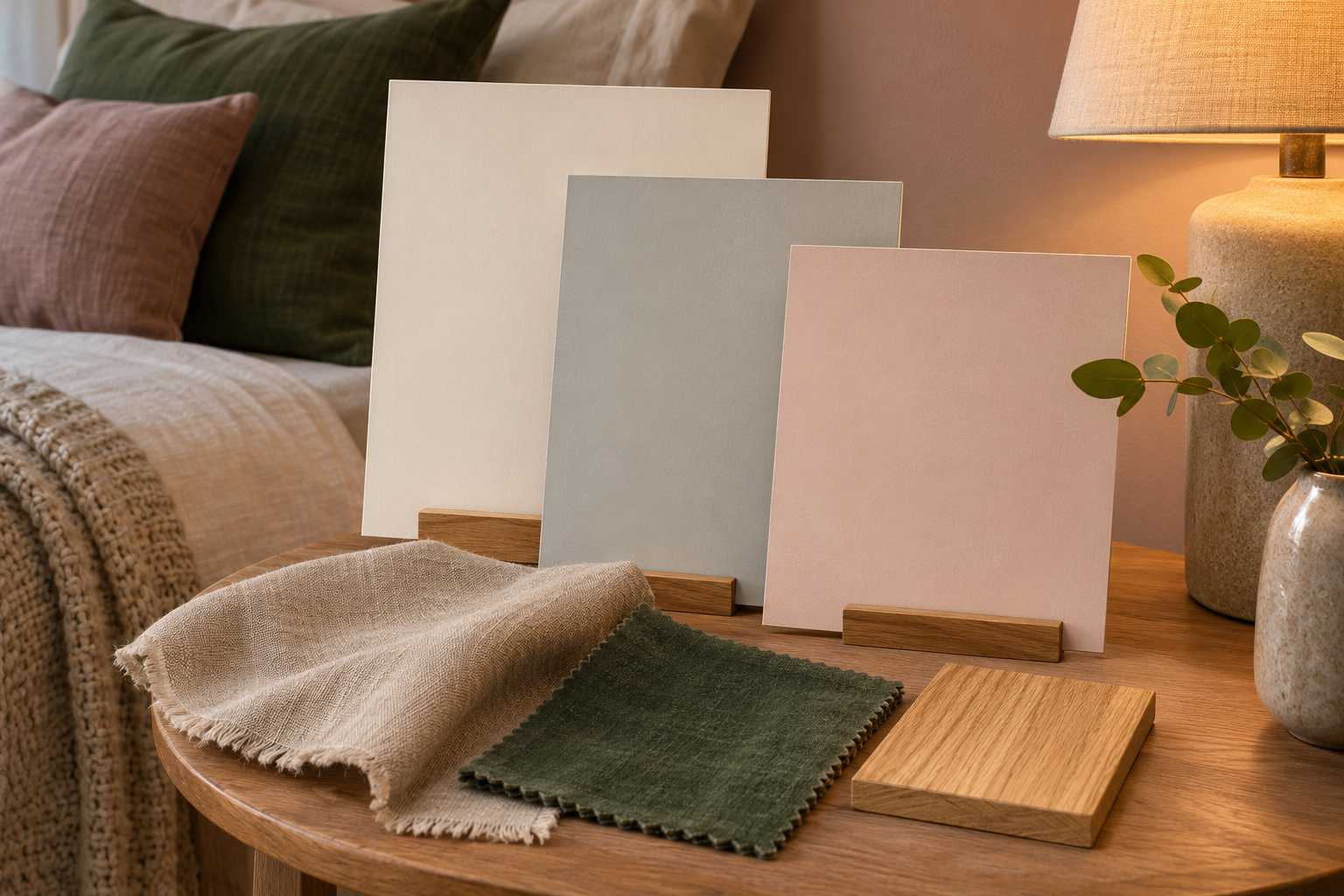
Test your fabric with a large painted wall sample, the bed’s main textile, and any wood finish that will remain in the room. Put the group near the proposed curtain wall and look again after the evening lights come on. This helps reveal a pink, green, or gray cast that a tiny swatch can hide.
Choose the element you want to lead. If the curtain fabric is fixed, settle the nearby paint around it; if the wall color is staying, compare several cloth samples against that color. Keep a note of the exact fabric and paint selections so the final order matches the sample you judged at home.
A successful curtain wall has a clear boundary, a fabric you enjoy, and openings that still work. Begin with those three decisions, then choose the folds and color that make the bed feel at home against its new backdrop.
Discover more from HomeTrendora
Subscribe to get the latest posts sent to your email.