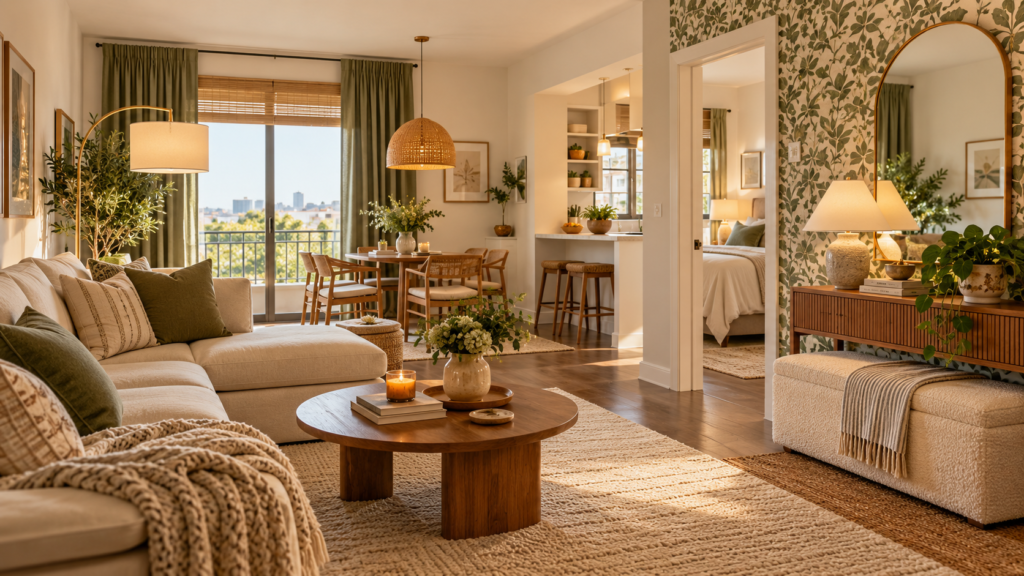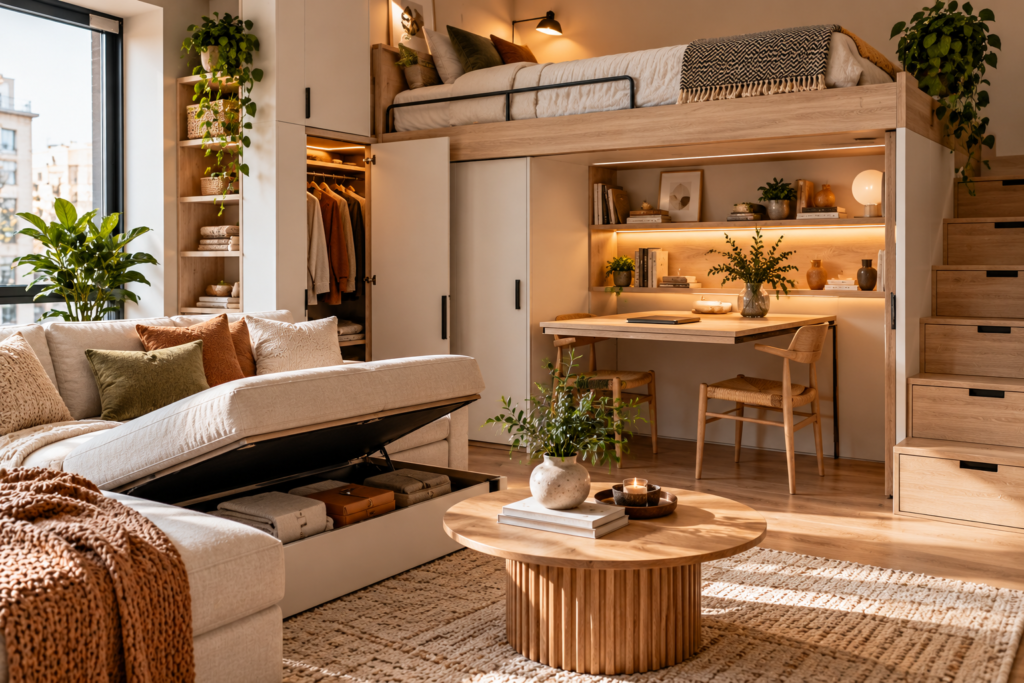
The best evening rooms have something to do with the people who live in them: an album worth playing, a chair that draws you away from your phone, a table with room for a game. A vibey apartment living room can be colorful and a little unconventional while still feeling easy to use.
Build the mood around one habit you want more of at home. These ideas use furniture, fabric, artwork, and small rituals to give that habit a place. You can try a single corner before changing the whole room.
1. Start a Conversation Corner With One Colored Chair
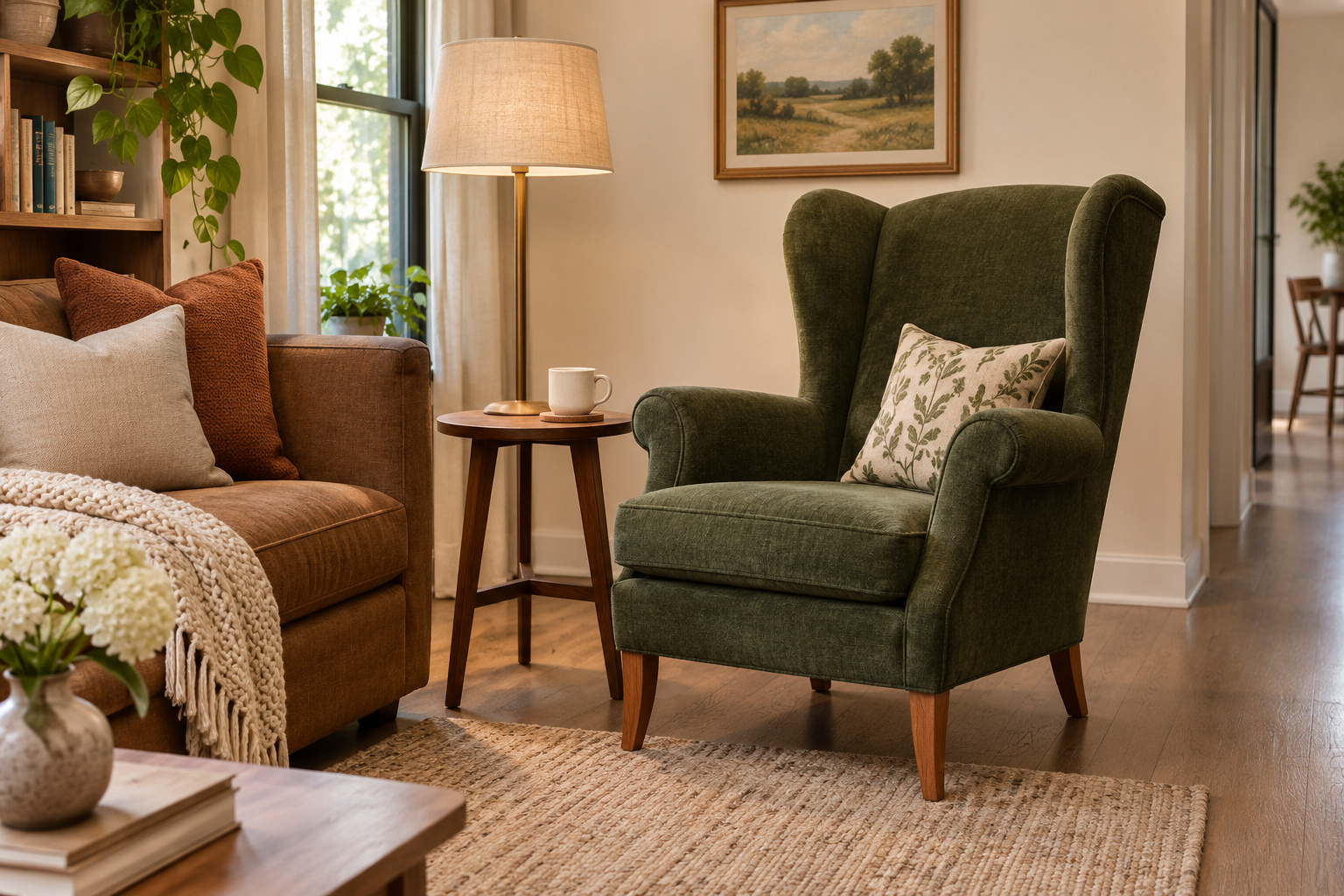
A green, rust, or plum chair gives a sitting corner an identity before you add much else. Angle it slightly toward the sofa, with a small side table within easy reach. That slight turn makes the chair part of a conversation instead of a piece parked against the wall.
Try the position with your existing chair first. Sit down, set a cup on the table, and walk past while someone occupies the seat. Check the outside dimensions of any replacement, including the arms and back; a compact-looking seat can still have a deep frame. Keep the surrounding cushions quieter so the chair supplies the main color.
A dark green wingback can give this corner its main color while the rest of the room stays simple. Measure the full 29.25-by-33.75-inch footprint, then allow room beside it for the table and a comfortable route past the seat.
Explore the green accent chair (paid link)
2. Let an Album Cover Lead a Small Display
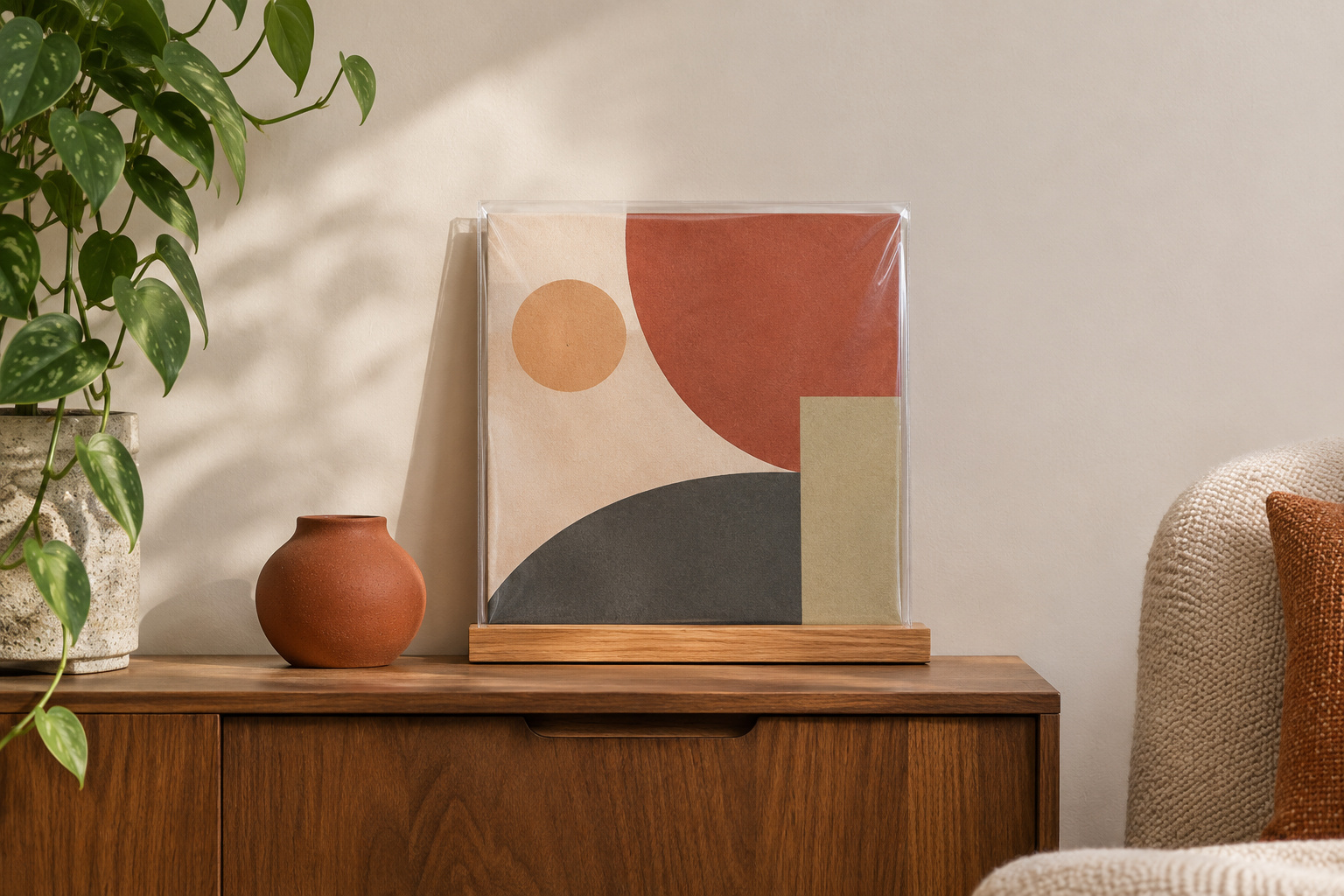
One album cover can be the starting point for a personal display, even when your music usually comes from a speaker. Lean it securely on a shallow ledge or cabinet, then add a small object that repeats one color from the sleeve. Leave breathing room around the pair so the artwork remains easy to see.
Rotate the cover when your listening mood changes. Keep the actual record protected in its sleeve and away from heat and direct sun. You are making a small visual cue for an evening activity, so there is no need to buy a full record setup just to decorate a shelf.
3. Build a Wall Palette From a Poster You Already Like
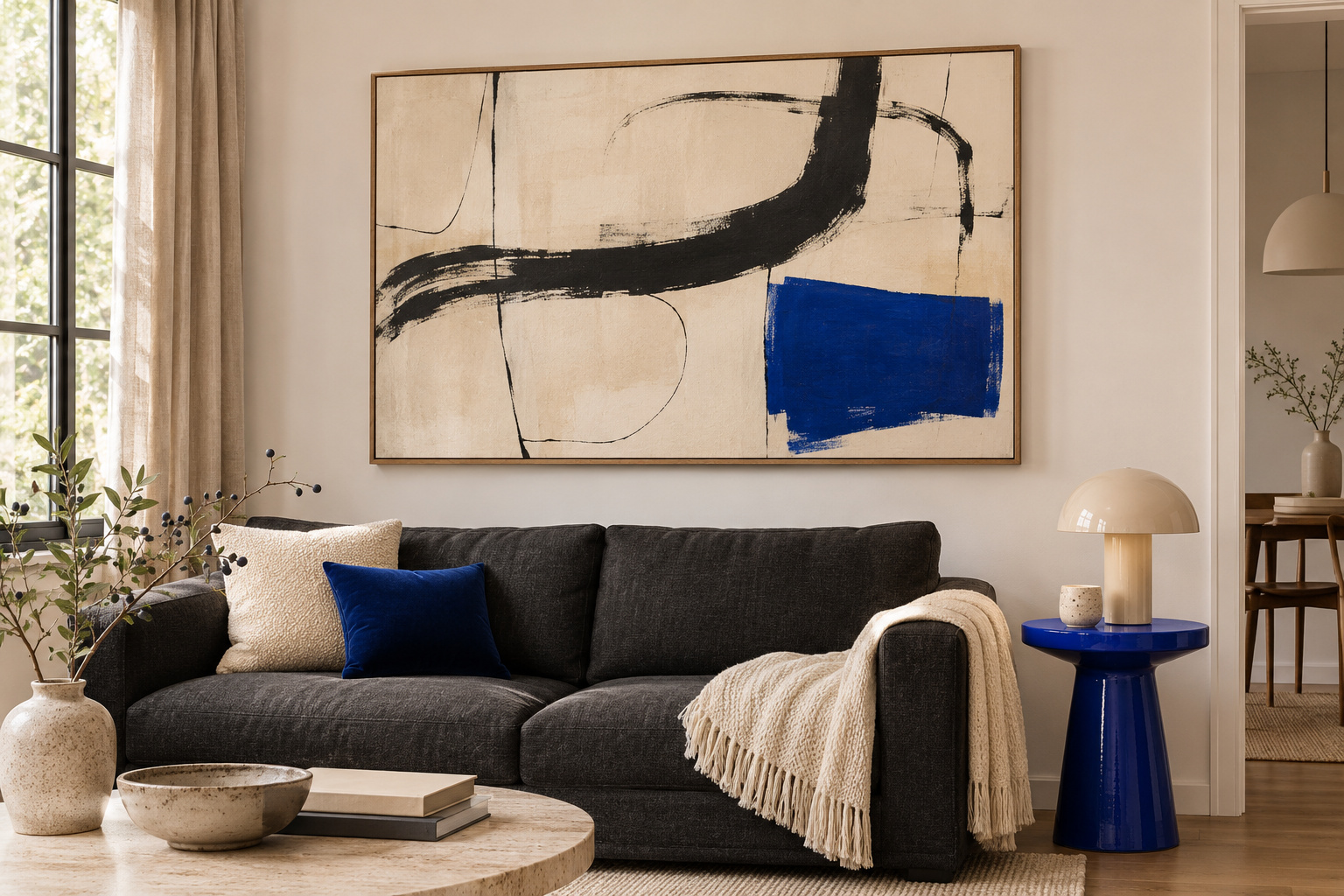
Look at a favorite print and pull out three roles: a broad background color, a midtone for the sofa or chair, and a small accent. A cream-and-ink graphic with a cobalt detail, for example, can lead to an off-white wall, a charcoal seat, and one blue side table.
Test the colors together before painting. A large sample near the furniture tells you more than a tiny swatch held under a store light. Renters can keep the wall unchanged and carry the color through a removable framed print and textiles. The result feels connected because the same visual reference guides the room, rather than every object matching.
4. Choose a Rug That Makes a Distinct Little Lounge
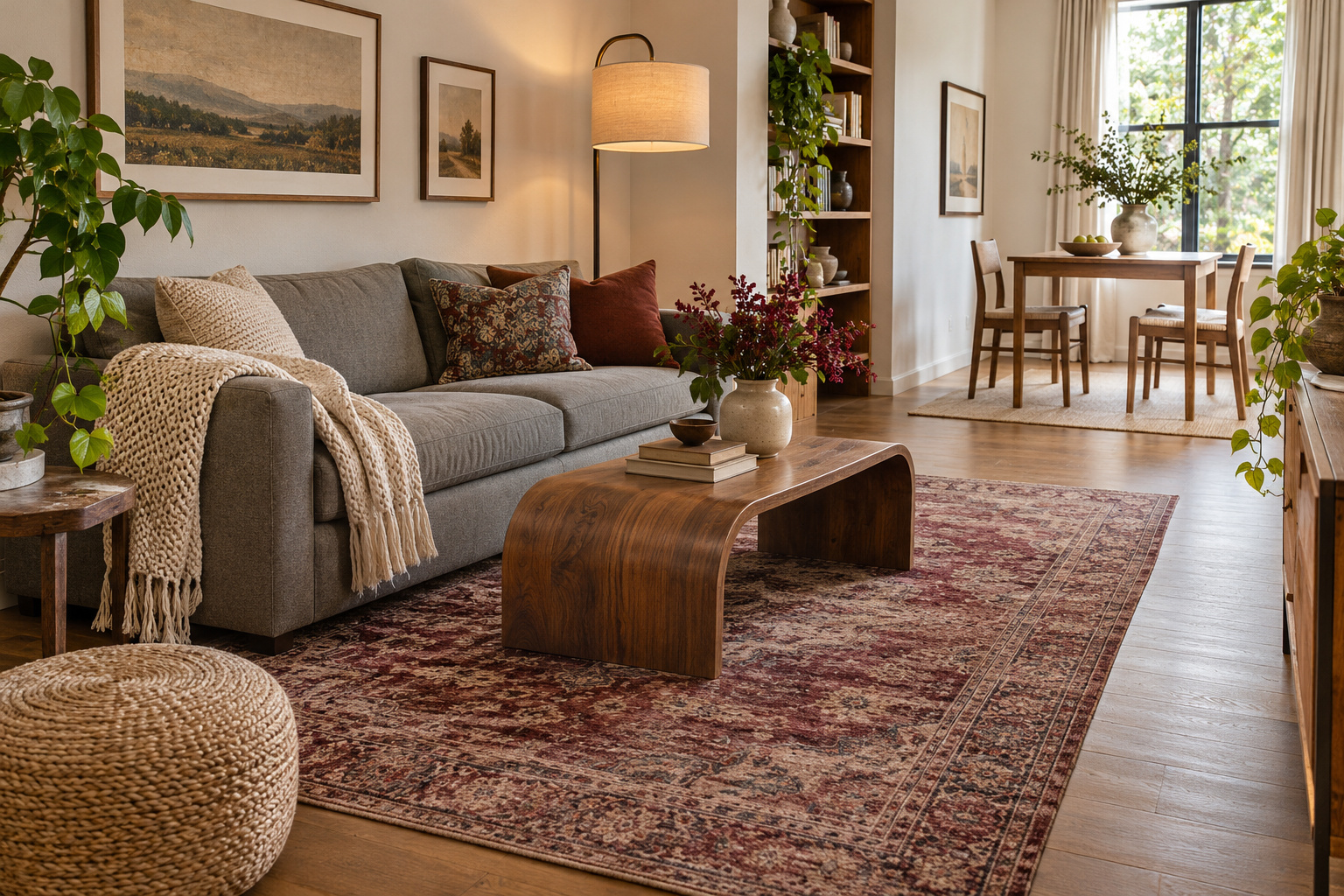
Use a patterned rug to mark the sitting area inside a room that also holds a desk or dining table. A faded burgundy design can warm a gray sofa; a broad geometric pattern can make plain seating feel more playful. Let enough of the design show between the furniture to establish its character.
Mark the rug outline with paper or removable floor-safe markers before ordering. Open nearby doors and check the edge of the main walking route. Our small apartment decorating guide looks more broadly at arranging shared spaces; here, the rug’s job is to give the evening seats a recognizable boundary.
5. Give the Sofa a Loose, Reachable Throw
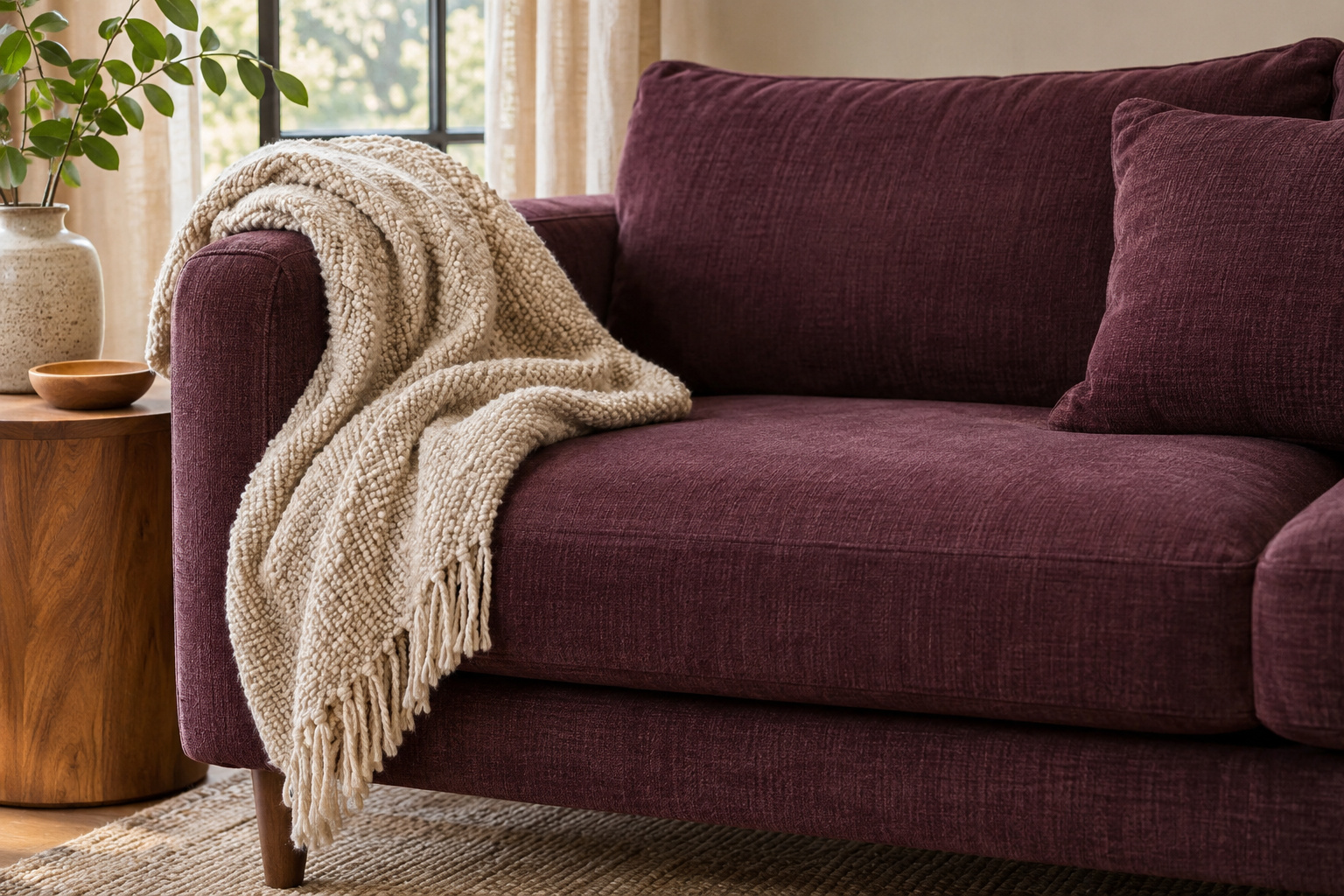
A throw is most useful when it is somewhere you can reach from your usual seat. Drape it over the near arm or fold it loosely across the end cushion, leaving the middle of the sofa clear. A soft wool blend, cotton weave, or washable fleece can all work; choose the feel and care routine you prefer.
Use texture to separate it from the upholstery. A nubby oatmeal throw stands out against a smooth plum sofa, while a dark woven blanket gives pale fabric more depth. Avoid styling so much cloth on the seat that sitting down becomes a rearranging job. This is a small comfort you should be able to use immediately.
6. Keep One Low Table Ready for a Shared Game
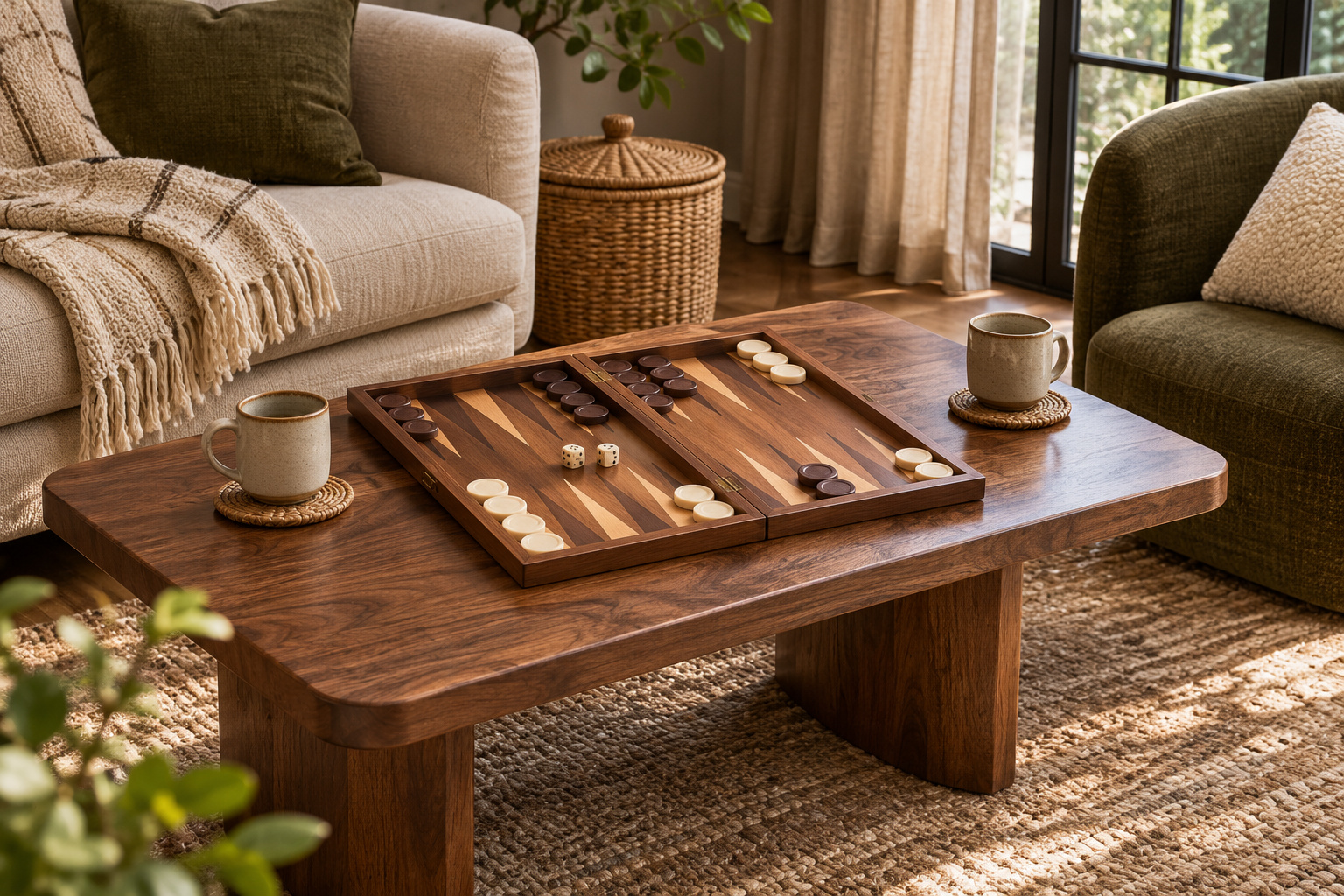
A small backgammon board, a deck of cards, or a puzzle in progress gives the room a reason to gather. Put the game on a table that people can reach comfortably from the seats, with room alongside it for a drink on a coaster.
Choose one activity rather than displaying a stack of boxes. A lidded basket nearby can hold the rest. If the table also serves dinner or laptop time, keep the game on a removable board so the whole setup lifts away together. A room often feels more inviting when its best activity is already easy to begin.
7. Mix Two Seat Shapes Around the Same Conversation
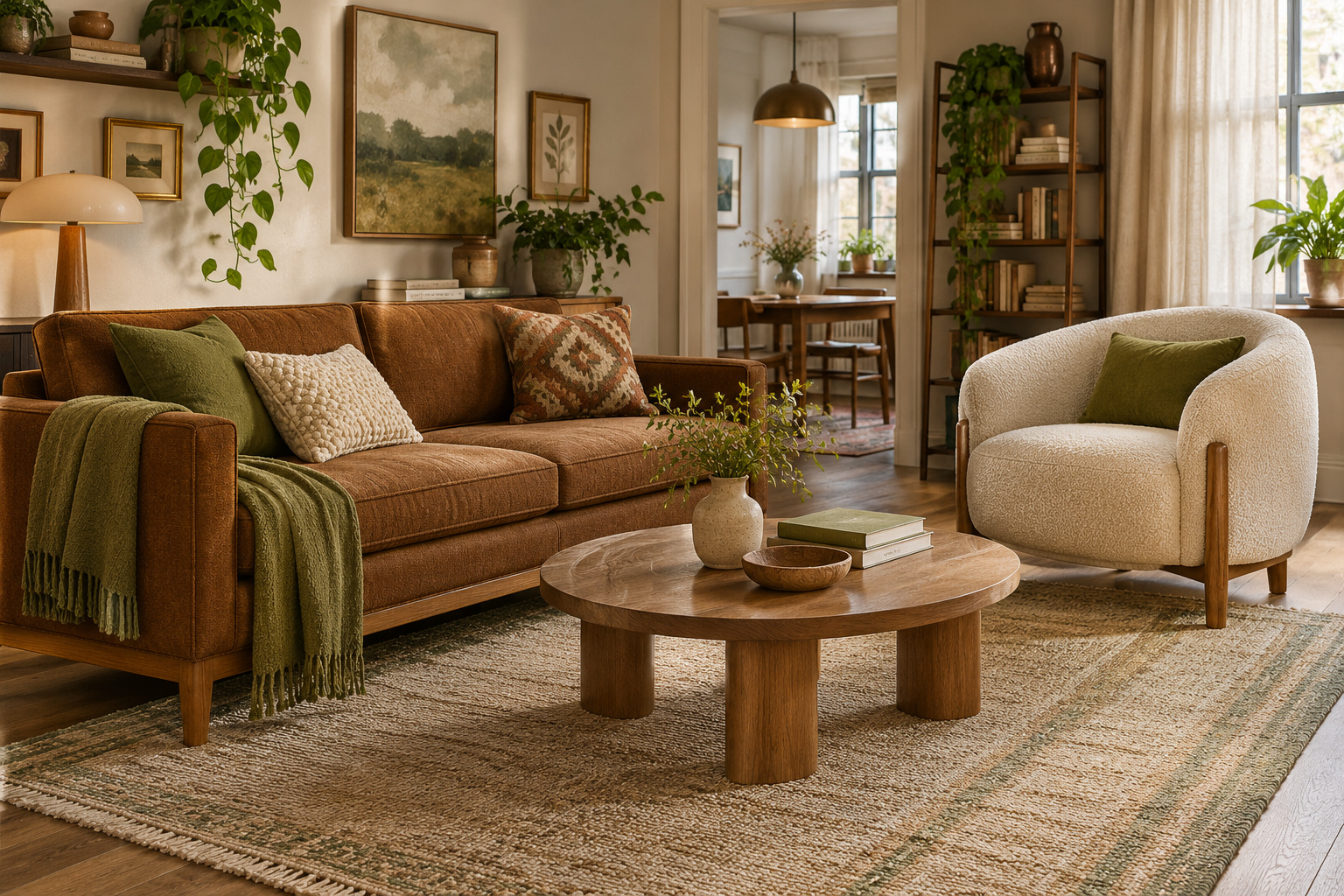
A straight-lined sofa and a rounded chair can share a room without looking like an incomplete matching set. Give them one common element, such as warm wood legs or a muted green textile, then let their silhouettes differ.
Check how the seats work together at body level. A very low lounge chair beside an upright dining-style seat can make a long conversation awkward, even when the combination photographs well. Borrow a chair from another room for an evening to test the relationship. Keep the side table between them reachable from both positions, and leave the most direct route through the room open.
8. Make a Soft Floor Spot That Packs Away
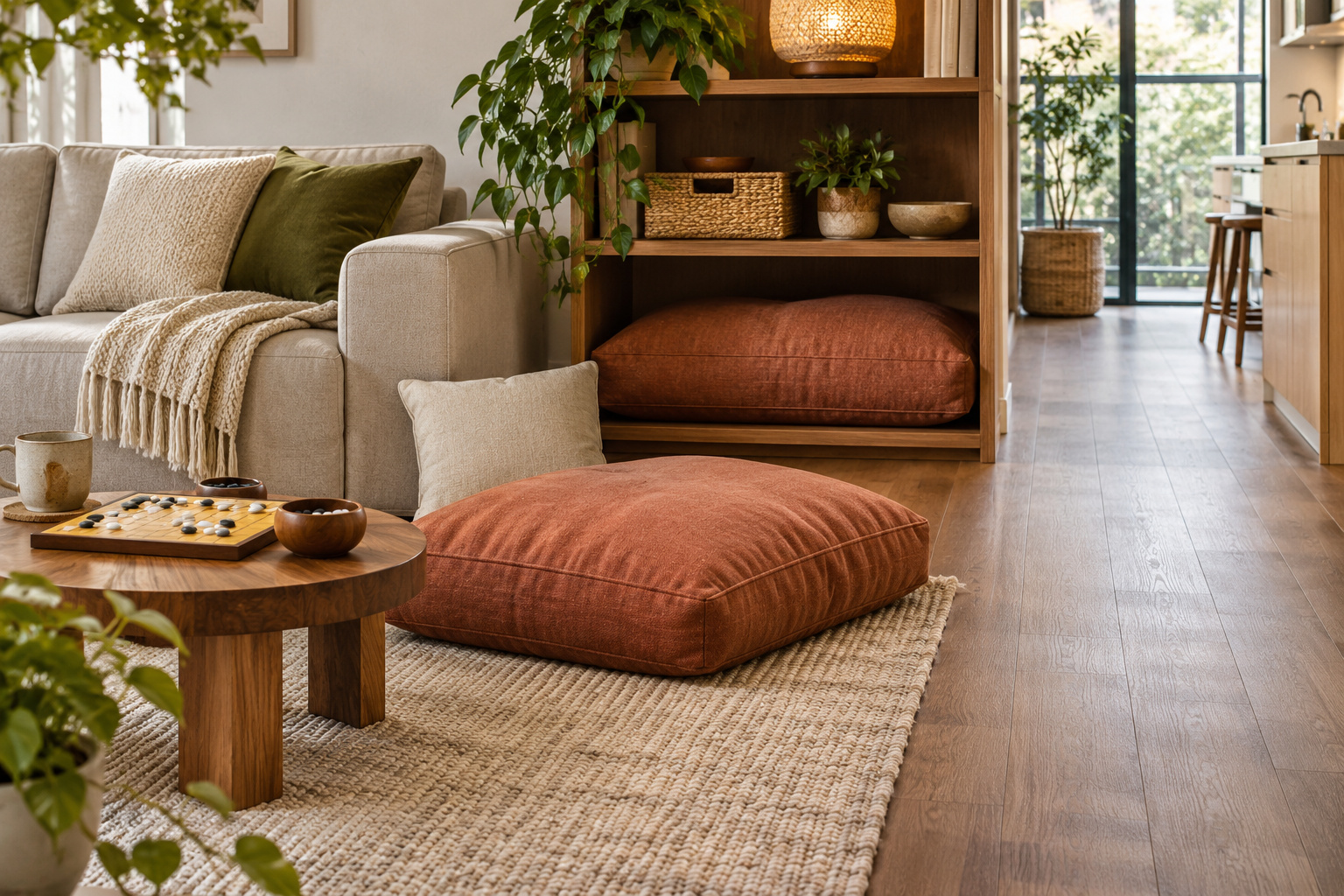
A large floor cushion can create an extra place for reading, stretching, or sitting close to a low game table. Put it at the edge of the seating group, on a clean rug, with a small cushion behind your back if that feels comfortable.
Decide where it goes afterward before adding it to a small apartment. An open lower shelf or a clear space beside the sofa can hold a cushion that fits there without blocking a door. Keep it out of the shared walking route, especially at night. This arrangement works best as an occasional seat that changes the room’s use, rather than a permanent obstacle on the floor.
9. Use a Screen That Lets the Room Change Back
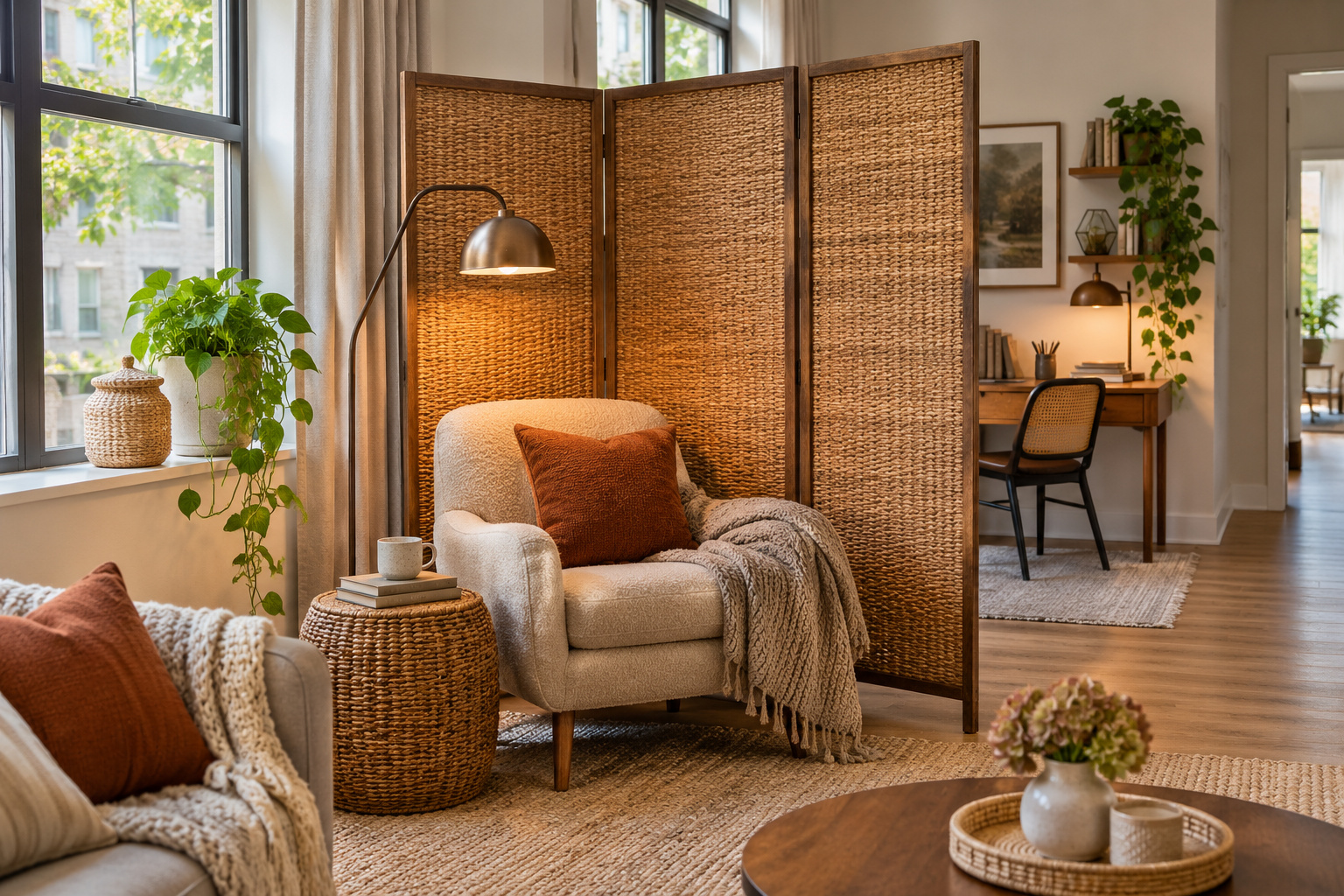
A freestanding woven screen can give a living room corner a sense of enclosure when an open apartment feels exposed. Position it behind a chair or beside the sitting group so it creates a background without cutting off the only daylight source.
Choose a stable screen and follow its setup guidance; do not stretch folding panels flatter than their intended position. Keep exits, heaters, vents, and the main route accessible. Fold it away when you need the room open again. The appeal is the reversible change in atmosphere, especially when a workspace shares the same room and you want a different view after work.
10. Pair a Dark Cabinet With Warm Clay and Woven Texture
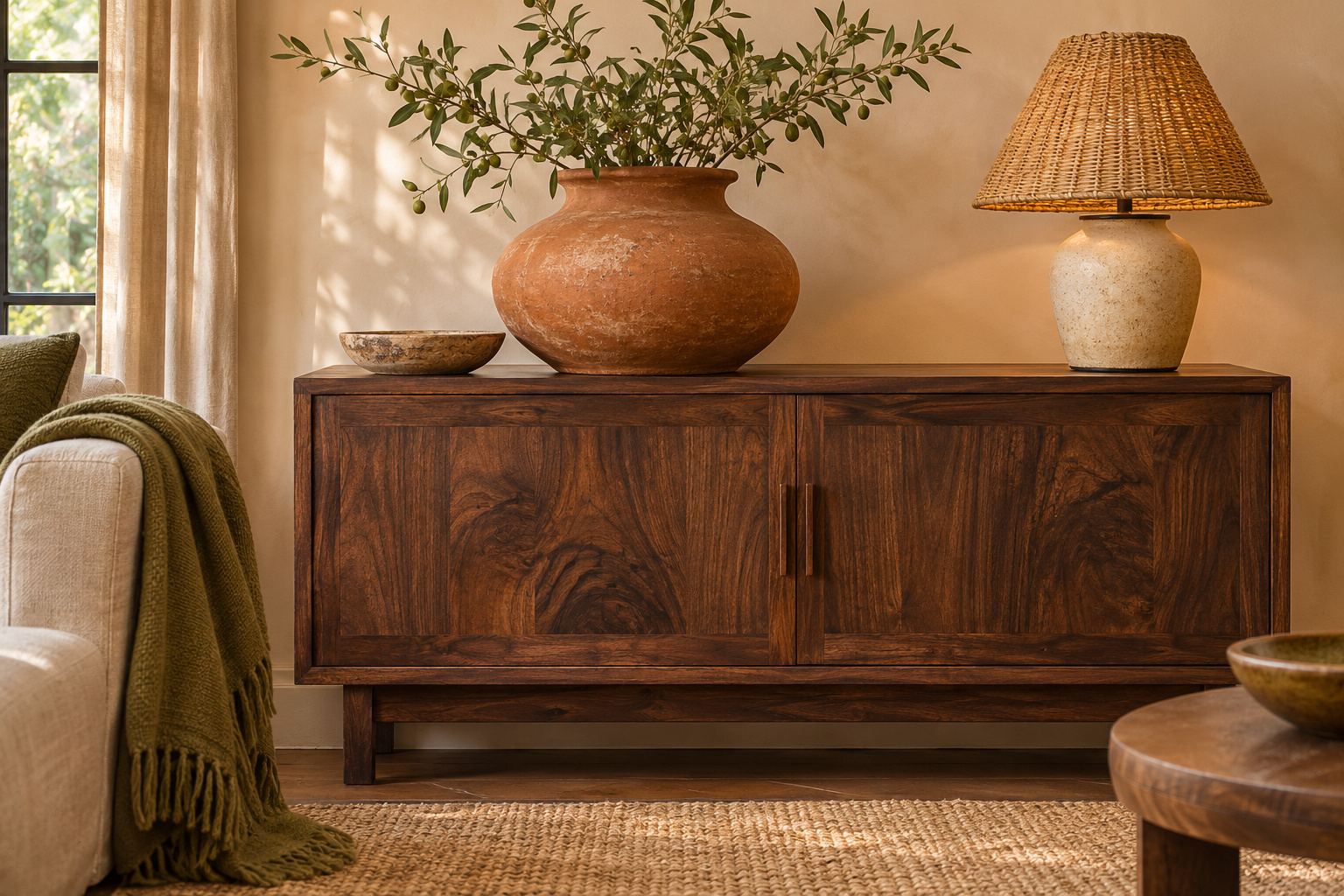
A dark wood cabinet can anchor an earthy corner without making every nearby object dark. Set one broad clay vessel on top and add a woven shade or basket with a visibly different texture. Against a warm cream wall, the three materials give the corner depth while the palette stays restrained.
Leave some of the cabinet top and wood grain uncovered. Choose a vessel large enough to read as a shape from the sofa, rather than a group of tiny ornaments. This approach is especially useful when you already own a dark storage piece and want the room to feel warmer without replacing it.
11. Make the Window Stack Part of the Evening Palette
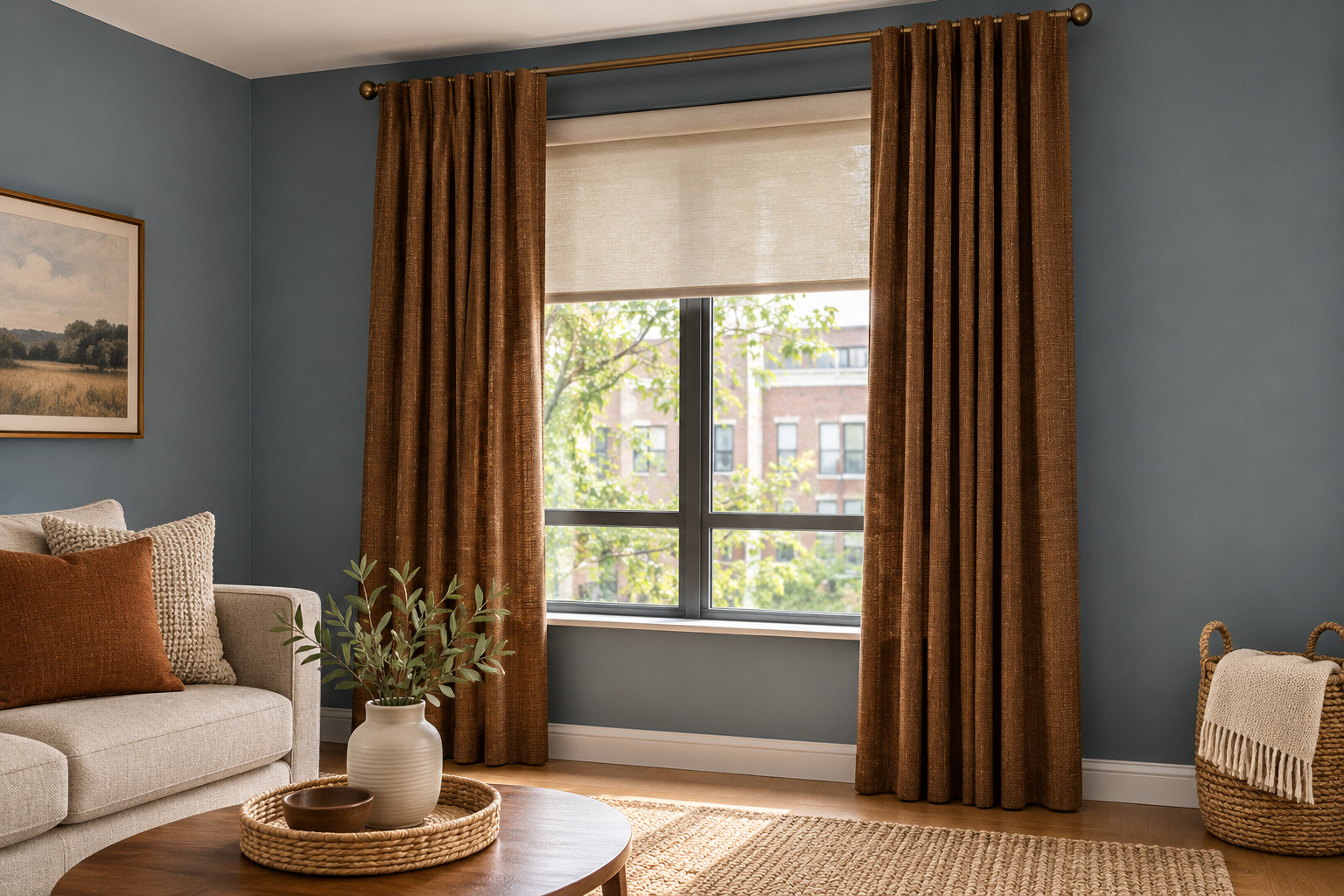
Curtains remain visible after the sun goes down, so treat their gathered fabric as part of the room’s color composition. Tobacco linen-look panels can soften a blue-gray wall; muted olive can connect a plant, a wood chair, and a patterned rug.
Check where the open panels will sit, then keep that space free of a tall cabinet or lamp. Measure for the heading and finished length you choose, following the hardware’s support limits. You can keep an existing shade for daytime light control and use the curtain fabric mainly to supply color and texture. There is no need for every window layer to perform the same job.
12. Turn a Slim Side Surface Into a Listening Spot
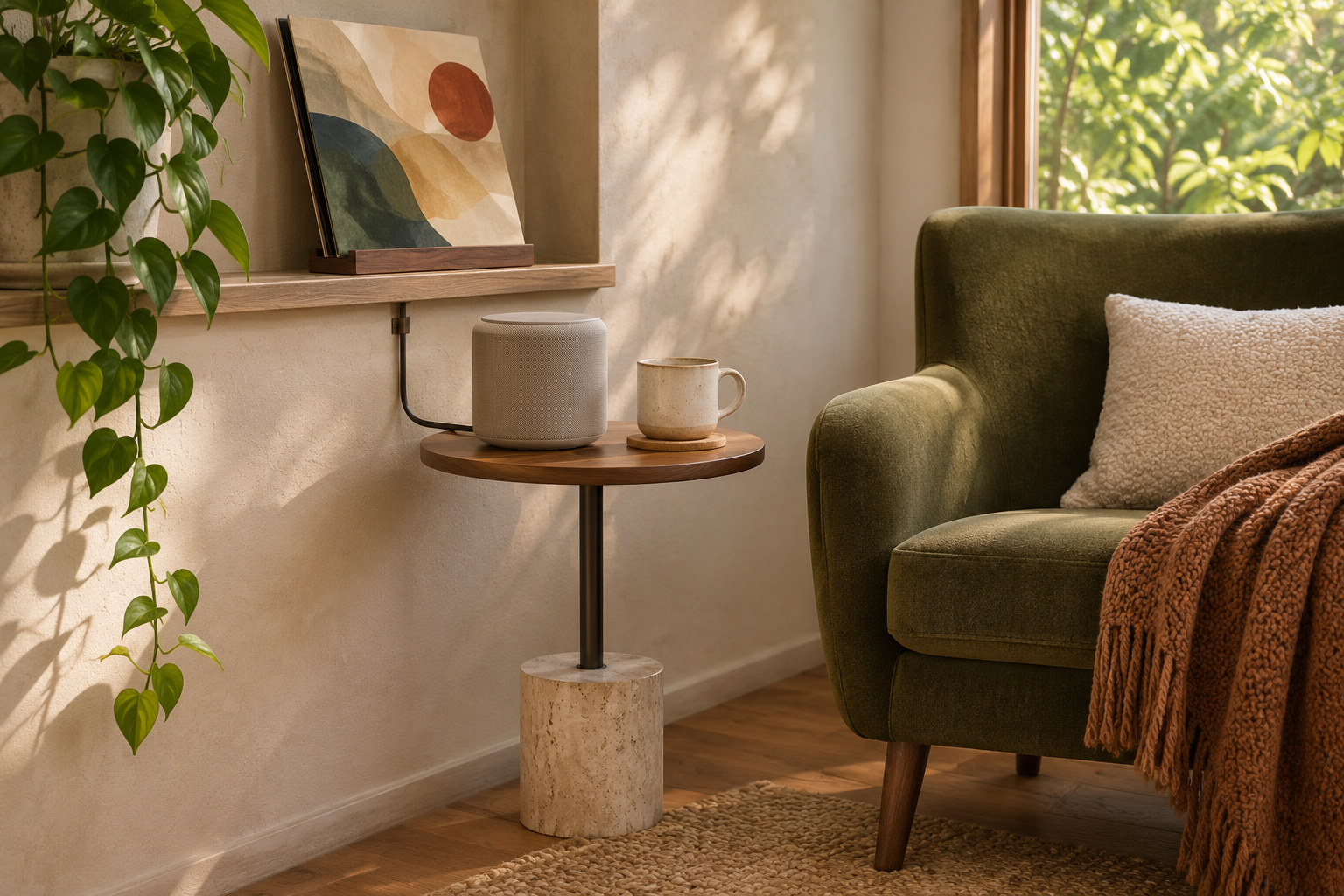
Give a small speaker or headphone stand a deliberate place beside the chair where you actually listen. A narrow side table can hold the device and a drink, while a nearby ledge carries one album sleeve or a small abstract print.
Leave the equipment’s vents clear and follow its placement instructions. Keep charging cords away from walking routes and off the seating surface. If you own a larger collection, our living room media storage ideas cover equipment and record organization in more detail. This smaller setup is about making an ordinary evening listen feel intentional.
13. Let a Curved Mirror Echo the Furniture
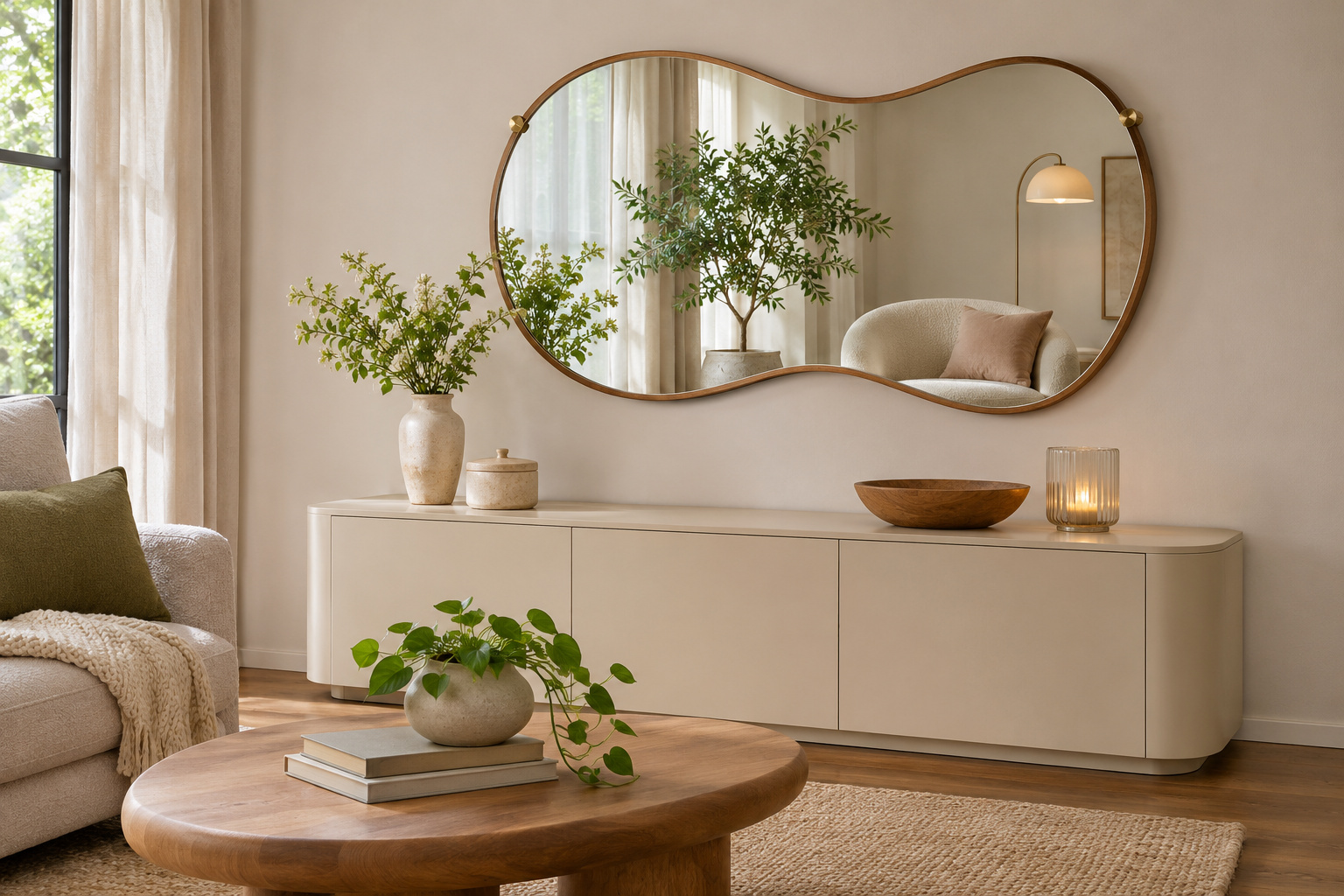
A rounded mirror can pick up the curve of an armchair or coffee table, giving the room a quieter connection than another repeated color. Place it where the reflection includes something you enjoy, such as a plant, textured wall, or part of the seating group.
Check that view from your usual seat before choosing the final position. A mirror that mainly reflects a busy desk may undermine the mood you wanted. Use mounting hardware appropriate to its weight and your wall, rather than relying on a decorative lean where it can slide. Leave some plain wall around the frame so its outline remains distinct.
14. Give Books a Face-Out Rotation Rather Than a Color Sort
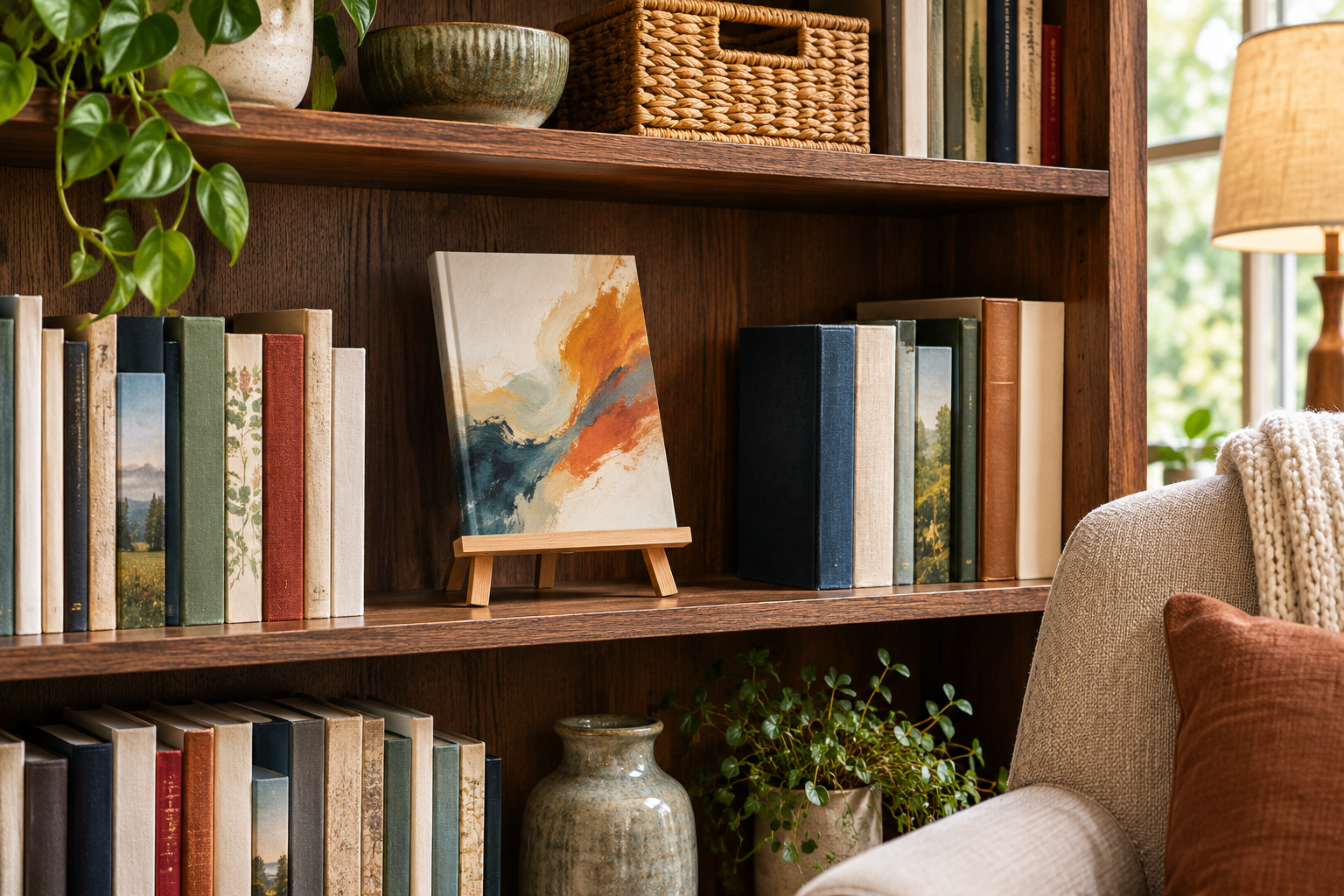
Keep the books you are actively reading on one reachable shelf, then turn a single cover outward as a changing feature. The remaining books can stand normally beside it, with enough room to remove one without disturbing the whole arrangement.
A small display easel can hold the featured book on a deeper shelf. Leave it fully supported, away from an edge where it can tip. Rotate the choice when you finish a book or change interests. This gives displayed and stored books different jobs, and makes the collection feel browsable without asking you to rearrange everything into a decorative color sequence.
15. Use a Small Light as a Colored Object
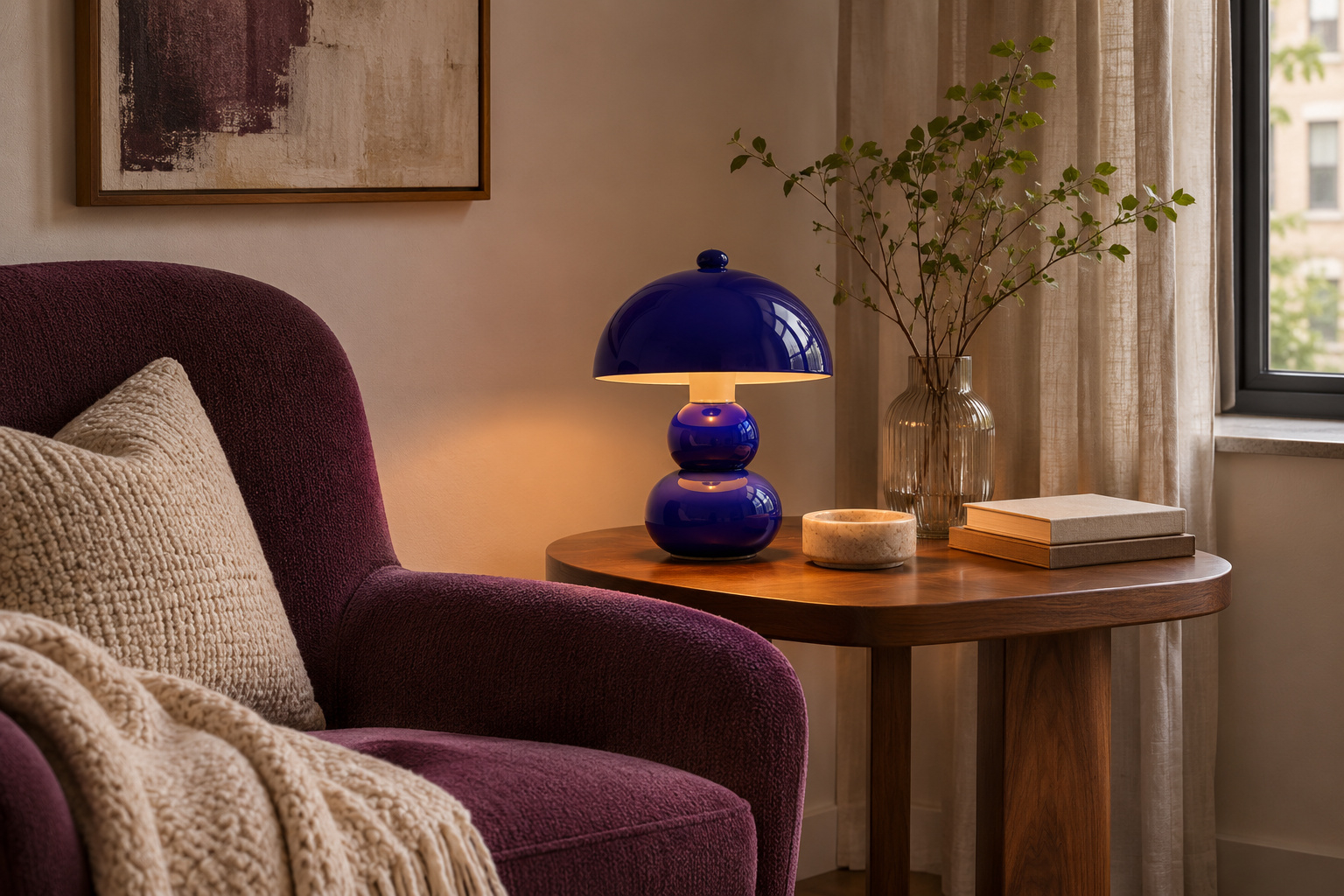
A portable lamp with a rust, cream, or cobalt base can contribute to the room even before you switch it on. Choose a shape that looks good beside your seat, then check whether the actual light is comfortable from that position.
Keep a clear place for the base and use the lamp according to its charging and ventilation instructions. Color-changing light is optional; a warm shaded glow can work just as well. If the room also needs proper reading or task light, the guide to living rooms without a ceiling fixture addresses that separate problem. One decorative lamp should not have to solve every lighting need.
16. Let a Painted Side Table Supply the Surprise
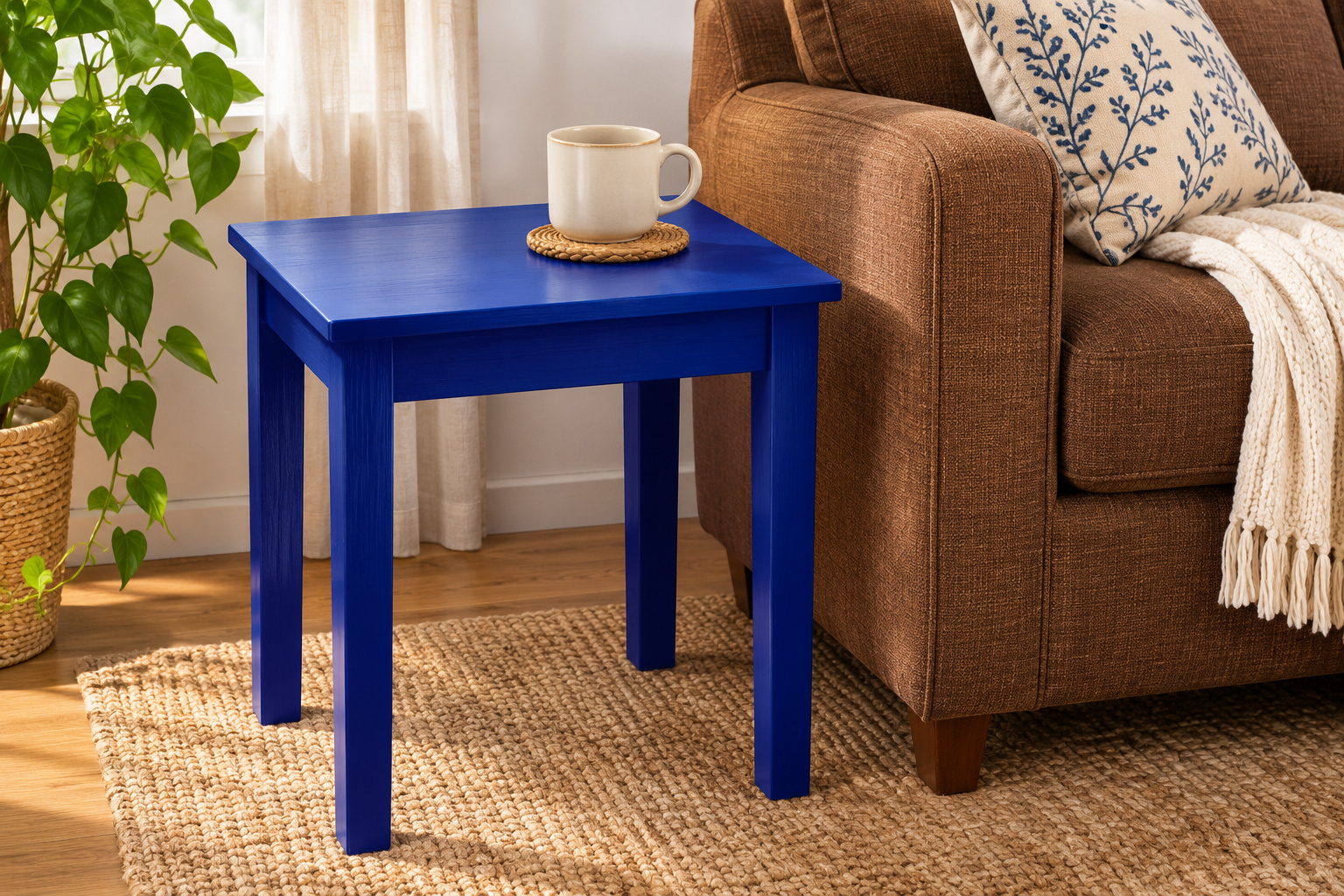
A small painted table can introduce a strong color without committing the whole room to it. Try a cobalt table next to a brown sofa or a muted coral one beside an olive chair. The limited surface keeps the change manageable and gives familiar furniture a different companion.
Inspect the existing table before starting. Identify its material and finish, then choose preparation, primer, and paint that are compatible with that substrate; follow the product’s ventilation, drying, and curing instructions. Test an inconspicuous spot first. Keep the table out of use until the finish is ready for cups and handling, then let it be the corner’s one unexpected color.
17. Make a Comfortable Place to Put Your Feet
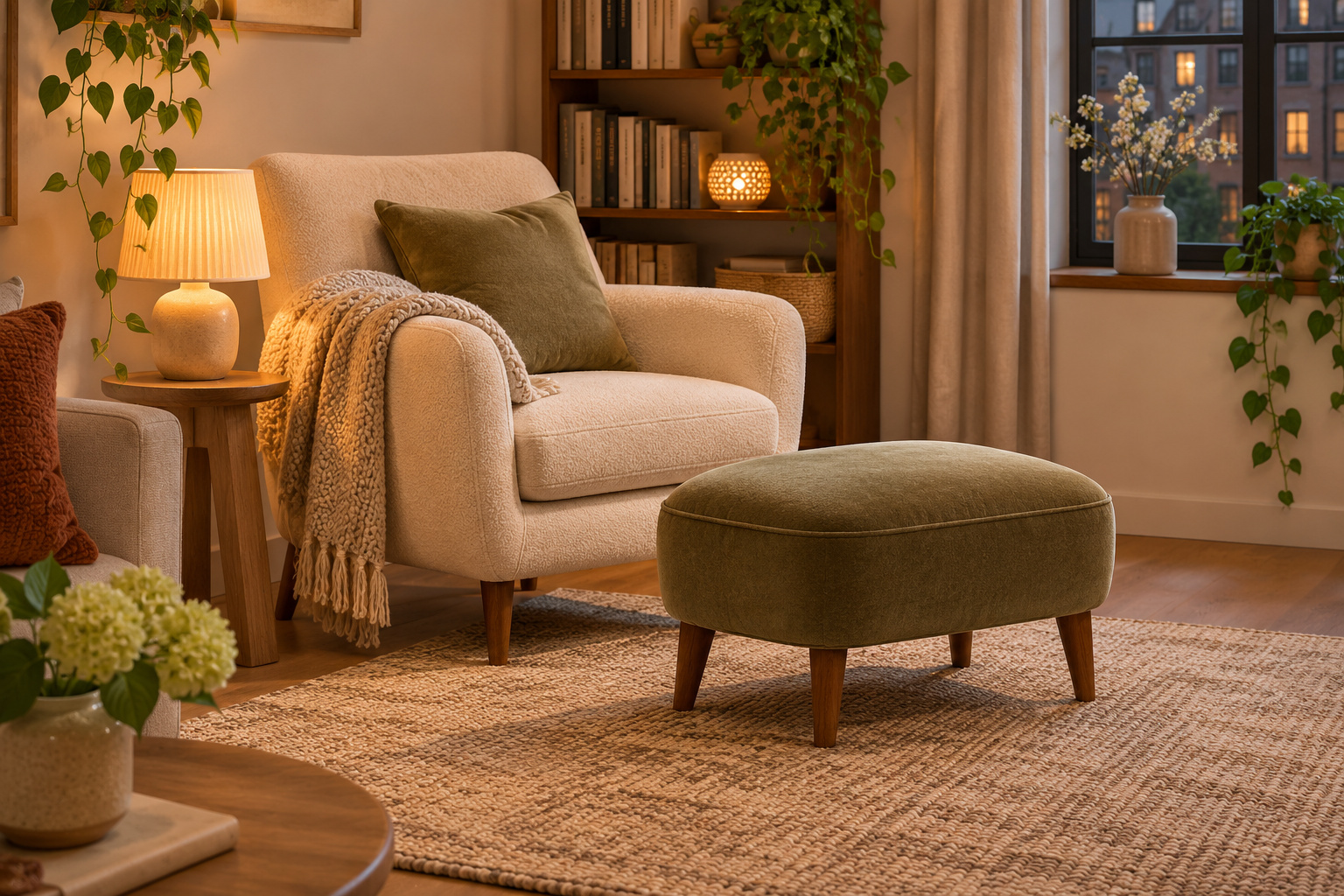
A soft ottoman or a low upholstered footstool can turn a chair you rarely use into a favorite evening seat. Move a temporary stool into place first and check the height from the chair. Your legs should feel supported without forcing an uncomfortable angle.
Leave enough space to stand up and walk around it. If the piece has to move often, consider its weight and where it will sit when guests arrive. A small tray can provide an occasional surface on a stable ottoman, but remove it before using the piece as a footrest. The most useful shape is the one that suits your actual way of sitting.
18. Close the Evening With a Clear Morning Surface
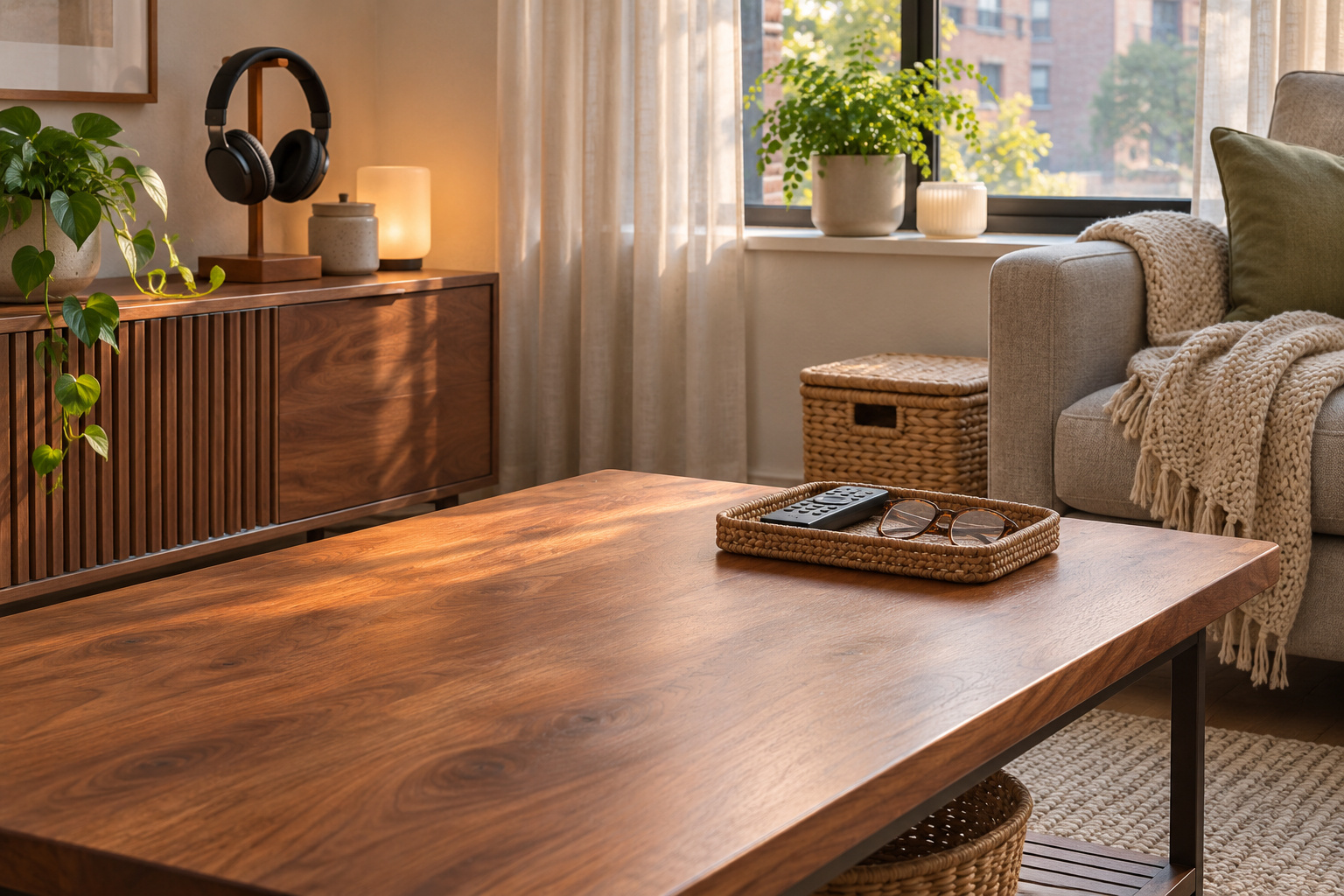
Give the items you use at night a simple ending place: headphones on their stand, the game in its basket, a cup on its way to the kitchen. Keep one small part of the coffee table clear so the room feels ready when you return the next morning.
Use a plain tray for the few objects that genuinely stay, such as a remote and reading glasses. Size it to those items rather than buying a large tray that invites more clutter. A personal room can hold plenty of character while still being easy to reset.
Start with the activity you want to enjoy tonight, then give it a comfortable seat and a reachable surface. Color and collected objects will feel more natural when they belong to a room you are already happy to spend time in.
Discover more from HomeTrendora
Subscribe to get the latest posts sent to your email.