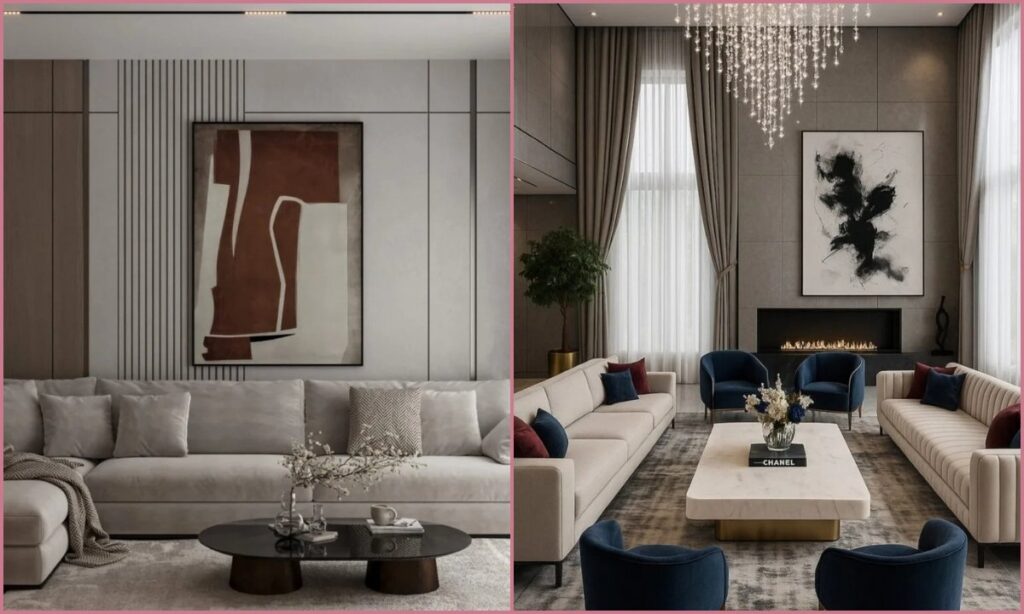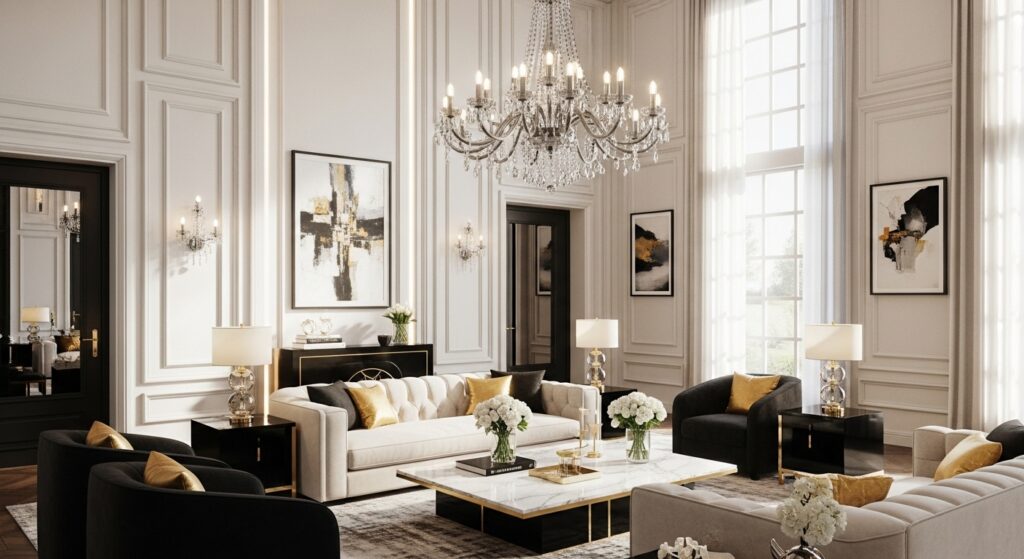
A living room can feel bright beside the sofa and almost disappear three steps away. When there’s no ceiling fixture, the best place to start is with what you do in each part of the room after dark. Reading needs a light you can aim. Conversation can work with a softer glow, and the route to the door needs its own thought. These 30 ideas will help you make the most of the lamps and outlets you already have, then decide where another light would help.
1. Map the Outlets Before Moving the Sofa
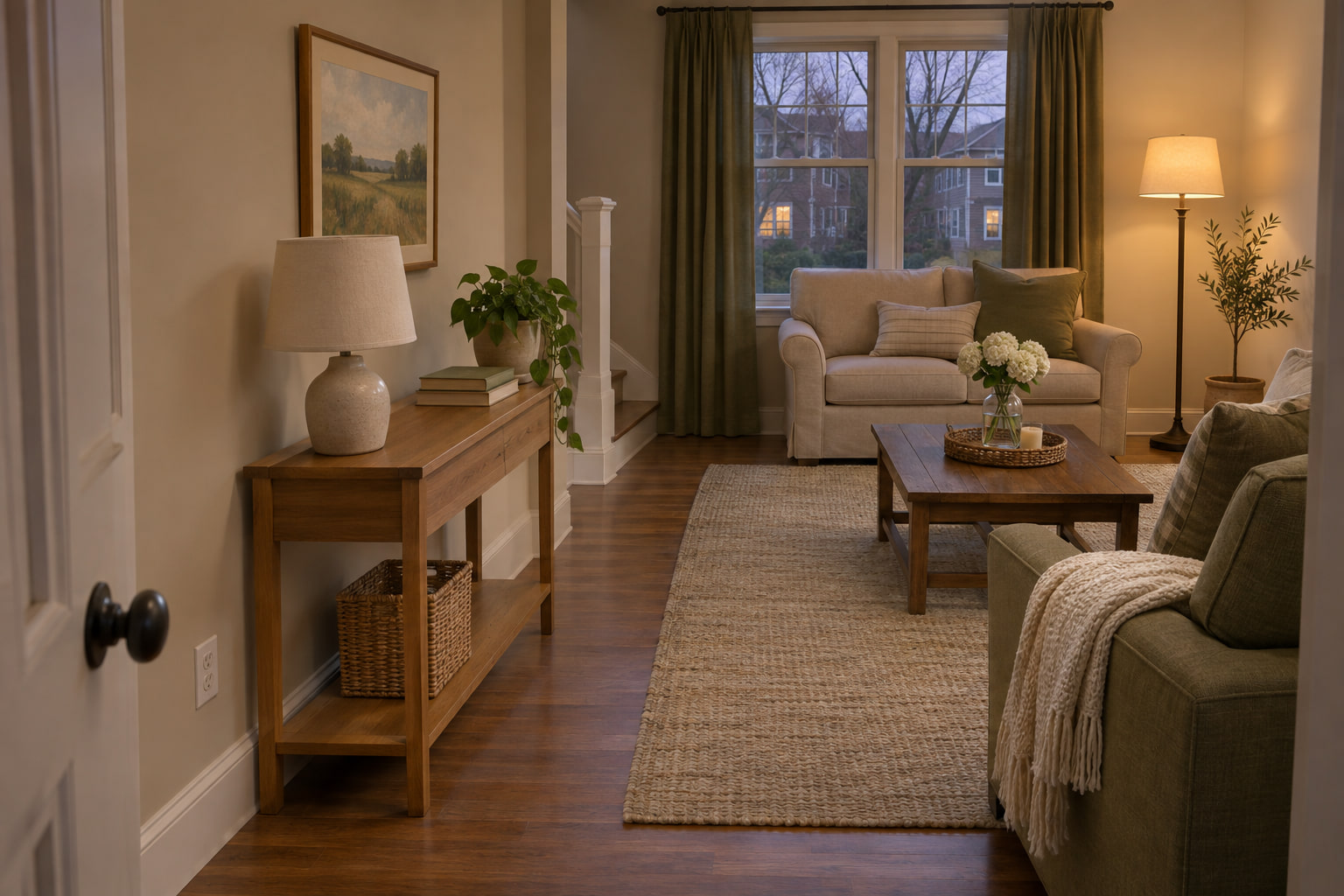
Stand at the entrance after sunset with the room arranged as you use it. Locate the outlets you can reach and note where you sit to read, watch TV, or talk. A socket behind the sofa might be useful for one lamp and awkward for another if its cord would have to cross the route to the door. Try setting an unlit lamp or an object of a similar size in each potential spot to see what it would do to the floor plan.
Make a quick list of the places that need general light and the seats that need their own lamp. If you already have a crowded route through the room, borrow a furniture arrangement from these small living room layouts before shopping for lighting. Plan routes that keep cords away from foot traffic and out from under rugs, where they can be damaged or trip someone. If an outlet is already in use, mark that on your sketch and see whether another spot serves the same activity.
2. Bounce Ambient Light Off a Pale Wall or Ceiling
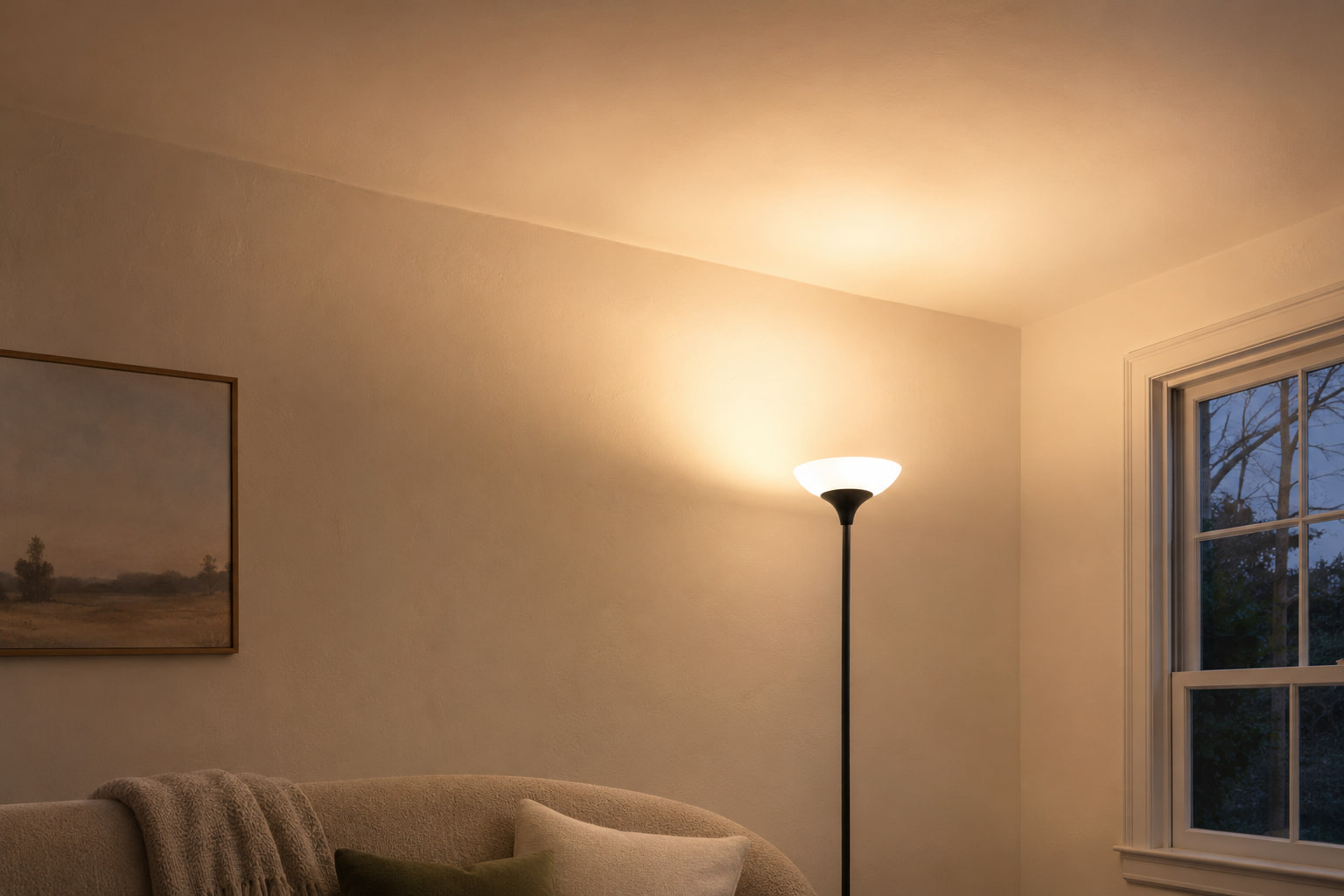
A floor lamp that sends light upward can make a pale wall or ceiling part of the lighting scheme. Set it near a light-colored wall and turn it on after dark. Watch where the patch of light lands, then adjust the lamp’s position or direction if its design allows. A broader, softer patch usually feels more comfortable across the room than a bright point near eye level.
This is especially helpful when the room looks dim between the sofa and the door even though the lamp beside the couch is bright. If the walls are deep blue or charcoal, try directing the light toward a pale ceiling first, then compare the result from the sofa. Use the bounced light as a background layer and keep a separate light for tasks such as reading. Compare the reflected patch from the entrance as well as the sofa.
3. Light the Dark Corner Opposite the Main Lamp
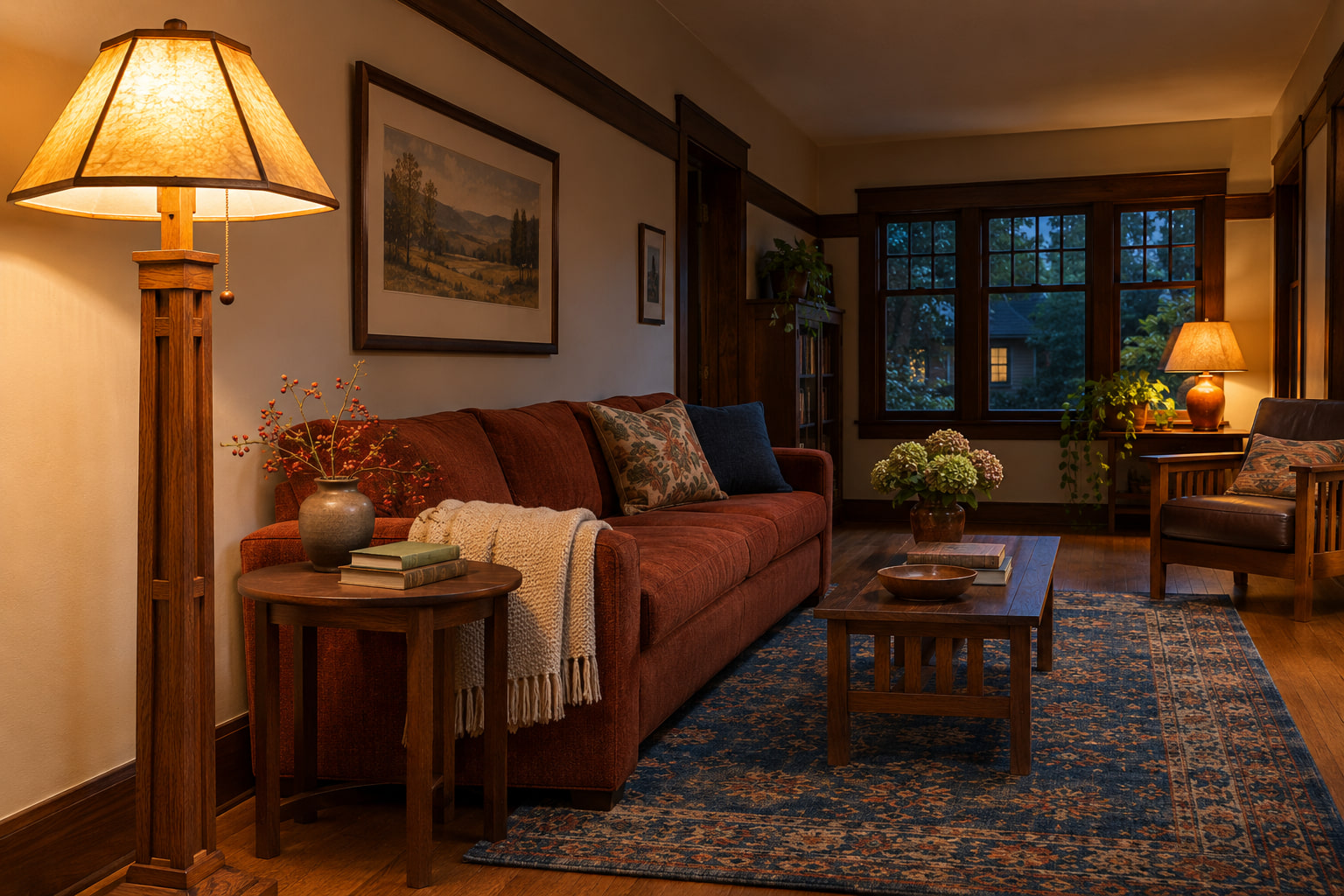
When one lamp makes half the room look finished and the other half disappear, try lighting the opposite corner. Start by moving a lamp you already own to that end of the room. Choose a lower light if the first lamp is tall. A shaded table lamp can bring a dark corner back into view while leaving the center of the room quiet.
Check the effect from the doorway and from your main seat. The goal is for both ends of the room to feel connected, even if one is brighter. Place the second lamp so you can see the furniture or wall around it without looking straight at the bulb. If a new lamp is in the budget, the living room examples in this farmhouse lighting guide offer several shade and base styles to compare. Check that the second lamp stays comfortable when you stand between the two light pools.
4. Give the Reading Chair Its Own Shaded Task Lamp
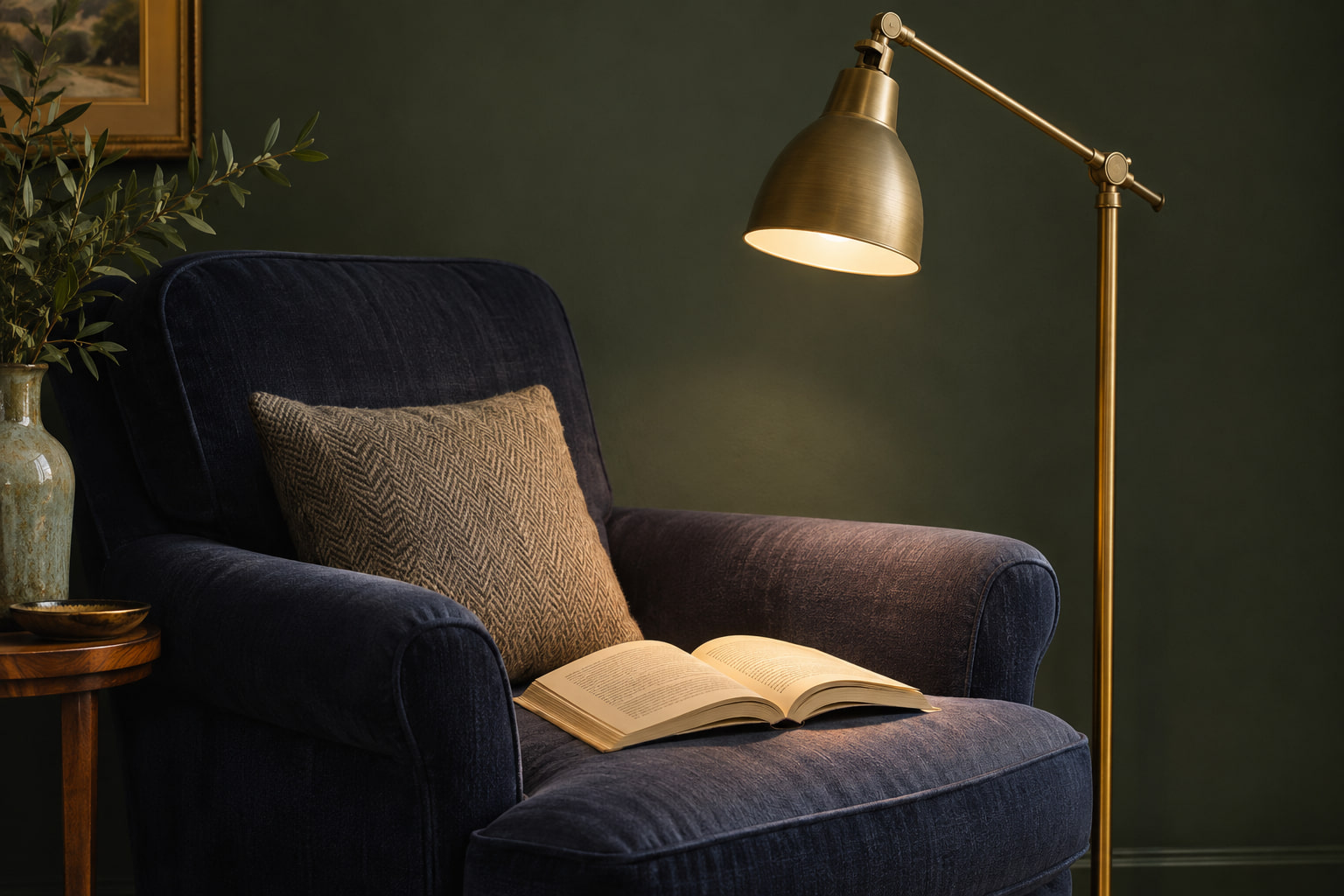
Set a shaded reading lamp beside the chair and open a book where you normally hold it. Aim the light across the page from beside or a little behind your shoulder. With the shade in place, check whether you can read the page without seeing the bulb directly. Move the lamp to the other side if your shoulder or hand is casting a shadow where you need the light.
Test this while you’re leaning back with the cushion you actually use. A lamp that feels right when you’re sitting upright may miss the page once you settle in. If two people share the chair, a lamp with an adjustable head gives each person a way to change the direction without rearranging the seat. Try the setup with a glossy magazine as well as a book. A small shift to the side can help when the page catches a reflection.
5. Move the Lamp Off the Walkway With a Plug-In Swing Arm
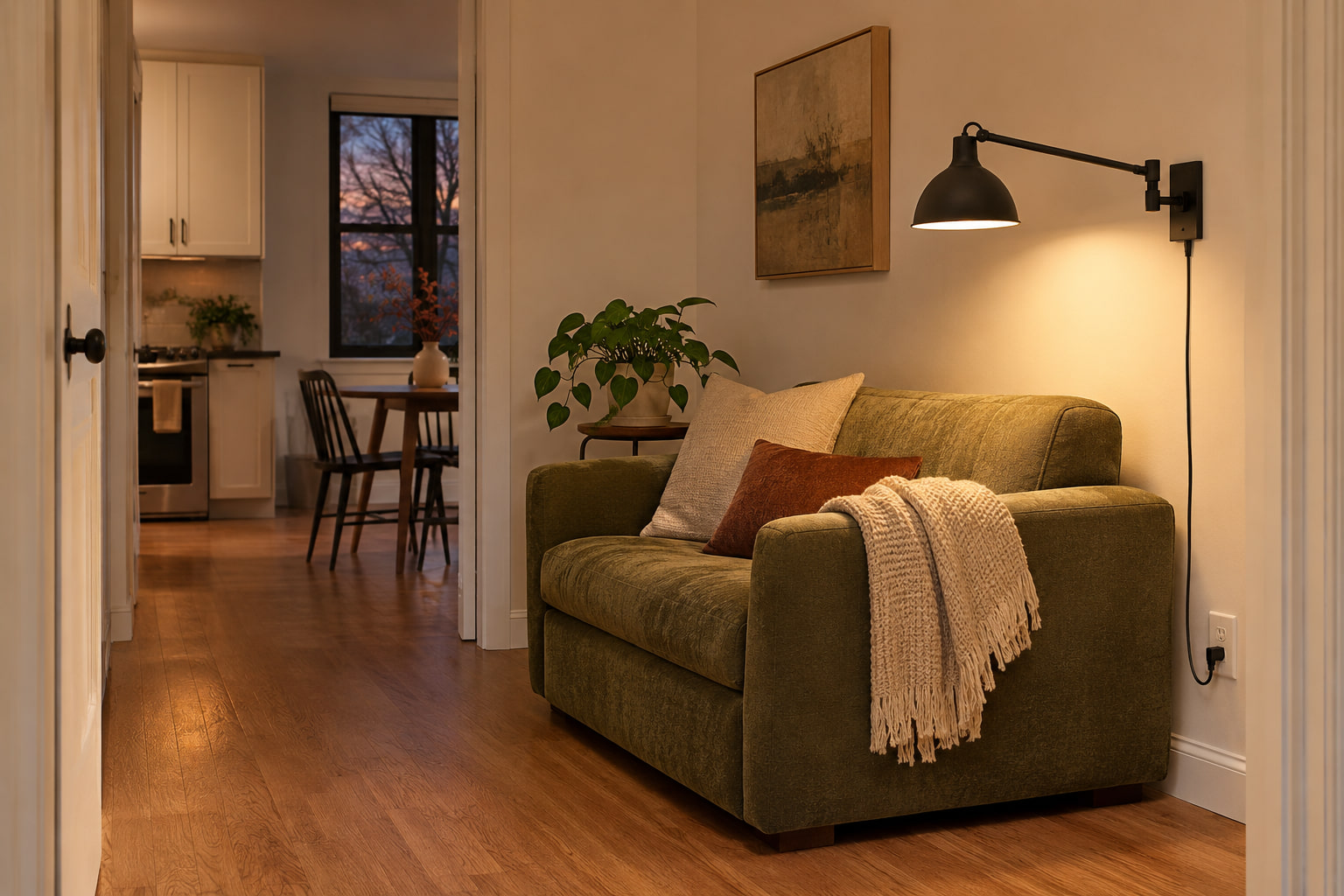
A plug-in swing-arm sconce can provide light beside the sofa where a floor lamp would take up part of the walkway. With permission to mount it, check the arm’s reach from the seat and mark where it will sit when folded in. Follow the maker’s mounting instructions for the wall surface and confirm the cord reaches an outlet without crossing the walkway or getting pinched behind the sofa.
If you can’t mount a fixture, try a short lamp on a sturdy console or ledge you already use beside the seat. Test the position before you buy. The support needs to hold the full base, and the lamp should remain out of the path of elbows, bags, and the sofa back. Mark the side-to-side reach on paper before mounting and compare it with nearby doors.
For a similar setup, the Globe Electric McKibbon plug-in swing-arm sconce has a pivoting shade and a six-foot cord. Check the route to your outlet and the arm’s position when folded before choosing where to mount it.
6. Put a Low Light Beside the Sofa Where a Floor Lamp Won’t Fit
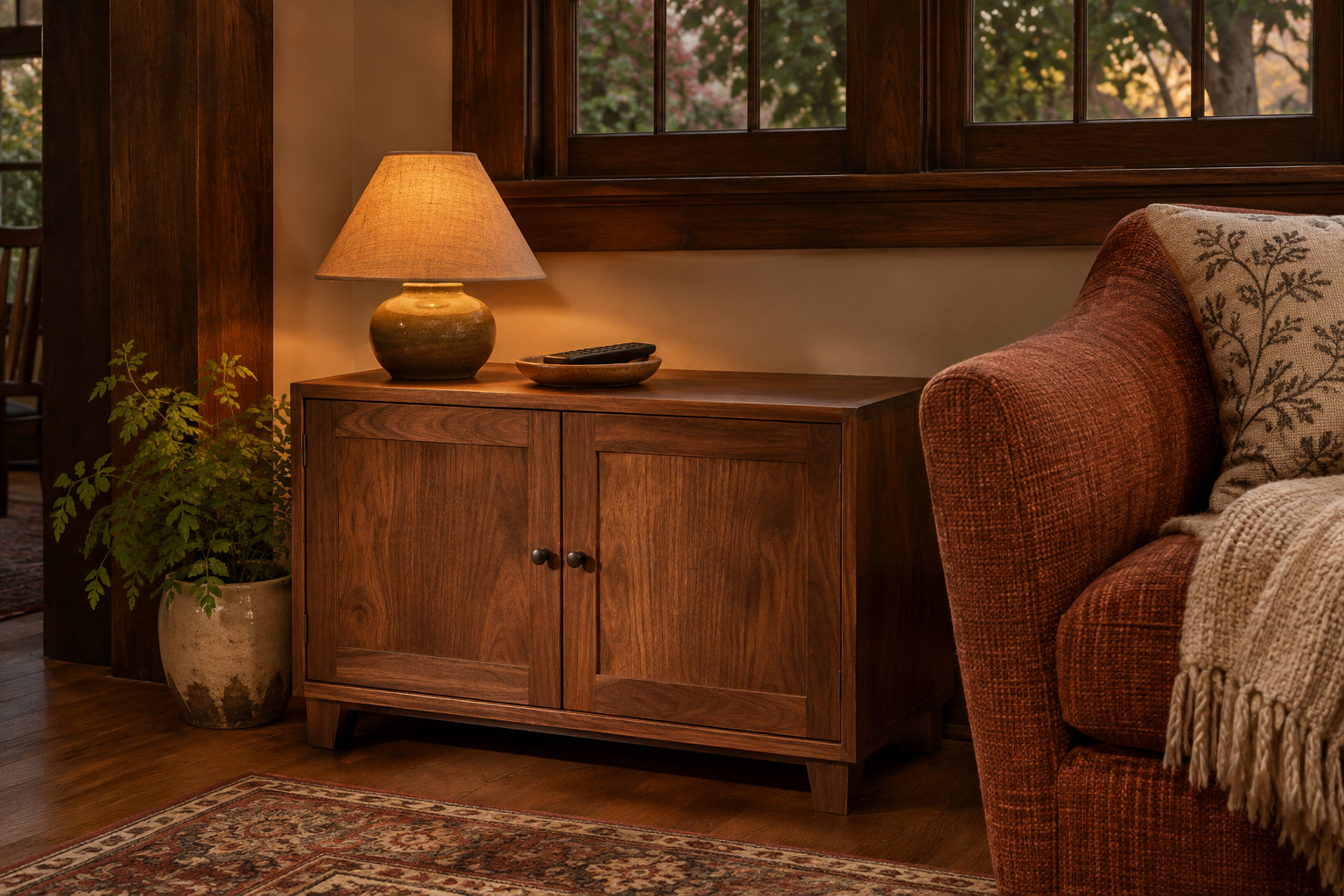
Look for a usable surface beside the sofa before you make room for a floor lamp. A compact shaded lamp on a sturdy end cabinet can put light near the armrest and free the floor beside it. Choose a shade that fits within the edge of the top, then leave room for the things that normally sit there, such as a mug or a remote.
Sit down and check where the light lands. With a low lamp, a shade that leaves the bulb visible from above can be distracting when you walk by or stand up. A more enclosed shade can make this little pool of light feel settled. If the nearby cabinet is already full, try reclaiming its top with these living room media storage ideas before adding a lamp. Set a mug on the cabinet and reach for it while seated. You should be able to use the surface without brushing the lamp.
7. Give One Artwork a Dedicated Picture Light
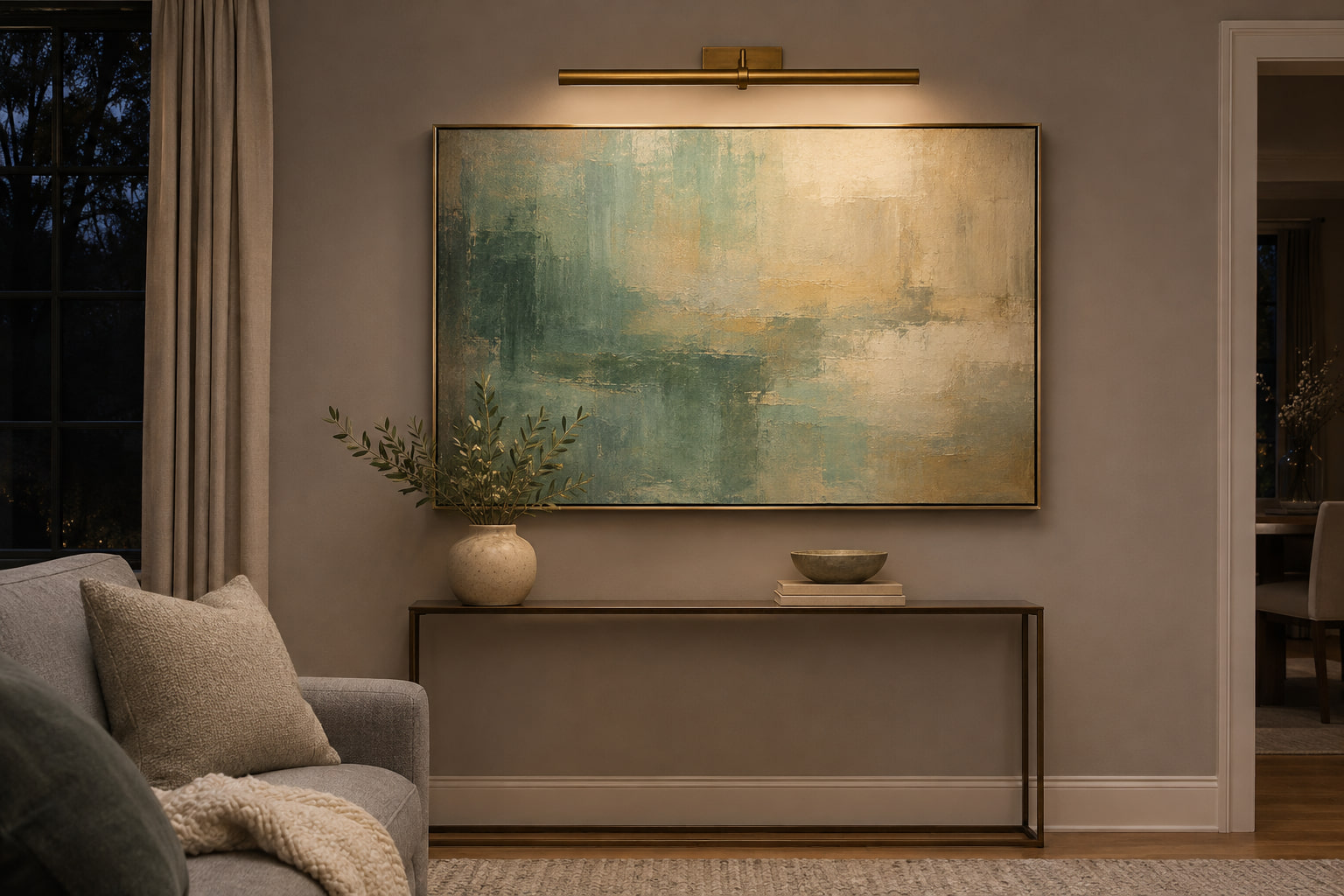
Pick the artwork you most want to see in the evening and give it a light of its own. A picture light above one generous frame can draw attention to the art without making the whole wall brighter. Try a small directional lamp you already have before mounting anything. From the sofa, look at both the center and the edges of the picture to see which parts are actually lit.
If the art has glass, check the reflection from the chairs you use most. A change in the light’s position or angle can move glare away from a seat. Keep a separate source for general light so you can switch the artwork off when you want a quieter wall. Check the maker’s guidance for mounting and clearance before choosing a fixture. Check a dark and a light area of the picture from the same seat. One may need a different light angle to read clearly.
8. Frame a Tailored Sofa With Matched Shaded Sconces
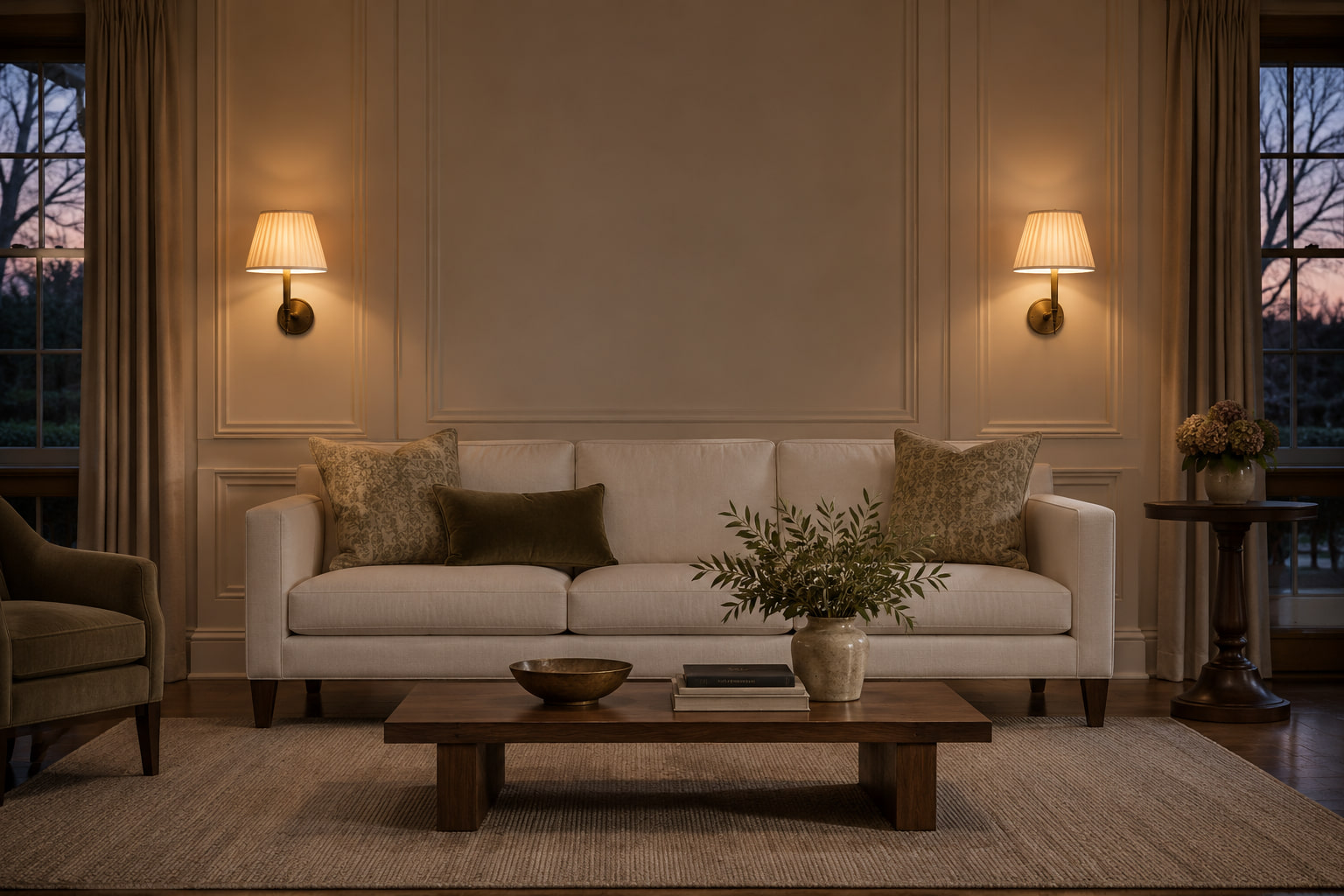
Matched shaded sconces on either side of a sofa can give the seating area a sense of order after dark. Start by centering the pair on the sofa, then check how their spacing looks against the wall and artwork. Use the same shade, height, and light appearance on both sides. Keep enough space around the ends of the sofa for the pair to feel intentional when you see the full wall.
Look at the sconces from a seated position before you commit to the height. A shade that screens the bulb makes the pair easier to live with than a bare bulb you can see from across the room. If you choose plug-in fixtures, check that both cords can reach outlets along the room perimeter and that neither one crosses the seating path. Draw the curtains to check the balance without light from the window.
9. Set One Low Lamp to Stay Out of the TV Reflection
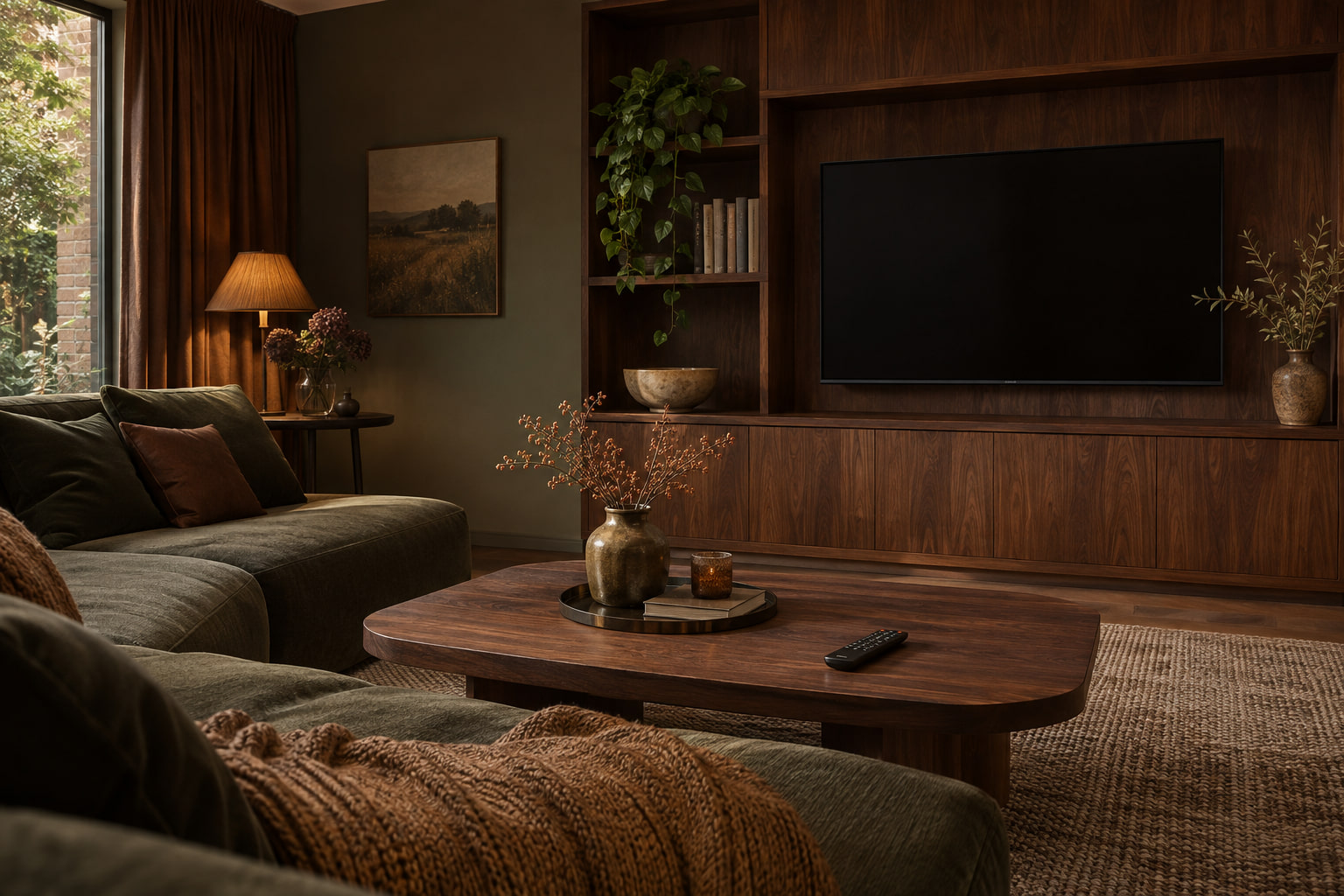
Switch off the TV and sit where you usually watch. The dark screen makes it easy to spot a bright lamp reflected in the glass. Try shifting the lamp to the side of the screen or moving it to a lower, stable surface. Check the reflection again from the other seats, since a move that helps the center cushion can shift glare into the view from the armchair.
Keep enough light to see a drink or the remote, and use a shade that hides the bulb from the seating area. If the television sits beside a bookcase or on a wide media console, put the lamp on a separate surface where it won’t block equipment vents or crowd the screen. Repeat the test with the room in its usual evening setup. A window or a second lamp can produce a reflection of its own.
10. Diffuse the Glow Through Linen Over Wood and Clay
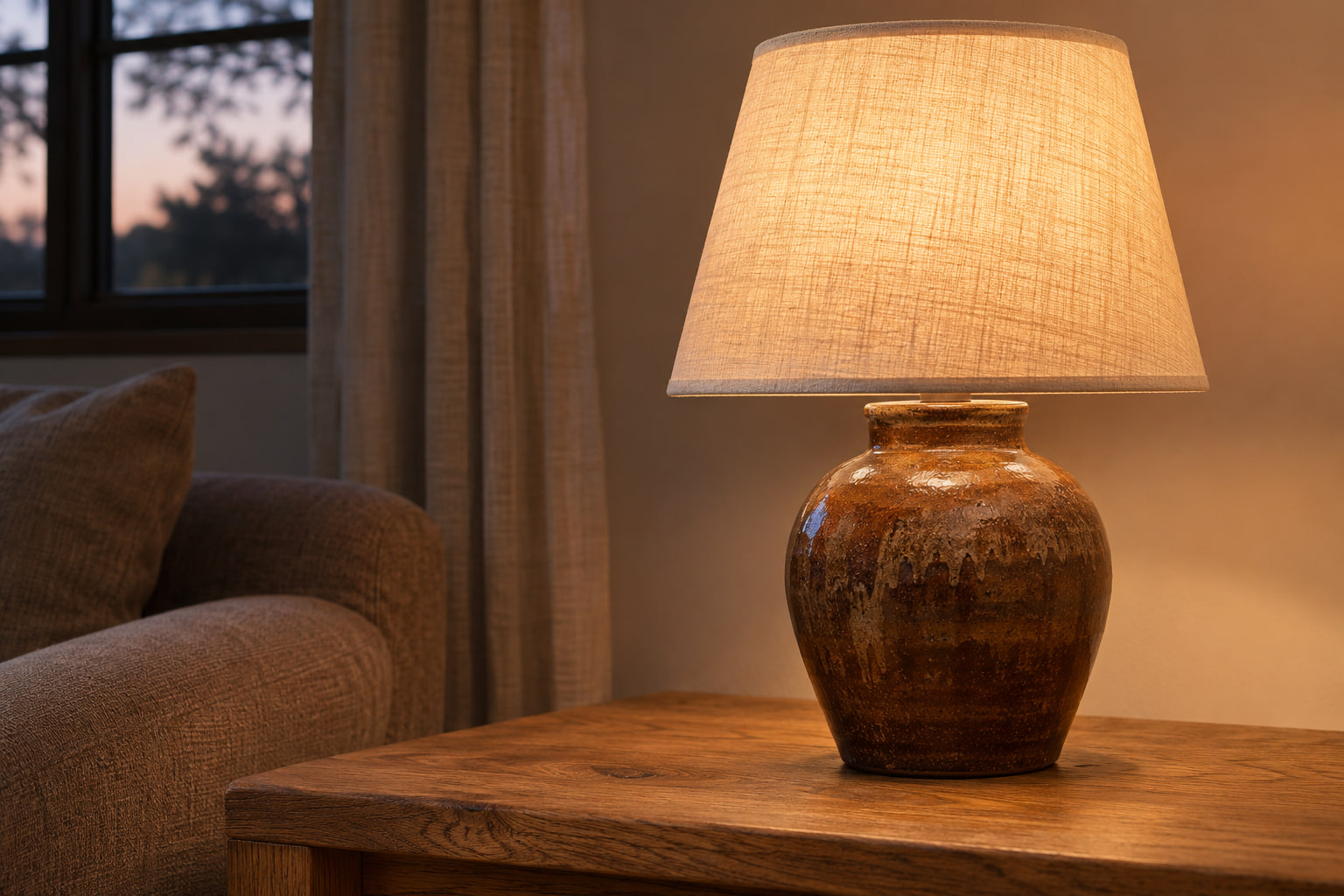
A linen shade looks especially at home beside a clay lamp base and natural wood. Decide which material you want to notice first. A simple pale shade can make room for the uneven glaze of a ceramic base, while a more textured shade can carry the detail when the furniture is plain. Leave some clear wood visible around the lamp so the materials can read separately.
Compare the shade with the light off and on. The color and weave look different once a bulb is lit, so judge the appearance in the evening alongside the other lamps you use. Follow the fixture’s bulb limits and use only a shade intended to fit it. If you need focused light for reading, test whether this lamp lights the page well enough before making it do both jobs.
11. Keep a Separate Light for the Route to the Door
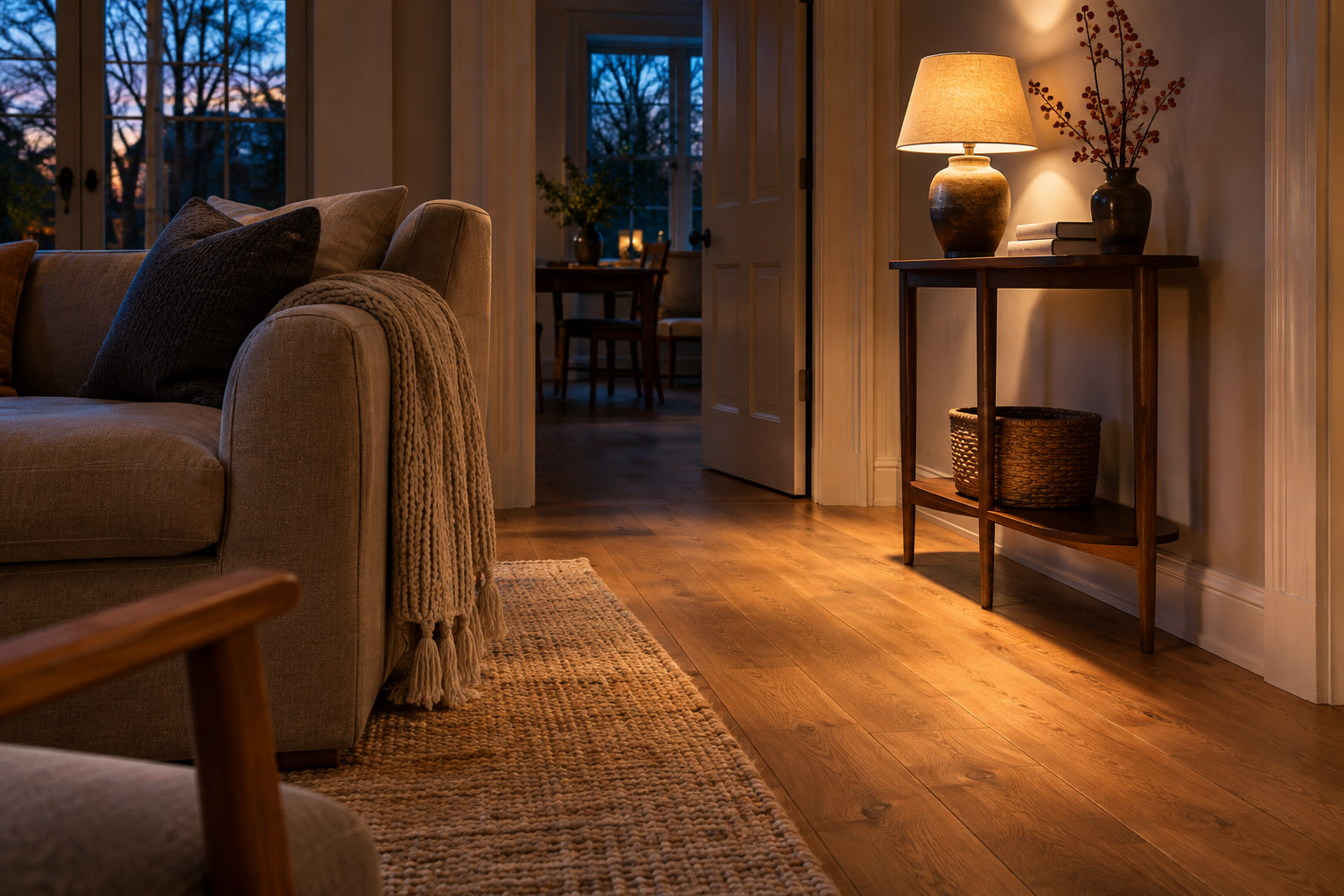
Give the route from the sofa to the door a light you can use on its own. A small shaded lamp on a console near the doorway can stay on while the rest of the living room is dim. Try it from the sofa, then walk the route to see where shadows fall across changes in flooring or the edge of the rug.
Choose a switch you can reach before you step into the darker part of the room. Keep the lamp and its cord out of the passage, and make sure the light doesn’t shine straight back into the seating area. A low, indirect glow works well when it lights the next few steps and still feels comfortable from the couch. Watch for a shadow near any change in floor height. Move the lamp a little closer if the edge is difficult to make out.
12. Retrofit a One-Lamp Room in Three Stages
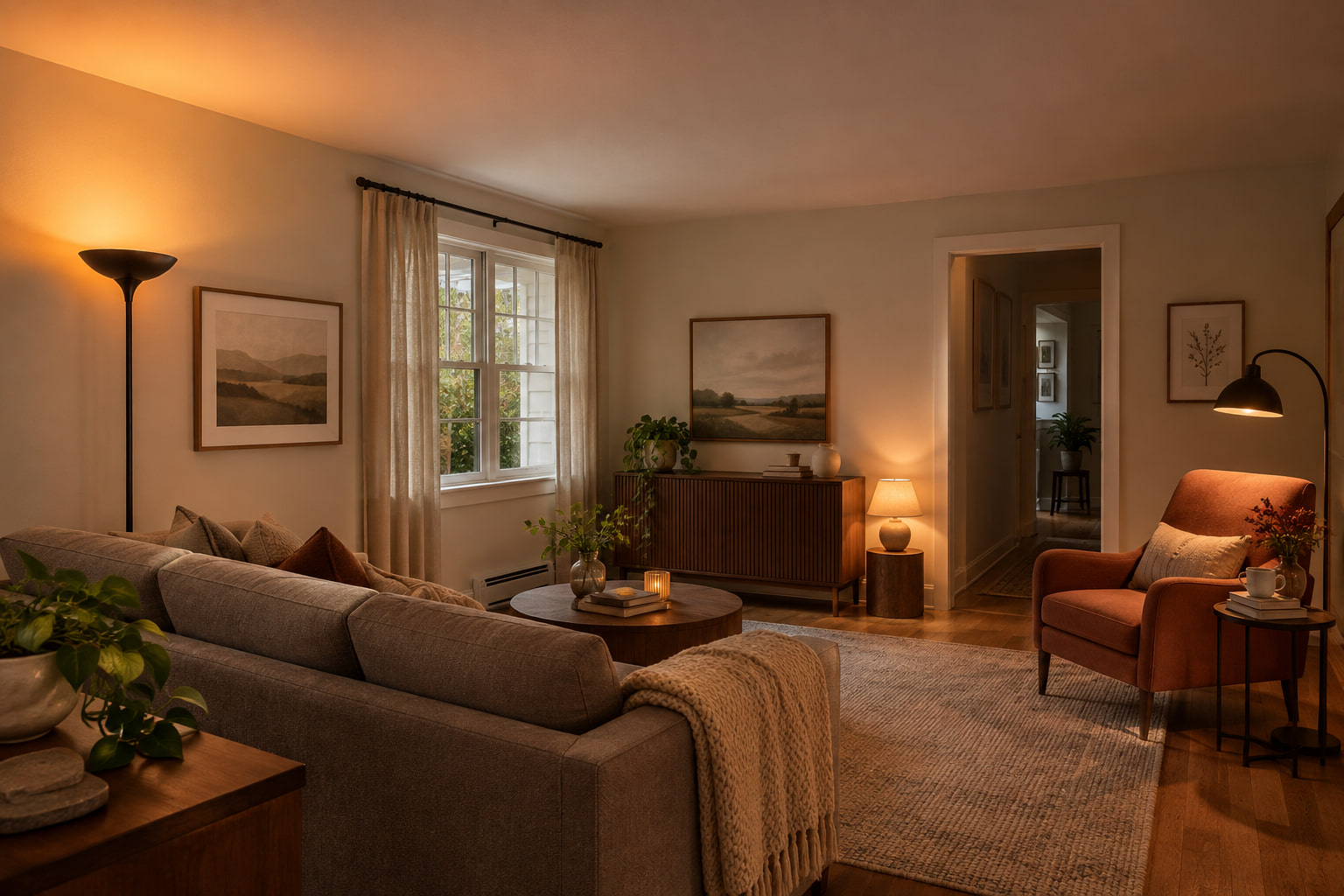
When you’re starting with a single lamp, change the room in stages. First give the room a general layer with the lamp you have, placing it where its light reaches a wall and the main seating area. On the next evening, add a light for the activity you miss most, whether that’s reading by the sofa or working on a puzzle.
Live with those two lights before deciding where to add a third. You might want a small light at the door or a fixture to draw attention to art. Turn each light off in turn and see what you miss. That tells you which lamps need to be on together and which can wait.
13. Reach the Coffee Table With an Arc Floor Lamp
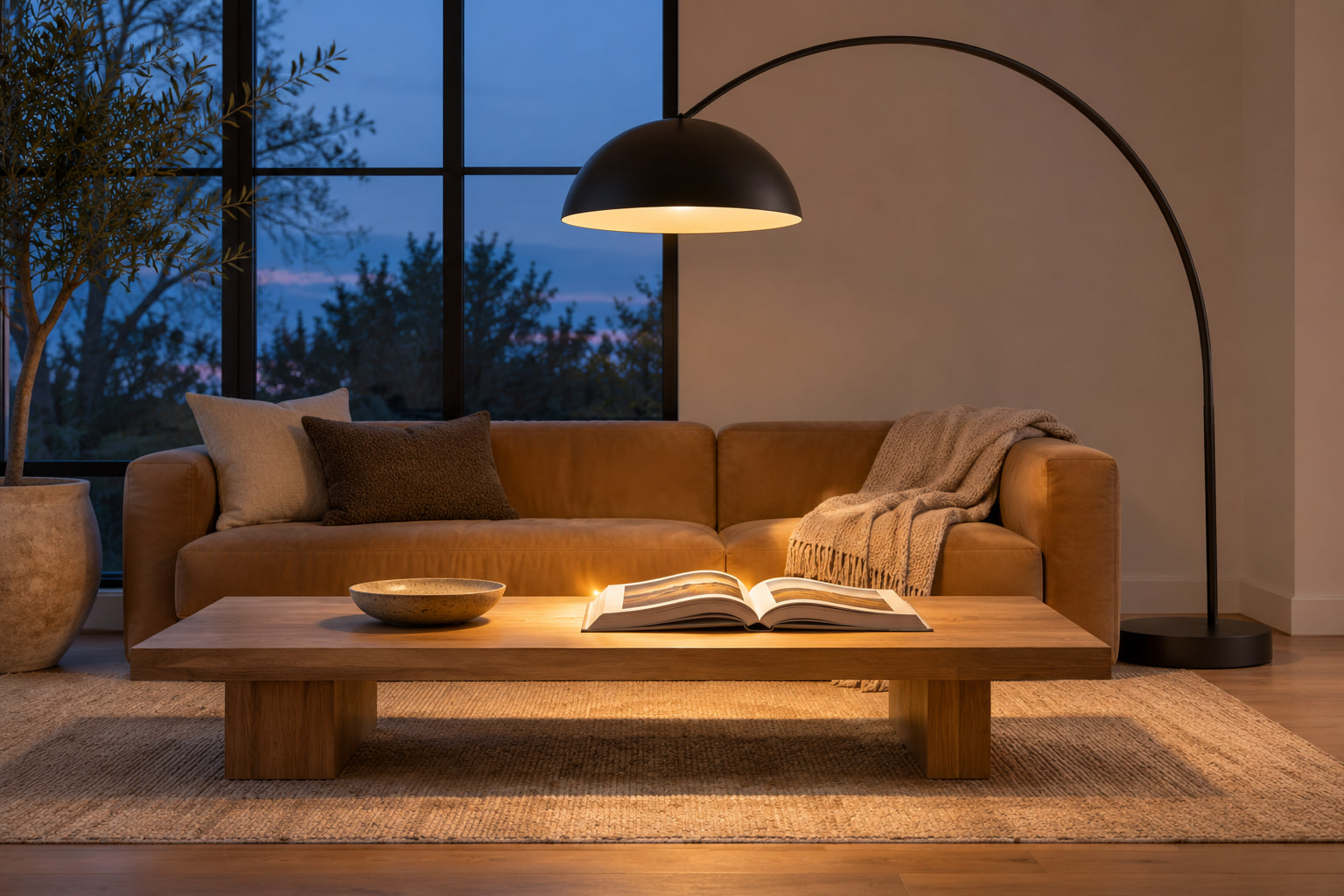
A lamp beside the sofa often leaves the middle of a large coffee table in shadow. An arc floor lamp can bring the shade in from the side and center its light over the table. Start by checking the lamp’s reach against your furniture. Put the base where the sofa arm can screen it from view and where it won’t be in the way when someone gets up.
The shade should stay over the tabletop rather than over the seat you use to stand. Check it from the entry and from a chair opposite the sofa. If it blocks a face or a sightline, look for a higher arc or a shallower reach. This works especially well over a wide table used for snacks or a shared book.
14. Try a Cordless Lamp in a Floating Seating Group
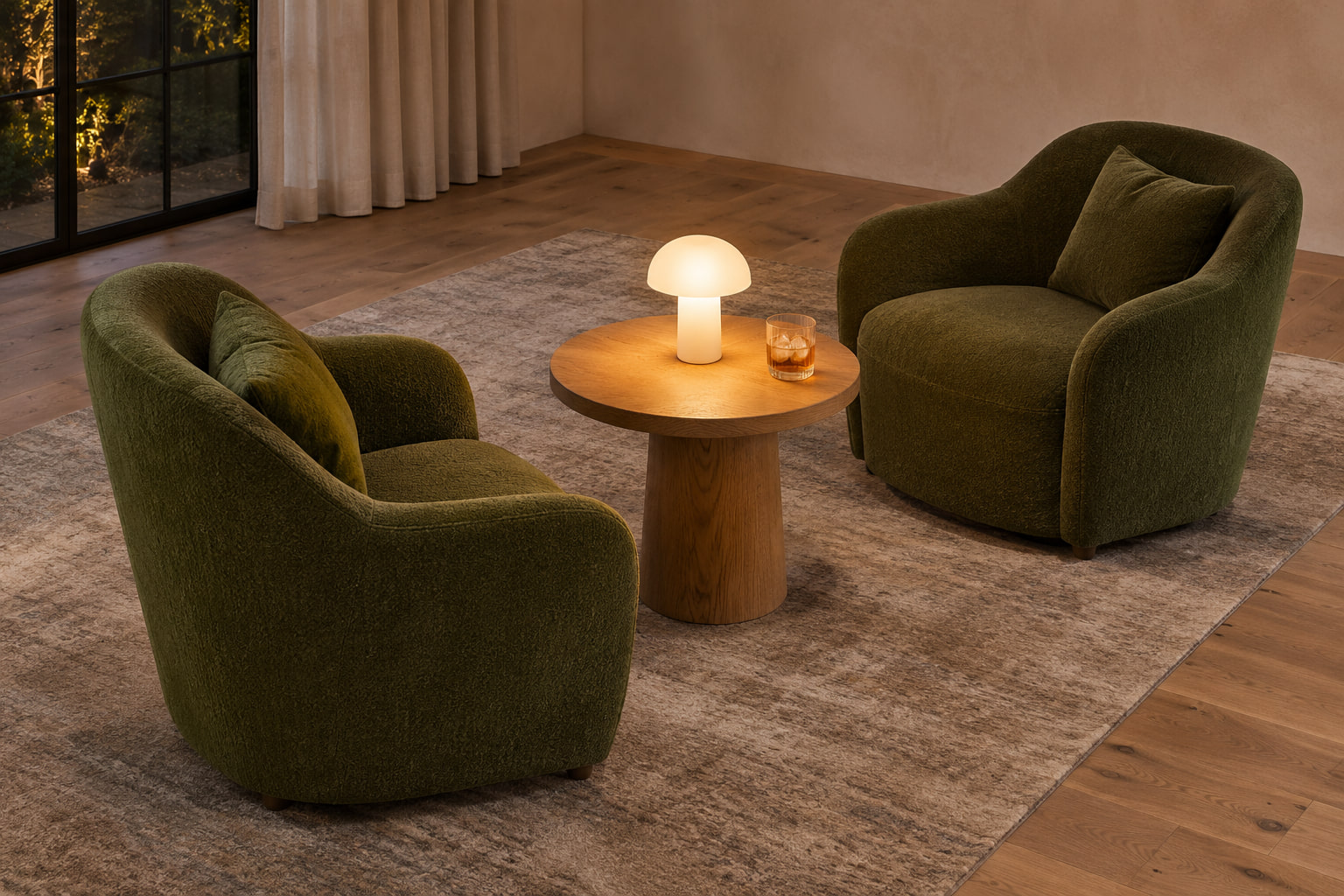
When two chairs face each other away from the walls, a small rechargeable table lamp can give their shared table a glow without running a cord across the floor. Choose a lamp with a broad, stable base and use it where a glass or a book already belongs. Try the placement with the chairs turned toward each other, then from the doorway to see whether the lit shade sits in your line of sight.
Use this light for conversation or a drink beside the chair. Check how long you ordinarily sit there before deciding if the lamp suits the room, and give it a separate place to recharge near an outlet. If you also do detailed work in either chair, keep a separate task light available.
15. Light the Objects Inside an Open Shelf
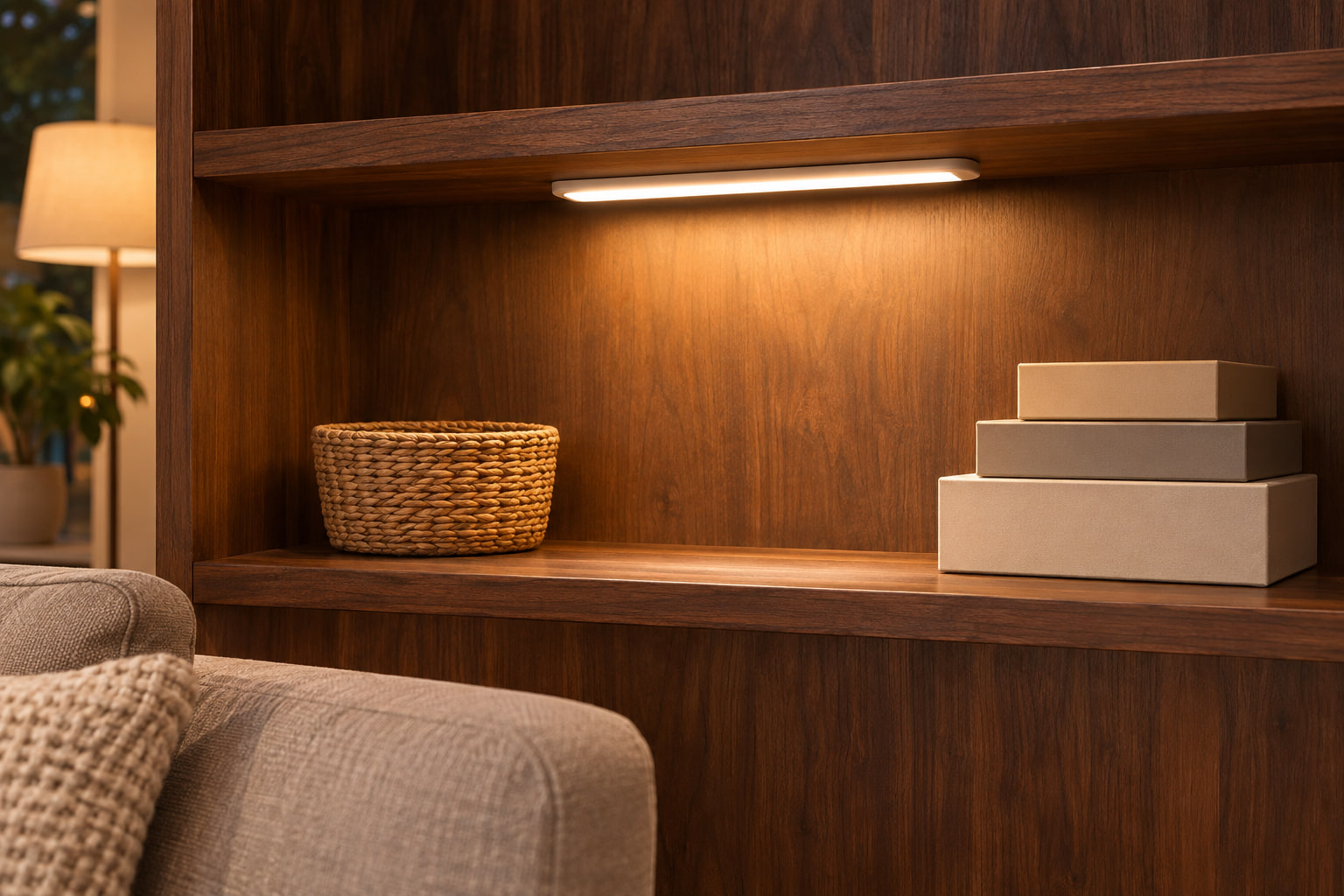
An open shelf can look black inside at night even when the room around it feels bright. Put a small light designed for shelving where it can illuminate the objects you reach for, such as game boxes or the basket with spare glasses. Check the view with the shelf at its normal fill level. Leave the clearance specified by the fixture maker and confirm you can still remove the tallest object on that shelf.
A recessed position helps keep the light source out of view when you sit across the room. Aim it into the shelf cavity and test it with the adjacent lamp off. Once you can distinguish similar objects inside the compartment, the light is doing its job.
16. Borrow a Glow From the Adjoining Dining Room
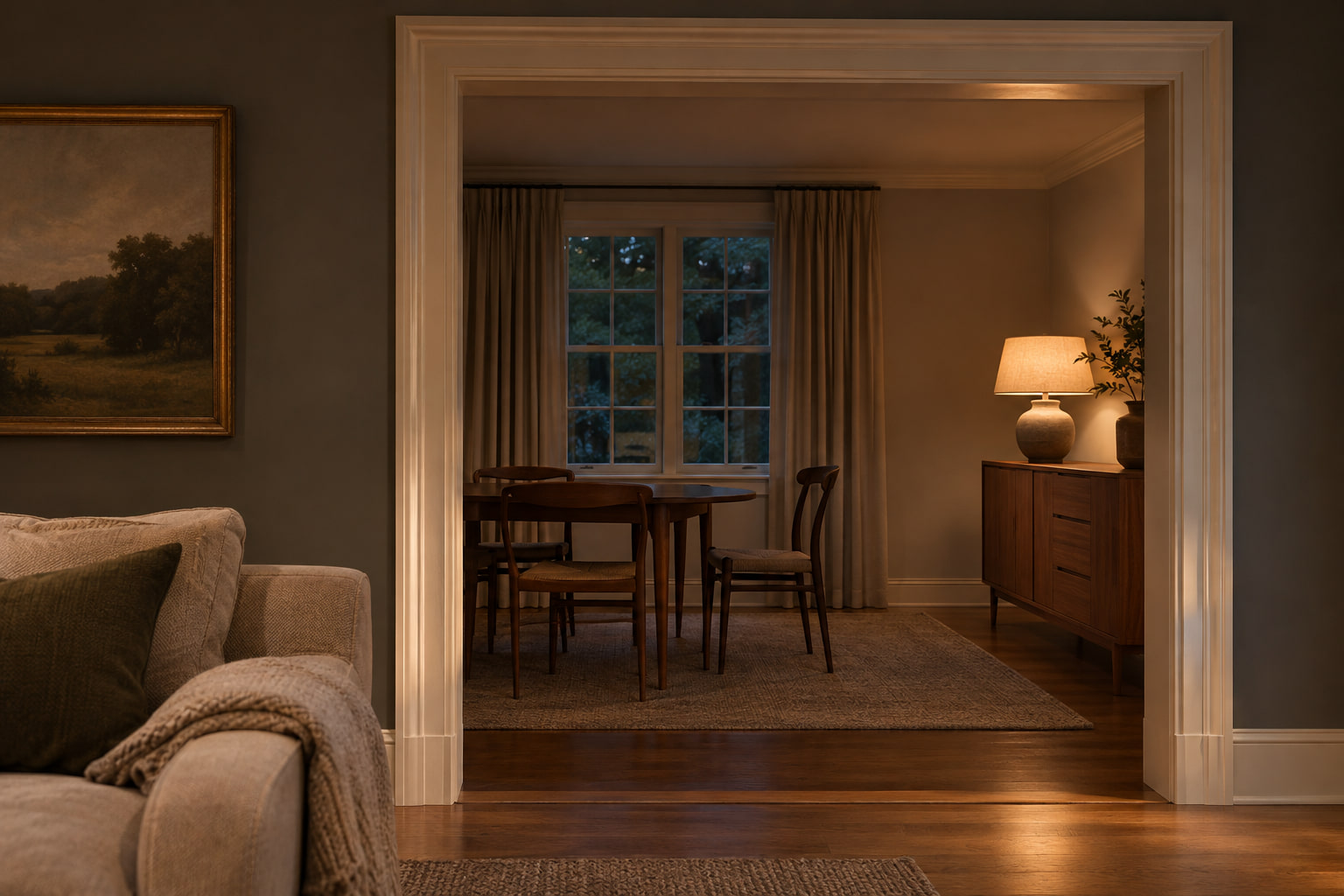
If the living room opens directly onto a dining room, see what happens when you turn on a shaded lamp just beyond the opening. Move it along a sideboard until some of its light reaches the opening without putting the bright shade at the center of your view. You should be able to see the edges of the doorway and enough of the next room to make the two spaces feel connected.
Look back from the dining room to check that the lamp still does something useful there. Its best position might be a little farther into that room so the opening frames the glow. Keep a local lamp in the living room for anything that needs a direct light, such as a book or a game.
17. Use a Freestanding Lantern to Soften a Dark-Painted Room
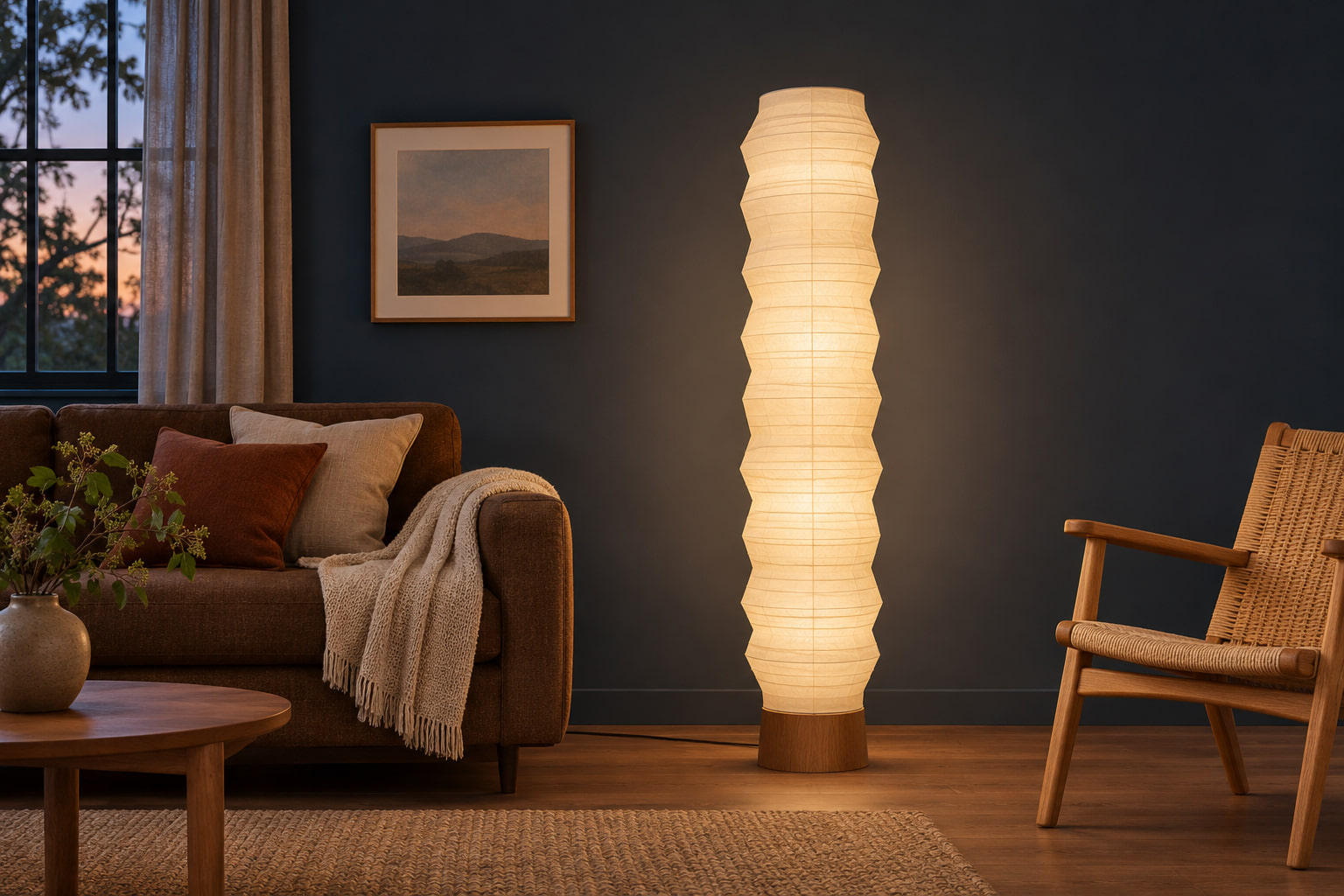
If a living room is painted a dark color, a lamp that depends on the wall to spread its light may leave more of the room in shadow than you like. Try a freestanding lantern with a fully diffused shade. Place it where you can see part of the shade from more than one seat. The glow becomes a visible object in the room, and the dark wall can keep its depth.
Look for a lantern made to stand on the floor, with a stable base and the shade that comes with the fixture. Set it clear of the curtains and give it the spacing specified by the maker. Compare it with your reading lamp on and off so you can see which light serves each purpose.
18. Light Faces From the Side of a Conversation Group
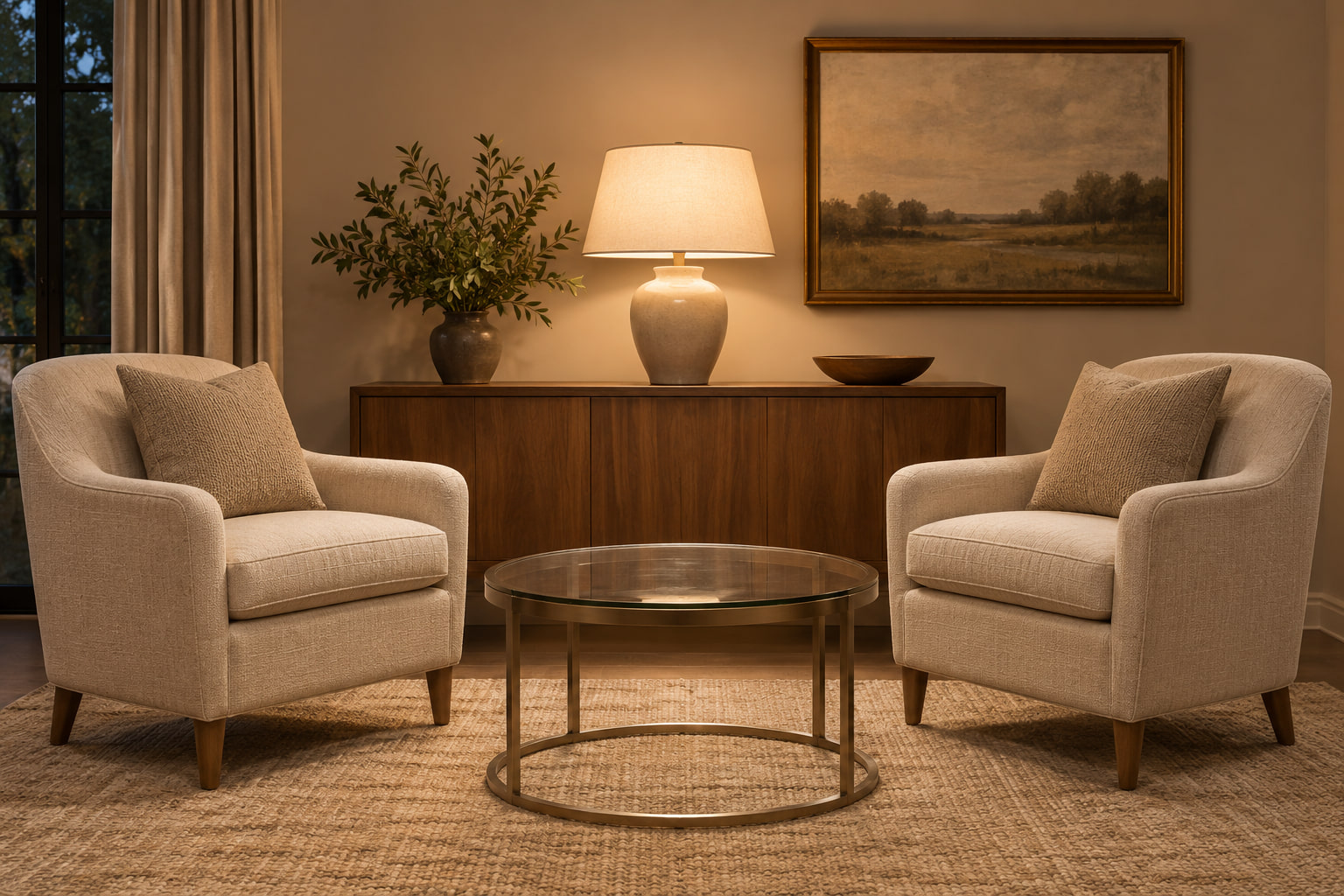
For two people sitting across from one another, place a broad shaded lamp to one side of the line between their chairs. Try the end of a console that sits beyond the seating area. With a light behind only one chair, the person opposite may look into the shade while the other sits in shadow. Moving the lamp sideways changes what both people see.
Sit in each chair and look toward the other seat. If the shade draws your eye before the other person would, shift it farther to the side or choose a fixture with a less visible bulb. Keep the table between the seats clear enough to use. This gives a small conversation area a light of its own on evenings when the rest of the room can stay quiet.
19. Create a Silhouette Behind a Floor Plant
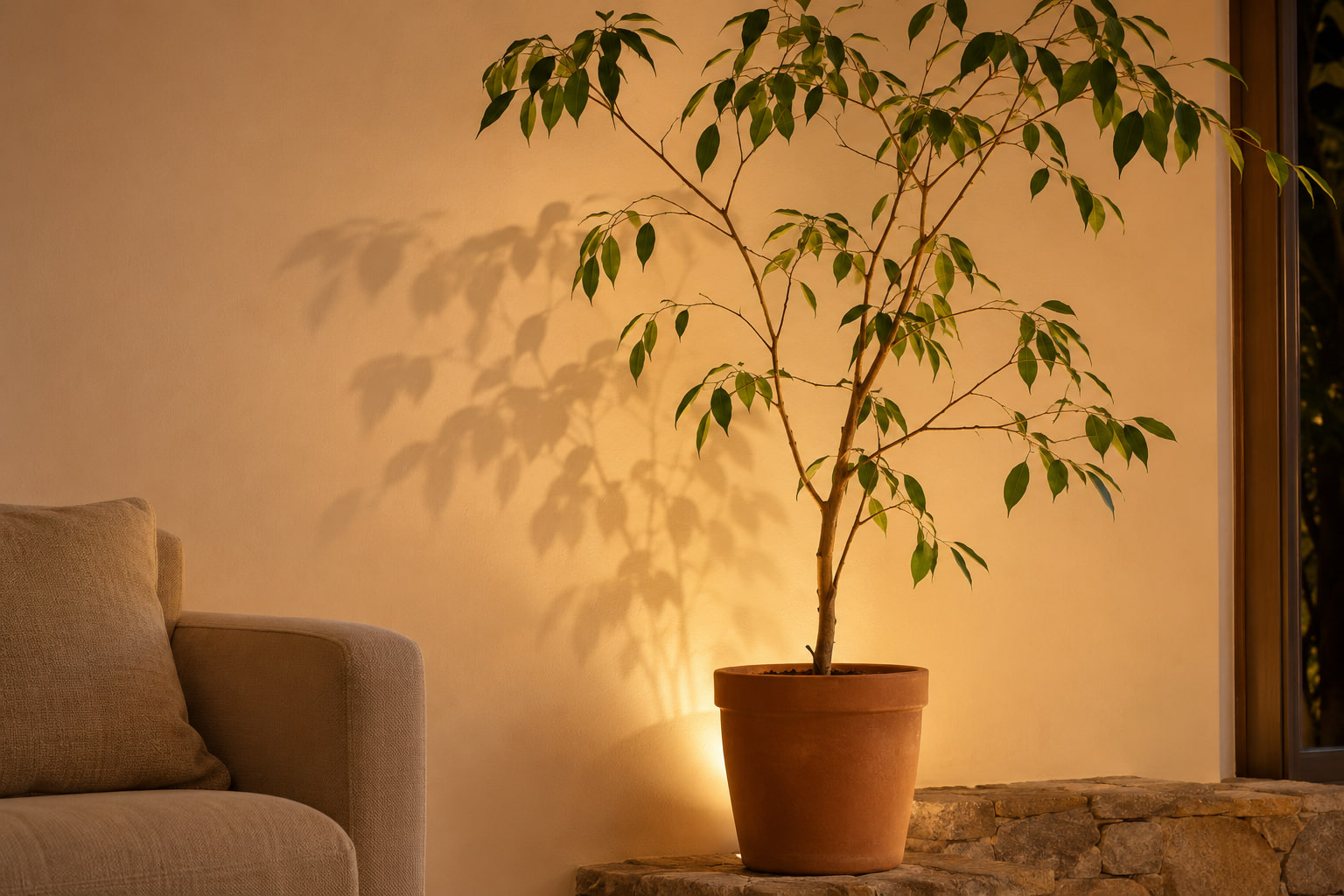
If a tall floor plant disappears after dark, test a small freestanding accent light behind the planter. Aim it toward the wall so the light passes around the leaves and makes their edges visible. Start with a short patch of wall rather than filling the entire corner. A plant with an open shape will let you see more of the pattern than a solid mass of leaves.
Stand at the entrance and sit on the sofa before settling on a position. Move the lamp until you can see the plant’s outline without seeing the bright source. Keep the light on a dry, steady surface with clearance from leaves and the watering area. If the wall pattern feels busy, a wider beam or a slight move to the side can make it quieter.
20. Give a Game Table Light From Two Sides
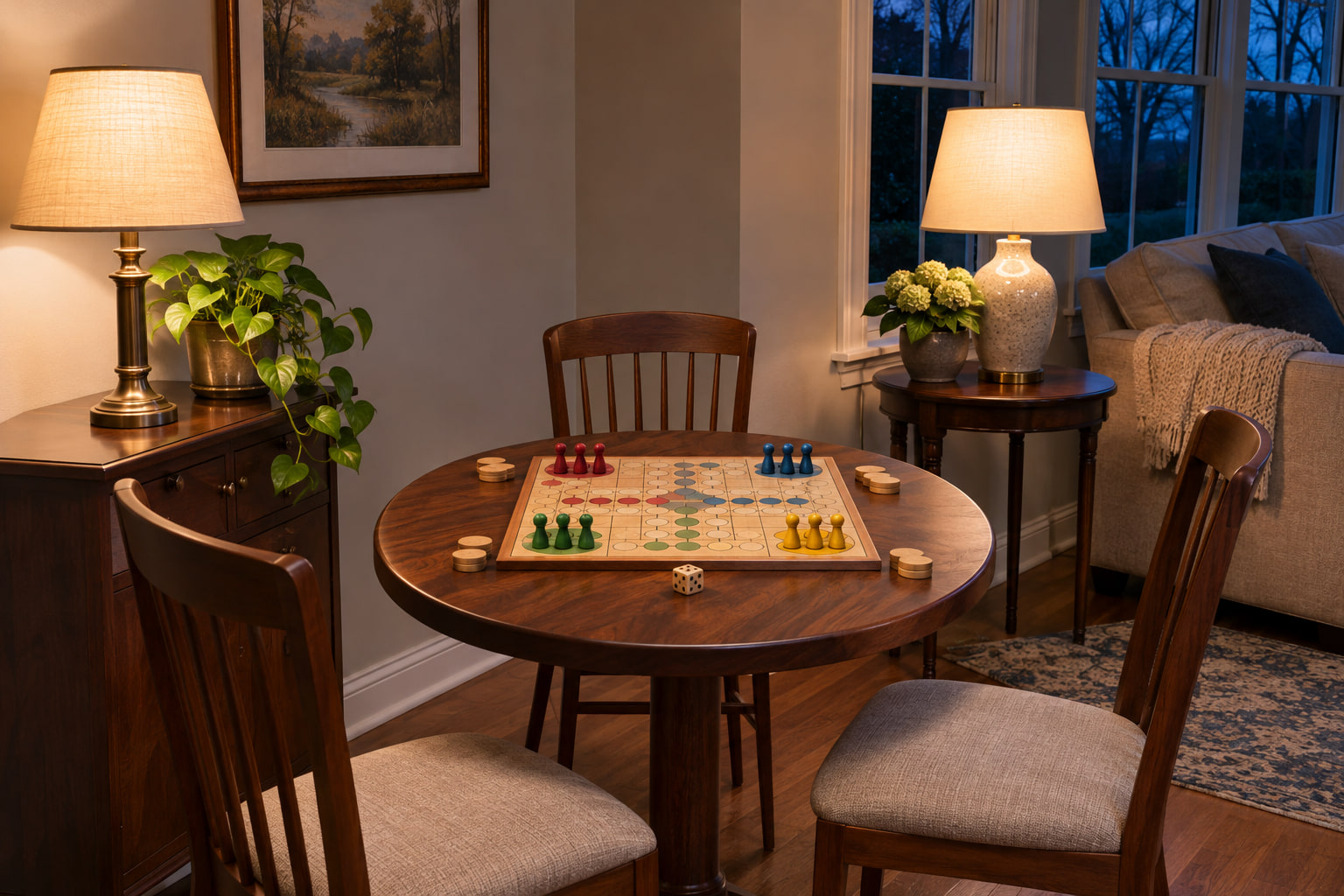
A table near the side of a living room may be bright at one end and hard to use at the other. Set out the game you play most, put the chairs where they usually go, and look for shadows cast by people’s hands. If one lamp leaves a long shadow across the board, try a second lamp on a support at the other end or slightly around the corner.
Keep both fixtures off the playing surface so there’s room for pieces and drinks. Sit in the least-lit chair and see whether you can distinguish the pieces near both edges. If the brighter source makes glossy cards hard to see, move it a little farther around the table before increasing the light.
21. Check How Your Lamps Look Together Before Buying Another
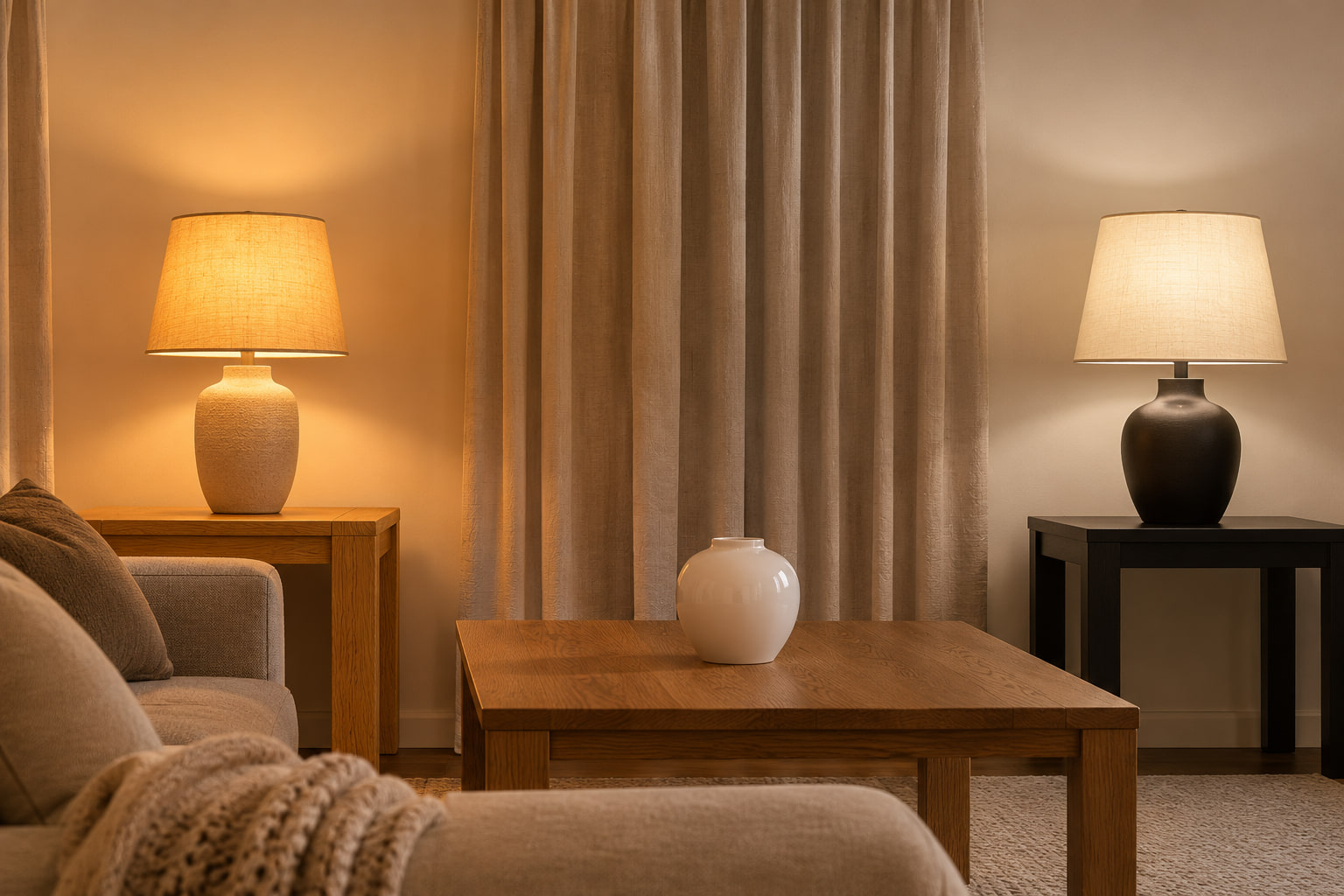
Switch on the lamps you normally use at the same time. Look at one white object from where you sit, then move it between the two light pools. If it looks buttery in one spot and noticeably cooler in the next, decide whether that difference helps separate the zones or makes the room feel disjointed. Compare with the room’s curtains closed so daylight doesn’t dominate the test.
For lamps that should feel related, check the bulb packaging and compare the light appearance listed there. Then retest with the shades in place. A shade can change the apparent color, so judge the actual room rather than relying on the description alone. Give any light used for a specific task its own test at the seat.
22. Light a Living Room Desk From the Camera Side
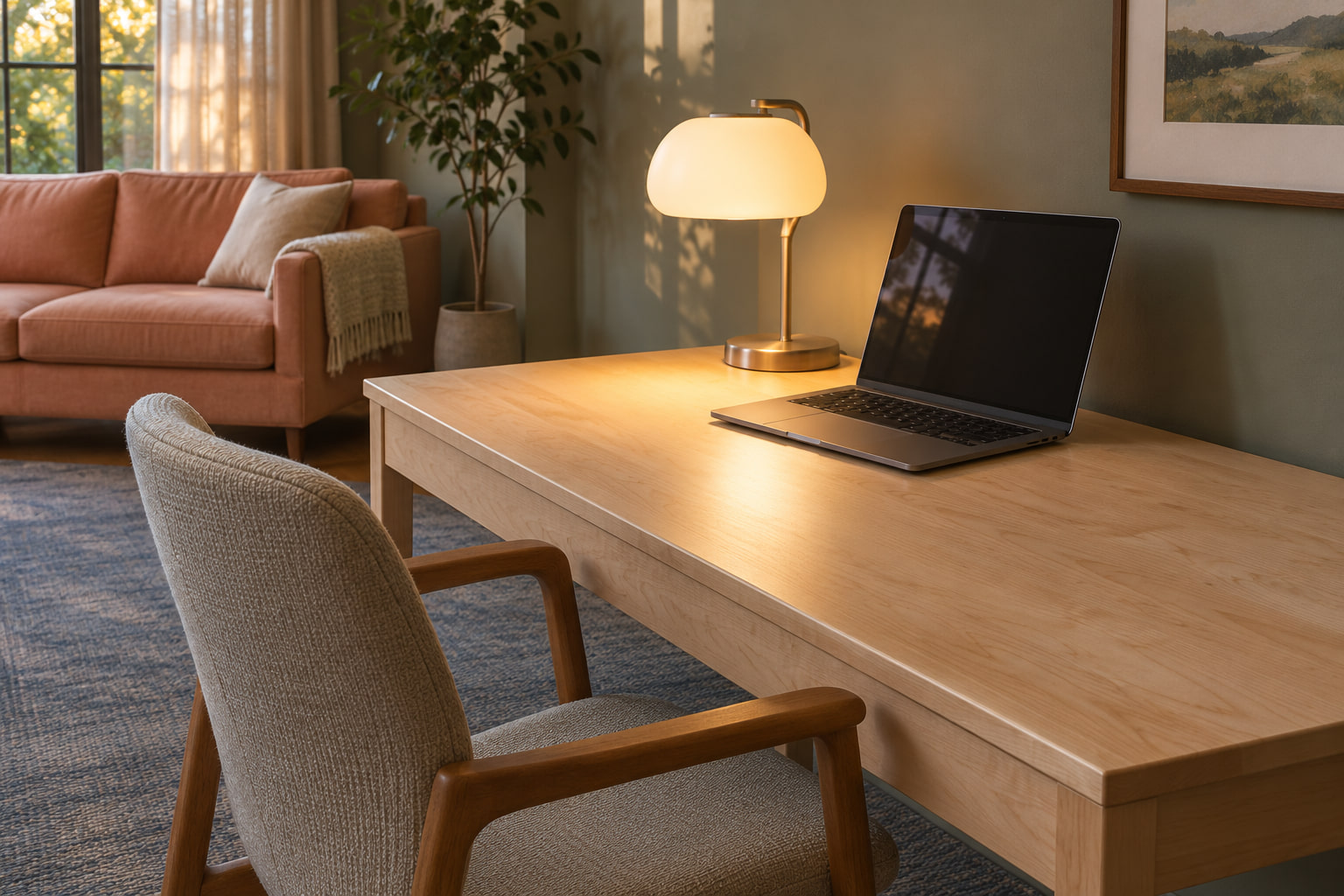
If a corner of the living room doubles as a workspace, try a compact lamp on the same side of the desk as your camera, a little off center. A diffused shade helps the light read more evenly across your face. Keep enough room on the desk to put a notebook down, and use the camera preview to check what the lamp is actually doing.
Move the lamp farther sideways if you see the whole shade reflected in your glasses. If the background falls away in the preview, try turning on a lamp deeper in the room. Keep the desk lamp on its own switch so the corner can return to being part of the living room when you close the laptop.
23. Bring a Lit Surface Into View With an Existing Mirror
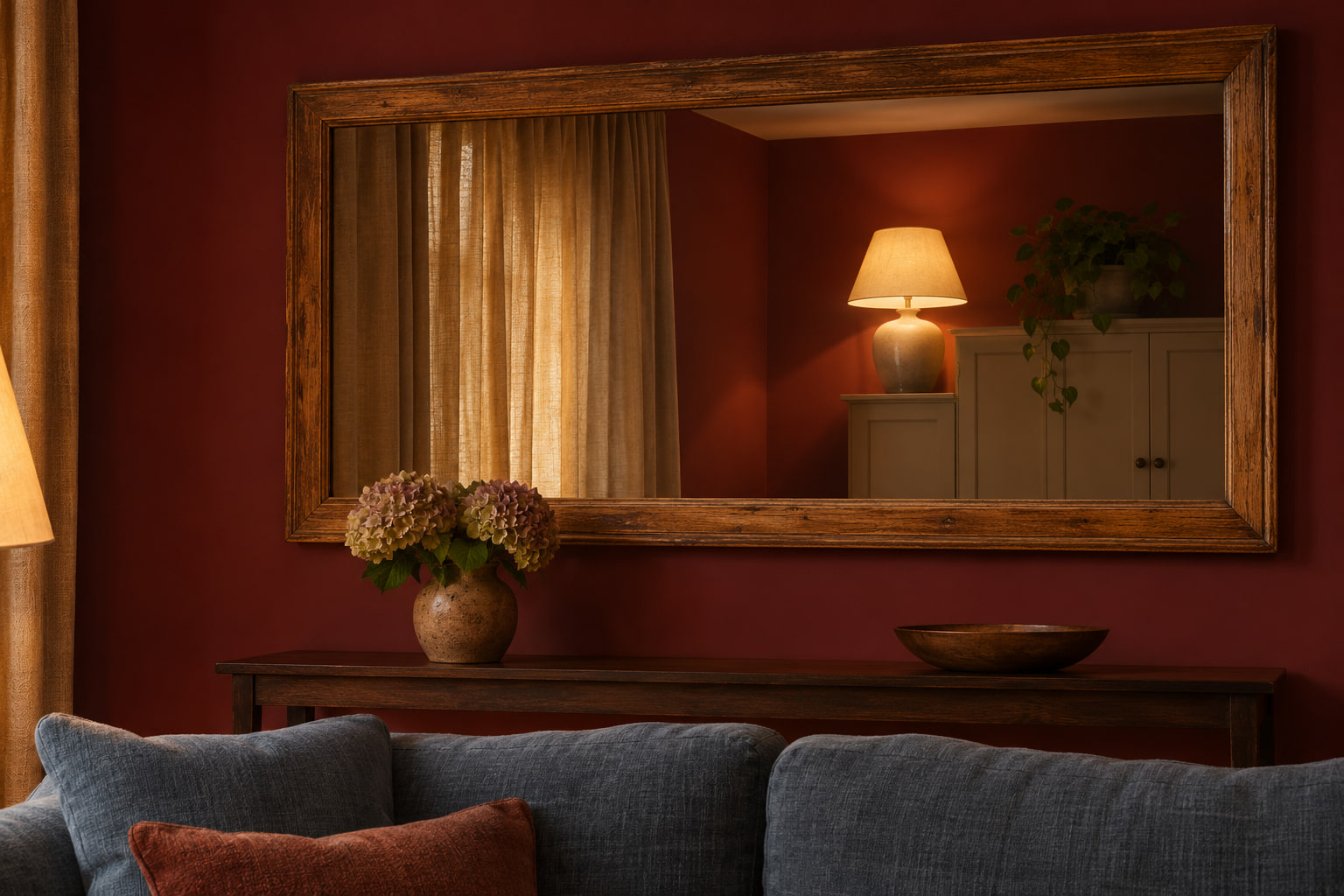
A mirror can bring a warmly lit part of the room into view from a seat that faces away from it. Look into your existing mirror from the sofa after dark. If it mostly shows a dim corner, try lighting a sideboard, a pale linen shade, or a textured wall within the reflection. The reflected scene can give that side of the room more depth.
Keep the brightest part of the fixture outside the mirror’s view from your usual seat. A small change in where a lamp stands can turn a bright dot into a reflection of the shade or furniture. Check the view from the doorway, too, especially if the mirror can also pick up the television.
24. Aim a Separate Lamp at the Floor for Cleanup
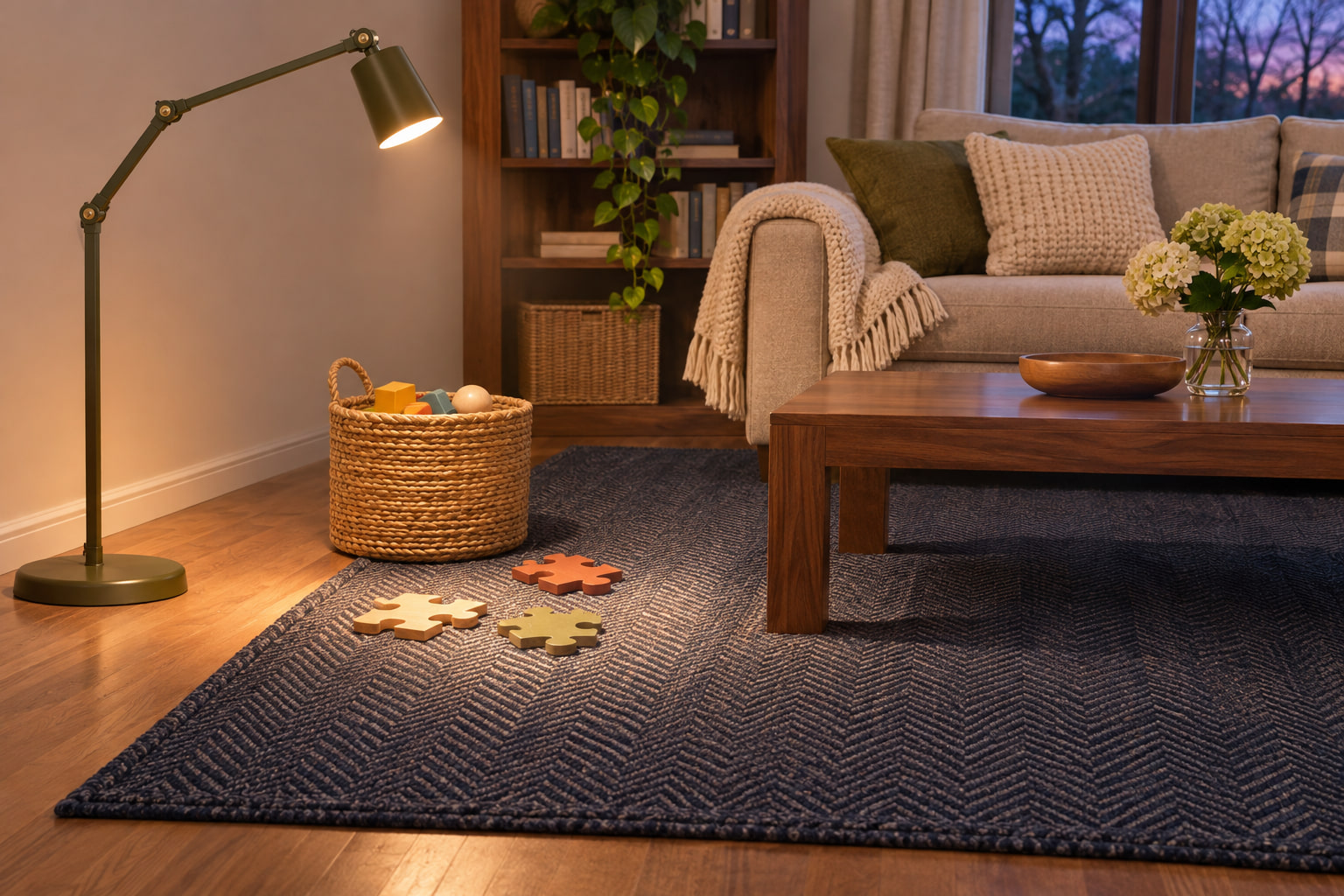
A low-pile rug can look tidy in soft evening light until you try to find a puzzle piece or pick up crumbs. Keep an adjustable lamp where you can direct its light onto the floor around the coffee table during cleanup. Place it to the side of the area you use most, where the angle is less likely to put your own shadow over the spot you are checking.
Switch the lamp on before moving the coffee table or using a handheld vacuum. Try it on the darkest part of the rug and on the floor just beyond its edge. A small adjustable head can make the lamp useful for this short daily job, then turn back toward the table when the room is tidy.
25. Use One Lamp Base for Two Different Jobs
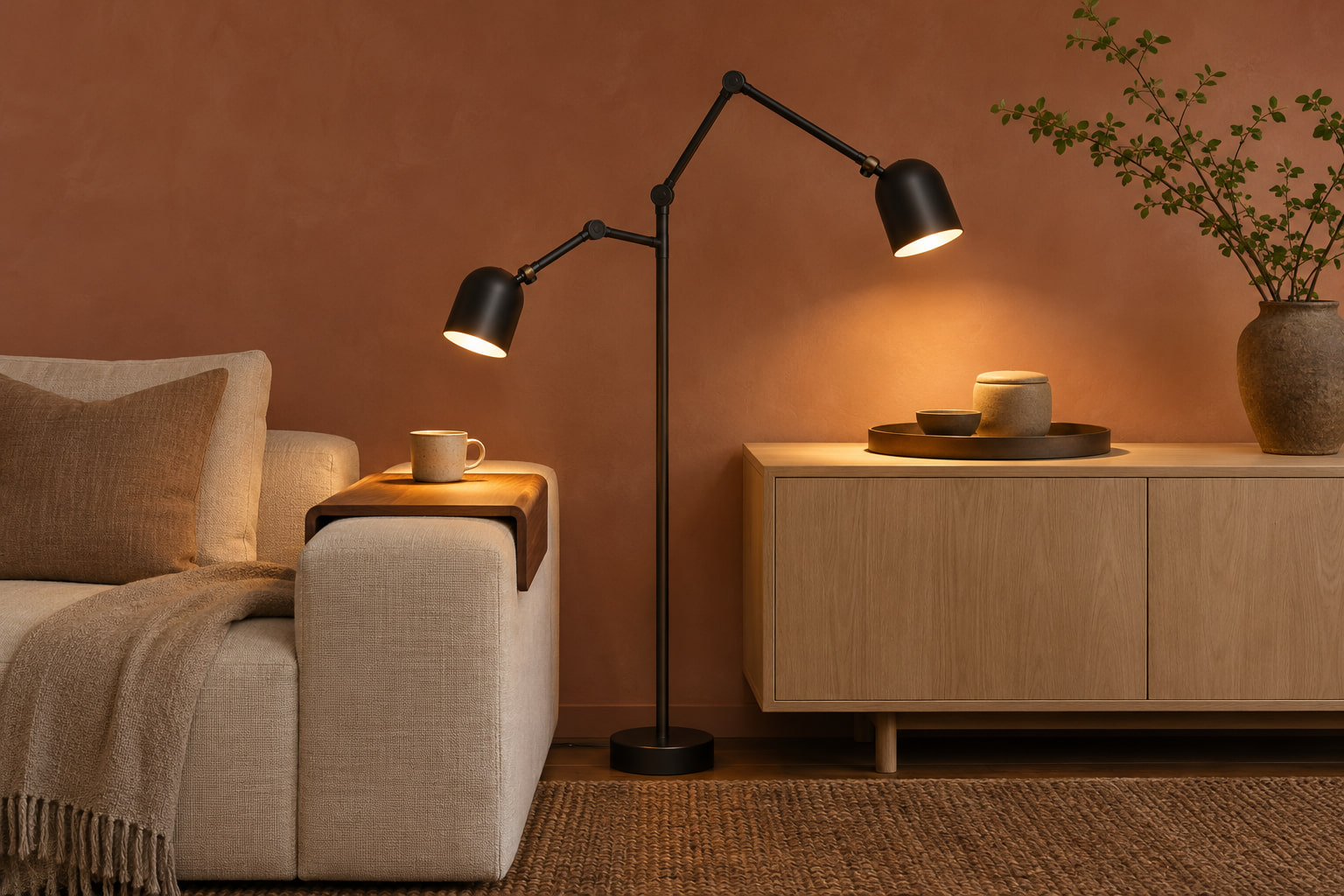
When a narrow living room has only one good place to set a lamp, look for a floor model with two independently aimable heads. Put its base near the point where two activities meet. One head can point toward an open shelf or console you use every day, while the second lights the end of the sofa where you sort mail or set down a drink.
Check that each head can aim at its own target without putting a bright spot in your eyes. A model with separate switches lets you use either side on its own. This approach is useful when two separate lamp bases would eat up the only free space between furniture.
26. Choose One Lamp You Can Switch On From the Sofa
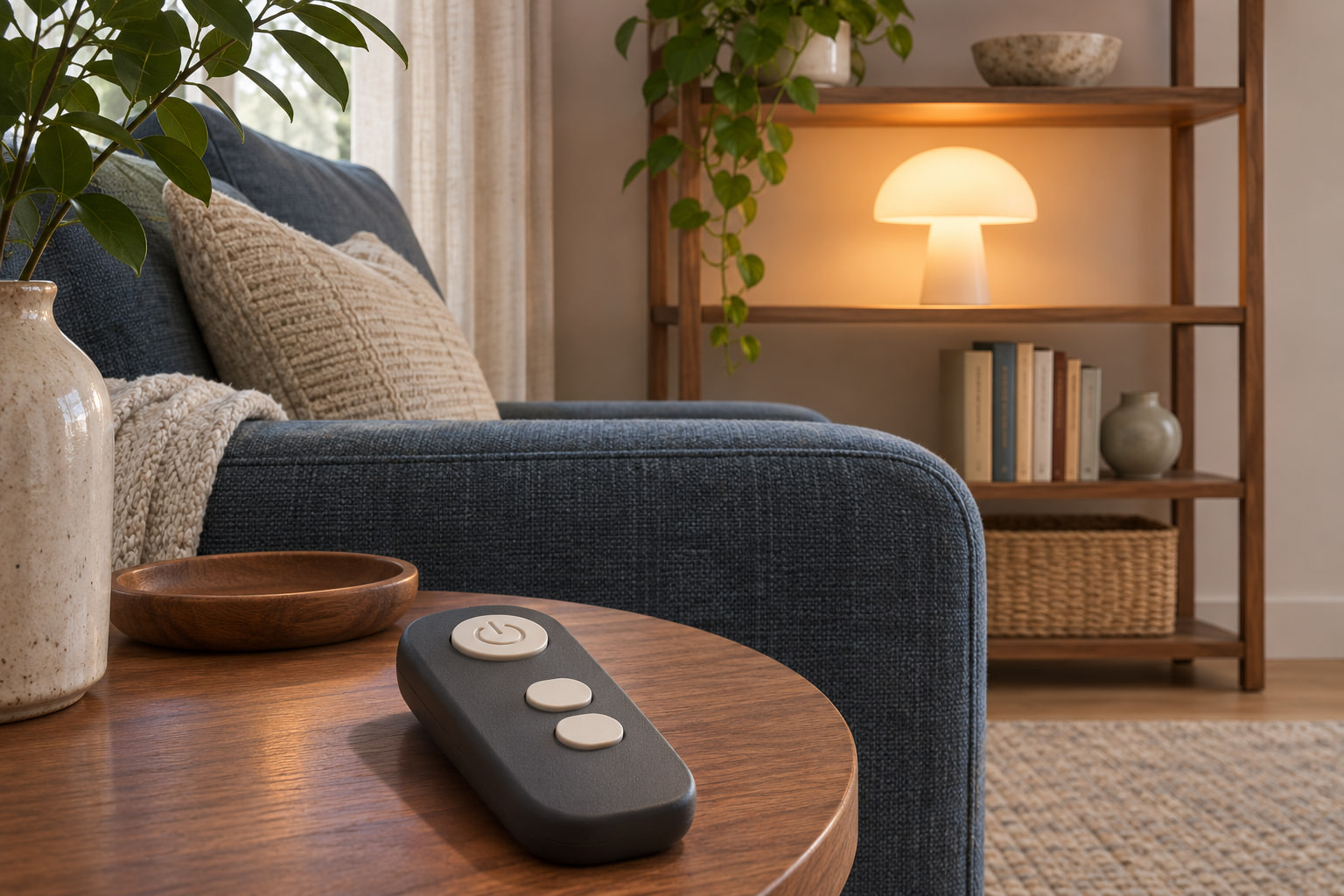
If the best spot for a lamp is behind a sofa arm or deep beside a bookcase, choose a fixture designed to work with a remote. Set up that lamp as the one you reach for when you come in to sit down, watch a show, or talk. Try its controls from the end of the sofa you use most before settling on a spot.
Give the remote a regular home in a shallow dish or on a side table where someone else can find it. In a room with several lamps, a familiar first switch makes the room easier to use without bringing every light on at once. Leave the lamp’s own controls accessible in case the remote gets misplaced.
27. Give a Piano or Music Stand Its Own Pool of Light
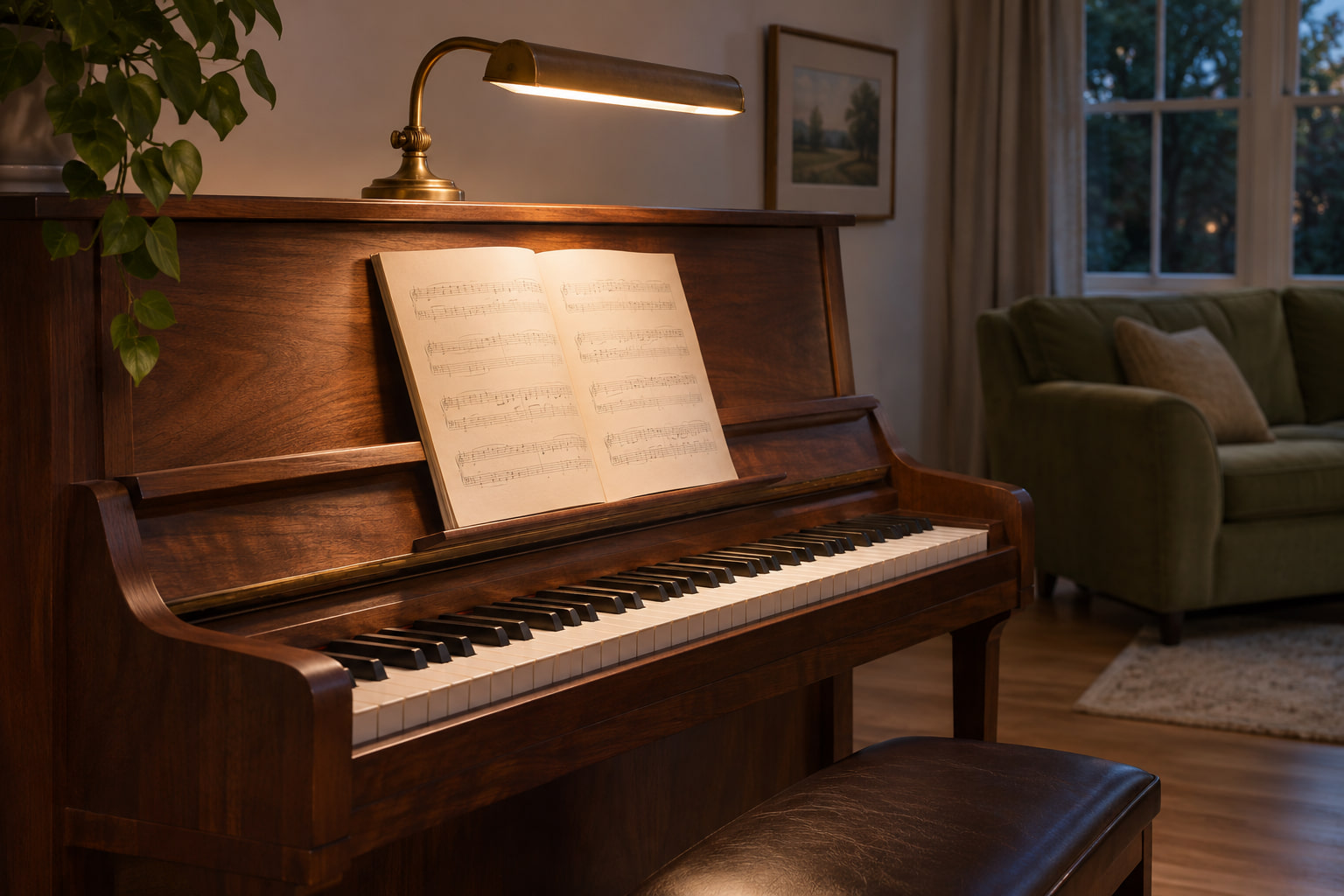
A living room lamp can make a piano look inviting while leaving the sheet music in shadow. A dedicated piano or music-stand lamp lets you move the light closer to the pages. Check the spread with music open across the stand and look at it from your actual seat. On a piano, check the keys as well as the outer edges of the pages.
If you can see a bright spot on the paper or a polished lid, change the angle before moving the whole setup. Keep the main living room lamp where it serves the rest of the room. The music corner can then have a useful light level during practice while the seating area stays softer.
28. Skim a Narrow Beam Across a Textured Wall
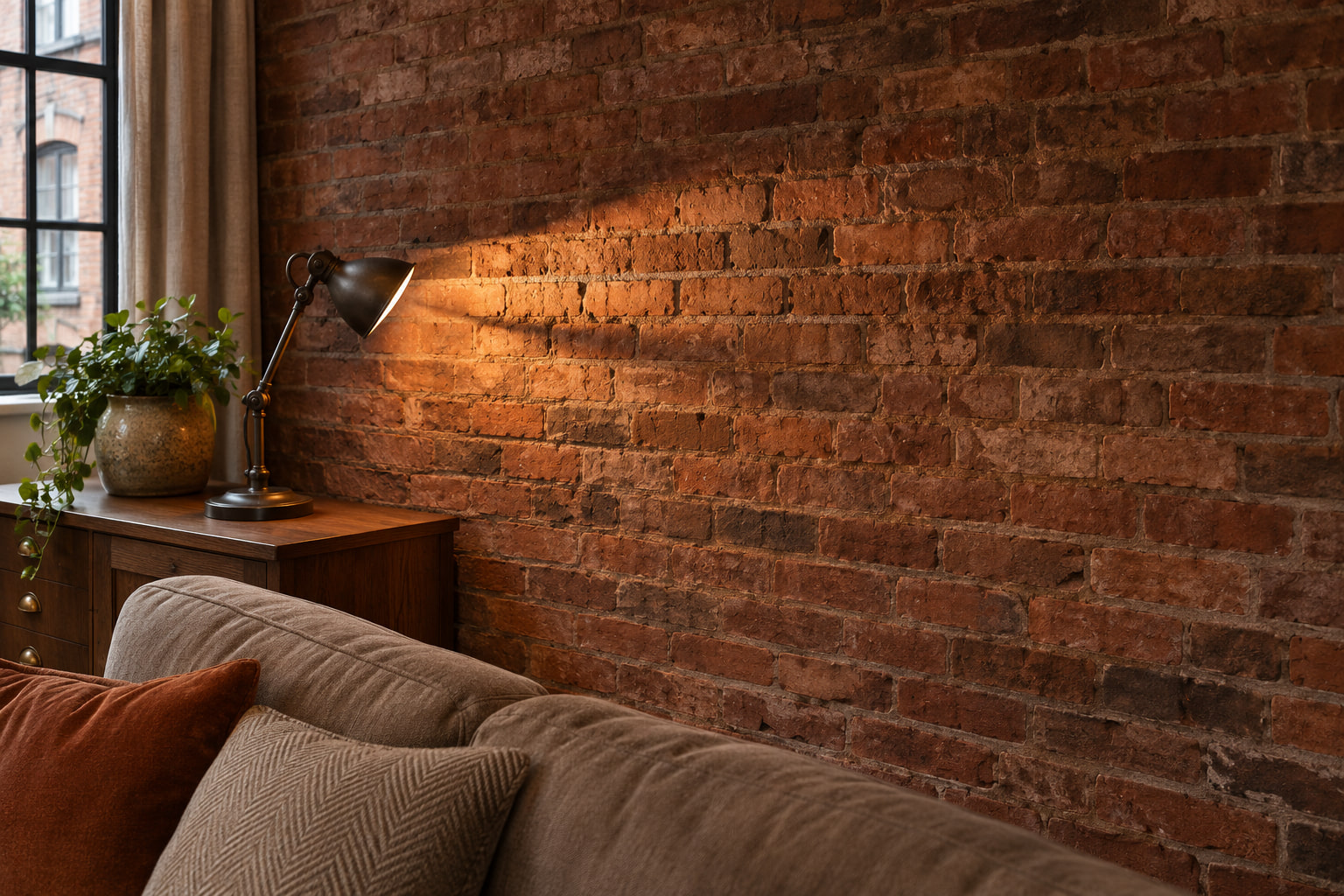
A light aimed straight at a textured wall can flatten the detail. Try a small directional lamp to one side of exposed brick, a limewashed surface, or wood slats and aim it across the wall at a shallow angle. The raised areas catch light and leave shadows behind them. Start with the part of the wall you can see from the sofa.
Move the lamp a few inches at a time while watching the texture. A beam that grazes too close can pick out every bump in an uneven finish. If the effect looks busy, aim farther across the surface or choose a shorter stretch to emphasize. Let an ordinary shaded lamp handle the seating area.
29. Keep a Bay Window Clear and Light the Seat From the Side
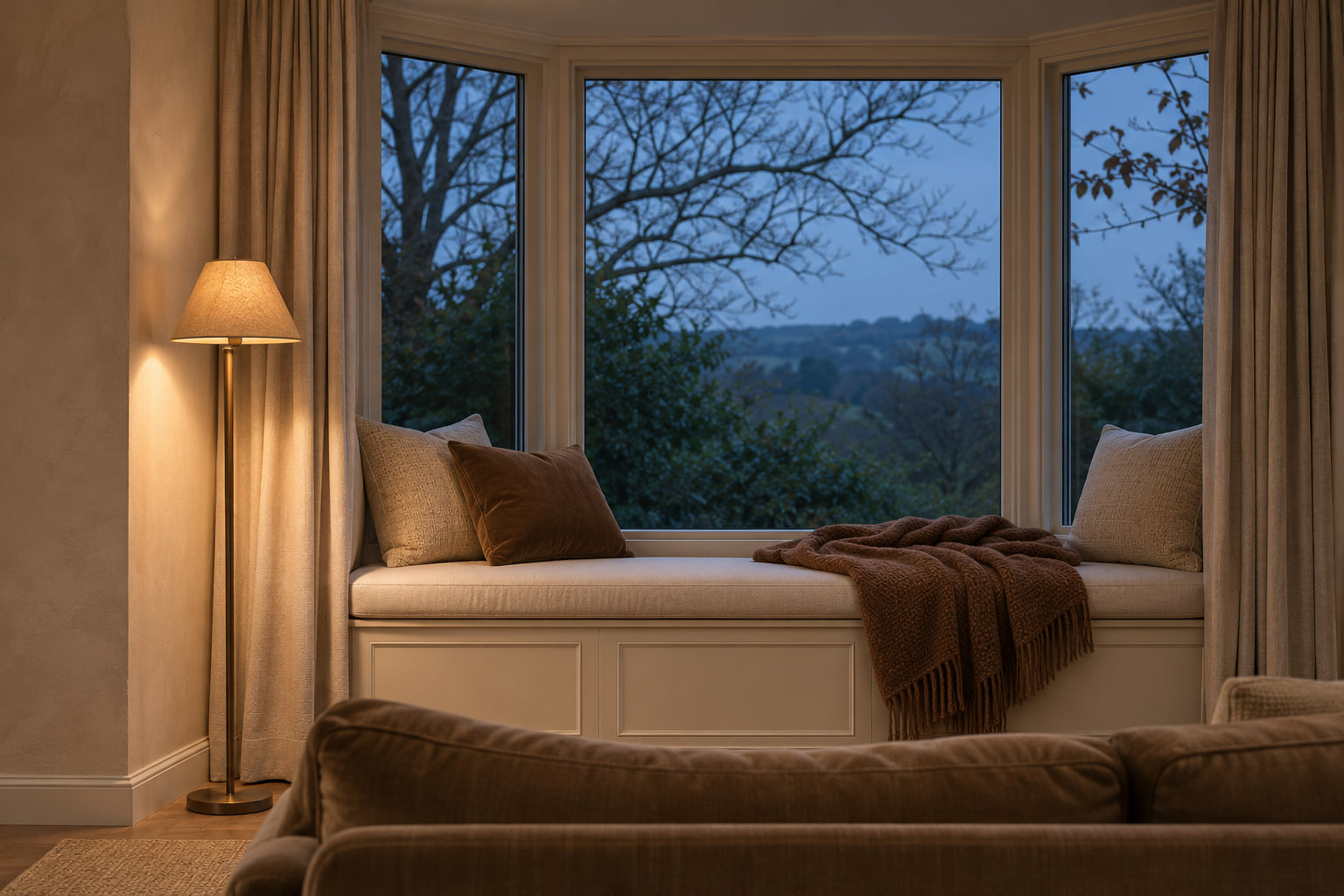
A bay window makes a natural living room seat, but a lamp in front of the glass can interrupt the view. Try the lamp at the room-side edge of the bay, where the window turns back toward a solid wall. Look across the recess from the sofa to see whether the shade stays clear of the most useful part of the view.
Open and close the curtains or shades to check that everything moves freely around the fixture. Then sit by the window after dark. If the glass shows a strong reflection of the bulb or shade, shift the lamp farther toward the solid wall. A little light at the side can keep the seat inviting through dusk.
30. Put a Guest Light Within Reach of an Open Sofa Bed
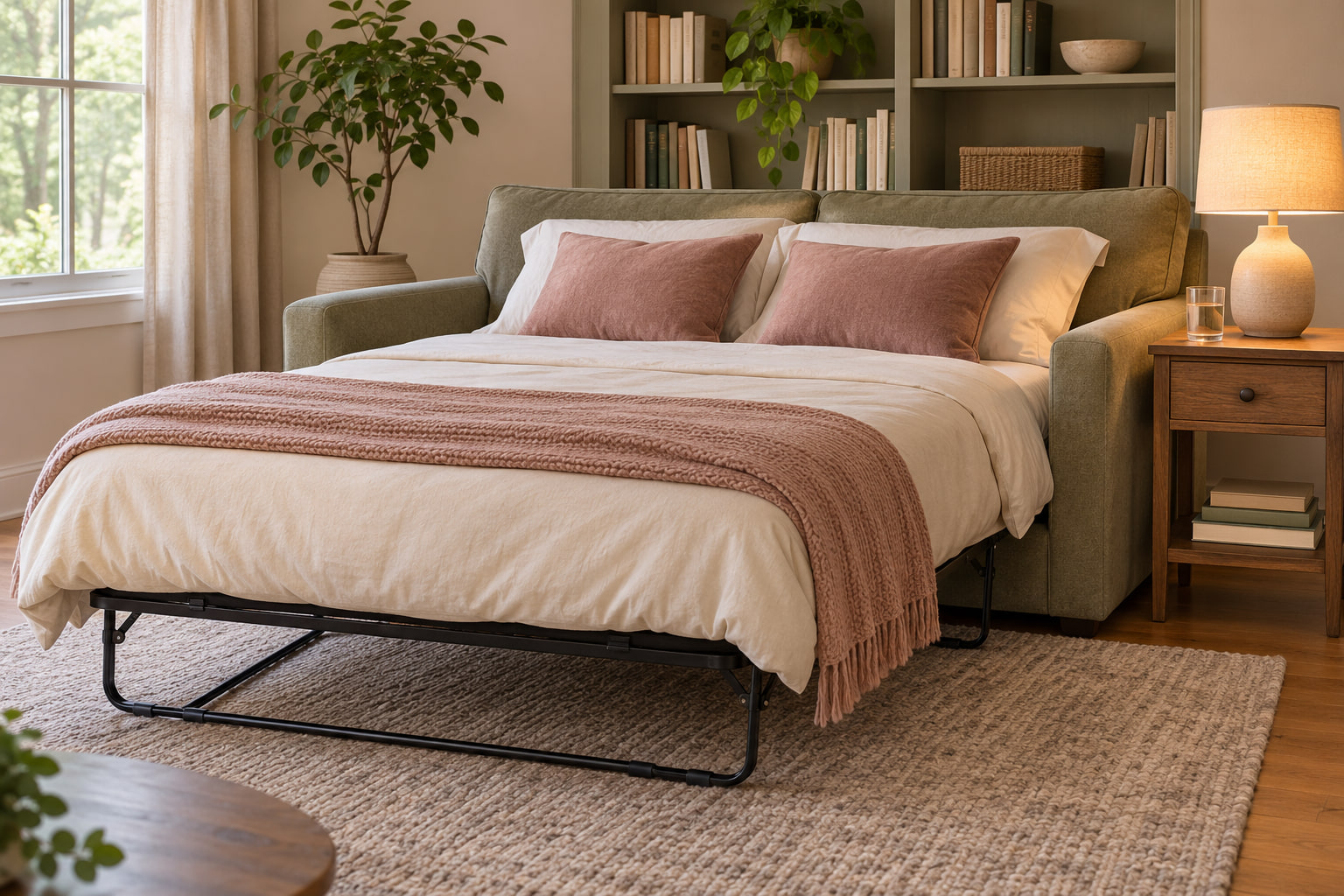
A side table that works perfectly beside a closed sleeper sofa can end up out of reach when the bed opens. Pull the bed out before you choose a position for a lamp. Try the lamp on a stable stand beside the pillow end, outside the space the bed needs to open. Test whether a guest can reach the switch while sitting on the edge of the bed.
Keep a little room on the stand for a glass and a phone. Look at the shade from pillow level and turn or move the fixture if you see the bulb directly. During the day, the same lamp can sit back by the sofa arm when the bed is folded.
Try your setup on an ordinary evening. Sit down with a book, turn on the TV, and walk from the sofa to the door. Where the room still feels dim or you keep seeing glare, adjust one light and try again. Once each part of the room works for the way you use it, you’ll know which lights can go off when you want a softer evening.
Discover more from HomeTrendora
Subscribe to get the latest posts sent to your email.