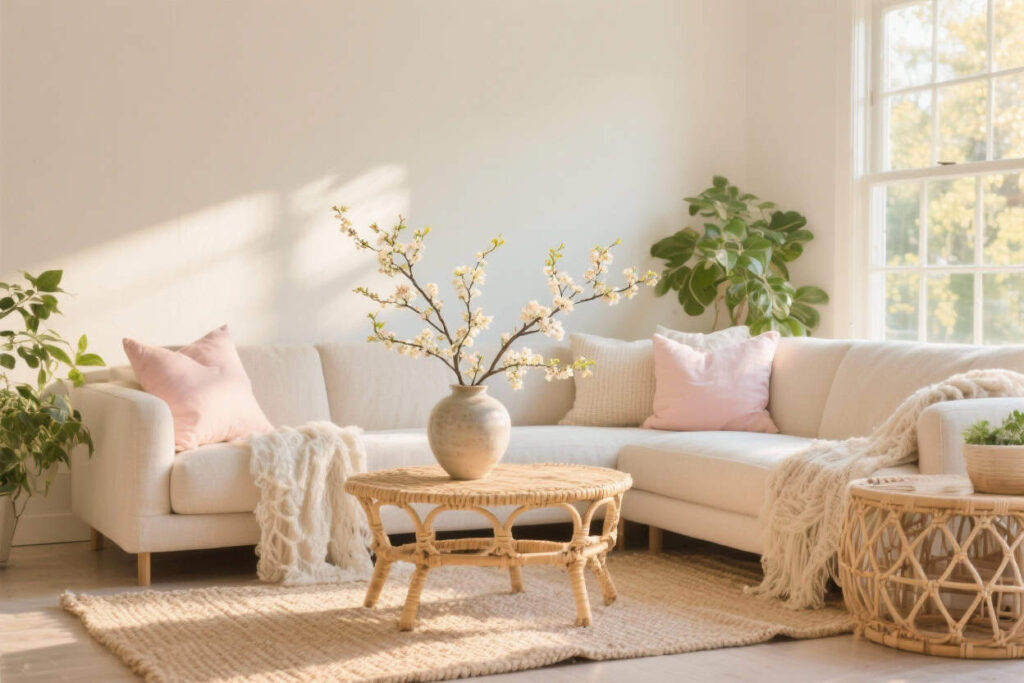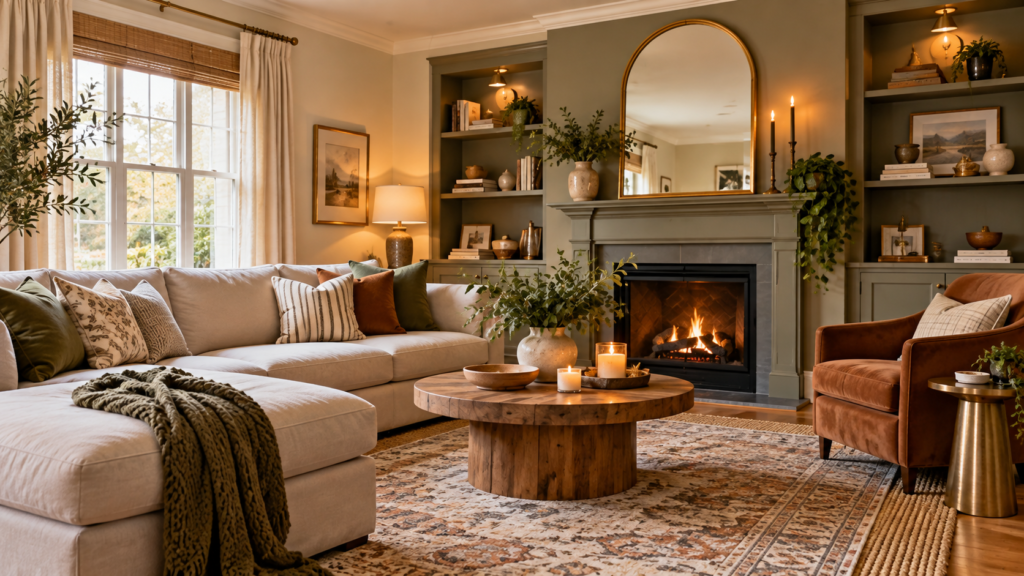
The best farmhouse lighting starts with what happens under the fixture. A narrow hall needs light you can walk under, a reading chair needs light on the page, and an island needs light where you chop. A little black metal, opal glass, or warm wood can give those fixtures a farmhouse look without making each room match.
These 30 farmhouse lighting ideas cover the entry, kitchen, living room, dining room, bedroom, bath, and places you work. Measure the fixture footprint and check the view from where you stand or sit. Use the manufacturer’s bulb and placement instructions, and have a qualified electrician confirm the location and installation for hardwired fixtures.
1. Hang a Compact Lantern in a Tall Entry
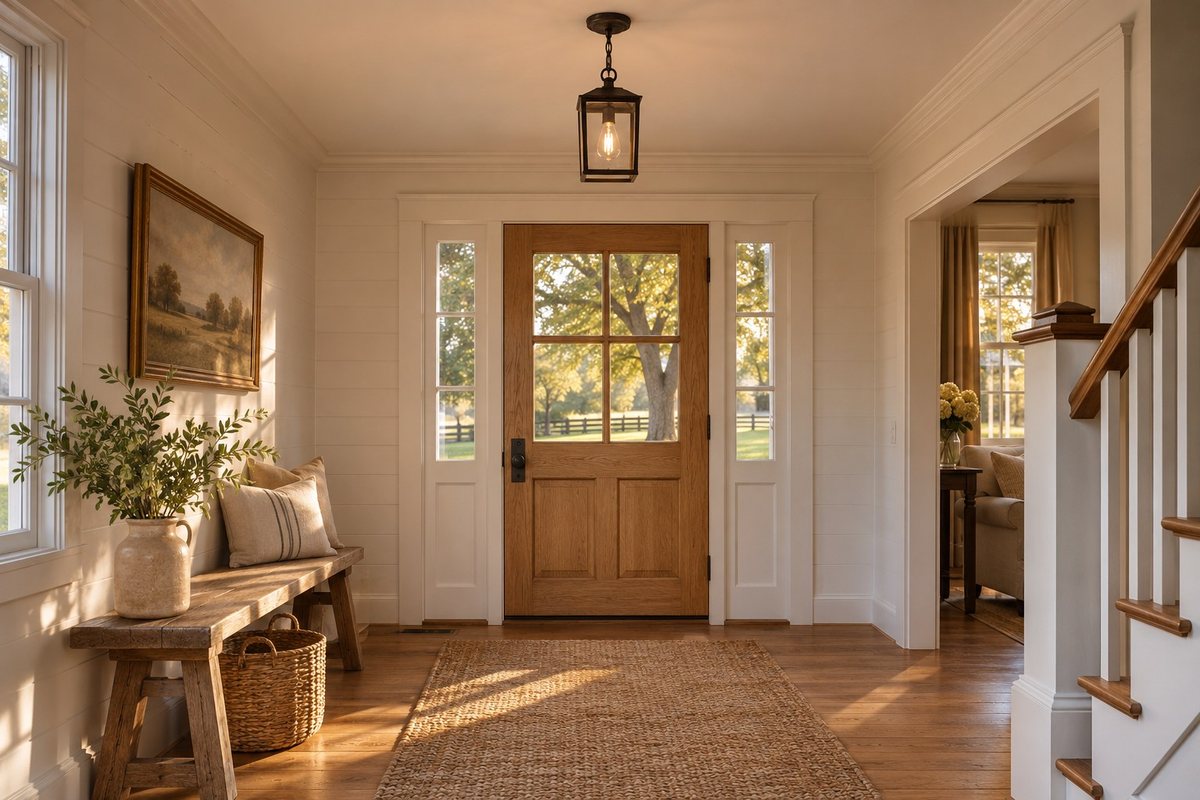
Choose a compact lantern pendant for an entry with enough ceiling height to show its outline. A rectangular frame in dark bronze gives a pale entry a visible center without covering much of the view into the next room. Compare the actual frame width with the wall and door trim below it.
Have the installer check the full height, including chain and canopy, against the usable route and door swing. Look up from the entry and down from the stairs if you can see the same fixture from both. For furniture that leaves the approach open, see these entryway ideas for narrow halls.
2. Use a Shallow Opal Flush Mount in a Low Hall
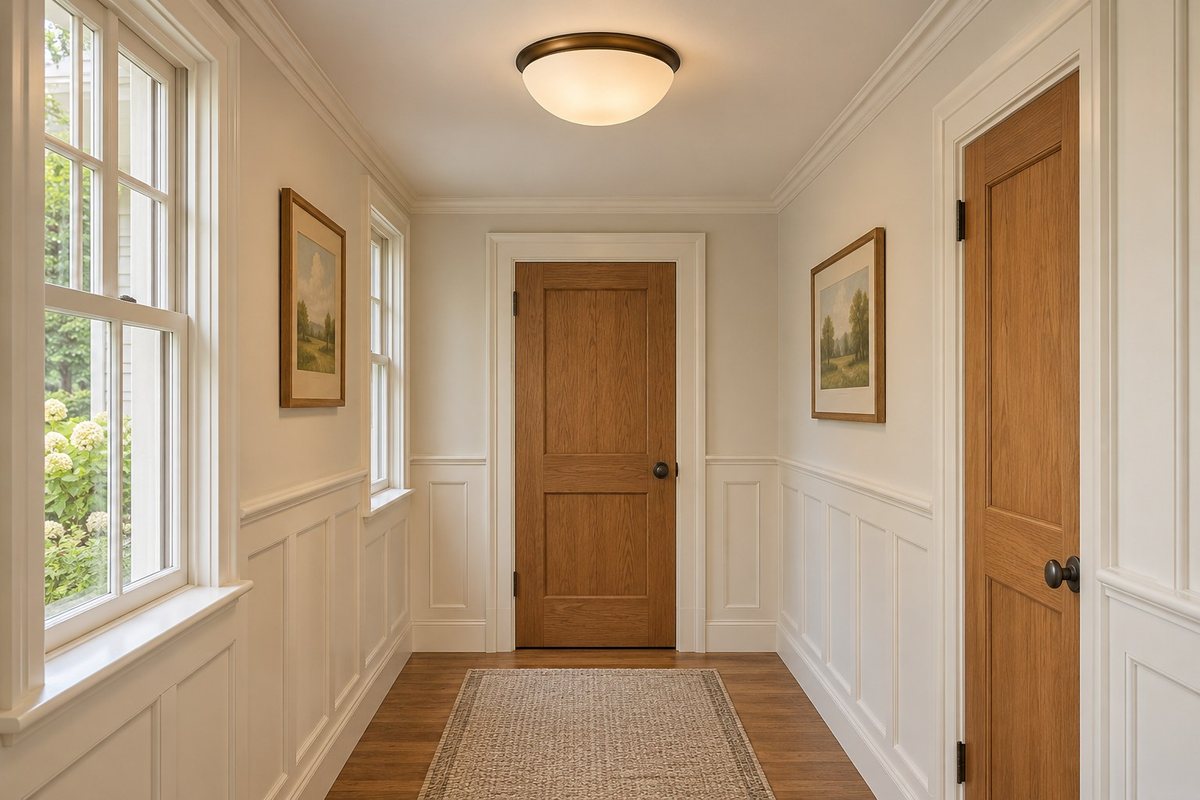
Use a shallow opal flush mount in a low hallway. The glass spreads light across the ceiling and takes the edge off the bright view of a bare bulb. Look for a compact metal rim if you want a little bronze detail without adding much depth to the fixture.
Compare the full projection with nearby doors and ceiling features. A wide shallow glass shade can feel calmer in a short hall than a deep small one. If your walls are paneled, check the paint color with the fixture on. A warmer bulb can bring out the grain and change the way white trim reads.
3. Give a Dark Stair Landing One Shielded Sconce
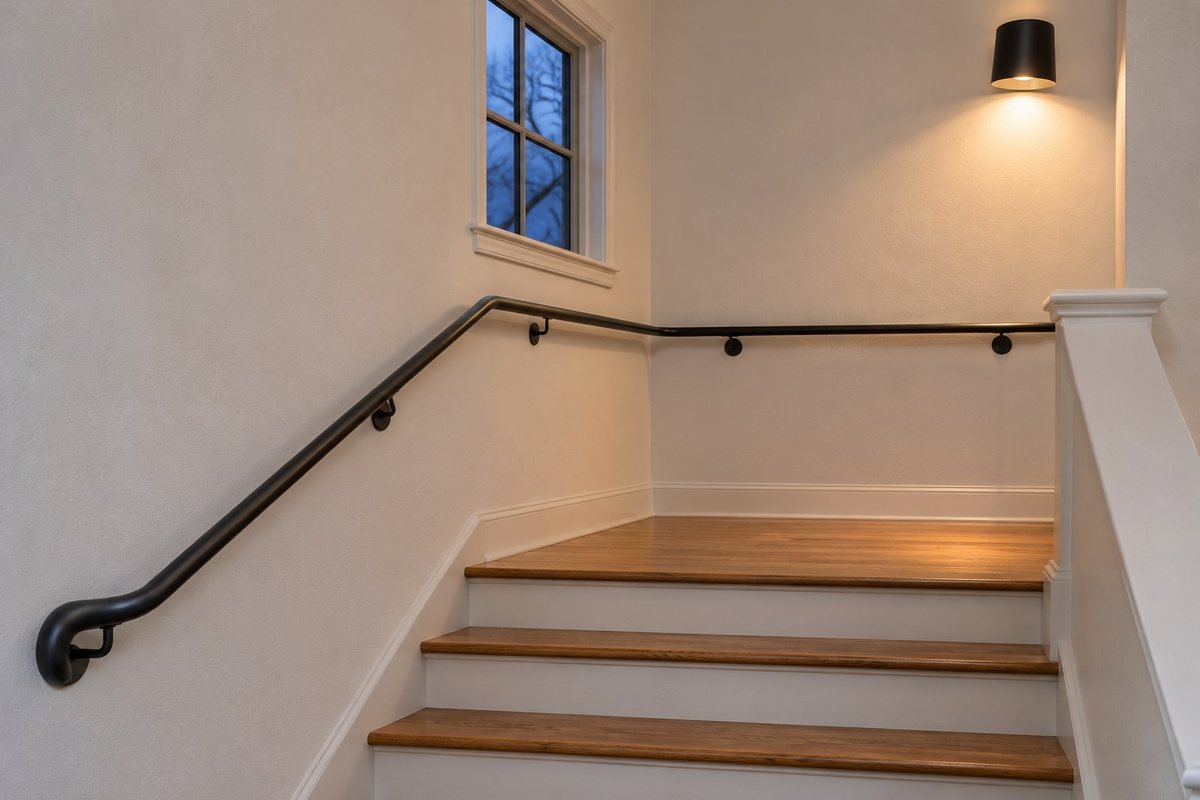
Use a shielded wall fixture to direct light across a dark landing, with the bright source out of direct view from the stairs. Pick a short fixture and a position beyond the full handrail grip and route. A small black frame suits an oak stair and pale plaster without competing with the rail.
Look at the landing from the steps above and below. Ask the installer to check that you can see tread edges and the change in level without glare. Keep the usual stair lighting working. The additional pool should help you see where you are going and should leave the wall comfortable to pass.
4. Light an Entry Picture From Above
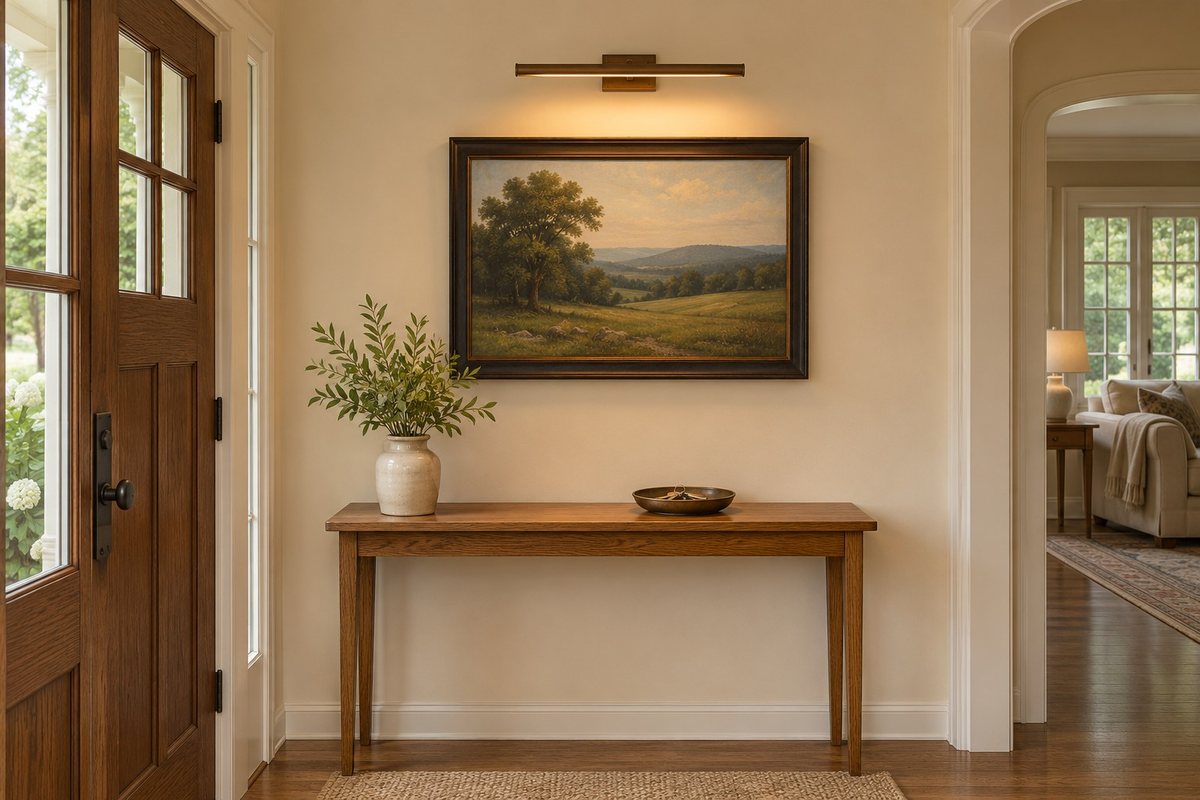
Pick a slim bronze picture light for a single framed landscape over an entry table. Match the size to the artwork’s width and use an installation approved for the wall and fixture. The point is a readable print as you enter, so start by finding an angle that lights the art without a large spot on the glass.
Try the view from the front door and from the center of the hall. A matte print behind low-reflection glazing is easier to see from more than one angle. Keep the console top available for keys and mail, and let the picture be the feature.
5. Put a Linen-Shade Table Lamp Beside the Reading Chair
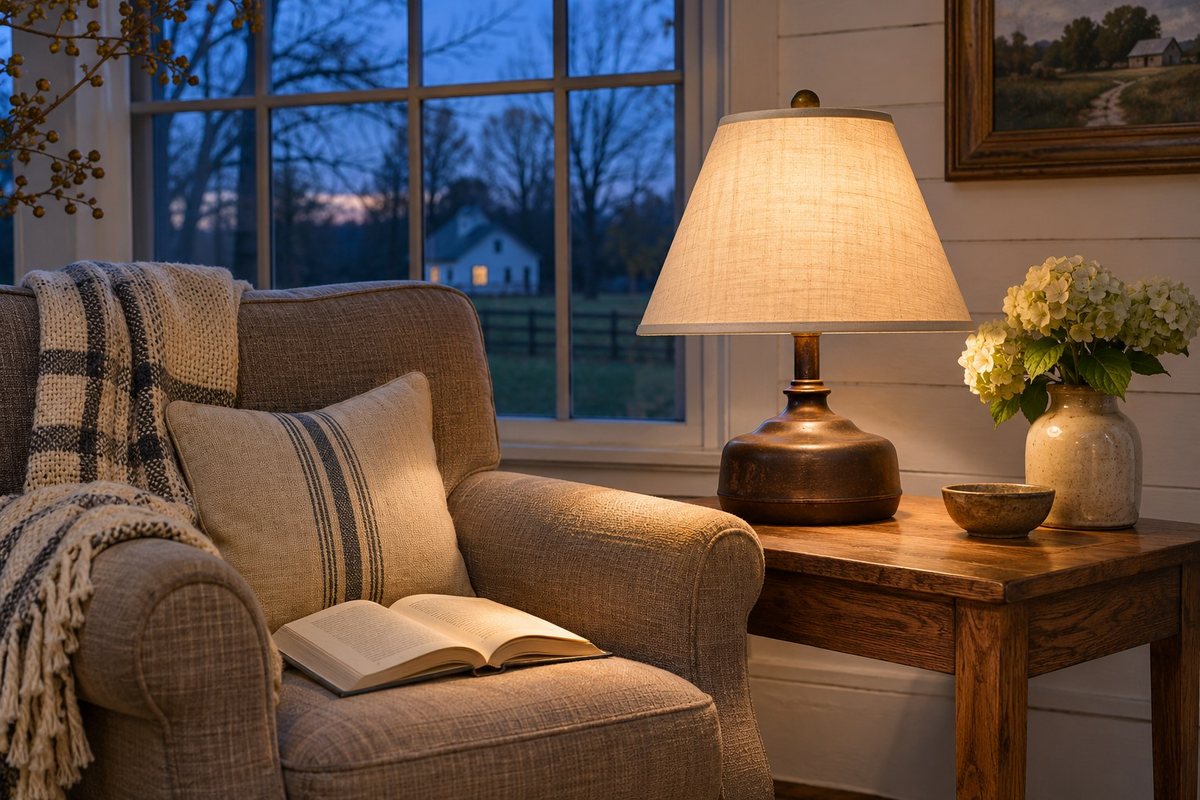
Put a stable lamp on the side of the table closest to the chair. An ivory linen or linen-look fabric shade softens the view of the source while the open lower edge lights the page. Choose a base that sits fully on the table. Check the overall height, including a finial if the lamp has one.
Sit down with a book and see where the brightest patch falls. You should be able to reach the switch without stretching past the book or a drink. Follow the lamp’s bulb type and limits, and route the cord out of traffic. Our living room lighting ideas for rooms without a ceiling fixture have more chair-side placements.
The brown Nourison ceramic table lamp has a tapered beige linen-look shade. Check its height with the finial against your chair and side table so the shade covers the bulb at seated eye level.
Discover brown Nourison ceramic table lamp (paid link)
6. Bring a Milk-Can Lamp Into a Quiet Sitting Corner
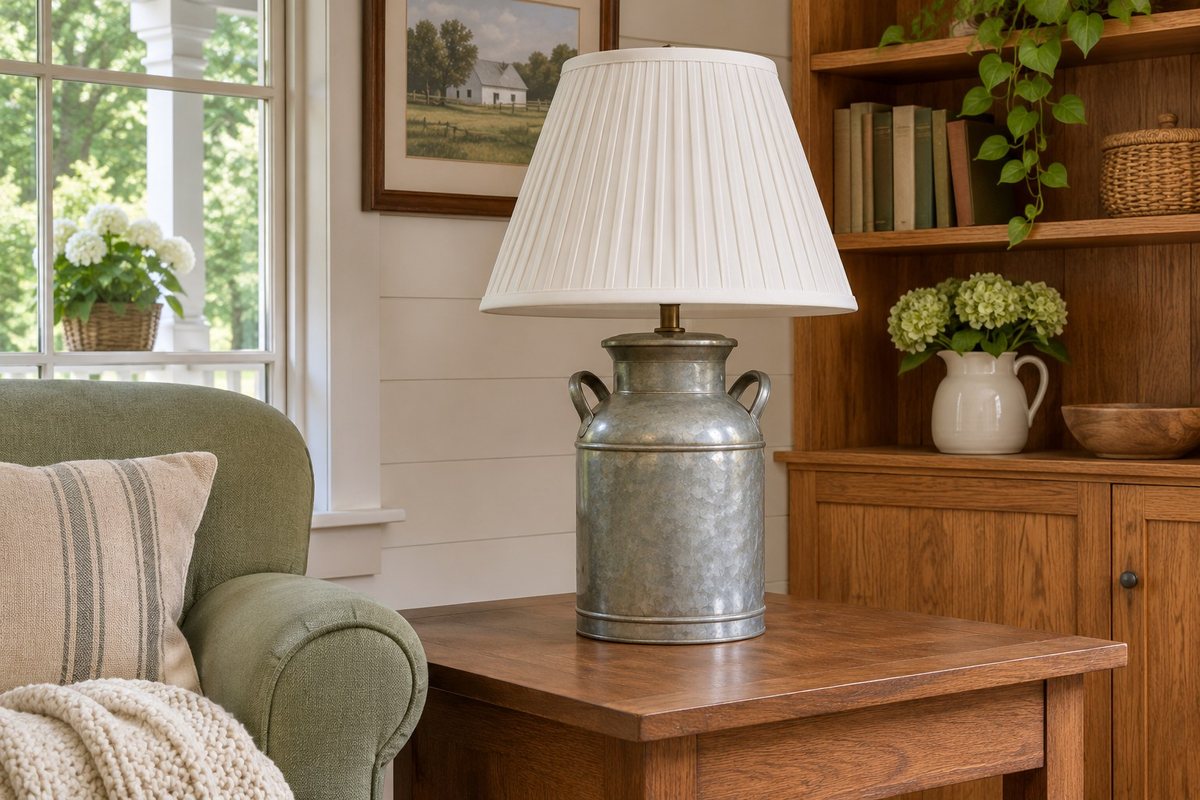
Use a finished manufactured lamp with a milk-can-shaped base on a quiet sitting-room table. The galvanized shape carries the farmhouse detail, so a plain ivory shade and warm wood table are enough around it. Check the base diameter and leave room to put down a glass without reaching around the lamp.
A small pleated shade makes the metal feel softer, especially beside sage or cream fabric. Avoid trying to wire a salvaged vessel yourself. Use a lamp intended for household use and its stated bulb. If the milk-can base dominates the table, choose a smaller model or give it a wider side surface.
7. Put a Caged Floor Lamp Just Beyond the Sofa Arm
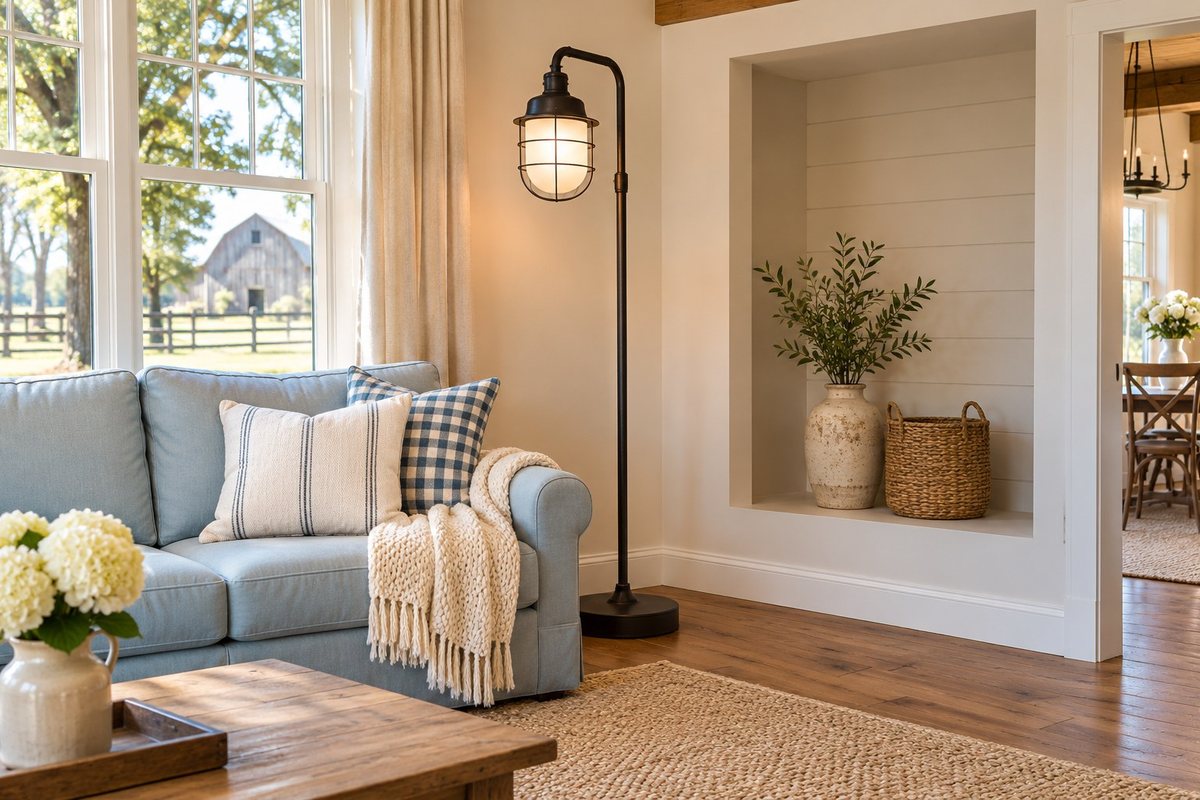
Set a cage-style floor lamp just beyond the sofa arm in a side recess. Choose a stable model with an opaque or frosted inner diffuser if the bulb will be in the seated line of sight. Measure the base as well as the cage. It needs a clear level patch beside the furniture.
Look back at the lamp from the other side of the room. If the bright source shows through the cage and distracts from the seating area, use a less exposed model. Keep the cord along a suitable wall-side route without running it under a rug or across a walkway.
8. Choose a Beam-Style Ceiling Fixture for an Open Lounge
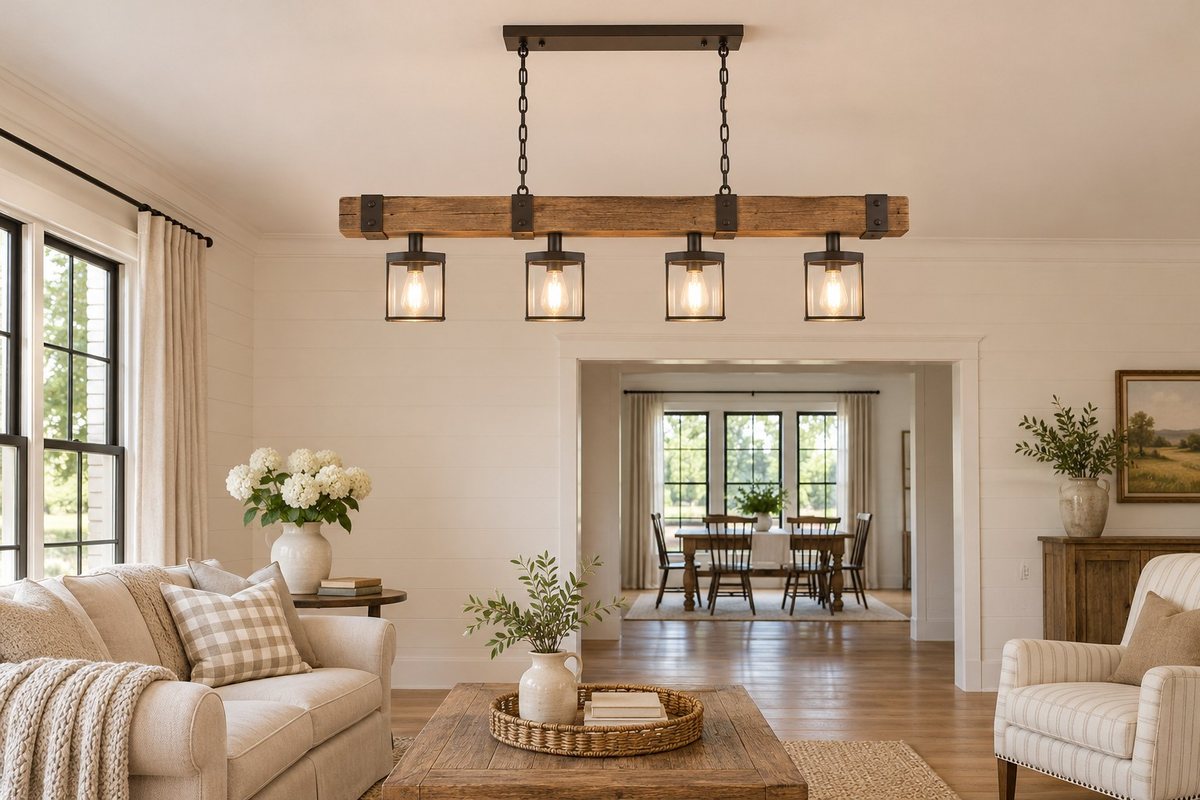
Use a manufactured beam-style fixture in a long open sitting room where a compact globe would be hard to see from the far end. Look for an even run of small shades, with one warm wood finish echoing a nearby cabinet or floor. Measure the full beam length against the seating area below it.
Have the installer check the mounting support and overall hanging height. From the entry, the beam should read as one horizontal shape and leave a clear view through the room. Keep the surrounding ceiling quiet, especially if the fixture already has several glass shades.
9. Fit a Barn-Pulley Pendant Over a Fixed Side Table
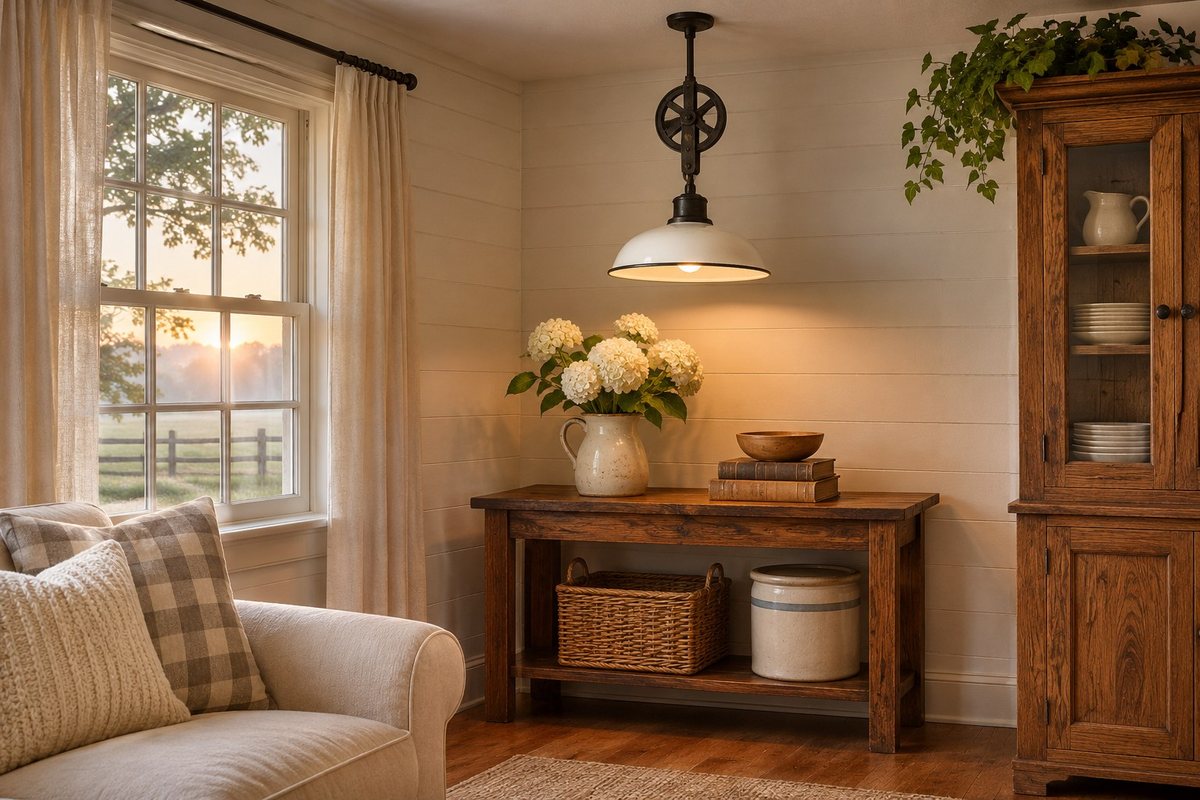
Try a pulley-inspired pendant over a fixed side table in a farmhouse lounge. A commercially made version can give you the round wheel shape and dark hardware without adapting salvaged moving parts. Pair it with a short enamel shade so the light lands on the table rather than across the sofa.
Check both the everyday seating view and the route around the table before deciding on a height with the installer. Put the fixture fully over the table footprint. If the table moves when you entertain, consider a table lamp or a wall fixture that does not depend on the table’s position.
10. Use Pairing to Balance Two Sofa-Side Lights
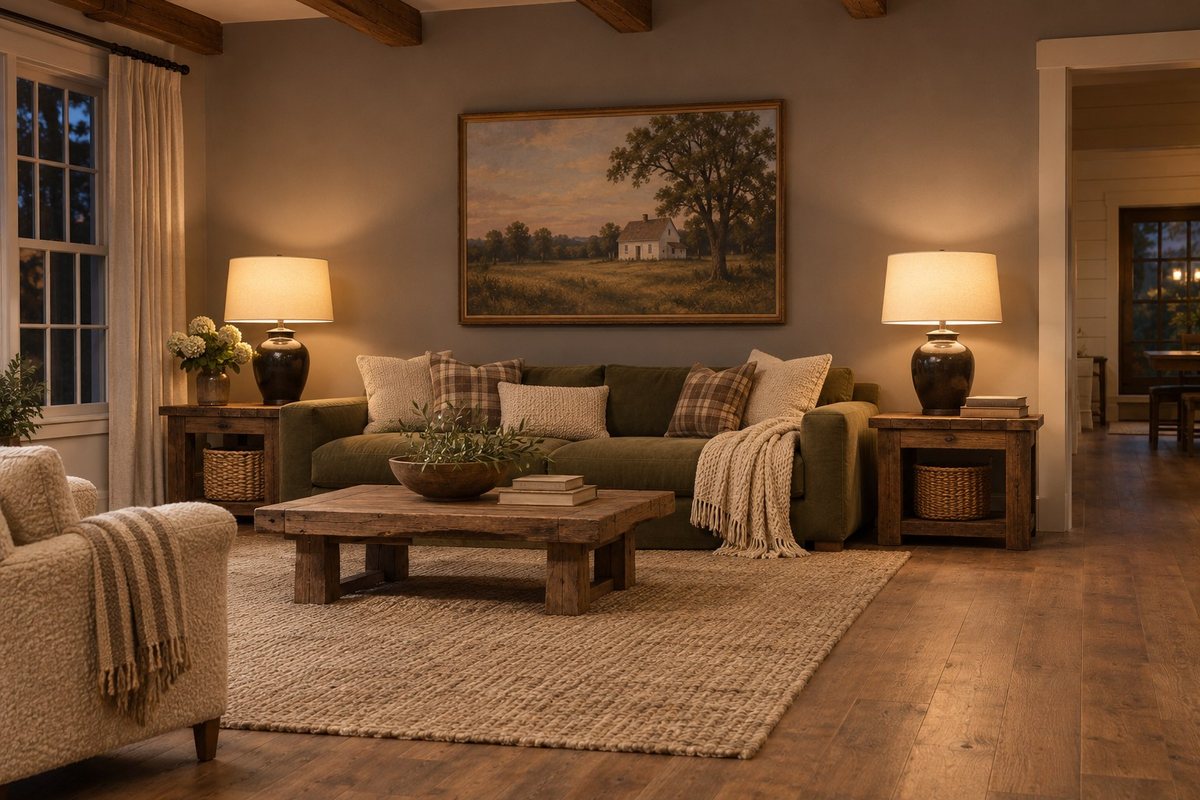
Choose two compact lamps with similar shade shapes for the ends of a sofa. The bases can differ in texture if their shades cast similar amounts of light. Keep the overall height close enough that neither source looks much higher from the opposite seat. An ivory shade can connect dark ceramic and warm wood.
Turn them on together at the time you use the room. Check the view from the television and from the main doorway. If one light dominates, compare the bulbs and shades before changing the furniture. This is a practical way to make a sitting area feel balanced without replacing the main fixture.
11. Put Open Metal Cage Pendants Over a Wide Island
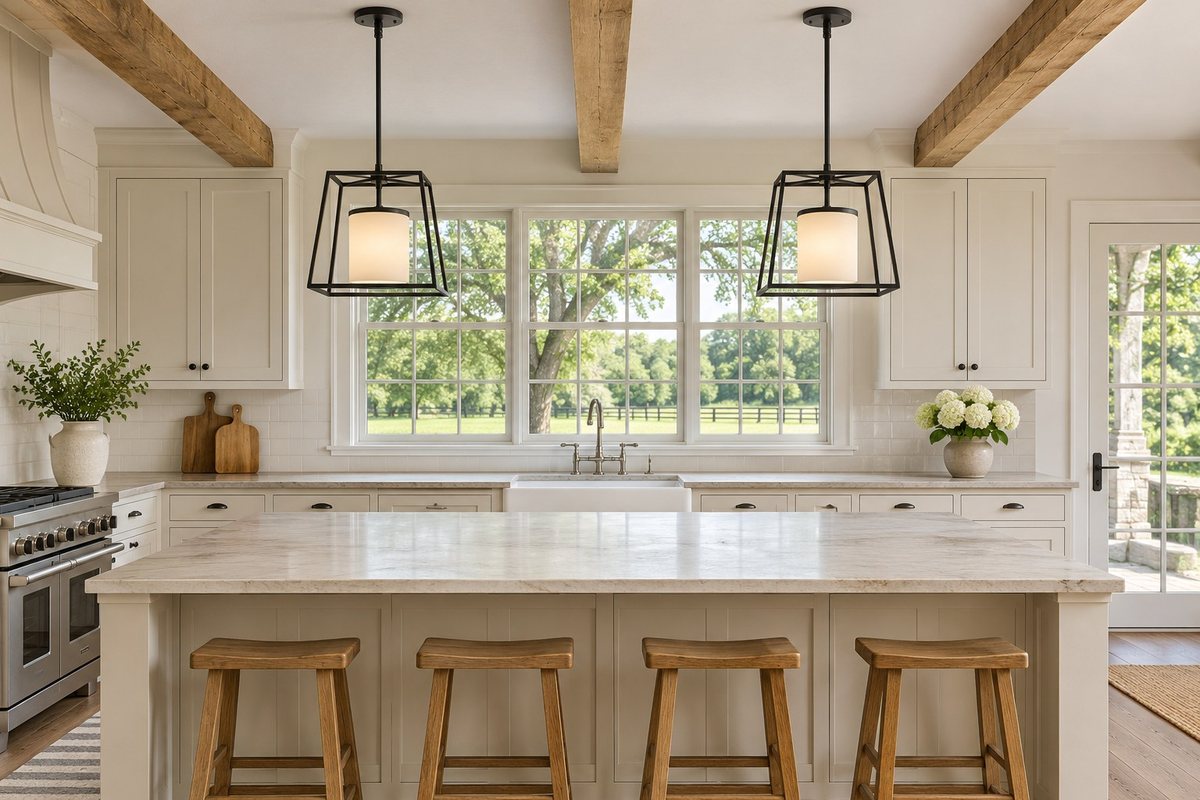
Use two slim metal cage pendants above a wide island. The open outlines give the kitchen a little black detail while preserving the view into the next room. If you see the bulbs from the adjoining seats, choose models with small opal inner diffusers. Compare the shade widths with the island’s usable preparation area.
Measure the island and ask the installer to confirm spacing and mounting height with the full ceiling and seating layout in view. Stand at both ends of the worktop and check the shadows at the cutting surface. A pair should feel balanced from the approach without making the island seem narrower.
12. Choose a Schoolhouse Globe for the Breakfast Nook
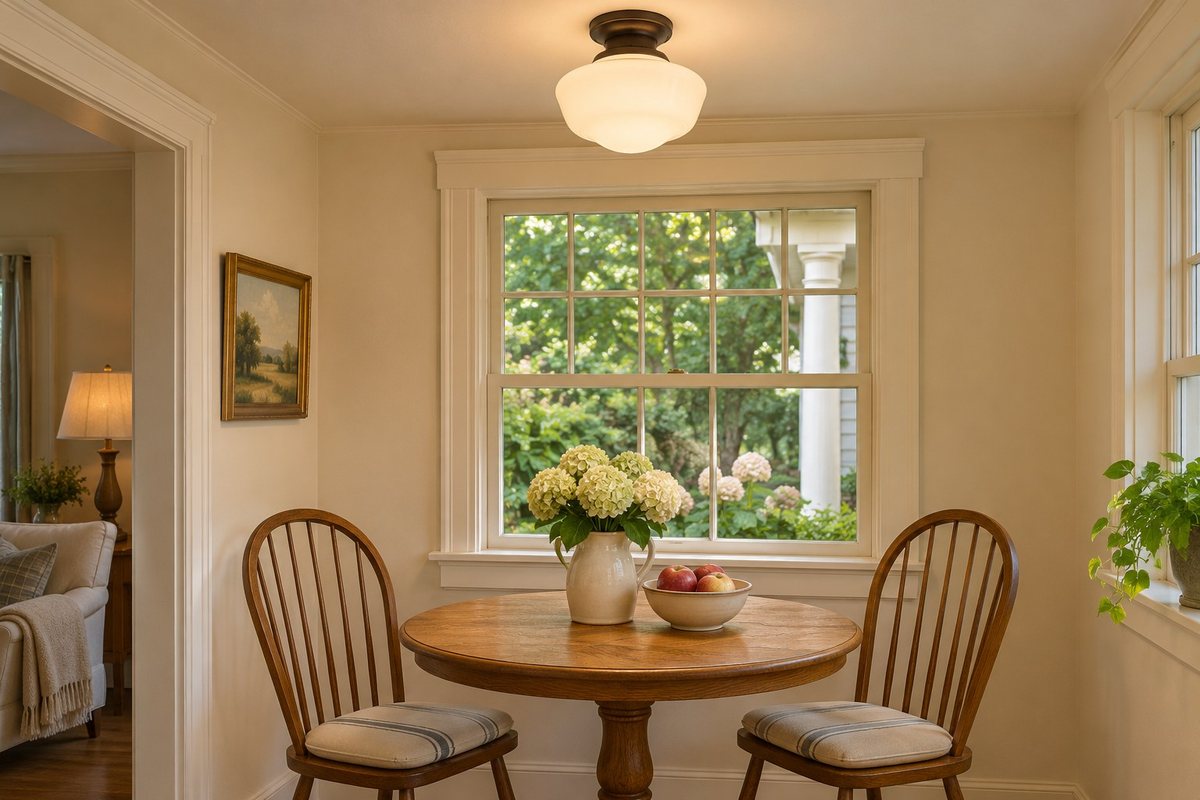
Pick one opal schoolhouse globe for a small breakfast nook. The round shade makes a simple companion to a round table. A compact bronze cap adds a traditional detail without taking much visual space. Check the globe width against the tabletop and the view from the next room.
A semi-flush version works well when the nook feels too low for a hanging fixture. Ask the installer to check ceiling and table clearance. Sit down at the usual breakfast spot to see how the light looks against white plates and whether the shade softens the view of the source.
13. Choose a Jar-Style Shade for a Small Kitchen Fitting
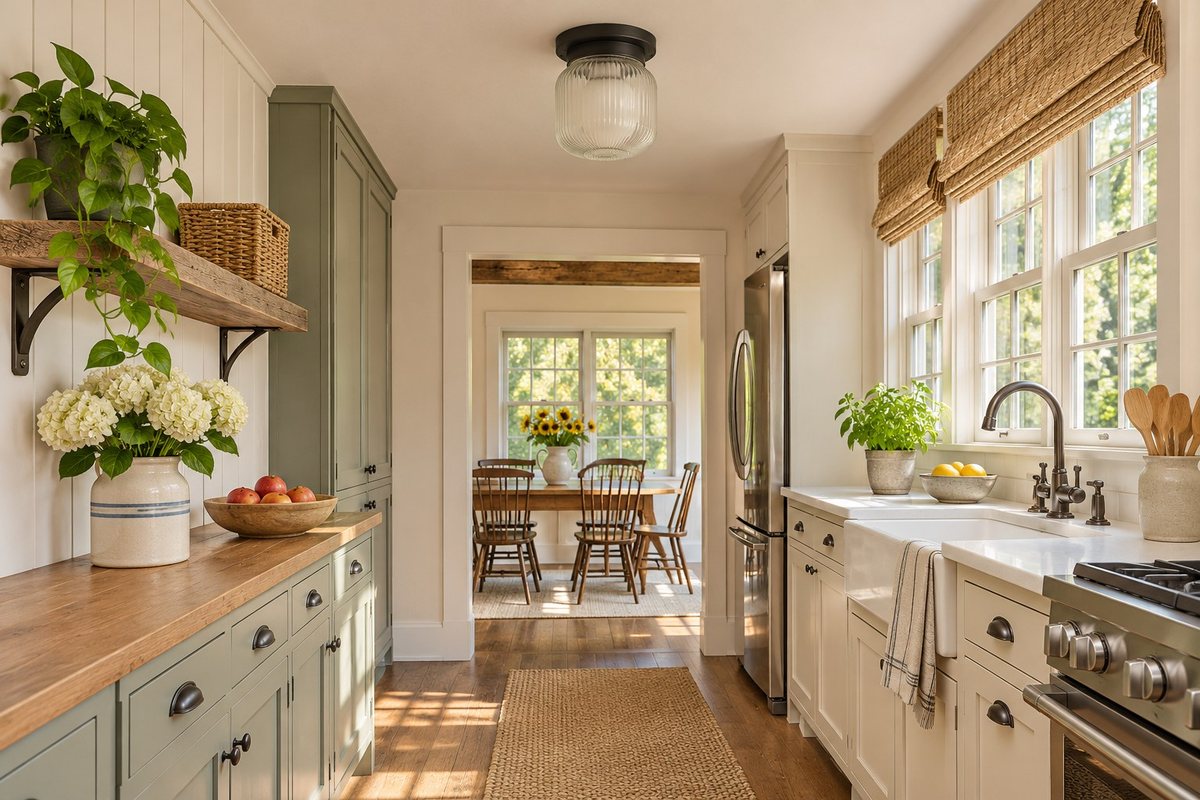
Look for a finished jar-style ceiling fixture with lightly frosted glass and a shallow mounting plate. This gives a narrow kitchen aisle the familiar ribbed-glass shape without a low hanging cluster. Choose a size that keeps cabinet doors, nearby windows, and traffic fully usable.
Choose a manufactured fixture intended for its location. Leave storage jars for storage and follow the shade and bulb instructions for the fitting. A subtle black cap looks clean against a white ceiling. Repeat the metal finish on one cabinet pull or a small kitchen accessory if you want the fixture to feel connected to the room.
14. Light the Kitchen Prep Strip From Under the Cabinets
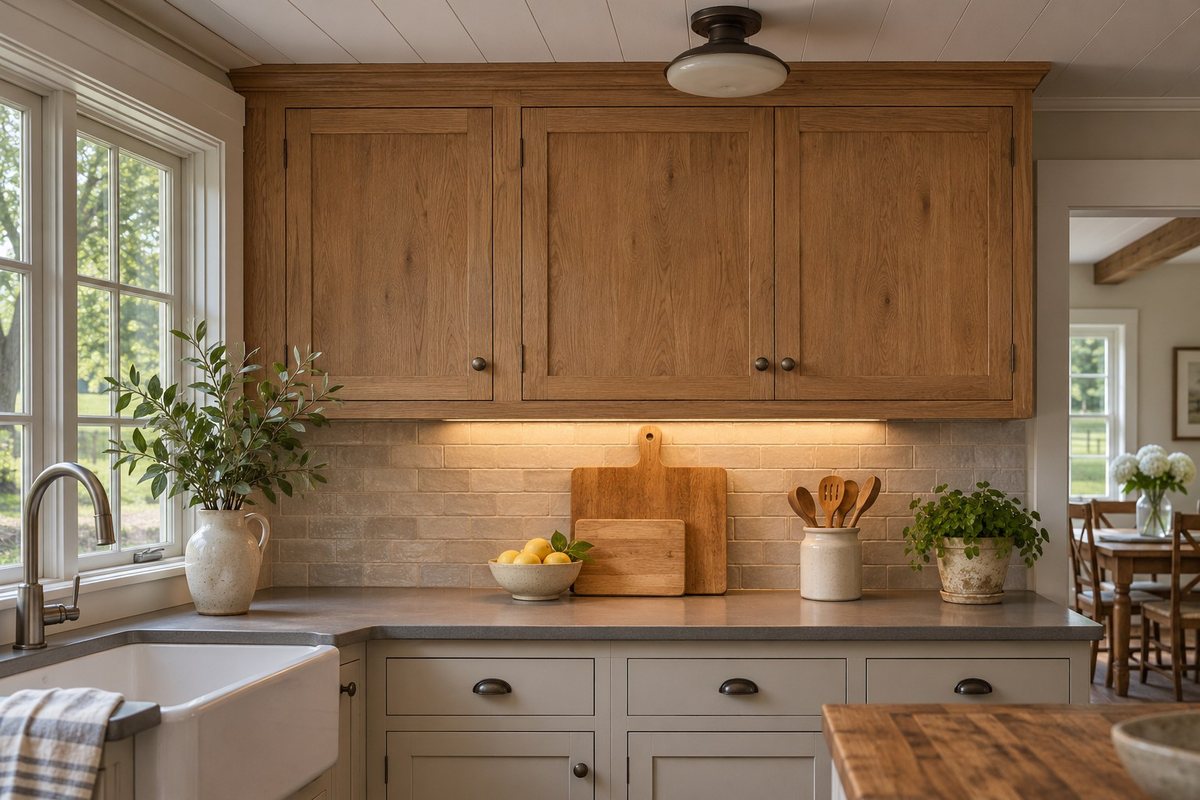
Put a low-profile task light near the front of the underside of an upper cabinet, as its instructions allow, so it lights the counter in front of you. Check how its diffuser looks from a stool or a nearby doorway. A continuous soft band can be easier to work under than a row of bright visible points.
Test the result on the cutting board and the backsplash. Glossy tile can reflect the fixture back into your eyes, so check before settling on a placement. Use a suitable product with its approved mounting and power arrangement. Keep cables clear of heat, water, and the working surface.
15. Direct a Shaded Light Toward the Sink Work Area
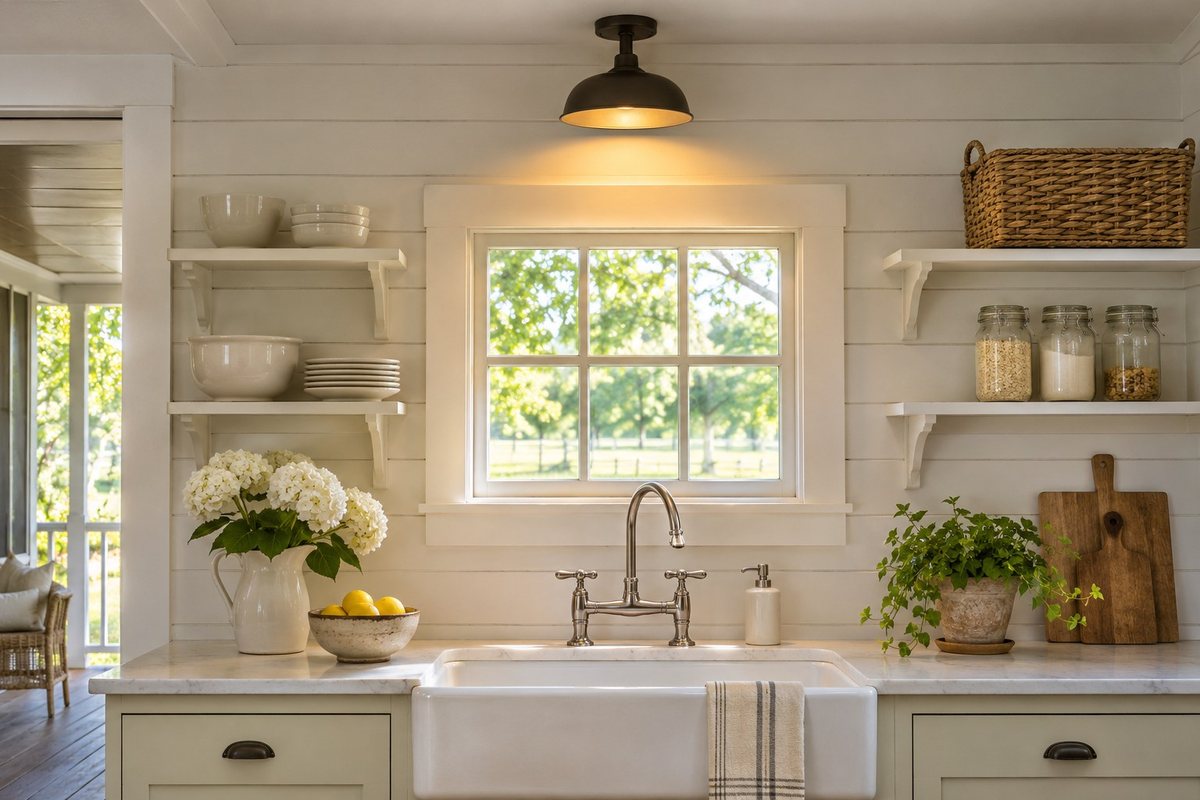
Choose a short directional fixture for the sink if an overhead light leaves the basin in shadow. A dark shade with an enclosed source can give a warm farmhouse accent and direct light down. Use a position that leaves the window, nearby upper cabinets, and sightlines across the sink unobstructed.
Have the installer confirm the right rating and location for the fixture, including likely exposure to moisture. Turn it on with the kitchen’s usual lights at night and look for reflections on the glass or backsplash. If the bright patch falls behind the faucet, have the aim or fixture placement adjusted.
16. Use a Long Linear Fixture Over a Rectangular Table
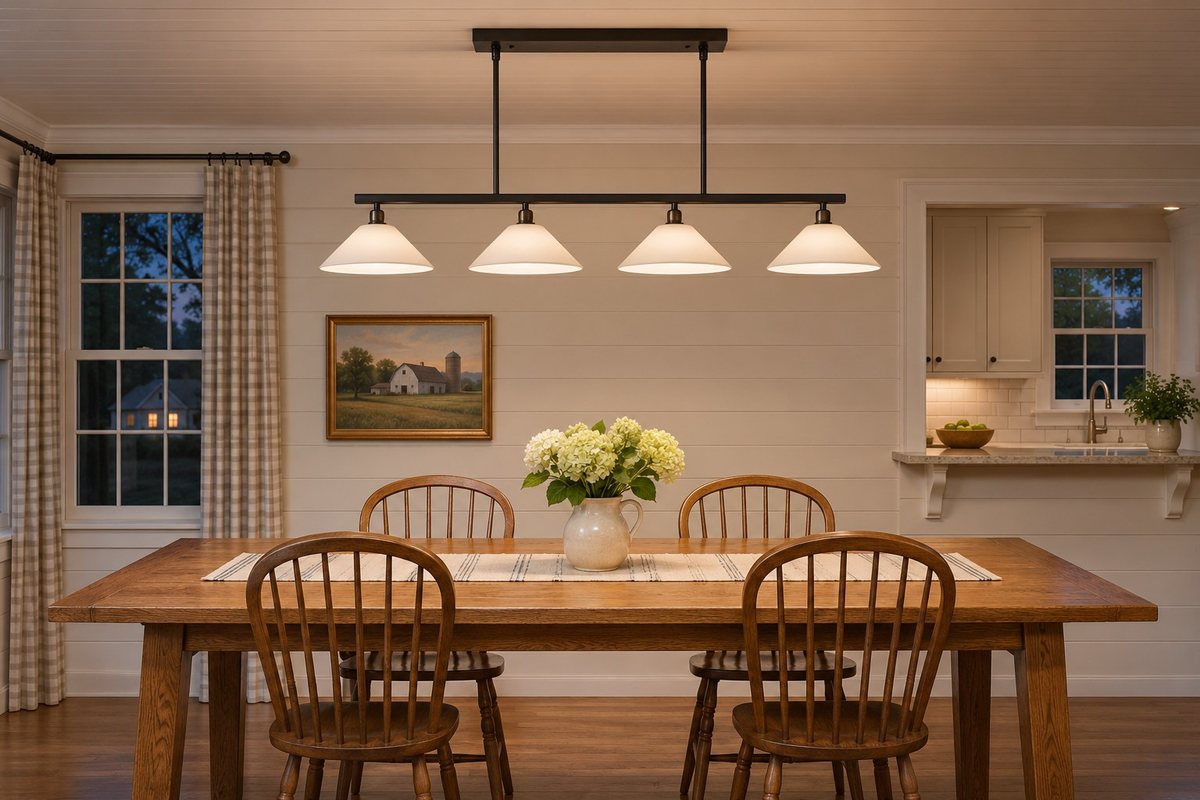
Use a narrow linear light over a rectangular dining table. Dark metal works well over oak, and a wood-and-metal frame is another option if you want a warmer fixture finish. The shape can spread light along the place settings while the shallow shades keep the view across the table open. Compare the entire fixture width and length with the tabletop you use, including whether the table extends.
Have a qualified installer check the mounting support and position. View the light from the doorway and both end seats. One warm wood detail works particularly well when the kitchen opens onto the dining area. These kitchen and dining room layouts show how those two working zones can share a sightline.
17. Hang a Wagon-Wheel Fixture in a Wide Dining Room
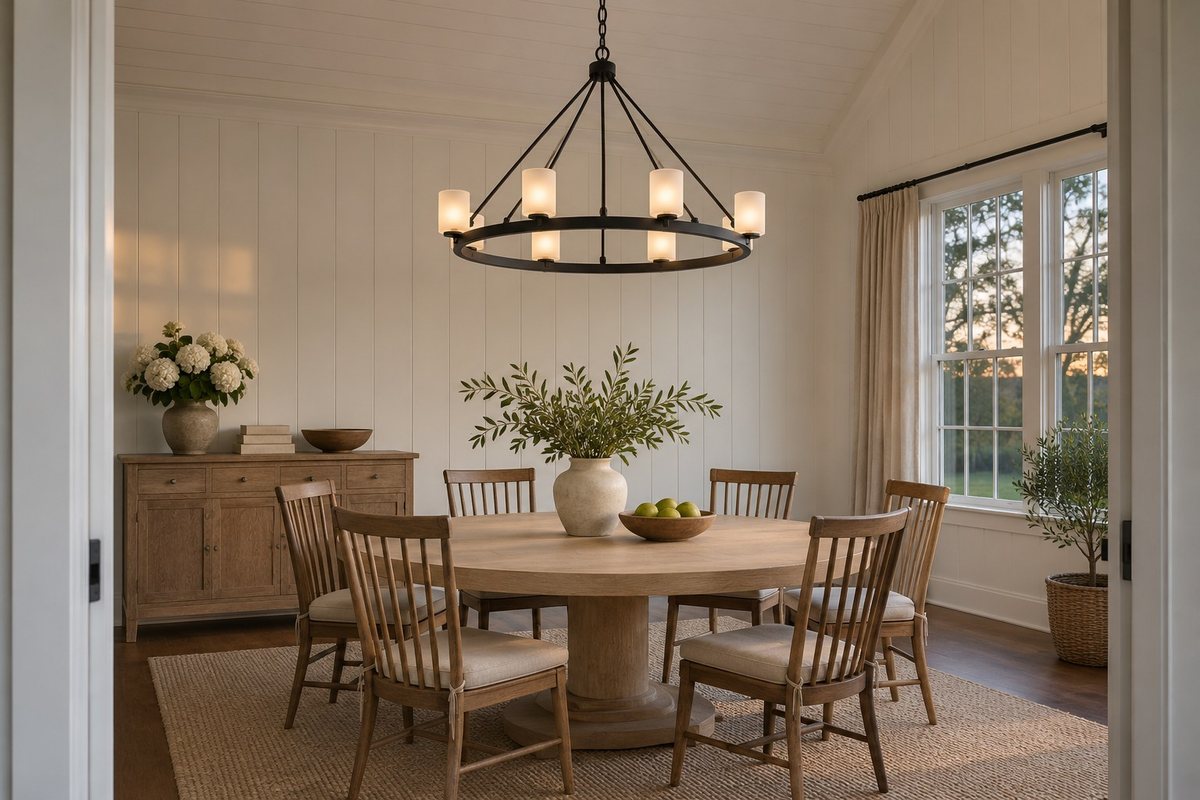
Put a thin wagon-wheel light in a wide dining room with space to see its circular outline. Frosted shades can soften the strong dark frame. Match the circle to a round or broad table and check the view from the adjoining room. A dark thin ring can have less visual weight than a thick wood ring of the same size.
Have the installer check the ceiling support, mounting height, and the fixture’s total drop. Use the specified light sources and look for glare from the usual seats. Leave the rest of the room simple so the circular frame has enough room around it.
18. Choose Whitewashed Beads for a Soft Dining Light
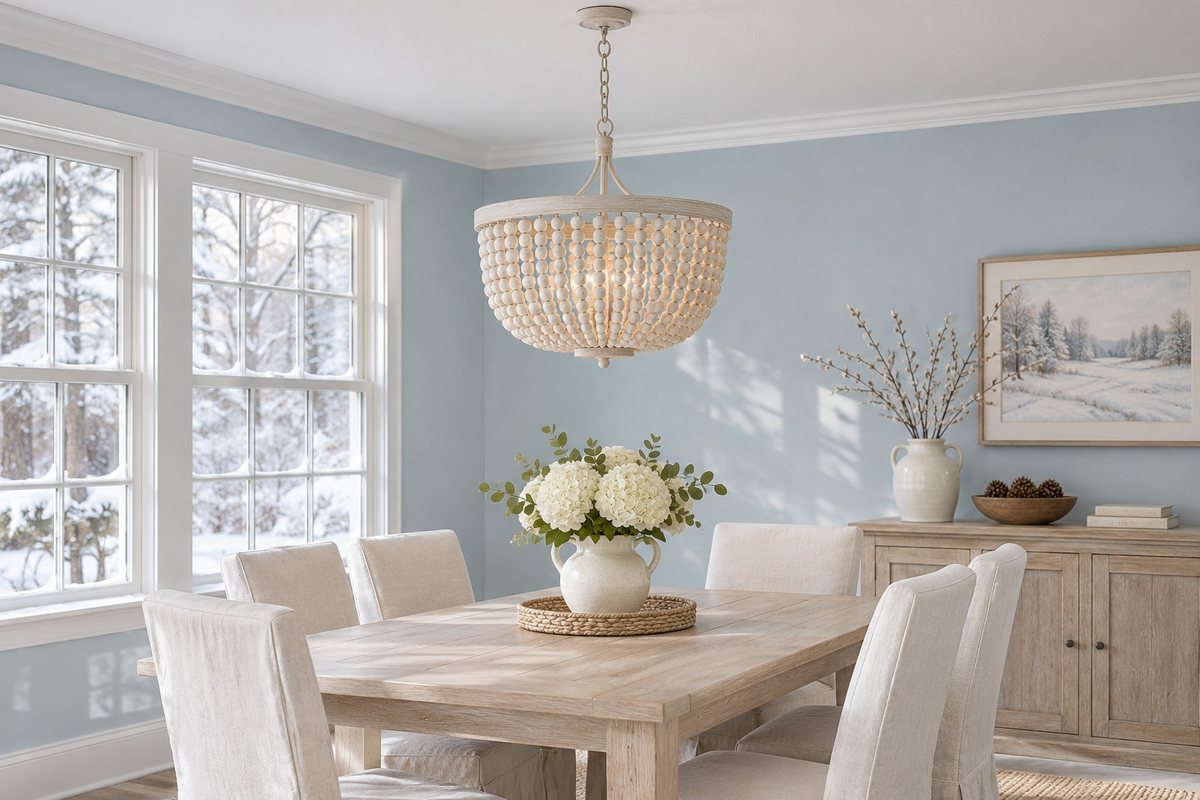
Try a whitewashed wood-bead fixture when the dining room needs a softer texture. Put it above a simple pale table so the beads remain the detail you notice. Look at the shade in daylight and switched on. A densely beaded model can have a different amount of visible light than an open cage.
Check the fixture’s bulb and cleaning instructions. If you often use the dining table for homework or detailed tasks, confirm that the room has enough light for those jobs too. The beads can provide the farmhouse texture while a plain table and quiet wall paint keep the room easy to read.
19. Try a Galvanized Drum Over a Banquette
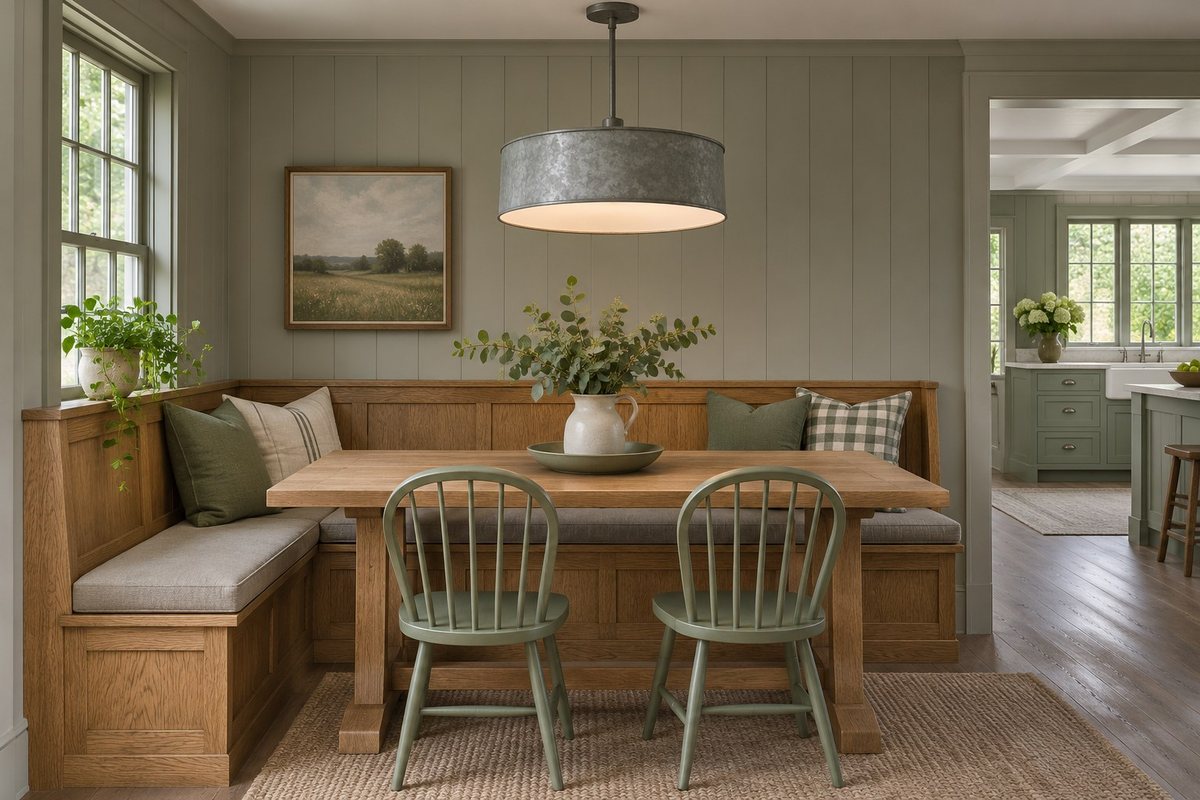
Set a modest galvanized drum pendant over a fixed banquette table. A white bottom diffuser keeps the brighter source less visible from the low seat. Use a shade narrow enough to leave space around the table’s outline and a finish that echoes another small detail in the room.
Sit in the seat farthest under the drum and look up before choosing its position with the installer. Check that you can slide into the banquette without approaching the shade. A galvanized finish can feel gentle beside natural wood, oatmeal fabrics, and warm cream walls.
20. Put a Small Lamp on the Dining Sideboard
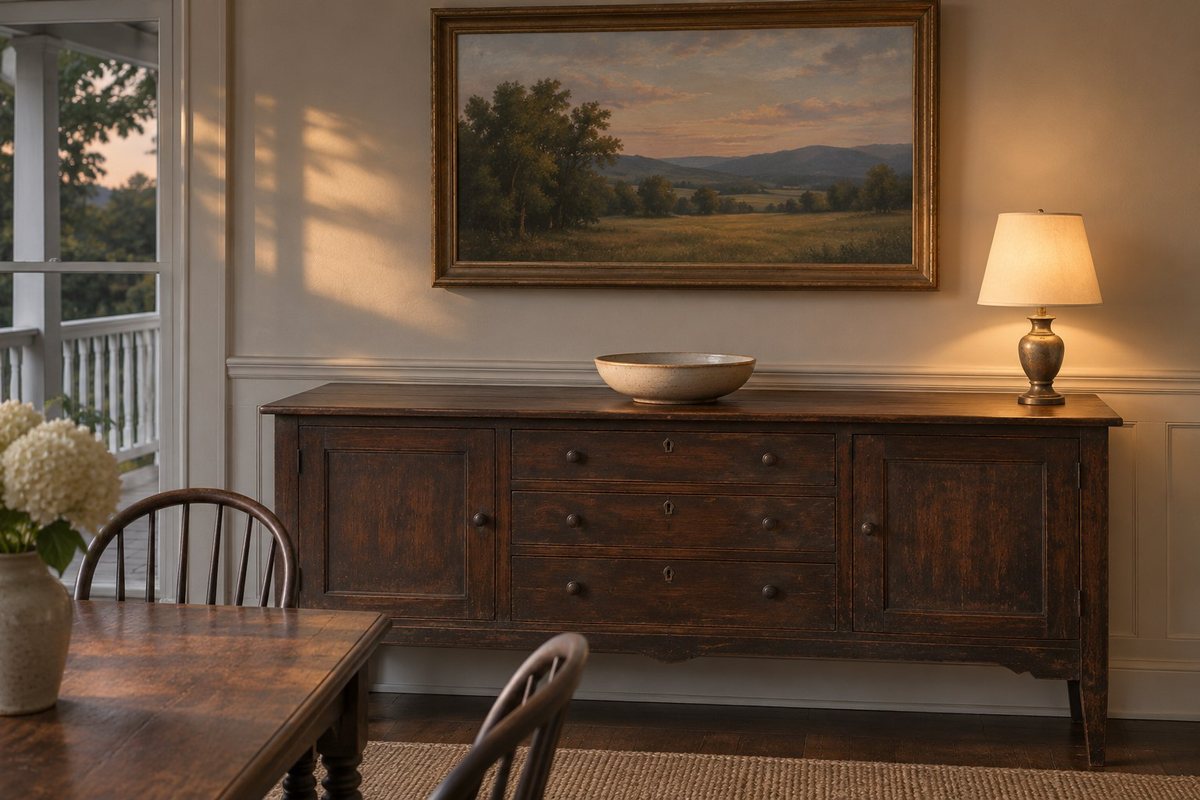
Put one small shaded lamp at the far end of the dining sideboard. Check that the base and shade fit fully on the surface and that the remaining top still works for setting down serving dishes. Aim for a soft light visible from the living room or entry without illuminating the entire table.
Use a cord route along the wall that leaves the floor clear. Keep the lamp away from hot serving items and their usual landing spot. If you want a broader farmhouse palette, our modern farmhouse decor ideas show ways to repeat a small number of finishes.
21. Use Compact Wall Sconces to Free Both Nightstands
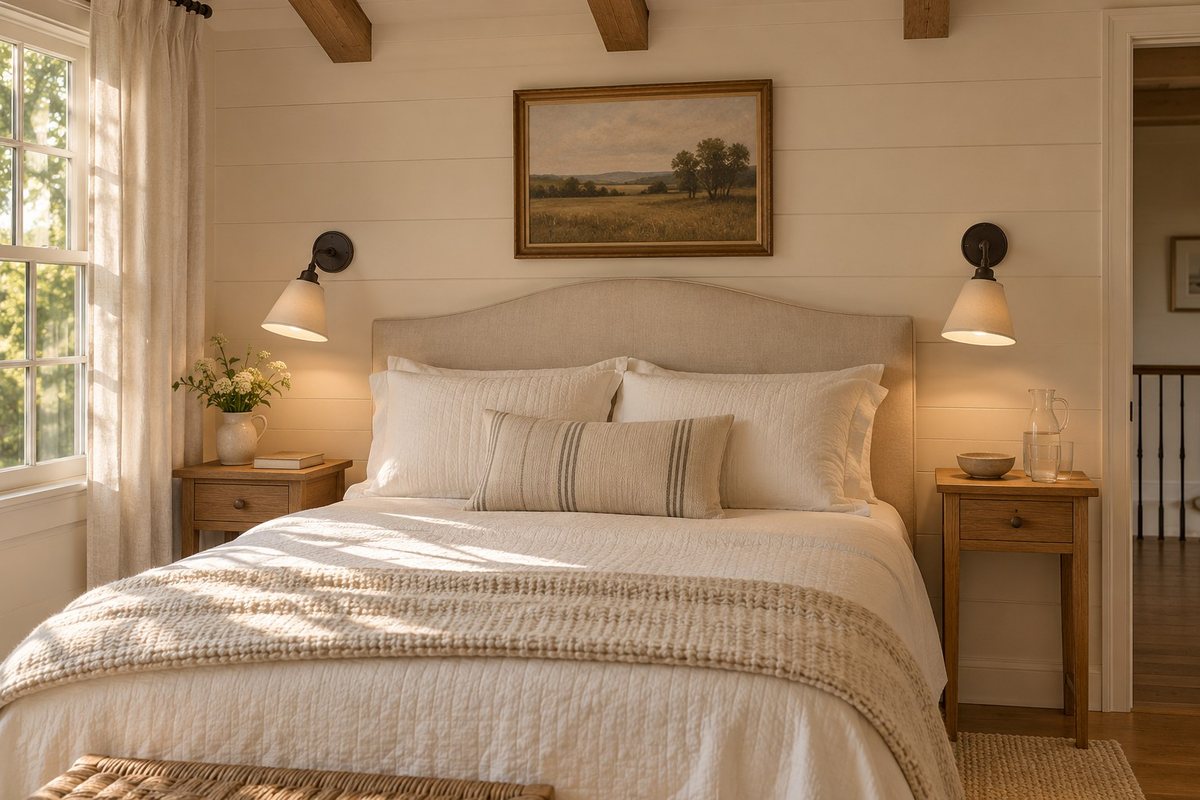
Choose two compact wall sconces to leave the nightstands clear for books and glasses. Pick shades that direct light toward the bed while shielding the source from the other side. Use the actual mattress and pillows when checking likely placement. There should be room to sit up and reach the light control comfortably.
Have the installer confirm the wall position and electrical work. Ask to see the proposed locations from both sides of the bed before mounting. If one nightstand is slightly lower, focus on the position relative to each reader’s shoulders. Matching light on the page matters more than matching every furniture height.
22. Choose a Galvanized Lamp for a Larger Bedside Table
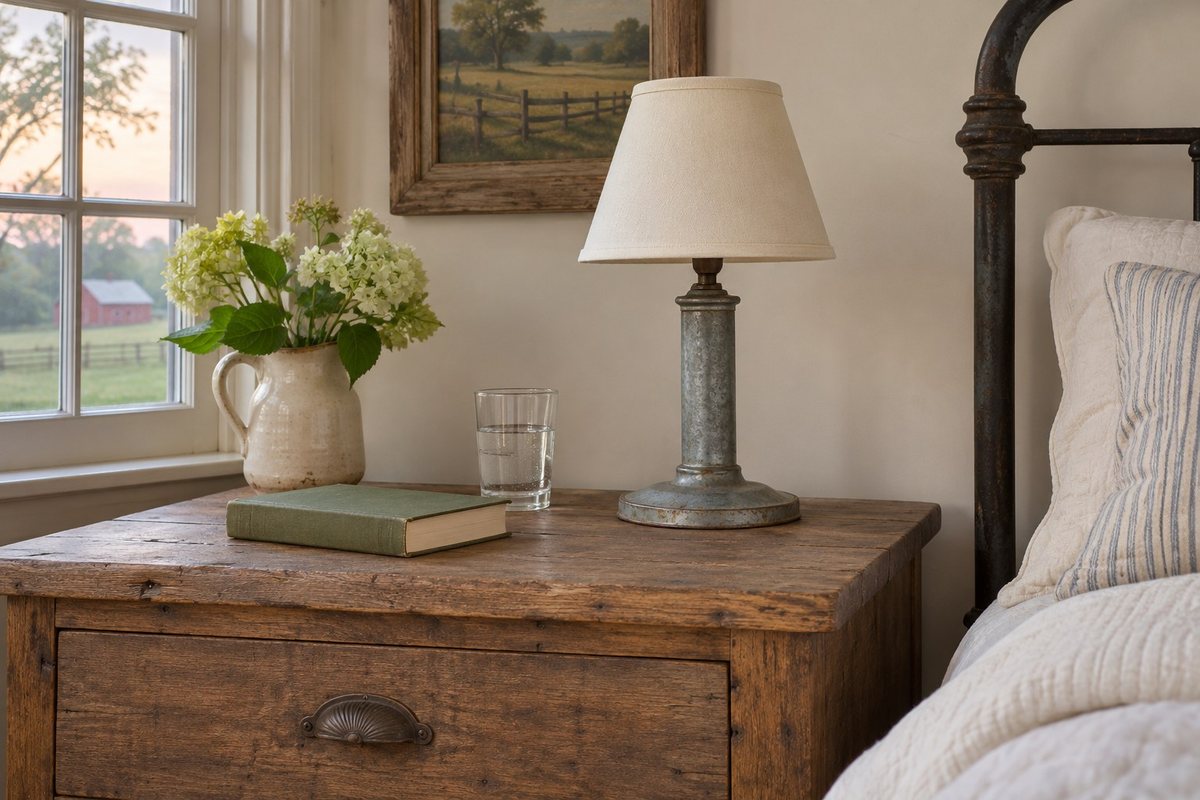
Choose a galvanized base for a broad oak nightstand. Check the depth first, then compare the lamp footprint with the space needed for a glass or a book. A simple pale tapered shade gives a softer shape above the metal. Keep the base fully supported and leave access to the switch.
Try it from where you actually read in bed. If the shade edge sits too high and shows the source, use a shorter lamp or a deeper shade made for the lamp. Keep its cord close to the wall and clear of the route around the bed.
23. Use a Rope-Detail Pendant Over a Bedroom Dresser
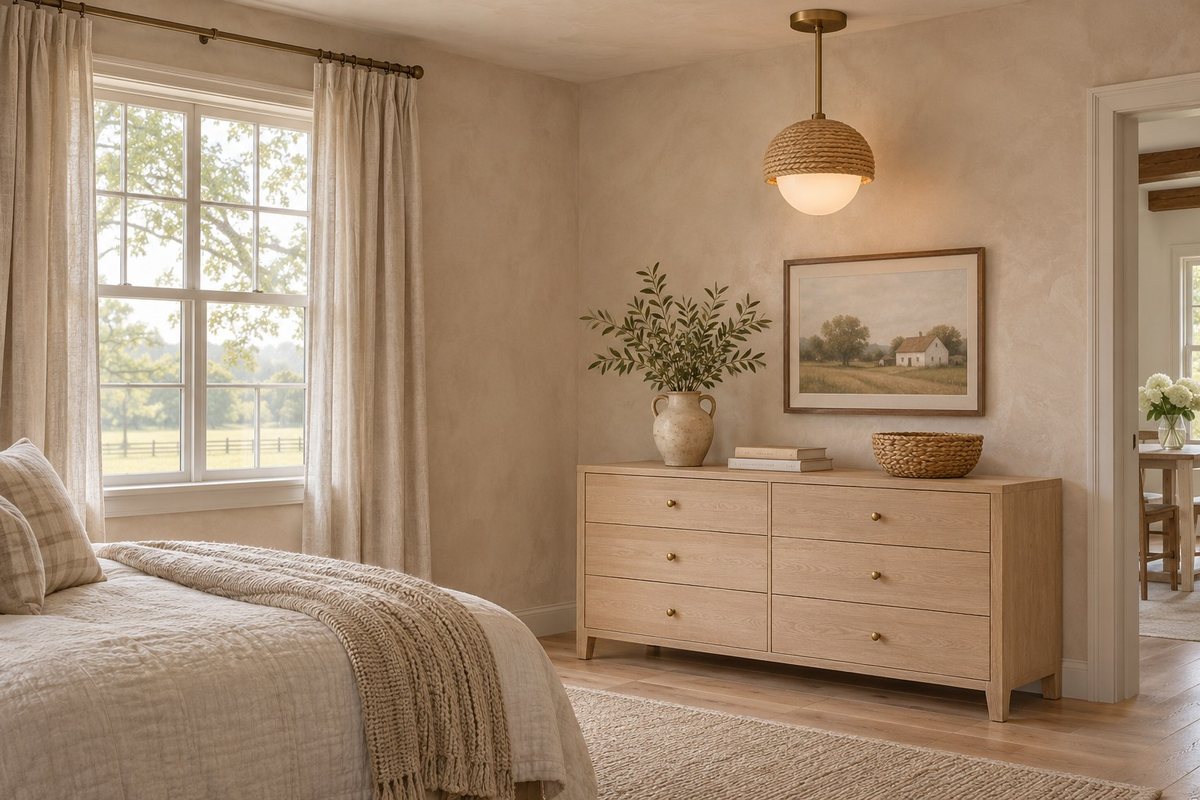
Use a finished rope-detail pendant over a stable dresser, with the whole fixture well above the top and away from the route around the bed. The rope finish gives texture without a strong color. Choose a frosted globe or a shielded light source so you can see the dresser surface without seeing a bare bulb.
Keep decorative rope on fixtures designed and made with it, and follow the manufacturer’s bulb and placement instructions. Have a qualified electrician check the mounting height and location. If the dresser sits on an active route or moves often, choose a small finished table lamp instead.
24. Pair Vertical Opal Sconces With the Bathroom Mirror
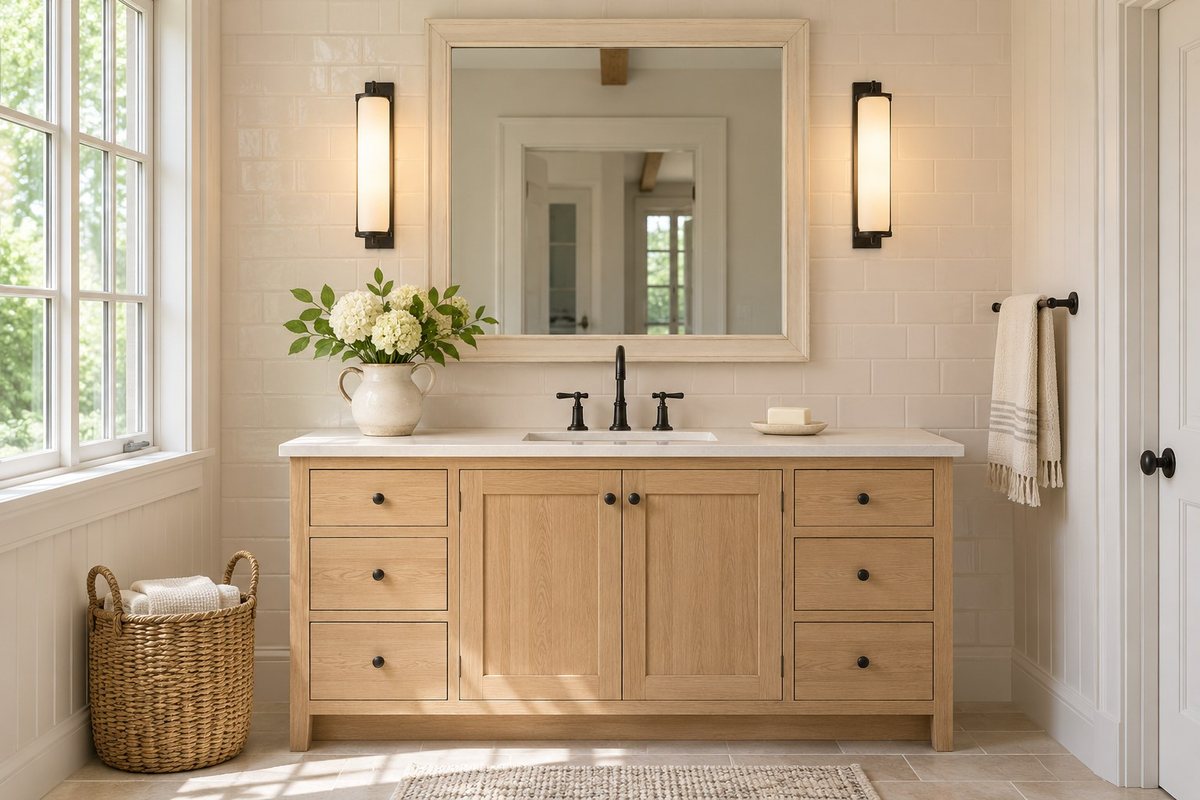
Use two diffused opal sconces on either side of the bathroom mirror to light the face from both directions. Check the available wall width and whether a medicine cabinet door will open normally. A narrow black frame adds definition beside light tile without taking much wall area.
Have the installer select and place fixtures suitable for the location and its moisture exposure. Compare the two fixture positions from where you actually stand at the basin. If the mirror already reaches almost to the walls, choose a suitable bar over it. Keep the light out of the cabinet door path.
25. Choose a Wood-Look Vanity Bar for a Wide Mirror
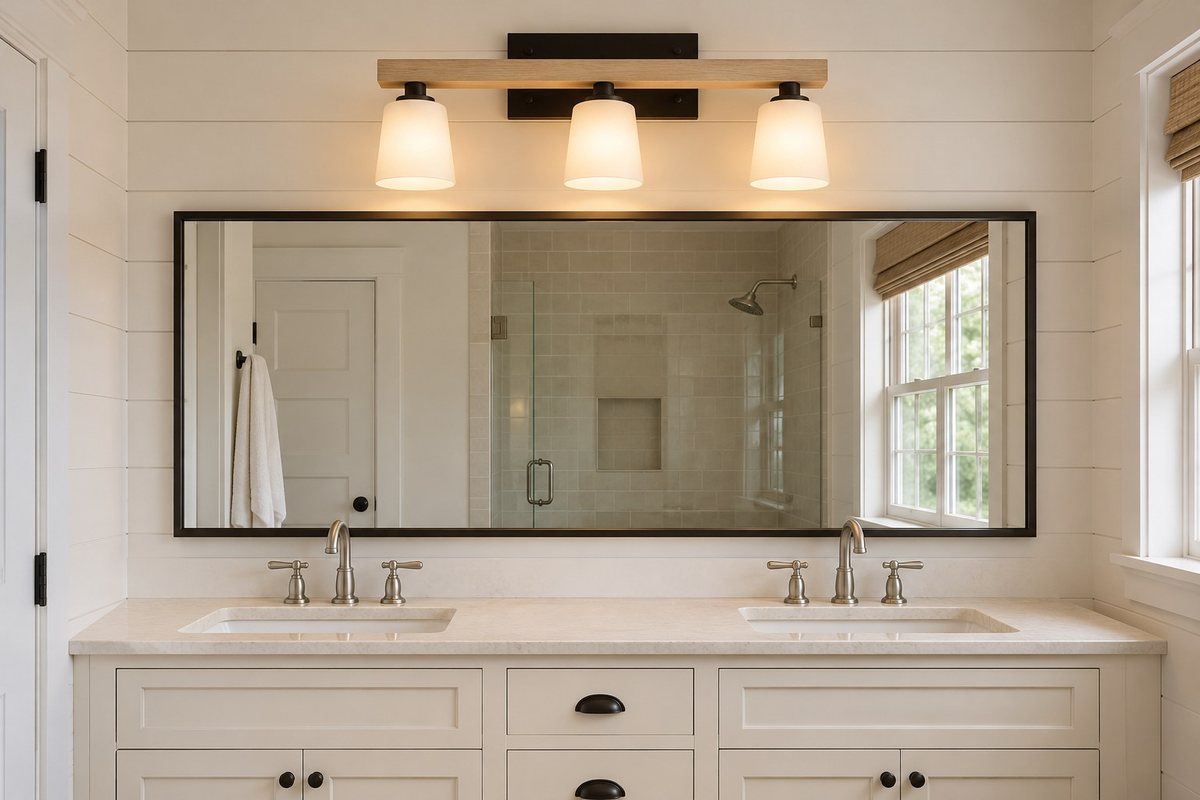
Look for a finished wood-look vanity bar with a row of frosted shades for a long mirror. A single wide fixture can carry the same warm wood tone as the vanity without adding multiple wall fittings. Compare the full backplate size with the mirror frame and any existing wall space above it.
Have a qualified electrician verify the mounting, the fixture’s location marking, and any exposure to moisture. Ask the installer to check for reflected glare in the mirror. Keep the finish restrained. A pale wood-look plate and one dark metal detail are enough when the cabinet already has a strong grain.
26. Give a Small Bathroom a Low-Profile Ceiling Light
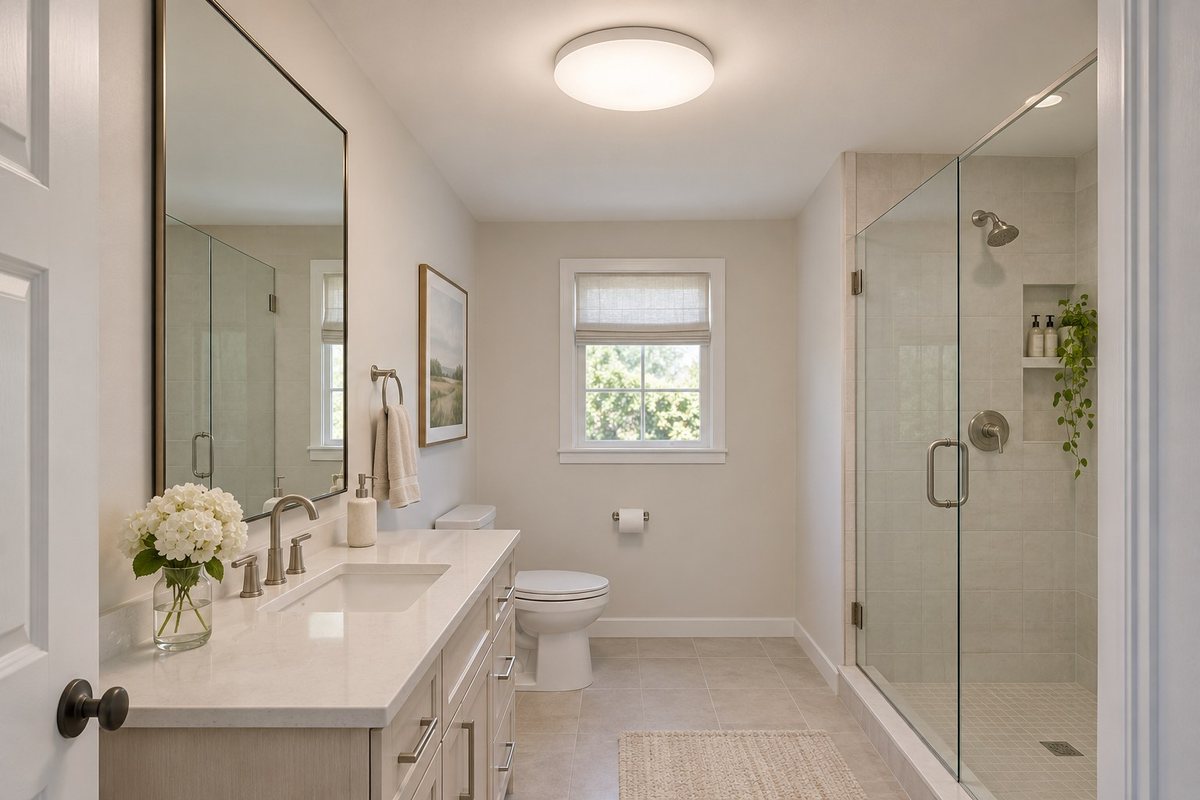
Pick a low-profile ceiling diffuser for the general light in a compact bath. A shallow opaque shade takes little depth and can soften the transition from a darker hall. Compare its footprint with the door, wall cabinet, and shower surround before choosing where it should sit.
Have the electrician determine the location and confirm the appropriate moisture marking. A fixture marked for dry locations does not belong where the installation requires a damp- or wet-location model. Use the general ceiling light together with a suitable mirror light if you need brighter light for grooming. See these small bathroom layout ideas for ways to plan tight rooms.
27. Use a Diffused Ceiling Fixture in the Laundry Room
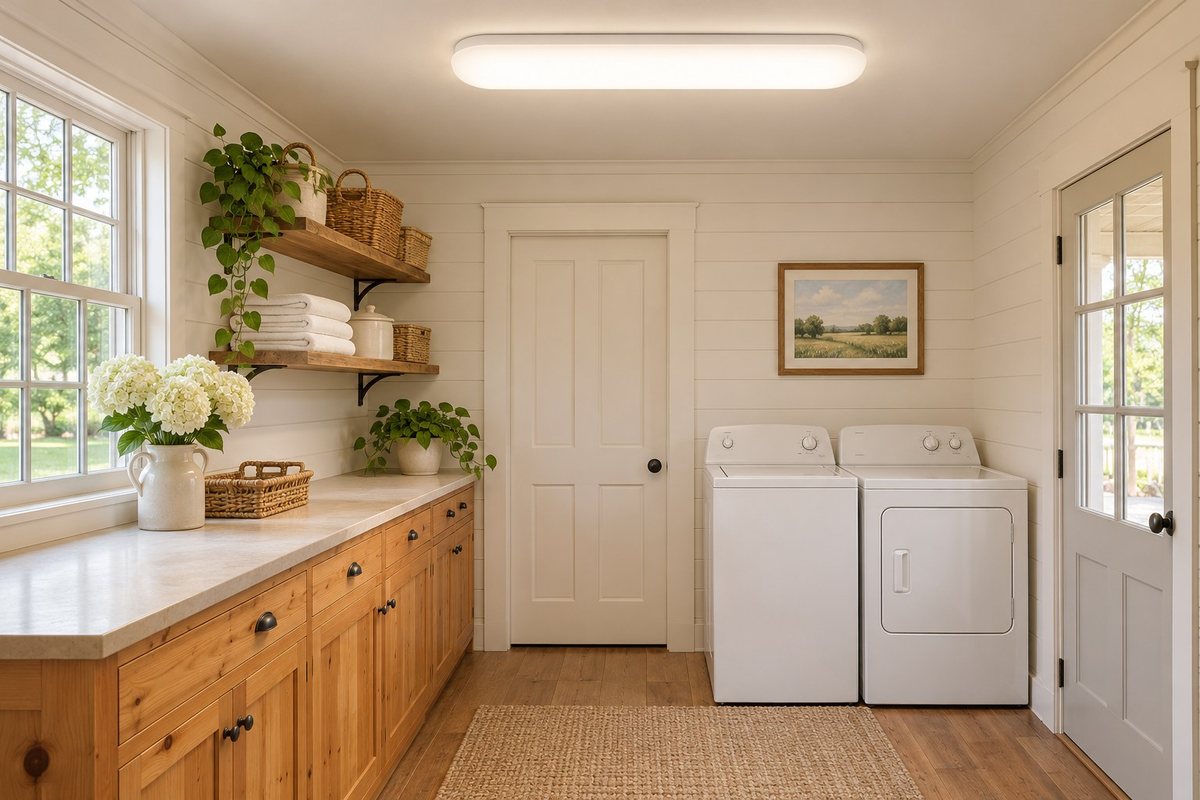
Use a broad diffused ceiling fixture in the laundry so light reaches the folding area and the machine controls. White or opal diffusers blend into a low ceiling. Match the spread of light to the worktop and floor you actually use, and keep cabinetry and machine doors free to open.
Have the installer confirm that the fixture and mounting suit the room, including any unusual dampness. Check whether you can see fabric colors and care labels on the folding counter. If your body casts a large shadow there, a suitable additional task fixture can be planned at the counter.
28. Aim an Adjustable Task Lamp at the Farmhouse Desk
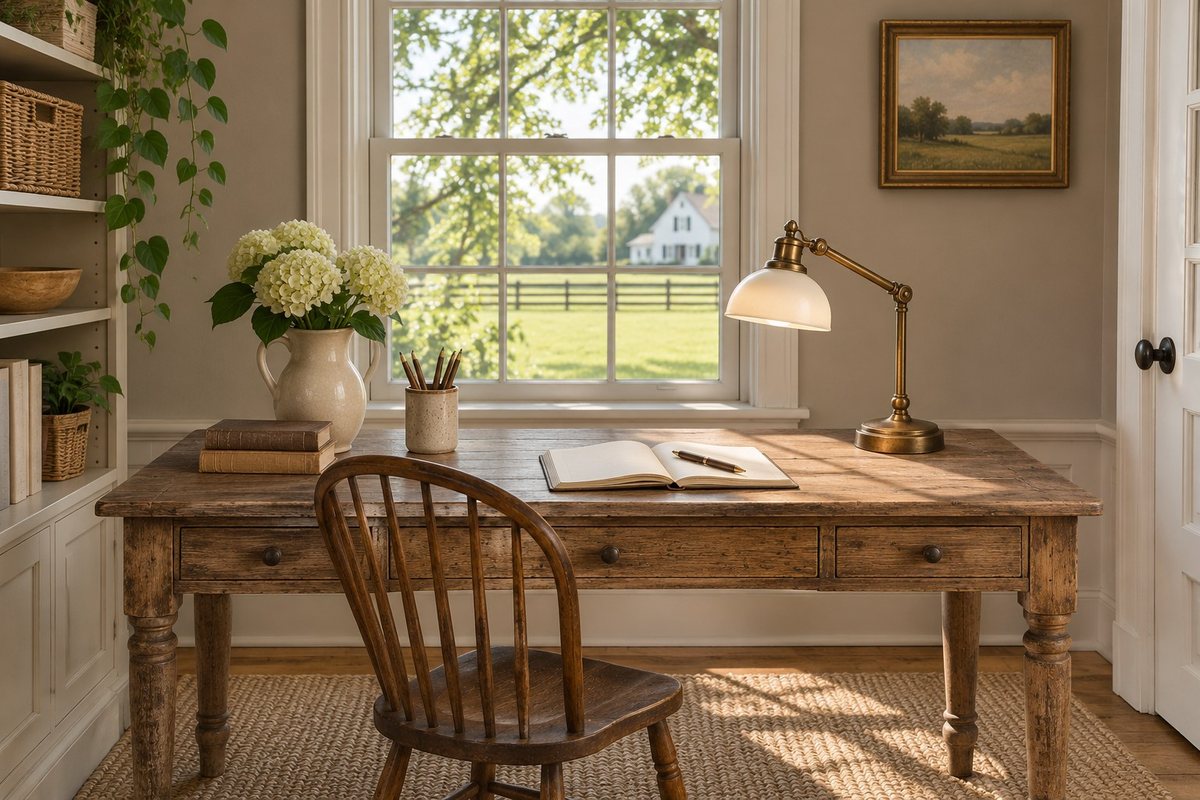
Put an adjustable task lamp on the side of the desk opposite your writing hand. A weighted base and opaque shade are useful when you need to aim light at a notebook. Leave space for the full base and a clear place to turn the shade. A warm brass finish works with oak without taking much room.
Aim the lamp while seated and look for reflections on the computer screen. Move it a little farther to the side if the screen catches the bright patch. Keep the cord along the back of the desk or a suitable wall-side route, clear of knees and chair movement.
29. Use a Hooded Sconce Beside the Covered Porch Door
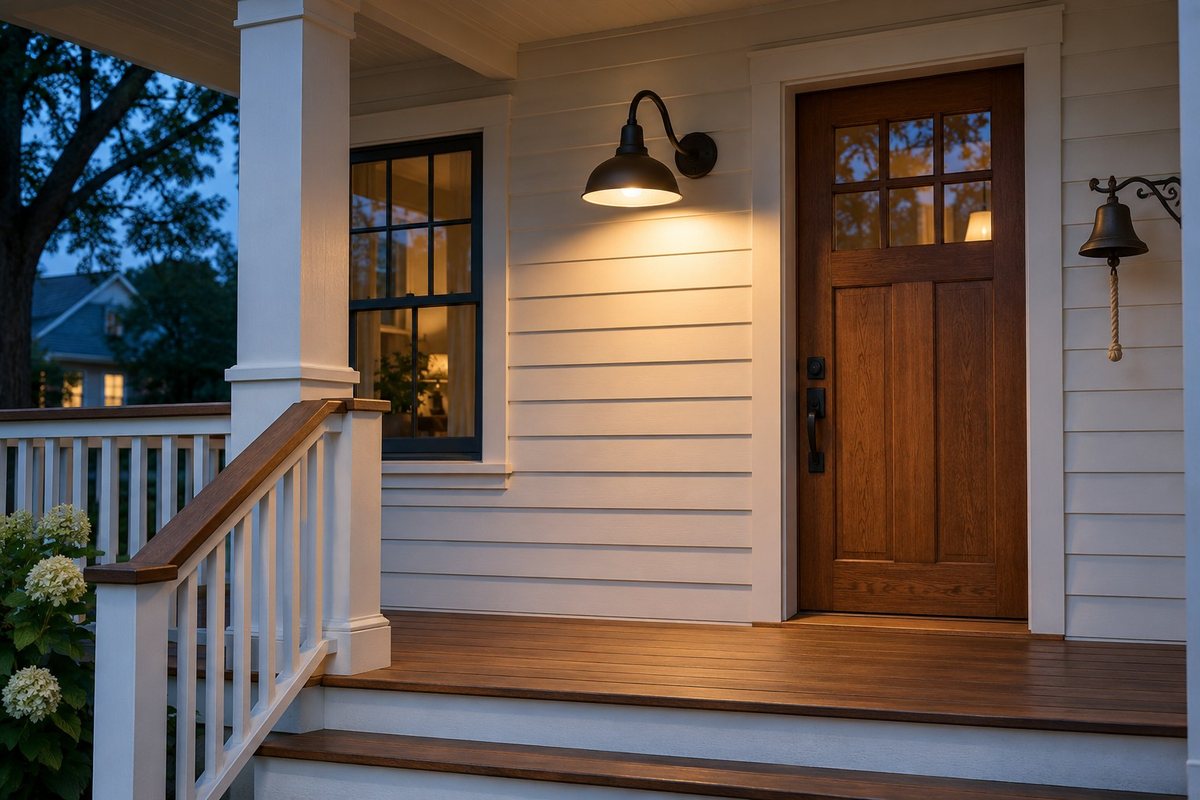
Choose a hooded outdoor wall light that sends light down toward the covered porch door. A short black gooseneck form gives a farmhouse cue and can leave the light source out of direct view as you approach. Look for a size that fits between the door trim and the nearest corner.
Have the installer check how much rain and moisture reach the actual spot and select a fixture with the matching location marking. A roof over the porch does not settle that question on its own. Check the view after dusk from the steps. The doorbell and latch should be easy to see.
30. Put a Shielded Back-Door Light Above the Landing
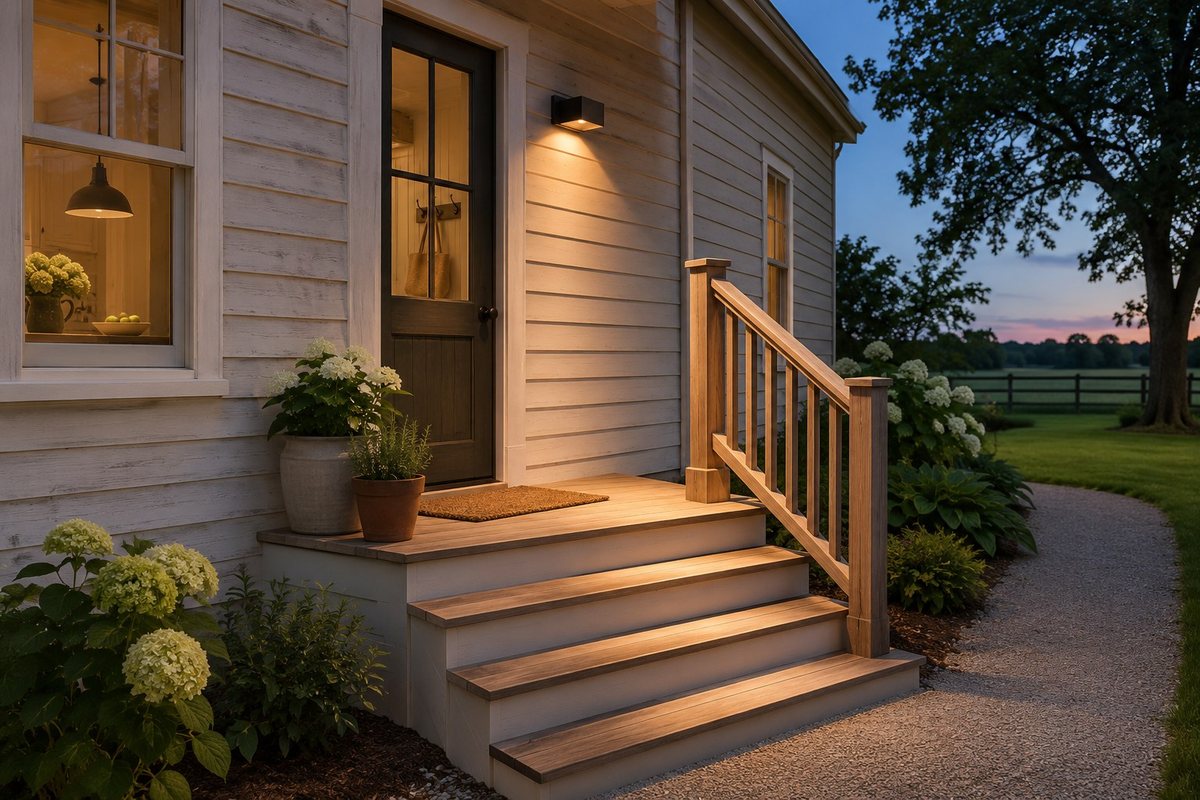
Put a shielded rear-entry fixture where it lights the landing and first steps. Choose a low-profile form if the back door opens onto a narrow approach. Ask the installer to choose a model suitable for the actual exposure and place it where the door, handrail, and trim remain fully usable.
Walk the approach after dark with the light on. Look for a clear transition from the landing to the first step, and check that the fixture does not shine directly into your eyes. A small metal hood can give the same farmhouse character as a larger lantern with less visual bulk.
Start with the spot that feels hardest to use after dark. Decide whether it needs general light, a focused pool on a task, or a lower-glare view from a seat. Then choose a farmhouse material you can repeat once or twice across the house. Check the finished result at the time of day the room needs it most.
Discover more from HomeTrendora
Subscribe to get the latest posts sent to your email.