An organized home office needs more than a clear desktop in a photograph. Papers arrive, chargers move between rooms, and a project may need to stay out overnight. Giving those things specific homes makes the room easier to use without asking you to put everything away after every task.
These 24 home office organization ideas address different parts of that routine, from the drawer you open all day to the supplies you rarely touch. Choose the problems that match your work. The aim is a useful arrangement around the desk you have, with enough visual order that the room still feels part of your home.
1. Set Up One Paper Inbox and Outbox

Give incoming paper a clear landing place before it spreads across the desk. Use one shallow tray for items that need sorting and another for papers ready to leave, such as a signed form or outgoing letter. Put the pair beside the main work area, where you can reach them without moving the keyboard.
Keep these trays for movement rather than permanent storage. When you review the inbox, decide whether each paper belongs with an active project, in the filing cabinet, or out of the room. A matching wood pair can sit comfortably beside an oak desk, but the useful distinction is what goes into each tray. Leave the front of both accessible so the arrangement is easy to maintain.
2. Stand Active Projects in Separate Files
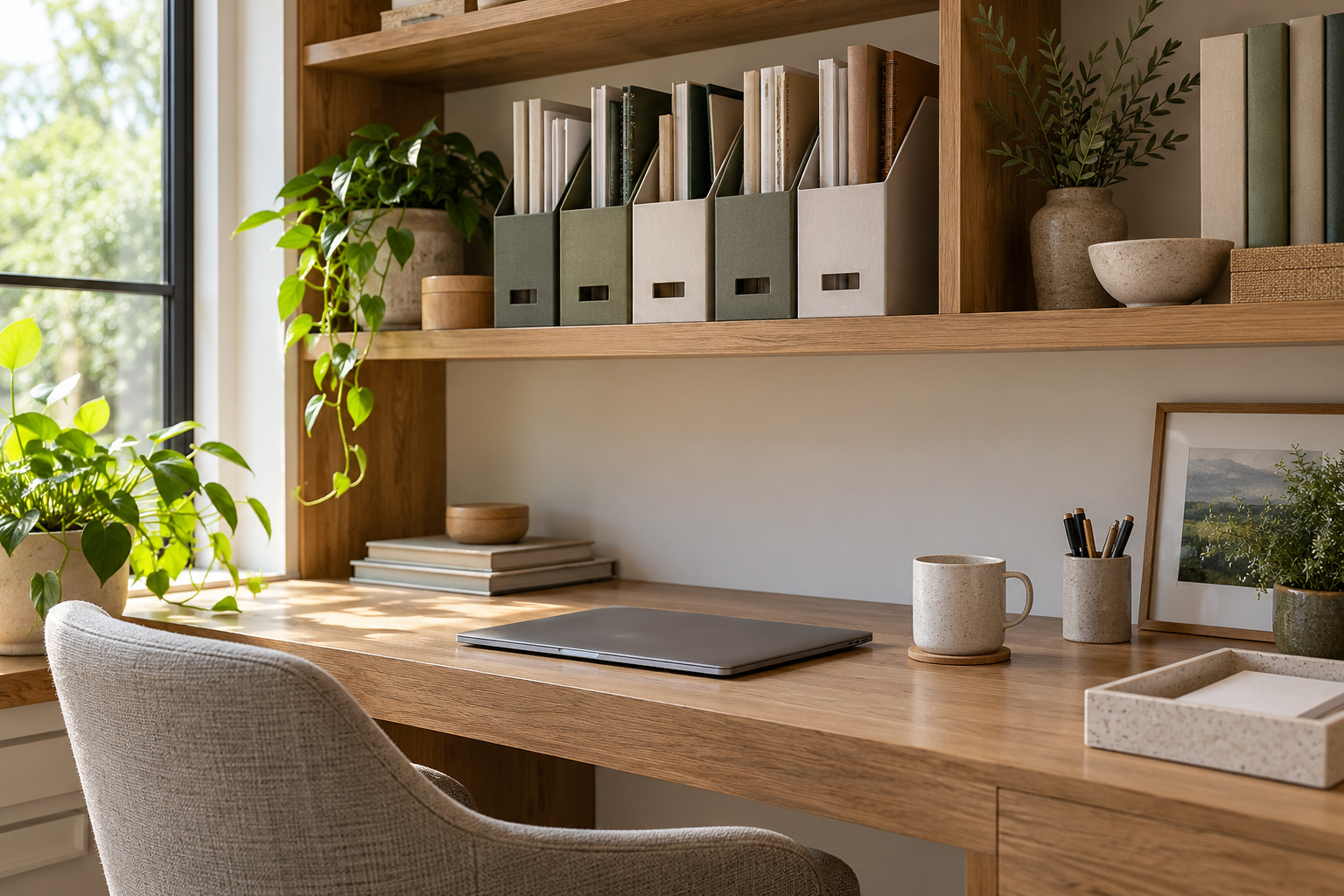
Stand the folders for current projects upright in separate files rather than laying them in a stack. This lets you remove the project you need without lifting the others. Put the files on a reachable shelf or at the end of a sufficiently deep desk, leaving the center available for work.
Group by the task you actually return to, such as a household project, a client assignment, or a course. Keep each file limited to current material so it remains easy to handle. Choose folders that fit the paper size and add simple labels if they help your routine. When a project ends, clear its file rather than allowing a row of active folders to become another archive.
3. Give Long-Term Papers a Closed Filing Home
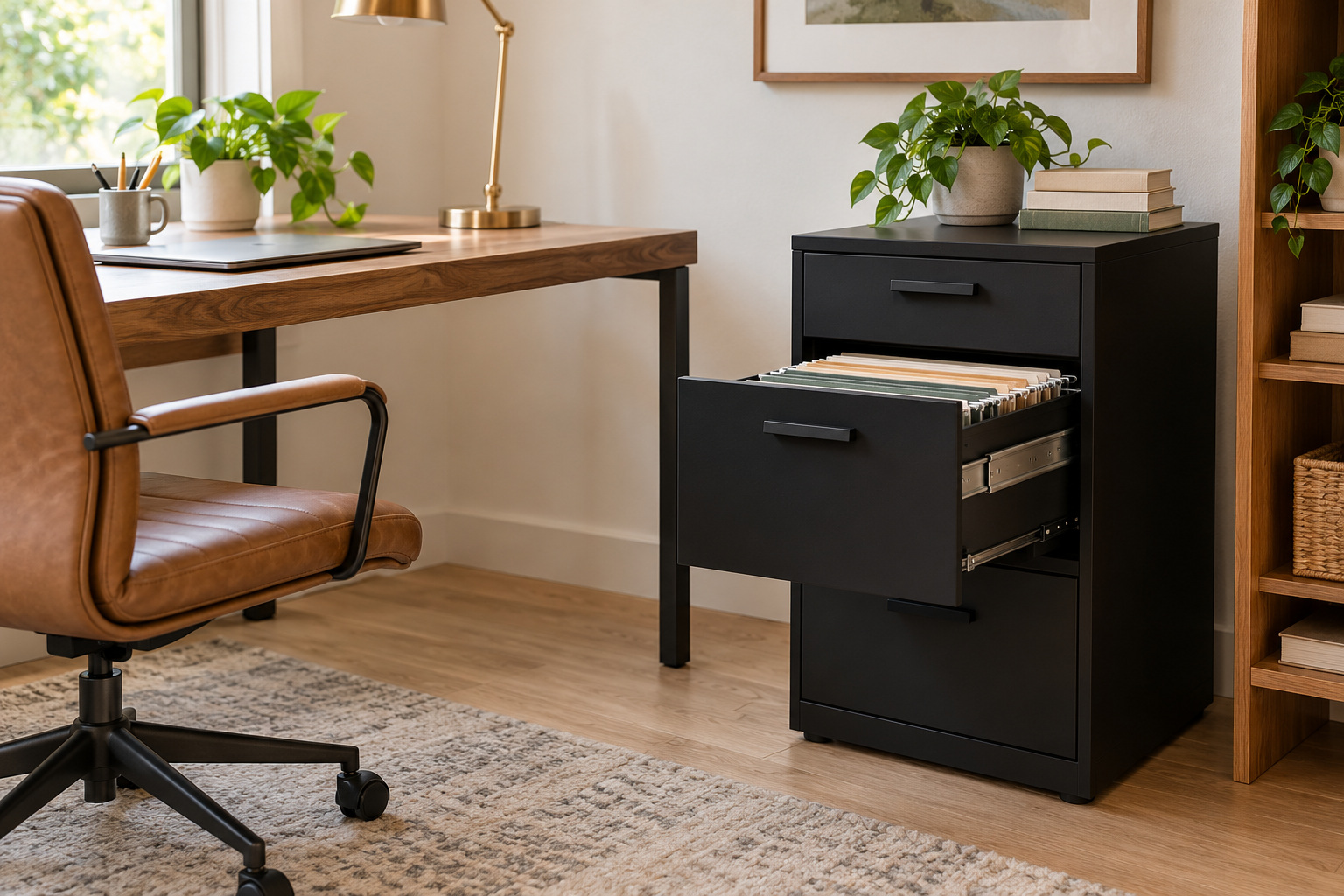
Papers you need to retain but rarely consult deserve a different home from the day’s work. A closed filing drawer can hold those records in hanging folders, keeping the desktop and nearby shelf available for current tasks. Arrange the categories around the way you would search for a document later.
Check the drawer’s internal dimensions before choosing folders, and leave space to move them apart. Keep sensitive records in storage appropriate for their contents and household access. Review what belongs there periodically instead of transferring every old stack unchanged. The aim is a retrievable filing home, not a cabinet that hides the same unsorted pile behind a closed front.
4. Divide the Drawer You Open Every Day
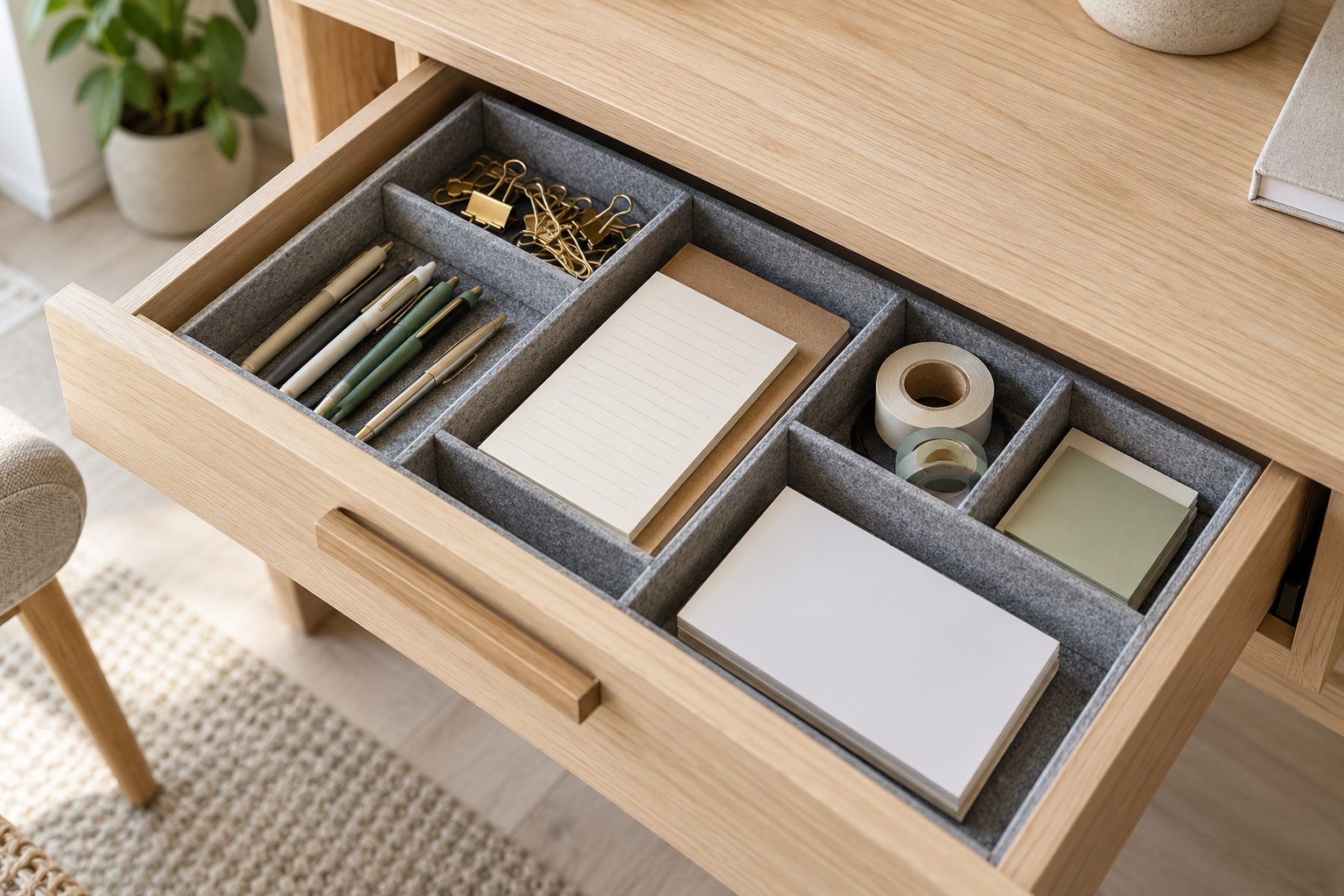
Open the drawer you reach into most often and give its small contents separate spaces. A divided insert can keep pens, clips, tape, and notepads from sliding together. Arrange the most-used items toward the front, with enough room to lift them out rather than squeeze them between partitions.
Measure the drawer interior and check that the organizer clears the closing mechanism. Use the supplies themselves to judge compartment sizes before choosing an insert. Felt or a quiet neutral finish can look settled inside a wood drawer, but there is no benefit in filling every space. Keep refills elsewhere so this drawer remains a simple everyday kit.
5. Move Frequently Used Tools Onto a Pegboard
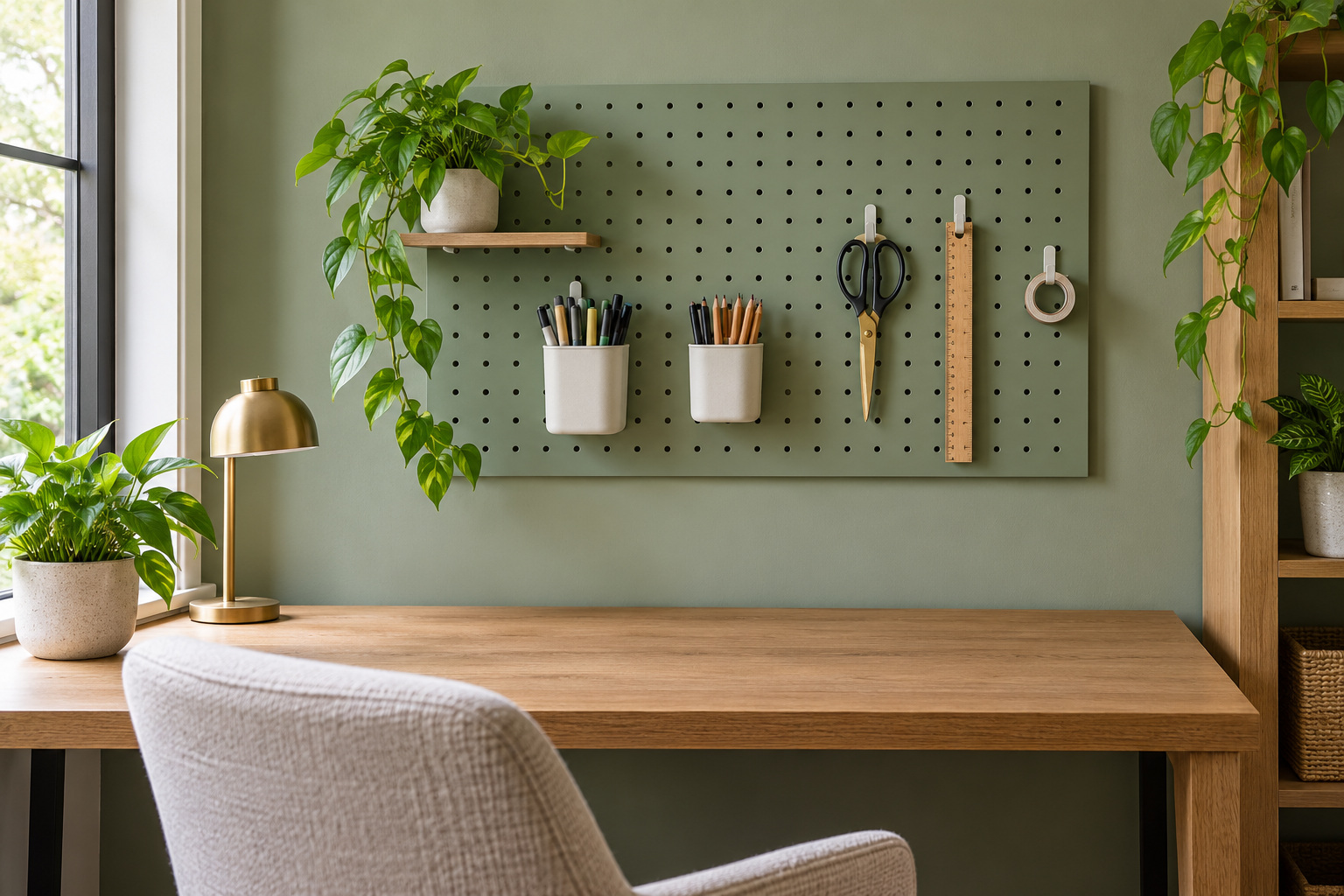
A pegboard can move frequently used tools off the desktop while keeping their shapes visible. Give scissors and a ruler their own hooks, and use a cup for pens or markers. Choose a board finish that belongs with the room; muted sage can make the organized wall feel intentional above a plain wood desk.
Plan the positions around what you can reach comfortably from your normal working area. Use suitable fittings for the wall and the board’s load instructions, and keep sharp tools appropriate to the household. Leave open space between groups so a single tool can be removed without disturbing its neighbors. This works best for a small selection used often, not every spare supply you own.
6. Keep Reference Books on One Reachable Shelf

Keep the reference books you actually consult on one nearby shelf. A short row with a proper bookend is easier to browse than a desk covered with open piles. Place the shelf close enough to the work area that returning a book is a normal part of finishing a task.
Separate current references from books you keep mainly for reading or display elsewhere. Check the shelf and fixings against the load, and avoid balancing heavy books over a crowded work surface. A stone bookend beside neutral spines can add texture without more accessories. Leave space for the next book you need rather than filling the entire shelf as soon as it is installed.
7. Contain Cables Under the Desk
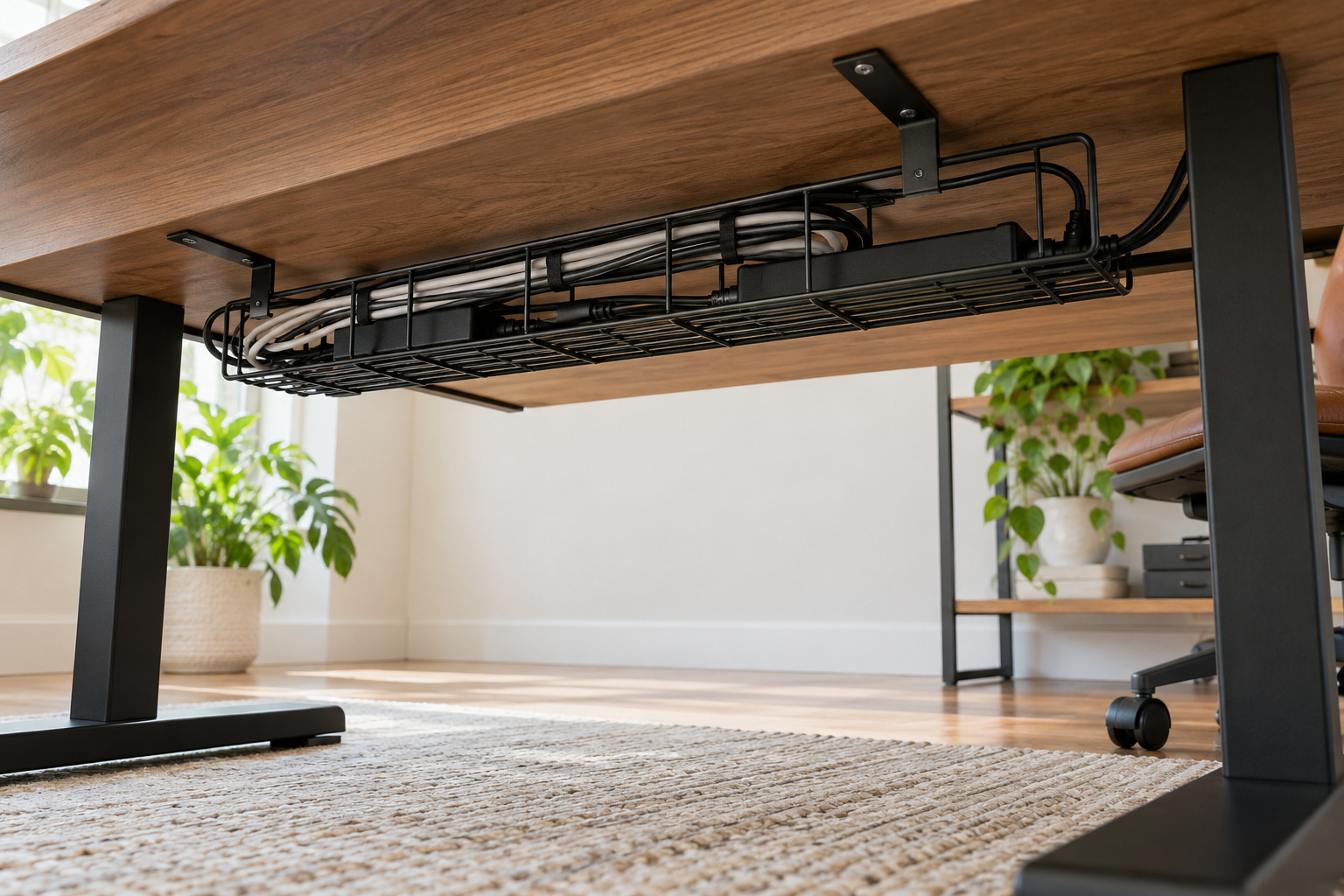
A cable tray beneath the desk can collect the loose lengths that otherwise hang into leg space or trail across the floor. Plan the route from each device to its power or connection point, then gather the cables with enough slack for the movements the setup actually needs.
Use hardware and cable-management products suitable for the desk and follow electrical equipment instructions. Keep plugs accessible, cords undamaged, and ventilation openings clear. Do not enclose equipment that requires airflow or use the tray to disguise an overloaded arrangement. The practical test is whether the chair and your feet can move freely while each cable remains easy to identify when a device changes.
8. Choose One Place to Charge Portable Devices
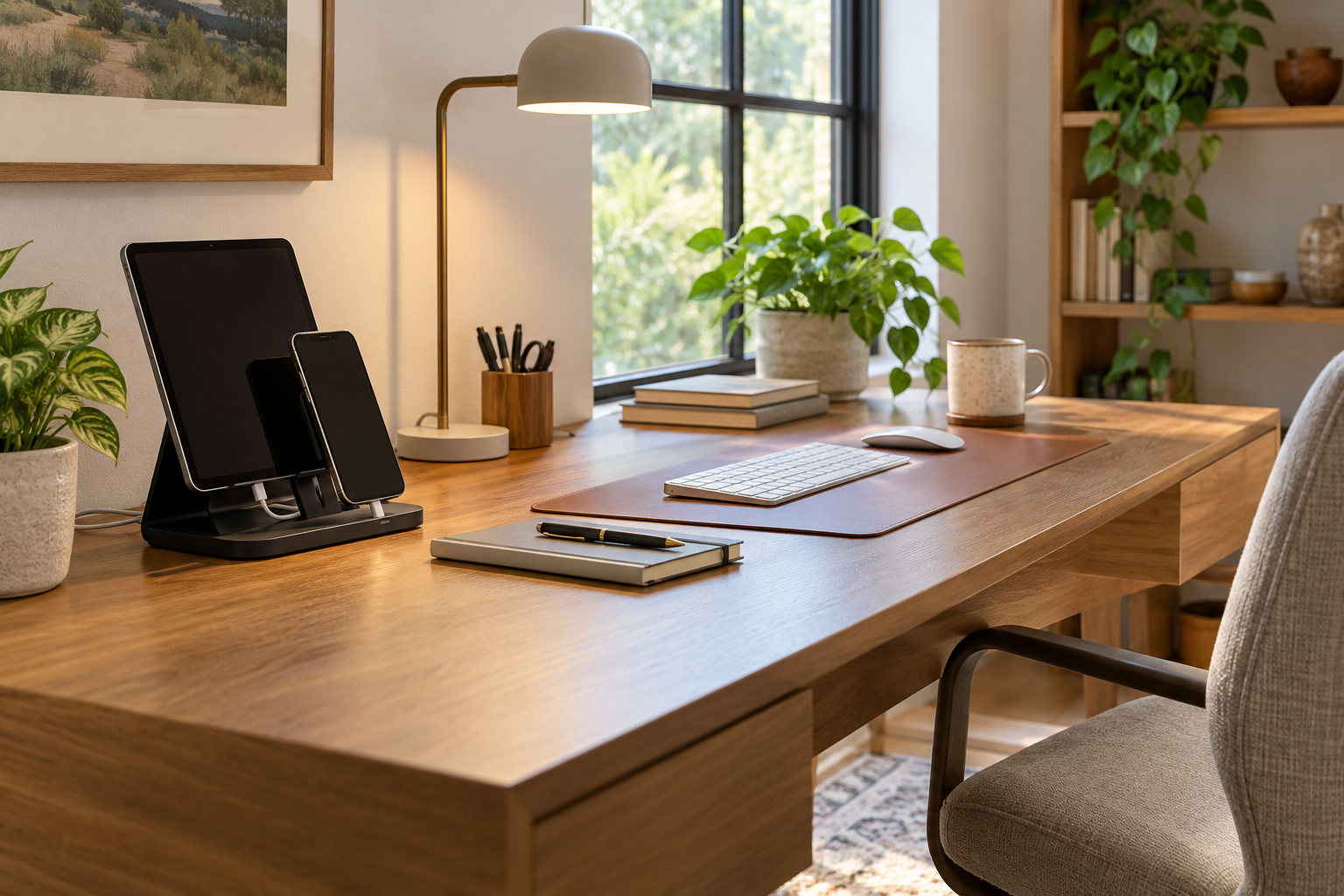
Choose one end of the desk or an adjacent shelf as the regular charging place for portable devices. A stand can hold the phone and tablet upright, keeping them together without covering a notebook or keyboard. Route the cables toward that spot instead of letting charging become a different arrangement every day.
Use compatible charging equipment according to its instructions and keep the area dry with appropriate ventilation. Leave room to pick up a device without pulling another cable along with it. If you carry the tablet between rooms, keep its place easy to recognize when you return. The stand organizes a routine; it should not become a shelf for unused electronics.
9. Hang Headphones Beside the Work Surface
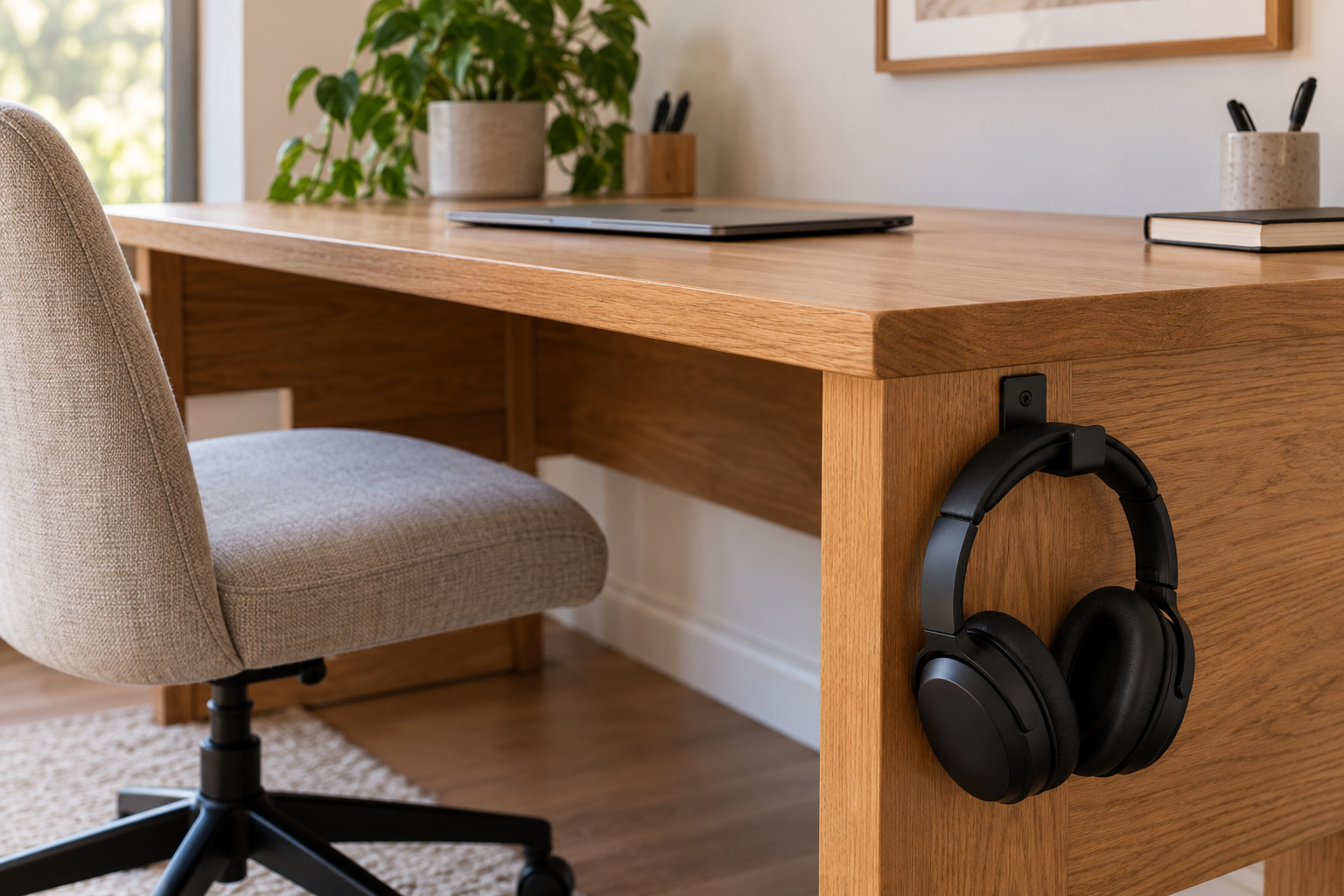
Headphones can have their own parking place beside the work surface. A suitable hook on the desk’s side keeps them within reach while leaving the tabletop free for writing. Choose a position where the headband rests naturally and the headphones do not hang into knee space or a doorway.
Check the hook’s attachment and capacity against the desk and equipment. If the headphones are wired, guide the cable so it does not catch under the chair. Leave nearby drawers able to open fully. This is a small change with a specific purpose: you can put the headphones away between calls without laying them across the keyboard or stacking them on paperwork.
10. Give the Printer a Properly Planned Cabinet Bay
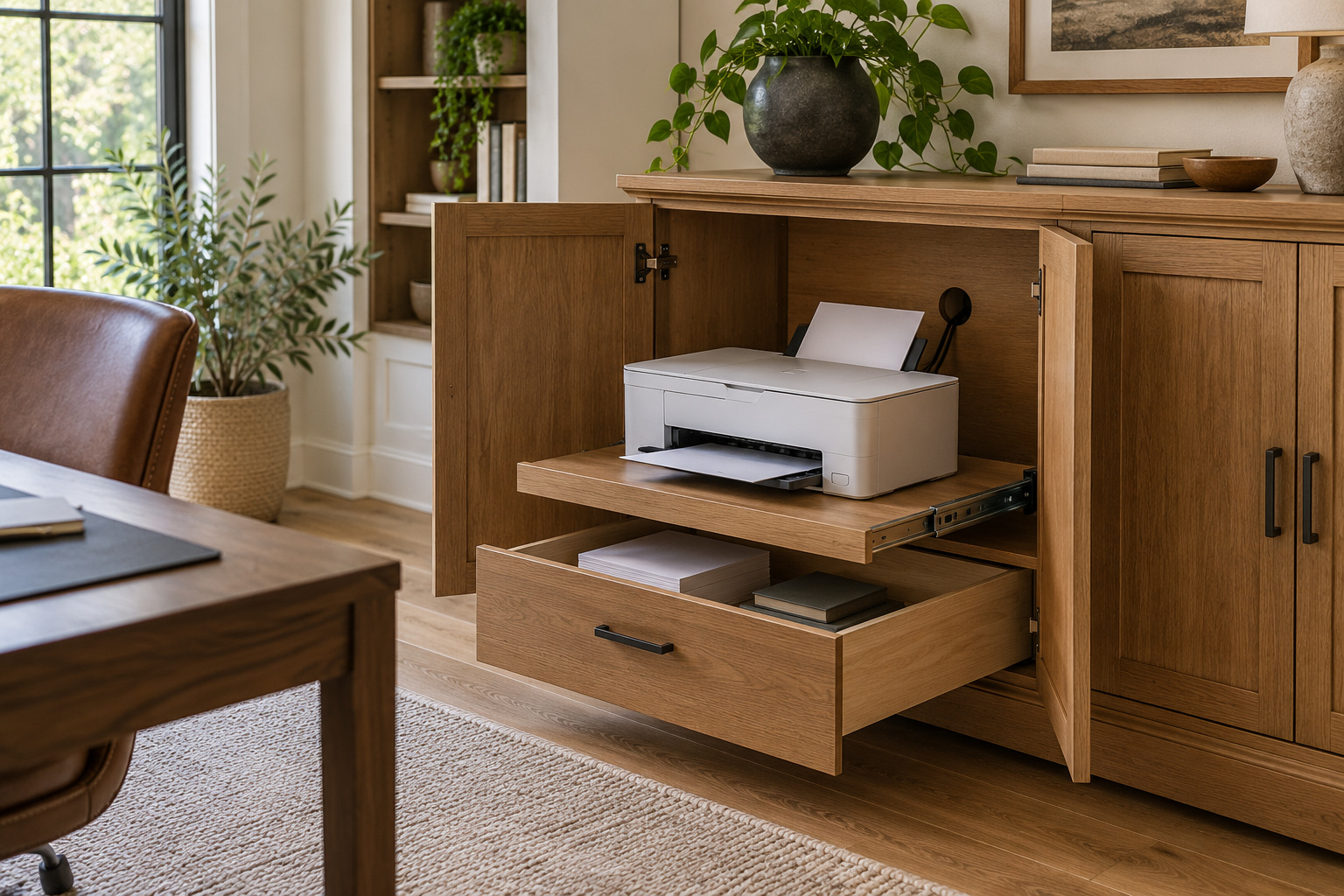
A printer needs a place planned around its operation, not just a cavity large enough to hide it. A cabinet bay with a suitable pull-out shelf can make paper loading and controls easier to reach. Keep paper on a separate shelf or drawer so the machine is not surrounded by loose supplies.
Check the printer’s instructions for clearance, ventilation, cable access, and use inside furniture. Match the shelf and hardware to the equipment’s weight, including any movement during operation. Leave the door open or extend the shelf as required by the actual setup; a decorative illustration is not a substitute for those requirements. Choose the cabinet arrangement only after checking how that particular printer is used and maintained.
11. Use a Cart for One Ongoing Project
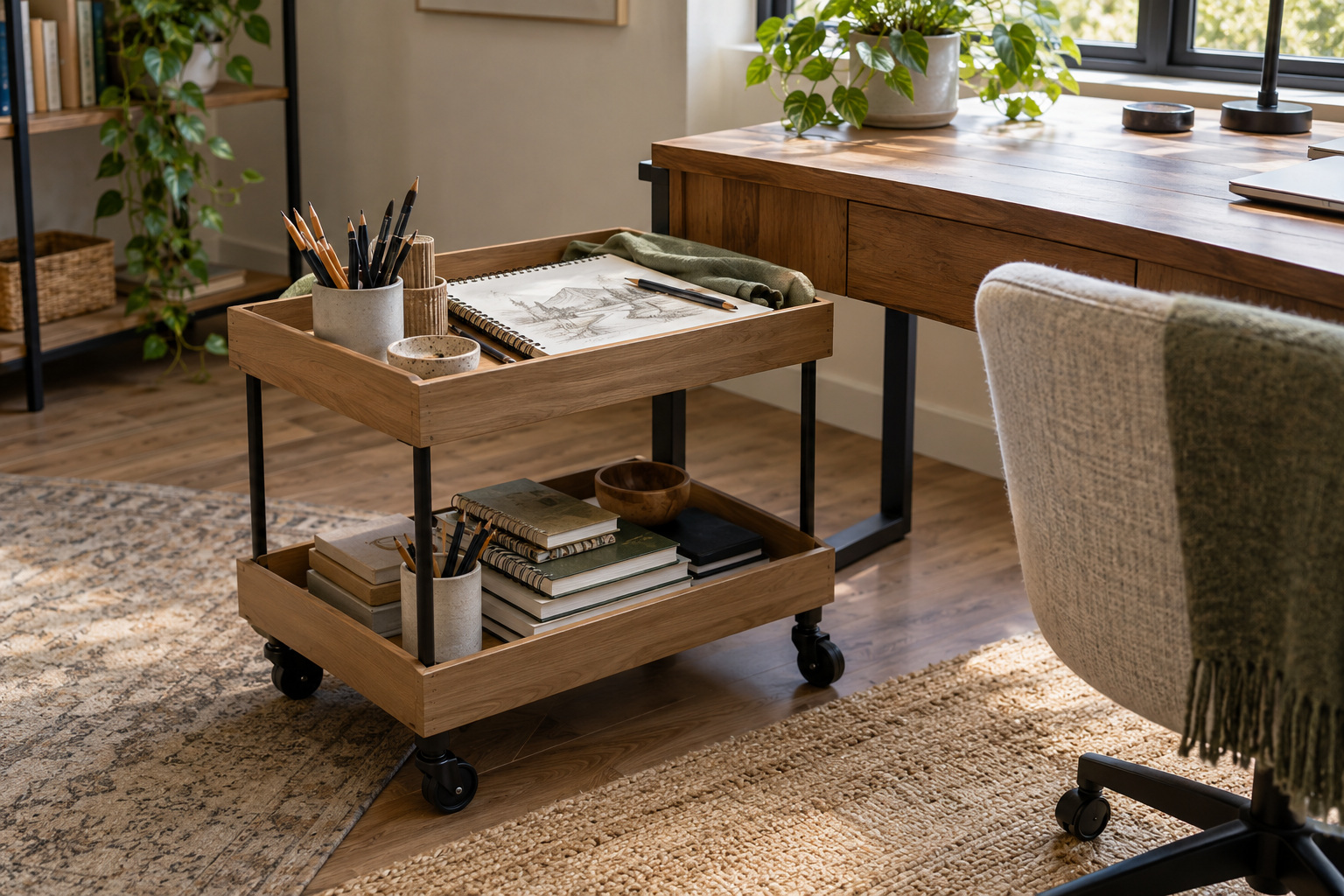
Use a cart to gather one ongoing project that needs several tools or materials. Put the active work on the upper tier and related supplies below, with each item contained enough to move together. Park the cart beside the desk while working and move it to a planned spot afterward.
Choose a cart that fits both the contents and the route it travels, using its wheels and brakes according to instructions. Keep heavy items low where appropriate and avoid overhanging pieces that can catch. This differs from a mobile office: the desk stays in place, while one project kit moves. Leave the cart available for that project instead of letting unrelated household items accumulate on its shelves.
12. Put the Calendar Where You Actually Look

Put the calendar where a glance from the work area can find it. A clear monthly view beside the monitor or desk can hold appointments and deadlines without occupying the writing surface. Choose a size you can read comfortably and a frame or border that relates to the other room finishes.
Use the calendar for dates rather than every working note. Keep its entries consistent with your main scheduling system so two separate versions do not compete. Leave the space around it quiet enough that the grid remains visible. Mount it appropriately and check glare from the window; an attractive calendar is useful only if you can actually see and update it.
13. Keep Reference Images on a Bounded Pinboard
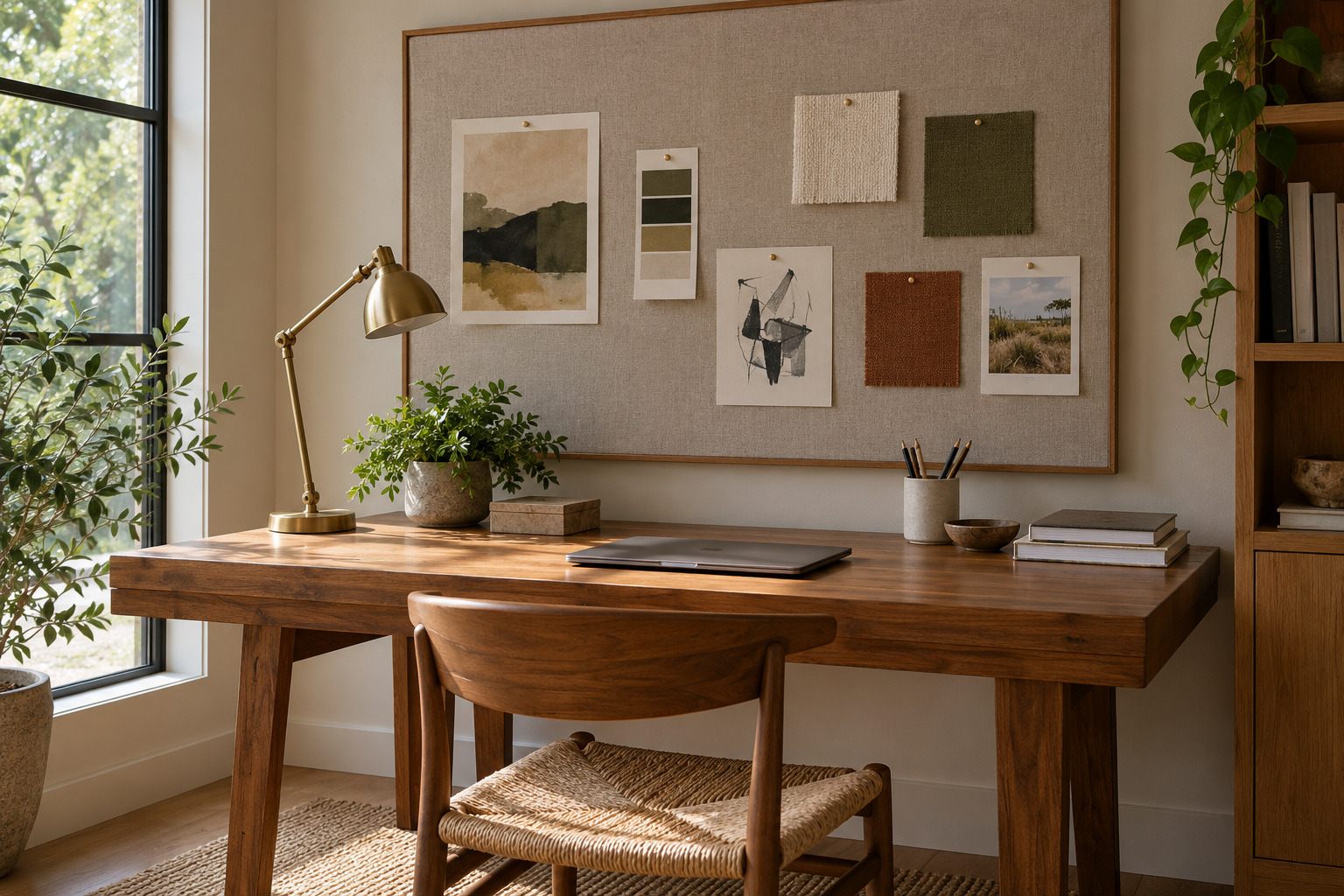
A bounded pinboard gives reference images and material samples a place that is separate from the wall around them. Group the pieces for the project you are developing and leave small gaps between them. A fabric-covered board can bring a soft texture to a room of shelves, screens, and hard work surfaces.
Keep the selection current. Remove references that no longer inform the work rather than layering new pieces until the board becomes unreadable. Use fittings suitable for the board and its contents, with sharp pins kept appropriate to the household. This is for material you want to compare visually; schedules and temporary task notes can have different homes.
14. Use a Whiteboard for Temporary Working Notes

A whiteboard can hold temporary working notes that change during a task. Put it beside the desk where you can stand or sit comfortably to use it. A simple sequence, sketch, or list can stay visible without filling the desktop with loose scraps.
Choose a board and markers intended to work together, then keep the eraser nearby. Clear the board when the task is finished and transfer any information that needs a permanent record to the appropriate place. Keep its frame consistent with the room if the office is visible from another living space. The value is a surface you can reuse freely, with enough open area to think through the current problem.
15. Store Small Items Beneath a Monitor Riser

A monitor riser with storage beneath can give small stationery a defined home close to the screen. Use a shallow compartment for items you reach for during work, such as a pen or a small notepad. Keep the space in front available so a stored item can be removed without shifting the keyboard.
Choose equipment suited to the monitor’s size and weight, and set the viewing arrangement for your own needs. Storage is not a reason to force the screen into an uncomfortable position. Keep any drawer lightly filled and check that its movement does not interfere with cables. This approach is useful when the desk lacks a shallow drawer but has room for an appropriate stand.
16. Roll a File Unit Beside the Desk
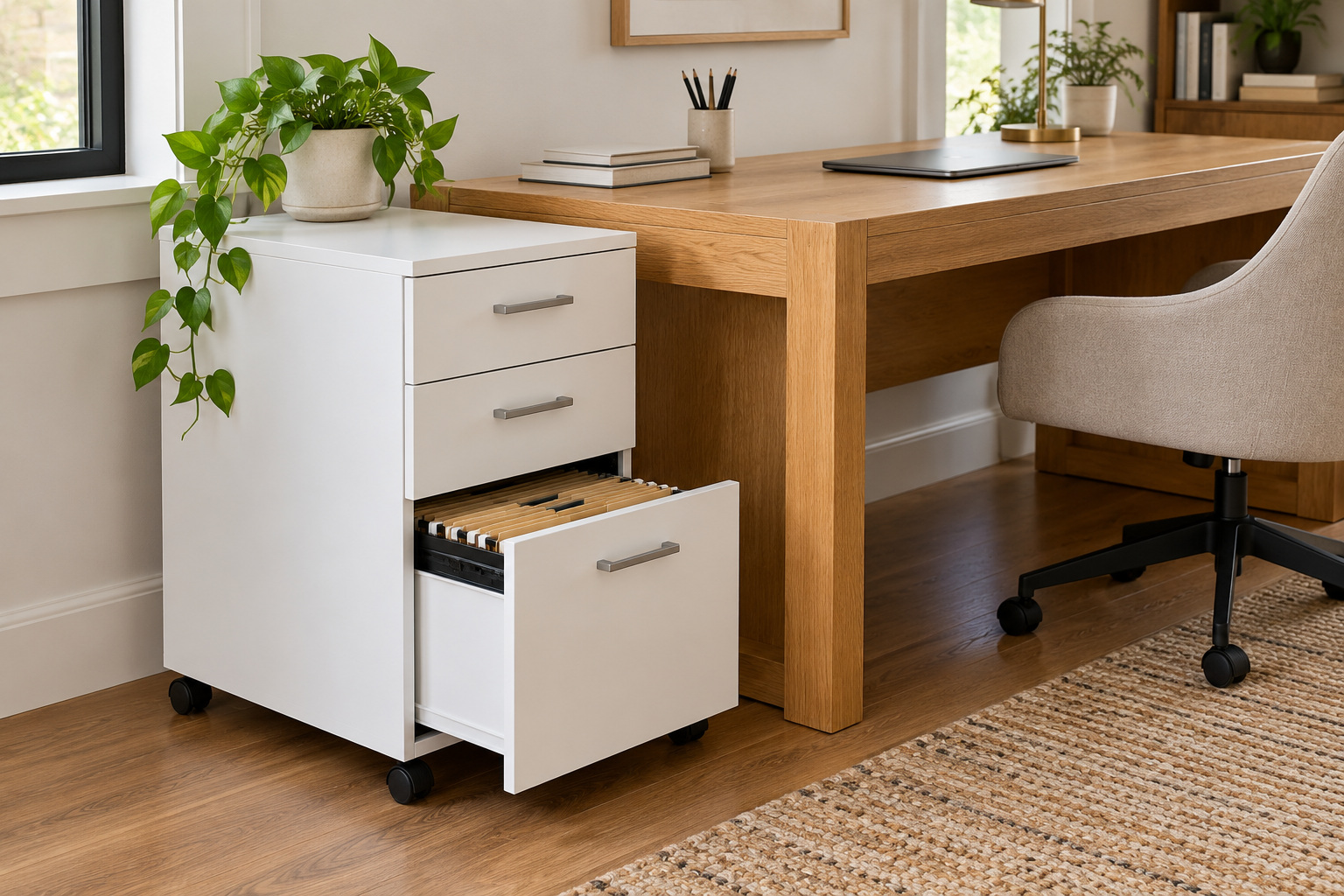
A rolling file unit beside the desk can put papers close by without filling the knee space. Choose a cabinet that opens fully in its parked position and holds the document size you use. A plain white front can sit quietly beside an oak worktop while the drawer interiors do the organizing.
Check the unit’s stability and use its drawers and wheels according to the manufacturer’s instructions. Keep it clear of the chair’s movement and the path through the room. If the whole workstation also needs a new location, our small home office ideas explore room layouts; the filing unit here addresses access to papers within an existing setup.
17. Use Cabinet-Door Pockets for Light Supplies
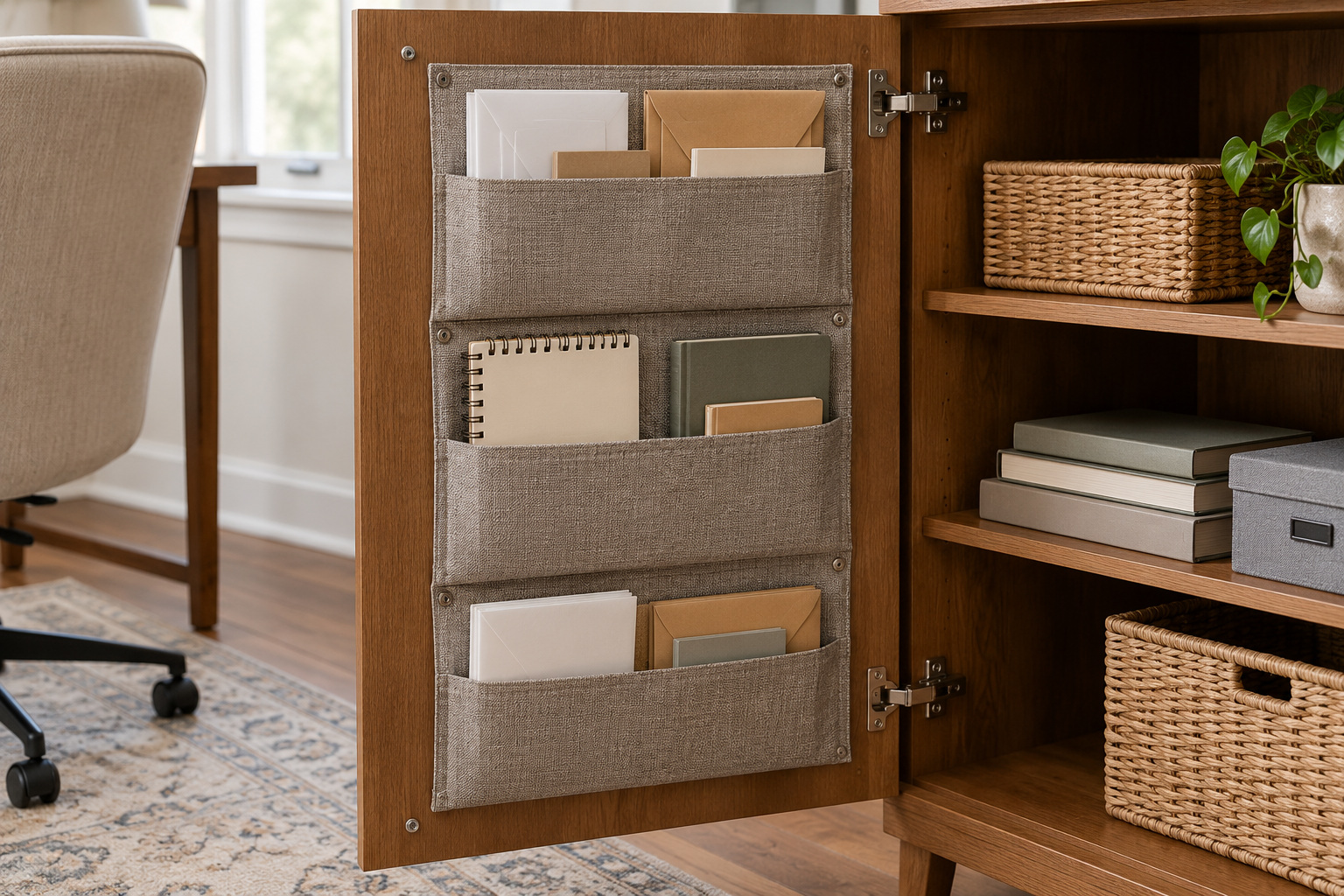
Light supplies can use the inside of a cabinet door when there is clearance for a suitable pocket organizer. Slip envelopes and thin notepads into separate fabric pockets so they stay visible when the door opens. Leave thicker or heavier supplies on the cabinet shelves.
Check the attachment, door movement, and space between the closed door and the shelf contents before adding anything. Do not cover hinges, catches, or ventilation. Keep the pockets lightly loaded so the door remains easy to use. This works for small flat items that otherwise disappear behind a stack, with a specific pocket to return to after each task.
18. Separate Two People’s Everyday Work Kits
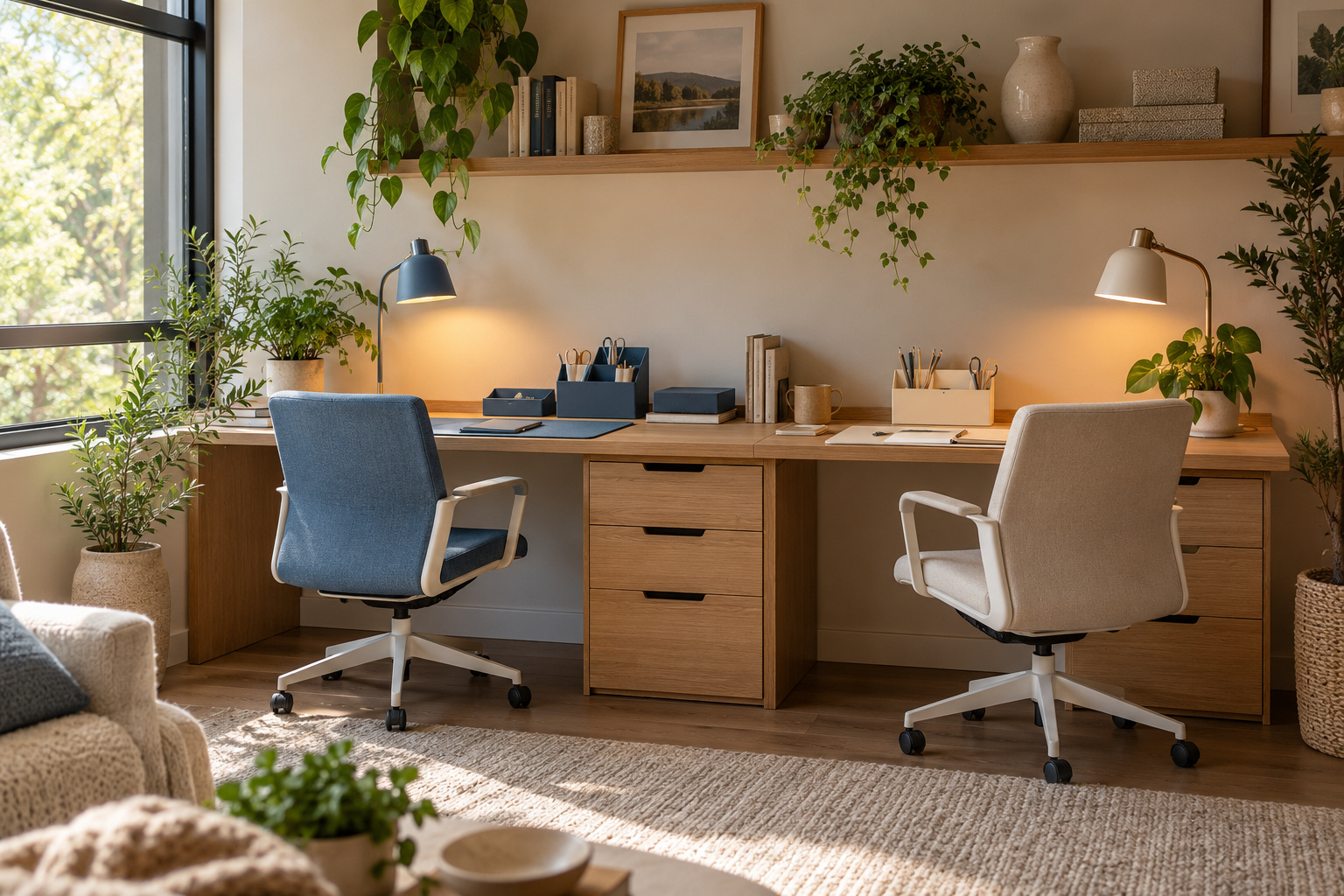
When two people share an office, separate the everyday tools each person uses. A blue kit at one desk and a cream kit at the other can distinguish pens, notepads, and frequently moved accessories without splitting every supply in the room. Keep shared equipment in an agreed common place.
Use containers that fit each work surface and the actual contents rather than creating matching sets neither person needs. Decide where borrowed tools return and who clears shared paper. The distinction can be subtle in a neutral room, but it should be clear to the people working there. This is about daily ownership and return habits, not adding a decorative caddy to every corner.
19. Give a Work Bag a Parking Place
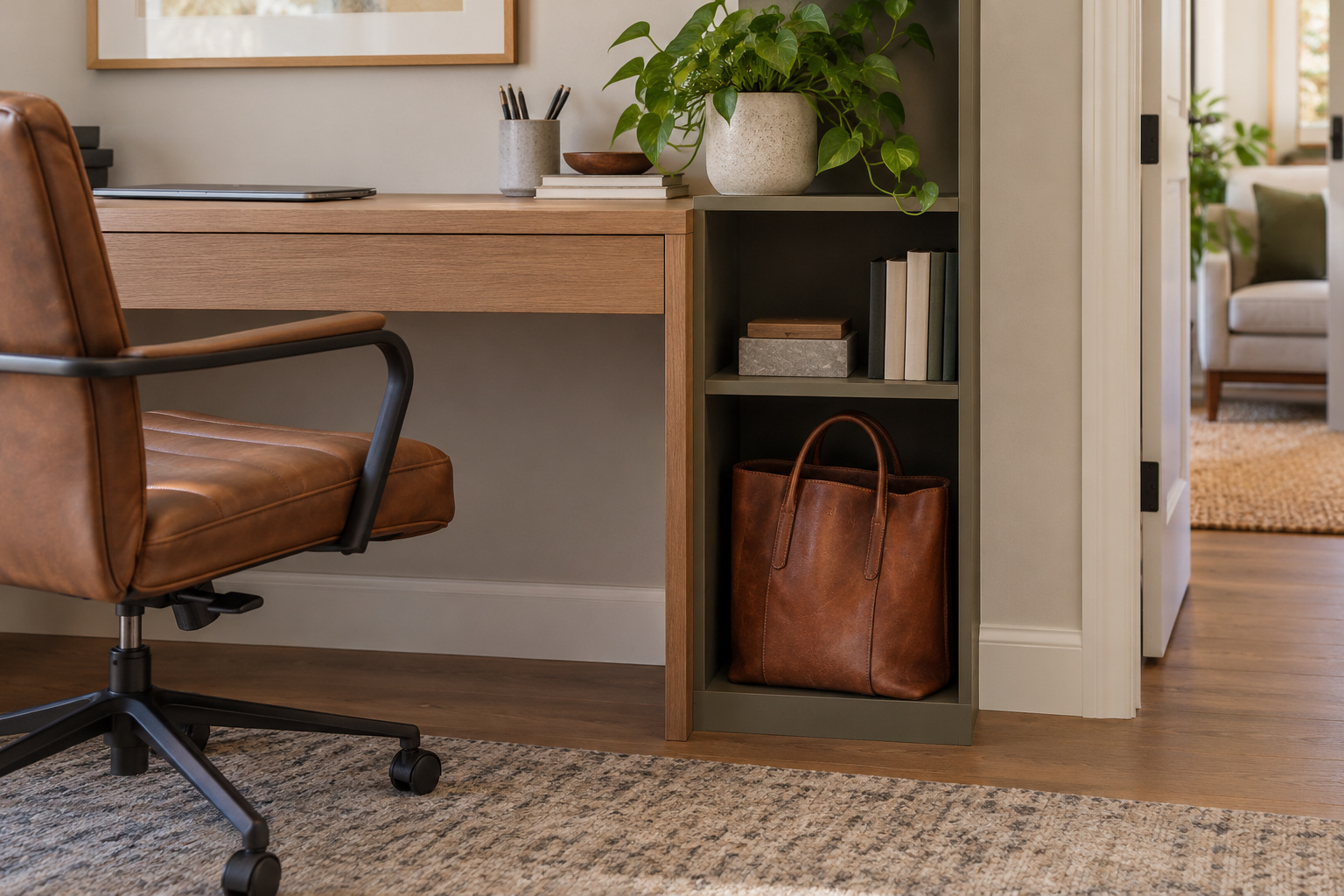
A work bag needs a landing place away from feet and doorways. A low open cubby beside the desk can hold the bag upright with its handles easy to reach. Choose a space that suits its normal packed shape rather than pushing it into a shelf where it must be emptied first.
Keep the cubby for the bag and the few items that travel with it. Papers that need attention should go to the inbox, while equipment that needs charging should go to its regular station. This makes unpacking a clear sequence and prevents the bag from becoming a second filing cabinet. Check the doorway with the bag in place before settling on the location.
20. Store Large Paper Rolls Upright

Large paper rolls can stand in a sturdy upright container rather than lean across a corner or unroll behind furniture. Group the rolls you use for drawings, patterns, or presentation work, leaving room to lift one out. Put the container close to the project area but outside the chair’s movement.
Choose a depth and base that keep the actual rolls stable without crushing their ends. Protect them from direct sun, moisture, and the storage conditions their materials require. Keep smaller offcuts elsewhere so the container stays easy to browse. This addresses rolled material specifically; flat drawings and samples need a different kind of storage.
21. Keep Flat Projects in Shallow Drawers
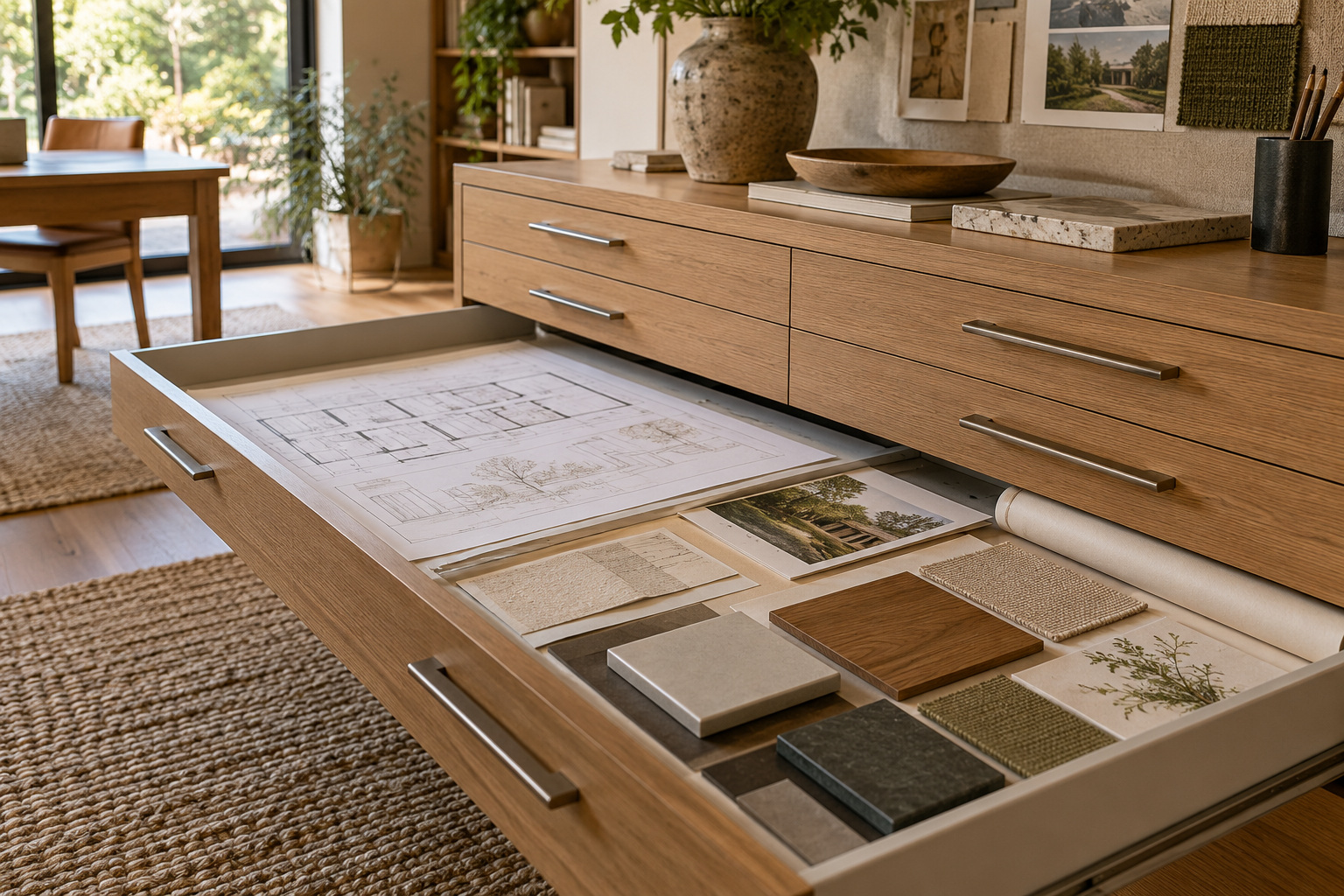
Shallow drawers can hold large flat projects without folding them into ordinary files. Lay out drawings, artwork, or material sheets in separate groups, using folders or protective layers suitable for the contents. A wide flat-file unit works best when the drawer can open without forcing you to move the desk chair first.
Match the internal dimensions to the work before choosing furniture, and follow its stability and loading instructions. Keep the contents flat rather than stacking bulky tools on top. If only one occasional sheet needs this treatment, consider an appropriate portfolio instead of adding a large cabinet. The storage should serve the scale and frequency of the work you actually keep.
22. Move a Temporary Project on One Tray
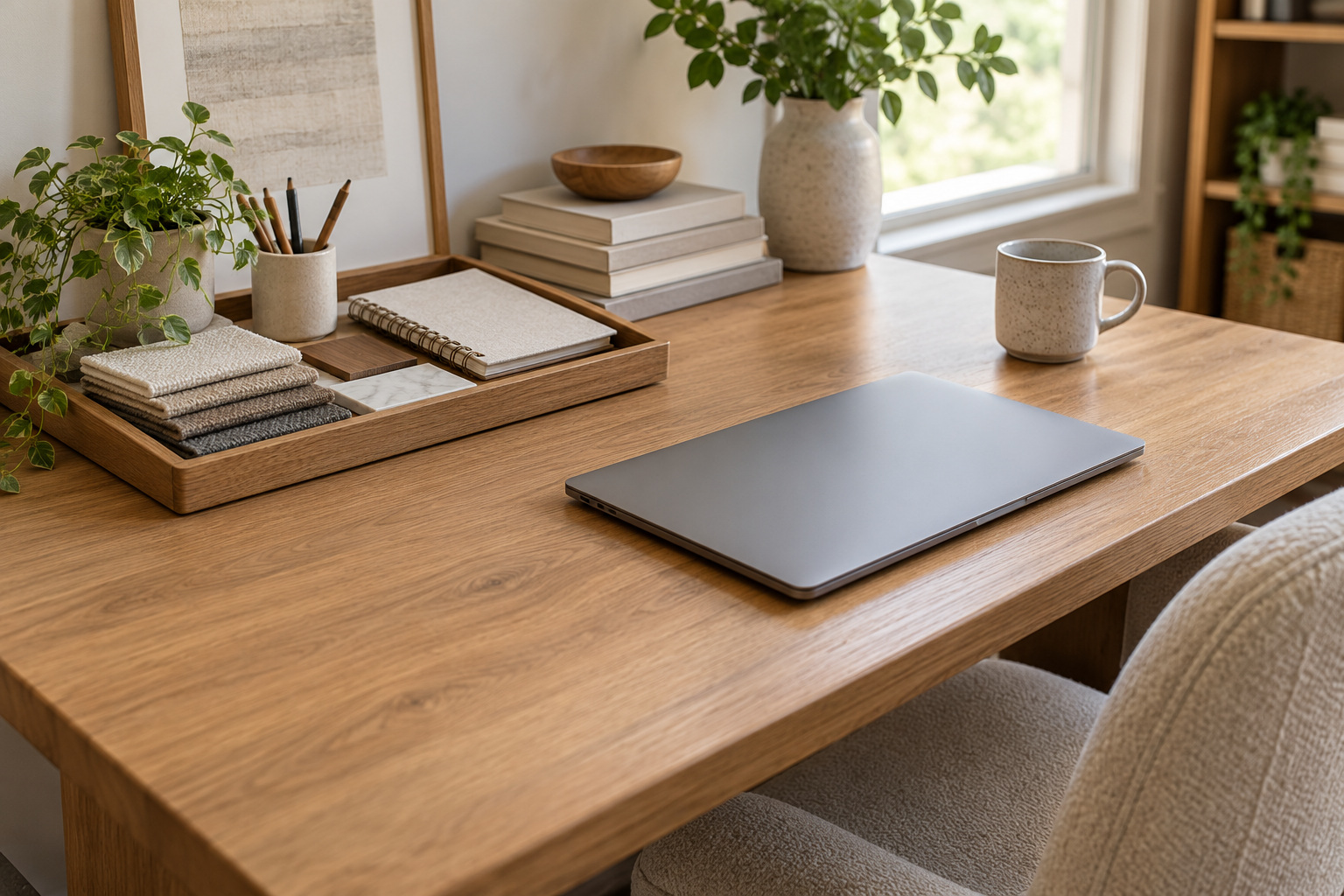
A shallow project tray can move a temporary arrangement off the desk as one group. Keep a notebook, a few samples, and the tools for a single task within its edges. When another job needs the surface, lift the tray to a nearby shelf instead of mixing those pieces into daily storage.
Choose a tray that is easy to carry with the intended contents and fits its parking place. Leave tools secure and avoid overhanging papers. Unlike a cart that moves a larger kit through the room, this tray transfers one small working arrangement between nearby surfaces. Clear it when the task ends so the next project begins with an empty tray.
23. Group Refill Supplies Away From Daily Tools

Refill supplies do not need the same convenient position as the pen you use every hour. Group spare notepads, extra pens, and similar reserves in a cabinet bin away from the everyday drawer. Keep the contents visible or simply labeled so you can check what is already there before replacing it.
Choose a bin that lifts easily from the shelf without snagging the supplies beside it. Separate items that need different storage conditions and follow product instructions where relevant. Keep the reserve collection proportionate to your use rather than treating an empty shelf as a reason to stock up. The everyday desk kit stays small while the backups remain findable.
24. Pack Portable Tech in a Divided Case
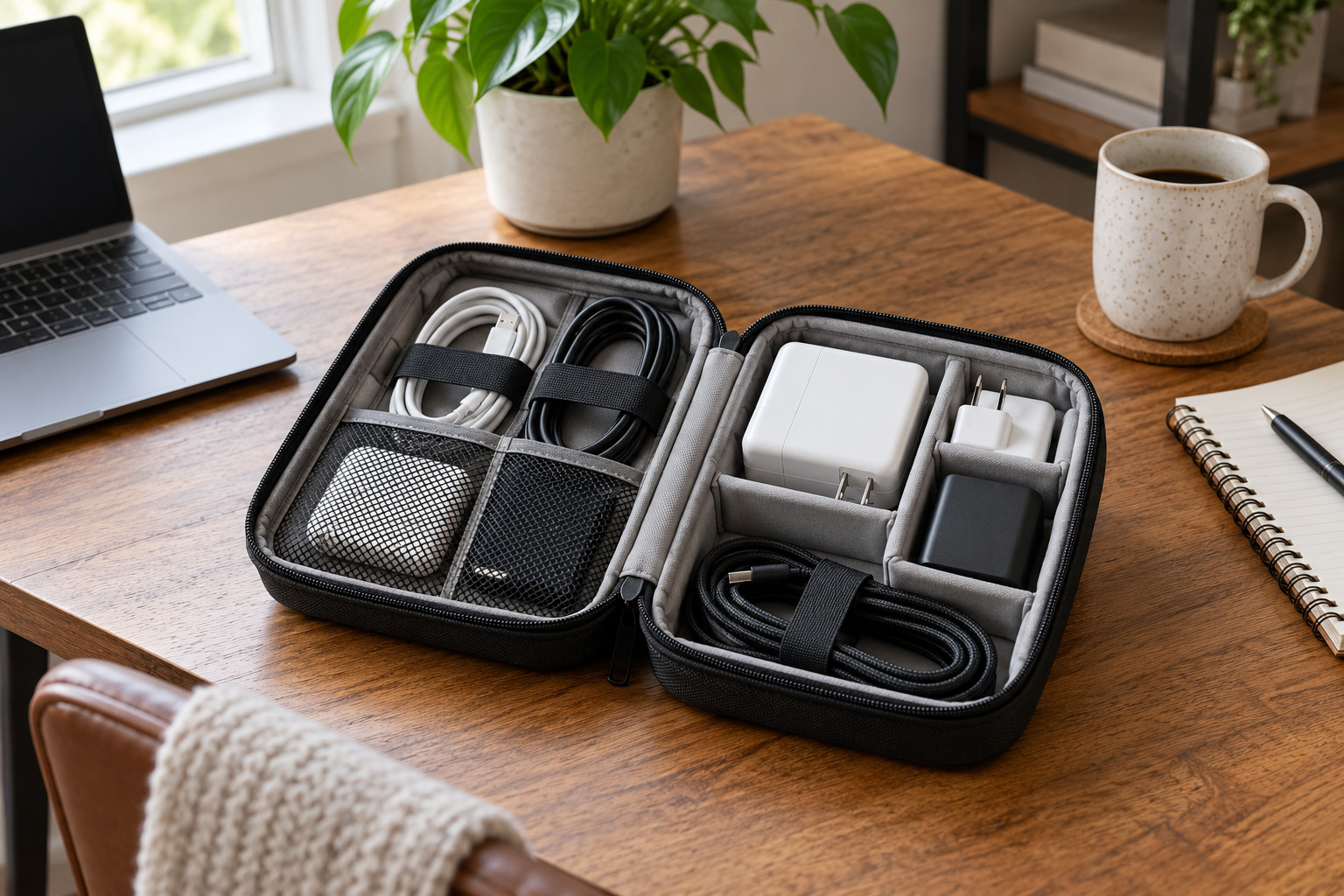
Portable chargers, cables, and adapters can travel together in a divided zippered case. Give the larger charger one compartment and coil compatible cables loosely in the others. Open the case on the desk when packing so you can see what belongs in it rather than collecting equipment from several drawers.
Choose compartments that protect the actual items without forcing tight bends or pressure on connectors. Keep damaged cables out of use and follow equipment instructions for packing and charging. This case is for travel storage, not a closed enclosure for powered devices. Return it to a regular shelf or work-bag pocket so the portable kit has a home between trips.
Begin with the item you move out of the way most often. Give it a suitable home, then check whether you can take it out and put it back without disturbing everything else. An office organization system works best when the everyday actions are clear, the storage fits the contents, and the desk has room for the work itself.
Discover more from HomeTrendora
Subscribe to get the latest posts sent to your email.