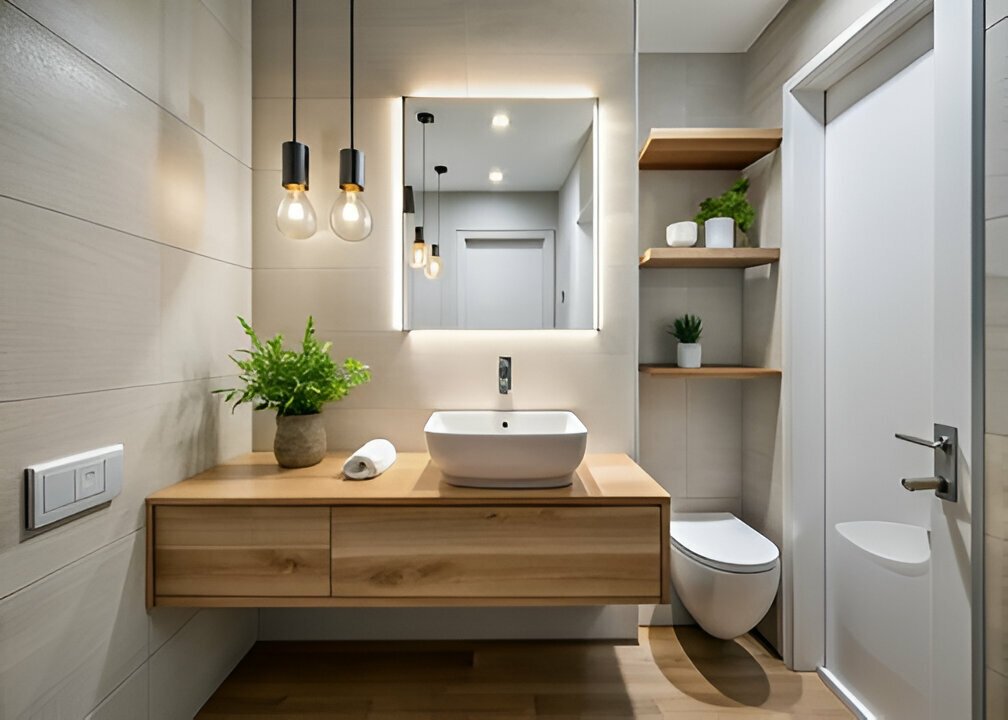
Bathroom towels have more than one storage job. The towel in use needs an accessible place to hang, clean spares need a home of their own, and used towels need somewhere to go before washing. Treating all three as one decorative pile usually makes the room harder to use.
These 26 bathroom towel storage ideas cover different fixtures, furniture, and household routines. They are alternatives, not a checklist for filling one room. Start with the towel you reach for every day, then choose a separate solution for the extras and guest supply your bathroom actually needs.
1. Keep the Everyday Bath Towel on Its Own Bar
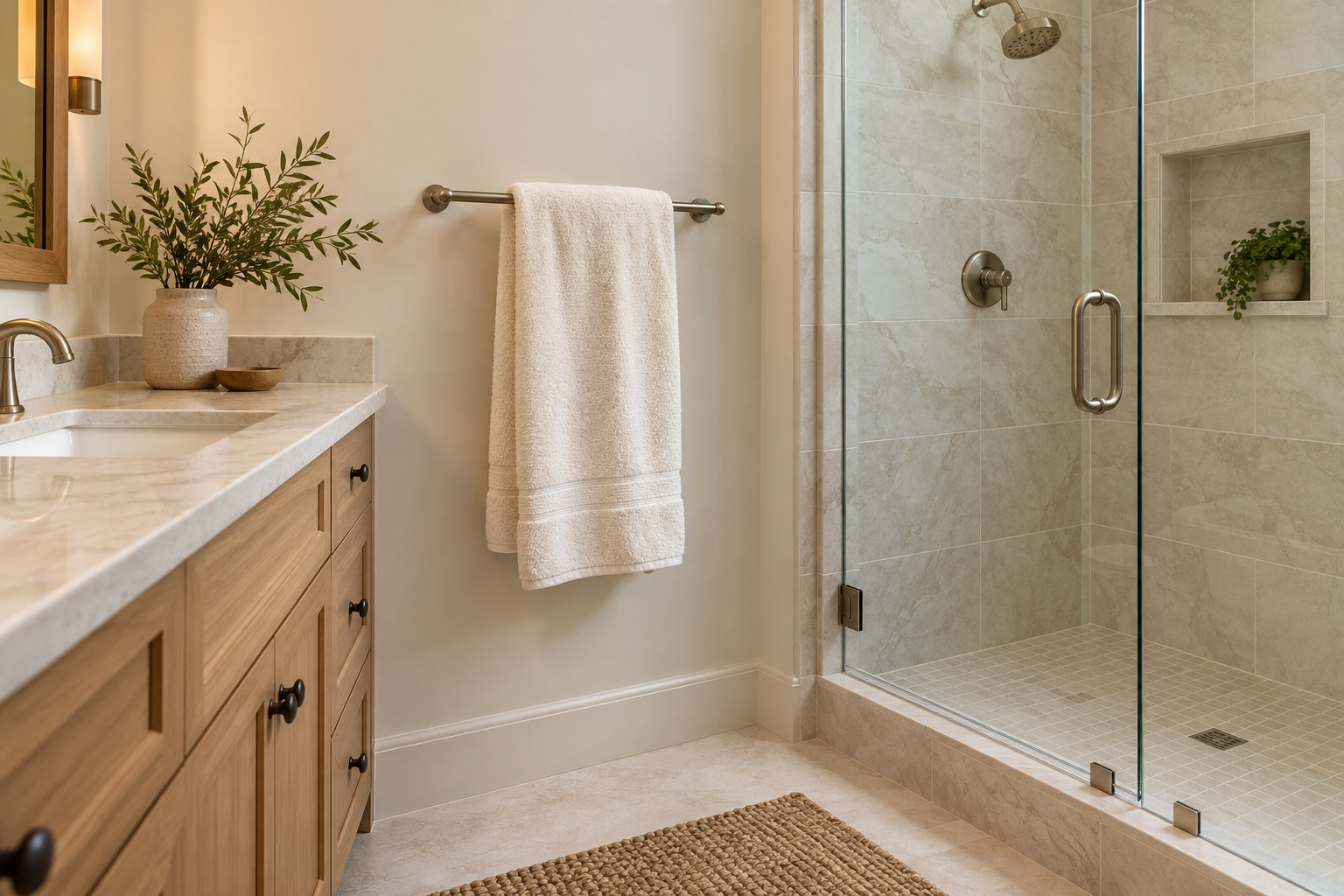
Start with the bath towel you use every day. Give it a bar close to where you step out of the shower, placed so you can reach it without bringing the towel into the spray. A single cream towel against a warm wall can look considered while the fixture does a clear everyday job.
Choose a bar long enough for the way you intend to hang the actual towel, and fit it according to the wall and product requirements. Keep the fabric clear of the floor, door movement, and nearby controls. Clean spare towels can live elsewhere; this position is for the towel currently in use, with room around it rather than another folded stack balanced above.
2. Use Stacked Bars Where the Wall Is Narrow
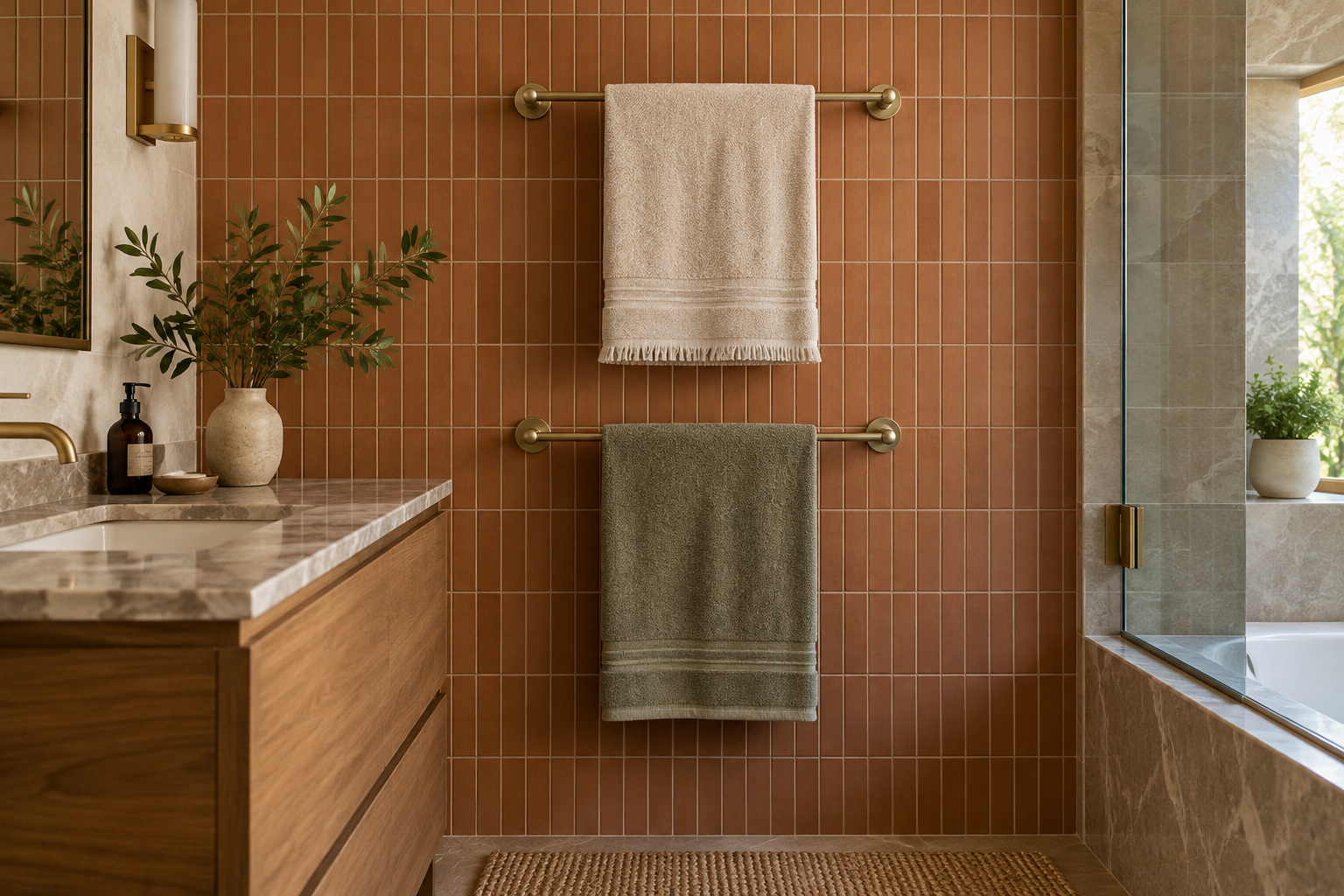
A narrow wall may accommodate two towel bars at different heights when there is not enough width to place them side by side. Use the actual towel lengths to plan the spacing, so the upper towel does not cover the lower one. The separate horizontal lines can become a deliberate wall arrangement against terracotta or another quiet tile finish.
Check who needs to reach each bar and whether both positions work in daily use. Follow the fixing requirements for the wall rather than assuming tile alone provides a suitable anchor. Keep the lower towel off the floor and the upper one within a comfortable reach. Stacking bars works only when the towels have their own usable space.
3. Let Swinging Arms Separate Several Towels
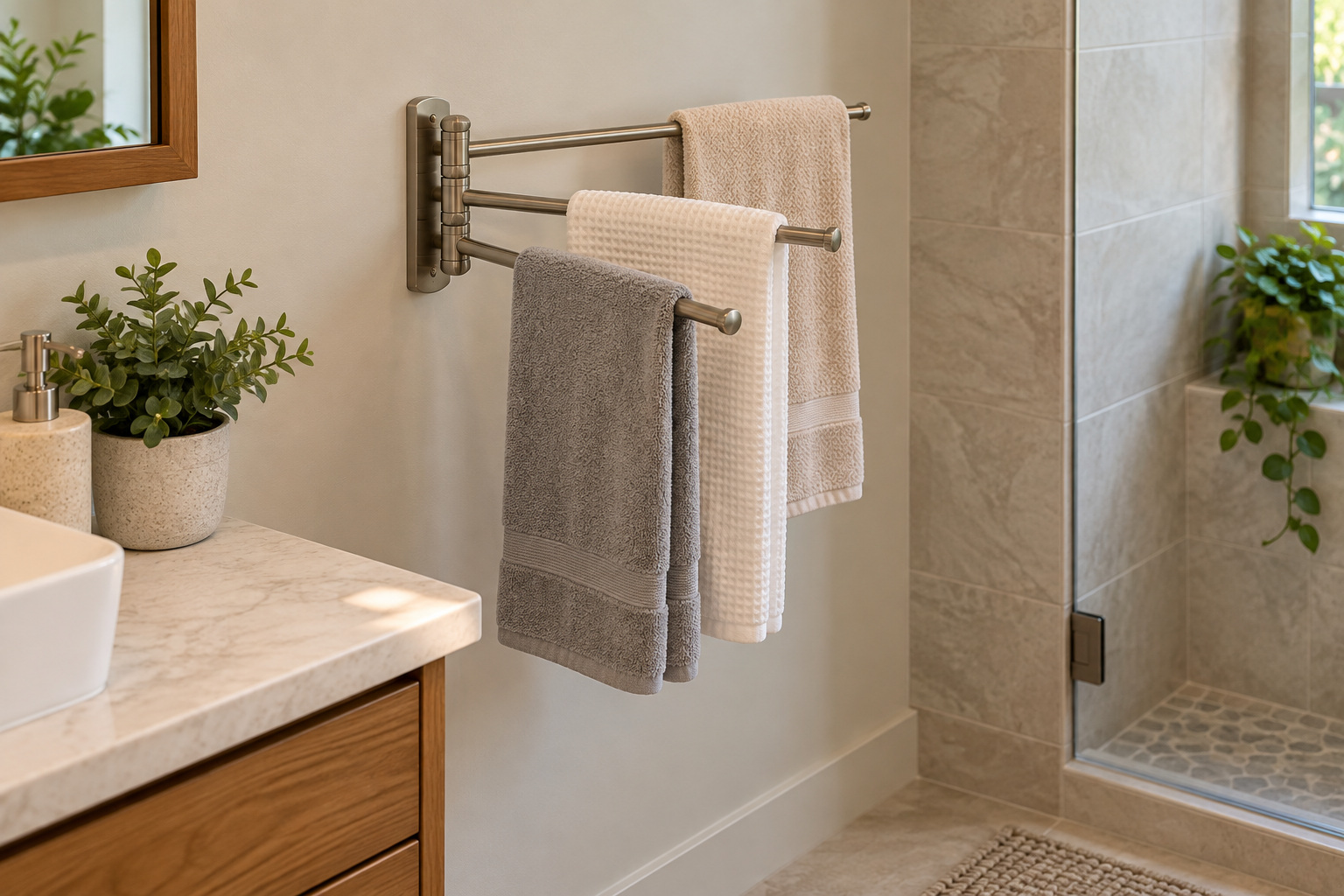
A fixture with swinging arms can separate several towels from one wall position. Spread the arms so the hanging fabric is not pressed into one thick bundle, and keep each towel on its own arm. This is a different arrangement from a fixed row of hooks because the fixture can change position when needed.
Check the arms’ movement against the door, shower screen, and neighboring furniture before choosing a location. Use the fixture within its stated purpose and capacity, and leave the towels clear of the floor. A simple metal finish can relate to existing bathroom fittings, but movement and reach matter more than an exact match. If the arms cannot open freely, choose another wall solution.
4. Give Each Person an Individual Hook
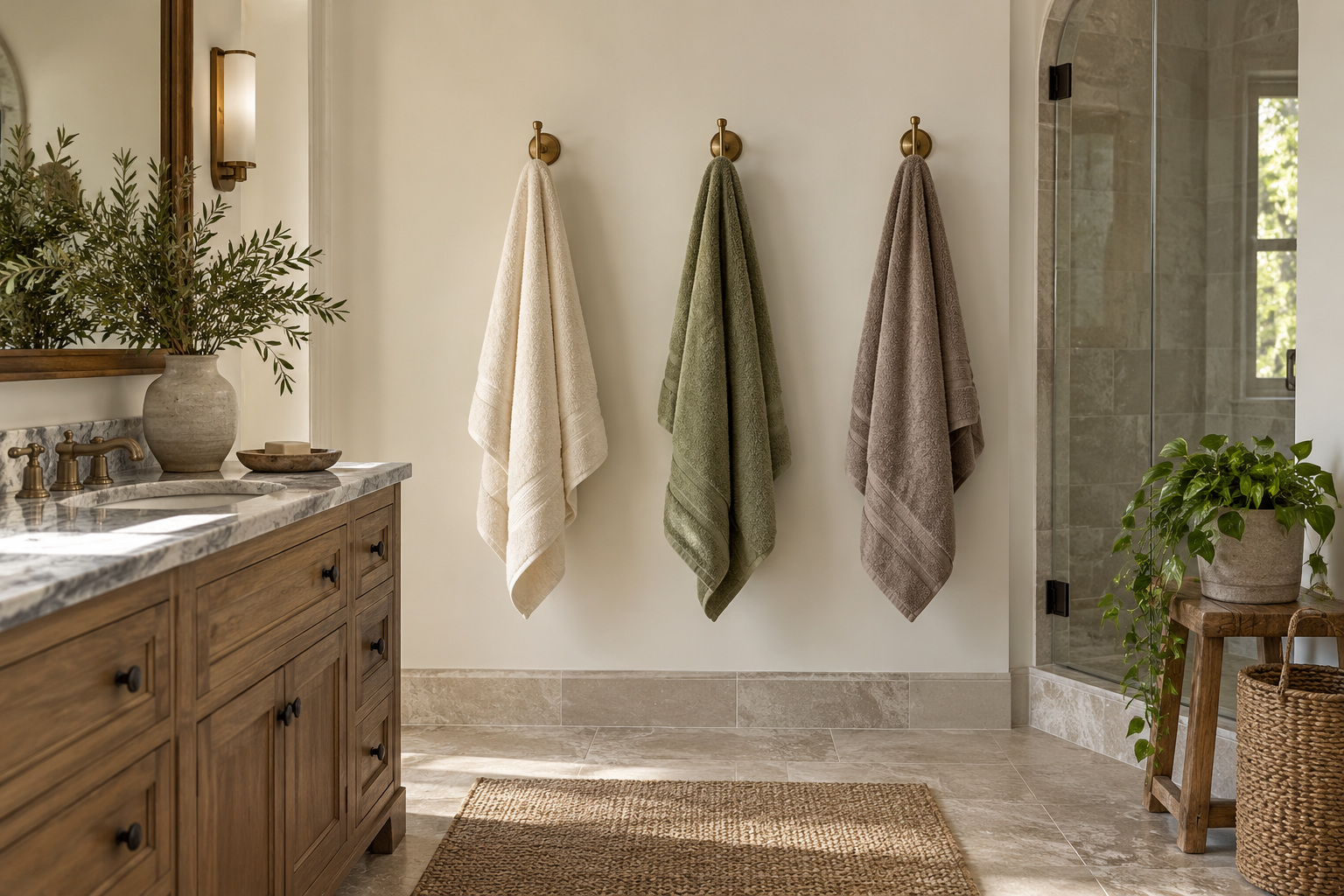
Individual hooks can give each household member a recognizable place for a towel. Space them around the actual hanging widths rather than setting them close together simply to fit more on one rail. Cream, sage, and taupe towels can distinguish the places while staying within a quiet bathroom palette.
Choose hooks that suit the towels and mount them appropriately for the wall and load. Check that the fabric does not bunch against another towel or brush the floor. Consider whether a towel with a hanging loop works better for the chosen hook. Keep clean replacements in separate storage so the hook arrangement remains easy to understand at a glance.
5. Use the Back of the Door When It Closes Freely
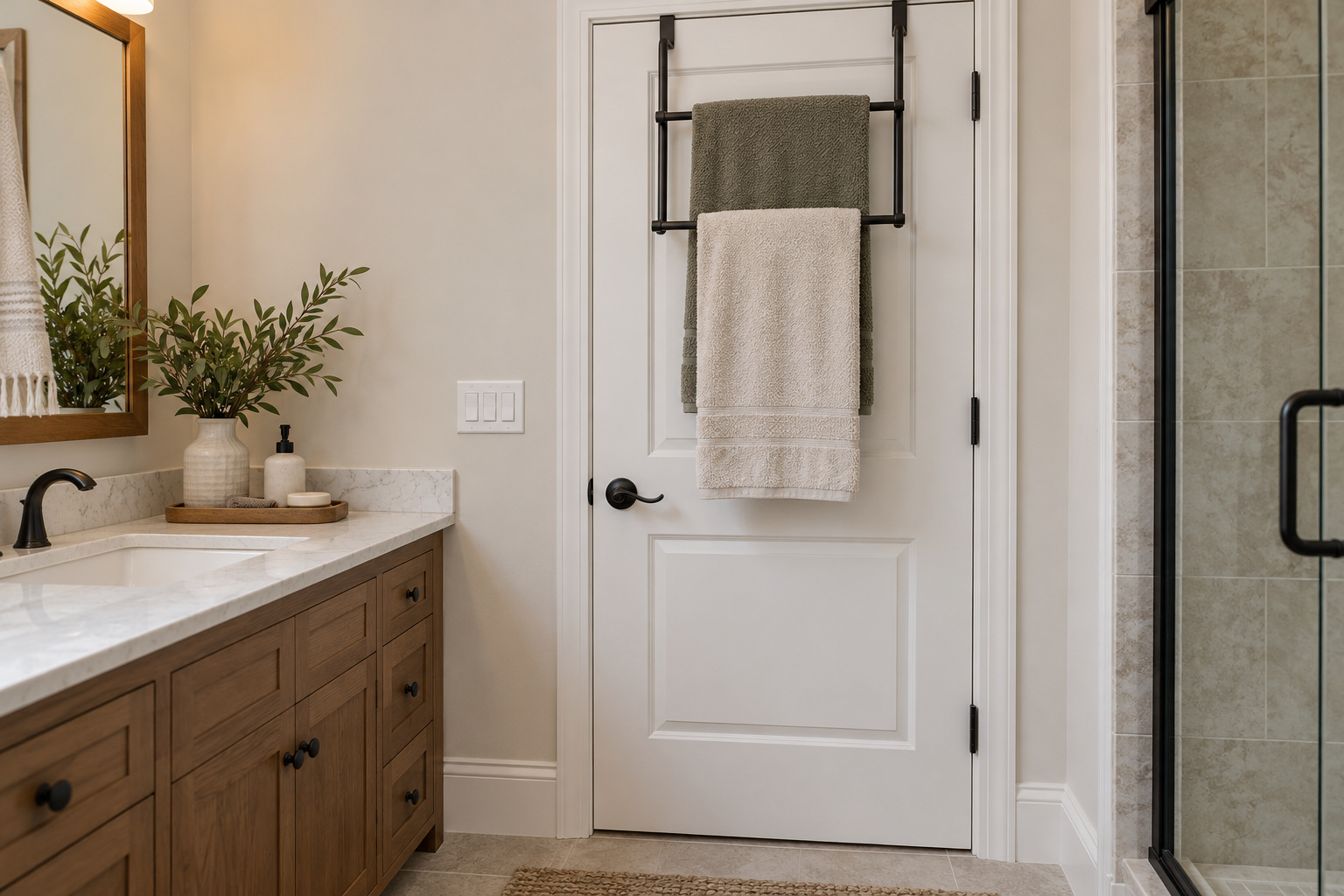
The back of a bathroom door can hold towels when a suitable over-door rack fits the actual door. A slim two-bar design may use a surface that otherwise stays empty. Place the towels so the handle remains accessible and the arrangement does not spread past the door edges.
Before leaving the rack in place, check that the door closes, latches, and opens fully without scraping or catching. Follow the rack instructions for door thickness and loading, and avoid interfering with a special door’s required operation. Keep the lower towel off the floor. This is an option for a compatible door, not a reason to force a thick hanger into a tight frame.
6. Choose a Secure Ladder for Towels in Use
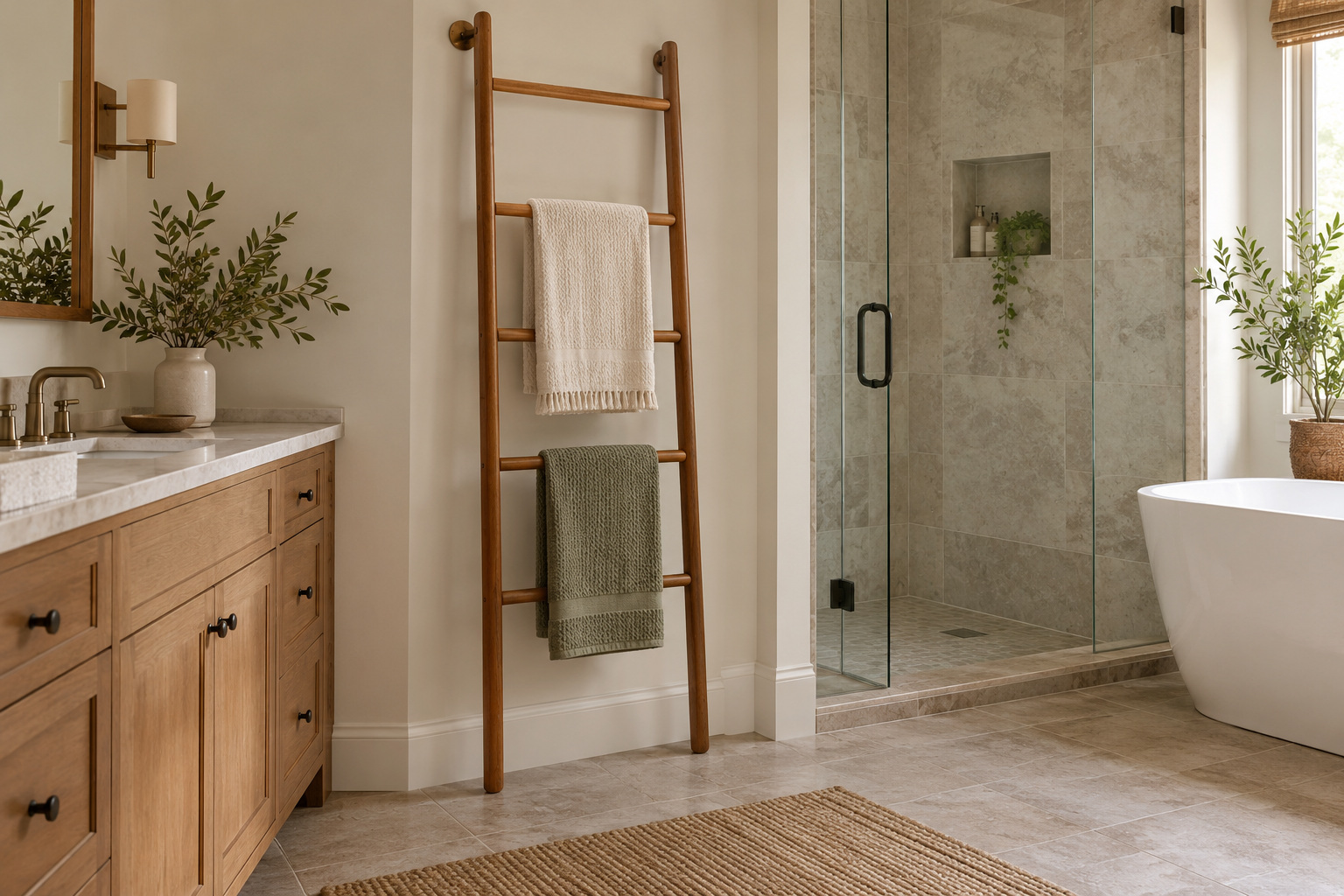
A towel ladder can introduce warm wood while giving towels separate rungs. Choose a ladder intended for this use and place it in a dry position near the daily routine. Hang only the towels that have enough room to fall freely, leaving the rest of the rungs open if needed.
Use the product’s required securing method and check its fit against the floor, wall, and household needs. Keep it clear of a swinging door or a route where someone might catch a foot. A ladder is not a grab rail or a climbing aid. Its material can soften the bathroom’s appearance, but it still needs a stable, suitable position and easy access to the hanging towels.
7. Put a Freestanding Towel Stand Beside the Tub
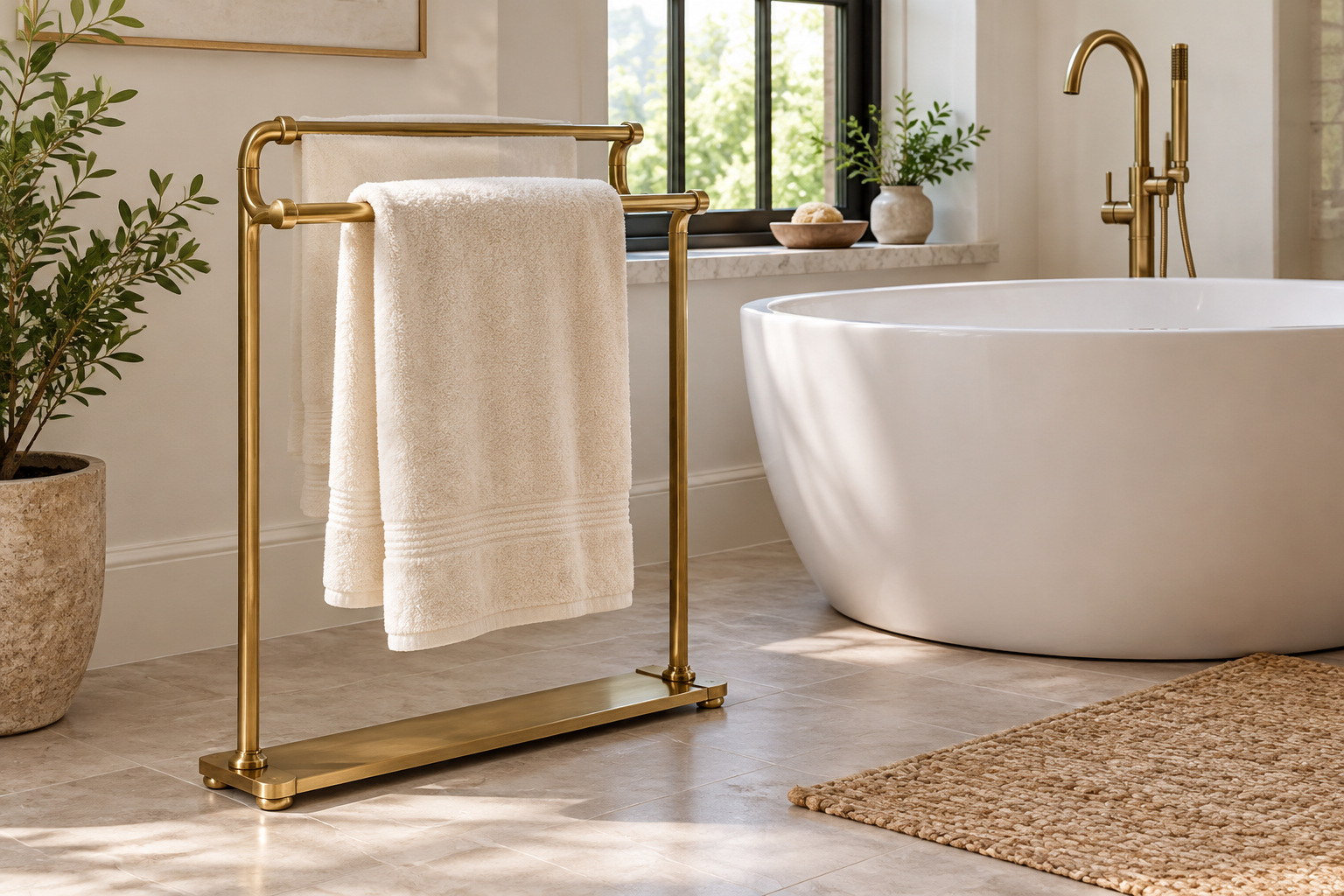
A freestanding towel stand can place a towel beside the tub when the nearest wall is inconvenient. Choose a stand that sits securely on the floor and offers enough rail space for the towel you use. A restrained brass finish can relate to nearby fittings without requiring a larger storage unit.
Keep the stand in an accessible dry position outside the route around the tub. Check stability with the intended towels and follow the product’s load instructions. Do not use it as support for getting in or out. The advantage is a movable towel location; it should not require stepping over a base or squeezing between the stand and another fixture.
8. Store Clean Spares on an Open Vanity Shelf
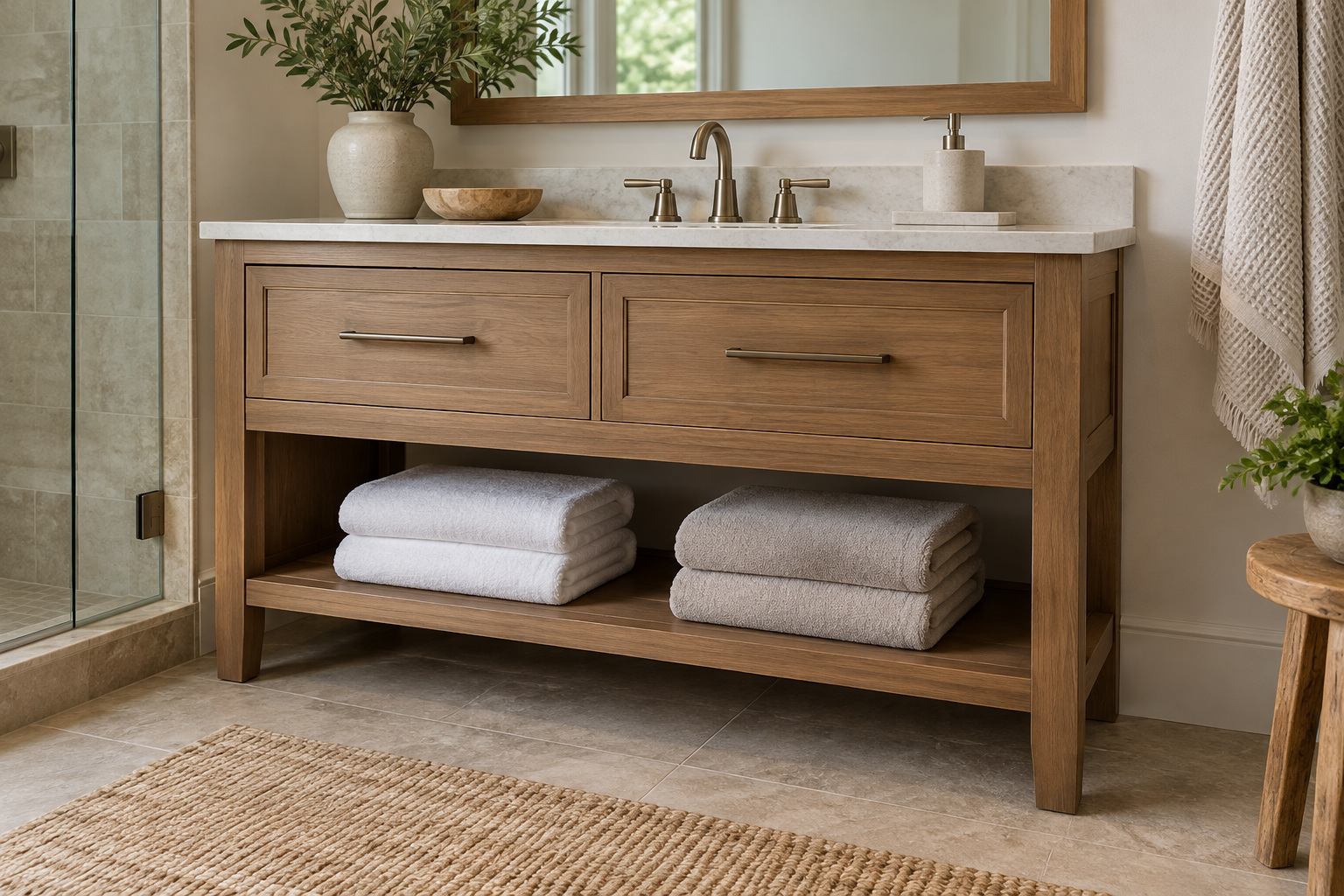
An open vanity shelf can hold a modest supply of clean folded towels near the sink. Arrange one or two low stacks with the folded edges facing outward, leaving enough space to remove a towel without pulling the rest along. The fabric adds softness beneath the solid countertop and cabinet lines.
Choose a shelf position where the towels remain dry and clear of plumbing, cleaning products, and floor splash. Keep only the supply that fits comfortably, with larger reserves elsewhere. Fold to the shelf depth so nothing hangs over the edge. This arrangement is for clean spares, while towels that are in use need their own place to hang.
9. Build Folded-Towel Storage Into a Recess
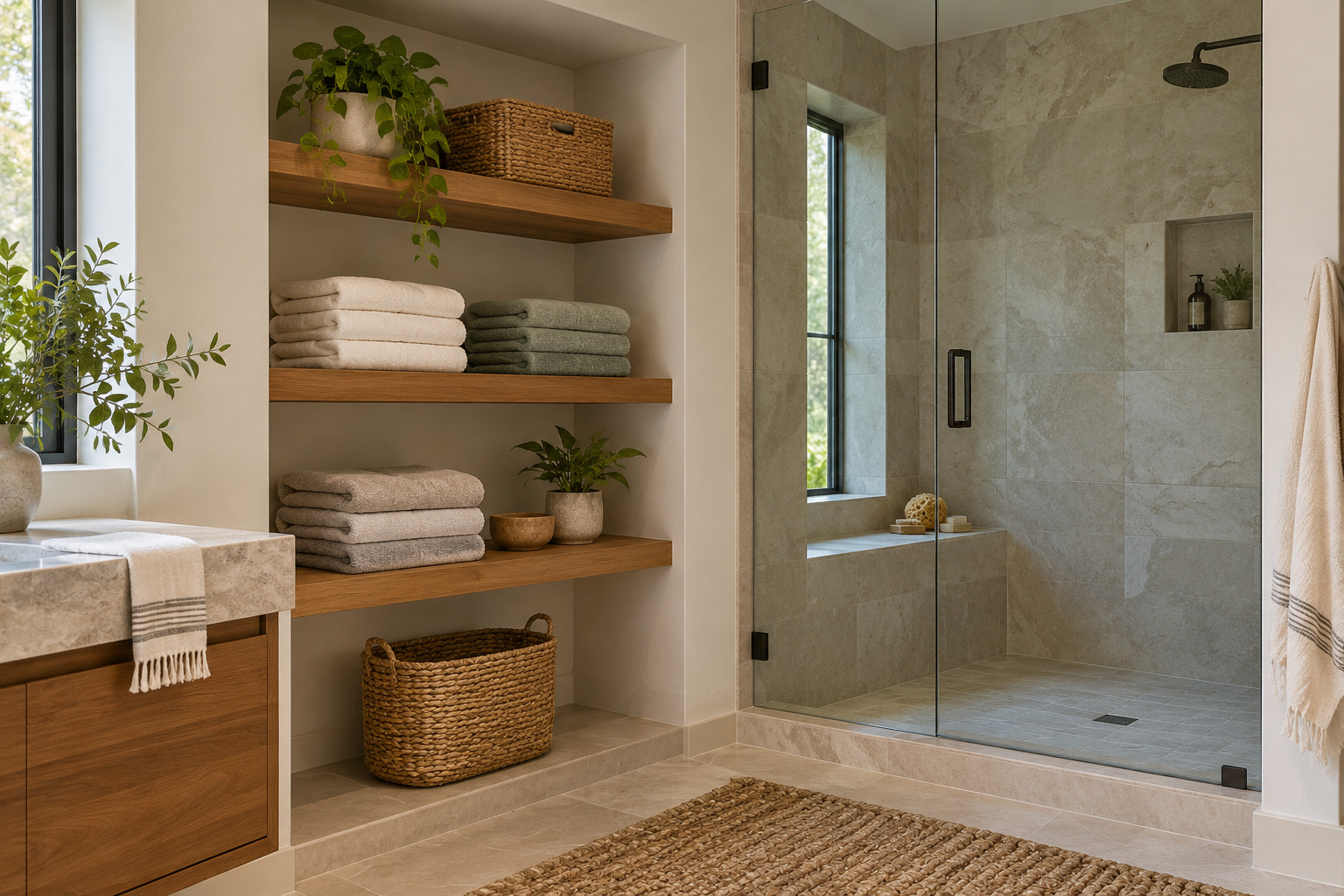
An existing recess can give folded towels a home within the bathroom wall line. Wood shelves inside a dry niche add a clear frame around a few stacks, making the storage part of the room rather than another object projecting into it. Arrange the shelves around the towel sizes you actually keep.
Use a recess outside wet splash areas and check that its surfaces suit the location. Creating a new recess requires proper assessment of the wall and services; an existing suitable opening is the starting point for this idea. Keep the stacks low enough to lift from easily and leave visible space between them. The useful feature is accessible depth, not a niche filled from top to bottom.
10. Use a Slim Linen Cabinet for the Backups
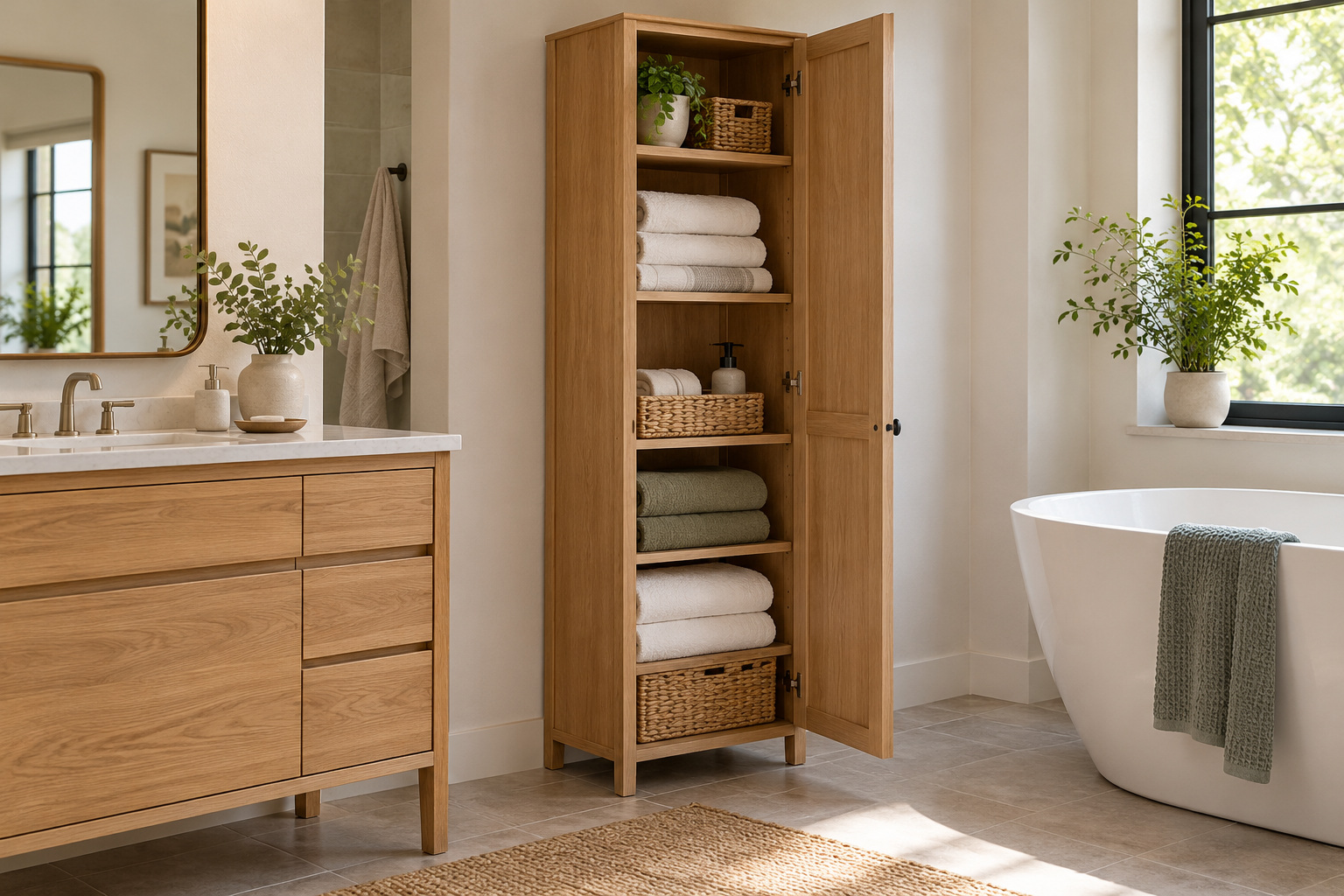
A slim linen cabinet can gather the clean backup supply in one place. Choose a cabinet whose shelves fit folded bath towels without leaving half the stack hanging out. An oak finish can connect with the vanity while a narrow footprint suits a wall that would be crowded by a broader dresser.
Check the full door opening, the route through the bathroom, and the manufacturer’s stability requirements before settling on the position. Keep the cabinet in a dry location and organize the most frequently used sets within easy reach. Avoid storing damp towels inside. This is a home for the extra supply, with the everyday towel still hanging near where it is needed.
11. Keep Occasional Spares in a Wall Cabinet
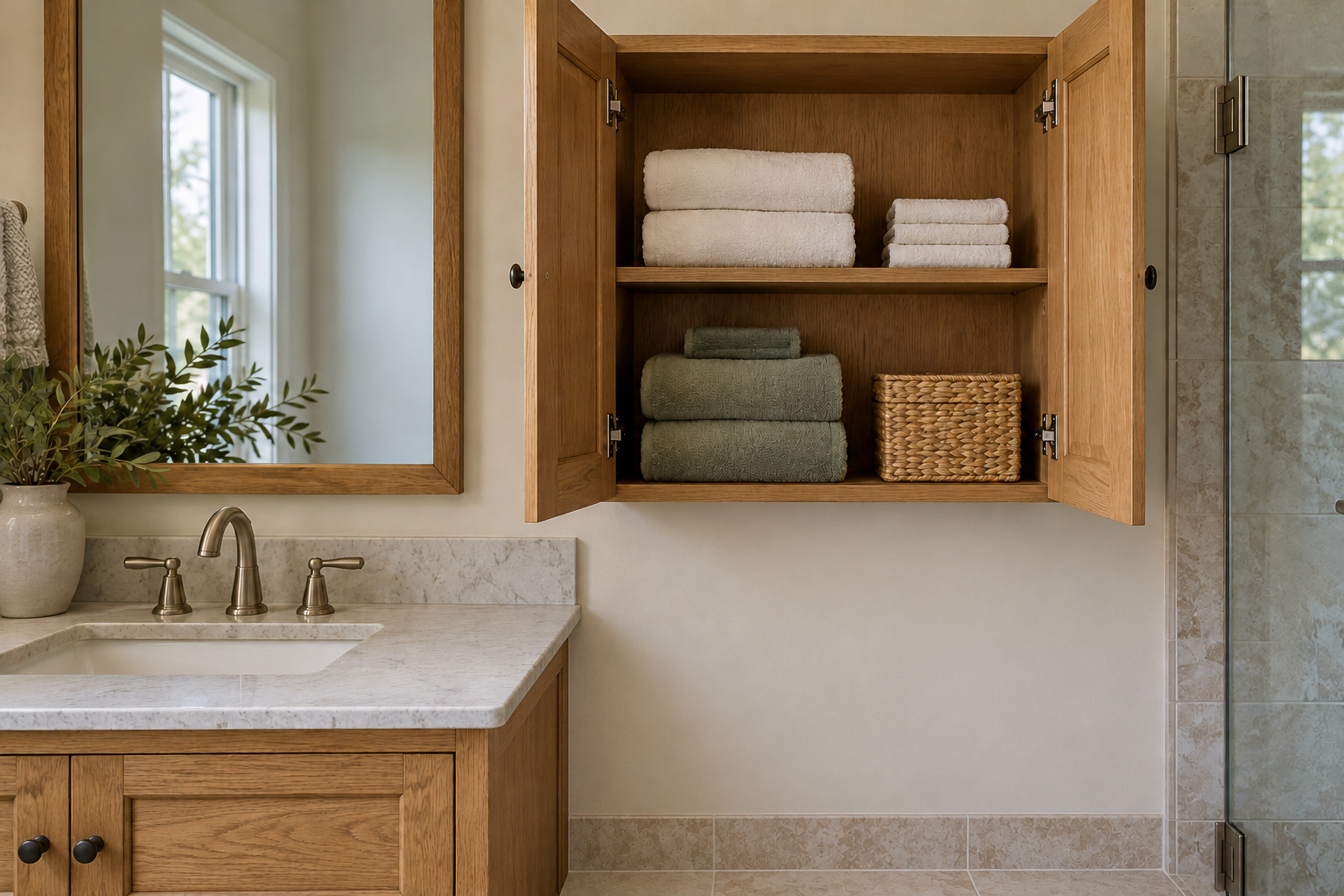
A wall cabinet can hold occasional clean spares while leaving the floor below open. Choose a reachable position on a dry wall, then group towels in small stacks that fit the shelf depth. Closing the doors gives the bathroom a quieter appearance when the reserve supply is more useful than decorative.
Plan the cabinet with the wall construction, fixings, load, and door movement in mind. Do not place it where someone has to lean awkwardly over a fixture to retrieve a towel. Keep heavy or bulky sets in a more accessible location if necessary. The cabinet works best for towels used less often, rather than a daily reach that makes the routine more difficult.
12. Make a Small Towel Cart Easy to Reach
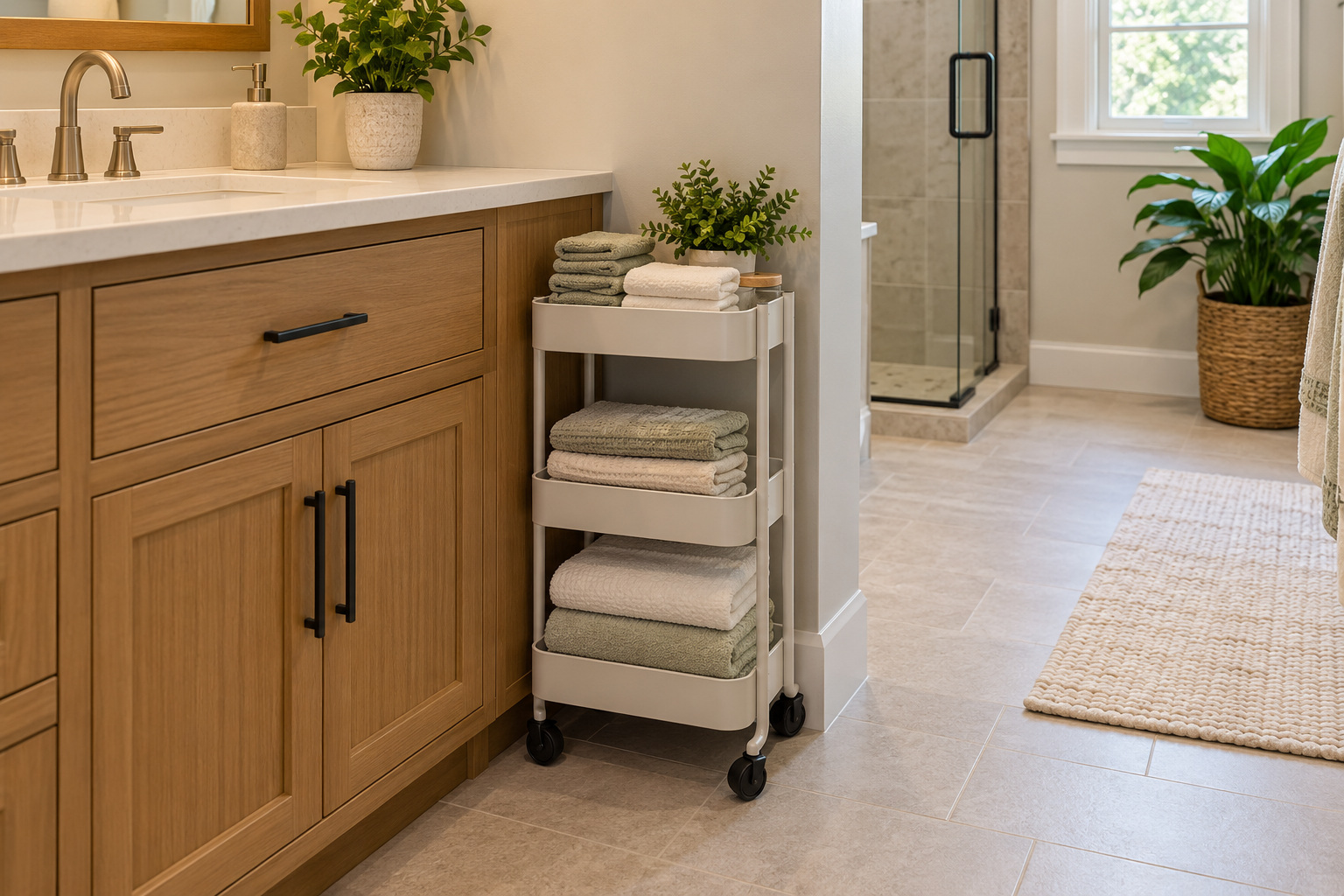
A small cart can keep folded towels close to the vanity while leaving their storage movable. Use the upper tier for the size you reach for most and the lower tiers for a small reserve. Choose a cart that allows the towels to sit within its edges instead of bulging into the walkway.
Check that it can move along its intended route and park securely according to the product’s instructions. Keep it outside splash areas and clear of drawers and doors. Avoid filling it with unrelated bottles until the towels become hard to reach. The cart should solve a gap in accessible storage, with a real parking place rather than a new obstacle beside the sink.
13. Corral Rolled Spares in One Floor Basket
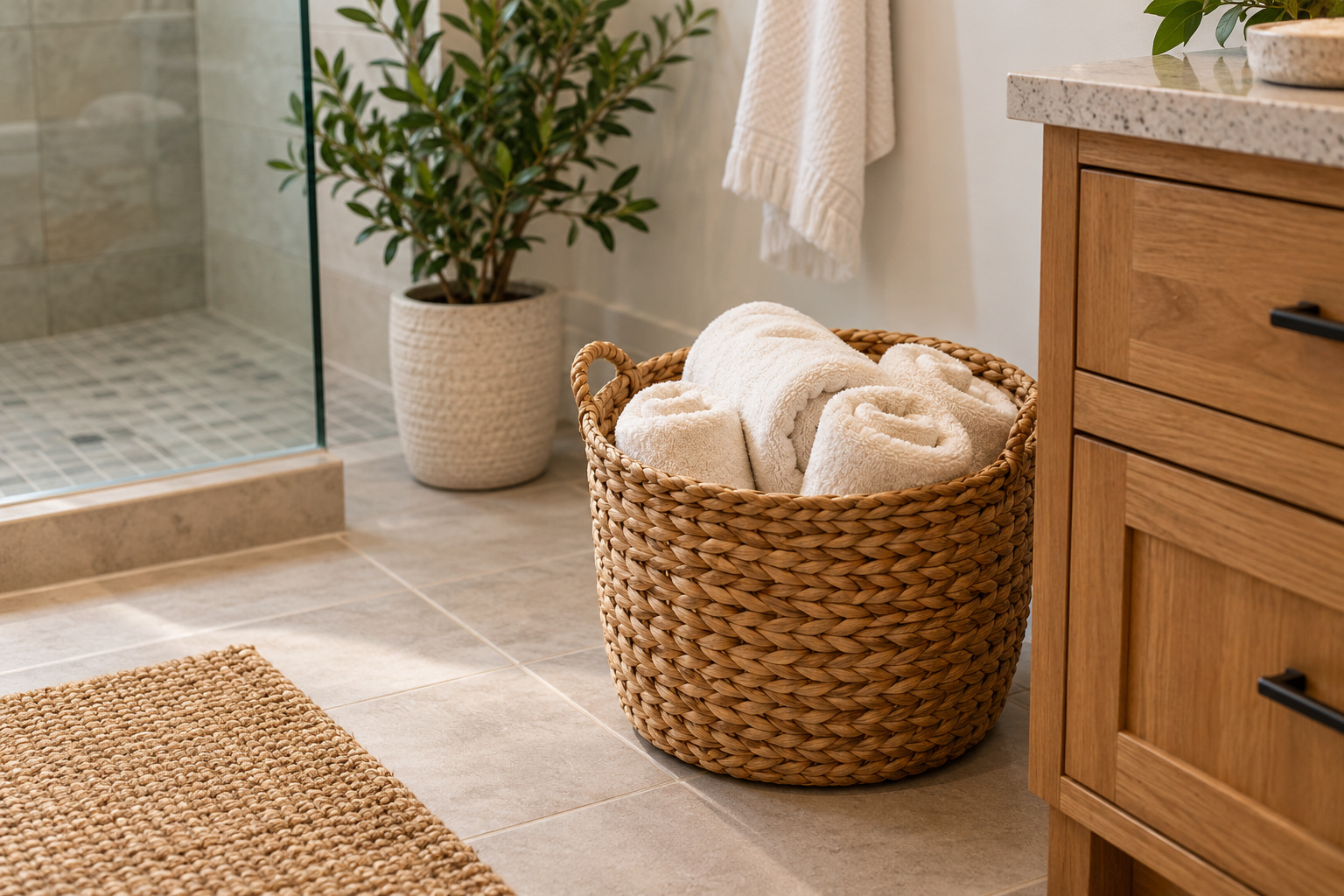
A floor basket can contain rolled clean spares in a bathroom with a suitable dry corner. Roll towels to a similar height so you can see and remove one without unfolding the whole collection. A woven basket adds texture against a smooth vanity or tiled wall.
Choose a location clear of shower splash, floor water, and the route people use. Keep the basket clean and the towels dry, with only a modest supply inside. If the floor is often wet or the basket would sit beside a cleaning area, move this storage to a shelf instead. The basket is for fresh towels, with used laundry kept separately.
14. File Folded Bath Towels in a Deep Drawer
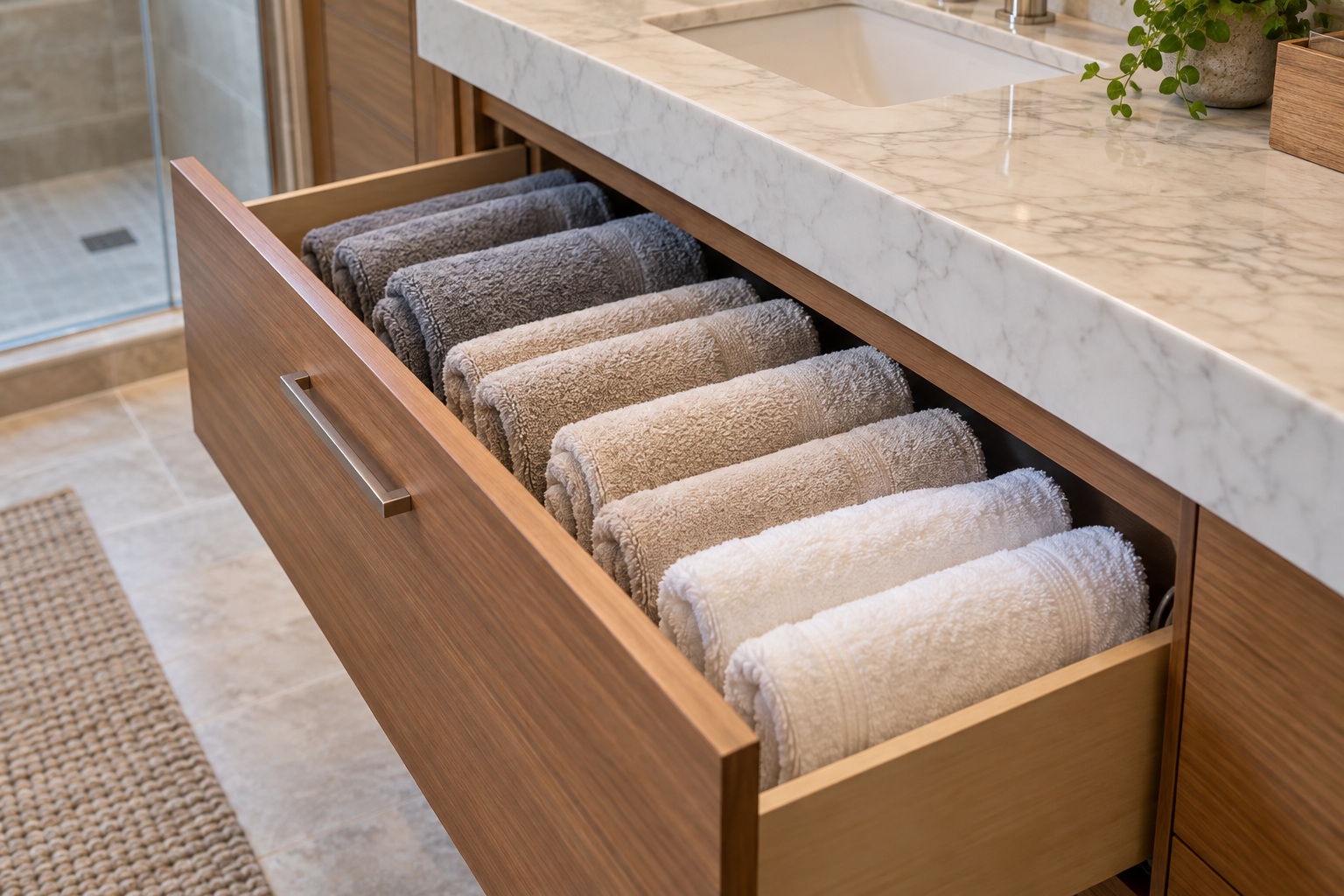
A deep drawer can hold folded bath towels in upright rows, making the choices visible when it opens. Fold each towel to suit the internal height so the drawer closes freely. A few simple divisions can keep different sizes or household sets from falling into one pile.
Use the actual towels to test the arrangement before buying inserts. Keep the contents clear of runners and leave enough room to lift one out without compressing its neighbors. Store only clean, fully dry towels here. The advantage is a view of the whole supply from above, with the larger pieces held in a space that suits their depth. For toiletries and supplies around the plumbing, see our under bathroom sink storage ideas.
15. Divide a Shallow Drawer for Washcloths
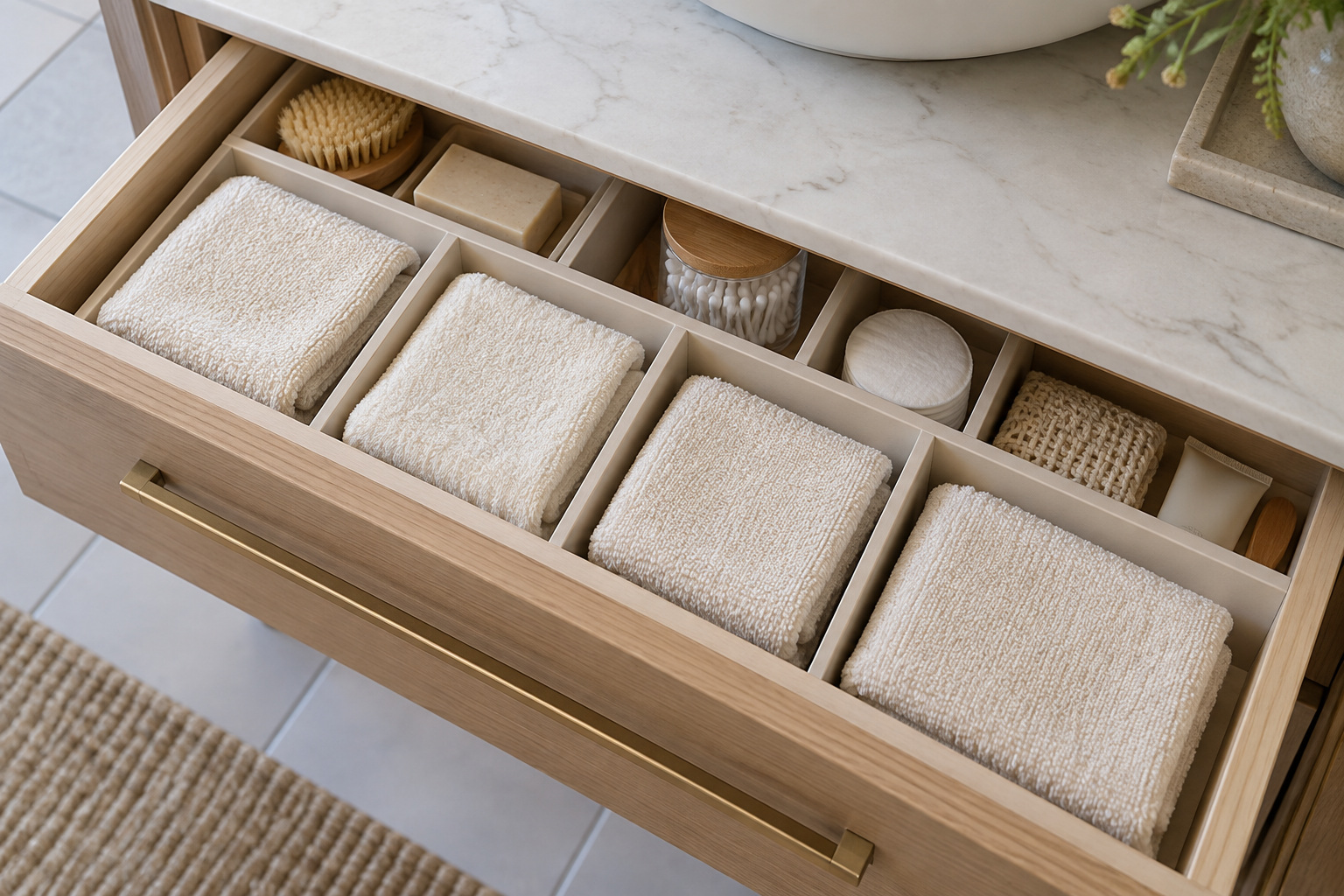
A shallow drawer suits washcloths better than a tall stack at the back of a cupboard. Divide it into small sections and fold the cloths so the rows remain easy to lift from. Separate everyday cloths from a guest supply if that distinction helps the household.
Choose dividers that fit the drawer and leave its movement clear. Keep the arrangement simple enough to refill after laundry without a special folding ritual. Avoid mixing clean washcloths with grooming tools or bottles that might spill. This small-scale storage works because the compartment matches the cloth, rather than asking a large basket to hold tiny pieces in order.
16. Mount a Basket Where the Floor Is Busy
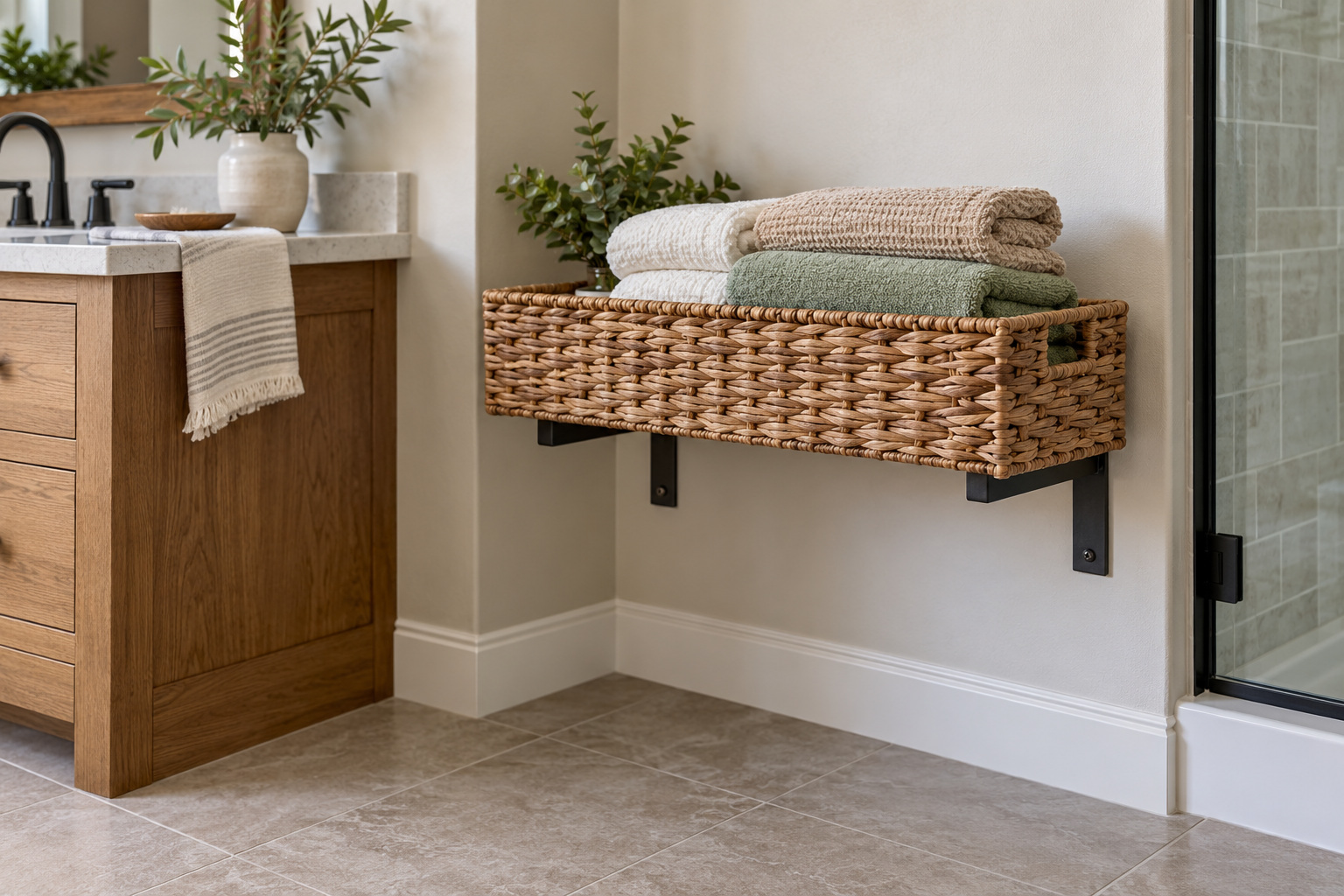
A wall-mounted basket can hold clean towels where the floor needs to stay open. Choose a basket designed for mounting, with suitable support for the intended contents. A restrained woven shape can add a softer texture to the wall while making the spare supply visible.
Check the wall, brackets, and product instructions before loading it, and keep towels within the basket rather than spilling over its front. Position it where the towels remain dry and can be reached without leaning over another fixture. It should not project into a tight passage. If the basket’s depth would get in the way, use a shallower cabinet or another storage location.
17. Combine a Towel Shelf With a Bar Below
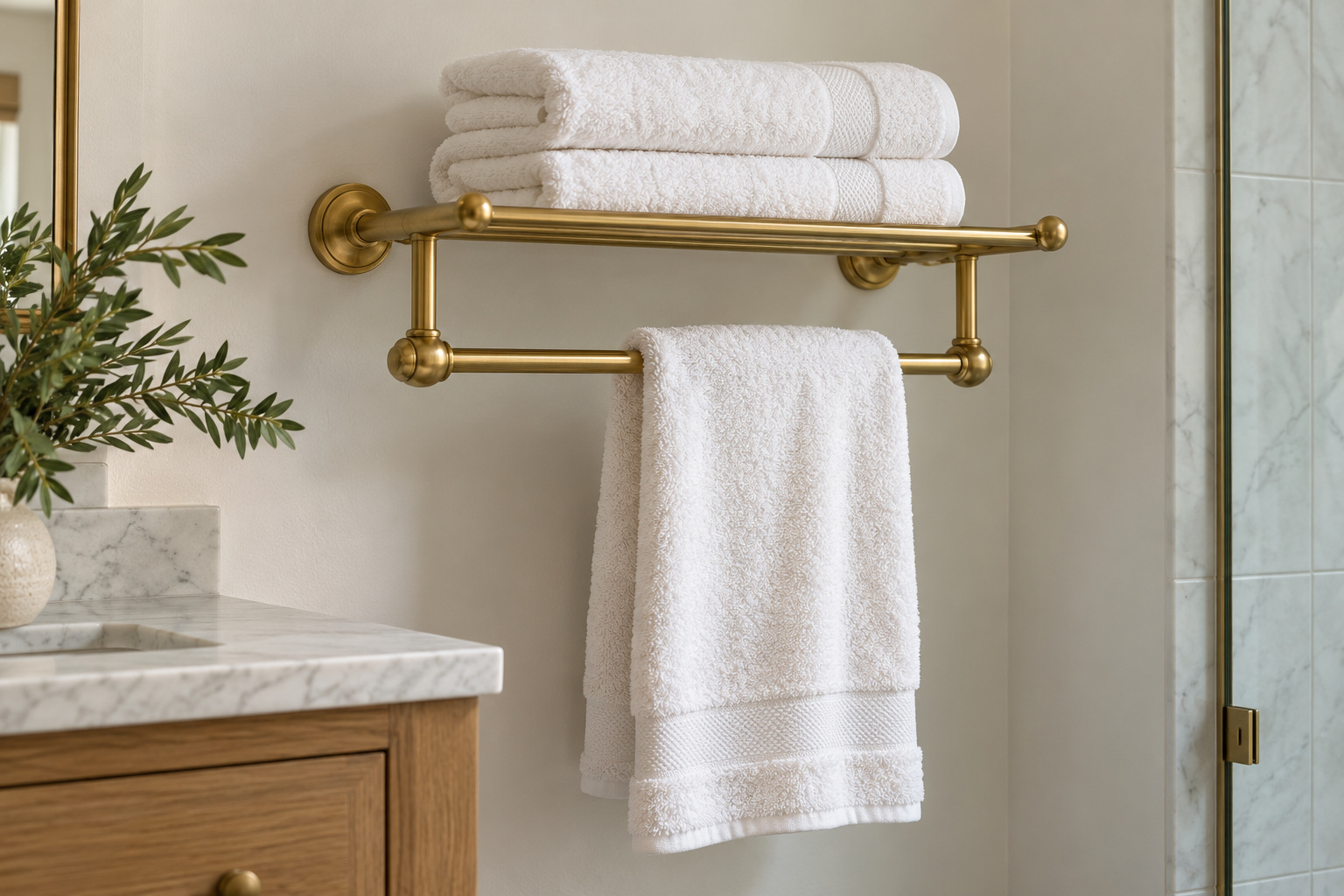
A combined shelf and bar can give clean spares and the towel in use separate places on one fixture. Put a small folded supply on the shelf and hang one unfolded towel from the bar below. The distinction keeps the fresh stack from becoming the place where damp towels are dropped.
Choose a fixture that suits the wall and follow its mounting and load instructions. Leave enough space between the shelf and bar for the towel to hang without touching the clean supply. A simple brass finish can make the arrangement feel like a considered bathroom update. Keep the shelf edited so taking a fresh towel does not require moving a row of decorations.
18. Make a Pull-Out Linen Section Easy to See
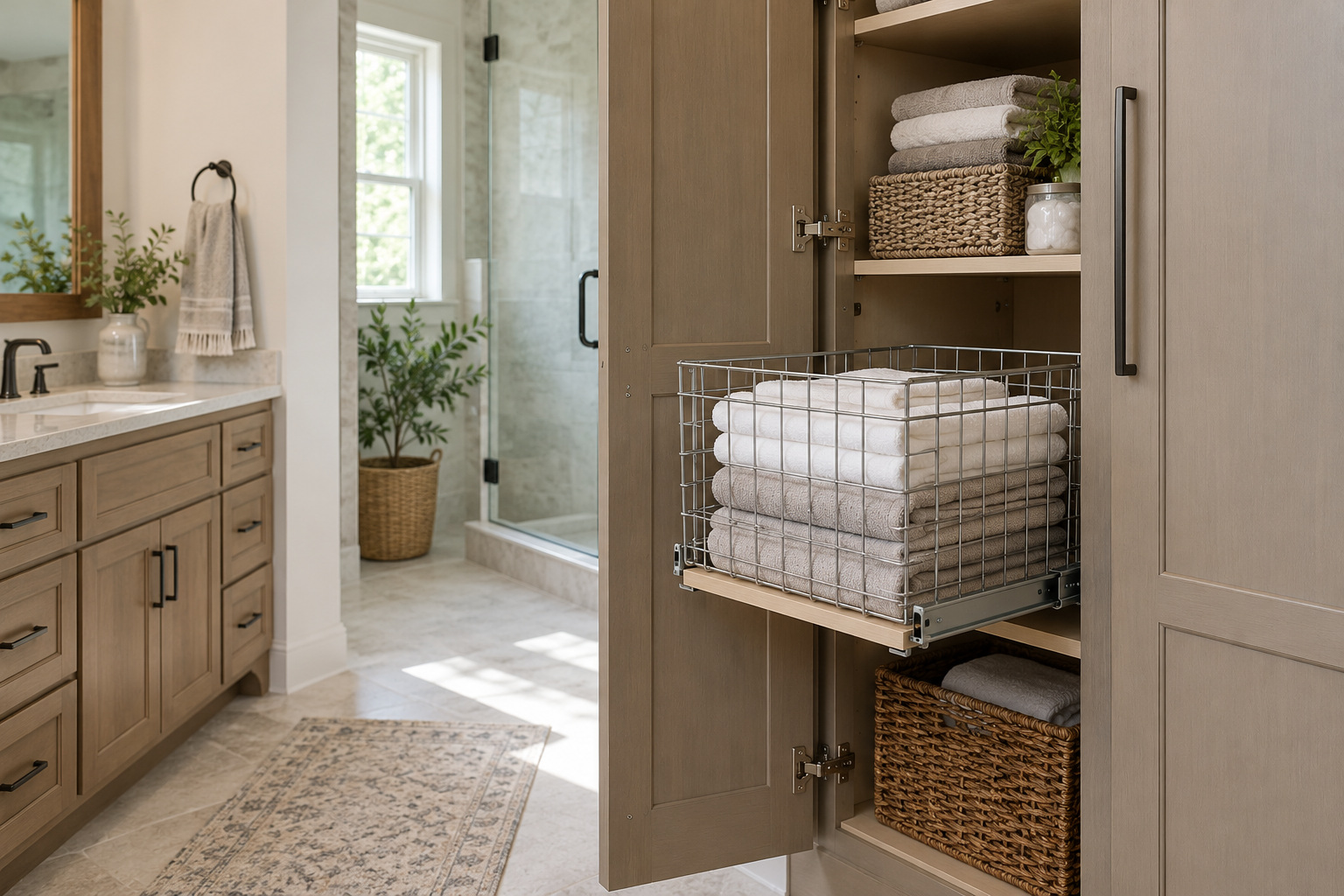
A pull-out linen basket can bring towels at the back of a cabinet into view. Arrange folded sets within the basket edges so the whole supply moves forward together. This can be useful in a deep cabinet where reaching behind the front stack has become awkward.
Use a pull-out system suitable for the cabinet and load, with installation planned around its actual dimensions. Check that towels cannot catch in the runners and that the cabinet doors open far enough for the basket to travel. Keep the basket for dry clean linen. The useful change is access to depth, rather than simply adding another shelf to an already crowded cupboard.
19. Give Used Towels a Separate Hamper
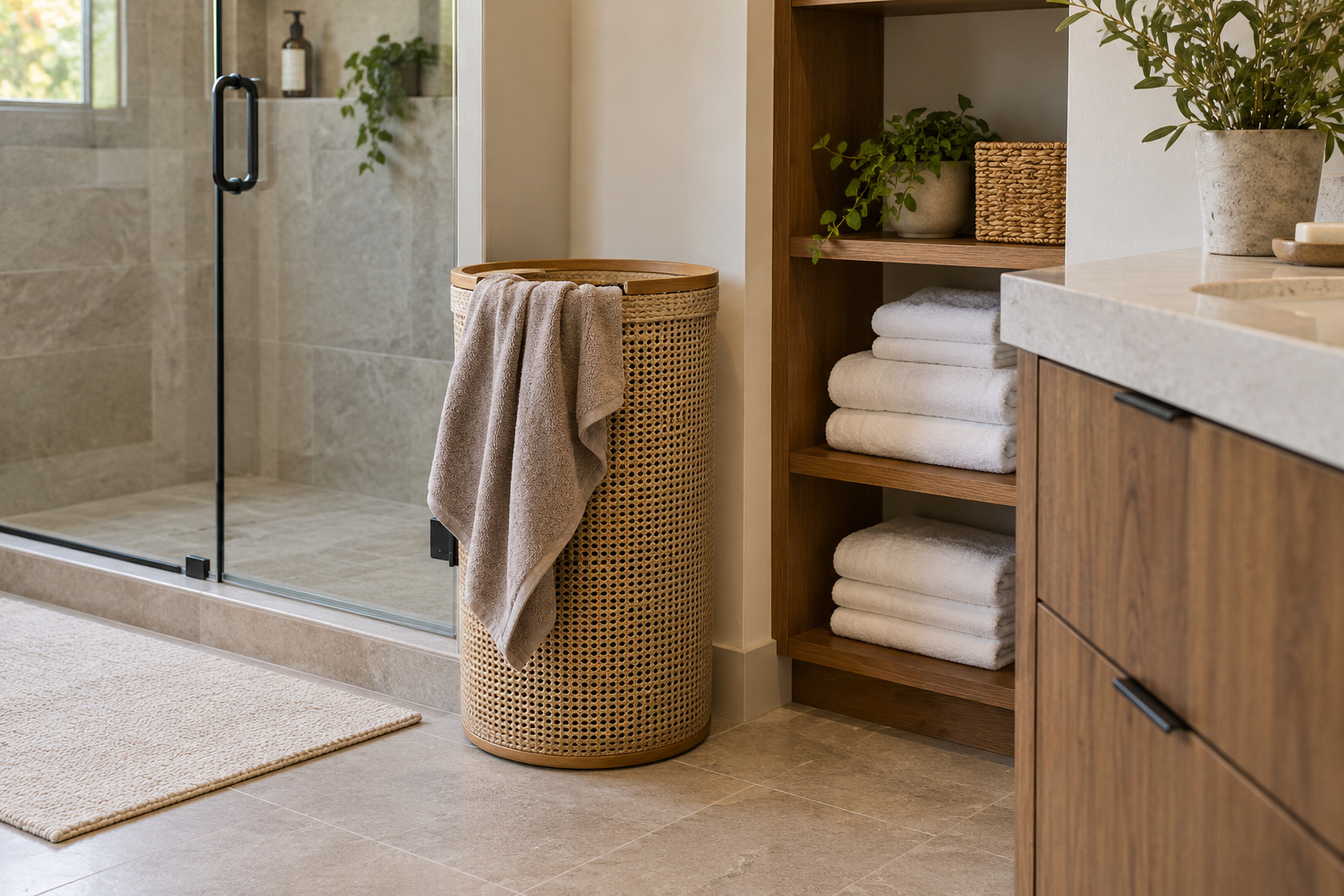
Used towels need a separate destination when they are ready for washing. A dedicated hamper can make that next step clear instead of leaving the used supply in a pile beside clean spares. Choose a suitable ventilated container with an opening that is easy for the household to use.
Keep the hamper in a dry accessible position and follow the towels’ care routine. Do not seal wet towels into closed storage; let them dry appropriately before they wait for washing, and empty and clean the hamper as needed. The hamper is a laundry collection point, not a replacement for hanging a towel between uses. Keep the clean reserve on a different shelf or in its own cabinet.
20. Lay Out Guest Hand Towels Beside a Used-Towel Basket
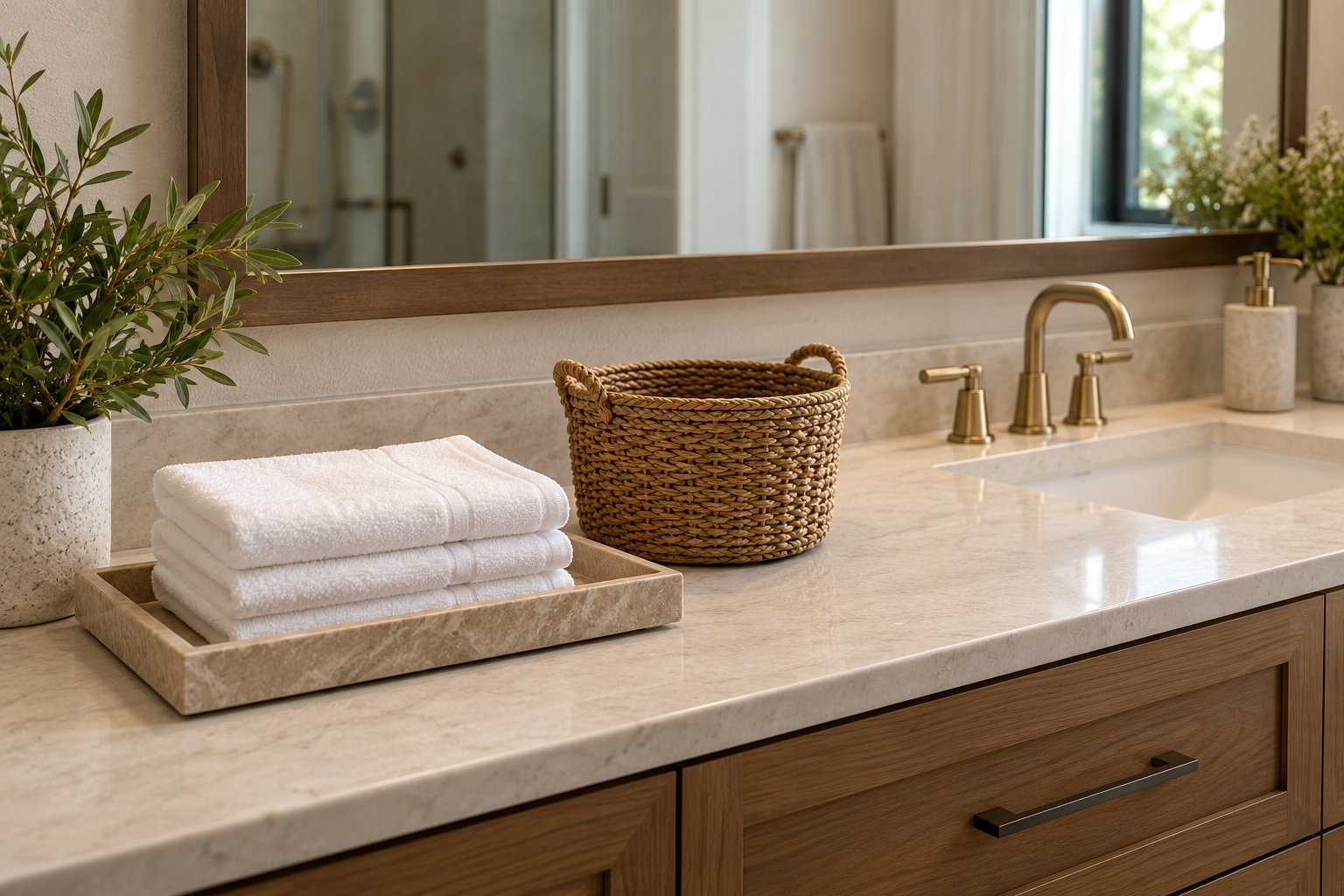
Guest hand towels can have a clear beginning and end to their use. Put a modest stack of fresh folded towels on a tray near the sink, with a separate small basket for those that have been used. Leave enough distinction between the two that guests can understand the arrangement without a sign.
Use a dry surface outside direct splashes and keep the sink itself clear for washing hands. Refill the clean tray and remove used towels as part of hosting, following your usual laundering routine. Choose a basket that is easy to empty and clean. This is a hand-towel station for visitors; it does not need a large bath-towel display on the counter.
21. Use the Shelf Beneath a Bathroom Bench
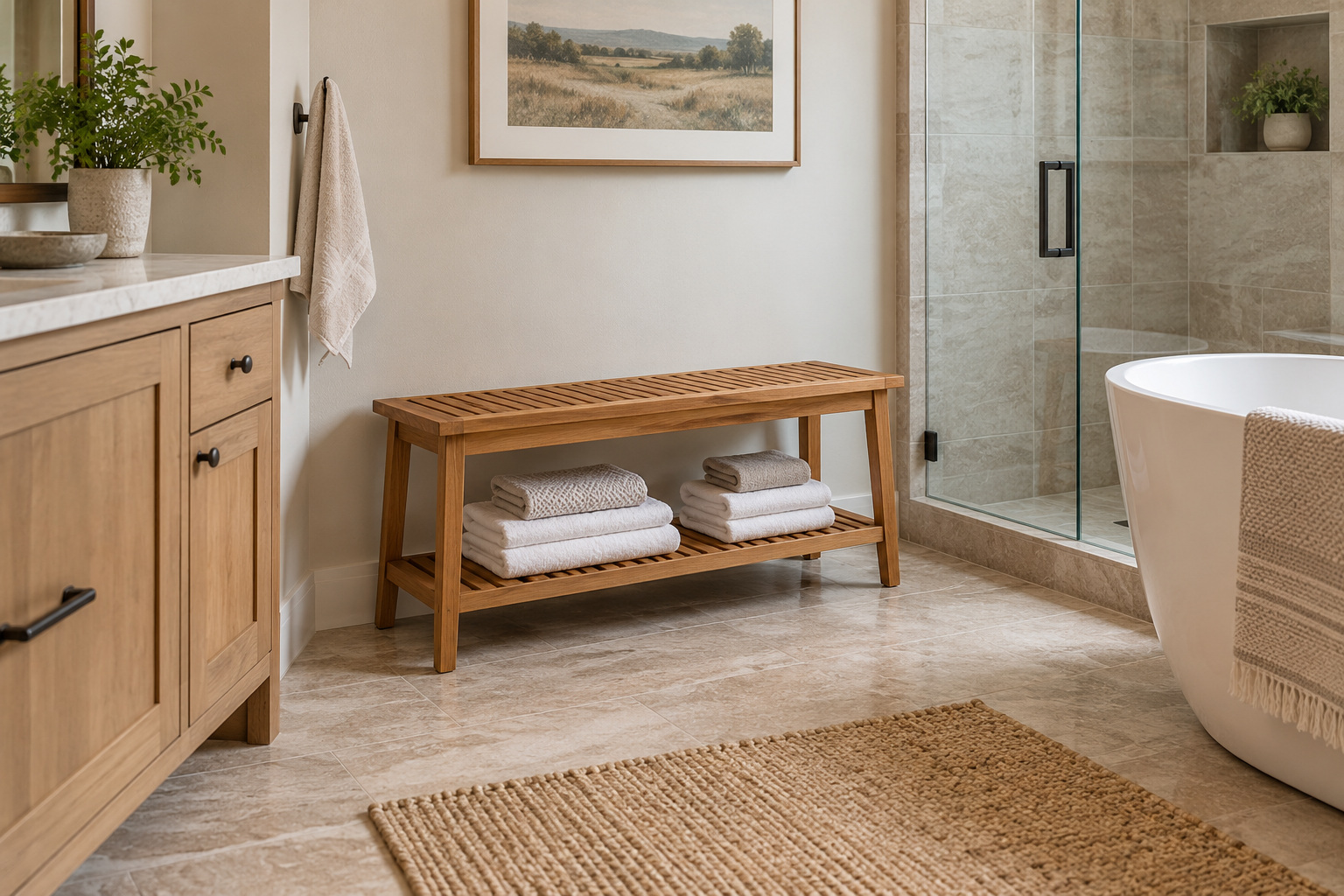
A bathroom bench with a lower shelf can hold clean spares while leaving the seat available. Fold a small supply within the shelf depth and keep the top mostly open for its intended use. Warm wood can connect the storage to a vanity or other natural finishes in the room.
Choose furniture suitable for the bathroom and place it in a dry area where it does not narrow the route. Check that the towels stay clear of the floor and that taking one out is comfortable. Avoid using a bench as a ladder or support fixture. This arrangement is useful when the bench already has a job and the shelf can add storage without filling the seat.
22. Keep Toilet-Area Storage Clear of the Fixtures
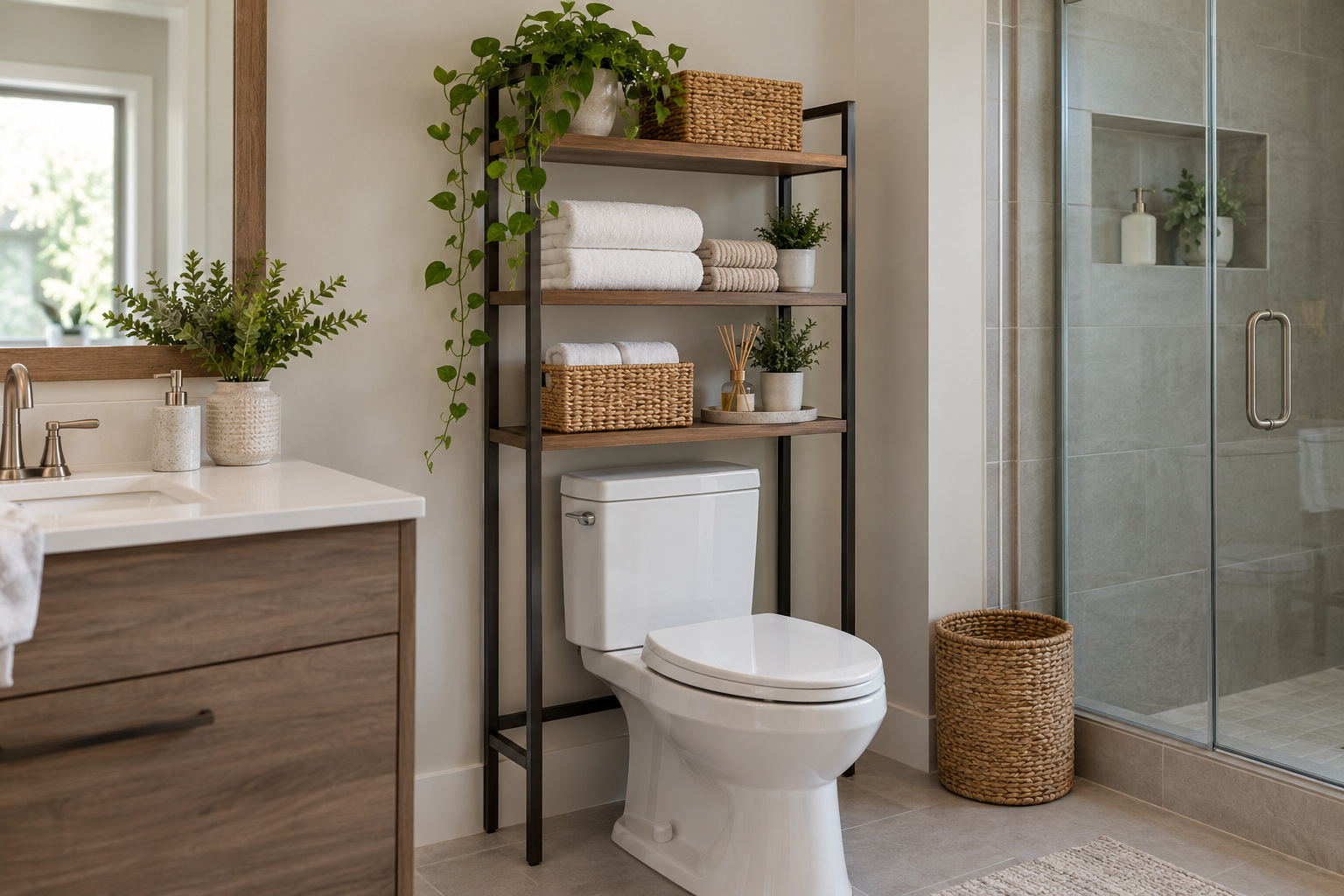
Storage above the toilet can hold clean spares only when the fixture remains fully usable. Choose a suitable unit with enough clearance for the tank, flush controls, and lid movement. Keep towel stacks within their shelves and well away from the toilet itself rather than draping fabric across the unit.
Check the product’s fixing and stability requirements and leave access for cleaning and maintenance. Use only dry, appropriate storage space, and choose another location if the unit crowds the fixture or makes a towel awkward to reach. The decision starts with how the bathroom works; unused air above a toilet is not automatically an invitation to fill every level.
23. Prepare a Separate Towel Bundle for Each Guest
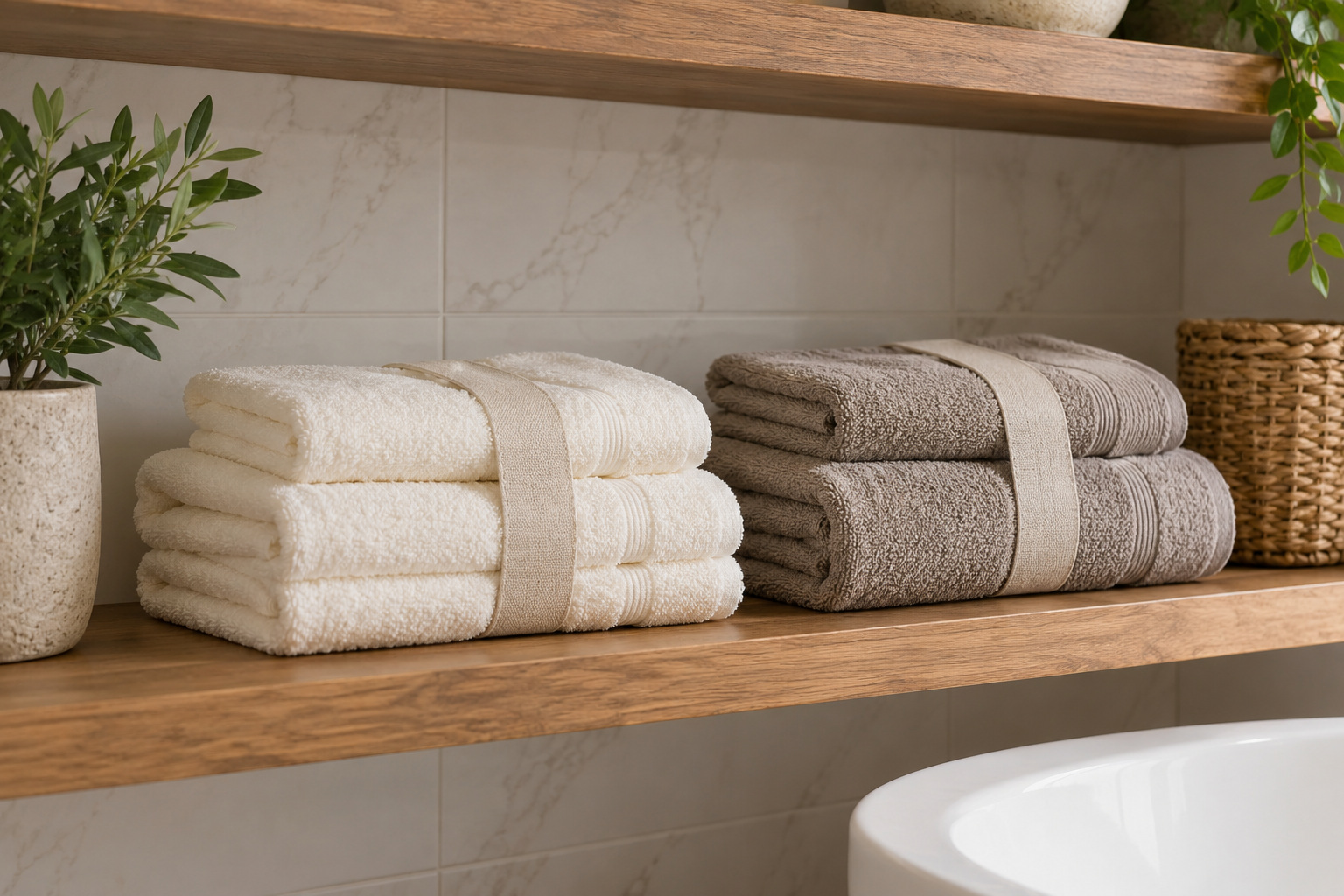
A separate towel bundle can make an overnight guest’s supply easy to recognize. Fold the pieces for one person together and use a simple removable cloth band if it helps keep the set together. Place a second bundle beside it rather than mixing all sizes into one decorative tower.
Keep the bundles dry and within easy reach, and tell guests where their towels can hang after use. Remove the band before the towel enters the daily routine; it is only a way to present the fresh set. Cream and taupe bundles can look connected without being identical. Prepare the amount each guest needs rather than displaying every spare towel in the house.
24. Give Family Sets Their Own Cubby
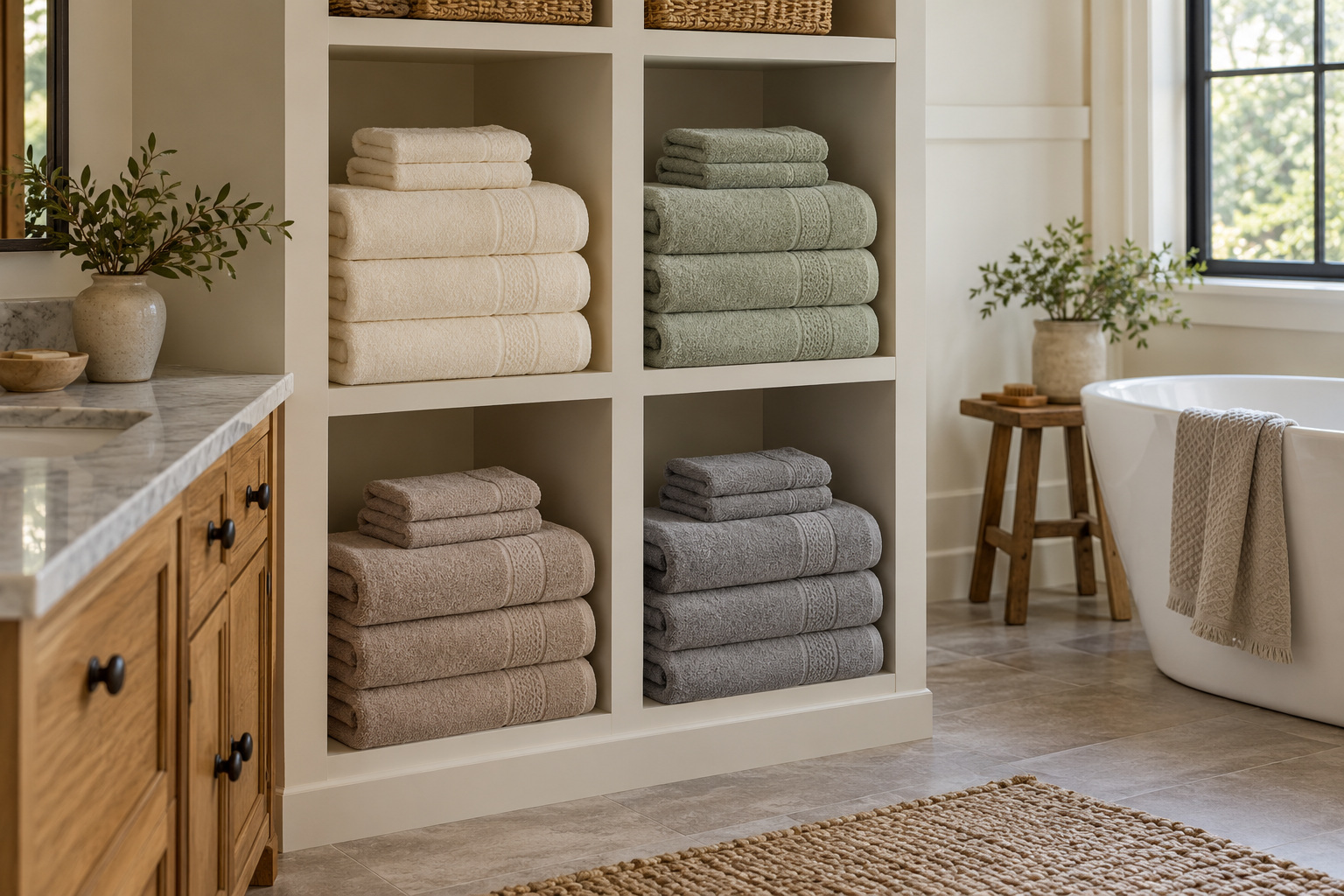
Individual cubbies can separate clean towel sets for a shared bathroom. Assign each space to one person or towel group and keep the folded supply within its boundaries. A quiet range of cream, sage, taupe, and gray can help distinguish sets while preserving a coherent appearance.
Choose cubby dimensions around the actual folded towels and leave enough open room to remove a set. Keep the arrangement easy to refill after washing, with a separate place for towels already in use. If the household does not need personal sets, organize by size instead. The useful part is a clear division the people using the bathroom can maintain.
25. Use a Glass-Front Cabinet as an Edited Towel Display
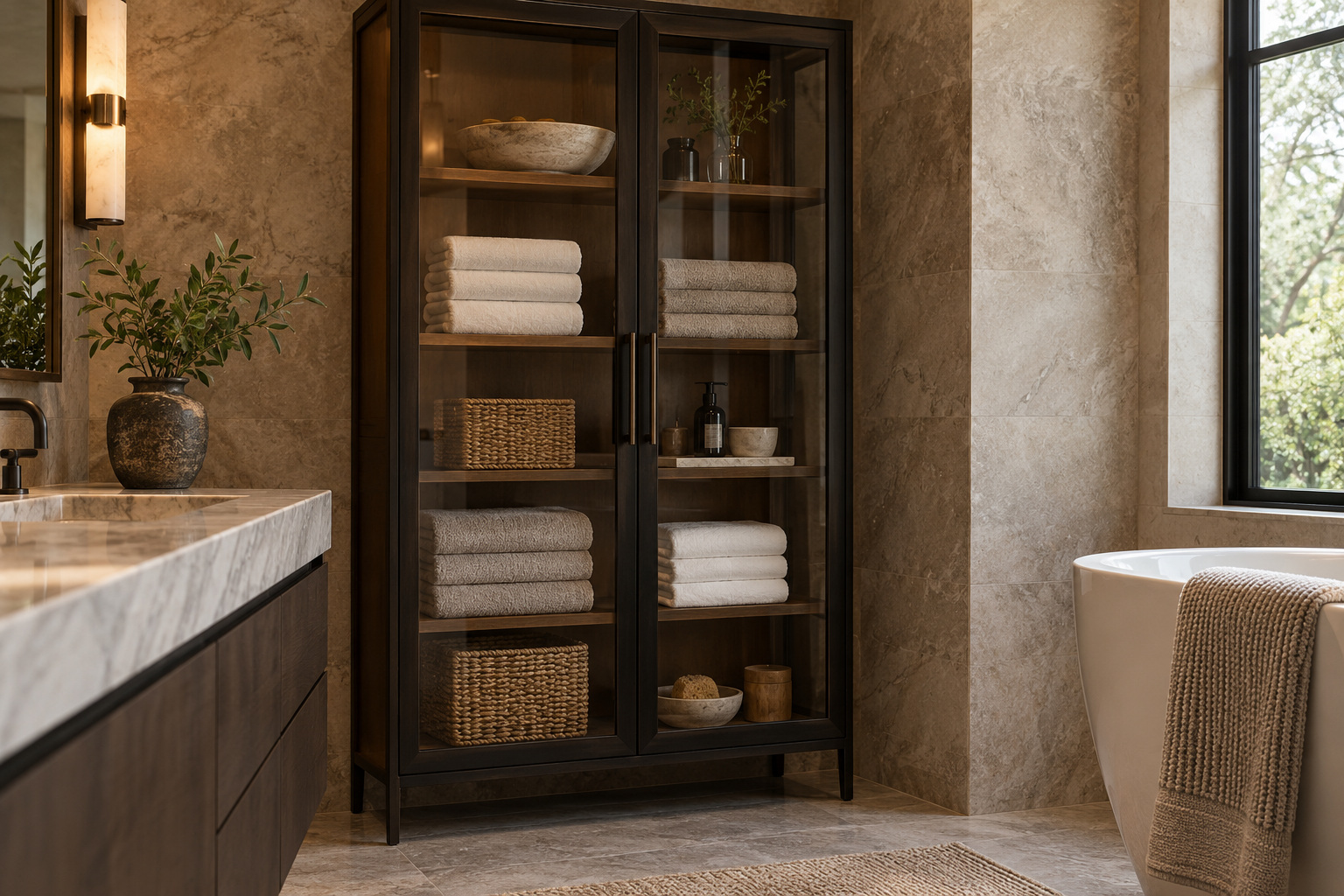
A glass-front cabinet can make a restrained towel supply part of a refined bathroom composition. Group folded clean towels in a few balanced stacks, allowing the cabinet frame and shelves to remain visible. A dark slim frame against warm stone tones can give the soft fabric a defined outline without adding more decorative objects.
Choose furniture suitable for the location and keep it outside wet splash areas, following the fixing and loading requirements. Control the amount on display rather than packing every shelf to the glass. Keep the most frequently used stack reachable, with bulk reserves elsewhere. The polished effect comes from proportion, material contrast, and orderly contents, not a claim about the cabinet’s price.
26. Keep a Spare Set in a Lidded Upper-Shelf Bin
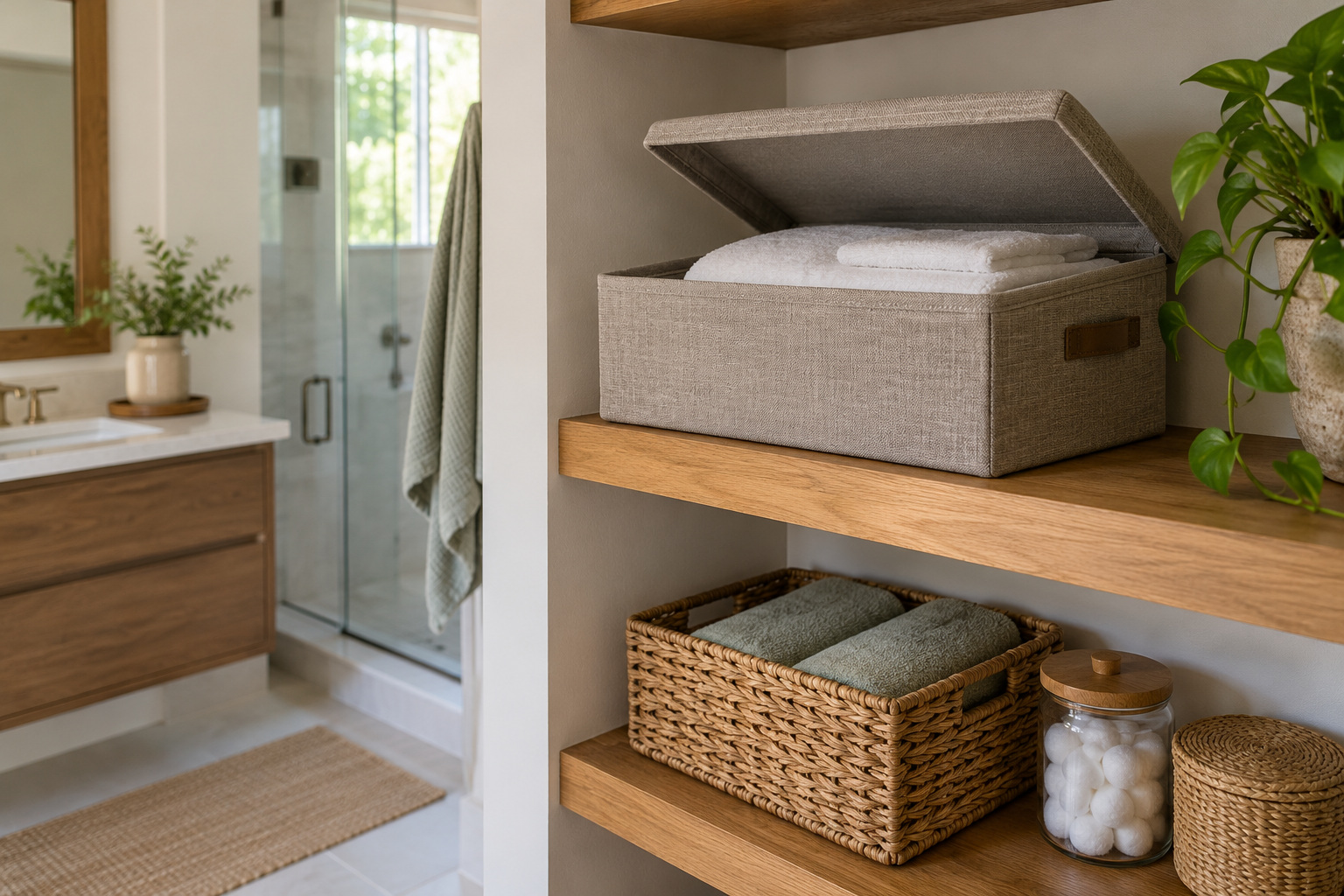
An upper shelf can hold one occasional spare set in a lidded bin, provided the position is safely accessible for your household. Fold the dry towels to fit without forcing the lid down. A simple fabric box can keep the reserve grouped while allowing the lower shelves to serve everyday needs.
Use a suitable stable way to reach the shelf when needed; never climb on the vanity, toilet, or towel furniture. Keep the container light enough to handle and check it against the shelf’s capacity. Choose a dry location and storage material appropriate for the linen. This is for occasional reserves, while the towel you need every morning belongs within ordinary reach.
Begin with the towel you use every day, then give the clean spares and used laundry their own places. Choose only the storage your room and household need. A bathroom feels easier to use when a fresh towel is simple to find, a damp one has room to hang, and the floor and fixtures remain accessible.
Discover more from HomeTrendora
Subscribe to get the latest posts sent to your email.