
A few pots can fill a small balcony before you find room to sit, water the plants, or open the door. These 15 balcony garden ideas help you decide what to grow, where it fits, and how to care for it without crowding the floor.
Check your building rules first, including restrictions on attachments, drainage, and loaded weight. Leave the exit and any required access clear. Then watch where the balcony gets sun and wind before picking your first two containers.
1. Plan a Pot That Can Change With the Seasons
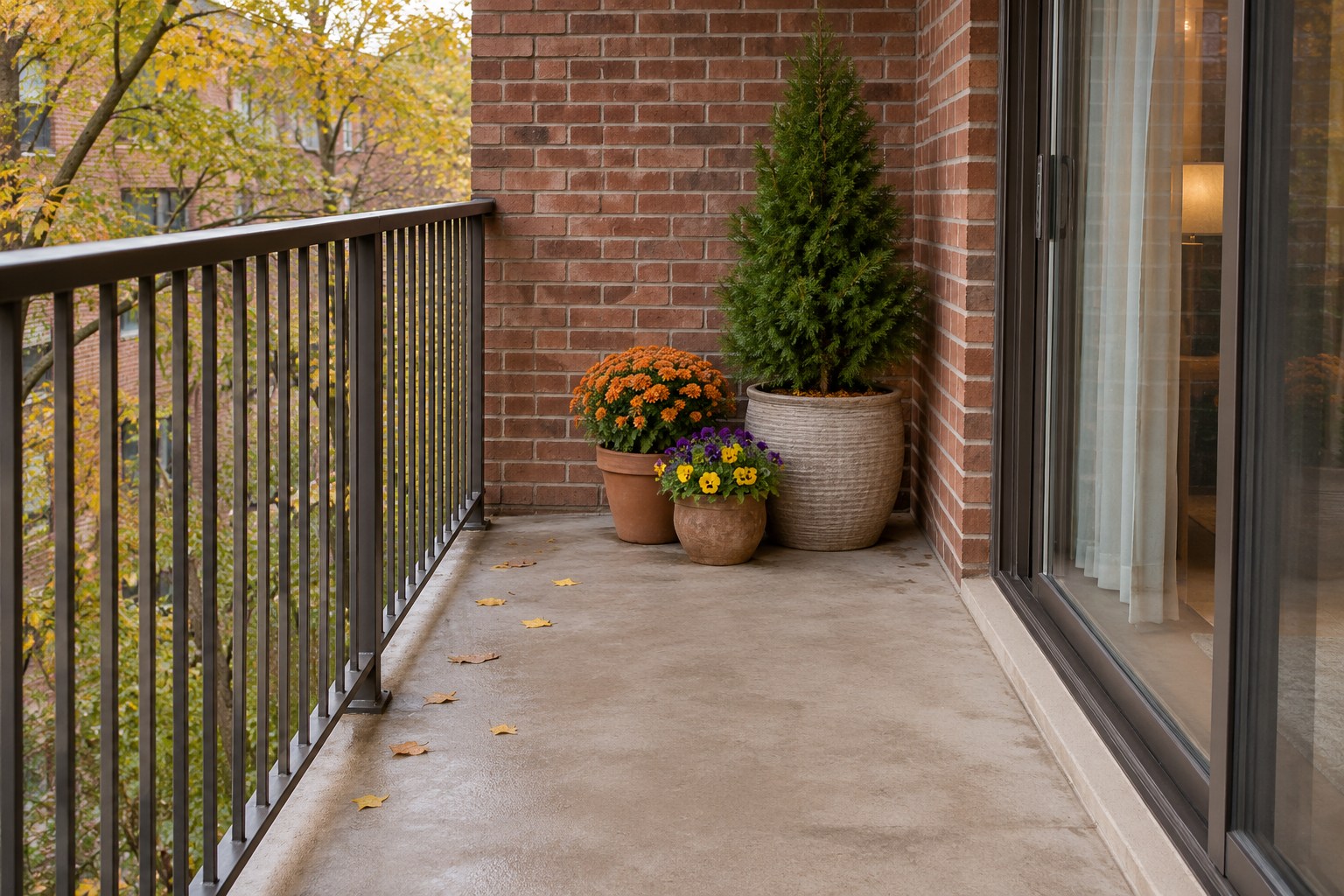
Choose one main pot you can reach with a watering can. Let a compact plant suited to your climate supply the lasting shape. Change a smaller insert or nearby pot as the seasons turn. In a mild climate, a short ornamental grass or locally suitable evergreen can hold the design together while the flowers around it change.
Pick plants that need similar light and water if they share a container. Ask a local nursery which roots can tolerate winter in pots where you live. At the start of each season, take a photo of what still looks healthy. It makes it easier to choose which color or leaf shape to repeat.
2. Grow Compact Strawberries in a Floor-Standing Stack
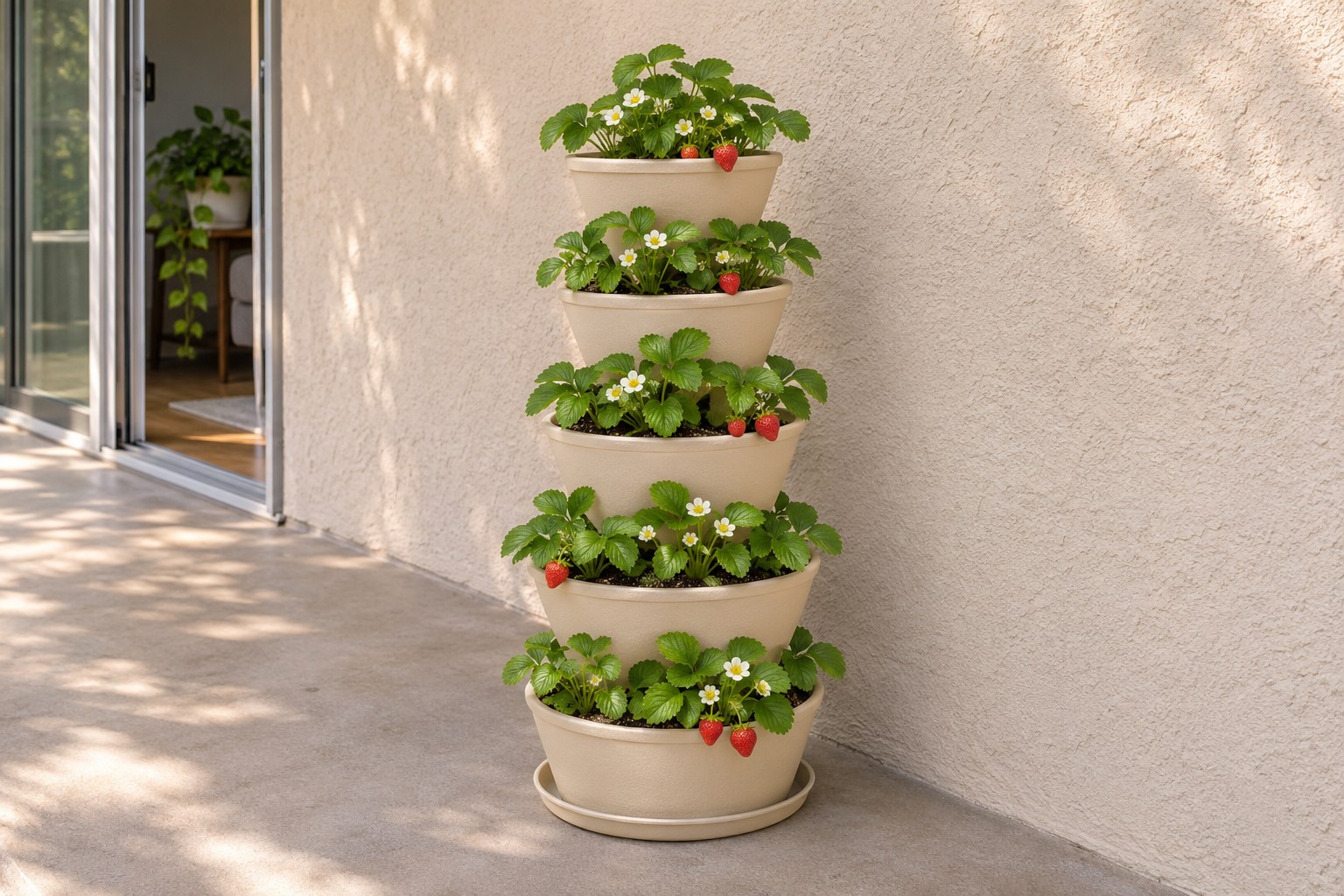
A tiered planter can put several strawberry plants within reach of one sunny spot. Set the stack on a stable, level floor away from the railing and the route to the door. Choose a sheltered location, check the full planted weight with your building, and follow the maker’s directions for stacking and drainage. A tiered planter needs room for you to reach every planting pocket.
Look for a strawberry variety recommended for containers in your area. Keep the crown even with the potting mix surface, and check moisture at more than one level as the plants grow. Empty collected runoff so the saucer does its job without leaving the base in standing water.
The five-tier Mr. Stacky strawberry planter gives compact strawberries several pockets in one footprint. Check the mature spread of the variety and make sure you can water each tier.
Explore five-tier Mr. Stacky strawberry planter (paid link)
3. Let the Chair Fold Away From the Garden
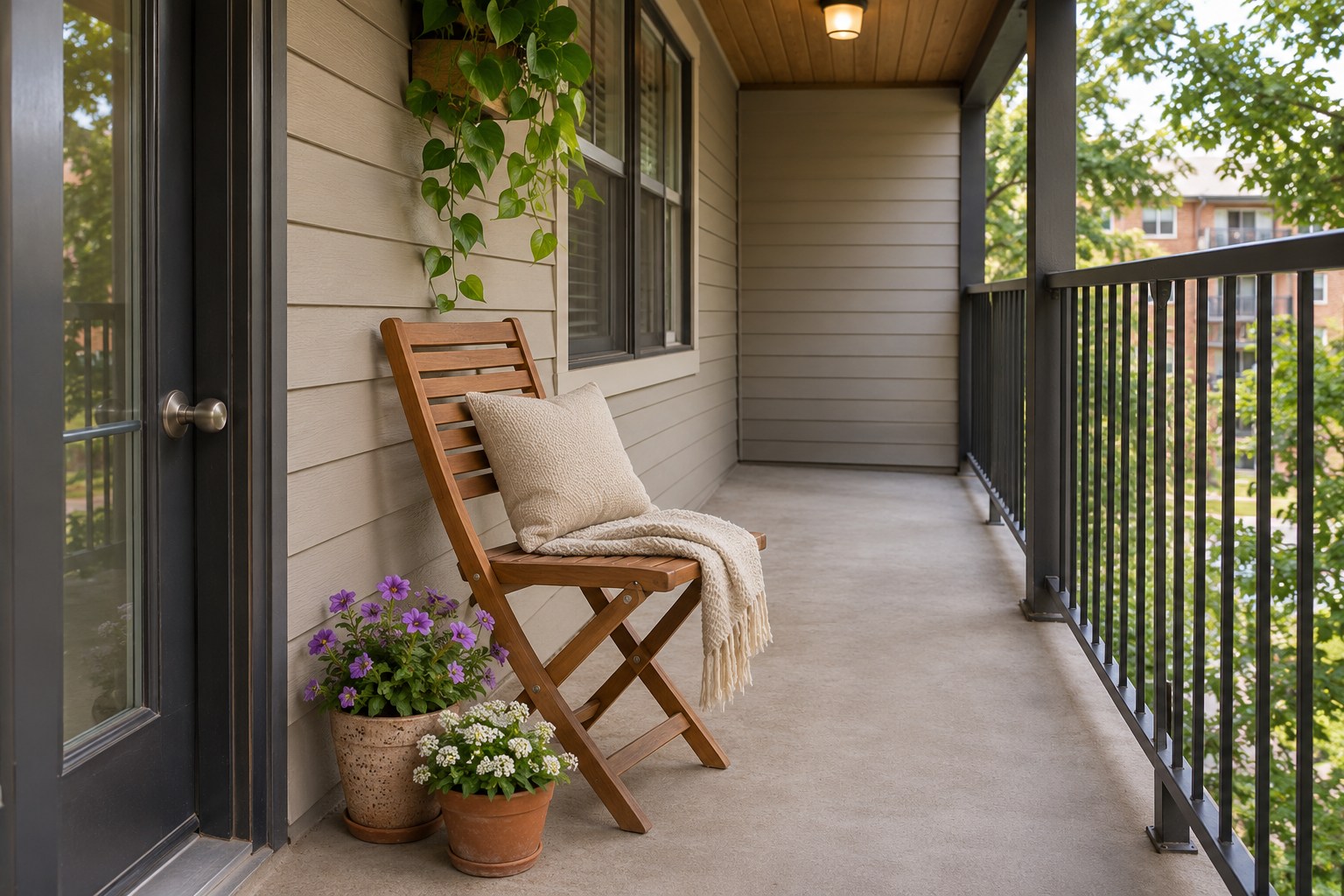
Put a single chair in the sheltered end of the balcony and open it fully before choosing where the containers go. Sit down, then stand and walk back through the doorway. The most useful area to leave open is the space where your feet land as you get up. Use a low plant at the side where you can enjoy it without having to reach around it.
A folding chair can make it easier to water or sweep. Store it inside when the balcony is exposed to wind. If your balcony has an overhead cover, these covered patio ideas show where a seat can go to take advantage of shelter.
4. Bring the Railing-Height Look Down to the Floor
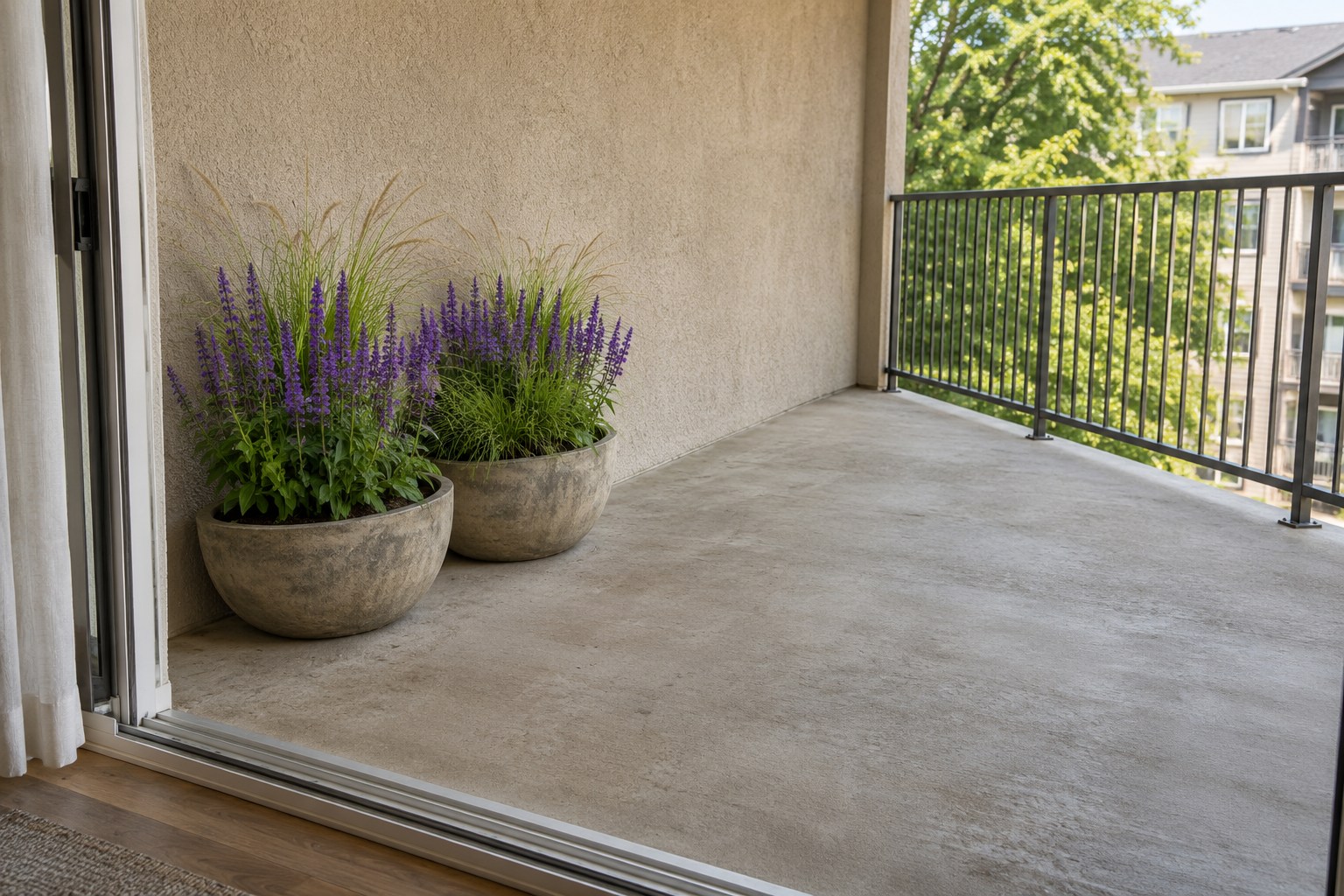
Flowers at railing height can look appealing from indoors. On a balcony where attachments are restricted, get a similar view with naturally upright plants in broad, stable floor pots set back from the edge. Look out through the glass before adding a taller container. The foliage only needs to enter your view.
Keep the top of the railing clear. Review your building rules before considering any planter designed to attach to it, and keep pots away from the guard where they could become a foothold. Select a plant that stands up to local winds, and choose a lower arrangement if the balcony gets strong gusts.
5. Build a Mediterranean Palette With Leaves and Pots
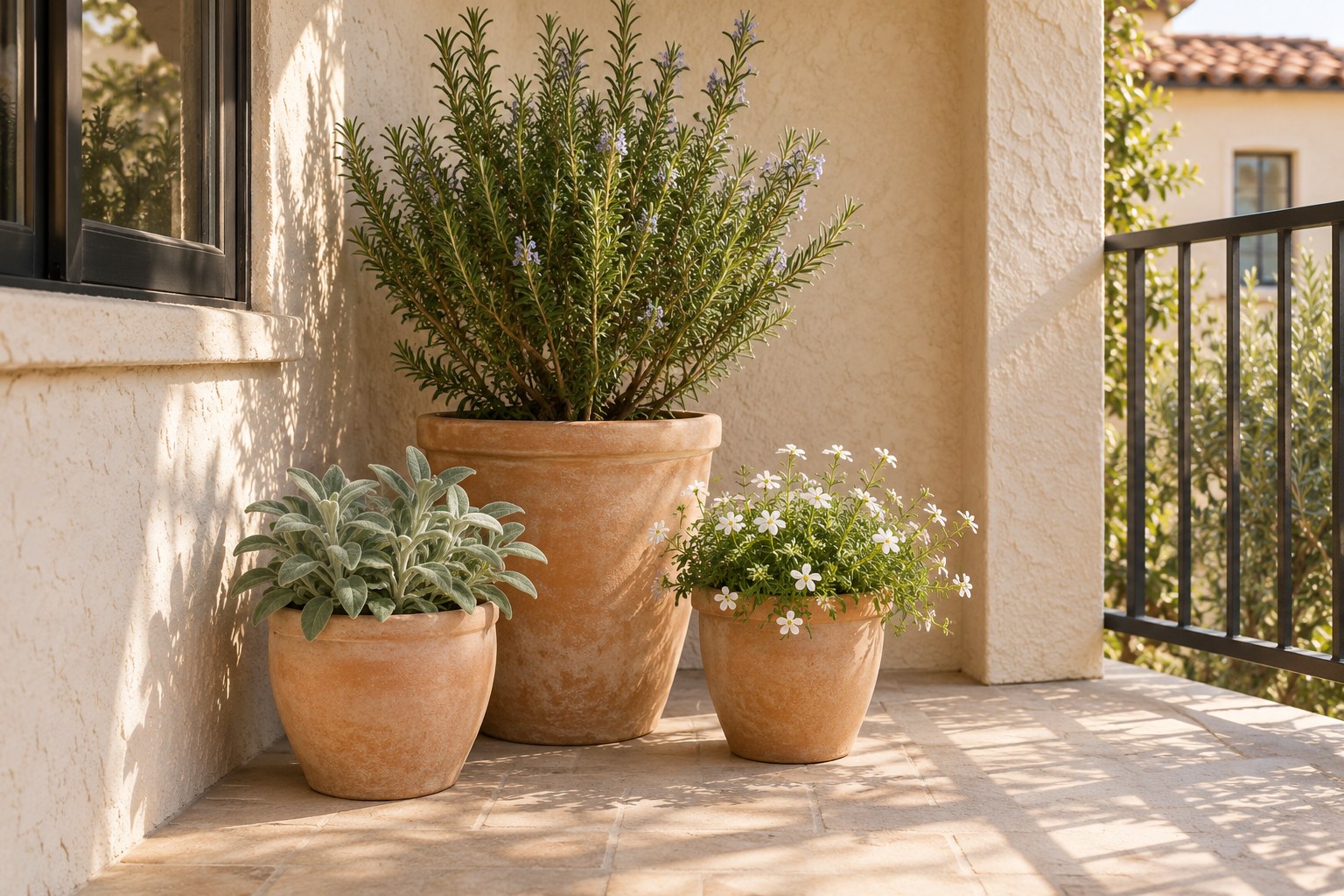
Muted terracotta and gray-green foliage can give a sunny balcony a simple theme. Try one dry-loving plant suitable for your local climate, such as rosemary where conditions allow, and use two pots with a similar finish. A small cream container can carry a flower or herb with different water needs. The colors can work together even when the plants need separate care.
Check how porous containers behave over a hot week. If the mix dries more quickly than you can keep up with, use a container suited to the plant and your watering schedule. Choose terracotta-toned materials with the loaded weight in mind.
6. Give Kitchen Herbs the Spot You Pass Daily
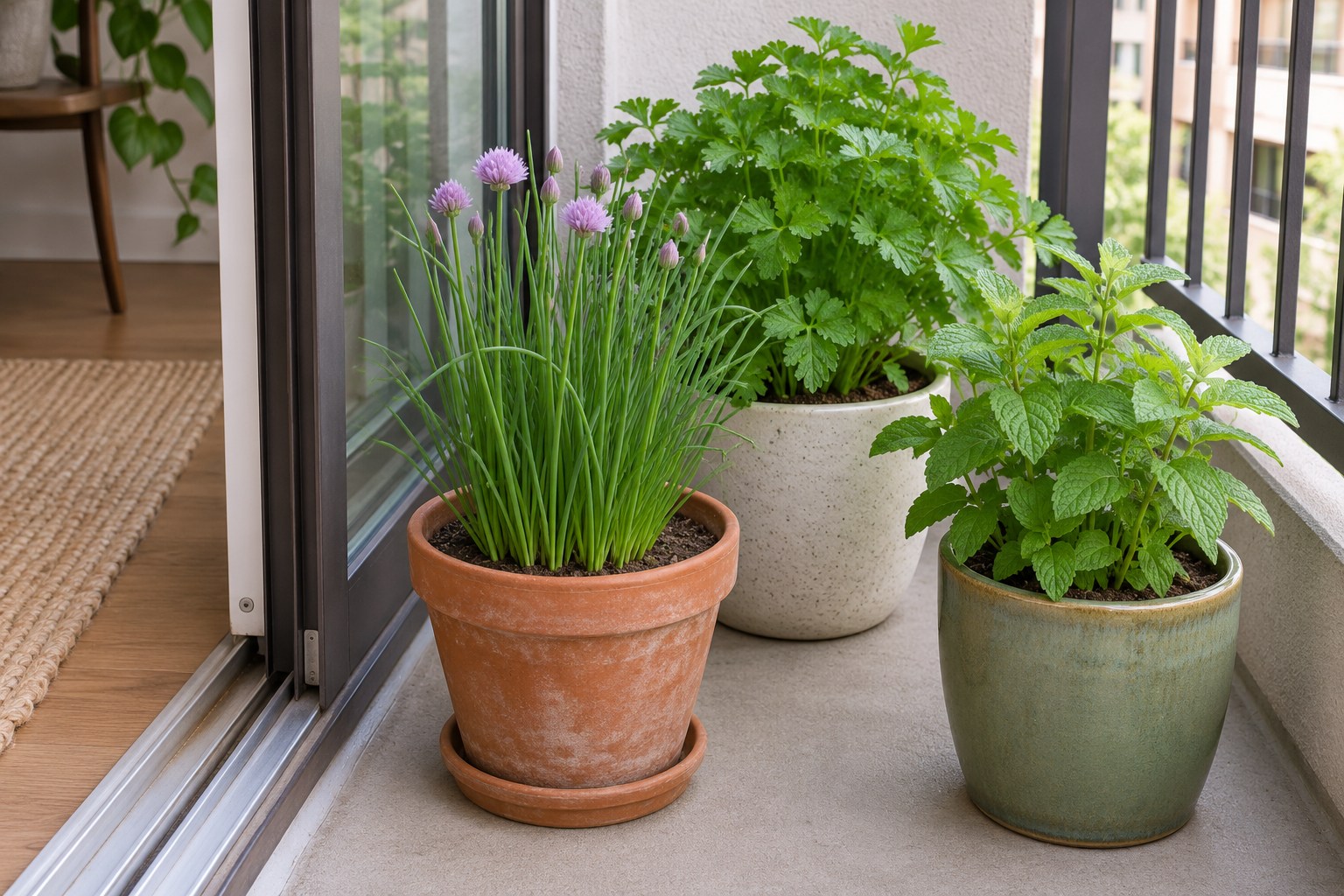
Put the herbs you cook with near the door, beyond its swing. Separate herbs with different watering needs. Mint can have its own pot, while chives or parsley can go in another. Start with two or three crops you can identify and maintain. Snipping a small amount at a time is easier when the pots are within reach.
Check how much direct sun that spot actually gets. If you want to add a compact vegetable, check the variety’s light requirements and mature root room before deciding whether it will fit. Label similar seedlings when you plant them.
7. Set One Leafy Pot at the Edge of a Seat
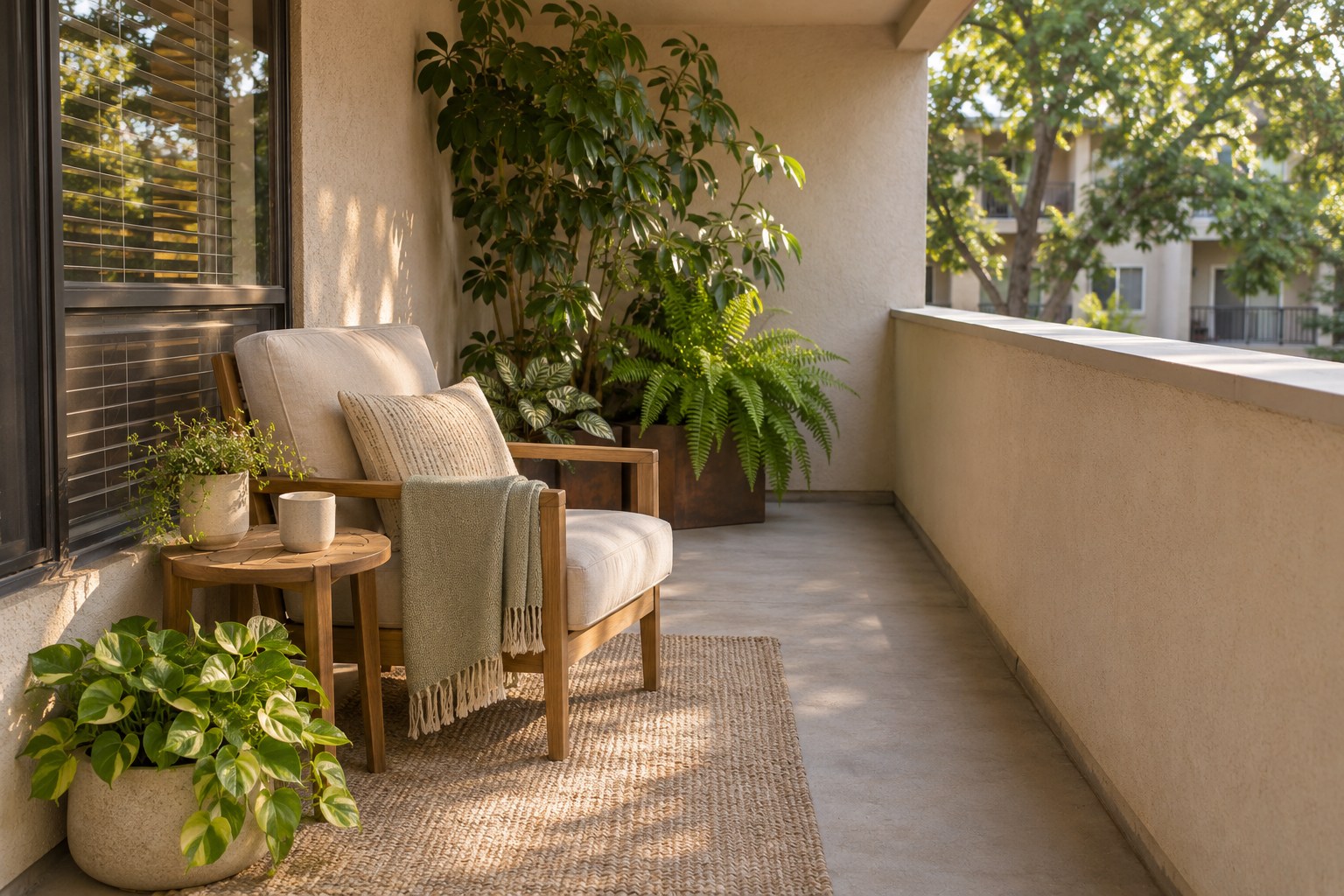
A balcony seat feels more settled when it has one plant in view. Put a low container beside the seat where you can enjoy the leaves and still set down a cup. Choose a pot that stays below the level where you move your elbow. Leave enough space to slide it out for watering and to check the floor underneath.
Look back at the arrangement from inside. A soft leaf shape or a slightly taller plant along the building wall can frame the chair. These outdoor corner ideas show how to turn a seat toward a useful view. Check building rules before adding a screen.
8. Choose Containers You Can Drain and Move
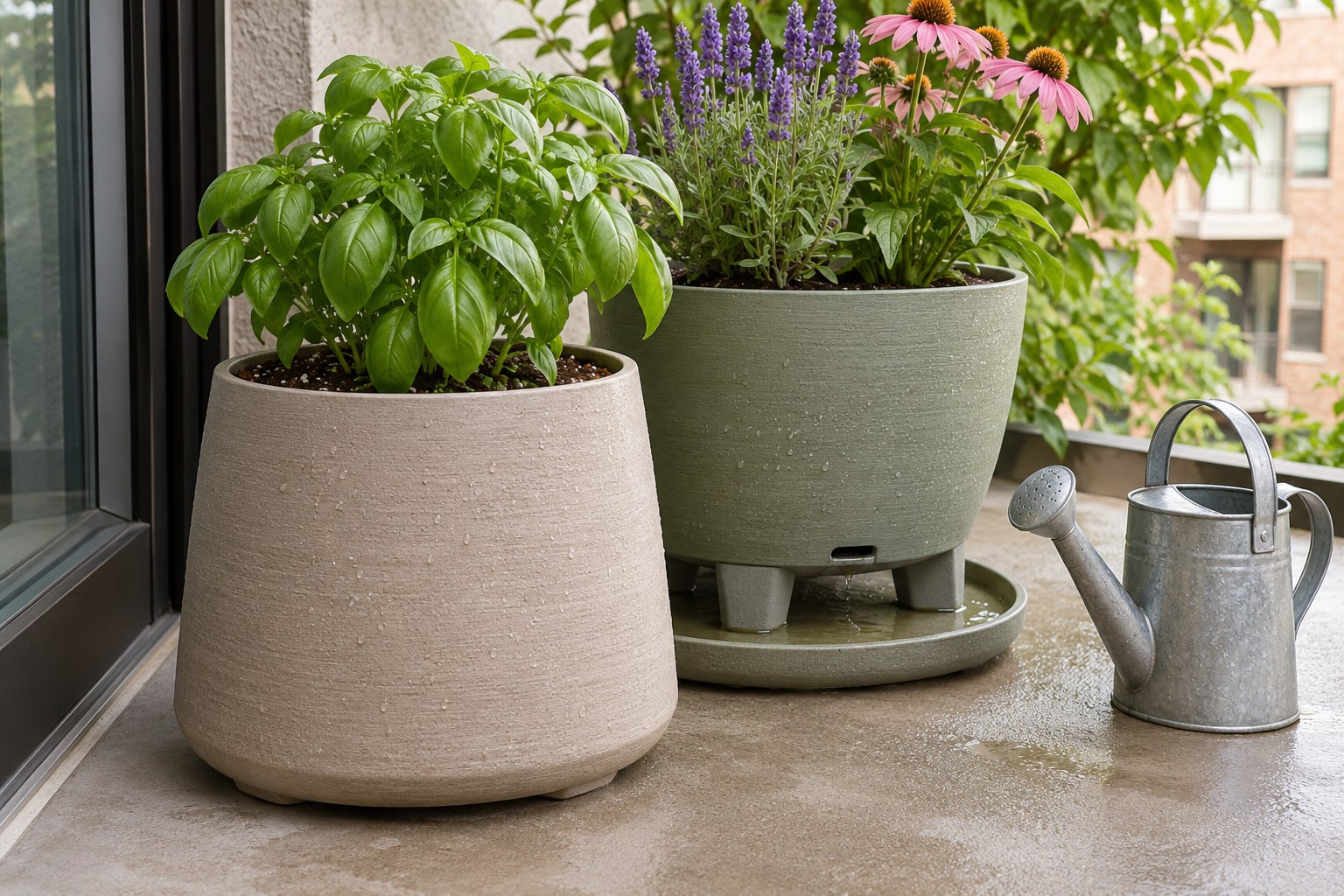
Pick each container for the roots it will hold, then consider its weight after watering. A broad base helps an appropriate container stay stable. Make sure excess water has a way out and can be collected without dripping down the building. Use a saucer sized for the pot and empty it after the excess water drains.
Lightweight pots and a proper container mix can make a small setup easier to maintain. Ask your building about limits and have the allowable load confirmed before adding heavy pots, even if the container is light when empty. Use a location you can reach without leaning over the railing.
9. Let the Pot Be the Garden Decoration
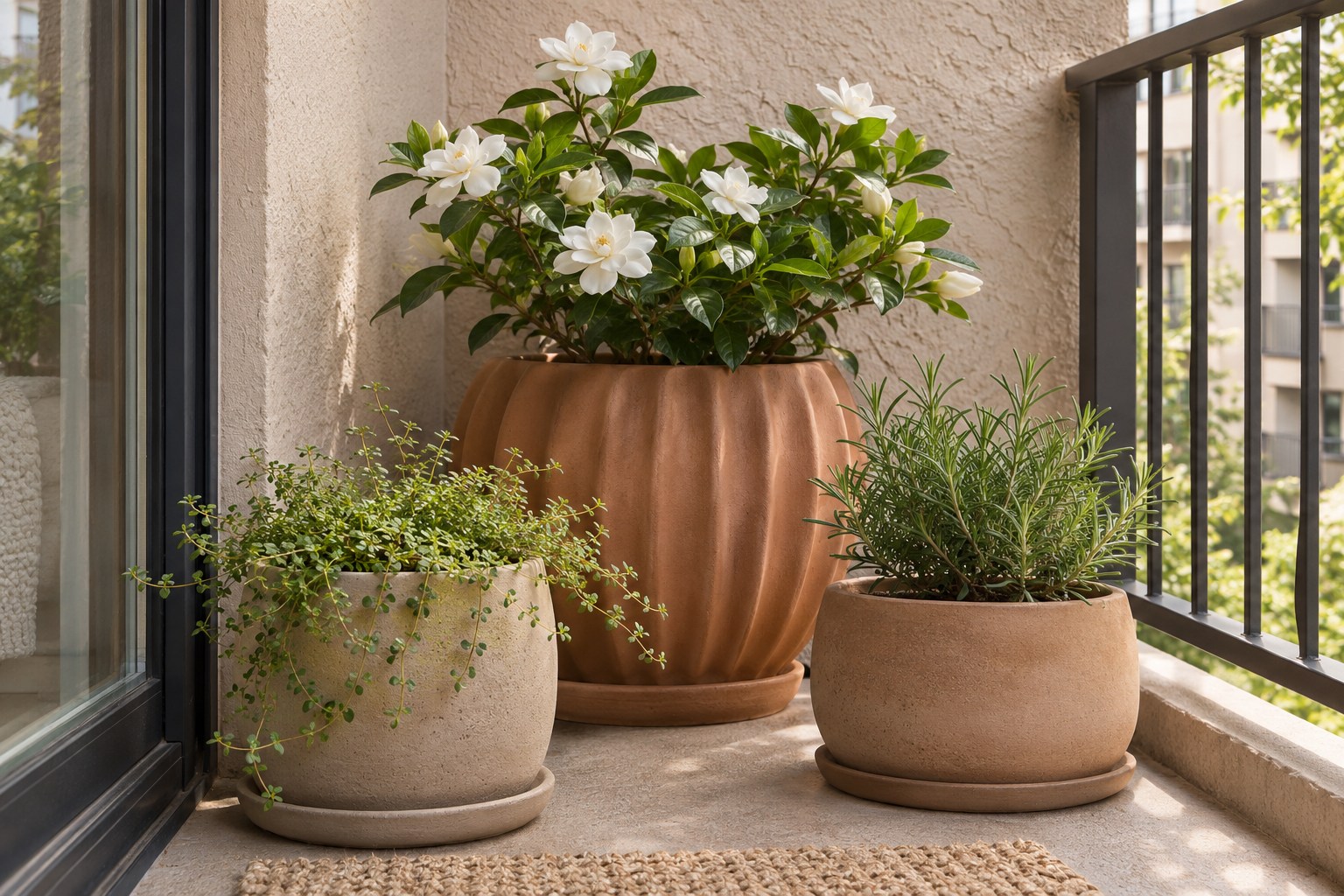
A good-looking pot gives a compact garden a point of interest without taking up another corner. Use a fluted surface, a shallow color band, or one repeated glaze. Choose a form with room for the roots and easy access for watering. Keep the most decorative pot at the back of a small group so you can see it between lower plants.
Limit separate outdoor objects to pieces that can stay secure and dry. If you already have a favorite small sculpture, bring it indoors when winds pick up. These vintage garden decor ideas offer ways to build a small group around one textured container.
10. Follow the Sun and Wind Across the Floor
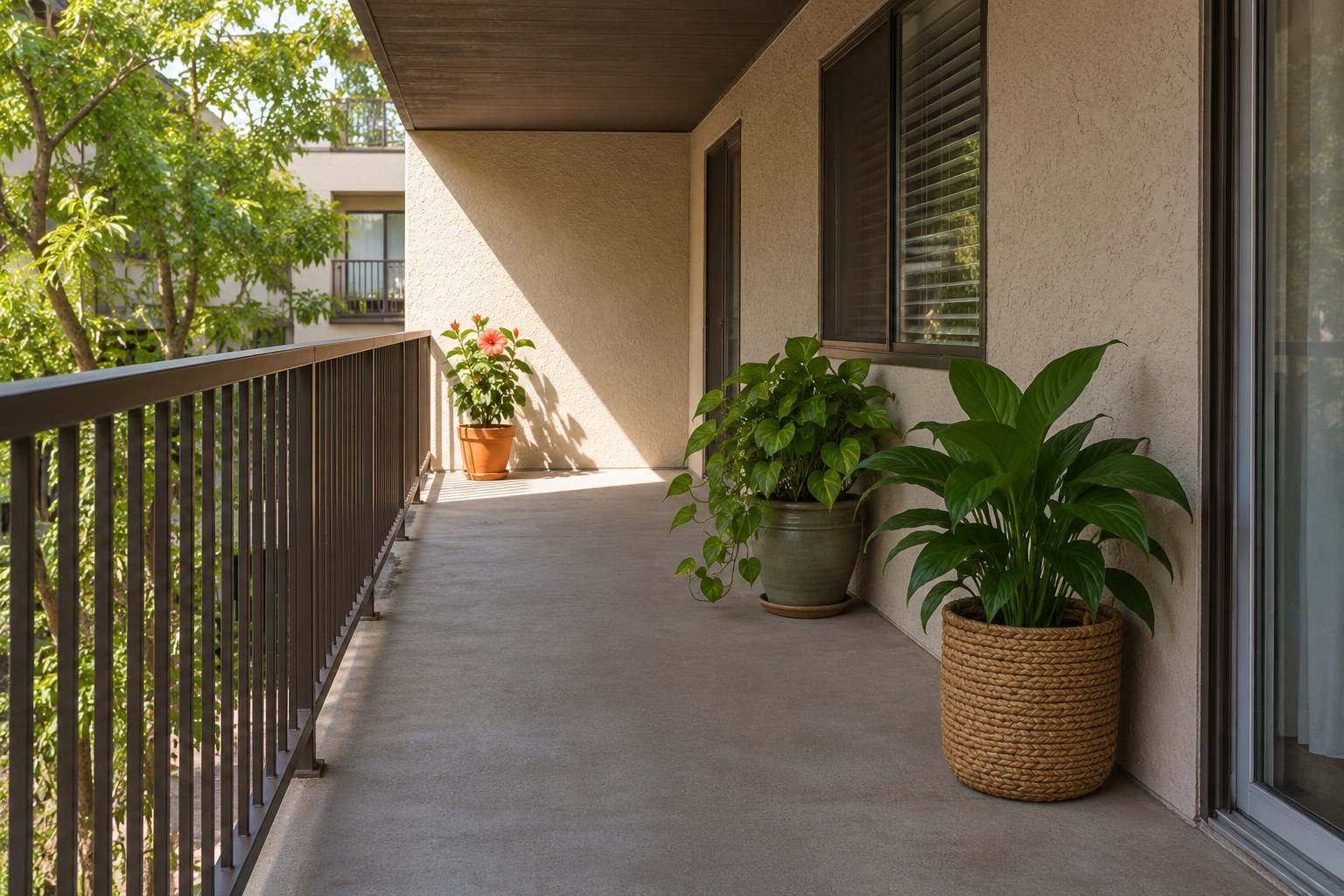
One part of a balcony can be hot and bright while a corner stays cool. Note where direct light falls in the morning, around midday, and late in the afternoon. Also watch how the air moves on an ordinary windy day. Place containers where you can reach them without moving furniture, and choose plants for the conditions in each spot.
Test the layout with a small set of containers first. If leaves wilt on a hot afternoon, check moisture before assuming they need more water. The pattern of light and shelter helps you decide whether to move a plant or choose a different one.
11. Give a Short Climber an Inside-Wall Trellis
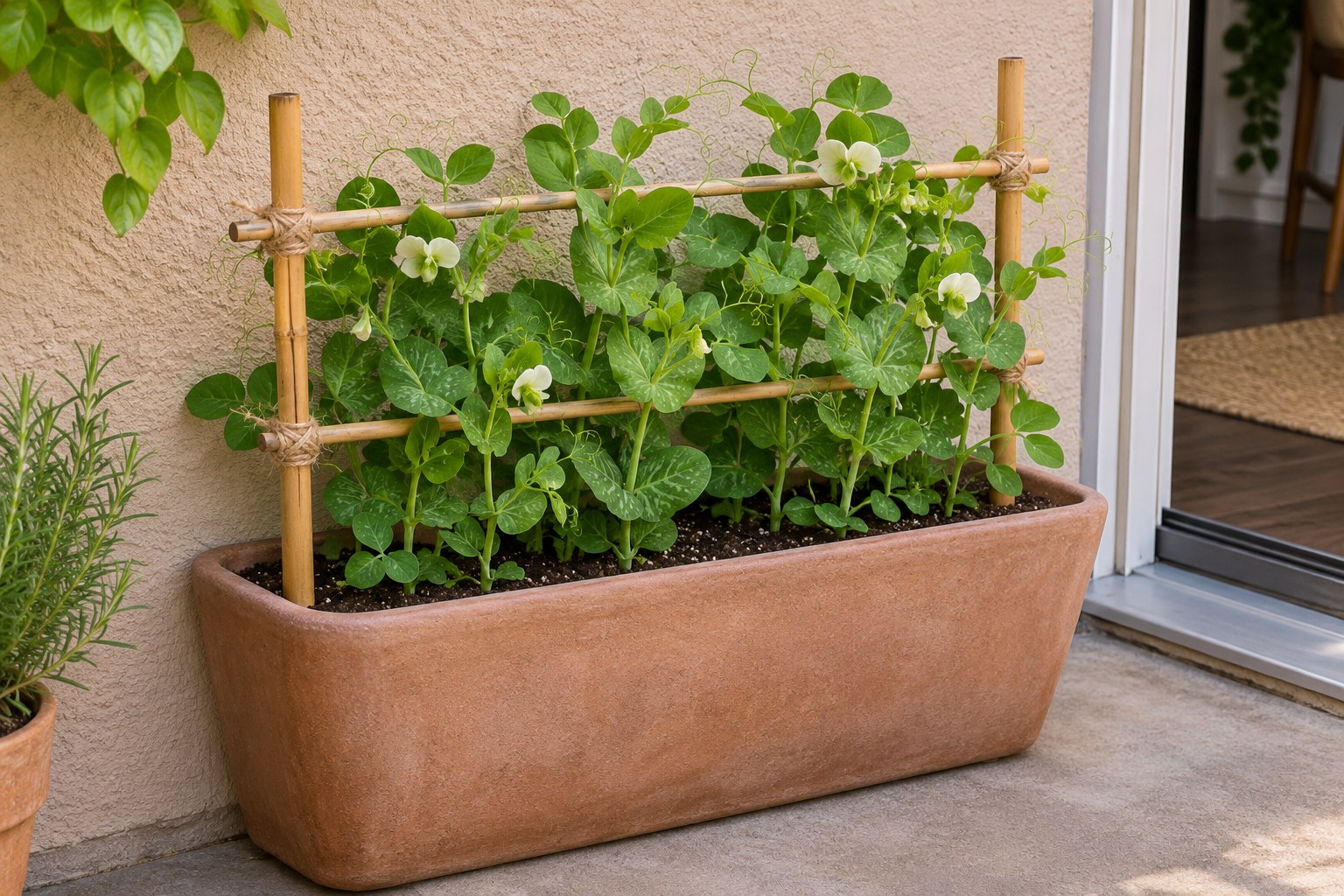
A compact climbing plant can give a blank wall some height. Choose a short, suitable support and check the loaded weight and attachment rules first. Place it away from the outer railing and the door, with enough room to tend both sides. In a windy spot, favor a lower plant unless the building permits a properly secured setup.
Peas can work in suitable weather when the container and support suit the variety. Train young growth as it reaches the support, then remove tangled stems that get into the walking route. Leave enough room to reach the support when the growth fills in.
12. Group Easy-Care Plants by Watering Needs
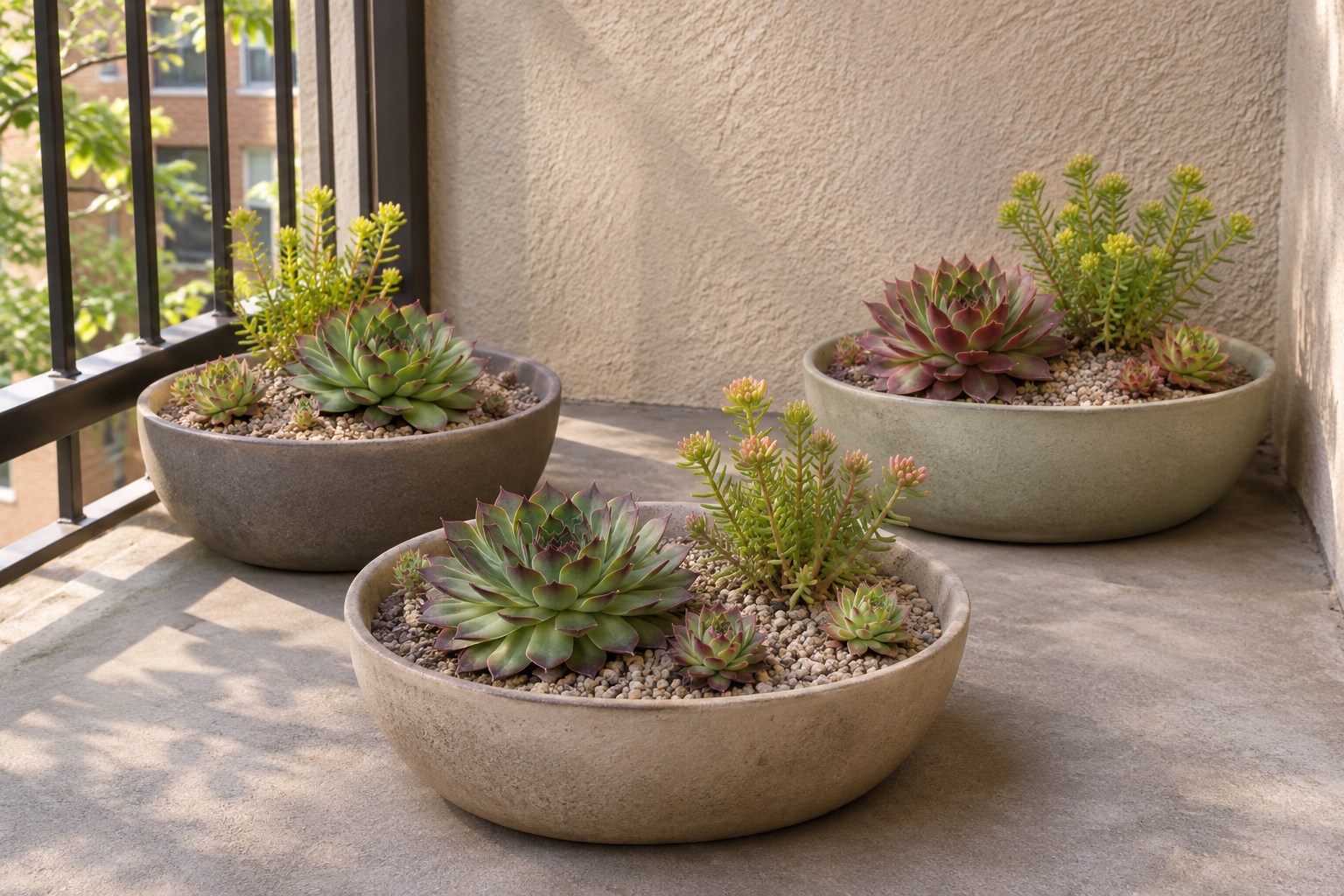
Choose two or three plants with similar light and water needs for the zone you water most easily. In a sunny sheltered spot, use drought-tolerant plants that suit the local climate. In a shady corner, choose foliage plants rated for those conditions. Grouping containers makes it easier to check them in one visit.
Use a finger check or the guidance for the plants you grow before watering. A small pot may dry faster than its neighbor even if both hold the same mix. Leave a little space between pots so you can see and clean the floor instead of pushing everything into a tight cluster.
13. Reuse Pots and Keep Supplies Dry
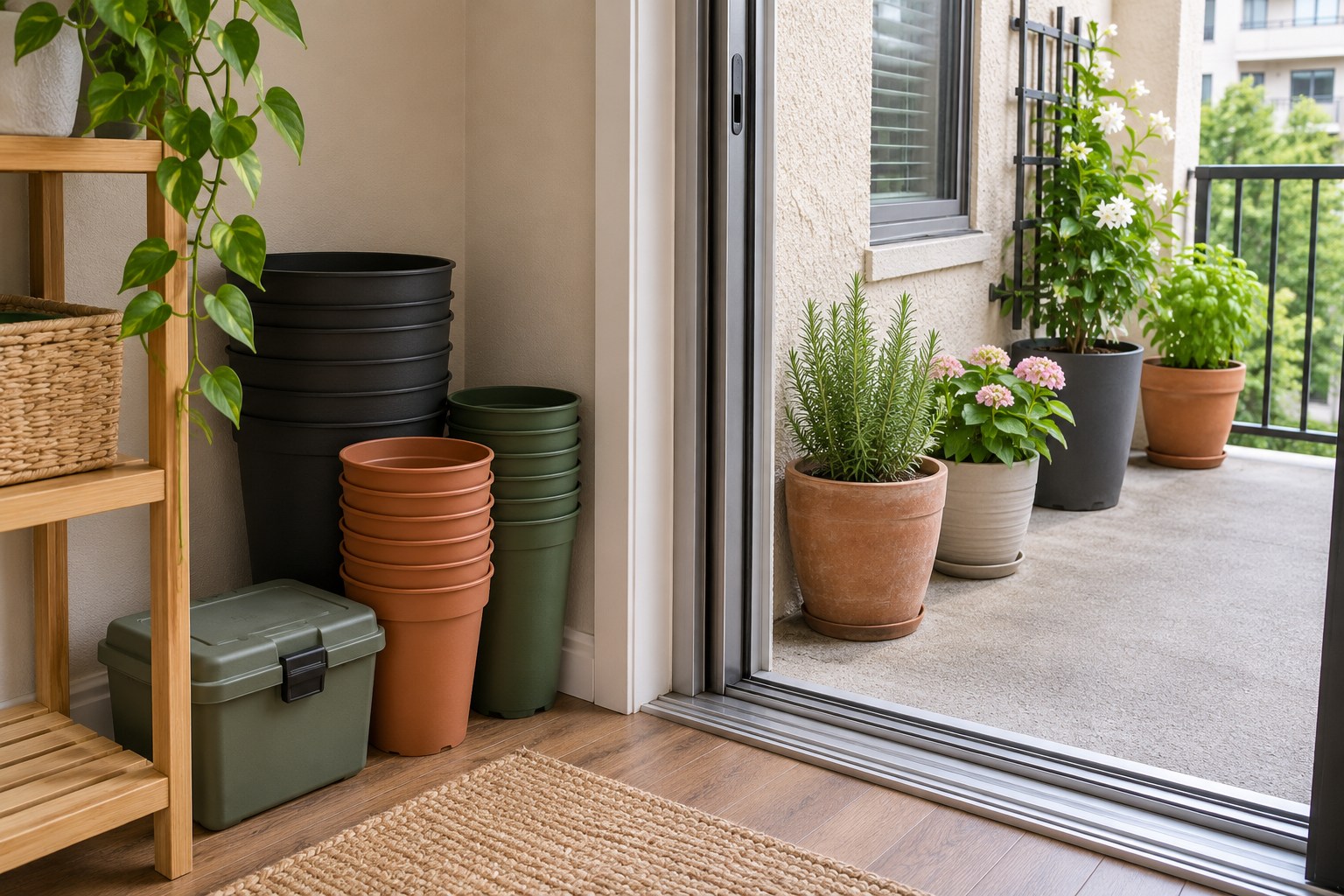
Reuse clean containers that are sound, have drainage, and suit what you intend to grow. For edible crops, choose containers suitable for food growing and avoid ones with unknown previous contents. Store the extra mix, labels, and hand tools where you can reach them without taking up the balcony’s only clear route.
A small indoor container near the door can keep bags and tools together. If you have outdoor space for storage, choose a permitted unit that keeps its contents dry and stays well back from the guard. Measure it with the lid or door fully open before bringing it outside.
14. Light the Leaves From a Sheltered Spot
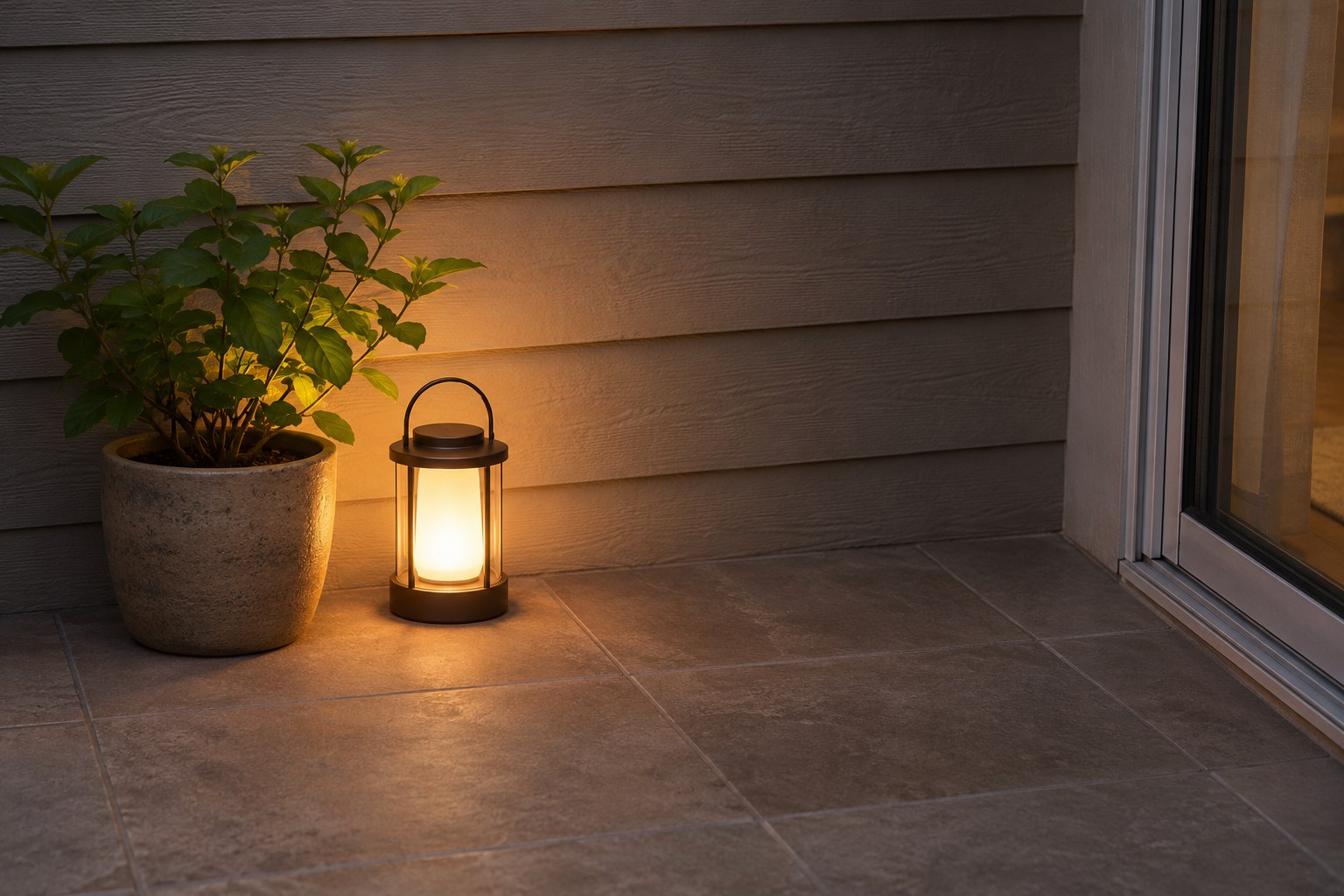
One soft pool of light can make a balcony garden enjoyable from indoors after dark. Use a stable outdoor-rated lantern close to the building wall, placed away from wet soil and walking space. Aim the light toward foliage and check the view through the door so you can see whether it creates glare.
Choose lighting suited to the exposure and follow the fixture’s instructions. Skip open flames and keep the balcony path and threshold clear. These outdoor patio lighting ideas show other ways to use low light around seating and plantings.
15. Try a Closed-Reservoir Bubbler in a Sheltered Corner
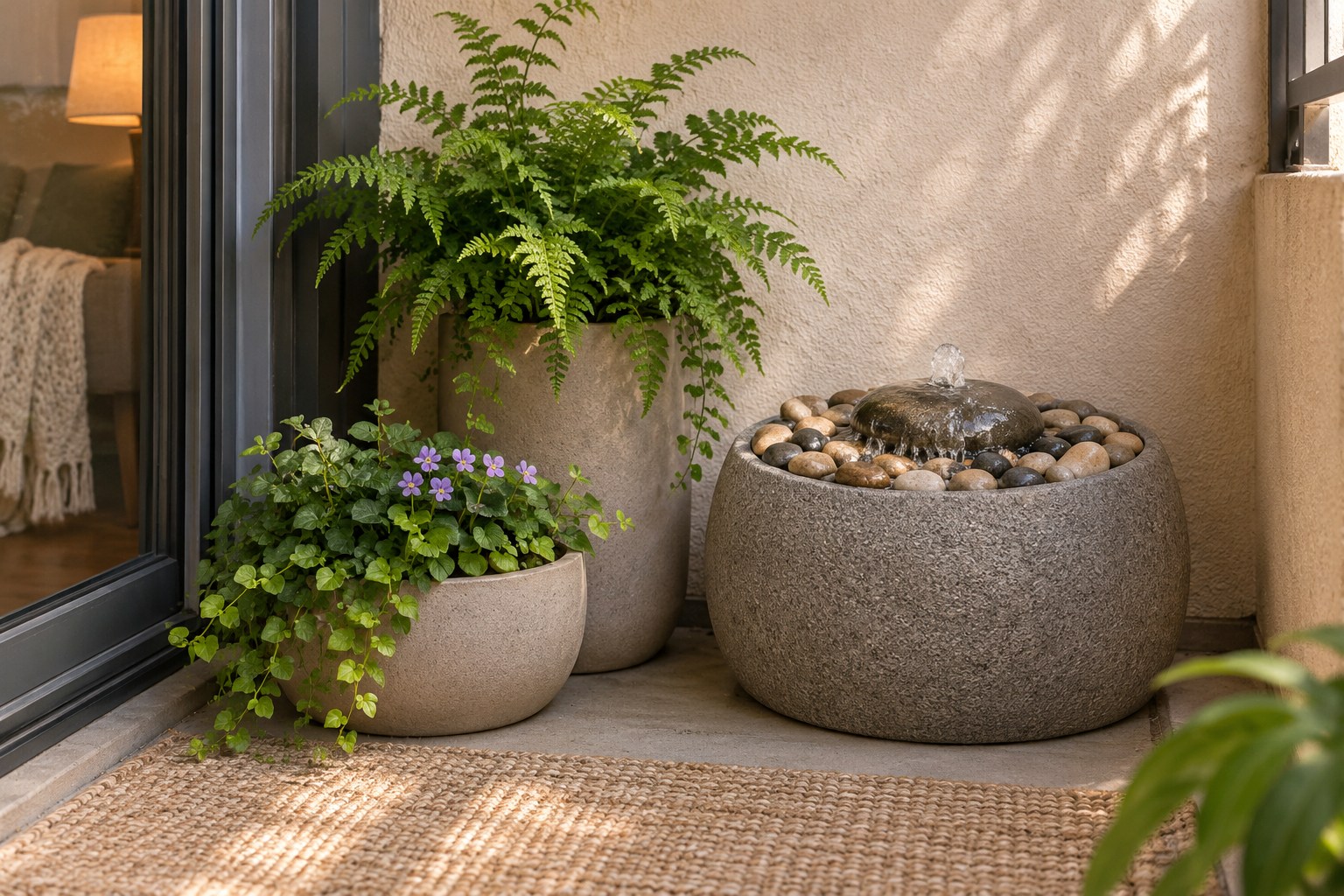
If your building allows a water feature, choose a compact outdoor model with a covered reservoir that you can empty and clean. Ask about the allowed filled weight and where the unit may sit. Place it on a stable level floor away from the railing, doorway, and drains. The sound should be quiet enough to enjoy from a nearby seat or indoors.
Follow the manufacturer’s directions for power, filling, maintenance, and cold weather storage. Skip open basins when children can reach them. In a windy or restricted location, a glazed bowl used as a dry decorative accent offers a similar focal point without the upkeep of moving water.
Mark the door route and the part of the balcony where the plants will get the light they need. Start with the number of pots you can water comfortably and see how they respond over a week. Add a chair or another container once you know there is room to use it.
Discover more from HomeTrendora
Subscribe to get the latest posts sent to your email.

