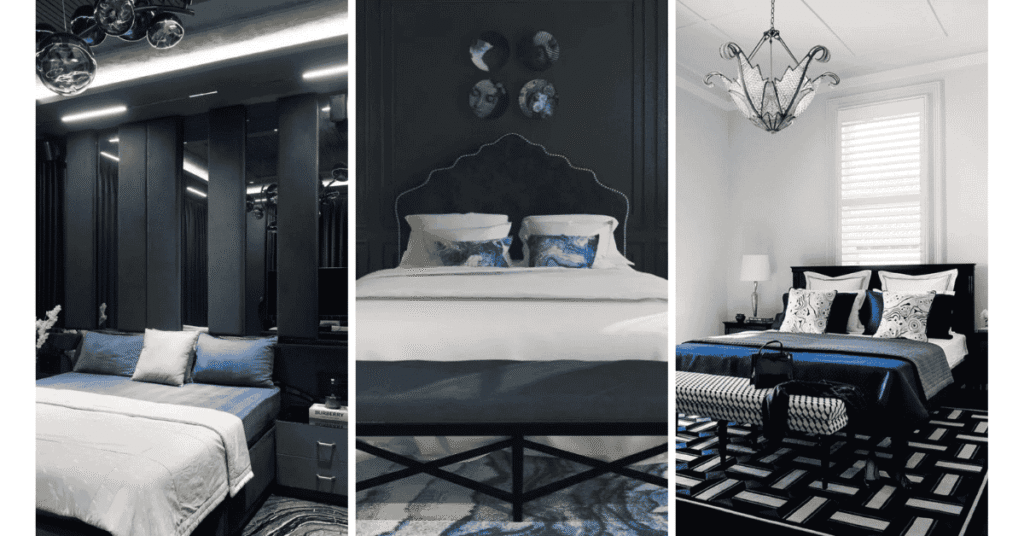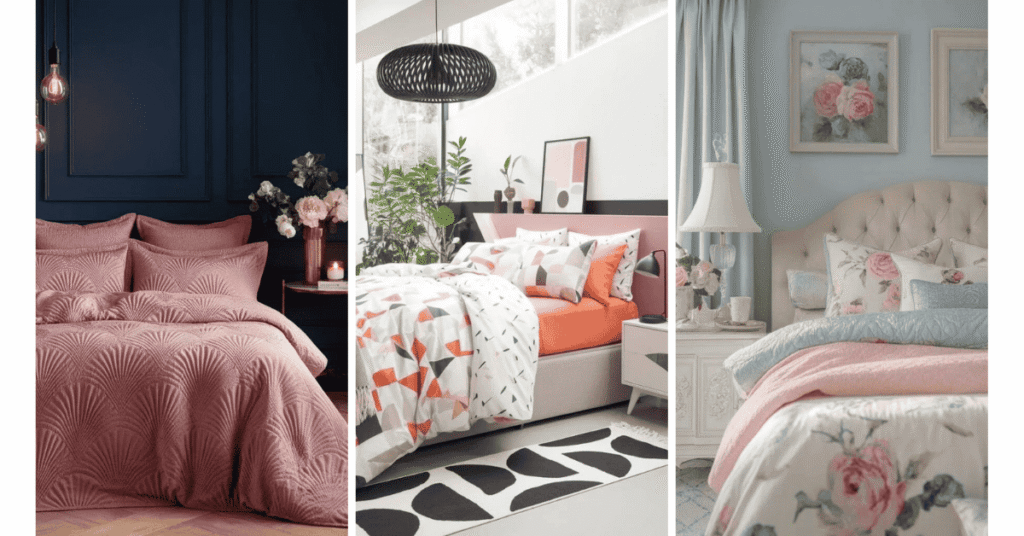
A rental bedroom can feel personal and polished without paint, construction, or a string of purchases that only work in one apartment. The best renter-friendly bedroom ideas begin with portable layers—bedding, rugs, lighting, storage, and furniture—then use temporary surface treatments only when the lease and wall finish allow them.
The goal is not to pretend every adhesive product is risk-free. It is to choose upgrades in a sensible order, measure before buying, and understand which pieces can move with you. The 17 ideas below cover high-impact changes for color, comfort, storage, lighting, and layout, followed by a true same-room transformation that keeps the permanent features intact.
1. Start With a Rental Bedroom Audit
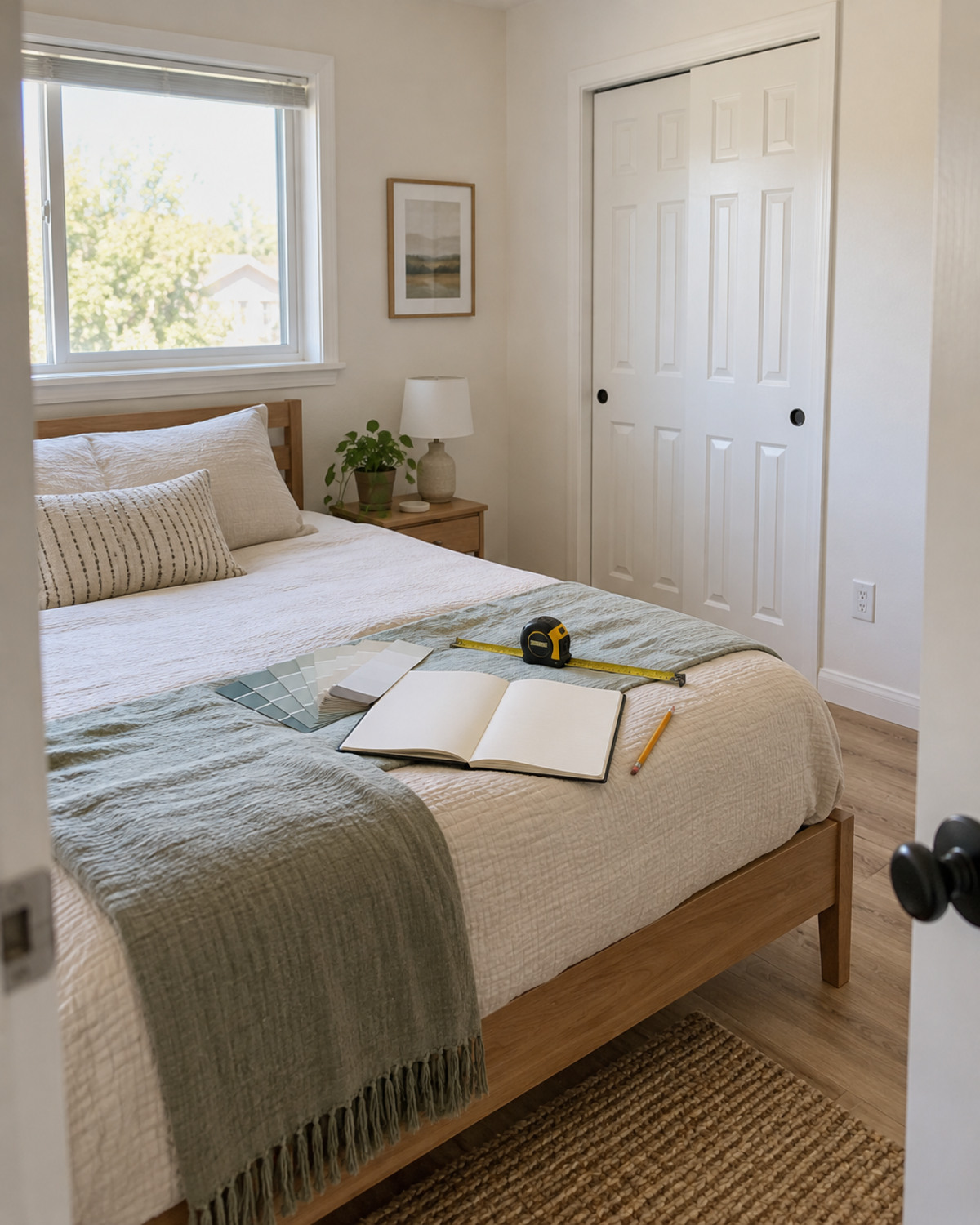
Before adding decor, record what the room is already asking you to solve. Measure the walls, bed, window, closet swing, and the narrowest walkway. Note the location of outlets, vents, heaters, and fixed lighting. Photograph the room from the doorway so you can compare scale while shopping.
Next, separate the room into three lists: permanent features that must stay, portable items worth investing in, and temporary changes that require permission or testing. A dated floor may call for a rug, while poor bedside light points to a lamp rather than a new paint color. This ten-minute audit prevents attractive purchases from becoming awkward obstacles and gives every later decision a practical reason.
2. Build the Color Palette With Bedding
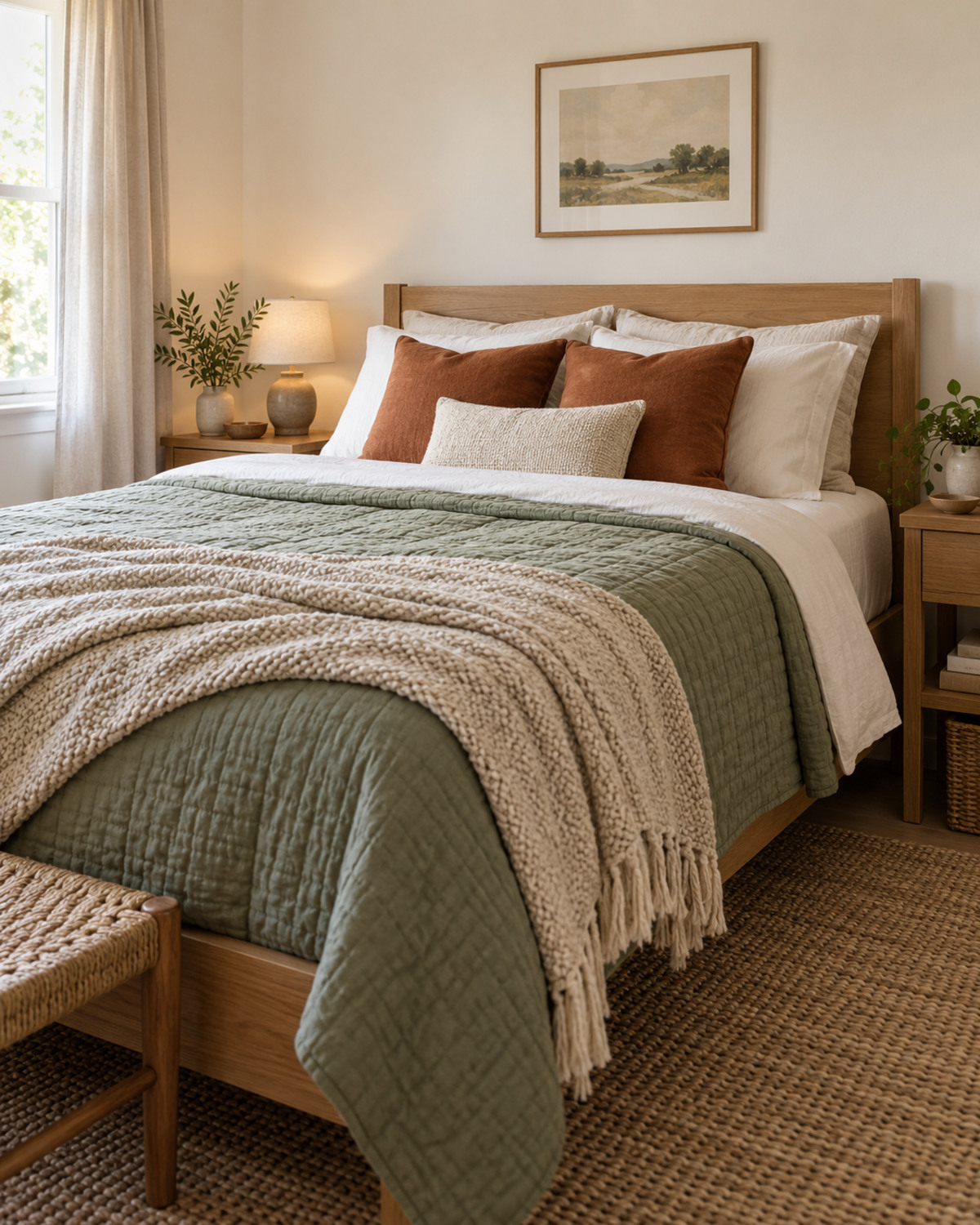
Bedding covers a large visual area, so it can establish the room’s palette without touching the walls. Begin with one quiet base color, add a supporting tone through a quilt or coverlet, and reserve the strongest color for a pair of pillow covers or one folded throw. Repeating three or four tones looks more intentional than collecting unrelated accents.
Choose washable layers that suit your climate and daily habits. A reversible coverlet or neutral duvet can adapt to a future room, while inexpensive accent covers can change seasonally. Let the wall remain a backdrop instead of trying to compete with it. This approach also makes it easier to carry the palette into curtains, a rug, and artwork without buying everything at once.
3. Add a Freestanding Upholstered Headboard
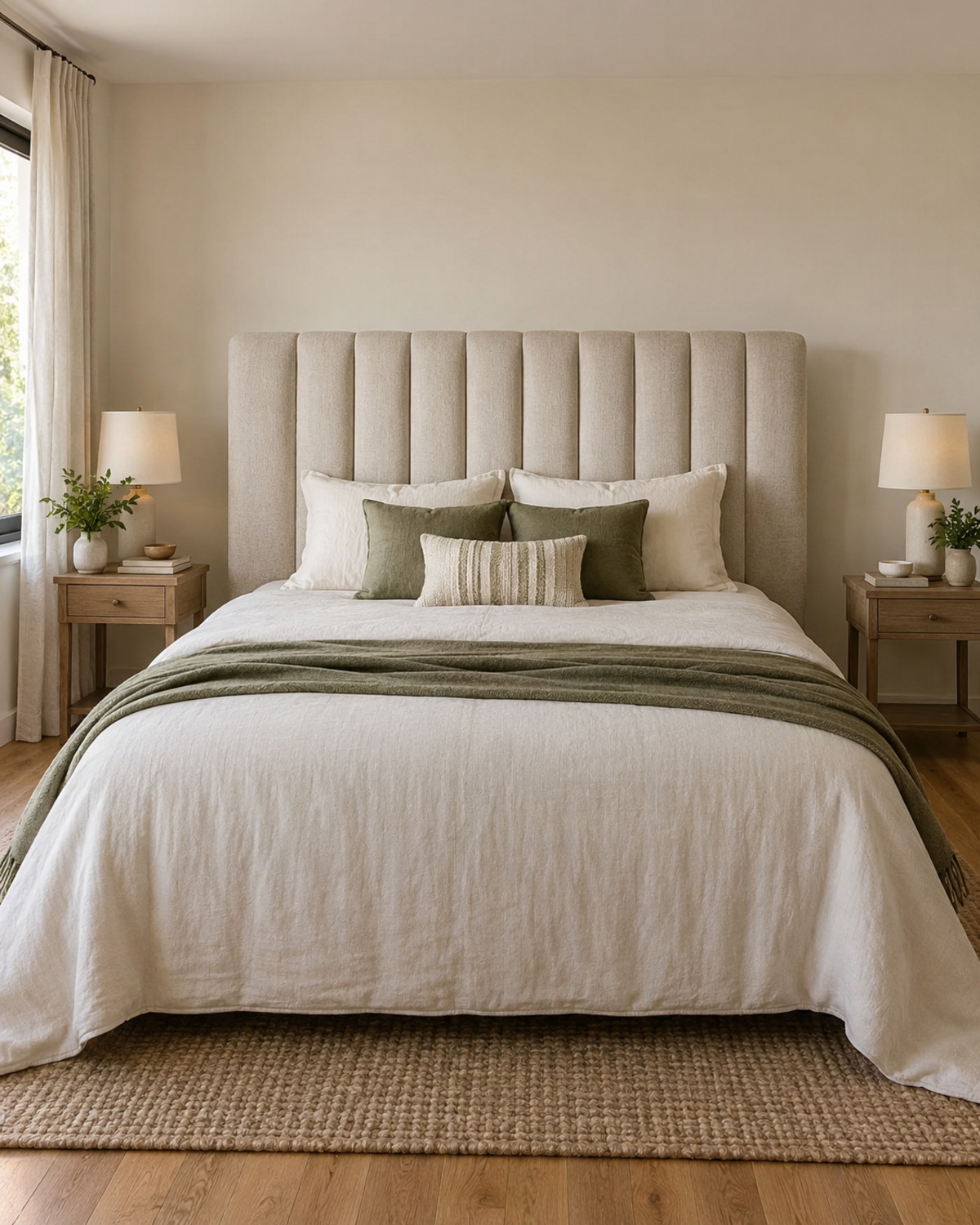
A freestanding headboard gives a basic bed architectural weight without building a feature wall. Look for a floor-standing or bed-frame-compatible design close to the mattress width. A model that is dramatically wider than the bed may crowd outlets, switches, or bedside storage in a compact room.
Oatmeal, taupe, muted olive, and warm gray fabrics are flexible enough to survive several decorating schemes. Channel stitching adds a little structure, while a plain padded shape works with modern and traditional pieces. Confirm how the headboard is intended to be stabilized and follow its assembly instructions. The finished bed should feel anchored, but the upgrade should still be removable when the lease ends.
4. Layer a Large Rug Over Unattractive Flooring
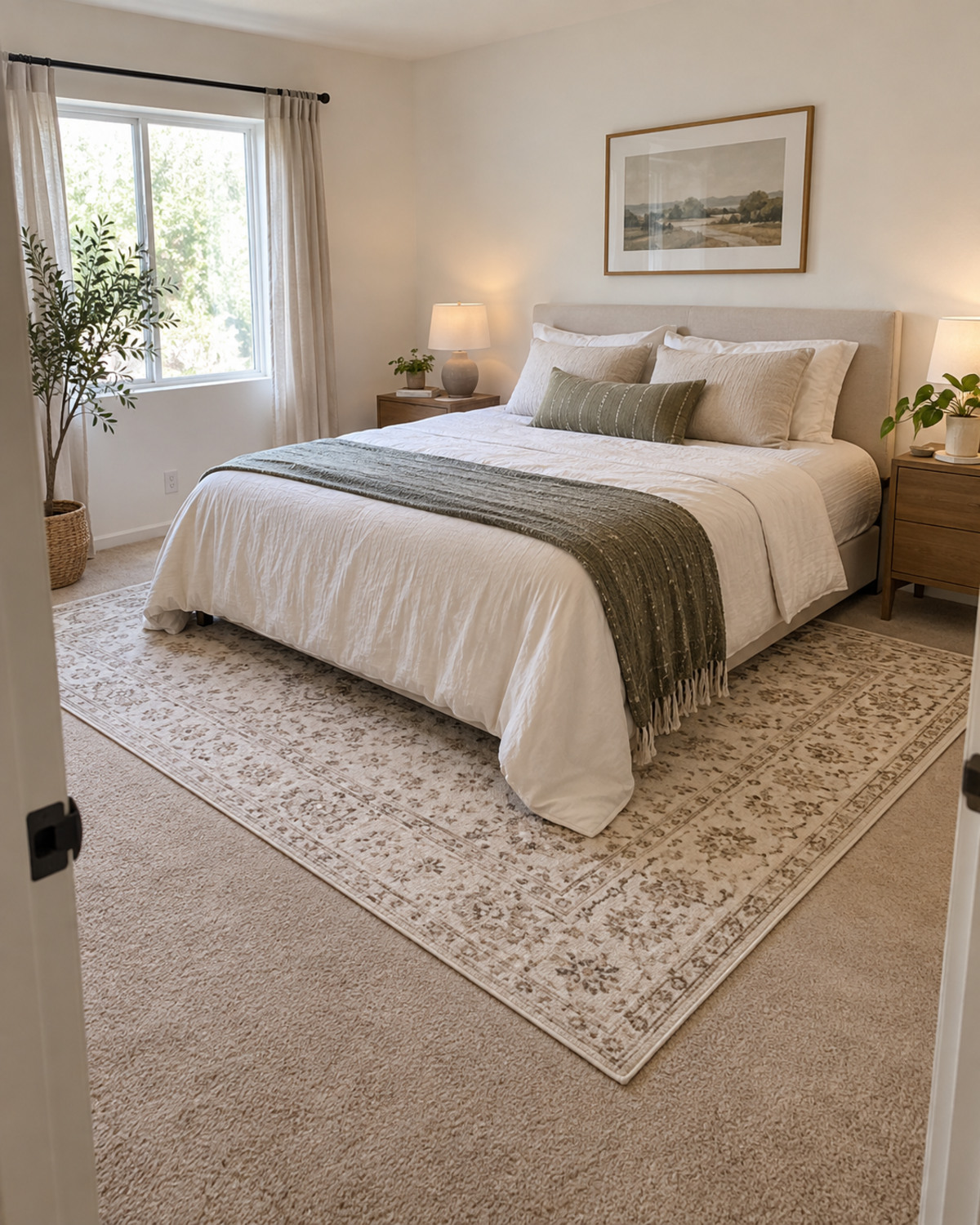
An area rug can visually quiet worn carpet, plain vinyl, or mismatched wood-look flooring. Scale matters more than pattern: the rug should connect the bed and surrounding floor rather than appear as a small mat at the foot. A common layout places the rug under the lower portion of the bed so it extends where your feet land on both sides.
Use a low-profile pad or rug-to-carpet solution made for the existing surface, and check that the edges do not curl into the walkway. On hard flooring, choose a nonslip layer compatible with the finish. A warm neutral pattern hides everyday marks while remaining portable. For more placement options, see these bedroom rug ideas.
5. Use Plug-In Bedside Lighting
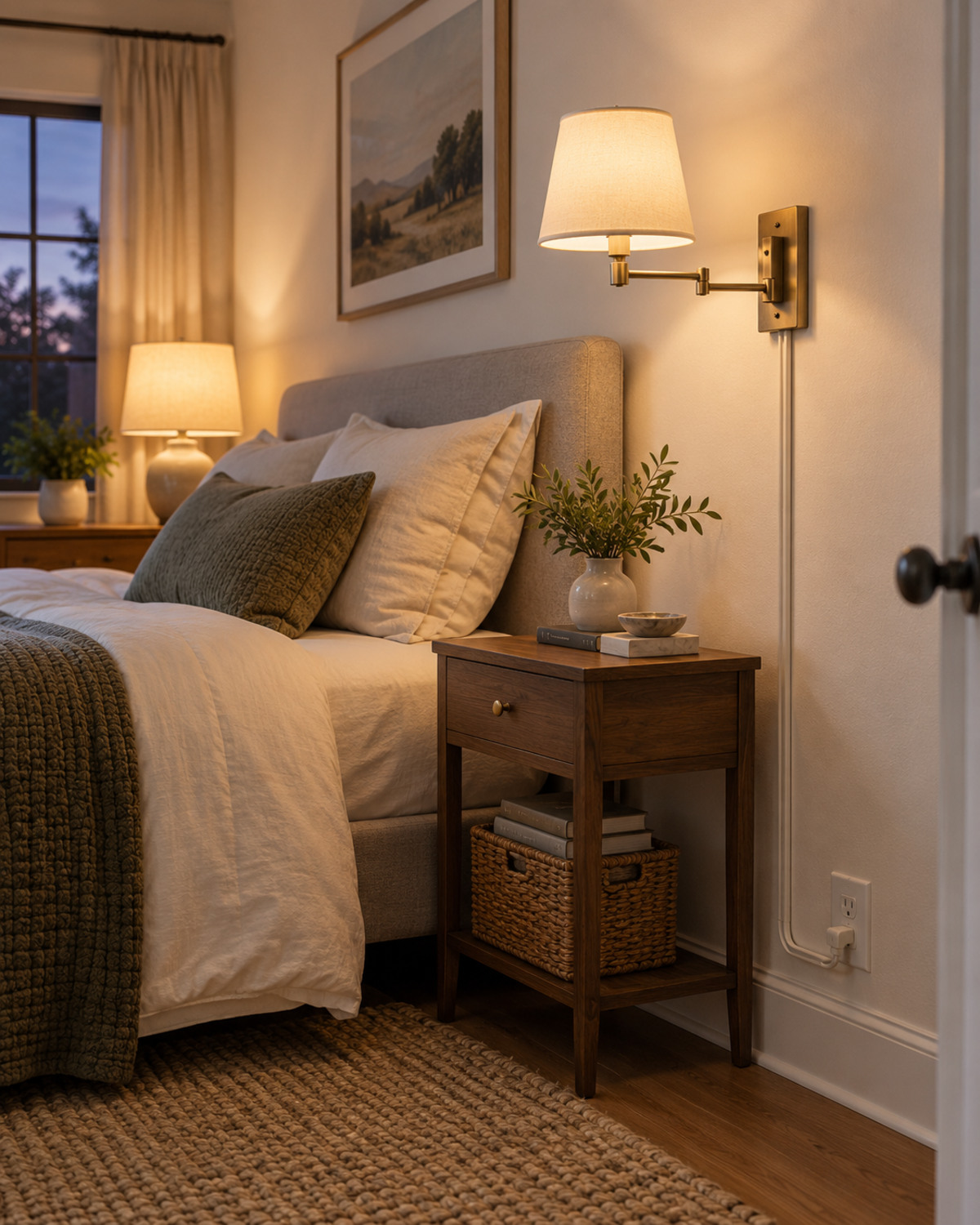
Plug-in lighting solves a real renter problem: it creates useful light where the ceiling fixture does not. A shaded table lamp is the simplest option. A plug-in swing-arm light can free the nightstand surface, but its mounting method, fixture weight, and wall compatibility still need to match the manufacturer’s directions.
Plan the cord route before mounting anything. Keep cords away from the bed frame, rug edges, and walking path, and do not trap them behind furniture. The Electrical Safety Foundation International notes that extension cords are temporary tools rather than a permanent substitute for household wiring, so use an accessible wall outlet and a fixture designed for the location. Explore additional bedroom lighting ideas without turning every layer into a renovation.
6. Make Existing Curtain Hardware Look Intentional
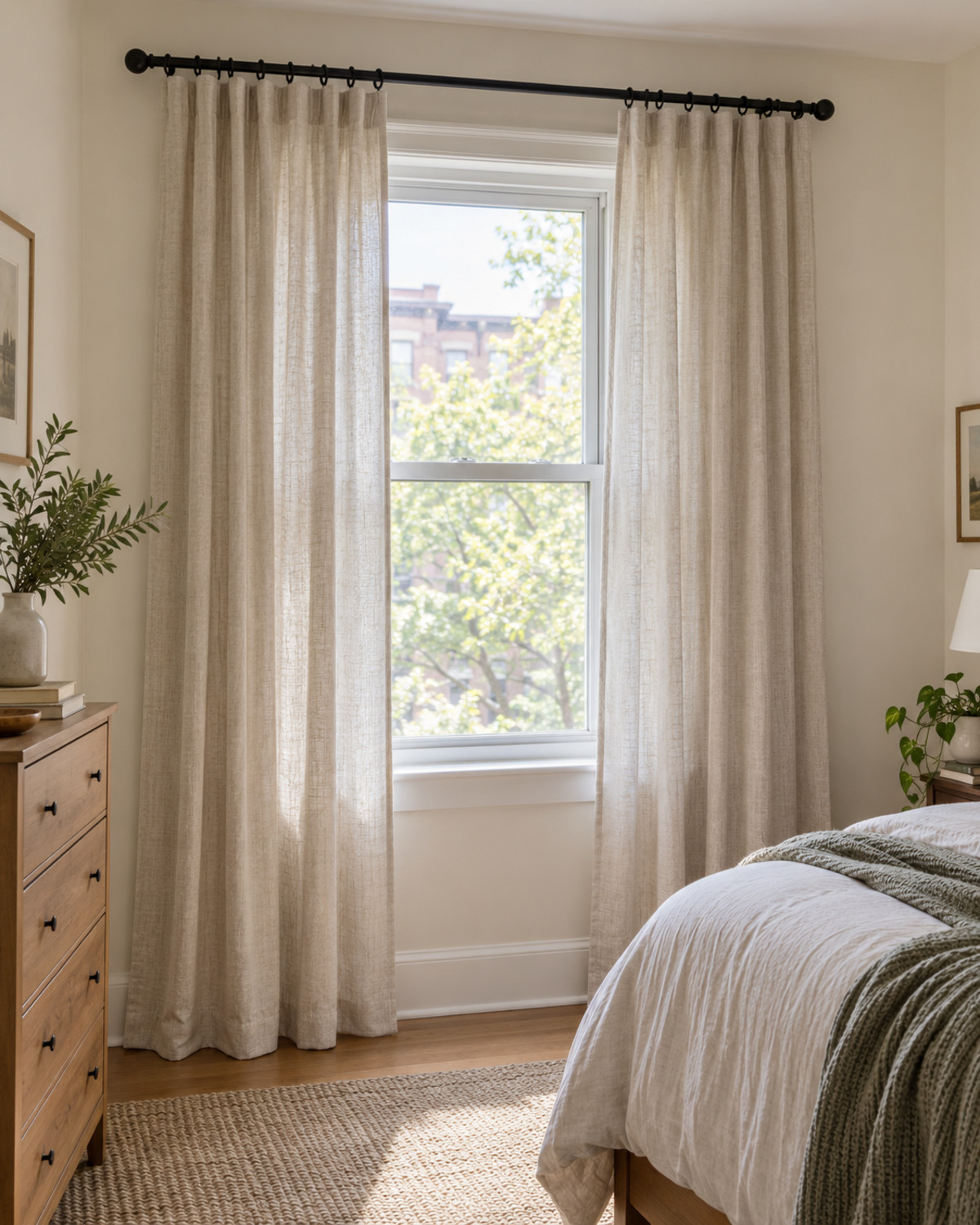
You may not need a new rod to improve the window. Matching rings, fuller panels, and a clean floor-length hem can make basic rental hardware feel deliberate. Measure from the existing rod to the floor before ordering; guessing often produces curtains that stop awkwardly short or gather in a heavy pile.
If the room needs darkness, combine a suitable shade with decorative side panels rather than expecting thin linen to block all light. Keep fabric clear of heaters and vents, and make sure the window still opens normally. If new hardware is permitted, confirm the wall type and load first. These modern bedroom curtain ideas offer more style directions once the functional measurements are settled.
7. Test a Removable Accent Treatment
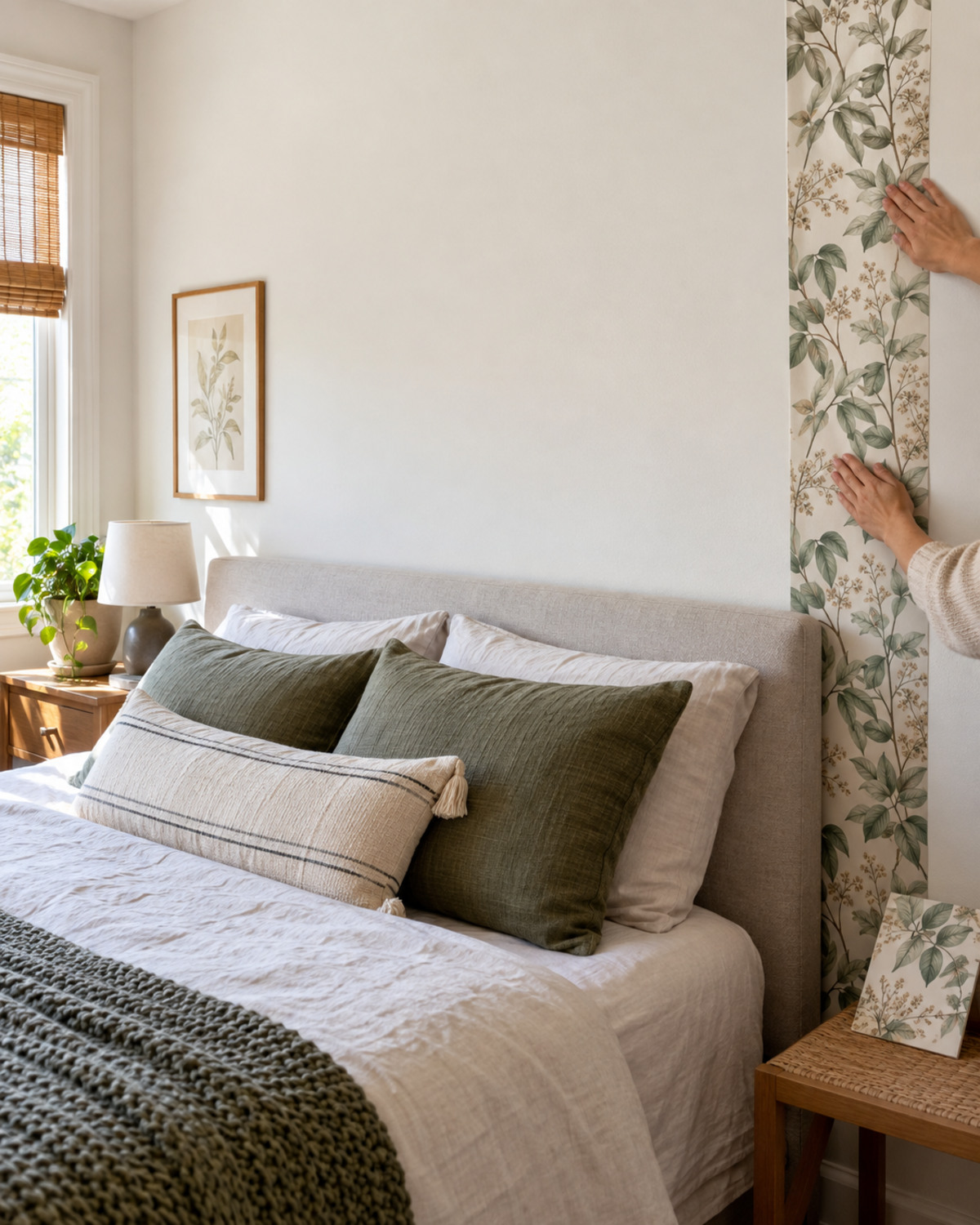
Peel-and-stick wallpaper can create a focal area, but “removable” describes a product category, not a universal promise for every wall. Read the lease, identify the paint finish, and compare the wall with the manufacturer’s approved surfaces. Test a sample in a hidden area and follow the stated waiting, application, and removal instructions.
Product guidance varies. For example, Tempaper’s current FAQ recommends smooth, painted surfaces in good condition, notes that some finishes may release paint, and advises testing a small area before a full installation. Begin with a narrow panel, a framed removable insert, or another limited area instead of covering the entire room immediately. If wallpaper is appropriate for the surface, browse these bedroom wallpaper accent wall ideas for pattern inspiration—not as a substitute for product instructions.
8. Display Lightweight Art With a Surface-Rated Method
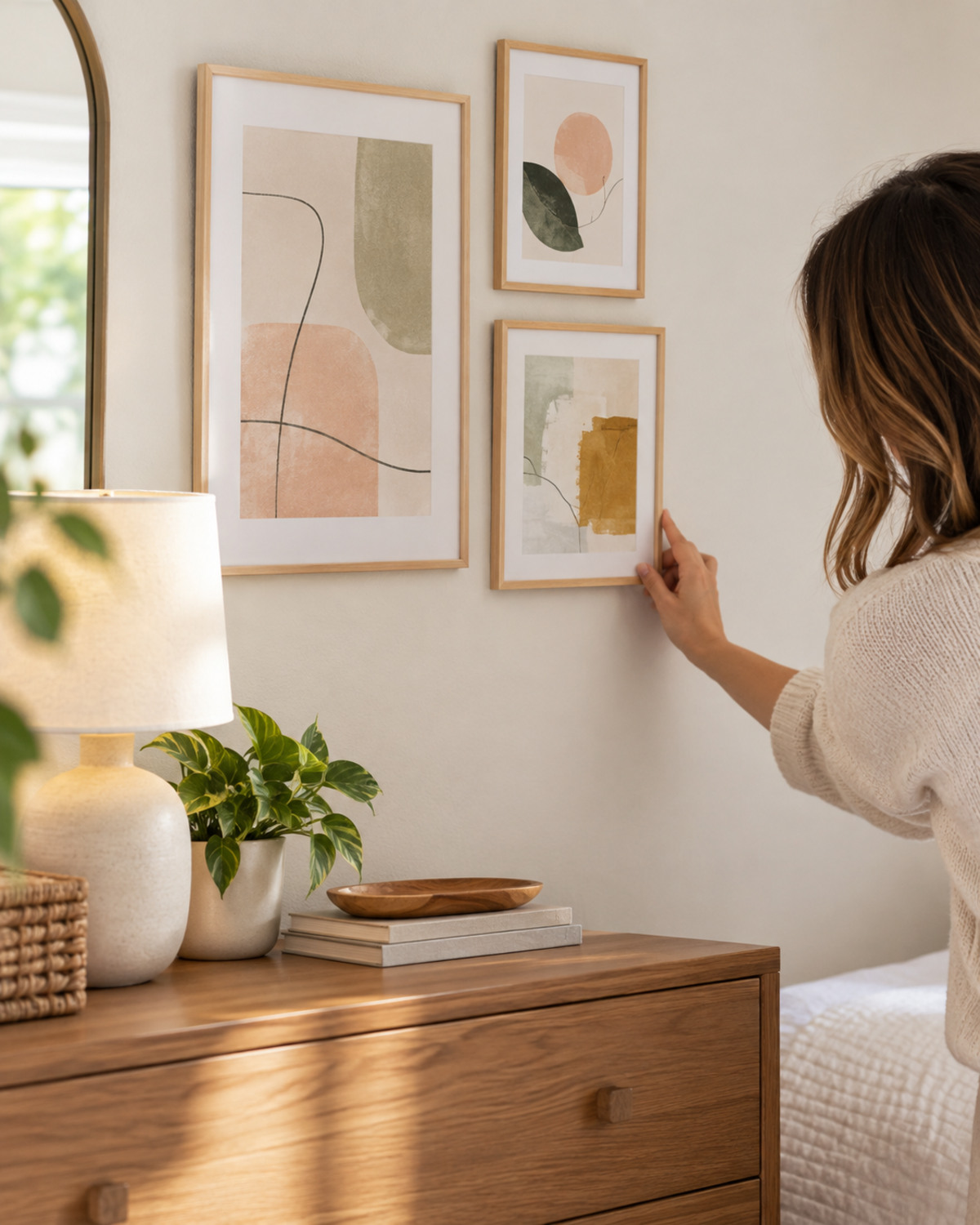
A small group of lightweight frames can give the room a focal point with less visual and physical weight than one oversized piece. Lay the arrangement on the floor first, keep the gaps consistent, and align the overall grouping with the furniture below it.
Select a hanging method rated for the frame weight, backing, wall finish, and room conditions. Follow the product’s surface preparation, application, waiting, and removal steps rather than assuming all adhesive strips work alike. Command, for example, publishes separate instructions and weight-limit guidance for its different hanging products. Avoid placing heavy or breakable art where it could fall onto the bed. The arrangement should look composed because of scale and spacing, not because the wall is crowded.
9. Use an Oversized Mirror Without Creating a Tip Hazard
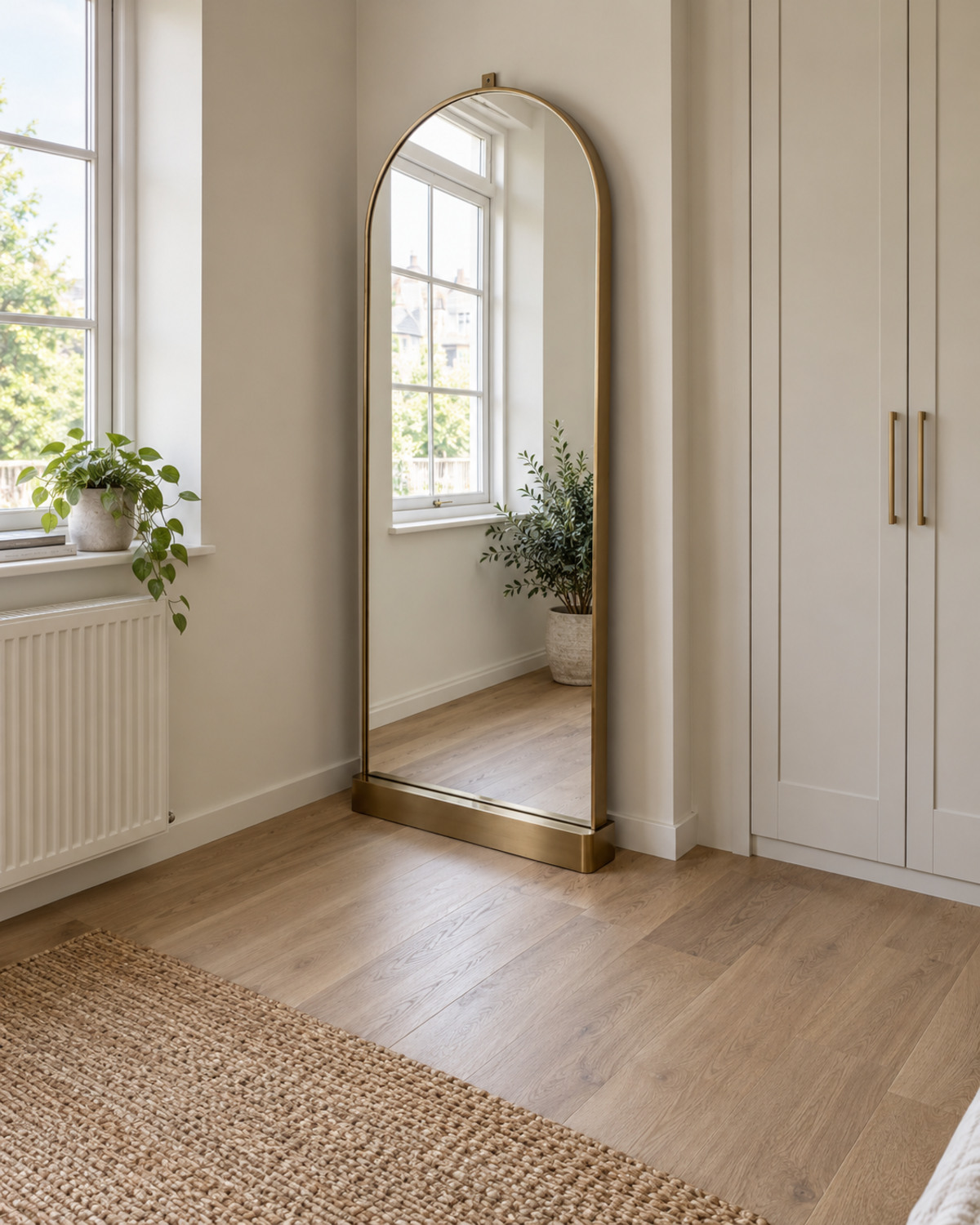
A tall mirror can bounce window light into a dim corner and give the wardrobe area a useful full-length view. Position it where the reflection opens the room rather than multiplying clutter. Leave enough clearance for doors and drawers, and keep its base outside the main traffic path.
“Leaning” should describe the look, not an unstable installation. Use the safety hardware supplied for the mirror and the wall type, and obtain any permission required for anchoring. The U.S. Consumer Product Safety Commission’s Anchor It campaign emphasizes securing furniture with drawers, doors, and shelves to prevent tip-overs; the same safety-first thinking belongs around large mirrors. Find additional proportion and placement inspiration in these bedroom mirror ideas.
10. Soften Awkward Wardrobe Doors Without Permanent Changes
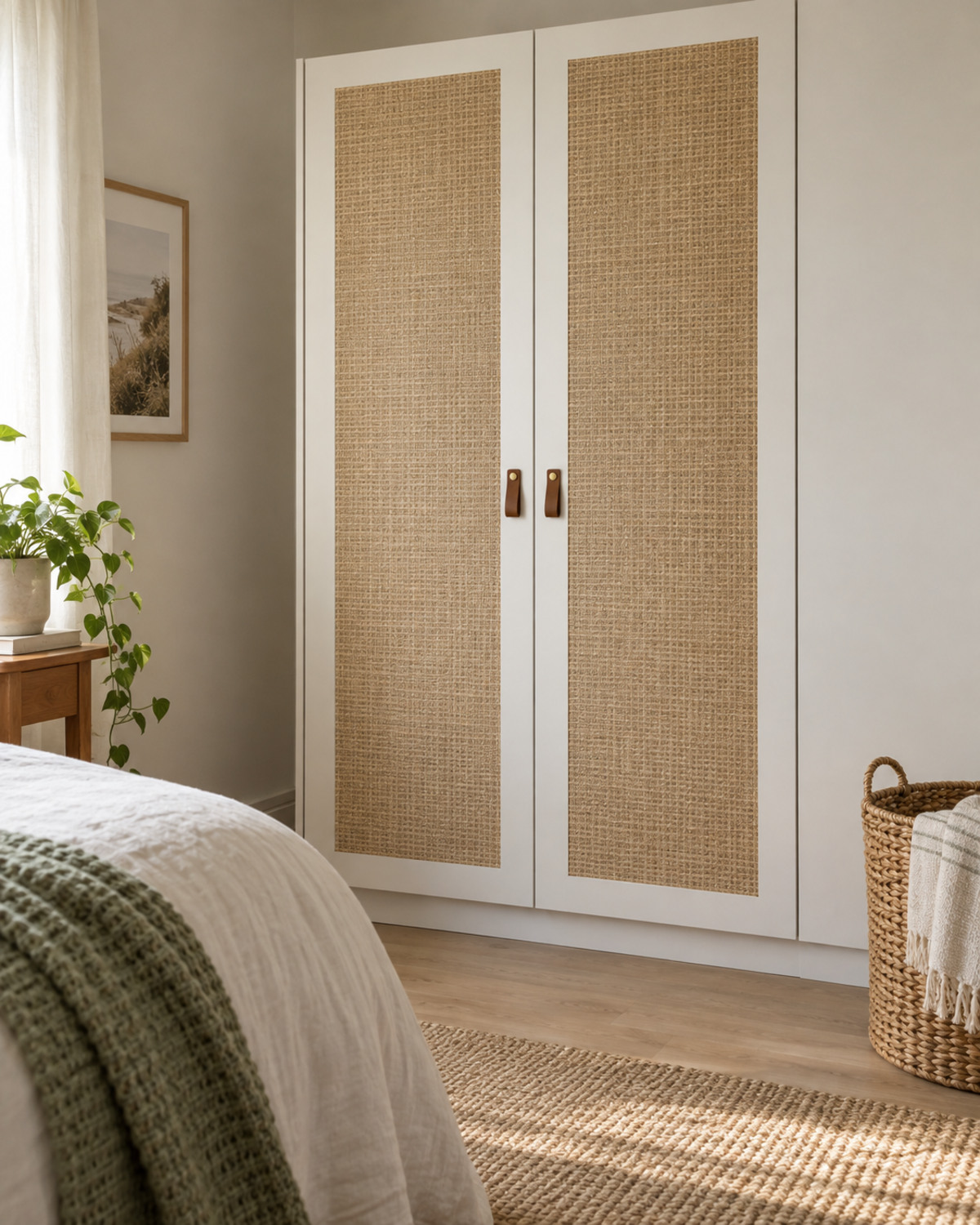
Flat wardrobe doors can dominate a small bedroom, especially when their finish fights the rest of the palette. First try the lowest-risk fix: repeat their color elsewhere, place a freestanding mirror nearby, and keep surrounding decor quiet. Sometimes the doors become less noticeable once the room has a clearer focal point.
If the lease and surface allow a temporary treatment, use it on a limited inset or sample area rather than every door at once. Confirm that the finish is smooth, sound, and included in the product’s instructions. Keep original hardware labeled and stored safely if replacement is permitted. Avoid covering ventilation gaps, tracks, or door edges. The goal is a calmer surface, not a faux built-in that creates removal problems later.
11. Replace a Bulky Nightstand With Narrow Freestanding Storage
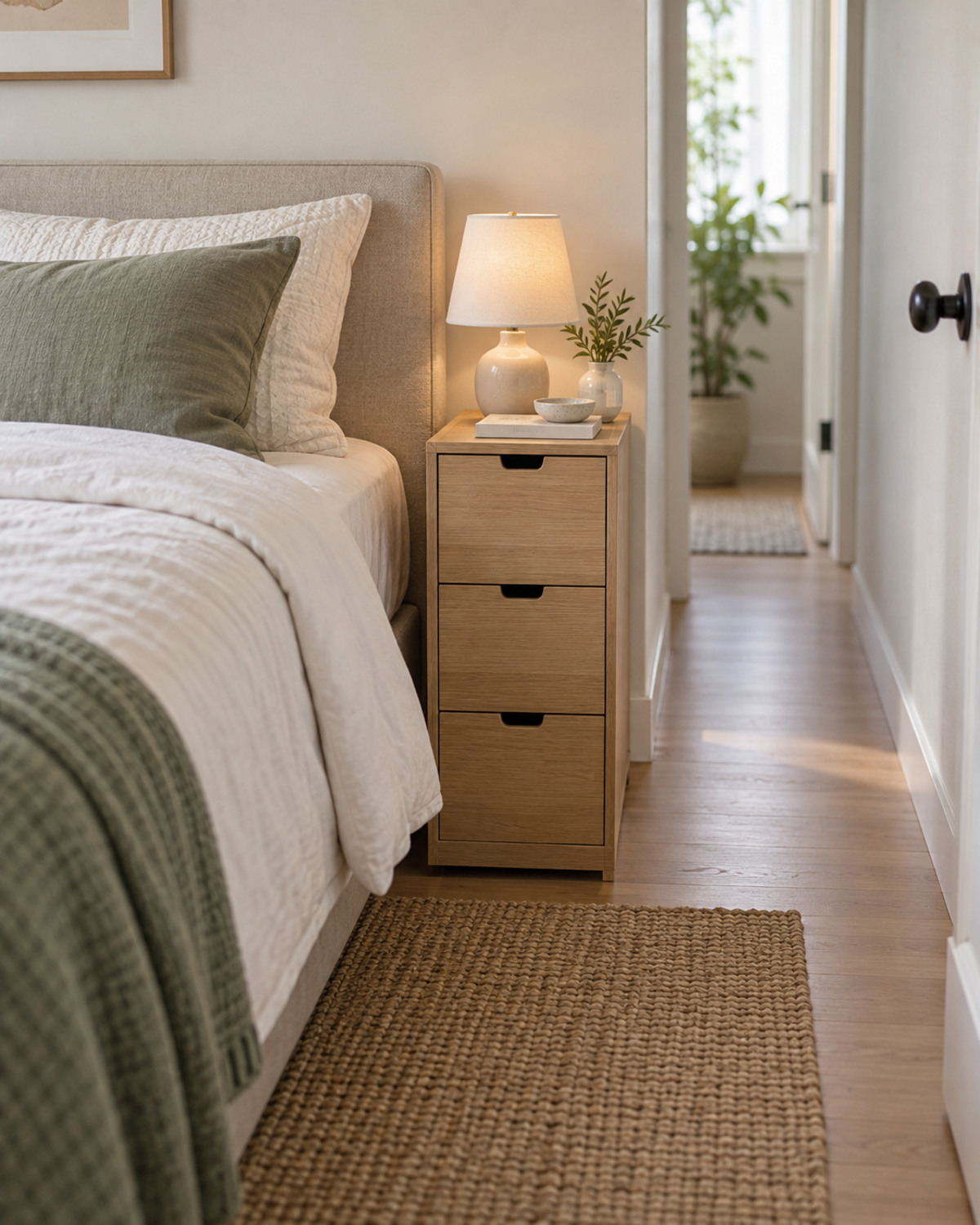
In a tight bedroom, a nightstand should earn its footprint. A narrow drawer unit can hold chargers, medication, reading glasses, and sleep accessories while using less width than a traditional side table. Measure the gap at the bed’s widest point and confirm that drawers can open without striking the bed or wall.
Keep the top simple: one properly scaled lamp, a small dish, and perhaps a book. Closed storage reduces visual noise, while raised legs make a compact piece feel lighter. Choose a freestanding unit that can work beside a sofa or desk in a future home. If storage is the larger challenge, the site’s bedroom storage ideas provide additional options for other parts of the room.
12. Put Hidden Storage Under the Bed
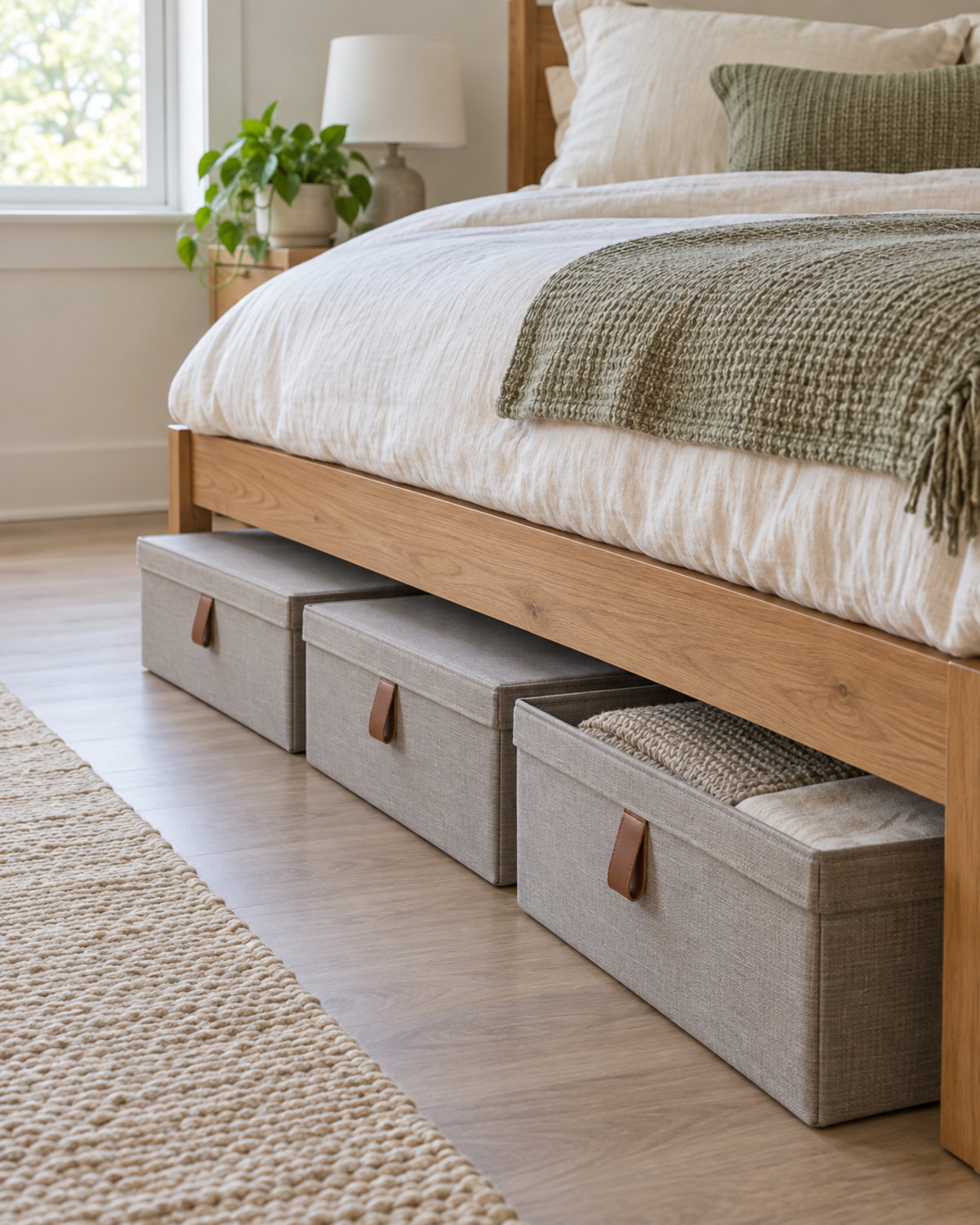
Under-bed space works best when it holds a defined category instead of becoming a hiding place for random clutter. Use matching low-profile bins for off-season linens, occasional accessories, or clothing that is already clean and dry. Measure the lowest part of the frame—not just the open edge—before choosing containers.
Lids or zippered covers help control dust, and handles make bins easier to pull without dragging them across the floor. Leave room around any floor vent and do not overfill containers until they bow. A simple set of portable bins often adds more useful capacity than another tall cabinet, and it can move to a new bedroom without changing the layout.
13. Create a Movable Desk or Vanity Zone
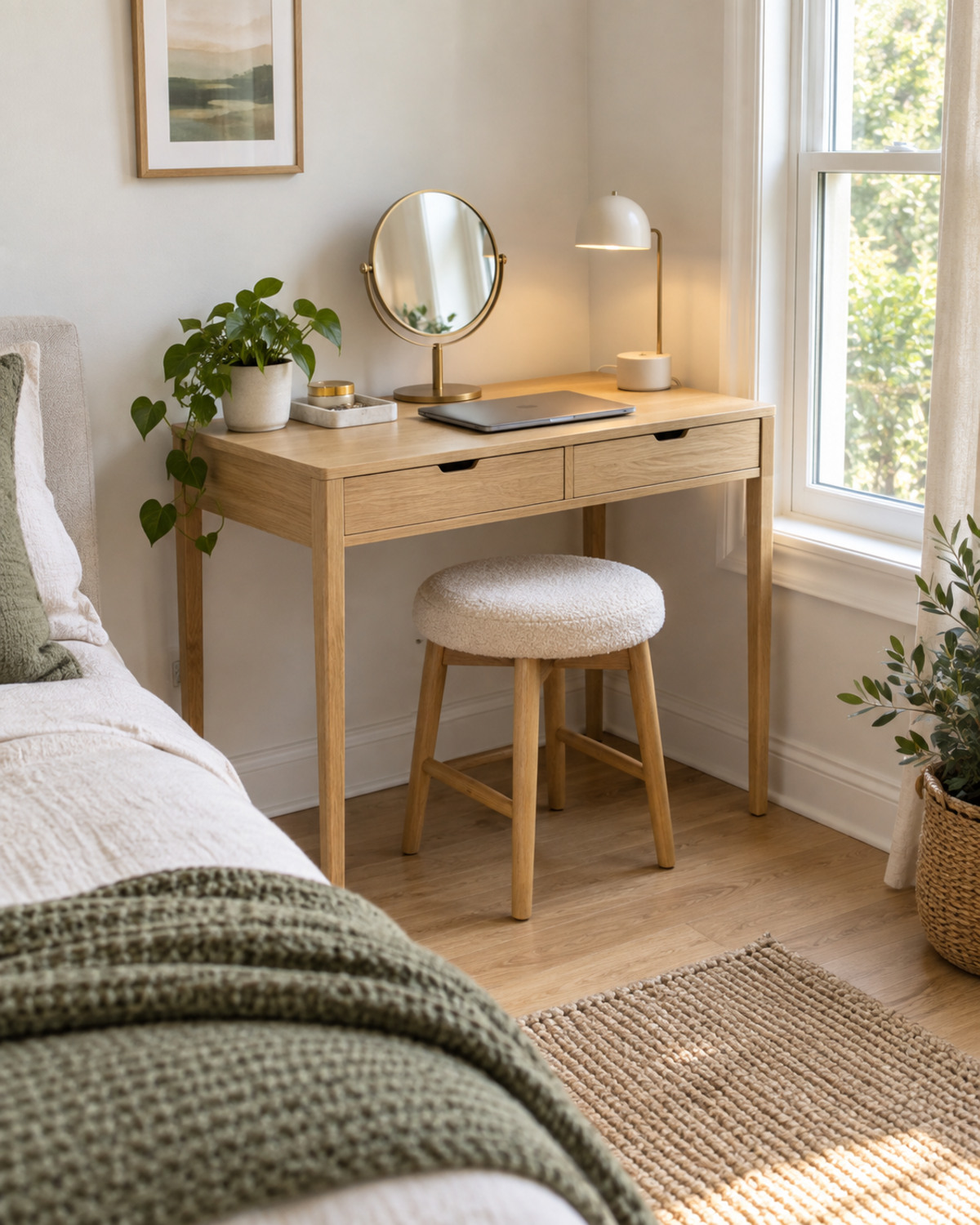
A slender desk can support work in the morning and grooming in the evening without becoming a permanent built-in. Choose a depth that leaves the walkway comfortable, then pair it with a stool that tucks completely underneath. A tabletop mirror, portable lamp, and small tray can switch the surface from desk to vanity in minutes.
Place the zone near daylight when possible, but do not block the window or heater. Keep cords together and away from chair wheels. Closed drawers are useful for daily supplies; everything else should leave the surface when the task is finished. Because each component is movable, the setup can become an entry console, craft table, or compact home-office piece after the next move.
14. Zone the Room With a Freestanding Screen or Open Shelf
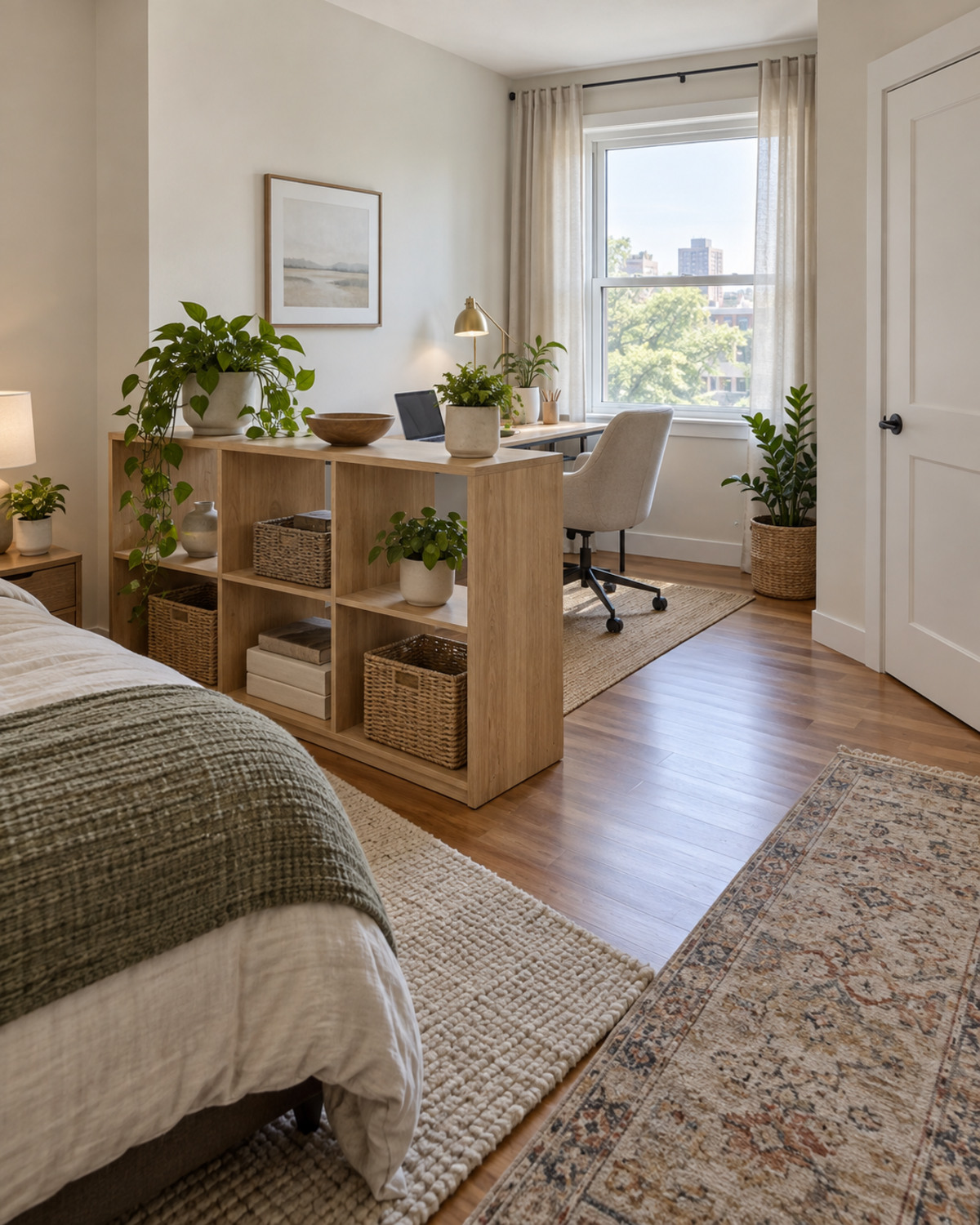
When a bedroom also serves as an office, a freestanding divider can create psychological separation without adding a wall. A low, broad open shelf allows light to pass through and provides storage on both sides. A folding screen offers a softer visual barrier and can disappear when it is not needed.
Stability is more important than the styling moment. Follow the product’s assembly and restraint directions, keep heavy items low, and do not use a tall, top-heavy shelf as a casual room divider. Preserve a clear route to the door and window, and keep vents and outlets accessible. If safe placement is not possible, define the zone with a rug and a change in lighting instead.
15. Upgrade the Mood With Bulbs, Lampshades, and Layered Light

One bright ceiling fixture flattens a bedroom. Layered light gives each activity its own source: a shaded bedside lamp for reading, a floor lamp near a chair, and a low accent lamp on a dresser. Portable fixtures also let you rebalance the room after moving the furniture.
Choose compatible bulbs within each fixture’s listed limits and use shades that keep glare out of the eyes. Similar warm light color across the room usually feels calmer than a mix of icy white and amber bulbs. Put frequently used switches within easy reach, route cords against stable edges, and keep them away from rugs and doorways. The overhead light can remain available for cleaning without controlling the room’s entire mood.
16. Make the Bed Feel Hotel-Finished With Portable Layers

A finished bed does not require a mountain of decorative pillows. Start with comfortable sleeping pillows, add two supportive back pillows or Euro shams, and finish with one lumbar cushion. Fold a coverlet across the lower third of the bed and place one textured throw at the foot.
The restraint is what creates the tailored effect. Repeat the headboard or rug color in one layer, keep the main duvet quiet, and vary texture more than pattern. Choose pieces you will actually wash and use; a bed that takes fifteen minutes to rebuild each morning is unlikely to stay polished. Every layer can move with you, making this one of the safest places to spend a larger share of the decor budget.
17. Build a True Same-Room Before and After
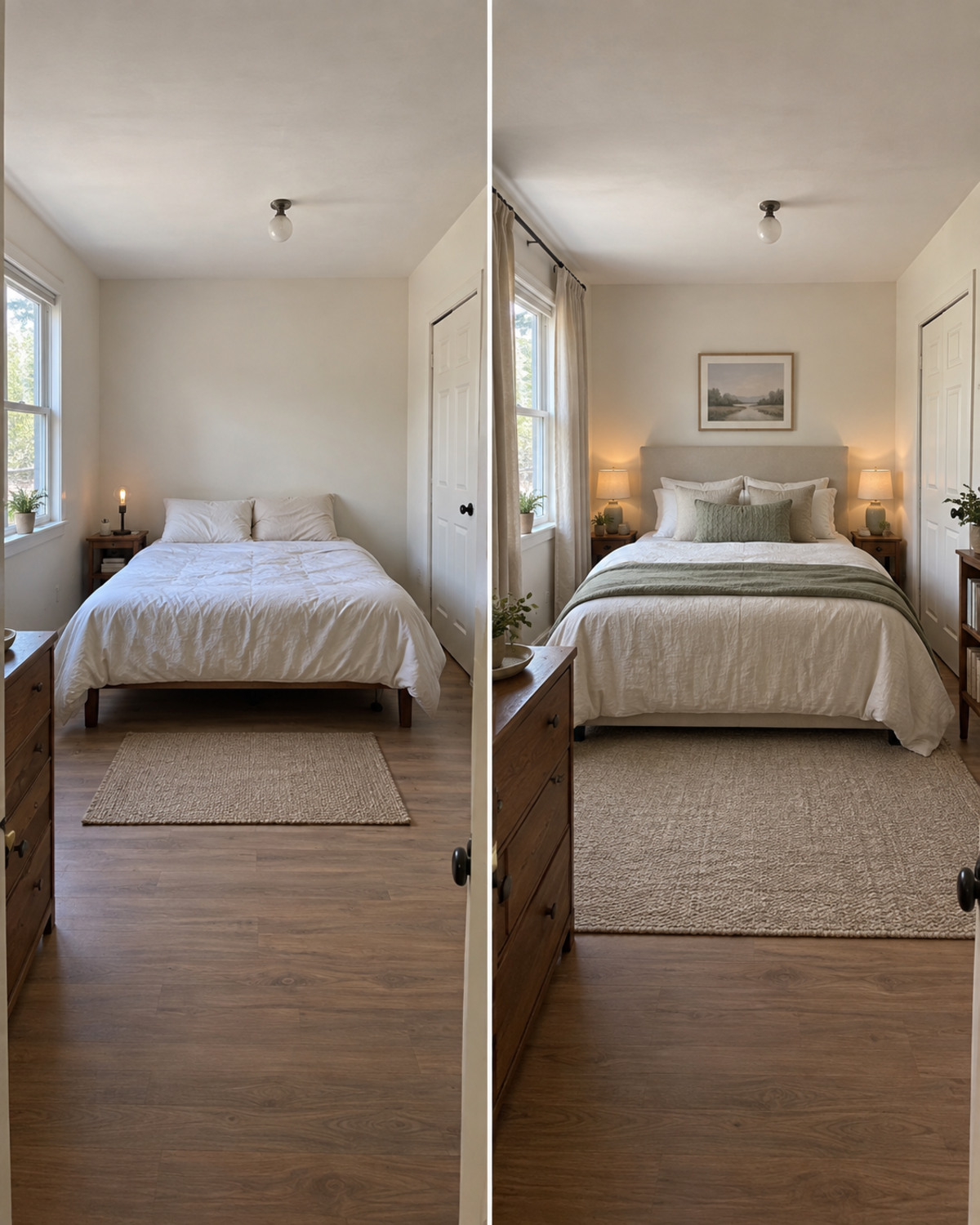
A convincing rental makeover keeps the camera, architecture, bed position, wall color, window, and doors unchanged. The “after” should result from a controlled set of portable improvements: a freestanding headboard, fuller bedding, a correctly sized rug, shaded lamps, long curtains, narrow storage, and a small amount of art.
Photograph the original room before shopping, then recreate the same viewpoint after styling. This reveals whether the upgrades improved balance, storage, light, and circulation instead of merely adding more objects. It also exposes weak purchases quickly. If the finished room still feels scattered, remove one color or small decor category before buying another piece. A disciplined edit is often the last step that makes a renter-friendly bedroom feel intentional.
What to Buy First on a Limited Budget
Start with the item that solves the room’s most visible problem. If the bed feels unfinished, improve the bedding or add a compatible freestanding headboard. If the floor dominates the room, save for a correctly scaled rug. If the room works poorly at night, prioritize a pair of portable lamps.
The second purchase should connect to the first through color, material, or function. The third should improve storage or layout. Wait until those portable layers are working before considering an adhesive surface treatment. This order protects more of the budget because bedding, lamps, rugs, mirrors, and small furniture are likely to remain useful after a move.
What to Check Before Using a Removable Product
Read the lease and request written permission when the agreement requires it. Then identify the surface material, paint finish, condition, and how recently it was painted. Compare those facts with the specific product’s approved surfaces and weight limits. Clean and prepare the area only as directed, test a hidden sample, and keep the removal instructions.
Do not assume that “renter-friendly,” “peel-and-stick,” or “damage-free” overrides incompatible paint, moisture, texture, age, or incorrect removal. If a product fails the sample test—or if the cost of repairing the surface outweighs the visual benefit—use a framed panel, textile, freestanding screen, or portable object instead.
Renter-Friendly Bedroom FAQ
How can I decorate a rental bedroom without painting?
Build the palette through bedding, curtains, a rug, lampshades, art, and portable furniture. Repeating a limited set of colors across these large surfaces can make neutral rental walls look intentional rather than unfinished.
Can peel-and-stick wallpaper damage rental walls?
It can behave differently depending on the product, paint finish, surface condition, cure time, installation, and removal. Check the lease and manufacturer guidance, then test a hidden area before committing to a large wall.
What bedroom upgrades are easiest to take to a new home?
Bedding, lamps, rugs, freestanding headboards, tabletop mirrors, under-bed bins, narrow storage, desks, stools, and folding screens are among the most portable options. Choose flexible colors and dimensions when possible.
How do I make a rental bedroom look expensive without remodeling?
Focus on proportion and consistency rather than decorative quantity. A correctly sized rug, full curtains, layered light, a disciplined bed, and one strong focal point usually look more refined than many small accents.
Final Thoughts
The strongest renter-friendly bedroom ideas solve a real problem and remain useful beyond the current lease. Begin with portable color, comfort, lighting, and storage; use existing hardware when it works; and treat temporary surface products as conditional rather than guaranteed. With careful scale and a limited palette, an ordinary rental bedroom can feel finished without pretending it has been remodeled.