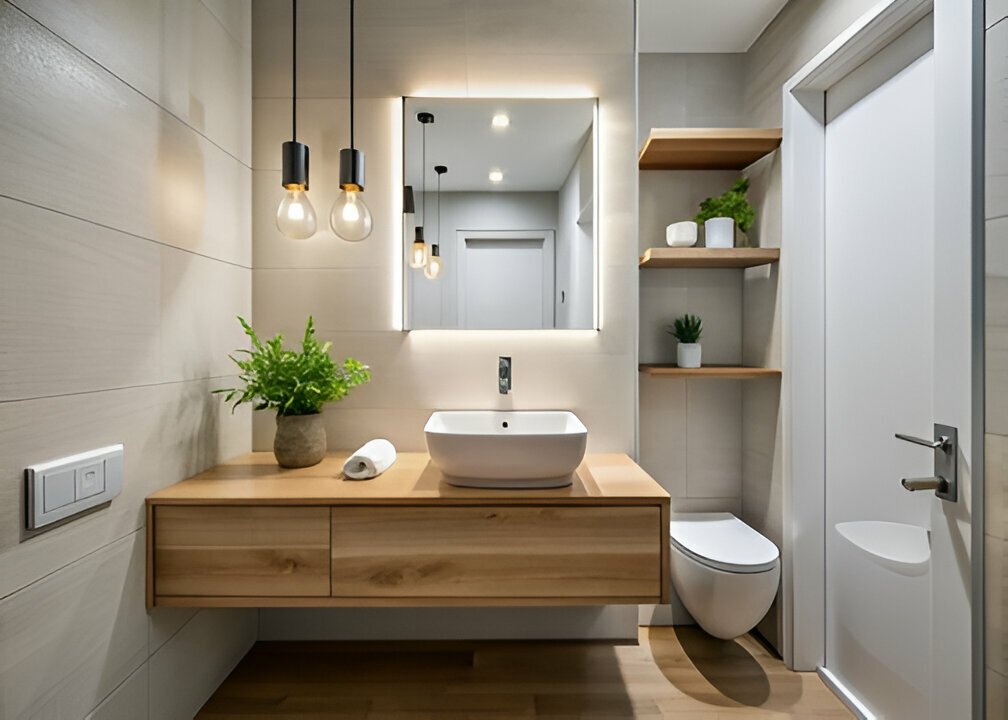
An outdoor shower can be a practical place to rinse after swimming, gardening, or a day at the beach, but it can also become one of the most atmospheric corners of a backyard. The best outdoor shower ideas feel connected to the house and landscape, offer enough privacy for their intended use, and handle water safely rather than treating drainage and plumbing as afterthoughts.
Start with the purpose. A quick poolside rinse may need only cold water, a hook, and a well-drained surface. A private shower used regularly calls for a more complete enclosure, hot and cold water, a comfortable changing zone, and lighting. In every case, confirm local plumbing, building, drainage, wastewater, setback, and winterization requirements before installation. Soil, climate, water source, and neighborhood rules can change what is appropriate.
These 18 ideas cover compact courtyards, coastal gardens, pool decks, luxury retreats, and budget-conscious updates. Use them as design directions, then adapt the dimensions, fixtures, and construction to your site with qualified local professionals where required.
1. Build Privacy With Warm Cedar Slats
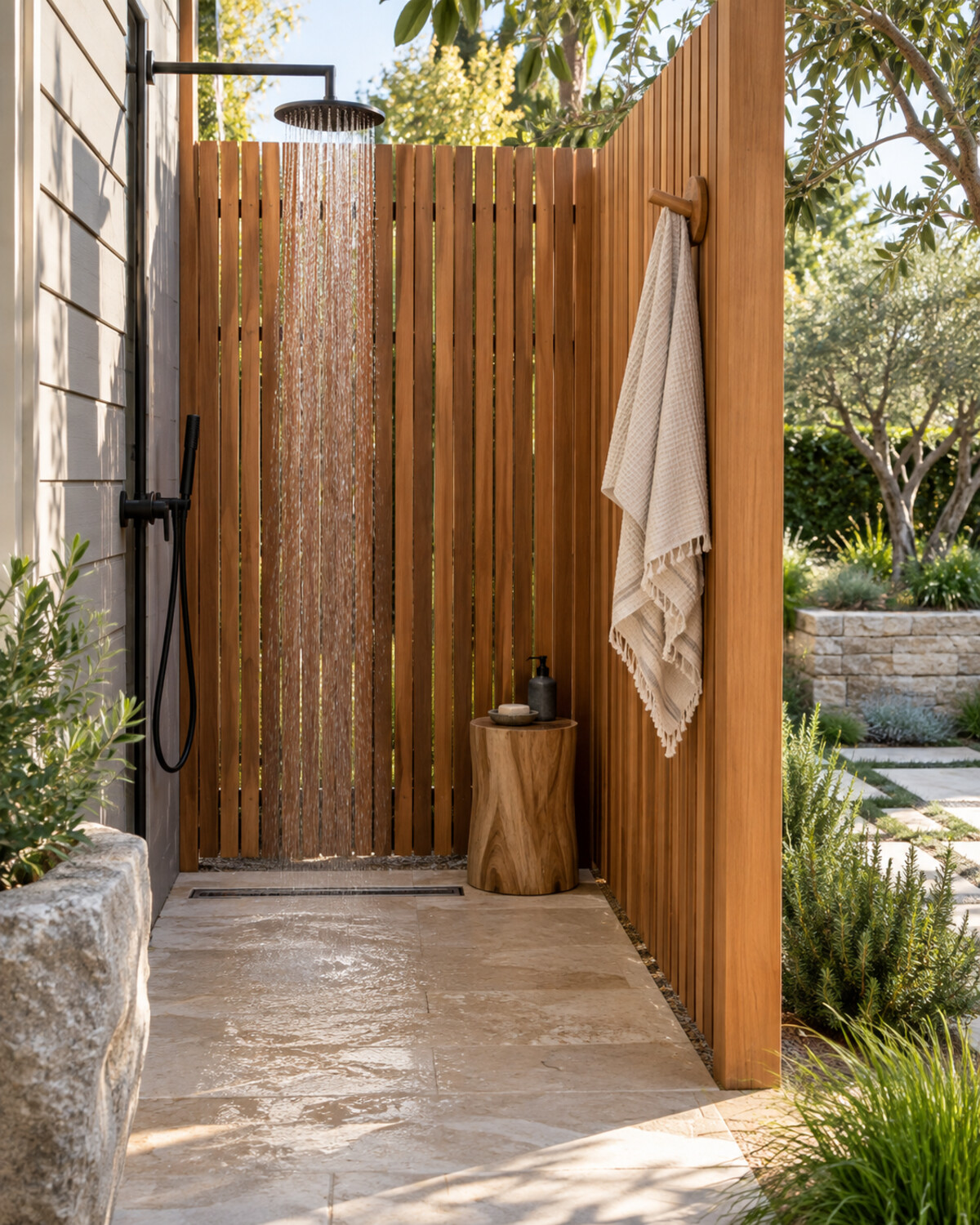
Vertical cedar slats give an outdoor shower privacy without making it feel like a sealed box. Small, consistent gaps allow light and air to pass through while the repeated lines create a calm architectural backdrop. Continue the same timber on one return wall or a narrow gate so the enclosure reads as one design rather than a screen placed in front of plumbing.
Keep the interior simple: a matte black shower, one substantial hook, and a pale stone or porcelain floor. Wood species, fasteners, finish, and clearances must be suitable for repeated exterior moisture. The bottom of the screen should not sit in trapped water, and every side needs enough ventilation to dry. If full privacy is required, test sightlines from windows, neighboring properties, and paths—not only from straight ahead.
2. Mount the Shower on a Stone Garden Wall
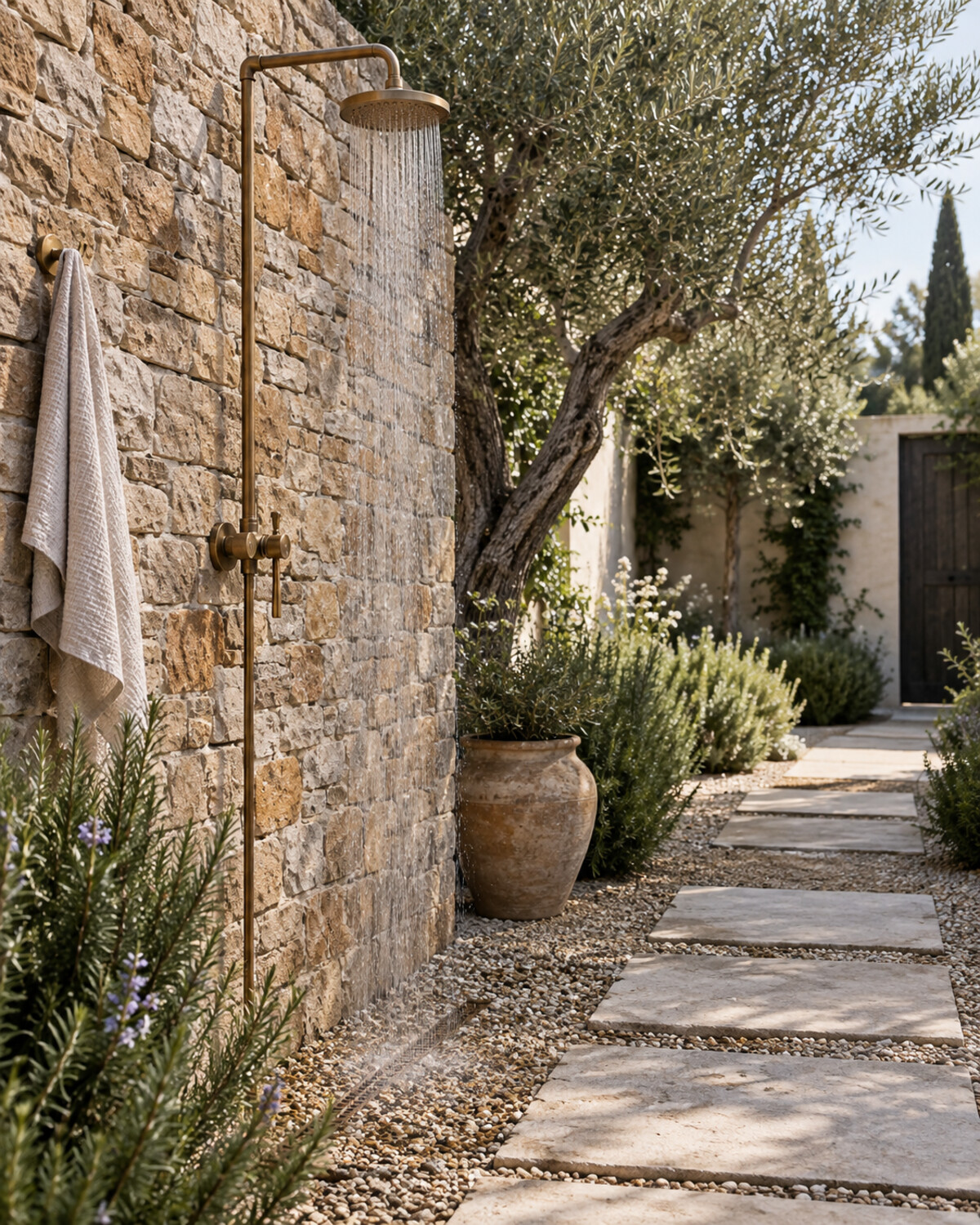
A stone wall makes a shower look integrated with the landscape, especially in Mediterranean, rustic, and transitional gardens. Choose stone that relates to the house foundation, retaining walls, or paving so the new element feels established. Aged brass or dark bronze fixtures bring warmth, while a simple rain head keeps the composition uncluttered.
The visual wall and the waterproof plumbing assembly are not automatically the same thing. A professional needs to plan the supply lines, freeze protection where applicable, substrate, penetrations, and service access. Below, use a properly designed drainage area rather than assuming loose gravel alone will manage the water. Rosemary, olive, lavender, or similarly styled planting can frame the scene only when the plants suit the actual climate and moisture conditions.
3. Add a Freestanding Shower to a Small Deck
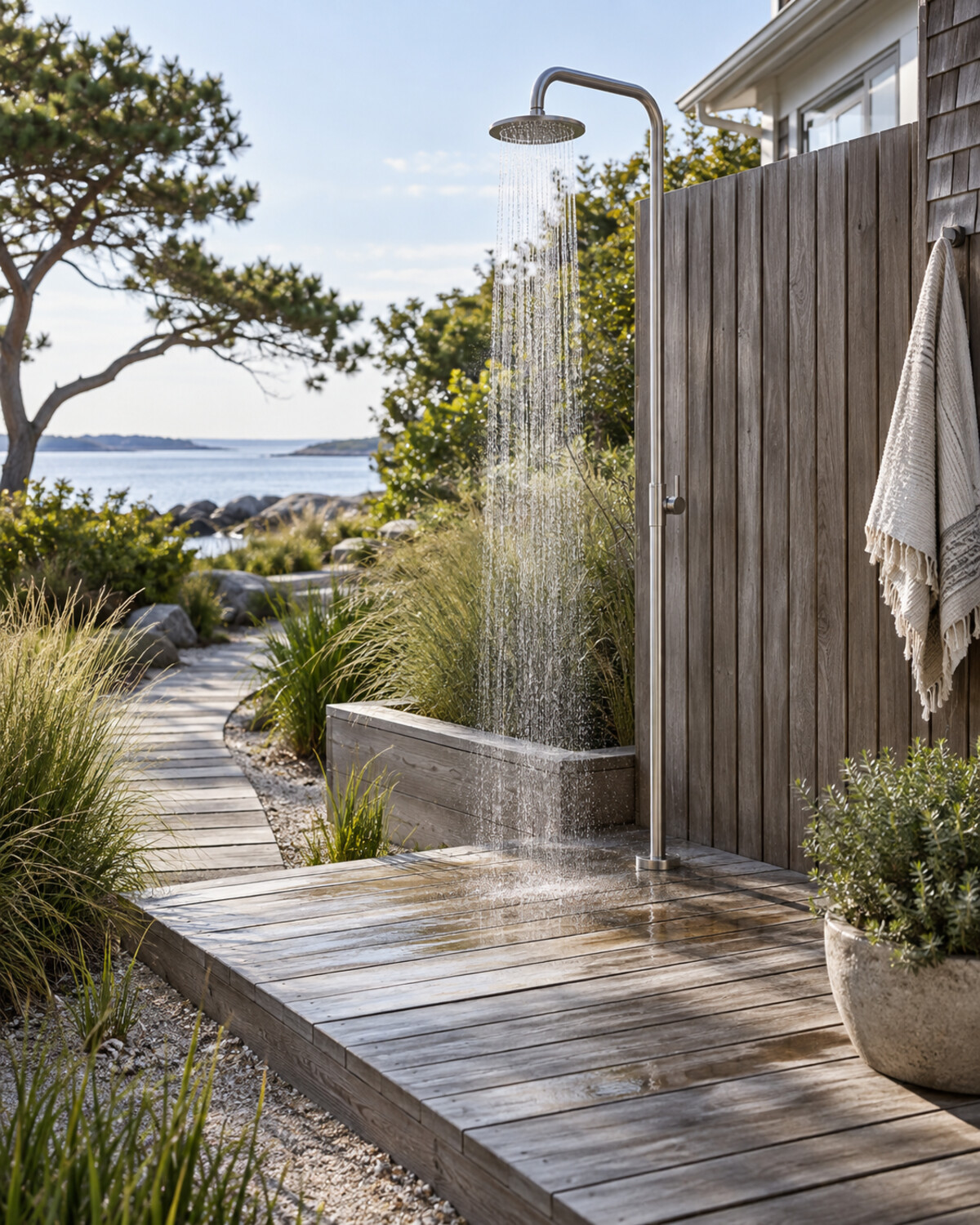
A freestanding shower column can create a clean focal point without building a full wall. It works particularly well beside a pool, hot tub, sauna, or beach-house deck where the main goal is rinsing. Position the fixture so the spray stays within the drainage zone and away from doors, furniture, and planting that dislikes frequent water.
The deck surface should be detailed for wet use, with appropriate spacing, structure, drainage, and slip resistance. Add one privacy panel on the exposed side rather than surrounding the entire platform if the shower does not need full enclosure. A stainless or marine-grade-looking finish suits a coastal setting, but product suitability depends on its actual exterior rating and local salt exposure. Use a nearby hook so towels never land on the wet deck.
4. Fit a Shower Into a Courtyard Corner
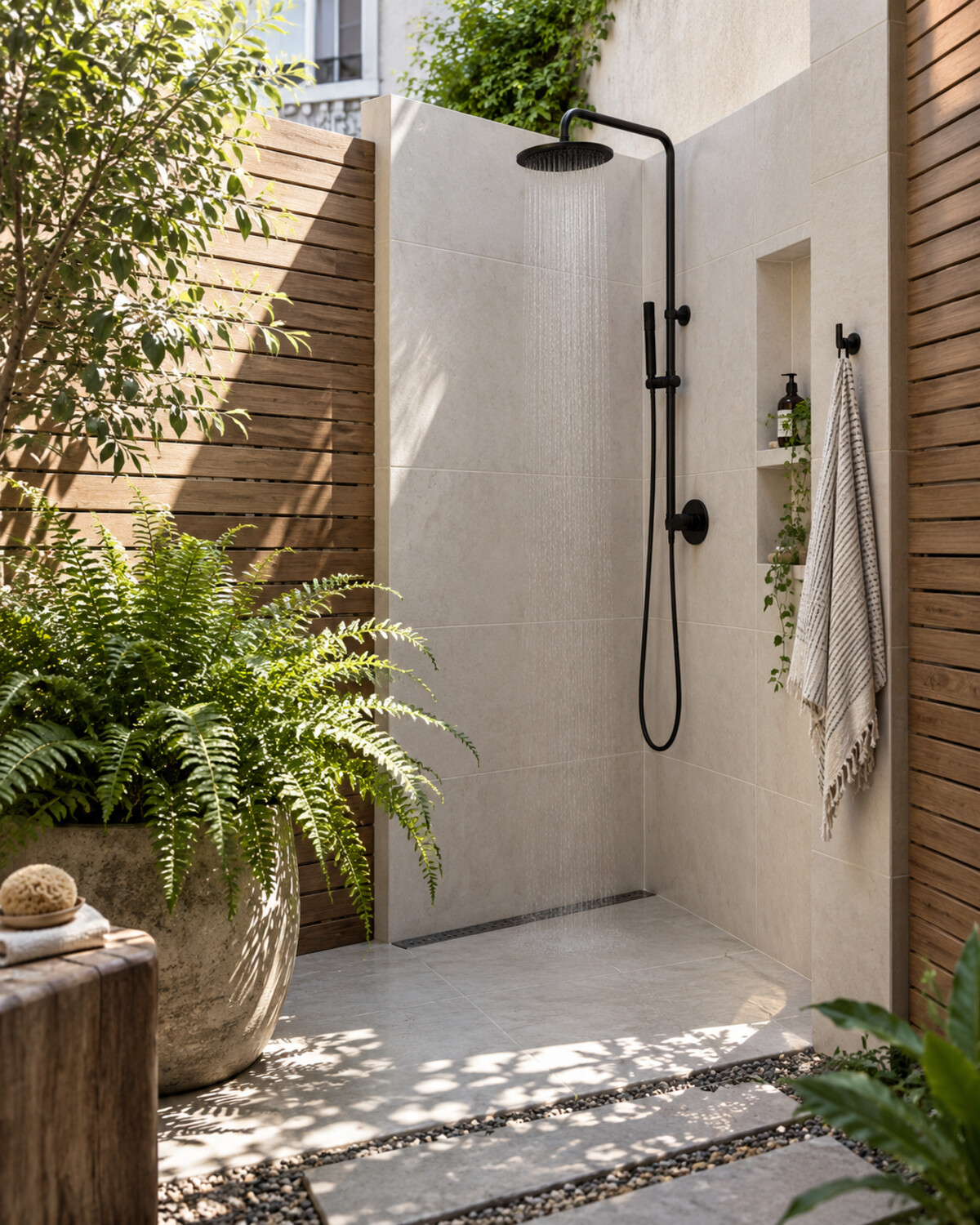
Two existing walls can define a compact shower with less visual clutter, making this layout useful in urban courtyards and narrow side yards. Keep the material palette pale and continuous to bounce light into the corner. A linear drain, recessed niche, and wall-mounted controls preserve floor space, while one large plant softens the hard surfaces.
Do not assume exterior house walls are ready to become shower walls. Waterproofing, flashing, drainage, and penetrations need a coordinated assembly that protects the building. Check door and window locations, eaves, vents, electrical equipment, and access routes before choosing the corner. If neighbors overlook the space, add a screened opening or partial roof only after verifying ventilation, height restrictions, and structural requirements.
5. Use Layered Planting as a Privacy Screen
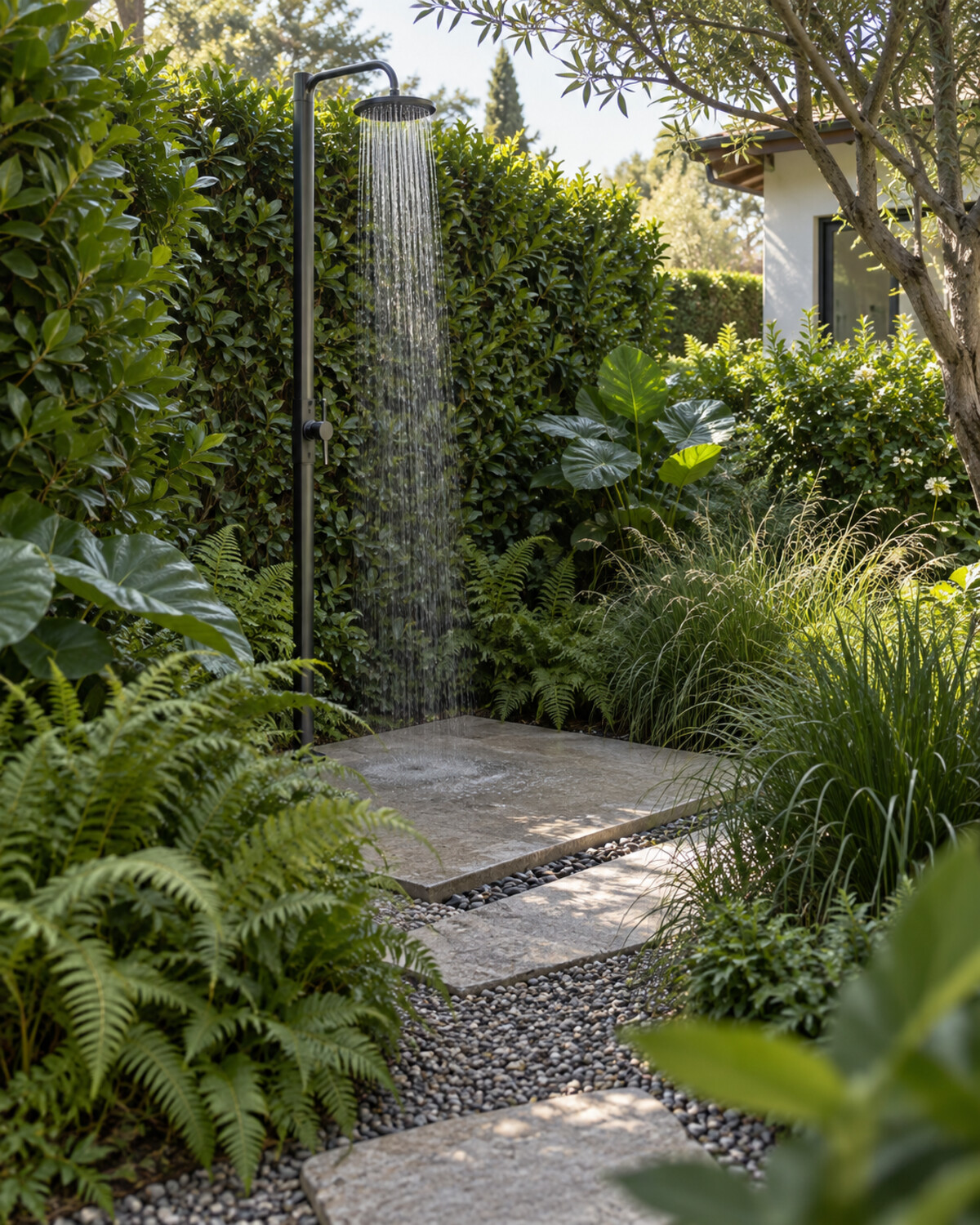
Plants can make a shower feel immersed in the garden, but successful green privacy uses layers rather than one fragile hedge. Combine a structural evergreen screen with medium-height shrubs and softer foliage near the shower. Leave enough room for mature growth and maintenance, and preserve airflow around wet surfaces.
Select plants for the site’s light, climate, soil, and water conditions. Avoid species with invasive roots, sharp foliage, heavy litter, or skin-irritating sap near the shower path. Planting should not block plumbing access or conceal drainage problems. Because foliage changes across seasons, evaluate privacy when plants are dormant as well as full. If the shower requires dependable year-round coverage, pair planting with a discreet slatted screen instead of relying on leaves alone.
6. Create a Relaxed Coastal Rinse Station
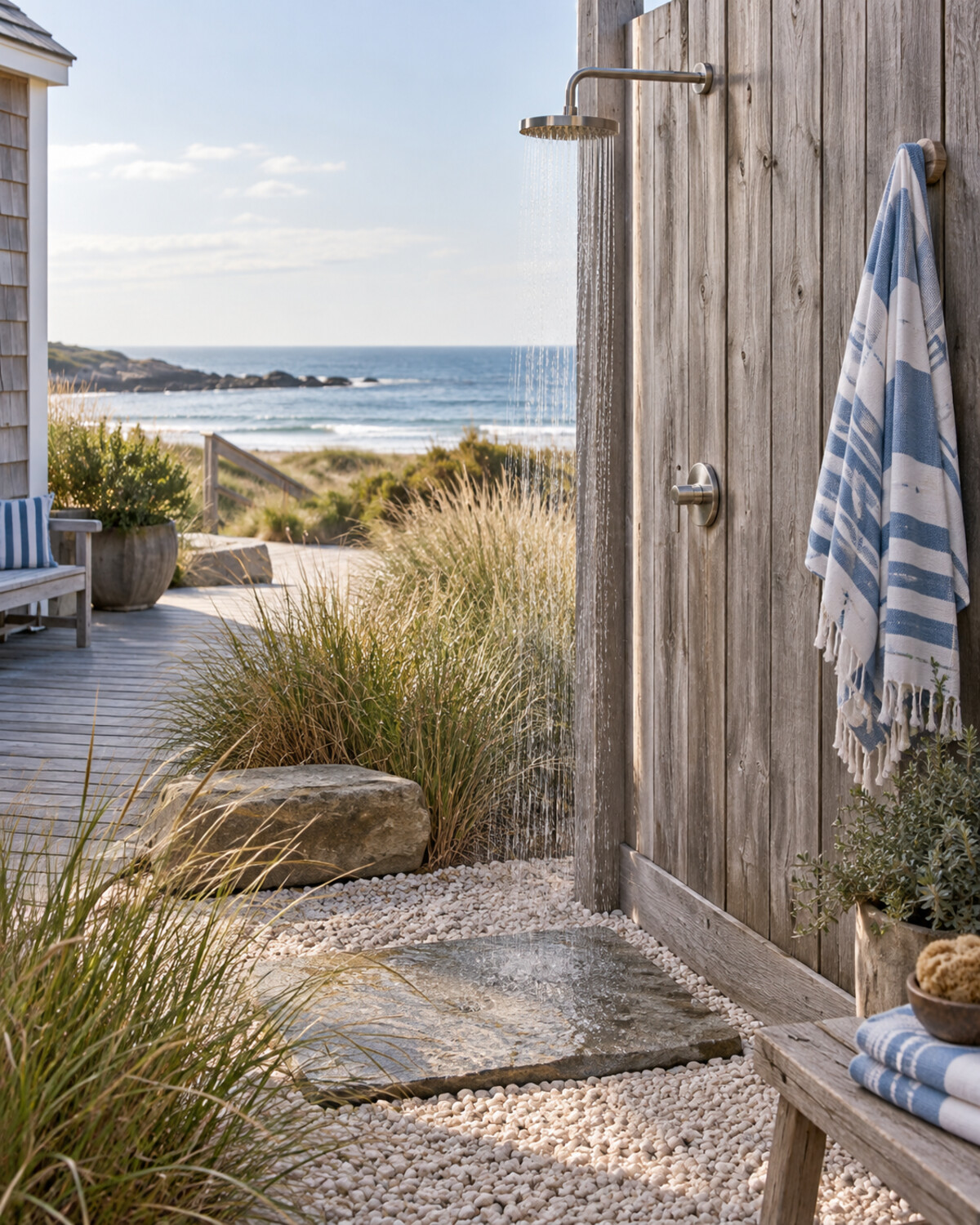
A coastal shower feels most convincing when it uses a restrained material story: weathered timber, brushed metal, pale stone, and dune-like planting. Add a striped towel or one woven basket for character, but keep the area functional enough to rinse sandy feet and swim gear without creating more objects to clean.
Salt air and wind are demanding. Specify fasteners and fixtures for the actual exposure, secure lightweight accessories, and avoid finishes chosen only for appearance. A hand shower or low foot tap can make rinsing easier and reduce the need to run the overhead shower. Direct water and sand toward a suitable collection or drainage solution approved for the site; do not let runoff erode the deck edge or flow onto a neighboring property.
7. Choose a Minimal Black-and-Stone Palette

Matte black fixtures against large-format gray stone create a crisp contemporary shower. Limit the composition to a few strong planes: one dark privacy wall, one pale or mid-gray floor, and clipped greenery at the edge. Concealed plumbing and a linear drain support the clean look, but they also require careful planning for access and maintenance.
Dark surfaces can become hot in full sun, and smooth stone can be slippery when wet. Review surface texture, heat exposure, water chemistry, and cleaning requirements before specifying materials. Break up the palette with a warm timber hook or bench so the area does not feel severe. At night, a single shielded wall light can reveal the texture without turning the shower into a brightly lit stage.
8. Put a Quick-Rinse Shower Beside the Pool
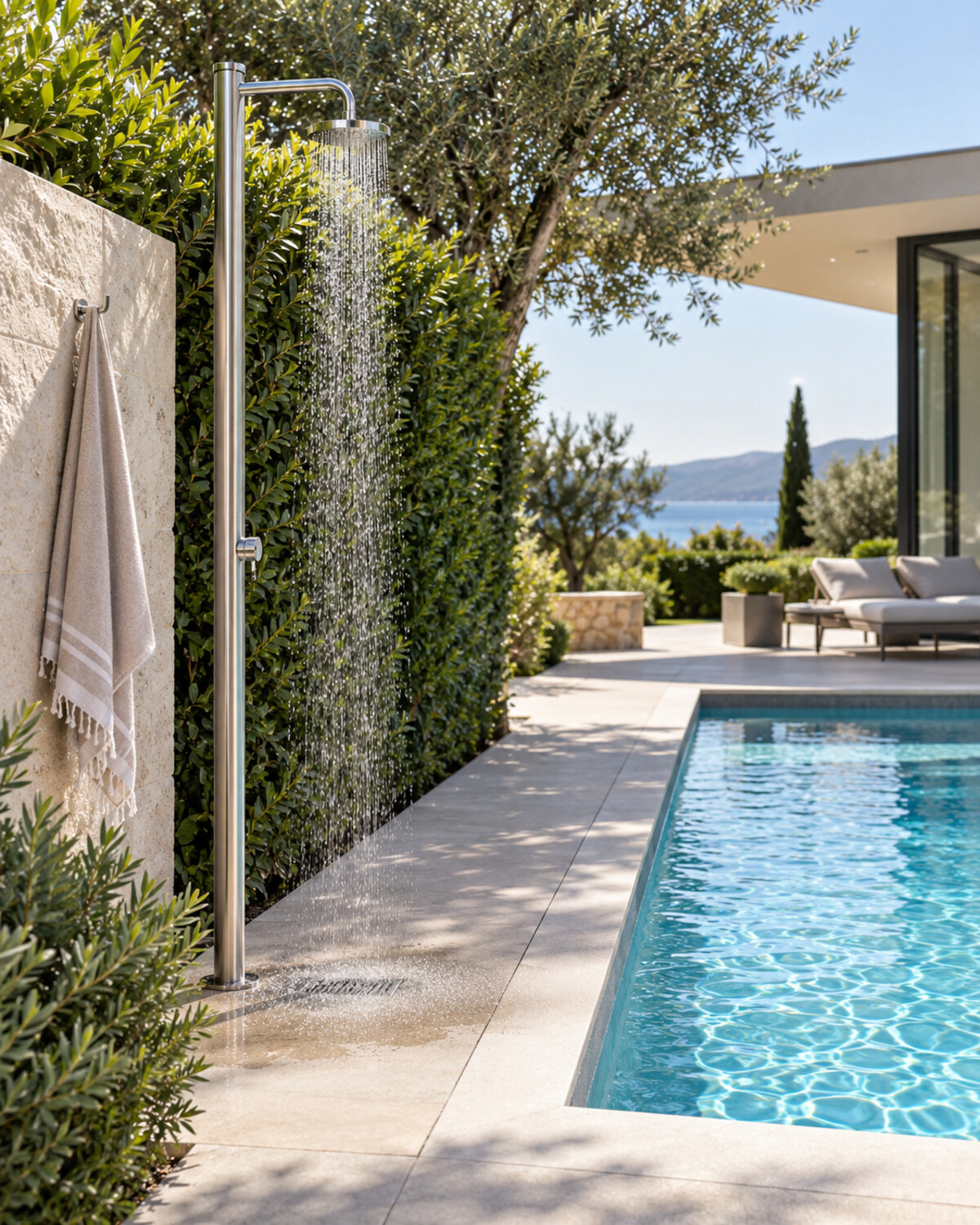
A poolside shower should be visible, easy to reach, and simple enough that people will actually use it. Place it along the route to the pool, but outside the main circulation line. A clear standing pad, obvious control, and nearby towel hook make the purpose immediately understandable.
Coordinate the location with pool barriers, gates, electrical zones, equipment access, and local safety requirements. Water should not run back toward the pool, collect on the deck, or create a slippery path. If the shower is primarily for rinsing, a single-temperature fixture may be sufficient, but comfort and local climate will guide that choice. Match the paving and planting to the pool area so the station feels planned rather than added later.
9. Shelter the Shower With an Open Pergola

An open pergola gives a shower a sense of enclosure while preserving air and sky. Use widely spaced rafters to cast patterned shade, then align one privacy wall with the structure. Climbing plants can soften the frame over time, provided their roots, growth habit, and maintenance suit the location.
The overhead element must not interfere with the shower spray, ventilation, or maintenance access. Structural sizing, wind loads, attachments, and setbacks require local review. Avoid a dense decorative roof that traps moisture unless the shower is designed like a fully weatherproof exterior room. A peg rail or narrow shelf mounted outside the splash zone keeps towels and clothing dry without crowding the shower floor.
10. Add a Bench and a Dry Towel Zone
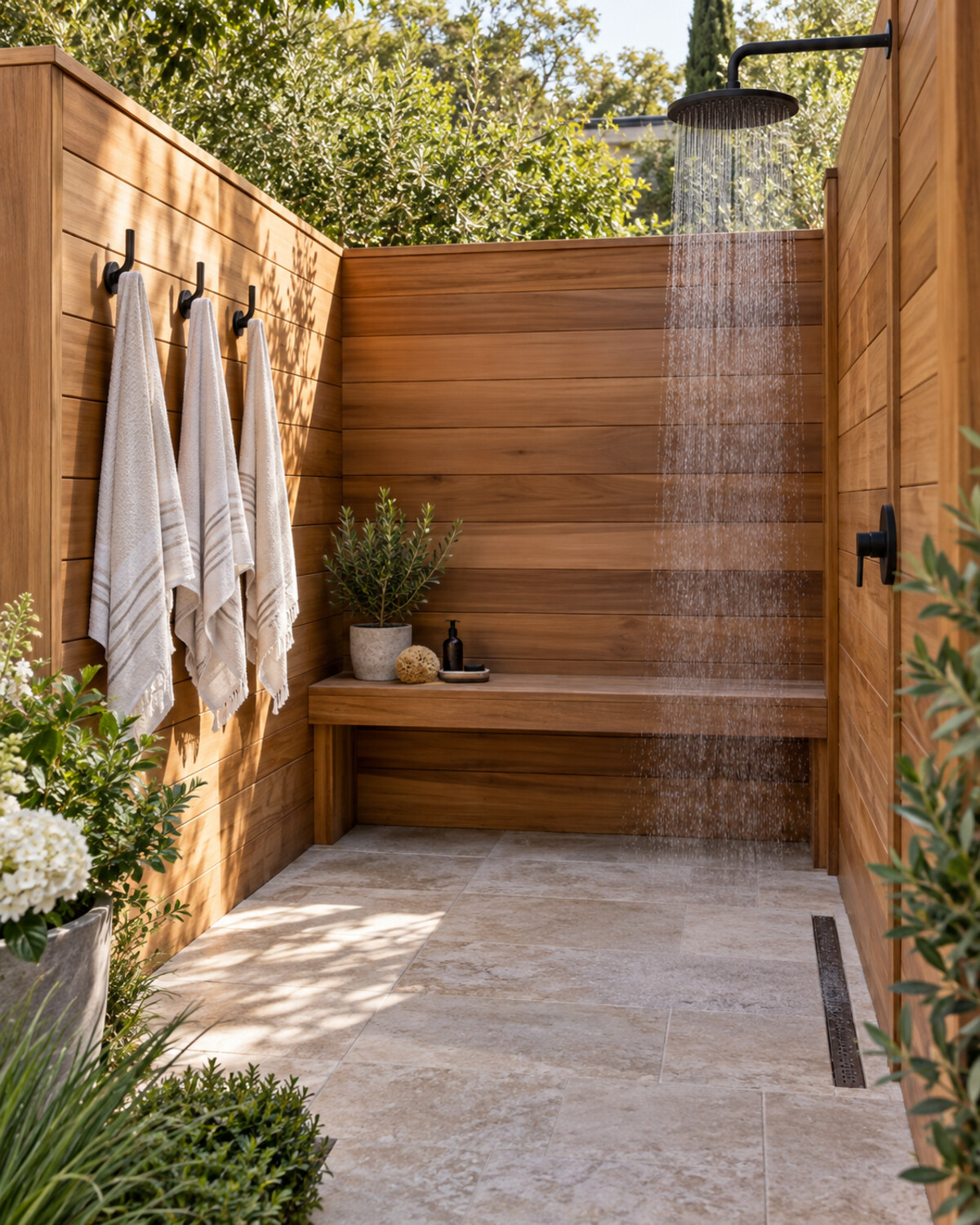
A shower becomes far easier to use when there is somewhere to sit, set sandals, and keep clothing beyond the spray. Place a compact bench at the entrance or along the driest wall, then add hooks at different heights. A small ledge can hold soap, but avoid deep shelves that collect leaves and standing water.
The bench should be stable, smooth, and made for repeated exterior wetting. Leave air around and beneath it so the surface can dry. In a family shower, include a hand shower and reachable hook, but have accessibility and grab-support needs designed properly rather than treating decorative rails as safety equipment. The changing zone needs privacy of its own, especially if the shower door opens directly toward a shared yard.
11. Include a Dedicated Foot Rinse
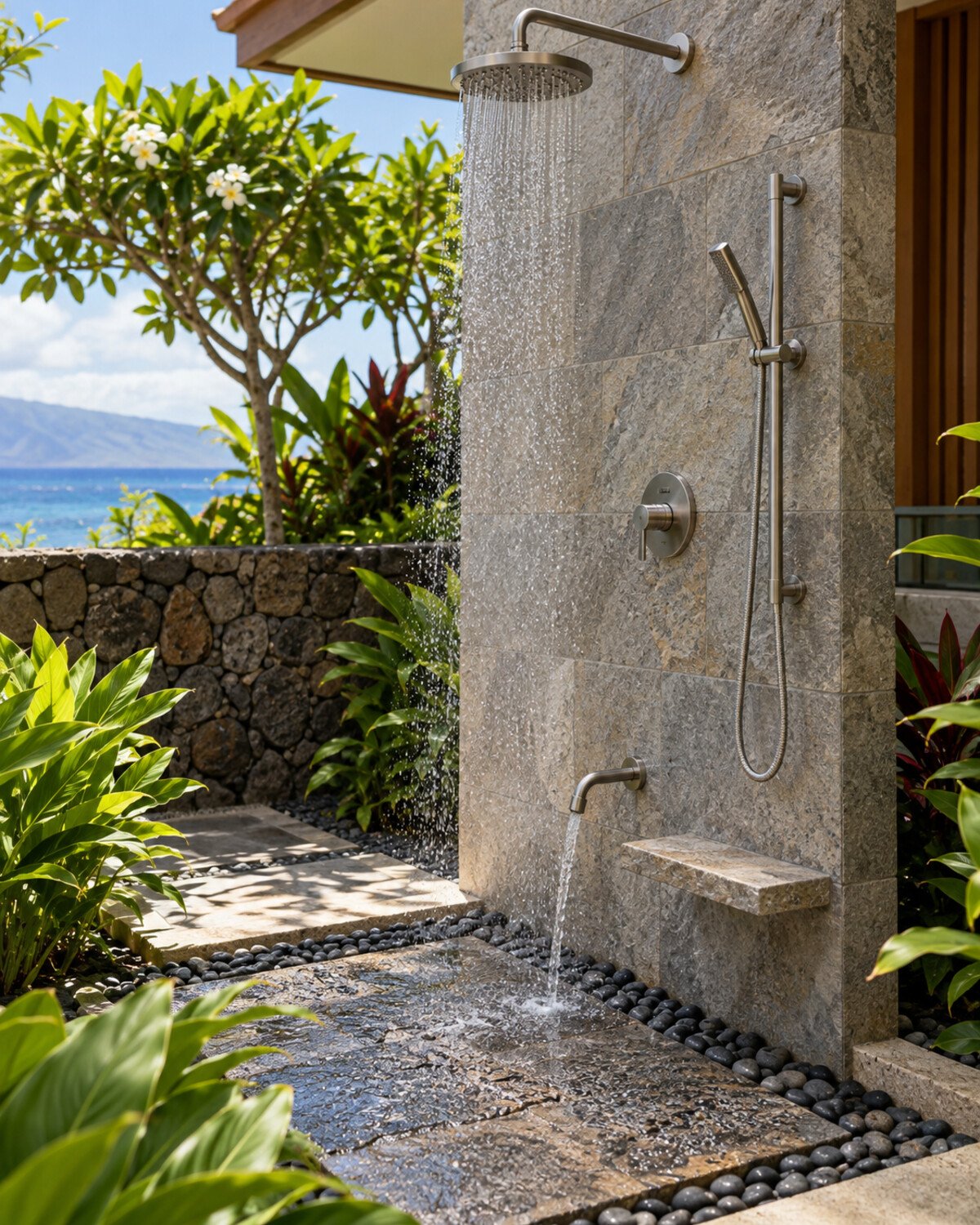
A low spout or hand shower can be more useful than the overhead head for muddy shoes, sandy feet, garden tools, and pets. Position it where the user can reach it without stepping into the full shower zone. A small raised ledge or stable footrest makes rinsing safer than balancing on one leg.
Keep the control layout obvious and protect the wall from repeated splash. If the fixture may be used for pets, verify safe water temperature and choose a hose length that does not create a trip hazard. The drainage plan must handle concentrated rinsing and debris; a removable catch or serviceable channel may be more practical than letting sand and soil enter concealed plumbing.
12. Make Drainage Part of the Design

The floor can make the drainage strategy visible and attractive. Large textured pavers set within a gravel border create a relaxed garden look, while a linear drain suits a more architectural shower. The finished surface should guide water predictably, dry between uses, and provide secure footing.
Drainage is site-specific. Soil type, slope, water volume, soaps, groundwater, foundations, wells, septic systems, and local wastewater rules all matter. Decorative gravel is not a universal solution, and water should never be directed toward the house or an adjacent property. Have the appropriate local professional determine whether the shower needs a connected drain, an approved infiltration design, or another system. Design access so leaves, hair, and debris can be removed.
13. Plan Hot and Cold Water Without Visual Clutter

Hot water can extend comfort and use, but it makes the installation more complex. Keep the visual wall clean by aligning the head, mixer, and hand shower on one vertical line. A nearby concealed-but-accessible service panel can preserve the design while allowing maintenance.
Supply routing, temperature control, backflow protection, pipe insulation, shutoffs, and water-heater capacity require professional review. Never hide essential valves behind permanently sealed finishes. If the shower is far from the house, ask about the water and energy implications of the run before committing. For an occasional rinse station, cold water may be the more sensible choice; for a regular bathing space, comfortable temperature control is usually worth planning from the beginning.
14. Design for Easy Seasonal Winterization
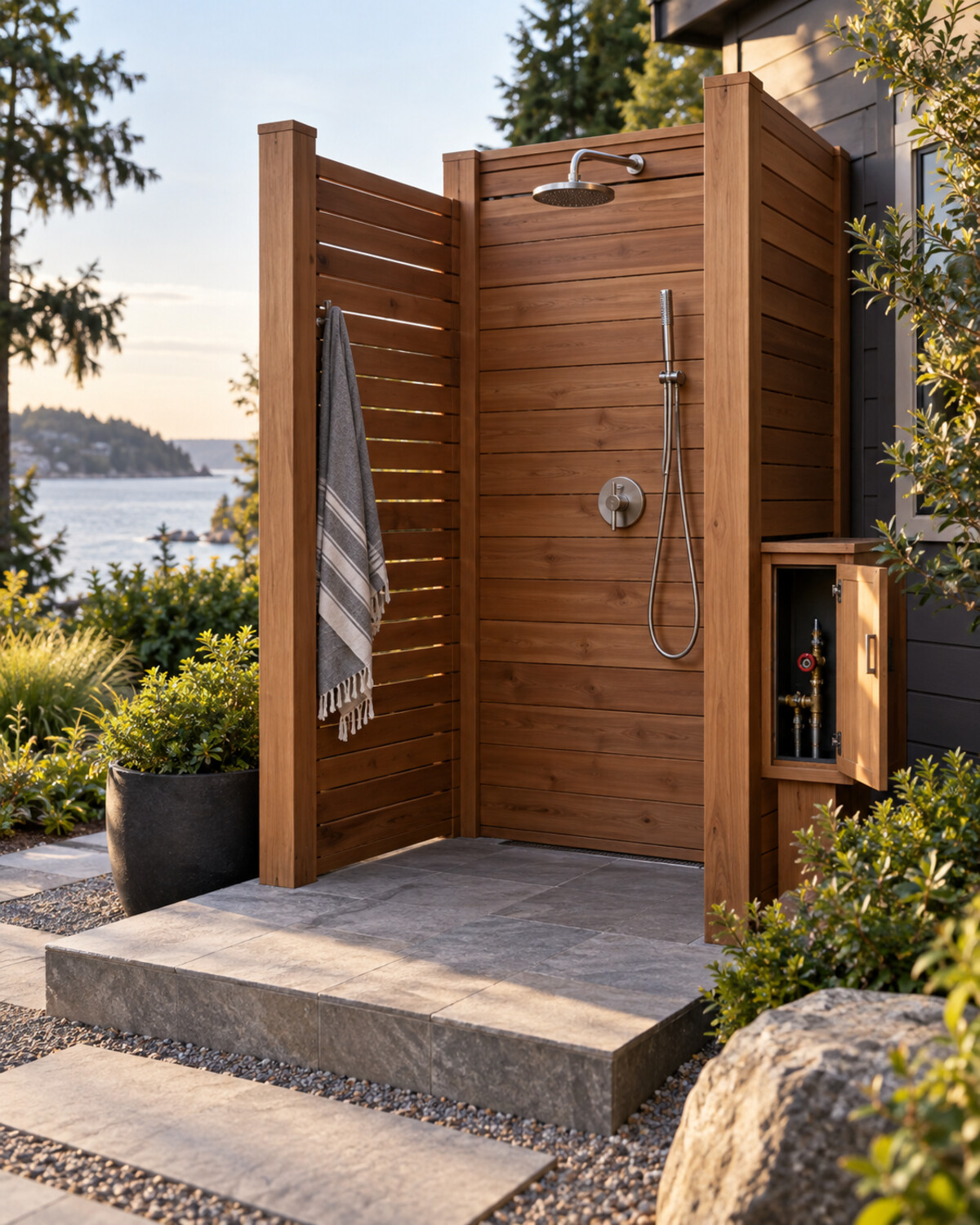
In freezing climates, the most elegant outdoor shower is one that can be protected without dismantling the entire enclosure. Plan accessible shutoffs and drains, minimize trapped water, and choose components intended for the climate. A removable hand shower and serviceable fixture layout make seasonal care easier.
“Freeze-proof” is not a blanket promise. Installation details, pipe routing, exposure, and local temperatures determine risk. Follow the fixture manufacturer’s instructions and local plumbing guidance for shutting down and draining the system. Do not bury valves behind decorative panels or permanent masonry. Use the off-season to inspect seals, fasteners, timber, drains, and screens so small problems are addressed before the shower returns to service.
15. Choose Materials That Age Gracefully
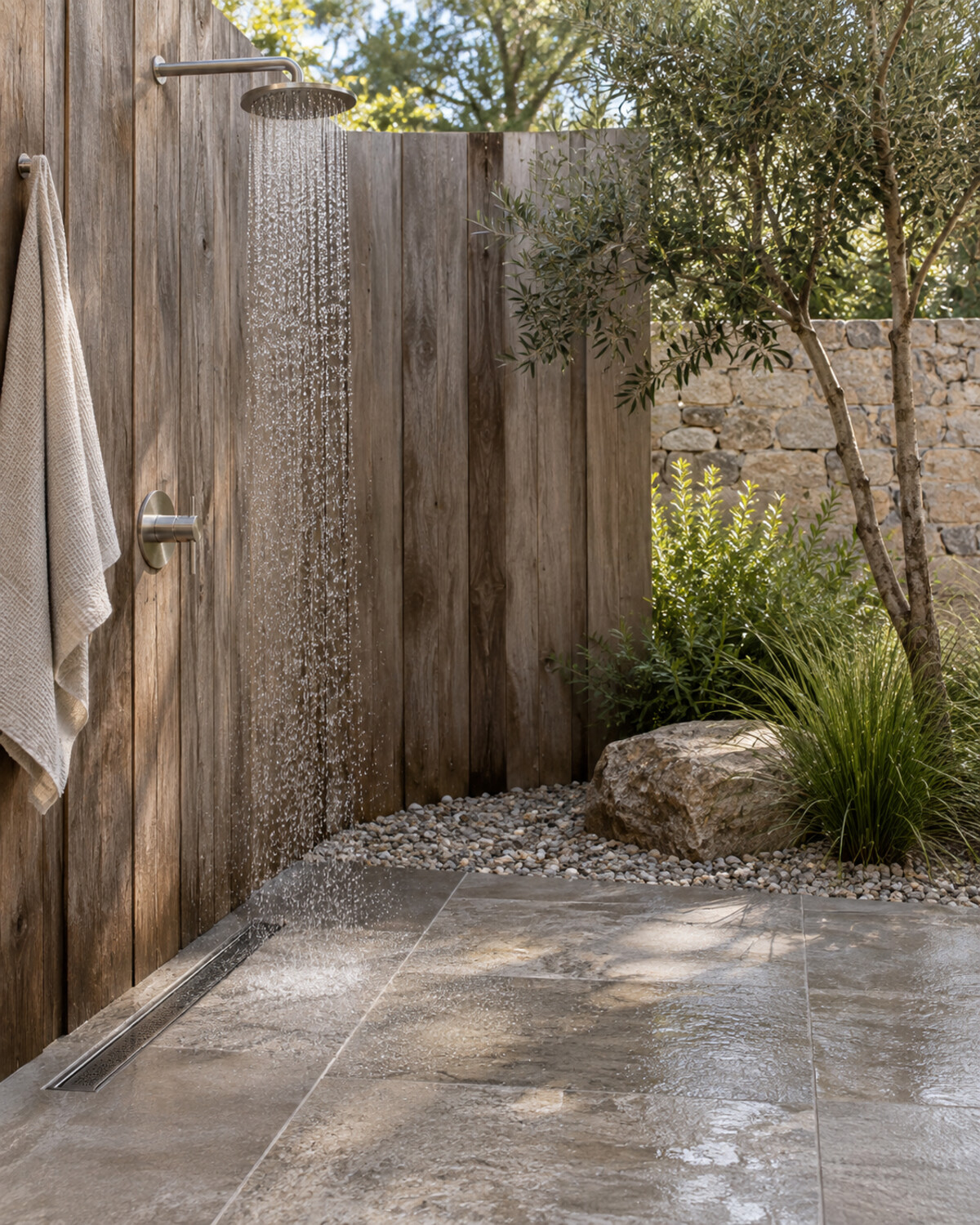
An exterior shower is repeatedly exposed to water, sun, dirt, leaves, and temperature changes. Select materials for that cycle rather than copying an indoor bathroom. Exterior-rated porcelain, properly detailed stone, suitable timber, and corrosion-resistant metal can all work, but every material still has maintenance requirements.
Decide whether you want timber to retain a finished color or weather naturally, and specify the care plan accordingly. Consider how hard water will mark dark fixtures and glass, how textured surfaces will be cleaned, and whether salt or pool chemicals affect nearby metal. Limit the palette to three primary materials so the shower feels calm. A restrained combination also makes future replacement easier because one worn component does not unravel an overly complicated pattern.
16. Light the Path, Not the Neighboring Yard
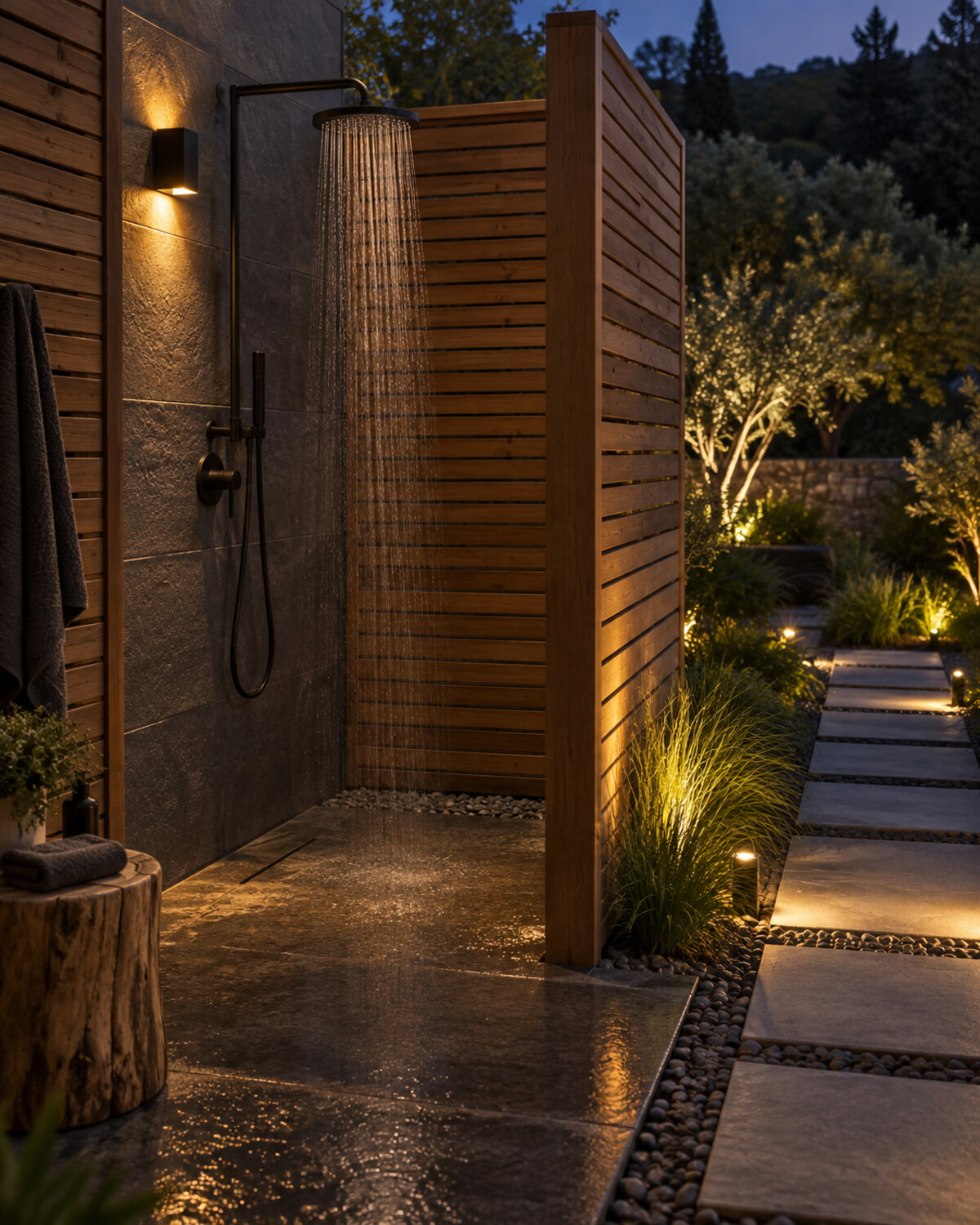
Outdoor-shower lighting should make the route, controls, and changing area easy to see without sacrificing privacy. Use shielded warm light at a low or moderate level, and illuminate the approach as carefully as the enclosure. One well-positioned fixture is often better than several bright sources that reveal silhouettes through a screen.
Electrical work around wet locations must follow applicable codes and product ratings. Keep switches and fixtures where a qualified installer specifies, and do not run improvised power into the area. Motion control may be useful on the path, while a separate manual control can prevent the shower light from switching off during use. Aim light downward and inward to reduce glare, sky glow, and spill toward neighboring windows.
17. Pair the Shower With a Small Spa Garden
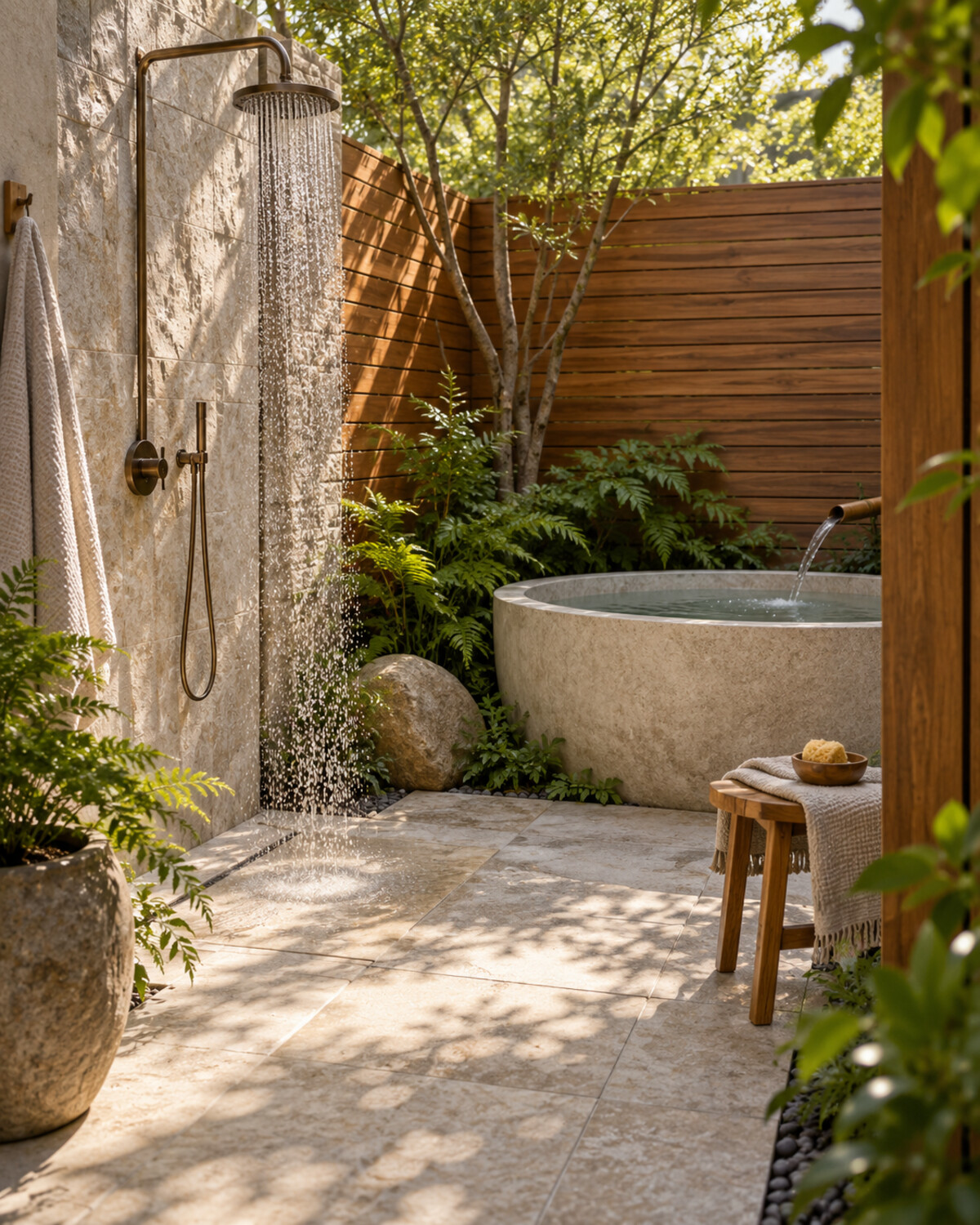
Create a restorative zone by pairing the shower with a compact soaking tub, sauna entrance, or quiet bench. Repeat one paving material and one timber finish across the area so the pieces feel connected. Layer ferns, grasses, or clipped shrubs at the perimeter instead of scattering small pots across the wet floor.
Each feature brings its own structural, water, electrical, privacy, and maintenance requirements. Do not assume that sharing a platform or enclosure makes installation simpler. Preserve a clear dry route, keep towels away from spray, and provide enough space for safe movement. The spa feeling comes from controlled views, texture, and quiet lighting—not from squeezing every luxury feature into one corner.
18. Create a True Same-Space Before and After
An unused wall or awkward side-yard corner can become a convincing shower zone when the transformation keeps the original architecture recognizable. Photograph the existing space from a fixed position, then preserve the wall, fence, camera height, and crop in the finished view. This shows what the project actually changed.
The best after image solves more than appearance. It should define privacy, provide stable footing, organize plumbing, control water, and add one place for a towel. A cedar screen, compact fixture, and restrained planting can be enough. Avoid presenting a completely different yard as the result. A truthful comparison makes the design more useful because readers can understand the real scale and intervention.
What to Decide Before Installing an Outdoor Shower
First, define whether the shower is a rinse station or a private bathing space. That decision affects privacy, hot water, drainage, storage, lighting, and enclosure size. Then map every sightline and route: the house, neighboring windows, gates, pool, towels, and the dry path back indoors.
Next, review the technical conditions. Confirm local plumbing and building rules, water and wastewater handling, drainage, freeze protection, structural support, exterior electrical safety, and product ratings. A design that works in a warm coastal garden may fail in a freezing inland climate or on heavy clay soil.
Finally, simplify the visual plan. Choose one wall material, one floor material, one metal finish, and a small planting palette. Include only the accessories that solve a real need. Privacy, secure footing, ventilation, and easy maintenance will make the shower feel more luxurious than decorative clutter ever could.
Frequently Asked Questions
———————————————————
Do outdoor showers need a drain?
The answer depends on water volume, soil, slope, soap use, proximity to buildings and wells, and local wastewater rules. Some sites require a connected or specially designed system. Decorative gravel alone should not be assumed sufficient. Check with the relevant local authority and a qualified professional.
How can I make an outdoor shower private?
Use solid or slatted screens, existing walls, gates, layered evergreen planting, or a combination. Check views from every approach, upper-floor window, and neighboring property. Privacy should remain adequate when deciduous plants lose leaves.
What is the best material for an outdoor shower floor?
There is no single best material. Textured exterior-rated porcelain, properly selected stone, concrete, and well-detailed timber can all work. The surface must suit the climate, drainage design, structure, maintenance plan, and slip-resistance needs.
Can an outdoor shower have hot water?
Yes, but hot water adds supply, temperature-control, energy, winterization, and code considerations. Have the system planned for the actual distance, climate, and use rather than extending an indoor line without review.
How much space does a small outdoor shower need?
Space depends on the fixture, enclosure, door swing, user needs, and local requirements. Mock up the footprint before building and leave room to enter, turn, use controls, and reach a towel without standing in the main spray.
———————————————————–
Final Thoughts
Great outdoor shower ideas begin with the experience—privacy, fresh air, warm materials, and a clean route from water to towel—but succeed through practical planning. A cedar screen can warm a small courtyard, stone can anchor a garden shower, and a simple poolside fixture can make daily outdoor living easier. The right version is the one that fits the site, climate, intended use, and maintenance commitment.
Treat drainage, plumbing, structure, electrical work, and winterization as part of the design from the first sketch. Once those essentials are resolved, a limited material palette and thoughtful planting can turn even a compact corner into a backyard retreat.