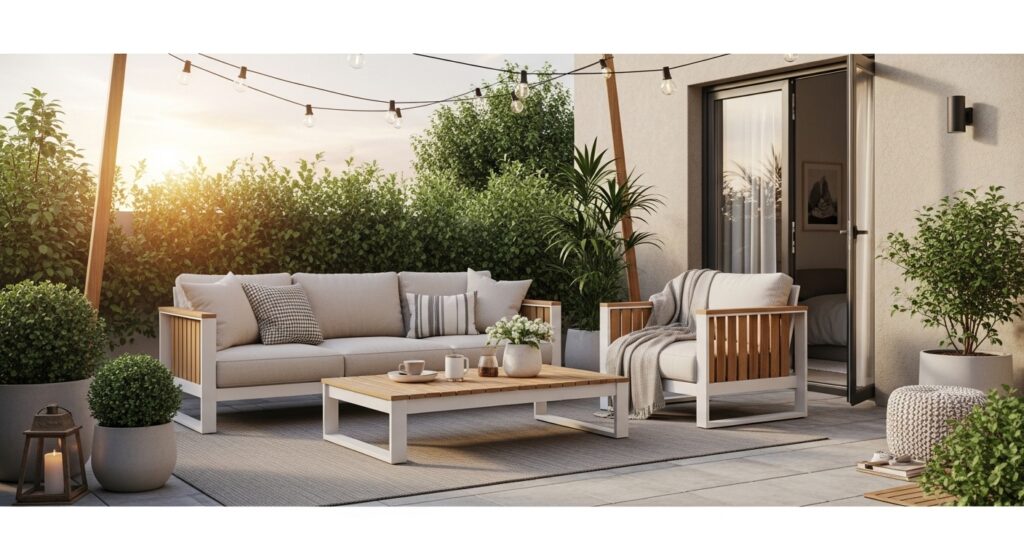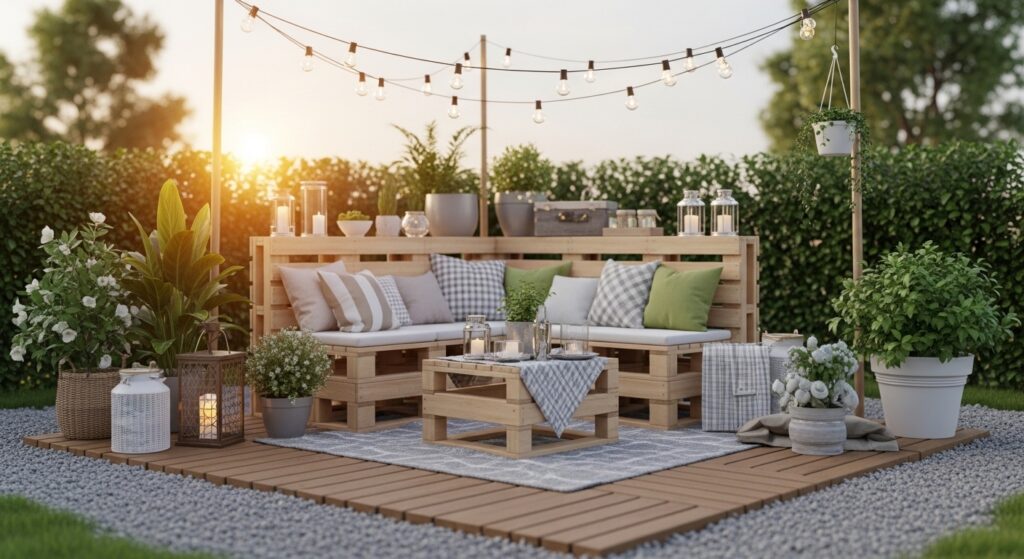
A narrow side yard often becomes the place for bins, hoses, patchy grass, and everything that does not fit elsewhere. Yet its long proportions can be an advantage. A clear route, one purposeful function, and a limited material palette can turn the gap between a house and fence into a garden passage, a practical work zone, or a polished connection to the backyard.
The best narrow side yard ideas begin with the conditions that cannot be styled away: sun exposure, drainage, utilities, gates, windows, and access for maintenance. Once those realities are mapped, the space can support far more than a leftover strip of ground.
1. Lay a Narrow Stepping-Stone Path
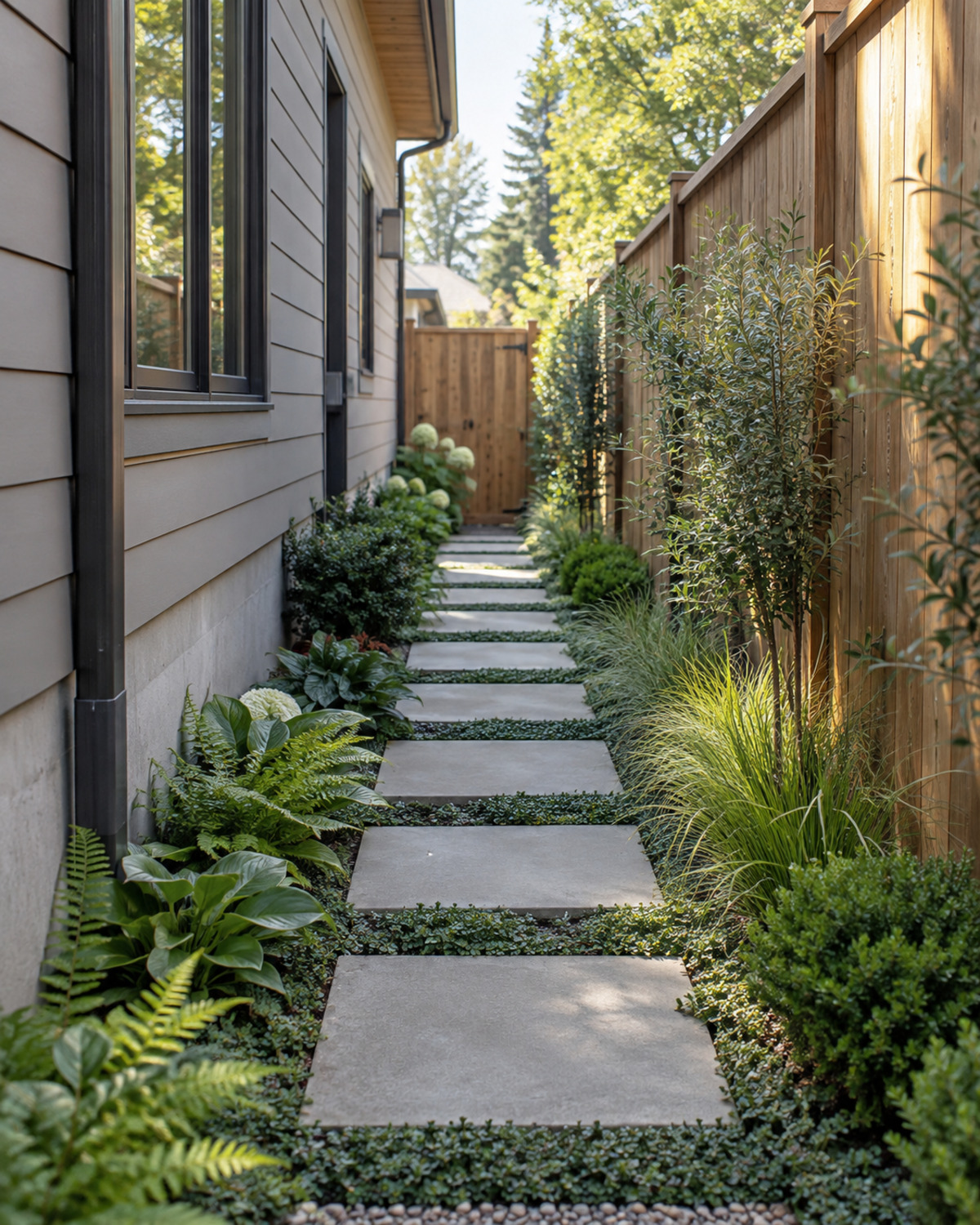
Large stepping stones give a narrow space rhythm without covering every inch in hardscape. Set the route where people naturally walk, then test the spacing before installation. The stones should feel comfortable at an ordinary stride and remain stable underfoot; an irregular hopscotch pattern quickly becomes annoying when carrying tools or bins.
Use low groundcover or gravel between stones based on light, water, climate, and maintenance. Keep plants from spilling over the walking surface. If the path serves as the main route to the backyard, prioritize consistent footing over a picturesque but uneven arrangement.
2. Use Gravel and Crisp Edging for a Low-Visual-Weight Walkway

Gravel can make a side yard feel lighter than a solid paved corridor. Choose an aggregate comfortable enough for the expected traffic and contain it with a clearly defined edge. Dark steel or a subtle masonry curb creates a clean line between the path and planting beds.
The base preparation matters more than the decorative top layer. Ask a local landscape professional what assembly suits the soil, slope, drainage, and freeze-thaw conditions. Gravel is not automatically maintenance-free: leaves need to be removed, displaced material raked back, and weeds addressed before they establish.
3. Turn Deep Shade Into a Layered Garden Passage
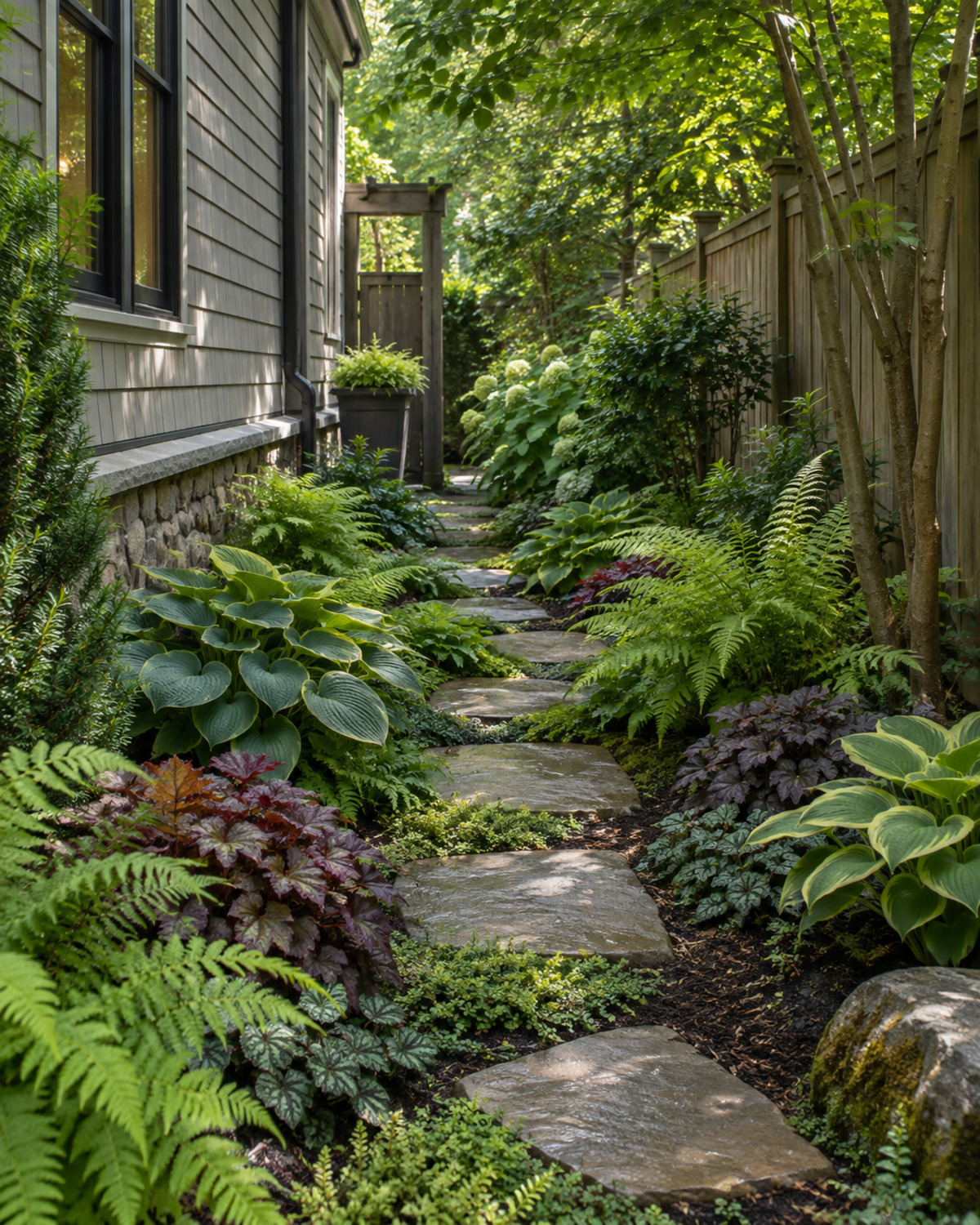
Deep shade is not the same as no design opportunity. Layer foliage by height and texture: a low groundcover at the path, rounded mid-height leaves, airy ferns, and a few evergreen forms for winter structure. Repeating the same plants down the length makes the corridor feel intentional instead of crowded.
Select plants for the specific climate, soil, moisture, and light available at the site. Hostas may be useful in some regions, while locally appropriate ferns, sedges, heuchera, or other shade-tolerant choices may perform better elsewhere. Leave space around the foundation and keep vents, windows, and service equipment accessible.
4. Plant a Water-Wise Strip for a Hot Side Yard
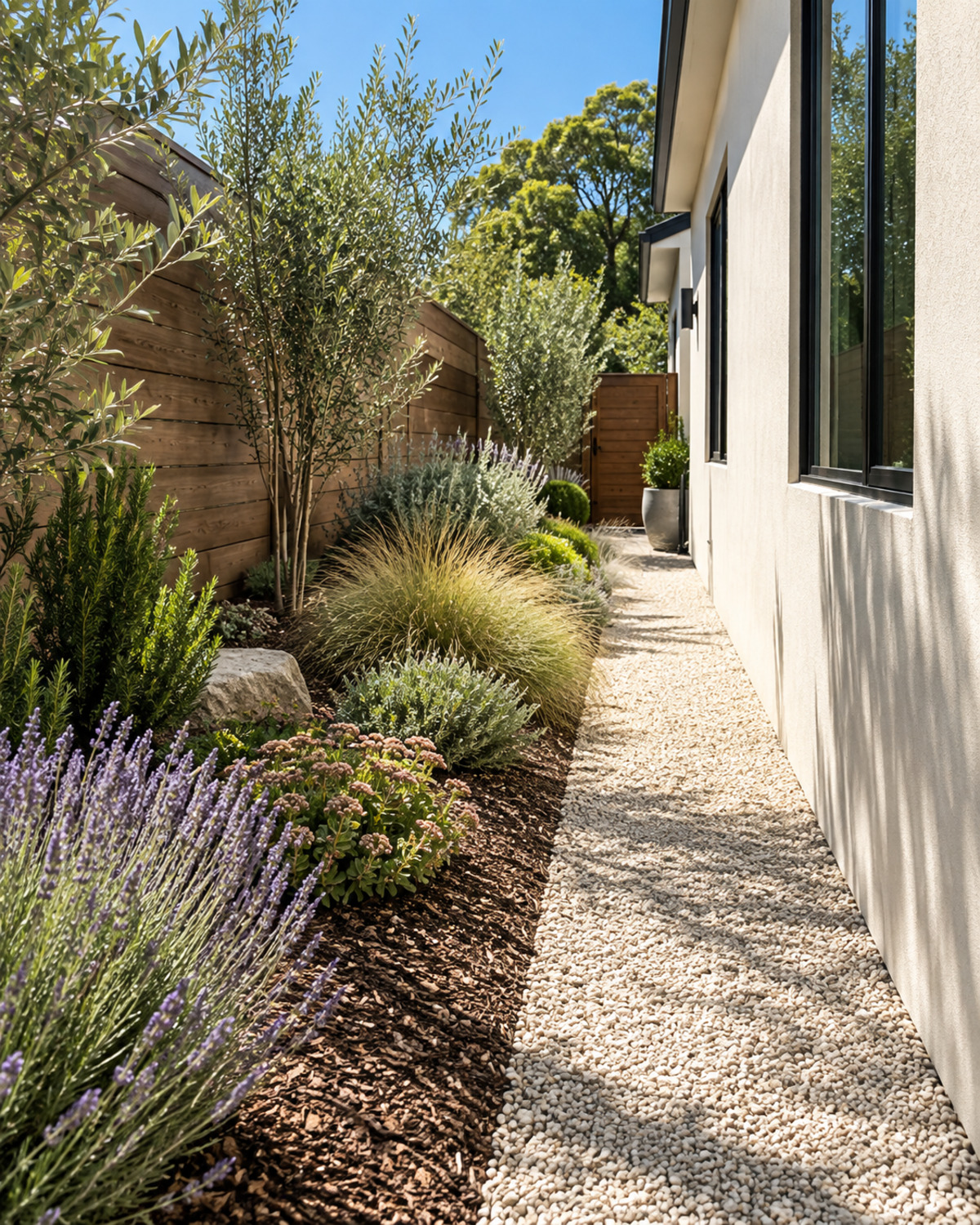
A south- or west-facing passage can become a heat trap. Instead of fighting it with thirsty lawn, use a narrow planting band of species suited to the local climate and the site’s sun and soil. Repeating grasses, compact shrubs, and flowering perennials creates a cohesive strip without requiring a large plant inventory.
Water-wise does not mean no establishment care. New plants generally need attentive watering while roots develop, and even drought-tolerant choices must match local conditions. Group plants with similar needs, use an appropriate mulch, and avoid placing aggressive or thorny growth along the walking edge.
5. Train Climbers Up a Slim Trellis
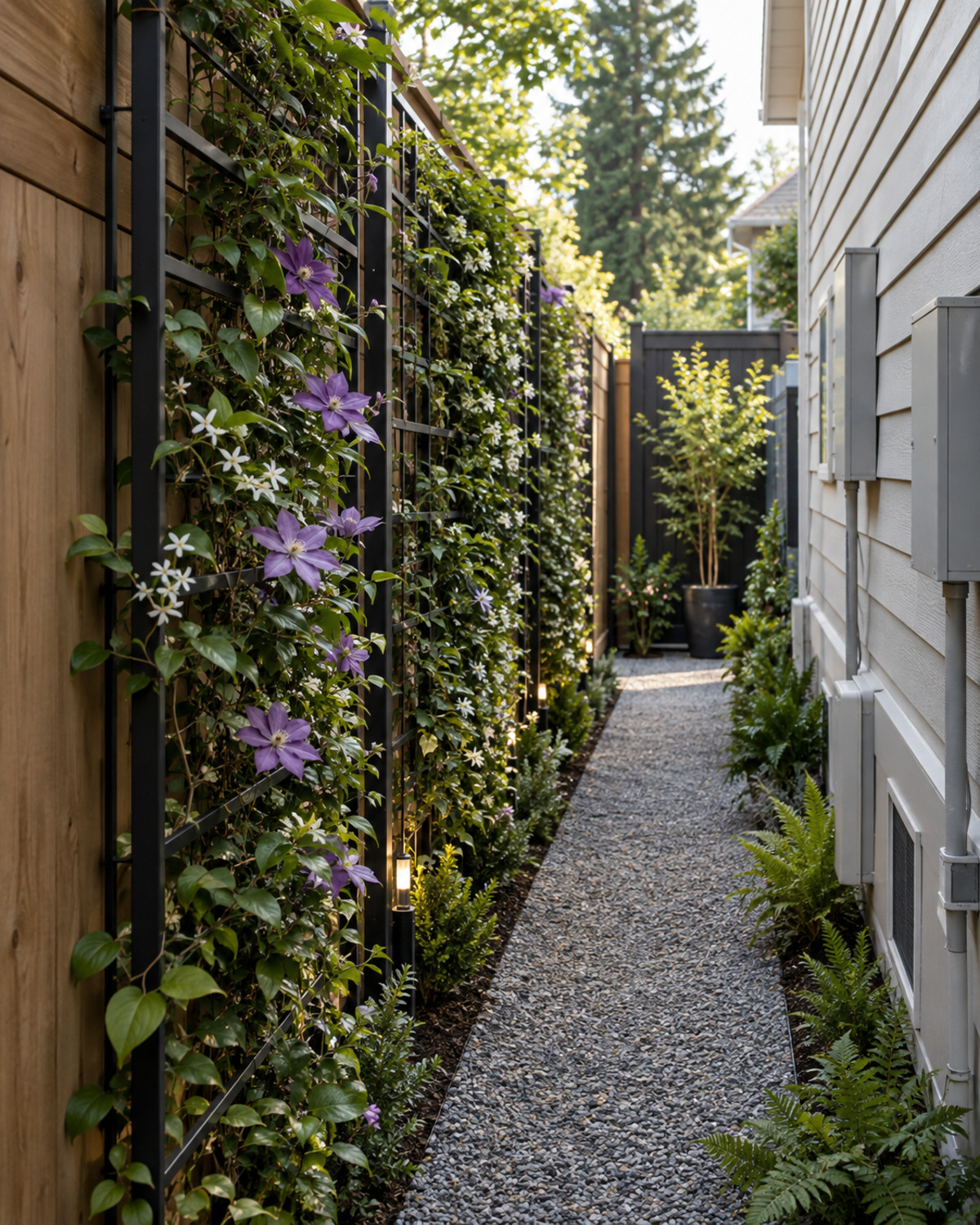
Vertical planting adds a garden experience without sacrificing much ground. Mount or position a slim trellis with enough clearance for airflow and maintenance, and choose a climber that suits the light, climate, support, and desired mature size. A vine that overwhelms the structure will only move the space problem upward.
Keep growth away from meters, vents, gutters, roof edges, and neighboring property. Freestanding panels can be useful where attaching to a wall is undesirable. Prune regularly so stems do not enter the path or make the gate difficult to use.
6. Grow Herbs in Narrow Raised Planters
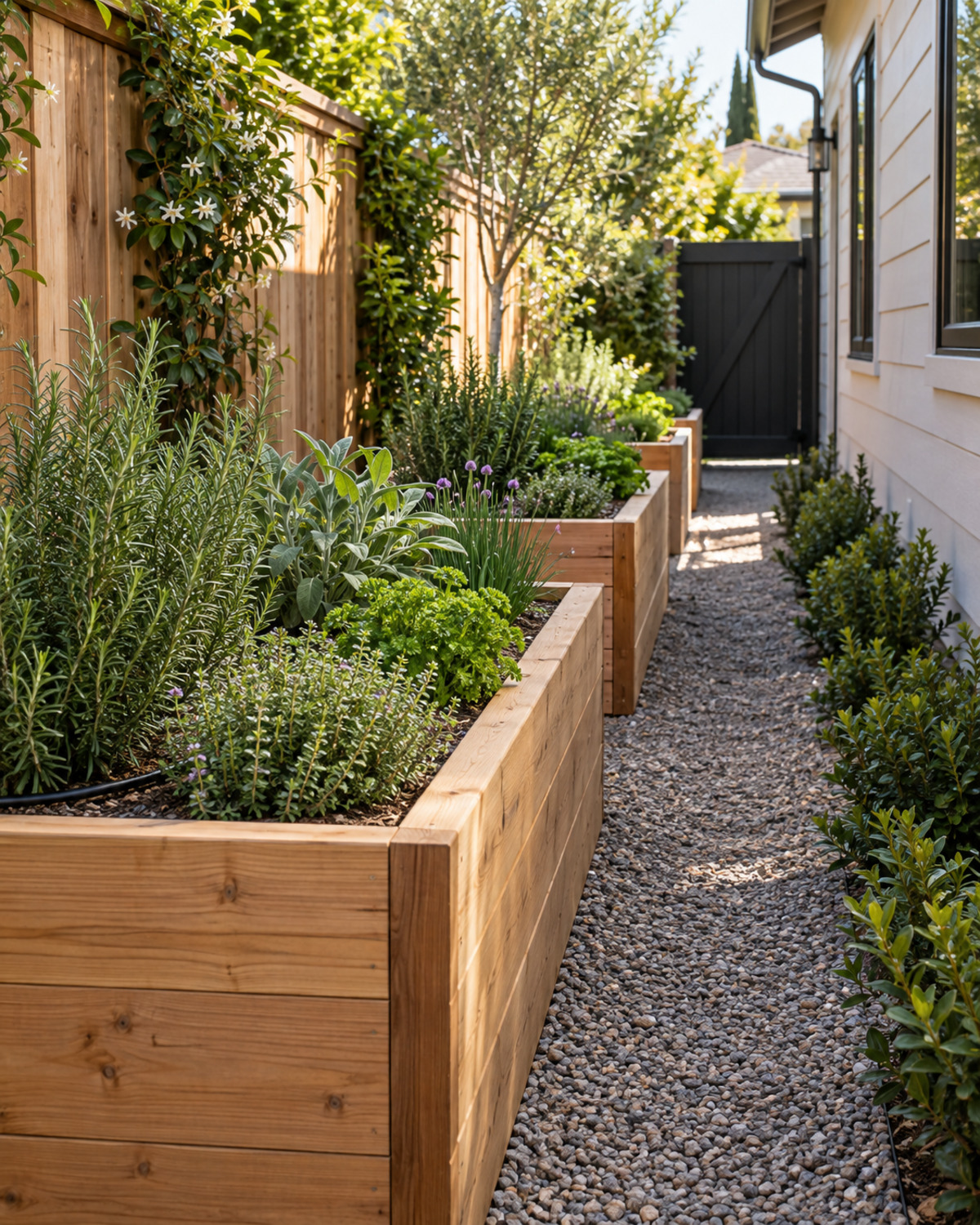
Slim raised planters turn a sunny service strip into a productive garden. A long, relatively narrow box can hold herbs while leaving a comfortable route beside it. Place the tallest plants where they will not shade smaller ones, and keep frequently harvested herbs near the easiest access point.
Use containers with appropriate drainage and materials suited to outdoor soil contact. Edible plants need conditions that fit the crop, including sufficient light and a convenient water source. A simple drip line can reduce hand-watering, but it should be installed and adjusted so runoff does not keep the path or house wall wet.
7. Tuck in a One-Chair Bistro Pause
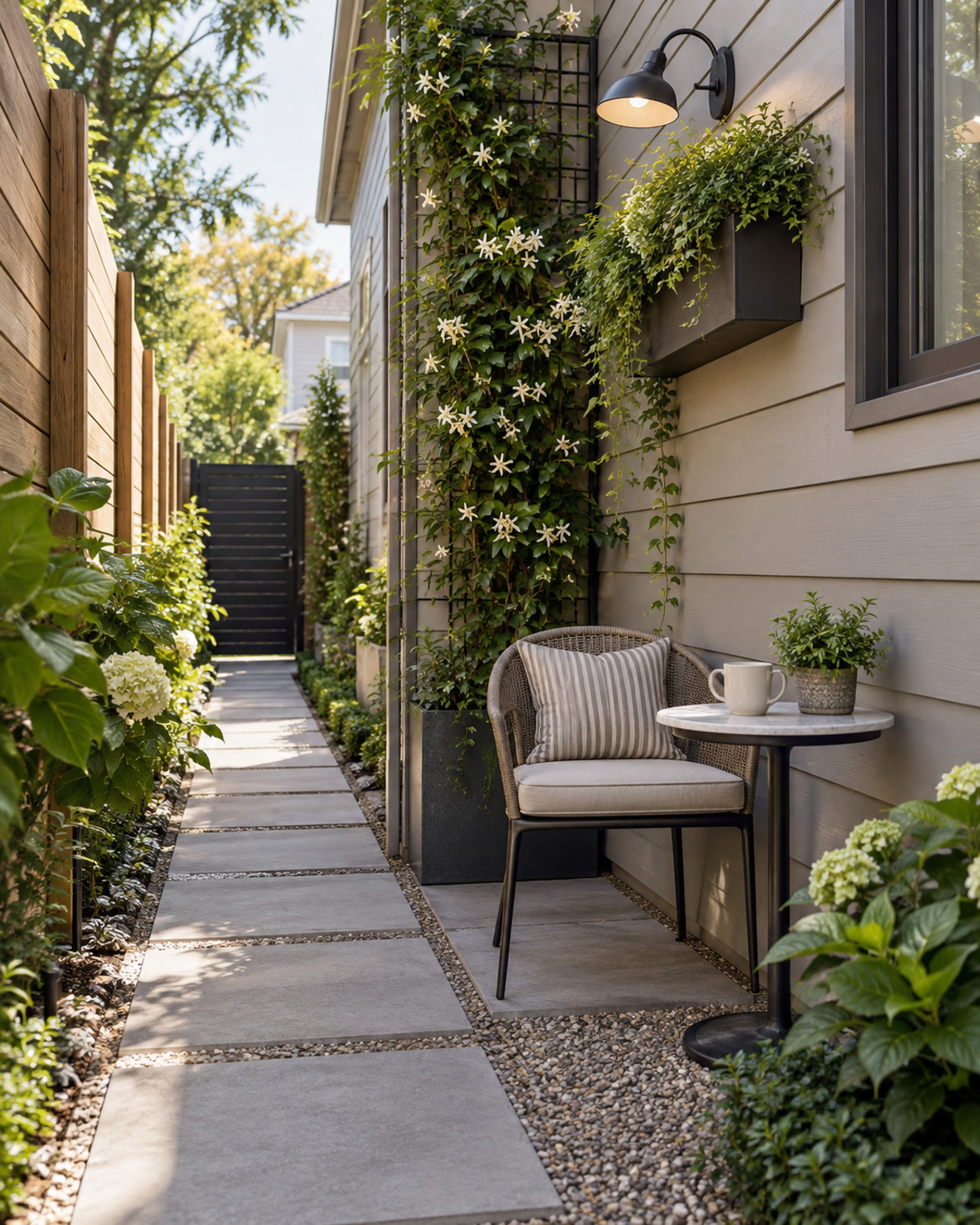
Not every seating area needs a full set. If the passage widens near a window or garden view, one comfortable chair and a tiny table can create a useful place for coffee or reading. Keep both pieces completely out of the through-route and choose furniture light enough to move for cleaning.
Treat this as a pause, not a dining room. A wall planter, climbing plant, or small exterior light can define the pocket without adding floor clutter. Outdoor-rated materials and a washable cushion will be easier to live with than delicate indoor furnishings.
explore our garden pathway ideas, outdoor corner ideas, small backyard ideas, and black rock landscaping ideas.
8. Add a Compact Recirculating Water Feature
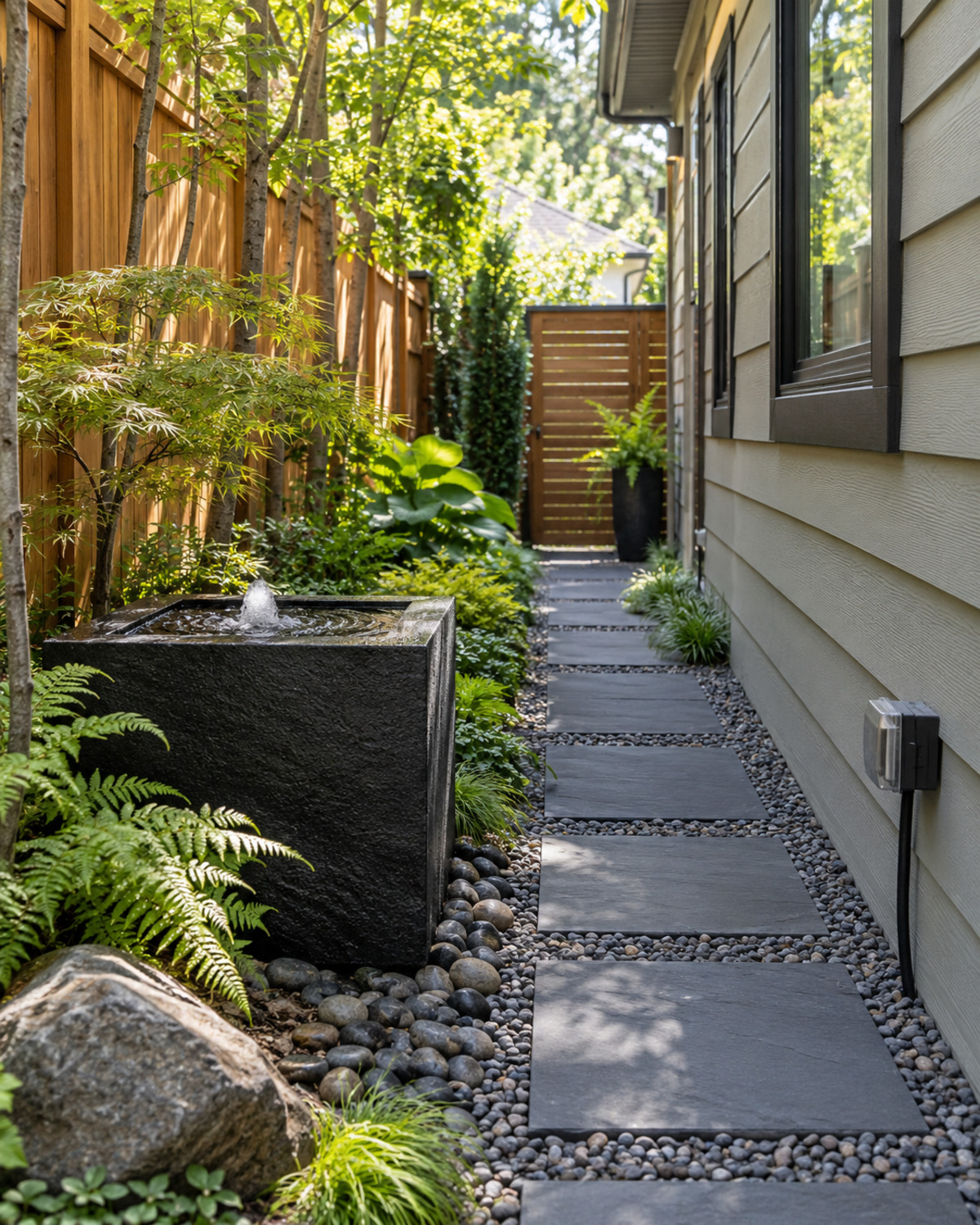
A self-contained recirculating fountain can soften nearby traffic or mechanical noise without requiring a pond. Choose a design with a modest splash radius and place it where the sound can be enjoyed without making the walking surface wet. A simple basin is usually more convincing in a narrow passage than a faux waterfall.
Follow the manufacturer’s installation and maintenance directions, including the electrical requirements. Use an exterior-rated power arrangement with appropriate ground-fault protection; never improvise with an indoor cord. Plan for seasonal cleaning, water top-ups, and winter care where freezing occurs.
9. Guide the Route With Low-Glare Path Lighting
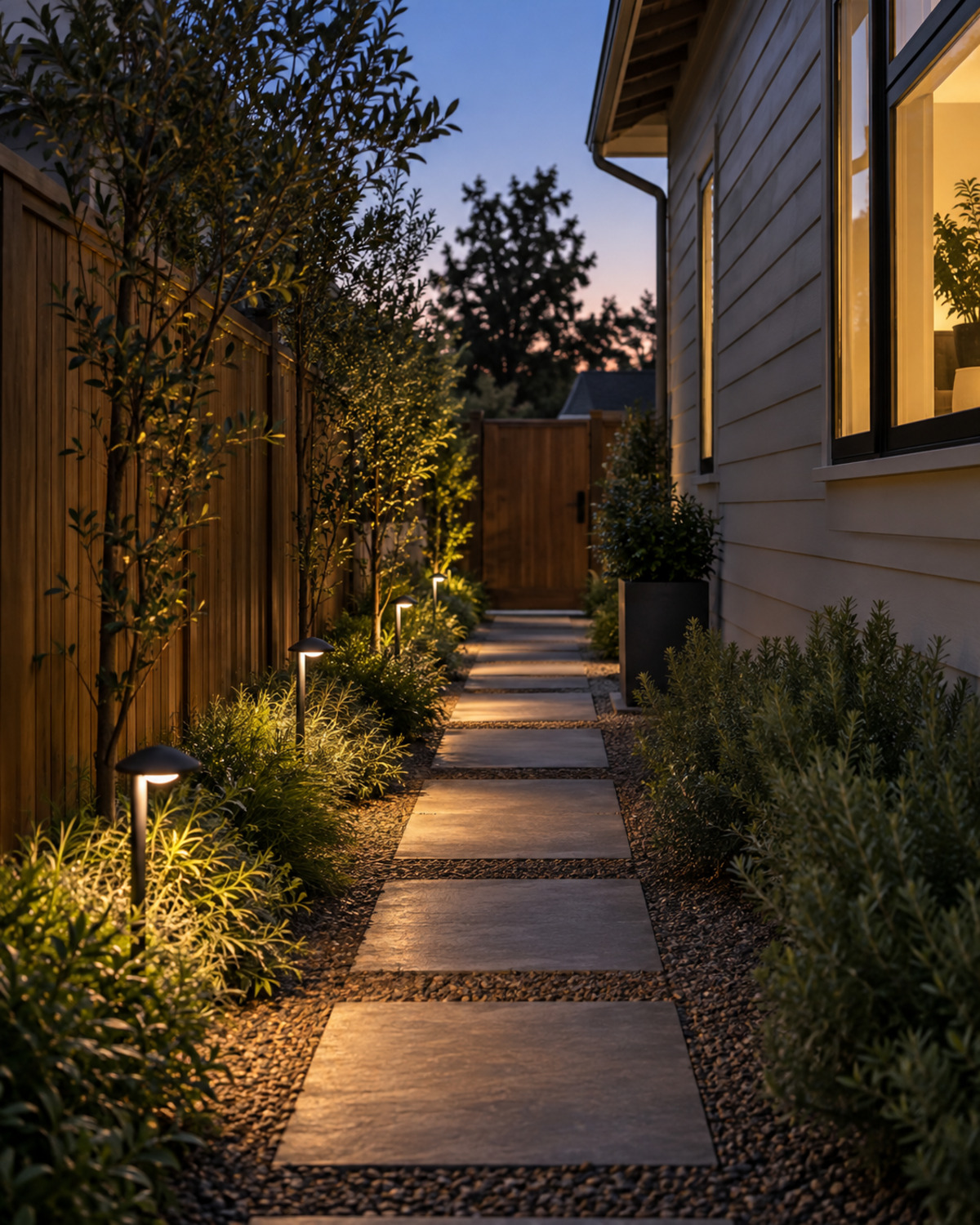
Side-yard lighting should help people read the route, gate, and changes in level. Low fixtures with shielded, downward-directed light create useful pools of illumination without shining into windows or a neighbor’s property. Space them according to the actual light pattern, not a rigid decorative interval.
Warm light generally feels more comfortable with plants and wood. Keep fixtures away from places where bins, hoses, or feet can strike them. Permanent line-voltage work and any wiring questions belong with a qualified professional and local requirements; even low-voltage systems should use components approved for the location.
10. Screen Trash and Utility Zones Without Blocking Access
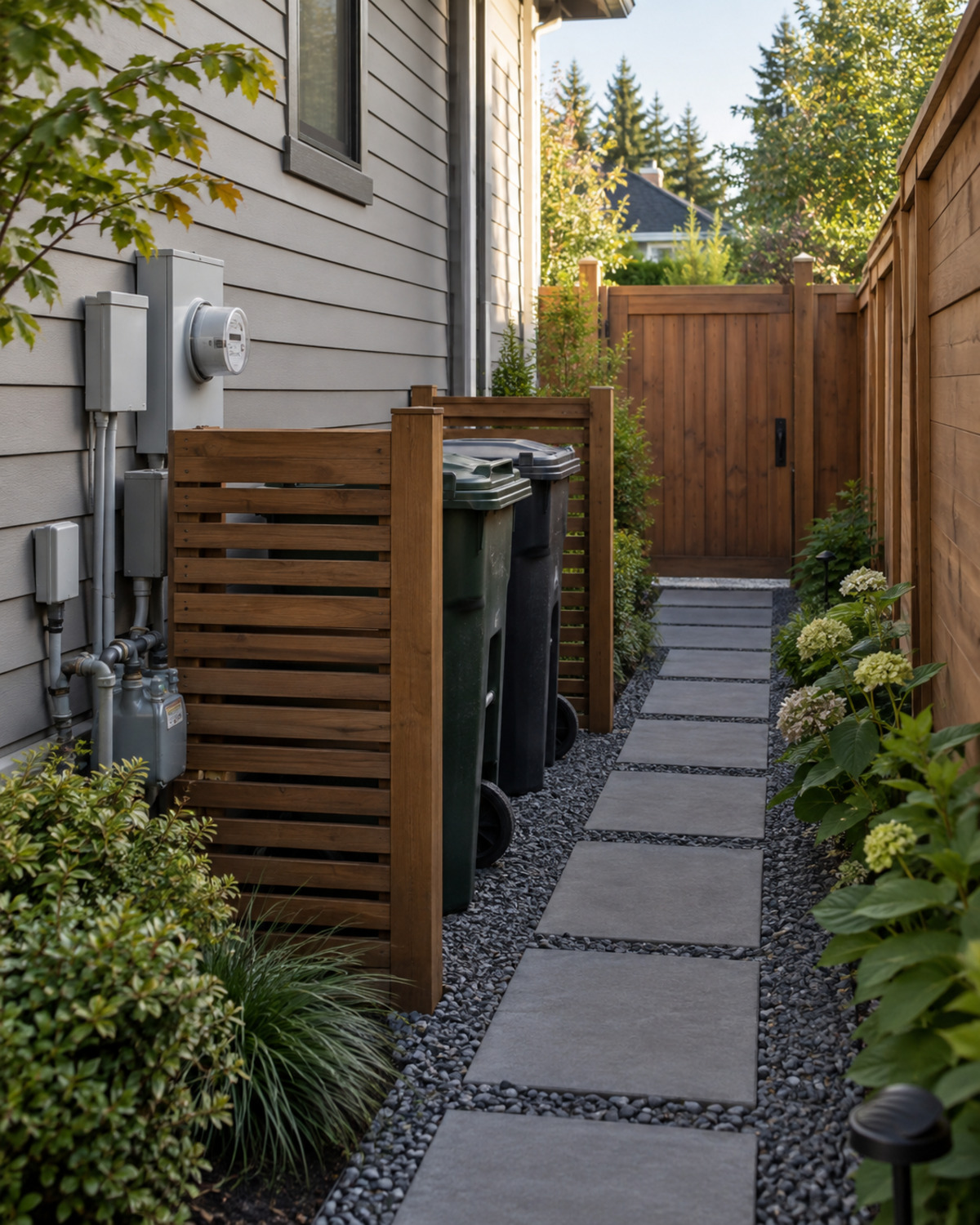
A short slatted screen can reduce the visual impact of bins without pretending the service zone does not exist. Position it to block the main view from the patio or street while preserving space to roll containers out. The lids and handles should open fully, and the screen should not reduce the gate’s usable width.
Utility meters, valves, panels, vents, and equipment need clearance and direct access. Do not hide them behind fixed cabinetry or dense planting. Confirm required clearances with the relevant utility or qualified professional before building, and design the screen so maintenance crews can work without dismantling the landscape.
11. Use a Dry Creek or Rain-Garden Concept Only Where It Fits the Site

A stone-lined swale or rain-garden planting can make water management look intentional, but it is not a universal drainage fix. The size, soil, slope, overflow path, foundation relationship, local rainfall, and municipal rules all matter. A decorative trench that sends water toward the house or neighboring property creates a bigger problem.
Begin with observation and professional guidance where water is persistent, the slope is significant, or structures are at risk. When the site is suitable, combine rounded stone with plants adapted to alternating wet and dry conditions. Keep a stable crossing where the walking route intersects the swale.
12. Create a Pet-Friendly Passage With a Permeable Surface
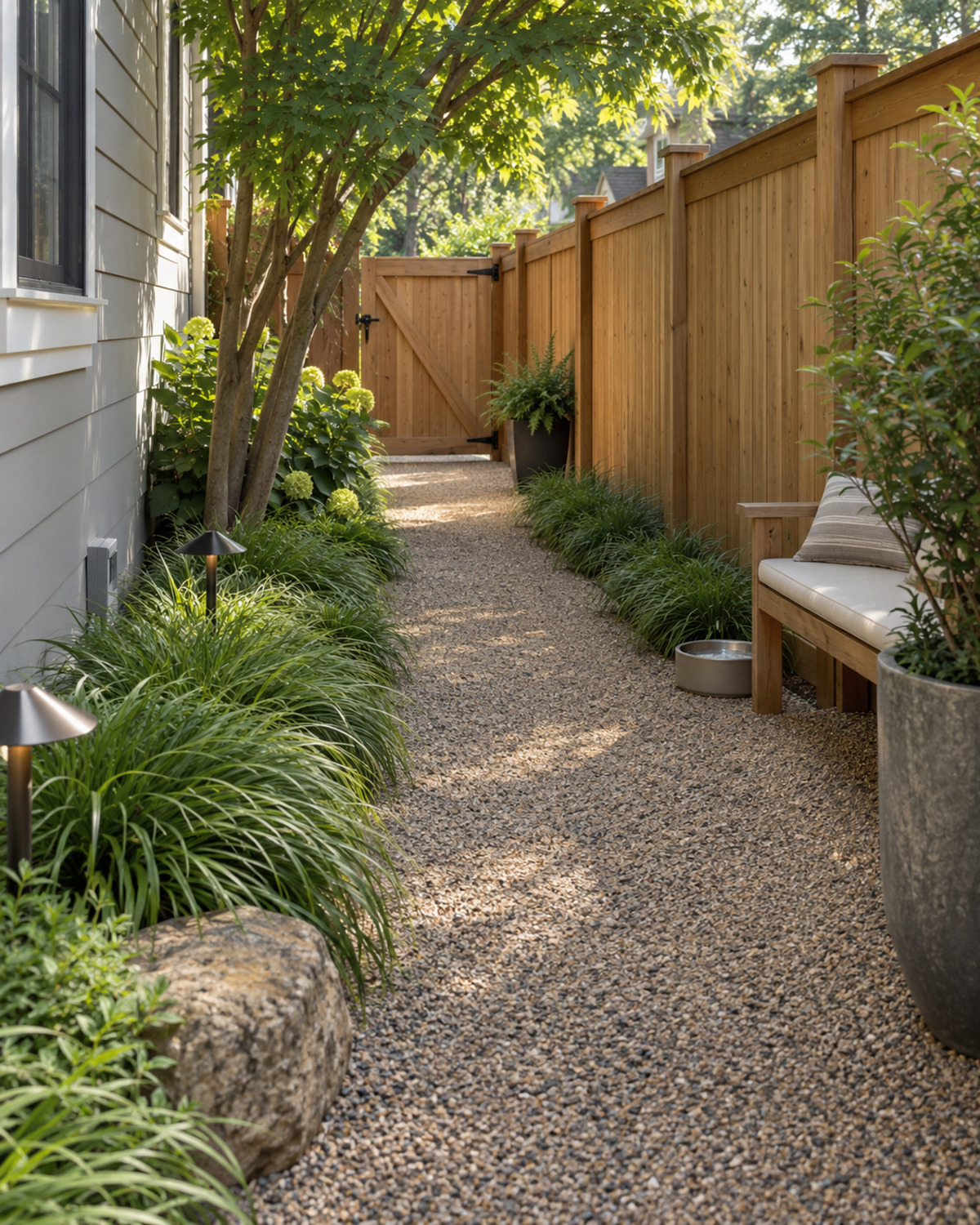
For a frequently used pet route, prioritize secure boundaries, comfortable footing, shade, and simple cleaning. A properly selected and installed permeable surface can perform better than a narrow strip of worn lawn. Avoid sharp aggregate, exposed metal edging, thorny plants, and materials that become excessively hot in sun.
Check every plant for suitability around the specific animals in the household; a pretty garden plant is not automatically pet-safe. Use a secure gate and keep latches, gaps, and escape points under review. A small shaded resting spot and fresh water can make the passage more comfortable without turning it into a cluttered run.
13. Add Organized Bike Parking Without Crowding the Route

Vertical racks can store bicycles in a narrow utility zone while keeping the ground easier to sweep. Measure the full projection of the handlebars and pedals—not only the rack depth—to confirm that people can still pass. Mounting height should suit the users so daily storage is realistic rather than aspirational.
The wall and fasteners must be appropriate for the load, and exterior equipment should resist weather and corrosion. Avoid blocking windows, panels, or condensers. A shallow canopy may help with weather exposure if it can be installed correctly and does not interfere with drainage or code requirements.
14. Build a Slim Potting and Propagation Station
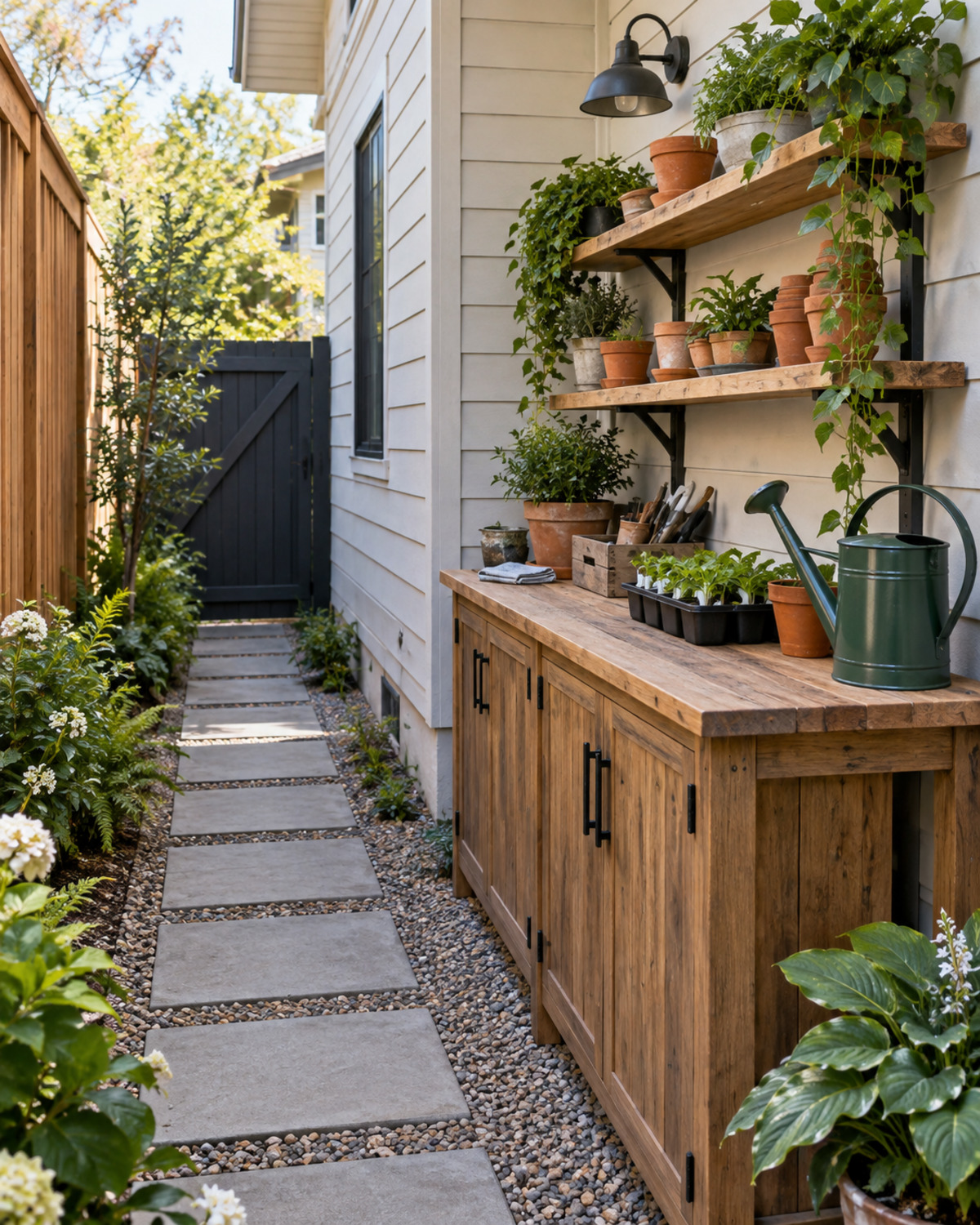
A narrow potting bench turns an underused wall into a practical garden work zone. Keep the worktop shallow, add closed storage below for messy supplies, and use one or two slim shelves for lightweight pots. A tray contains soil while repotting and can be carried elsewhere for cleanup.
Place the station where it will not obstruct a window, vent, meter, or route. Use outdoor-suitable materials and secure tall units as appropriate for the wall and local conditions. Limit open shelving: a few well-used tools look purposeful, while rows of empty pots quickly make the corridor feel like storage.
15. Use Dark Fencing and Pale Gravel for a Polished Modern Look

High contrast can give a narrow yard strong visual structure. A charcoal fence visually recedes behind green foliage, while pale gravel reflects light into the passage. Large dark stepping slabs connect the fence color to the path, and a single warm wood element prevents the palette from feeling severe.
Keep the plant list short and repeat forms down the length. Before choosing a very dark finish, consider heat exposure, material recommendations, maintenance, neighborhood rules, and how the color relates to the house. The effect comes from consistency, not from making every surface black.
16. Plan a Believable Same-Yard Before-and-After Transformation
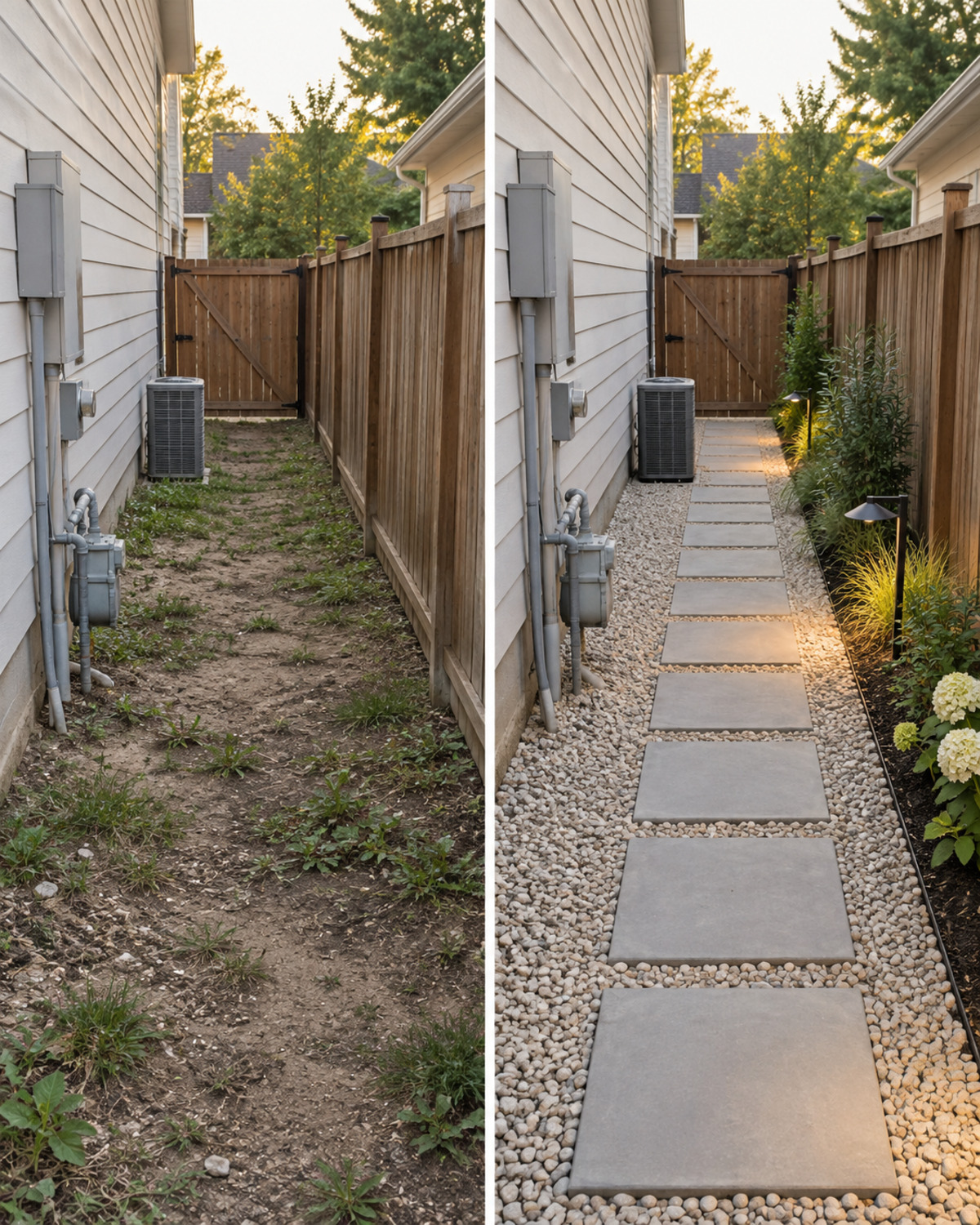
A useful before-and-after keeps the house, fence, utilities, gate, and camera position unchanged. The transformation should come from a clear route, an edited planting strip, and a few functional improvements—not from digitally widening the property or moving service equipment.
Photograph the existing yard before work begins. Then map which layer solves each problem: stable walking surface for mud, planting for softness, a screen for bins, and low light for evening access. Comparing the same view makes it easier to judge whether the project truly improved function as well as appearance.
For more outdoor planning ideas, explore our garden pathway ideas, outdoor corner ideas, small backyard ideas, and black rock landscaping ideas.
How to Make a Narrow Side Yard Feel Intentional
Use one dominant line from beginning to end. It may be the path edge, a repeated row of stepping stones, or the top of a planting bed. Long, consistent lines reduce visual stops and make the passage feel calmer. Avoid alternating unrelated materials every few feet.
Repeat a limited group of plants, allowing height and texture to vary. Three dependable species used in rhythm often look more considered than twelve single specimens. Keep the center route open and place the strongest detail at the destination—a gate, small tree, fountain, or view into the backyard.
Respect negative space. Narrow yards need visible ground and wall area so plants and objects do not collapse into one crowded strip. Edit seasonal accessories and store tools behind closed doors whenever possible.
Narrow side yards work best when they stop being treated as leftover space. Give the corridor one clear purpose, preserve access, and repeat a small material palette. The result may be a shaded garden walk, a tidy service zone, or a productive herb strip—but it should always make everyday movement easier.