A small balcony can feel ready to use with one seat, one patch of color, and a place to set down a cup. Start by opening the door and marking the floor you actually need to walk on. Check where water drains and where rain reaches before choosing anything that has to stay outside.
These 20 ideas show how to add plants, color, light, and useful surfaces around that clear space. Keep furniture and decor away from the railing, and check building rules and load limits before you add heavy pots, shade supports, or mounted pieces.
1. Start With One Seat and a Clear Door Route
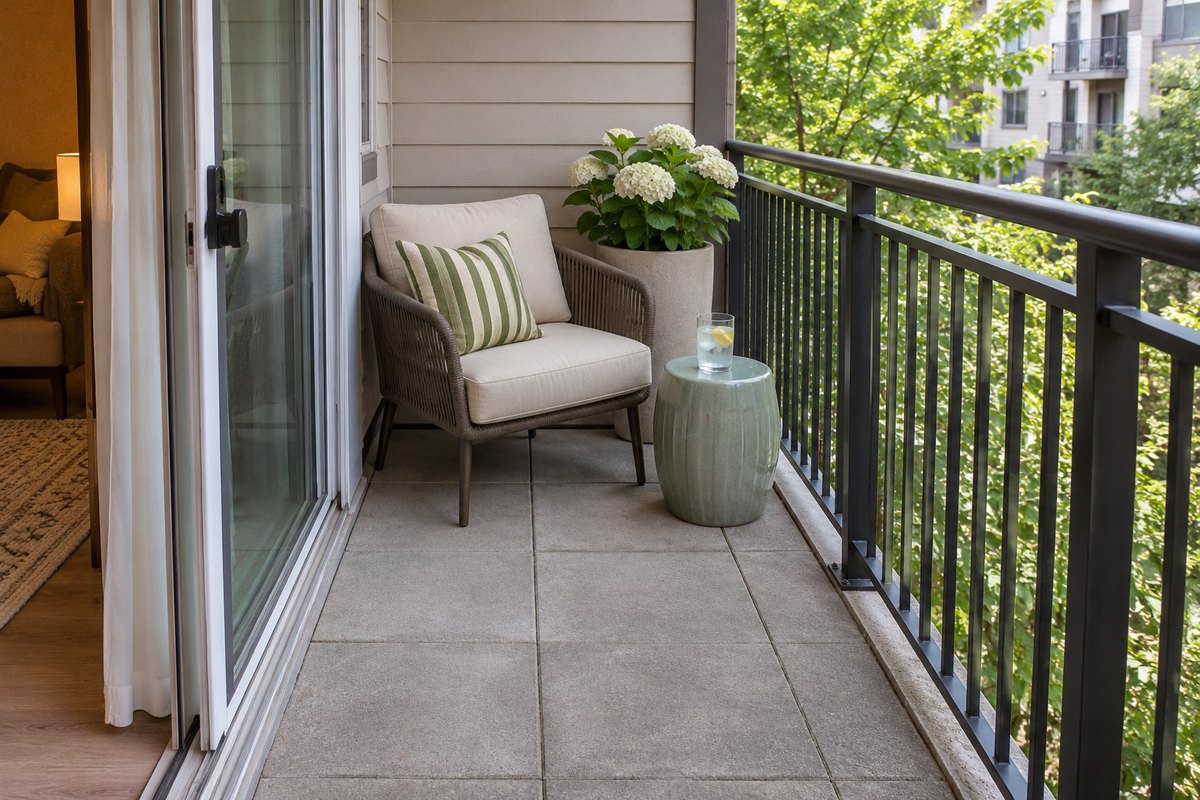
Put one outdoor chair at the far building-side end, where it leaves a straight route from the door. Add a small drink table only if you can reach it without turning and can still stand up comfortably. Use a chair finish you can repeat in a pot or pillow. Let that small corner carry the seating.
Check the route with the door open and with a bag in your hand. If you need to move sideways to pass, start with a narrower seat or skip the table. These balcony seating ideas compare open, folded, and extended chair footprints.
2. Keep a Vertical Garden on the Building Side
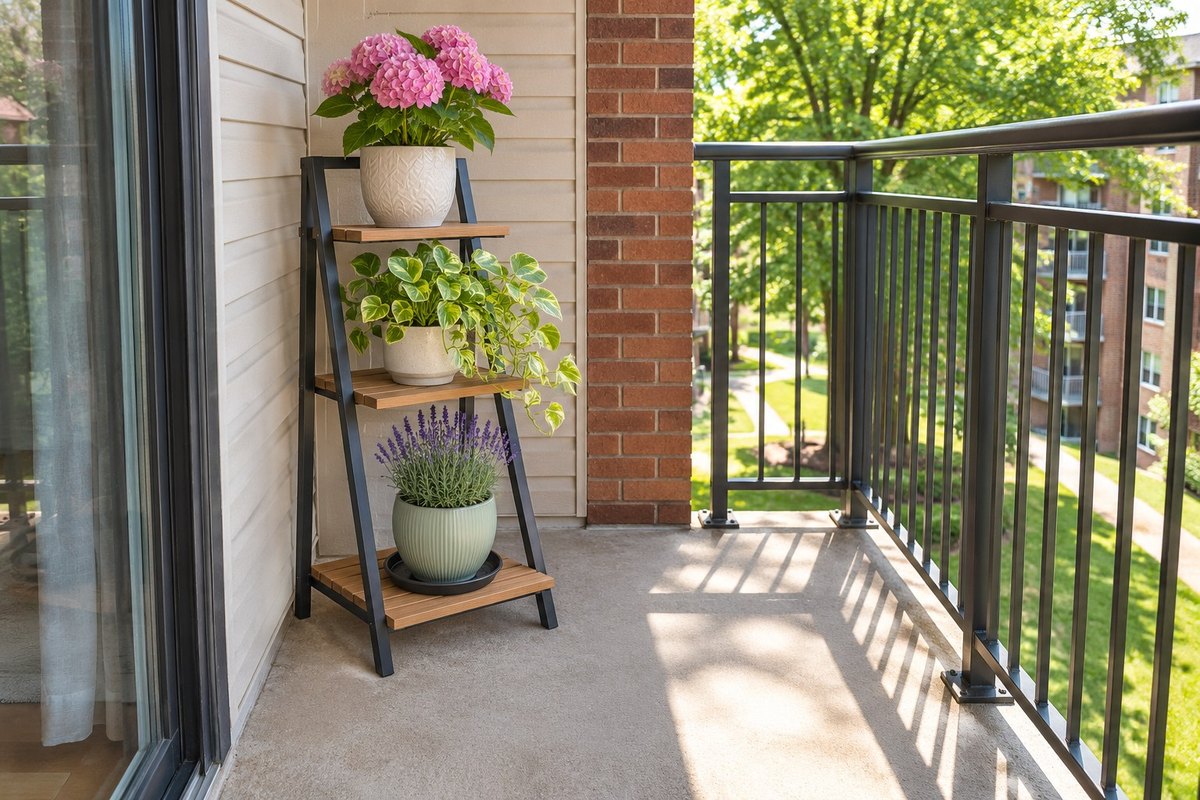
Use a short freestanding rack against the building-side wall to keep a few ornamental pots together. Pick one with a broad base and supports suitable for the wet weight of each pot. Keep the pots low enough to lift out for care. Use saucers or a drainage tray where runoff stays off the floor route and away from the unit below.
Leave the guardrail untouched and keep the door and drains easy to reach. If the balcony gets strong gusts, choose a shorter display or a couple of level floor pots. Check what your building allows before mounting anything.
3. Put One Low Outdoor Rug Under the Seating Area
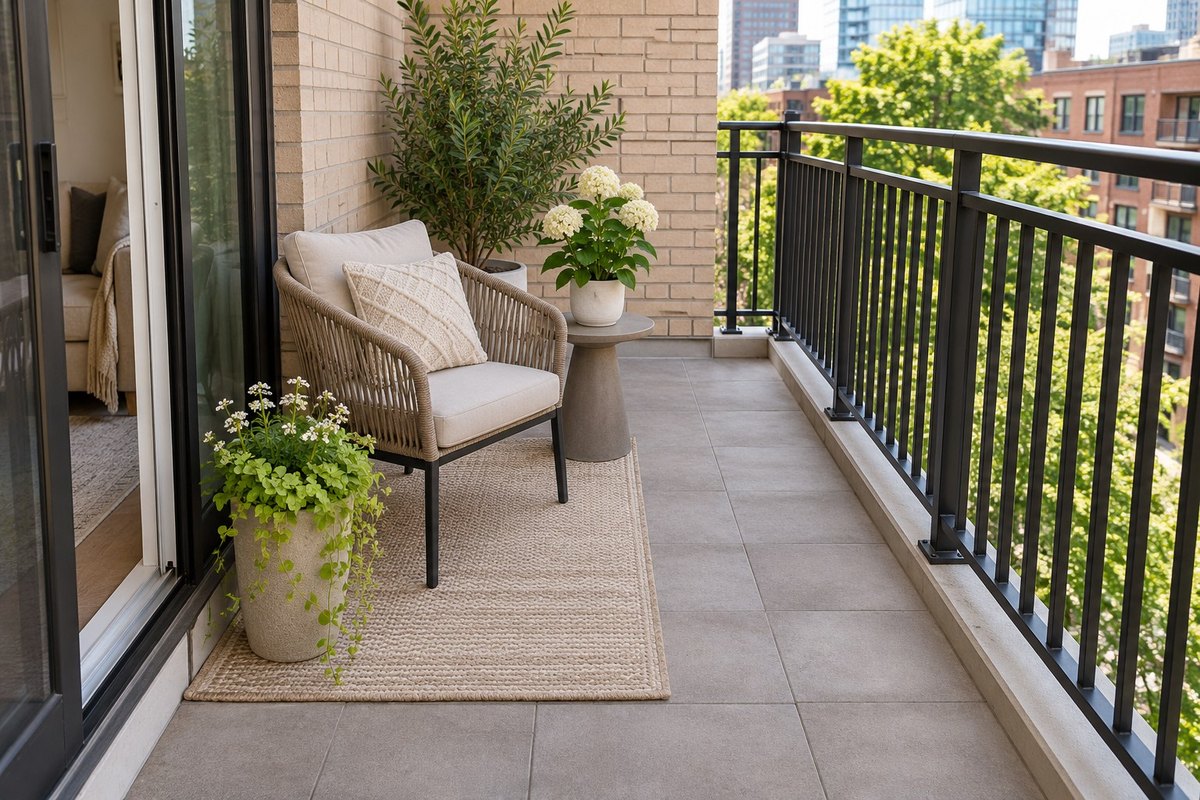
Use a compact low-pile or flatwoven outdoor rug inside the seating area. A small mat can make one chair and table feel connected without covering the whole floor. Measure the spot and choose a size that lets the rug lie flat. Keep the door threshold and drainage openings bare.
Check how the rug behaves after wind or rain. Follow its care and placement instructions and bring it in if it moves, curls, or cannot dry. A small rug is easier to lift for cleaning than a large one, and bare flooring can be the better option on an exposed balcony.
The Nourison Silver Grey low-pile outdoor rug is a 2-by-4-foot option for a small seating zone. Mark that footprint first and check the balcony door swing before ordering.
See Nourison Silver Grey low-pile outdoor rug details (paid link)
4. Repeat One Planter Finish in Two Sizes
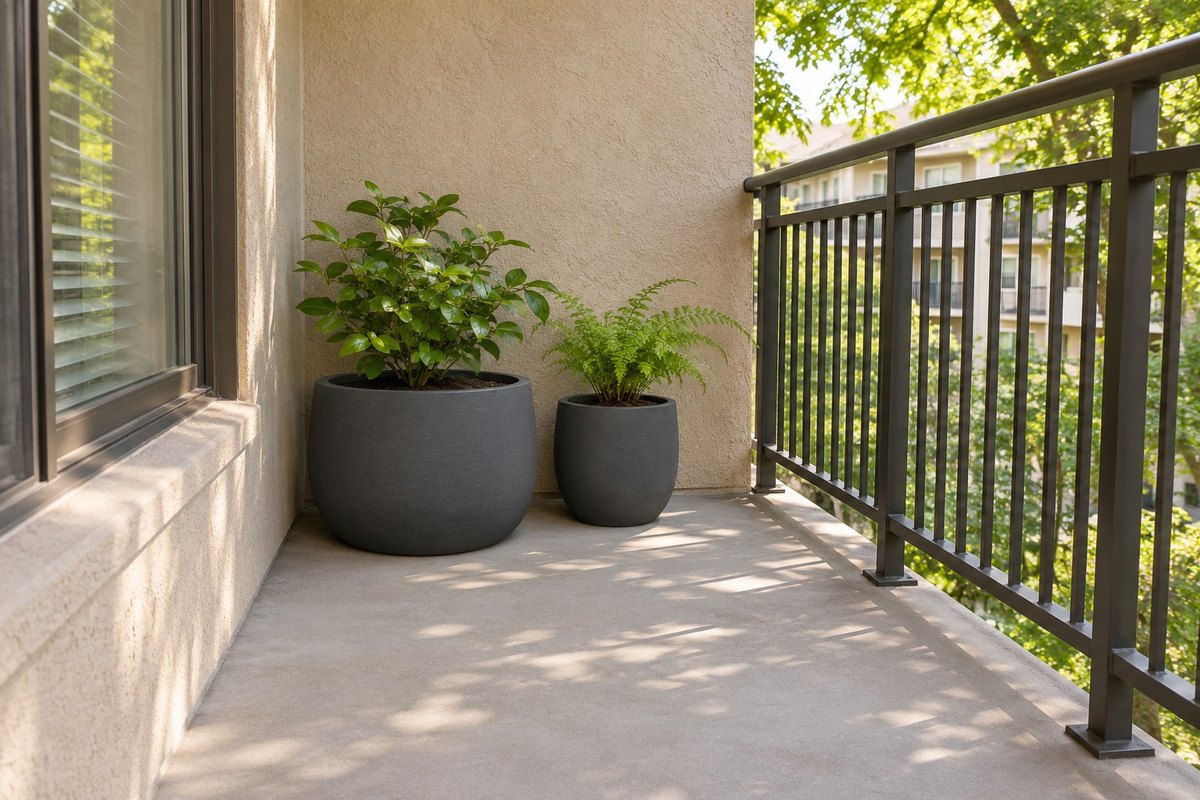
Choose two pots with the same finish and different sizes. A matte slate, clay, or warm cream can link the plants even if the foliage differs. Put the larger pot toward the wall and give the smaller one enough space to reach for watering. A broad base is easier to place on a level surface than a very tall, narrow pot.
Check the combined wet weight and decide where runoff goes. Keep the pots entirely inside the rail and away from the door. If you want a third color, let the flowers provide it before buying another planter.
5. Use One Short Run of Balcony Lighting
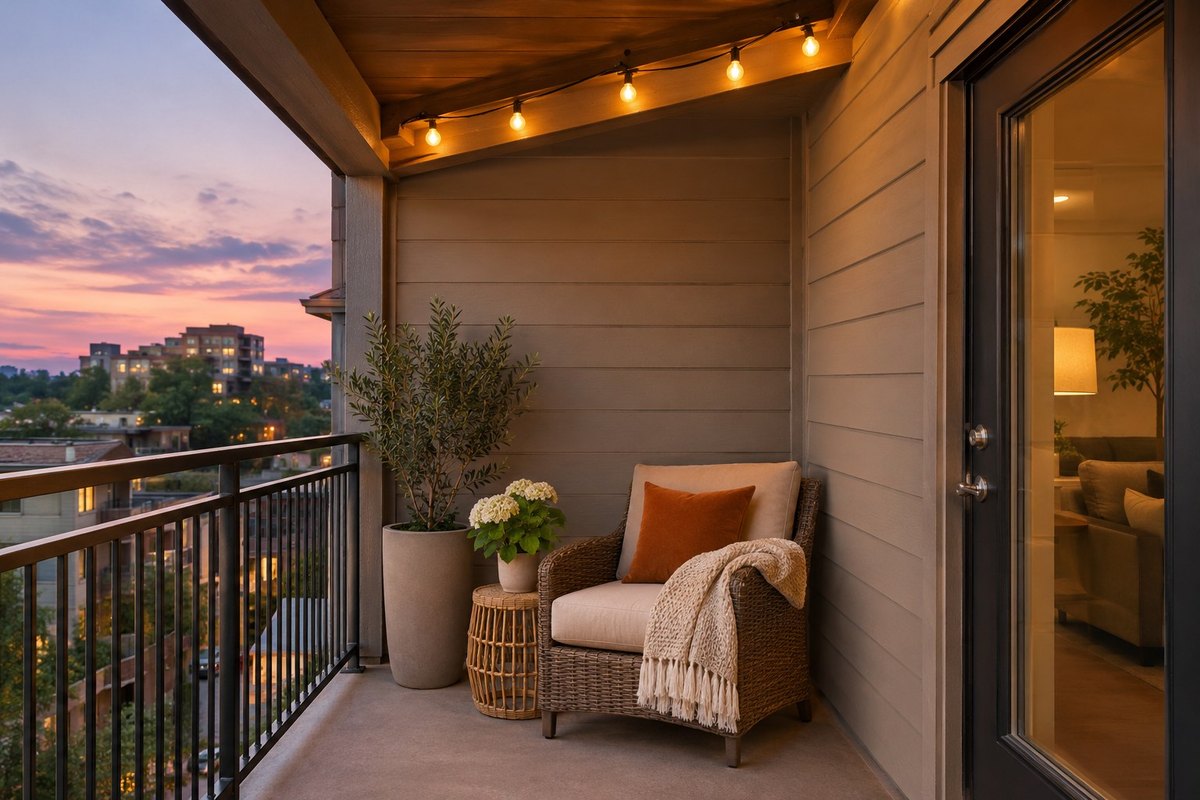
Start with one warm light where you enter or sit. A short run of outdoor-rated string lights can work on a suitable permitted support, or use a portable lamp if you cannot mount anything. Keep the light high enough that you do not have to look straight into the bulbs from the chair.
Choose fixtures and connections suited to the weather exposure and follow their installation instructions. Keep cords out of the door track and walking path, and have an electrician handle any fixed wiring. Check that you can see the threshold and floor before adding more lights.
6. Set a Compact Table for Two at the Far End
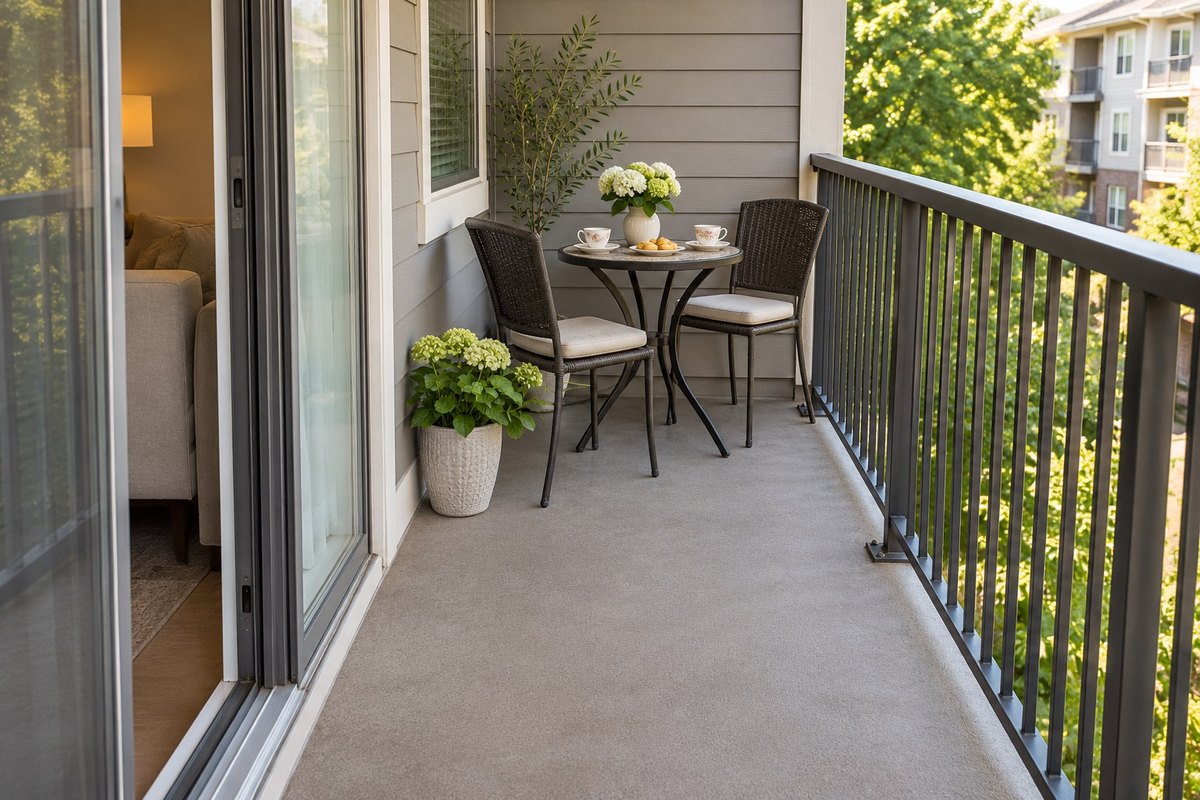
Set a small outdoor table at the far end where the chairs do not have to pull into the doorway. Try the table with two place settings and pull each chair out before deciding how big the table can be. A round top can give you a little more room to get past the edge.
Use one chair most days if the balcony only has room for a pair on occasion. Check that the table is stable on the actual floor. Leave space to pass a plate and stand up without moving the whole setup.
7. Give One Exterior Wall a Flat Art Accent
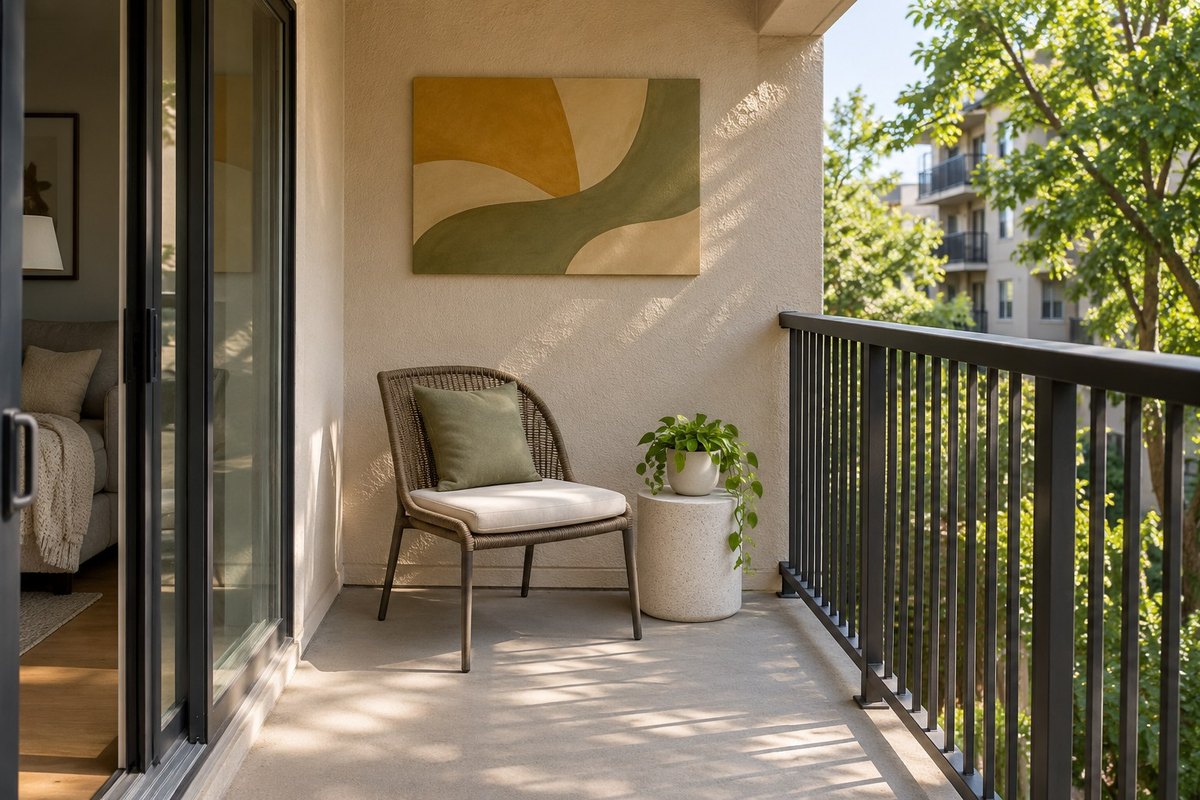
Choose one flat wall panel in a material suited to the balcony’s conditions. An abstract color block or simple painted motif can show from inside the apartment. Keep the piece lightweight and low-profile and put it on the building side, away from the rail and the door swing.
Check building rules and use mounting hardware suited to the wall, weight, and exposure. Skip glass and anything that would project into the route. If mounting is not allowed, use the same color on a planter or table you already have.
8. Hang One Small Decoration Away From the Route
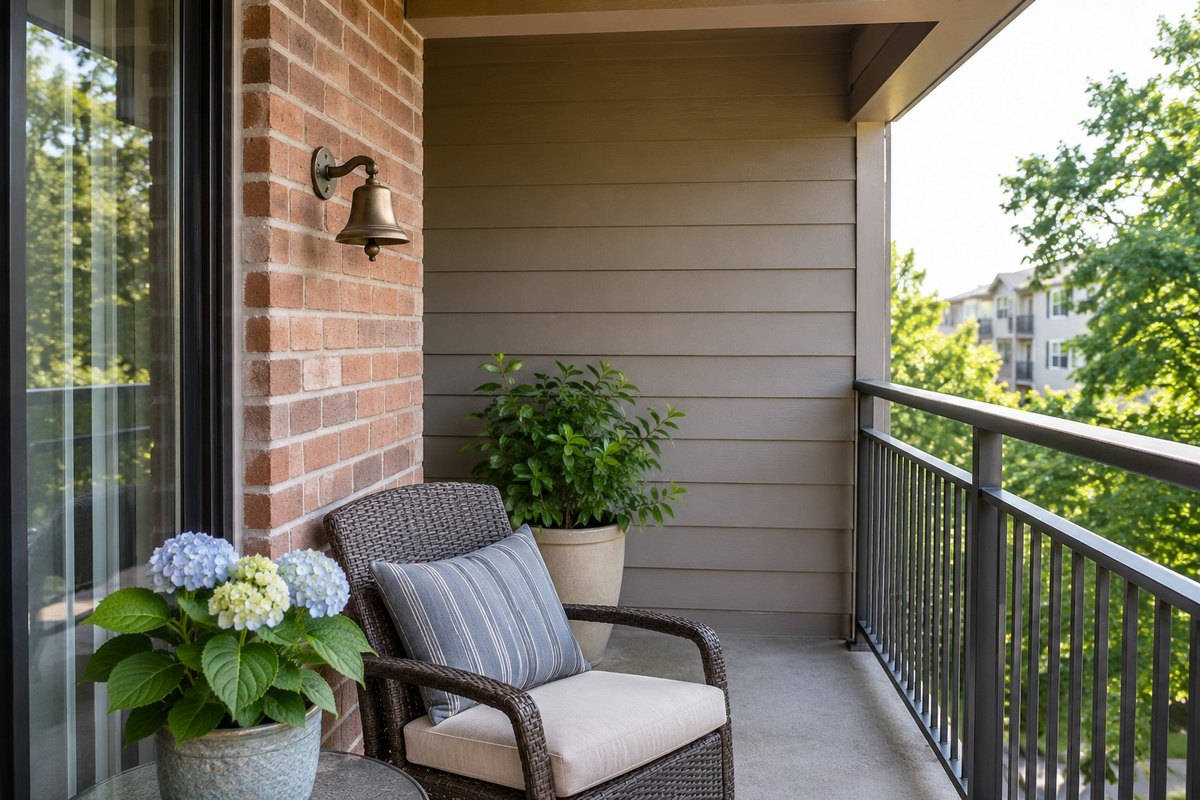
Use one small hanging accent, such as a smooth metal ornament, under cover against the building wall. Keep the attachment short and secure so the object stays away from people, glass, and the rail. Look at it from the chair and the doorway before adding another piece.
Follow the building’s rules for mounting and the item’s exposure guidance. Bring it in before rough weather if it could swing or come loose. If there is no safe place to hang it, choose a low flat wall accent or a stable object on a table.
9. Use Two Covers to Change the Balcony Color
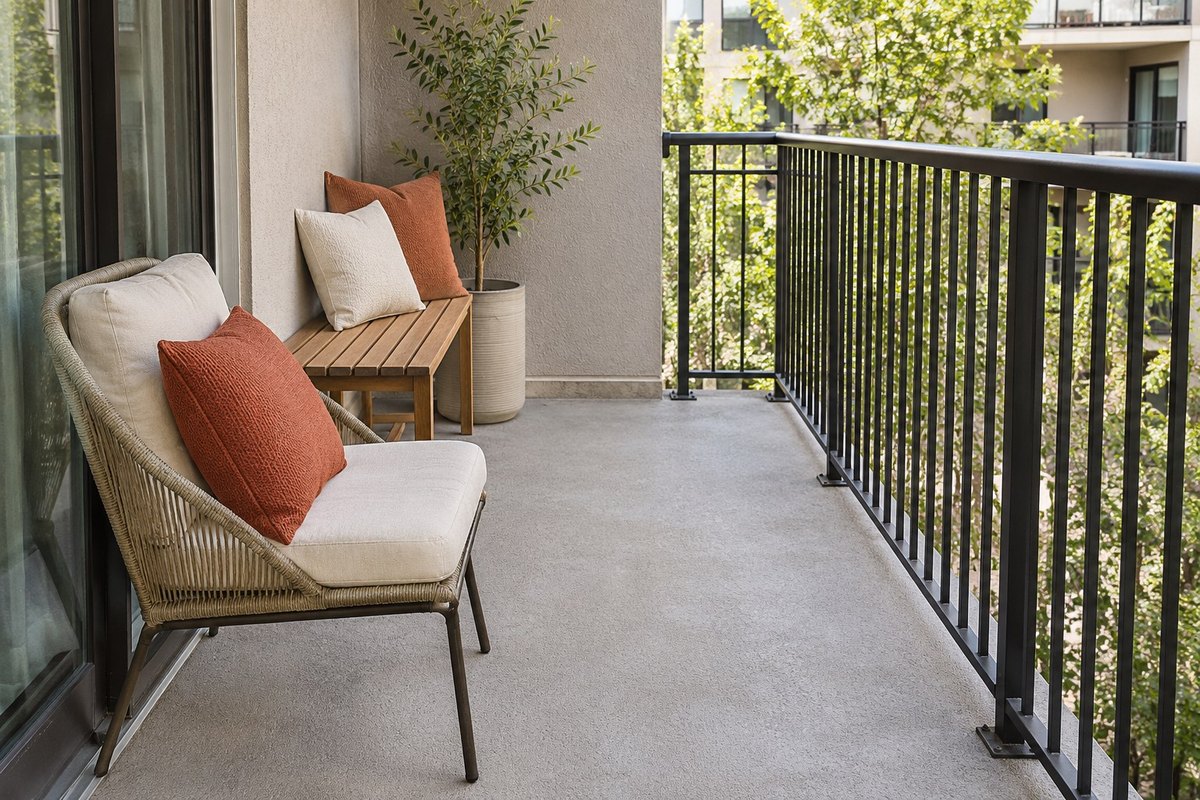
Use two outdoor pillow covers to bring color to seating you already own. Try one plain rust cover and one cream stripe, or pick a color you can repeat in a planter. Keep the rest of the chair simple and check that the pillow does not slide into the walking route.
Read the care guidance for the cover and insert. Take the pillows in when weather could move them or leave them damp. If you only want color for part of the year, keep one spare cover indoors and use the same insert when it fits.
10. Carry a Small Drinks Tray to a Parked Cart
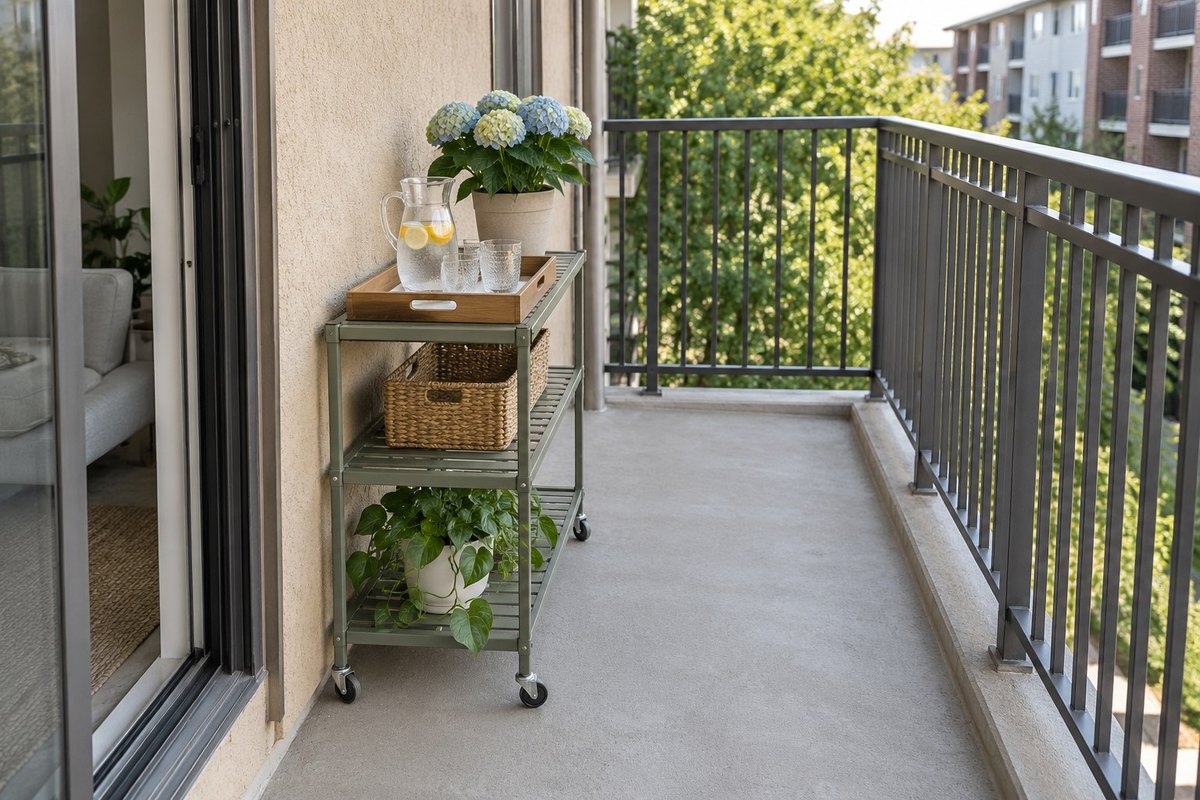
Put a small removable tray on a parked cart or sturdy outdoor table. A pitcher and two cups can fit without turning the whole balcony into a serving area. Set it on the building side where you can pick the tray up and walk back inside without crossing the rail side. Keep the wheels steady if the cart has brakes.
Remove glass and heavy items before rolling the cart. Store it indoors if it would block the balcony on ordinary days. These backyard tiki bar ideas include small serving setups for a larger outdoor space.
11. Get a Warm Evening Glow From a Portable LED Lantern
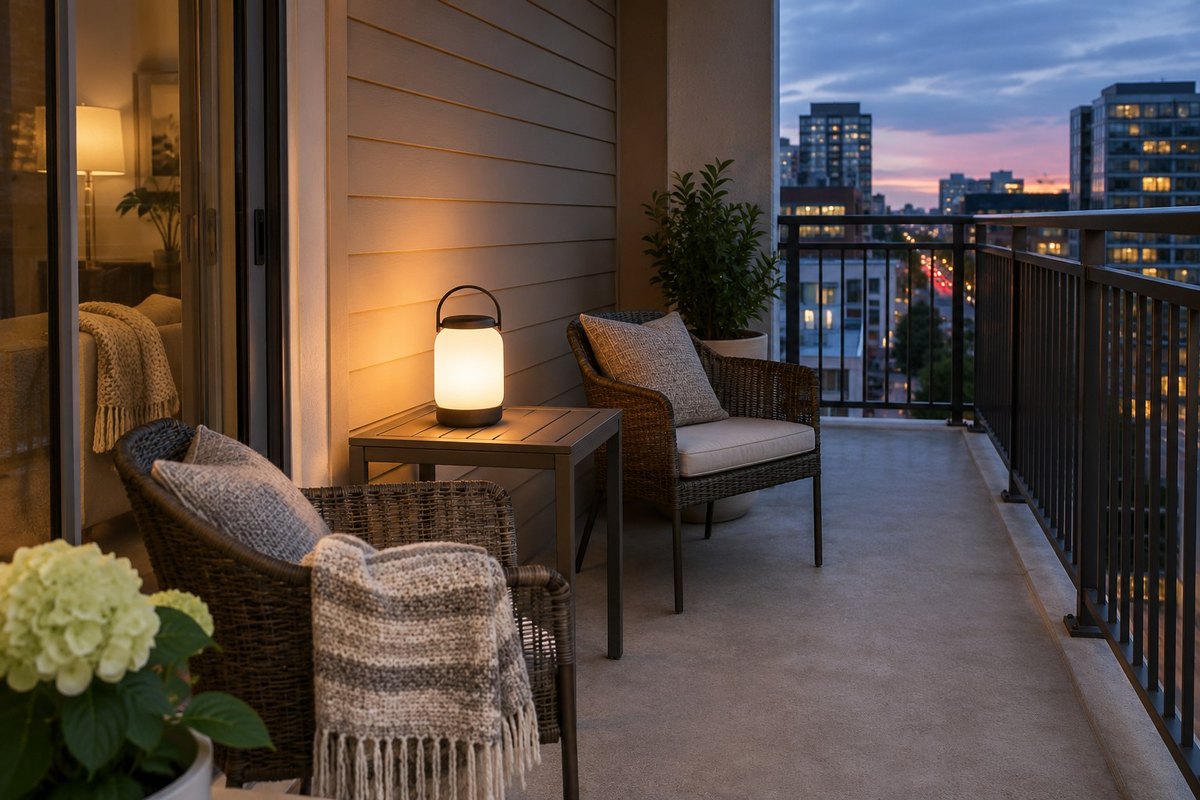
Use a portable outdoor-suitable LED lantern for a warm glow after dusk. Put it on a low stable table, well inside the rail, and choose a shade that softens the light. A small lantern can add atmosphere without using a flame or putting a cord across the floor. Keep the route to the door separately lit if needed.
Follow the lantern’s guidance for exposure, charging, and storage. Move it if it shines into your eyes or can be knocked off the table. Bring it in after use if the balcony is exposed to rain or wind.
12. Screen the View From the Seat You Use
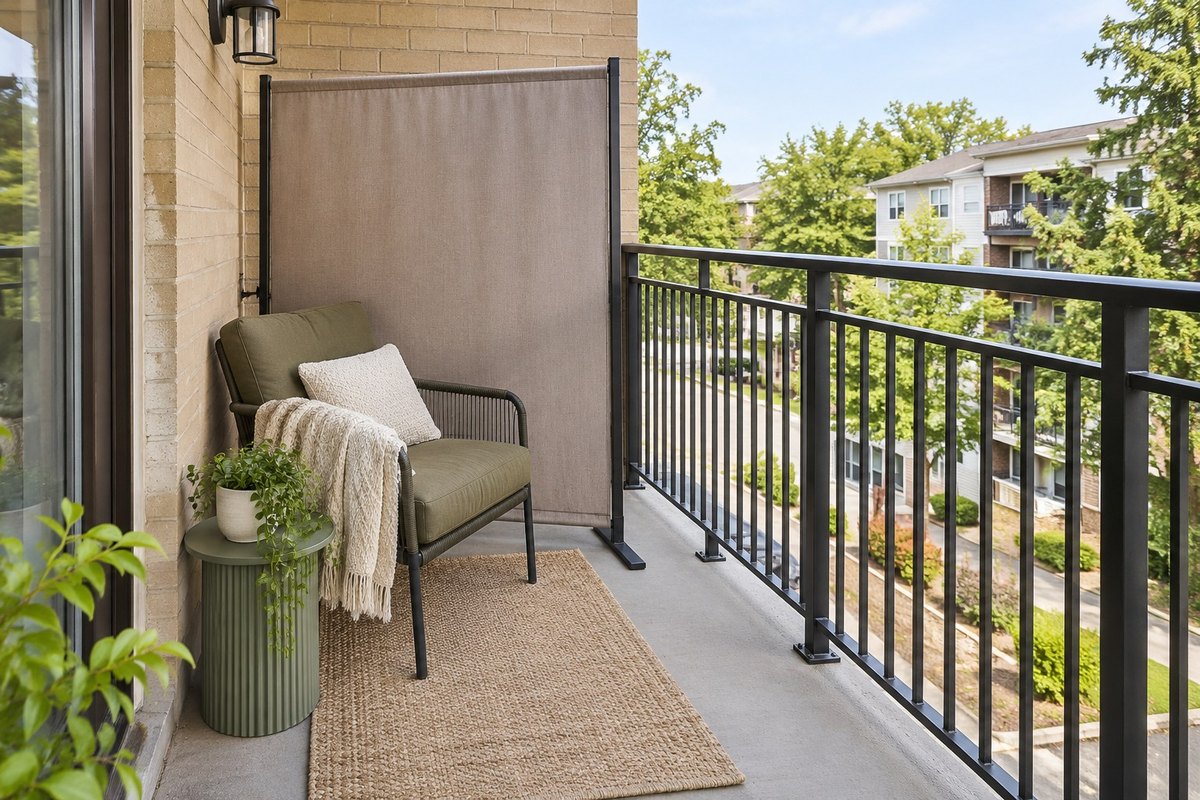
Choose a short outdoor screen that blocks the specific view you notice from the chair. Place it along the building side on suitable stable support, leaving the doorway and rail clear. A low screen can sometimes do the work without enclosing the balcony. Look at the result from the seat before buying a larger panel.
Check the building’s rules and the maker’s wind and support guidance. Bring portable pieces in before conditions make them unsafe. These small balcony privacy ideas compare more options for narrow or overlooked spaces.
13. Give Balcony Herbs Their Own Draining Pots
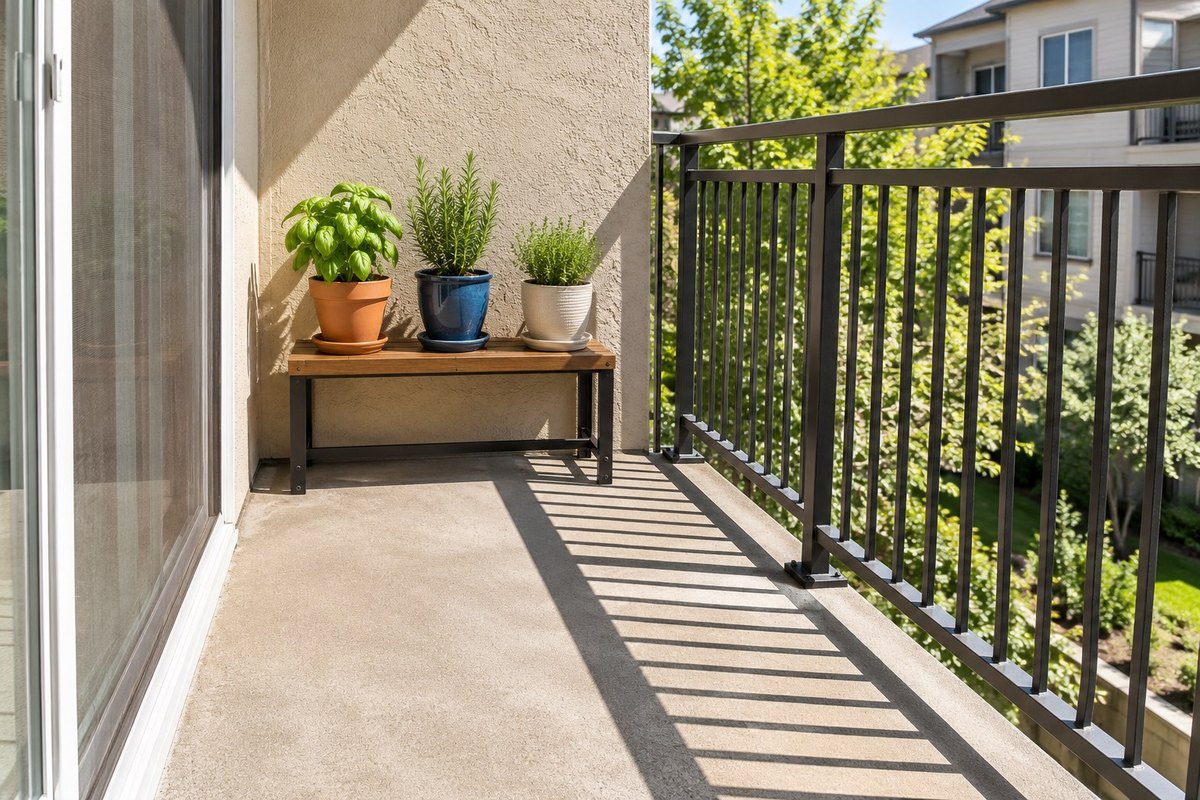
Give herbs small individual pots with drainage. Put them where the light suits each plant and group pots with similar care needs. A low sturdy shelf or a shallow tray can keep the pots together. Leave enough room to lift one out without shifting the others.
Collect runoff where it stays away from the floor route, railing, and neighboring units. Keep the pots away from unknown reclaimed wood and materials that can shed into the soil. If you use herbs daily, keep them close enough to bring inside easily. These balcony vegetable garden ideas show other ways to organize small edible containers.
14. Use Shade Only Where It Fits the Balcony
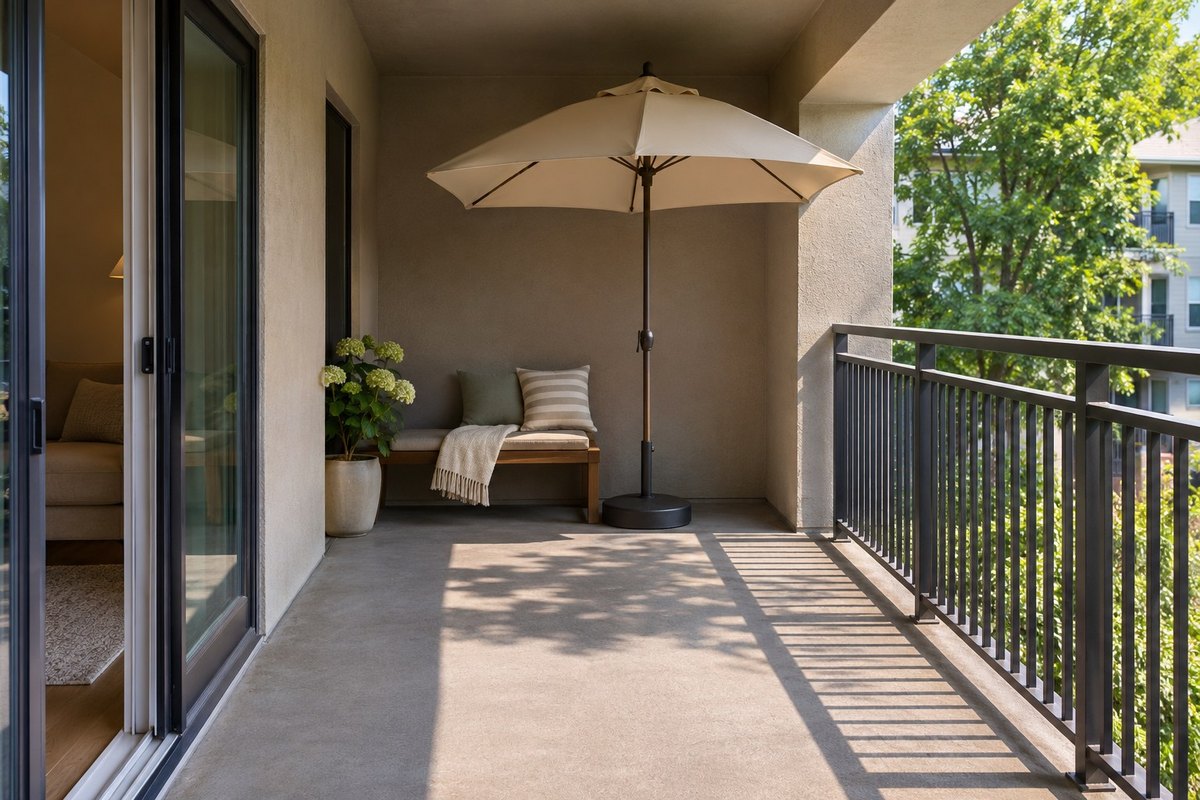
Use a small outdoor umbrella only where there is room for the canopy, the compatible weighted base, and a clear path. Measure the canopy open and the support footprint before choosing one. Put it away from the railing and door, and check that the building allows the setup. A little shade over one chair may be enough.
Follow the maker’s instructions for base weight, wind, and storage. Close or remove the shade when required. On a narrow or exposed balcony, use a position that already gets shade rather than adding a large frame.
15. Fold a Side Table Away Between Uses
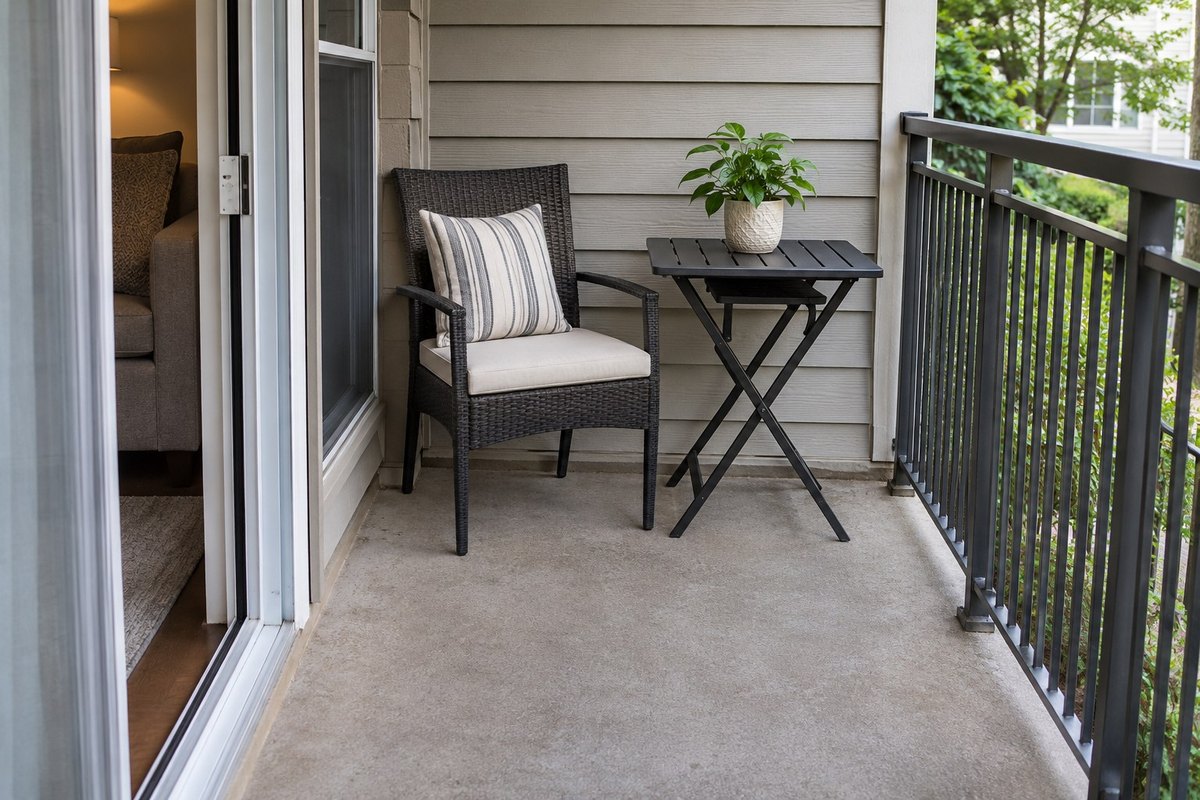
Choose a folding outdoor side table if you need a surface only at certain times. Open it fully beside the chair and test whether it holds a cup without wobbling. A small top takes less room to set up and is easier to bring indoors when the weather turns. Keep the table clear of the door.
Check the open and folded sizes. Choose a place to store it where it cannot fall, slide toward the rail, or obstruct the route. A tray can work on days when even the small table would use too much floor.
16. Use Natural-Look Textiles Under Cover
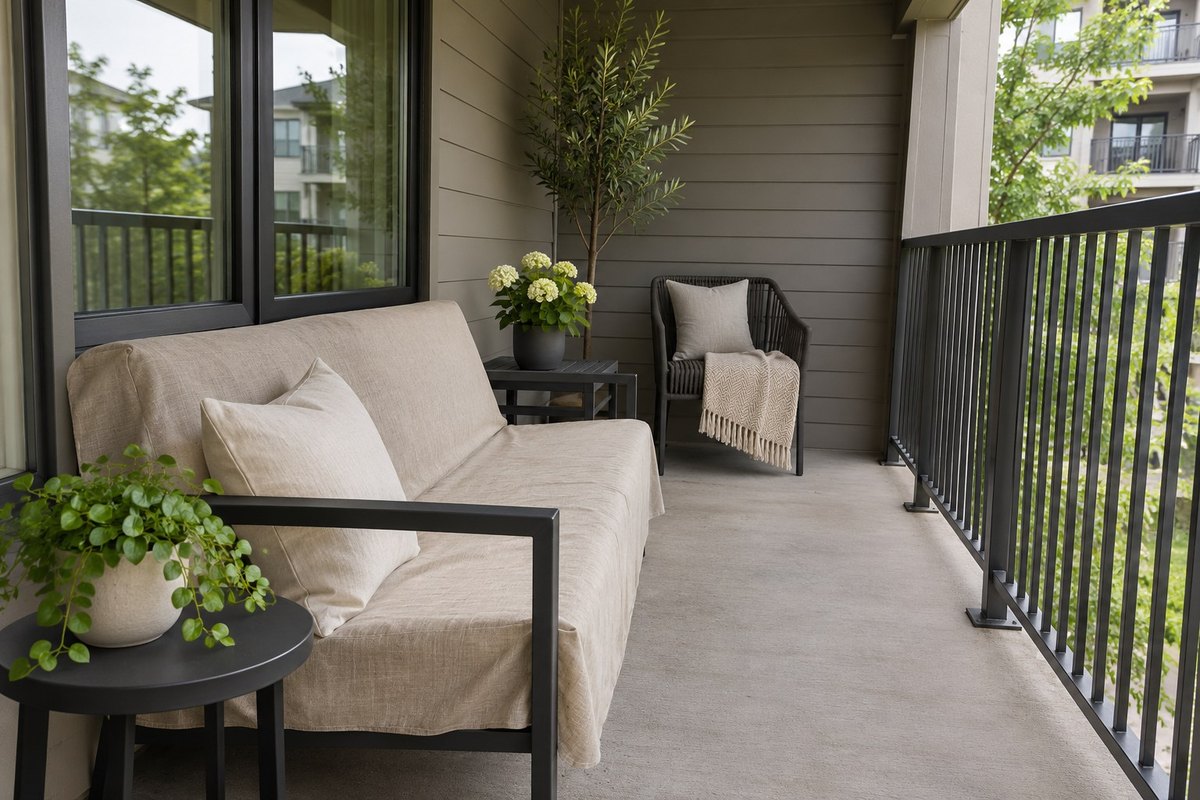
Use flax or linen tones in an outdoor fabric with a visible weave. A chair cover or one small cushion can warm up metal or dark woven furniture. Keep the textile under cover if the exposure is more than the maker recommends. Let the fabric provide texture while the nearby pots and table stay plain.
Check the fabric and filling separately, and let both dry before storing. Save indoor blankets for short dry visits and bring them back in afterward. A small textile that is easy to lift will be easier to use through the season.
17. Add a Patterned Panel on the Building Side
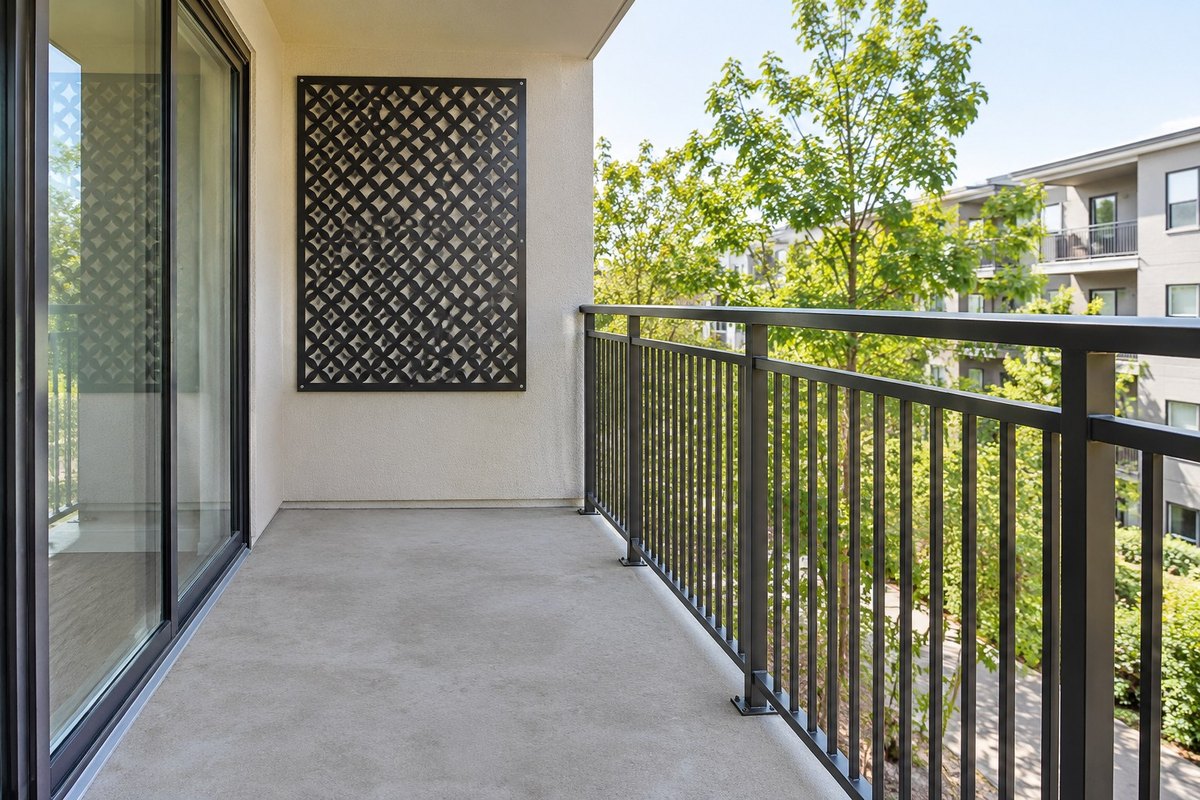
Give the building-side wall a graphic pattern with a narrow, flat outdoor panel. A simple perforated metal or painted shape can add interest without changing the guardrail. Keep the pattern visible from the chair and choose a piece that stays close to the wall. Avoid decorative elements that stick out into the route.
Check mounting permission and use supports suited to the material and conditions. Keep the railing intact and accessible. If a panel is unsuitable, repeat the shape on a small mat or an existing planter.
18. Use a Low Trellis That Has Its Own Support
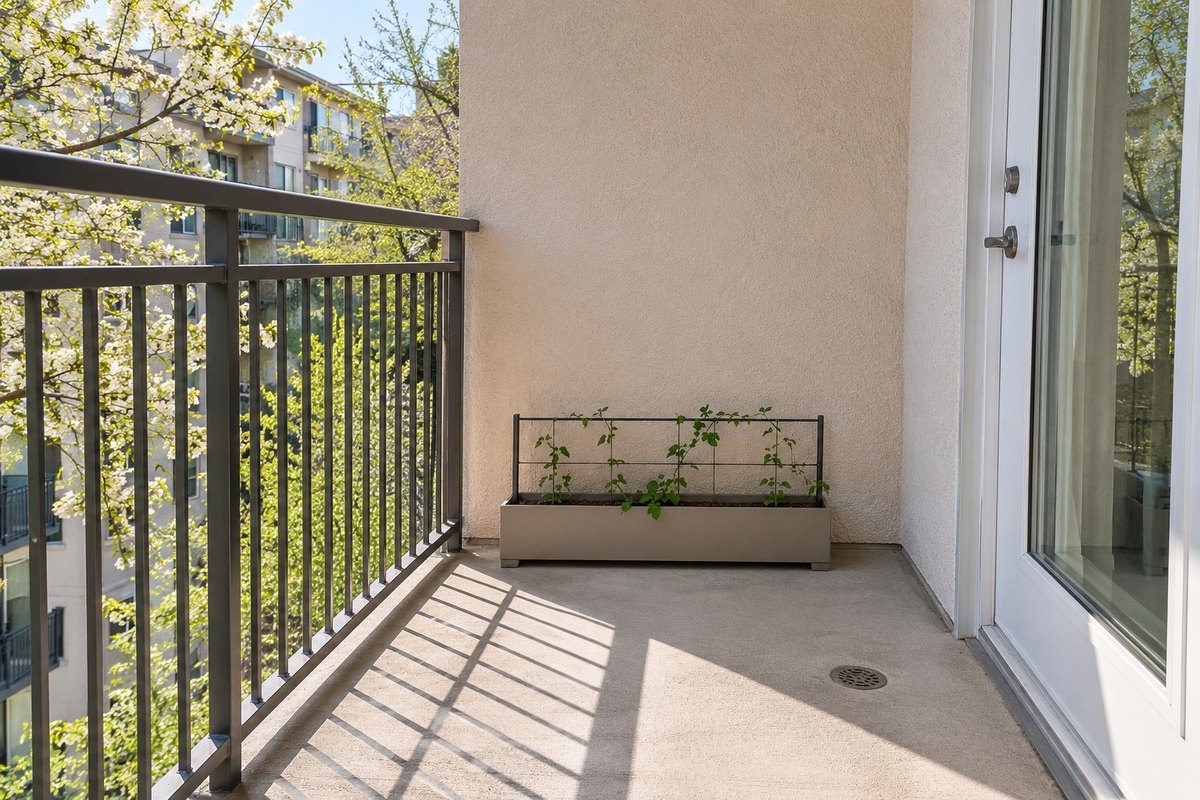
Use a low trellis with an independent support if a climbing plant suits your balcony. Choose a plant appropriate to the local conditions and check how large it gets. Put the unit along the building wall and keep the planter and support fully inside the guardrail. Leave the door and drain easy to reach.
Check the wet weight and how the trellis will handle exposure. Trim growth that reaches beyond the balcony or hides the route. A short support can give a climbing plant a place to grow without relying on the railing.
19. Refresh One Sound Small Piece of Furniture
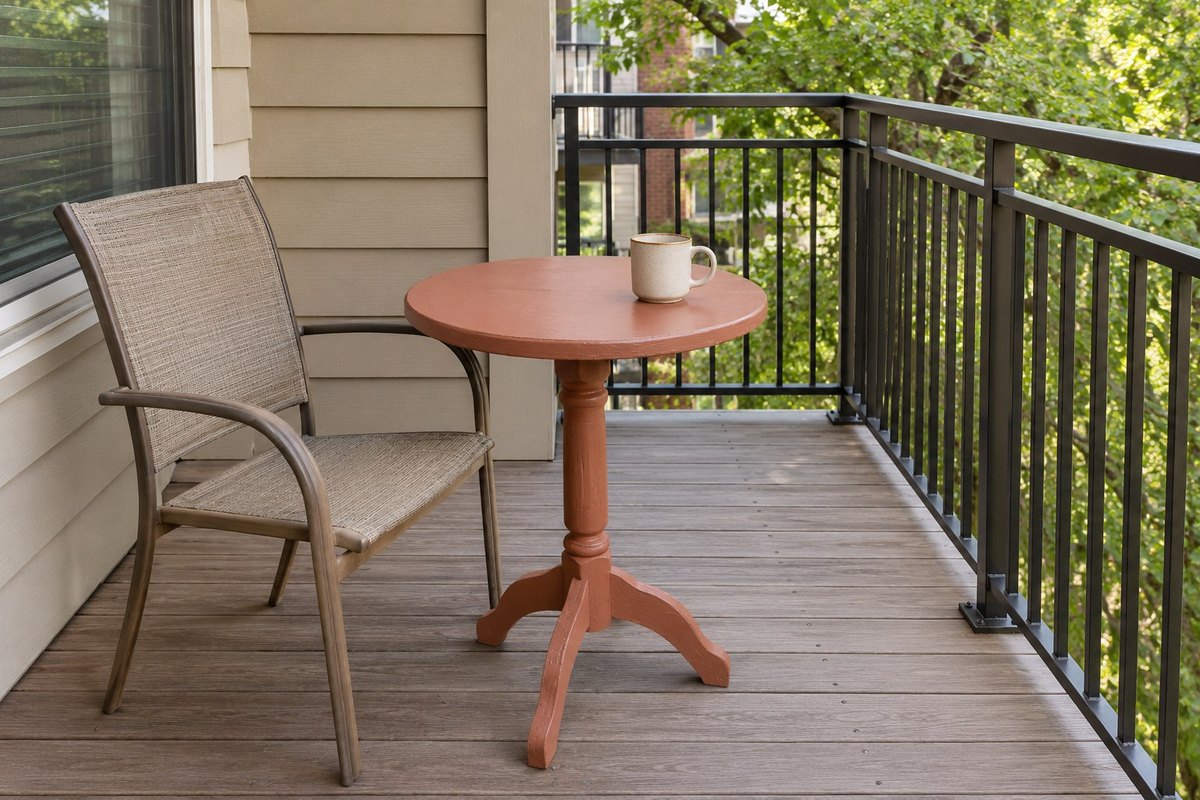
Refresh one older outdoor table in a muted clay or blue color. Check that the frame and feet are sound and the finish is appropriate for the material. Use the table where its size already works and let the new color connect it to one nearby cushion or pot. Keep the top clear enough for daily use.
Follow the coating’s preparation and drying directions and get suitable advice before disturbing an unknown old finish. If the table wobbles or its joints are loose, address that first. A smaller sound piece is easier to reuse on a balcony.
20. Swap One Small Accent as the Season Changes
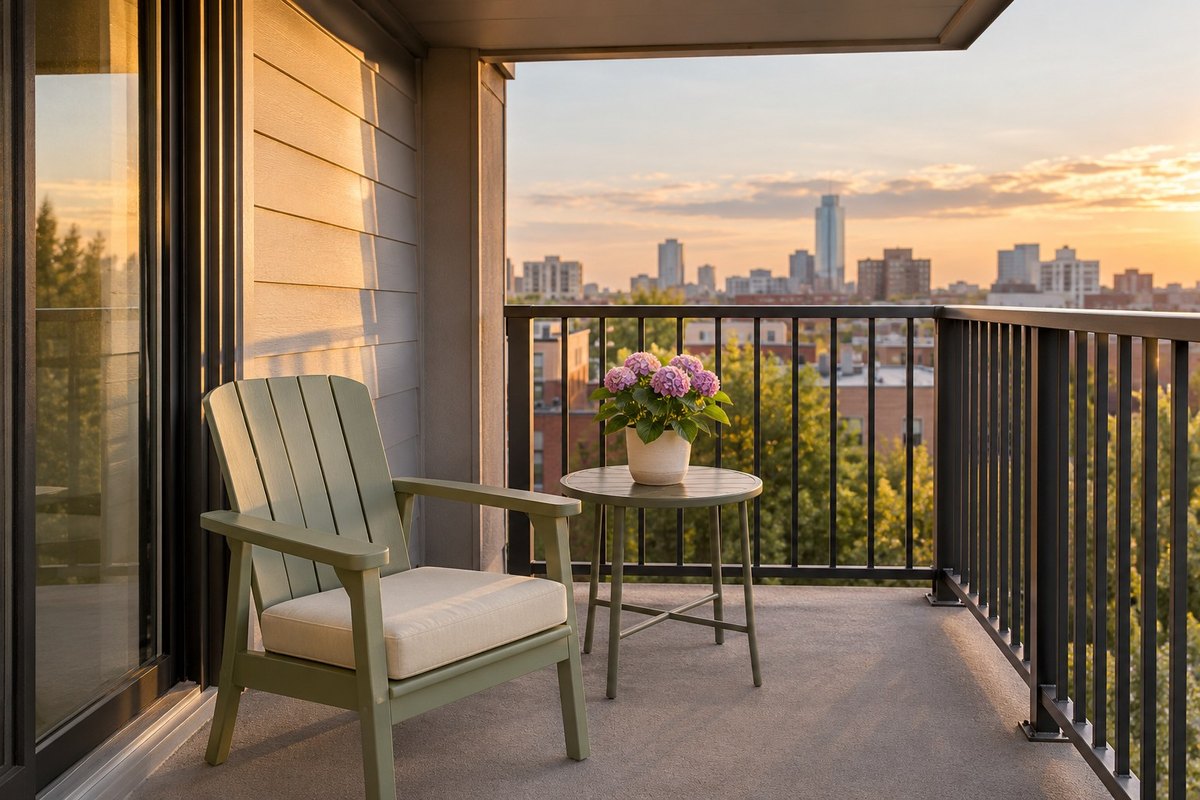
Choose one pot or textile to change as the season turns. Use flowers suited to the weather you have and leave the seating and walking route where they work. A small change shows clearly when the rest of the balcony has just a few colors. Pick a piece you can carry inside without moving furniture.
Check the arrangement after rain and before a windy day. Bring in anything that could move or stay damp. Keep enough storage space for the piece when it is out of season so the balcony can return to its everyday setup.
Walk through the balcony one last time with the door open. Make sure you can reach the drain, move a chair if needed, and lift out the rug or cushions without shifting everything else. Once those jobs are easy, the few decorative pieces you keep will have a clear place.
Discover more from HomeTrendora
Subscribe to get the latest posts sent to your email.