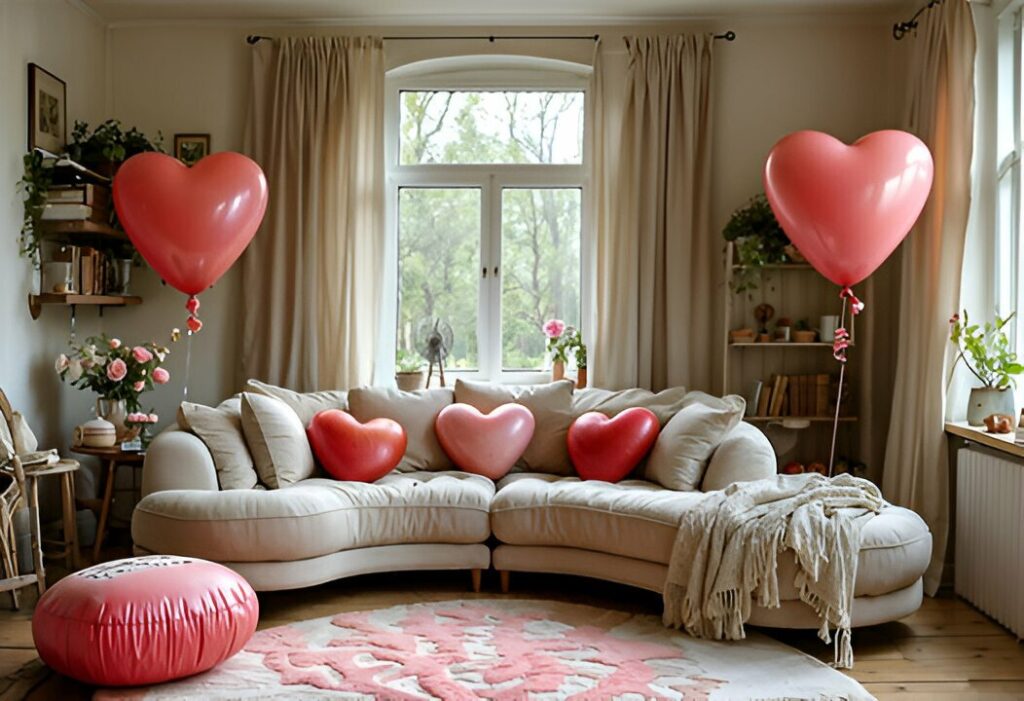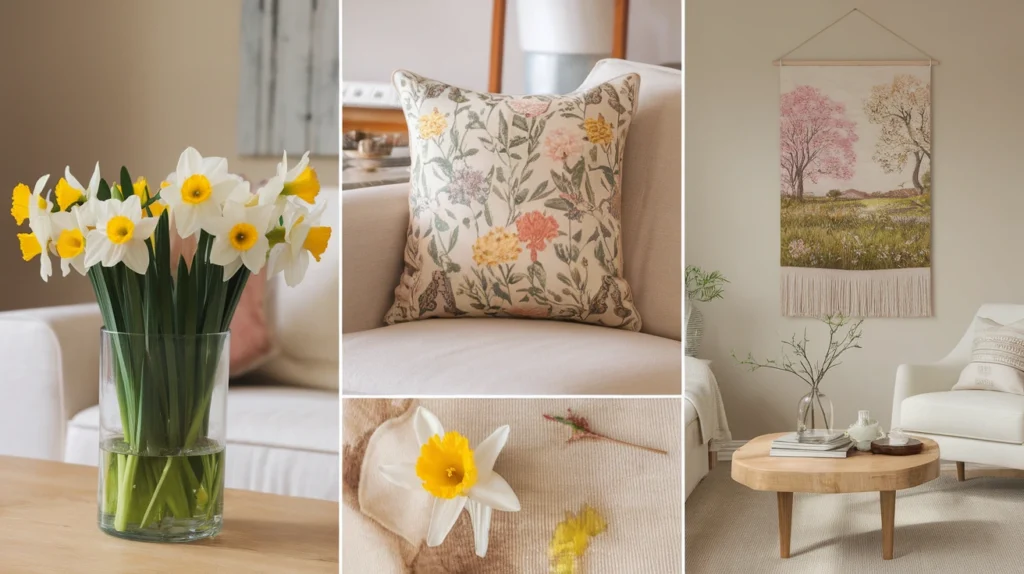
The winter throw, dark pillows, and crowded mantel can make a living room feel heavy long after the light outside has changed. These 20 spring living room decor ideas help you choose which corner to lighten first and which colors and textures will work with the furniture you already have.
Notice the way daylight moves across the room before bringing in a new piece. A clear window, one branch arrangement, or a softer cover on the sofa may do enough. Start with a small group of changes that are easy to reverse when the season shifts again.
1. Open the Curtains All the Way Before Changing the Palette
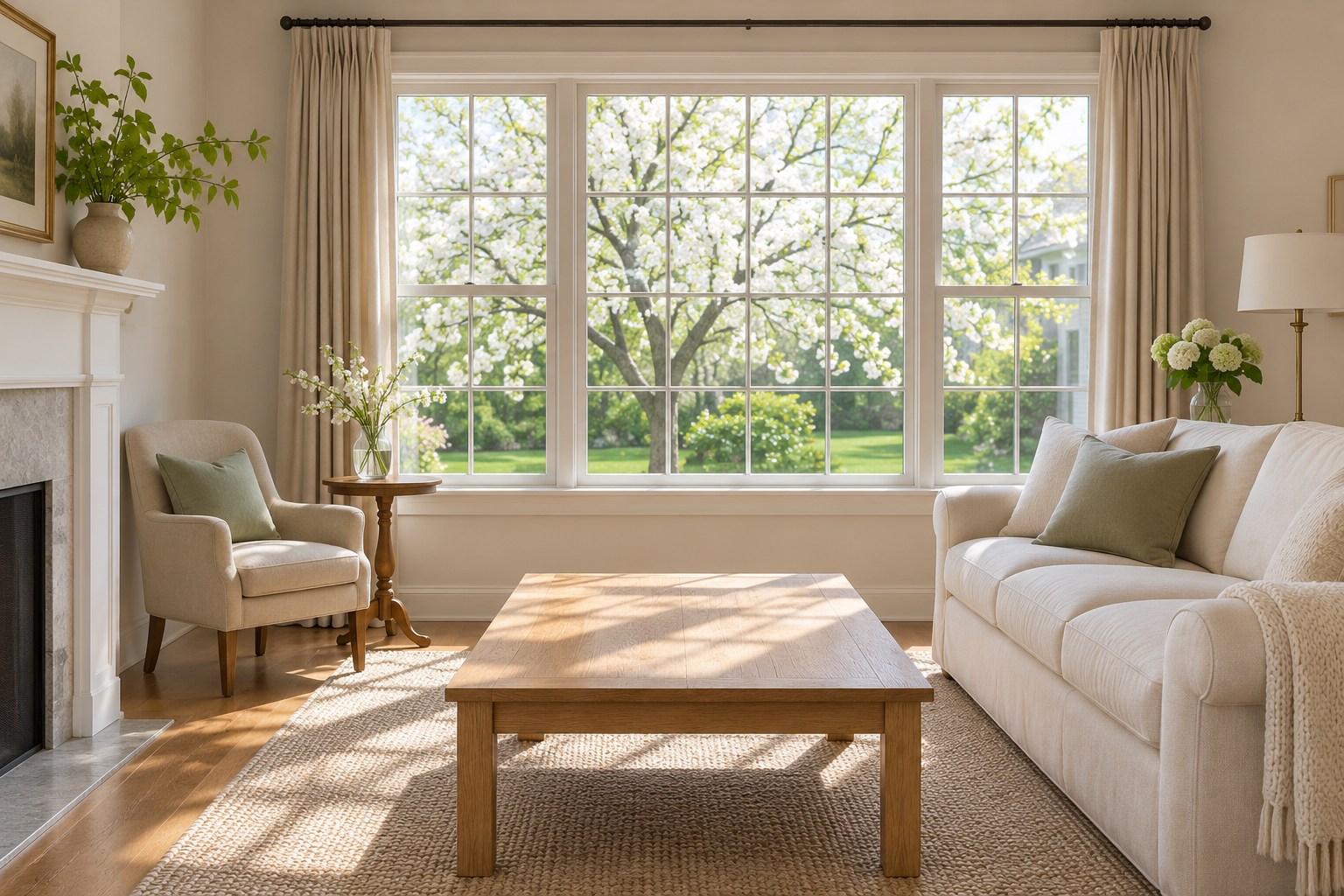
Pull the curtains back and look at the parts of the room that get more daylight in spring. A chair that felt inviting by the lamp in winter may now block a low part of the window. Move it a little to the side and see how the room looks from the entrance. Keep the window hardware accessible.
Check how the existing wall and furniture colors look at different hours. A lighter pillow or bare wood table may be enough when the window has a clear view into the room. These ideas for brightening a dark room offer other places to start if the main window still gives limited light.
2. Bring Spring Branches Into an Existing Corner
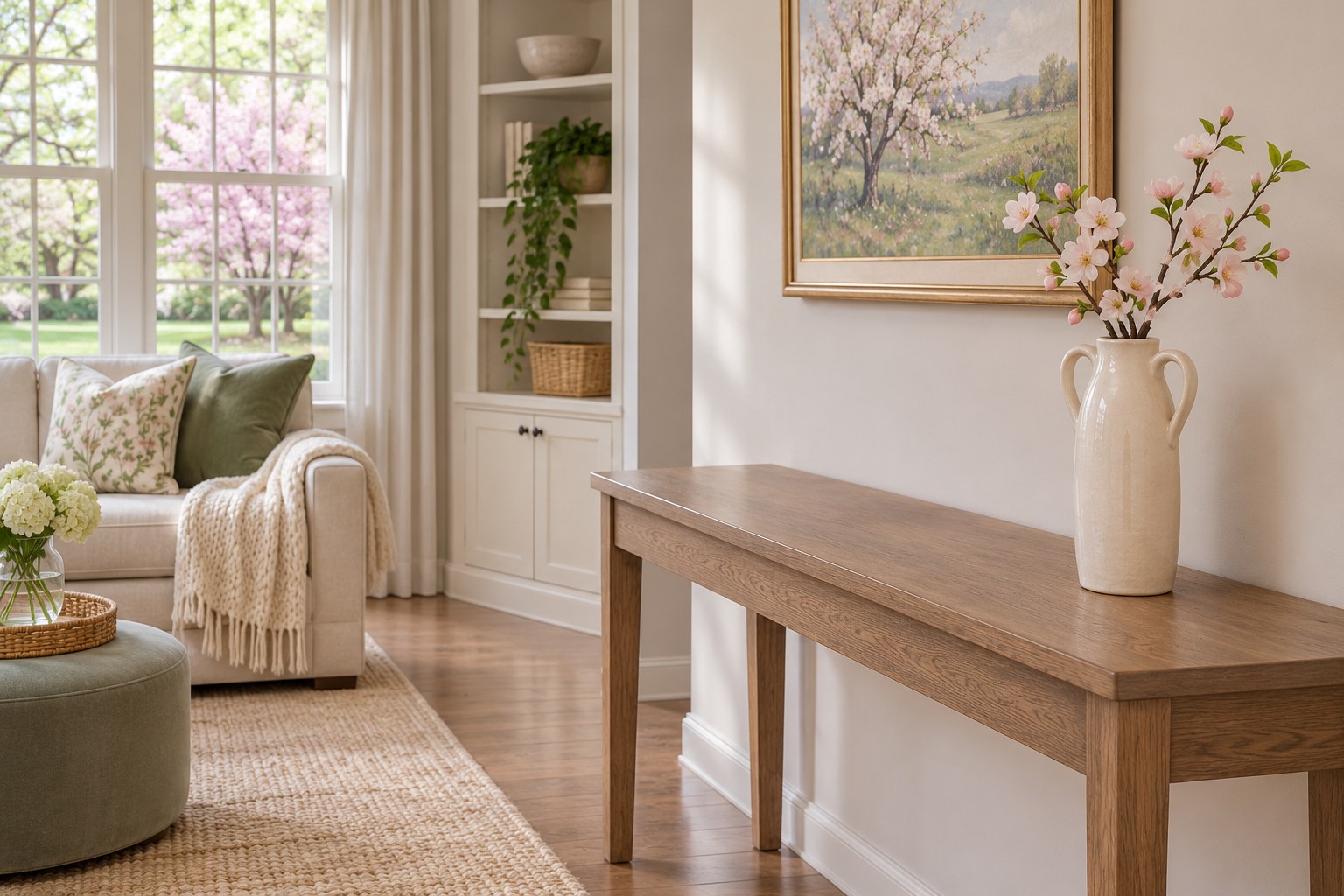
Look at a console, low cabinet, or side table that already sits out of the walking route. A few branching stems give the eye a place to land as you enter the room. Start with one stable vase and trim the visual height by using short stems. Leave enough space beside the arrangement for a hand to pass without brushing it.
Choose a vessel and liner appropriate for water if you use fresh stems, and protect the surface underneath as needed. Faux stems are useful if the corner gets little light or water would be inconvenient. Try the arrangement from the doorway before adding more branches. A clear part of the console makes the outline easier to see.
For a branch arrangement that can move from the console to a shelf, try short faux stems in the Mitt&Ditt handled ceramic vase. Keep the stem spread narrow enough to pass without brushing it.
See details for Mitt&Ditt handled ceramic vase (paid link)
3. Pair Soft Blue With the Cream Textiles You Own
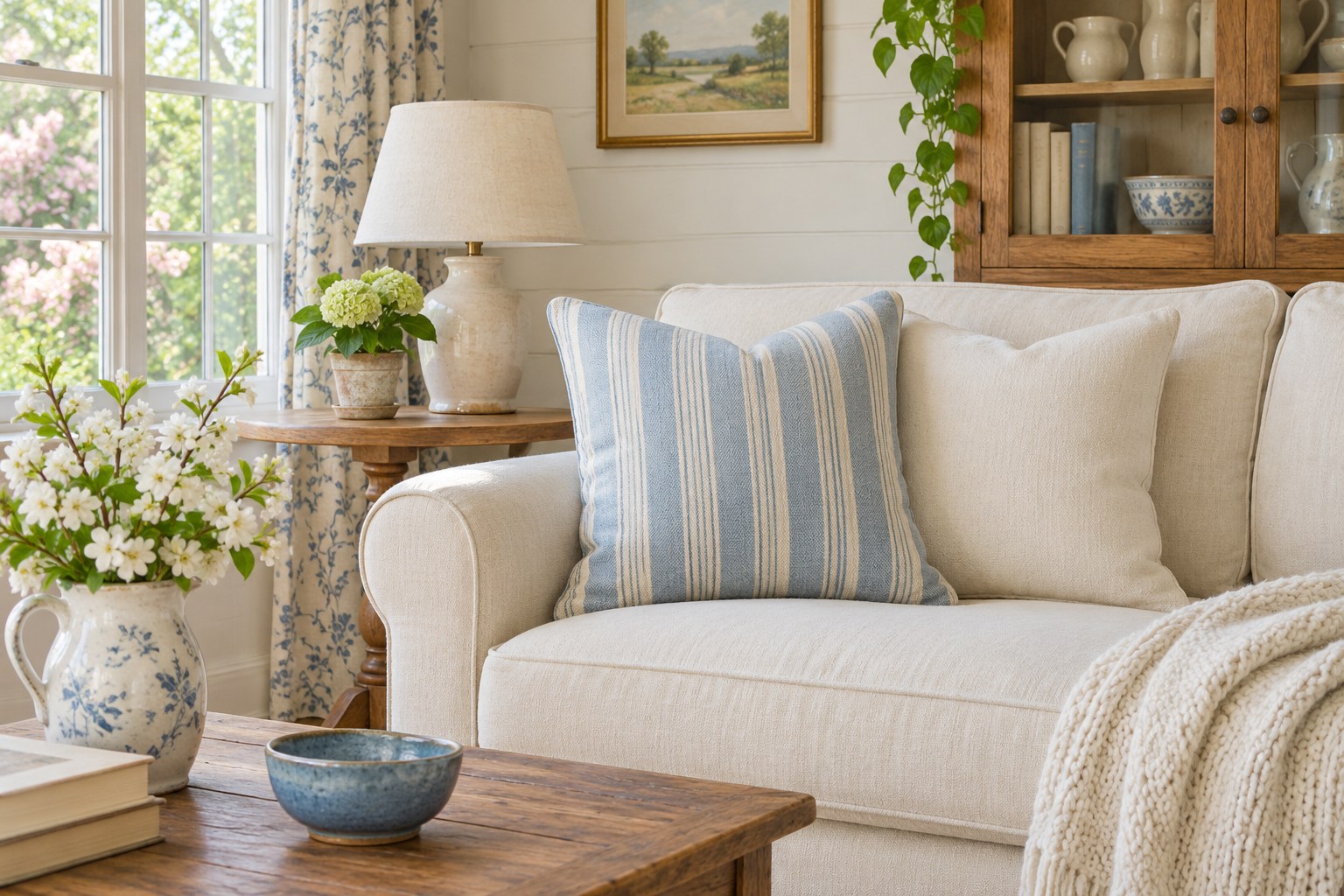
Try a muted blue pillow cover or a narrow stripe beside an existing cream cushion. Blue and ivory can feel cool in daylight, so look at the pairing against warm wood or a woven shade before adding another color. If the sofa already has a pattern, use a quieter blue in one small accessory.
Repeat the blue on a ceramic bowl or one piece of art where it can be seen from the main seat. The tones can differ as long as they feel related at the same time of day. Keep enough cream visible for the contrast to read without turning the whole room into a matching set.
4. Trade a Heavy Throw for a Lighter Layer
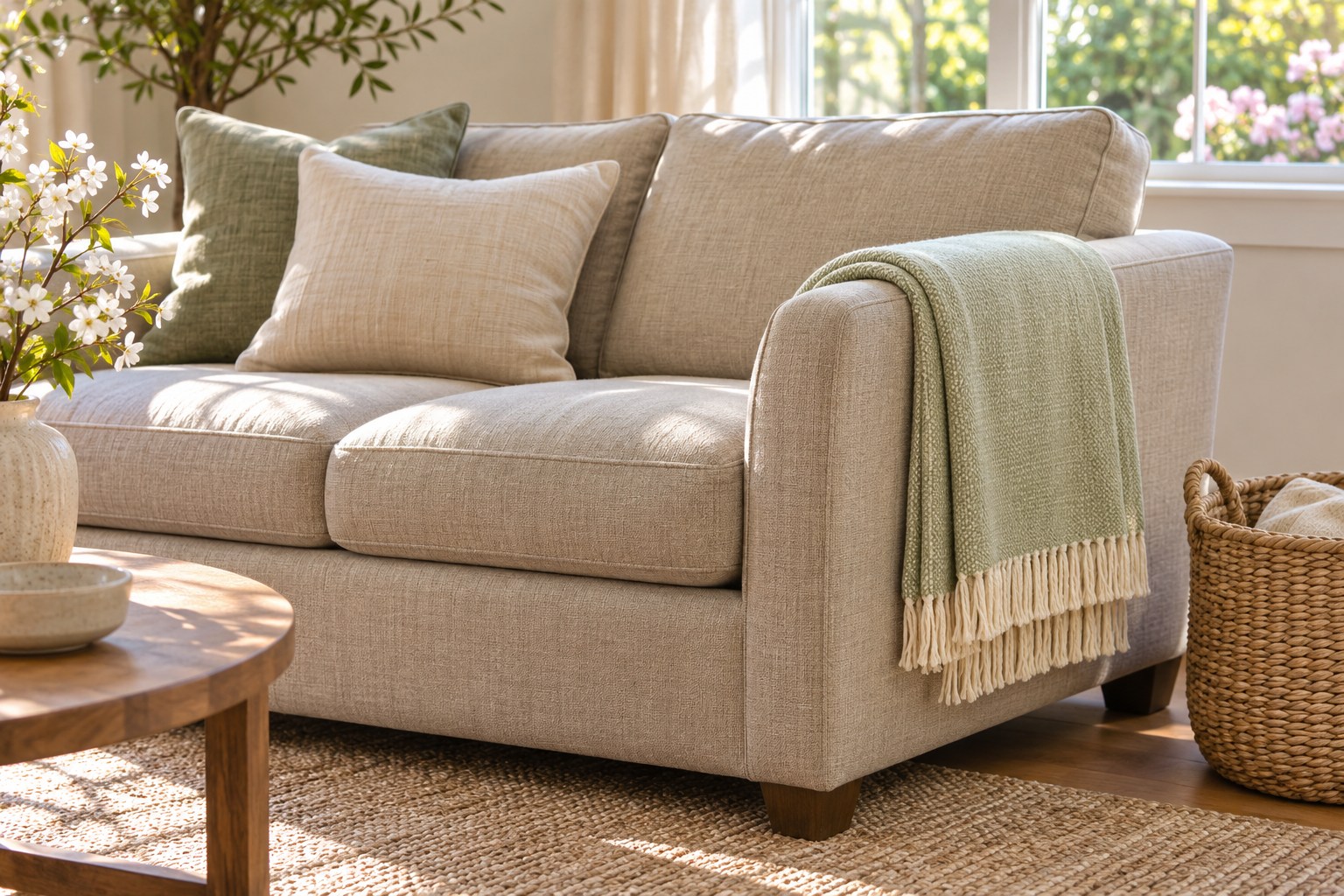
Take the thick winter throw off the sofa for a day and see whether anyone misses its warmth. If a layer still earns its place, try a lighter weave in a tone that works with the upholstery. Put it where someone can reach it without disturbing the pillows. Fold it to suit the chair or sofa arm rather than letting it spread across the seat.
Keep the thicker blanket nearby until evenings warm up. Use a basket or drawer you already own and make sure the textiles are clean and dry before storing them. A light cotton or linen look can change the season of the room without replacing the sofa covers.
5. Put One Garden Color in Three Small Places
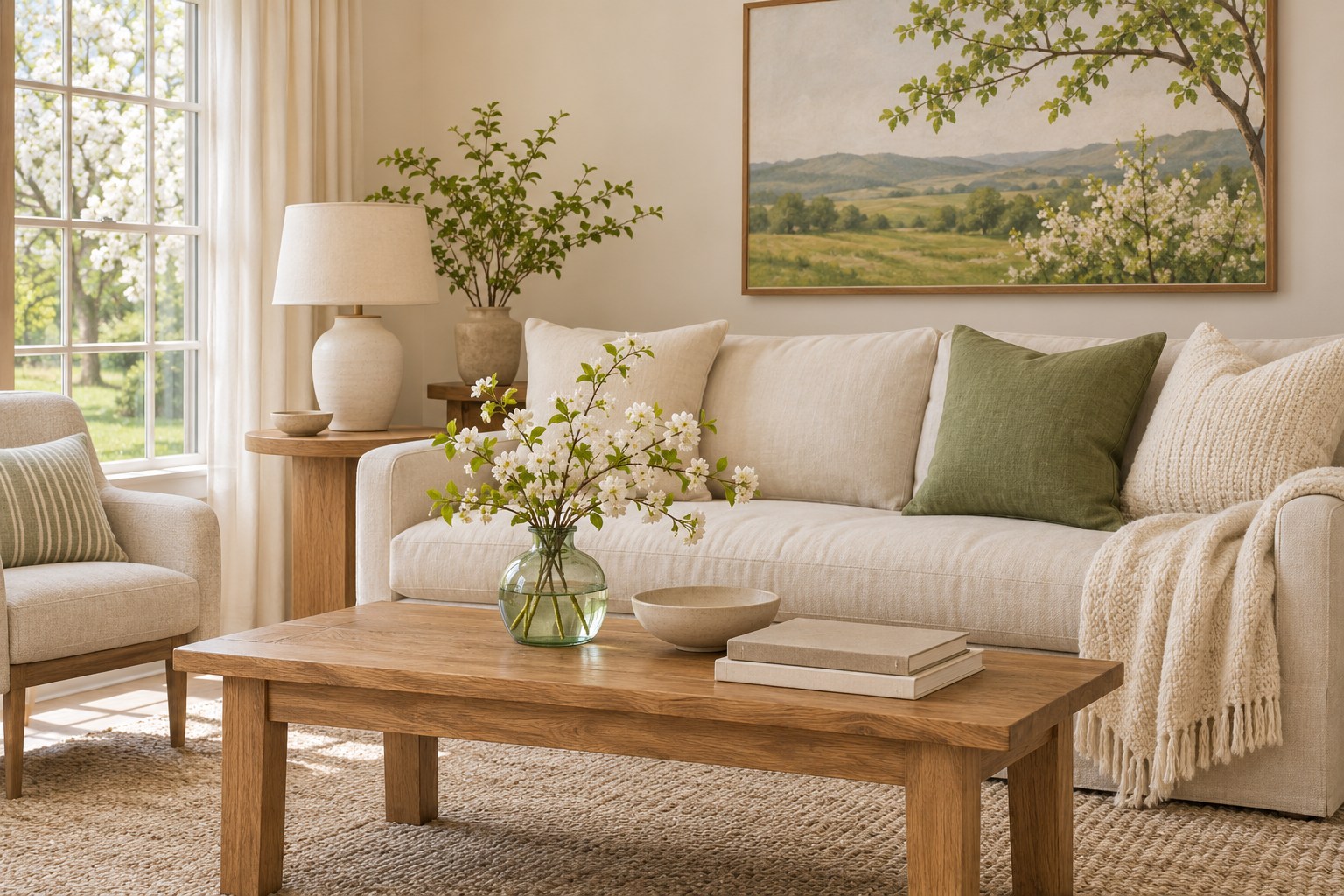
Choose a shade from something you can see outside, such as a soft leaf green or the mauve of an early bloom. Start with the piece you already own that best represents it. Place it beside the biggest surface in the room and see how much color you want there. Repeat a related version of the shade on two smaller objects.
Space those details across the room so they can be noticed from different seats. A green glass vase, a pale green pillow, and a small green shape in a framed print may be enough. Leave other colors quiet and let the pieces vary in finish and texture.
6. Give a Coffee Table a Low Seasonal Center
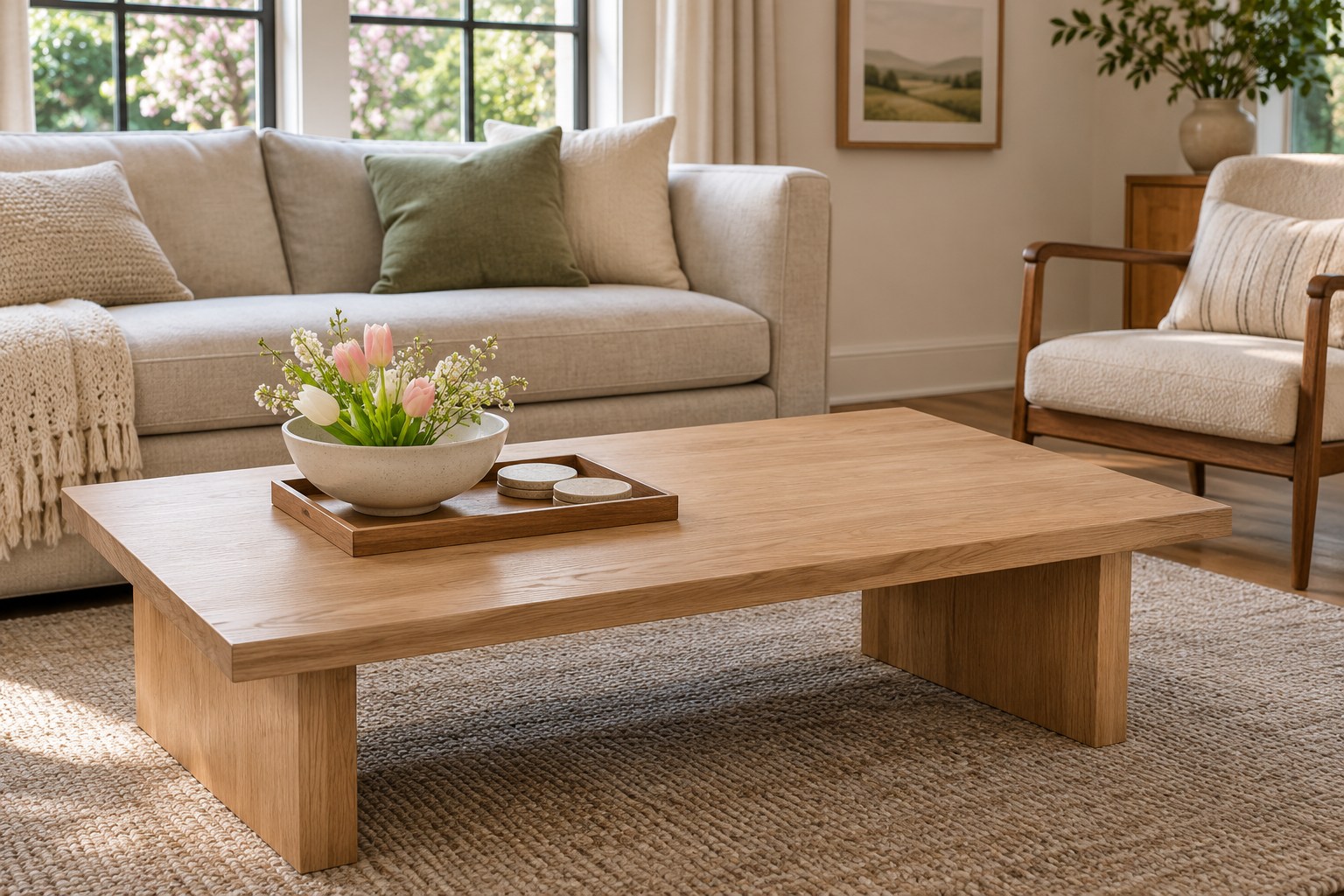
Gather the objects that already belong on the coffee table. Put the remote and coasters at one end, then try a low bowl or short vase where everyone can still see across it. A small tray makes the display easy to move when the table is used for a drink or a meal. Check how it looks at seated height.
Choose a surface that tolerates what you place on it and protect it from moisture. Try a few short stems, a shallow dish with citrus, or a single green object from another room. Keep a stretch of table open where people usually reach.
7. Hang a Botanical Print Where You Can See Its Shape
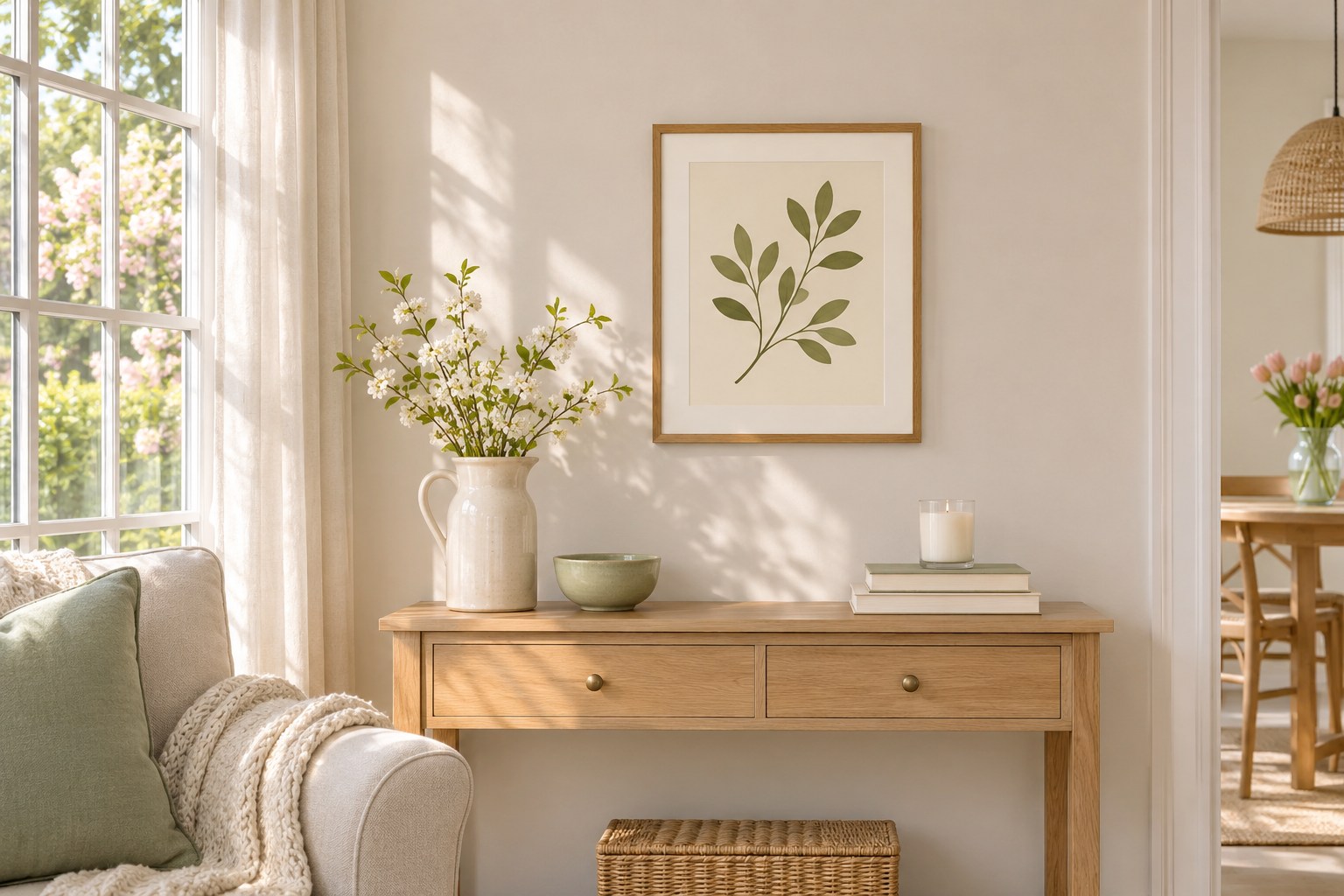
One botanical print can set the season for a corner without requiring a new gallery wall. Look for a clear leaf or branch outline at the distance you usually see the wall. A print with a pale ground may look lighter beside a dark lamp, while a darker ground can give a quiet wall a stronger focus.
Use a frame that suits the print and the room. Test the proposed height with a paper outline, then use mounting hardware appropriate for the wall and frame. If you are reusing a seasonal frame, check the glass and backing before putting it up. Repeat just one color from the image elsewhere.
8. Use a Fine Stripe With One Plain Cushion
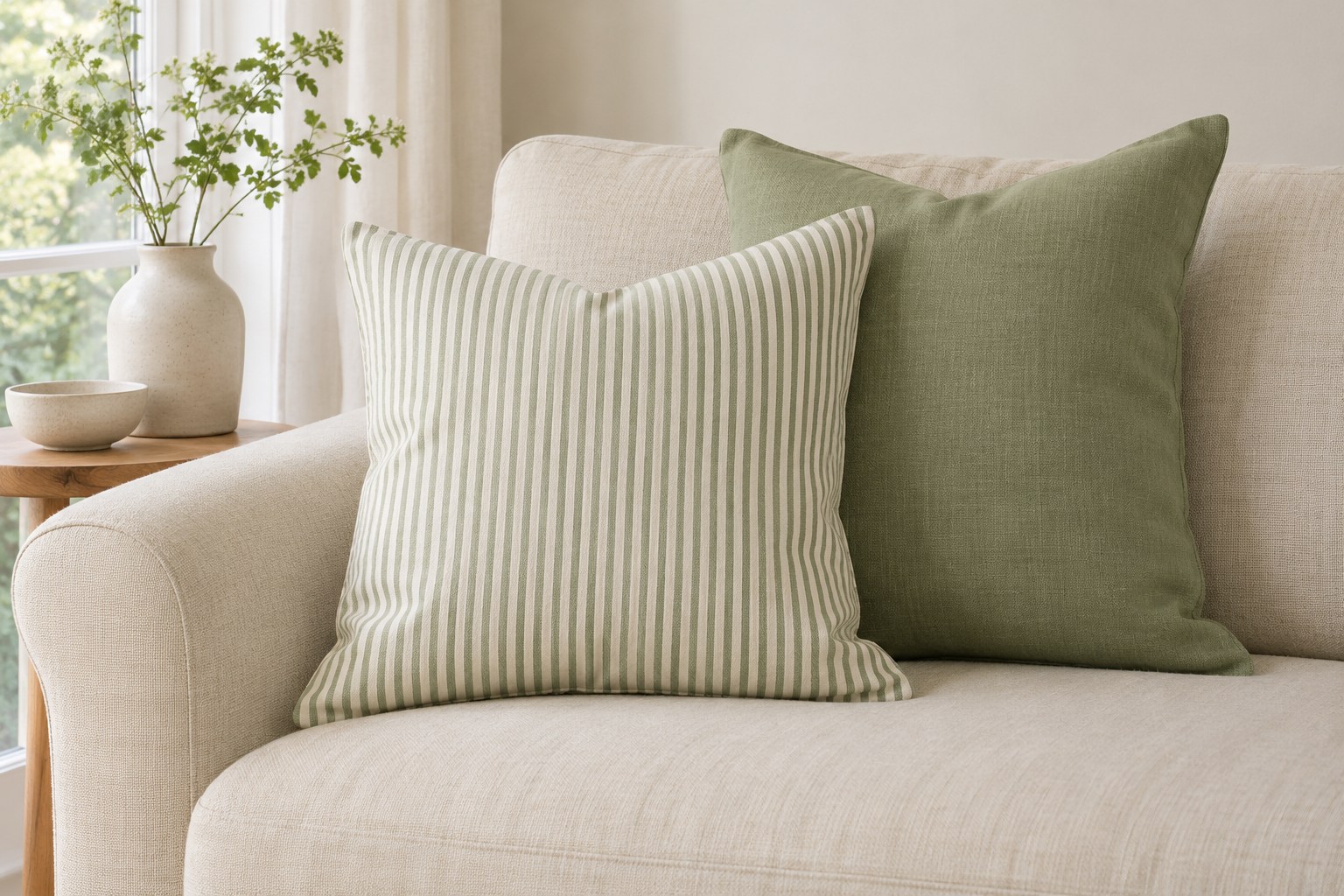
A small stripe gives a spring sofa a little movement. Compare it with the upholstery before adding another patterned piece. If the sofa already has visible texture or a repeated motif, try a stripe with a soft contrast and choose a plain cushion in one color from it. Look at the pair from across the room to see whether the scale feels right.
Check cover dimensions against the insert you already have and choose a closure you can use easily. A good fit makes the cushion look finished and keeps the seasonal swap simple. Store the spare covers folded with the inserts they belong to.
9. Make a Shelf Look Lighter by Leaving One Opening Clear
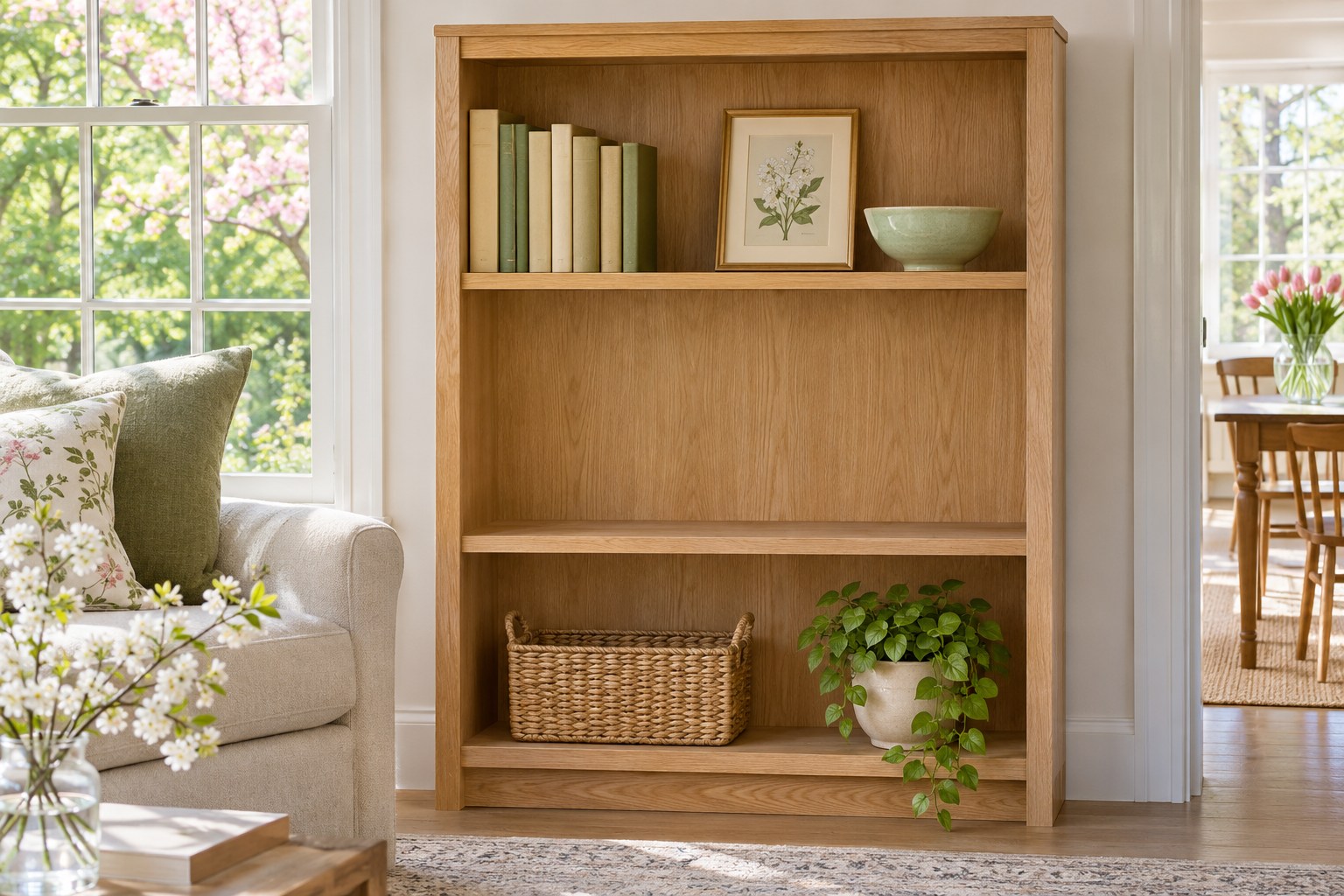
Take the small objects off one shelf and put back the books or pieces you still want to see. Keep one section free so the outline of the objects next to it stands out. Put taller books toward the back and smaller items where you can take them down easily. Look at the shelf from your usual seat before you add anything else.
Bring in one spring piece that suits the existing scale, such as a low bowl or a small print. Use stable objects and respect the shelf’s load and mounting limits. These living room shelf styling ideas show more ways to work with objects you already own.
10. Try Apricot Beside a Warm Wood Frame
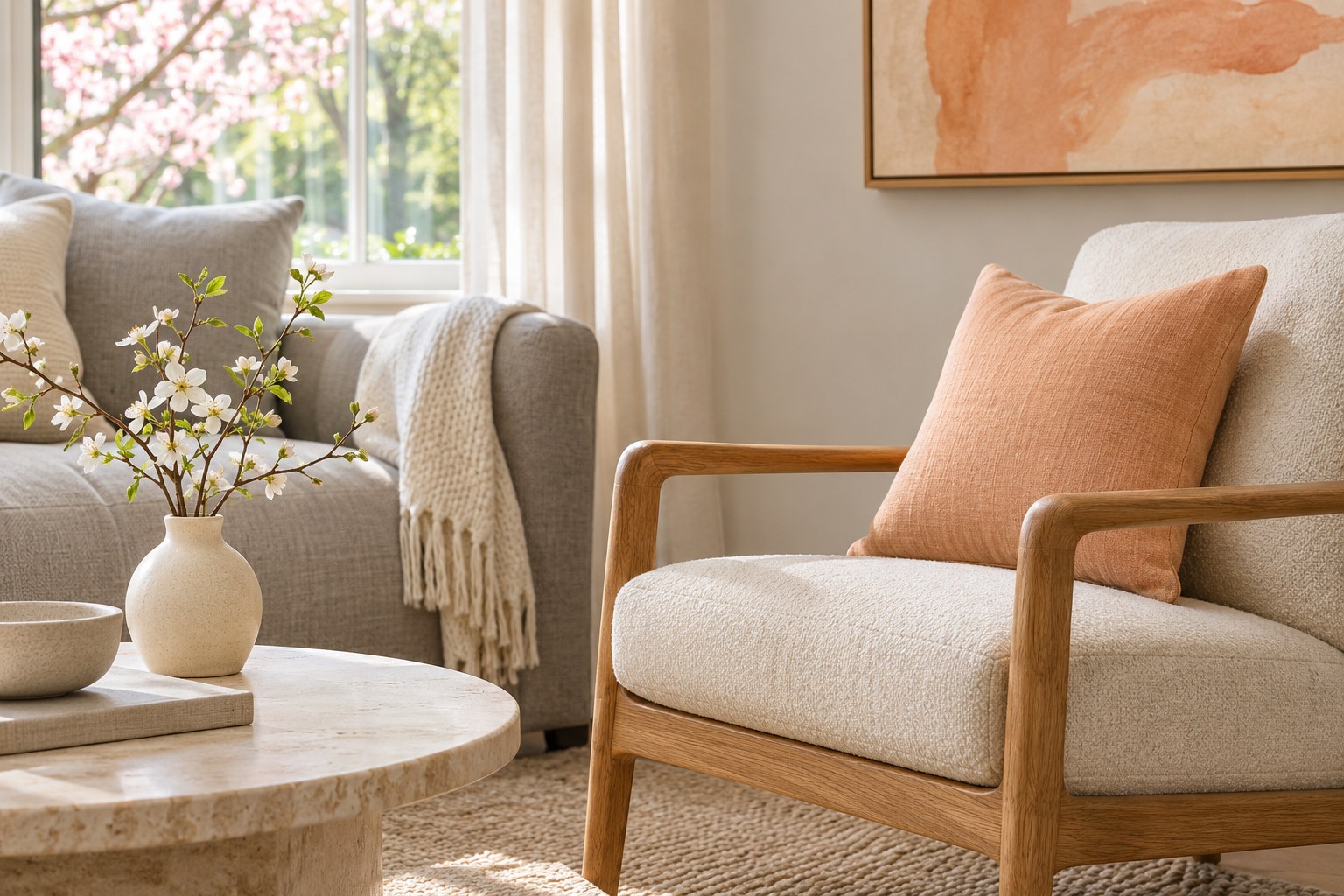
Apricot can bring warmth to a room with gray or cream upholstery. Try it first on a small cushion, bowl, or print near a warm wood frame. Compare the shade during the day and with the evening lamps on. A muted shade can feel soft in both settings while a brighter one may call more attention to itself.
Use the same warmth in a second small place if the first piece feels isolated. Keep the rest of the room simple enough for the wood grain and warm color to show. A short branch or a few flowers in a neighboring neutral tone can support the arrangement without making the room feel busy.
11. Refresh the Mantel With Two Heights and Open Space
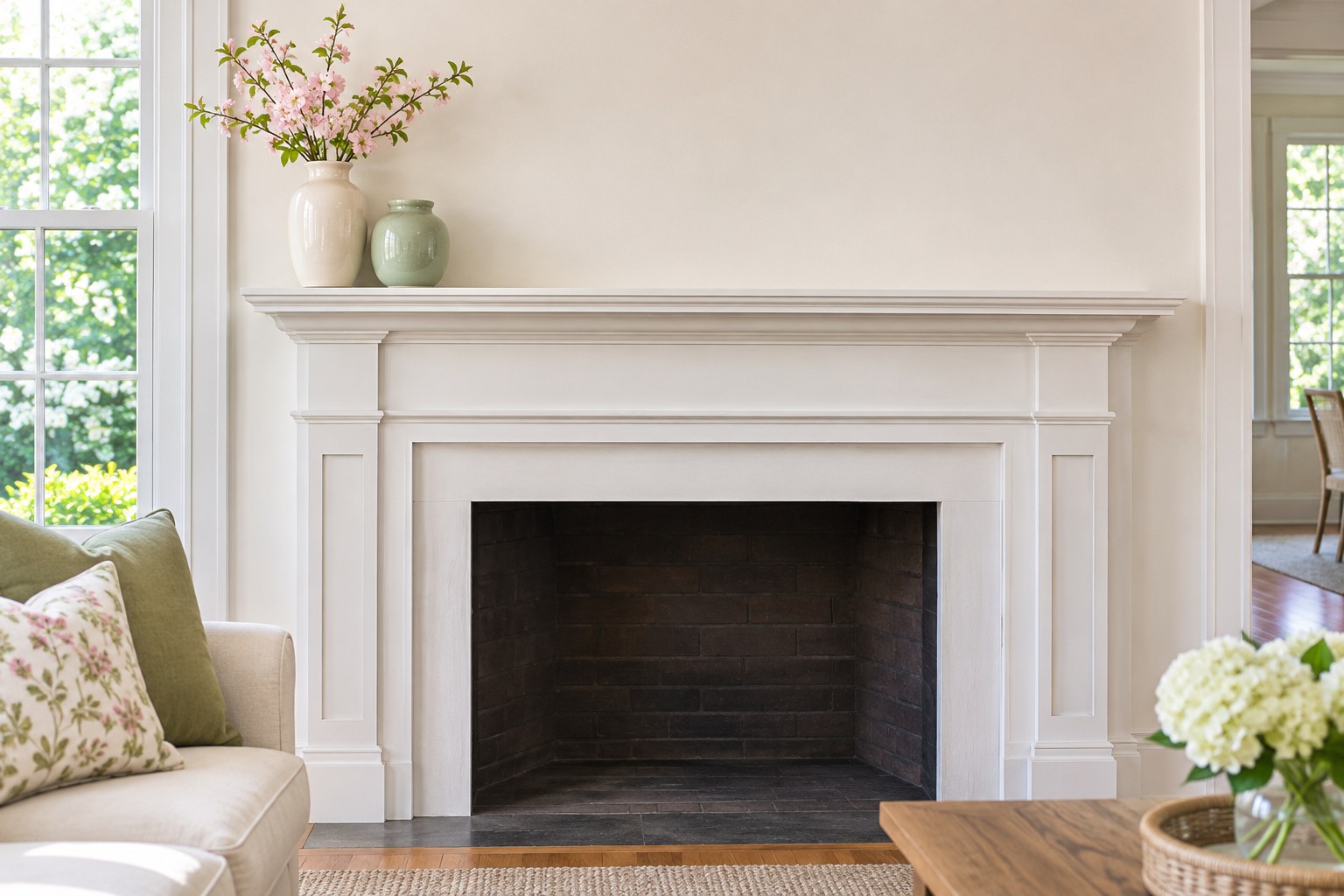
Start with an empty mantel and decide which part you want people to notice. Try a medium-height object at one end and a lower arrangement nearby, leaving room across the rest. From the other side of the room, check that neither piece obscures artwork or a mirror. One clear group can read more strongly than small items spaced all the way along.
Keep anything near the fireplace within the appliance or fireplace maker’s clearance requirements. Move greenery and textiles to a sideboard if the mantel is used while the fireplace operates. A single ceramic piece can carry the spring color without needing a long arrangement.
12. Give an Existing Armchair a Spring Reading Spot
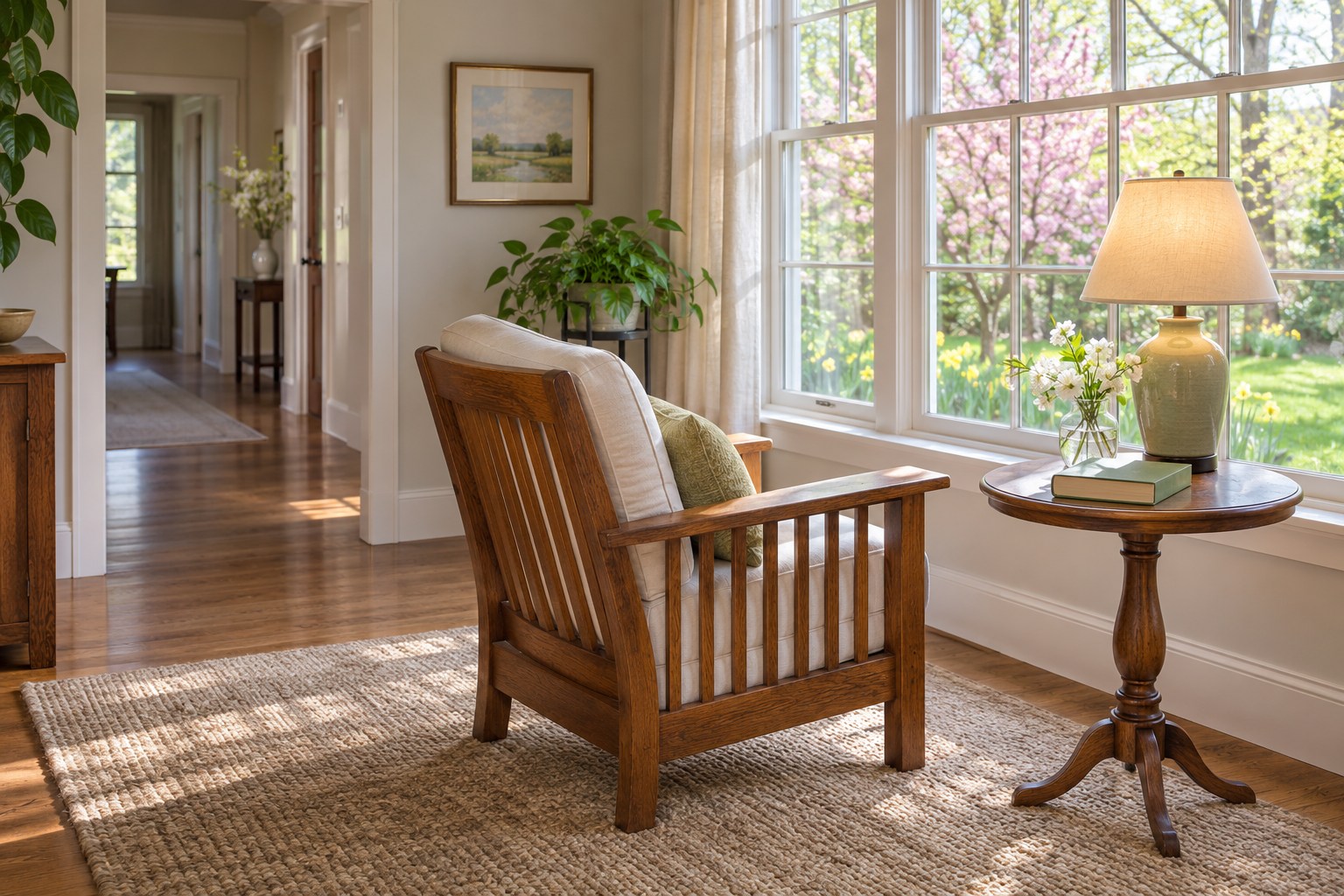
Turn a chair slightly toward the daylight and check that its angle still suits the conversation area. Bring a small table within easy reach and leave space to stand. A slim book and a small shade can make the spot feel ready to use even when the room is quiet. Keep a clear route behind the chair if the window is there.
Repeat one color from the sofa in a small cushion or throw. If the chair has a bold finish, a simple pale textile can make the change feel lighter. Put the lamp where its switch and cord work well with the layout.
13. Use a Small Floral Pattern Where It Can Breathe
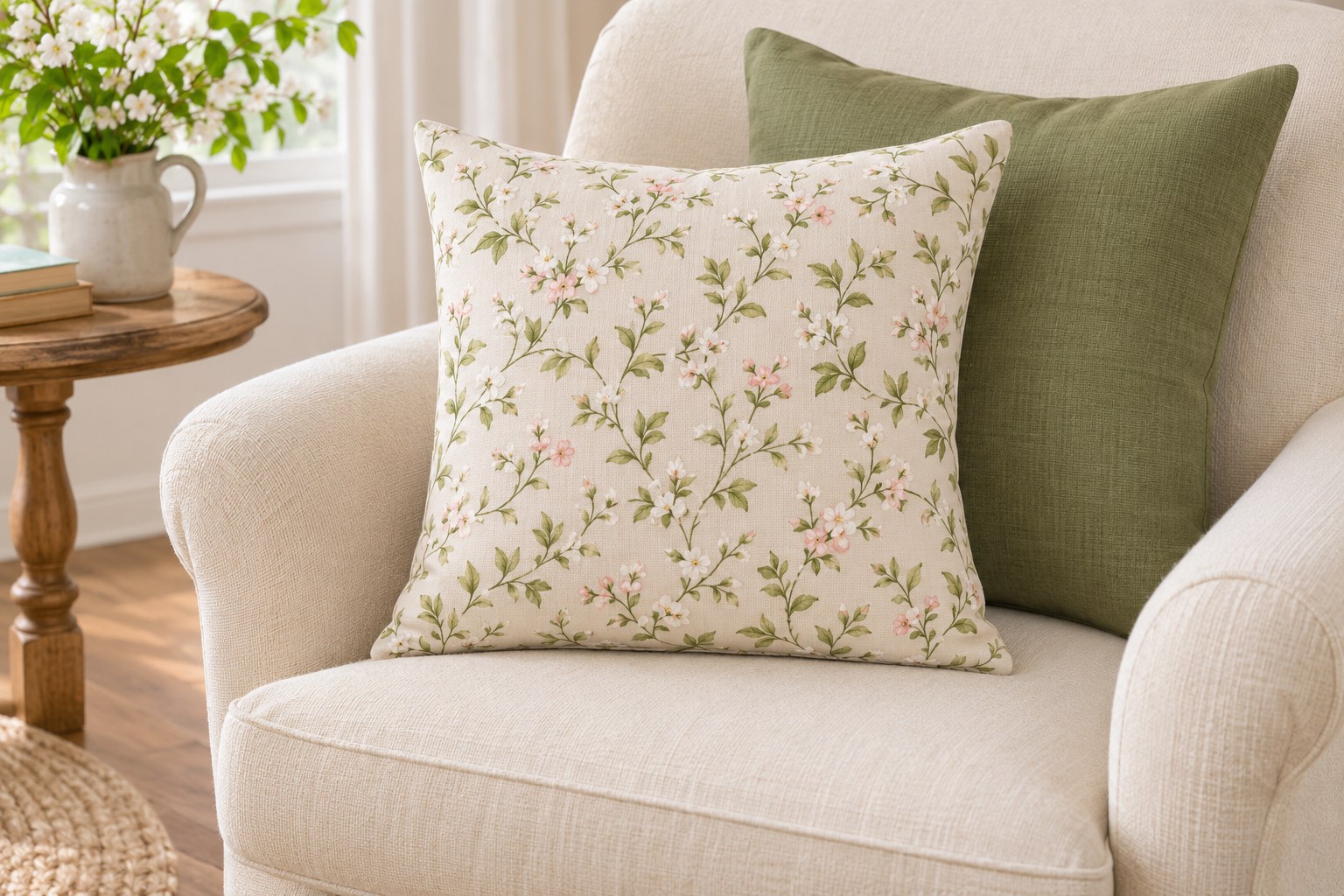
A floral pillow, skirt, or chair cover has more presence when the nearby surfaces stay plain. Try it against the seat where you can see the whole pattern. If the room already has strong lines in the rug or wood floor, pick a floral with a quiet background and choose one of its colors for the accessory nearby.
Check the look from the far side of the room. A tiny floral can read as texture, while larger blooms become a feature. For more ways to work with floral upholstery and painted furniture, see these English cottage living room ideas.
14. Try One Woven Accent Beside Smooth Upholstery
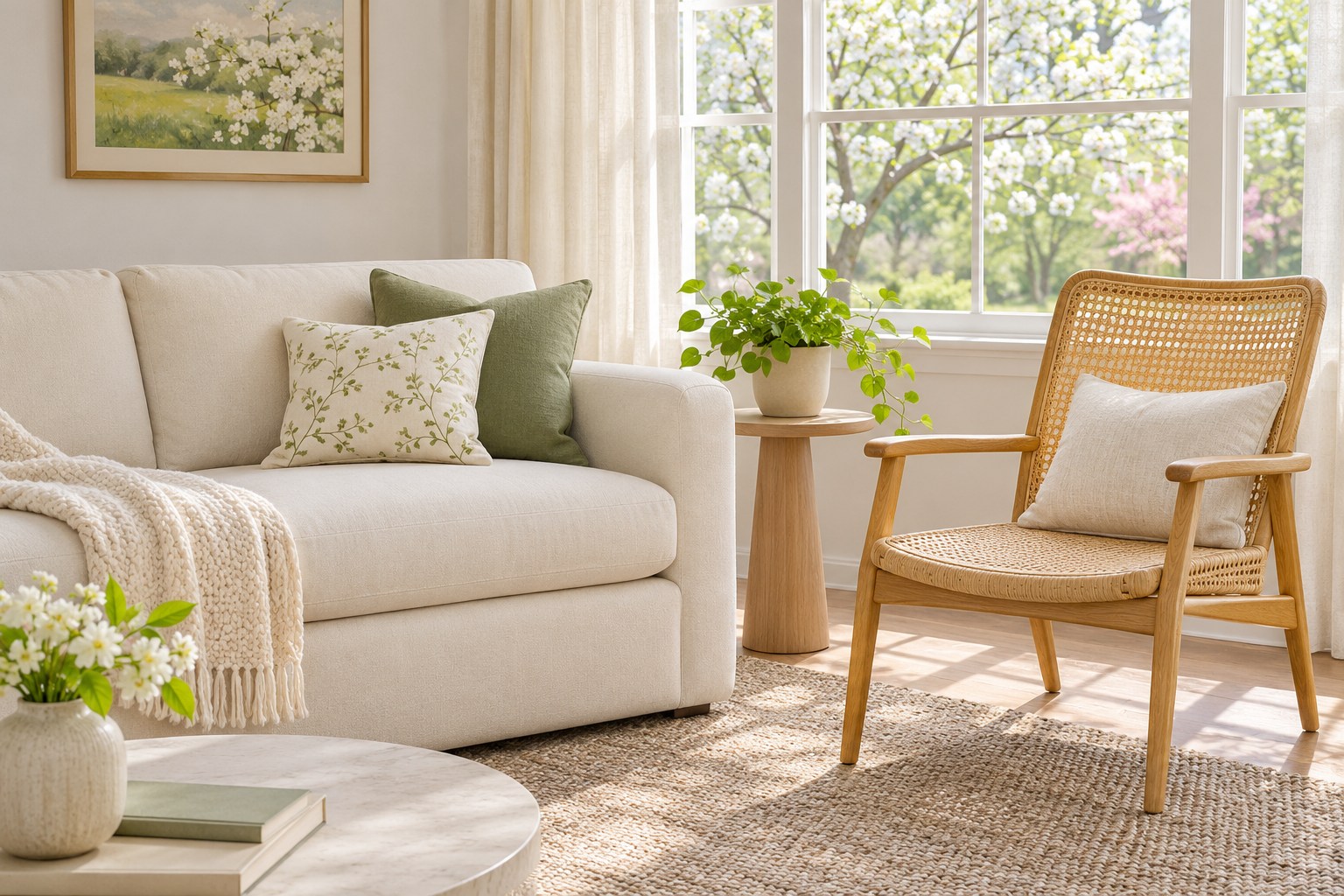
A woven basket, cane chair, or shade can make an existing sofa feel more relaxed. Choose an object that already has a useful role. A basket can hold the spare throw if it fits without spilling over. A chair can introduce texture without taking up more space when it replaces a piece in the same position.
Keep the weave in a tone that works with the wood and wall color. A broad dark weave can look heavier against a white wall than it did in a shop. Check how the piece is cleaned and whether it is comfortable to touch or handle. Put the texture where it is easy to appreciate.
15. Let a Light Rug Reveal More of the Floor
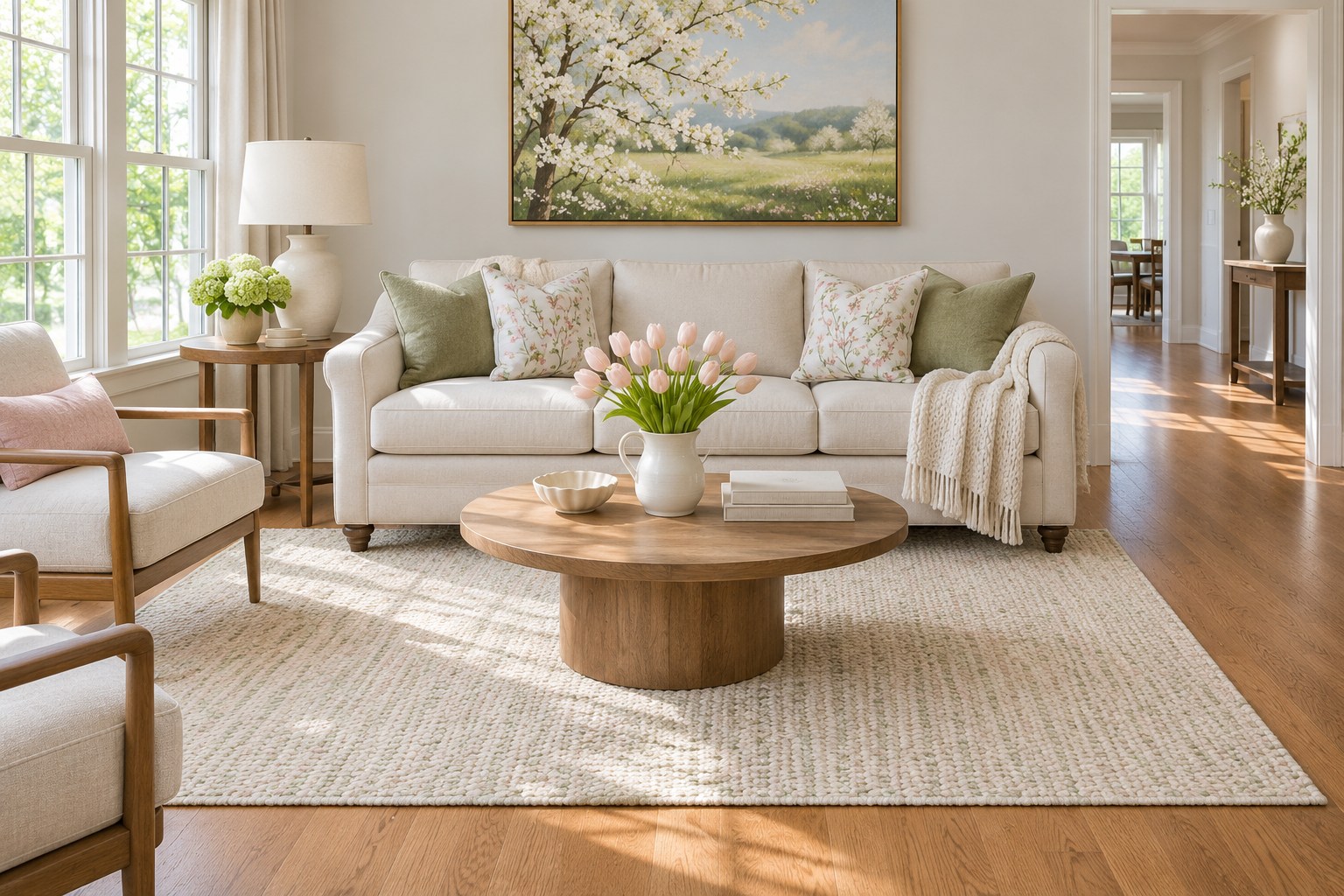
Try removing a dark accent rug or clearing the smaller rug layered over a larger one. See how much flooring becomes visible around the seats. An open border can make a busy room feel quieter. If a rug is still needed for comfort, compare a lighter weave against the floor in daylight.
Place it so the main seating arrangement stays connected and the edges stay flat. Check the floor and rug maker’s advice about backing and pad compatibility. Keep the route to the window and doors clear. A light rug looks most useful when it fits the furniture instead of crowding the entire floor.
16. Add a Glass Accent Where the Light Can Reach It
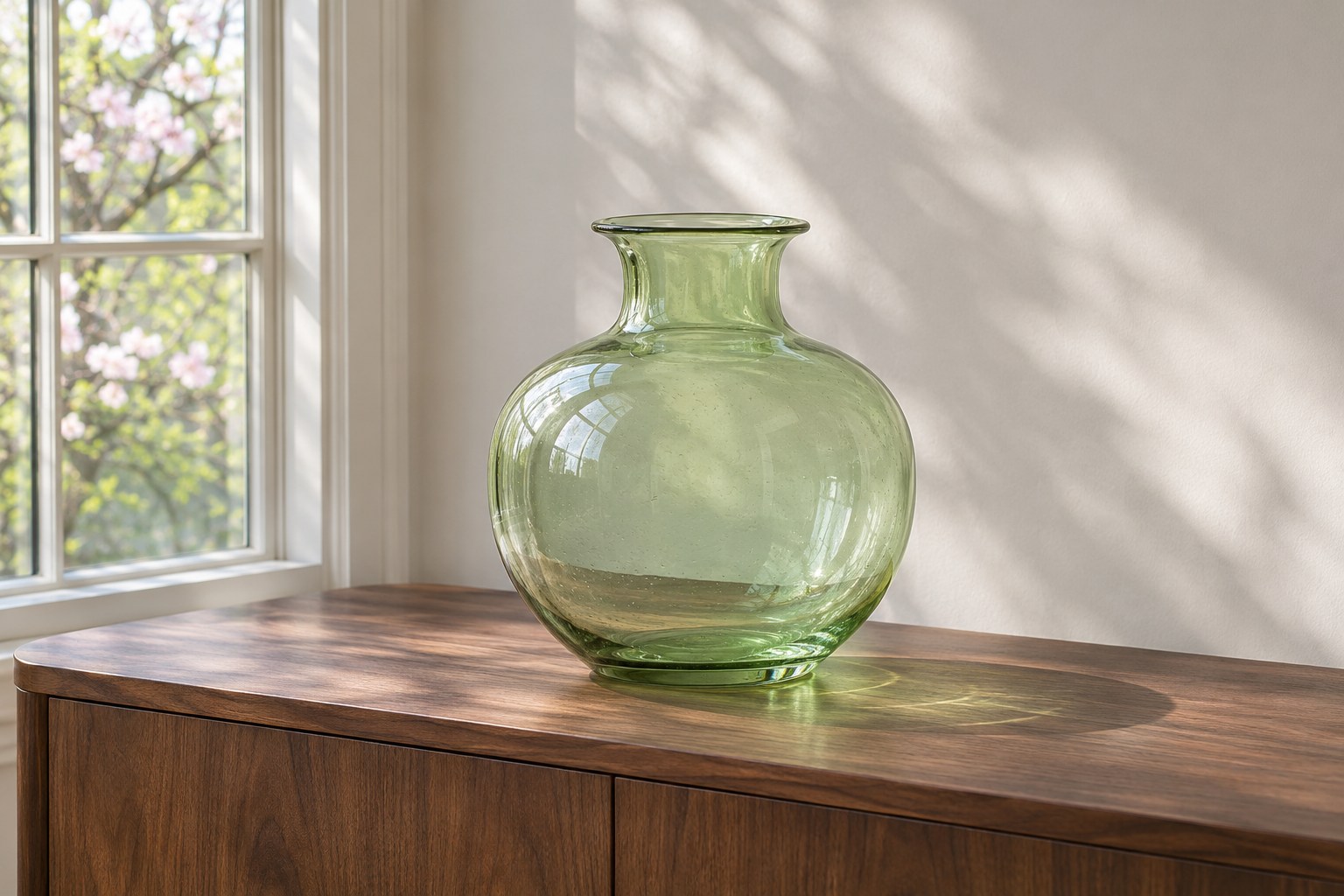
Set one translucent object where it catches light without getting in the way. A pale green vase or clear bowl can show small changes in daylight throughout the day. Try the edge of a console or side table that is visible from your main seat. Keep fragile pieces away from routes where bags or sleeves could brush them.
Pair the glass with a plain wood or ceramic surface so the outline is easy to see. Use a suitable protector if the base could mark the top. If the object holds fresh stems, change the water as needed and keep the vessel in a stable position.
17. Make an Existing Lamp Feel Right for Longer Days
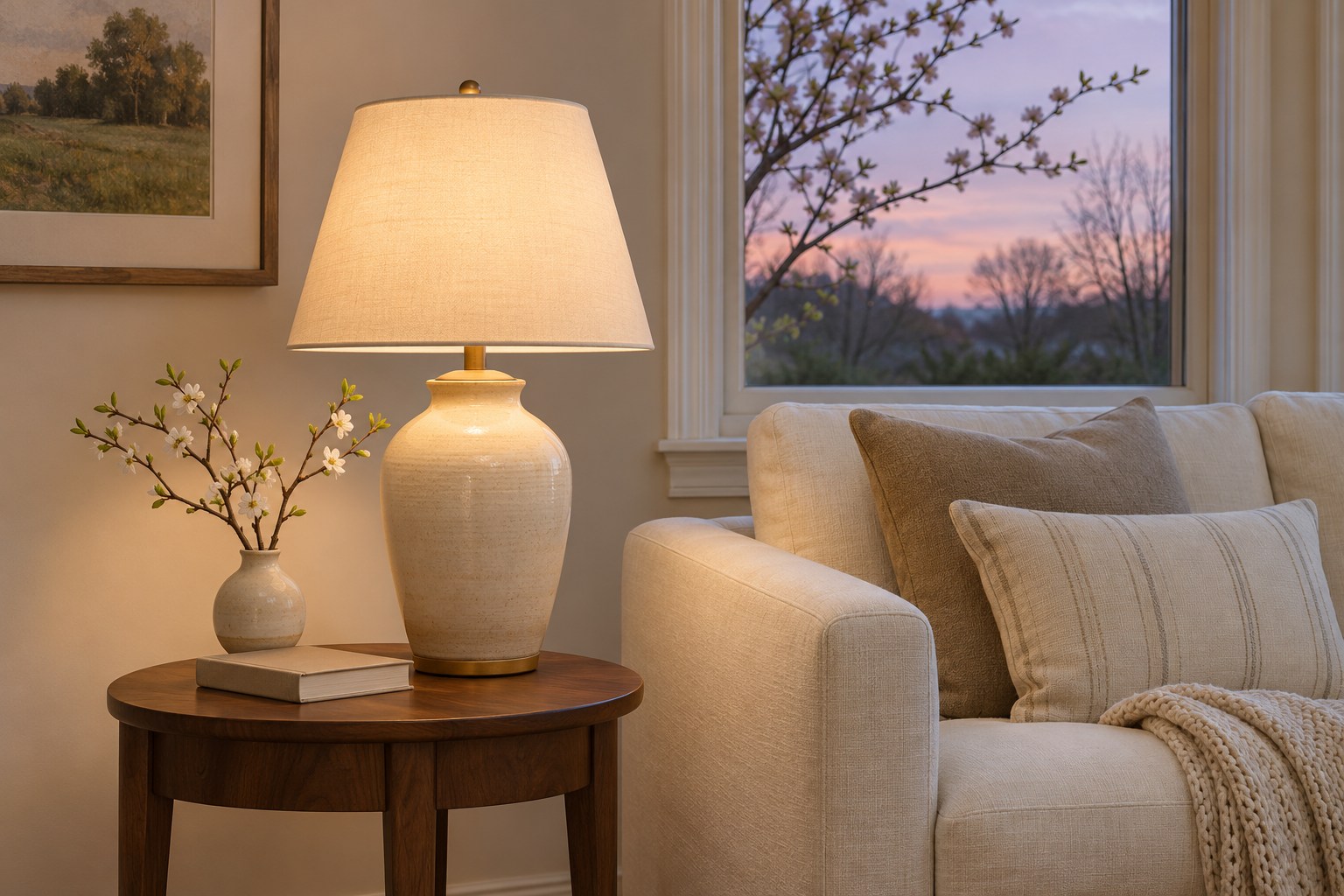
Look at the lamp you use in the early evening. A large dark shade may dominate a corner that now gets more daylight. Try a lighter shade if it is compatible with the lamp and the clearance and bulb requirements. Put the original aside until you see how the new one works with the lights on.
Move the lamp slightly if a different position helps the room read more clearly from the door. Keep its switch accessible and cord away from the walking route. This change is useful when a single shade already has the height and shape the room needs.
18. Use One Painted Piece as a Small Color Test
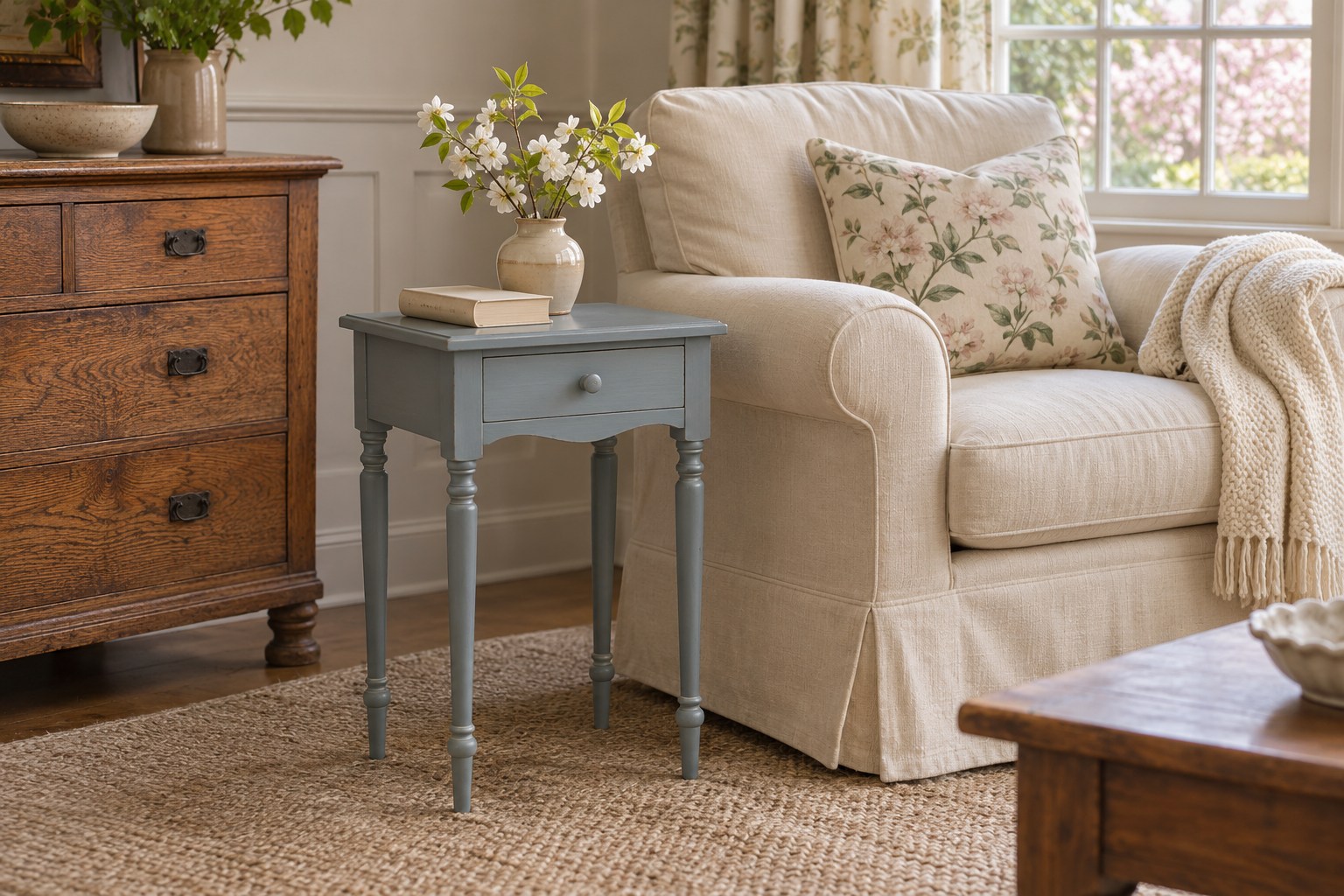
A stool, side table, or small cabinet is a manageable place to try a spring color. Start with a piece that needs attention anyway and compare paint samples beside the sofa and floor. A muted green or pale blue may be enough to lift a quiet corner. Check the surface and choose the preparation and coating the manufacturer recommends.
Let the piece dry and cure as directed before regular use. Try it with the objects it will hold and adjust nearby textiles if needed. These easy spring home decor ideas include more small updates you can try with the pieces you already have.
19. Keep One Dark Detail to Define the Lighter Room
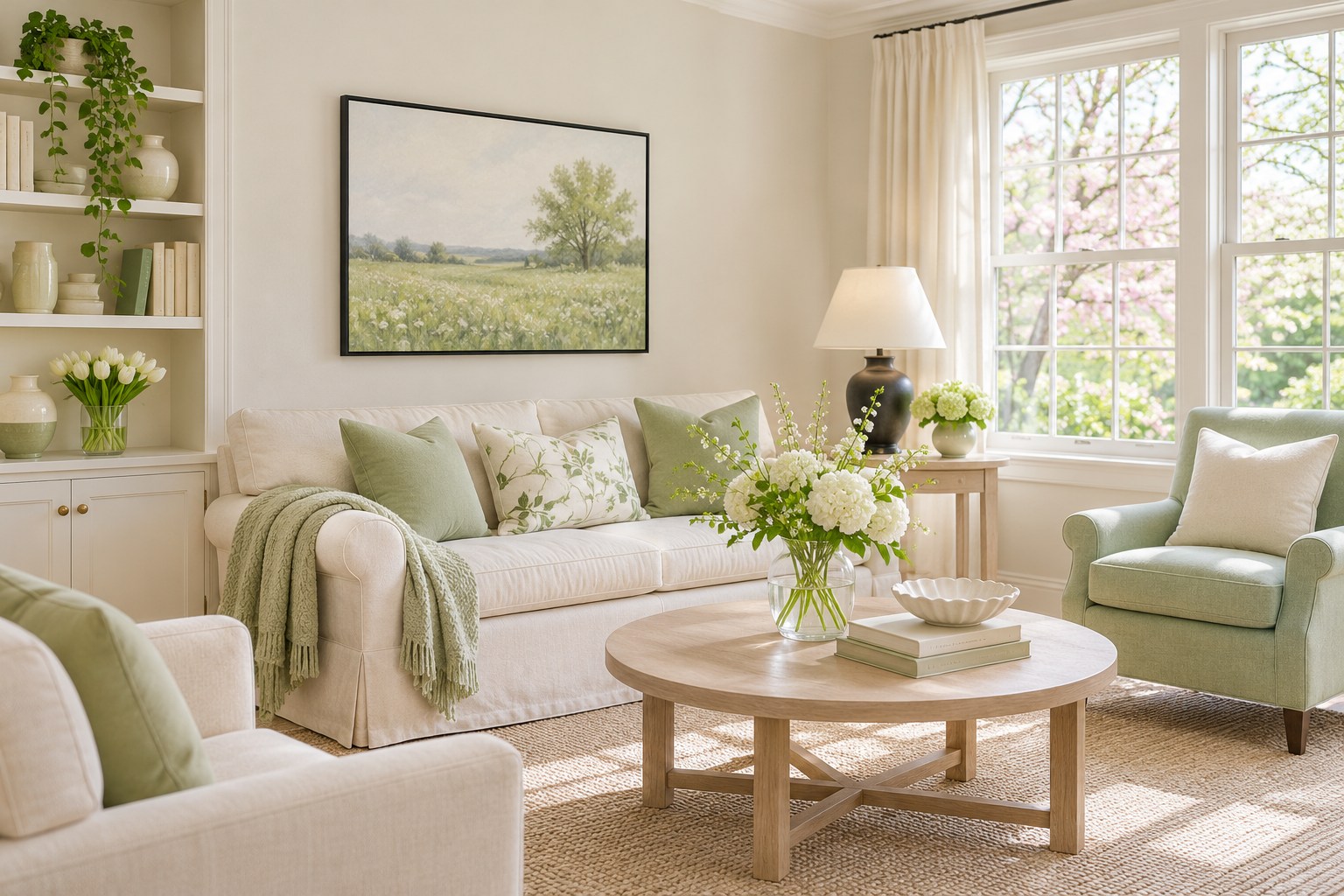
A dark frame, table leg, or lamp base can make pale spring colors look more intentional. Choose a detail with a simple outline and see how it appears against the lighter fabric or wall. A little contrast is useful if the room starts to look washed out after the winter pieces come away.
Repeat a related dark tone in a smaller place if it helps the group feel balanced. Keep the strongest contrast near the main seat or feature you want people to see. Once the room feels clear from the doorway, you can leave the remaining walls and surfaces quiet.
20. Choose a Seasonal Display You Can Clear in One Move
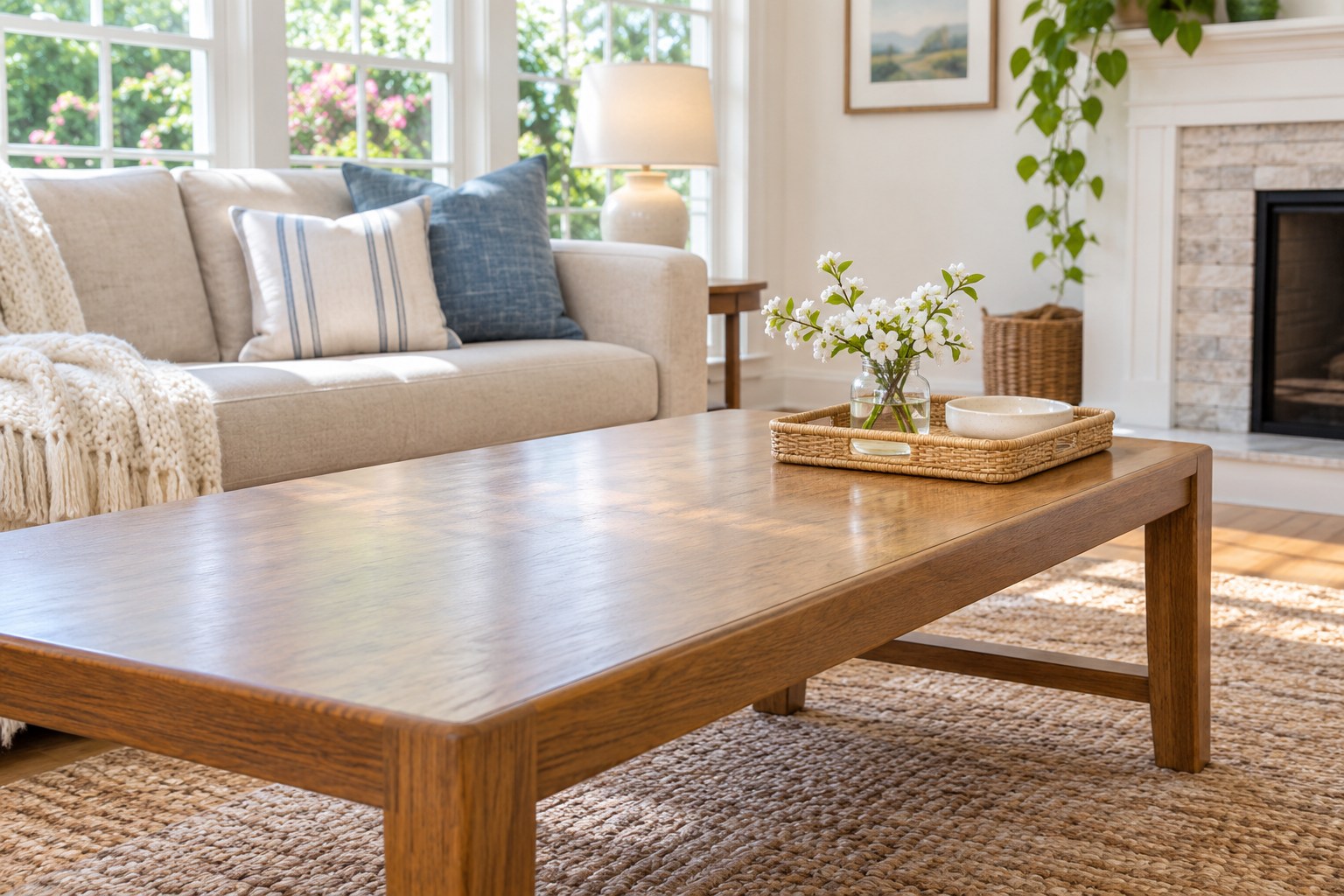
Put your favorite spring pieces together on a tray or one small table rather than filling every open surface. Try a stable vase, a low dish, or a single book arranged where it is easy to move. Keep the grouping light enough to lift comfortably. Leave the rest of the room usable for reading, meals, or everyday visits.
Notice which pieces you still like after a week. Keep the ones that belong and return extras to their usual places. If the whole display can be moved easily, you can try it by the window or beside the sofa when the light changes without rebuilding the room.
Try the new arrangement on a bright afternoon and again with the lamps on. Keep the colors and textures that look at home at both times. A little more space near the windows, a useful lighter textile, and one seasonal detail you enjoy can make the room feel ready for spring.
Discover more from HomeTrendora
Subscribe to get the latest posts sent to your email.