Start by opening the curtains and turning off the ceiling light. See where daylight stops. If a tall piece of furniture blocks it, move that first. If the light reaches the room but leaves the seating in shadow, a shaded lamp or a lighter surface may help.
These 14 ideas show how to brighten a dark room through furniture placement, finishes, and plug-in lighting. Start with the change that fixes the part of the room you use most.
1. Test Three Light Paint Colors on the Darkest Wall
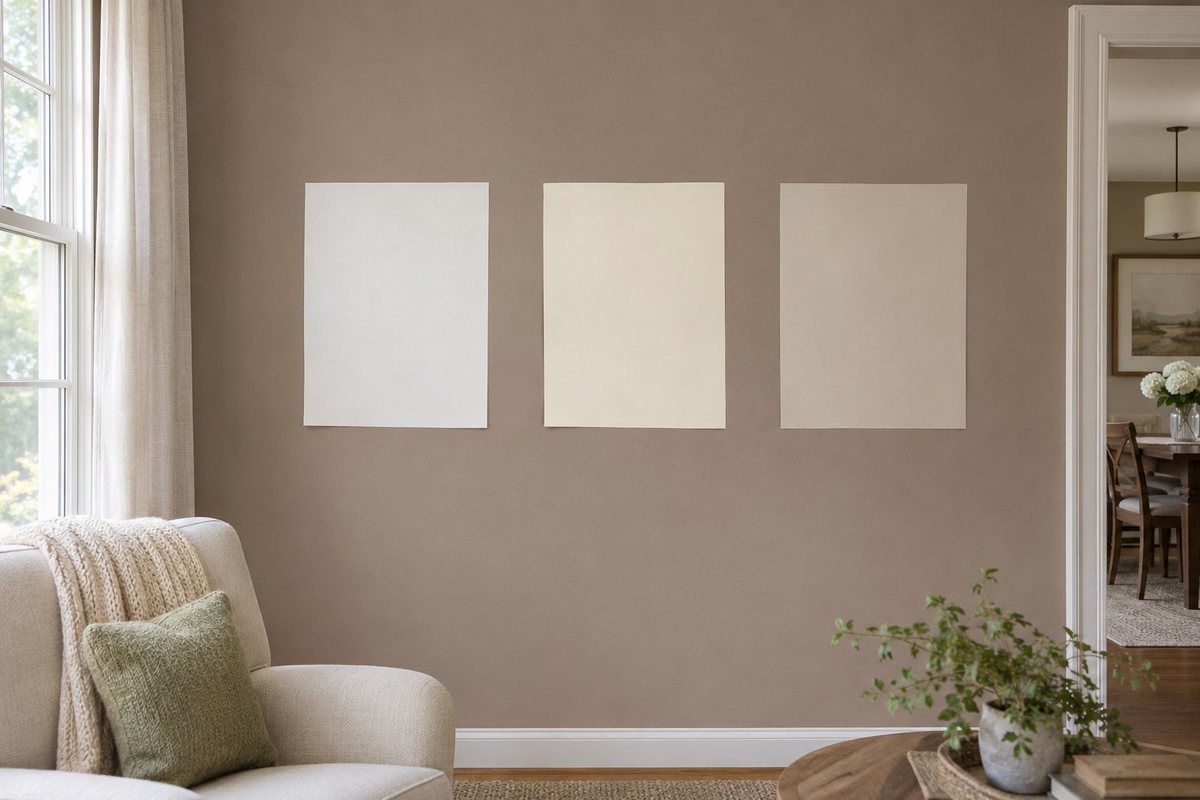
Start on the wall that gets the least daylight. Put three large removable samples next to each other, such as warm ivory, soft beige, and light greige. Leave a little of the original wall visible between them. Check the colors in the morning and again under the lamps you use at night. A sample that looks warm at the store can read cooler beside a shadowed window.
Take one sample to the trim or the biggest piece of furniture so you can see the whole combination. If paint is allowed, pick the color that works across those views. If the wall color needs to stay, repeat the best light tone in a large textile or framed print. See these whole-house paint color ideas.
2. Reflect a Bright View With One Carefully Placed Mirror
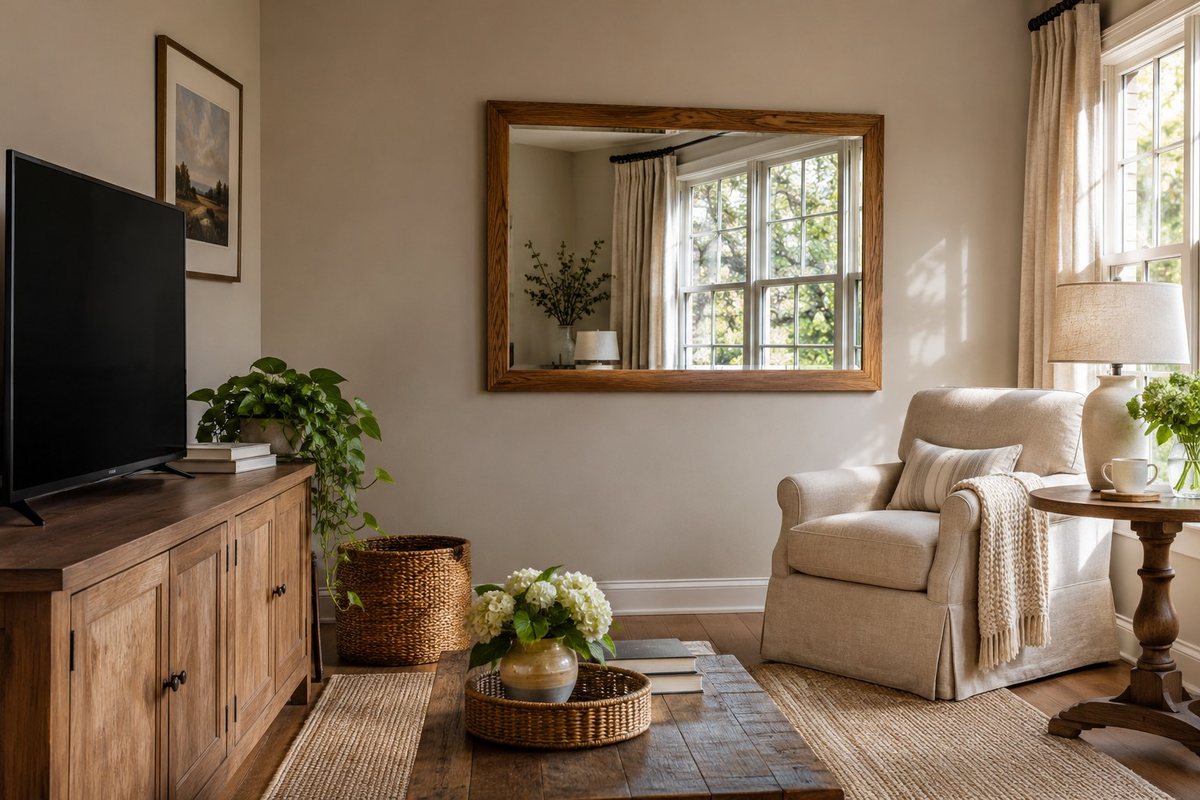
Look for a window or a softly lit part of the room that would be pleasant to see twice. Try a large framed mirror on the opposite wall if that location gives a comfortable reflection. A side wall can work when the straight view catches the sun or a bright bulb. Check the reflection from a chair, from the doorway, and at different times of day.
Choose a mirror suited to its position and use the mounting method its maker specifies. The best spot is one that reflects the brighter view without throwing a sharp patch at your seat or TV. A pale sofa or rug underneath can make the grouping feel more open.
HOMETRENDORA PLANNING BUNDLE
Turn the ideas you like into a room plan.
Choose what to keep, check what will fit and decide what to buy first. The Home Design Book, fillable room planner and budget tracker guide you through those decisions with worked examples and practical checks.
160-page PDF + fillable room planner + Excel budget tracker
Bonuses included with your eBook purchase.
GRAB 10% DISCOUNT
Coupon code: HOMETRENDORA10
Use this code at Payhip checkout.
3. Give the Room an Ambient Light and a Separate Reading Lamp
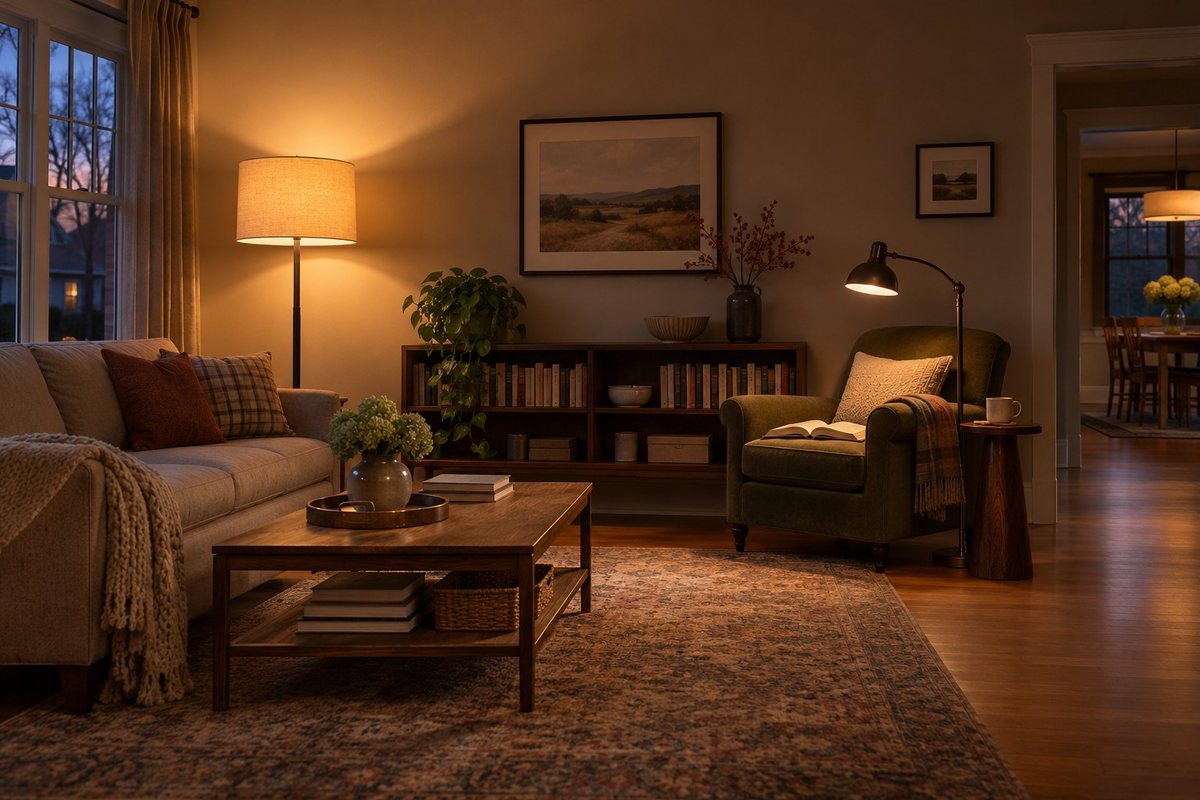
Put a shaded lamp near a darker wall for general light, then give the place you read its own lamp. Aim a smaller adjustable shade toward a book or the chair arm. Try the two lamps separately, then together. You can see which one helps you move around the room and which one makes the task easier.
In a dim bedroom, start with a bedside lamp for reading and use an existing wall light or another shaded plug-in lamp for a softer background. Move cords away from the walking route and use fixtures according to their instructions. Check how the bulbs look with the shades on before buying matching extras.
4. Let Light Through With Sheer Curtains
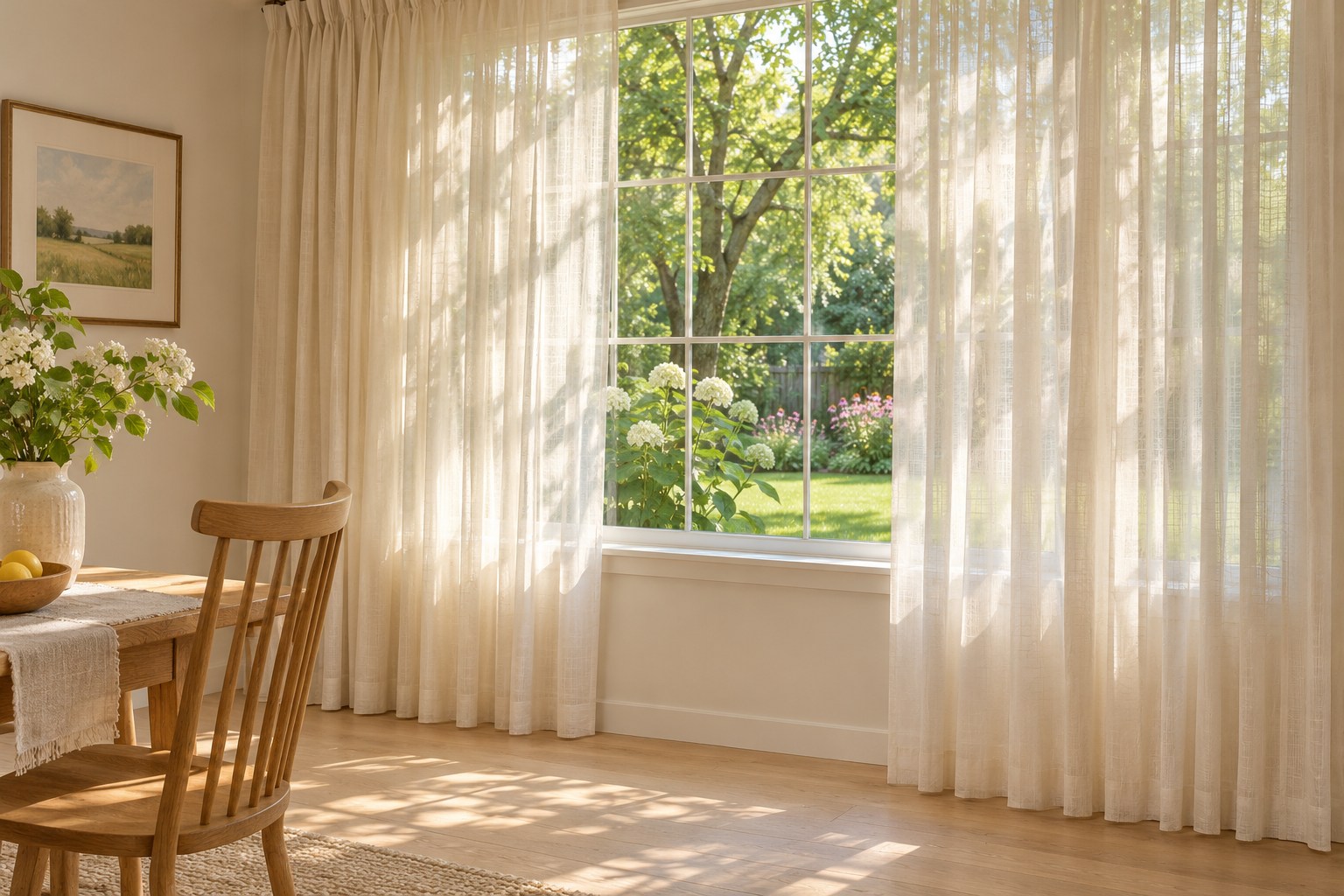
Replace heavy panels with ivory sheers or a light linen-look fabric where you want daytime light to come through. Compare samples at the actual window. Some fabrics show more of the view than others. If you need privacy after dark, keep a separate liner or shade you can close then.
If your existing rod is high and wide enough, let the sheers hang from it and stack the fabric past the edge of the glass when the window is open. Adjust the panels so they clear heaters and follow the heater maker’s spacing guidance. Leave the handles and any frequently opened part of the window accessible.
5. Put a Pale Cover on the Largest Upholstered Piece
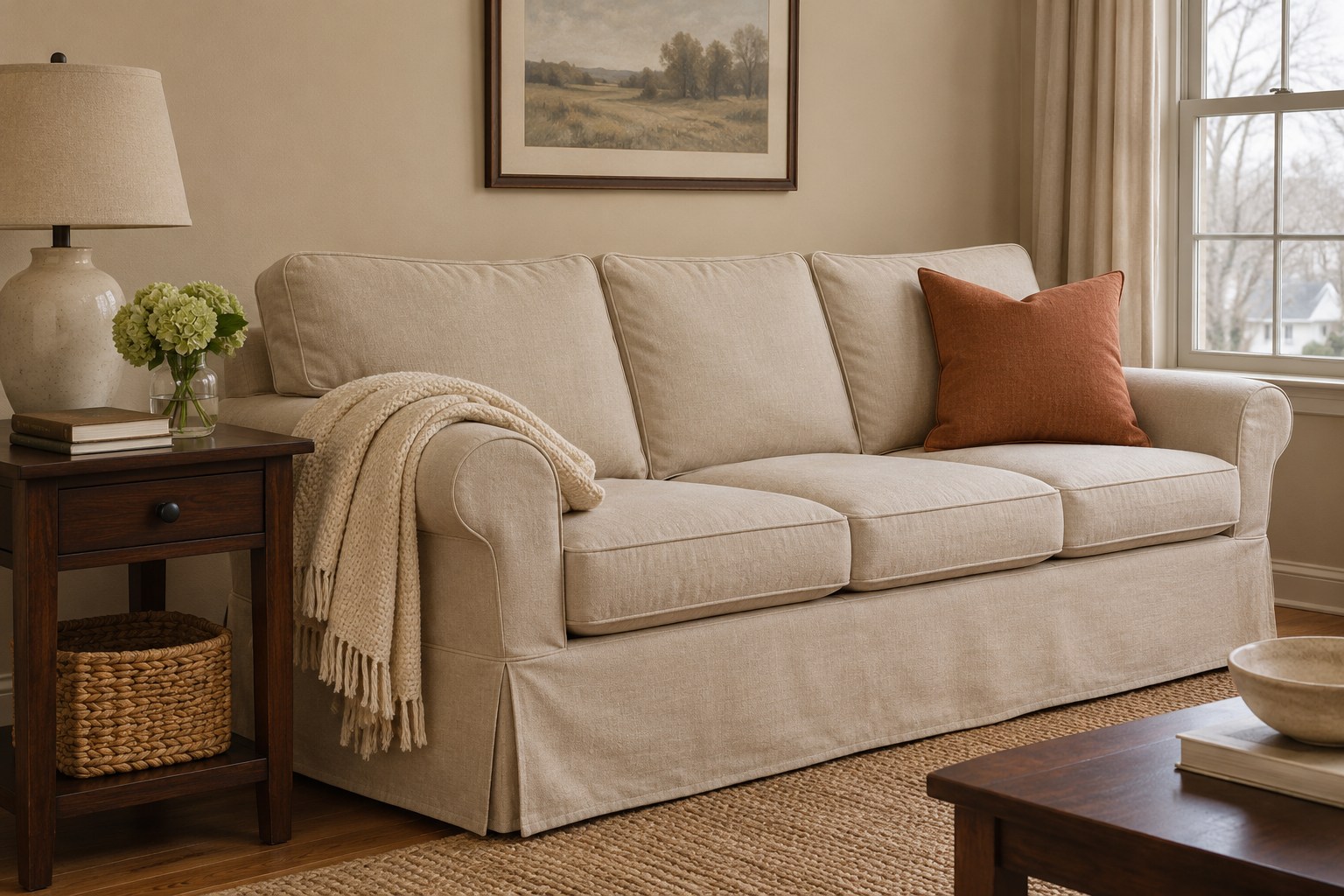
A pale washable slipcover can change the room’s biggest dark surface in one step. Try oatmeal, warm ivory, or light sand on the sofa you already own. Leave an existing wood table or chair visible so you can see the contrast. The cover has the most effect when it spans the whole seat and back.
Fit the cover around the cushions and sit down to check for slipping. If a full cover will not work, try a pale throw folded over the back and a couple of lighter cushions. Keep one existing accent color in the mix. Our organic modern living room ideas have more examples of light fabric alongside darker wood.
6. Trade One Solid Piece for Open Glass or Acrylic
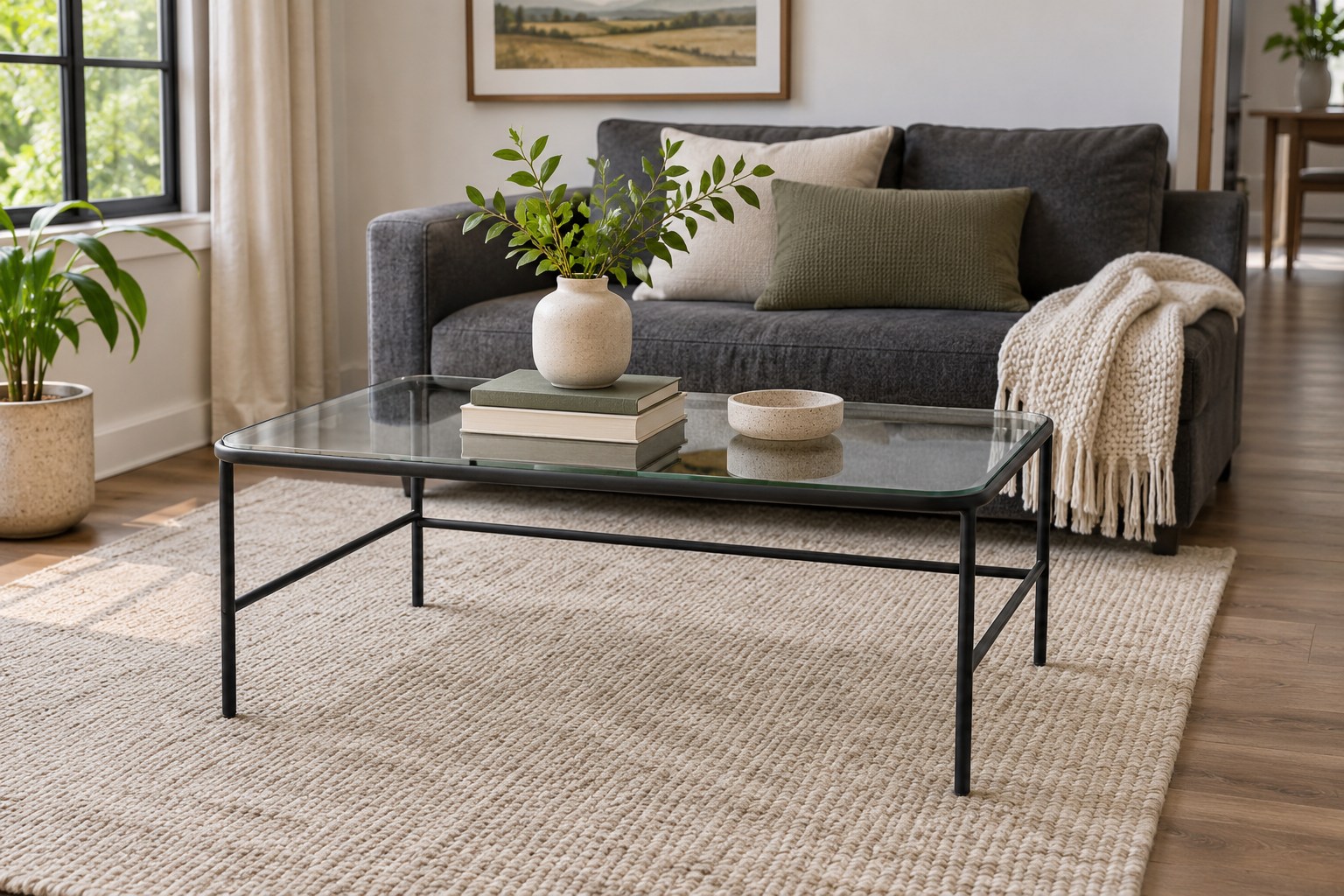
An open-frame table can make a small room feel less crowded. Look for a clear top or a slim frame where a solid piece blocks the view across the floor. A glass or acrylic top can let the rug underneath remain visible. Choose a piece that is stable and suitable for the people who use the room.
Set the table so you can see the edge as you walk past it. Check it from the sofa for a sharp reflection of any nearby lamp. Keep the top to one tray or bowl if you want it to read as open. In a busy room, a pale side table with an open base can give you a similar view.
7. Put One Plant Where It Can Use the Window Light
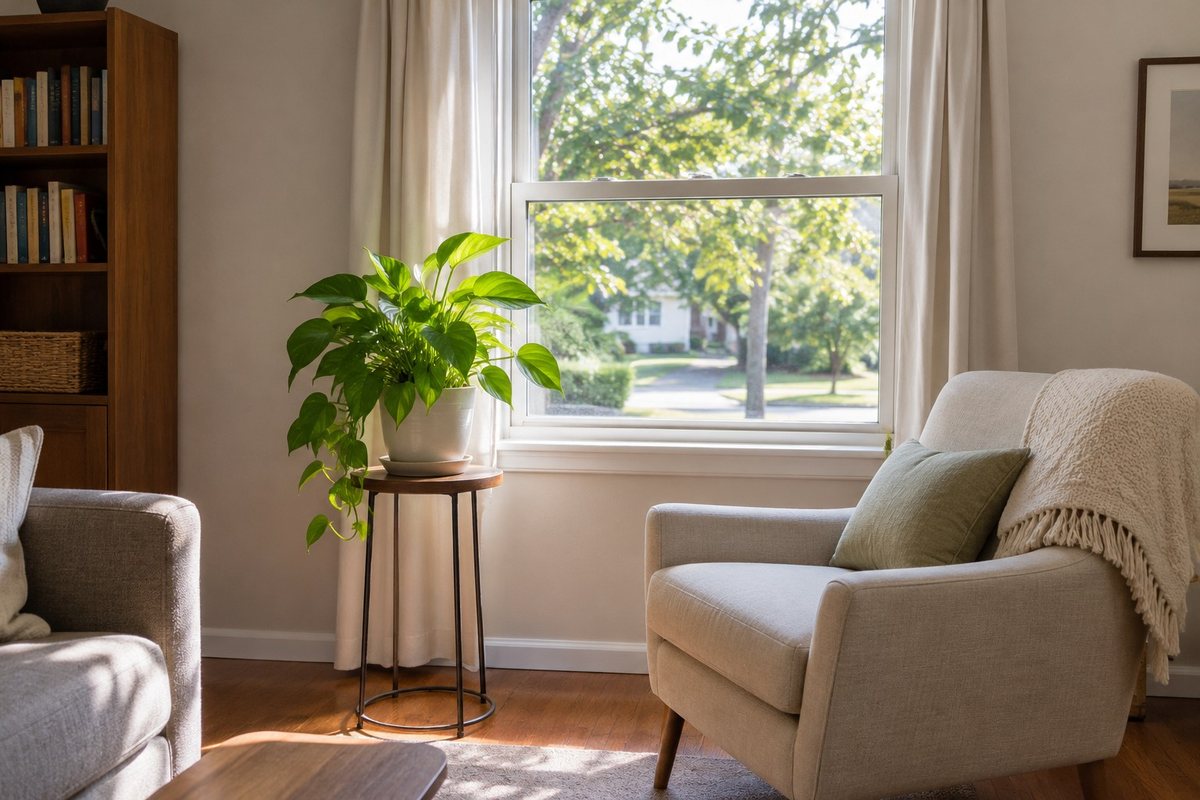
Put one plant beside the window to draw attention to the light you already have. Choose a plant suited to the exposure and place it just outside the main span of glass. A low or narrow stand gives the leaves room and keeps the sill available to open the window.
Try the position with the curtains moved back and look at the room from the doorway. Shift the pot farther to one side if it casts a shadow across the seat or gets in the way of the window handle. A single pot can give the brighter corner a purpose. Give it a saucer and enough room to water it without moving everything nearby.
8. Clear the Window Ledge and the Nearest Flat Surface
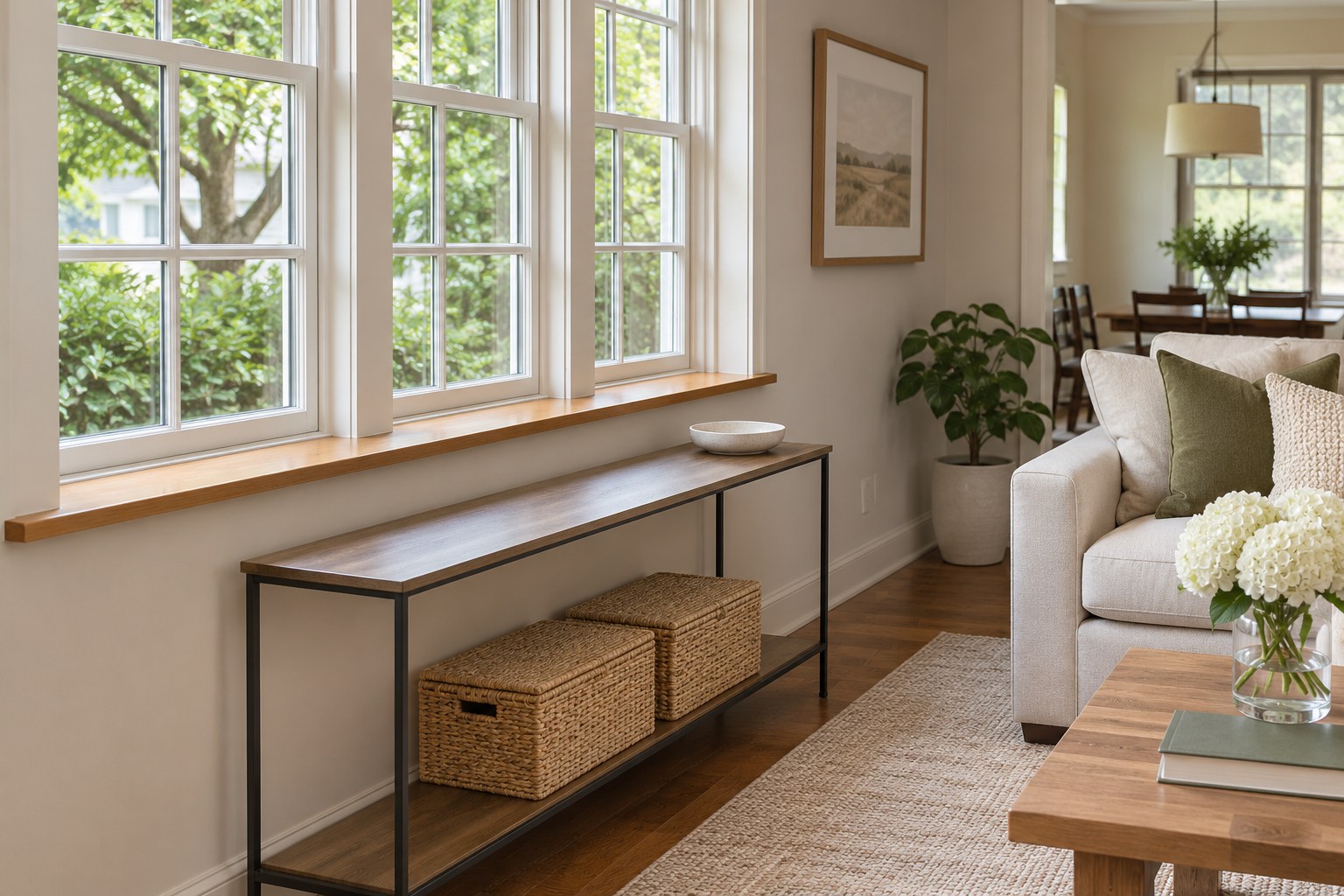
Start with the sill and the first table or console you see beside the window. Move books, chargers, and small décor away from the glass. Put the things you still use in one covered basket or a low drawer. Keep a shallow tray for keys, glasses, or another item you reach for often.
Open the curtains again and see where the light falls on the cleared surface. Leave most of that area free. If you need to keep something at the window, choose one small object that sits below the opening. A few matching boxes on the lower shelves can make a storage unit easier to use without taking up the best-lit space.
9. Set a Light Rug Under the Existing Dark Furniture
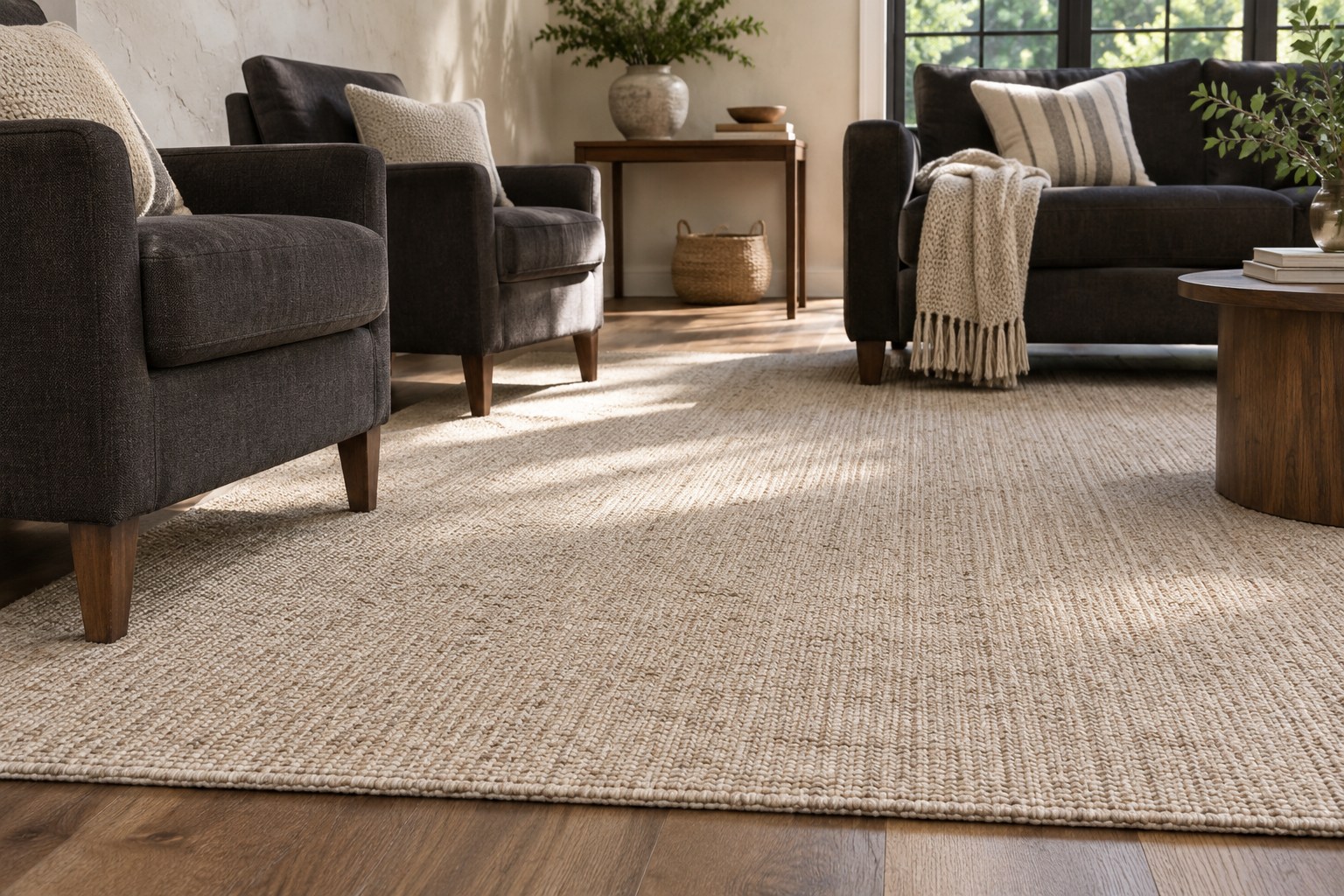
Try a light rug if a dark floor dominates the view from the doorway. Cream, beige, or oatmeal can give a large seating group a quieter base. Choose a size that reaches under the front feet of the sofa and chairs where the layout allows it. Leave a strip of the dark floor visible around the edges.
Measure the walkways and check that the doors swing over the rug. Choose a pad suited to the rug and floor, and check that the corners lie flat. Look at a sample in the room before ordering. A cream rug can look much warmer under evening light than it did beside a bright shop window.
10. Use Satin Metal Accents to Catch Small Highlights
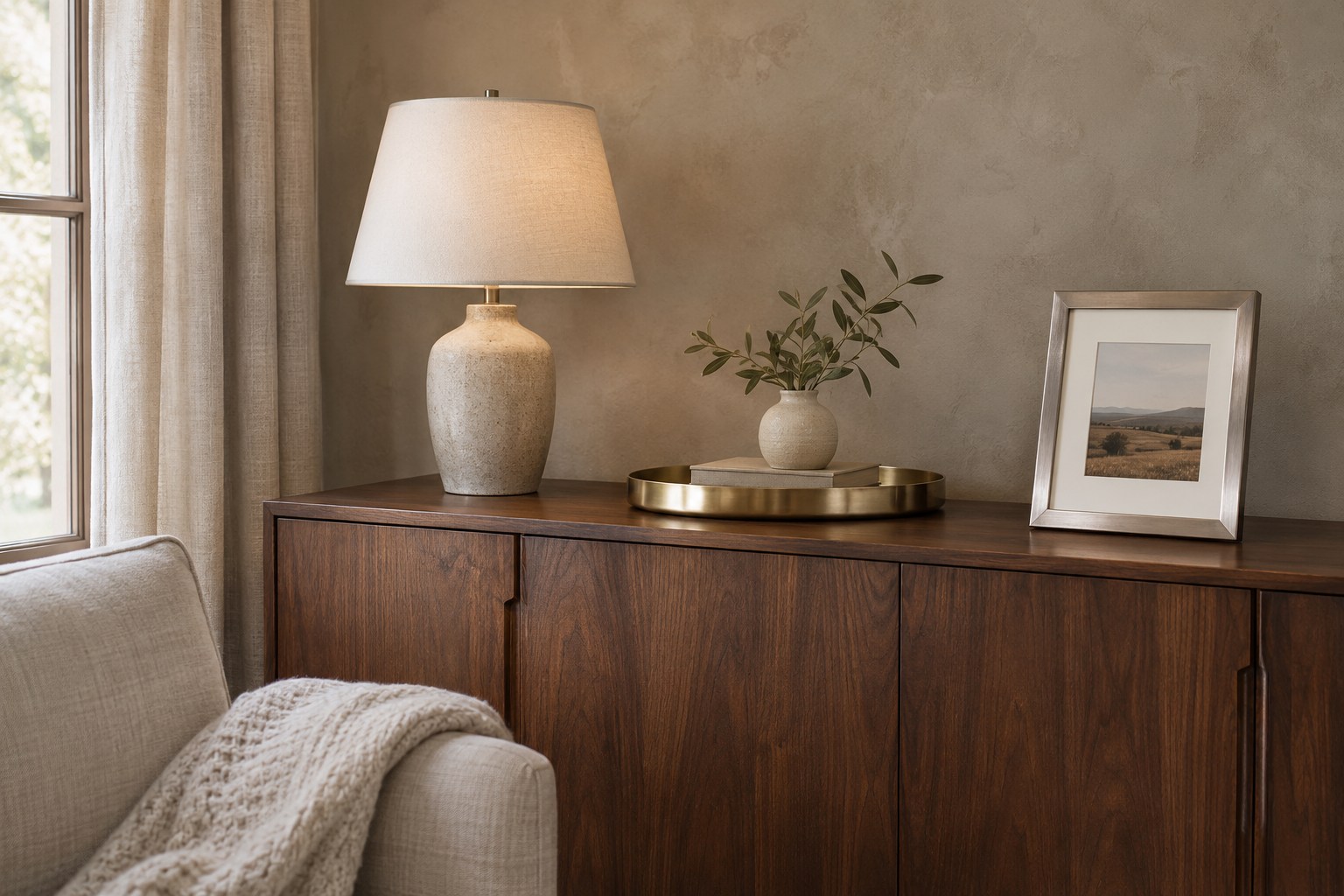
Try one brushed or satin metal accent near a window or a shaded lamp. A narrow brass tray or nickel frame can pick up a small highlight on a dark sideboard. Keep the other objects around it matte so you can see the metal edge. One repeated finish can be enough for a small room.
Check the piece from your usual seat after dark. If it sends a bright reflection toward your eyes or the television, turn it or move it farther from the lamp. Pick an accent you will use, such as a tray for glasses or a lamp base that fits the table.
11. Bounce Light Off a Pale Ceiling With a Plug-In Uplight
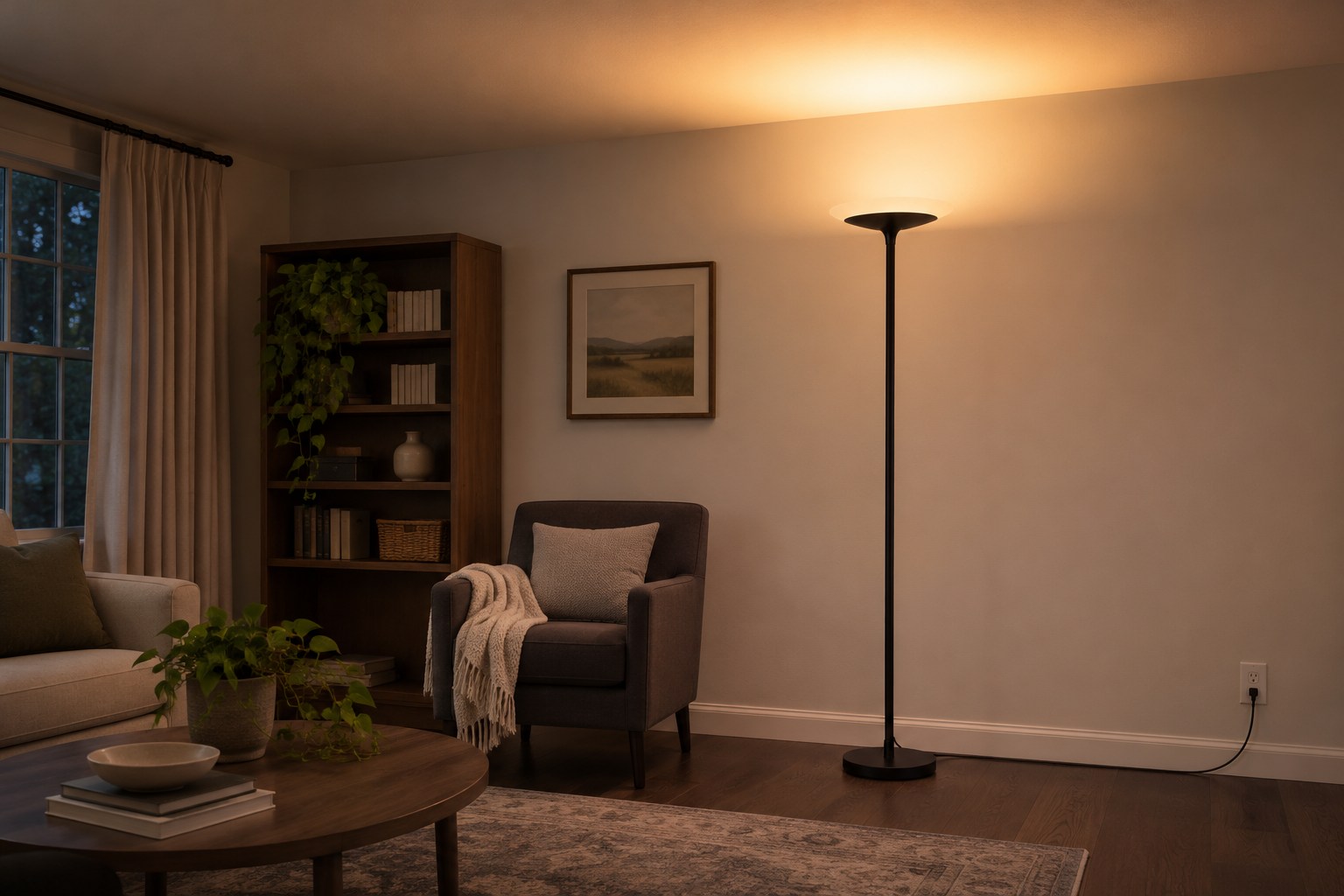
Try a freestanding plug-in uplight in a dark corner with a pale ceiling. A torchiere with a dimmer and an upward-facing head can spread light across a larger patch above you. Start on a lower setting and check the glow from your normal seat. Move the lamp a little farther from the wall if the light makes a bright spot.
Put it on a stable, level surface and follow the lamp’s instructions for positioning and clearance. Route the cord along a wall where it stays out of the walkway. Use a separate reading lamp if the ceiling light leaves your book in shadow. The uplight is most useful as background light while you spend time in the room.
The black Brightech Sky uplight has a tilting head and three brightness levels, so you can start low and aim the light across the ceiling.
Discover black Brightech Sky uplight (paid link)
12. Move Tall Furniture Away From the Window Edge
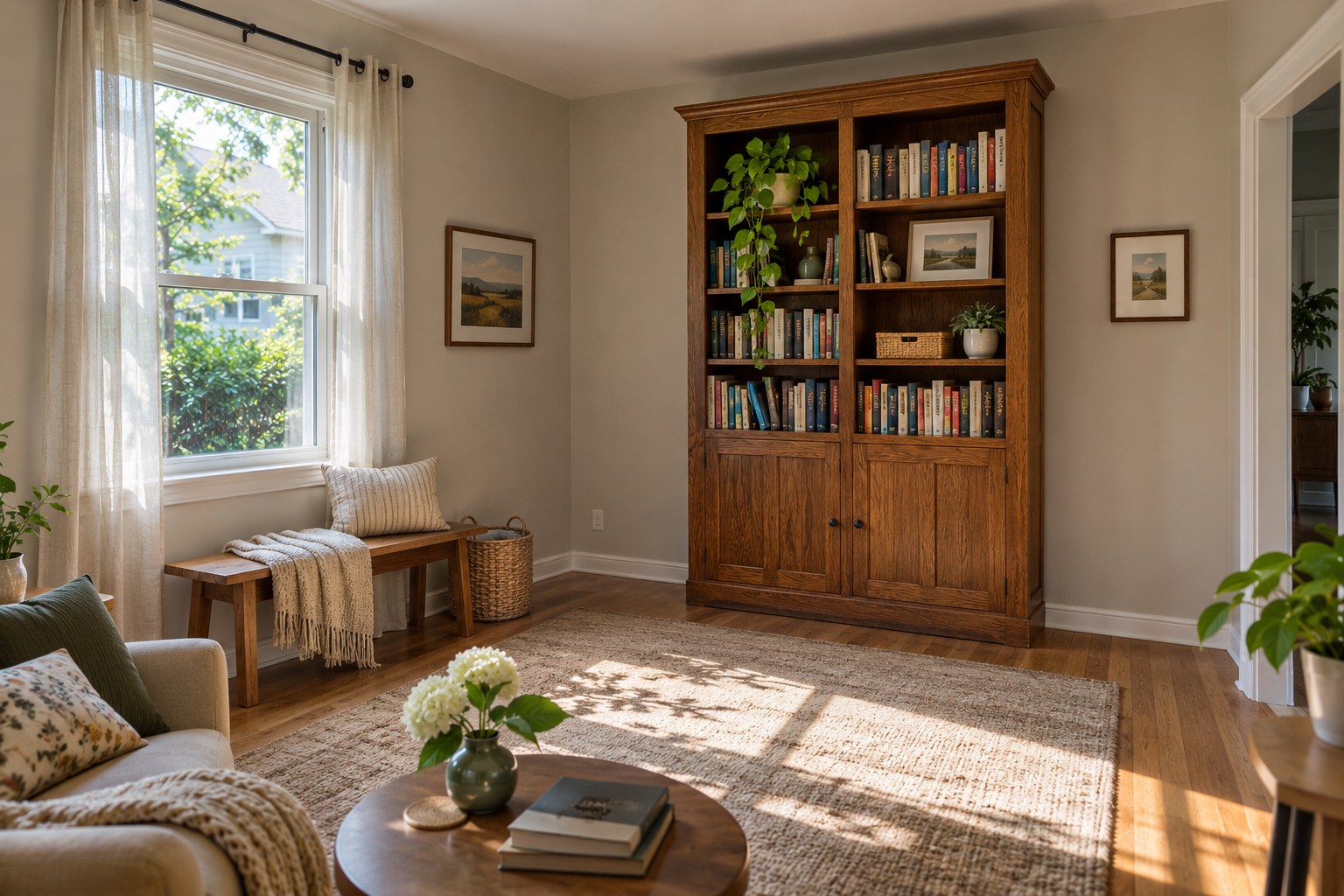
Look at the window from the doorway and see which pieces stand between it and the rest of the room. If a tall shelf or cabinet crowds the glass, find an interior wall where you can still reach it. A low bench or small side table can take its place near the window and let more of the glass stay visible.
Sketch the new layout before moving a heavy piece and use help or a suitable moving method if needed. Check that the cabinet can open and be secured as its instructions require in the new spot. Open the curtains and see where the light reaches. The change can make a bigger difference than adding another decorative object beside the window.
13. Leave a Clear Route for Light Through an Open Interior Door
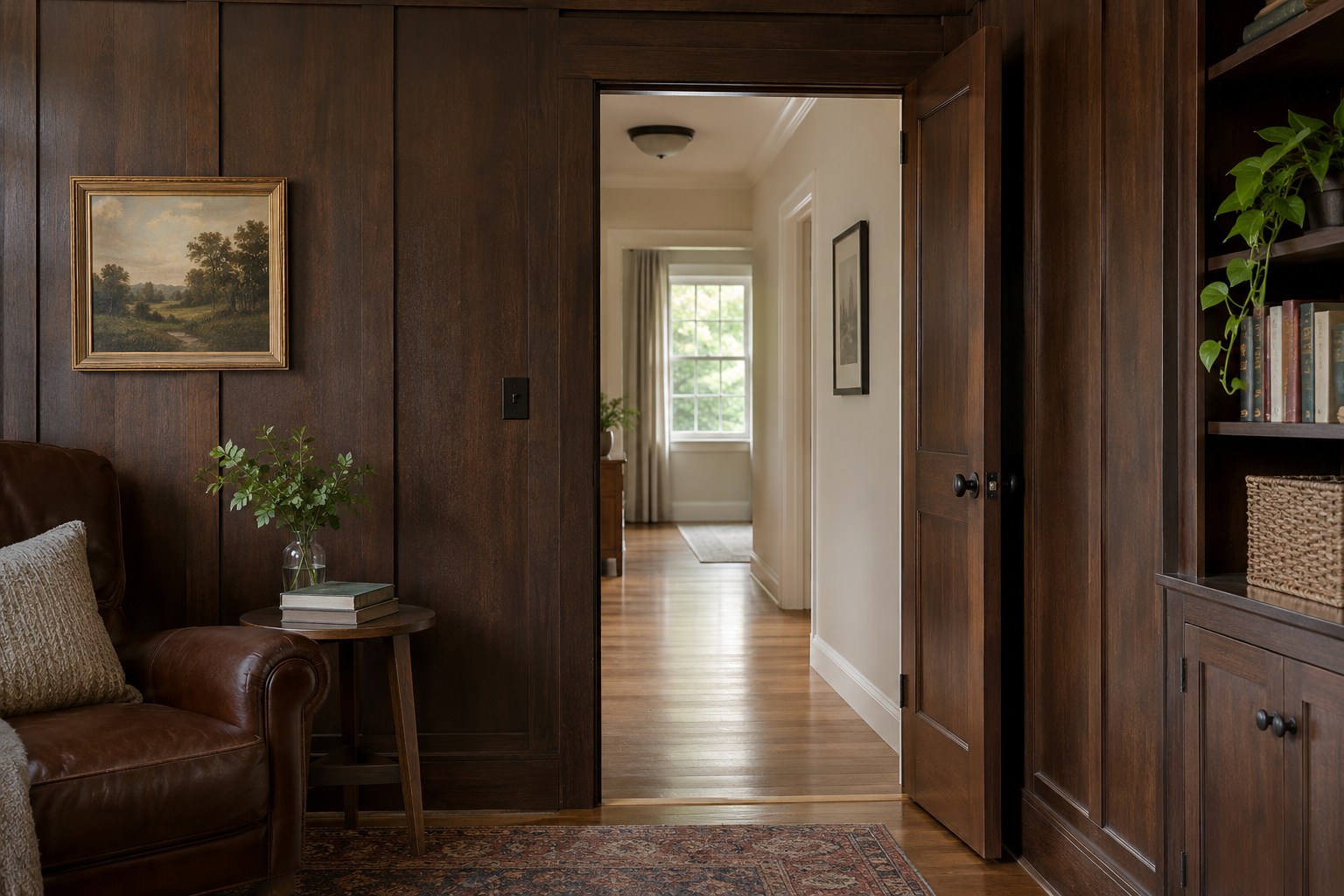
A brighter hallway or adjoining room can share some daylight through an existing interior doorway. If the layout allows, leave the door open while you are using the dim room. Put the chair or desk where it receives the side light, with a clear walking path between the rooms.
Check the doorway from both sides. Move a tall plant, standing mirror, or hanging bag if it blocks the brightest part of the opening. Keep the door clear of the main walking route and use the normal latches and hardware. A pale floor mat or small console top nearby can make the light easier to see as you walk in.
14. Slip a Pale Removable Backing Behind a Dark Shelf
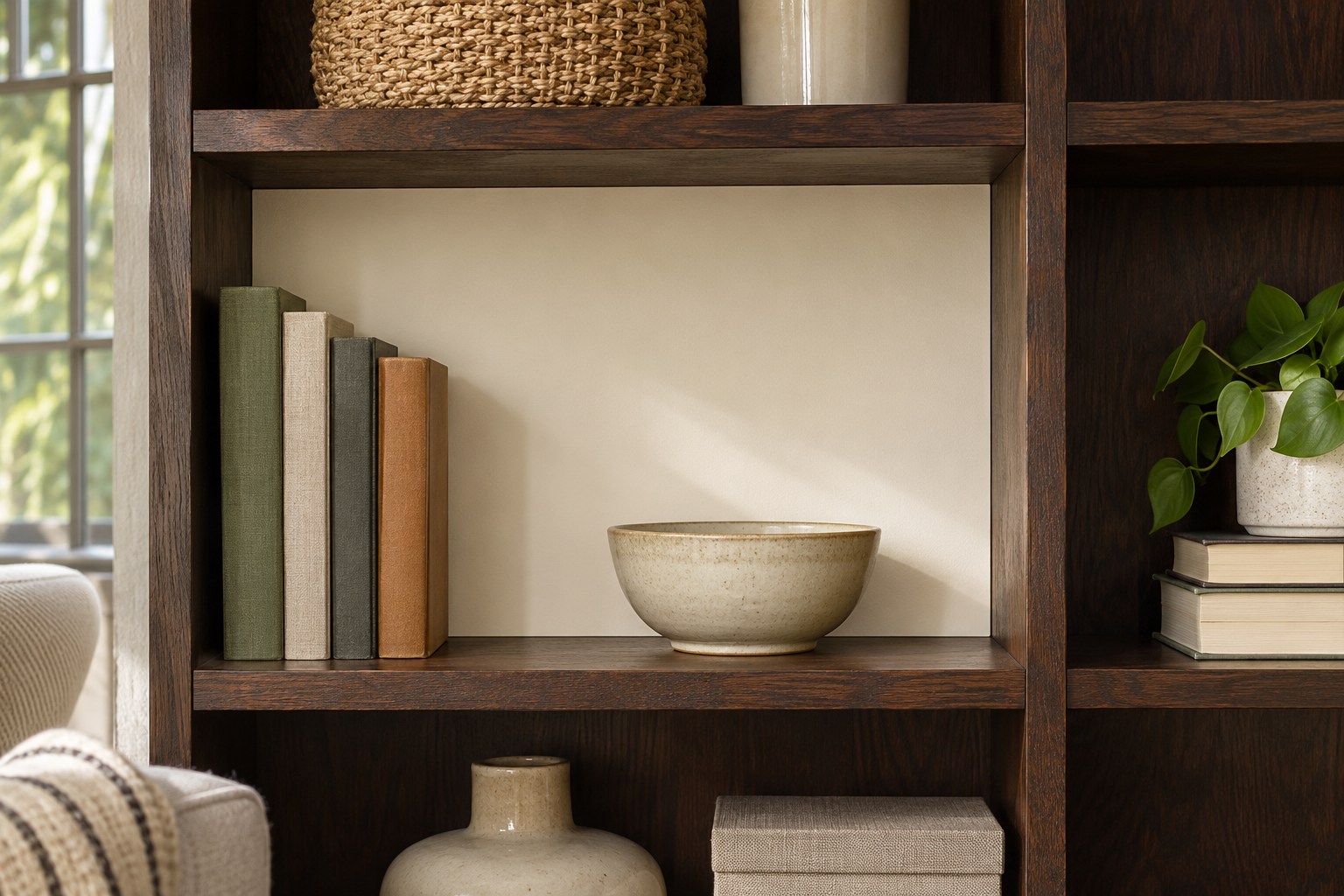
If an open dark bookcase reads as one deep shadow, try a pale matte insert in one bay. Cut a removable panel to fit according to the shelving unit’s setup. Make sure it sits securely and comes out easily. Warm white or pale linen can give a few books and pottery pieces a clearer outline.
Test one shelf before changing the rest. Keep some open space in front of the backing so you can see the difference from across the room. Use a material that suits the shelf and keep it clear of heat sources. These living room shelf styling ideas offer more ways to open up a crowded display.
Check the room once in daylight and again after dark. Notice where you can read, where glare still catches your eye, and which parts look dim when you walk in. Make the next change where it will help you most.
Discover more from HomeTrendora
Subscribe to get the latest posts sent to your email.