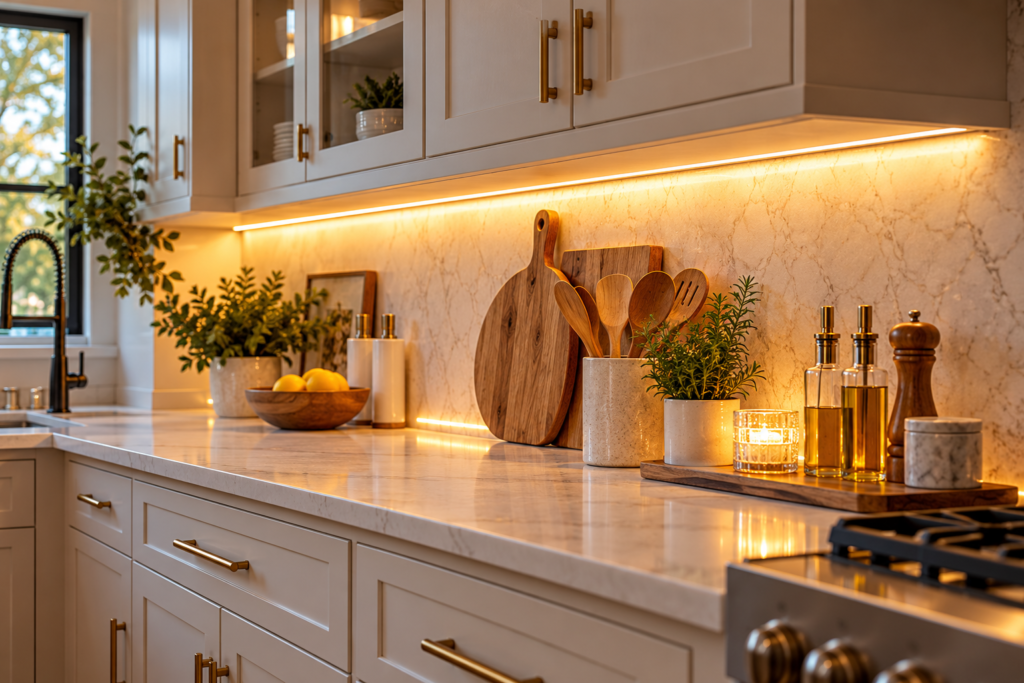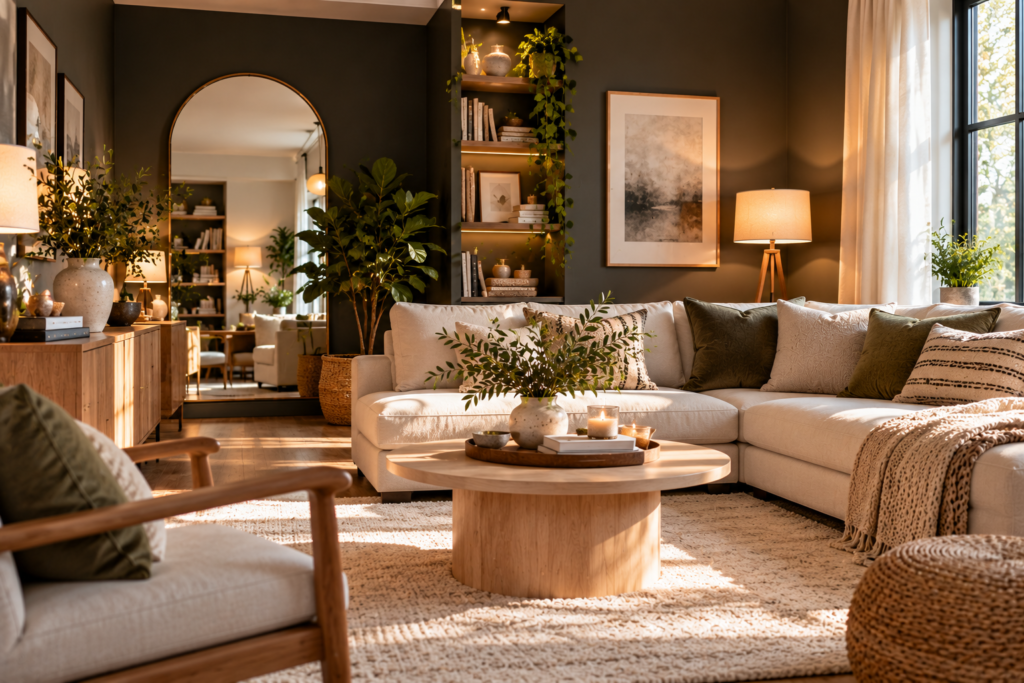
In a hallway with no window, the darkest part is often halfway between two perfectly bright rooms. Find that spot first. Then choose a wall finish, light direction, or change at the doorway that carries the eye all the way through the passage.
Walk the route with the lights and doors in the positions you use every day. A hall that looks fine when all the doors are open can feel very different when the bedroom doors close at night.
1. Find the Darkest Part With the Doors Closed
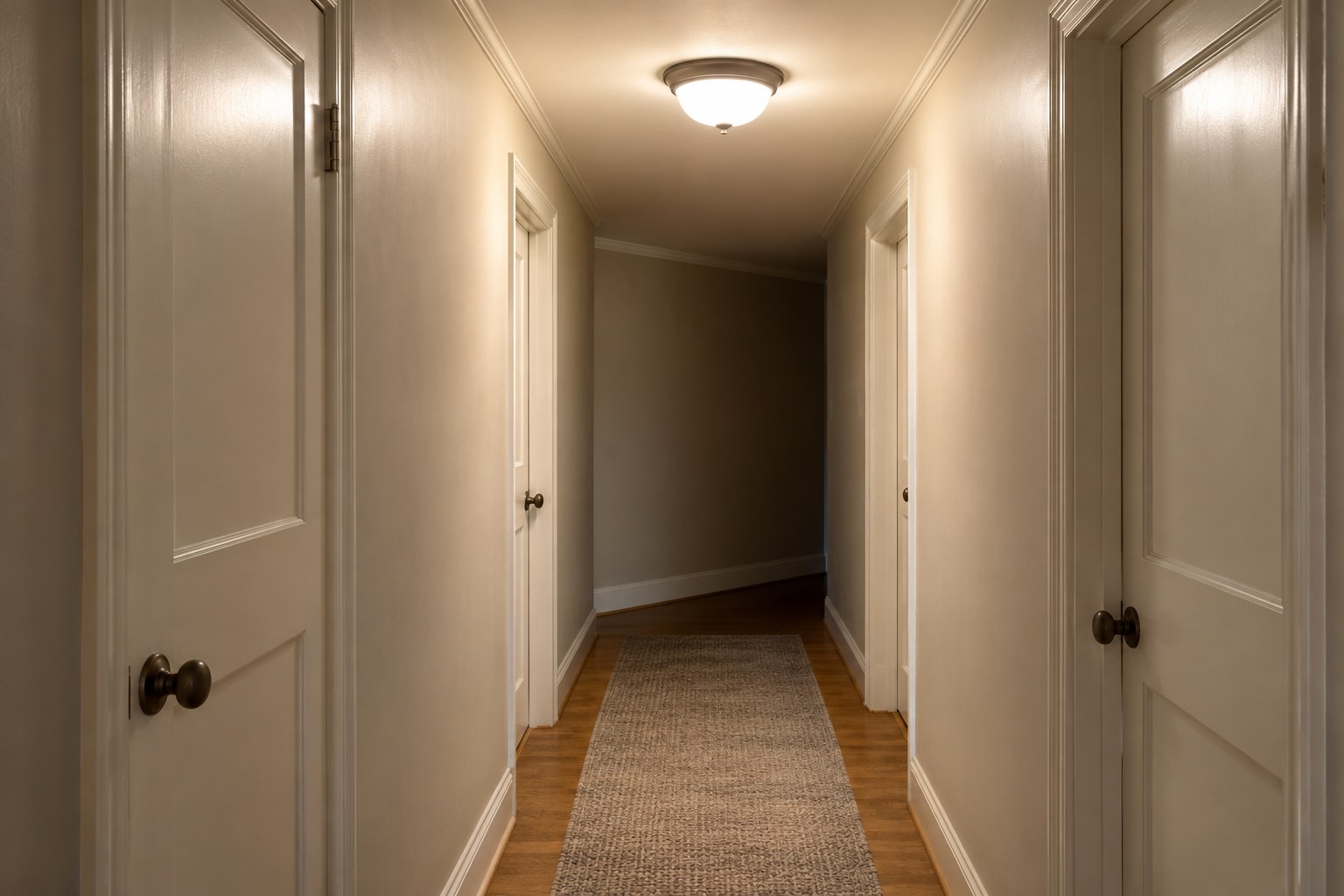
Turn on the usual hallway light and shut the surrounding doors. Start from the end you use most and pause where you lose sight of a handle, corner, or change in the floor. Repeat from the other side. A hallway can have plenty of overhead light at one end and still leave a blind turn in shadow.
Check the same spot with a room door open. Make a short note about what changes and whether that door stays open often enough to count. If the trouble follows a bend or a doorway, put your first lighting change close to that feature.
2. Compare Paint Where the Hall Actually Goes Dark
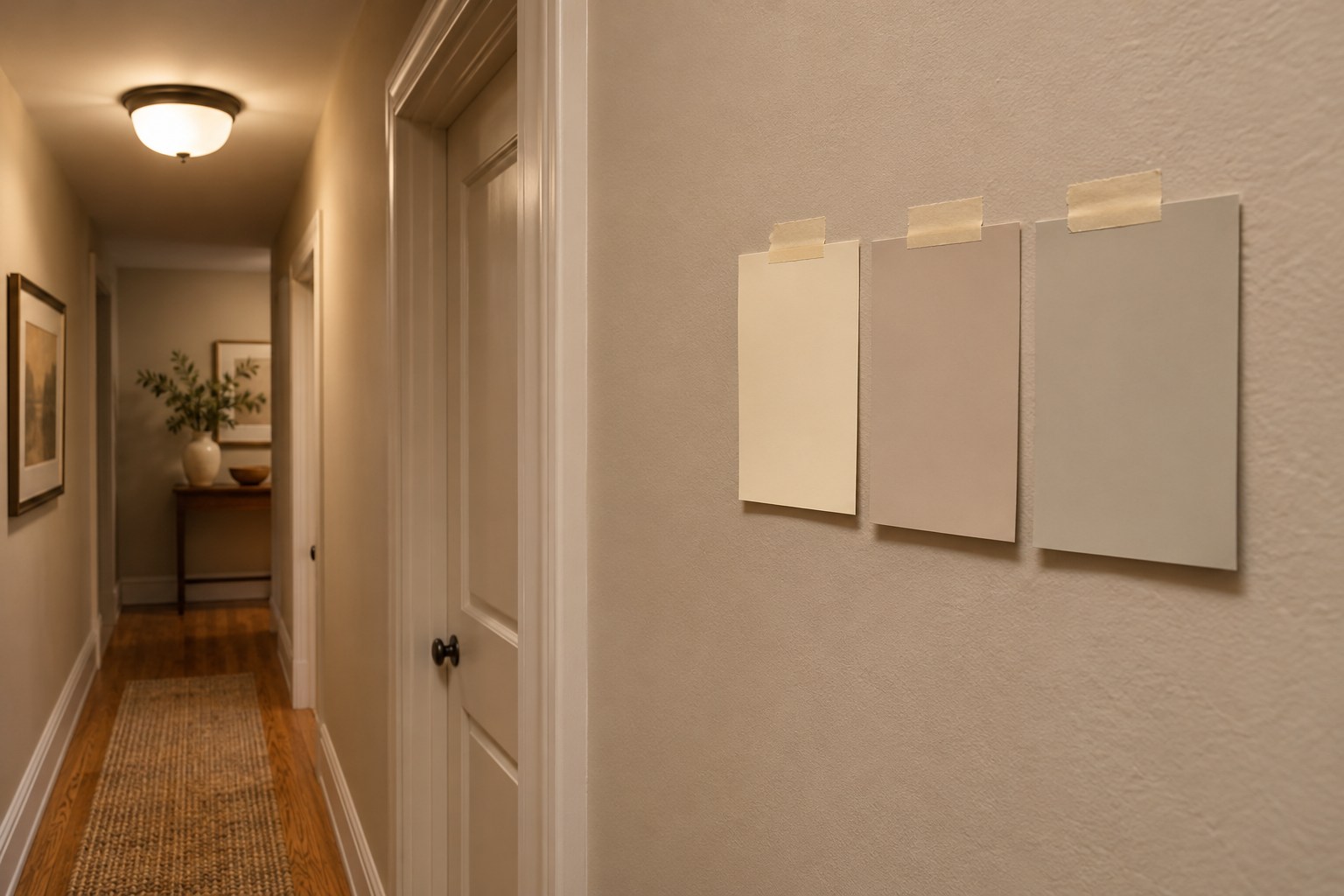
Put large paint samples in the shadowed part of the passage, away from the first doorway where daylight reaches in. Try a warm off-white, a softer mushroom, and a more muted neutral that works with your floor. Look at the wall under the bulbs you normally use. A sample that looks warm enough beside a window can turn dingy deep in the hall.
Check the result from both ends. Choose the sample that keeps the wood floor or trim distinct without making the far wall jump out. The guide to brightening a dark room applies a similar color check to rooms that have more surfaces to work with.
HOMETRENDORA PLANNING BUNDLE
Turn the ideas you like into a room plan.
Choose what to keep, check what will fit and decide what to buy first. The Home Design Book, fillable room planner and budget tracker guide you through those decisions with worked examples and practical checks.
160-page PDF + fillable room planner + Excel budget tracker
Bonuses included with your eBook purchase.
GRAB 10% DISCOUNT
Coupon code: HOMETRENDORA10
Use this code at Payhip checkout.
3. Bounce Warm Light Off a Matte Ceiling
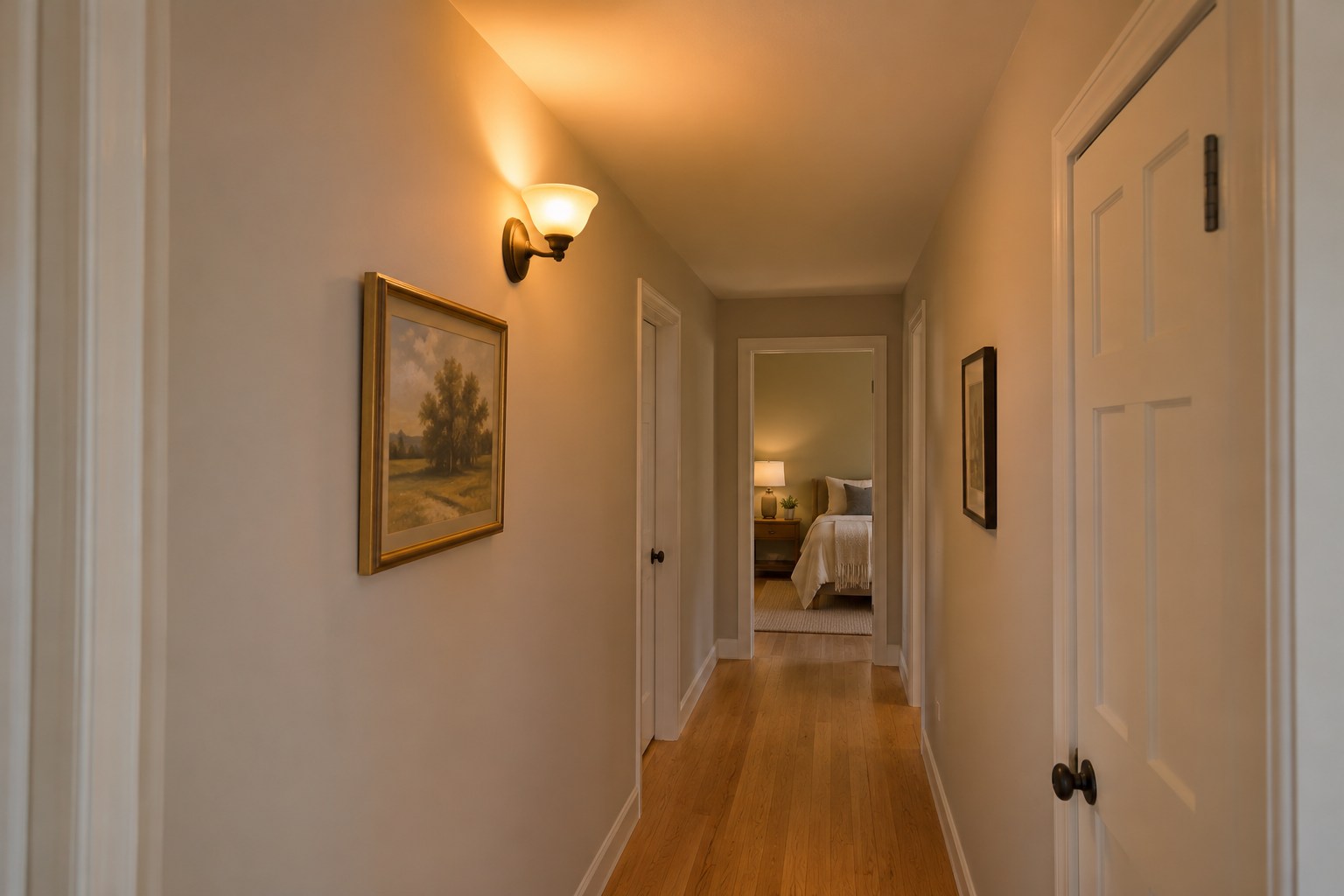
If the hall has room for an appropriate uplight or an existing adjustable fitting, aim some light at an off-white matte ceiling. Stand at the dark end and see where the reflected area stops. A broad, softly lit patch is useful when a bright bulb in your field of vision is the main thing you notice.
Use the fixture according to its directions, with a clear route and no cord across the floor. Compare the ceiling with the light pointing up and with the standard fixture on. You may be able to create the softer feeling with one change in direction instead of adding more fixtures to the passage.
4. Make the End Wall a Lit Focal Point
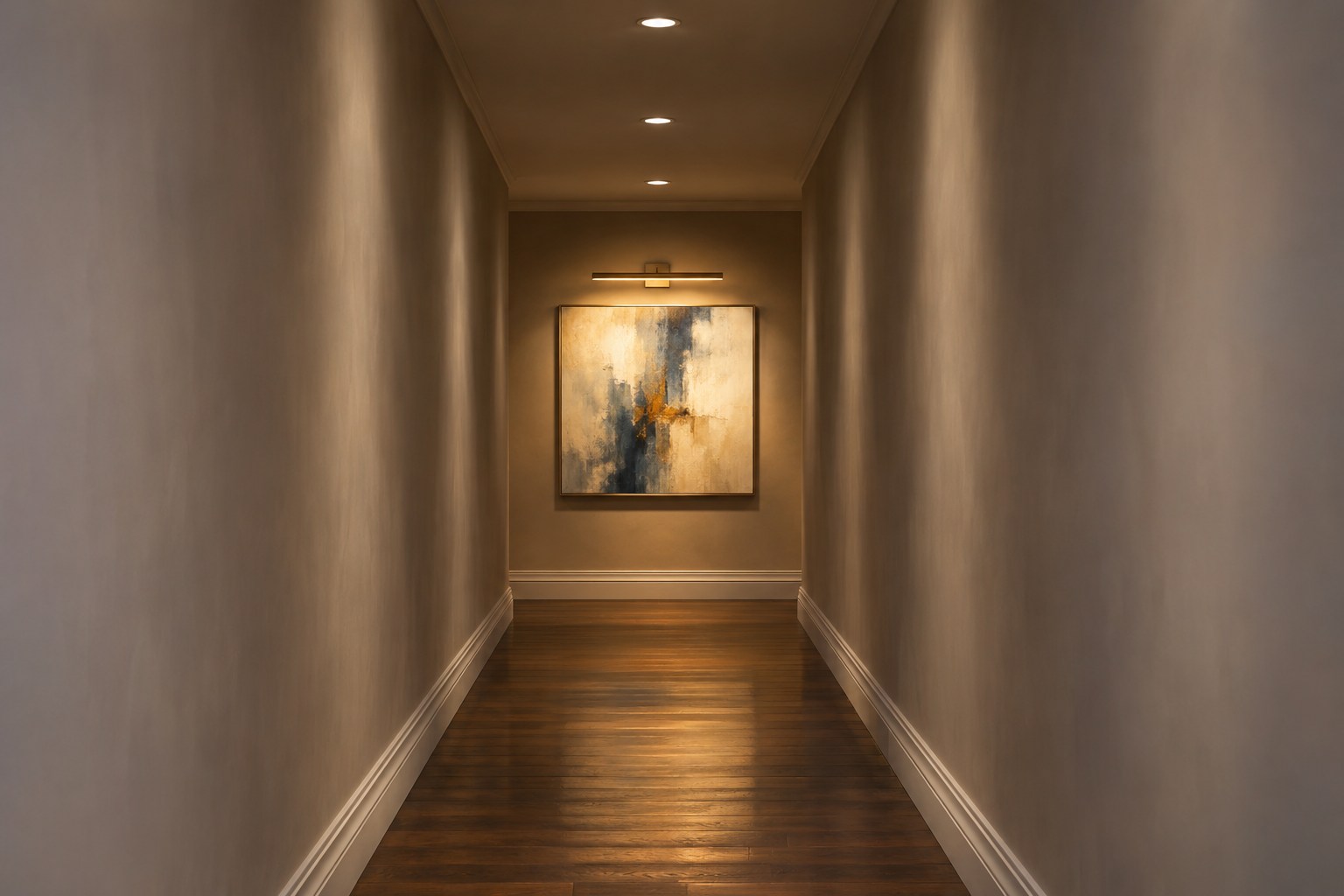
Put one art piece where the far wall is visible from the hall entrance. Give it a little light from an existing adjustable fixture or a picture light that suits the wall and available power. Pick something with a clear shape or large color field. Fine detail matters less than what someone can see from the other end of the passage.
Look from the turn as well as the entrance. Adjust the light so the art is readable without a bright reflection on its front. Keep the wall on either side quiet. A single, luminous stopping point makes a long view feel more deliberate.
5. Use a Low Evening Light Without Lighting the Whole Hall
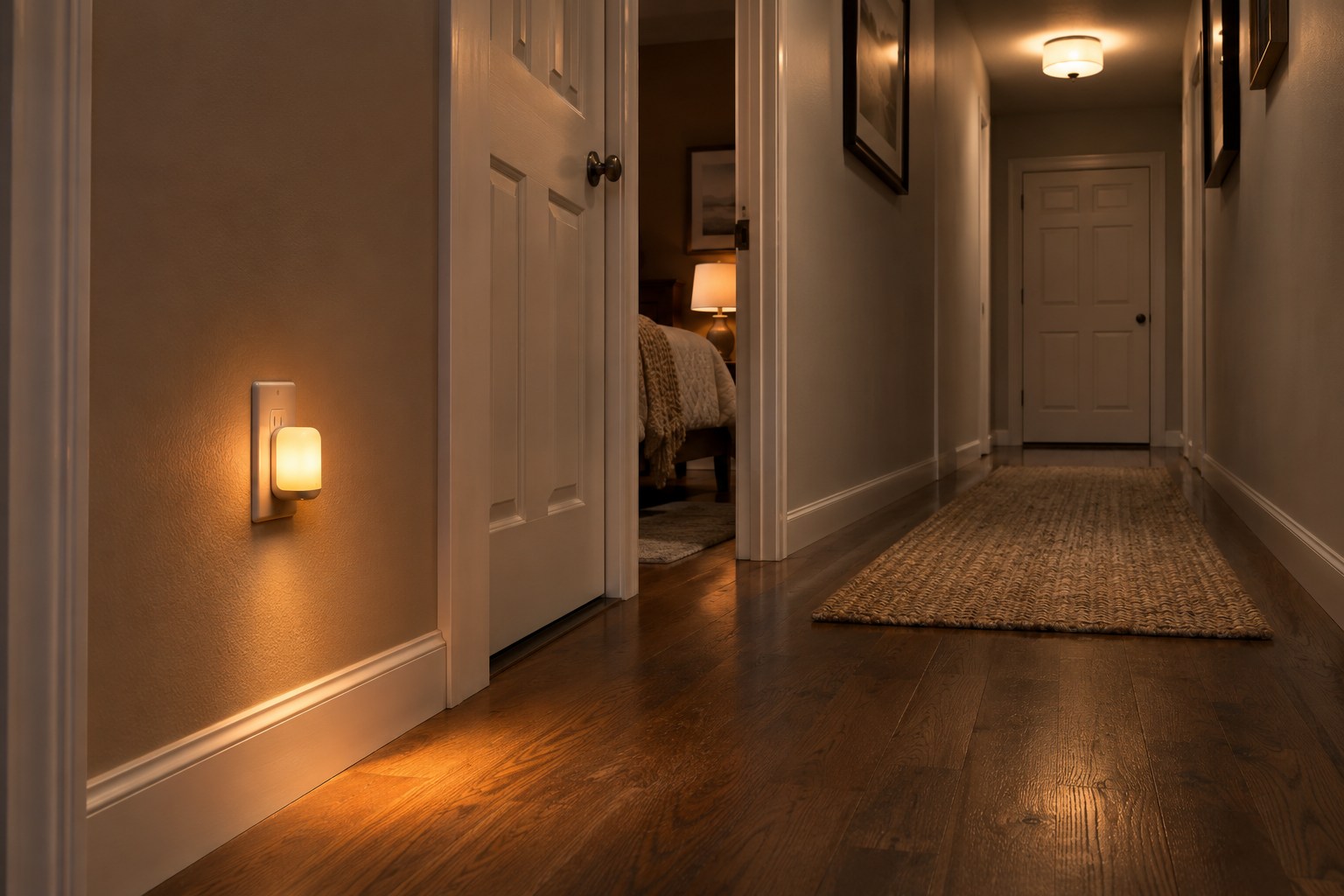
A low outlet near the bedroom end can take a dim guide light for ordinary trips at night. Choose a compact model that fits the outlet and leaves the passage clear. Turn off the usual hall light and look from a few steps away. Try a warmer or lower output if the light shines directly into someone’s room.
Look at the floor right at the spot where you turn. A small glow can help you see the wall or floor edge on a level passage. Keep the main hallway lighting available. Where there are stairs or a change in level, use the lighting the feature needs, following the relevant fixture and building requirements.
For an existing low outlet, the GE SleepLite amber night lights come in a pack of four and switch on in low light. Try one at the bedroom end first to see whether it’s enough for the late-night route.
Explore the amber plug-in lights(paid link)
6. Choose a Flush Fixture Where the Hall Narrows
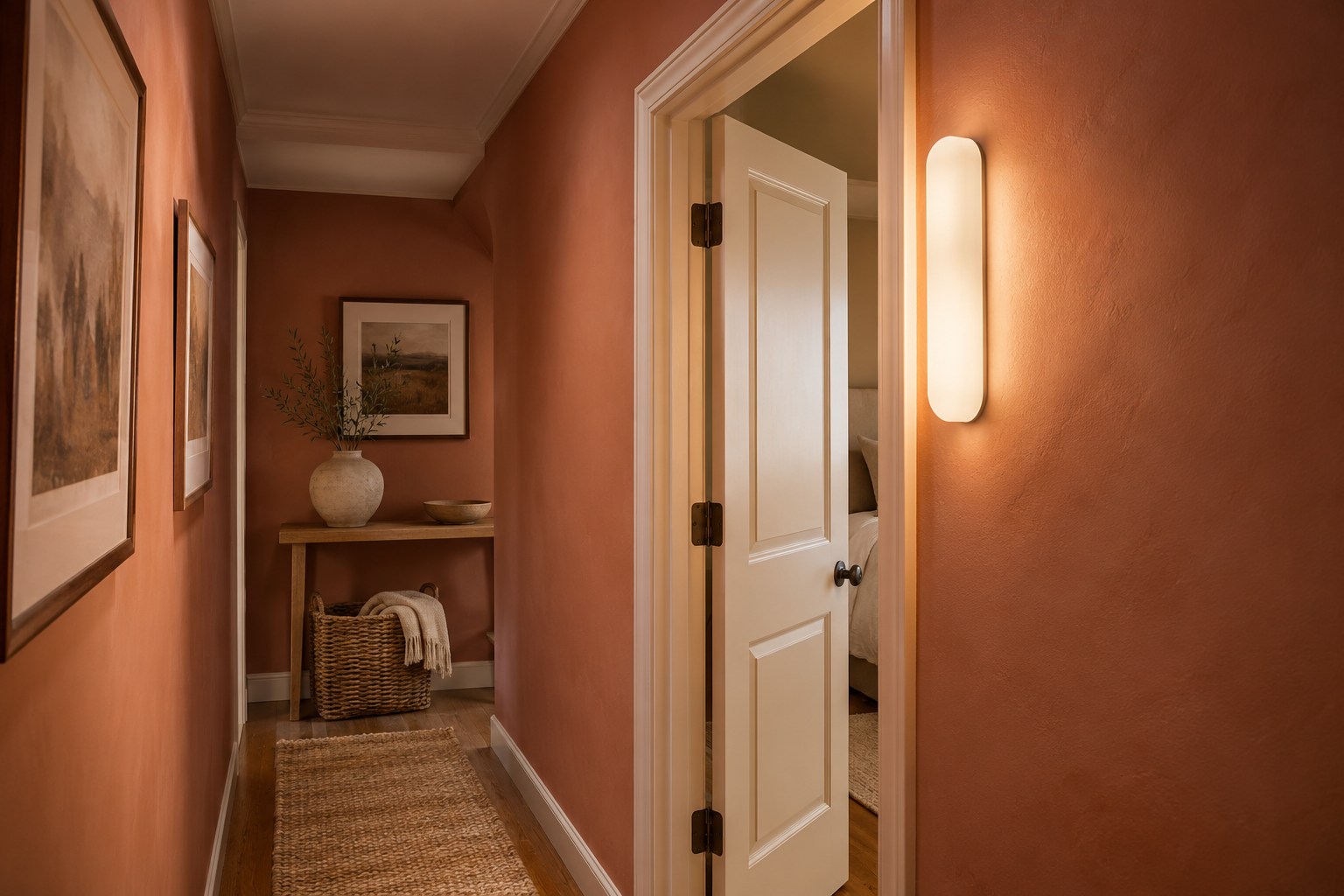
In the part of a corridor that pinches around a doorway or shallow return, look for an option that sits close to its wall or ceiling. Give the opening and your shoulder room as you test the position. A lower-profile fixture can be more useful here than a projecting shade, particularly if you carry a laundry basket through the pinch point.
Look at the width and direction of the light, as well as the depth of the hardware. If the existing fixture can use a compatible lower-profile shade, check that option first. For new fixed wiring or installation, use an electrician and check the mounting location with the doors in their usual positions.
7. Catch a Bright Room in a Side-Wall Mirror
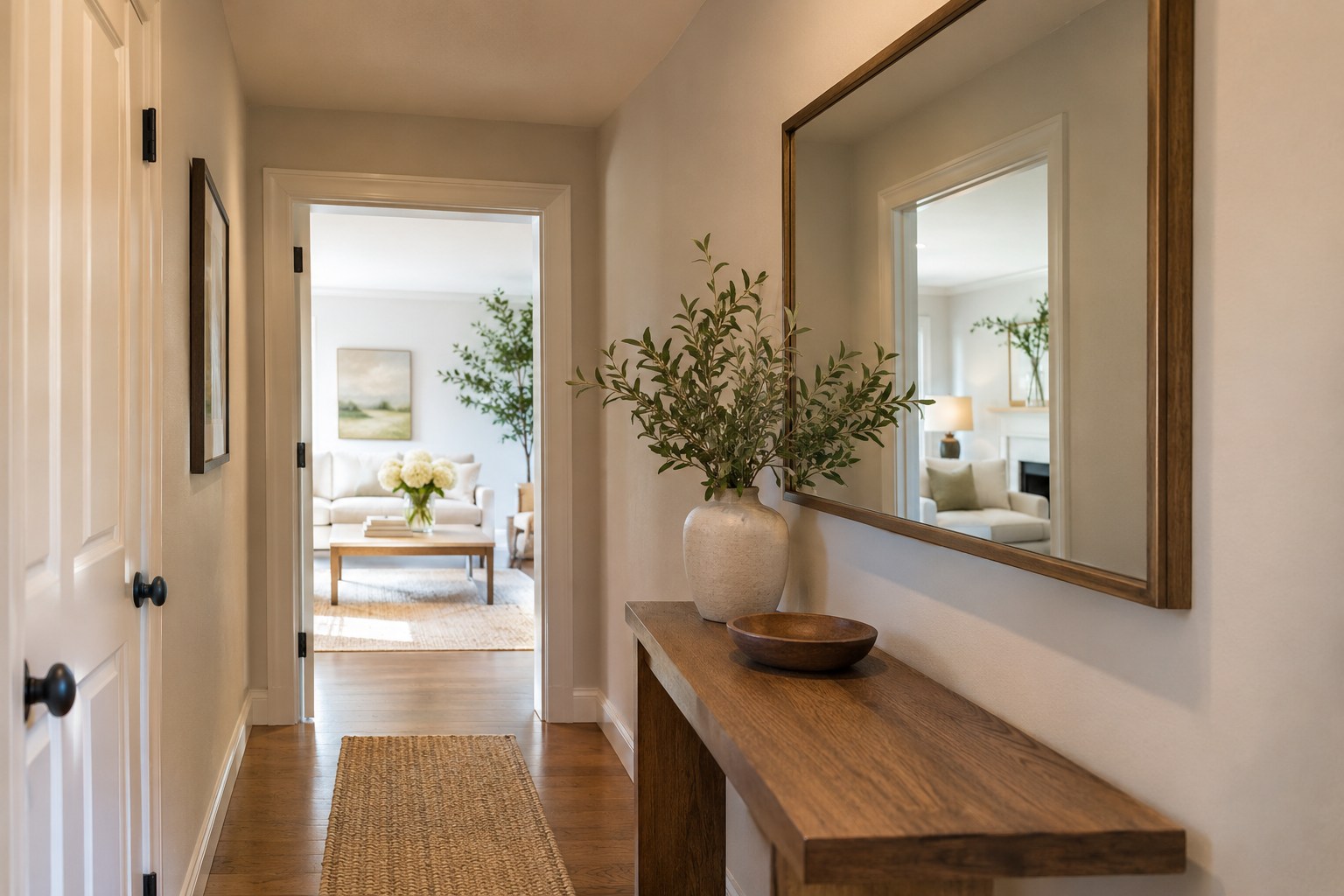
Stand with a small mirror against the side wall near the hall entrance. Angle it just enough to see whether a bright doorway or a portion of the lit room appears in reflection. Move the test mirror a little farther in, then look again. Choose the placement based on a real view you want to borrow.
Check the reflection when the room beyond is dark. A mirror that captures only a bare bulb can feel harsher after sunset. Mount the full-size mirror appropriately for its weight and the wall, and keep it out of the path of a swinging door.
8. Wash a Plaster Wall With Two Matched Lights
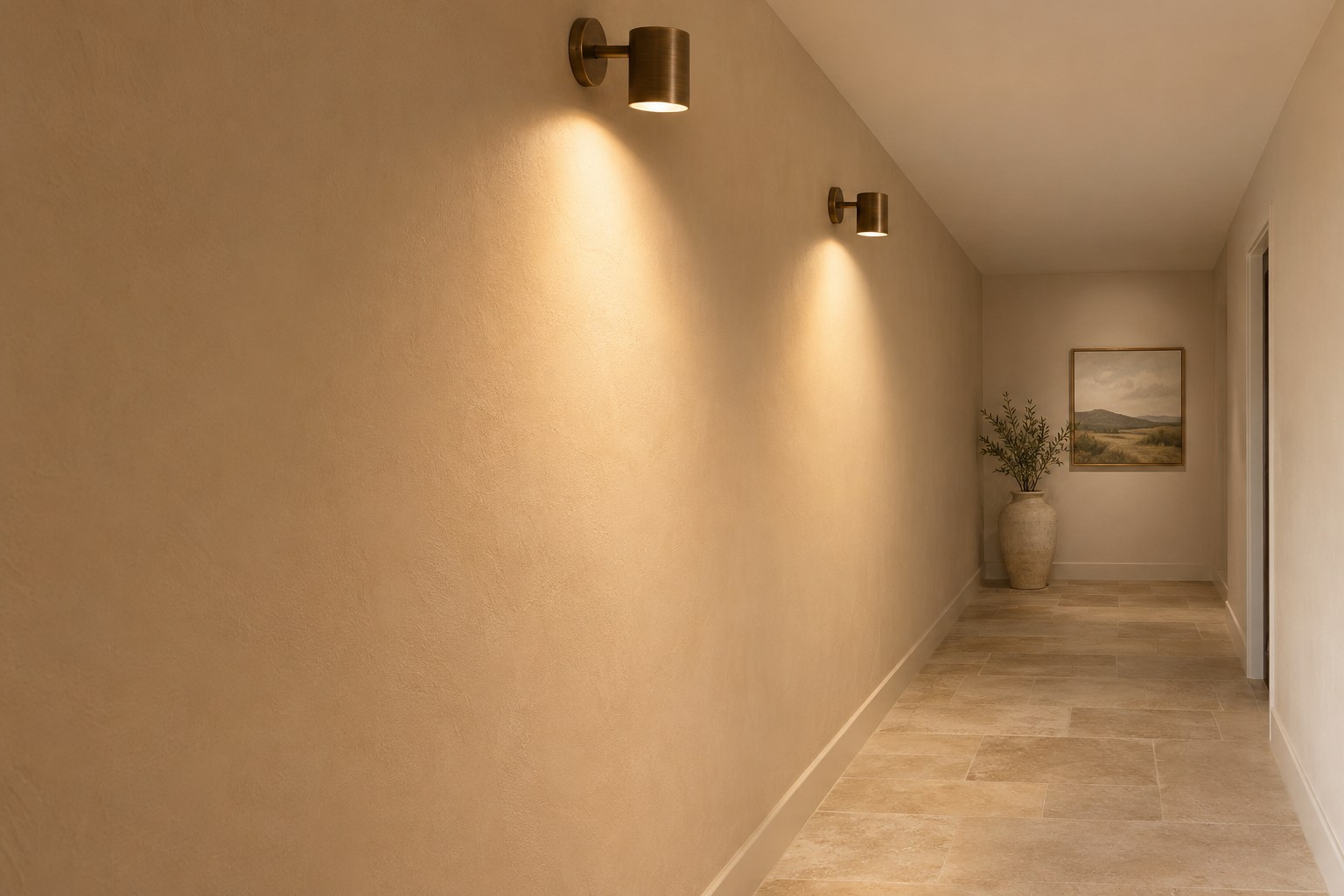
On a long plaster wall, set two compatible sources so their pools of light approach one another without making a bright stripe where they meet. A restrained pair can emphasize the surface and give the hallway an even visual rhythm. Choose the fixtures together so the light color and visible finishes agree.
Look along the wall from its lowest light angle. Harsh grazing can emphasize repairs and bumps in a surface you’d prefer to keep quiet. A slightly wider spread may read better from one end of the hall. Keep the light aimed at the wall where it belongs, with the pattern easy to see from different doorways.
9. Replace a Glary Ceiling Shade With a Diffuser
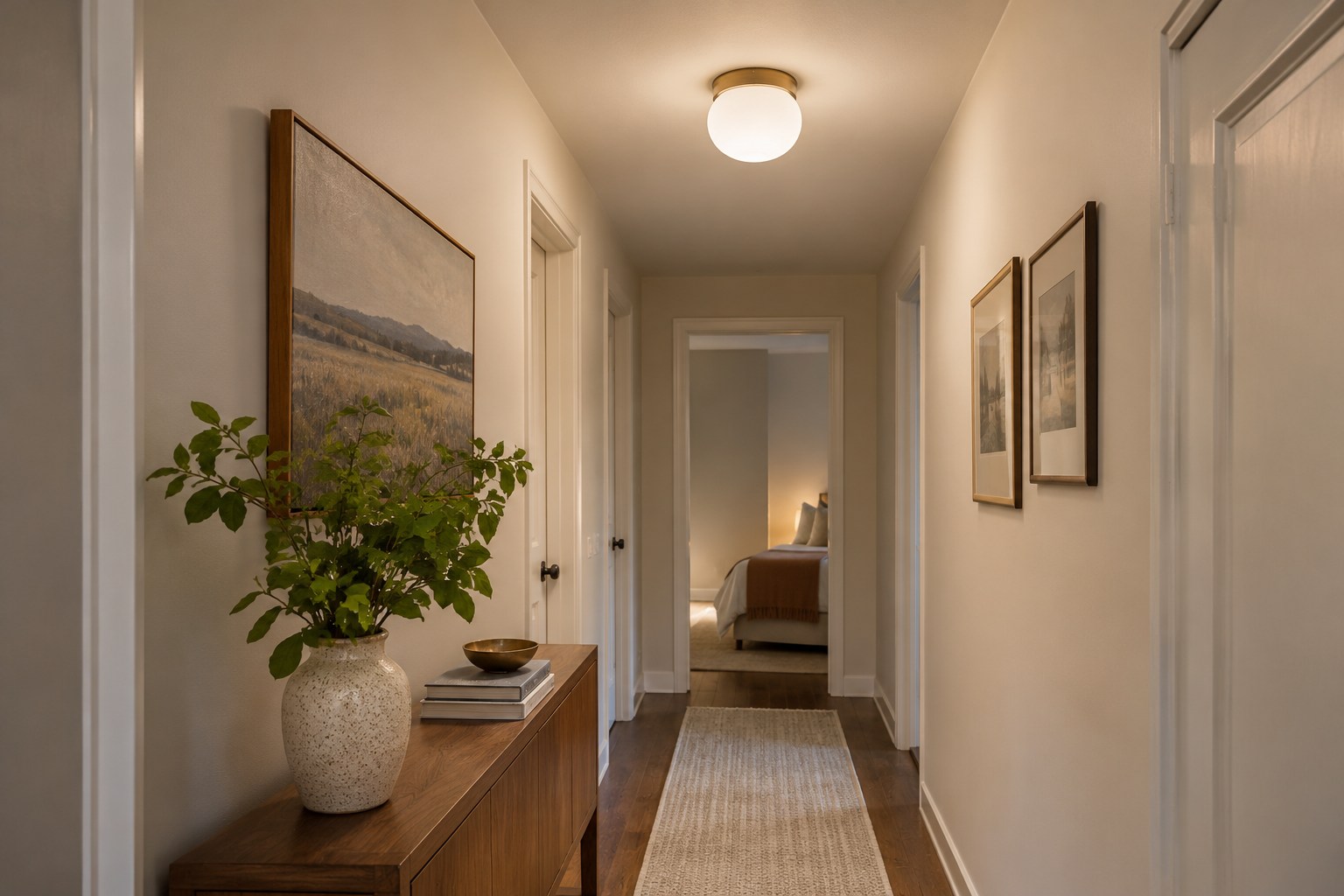
If the existing ceiling fitting makes you look straight at the bulb, check which shades or covers the fixture is designed to accept. A compatible diffuse option can spread light more gently across the hallway. Before replacing a fixture, see whether the source and shade you already have are the main problem.
A dimmer look is only useful if the floor and the turns remain easy to see. Check both ends after the change. If swapping a shade means altering the wiring or mounting, have an electrician handle that part. A new look should still suit the everyday walk.
10. Let Pale Oak and Matte Plaster Carry the Light
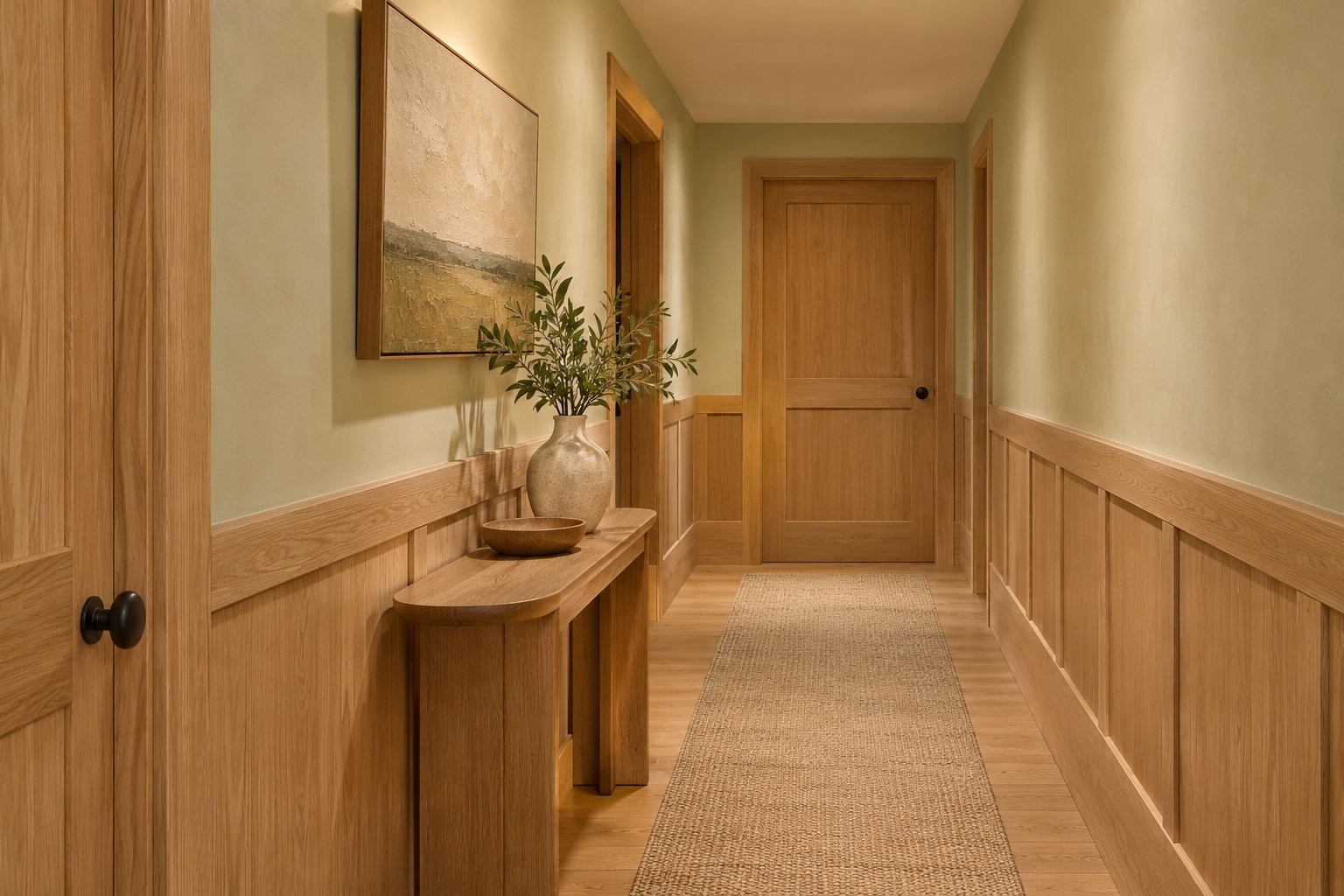
Pale timber trim or a wood hand-height feature can warm up a matte plaster wall. Choose a finish with visible grain, then compare it in the hall before repeating it. An ashy oak can look quite different beneath an amber bulb, while a soft cream wall tends to keep the grain visible. Use the wood or plaster as a substantial surface so it feels intentional.
Keep any extra wood element slender enough for the route. Try the natural materials with the room lights and the hall lights separately. A compact hall can feel complete with two well-related surfaces and a simple fixture.
11. Use a Separate Light at a Blind Turn
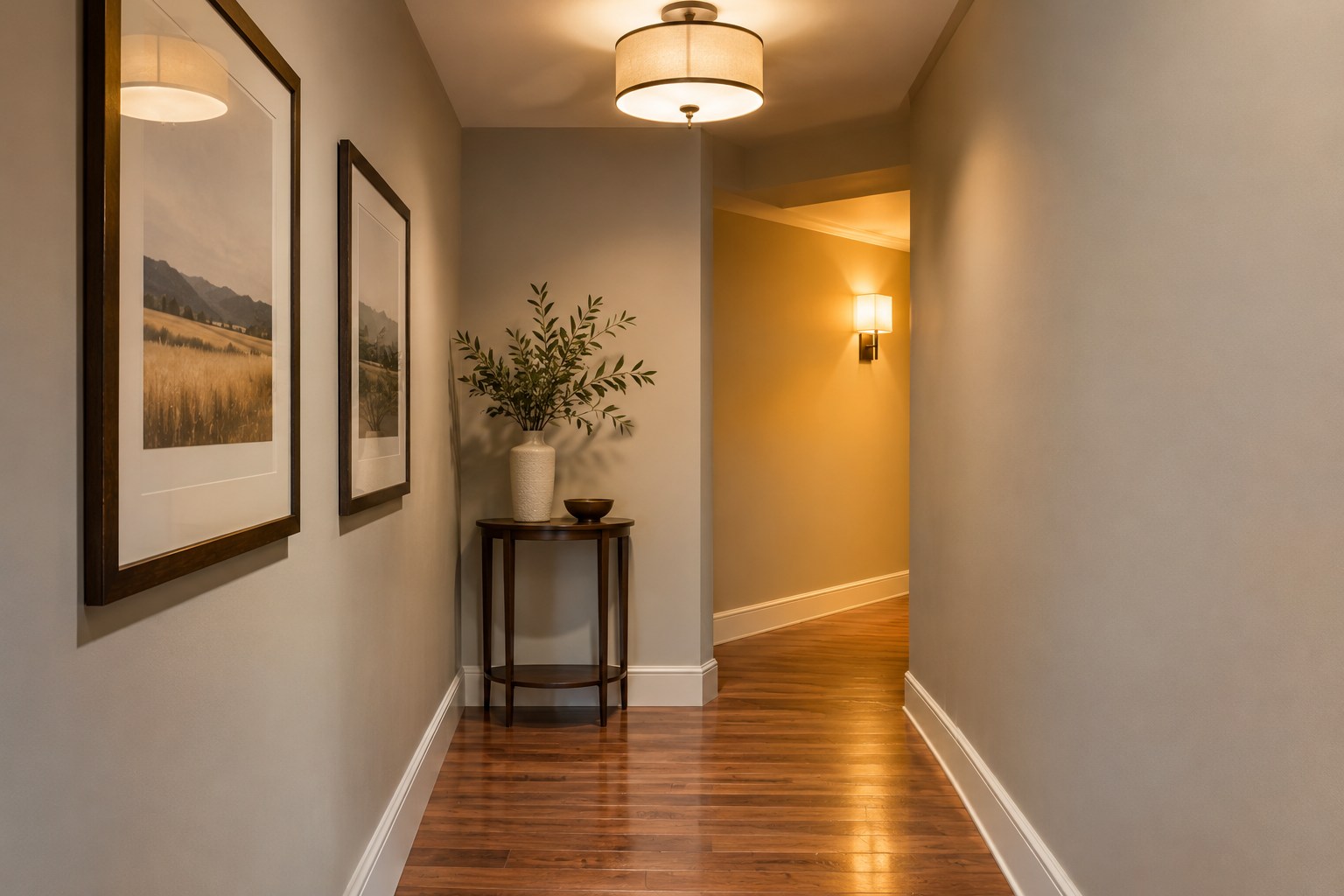
At an L-shaped corner, the fixture near the entrance may make the first leg feel bright while leaving the second leg hard to read. Stand at the inside of the turn and see whether your own shadow becomes the darkest spot. Aim a separate light from the second leg or choose a fitting whose spread reaches the wall where the passage changes direction.
Start with a temporary light test from an appropriate location. Then plan the correct installation, with the source and its controls accessible. Check the arrangement at night with any rooms off the hall closed. The turn should remain visible without an open door to supply its light.
12. Define the Door Frames With Quiet Contrast
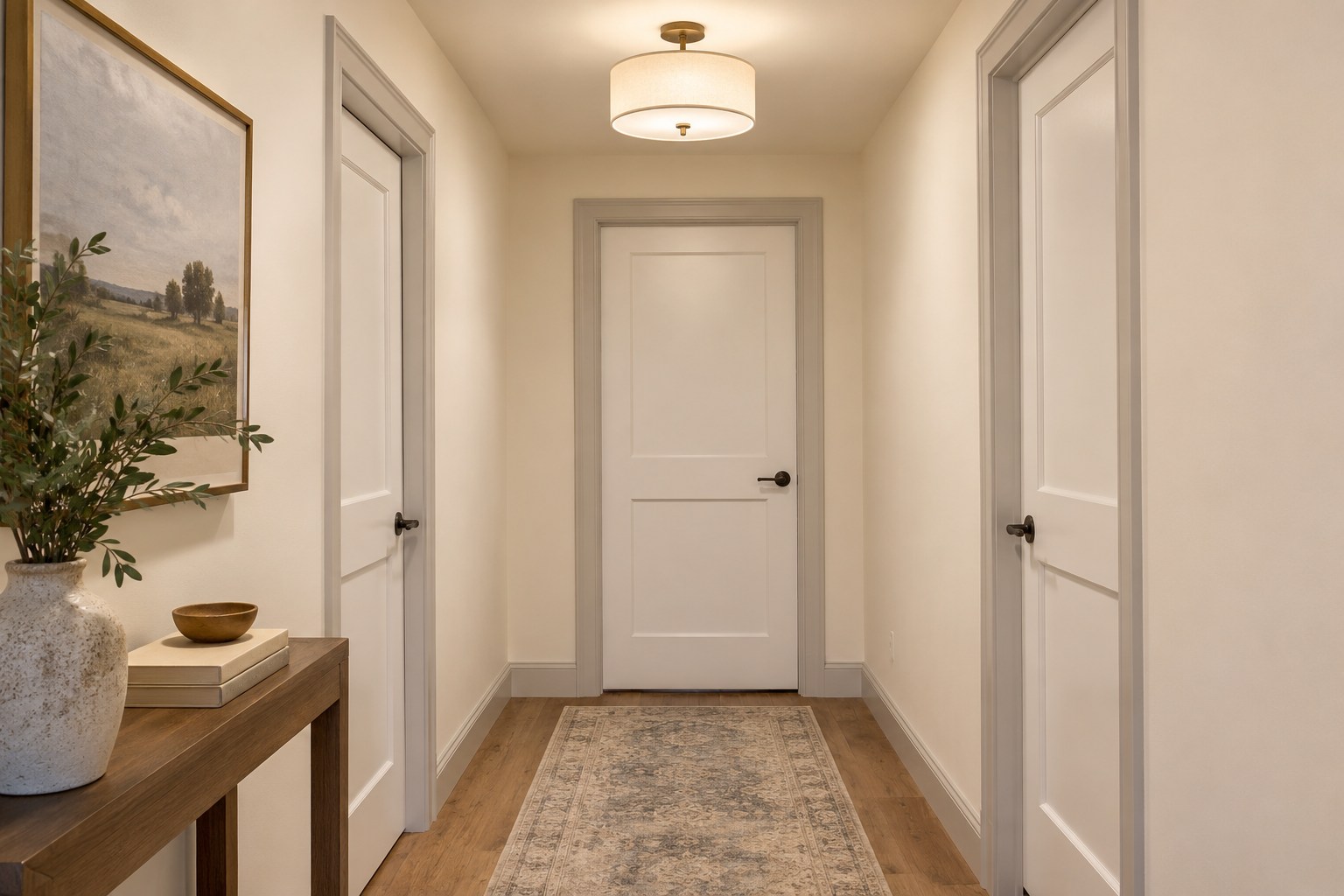
Choose a trim shade you can distinguish against the wall from a few steps away. A light warm gray over creamy plaster can make the edge of a white door less abrupt, while deeper paint on the frames can help the openings read in a pale hallway. Test one frame before repeating the combination everywhere.
Look at the thresholds at both ends of the hall. Use similar contrast on the doors that are part of the same route, and limit any high-contrast accent to one end. If the hall starts at a small entry, these narrow entry furniture ideas help keep that first section easy to use.
13. Keep the Floor Legible Between Pools of Light
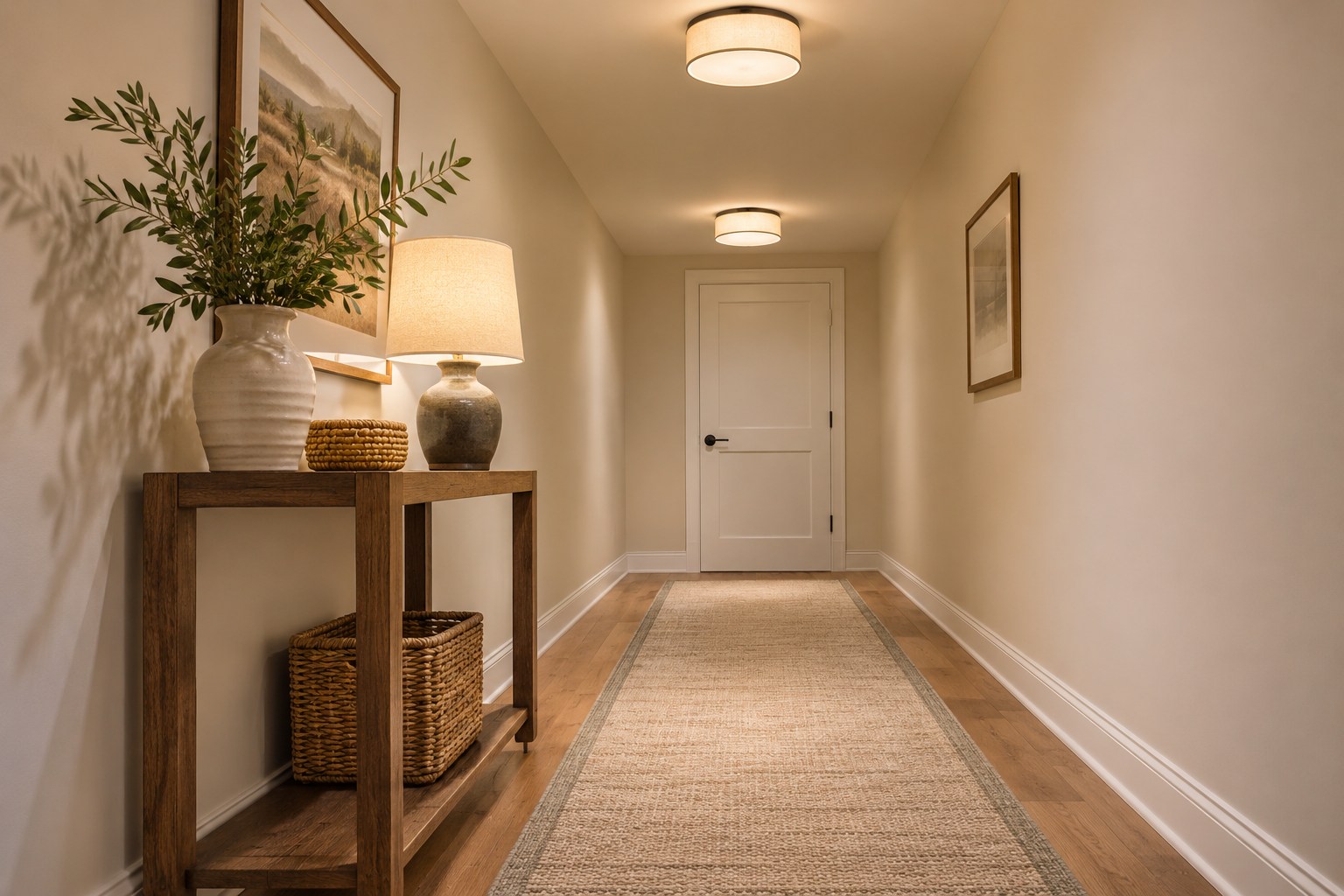
Look along the whole passage from standing height. If a patterned runner falls exactly between two light pools, a strong shadow may make the edge harder to see. Try a low-profile secure floor covering that has a visible border, or leave a narrow paved or wood route bare if the surface works as it is.
Check that doors still open and test the transition where the runner ends. A subtle change in direction or finish is easier to notice when some light reaches it. That’s especially useful where the floor turns into the next room.
14. Give the Ceiling and Upper Wall One Continuous Tone
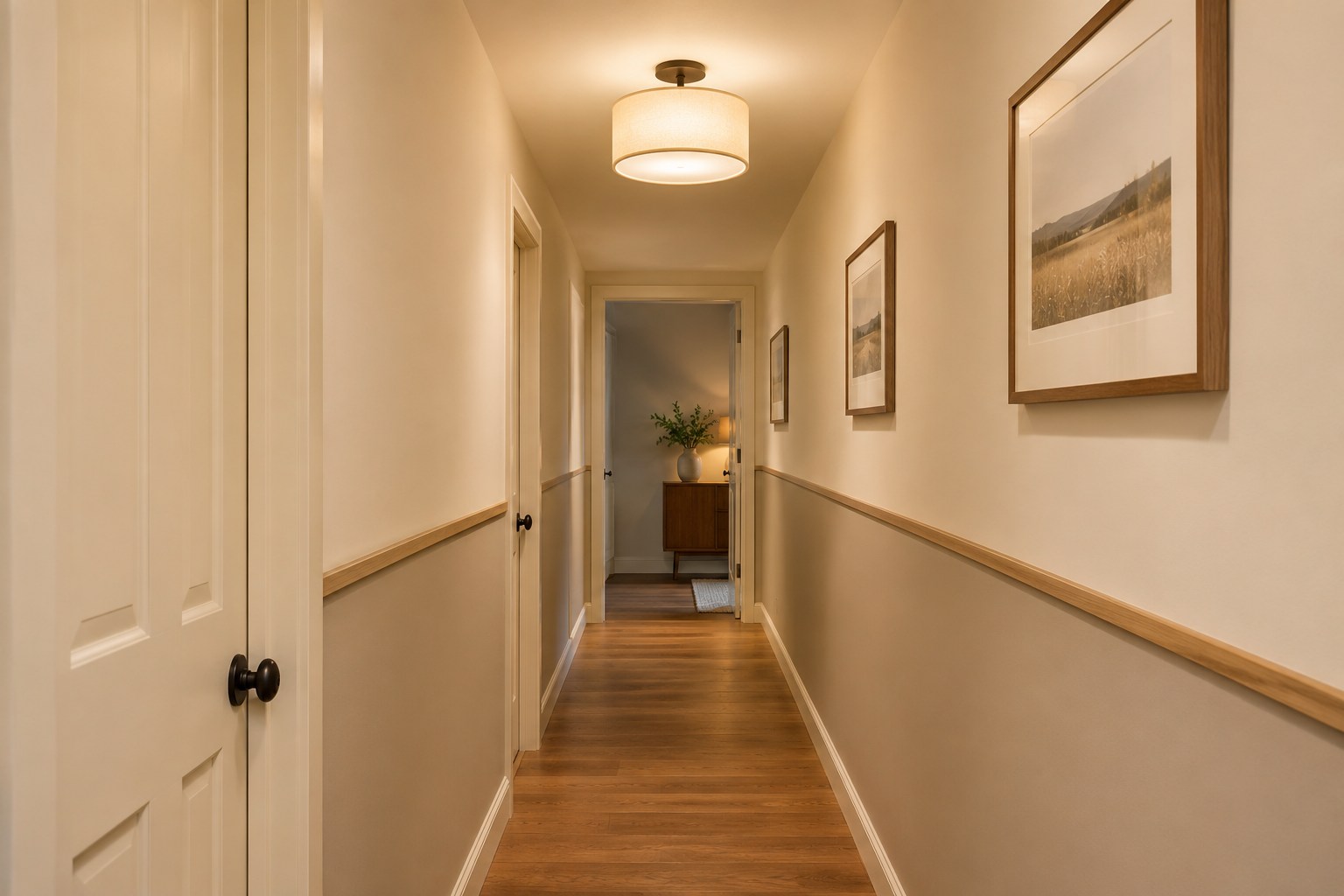
When the top of a narrow hallway has a lot of different lines, use a related color across the ceiling and upper wall. Try a warm pale tone with a slightly deeper finish only below the natural break. Put samples near the actual join so you can see how the fixture changes the colors on the two planes.
Compare how the ceiling looks from both entrances. Pick finishes suitable for their surfaces and the light you use in the room. If a stark top edge makes the tallest part of the hall stand out, the quieter palette can make the length of the passage easier to read.
Return to the dark spot you noticed at the beginning. If the nearest two doors, the turn, and the floor are easy to see in ordinary use, you’ve made a change that works every evening.
Discover more from HomeTrendora
Subscribe to get the latest posts sent to your email.