A closet can look deep enough for a desk until you try to sit down or close the doors. Start with those two motions, then plan the light, equipment, and storage around them. The 16 setups below cover both a simple rental nook and a fitted workspace you can shut away at the end of the day.
Choose an ordinary storage closet you can comfortably repurpose. A utility closet has its own access and equipment requirements. Keep those spaces available for the use they were designed to serve.
1. Measure the Opening With the Doors in Motion
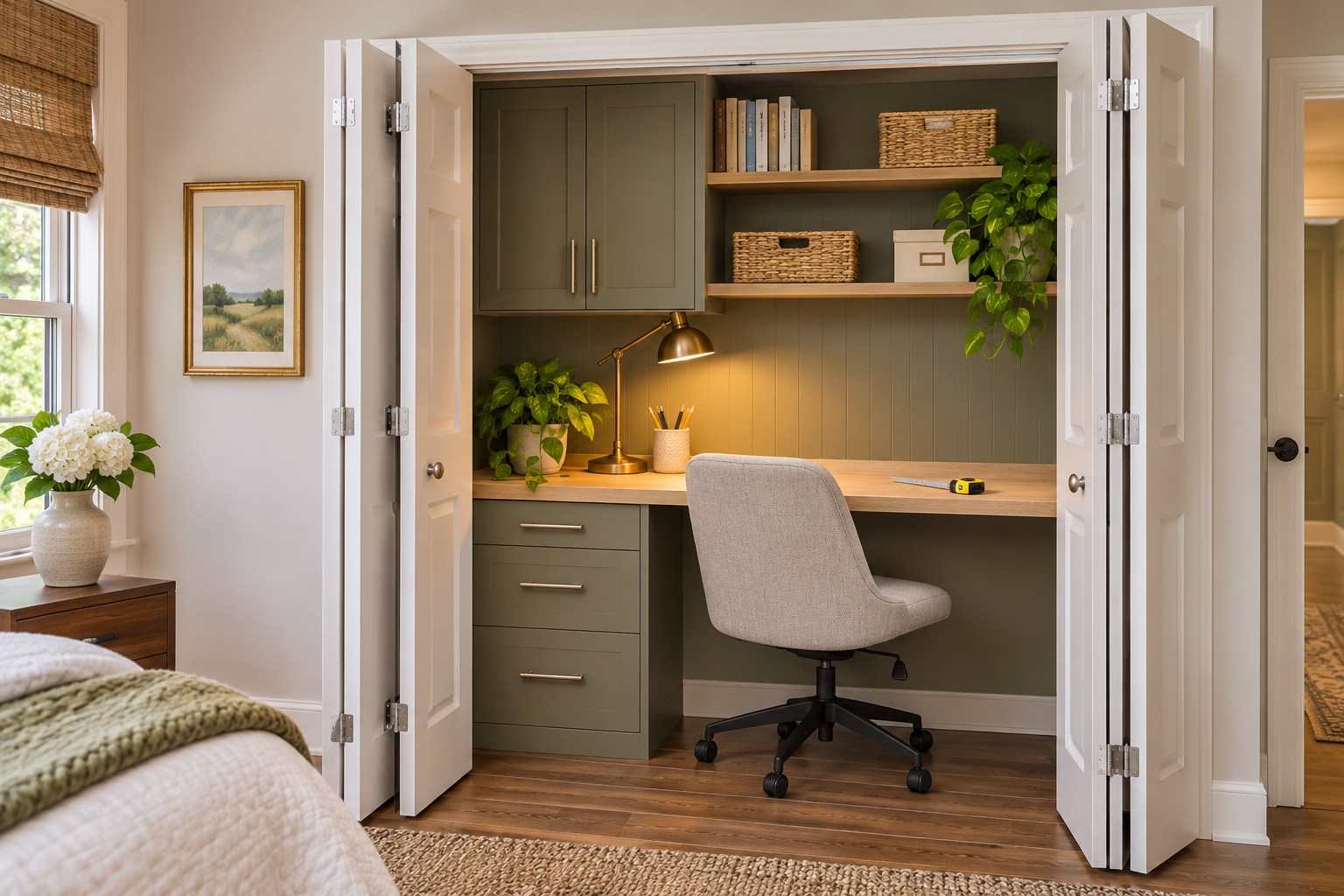
Measure between the closest points of the trim with the doors open. A bifold can still take up part of the opening when it’s fully folded, while a slider leaves only one side accessible at a time. Check how far the hardware extends when the door is in its usual position. Mark the narrowest usable part on a paper sketch.
Compare the opening with the width and diagonal of the desk you want to bring in. You need room to get it past the doors as well as room for your hands along the desktop once it’s inside. If the fronts are staying, decide which end should hold the things you need to reach most often.
2. Check the Chair Before Choosing a Work Surface
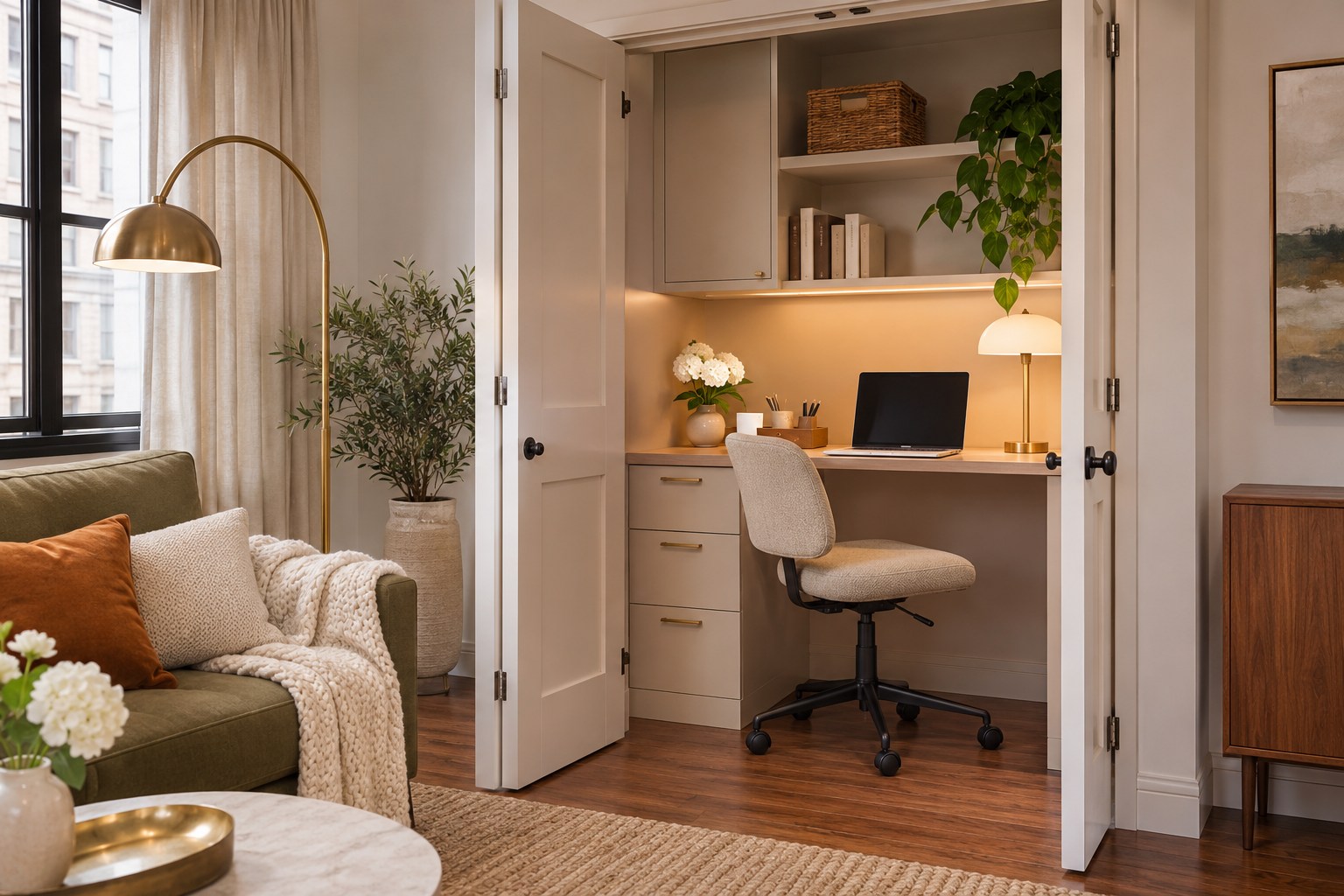
Pull the chair up to a table you already use and take stock of what feels comfortable. Note where your feet land and how much room your knees need. Use that position to test the proposed desk depth. A tabletop that fills the closet entirely can leave you leaning forward through the doorway.
Mock up the width and depth before making changes. Sit back, stand, and turn the chair as you normally would. A shallow closet may work better with the chair on the room side and the desktop inside. Build that relationship into the plan so the doors can stay well clear while you work.
HOMETRENDORA PLANNING BUNDLE
Check the fit before you buy.
A promising idea still needs to fit your room. Use the book’s measured examples, fillable room planner and budget tracker to compare options, check walking space and work out the full cost before ordering.
160-page PDF + fillable room planner + Excel budget tracker
Bonuses included with your eBook purchase.
GRAB 10% DISCOUNT
Coupon code: HOMETRENDORA10
Use this code at Payhip checkout.
3. Use a Freestanding Folding Desk in a Rental
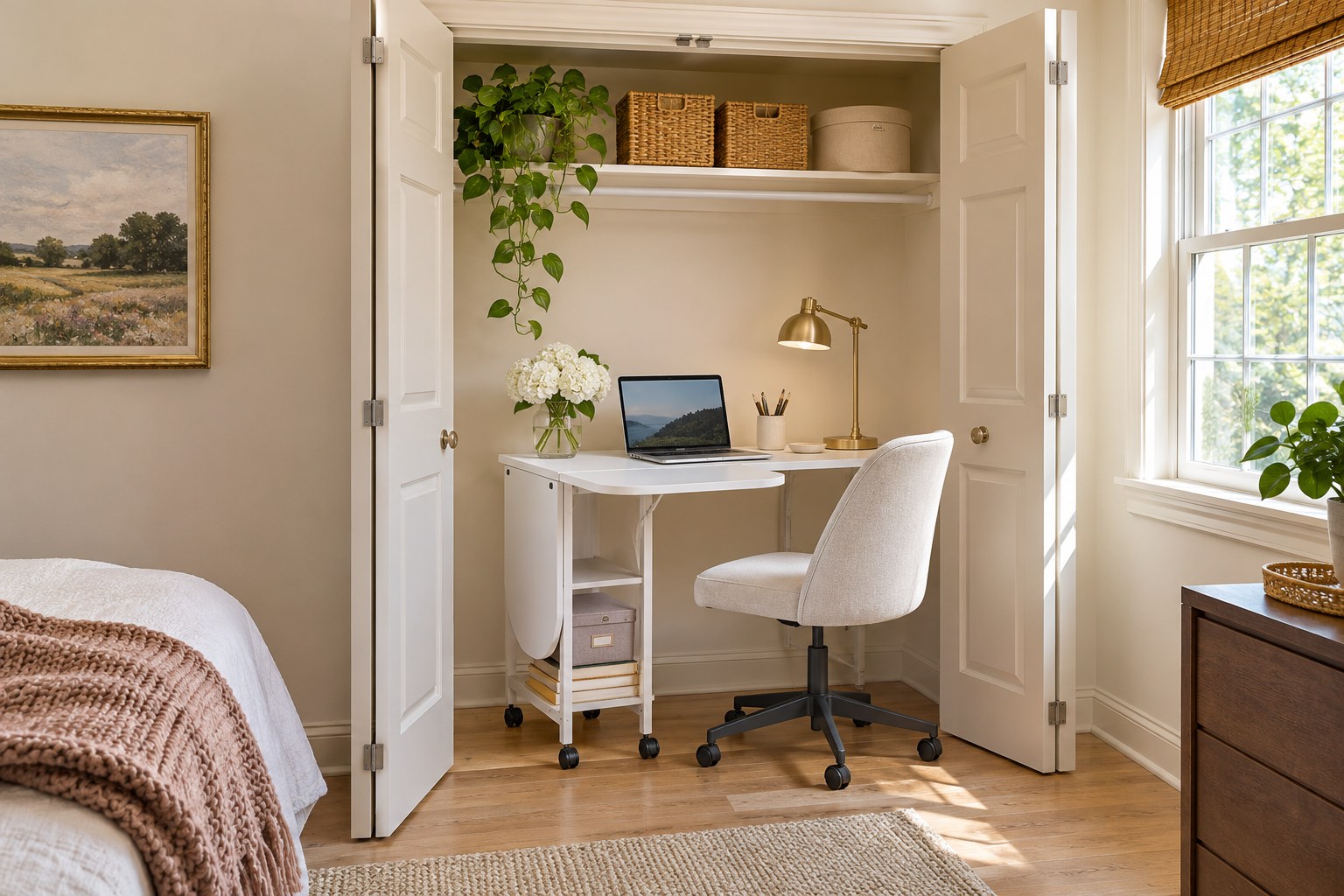
A slim folding desk makes sense when you need a reversible workspace. Check the surface at its open depth, including the legs or casters below. Find the place where it will stand when open and the place it can go when folded. Both need a level floor and enough room to open or move the unit as its instructions direct.
For a wheeled desk, check the paths over thresholds and rugs, and use the brakes provided before working. Remove the laptop and heavy objects before folding or moving the desk. These renter-friendly apartment updates offer other ways to make a temporary setup feel settled.
HOMCOM’s white drop-leaf desk is 31.5 inches wide and folds from 19.7 inches to 8.3 inches deep. Check the clear width between the fully open doors and give the wheels their own path.
See the folding closet desk(paid link)
4. Put the Monitor on a Shallow Riser With a Clear Back
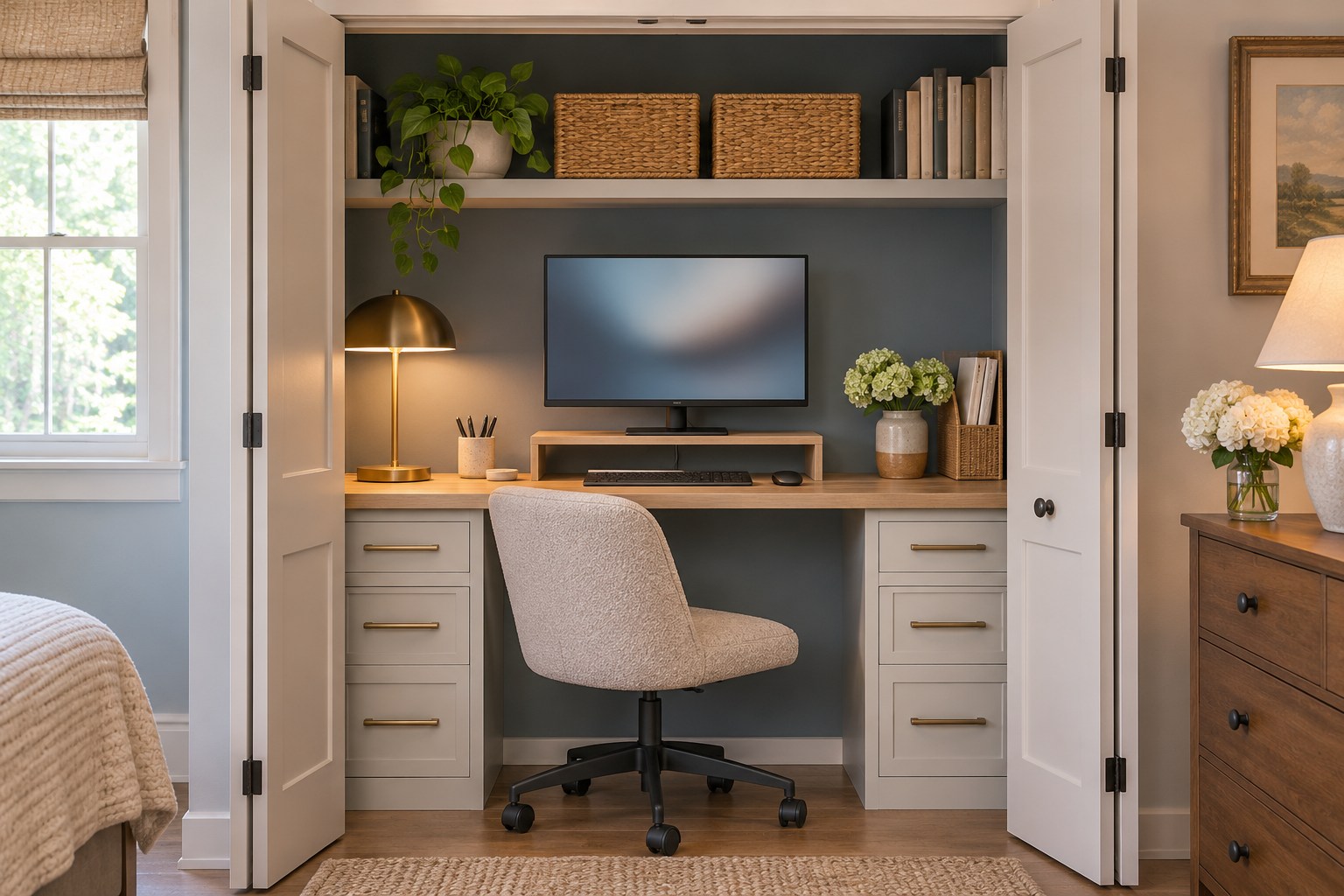
Choose a stable riser that’s deep enough for the entire monitor base, with a little extra room to lift it. It can be handy when the wall and desk leave no spare surface directly behind the keyboard. Check the screen’s position from your actual chair before settling on the riser height. A monitor that sits too close may be less comfortable than a smaller display that fits the recess.
Keep the rear of the riser open so you can reach the connections and follow the monitor’s ventilation directions. Slide loose accessories out of the way before you test the doors. Tape the footprint of larger equipment first if you’re deciding between two sizes.
5. Give Working Supplies One Pull-Out Tray
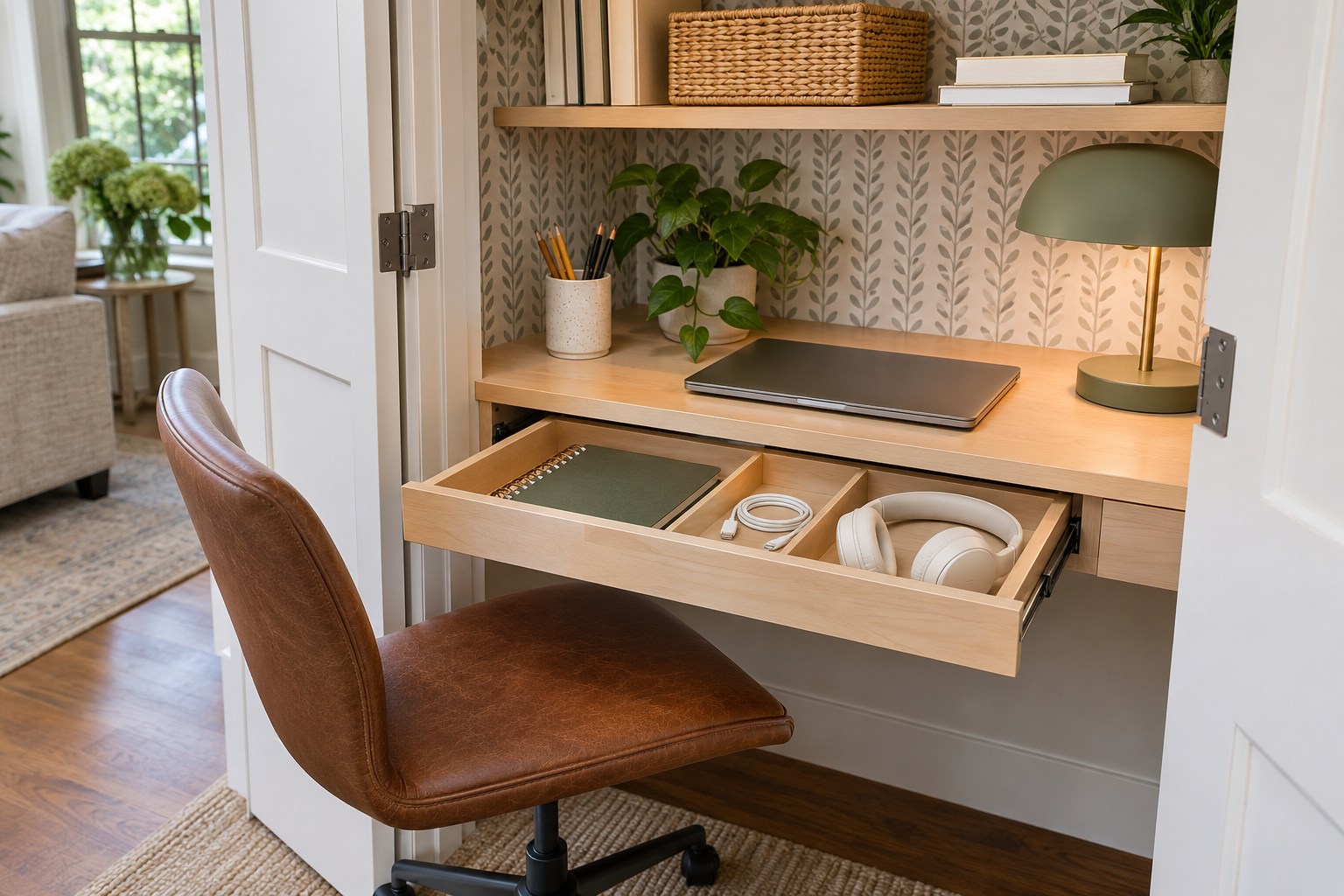
A slim removable tray can hold headphones, a notebook, and the charger you use that day. Store it on a reachable shelf or in a shallow drawer near the front of the closet. Choose an open interior shape that lets you see the small items when you pull it forward.
Try working with the tray on the desk for a day, then make room for it to go back as a single unit. Use a different place for archive papers and extra cords. More storage ideas follow the same daily logic in the home office organization guide.
6. Turn an Open Closet Into a Finished Desk Niche
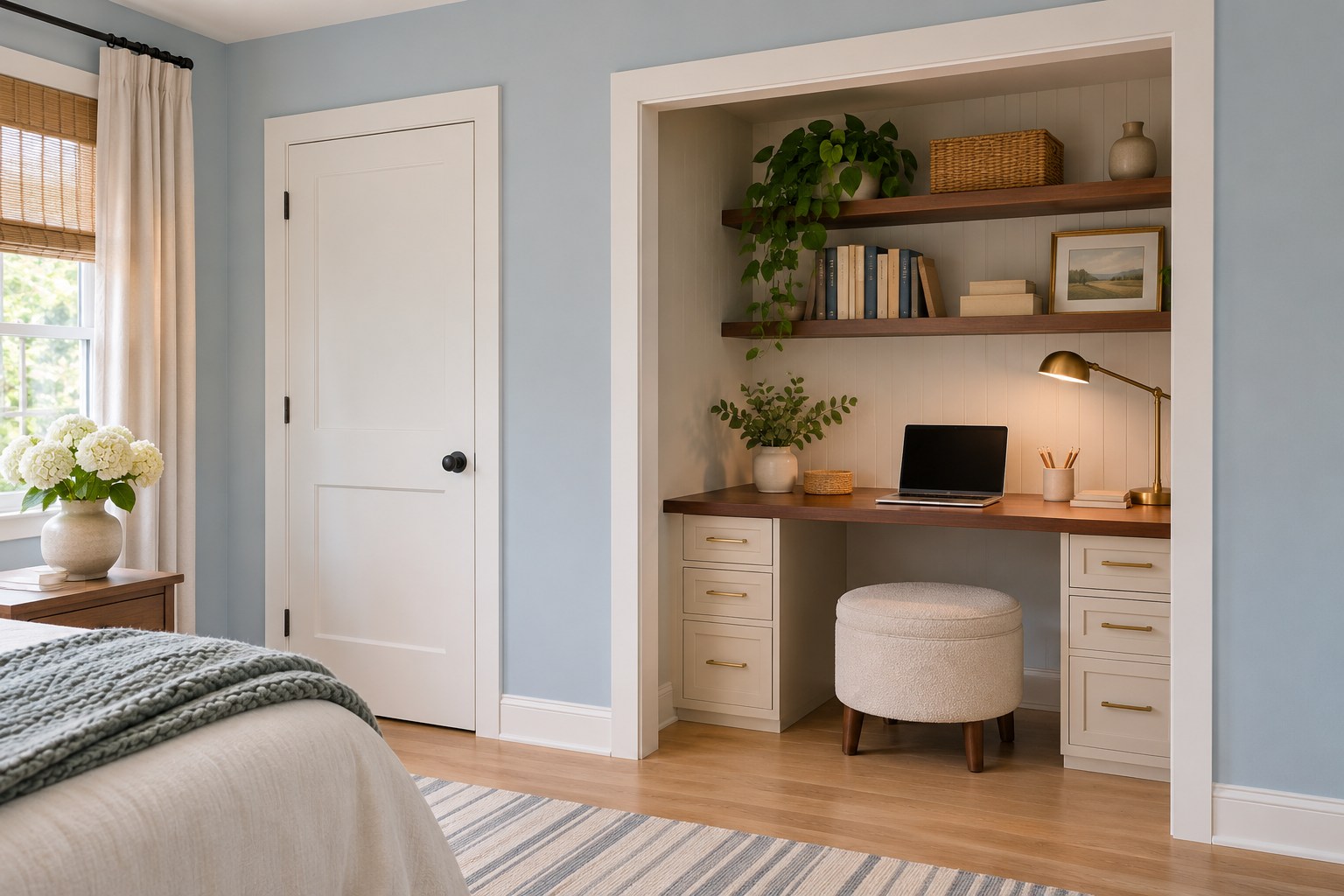
If you’ve decided to leave the closet open, treat its edge like part of the room. When you have permission to alter it, repair old track holes and choose a trim profile that fits the neighboring doors. Look at where the flooring stops and transitions before laying out the desk. A flat, suitable transition makes it easier to bring the chair into the nook.
A matching trim finish gives the new recess a clear outline. Test the desk against it from the adjoining room. The opening should look considered even when the chair is parked elsewhere. If you plan to keep the doors or restore the opening later, store usable hardware together and choose a reversible treatment.
7. Warm Up the Desk With Oak and Shaded Light
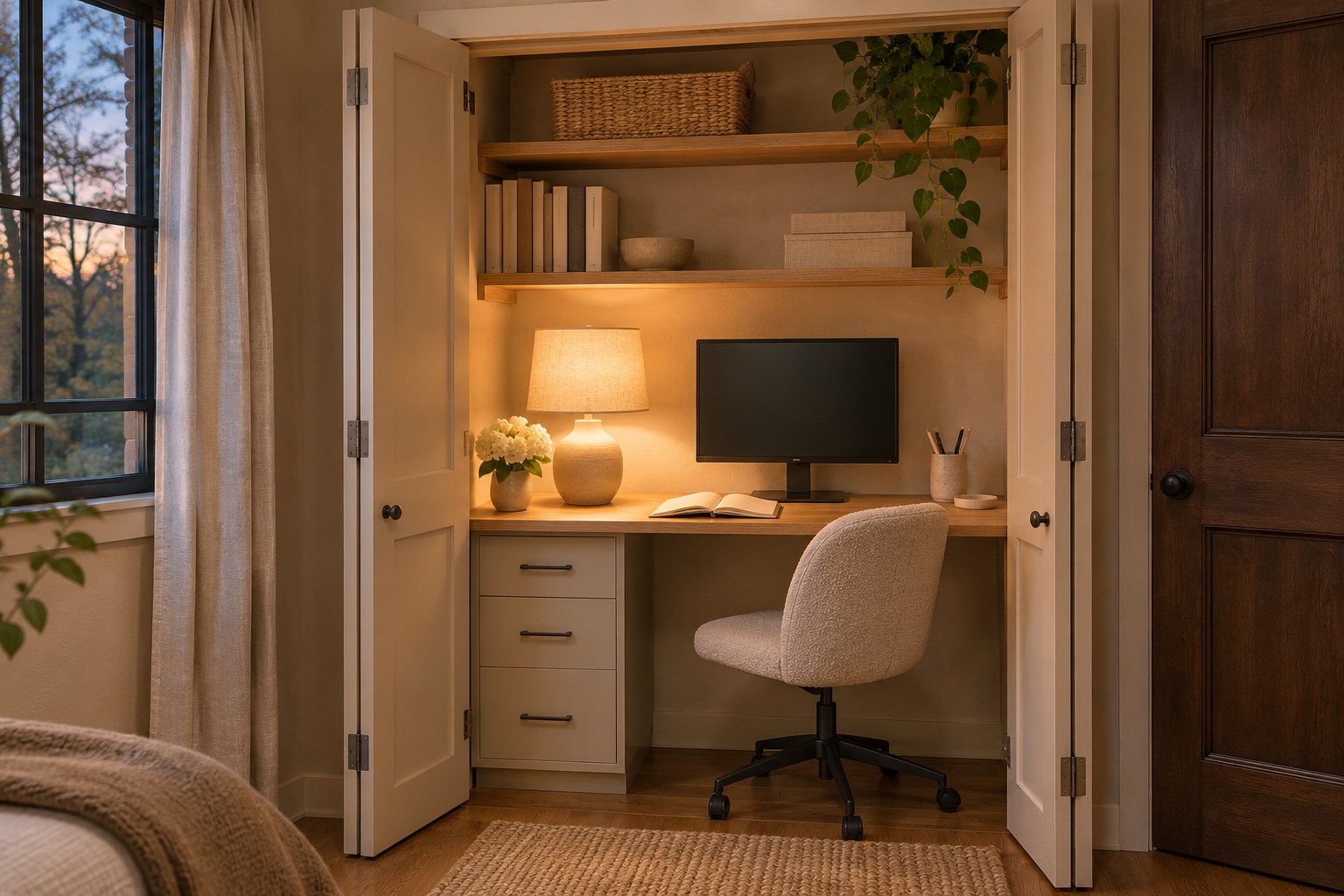
An oak desktop and a soft shaded lamp can lift a shallow space that feels gloomy at the end of an afternoon. Use a narrow lamp footprint and place it on the side where it lights your notebook without shining into the screen. Compare both sides if you usually take notes while on a call.
Let the grain and the lamp do most of the work. A flat linen shade can pick up a quiet grain line instead of adding a bright spot to the corner. Keep the shade and any other material where the lighting manufacturer allows it. Check the same setup with the adjacent room lights on so the open closet sits comfortably beside them.
8. Use One Pattern to Give the Recess a Focal Point
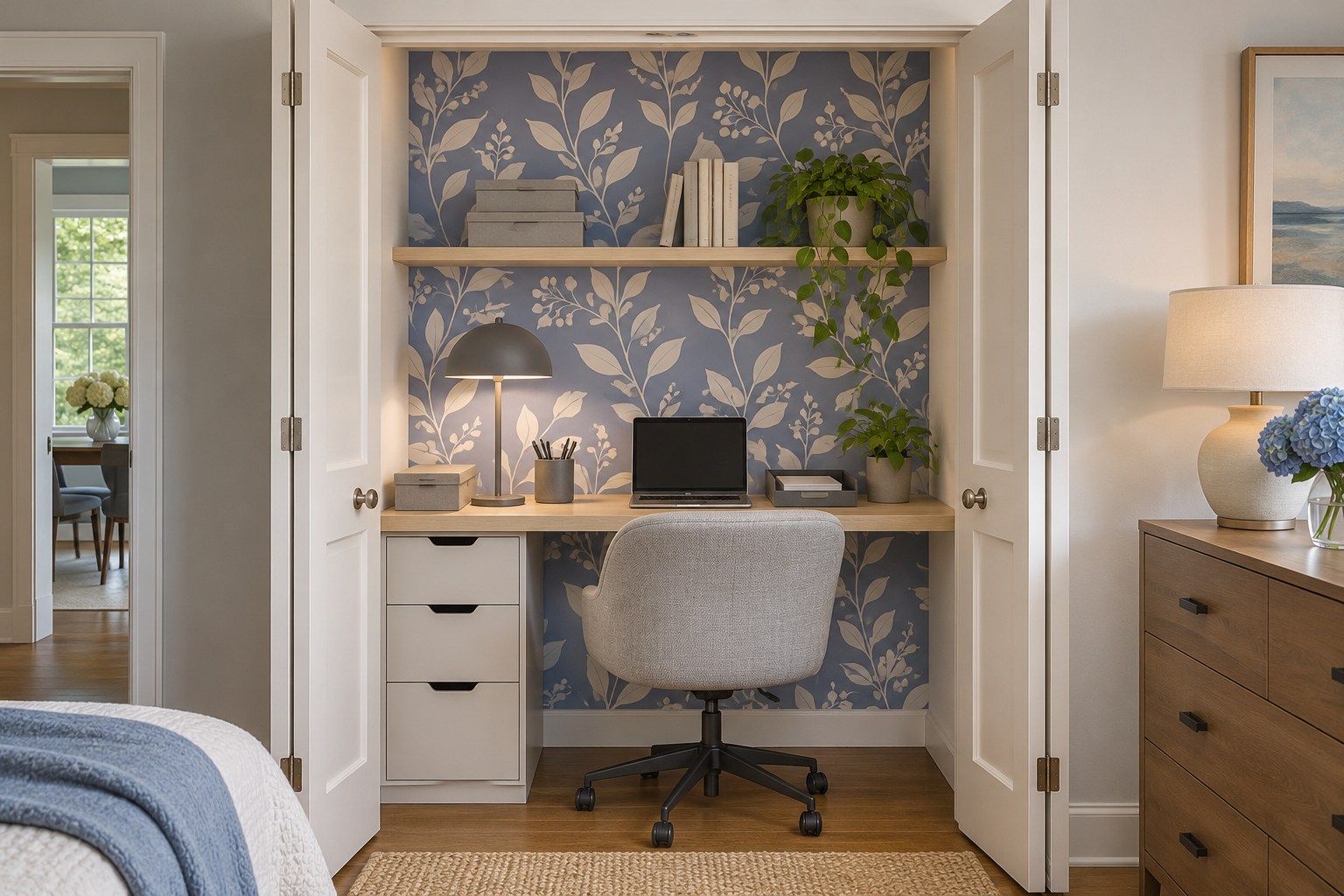
Try a single quiet repeat across the back of a deep closet. The panel can be permanent or removable, depending on the wall and your permission to change it. Choose a repeat that you can see clearly in the exposed part of the opening. A strip of busy pattern on every wall can become restless at arm’s length.
Keep the other surfaces and shelves simple. Test a large sample behind the actual equipment so you can see how much of it remains visible. A lamp shade that picks up a quieter tone from the print can bring the desk to the foreground without another accessory.
9. Plan the Route From the Outlet to the Desk
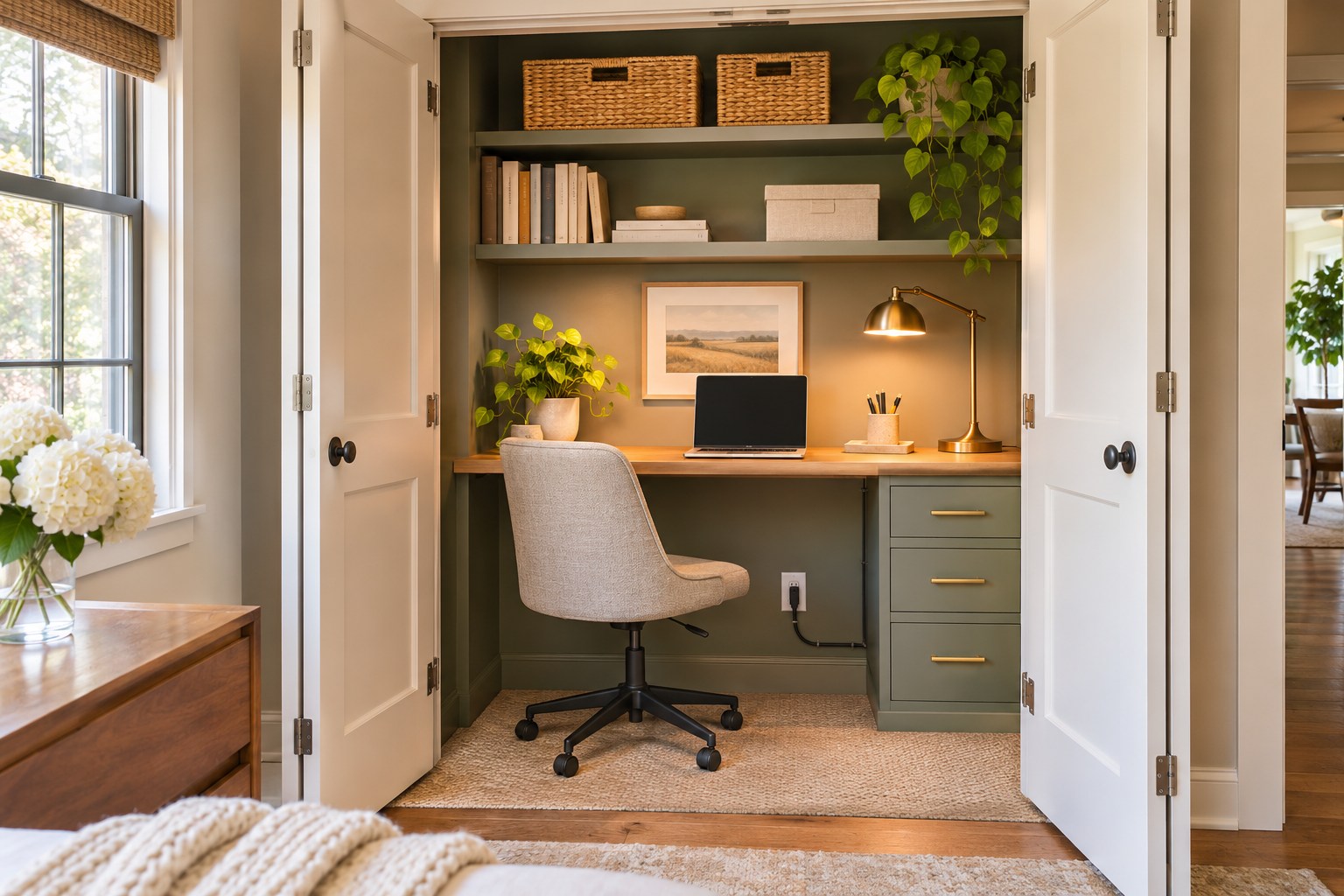
Locate the outlet you plan to use and see where the cables naturally fall. Give the plugs room to sit and leave the cable runs where you can inspect them. The safest-looking route on an empty floor may turn into a pinch point when the closet door closes or the chair rolls back.
Follow your equipment and electrical accessories’ directions. Keep cords out of door tracks, under-rug areas, and walking routes. If the proposed workspace needs a new permanent outlet, consult a qualified electrician. Choose a location for the desk that can be powered appropriately before buying furniture that only fits one way.
10. Let Birch and Wool Give a Minimal Nook Its Texture
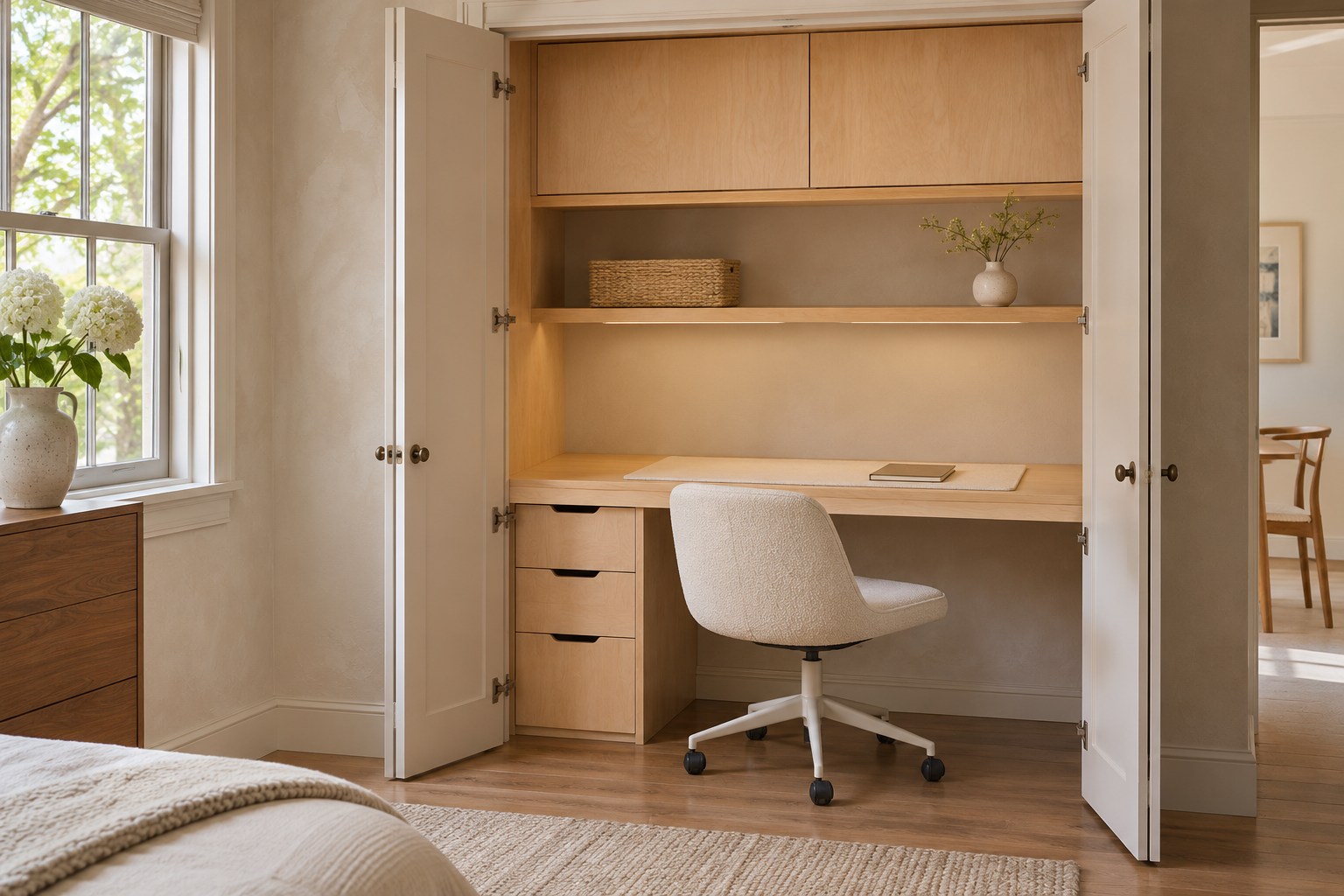
Try a pale birch work surface with a plain wool-felt desk pad, leaving the visible edge of the wood open. Use one quiet color for a few needed accessories. Choose a rougher wool and smoother timber finish so the interest comes from a material contrast you can use every day.
Compare the palette with the adjacent room before committing. A tall white shelf can be useful immediately above this kind of desk, but keep its contents quiet and purposeful. Look at the result from the doorway in daylight and after dark. The nook works well when its texture is still readable without making the recess feel full.
11. Conceal the Work Surface Behind Matching Cabinet Doors
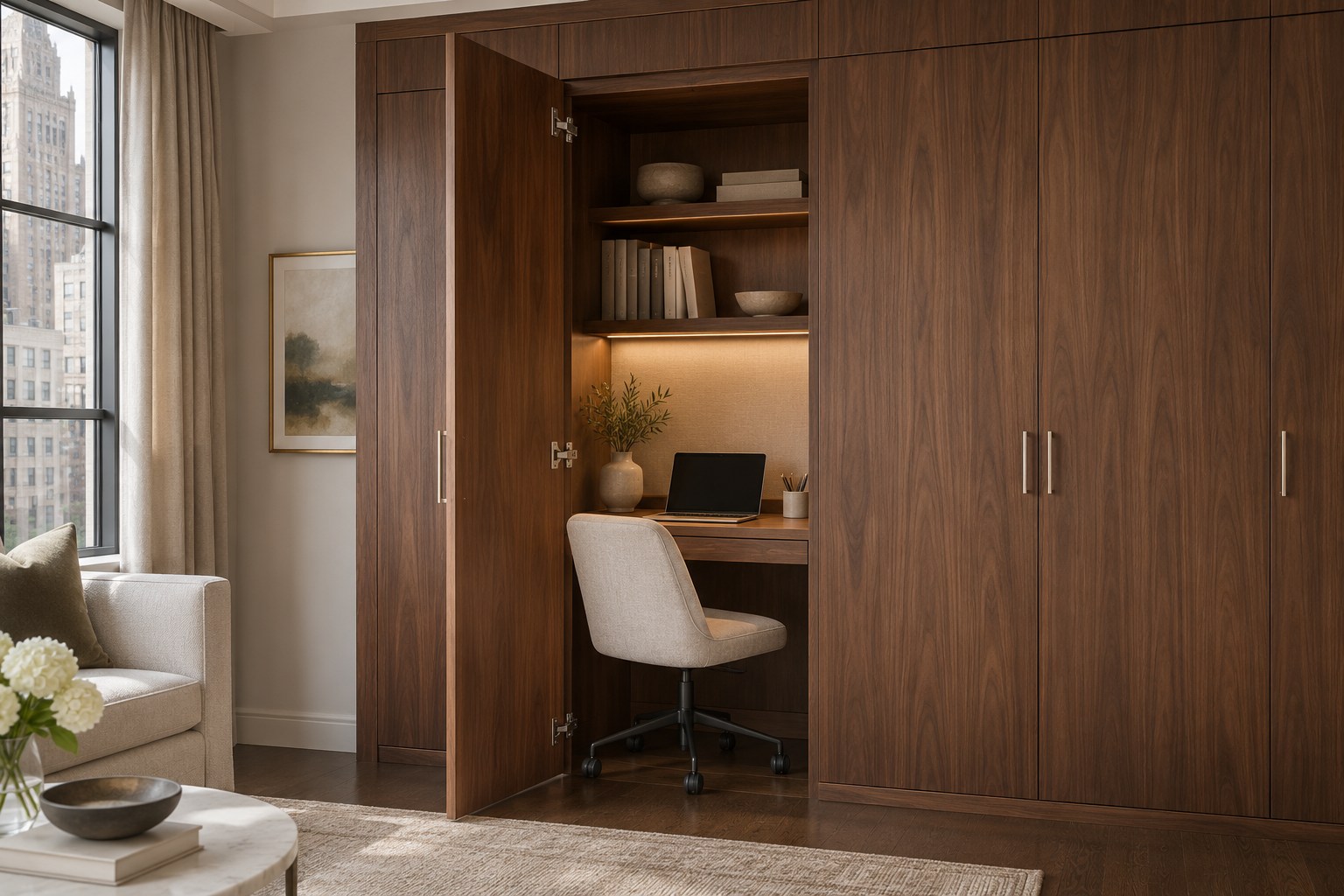
For a more fitted result, align the closet’s fronts and reveals with the cabinetry around it. Matched walnut doors, a discreet nickel pull, and consistent gaps can make the office feel like part of an existing room. Give the desktop and its attachments their own clearance behind the closed doors.
Open both fronts and check how you’ll sit, stand, and reach the shelf corners. The fit should be useful from each side of the desk. Take a photo of the doors closed and look at the joints and hardware from the other end of the room. When the wood and proportions are considered, the office looks intentional in either position.
12. Sample the Back-Wall Paint With the Doors Open
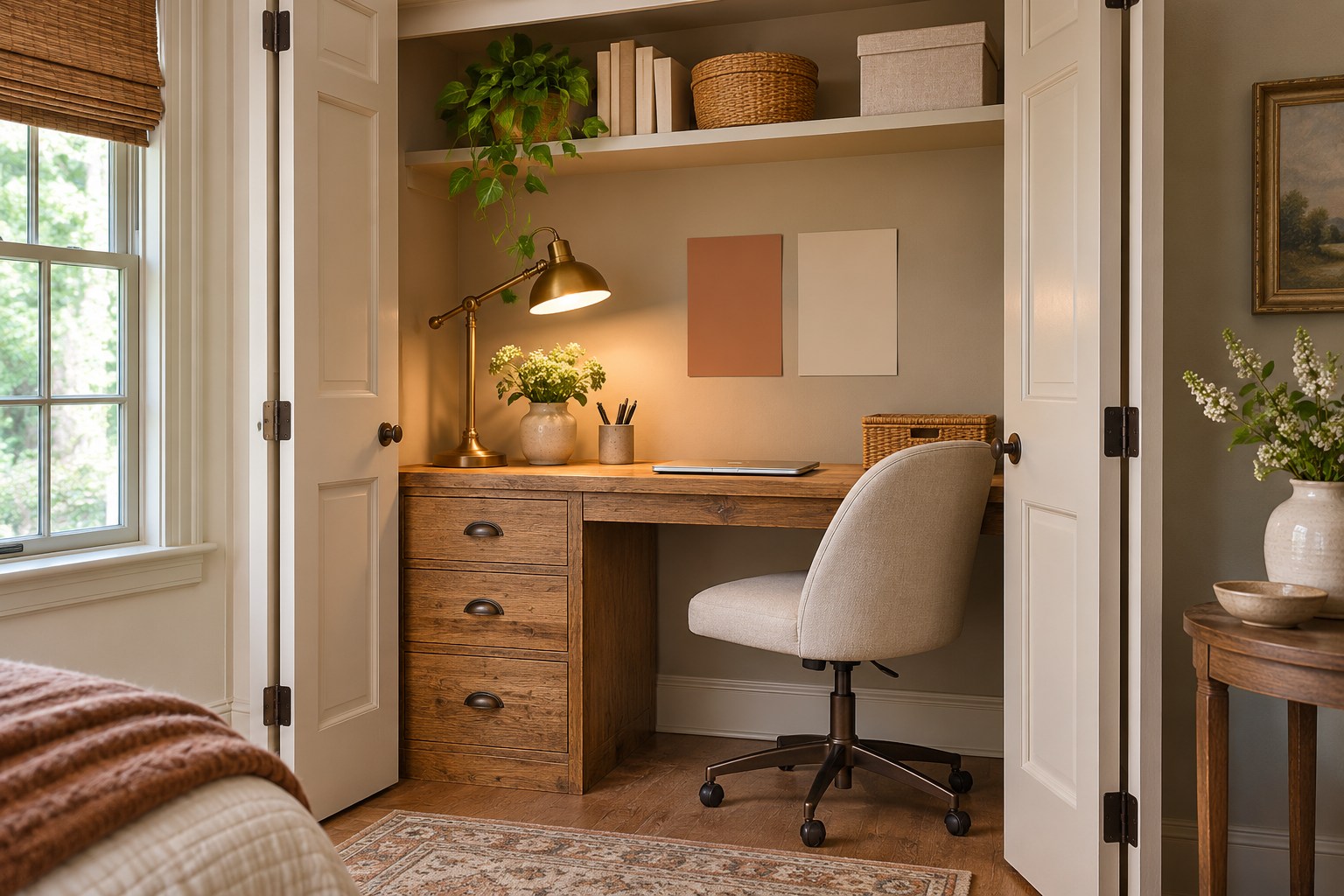
A paint sample can look clear in the bright room and surprisingly gray in the recess. Test two or three large samples on the closet’s back wall using the light you’ll work in. Stand in the larger room with the doors open and compare the samples with the trim and floor.
Try one sample close to the room’s color and one a little deeper. Use the one that frames the desk without making the far end feel visually heavy. If the colors change sharply after dark, check the lamp and wall together before committing to a paint.
13. Keep the Office Chair Out of the Door Lane
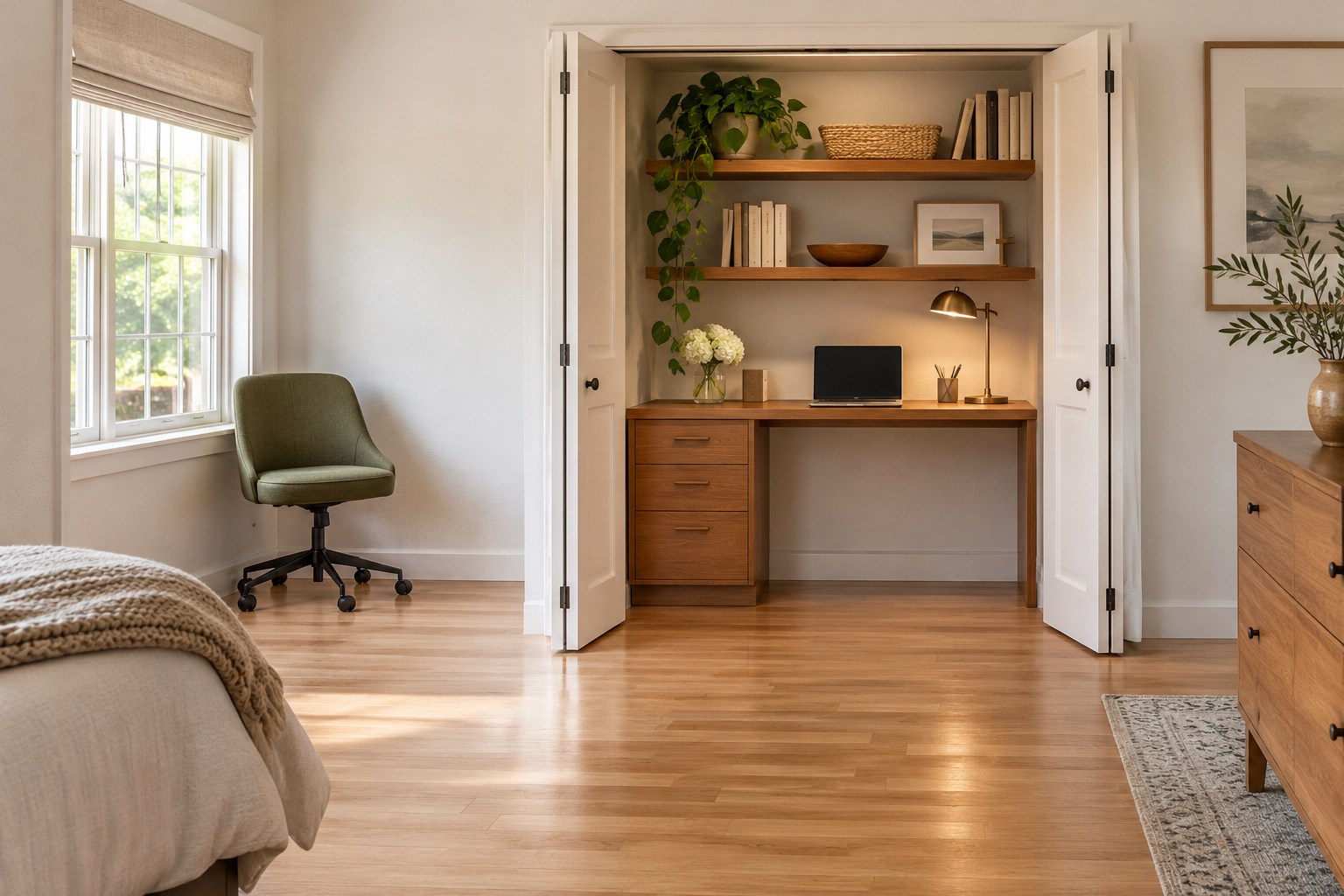
A low-backed chair may slide under the desk or park outside the closet. Test the actual height of the armrests and the widest part of the base. Leave a place for the chair that clears both door edges and the way people normally cross the room.
Move it through the full sequence you’ll use every day. If it’s difficult to roll across a rug, choose a different parking spot or revise the rug placement. The small home office guide has useful layout options when your only chair spot is outside the recess.
14. Leave a Dedicated Spot to Set Down a Laptop
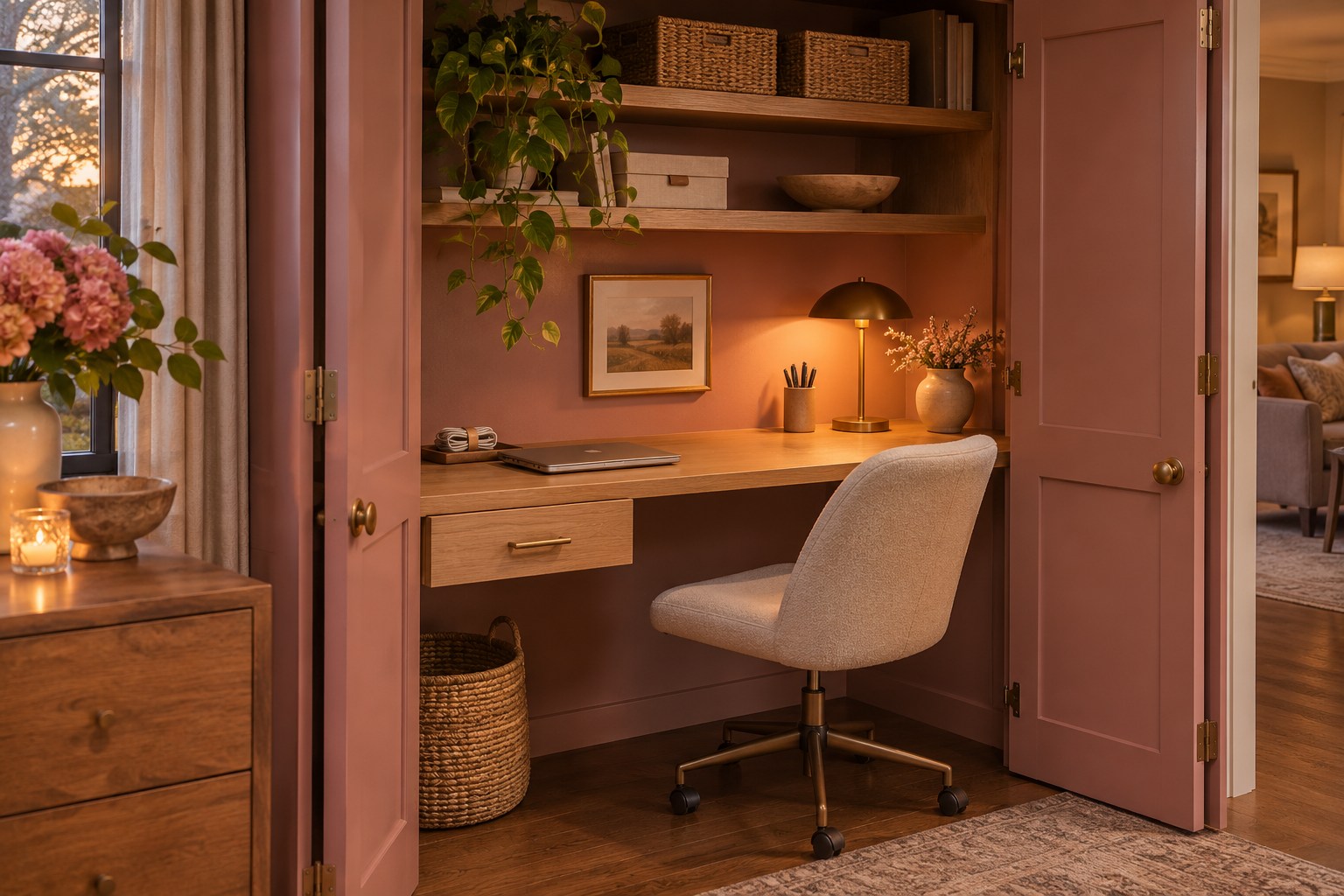
Clear the edge of the desktop nearest the entrance so you can set a closed laptop there as you arrive. Keep that area free of the lamp base and drawer hardware. Leave further room behind it for working, so the device can sit where you use it once you open it.
If you store the laptop elsewhere at night, plan its route along with its charging cord. A wall shelf or slim side drawer can hold a notebook or sleeve. It’s easier to close the doors when the one item that travels between rooms has an obvious place to land.
15. Keep Air Moving Around Your Equipment
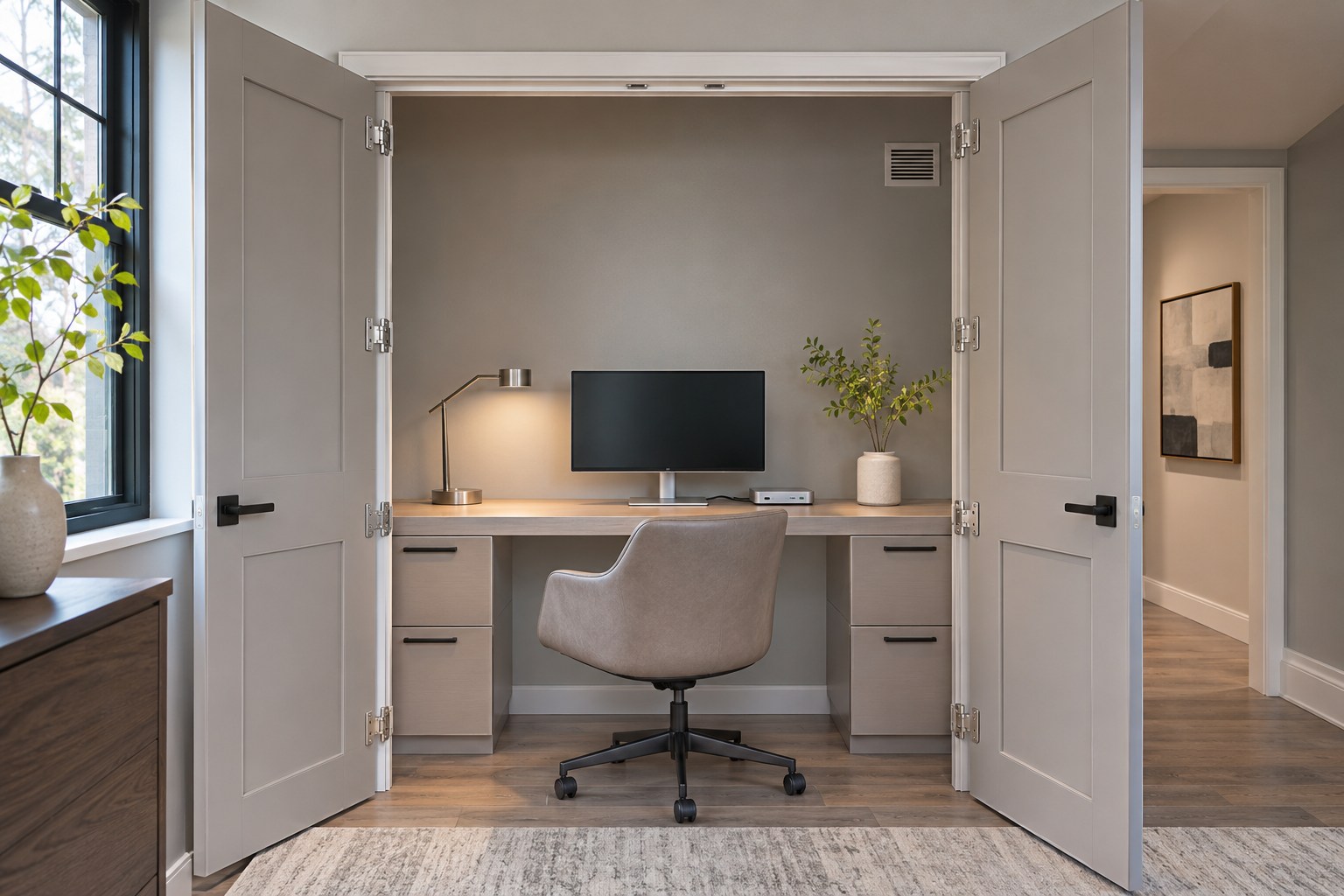
Take stock of which devices you’ll use and how they cool. Put a computer or dock on a firm surface and give it the open space its manufacturer calls for. Leave the doors open while you use the setup, especially if a device and a lamp share the small recess. Keep fabrics or bags away from ventilation openings.
Make the end-of-day routine suit the equipment. Power down or move any device that needs open ventilation if you plan to shut the doors. A visible shelf with space around the device is easier to keep clear than a tight bin of electronics and chargers.
16. Set Up for a Quick End-of-Day Close
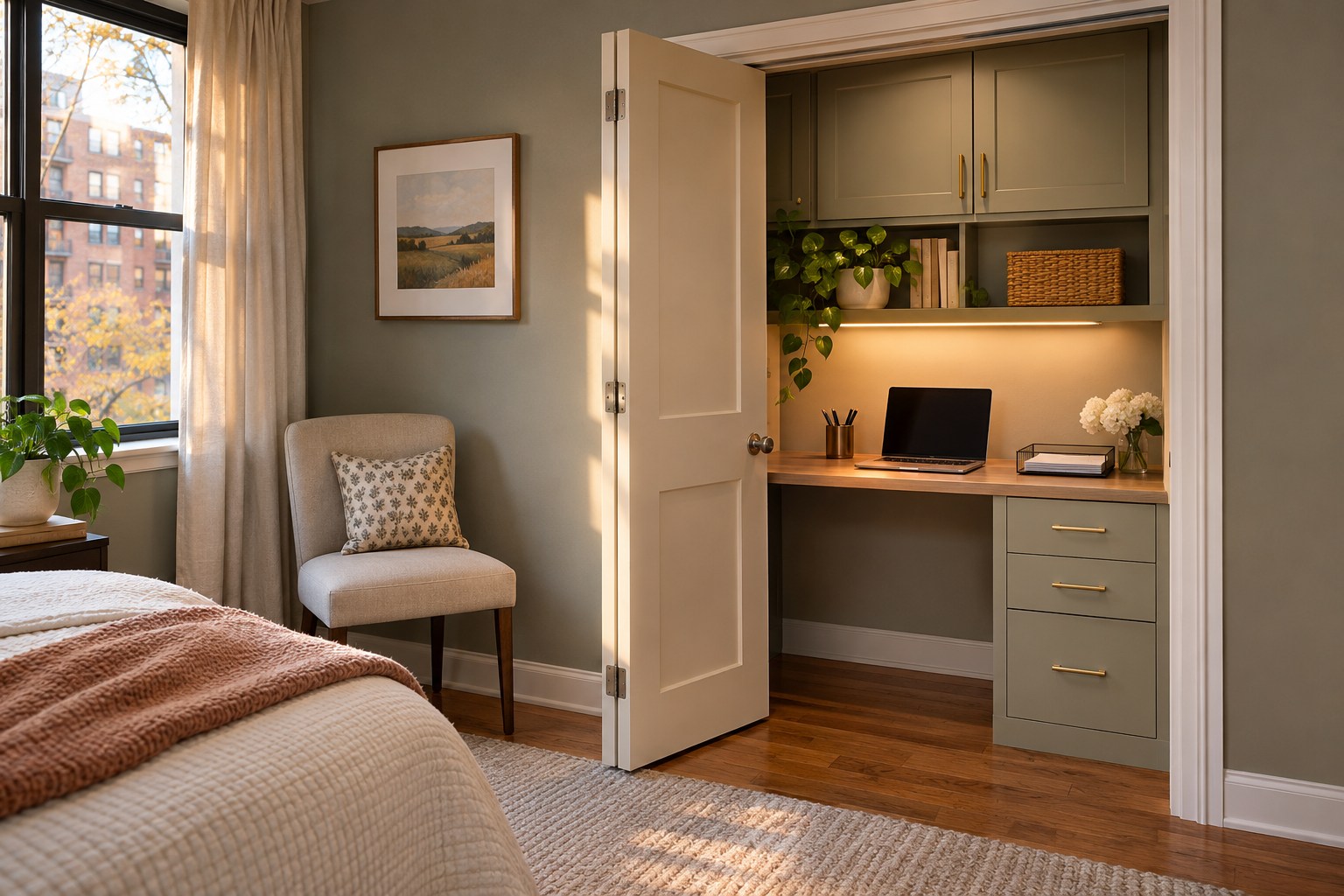
Decide what has to happen before you can close the doors. Put papers in a single tray, take the cup to the kitchen, and place the unplugged portable items where they belong. Keep the edge of the desk and the door path clear as you put things away.
Try the sequence once from start to finish. If you have to move three objects just to pull one drawer, give the objects a better home. A usable close is simple enough that you’ll still do it on a busy evening.
Pick an arrangement that feels sensible both while you’re working and after you’ve left the chair. The closet will earn its place when the setup is easy to use and the rest of the room is easy to return to.
Discover more from HomeTrendora
Subscribe to get the latest posts sent to your email.