If you have to turn sideways between the bed and dresser, even a bright bedroom can feel cramped. These 20 small bedroom ideas help you choose which layout change, window treatment, or furniture swap will give you the most usable room.
Start at the door and walk to the bed, closet, and window. Pay attention to where you slow down, then tackle that spot before changing the colors or buying a new piece.
1. Draw the Route From the Door to the Bed
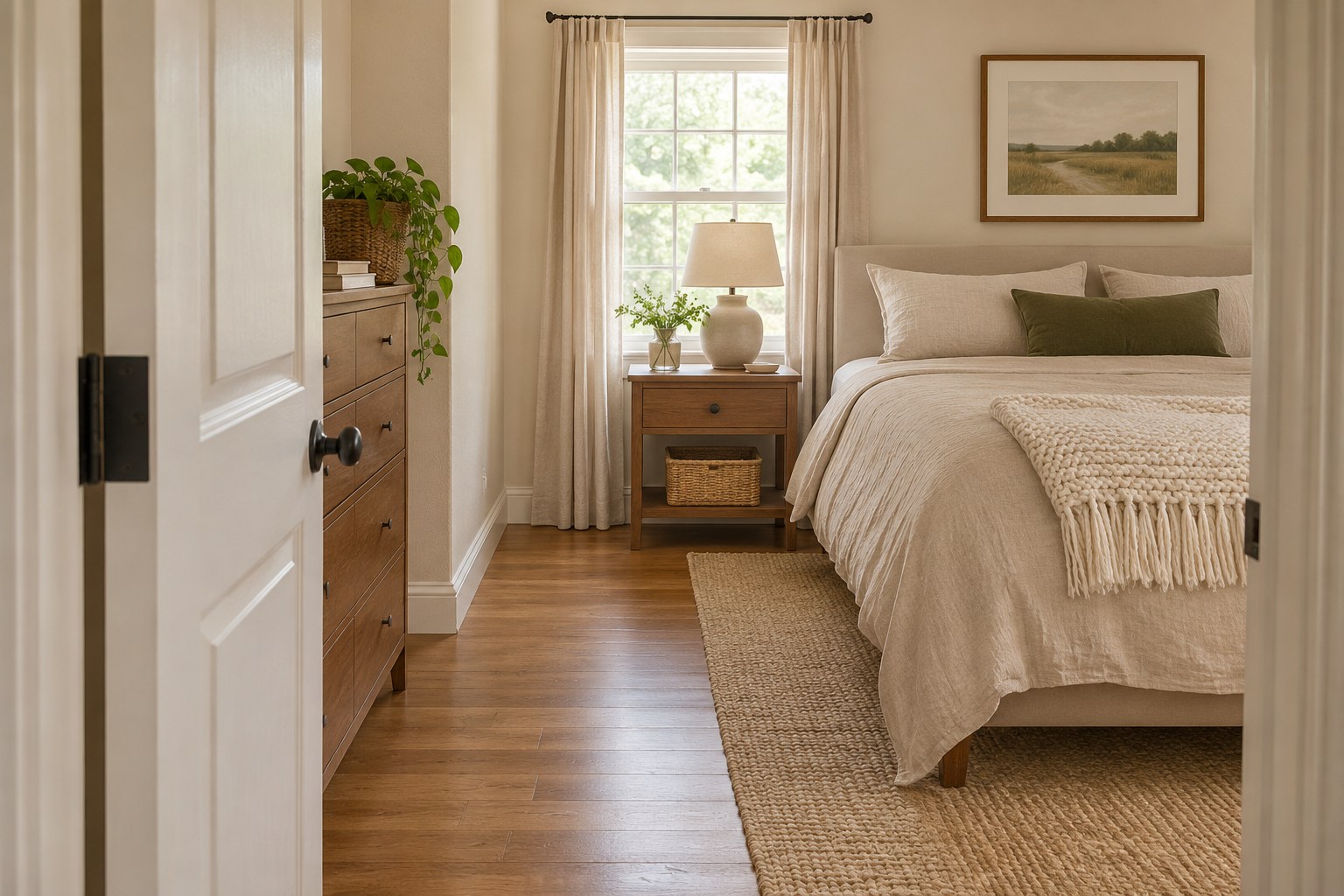
Stand in the doorway and trace the path you take when you come in with a laundry basket. Mark where the bed, a chair, or a table interrupts that route. On a sheet of paper, draw the room, then move paper cutouts of the furniture to see which arrangement opens up the longest stretch of floor.
Test your favorite arrangement with painter’s tape. Include space for the door to open and for you to use the closet. Check whether moving the bed would block a vent, window, or an outlet you need. A slight shift may clear the route without moving the largest piece across the room.
2. Measure the Frame Before Choosing the Mattress Size
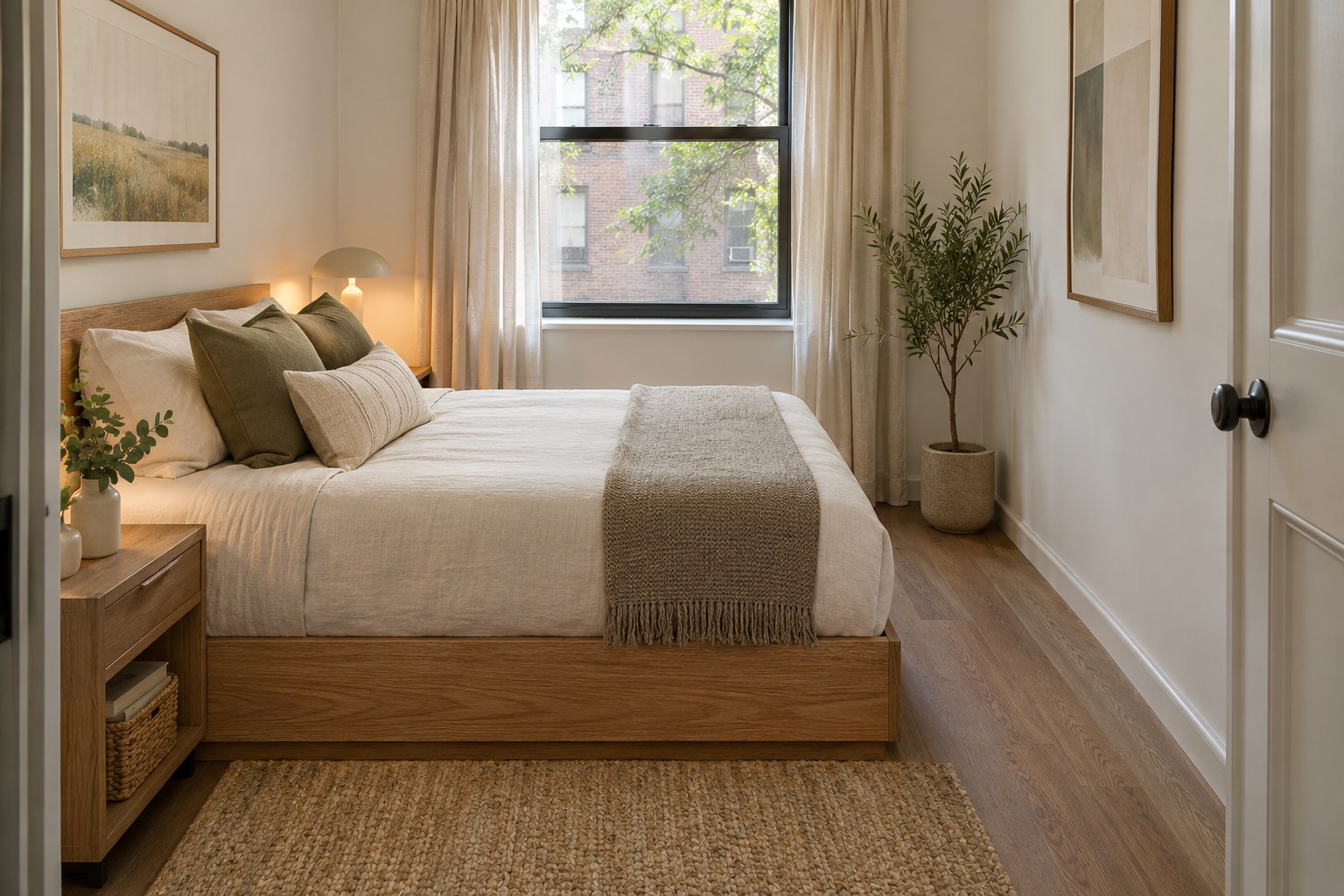
Compare the outside dimensions of the bed frames you’re considering. Two frames made for the same mattress can use different amounts of floor space. A thick upholstered side or projecting footboard may take up room where you turn at the foot of the bed. Mark each footprint and walk around it before choosing.
If you share the bed, have both people try getting in and out in the taped layout. Check that you can change the sheets and reach the window or closet. The best fit leaves room for those movements while giving you the mattress surface you want.
3. Let a Low Headboard Leave Wall in View
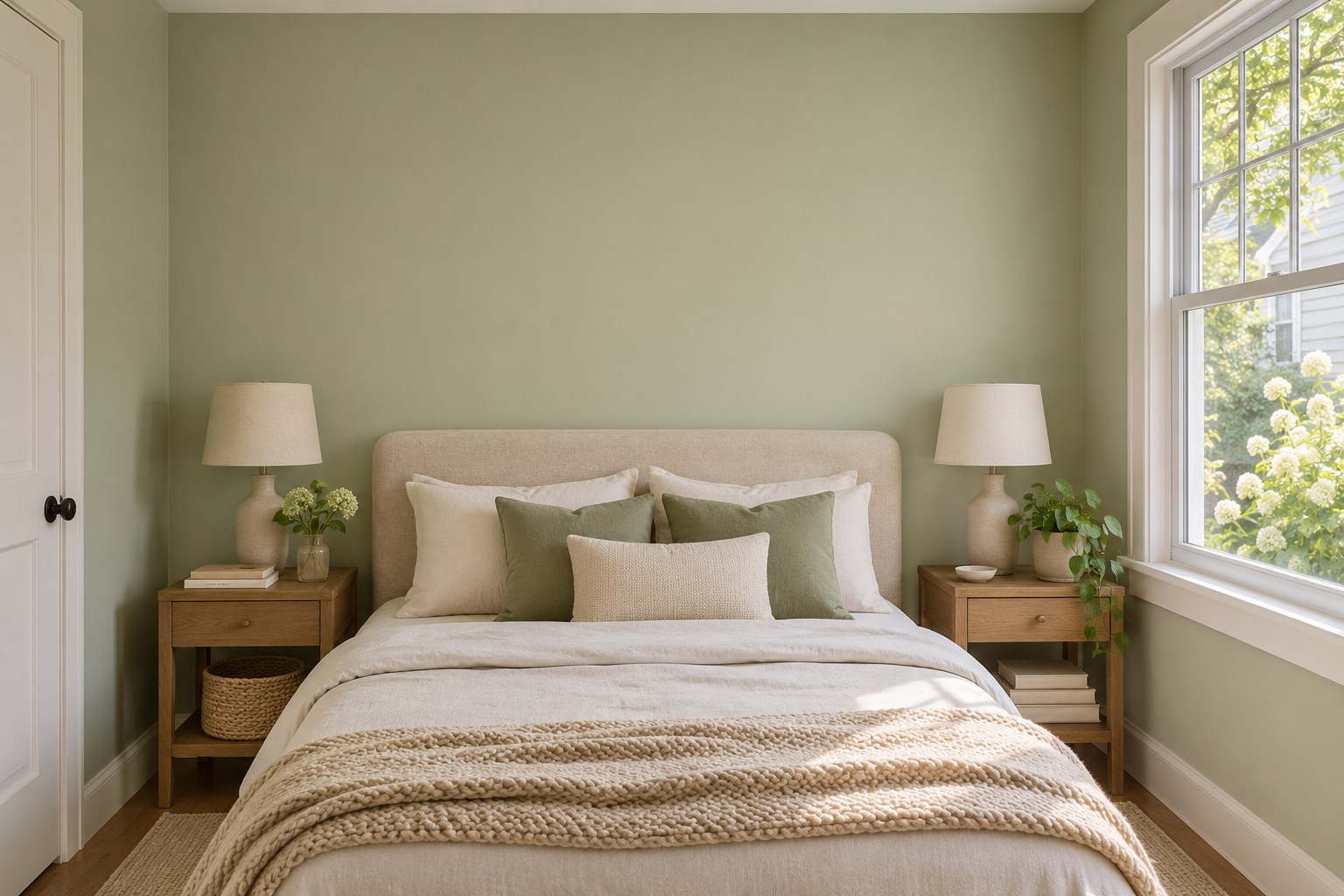
Use a low headboard where a tall shape would stop the eye at the bed. Look at how the top edge lines up with nearby trim, a window sill, or the bottom of a wall light. A low upholstered rectangle gives pillows a place to rest and leaves a broad piece of wall visible above.
If the bed must sit near a window, check how the window and its covering move. Keep required access clear and avoid a headboard that presses against the fabric. These ways to style the wall above your bed offer starting points for the wall you leave open.
4. Move Curtain Fabric Off the Glass
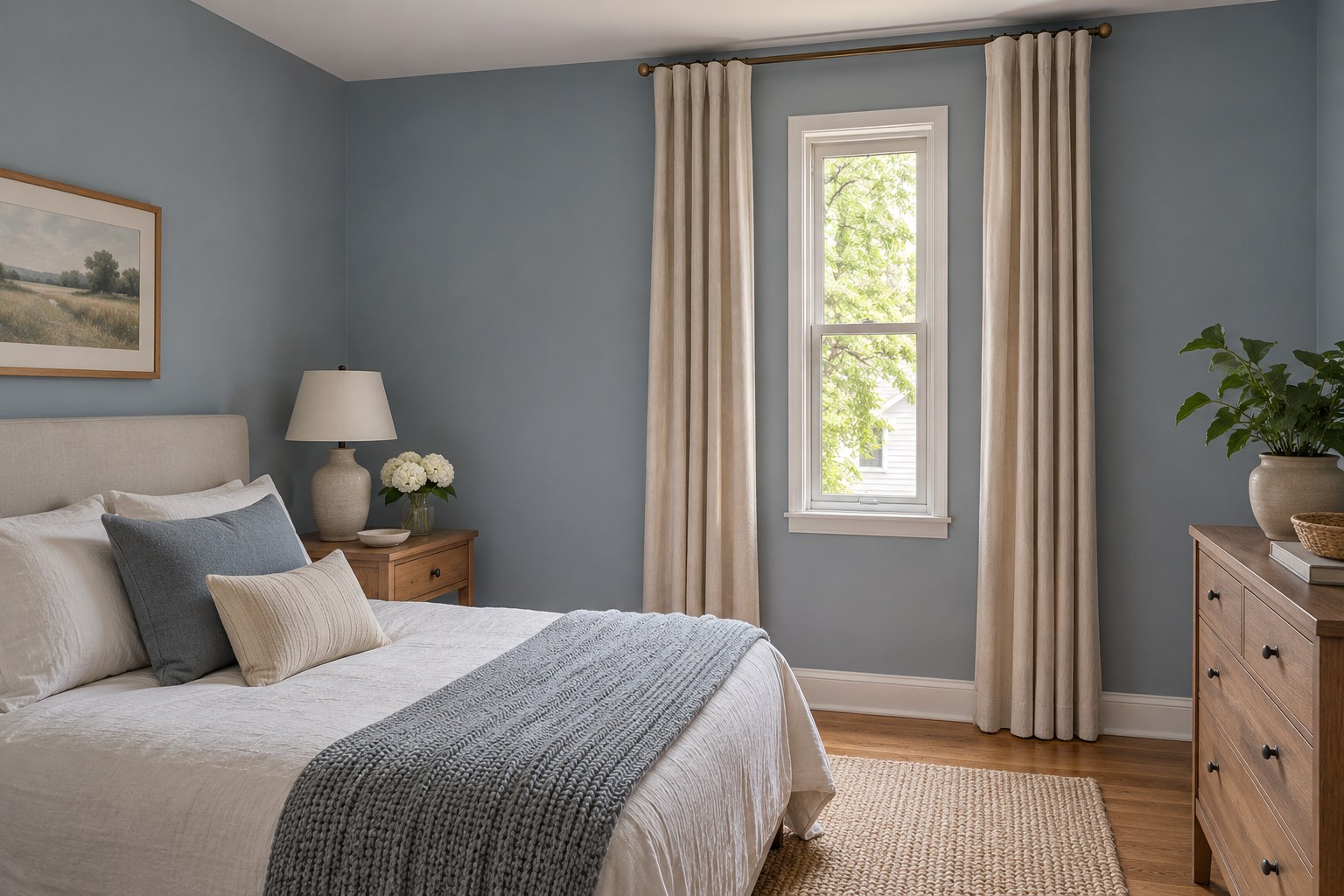
Look at the window with the curtains fully open. If a wide fold covers a pane, measure the wall beside the frame and see whether the curtains have room to stack farther out. A tall rod can draw the eye up where there is adequate wall above the window. Test the rod height and stack width together with tape before buying panels.
Choose a length that suits nearby furniture and keeps fabric clear of heaters and vents. If you have very little room to either side, consider a shade fitted for the window. Our modern bedroom curtain ideas show ways to combine daylight and privacy.
5. Give One Side of the Bed a Floating Nightstand
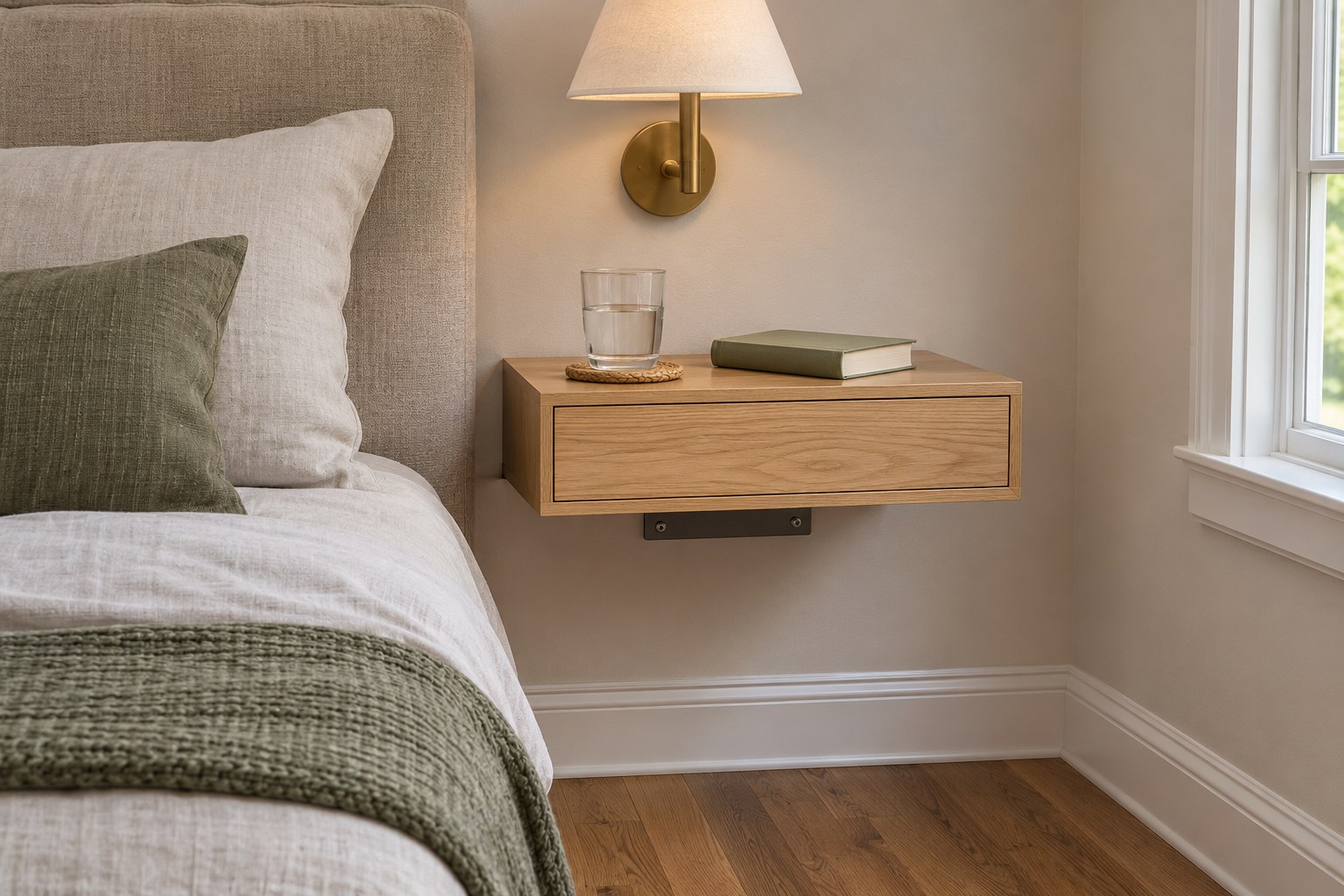
A small wall-mounted nightstand can preserve the view of the floor where a floor-standing table would interrupt it. Draw a rectangle on the wall and see how much surface you need for a glass, a book, and whatever you charge at night. Check that the shelf is easy to reach from the mattress.
Leave an open approach and choose a shallow depth if this is the side you walk past. Install a shelf and hardware suited to the wall and the expected load. If you rent or cannot mount a shelf securely, try a compact table with slim legs to leave a similar view underneath.
6. Aim the Mirror at a View You Want to Repeat
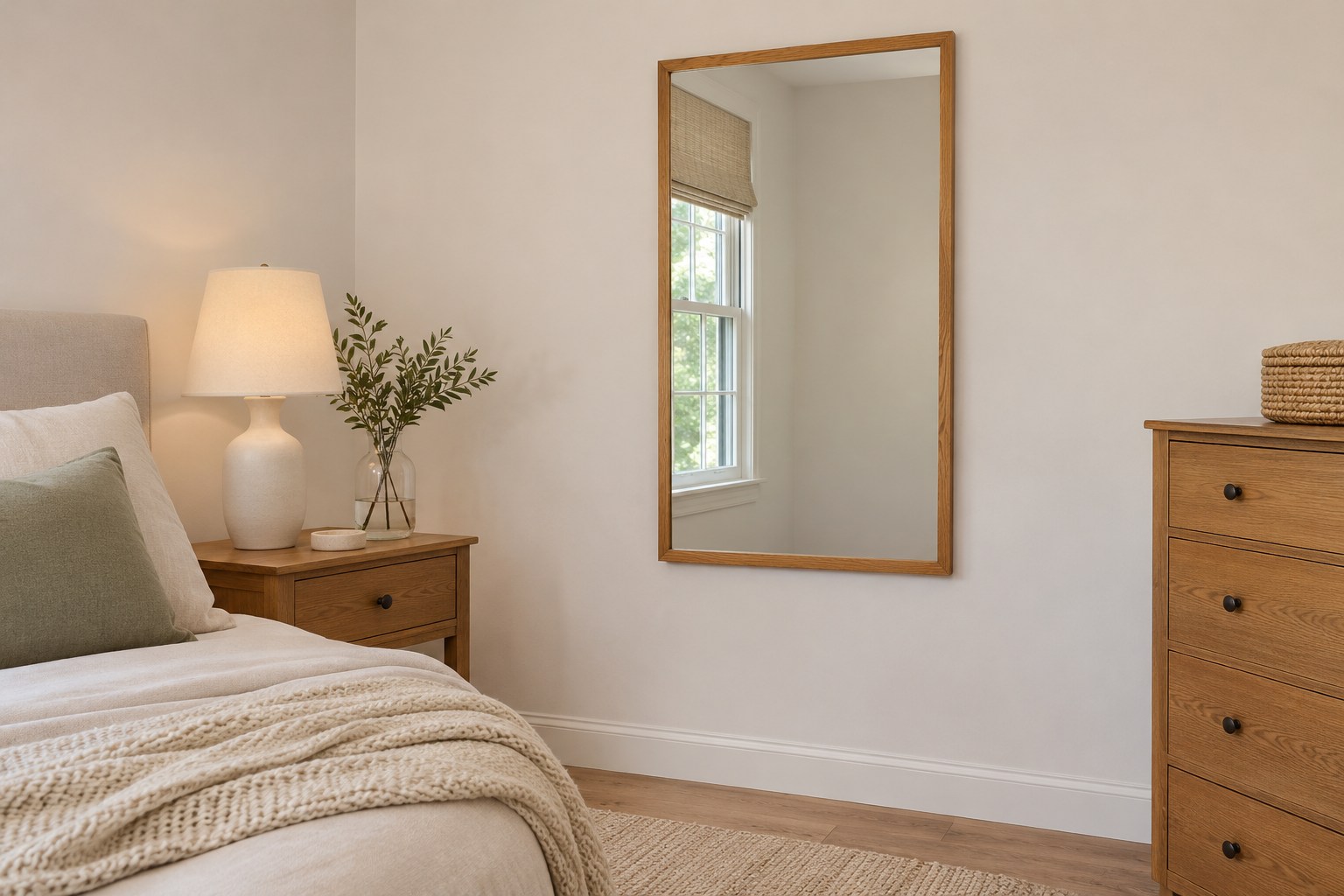
Before settling on a mirror position, look at what it will show from the doorway and from the pillow. A view of an open window, a quiet side wall, or an empty corner can make the room feel deeper. A reflection of a bright bulb may be distracting when you’re in bed.
Try the angle with a small handheld mirror, then use a paper outline to test the larger size. Position the mirror to keep doors and drawers free to move and follow its mounting or anchoring instructions. A slim frame that repeats the trim color can keep attention on the reflection.
7. Choose One Palette That Connects the Largest Surfaces
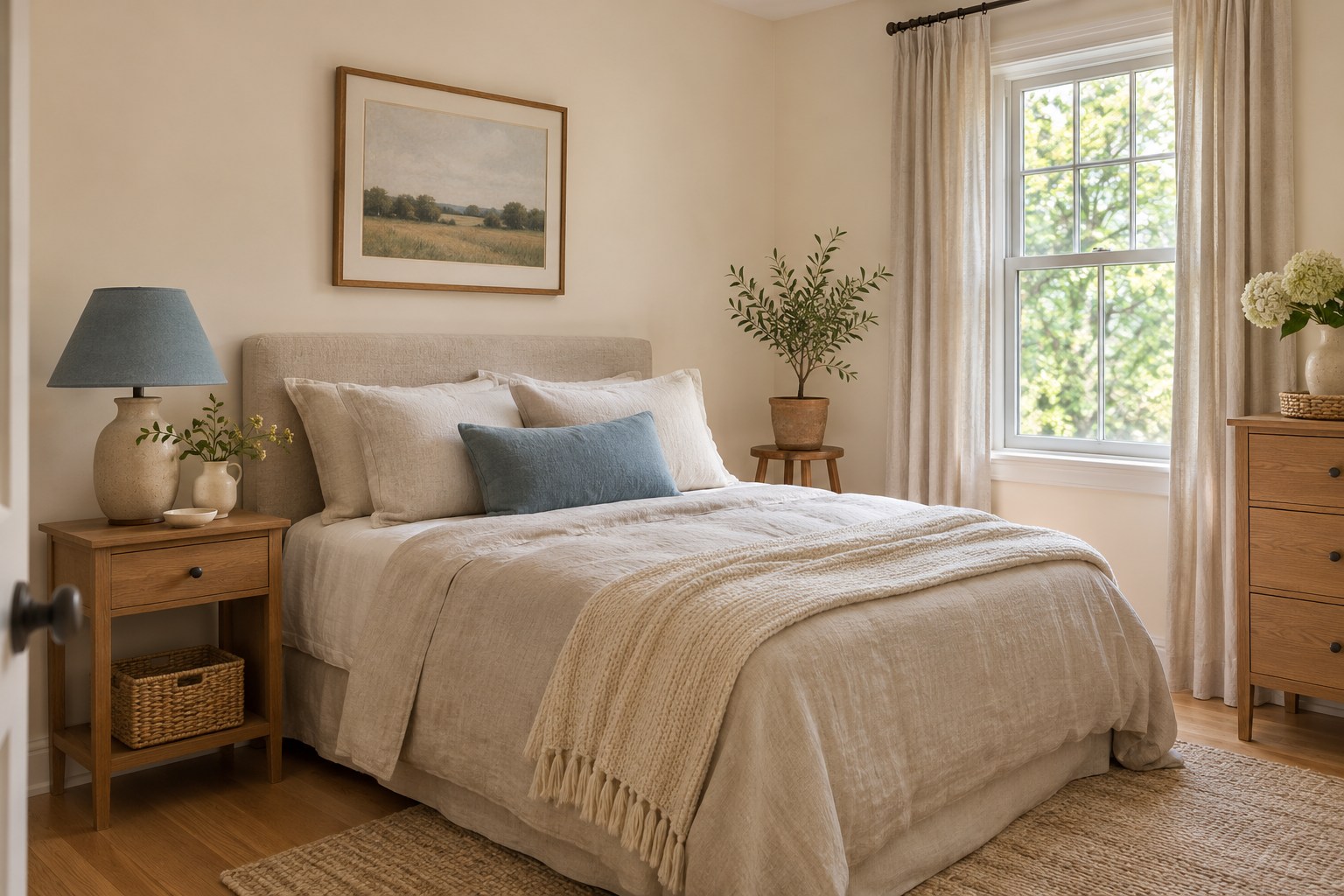
Lay a sample of the wall color beside the bedspread and floor. Those surfaces take up much of the view, so a relationship among their colors matters more than matching small accessories. Try a warm off-white beside warm oak or a pale blue-gray beside a cooler floor. Look at the samples when the room receives daylight and again with the bedside light on.
Choose one accent that can travel across two small details, such as a cushion and a shade. The repetition will be easier to see if the curtains and duvet stay quieter. These whole-house paint color ideas can help you connect the bedroom to the hallway.
8. Give One Narrow Wall the Vertical Accent
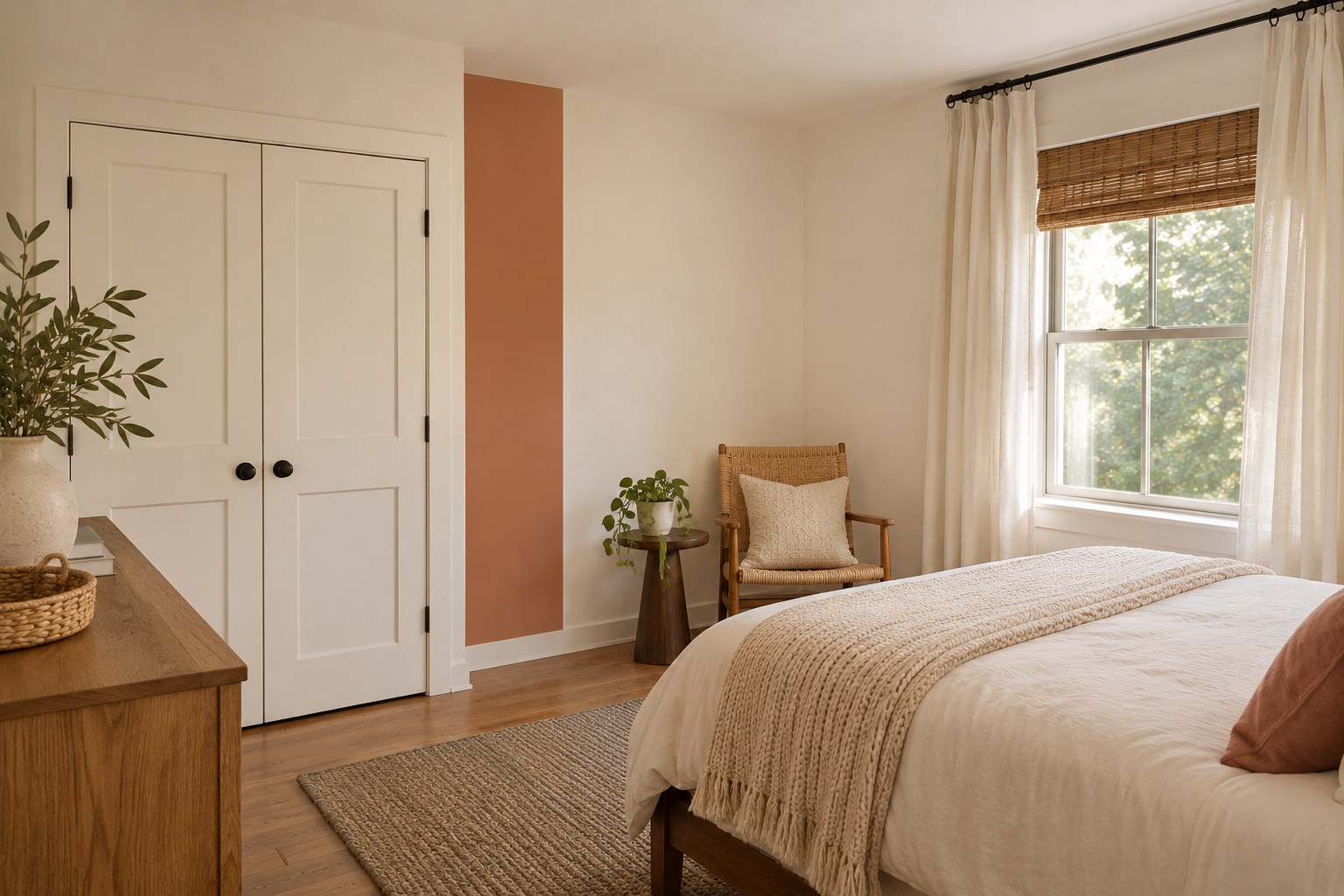
Find a narrow wall that already looks taller than it is wide. A single long piece of art, a tall textile, or a softly contrasting painted strip can bring attention to that height. Try a paper template to see how it looks from the door. Use the wall that has some empty space around it, so the detail remains legible.
If the tall area is next to the closet, leave room for the door edge and handle. Choose a flat treatment where people pass close to the wall. A painted strip can carry the vertical effect without a shelf or stand that takes up floor space.
9. Place One Piece of Art Where the Eye Can Rest
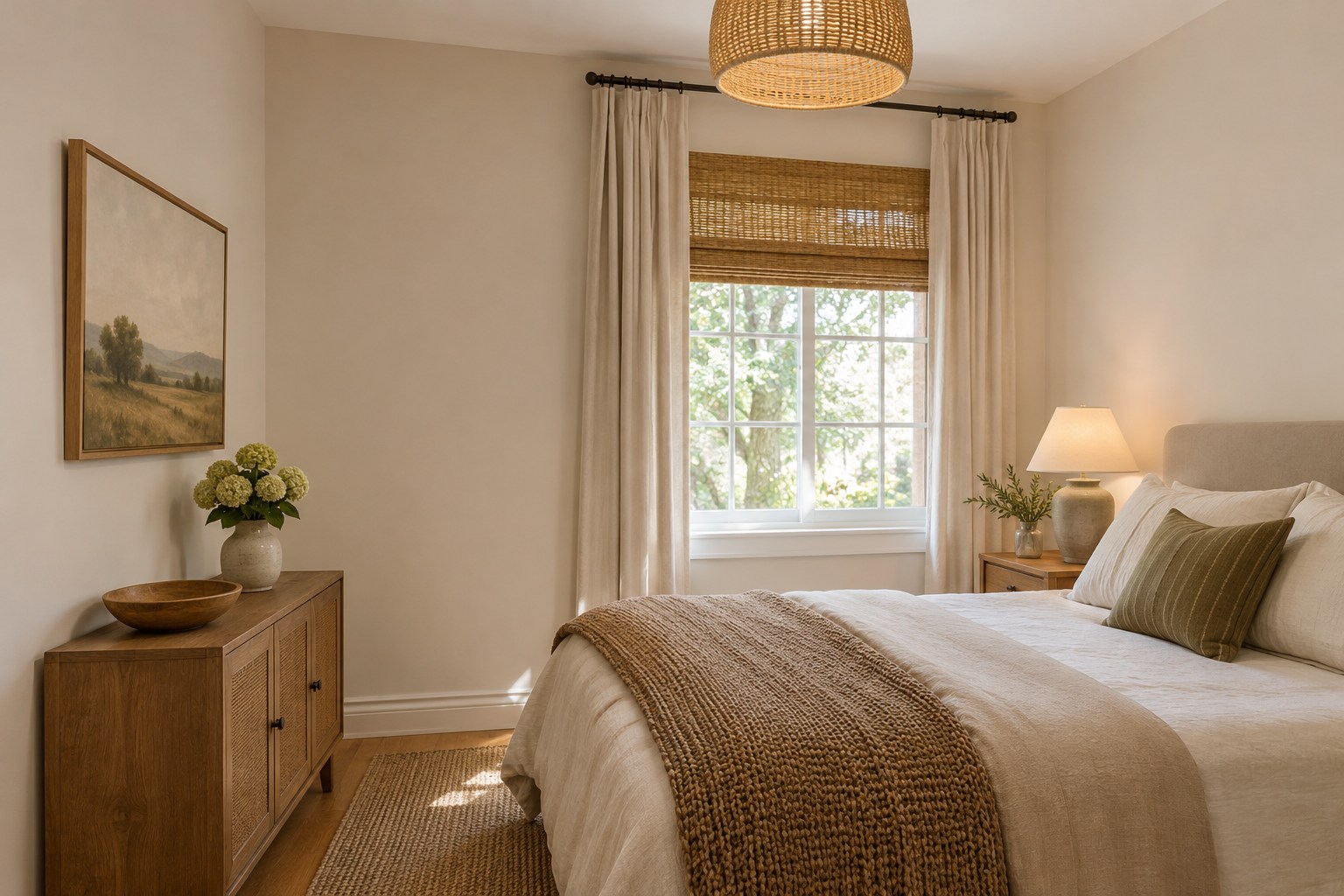
Look at the wall from the doorway and pick the part you notice after seeing the bed. That may be a short wall opposite the window or a blank patch above a low cabinet. A single frame with space on both sides can look more deliberate than several smaller pieces spread around the room.
Cut a sheet of paper to the size of the frame and compare two heights. You want it to relate to what is below it and to stay clear of moving doors or curtain panels. Follow the frame’s mounting directions. A quiet print can stay in place when the textiles change seasonally.
10. Put the Reading Light on the Wall
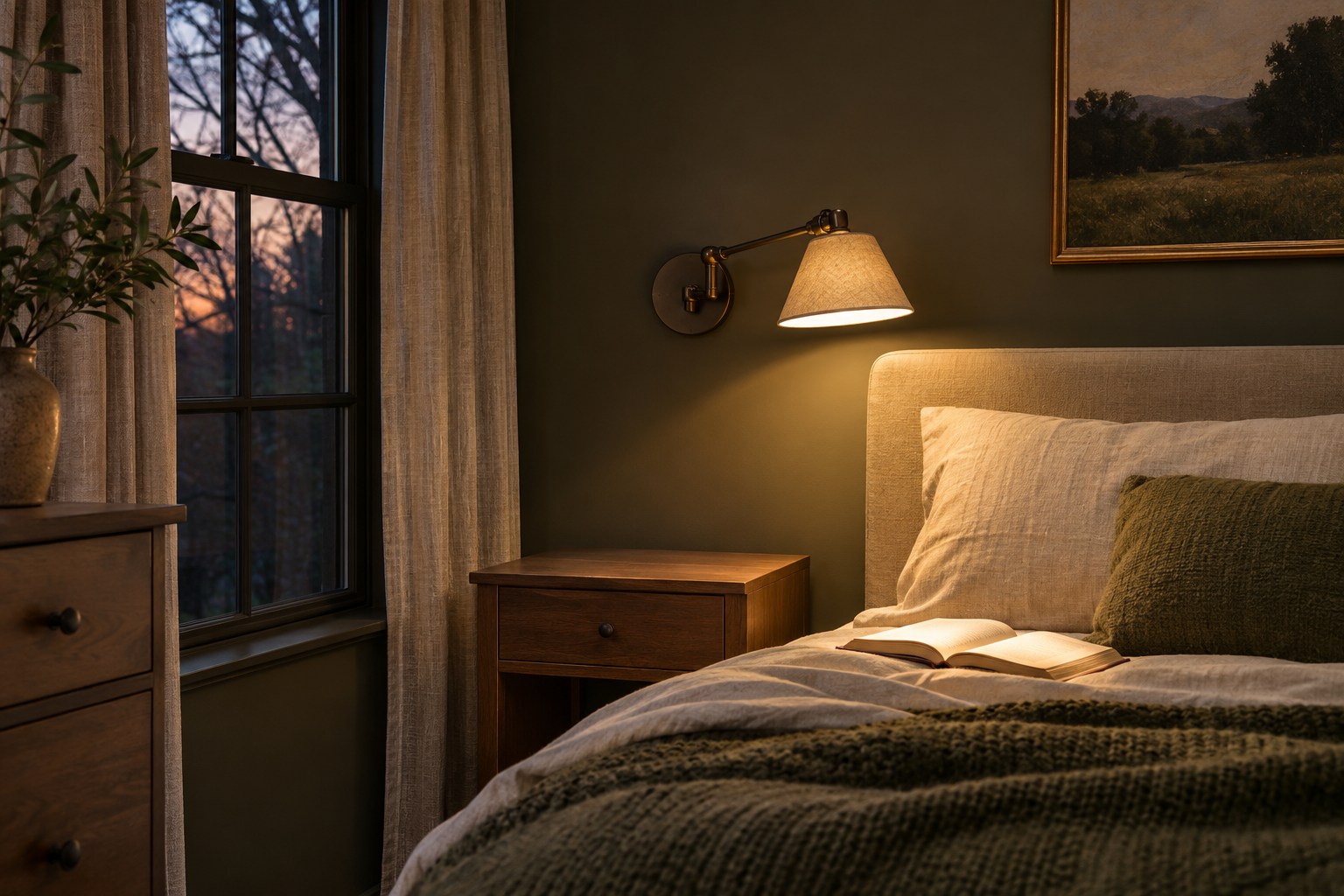
Find where the light needs to fall when you sit up with a book. A wall fixture can keep the nightstand top available for your water and phone. Test the position with a temporary lamp held near the wall and see whether the beam reaches the page without catching the other sleeper’s eyes.
If you choose a plug-in fixture, plan the route to the outlet so the cord stays out of the path and away from the bedding. Follow the fixture instructions and consult an electrician for new hardwired work. A shade or adjustable head can help direct the light where you need it.
11. Put Seasonal Clothes Under the Bed
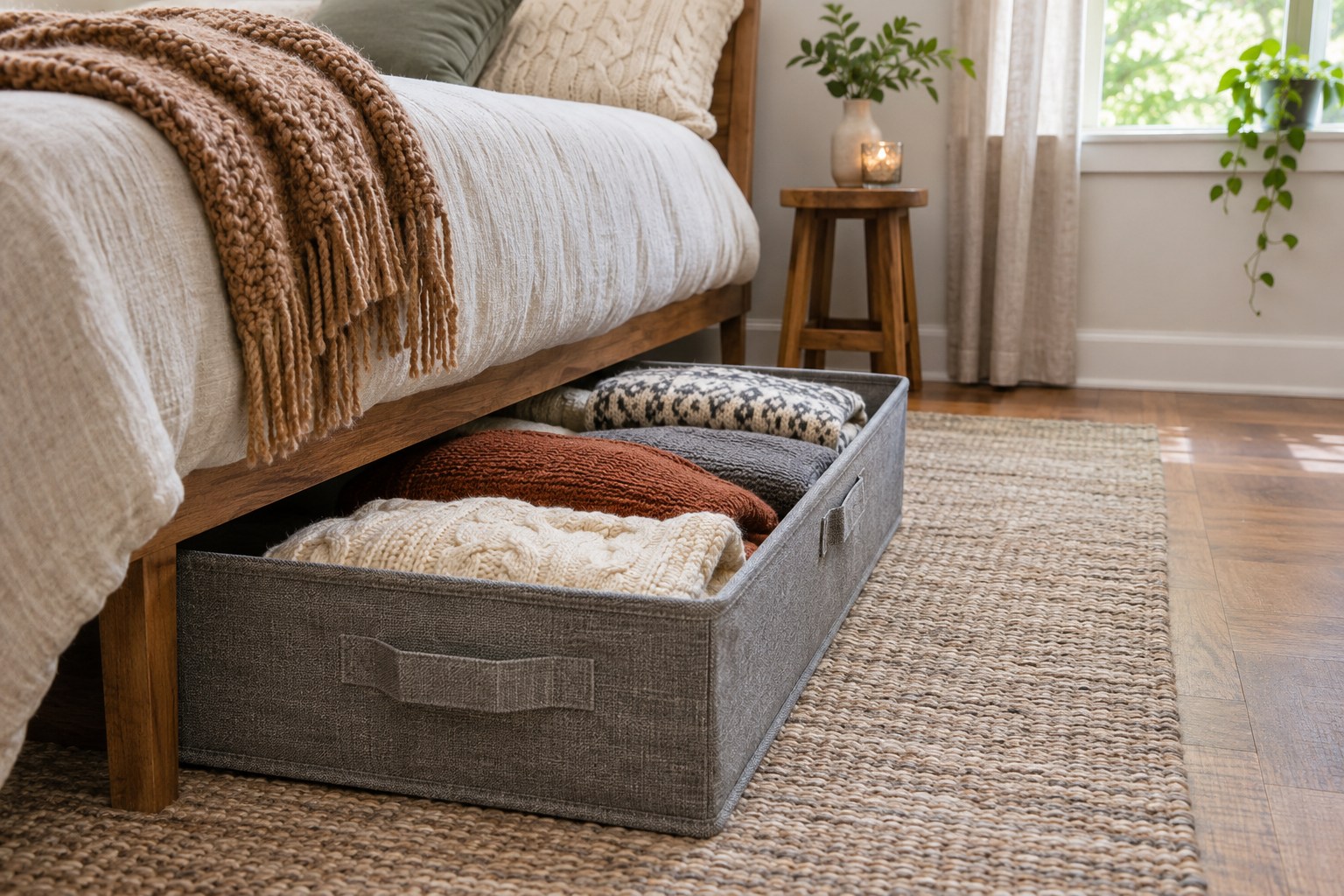
Gather clean, dry pieces you can take out of the weekly rotation. Put a light summer wardrobe in one container or group winter sweaters by use so you can retrieve them together. This works best when moving seasonal clothes gives you room to remove a piece of furniture or lets a shallow dresser replace a deep one.
Measure from the floor to the lowest frame rail, support, or hardware the container would pass under. Mark its footprint on the accessible side and test pulling a cardboard cutout all the way into the room. Look at the route again with the bedroom door open and the usual furniture in place.
The storageLAB low-profile under-bed storage containers comes as a two-pack. Use one container for the pieces you’ll need first, then check that both slide freely under the bed without catching on the frame.
See details for storageLAB low-profile under-bed storage containers (paid link)
12. Use a Daybed Where the Room Changes Jobs
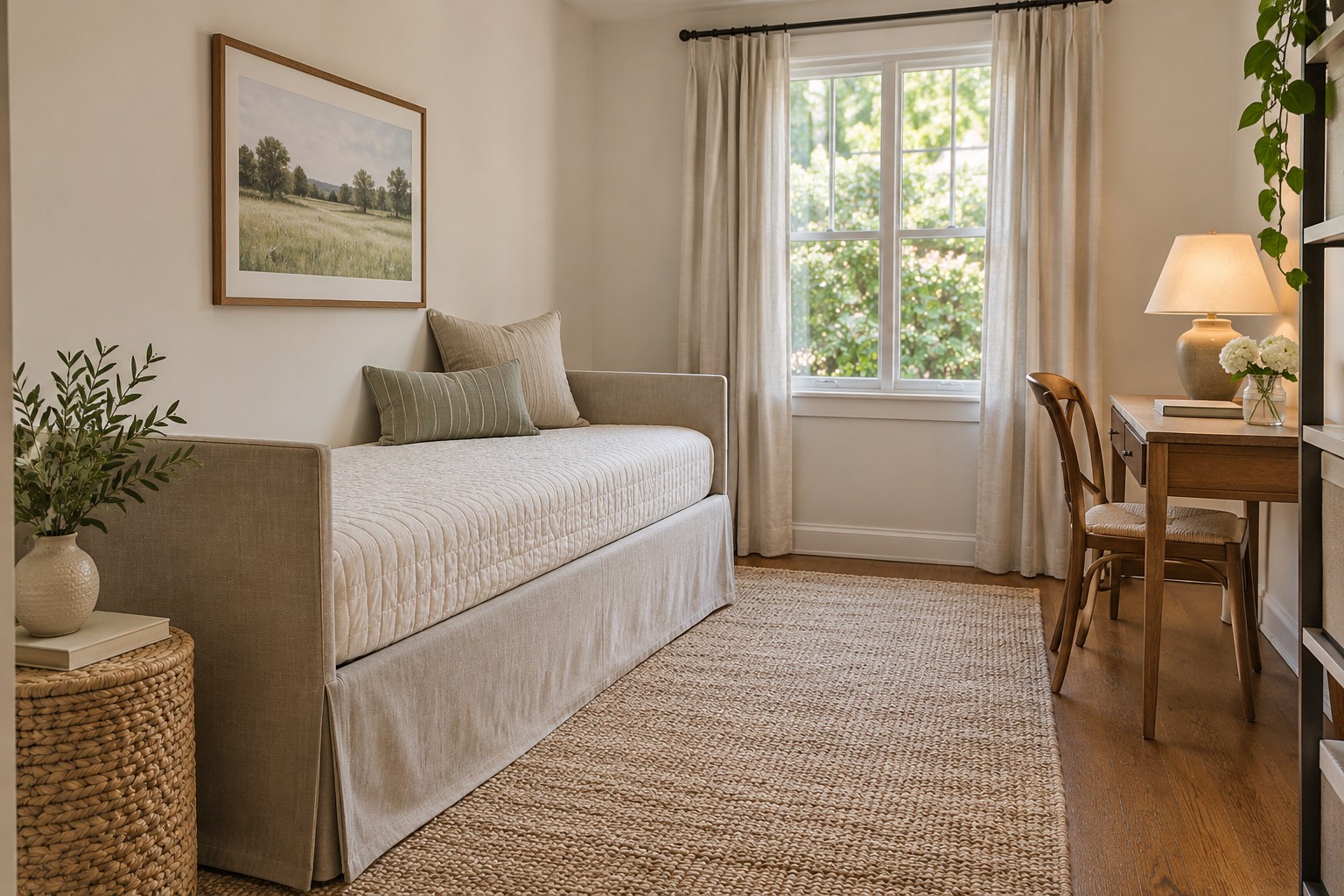
A daybed can line the long wall of a guest room that is also used for reading or work. Place its back against the wall and keep the front clear enough to sit down during the day. Check the frame’s outside dimensions and see how far any extra mattress or trundle would extend before buying.
Keep the bedding simple so the change from seat to bed takes only a few minutes. Store spare pillows somewhere easy to reach. If the room also needs a place to sit away from the bed, borrow a compact layout from these bedroom nook ideas.
13. Carry One Wall Color Across the Closet Doors
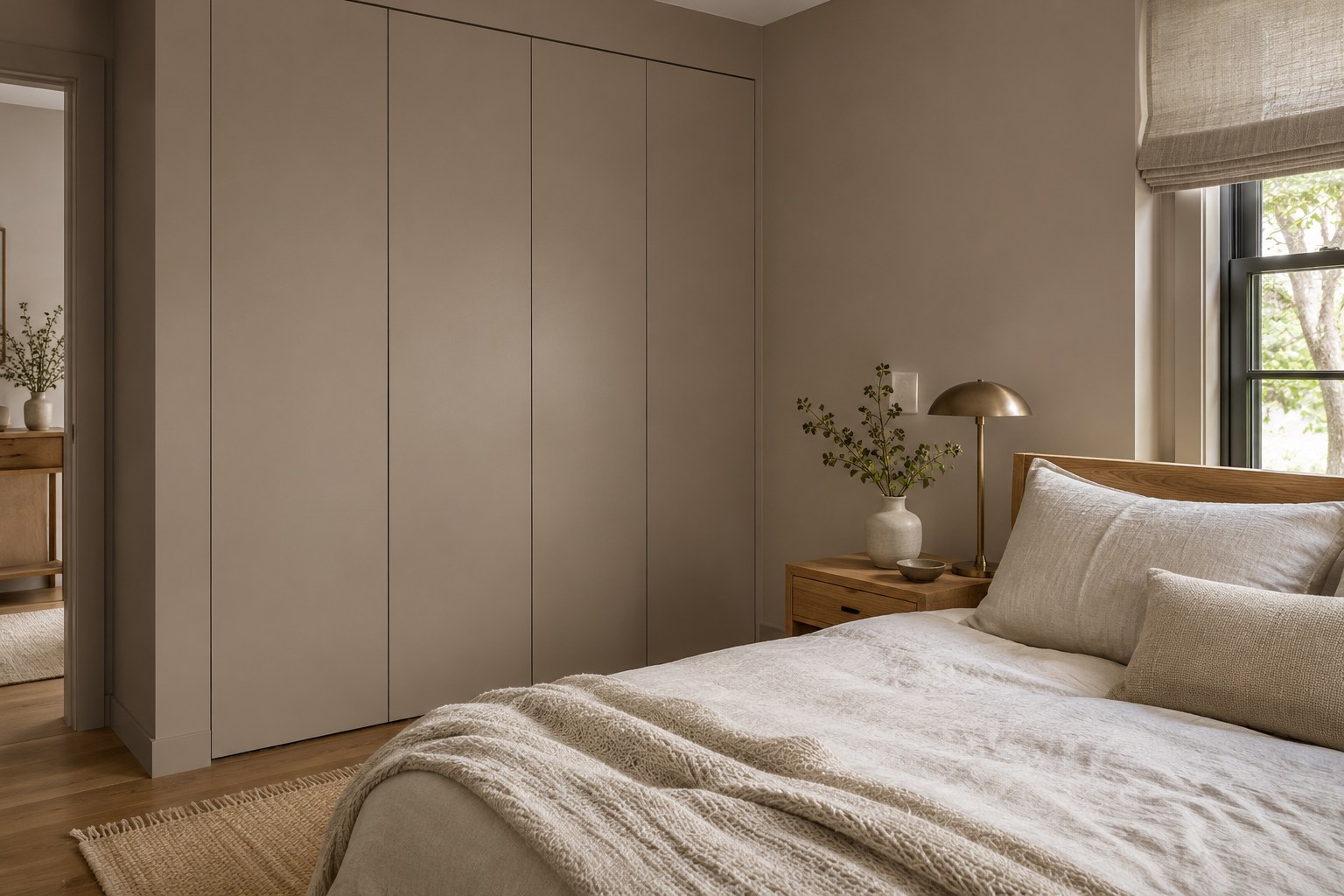
Paint a bank of closet doors in the wall color if their edges are cutting the room into several strong blocks. Start with a sample on the door and another on the wall. A smoother door or a different sheen can make the same shade appear lighter, so compare both surfaces from the doorway before committing.
Use a finish and preparation method suited to the door material. Keep hardware visible enough to find and easy to grip. If the room still feels flat, bring in variation with linen, warm wood, or a low patterned rug. The wall and doors can read as one plane while those surfaces supply the texture.
14. Put One Plant Where the Window Still Works
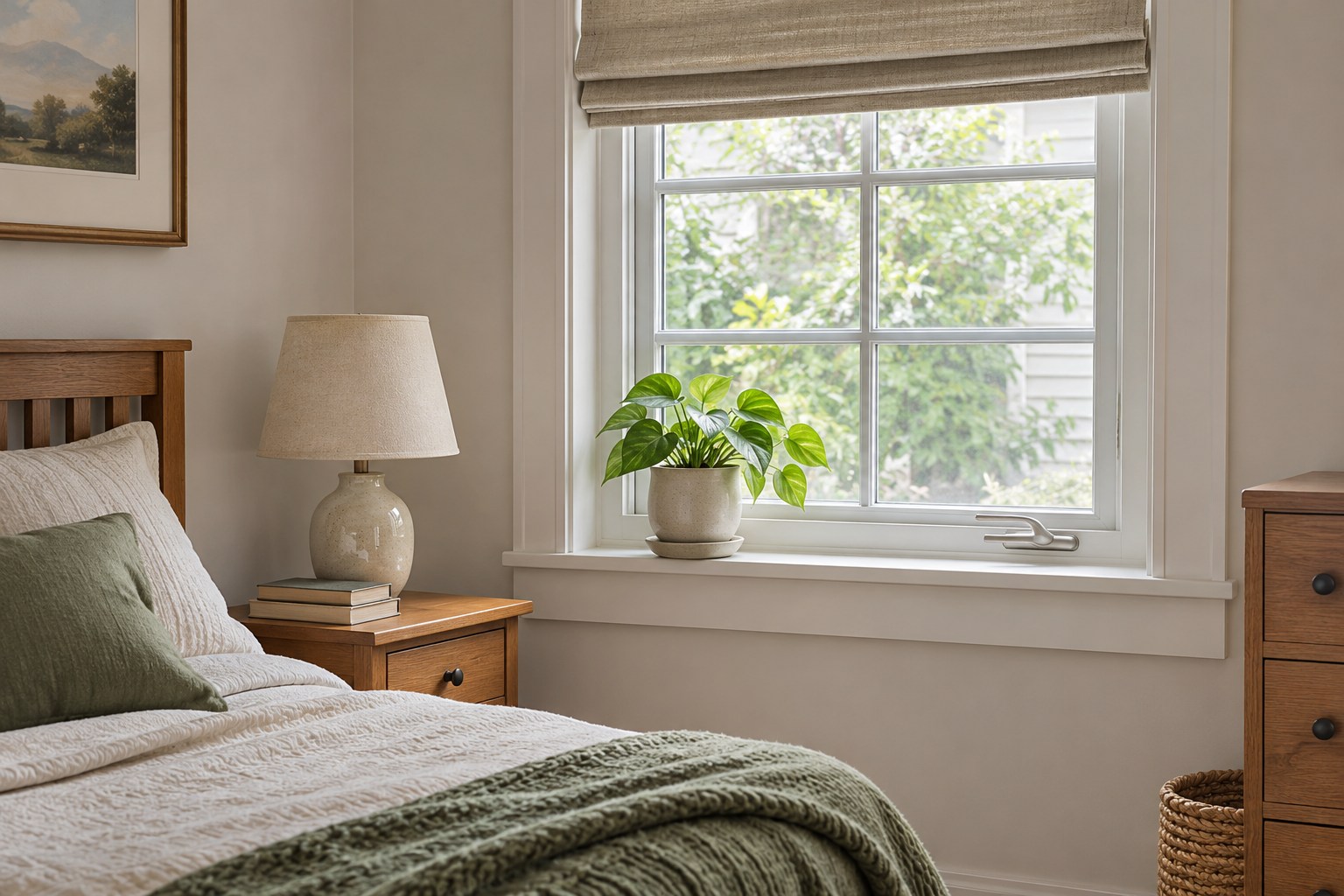
Choose a plant for the light the room actually gets. A small plant on a stable surface can make the window area feel lived in without taking up room for a floor pot. Check that the leaves leave space to open the sash, move the covering, and reach the handle.
Use a tray or an outer pot that keeps water off the surface, and leave room to lift the plant for care. If the only bright spot is also where you open the window or set down essentials, a stem in a small vase elsewhere can provide color with less bulk.
15. Let the Rug Join the Bed and the Walking Area
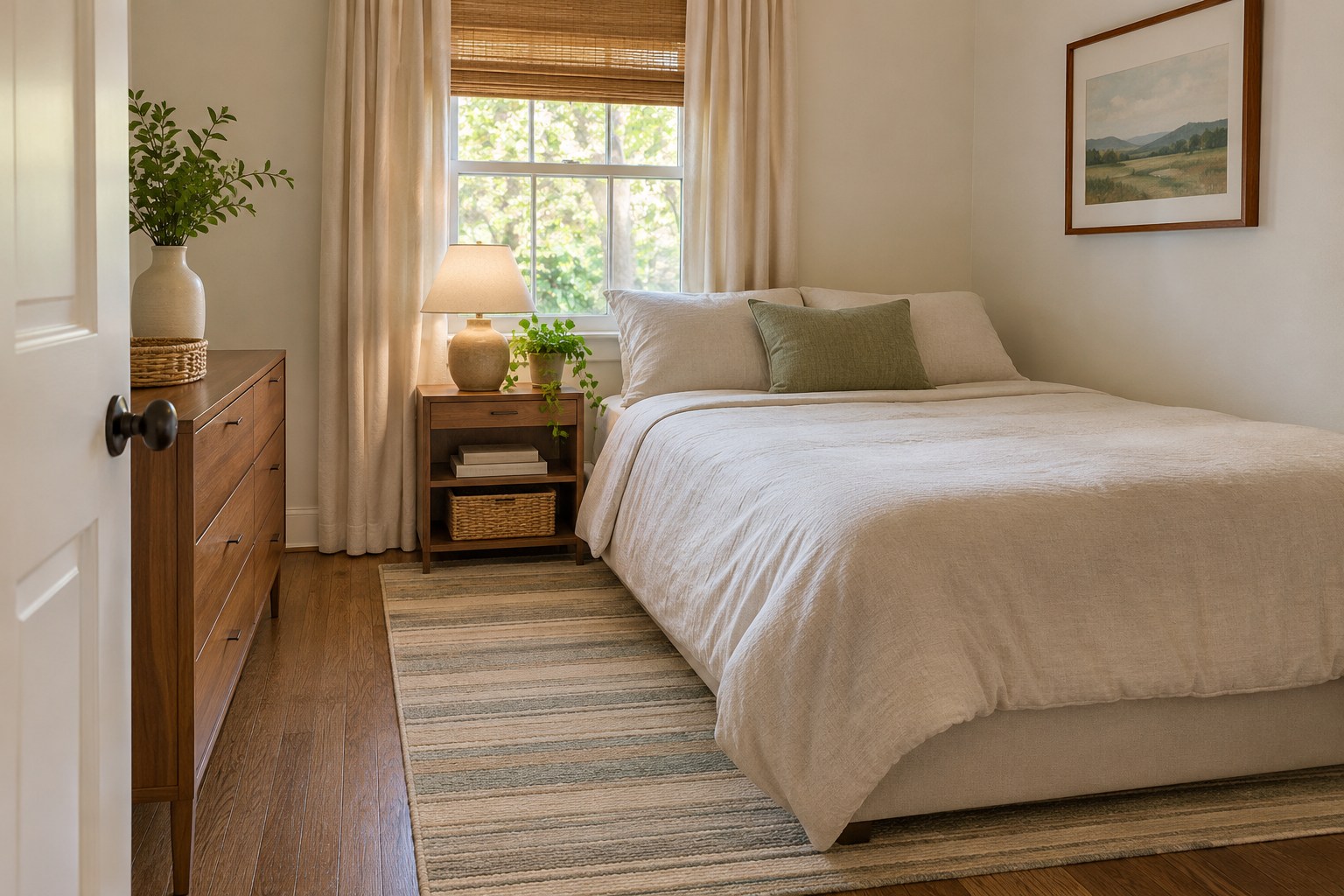
Put painter’s tape on the floor where the rug edges would fall. A rug tucked partly under the bed can bring the sleeping area and its walkway together. Test the edges with the door open, and check that a dresser or storage drawer still has room to operate.
Notice where your feet land when you get out of bed. If one side is too narrow for a loose edge and the other has room, use a lower-profile rug or move the rug so the edge sits outside the main turning spot. Pick a pad suited to the rug and floor when the rug maker calls for one.
16. Try a Writing Surface at the End of a Wall
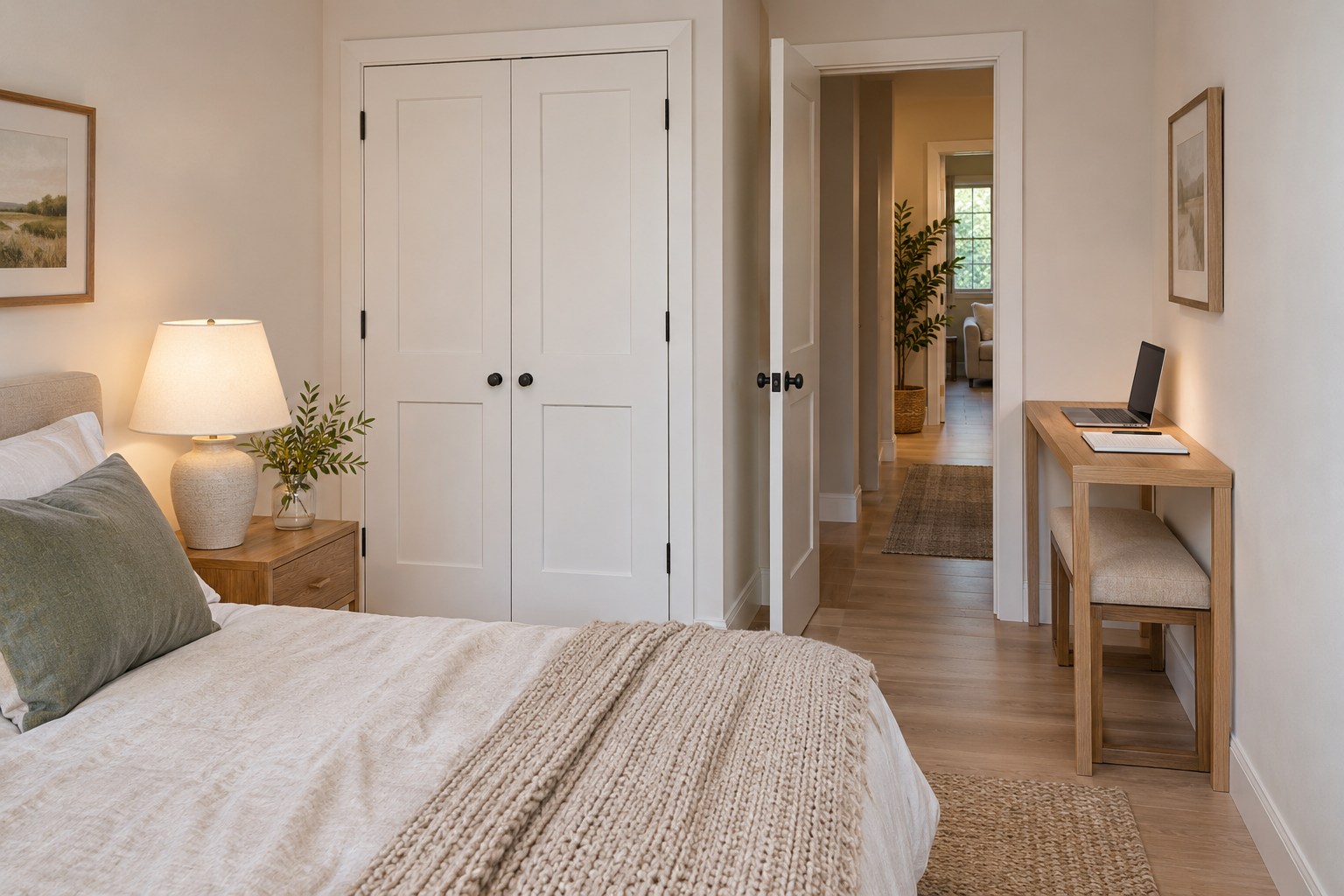
Look for a short stretch of wall away from the door’s swing. A writing table or vanity with a shallow top can fit there if the chair tucks underneath and you can still reach a window or closet. Sit at a table of similar depth before buying, especially if you need to place both a laptop and a notebook on it.
Check the space behind the seat while someone is using it. If the chair closes the route to the bed, turn the desk to face a different wall or choose a shorter surface. Leave one place for papers or makeup so you can clear the top after use.
17. Use the Ceiling as the Room’s Only Big Color Shift
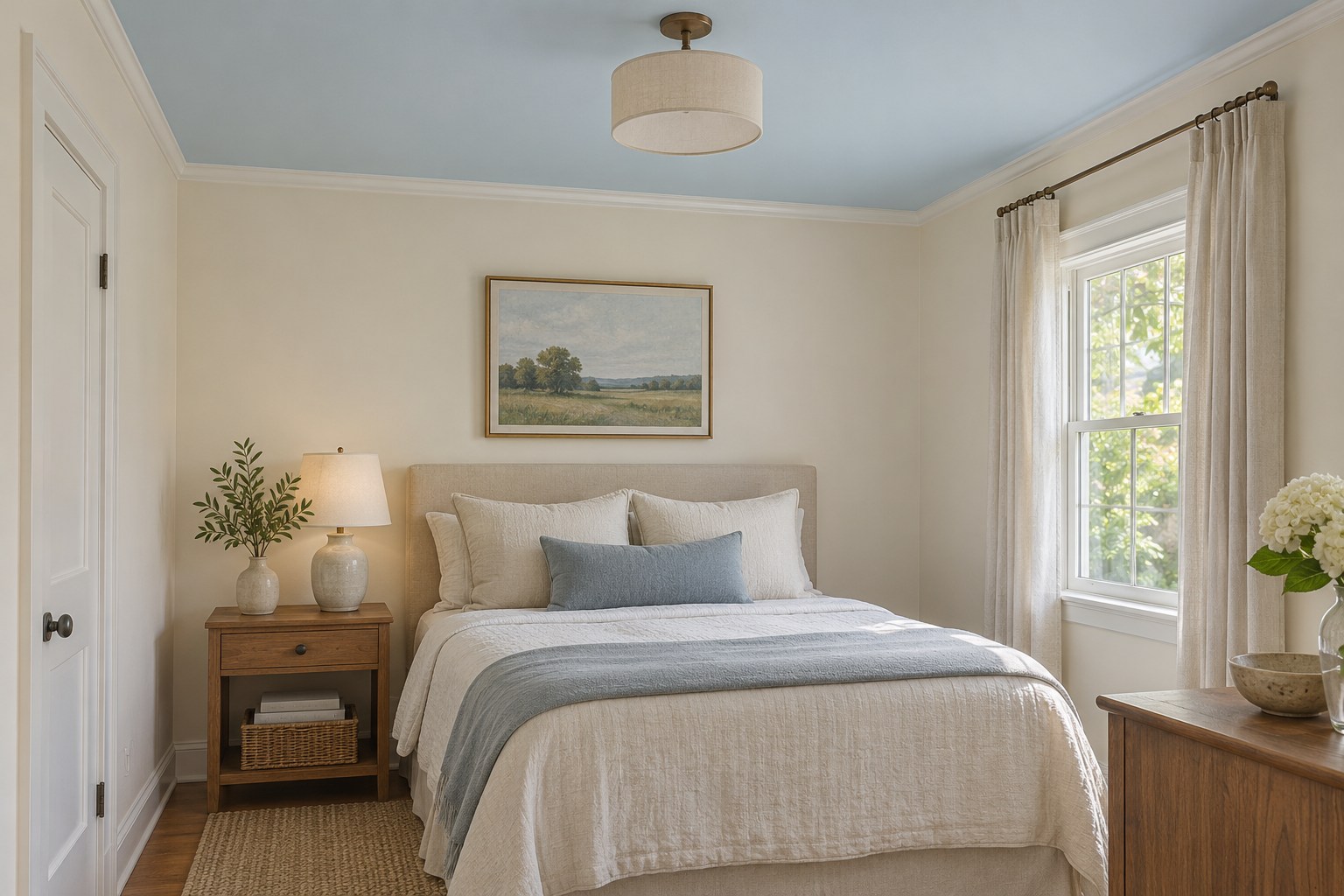
If the walls already feel crowded with doors and windows, look up. A pale color overhead can add interest without taking up floor or interrupting the wall. Test a large sample against the ceiling with a lamp on and off. Light hitting it from below may make a color read differently than it does on the sample card.
Keep the other large surfaces steady if you use a stronger overhead shade. A ceiling close to the wall color can also soften the line between them. Choose the effect you want from the bed, since that is where the ceiling fills most of your view.
18. Take the Extra Seat Out for a Week
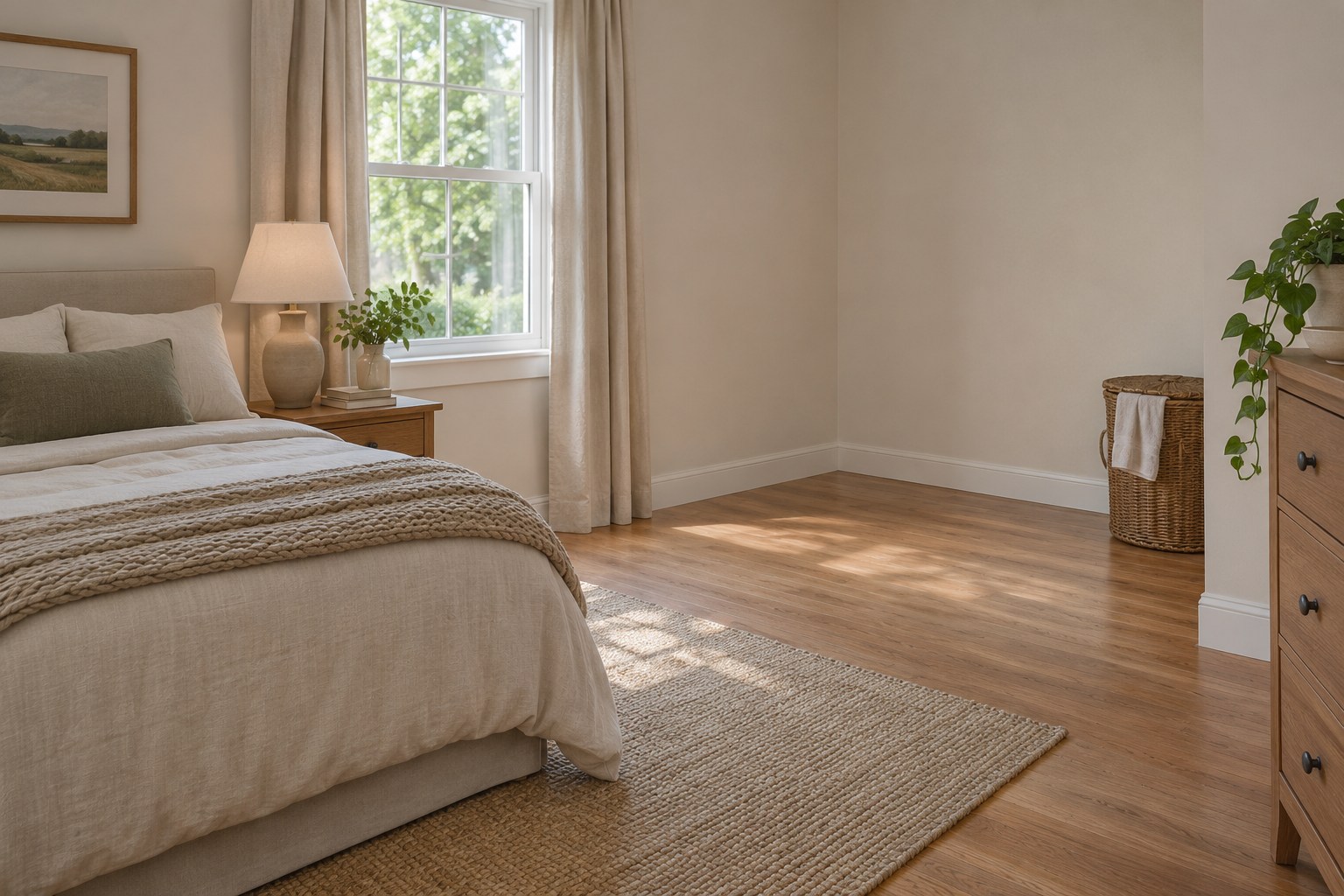
A chair near the bed is useful when you sit there. If it mostly collects clothes, move it to another room for a week and try the layout with the corner open. Give worn-but-clean pieces a small dedicated place so removing the chair does not send clothes straight to the floor.
Compare how the room feels when you enter, open the closet, and make the bed. If you miss a seat only when tying shoes, try sitting on the bed edge first. A smaller chair makes sense when you can name what you use it for and fit it without closing the route.
19. Compare Dresser Depth Before Comparing Drawer Count
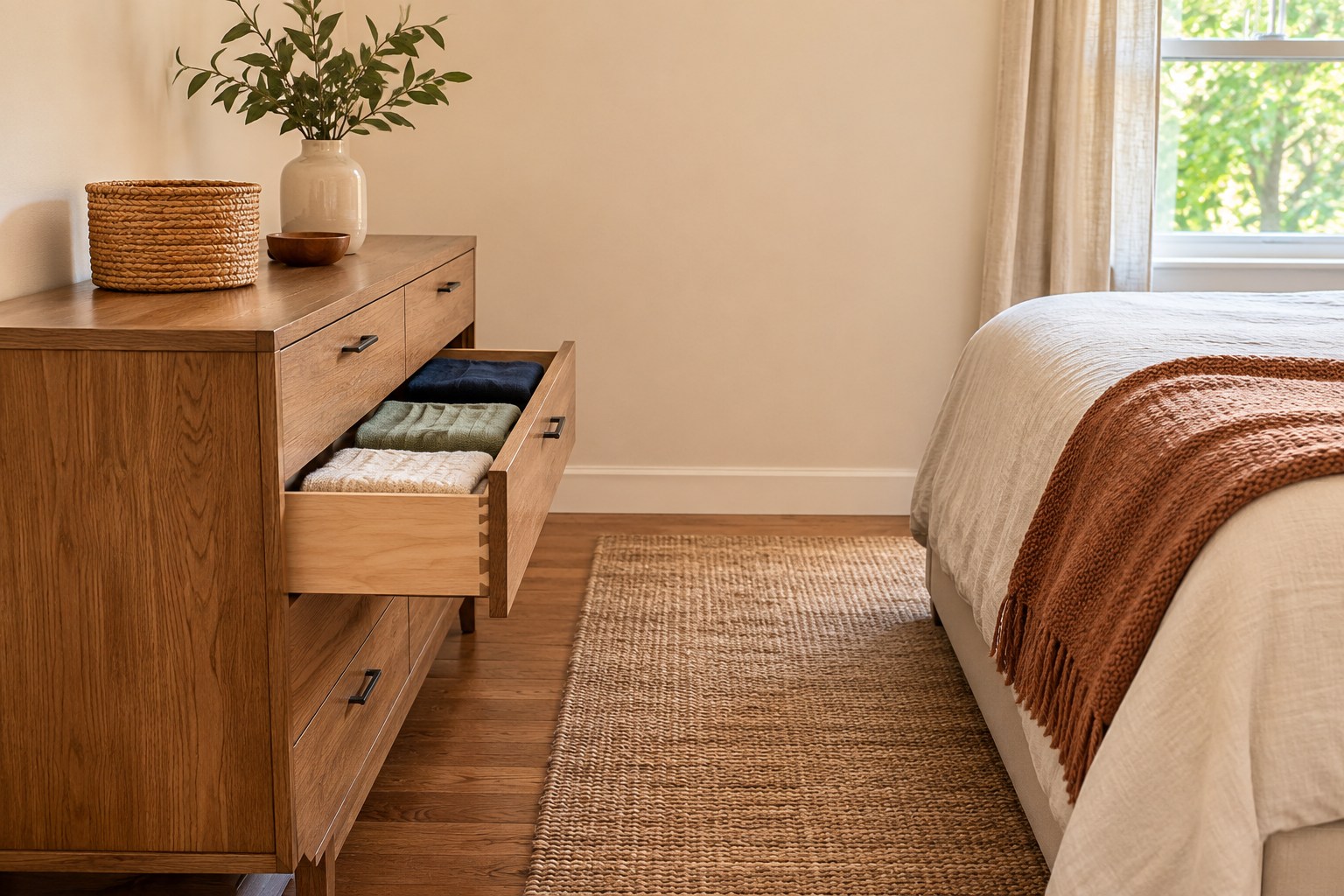
Measure the gap in front of the dresser with a drawer fully open. A cabinet with a shallower body may return more walking space than a narrow dresser with deep drawers. Lay a few folded items out at the proposed depth to check that the drawer will still do the job.
Keep the top plain enough for a small lamp or tray if you use one. Choose a dresser you can anchor according to its instructions. If folded clothes still need another home, these bedroom storage ideas cover other options before you add another cabinet.
20. Check the Back of the Door Before Adding Hooks
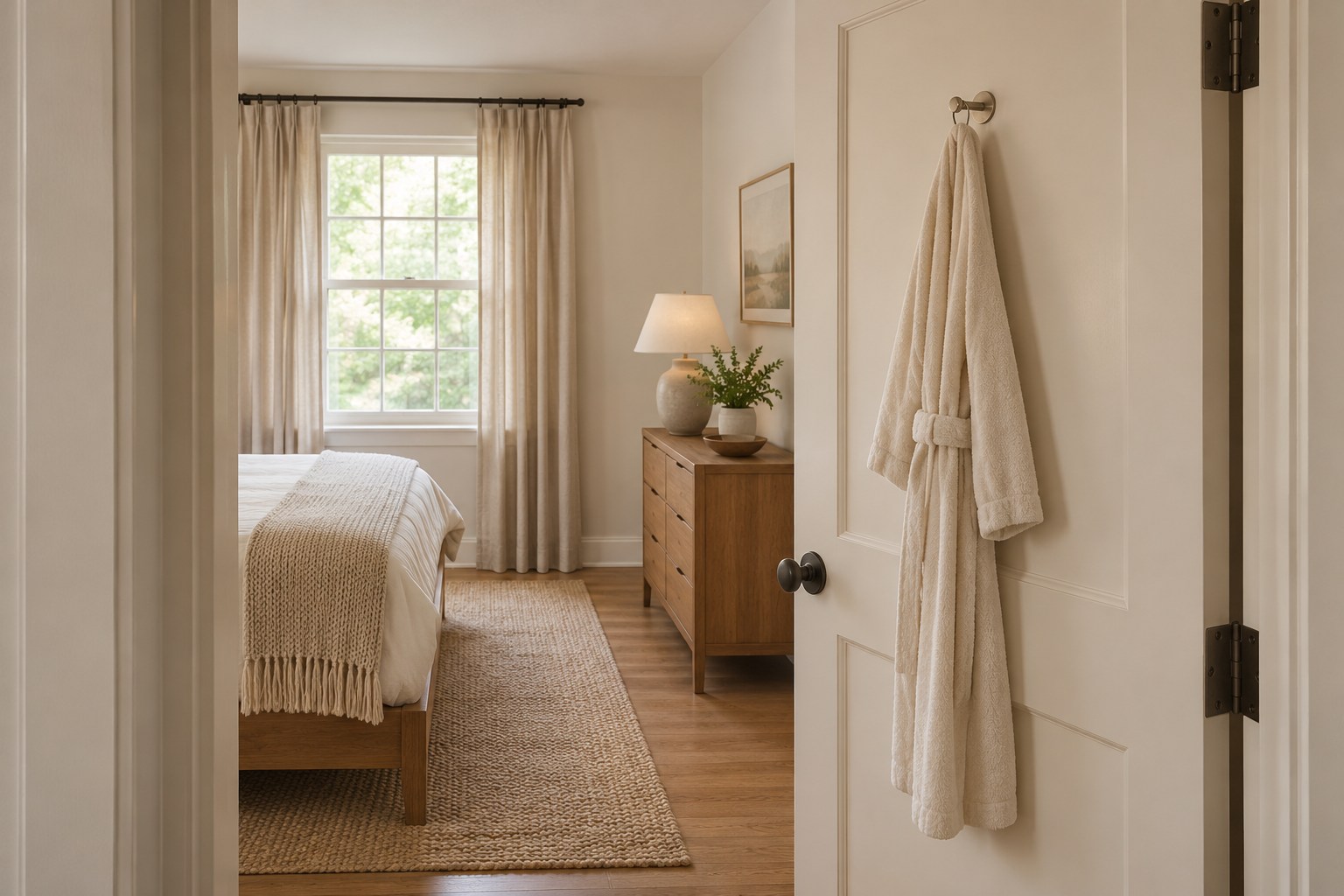
Swing the door all the way open and look at the space between it and the wall. A low-profile hook or rail may hold a robe without making room for a freestanding stand. Try the outline and thickness of the item you plan to hang. Make sure the door can still open to its usual position and latch properly when shut.
Use hardware intended for the door and load, and keep bulky bags off a frequently used door if they get in the way. A single robe may be all the space can handle comfortably. Choose a hook in the door color if you prefer it to disappear when empty.
Try the change that gives you back the route you use most. Spend a few days with the new layout and see whether you can open the closet, reach the window, and make the bed more comfortably. Once those parts work, a small shift in color, light, or fabric can finish the room.
Discover more from HomeTrendora
Subscribe to get the latest posts sent to your email.