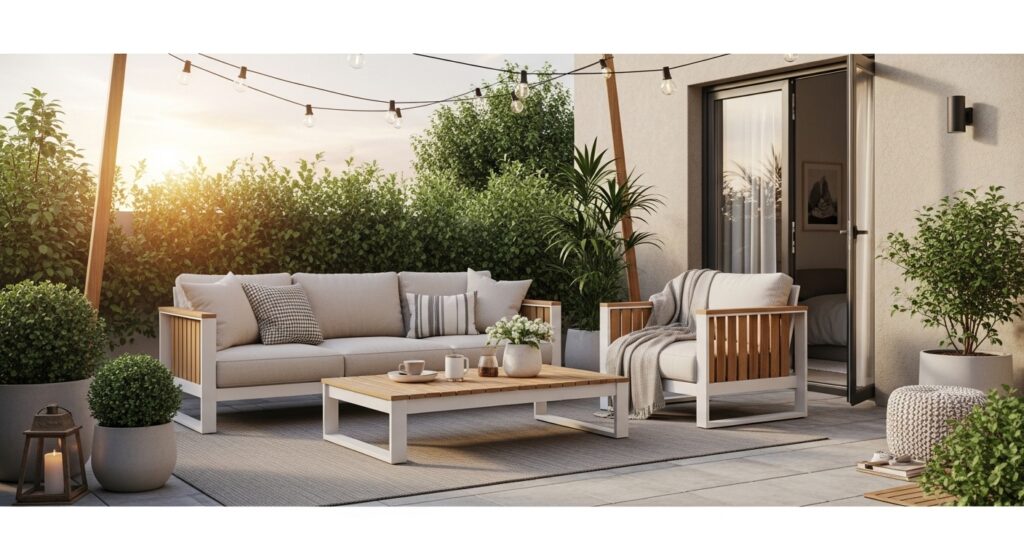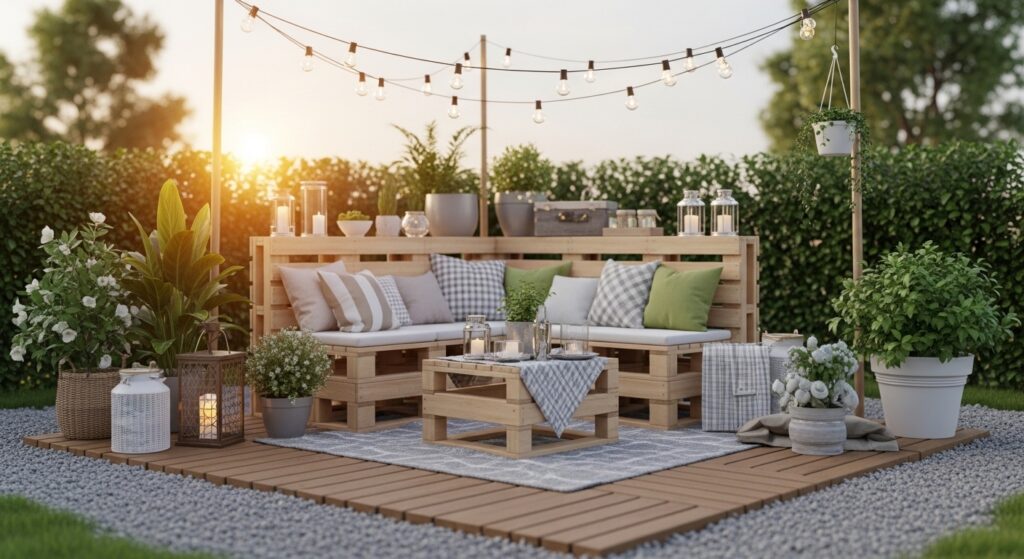
A compact patio can become unusable surprisingly fast when cushions, garden tools, toys, and outdoor dining supplies have nowhere to go. The best small patio storage ideas do more than hide clutter: they protect the walking path, suit the patio’s weather exposure, and often perform a second job as seating, serving space, or a planting station.
These solutions fit genuinely small outdoor areas. They include narrow, vertical, mobile, under-seat, and renter-friendly options, plus practical guidance for moisture and stability.
1. Choose a Slim Storage Bench That Keeps the Walkway Open
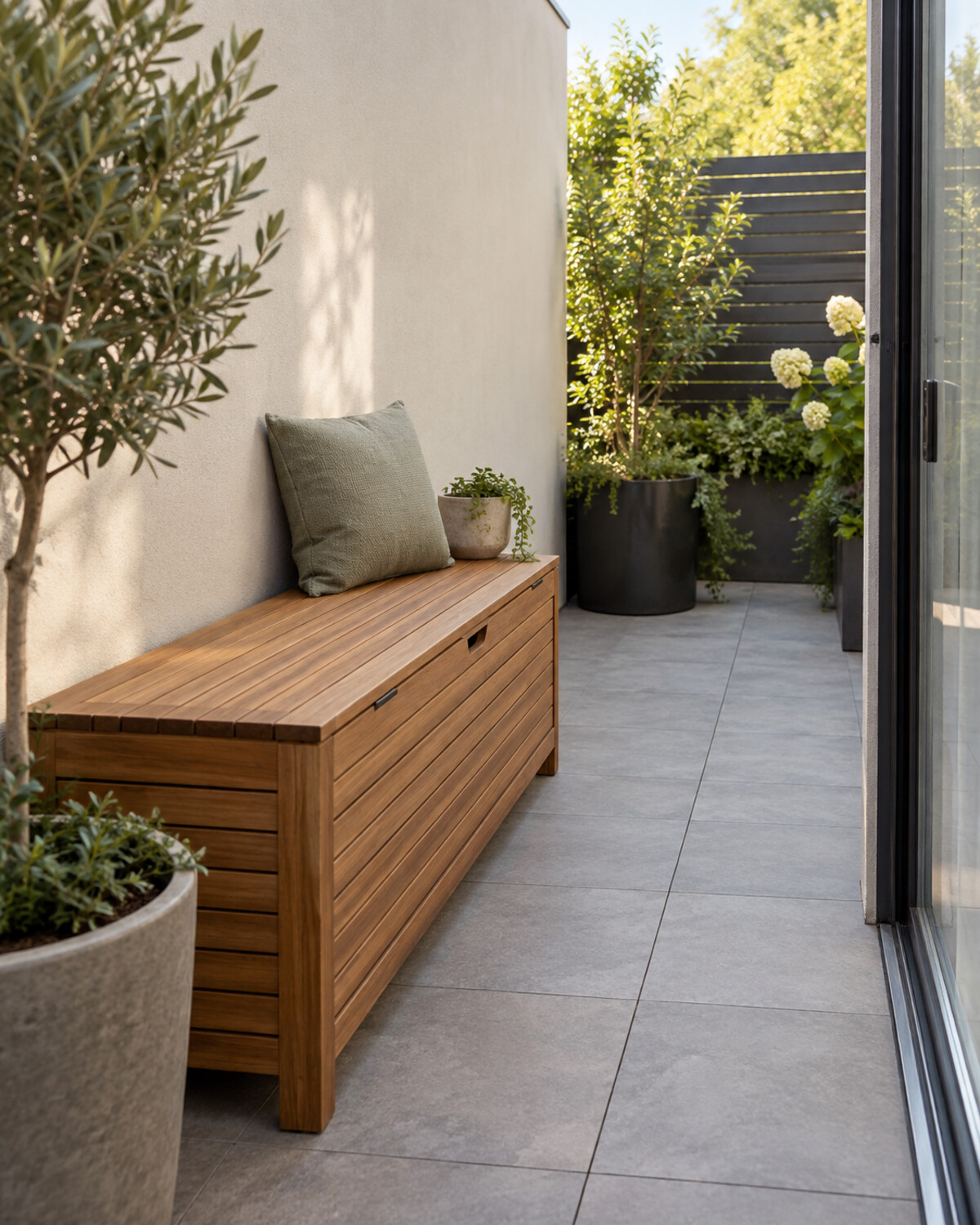
A shallow storage bench works best when the patio needs both seating and a home for frequently used accessories. Place it against the longest uninterrupted wall so the seat does not project into the main route from the door. If the proportions still feel tight, compare more space-saving outdoor seating ideas before committing to the bench depth.
Check the manufacturer’s seating capacity and clearance requirements before buying. The lid should open fully without striking a window, railing, or wall light. On an exposed patio, confirm how the compartment handles rain and airflow; textiles may still need sealed interior bags or indoor storage during prolonged wet weather.
2. Use a Narrow Vertical Outdoor Cabinet
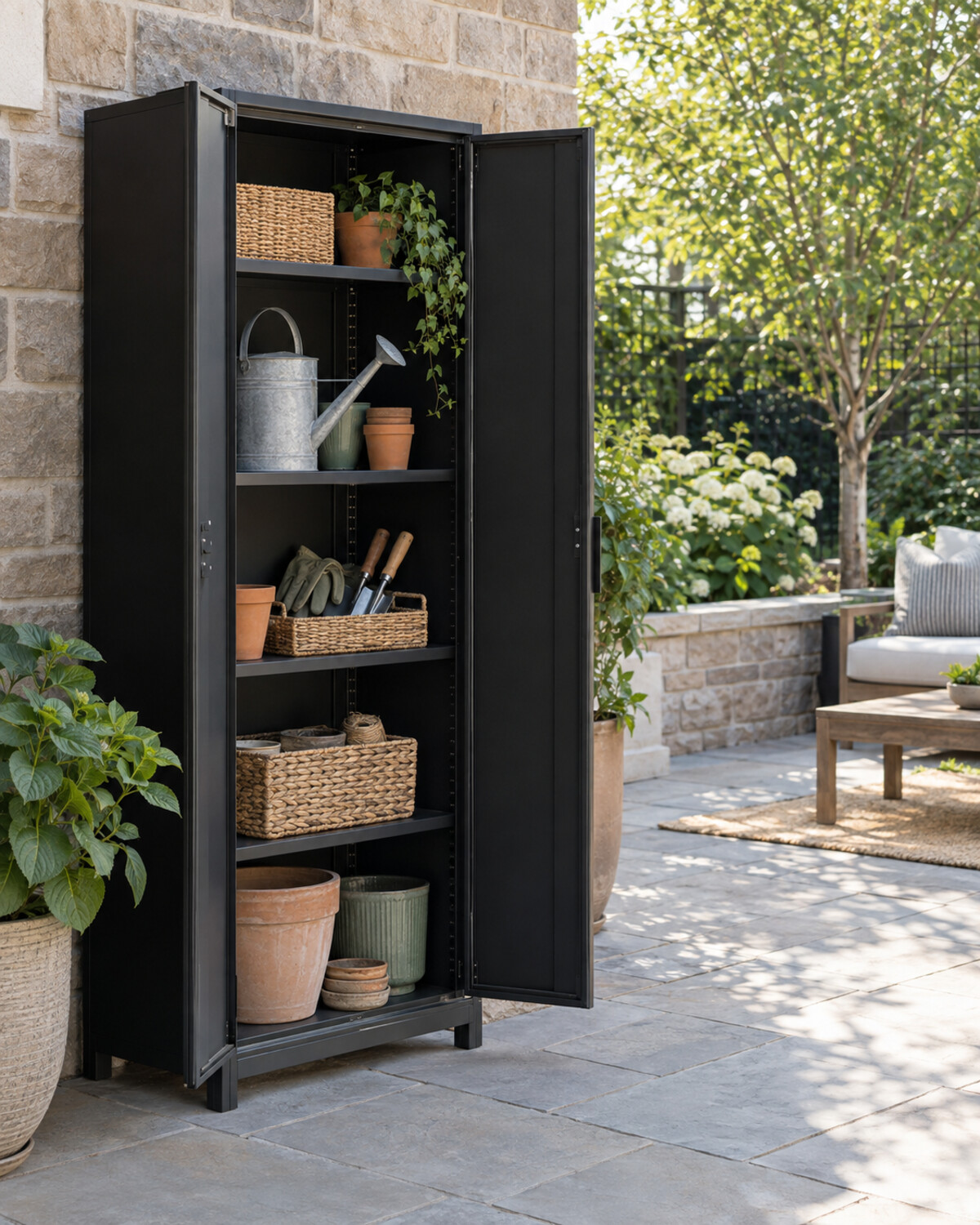
A tall cabinet uses vertical space while keeping a relatively small footprint. It is useful for hand tools, plant food, watering accessories, and outdoor dining pieces that would otherwise spread across several bins. Choose adjustable shelves so tall bottles and low baskets can share the same interior without wasting height.
Vertical storage must be stable on the patio surface and appropriate for outdoor use. Keep heavier items low, avoid loading the doors, and follow the product’s anti-tip or anchoring directions. Never attach a cabinet to siding or a shared wall without permission and suitable hardware. If secure installation is not possible, a shorter, wider unit may be the safer choice.
3. Add a Compact Deck Box That Doubles as a Side Table
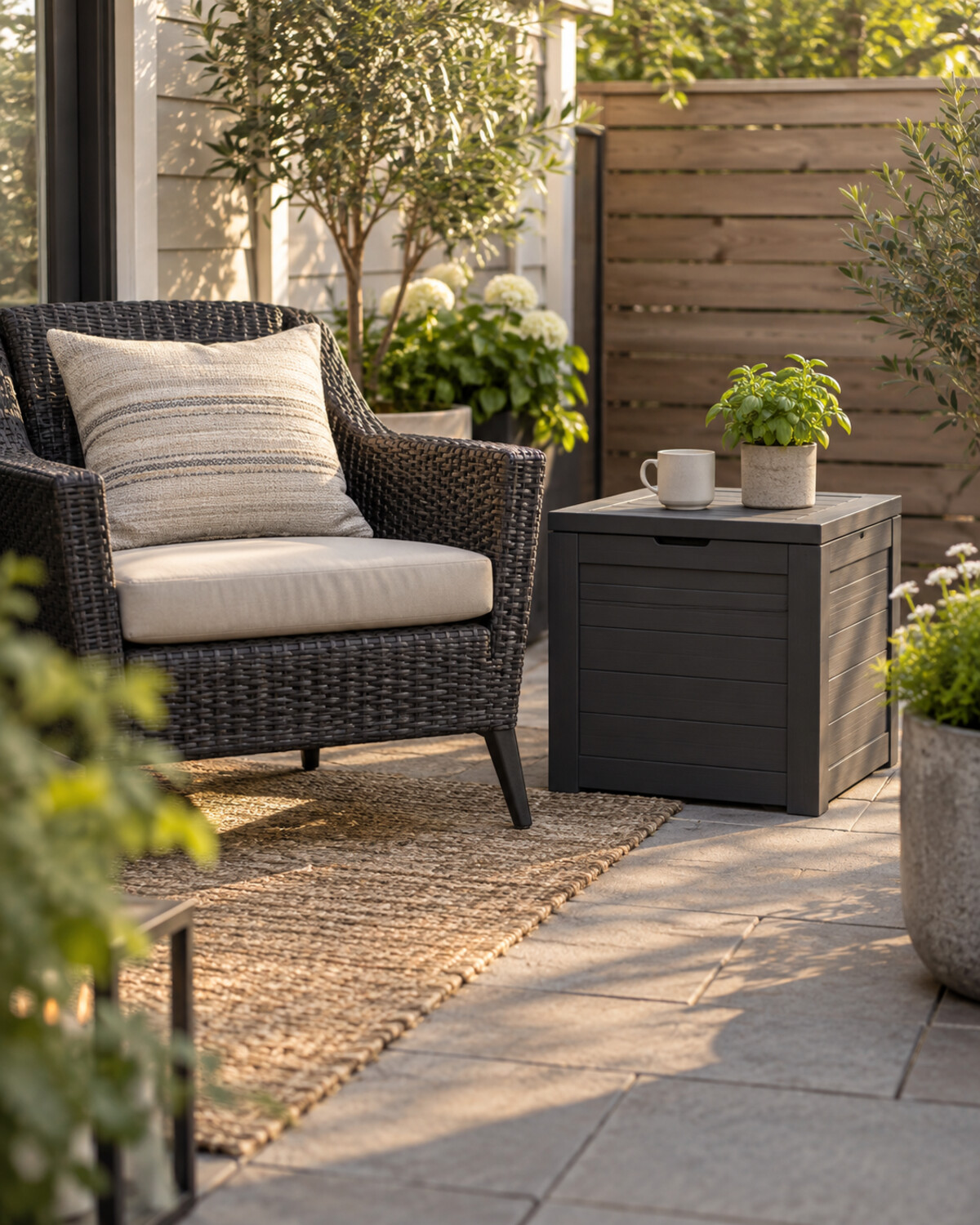
Instead of placing a large deck box across the end of the patio, select a compact version that can replace a side table. A square or low rectangular box beside one chair can hold furniture covers, small outdoor games, or clean garden accessories while providing a surface for a drink or planter when its design allows it.
Do not assume every lid is intended to support weight. Follow the stated top-load and seating guidance, avoid hot appliances or flames, and leave enough clearance to lift the lid without moving furniture.
4. Store Cushions in a Ventilated Under-Seat Compartment
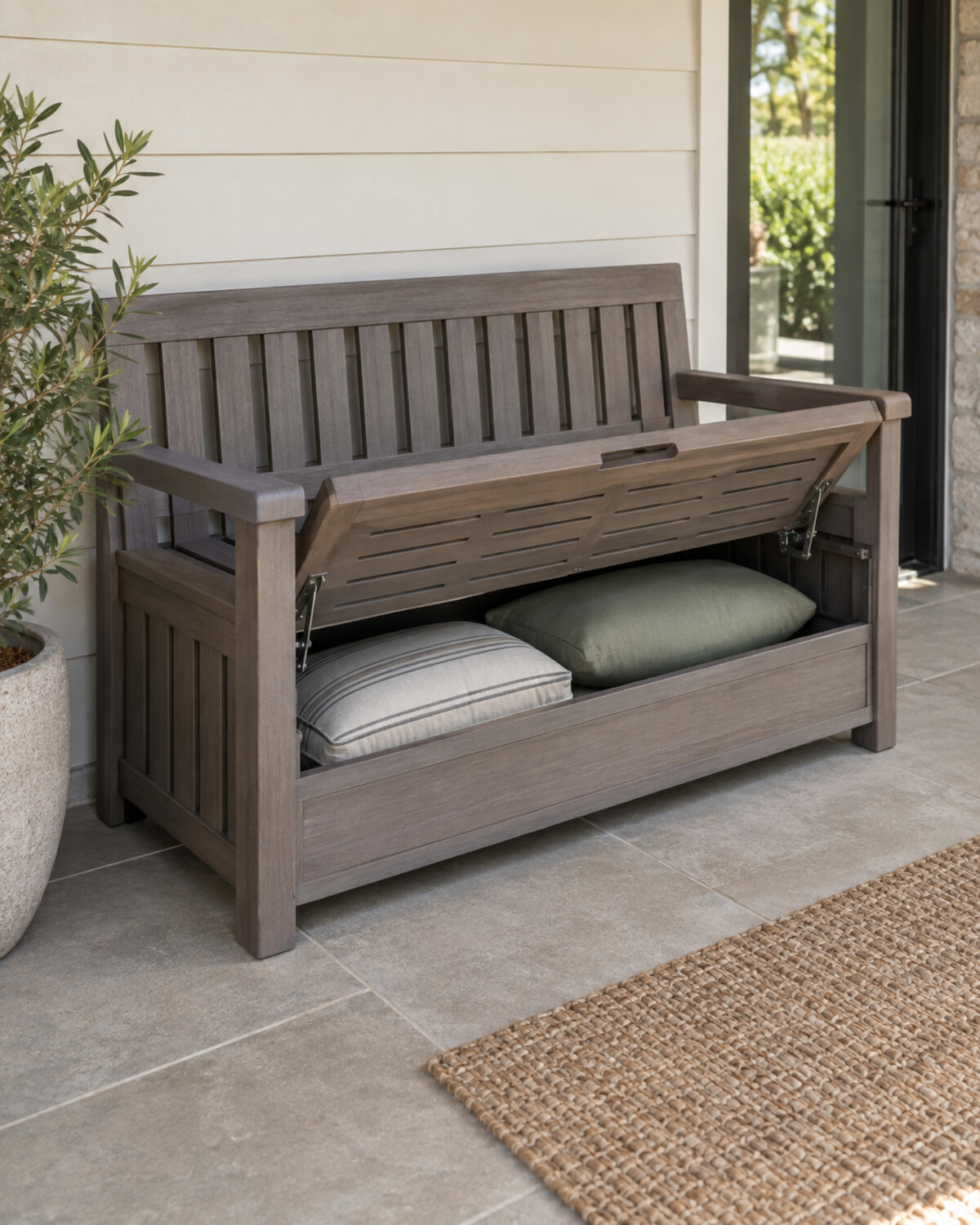
Under-seat storage keeps bulky cushions close to the furniture they belong to, but airflow matters. A slatted or intentionally ventilated compartment can be more practical than a tightly closed cavity when items are dry and the patio is sheltered. Stand cushions loosely rather than compressing them into a damp pile.
Allow wet textiles to dry completely before storage and inspect the compartment for condensation, pests, and trapped debris. On a fully exposed patio, use the solution only if both the storage unit and its contents are suited to those conditions. Seasonal or extended wet-weather storage may still belong indoors. Easy access is important; if retrieving cushions becomes a chore, they will end up on the floor again.
5. Build a No-Drill Rail for Lightweight Garden Tools
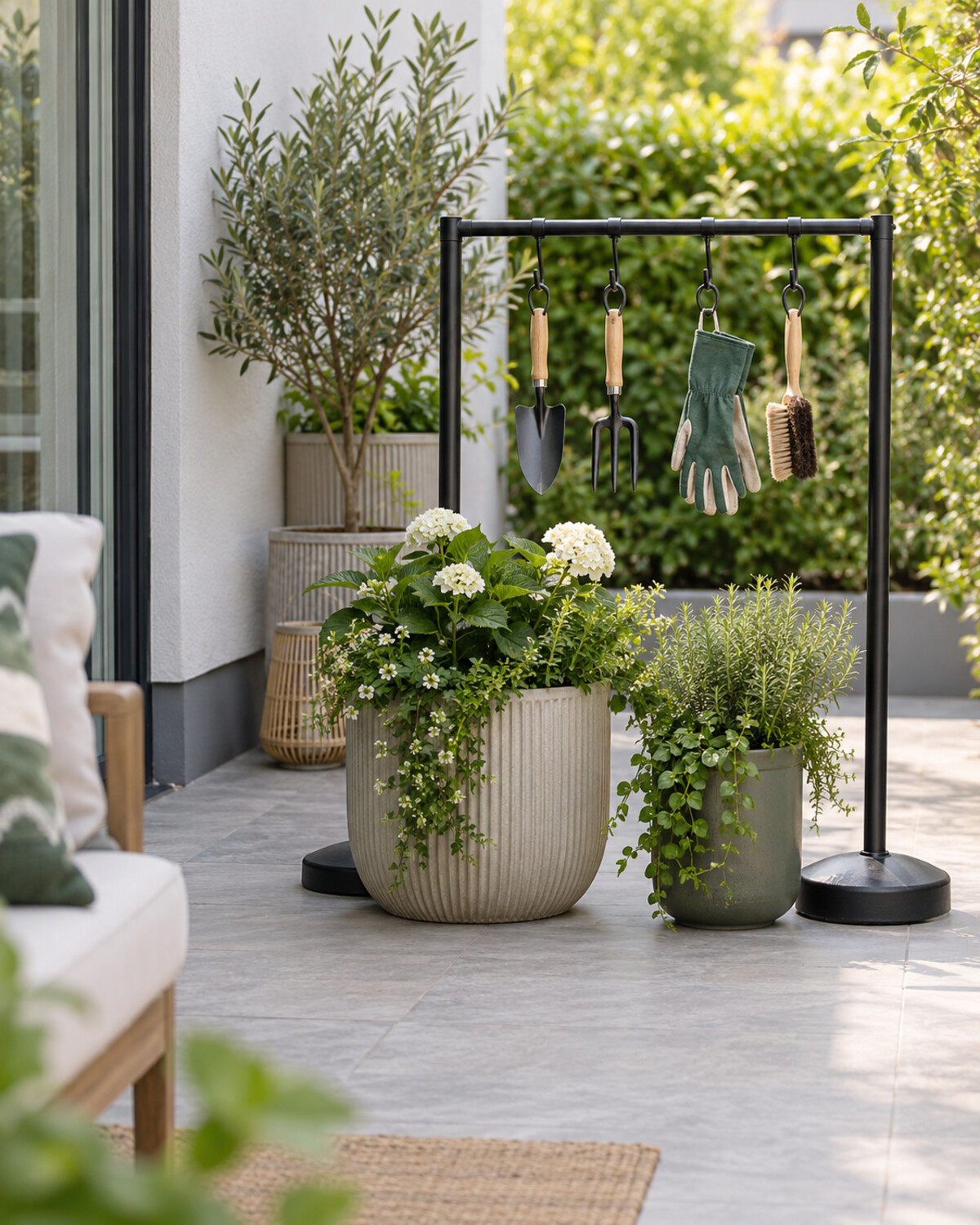
Renters can organize lightweight hand tools on a freestanding rail or panel rather than drilling into the building. Place it behind a potting surface or beside planters, where a trowel, hand fork, gloves, and a small brush can hang in plain view without becoming visual clutter. Matching hooks and a limited tool set make the arrangement look intentional.
The support must have a stable base and should never lean where wind or a bumped planter could topple it. Do not hang sharp or heavy tools within a child’s reach. Avoid attaching hooks to railings unless the building permits it and the system is designed for that location. Long tools and powered equipment usually need more secure storage elsewhere.
6. Use an Outdoor Rolling Cart That Moves Where Needed
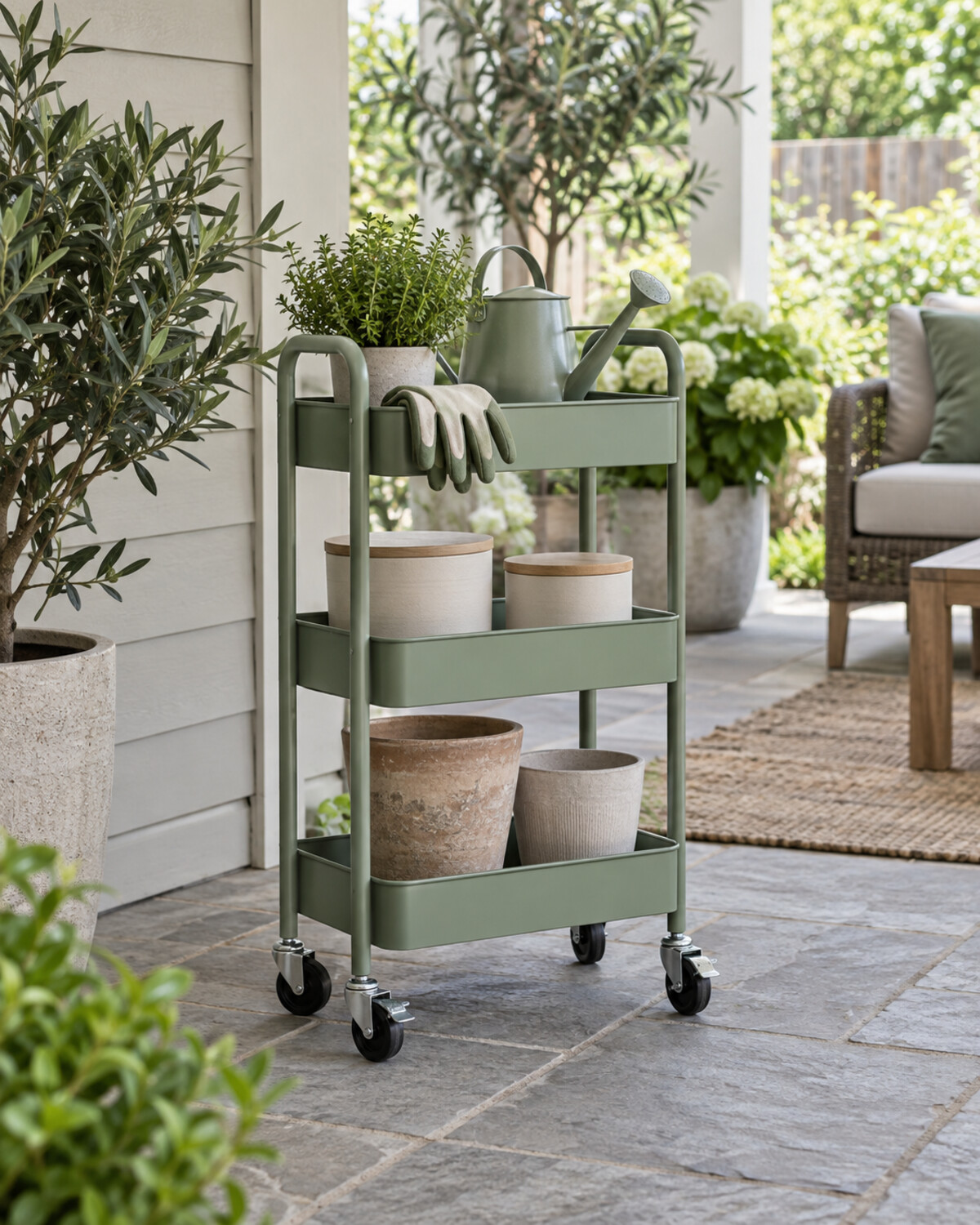
A narrow rolling cart can serve as a gardening station in the morning and a drink or dining caddy in the evening. Assign each shelf one purpose: daily items on top, enclosed supplies in the middle, and heavier containers at the bottom. This keeps the cart balanced and prevents the top tier from becoming a catchall.
Choose materials and casters suitable for the patio surface and exposure. Lock the wheels when the cart is parked, and move it indoors or to a protected location during strong wind if the manufacturer recommends it. A mobile cart is not a substitute for secure hazardous-material storage. Reserve it for ordinary, low-risk items that benefit from being moved close to the task.
7. Turn a Potting Bench Into a Compact Storage Station
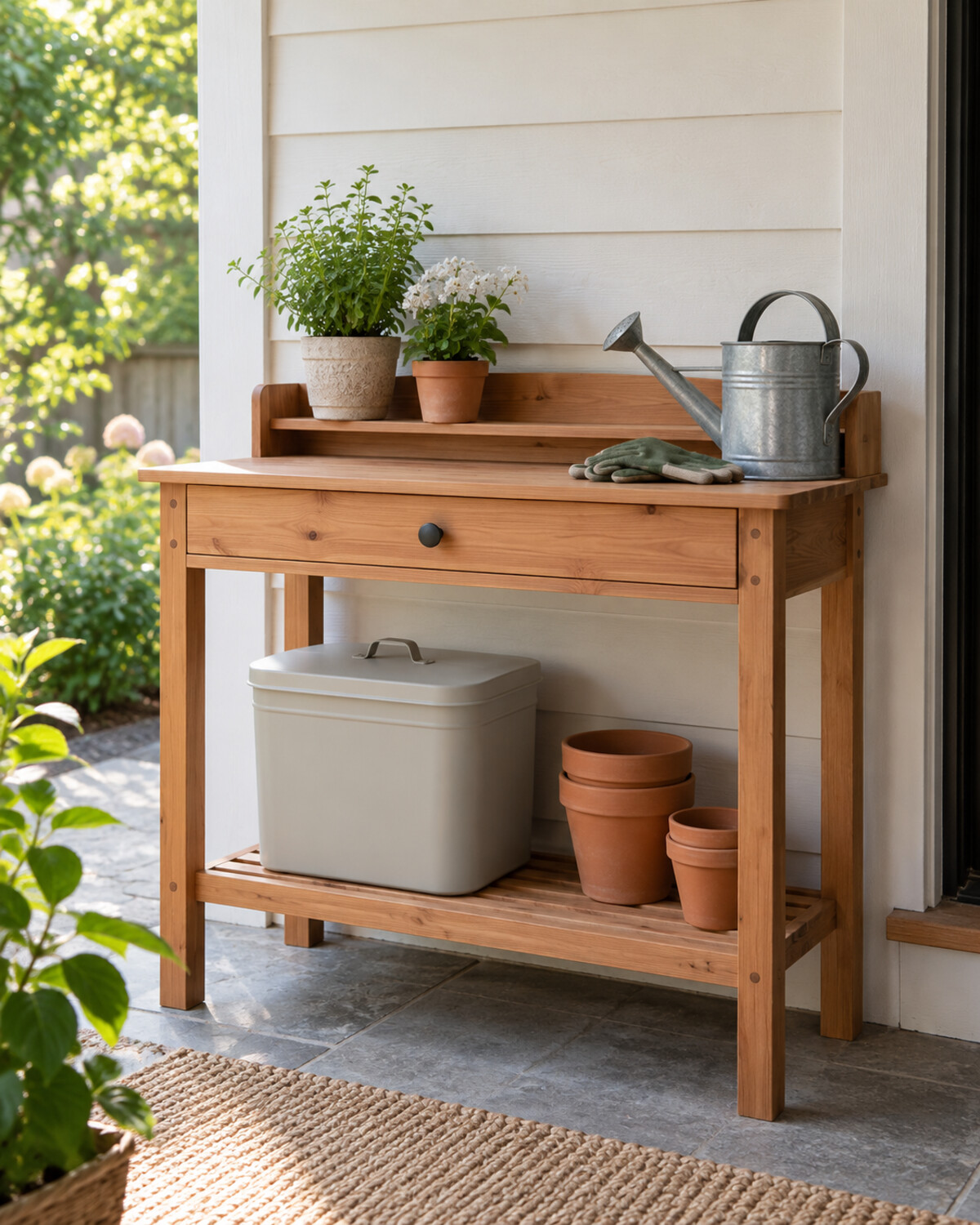
A narrow potting bench consolidates repotting, watering, and tool storage in one vertical zone. Look for a shallow work surface, one drawer, and a lower shelf that can hold a lidded soil container or watering can. A small back ledge prevents frequently used pots from spreading across the patio table.
Keep the surface easy to sweep and avoid storing damp potting mix directly against wood. Any chemicals or pesticides require storage according to their labels and away from children, pets, food, and inappropriate temperatures. If the patio cannot accommodate a full bench, a compact plant stand with one work-height shelf can provide the same organizing logic with less depth.
8. Add Lidded Baskets on a Protected Covered Patio
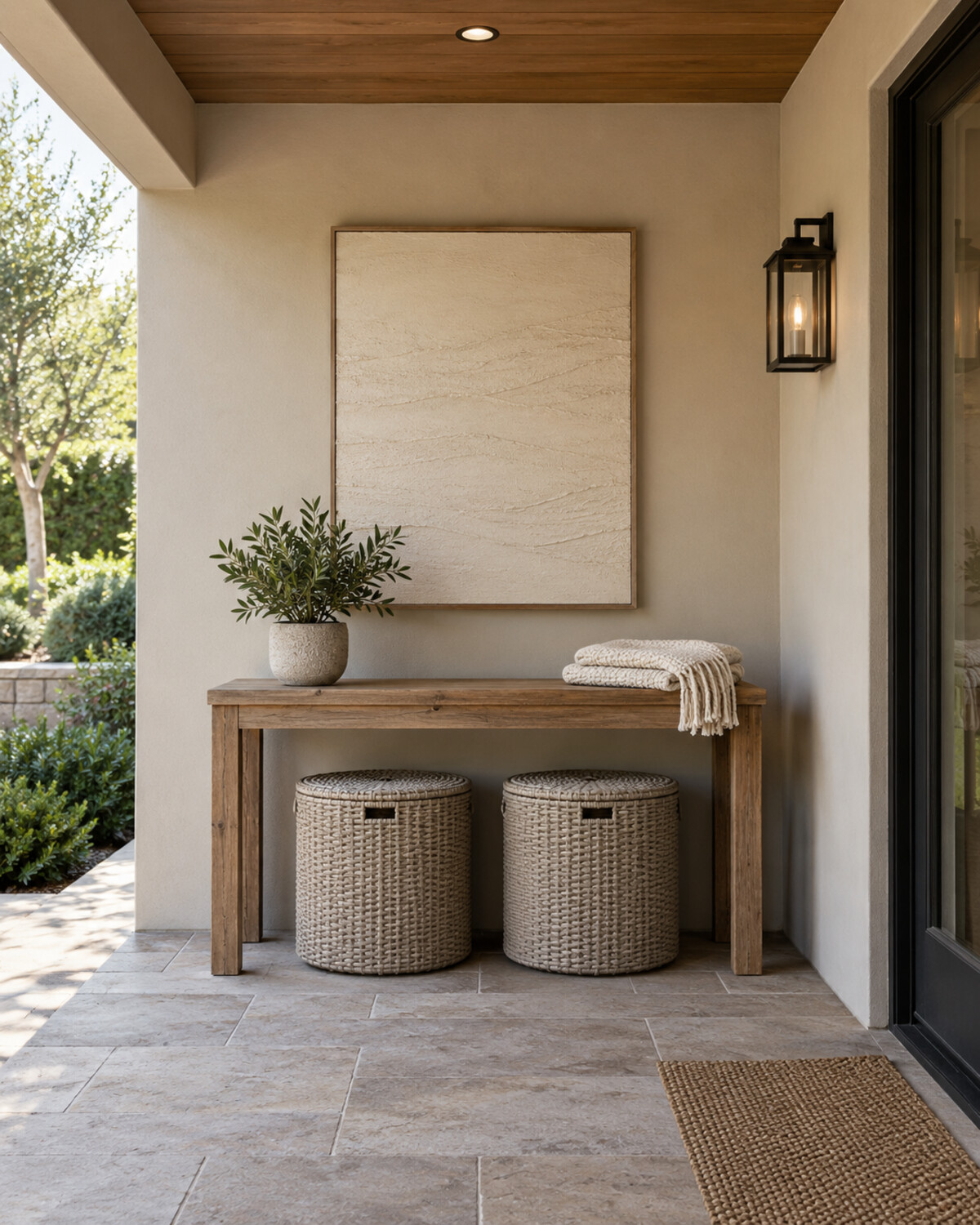
Lidded baskets soften a covered patio and work well for lightweight throws, clean table linens, or children’s outdoor accessories. Use only a small matching pair under a bench or narrow console; several unrelated baskets quickly make the area look busier than the items they are meant to conceal.
This is a sheltered-patio solution. Choose material suited to the location, bring contents inside when weather threatens, and never close damp fabric inside a basket. Avoid loading the handles or weave beyond their intended use.
9. Use a Corner Shelf to Reclaim an Awkward Footprint
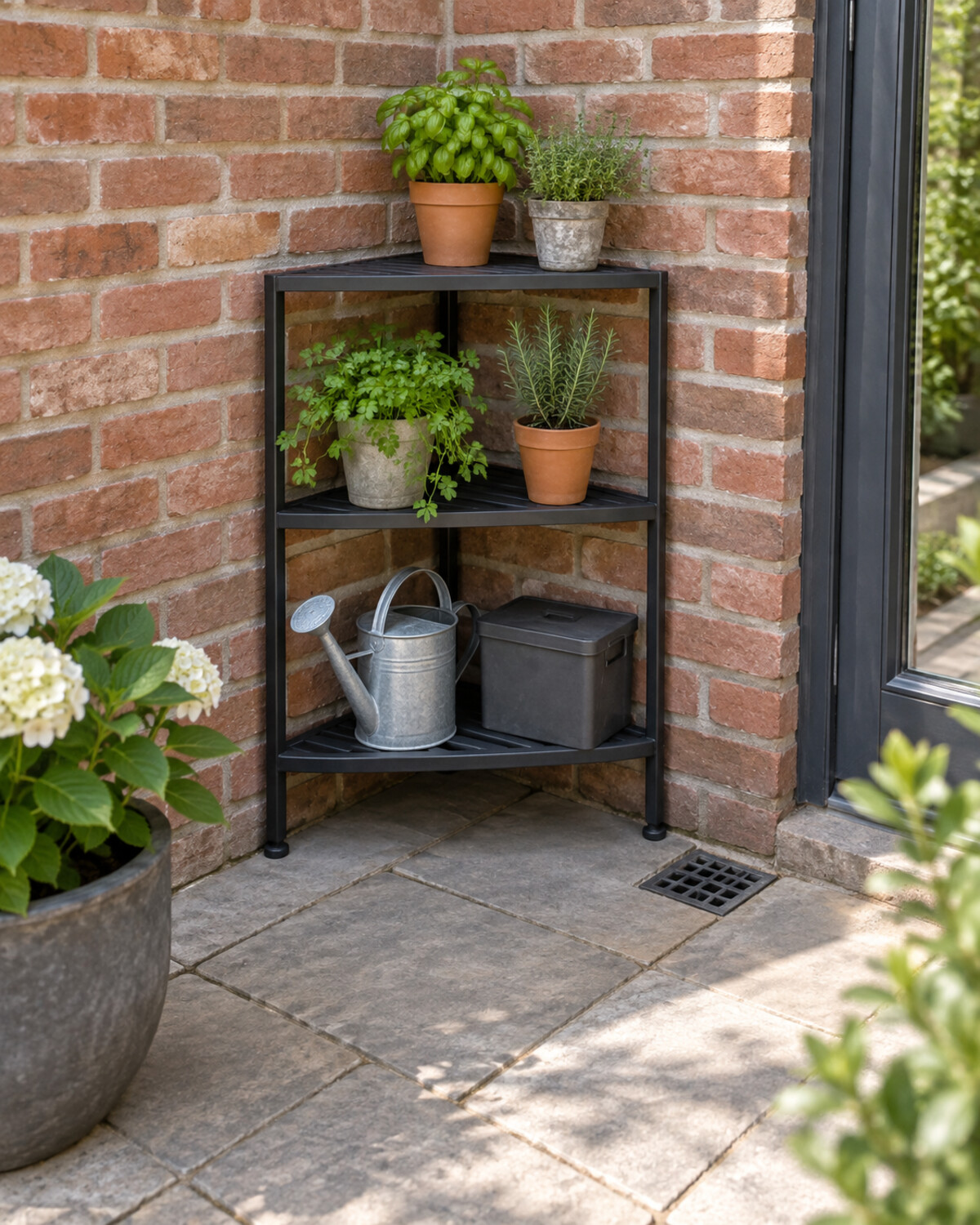
A triangular or quarter-round shelf can turn an otherwise empty corner into organized vertical storage. Use the upper levels for small plants and the lower levels for a watering can, folded cover, or lidded supply box. Keeping the shelf’s outline within the corner prevents it from narrowing the middle of the patio. These outdoor corner garden ideas offer additional ways to combine planting and function.
Choose a unit rated for outdoor conditions and distribute weight according to its instructions, with heavier objects low. A freestanding shelf still needs a level surface and protection from tip-over. Leave space around drains and avoid crowding a door hinge or grill zone. One coordinated shelf is usually more efficient than stacking several small plant stands with unstable gaps between them.
10. Choose a Storage Ottoman for a Tiny Seating Area
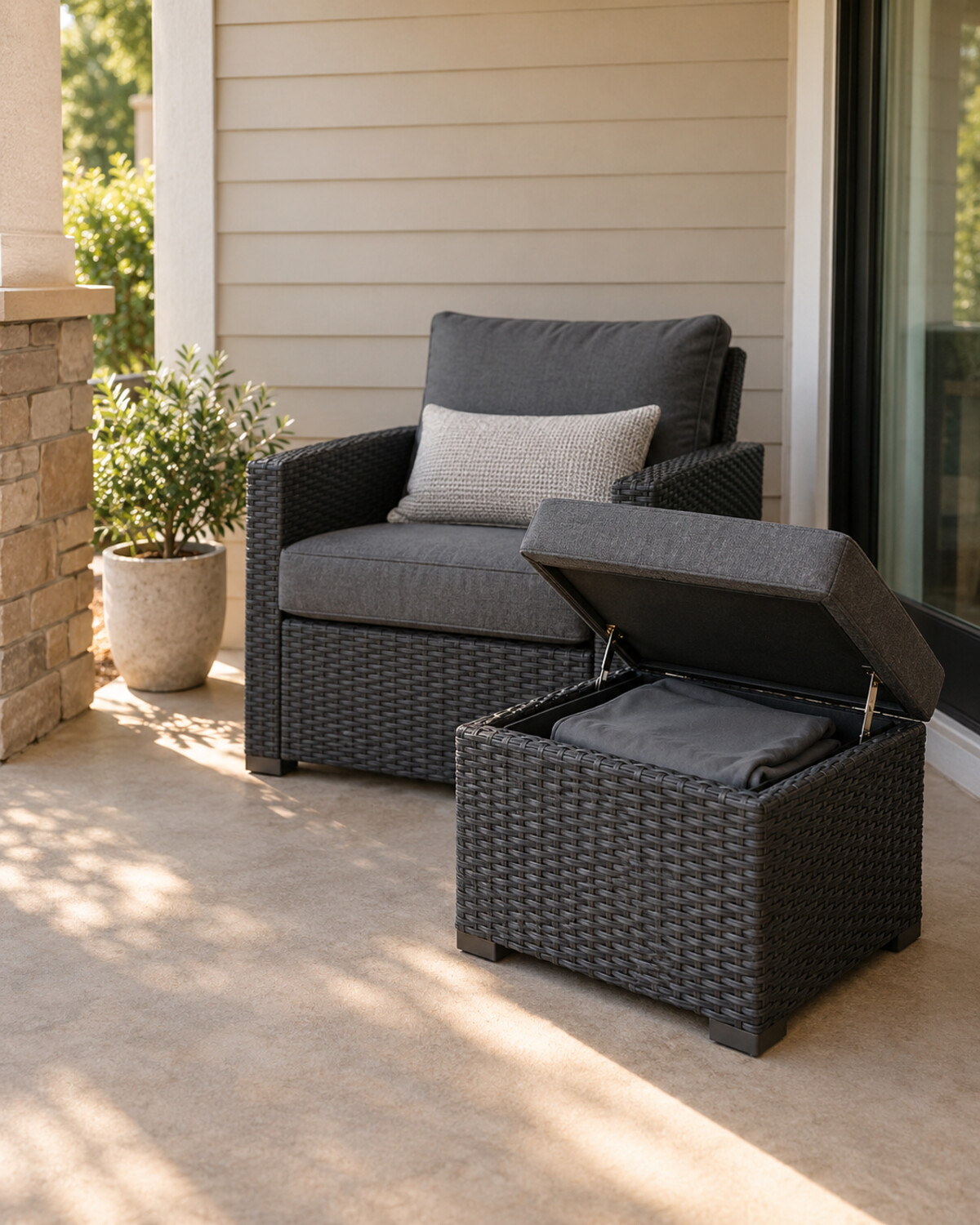
A storage ottoman can replace a footrest, extra stool, and accessory bin in a one-chair patio layout. Select a compact form that slides partly under the chair or aligns with its width. It can hold a furniture cover, small pillow, or clean outdoor accessories while keeping the seating corner visually quiet.
Verify whether the ottoman is approved for sitting, foot support, or tabletop use; those functions are not interchangeable. A lightweight unit may need to be moved to a protected place during strong wind, but adding improvised weight can create handling or structural problems. Choose a finish that matches the chair so the two pieces read as one set rather than an extra box.
11. Conceal Bins Under a Raised Console or Plant Table
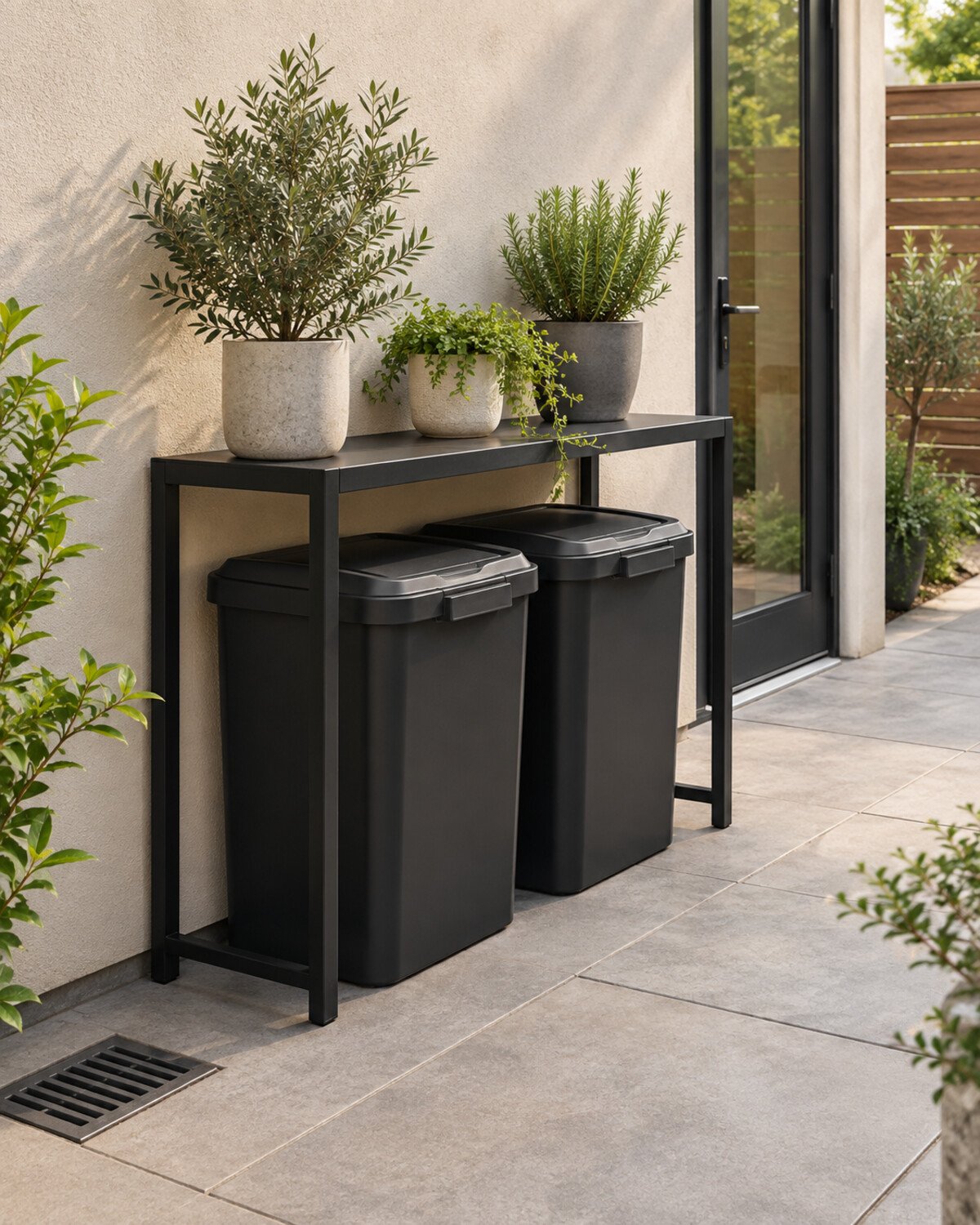
A raised console creates two storage layers within one narrow footprint. Style the top with a few plants or a serving tray, then slide two matching lidded bins below for gloves, small pots, and everyday accessories. Keeping the bins the same color as the console helps them disappear visually.
Measure the clear space beneath the table, including room for handles and lids. Bins should pull forward without blocking the door, plants, wall vents, or drainage. Keep the tabletop edited rather than turning it into another storage shelf.
12. Create a Weather-Aware Outdoor Toy Station
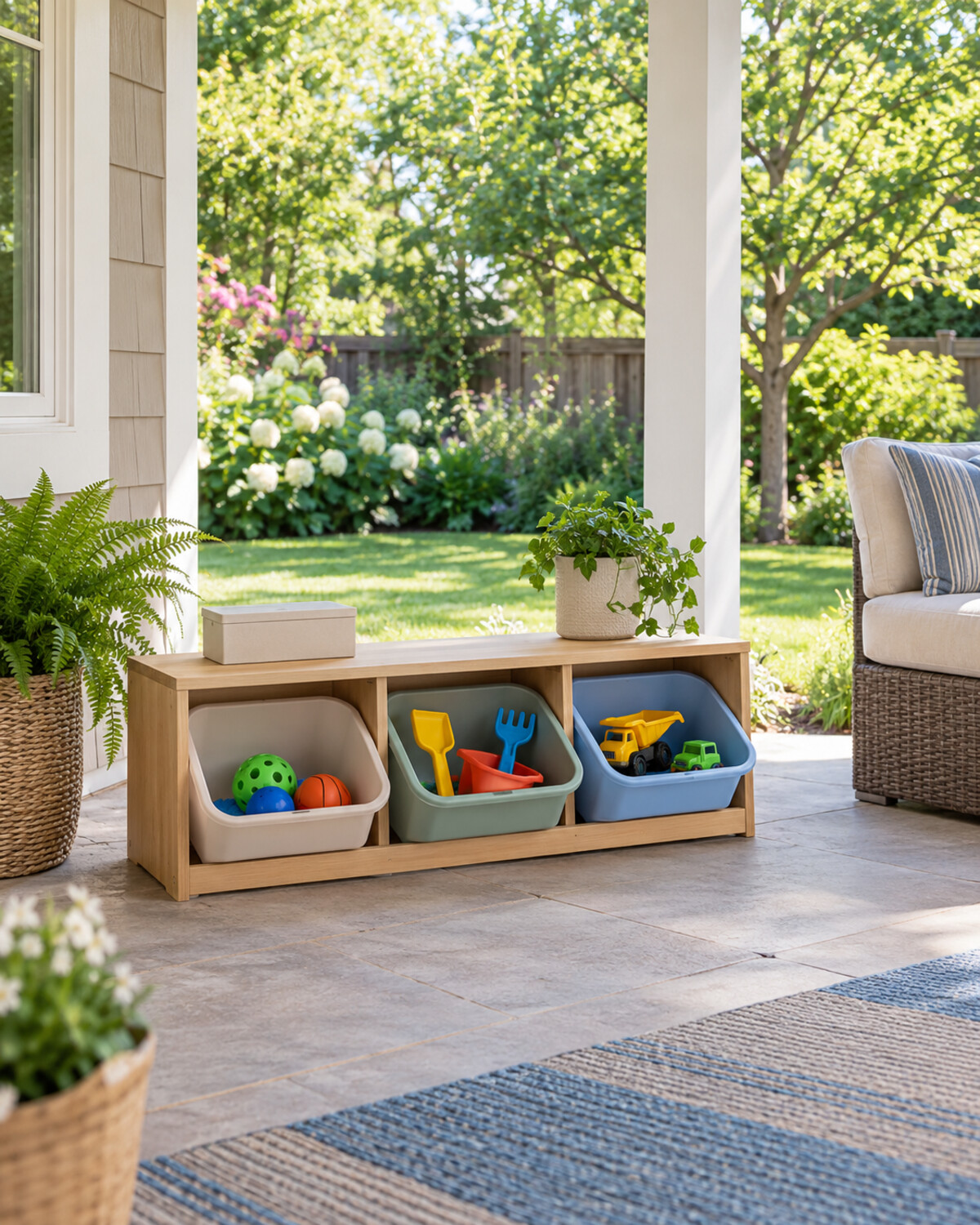
A low toy station helps children return outdoor items without opening a heavy lid or climbing for a high shelf. Use a stable bench-height unit with rounded containers for chalk, balls, bubbles, and washable play pieces. Open or ventilated bins can make sense for items that may carry sand or moisture, provided the station sits in a protected area.
Keep the selection small enough that each category has a clear home. Regularly inspect toys and containers for water, damage, insects, and sharp edges. Store chemicals, tools, cords, and grill accessories somewhere entirely separate and inaccessible. Do not rely on a decorative label to make a hazardous item safe; physical separation and secure storage matter more.
13. Add a Fold-Down Wall Table With Shallow Storage
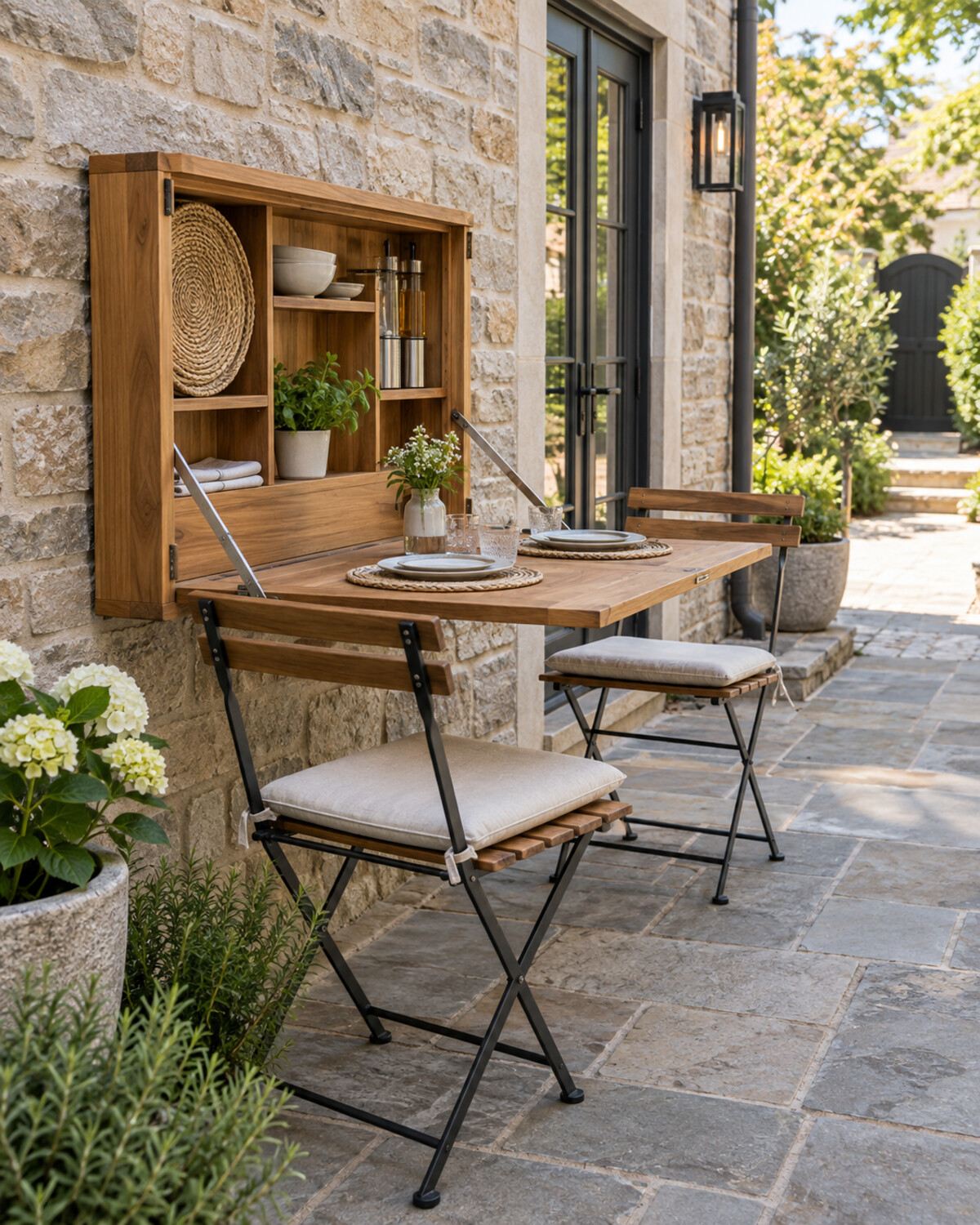
A wall-mounted fold-down table can provide dining or potting space while concealing a shallow compartment for placemats, small tools, or serving accessories. When closed, it preserves more circulation than a permanent table. The best design keeps stored items secure as the panel moves and allows the tabletop to lock firmly in both positions.
This option requires a surface and installation method suitable for the load. Obtain property permission and use qualified help where appropriate; siding, masonry, and shared walls need different solutions. Never improvise hardware or exceed the stated load. Renters who cannot mount a unit can use a freestanding folding table with a slim caddy stored beside it.
14. Use a Slatted Screen to Disguise Organized Utility Storage
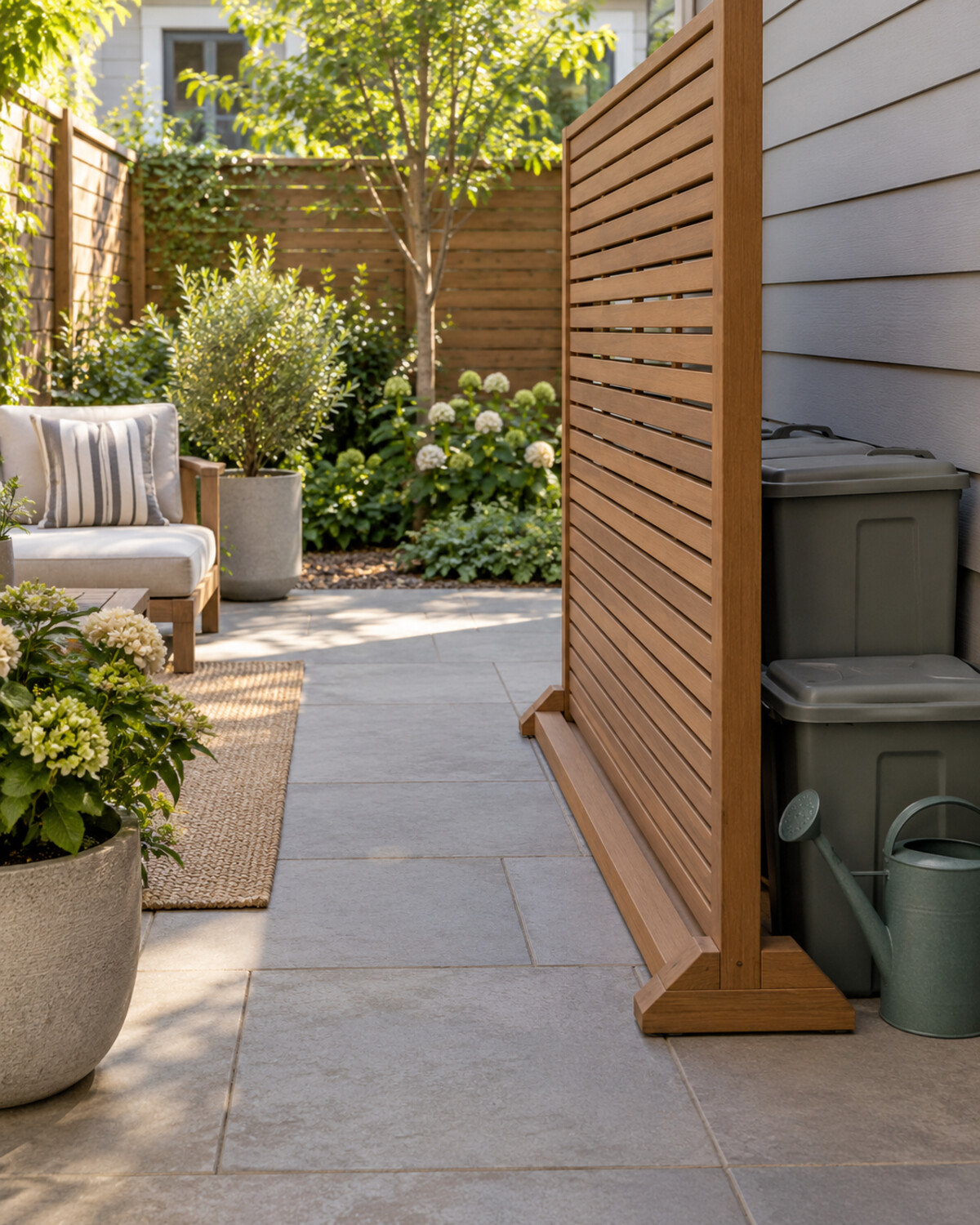
A narrow slatted screen can visually separate a tidy utility zone from the seating area. Place matching bins, a folded watering can, or cleaning accessories behind it, keeping everything within a clearly defined footprint. The gaps preserve a lighter appearance than a solid barrier. For a more exposed space, review these small balcony privacy ideas before choosing the panel style.
The screen should be freestanding only if it is designed to remain stable outdoors. Wind pressure can make tall panels hazardous, so follow the product’s placement and securing instructions and check building rules before attaching anything. Do not use a screen to hide prohibited, flammable, leaking, or unsafe storage. The concealed area still needs access, inspection, airflow, and a clear distance from heat sources.
15. Build a Compact Grilling-Accessory Station Away From Heat
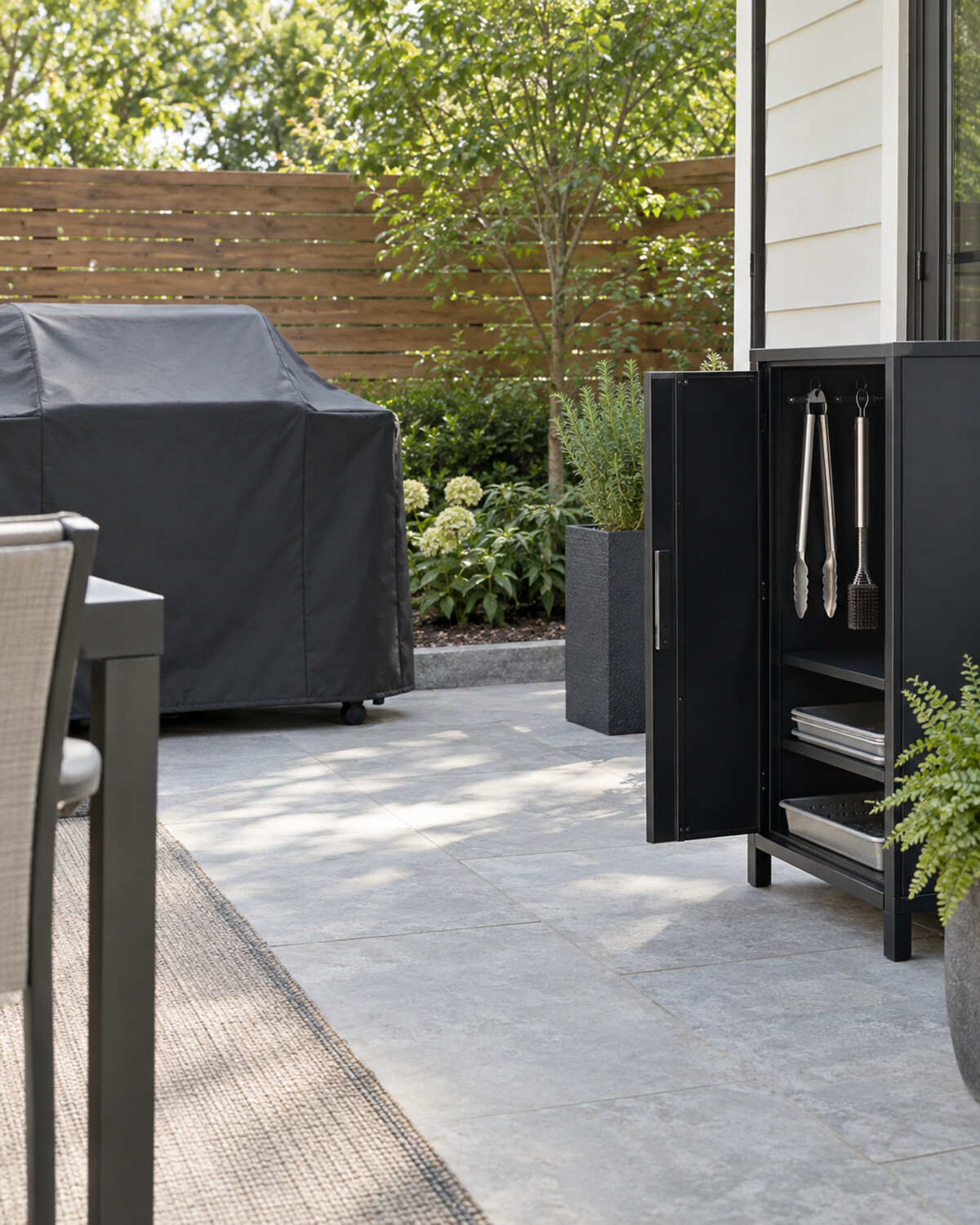
Grill tools, clean trays, and protective covers can live in a slim dedicated cabinet or cart, but the storage zone must remain separate from active heat. Arrange long utensils inside a drawer or vertical compartment so sharp ends are not exposed. Keep only clean, dry accessories in the unit to reduce grease and odor buildup.
Follow the grill and storage manufacturers’ clearance and use instructions. Never treat an ordinary cabinet as a place for fuel, hot tools, oily waste, or a propane cylinder. Local building, lease, condo, and fire rules may restrict grills and fuel storage on patios. Keep the route to the door open and allow equipment to cool completely before putting accessories away.
16. Store Watering Supplies in a Narrow Garden Caddy
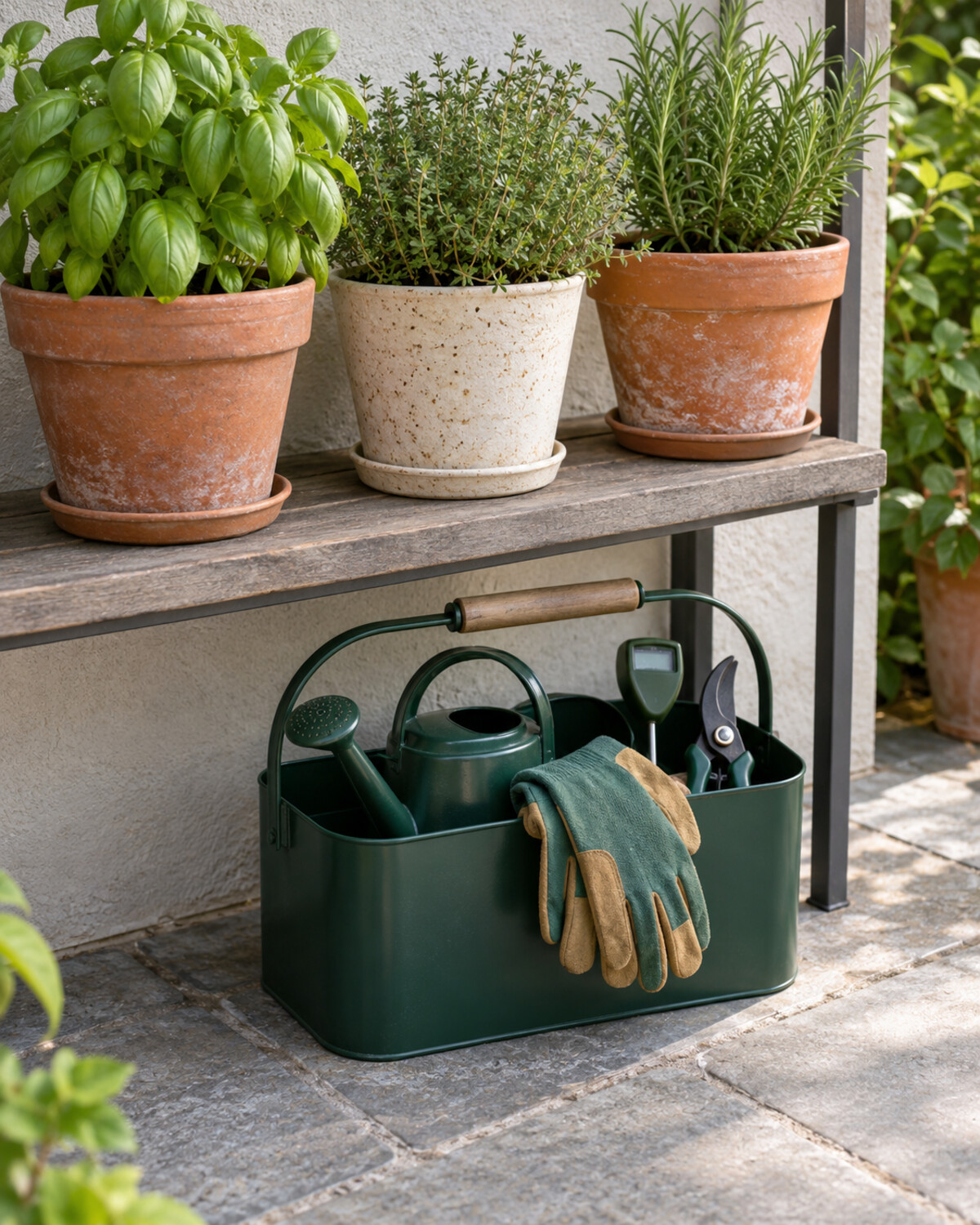
A handled caddy is ideal for the few supplies used almost every day: a compact watering can, gloves, snips with a protective closure, and a moisture meter. It can sit beneath a plant shelf and travel from pot to pot, then return to the same narrow slot. Limiting the caddy to daily essentials prevents duplicate tools from accumulating outdoors.
Allow wet items to dry before closing them inside another container. Keep sharp tools secured and away from children and pets, and store plant treatments according to their labels rather than in the caddy. Choose a rust-resistant or easily washable material, but do not assume any material will remain maintenance-free under constant sun and moisture.
17. Organize One Exterior Cabinet With Interior Bins
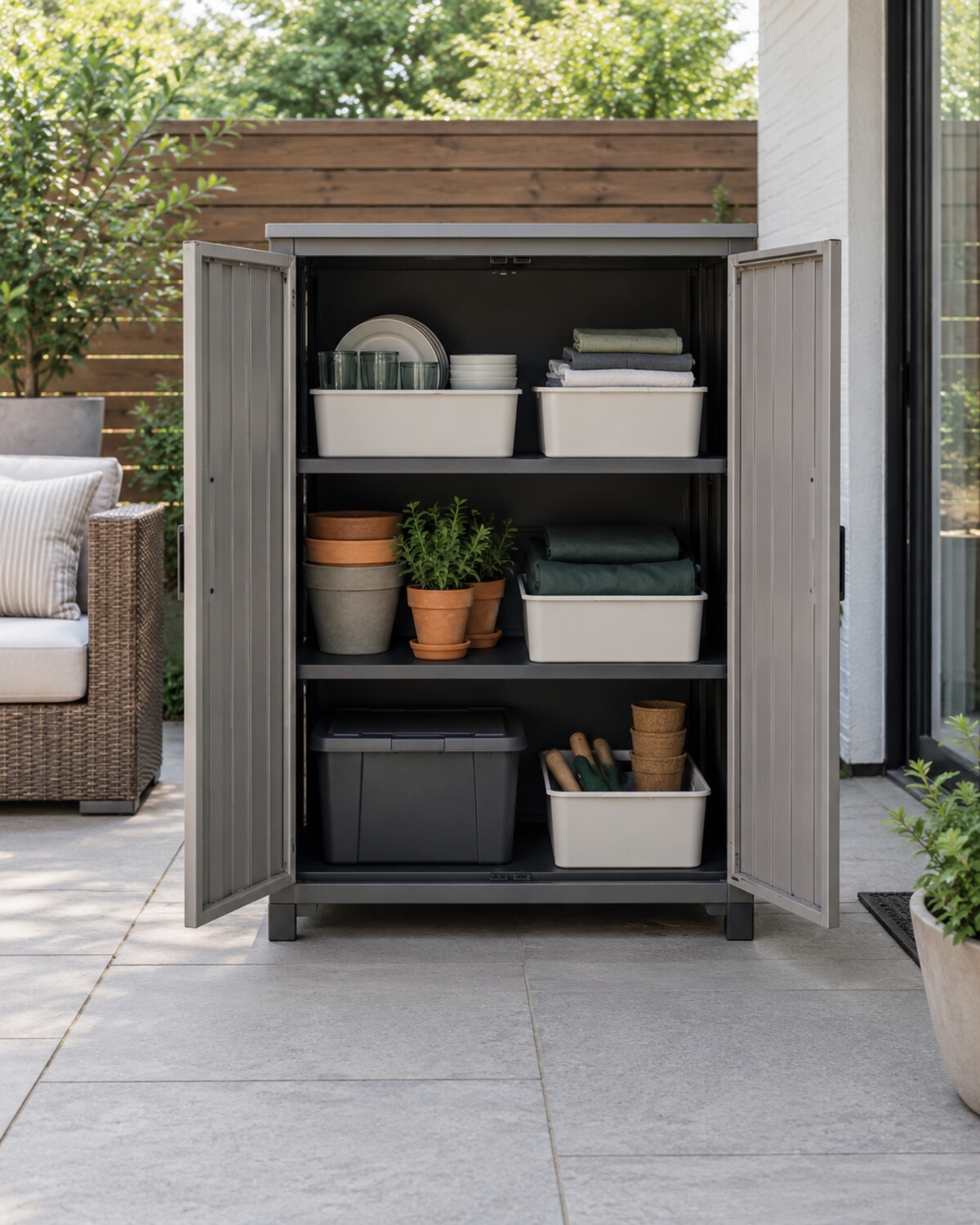
One exterior cabinet becomes far more useful when the interior is divided by activity instead of filled shelf by shelf. Use removable bins for dining, planting, furniture care, and seasonal decor. Position everyday categories at waist height and heavy items low. Simple color coding or a written inventory kept inside the home can replace exposed labels on the patio.
Choose bins that leave room for air movement and can be lifted out for cleaning. Inspect the cabinet after heavy weather and remove anything damp. Hazardous products should not be placed in a general-access cabinet merely because they fit; follow their labels and keep them secured from children and pets. Avoid overfilling shelves or blocking door latches.
18. Select Nesting Tables With Hidden Storage
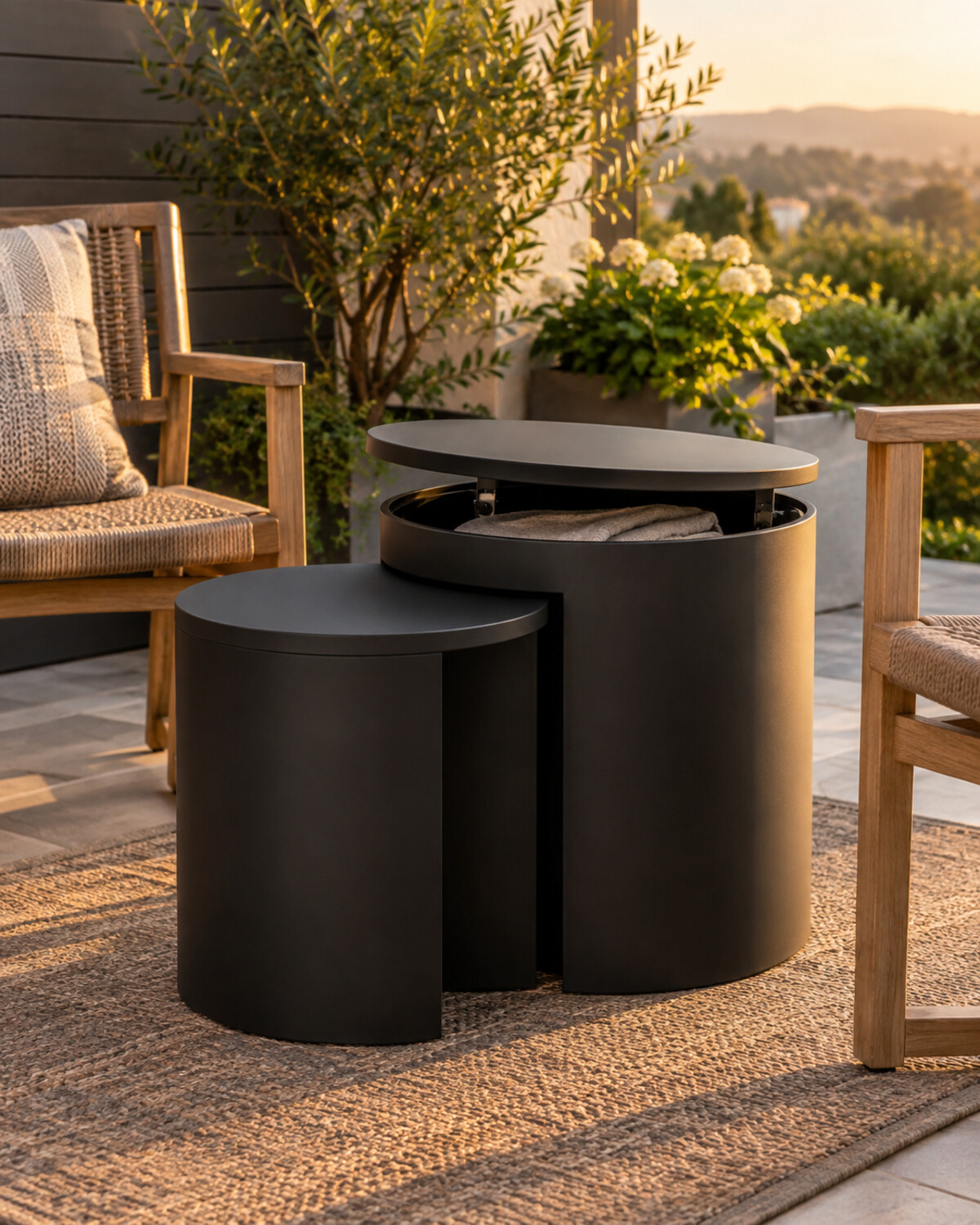
Nesting tables are flexible because the smaller piece can tuck away until a guest needs another surface. A design with one concealed compartment adds room for a furniture cover, deck of cards, or small dining accessories without introducing a separate bin. Keep the pair beside seating so both the surface and storage are convenient.
Make sure the tables nest smoothly without pinching fingers or scraping the floor. Confirm the permitted top load and moisture exposure, and keep the compartment easy to inspect for forgotten fabric or food-related items.
19. Create a Polished Teak-and-Black Storage Zone
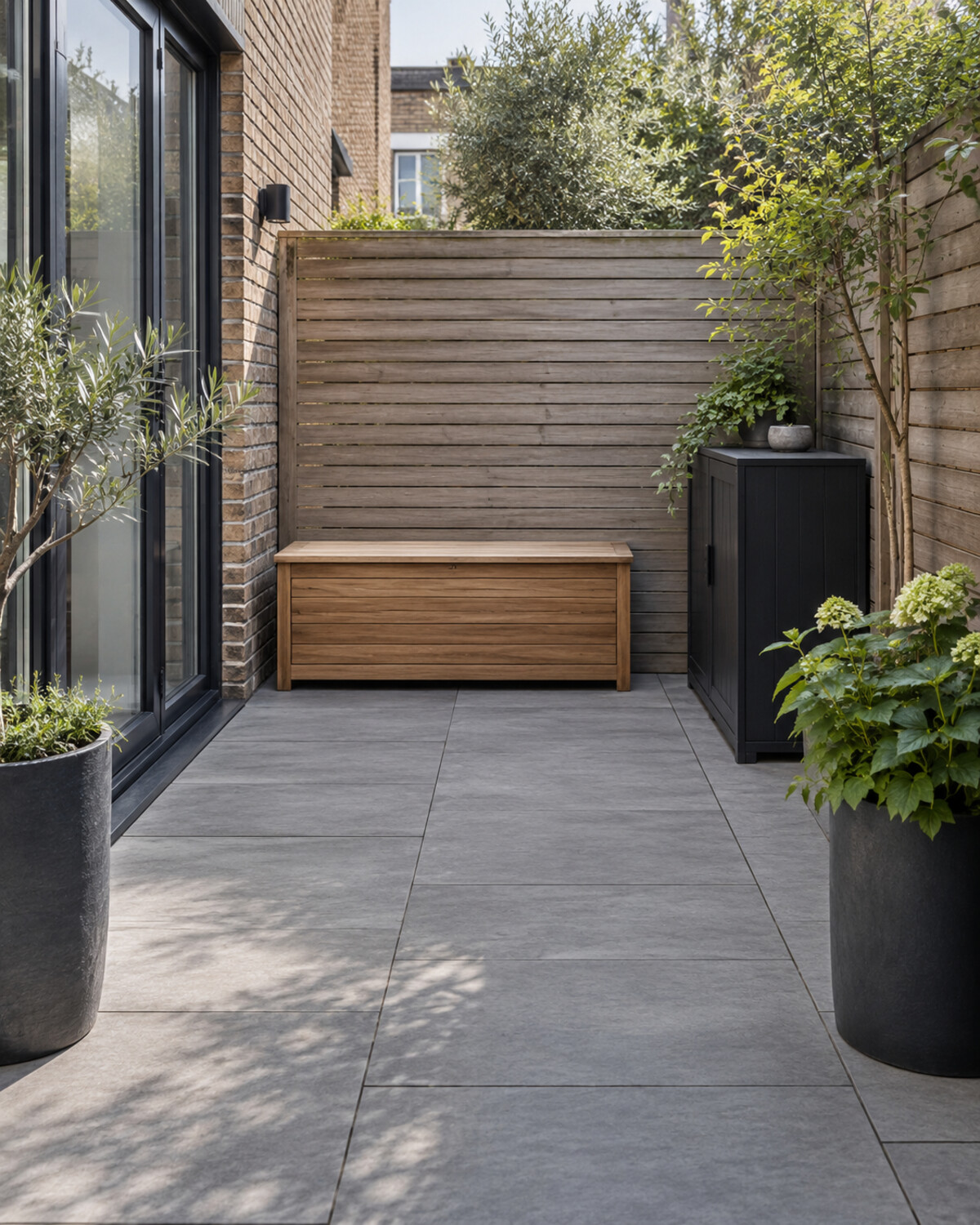
Practical storage can feel high-end when the materials repeat. Pair one warm-teak bench with a slim matte-black cabinet, then use dark planters and restrained greenery to connect the pieces. Concealed handles, straight sightlines, and generous empty space make the zone feel designed rather than assembled from leftover containers.
Limit the palette to two main finishes and one foliage color. Real wood and wood-look outdoor materials have different care needs, so follow the maker’s guidance for cleaning, refinishing, and weather exposure. Keep the cabinet and bench slightly separated so lids and doors open properly. The luxury effect comes from proportion and consistency, not from filling every available surface.
20. Plan a Believable Cluttered-to-Organized Patio Transformation
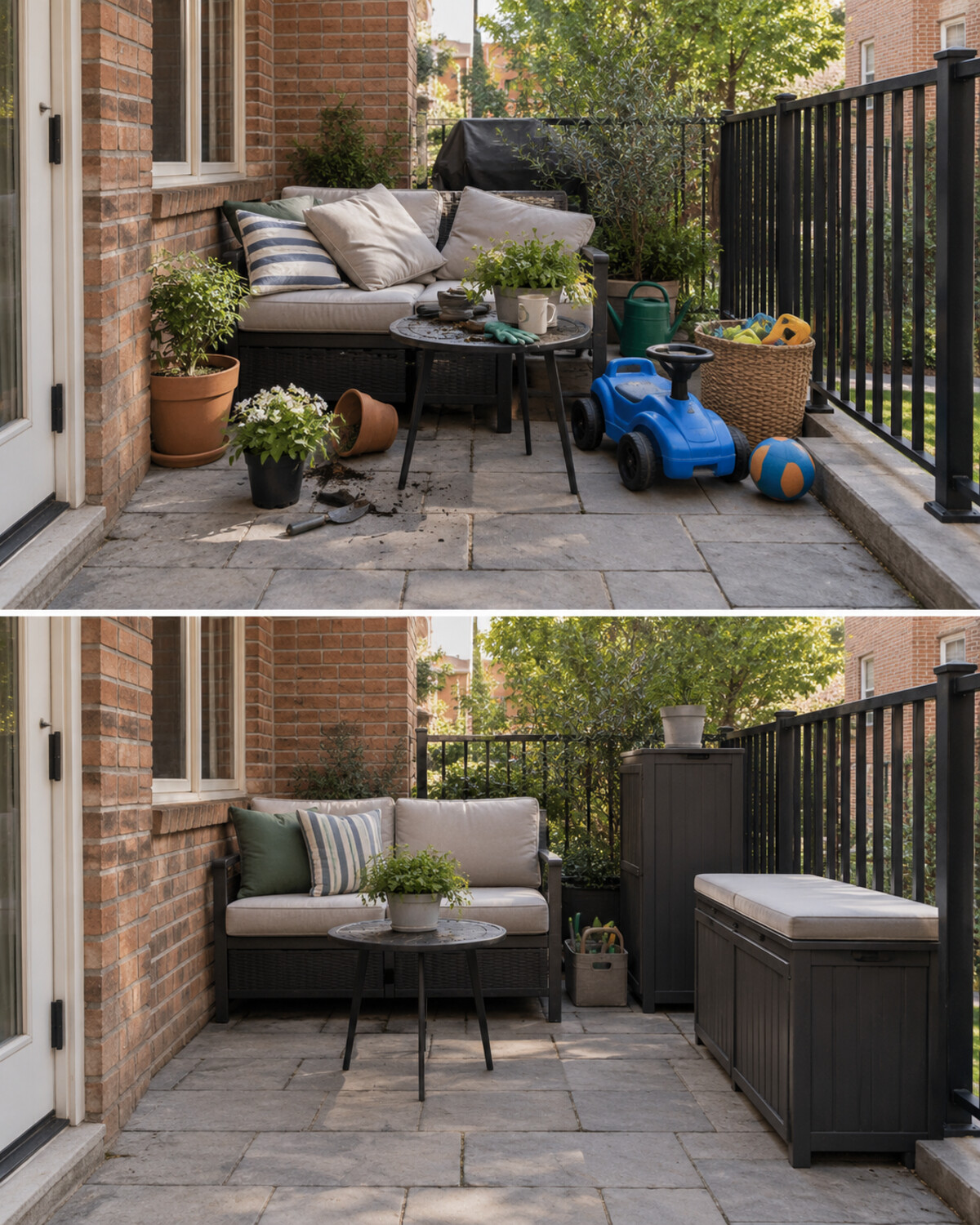
For a useful before-and-after, keep the patio geometry, camera angle, furniture, and door location unchanged. Begin by sorting loose items into keep, relocate, and discard groups. Then add only the storage needed for what remains: perhaps one slim bench for textiles, one cabinet for tools, and one caddy for daily garden care.
The finished patio should gain a clear walkway and usable seating, not simply hide the same volume of clutter behind more furniture. Leave some empty capacity so the system can absorb normal use. Photographing the same viewpoint before and after also reveals whether the transformation truly improved circulation, access, and visual calm.
How to Make Patio Storage Look Intentional
Repeat two materials or colors across storage and furniture. A teak-toned bench, black cabinet, and black planters create a stronger visual system than five containers in different finishes. Align the tallest storage with a wall or corner, keep lower pieces beside seating, and preserve visible floor area through the center. The same visual discipline works across these budget-friendly patio ideas.
Closed storage should handle visual clutter; open shelves should display only a few attractive, frequently used items. Matching interior bins help a cabinet stay orderly without turning the patio into a labeled utility room. Plants can soften hard storage edges, but they should not prevent doors and lids from opening fully.
——————————————————
Small Patio Storage Mistakes to Avoid
The most common mistake is buying the largest deck box that fits on paper. A lid still needs room to open, chairs need room to pull out, and people need a clear route to the door. Another mistake is assuming a closed container can safely hold anything. Moist textiles, chemicals, fuel, sharp tools, and food-related items each require different storage decisions.
Avoid tall freestanding cabinets or screens that are unstable in the actual location. Do not drill into the building without permission, block drainage, or disguise unsafe items behind a decorative panel. Finally, resist filling every shelf immediately. A system with a little spare capacity is easier to maintain than storage packed tightly from the first day.
Choosing the Right Small Patio Storage Idea
Start with one category that causes the most clutter, then choose the smallest solution that handles it without narrowing the walkway. A bench works when seating and cushion storage are both needed; a vertical cabinet suits mixed supplies; a cart supports mobile tasks; and a caddy is enough for a very small garden routine.
The strongest small patio storage ideas match the stored item, available footprint, weather exposure, and installation limits at the same time. Solve those four questions first, repeat a simple material palette, and the patio can feel calmer and more spacious without sacrificing the activities you want to enjoy there.