A full Christmas garland can hide the shape of an interior doorway, and a loose end can catch every time the door swings. These 11 ideas help you choose a garland shape and position that suit the opening you actually have.
Before you gather greenery, open the door fully and look from both rooms. Check the head of the opening, the handles, and the path along the floor. Decide which side will be the display side. Follow the instructions for the specific surface and hardware, and account for the weight of the whole arrangement before you hang it.
1. Frame a Square Cased Opening With a High, Slim Garland
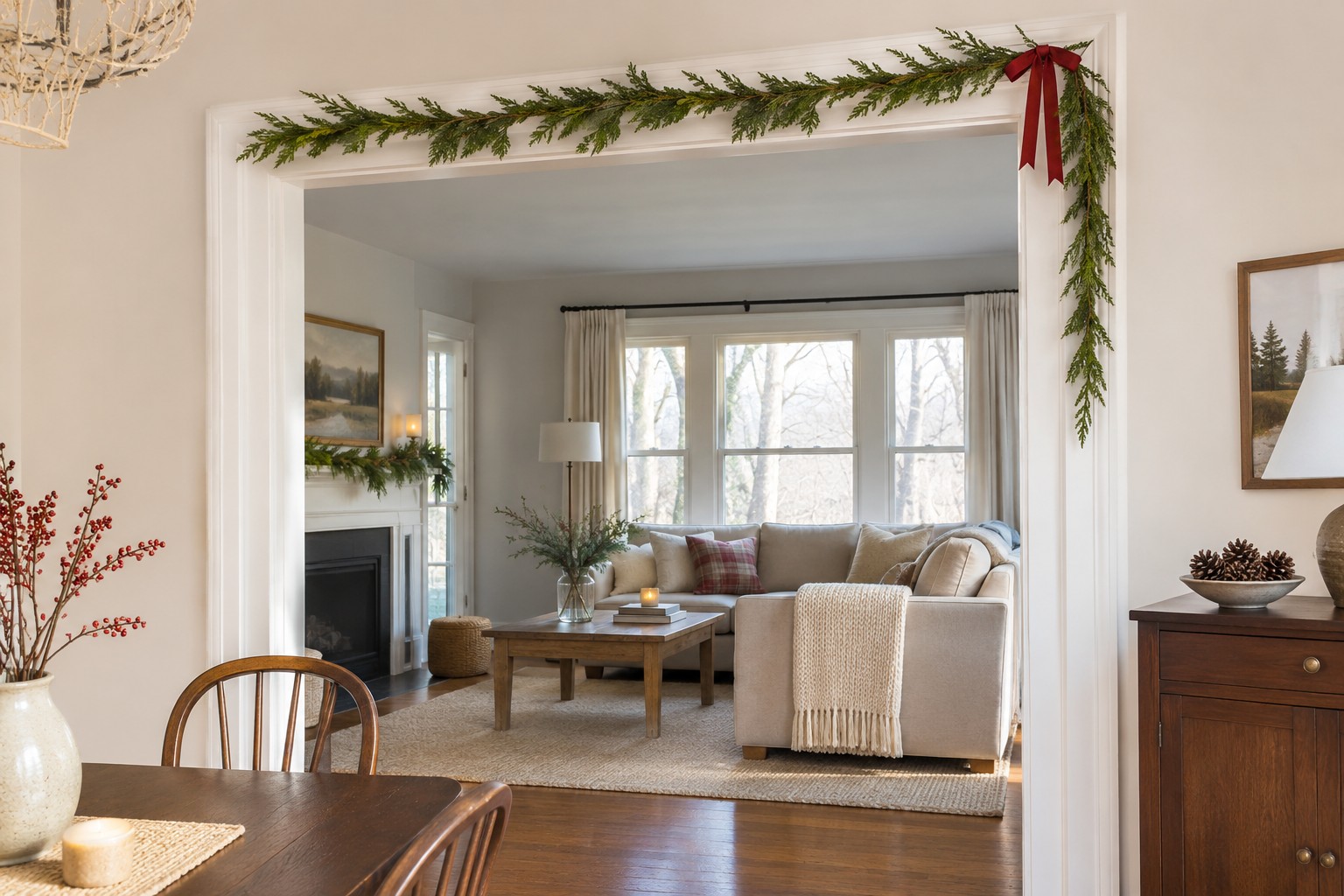
Use a thin evergreen strand across the top of a square opening so the upper edge of the trim is still visible. Lay the garland out first and find the midpoint. On a symmetrical casing, start with the midpoint centered, then decide how much greenery the room can take on each side. A short cranberry ribbon set flat near one corner adds a Christmas note without hiding the shape.
Look at the frame from farther away. If you see only a green bar, thin the densest spots or use a narrower strand. In a room with crisp white trim, a little visible casing gives the greens a clear outline.
2. Follow the Curve of a Plaster Arch
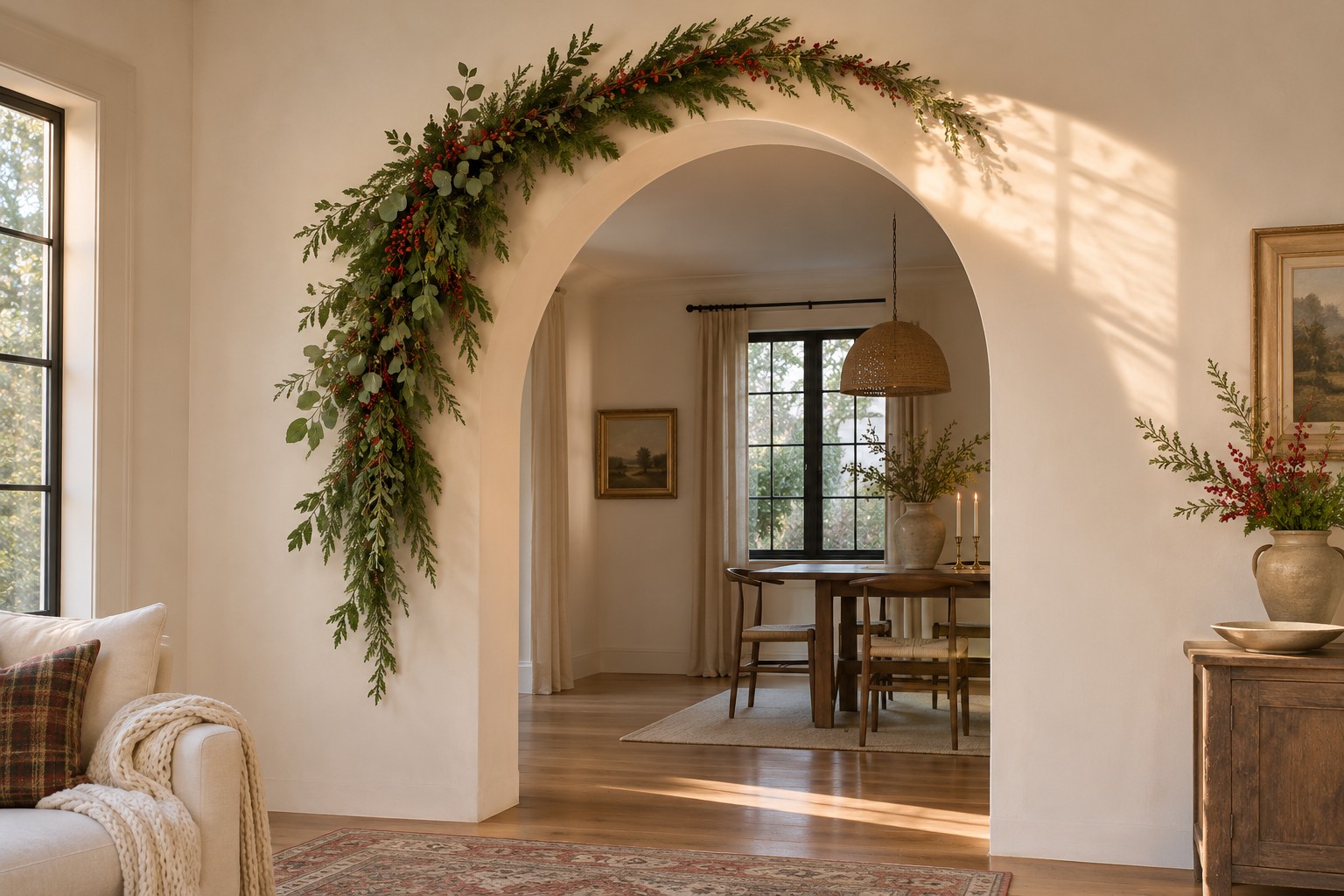
A broad arch reads best when the garland follows its curve without flattening the top. Trace the outside of the arch visually and choose a flexible strand that can fit that line. Keep the densest part on one shoulder, then let the softer tips travel up and over. Avoid tight bends that make the spine lift away from the wall.
A scalloped contour can fight the plaster. Step into the adjacent room and check whether you still see the shape first. An even strip of wall between the greenery and the opening makes it easier to follow the architecture.
3. Move the Garland to the Wall at a Low Opening
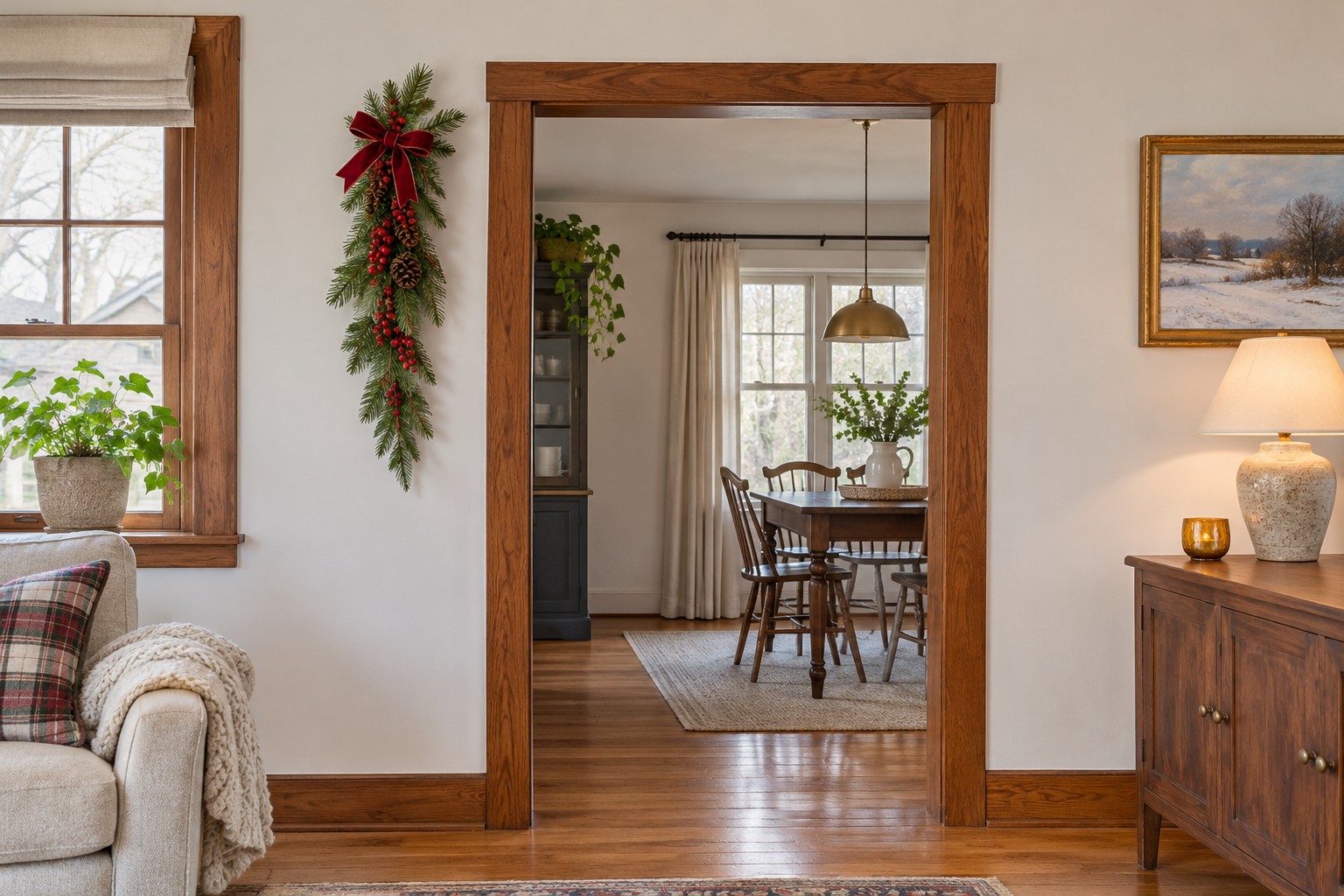
Put a narrow spray beside the trim on a low opening, where the whole height of the passage stays usable. Begin at about the height of the upper casing and run it down the neighboring wall only as far as the greens can lie flat. Use a loose bunch of two or three shapes at the top and let the lower part taper.
This arrangement works when the top of the opening is nearly against the ceiling. Check the route while carrying a coat or a laundry basket. If either brushes the spray, move the cluster farther out and shorten the tips. The eye still reads the decoration as part of the doorway from across the room.
4. Use the Fixed Side of a Door That Swings
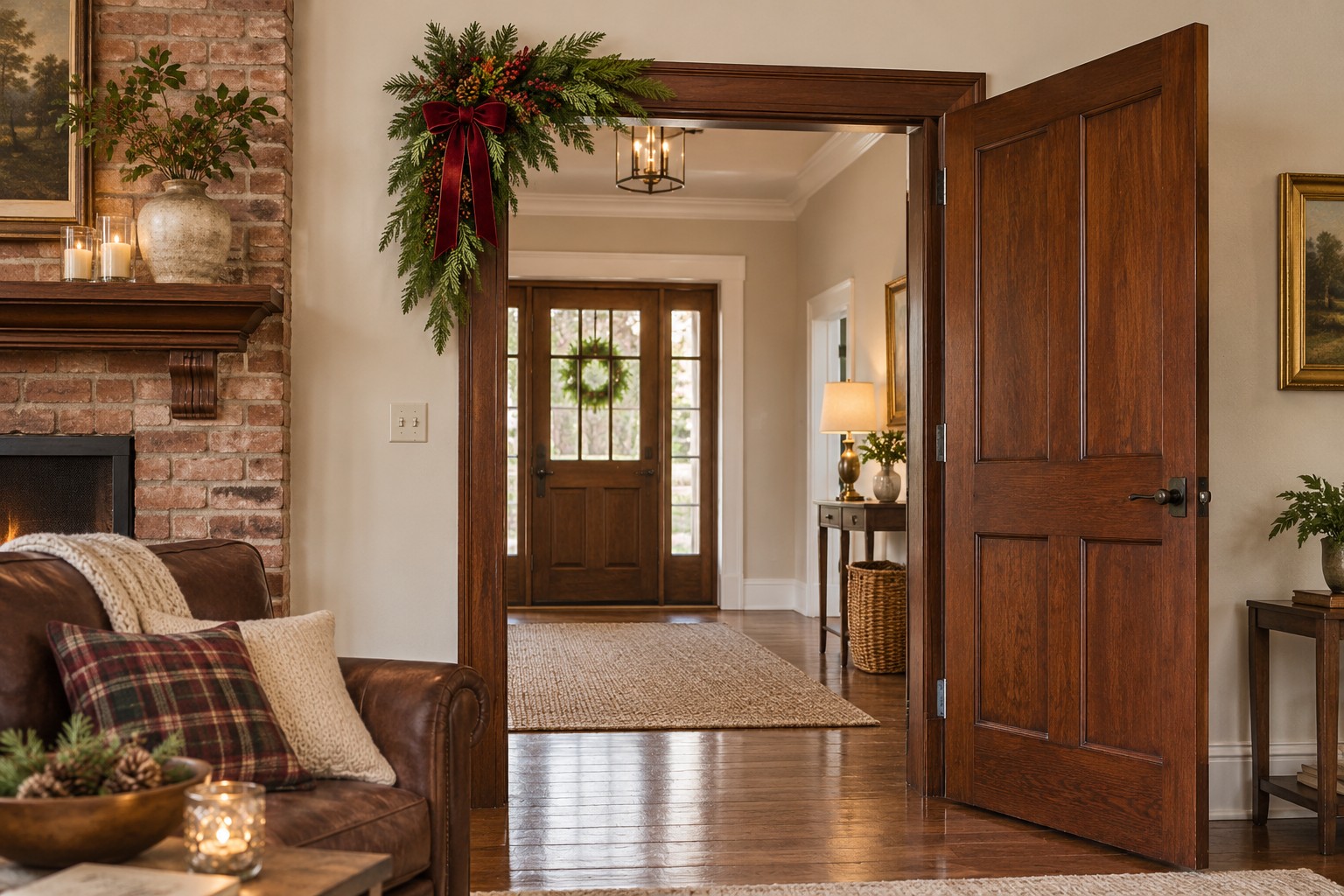
Open the door completely and check the back of the leaf, the handle, and the edge that passes the trim. Choose the opposite face of the opening for the display if it gives you room for greenery. Start with a short cluster at the fixed high corner and keep all tips clear of the hinge, latch, and stop.
Try closing the door several times from both sides. Keep the cluster out of any space you need for your hand, and choose another wall or open doorway if the door’s motion takes up both faces. If you’re also decorating the front entry, use these Christmas entryway ideas to plan the rest of the route.
5. Soften a Dark Passage With Cedar and Amber Light
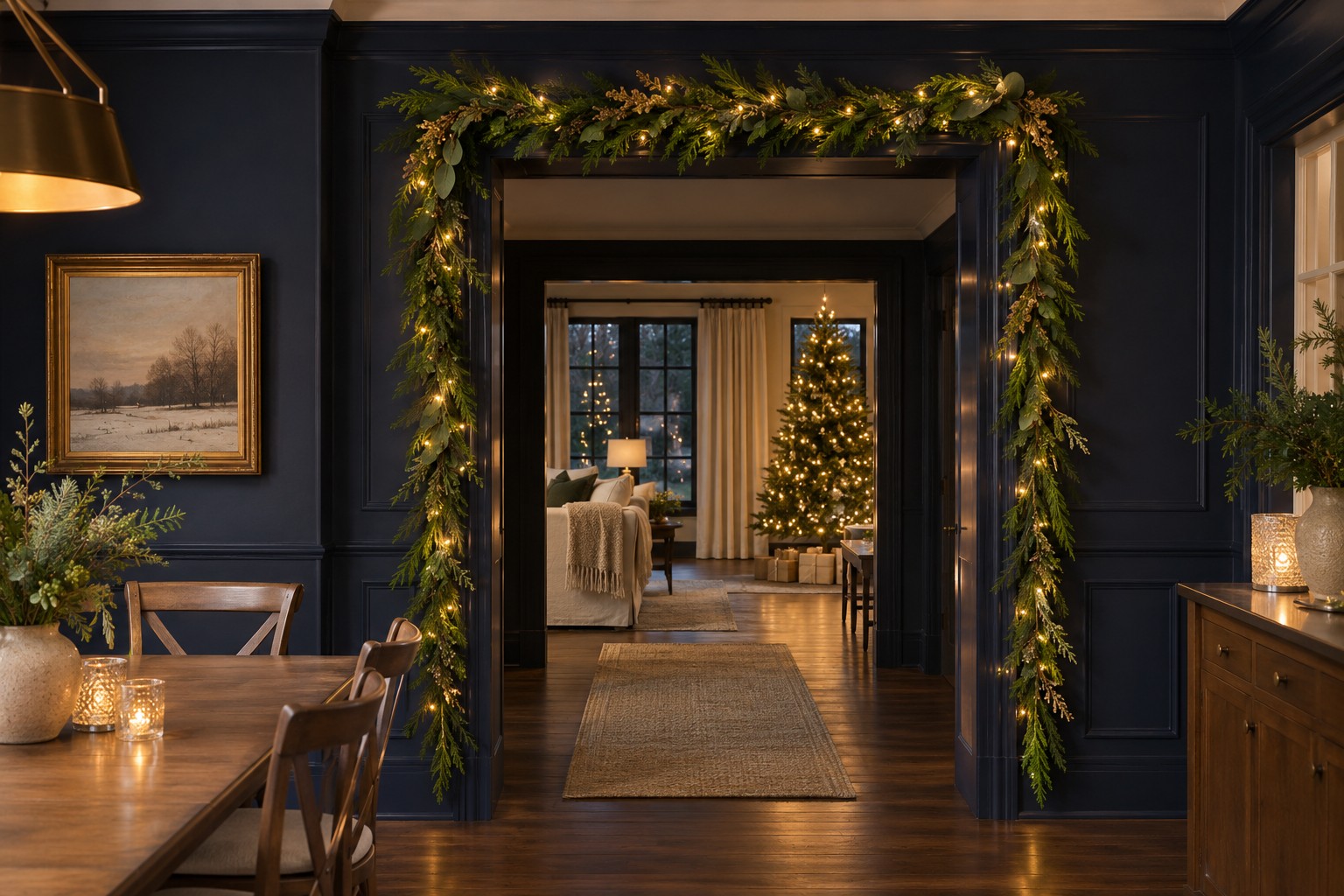
Choose cedar-like greenery with a loose, feathery edge so you can see individual tips against a shadowed wall. In a wide opening with room for a long strand, warm white points of light grazing the needles can make a deep passage feel inviting. Let the greenery carry most of the look and use one quieter stretch above the place you pass most often.
Look at the lights from the room where you’ll spend the evening. If they reflect in a nearby glass panel, reposition the strand on the same safe mounting face and check again. For a battery-lit garland, keep the battery compartment accessible and supported according to the instructions. Measure the entire path the decoration follows, including any drops down the sides, before choosing a length.
For a similar glow on a wider opening, the 9-foot Crestwood Spruce garland uses battery-operated warm white lights. It has cones and berries, so check how much space the fuller strand needs before hanging it.
See the warm white spruce garland(paid link)
6. Use Olive Leaves and Dried Citrus for an Earthier Doorway
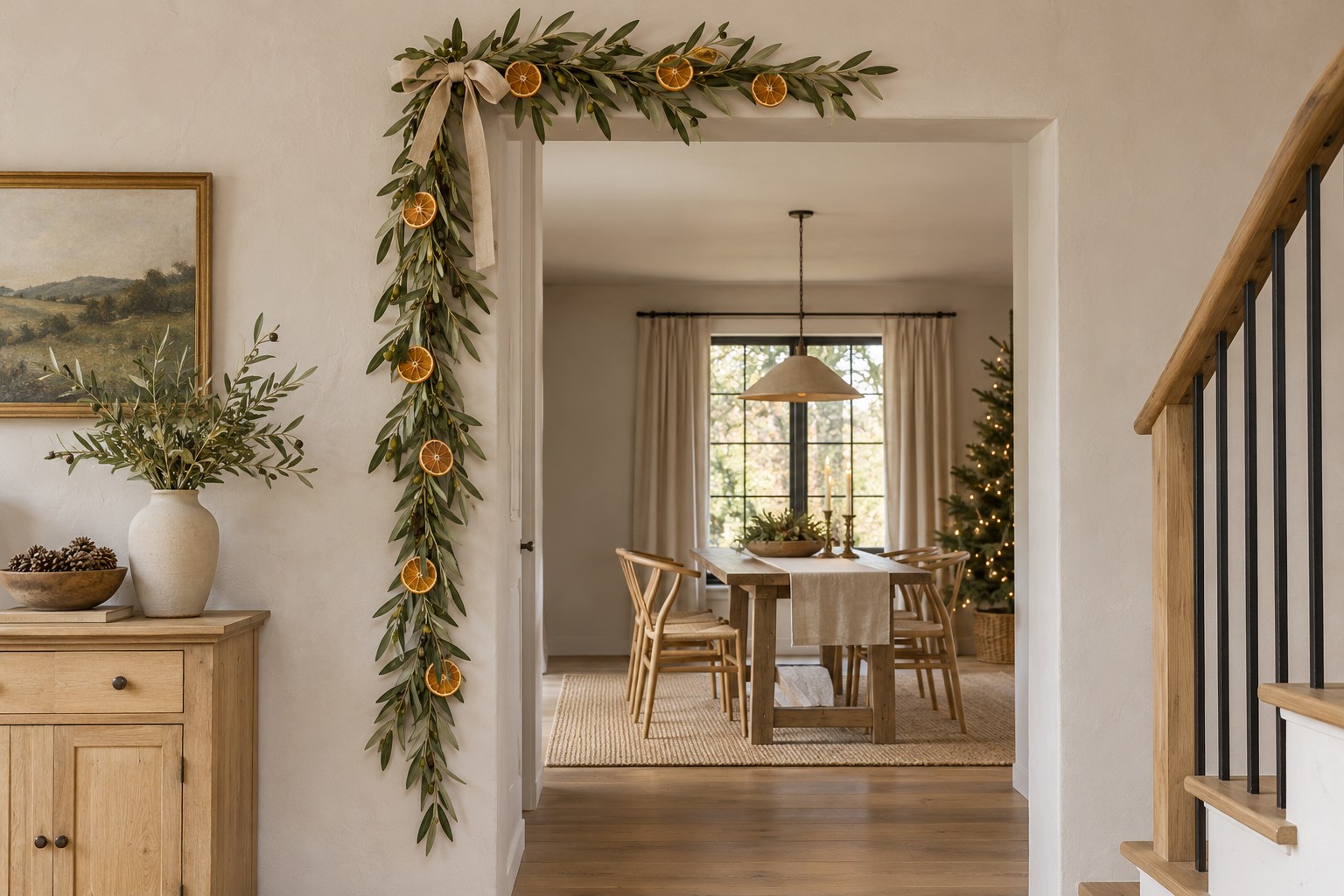
Silvery olive leaves, thin citrus slices, and one length of soft flax ribbon can give a limewashed or cream hallway an earthy Christmas palette. Start with a narrow base and place a few pieces of dried citrus on the visible face so their amber tones catch the daylight. Let the leaf shape and the plaster texture do most of the work.
Choose lightweight pieces and secure them close to the strand. Skip long tails and any detail that blocks the door. Check the combination in your existing light. The leaves can look cooler near a window, while the same citrus warms up quickly against a cream wall after dark.
7. Give Double Doors Two Short Outer Sprays
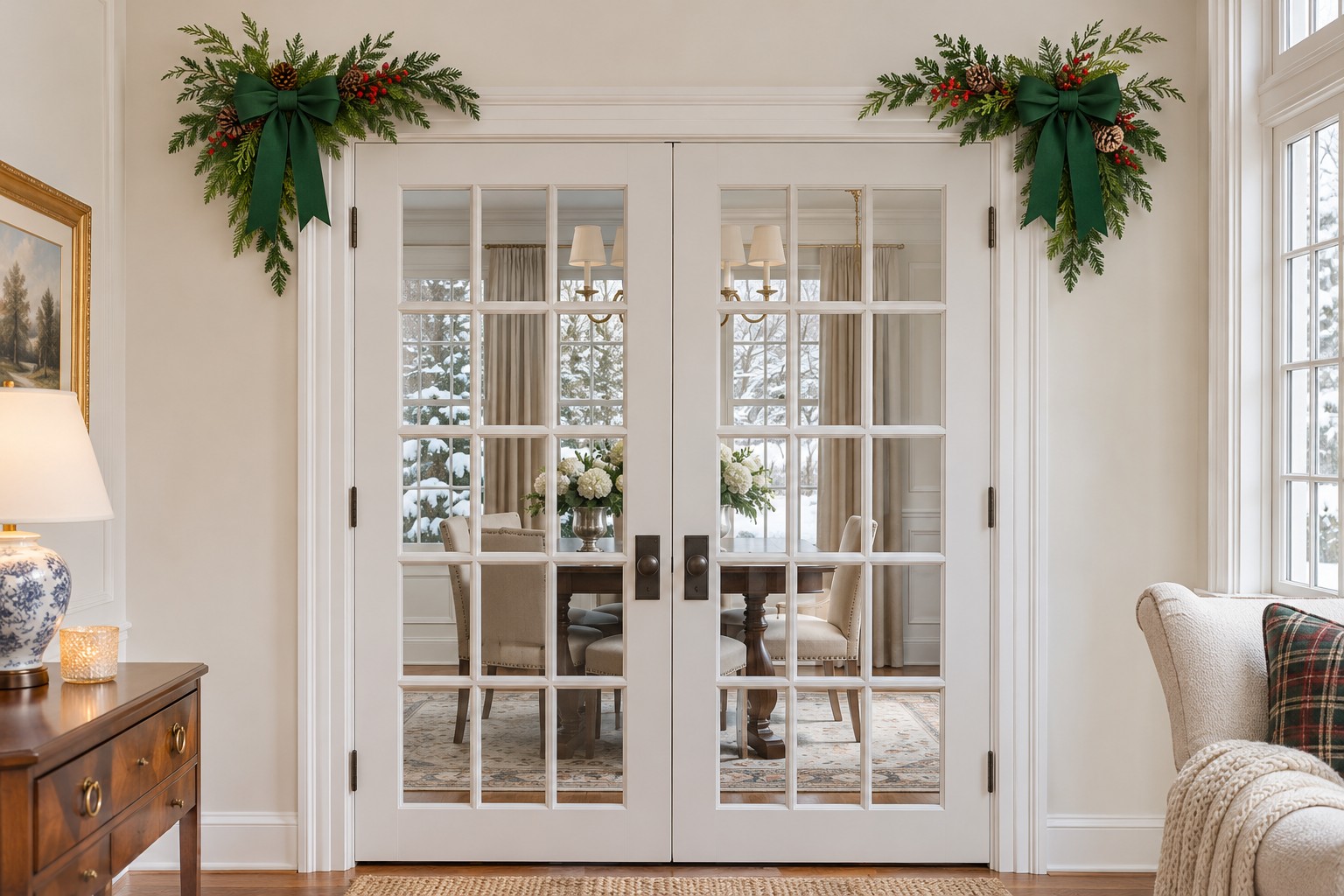
On a pair of doors, try two short groups at the outer top corners, on fixed surfaces beyond the door leaves. A repeated forest-green ribbon links the two sides, and the open middle makes the double doors feel full width. Set both sprays out on a table so you can compare their length and weight before choosing the mounting points.
Open each leaf separately and then both together. The door that usually stays closed deserves the same test. If decorative trim leaves little flat mounting area, put the pair on the adjoining walls so the center remains clear for the full opening.
8. Keep a Pocket Door Clear With an Outside-Mounted Garland
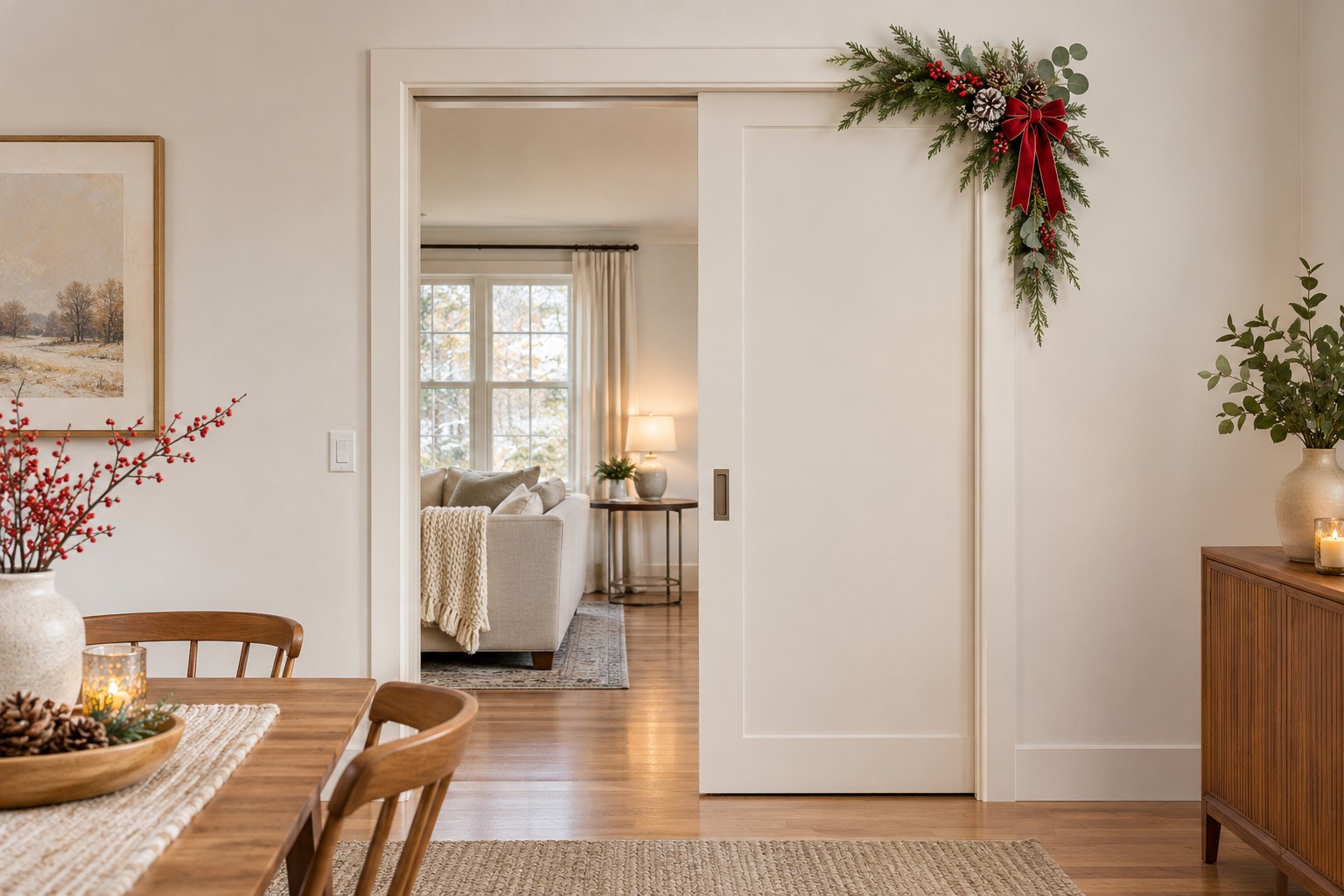
A pocket door slides into a cavity, so its trim and the surrounding wall may offer less room for hardware than they appear to. Use the face of the wall outside the door’s moving path for a short design. Check the wall and door manufacturer’s instructions before choosing any fixing. Where suitable attachment points are uncertain, choose a nearby wall away from the pocket.
Slide the door all the way in and out with the opening empty first. Then stand back and see how low a garland can sit without coming close to the handle. A soft curve on one upper corner can make the door look dressed even from the room where you see the hardware.
9. Use a Tension Rod Only Where the Opening Can Take It
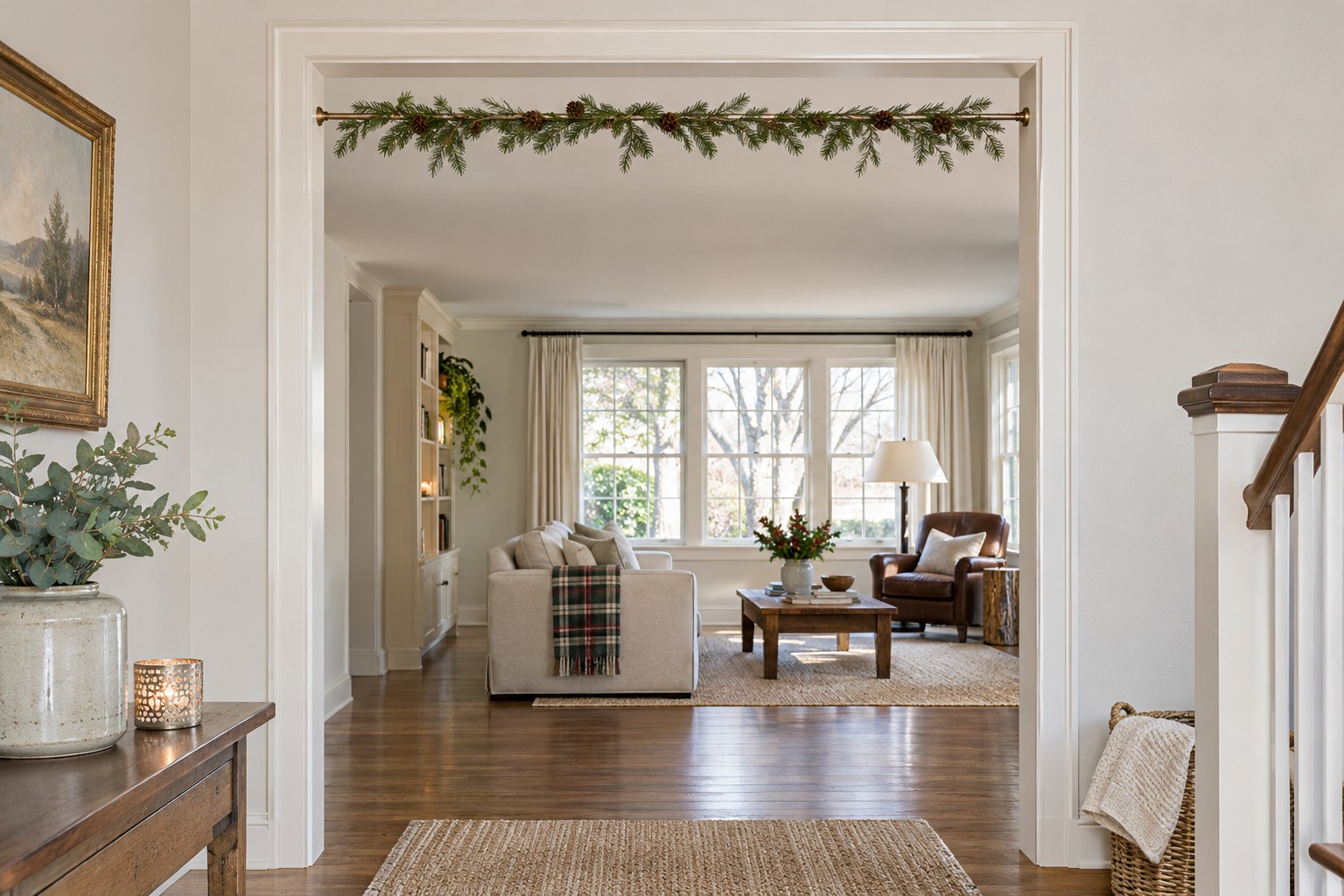
Look for a wide, open passage with sound, flat, parallel sides and sufficient height for the rod plus the greenery. Follow the rod maker’s surface, span, and load limits. Test the rod and the unloaded opening first, then count the weight of the complete, dry display, including the battery pack or ribbon. If the rod shifts, the finish is unsuitable, or clear height is limited, use an appropriate wall-mounted design beside the opening.
Keep the strand light and close to the rod. Let short stems disguise the ends and look at the result from both sides. A plaster arch without suitable straight sides, a frequently used door that swings into the rod, or a narrow passage someone must use freely is a good place for one of the outside-the-frame ideas instead.
10. Use the Wall Color to Set the Garland’s Contrast
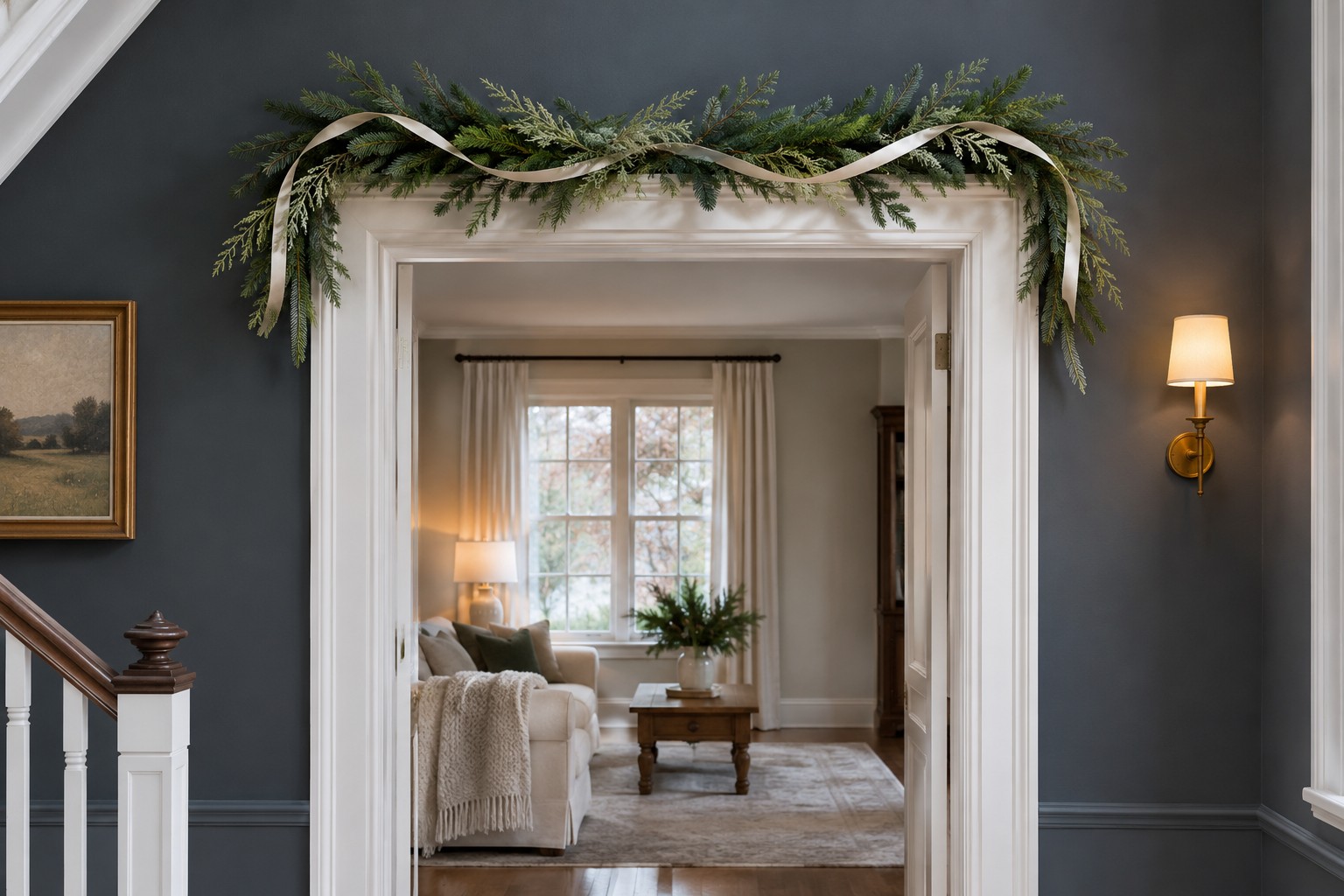
Hold your darkest green offcut against the wall at the height where the garland will sit. On a charcoal or navy wall, bring a paler tip or narrow ivory ribbon into the foreground. Near bright trim and a pale wall, a darker pine can give a fine silhouette without adding volume. Test the change under the lamp you use most in the evening.
If the hall and adjoining room differ, pick one side to lead. Repeat a single accent from that room on the garland’s far side, where people can see it as they come through. Keeping the other elements quiet makes the wall and the shape of the doorway part of the composition.
11. Give a Row of Doorways One Lead Garland
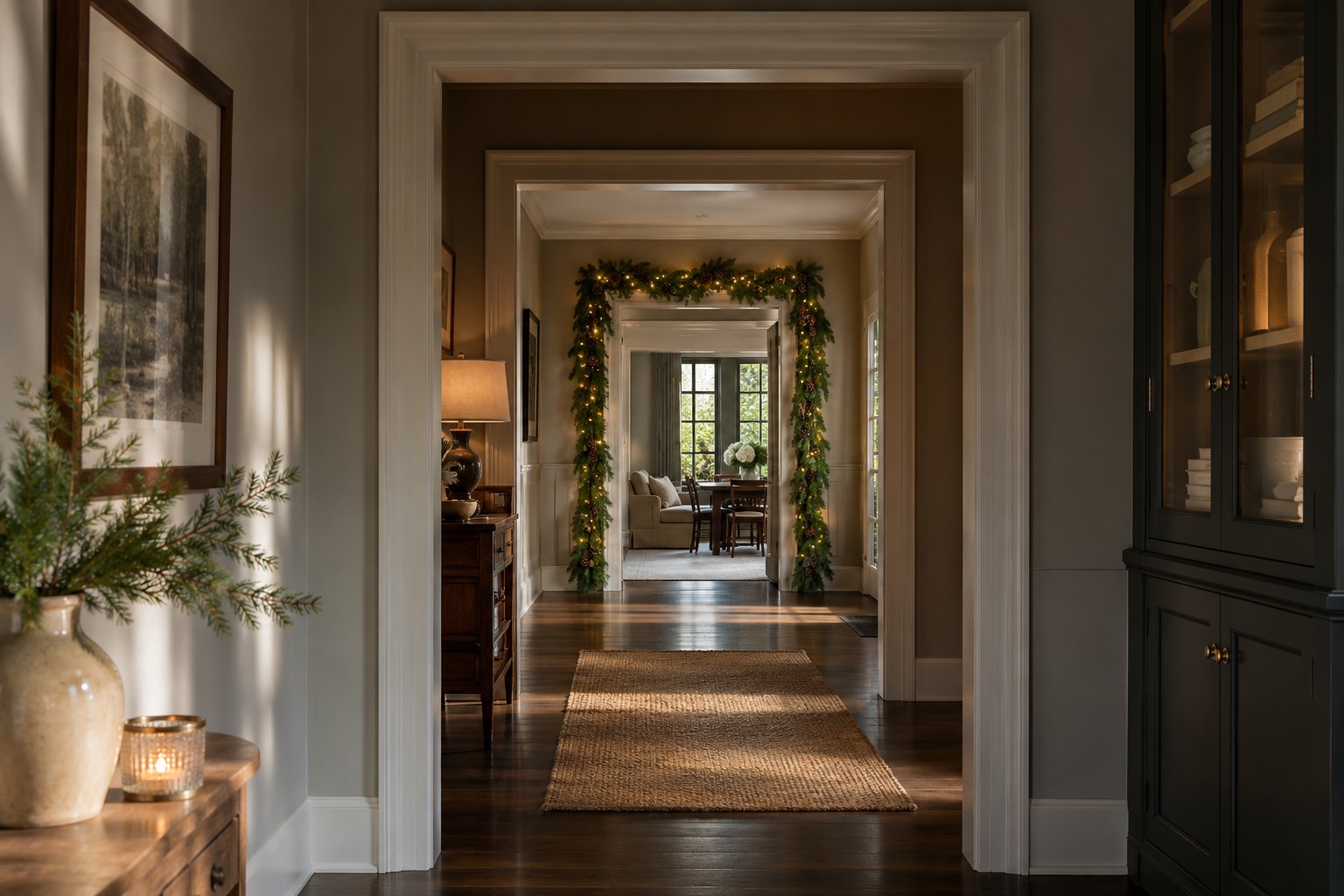
Stand at the beginning of a row of openings and pick the one that naturally closes the view. Dress that opening with a complete holiday shape, then give nearer openings a smaller echo on the wall beside them, such as a short flat evergreen sprig. The distant form draws the eye down the hall, while the nearby accents leave the route easy to read.
If the door at the end of the view gets heavy use, set the full decoration immediately beside it rather than over the moving parts. For a separate holiday feature on the stairs, keep the rail usable with these Christmas garland ideas for open stair railings.
Choose the opening first, then let its shape and the way people use it decide how much greenery belongs there. A short, well-placed Christmas garland can make the transition between two rooms feel festive every time you walk through.
Discover more from HomeTrendora
Subscribe to get the latest posts sent to your email.