Christmas garland can crowd the part of an open stair railing you reach for on every step. Use these ideas to choose a reversible attachment that fits your railing and leaves the handrail and walking path clear.
Start with a light, unlit strand and find a solid attachment point below the gripping area. Check the railing maker’s guidance and use fasteners rated for the surface, shape, and full weight of the decoration. Work from steady footing where you can reach the attachment without leaning over the guard. The CDC home fall prevention checklist calls for keeping stairs clear. U.S. Fire Administration holiday guidance covers inspecting and using holiday lights. Keep any cords out of the stair route.
1. Run Cedar Low on Square Wood Balusters
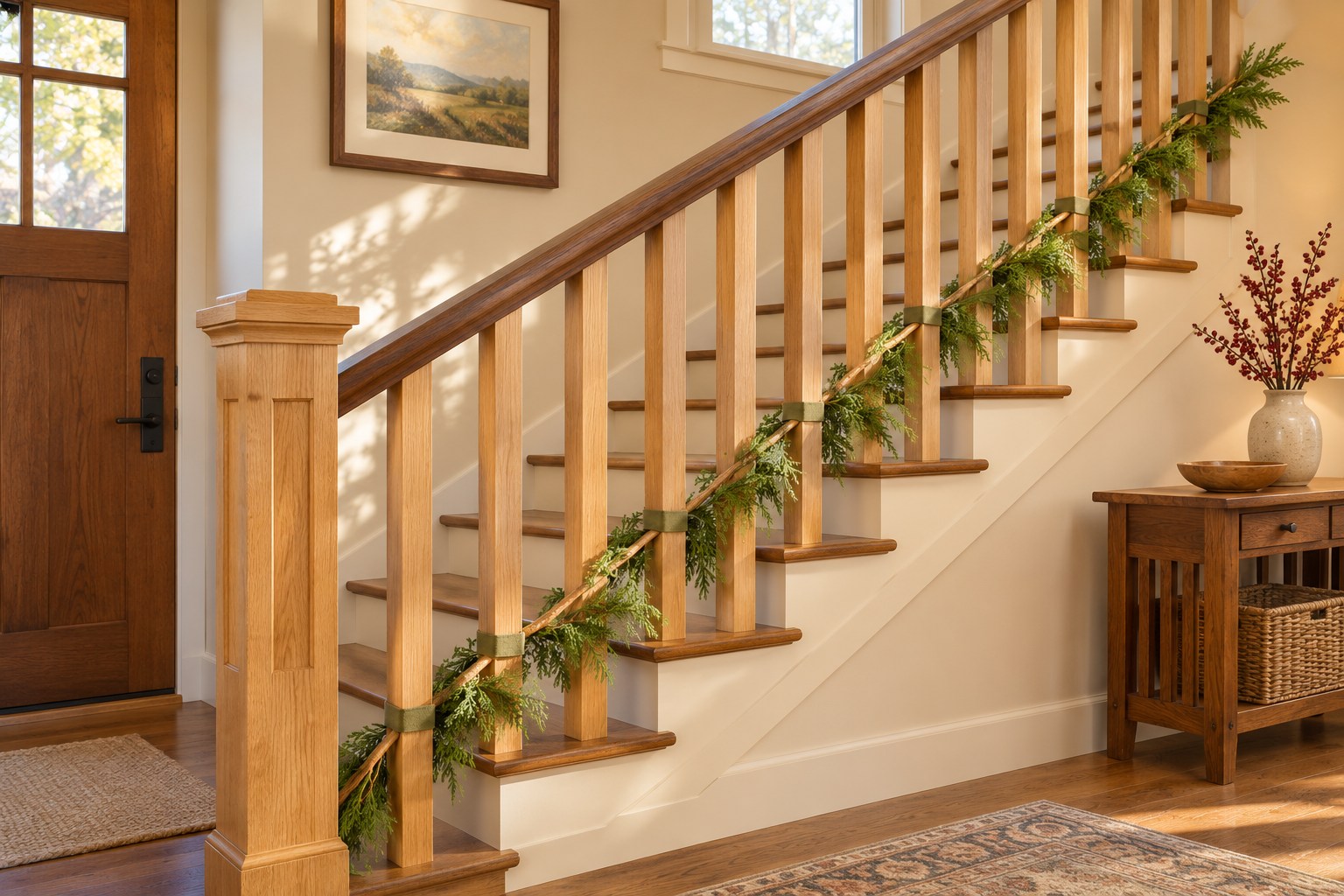
Square wood balusters give you a flat face for a clean line of cedar. Use a lightweight strand and hold it against the outer side of the balusters, well below the handrail. Choose soft reusable hook-and-loop wraps approved for the wood finish and the intended load. Fasten the strand at several uprights so the back sits flush. Close each wrap fully and tuck the ends into the foliage.
Start with one section near the bottom, where you can see it from the entry. Let the cedar follow the slope and keep the line just as thin as it looks at the first post. A small fold of matte red ribbon at two fasteners can carry the Christmas color without adding long tails. Walk the stair and check the grip from both directions.
For a compatible finish, cut VELCRO green garland ties to fit around the light cedar strand and a baluster. Close each wrap below the grip and tuck the end into the foliage.
See the green garland ties on Amazon (paid link)
2. Use a Slim Pine Strand on Turned Spindles
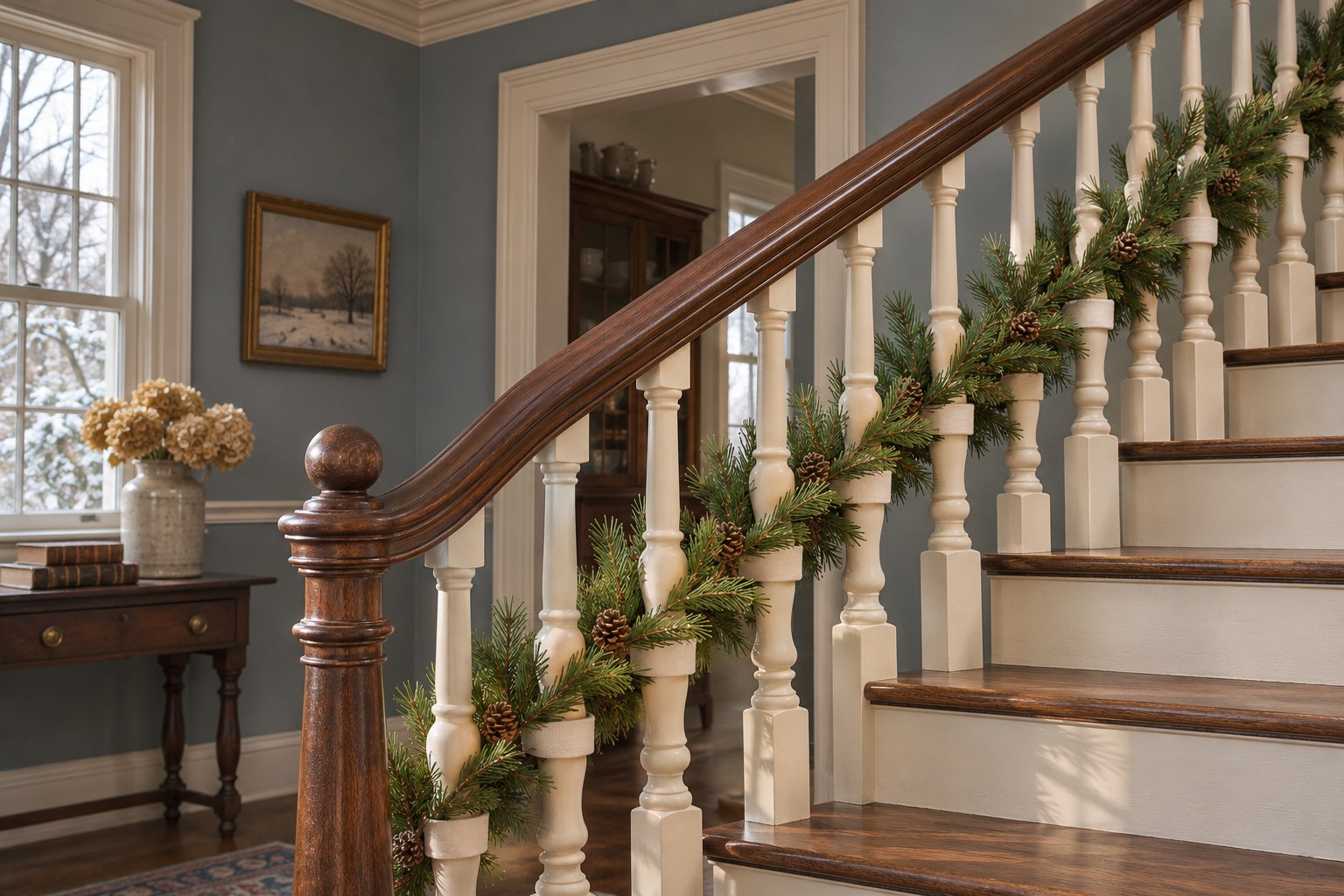
Turned spindles often have narrow necks and broad, rounded shoulders. Set a slim pine strand on the outside at the level of the broader sections and use soft, close-fitting ties suited to the painted wood. Look for a tie that can close securely around the actual shape of the spindle. Install one first and check that it stays put when the strand settles under its own weight.
If the spindle tapers sharply, pick a different upright or use a shorter piece with two support points. Keep every knot and tail on the foliage side. A thin pine strand shows off the painted profile, especially when the stems follow the same angle as the stair. Seen from the entry, the spindle shapes should remain easy to read above the greens.
3. Fit Short Fir Lengths to Plain Iron Pickets
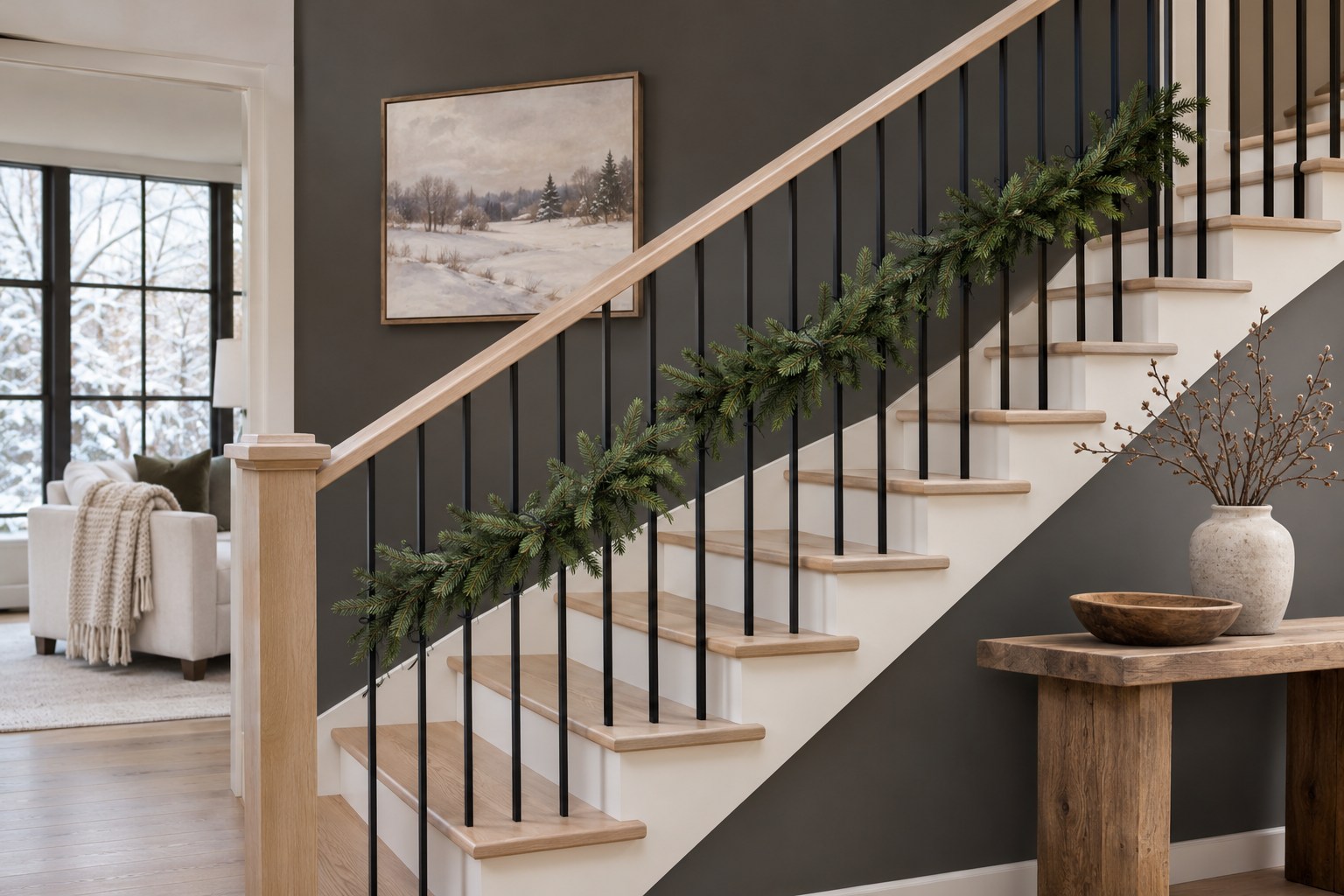
Plain square iron pickets make a straight rhythm worth keeping visible. Cut a narrow fir garland into short lengths and secure each length against the outside faces of at least two stable pickets using reusable coated ties suited to the finish. Close the ties according to their instructions and tuck the ends away from the walking side. Test one attachment before working along the run.
Bring the next section close enough that the greenery reads as a continuous diagonal from across the room. Short pieces make it easy to match the slope and remove one area for adjustment. Choose a ribbon the same depth as the greenery, and secure any ends within the section. Keep the entire wood or metal grip and the spaces around it clear.
4. Set Greenery Below an Iron Basket Pattern
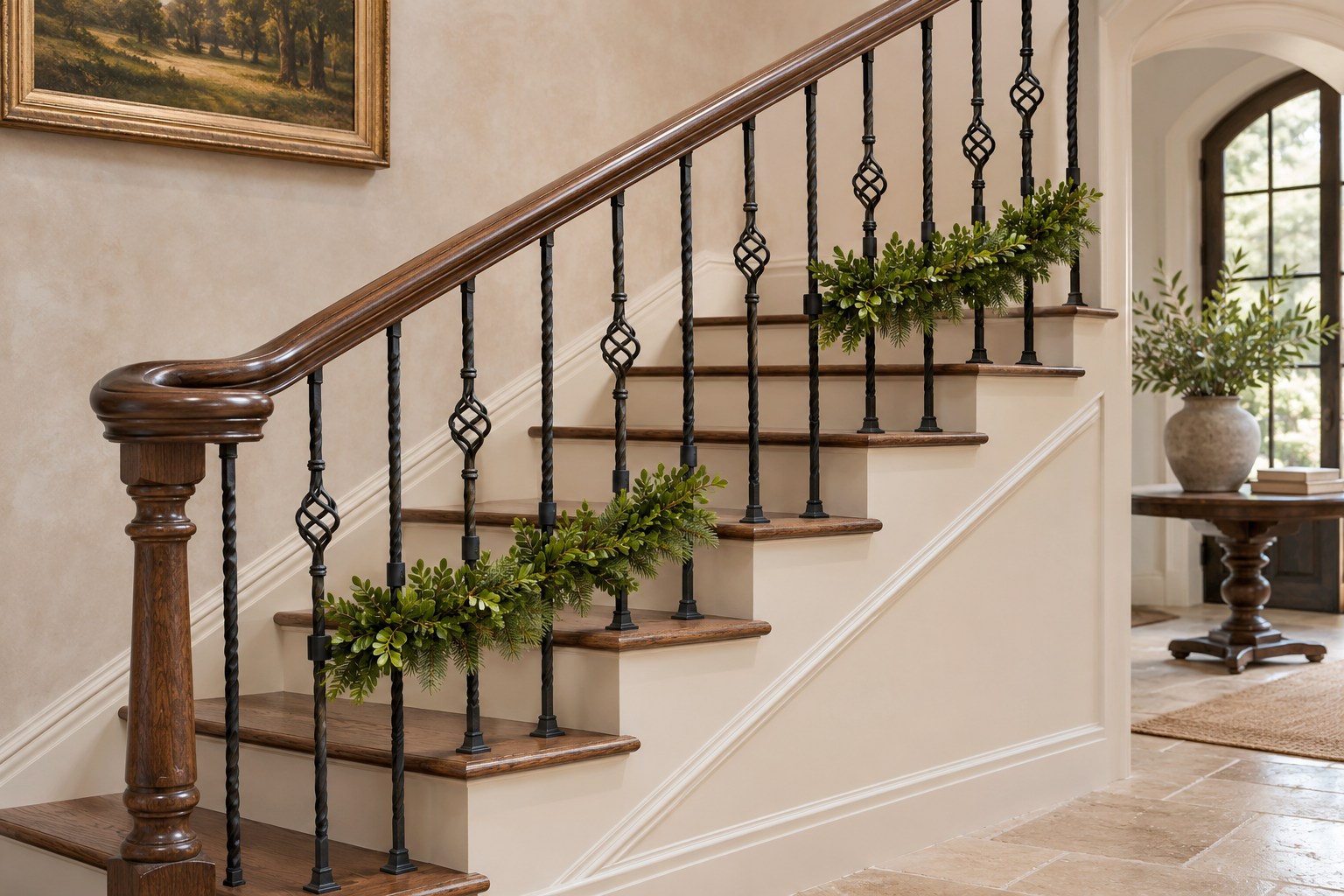
An iron basket baluster already has a decorative middle. Set two short greenery sections against the straight portions beneath the baskets so the twisted pattern can still be seen. Choose small padded clips approved for the shape and finish of the iron. Use enough secure points that each section stays flat, and make sure the clip closes on the straight bar it was designed to fit.
Look down the staircase from above to check that the greens do not lean toward the treads. Then step back into the entry and see whether the spacing follows the metalwork. A mix of boxwood and fir stays low enough for a compact composition. Repeat the same length on each side of an especially ornate panel, leaving open space around the pattern and under the handrail.
5. Trace Round Steel Balusters With Juniper
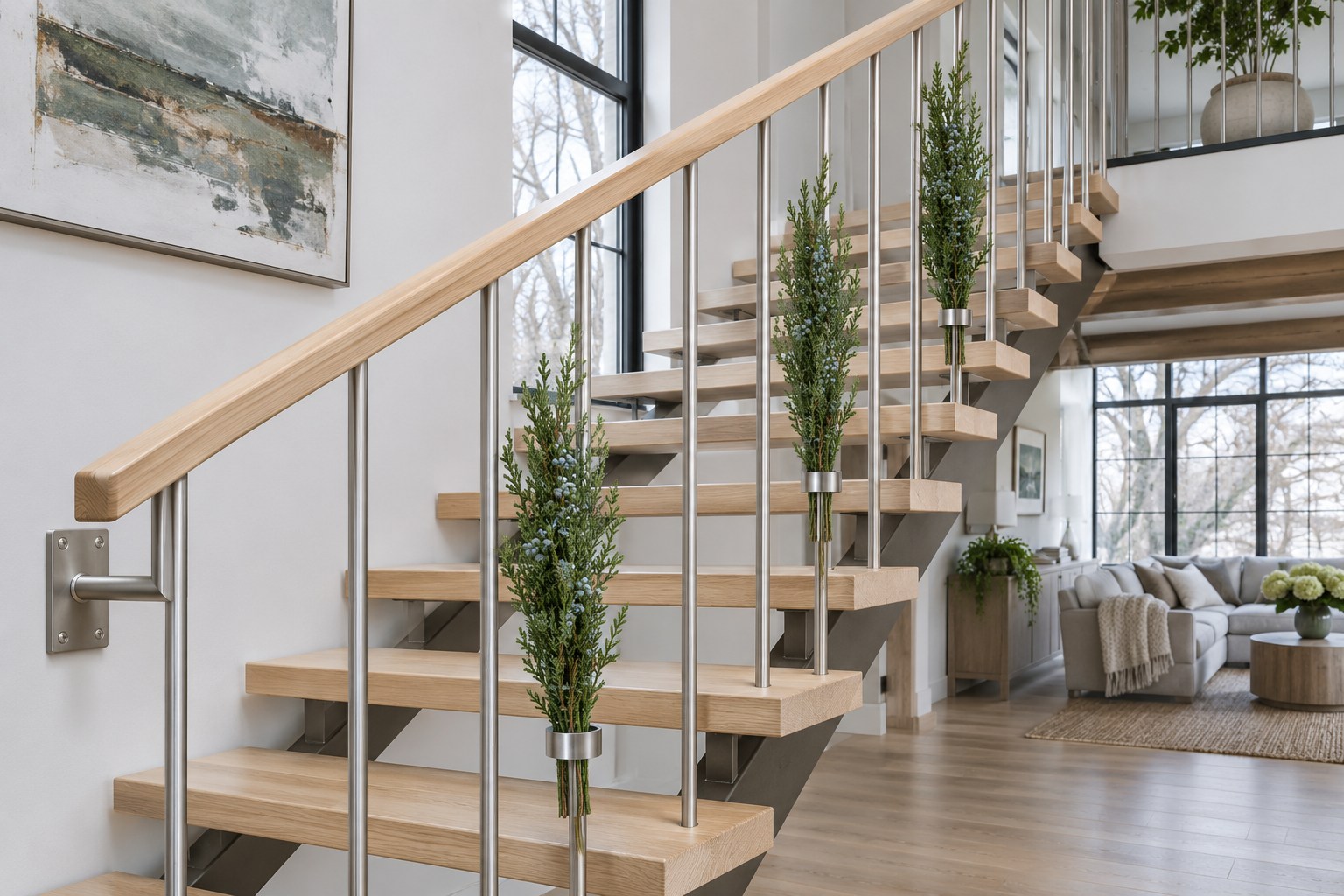
Round steel balusters call for a fastener that fits a round surface. Try a small, lined band designed for the diameter and finish of the rod. Attach a flat bundle of juniper to the outside middle of a sturdy upright, with the upper branch tips well below the handrail. Close the band fully and check the setup in place to see whether it tends to rotate.
Repeat the bundles on every few rods. An airy interval lets the steel reflect light and gives each spray a clear edge from the room side. Keep the tips clipped close to the vertical rods, away from where shoes and sleeves pass. One trial bundle tells you how tightly the composition will read before you decorate the rest of the flight.
6. Put Small Greenery Bundles on Cable-Rail Posts
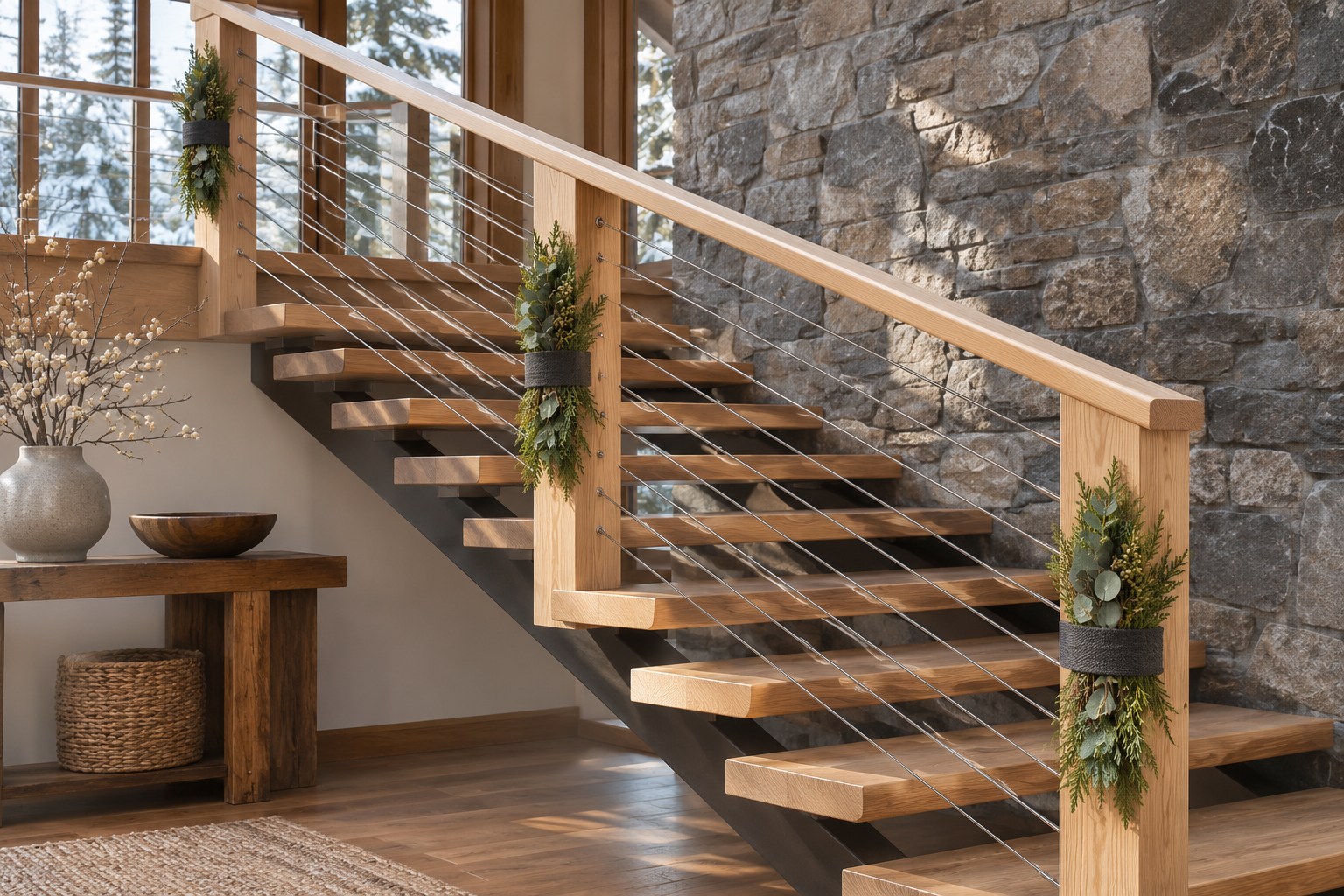
A cable railing has taut horizontal lines and relatively few structural posts. Treat the posts as the mounting points, if the railing maker allows it. Choose a removable wrap made for each post’s material and shape. Attach one short evergreen bundle flat to the outer post face, below the handrail and away from cable fittings. Keep each bundle independent so the cables and their fittings stay free of added load.
Space a few bundles along the run and use similar greenery at each one. Look from the landing to make sure the branch tips stay within each post’s footprint as much as possible. On a long flight, make the first and last clusters slightly fuller while staying within the approved load. The repeated clusters are enough to carry the Christmas color through the room.
7. Use Post Cuffs on a Glass-and-Metal Guard
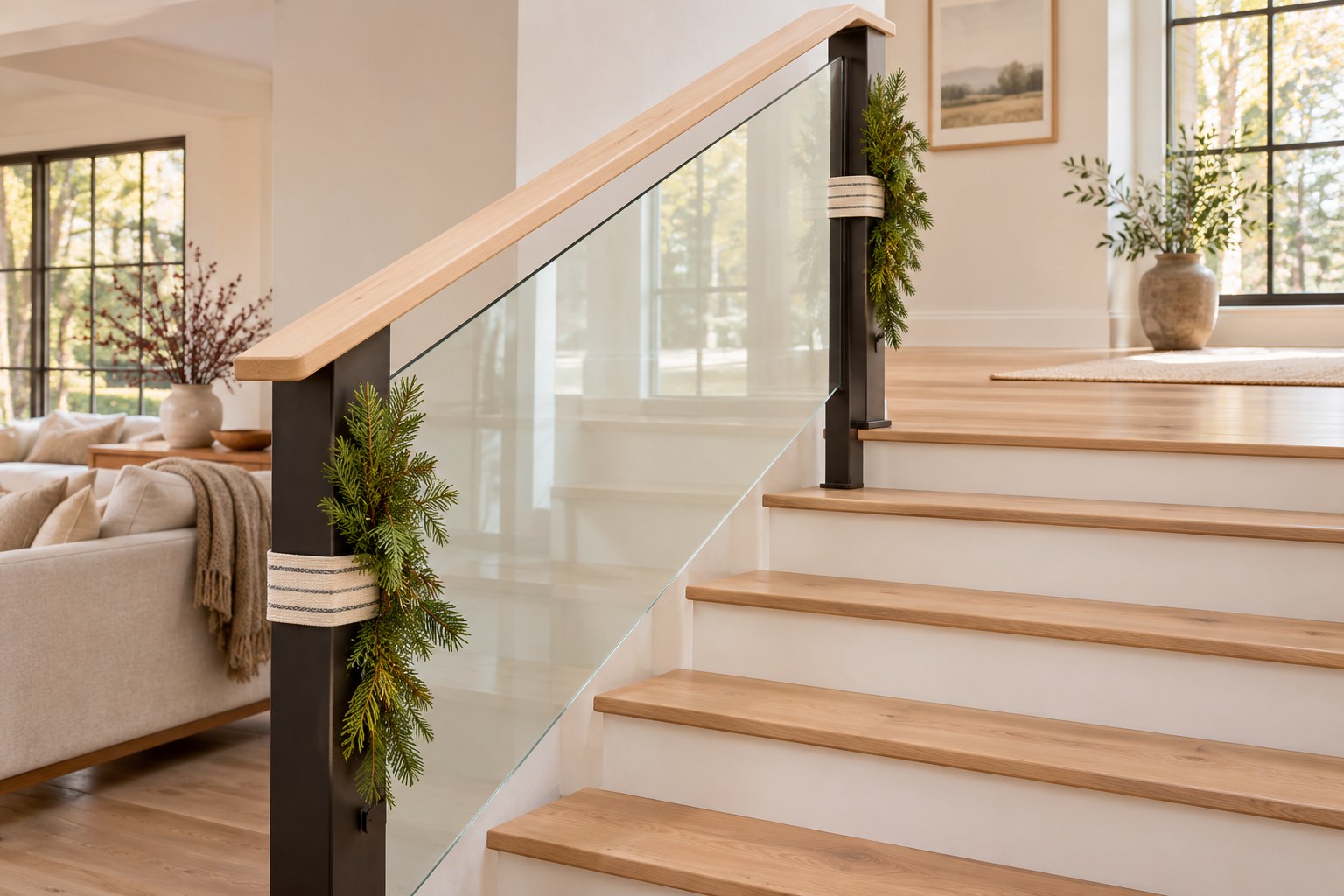
On a glass guard held by metal posts, keep the glass and its edge fittings clear. If the guard manufacturer allows a decorative attachment, fit a soft lined cuff around a sturdy metal post below the grip. Use a short strand with a closed backing so the greenery lies flat against the outside face. Check that the cuff fits the post without sliding and that the section cannot swing toward the steps.
Two or three matching post accents can connect the staircase to the room without covering the view through the glass. Try a little fir with a soft fabric bow pressed into the center of each section. Keep the bow inside the shape of the greenery. For ideas that suit the guard’s clean lines, see these modern staircase designs.
8. Fit Padded Clips to a Wood-Framed Glass Guard
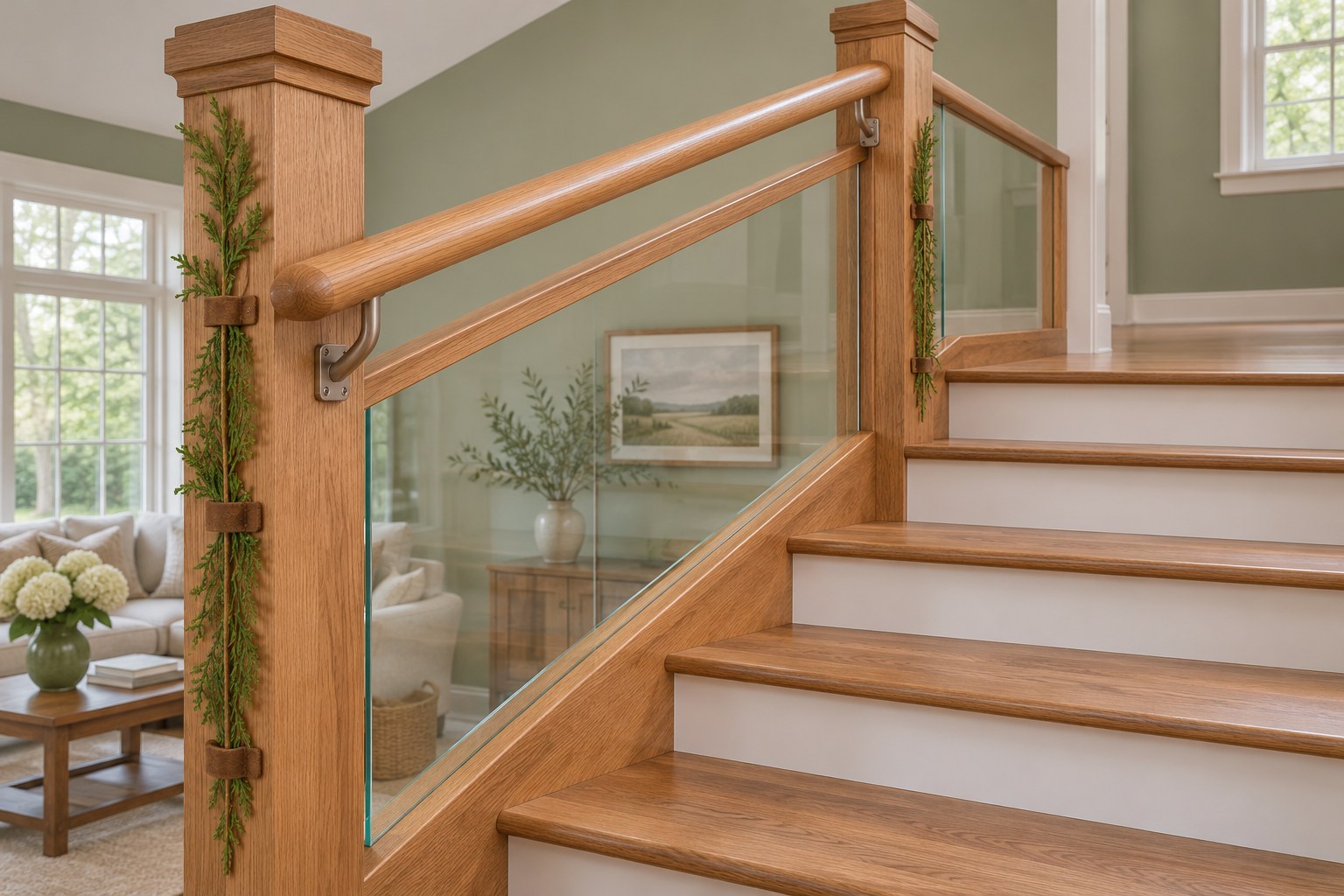
When solid wood frames surround the glass, look for an accessible outer upright where a small protective clip can sit entirely on the wood. Use only a clip approved for the frame and finish, and make sure its pads and jaws stay clear of the glass, seals, and frame joints. Fit a light cedar strip against the upright below the separate upper grip.
Check the fit while the cedar is still short enough to handle easily. If the clip shifts toward the glass or contacts a seal, choose a different spot or leave that frame clear. Repeat the same size strip on two matching wood uprights. Cedar against oak gives a simple green line, while broad clear panes still let you see through the staircase.
9. Clip Tiny Fir Lengths to a Square-Tube Frame
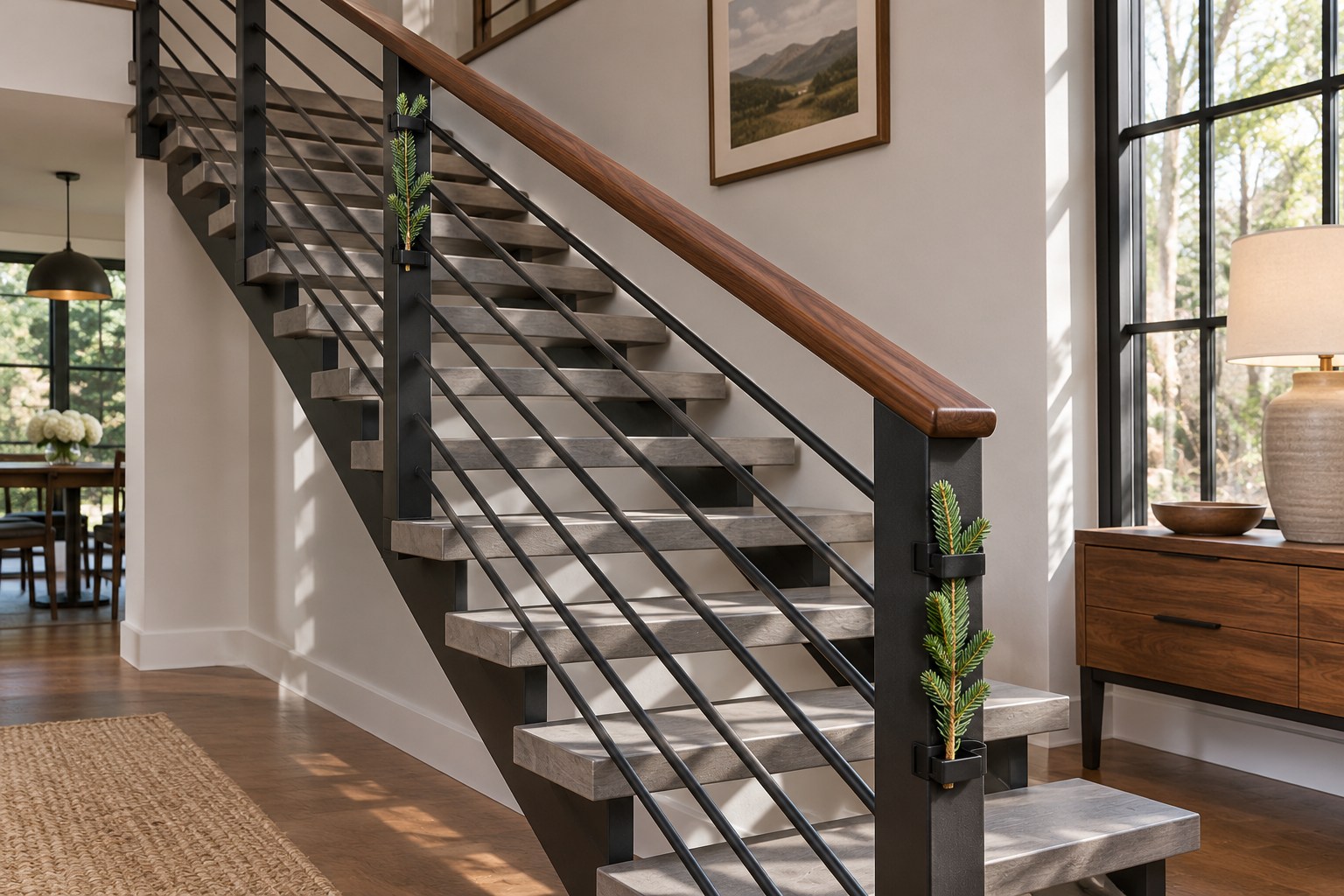
Square-tube frames can suit a small snap clip designed for the tube’s exact width and shape. Fit a short, lightweight fir section to a solid outer beam or upright that sits well below the handrail. Check the guard maker’s guidance for add-on attachments and use the clip’s instructions to confirm fit and load. Keep the clip’s opening and all branch tips away from the step side.
Start where you can reach the outer frame from steady footing. Two independently secured lengths can pick up the staircase angle without creating a loop at the corner. Keep both flat and follow the frame’s line, especially near the first step. The exposed horizontal infill gives the greens a crisp edge and leaves the metalwork legible from the entry.
10. Trace the Border of a Decorative Metal Panel
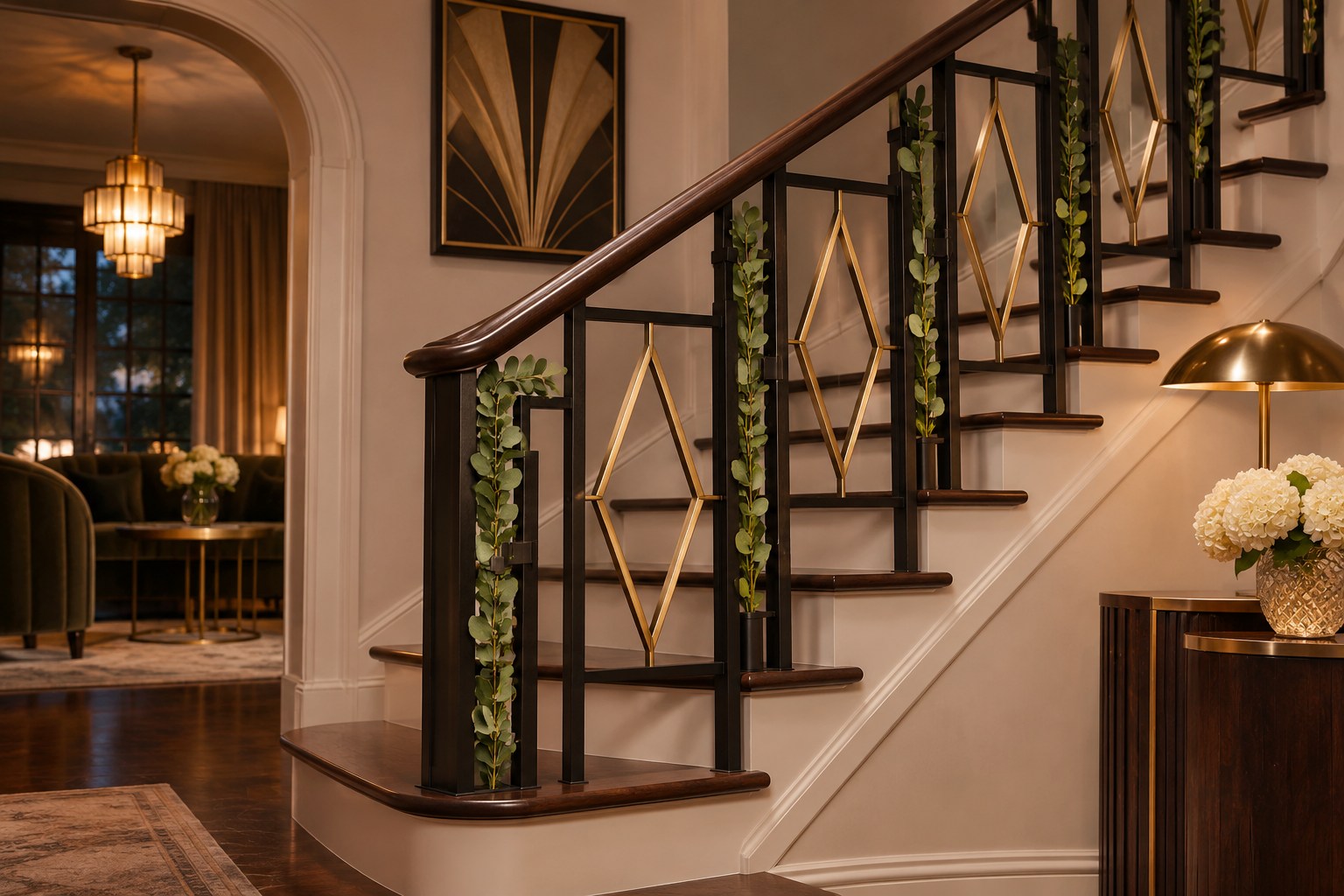
A decorative metal panel often has a sturdy outer border around its thinner ornamental shapes. Use a low-profile padded clip designed for the border, with the guard maker’s approval. Attach a small section of greenery to the outside lower part of that border and leave the patterned infill open. Check the clip’s contact points so it sits entirely on the solid frame.
Keep the garland nearly flat so you can still see the diamond or scroll pattern in the evening. A little dark green foliage paired with a narrow gold fabric detail can echo the metal finish. If the next panel is similar, repeat the greenery at the same spot on its frame. Check the completed flight from both sides to confirm every grasping surface stays clear.
11. Dress the Uprights of an X-Braced Stair Guard
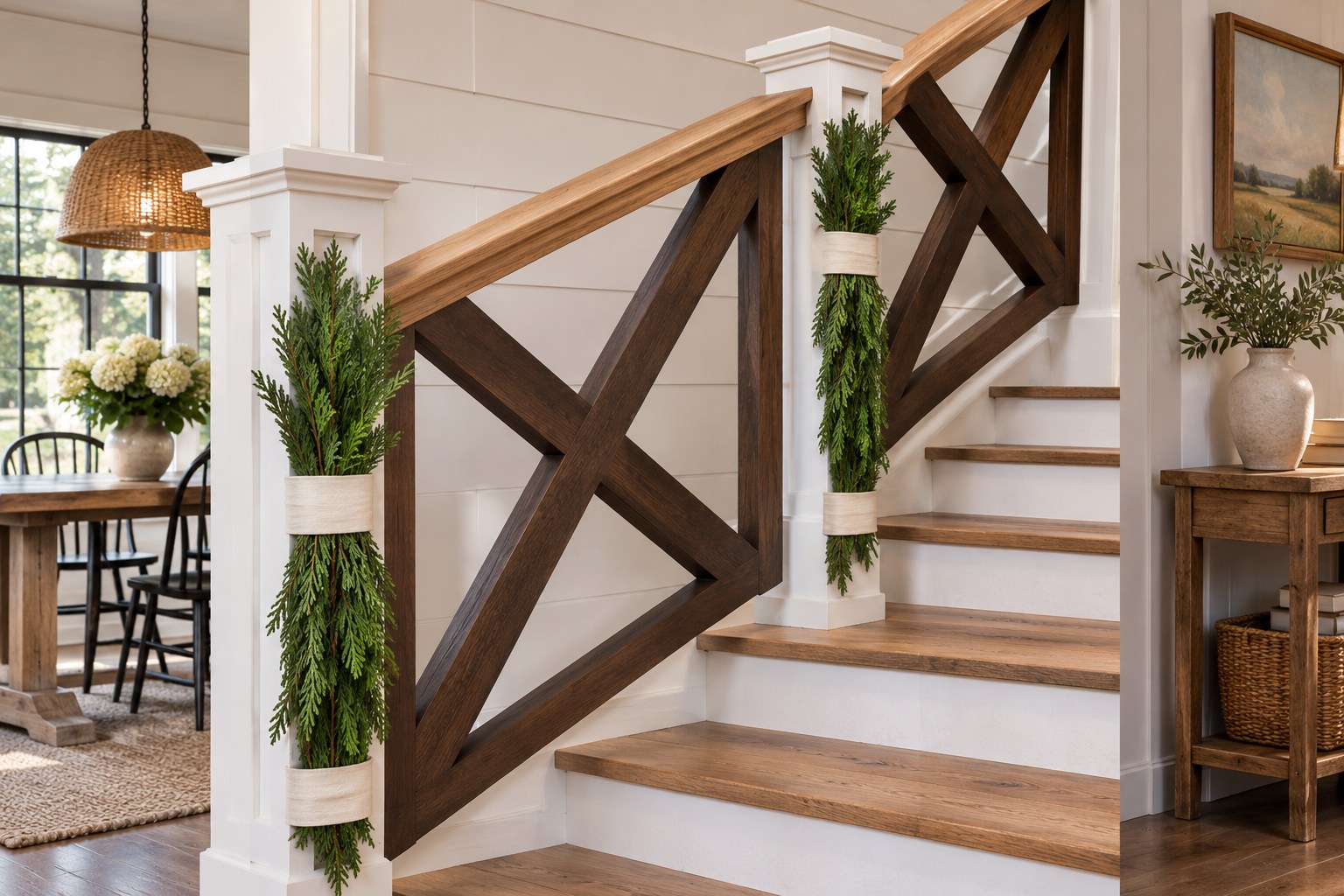
An X-braced guard gives the staircase a strong pattern, so choose the vertical posts for your garland. If the maker permits attachment, use a close-fitting removable cloth wrap on the lower outside face of an upright. Secure a flat, lightweight evergreen strip with its branches pointed along the post. Keep the diagonal braces, brace joints, and rail grip completely open.
Stand where the stair is usually seen from the room and check whether the foliage is taking up too much of the pattern. Two separated vertical strips can look more deliberate than a wide garland spread across several braces. Match their size and keep any accent tucked into the greenery. A strip that turns or leans into the stair needs a smaller section or a better-fitting mount.
12. Keep Greenery Along the Frame of a Mesh Guard
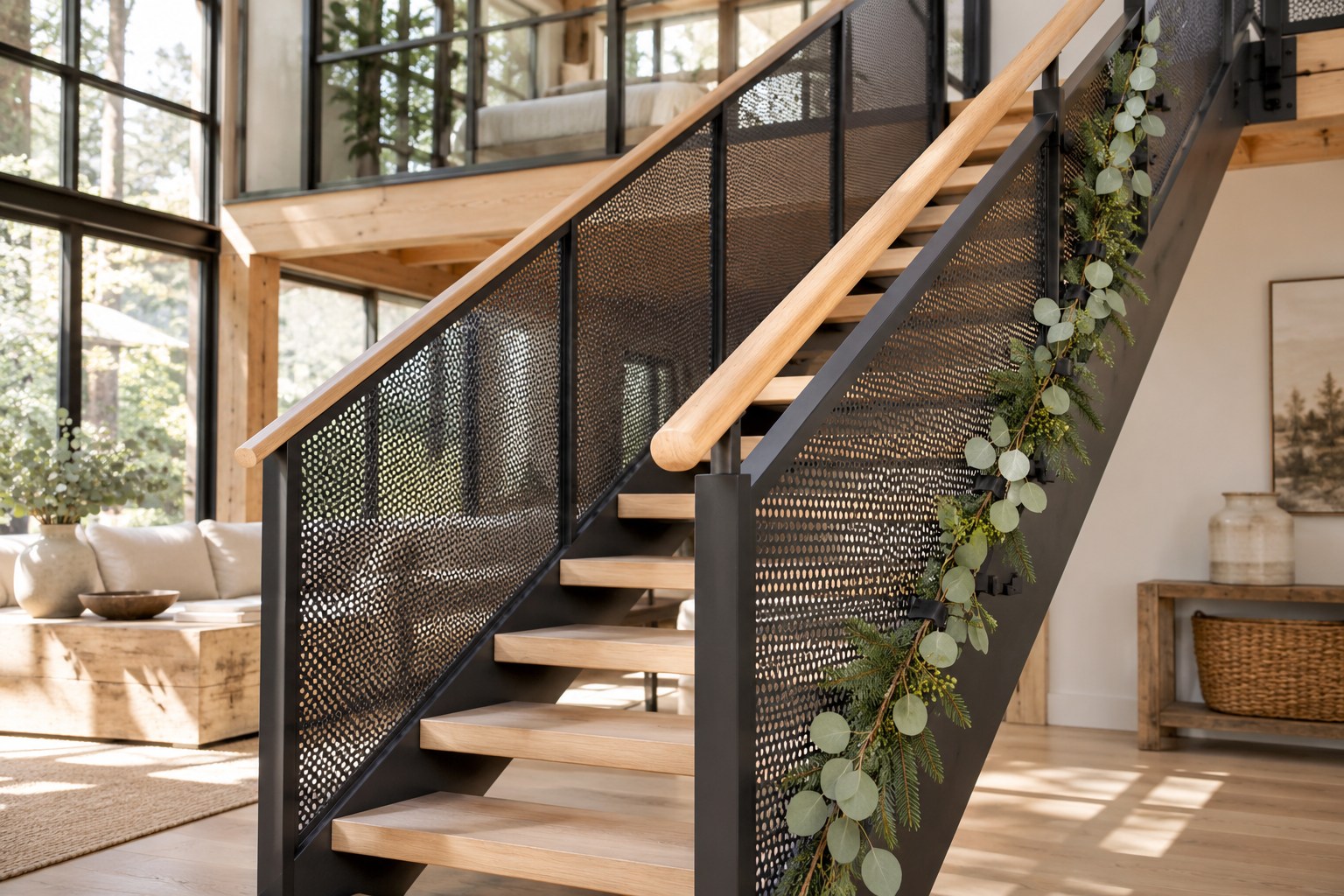
Metal mesh has many openings that can catch loose stems. On a guard with a solid frame, check whether its maker permits a small decorative clip on the outside lower border. Use a finish-safe clip that fits the frame, and fasten a short eucalyptus-and-fir strand so the backing lies flat against that border. Leave the mesh surface and the rail above it open.
Choose foliage that shows at a glance where the frame begins and ends. A slim dark green strand against a black perimeter gives just enough color, especially with pale oak steps. Keep the ends folded back into the mounted section. If the frame is narrow or awkward to reach, use a shorter accent on a stable exterior upright that accepts a compatible attachment.
13. Fit a Fine Strand to Wide Wood Slats
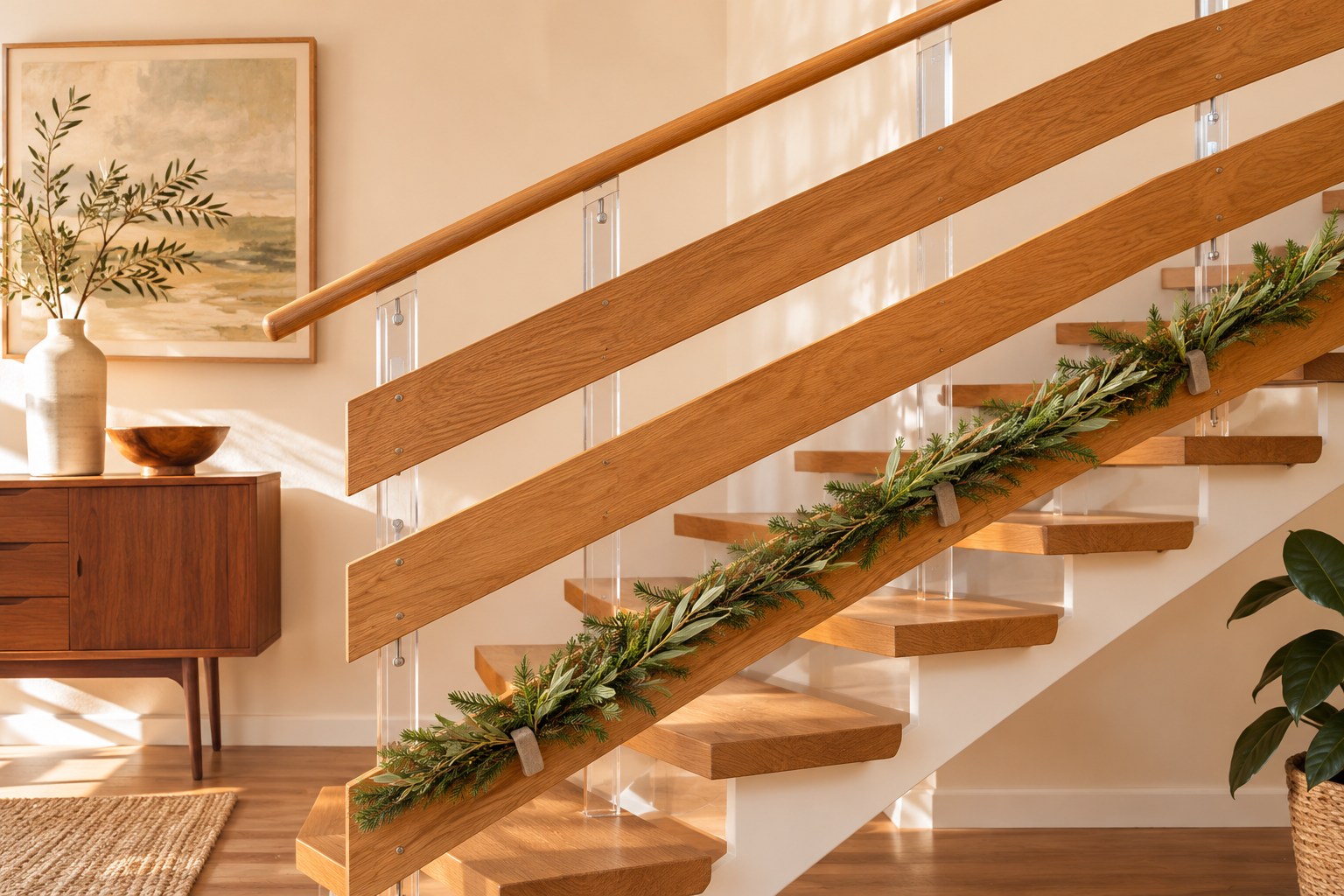
Wide horizontal wood slats have enough visual weight for a fine strand. If the railing maker approves mounting on the slat, look for a low-profile padded edge clip that fits its actual thickness and finish. Position the greenery along the outer edge of a lower slat, below the area your hand needs to grasp. Keep the clip seated firmly on the wood and its profile tucked away from the steps.
A little olive foliage mixed with fir softens the wood without hiding its grain. Secure one light length between supports and use a second independent length if the slat run is long. At the corners, stop the strand before it changes direction so the ends sit flat. Check both sections from the landing before adding any ribbon.
14. Use Short Vertical Strips on a Narrow Stair
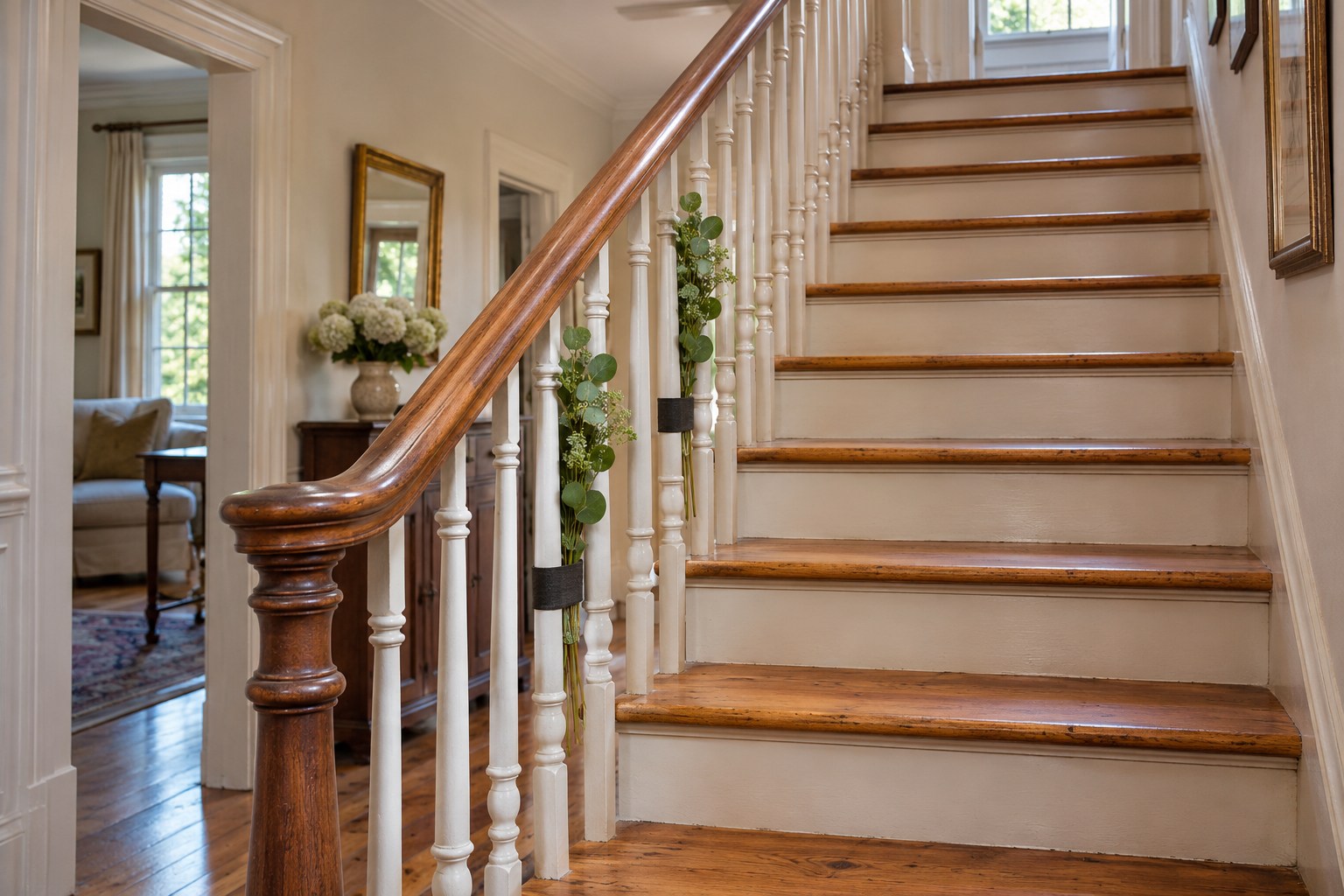
A narrow stair gives you less space for anything that projects. Use a couple of very short vertical greenery strips fitted flat to the outside of sturdy spindles. Choose thin, soft wraps suited to the spindle shape and finish, and place them low enough to leave the entire handrail area bare. Close the wraps fully and tuck the greenery ends back into each strip.
Test the stair in both directions before repeating the setup. Look at the outside edge of each tread and the spots where a sleeve or tote might swing. Thin, upright sprigs can still feel substantial if they repeat at even intervals and use dense fir tips. Keep them off the first turn and any spot where the passage narrows again.
15. Buckle Small Fir Drops to Box Newel Posts
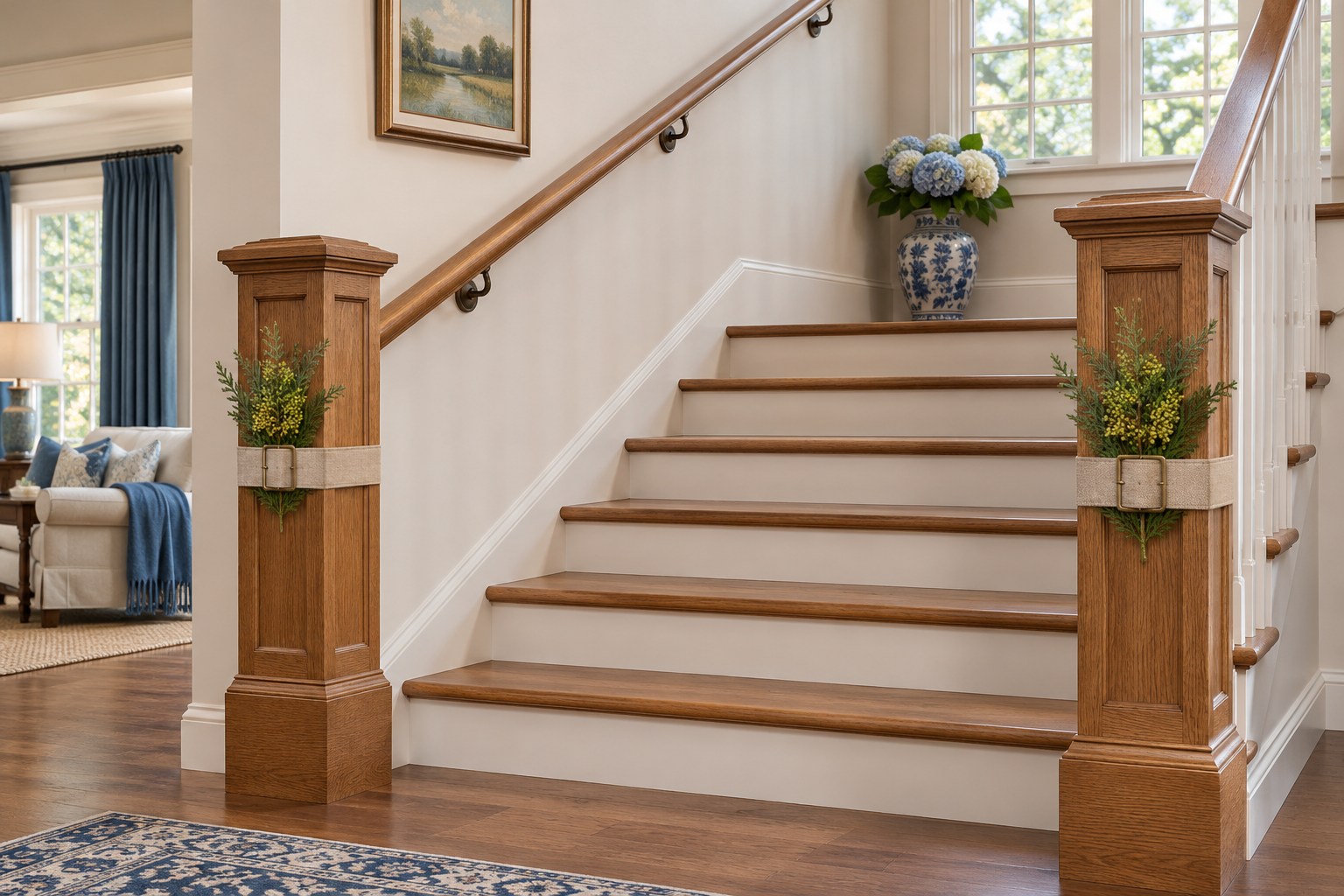
Box newels offer a wide, flat face for a small fir accent. Use a removable lined buckle band designed for the post shape and finish, fitted around the middle of the post. Place a short, lightweight drop flat against the outward face and close the buckle on that same side. Leave the post cap, handrail connection, and entire landing easy to reach and move around.
Set a small matching piece on a second newel to repeat the shape. Keep branches within the outer face so they cannot catch a sleeve at the foot of the stair. A muted linen band can echo fabric used near the entry door. If you’re carrying the palette outside, pick up the same ribbon color in these Christmas porch decorating ideas.
16. Use Light Hook-Mounted Greenery on a Sealed Post
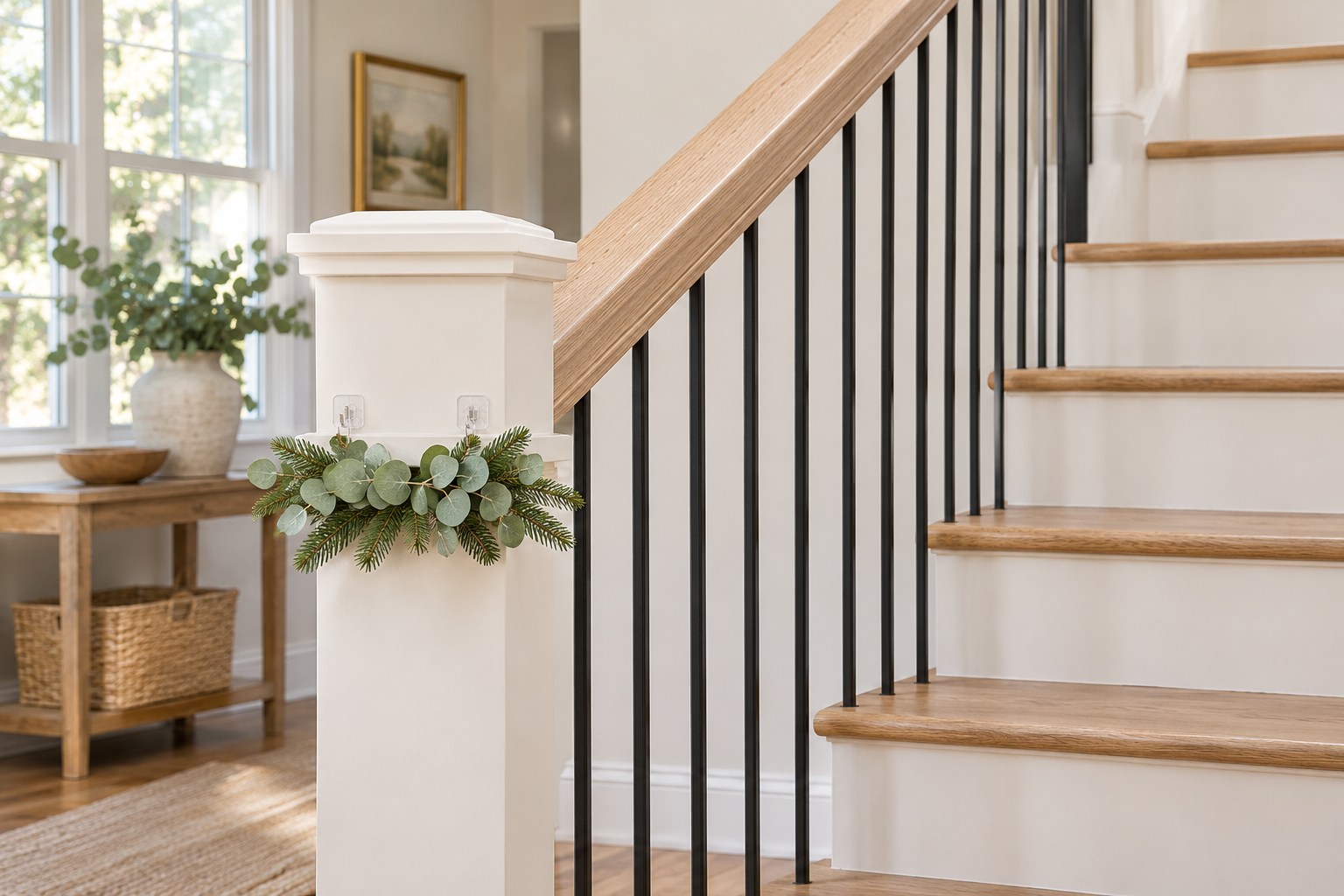
A flat, sealed post can work for one very light greenery accent if both the railing maker and the hook maker approve the surface and application. Look for a low-profile removable hook rated for the total weight you intend to hang. Follow the hook’s preparation, application, waiting, and removal instructions. Choose a flat outer face well below the handrail and confirm there is enough room to pull the removal tab later.
Hang a short strand with fixed attachment loops that sit close to the post. Check that the greenery stays against the surface and leaves the walking route open. If the finish is textured, loose, or incompatible with the hook instructions, use a different approved attachment on a sturdy upright. The manufacturer’s hook guidance explains how surface and load vary by product.
On a compatible smooth, finished post, Command small clear wire hooks can hold a very light greenery accent below the handrail. Check the weight of the accent against the individual hook limit and follow the package directions.
Check the clear wire hooks on Amazon (paid link)
17. End Separate Garland Runs Before a Switchback Landing
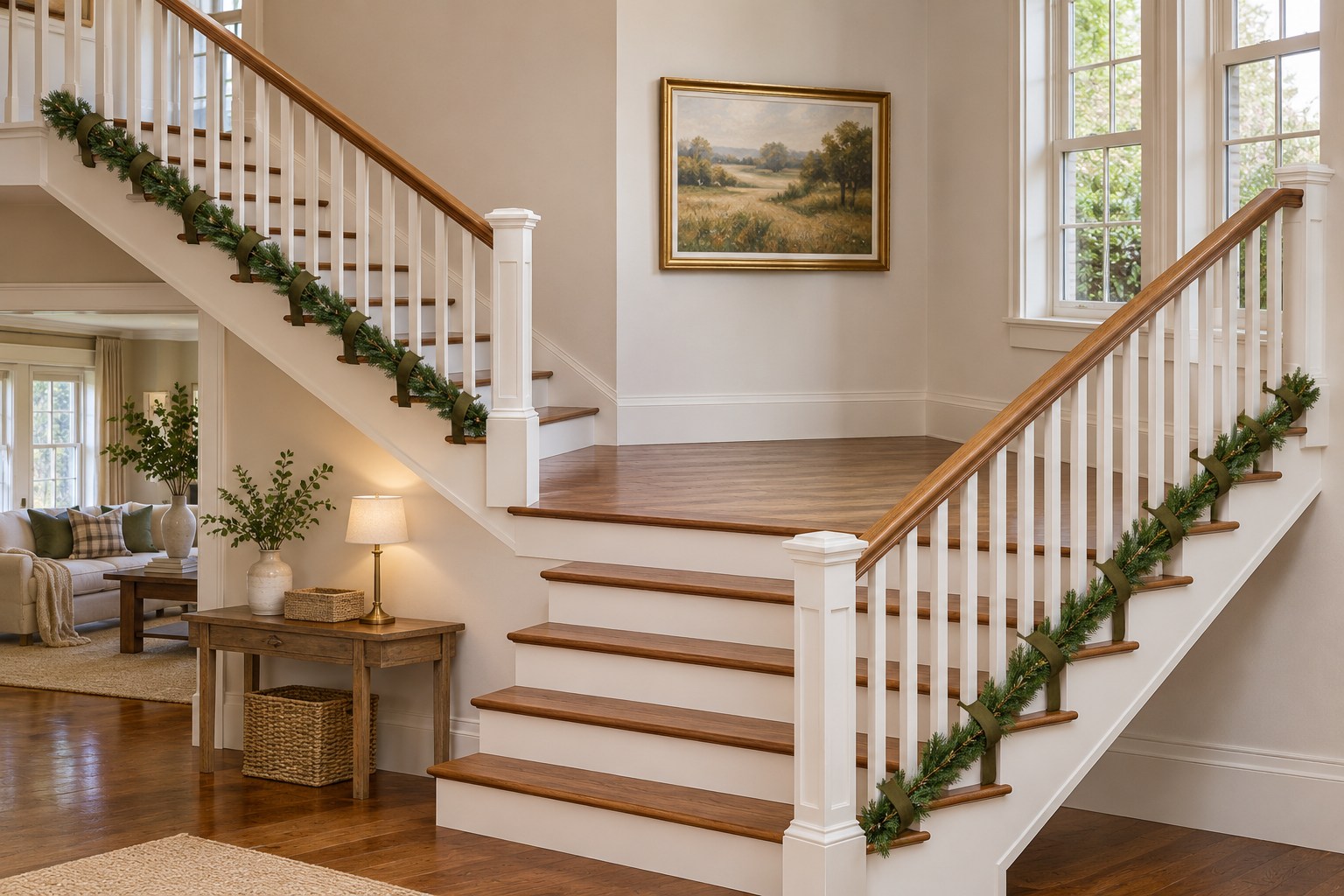
On a switchback stair, plan each flight as its own straight run. Fit a lightweight garland section along the outer lower posts or balusters with compatible removable ties. End the section against a sturdy support before the stairs reach the corner. Begin the next length beyond the turn, where it can follow the new slope without bridging the landing or the joint between the rails.
Keep the landing and the first tread in each direction fully open. From the floor below, two matching sections will still read as one arrangement if the foliage and scale are similar. Tuck every end against its own final support. Take the turn in both directions and make sure you can follow the bare handrail naturally while moving between flights.
18. Follow a Curved Stair With Separate Short Lengths
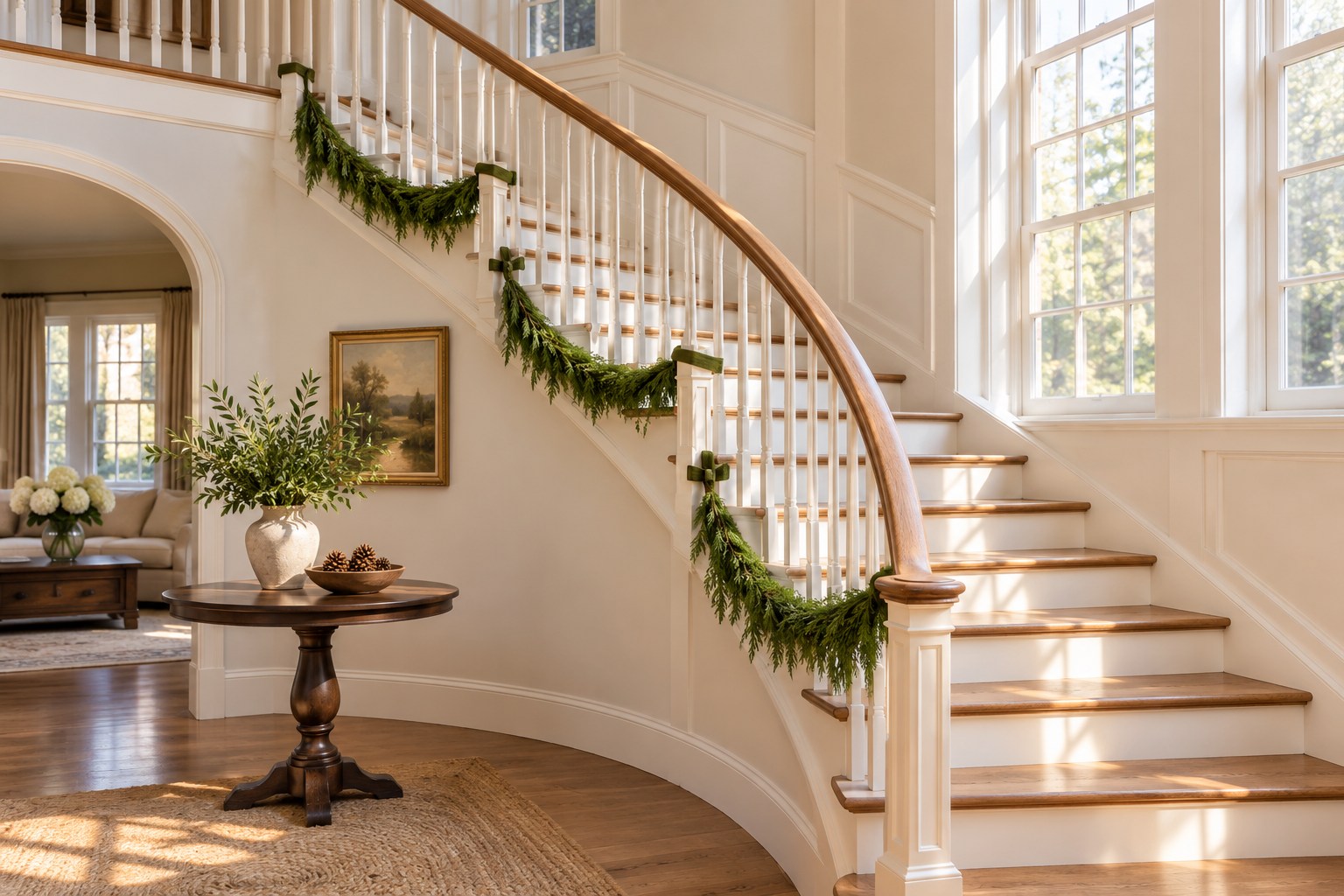
A sweeping rail looks best with greenery that follows the curve at a steady distance below it. Use several short lengths, each lightly shaped against the outside of two or more sturdy balusters. Choose padded reusable straps suited to the baluster finish and close them firmly. End each length against its own support so the greenery lies flat through the bend.
Check the tightest part of the curve before doing the rest. A long strand can pull across the bend, while short fitted pieces make it easier to keep the inside walking side and handrail clear. From the entry, match the spacing and direction of the pieces to keep the eye moving up the stair. Follow the bare grip all the way around the curve after fitting the final section.
19. Use Flat Greenery Sprigs on a Spiral Stair
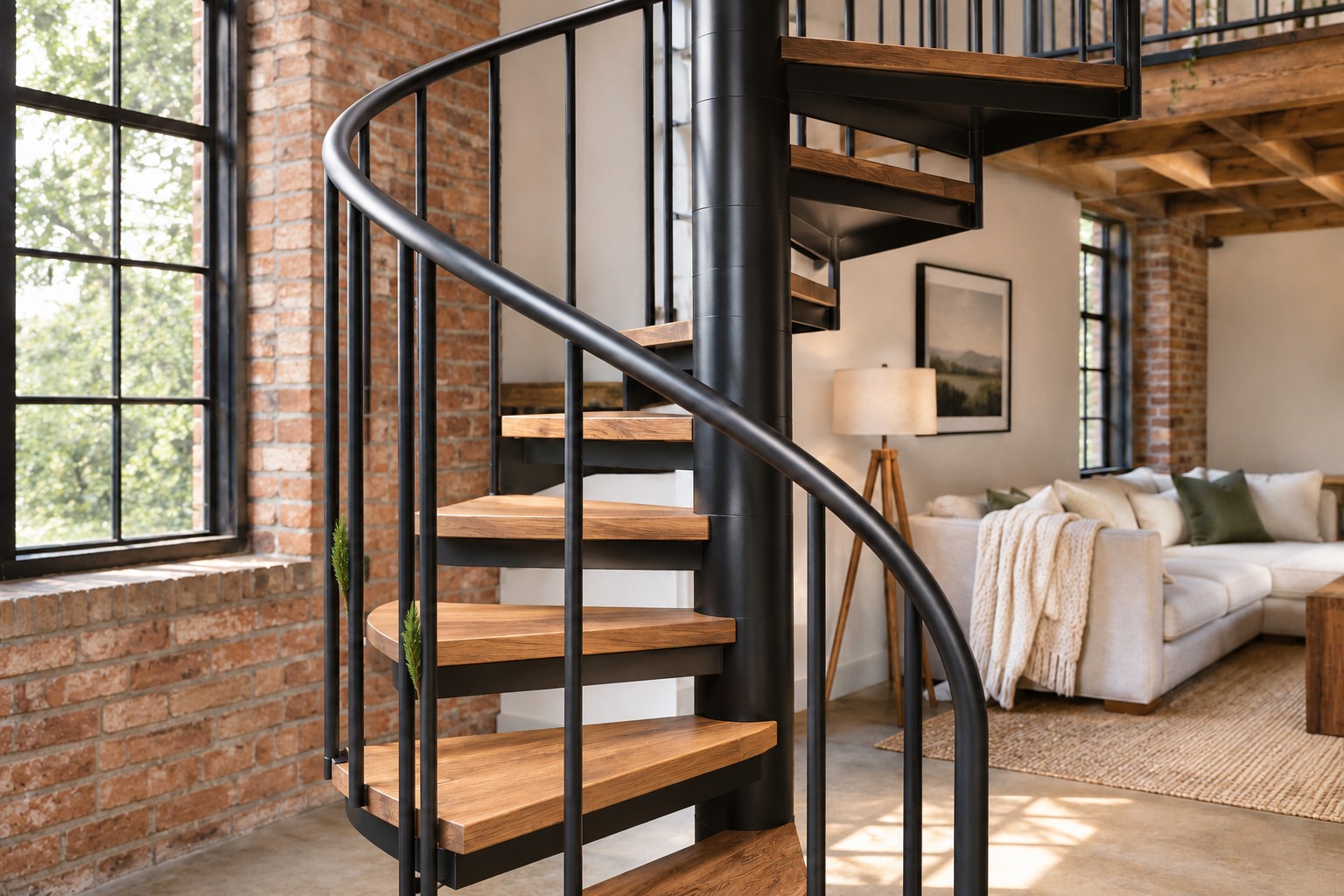
Spiral stairs have tight turns and limited space around the treads. If the manufacturer permits decoration, choose a few narrow greenery sprigs clipped flat to reachable exterior faces of sturdy vertical uprights. Use close-fitting padded clips approved for the metal shape and finish. Keep each sprig short enough that its tips stay against the upright and well below the handrail.
Check the foot of the stair and the inside edge of the turn as you go. Every tread and the full bare grip should be easy to see and use. A sparse pattern still looks festive when the sprigs sit at matching heights on a few posts. If reaching the outer faces calls for leaning over the rail, leave that flight clear and decorate a compatible landing post instead.
20. Dress the Lower Face of a Loft Landing Guard
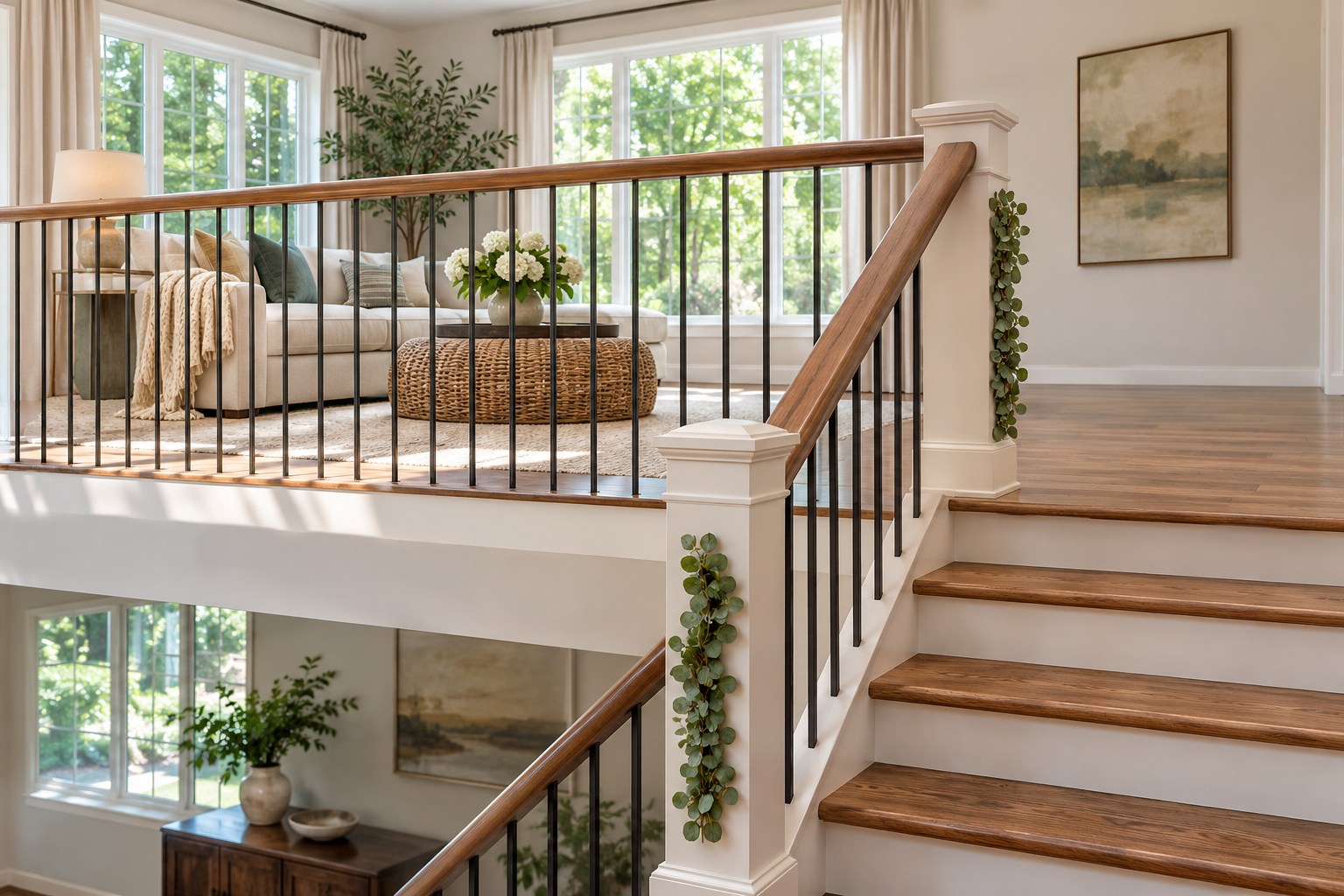
A stair can lead to an open loft with a guard along the landing. Work from the room side on stable flooring and look for a sturdy landing post that can take an approved removable strap. Fit a short evergreen section flat against the lower part of the post, keeping its entire profile outside the walking line and clear of the grip above. Keep the opening beneath the guard free of dangling pieces.
Stand at the top step and check the route past the post. The greenery should stay in place as you turn toward the room. If the landing is narrow, leave the guard clear and carry the Christmas color to a nearby feature. A small matching accent can also tie in with these Christmas window decorating ideas.
Start with one section on the railing you have. Check that it stays put, then walk the flight and turn at each landing with a clear route and room for your hand around the grip. Add matching sections only where they fit. Once the garland sits neatly below the rail, use one of these Christmas staircase decorating ideas to carry its color into the rest of the entry.
Discover more from HomeTrendora
Subscribe to get the latest posts sent to your email.