
Tinsel can hide the shape of a Christmas tree long before you run out of branches to decorate. These 12 tinsel Christmas tree ideas help you choose a metallic treatment that suits your tree’s shape, your room’s light, and the ornaments you want people to see.
Decide first whether you want the effect of fine vertical strands, a narrow garland, or metallic branches on a small decorative tree. Stand where you normally see the tree and try one area before opening the rest of the decorations. If pets share the room, the ASPCA recommends skipping loose tinsel. The final idea gets its shine from solid ornaments.
1. Start With a Sparse Silver Fringe

Pick a few sturdy front-facing tips on a full green spruce and place a short silver strand on each. Leave a distinct area of plain needles between the strands. This works especially well when the other ornaments are a quiet ivory or pewter, since the metal can pick up the room light without sharing the stage with a dozen competing finishes.
Start at eye level, then step back to your usual seat. Add a few lower strands only if the upper part looks disconnected from the rest of the tree. A narrow line of silver that moves across the branches is easier to see than a thick fringe that merges into one bright patch. Keep strands away from hot fixtures and follow the lighting manufacturer’s directions.
2. Give an Open Tree Longer, Widely Spaced Strands
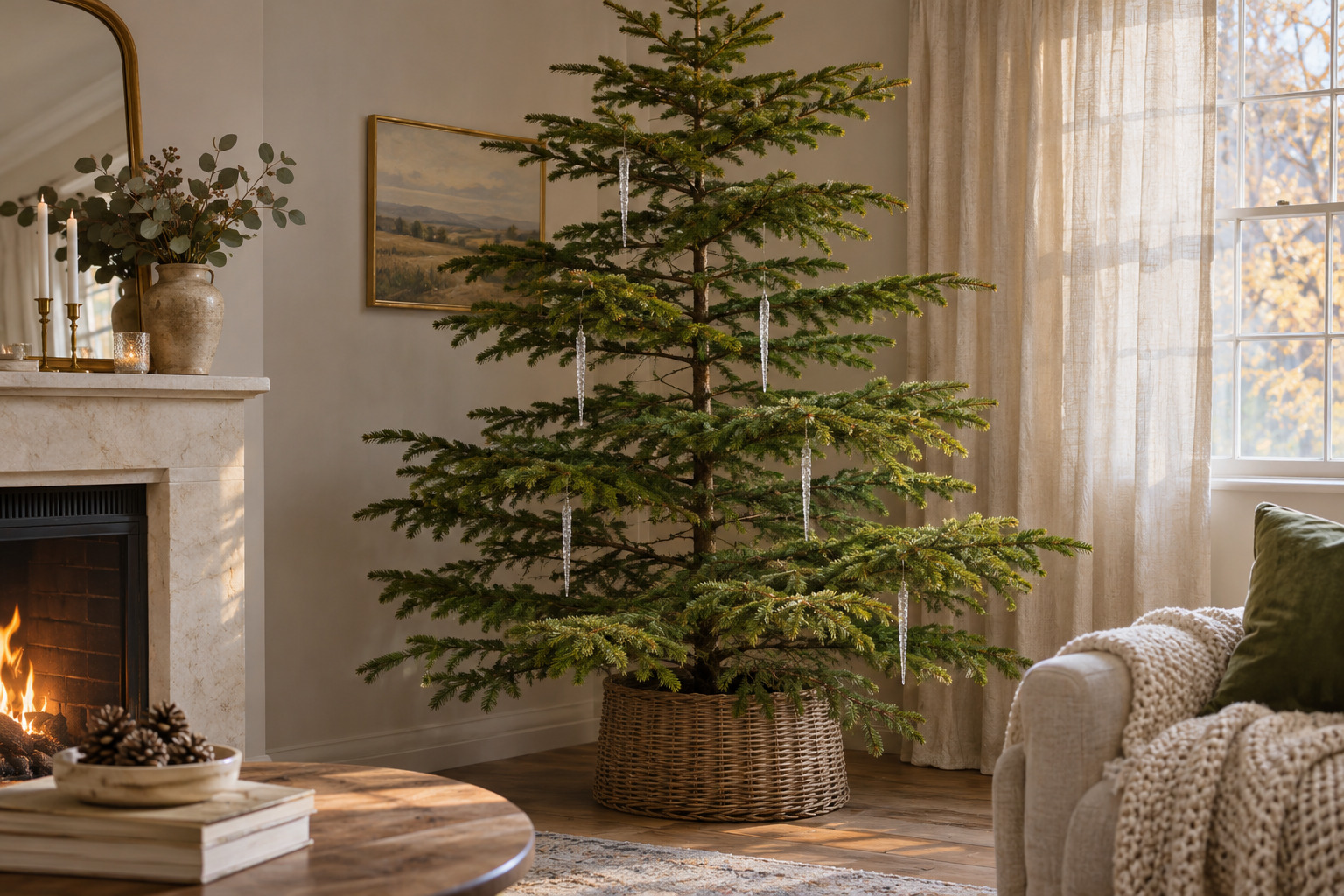
An open fir has natural spaces under the ends of its branches. Hang an occasional longer strand from a tip over one of those openings so it can fall vertically. Set the next strand where it has its own space to move. The bare branch above the strand remains visible and the shape of the tree does much of the decorating.
Look for lengths that stop before the branch below. A strand that lies across several tiers can flatten the tree into one continuous surface. If the tinsel brushes the next branch, move it to a deeper opening or use a shorter piece. Keep the lowest branches simpler so you can reach the base. Our ideas for keeping a Christmas tree stand accessible can help with the space below the fringe.
3. Stop the Garland Before It Makes a Full Circle

If loose strands feel too fine for your room, try a narrow tinsel garland in two shallow arcs across the front of the tree. Tuck both ends into the greenery so the arcs have natural stopping points. A short warm-gold curve gives a full spruce a little structure while letting the sides keep their own outline.
Place the first arc where people will see it from the sofa, then set the second one slightly lower and offset. Leave enough green between them that both curves are easy to follow. This approach works with a tree in a corner where the back is seldom seen. Bring the garland farther around only if an open dining or hallway view would expose the end.
4. Keep Shiny Strands Away From the Ornament Faces

Give the ornaments you want people to notice their own front-facing branch tips. Hang fine silver just behind and to one side, where it can reflect around the outline without crossing the face. This looks especially effective with a few matte burgundy balls or a group of hand-painted ornaments with small details.
Set the ornaments first. Hang one strand, then check the arrangement from the seat and the doorway. If silver crosses an ornament when you walk past, move the strand deeper into the branch. The wider spacing leaves a chance for the dark greenery to show through and makes it easier to see the difference between matte and shiny surfaces.
5. Use Warm Champagne on a Pale Flocked Tree
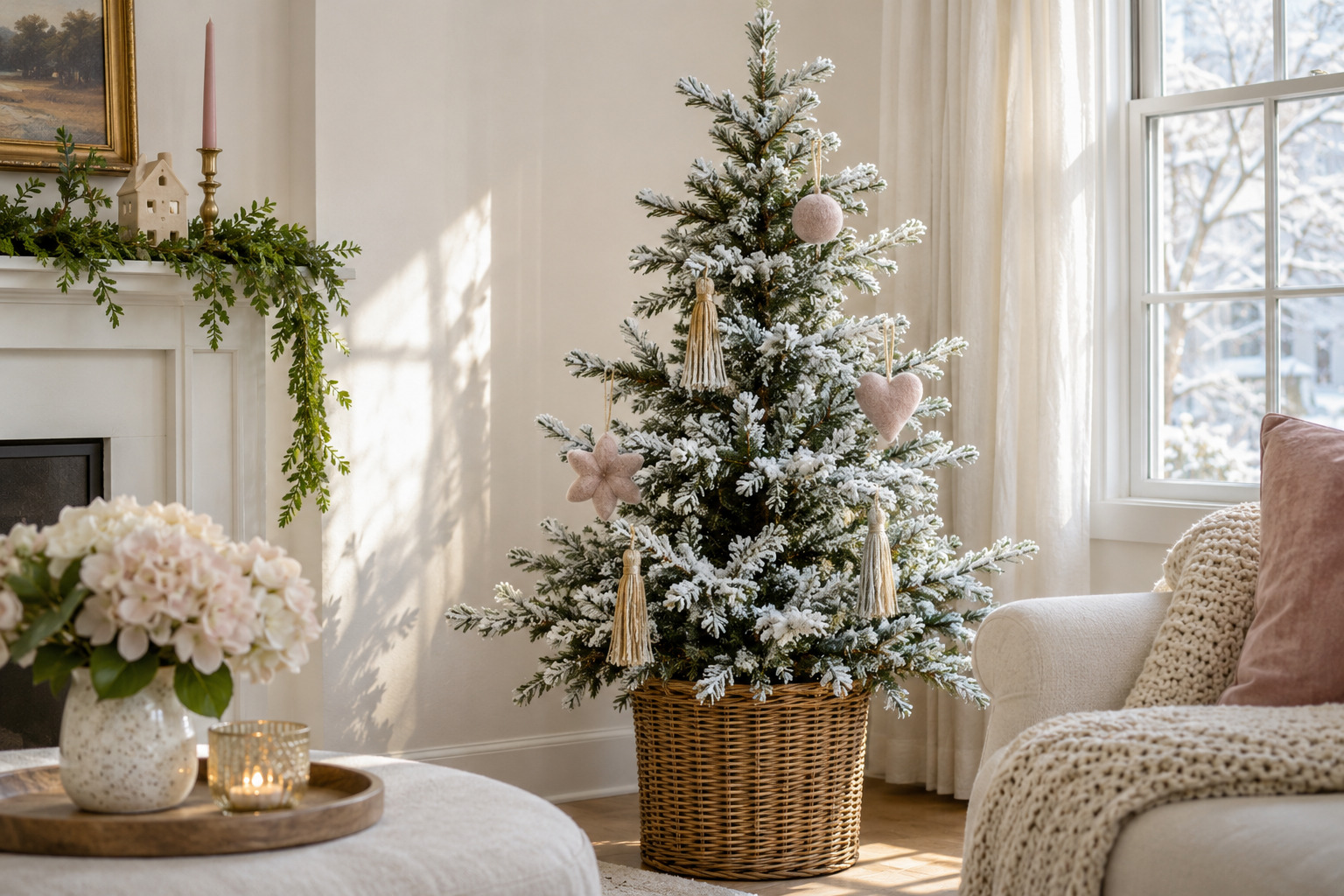
Against pale flocking, bright silver can blend into the whitest tips. Champagne tinsel adds a softer change of color that still catches daylight. Use small accents at separated points on the tree and include a few matte blush or cream ornaments so the reflective metal stays recognizable on its own.
Try the tinsel on a branch that sits in partial shade. Color differences can read more clearly there than on a bright side near the window. If both flocking and tinsel seem to disappear at noon, move a few pieces into the middle of the tree rather than covering more tips. Step back to see whether the pale branch shapes still show.
6. Move the Shine to One Side in a Tight Corner

On a slim tree beside a wall, decorate the outward-facing flank as the main view. Put short strands on the branches people see as they enter. Leave the crowded wall side simpler, especially where strands might brush the paint or catch on curtains. The silhouette can remain slim because you can limit the decorations to the space you actually see.
Check the tree from the other end of the room before you finish. If one shiny side feels too abrupt, carry just a couple of strands toward the front center and stop there. This arrangement works when the tree has a permanent place for the season and you know which side people pass.
For a compact corner, the green HOMCOM pencil tree gives you a narrow outline and unlit branches to decorate. Check its 19¾-inch width against your space, then keep the short silver strands on the side you actually see.
See the slim green pencil tree (paid link)
7. Create a Metallic Middle Band

A restrained band of coppery tinsel suits a room with walnut, warm white plaster, or another earthy finish nearby. Concentrate the metal at the tree’s middle, with a few matte maroon ornaments anchoring the shade. Keep more greenery visible at the crown and the base so the concentrated color reads like a planned composition.
Aim for a soft edge. End the band at slightly different heights rather than drawing a perfectly level border around the tree. Arrange the strands with visible gaps and use the ornament shape to interrupt the metallic line. With subdued room light, a few points of copper can give the tree definition without overpowering the surrounding furniture.
8. Give the Top Its Own Little Sweep
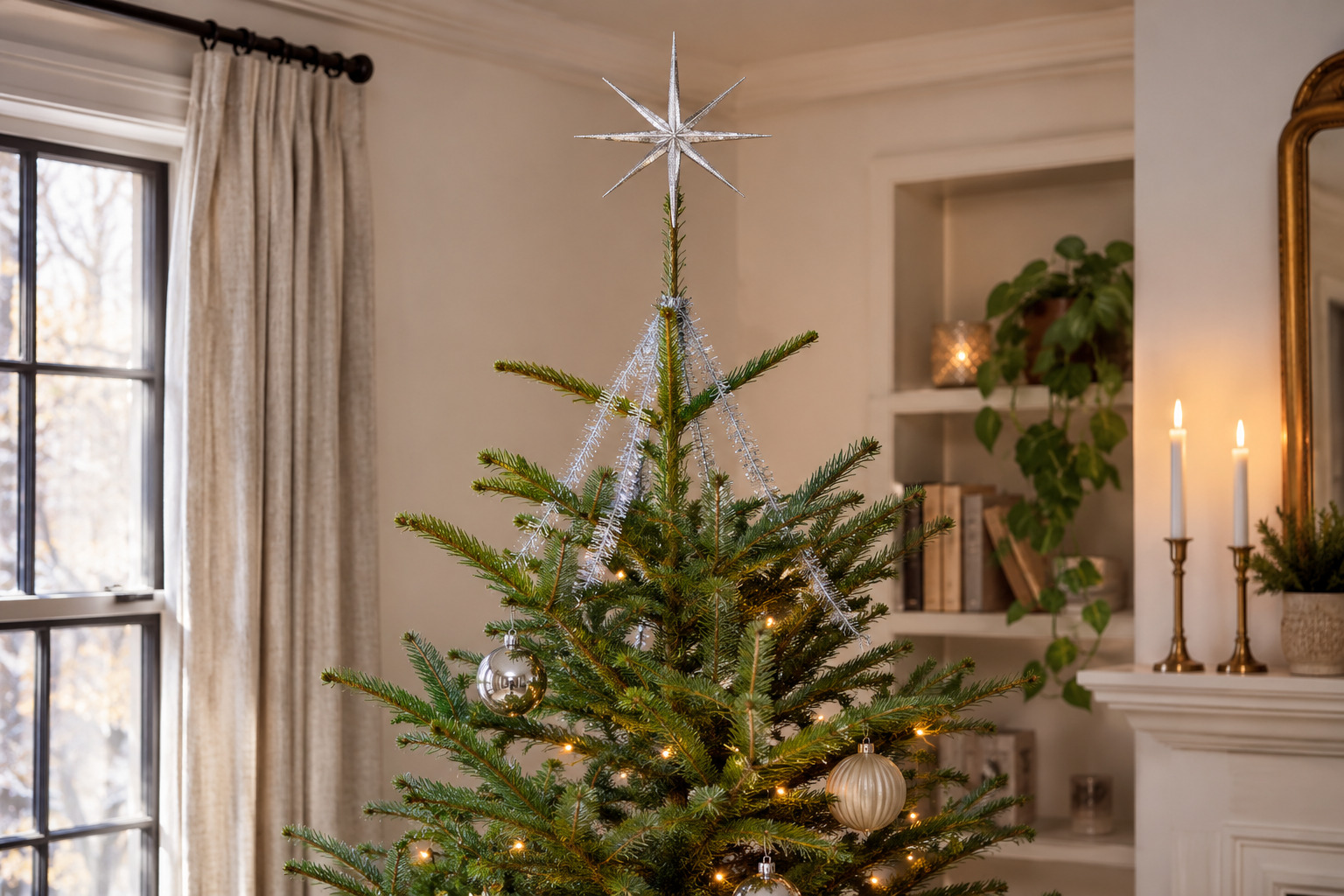
If you already like the tree from the middle down, bring a little silver just below its crown. Pair a narrow topper with a few short strands that hang from the nearest outward tips. A small grouping leads the eye to the top without adding another decoration all the way down the tree.
Leave clear space immediately around the topper so its outline stays sharp. Look up at the arrangement from the doorway. If the strands and topper overlap from that angle, move them down one branch. Keep this treatment light and check that the topper and all the ornaments are attached as their makers direct.
9. Use Daylight for a Cool Silver Finish

A tree by a broad window can look festive while its electric lights are off. Pair a sparse layer of cool silver with a few matte blue or soft gray ornaments, or repeat a cool blue near the base, and put the main silver strands where indirect daylight reaches the outward branches. The color will read through the day without turning the brightest window-side branches into a mirror.
Check the tree when the window is brightest and again in the afternoon. If the strands disappear from your seat, shift one to an opening against darker greenery. Leave the window treatments able to move freely. Give the tree enough clearance that the curtains can open without picking up the decorations.
10. Put a Slim Strand Where the Lights Can Catch It
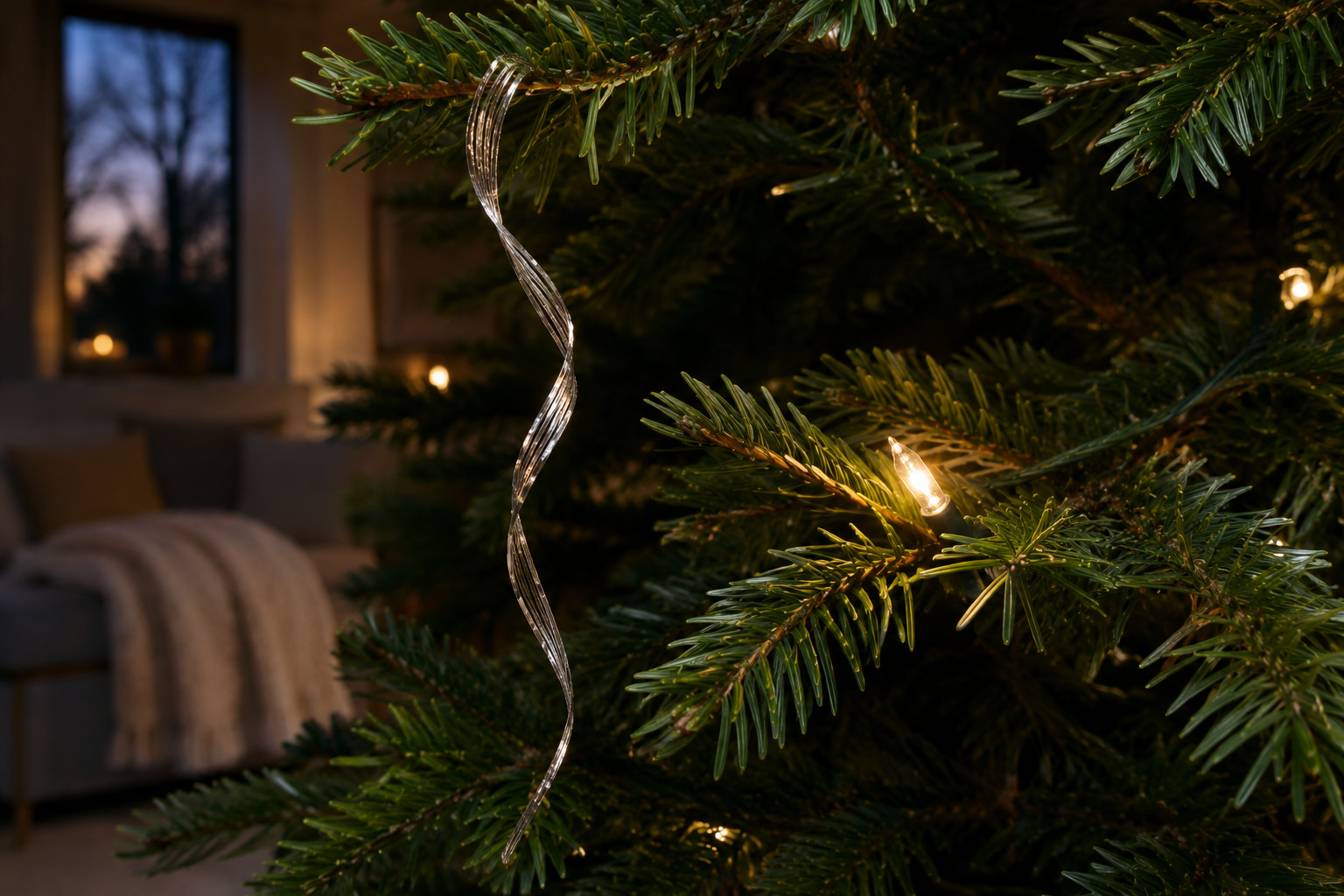
For an evening tree, look at how the existing warm white lights fall across the branches. Set one reflective strand on a separate branch near the light so its lower edge catches the glow. Keep the electrical fittings and cords clear and place the decoration according to the light manufacturer’s instructions. The goal is to see a few distinct reflections against dark greenery.
Use the same small treatment at two or three separated spots that are visible from the seating area. When the ceiling lights are off, you should still be able to tell where each branch ends. This suits a cozy room with side lighting, where a heavy layer of metallic material can feel brighter than everything around it.
11. Set a Small Silver Tree on a Low Sideboard

If you want metallic branches as the main feature, choose an airy tabletop tree with enough room for its whole base on a stable sideboard. A handful of small matte ornaments can make the branch structure easier to see. Put the tree against a wall color that gives it a clear edge. Deep navy ornaments and walnut can work against a plain cream background.
Leave enough open surface around the tree that doors and drawers still work and the branches stay out of the walkway. Check the manufacturer guidance before adding any lights to a metallic tree. Room lighting can bring out its shape without a separate light strand on the branches.
12. Get the Shine With Rigid Metal Ornaments
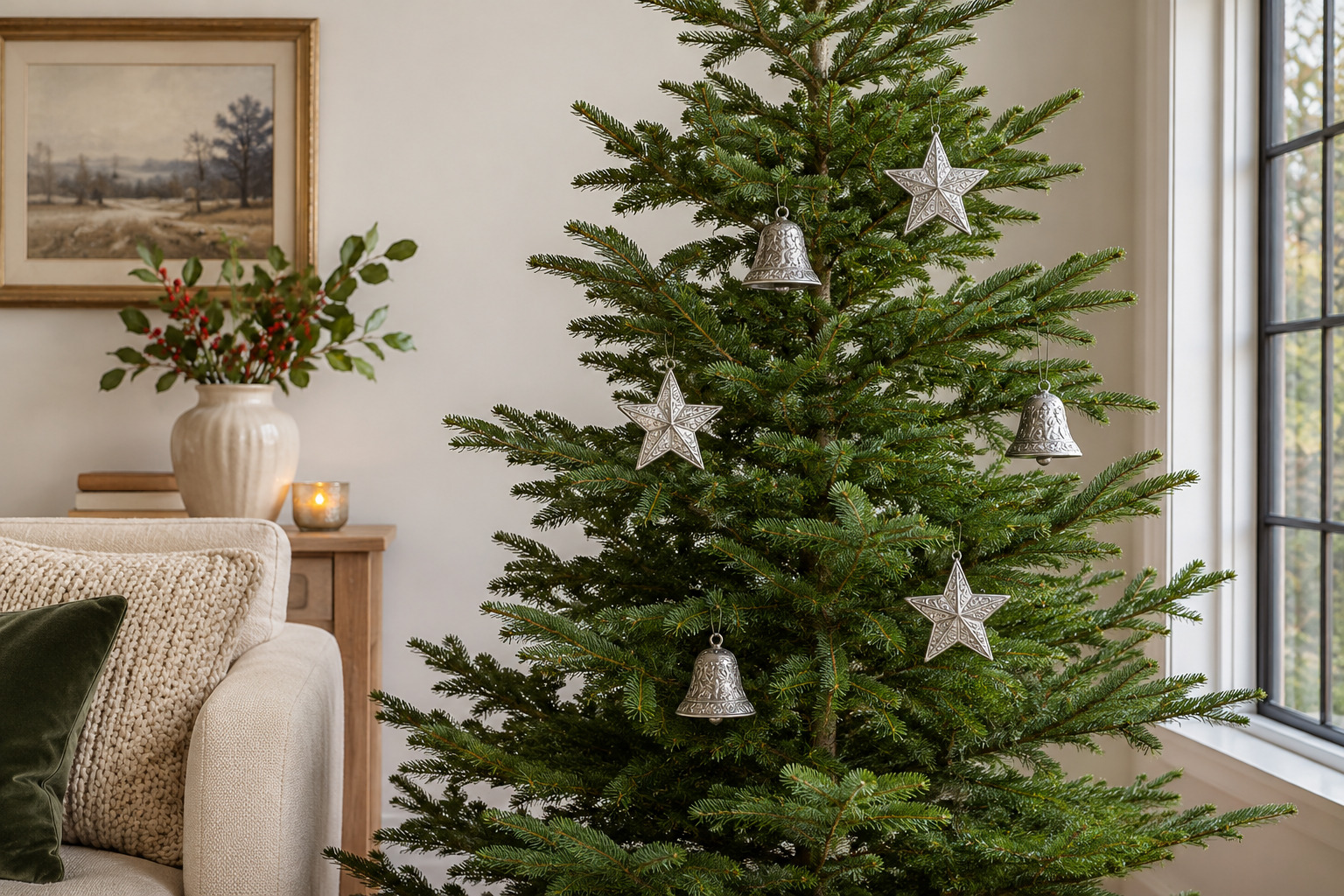
For a strand-free look, choose solid embossed stars or bells with a simple bright finish. Hang each ornament from a suitable branch so the metal shape is visible against green. A solid star can catch a sidelight the way a silver strand does and leave the branch beneath it clear.
Use secure hangers and place decorations where household pets and children cannot reach them. Skip loose tinsel in pet areas. If you want more reflection, increase the space between objects first so the existing lights have more greenery and metal edges to pick up. A small group of stars can look brighter when each has its own outline.
Before adding another layer, take a look at the tree from the room’s main seat with the lights you normally use. The green shape should still be easy to recognize. If one decoration hides a branch or an ornament you love, move that piece and see how much of the tree comes back into view.
Discover more from HomeTrendora
Subscribe to get the latest posts sent to your email.