A wallpaper swatch can look perfect in the store and lose its best feature behind the mirror once you bring it home. These 13 powder room wallpaper ideas help you decide which wall to paper, where the pattern should start, and what to do when a sink, doorway, or tile edge cuts through it.
Stand at the open door and take in the room before you choose a print. Then stand at the sink and see what the mirror adds to the view. Those two positions often give you a better starting point than the floor plan. Bring home a full-repeat sample when you can, and look at it with the lights you use when guests are over.
1. Center a Large Motif on the Wall You See First
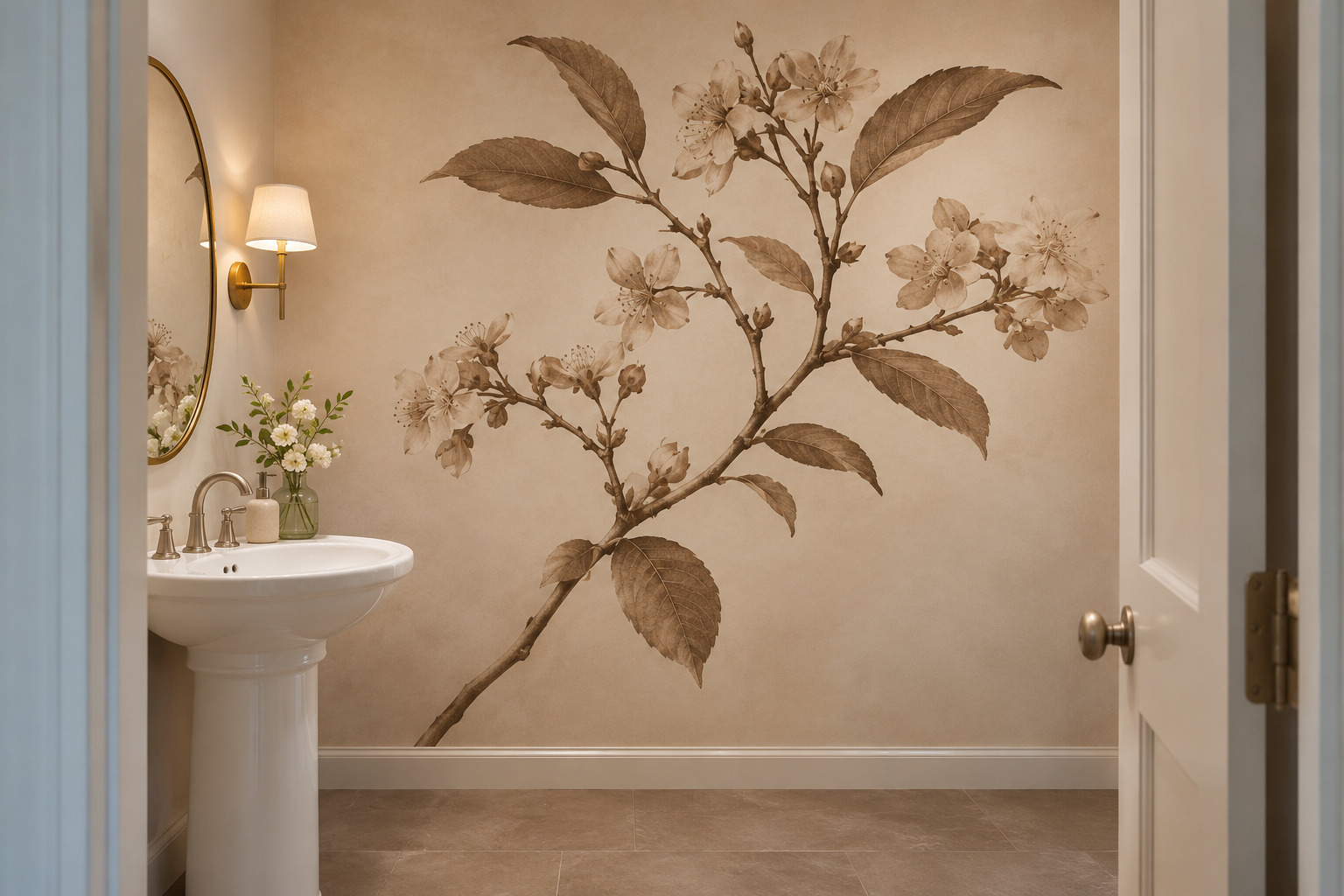
Try a large branch, flower, or loose abstract form on the far wall of a half bath with an off-center sink. The open door already frames this part of the room, so position the part of the design you like in that view. Hold the full repeat in place and open the door to its usual position. A branch that looks centered against the closed trim may be chopped off once the door swings in.
Give the main motif room to finish its shape above the baseboard. If your sample shows only one portion of the repeat, check the manufacturer’s full layout before ordering. The same print can read very differently when its most visible flower ends up on the narrow return behind the door.
2. Use a Small Repeat Between Two Door Casings
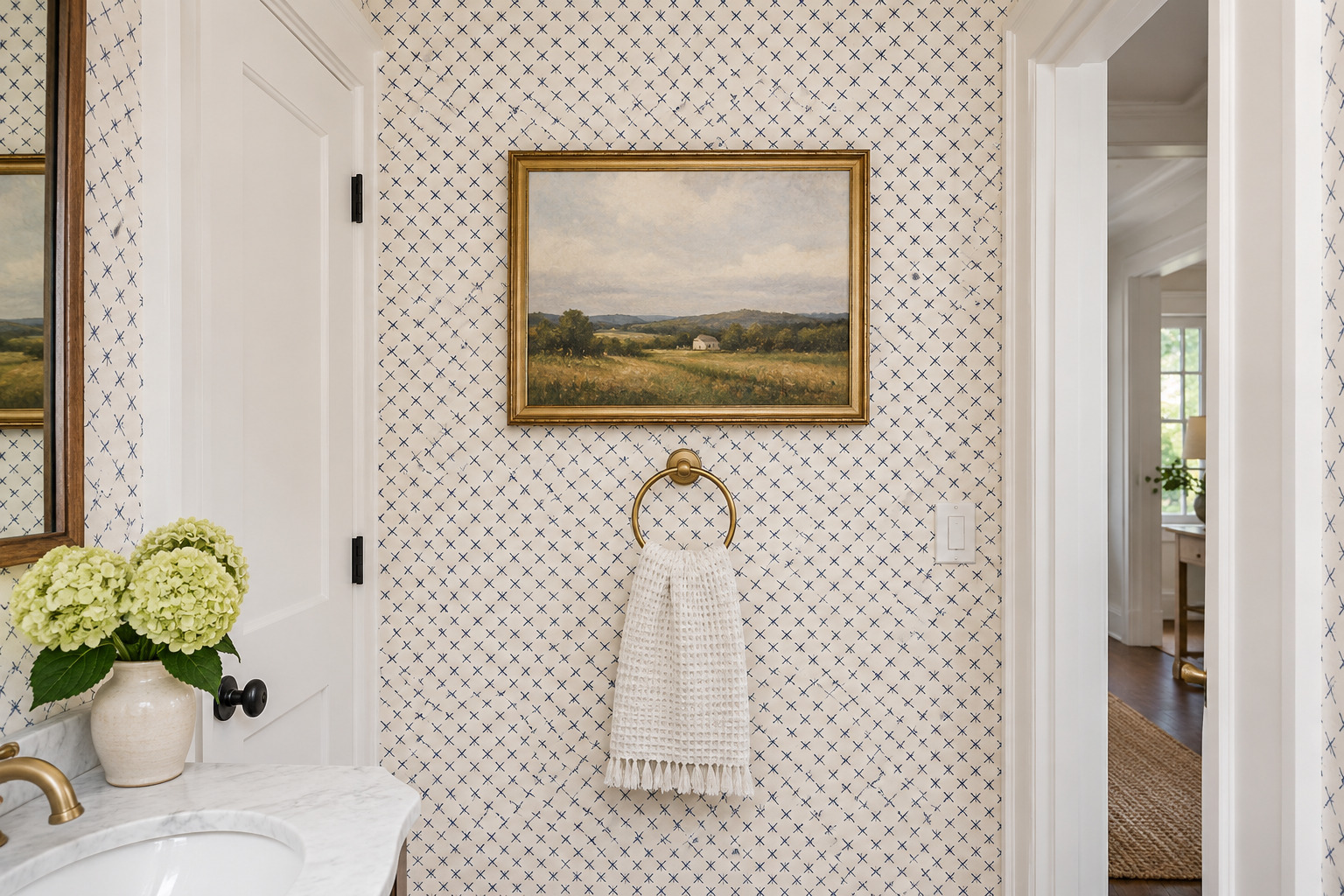
A narrow strip between two casings is a good place for a closely spaced hatch, seed print, or tiny woven-looking mark. Several complete repeats can show even in the sliver of wall that remains when one door is open. View the sample from the hallway first. A fine blue hatch on cream may read as a soft tint at that distance, with the marks appearing as you walk in.
Try two placements on paper before hanging. A stripe that lands right beside one casing can make the gap look crooked. Shift the layout so both edges cut through a similar quiet part of the repeat, and let the white casing frame the finished strip.
3. Let Wainscoting Set the Height
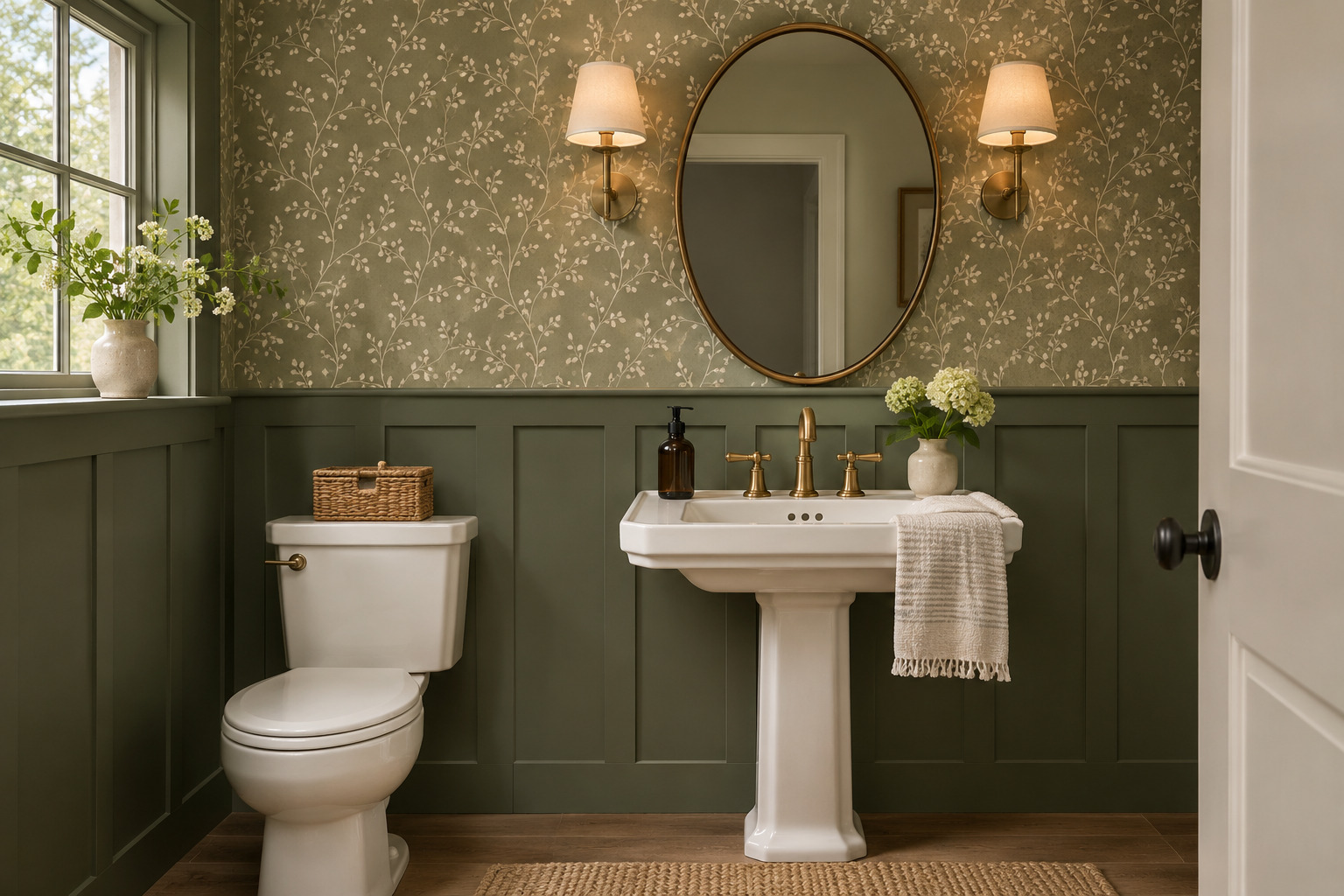
When a half bath already has a chair rail, use its upper edge as the bottom of the wallpaper field. A gentle botanical on olive paper can follow deep sage paneling, or a cream paper can pick up the paint on an old cabinet. The rail gives your eye a clean point to stop before it reaches the floor and plumbing.
Judge the size of the wallpaper pattern within the upper section only. A full height motif might show too little above a tall rail. Set the sample on the rail and make sure the part you like survives above it. Then check how the paint and paper read under the same lamp.
4. Give a Wide Mirror a Quiet Paper Background
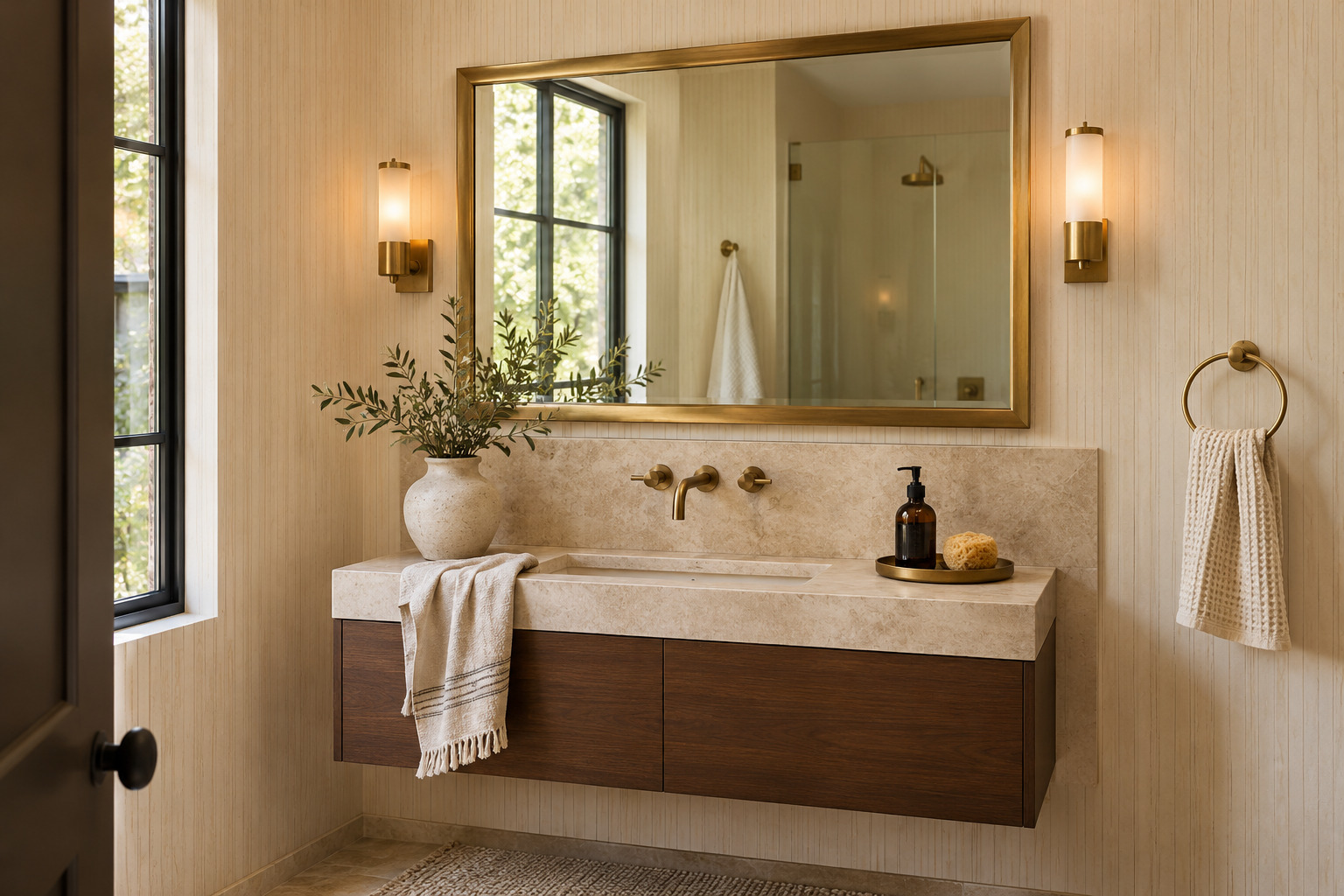
A broad mirror leaves thin bands of visible wall at either side. Small pinstripes or a faint woven print can fill those bands without looking like leftover slivers from a much bigger design. With a shiny mirror frame, an even, low-contrast pattern also gives the frame a distinct edge. Set two sample strips at the actual visible widths so you can judge what the finished wall will show.
From the doorway, see which wall the mirror reflects. If the reflection includes a bold floor or framed picture, a quiet paper around the mirror can give both a place. Our powder room mirror and decor ideas cover other ways to make the mirror itself the focus.
5. Turn a Recess Into a Framed Pattern
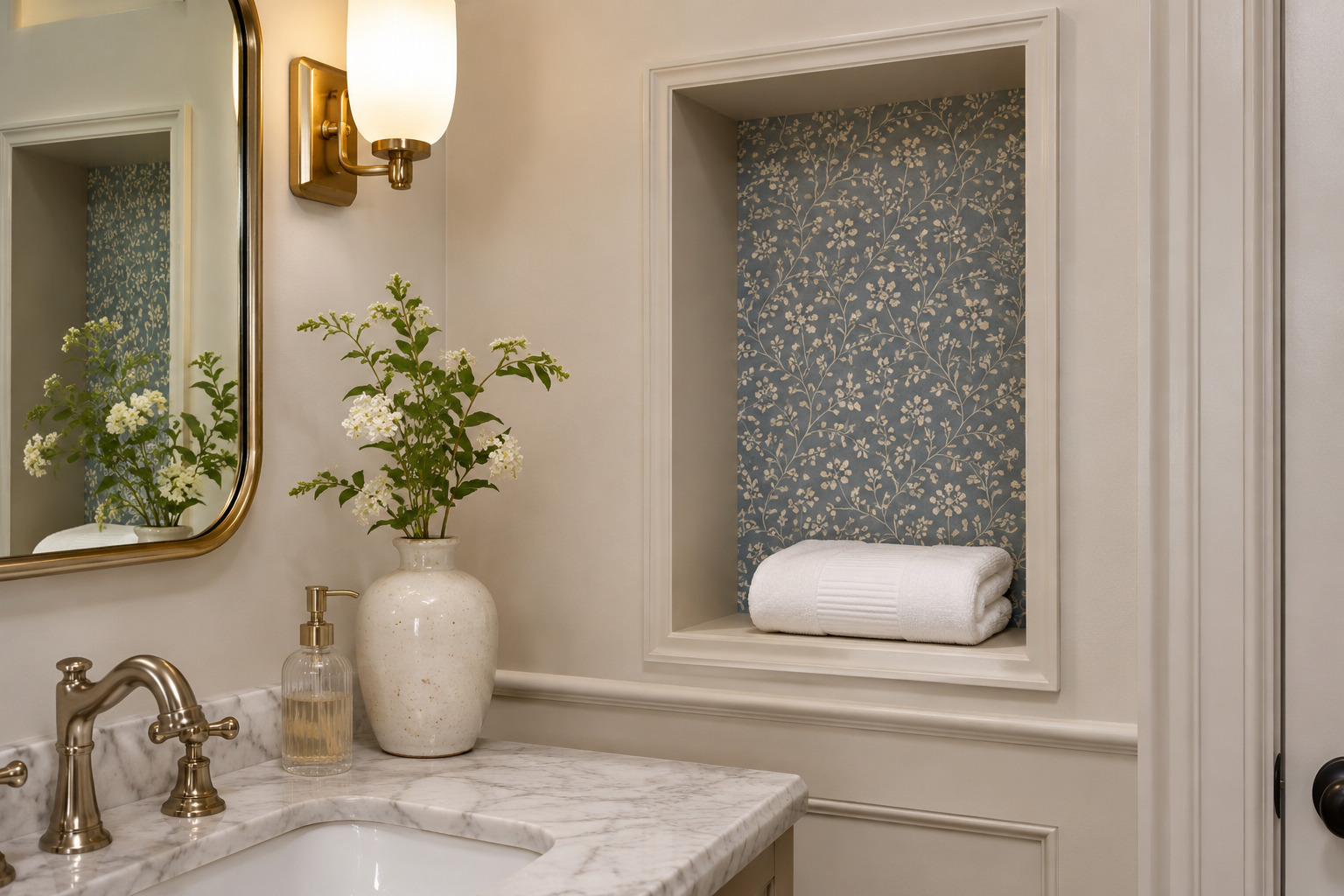
A shallow recess beside the sink can carry one piece of pattern within its own boundary. Paper the flat back and keep the sides the color of the wall. This keeps the edges simple and lets the changing light along the sides show the depth of the recess. If the recess holds a folded towel, put it in place while testing your sample to see how much pattern stays visible.
A blue-gray leaf print can give an oatmeal-painted recess definition without pulling attention away from a basin or old mirror you like. Choose a small repeat if shelving divides the backing into narrow bands. Keep a recess near the sink dry enough for the material specified by the maker.
6. Carry Narrow Stripes Around a Tight Corner
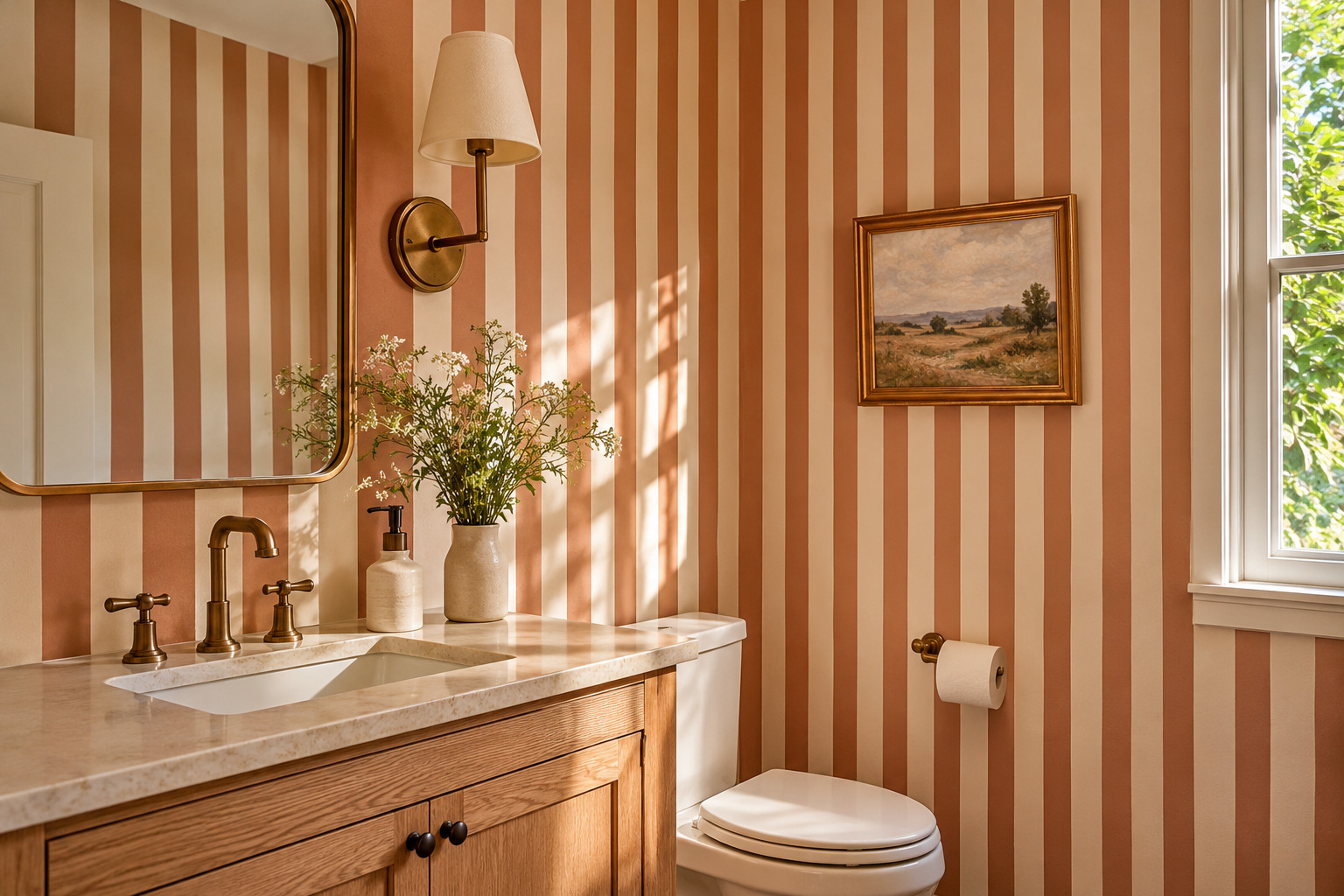
In a small half bath where two walls are visible at once, quiet narrow stripes can give them a shared rhythm. Look closely at where the walls meet. A corner that wanders can make a straight stripe appear to lean, especially when the print has a sharp color contrast. Clay and cream stripes of similar lightness give a little more visual leeway.
Work out where each wall should begin before any paper goes up. Check the manufacturer’s directions for inside corners and align the pattern on each plane as the product requires. Move any less tidy join into the least prominent corner you can use. You can still see the stripe as a continuous idea when it turns the room.
7. Paper the Wall Behind the Toilet
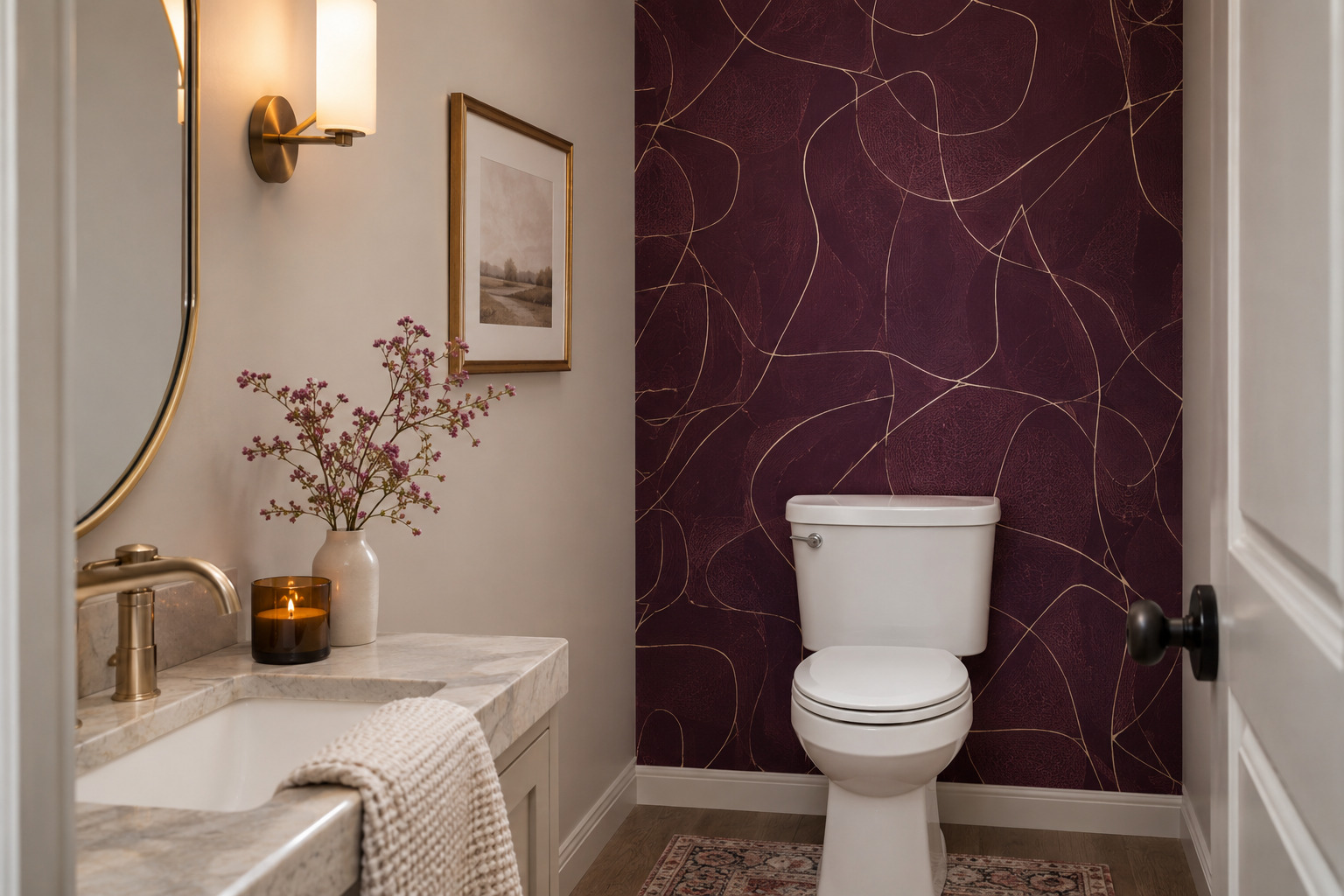
Use the wall behind the toilet when a busy vanity wall has too many interruptions. A plum line print here can make that recess feel deliberate, with the white tank and bowl standing out against it. Keep the tank lid clear while you compare samples, and make sure the repeat you choose is visible above the fixture and to either side.
Check how much room you have around the tank, any supply line, and the baseboard. If the fixture leaves little access, decide which section can be installed cleanly before you commit. An adjoining wall in pale mushroom will pull a warm tone out of the print and give the doorway a calmer view.
8. Repeat a Floor-Tile Color in the Wallpaper
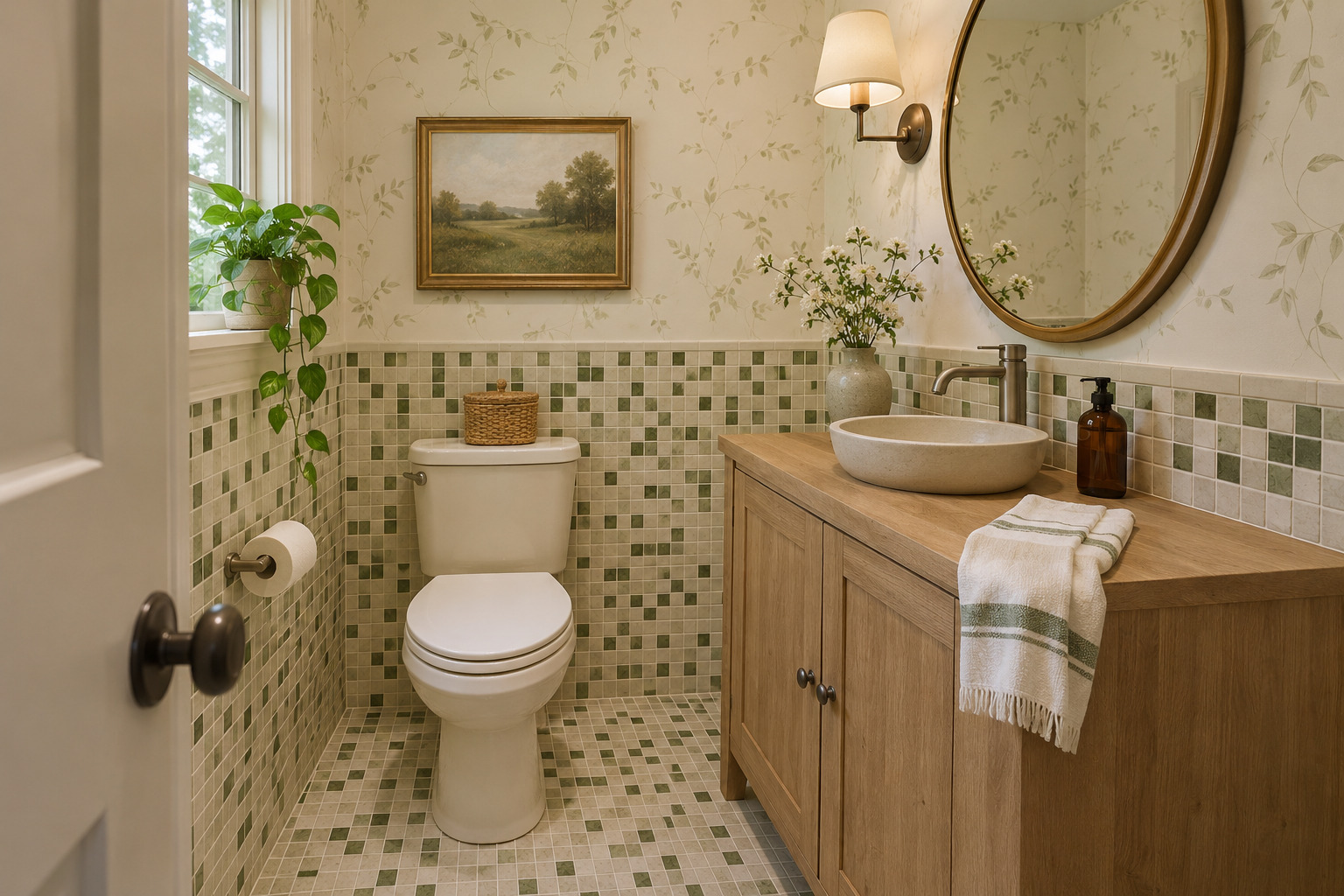
With a small mosaic or checkerboard floor, find one of its quieter colors and bring that shade up onto the wall. A moss mark in a faded ivory paper can relate to an old green-and-cream floor while letting the mosaic keep its own geometry. Pick a wallpaper pattern with larger, looser spaces between its marks if the tile already has a tight grid.
Lay the wall sample near the floor in the morning and hold it at eye level that evening. The two materials can look close under the same light and drift apart once one goes upright. A natural oak vanity can bridge the pair, especially when you leave enough grain visible to give the eye a plain surface.
9. Keep a Solid Backsplash at the Sink
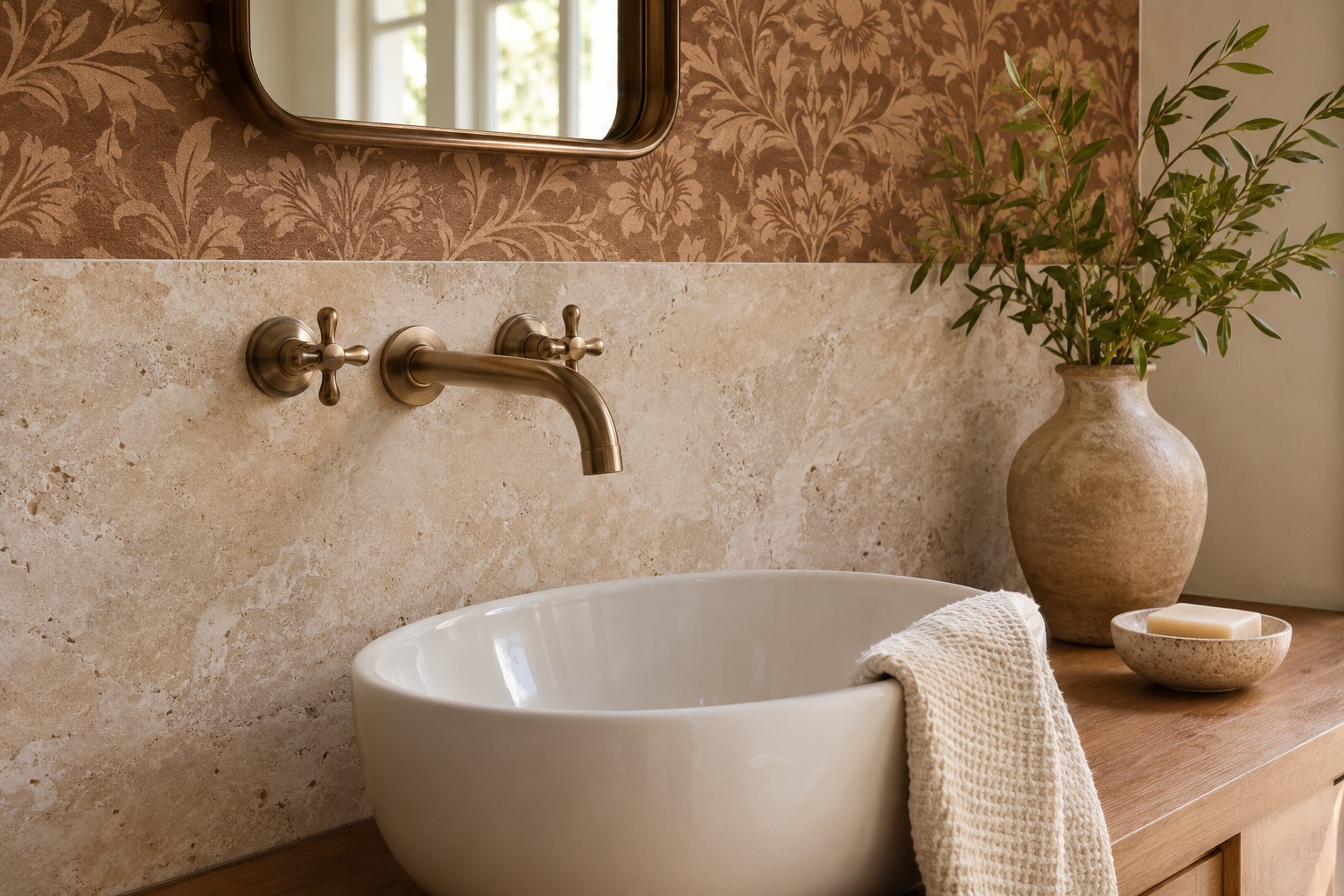
A small sink used by guests can leave more splashes on the wall than you expect. A solid honed limestone or other suitable backsplash gives that part of the wall a material you can maintain as directed. Bring the paper down to the top of the backsplash and align the cut with its edge. Keep the strongest part of the print above that line where the faucet will leave it readable.
Check the product’s suitability for the room and follow the wallcovering maker’s care instructions. If a busy sink frequently sends water above the backsplash, consider papering a wall outside the splash area. The stone and paper can still share a warm undertone without having to meet at the sink.
10. Use the Ceiling as the Patterned Surface
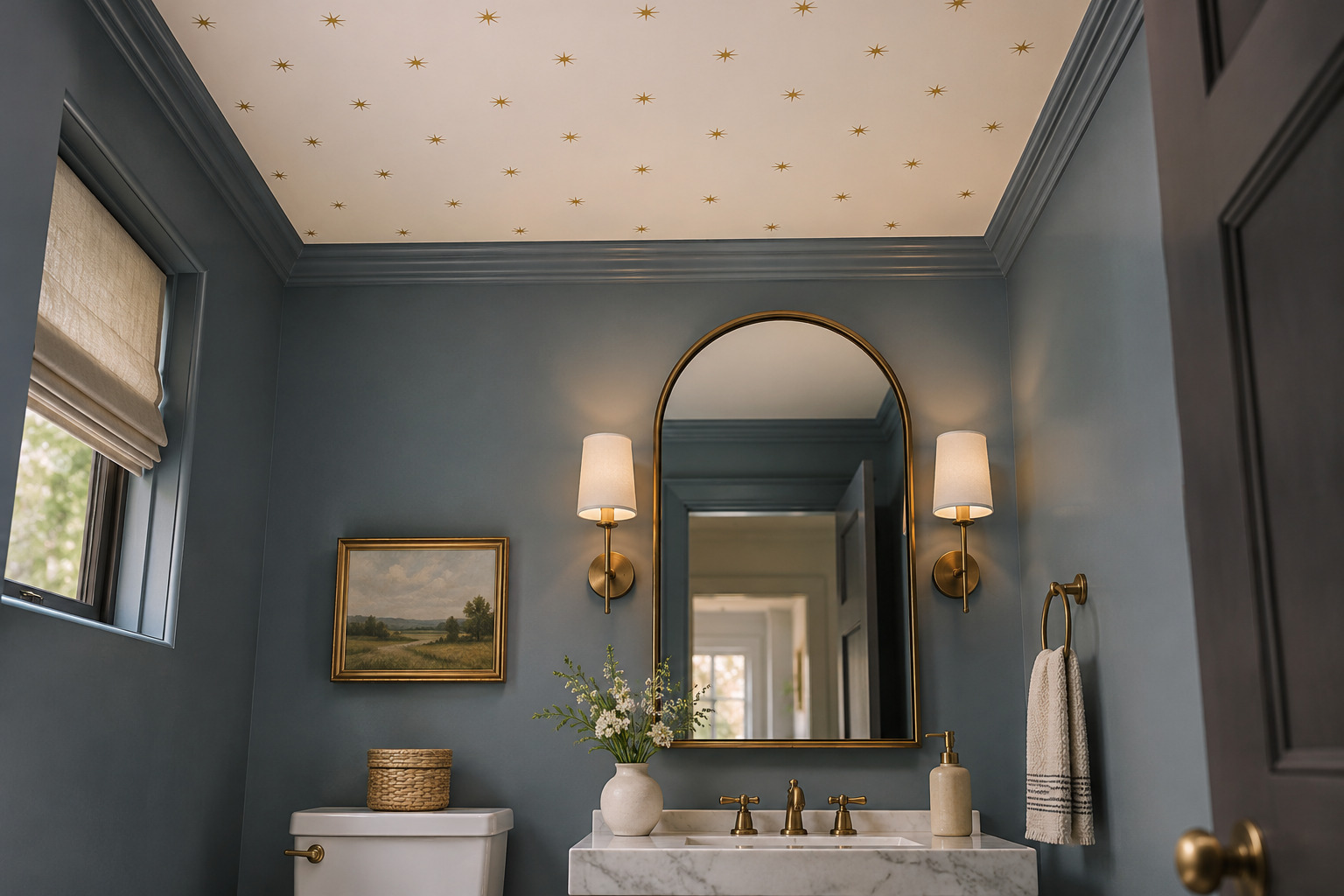
A dry, well-ventilated half bath with busy walls can make a case for a patterned ceiling. Take a tiny starburst or quiet dotted print up top when the wall already has a window, medicine cabinet, and mirror to contend with. A muted blue wall and plain ceiling trim leave enough separation for the ceiling to read from the doorway.
Hold a sample overhead and turn on the usual light. A shine that looks soft upright may be distracting from underneath. Check that the wallcovering and adhesive are suitable for a ceiling, and plan for the light fitting before you order. A matte finish can help keep the pattern visible when the fixture is on.
11. Wrap the Walls in a Low-Contrast Grid
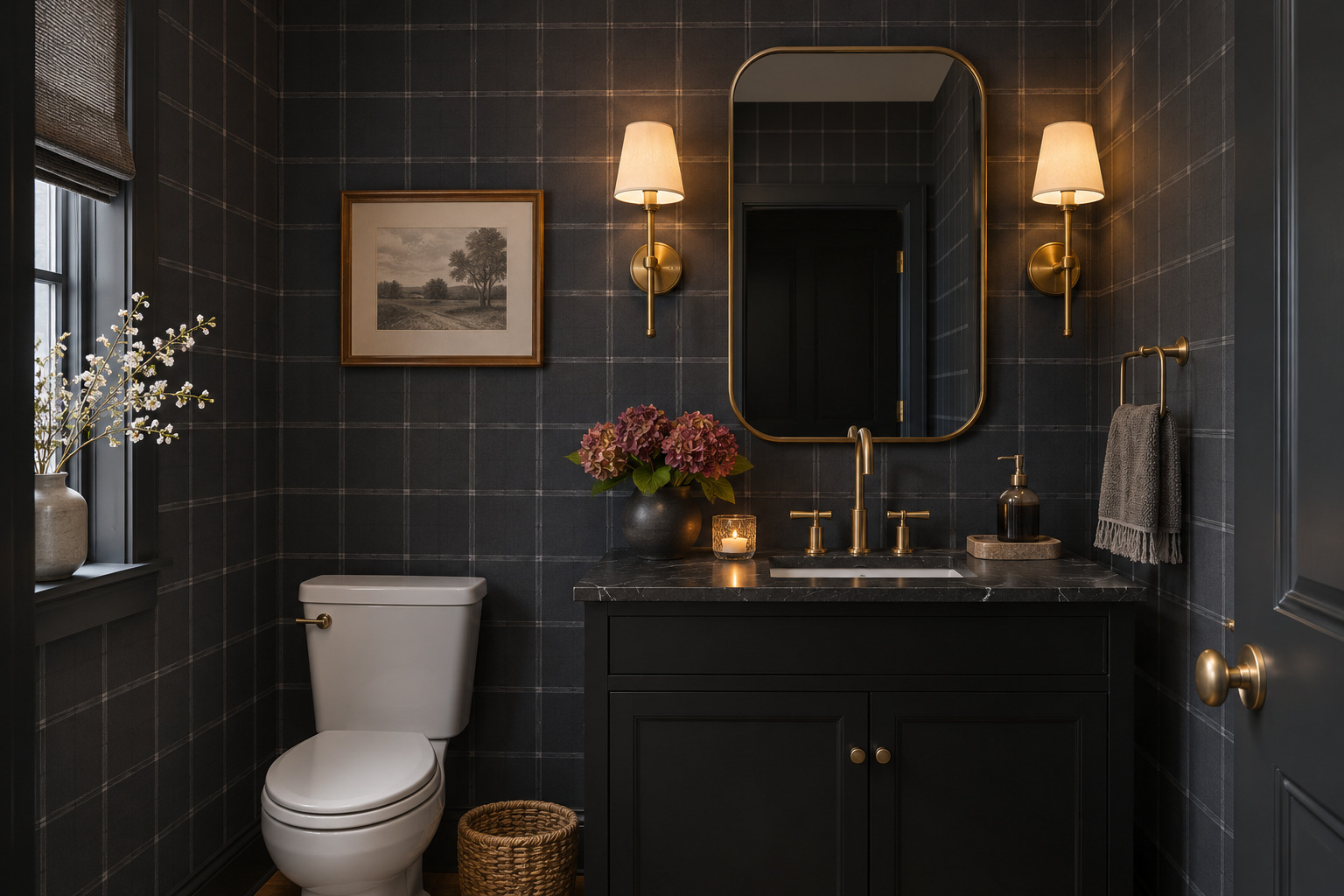
A charcoal grid on a slightly lighter charcoal ground can make the corners of a half bath feel intentional. Here the room gets its depth from the repetition. The edges of the mirror, the countertop, and the rail have a quiet set of lines to relate to. Warm sconces can light the mirror without turning the paper into the brightest surface.
Inspect a sample at a corner and around the vanity before ordering. A strong grid magnifies misaligned joins, especially in an older room with irregular walls. A softer outline and a forgiving repeat can hold the same look with less visual tension. Read the pattern match on the roll so you can account for it in your quantities.
12. Keep the Cutout Wall Plain
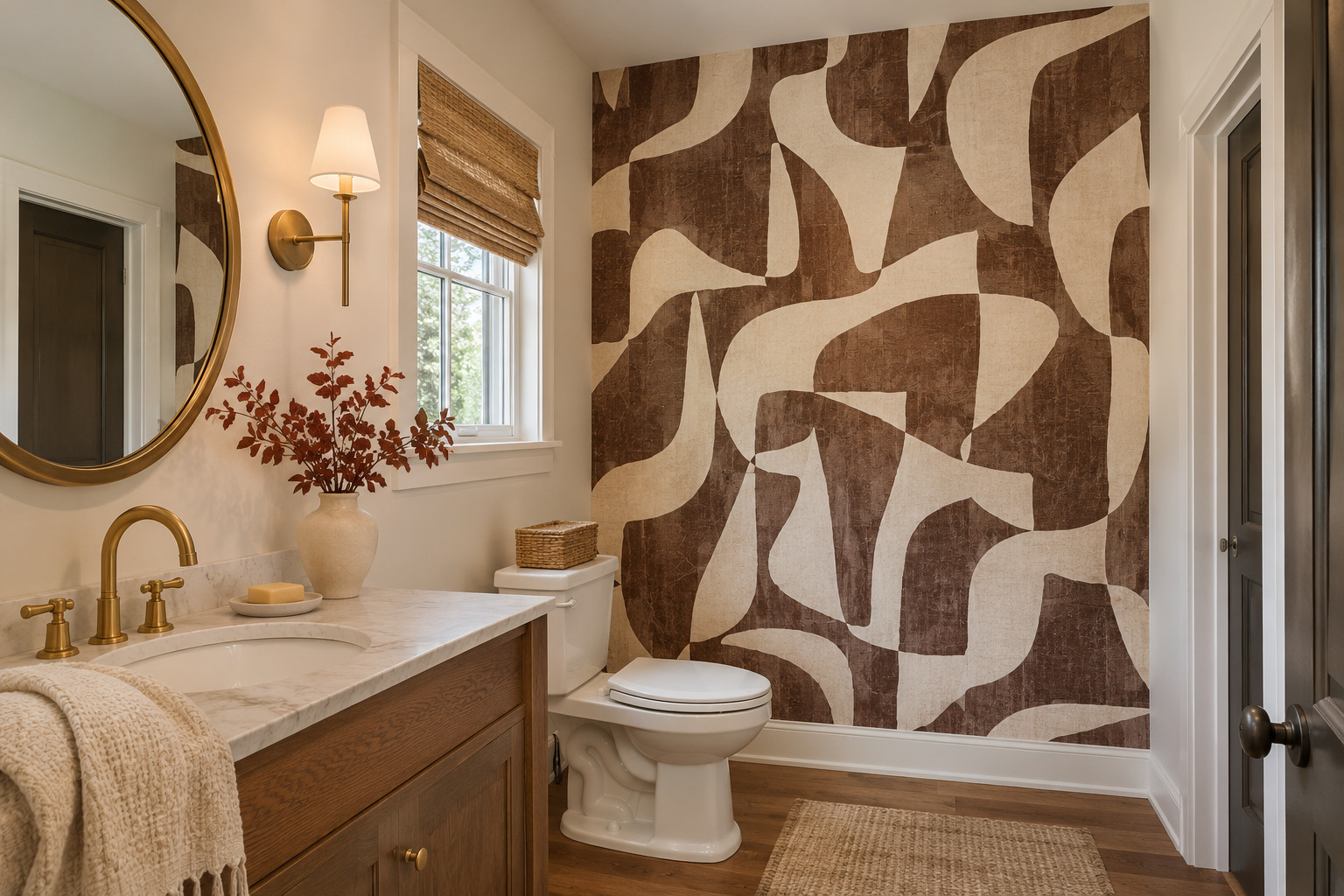
When the window and door leave little uninterrupted wall between them, bring the pattern to the opposite plane. This allows a broad cocoa-and-ivory print to show several shapes in full. Stop at an inside corner and paint the busy wall in a color drawn from the paper’s background. Both sides of the room can feel related even though you only see the print on one.
Test the stop point from the hall. If the cut looks abrupt next to contrasting trim, try a paint sample closer to the paper’s lightest field. Keep the window and door casings the same tone when you want them to read as part of a single wall.
13. Use One Reversible Panel in a Rental
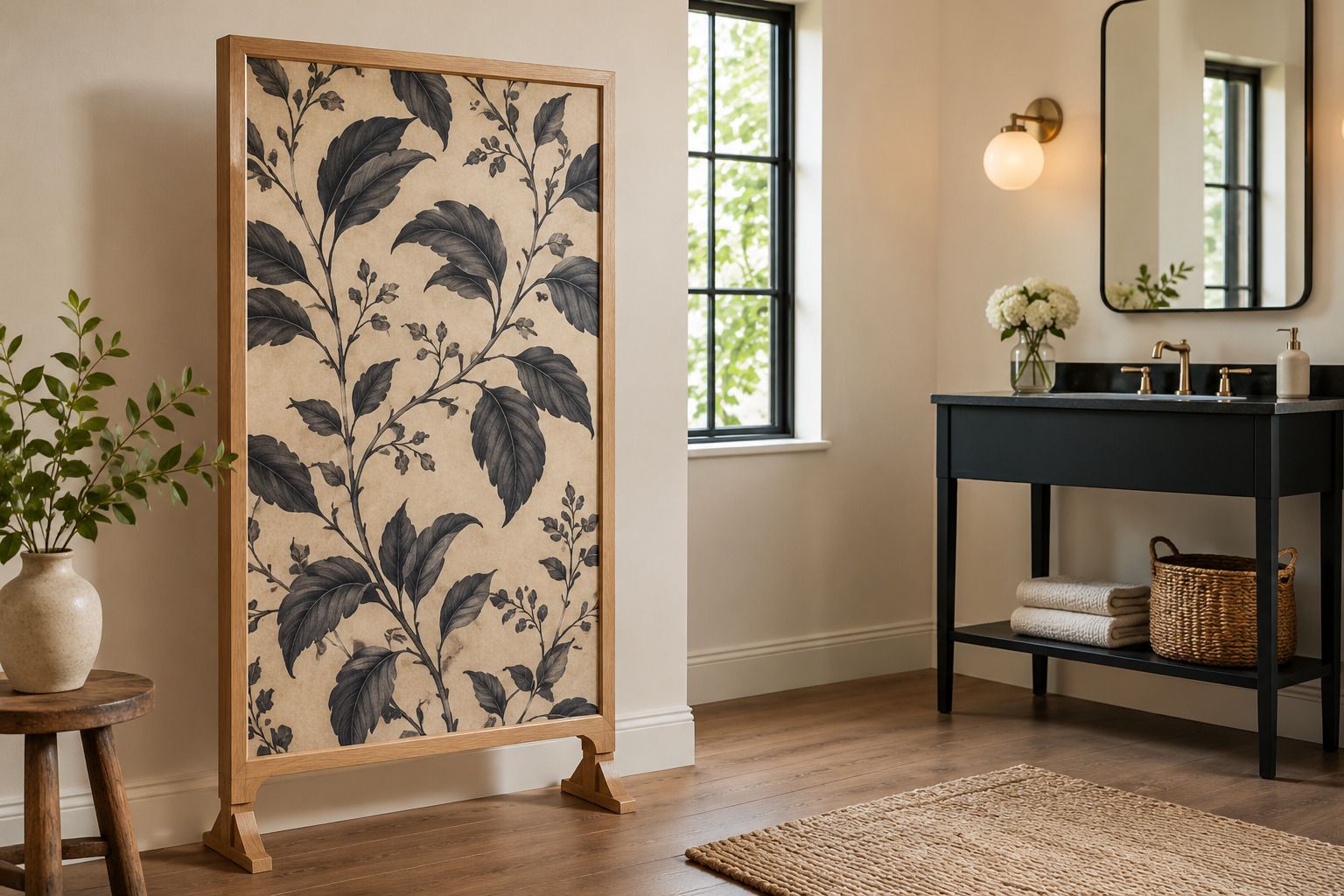
For a rental where wallcoverings need approval, frame a piece of paper as art. Choose a panel broad enough to show a complete motif. Use a stable freestanding frame in a dry corner or hang a lightweight frame using a method permitted for the wall. An ink botanical on parchment can give a plain half bath one clearly defined patterned surface with a finish you can take with you.
Keep the panel out of the sink’s splash zone. Check that a freestanding panel can be secured where needed and leaves the door and floor route clear. If you use a dry shelf instead, measure its usable depth before choosing the frame. Test the sample first, since reflection from glazing can change the look of a dark print under a sconce.
For a similar framed botanical look, try RoomMates Vintage Floral Blooms in black and white. Cut a section with one complete motif and apply it to a smooth backing that works with the paper.
See the black-and-white botanical wallpaper (paid link)
Pick the place where you want to see the pattern first. Hold up the biggest sample you can get there, then try the doorway, sink, and mirror views with the light on. Once that placement works, matching the trim and deciding how much paper to buy become easier decisions.
Discover more from HomeTrendora
Subscribe to get the latest posts sent to your email.