A wreath can catch a shade’s bottom bar, and a tall sill display can brush against the curtains every time you close them. These 22 Christmas window decor ideas help you decide where to put greenery, ornaments, and lights based on how your window and its coverings move.
Open the window and use the blind or curtains before setting anything out. Watch the full travel of the sash, the shade rails, and the fabric, then notice where your hand reaches for each control. Use the room beyond that space for most displays. Give escape windows a fully clear opening and approach, and choose flameless lighting near any greenery or fabric.
1. Set a Cedar Spray Beside an Inside-Mount Roller Shade
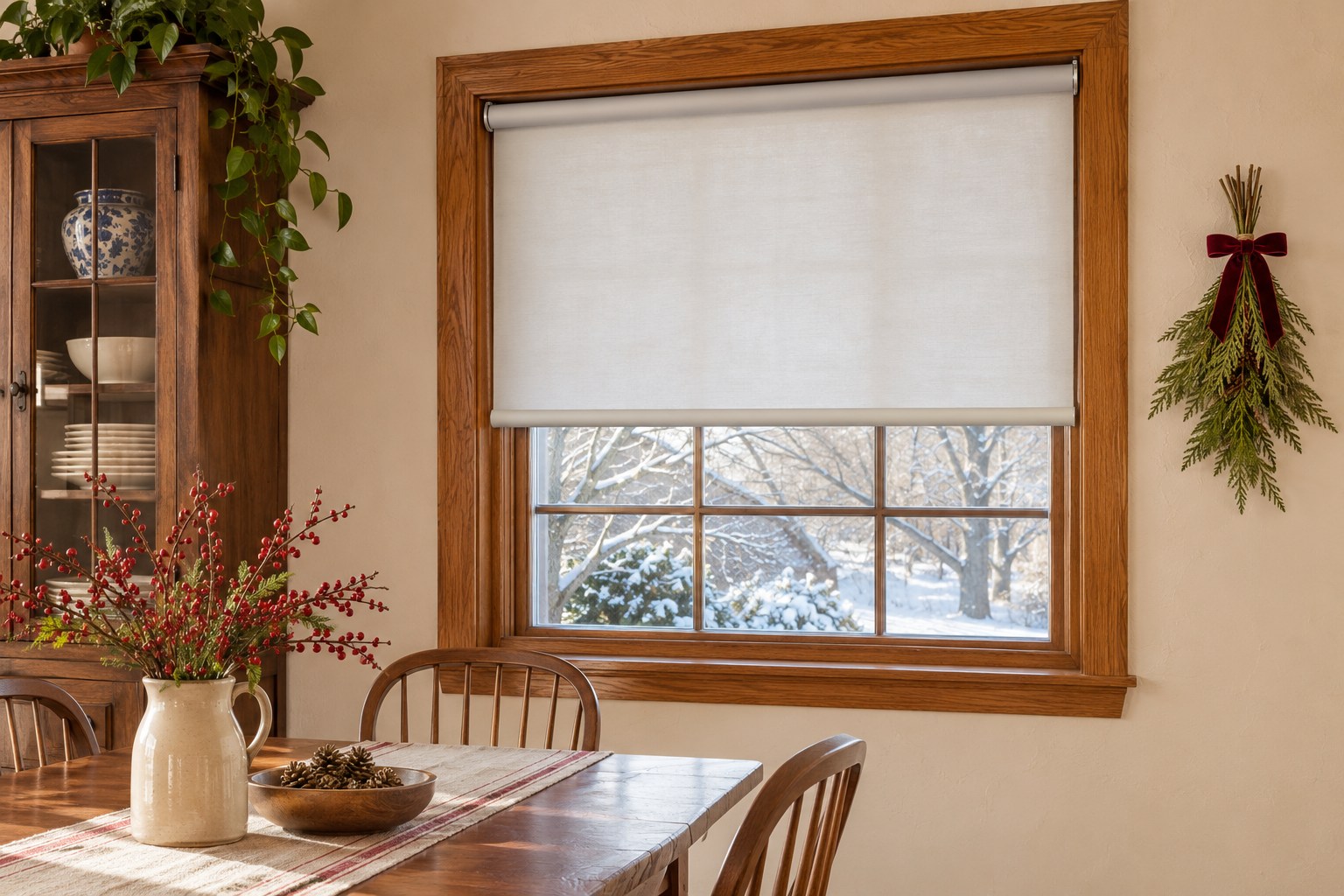
A roller shade mounted inside the casing passes close to the trim. Lower it fully and watch where the bottom bar and any guide hardware sit. A narrow cedar spray on the plaster beside the casing gives you a vertical Christmas accent. Turn the branch tips toward the room so the fullness shows even from across the table.
Check the widest branch tip while the shade is moving. Greenery can relax as it dries, so give the ends extra space and remove the spray if it starts to sag into the opening. Use a short bow with the tails tucked back into the greens. A small amount of cedar has enough texture for a narrow wall strip. The open portion of the window still lets you see the shape in daylight.
2. Give Floor-Length Curtains a Place to Stack
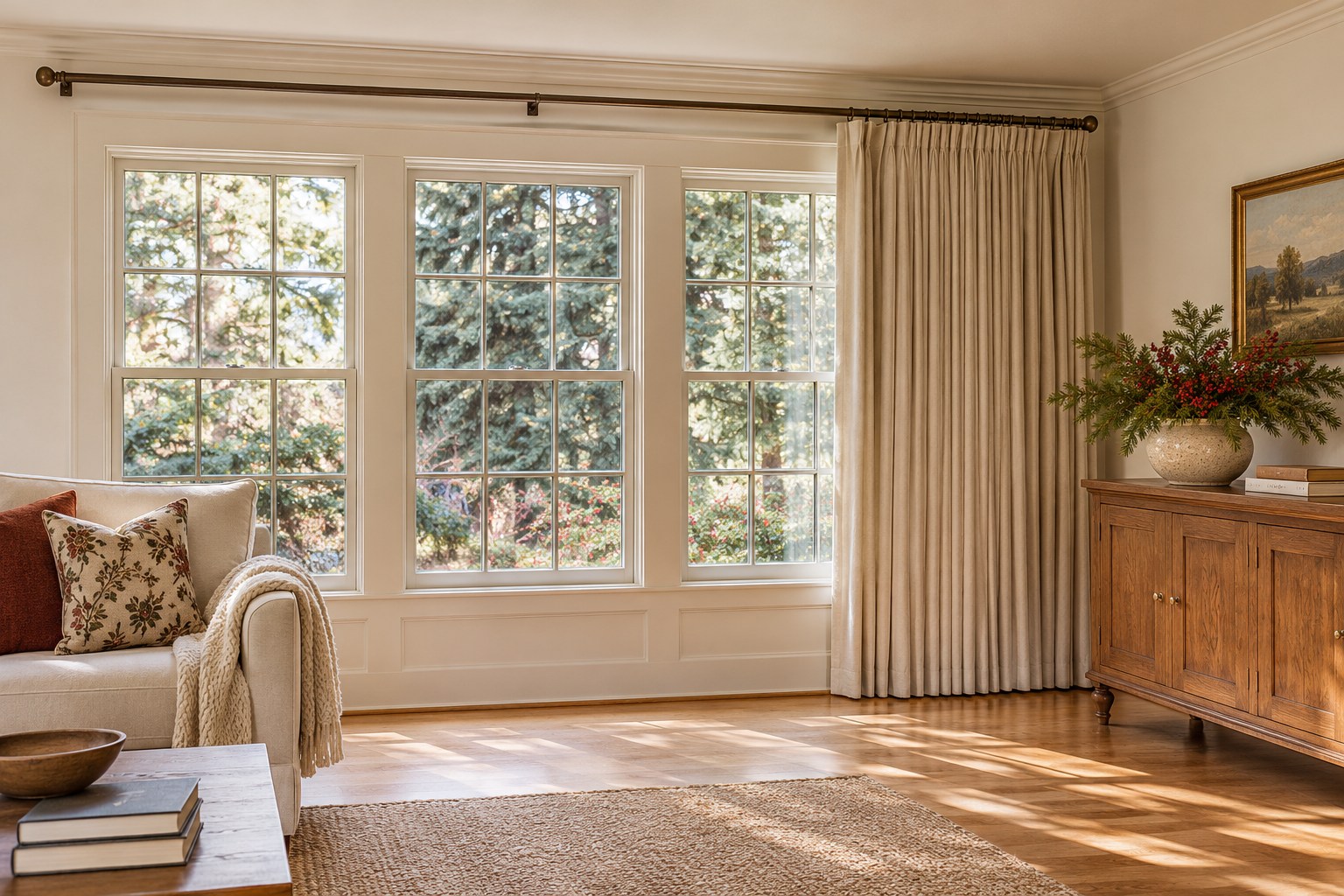
Long curtains take up wall space when they gather at the end of a rod. Open the panels as far as you normally do and see where the widest fold rests. Set your Christmas sideboard display past that point. A low bowl of pine or cedar keeps the outline of the folds visible and gives the arrangement enough weight to stand on its own.
Place the bowl on the sideboard and draw the curtains again before adding taller stems. Walk by and check where the fabric shifts in a draft. The arrangement works best when you can pull the panels closed without reaching past any branches. Use a few berry sprigs toward the front if you want more color from the doorway. Keep the floor by the curtains clear for normal use.
3. Put Paper Stars Beyond the Sliding Sash
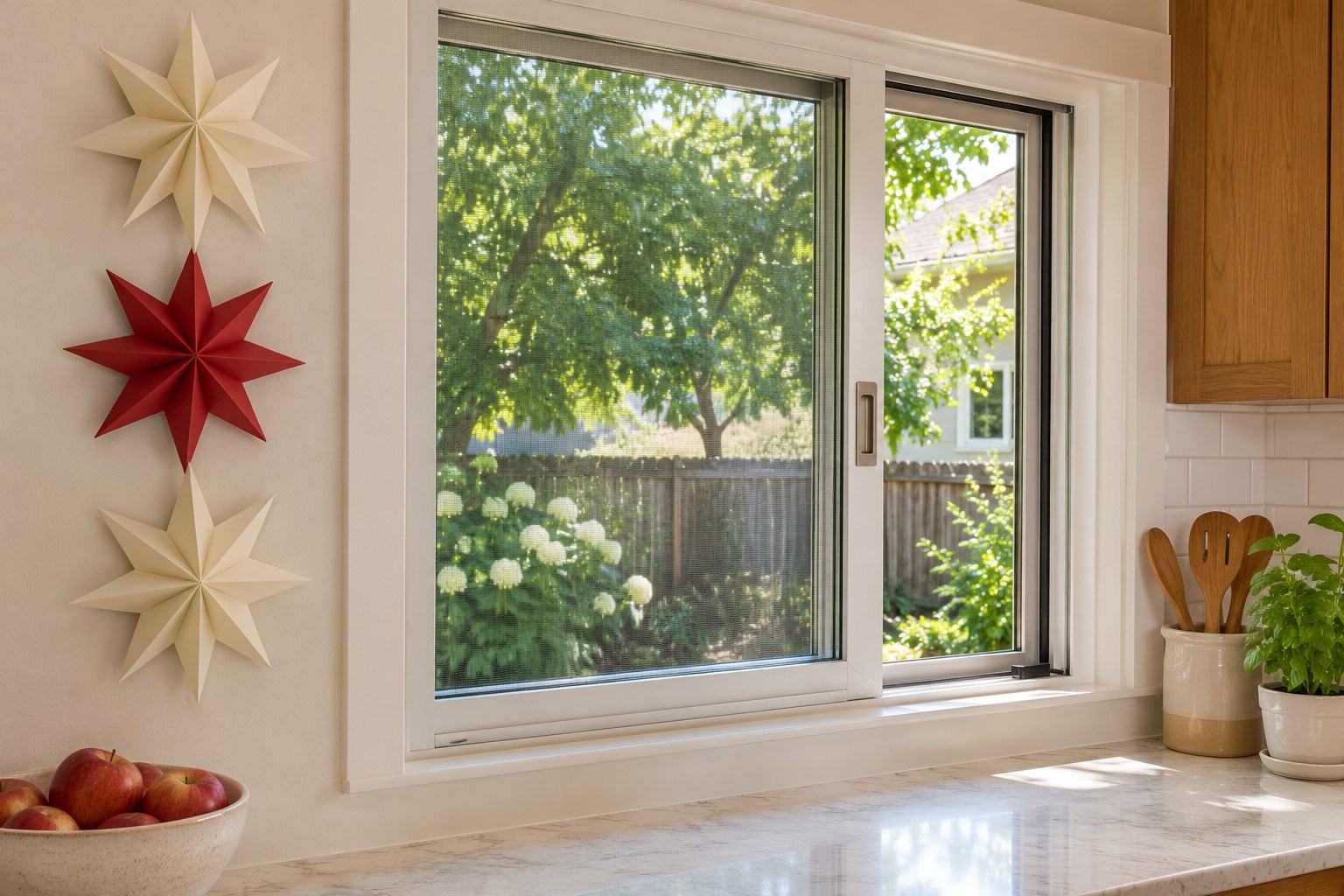
A sliding window needs a clear lower track and an open reach to the pull. Start by moving the sash from one end of the track to the other. Place a few flat paper stars on the fixed wall beside the frame, with the smallest one closest to the trim. A cream star brings detail to painted wood, and a second red star can repeat a color from a nearby dish or hand towel.
Use a surface-appropriate removable attachment for each star, and keep its edge clear of the casing. Press any raised folds outward toward the room so the stars sit entirely on the wall. Check the pull from your usual standing spot. The arrangement should let you open the sash and reach the lock with your arm in its normal position.
4. Light a Double-Hung Window From a Nearby Mantel
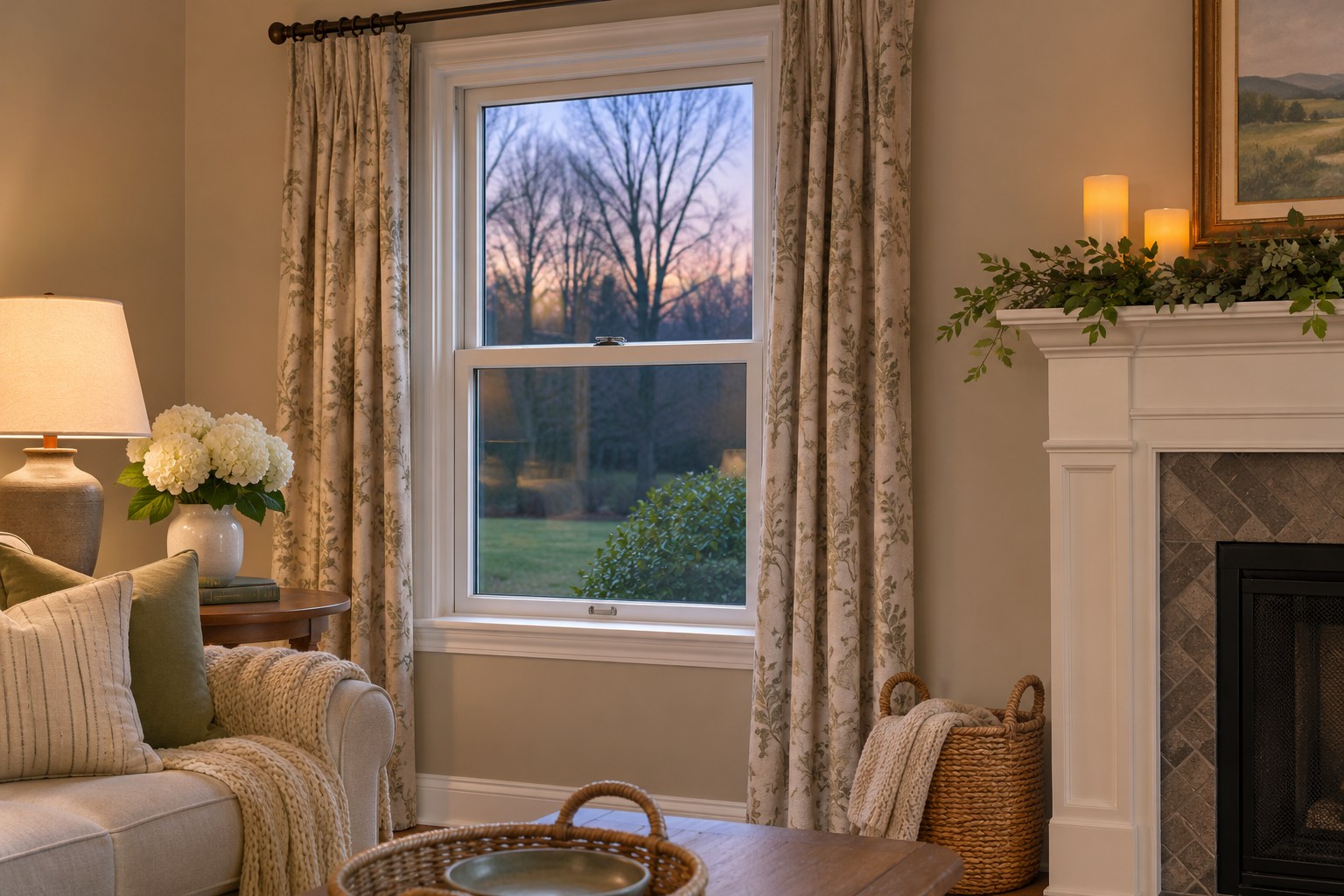
The meeting rail and lift handle on a double-hung window need to stay within reach. An open sill also gives the lower sash room to rise. If you have a mantel on the neighboring wall, use it for a row of warm flameless tapers. A few evergreen stems at their bases make a quiet reflection when you look toward the window after dark.
Try the candles at slightly different heights on the mantel and turn on the usual evening lamps. Watch from your chair to see which reflections you catch. Keep the handhold, locks, and route to the window free so you can operate both sashes as intended. The existing glass and nearby glow do most of the visual work, which gives you a Christmas detail even in a room with a very narrow sill.
5. Put a Framed Sprig Beside a Casement Handle
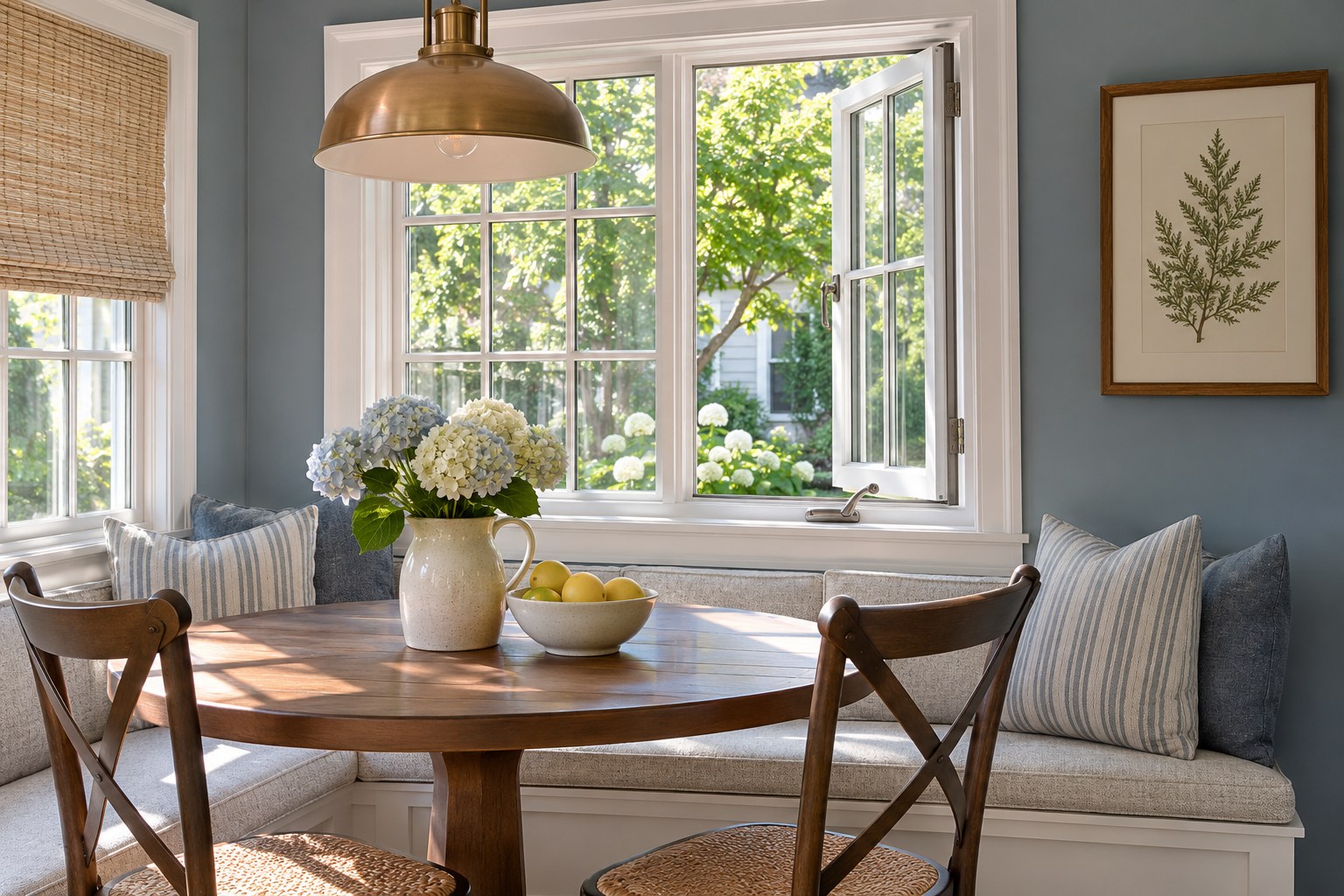
A casement can open outward and still need room for your hand at the crank and latch. Follow your usual opening motion from beside the window. Find a neighboring piece of wall where you can hang a small winter print without crossing that reach. A pressed cedar print in a slim frame brings a green note close to the glass, even if the windowsill is too short for a bowl.
Set the top of the frame near a visible line in the trim so the two elements feel related. Check the frame depth if the window sits in a tight corner. Open and close the casement again with your usual shade position, and make sure you can also reach the latch. A simple mat gives the dark green silhouette room to show in soft winter light.
6. Set a Low Holiday Tray Beside an Awning Window
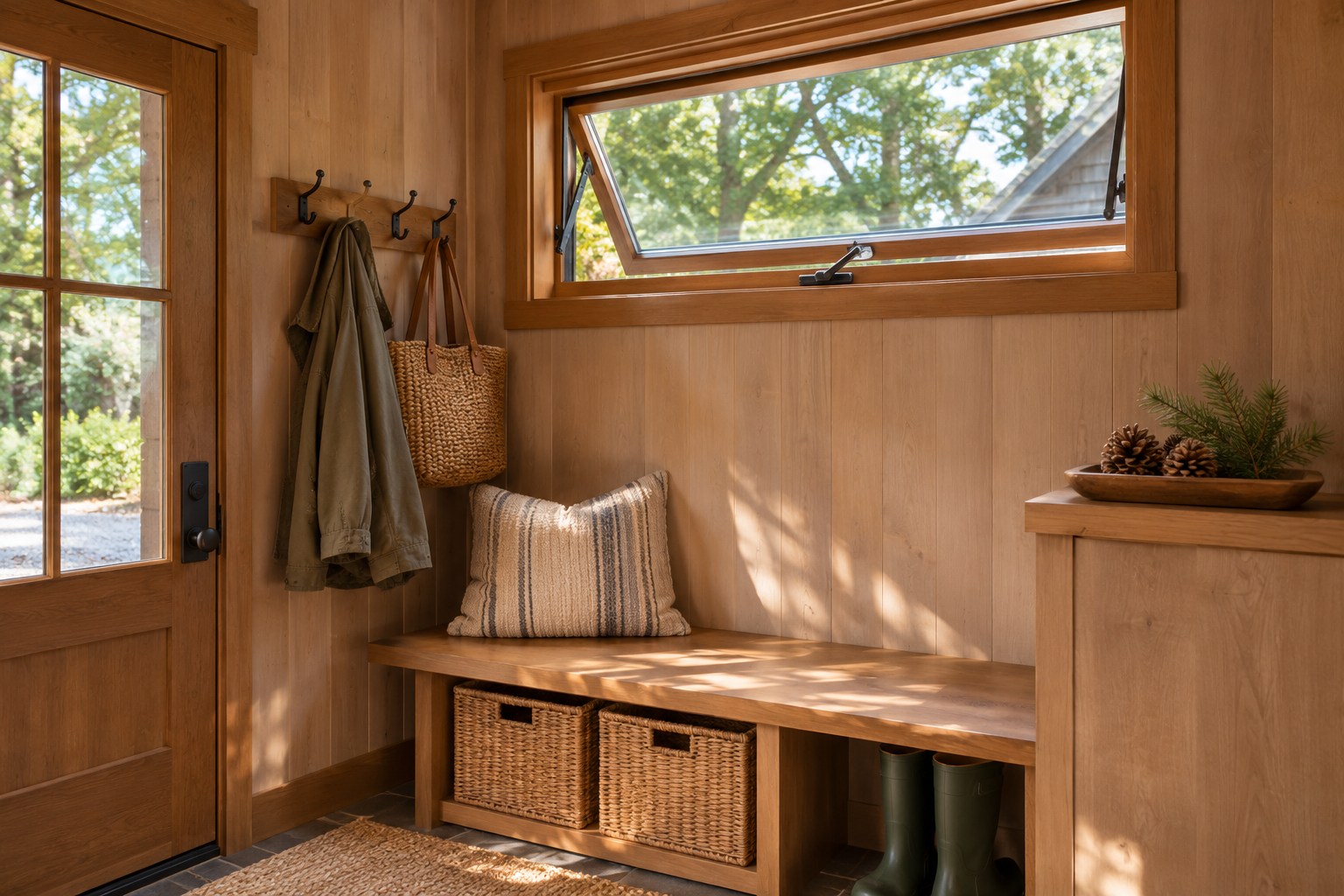
An awning window opens out from the bottom. Its crank or latch can sit close to the sill, so give your hand the full approach from below. A built-in shelf beside the window can hold a small tray of pinecones and a short pine sprig. Put the tray on the end farthest from the operating handle if the shelf runs close to the casing.
Use a tray that lifts in one motion, with pinecone tips inside its edge. A small folded cloth underneath can catch loose needles and keep the setup easy to clean. Check whether the open sash changes how air moves across the shelf. If a gust can push the lightest pieces, use fewer pinecones and group them near the middle of the tray. Leave the hardware visible when you step back.
7. Leave a Bay Window’s Opening Side Panes Bare
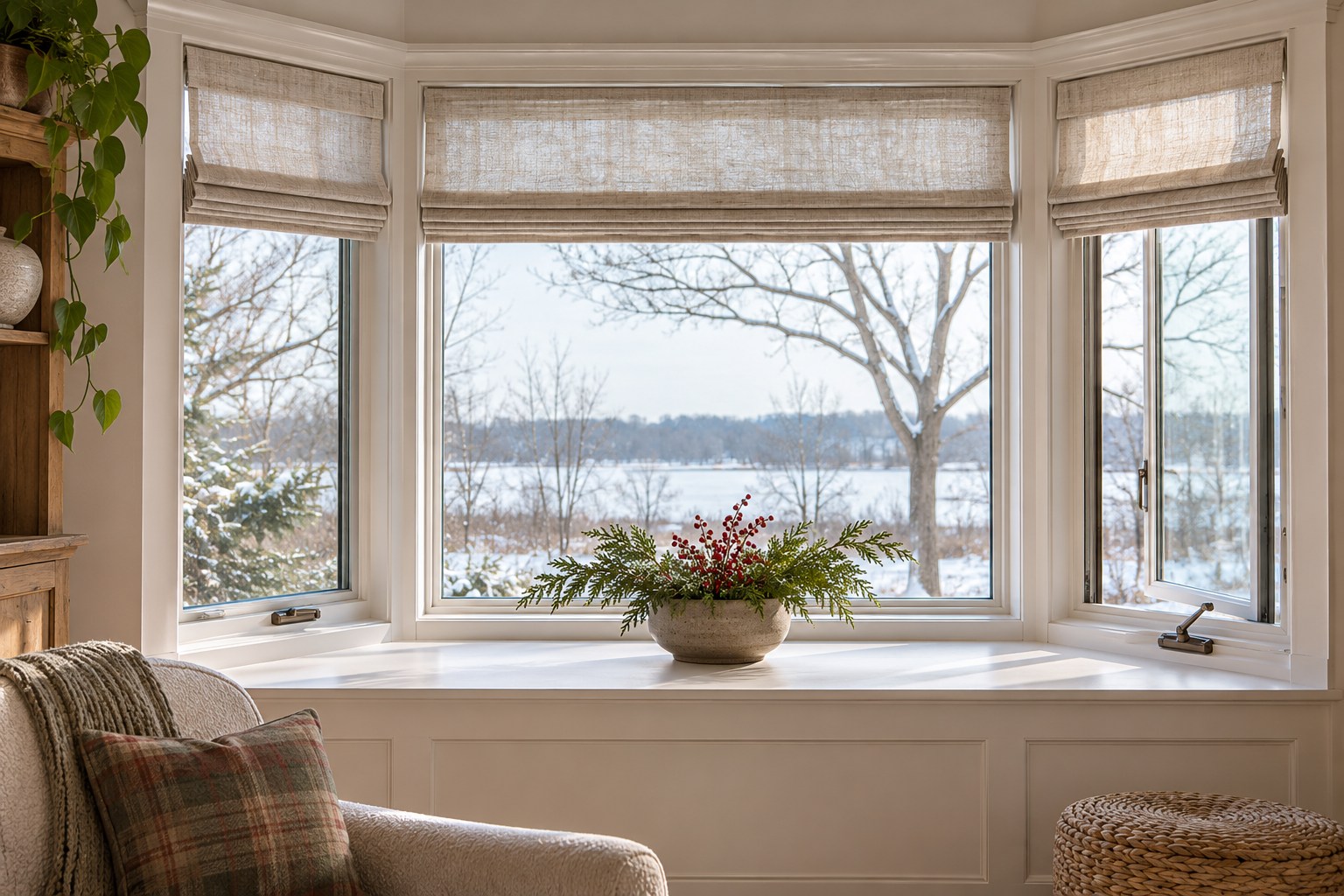
A bay often combines a broad stationary center pane with operable windows on the sides. Try every handle first and locate each shade’s path. A low bowl of winter greens can sit in front of the fixed center if the sill is deep enough and the window is outside your escape route. A small center arrangement also keeps the sides open so you can see the shape of the bay.
Look at the display with the center shade in its lowest position. Give the bowl enough room for the shade to pass and for you to reach its controls. Choose a few cedar stems that spread sideways inside the bowl and tuck in one red berry sprig for color. Leave the side sills empty where you reach for each casement, latch, or crank.
8. Keep the Whole Escape Window in Reach
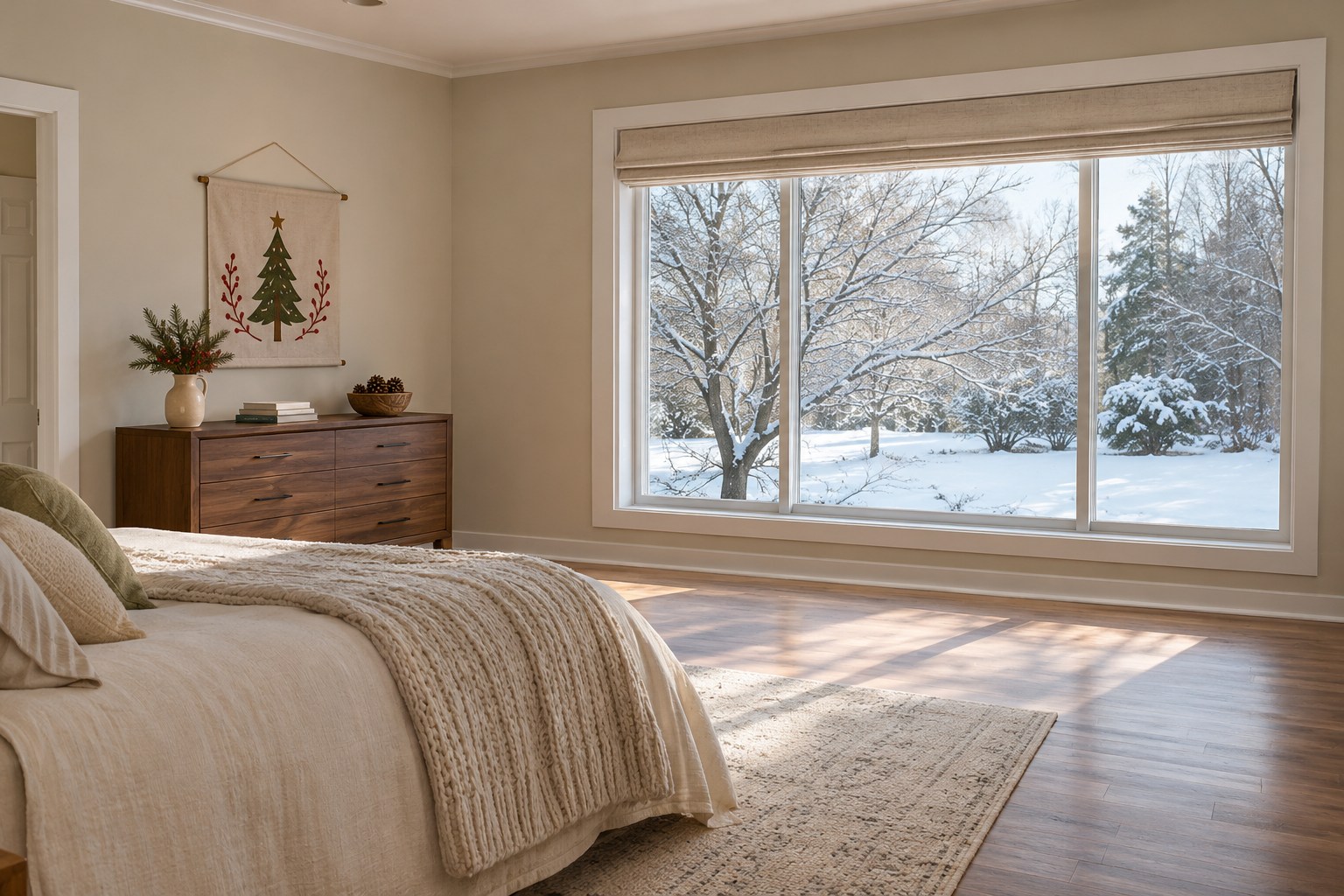
Treat an escape window as open space in the holiday plan. Keep the approach, sill, controls, and full opening clear. Move the seasonal accent to a different wall, where a paper or textile hanging can still be seen when you enter the room. This works well in a bedroom where the window is already the brightest feature and an empty sill looks natural.
Walk the route you would take from the bed and open the window as part of your normal escape-plan practice. The path should stay usable when the room is dark and the shade is in its usual position. Keep décor clear of both the route and the window itself. If you need help identifying your exits, start with the U.S. Fire Administration’s home escape planning guidance.
9. Place Miniature Houses Below the Drop of a Cafe Curtain
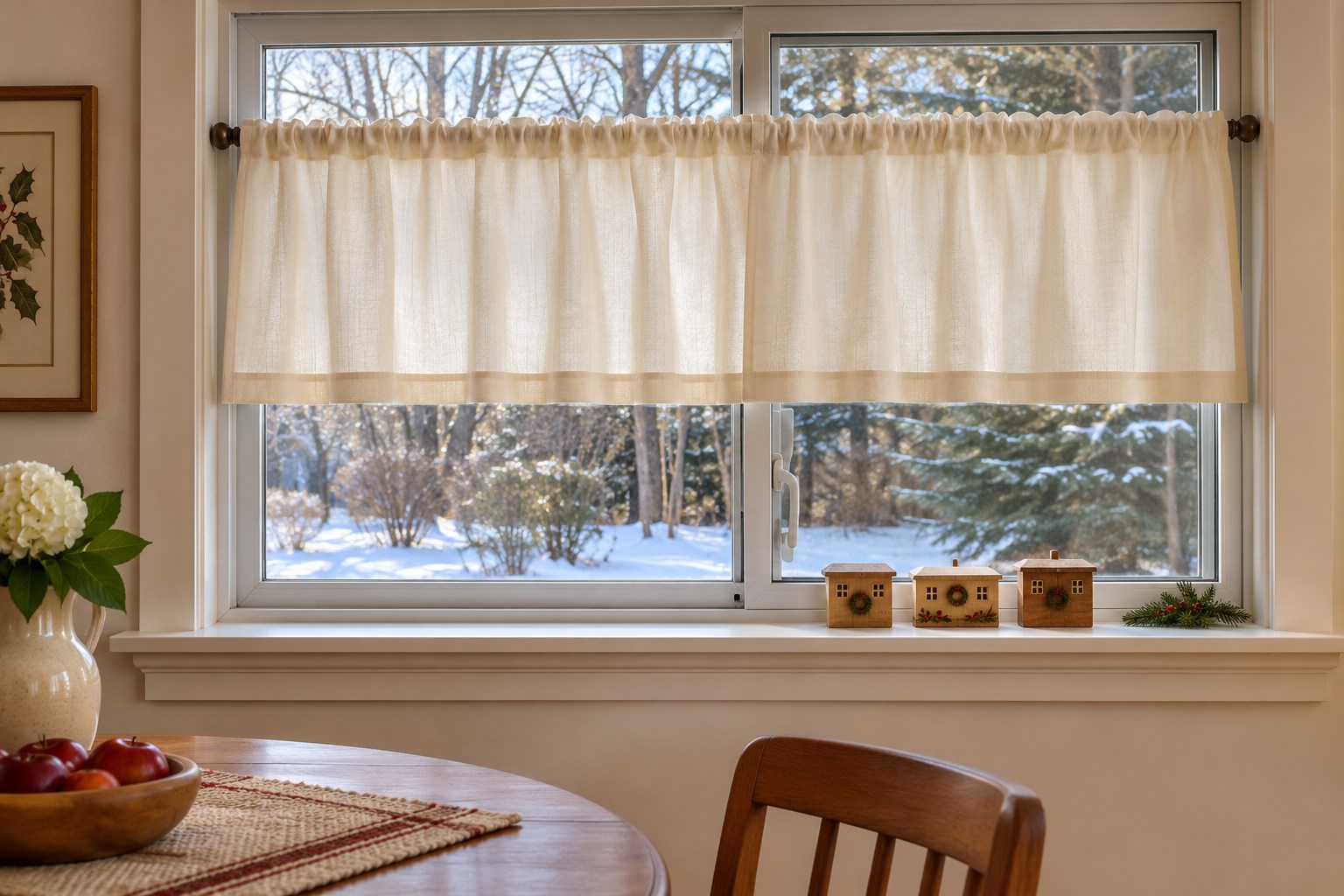
A café curtain usually puts the bottom of the fabric close to the sill. Measure the usable space after opening and closing the panels, since the cloth can hang a little lower where it folds. If a deep room-side shelf falls well below the hems, a trio of small ceramic houses can give you a quiet Christmas window display.
Start with the shortest pieces and keep each one fully on the shelf. Slide the panels, then use the sash and latch the way you do on a regular morning. Leave enough room for a hem to swing if you open the window for air. Glazed white houses will show up against darker window trim, and muted red roofs can pick up a stripe in the café curtain. Lift away the set if it sits in any part of the operating path.
10. Set a Pinecone Bowl Beyond a Roman Shade’s Folds
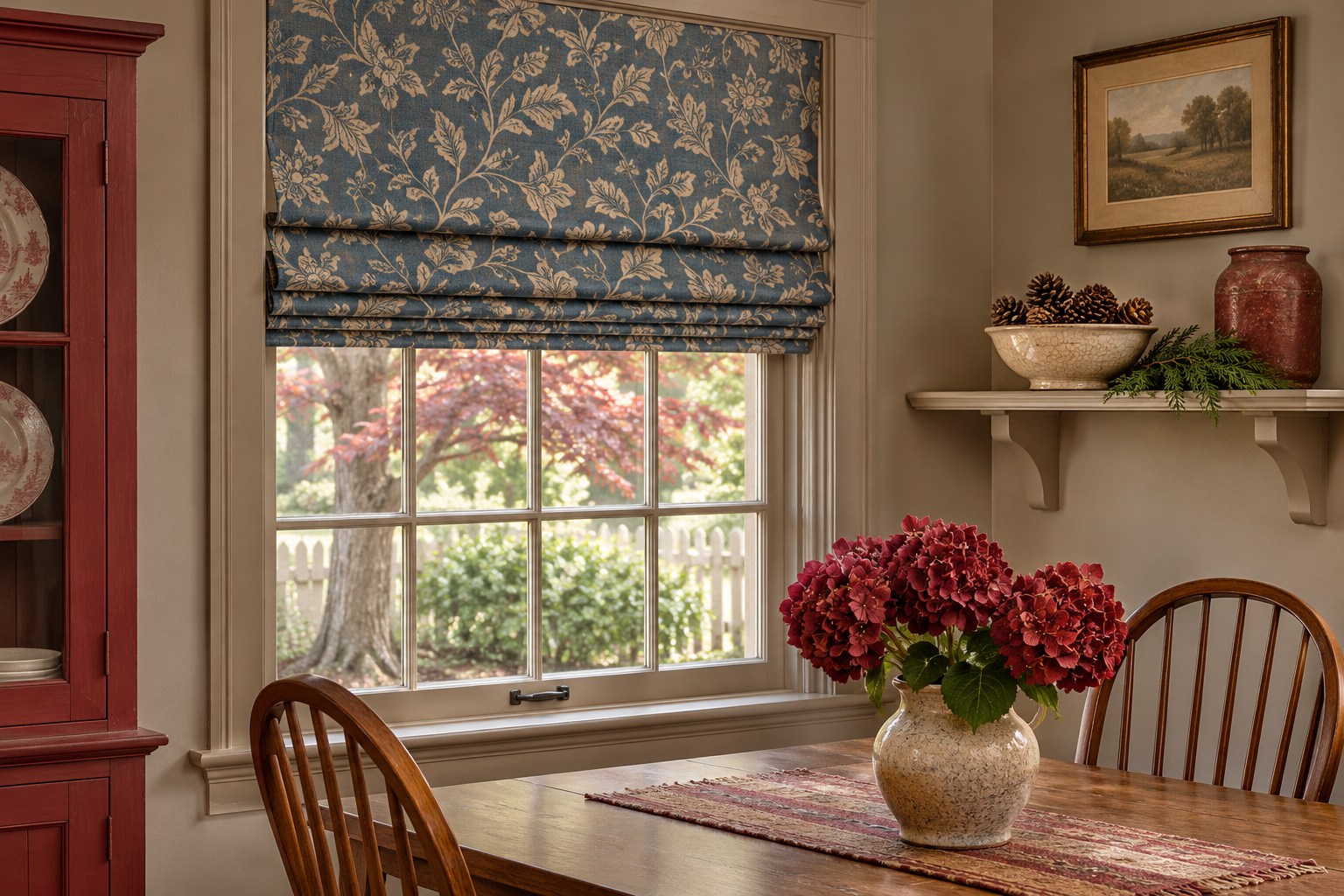
A Roman shade changes shape as it rises. The folds gather near the top and can project farther into the room there. Use an adjacent fixed shelf for a bowl of pinecones, especially in a dining corner where the folded fabric already fills the upper part of the window. Put the bowl toward the far end of the shelf so your hand has a direct reach to the shade.
Lower the shade completely and watch both edges before styling the shelf. Keep a short cedar sprig within the rim of the bowl so the needles stay clear of the fabric. A low, wide vessel brings out the rough texture of the cones against a soft Roman shade. For more ways to use that texture around the room, see these pinecone Christmas decor ideas.
11. Run Paper Houses Along a Fixed Cornice Face
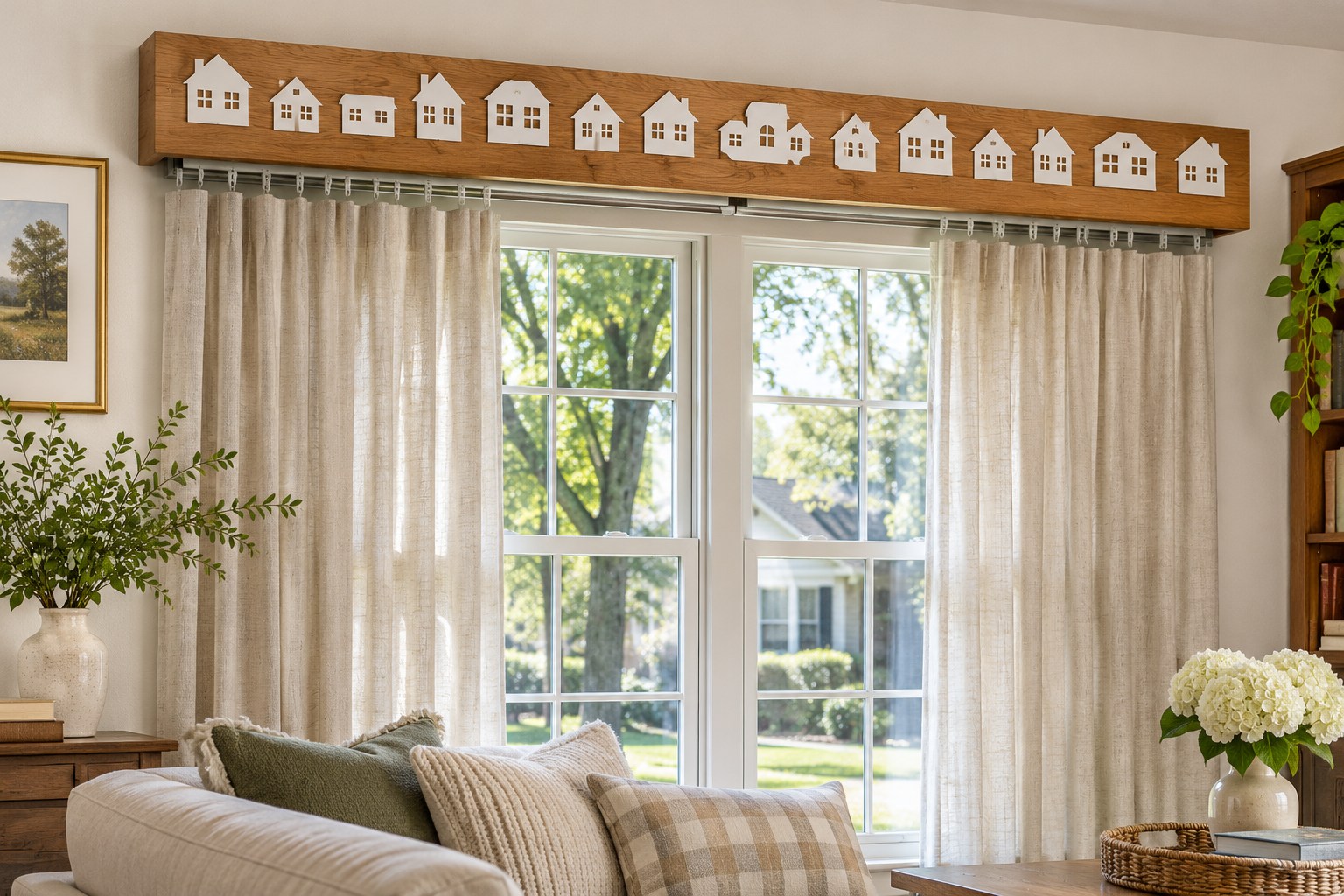
A stationary cornice can give a curtain window a little Christmas detail on a separate surface. Set a row of tiny paper houses across the outside face of the front board. Use a light attachment suitable for the finish and keep the row fully above the curtain opening. Stop the houses just short of the ends so the shape of the cornice still reads.
Run the curtains to both ends of the track before you place the houses. Check where the gliders, returns, and top folds sit, especially if the cornice is shallow. Keep the paper and fasteners out of that space and leave the tracks and brackets accessible. A few larger house shapes will show from across a room with high windows. Use a short, close-fitting strand with ends secured against the face.
12. Put a Berry Accent Below a High Cellular Shade
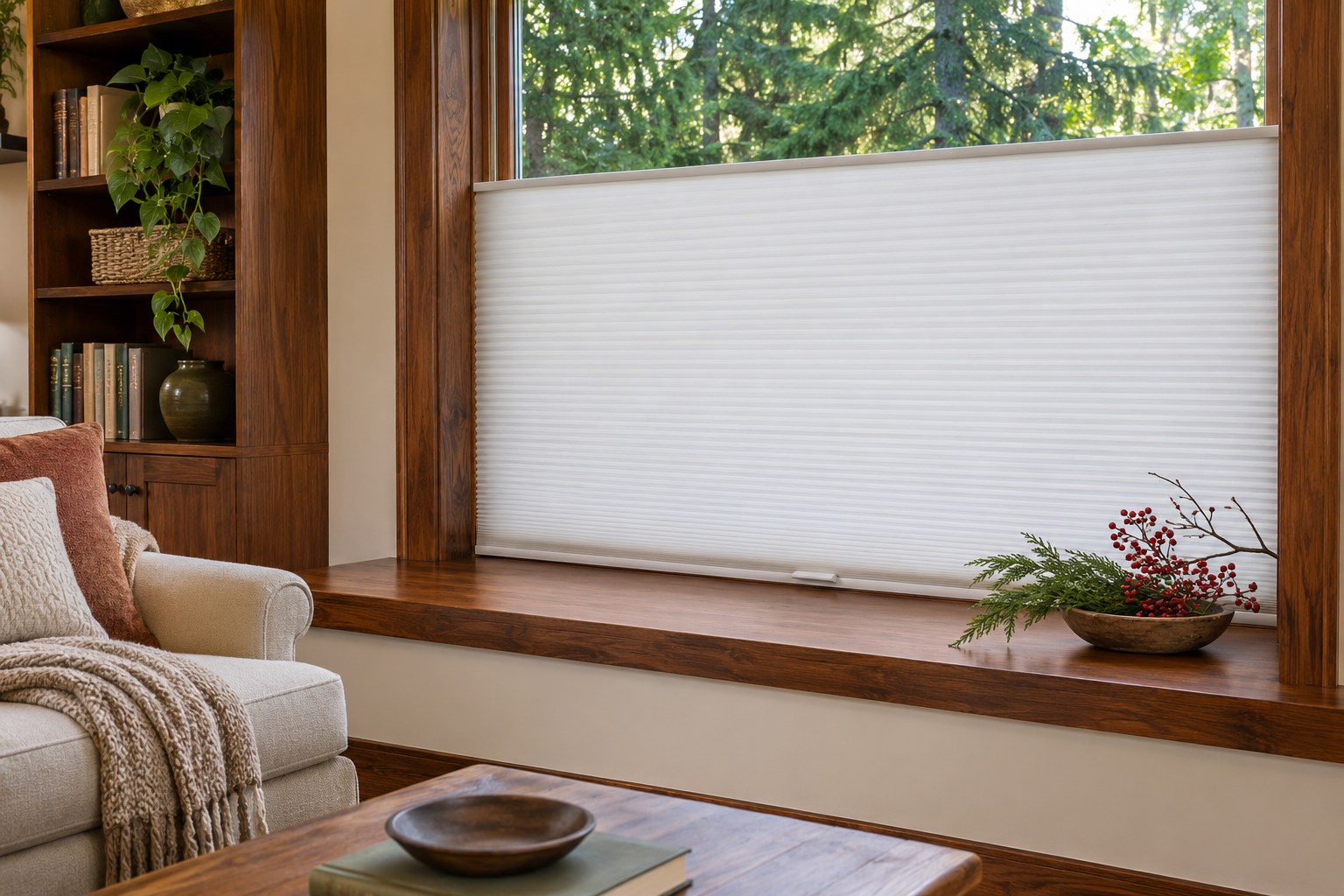
A cordless cellular shade has a slim lower rail that moves straight down. In front of a fixed picture window with an unusually deep sill, the front edge may leave room for a low cedar-and-berry arrangement. Lower the shade first and place the empty container entirely in front of its path. Keep the center of the rail in easy reach.
Choose a shallow vessel with a broad base and trim the branch ends until they fit inside the usable sill depth. The shade should lower and rise freely after you have added the stems. Check it again later as the greenery settles. A few red berries near one edge show against folded white fabric, while a low center keeps the view open when you raise the shade during the day.
13. Use the Wall Strip Between Two Roller Shades
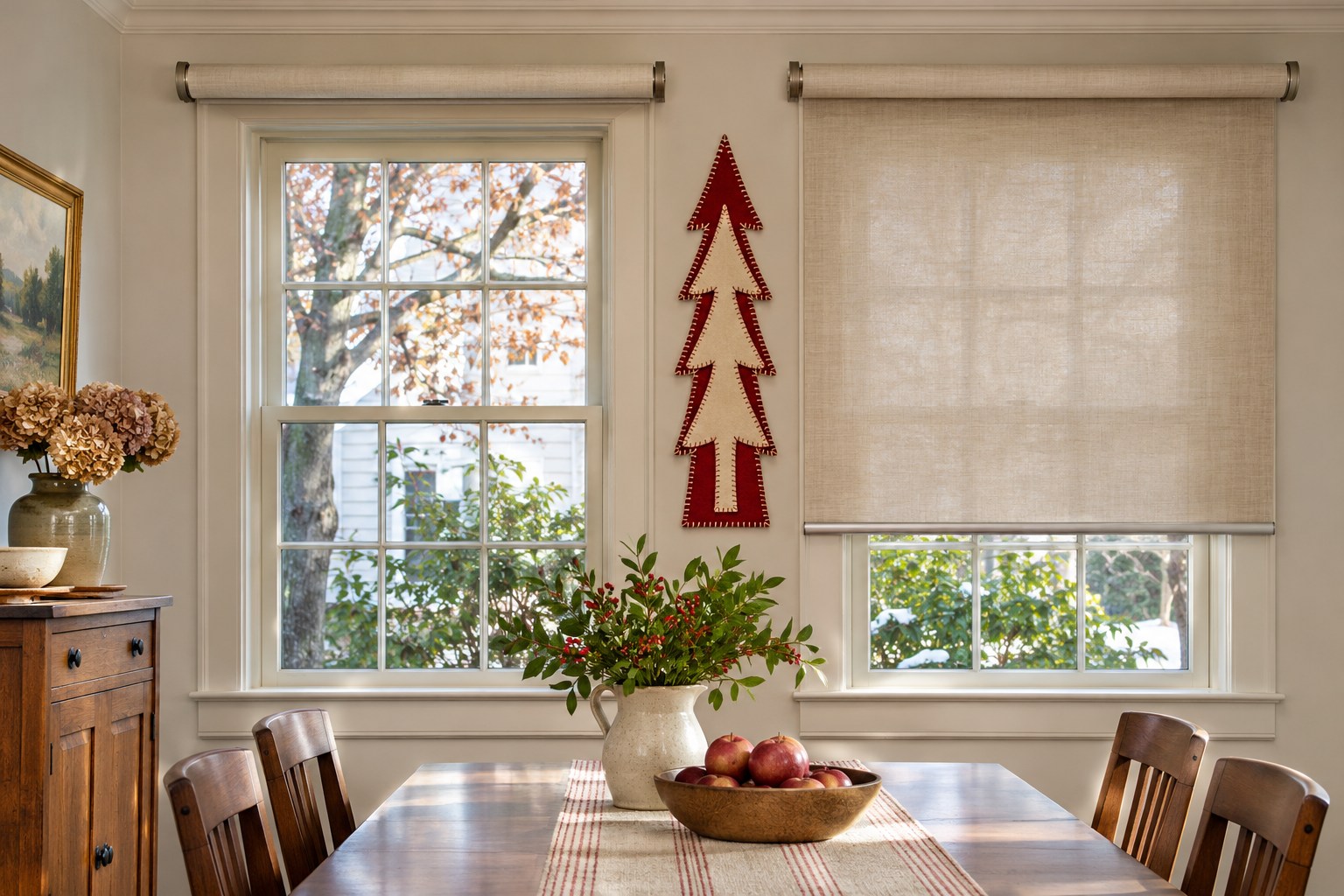
Two outside-mount roller shades can leave a narrow strip of stationary wall between their outer edges. A flat felt accent fits there if the strip is wide enough for the whole piece. Try a long, slim red textile with a few cream trees. Keep its corners flat against the wall so you can lower either shade without brushing the edges.
Move each shade through its whole range, including the last stretch where the fabric meets the bottom of the window. Measure between the widest shade positions before you choose the textile. Follow the covering manufacturer’s instructions for any controls. Keep extra decoration and loose loops away from that area. A single narrow design gives the windows a shared center, and the two treatments still work independently when one side needs more privacy.
14. Let Plantation Shutters Swing Clear of a Corner Tree
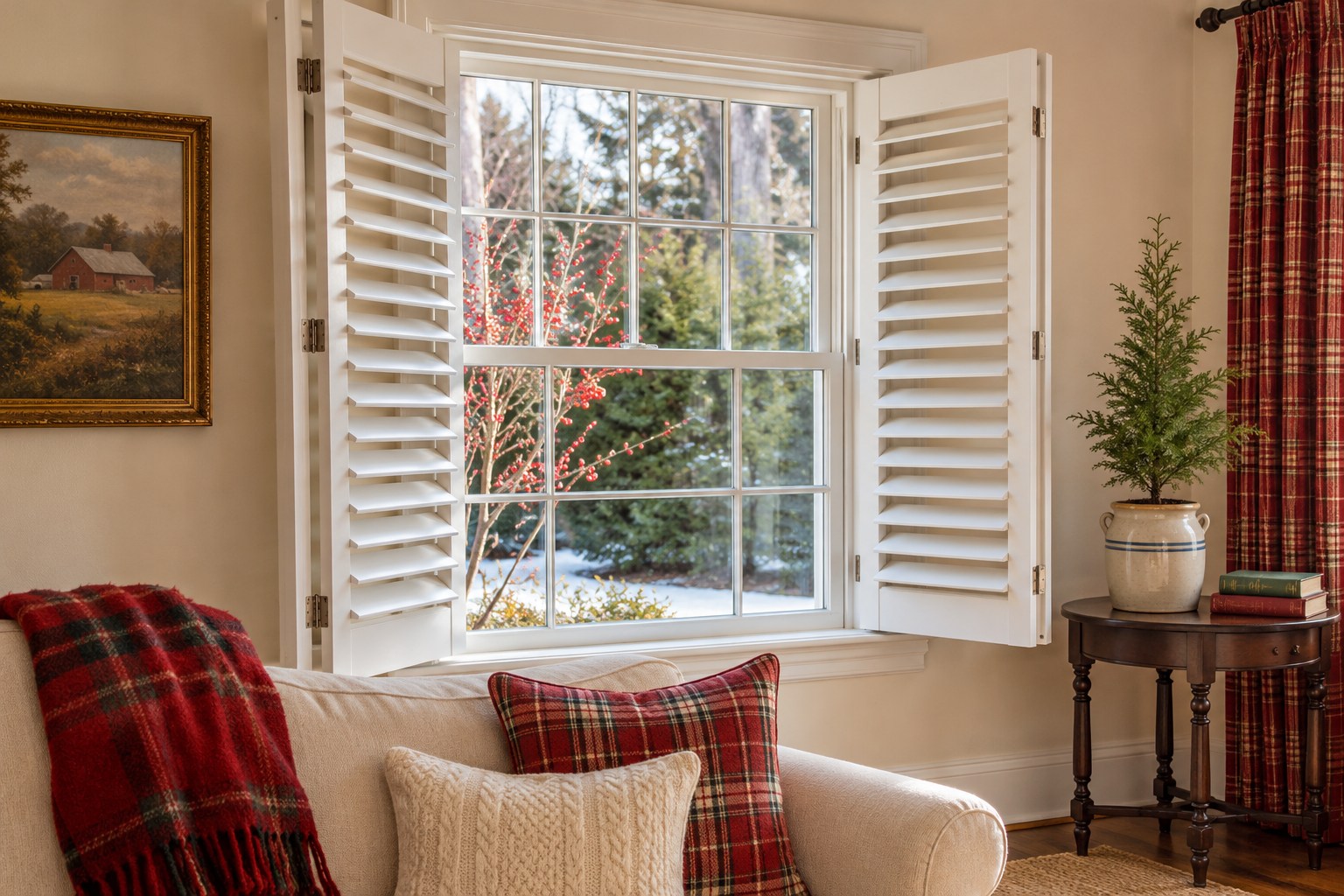
Plantation shutters can tilt at the louvers and swing inward as full panels. Check both motions before choosing a spot for a holiday tree. Open the panels as wide as you normally would, then set a small tabletop evergreen on a side table past the full swing. Choose a sturdy pot with a base that sits completely on the tabletop.
Check the branch tips with the shutters open. Give the panel edge extra space because an evergreen can spread as the branches settle. You should be able to turn the tilt rod and reach the window itself from your normal spot. Leave the tree simple with a few small ornaments nestled within its outline. That lets the clean white shutters show around it and gives the tree a clear shape from the far side of the room.
15. Keep the Space Between Sheers and Drapes Clear
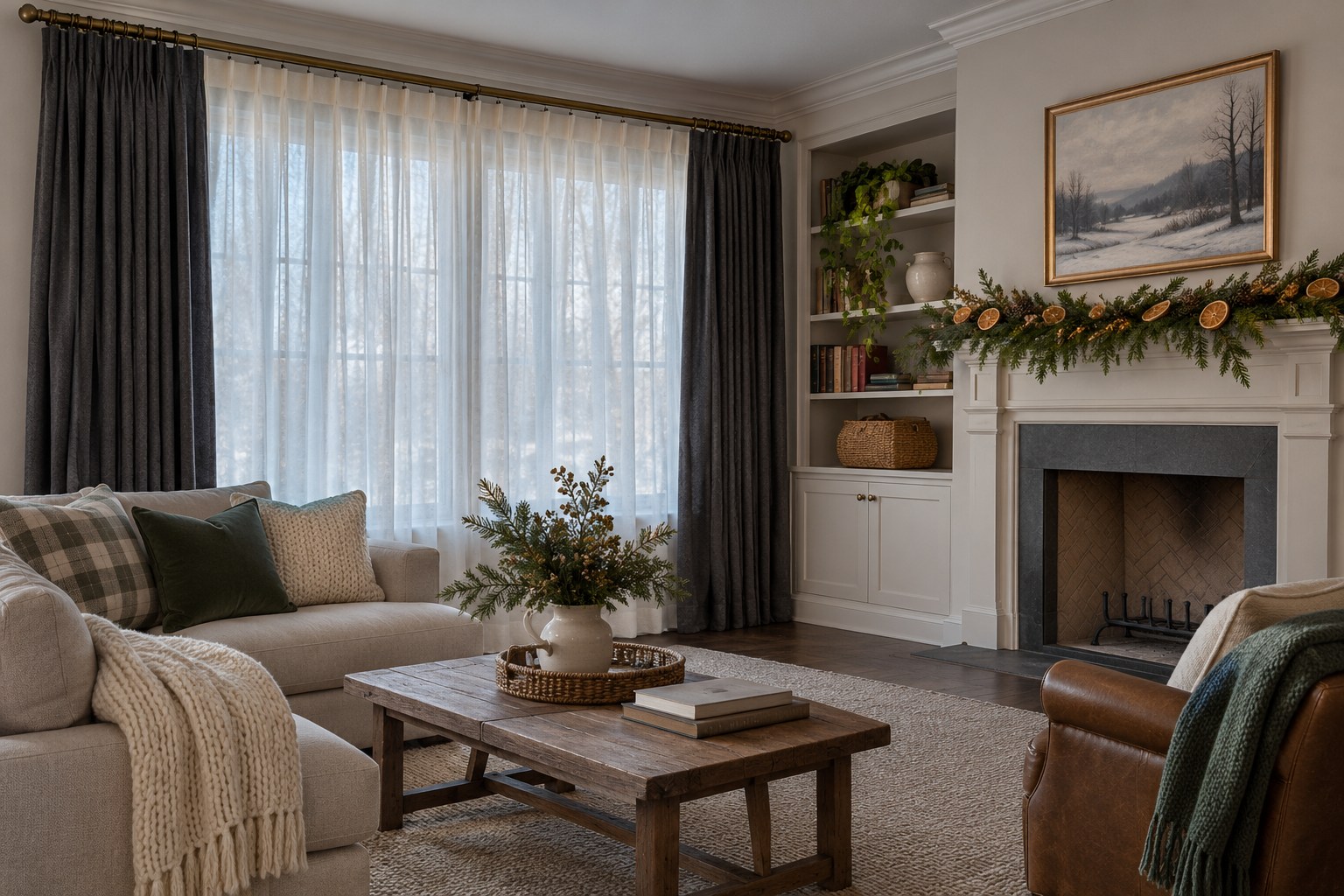
Sheers and drapes often use two tracks with a narrow gap between them. Draw each layer the way you use it during the day and after dark. Keep that gap free and move the holiday greenery to a neighboring mantel beyond both curtain stacks. A short run of cedar with dried orange slices brings a warm tone into the corner when the light through the sheers turns cool.
Check the mantel end closest to the window with the outer drapes open. If the fabric bunches over the edge, shorten the greenery and shift the arrangement inward. Leave the fireplace unused when the display is in place, and keep the stems clear of heat sources. The window can stay softly filtered in daytime and fully covered when you want privacy at night.
16. Add a Short Ribbon Accent to an Adjacent Wall Hook
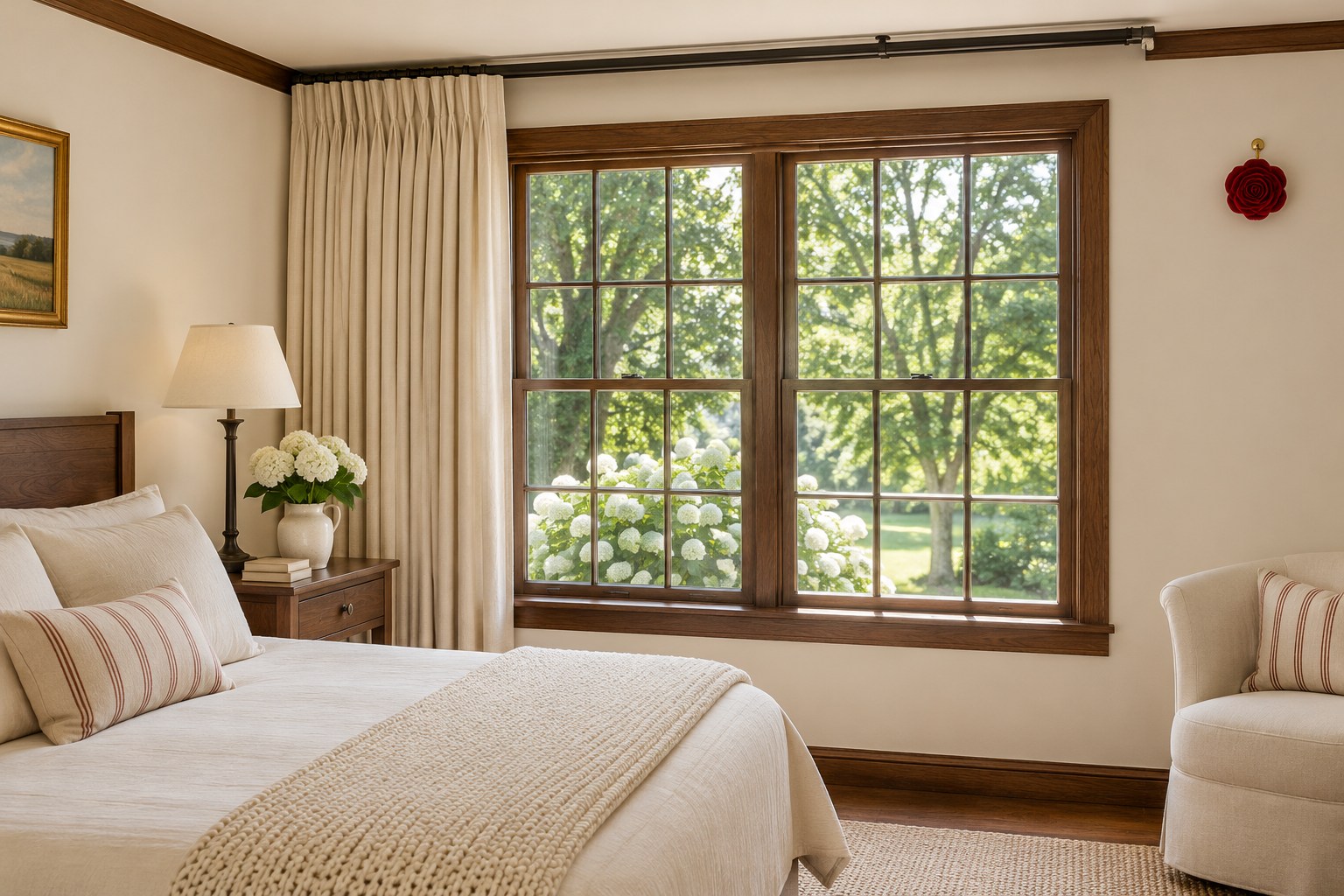
A single curtain panel can take up a surprising amount of space at one end of the track. Pull it all the way open and find a wall hook outside the area the folds cover. Tie a short ribbon rosette at that spot for a hint of Christmas color. Tuck in the ends so they stay near the center of the bow.
Watch the bottom and side of the panel as you pull it across the glass. Fabric can drift outward when you walk by or open the window, so check from the room side as well as straight on. Choose a small bow that stays well past the moving cloth in either position. A deep red rosette can link the curtain corner to a pair of plaid cushions without adding anything along the track.
17. Move Greens Off a Window Seat That Has Bottom-Up Shades
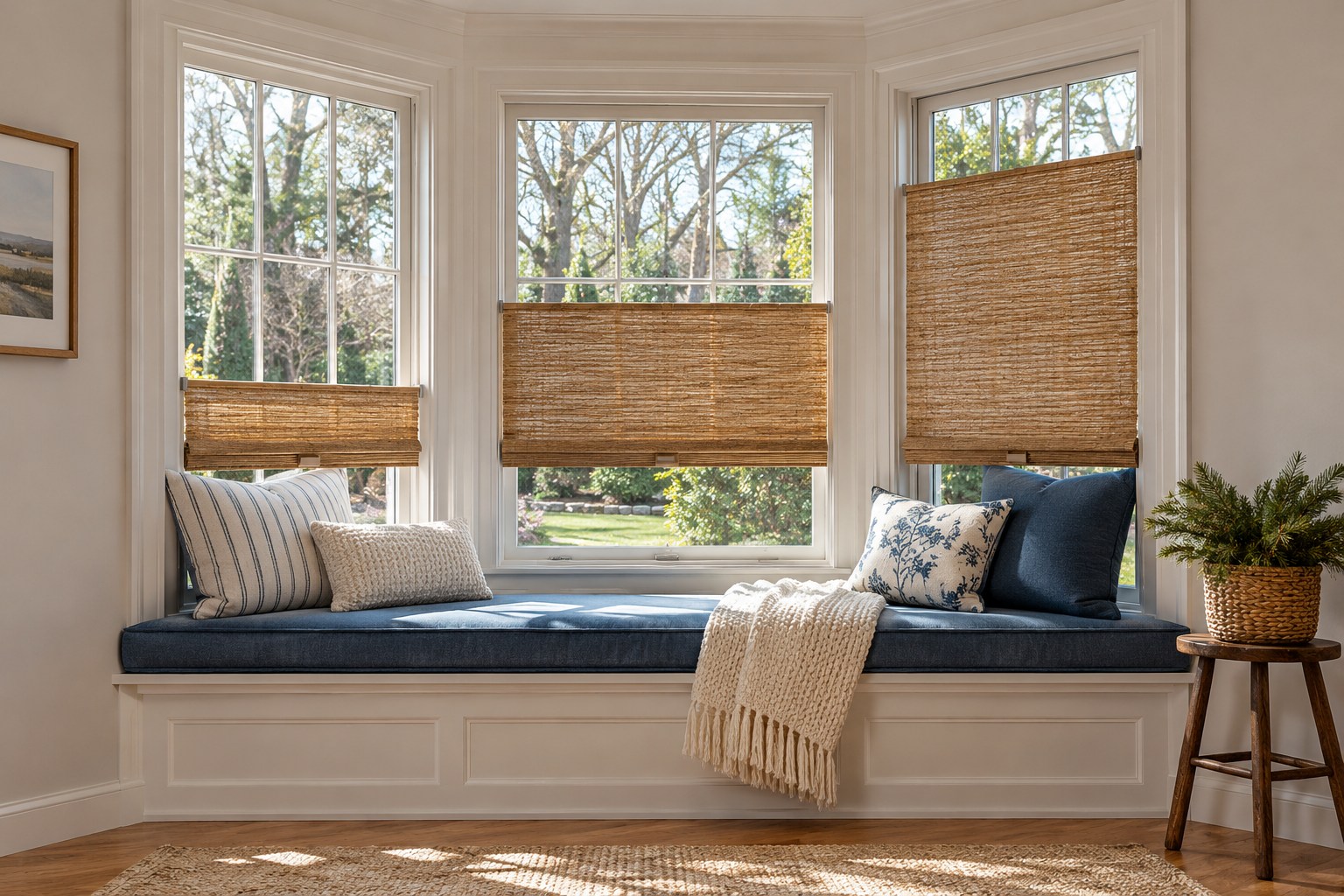
A window seat can give you easy access to several bottom-up shades. Keep the cushion, lower rails, and reach to each window clear. Set a compact basket of winter greenery on a small stool past the end of the bench, where it leaves the approach to the windows open. Loose fir sprigs feel natural when the rest of the seat stays simple.
Sit in your normal reading spot and reach for each shade. Check the windows if they open and look at where your hands and elbows pass. Tuck the needles and branch ends into the basket, then move the stool farther away if it crowds any of those motions. A short display stays in your line of sight from the bench while keeping the glass and cushions easy to use all season.
18. Give Top-Down Shades a Clear Upper Opening
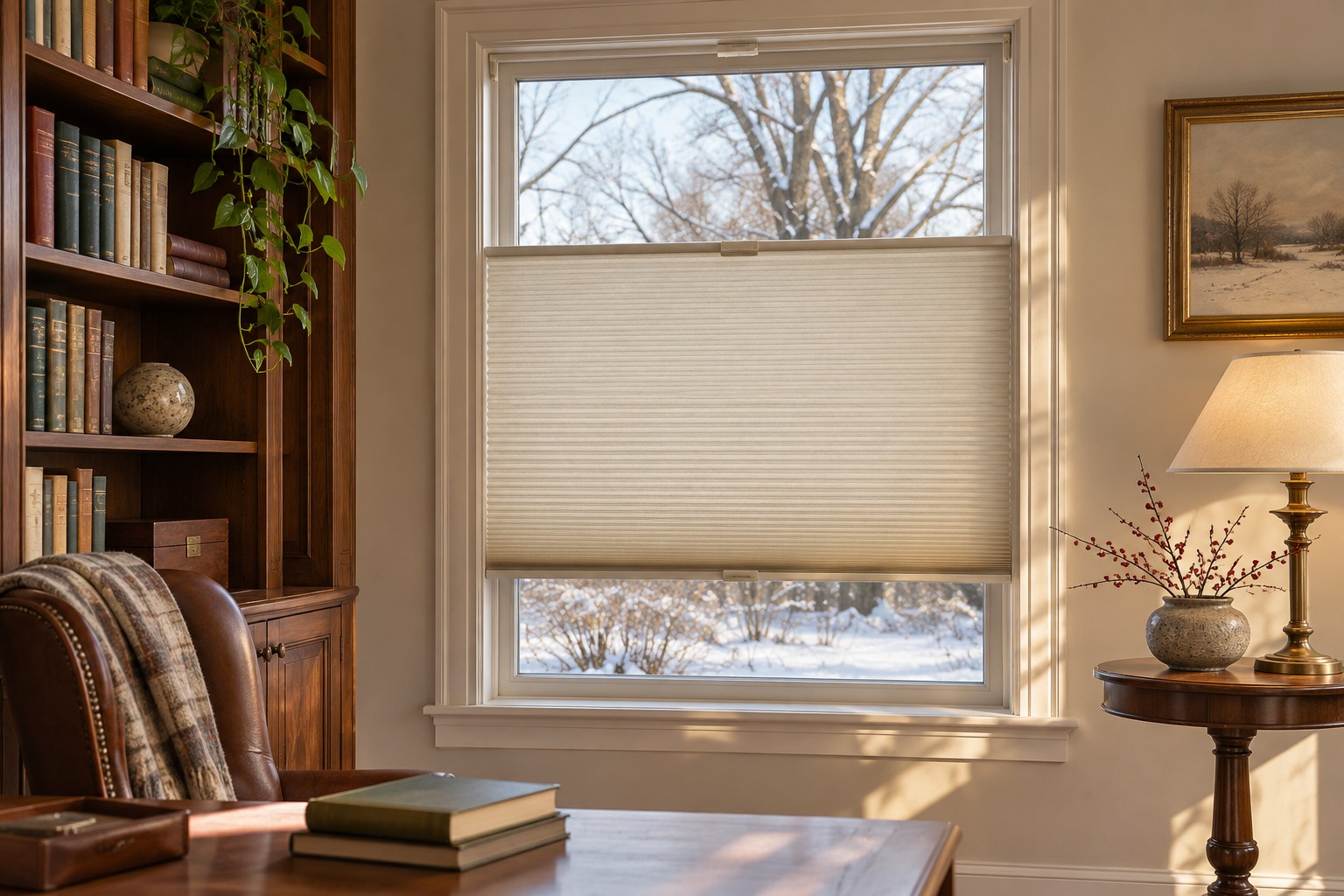
A top-down bottom-up shade can open at the upper edge, the lower edge, or both. Move both rails before you place any holiday objects nearby. A small arrangement on a freestanding side table outside the casing keeps the upper opening free for daylight. Try a short pine branch in a wide stoneware pot if you want a quiet accent beside a reading chair.
Check the arrangement while the shade sits across the middle of the pane. Leave room to approach and grasp both rails in their usual positions, including when the lower one sits close to the sill. From your seat, notice whether you can still see the clear upper strip. A tabletop piece that stops below that view leaves the shade useful for privacy without hiding the bit of sky you wanted.
19. Set Up an Exterior Box Where It Clears the Sash
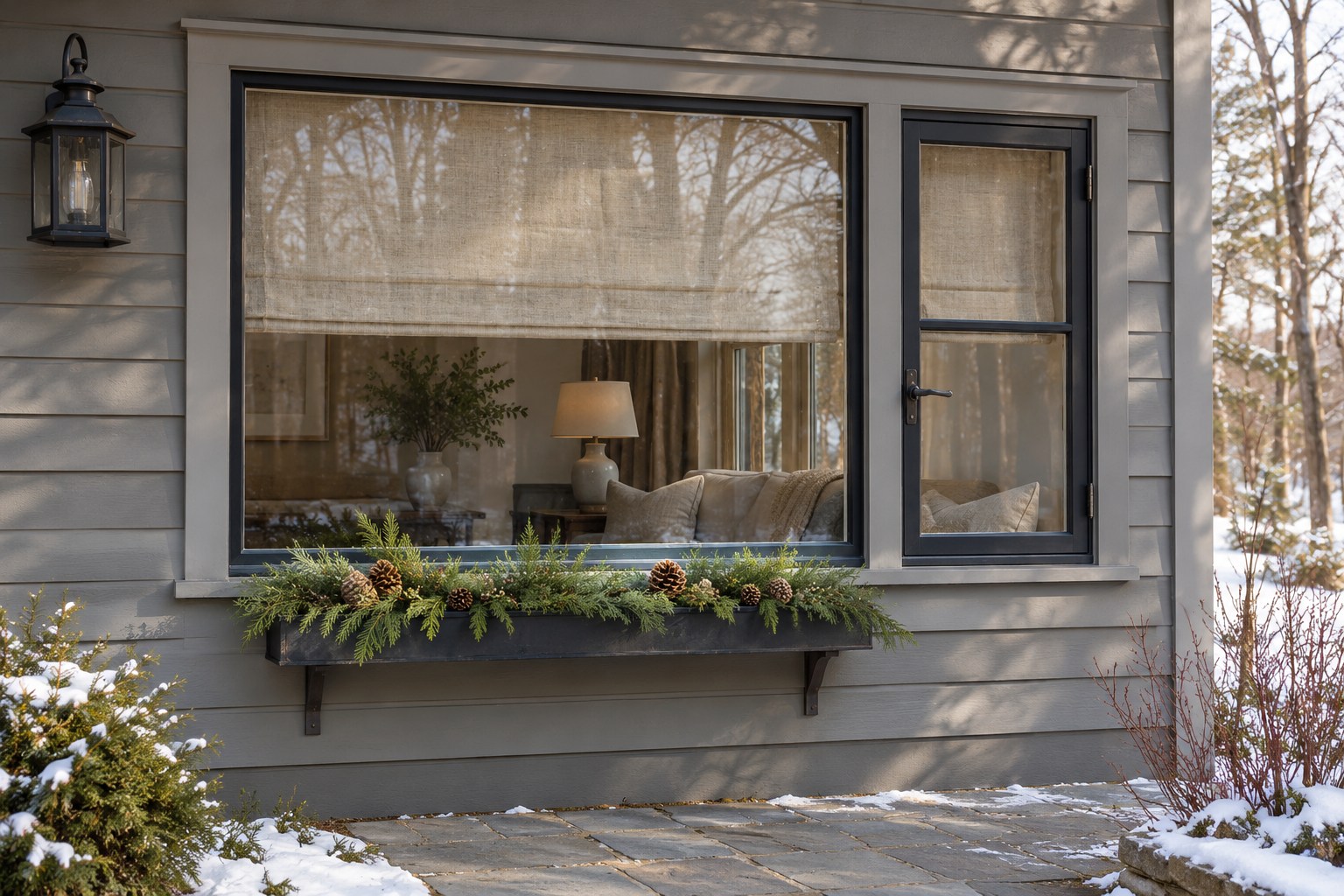
An exterior window box can bring greenery into the view from inside. A fixed pane above it offers a simple place to start, as long as the box and its mounting suit the wall and stay clear of drains, exits, and the full travel of nearby operable windows. Use an existing secure box that you can reach safely for setup and removal.
Open the neighboring sash from indoors before adding the greens. Keep the taller tips toward the center below the fixed pane and trim any branches near the swing area. A low mix of fir and pinecones will show above the sill from the sidewalk and stay below the view when the shade is open. For a related look after dark, see these Christmas lighting ideas for a single-story front.
20. Display a Flat Snowflake on a Fixed Upper Transom
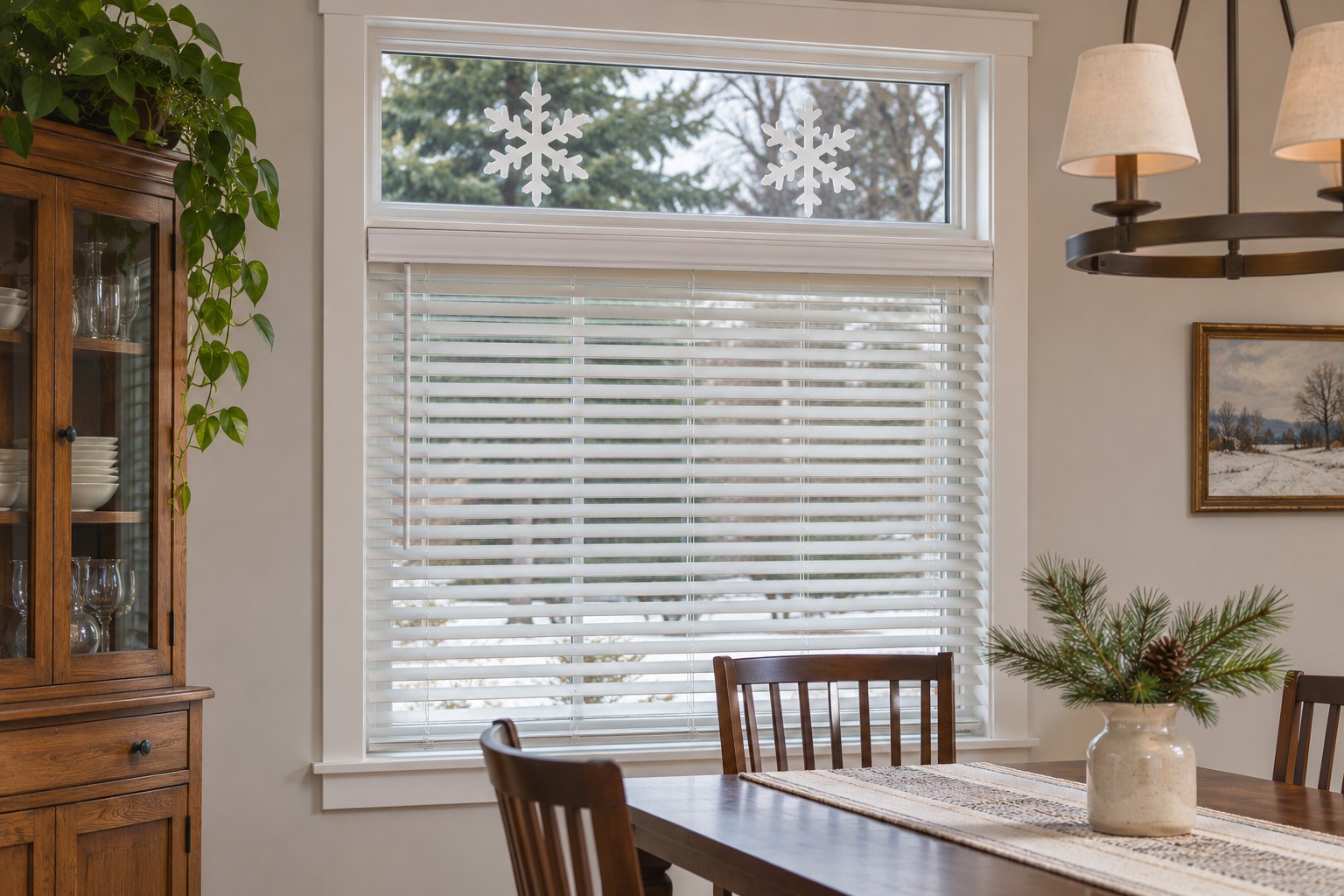
A fixed transom above the main window gives a small Christmas shape its own pane. Use two or three flat removable snowflakes on that upper glass, with enough space between them to let daylight through. The working blind below can still tilt and lift as usual when all the shapes stay above its brackets and operating area.
Choose lightweight designs that sit flat, and use a removable method suitable for the glass and its finish. Try the arrangement on a window you can reach safely and test removal first in a discreet spot. Raise the blind to its fullest position and watch how far the stack rises near the transom. Leave the trim and hardware free. The thin white shapes give you a winter detail even when the main pane is covered at night.
For a ready-made option, choose two or three Traplace snowflake window clings that fit the fixed transom. Keep them on the upper glass so the working blind below can still lift and tilt.
See the snowflake window clings on Amazon (paid link)
21. Use One Small Display Outside a Mini-Blind’s Slat Tilt
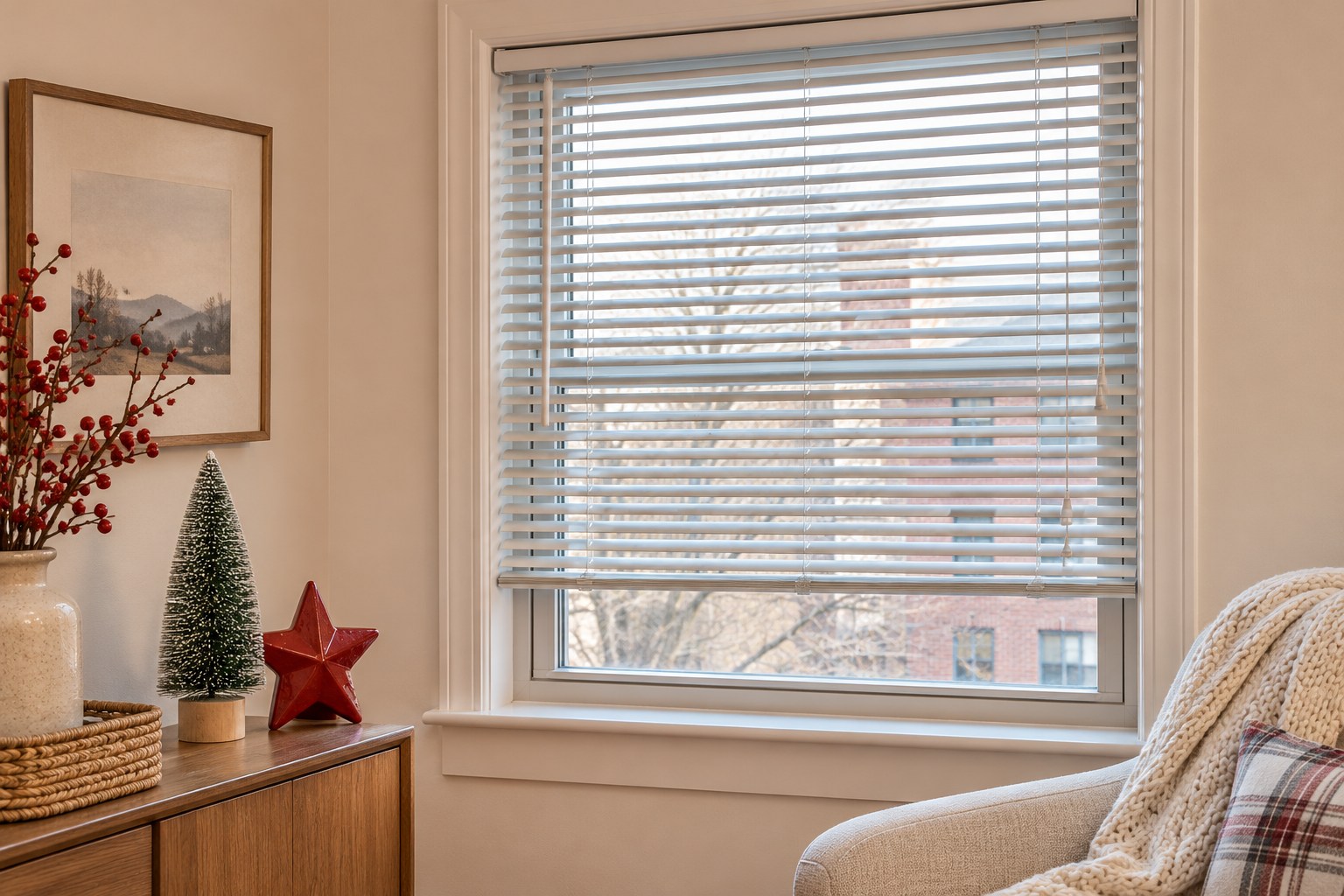
Horizontal mini-blind slats need room to pivot, especially near the sill when the blind is fully lowered. Put a miniature Christmas tree and one small ceramic star on a neighboring console outside the slats’ range. Stand in the spot where you usually reach for the tilt wand or lower rail and place both pieces beyond that reach.
Tilt the slats through their usual range, raise and lower the blind, and work the window if it opens. Choose a console position that stays clear of the window and its controls throughout. Keep décor and furniture away from any window-covering cords. The U.S. Consumer Product Safety Commission recommends cordless window coverings where young children are present. A small tree with a broad base gives the console enough visual weight on its own.
22. Do the Evening Test From Both Sides of the Glass
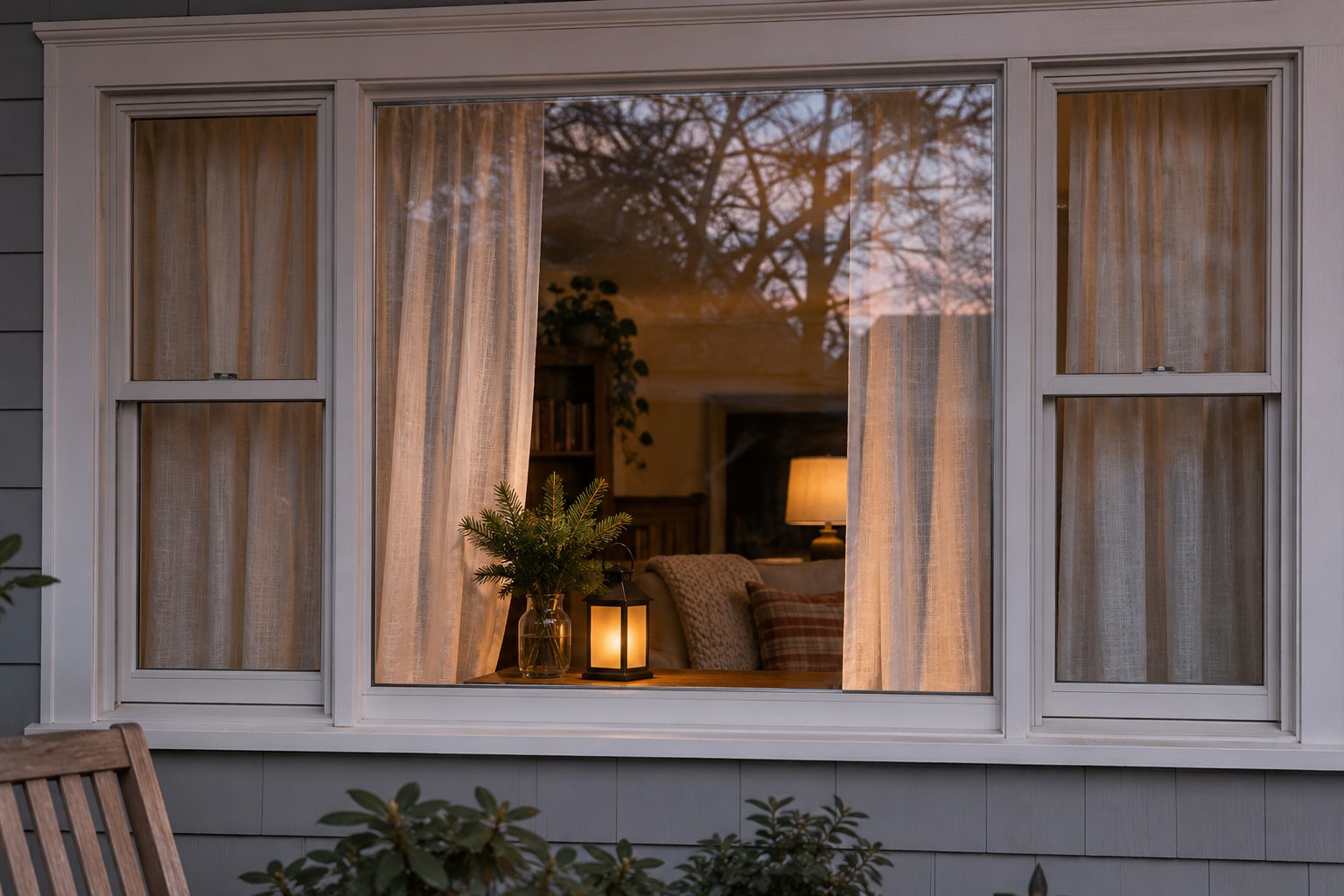
A display that looks balanced when the curtains are open can disappear once you close them for the evening. Set a small battery lantern and a short sprig of fir on a stable deep ledge by a fixed front pane, leaving room for the fabric to travel. Close the curtains to their usual position, then look from both inside the room and from the sidewalk.
Shift the display into the part of the glass you normally leave visible. If you close the whole window for privacy, put the lantern on a side table and enjoy the glow from the room. Test for safe clearance again after the final move, including with a panel gathered at either end. For more ways to create a glow from both views, see these Christmas window decor ideas for inside and out.
Choose one display for the window you use most, then test it through a full day. Try the blind when you want daylight and the curtains when you want privacy. Open the window, reach the latch, and look from the places where you normally sit. If a branch slips into the moving space or a panel needs a different pull, adjust the display while it’s still small. If a window offers little decorating room, give the same holiday detail to the wall or furniture beside it.
Discover more from HomeTrendora
Subscribe to get the latest posts sent to your email.