A brown leather sofa can make the rest of the room feel like it belongs to another house, even when the sofa is the piece you want to keep. These 16 brown leather sofa ideas help you decide what to change around it, from rug color to the distance between a recliner and its table.
Start with the sofa as it looks in your living room. Brown leather can shift from honey to orange, wine, or almost black depending on where the light lands. Put a sheet of plain white paper against the arm to make the color easier to see. Then identify which part of the room needs help. A room that feels heavy calls for a different change from one where you keep walking into the coffee table.
1. Put a Pale Wool Rug Under an Espresso Sofa
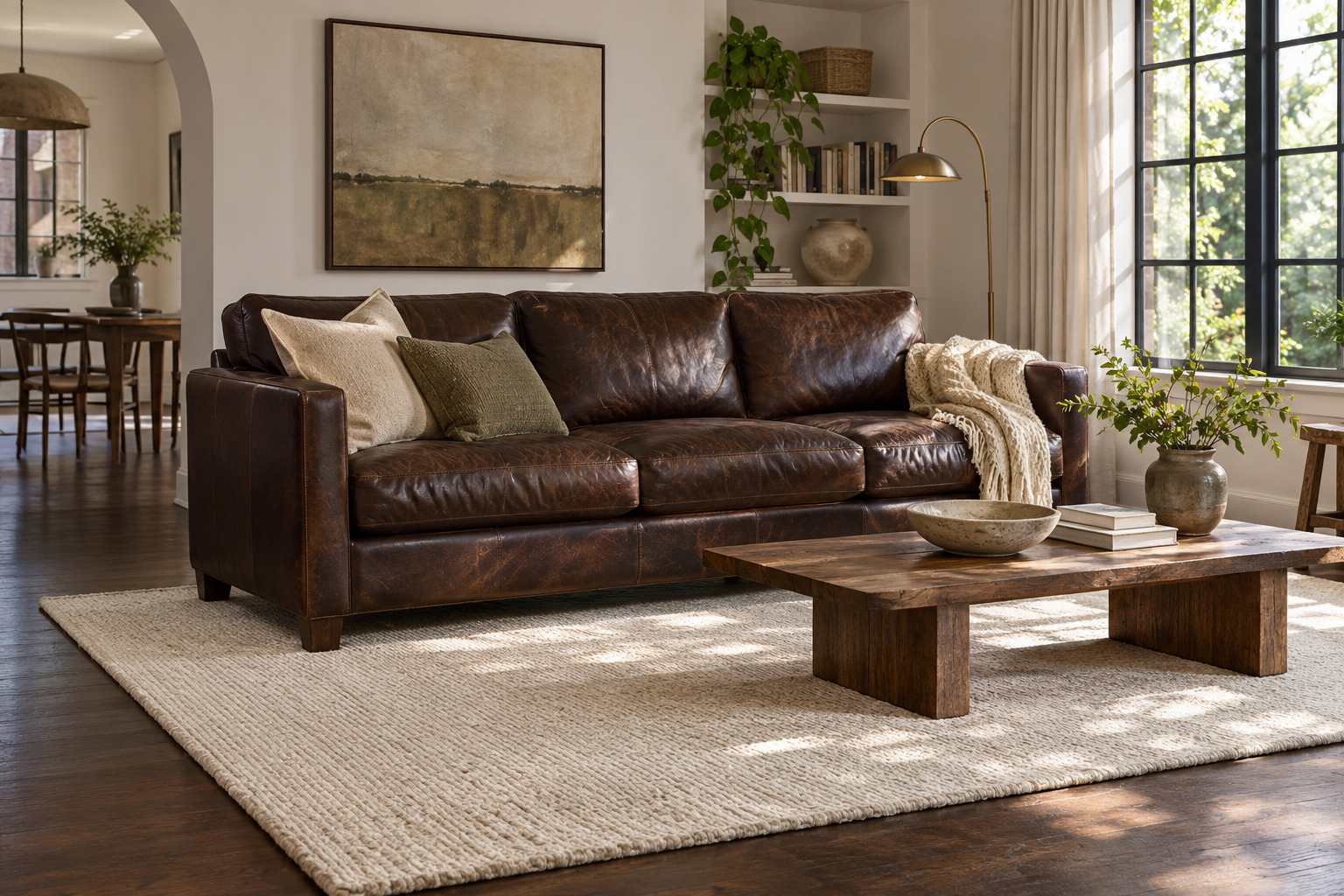
When an espresso sofa and dark wood floor almost blend together, give the seat a pale surface underneath. An ivory or oatmeal wool rug shows where the legs meet the floor and brings a soft texture to the leather. Choose a low, firm weave if the room sees a lot of foot traffic. A heavily ridged surface can make a coffee table harder to position.
Try the rug with both front sofa feet on it so the pale field visibly connects to the furniture. Before you order, mark its edges with removable painter’s tape suitable for the floor. From the doorway, see whether the rug holds the sofa and table together and leaves a readable strip of floor at the main route through the room.
2. Use a Deeper Rug to Anchor Light Cognac
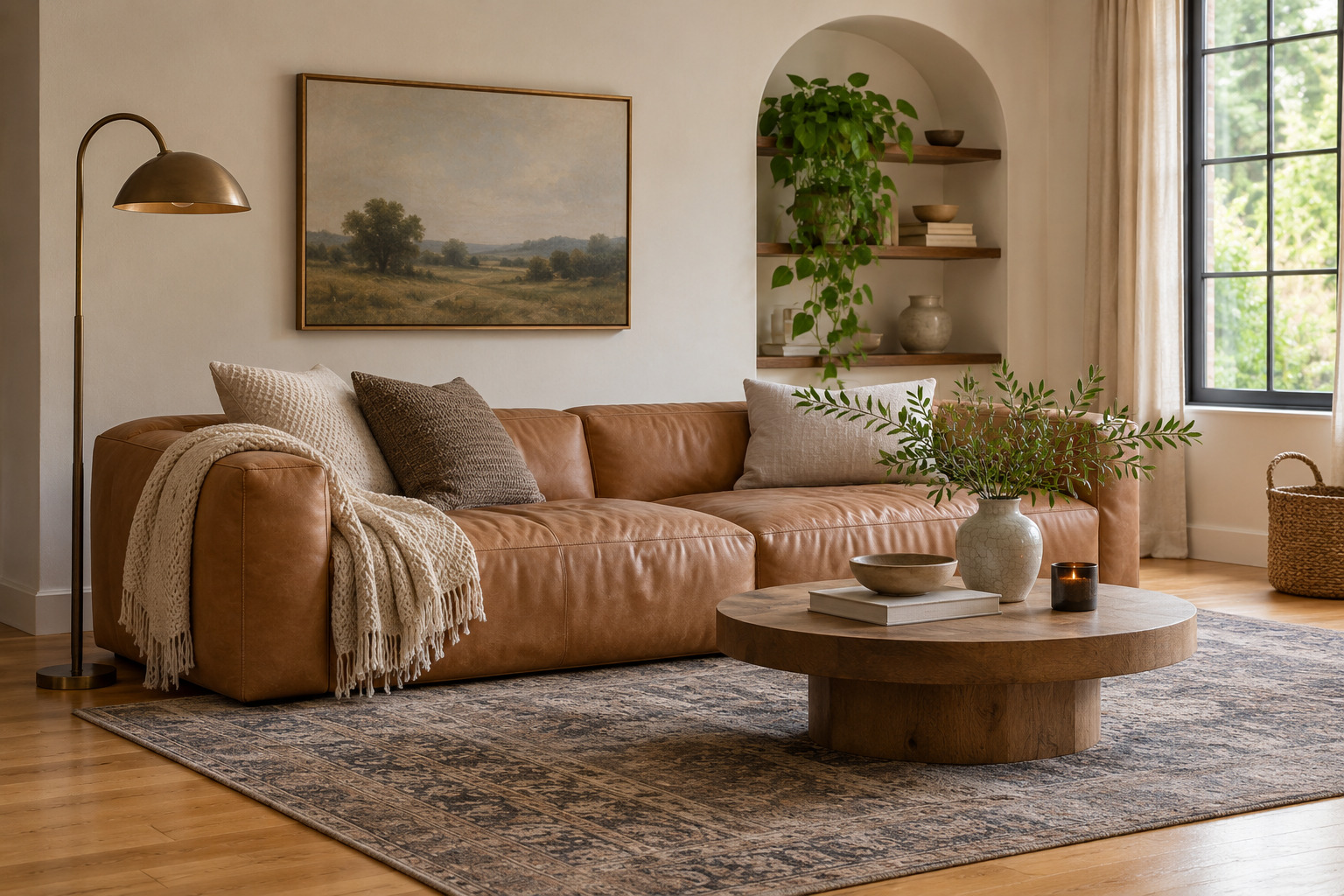
Pale cognac leather in a bright room can start to look washed out when the sofa, floor, and rug all sit in a similar range. A deeper slate or tobacco-colored rug gives the upholstery a clear edge. Look for a restrained pattern with a few muted brown notes if the rug’s main color feels distant from the leather.
Put the sample where the rug will be, rather than holding it upright beside the arm. Strong window light can shift how it reads on the floor. If the contrast feels too abrupt, choose a smaller pattern or a softer shade of slate. The rug can ground the furniture without becoming the room’s loudest feature.
3. Bridge Orange Undertones With Olive and Wood
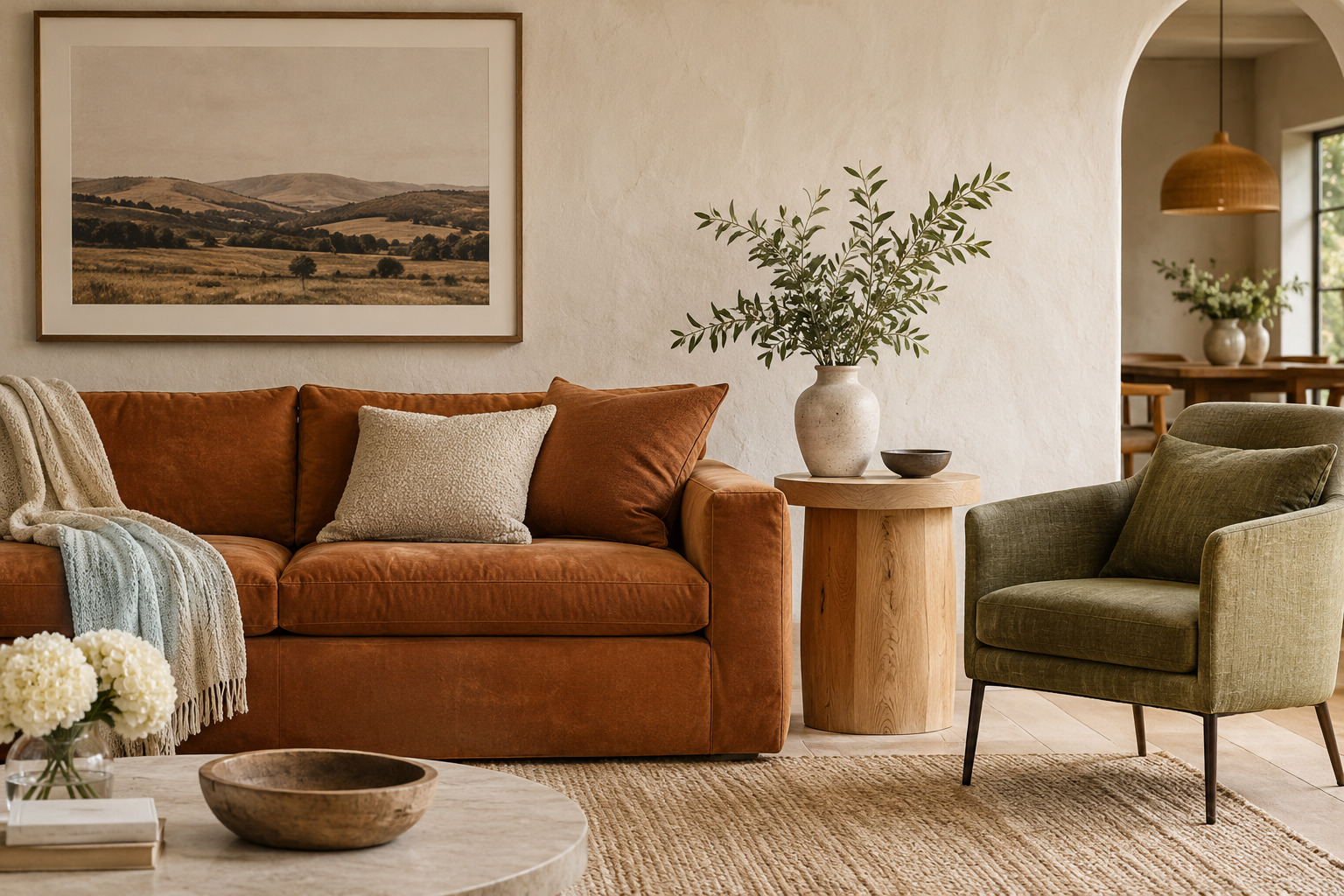
Orange-cognac leather can seem isolated next to finishes that run gray or pink. Add a soft olive linen chair and a small oak table with visible grain near the sofa. Olive gives the leather a cooler neighbor, while the wood carries some of the warmth down toward the floor. Look for olive with enough gray in it to feel at ease against the wall.
Hold the chair fabric against the actual leather in daylight. Try the oak sample beside the chair fabric too. If all three finishes are equally saturated, the grouping may feel busy. A quieter olive or lightly finished oak can give one material room to lead. There are more ways to work with these finishes in our organic modern living room ideas.
4. Let Dusty Blue Cool Down Reddish Leather
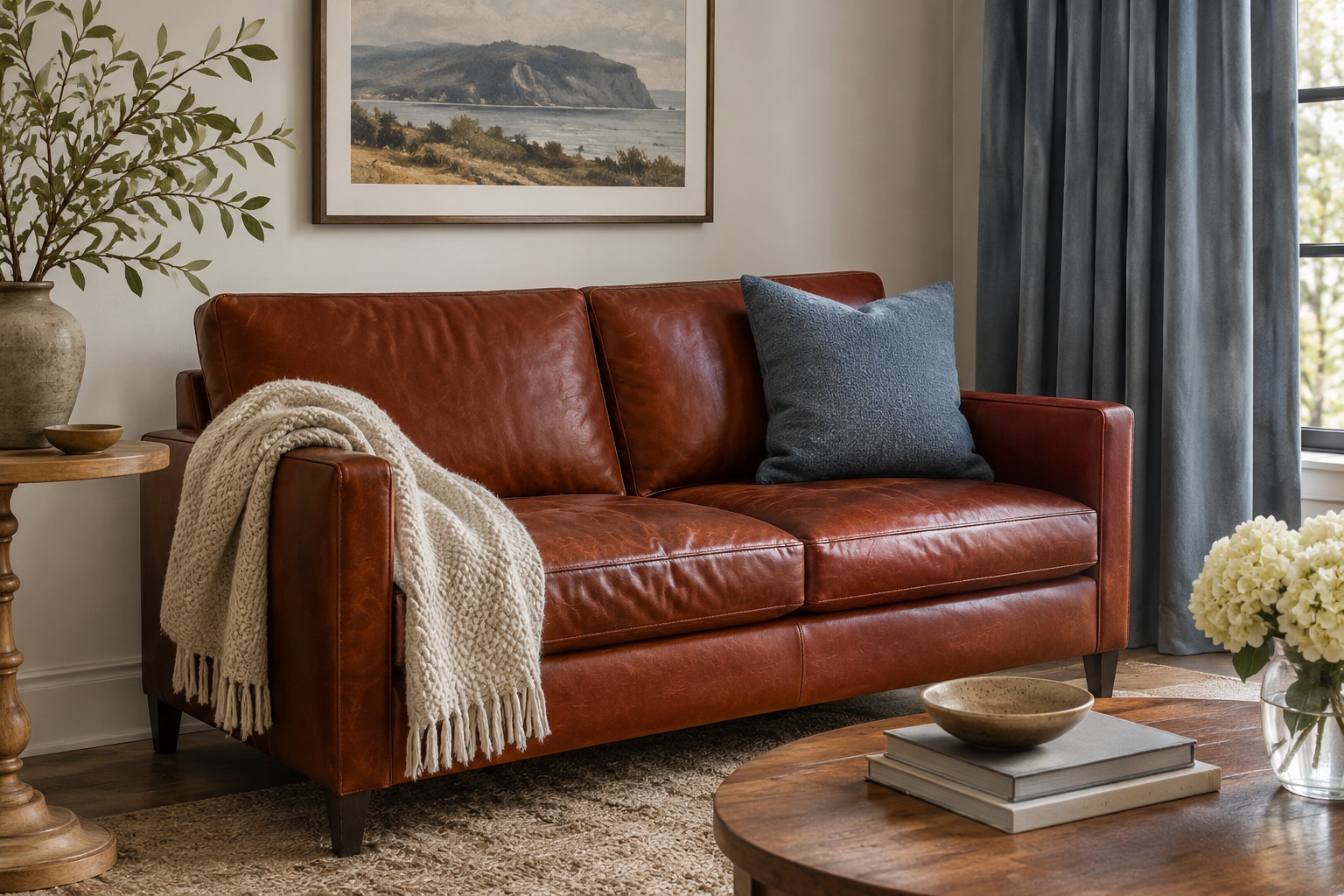
A saddle-brown sofa with a reddish cast can benefit from one broad area of muted blue-gray. Curtains or a single woven cushion give the cool color a distinct shape. Set the fabric near the sofa in afternoon light before you decide. The same blue can read almost gray next to warm brown and turn sharper in a cool window.
For a room with colorful art already on the wall, use plain blue-gray fabric and let the existing print keep its detail. If the sofa and the curtains are far apart, a small cushion can repeat the textile color once in the seating area. This helps the blue feel connected to the room without matching every soft surface.
5. Give a Blackened Brown Sofa a Warm White Wall
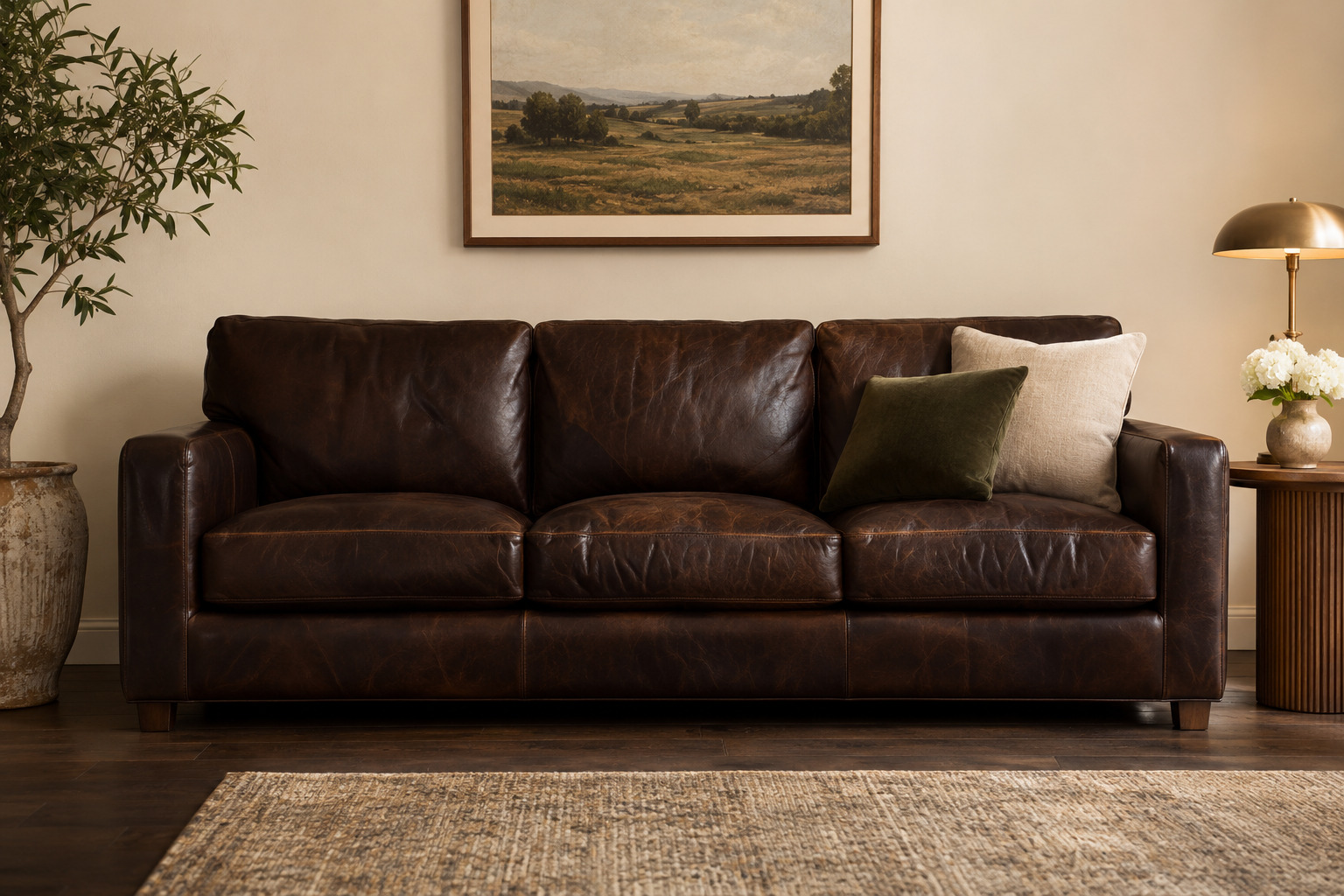
Use a warm white on the wall when very dark leather needs a clearer outline. Try a sample with a mild beige or gray undertone, then compare it with the trim and floor. A wall that leans yellow under the lamp may make the leather feel muddier. A stark blue-white can make a warm floor look more orange than you want.
Use a larger movable sample and prop it behind the back of the sofa. Check it from the opposite side of the room, then move the sample near the window and to the darkest part of the wall. In the evening, turn on the usual lamps. A warm white that stays fairly quiet across those positions can let the sofa keep its depth.
6. Borrow a Quiet Color From the Floor
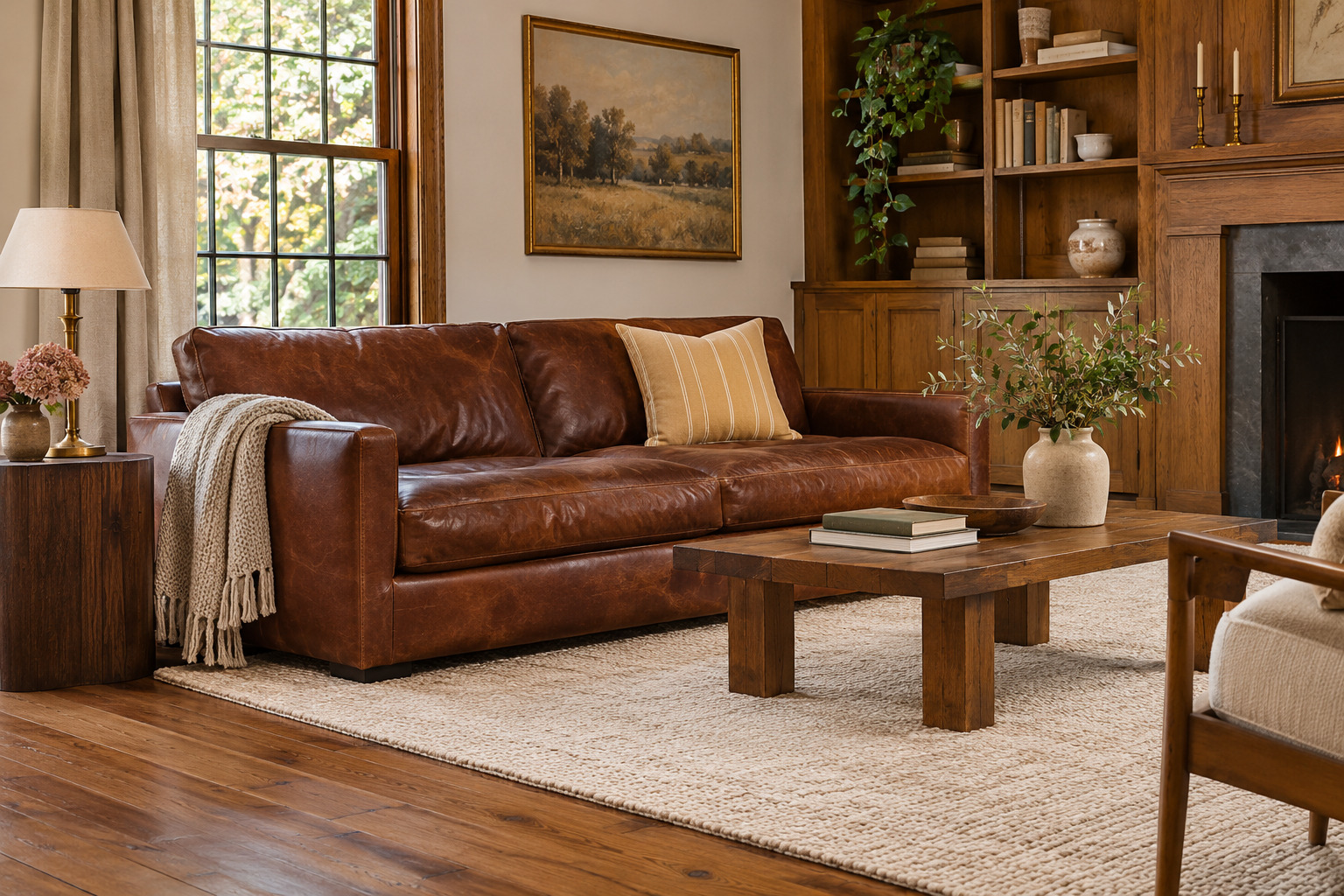
If an amber oak floor looks disconnected from a brown sofa, carry one of the floor’s quieter tones onto the seat. A cream cushion with a thin honey stripe gives the eye a small connection between floorboards and upholstery. Keep the rest of the cushion plain so the stripe remains a detail.
Look at the floor from a standing position when you choose the color. The richest grain streaks can feel darker than the overall floor. Picking a middle shade usually makes the repeat easier to see. Try the fabric beside the floor first, then put it on the sofa. Warm materials can still read as separate surfaces when their textures differ.
7. Break Up a Boxy Sofa With a Round Table
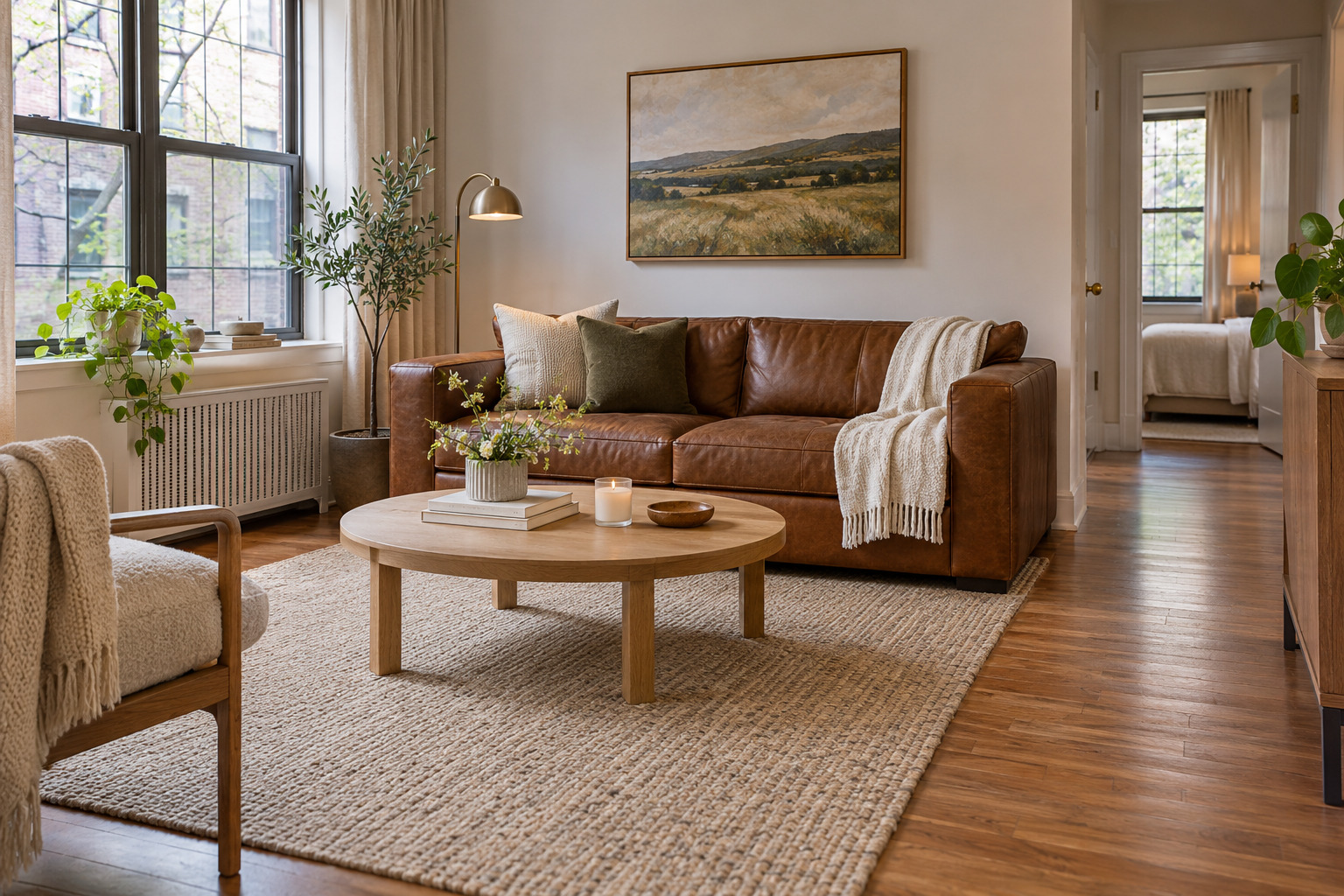
A straight-armed sofa and a long rectangular table can make a compact living room feel like a set of parallel lines. Swap in a round coffee table with an accessible top and enough space to pass at its edges. Mark the proposed diameter on the floor, then use the room as usual for a few minutes. The extra space at the corners matters most where someone actually walks.
Set the table far enough forward that you can sit without clipping your knees, then check whether a person at either end can comfortably set down a drink. A small oak table can soften the sofa’s outline and tie in the flooring. If the round shape forces a larger diameter than you can use, look for a smaller table and add a side surface where it is needed.
8. Give a Reclining Sofa Its Moving Room
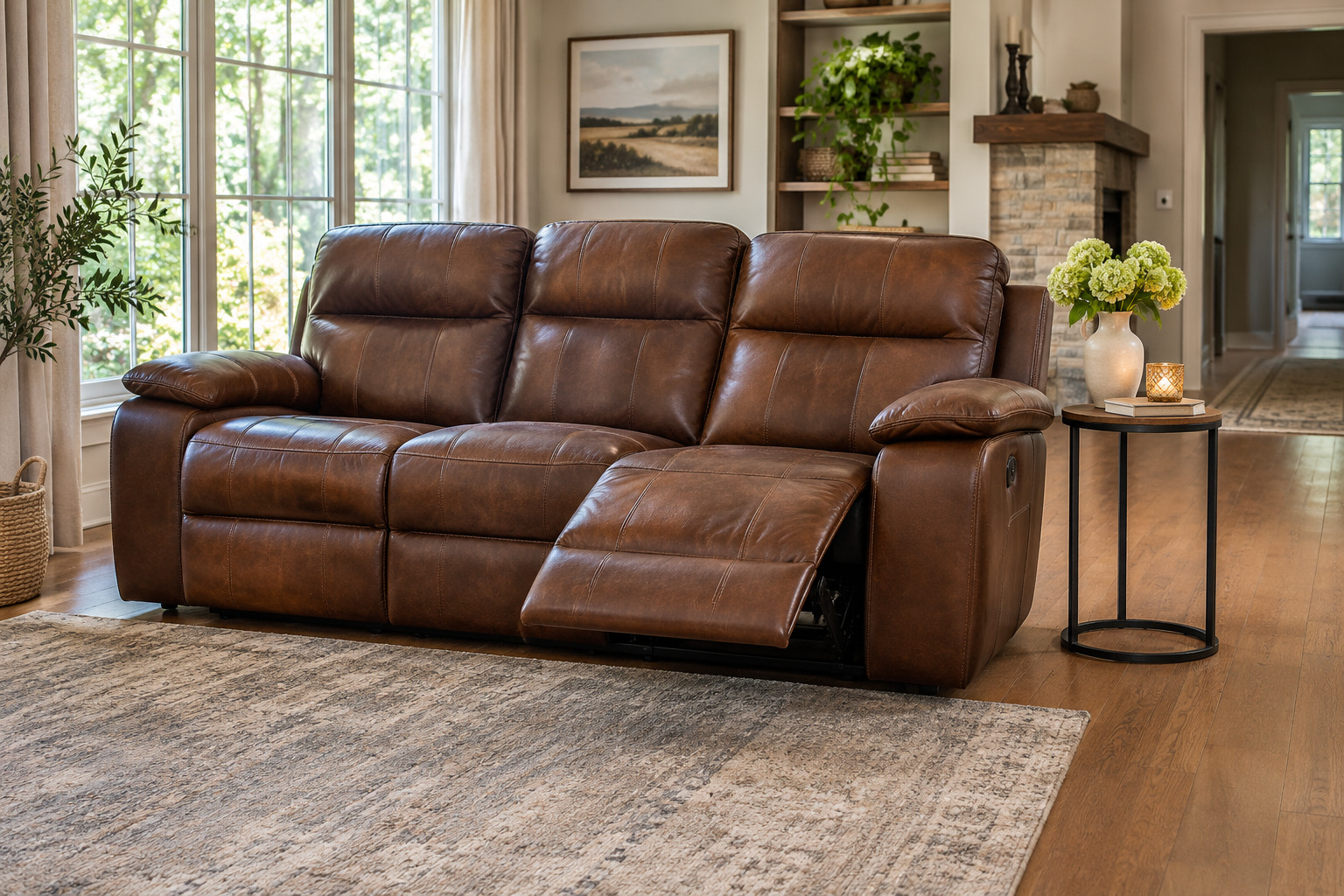
A reclining seat changes the layout every time it opens. Test it fully extended and make sure the rest of the room works in that position. Use a small table to one side of the seat where it can stay out of the footrest’s path. Try placing a mug on the table while seated to check the reach before moving other furniture.
Keep the route through the room open when the recliner is in use. A clear center floor can help when people pass in front of the sofa to reach a doorway. Check the clearance required by the sofa manufacturer, including the space behind the back if it moves. You can keep the room feeling furnished with a rug and a side light even when the center stays open.
9. Bring One Woven Chair Into the Conversation
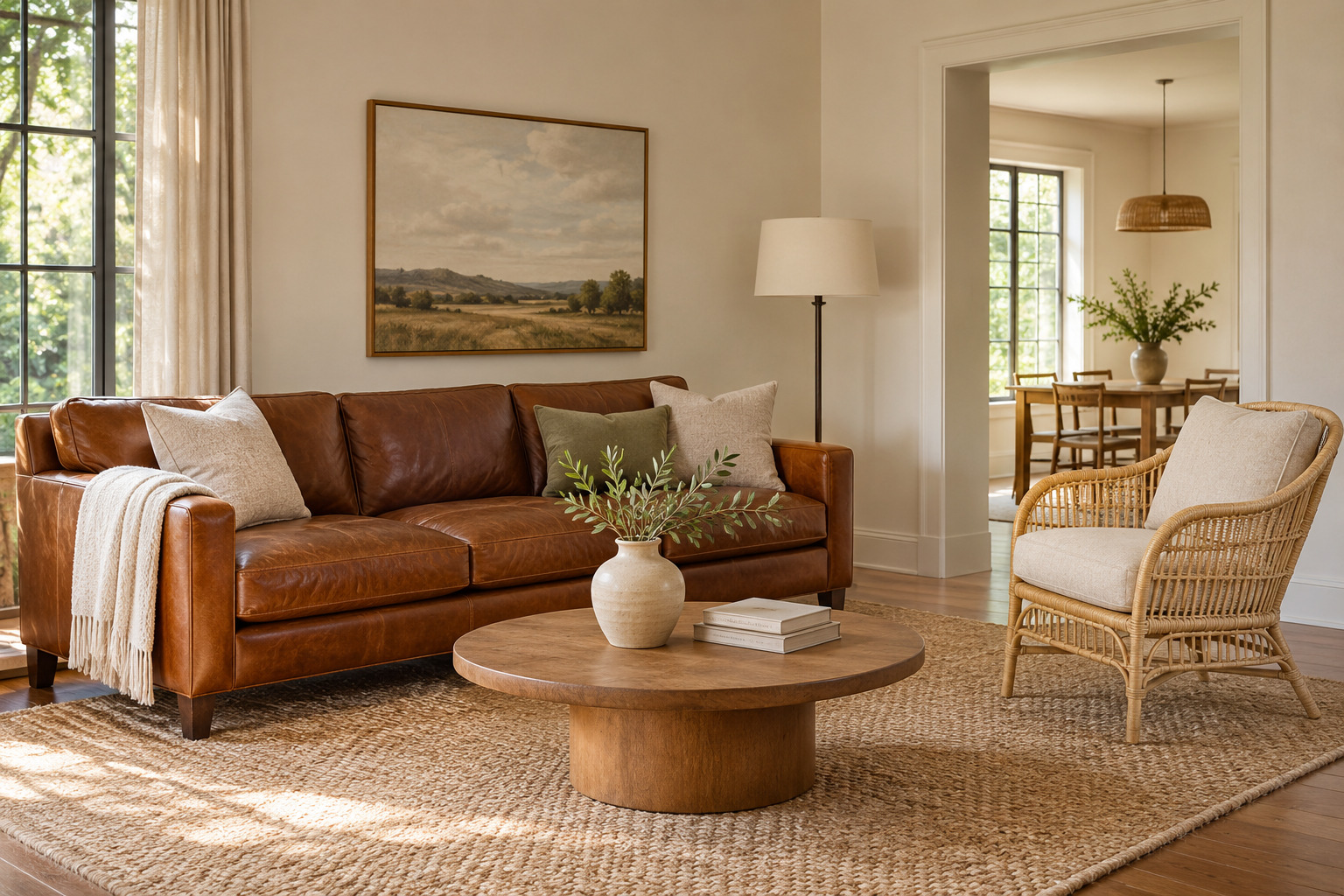
A single pale woven chair can bring a warm texture to a seating arrangement dominated by smooth leather. Angle the chair toward the corner of the sofa, where it can join the conversation without needing to match the sofa’s width. An oatmeal cushion can repeat the rug or curtains and give the chair a more comfortable seat.
Sit in both places and notice where your view lands. Keep a route behind or beside the chair so people can move through without crossing between seats. If the woven pattern feels busy next to a heavily worn leather finish, use a quieter weave with a simple frame. The two surfaces can feel related without looking like a furniture set.
10. Hang Art That Shares the Leather’s Undertone
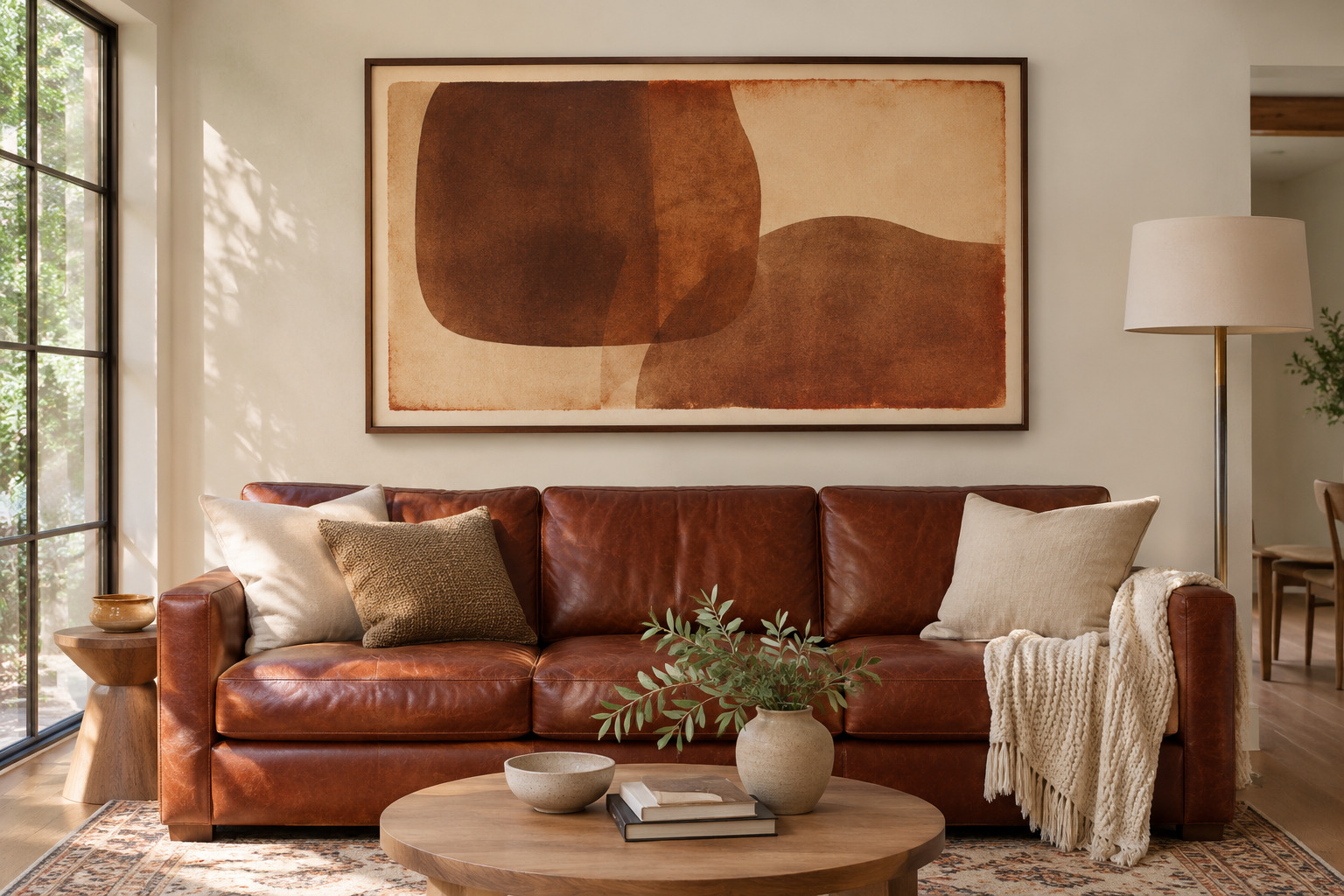
With reddish-brown leather, a large print containing a small umber or rust detail can connect the sofa to a pale wall. Choose art where that color has some surrounding space. This makes the relationship visible from across the room without turning the wall into a larger version of the upholstery.
Mock up the outer dimensions of the frame with paper before you hang it. View it from the side of the room as well as from straight on. A broad sofa can make a small frame feel stranded, while a print that fills the entire wall may pull attention away from the seating area. Leave a clear edge around the composition so the art reads as its own piece.
11. Put a Shaded Lamp Beside the Glossy End
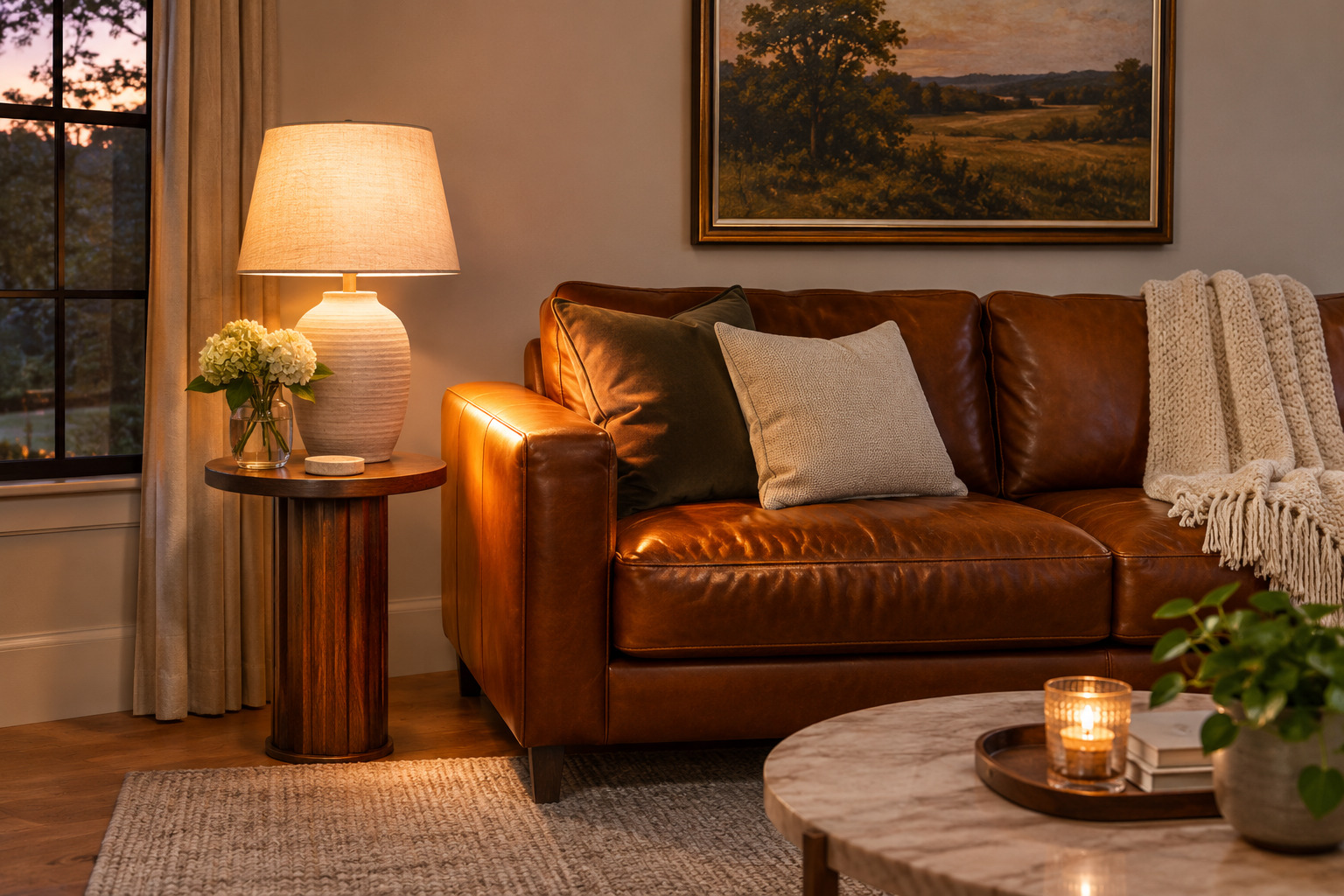
Smooth leather can catch a hard streak of light when a bare bulb sits in its reflection. Move a shaded lamp to the side of the glossy arm and see how the leather reads from the seat across from it. A fabric shade can make the highlight softer and show the texture of the arm more clearly.
Use a table and lamp height that work from the seat as well as from the doorway. A shade that looks good standing up may still expose the bulb when you sit down. If the sofa is already near a window, test the lamp at night before settling on its position. Our living room lighting ideas for rooms without a ceiling fixture cover other ways to build light around seating.
12. Use a Waffle Throw Where You Actually Sit
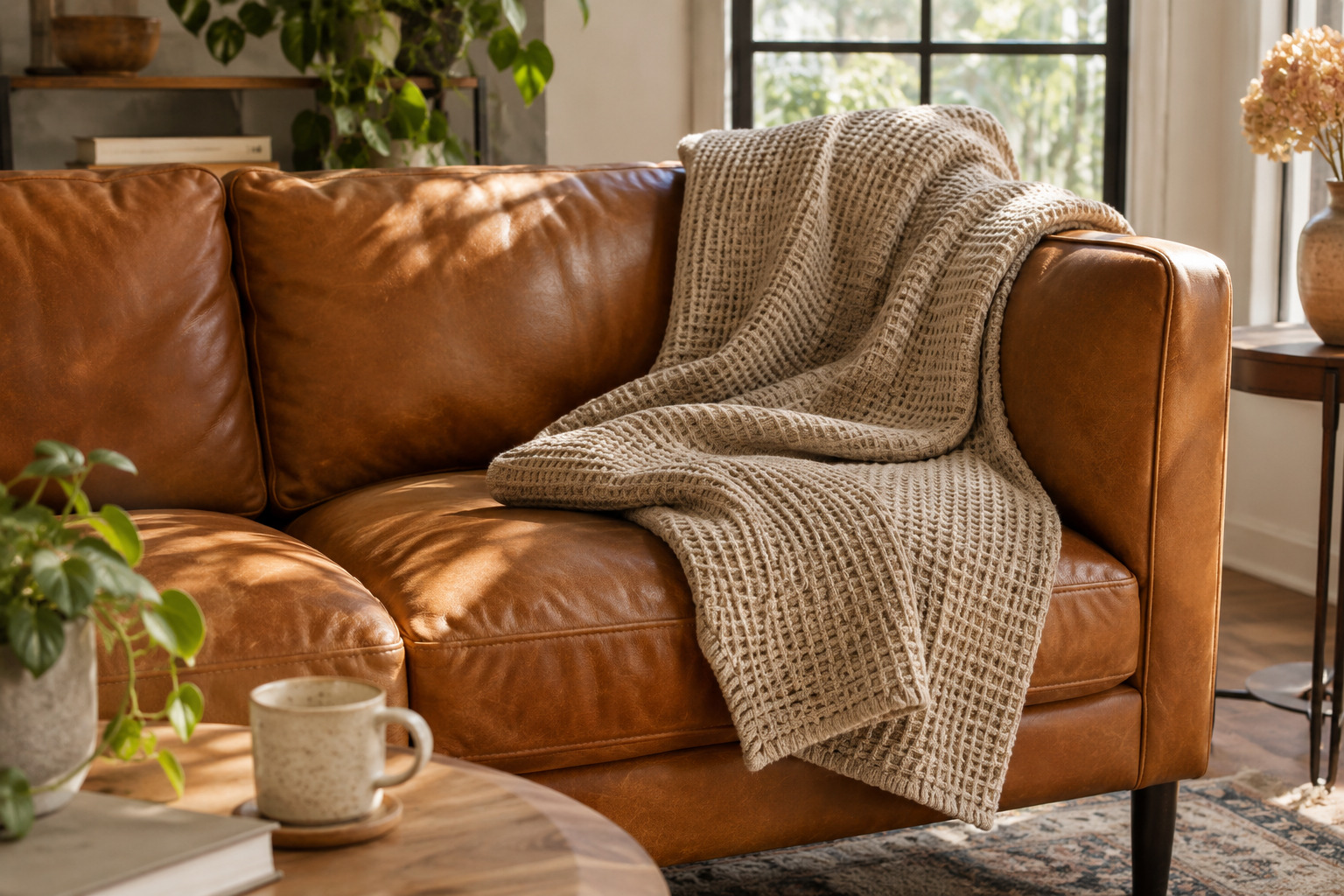
A folded waffle-weave throw softens the corner seat you reach for every evening. Look for a warm cream or oatmeal tone if the leather has a honey cast, and fold the throw across one arm and onto the seat. The little pockets in the fabric add visible texture, even when the rest of the sofa is left open.
Choose a size you can use while sitting, then fold it to suit the depth of the arm. If it slides down a smooth back, set it where the seat and arm meet or keep it folded beside you. The throw earns its space when it’s easy to pick up, put back, and use without moving several cushions.
If you want more coverage, the linen-colored Bedsure cotton waffle blanket comes in a 90-by-90-inch queen size. Fold it lengthwise for the sofa arm and open it up when two people want to share.
See the linen-colored cotton waffle blanket (paid link)
13. Use a Low Cabinet Behind a Floating Sofa
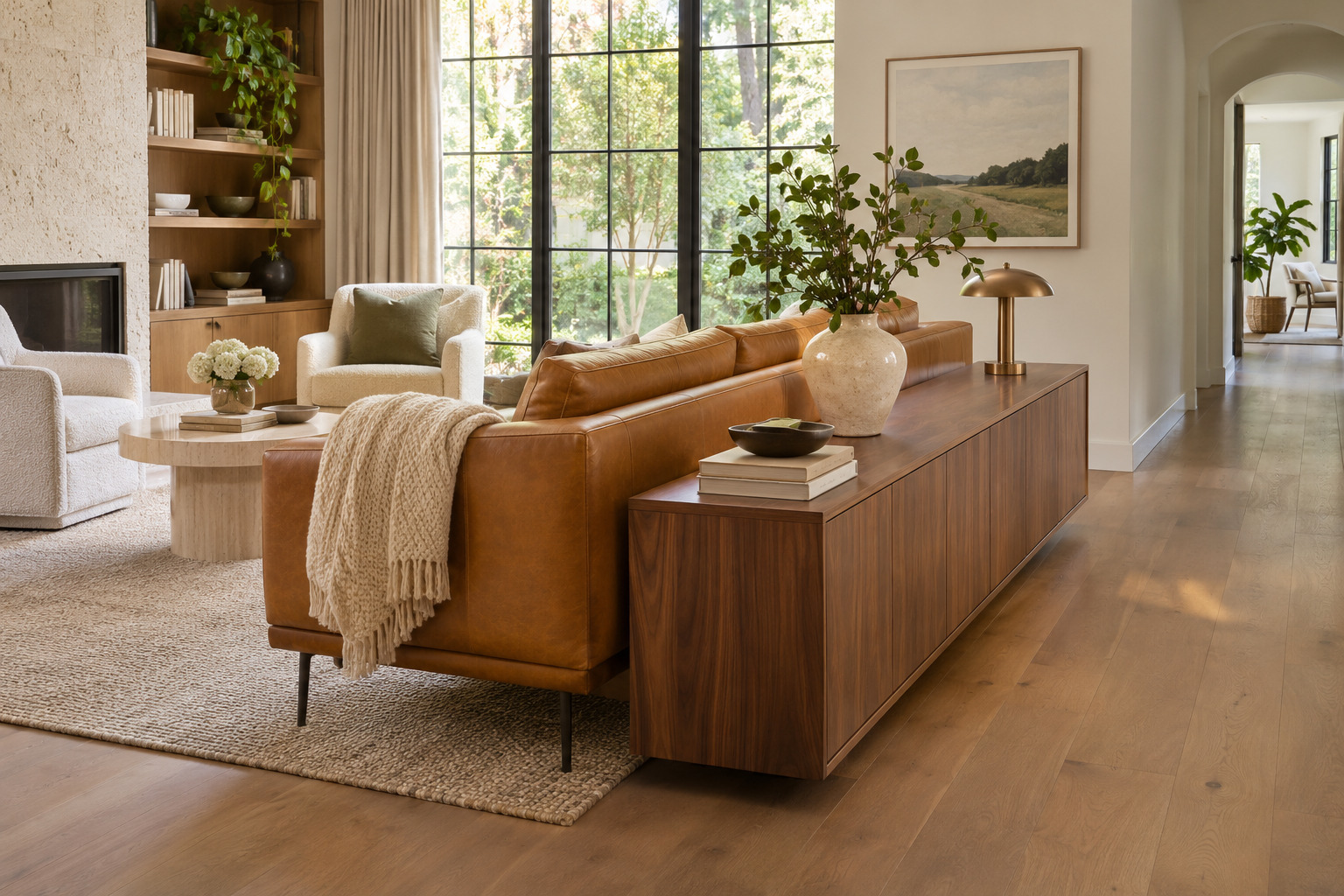
A sofa that floats in the room can leave its back exposed to the main walkway. Set a shallow closed cabinet behind it if you need a place for games, books, or an extra throw. Choose a cabinet lower than the sofa back and test the usable walking lane before bringing it in. It should be easy to pass while carrying something with both hands.
Check how the doors open from the route people will actually take. Keep everyday things in the section you can reach comfortably. If the main walkway passes close to the cabinet, choose a layout that doesn’t push a swinging door across the route. A low walnut or oak finish can relate to the leather without making the back of the sofa look taller.
14. Set a Pale Stone Surface Beside Rich Leather
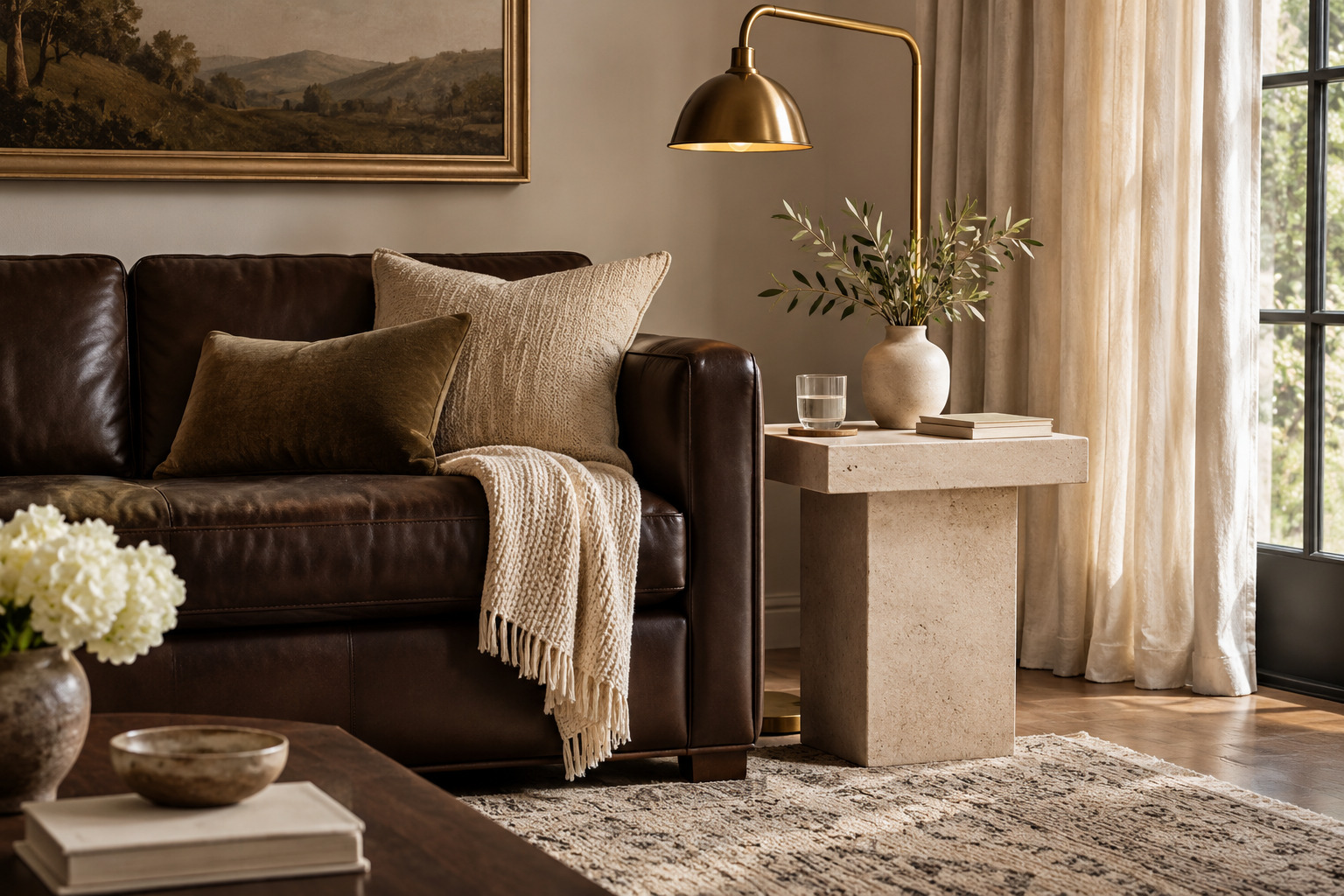
A small honed stone table can give deep brown leather a refined point of contrast. Choose a soft limestone tone or a quieter cream finish that picks up nearby curtains or a rug. Check the table top against the sofa arm before buying. It needs enough usable surface for the things you set down there.
A restrained brushed-metal finish nearby can add another material without competing with the stone. In a narrow spot, compare the base and overall footprint as carefully as the top. Put the table within easy reach of the seat, leaving room to walk around it. A light finish can give the arrangement some lift even when the sofa remains the darkest object in the room.
15. Carry the Rug Through an Open Room
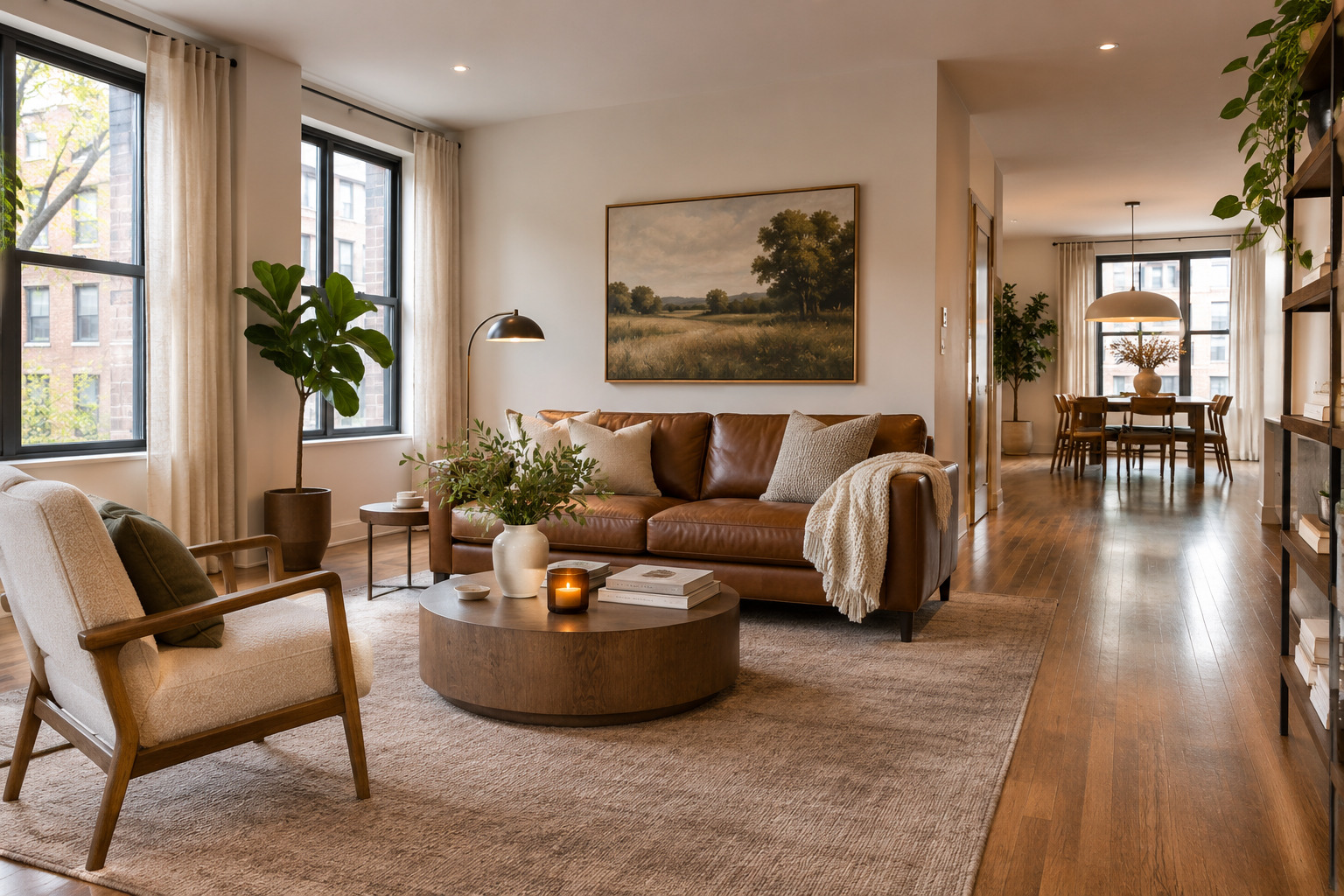
In an open-plan living area, use one rug to connect the brown sofa to its nearest lounge chair. Stop the rug before the route to the dining table, so someone walking through sees where the conversation area ends. Mark the size first and check that the chair stays on a stable part of the floor or rug in its usual position.
Use the rug edge as a guide when you angle the furniture. If the sofa cuts off the path, try shifting the seating area as one group before moving individual pieces. A subtle taupe or warm-gray rug can give both areas a common color while keeping the seating arrangement easy to read from the next room.
16. Give Dark Leather a Softer Evening Palette
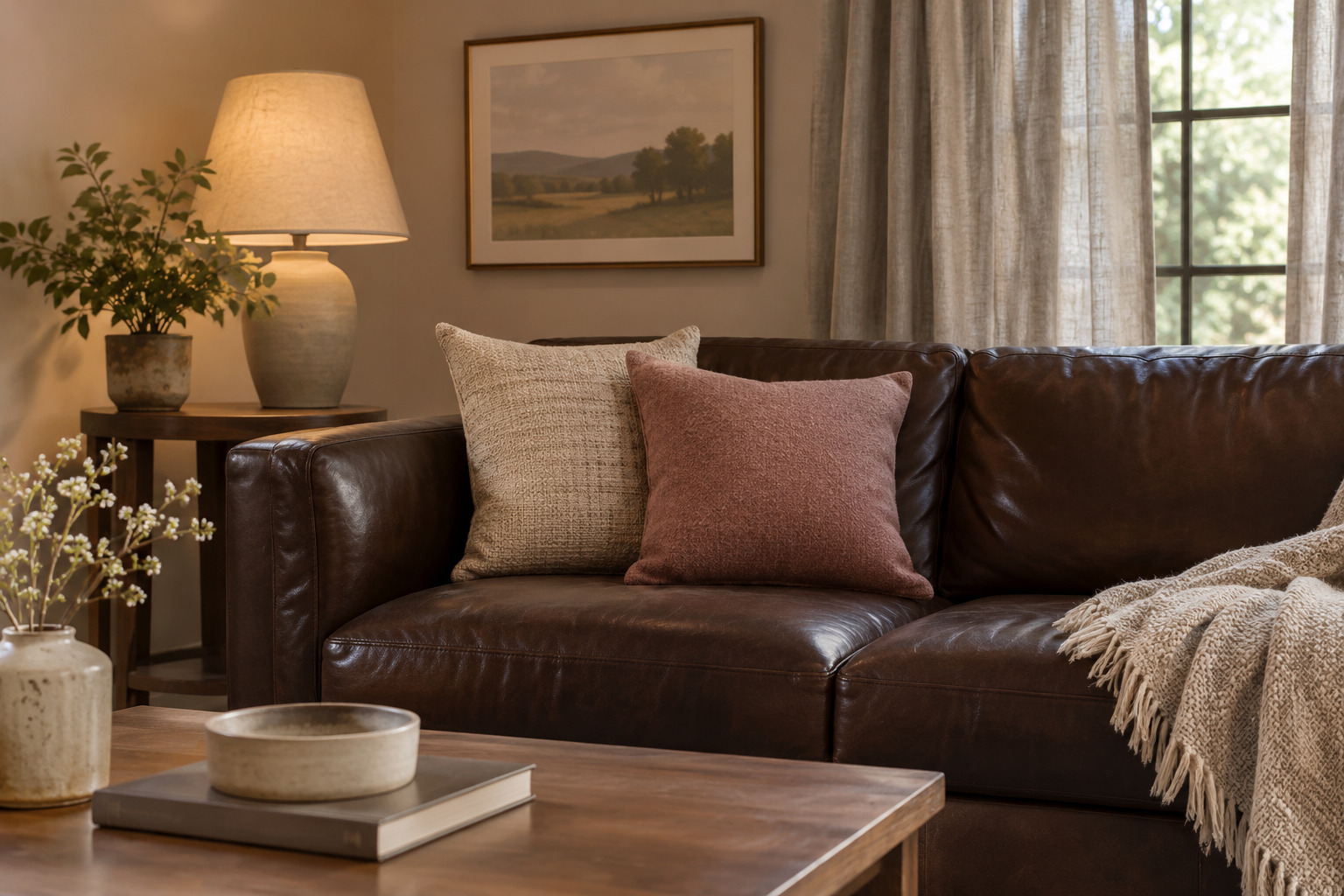
A dark chocolate sofa can feel inviting at night when nearby fabric holds a little more light than the leather. Try pale gray linen curtains, an oatmeal cushion, and one muted rose accent under a shaded lamp. The rose can soften the chocolate tone without needing to repeat in every corner.
Look at the room after sunset. If the curtains appear blue and the sofa appears nearly black, try a warmer gray swatch or move the light toward the seating area. Set the cushions where people can still sit comfortably. Leave some of the dark leather visible so the soft evening colors have an edge to play against.
Keep the sofa where it works and try the change that addresses the room’s biggest problem. Move the lamp, test a rug edge, or bring in a fabric sample before committing to a larger purchase. When the surrounding pieces make more sense together, the leather starts to feel like part of the room again.
Discover more from HomeTrendora
Subscribe to get the latest posts sent to your email.