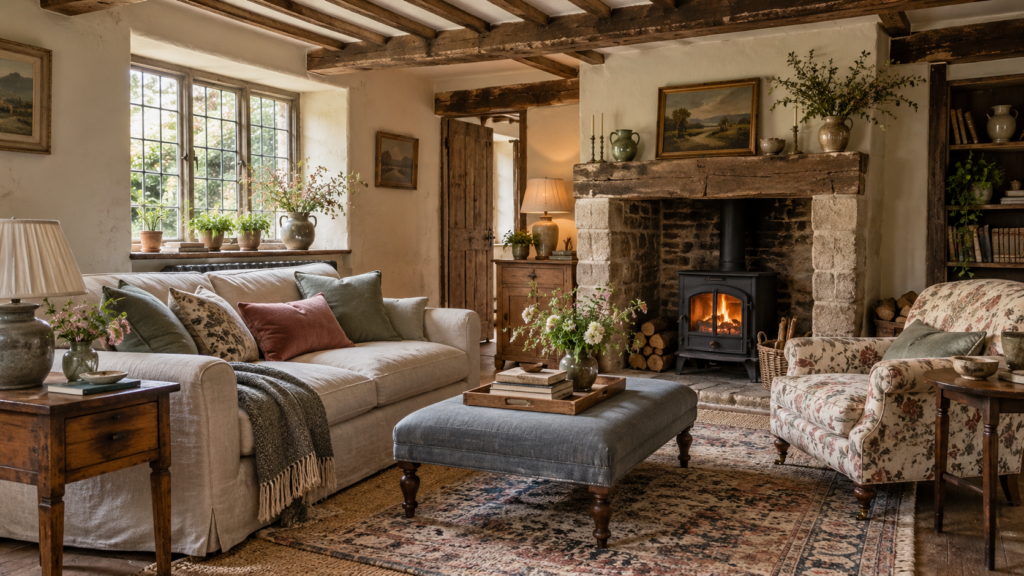
Bright trim, shiny floors, and cabinet fronts that all match can give a perfectly good room a flat look. These earthy cottage home decor ideas help you decide where a warm color or a textured surface will make the biggest difference in the room you already have.
Start with two things you can see together, such as a white door frame and the wall beside it. Compare paint, wood, and fabric samples in that spot before settling on a palette. One warm color through an opening can tie rooms together, even when the finishes on either side are different.
1. Make the White Trim Part of an Oat-and-Clay Palette
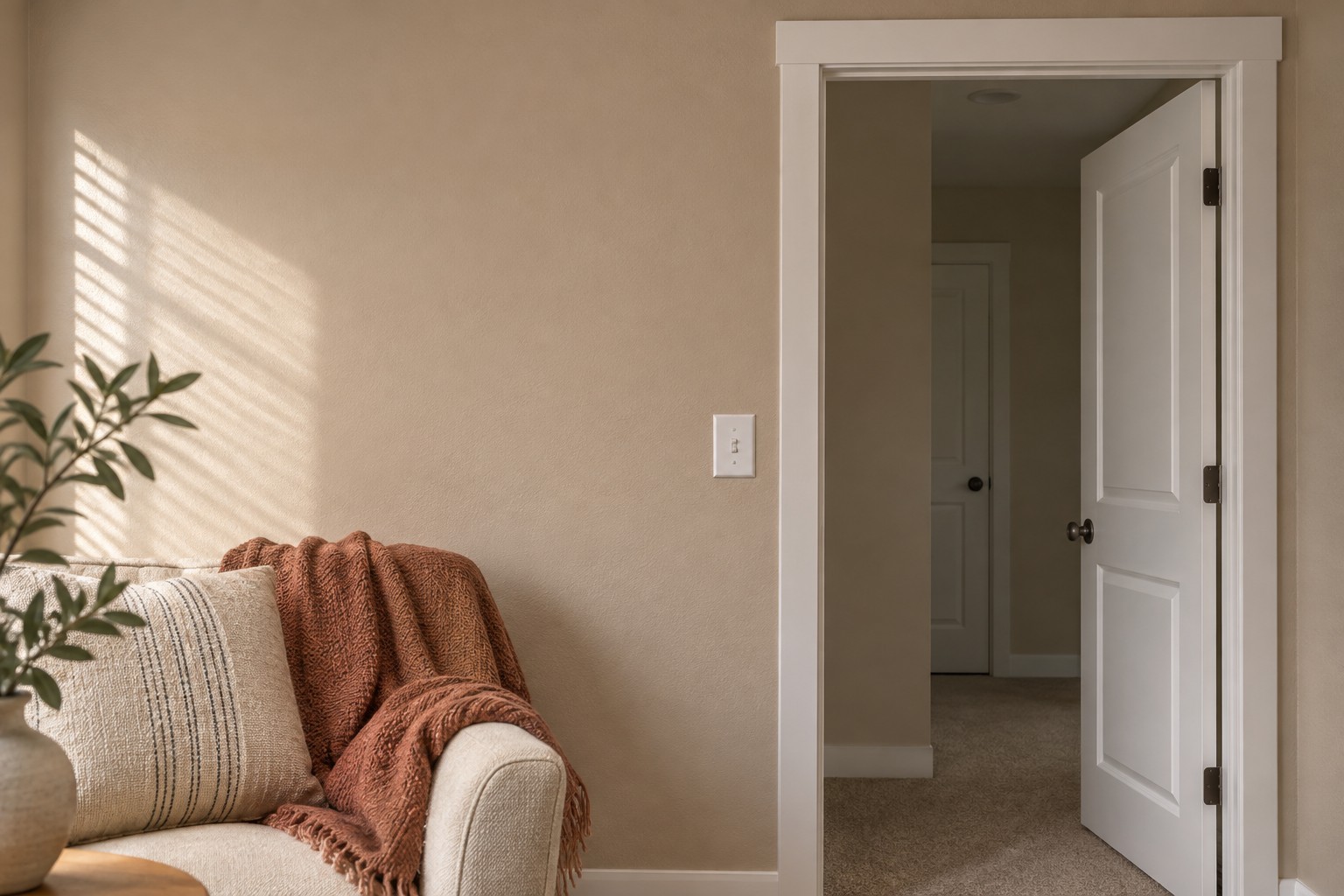
Hold an oatmeal paint sample beside the white casing you plan to keep. Add something clay-colored at the bottom of the same view, such as a cushion or a woven basket with a rust stripe. When you look in from the next room, the light casing can outline both colors and give the opening a crisp edge.
Check the samples first thing in the morning and again with the room’s lamps on. If the oat color turns yellow next to the cabinets, try a grayer sample and leave the clay accent where it is. A small shift in the wall color is often enough to bring the two finishes together.
2. Put Real Terracotta Next to Stock Cabinets
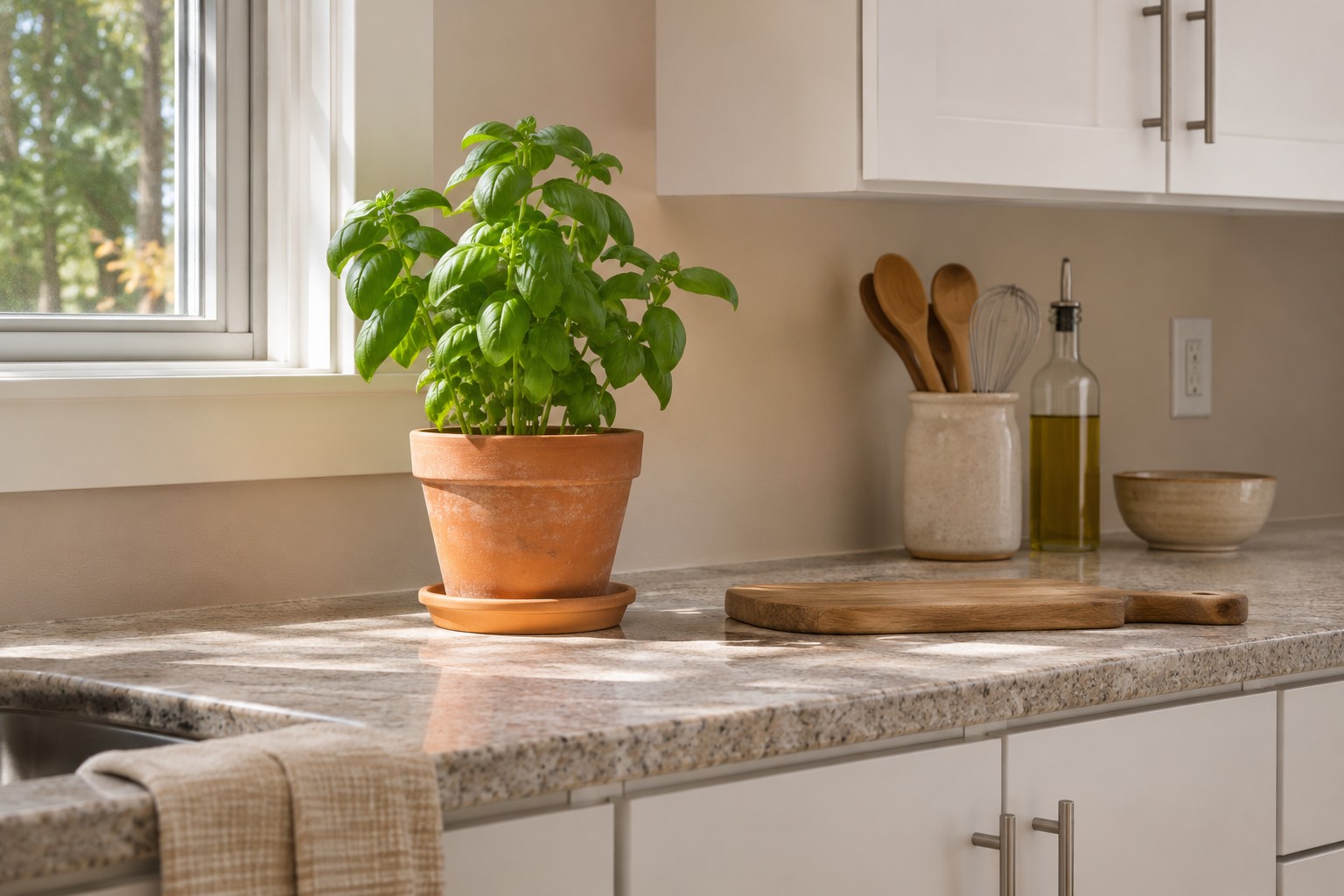
Set one plain terracotta pot on a counter or shelf that can spare the space. Put a matching saucer underneath and choose a spot where the clay sits in front of the cabinet color. The dusty orange is easy to see against white doors, especially when the surface around it stays open.
Choose a plant for the light that reaches that spot. If the corner is too dark for what you want to grow, set the plant in a brighter place and keep a small earthenware vessel by the cabinetry. Add a protective layer beneath the saucer if the counter is sensitive to moisture.
A plain terracotta cylinder with a matching saucer adds warm color beside white cabinet doors. Check the pot size against what you’re growing and protect the counter if it’s sensitive to moisture.
Explore the terracotta pot → (paid link)
3. Use a Wood Frame Against a Plain Hall Wall
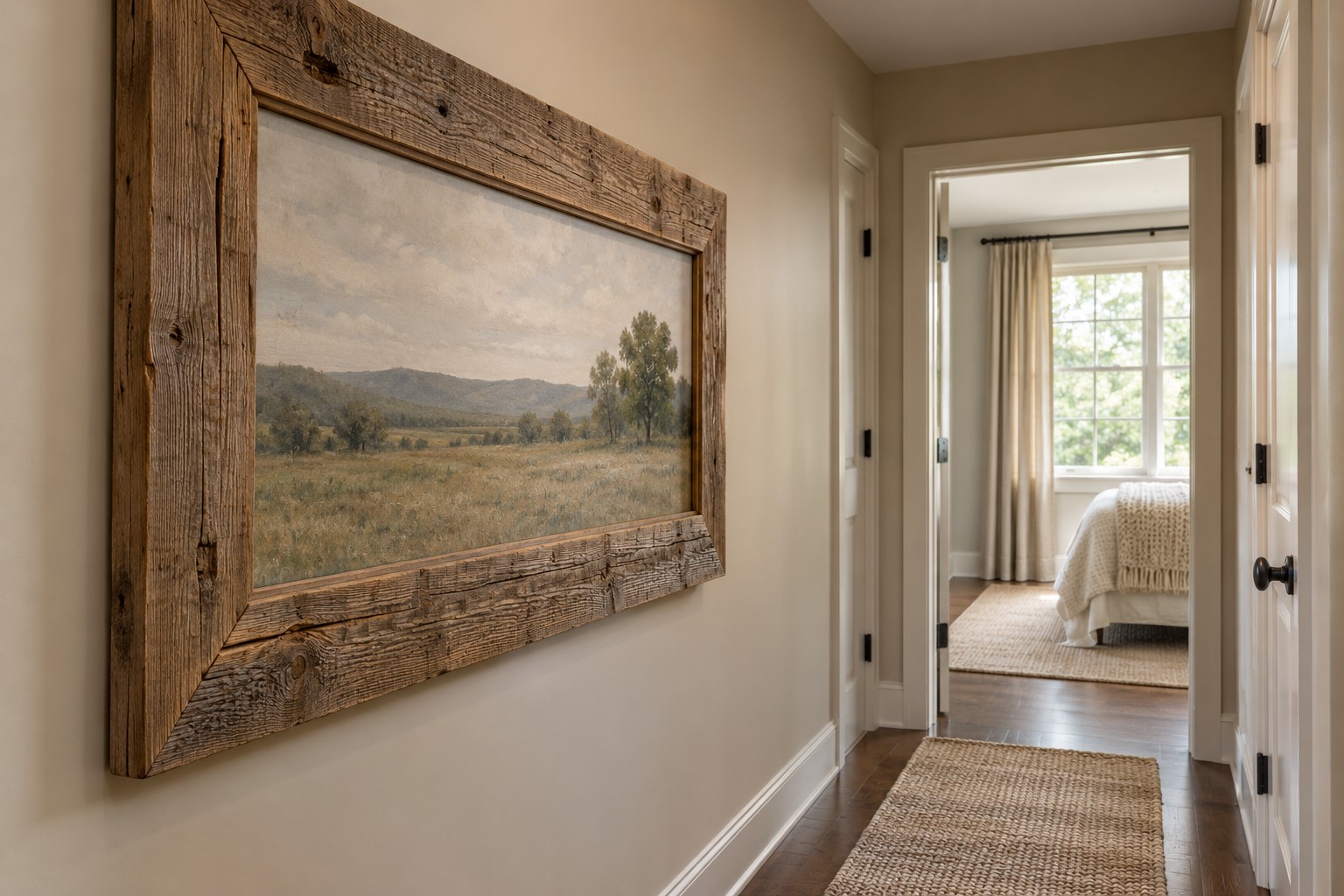
Find one picture with a visible wood frame and hang it where light reaches the wall from the side. The grain along the frame gives a flat surface something to catch the eye. A pale mat around a quiet landscape keeps the display from feeling too dark in a tight hall.
Make a paper outline of the frame and try it at the proposed height. Walk past it from both directions. If the route is narrow, a shallow frame with a flat profile will be less likely to get brushed by a shoulder or a bag. Use mounting hardware suited to the weight and wall.
4. Bring a Flatweave to a Glossy Entry Floor
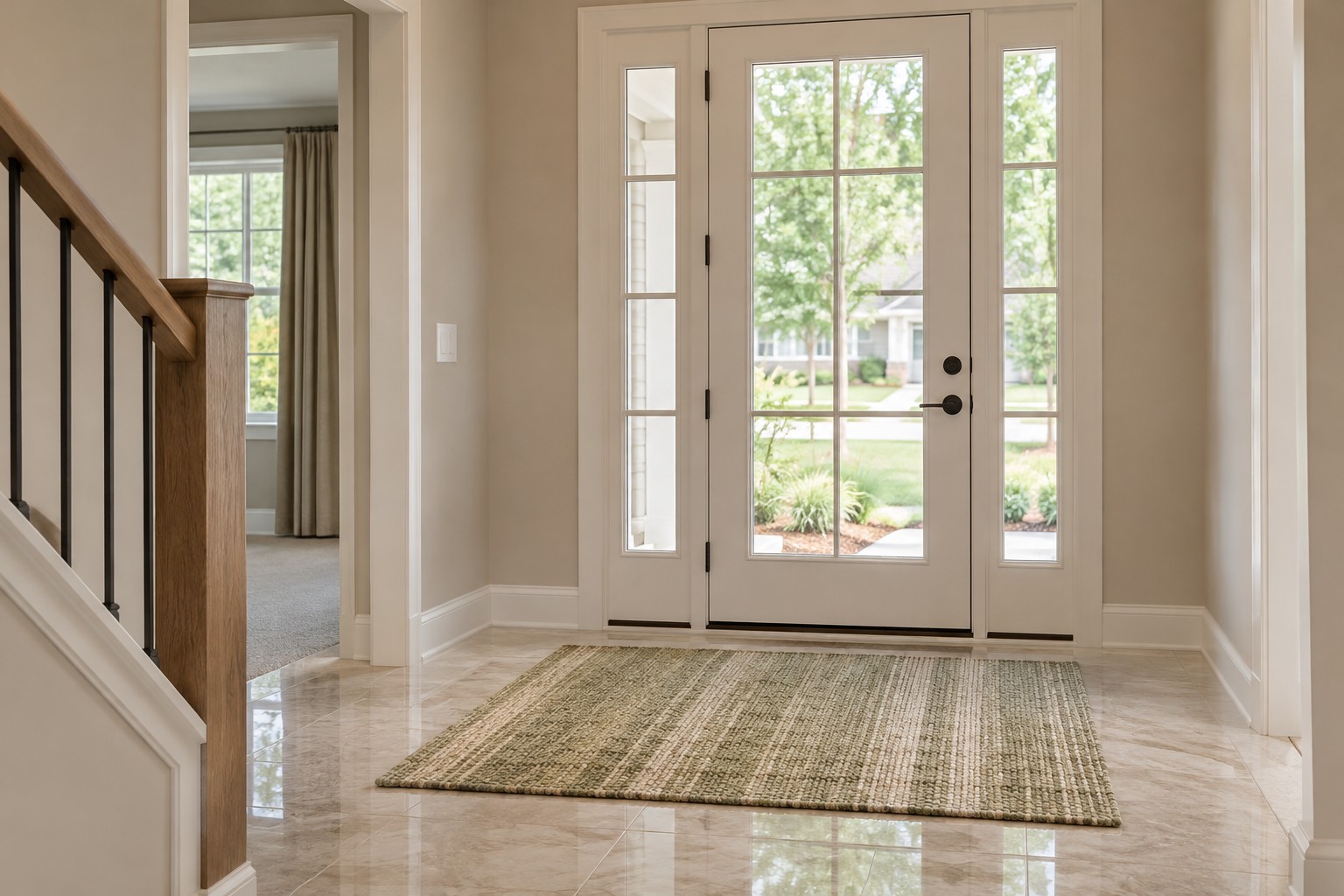
Try a low-profile flatweave in oat, olive, or tobacco brown against smooth entry tile. Touch the weave before choosing it. A textile with a distinct grain gives the eyes a place to settle among the reflections from a bright floor and a glazed door.
Make sure the whole door swing clears the rug and its nonslip pad. Check that the door can open over any edge you expect it to cross. If clearance is tight, move the rug into the hall and let the tile take the wear by the door.
5. Tone Down a Bright White Vanity With Flax
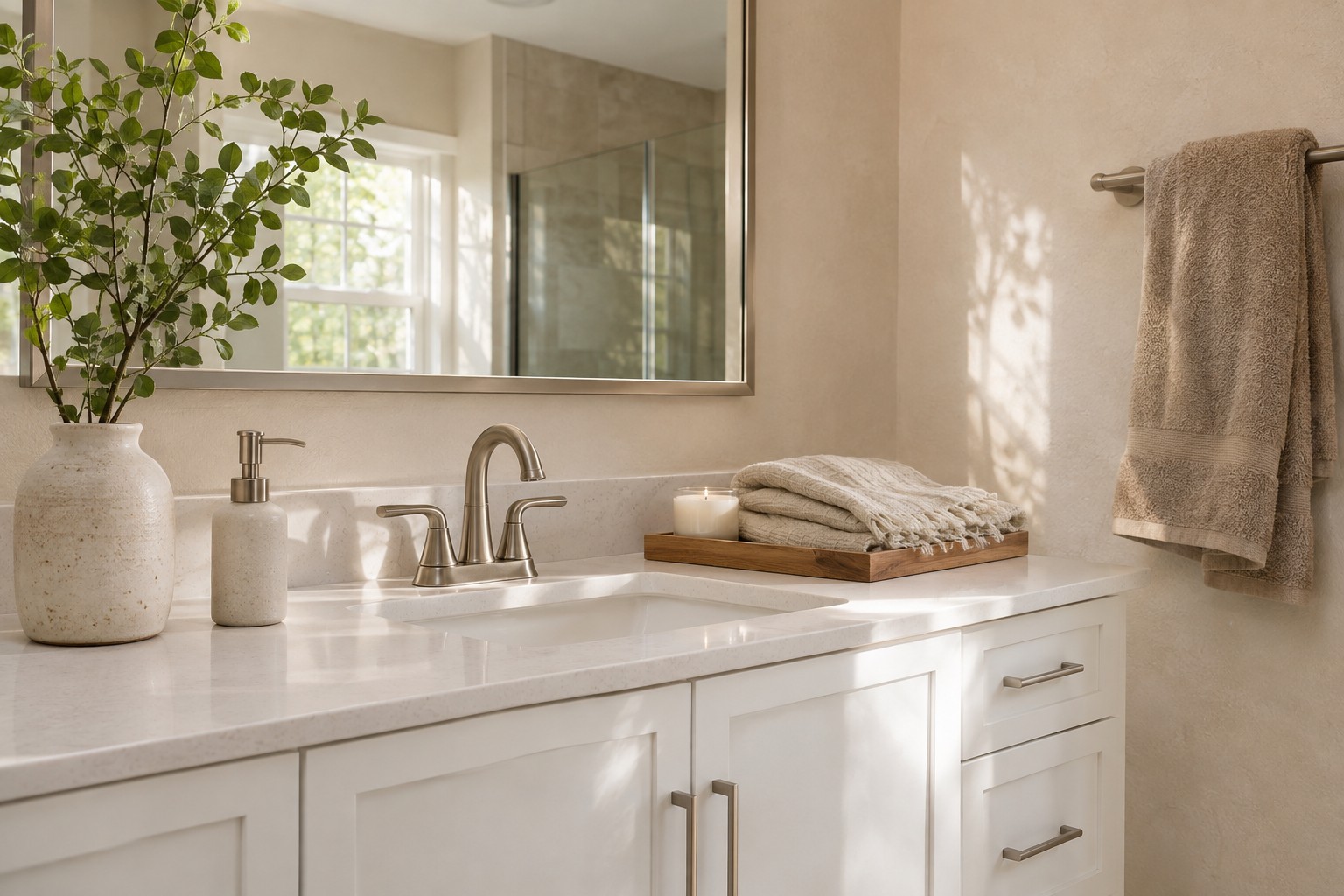
Add one piece of flax-colored linen at the dry end of a white vanity. A folded hand towel gives the counter a soft edge and stays easy to pick up. A warm beige with a little gray in it works especially well where the existing lighting makes yellow tones look sharp.
Keep the towel clear of the splash zone or move it to an existing rail if the counter is narrow. Dry the pieces between uses so the corner stays practical. Against a simple white cabinet, the linen and a plain wooden tray already give you a mix of finishes.
6. Set an Aged Wood Piece Beside a Plain Bed
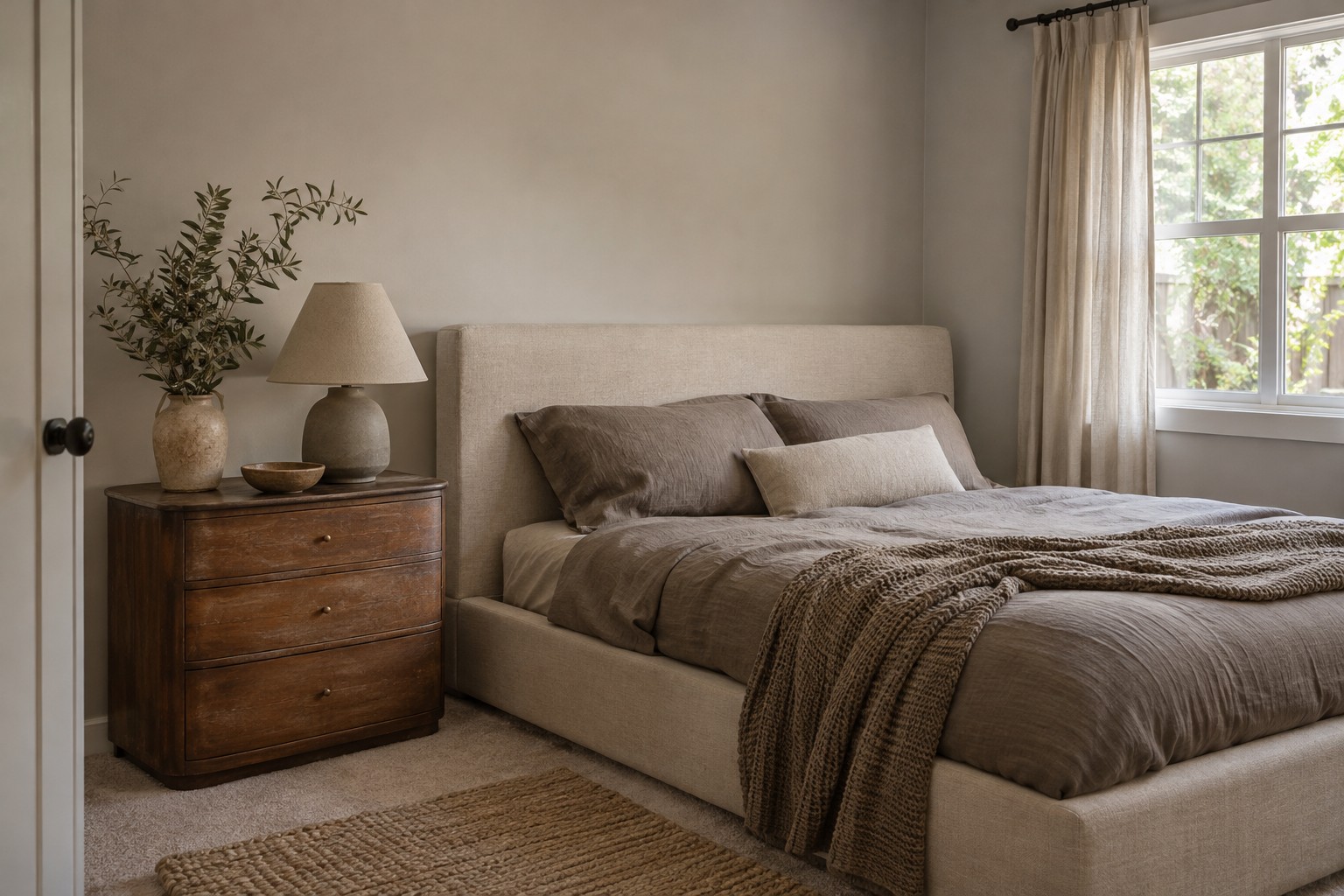
Choose a bedside chest with a visible wood grain and a finish you can live with. Darkened edges and smooth wear around a pull can bring character into a bedroom with a plain bed frame. A piece you can open comfortably from the side of the bed will do more for the room than an oversized chest pushed into a tight gap.
Measure the table width and open the nearest drawer or door on paper before bringing it home. Put a light-colored shade or linen cover behind it if the wood and headboard tones are close. The brighter edge helps you see the shape of the chest.
7. Use a Ticking Stripe Along a Basic Banquette
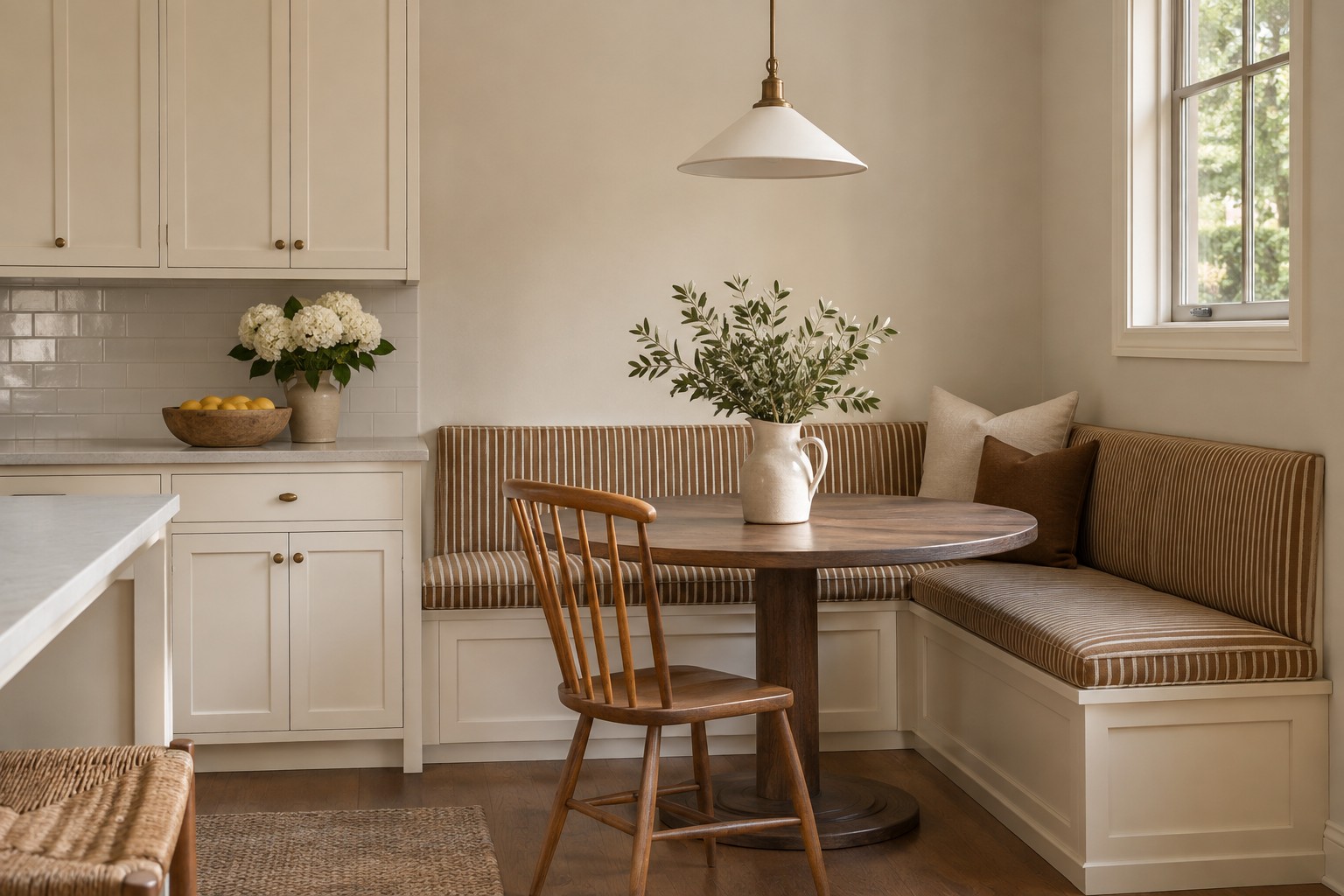
An existing bench can carry a stripe without much else around it. Lay a swatch along the seat to see which direction makes sense with its shape. A stripe that runs from front to back gives a long bench smaller visual intervals, while a lengthwise stripe can emphasize a short seat.
Choose the pattern when you can see it beside the table and the cabinet fronts. If you use the bench often, consider a cover you can remove for cleaning and follow its care label. Warm brown or faded olive can soften a white nook while leaving the table easy to dress for different seasons.
8. Let a Wicker Shade Warm a Cold Corner in Daylight
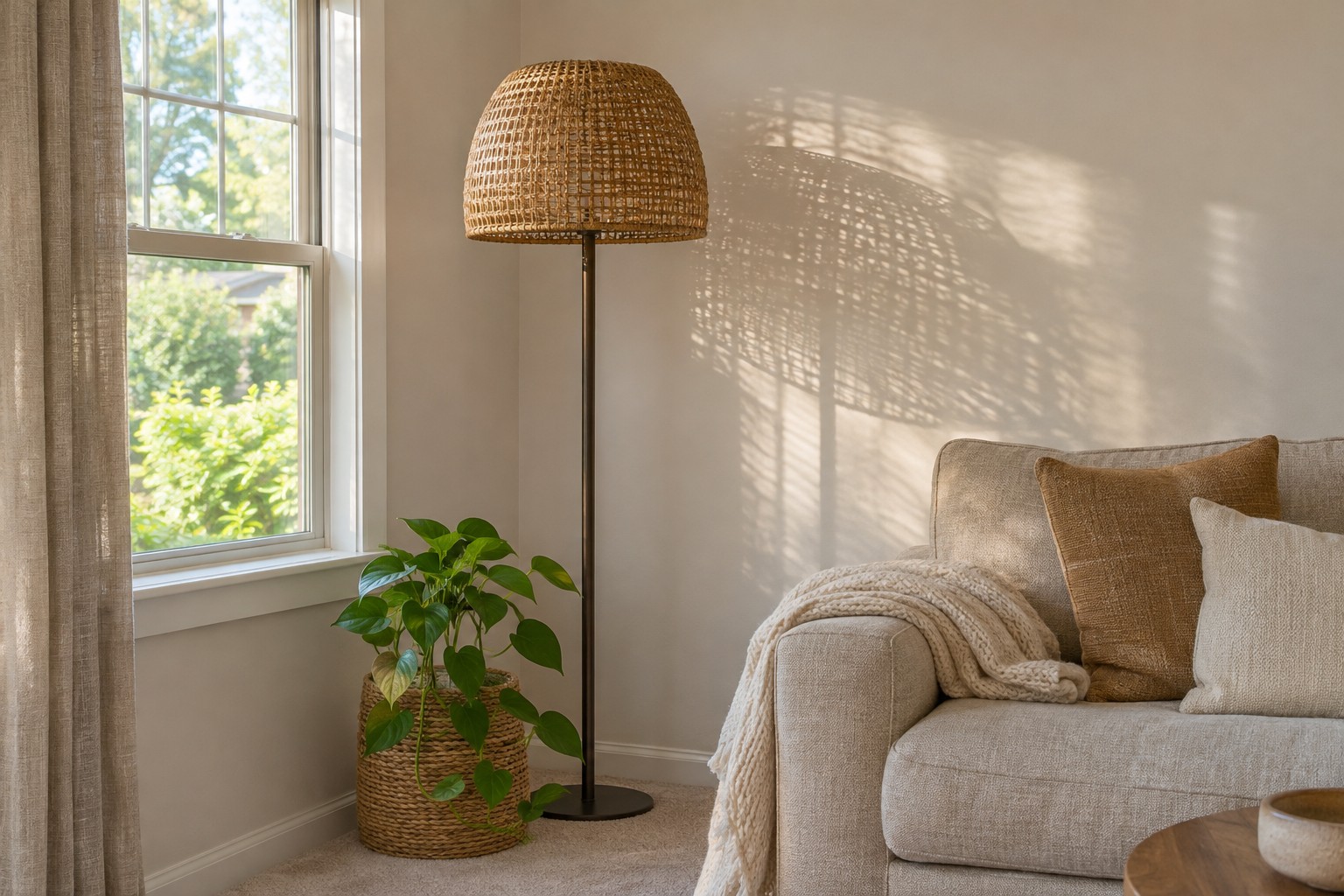
Look for a corner with a plain wall and angled light in the afternoon. A lamp with an open wicker shade can bring a little texture into the view, even when it is off. Hold a sample of the weave against the wall to see how much detail shows from your sofa.
Use a shade and bulb compatible with the lamp and check how the light feels from a seat. If the weave leaves the bulb in your direct view, use a compatible lined shade or a different lamp at that spot. For the rest of the room, these cottage living room layout ideas help you plan where the evening light is needed.
9. Repeat the Same Clay Tone on Both Sides of a Doorway
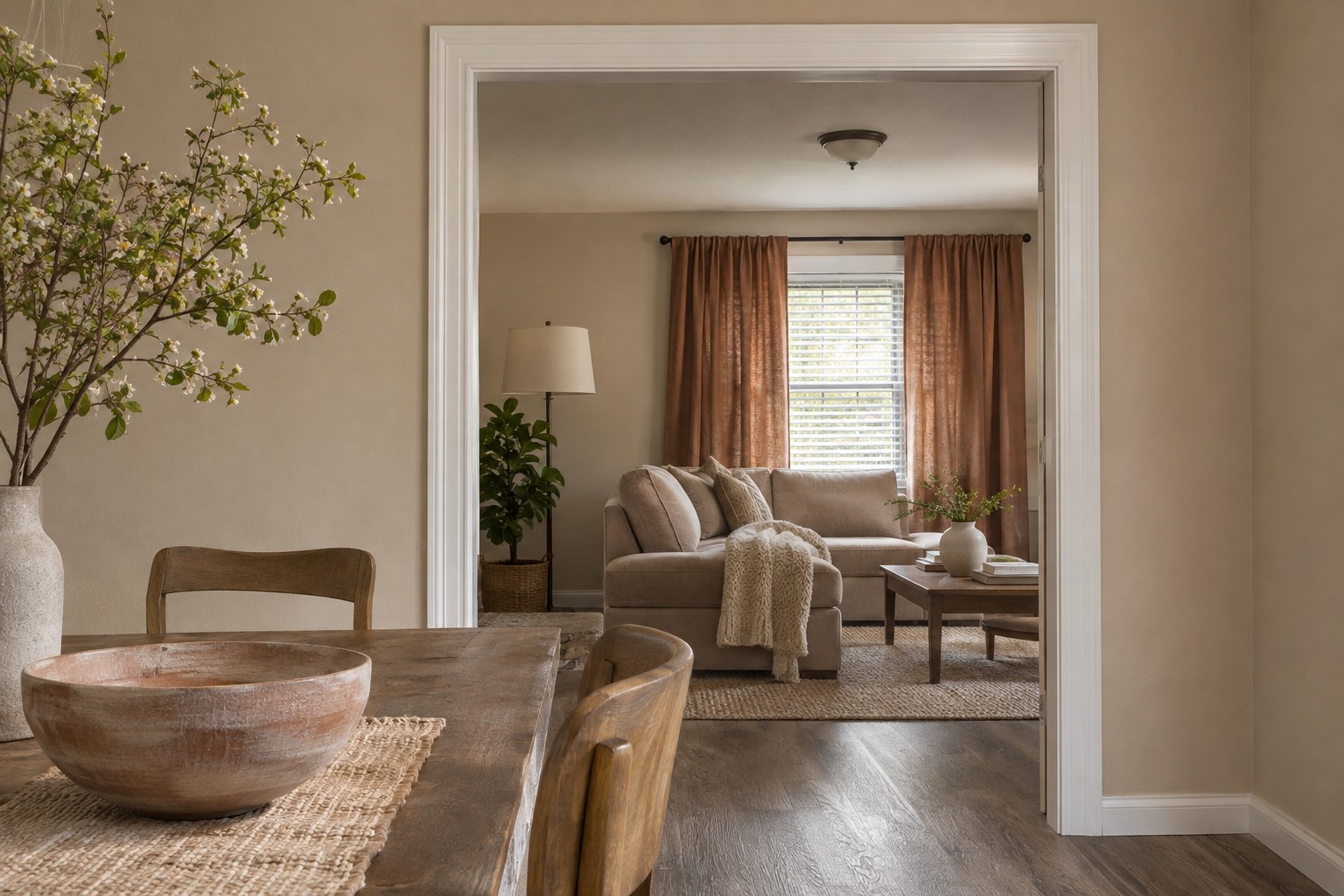
Stand where you can see the nearest two rooms together. Set a clay-colored bowl in the foreground and try a related fabric in the room beyond, such as a faded brick curtain or a small rust cushion. Match how warm the two colors feel in the doorway before worrying about an exact match.
Leave a clear stretch of neutral wall or trim between the accents so your eye can see why they belong together. If the two rooms receive different light, judge from the opening first. The relationship from that view is what connects the rooms.
10. Give a Boxy Sofa One Moss-Colored Anchor
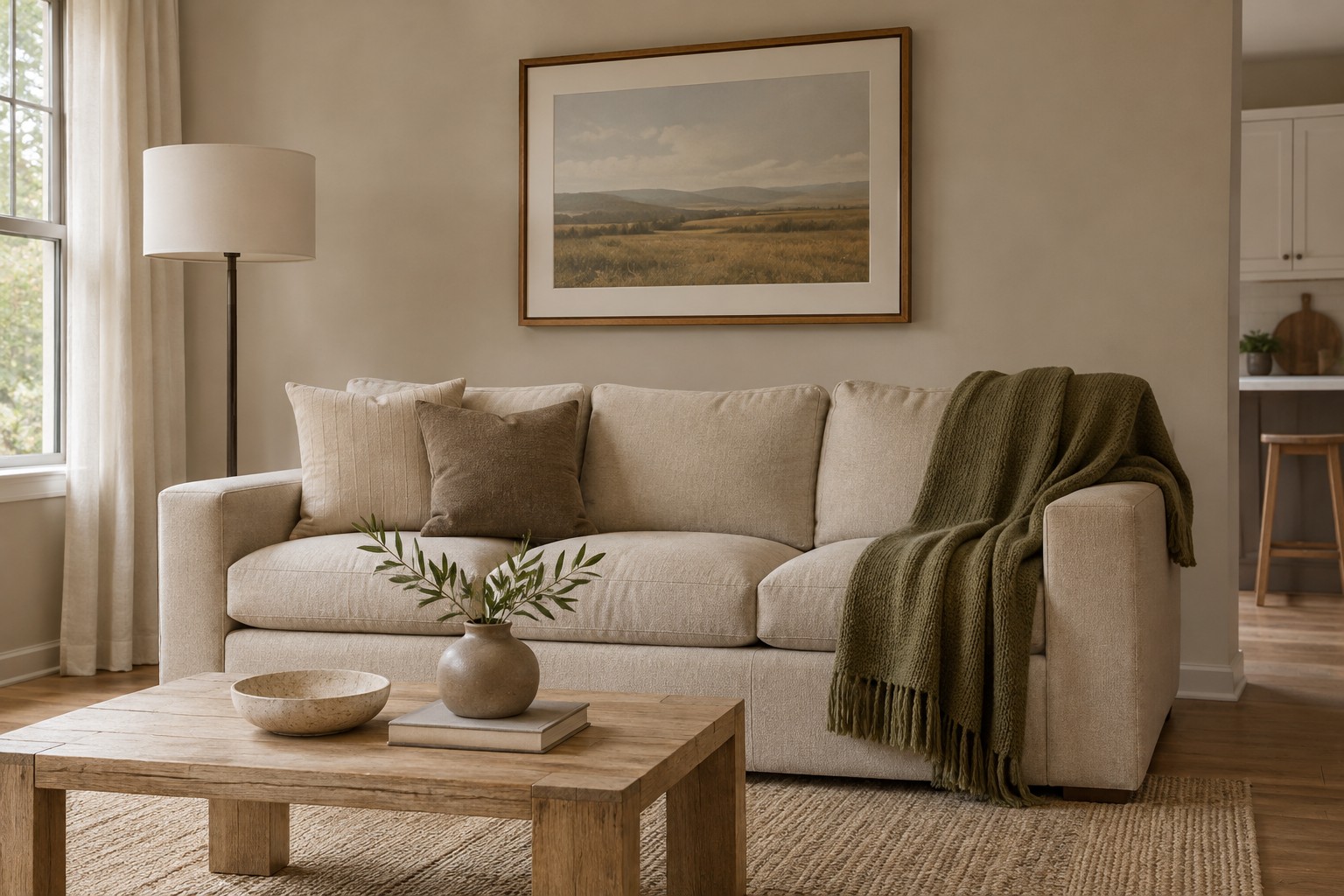
Fold a generous moss-colored throw across one end of a plain sofa, leaving the opposite arm and the seat you use most exposed. Let enough fabric show that the green reads as an area of color. A small edge tucked under a cushion is easy to miss from the doorway.
Compare a brownish moss against a cooler green before you choose. The wall, sofa, and light may favor one even if the two throws look similar in the store. If you want several throws close by, borrow one of these living room blanket storage ideas and give the extras a home beside the seats.
11. Break Up a Long Laminate Counter With End-Grain Wood
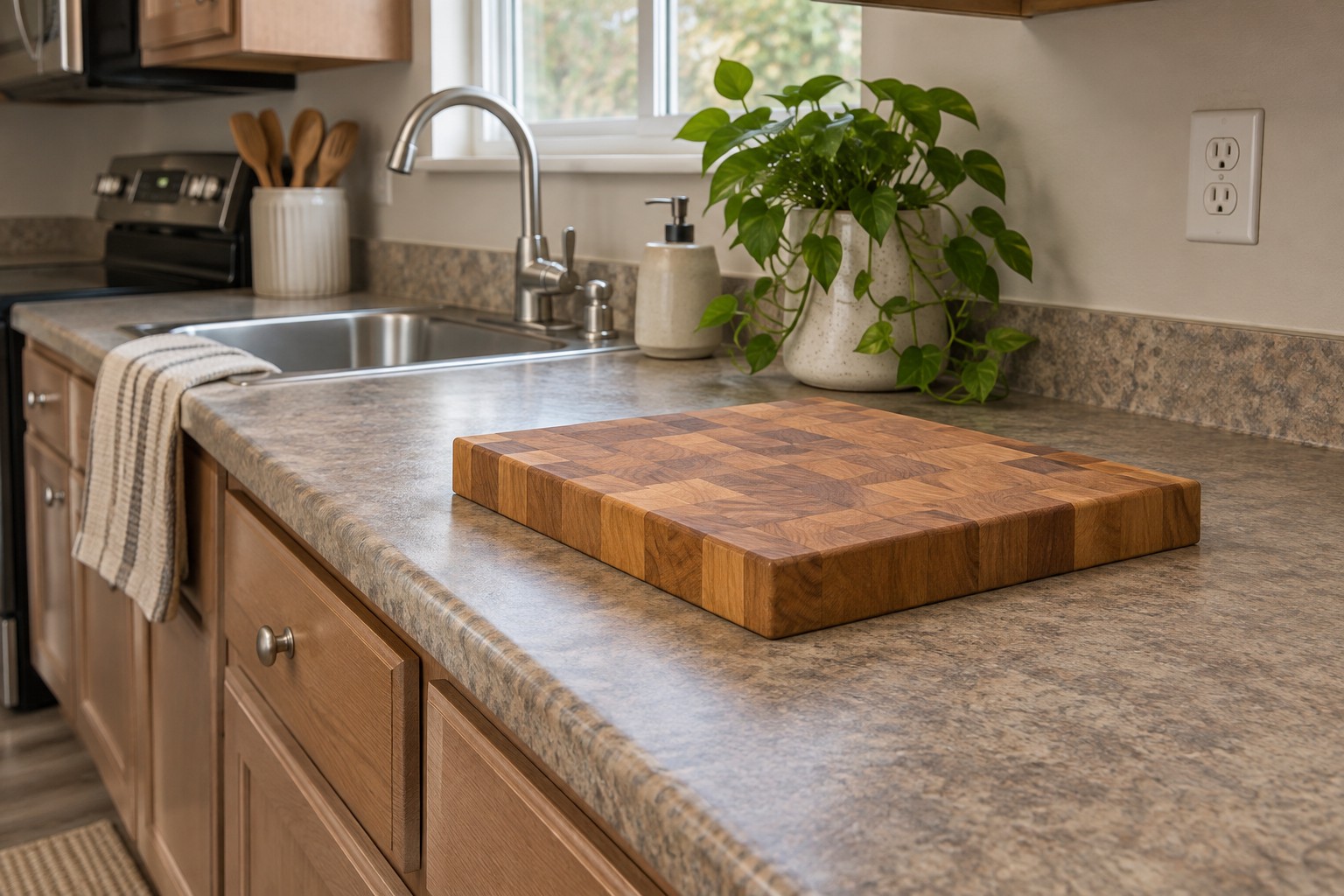
Give a wood board a permanent spot on a long plain counter where you already chop or set ingredients. End-grain blocks introduce a noticeable pattern in the middle of a continuous finish. Use a stable board and leave enough free space to work beside it.
Check what it looks like from the door to the kitchen. If a toaster or a set of canisters hides most of the wood, shift the board to the next clear stretch. Care for it according to its maker’s directions so it can stay out and earn its counter space.
12. Try an Ochre Stripe in a Plain Laundry Room
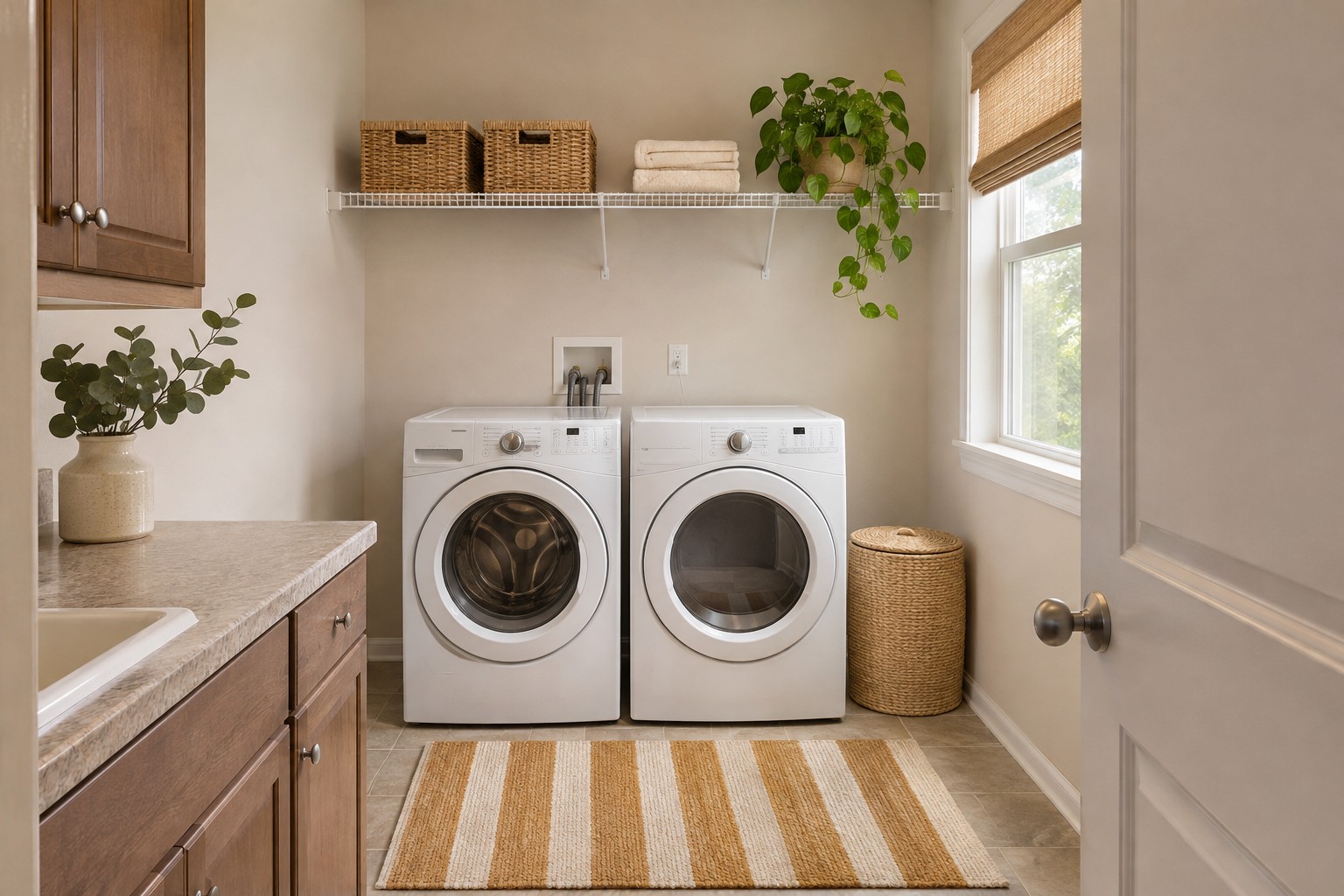
Set an ochre-and-cream striped runner beside plain white laundry units. The stripe can bring a long narrow floor into focus, and the color works in a room where a painted wall would mostly be hidden behind the machines. Check the size with a sheet or paper outline first.
Open both appliance doors and make sure you can stand with a laundry basket on the floor. Use a secure, low-profile rug and check the care label for how you can wash it. A little uncovered floor around the runner gives the stripe a clear edge.
13. Use a Solid Linen Panel Along a Blank Dining Wall
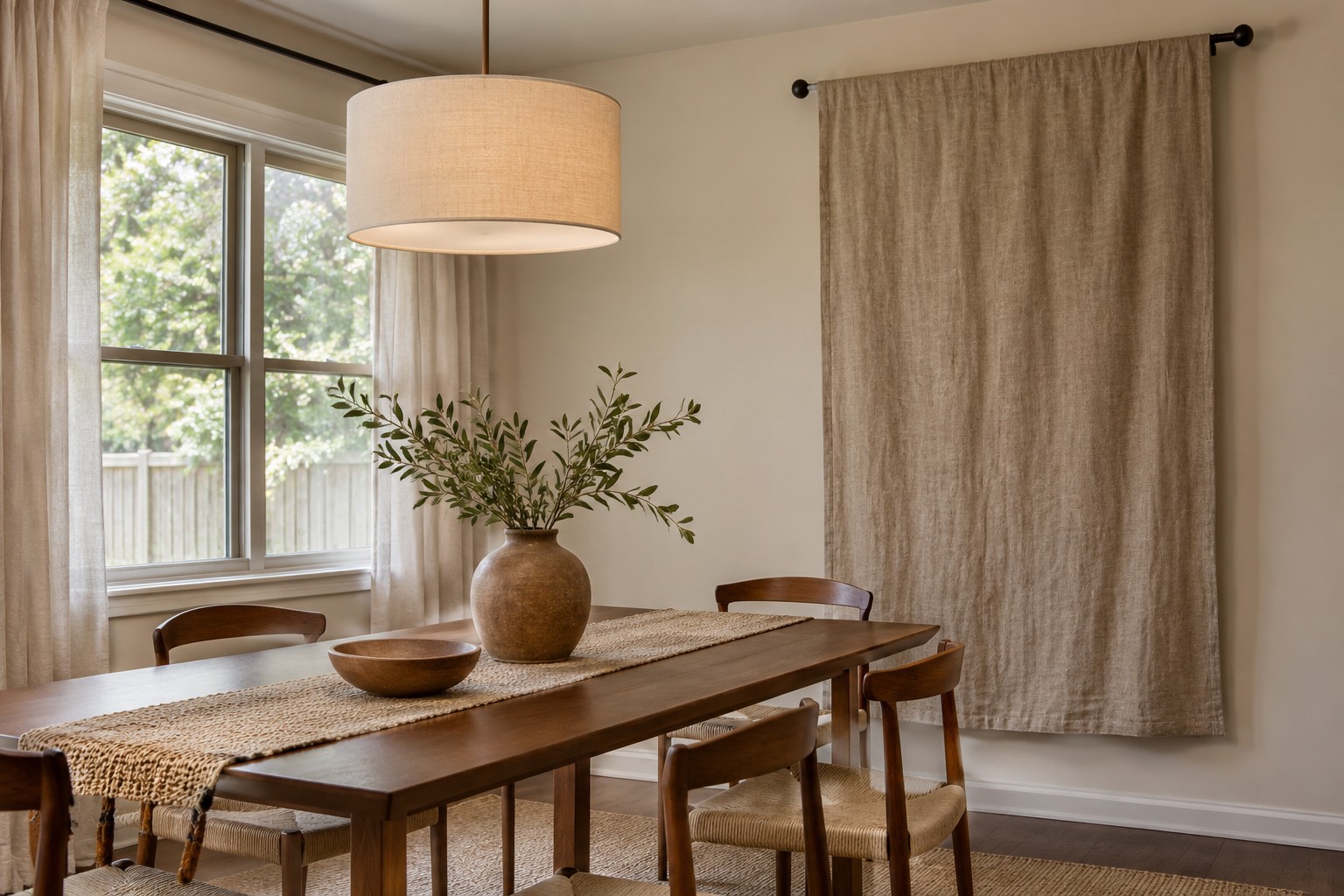
Hang a simple length of woven linen on a suitable wall-mounted rod. Choose a single warm tone with enough texture to see when the room is lit from the side. A plain panel can do the work of a large piece of art while keeping a room with busy tableware visually quiet.
Hold the fabric where you intend to hang it and check from a dining chair. Keep the lower edge where it can hang freely when the chairs move. Set the height to suit the furniture already in the space and use attachments designed for the fabric assembly and the wall.
14. Set One Dark Earthenware Piece Against Glossy Tile
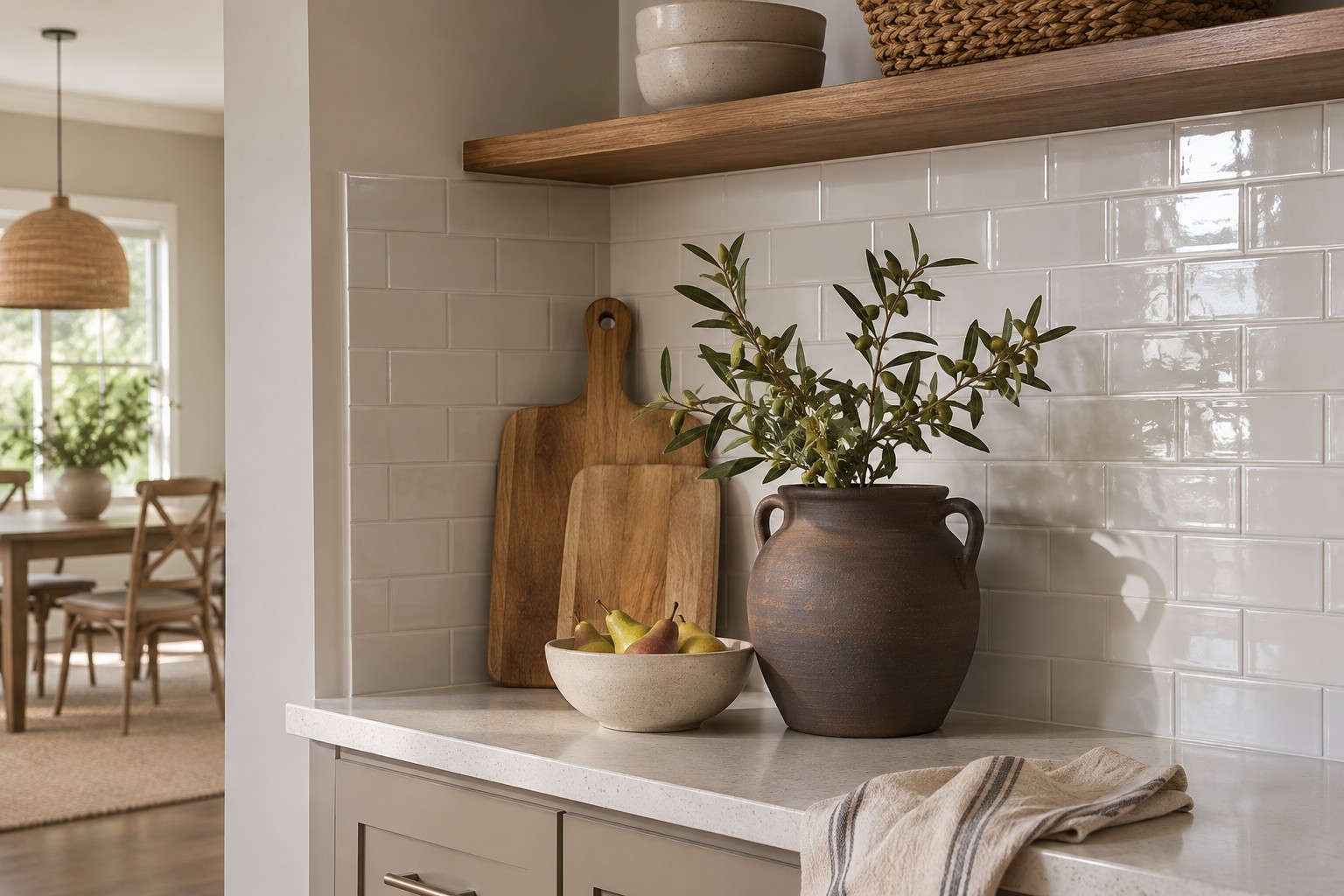
Put a matte brown earthenware jug or crock at the dry end of a tiled kitchen. Look for a broad shape with enough height to interrupt a row of bright grout lines. A quiet silhouette shows off the variation in the glaze without needing a pile of smaller objects around it.
Leave space for the handle and a stretch of unobstructed tile beside it. If the vessel is close to a main work zone, choose something you can keep clean and lift easily. Move it a little away from the wall so soft light can define its edge.
Choose the view you pass most often and make one change there. When you can see the warm finish from the doorway and still use the room easily, take one color or texture from that spot into the next room.
Discover more from HomeTrendora
Subscribe to get the latest posts sent to your email.