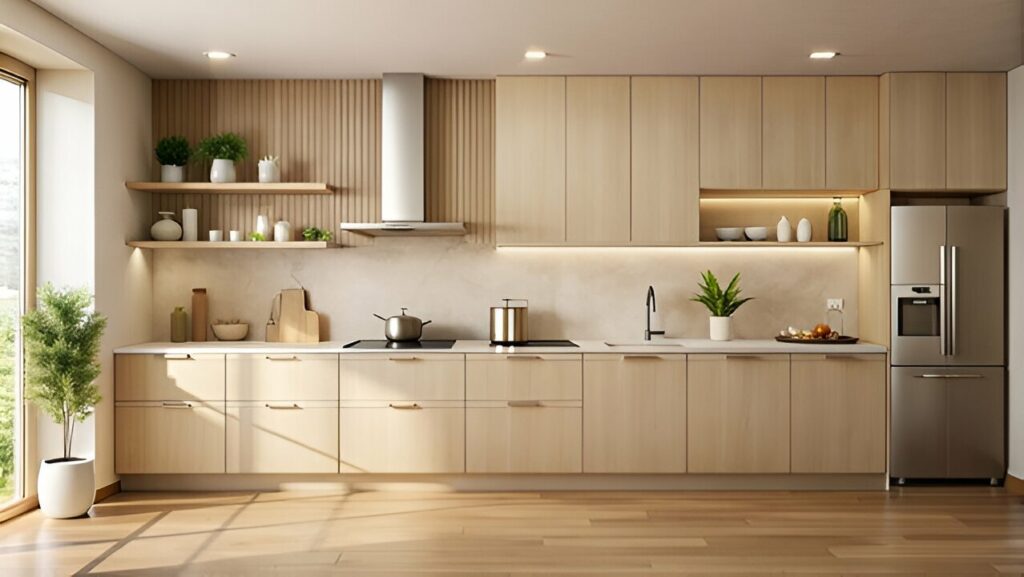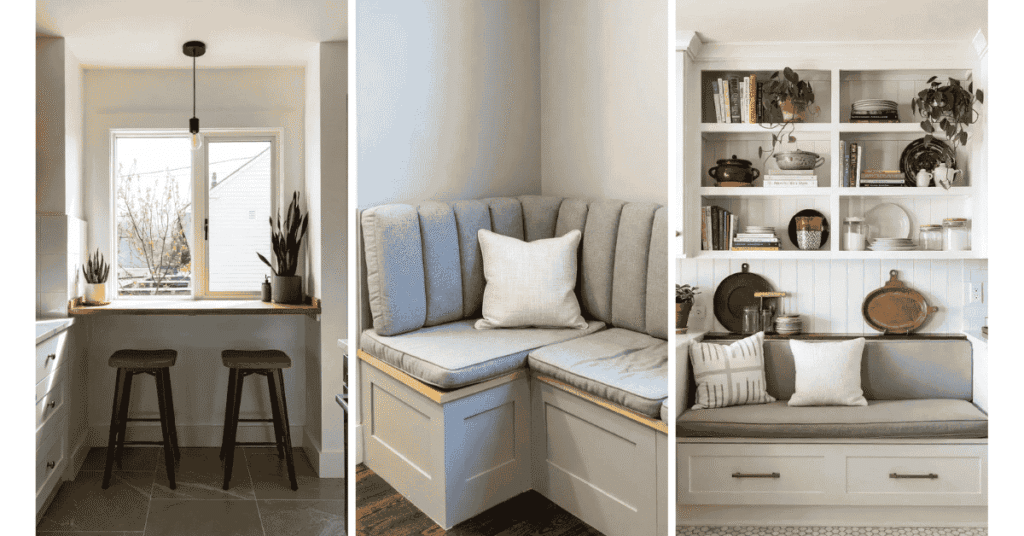
A kitchen counter works hard enough without becoming the permanent home for mail, school forms, calendars, and grocery lists. A kitchen command center gives those everyday papers and reminders a deliberate place close to the routines they support.
These kitchen command center ideas work with different layouts, from a cabinet side and refrigerator door to a small built-in desk. Start with the items your household handles most often, keep the setup away from cooking and water, and leave the work surface available for its main job.
1. Use a Cabinet Side for the Weekly Calendar
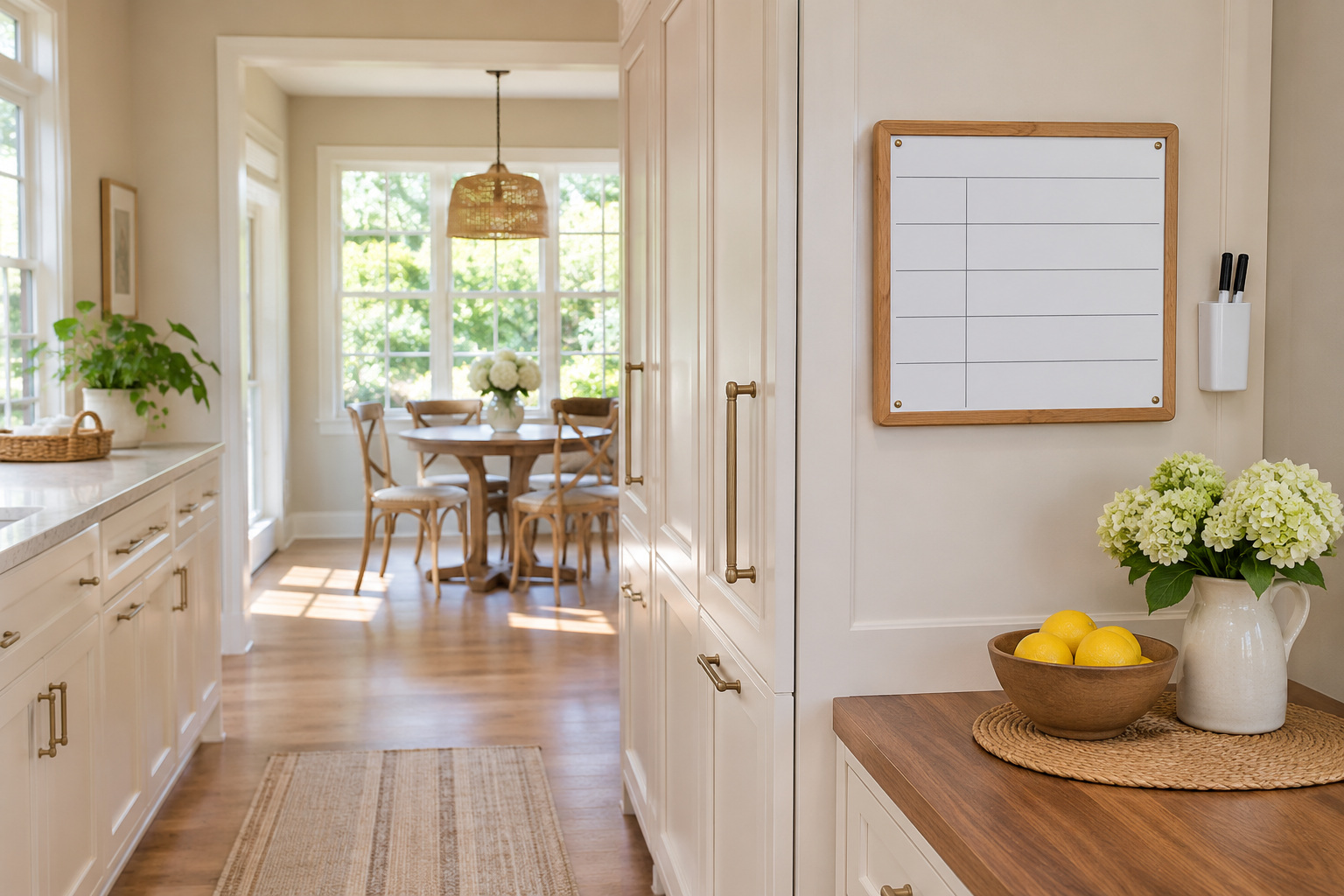
An exposed cabinet side can hold a weekly calendar where everyone passes it without claiming a countertop. Choose a slim board that fits the panel, and place it where the writing can be read without blocking a walkway.
Check that the attachment suits the cabinet finish and keeps the board clear of door movement. Leave a small area beside it for the one pen or marker used with the schedule.
2. Sort Incoming Mail in a Wall File
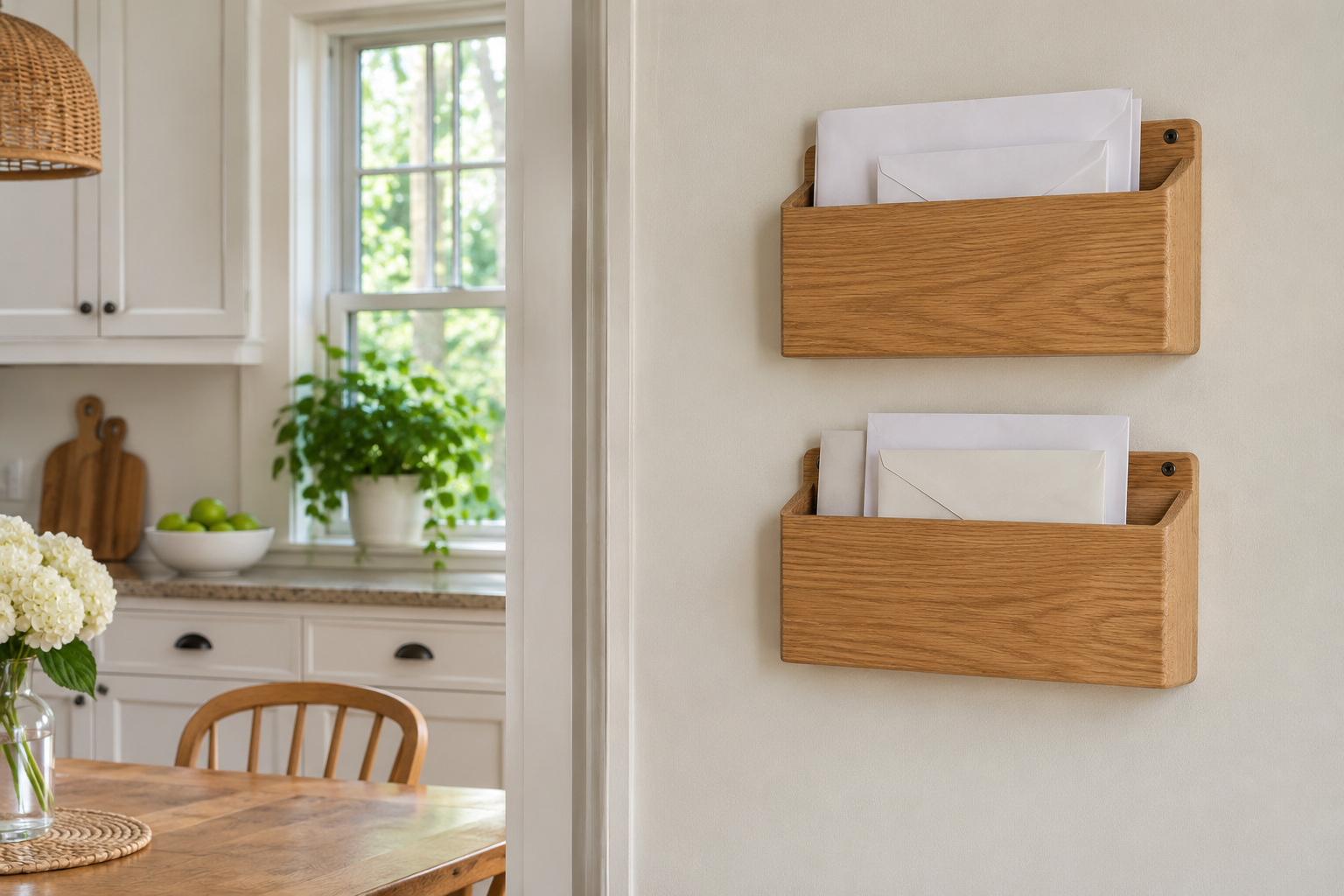
A shallow wall file gives unopened mail a temporary landing place before it spreads across the kitchen. Use separate compartments for items that need attention and those ready to be filed elsewhere.
Put the file near the place mail enters the room and empty it on a regular schedule. Keep sensitive documents out of view when necessary, and choose a spot away from water and cooking splashes.
3. Give School Papers Individual Pockets
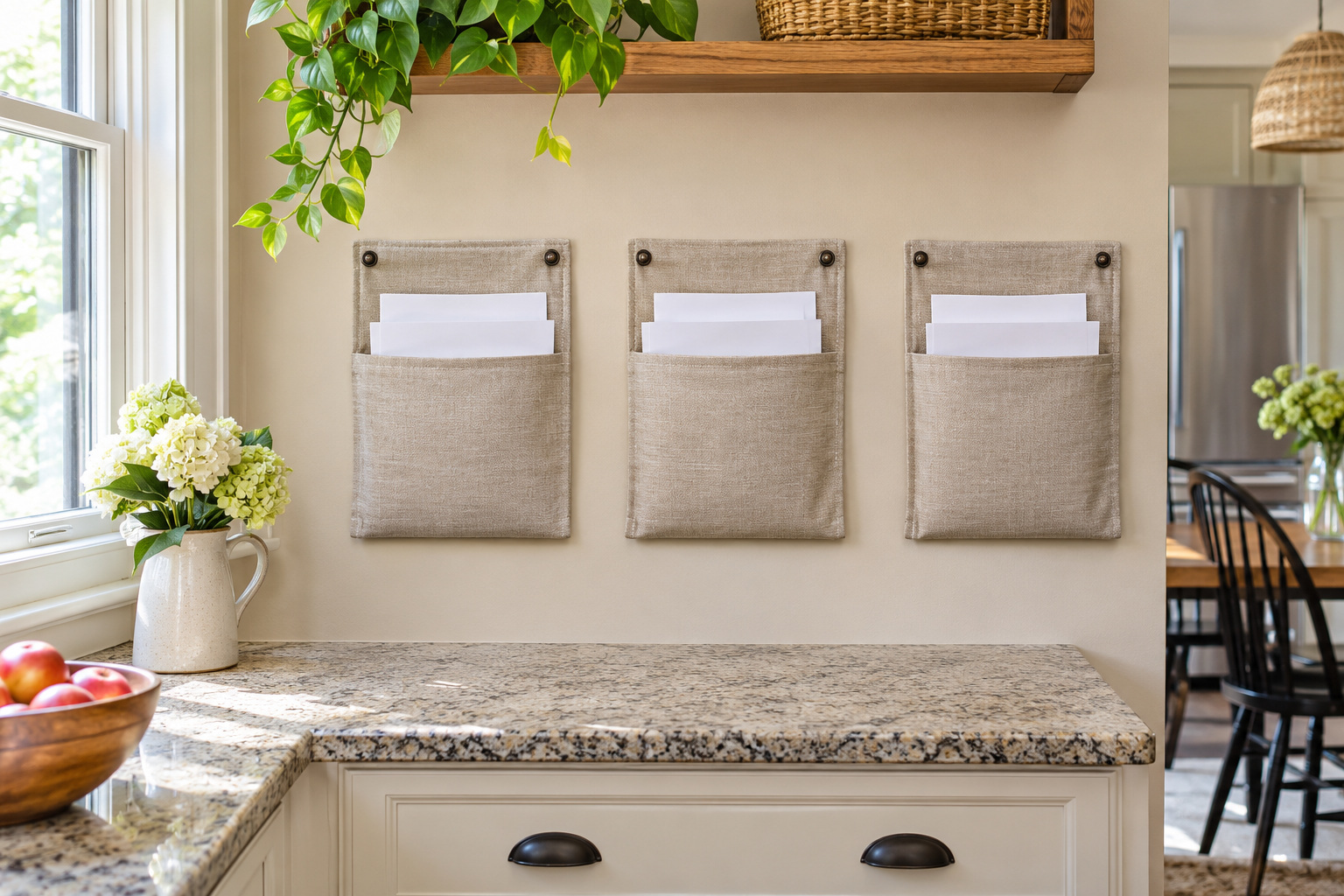
When school notices arrive in several backpacks, individual pockets can stop the papers becoming one difficult stack. Assign each student a pocket at a reachable height and keep current forms at the front.
Choose pockets wide enough for full sheets without folding them. Review the contents together and move completed papers to their next destination rather than treating the pockets as permanent archives.
4. Keep the Grocery List Beside the Pantry
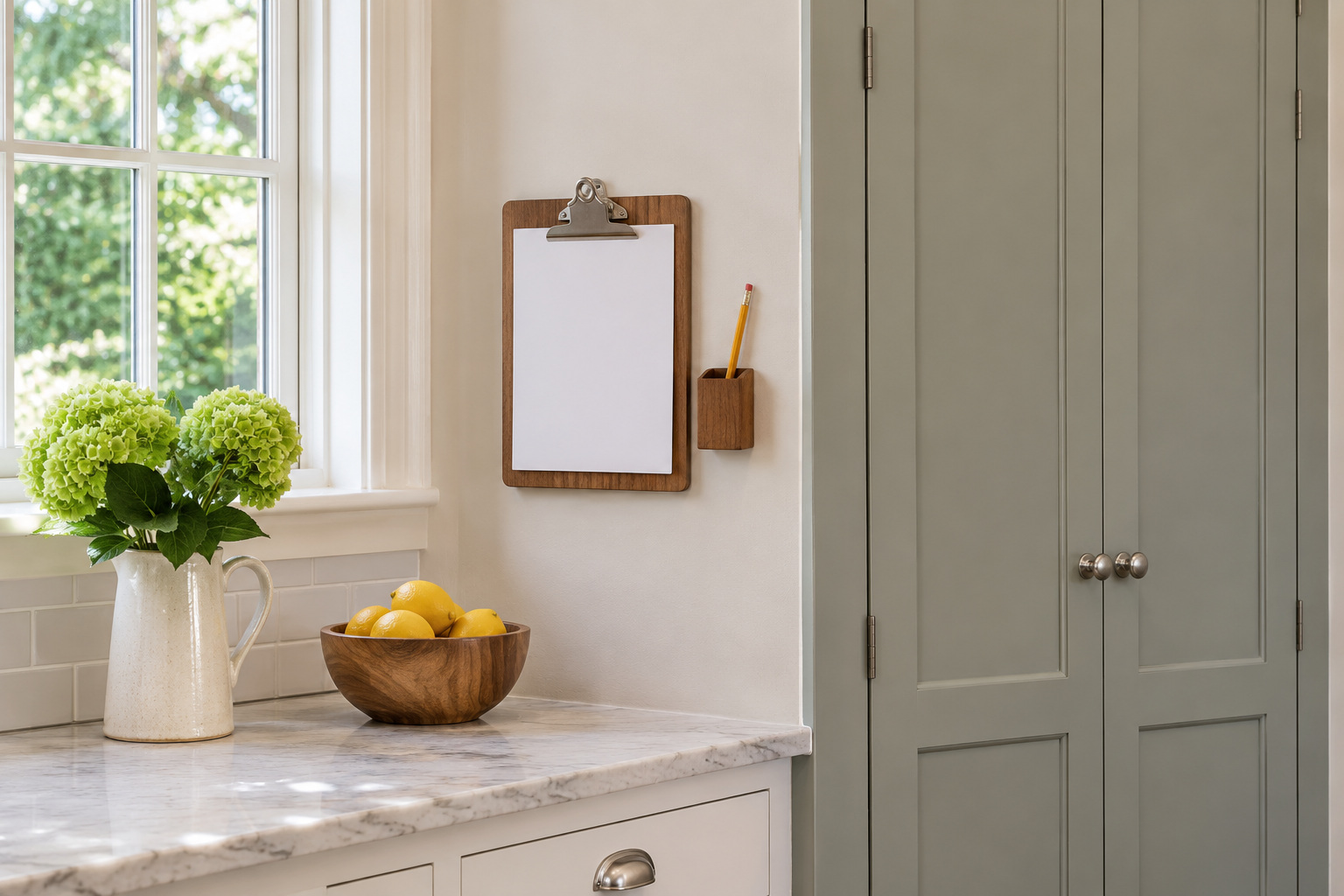
A reusable list board beside the pantry puts the reminder close to the shelves where supplies run low. A small clipboard or wipe-clean board is enough; the goal is a surface people will actually use.
Keep a writing tool with it and put the list away from food preparation splashes. Before shopping, copy or photograph the current list and clear outdated notes.
5. Use a Shallow Rail for Daily Keys
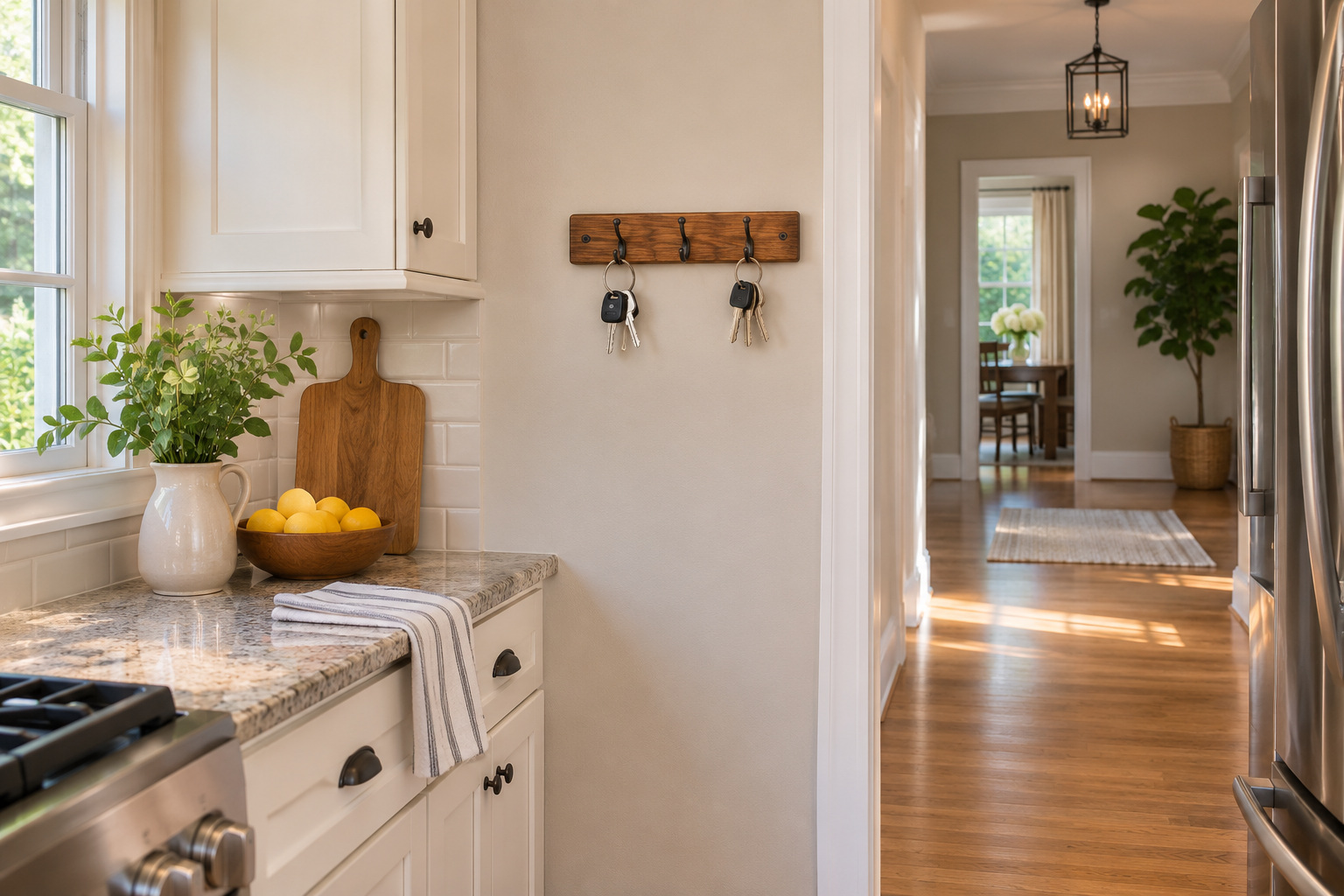
A short hook rail can give the keys used every day a consistent home near the kitchen exit. Select hooks deep enough to keep rings from sliding off and leave space between them for easy removal.
Check that the rail does not project into a narrow route or interfere with a cabinet door. Keep spare keys and items needing privacy in a separate secure location.
6. Give Invitations Their Own Noticeboard
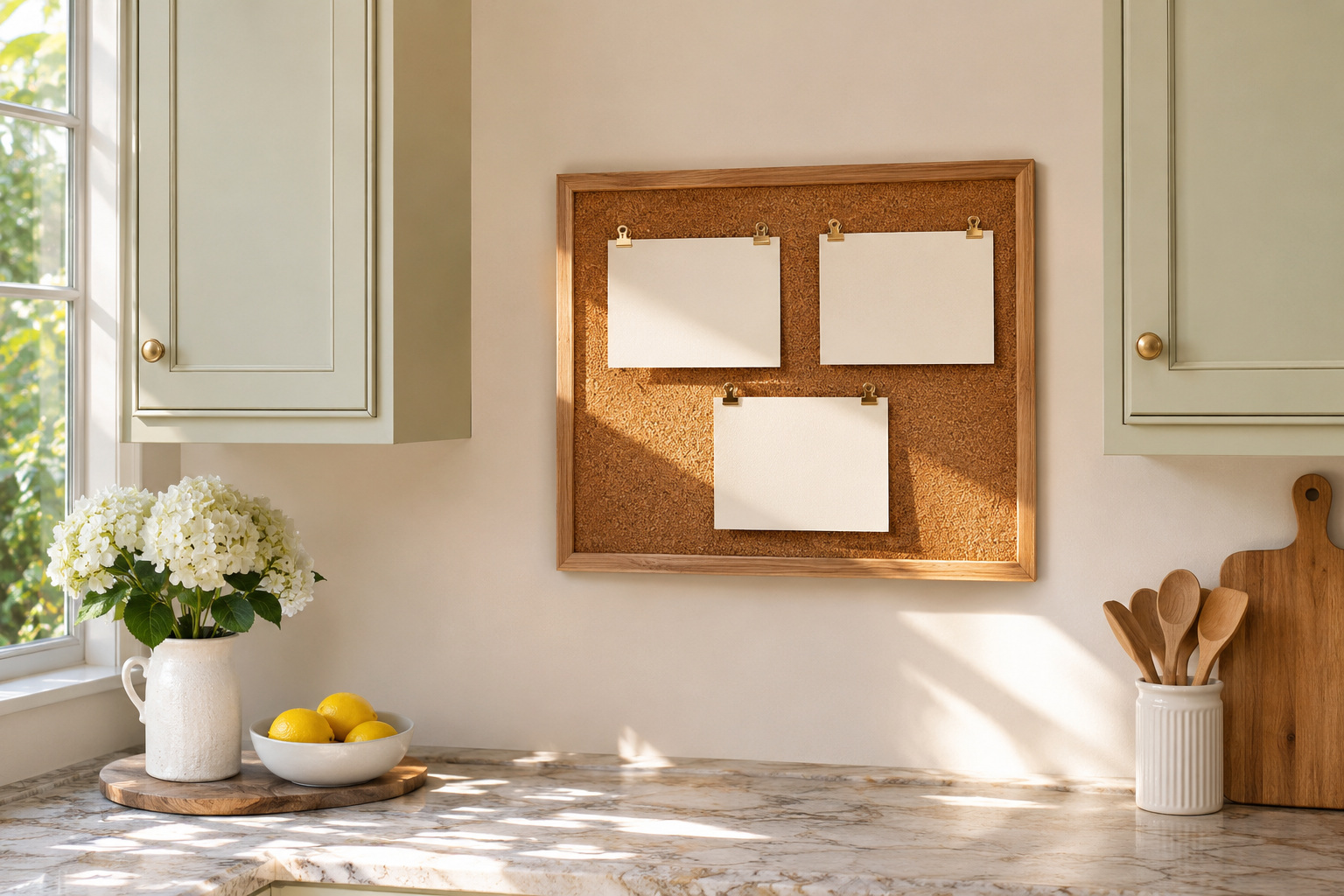
An invitation or appointment card is easy to lose among bills. A small cork board keeps current notices visible until the date has passed, without taking over the refrigerator.
Pin around a card if you do not want a hole in it, and remove old notices as you add new ones. Place the board where it can be read comfortably and where papers will stay dry.
7. Add a Closed Basket for Paper Backups
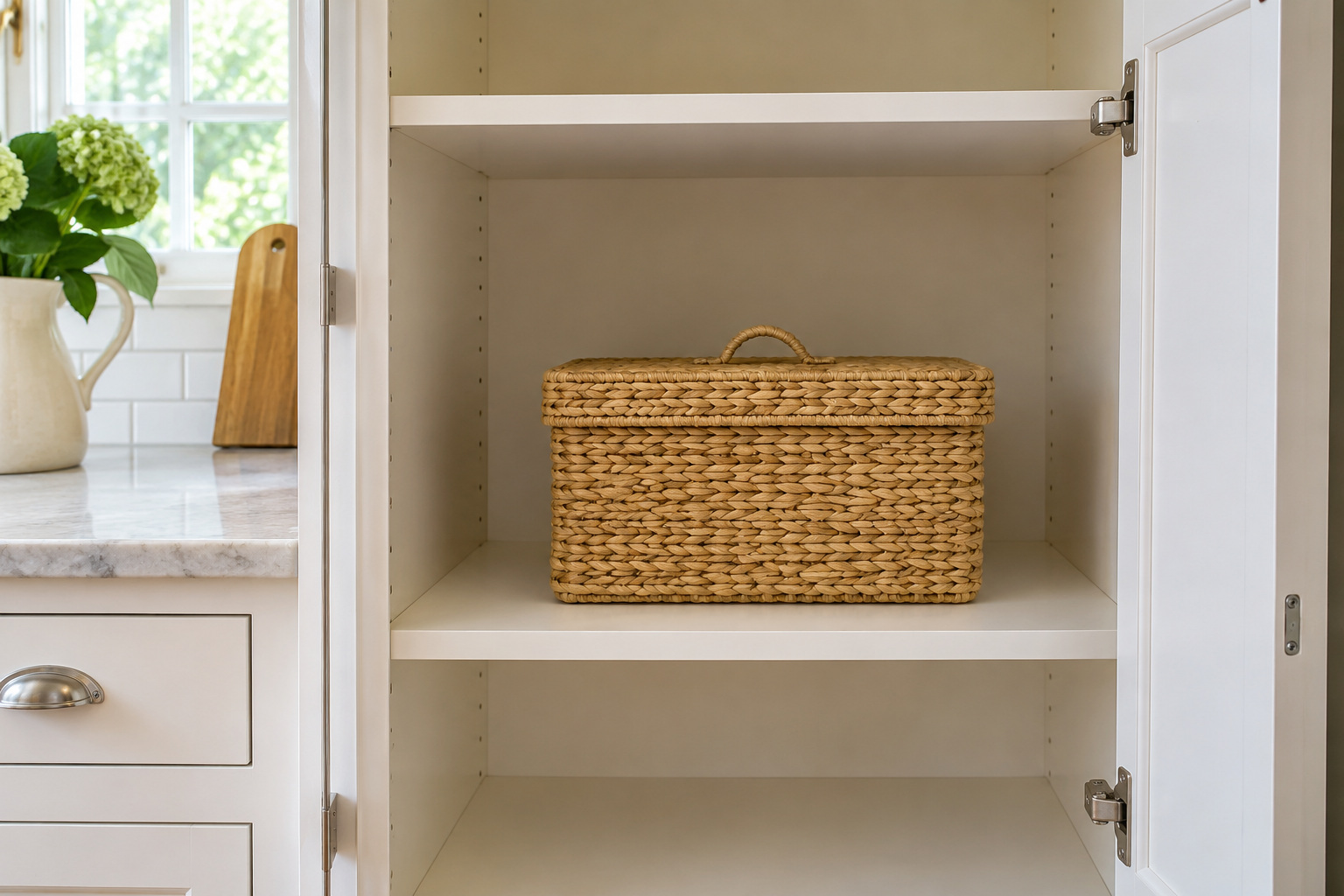
A closed basket in a nearby cabinet can hold spare notepads, envelopes, and other supplies that do not need to be on display. Keeping the refills together prevents the active planning area from filling with duplicates.
Measure the shelf and choose a lid that opens easily in the available space. Use the basket for clean, dry paper only and keep frequently used items in the wall station.
8. Put a Family Calendar on a Fridge Panel
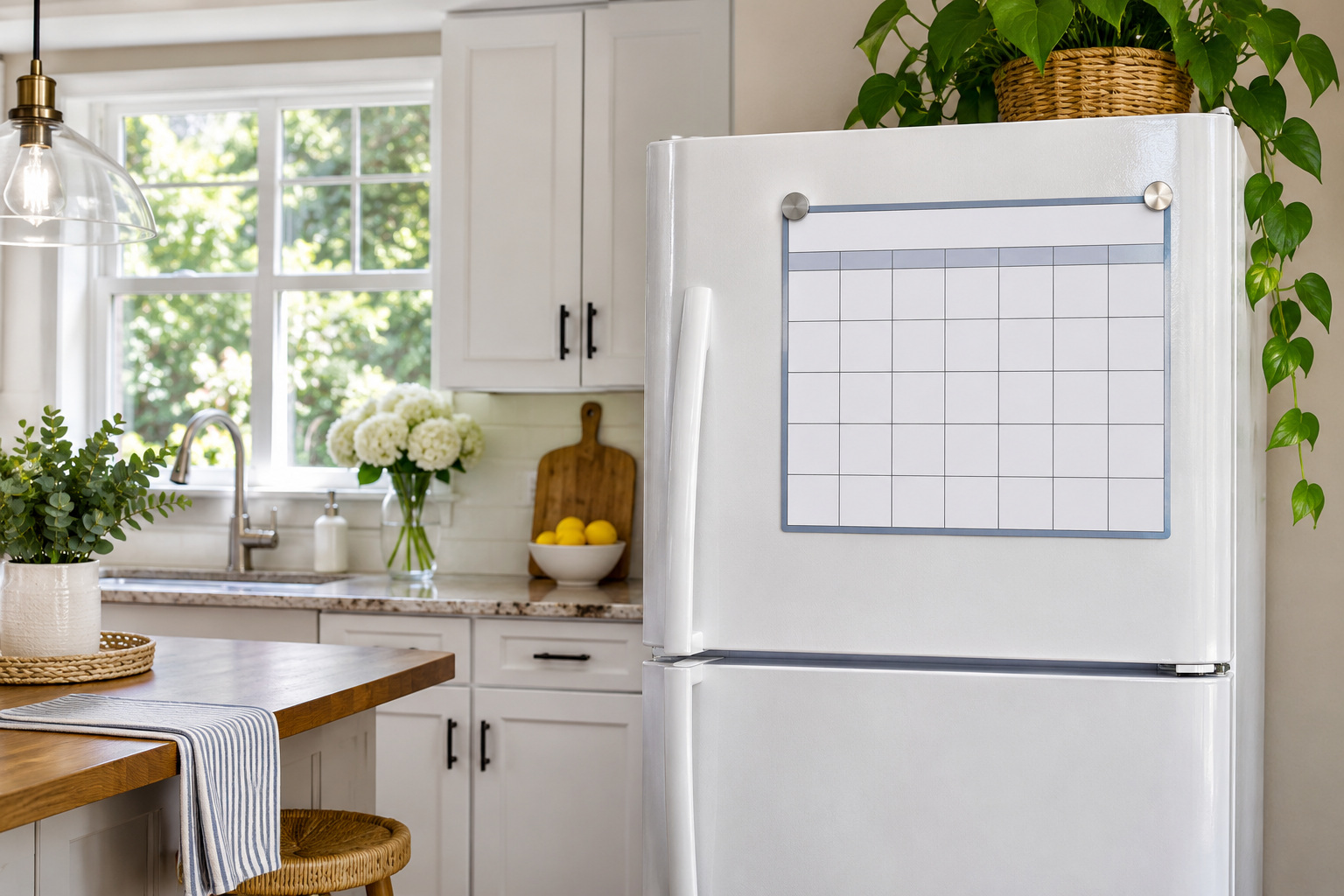
If the refrigerator has a suitable magnetic surface, a magnetic calendar can use space that is already visible. Pick a size that leaves the door handle and seals clear and allows the door to open normally.
Keep the board simple enough to scan from a few steps away. Follow the refrigerator and organizer instructions, and use another surface if magnets are not suitable for the finish.
9. Create a Planning Nook at a Kitchen Desk
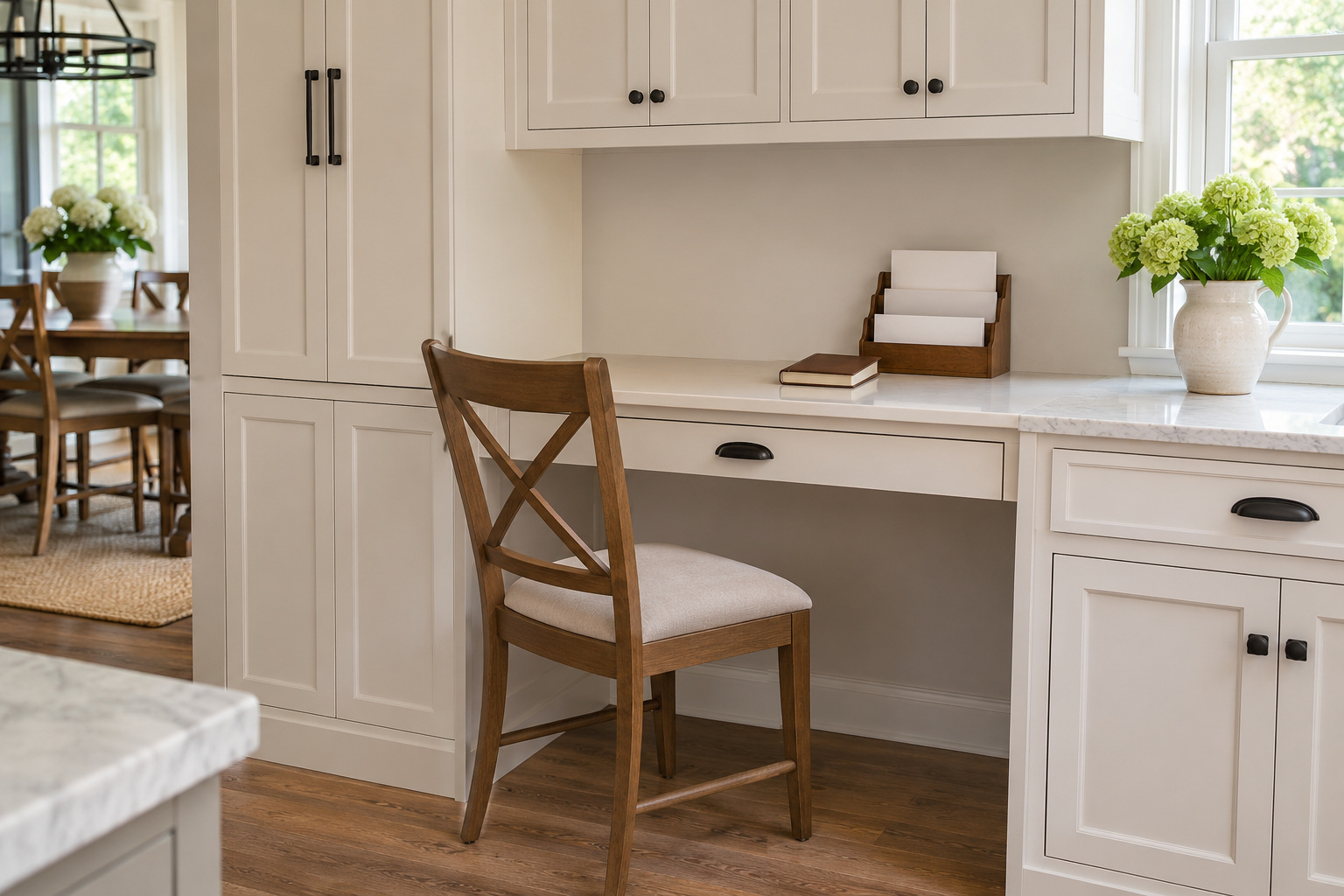
A small built-in kitchen desk can hold a calendar, one paper sorter, and the current household notebook. Give the chair enough room to move and leave most of the work surface open for planning.
Place this nook away from active cooking and water. Keep work projects or craft supplies elsewhere if they prevent the household station from being reset at the end of the day.
For a desk used primarily for work, our home office organization ideas offer a separate approach to files and equipment.
10. Hang a Magnetic Board on a Bare Wall
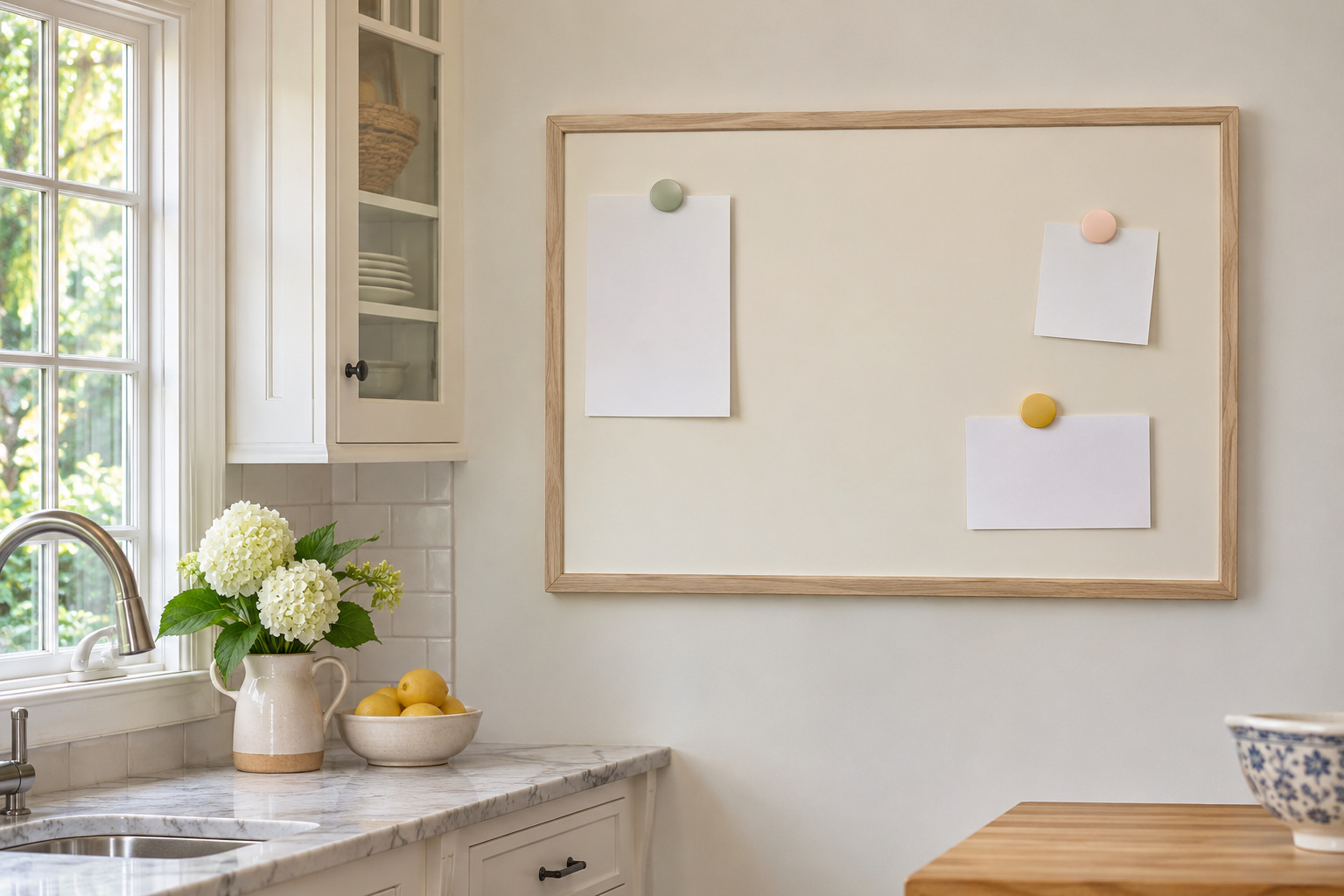
A purpose-made magnetic board can keep a rotating set of small notes visible on an unused wall. Choose magnets suitable for the board and papers, and arrange the most current notes where they are easiest to find.
Mount it according to the product instructions and keep small magnets away from children or pets where appropriate. Leave a section empty so the board can absorb the next arrival.
11. Use a Small Tray for Items Leaving Home
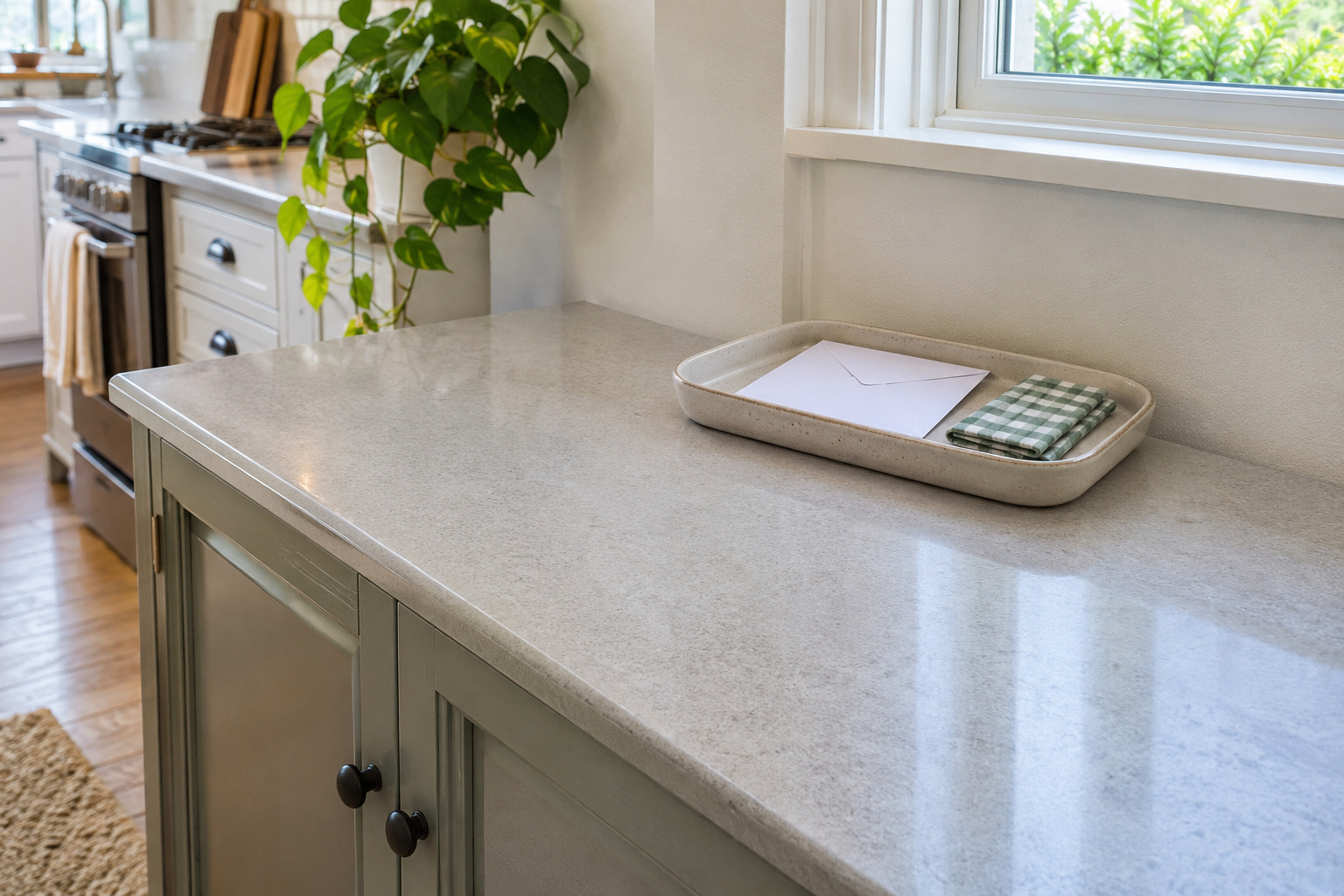
A shallow tray near the kitchen door can hold the things that need to leave with someone, such as a sealed envelope or reusable shopping list. Choose a tray with a defined boundary so the collection cannot quietly spread.
Clear it each day and keep food-preparation space free. Avoid storing valuable or private items in an exposed place, particularly where guests or children can reach them.
12. Keep Takeout Menus in a Slim File
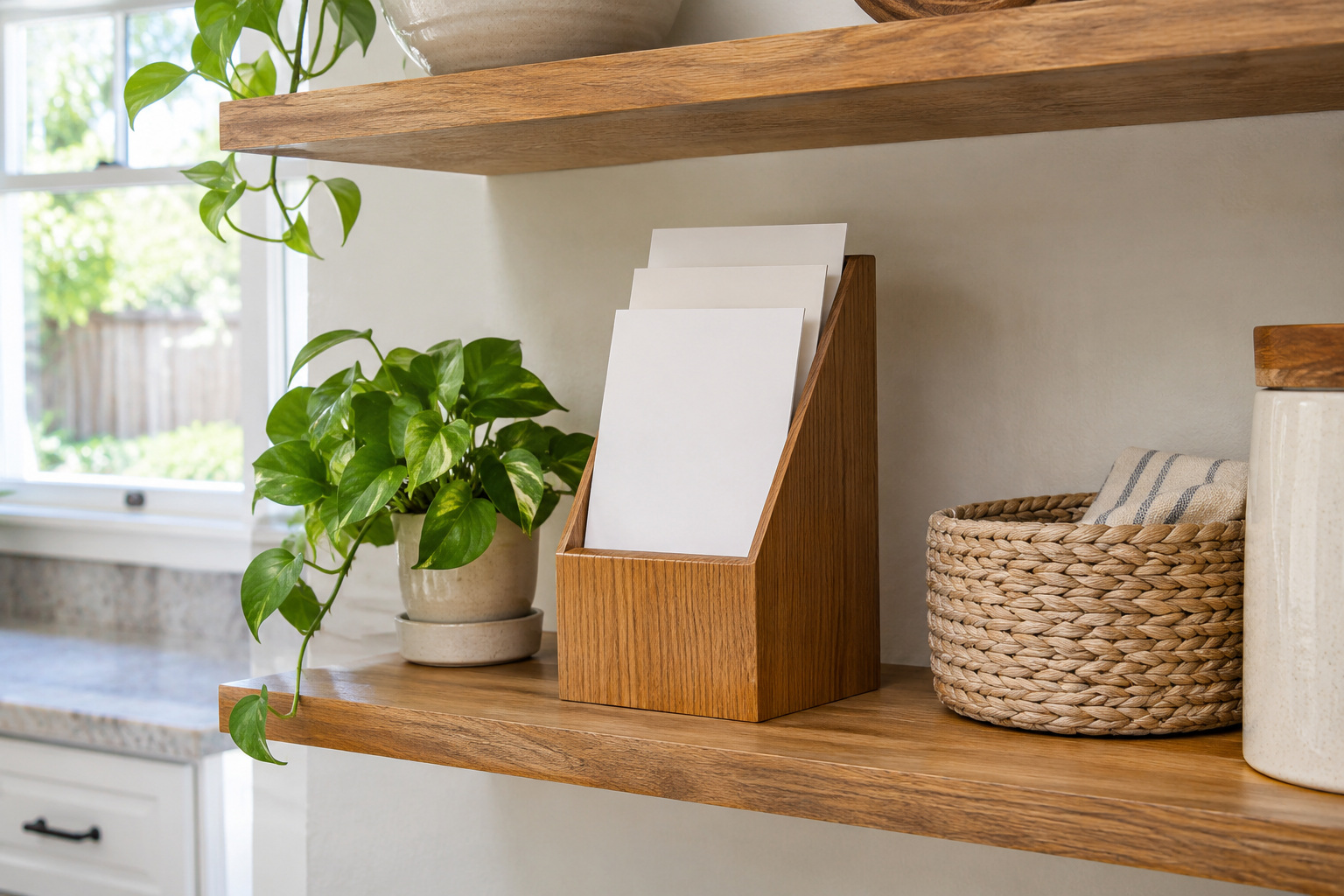
A slim upright file can hold a few printed menus without occupying an entire drawer. Position it near the planning area rather than next to the stove, and recycle outdated menus as they accumulate.
Choose a wipeable container if the area is close to routine kitchen activity. For households that order digitally, use the same slot for another small set of reference papers instead.
13. Put the Meal Plan on a Movable Clipboard
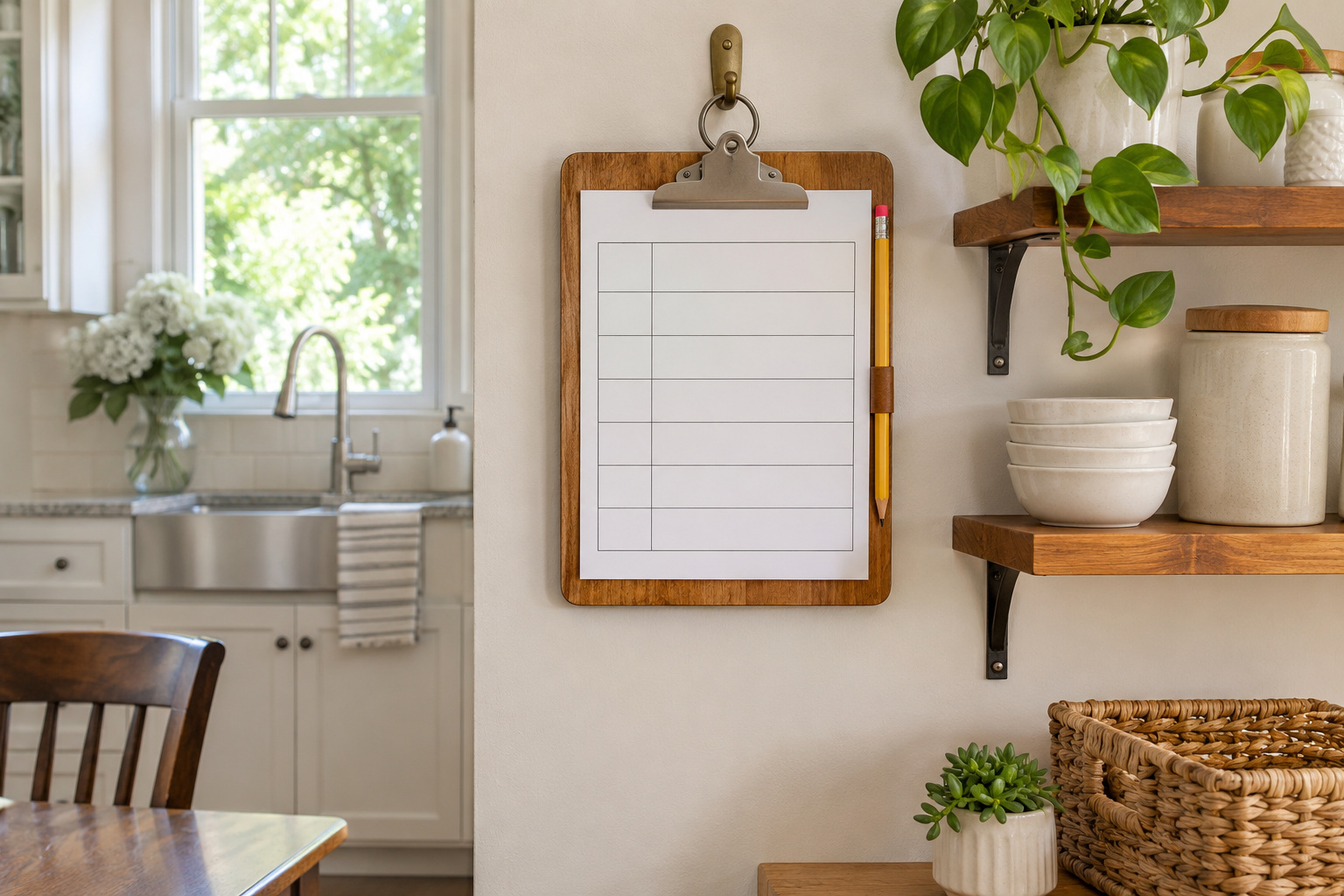
A dedicated clipboard lets the meal plan travel between the pantry, grocery-list station, and table. Keep it separate from mail so dinner decisions do not disappear under unrelated paperwork.
Use a clear hook or a narrow shelf for the clipboard when it is not needed. The board is simply a planning aid; adjust meals around what your household actually has and enjoys.
14. Hide the Station Inside a Cabinet Door
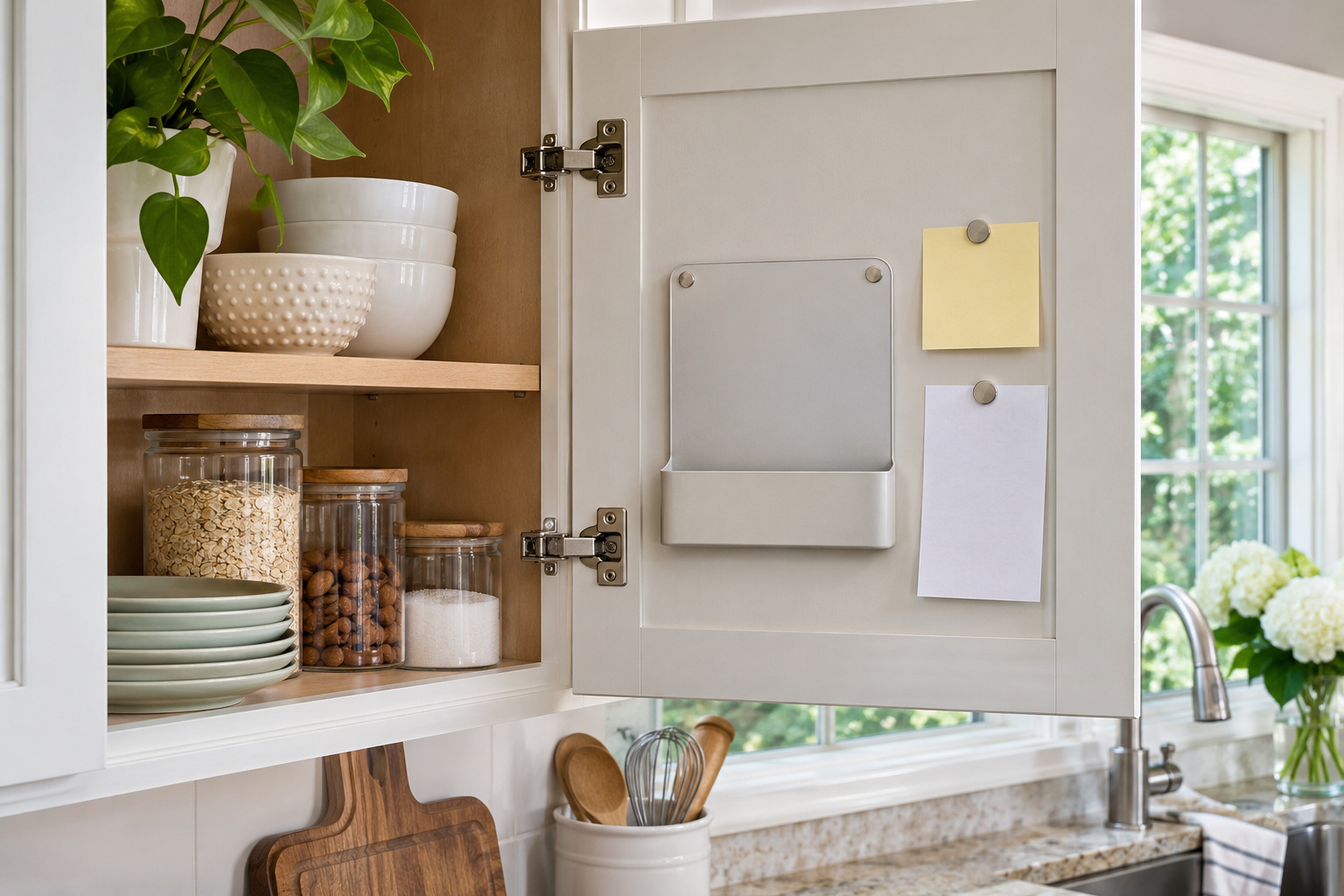
The inside of a cabinet door can conceal a small calendar or a few lightweight reference papers when an open display feels busy. Check the clearance against shelves before attaching anything.
Use products and fixings suited to the door material, and make sure the cabinet still closes without pressing on its contents. Keep the setup away from moisture, heat, and food-contact surfaces.
A useful command center does not need a whole wall or a complicated system. Give each current task a small, reachable place, remove outdated papers, and make the reset easy enough for everyone to use. The right arrangement should support the kitchen rather than compete with it.
Discover more from HomeTrendora
Subscribe to get the latest posts sent to your email.